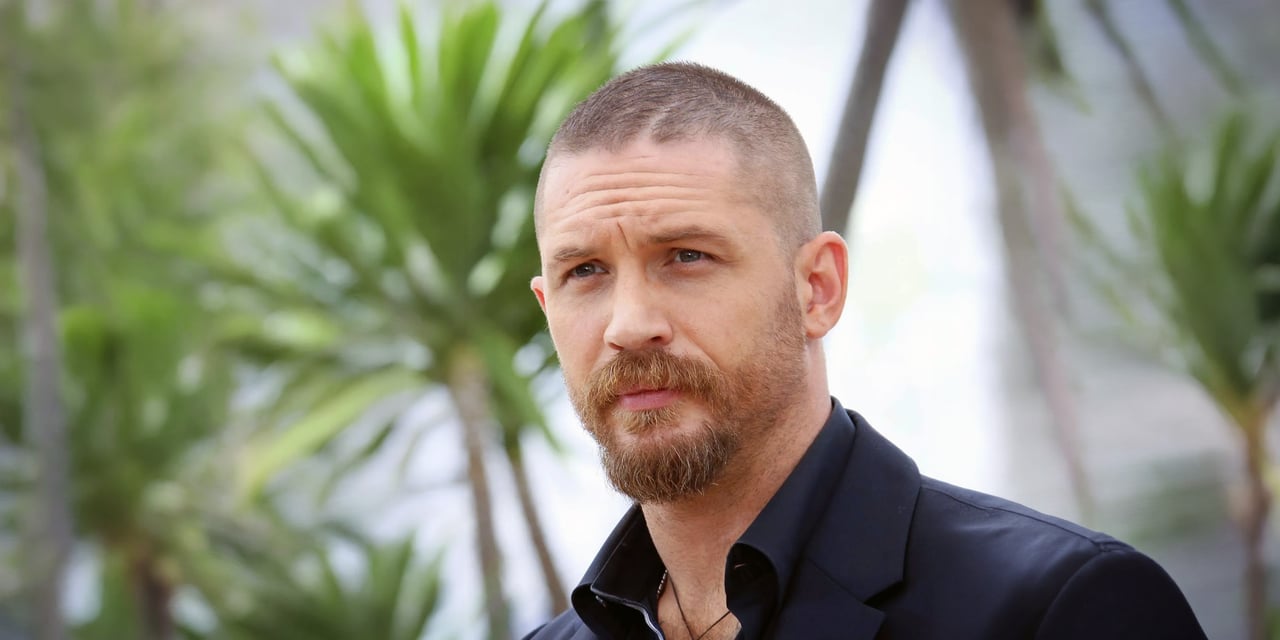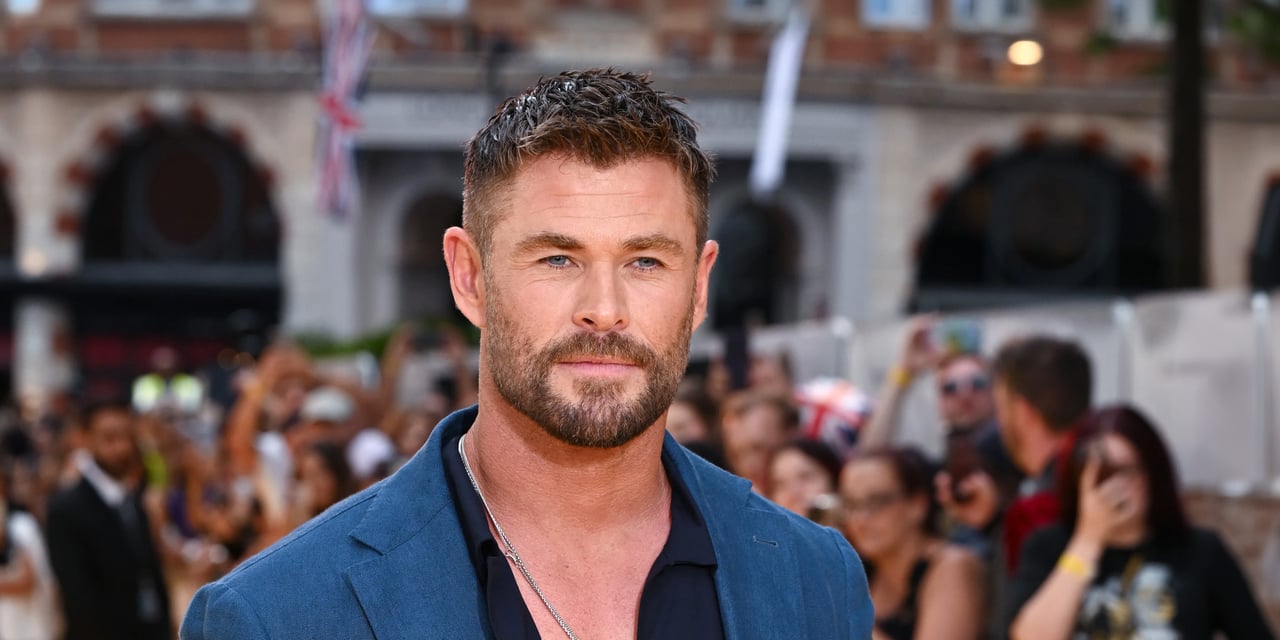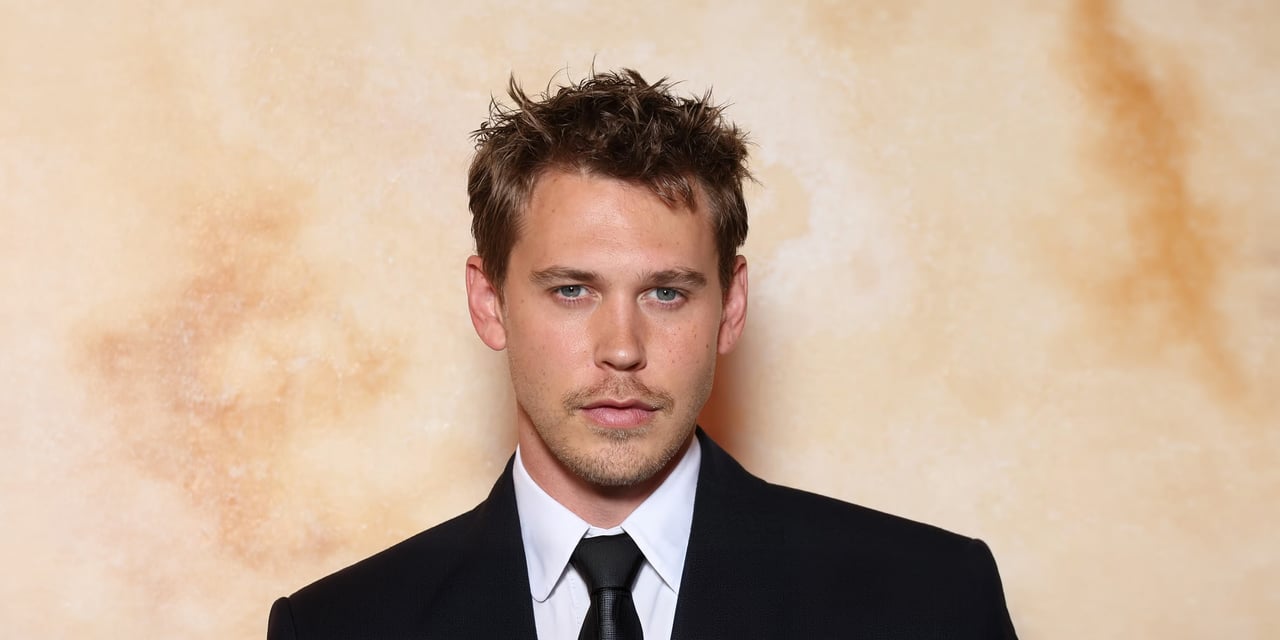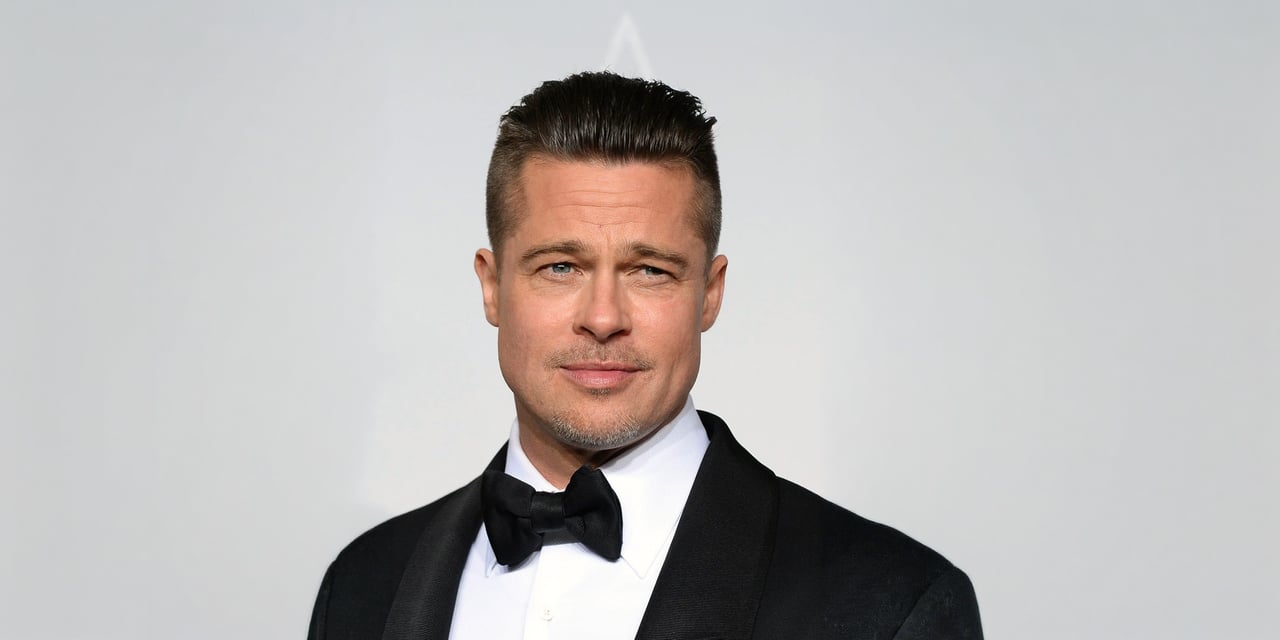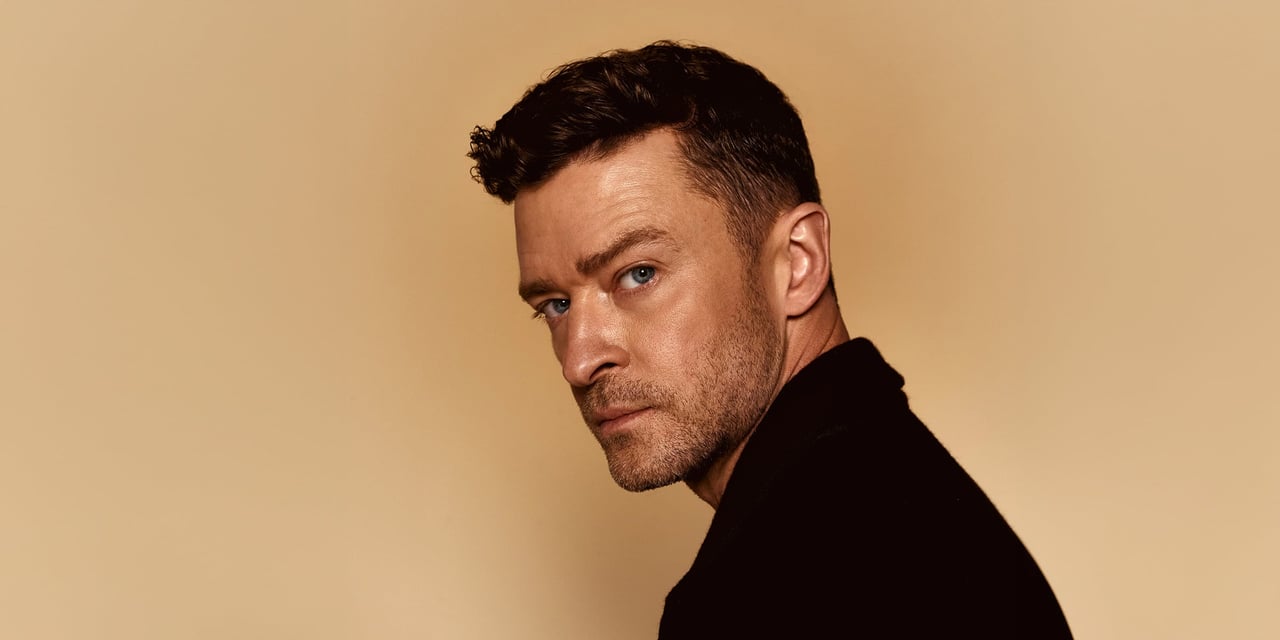
Short haircuts have been super in since Roman times, both in and out of the army. The continuation of the popular style is due mainly to its clean, fresh look and ease of styling. Rumor has it that the original purpose was to prevent barbarians from pulling the Roman soldiers’ hair back and slitting their throats during battle—yep, so annoying when that happens.
While you’re far less likely to encounter a barbarian nowadays, it’s preferable that you don’t resemble one. In short, short haircuts are the best choice if you just want to get up and go, and look smart with little effort.
Short hair does not mean you’re short of options, however. From clean crew cuts to messier styles, we’ve snipped together a list of the best short haircuts for men.
Short haircuts for men
Here are 53 short haircuts for men, from clean crew cuts to messier styles.
Classic short haircuts for men
Crew Cut
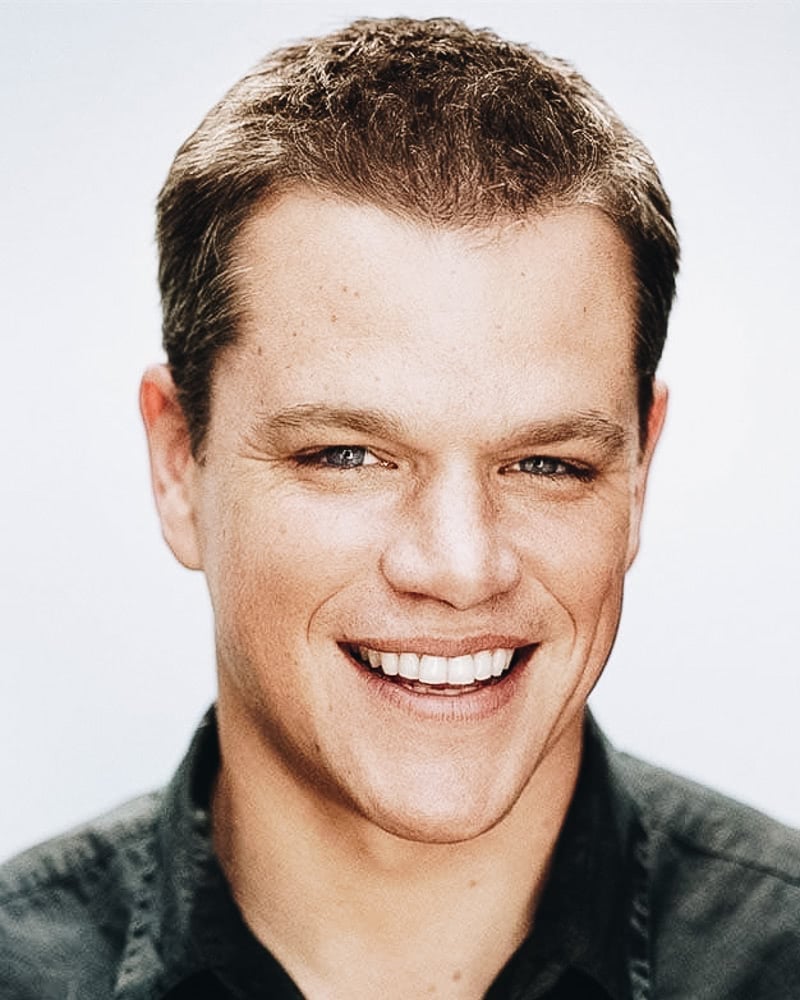
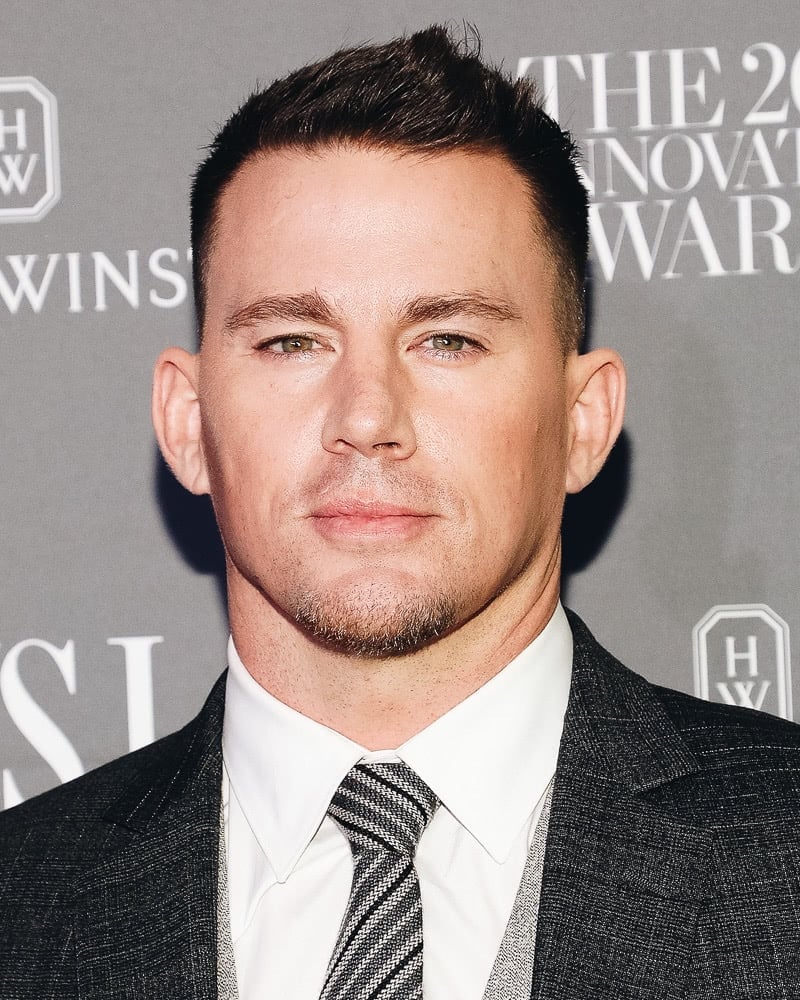
The crew cut is easy to maintain yet stylish. It works particularly well for men with thick hair and a square face shape. The main difference between the crew cut and the military buzz cut that follows is that with the crew cut, your hair isn’t of the same length everywhere, allowing for more styling options. Our crew cut guide has 25 more, from the military cut to the Ivy League.
What to ask for Number 2 on the sides tapered at the neck, about an inch on top, shorter toward the crown.
Ivy League
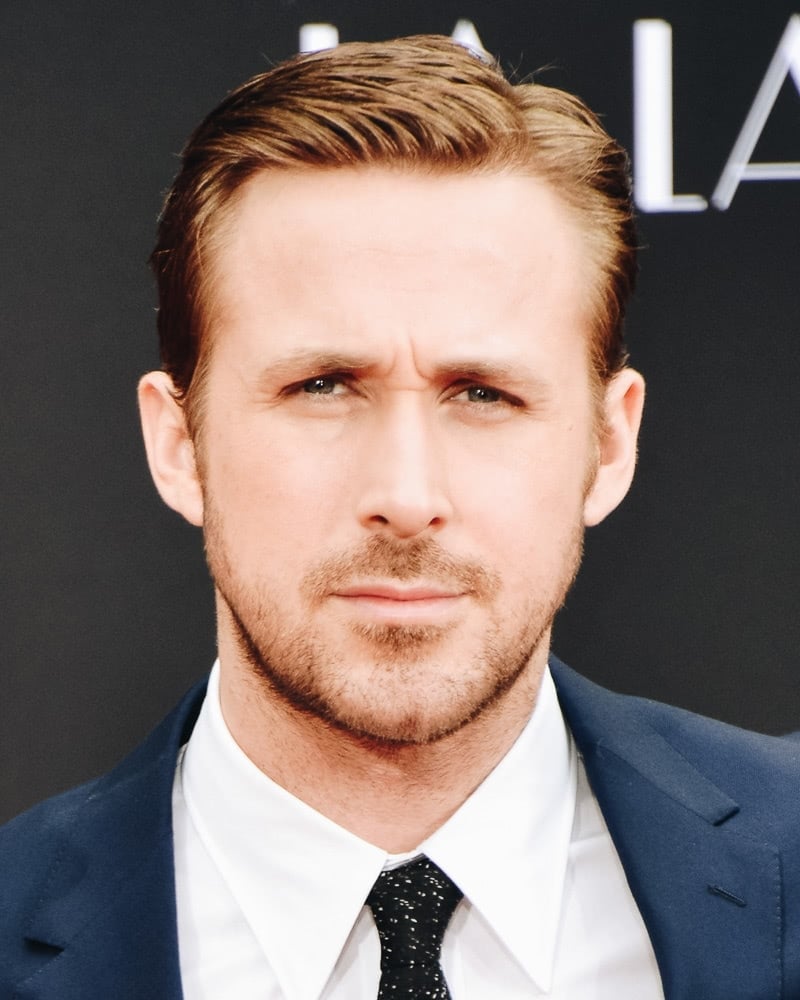
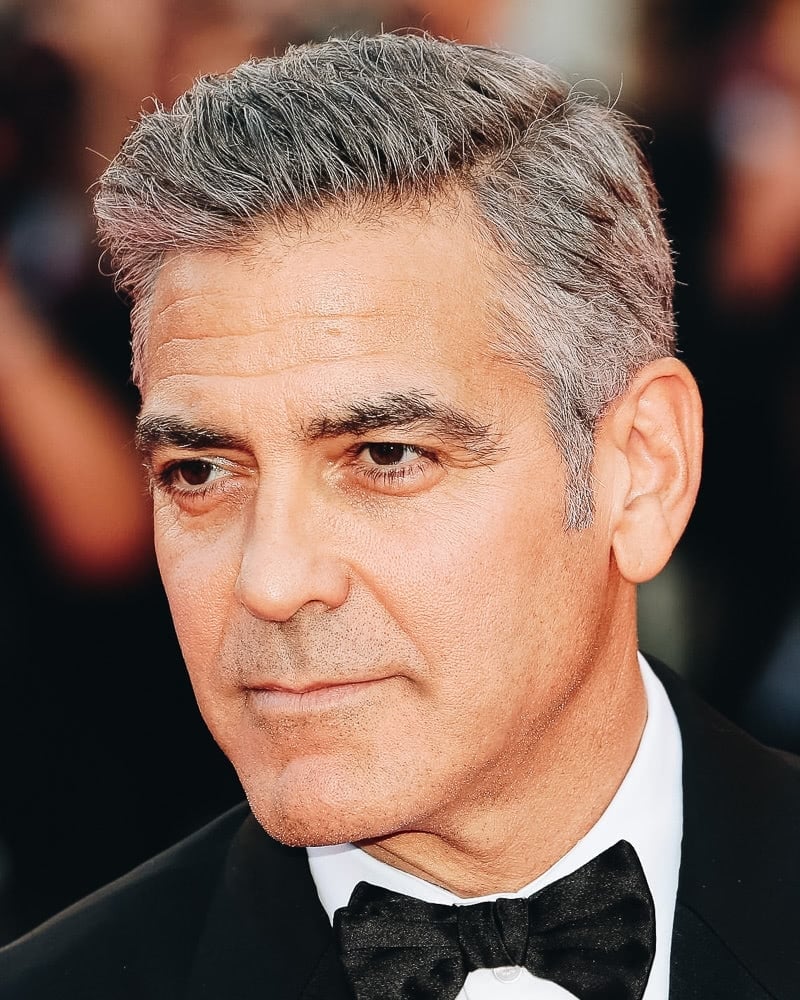
Also known as the Harvard Clip or the Princeton hairstyle, the Ivy League haircut is perfect for a classic business professional look. It works with pretty much all types of hair, from straight to wavy and curly. Keep the side relatively short and style the top with a side part.
What to ask for Number 3 on the sides, an inch and a half on top, longer at the front, with a side part.
Classic Caesar Cut
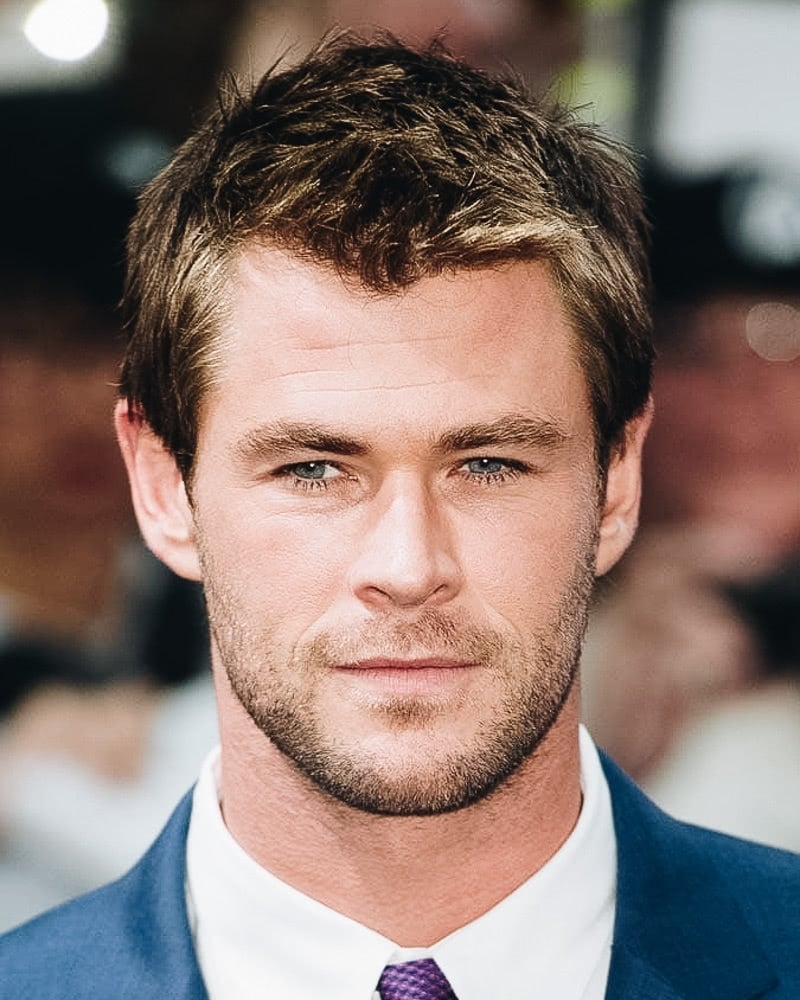
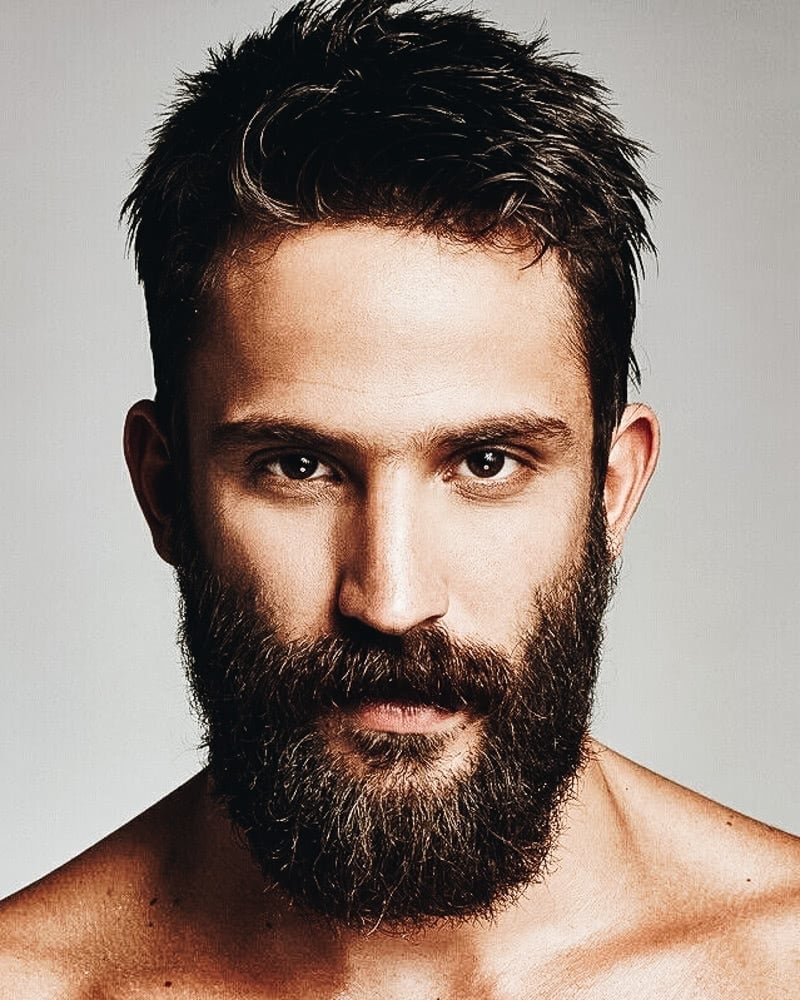
The classic Caesar cut is a traditional yet more edgy hairstyle to maintain.
What to ask for Number 3 on the sides, an inch on top brushed forward, a short straight fringe.
Caesar With Side Part

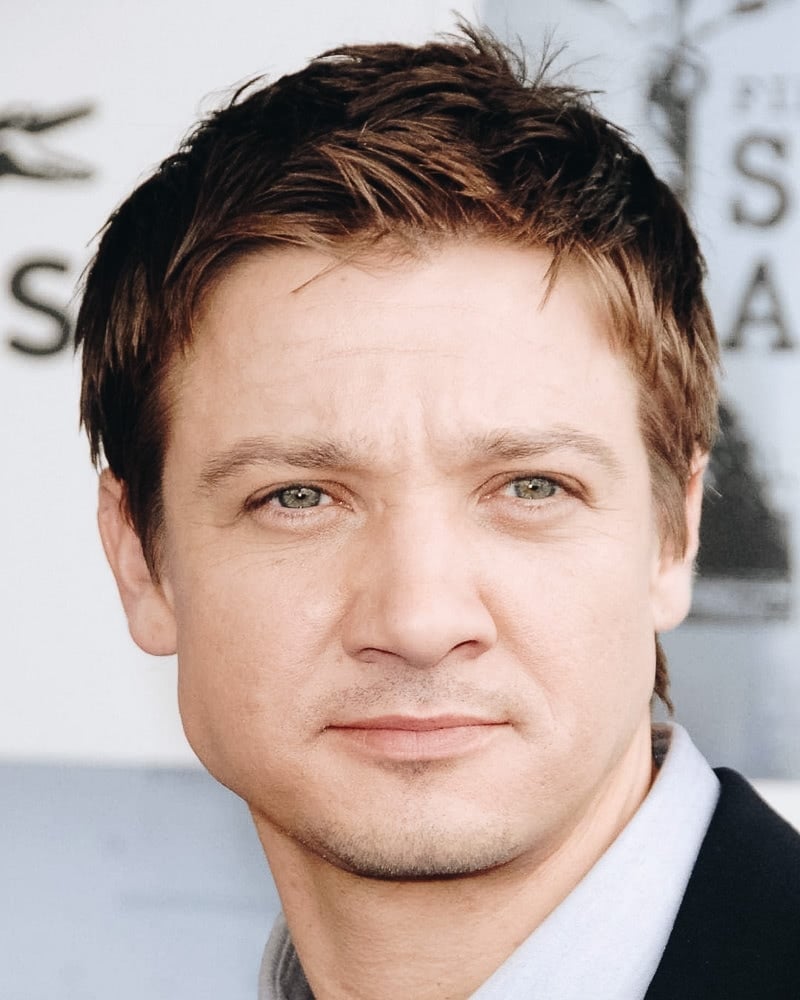
Take a Caesar, add a side part, and you get something halfway between a Roman general and a banker. Comb the fringe forward and to the side with a little matte cream.
What to ask for Number 3 on the sides, an inch on top, a short fringe with a side part.
Short Caesar Cut
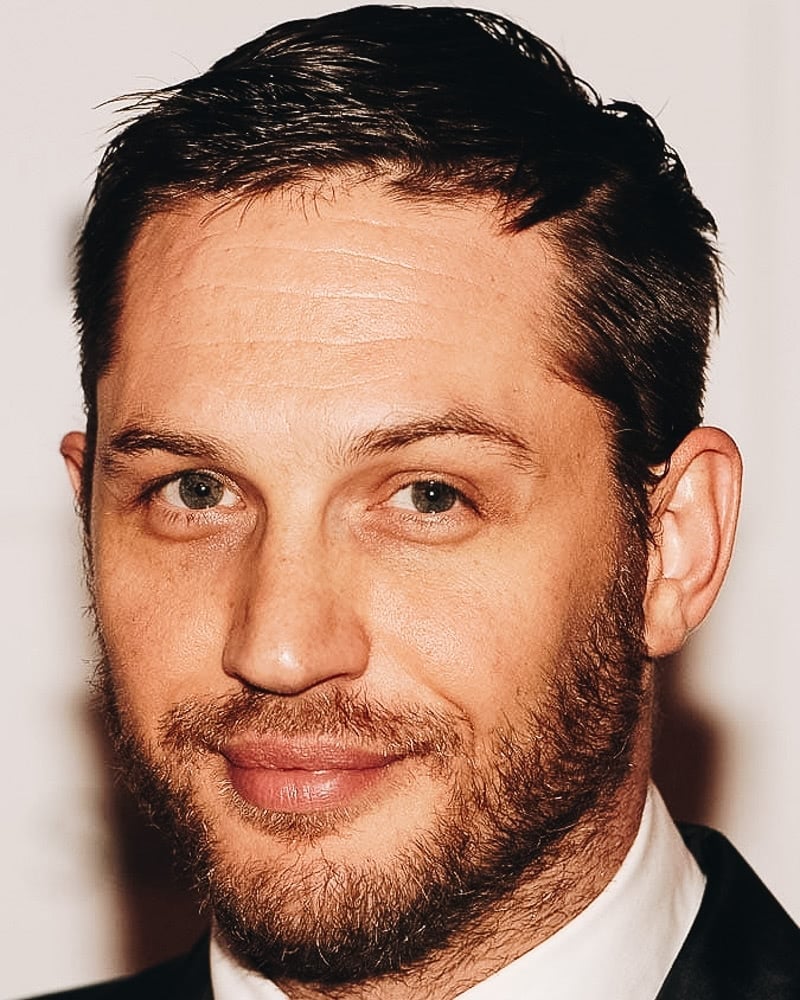
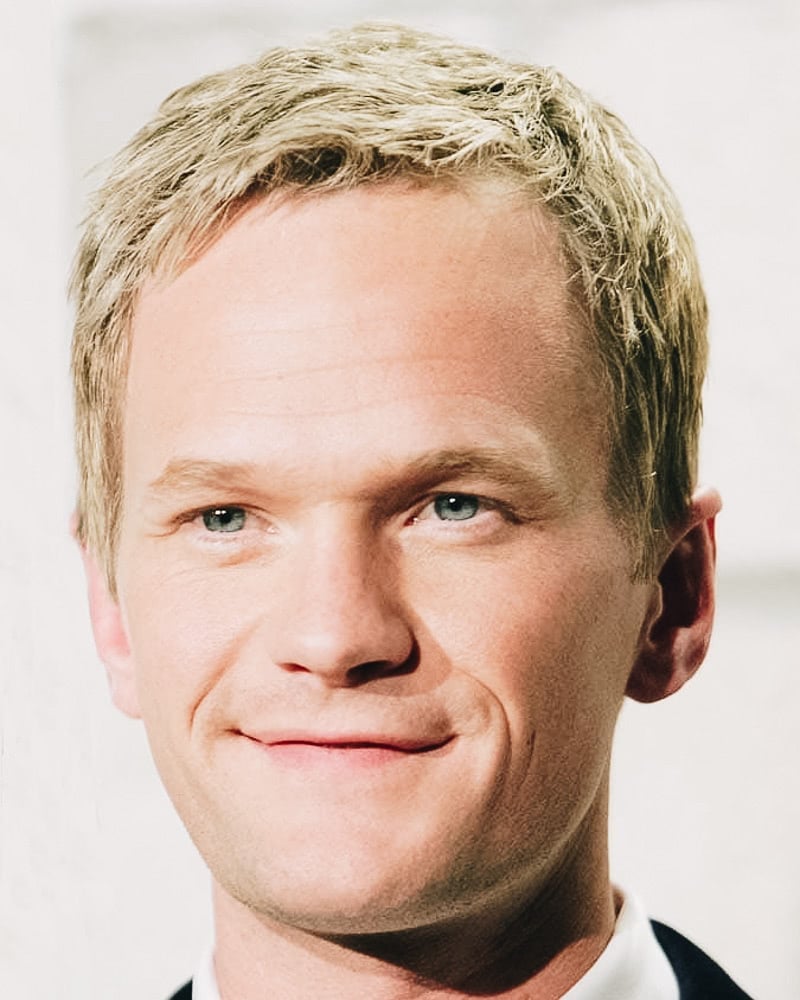
A tighter Caesar, with a short fringe brushed straight forward and everything else kept even. It’s about as low-maintenance as a styled cut gets.
What to ask for Number 2 on the sides, three quarters of an inch on top, a short straight fringe.
Classic Side Part

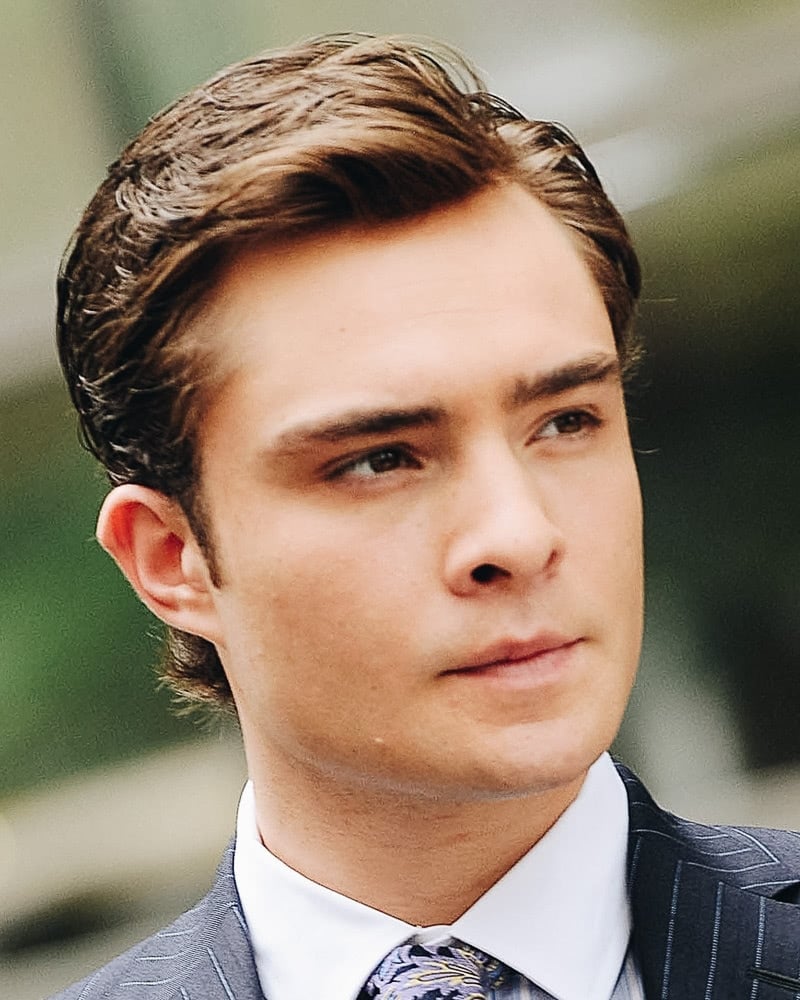
Your grandfather’s cut, and it still holds up. Tapered sides, a clean part and a comb are all it takes. No wonder it turns up at every wedding you’ve ever been to.
What to ask for Scissor taper on the sides, two inches on top, a natural side part.
Hard Part
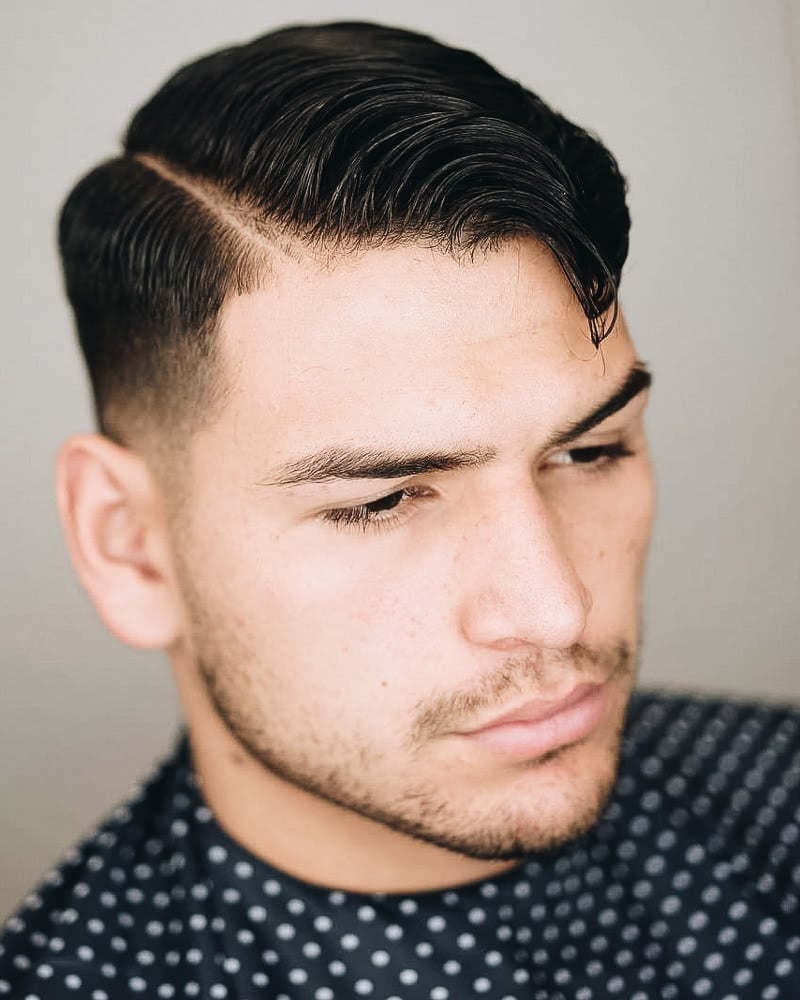
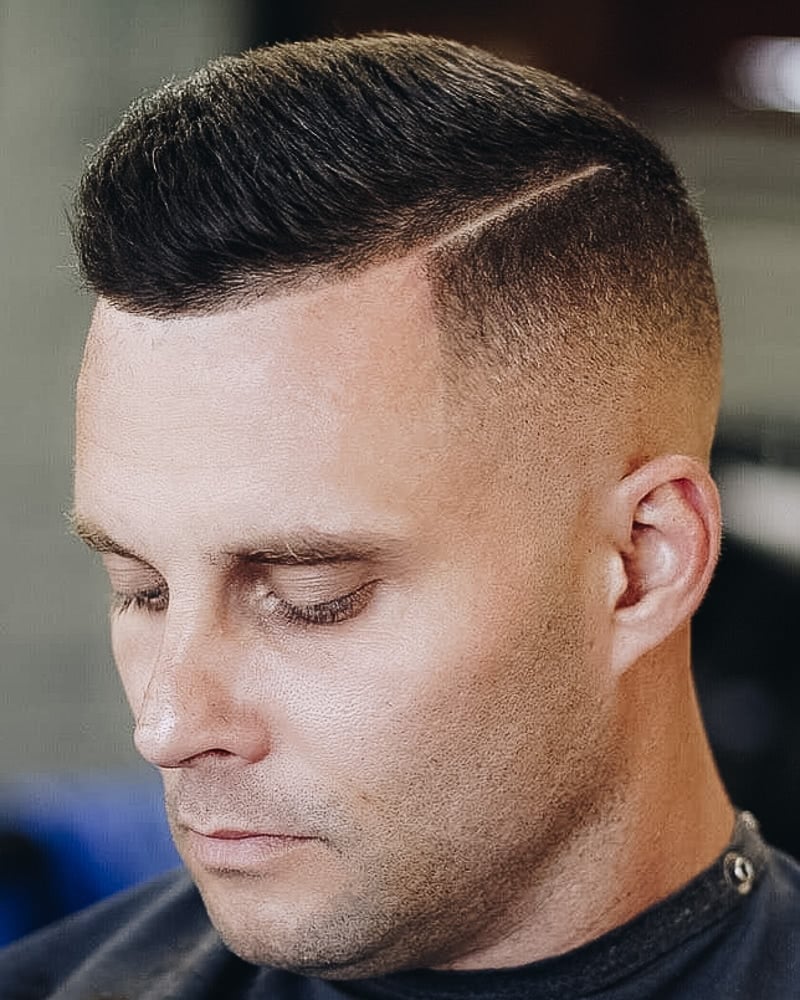
Also called the Dapper Side Part, the hard line is shaved for a clear style. This requires regular trips to your barber to maintain the hard part.
What to ask for Mid fade, two inches on top, a hard part shaved in with a trimmer.
Side Part Fade

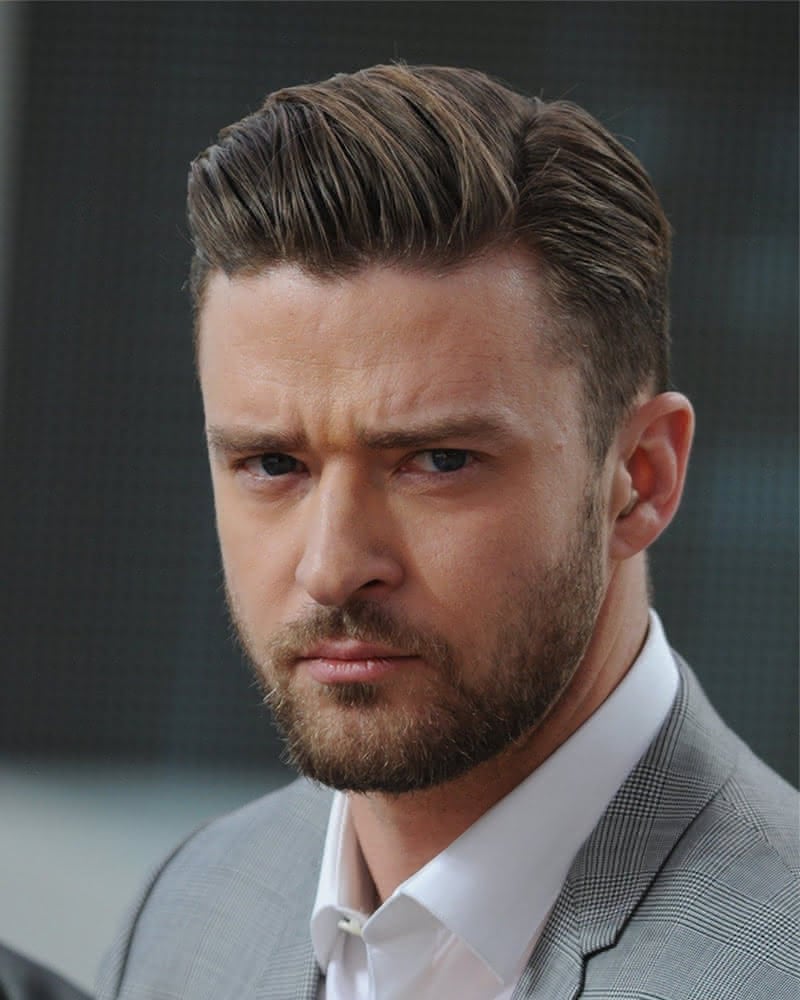
The side part fade is a timeless style that works well in any situation. It’s relatively simple to maintain every morning but you’ll need a trip to your hairdresser at least once a month to keep the side short.
What to ask for Mid fade from a number 1, two inches on top, a side part.
Classic Combed Back With Fade
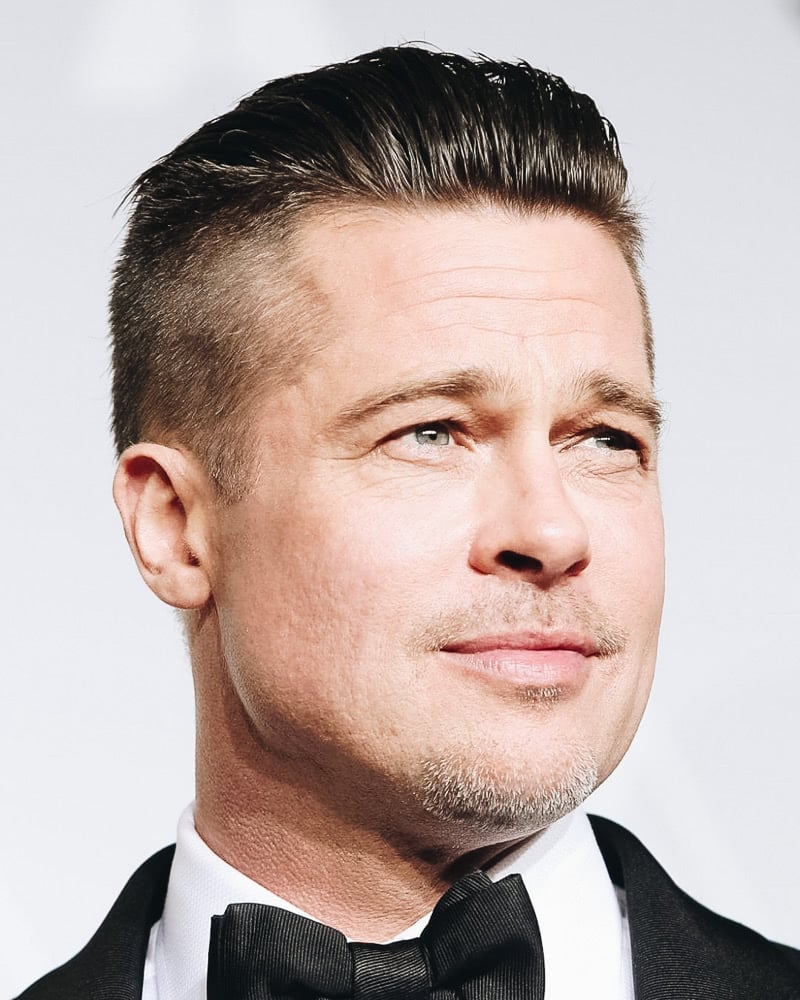
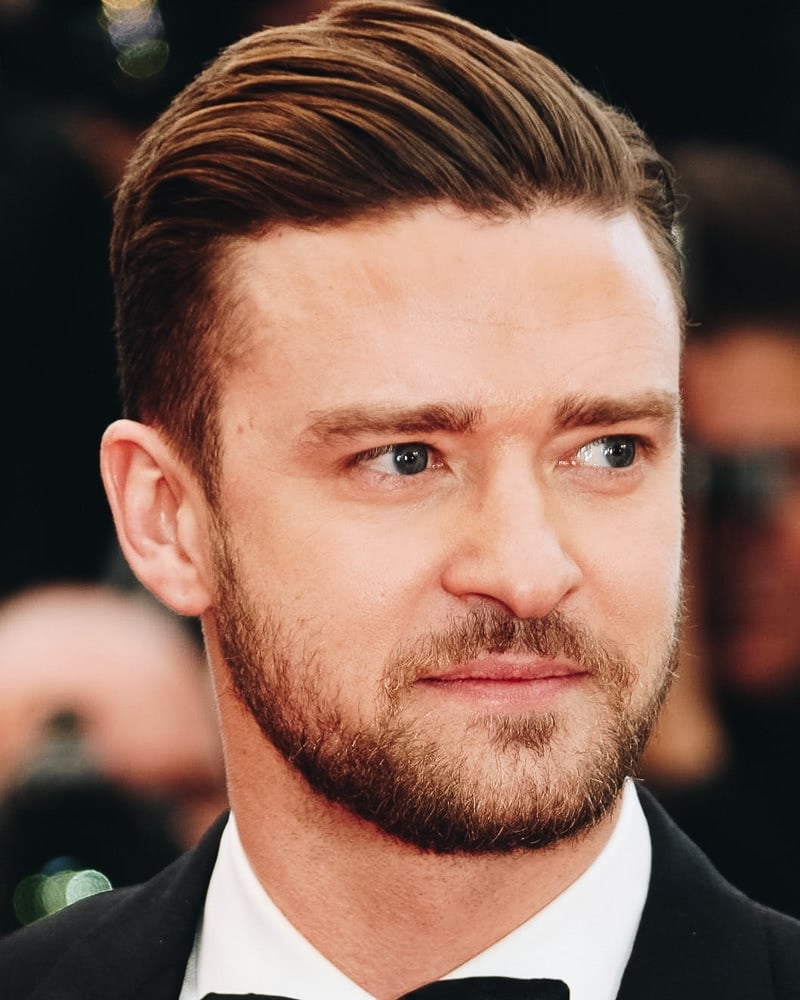
Now we’re getting into more sophisticated hairstyles. This is a higher maintenance look, but it looks great if you go to a party with a cocktail attire or black tie dress code. This works best with thick hair and round faces.
What to ask for Low skin fade, three inches on top, combed back.
Slicked Back With Side Part
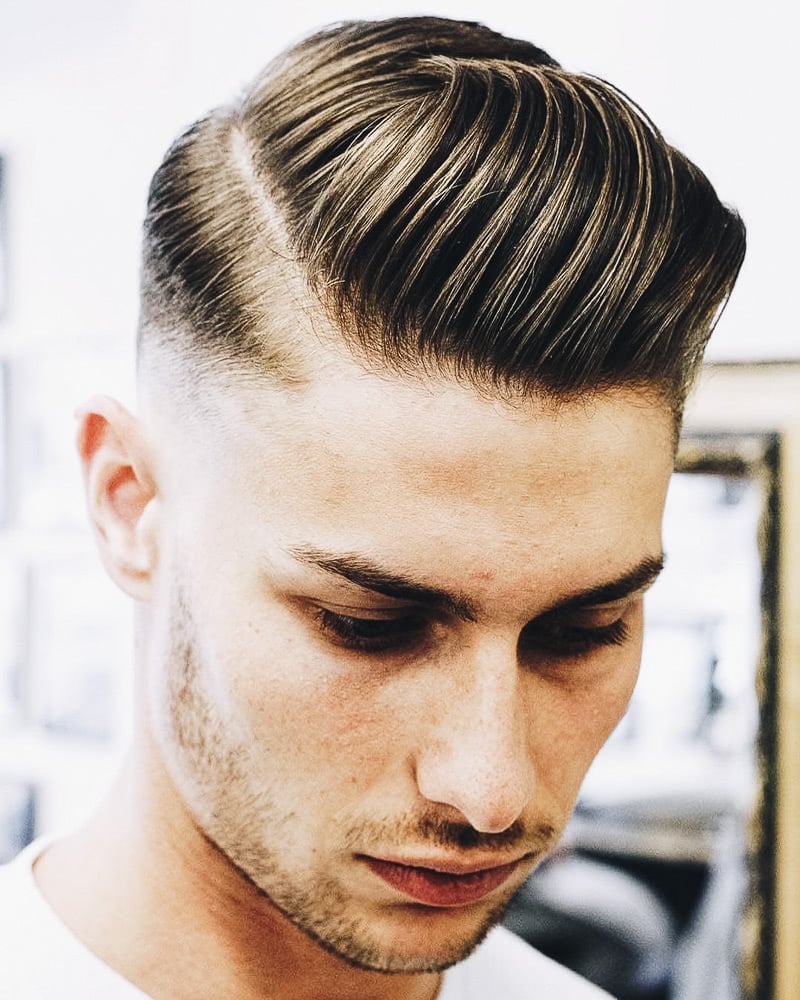
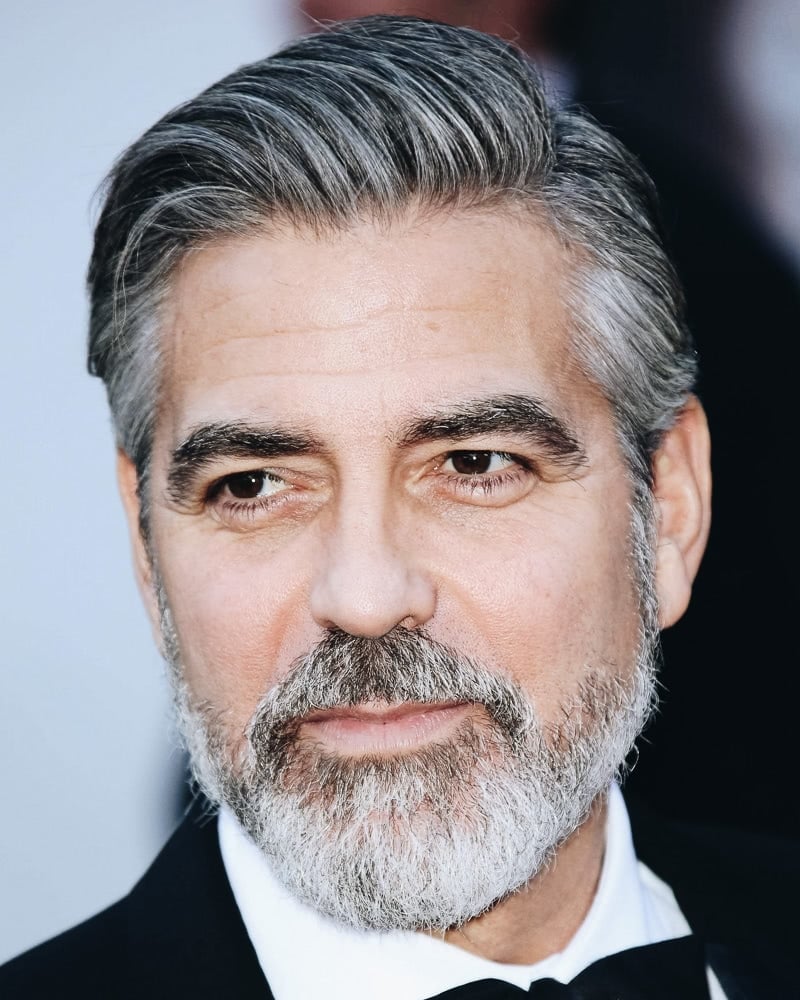
Slicked back and parted to one side, with the sides kept short. It’s a strong-hold, shiny-pomade kind of look, so save it for the days you’re wearing a jacket.
What to ask for Low fade, three inches on top, a side part, slicked back.
Flat Top
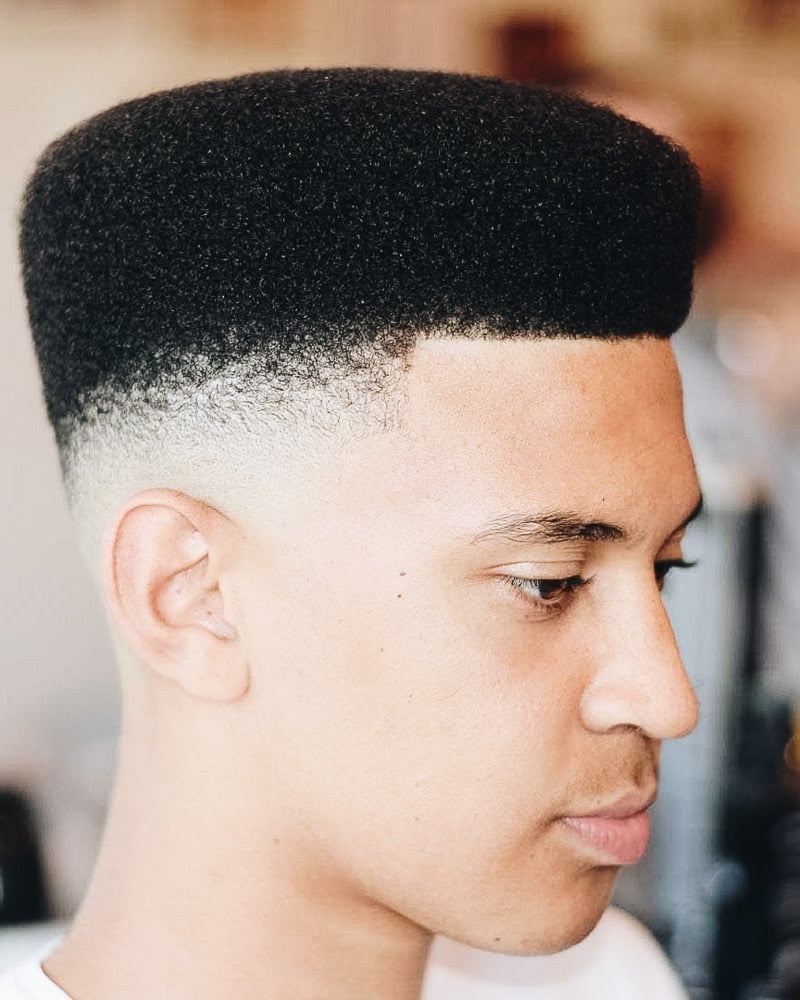
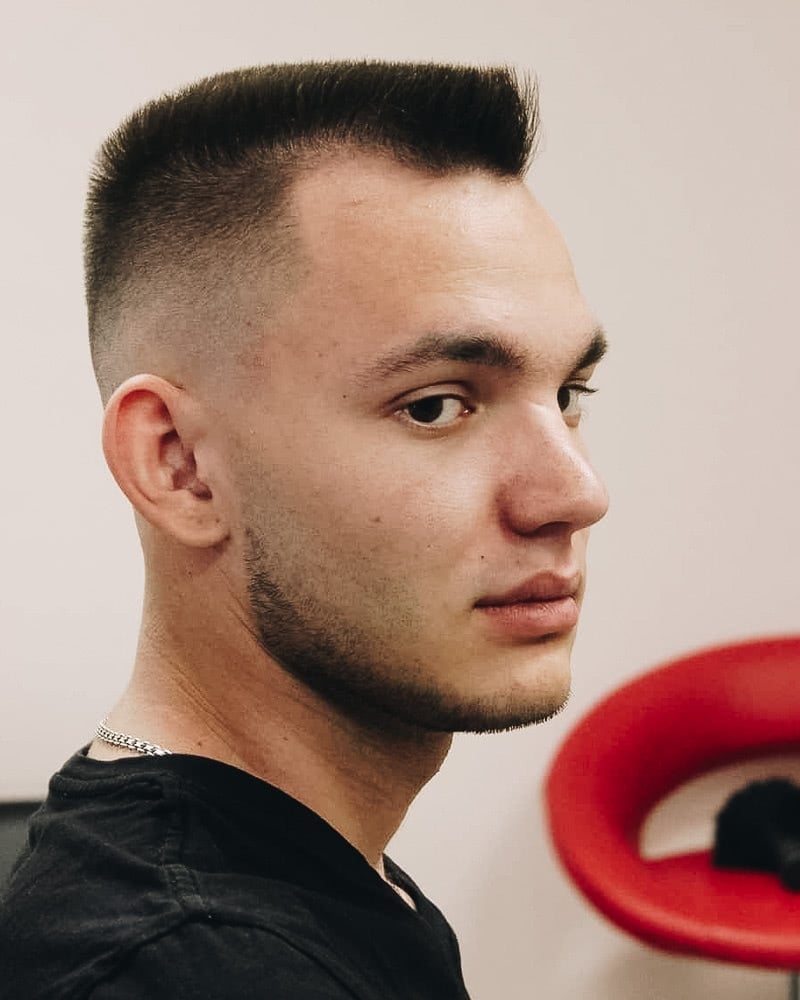
If you want a bit of a retro look, the Flat Top is still a great style today.
What to ask for High skin fade, the top cut flat and square with clippers.
Very short haircuts for men: buzz and military cuts
Classic Buzz Cut
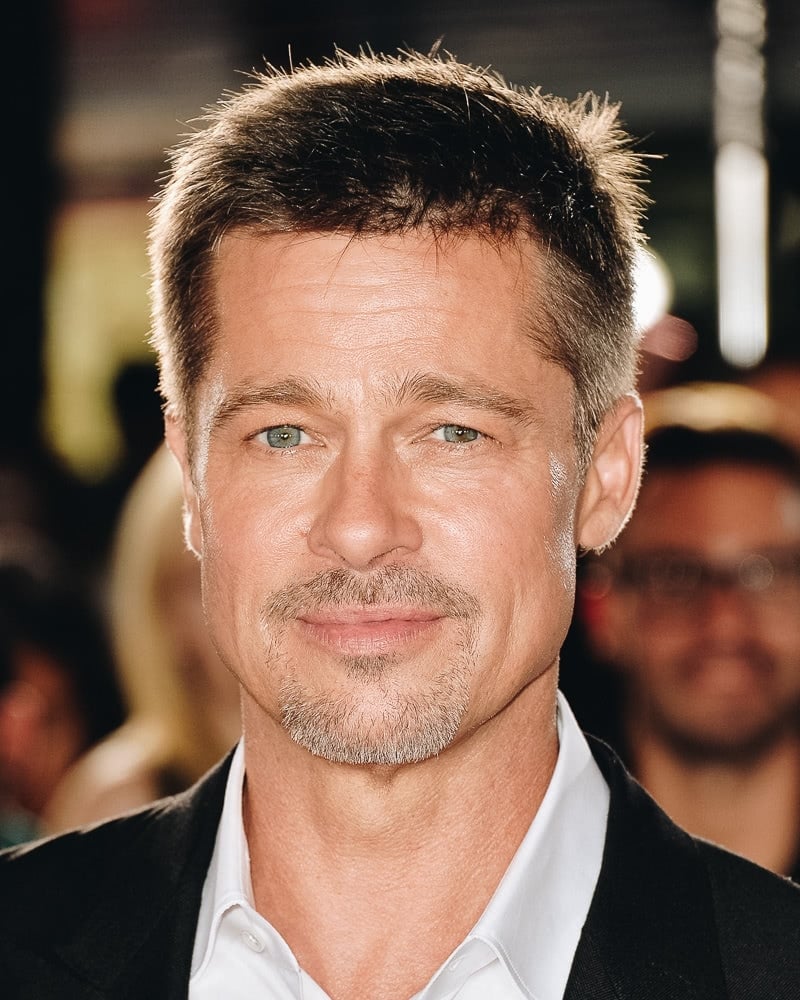
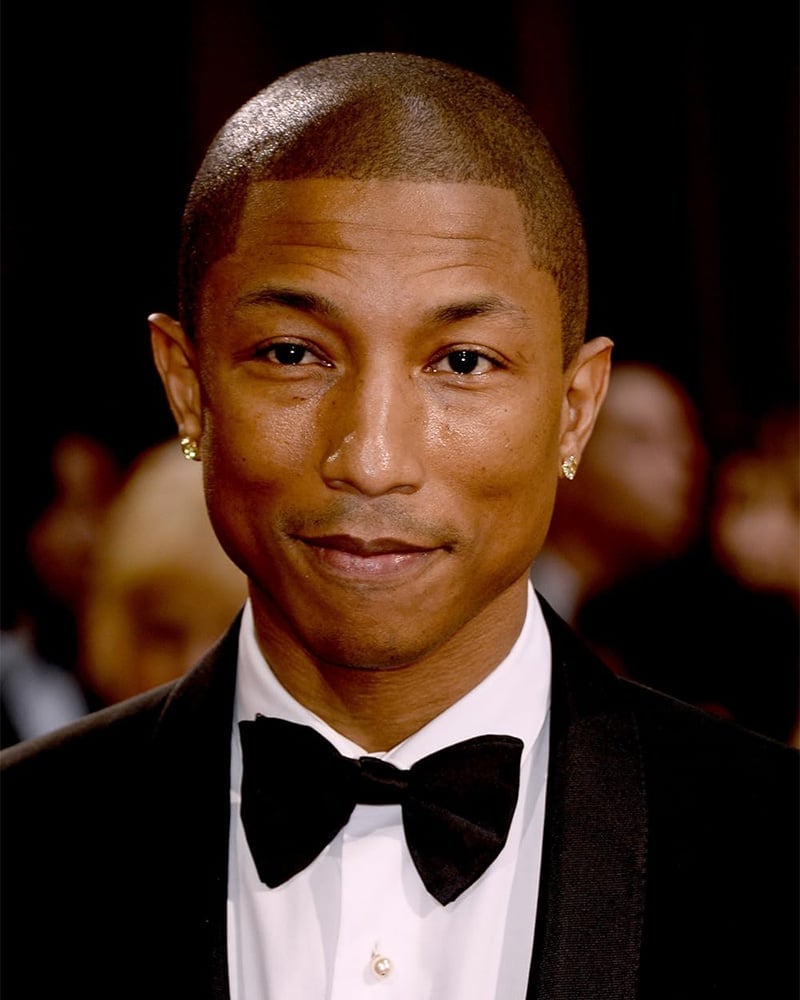
Very short and classic, the buzz cut is easy to do but doesn’t leave many options in terms of styling. It works great if you have thick hair and want a rugged army look. Can’t settle on a number? Our buzz cut guide lines up 39 of them, from no guard at all to a number 8.
What to ask for Number 2 all over, one length, tapered at the neck.
Short Buzz Cut
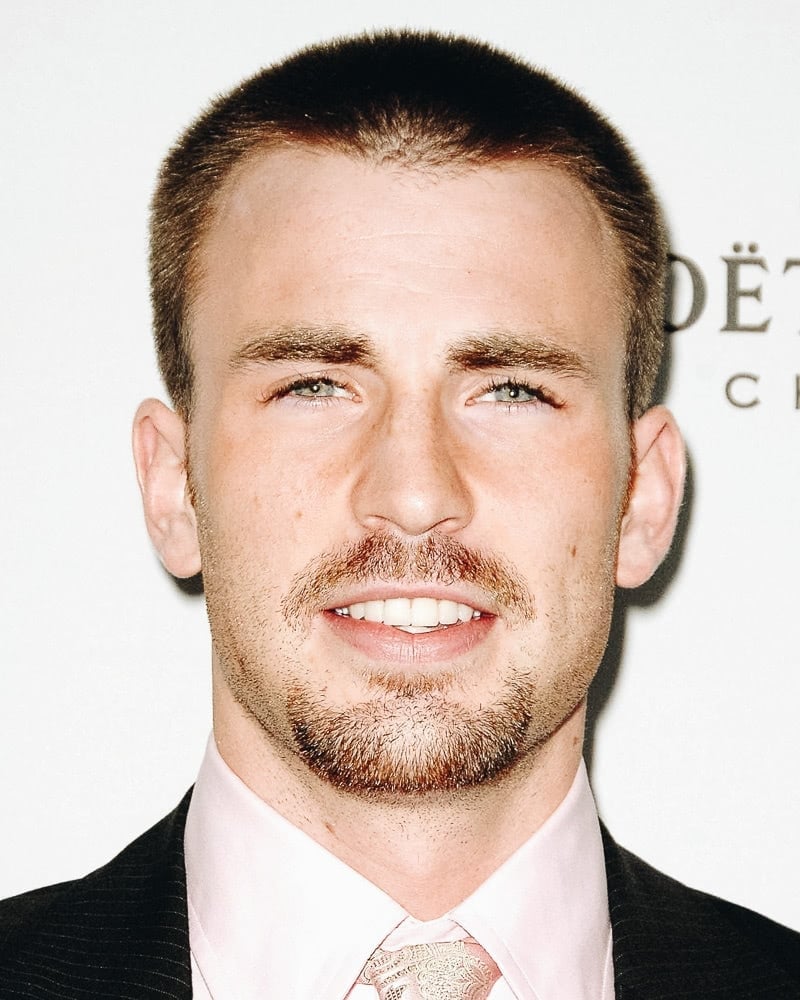
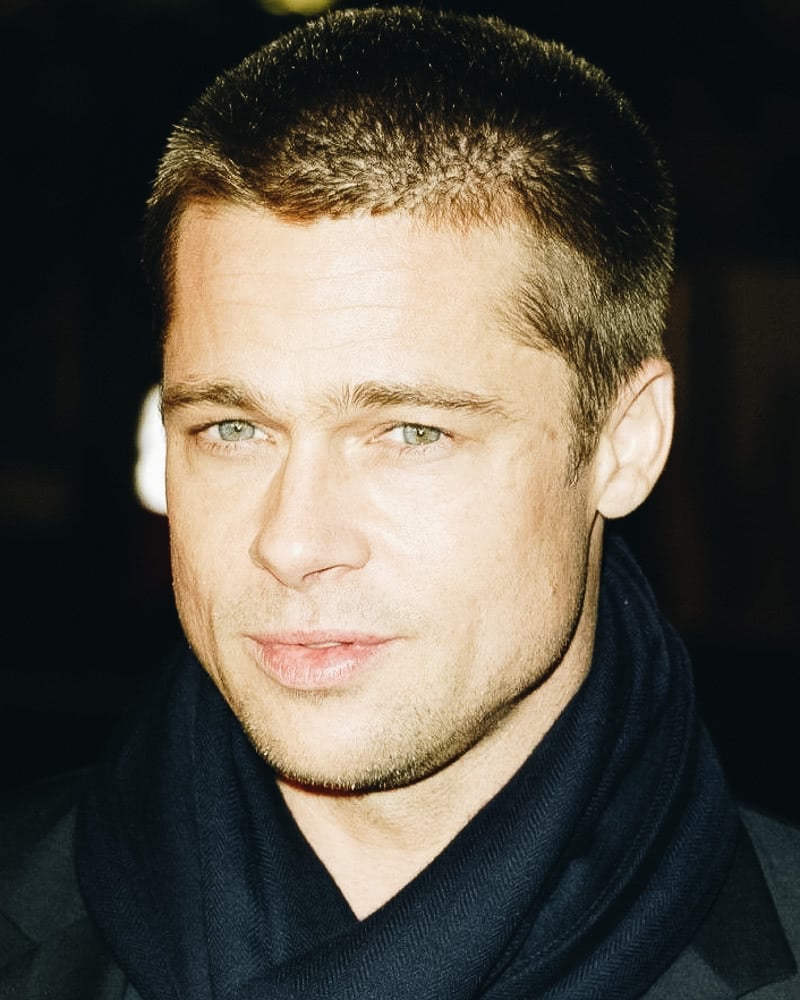
If the buzz cut isn’t short enough for you, try this variation with a shorter hair length on your clippers.
What to ask for Number 1 all over, one length, tapered at the neck.
Buzz Cut With Shaved Design
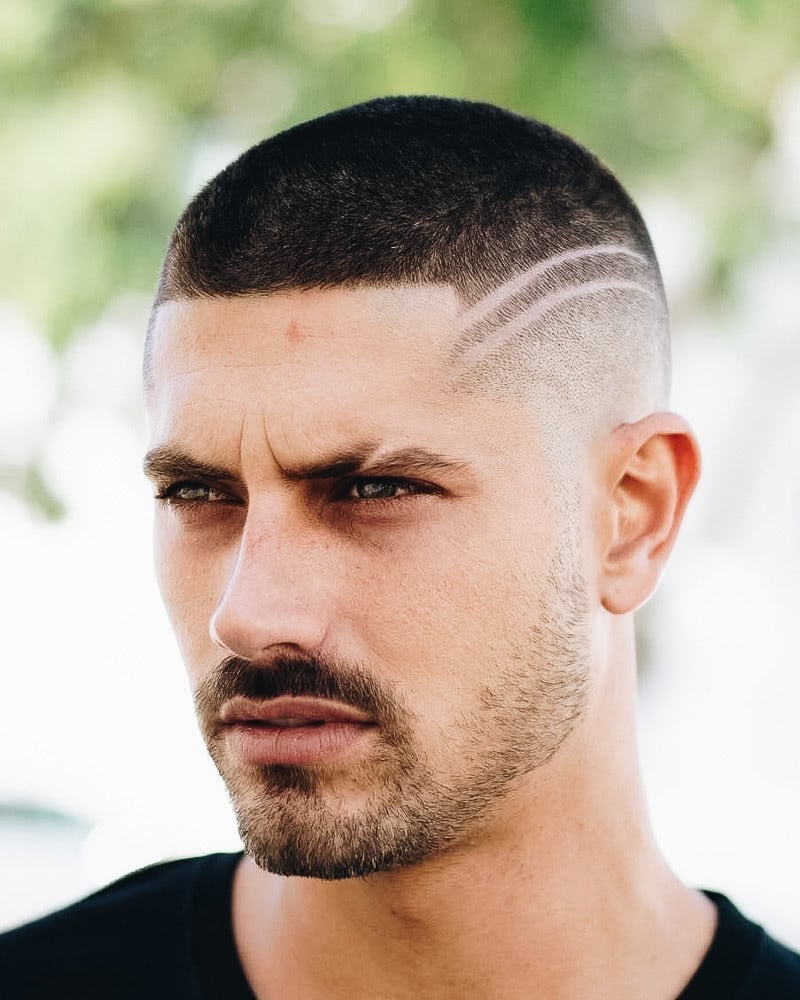
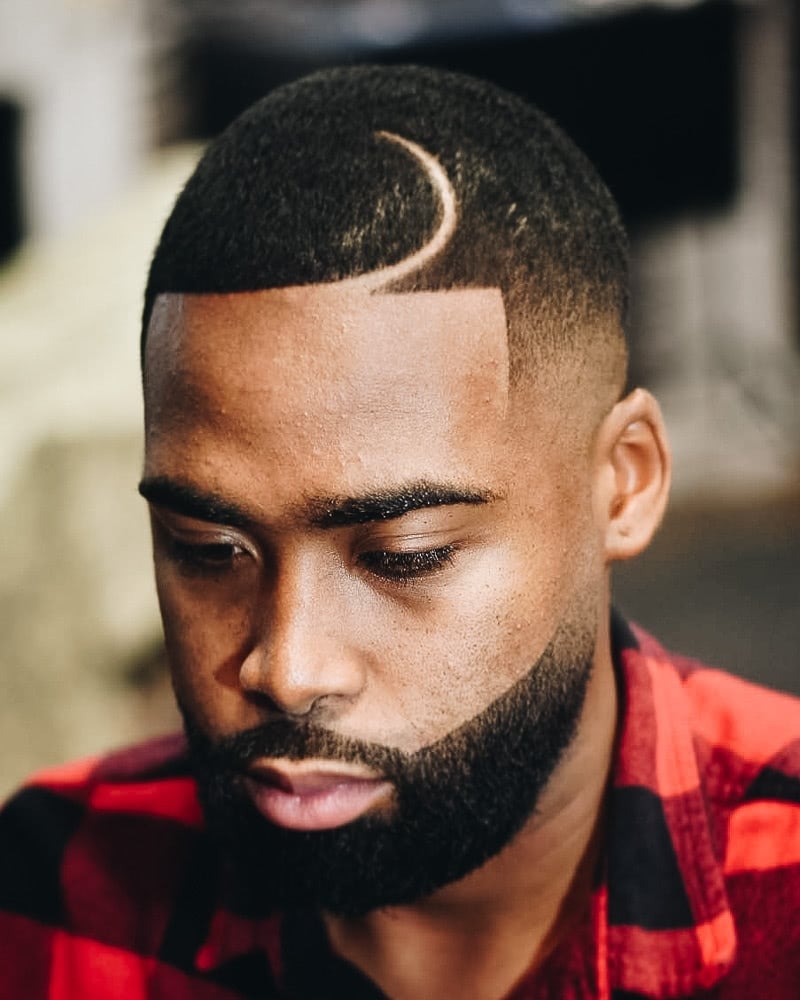
Yet another take on the buzz cut, if your barber is an artist, this can work great for an edgy and sophisticated look. You’ll need more work to maintain it though.
What to ask for Number 2 all over, skin fade on the sides, a design cut into the side.
Butch Cut
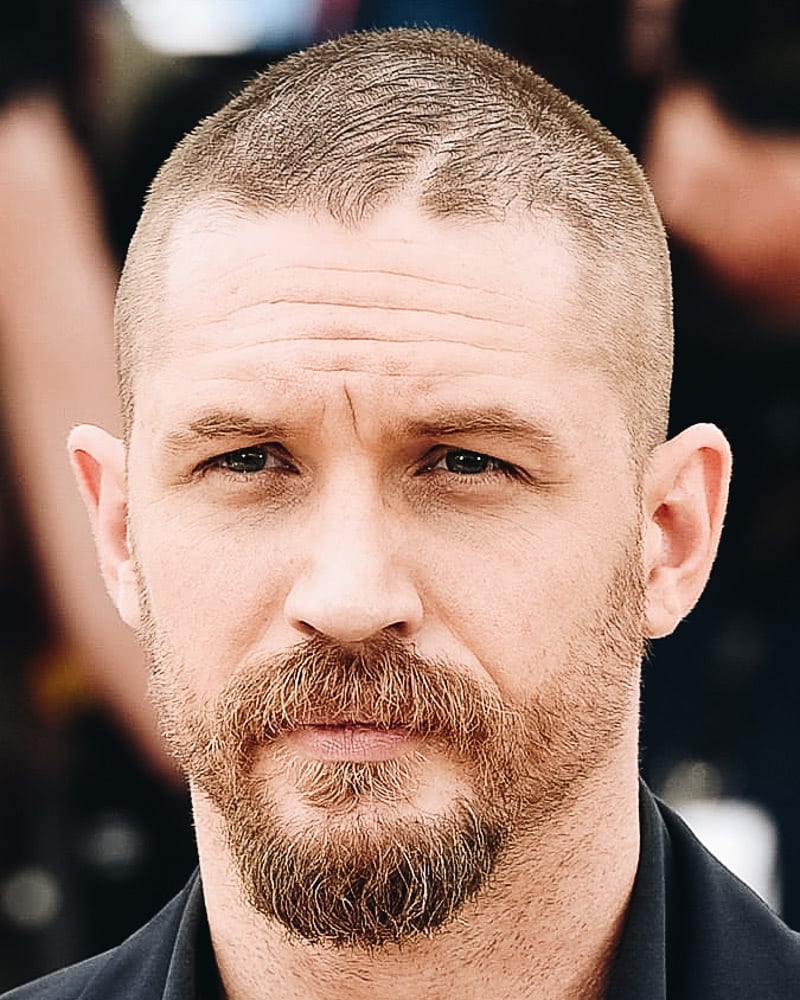
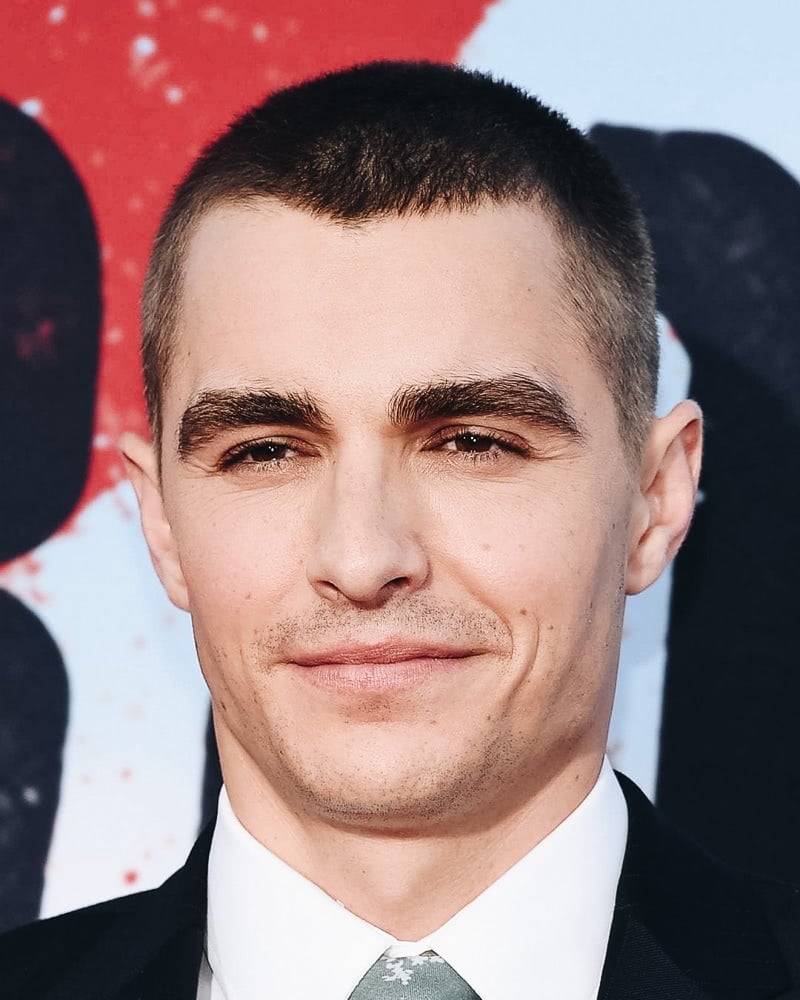
The Butch Cut is even shorter than the Buzz Cut. It’s perfect for bald guys or men with thinning hairlines.
What to ask for Number 3 all over, one length, tapered at the neck.
Induction Cut
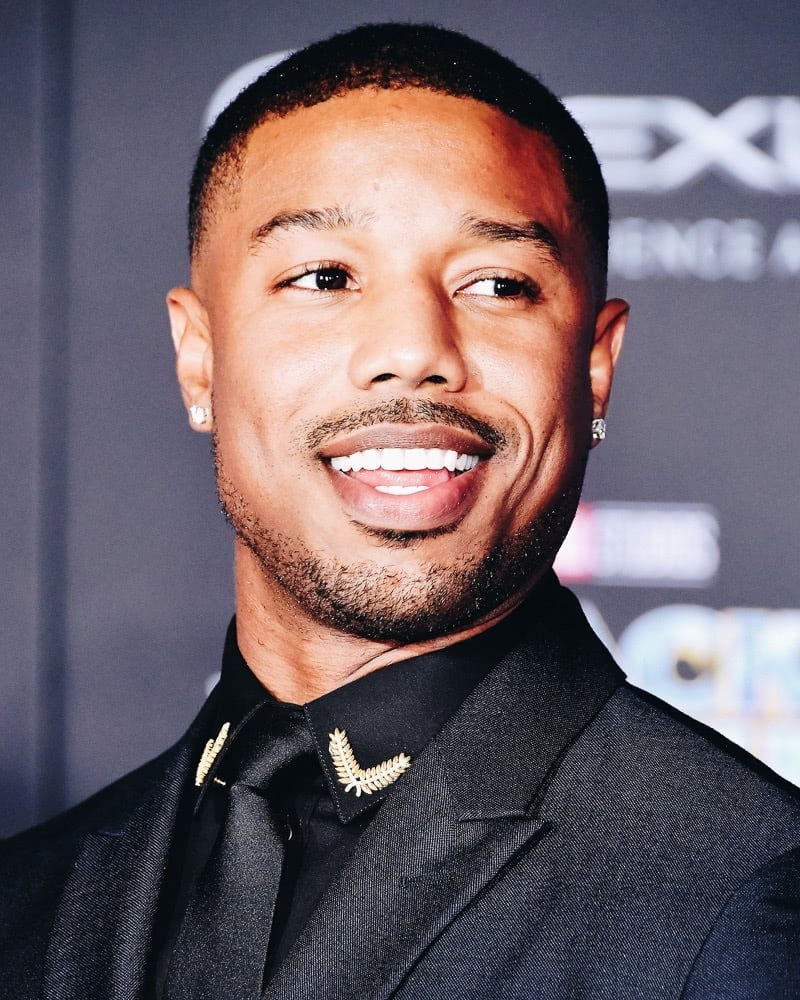
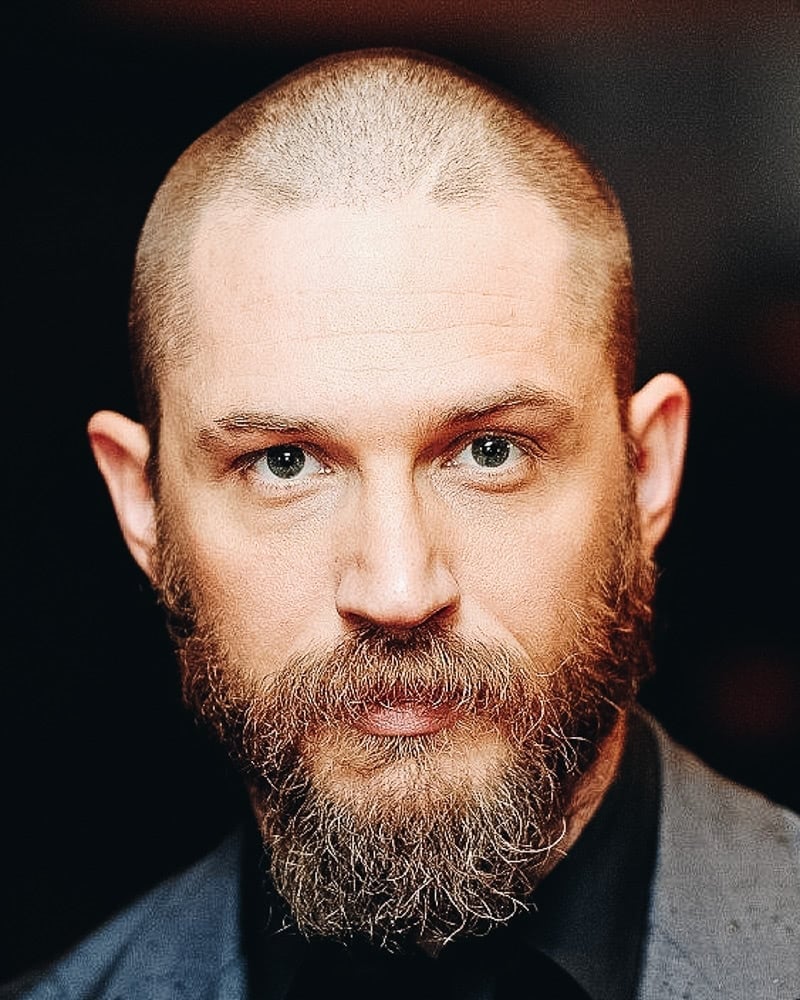
The Induction Cut is the shortest possible hairstyle without using a blade to shave your head. The haircut names come from its military history as it’s the first haircut traditionally given to new army recruits.
What to ask for No guard all over, one length, natural line-up.
High And Tight
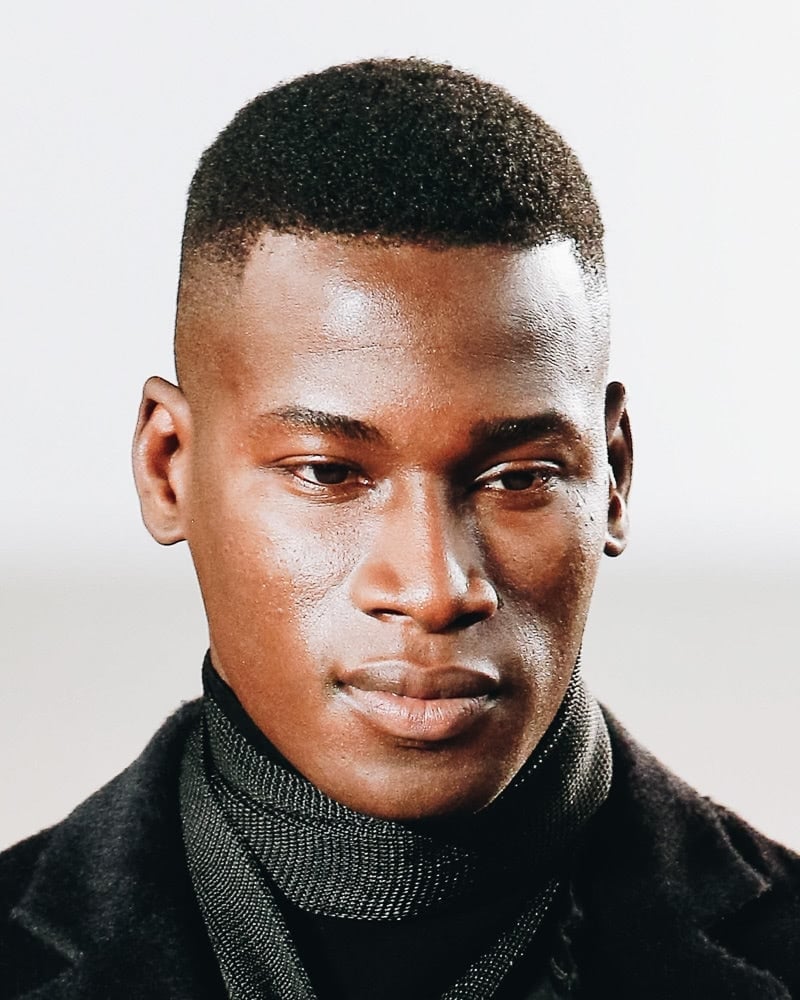
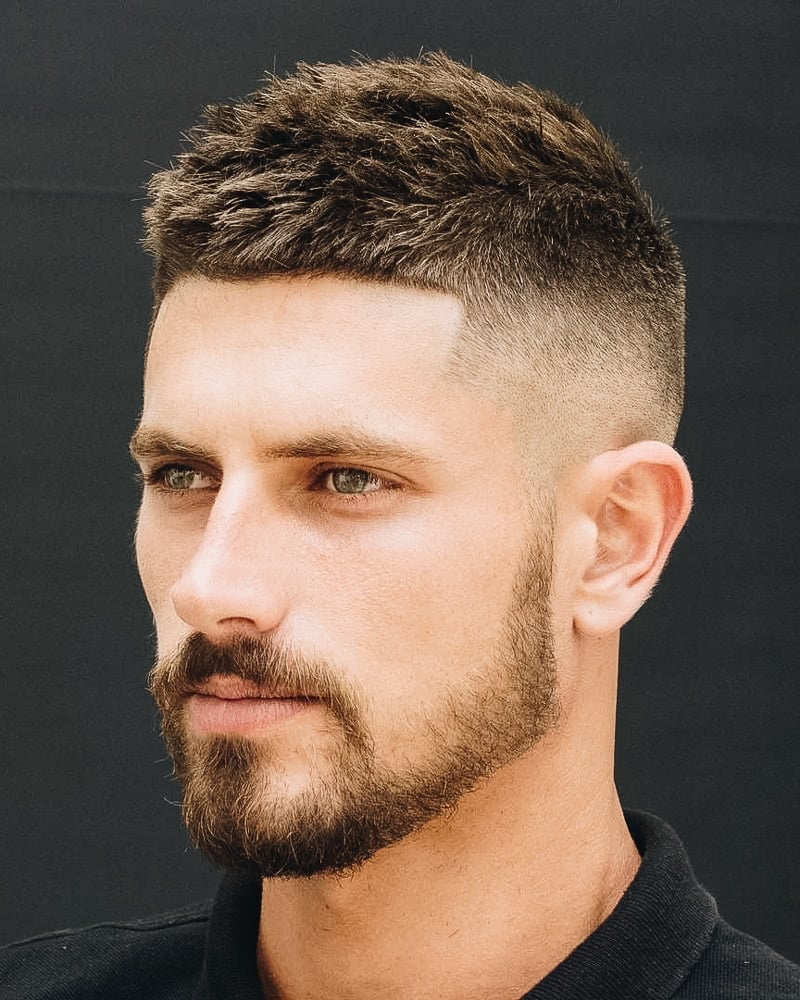
The high and tight features fading sides with a slightly longer top crown. It’s another classic military hairstyle, between a buzz cut and a crew cut.
What to ask for High fade from a number 1, a number 4 or 5 on top.
French crops, textured crops and the Edgar
French Crop With High Fade
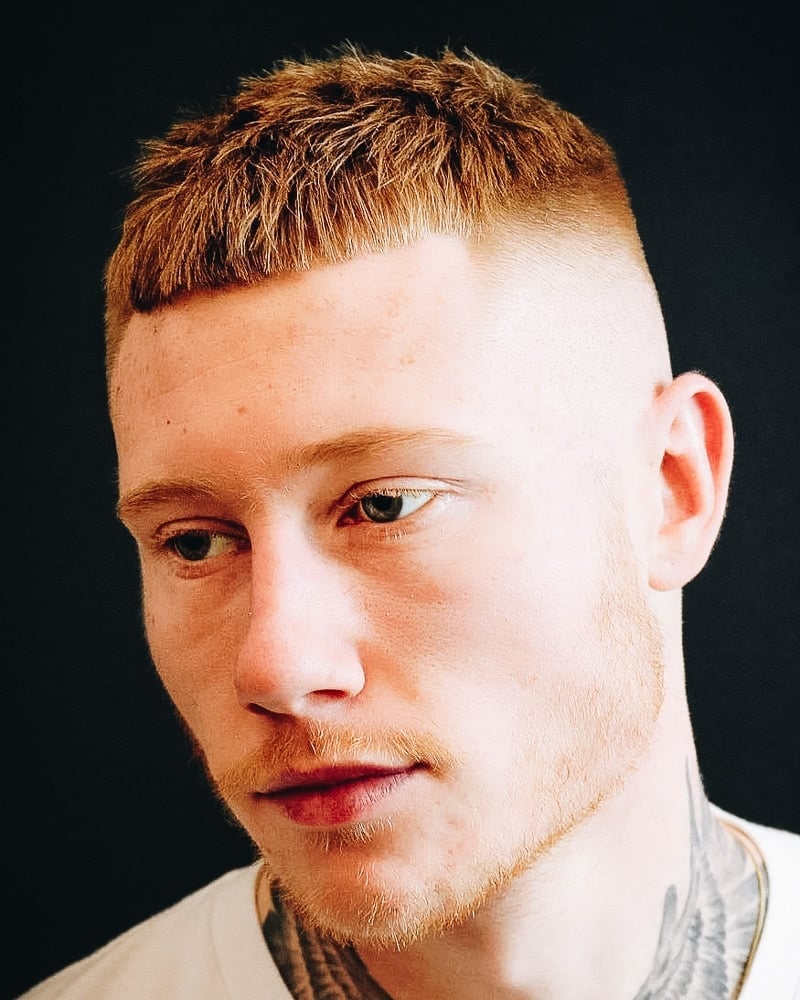
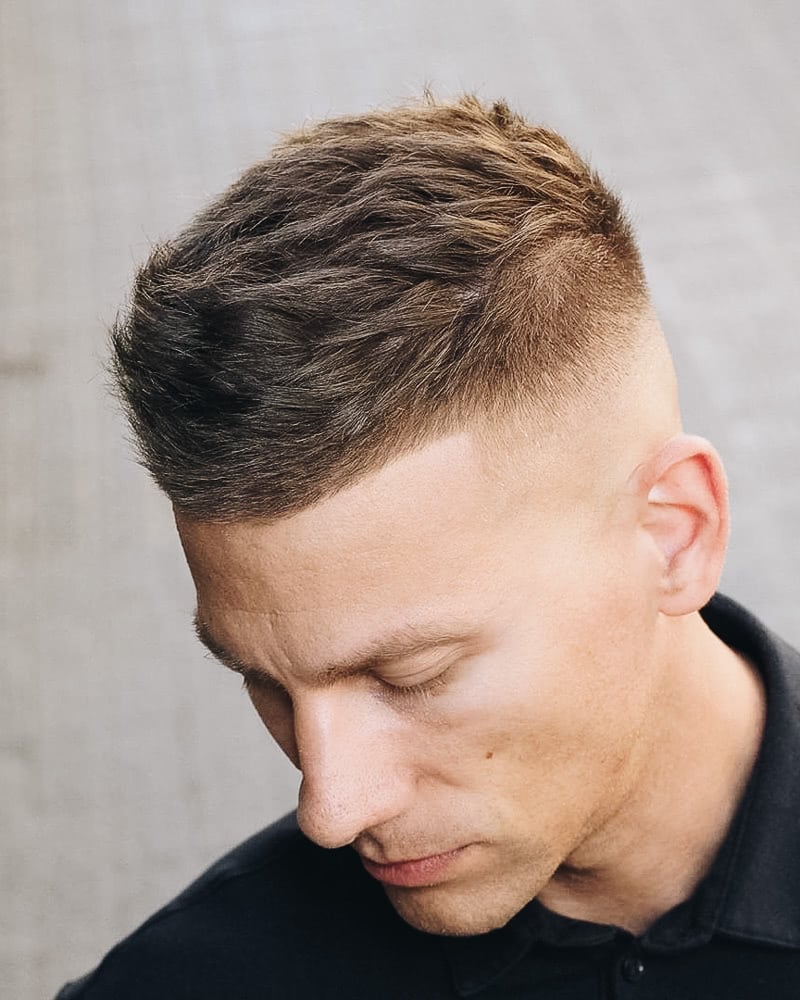
A short, blunt fringe up front and a fade that climbs well past your temples. It’s crisp from every angle, and on straight hair it sits flat with next to no product.
What to ask for High fade from a number 1, an inch and a half on top, short blunt fringe, textured with point cutting.
French Crop With Low Fade
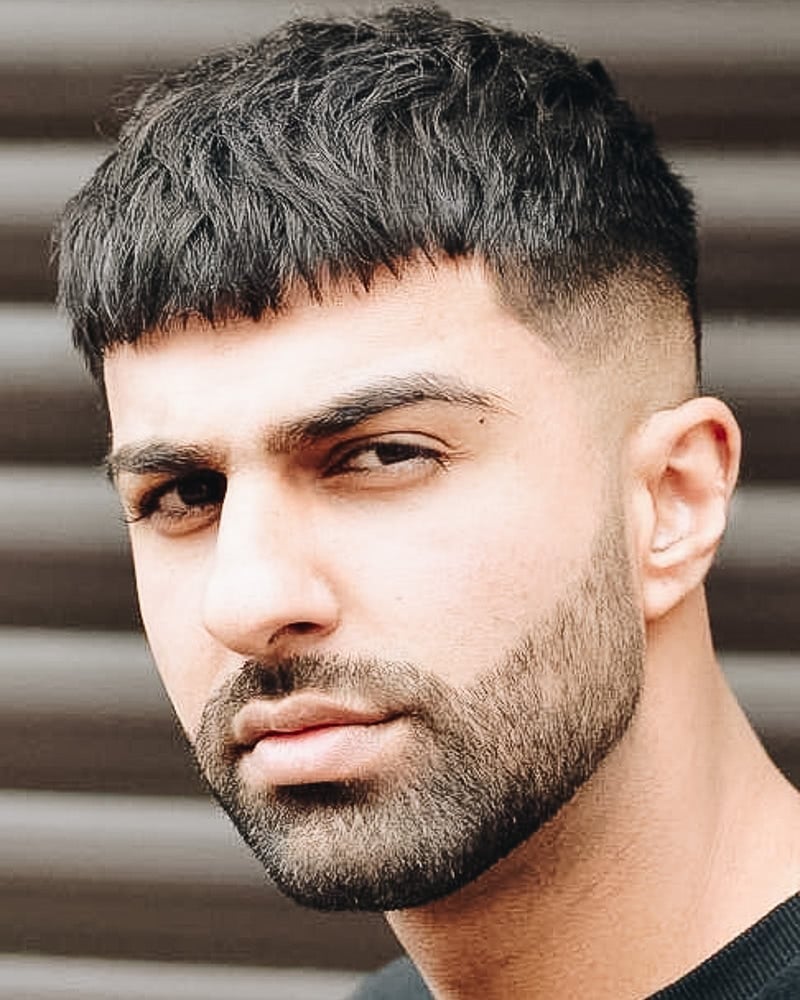
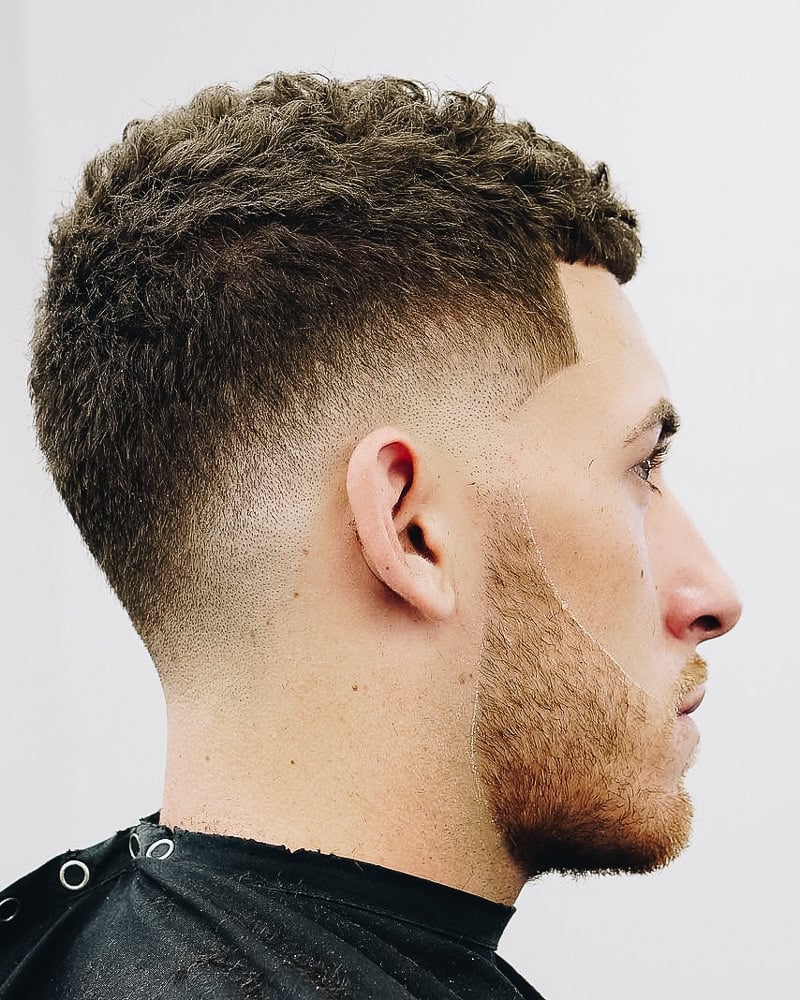
Same blunt fringe, gentler sides. Keeping the fade down by your ears leaves more weight around the head. It reads a little softer (and it’s office-friendly, if that matters to you).
What to ask for Low fade from a number 1, an inch and a half on top, short blunt fringe.
Messy French Crop
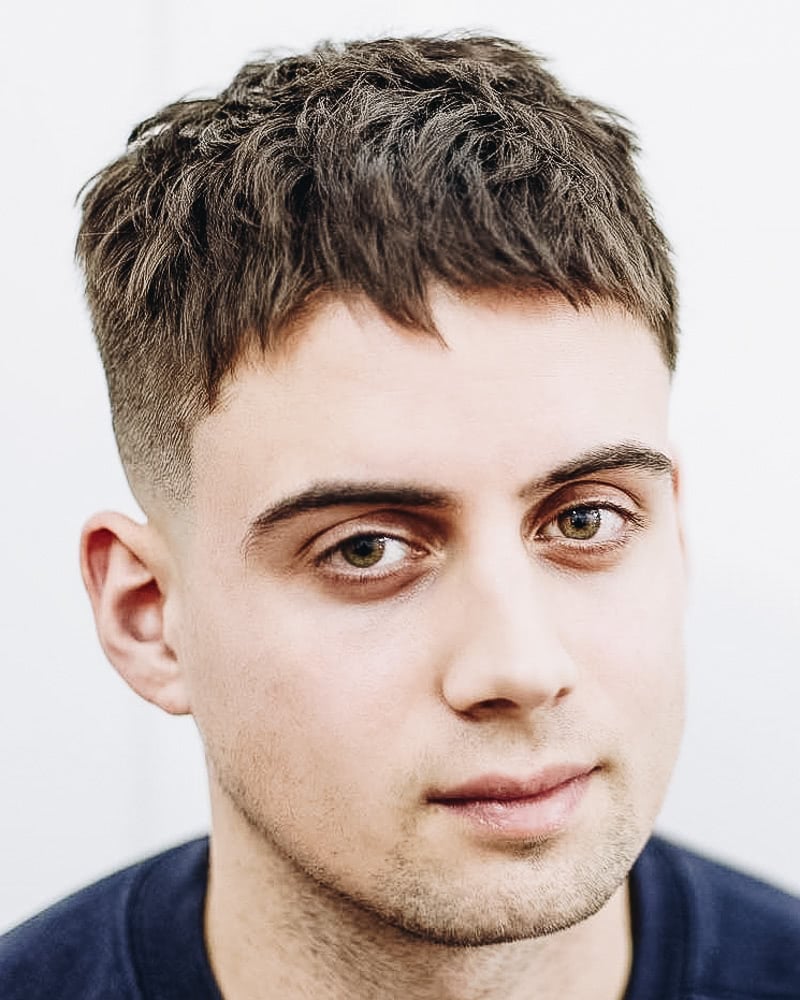
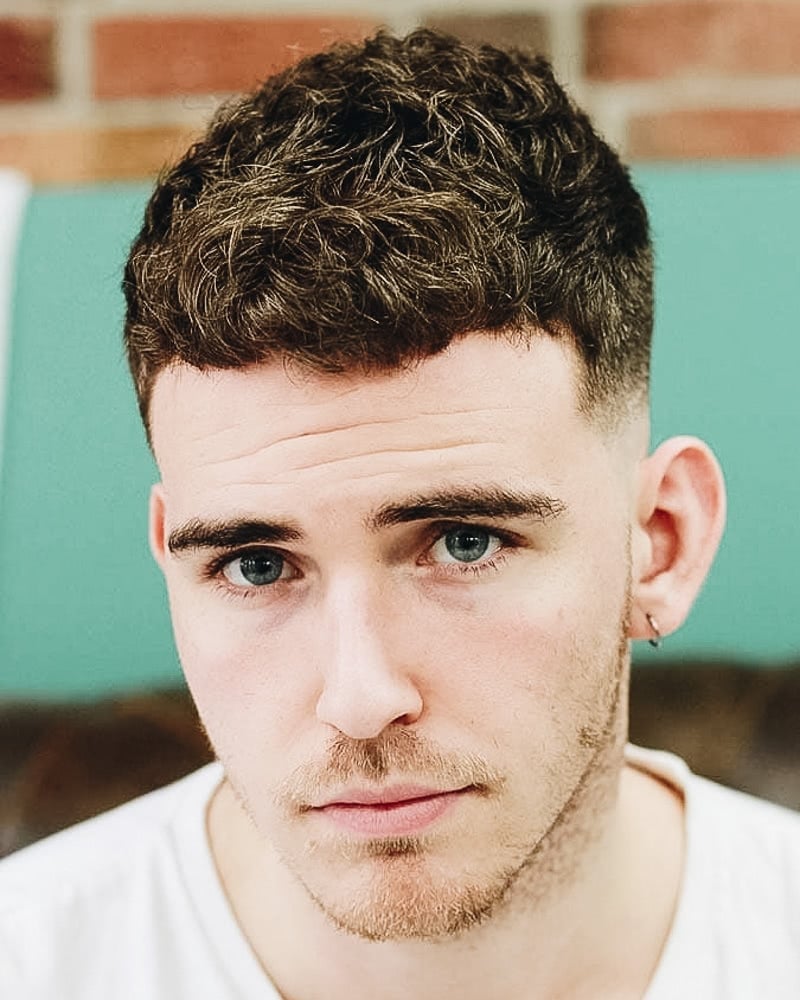
This style works particularly well if you have straight hair.
What to ask for Mid fade, two inches on top, heavy texture, fringe left uneven.
Classic French Crop
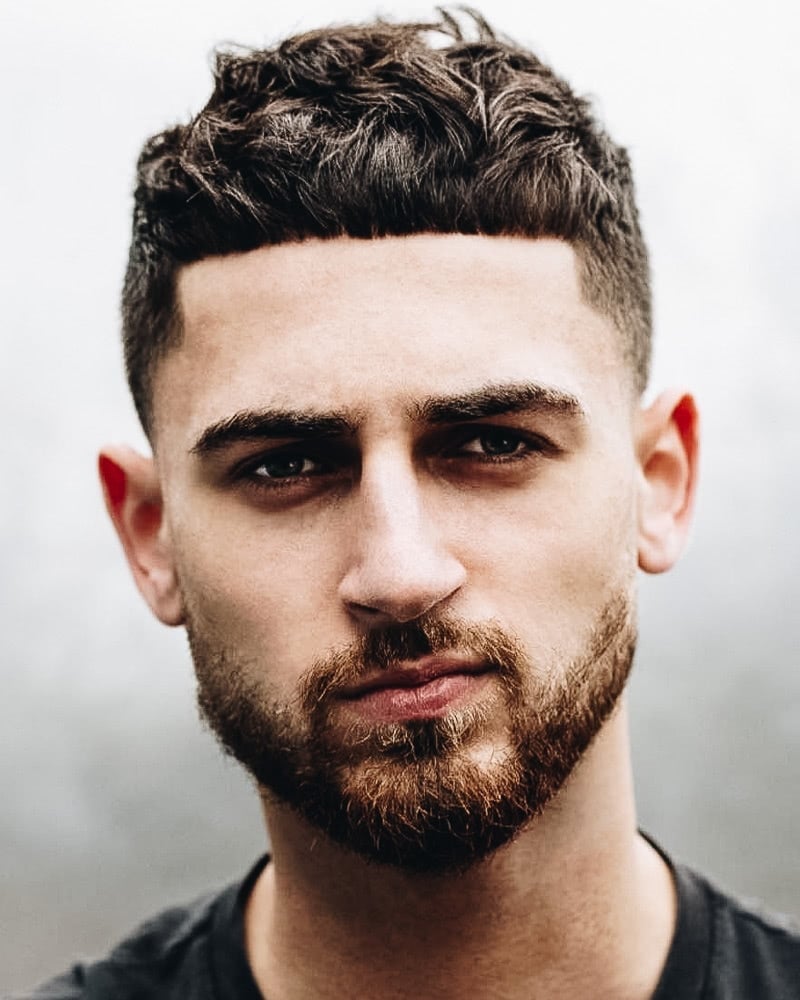
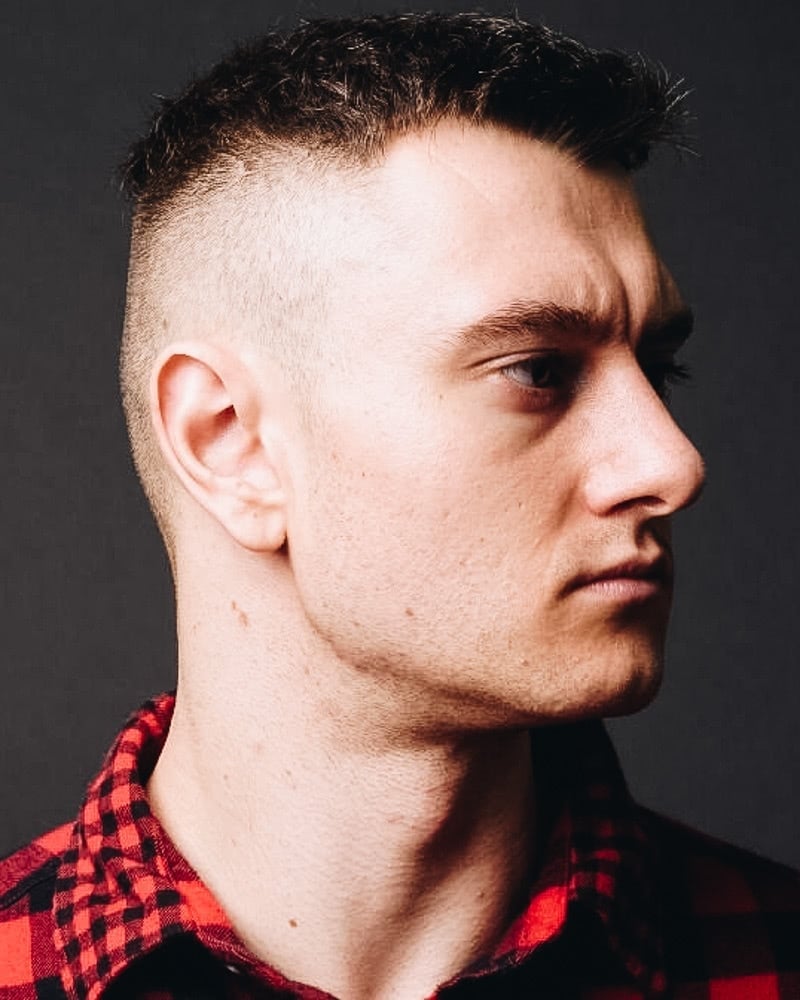
The original: short back and sides, a little length on top, and a straight fringe brushed forward. It hides a high forehead nicely, too.
What to ask for Number 3 on the sides, an inch on top, a straight fringe brushed forward.
Textured Crop
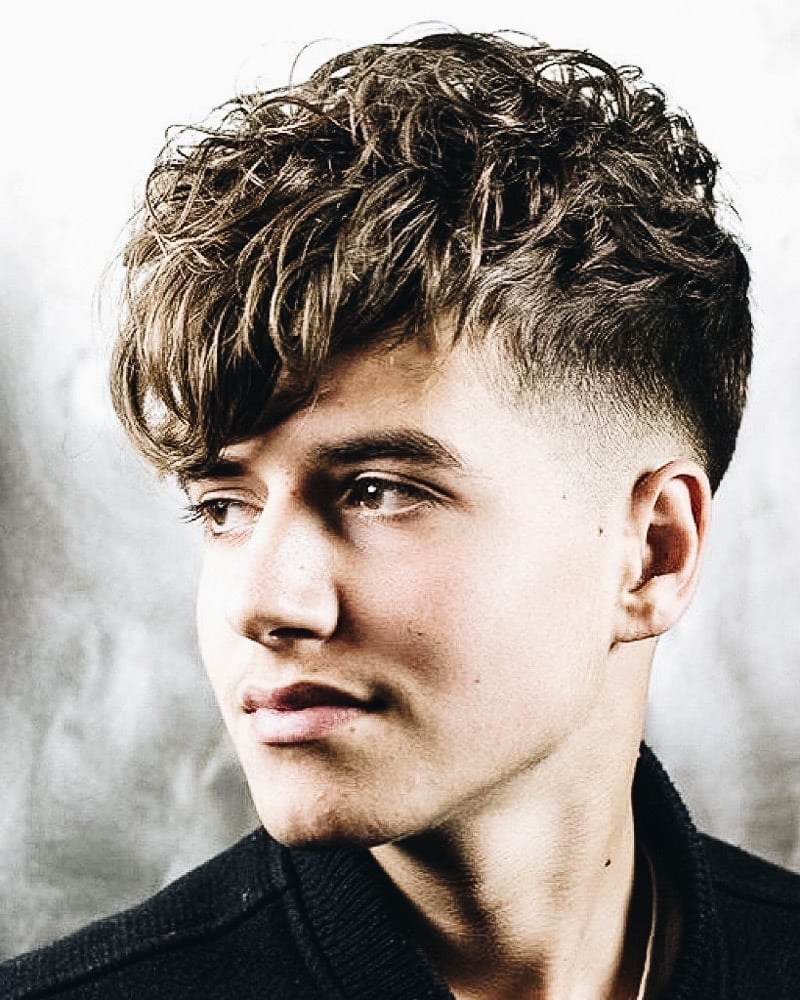
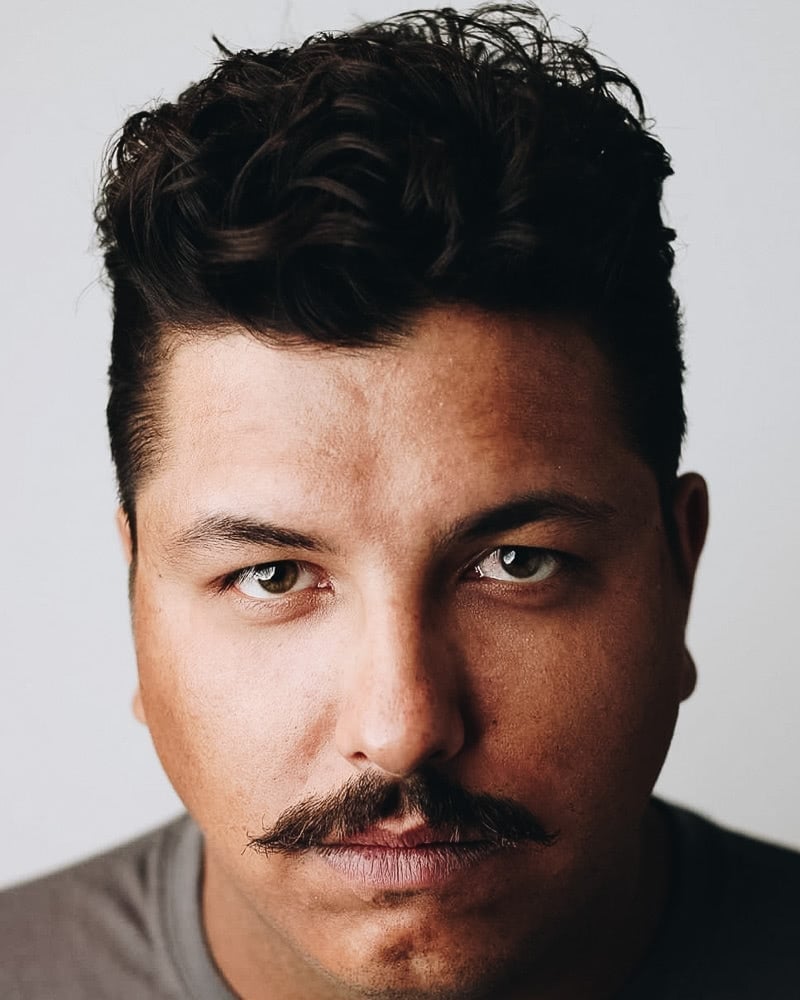
The textured crop works great with men with wavy or curly hair. Want more? Our textured crop guide has 28 of them, from low fades and tapers to curls and the French crop.
What to ask for Mid fade, two inches on top, textured with point cutting.
Edgar haircut
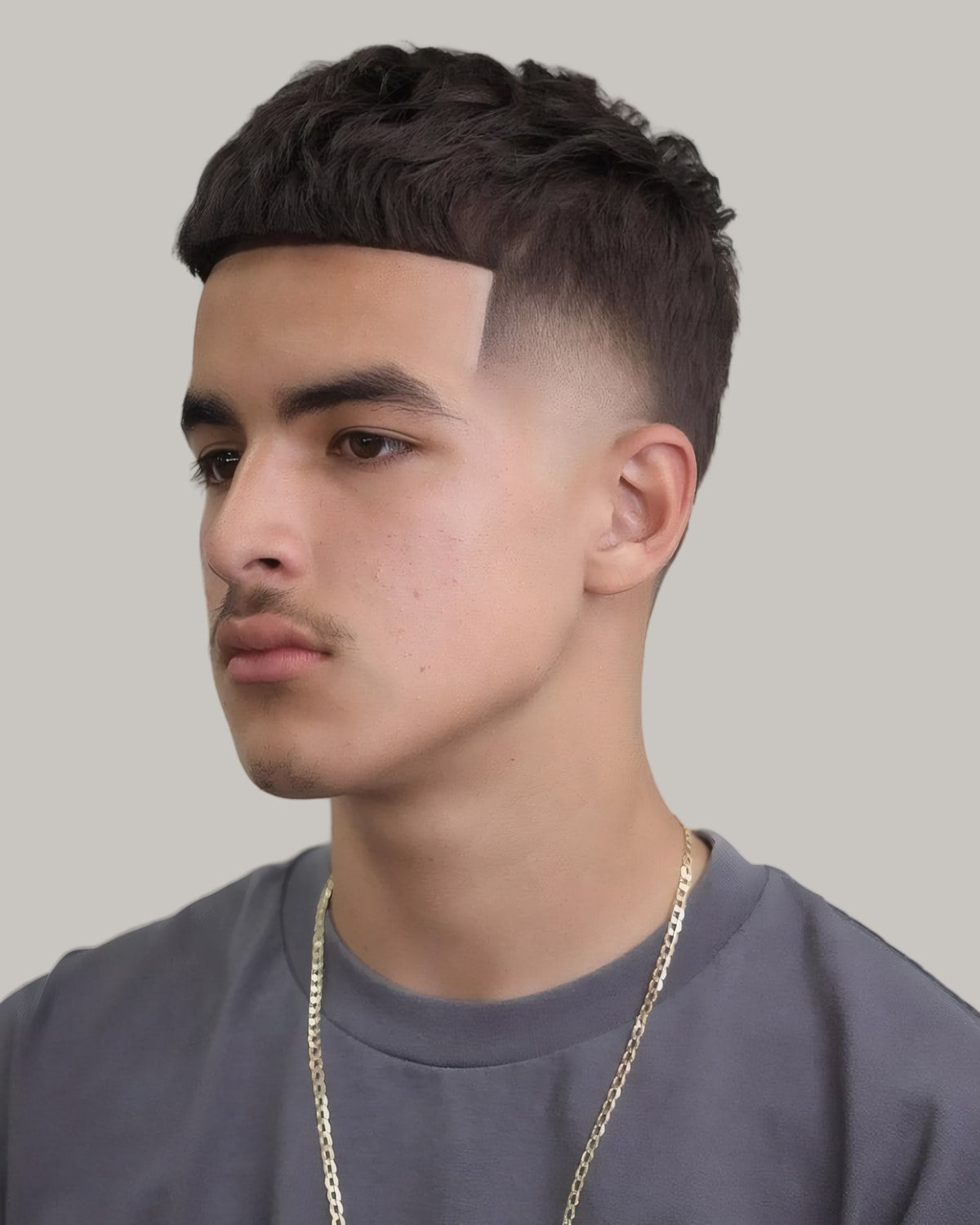
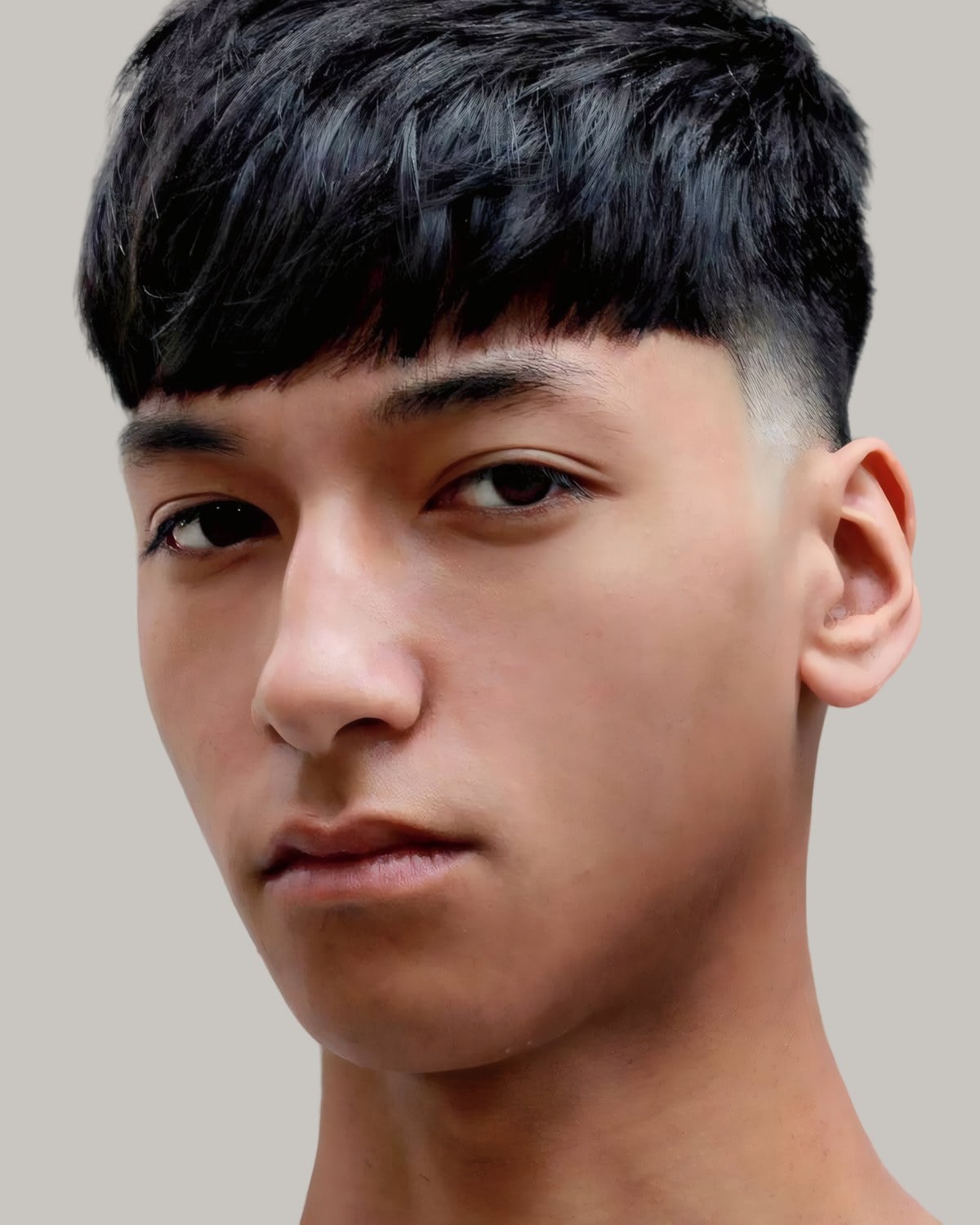
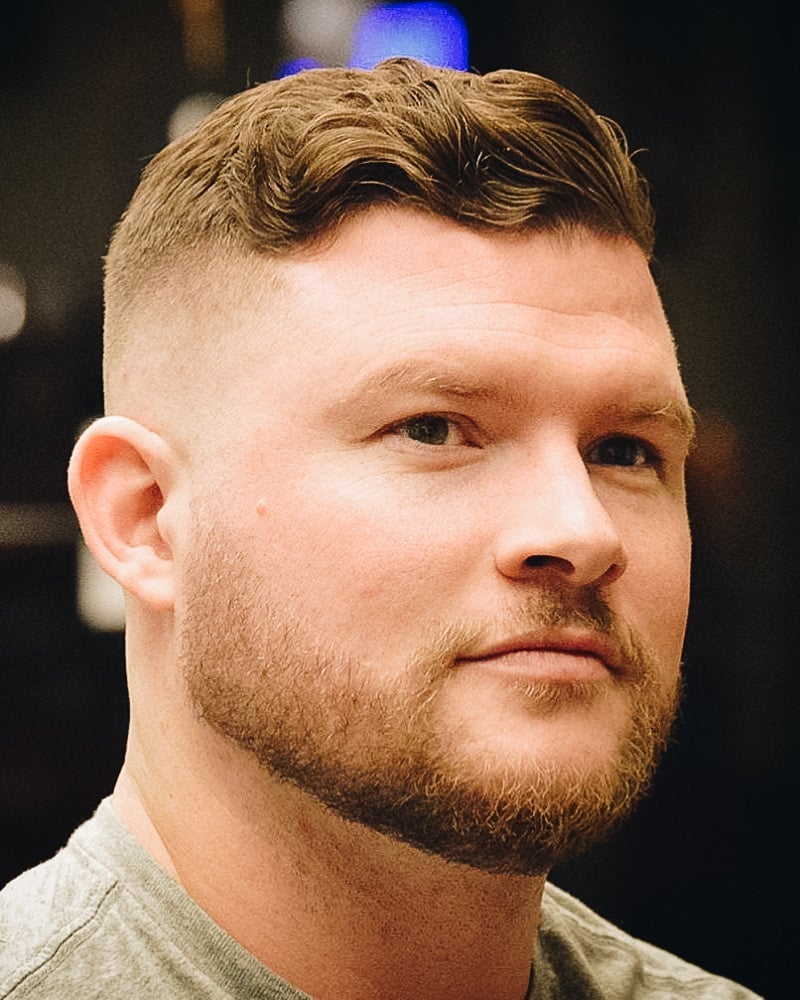
The Edgar is a blunt fringe cut dead straight across your forehead, with the sides tapered away underneath (think bowl cut, fresh from the barber). It first caught on in the US border states and it’s most prominent among young Latino guys, though one Corpus Christi barber called it “not a favorite amongst parents”. It works on any hair texture, wavy and curly included.
What to ask for Straight blunt fringe across the forehead, high taper on the sides.
Fluffy Edgar haircut
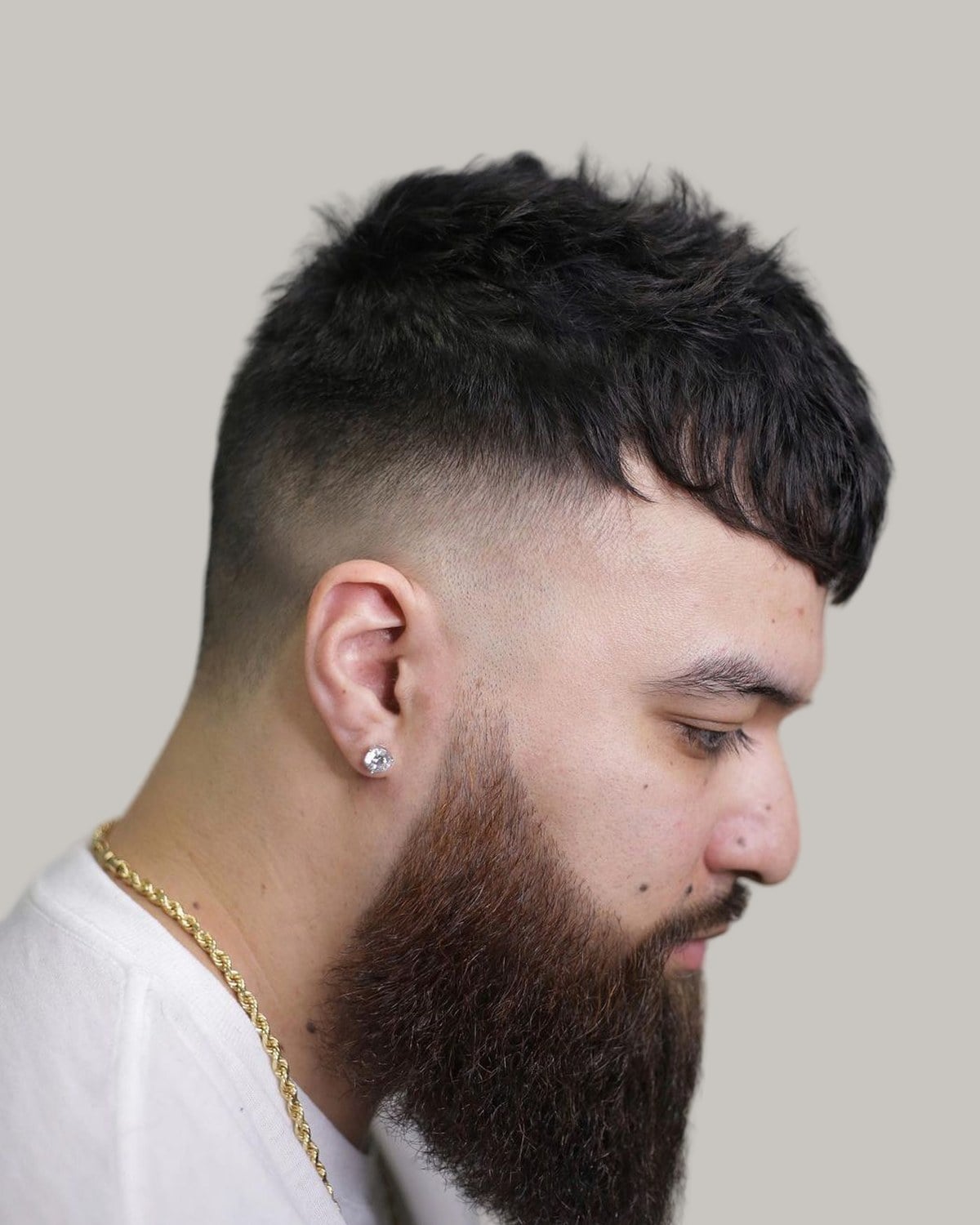
The fluffy Edgar keeps the straight line across the forehead and lets the top go loose and choppy instead of lying flat. It’s the softer take on the cut, and here it sits over a full beard. A little texture powder on dry hair keeps the fluff up.
What to ask for Fringe cut straight across, then broken up with point cutting, choppy texture on top, mid skin fade on the sides.
Edgar haircut with a taper
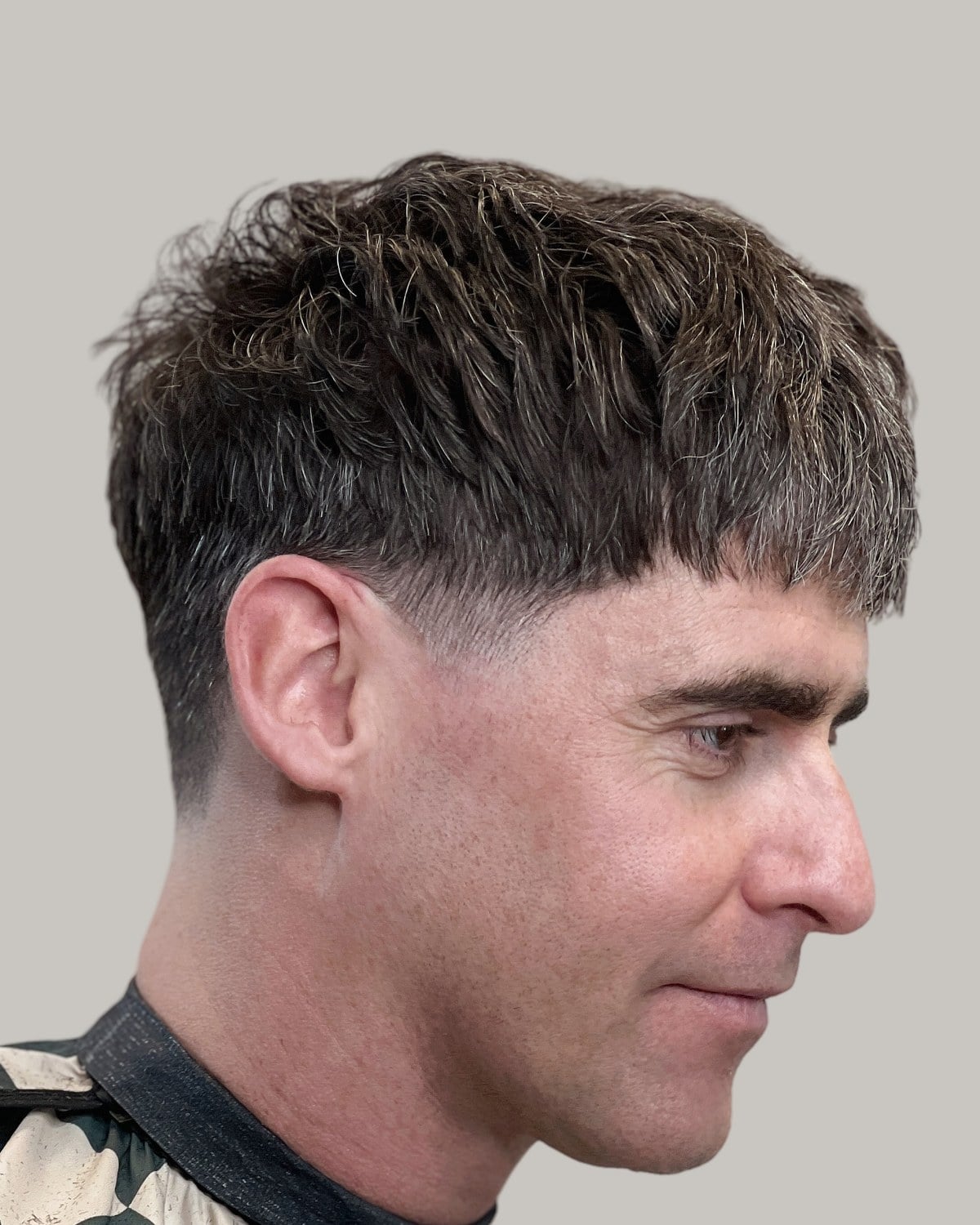
Swap the high taper for a low taper and the Edgar gets quieter: the blunt fringe stays, and the sides fall away gradually instead of jumping to skin. It suits anyone who likes the shape but has to look office-ready on Monday.
What to ask for Straight blunt fringe across the forehead, low taper on the sides and nape.
Short fade haircuts for men
Low Fade
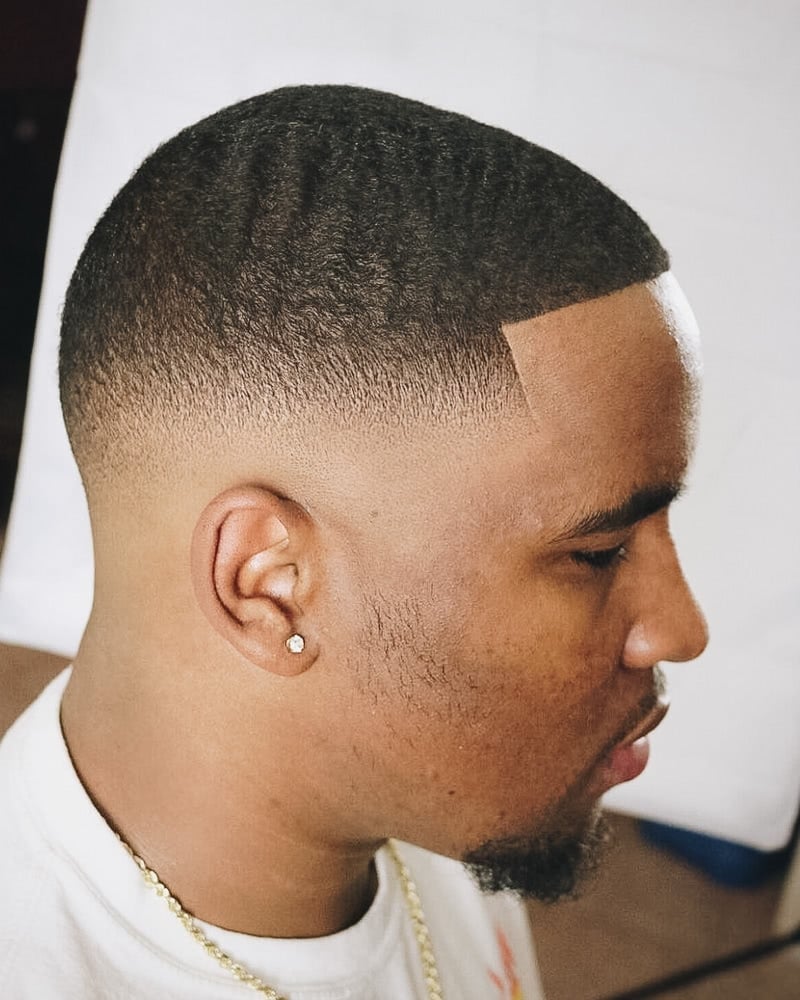
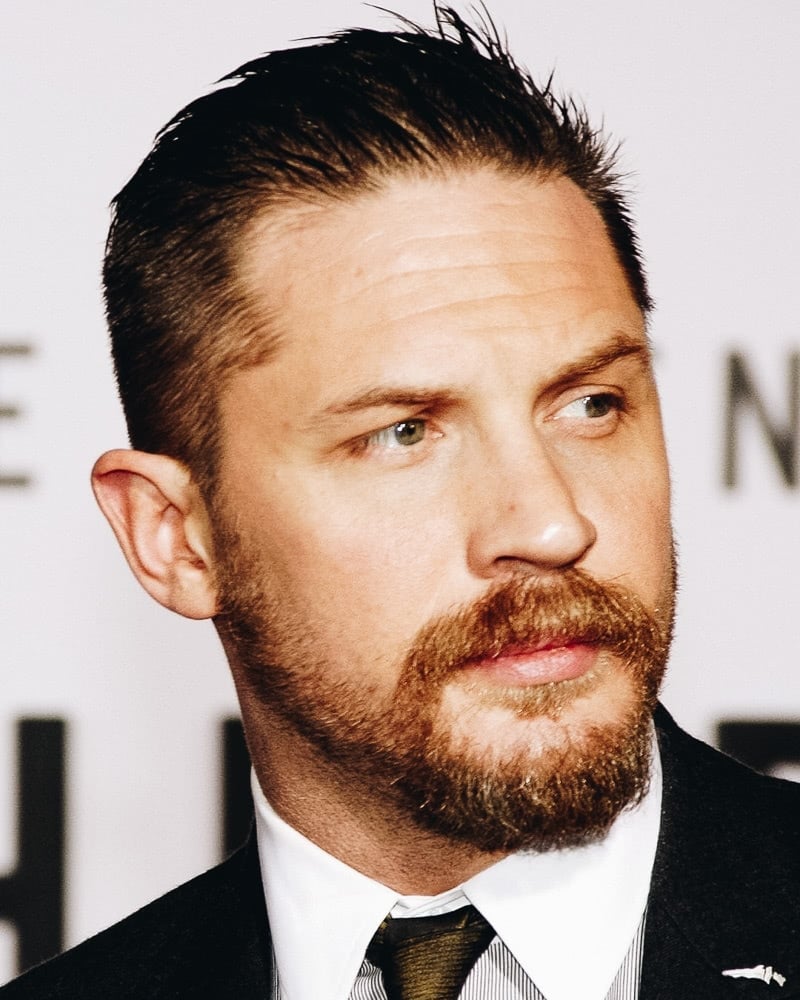
The fade starts just above your ears and blends up gently from there. It’s the quiet option (subtle enough for the office) and it grows out without any awkward stage.
What to ask for Low fade from a number 0.5, an inch on top.
Fade With Spike
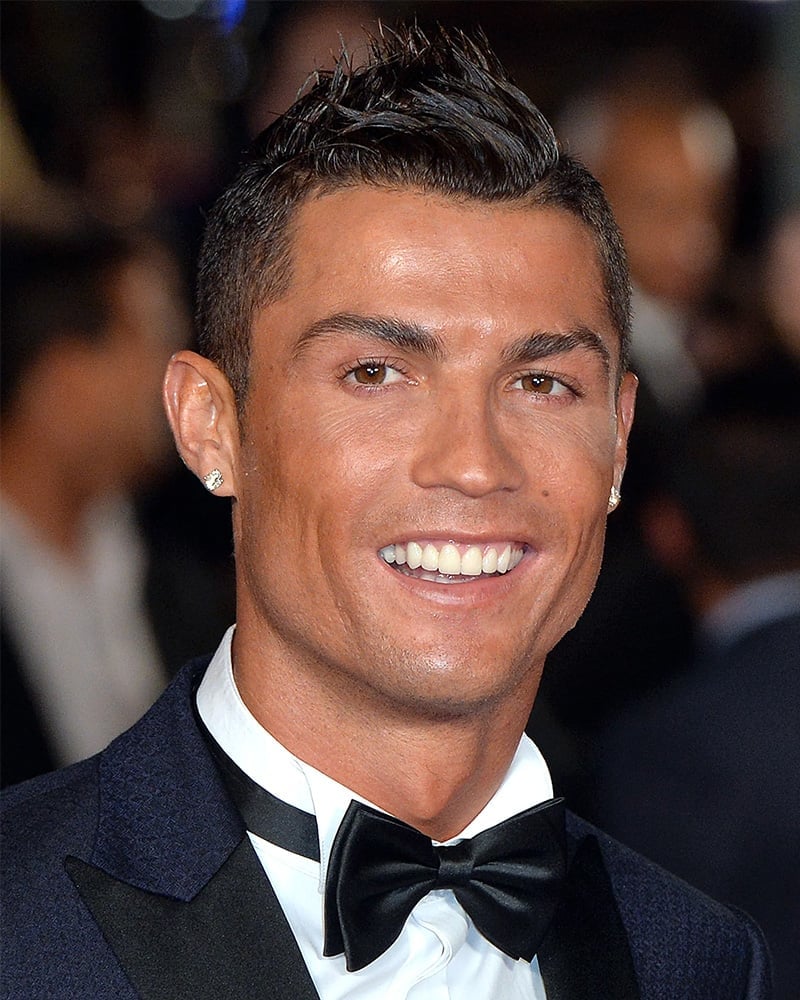
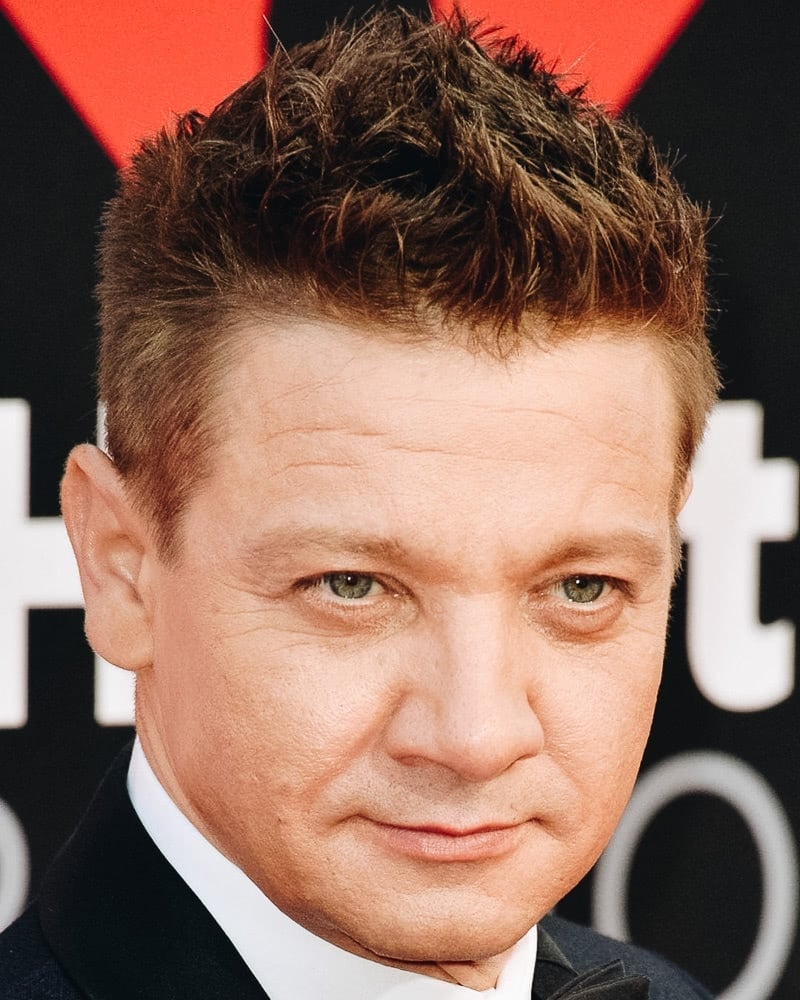
A Fade hairstyle with spikes at the top works well with thinning hair. It adds some volume and texture to your crown.
What to ask for Mid fade from a number 1, an inch and a half on top, textured for spikes.
Comb-Over Low Fade
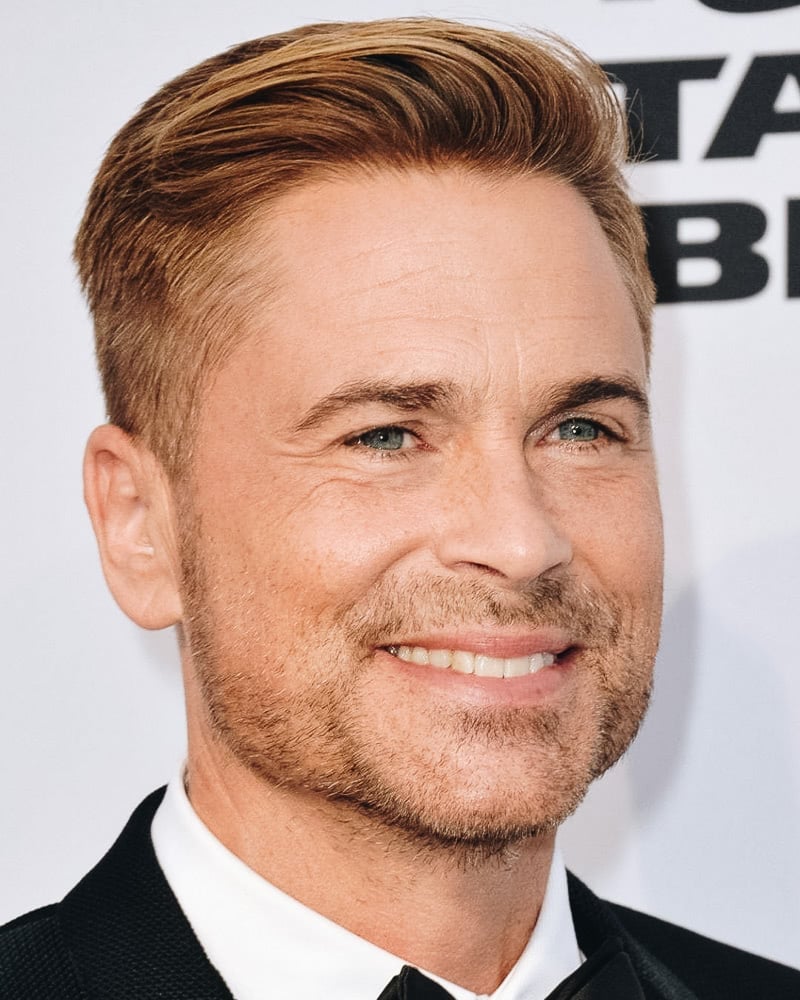
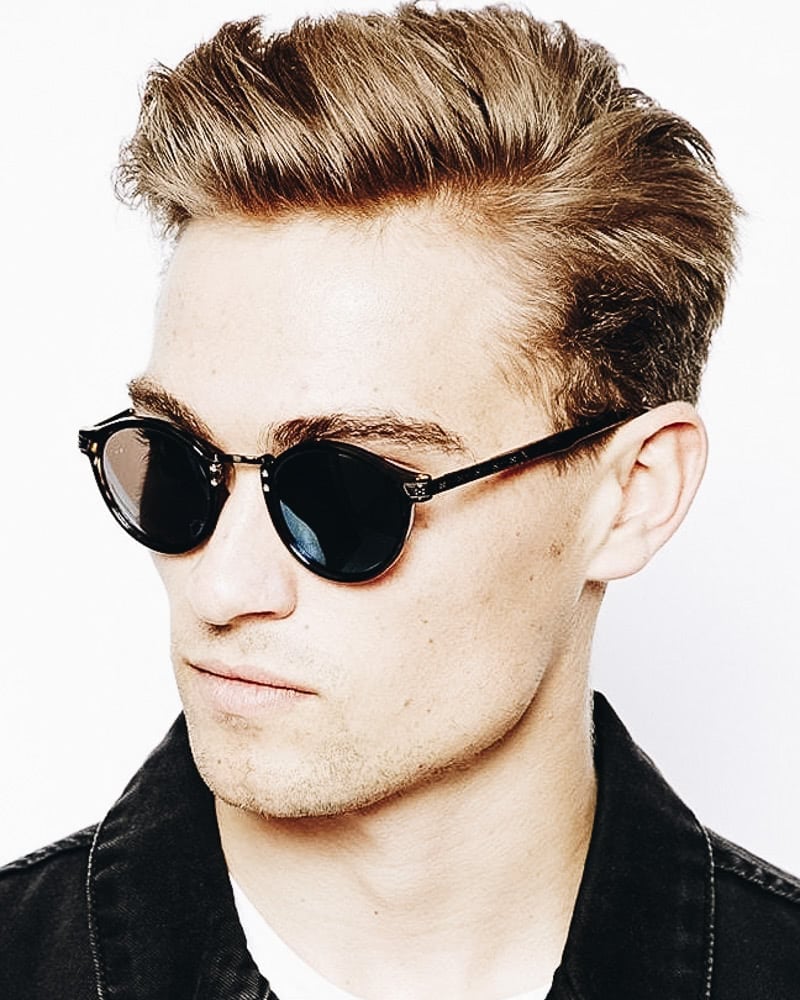
Hair combed over to one side, with a low fade keeping the sides neat. Style it wet with a light pomade for shine, or dry with a clay for a matte finish.
What to ask for Low fade, three inches on top, a side part to comb over.
High-Top Fade
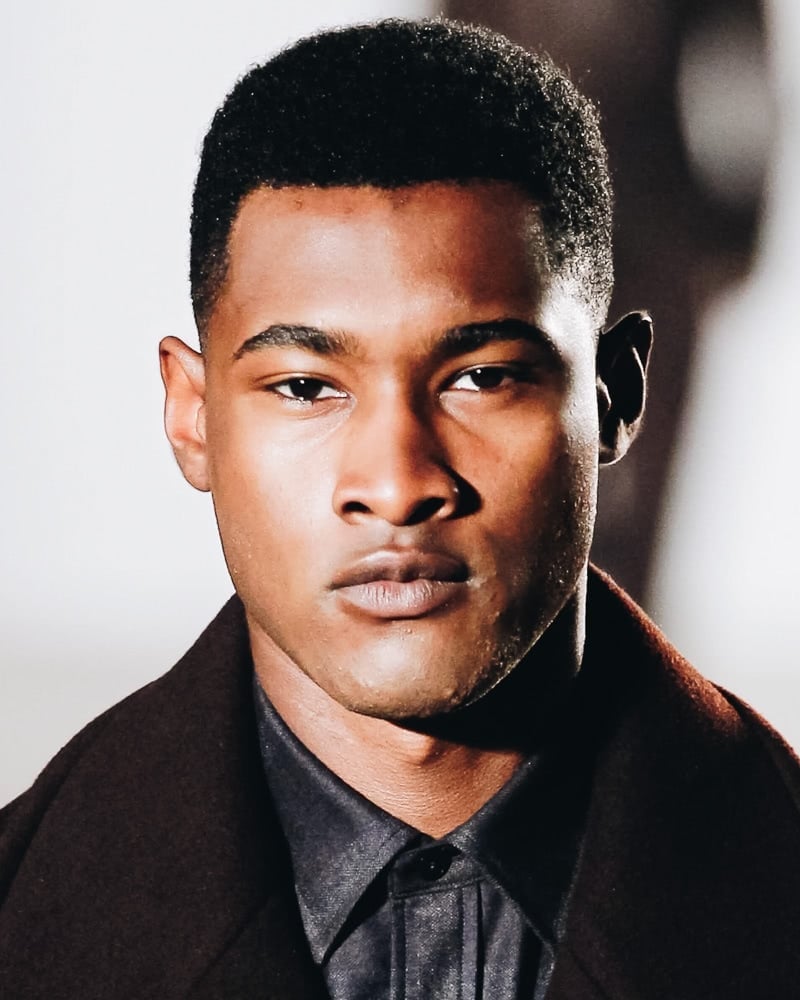
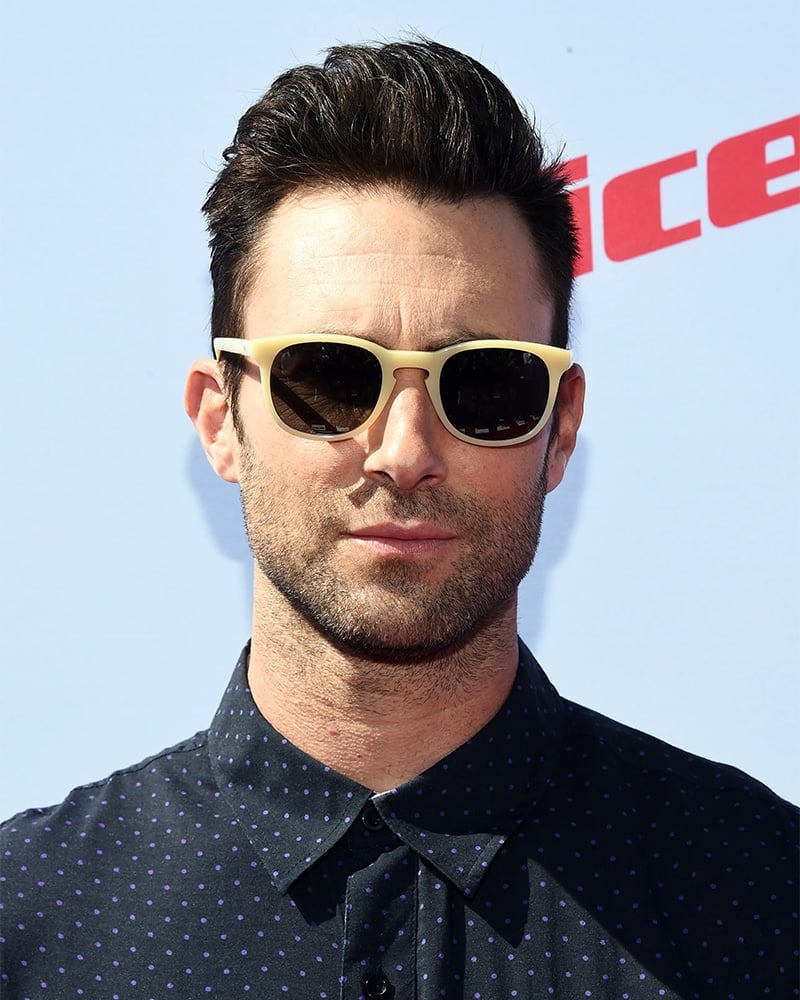
The High-top Fade is a variation of the fauxhawk. It also works well for short men.
What to ask for High skin fade, length on top shaped up into a flat, square top.
Tapered Sides With Blowout Top
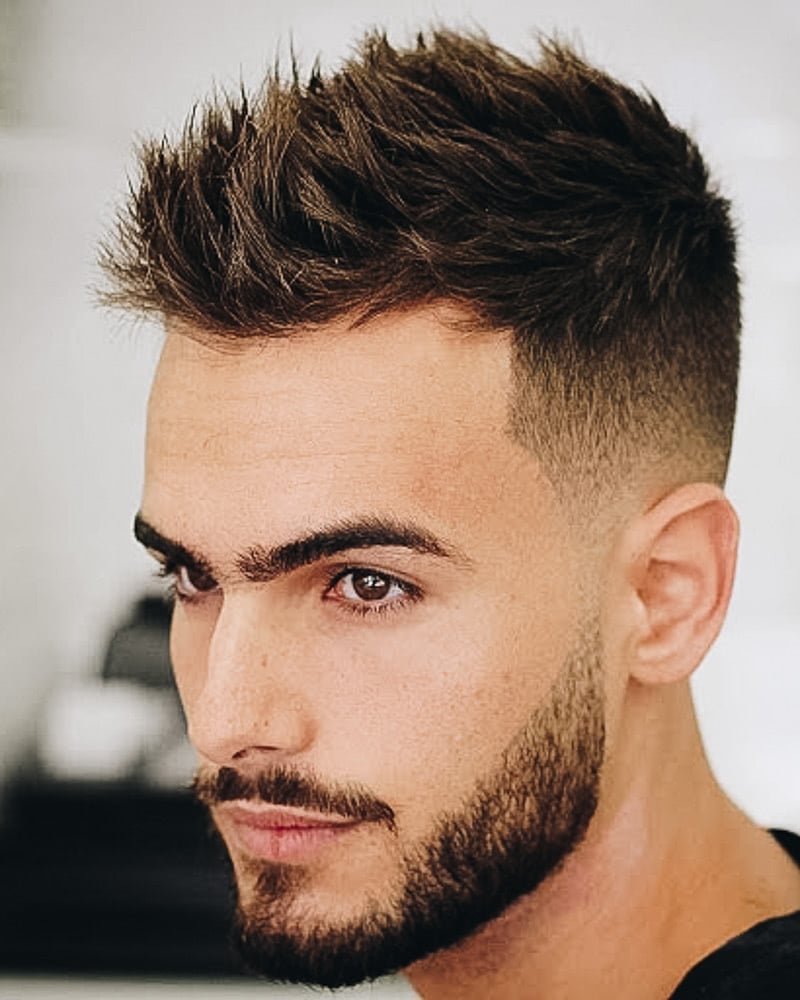
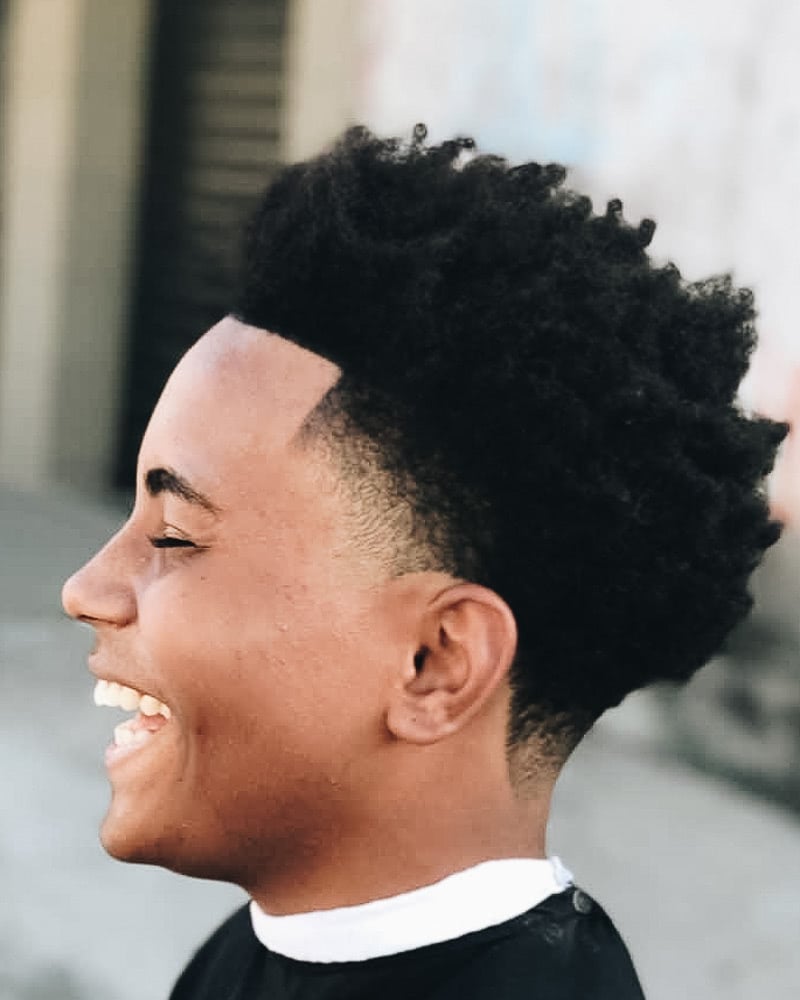
Tapered sides and a top that’s been blow-dried up and out for plenty of lift. It suits thick or curly hair, since that’s what holds the volume through the day.
What to ask for Taper on the sides from a number 1, three inches on top, blown out.
Spiky With Side Part
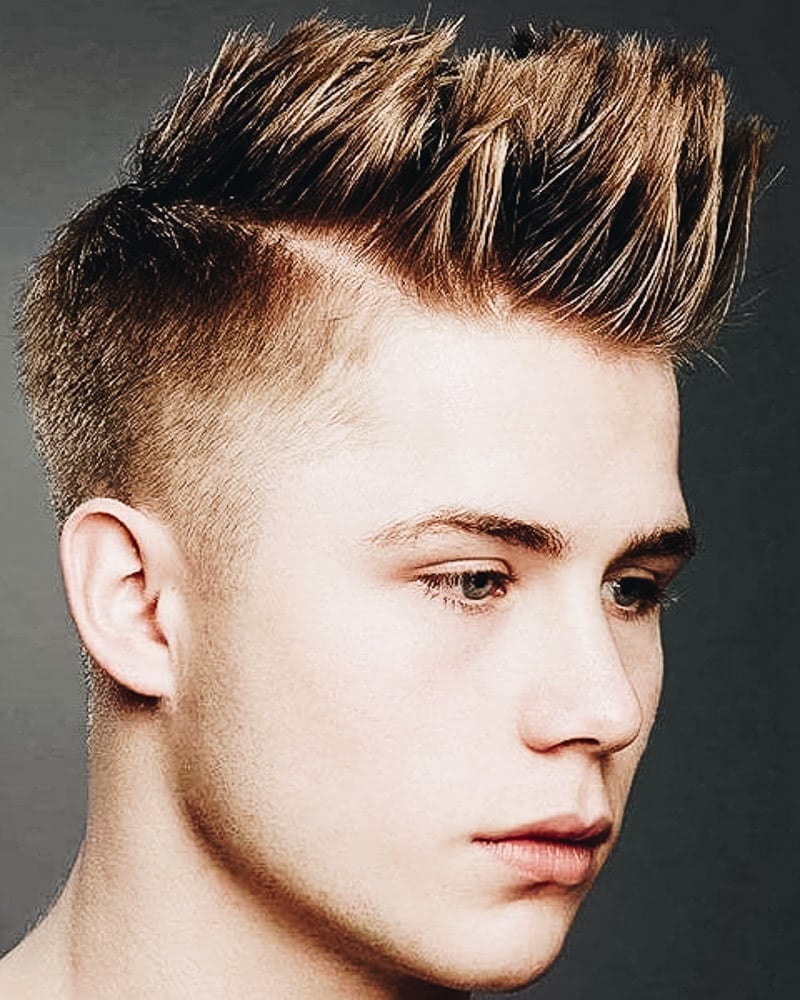
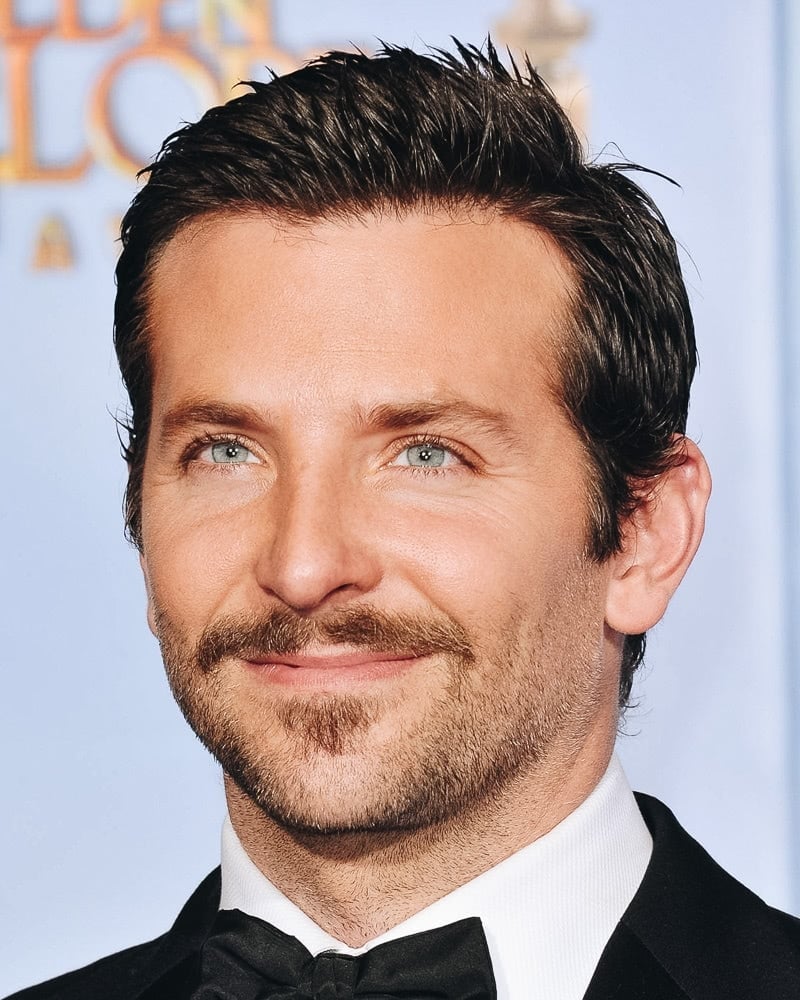
Spikes grew up. Here they’re pushed to one side over a part, with short sides keeping it tidy. A dab of wax and your fingers are all the tools you’ll need.
What to ask for Number 2 on the sides, two inches on top, textured, with a side part.
Short quiffs and pompadours
Medium Length Natural Quiff
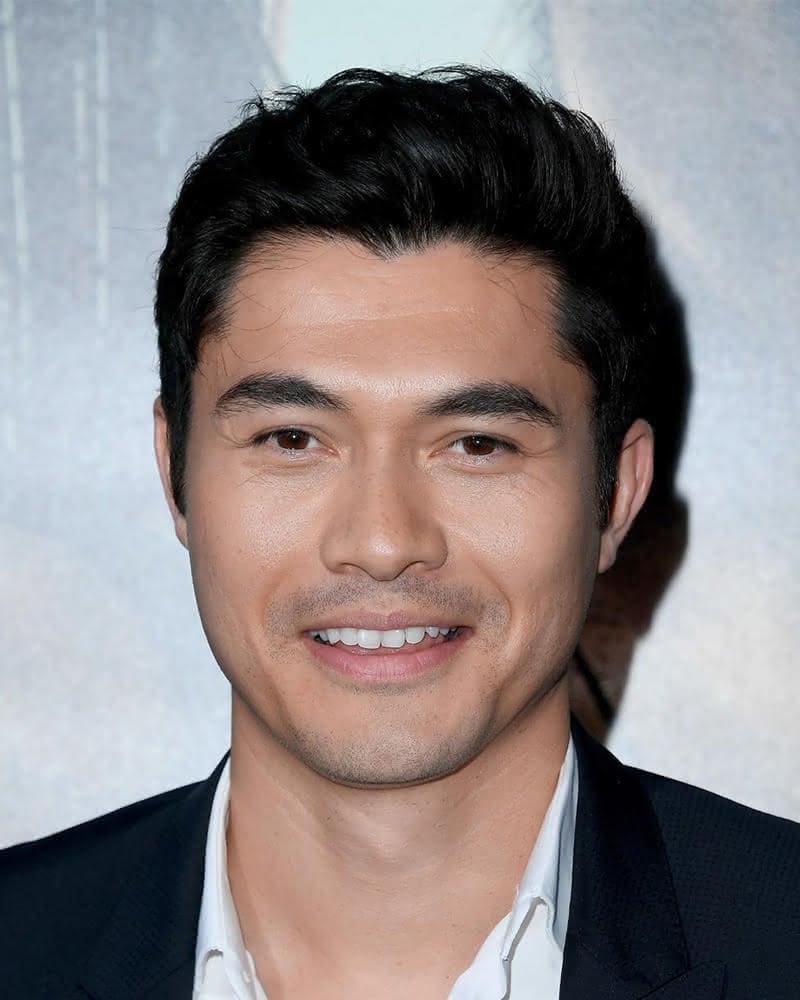
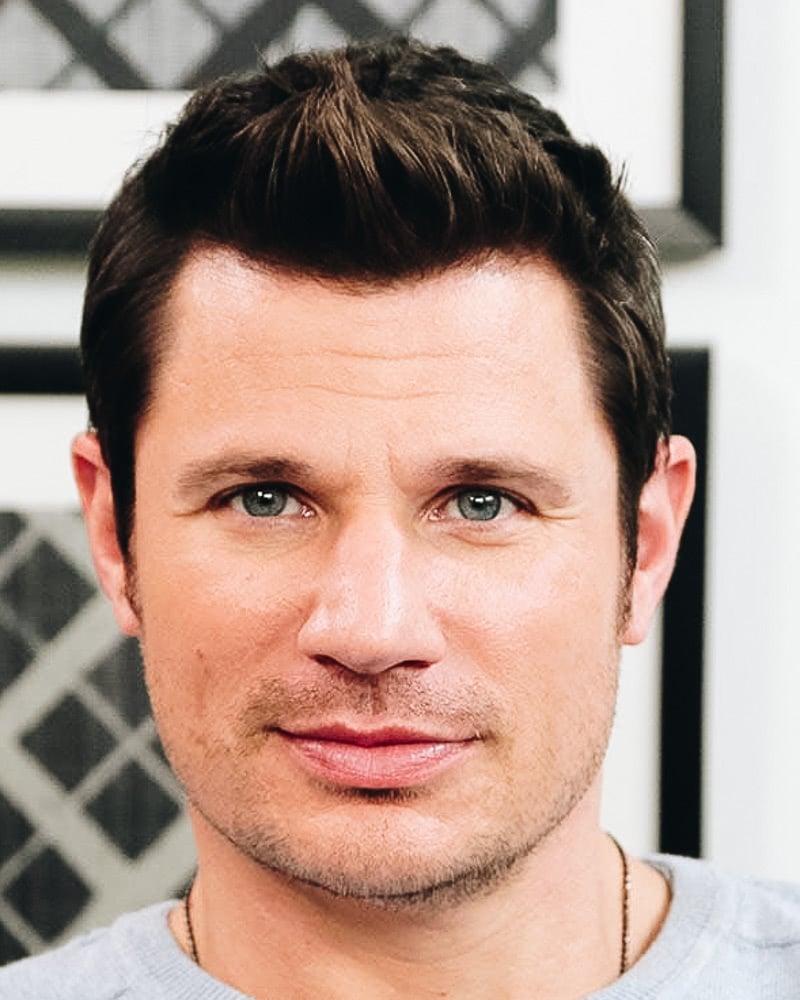
Don’t let the name fool you, the medium length natural quiff with tapered sides is harder to execute than it looks.
What to ask for Tapered sides with a number 3, three inches at the front, graduated shorter toward the crown.
Pompadour With Taper Fade
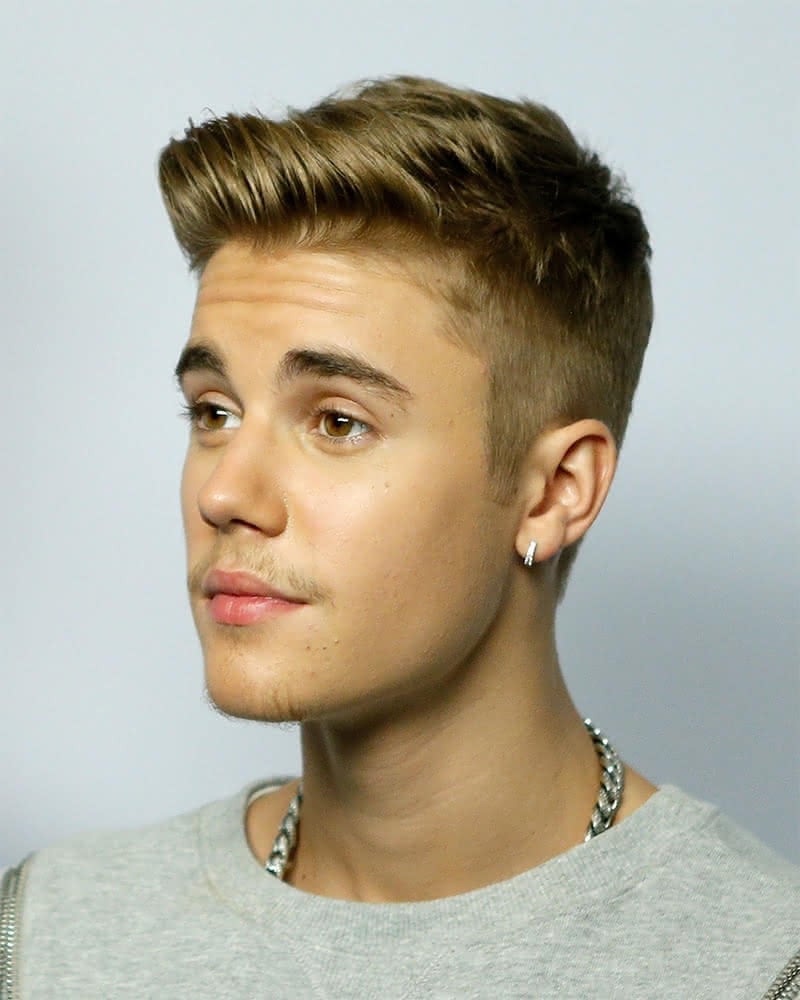
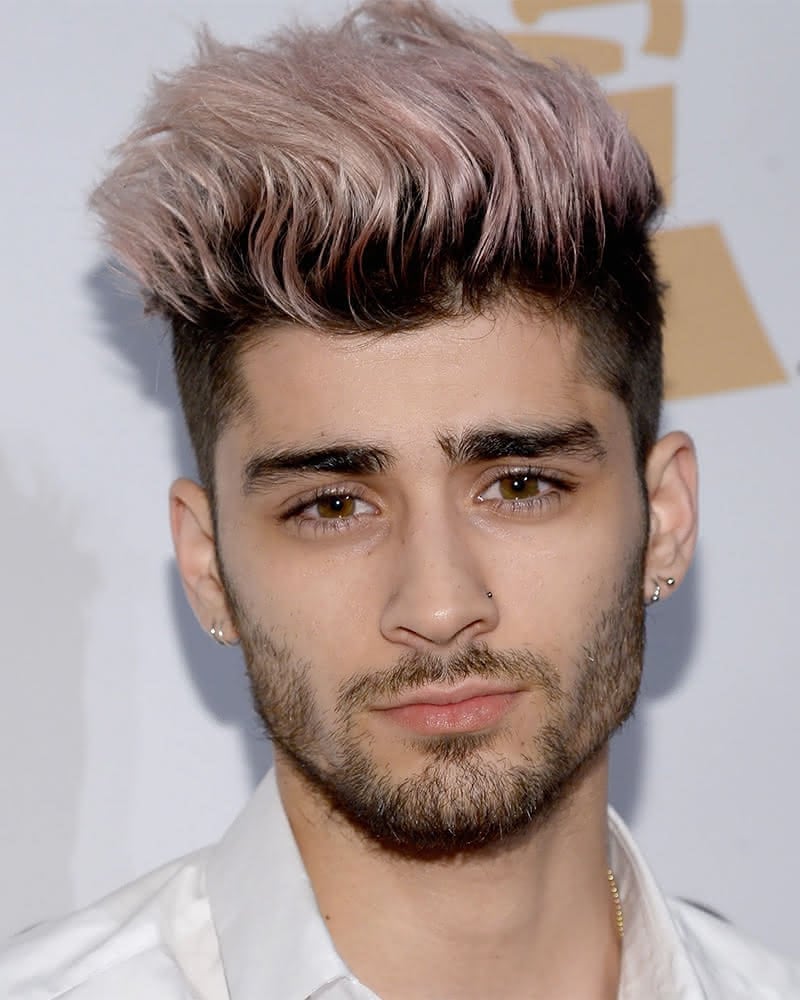
A modern interpretation of the classic Pompadour haircut. The Pompadour hairstyle features a large volume of hair at the top front of your head with shorter sides. This one comes with tapered sides for a clean look.
What to ask for Low taper fade, four inches at the front, shorter at the crown, styled up and back.
Short Modern Quiff With Faded Sides
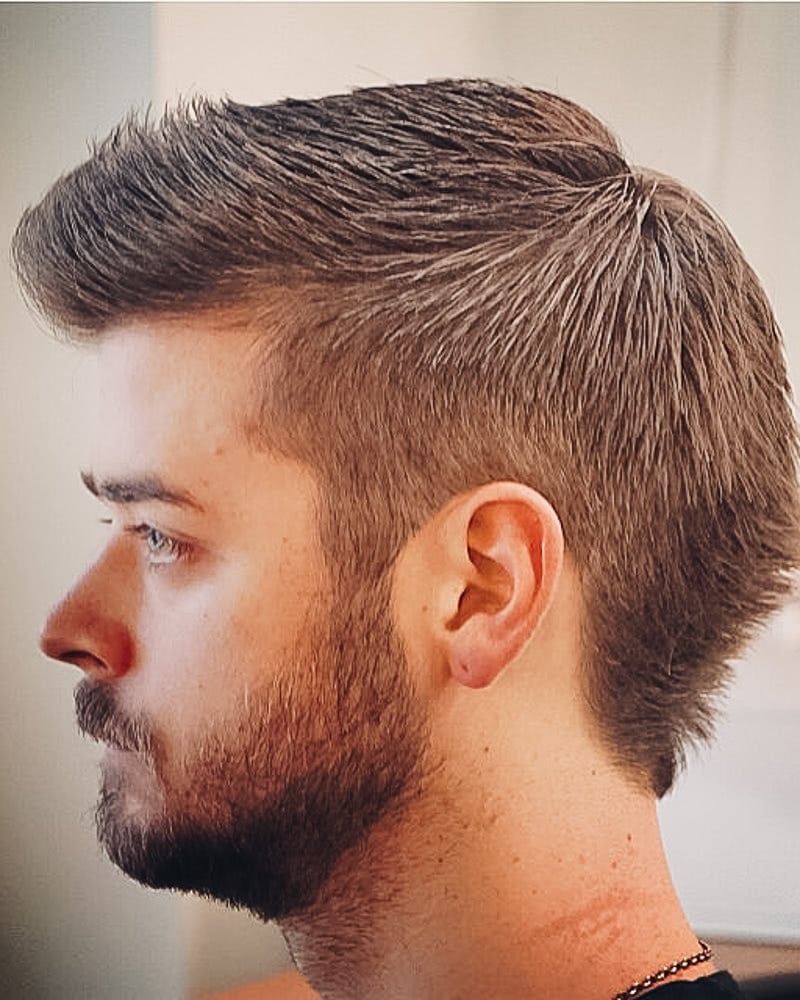
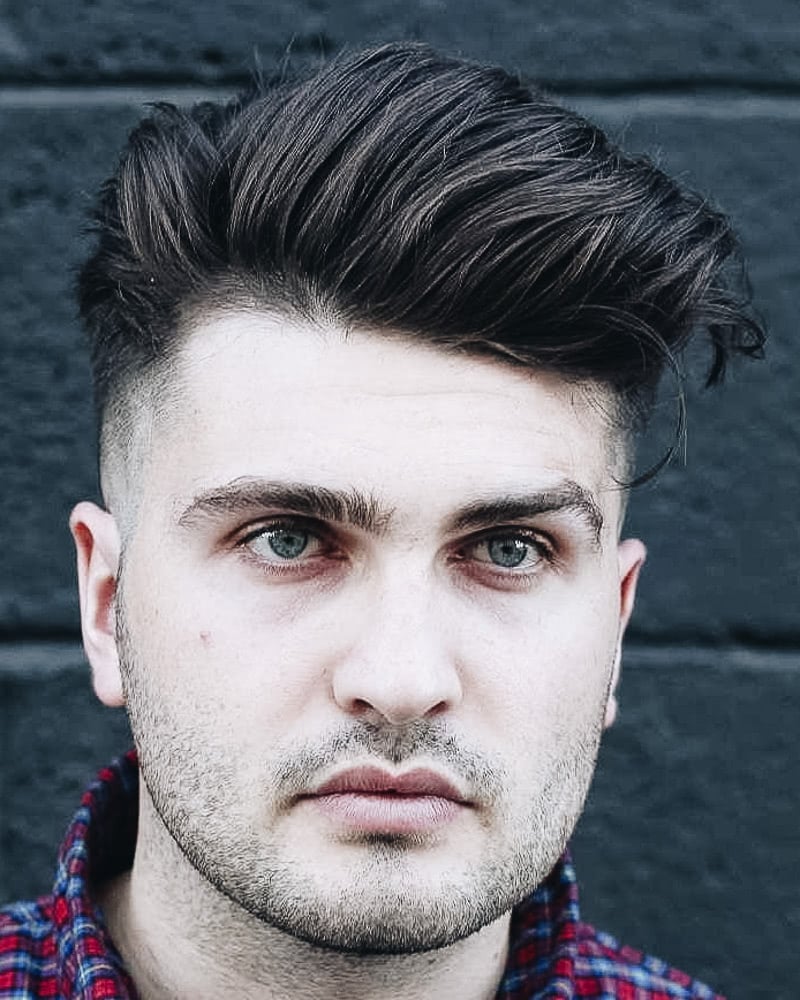
A short quiff pushed up and back, with the sides faded tight. It needs a blow-dry and some product in the morning, but the fade does most of the heavy lifting.
What to ask for Mid skin fade, three inches at the front, shorter toward the crown.
Modern Quiff With Undercut Sides
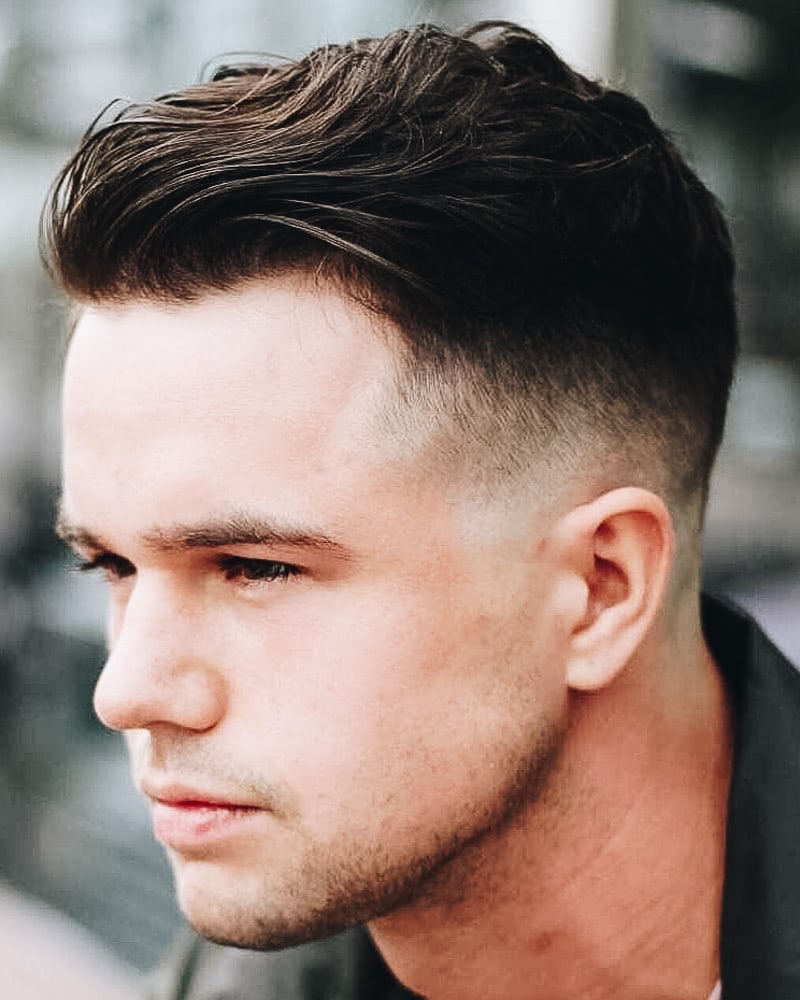
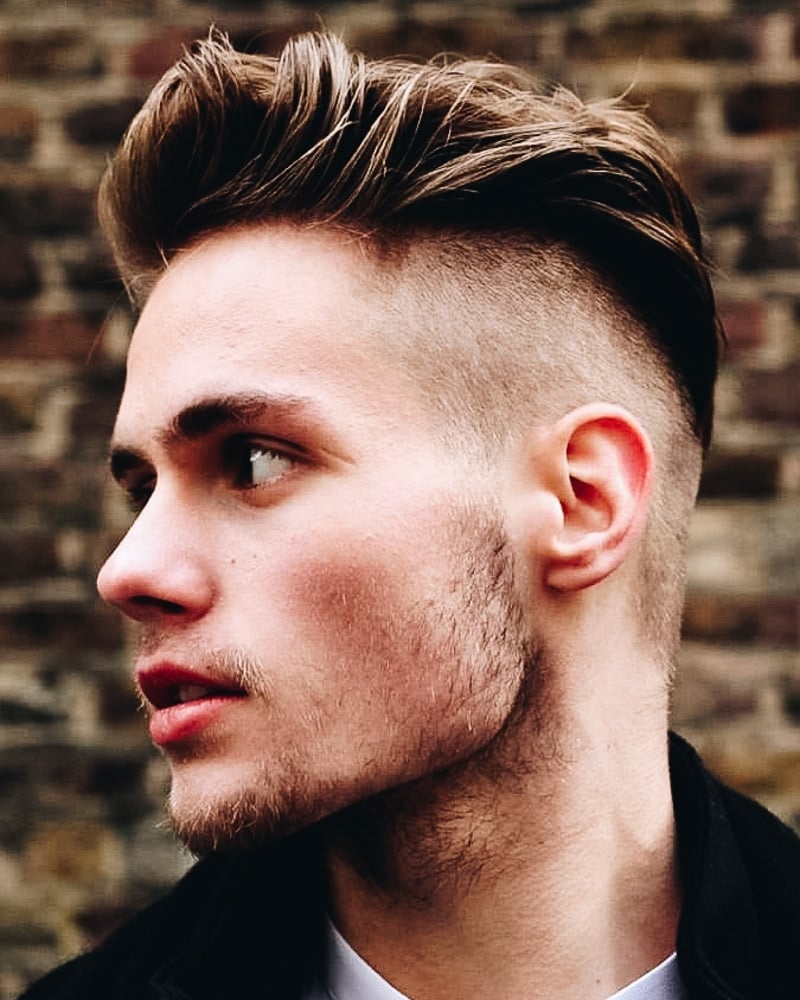
Volume up front, sides clipped short underneath and not blended in. You’ll need a blow-dryer and a matte product to keep the quiff standing.
What to ask for Number 1 undercut on the sides, not blended, four inches at the front.
Curly Quiff
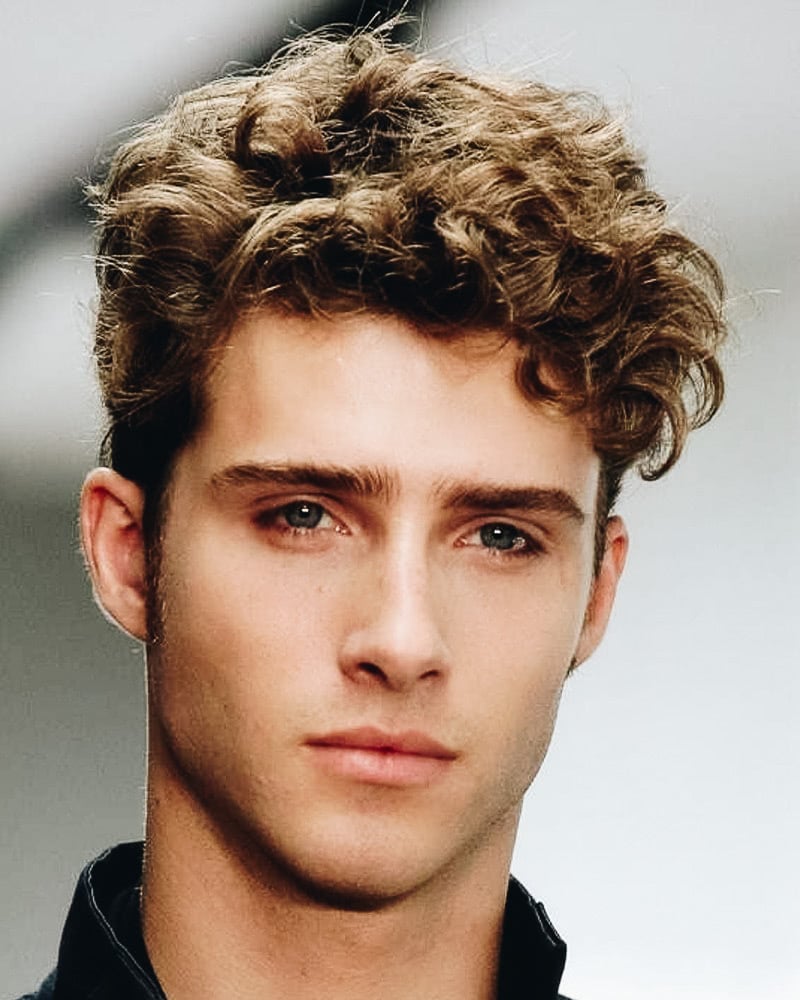
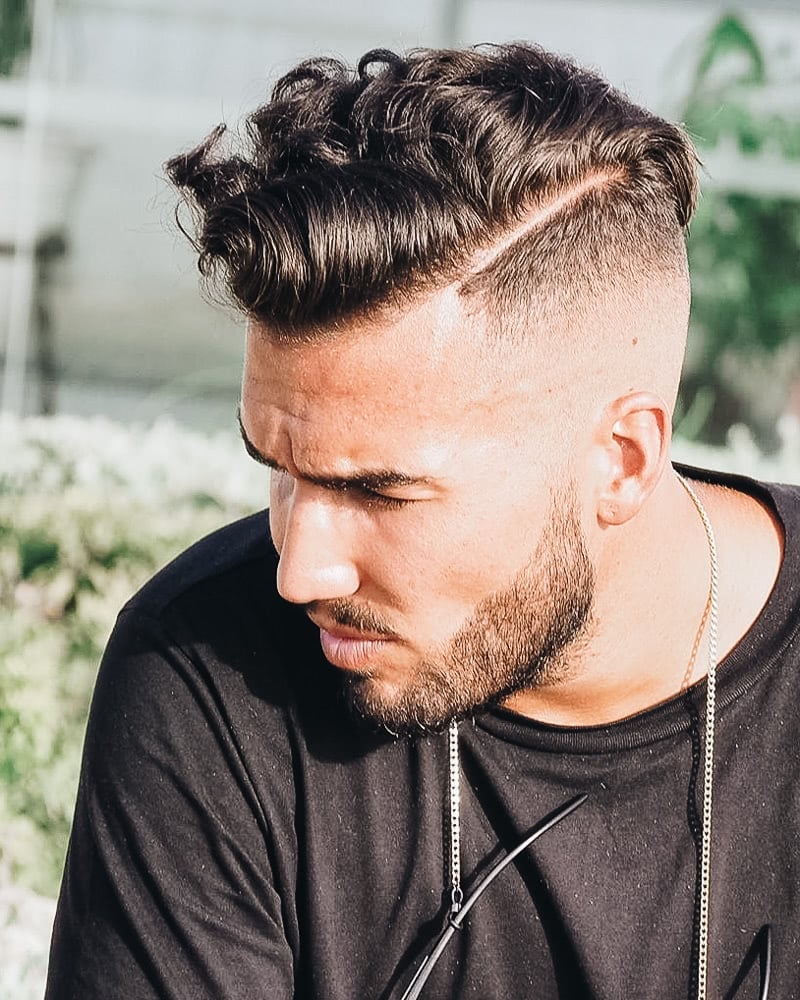
Curls pushed up and back into a loose quiff, with the sides kept short so all the attention stays on top. A curl cream beats a pomade here.
What to ask for Number 2 on the sides, three inches of curl on top, shaped up and back.
Classic Pompadour
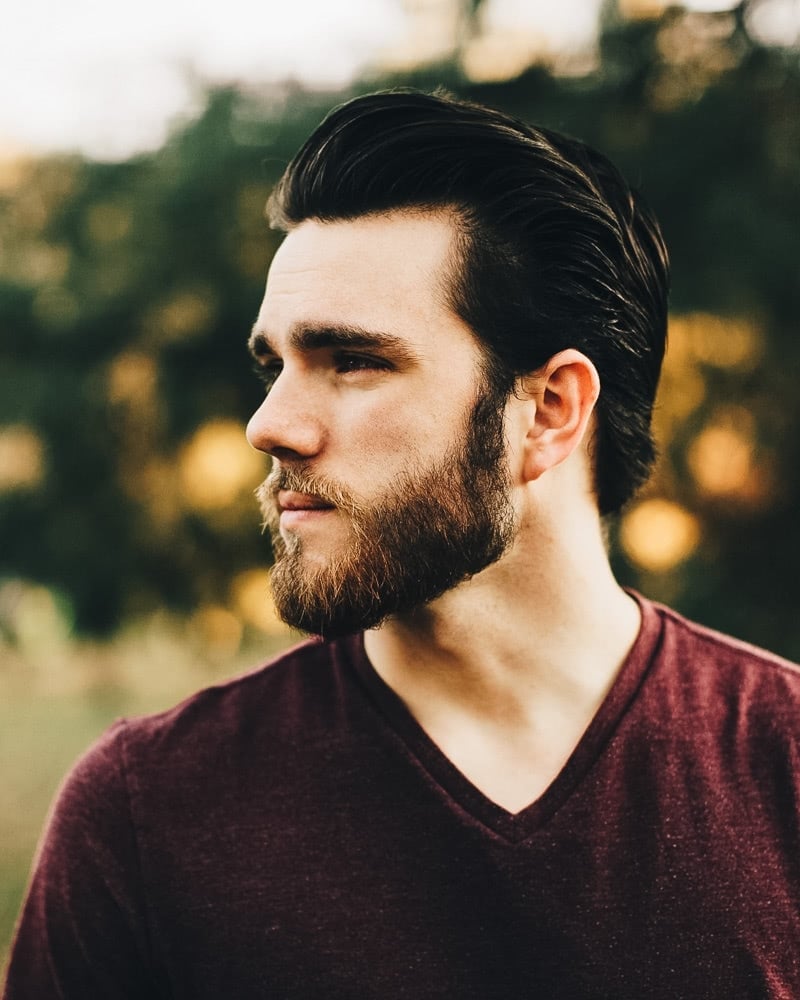
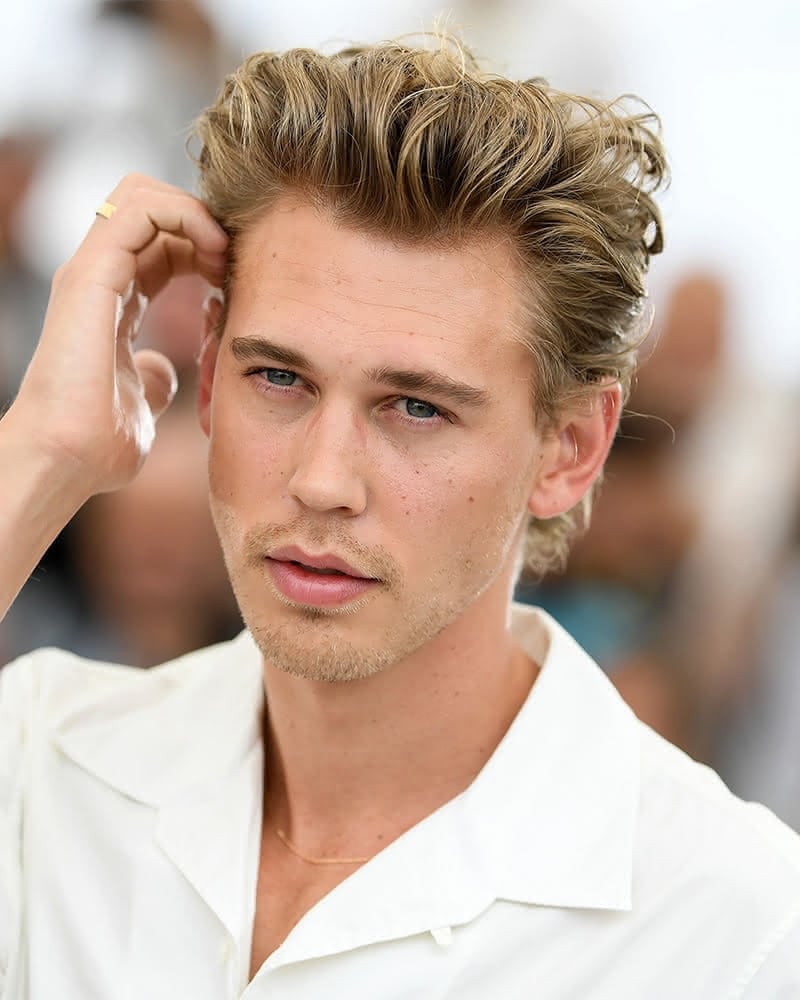
A vintage hairstyle that is still relevant today. The Classic Pompadour can work well in a business context too if you want to show a bit of creativity and eccentricity.
What to ask for Scissor taper on the sides, five inches at the front, graduated shorter toward the crown.
Structured Quiff Undercut
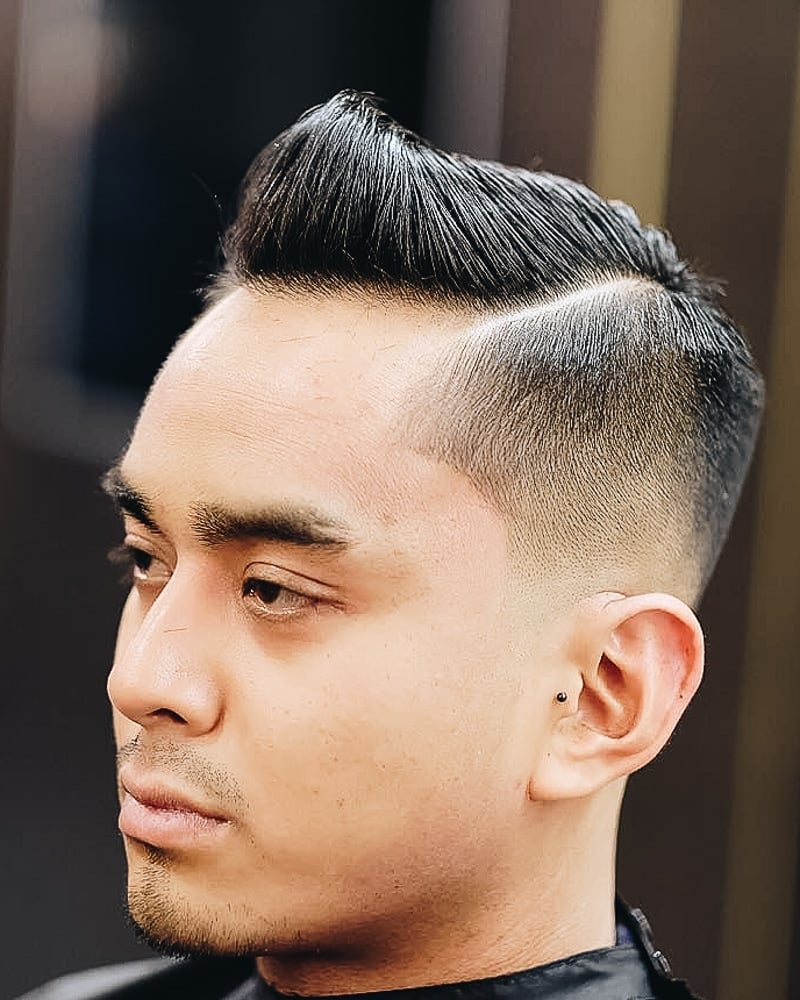
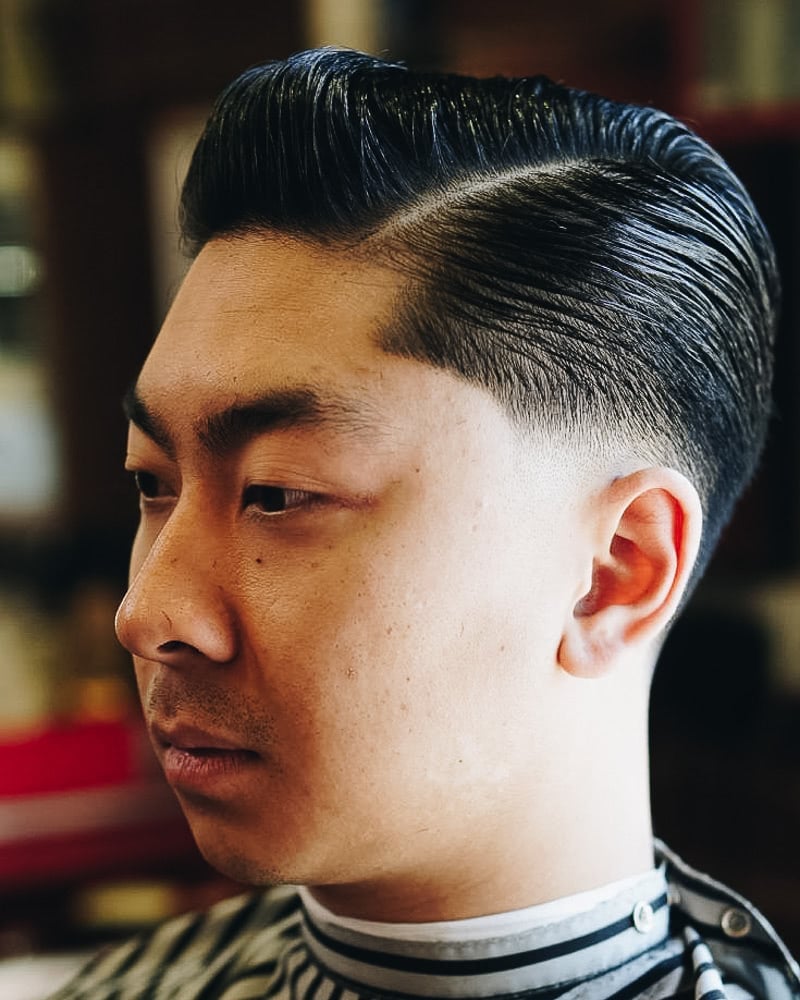
A sculpted quiff with a sharp part, over undercut sides. Every hair has its place, so you’ll need a comb, a blow-dryer and a firm pomade.
What to ask for Number 1 undercut, a hard part, four inches at the front.
Textured Quiff
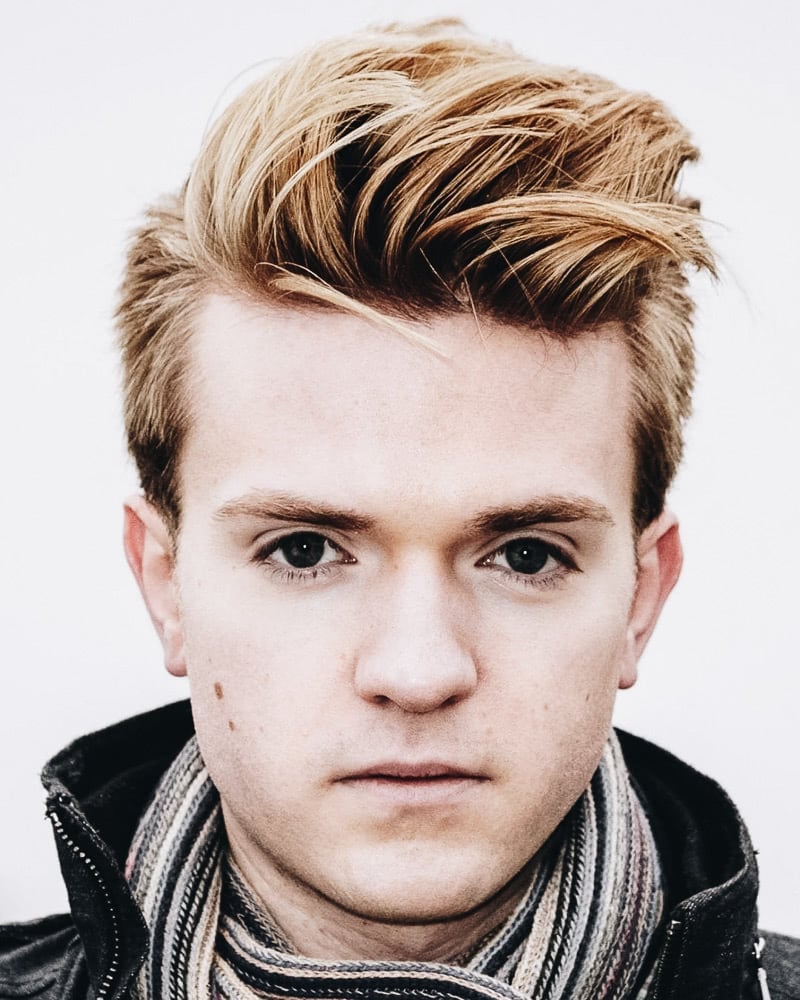
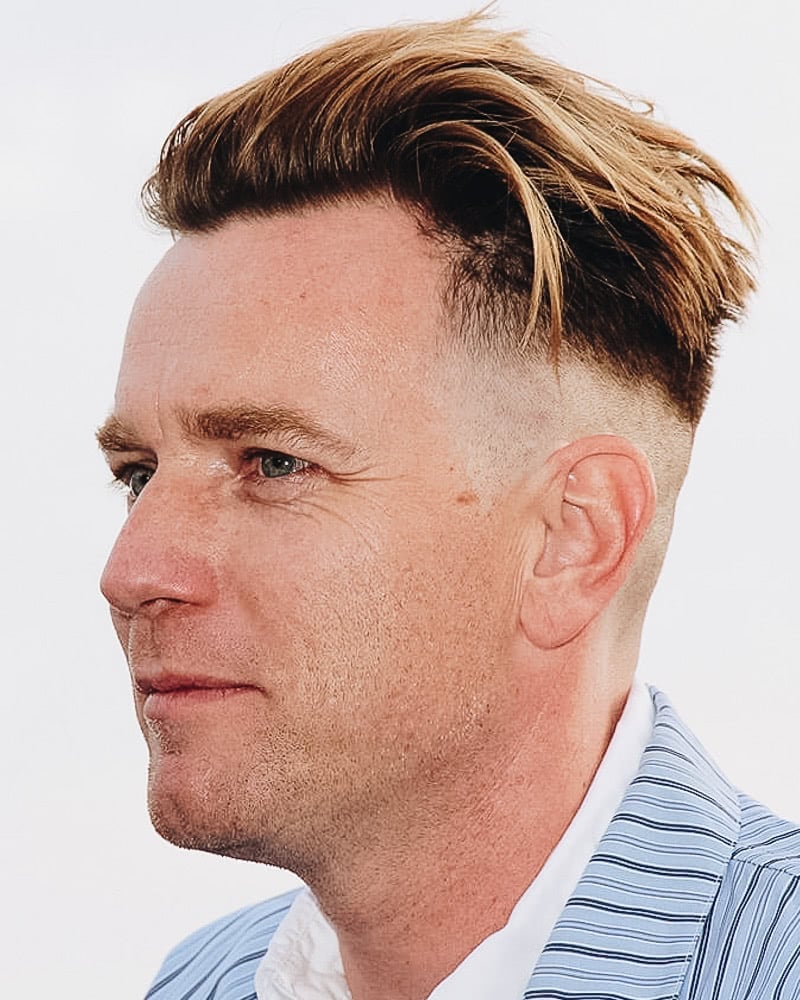
The Textured Quiff is basically a slightly messier version of the Structured Quiff Undercut. It’s easier to maintain through the day and requires less pomade.
What to ask for Mid fade, three inches at the front, textured with point cutting.
Short undercuts and mohawks
Hard Line Undercut
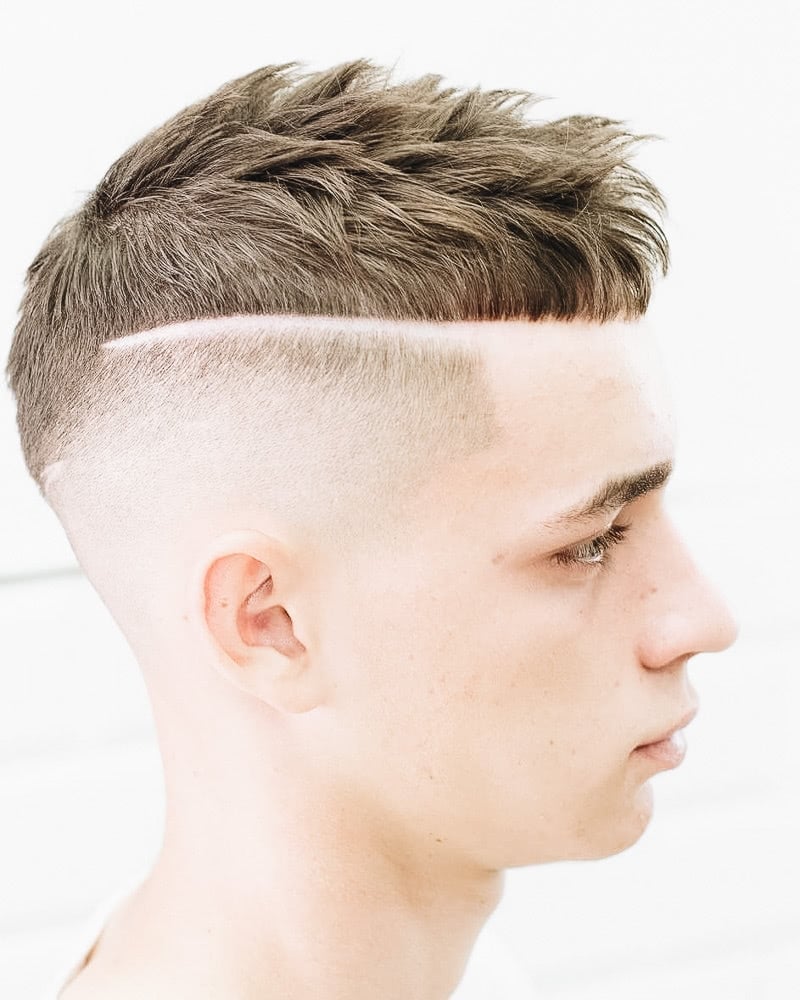
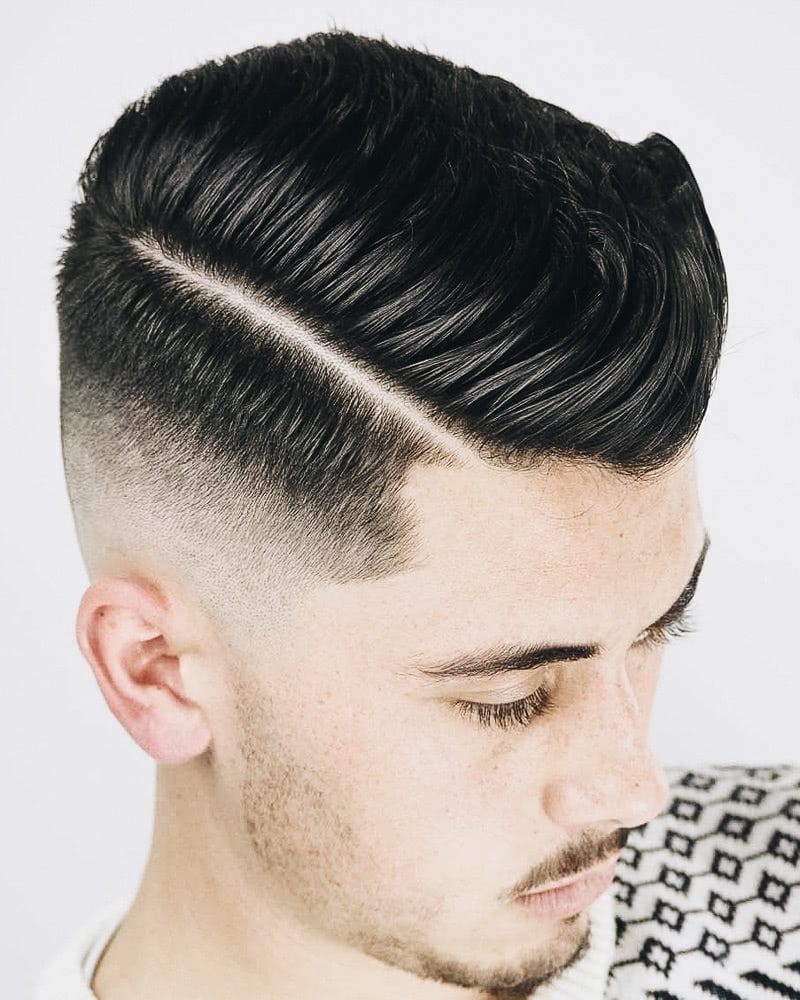
Short on top, clipped very close underneath, with a shaved line marking where one stops and the other starts. That line fades after a week or two, so book your touch-ups.
What to ask for Number 1 on the sides, disconnected, a shaved part line, three inches on top.
Messy Undercut With Bangs
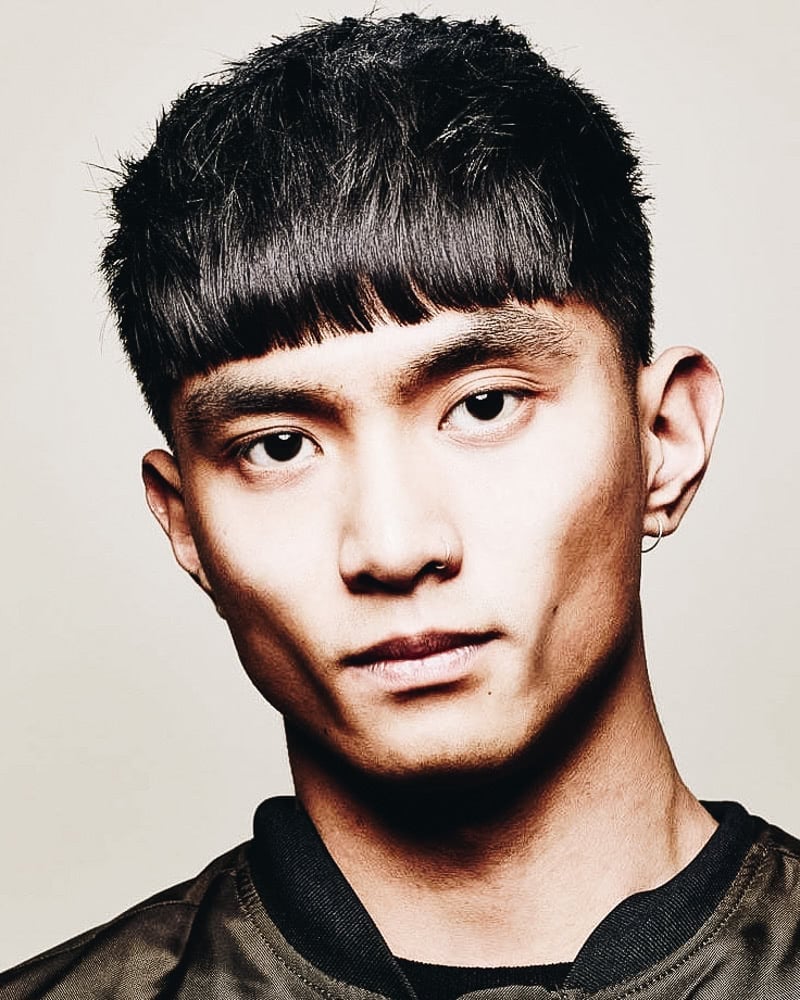
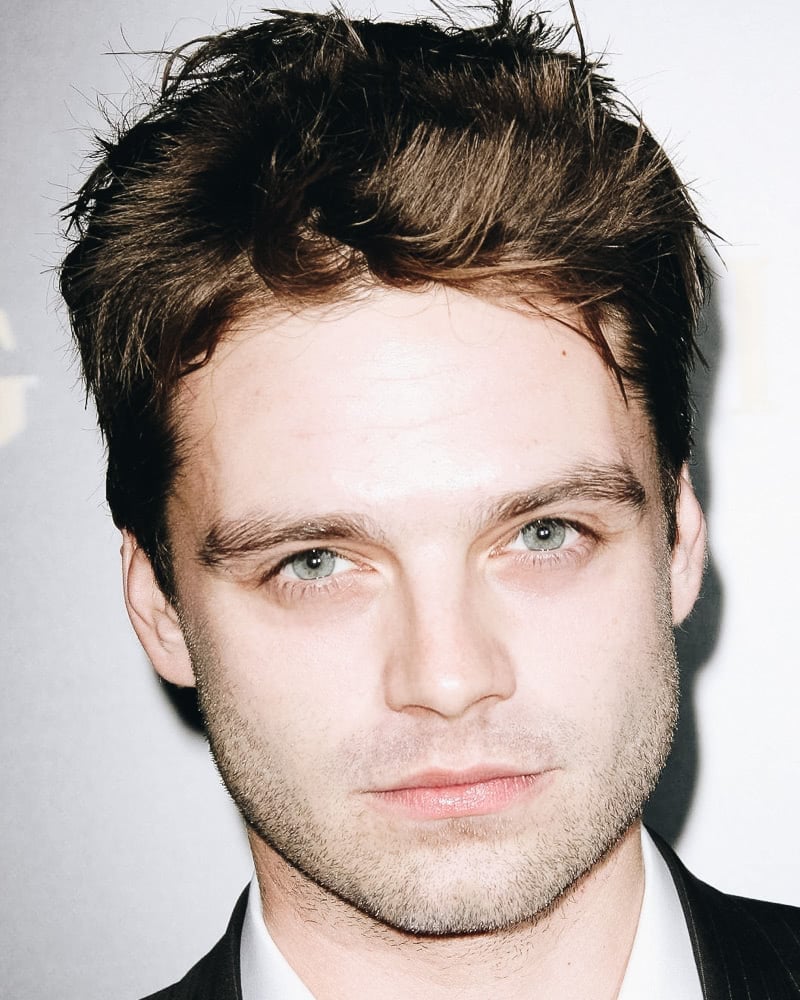
A heavy, choppy fringe on top of a short undercut. The messier it looks, the better, so rough-dry it with your fingers and a bit of texture spray.
What to ask for Number 1 undercut, not blended, three inches on top, a heavy choppy fringe.
Slicked Back Undercut
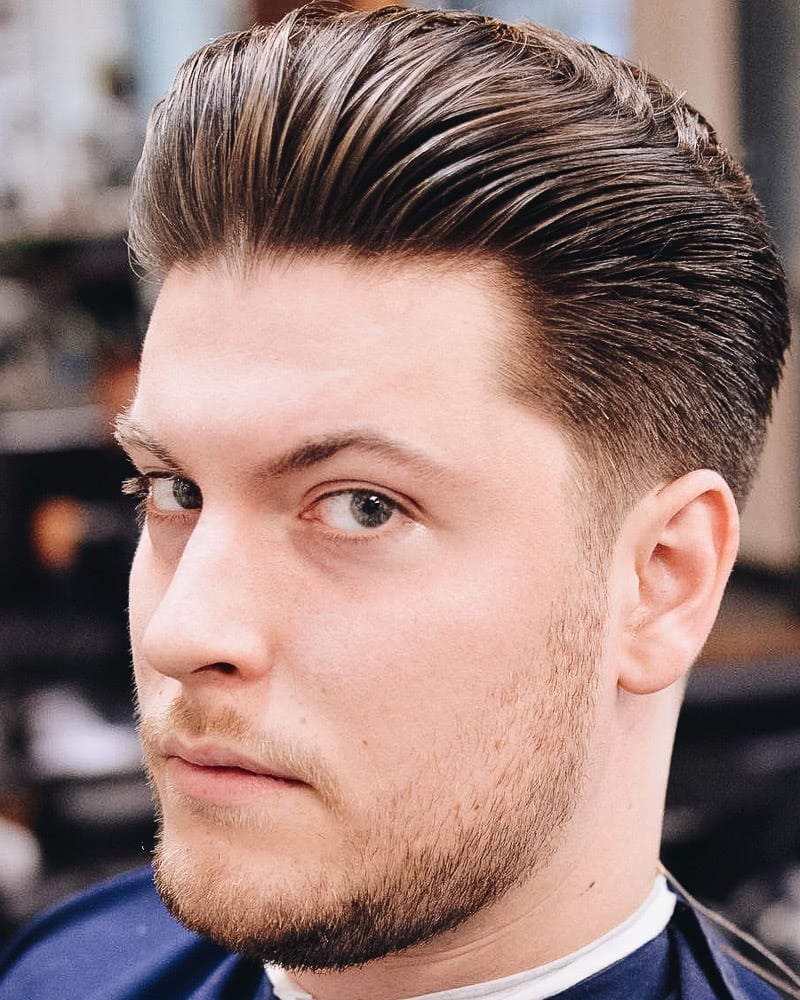
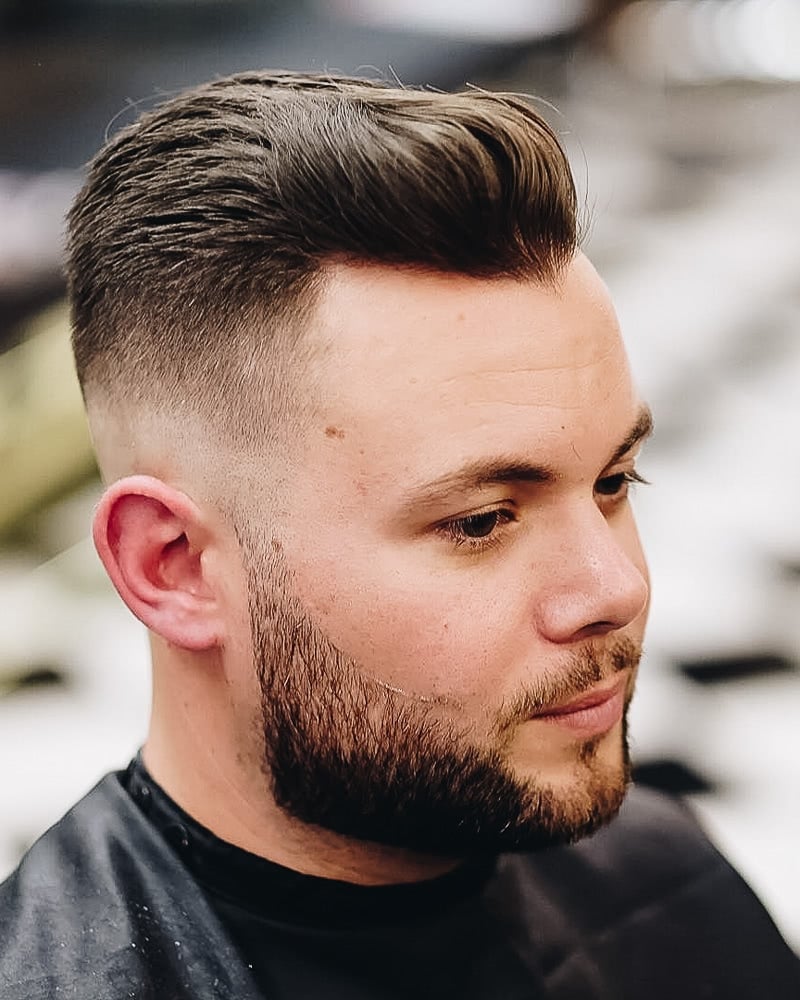
The Slicked Back Undercut is trendy and easy to pull off, but you’ll need to apply more pomade in the morning to maintain the structure.
What to ask for Number 1 undercut, not blended, four inches on top, slicked back.
Disconnected Undercut
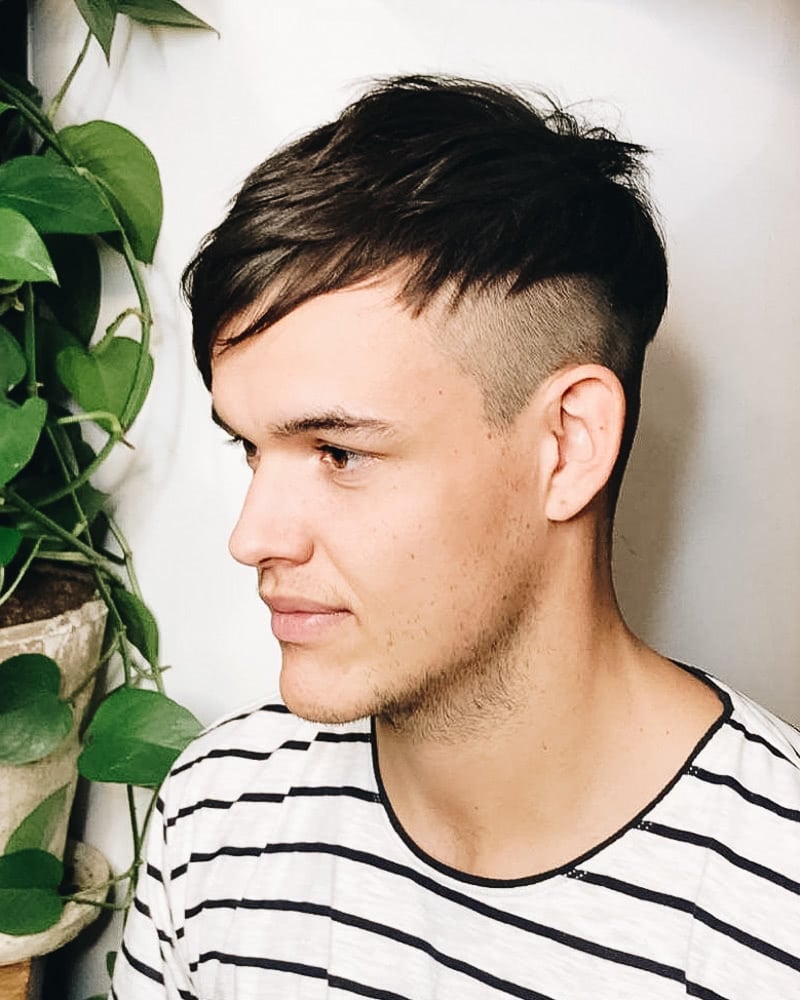
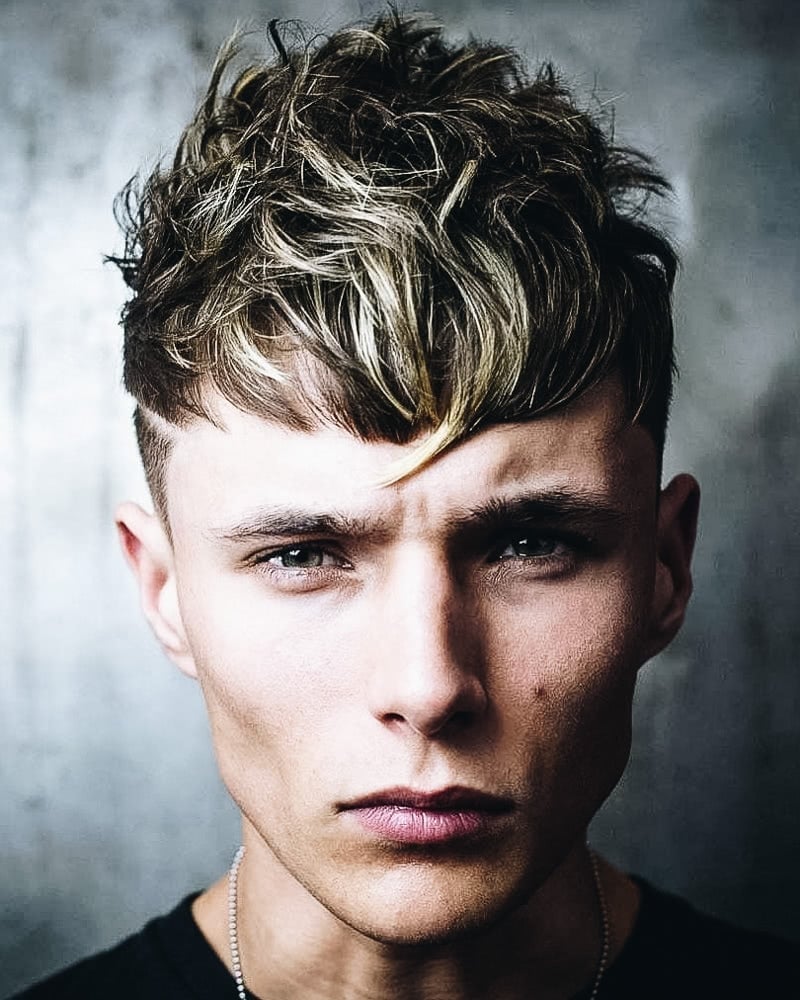
The Disconnected Undercut works particularly well for men with a long face shape.
What to ask for Number 1 undercut, disconnected, three inches on top swept to the side.
High-Top Fauxhawk
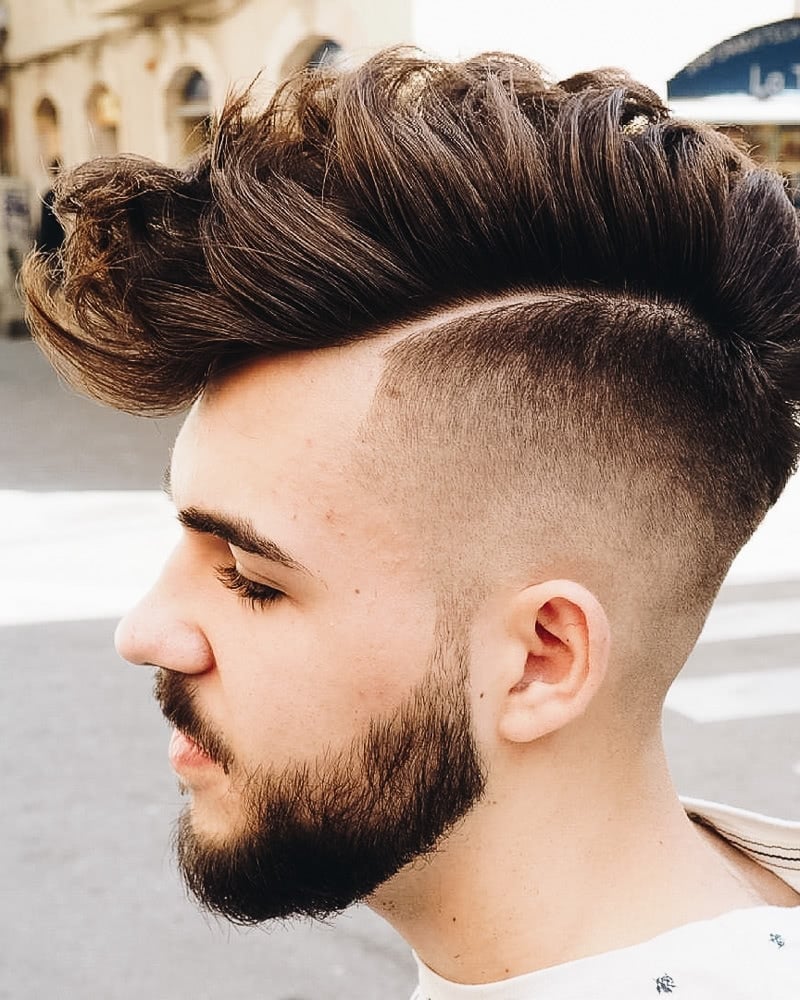
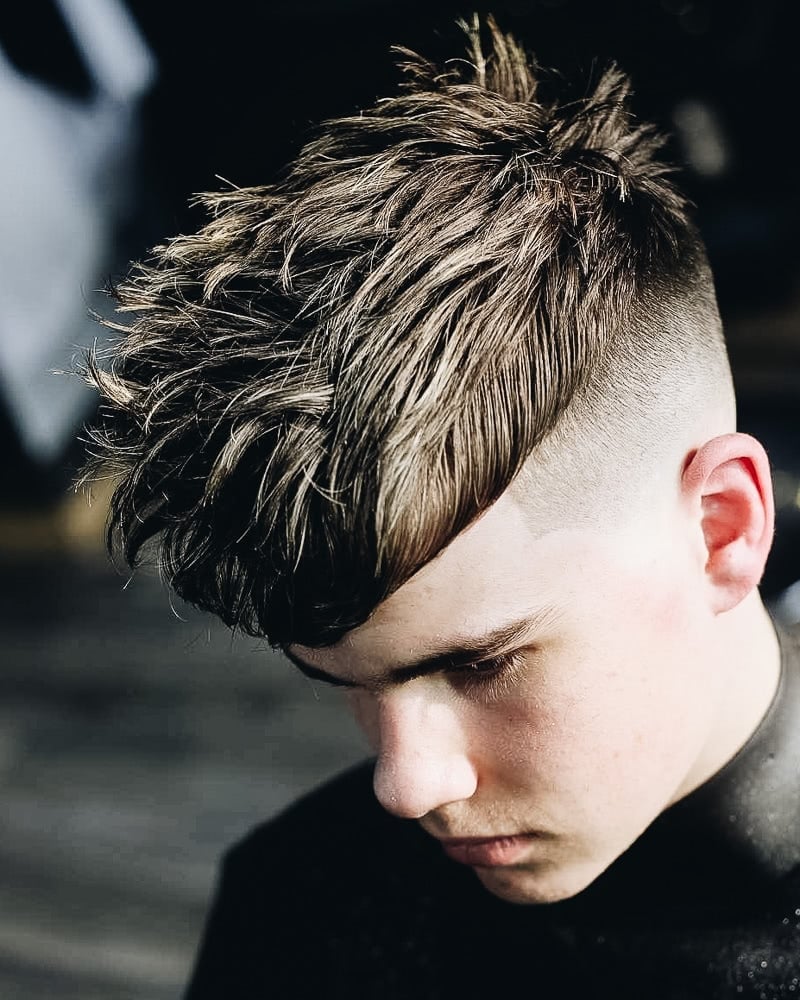
The High-top Fauxhawk works great for short men to give the impression to be taller.
What to ask for Skin fade on the sides, four inches down the middle, styled up into a peak.
Modern Mohawk
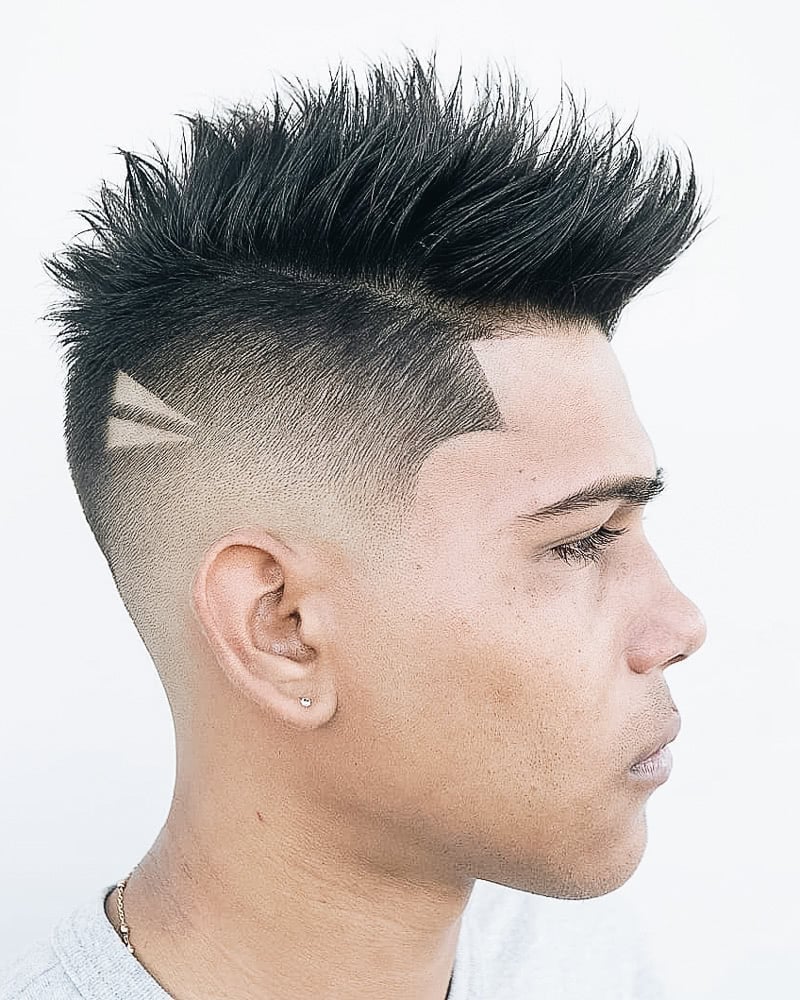
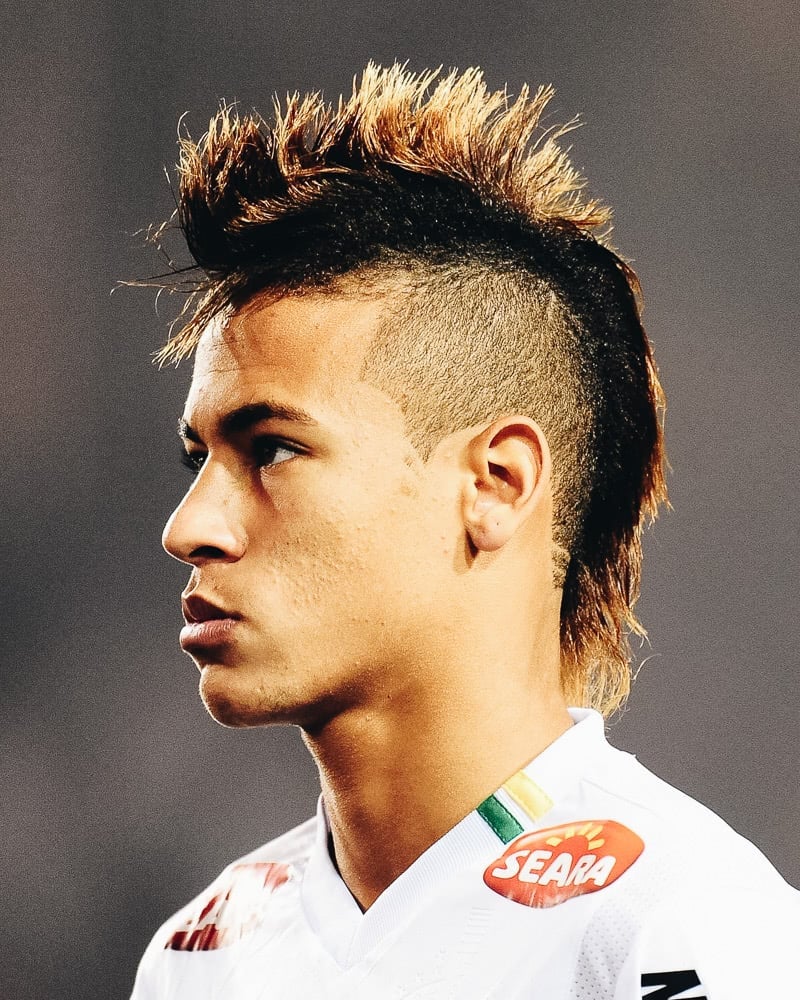
A strip of length down the middle and the sides taken short. Spike it up with a strong wax for the full effect, or push it back for something tamer.
What to ask for Skin fade on the sides, three inches down the middle, styled up.
Short haircuts with a fringe, waves or curls
Short Style With Finger Waves
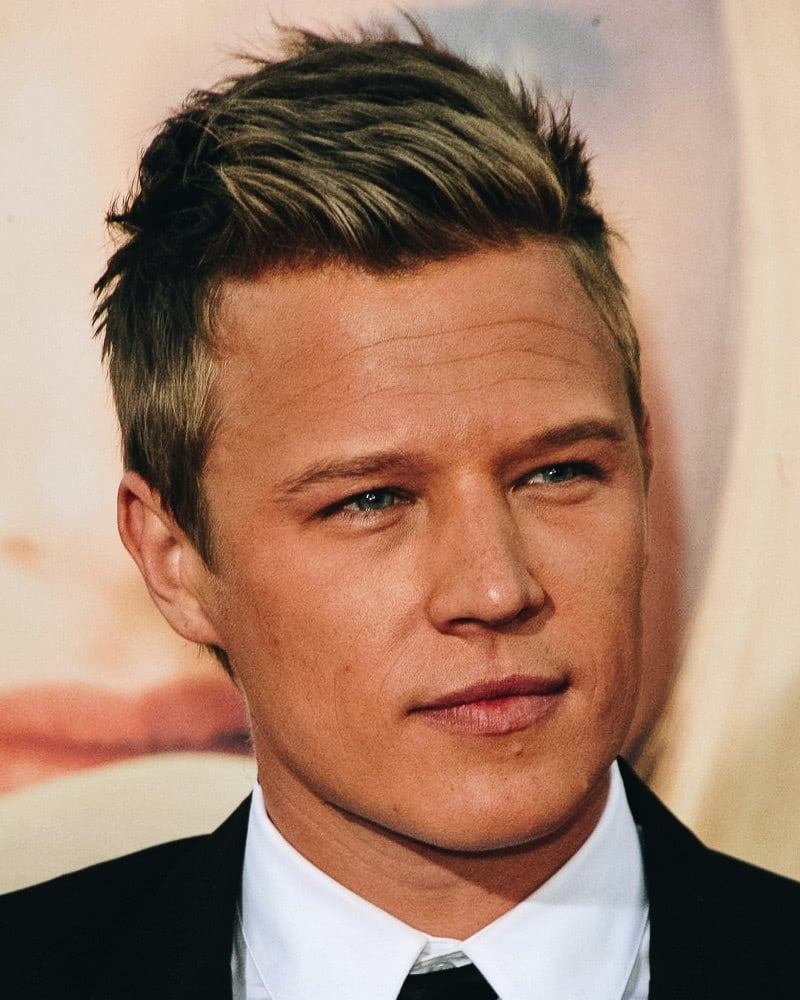
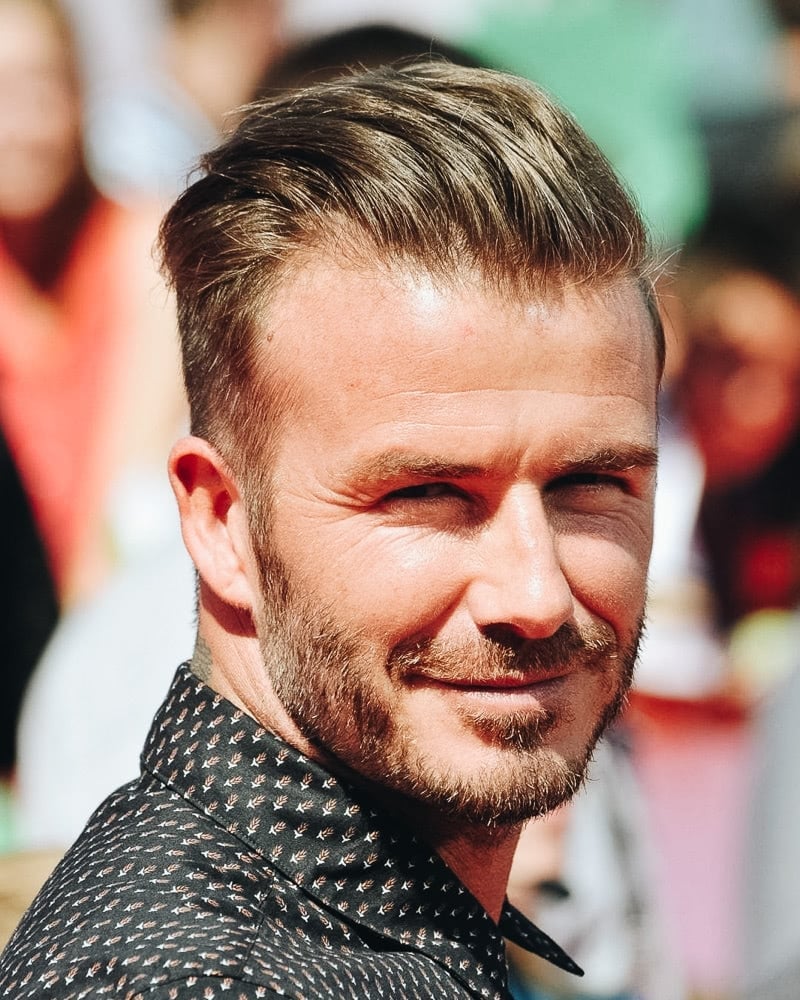
If you have curly or wavy hair, try this hairstyle with short sides and finger comb top.
What to ask for Number 2 on the sides, two inches on top left long enough to comb through with my fingers.
Side Part With Bangs
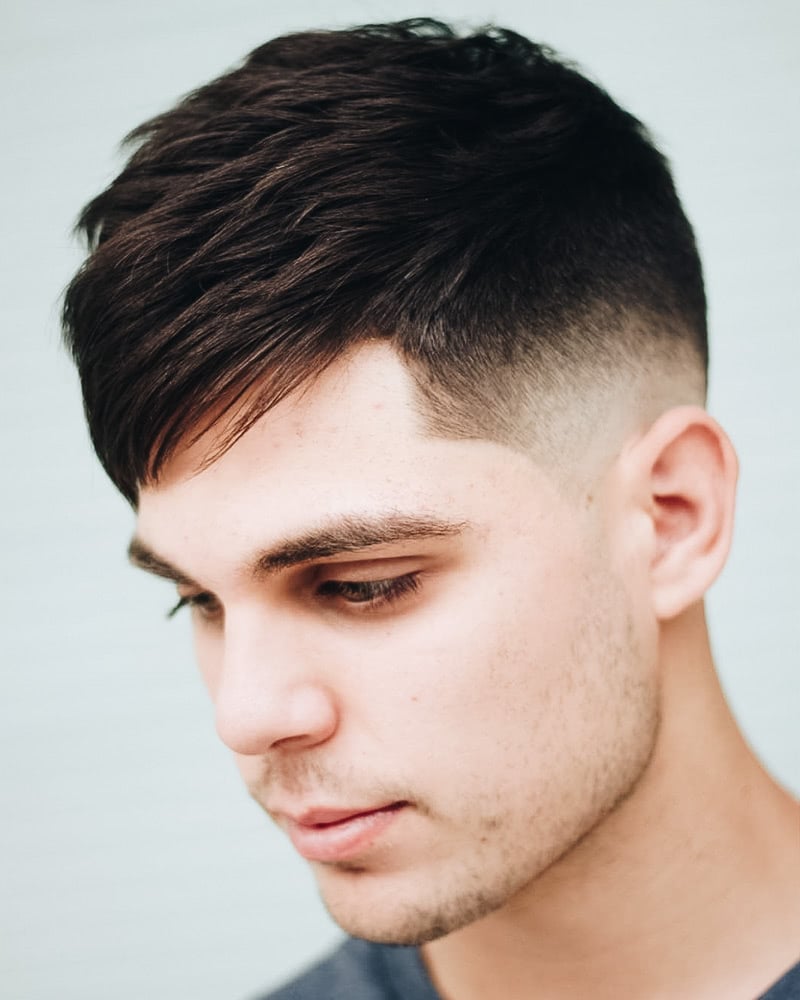
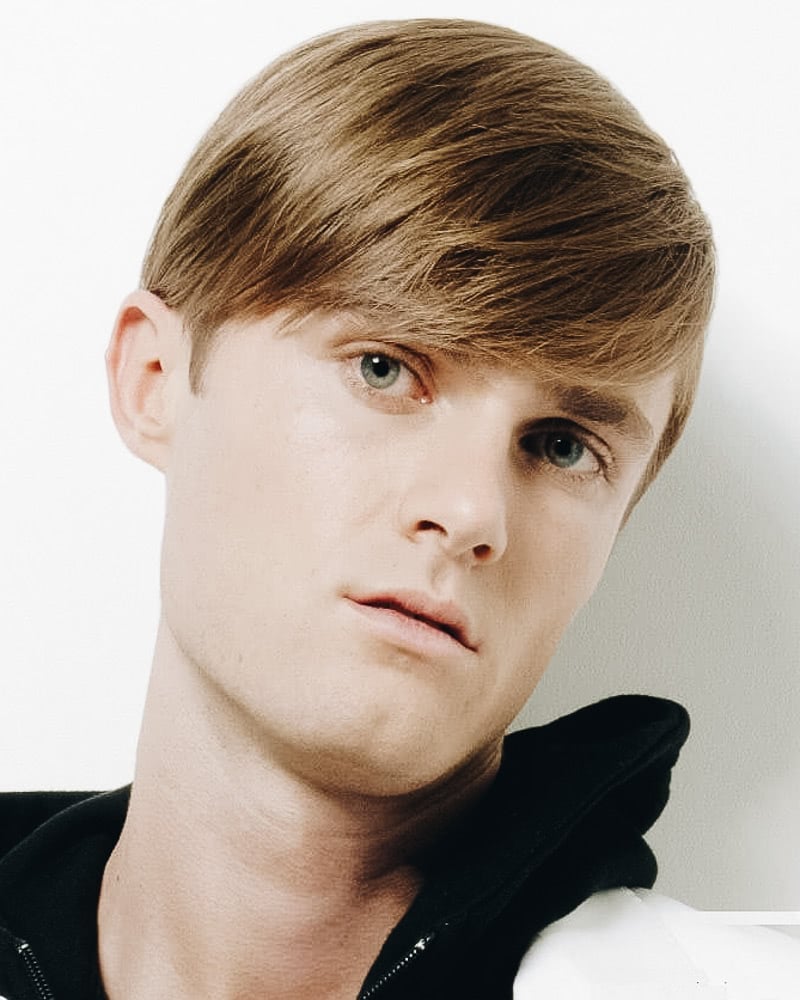
A side-swept fringe over short sides. It softens a strong brow, and it sits right when your hair already falls forward.
What to ask for Number 3 on the sides, three inches at the front, fringe swept to one side.
Fringe With Front Wavy Hair
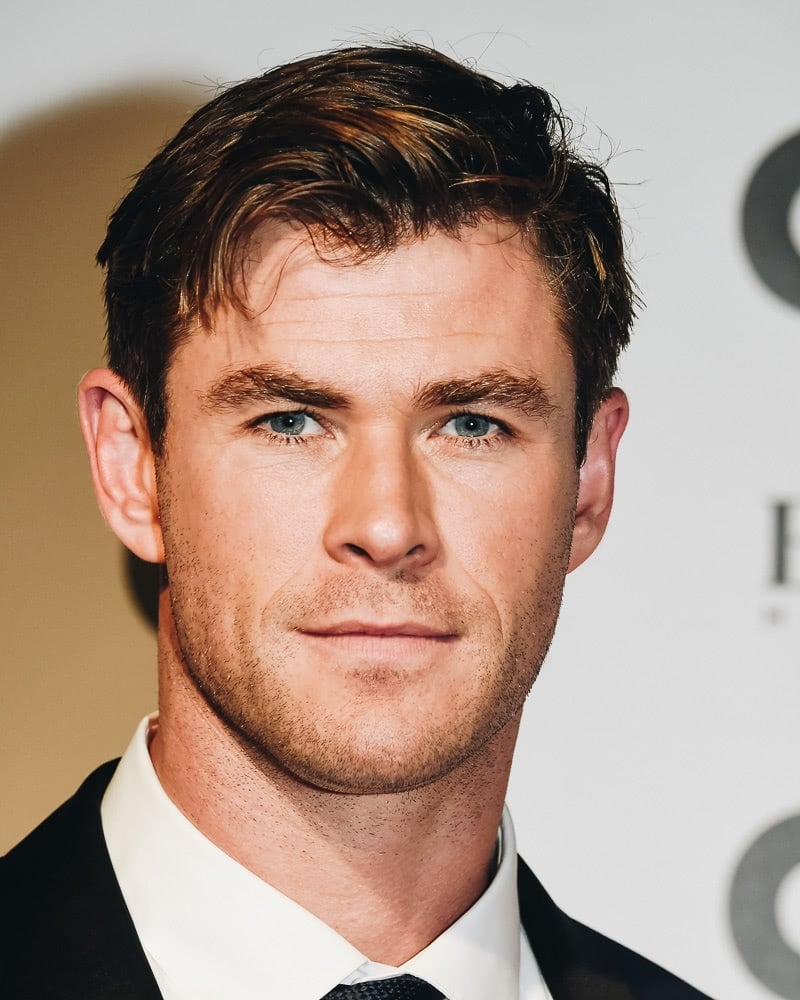
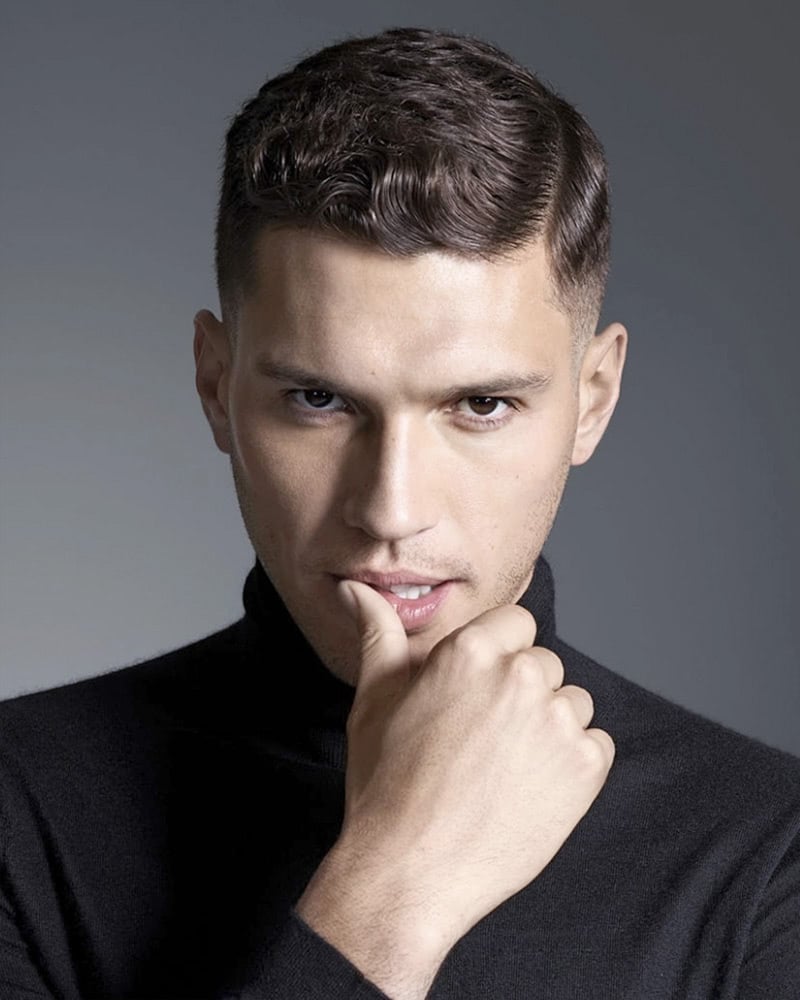
Leave some length at the front and let the wave do its thing. It’s a relaxed cut for wavy hair that looks better slightly undone than perfectly combed.
What to ask for Number 4 on the sides, three inches at the front left heavy, texture on top.
Fade With Long Bangs
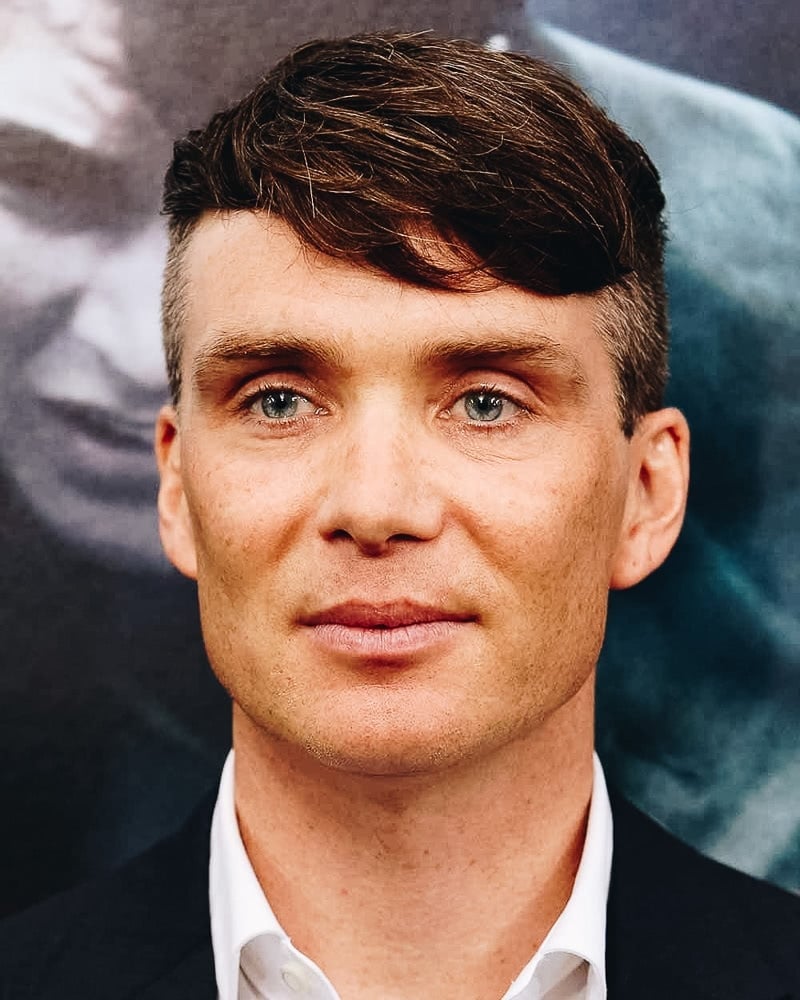
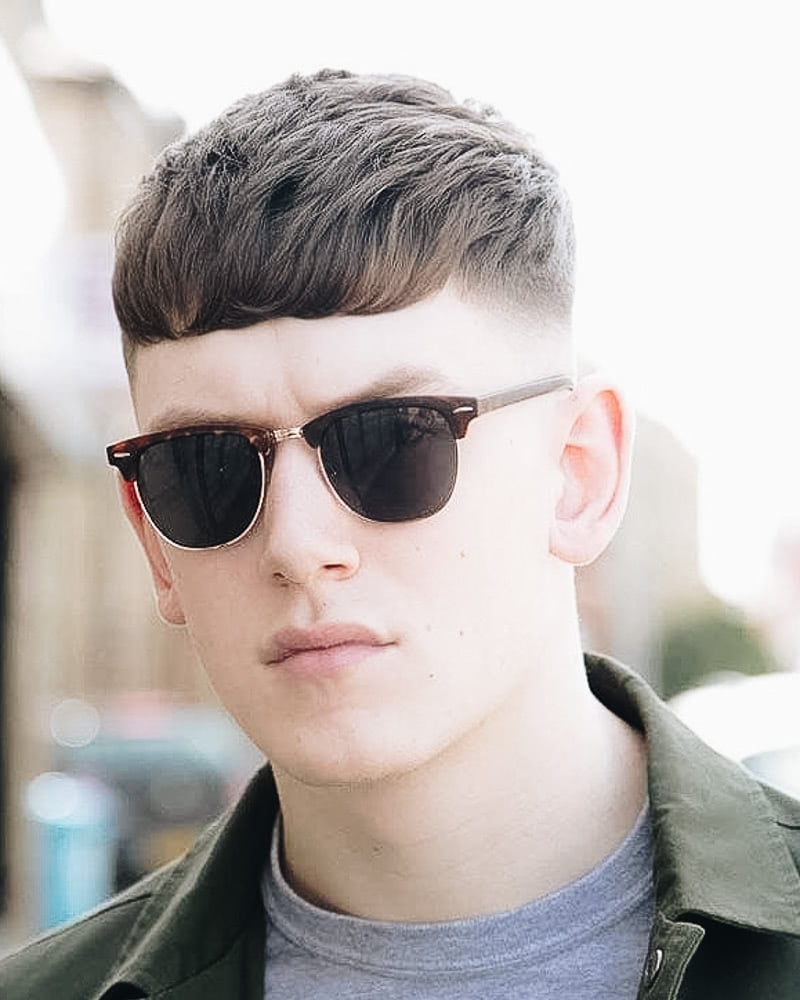
A long fringe on top with the sides faded right down. The contrast is the point, so keep the fade fresh and the fringe heavy. Our textured fringe guide has 25 more, from low tapers to curls.
What to ask for Mid skin fade, four inches at the front, fringe left long.
Curly Fringe
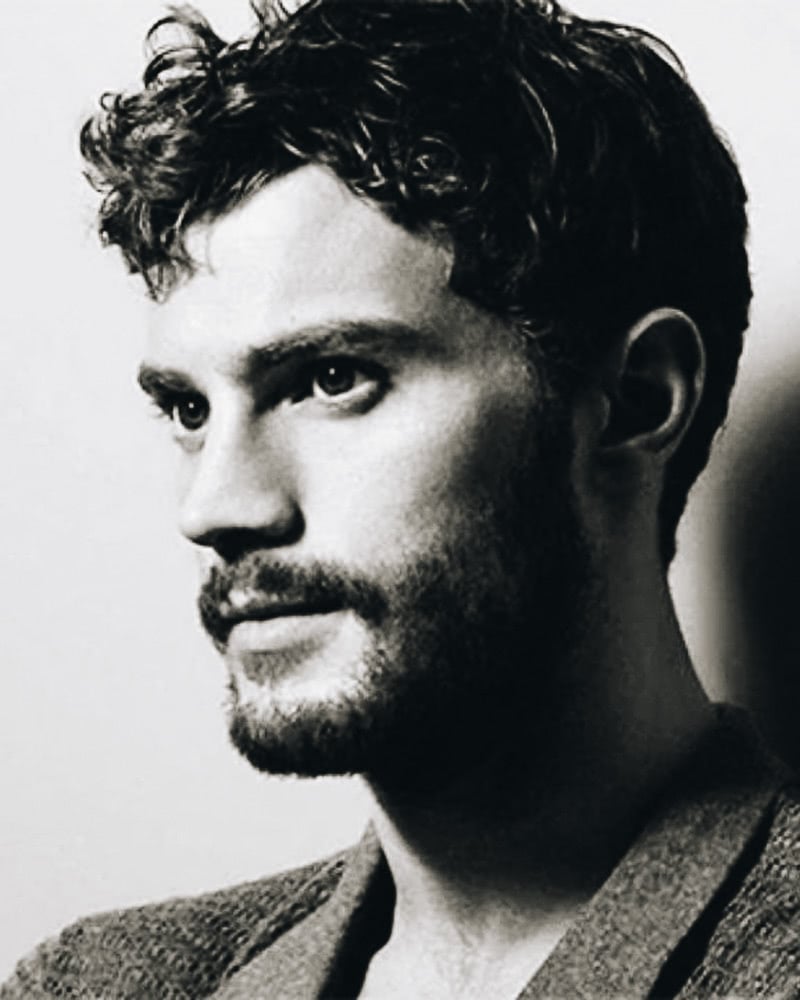
Short sides and curls left to tumble onto your forehead. Scrunch in some curl cream while your hair’s damp and leave it alone after that.
What to ask for Mid fade, three inches of curl on top, fringe left to fall forward.
Bowl Cut
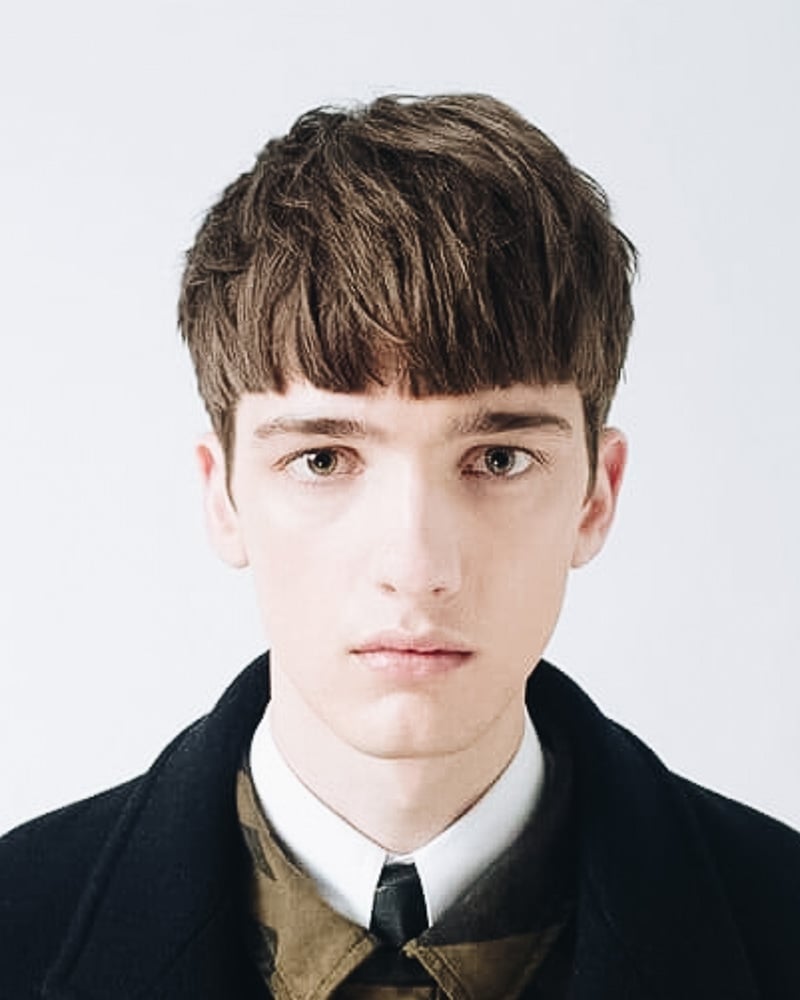
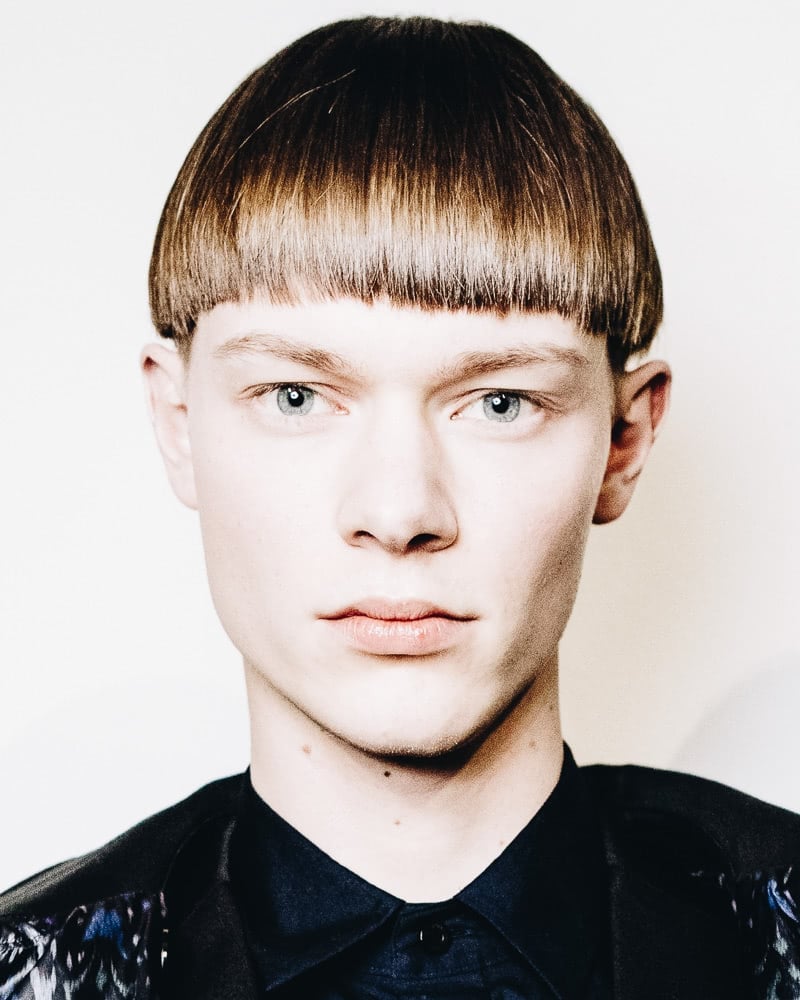
Yes, the bowl cut. The fringe runs straight around the head at one length. Cut with a sharp line, it looks like a choice you made on purpose.
What to ask for One length all the way round, a straight line at the brow, no fade.
Bowl Cut With Bangs
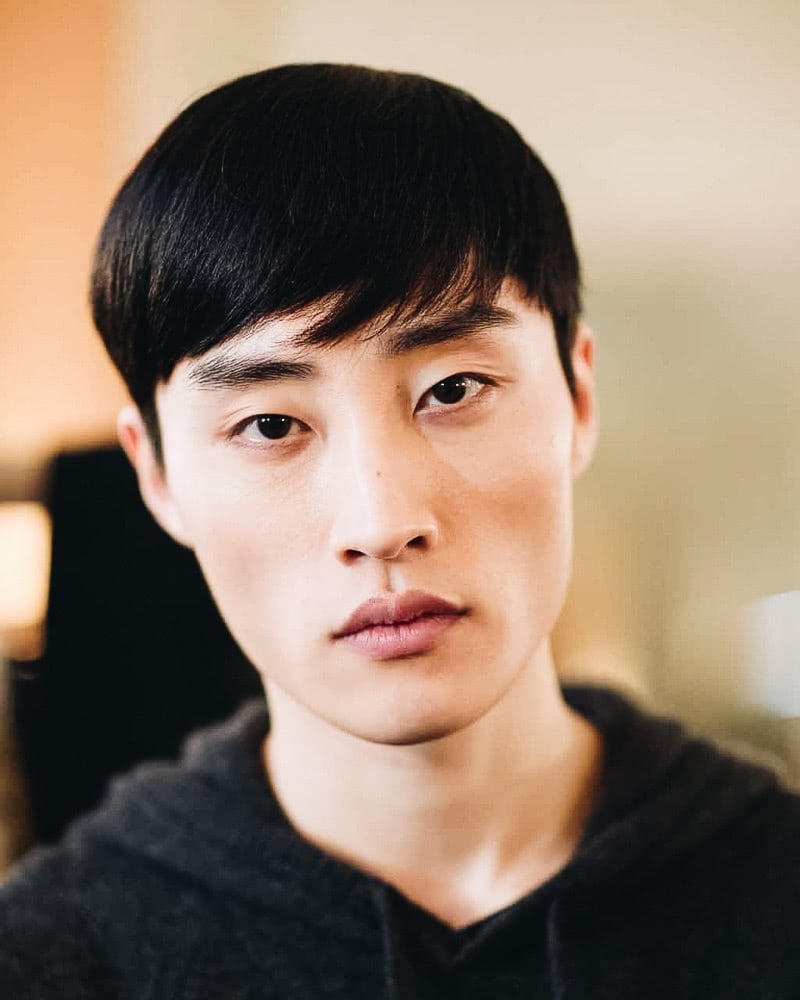
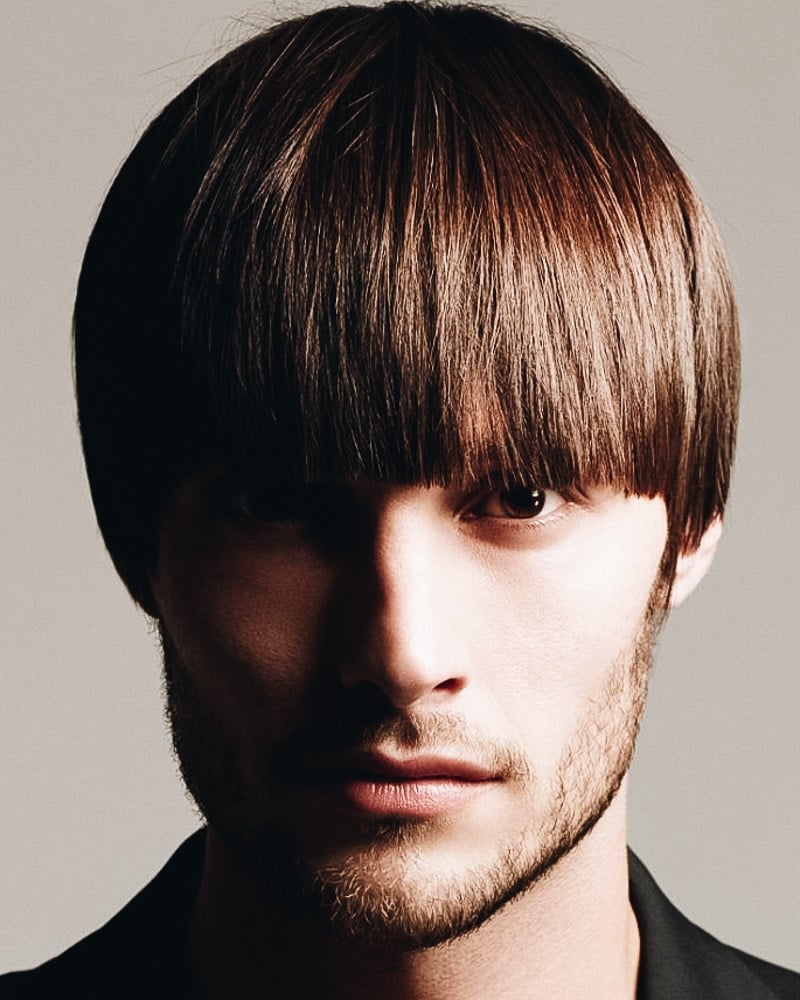
A heavier bowl with a longer fringe that sits right on your brows. Straight, thick hair holds this shape without much help.
What to ask for One length all round, a heavy fringe to the eyebrows.
Modern Bowl Cut
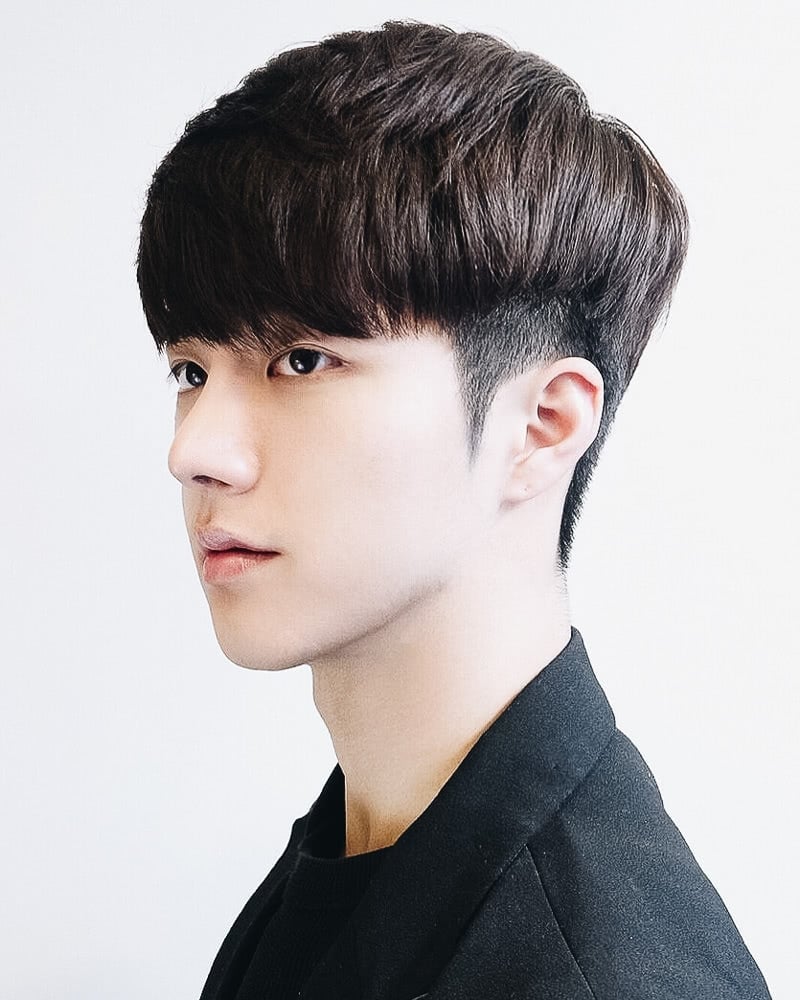
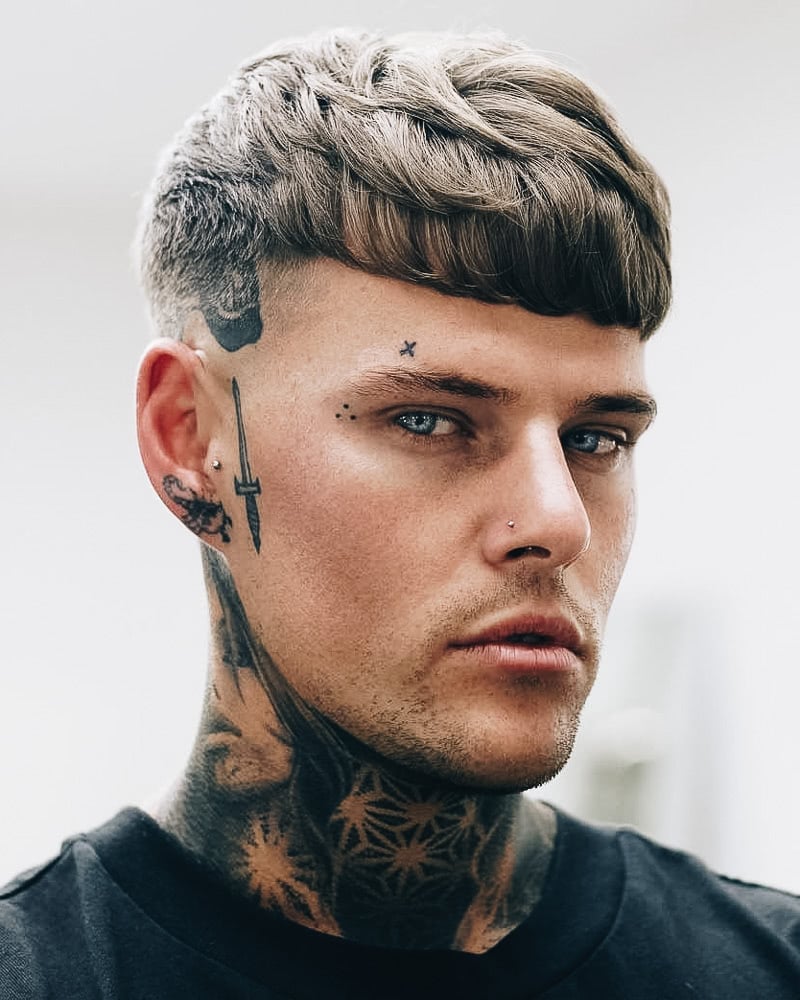
The bowl, updated: a choppy fringe with a fade or undercut underneath. Those short sides are what keep it from looking home-made.
What to ask for Mid fade underneath, a choppy bowl on top, textured fringe.
01 of 01
Cut styles
The skillful use of clippers is the method by which barbers achieve many of the following styles, along with traditional barbering shears:
Fade
Though often interchanged with the tapered cut, the fade cut does have its own trademarks. Shorter than a tapered cut, the hair is often shaved right down to the skin at the shortest parts, with gradual lengthening when ascending the head, leaving longer hair on top.
There are variants in fades, too. A low fade is conservative and low-key, beginning just above the ear. In contrast, a high fade begins much higher on the head and curves around, creating a more edgy, striking look.
The fade technique can complement other styles, such as the combover and the undercut.
Taper
When you request a tapered cut, you’re asking for your hair to literally be ‘tapered’ from the shortest at the nape of your neck, to longer (but still close cut) above your ears. Tapered cuts typically involve slightly longer hair on the sides, with the longest hair on top.
Undercut
The undercut has become a mainstay in edgy haircuts. When you ask for an undercut, you’re asking for shaved back and sides, sharply contrasting with considerably longer hair on top.
You can have the shorter parts cut with a fade, or with an all-over close cut to further dramatize this edgy style.
Bangs or fringe
Not just for women. We promise. ‘Bangs’ and ‘fringe’ are different words for the same thing (depending on which side of the pond you are): short hair falling onto the forehead and surrounding the face.
Messy, short fringes look smart on men when swept to the side. Neat, cropped fringes also complement the crew and buzzcuts very nicely.
Quiff
You’d be forgiven for thinking the quiff should stay safely in the 1960s, or on John Travolta in Grease. However, done correctly, the quiff can be a truly flattering style. Ideally, you’ll have grown your hair out a little so the barber has enough to work with. Lots of products are vital for retaining that retro ‘bounce’ associated with the quiff.
It can be happily paired with fades and undercuts, as this style is more about pushing the top hair up and forward to achieve that iconic shape.
Pompadour
To rock a proper pompadour, you’ll need your hair to be long enough to lay flat on top of your head when combed back. Similar to a quiff in cut, it’s the styling that’s key here. The ‘pomp’ is styled back, as opposed to the ‘up and forward’ of the quiff. Classically, they’re set firmly in place with a strong pomade.
The modern bowl cut
Now’s the time to eradicate any presumptions you had about the bowl cut. The modern bowl cut has actually become a favored style of late. Ask your barber for a subtle fade from long to short, while keeping the longer top choppy and uneven.
For a more individual look, ask for an undercut to achieve a starker contrast between the ‘bowl’ and the shorter hair.
Military or short crew cut
A military or short crew cut is a very short fade, culminating in slightly longer hair on the top. However, the top hair remains very neat, sharp and short too, therefore differing from the classic taper. Characterized by neatness and simplicity, this cut is daily maintenance-free but requires trimming fairly frequently.
How to style short hair for men: Expert tips
Favoring a short haircut can work wonders for saving time. While you’ll have arguably less freedom with experimentation, short hair is super easy to keep well-groomed on a daily basis. Depending on how short is short, you’ll still have the flexibility to create neat or more casual looks.
Styling time
When it comes to styling time, a short haircut could be the way forward if you’re not a fan of messing around in front of the mirror every morning. Military cuts, fades and tapered cuts are all super low-maintenance, saving you from the pre-work hassle and allowing more time for your morning coffee!
Regular barber visits
These cuts do require a little more upkeep— a trim every few weeks is generally required to keep your hair looking neat and tidy. Medium-length styles tend to have a bit more movement in terms of growing out, but if you want to keep things tip-top, a regular barber visit is recommended for most short cuts.
Messy or structured
Short hair cuts tend to be more structured and clean by default, as opposed to longer cuts. Because the hair is clipped so short, it retains its shape easily.
If you prefer a more windswept look, however, you can always opt for a longer top. You’ll then have more freedom to ‘muss’ it up with some sea salt spray or gel for a more je ne sais quoi vibe, while keeping the sides neat and tidy.
Texture and thickness
If you’ve been blessed with thicker hair, a short haircut is a bonafide way of preventing unruliness. Short back-and-sides with a longer top or a crew cut is an effective way of highlighting your (envy-invoking) ability to grow thick, voluminous hair, without the accompanying hassle of long hair management.
On the contrary, if your hair is on the thinner side, short cuts can be super flattering too. In fact, short haircuts are a tried-and-tested industry technique to disguise thinning hair. While longer strands tend to emphasize thin or fine hair, short, blunt haircuts create the illusion of thickness.
Men who haven’t been blessed with a lion’s mane could consider a buzzcut. Buzzcuts need minimal (if any) product to set the shape, which is great news as the overuse of gel can highlight hair thinning in a less-than-desirable way.
Face shape
Short haircuts can be amazing for accentuating a strong jawline. Pay careful attention to which short haircut you go for, though, as some are more flattering on others, depending on your face shape.
Square face shapes tend to have wide cheekbones and an angular jawline. In this case, very close cuts are preferable. Think military cut, crew cut, or buzz cut to draw attention to those angles.
Oval shaped faces allow more freedom— as a user-friendly face shape you’re free to experiment. It is recommended that you don’t go for too much volume on top, even with short hair, as this can elongate an already lengthened face.
Round face shapes are quite the opposite, you want to create the appearance of length by balancing a rounder face with more volume on top. Feel free to keep the back and sides shorter, but ensure your barber leaves enough hair on top to play with. A small quiff or no-fuss messy style could be perfect for balancing your face here. Our guide to haircuts for round faces shows 26 of them on round-faced clients.
Triangular faces, take heed: while most short haircuts will be flattering, it’s best to have a little more volume on the sides. Generally, if you’re going for a fade or taper, ensure that your hair isn’t cut too close to the skin around your ears and below— try to keep some length.
Diamond face shape? Try to grow out the top of your hair a little (while keeping it a short haircut in essence)— diamond faces tend to have strong cheekbones and a smaller upper head. Therefore, maintaining a voluminous fringe will help to balance everything out.
Age
Short cuts on men are a failsafe way to retain a youthful aesthetic—not only are they easier to manage, but as we’ve said, they help to create the idea of thickness. This can be an attractive quality in mature gentlemen who want to enhance thinning hair.
On younger men, shorter cuts are perfect for those who prefer a neat, shipshape style, with fewer room kinks or need for hairstyling products.
Terminology: How to explain what you want to your barber
While you pay your barber for their expertise, it can be exponentially helpful to be familiar with basic barbering terms. There’s little worse than the frustration of attempting to explain your ideal cut to your barber without the appropriate linguistic equipment.
First thing first, the clippers:
This handy little tool is ubiquitous when it comes to men’s haircuts. You may have been baffled in the past to hear haircuts described as numbers:
“I’ll have a 3, please”.
Rather than looking confused, the barber deftly locates his clippers, attaches something, and gets to work as if the request is perfectly normal.
Well, it is. The ‘somethings’ your barber will attach to his clippers are different ‘guard sizes’.
They’re placed before the blade on clippers to maintain a specific length when ‘clipping’ hair.
So what does each of those numbers actually leave on your head? Here’s the cheat sheet.
Haircut numbers: the clipper guard sizes chart
The rule is refreshingly simple: the higher the number, the longer the hair. Each step up adds another eighth of an inch, from a half guard at 1/16 inch to a number 8 at a full inch.
| Guard | Length | What it gets you |
|---|---|---|
| #1/2 | 1/16 in (1.5 mm) | As short as it goes before bald, and the bottom of a skin fade |
| #1 | 1/8 in (3 mm) | A short buzz cut |
| #2 | 1/4 in (6 mm) | A traditional buzz cut |
| #3 | 3/8 in (10 mm) | A buzz cut on the longer side |
| #4 | 1/2 in (13 mm) | Crew cut or brush cut territory |
| #5 | 5/8 in (16 mm) | Enough to style with a little product |
| #6 | 3/4 in (19 mm) | Enough to part the top |
| #7 | 7/8 in (22 mm) | A side part, crew cut or Caesar |
| #8 | 1 in (25 mm) | The top of a cut that’s shorter on the sides and back |
So is a 3 or a 4 shorter? The 3, by exactly an eighth of an inch, and a 7 is shorter than an 8 by the same margin. A standard guard set stops at the 8, though Wahl also makes a #10 at 1 1/4 inches and a #12 at 1 1/2 inches for anyone who wants to push it.
A “zero” means no guard at all. It isn’t a fixed length, because one clipper’s bare blade cuts closer than another’s, so ask for “no guard” and expect it to vary a little from shop to shop.
A fade is really just a few numbers said in one breath. Wahl’s own example runs a half guard on the lower sides and back and a number 2 on the upper sides, and its side part is a number 4 on the sides with an 8 on top. Give your barber a number for the top, a number for the sides, and tell them where one should turn into the other.
One last bit of math. Hair grows about half an inch a month. That’s four guard numbers, so today’s number 2 is next month’s number 6.
What is the best short haircut for men?
There is no single best cut. Popular low-effort choices are the crew cut, buzz cut, Ivy League, Caesar, and French crop, while textured crops, quiffs, and pompadours give a more styled finish. The right one depends on your hair type, face shape, and how much daily styling you want to do.
What short haircut suits straight hair?
The French crop works particularly well with straight hair, and the messy French crop is a good textured variation. Clean, structured cuts like the Ivy League also sit well on straight hair.
What is a classic short haircut for men?
Classic short cuts include the crew cut, Ivy League (also called the Harvard Clip or Princeton), Caesar, side part, and the military buzz cut and high and tight. These are clean, timeless styles that are easy to maintain.
What short haircut is best for thinning hair?
Short, blunt cuts flatter thinning hair by creating the illusion of thickness. A buzz cut is a strong option because it needs minimal product, and a fade with spikes can add volume to a thinning crown. The butch cut also suits thinning hairlines. If it’s your hairline that’s moving, our guide to haircuts for a receding hairline has 24 cuts that work with it.
Not sure short is the way to go? Explore our guides to the best fade haircuts for men, the ever-popular taper fade, or go bold with medium-length haircuts. Or see four looks from every family in our guide to men’s haircuts.
Products featured here are independently selected by our editors. If you buy through our retail links we may earn an affiliate commission — it never changes the price you pay, and it never decides our verdicts. Read our earnings disclaimer.