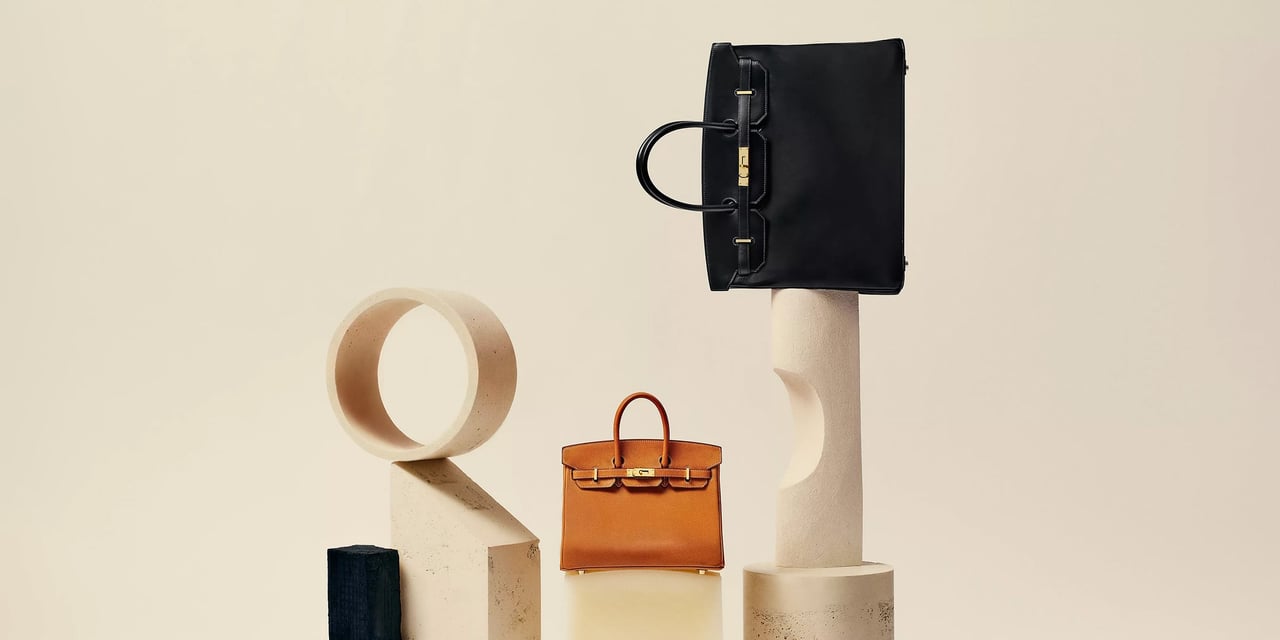
Hermès sits at the top of the luxury handbag world for reasons that go far beyond the price tag and the waiting list. Where most of the industry has spent the last decade chasing logos, drops, and the dopamine hit of the next “It bag,” the French house has stayed almost stubbornly the same: small ateliers in the Paris region, one artisan to a bag, the same saddle stitch their leatherworkers have used since the 1830s.
You already know the cultural shorthand. Either you’re rolling your eyes at the six-figure resale numbers, or your saved folder is a quiet competition between a Kelly and a Birkin, with the occasional Constance breaking through. Carrie Bradshaw, Jane Birkin, Victoria Beckham, Hailey Bieber — every generation has cast a Hermès in the lead role. That kind of staying power is what happens when a bag is built to be carried, repaired, and inherited rather than flipped.
At Luxe Digital, we’re not here to help you trade one. We’re here to help you choose the one you’ll carry for thirty years, send back to the Paris workshop for a touch-up at year fifteen, and eventually pass on to someone who’ll love it just as much. That’s the real investment — not the resale comp, but the math of cost-per-wear when the wear is measured in decades.
You might also enjoy our guides to the best designer bags of all time, most expensive handbags, best Chanel bags, and our roundup of Birkin alternatives.
Hermès Birkin
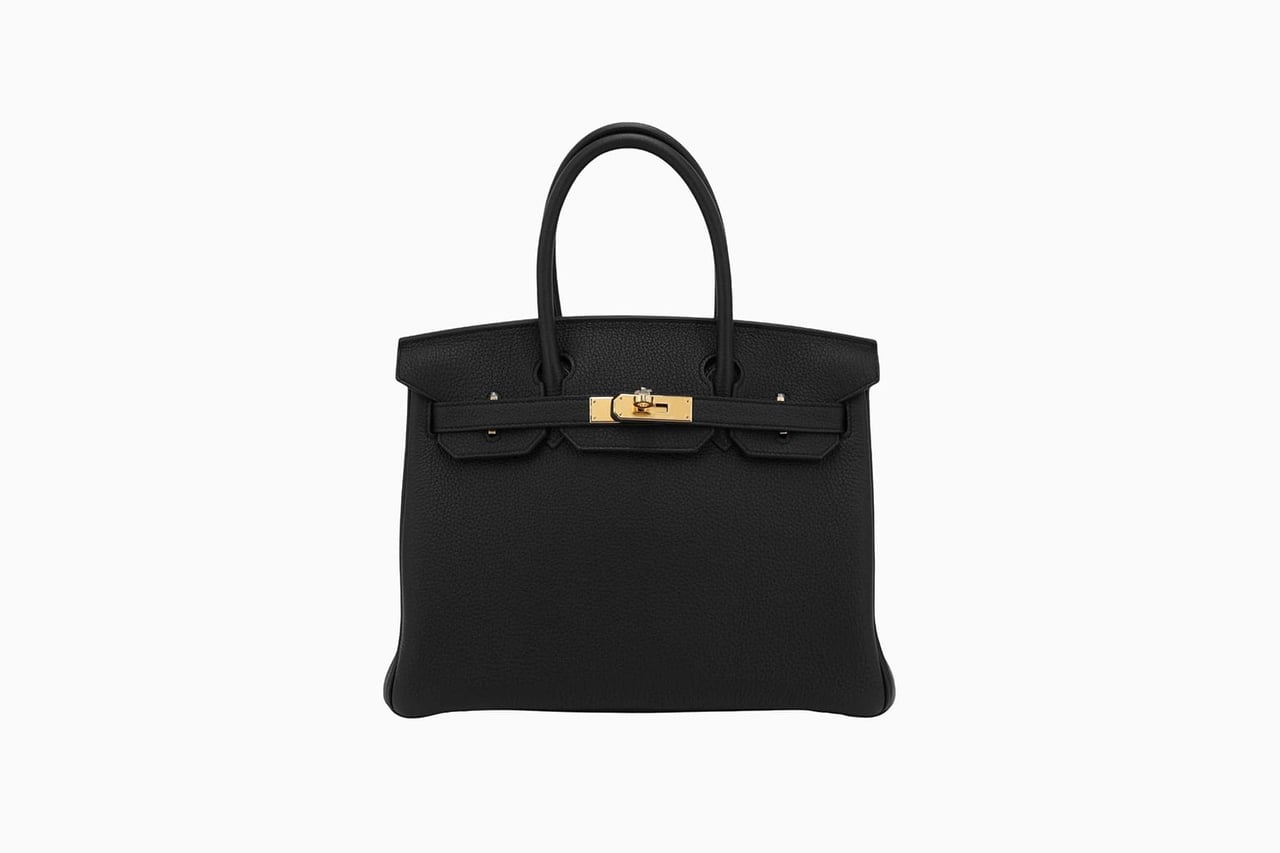
The origin story is well known by now: a 1984 Paris–London flight, a serendipitous seating next to Hermès CEO Jean-Louis Dumas, a young Jane Birkin lamenting that no bag existed for the way she actually lived. Dumas sketched, Hermès delivered, and forty years later her prototype sold at Sotheby’s for €8.6 million — a bag that became the most valuable in history precisely because she used it every day for years.
That’s the Birkin’s whole personality in one paragraph. It is, before anything else, a working bag. The two rolled handles are made to be gripped, the open-top silhouette is made to be reached into, and the rectangular body is deep enough to swallow a laptop, a notebook, a paperback, a baby bottle, and whatever else daily life asks of it. The lock and clochette aren’t decoration — they’re a real closure for everything you carry. Every detail is built for use. That’s why it sits at the top of the luxury handbag world: not because it’s hard to get, but because once you have it, you reach for it every morning for the next thirty years.
It comes in four sizes — the Birkin 25 (the recent Instagram-era favorite for its compact, photogenic proportions), the Birkin 30 (the universal sweet spot most owners settle on), the Birkin 35 (the original and still the right answer if you carry a lot), and the Birkin 40 (the travel companion — the size Jane herself preferred, for the very practical reason that she had a lot of stuff). The number is the width in centimeters across the base; the names couldn’t be simpler.
Leathers and colors run the full Hermès vocabulary, from the workhorse Togo to the glossy depth of Box calf to the Holy Grail exotics — crocodile, ostrich, lizard, and the smoke-and-pearl Himalaya. The boutique price for a standard Birkin 30 still hovers around $12,000. The resale floor for the same bag sits comfortably above $15,000, and the ceiling, once you start talking Himalaya or limited exotics, has no real top.
Best for: The one Hermès you’ll actually use — every day, for the rest of your life.
| Release | 1984 |
|---|---|
| Retail price | $10,000 - $56,000 |
Hermès Kelly
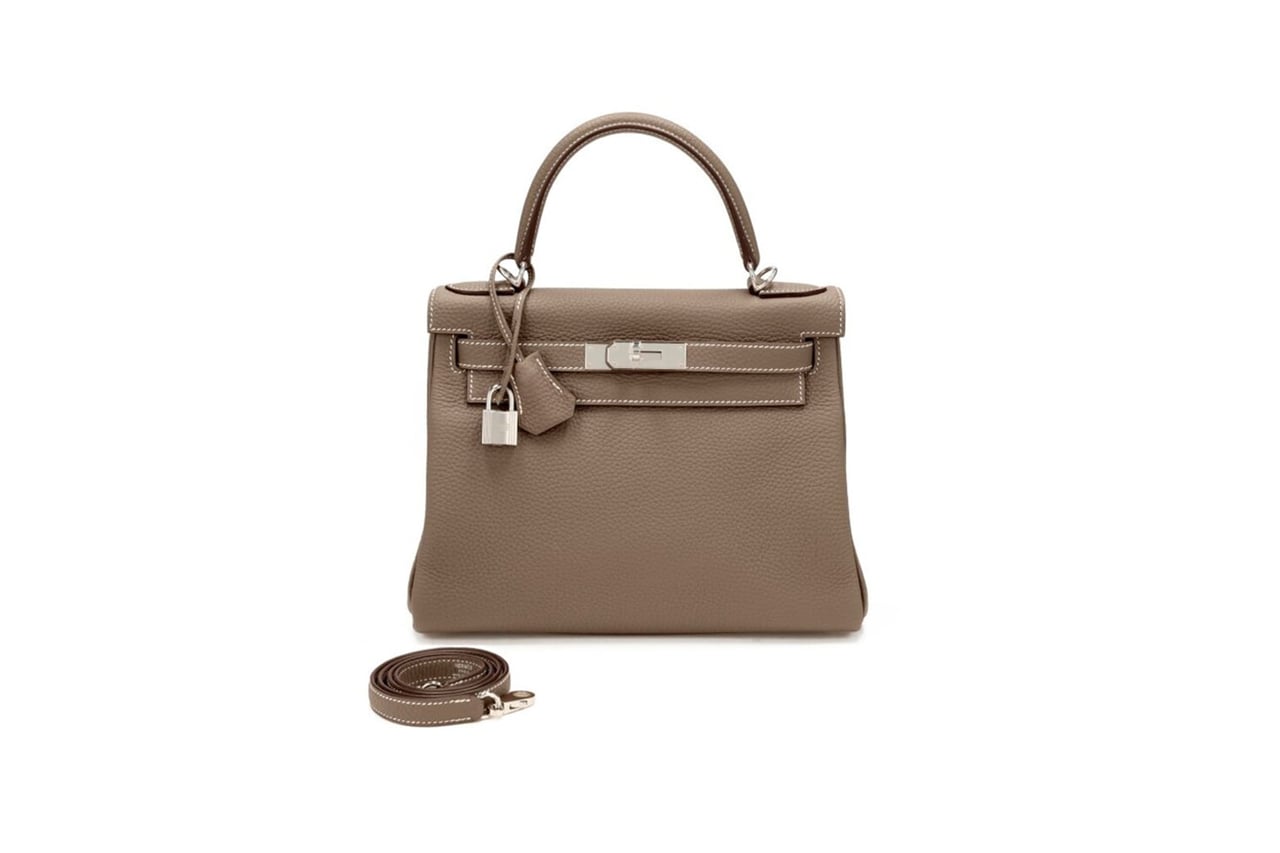
Long before it became the Kelly, it was the Sac-à-Dépêches — a 1930s leather satchel for carrying papers and small documents, with no celebrity attached. The bag found its name in 1956, when Grace Kelly, by then Princess of Monaco, was photographed holding the bag in front of her stomach to shield her pregnancy from the paparazzi. The image traveled the world. Hermès renamed the bag in her honor in 1977, with her permission, and it has been the Kelly ever since.
It’s the more formal sibling of the Birkin: trapezoidal silhouette, a single top handle, the signature turn-lock and clochette over a folded flap, and a detachable shoulder strap that lets it swing from “carried in the crook of the arm to dinner” to “across the body on the school run” without ceremony. Where the Birkin is built to be reached into, the Kelly is built to be opened with intent. It closes properly. It sits properly. It photographs properly. There’s a reason it’s the Hermès bag most often called elegant — it actually is.
The Kelly comes in two constructions that change its entire personality. The Sellier is the structured original: sharp 90-degree edges, exposed saddle stitching on the outside seams, the silhouette held rigid. It’s the museum-piece Kelly, the one Grace carried, the one that reads most formally with tailoring. The Retourné is sewn inside-out and turned, so the stitching tucks invisibly inside and the bag carries softer, with gently rounded edges. It’s the more wearable everyday version; the one that drapes naturally on the shoulder. Same silhouette, two genuinely different bags.
Sizes run from the Kelly 25 (the petite favorite, evening-ready, holds the essentials and not much else), to the Kelly 28 (the goldilocks daily-wear size most owners eventually choose), to the Kelly 32 (Grace’s size, the most generous of the everyday options), to the Kelly 35 (rare now, sized closer to a Birkin and chosen by those who want one bag to do everything). Each number is the width in centimeters.
Leathers and colors span the full Hermès range. Box calf is the most classic-classic choice (what Grace’s was made of, glossy and structured) but it shows every scratch; Togo is the more practical everyday choice and what most modern Kellys are made in. Boutique pricing starts around $10,500 for a Kelly 28 in standard leather. Resale floors sit a notch above boutique, with exotic-skin Sellier Kellys in rare colors stretching well into six figures.
Best for: The Hermès you’ll wear when the day asks for elegance — and for the next twenty years of those days.
| Release | 1935 |
|---|---|
| Retail price | $11,000 - $51,000 |
Hermès Constance
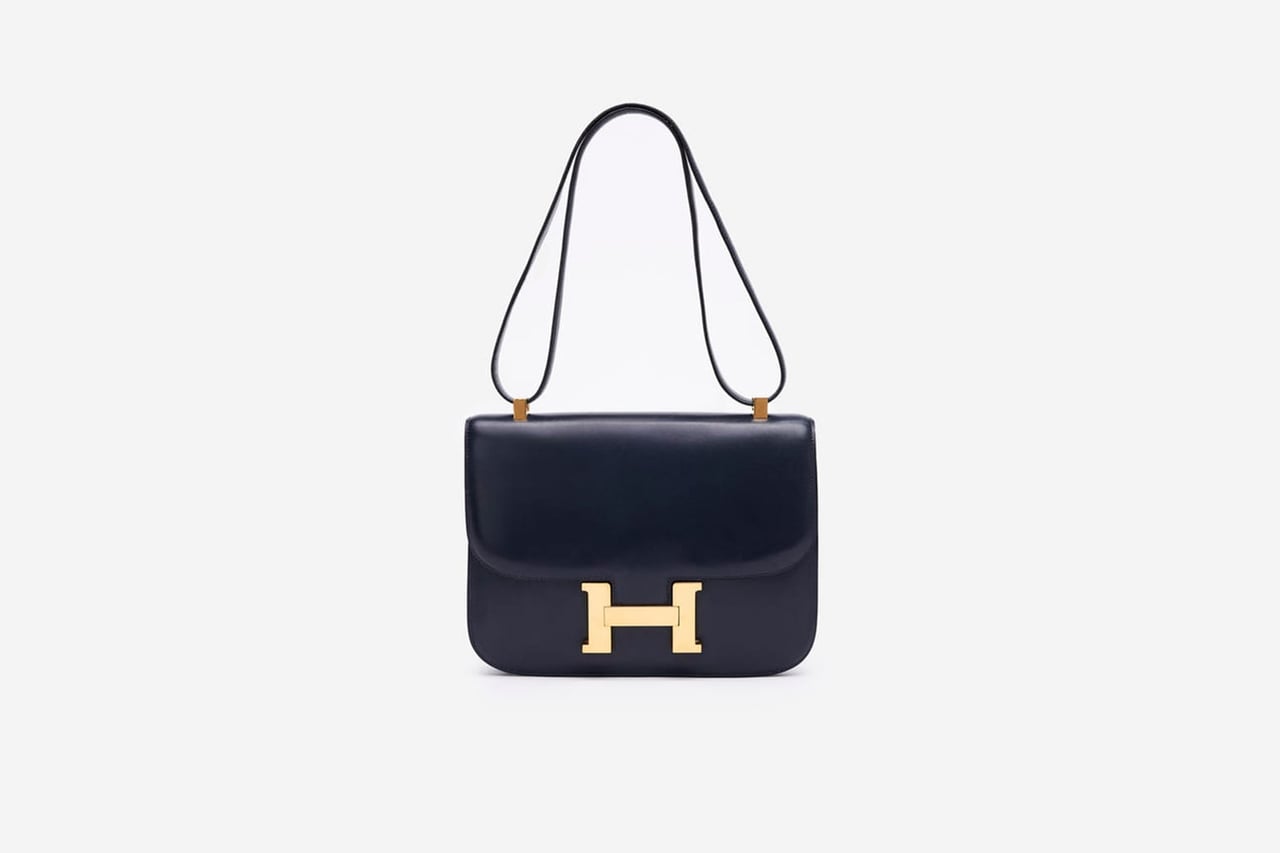
Designed by Catherine Chaillet in 1959 and named for her daughter, born the same day, the Constance was conceived from the start as a bag to be inherited. The sterling oversized H clasp — the most recognizable closure in luxury handbags — is both signature and structural, fastening the front flap with one decisive click. The body is slim and rectangular, the shoulder strap thin and adjustable, the silhouette compact enough for evenings but capable of carrying you through a city day.
It’s the connoisseur’s Hermès. Less photographed than the Birkin, less mythologized than the Kelly, but quietly the bag many longtime Hermès owners reach for most often. The Constance 24 is the size to buy, in Box calf, with palladium hardware — the version we recommend across the lineup for its glossy depth, structural sharpness, and the way the H clasp catches light against black calfskin.
Best for: The Hermès for the evenings — and for the daughter who’ll eventually carry it.
| Release | 1959 |
|---|---|
| Retail price | $11,000 - $60,-000 |
Hermès Haut à Courroies
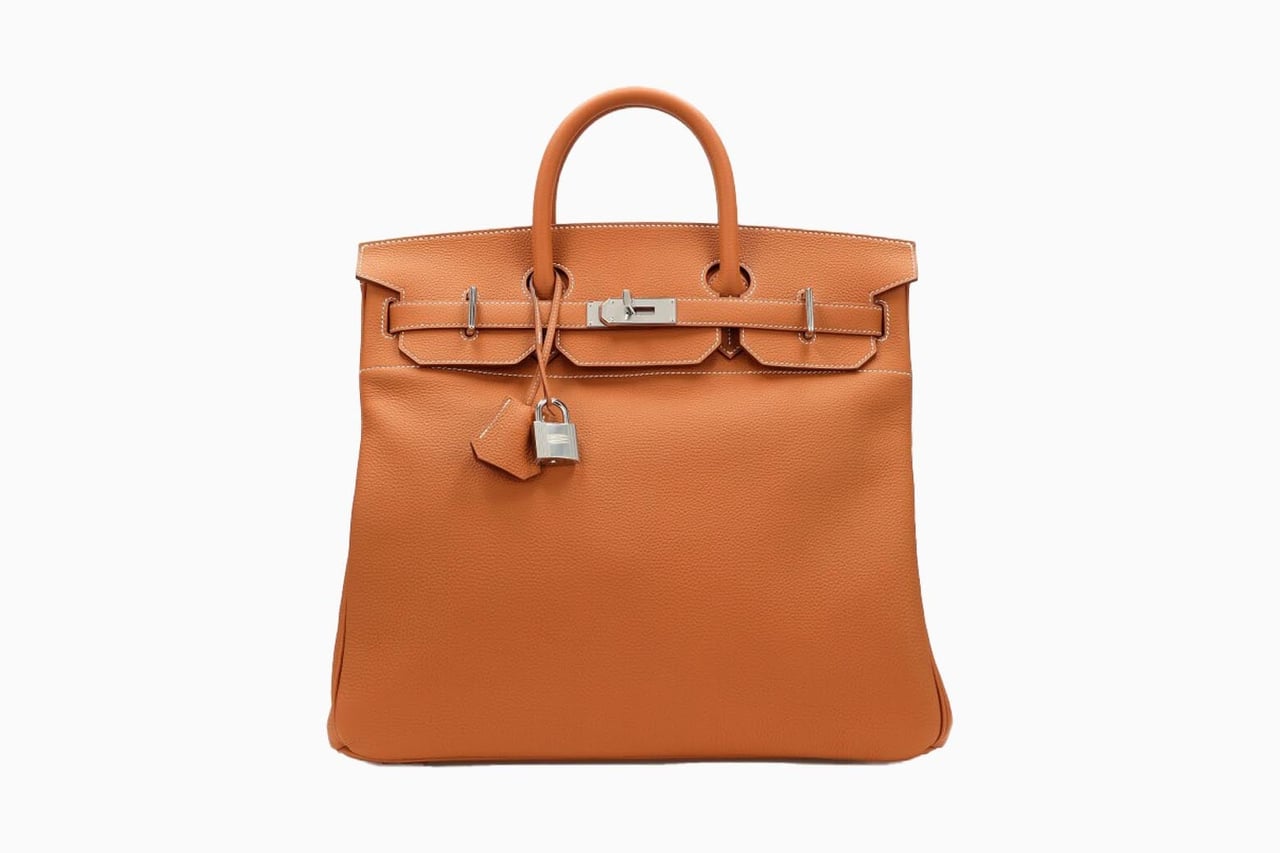
The HAC is the bag that started everything: the 1892 leather tote designed to carry a saddle and a pair of riding boots, and the silhouette the Birkin was later scaled down from. Forty centimeters tall at its smallest, the HAC trades the Birkin’s proportions for something taller, deeper, and unapologetically built for travel. Same saddle stitch, same lock and clochette, same artisan-per-bag construction — just sized for a life that includes airports and overnight trips.
It’s enjoying a quiet renaissance. Victoria Beckham travels with one; Travis Scott helped make it a streetwear-era moment. For the Birkin lover who doesn’t want to be seen carrying a Birkin, the HAC is the most interesting answer in the lineup.
Best for: The Hermès for travelers — and the original from which all the others descend.
| Release | 1892 |
|---|---|
| Retail price | $16,000 - $23,000 |
Hermès Picotin
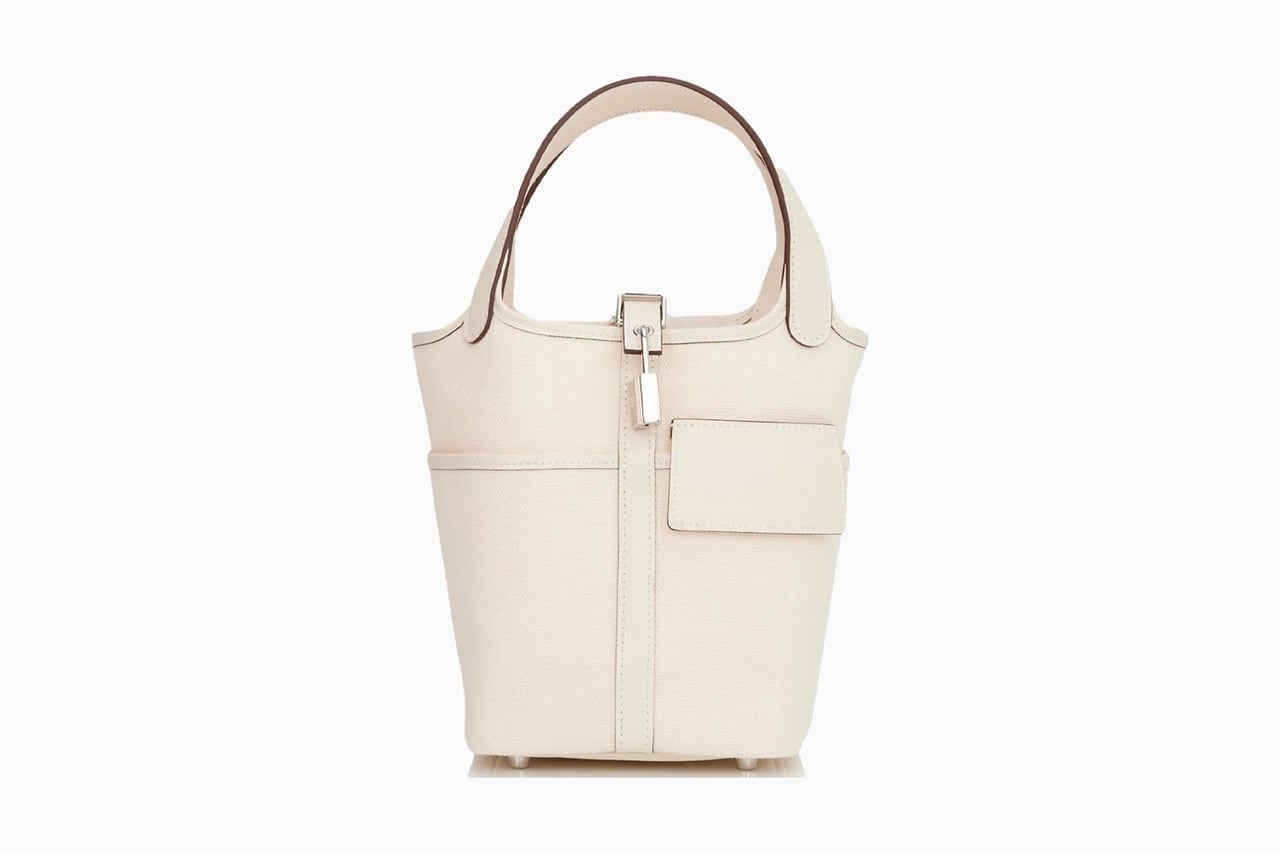
We’re keeping ours away from the stables and sticking to the streets. Named after the measure of feed in a horse’s bucket, the Picotin is the most relaxed of the Hermès icons — an open-top leather bucket bag with rolled handles, a small equestrian padlock and clochette as the only ornament, and no closure or lining to fuss over. It’s the Hermès you buy when you don’t want the bag to be the conversation.
The Picotin comes in three sizes — 18, 22, and 26 centimeters — and runs the full leather range, with the smooth Clémence and pebbled Togo versions ageing into the softest, most lived-in shapes. It’s also the most accessible classic in the line: the entry-point Hermès for the owner who’s not chasing the Birkin myth.
Best for: The errand-running Hermès — the one that disappears into your day.
| Release | 1958 |
|---|---|
| Retail price | $2,875 |
Hermès Evelyne
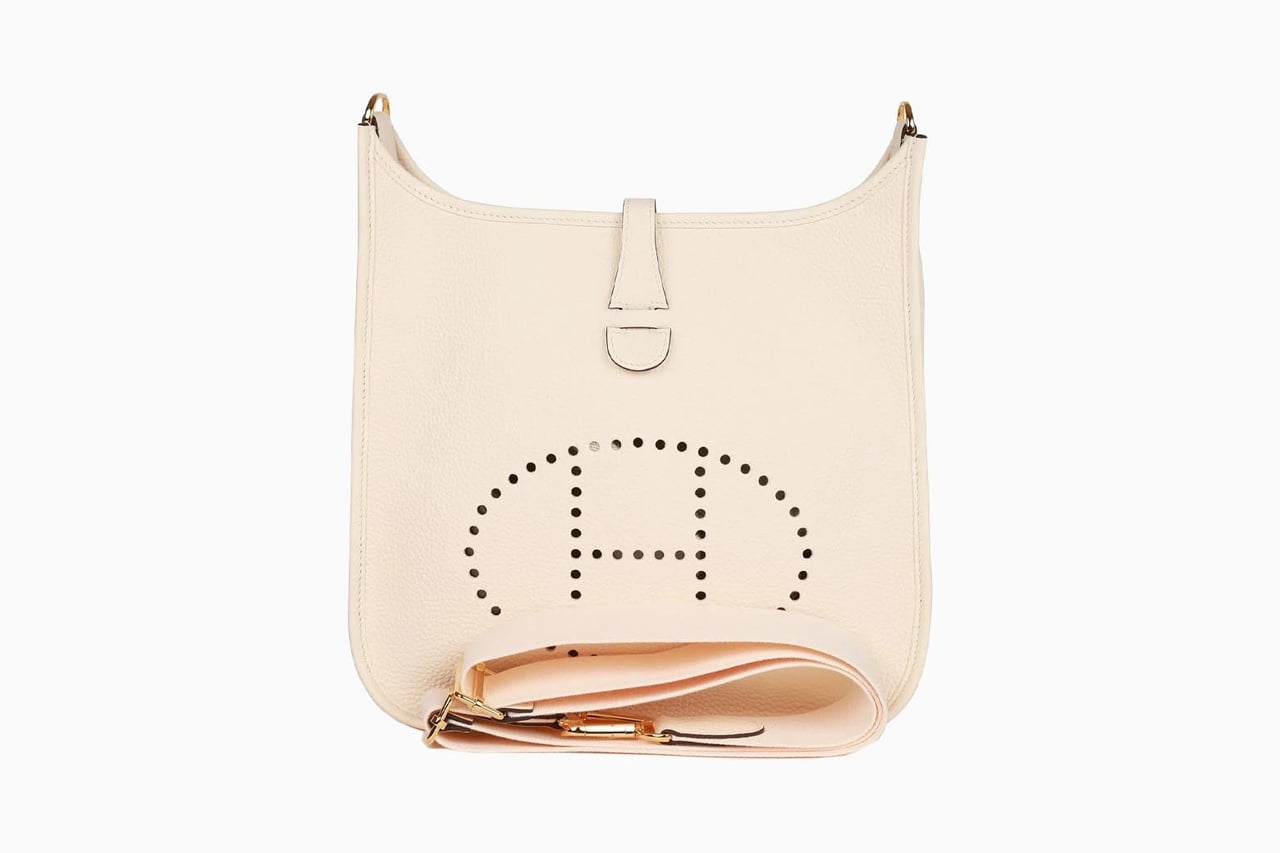
Designed in 1978 by Evelyne Bertrand, then head of Hermès’ equestrian department, the Evelyne started life as a tote for horse grooming equipment — currycombs, brushes, hoof picks. The famous perforated H on the front faced inward originally, against the tools, to keep them ventilated. When Hermès turned the H outward and added a long shoulder strap, the bag quietly became the most worn (and most loved) Hermès in the lineup.
The current Evelyne III is lightweight, shoulder-strap-led, and built to be forgotten about once it’s on — the antithesis of the formal Kelly, the daily companion the Birkin pretends to be. It comes in four sizes (TPM, PM, GM, TGM) and the canvas-strap option that hits closer to the original equestrian spirit.
Best for: The hands-free Hermès — the one you’ll actually reach for more than any other.
| Release | 1978 |
|---|---|
| Retail price | $1,900 |
Hermès Bolide
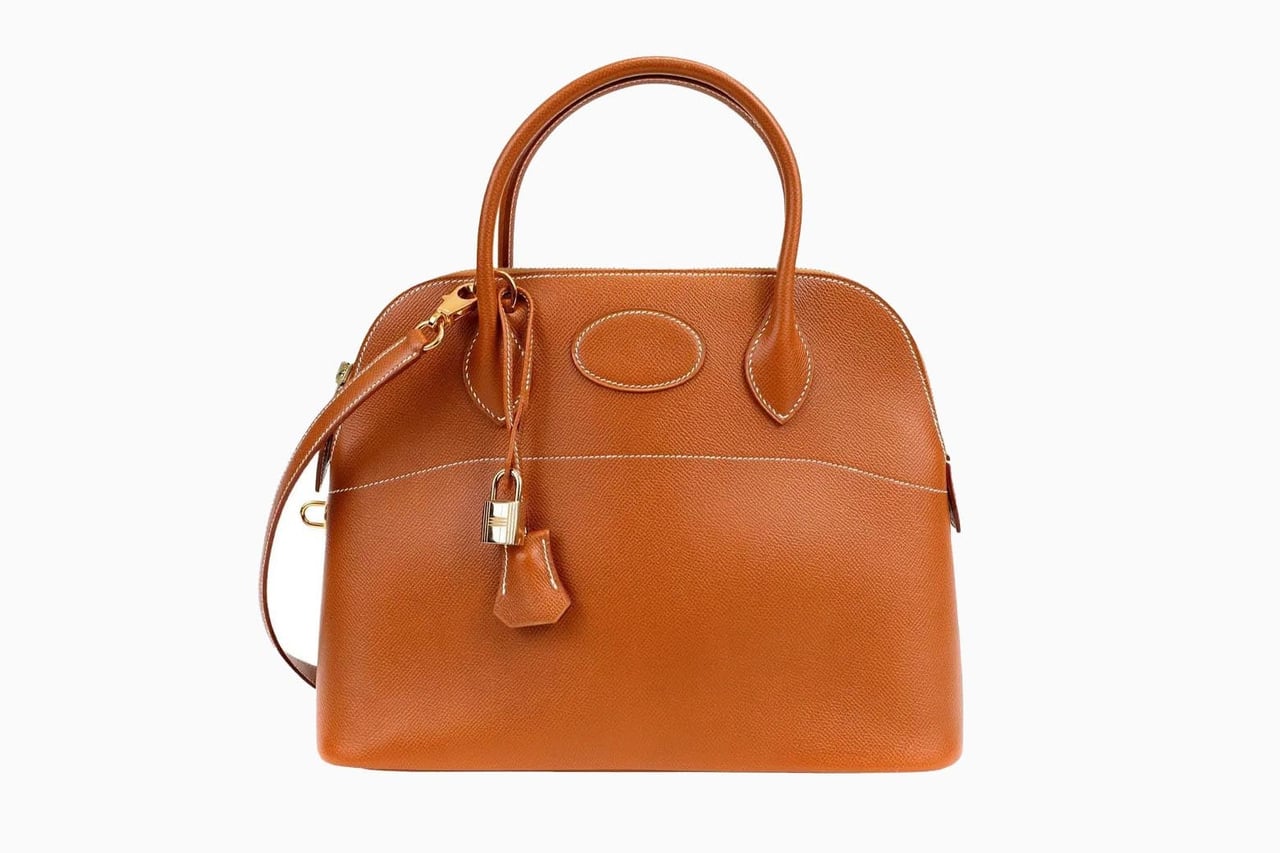
Created in 1923 as the first handbag in the world with a zipper — a technology Émile-Maurice Hermès had brought back from Canada five years earlier, after spotting it on the convertible top of a Cadillac — the Bolide is named for the French word for a racing car. The rounded silhouette and the double-zip closure that opens the bag end-to-end were both engineered for the automobile age, and both still feel quietly modern a century later.
It’s the Hermès icon hiding in plain sight. Less photographed than the Birkin or Kelly, but with its own loyal following among owners who prefer their bags to do the talking through detail rather than profile. It comes in sizes from 27 to 45 centimeters, in everything from Clémence to Epsom to crocodile.
Best for: The Hermès for the days in motion — and the one that quietly outranks the obvious answers.
| Release | 1982 |
|---|---|
| Retail price | $365 - $8,700 |
Hermès Jypsière
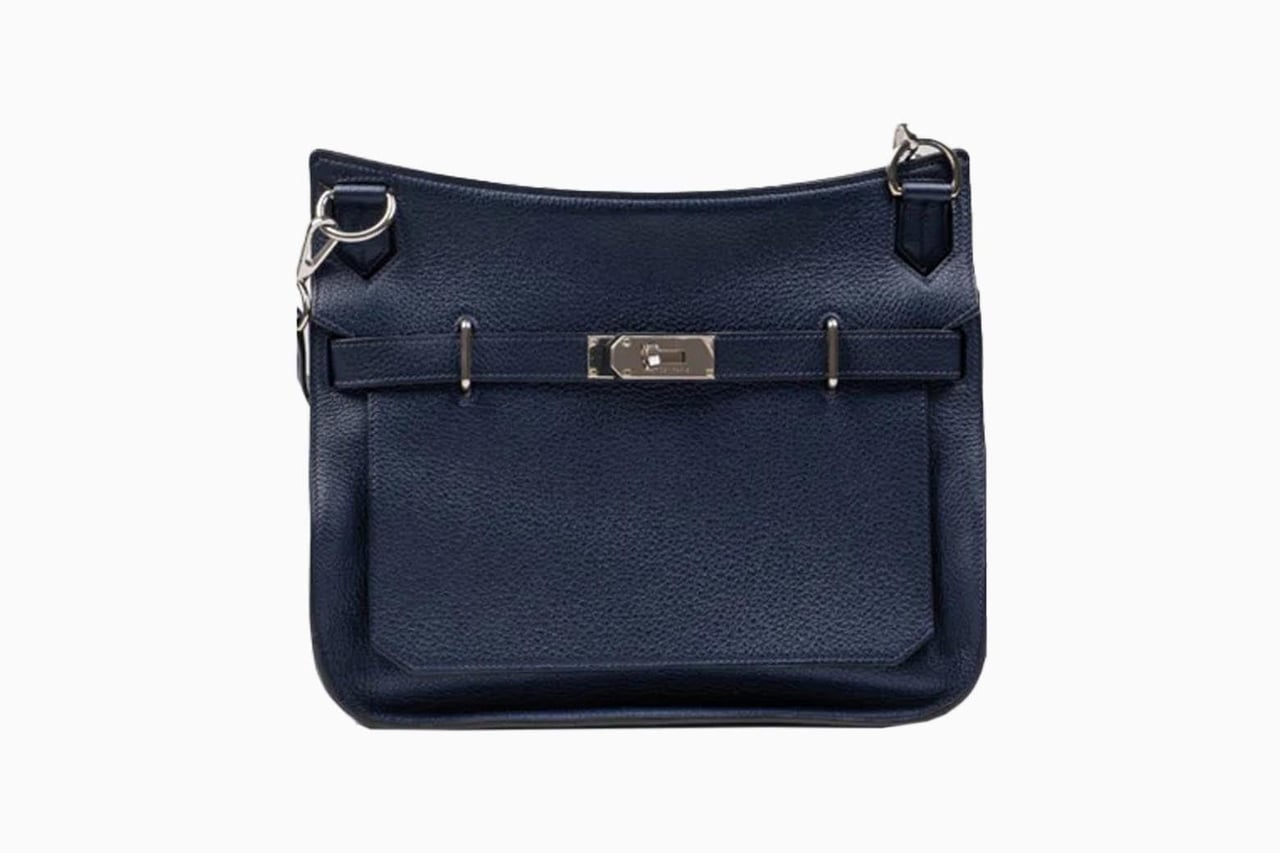
Designed by Jean-Paul Gaultier in 2008 during his tenure as Hermès’ creative director, the Jypsière is the messenger-bag reinterpretation of the Kelly. Same lock, same clochette, same trapezoidal DNA, but with a softer body, a longer adjustable shoulder strap, and a rounded base built to ride against the hip rather than perch on the forearm.
It’s the Kelly for the days you don’t want to baby a Kelly — slung across the body, lived in, lightly knocked around. The Jypsière comes in 28, 31, 34, and 37cm, with the larger sizes reading more travel bag and the smaller ones more daily companion.
Best for: The Hermès for the move — Kelly DNA without the Kelly’s formality.
| Release | 2008 |
|---|---|
| Retail price | $5,000 - $10,000 |
Hermès Herbag
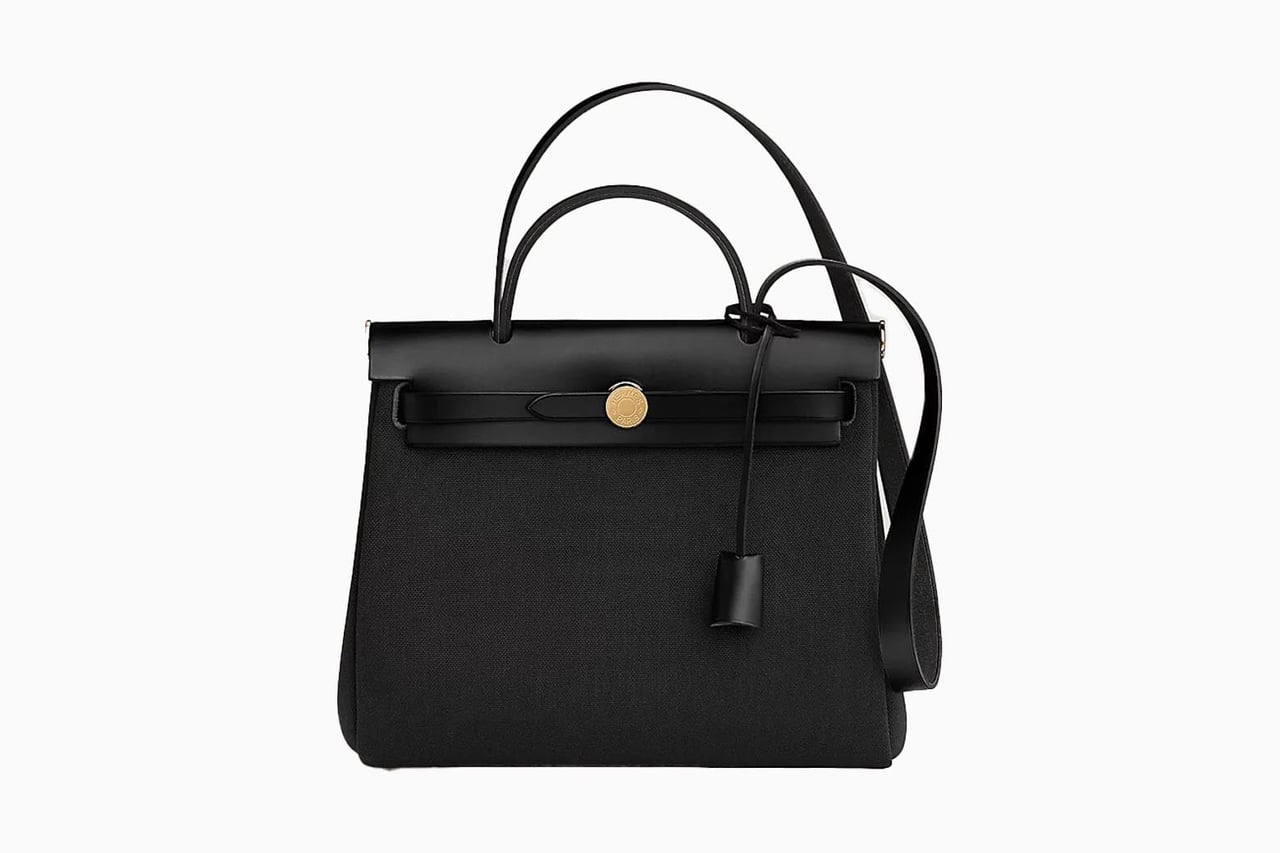
Two for the price of one is not something you expect to hear from one of the most popular luxury brands, Hermès. The Herbag is the lineup’s clever piece of design — a Kelly-shaped canvas-and-leather bag whose top flap detaches from the body, letting you swap a black-leather flap onto a beige-canvas base, or a brown-and-white check onto a navy. Two bags in one wardrobe, three or four if you collect flaps. The detachable zipped pouch tucks inside and doubles as a small clutch or wallet.
It’s also the most accessible Kelly-adjacent bag in the line — the canvas construction keeps it light, water-resistant, and at a fraction of the standard Kelly’s price. Available as the Herbag Zip 31 and 39, it’s the Hermès for the buyer who wants the silhouette and the badge without the boutique-relationship queue.
Best for: The everyday Kelly — modular, light, and unhurried.
| Release | 2009 |
|---|---|
| Retail price | $2,000 - $6,000 |
Hermès Garden Party
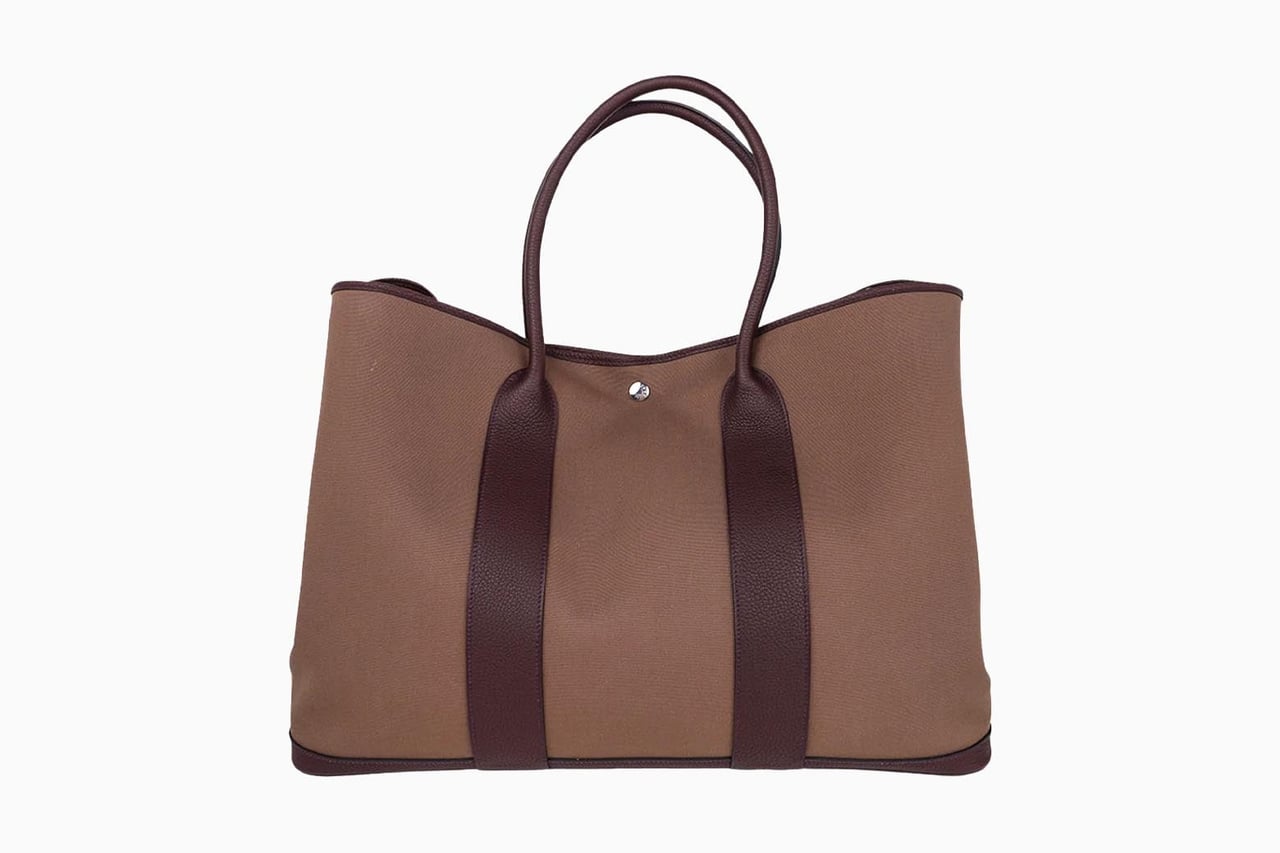
The Garden Party is the most uncomplicated bag in the Hermès lineup — an open-top tote in toile canvas with leather handles and trim, sized from the TPM (small) to the GM (laptop-and-then-some). It does exactly what a tote should do: holds the day, looks better the more you carry it, asks for nothing.
It’s also the Hermès most owners reach for without thinking. The one that goes to the beach, the airport, the office, and the school pickup, picks up its share of dings and scuffs, and looks all the better for them. The canvas-and-leather combination wears in beautifully; the all-leather versions feel slightly more dressed for the role.
Best for: The workhorse Hermès — the one that earns its place by showing up.
| Release | 1964 |
|---|---|
| Retail price | $2,000 - $28,000 |
Hermès Lindy
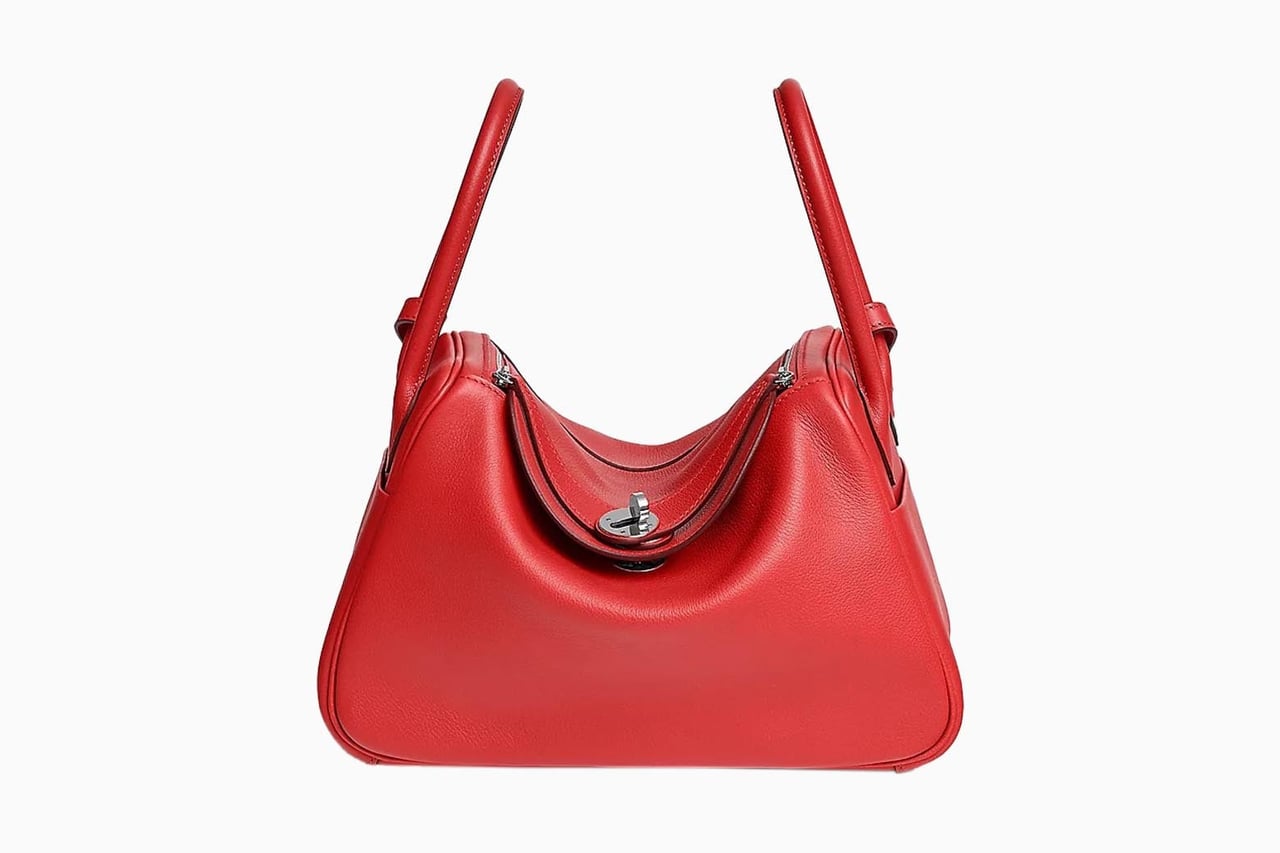
Designed in 2007 and named for the 1920s swing dance, the Lindy is the Hermès icon that refuses to sit still. Carry it by its twin top handles and the silhouette pulls structured — a kind of soft doctor bag, two interior compartments separated by a central zip. Switch to the detachable shoulder strap and the body relaxes into a slouchy hobo shape, the leather draping the way only Hermès leather drapes. Two bags in one body, depending on how you’re wearing it.
It comes in 26, 30, and 34cm, with the 30 the everyday sweet spot. It’s the Hermès for the woman whose day shifts from meeting to dinner to weekend in a single bag.
Best for: The convertible Hermès — structured when you need it, slouchy when you don’t.
| Release | 2006 |
|---|---|
| Retail price | $6,400 |
What makes Hermès bags so special?
Founded by Thierry Hermès in 1837, the house began life as an equestrian harness workshop in Paris, kitting out European nobility and their horses. The handbags came later — and quietly stole the show. The first one, the Haut à Courroies, arrived in 1892 as a leather tote big enough to hold a saddle and a pair of riding boots. The Sac à Dépêches followed in the 1930s (renamed the Kelly in 1977, after a particularly famous Monégasque princess). The Constance arrived in 1959. The Birkin in 1984. All of which remain household names to this day.
What now reads as status was originally function. The zipper Hermès helped bring to France in the 1920s was a security upgrade. Perforated leather kept saddlebags ventilated on long rides. Adjustable straps were about comfort, not styling. And the famously dense saddle stitch — two needles, one thread, every seam locked twice — was the only way to build leather goods that wouldn’t unravel under a horse. Machines still can’t replicate it. Every Hermès bag is hand-stitched by a single artisan, start to finish, in one of the brand’s small French ateliers.
That’s not a marketing story. It’s why these bags survive thirty years of daily use and a few decades more in someone’s daughter’s closet.
How much does a Hermès bag cost?
Here’s where it gets complicated. You can walk into Hermès tomorrow and pick up a Garden Party or an Herbag — those retail somewhere around $3,000 to $4,000 new. The classics are a different story. Most Birkins, Kellys, and Constances aren’t sold openly; you’re either invited to buy one or you go second-hand. On the resale market, a standard-leather Birkin generally runs $12,000 to $25,000 depending on size and condition, with exotic skins (crocodile, ostrich, lizard) pushing well past $50,000. The famously hard-to-source Himalaya — a pale, smoke-graduated Niloticus crocodile — has cleared half a million at auction.
Worth remembering: those numbers are what buyers pay each other on the secondary market, not what Hermès charges. The boutique price for a standard Birkin 30 still hovers around $12,000. The “Hermès tax” you read about is mostly other buyers, not the brand.
Is an Hermès bag an investment?
Yes — but probably not the way you’ve heard it framed.
Most coverage of Hermès “as an investment” is really coverage of the resale market, where rare colors and exotic skins occasionally outperform the S&P. That’s true, and it’s also a side hustle that requires storage, expertise, authentication, and the stomach to treat a beautifully made handbag like a stock ticker.
The investment we care about at Luxe Digital is the one most owners actually make: buying a bag designed to last decades, using it, and getting it serviced when it needs it. Hermès takes your bag back at any age for repair — they’ll re-stitch a strap, replace hardware, recondition leather. A well-loved Birkin from the 1990s can come back from the Paris workshop looking decades younger. Spread the price over thirty years of carrying it, and the cost-per-wear quietly becomes one of the most rational things in your closet.
If you also want to chase appreciation, fine — limited editions, discontinued colors, and bags kept in pristine condition do hold or grow in value.
What is the most expensive Hermès bag ever sold?
For decades, the answer to this question involved jewelry-grade pieces — Birkins made of platinum and diamonds. That changed in July 2025, when Sotheby’s Paris auctioned the original Birkin: the Birkin, the prototype Hermès made for Jane Birkin herself in 1984, after the now-famous chance meeting with then-CEO Jean-Louis Dumas on a Paris–London flight. It sold for €8.6 million (about $10.1 million) to a Japanese private collector, making it by some distance the most expensive handbag ever sold at auction.
The detail that made it priceless is also the detail Luxe Digital cares about most: she actually used it. The bag is a deep black Box calf with a non-removable shoulder strap (a feature later dropped from the production version), her “J.B.” initials punched into the front flap, brass hardware she preferred over gold, and a small nail clipper still hanging from the strap as a keychain. There are scuffs. There are stickers. It’s a working bag with a working life — which, in the end, is precisely why it’s now the most valuable handbag on earth.
Before Sotheby’s, the title rotated between a handful of jeweler’s pieces designed as objects more than bags:
- The Sac Bijou Birkin (Hermès Haute Bijouterie, 2012) — a tiny rose-gold-and-diamond version with 2,712 diamonds and a $2 million price tag. Calling it a handbag is generous — it was designed to be worn as a bracelet, with the bag detail almost as ornament.
- The Ginza Tanaka Birkin (2008) — a $1.9 million single-edition platinum bag from the Japanese jeweler, set with over 2,000 diamonds and an 8-carat detachable diamond that can be worn as a brooch.
- For an actual carry-it-out-the-door bag, the Himalaya Birkin (with its crocodile and white-gold-and-diamond hardware) is the reigning queen of the wearable category, with multiple recent auction sales above $400,000.
Where can you buy an Hermès bag?
Whilst smaller types of Hermès bags are easily acquired, if you’re after one of the classics, you’ll have to dig a little deeper.
You can walk into an Hermès boutique. Stock varies wildly between stores, and the iconic silhouettes — Birkin, Kelly, Constance — aren’t sitting on the shelves. Building a “client profile” with a Sales Associate (regular purchases of scarves, jewelry, ready-to-wear, smaller leather goods) is how invitations to buy the classics are typically earned. It takes years, and there’s no guarantee.
You can buy from a reputable reseller. Farfetch and Fashionphile authenticate before they list, which matters because the counterfeit market is sophisticated. Expect to pay a premium over boutique pricing, especially for desirable colors and sizes.
Or — for the less-hyped models like the Garden Party, Herbag, Evelyne, and Picotin — you can simply walk in and buy one, the same as you would at any other boutique.
What is the difference between a Kelly and a Birkin bag?
Both are named after icons (Grace Kelly carried hers in 1956; Jane Birkin’s plane-seat sketch with Jean-Louis Dumas became the Birkin in 1984). Both come with waitlists, invitations, and the unspoken theater of being offered one. The bags themselves, though, have different jobs.
The Kelly is the elegant one — trapezoidal silhouette, a single top handle, and the signature turn-lock and clochette over a folded flap. It’s structured, formal, and built to be carried in hand or on the forearm, the way Princess Grace did when she famously used hers to shield her pregnancy from the paparazzi. A detachable shoulder strap is included for the days you want it casual.
The Birkin is the workhorse. Two rolled handles, an open-top silhouette, the same lock-and-clochette closure, and a rectangular body deep enough to swallow a laptop, a notebook, a paperback, and whatever else you carry around.
Both come in a generous range of sizes, leathers, and colors. Both models come in a range of sizes, colorways and materials, although the Kelly has greater variety, while the Birkin remains slightly more coveted.
The colors of Hermès bags
If the saddle stitch is how Hermès builds a bag, color is how it signs the letter. The house dyes its own leather — a craft most luxury brands long since outsourced — which is why a Hermès green doesn’t behave like anyone else’s green. The same shade reads warmer on grainy Togo, glossier on smooth Box calf, more saturated on the pressed grain of Epsom. And those well-versed in the brand’s particular colloquialisms are likely already frequent users of terms such as: Vert Anglaise and Parchemin Pink. It’s a language with its own grammar — and learning it is half the fun.
The classics (Noir, Rouge H, Bleu Marine, Vert Anglais, Etoupe, Gold, Étain) are always in production and the easiest to find second-hand. The seasonal hues are where collectors get obsessive: Rose Azalée, Rose Tyrien, Bleu Hydra, Vert Vertigo. Hermès releases new colors twice a year and quietly retires old ones, which is why a discontinued Rose Sakura can fetch a multiple of a current-season pink. The exotic skins compound it — a Himalaya isn’t painted, it’s hand-dyed onto Niloticus crocodile in a smoke-to-white gradient that the artisans have to coax out of the skin rather than apply to it. The process takes days. The result remains the holy grail of the holy grail.
If this is your first Hermès, our advice is simple: pick a color you’ll actually want to wear five days a week for the next twenty years, not the one with the best resale chart. The craftsmanship lives in the dye as much as in the stitching — and the color you choose is the one Hermès made, painstakingly, for someone who would actually love it.
Which Hermès bag should I buy?
If you’re committing to one Hermès, commit to the one you’ll still want in thirty years — and that means resisting the temptation to compromise. The Garden Party, Evelyne, and Picotin are perfectly nice. They’re also not the bags you came here for. Our advice: buy the icon, in its most classic configuration.
The Birkin 30 in Togo leather, Noir with gold hardware. The 30 is the size most people end up loving — generous enough for a laptop and a notebook, compact enough not to swallow you. Togo is the supple, grainy leather that absorbs daily life without showing it (Box calf is more elegant but punishes every scratch). Noir with gold hardware is the unimprovable combination — the Birkin in its purest form, the version every other Birkin is measured against.
The Kelly 28 in Togo leather, Etoupe or Noir, palladium hardware. The Sellier (structured body, exposed stitching) is the museum-piece Kelly (Grace’s bag) and lives most happily on the wrist at formal occasions. The Retourné (softer body, stitching turned inside) is the one you’ll actually carry. The 28 is the goldilocks size: big enough to be useful, small enough to wear on the shoulder. Etoupe is the most quietly beautiful neutral Hermès makes; Noir is the timeless answer. Palladium reads modern next to gold’s heritage.
The Constance 24 in Box calf, Noir with palladium hardware. The Constance is the elegant one in the lineup — sleek, structured, defined by its sterling H clasp. Box calf gives it the glossy depth it was designed for; Togo softens the silhouette too much. Noir with palladium is the cocktail-bar combination, the version that looks just as right with a black dress at sixty as it did at thirty.
Buy any of those three once, and it will outlive the rest of your closet. If you’re choosing your first, the honest order is roughly the order people end up reaching for: the Birkin for the way it actually carries your life, the Kelly for the days that ask for elegance, the Constance for the evenings worth dressing for.
A note on sourcing. You can pursue the boutique route — build a relationship with a Sales Associate, buy scarves and small leather goods, wait for the invitation. It takes years. Or you can go to a reputable authenticated reseller (like Farfetch or Fashionphile) and pay a premium for the exact bag you want. Both are honorable paths. The bag doesn’t know which one you took.
Products featured here are independently selected by our editors. If you buy through our retail links we may earn an affiliate commission — it never changes the price you pay, and it never decides our verdicts. Read our earnings disclaimer.