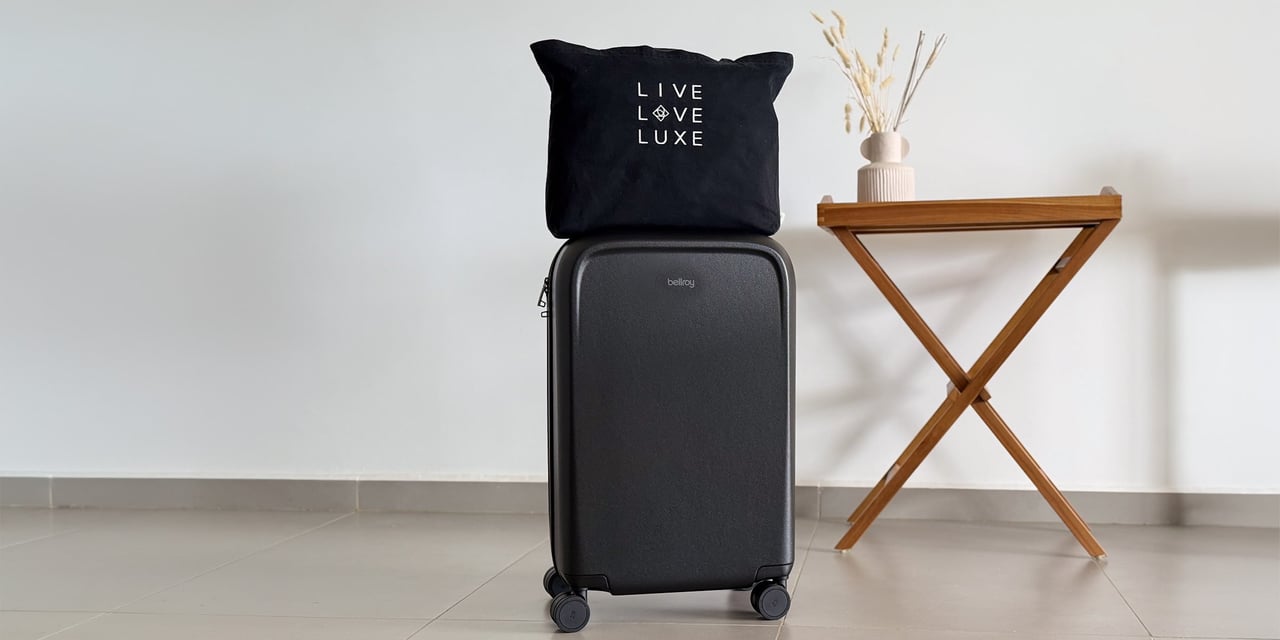
Let’s skip the layover: I’m officially a Bellroy fan.
It started years ago as a quiet crush on the Hide and Seek wallet—my go-to slim wallet that has quietly outlasted three more “premium” alternatives—and deepened with the Transit Carry-On, a bag so intuitive it’s become invisible (the highest compliment I can pay a piece of luggage).
So when a brand earns that kind of place in your travel life, you don’t just watch when they venture into new territory—you wait at the carousel with bated breath. And the Bellroy Transit Check-In is exactly that: the Australian EDC label’s first proper hardside checked luggage, available in a 69L size and a larger 101L Transit Check-In Large.
I tested—and traveled with—the smaller 69L version. I put it through a full long-haul flight as checked baggage from Mauritius to Dubai. First impressions are strong.
Here’s what I discovered about Bellroy’s first attempt at a checked bag: it’s quieter than a library, sturdier than its sleek silhouette suggests, and built—almost stubbornly—to be repaired rather than replaced.
Baggage without the burden. This is a considered, sustainable hardshell that goes the distance for a fraction of the fare. The Bellroy Transit Check-In feels deliberately under-styled—Bellroy is more interested in repairability and longevity than aesthetic fireworks. After a Mauritius-to-Dubai round trip, the shell, wheels, and handle have shrugged off baggage-handler abuse without a scratch worth mentioning. If you want a checked bag designed for a decade of departures rather than a single season of travel, this is the most sensible $399 in the category.
At a glance
- Style
- Hardside checked luggage, 4 wheels
- Material
- 80% recycled polycarbonate shell, recycled polyester ripstop lining
- Volume / Capacity
- 69L / 60L usable
- Weight
- 3.9 kg (8.6 lbs)
- Dimensions
- 68 × 43 × 27 cm (26.8 × 16.9 × 10.6 in)
- Wheels
- 60 mm Japanese 360° spinners
- Colors
- Black, Bronze, Chalk, Everglade, Fig, Nightsky
- Warranty
- 10 years + replaceable Fix-it parts
- Shipping
- International (ships worldwide from bellroy.com)
- Price
- USD $399 / AU$489 / £339
What we loved
- Made from recycled materials
- 60 mm wheels feel sturdier and roll quieter than most luggage at this price
- Soft-touch woven grab handles—comfortable and instantly recognisable
- Magnetic compression system latches and unlatches more satisfyingly than any buckle
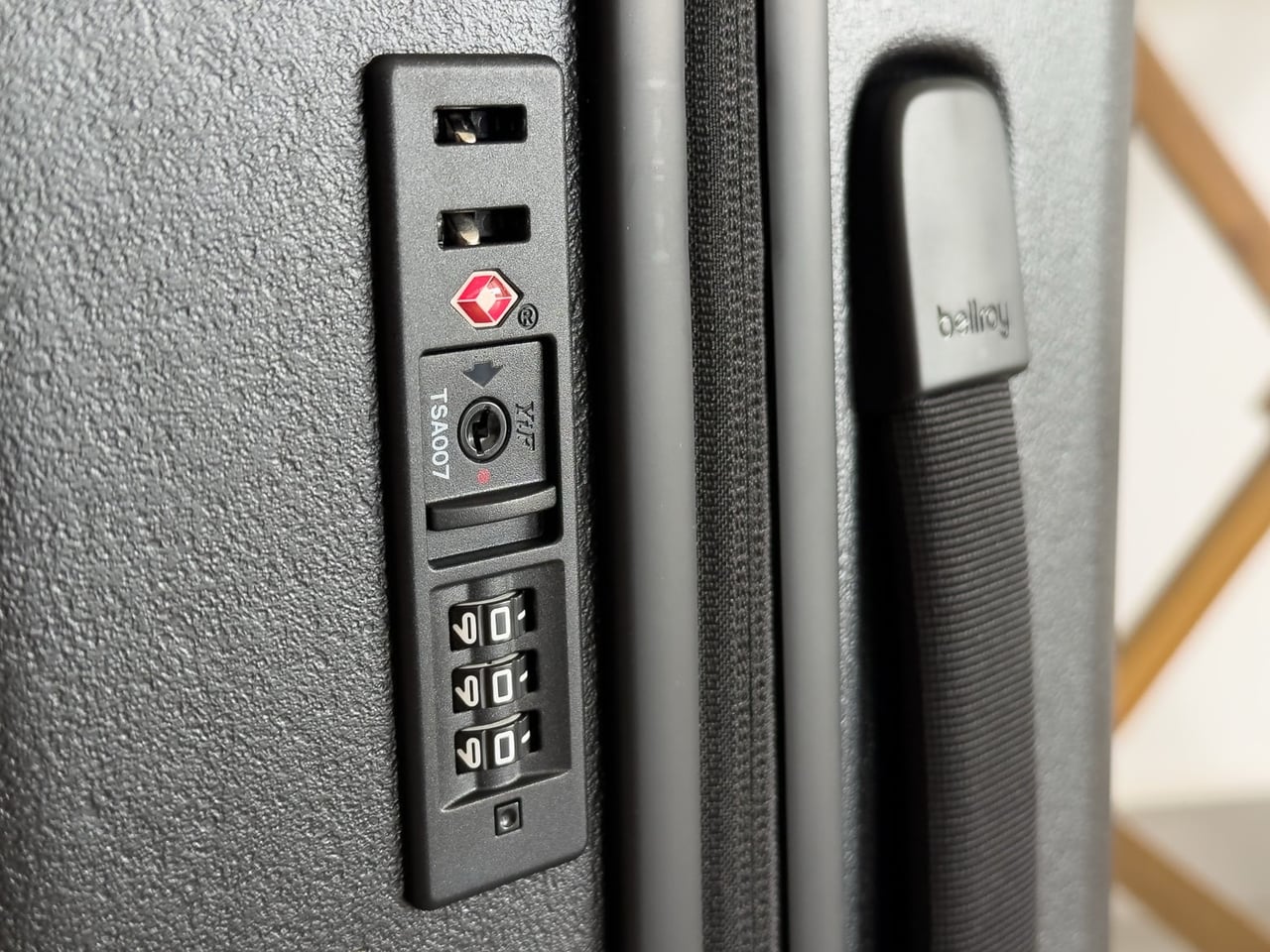
- Self-repairable with Fix-it Kits: wheels, handles, and lock swap in under 10 minutes
What could be better
- Built-in compartments are well-designed but don't detach
- Exposed telescoping handle frame is a polarising design choice (purposeful, but not the prettiest)
Why you can trust Luxe Digital? At Luxe Digital, we’re not just digital explorers—we’re seasoned travelers who’ve put bags through their paces in busy airports, packed trains, and winding backroads. Our editors live for the journey, and it shows in every recommendation. The team even created Luxa Terra, a space dedicated to the art of traveling well and with intention. Over the years, we’ve rigorously tested Bellroy’s considered carry goods—wallets, sling bags, work totes, and the soft-shell Transit Carry-On we still travel with.
 At Luxe Digital, we’re not just
 For more on how we test products, see our HAPPY philosophy for buying luxuries.
At Luxe Digital, we test and recommend products that we think you will love. If you buy something, we might earn a commission. This supports our team at no extra cost for you.
Bellroy Transit Check-In review: A considered travel companion for the long haul
Most checked luggage is designed around two assumptions: that you’ll buy something cheap because the airline will probably destroy it, or you’ll buy something flashy because it’s the only piece of your travel kit that strangers will notice. Bellroy makes the unfashionable case for a third option—a checked bag designed to be neither disposable nor decorative.
The Transit Check-In is the brand’s first checked luggage, and it’s been engineered with the same considered restraint that defined their wallets and bags. Nothing on this case is loud. Nothing is gimmicky. And after living with it through a long-haul flight, I think that’s exactly the point.
Here’s how it held up across the categories that actually matter when you’re choosing a piece of luggage you’ll own for a decade.
Unboxing: Designed in Melbourne, made to be carried far
The Transit Check-In arrives in a cardboard box with Bellroy’s familiar branding on the outside.
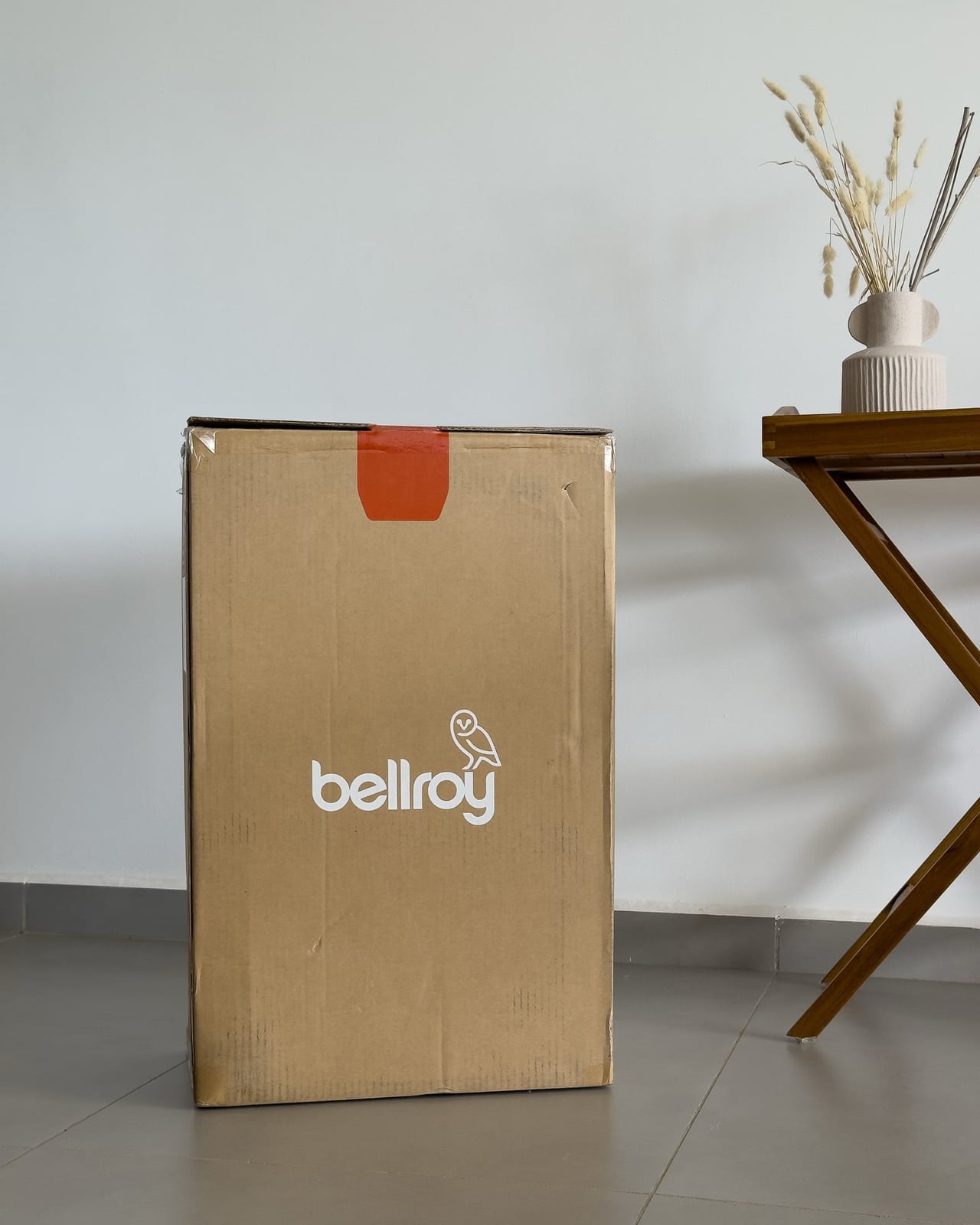
The packaging makes the brand’s promise clear the moment you open it—a mantra printed inside every Bellroy box that greets you straight away: “Made to be carried all over the world. Far and wide, for years to come.”
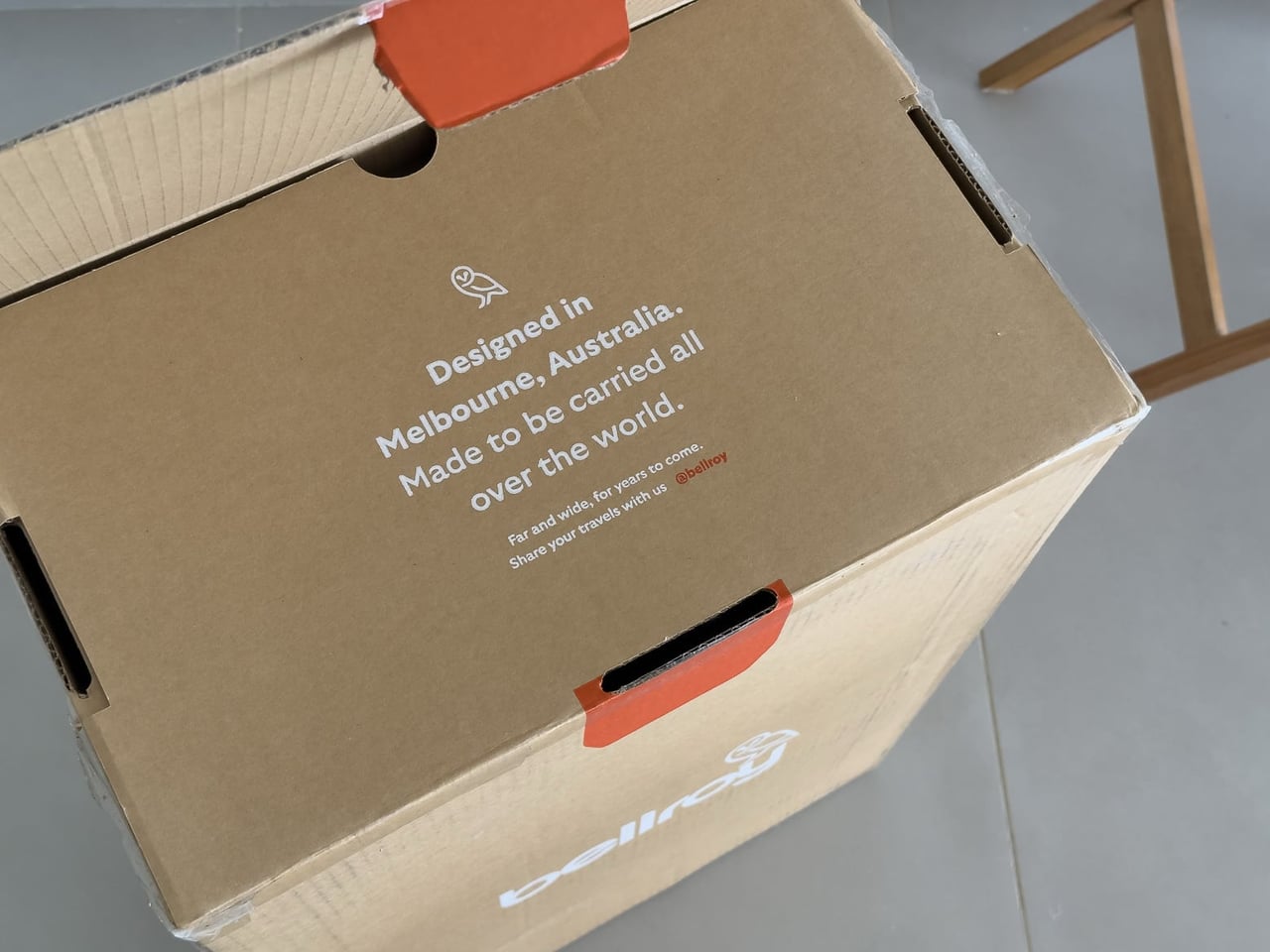
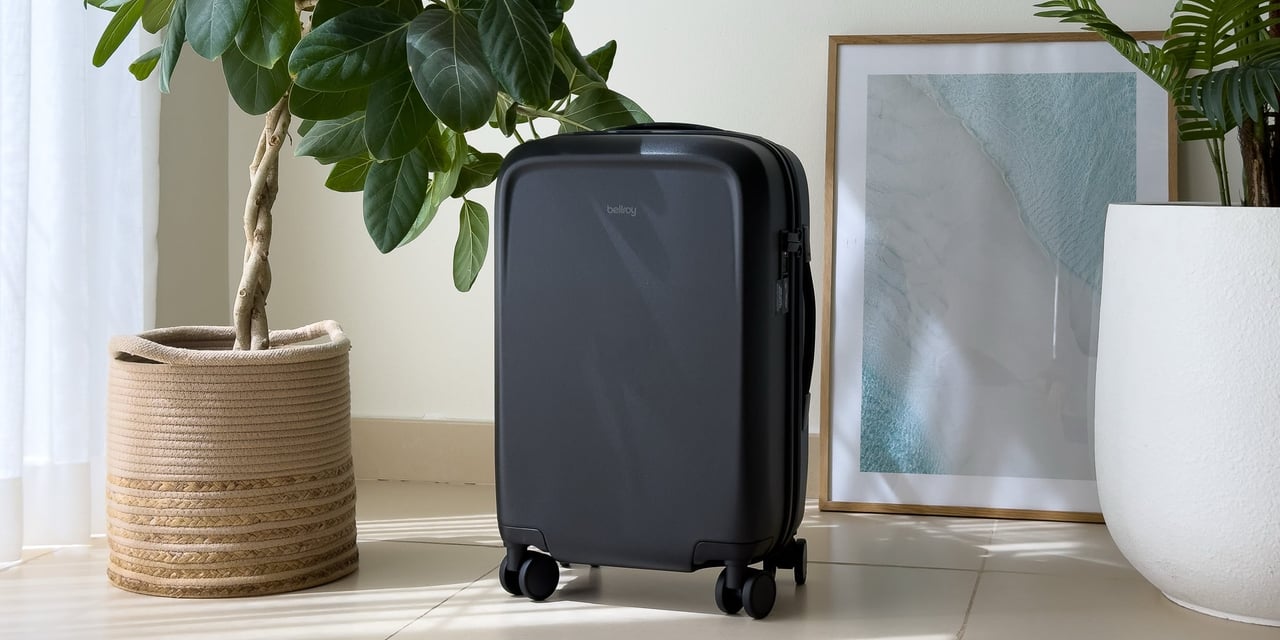
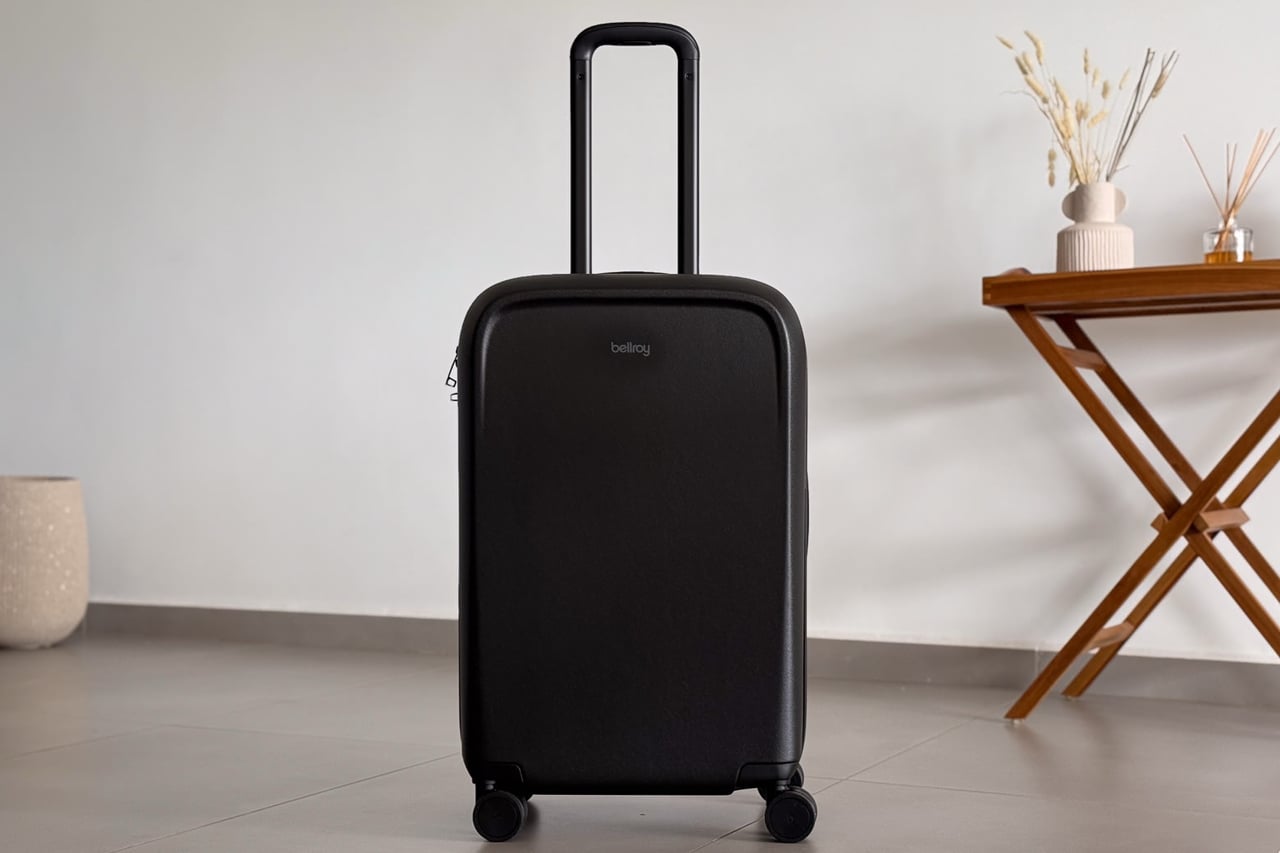
The first thing you notice when you lift it out is the matte finish. The shell is genuinely matte—no clear coat, no gloss—so it absorbs light rather than reflecting it. The second thing you notice is how compact it looks for a 69L bag. Bellroy has been clever with the proportions; it reads as something smaller until you start packing it.
Materials & craftsmanship: 80% recycled, 100% considered
This is where Bellroy’s worldview shows up most clearly. The shell is matte polycarbonate—the standard material for premium hardshells—but the composition is what sets it apart. 80% post-consumer recycled content, paired with a recycled polyester ripstop interior lining. The whole bag is engineered around the assumption that you’ll keep it, not replace it.
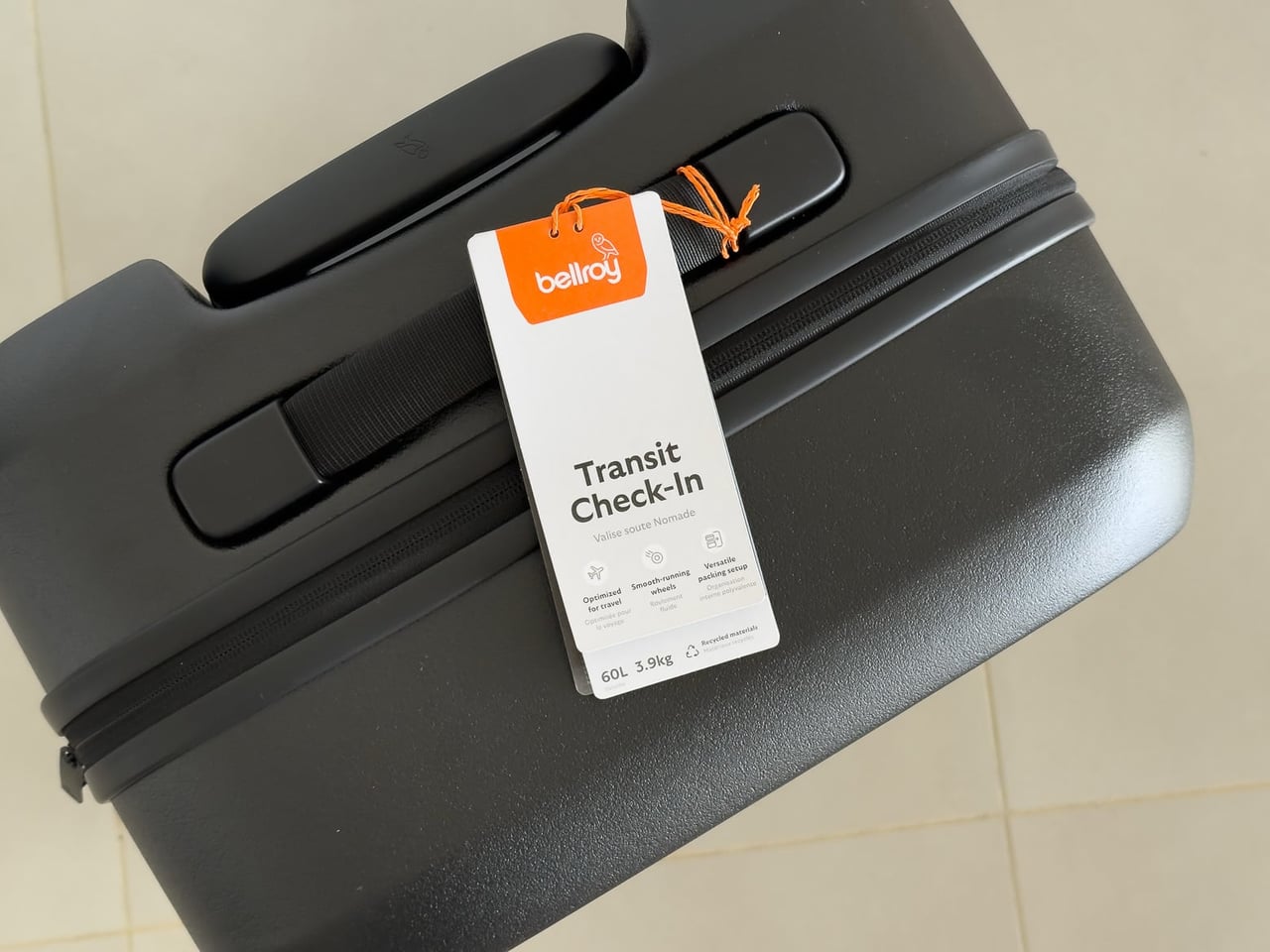
The polycarbonate itself feels noticeably thicker than what you’d find on a comparably priced hardcase—and Bellroy has reinforced the most vulnerable parts of the shell with curved impact bumpers running along the top edge and outer corners. These are the spots that crack first on cheaper hardshells when a baggage handler gets enthusiastic. After one long-haul flight, my Transit Check-In came off the carousel with no visible scuffs or stress marks at the corners. Not a guarantee, but a promising sample of one.
Handles you’ll actually want to grab
The grab handles deserve their own paragraph. Bellroy has gone with soft-touch woven nylon (recycled, of course) on both the top and the side handles, rather than the hard plastic loops that come standard on most hardshells. They’re padded enough that lifting this fully-packed 69L bag feels comfortable rather than something you brace for.
They also serve a quieter purpose: they make the bag instantly recognisable on a baggage carousel. After watching dozens of identical-looking black hardshells go past, the woven handle is what you spot first.
Aesthetic & design: Quiet confidence, with one polarising choice
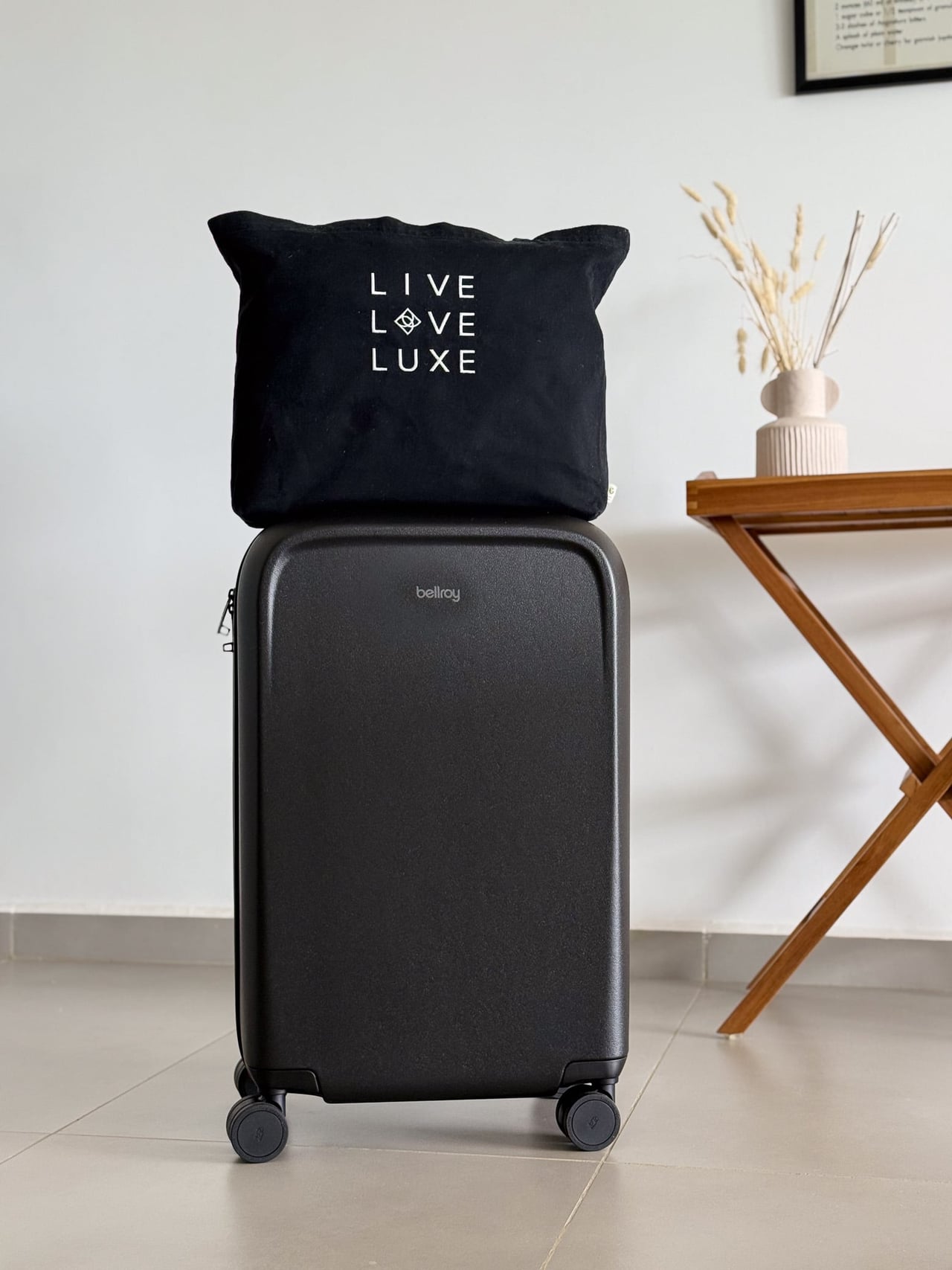
The Transit Check-In is available in six colorways: Black, Bronze, Chalk, Everglade, Fig, and Nightsky. I went with Black, which felt like the right call for a piece of luggage I expect to own for a decade—Everglade (a soft teal green) and Fig (a warm aubergine) are the more interesting choices if you’re tired of the airport black-bag uniform.
The overall design is restrained, favoring a clean exterior. It’s a sophisticated play on the hardcase aesthetic that doesn’t feel like it’s trying too hard—though a more subtle logo could have elevated that sleekness even further.
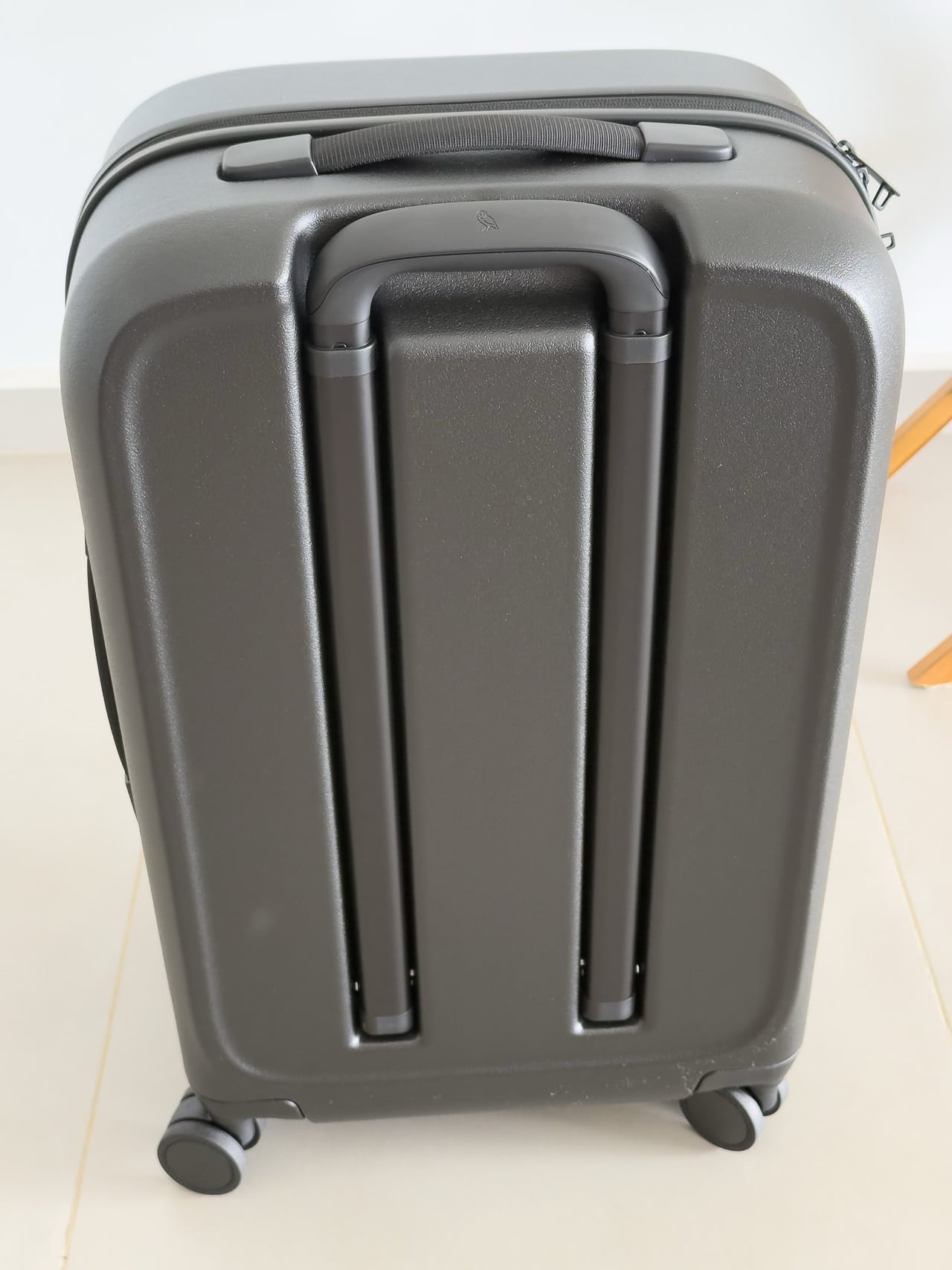
The one design choice that will divide opinion is the exposed telescoping handle frame running down the back of the case. Instead of being hidden inside the shell (the standard solution), Bellroy has left the rails visible. It’s not the prettiest detail. But it serves two purposes: it saves a small amount of internal packing space, and—more importantly—it makes the handle far easier to replace yourself when something inevitably bends or sticks. As trade-offs go, I’ll take repairability over aesthetics.
Sizes: How much bag do you actually need?
Bellroy offers the Transit Check-In in two sizes. I tested the smaller 69L model, which fits comfortably under most international checked-baggage allowances and is the right call for one to two weeks of travel. If you’re packing for a longer trip, a family, or you tend to bring back more than you leave with, the 101L Transit Check-In Large is worth the upgrade.
| Size | Volume / Capacity | Weight | Dimensions | Best for | Price (USD) |
|---|---|---|---|---|---|
| Transit Check-In | 69L / 60L | 3.9 kg | 68 × 43 × 27 cm | 1–2 weeks of travel, solo | $399 |
| Transit Check-In Large | 101L / 90L | 5.0 kg | 77 × 49 × 30 cm | 3+ weeks, family, gear-heavy trips | $439 |
For most travelers, the 69L is the more flexible buy. The Large is a meaningfully bigger and heavier bag, and at 5.0 kg empty, you’re using up a noticeable chunk of your airline’s typical 23 kg checked allowance before you’ve packed a single thing.
Functionality: Where the engineering decisions pay off
This is where the Bellroy Transit Check-In stops being a quietly nice object and starts being a genuinely well-engineered one. Three details stand out after real-world use.
Wheels: 60mm of why this rolls so well
Most checked luggage—including bags from premium brands—uses 50mm wheels or smaller. Bellroy has gone with 60mm Japanese-made 360° spinners, and the difference is immediately obvious. They glide silently over polished airport tile, and they handle gritty pavement, cobblestones, and the strip of broken concrete outside almost every taxi rank without the chattering you’d expect from smaller wheels.
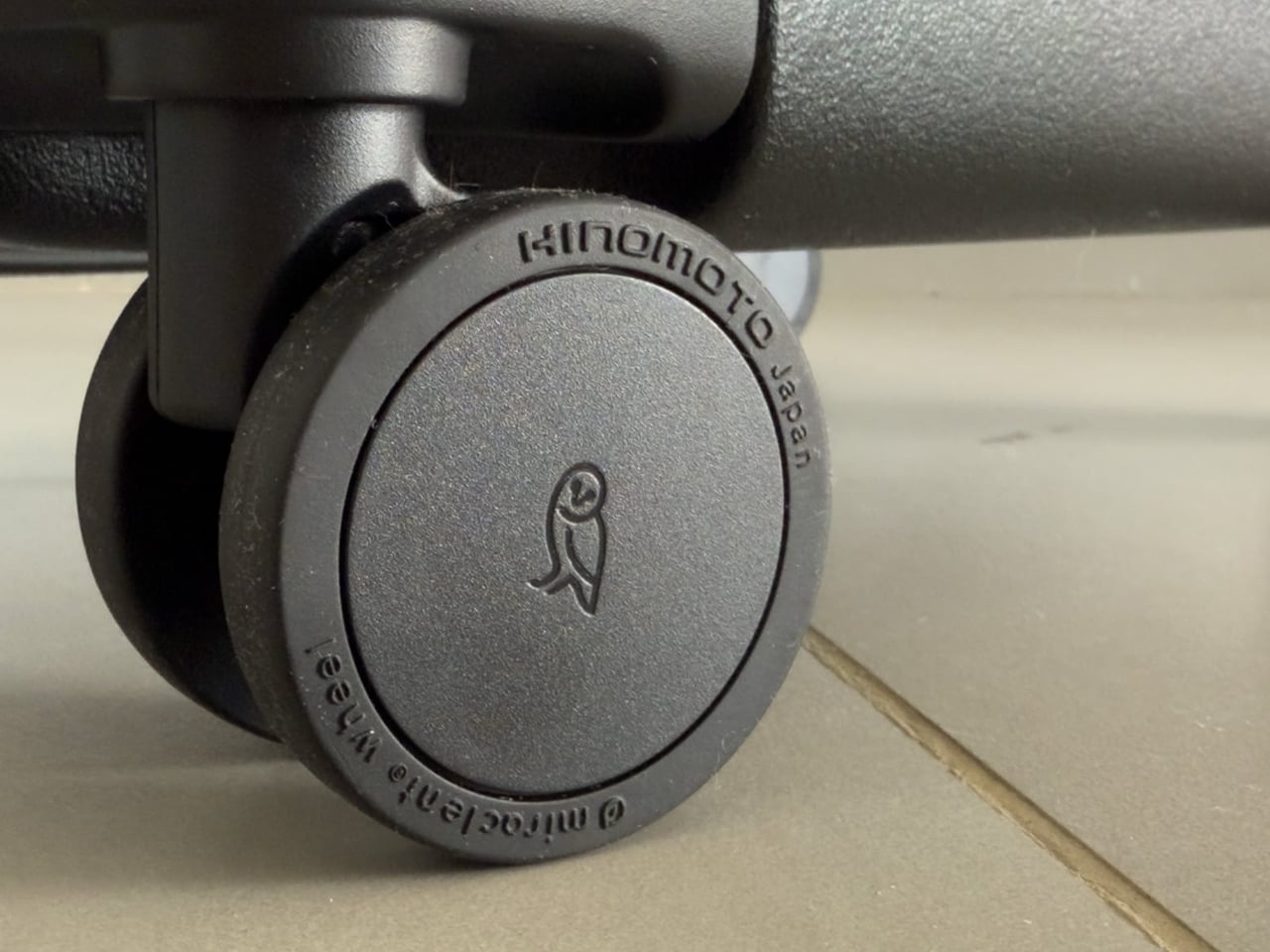
Larger wheels also last longer—they take more abuse before the bearings start to fail. And when they eventually do, you can swap them out yourself with the Fix-it Kit instead of writing the entire bag off.
Telescopic handle: solid at every height
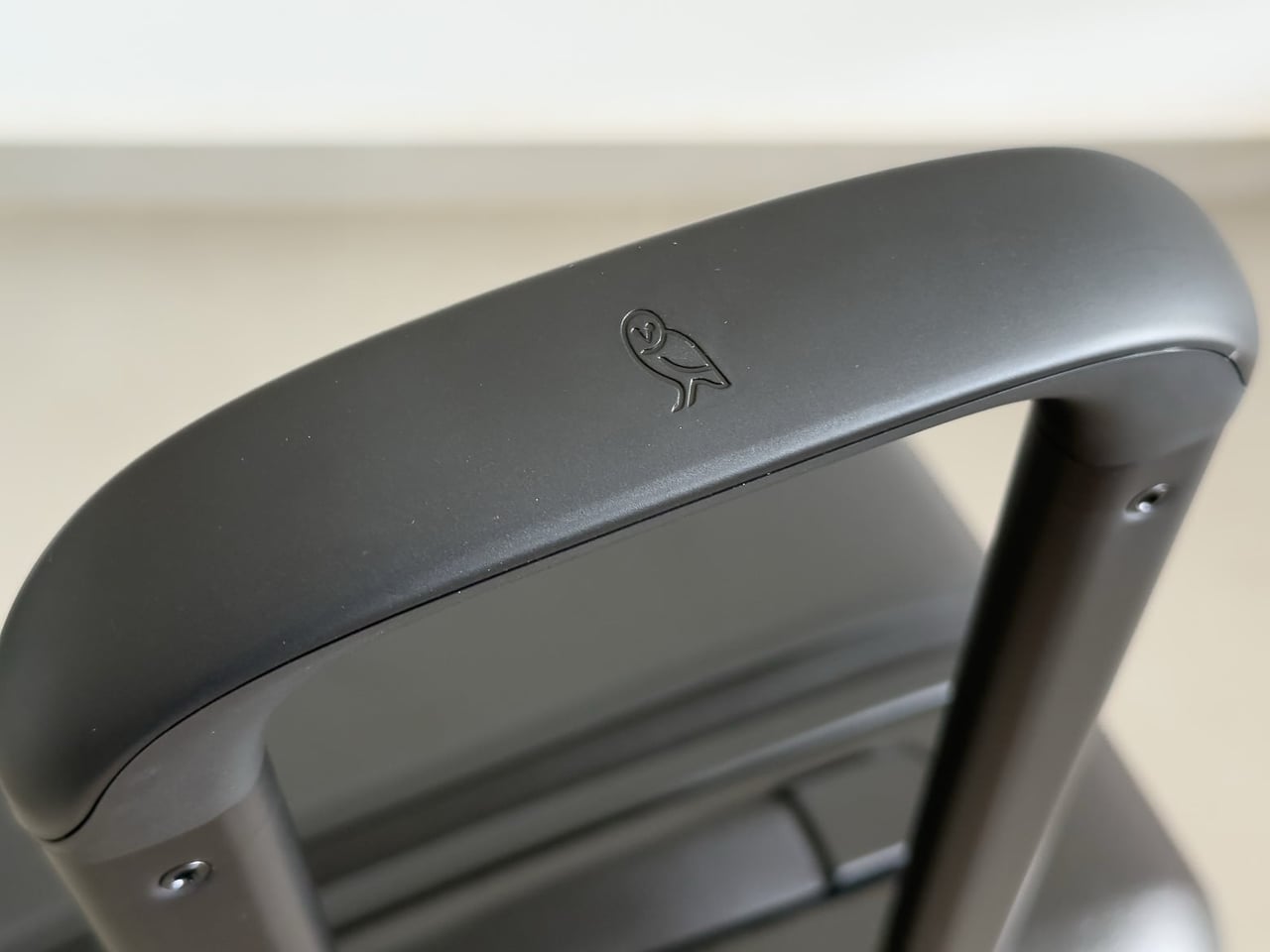
The telescopic handle has two locking heights and feels solid at both. There’s no wobble at full extension, which is rarer than it should be in this price range. The push-button mechanism is firm and clicks decisively into place; nothing about it feels like a part that’s going to start sticking after a year of use.
Magnetic compression: a small detail you’ll appreciate every time
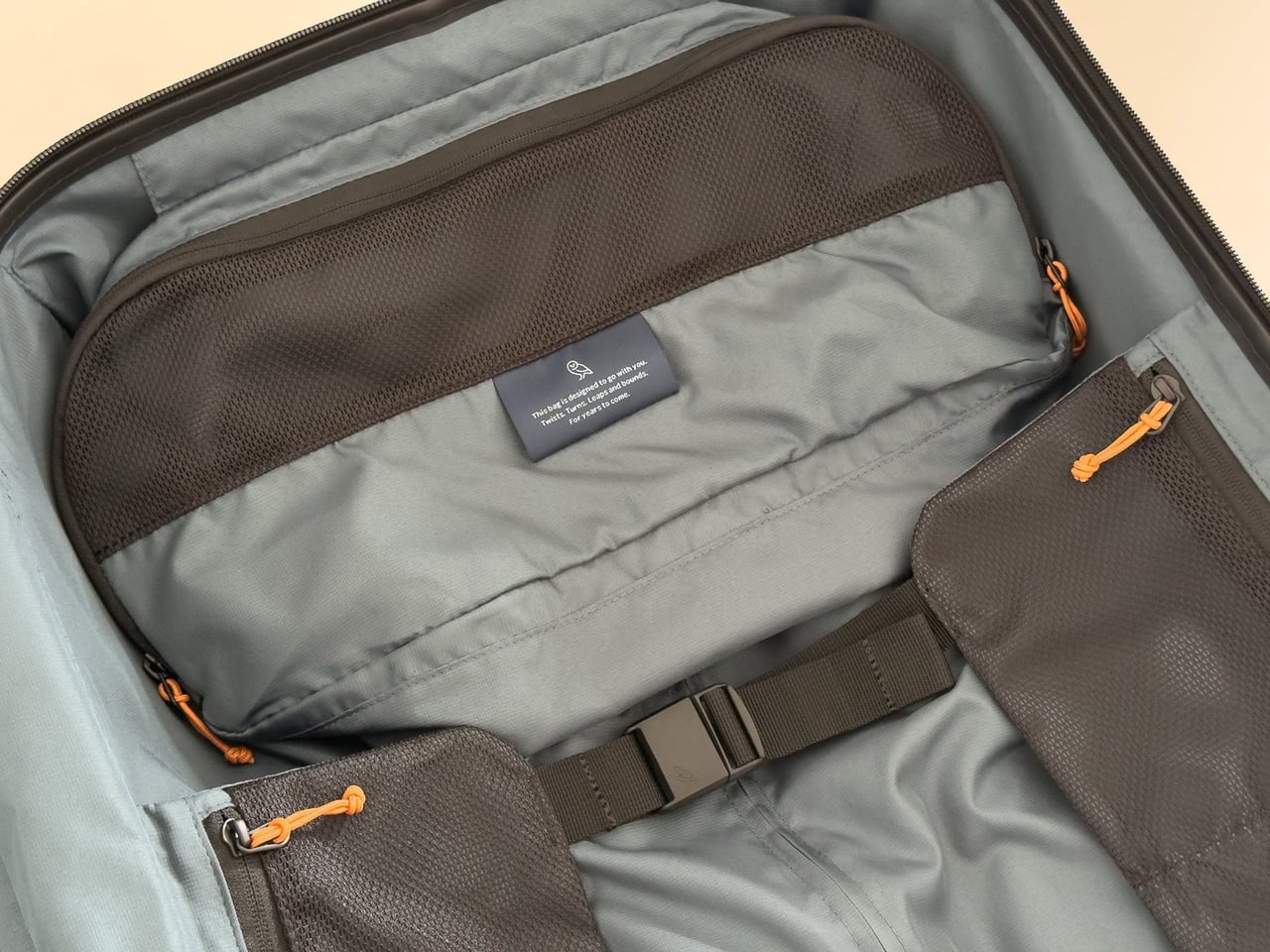
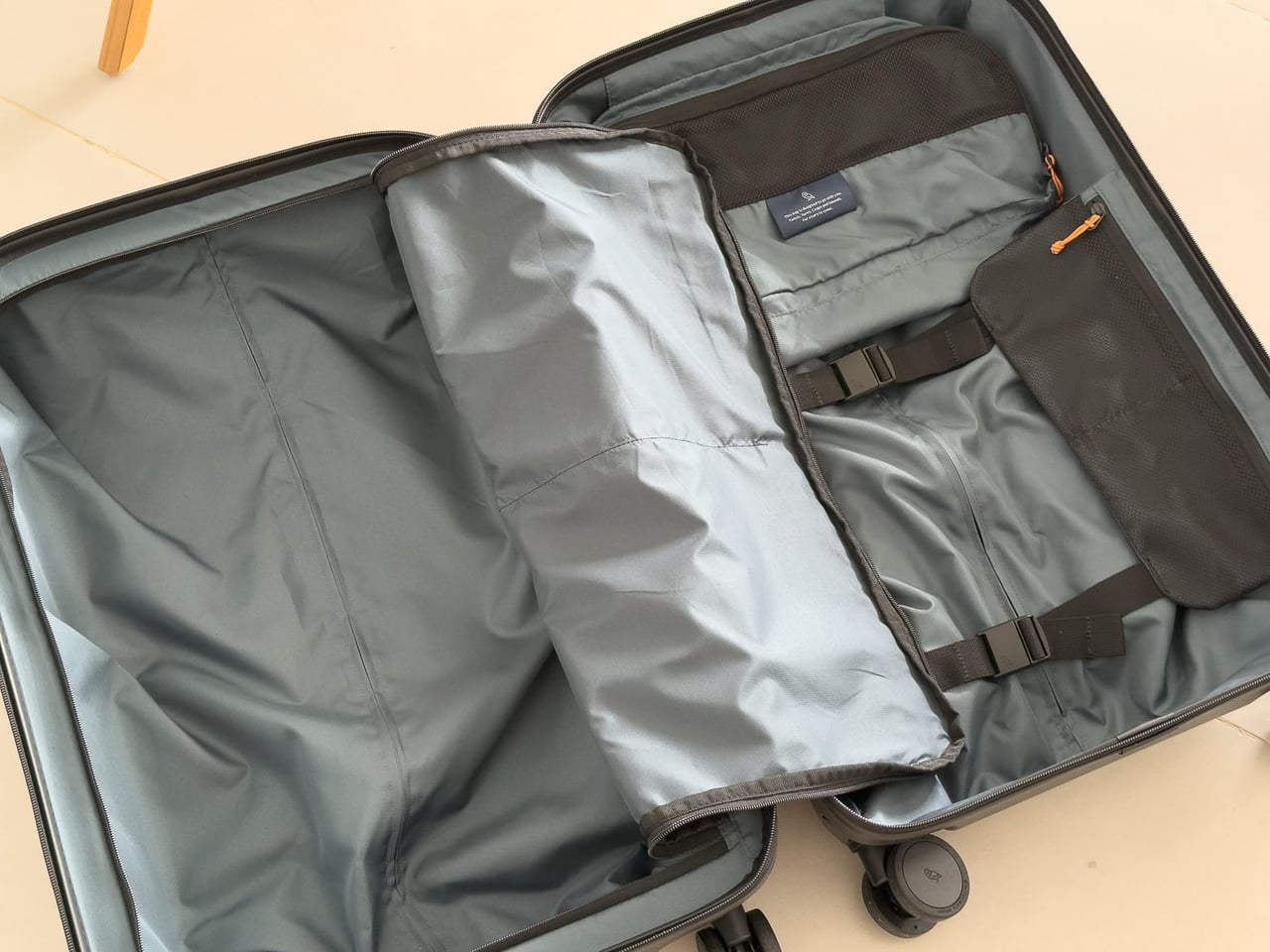
The left compartment is a large mesh drop-zone—fairly standard fare for a suitcase.
The right compartment, by contrast, is a fortress of functionality. The interior compression system uses a magnetic latch instead of the usual buckle. It sounds minor. It’s not. Buckles fight you every time you re-pack mid-trip; the magnet snaps closed with one hand and unsnaps with a single tug. After dozens of pack-and-repacks, this is the detail I’ve come to appreciate most. It’s the small kind of engineering that makes a bag feel premium without trying to look it.
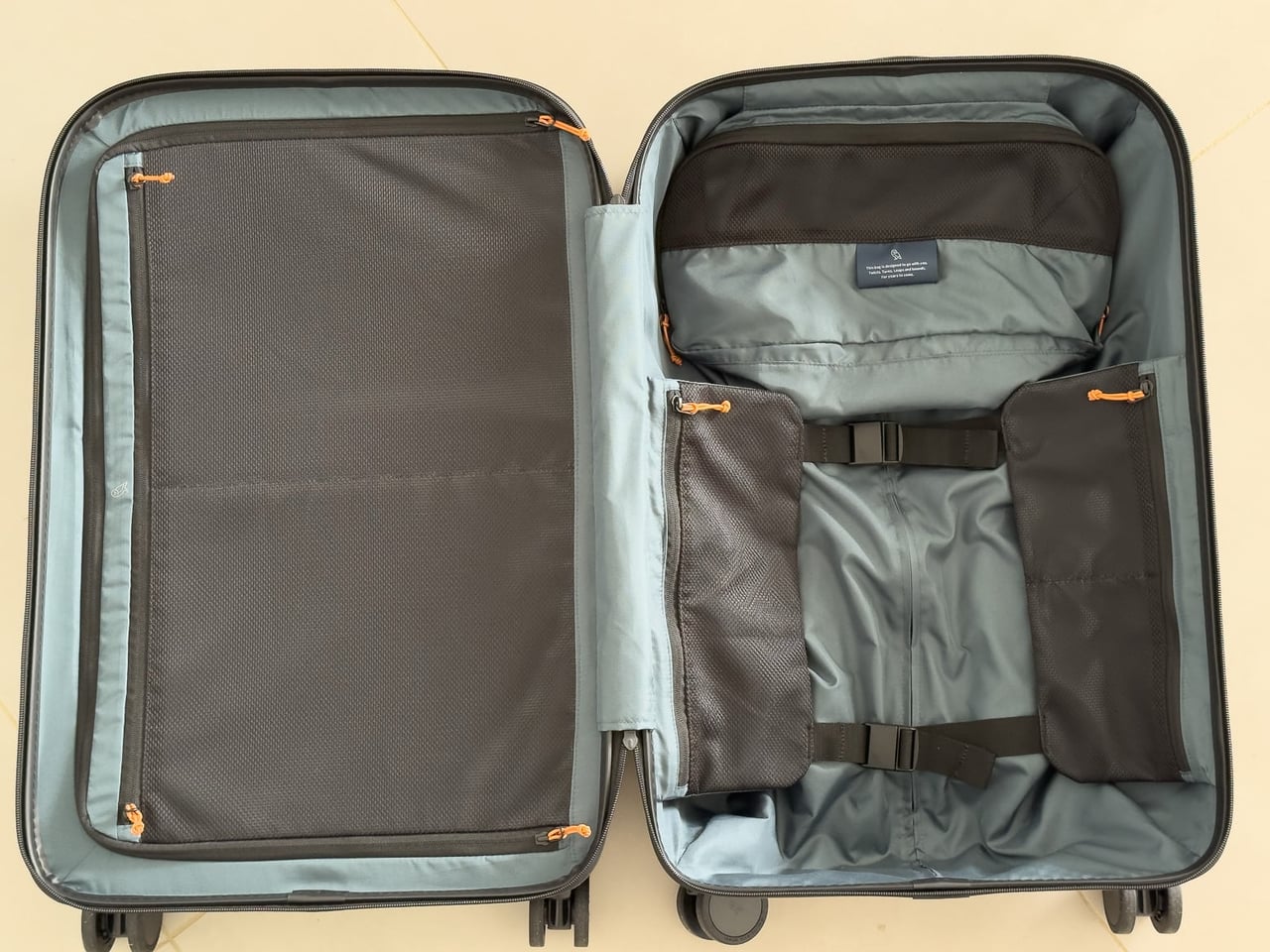
The integrated internal compartments are well thought out, with structured pouches for smaller items, cables and documents. My one wish: I’d love to be able to detach the pouches entirely—either to make packing easier or to lift them out and drop them straight into a hotel wardrobe. As it stands, the compartments are sewn in. It’s a minor frustration, but it’s the one thing on this bag I’d genuinely change.
Care & maintenance: Built to be repaired, not replaced
This is the section that, more than any other, justifies the Transit Check-In’s existence. Bellroy sells Fix-it Kits that let you replace the wheels, the handles, and the lock yourself in under 10 minutes—no specialist tools, no waiting on a warranty claim. The exposed telescoping handle frame is the visual evidence that this isn’t marketing language; it’s a design that genuinely accommodates self-repair.
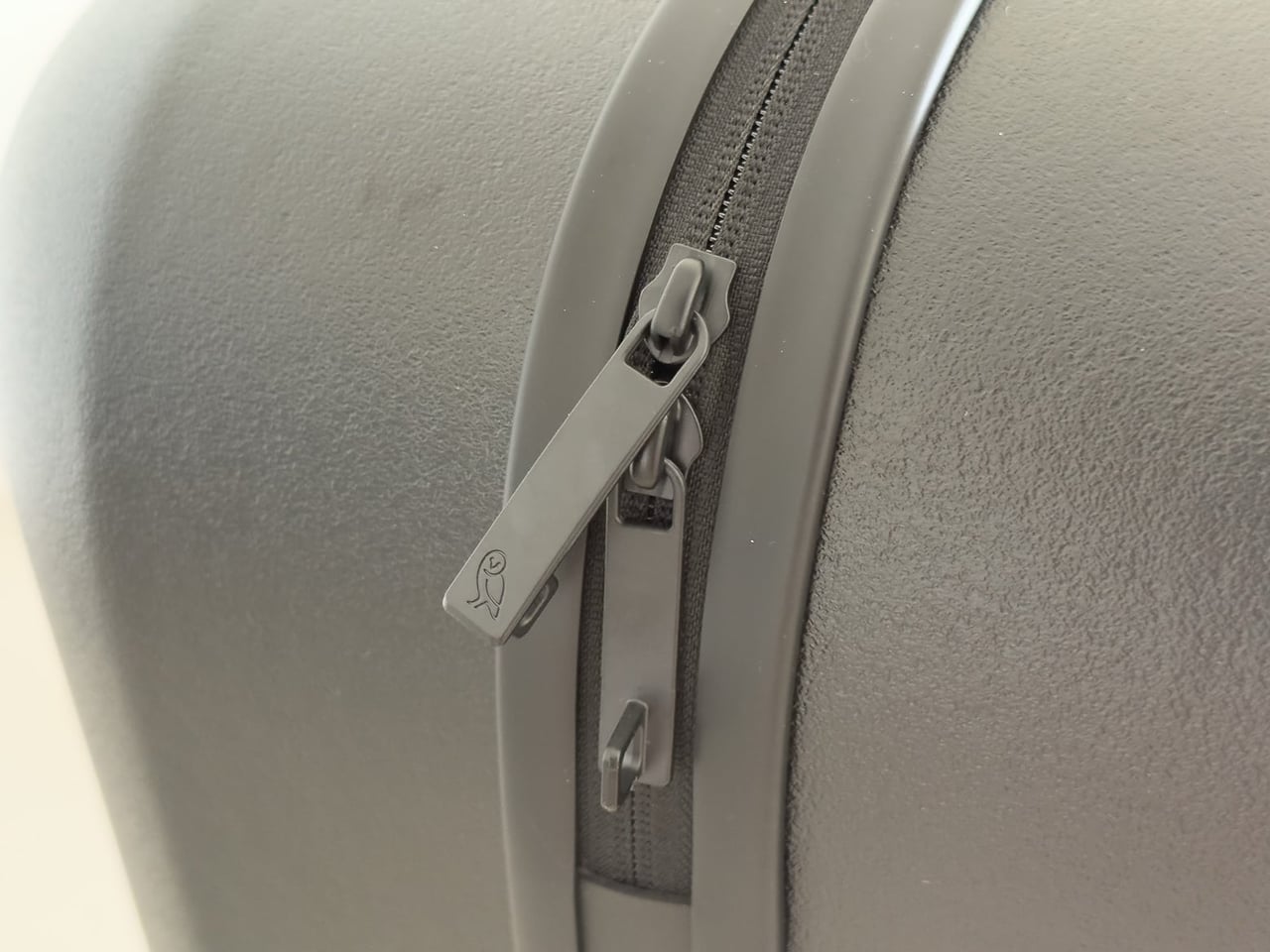
The shell itself is easy to live with. Wipe it down with a damp cloth to lift airport scuffs, and the matte finish hides minor marks far better than gloss does. The interior lining spot-cleans with mild soap. The water-resistant zippers shrugged off the unexpected Mauritius downpour I caught on the way to the airport without any moisture making it through to my clothes.
The whole package is backed by a 10-year warranty covering material and workmanship faults under normal use. It’s not the lifetime guarantee that a few competitors offer, but combined with the Fix-it Kit ecosystem, it adds up to a more honest commitment to longevity than most “lifetime” warranties—which often cover only the original purchaser and exclude airline damage.
Price: Value that goes the distance
The Bellroy Transit Check-In comfortably sits in the mid-range category with a USD $399 (AU$489 / £339) sticker price, yet its specifications tell a distinctly premium story. Between the decade-long warranty and a user-repairable design, the cost-per-use becomes incredibly compelling—especially for the frequent traveler looking for a long-term companion. Simply put: this under $500 suitcase might just be your last.
The 101L Transit Check-In Large adds another $40 (USD $439). Worth it if you genuinely need the volume; otherwise, save the cash and pack lighter.
Check Luxe Digital Privileges for active Bellroy deals before checking out.
Who is it best for: The conscious, long-haul traveler
The Transit Check-In is the right call for travelers who think about luggage the way they think about a favorite pair of shoes: as an object you’ll repair, recondition, and keep for years.
It’s the right buy if any of the following apply: you fly often enough that wheel and handle replacement is a realistic expectation, you care about the embodied carbon in the things you own, or you’ve grown tired of the visual noise of conventional luggage and want something quieter but still adventure-ready. It also lands well for design-conscious professionals who already own and like other Bellroy pieces—the Transit Check-In is a clear extension of the same functional design language.
It’s a less obvious fit if you want luggage that visually announces itself (though some of the colorways do add character), or if you’ve been eyeing a RIMOWA Original—but this is a different price game entirely.
Alternatives to the Bellroy Transit Check-In
Two alternatives are worth considering depending on what you actually need.
Horizn Studios H7 Essential Check-In
If you want a slightly more design-forward hardshell with a similar sustainability story, Horizn Studios makes a strong case. The brand’s H7 Essential is built from 100% vegan polycarbonate, it’s available in many colorways, and it’s backed by a lifetime guarantee. It’s a touch lighter than the Transit Check-In and a touch more expensive.
Read our hands-on Horizn Studios review for the full breakdown.
Bellroy Transit Carry-On (if cabin size is enough)
If you can travel cabin-only, the smaller Bellroy Transit Carry-On is the lighter, more agile sibling of the Check-In and arguably the better buy for shorter trips. Same materials, same ethos, same Fix-it Kit ecosystem—but at 34L and 3.1 kg, it slides into overhead bins on most international airlines without a fight.
For the full hands-on take, see our Bellroy Transit Carry-On review.
Where to buy the Bellroy Transit Check-In?
The Bellroy Transit Check-In is available directly from Bellroy’s official website, with international shipping and the full range of six colorways. Buying direct also gives you access to the Fix-it Kit ecosystem and the 10-year warranty straight from the brand.
Check Luxe Digital Privileges for any active Bellroy deals before you check out.
Where to buy
Prices checked at time of review. We may earn a commission — it never changes your price or our verdict.
Frequently asked questions about the Bellroy Transit Check-In
Which Bellroy Transit Check-In size should I buy—69L or 101L?
How does the Bellroy Transit Check-In compare to RIMOWA, Away, or Monos?
What's the Fix-it Kit and how does the warranty work?
Is the Bellroy Transit Check-In actually sustainable?
Is the Bellroy Transit Check-In approved for international checked baggage?
Does the Transit Check-In have a built-in AirTag holder?
Products featured here are independently selected by our editors. If you buy through our retail links we may earn an affiliate commission — it never changes the price you pay, and it never decides our verdicts. Read our earnings disclaimer.