Ever shown your barber a screenshot and watched them squint at it? The fringe is doing all the talking in that photo, and the sides are hiding behind it. So the cape goes on, the clippers come out, and you get asked the question the screenshot can’t answer: low taper, mid taper or blowout?
A textured fringe comes down to three things. The fringe falls somewhere between mid-forehead and your brows. The top is cut choppy, with point cutting or texturizing shears, so it breaks into pieces instead of sitting in a line. And the sides are where you pick your version (which is why half the internet types “low taper” before it types “textured fringe”).
Below are 29 textured fringes cut by working barbers, grouped by taper, fade, curls, color and beard. Each one ends with the line to say in the chair, so find the one that looks like your hair and read it out.
Textured fringe haircuts
Here are 29 textured fringes, grouped by taper, fade, curls and color.
Textured fringe with a low taper
Textured fringe with a low taper
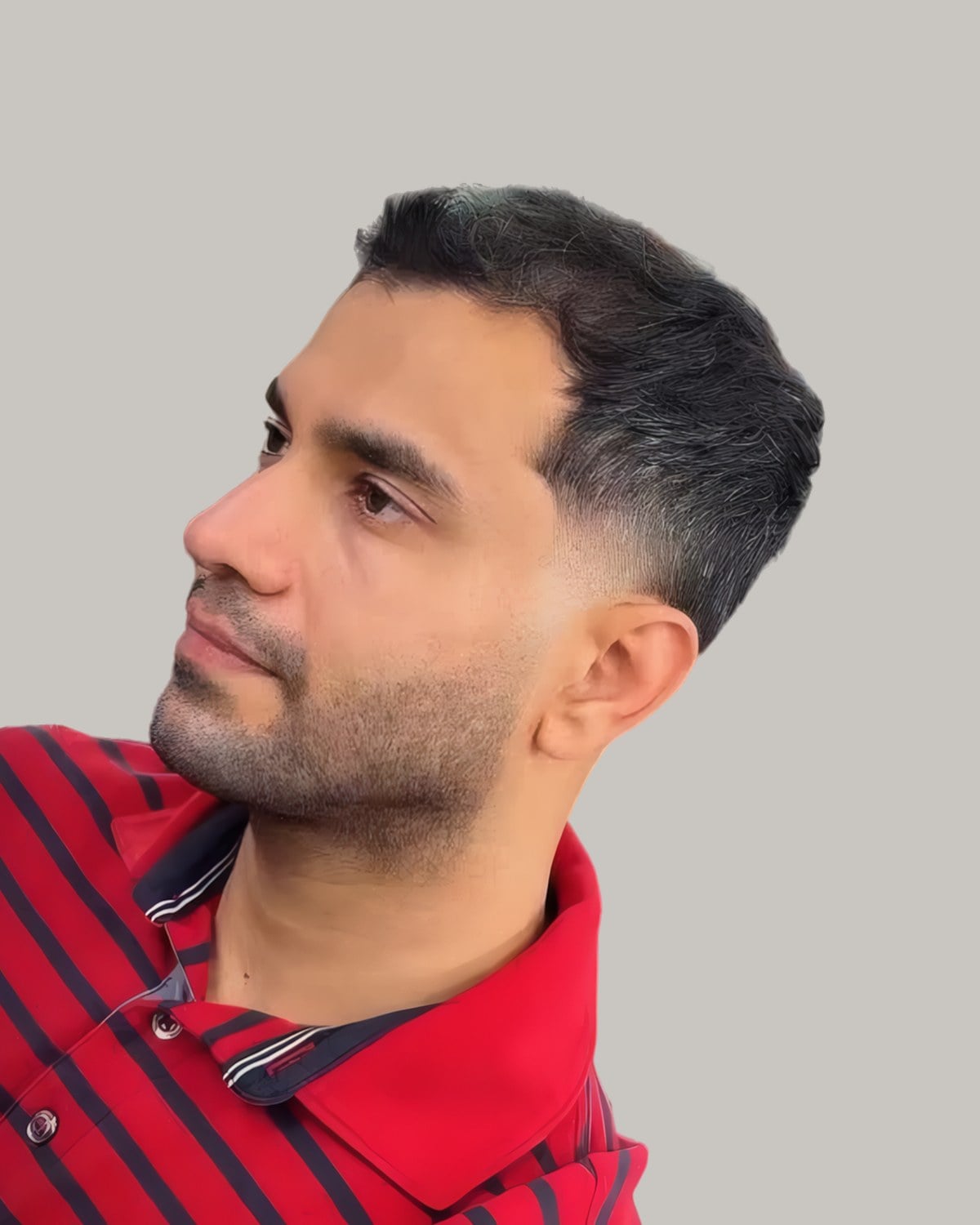
Only the sideburns and the neckline get shorter, and everything else keeps its length, so the fringe gets the attention. It’s the version your screenshot probably shows.
What to ask for Fringe cut to fall just above the brows, about 3 inches on top, point cut for texture, low taper at the sideburns and the nape.
Low taper fade with a textured fringe
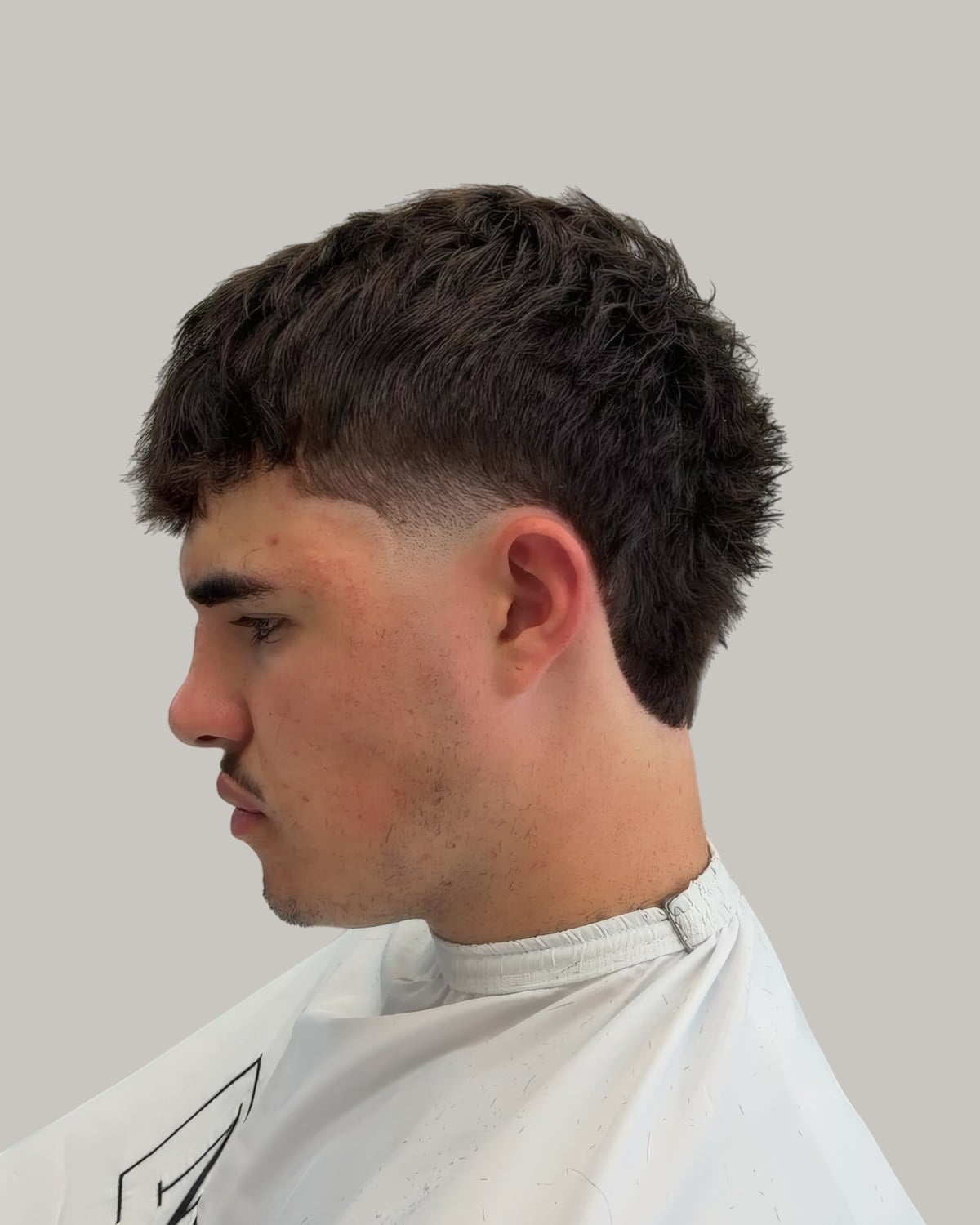
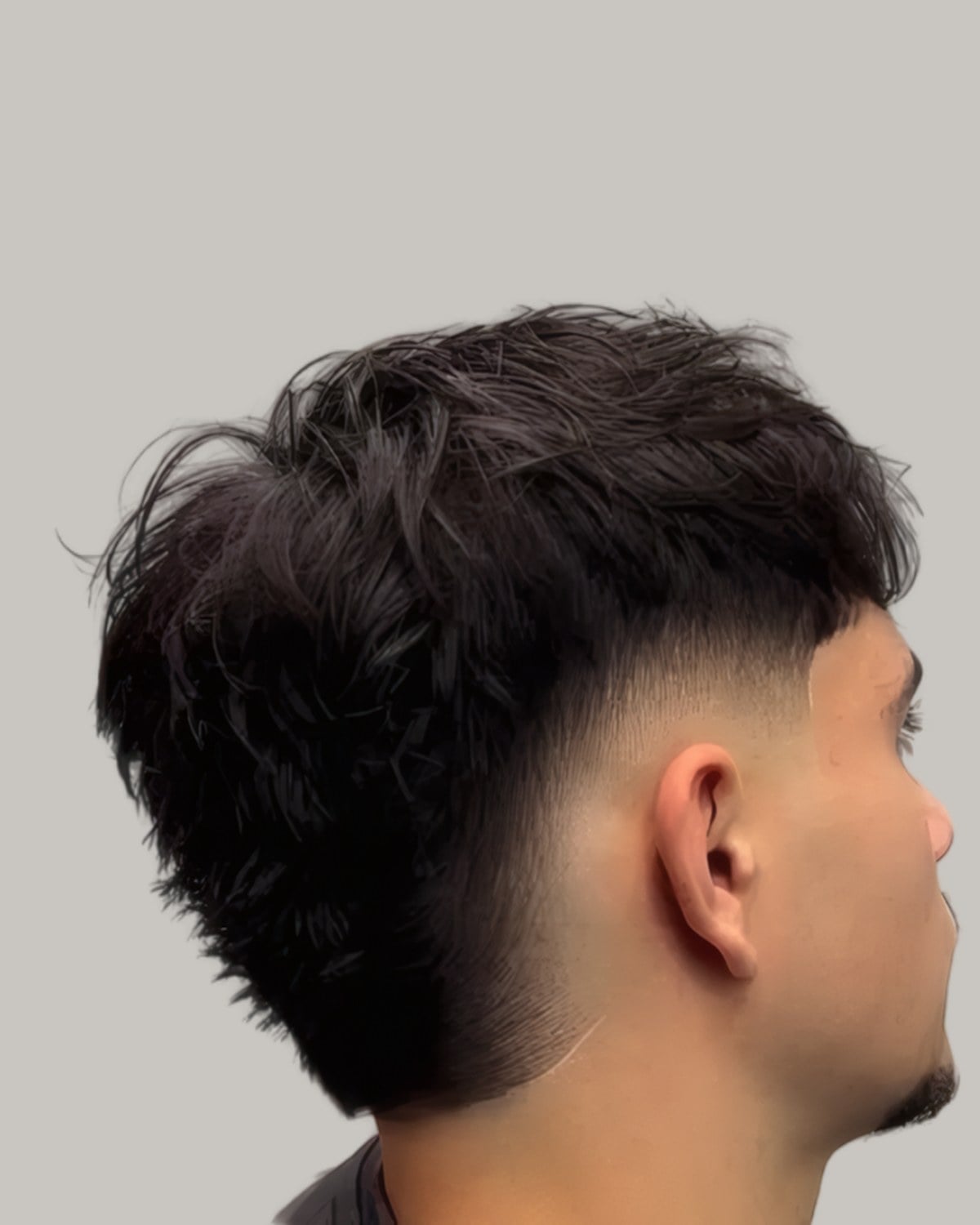
The taper drops to skin at the nape and around the ear, then blends up into the length above. From behind it’s clean. From the front you’d hardly know the sides were touched. (Useful if your office still has opinions about haircuts.)
What to ask for Low taper fade to skin at the neckline and around the ear, 3 inches on top, fringe to the brows, textured with texturizing shears.
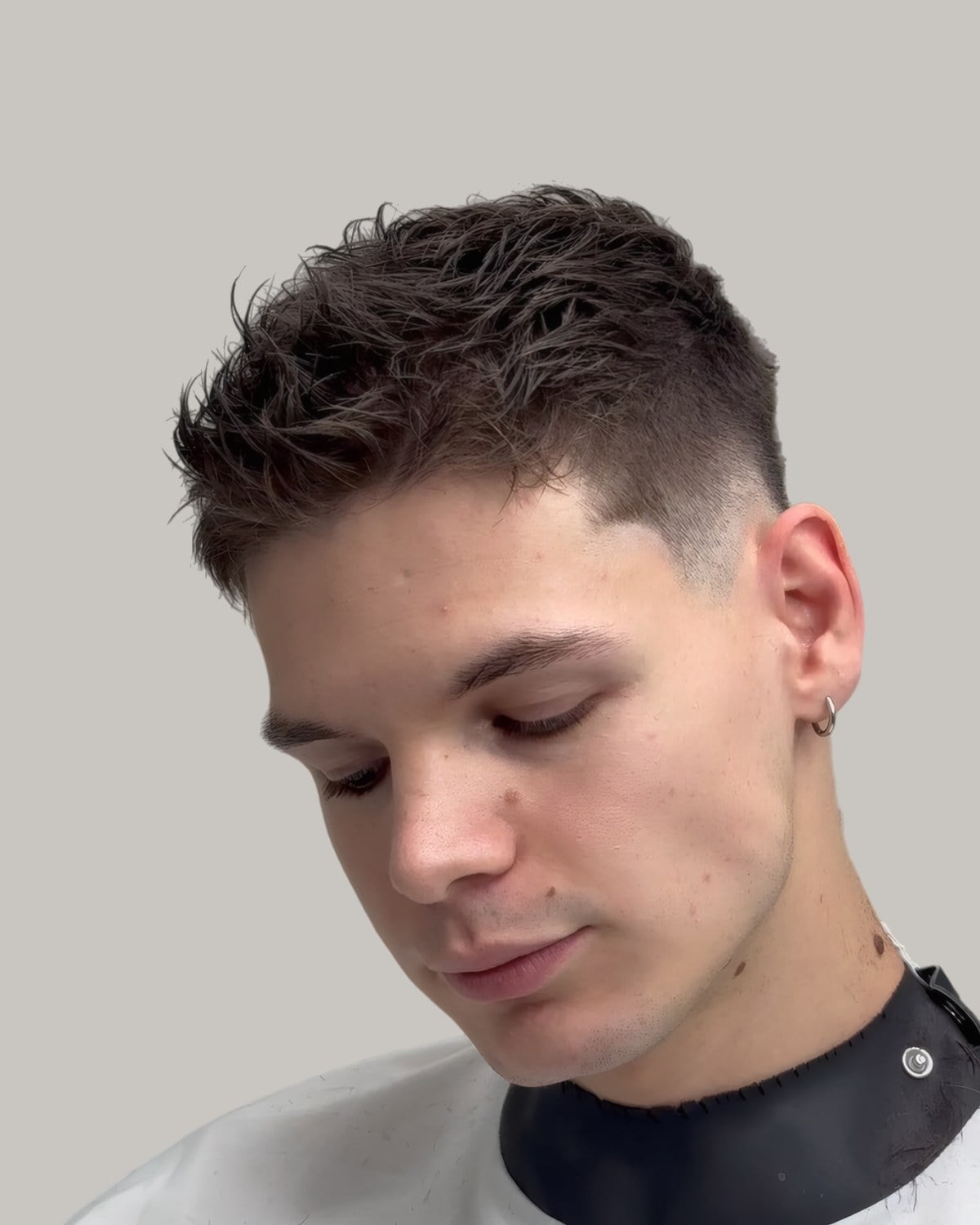
Messy textured fringe with a low taper
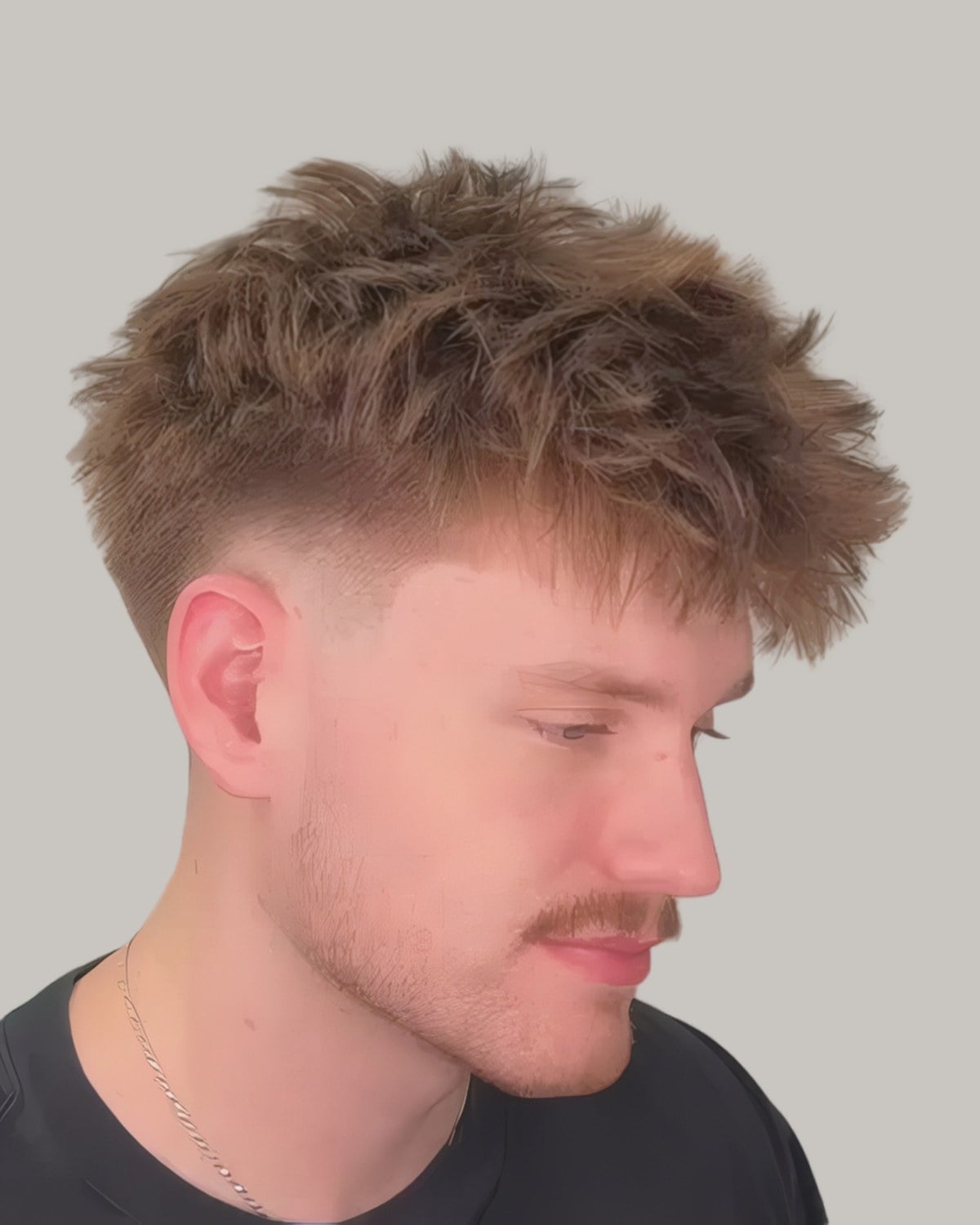
The top is cut long and choppy, then left to fall forward in loose, spiky pieces, while the low taper only takes the sideburn and the hair around the ear down close. Light-brown hair shows that texture well, so the fringe still reads as messy from across the room. Work a little matte paste through dry hair with your fingertips to keep the pieces apart without slicking them down.
What to ask for Low taper at the sideburns and around the ear, about 3 inches on top, choppy point cutting through the top, fringe left messy and pushed forward.
Low taper textured fringe on wavy hair
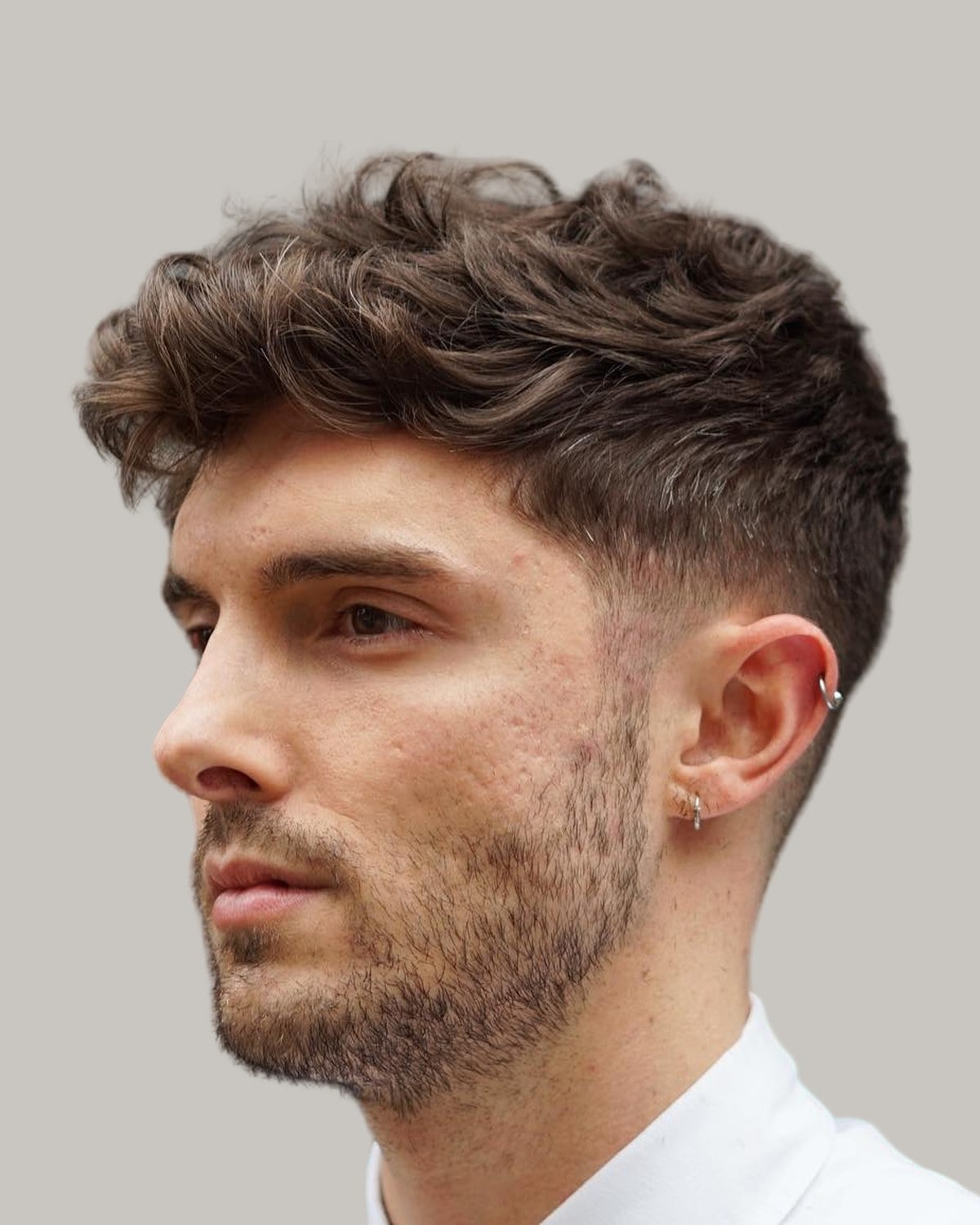
Wavy hair brings its own texture, so your barber mostly needs to take weight out of the top, or the waves puff up instead of falling forward. Keep the taper low and the sides won’t compete with the volume. The barber behind this one recommends a diffuser for drying the waves into shape.
What to ask for Low taper fade around the ear and at the nape, 3 inches on top with the bulk taken out, wavy fringe pushed forward.
Low taper textured fringe with a beard
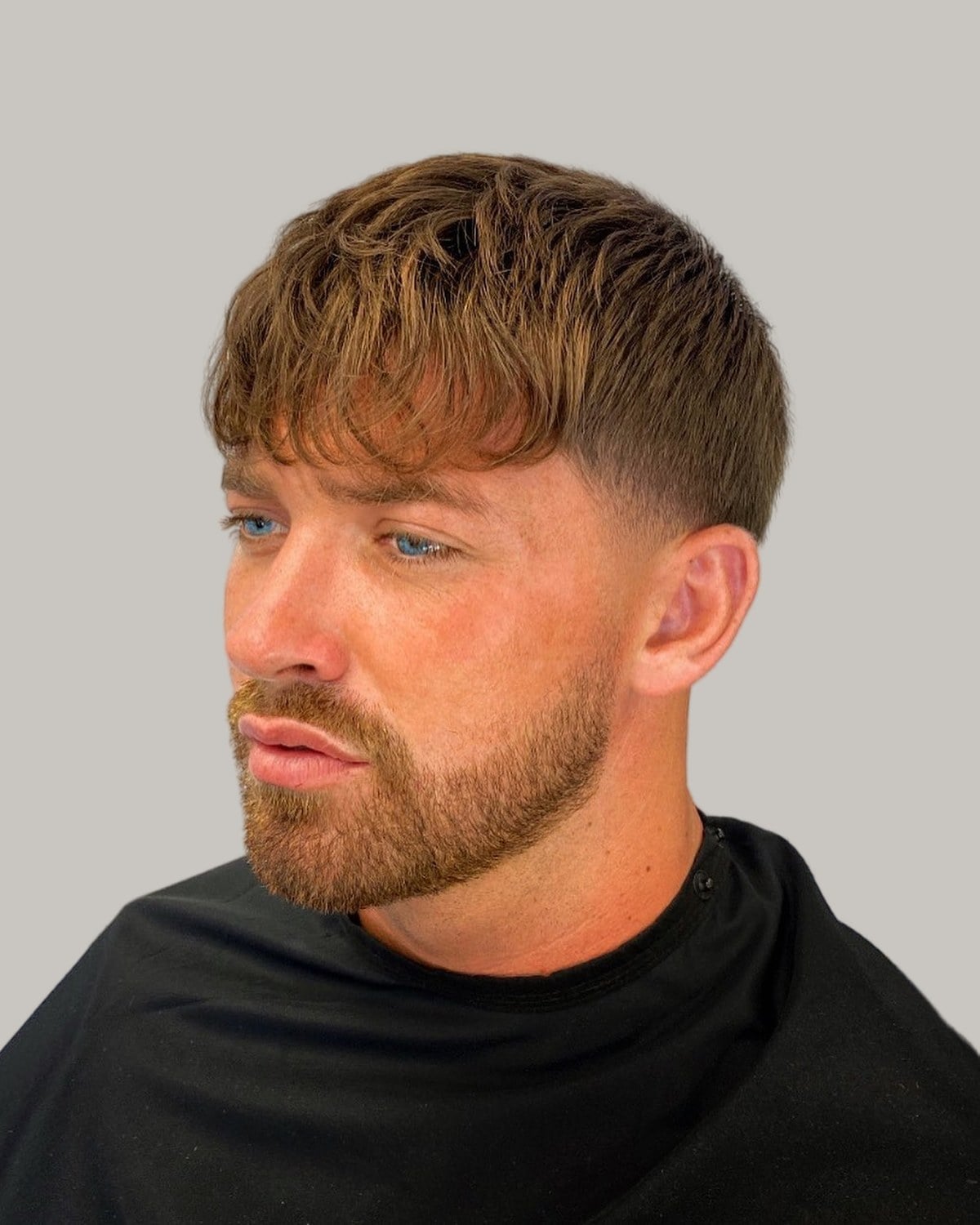
Here the fringe is cut heavy and kept smooth, so it sits on the brows in a soft line rather than breaking into choppy pieces. That weight suits straight hair that lies flat, and a blow-dry forward with a round brush is all the styling it needs.
What to ask for Soft low taper at the sides, about 3 inches on top, fringe cut heavy so it sits on the brows, with light point cutting at the ends only.
Mid taper, high taper and fade textured fringes
Textured fringe with a mid taper
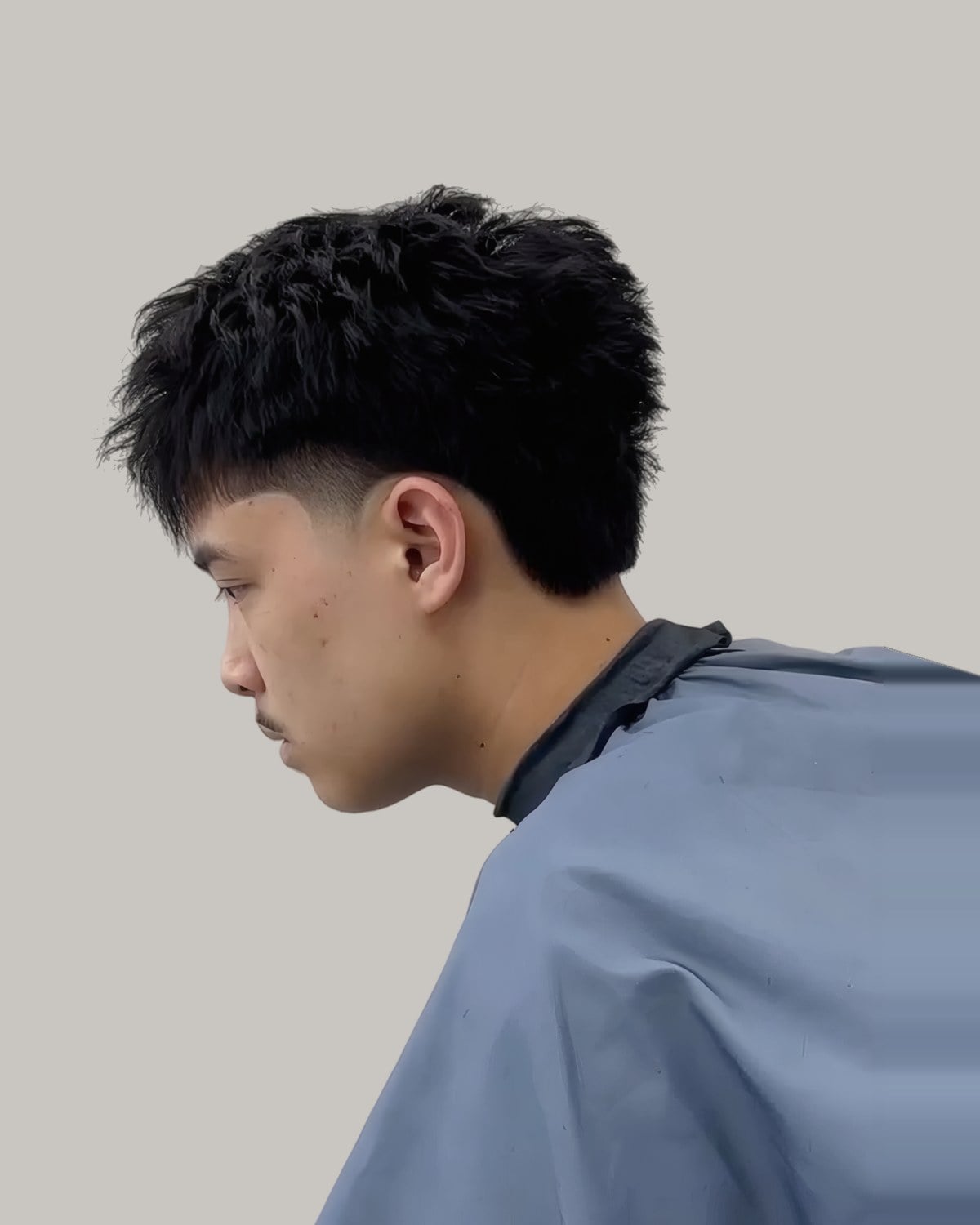
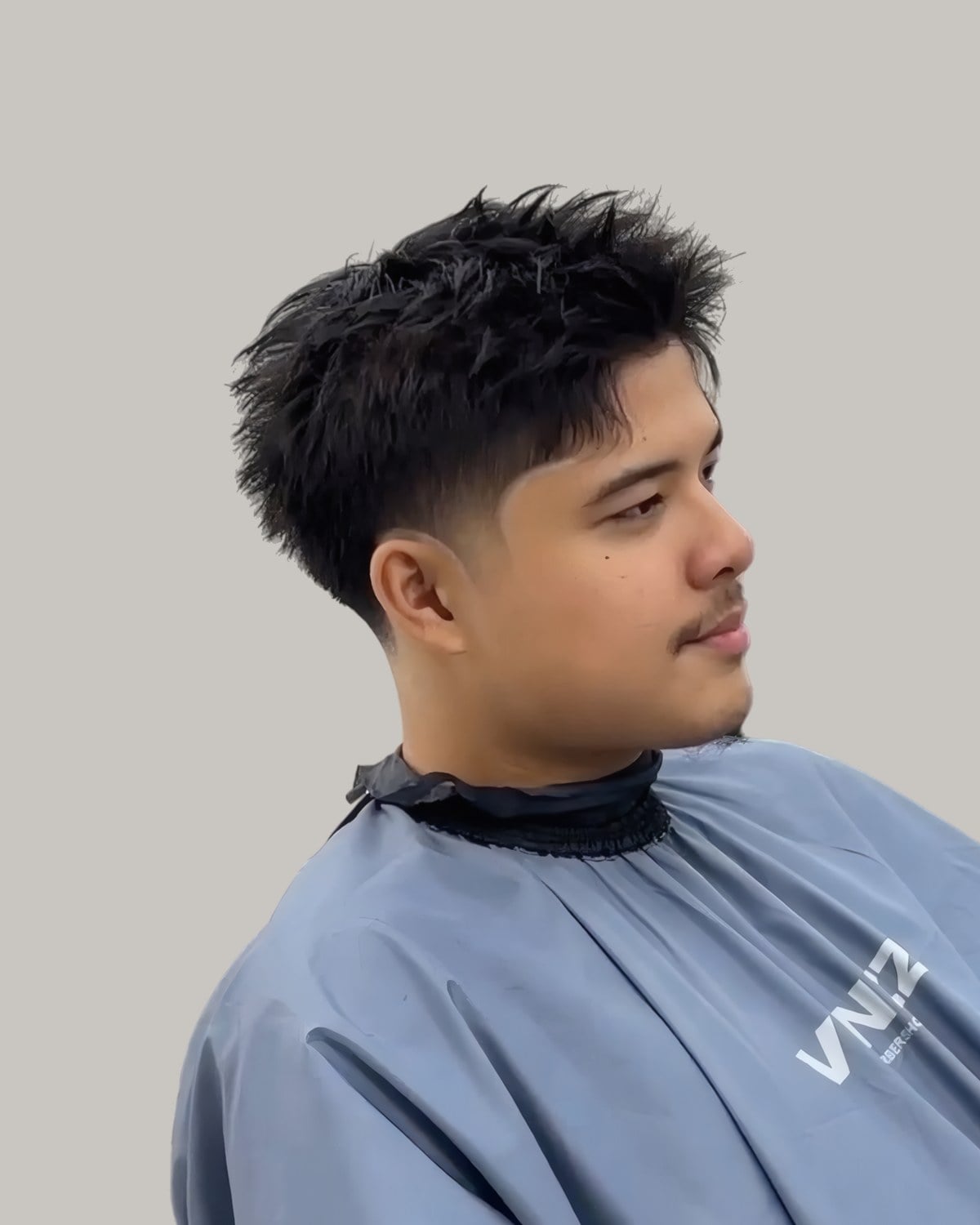
The taper starts around the temple, so there’s a clear step between the short sides and the fringe. You get more shape than a low taper gives you, and the top still does the talking.
What to ask for Mid taper starting at the temple, 3 inches on top, fringe choppy and falling to the brows.
Textured fringe with a high taper
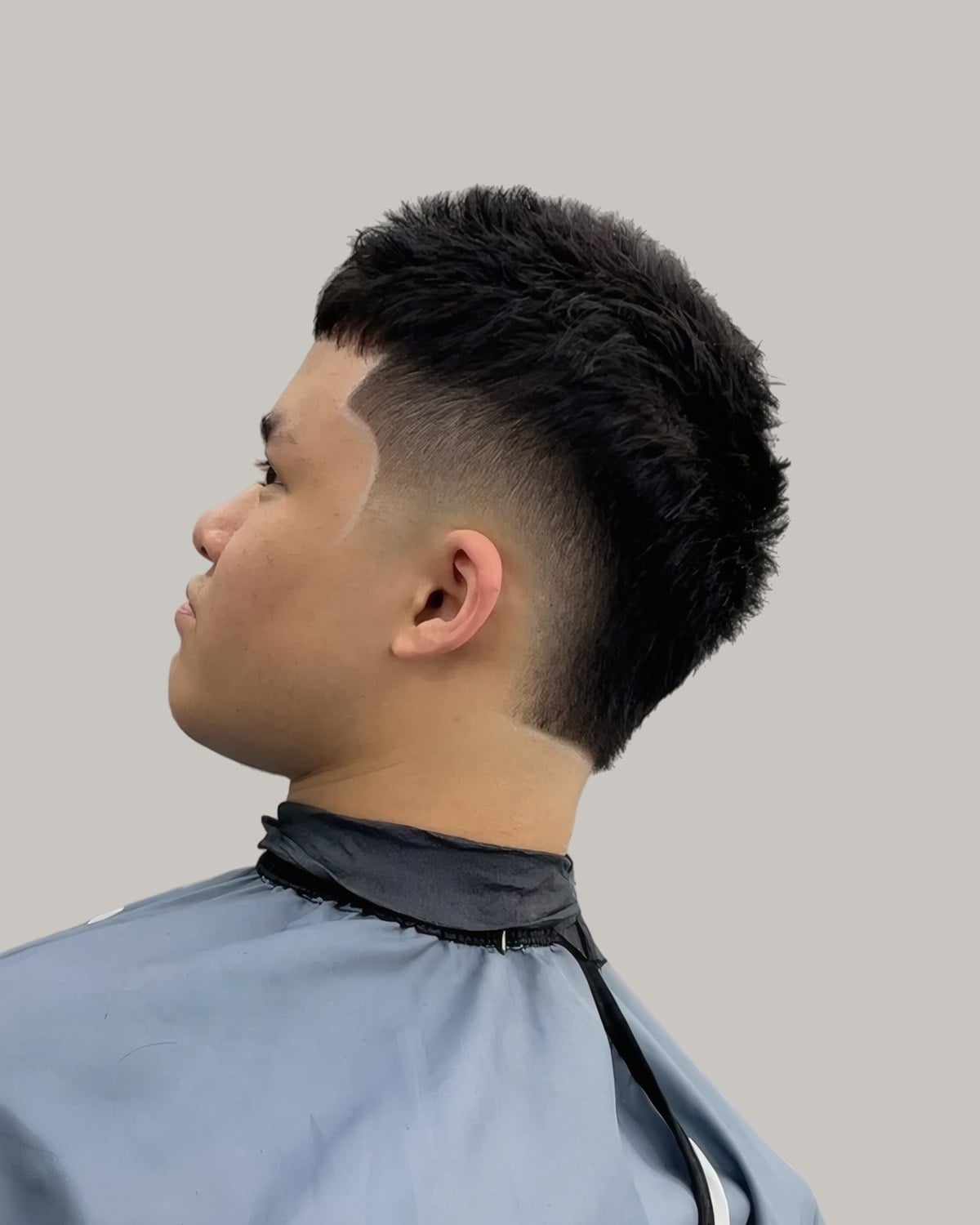
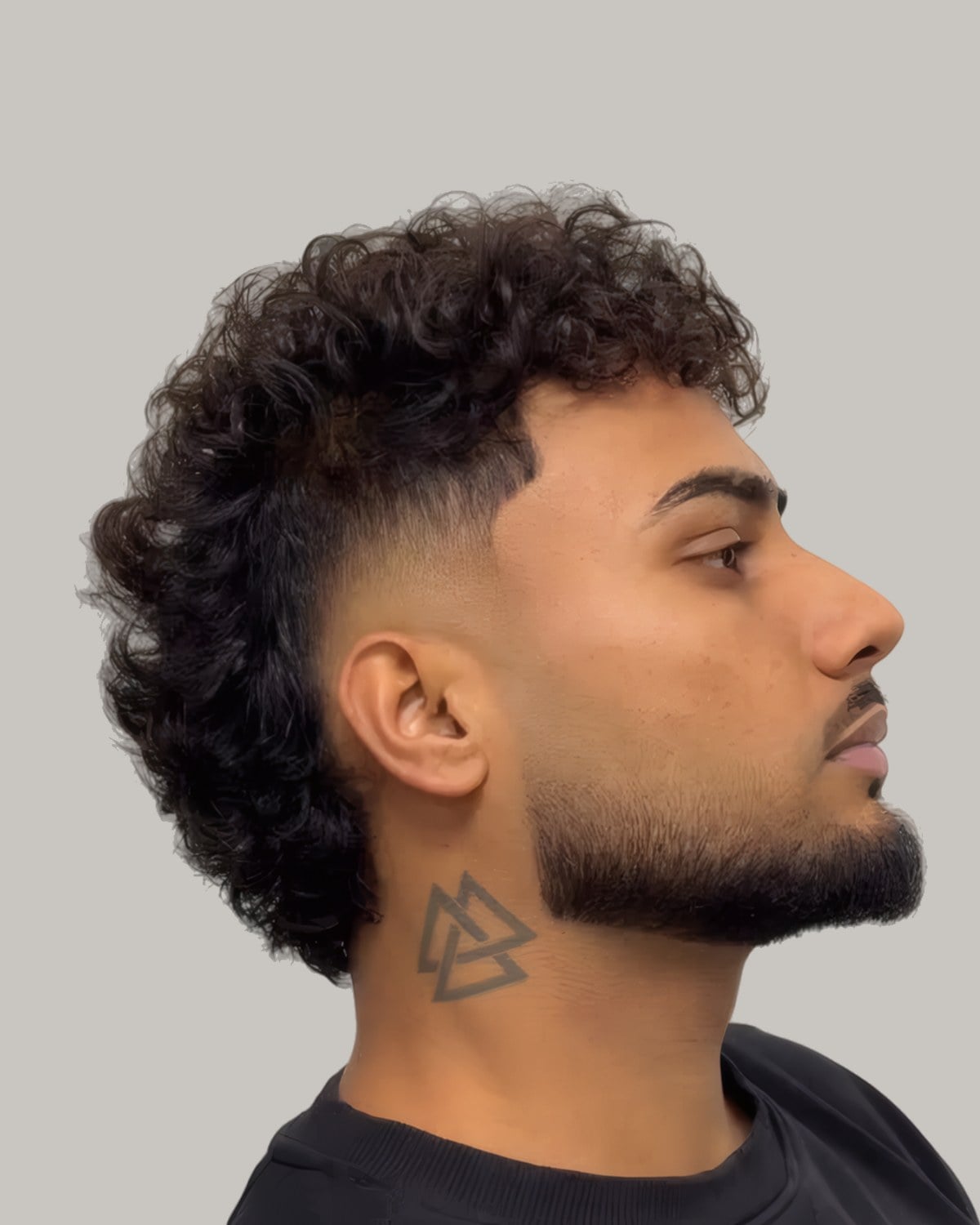
The taper climbs well above the ear, and the contrast climbs with it. The fringe looks longer and heavier next to sides this short. If you like a cut that reads from across the street, this is it.
What to ask for High taper, starting well above the ear, about 3 inches on top, textured fringe to the brows.
Textured fringe with a mid fade
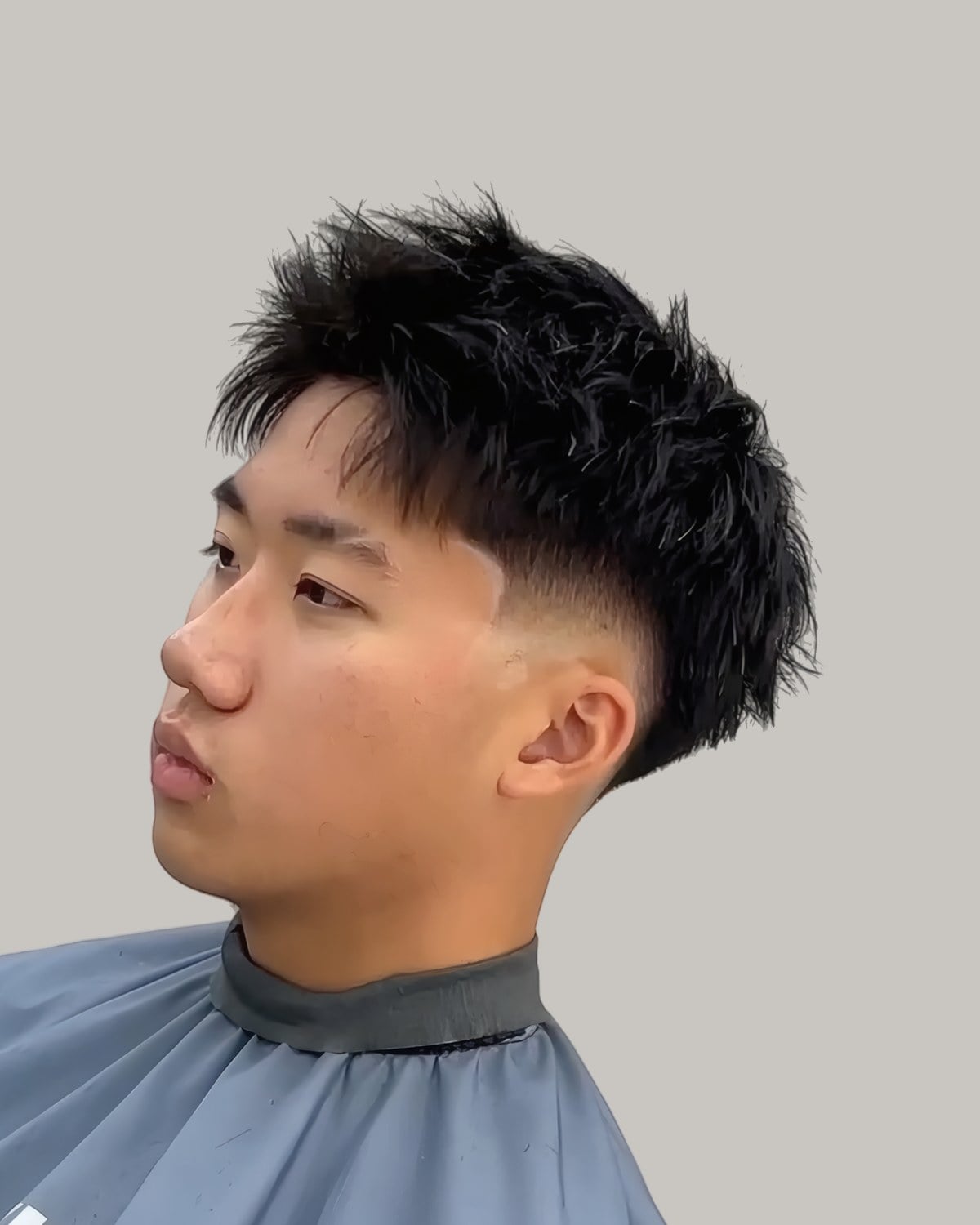
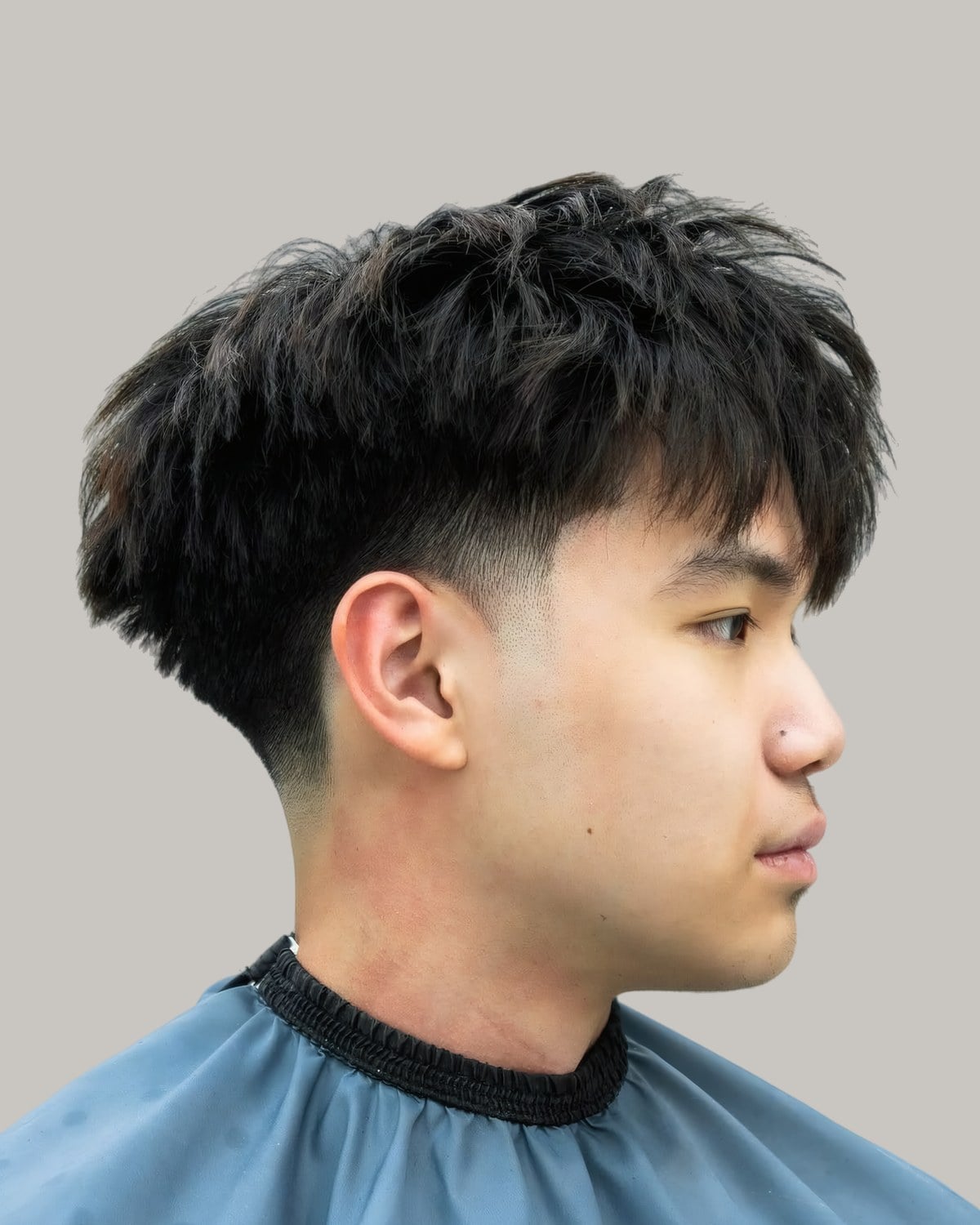
A mid fade takes the sides to skin, where a taper keeps some length. On straight, dark hair the contrast is sharp, and the fringe falls in spiky pieces that hold their shape with a little matte clay.
What to ask for Mid skin fade, 2 to 3 inches on top, point cut, fringe pushed forward in pieces.
Taper fade with a textured fringe
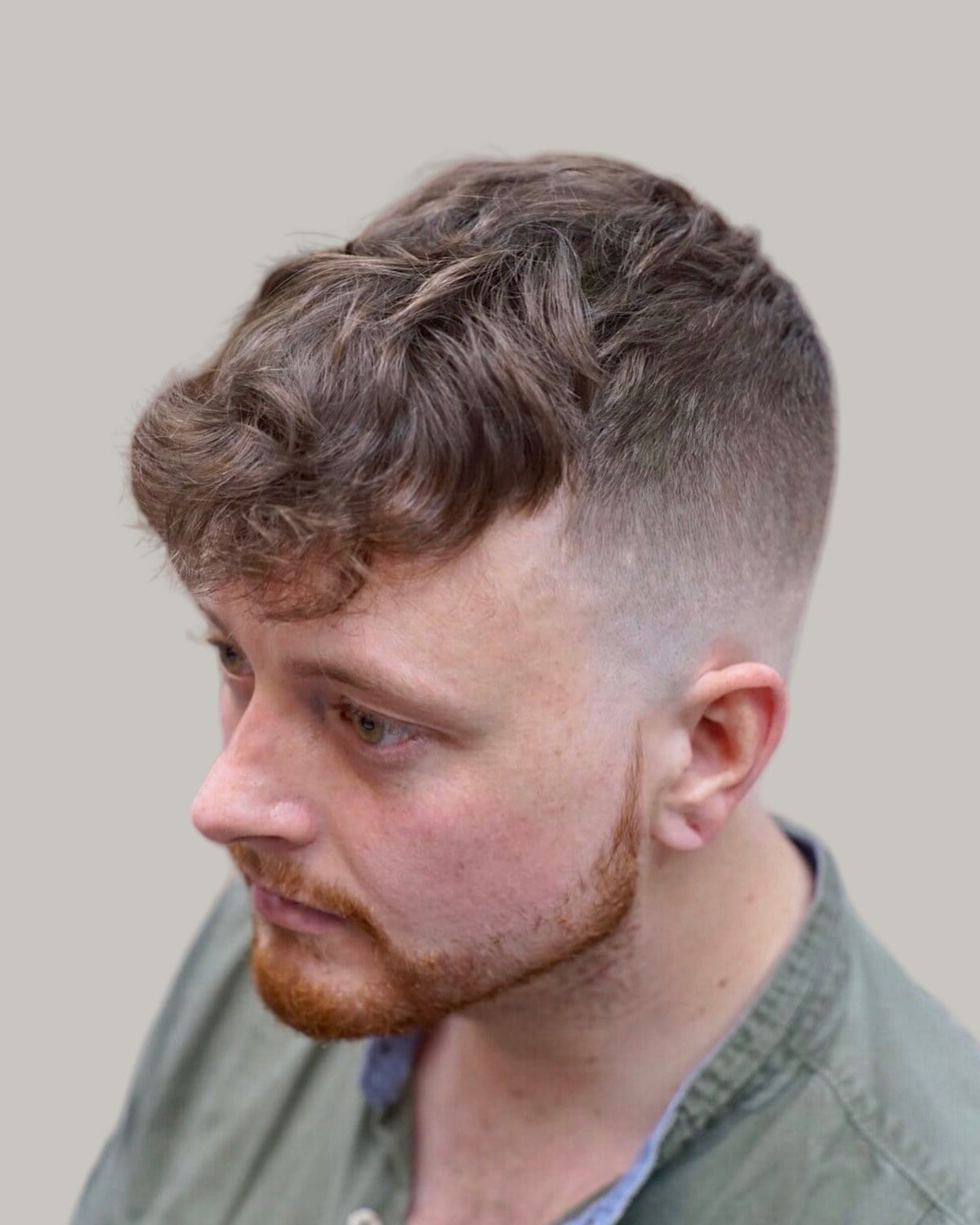
The fade takes the sides to skin around the temple and ear, then blends up into the length on top. It’s sharper than a plain taper, and the fringe stays the main event. A skin fade this high wants a touch-up every one to two weeks to keep it clean.
What to ask for Taper fade to skin from the temple down, about 3 inches on top, wavy fringe textured and pushed forward.
Textured fringe with a mid fade and a beard
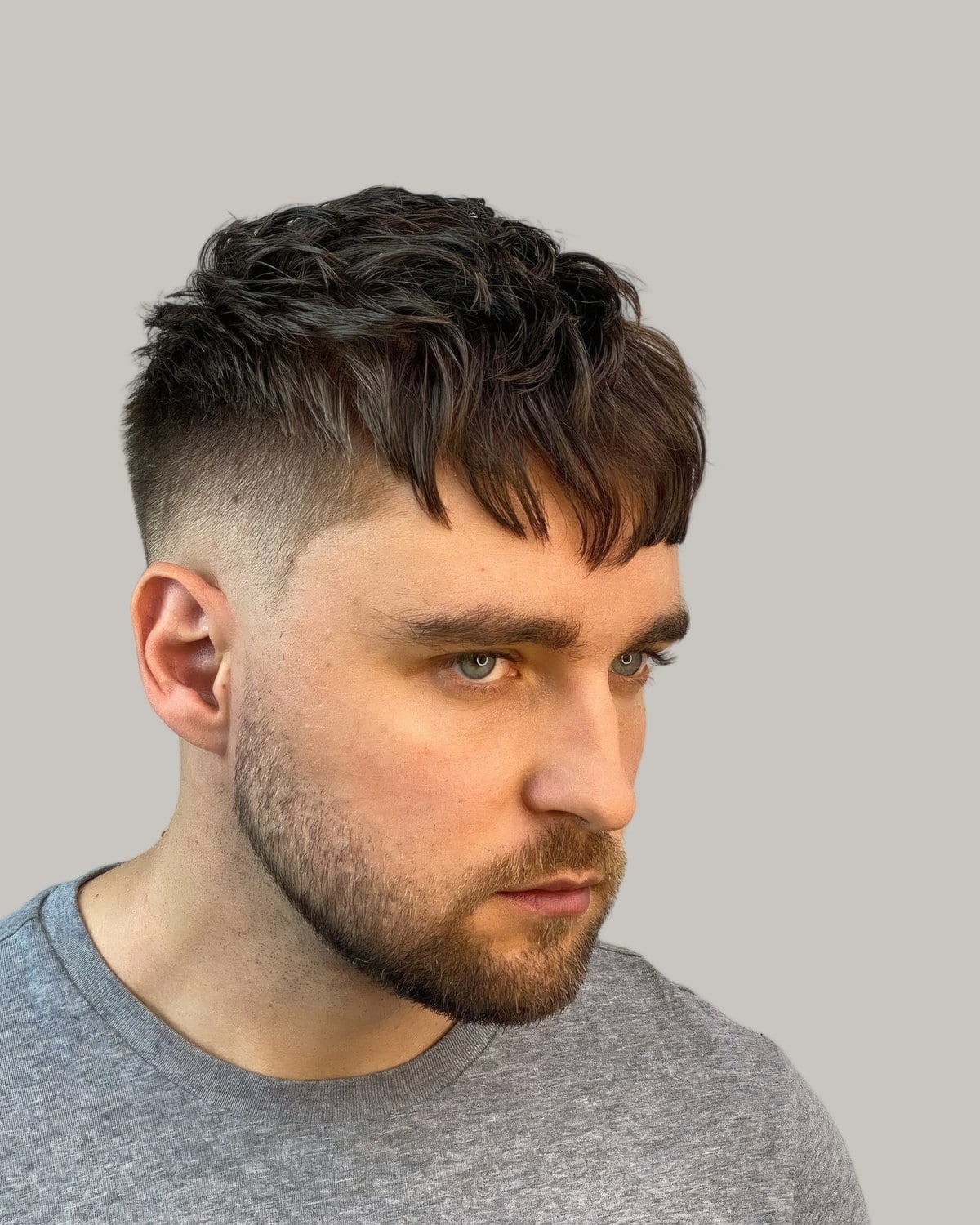
This mid fade takes the sides to skin from about the top of the ear down, then hands over to the beard at the sideburn, so your head and jaw read as one shape. The fringe is short and choppy, point cut so it breaks into pieces instead of a solid line. It’s quick to style: a pea of matte paste, worked through with your fingertips, and you’re done.
What to ask for Mid skin fade from about the top of the ear, blended into the beard, about two inches on top, point cut and pushed forward into a short, choppy fringe.
Messy textured fringe with a mid taper fade
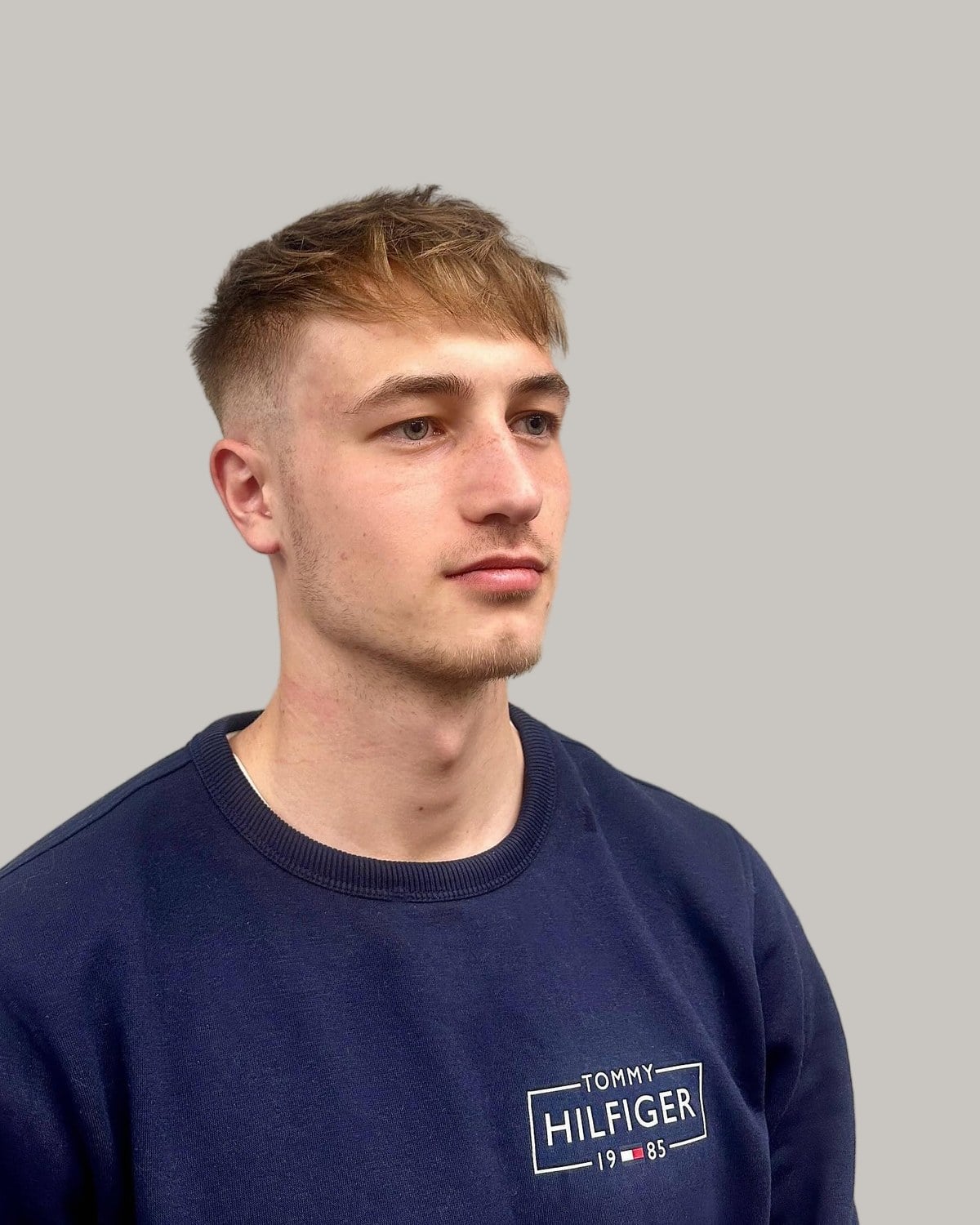
The barber calls this one a mid razor fade: the shortest part is finished with a razor instead of clippers, so it goes right down to skin. The fringe is left longer at the front and broken up, so it looks better shaken out than combed. Skin shows regrowth fast, so you’ll want a tidy-up every two to three weeks.
What to ask for Mid razor fade from the temple, about two inches on top, fringe left longer at the front and textured so it falls forward in loose pieces.
Blowout and burst taper textured fringes
Textured fringe with a burst fade
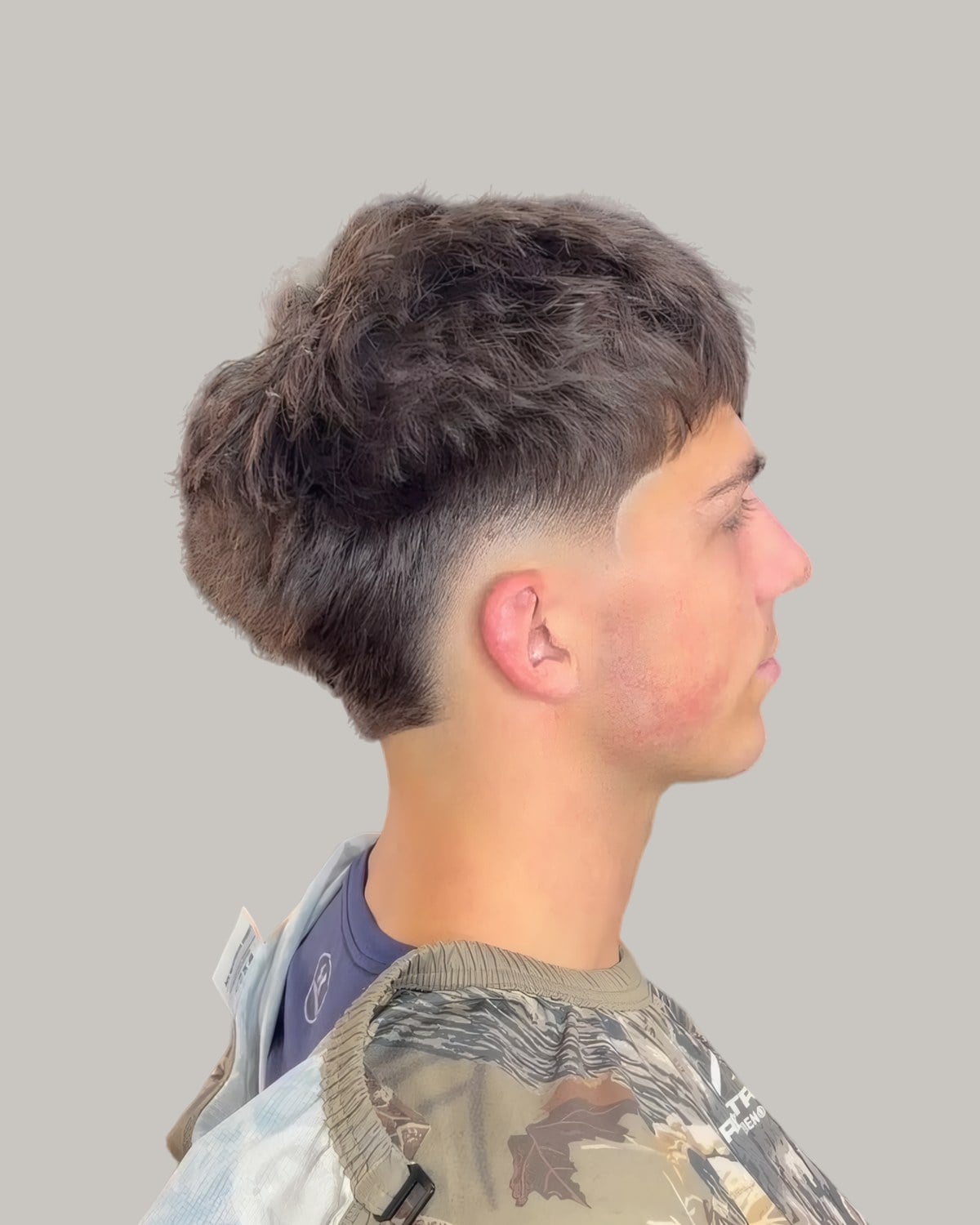
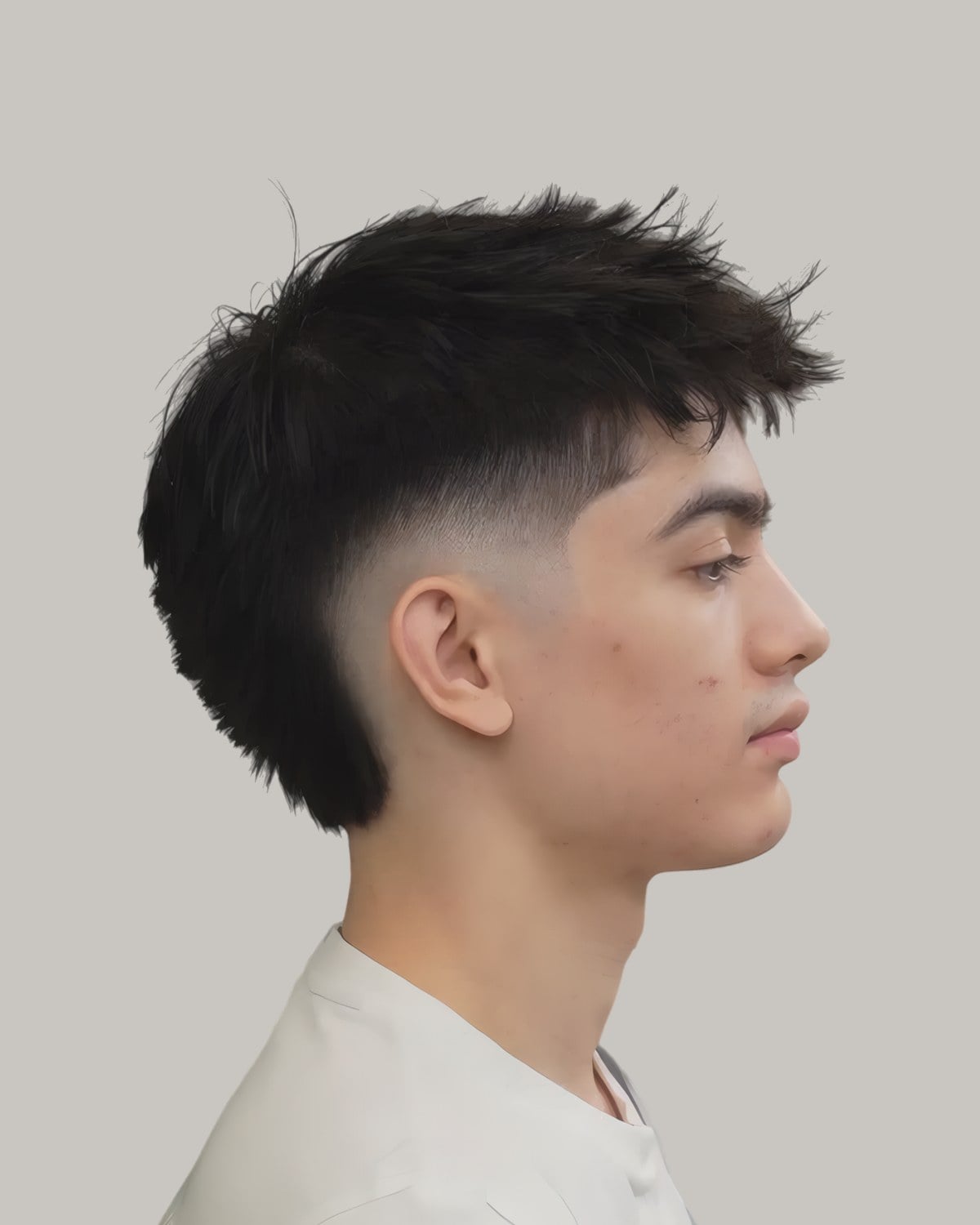
A burst fade curves around the ear in a half circle and leaves length at the back of the neck. So from the side you get a clean arc of skin, and from behind a little more hair than you’d expect. The fringe stays forward and choppy up top.
What to ask for Burst fade around the ear, leave length at the neck, textured fringe to mid-forehead.
Blowout taper with a textured fringe
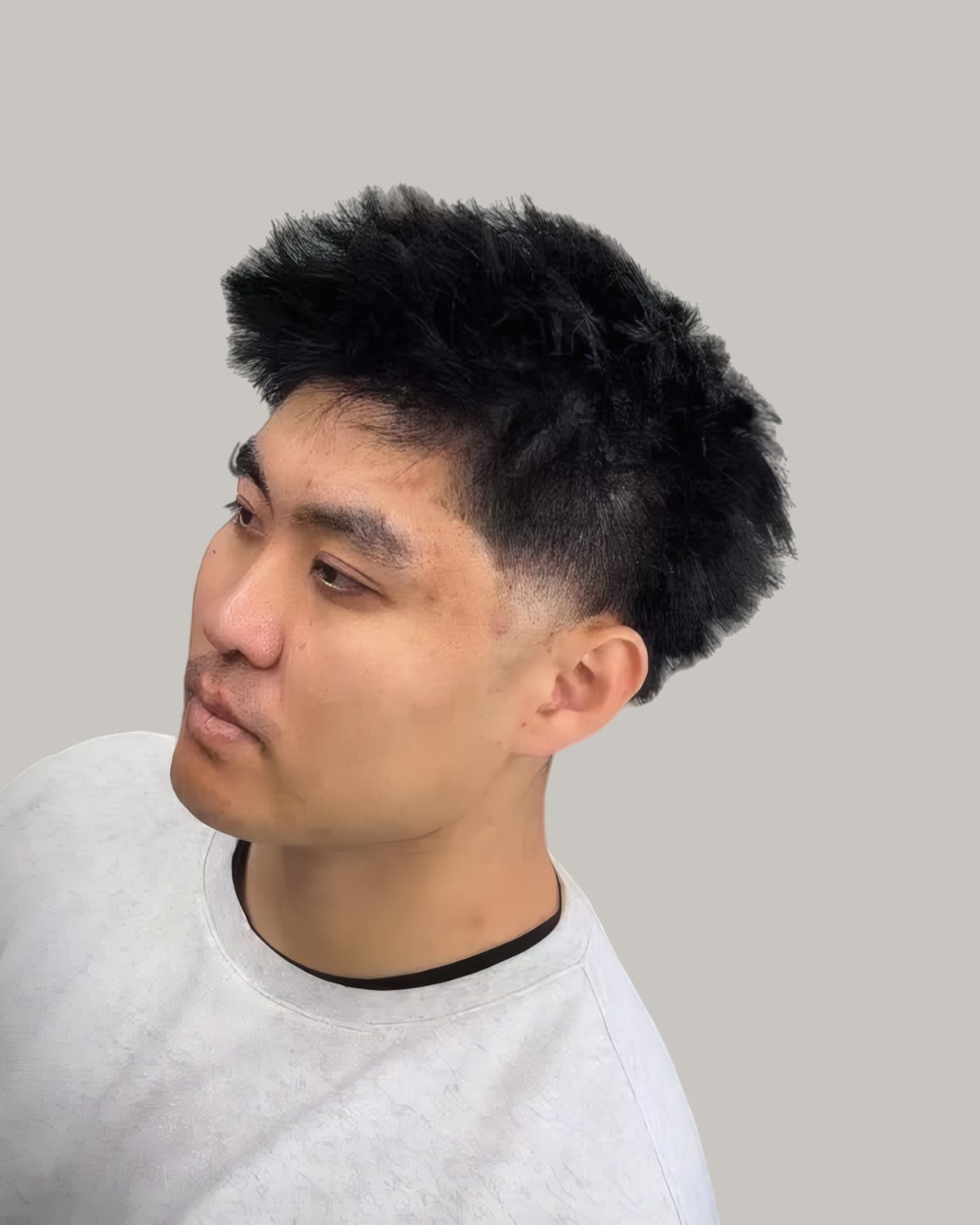
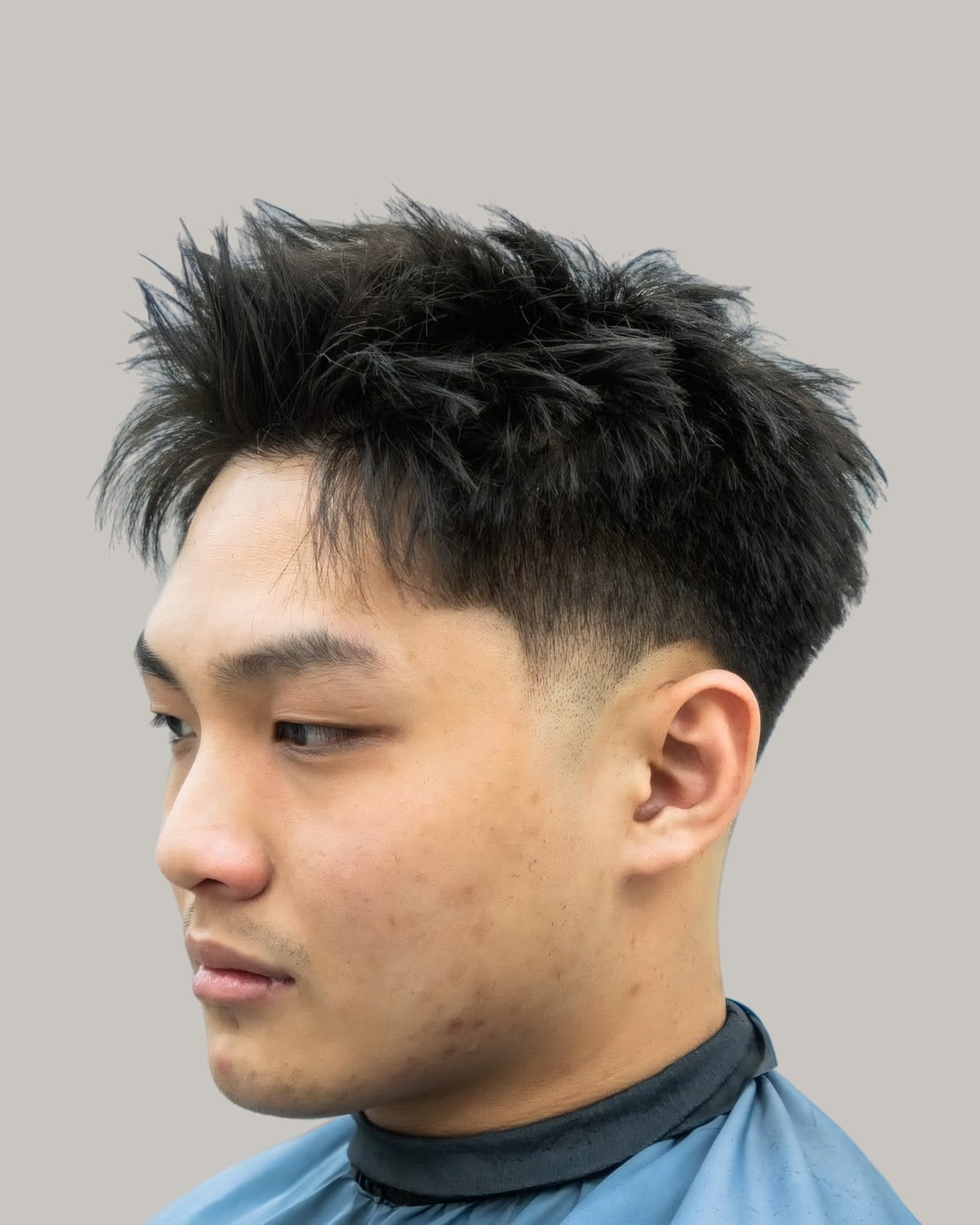
A blowout taper pairs a soft taper at the temples and neckline with a longer top blow-dried up and out. The barber cuts the taper and the length. The blowout itself comes from your hairdryer, every morning, so budget a few extra minutes.
What to ask for Blowout taper at the temples and nape, 3 to 4 inches on top, fringe textured and left long enough to blow-dry up and forward.
Mid blowout taper with a textured fringe
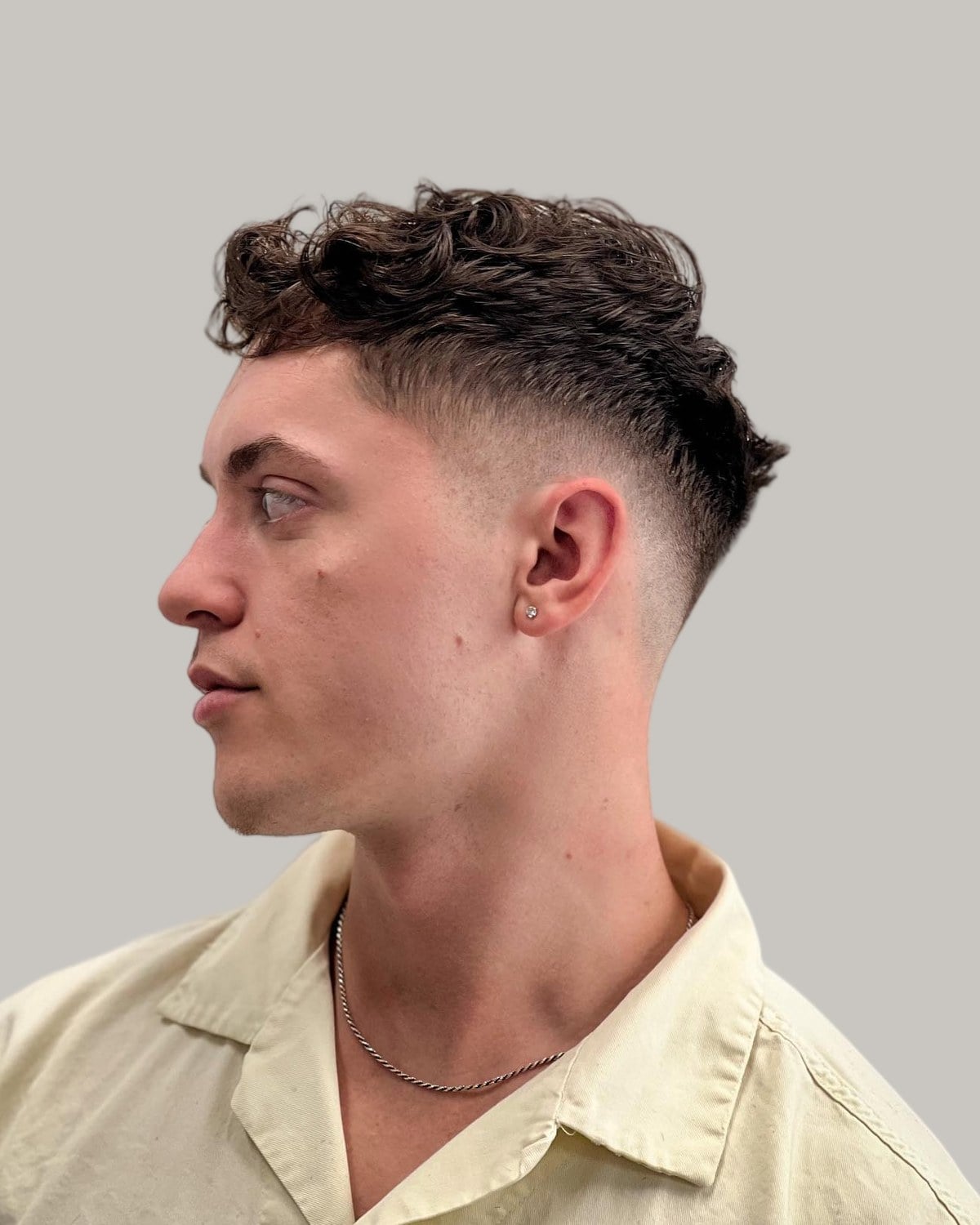
A mid blowout taper starts higher than the low version, so you get more skin around the ear and a sharper edge under the waves. The barber finished this one with a curl cream, and that’s the routine at home too: cream through damp hair, the hairdryer pointed up and forward, then fingers, not a comb.
What to ask for Mid blowout taper starting above the ear, down to skin at the neckline, three to four inches of wavy texture on top, fringe pushed forward.
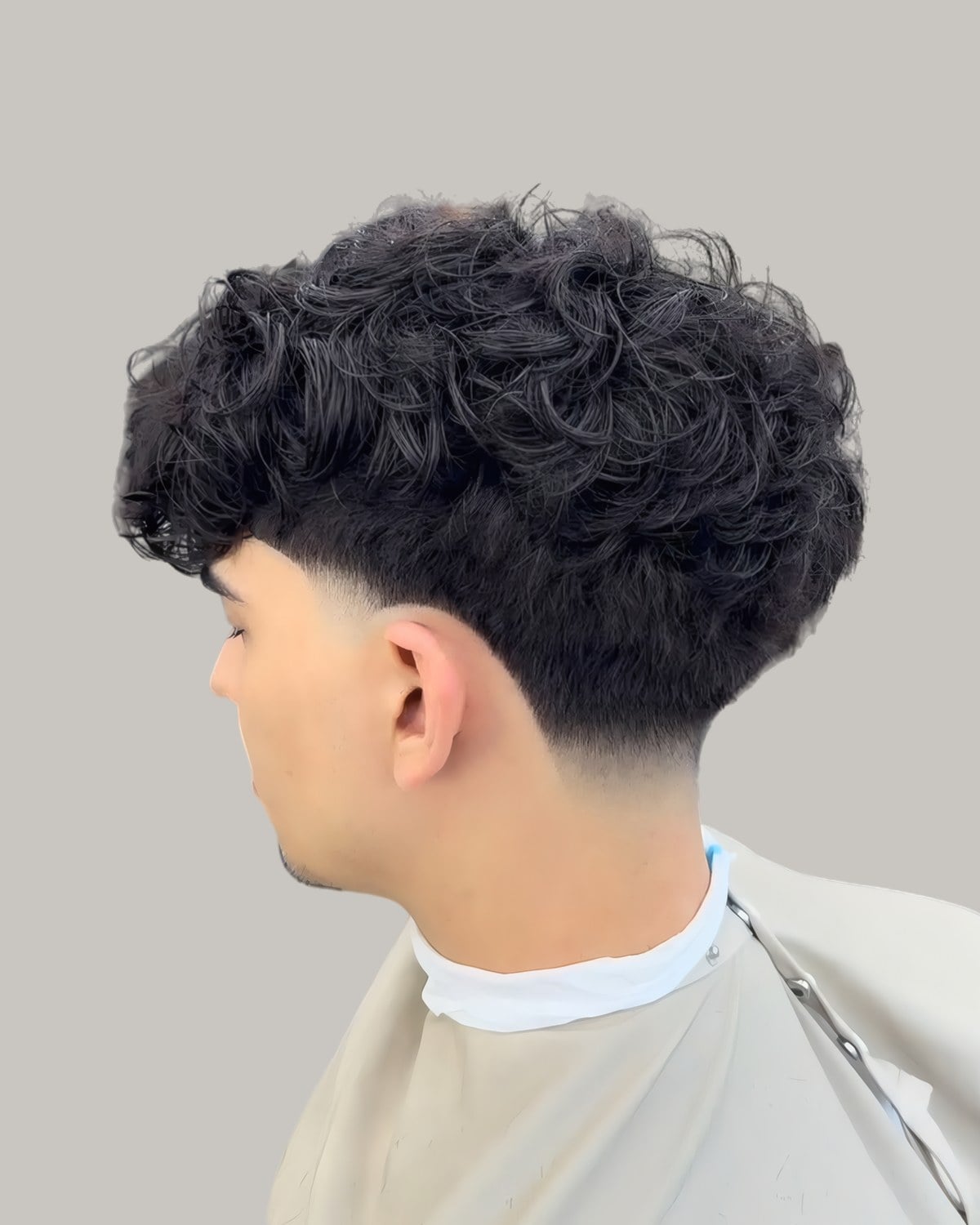
Curly blowout taper
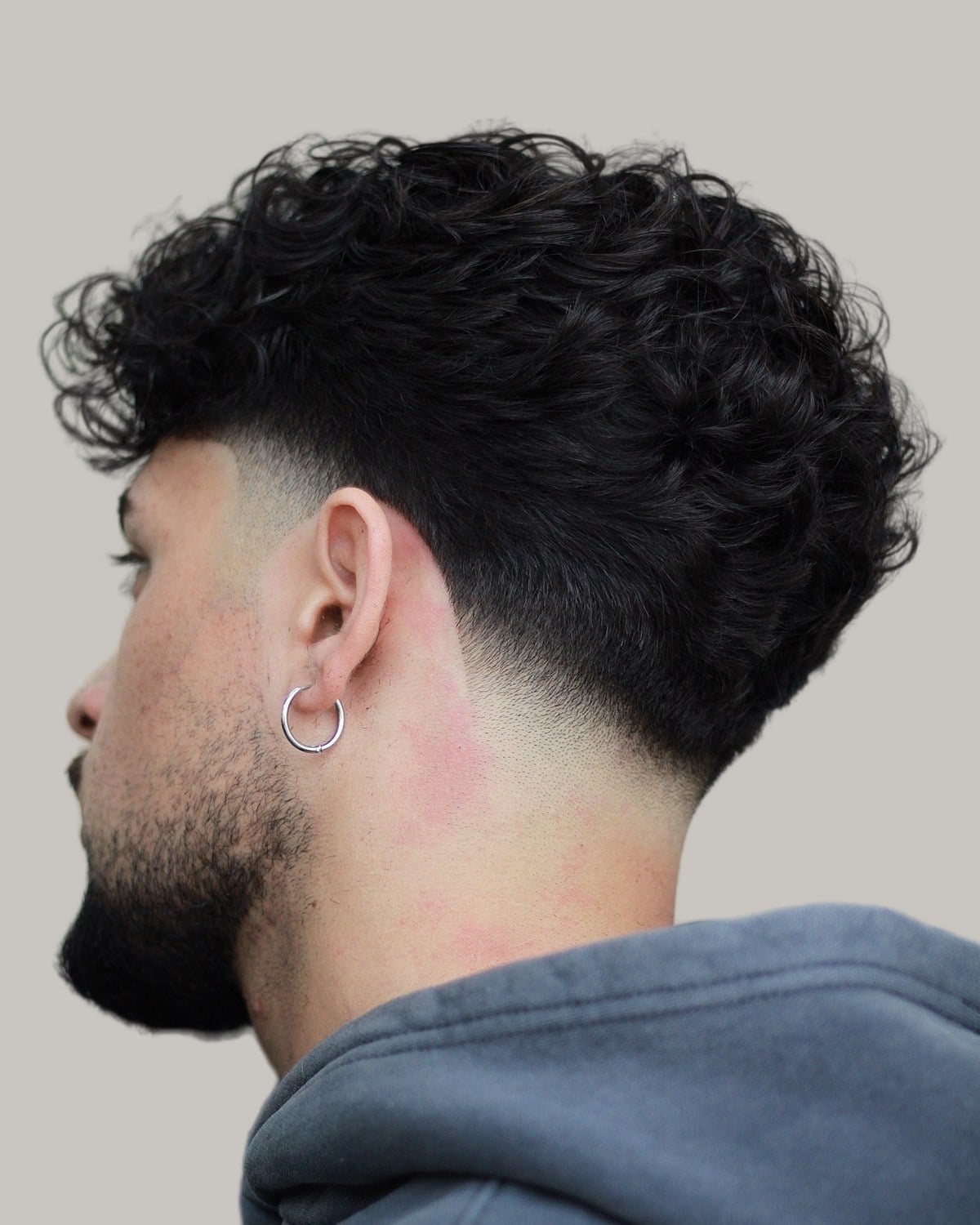
Here’s the blowout from the side and back, the view you only get with a second mirror. The taper drops to skin at the nape and keeps some weight above it, so the curls on top look even fuller. Push the curls forward when you style it and they make a loose, curly fringe, and a diffuser keeps them from going flat.
What to ask for Blowout taper at the temples and neckline, down to skin at the nape, curls left three to four inches on top and pushed forward.
Curly textured fringes
Curly textured fringe with a mid taper
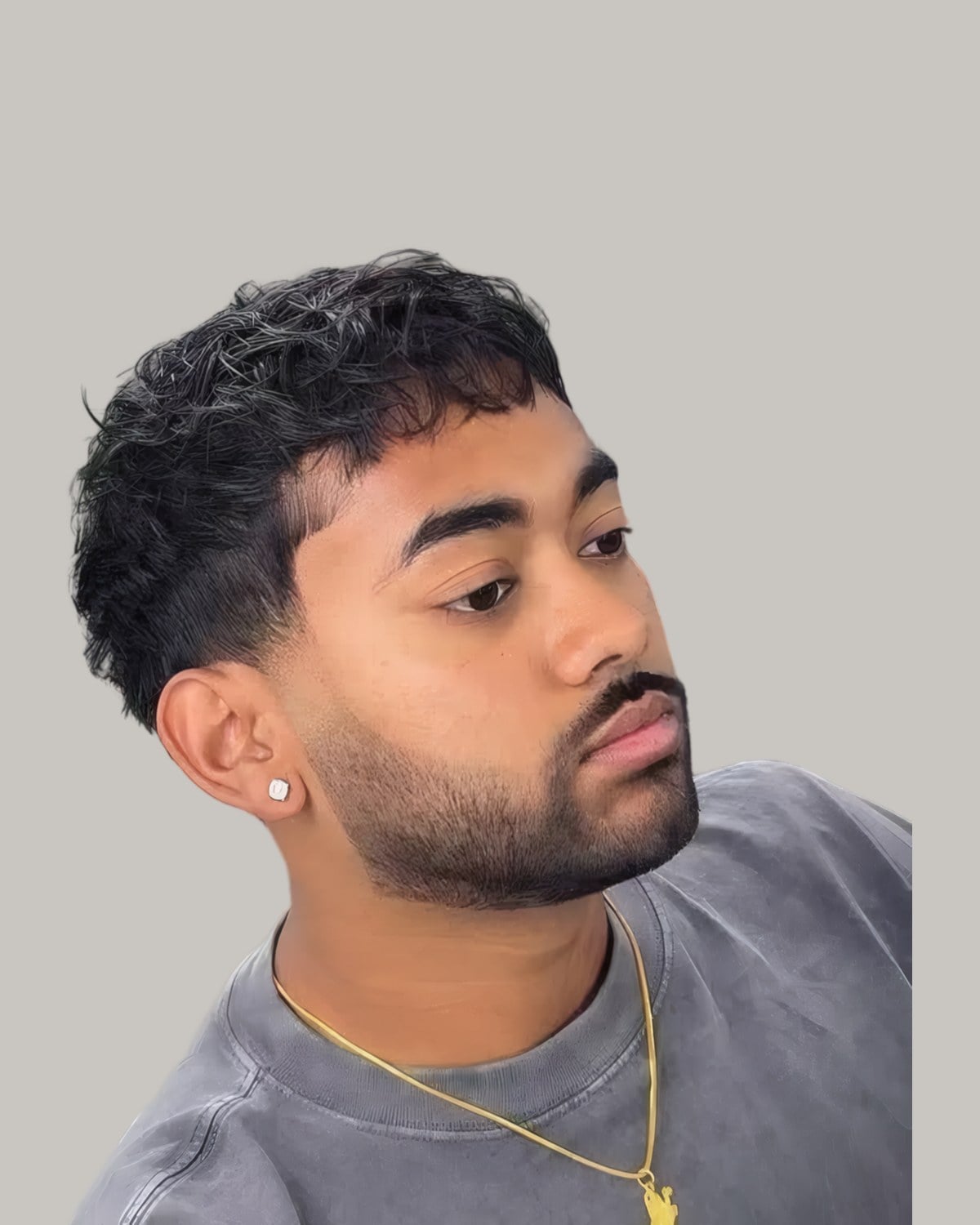
Curls on top, a mid taper at the sides, and the fringe falling in loose rings. Curly hair should be cut dry for a fringe, because wet and stretched it springs up shorter than you planned. Mention it if your barber reaches for the spray bottle.
What to ask for Cut the fringe dry, curls about 2 to 3 inches on top, mid taper from the temple down.
Curly textured fringe
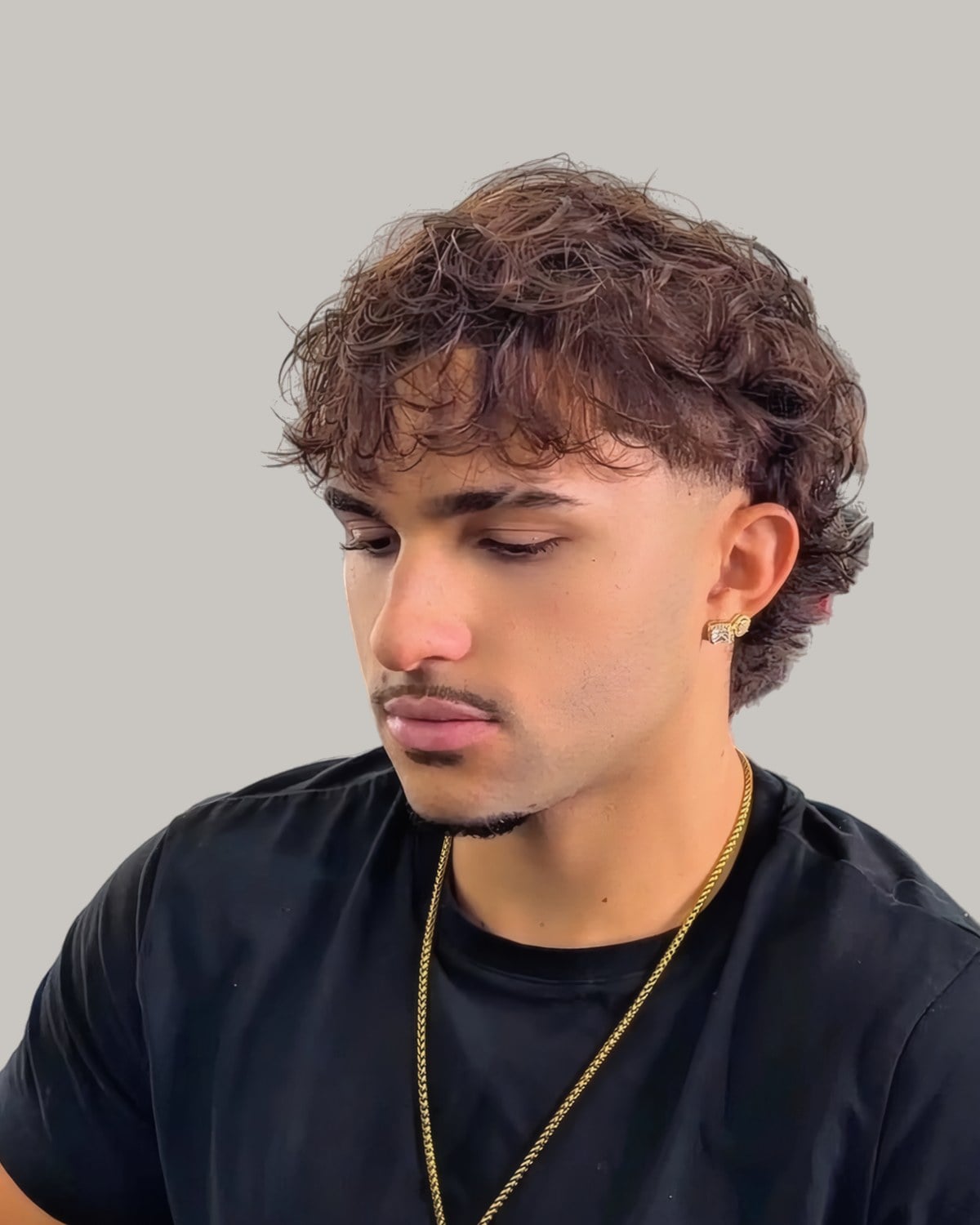
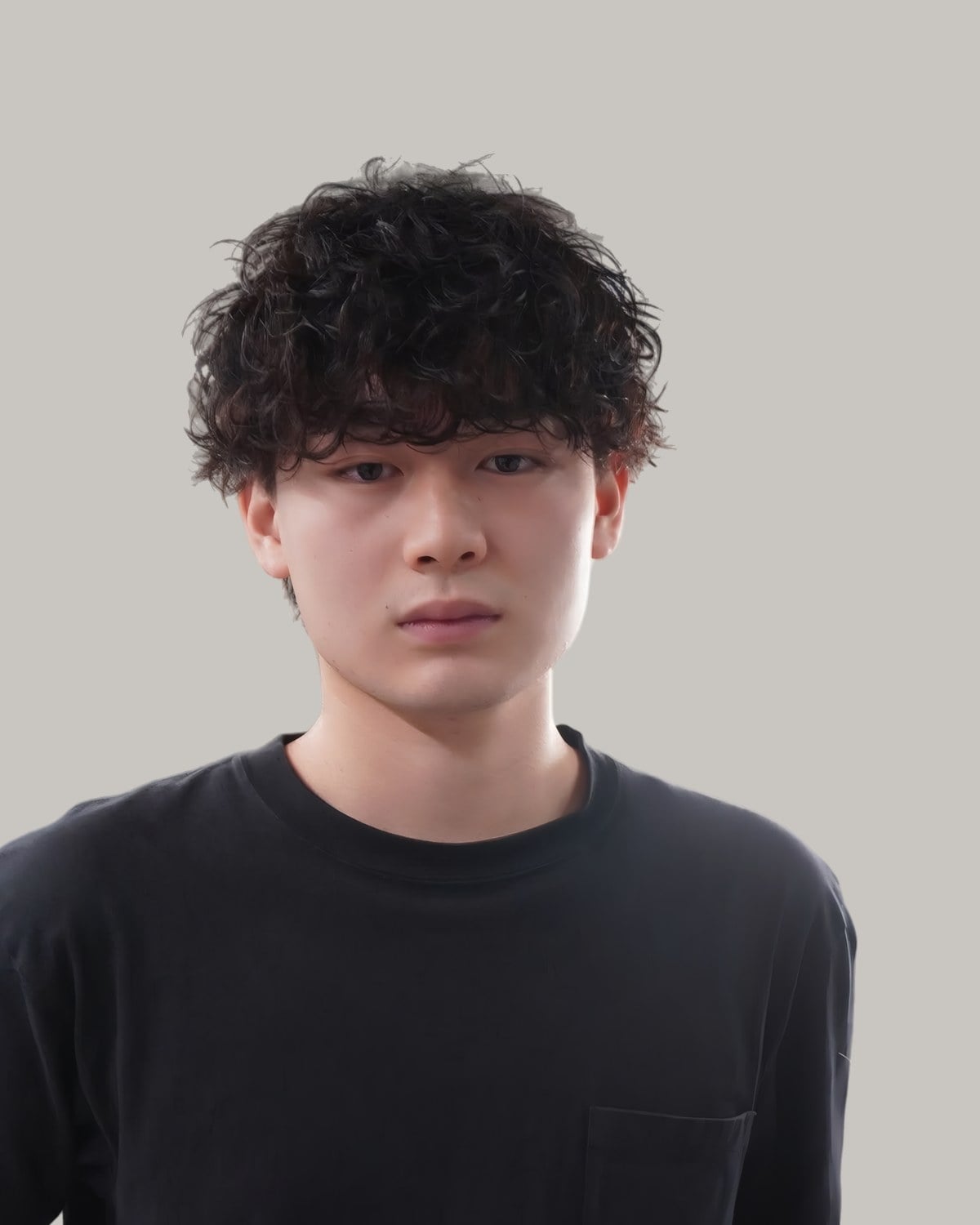
The curls fall onto the forehead and do the texturing for you, so your barber’s job is mostly shape. Keep the product light, because the curls already bring the texture.
What to ask for Shape the curls into a rounded top, fringe falling to the brows, taper at the sides, cut dry.
Curly textured fringe with a low taper
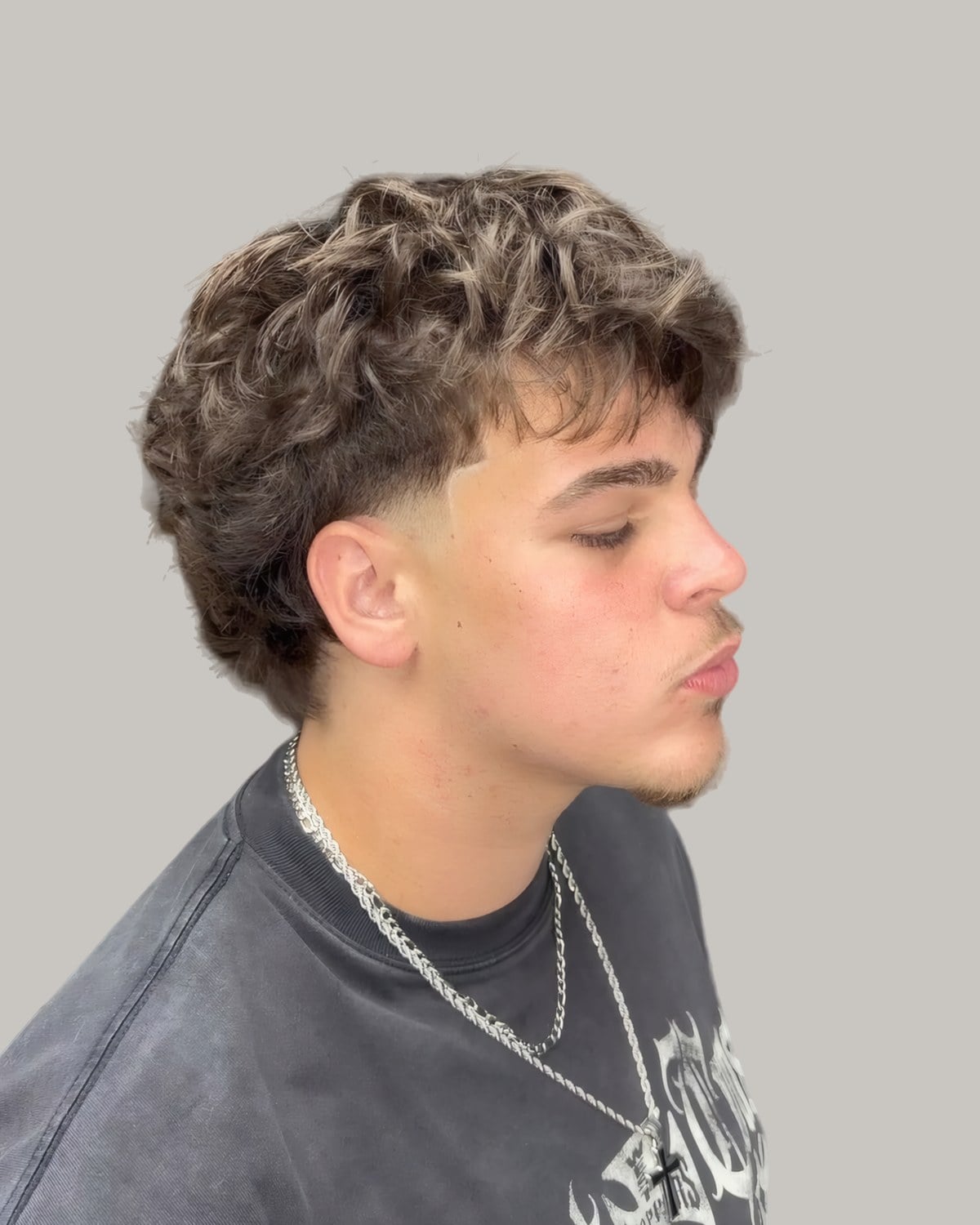
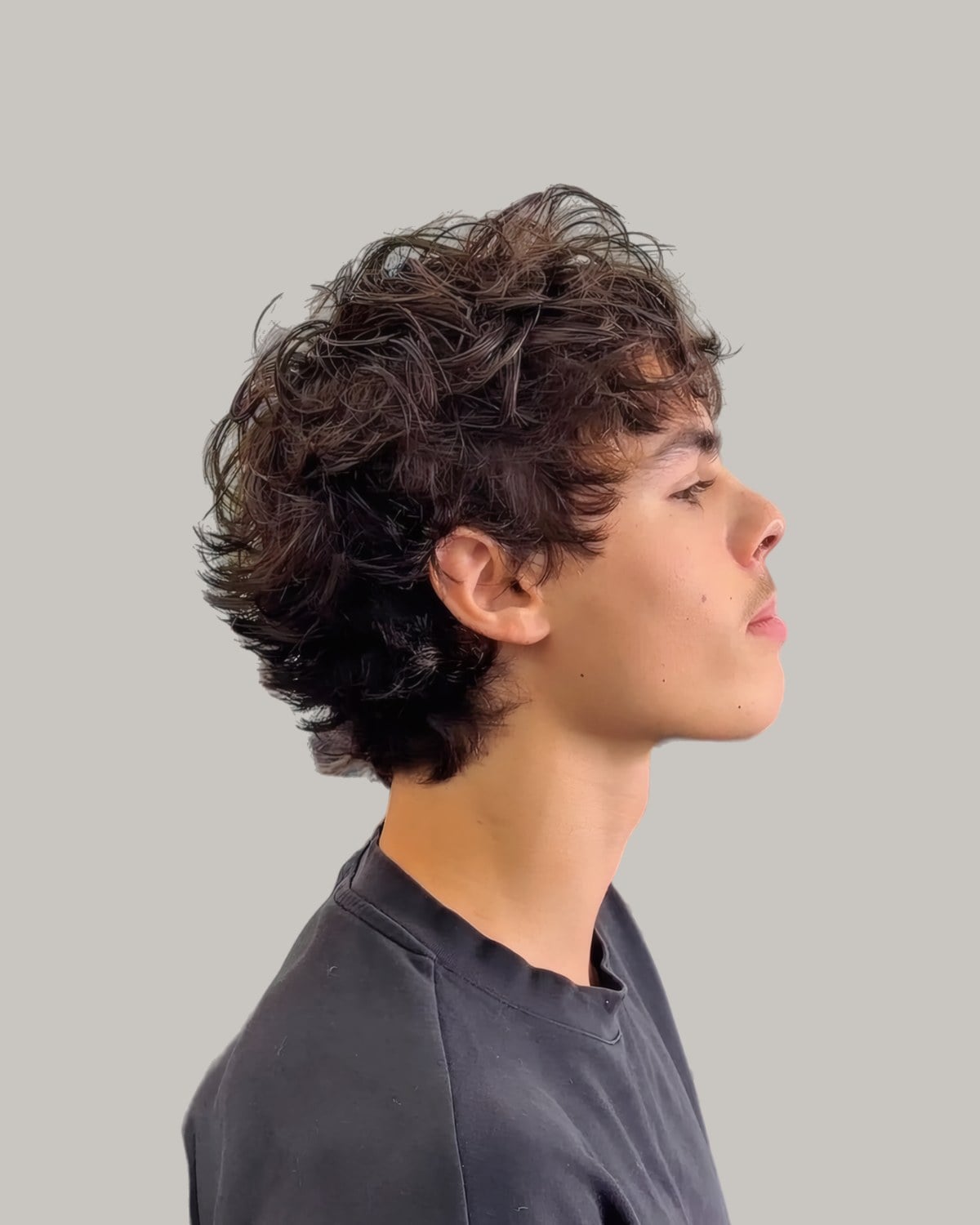
A low taper keeps the curls around the head and tidies the sideburns and nape. It’s the softer curly option, with the curls left to frame the face.
What to ask for Low taper at the sideburns and nape, curls left full on top, fringe dry-cut to mid-forehead.
Textured fringe on straight and Asian hair
Short Korean-style textured fringe
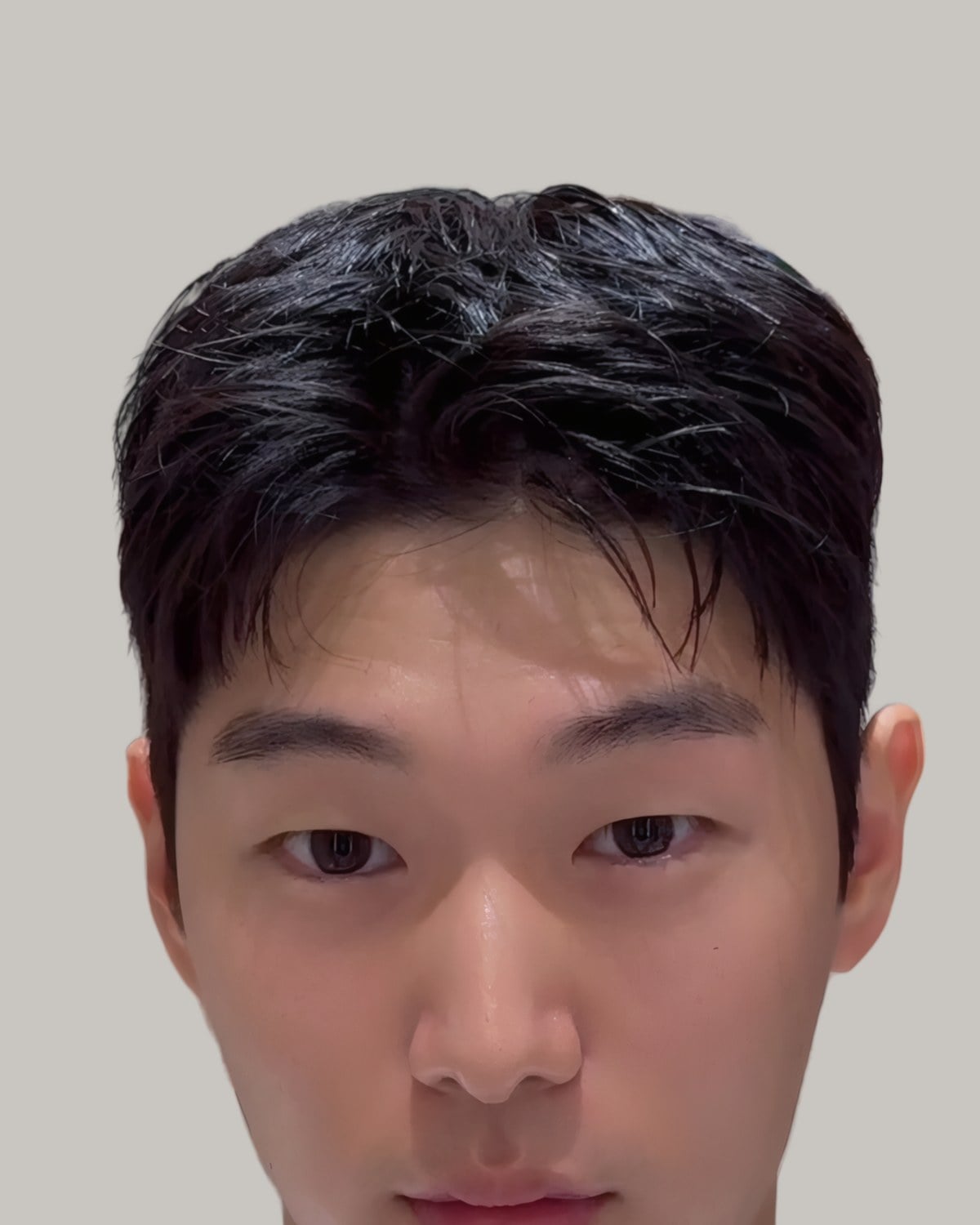
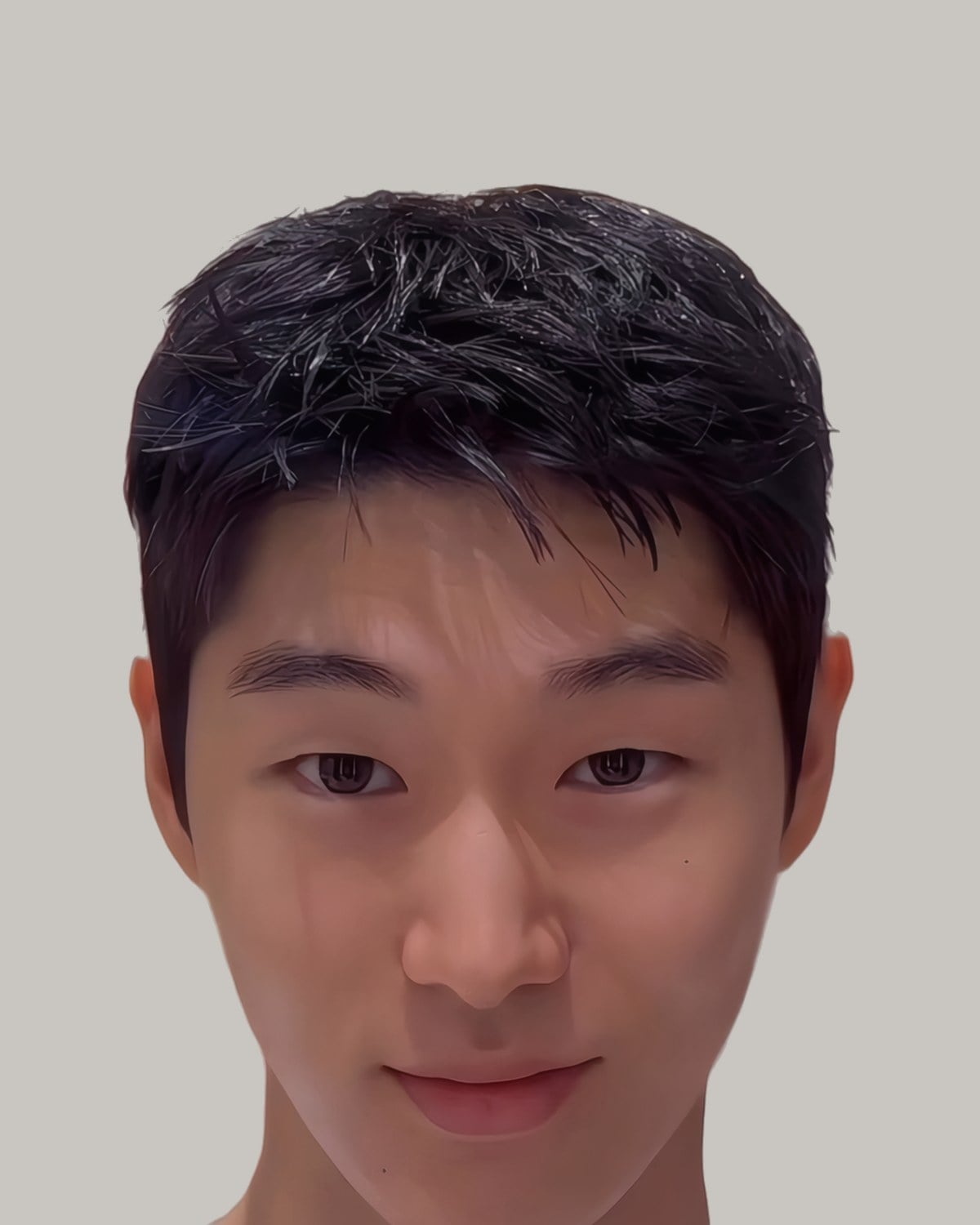
A cut you’ll see all over Korean salons’ feeds: the fringe stops just above the brows and the pieces are cut small, so the forehead shows through. It’s tidy enough for the office and still reads as textured. A little matte clay on dry hair is all it asks for.
What to ask for Short textured fringe to just above the brows, texture cut inside the top, about 2 inches, taper at the sides.
Permed textured fringe
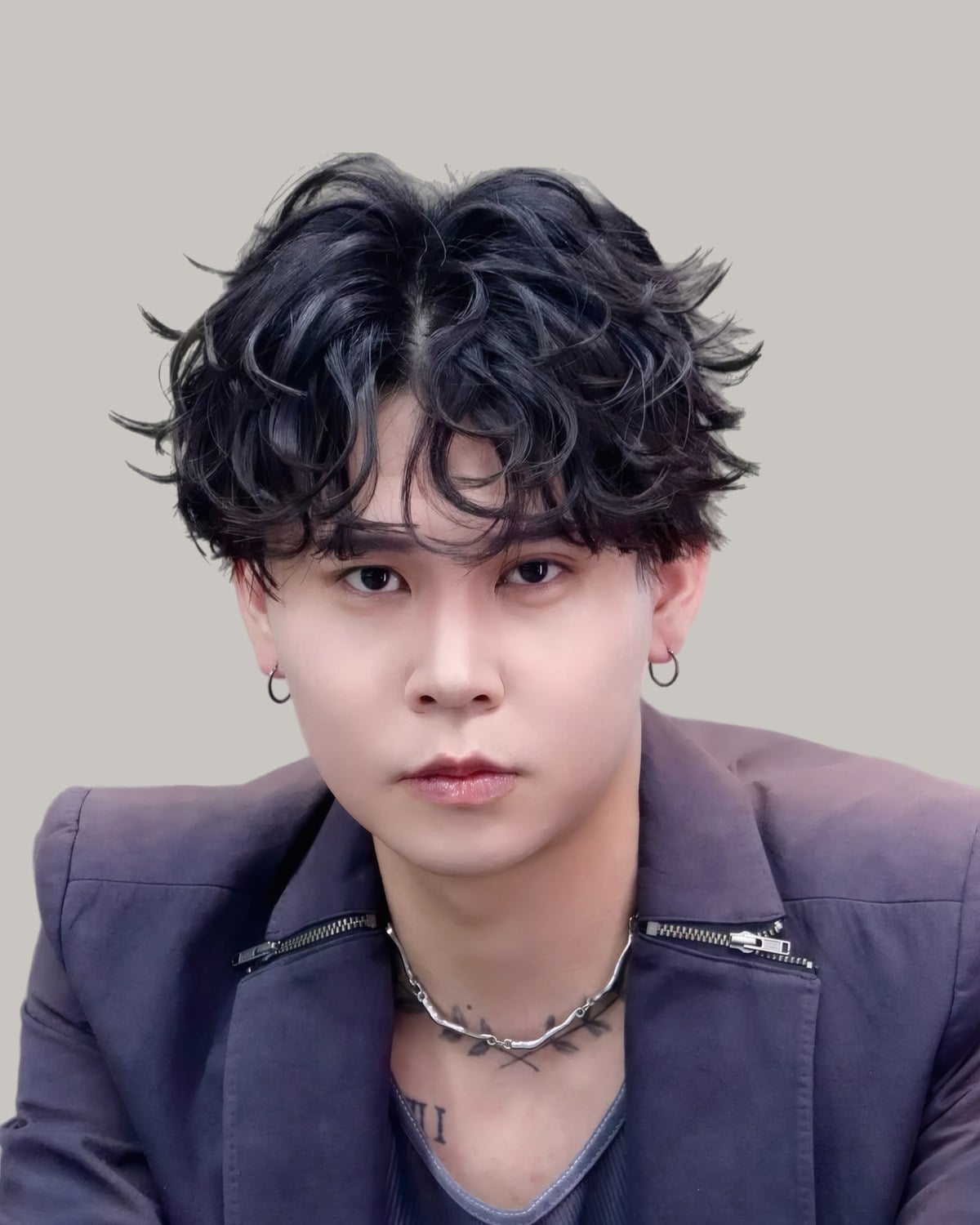
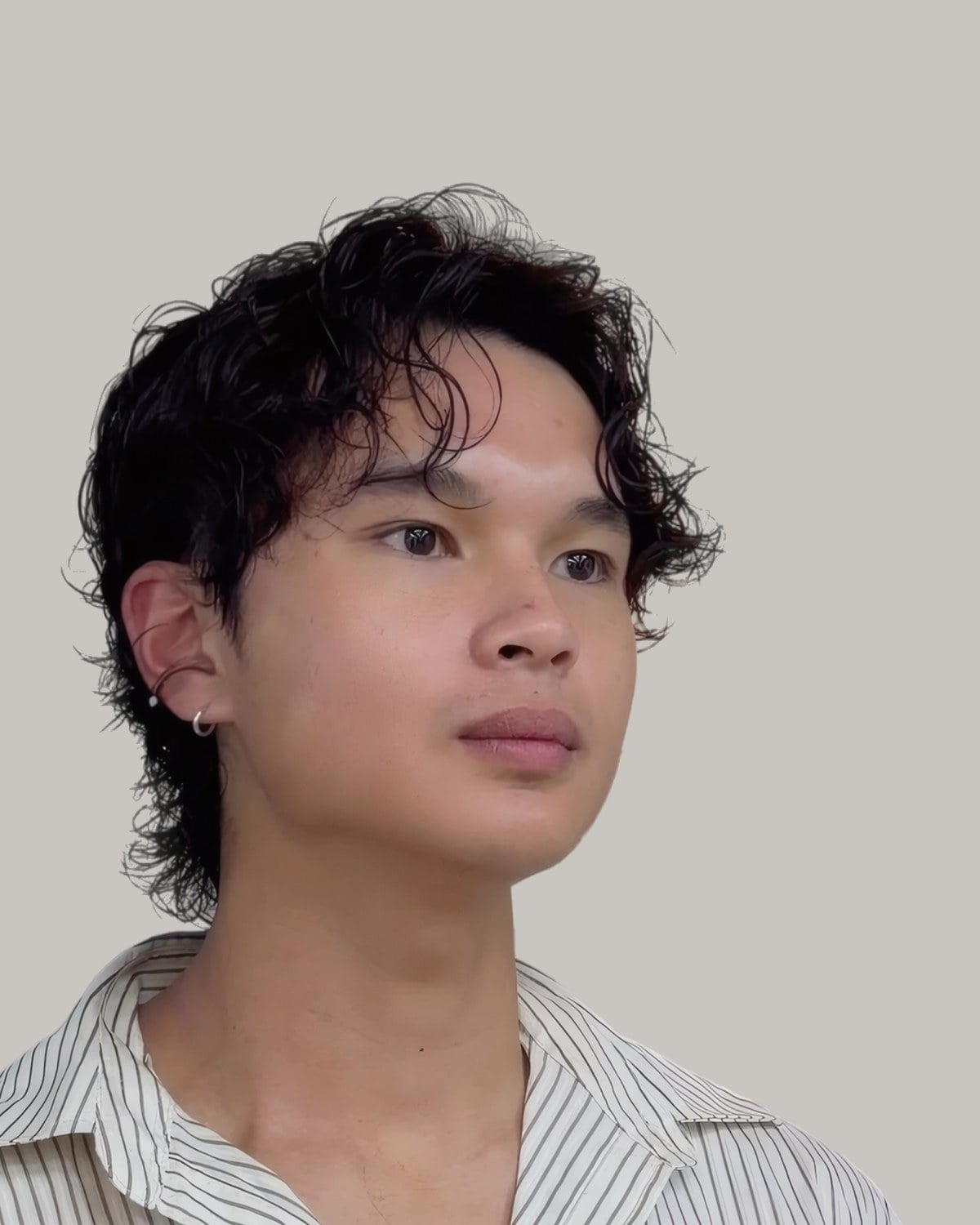
A perm puts wave into straight hair, and the textured fringe gives those waves somewhere to fall. It’s the way to get a curly-looking fringe when your hair won’t curl by itself.
What to ask for Textured fringe to the brows, about 3 inches on top, cut to suit a perm, low taper at the sides.
Textured fringe on straight hair
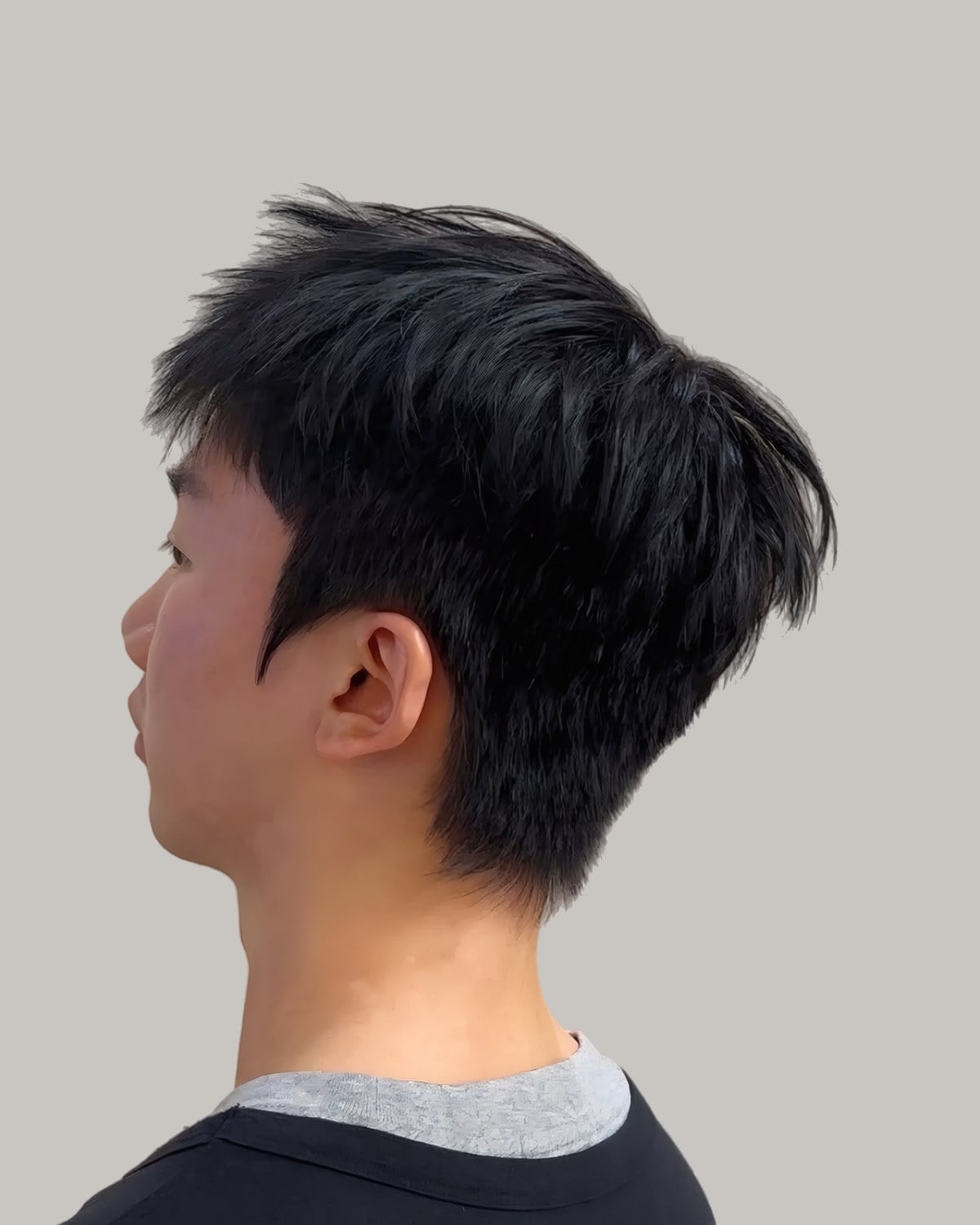
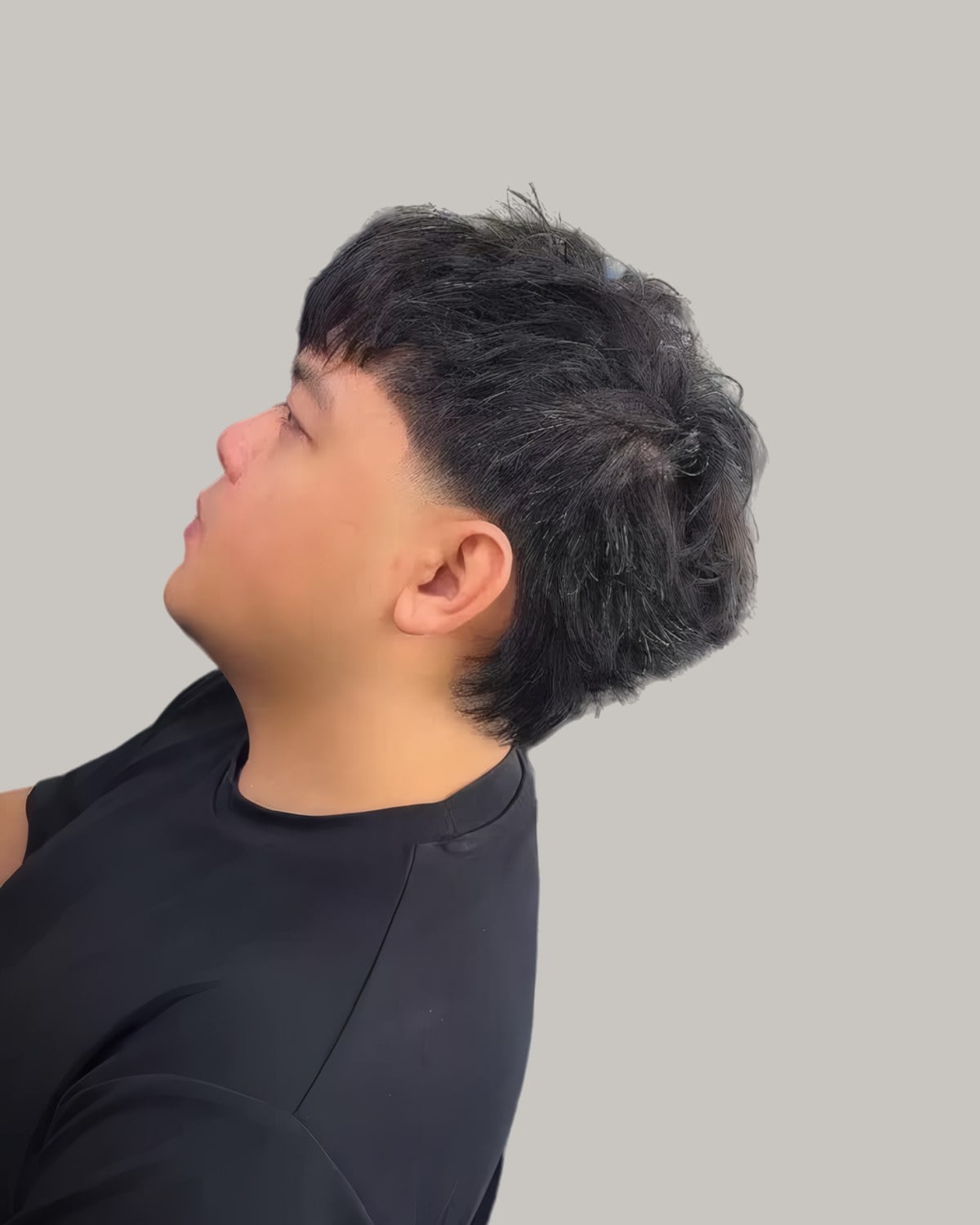
Straight hair doesn’t bring its own movement, so point cutting and texturizing shears build it in. The fringe breaks into points over the forehead, and a dab of matte clay on dry hair keeps them apart.
What to ask for Point cut and texturize the top, 2 to 3 inches, fringe in pieces to mid-forehead, taper at the sides.
Textured fringe mullets and longer fringes
Textured fringe mullet
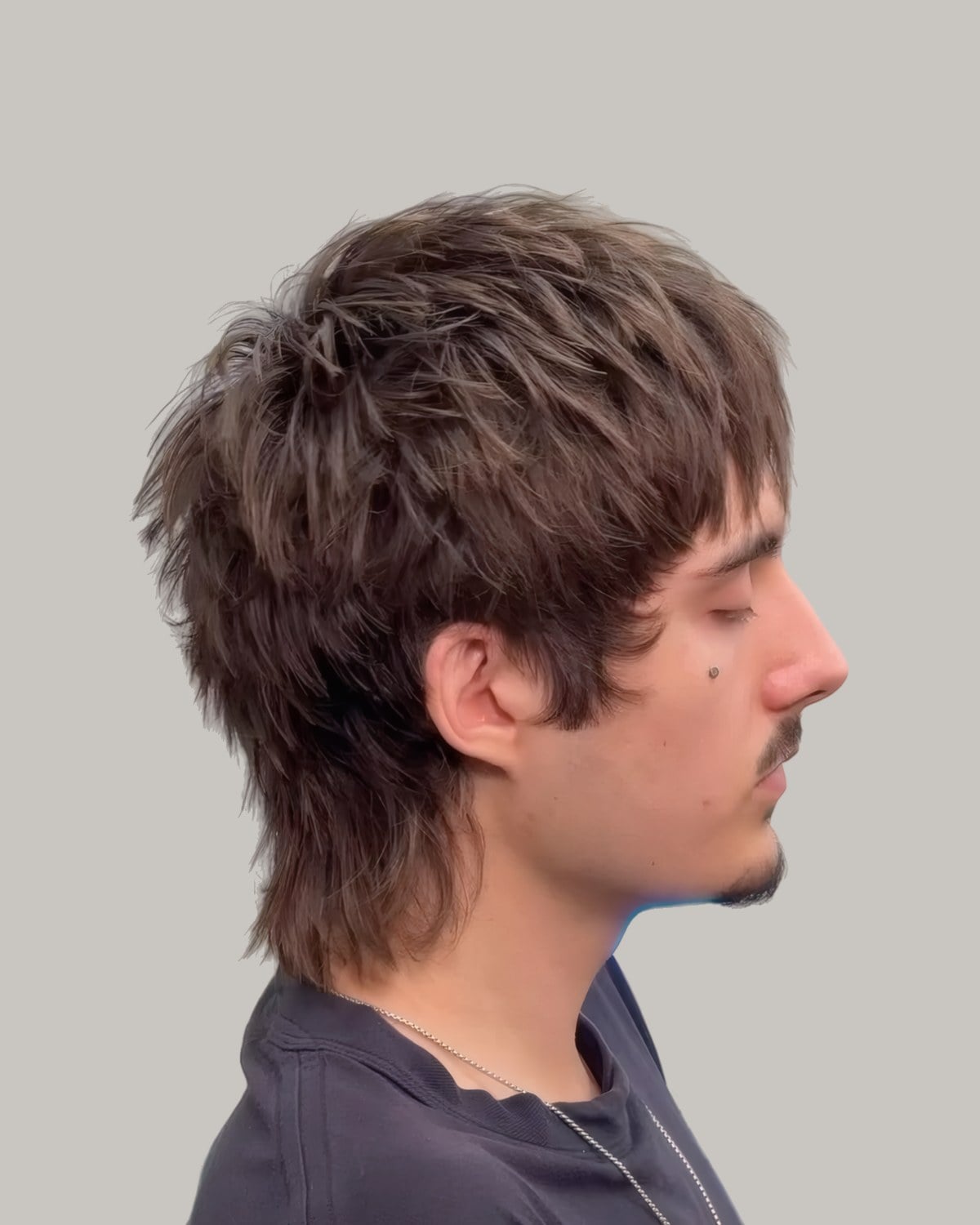
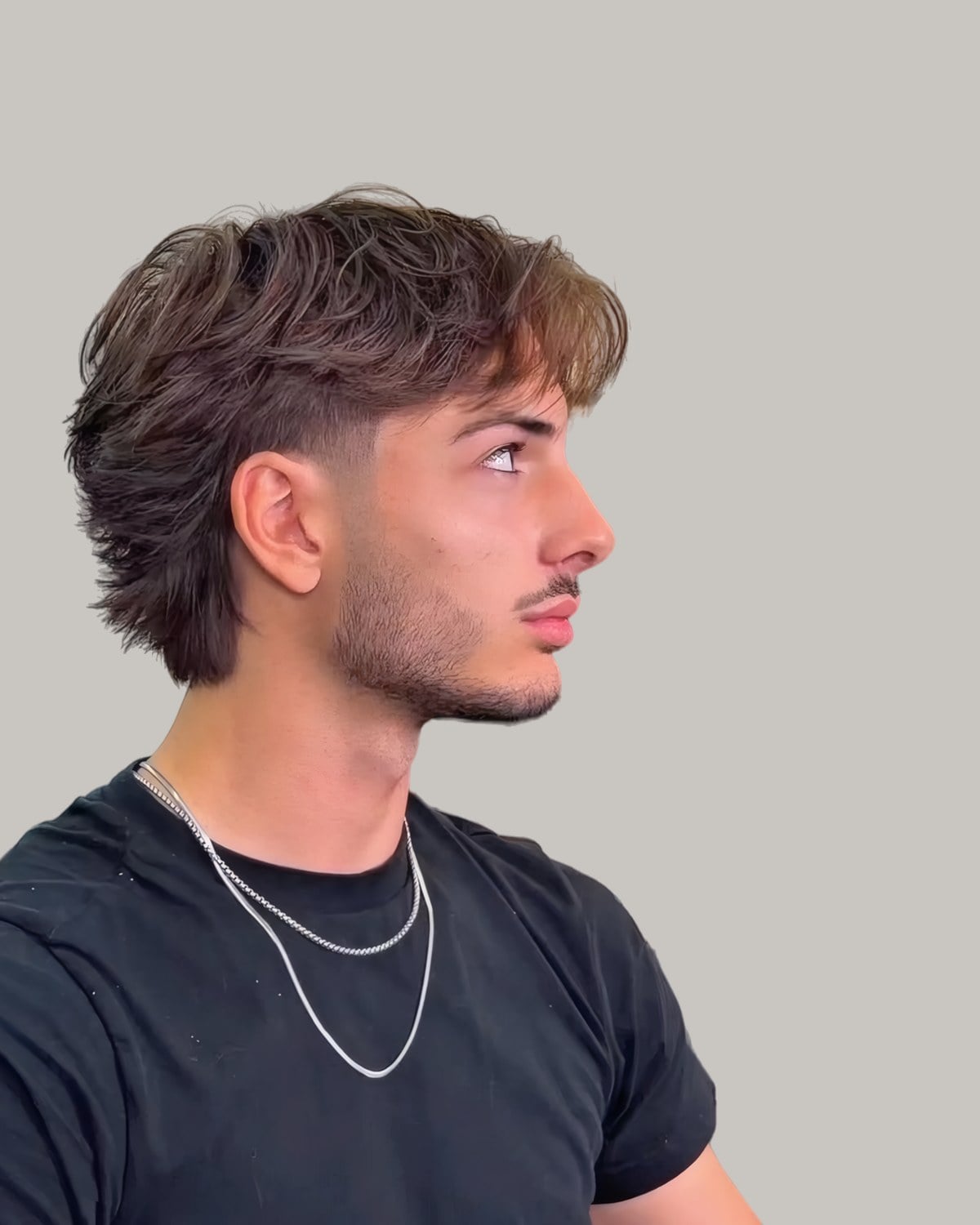
Fringe up front, length left at the neck, and a taper around the ear to keep the two from arguing. It’s the textured fringe with a bit more attitude from the side.
What to ask for Textured fringe to the brows, taper around the ear, leave 2 to 3 inches at the back of the neck.
Longer textured fringe
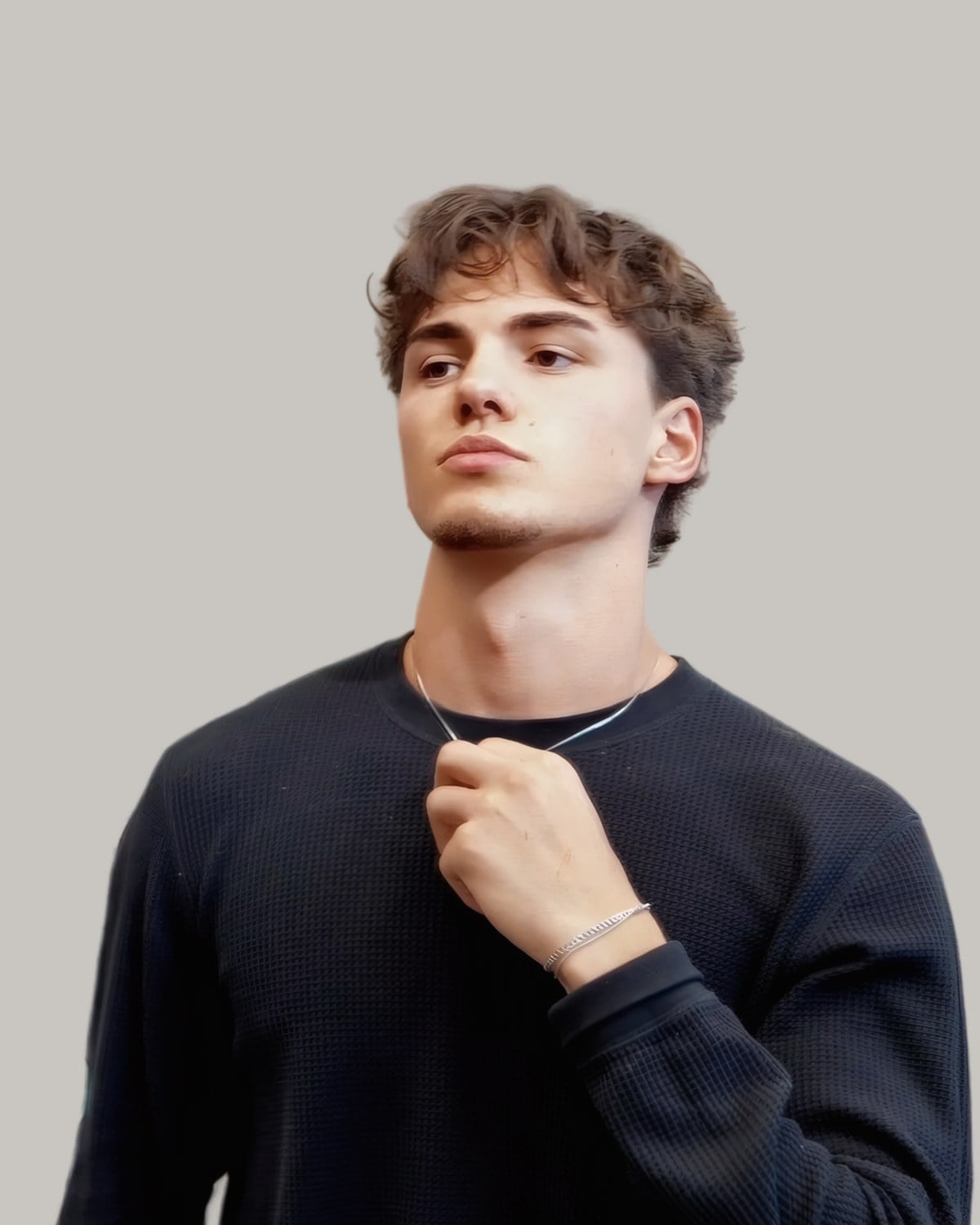
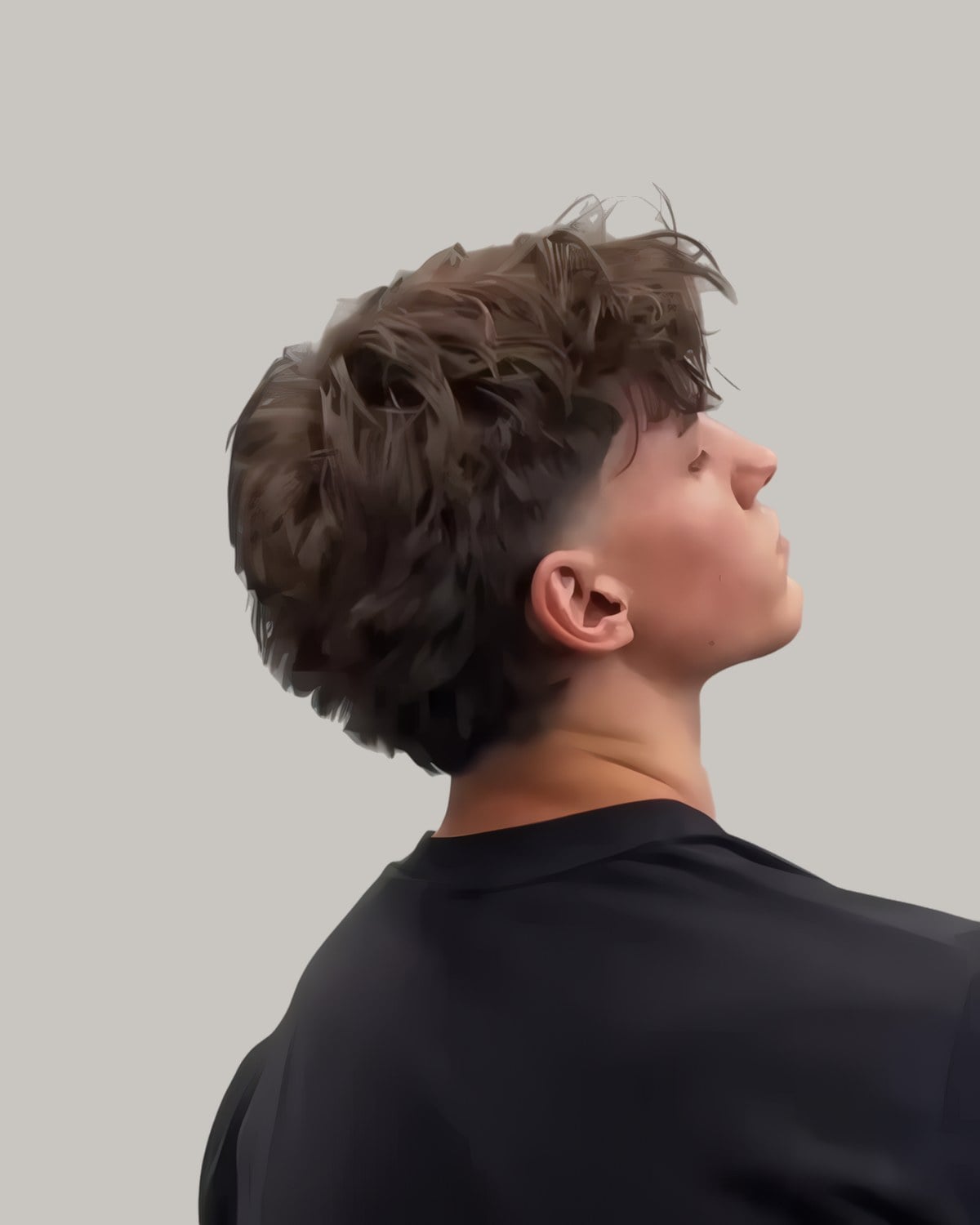
Grow the front out and the fringe starts to fall across the brow rather than sitting on the forehead. It’s the step between a textured fringe and a curtain or a flow, and it needs a trim every four weeks or so to stay out of your eyes.
What to ask for Leave the fringe long enough to reach the brows, point cut for texture, 3 to 4 inches on top, soft taper at the sides.
Blond and bleached textured fringes
Blond textured fringe
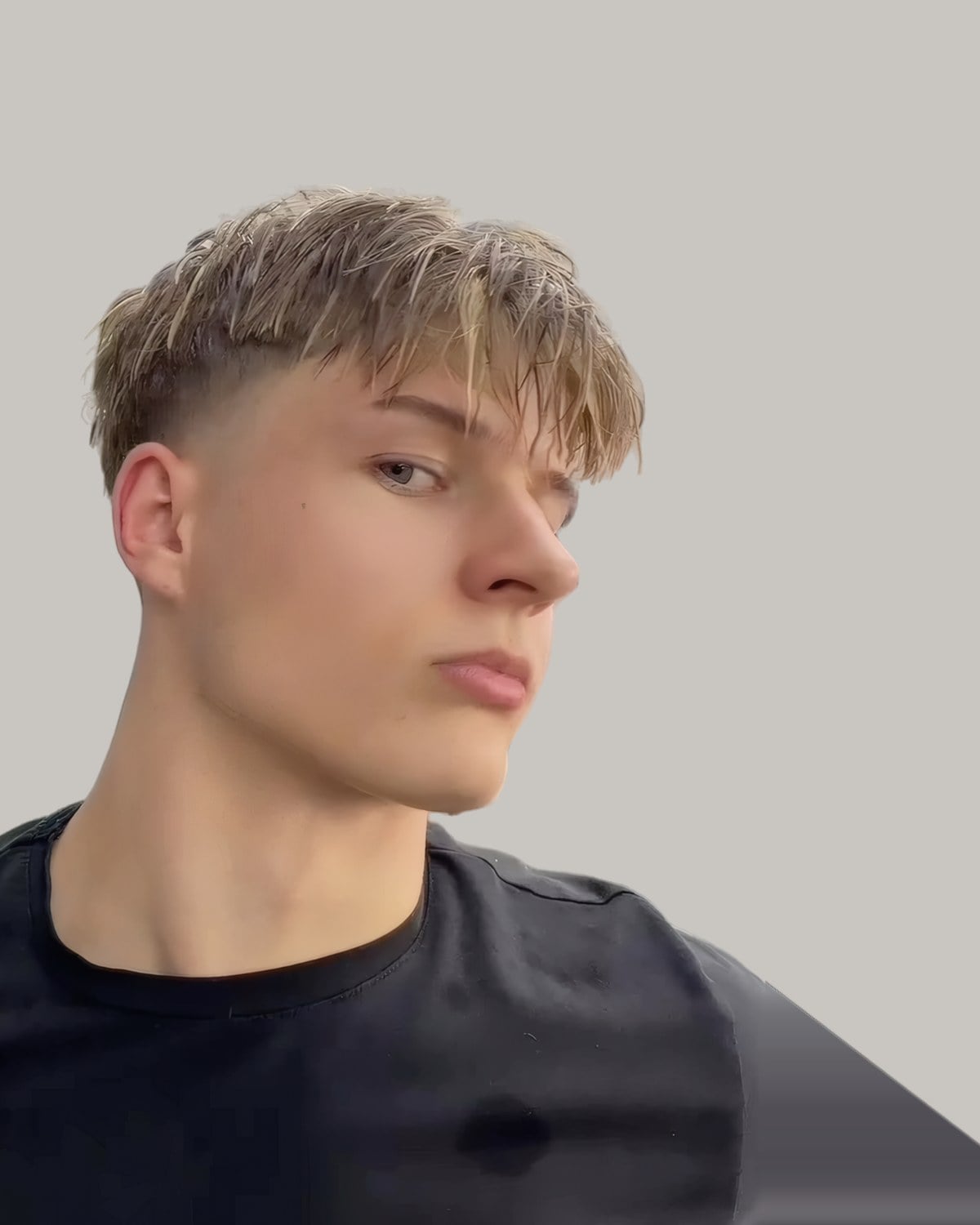
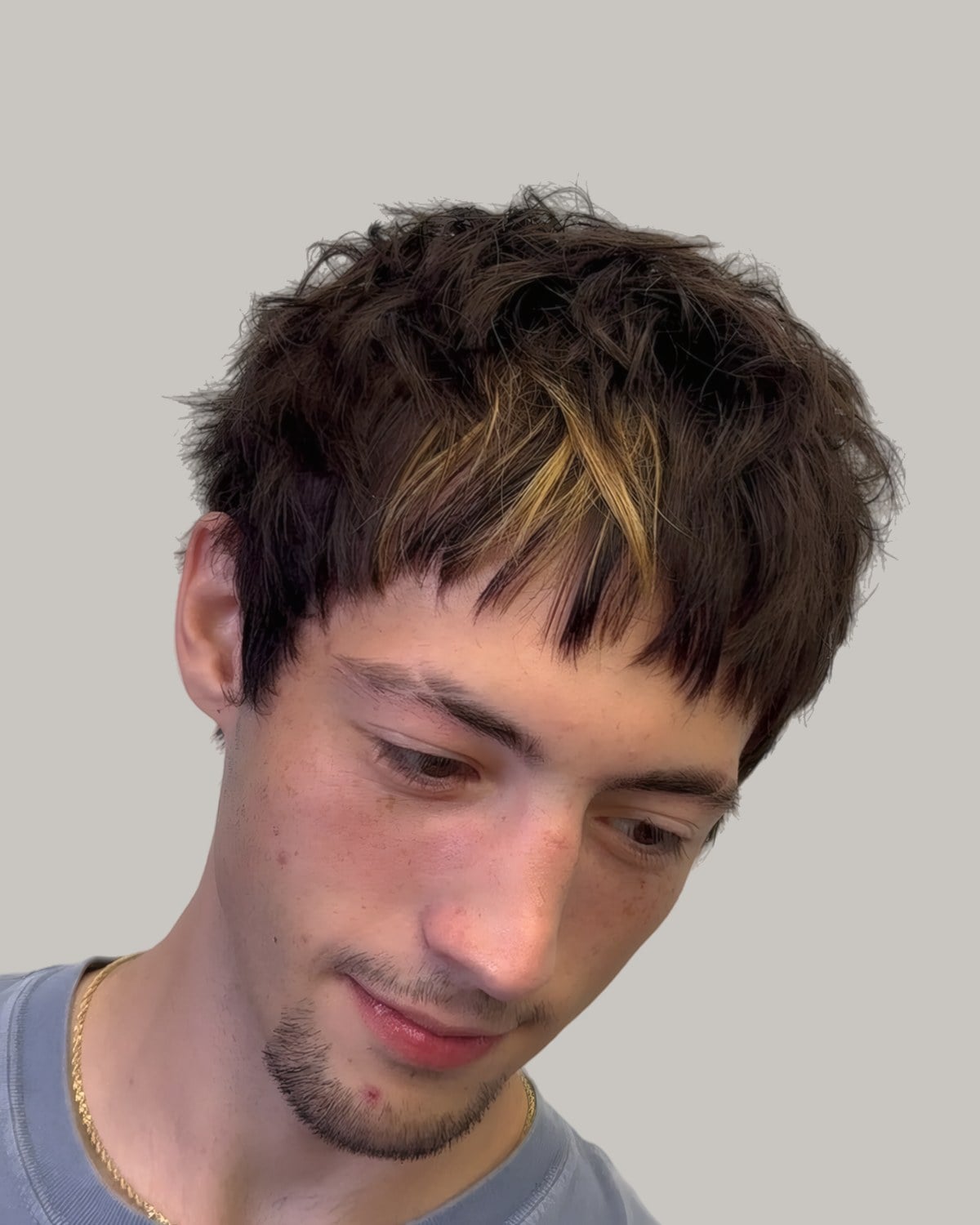
Blond hair shows every piece of texture, so the choppy fringe reads clearly even from a distance.
What to ask for Textured fringe to the brows, 3 inches on top, point cut, low taper at the sides and nape.
Bleached textured fringe
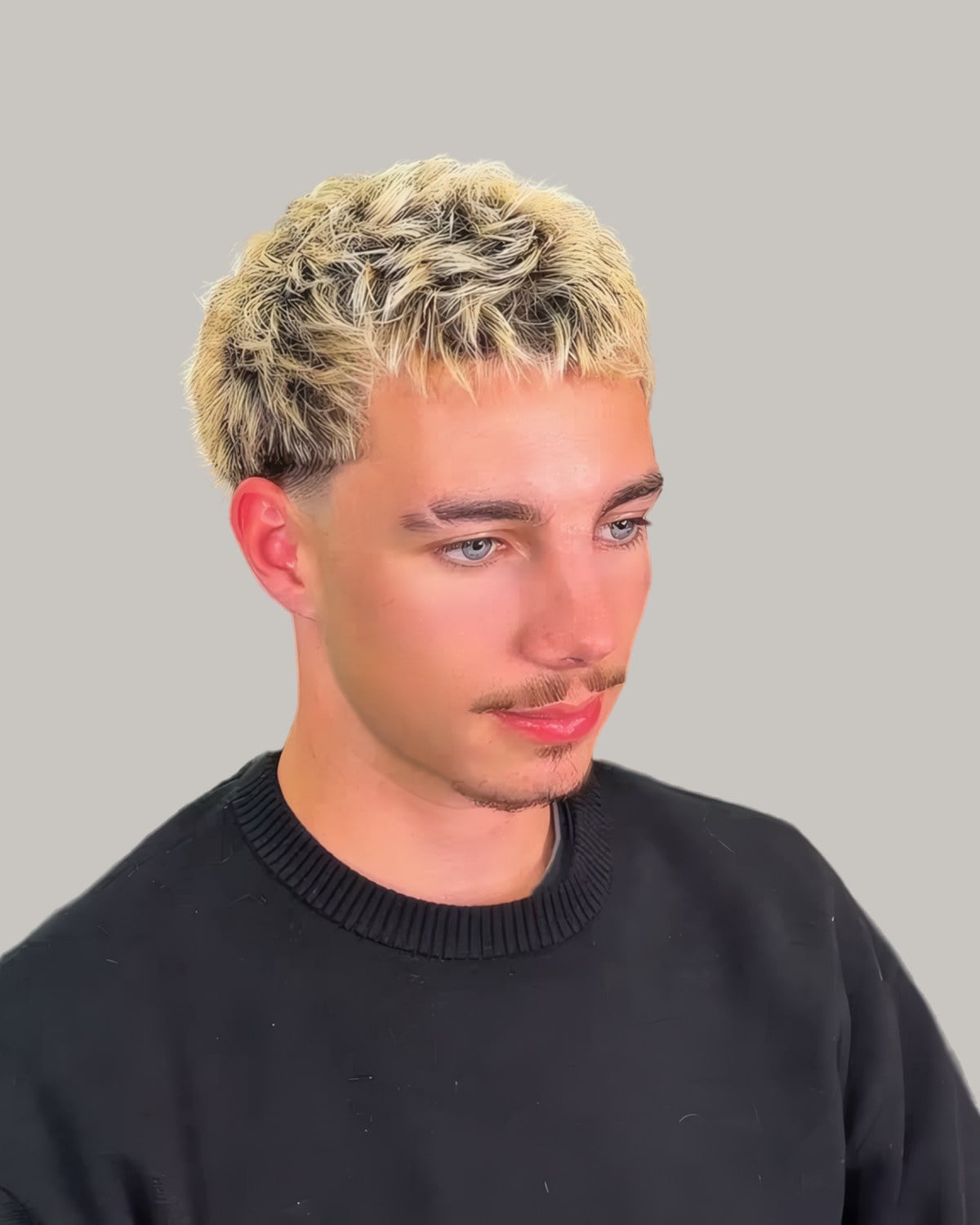
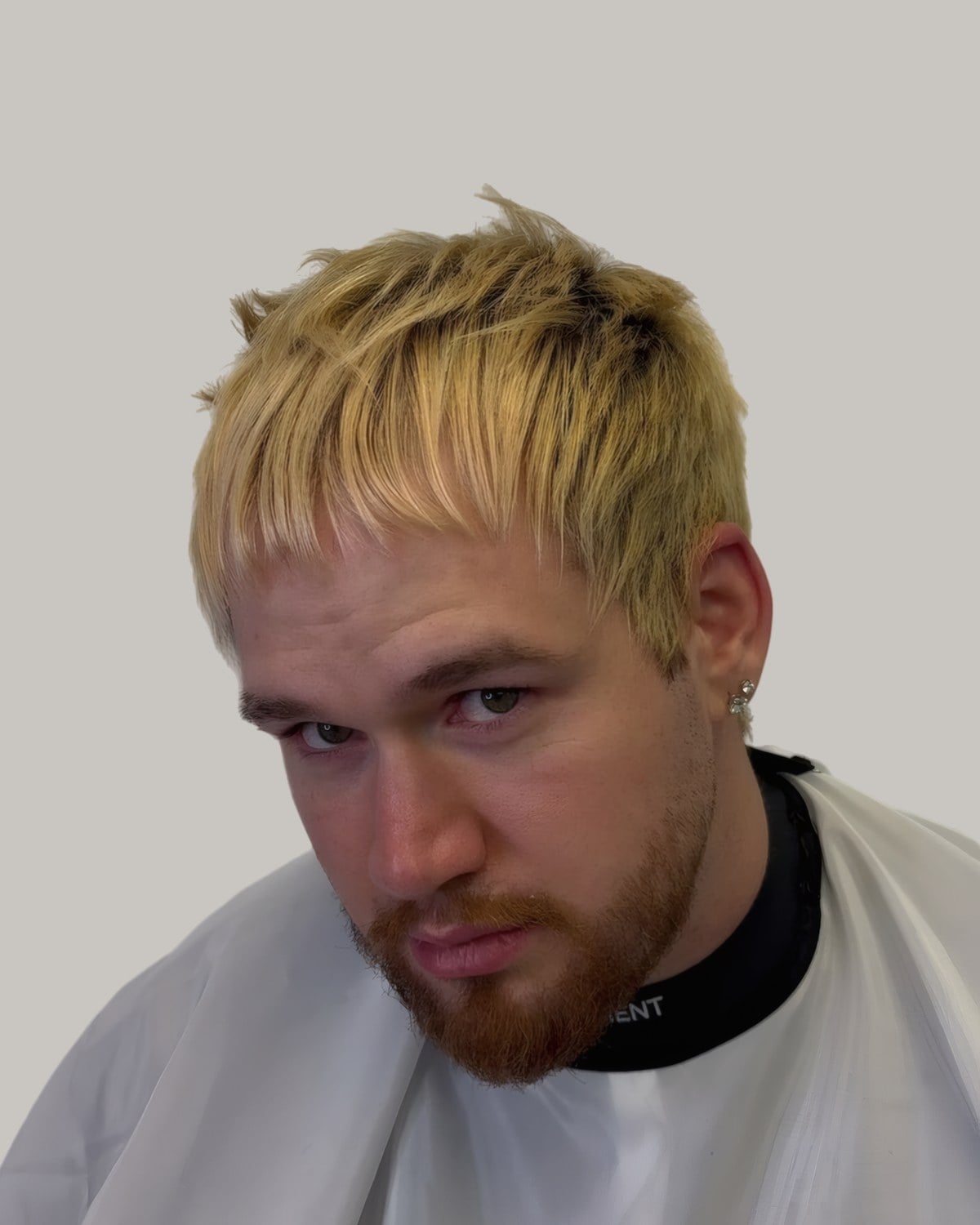
Bleached to near white or streaked through the front, the fringe becomes the whole look. A little matte clay on dry hair separates the pieces so the color shows through the texture.
What to ask for Choppy fringe to mid-forehead, texture through the top, taper at the sides.
Textured fringes with a beard
Curly textured fringe with a beard
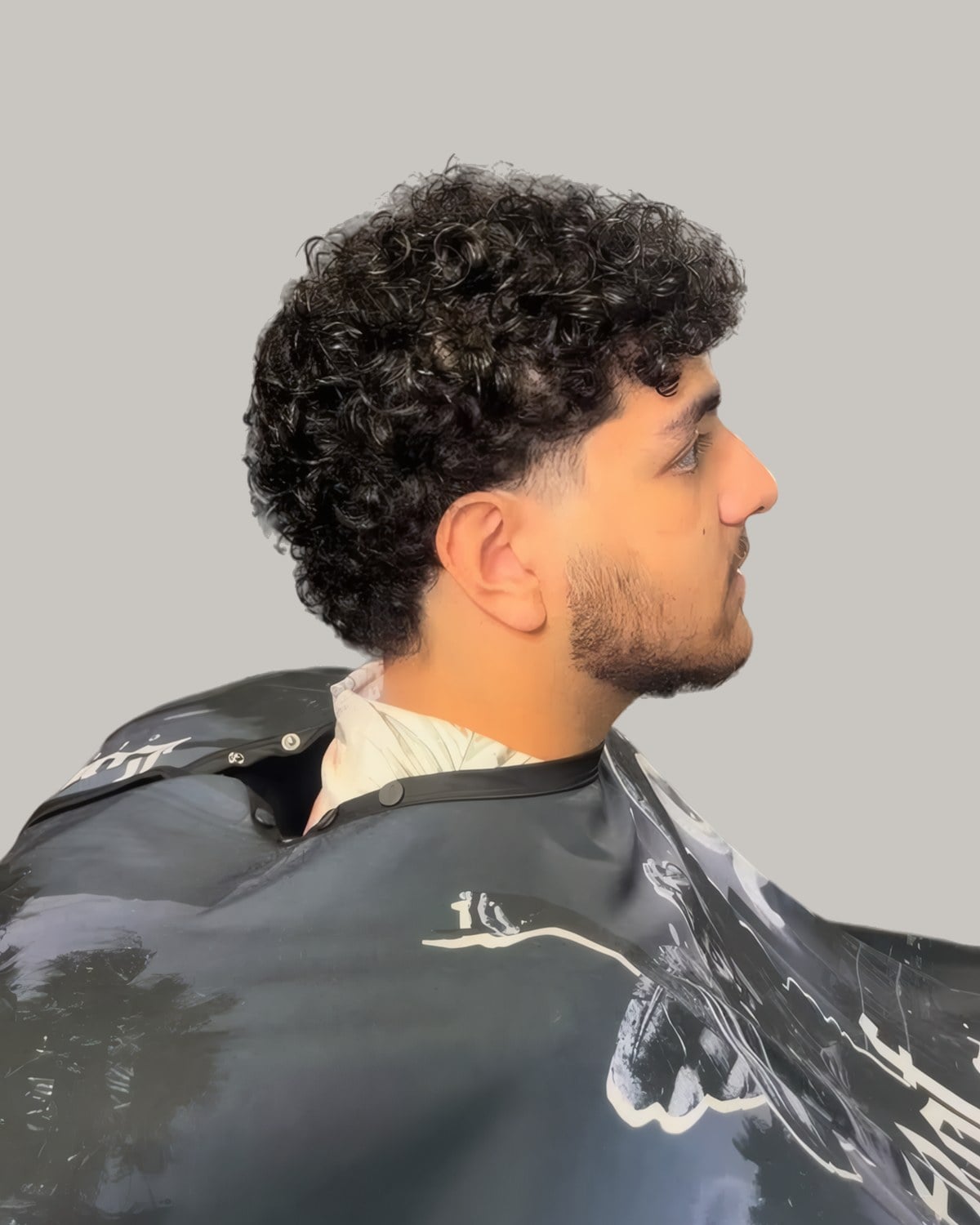
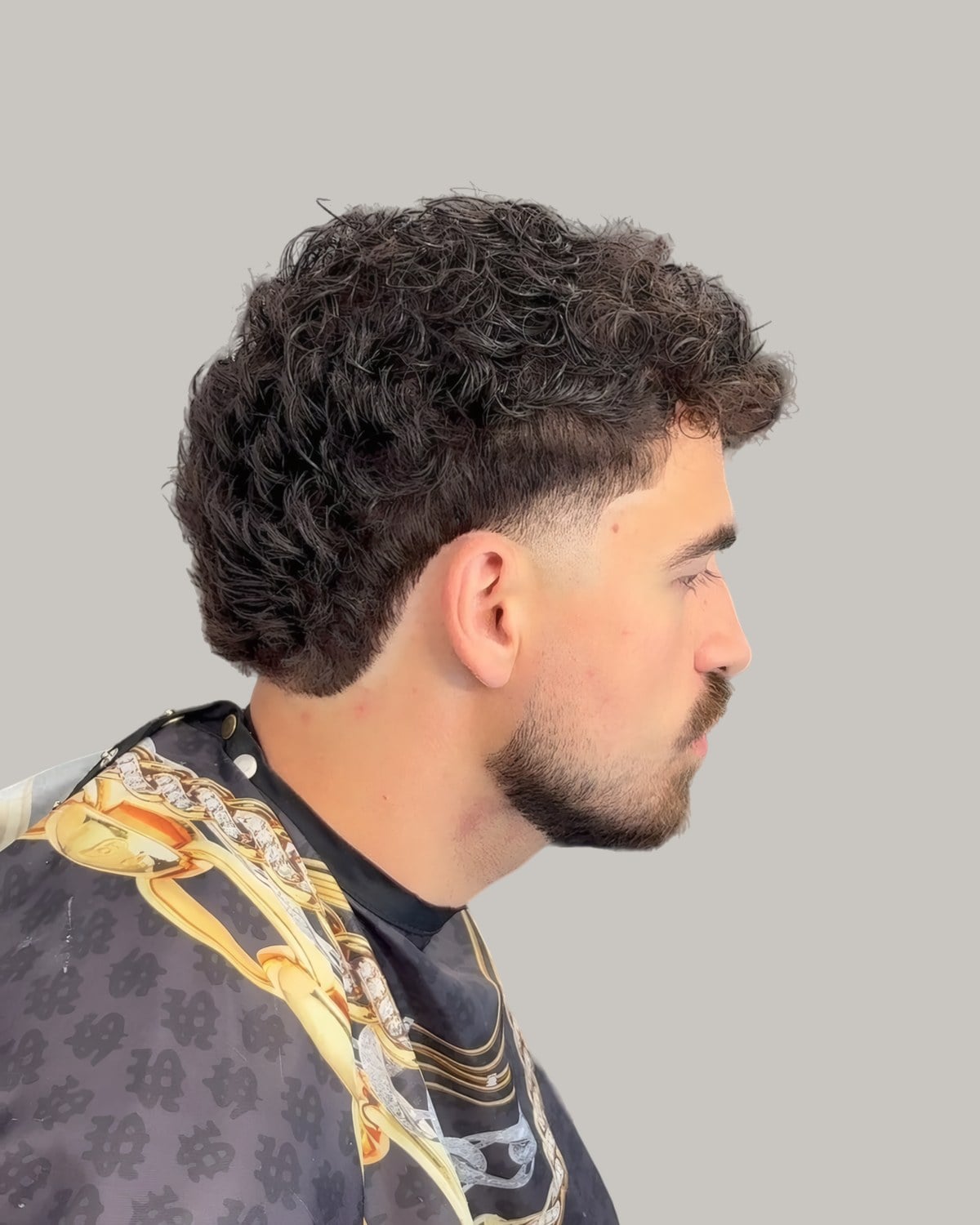
Curls on top and a beard below, tied together at the sideburns. The fringe falls forward in loose curls and balances the weight of the beard.
What to ask for Curly fringe cut dry, taper at the sides blended into the beard, curls left full on top.
Messy textured fringe with a beard
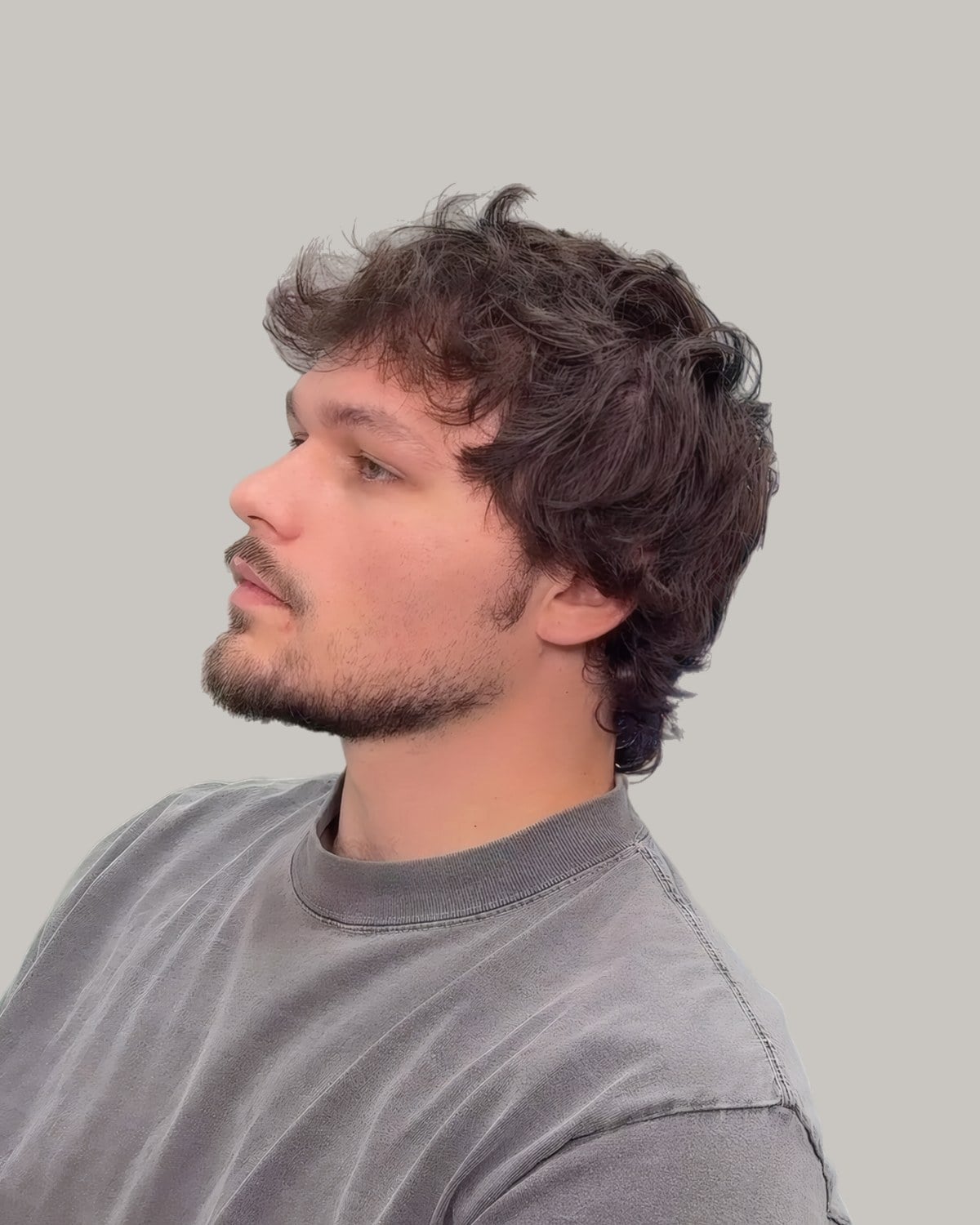
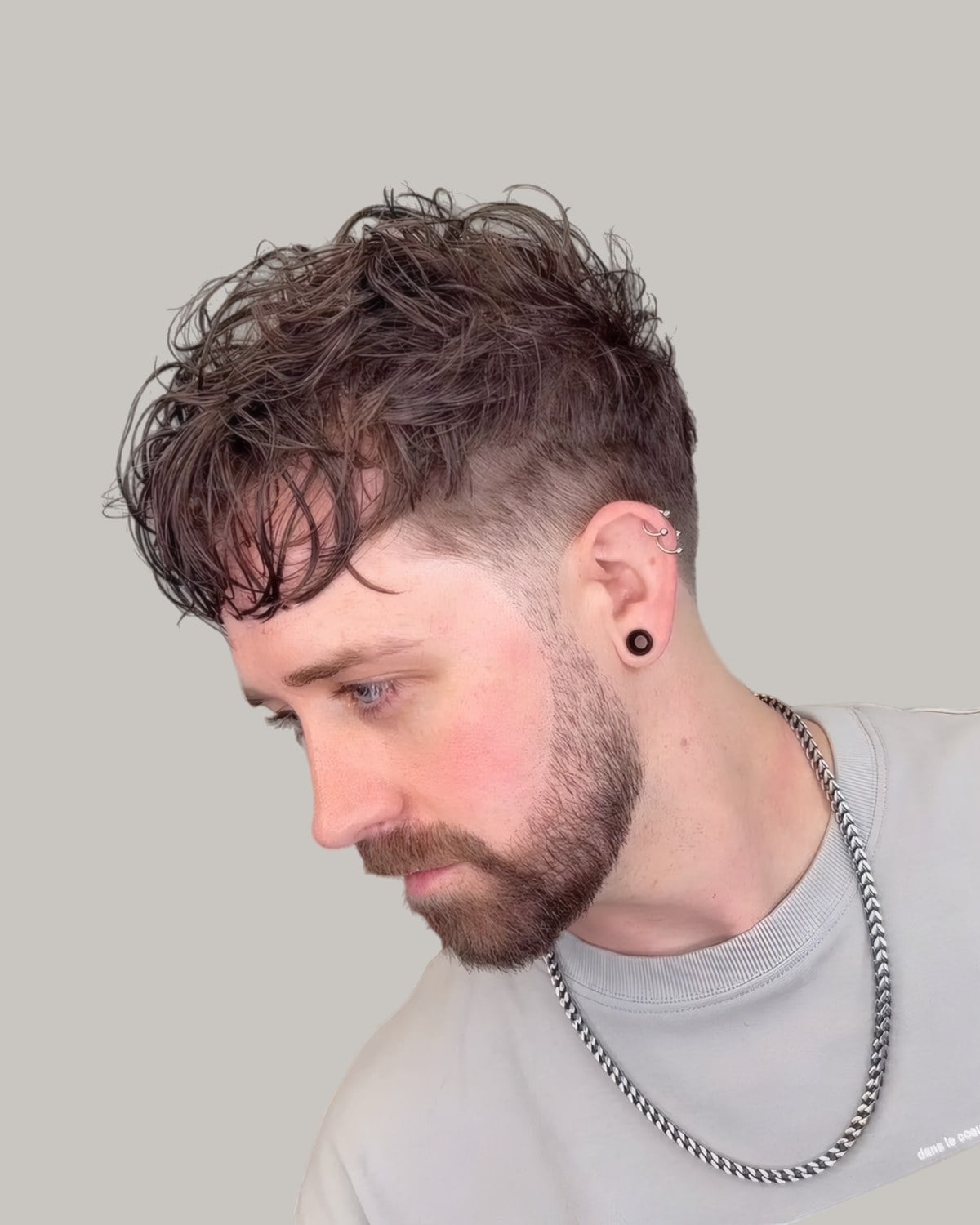
Choppy, a little wild on top, and grounded by a short beard. A few minutes with sea salt spray and your fingers gets this look, and there’s no wrong way to arrange the pieces.
What to ask for Messy textured fringe, 3 inches on top, heavy texture, low taper blended into the beard.
Short textured fringes and receding hairlines
Short textured fringe
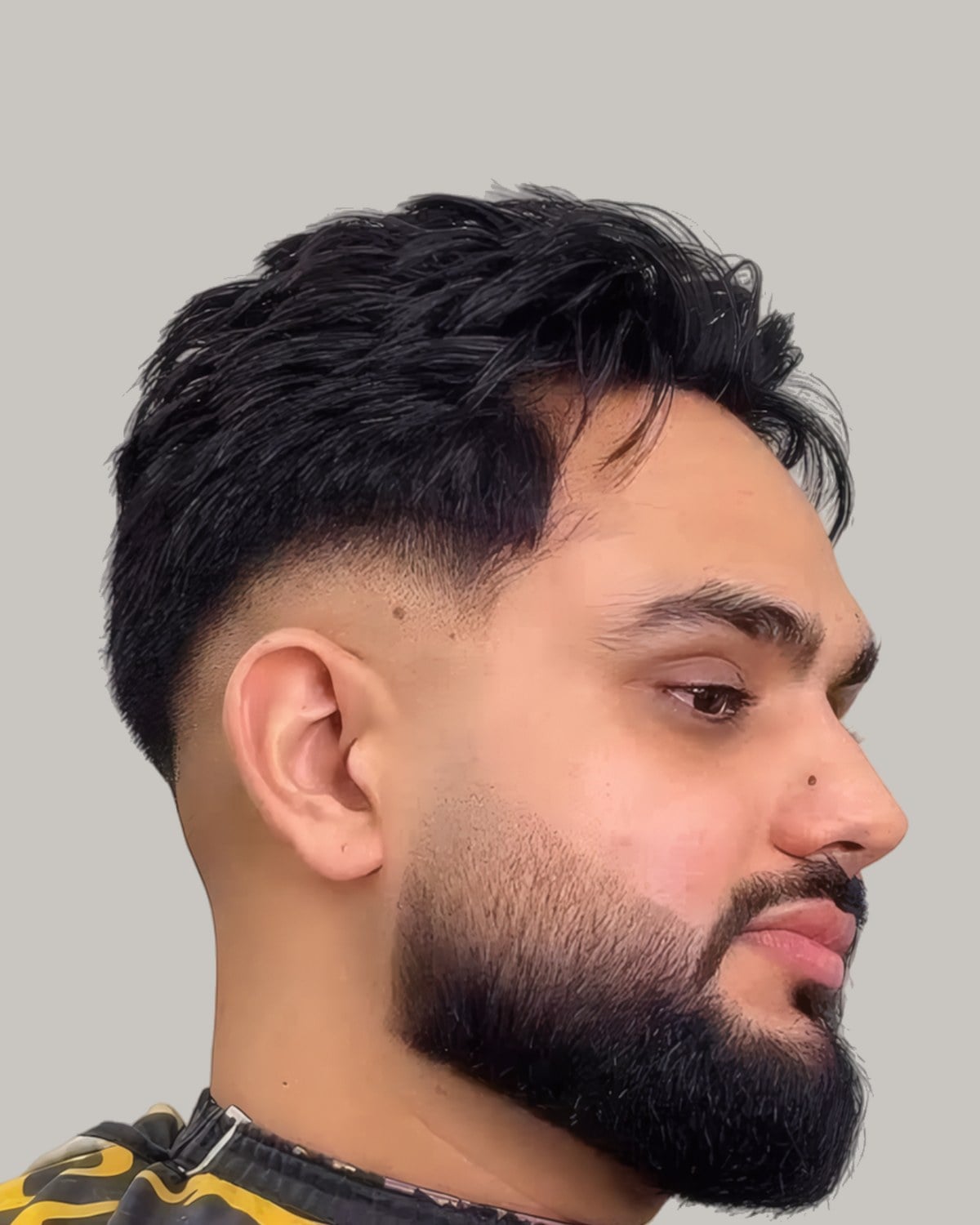
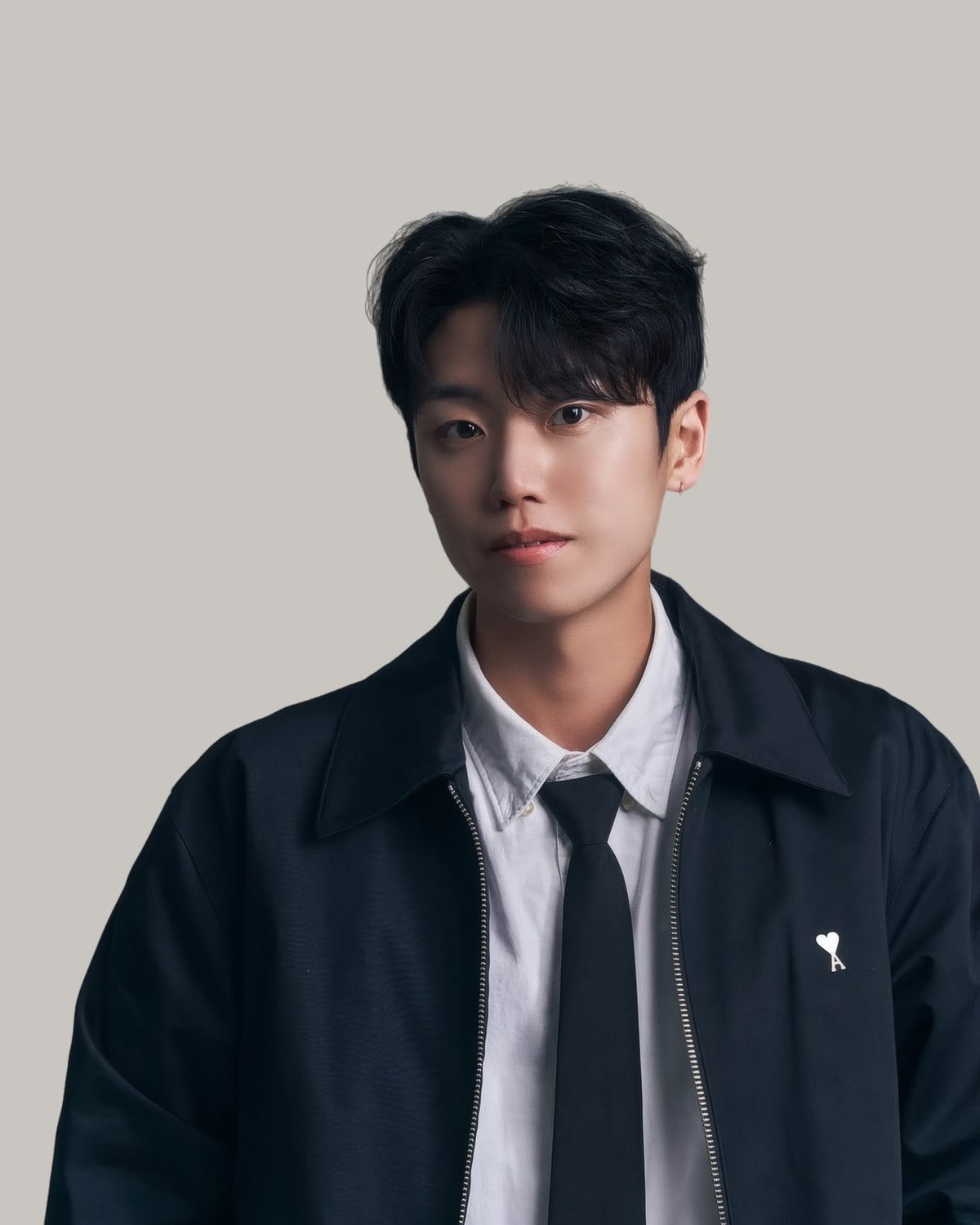
About an inch at the front, with the fringe broken into short pieces high on the forehead. It sits between a textured crop and a full fringe, and a dab of clay is all it needs.
What to ask for Short textured fringe, about an inch at the front, point cut, taper at the sides.
Textured fringe for a receding hairline
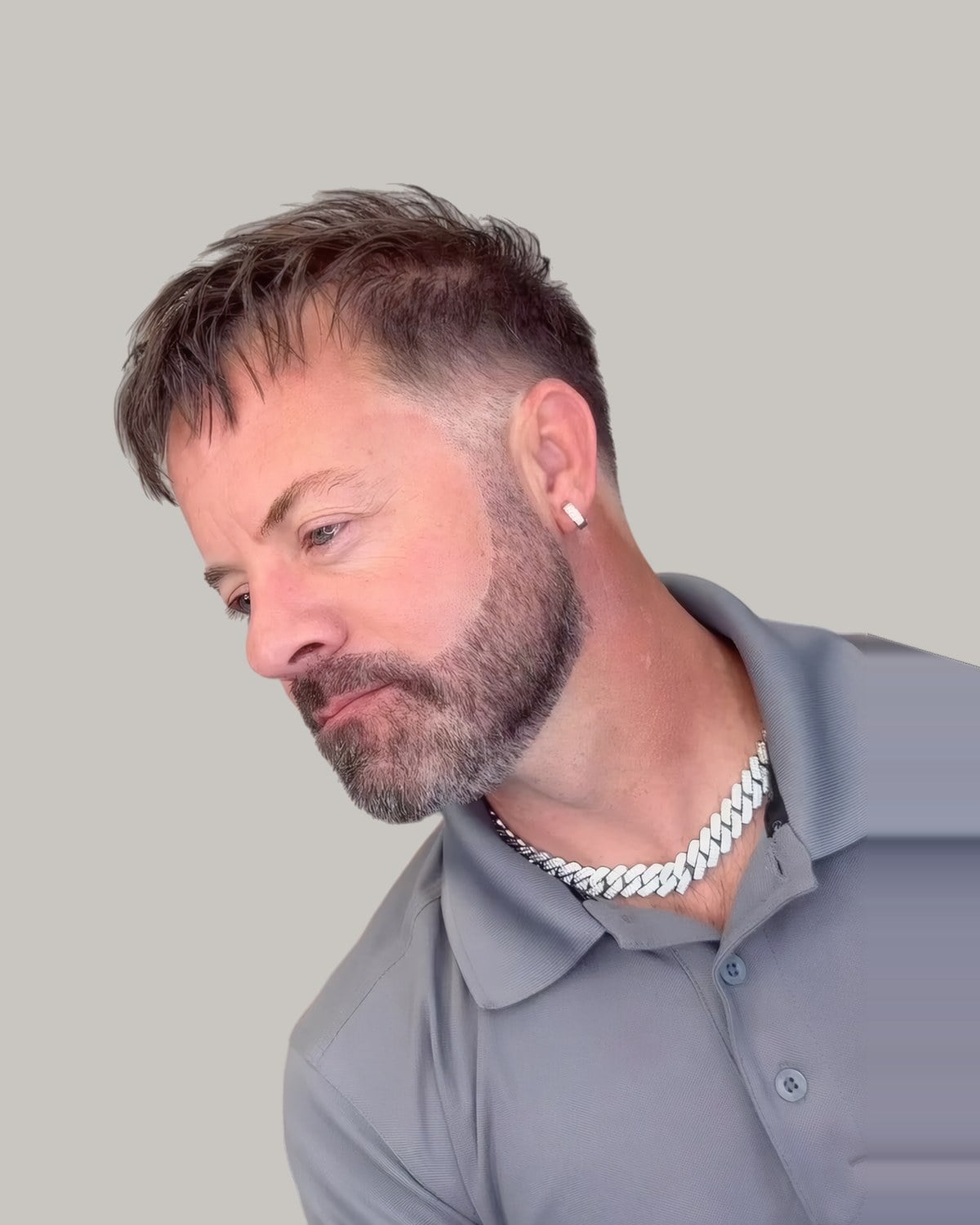
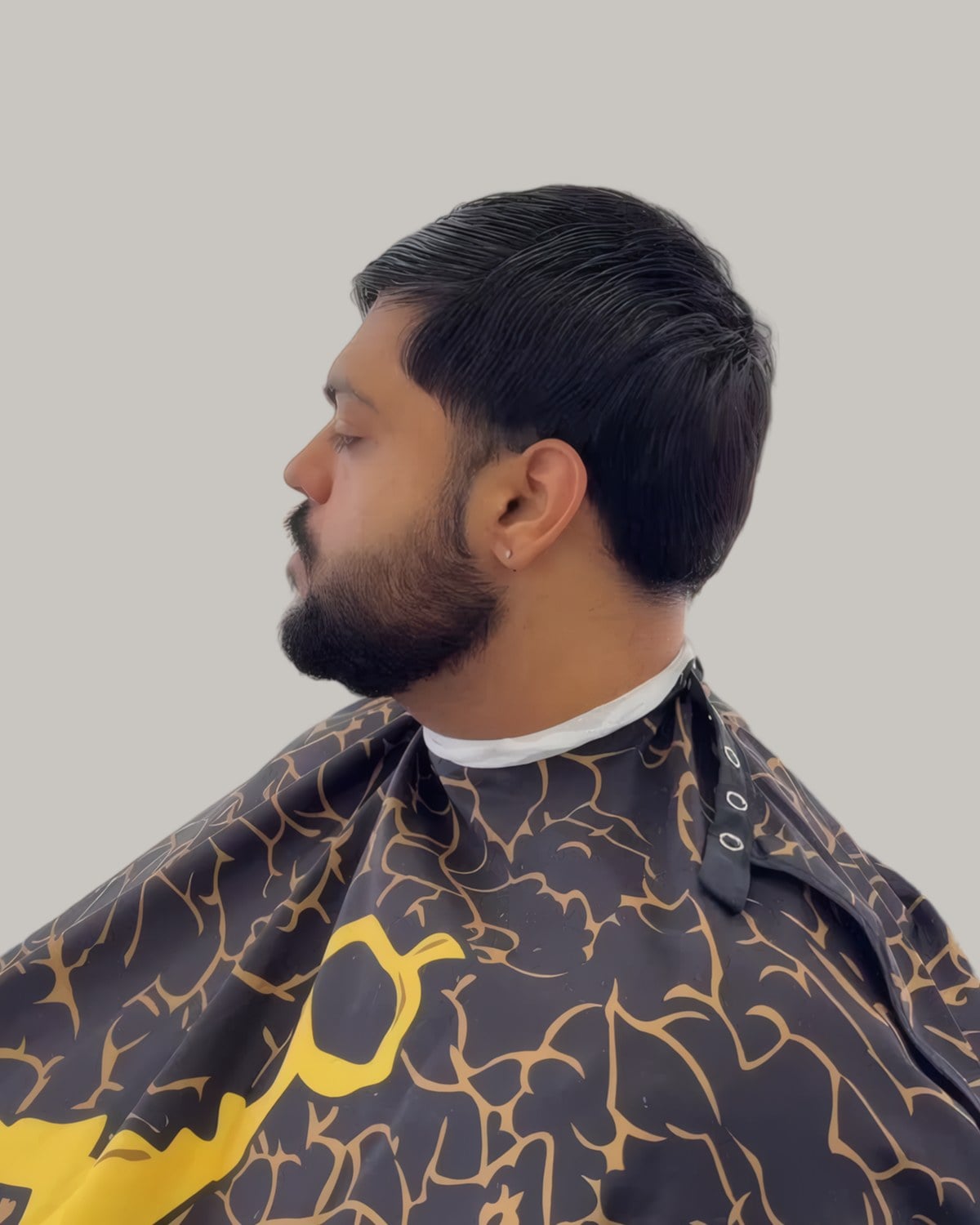
A fringe brought forward over the hairline covers a receding one. Keeping the fringe shorter gives the illusion of a fuller hairline, a tip from barber Krispy Kats. For cuts that work with a receding hairline rather than over it, see our receding hairline haircuts.
What to ask for Bring the fringe forward over the temples, keep it short and choppy, taper the sides.
01 of 01
What is a textured fringe?
A textured fringe is a men’s haircut where the top is brought forward so the hair falls across the forehead in choppy, broken pieces rather than a blunt line. The fringe usually lands between mid-forehead and the brows. The texture is cut in with point cutting, where the barber holds the scissors upright and cuts into the ends, or with texturizing shears or a razor. The sides are the variable. A low taper, a mid taper, a blowout taper, a burst fade and a skin fade all work under the same fringe. That’s why most people name the sides first. The Beatles’ mop-tops are an early ancestor, and Timothée Chalamet wears the modern version.
Who suits a textured fringe?
Gatsby counts round, square, oval and heart-shaped faces as all able to wear a textured fringe, because the fringe length and the sides can be changed to fit the face and the hair. It works on straight, wavy and curly hair. Straight hair needs the texture cut in, wavy hair brings its own, and curly hair gets cut dry so the fringe doesn’t spring up short.
By face shape, Who What Wear’s advice runs like this. Round faces gain from a piecey fringe. Square and heart-shaped faces suit a wispier, feathered one. Oval faces can wear most versions.
A fringe brought forward over the hairline covers a receding hairline. Gatsby makes the opposite point for a very receded hairline or very angular features, where a fringe can draw attention to them. If that’s you, the short fringe above is the safer start.
What to ask your barber for
Ask for four things: where the fringe should fall, the length on top in inches, how much texture, and the sides. For example, “fringe to just above the brows, 3 inches on top, point cut for texture, low taper at the sideburns and neckline.” If your hair is curly, add “cut the fringe dry.”
Bring a photo, but know what it shows. A fringe photo taken from the front says very little about the sides, so name the taper or fade yourself. And if your screenshot shows a blowout, remember the barber cuts the taper and the length. The blowout comes from your hairdryer.
How much upkeep does a textured fringe take?
Plan on a trim every four to six weeks. If you want the fringe to stay right above your brows, go every three weeks. If you don’t mind it grazing your lashes, you can stretch to five. Fine hair loses its shape faster, and thick or wavy hair holds it longer.
The daily routine is short. Put product on dry hair so the texture holds through the day, and keep it light. A textured fringe that’s been over-styled loses the piecey look that makes it work.
Textured fringe vs textured crop vs French crop
The three cuts differ in how long the top is and how the fringe is finished. A textured crop has a short top and a short fringe that sits high on the forehead. A textured fringe keeps more length at the front and brings it down toward the brows, broken into pieces. A French crop has a blunter, heavier fringe cut straight across.
| Cut | Fringe | Finish | Styling |
|---|---|---|---|
| Textured crop | Short, high on the forehead | Choppy | A little clay |
| Textured fringe | Longer, to the brows | Choppy, in pieces | Matte clay to bring out the texture |
| French crop | Heavy, cut straight across | Blunt and neat | The cut does most of the work |
If you like the idea of a shorter top, our textured crop guide has 28 of those.
Taper or fade under a textured fringe?
A taper keeps some length at the sides and shortens mainly the sideburns and neckline. A fade takes the sides down to skin. Under a textured fringe, the taper is the softer choice and the fade the sharper one.
| Sides | Where it starts | What it does |
|---|---|---|
| Low taper | Just above the ears and at the neckline | Keeps the fringe the focus, grows out quietly |
| Mid taper | Around the temples | More shape, a clear step to the top |
| High taper | Well above the ears | Strong contrast, the fringe looks heavier |
| Blowout taper | Temples, sideburns and neckline | A soft taper under a top blow-dried up and out |
| Burst fade | A half circle around the ear | Skin at the ear, length at the back of the neck |
| Skin fade | Anywhere, down to bare skin | Sharp contrast, sides down to skin |
Our taper fade guide goes through every taper and fade height in more detail.
What is the 3:2:1 rule for haircuts?
The 3:2:1 rule is a clipper guard sequence for the sides: a number 3 guard (3/8 inch) on the upper sides, a number 2 (1/4 inch) around the ears, and a number 1 (1/8 inch) at the neckline and temples. Each guard is shorter than the one above, so the sides blend into a soft shadow without a skin fade. Under a textured fringe it gives you a simple taper you can describe in three numbers.
How do you style a textured fringe?
Start with dry or nearly dry hair. For a casual finish, blow-dry with your fingers rather than a brush, then work a small amount of matte clay or texture wax through the top and pinch the fringe into pieces. Sea salt spray on damp hair gives grip first, and a molding paste gives more flexible control if you like to restyle during the day. Go light, because the fringe should look lived-in. Our guide to men’s hair styling products has the clays and sprays we’d reach for.
Can you get a textured fringe with straight hair?
Yes. Straight hair doesn’t have its own movement, so the barber builds it in with point cutting and texturizing shears. After that, a matte clay on dry hair keeps the pieces separate.
How long does it take to grow a textured fringe?
Hair grows about half an inch a month, according to the American Academy of Dermatology. From a buzz cut, reaching about 2 inches takes three to four months, and 3 inches takes five to six. The layers in a textured cut help while you wait, since they grow out more gracefully than a blunt line does.
Is the textured fringe still popular?
Yes, going by what people search for. In the US, “textured fringe” has drawn between about 146,000 and 222,000 searches a month over the last two years. The versions with a low taper, a mid taper and a blowout have their own searches on top of that.
Our guide to men’s haircuts sets the fringe beside fades, medium cuts and long hair, so you can compare it with the rest.
Still weighing the fringe against a crop, a buzz or a classic side part? Our roundup of short haircuts for men puts them all side by side, with the words to use for each.
Products featured here are independently selected by our editors. If you buy through our retail links we may earn an affiliate commission — it never changes the price you pay, and it never decides our verdicts. Read our earnings disclaimer.