You’re done fighting your hair every morning, and those clippers are starting to look awfully tempting. Then you’re in the barber’s chair, they ask “What number?”, and your mind goes blank. We’ve all been there.
It all comes down to that number. A number 1 leaves an eighth of an inch and a number 8 leaves a full inch, and the difference on your head is bigger than you’d think.
Below you’ll find 39 buzz cuts, from no guard at all to a number 12, with fades, beards and a little bleach thrown in. Each one comes with exactly what to tell your barber, so you can pick a favorite and point.
Buzz cuts for men
Here are 39 buzz cuts, from no guard to a number 12.
Buzz cut lengths, by guard number
Induction buzz cut
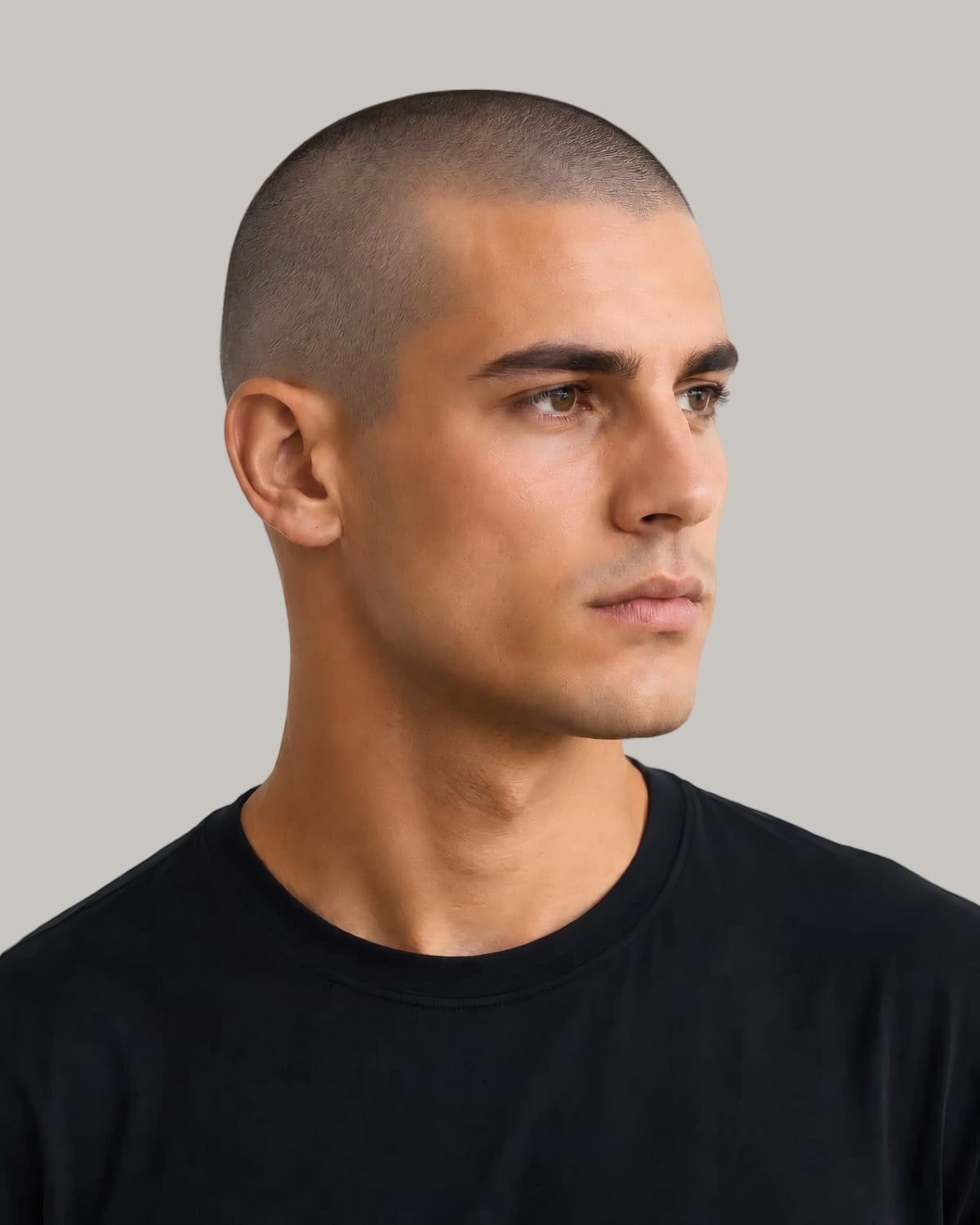
Clippers on, no guard, one length all over. Yep, that’s it. It’s called an induction cut because it’s what army recruits get on their first day, and Channing Tatum has shown it works just as well off base.
With nothing to blend, it’s also the buzz you can safely DIY at home. Just start moisturizing your scalp that same week.
What to ask for No guard all over, one length, natural line-up.
Number 1 buzz cut

An eighth of an inch reads as hair from across the room but won’t quite hide your scalp up close. Barbers call it a burr cut, and it’s the one Justin Bieber went for.
It suits a strong jaw and an evenly shaped head. Fair warning: hair grows about half an inch a month, so book your next trim before you leave the shop.
What to ask for Number 1 all over, tapered at the neck.
Number 2 buzz cut
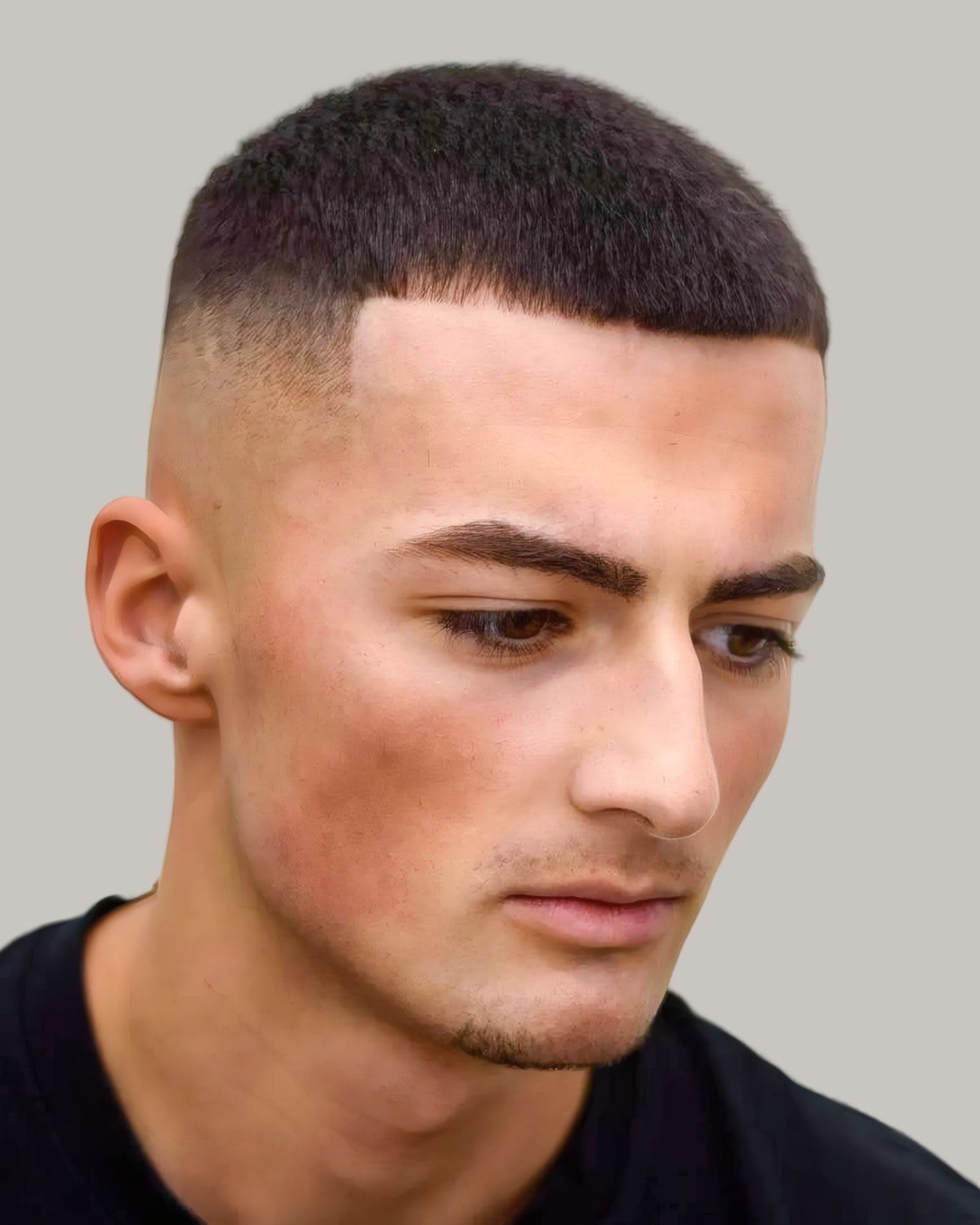
Never had a buzz before? Start with a number 2. A quarter inch feels like a proper change without giving you a fright in the mirror, and barber Nick Hall rates a 2 or a 3 as the safe first step.
You can always go shorter next time. You can’t go longer (sadly, that’s not how clippers work).
What to ask for Number 2 all over, natural line-up.
Number 3 buzz cut
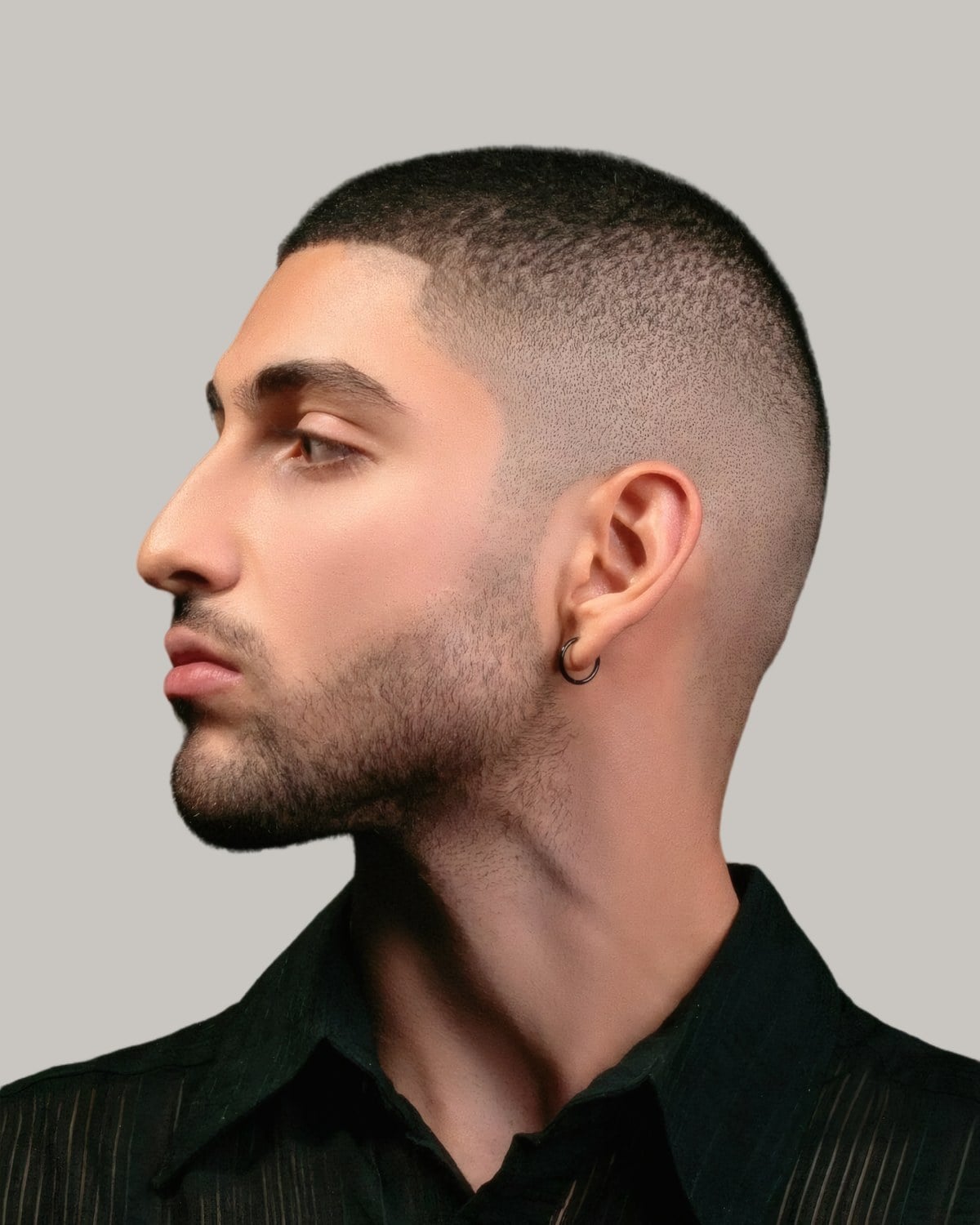
Three eighths of an inch covers the scalp on most hair, so from a few steps away it just reads as short, neat hair. It’s also where a cowlick at the crown starts to show itself, so check the back in a second mirror.
This is the 3 in the 3-2-1 fade, too.
What to ask for Number 3 all over, or number 3 on top with a 2 on the sides.
Number 4 buzz cut

Half an inch, also known as the butch cut, and the length Austin Butler made look very cool indeed. There’s enough hair here for waves and texture to show, so it’s great on thick hair.
Ask for the edges tapered with a shorter guard, though, or it can start to look like a helmet. On fine hair, stick to a number 2.
What to ask for Number 4 on top, tapered edges with a 2.
Long buzz cut
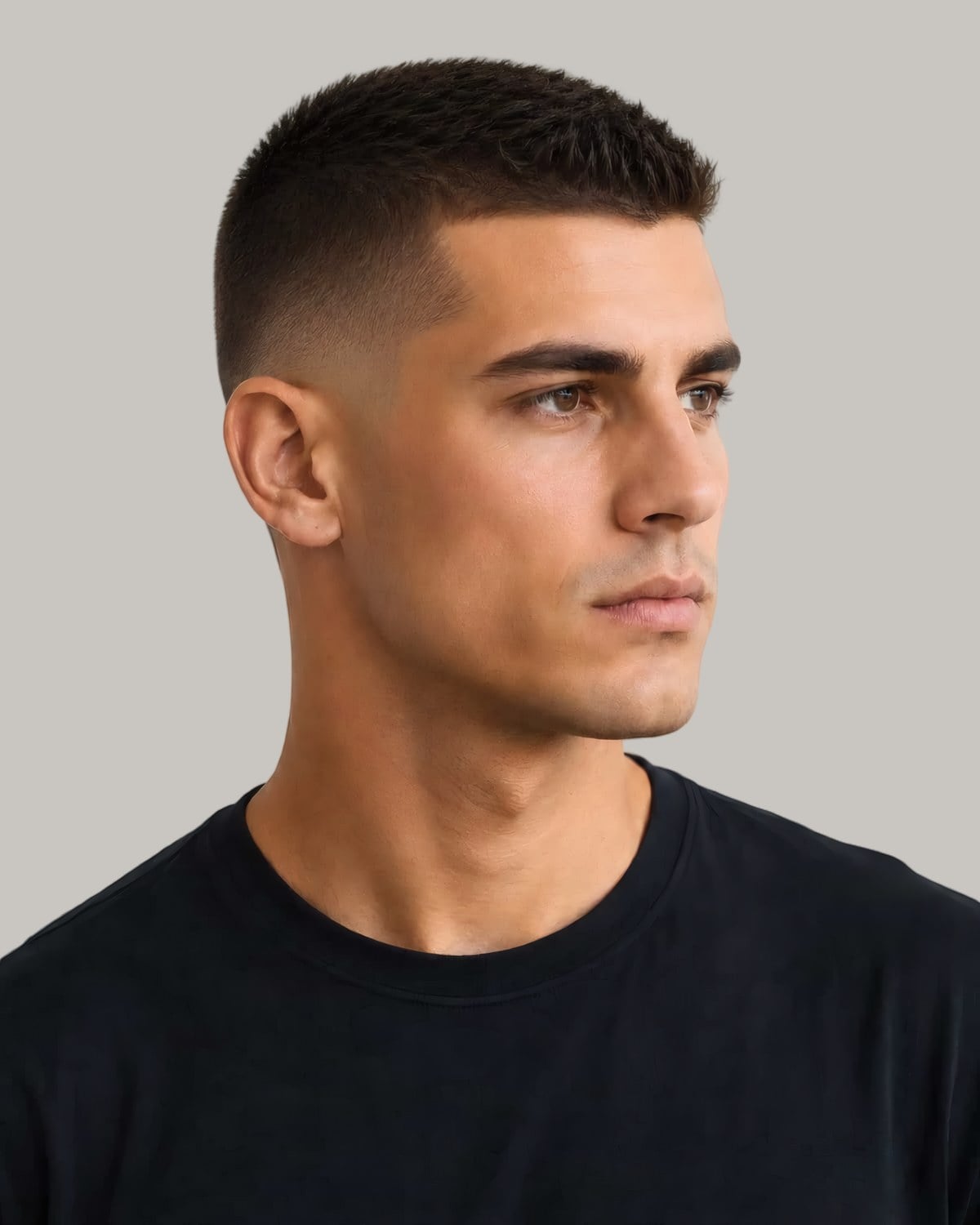
At a number 6 or 8, three quarters of an inch to a full inch, your hair finally starts to lie down. You get the easy mornings without the just-enlisted look.
Keep the sides shorter with a taper or a fade, otherwise the shape goes round pretty quickly.
What to ask for Number 6 on top, number 3 on the sides, tapered at the neck.
Number 8 buzz cut
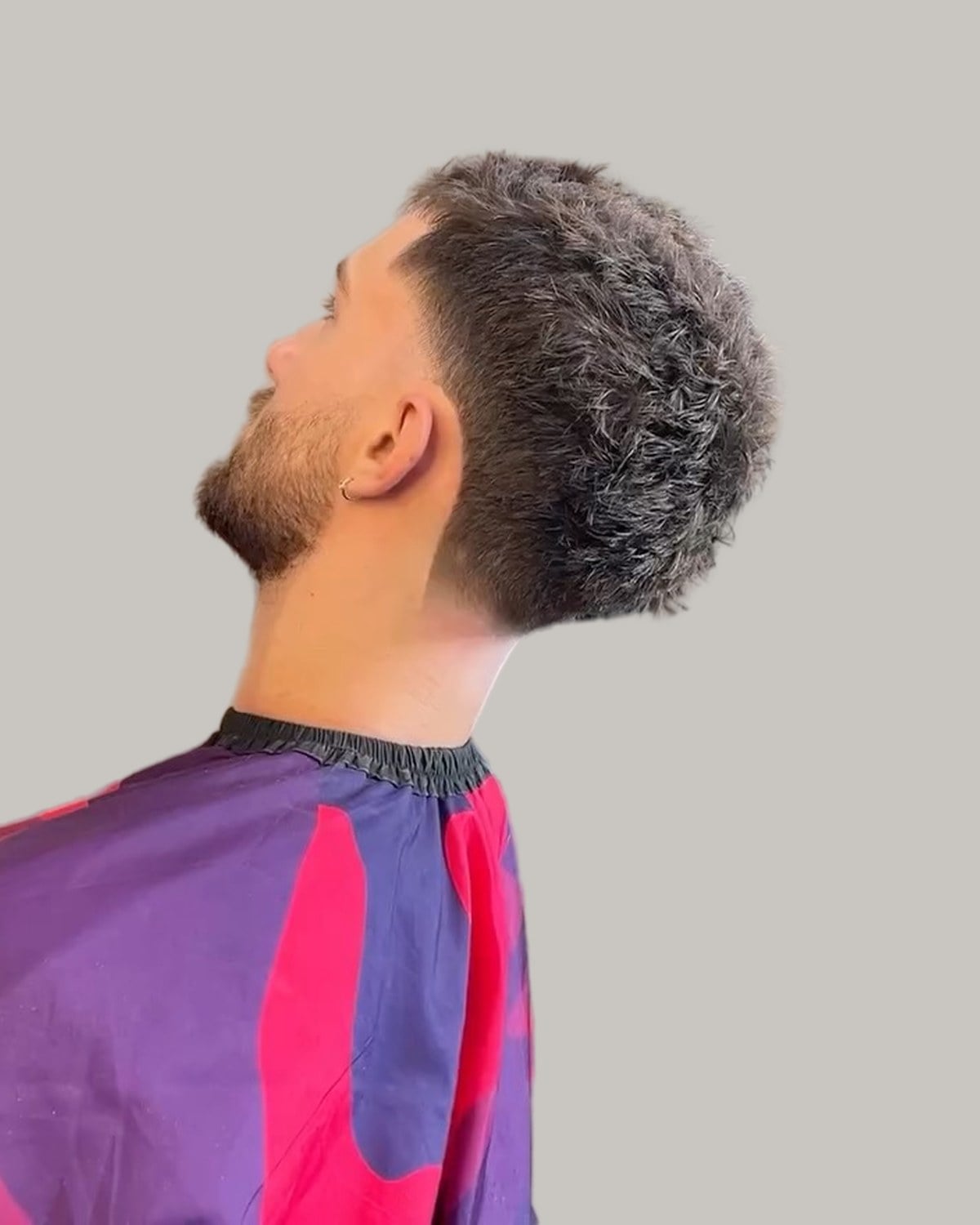
An 8 guard leaves a full inch, which is enough for texture to show on top while it still reads as a buzz.
The taper matters more at this length. Without it, an inch on the sides puffs out and the whole head looks wider than it is.
What to ask for Number 8 guard on top, high taper on the sides and nape.
Number 10 buzz cut
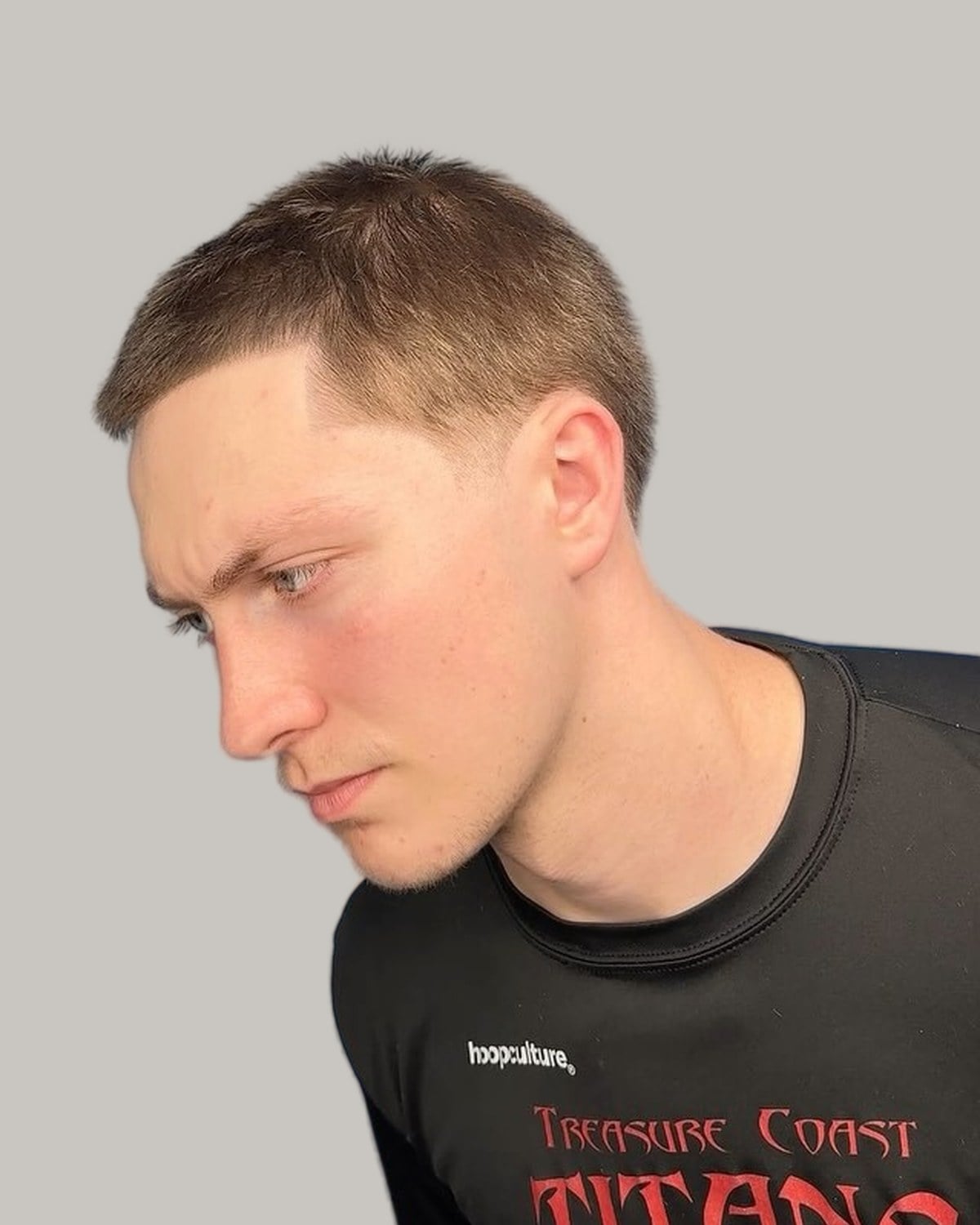
A 10 guard leaves an inch and a quarter. At this length the top lies down and moves a little, so it starts to look like a short haircut that happens to be cut with clippers.
The barber behind this one paired the 10 guard with a low taper fade, so the sides sit close under the longer top.
What to ask for Number 10 guard on top, low taper fade at the sides and nape.
Number 12 buzz cut
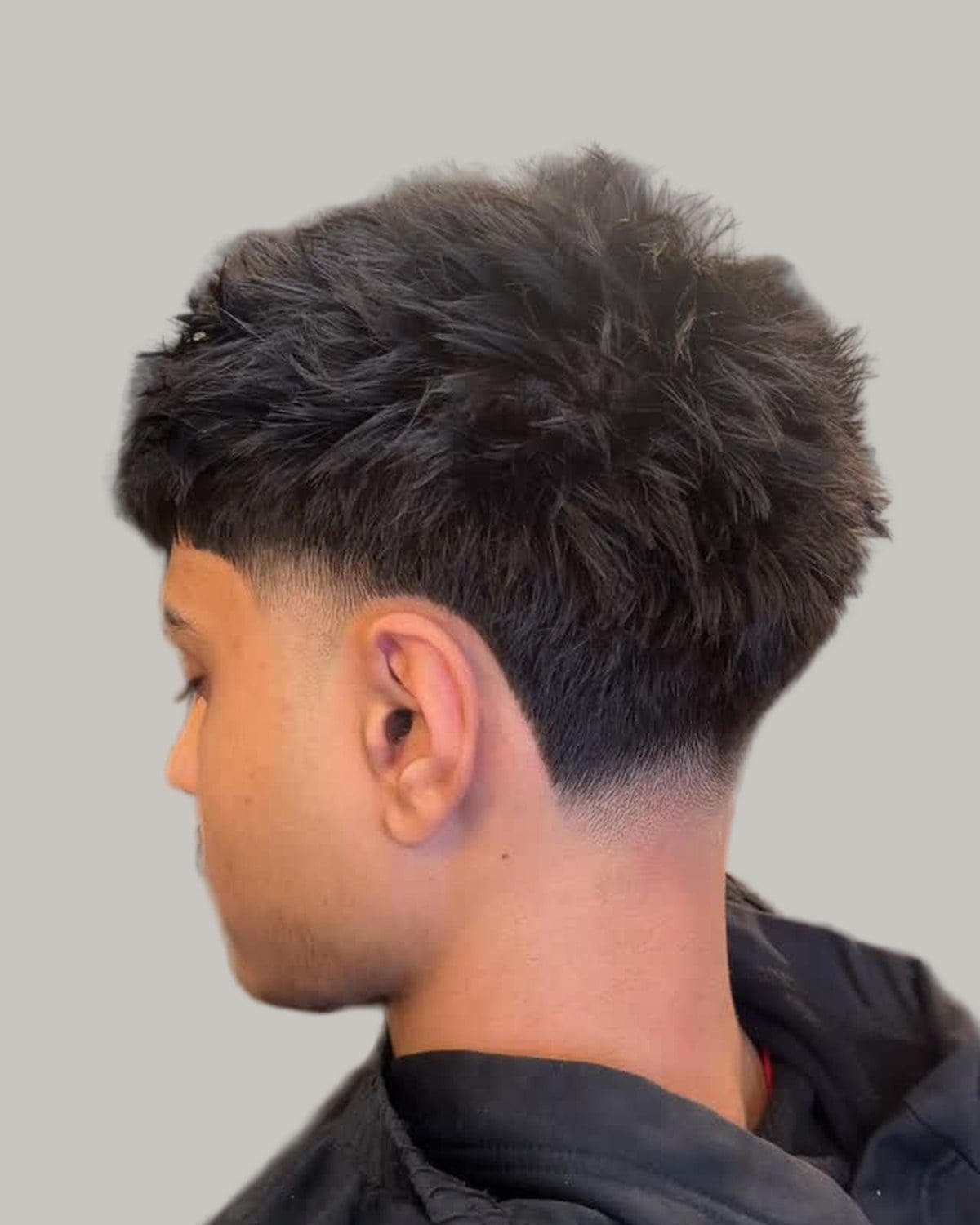
The inch and a half a 12 guard leaves on top is enough length to push around with your fingers and a little matte clay, so you can change the shape from day to day.
The mid taper here tidies the sides and the nape under the 12 guard length.
What to ask for Number 12 guard on top, mid taper on the sides and nape.
Military buzz cut
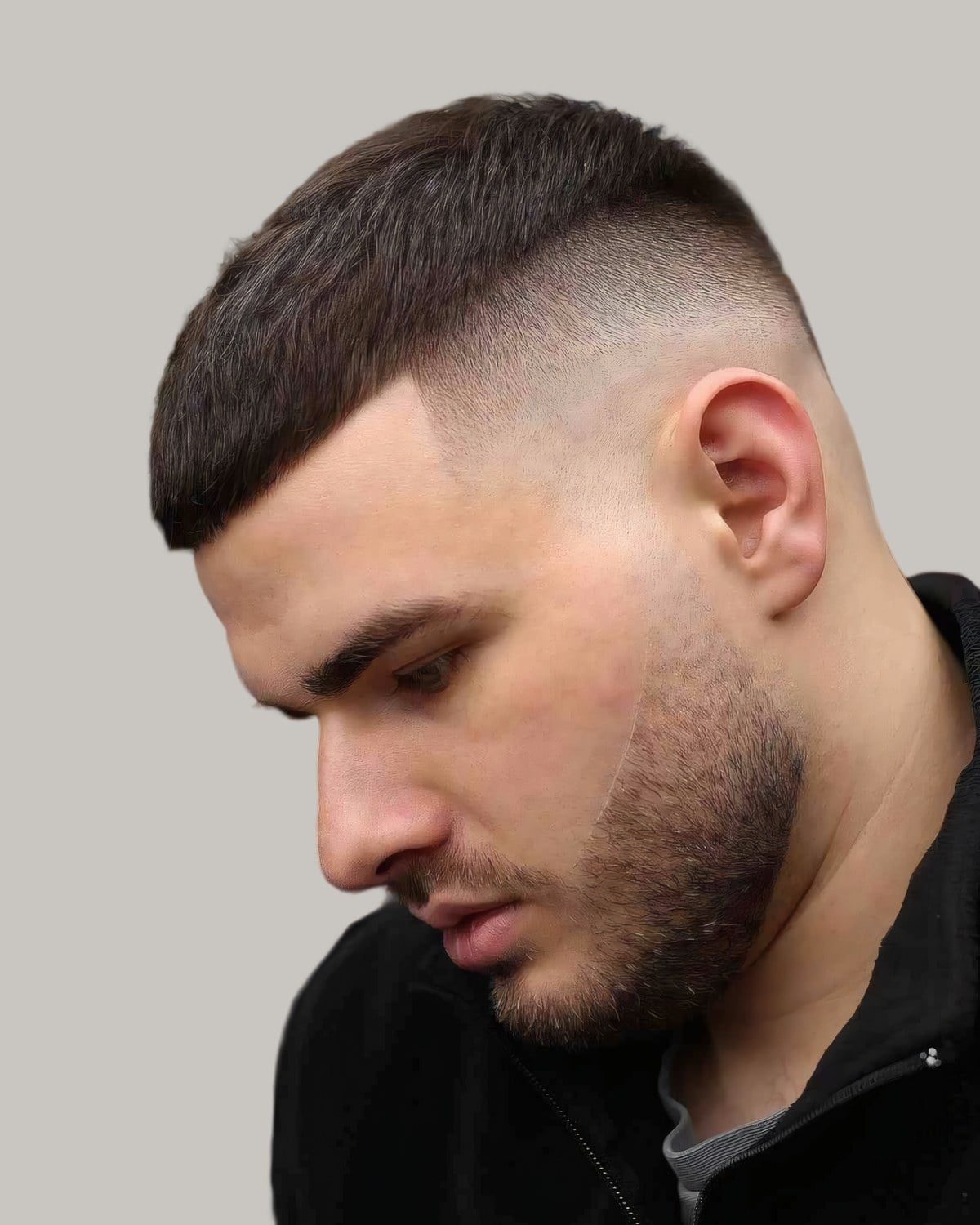
A number 1 or 2 all over, tapered at the neck. It’s what recruits grow into after the induction cut, and armies love it for the same reasons you might: it’s uniform, it keeps you cool, and all it needs is a pair of clippers.
It works on almost any head that suits a buzz.
What to ask for Number 1 all over, tapered at the neck.
Grown-out buzz cut
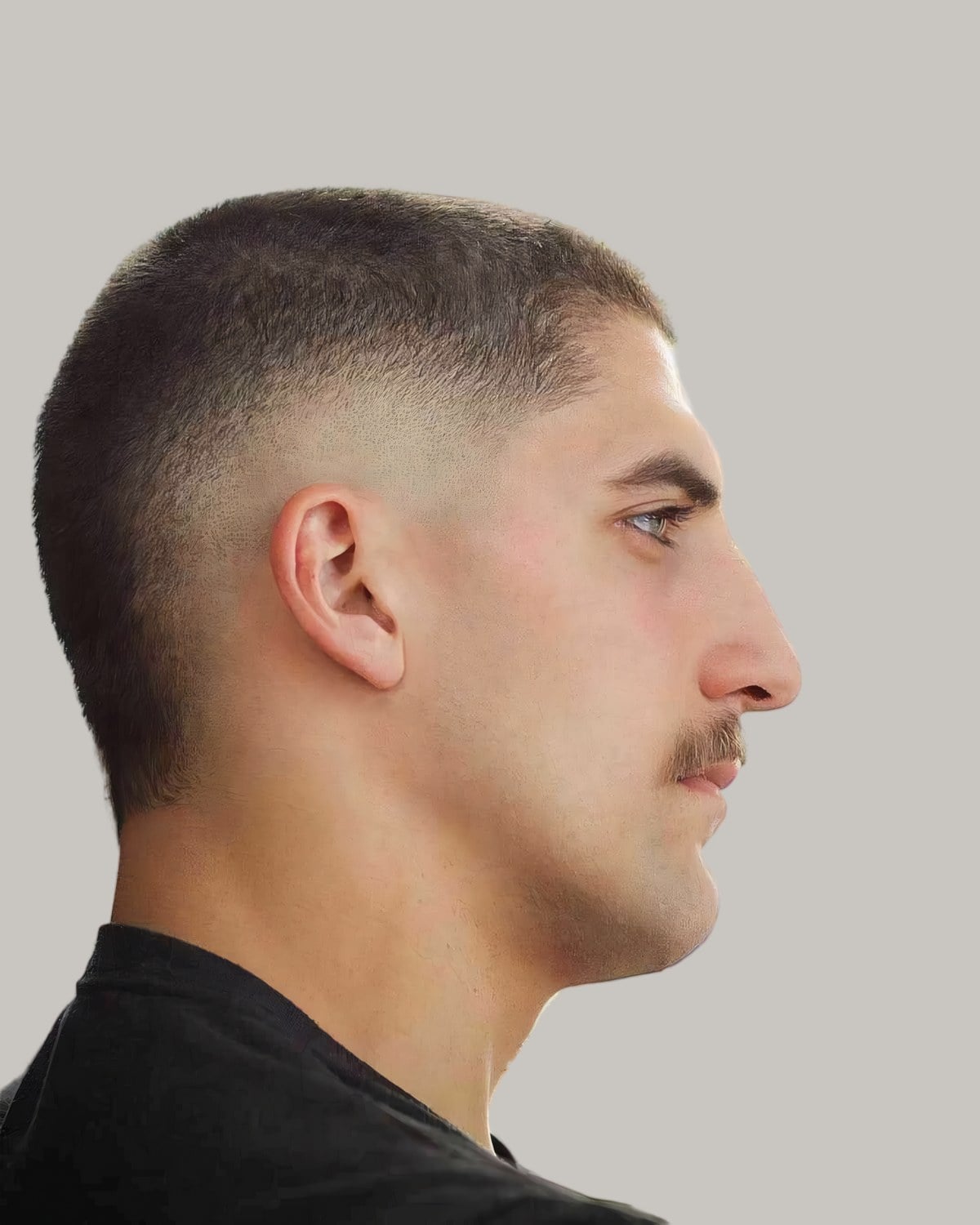
This is a number 2 about six weeks later: past a number 4, starting to lie down, and soft around the neck and ears. Plenty of guys stop right here and call it a haircut (fair enough).
If you’re growing it out on purpose, a taper at the neck keeps it looking intentional through the awkward weeks.
What to ask for Leave the top, taper the neck and sideburns, tidy the ears.
Here’s every guard number side by side, so you can see what you’re asking for.
| Guard | Length | What barbers call it |
|---|---|---|
| No guard | Shorter than a number 1, and it varies by clipper | Induction cut, “zero” |
| Number 1 | 1/8 in (3 mm) | Burr cut |
| Number 2 | 1/4 in (6 mm) | Burr cut |
| Number 3 | 3/8 in (10 mm) | Butch cut |
| Number 4 | 1/2 in (13 mm) | Butch cut |
| Number 6 | 3/4 in (19 mm) | Long buzz cut |
| Number 8 | 1 in (25 mm) | Long buzz cut |
| Number 10 | 1 1/4 in (32 mm) | Long buzz cut |
| Number 12 | 1 1/2 in (38 mm) | Long buzz cut |
Wahl sells the 10 and 12 guide combs singly or as a long-hair set.
One thing to know about “zero”: it means no guard, but it isn’t a fixed length, because the bare blade on one clipper cuts closer than on another. Ask for “no guard” and expect it to vary from shop to shop.
Buzz cuts with a fade, taper or line-up
Buzz cut with a low skin fade
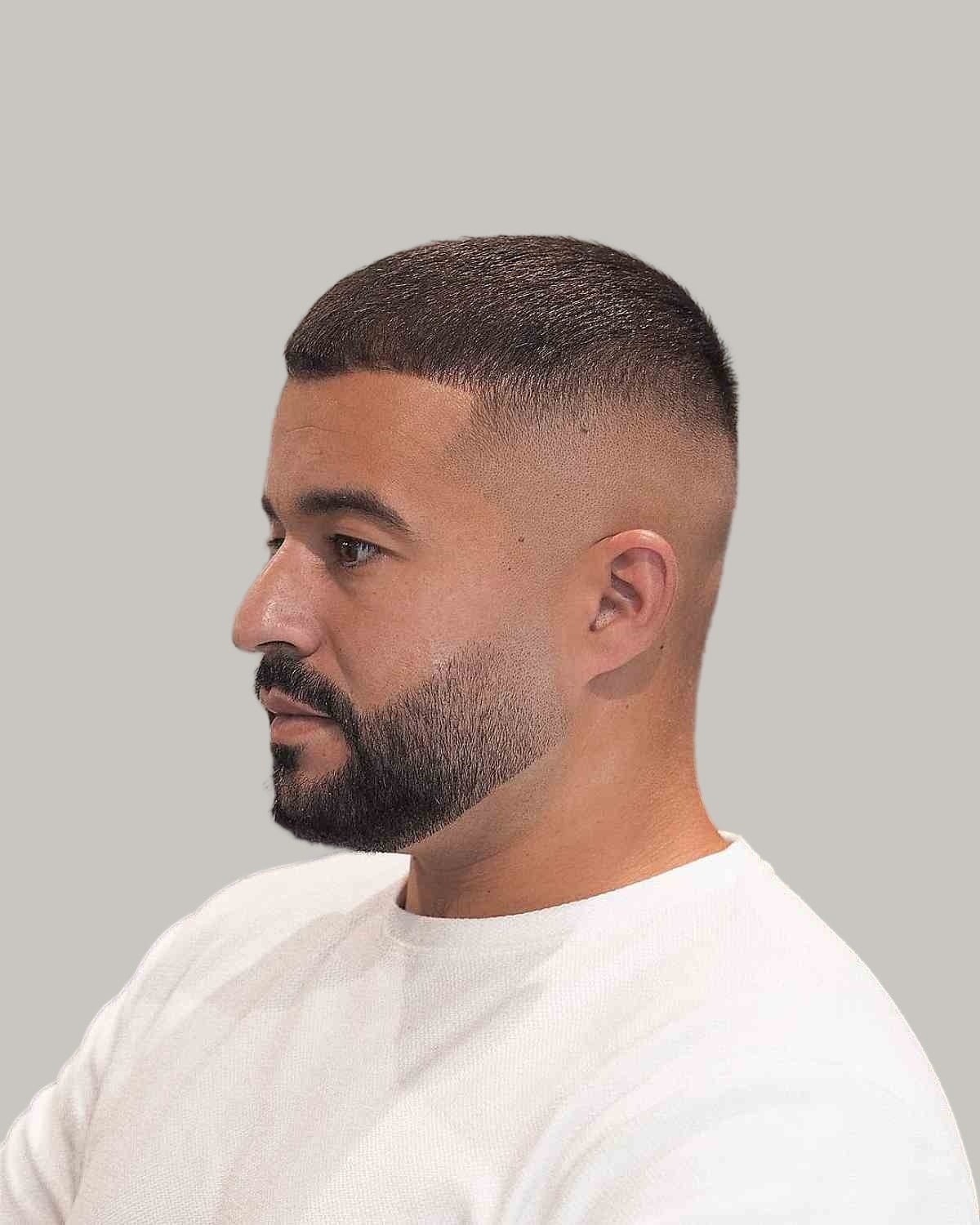
The fade starts just above your ear and takes the bottom inch or so down to skin, while the top stays at one length. It’s sharp and tidy without showing off much scalp, and it grows out gently.
For every fade height on every haircut, see our guide to fade haircuts for men.
What to ask for Number 2 on top, low skin fade, natural line-up.
Buzz cut with a mid fade
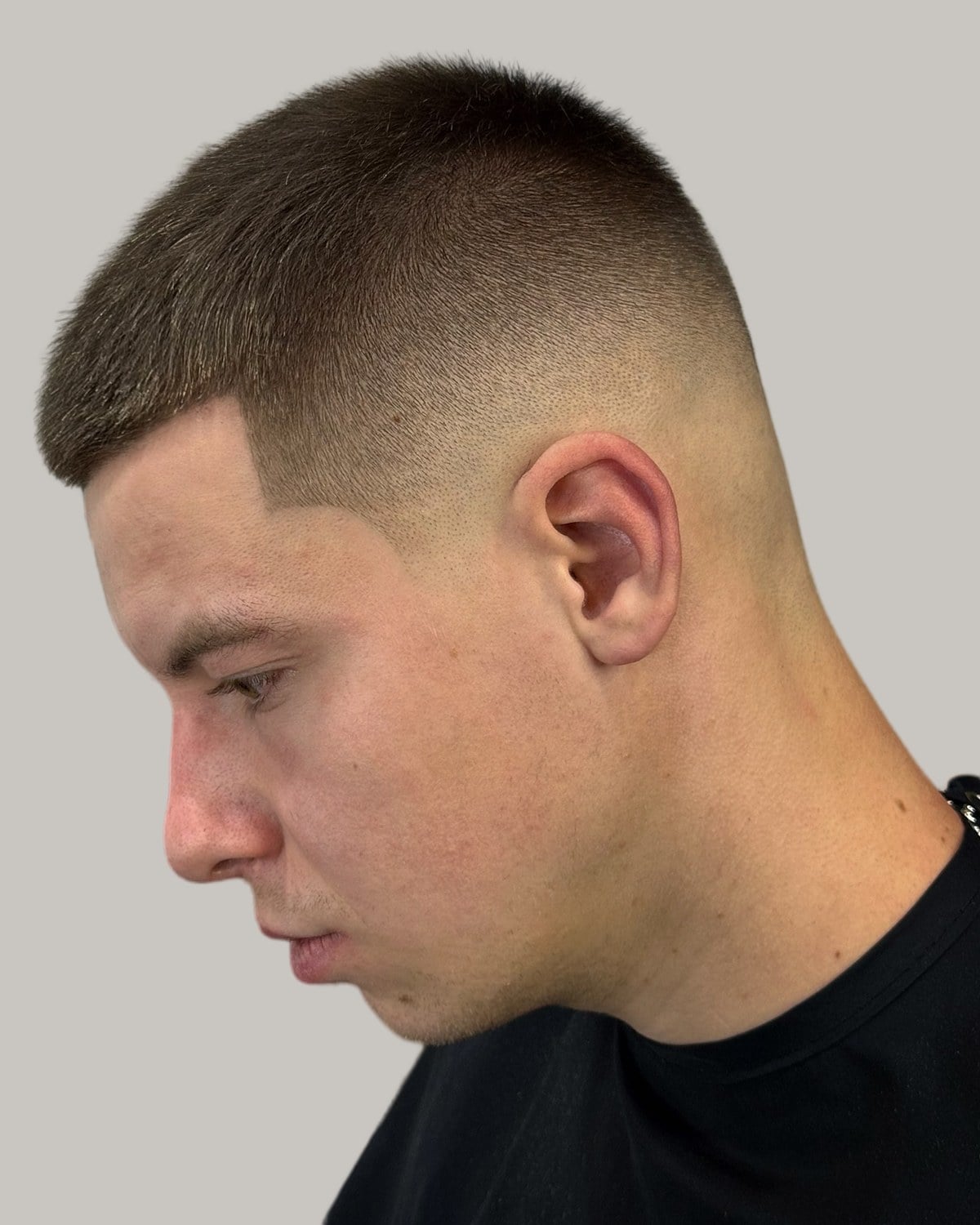
Start the fade at the temple and you get a clean band of skin above the ear. This is where a buzz cut goes from practical to properly styled.
The price? A barber visit every ten to fourteen days to keep it looking fresh.
What to ask for Number 2 on top, mid skin fade, natural line-up.
Buzz cut with a high skin fade
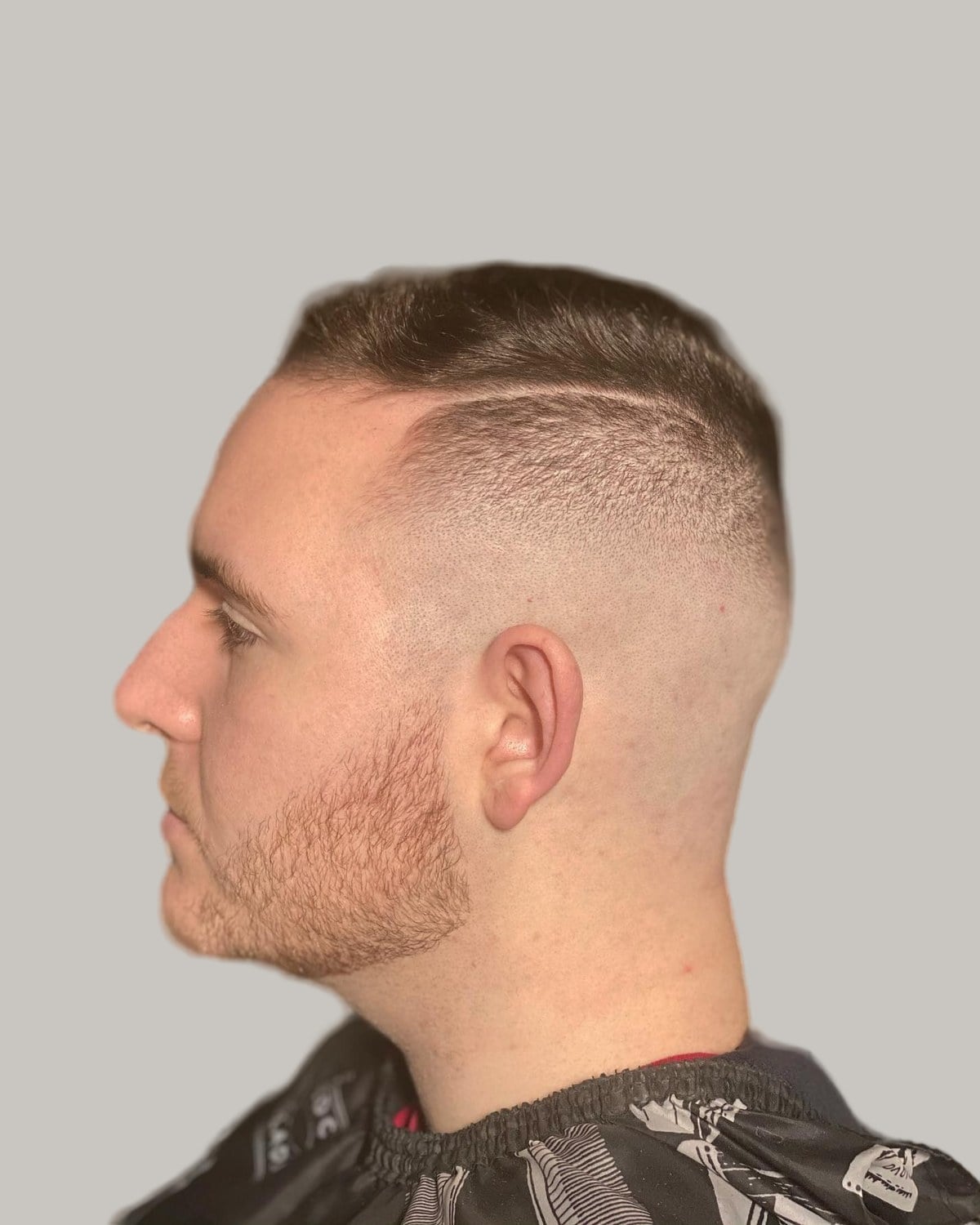
Skin all the way up to the parietal ridge (where the side of your head turns into the top), with a short cap of hair left up there. Michael B. Jordan has worn this fade buzz cut, and it’s all about contrast.
Just know it shows every bump in your skull, so check yours in two mirrors before you commit.
What to ask for Number 3 on top, high skin fade, hard line-up.
Buzz cut with a low taper
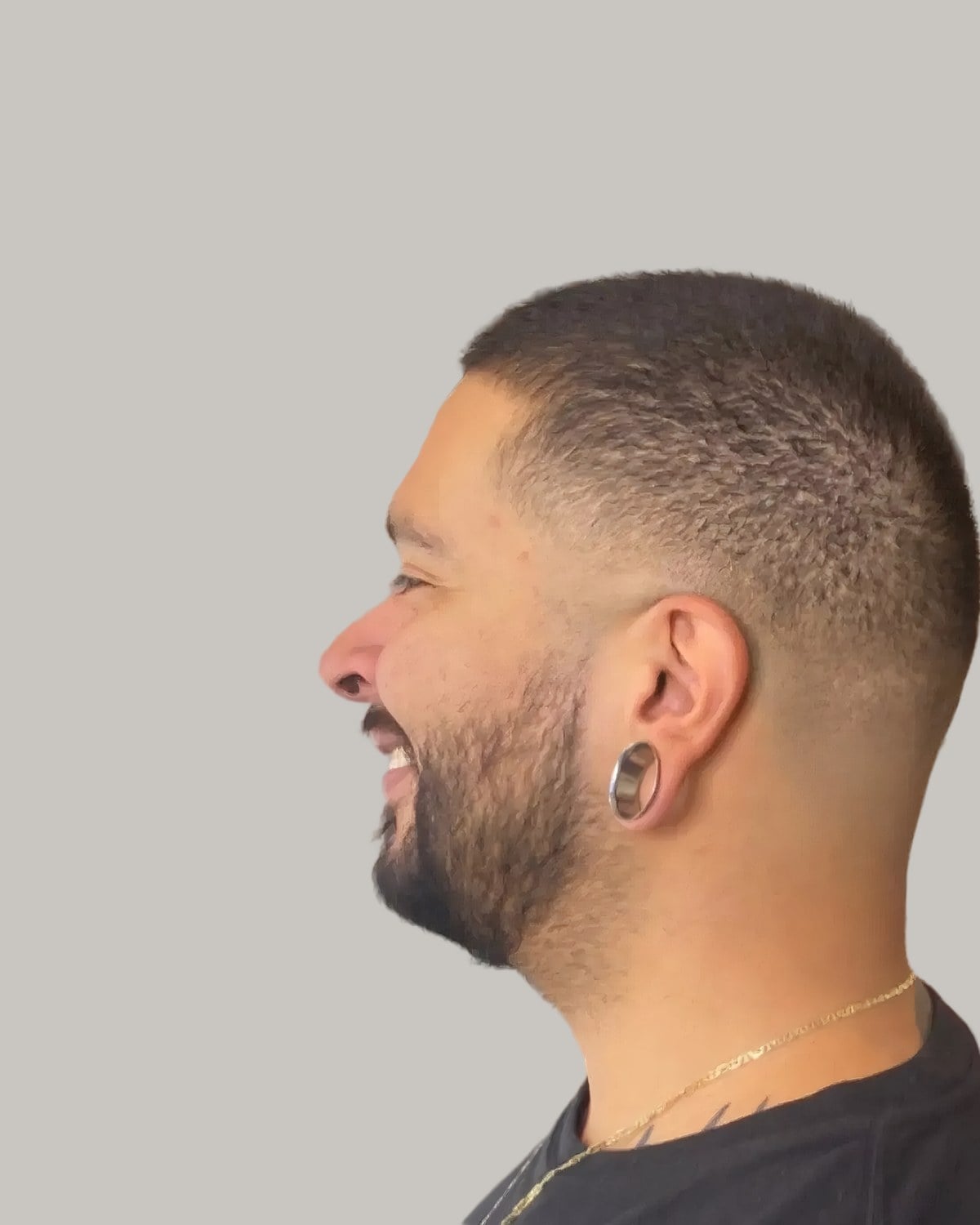
Only your neckline and sideburns get shorter, and everything else stays at one guard. It’s the buzz for anyone who wants neat without a full fade.
Since so little changes, it grows out evenly. Great news if you’d rather see your barber once a month than every other week.
What to ask for Number 2 all over, low taper at the neck and sideburns.
Long buzz cut with a fade
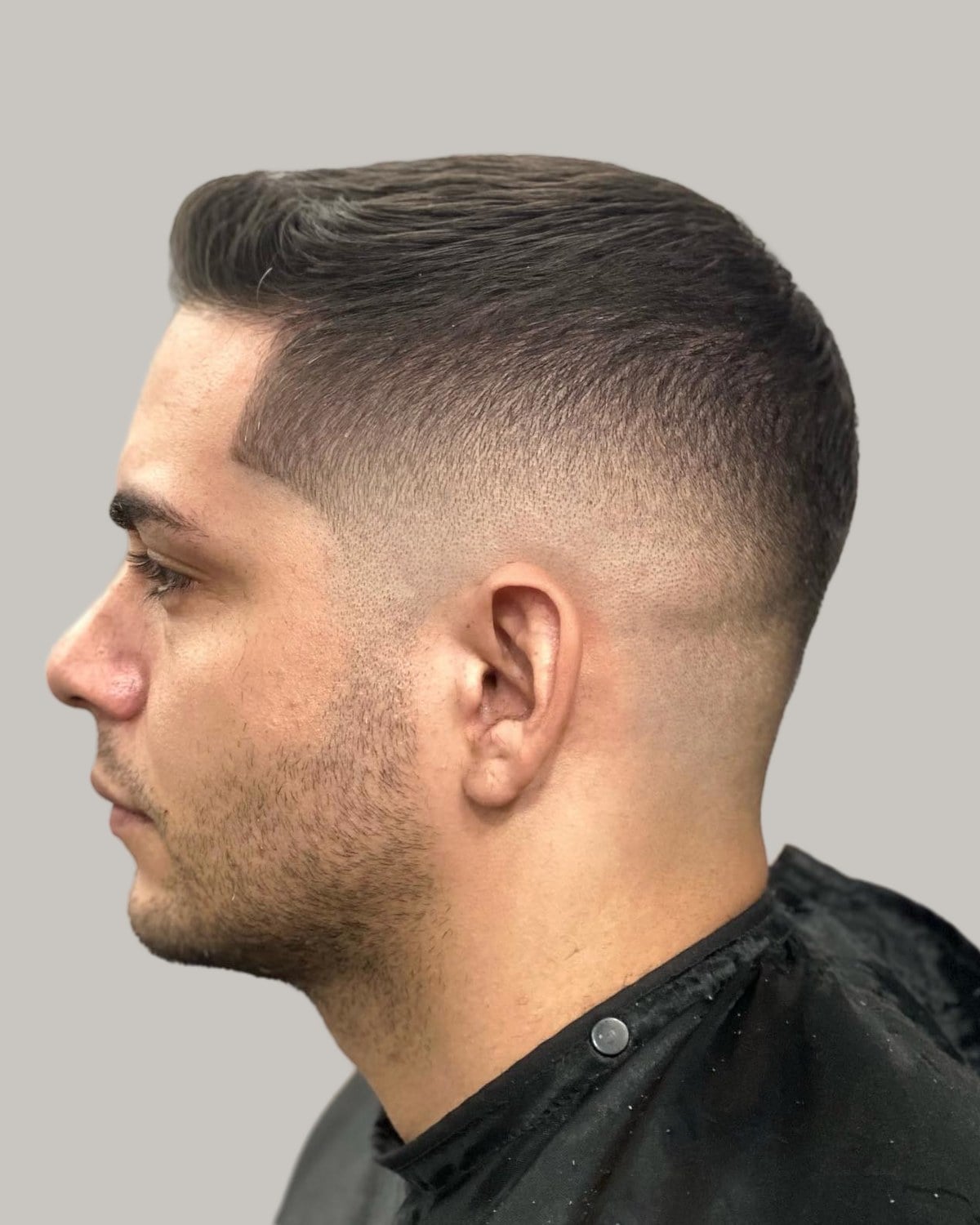
Keep a longer guard on top and fade the sides to skin. The top lies flat and shows a little texture, and the fade does the sharpening.
The fade grows out long before the top does, so this one needs a tidy-up every ten to fourteen days if you want the contrast to stay crisp.
What to ask for Mid skin fade, enough length on top to lie flat, natural line-up.
Buzz cut with a burst fade
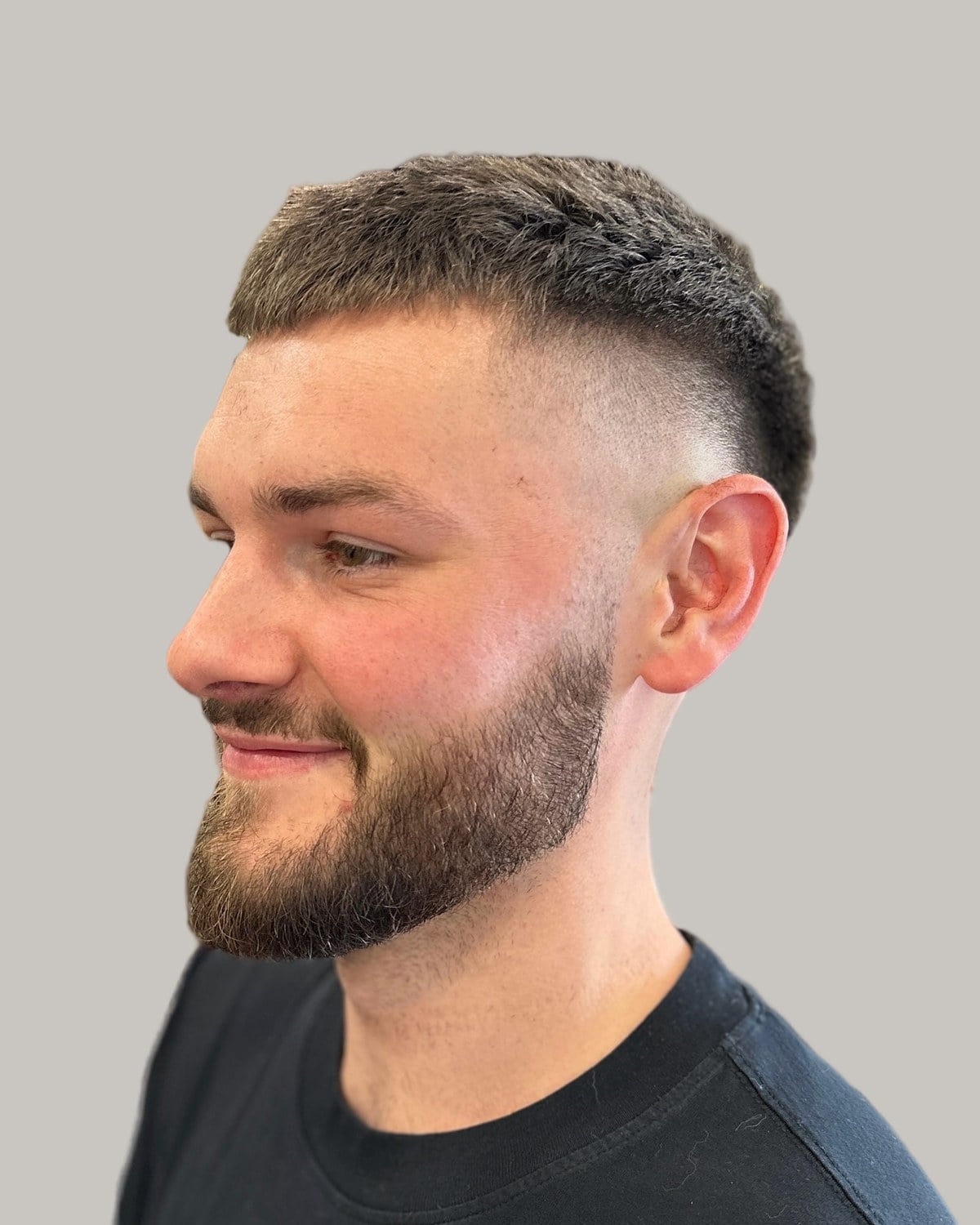
A burst fade curves around the ear in a half circle and leaves some length at the back of the neck. On a buzz, that curve gives the sides a shape a straight fade doesn’t.
From behind it’s softer than a full fade, because the nape keeps its hair.
What to ask for Short crop on top, burst fade around the ear, leave length at the nape.
Buzz cut with a temple fade
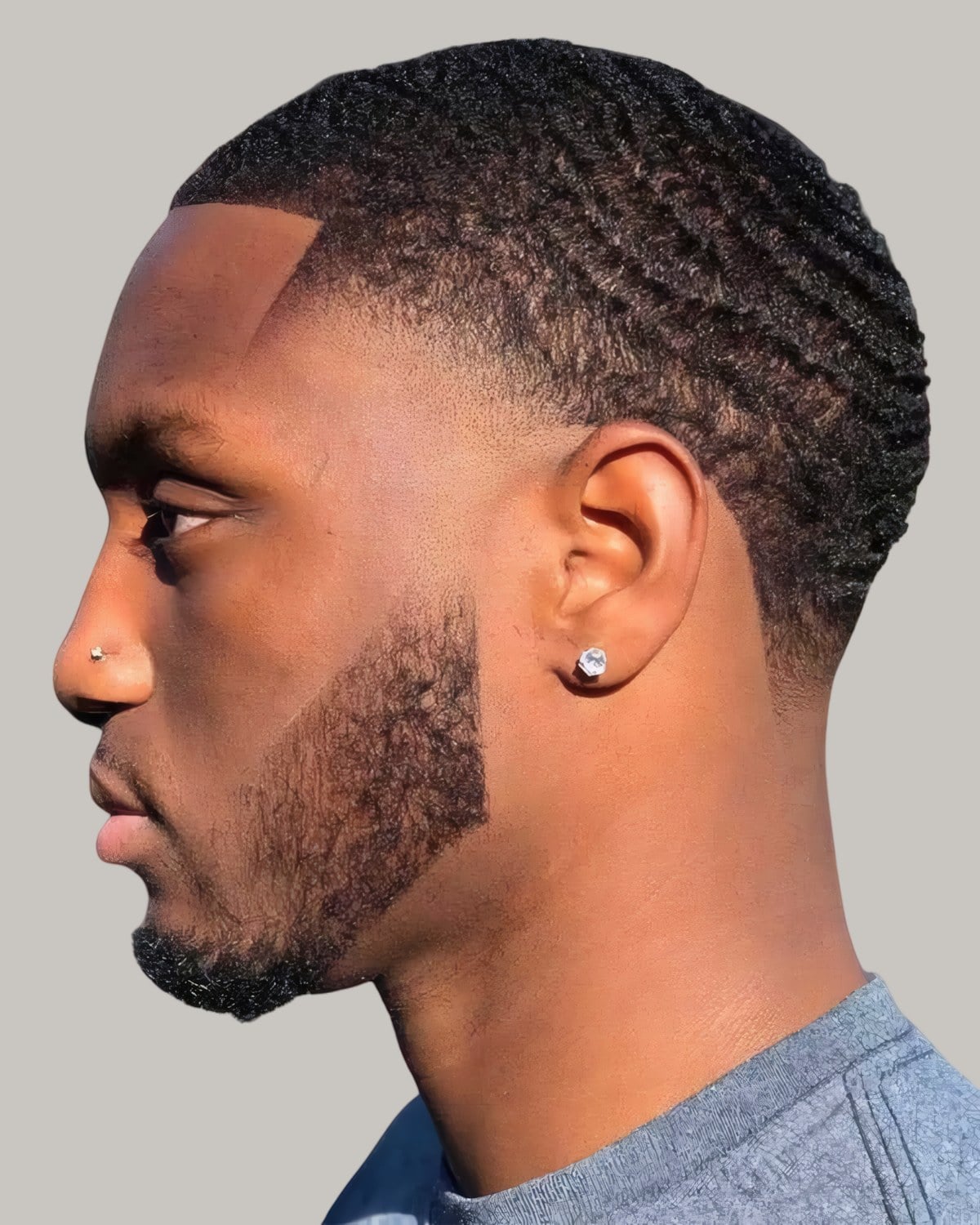
Just the temples go to skin, in a neat little triangle in front of each ear. It sharpens up your face without fading the entire side of your head.
Curious about fades but not ready to commit? Start here, especially if you have a strong natural hairline.
What to ask for Number 2 all over, temple fade, natural line-up.
Buzz cut with a line-up
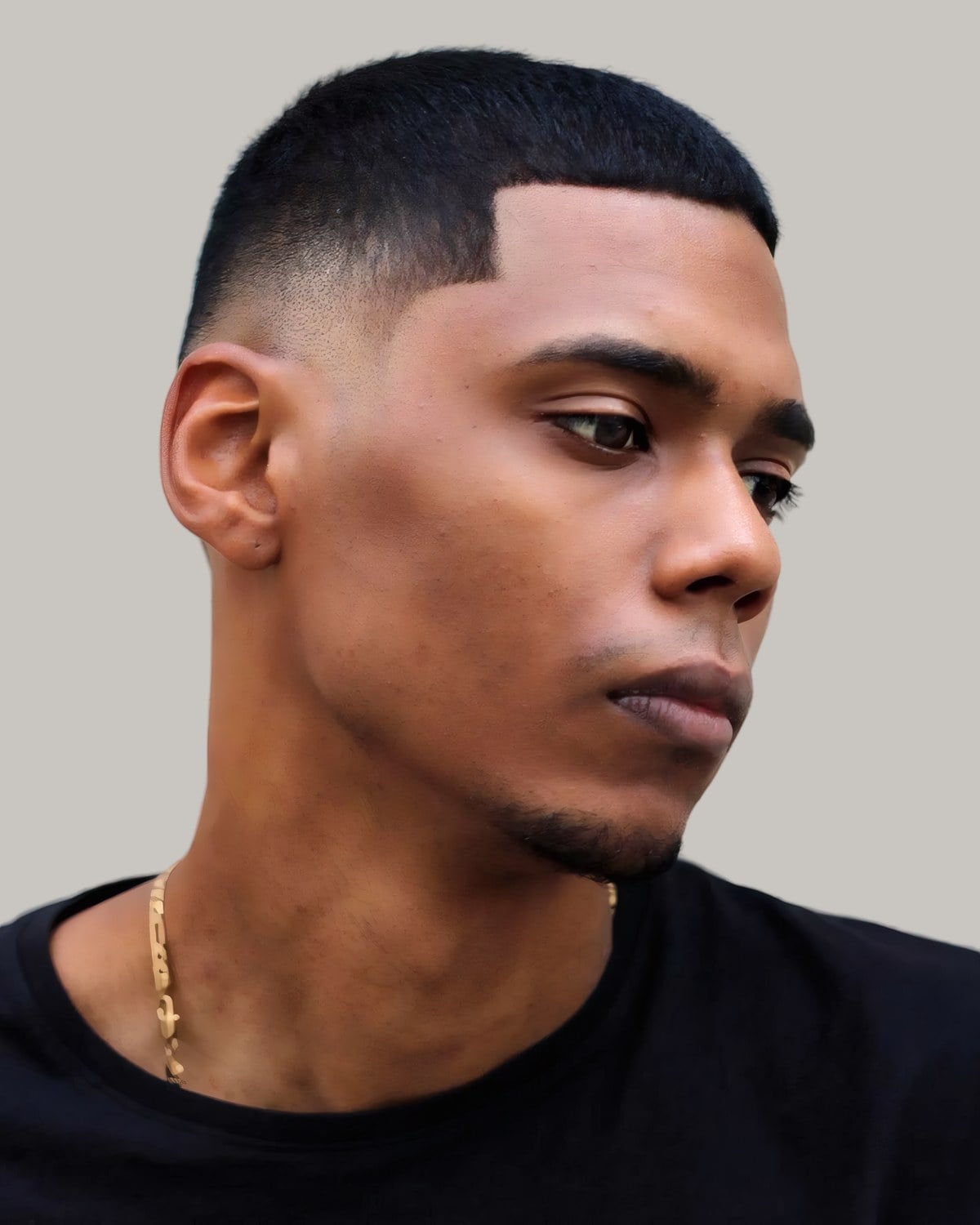
A crisp edge your barber cuts across your hairline and down the temples with a trimmer. It’s the little detail that says “barber” rather than “bathroom mirror”.
One warning if your hairline is heading north: ask for a natural line-up. A hard one pushes it back a little further every visit, and it needs redoing every two weeks to stay straight.
What to ask for Number 2 all over, hard line-up at the front and temples.
High and tight
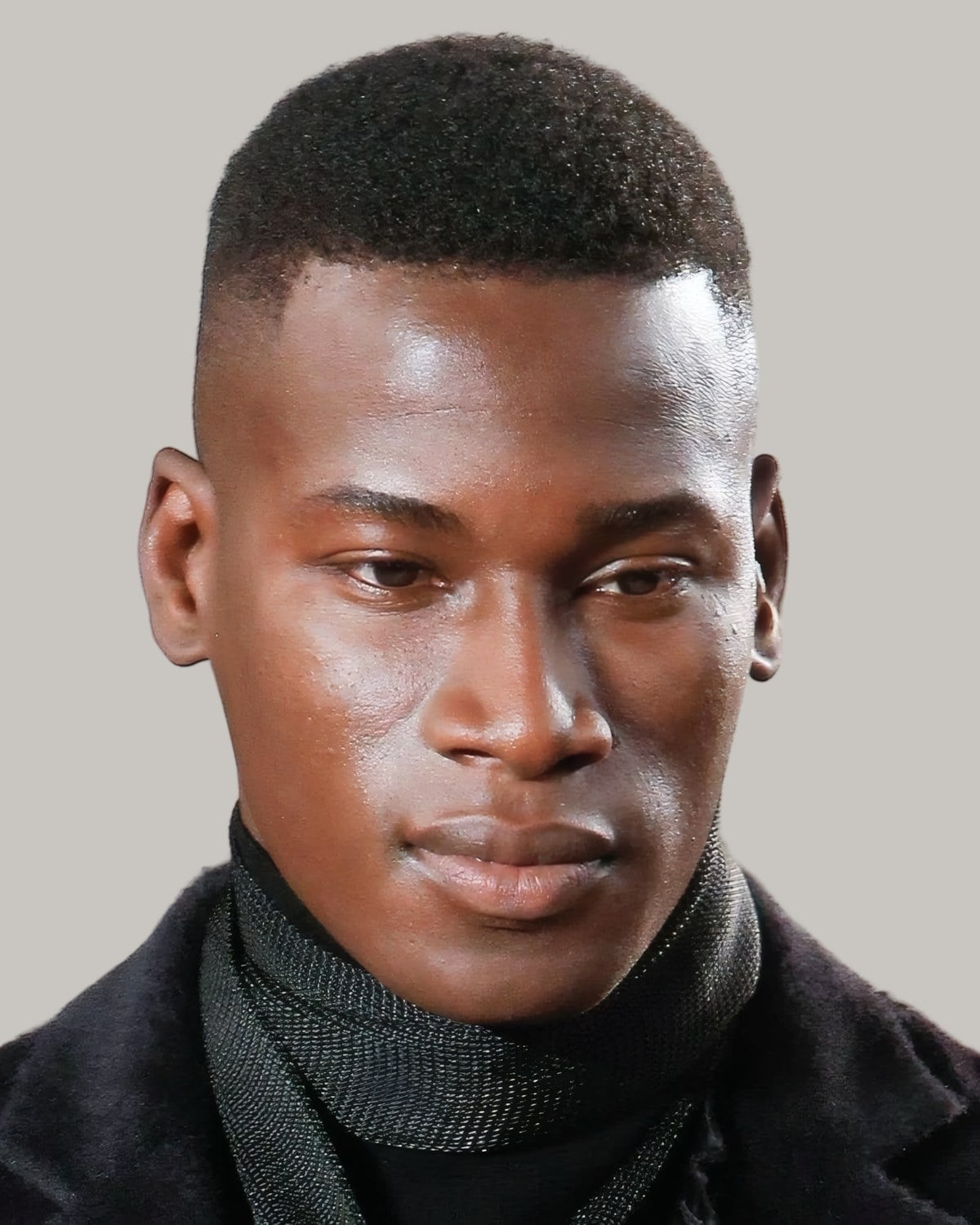
Think Tom Hardy. The sides go down to almost nothing and stop abruptly just below the crown, under a short cropped top. There’s no soft blend, and that’s exactly why it looks so sharp.
It’s great on thick or coarse hair. Keep it crisp with a touch-up every ten days.
What to ask for Number 1 on the sides up to the crown, number 3 on top, hard perimeter.
Crew cut
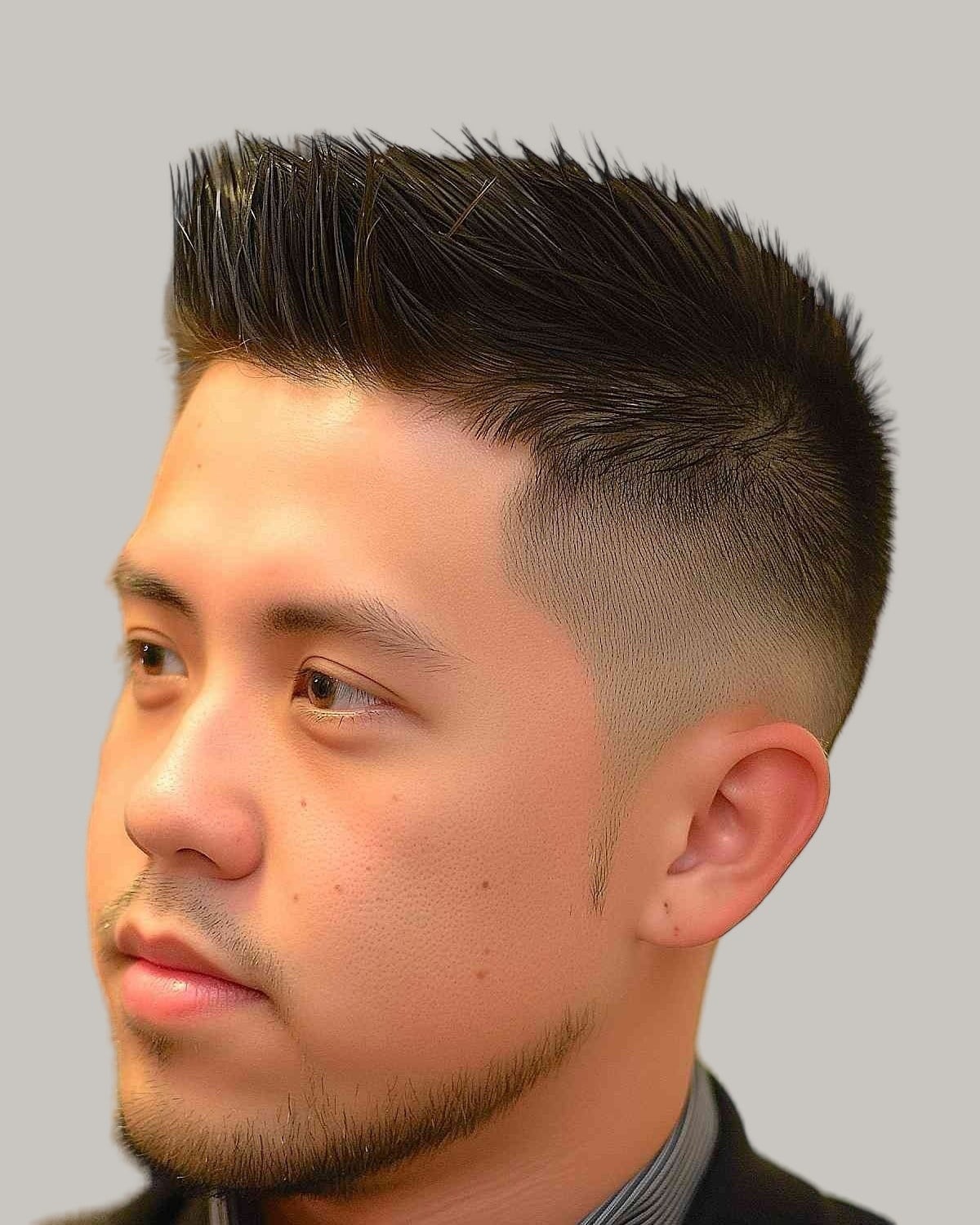
Technically, the crew cut is the buzz cut’s next-door neighbor. It leaves a little extra length at the front that you can push up or style with a dab of product, and Zac Efron wears it well.
Fancy a tiny bit of styling in the morning? Crew cut. None at all? Stick with a number 3. Our crew cut guide shows it in 25 versions.
What to ask for Number 2 on the sides, number 4 on top, longer at the front.
Buzz cut with a hard part
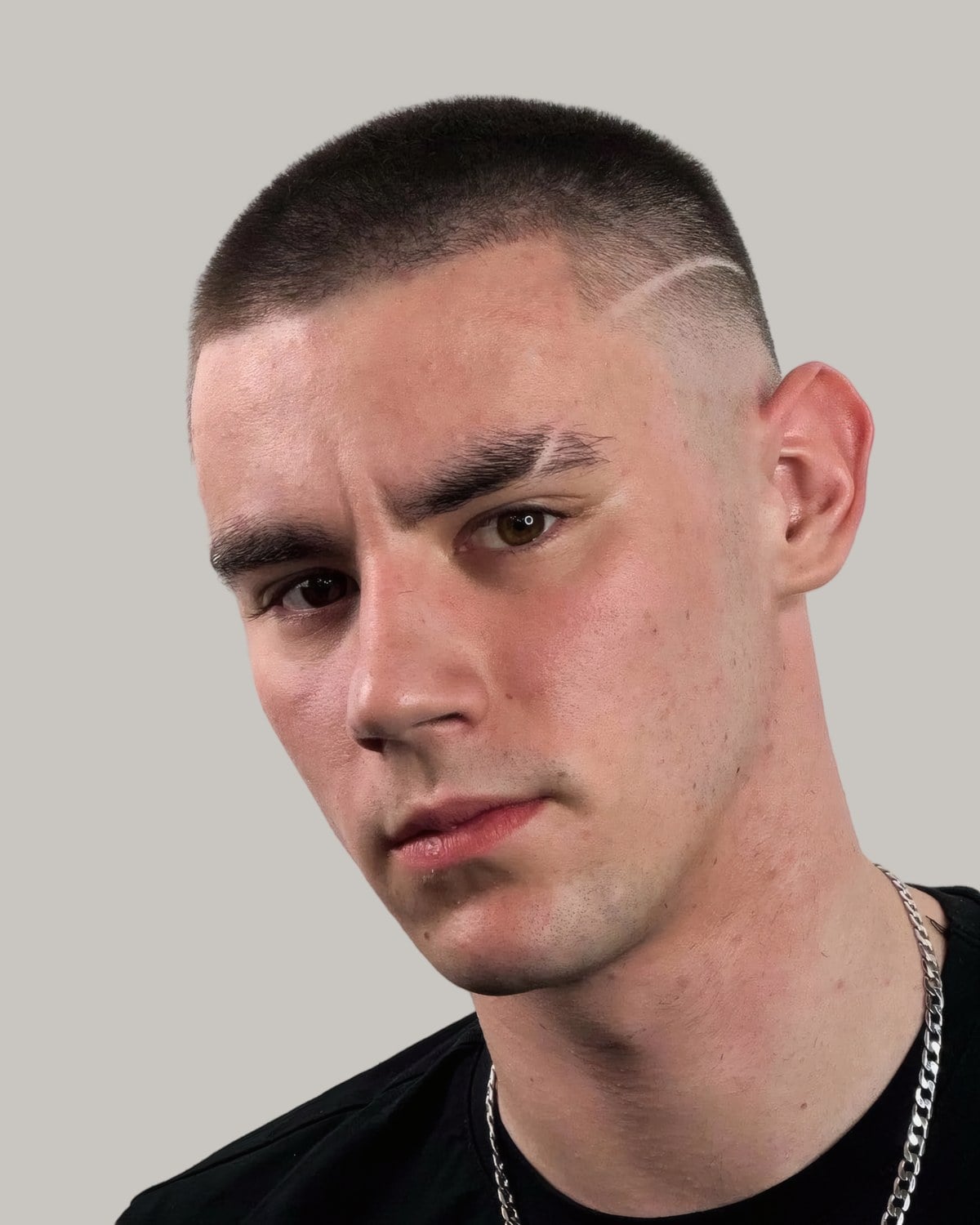
A hard part is a line shaved where your parting would fall, so you get a parting on hair far too short to have one. It looks great with a mid or high fade, where the line marks the edge of the blend.
Get it redrawn every two weeks, as it fills in as fast as the fade grows.
What to ask for Number 2 on top, mid skin fade, hard part on the left.
Buzz cut with a shaved design
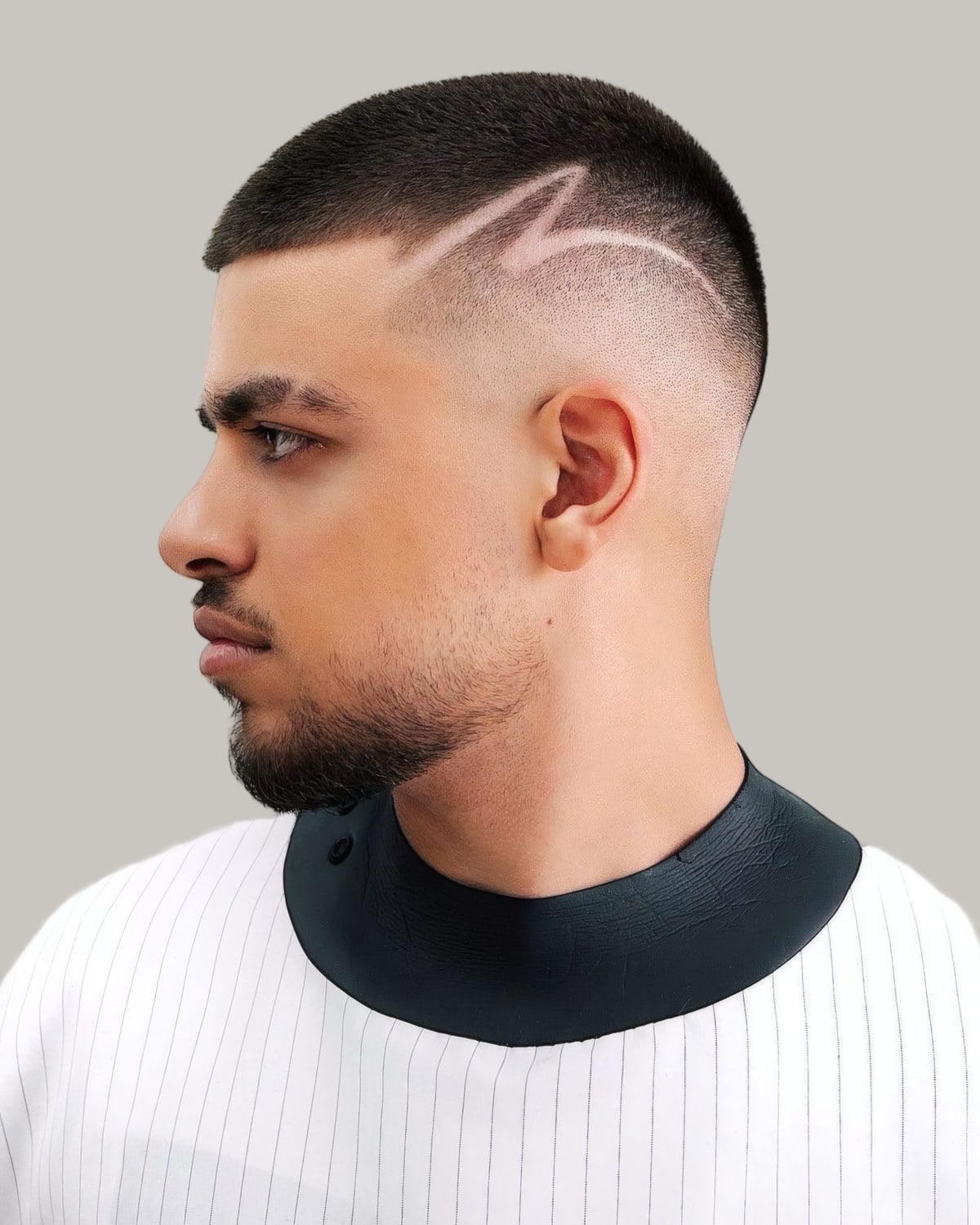
One shape cut into the fade with a trimmer: a line, a curve, or a heart if you’re feeling brave. Suddenly the back of your head is the part everyone notices. One shape is a design. Three is a mural.
It lasts about two weeks, so take a photo on the day to show your barber next time.
What to ask for Number 2 on top, skin fade, one shape at the back.
Buzz cuts with a beard or mustache
Buzz cut with a beard
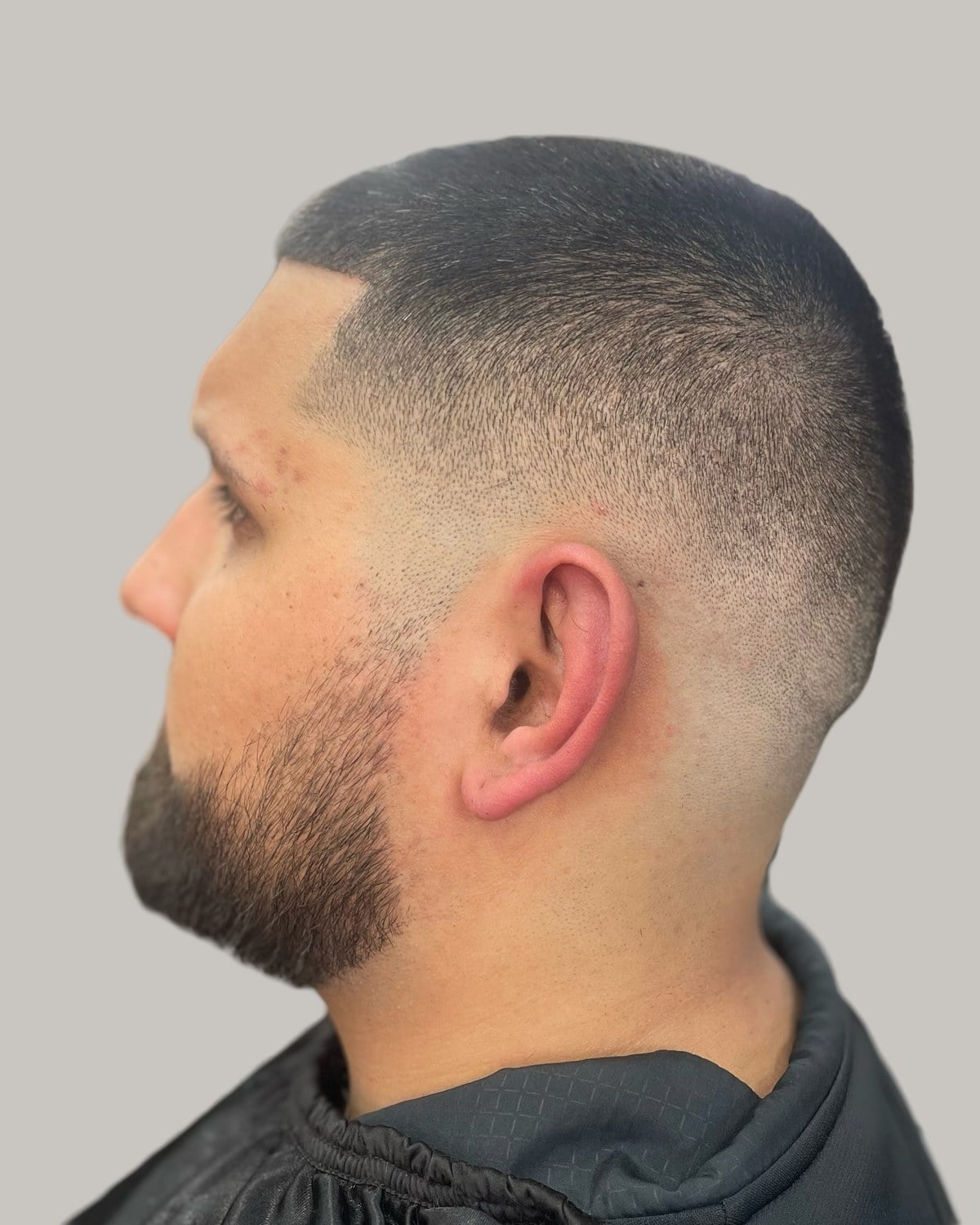
Short on top, full below. It flips the usual proportions and looks great if your beard grows in thicker than your hair.
Keep the sideburns squared off where they meet the beard, or you’ll end up with one continuous pelt (not the look).
What to ask for Number 2 all over, beard left full, sideburns squared where they meet the beard.
Buzz cut with a faded beard
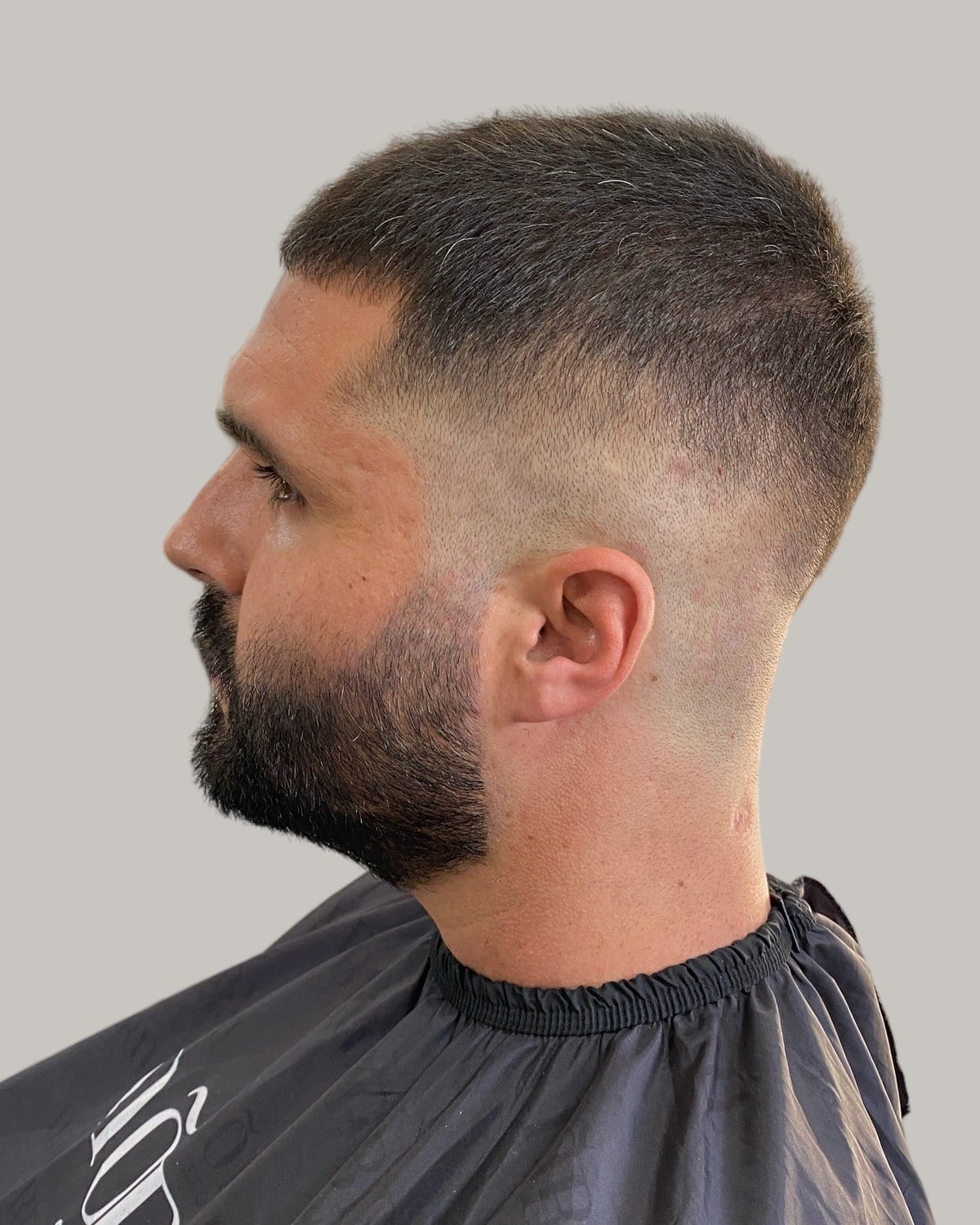
Here the side fade keeps going, down through your sideburns and into the beard, so skin blends into stubble and then into a full beard. It’s the buzz-and-beard combo, dialed up.
Plan on the same ten-to-fourteen-day barber visits as any skin fade, because the beard blend grows out just as fast.
What to ask for Number 2 on top, skin fade carried into the beard, beard shaped on the cheek.
Buzz cut with a mustache
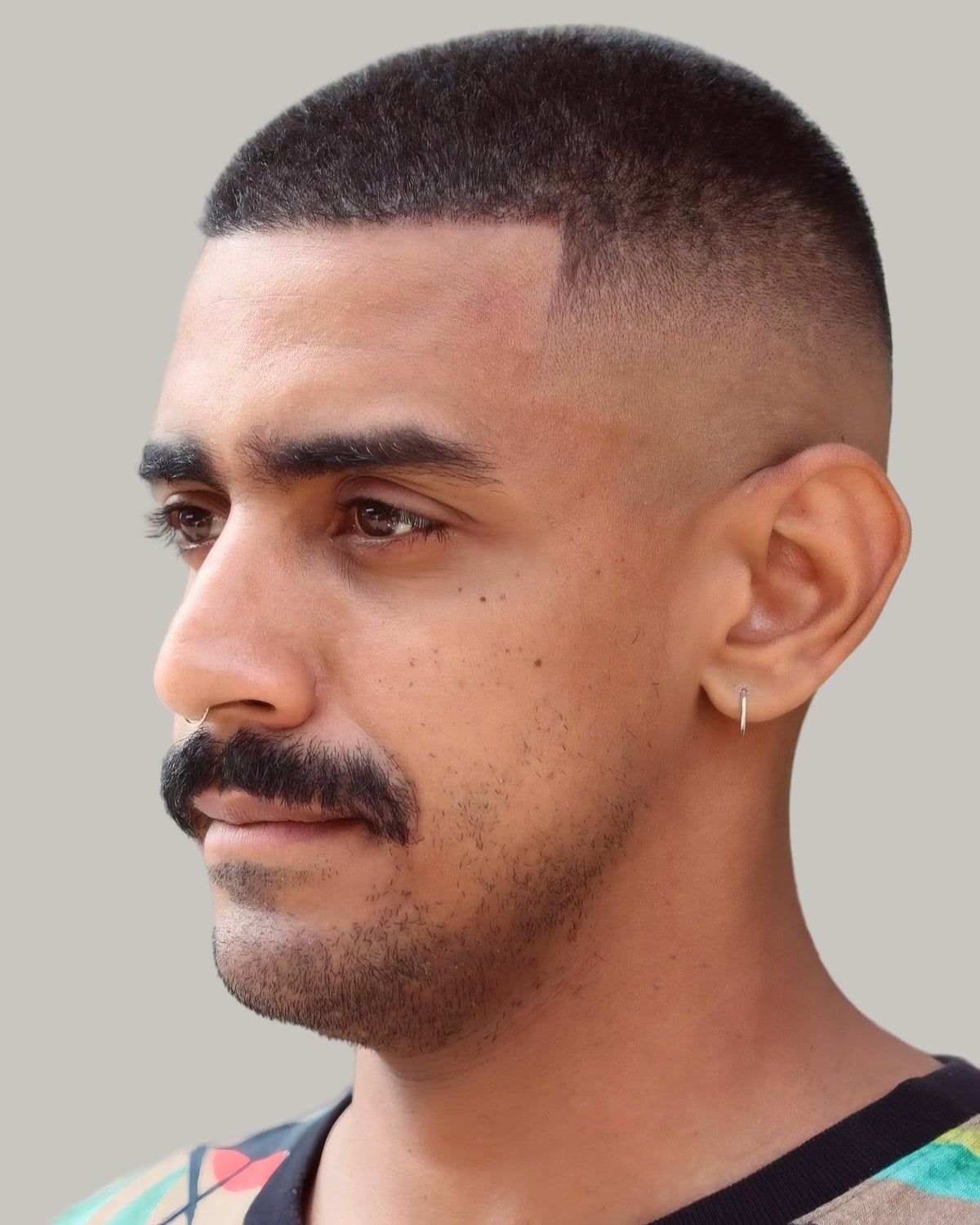
A number 1 up top and a full mustache below makes a bold contrast, and it works if your mustache grows in thicker than your hair.
Keep your cheeks and jaw clean so nothing steals the mustache’s thunder.
What to ask for Number 1 all over, natural line-up, mustache trimmed to the lip.
Buzz cut with a salt-and-pepper beard

A number 2 on top and a long, grey-flecked beard puts the color on your face instead of your scalp. The short hair keeps everything looking even while the beard does the silver-fox work.
Get the beard shaped on the cheek and neck every few weeks, or the balance tips its way.
What to ask for Number 2 all over, taper at the neck, beard shaped on the cheek and neck.
Buzz cuts for every hair type
Buzz cut on thick hair
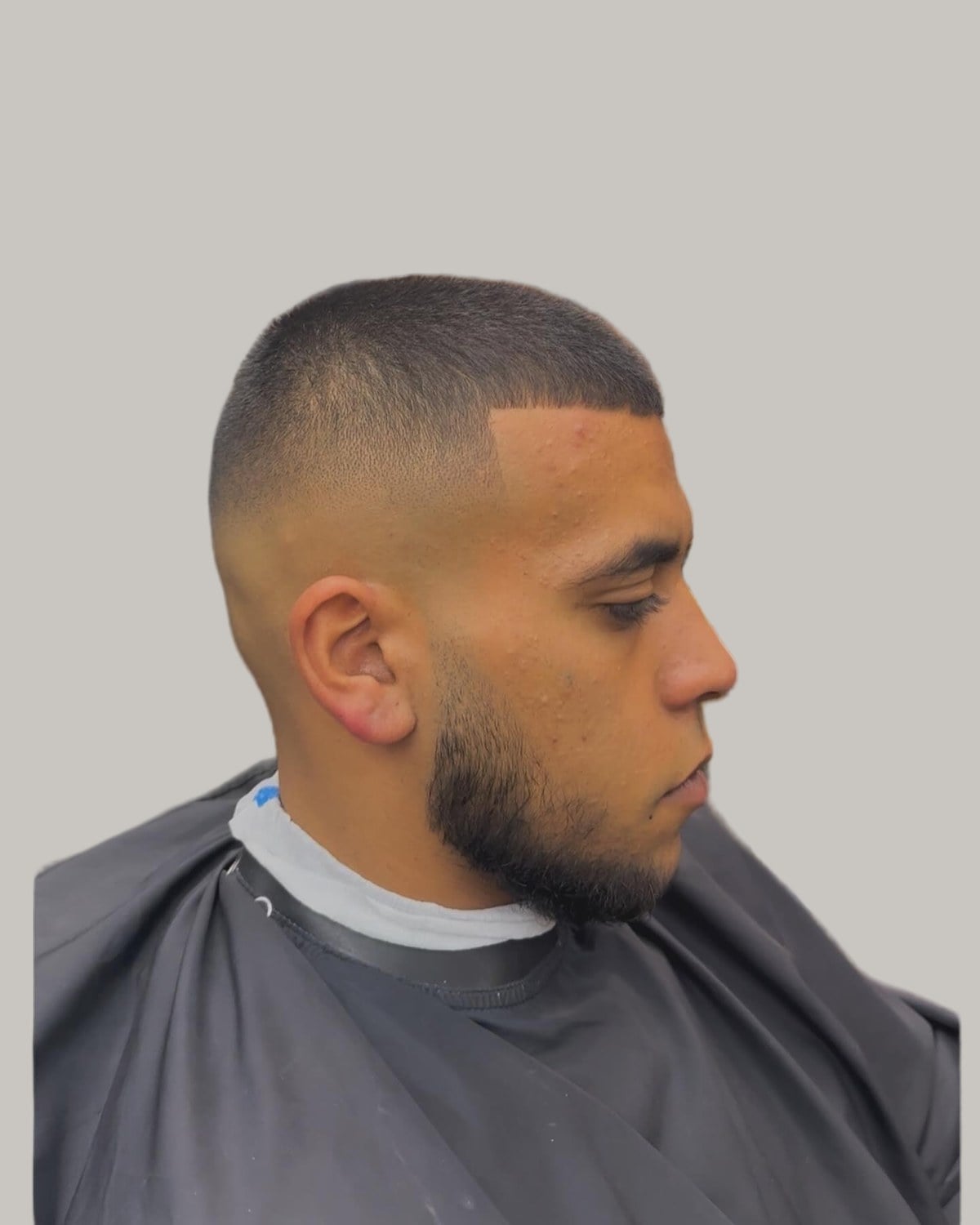
Lucky you. Thick, dark hair fills in at a number 2 like a solid cap, with no scalp showing through.
Just watch the growth direction. Dense hair likes to go every which way, and a taper at the neck stops it bushing out by week three.
What to ask for Number 2 all over, taper at the neck.
Buzz cut on straight hair
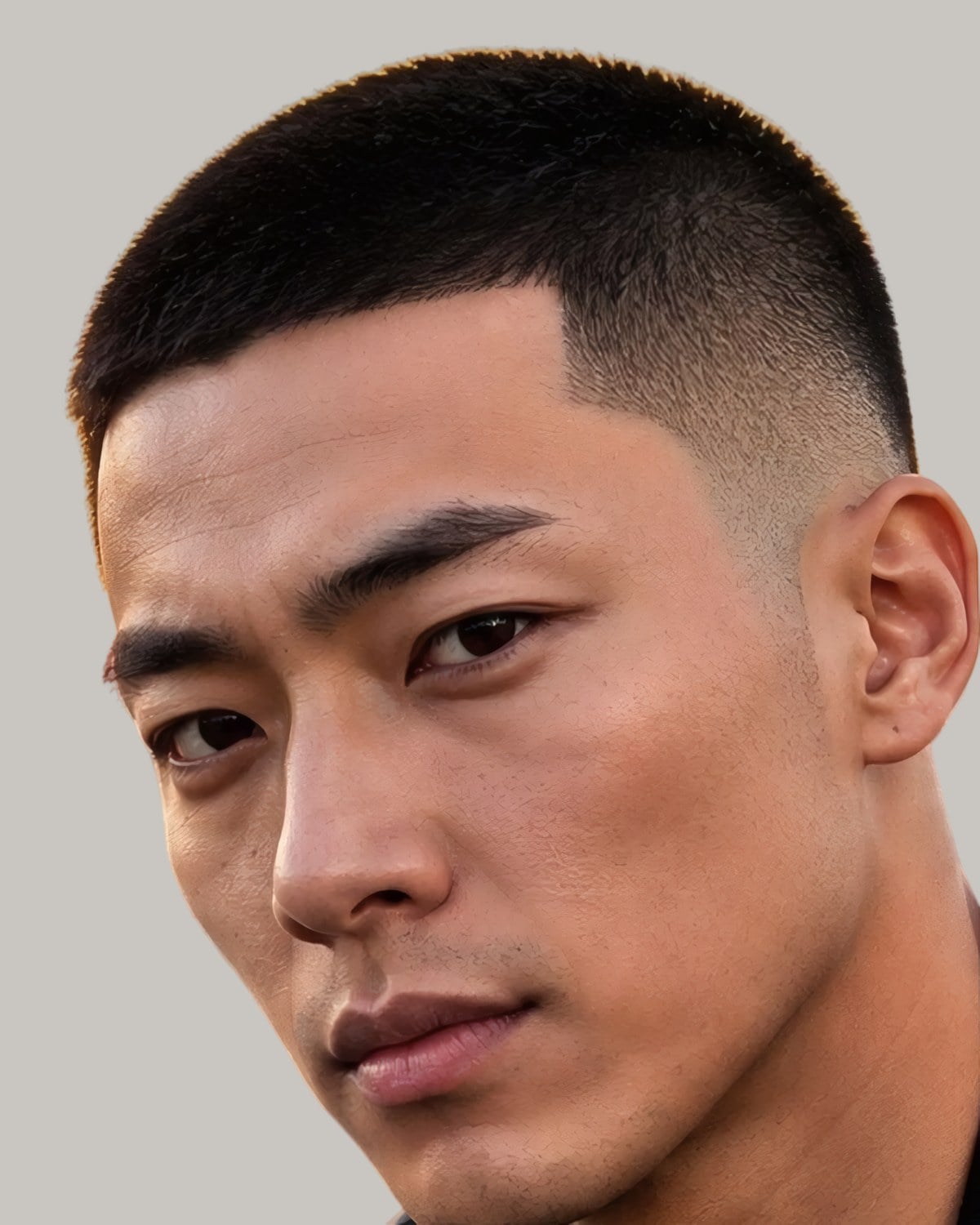
Thick, straight hair stands straight up at a number 3, with a velvety texture that catches the light. The shape of the cut really shows on straight hair, so a clean line-up matters.
Got a cowlick at the crown? A number 2 hides it, a number 3 won’t.
What to ask for Number 3 all over, natural line-up.
Curly buzz cut with a high fade
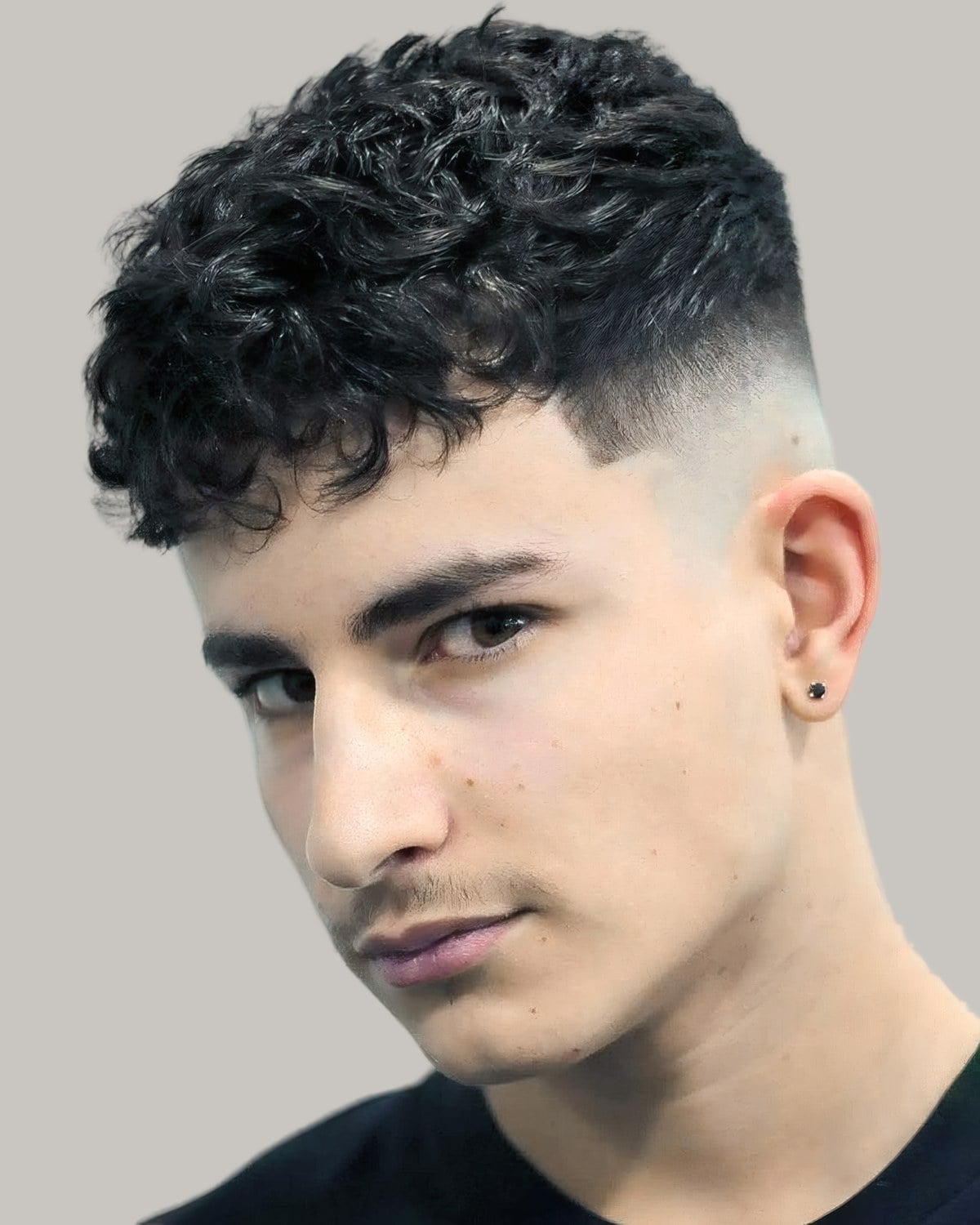
Keep a number 4 or longer on top and your curls stay curly, while a high skin fade underneath gives them a shape. A hard part shaved in at the side adds a sharp finishing line.
It’s on the border of what counts as a buzz, and perfect if you want the sides gone and the texture kept.
What to ask for Number 4 on top, high skin fade, hard part on the side.
Buzz cut on Afro-textured hair
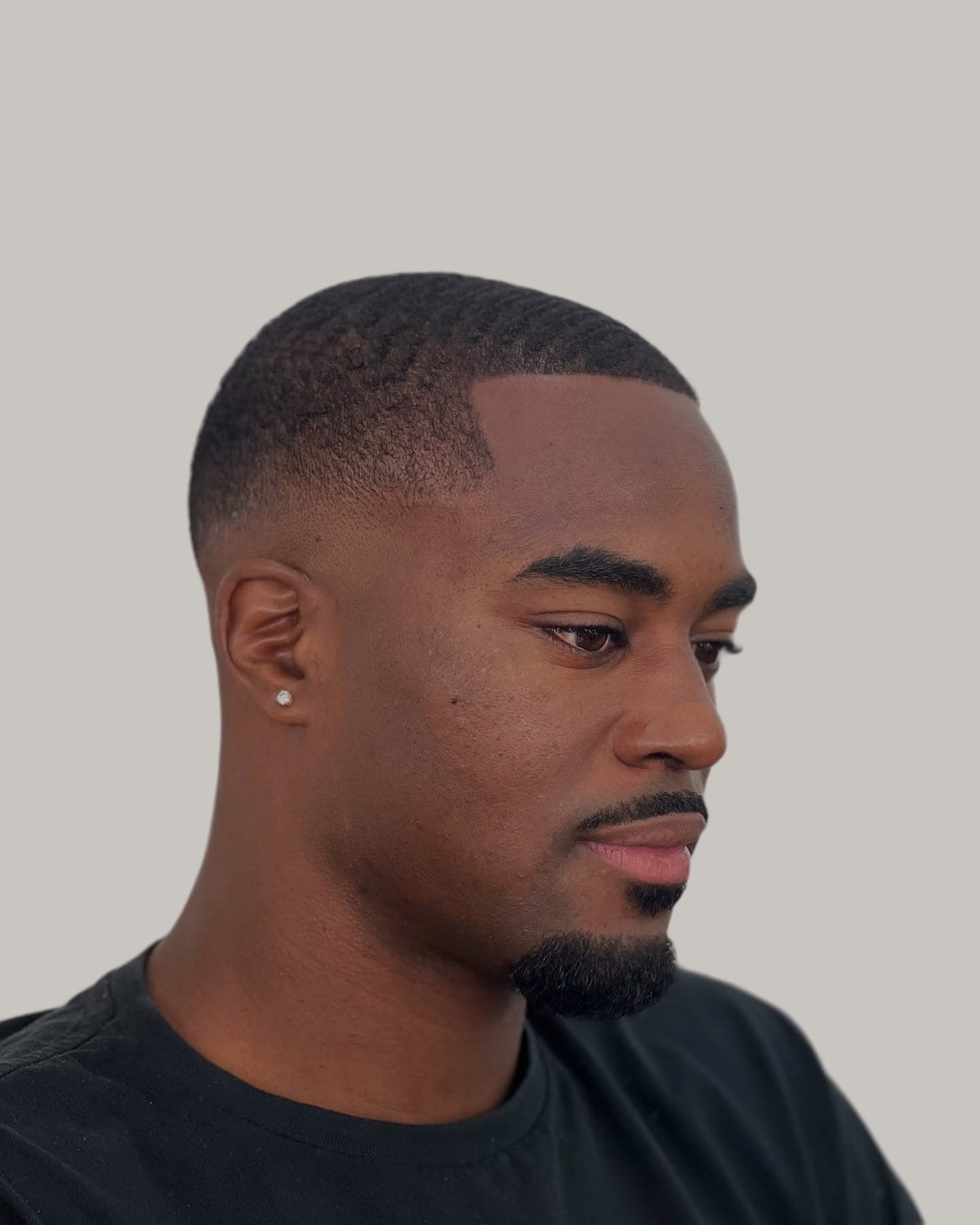
On Afro-textured hair, a number 1 or 2 sits close and even. Keep the fade low and the edges tapered, then book a line-up every two weeks to keep everything crisp.
Your natural curl pattern does the styling up top, no product needed.
What to ask for Number 2 on top, low fade, tapered edges, natural line-up.
Buzz cut with waves
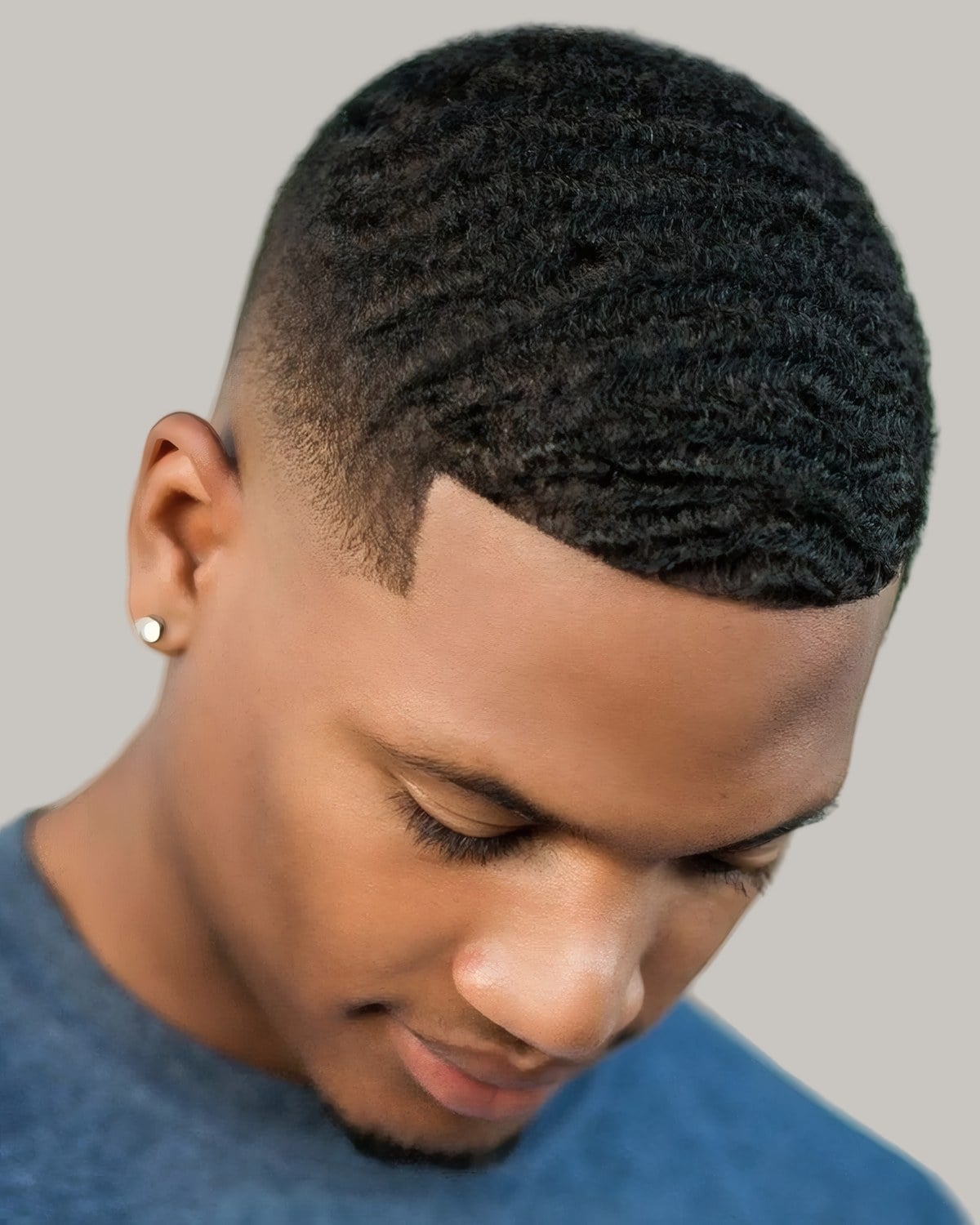
Waves are a buzz cut on tightly curled hair, brushed until the curl pattern lies in rippling rows. The clippers just set the length (a number 1 or 2). The waves come from a brush, and a durag at night.
It takes daily effort, but the pattern catches the light from every angle.
What to ask for Number 1 and a half on top, low taper, natural line-up, and keep the length even for the wave pattern.
Grey, blond and bleached buzz cuts
Grey buzz cut

Grey hair at a number 2 turns into salt and pepper, and a buzz shows it off instead of hiding it. It’s for the man who has stopped negotiating with his hair (congratulations, by the way).
Upkeep is a trim every three to four weeks. That’s it.
What to ask for Number 2 all over, taper at the neck.
Blond buzz cut

Natural blond at a number 2 lets a little scalp show through, and the lower contrast with your skin gives the cut a softer edge than the same length on dark hair.
Fair skin plus a nearly bare scalp is a sunburn waiting to happen, so put SPF on your head too.
What to ask for Number 2 all over, low taper, natural line-up.
Bleached buzz cut
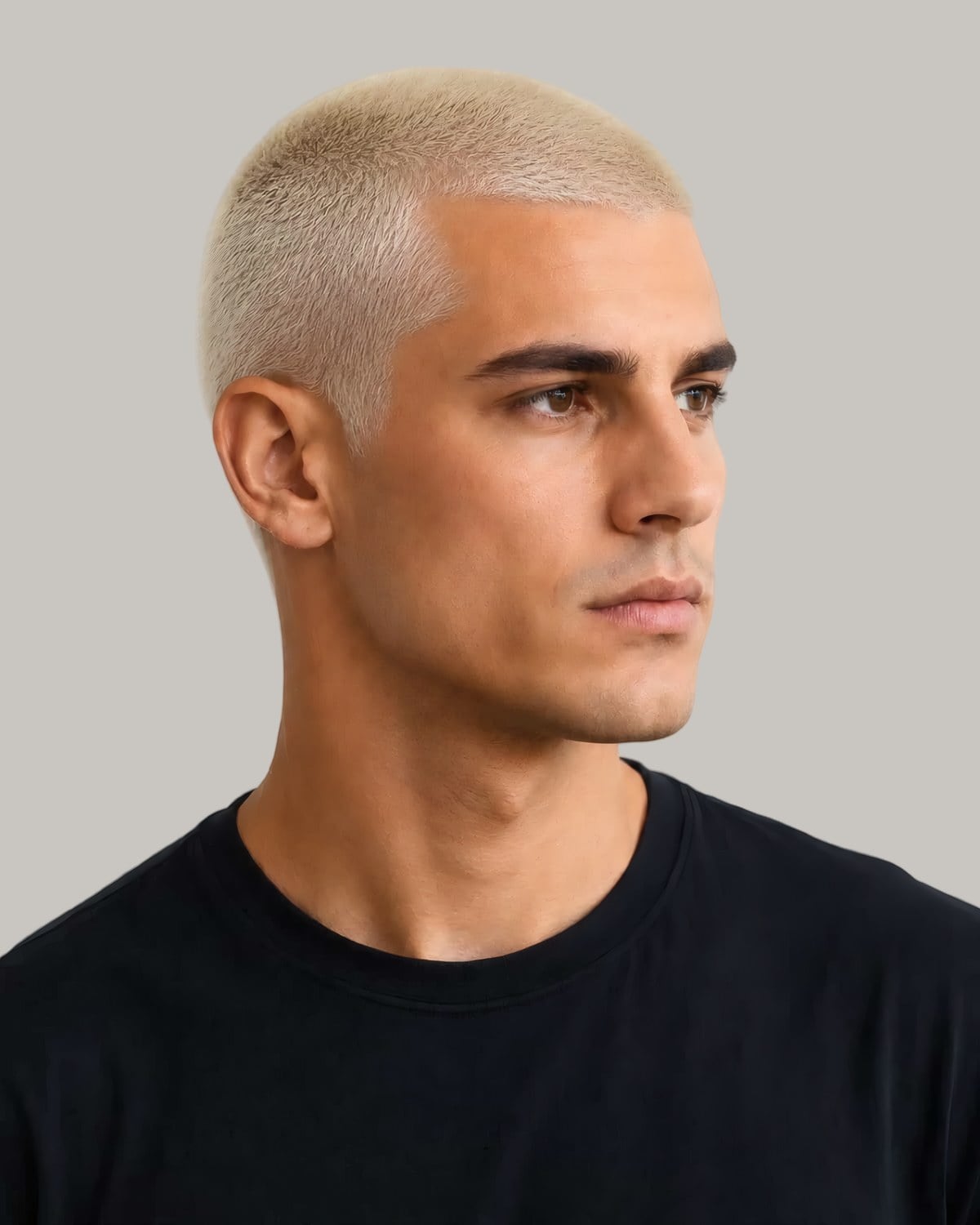
Platinum on a number 2 or 3 is a fun way to try bleach without the commitment, since the entire cut has grown out in about six weeks.
Your roots will show before then, so either re-bleach or call the two-tone part of the look.
What to ask for Number 2 all over, then bleach to platinum.
Bleached buzz cut on textured hair
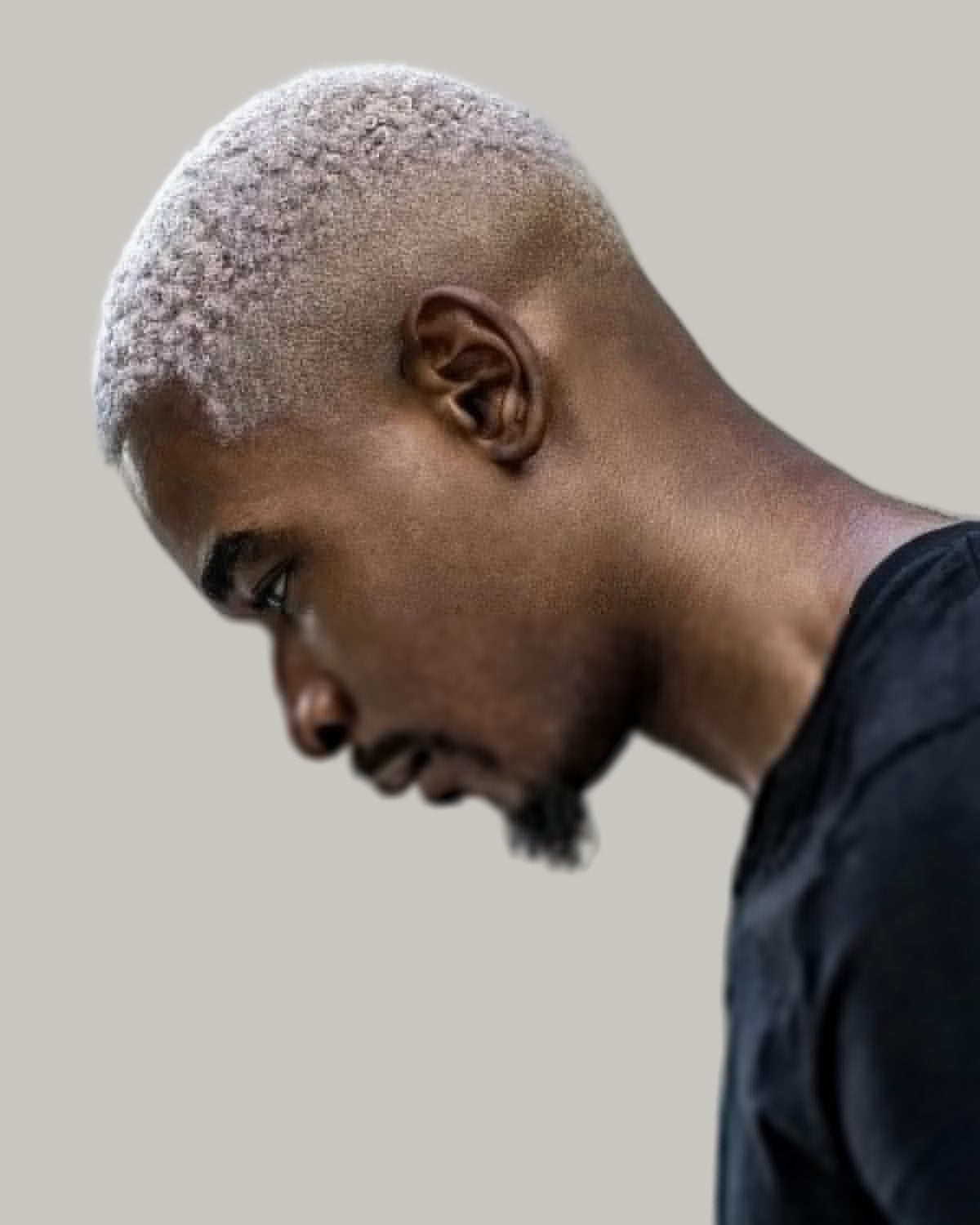
Blond on a number 4 of tight curls gets noticed from across the street. The curls hold the light color beautifully, and the fade underneath keeps it looking like your own hair rather than a wig.
Book a colorist instead of grabbing a box, since over-processing can loosen your curl pattern.
What to ask for Number 4 on top, low fade, then bleach the top only.
Buzz cuts for thinning hair
Buzz cut on a receding hairline
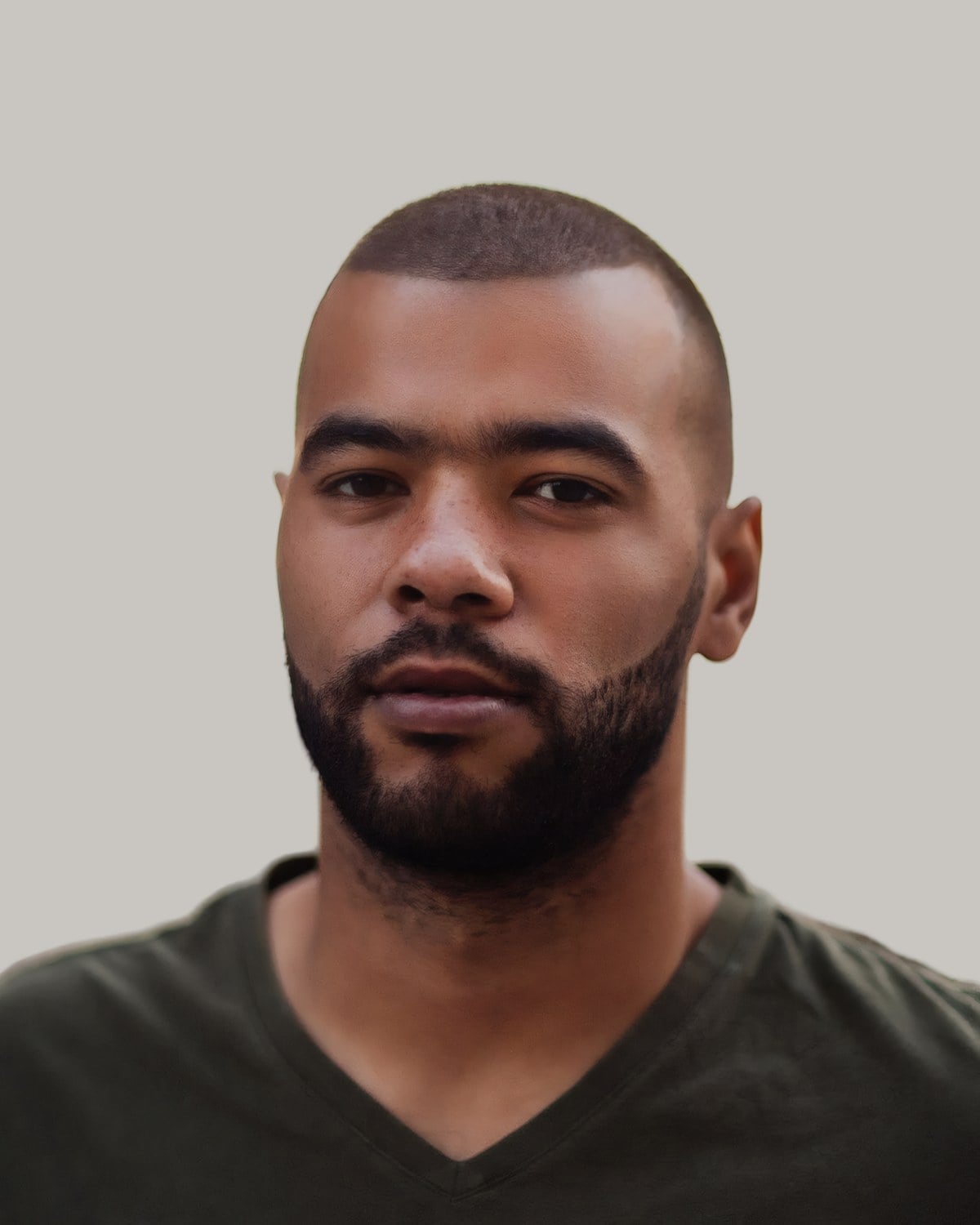
Good news: a buzz is kind to a receding hairline, as long as the top is cut shorter than the hairline is thin. At a number 1, it’s hard to tell where your hair is and where it used to be.
Ask for a natural line-up, never a hard one, so you’re not drawing a frame around the bit you’d rather nobody noticed. There are 24 more cuts for a receding hairline in our receding hairline haircuts guide.
What to ask for Number 1 all over, natural line-up, no hard edges at the temples.
Buzz cut for thinning hair
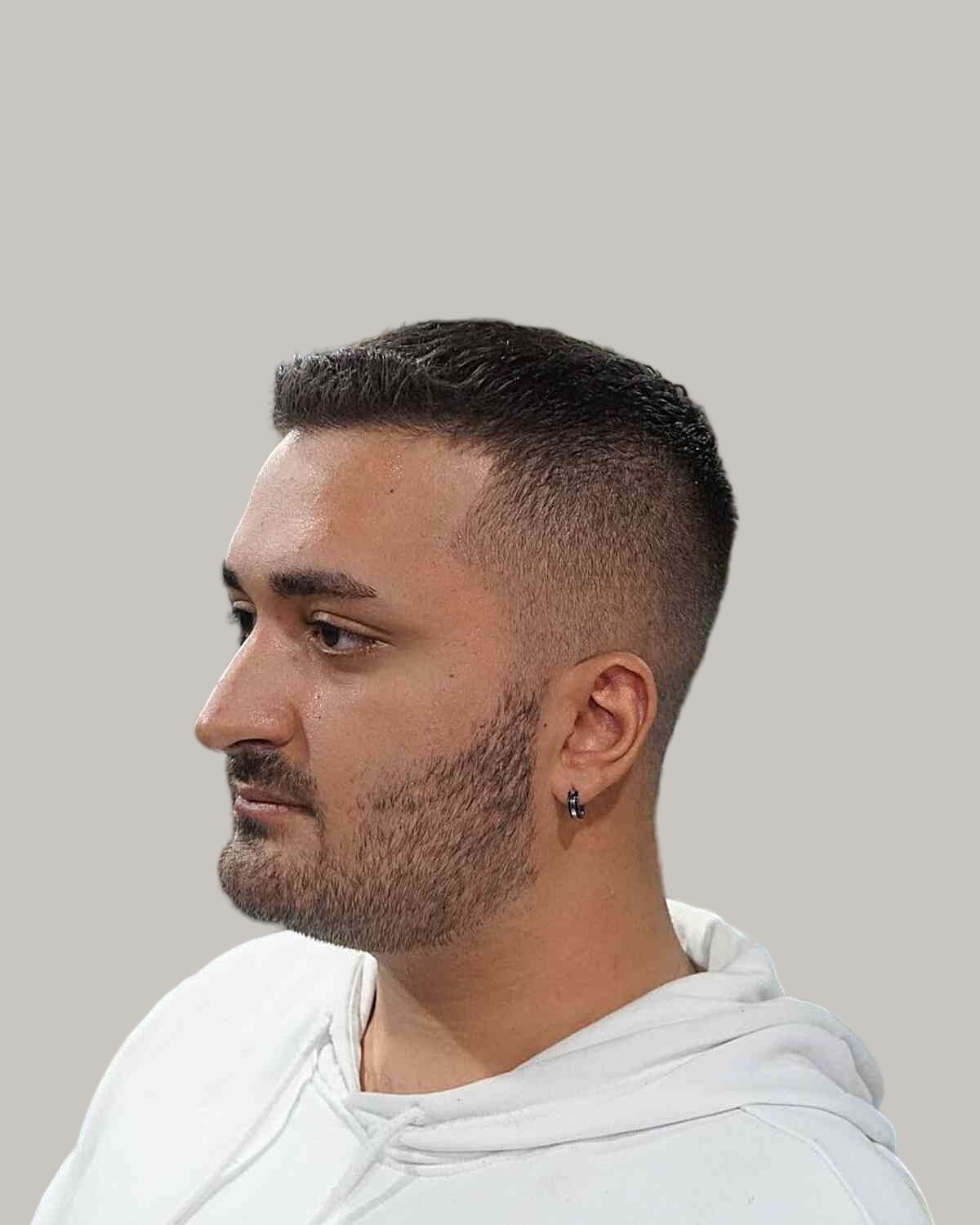
Thinning hair looks fuller when it’s buzzed, because a short cut evens out the contrast between thick and sparse patches. A number 1 or 2 works hardest, with a low taper to keep things neat.
Once the loss reaches a horseshoe shape, though, a full shave usually looks cleaner. Try a number 1 on a weekend and let the mirror decide.
What to ask for Number 1 all over, low taper, natural line-up.
Buzz cut over 50

A number 1 hides a thinning crown, lets grey be grey, and takes the daily battle with a comb off your to-do list.
Keep the neckline tapered and the sideburns short, since both tend to grow in coarser with age.
What to ask for Number 1 all over, tapered at the neck, sideburns short.
01 of 01
What is a buzz cut?
A buzz cut is hair clipped to one short length all over your head, from no guard at all up to about a number 4. The “buzz” is the sound of the clippers. There’s no scissor work and no layering, just a plastic guard that snaps over the blade and sets the length. Wikipedia also lists “wiffle cut” as a name for it, in case that ever comes up at a pub quiz.
Barbers use three names for the range. An induction cut is clippers with no guard and nothing blended. A burr cut is a number 1 or 2, short enough for your scalp to show through. A butch cut is a number 3 or 4, where the hair starts to take on some shape, especially if it’s wavy.
The cut took off with the manual clippers that Serbian inventor Nikola Bizumić introduced in the late 19th century, and armies soon took to it. Recruits in the US, the UK, Australia, China and Russia still get one on entry. It started as a defense against head lice and stuck around because it’s easy, cool and uniform.
Who suits a buzz cut?
A buzz cut suits an even head shape, strong bone structure, and hair that’s either dense or thinning. It hides nothing, so it’s as much a decision about your head and face as about your hair.
Start with your head. Lumps, dents, scars, an uneven skull and cowlicks that stand up when short all show at buzz length. Never seen your head at a number 1? Ask your barber for an honest opinion before you commit.
Then your face. Square, oval and diamond faces carry a buzz beautifully, because the cut puts your jaw and cheekbones front and center. A round face can look fuller under a uniform buzz, so ask for a fade on the sides to slim it down. An oblong face suits a longer buzz, a burr or a butch, with a low taper so your head doesn’t read as an egg. Triangular faces divide the barbers: some recommend the induction cut, others say keep the sides longer. That one’s worth a chat in the chair.
Hair density works in your favor at both ends. Thick hair fills in at a number 2 and looks deliberate. Thinning hair benefits too, because a short cut evens out the contrast between thick and thin patches. The exception is advanced loss in a horseshoe pattern, which looks patchy at buzz length. A full shave is usually the better call there.
What to ask your barber for
Give your barber three things: the guard number on top, what you want on the sides, and how you’d like the edges finished. “Number 2 all over” is a perfectly good order. So is “number 3 on top, skin fade on the sides, natural line-up.”
For a first buzz, barber Nick Hall suggests a number 2 or 3, and you can go shorter next time once you’ve seen how your head looks. For the sides, say “all over” for one length, “taper” if you just want the neckline and sideburns shortened, or “fade” if you want the sides blended down toward skin. Taper and fade are different cuts, so be clear about which you mean.
Then the edges. A natural line-up tidies your hairline without pushing it back. A hard line-up cuts a crisp edge across your forehead and temples with a trimmer. It looks sharp on day one, and it needs a visit every couple of weeks to stay that way.
Turn up with clean, dry hair, because wet hair clumps and cuts unevenly. Doing it yourself? Run the clippers against the grain, then go back over it in the opposite direction to catch the strands you missed.
How much upkeep does a buzz cut take?
Plan on a trim every two to four weeks for a uniform buzz, and every ten to fourteen days for a fade. The fade ages first, because the blend from skin to a number 2 stops looking like a blend once both have grown a quarter inch.
Styling, on the other hand, takes zero effort. You can give your hair products to a friend. What your head needs now is scalp care, since there’s skin on show that used to live under hair. Wear SPF outdoors, use a light moisturizer, and exfoliate gently once or twice a week. If you’ve gone for an induction cut, start the week you get it.
Is a buzz cut a taper or a fade?
A buzz cut is neither on its own, but it can have either. The buzz is the length on top. The taper or the fade is what happens on the sides and at the back.
| Uniform buzz | Buzz cut with a taper | Buzz cut with a fade | |
|---|---|---|---|
| Top | One guard number | One guard number | One guard number |
| Sides | Same as the top | Same as the top, shortening only at the sideburns and neckline | Blended down toward the skin, from low, mid or high on the head |
| Grows out | Evenly | Evenly, with the edges softening first | The blend disappears first |
| Barber visit | Every 2 to 4 weeks | Every 3 to 4 weeks | Every 10 to 14 days |
A taper fade takes the sides and back gradually shorter toward the nape and sideburns, ending close to or level with the skin. It’s the softer finish, and the one to ask for if you want the cut to still look tidy in week four. A fade goes further, down to bare skin, and can start low above the ear, at the temple or high near the crown. Our taper fade guide shows every version in photos, handy if you want to compare before you choose.
What is the 3-2-1 rule for a buzz cut?
The 3-2-1 rule is a fade you can order in three numbers: a number 3 guard on top, a 2 on the sides, and a 1 at the bottom. Each step is a full guard, so your barber doesn’t have to blend anything by eye.
It grows out nicely, too. The top and the bottom sit a quarter inch apart, so the cut stays tidy for longer than a skin fade does. If you like the idea of a fade but aren’t ready for bare skin above your ears, this is a great place to start.
Is a buzz cut better than going bald?
A buzz beats a full shave as long as your hair still covers your scalp evenly. Once it doesn’t, the shave wins, so it really comes down to your hairline.
A receding hairline or a thinning crown looks good with a buzz, and it takes the comb-over off the table for good. Once the loss reaches the horseshoe stage, though, a buzz looks patchy and shaving to the skin looks cleaner. The quick test is a number 1 on a Saturday. If it looks even, keep buzzing. If not, it’s time for the razor.
How long does a buzz cut last?
A uniform buzz lasts two to four weeks before it needs a trim, and a fade lasts ten to fourteen days before the blend grows out. Hair grows about half an inch a month, so a number 2 has passed a number 4 within a month, and the cut has grown out completely in about six weeks.
The fade goes first. A taper hangs on longer, because the difference between the top and the edges is smaller to begin with. A hard line-up lasts about as long as a fade, while a natural line-up lasts as long as the cut.
Why shouldn’t you get a buzz cut?
Skip the buzz if your scalp has scars, dents or lumps, your skull is uneven, you have a cowlick that sticks up when short, or your hair loss has reached the horseshoe stage. All of those show at buzz length, and there’s no hair left to style around them.
Flaking and dry patches stand out too, so treat your scalp first and buzz second. And if your face is very round, a uniform buzz can make it look fuller. A fade or a taper helps, and a longer buzz helps even more.
How do you grow out a buzz cut?
It takes about six weeks for a buzz to reach a length that lies down, and the middle two are the awkward bit. Around a number 4, the hair stands straight up, the sides lose their shape and the neckline gets fuzzy.
The trick is to keep seeing your barber. Ask them to leave the top alone and taper the neck and sideburns, so the outline stays clean while the length comes in. Once it lies flat, you’re choosing a new haircut, and the crew cut is the first one that gives you something to style.
Not sold on going this short? Our guide to men’s haircuts shows four cuts from every family, from crops to long hair.
And if a buzz turns out not to be your thing, no harm done. Six weeks later it’s gone, and your hair won’t hold a grudge. Fancy a little more on top next time? Our guide to the best short haircuts for men picks up where the buzz leaves off, with the crew cut, the Ivy League and the French crop.
Products featured here are independently selected by our editors. If you buy through our retail links we may earn an affiliate commission — it never changes the price you pay, and it never decides our verdicts. Read our earnings disclaimer.