You’ve got a screenshot saved on your phone and a barber asking what we’re doing today. Is it the waves? The twists? The braids your cousin swears take an hour, tops?
Here’s the part nobody mentions in the chair: the style you pick decides when you’re back. A fade wants your barber every two to three weeks. Cornrows can stay in for up to six. Locs take about six months just to settle in, and then they’re yours for years.
So scroll until one looks like you, check what it asks of your calendar, and read the Ask line out loud when you sit down.
Haircuts for Black men
Here are 42 haircuts for Black men, from waves to locs.
Low cuts and fades for Black men
Low cut with a line-up
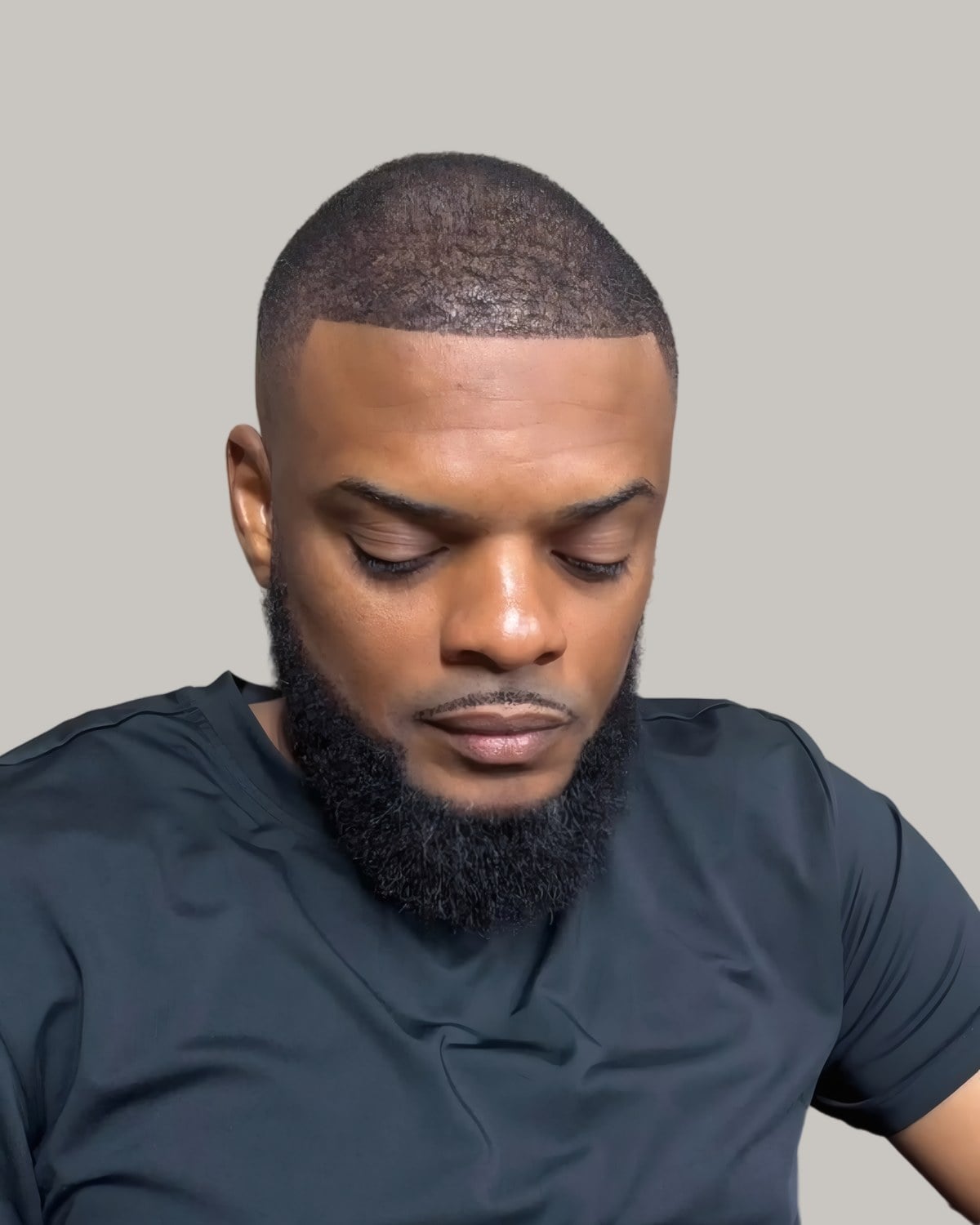
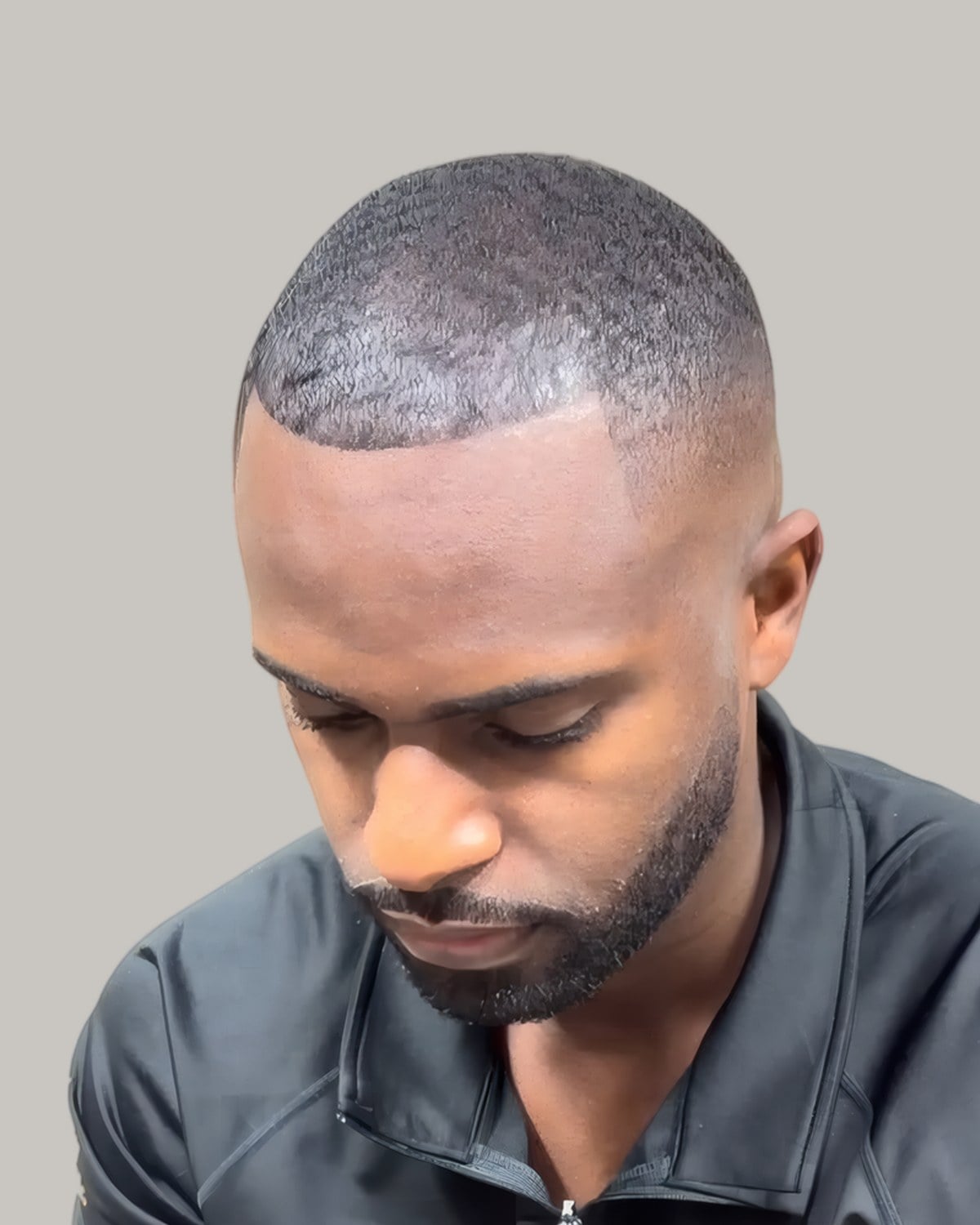
Short all over with a hairline you could set a ruler against. The line-up squares off the front and turns at the temples, and that sharp edge is what makes a low cut look intentional rather than overdue. If you’d rather the sides go shorter than the top, a taper does it without the full commitment of a fade (our taper fade guide has 56 of them).
What to ask for Low cut all over with a number 1, line-up at the front and temples, and keep the edges sharp.
Bald fade with a beard
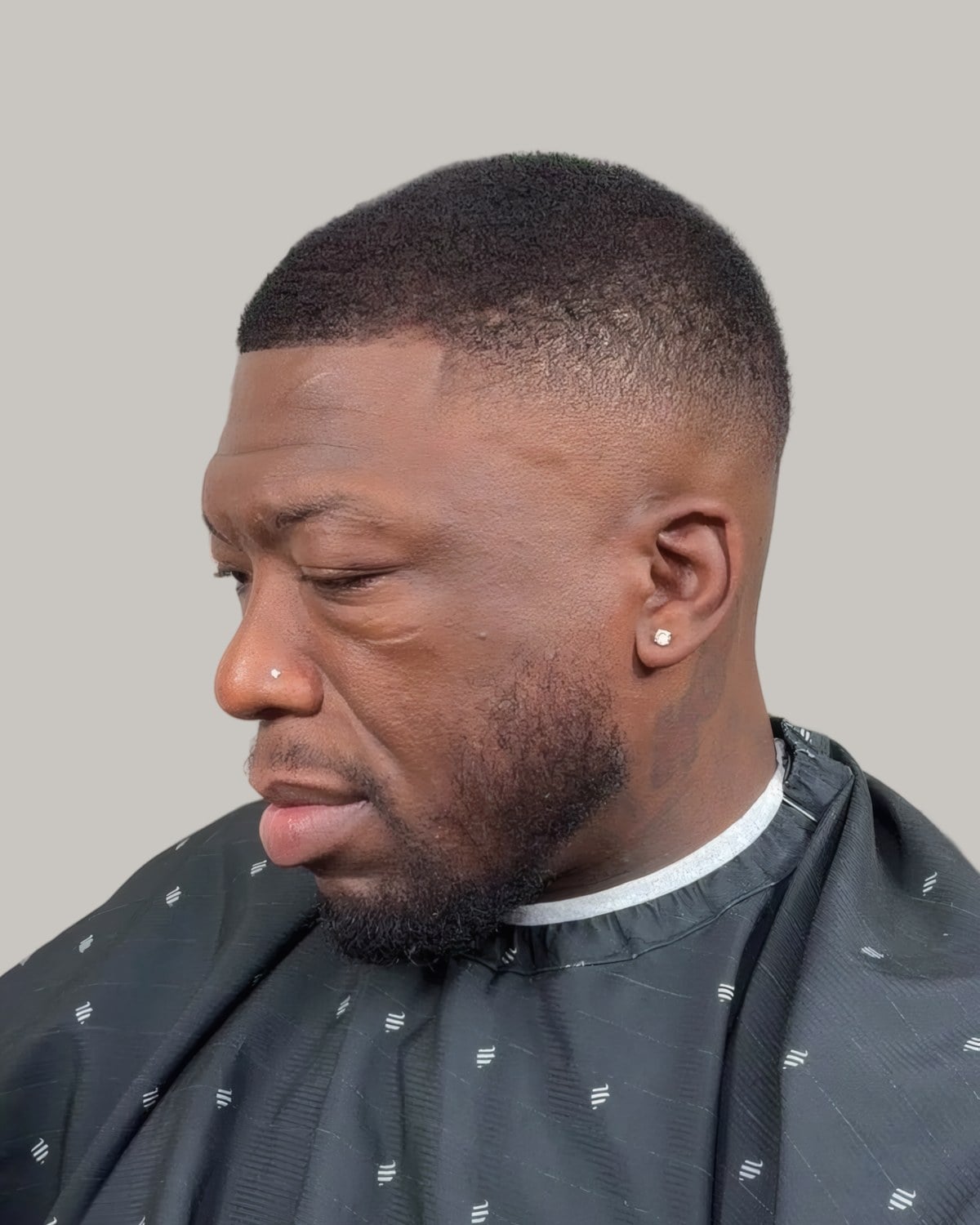
The sides go all the way to skin and the beard takes over the job of framing your face. Ask for the fade to meet the beard at the sideburn so there’s no gap between the two. The skin part grows back fast, so this one lives on a two-to-three-week schedule. There are 44 more fades in our fade guide, sorted by how high they start.
What to ask for Bald fade to skin above the ear, blended into the beard at the sideburns, short on top.
Caesar cut
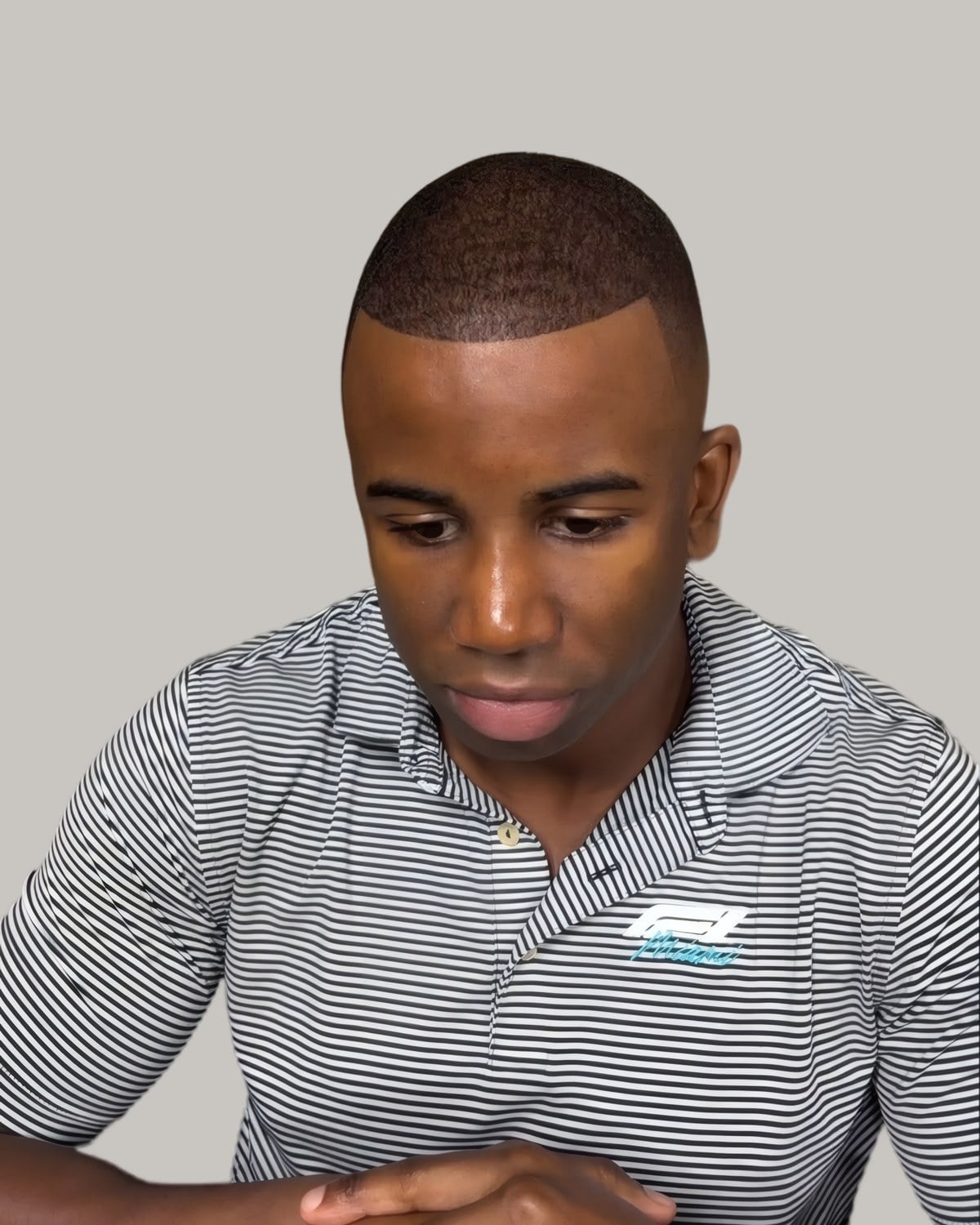

One short length all over, cut straight across the front. It’s a close cousin to the crew cut, but there’s no longer top to push around, so there’s nothing to style in the morning. It suits a gray beard just as well as a black one.
What to ask for Caesar cut, one short guard all over, straight line across the front, lined up at the edges.
Low cut with a full beard
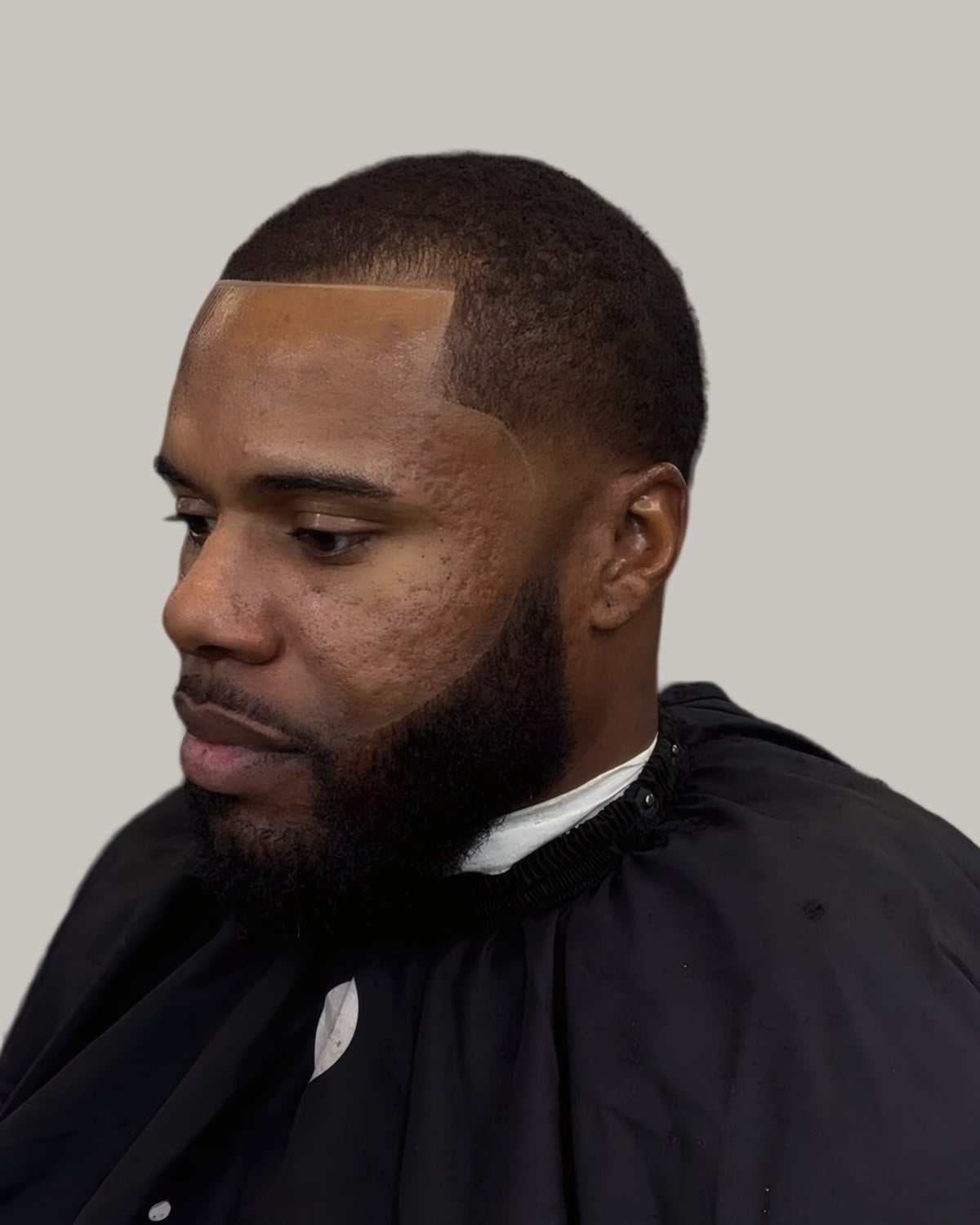
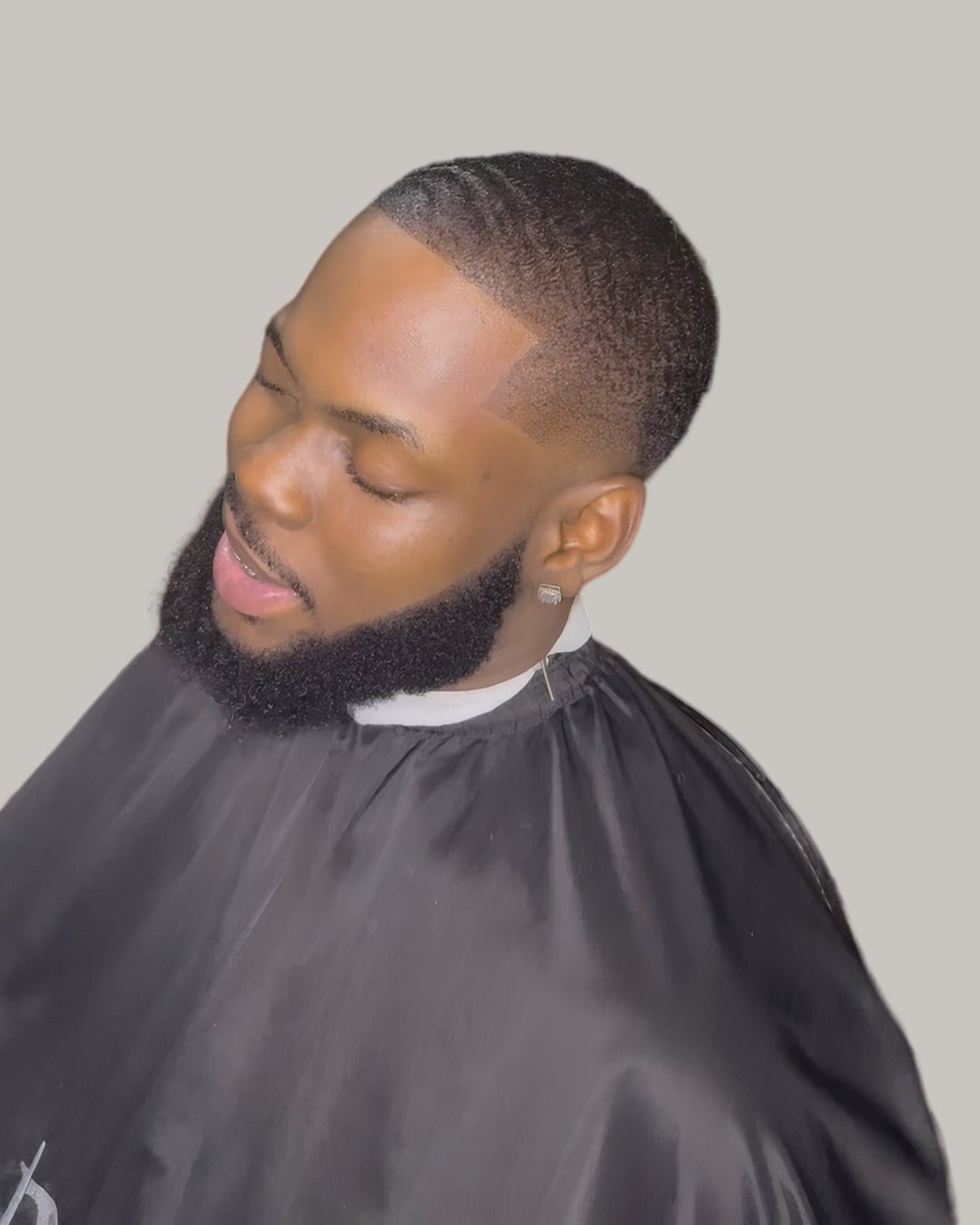
When the beard is the statement, the hair steps back. Keep the top low and even, line up the hairline, and let your barber shape the beard so the two meet cleanly at the ear. Hair grows about a third of an inch a month, so a low cut starts to soften within a few weeks.
What to ask for Low cut all over, line-up at the hairline, and shape the beard to connect at the sideburns.
Buzz cut fade with a beard


A guard number on top, faded down the sides. A number 1 leaves an eighth of an inch, so it’s about as close as you can go before it’s a bald fade. Our buzz cut guide runs from no guard to a number 8 if you want to try the lengths.
What to ask for Number 1 on top, faded down to skin at the sides, beard kept short and lined up.
Hair designs
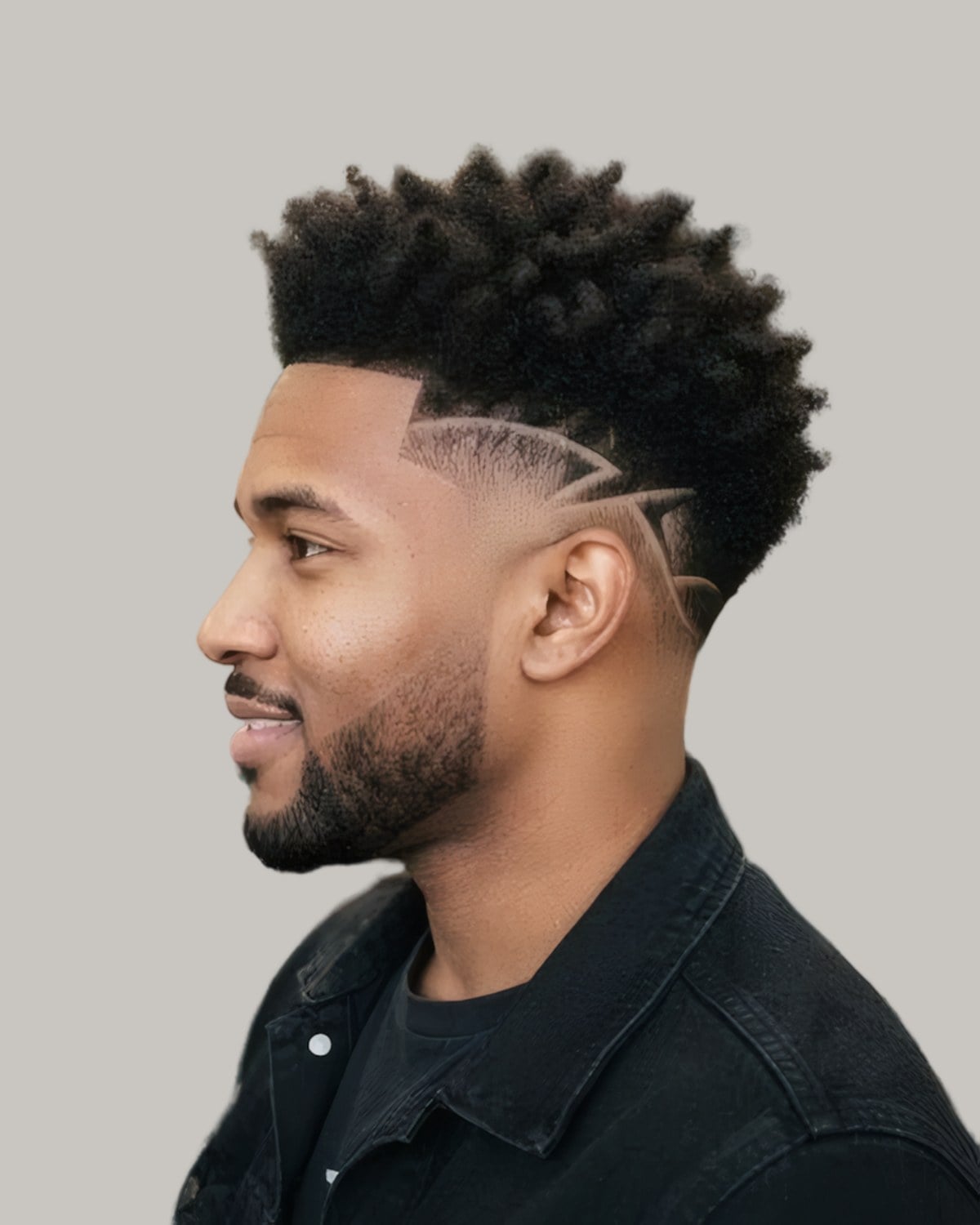
A design shaved into the fade with a trimmer or a razor: lines, curves, a part that keeps going. Your barber draws it freehand, so bring a photo of the shape you want. Hair grows about a third of an inch a month, so the lines soften within a couple of weeks and get redrawn at the next cut.
What to ask for Low taper fade, a design shaved in above the ear following this photo, and keep the top full.
High top fade
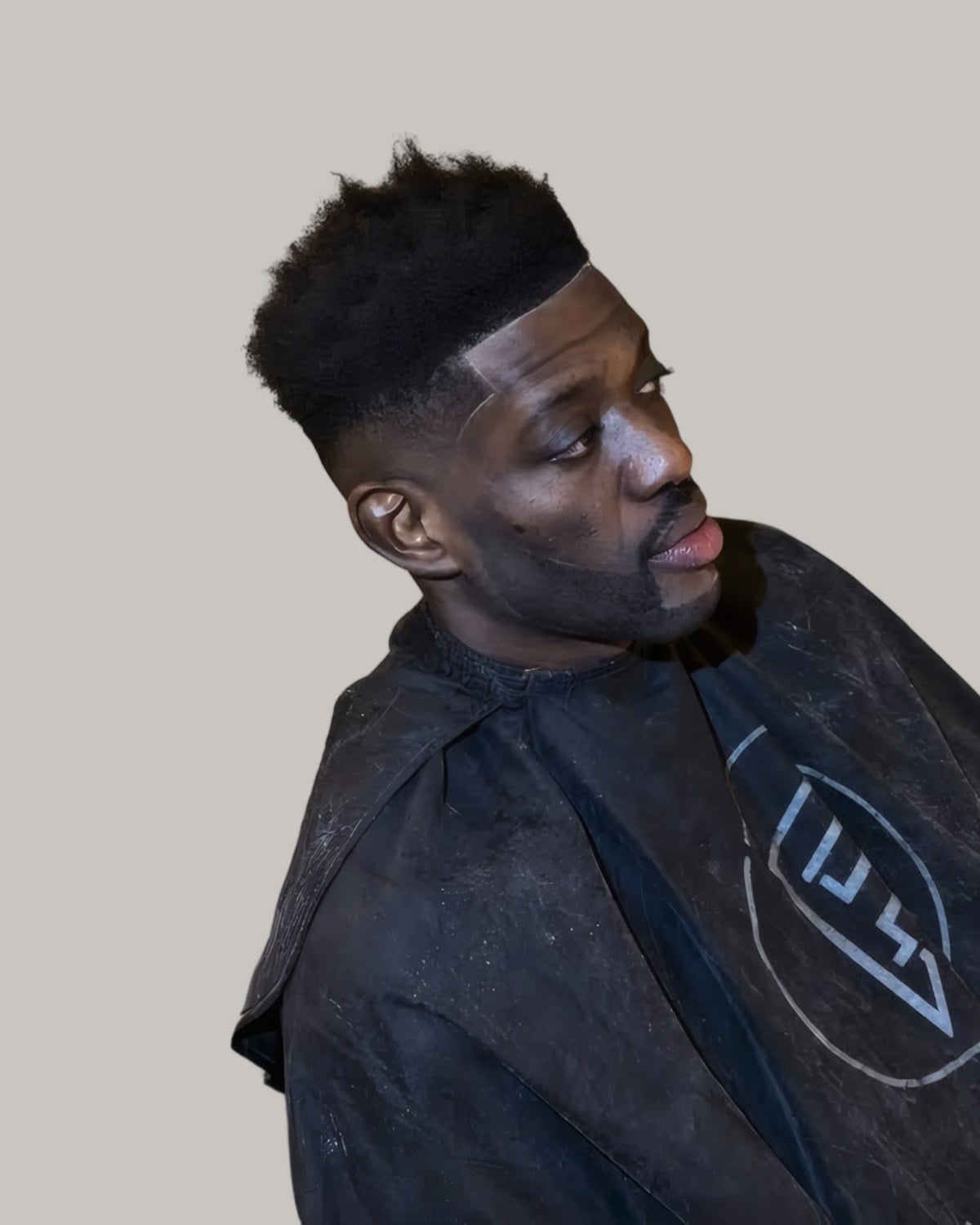
Faded sides, a tall flat-topped block on top. It came out of mid-1980s hip-hop (Kid ‘N Play and Big Daddy Kane wore it), and it still reads as a statement. The height takes a few months to grow, and the shape needs your barber every two to three weeks to stay square.
What to ask for High top fade, skin at the sides, top shaped flat and squared at the corners, line-up at the front.
Low fade with a sharp beard line
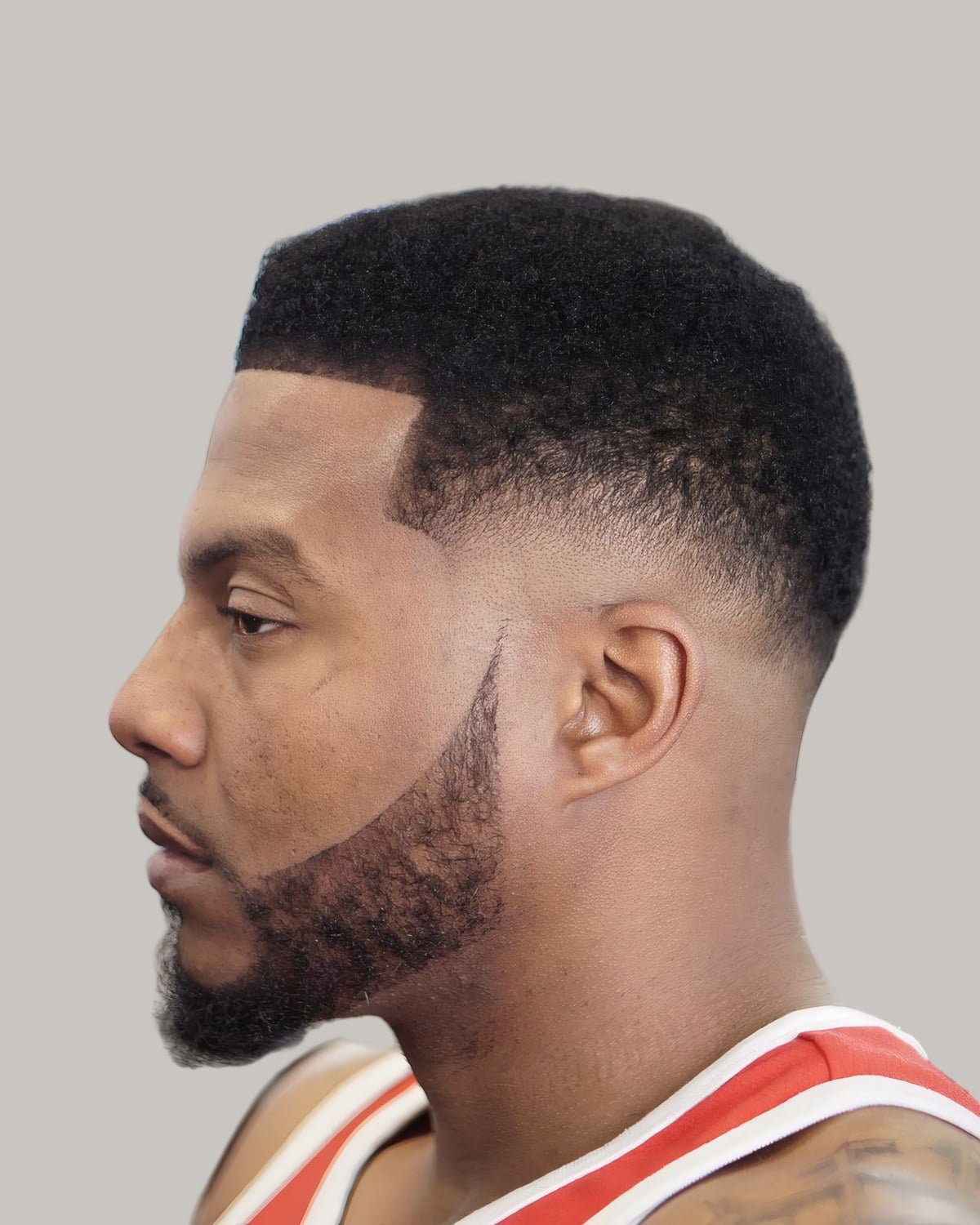
The fade stays low, just above the ear, under a short, even top squared off at the front. Your barber cuts the beard to a sharp cheek line to match the line-up. A top this short needs nothing more than a brush and a little pomade, and the low line holds for two to three weeks.
What to ask for Low fade starting just above the ear, number 2 on top squared off at the front, a line-up, and a sharp cheek line on the beard.
Skin, drop and temple fades
Skin fade with a full beard
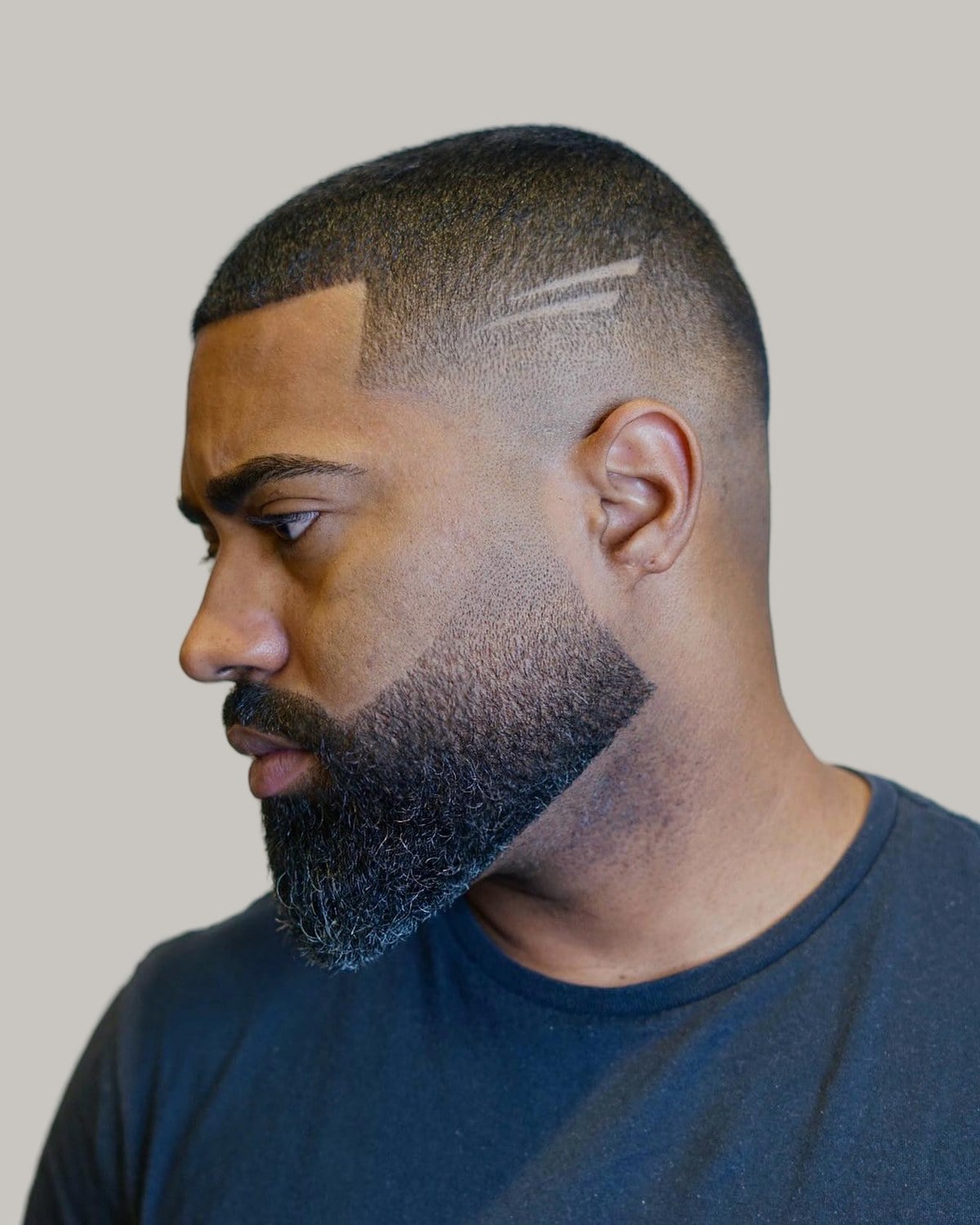
The sides go to skin above the ear and the top stays a short buzz, so the full beard carries the shape. The two lines shaved at the temple are a detail you can skip, and they grow out in about a week anyway. Our fade guide sorts the other fades by how high they start.
What to ask for Mid skin fade, number 1 on top, line-up at the front, two lines shaved at the temple, and the beard blended into the fade.
Drop fade with sponge curls
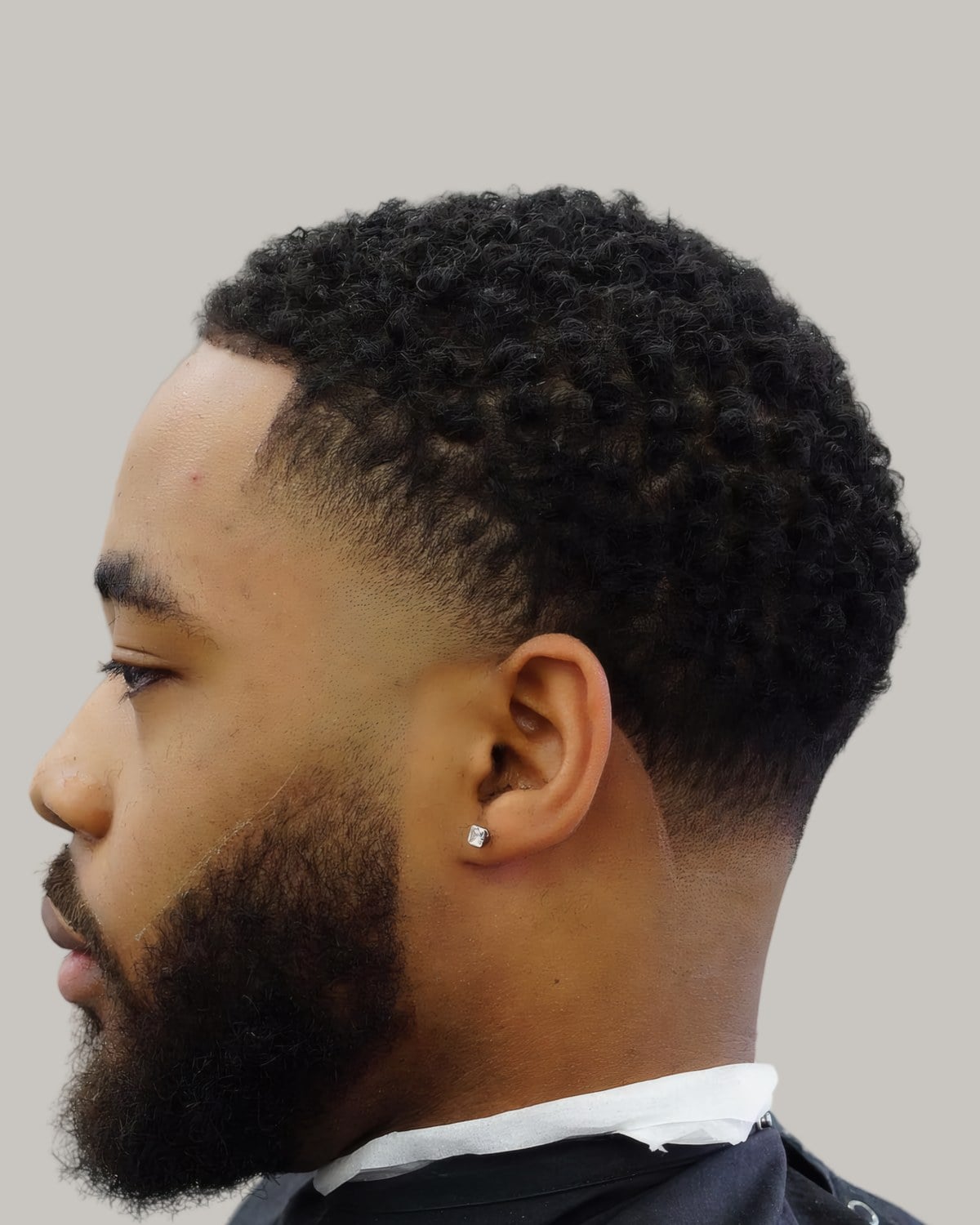
Here the fade dips behind the ear, so the back keeps a little more weight than the sides. Rub a sponge brush over the top in small circles and the short hair twists into tight curls. If you’d like the sides shorter without going to skin, our taper fade guide has the softer versions.
What to ask for Drop fade to skin, curving down behind the ear, about an inch on top for sponge curls, a line-up at the front, and the beard blended into the fade.
Temple fade with an afro
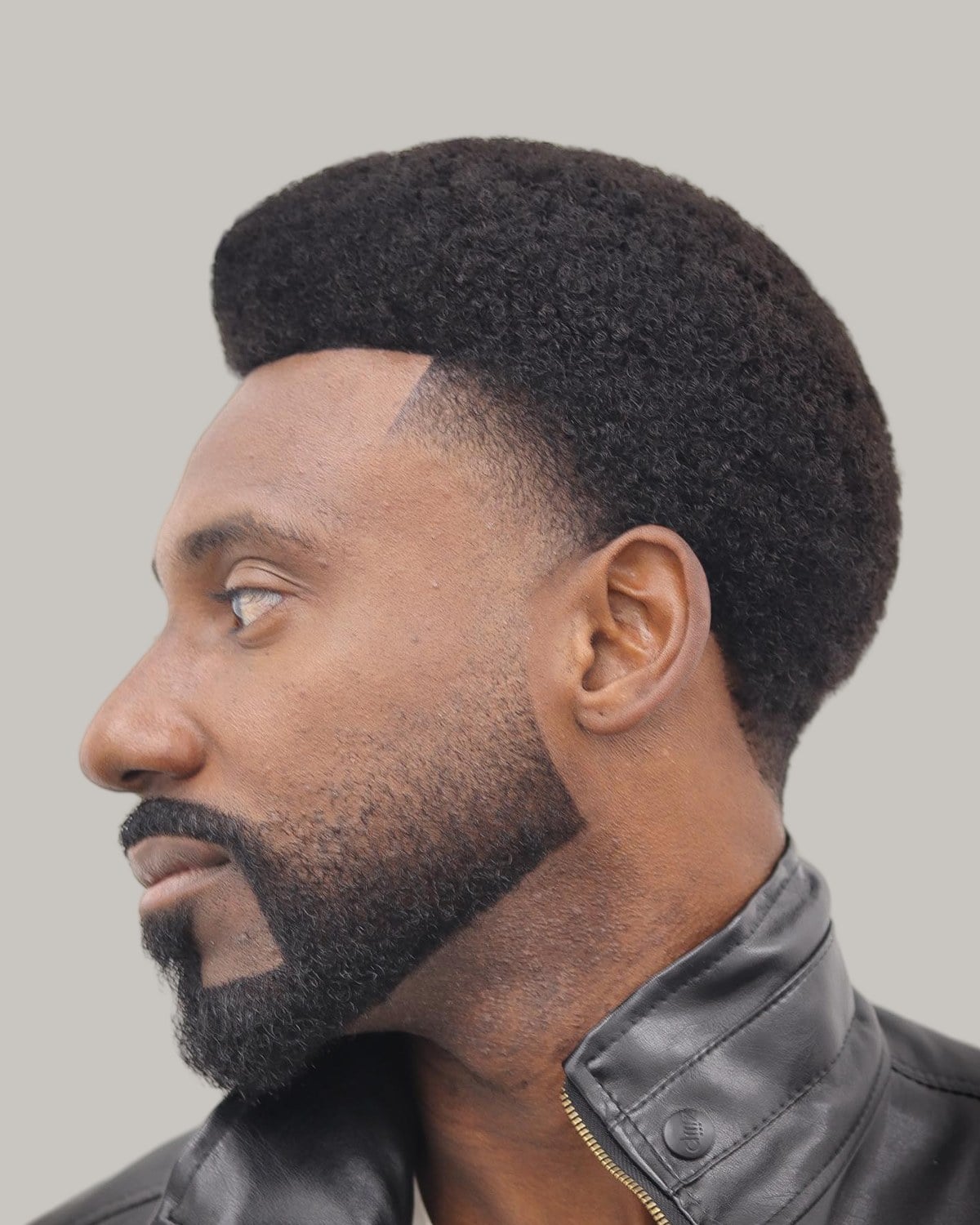
A temple fade tightens your hairline at the temples, then blends round the ear to the nape, so the afro on top keeps its full, rounded shape. The sharp line-up is what makes it read as a cut rather than a grow-out. Pick it out every morning, and plan on a line-up every two weeks or so.
What to ask for Temple fade at the corners of the hairline, blended round the ear to the nape, a sharp line-up, and the afro kept full on top and shaped round.
360 waves
360 waves with a temple fade
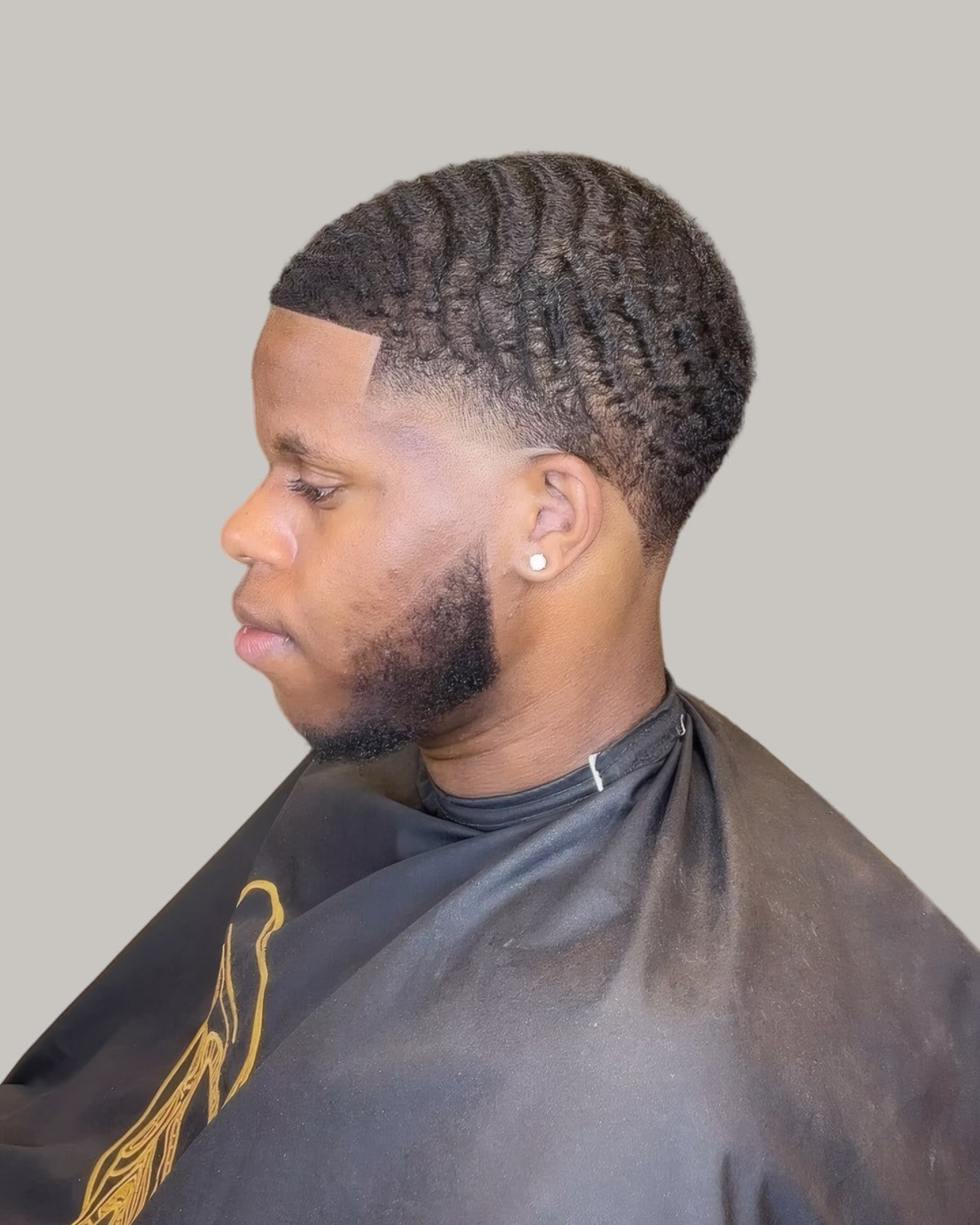
The waves run in a full circle around the crown, and a temple fade opens up the corners of the hairline. Waves need three things: a short cut, a lot of brushing, and a durag or wave cap at night. The temple fade is the easy part.
What to ask for Temple fade, light line-up, and take just a little off the top so the waves don't break.
Waves with a full beard
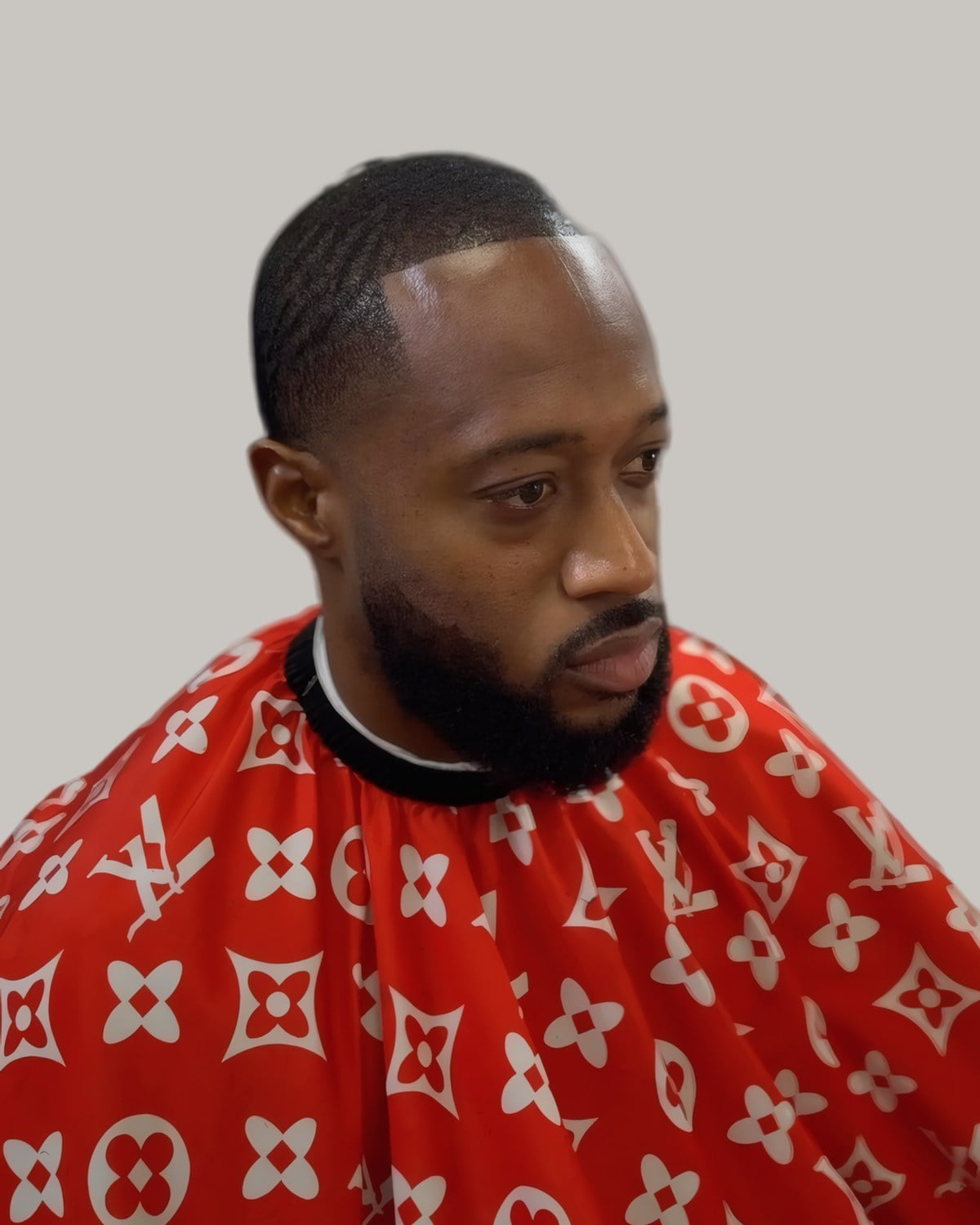
Brushed waves sit close to the head, so a full beard balances the shape. Wrap it up at night: the durag keeps the pattern from shifting while you sleep (your pillow is not on your side).
What to ask for Cut with the grain to keep the waves, line up the front, and shape the beard to match.
Waves with a sharp line-up
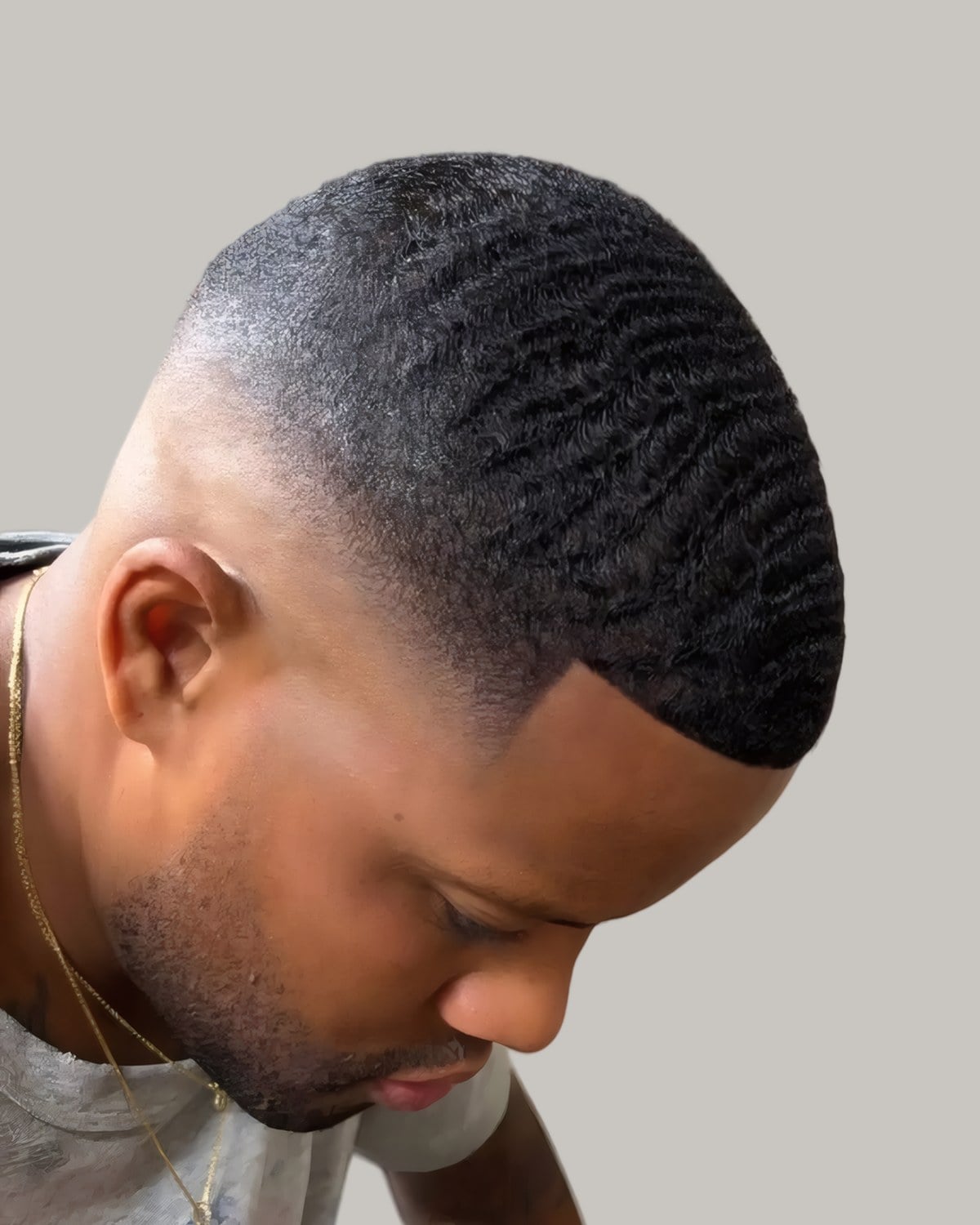
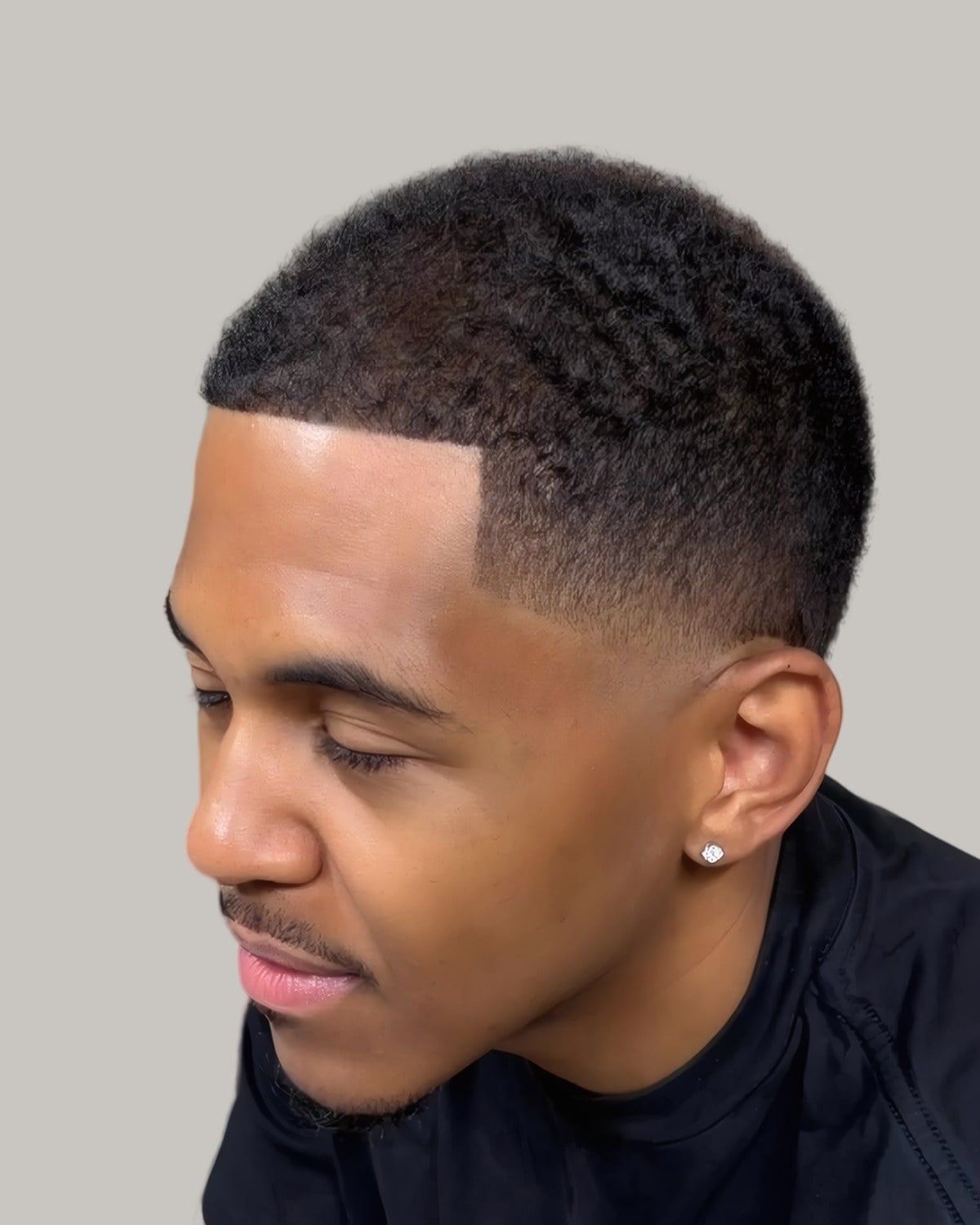
The line-up is the frame and the waves are the picture. Keep the cut short so the brush can do its work, and grab a pomade to lay the pattern down (our pick of men’s styling products has a few), and keep the brush within reach.
What to ask for Short cut with the grain, sharp line-up at the front and temples, nothing taken off the length the waves need.
Sponge curls and short afros
Sponge twists with a taper
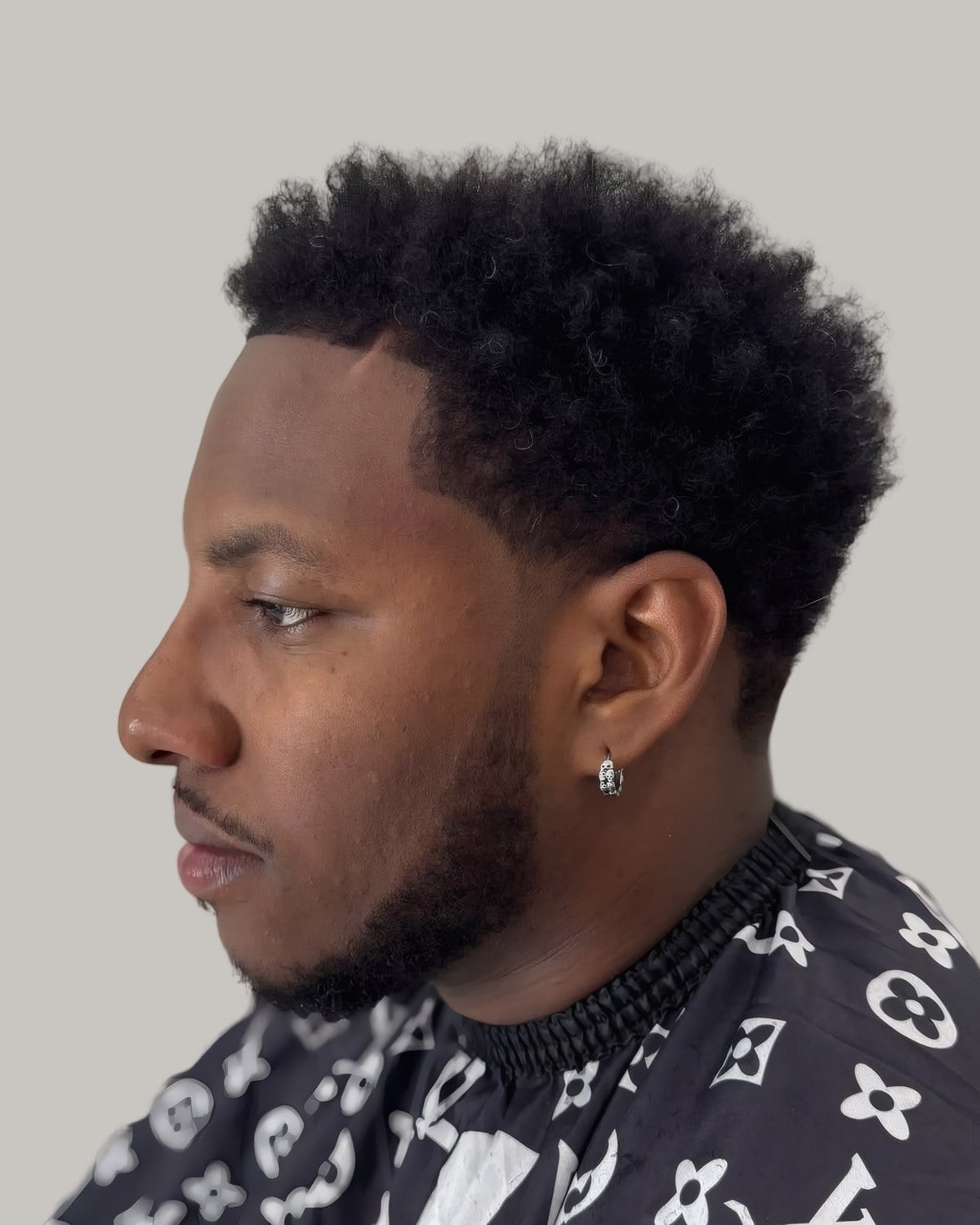
A twist sponge rubbed over short hair turns it into small, defined coils. A taper at the temples and the neck keeps the edges clean. It’s what makes the coils look deliberate. Once you’ve got the knack, it’s a quick rub in the mirror before you leave.
What to ask for Low taper at the temples and nape, an inch or two on top, and leave it long enough to sponge.
Short afro with a line-up
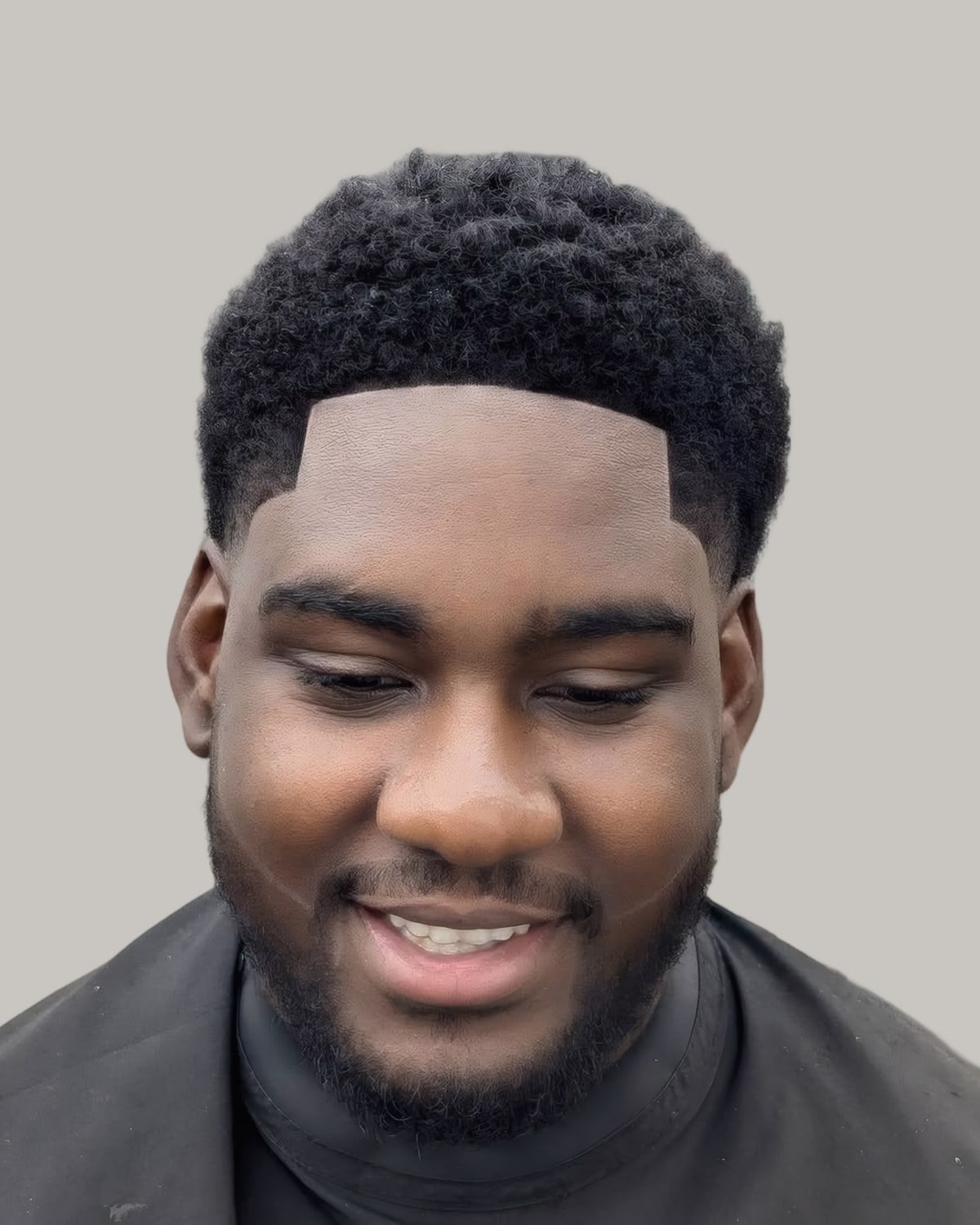
A short, rounded afro with a hairline that’s been squared off. The line-up is the part that needs your barber, about every three weeks, while the top can stretch a little longer.
What to ask for Shape the top round and short, line-up at the front, and keep the sides tidy.
Curly sponge top
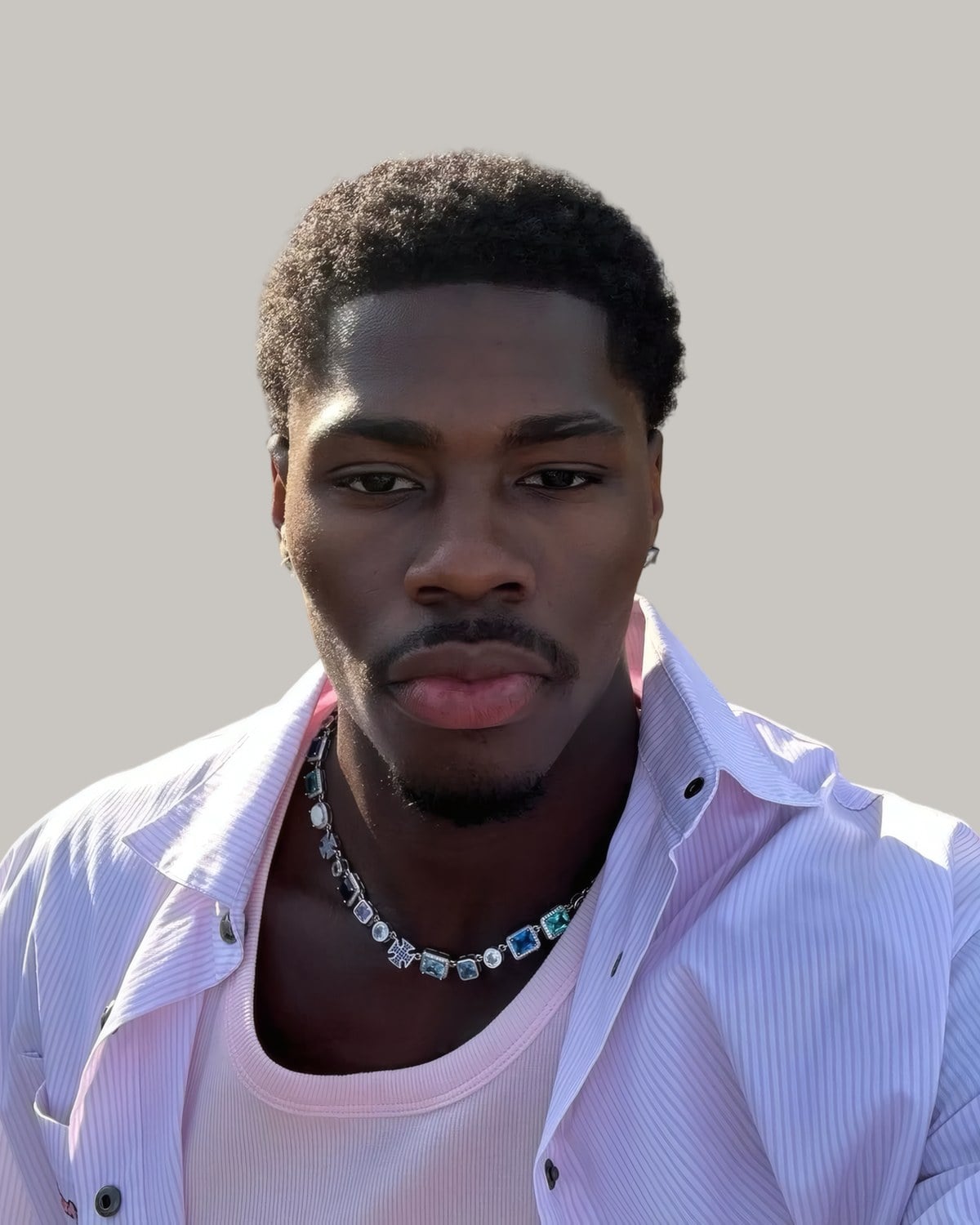
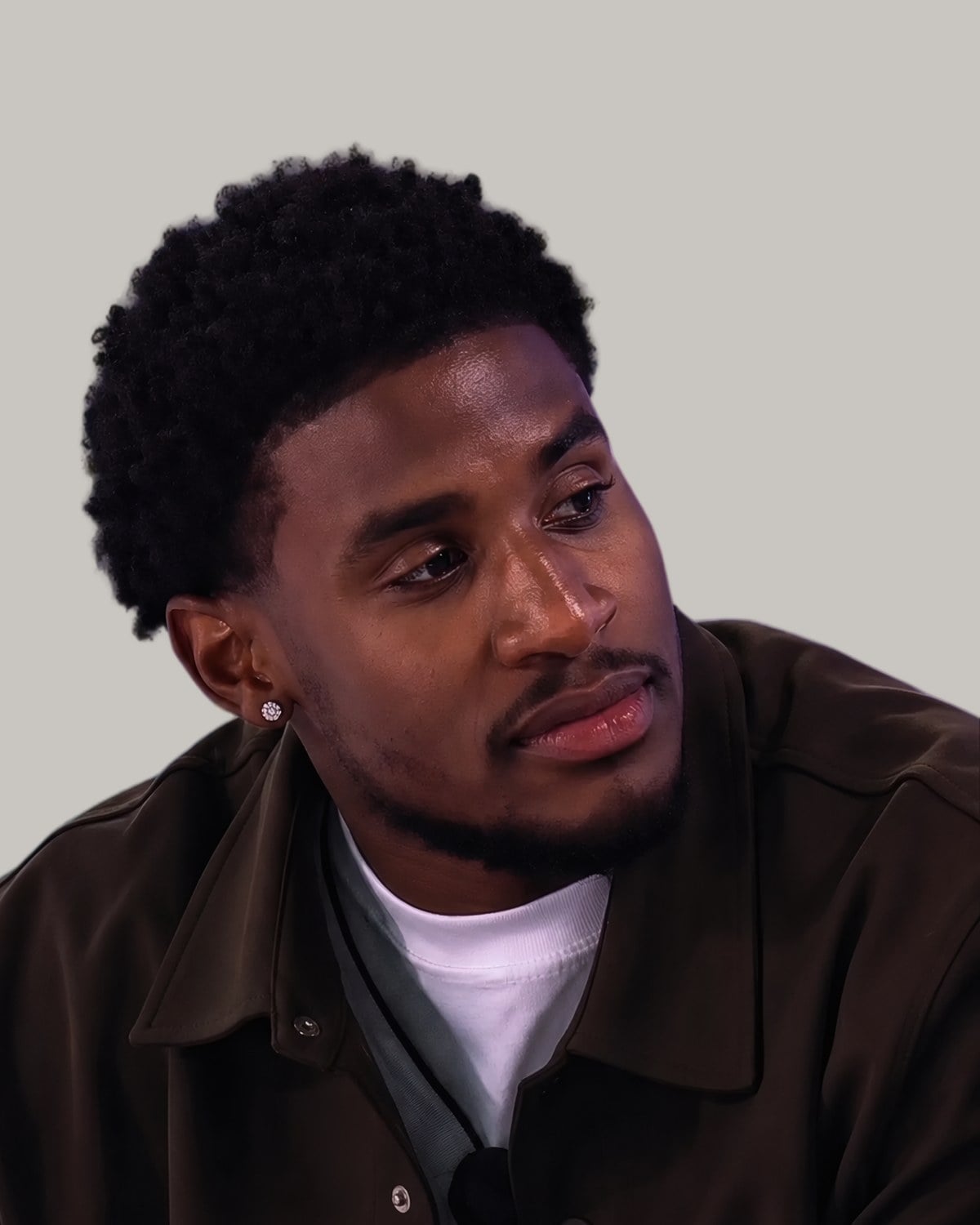
Looser coils on top, short at the sides. If you’ve ever wanted the texture of a textured crop on tighter curls, this is it. A curl sponge keeps the coils defined.
What to ask for Short sides, a couple of inches left on top, and leave the curls uncut at the ends.
Short afro with a low taper
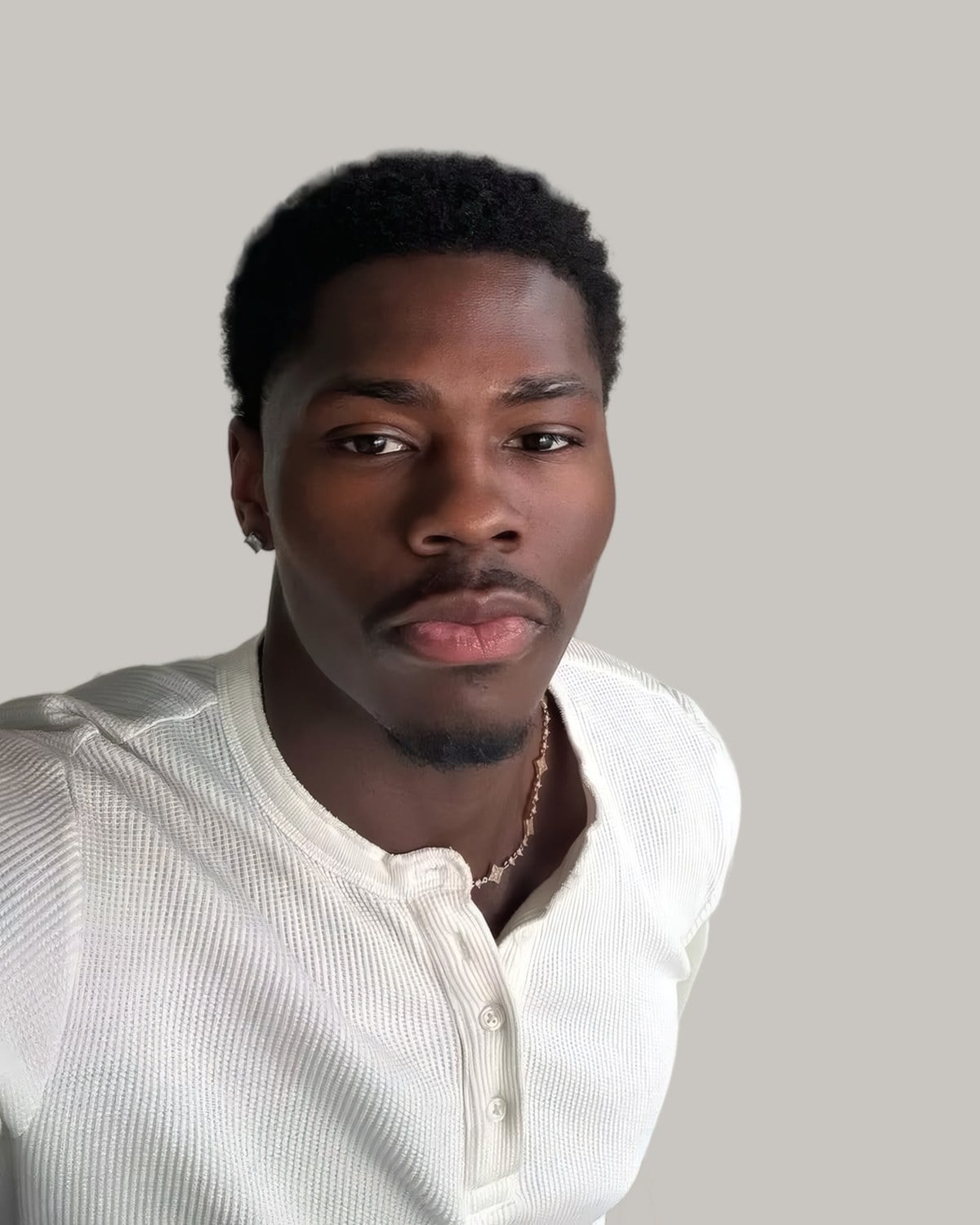
The taper stays low, so the afro keeps its width at the sides. It’s an easy first step if you’re growing out from a low cut and want the in-between stage to look planned.
What to ask for Low taper above the ears and at the nape, and shape the top round without taking much length.
Afros
Big afro
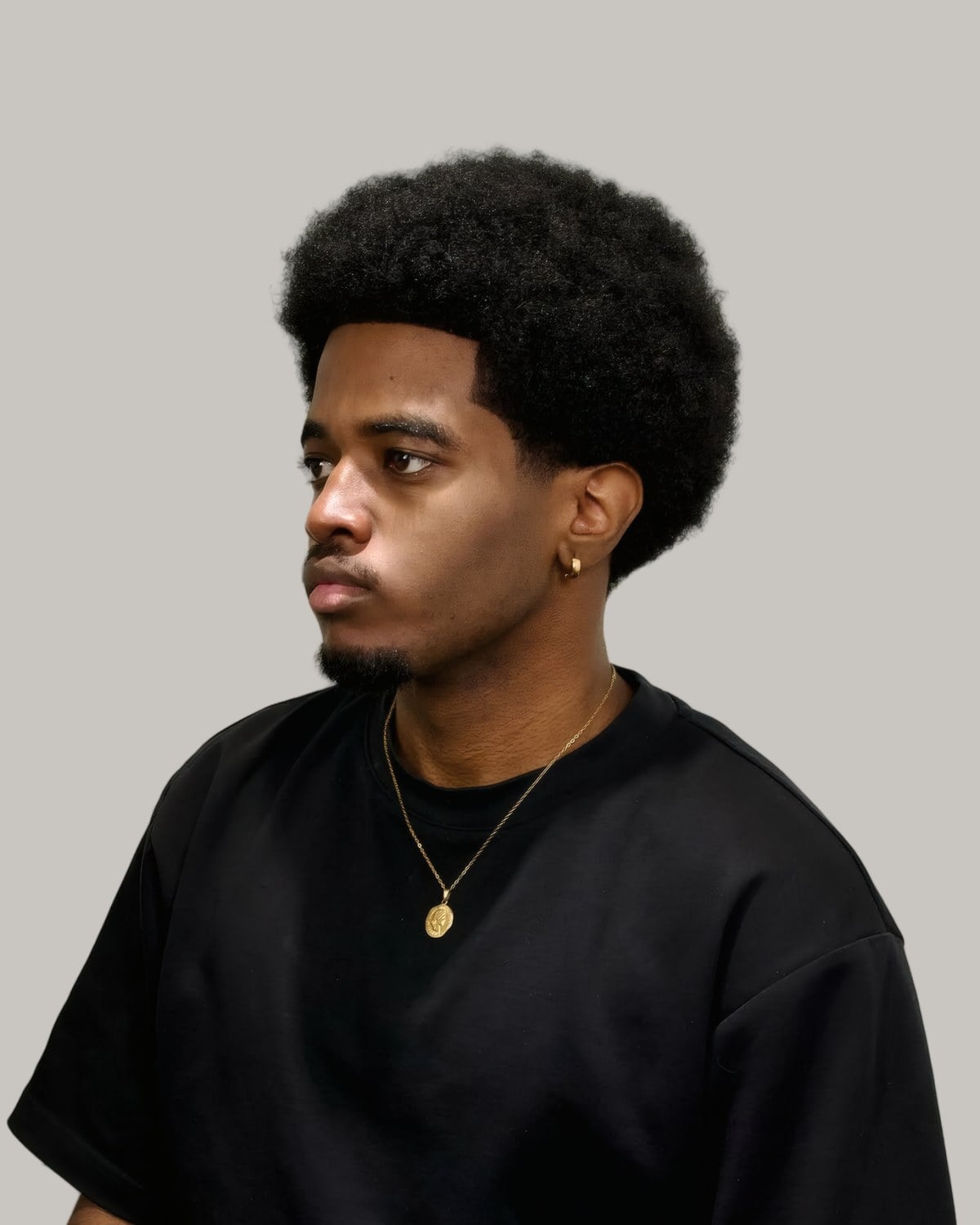
Picked out round and full. You’ll want a wide-tooth comb or a pick to work through the ends, and a moisturize-and-seal routine, since tightly coiled hair dries out fast. A trim every six to eight weeks keeps the shape round. Our curly hairstyles guide has more afros and tight curls.
What to ask for Shape the afro round, trim the ends only, and keep the length on top and at the sides.
Afro with a full beard

A big afro and a full beard make one shape, so keep their outlines in the same family. Ask your barber to shape both in the same visit. One person seeing the whole outline beats two people guessing.
What to ask for Shape the afro round, line up the hairline lightly, and trim the beard to follow the same curve.
Curly top with a taper
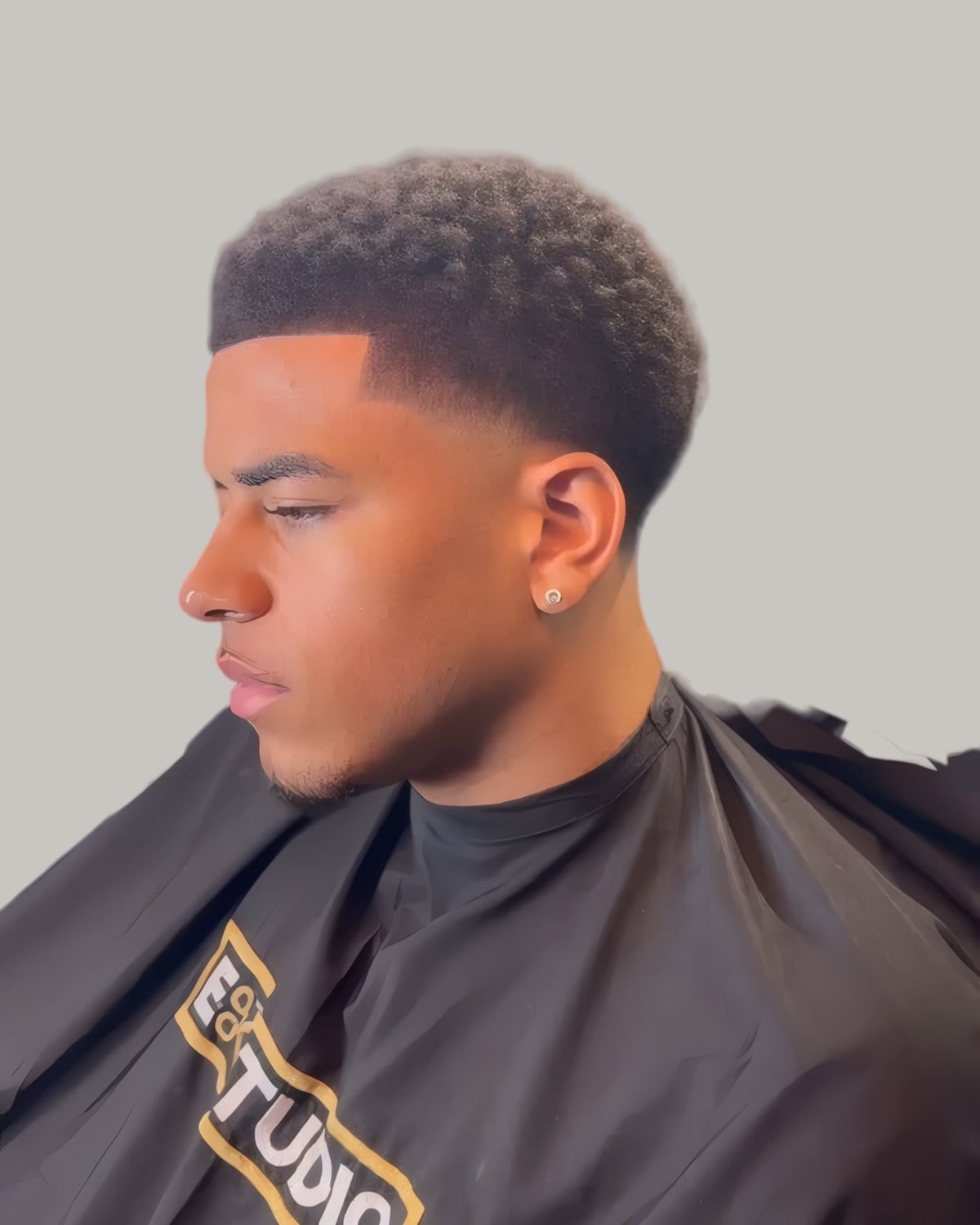
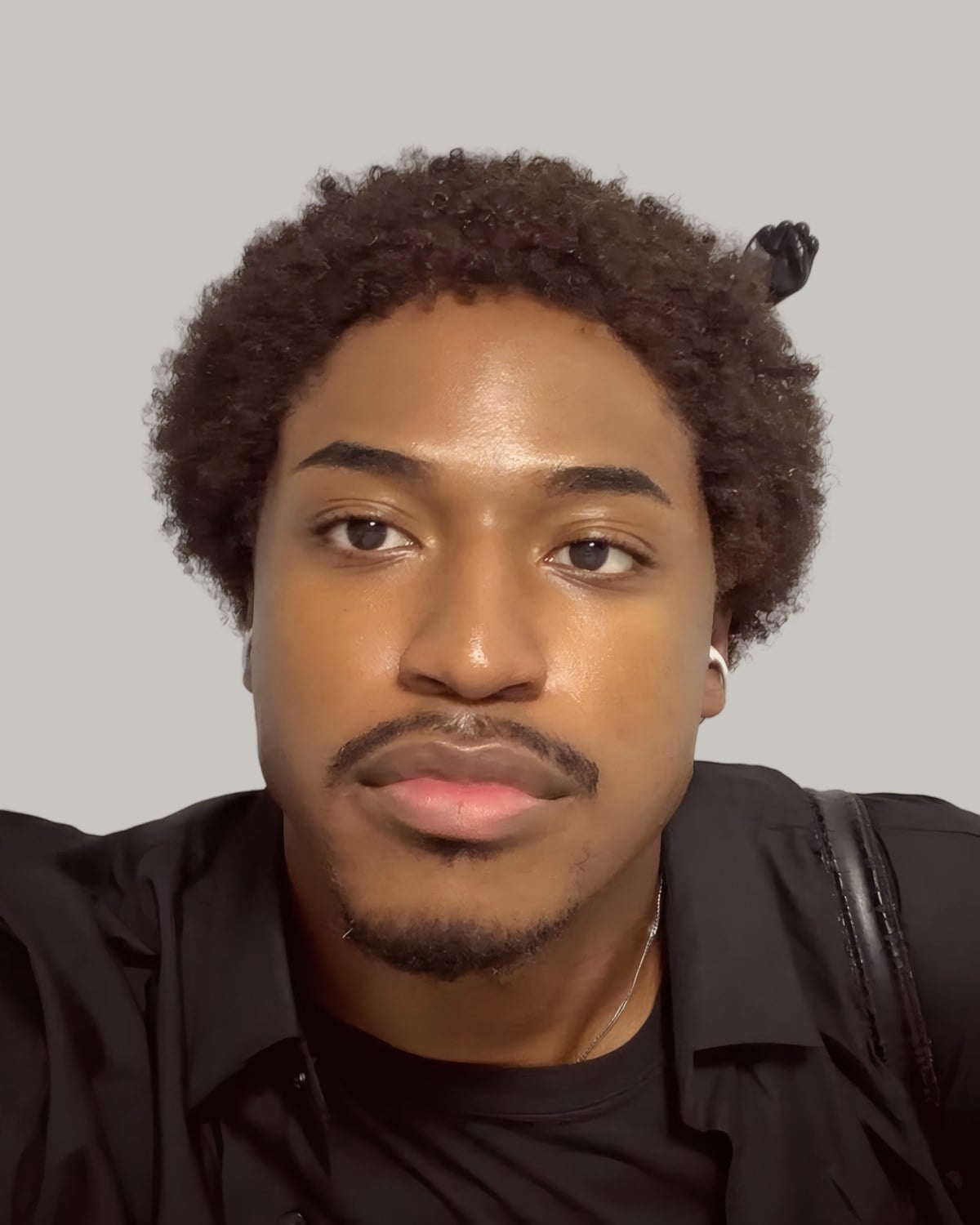
Short curls on top, a taper at the sides. It looks much the same on day one and day twenty. If your mornings are short, that’s the appeal.
What to ask for Taper the sides and nape, an inch or so on top, and leave the curls to form on their own.
Two-strand twists and comb coils
Two-strand twists with box parts
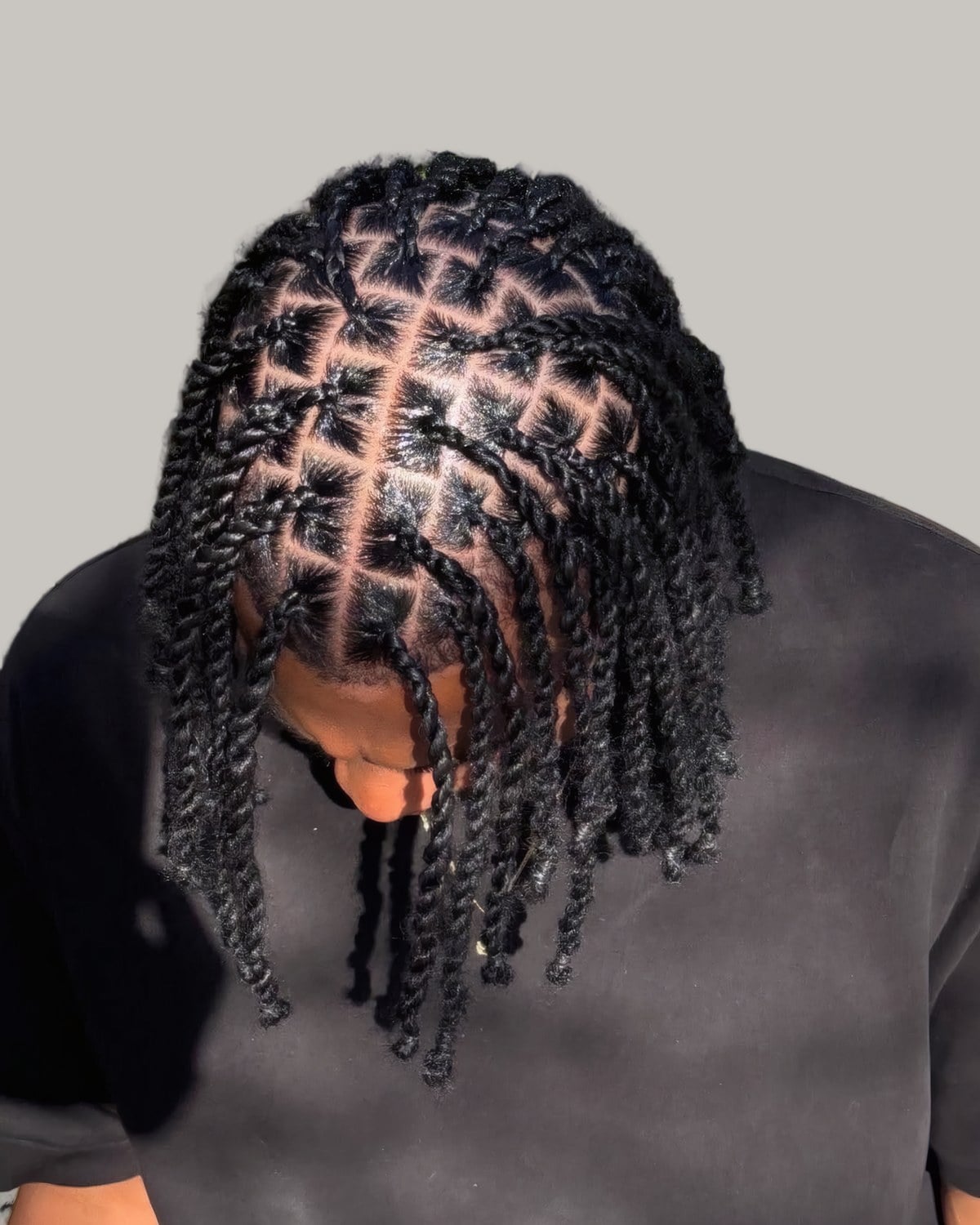
Square parts show between the twists and give the look its grid. Two-strand twists take about one to two and a half hours for a man’s set, and cost about $65 to $150. They’ll last up to two weeks before you redo them.
What to ask for Two-strand twists with box parts, medium size, edges laid at the front.
Two-strand twists with a beard
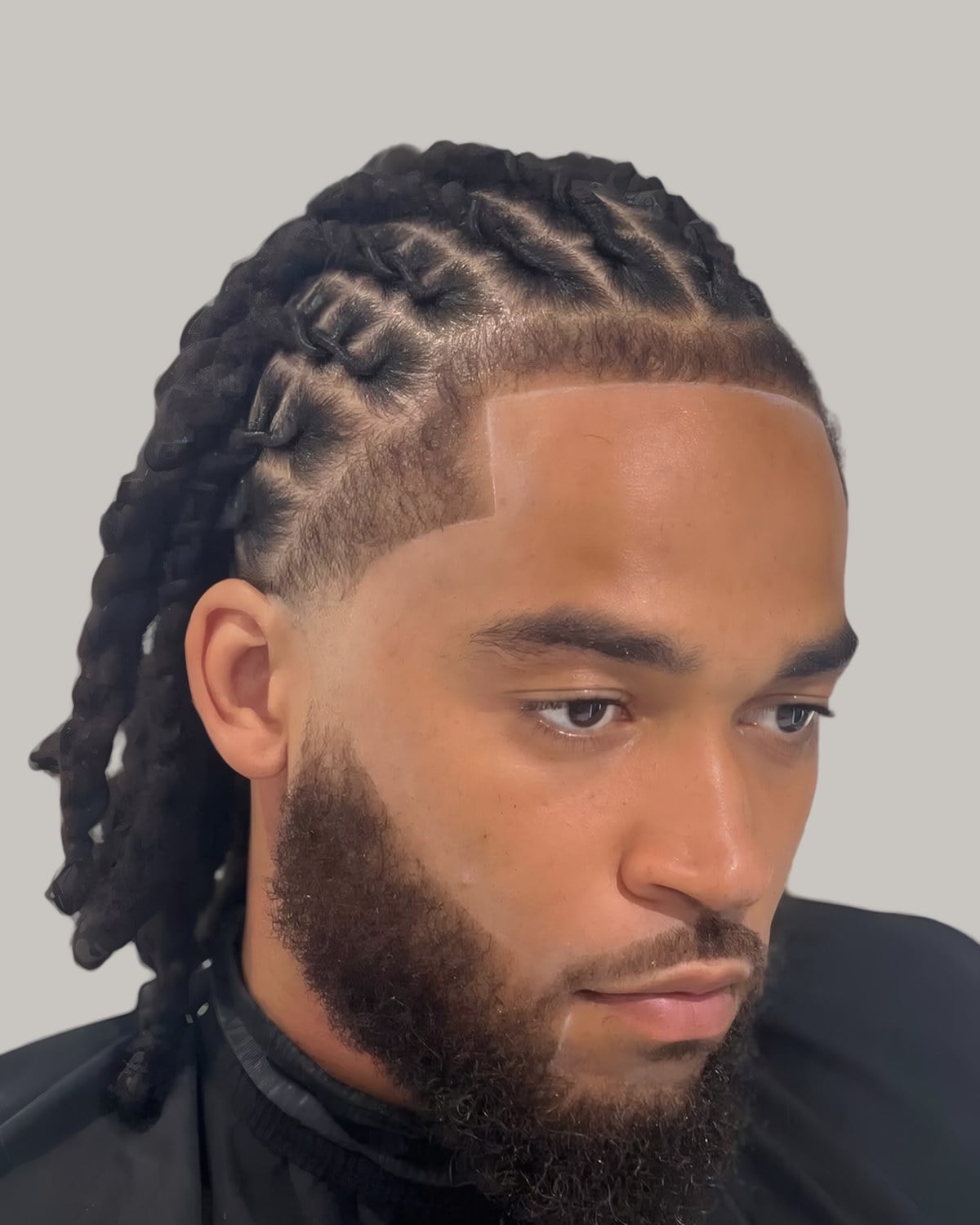
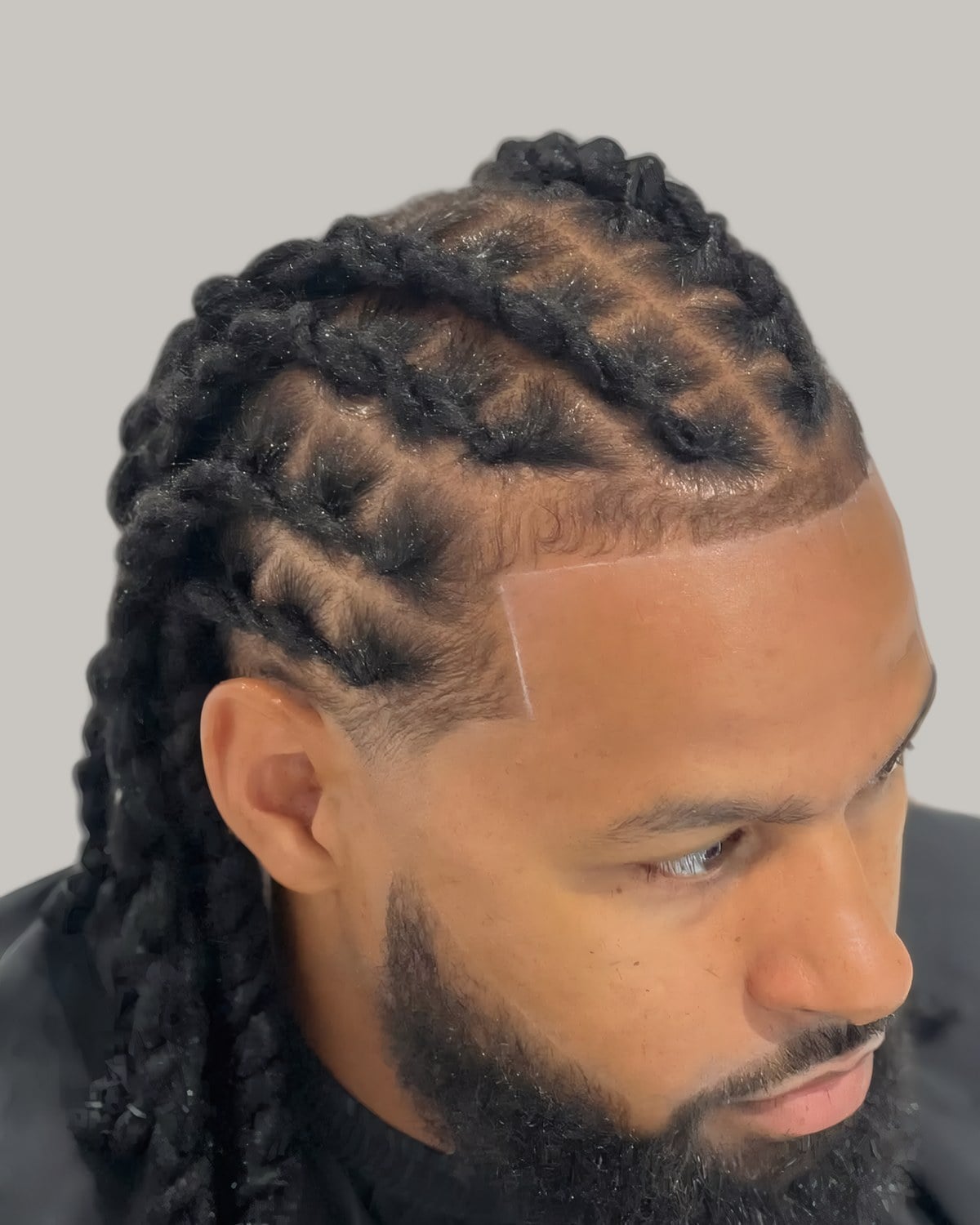
Twists pulled back from a lined-up hairline, with a full beard underneath. Keeping the twists away from the face puts the beard in charge, and the line-up keeps the front clean while the twists grow.
What to ask for Two-strand twists, parted to fall back, and a line-up at the hairline and beard.
Comb coils
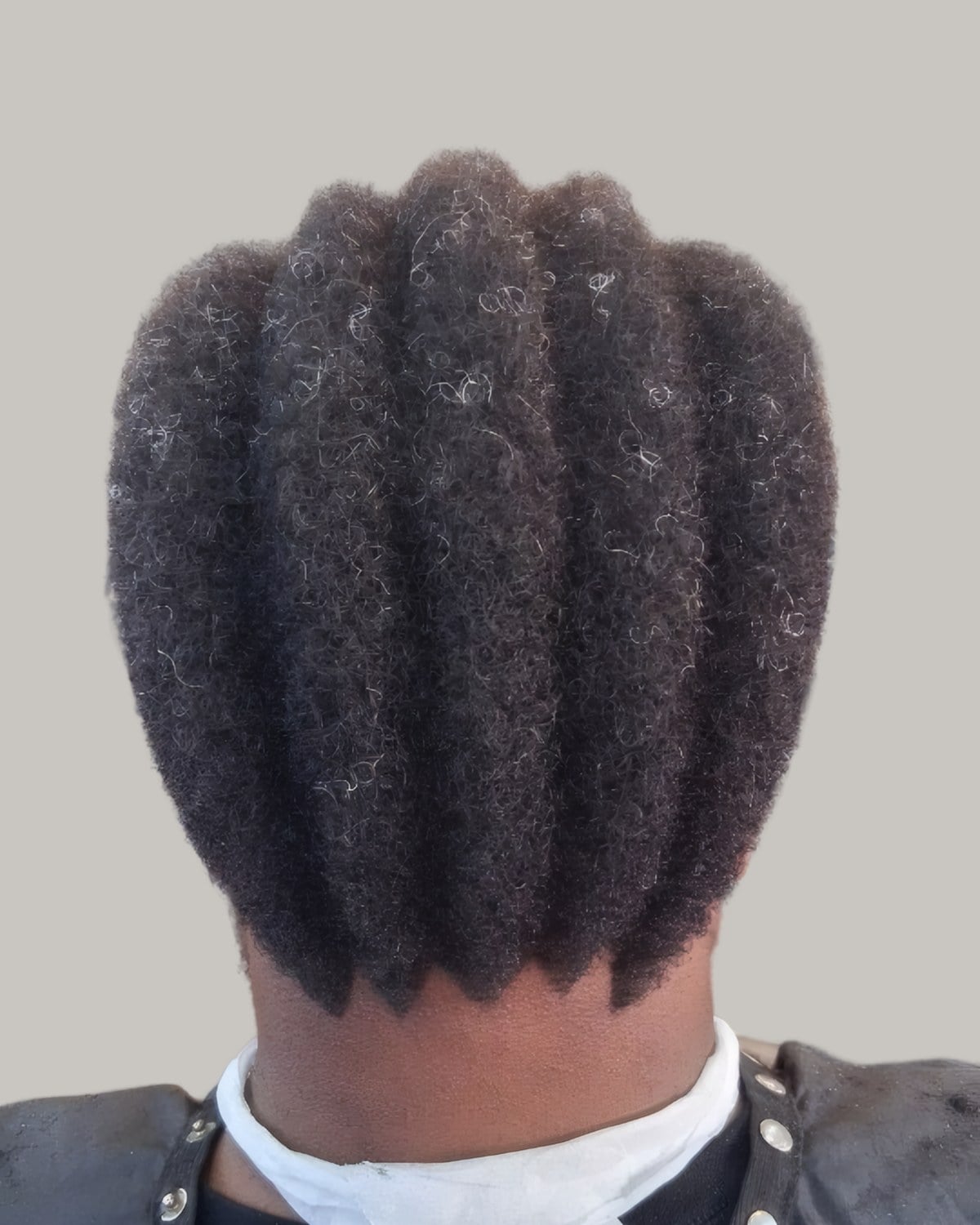
Short coils set with a comb, one section at a time. Comb coils also start locs, and you only need a couple of inches of hair to begin. Leave them in and they’ll lock. Take them out and you’ve got a twist-out.
What to ask for Comb coils on the full head, small and even, edges lined up.
Twists with an undercut
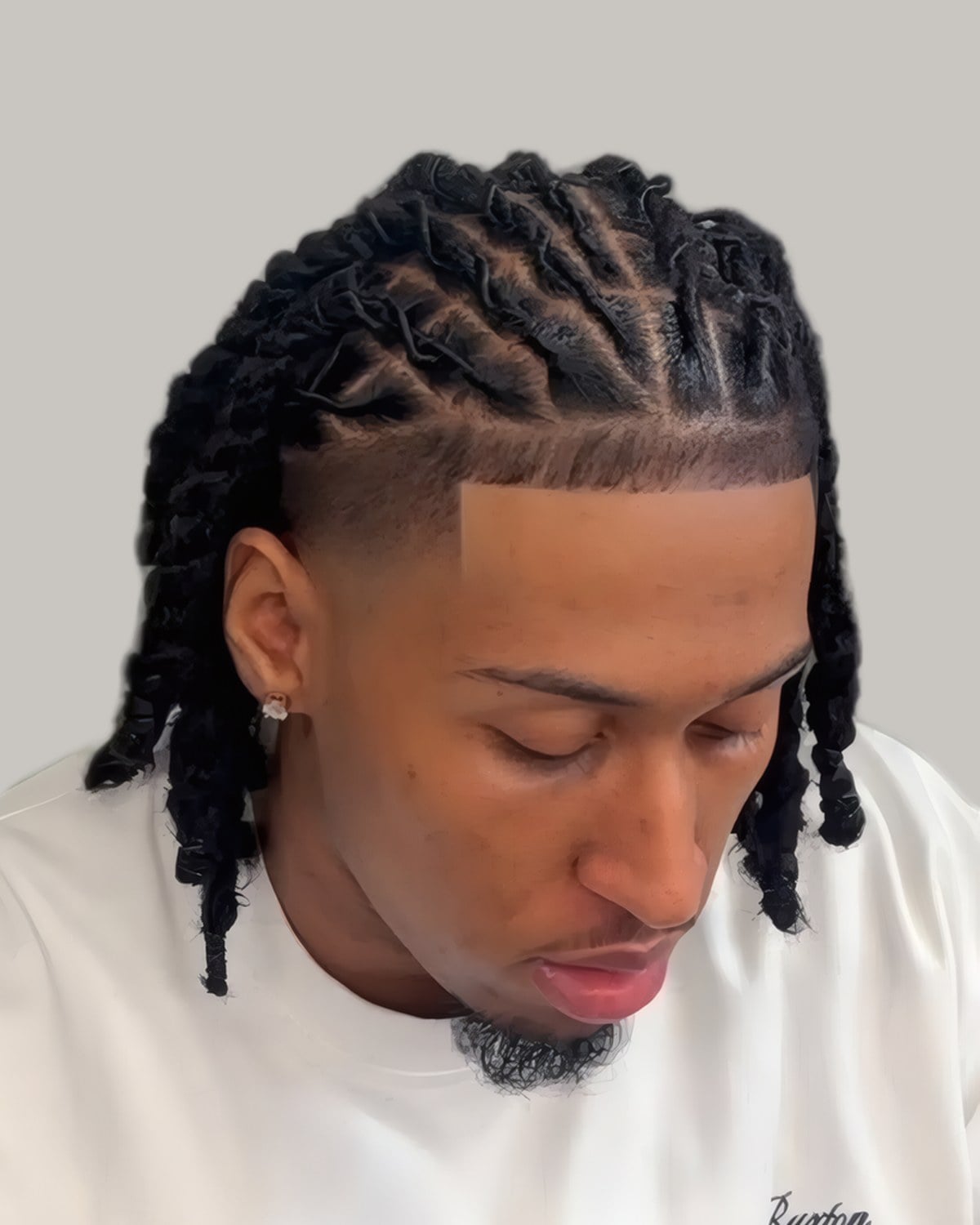
Twists stay on top and the sides are cut short underneath. If you’d like a curve around the ear instead of a straight line, ask for a burst fade at the sides.
What to ask for Undercut the sides short, leave the top for medium twists, and line up the front.
Medium two-strand twists
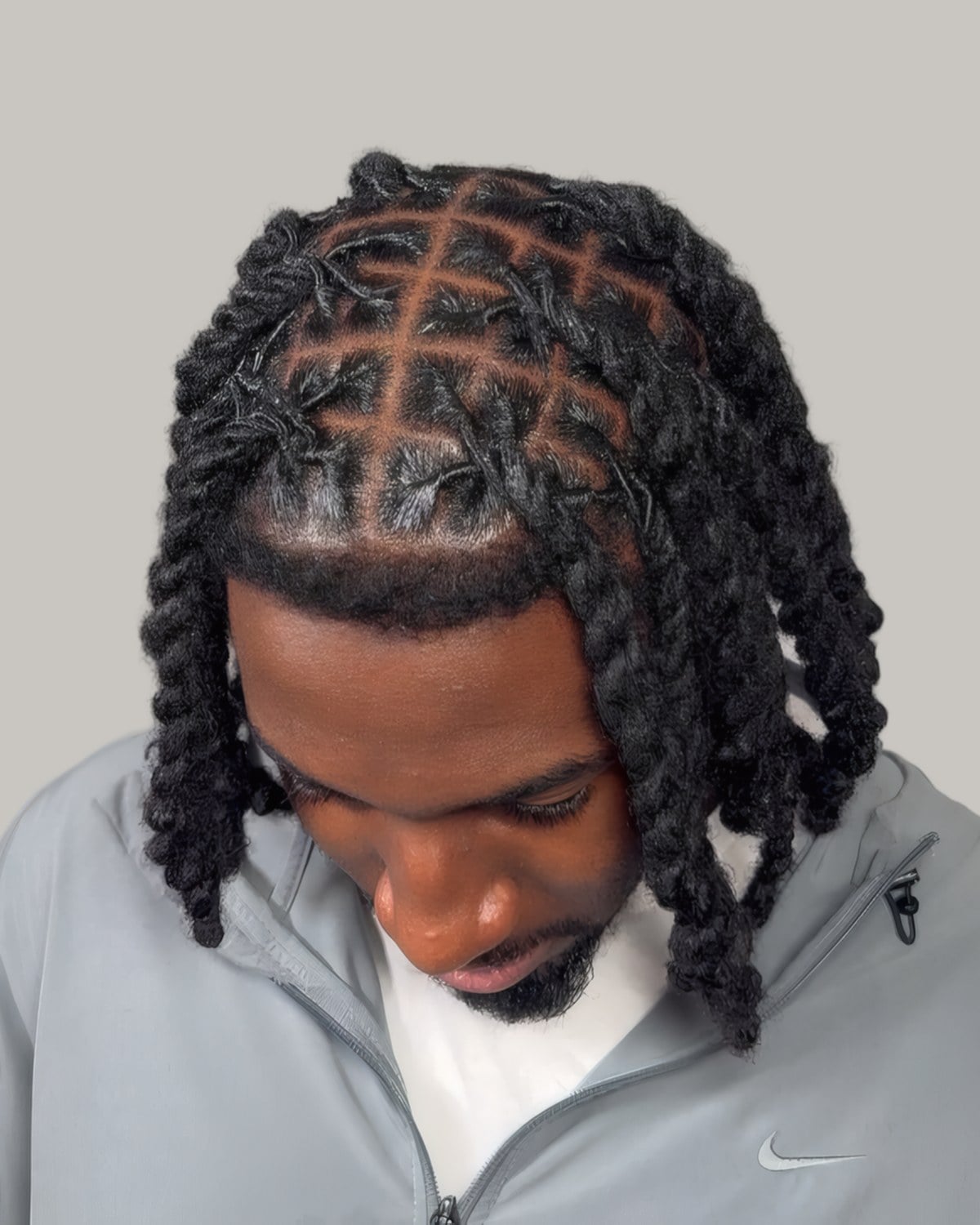
Twists that hang past the ears, still short enough to tie back. They’re the length where twists start to swing, and the length where medium-length haircuts start to need a decision.
What to ask for Medium two-strand twists with box parts, sized to fall past the ears.
Barrel twists
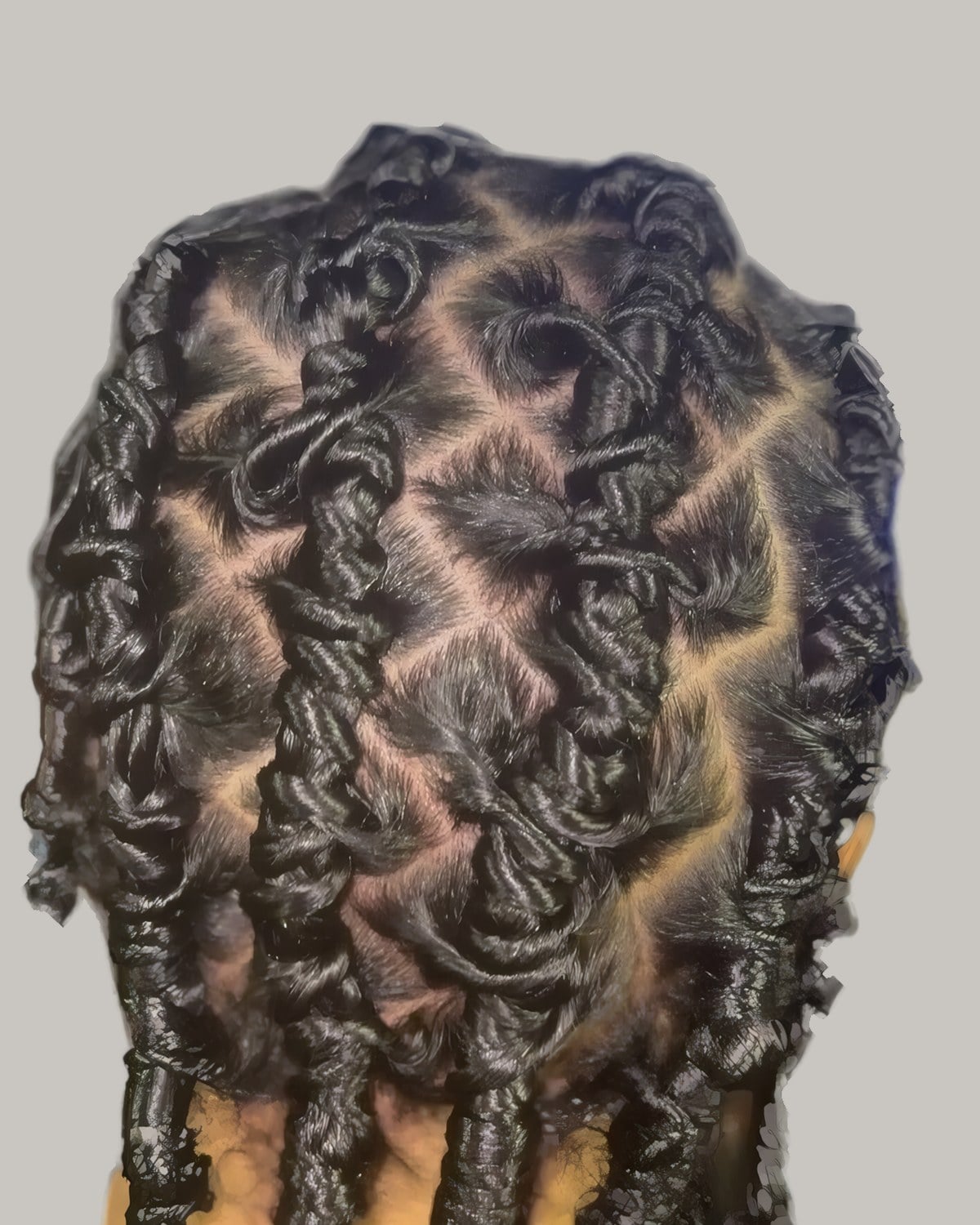
Thick rope twists that run from the crown to the neck. Seen from the back, the pattern does all the talking, so this is one to show off on the way out of a room.
What to ask for Barrel twists, about this thick, running from the crown to the neck.
Cornrows
Straight-back cornrows
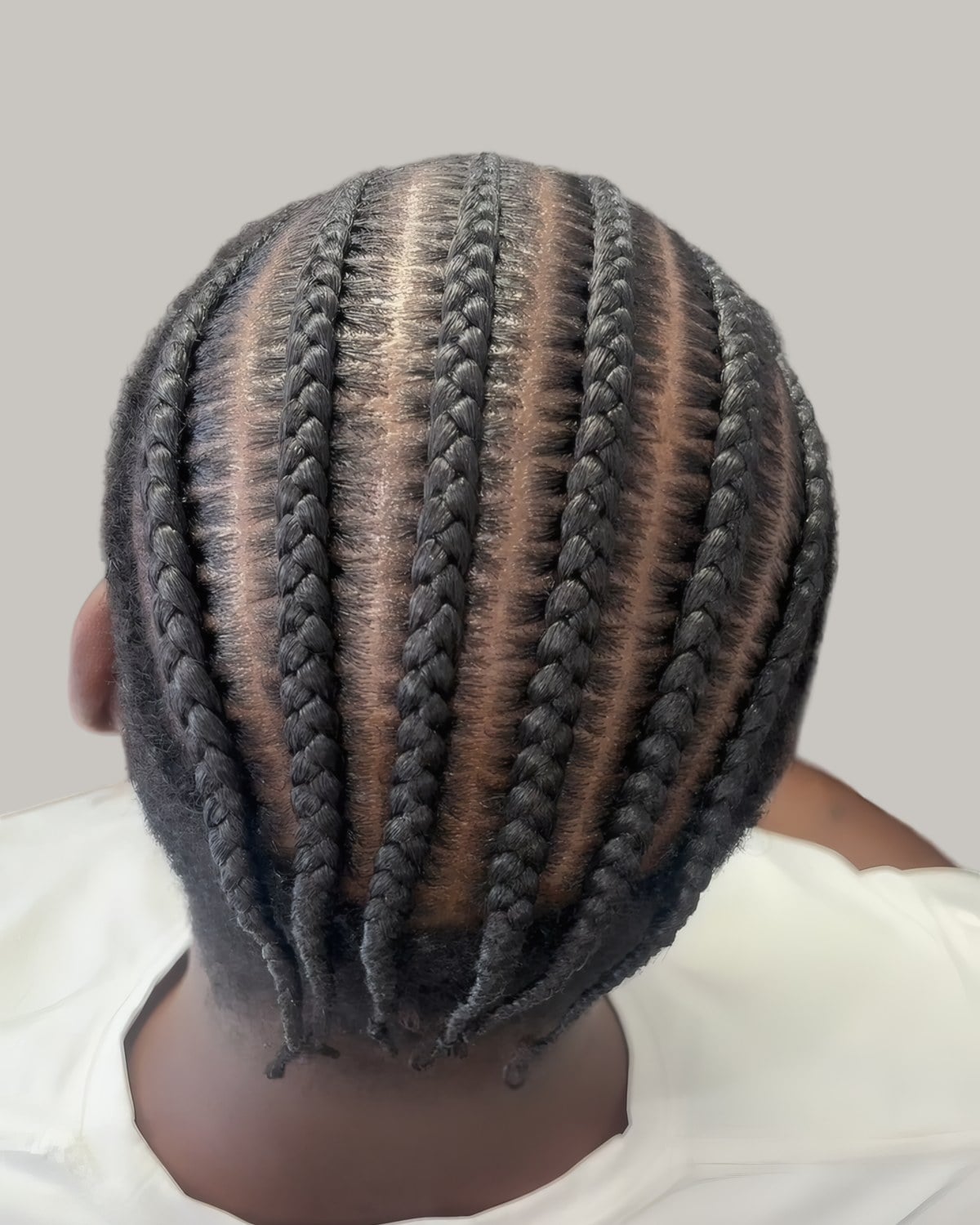
Even rows running straight back from the hairline to the nape. Cornrows take about one and a half to three hours, and you can keep them in for up to six weeks. In the U.S. they cost $38 to $183, and men usually land toward the lower end.
What to ask for Straight-back cornrows, medium size, all running to the nape.
Cornrows with a beard
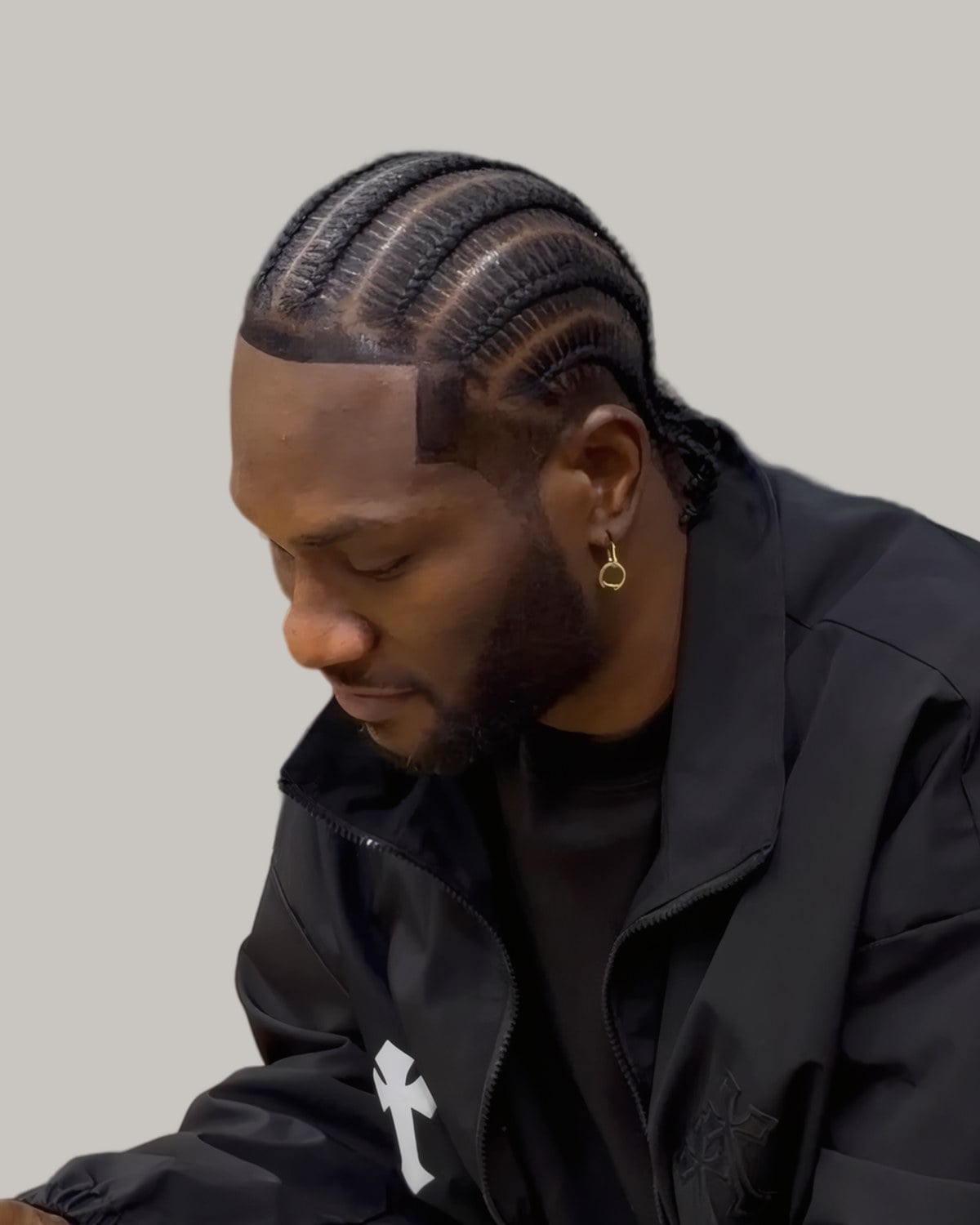
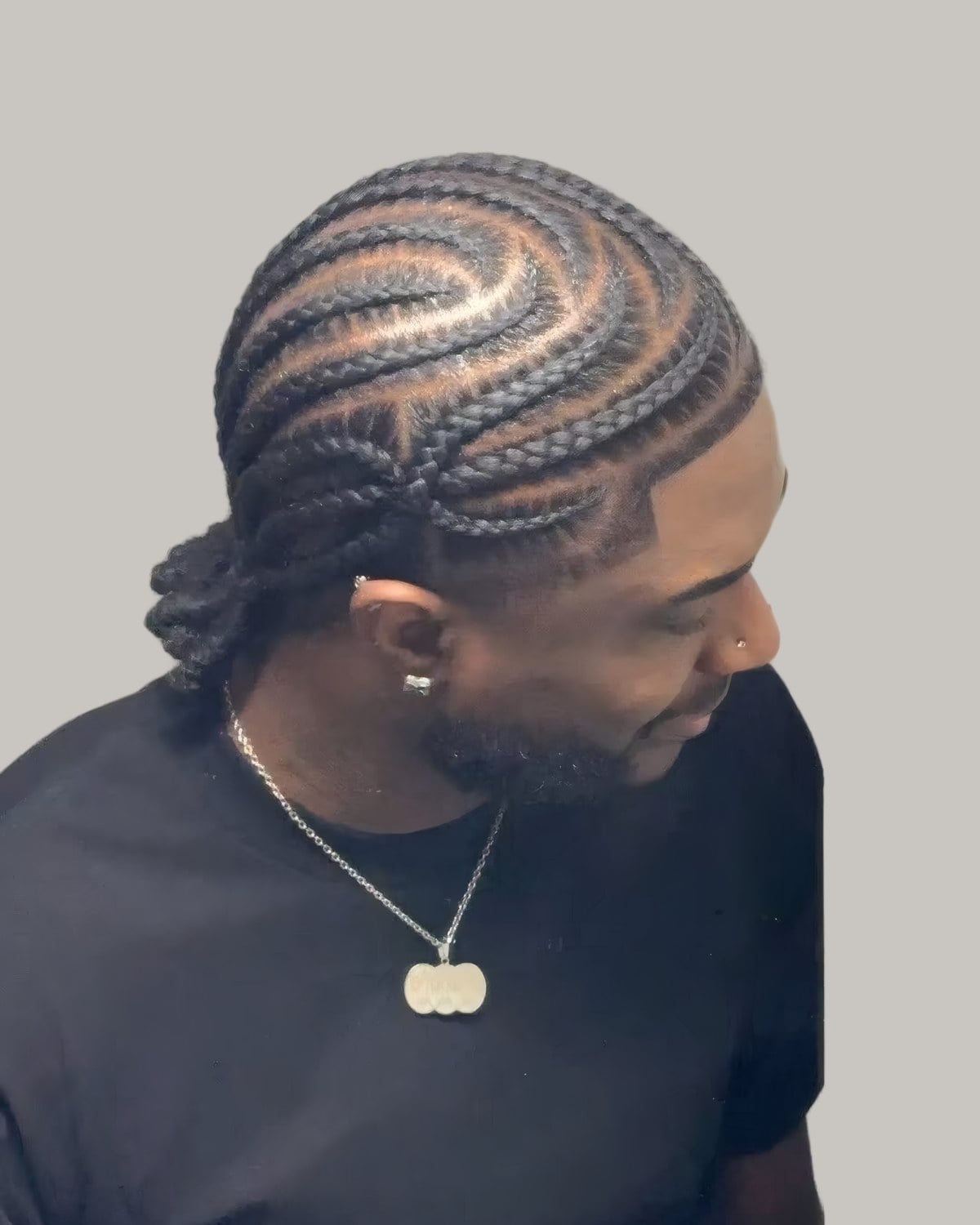
Straight rows with a full beard. Ask for medium rows rather than thin ones if you want them to sit well with a heavy beard. They’re also gentler on the hairline.
What to ask for Straight-back cornrows, medium width, and line up the beard to match.
Curved cornrows
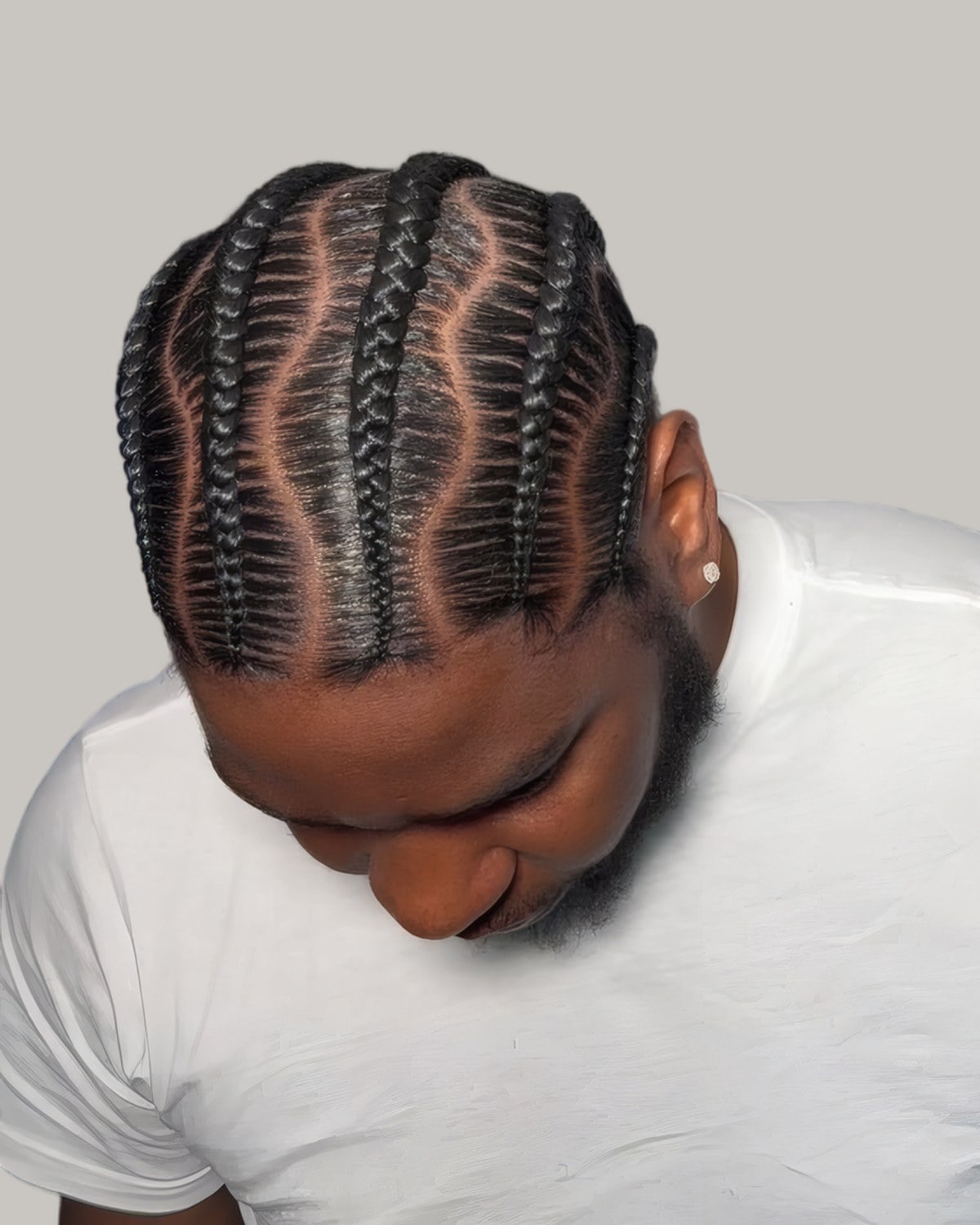
The rows bend as they run back. The pattern looks drawn on. It takes a braider with a steady hand, and it’s a good way to try cornrows without going straight back.
What to ask for Cornrows curving back over the crown, medium size, ends tucked at the nape.
Cornrow designs
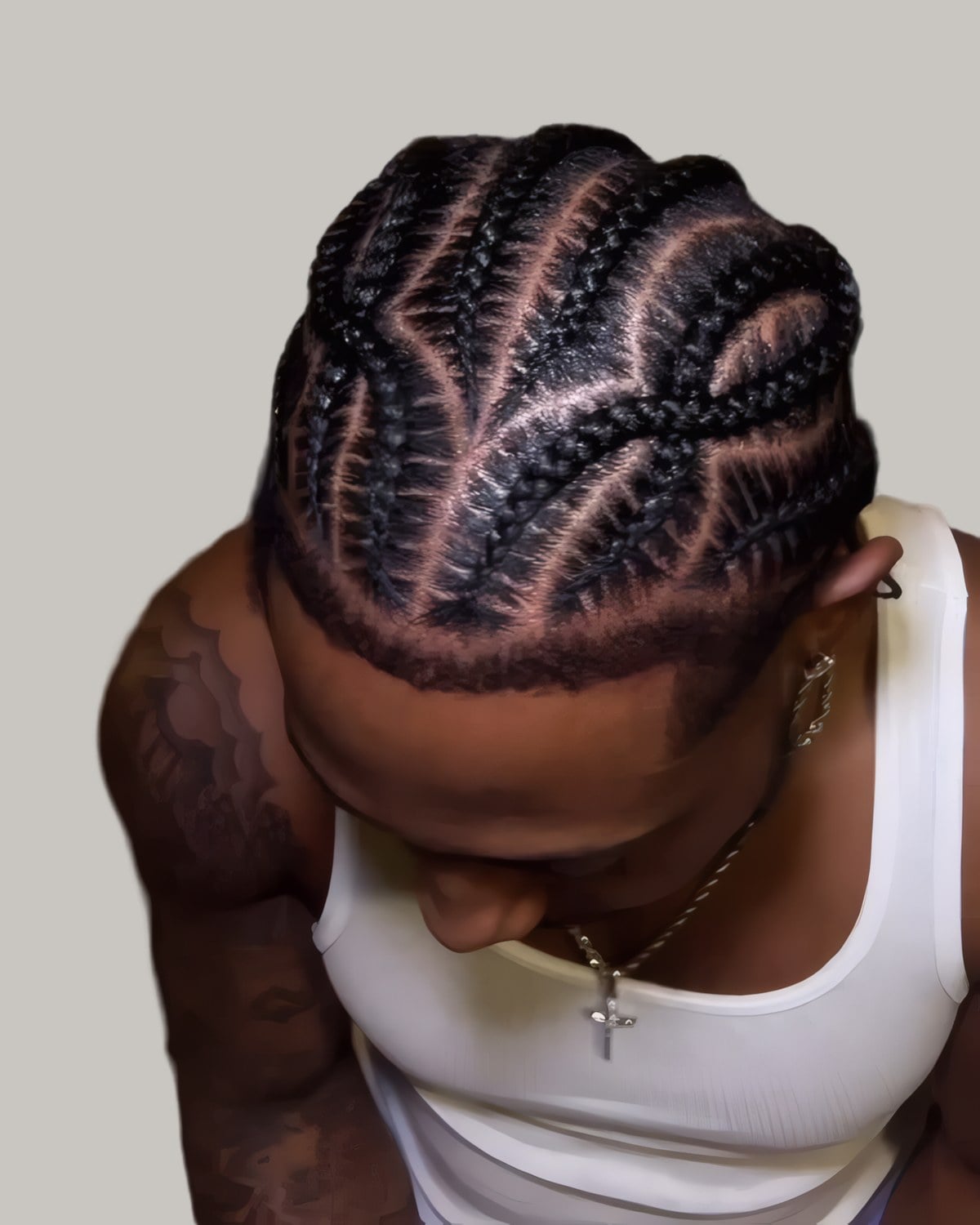
Zigzags, diamonds and swirls, laid out over the whole head. Show your braider the photo, because a design is easier to agree on than to describe. Bring the same photo next time if you want it again.
What to ask for Cornrows in this design, medium rows, finished at the back of the neck.
Cornrows with a fade
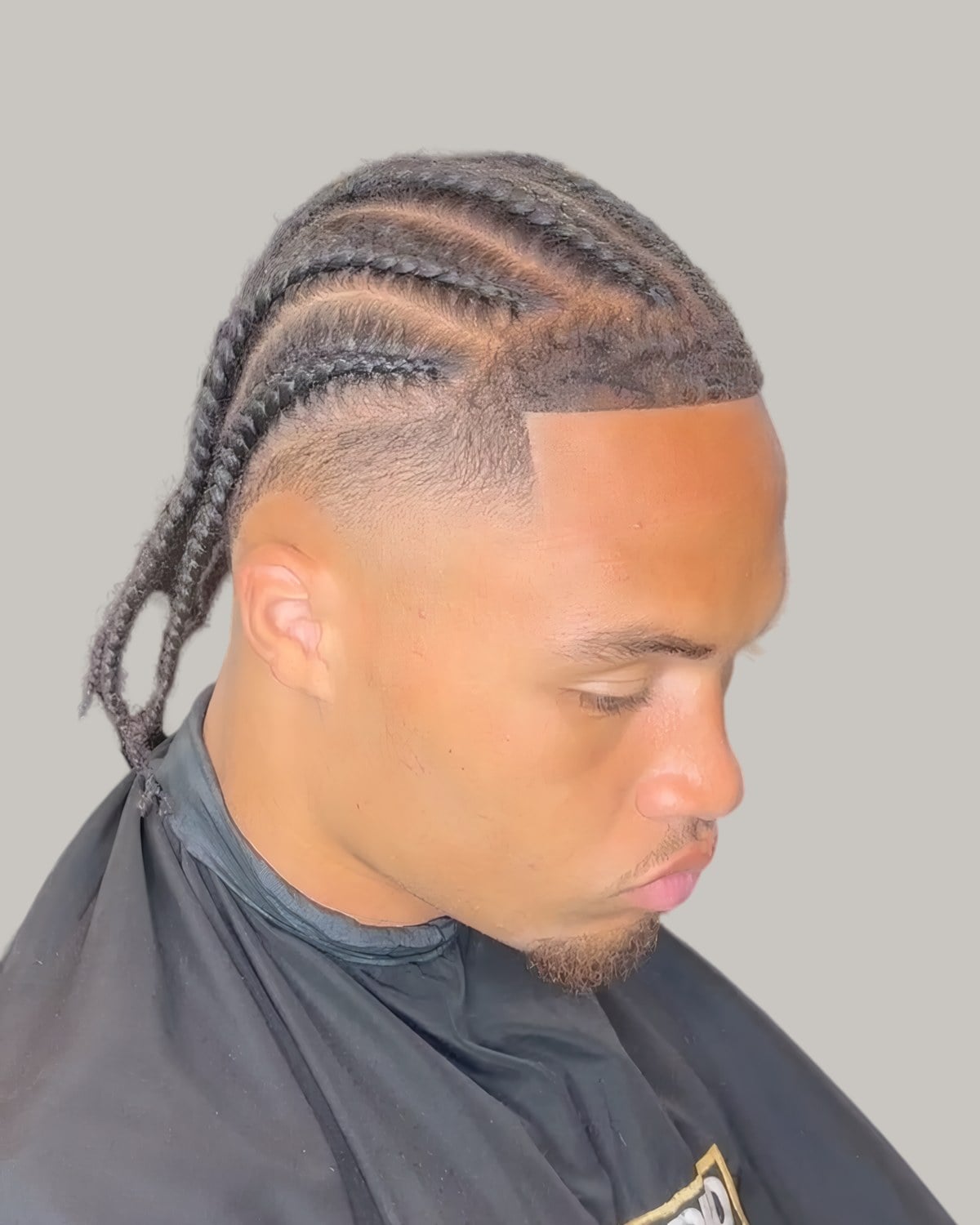
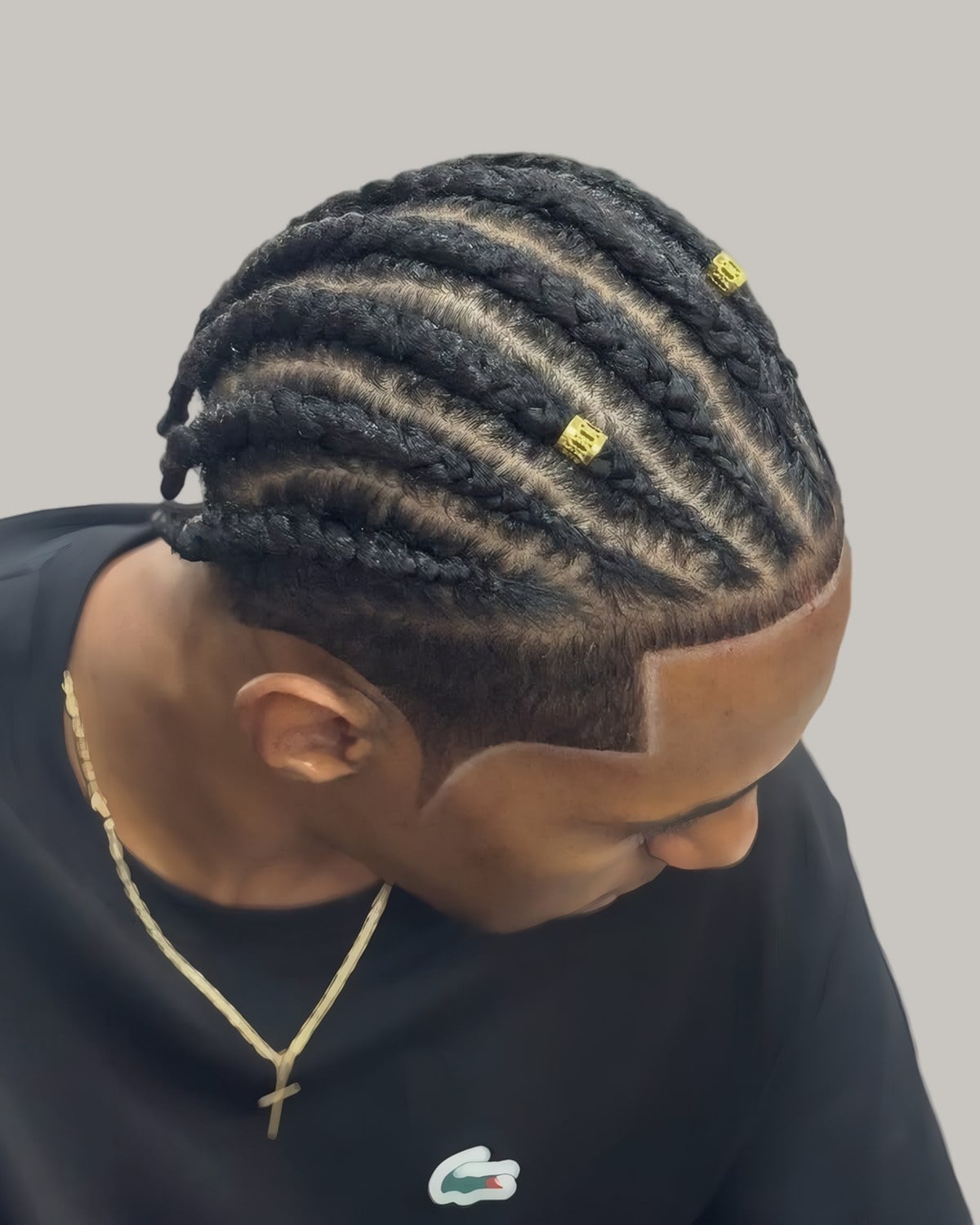
Cornrows on top, a short fade at the sides. You’ll need your barber for the fade and your braider for the rows, so book them in that order. The fade needs a touch-up before the braids do.
What to ask for Fade the sides short, leave the top long enough to braid, then cornrows straight back.
Cornrows into a man bun
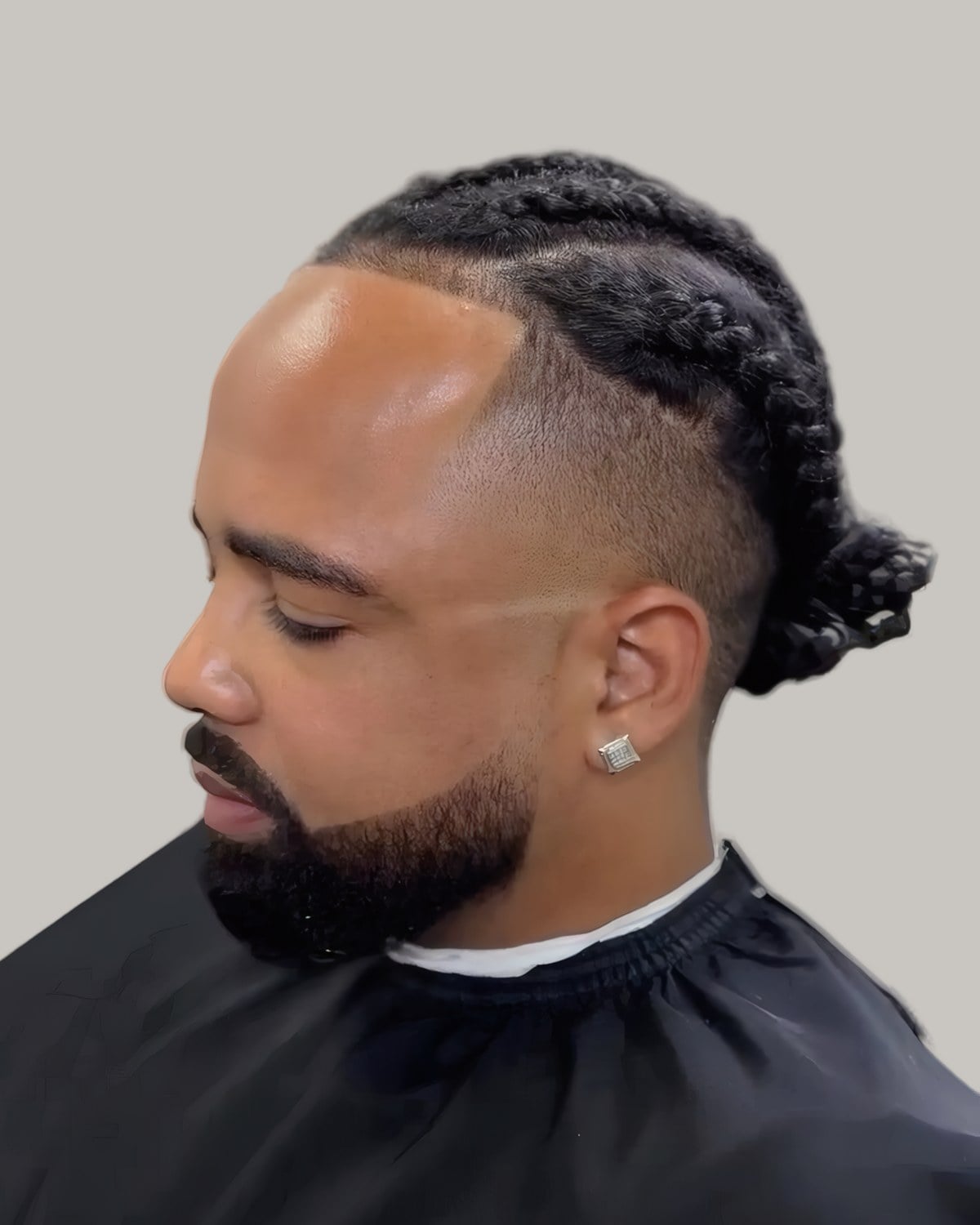
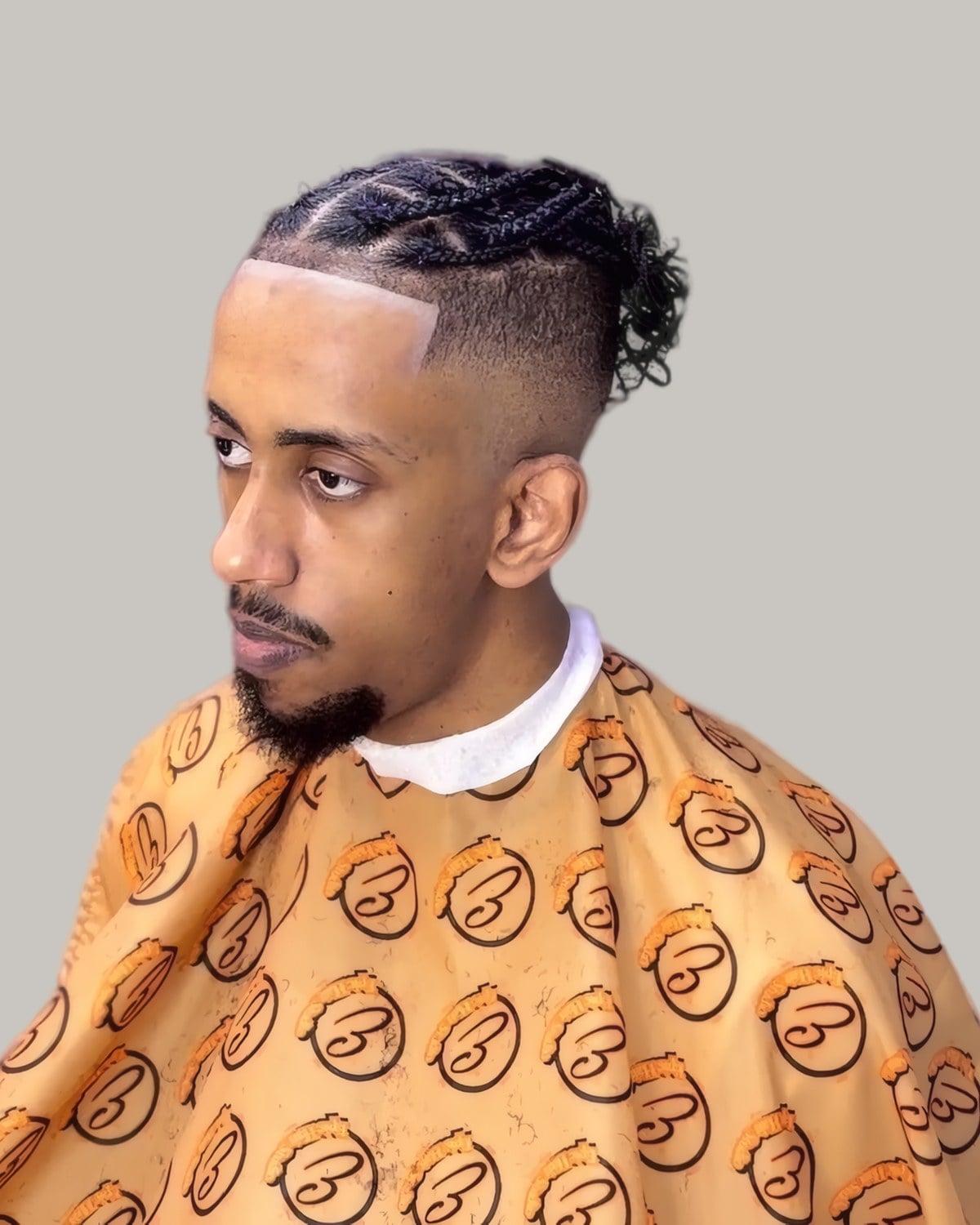
The rows run back into a bun at the crown. It keeps the length off your neck and turns the braids into a style you can wear to work.
What to ask for Cornrows running back to the crown, gathered into a bun, sides tapered.
Braids
Box braids
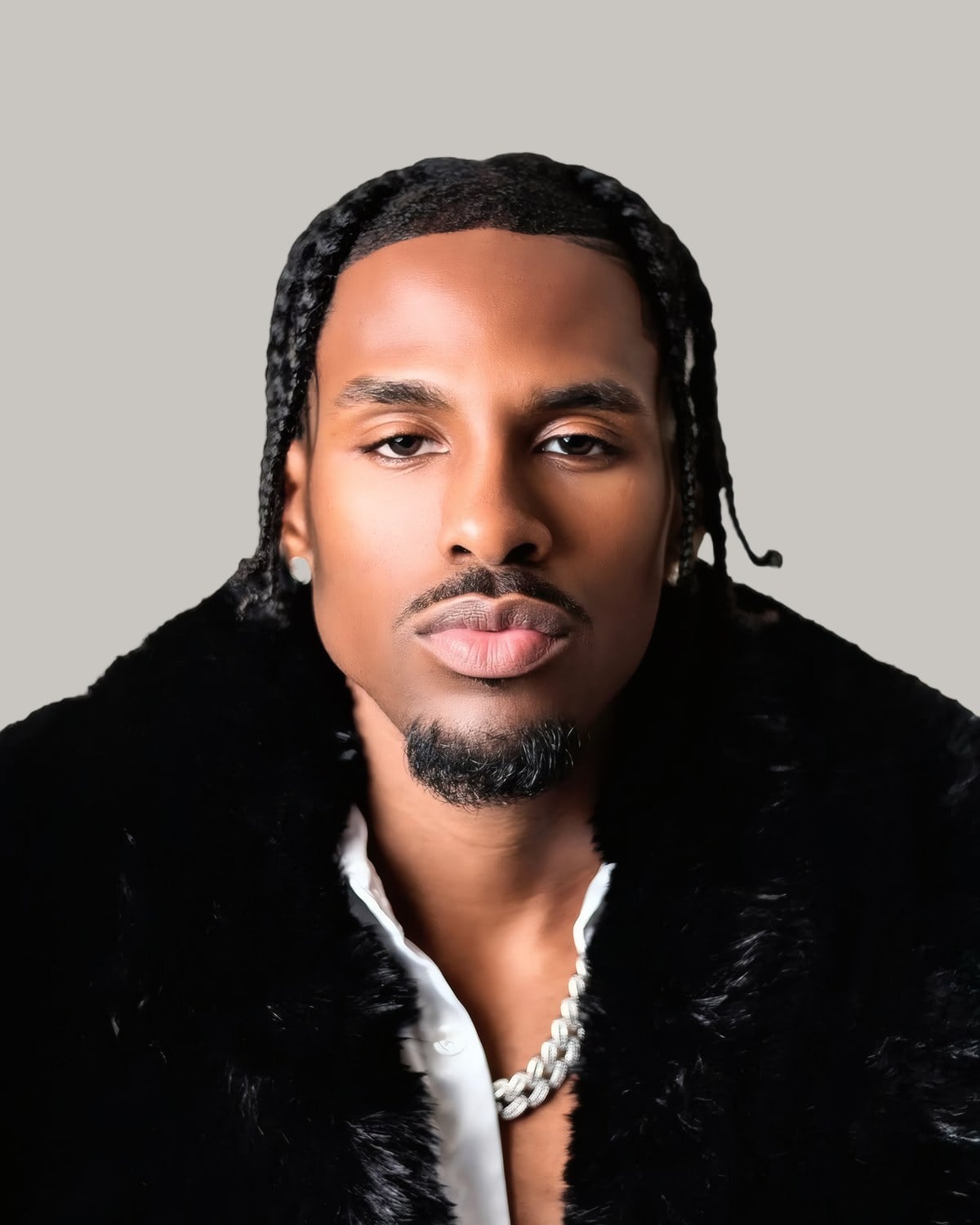
Individual braids from square parts, with the grid on show. Men’s box braids cost about $90 to $135 in some areas and can take as little as two hours. They’re worn for six to eight weeks.
What to ask for Medium box braids, square parts, falling past the jaw.
Long box braids

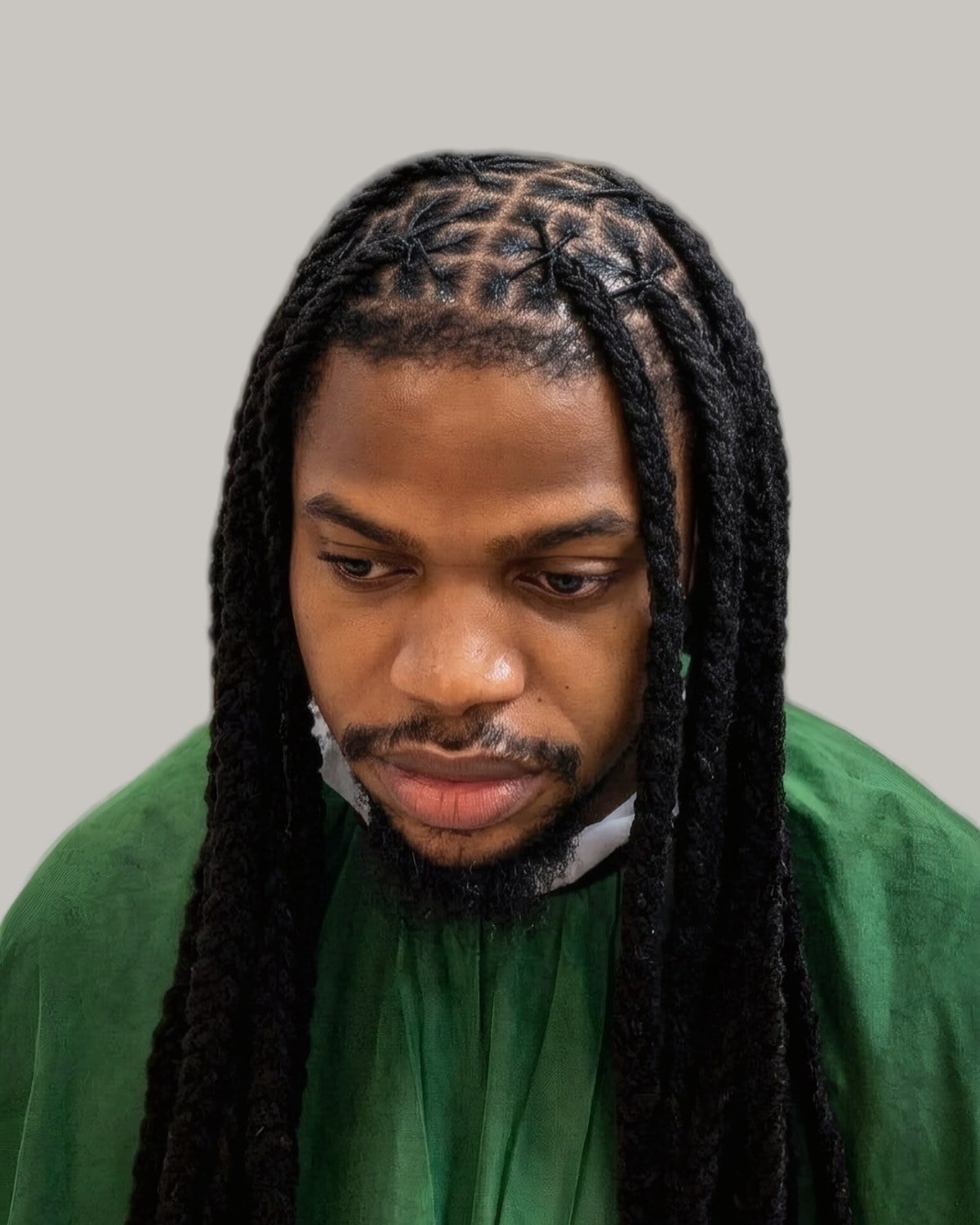
Braids that run past the chest. They take longer to install and pull more at the roots, so ask for medium rather than small ones. Our long hairstyles guide has more ways to wear length.
What to ask for Long box braids, medium size, not too tight at the edges.
Two braids
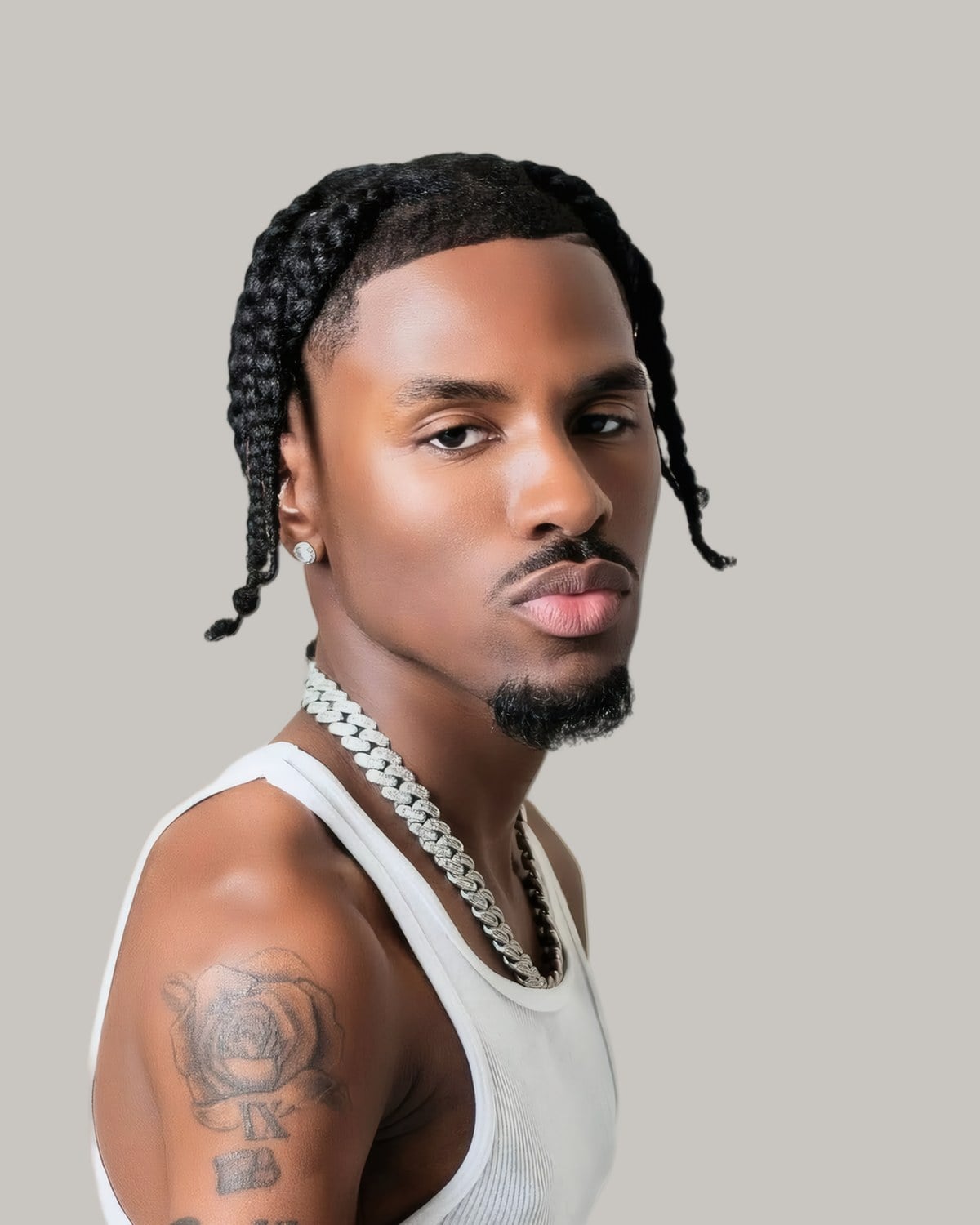
One braid down each side of the face. Two braids instead of a full head means fewer hours in the chair, so it’s a good way to test-drive braids.
What to ask for Two braids, one on each side, parted down the middle and running past the ears.
Locs
Starter locs
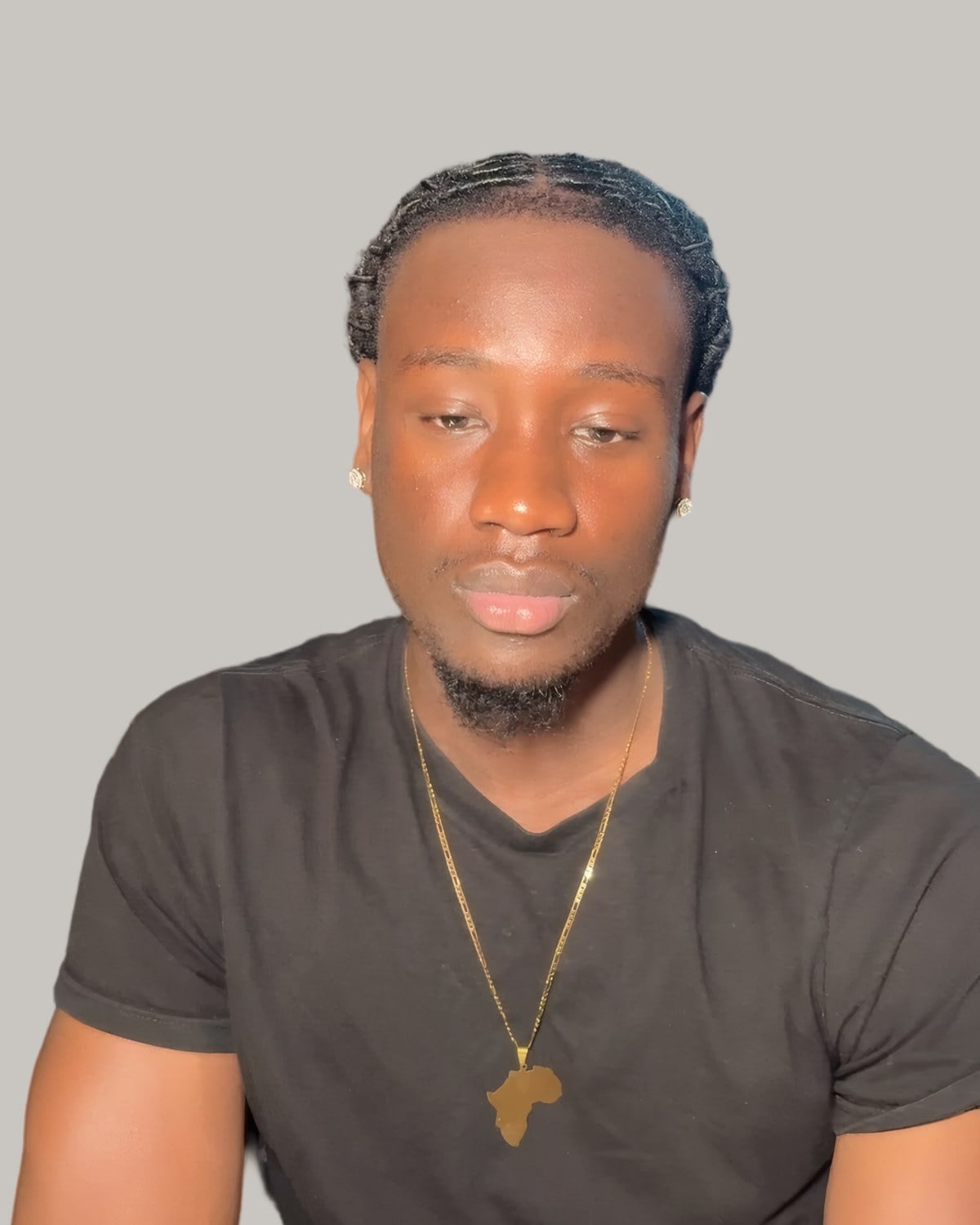
Short new locs, still fresh. Locs take about six months to mature, and starting traditional locs costs less than $100. They’ll look unfinished for a while (the fuzzy stage is part of the deal), and every month they look a little more settled.
What to ask for Starter locs with comb coils, small to medium size, and line up the edges.
Two-strand starter locs
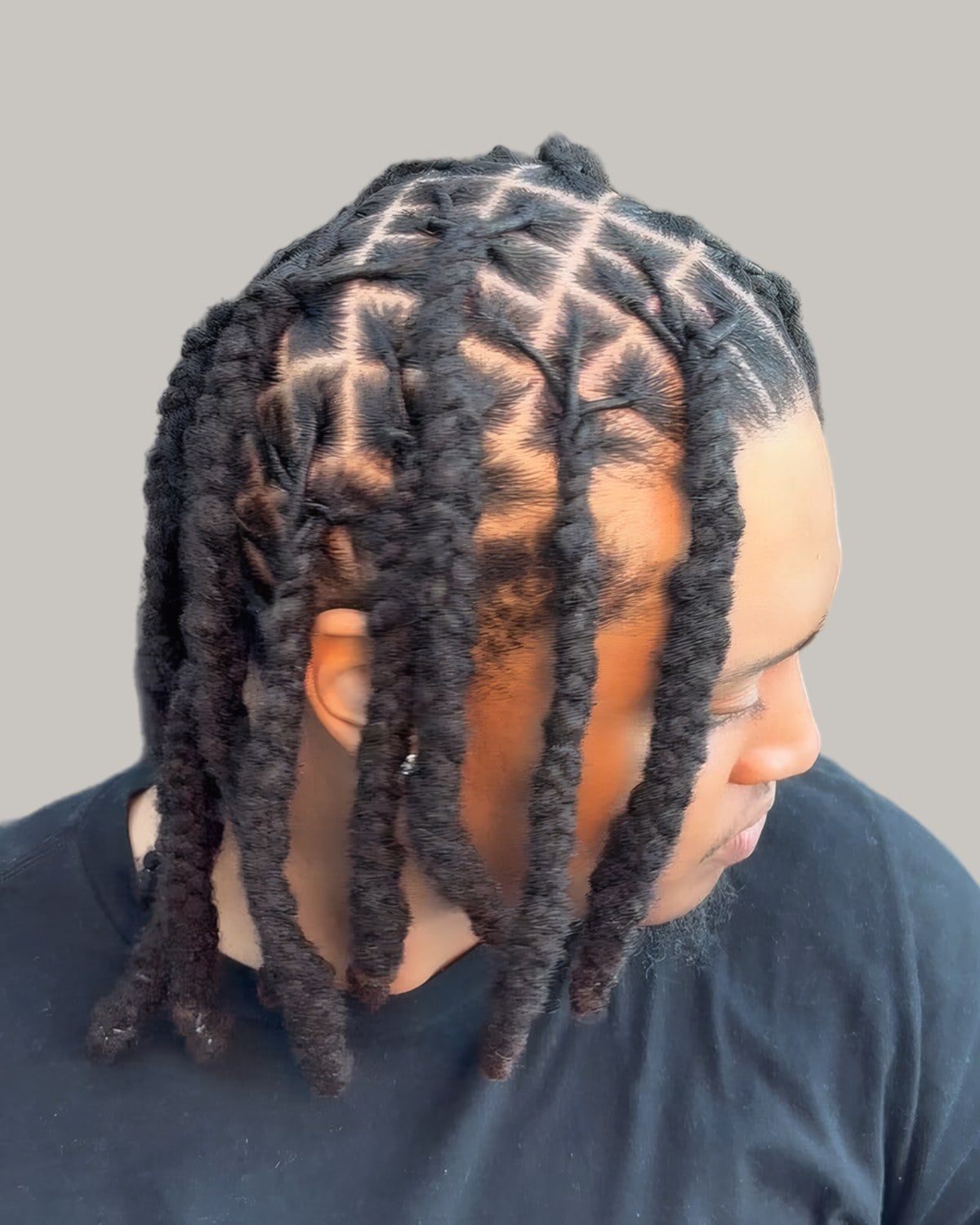
Locs started from two-strand twists, with the square parts still showing. You need at least four to five inches of hair to start this way, and the twists keep their shape while they lock.
What to ask for Two-strand twists to start locs, medium size, box parts.
Freeform locs
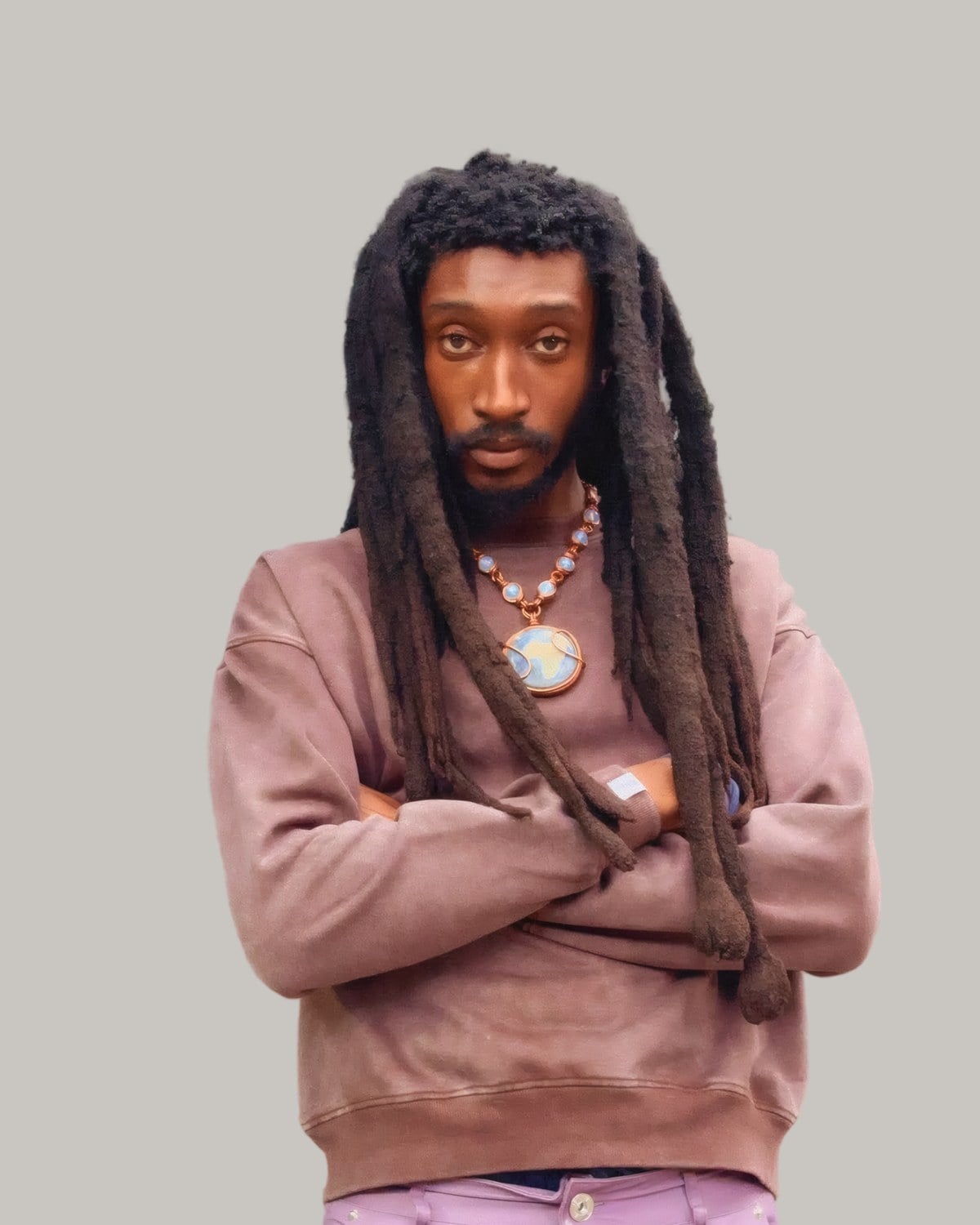
Locs left to form on their own, without combing, twisting or parting. Each loc finds its own size, so no two heads look alike. You skip the retwist appointments, but the first months look wild (that’s the point).
What to ask for Freeform locs: no retwist, just tidy the hairline and the edges.
Short locs
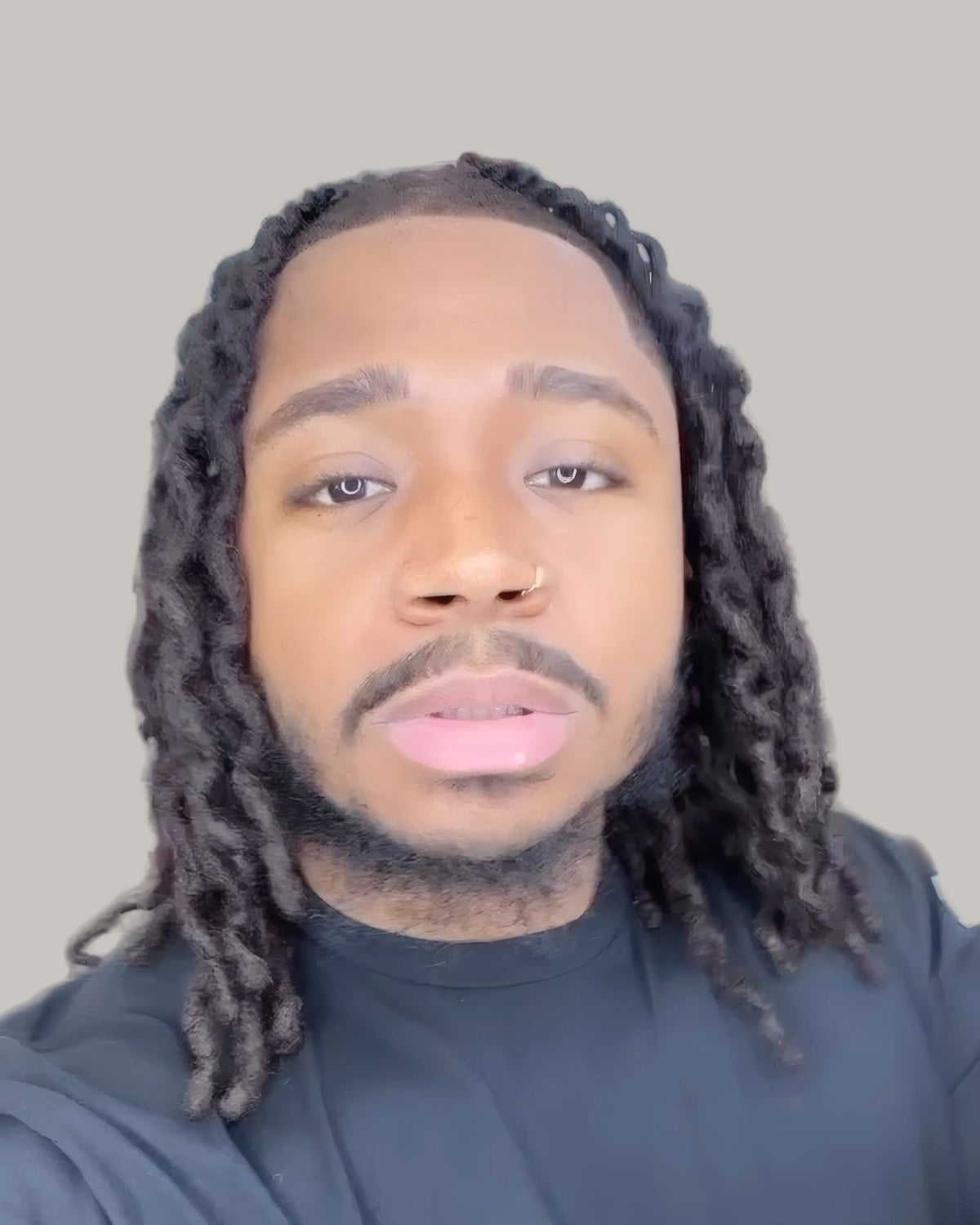
Locs that fall loose around the face. Short locs start around the jaw, and this pair has grown on to the collarbone. Black hair grows just under four inches a year, so a year of patience adds real length.
What to ask for Retwist and tidy the edges, keep the length, and shape the ends.
Half-up locs
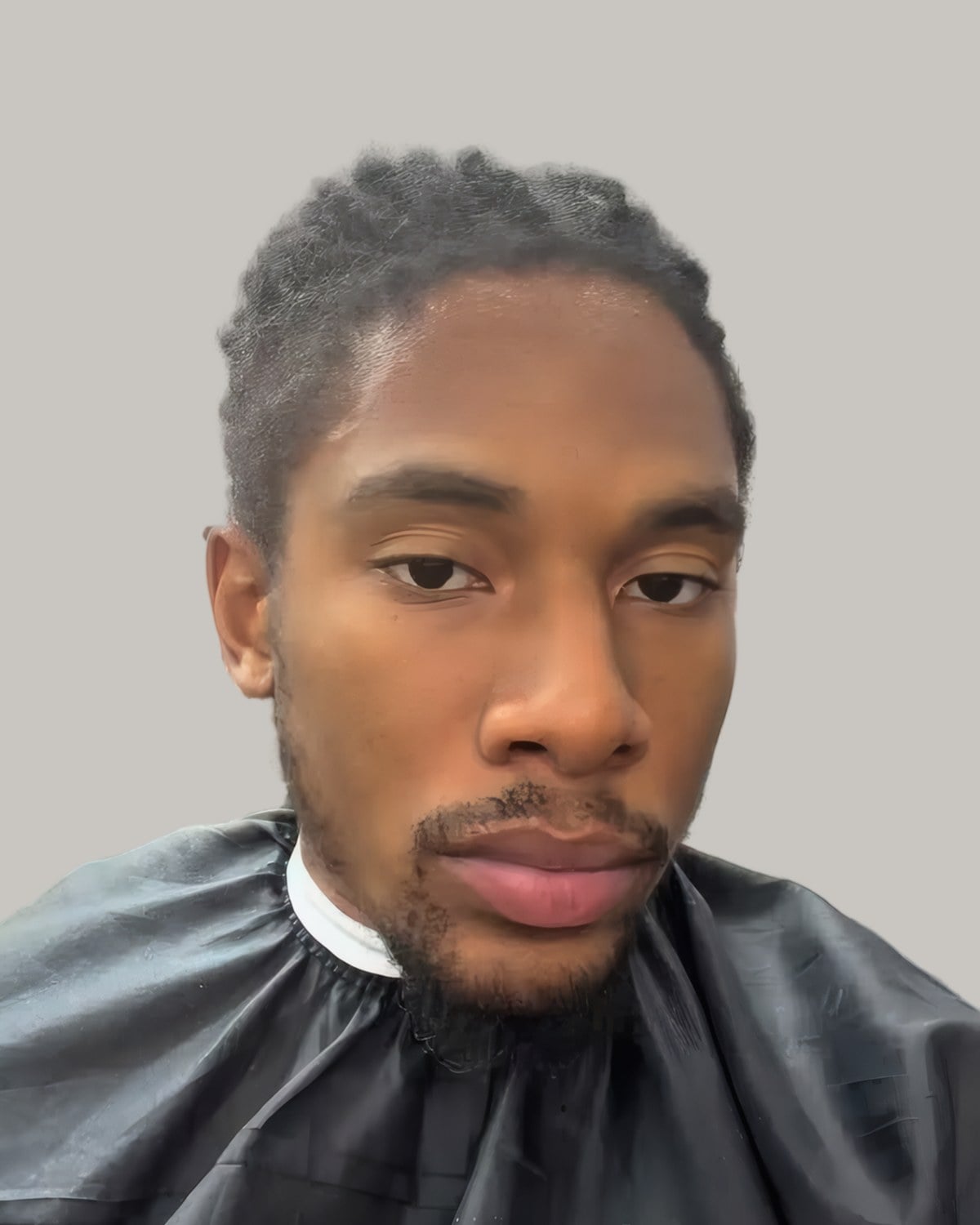
The top half tied back and the rest hanging down. It’s an easy way to wear locs to work. It also keeps them off your face at the gym.
What to ask for Retwist the roots, then tie the top half back at the crown.
Locs with a beard
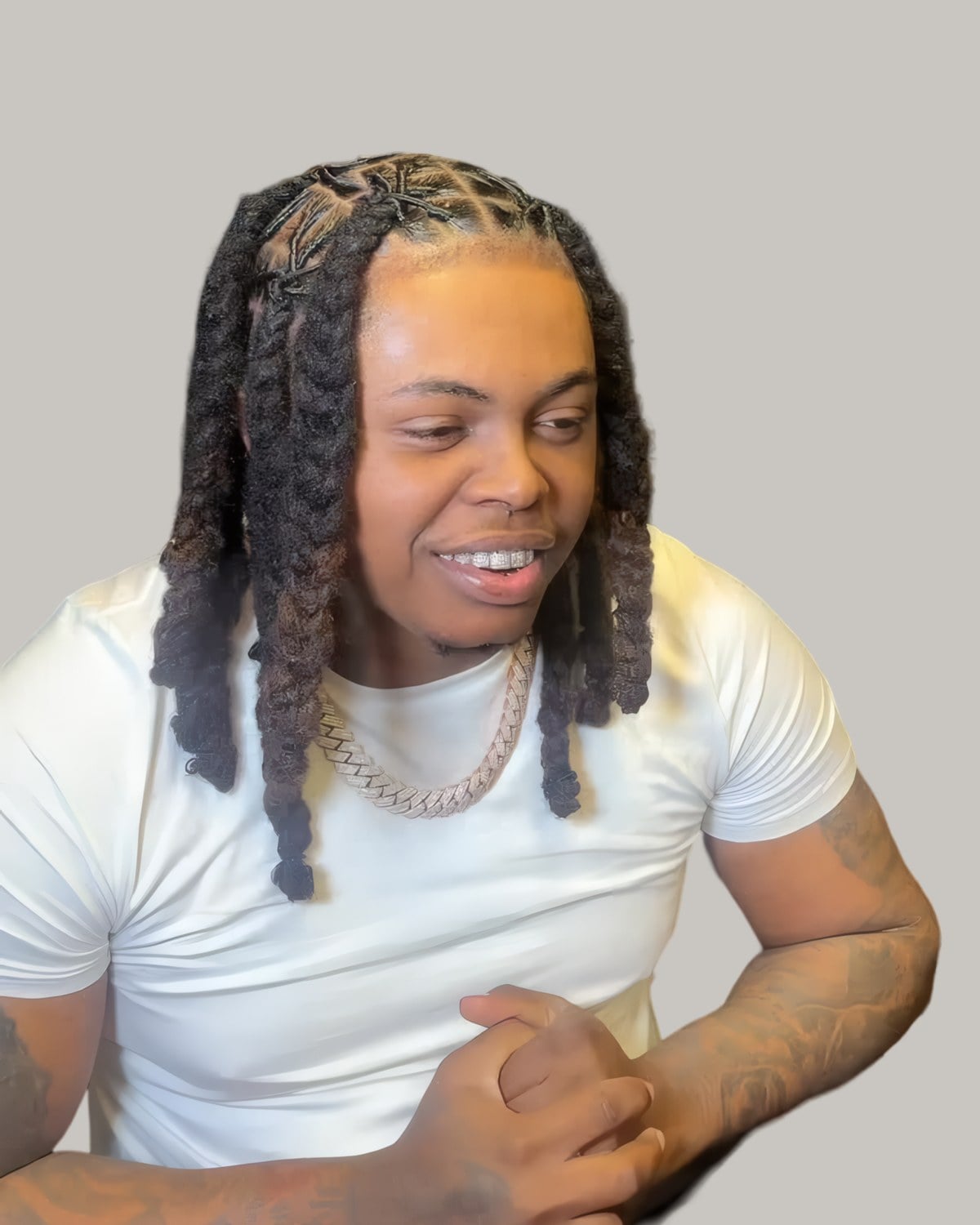

Locs pulled back from a lined-up hairline, over a full beard. Locticians retighten locs every five to eight weeks, and a basic retwist costs $50 to $75.
What to ask for Retwist the roots, line up the hairline, and shape the beard.
01 of 01
Which Black men’s haircut should you choose?
Start with how often you’ll go back. A low cut, a fade or a line-up means a barber visit every two to three weeks. Twists last up to two weeks, cornrows up to six, and box braids six to eight. Locs are the long game: about six months to mature, then a retwist every five to eight weeks.
Then think about length. You can start waves, sponge curls and short afros from a couple of inches. Comb coils start locs on a couple of inches too, while two-strand twists need four to five. If you’re keeping it short, our short haircuts guide has 53 more cuts.
Who suits each style?
Every style here works on tightly coiled hair, so pick by what you’ll keep up. Short cuts and waves suit a man who’s happy in the barber’s chair every few weeks. Twists and cornrows suit a man who’d rather sit for two hours once and forget about it for a while. Locs suit a man who’s happy to play the long game.
If your hairline is thinning or your scalp is sensitive, go easy on tight cornrows and braids, and look at a low cut, waves or a short afro instead.
What to ask your barber or braider for
Bring two photos, one from the front and one from the side, and read out the Ask line under the look you picked. For a cut, give the length on top, the guard number on the sides, where the fade or taper starts, and whether you want a line-up. A number 1 leaves an eighth of an inch.
For braids, twists and locs, give the size (small, medium or large), the parting (box parts, straight back, curved), and the length. Tell your braider straight away if it hurts. A style that hurts is too tight.
How much upkeep does each style take?
| Style | How often you go back | What it costs |
|---|---|---|
| Fade or low cut | Every 2 to 3 weeks | Varies by barber |
| Two-strand twists | Up to 2 weeks | $65 to $150 |
| Cornrows | Up to 6 weeks | $38 to $183 |
| Box braids | 6 to 8 weeks | $90 to $135 |
| Locs | Retwist every 5 to 8 weeks | $50 to $75 a retwist |
Waves are the one style where the upkeep is daily. You brush, you wear a durag at night, and your barber keeps the line-up sharp.
What is the most popular haircut for Black men?
Waves, low cuts and braids come up again and again, and the fade is the base most of these styles build on. It sits under waves, under sponge curls, under a short afro and beside cornrows. If you’re not sure where to start, a low cut with a line-up is the easy first step: short, sharp and quick to change.
What is a number 1 haircut for Black men?
A number 1 is a clipper guard that leaves 1/8 inch (3.2 mm) of hair. On tightly coiled hair it reads as a very short, even low cut.
Twists vs locs: which should you get?
Twists are temporary and locs are permanent. You can take twists out in a couple of weeks. Locs stay until you cut them.
| Two-strand twists | Locs | |
|---|---|---|
| How long it lasts | Up to 2 weeks | Years, once mature |
| Cost | $65 to $150 | Under $100 to start; $50 to $75 a retwist |
| Upkeep | Redo every couple of weeks | Retwist every 5 to 8 weeks |
If you’re not sure, start with two-strand twists. They’re one of the ways to start locs, so you can decide later.
How much do braids cost for men?
Men’s box braids cost about $90 to $135 in some areas. Cornrows run $38 to $183 across the U.S., and men usually pay toward the lower end because there’s less hair to braid. Two-strand twists cost about $65 to $150.
How long do cornrows last on men?
You can keep cornrows in for up to six weeks. Wash your scalp and moisturize in between, and take them out when the roots start to frizz.
Can braids and cornrows cause hair loss?
Yes, if they’re too tight. The American Academy of Dermatology names cornrows, braids and locs as styles that can cause traction alopecia. The early signs are broken hairs around the forehead, a receding hairline, a stinging scalp, or skin pulled up like a tent where the hair is tight. Left untreated, it can become permanent. Ask for looser, thicker braids and change styles now and then.
How long does it take to get 360 waves?
It depends on your hair and how often you brush. Wolfing (letting the hair grow for several weeks between cuts) deepens the pattern, and a durag at night protects it. Give it a few weeks of steady brushing before you judge it.
If you’d like your curls longer at the front, our textured fringe guide has curly versions, and so does the modern mullet guide. For something shaggier, try the wolf cut. And for four looks from every family of cut, see our guide to men’s haircuts.
So when the barber asks what we’re doing today, hand over the screenshot and read the Ask line under it. You’ll both know when you’re back.
Products featured here are independently selected by our editors. If you buy through our retail links we may earn an affiliate commission — it never changes the price you pay, and it never decides our verdicts. Read our earnings disclaimer.