Your hair’s past the point where a number 2 fixes it, but it’s not long enough to tuck behind your ears. So what do you tell the barber?
Nestled somewhere between the buzzcut and Braveheart’s William Wallace lies a happy compromise of medium-length haircuts. Medium haircuts provide freedom and flexibility with which short hair just can’t compete.
Below are 42 of them, two photos each, from a slick back you can take to the office to a mullet you probably can’t, each with the words to say when the scissors come out.
Medium-length hairstyles for men
Here are 42 medium-length hairstyles for men, starting with a slick back for the office.
Slicked-back medium-length hair
Natural slicked-back hair
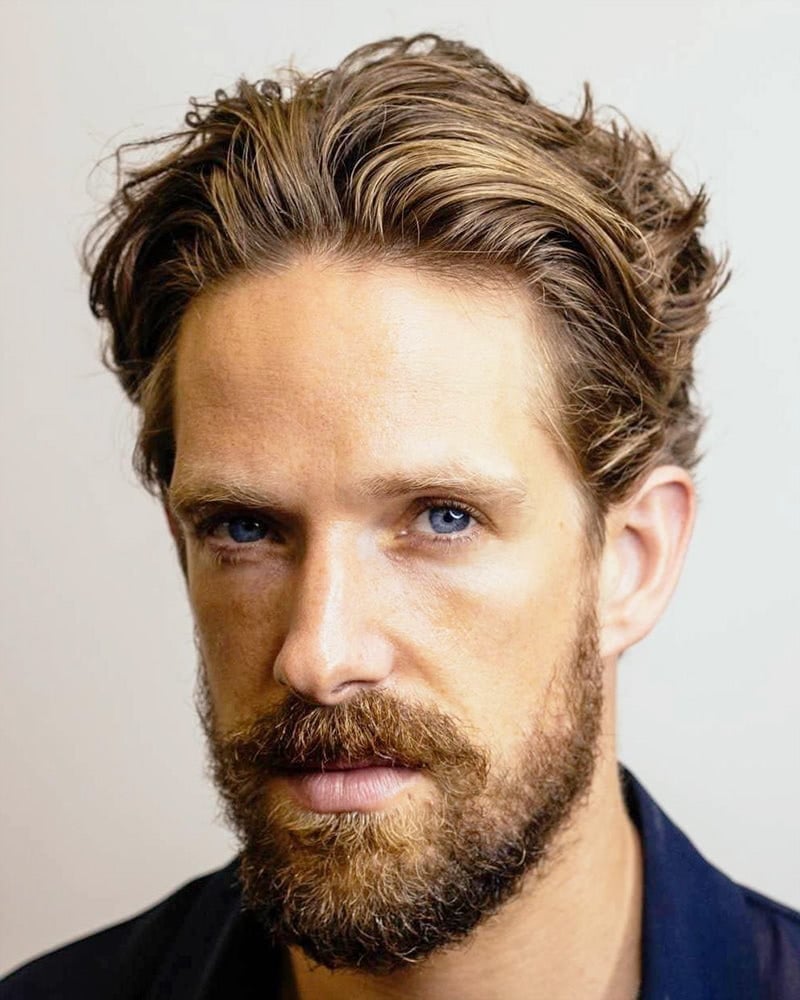
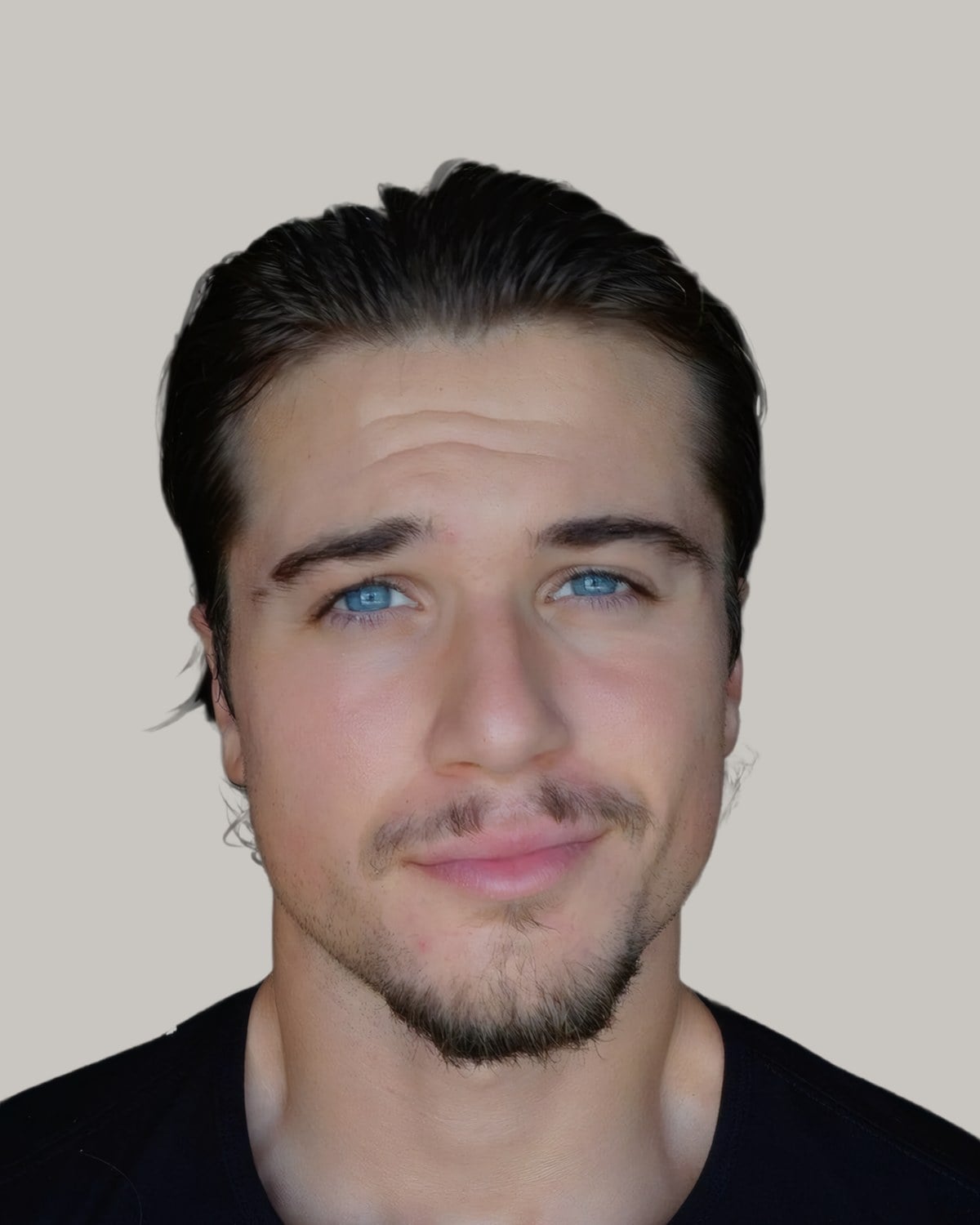
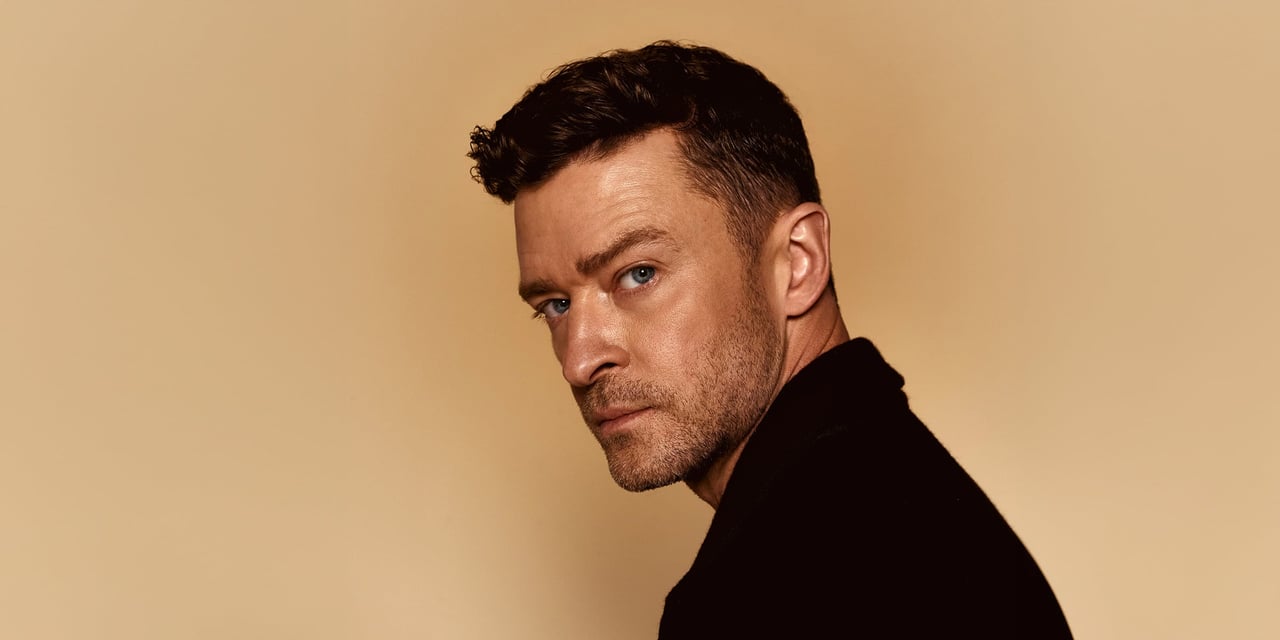
The laid-back version of the slick back: comb it back while it’s damp, let it dry, and leave it alone. The length on top has to reach the crown for it to stay put, so this is one to grow into rather than ask for on day one. A beard, as in the first photo, keeps it from looking too buttoned-up.
What to ask for Scissor cut all over, about four inches on top, sides left long enough to comb back.
Slicked back with pomade
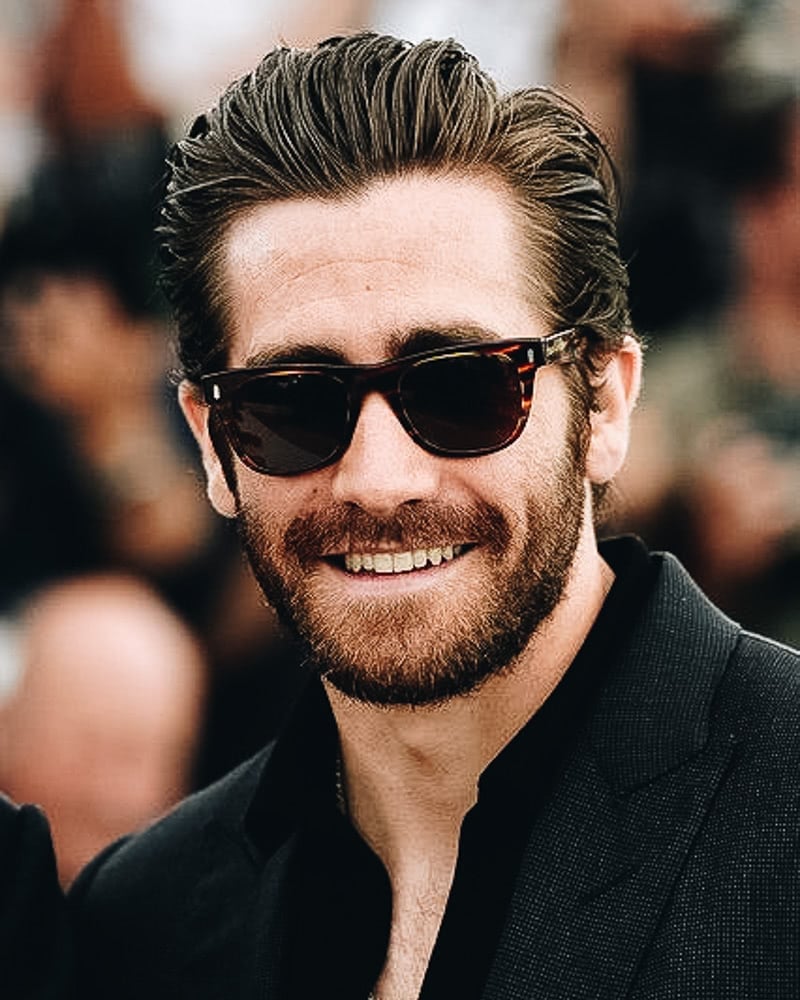
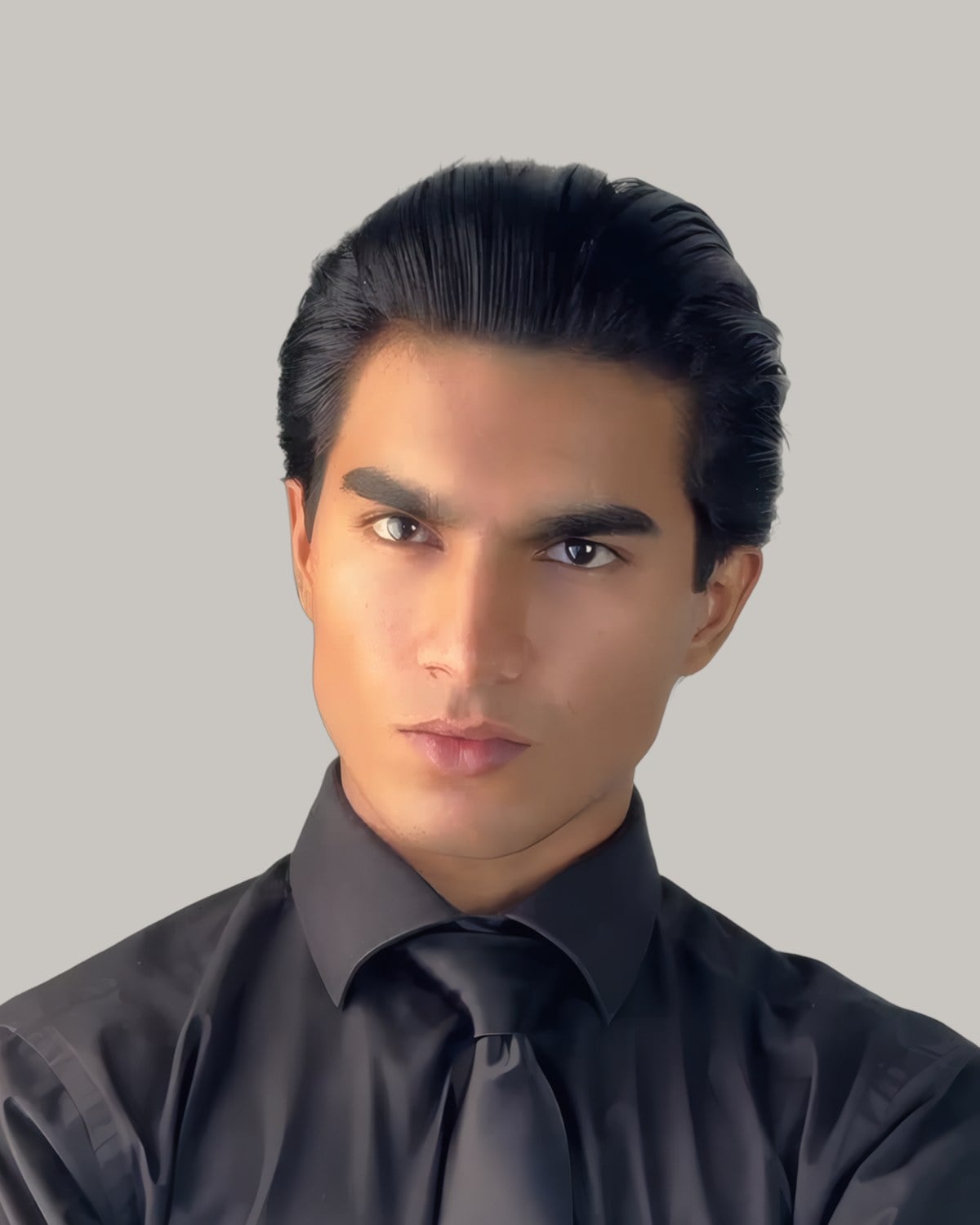
Add pomade and the natural slick back turns into the evening version, with a sheen that reads well in a jacket (and in a black shirt and tie, as the second photo shows). It asks for product every morning and a comb in your pocket. Wash day is the day it gets a rest.
What to ask for Tapered sides, three inches on top, cut so it lies flat when combed back with pomade.
Slicked back with a full beard
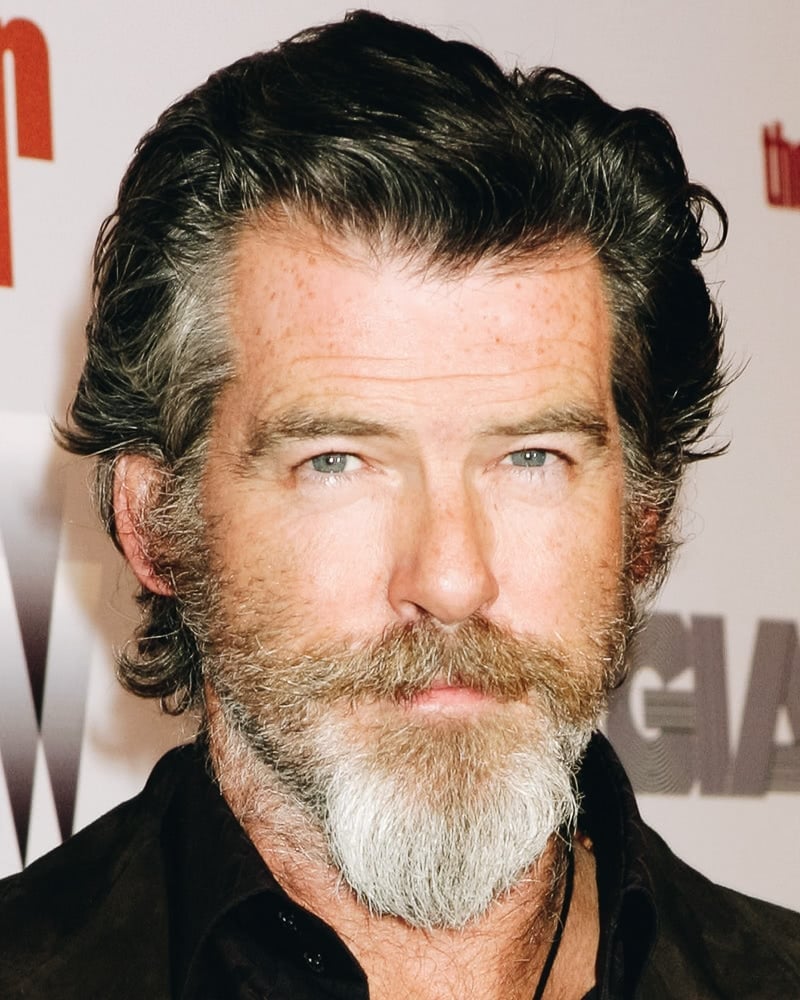
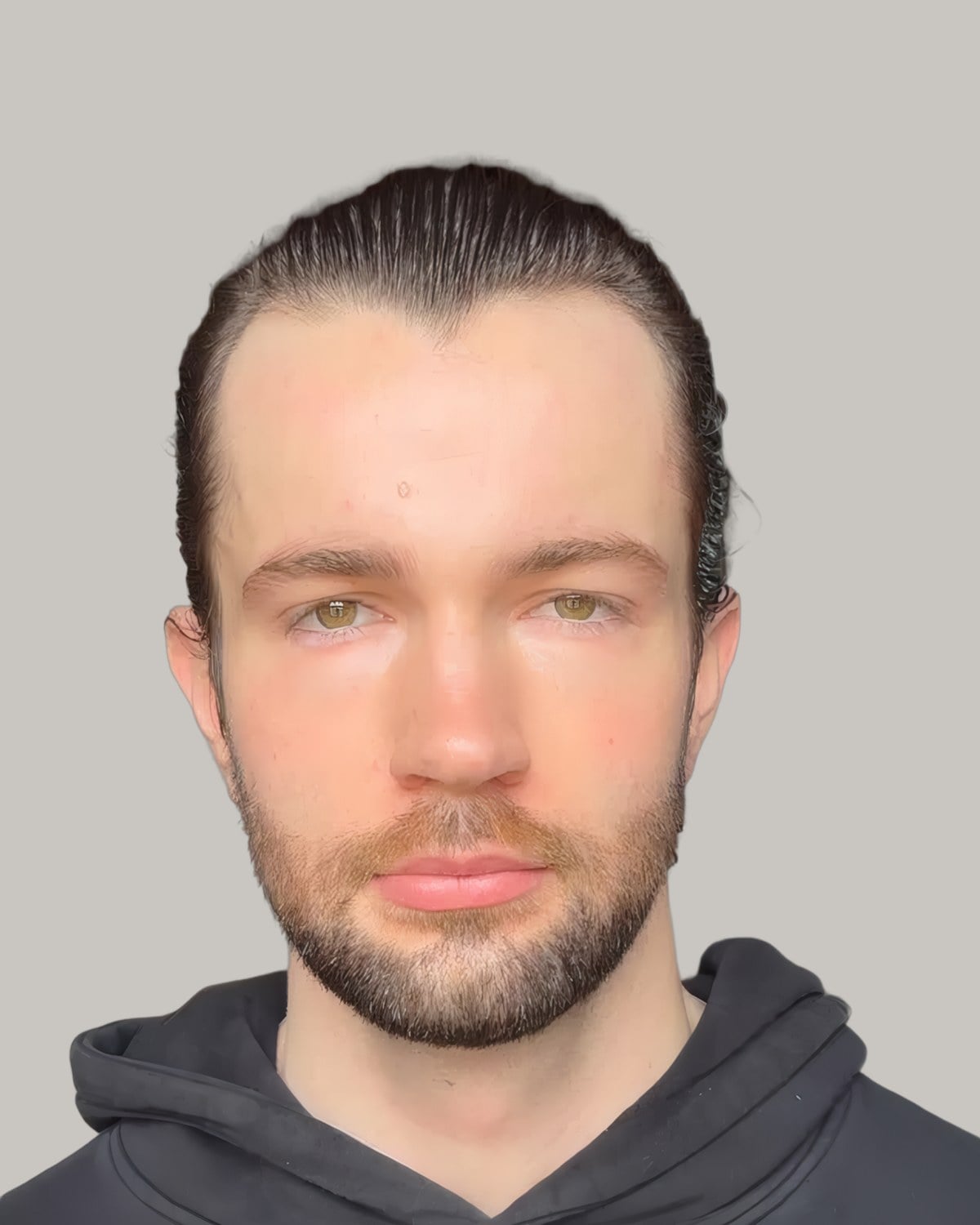
A slick back and a full beard balance each other: all the volume is on the face, so the hair can sit flat. It’s a cut that suits grey well, as the first photo proves. Book the beard trim with the haircut, so the sideburns meet the beard at the same length.
What to ask for Keep the sides at scissor length, about four inches on top, and tidy the beard line to meet the sideburns.
Slicked-back undercut
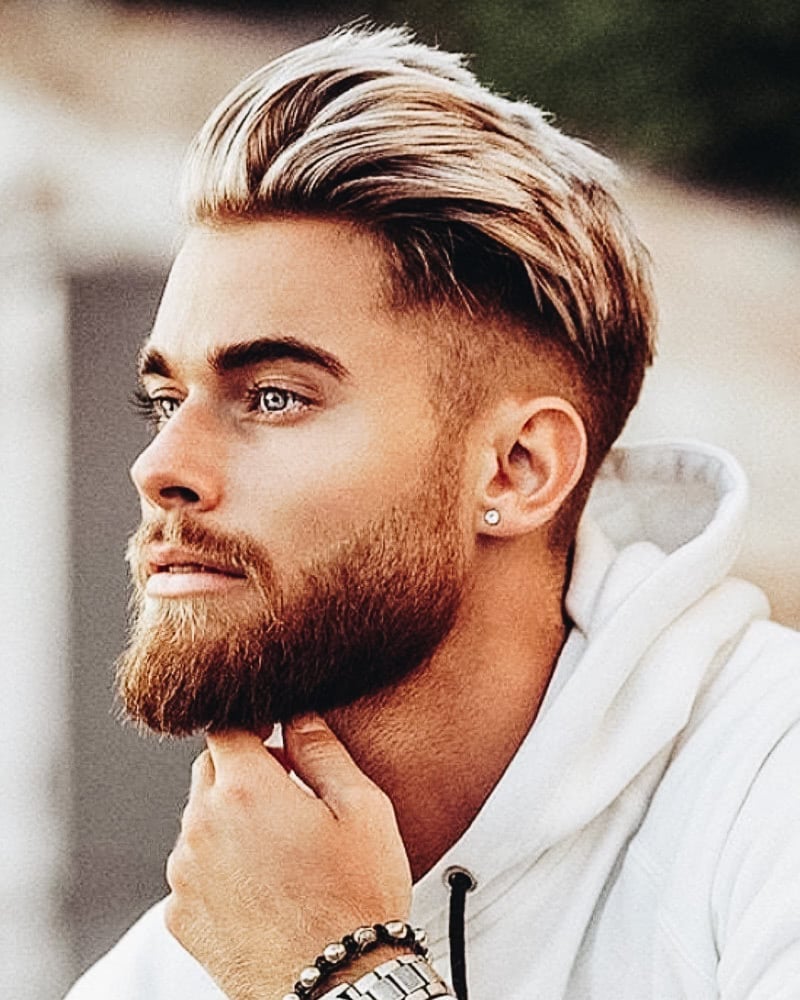
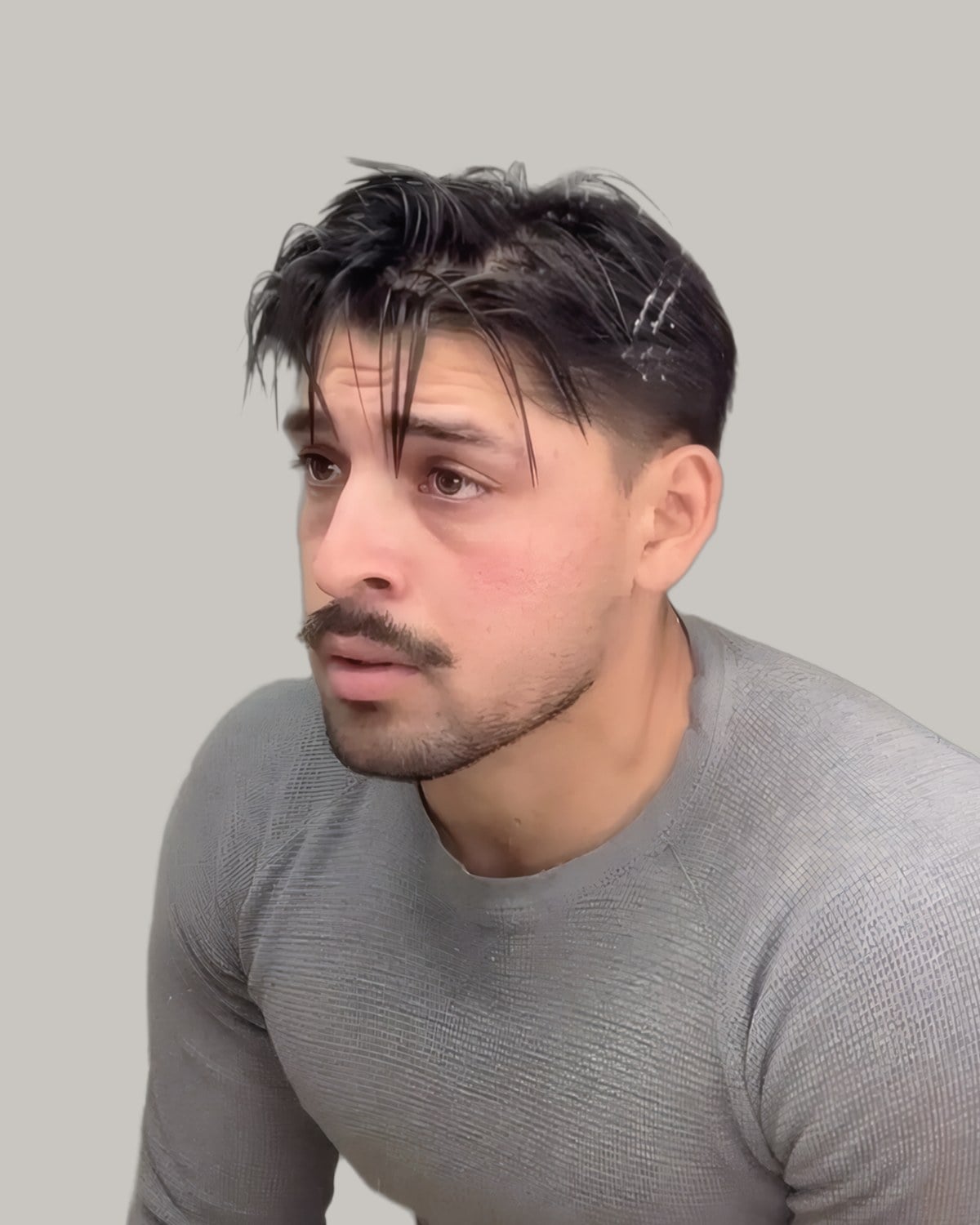
The undercut keeps the sides short and leaves the top long, with no blend between the two. Swept back, that disconnect is what you’re paying for (and why bleached hair looks this sharp against the dark sides). Expect the sides to need a tidy well before the top does.
What to ask for Undercut with a number 2 on the sides and back, three to four inches on top, swept back.
Jake Gyllenhaal's slicked-back cut
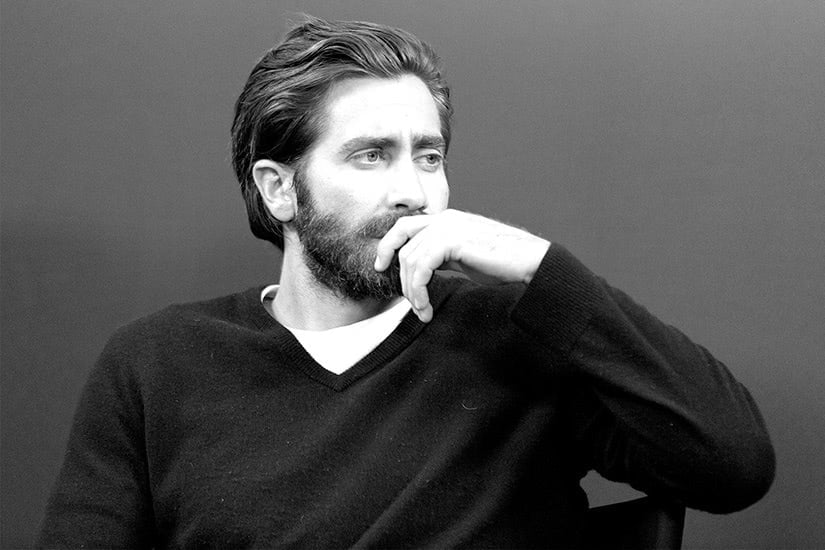
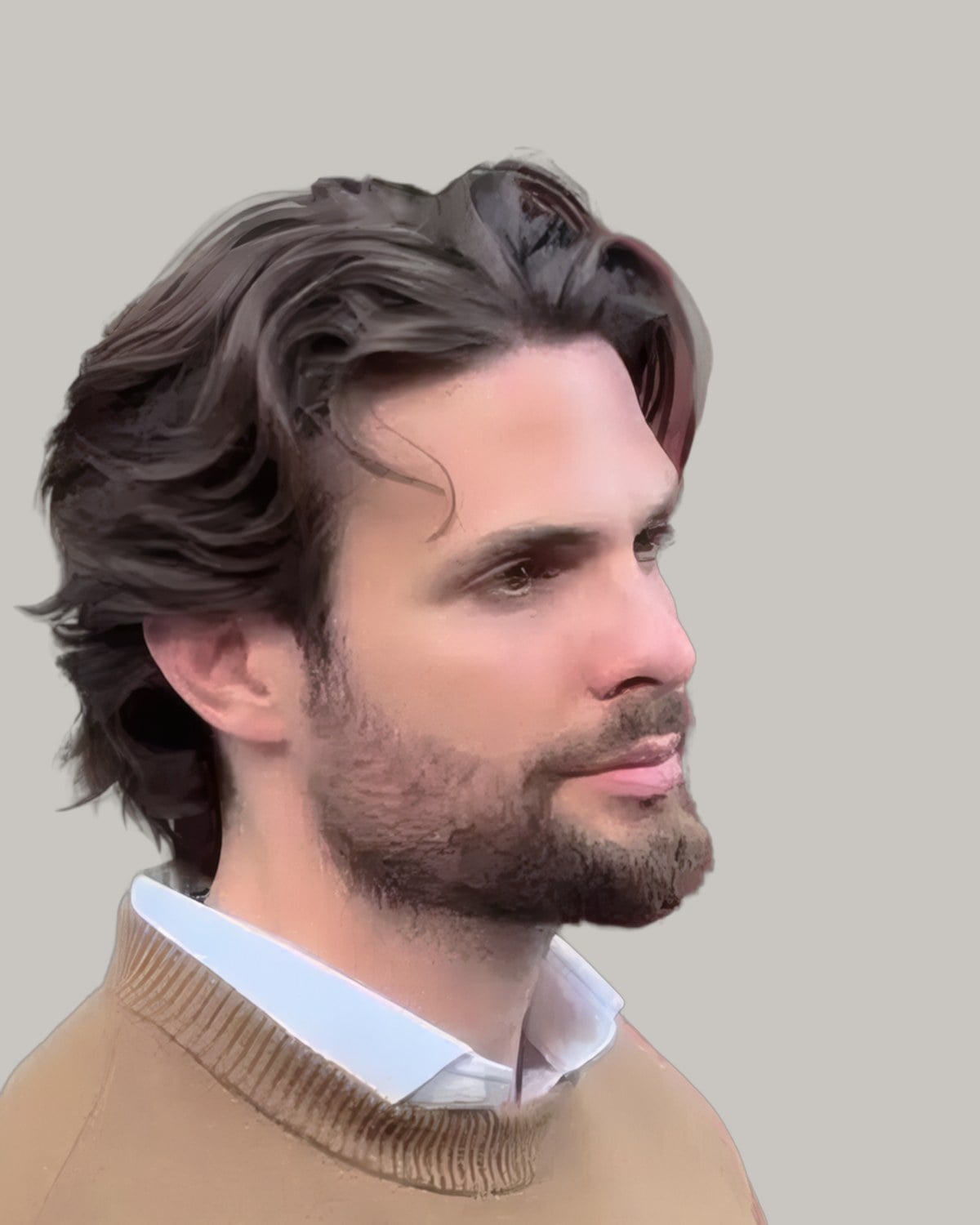
Jake Gyllenhaal’s slicked-back mid-length look is at a length most men would call a haircut overdue. It works because the wave is left in and the beard is kept close. Push it back with your fingers rather than a comb, so it doesn’t set into lines.
What to ask for Scissor cut, about four inches on top, the back left to reach the collar, finished with a light cream.
Semi-natural slicked-back hair
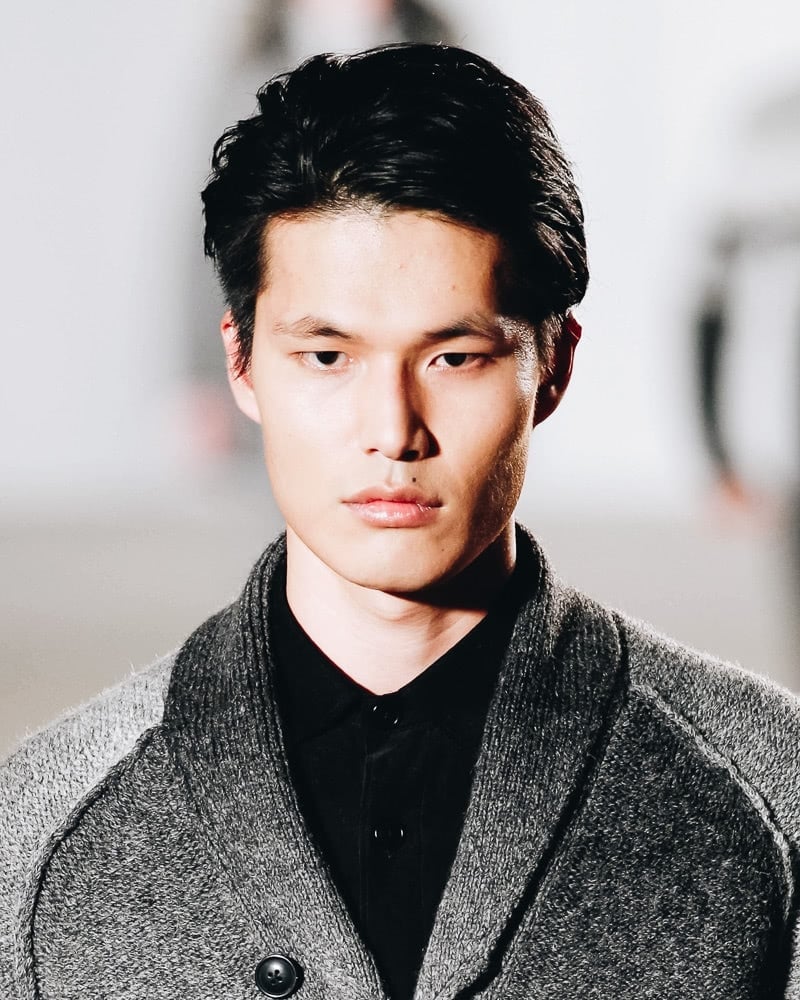
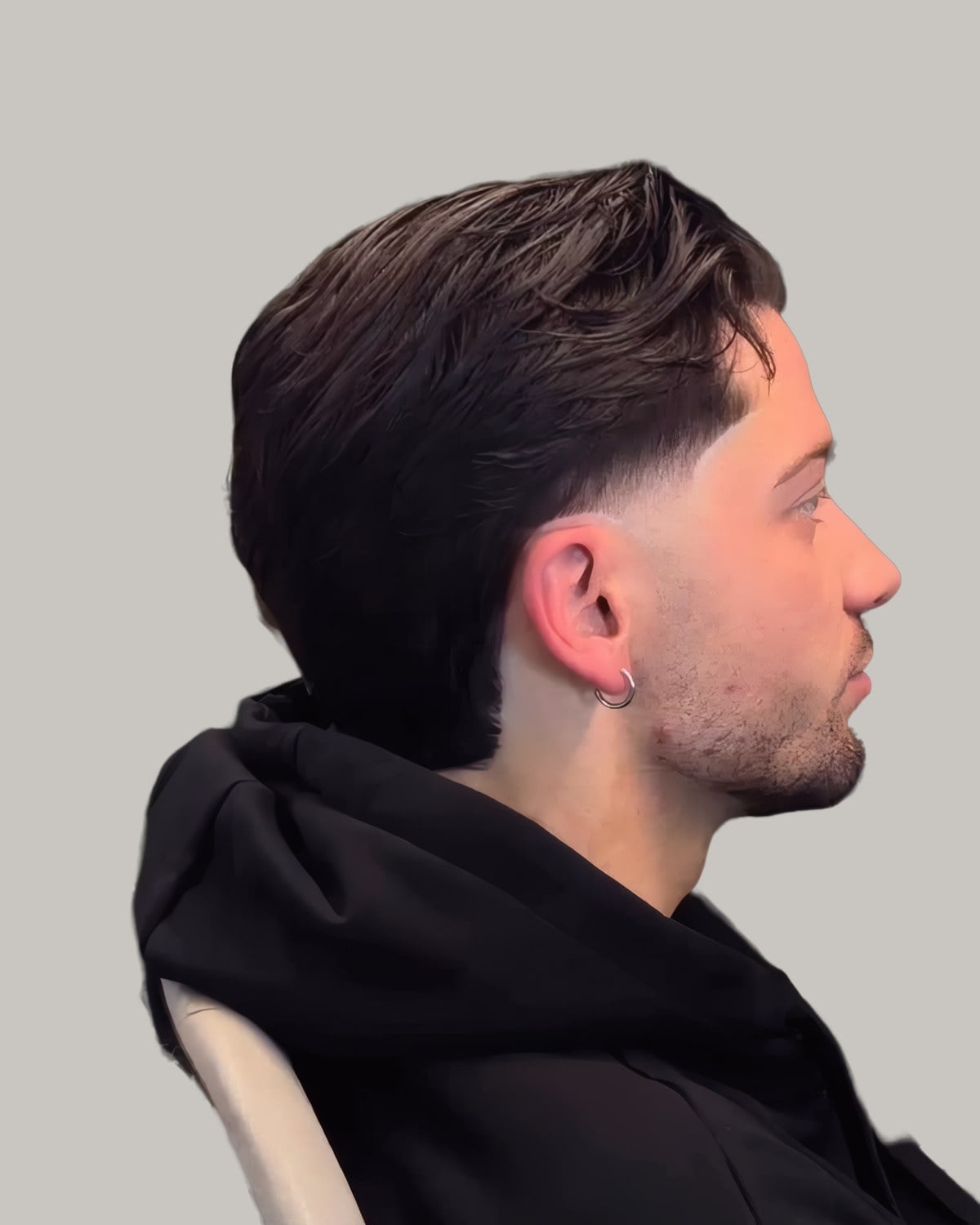
Half a slick back: the front goes up and back, the rest is left alone. It’s the version for straight, heavy hair that won’t hold a hard line. It looks deliberate without looking done. A little matte paste at the front is all it asks for.
What to ask for Leave three inches on top, taper the sides with scissors, and texturise the front so it lifts.
Wavy slick back
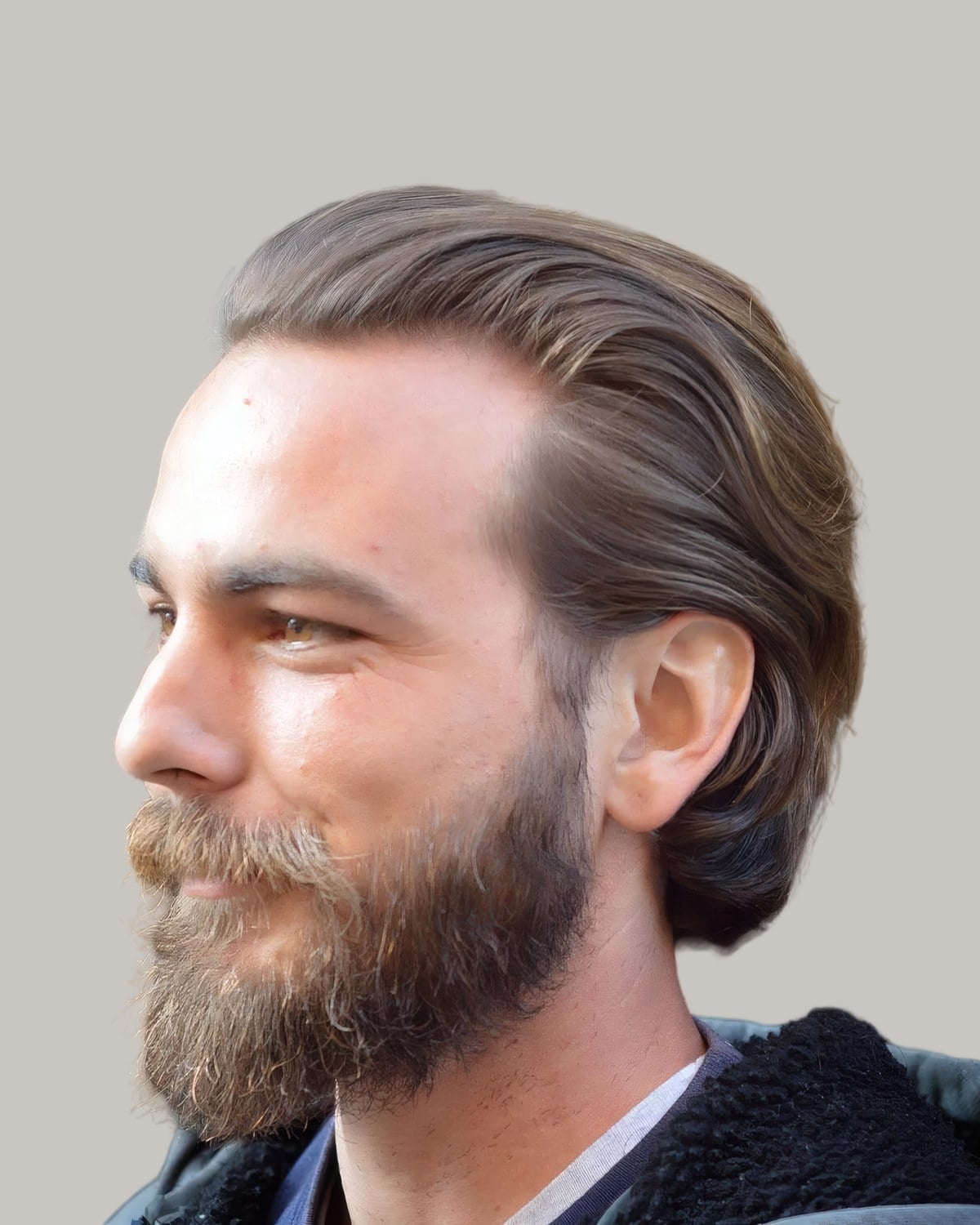
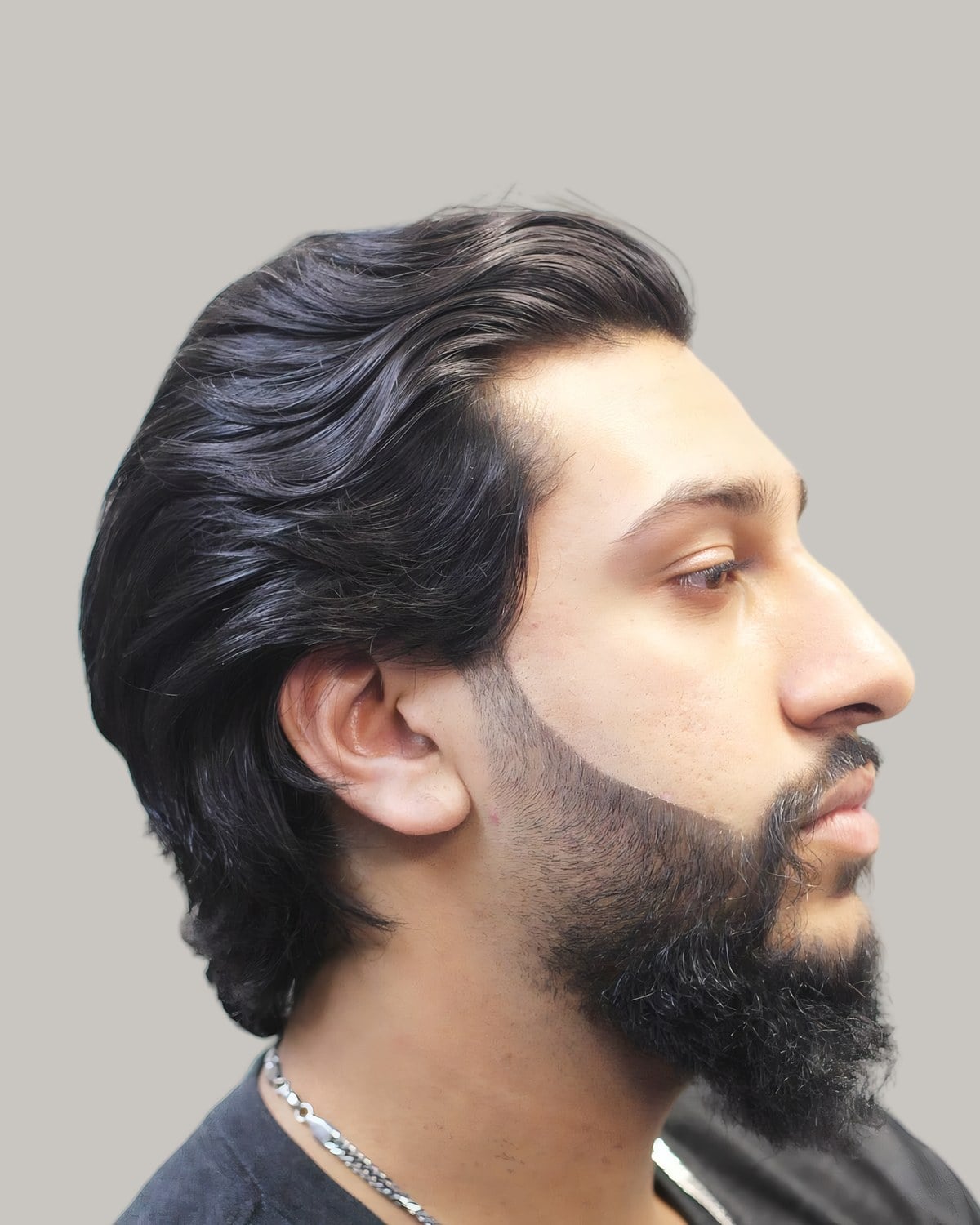
Wavy hair fights a slick back if you try to flatten it, so don’t. Comb it back while it’s damp and let the wave keep its shape, and it’ll sit looser and fuller than the straight-hair version. Keep the length over the ears so it can fall back toward the nape.
What to ask for Scissor cut all over, about four inches on top, sides left long enough to comb back over the ears, and the back to the nape. No clippers.
Classic slick back
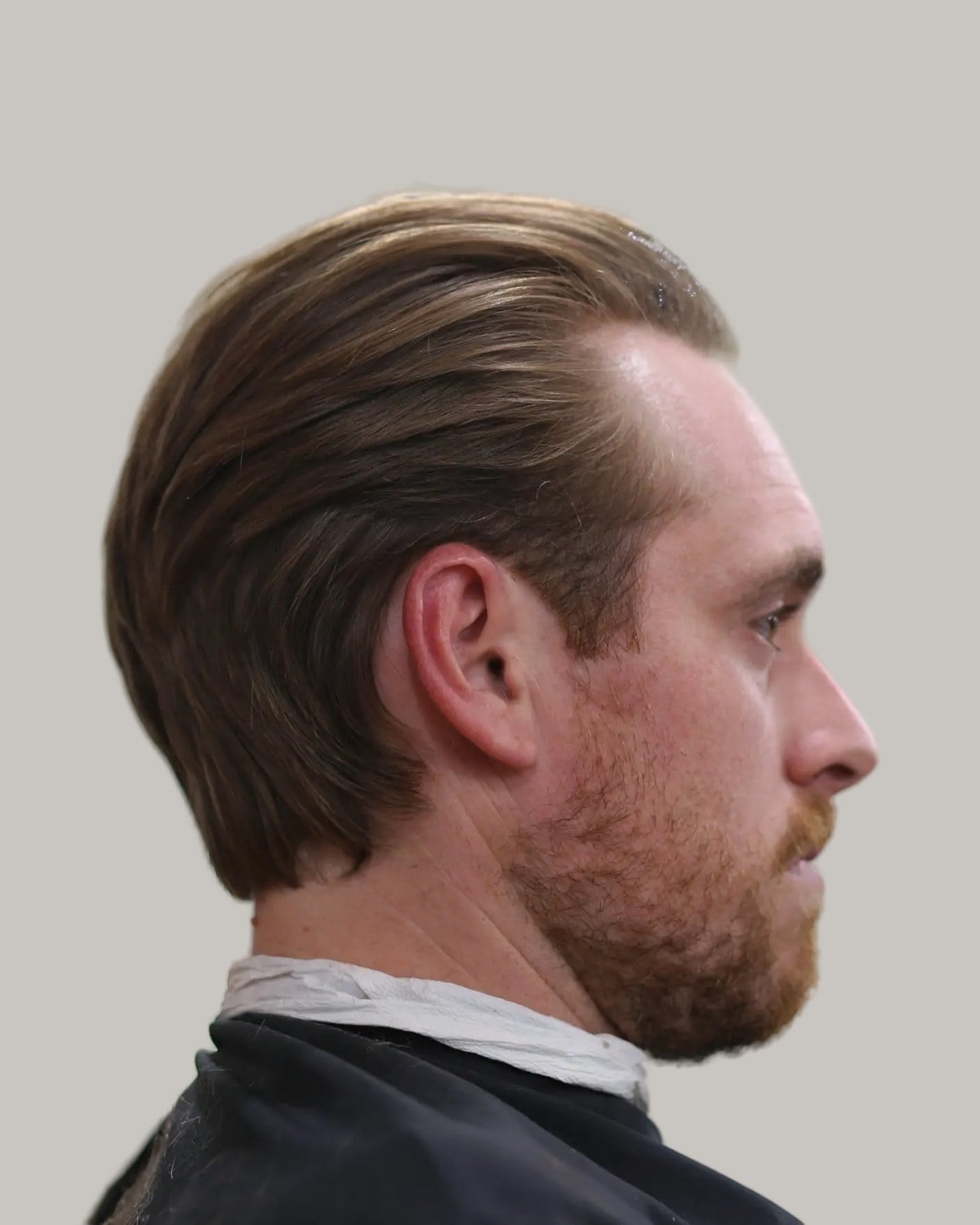
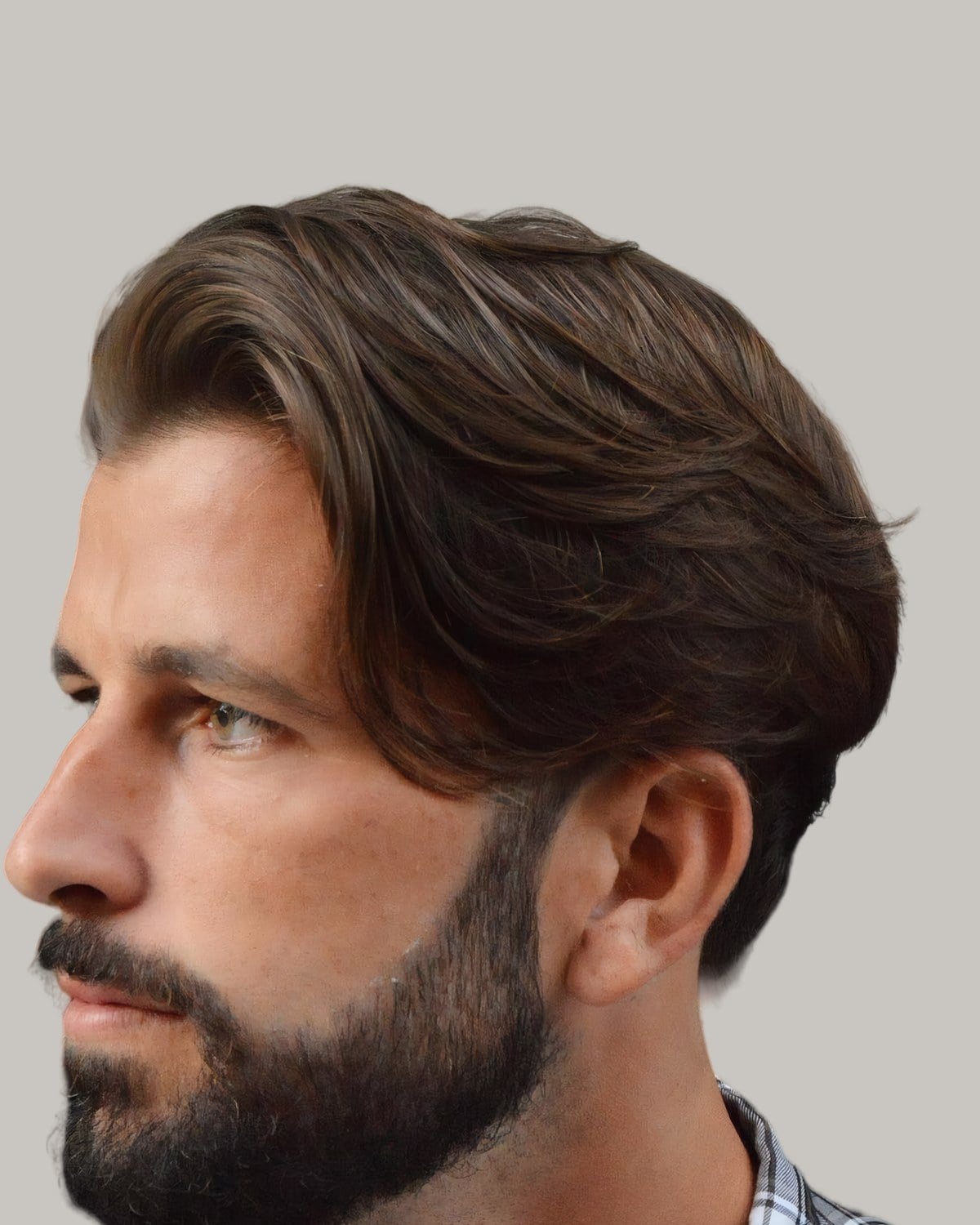
The classic slick back keeps about four inches on top and combs it back from the hairline, either straight back or from a soft side part. The sides are cut with scissors and left long enough to go back with the top, so there’s no fade line anywhere. A water-based pomade gives you the shine without the grease.
What to ask for Scissor cut all over, about four inches on top, combed back straight or from a soft side part, sides left long enough to go back with the top, no clippers.
Slick back with volume
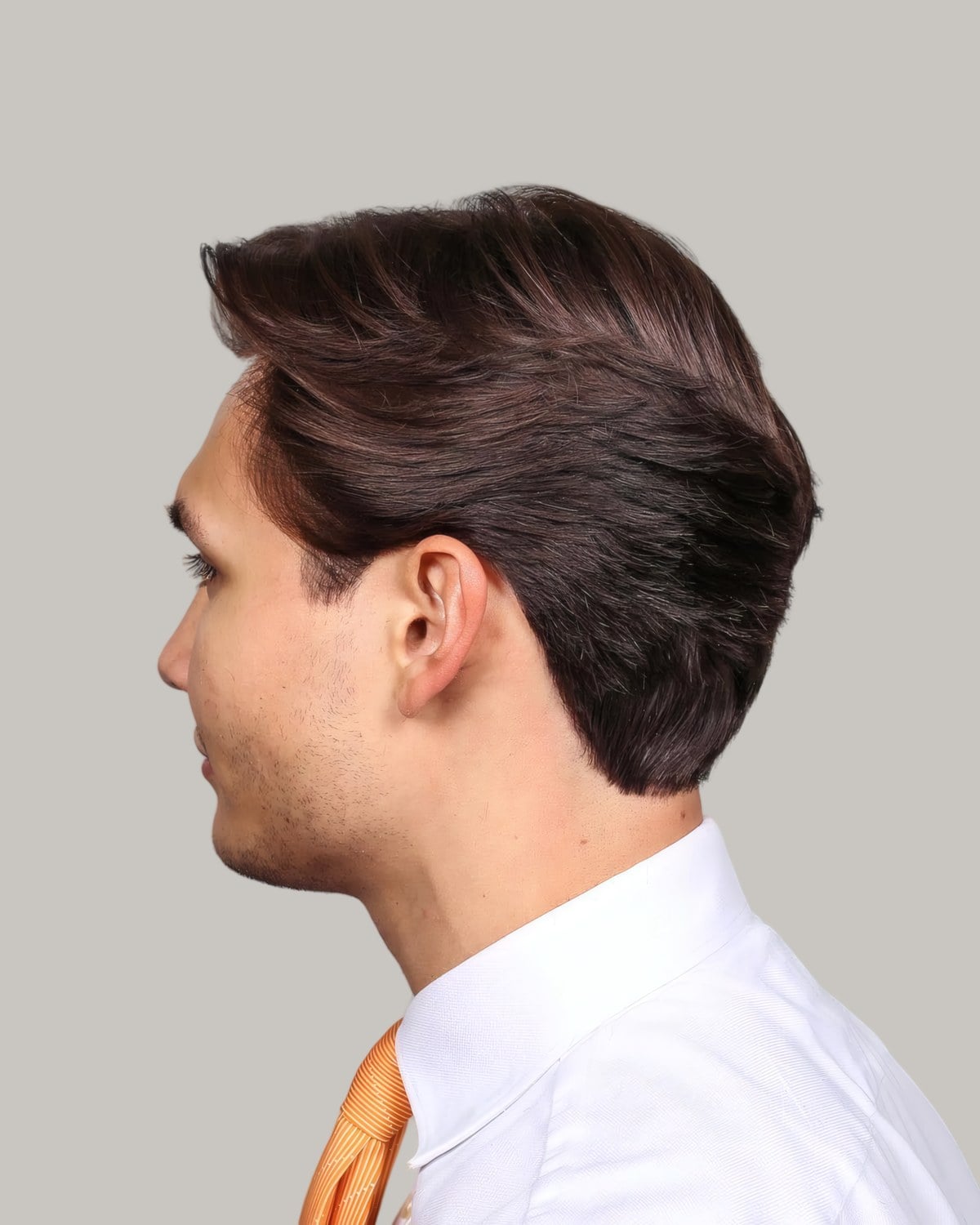
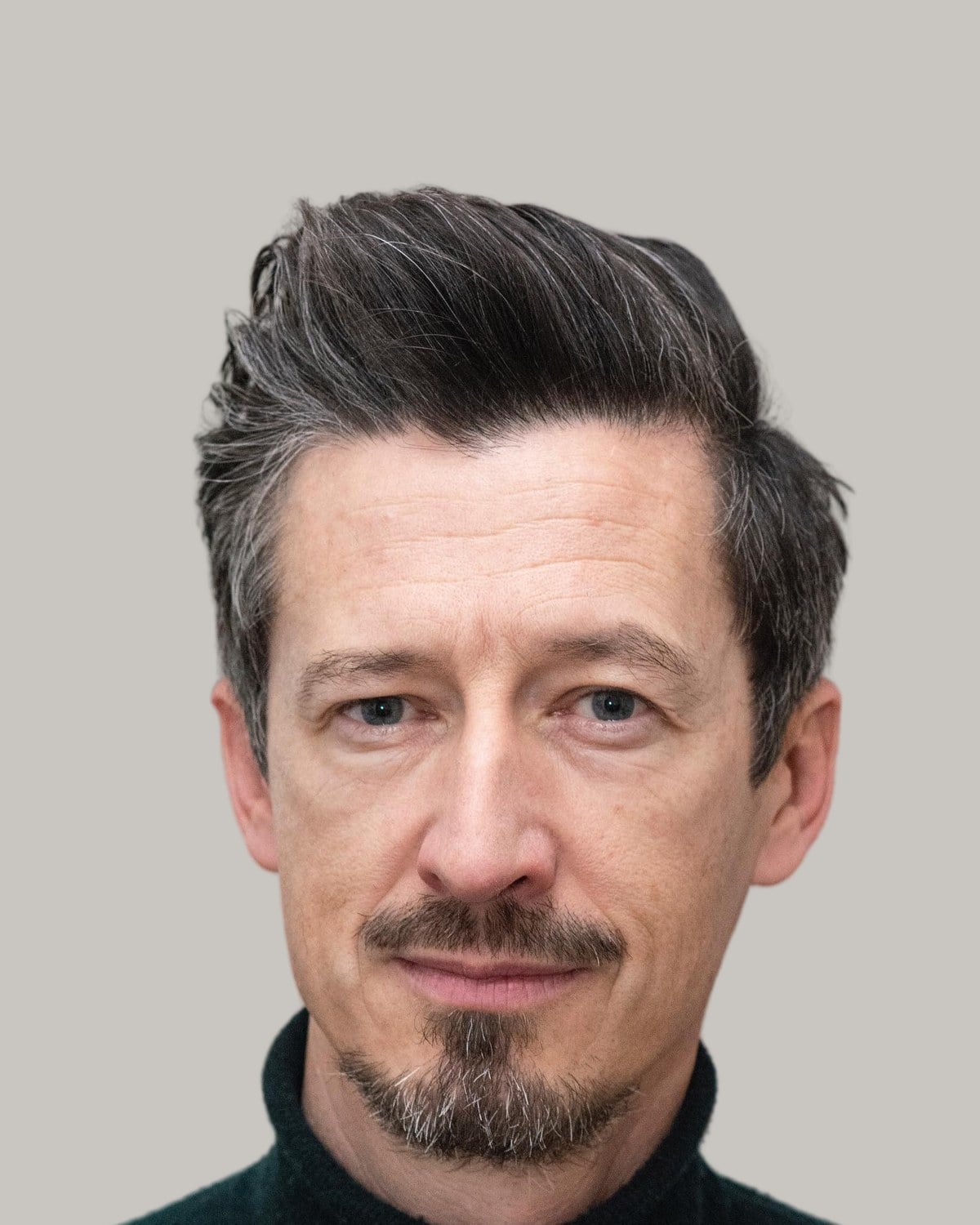
Blow-dry the front up and back before the product goes in, and the slick back gets height instead of lying flat on your head. It suits straight hair that’s thick enough to hold the lift, because fine hair tends to drop by lunchtime. Finish with a matte paste or a light cream, since a heavy gel pulls the volume back down.
What to ask for About four inches at the front, three at the crown, layered with scissors down the sides and back, and the front texturised so it lifts when it's blow-dried back.
Side parts and comb-overs
Classic comb-over
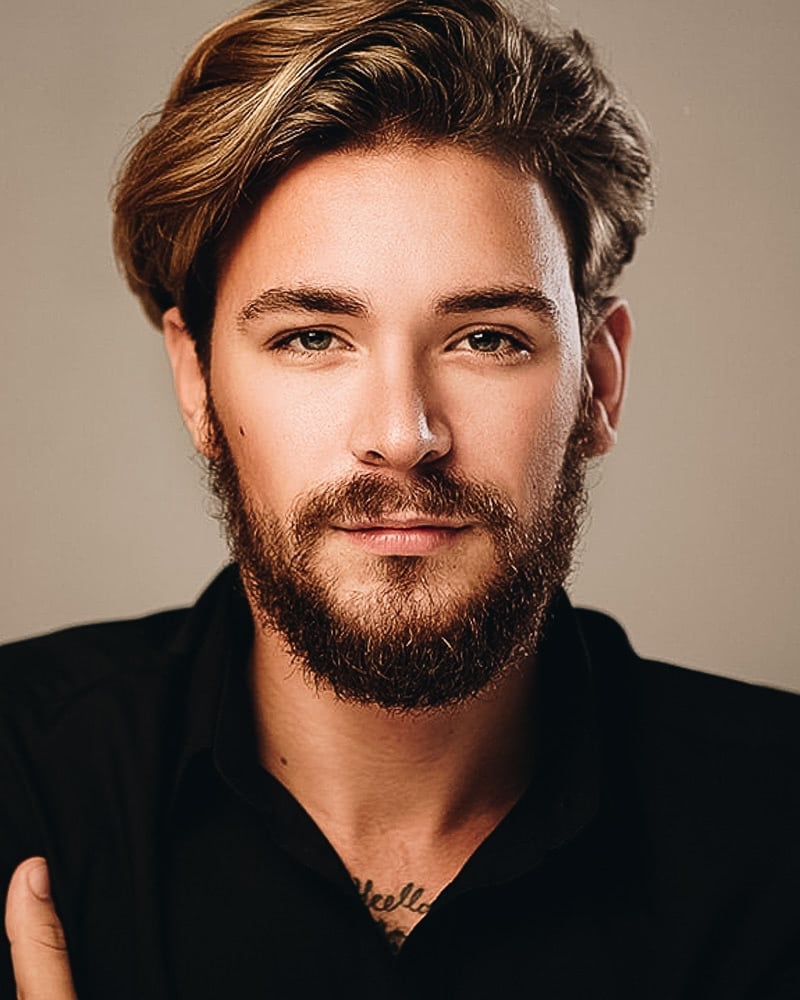
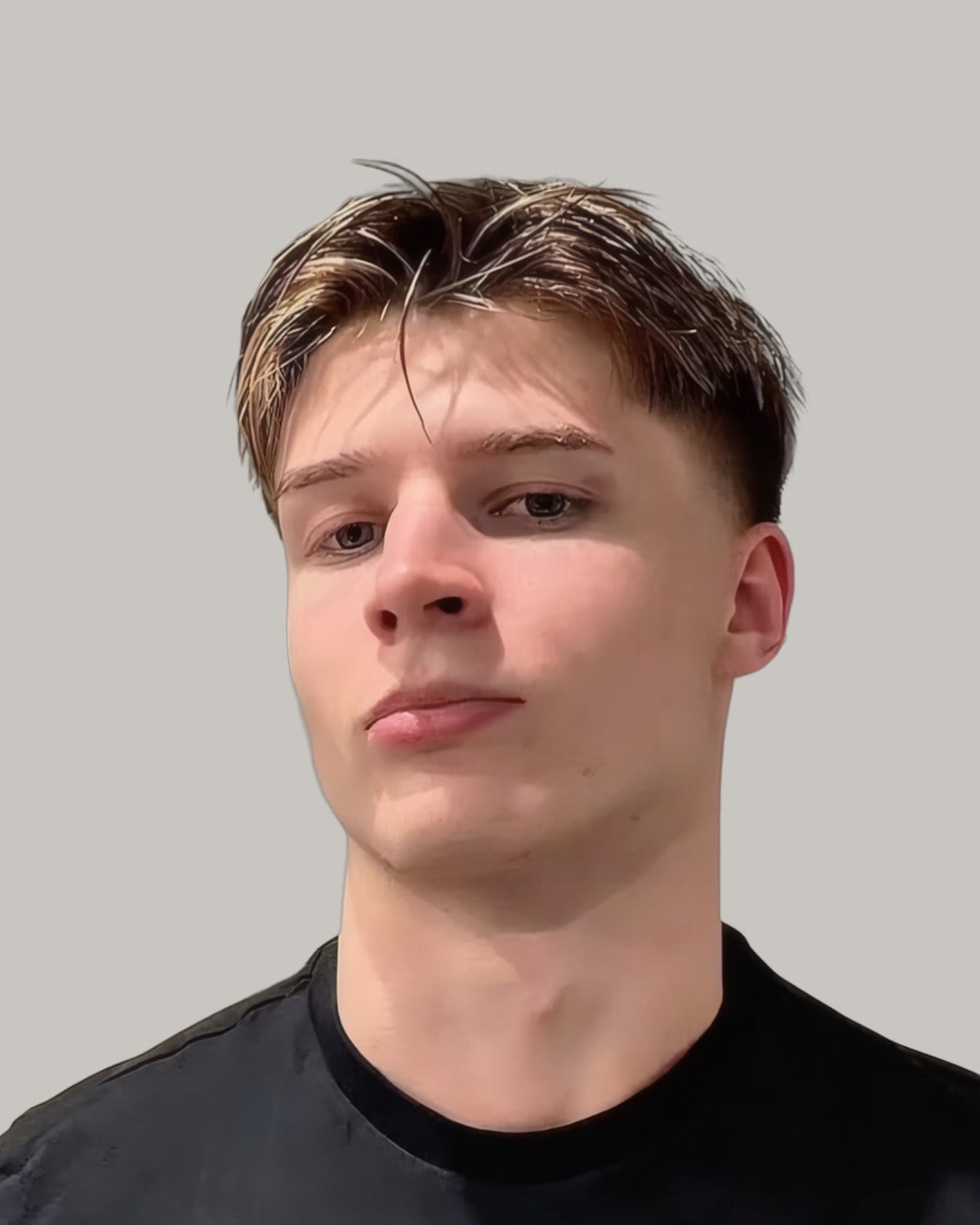
Clean and easy to keep, the comb-over is the cut your barber could do half asleep. The top is combed across from a side part, and the length at the front decides how much it falls. Blow-dry it in the direction you want it to go and it’ll stay there most of the day.
What to ask for Number 3 on the sides, three inches on top, longer at the front, combed over from a side part.
Natural comb-over
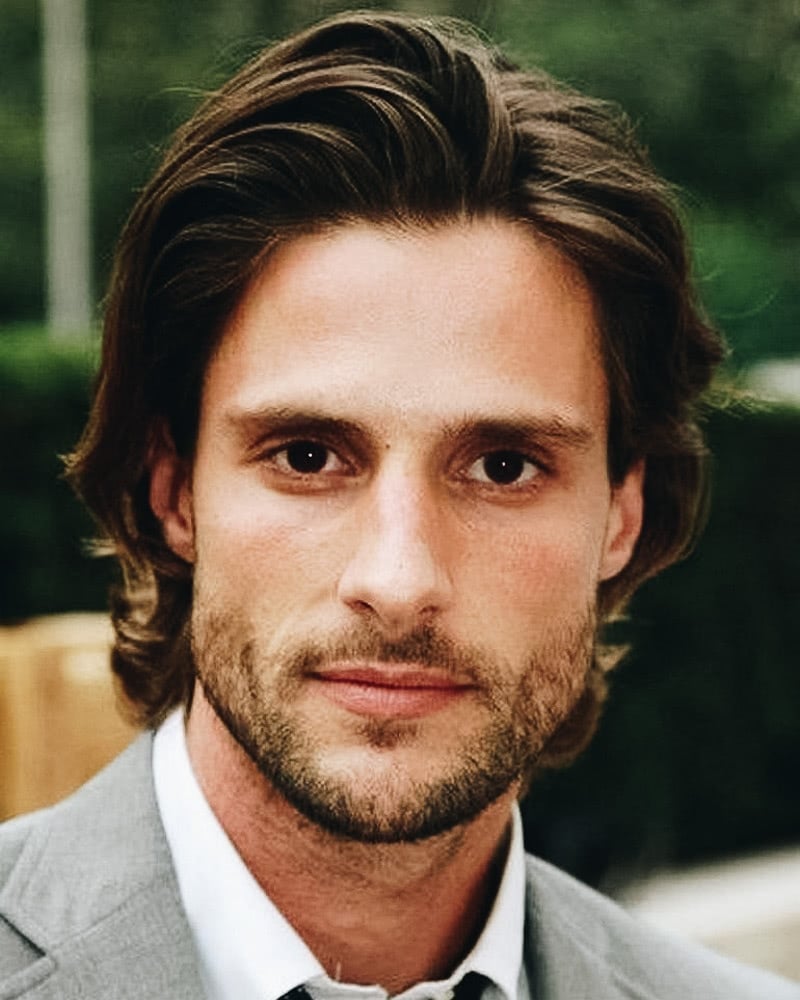
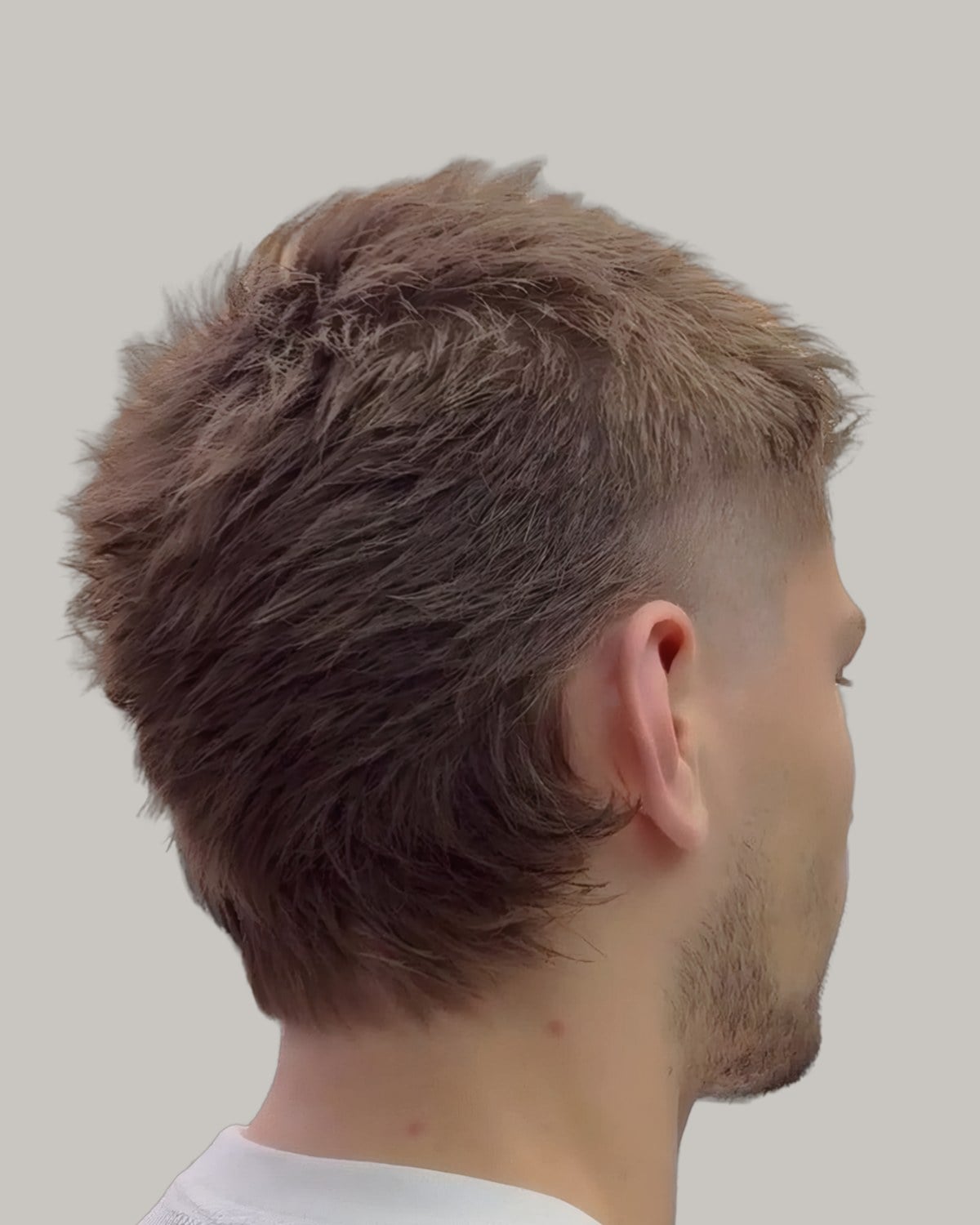
The comb-over, grown out and relaxed. It skips the hard part and the fade: it’s just length, combed to one side with your fingers. It suits thick hair with a bit of wave. The wave does the holding for you.
What to ask for Scissor cut all over, about four inches on top, the sides kept long enough to tuck.
Natural side part
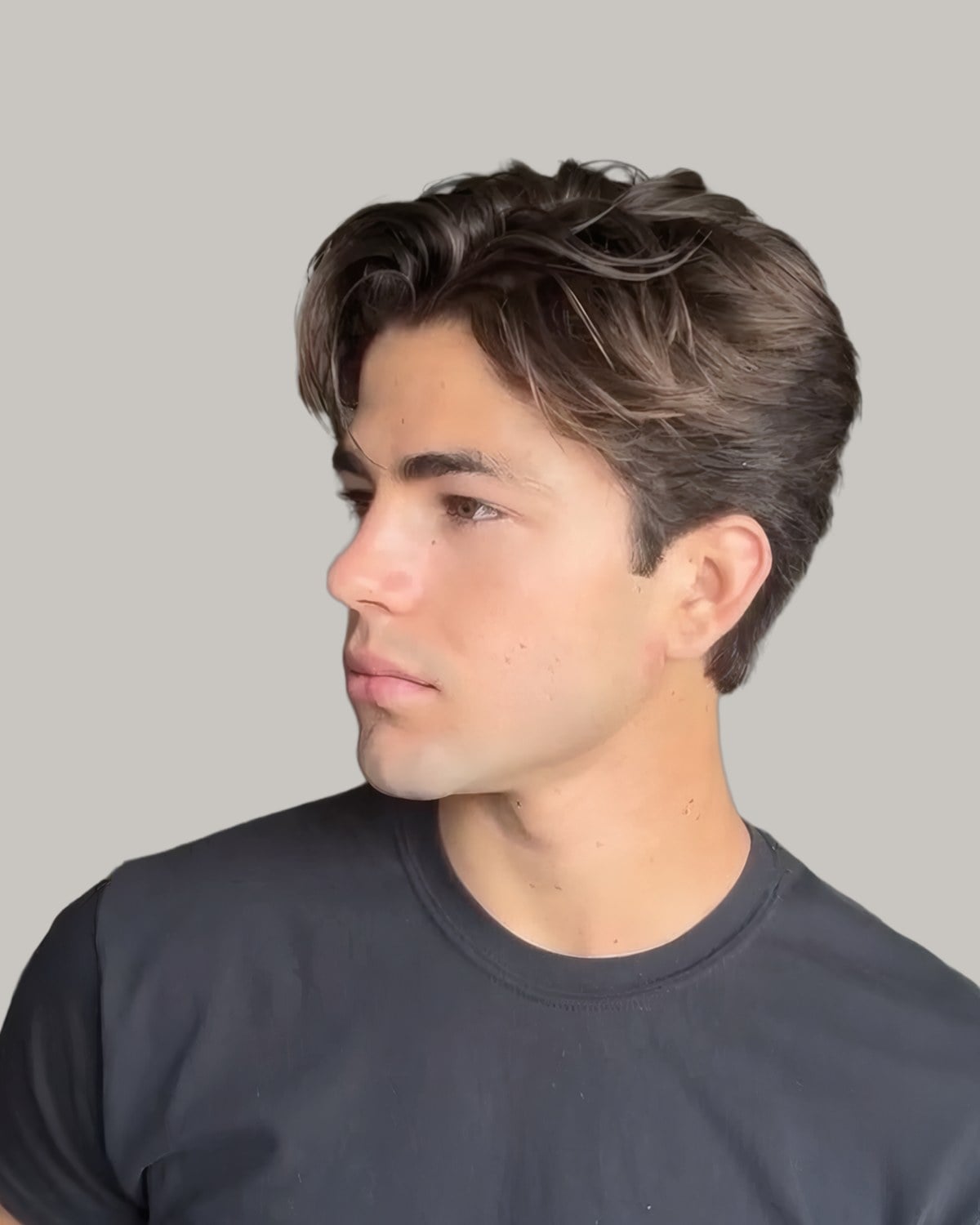
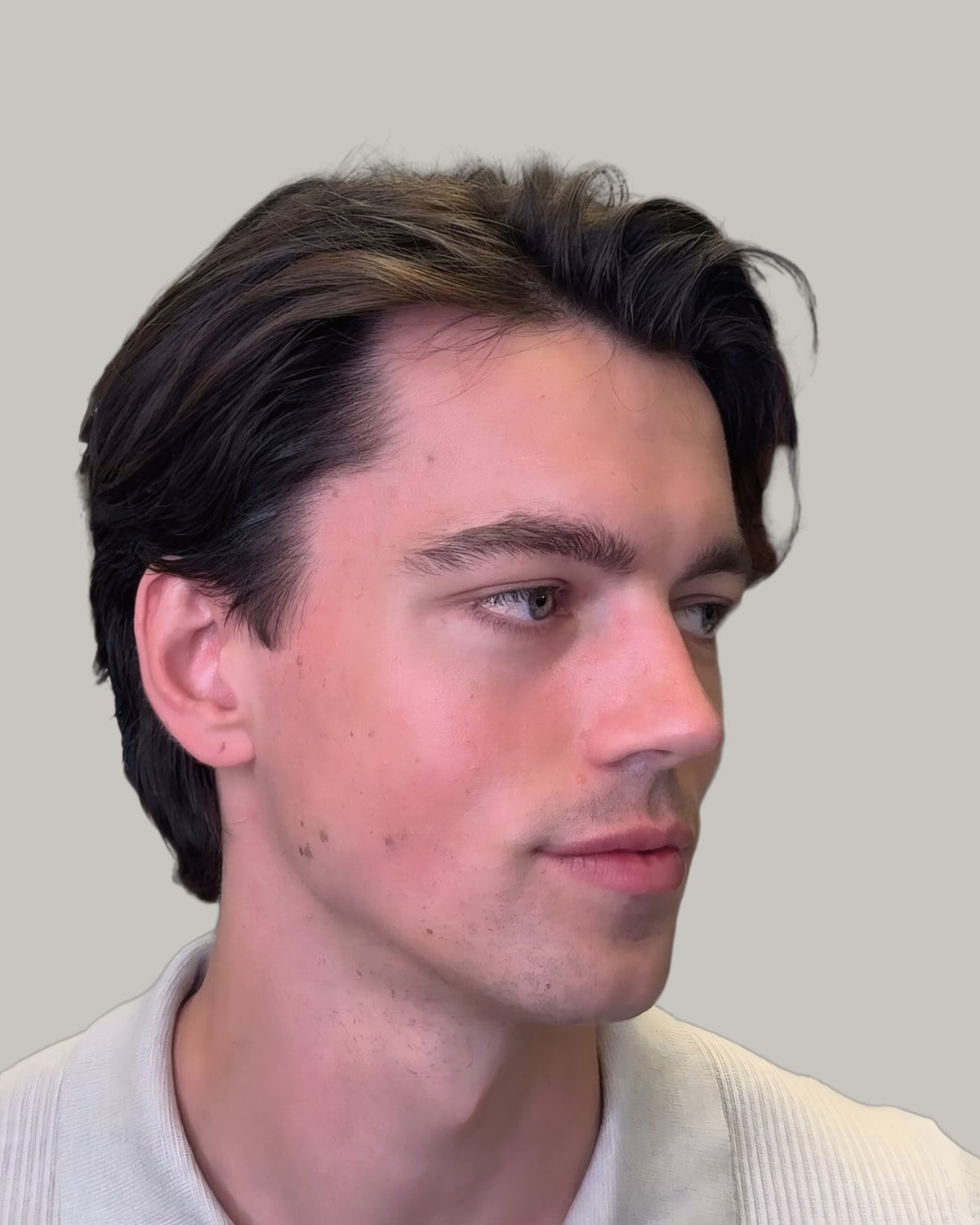
Find where your hair parts on its own and the cut does half the work. This one’s brushed back from the part rather than combed across. That keeps it looking relaxed. It’s the side part for jeans rather than a suit.
What to ask for Scissor taper on the sides, three inches on top, a natural side part combed back.
Layered side part
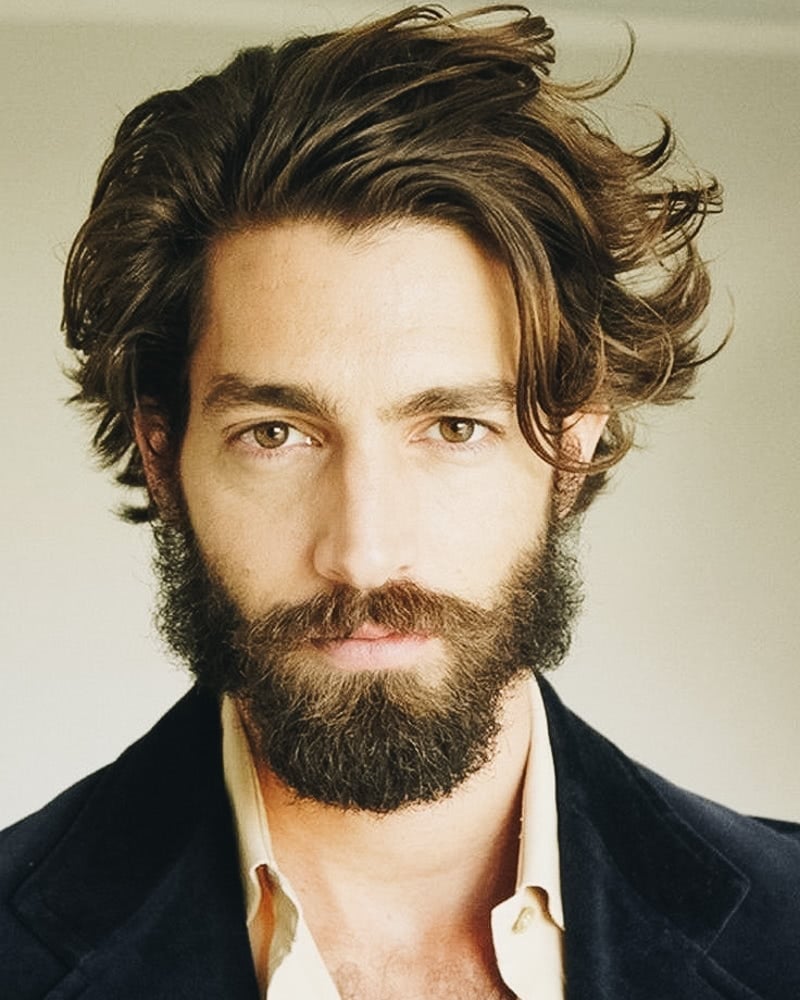
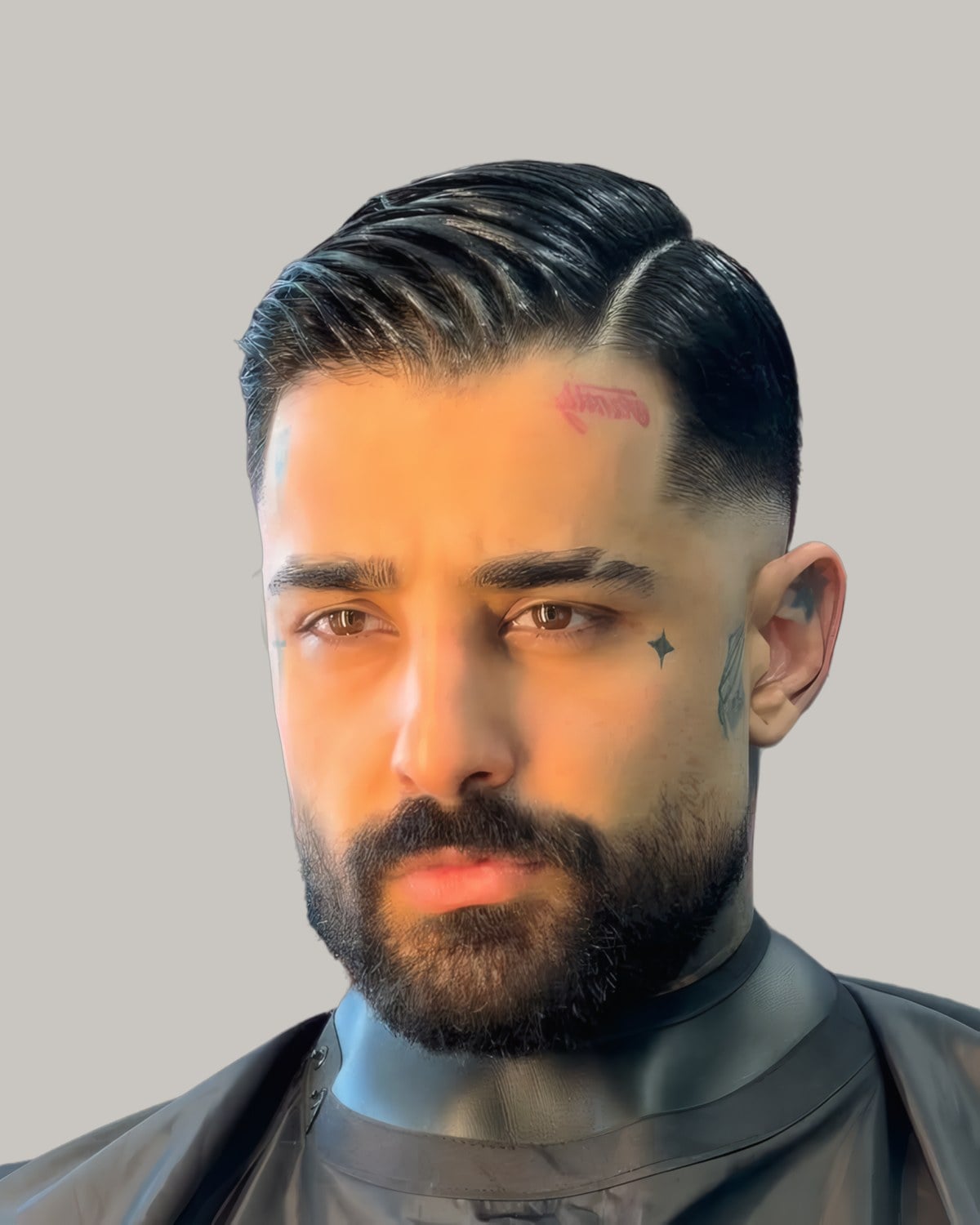
Layers take the bulk out of thick, wavy hair, so a side part sits instead of puffing up. Leave it a little messy, as in the first photo, or go the other way and have the barber shave the part in. Same cut, two moods.
What to ask for Layered on top, about four inches at the front, the sides left at scissor length, parted to the side.
Side part for the office
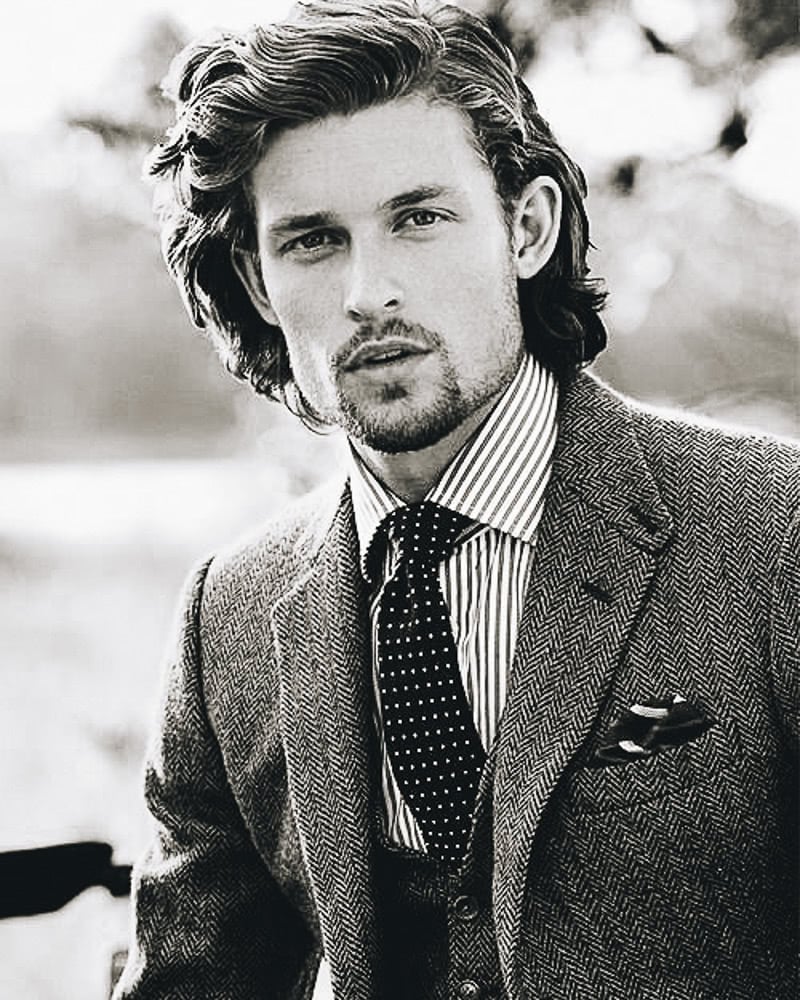
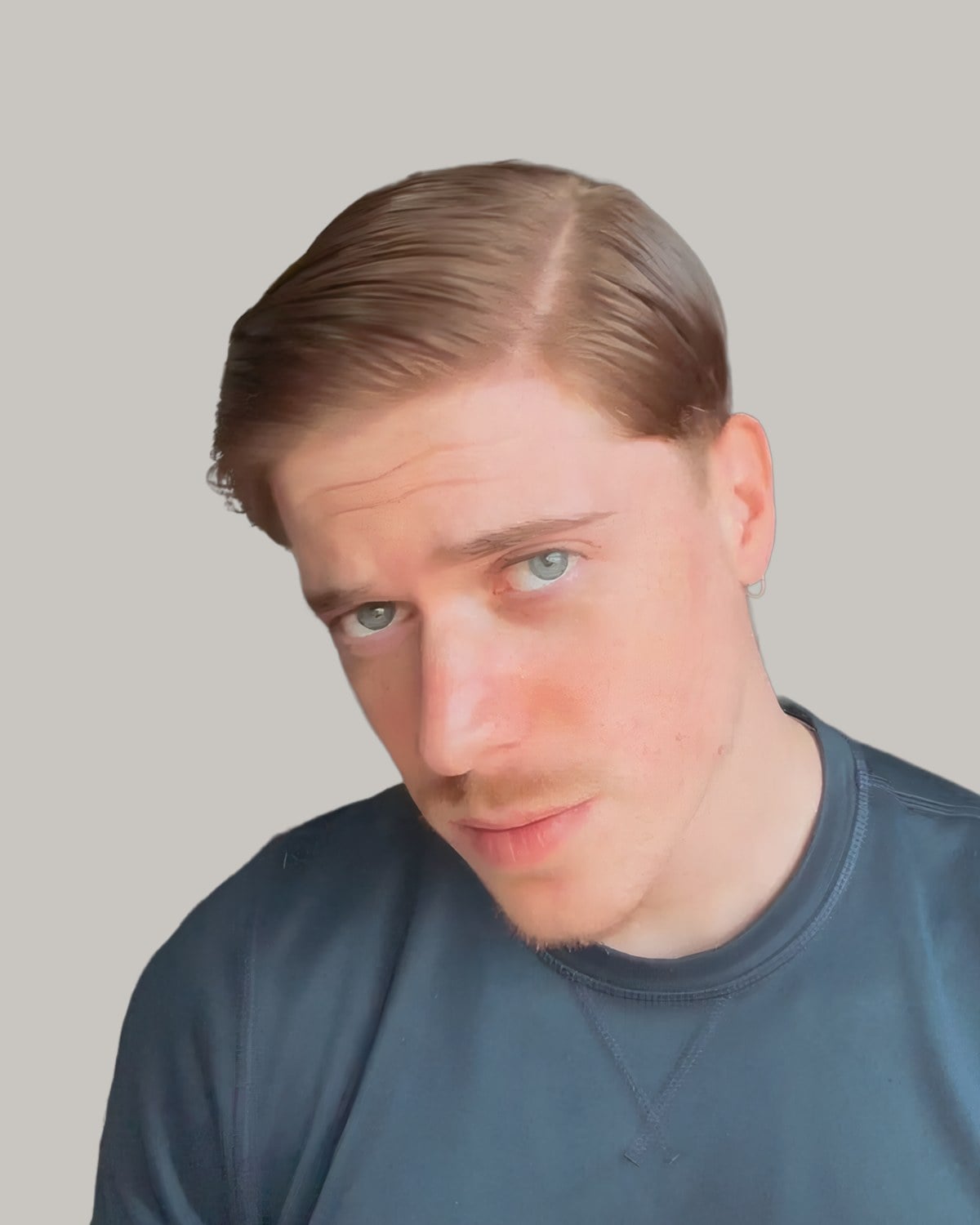
The tidier take on the side part, for a business professional look. Comb it from the part while it’s damp. A cream rather than a gel keeps it groomed rather than set. Wavy hair, as in the first photo, keeps it from looking like a school picture.
What to ask for Tapered sides with scissors, about three inches on top, a side part, finished with a light cream.
Hand-combed side part
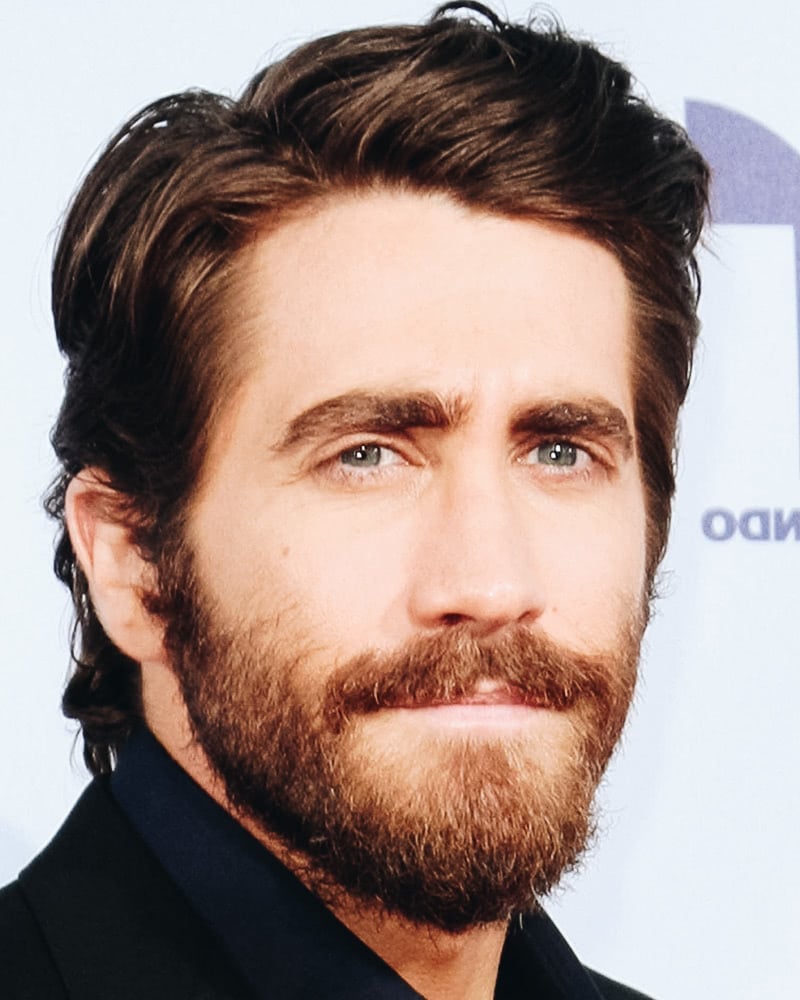
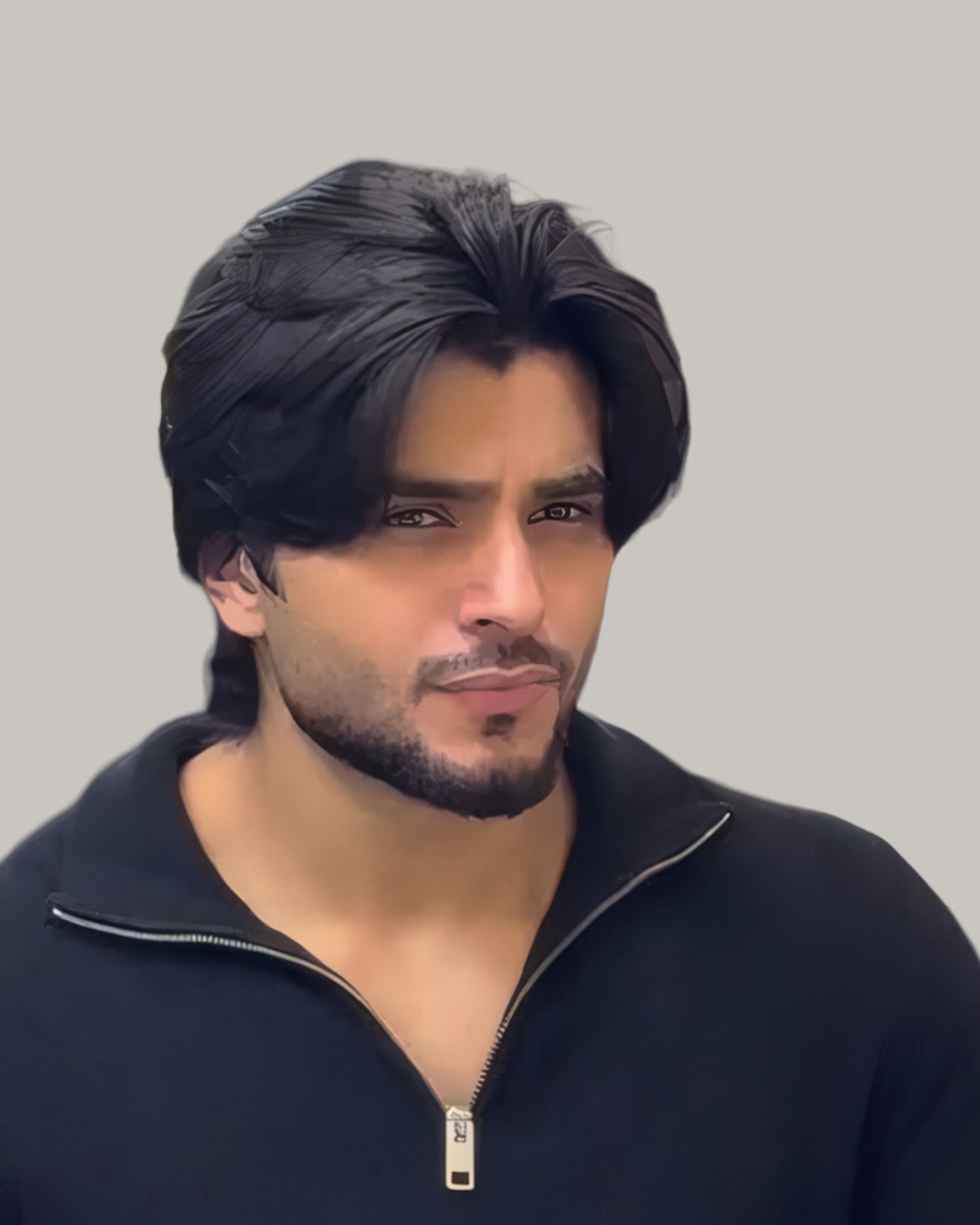
Skip the comb and push it back with your hands: the part ends up soft, and it can work in a professional context too. A stubble-to-full beard suits it, since the hair’s doing so little. Keep a small tin of paste at your desk.
What to ask for Number 4 on the sides tapered at the neck, three inches on top, pushed back from a natural part.
Side part with a groomed fade
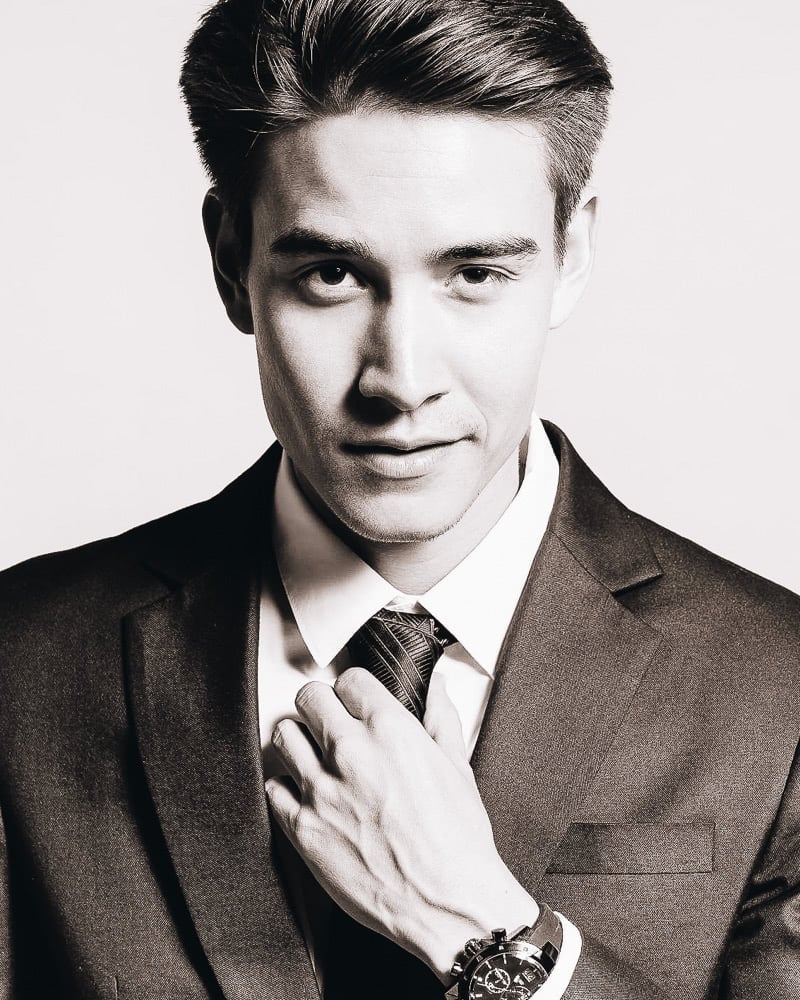
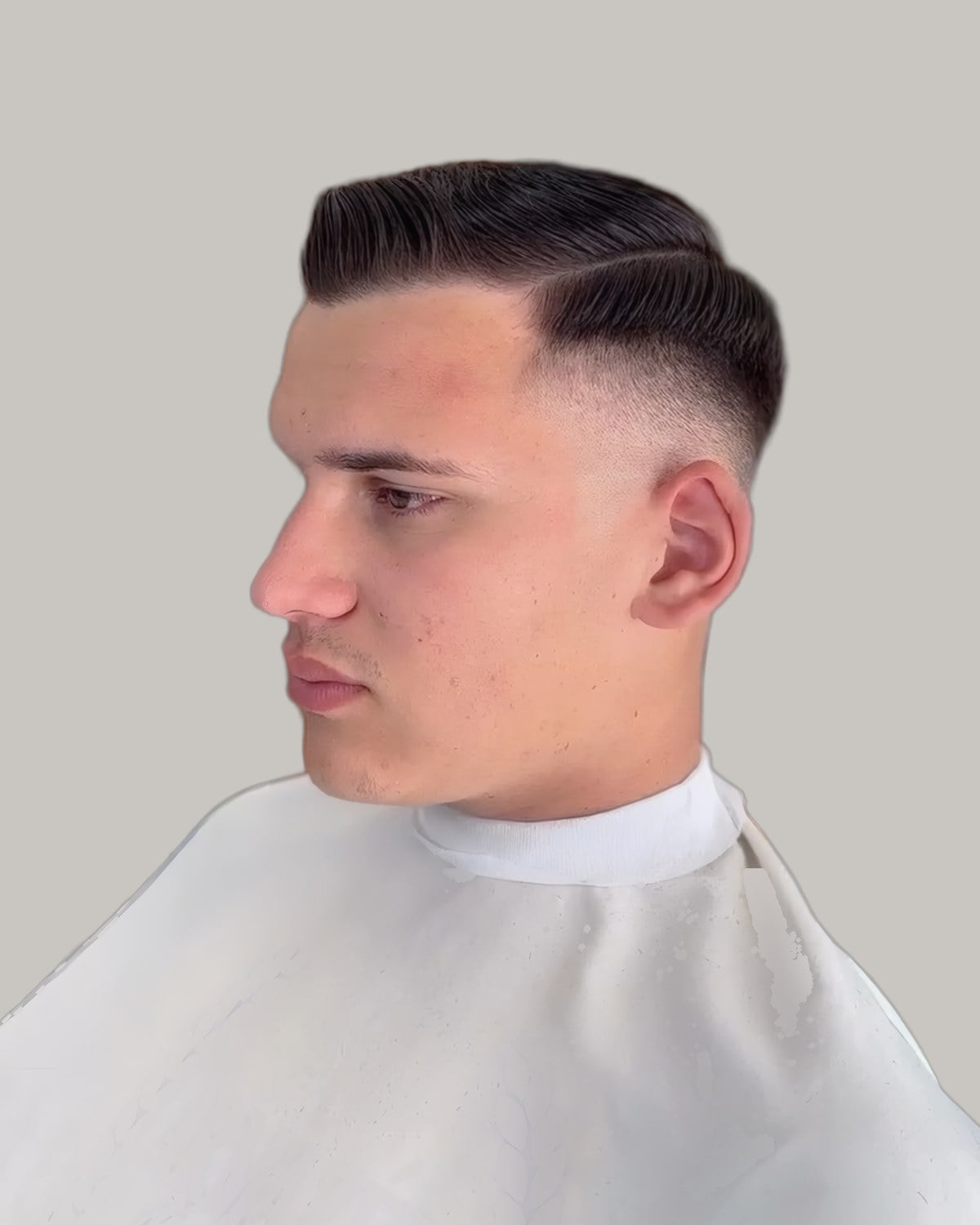
For a clean and professional look, keep the side fade well groomed. The contrast between short sides and a combed top is what makes it look sharp. The price is more barber visits, because a fade grows out first.
What to ask for Mid fade from a number 1, two and a half inches on top, a side part.
Middle part hairstyles for men
Middle part with a taper
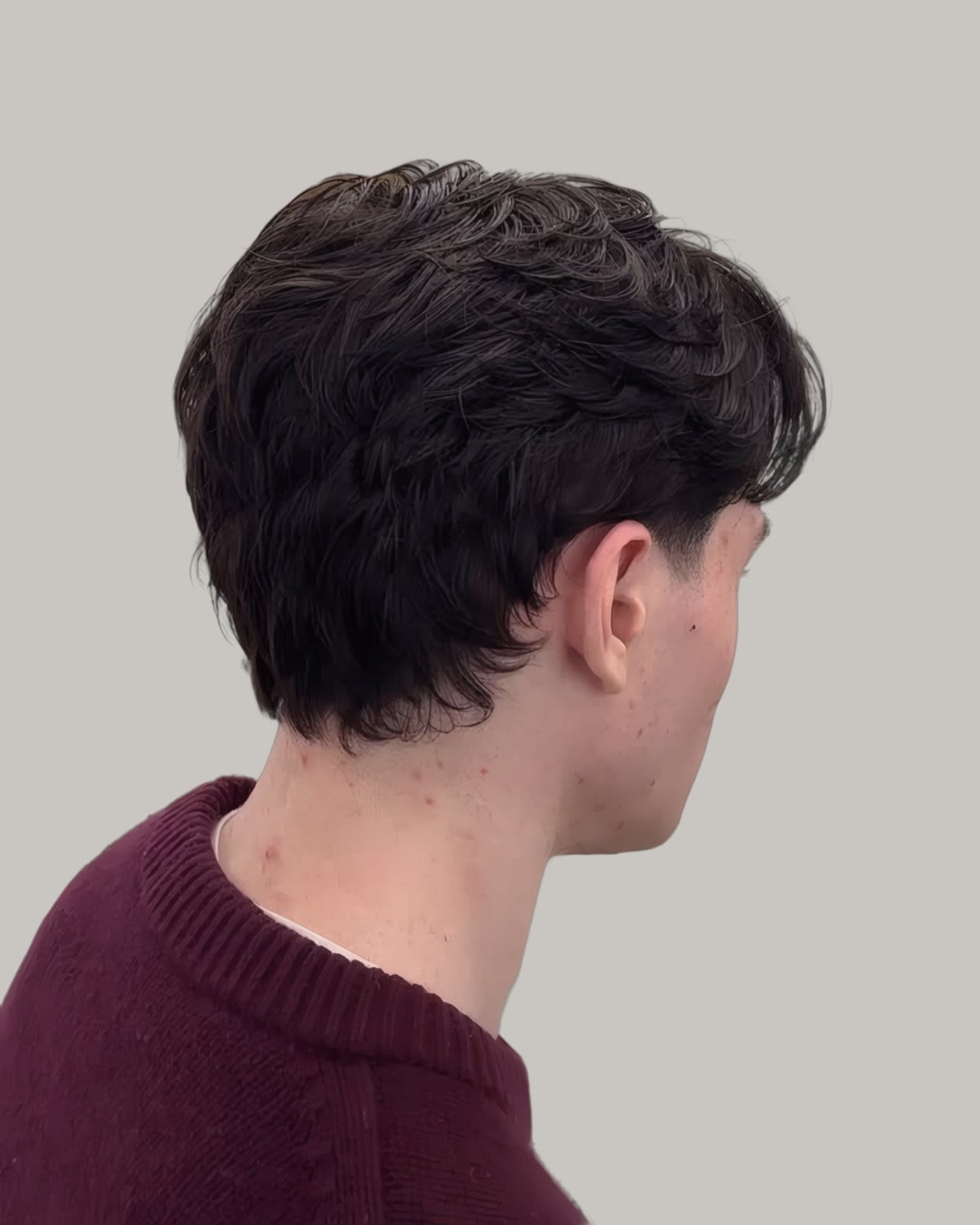
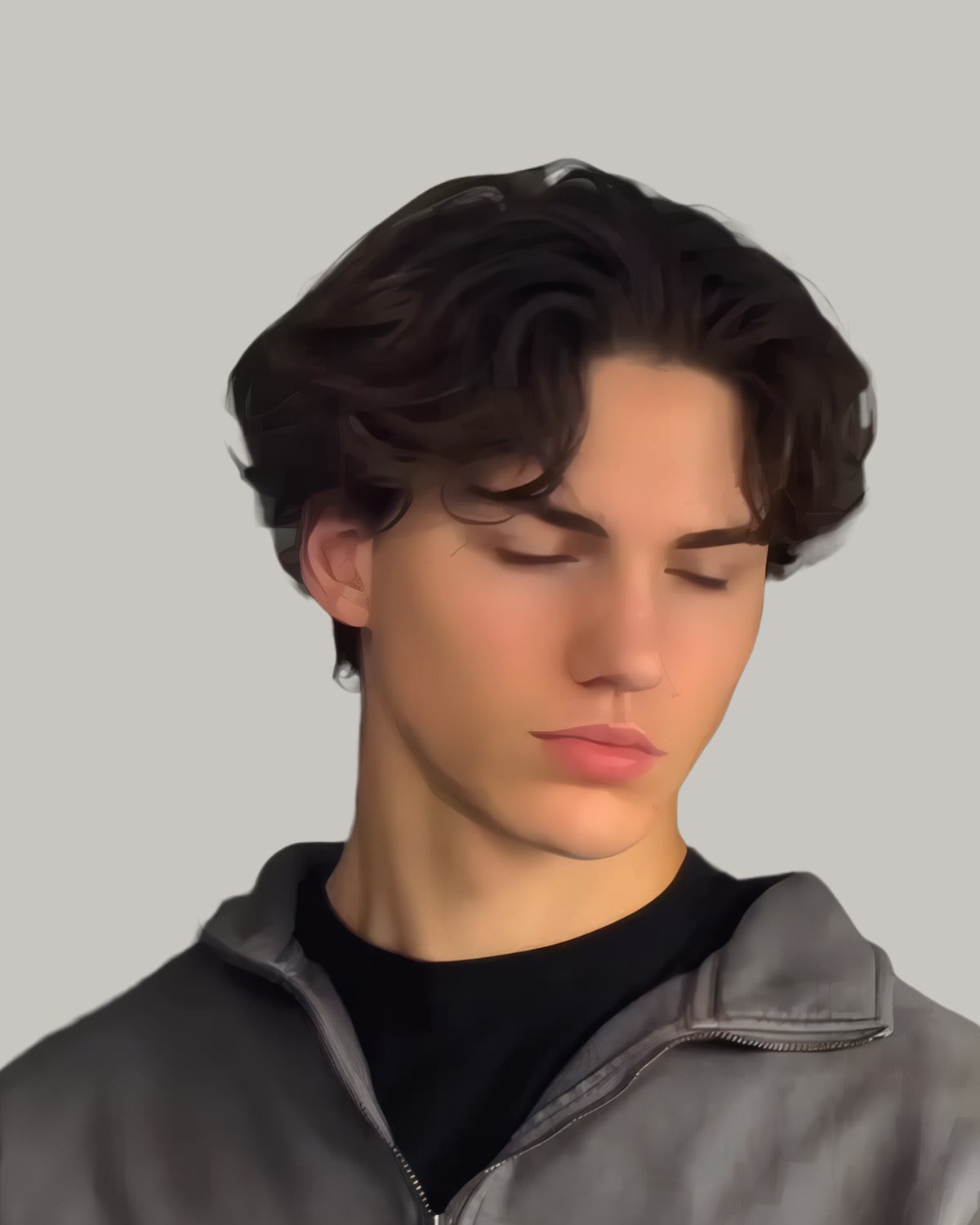
A middle part splits the top down the centre and lets it fall to both sides. The taper keeps the back and sides tidy while the top does its thing. Blow-dry it forward, then split it with a comb.
What to ask for Low taper at the sides and nape, four inches on top, cut to fall from a middle part.
Curtains
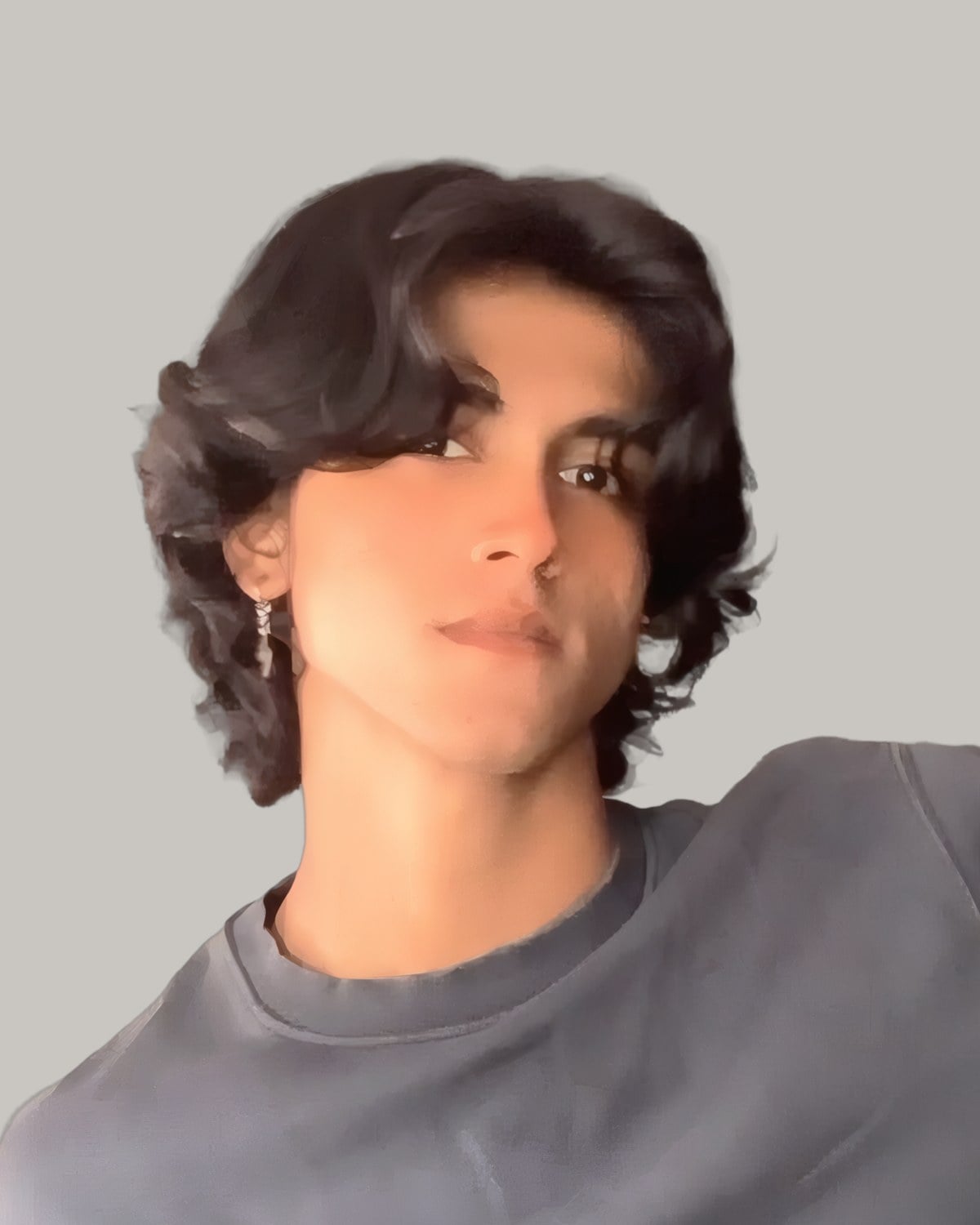
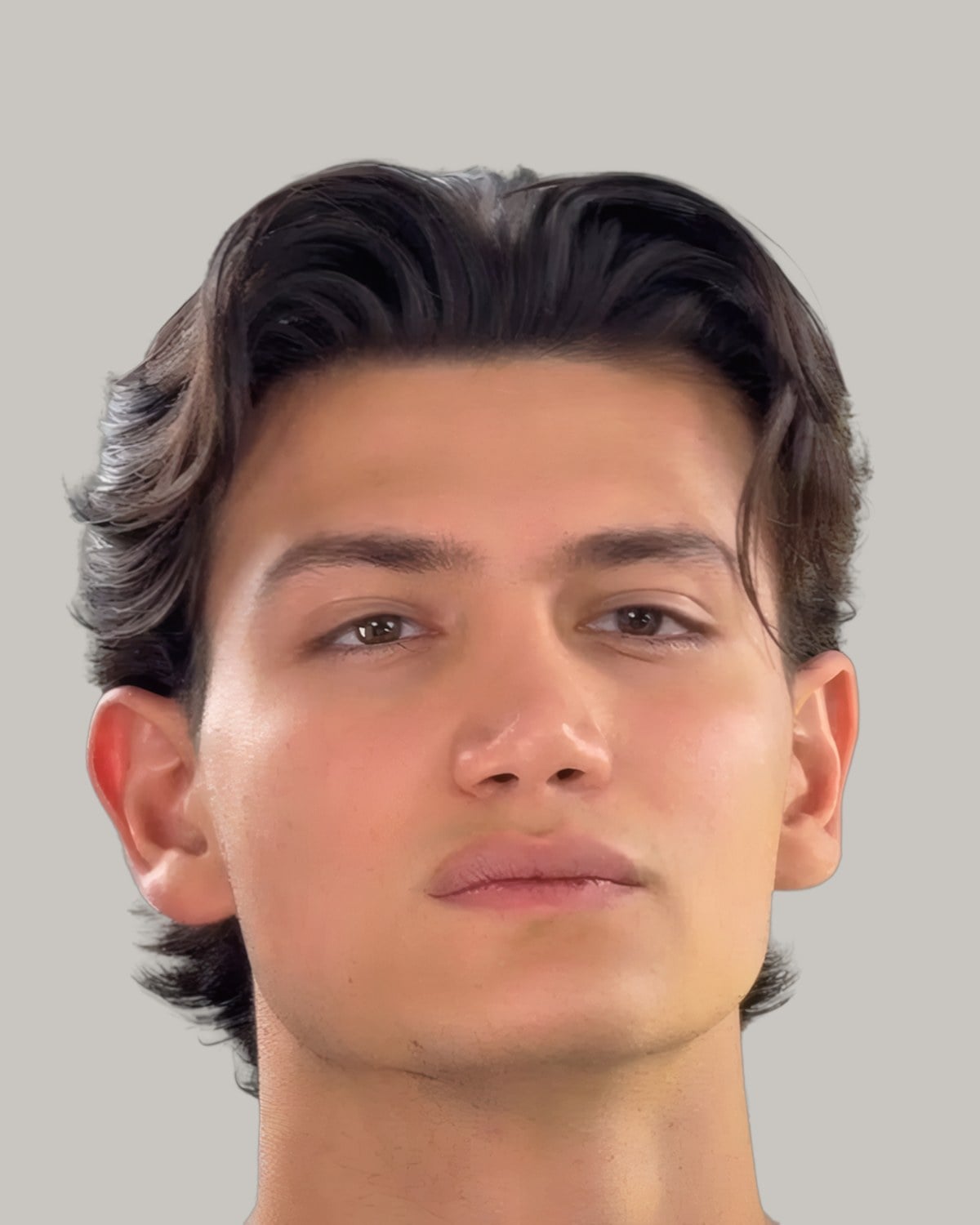
Curtained hair is a long fringe split down the middle (or to the side), with short sides and back. It was big in the 1990s and it’s back, helped along by K-pop. The front needs to reach the cheekbones to fall properly, so give it time.
What to ask for Long front, about five inches, split down the middle, with shorter sides and back cut with scissors.
Quiffs, pompadours and faux hawks
Natural pompadour
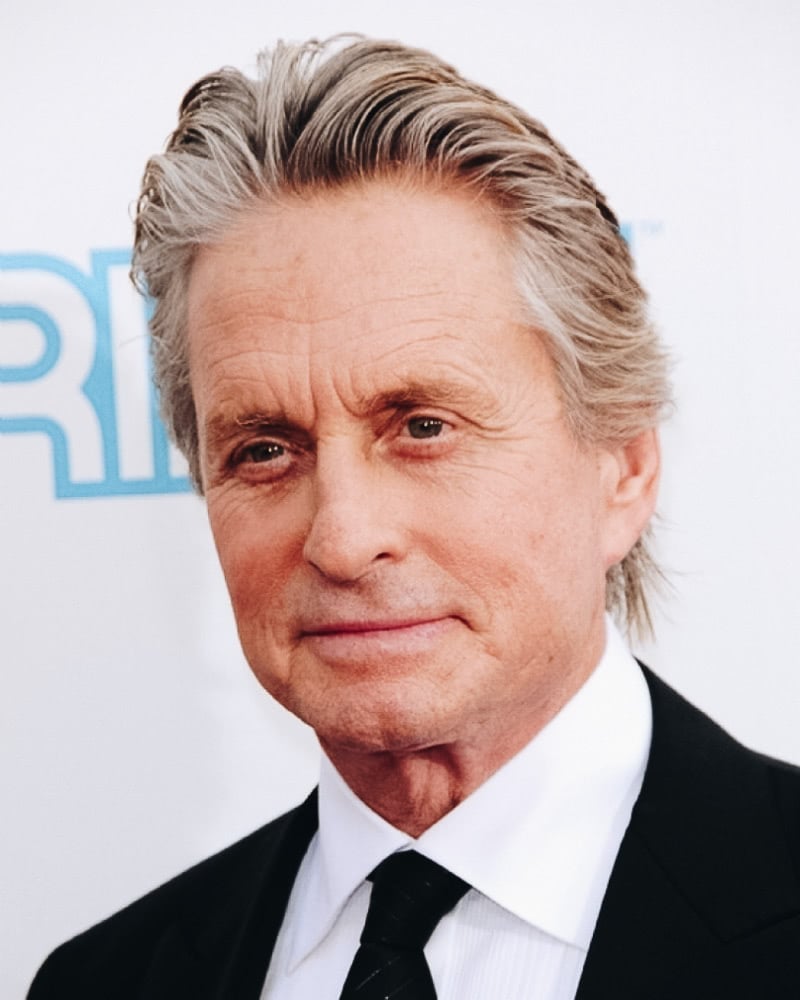
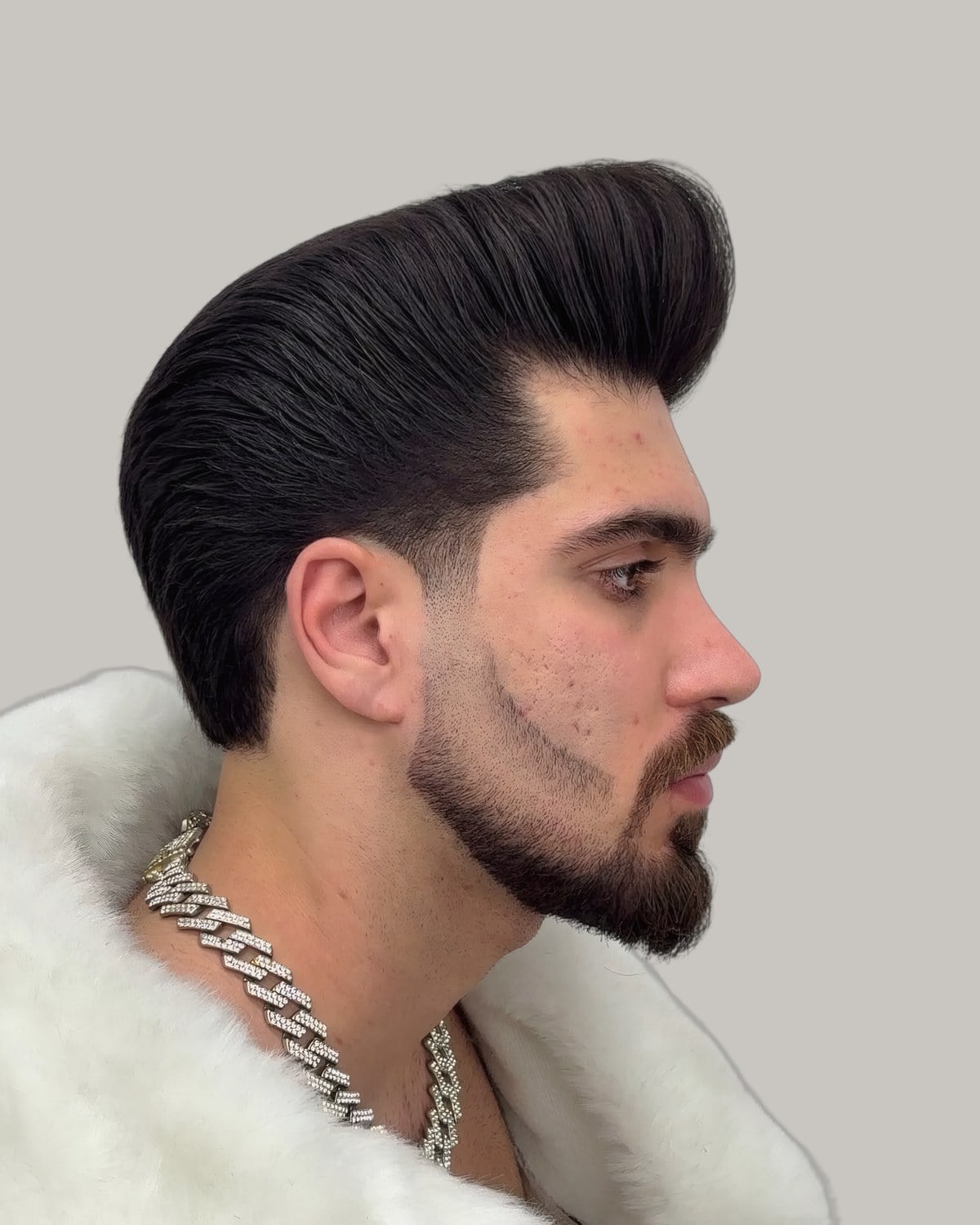
The pompadour without the rockabilly: brushed up and back with a round brush, and left soft. Medium-textured hair takes the volume well. How tall you go is up to you, as the two photos show.
What to ask for Scissor taper on the sides, four inches at the front, shorter towards the crown, brushed up and back.
Blowout with undercut sides
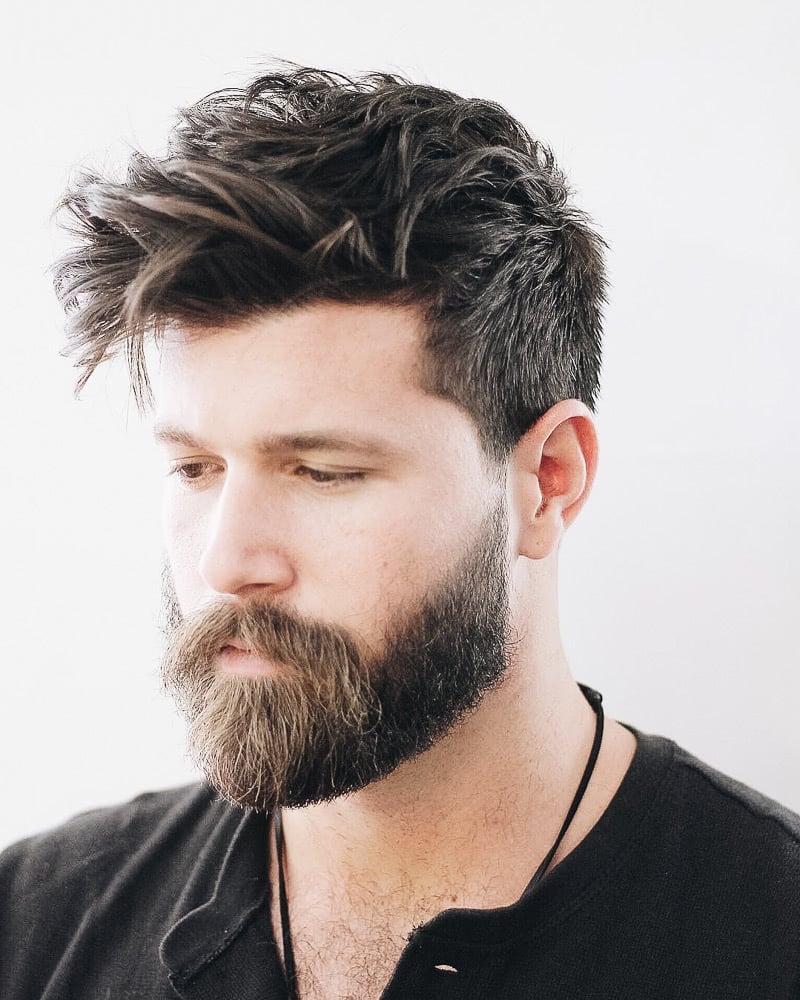
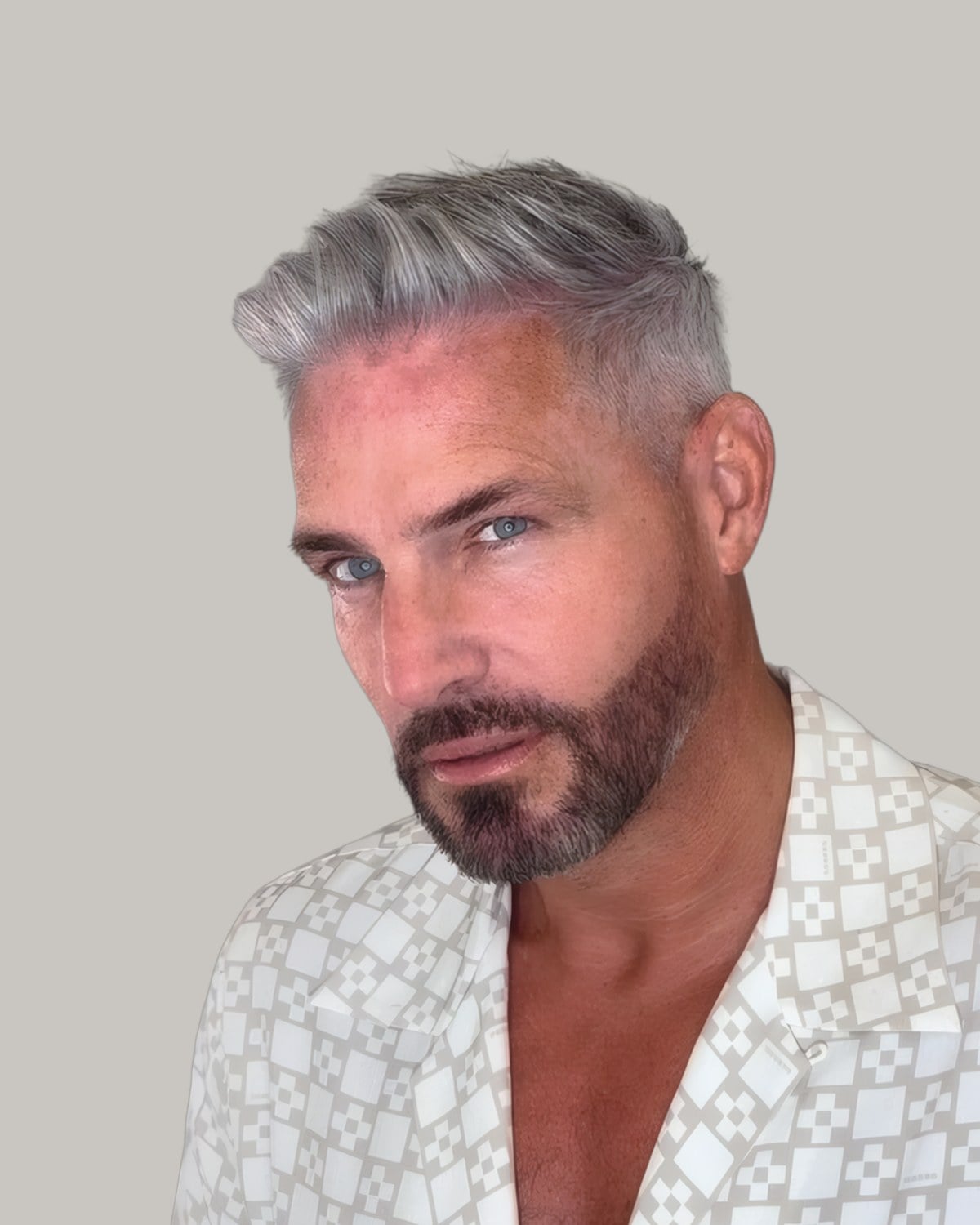
A mid-length blowout top over undercut sides. The hairdryer does the lifting, so this is one to style every morning. Rough-dry it with your fingers rather than a brush. It looks less like you tried.
What to ask for Undercut with a number 1 on the sides, three inches on top, blow-dried up and back.
Textured quiff with a high fade
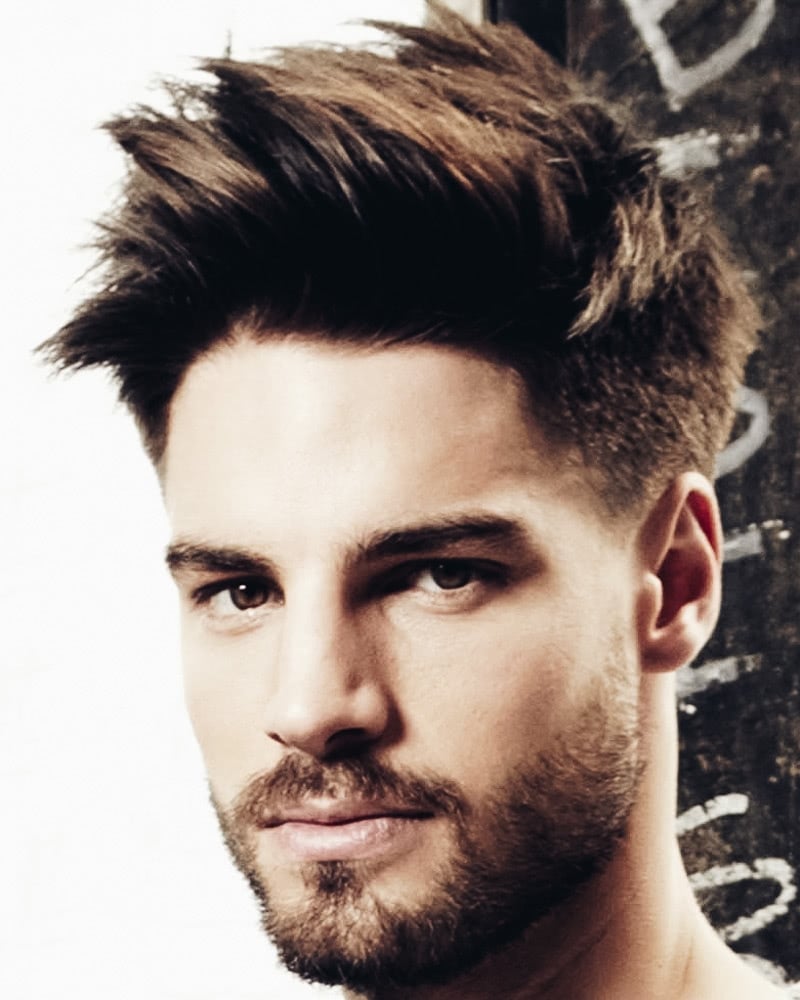
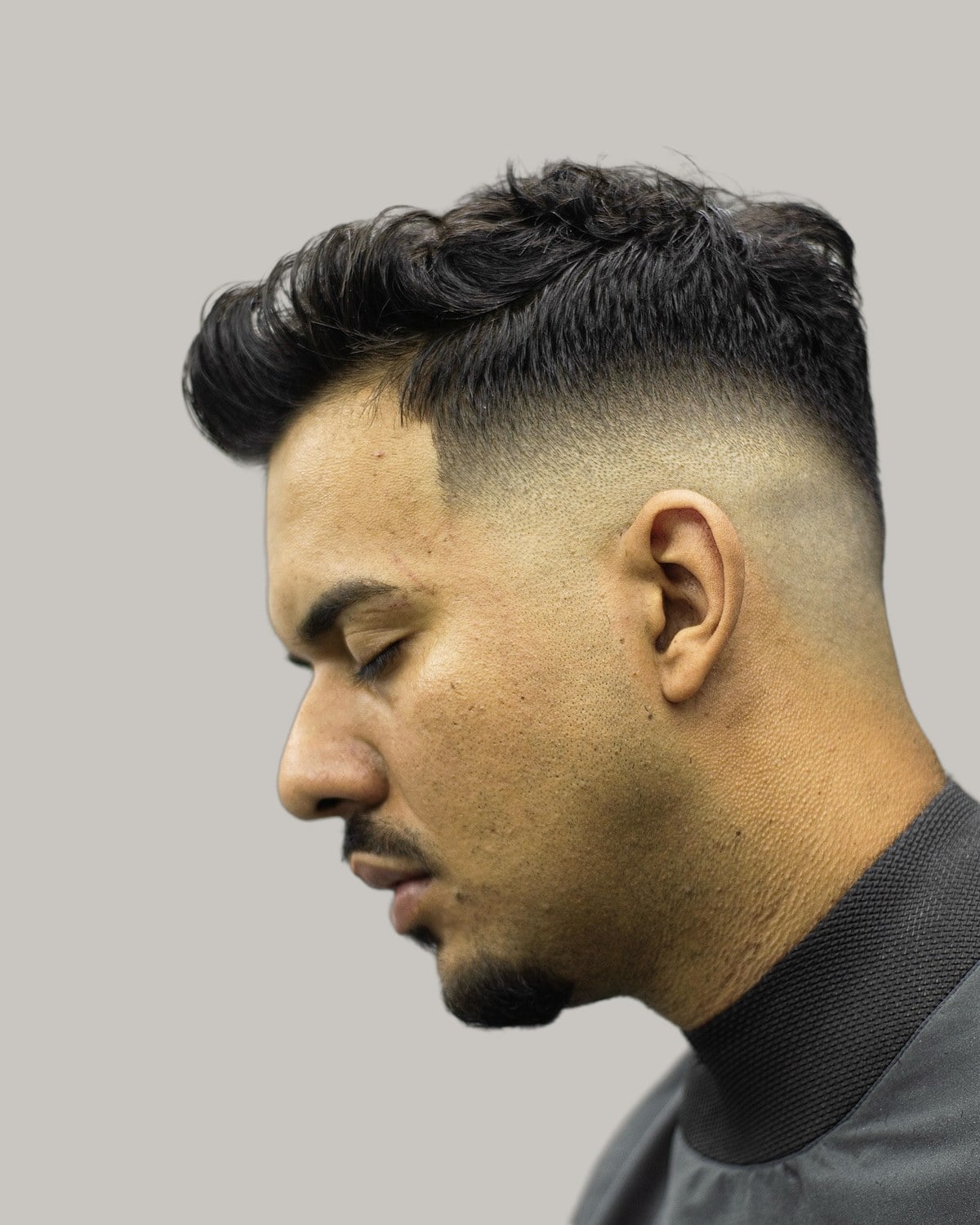
The high fade with some pomade to keep the structure. Point cutting on top breaks it into pieces. The quiff looks spiky rather than solid. Work the product in from the roots, or it’ll flop by lunch.
What to ask for High skin fade, three inches at the front, texturised with point cutting, styled up with pomade.
Messy high top with an undercut
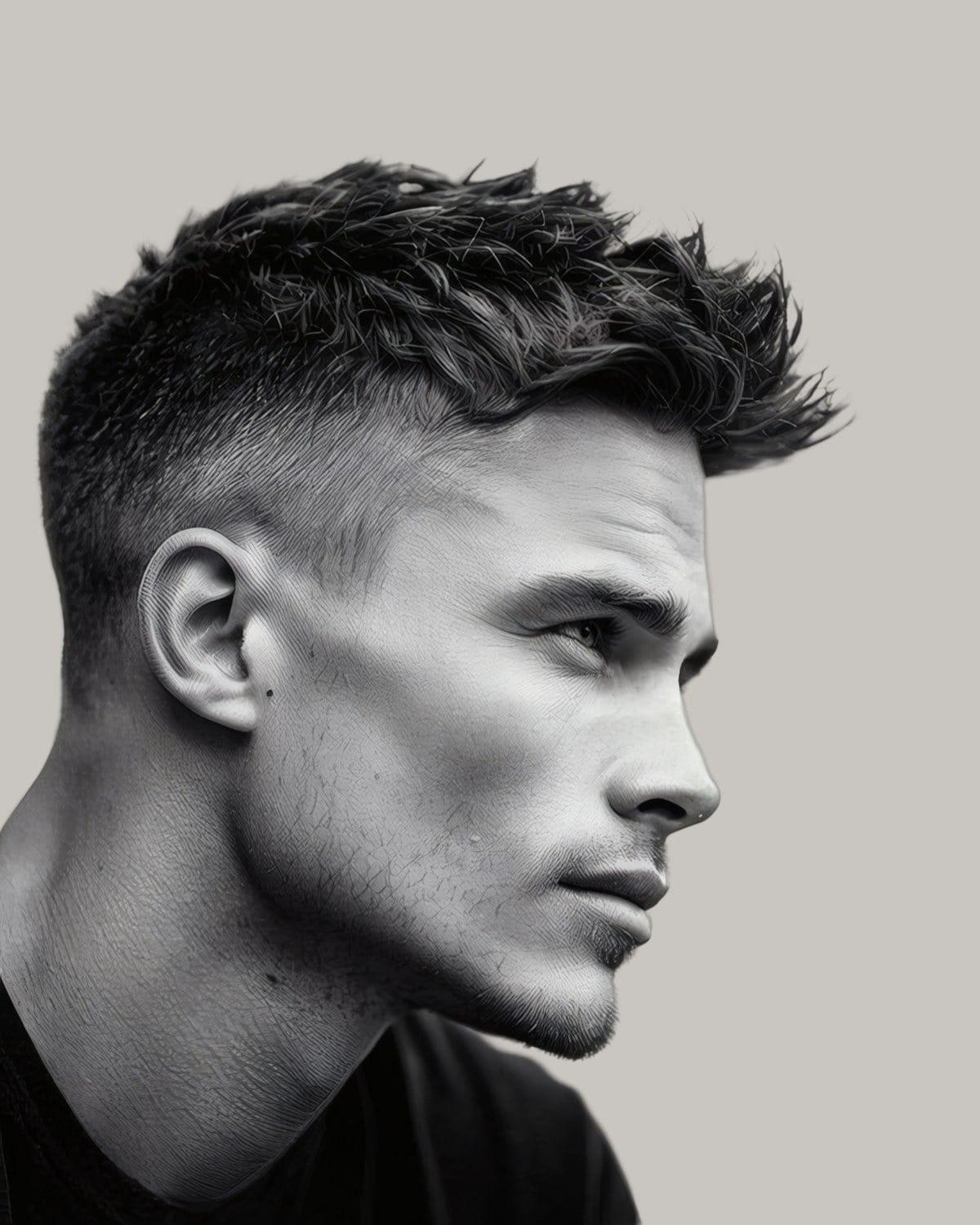
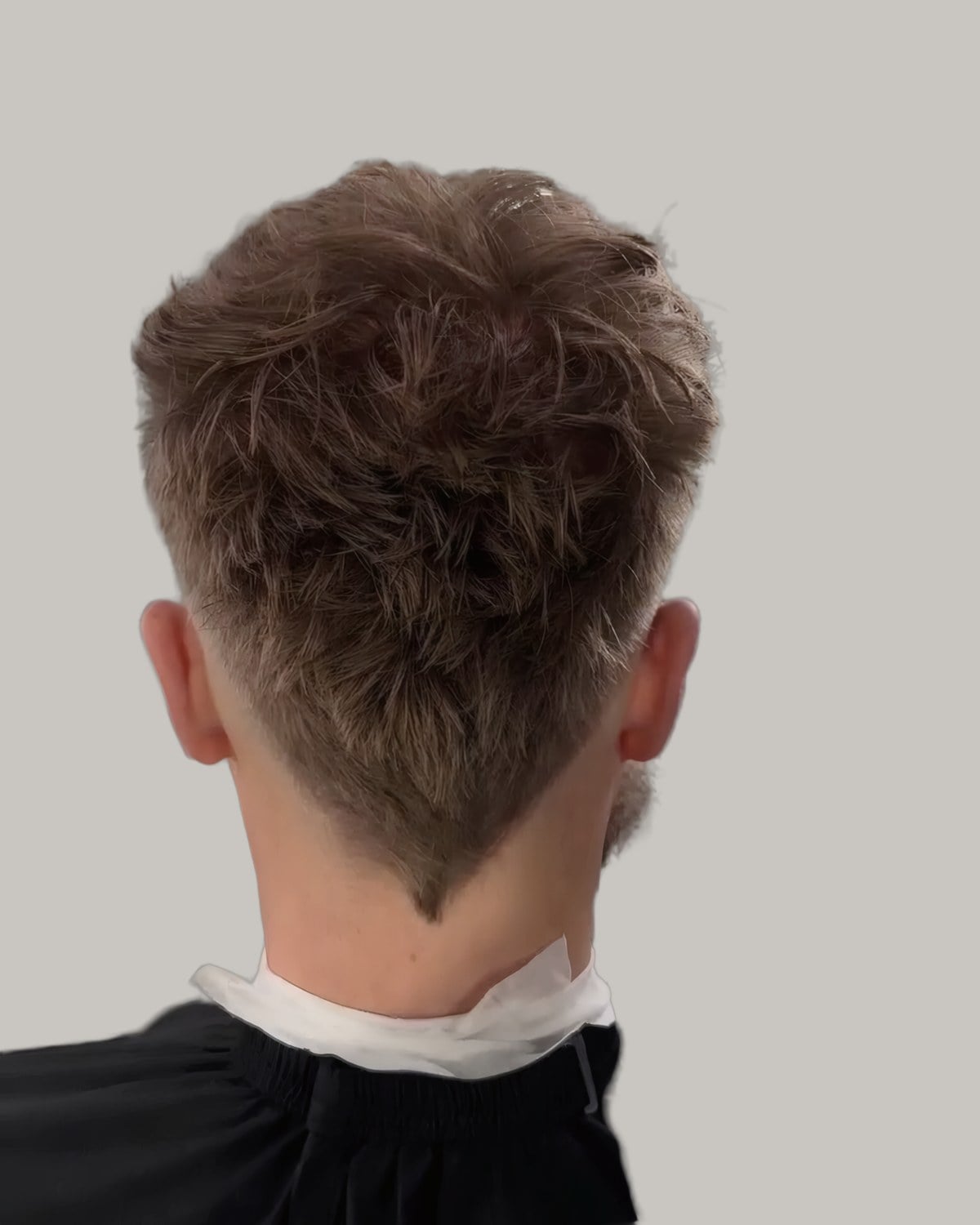
The high top undercut asks for more work in the morning, because messy takes effort to look right. Rough-dry it, work clay through with your fingers, and stop before it goes neat. The undercut keeps the whole thing from looking like bed hair.
What to ask for Undercut at a number 2, four inches on top, heavily texturised, finished with matte clay.
Medium-length faux hawk
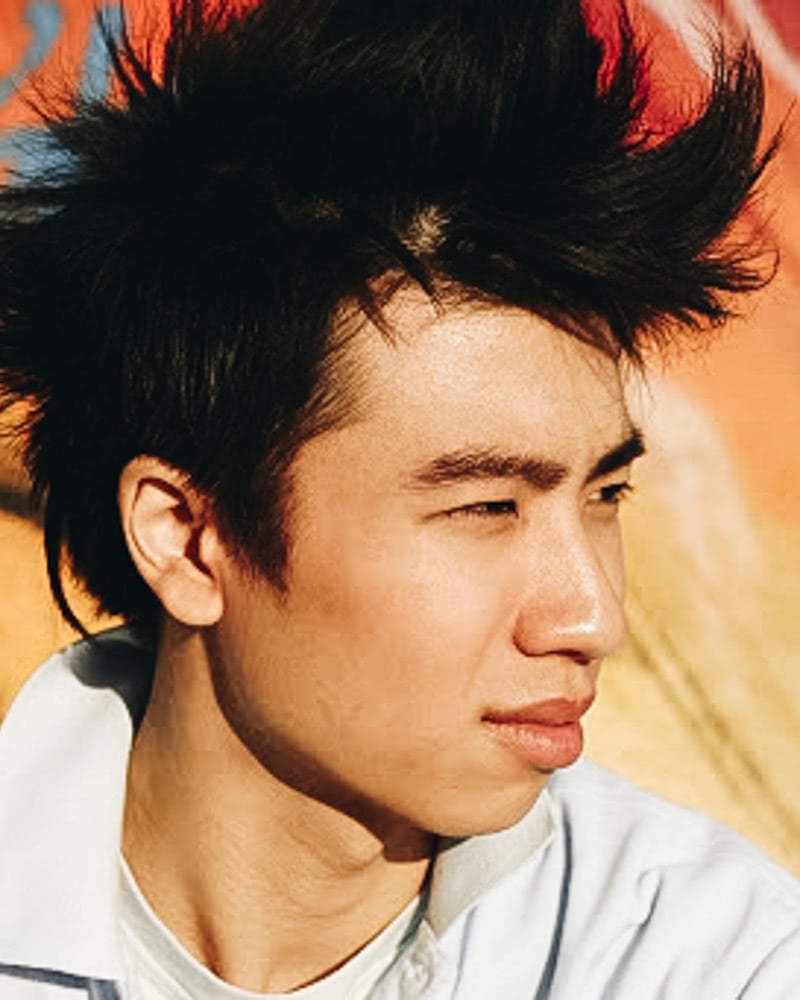
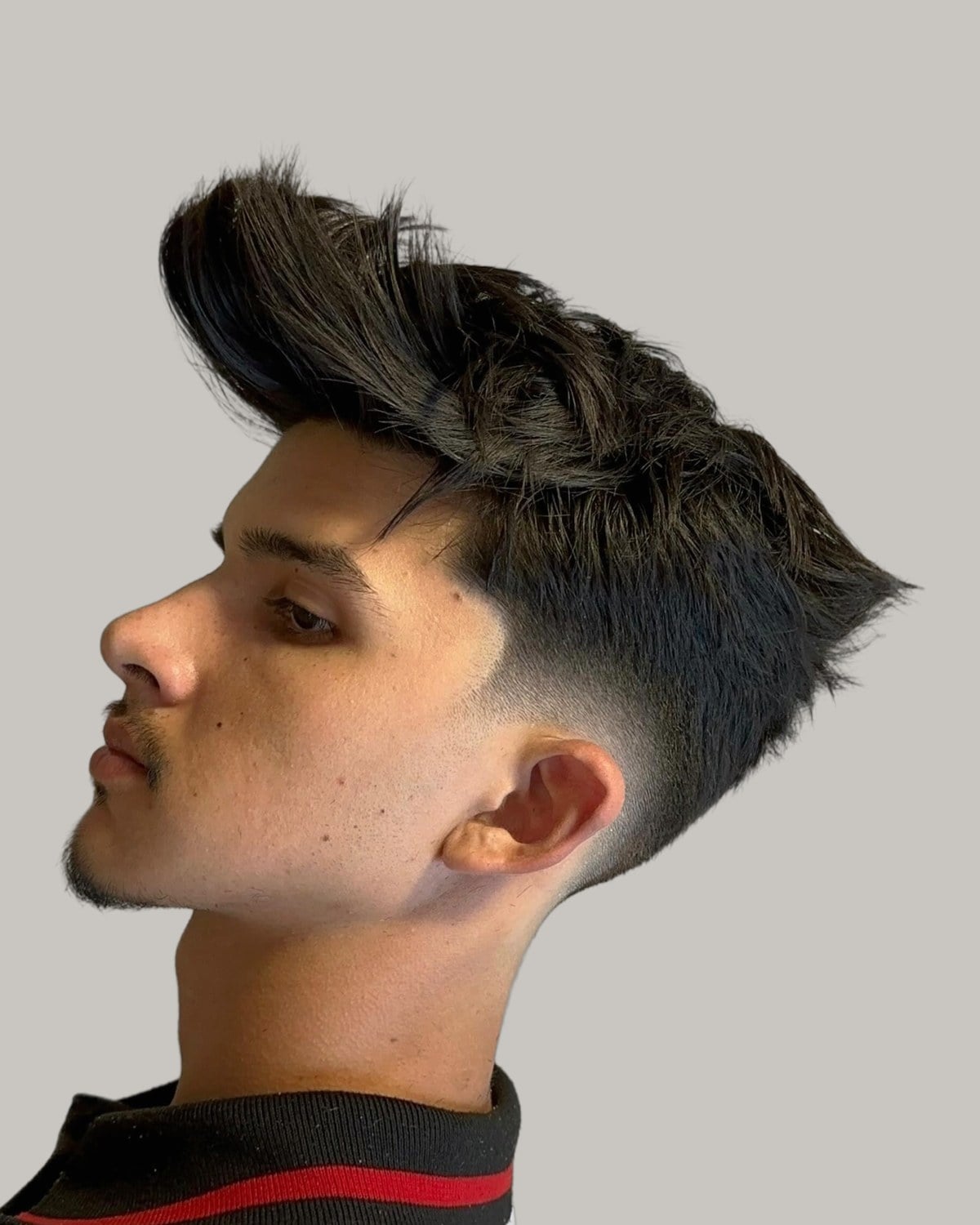
A mohawk you can take back. The sides stay on your head, just shorter, and the centre is pushed up to a peak with wax. Longer hair gives you the spiky version in the first photo, and a fade gives you the tidier one.
What to ask for Mid fade on the sides, three inches down the centre, pushed up to a peak with strong wax.
Swept-over quiff
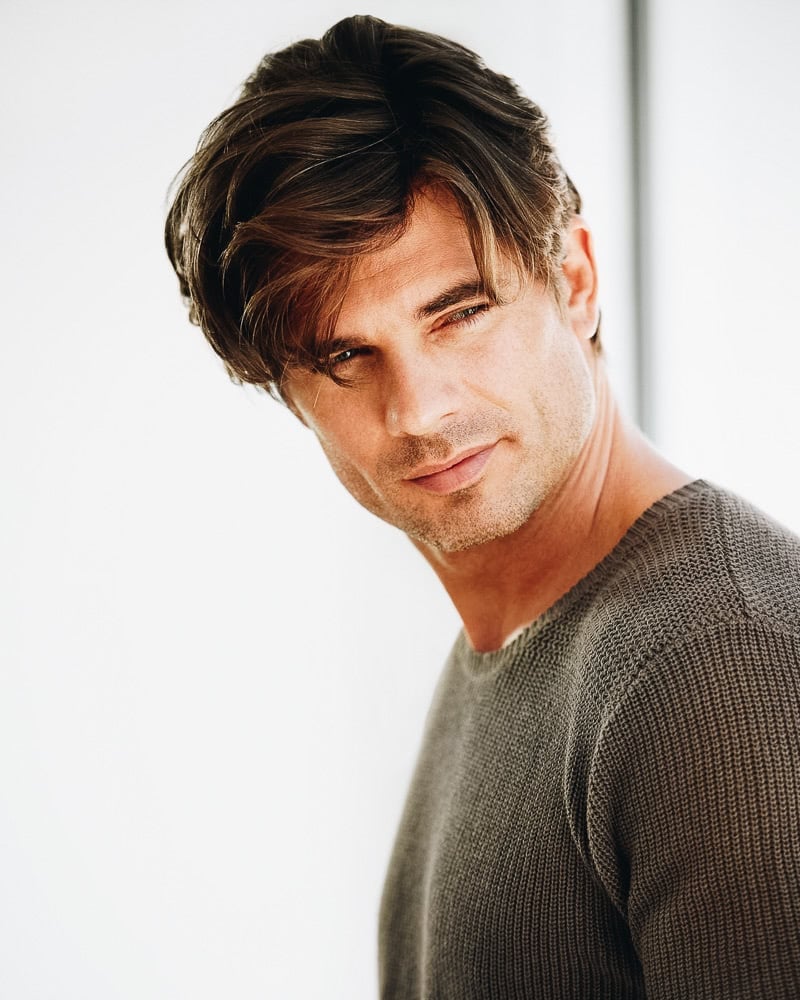
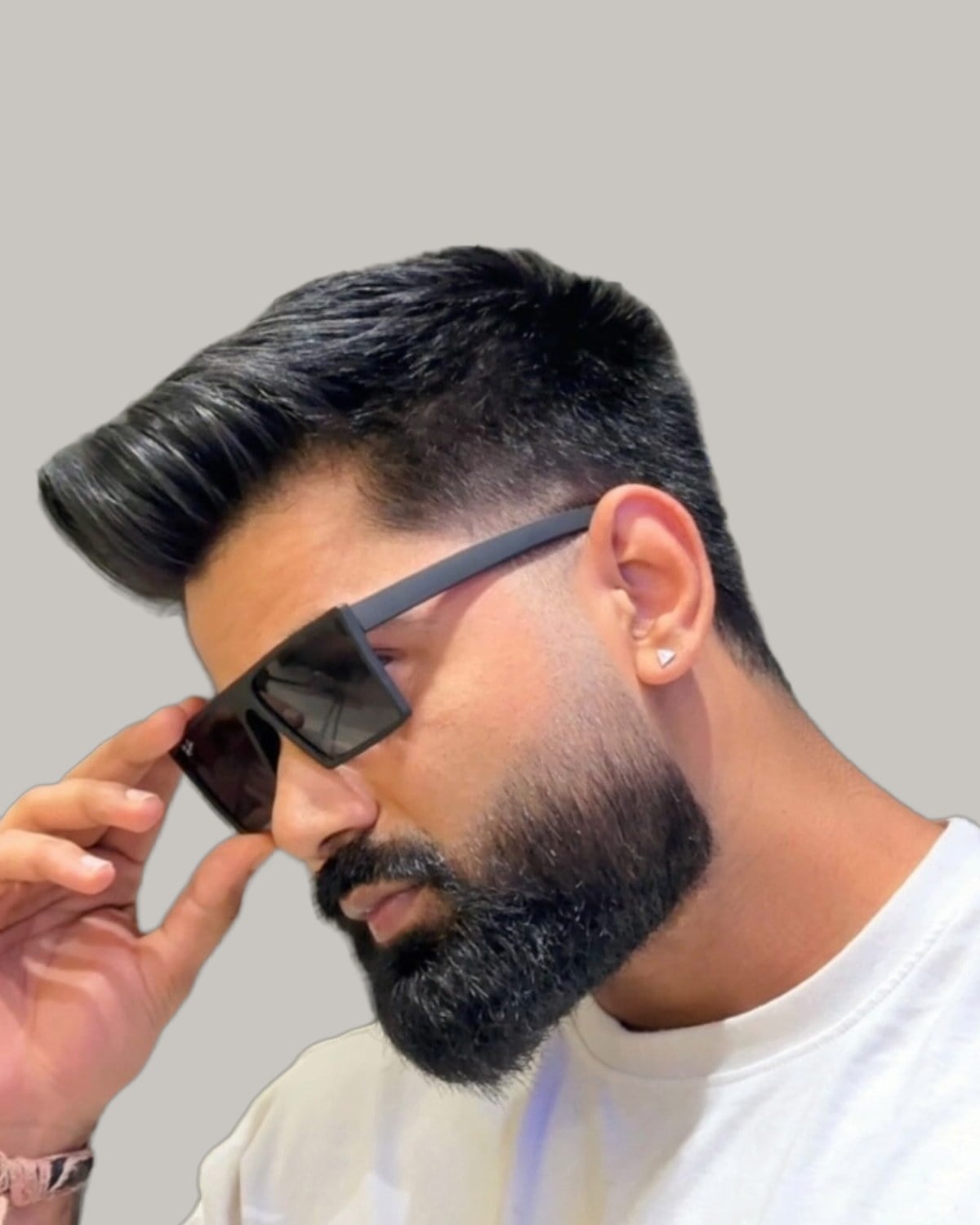
A trendy take on mid-length hair: lift the front and sweep it across. It’s a quiff that’s been allowed to relax. A sea-salt spray gives it grip without the shine.
What to ask for Number 4 on the sides, three and a half inches at the front, swept up and over to one side.
Medium-length fringes
Messy fringe
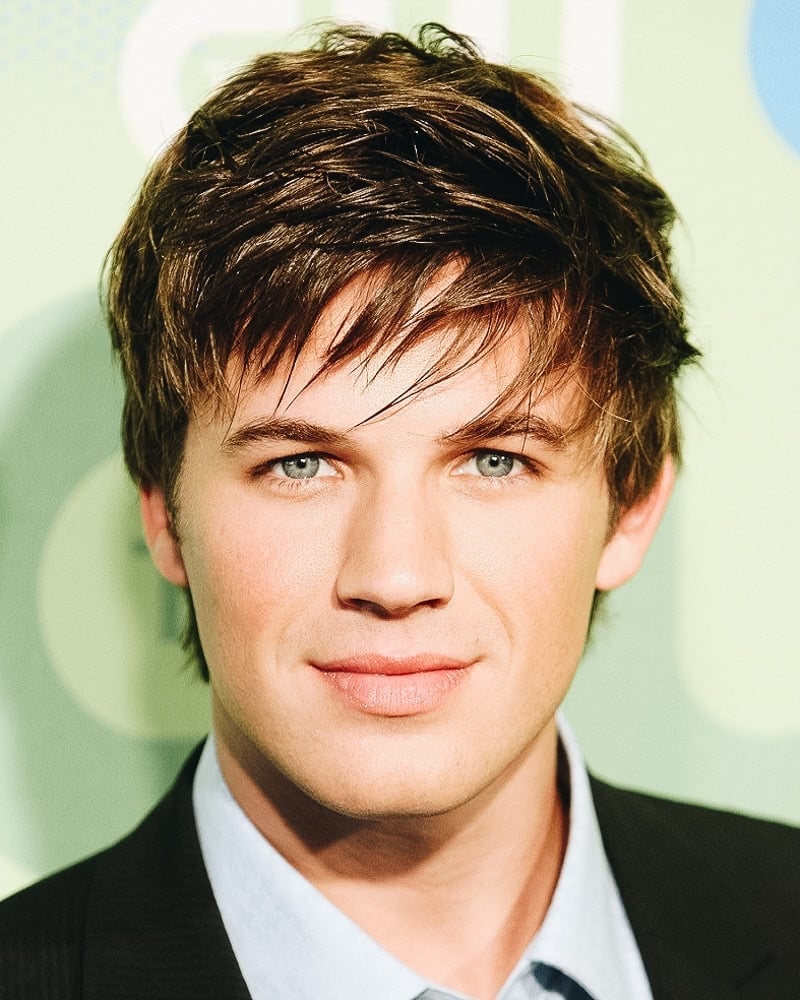
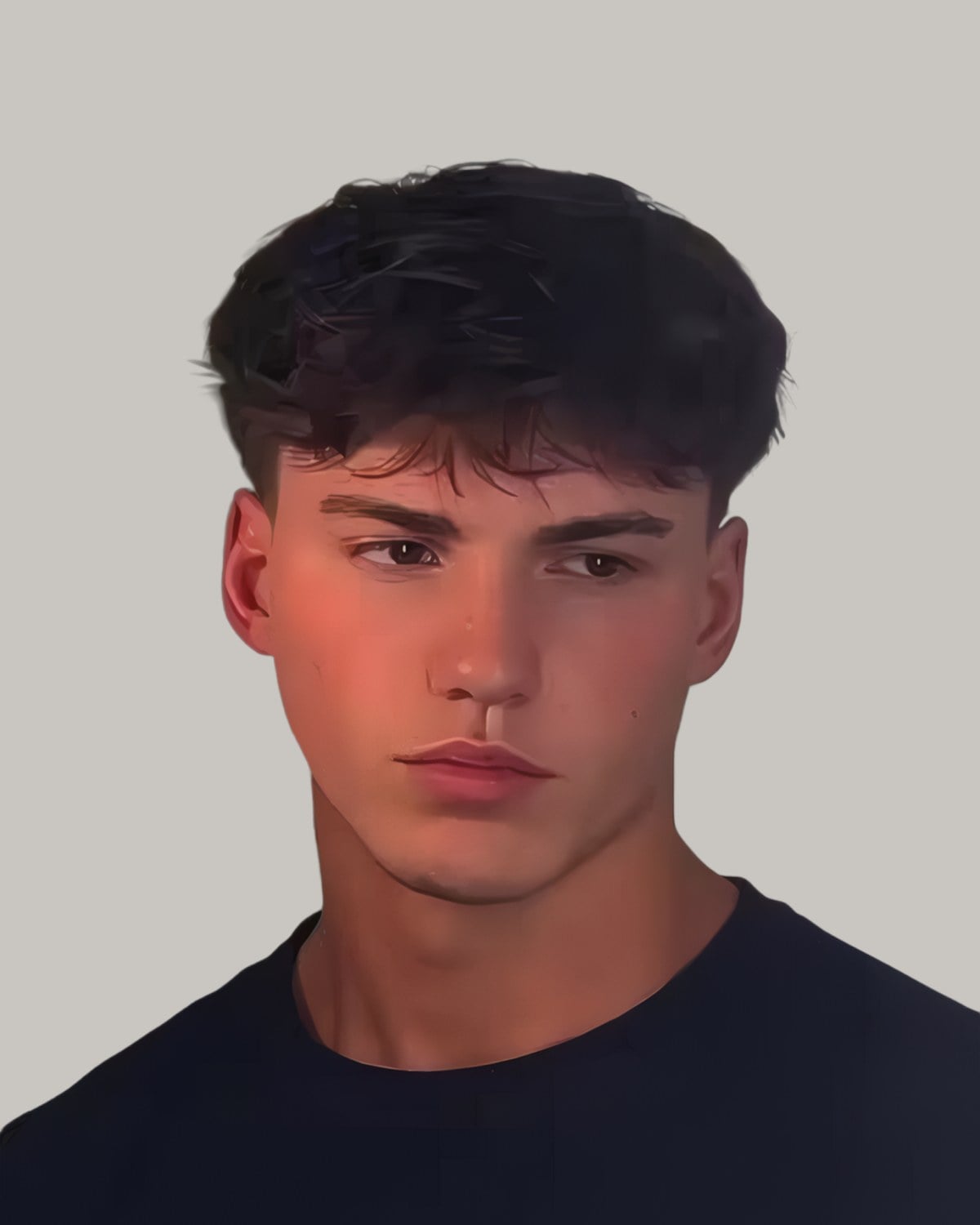
Choppy cutting leaves the fringe in pieces, so it falls messy without much help from you. Push it forward while it’s damp and scrunch in a little sea-salt spray. It’s the fringe that forgives a missed trim.
What to ask for Low taper on the sides, three inches on top, choppy fringe to the eyebrows.
Natural fringe with texture
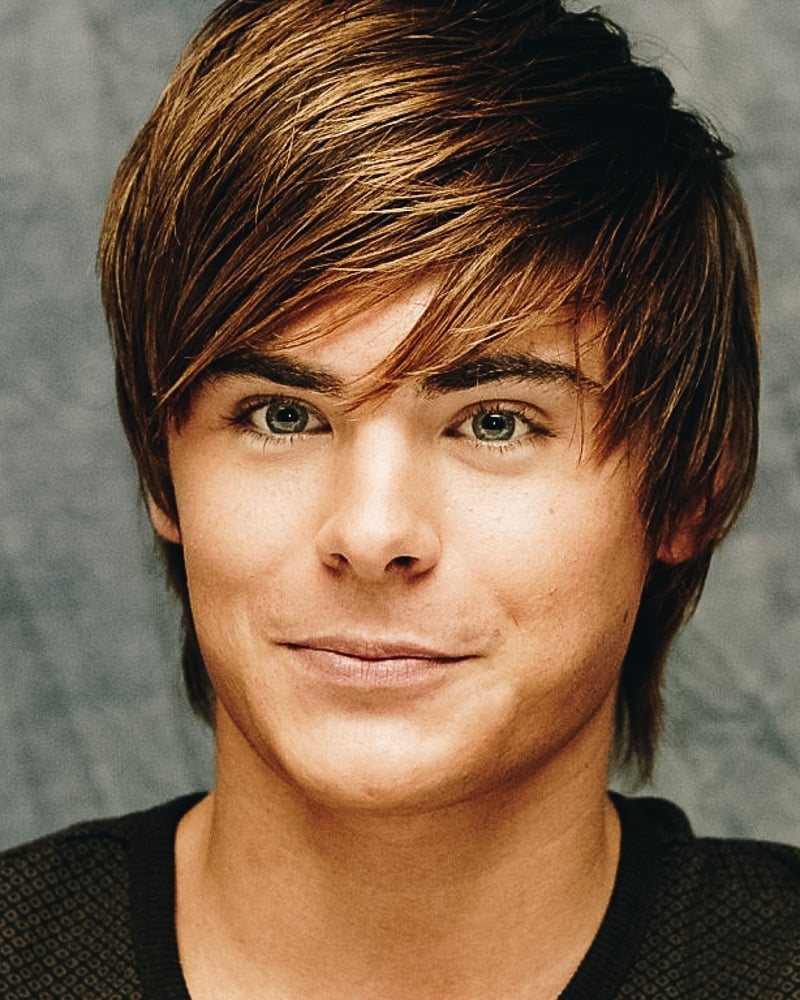
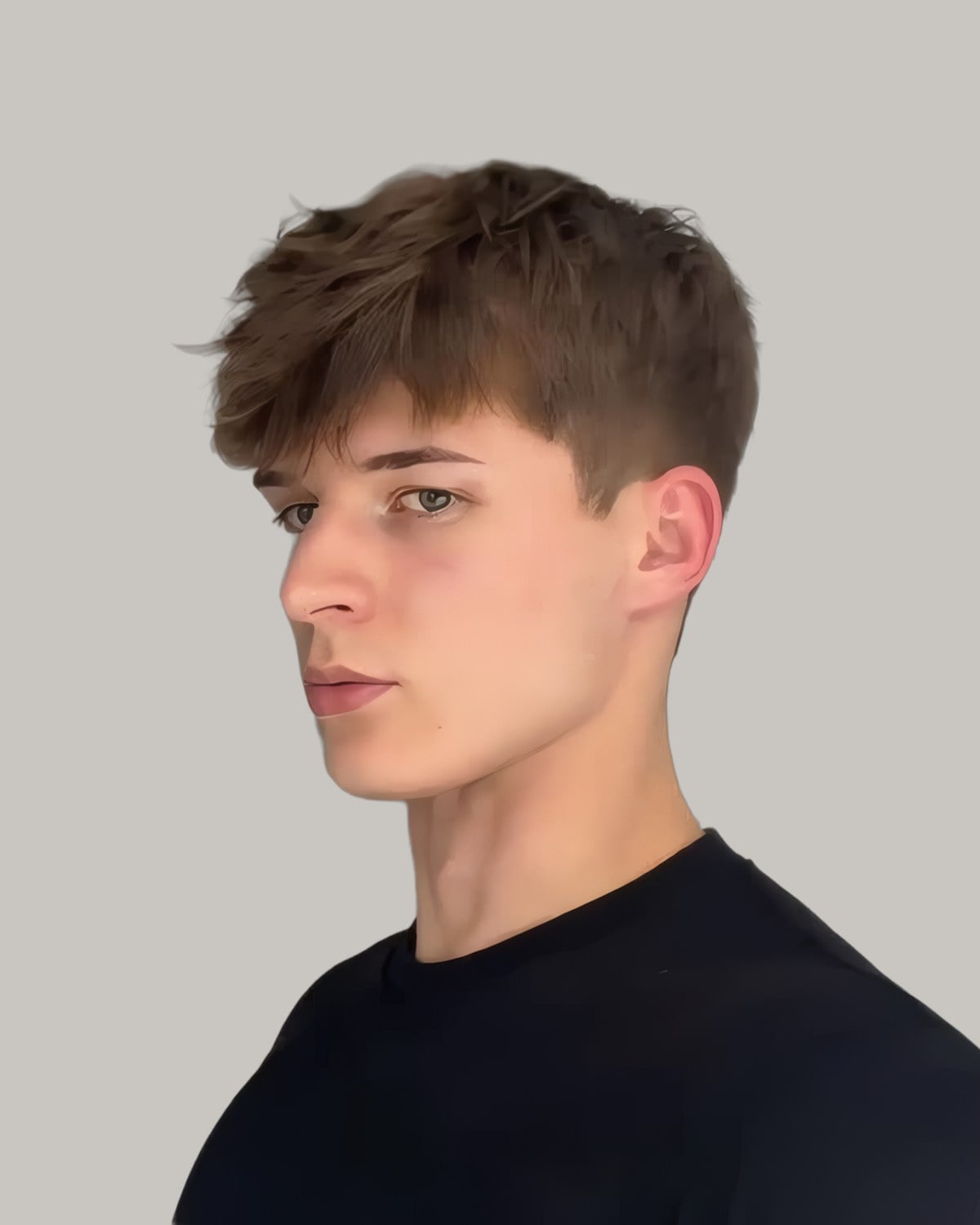
A clean natural fringe with a bit of texture. Cut the front long enough to sweep, and texturise the ends so it doesn’t sit like a shelf. It’s the fringe for straight hair.
What to ask for Scissor cut all over, three inches at the front, texturised through the ends, worn forward.
Tousled fringe
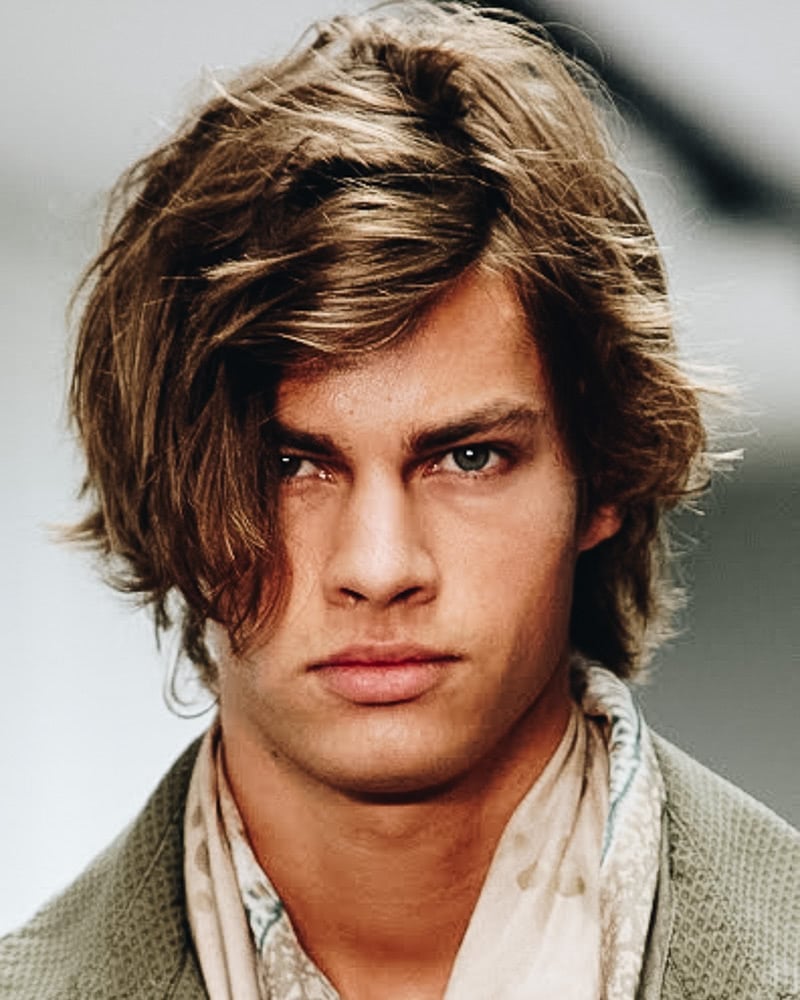
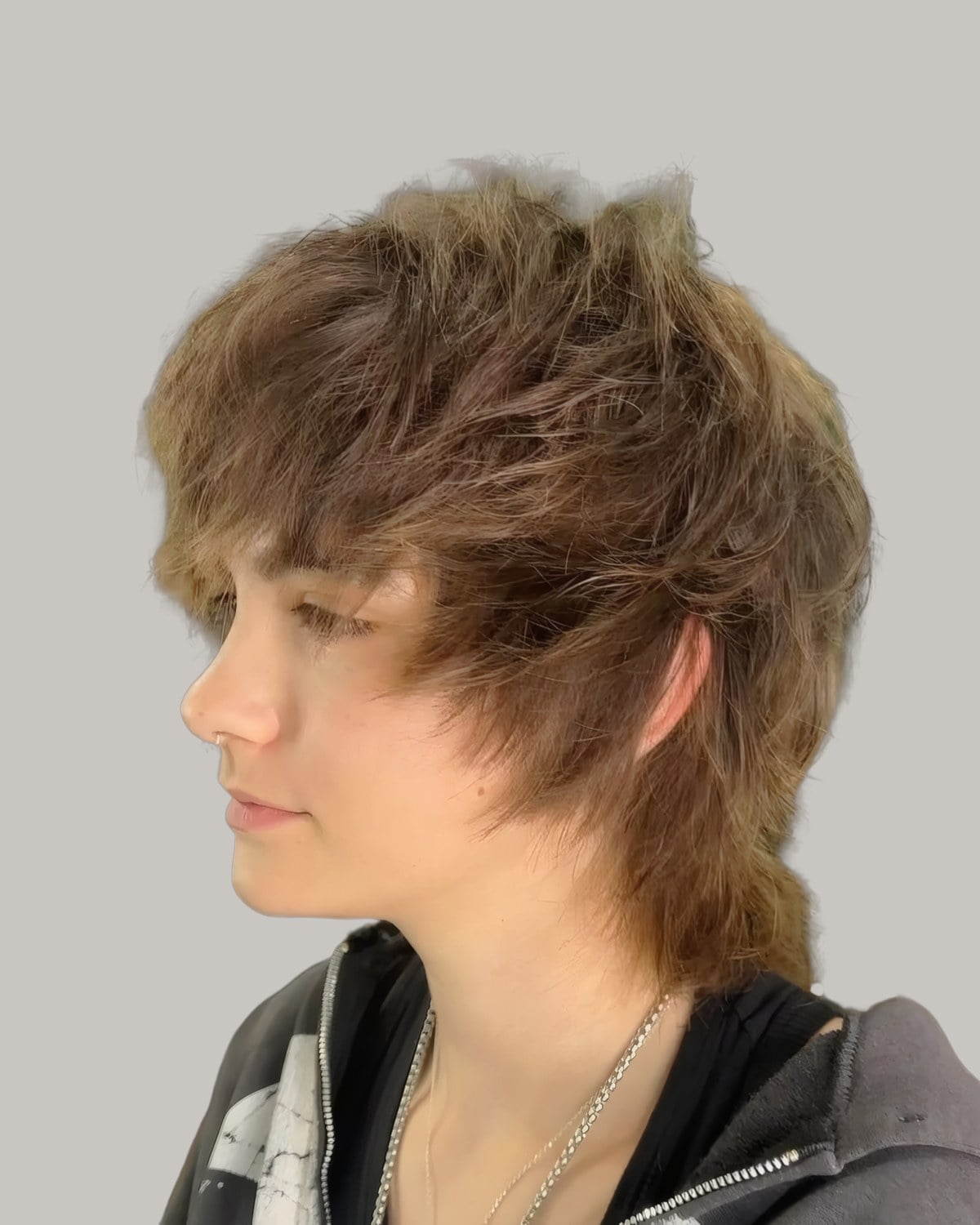
The natural fringe with a tousled hairstyle: long, layered and left to move. Towel-dry it, rough it up with your fingers and walk away. The layers do the rest.
What to ask for Layered all over, four inches on top, a long fringe past the eyebrows, left tousled.
Comb-over with a front fringe
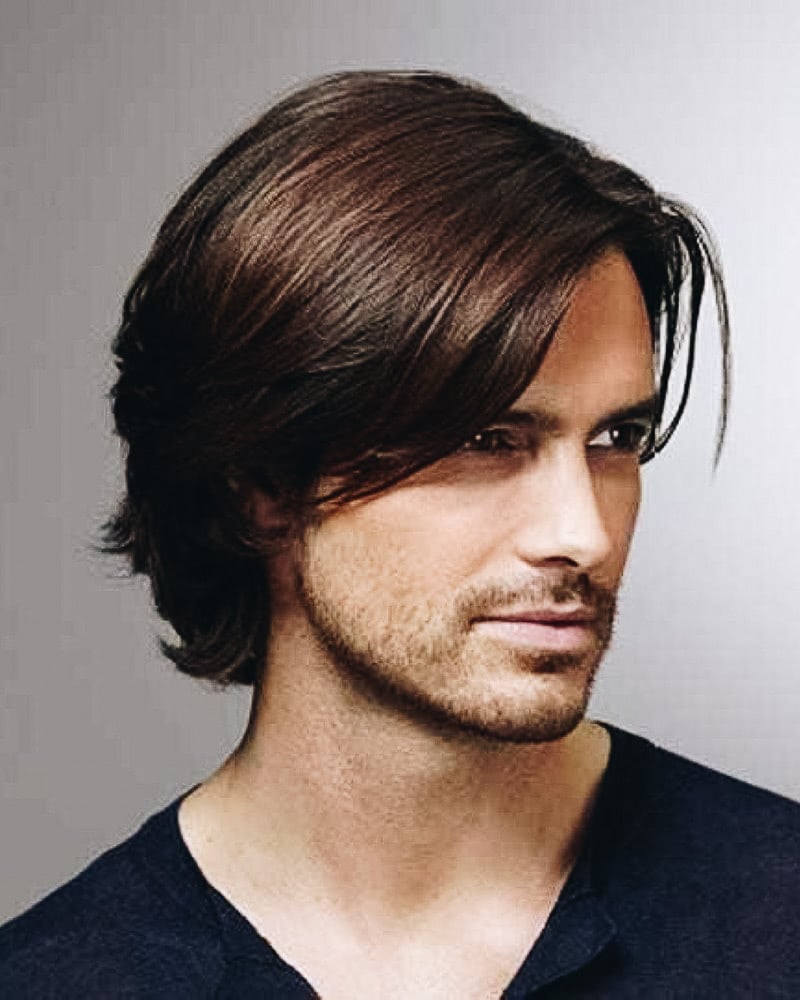
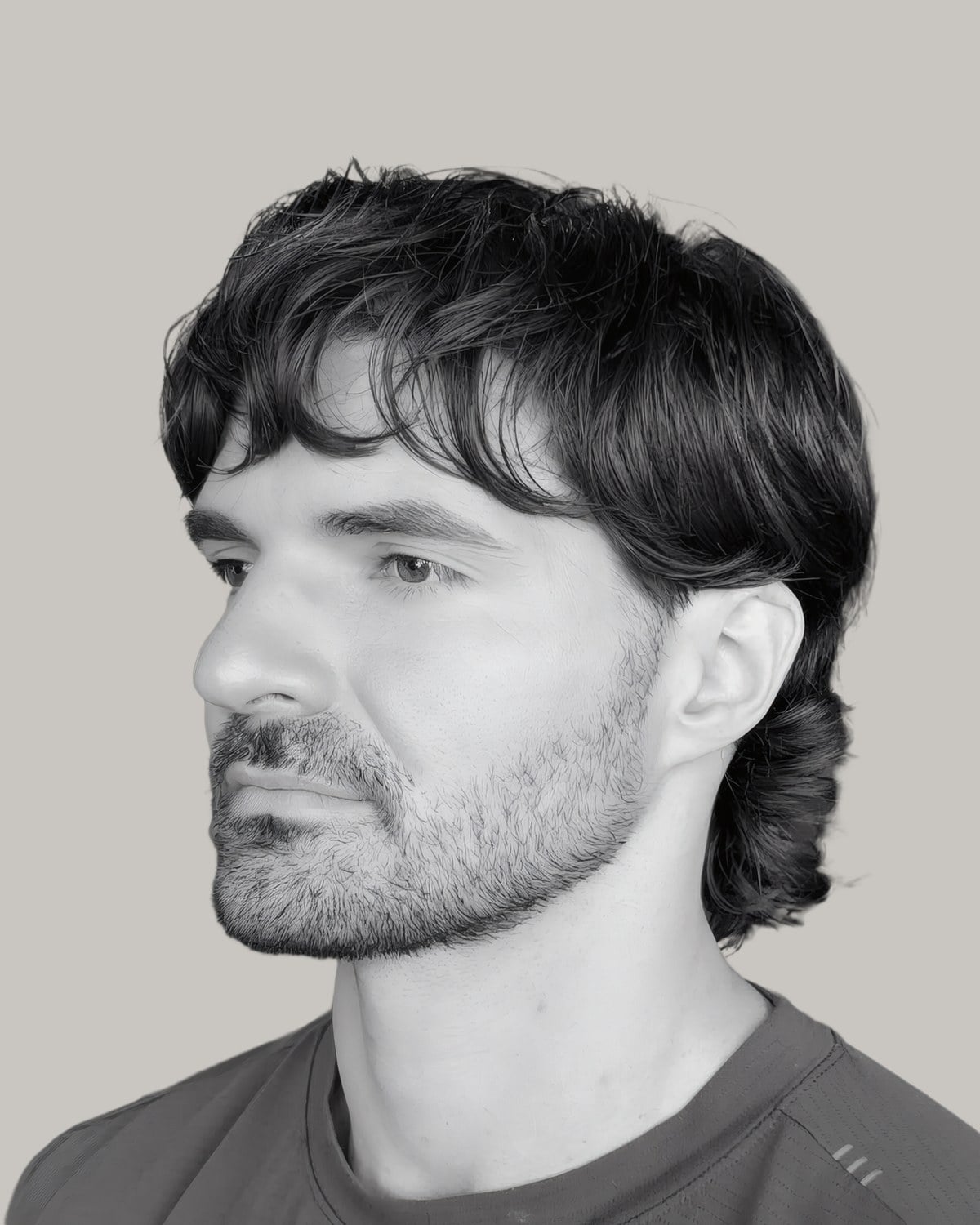
A natural comb-over with a front fringe: sweep it to one side and let the front fall where it likes. It suits thick, straight hair that holds a direction. Tuck the long side behind your ear when it gets in the way.
What to ask for Scissor cut, five inches at the front, sides long enough to cover the ears, swept to one side.
Structured fringe
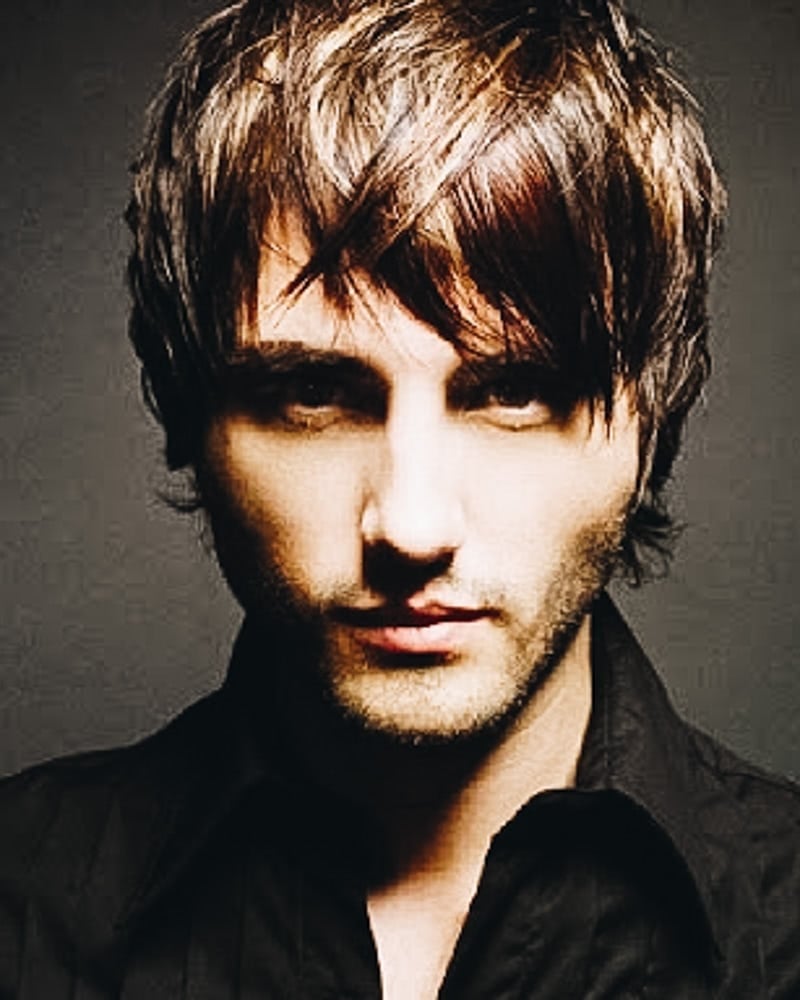
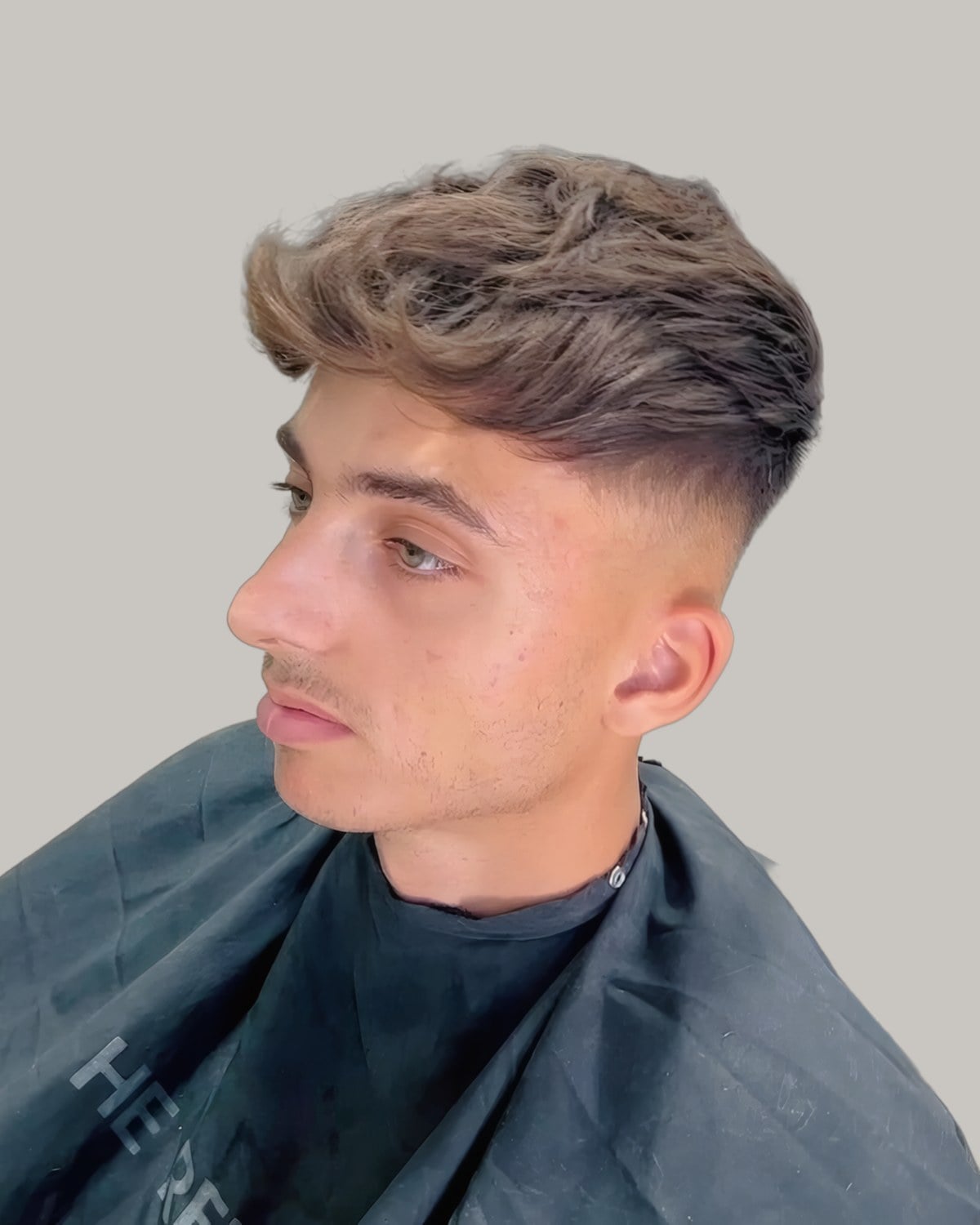
For a more sophisticated look, try this structured fringe. It’s cut to a line rather than left to fall, so it needs a trim sooner than a messy one. Blow-dry it down and forward, and keep the product light.
What to ask for Skin taper on the sides, three inches on top, the fringe cut blunt just above the eyebrows.
Flow haircuts
Flow haircut
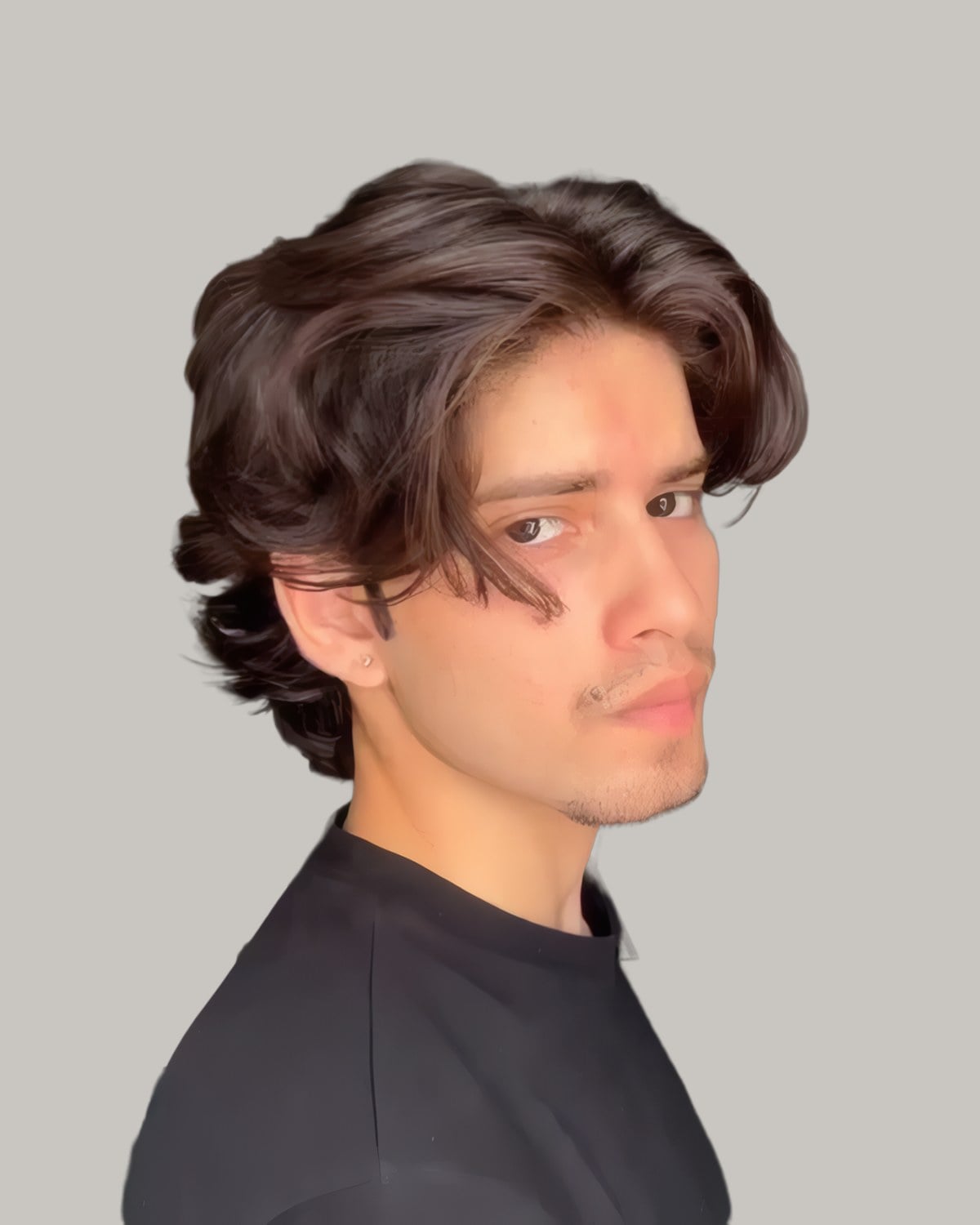
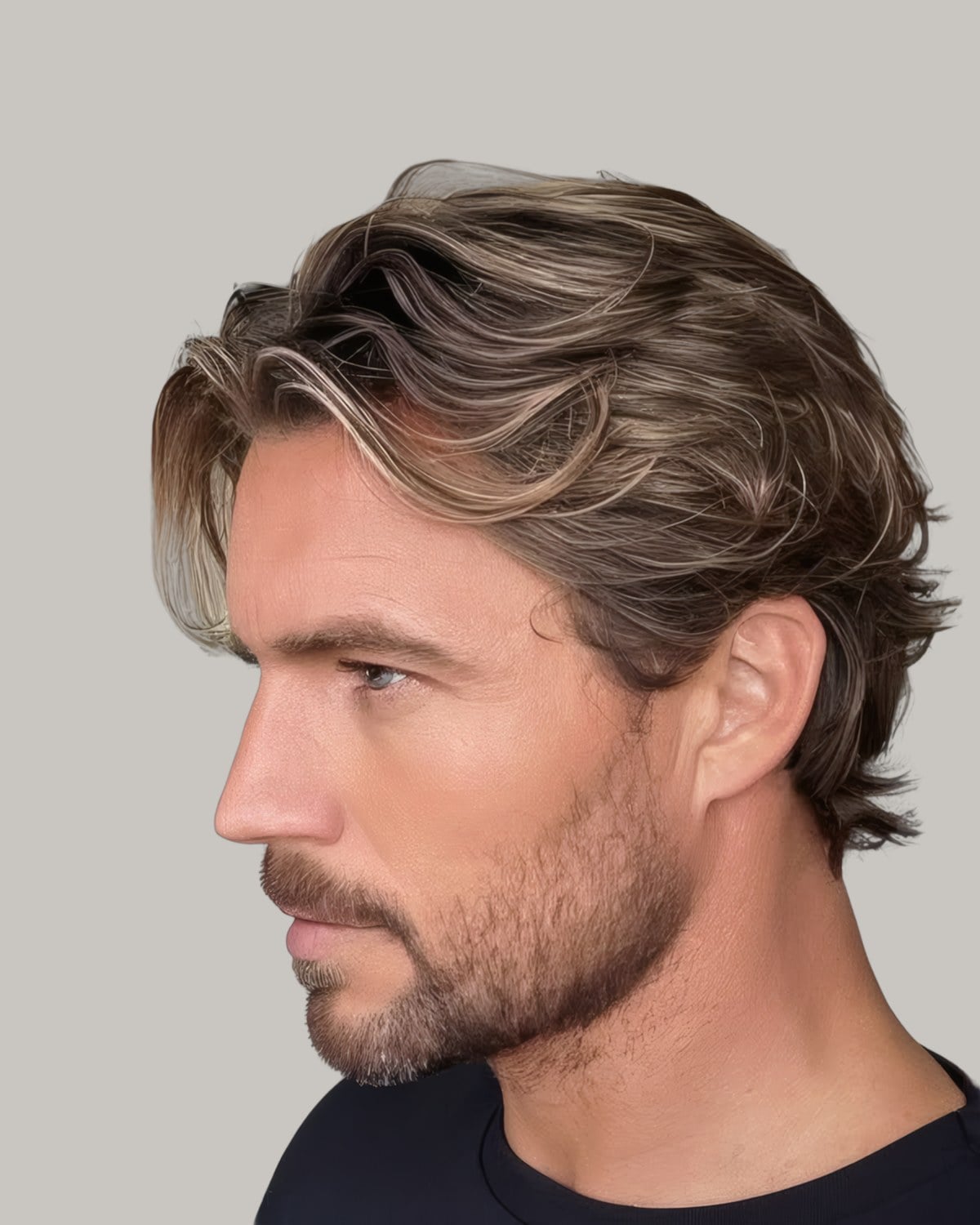
A flow is medium to long layered hair that moves back and away from the face. It’s also called hockey hair or bro flow, after the hair that flows out the back of a player’s helmet. The layers are what let it move, so ask for them by name.
What to ask for Layered all over, five inches on top, the back left to reach the collar, pushed back.
Textured flow
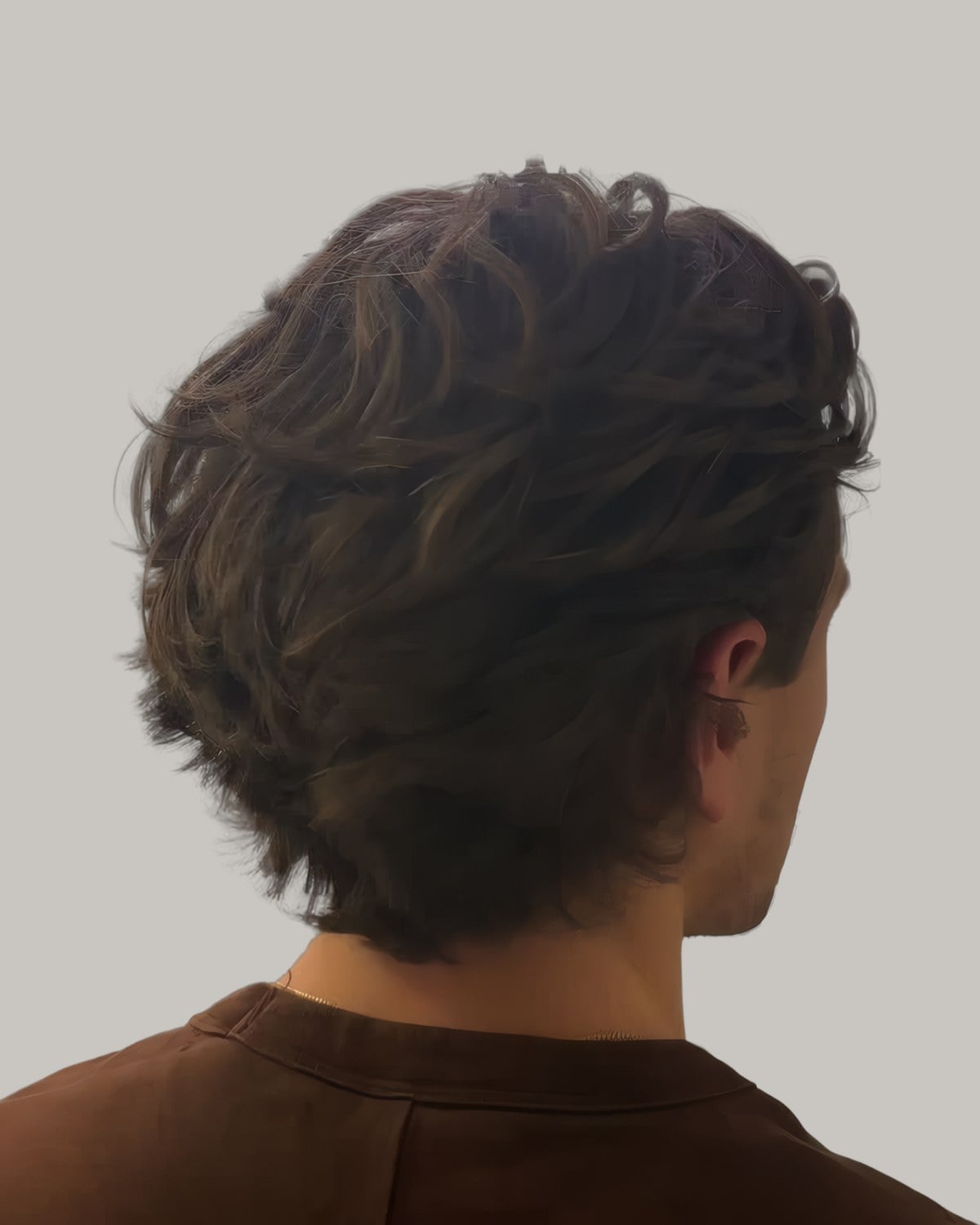
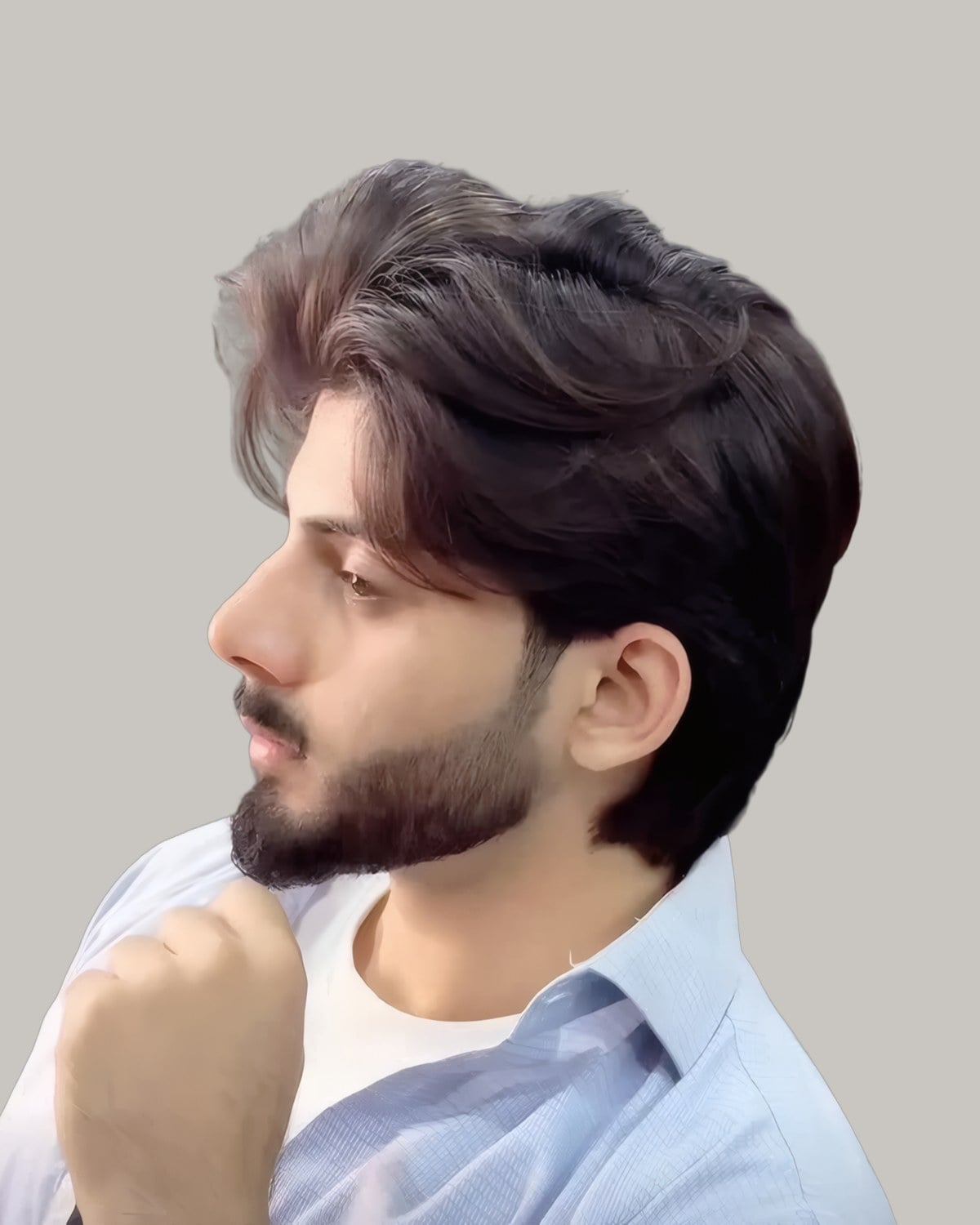
This is the flow with more texture. Point cutting breaks the layers into pieces that look lived-in rather than blow-dried. It suits thick, wavy hair best. Mist a sea-salt spray through damp hair and leave it. For the shaggier version, with a short crown and a longer back, see our wolf cut guide.
What to ask for Layered and texturised with point cutting, four inches on top, the back left to the collar.
Medium-length haircuts for thick, wavy and curly hair
Level cut for thick hair
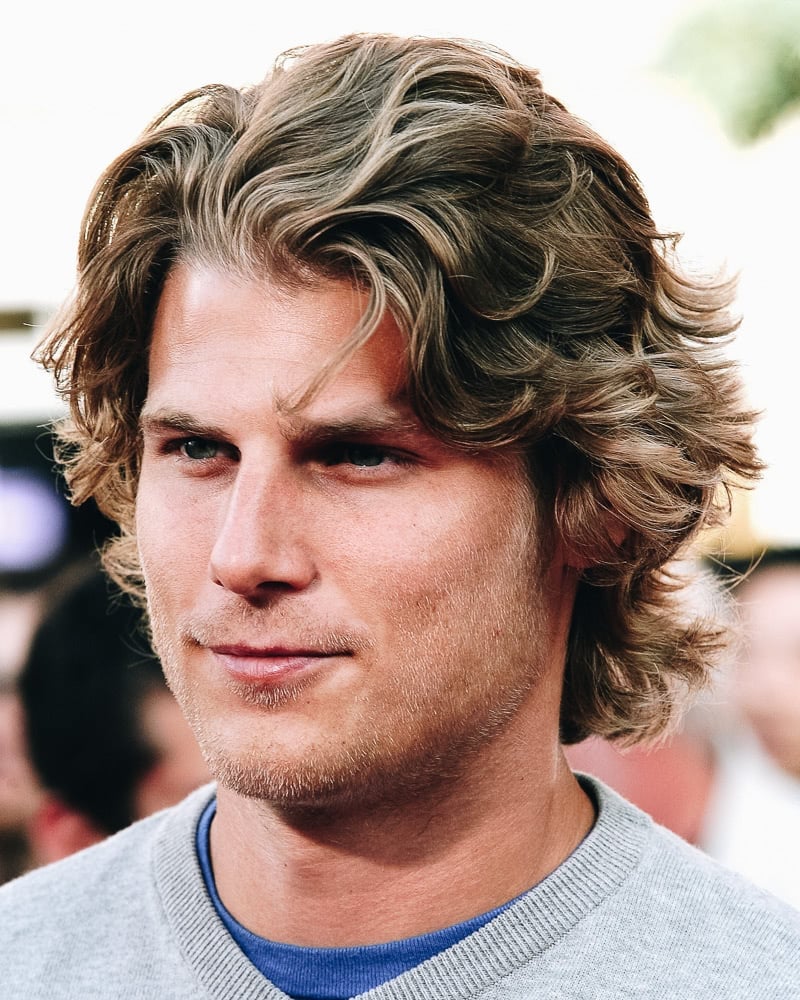
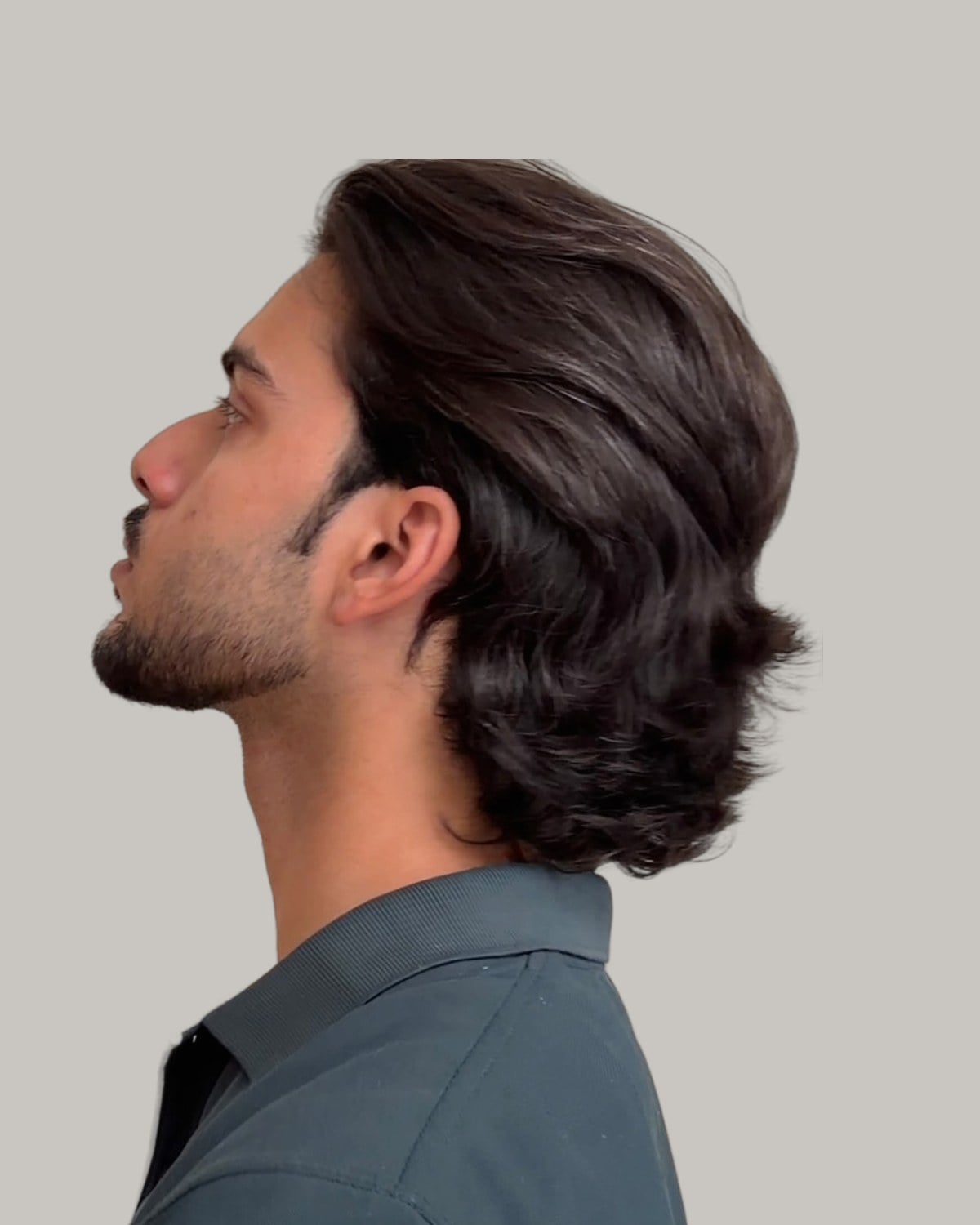
For men with thick hair, this level medium hairstyle looks great. One length all round keeps the bulk even, and thinning scissors take the weight out without taking the length. Push it back and let it fall.
What to ask for One length to just above the collar, thinned through the middle, pushed back.
Natural waves
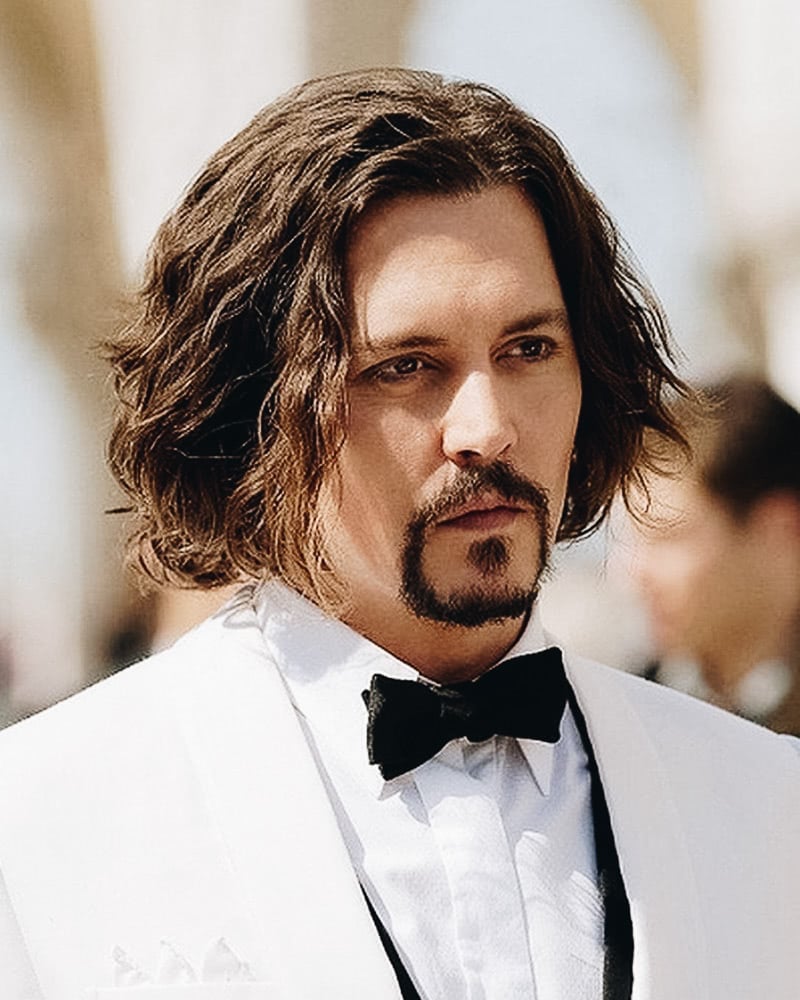
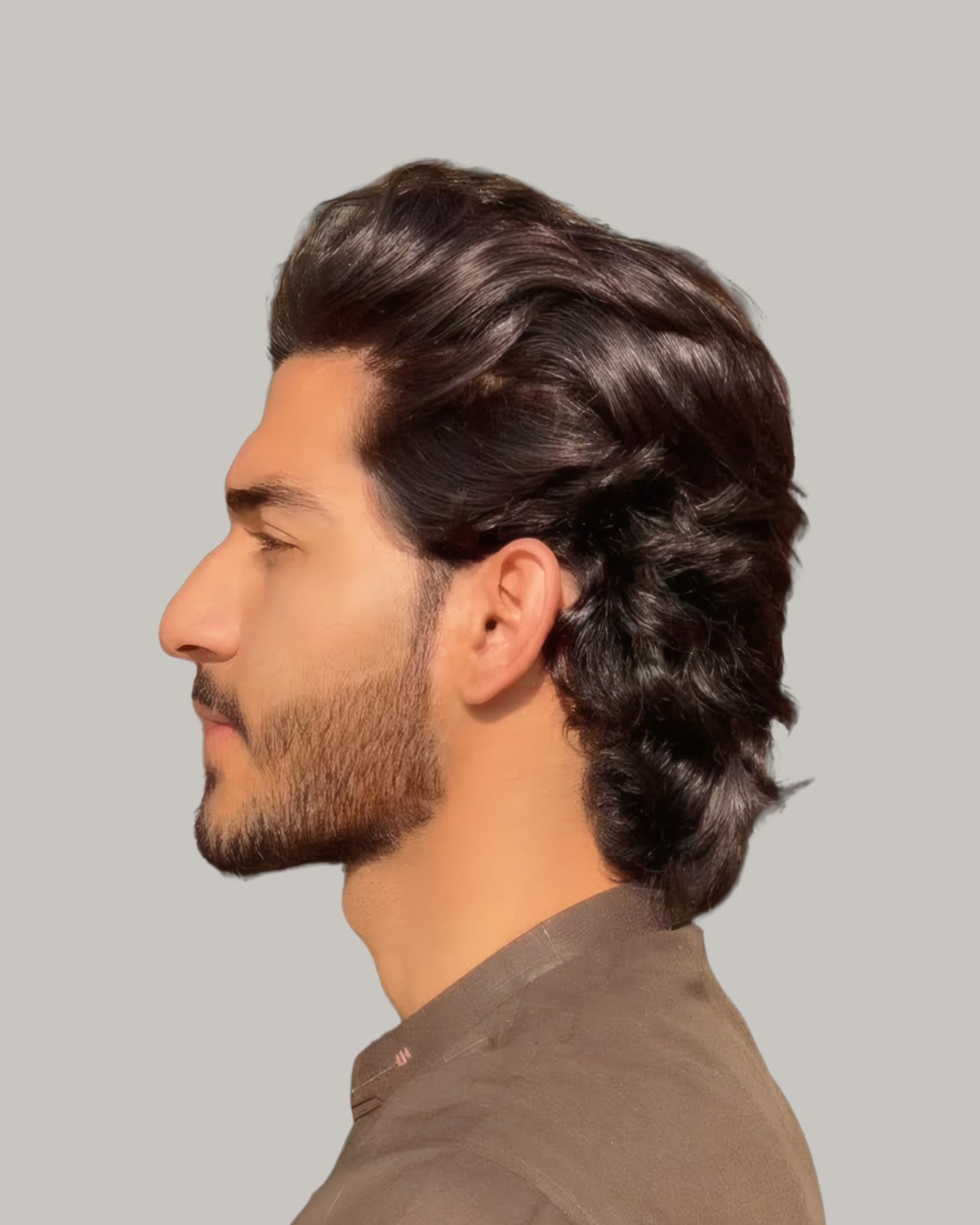
Medium length with natural wavy hair. The cut’s job is to take the weight off the ends so the waves can form. Style it with nothing more than a cream on damp hair, and it’ll work in a dinner jacket too, as the first photo shows.
What to ask for Scissor cut to the jaw, layered at the ends, no product beyond a light cream.
Medium-length curls
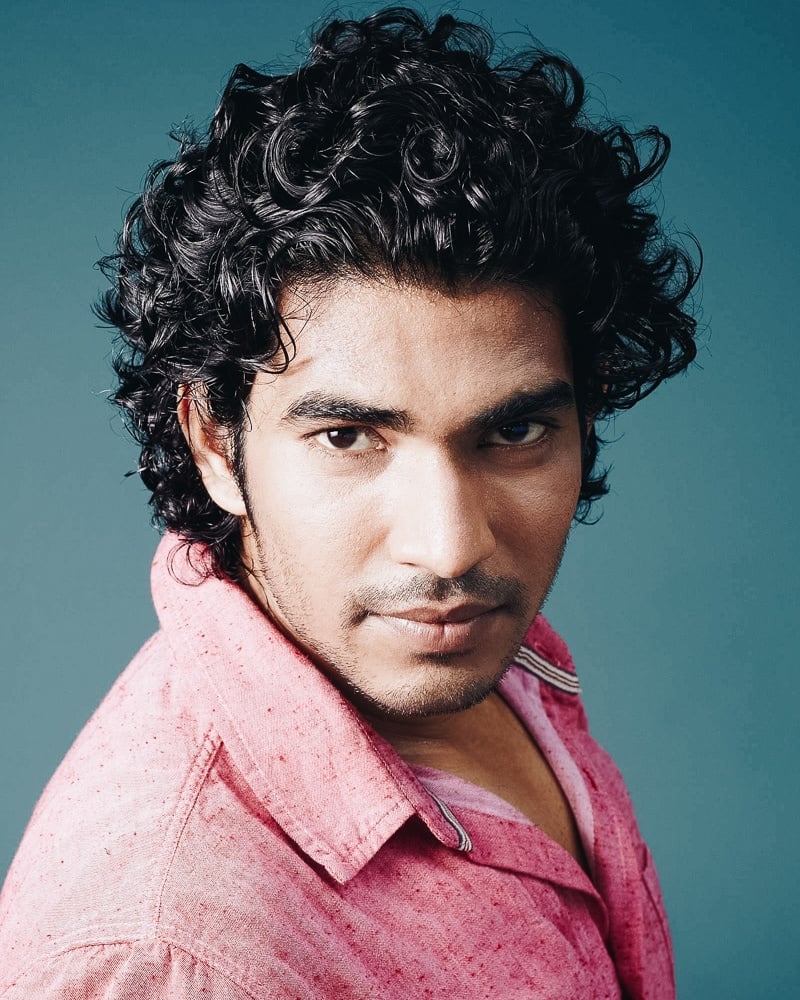
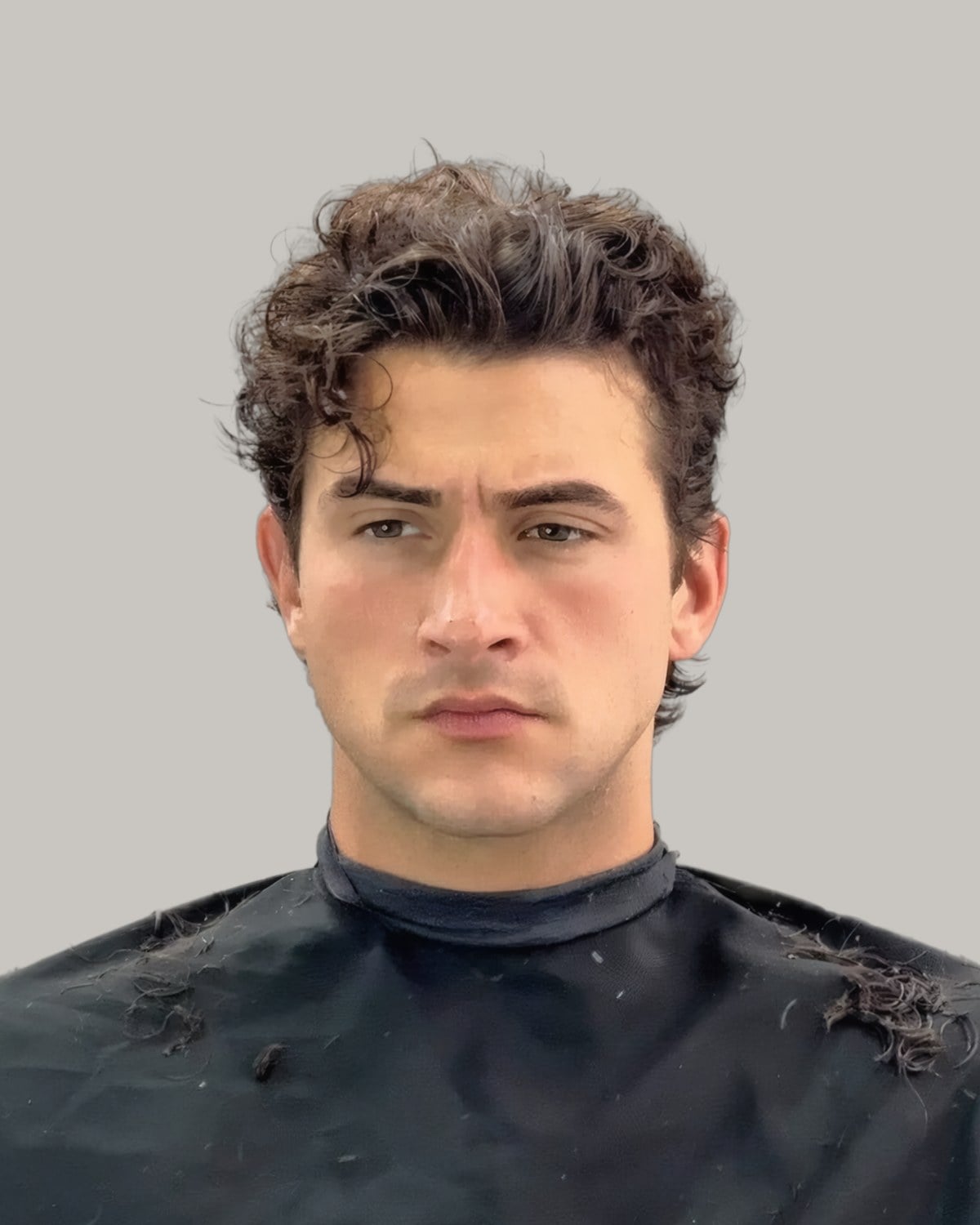
Medium length works well with curly hair too, when kept natural. Ask for the cut to be shaped dry, since curls shrink as they dry. After that, you need a curl cream and a diffuser.
What to ask for Scissor cut, curls left about three inches on top, the sides shorter, shaped dry.
Mullets and the skullet
Skullet
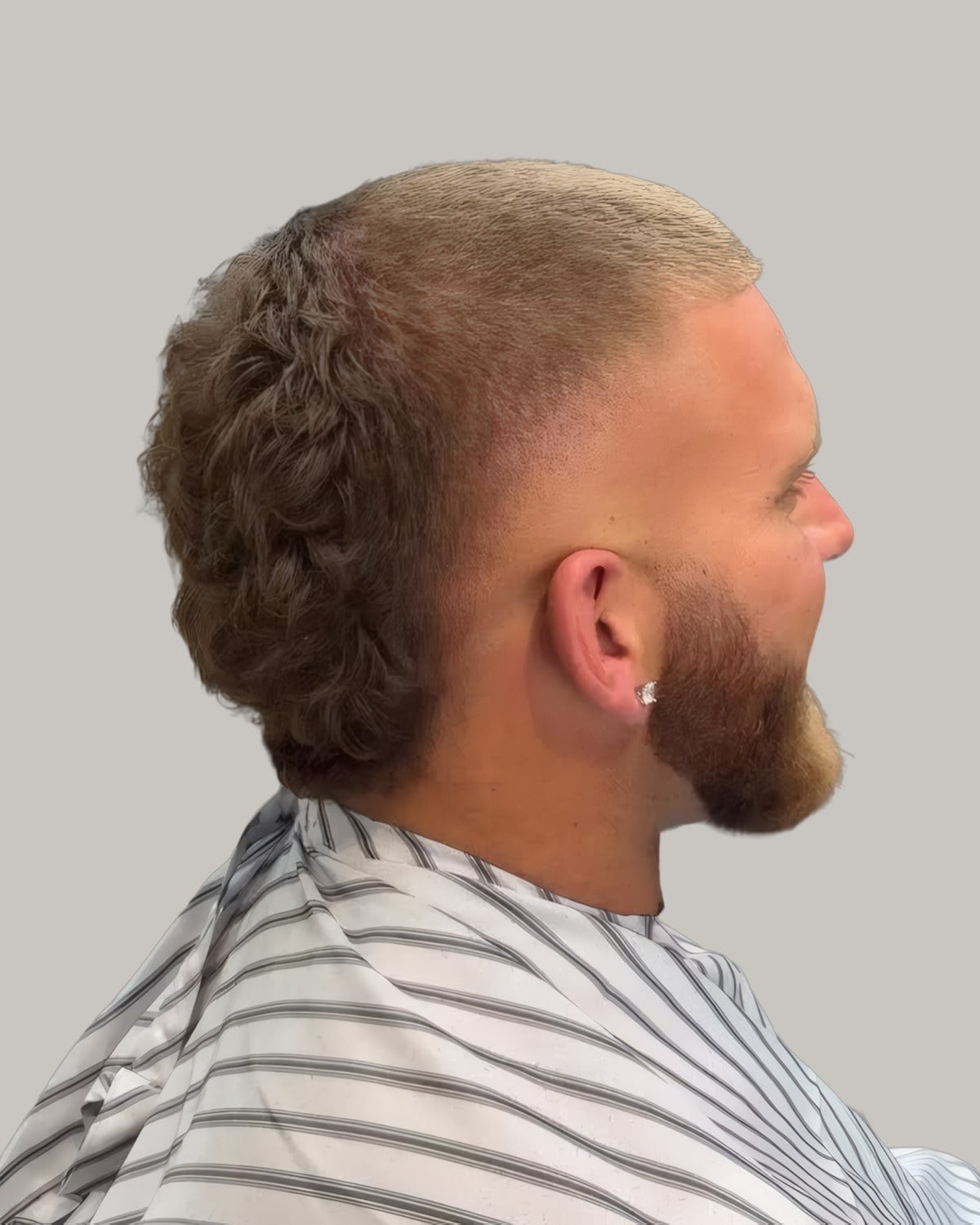
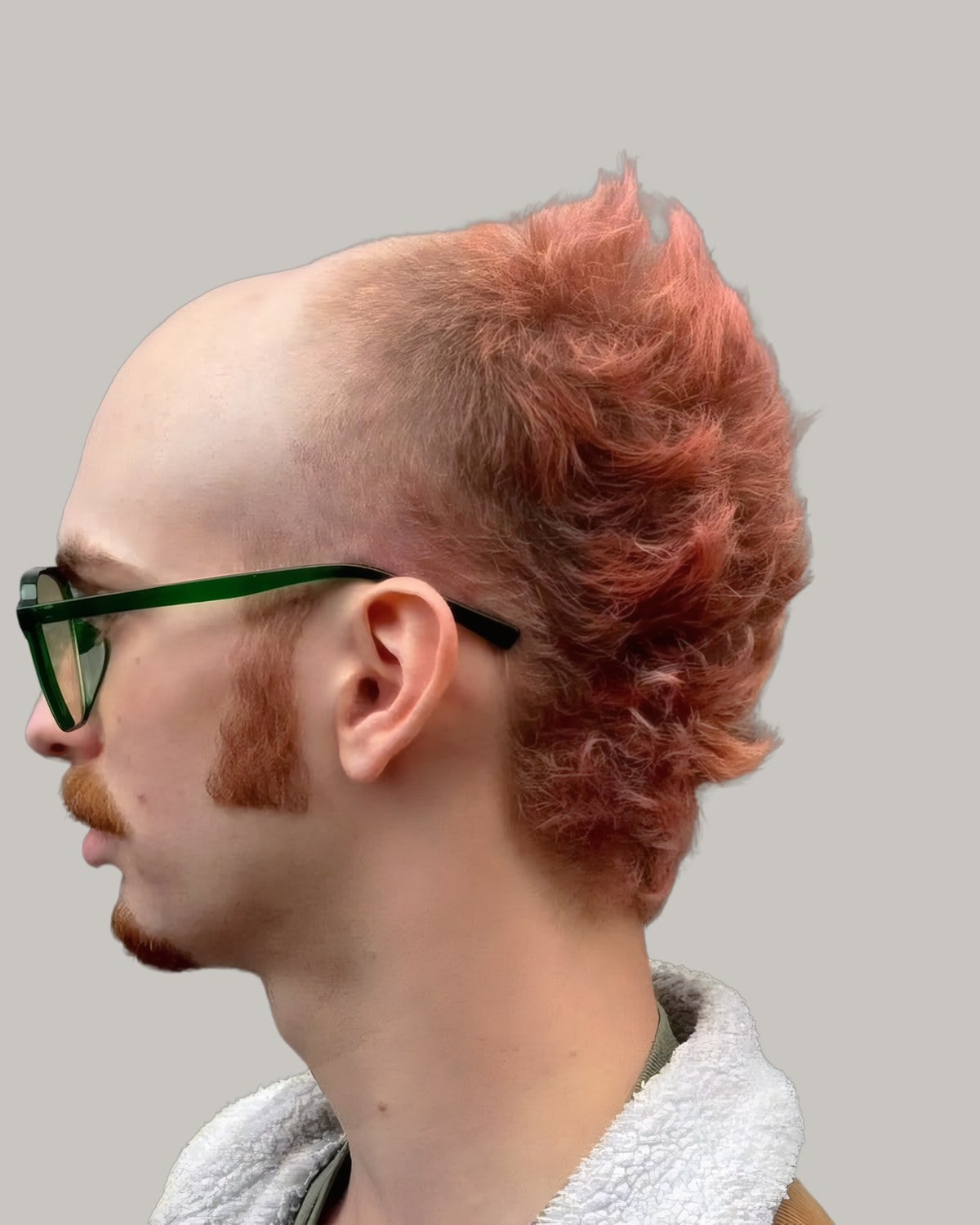
A skullet shaves the top and sides and leaves the hair long at the back. On a bald head, it keeps the strands at the sides and back instead, as the second photo shows. The name gives the game away: skull, plus mullet.
What to ask for Clipper cut short on top and at the sides, the back left long, blended at the crown.
Mullet with a taper
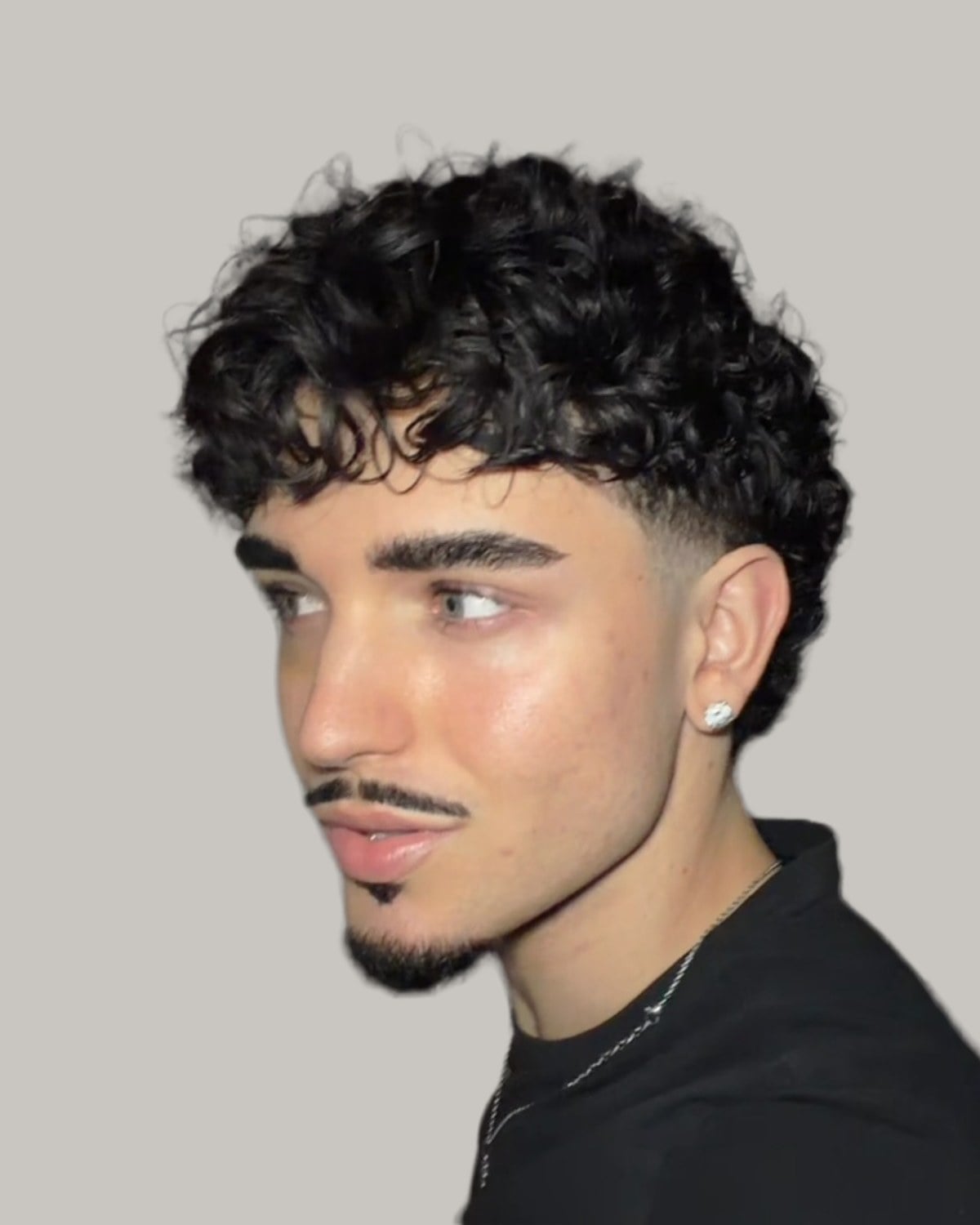
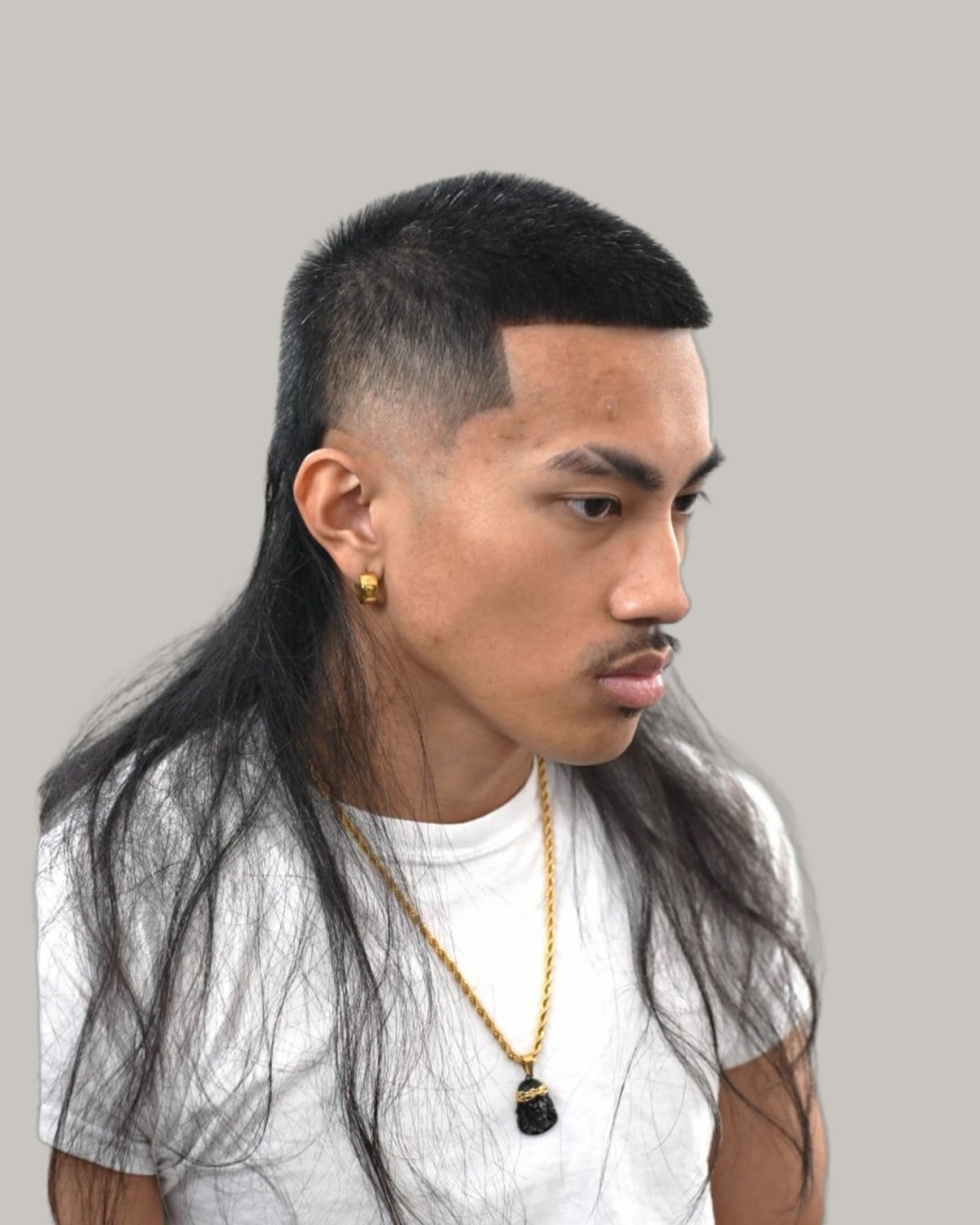
A mullet is shorter at the front, top and sides and longer at the back. Business in the front, party in the back, as the saying goes. The modern version tapers the sides. That’s what makes the back look chosen rather than forgotten. Our modern mullet guide has 27 more, from baby mullets to mohawks.
What to ask for Taper at the sides, two inches on top, the back left four inches longer than the top.
Shoulder-length hair and top buns
Keanu Reeves's shoulder-length hair
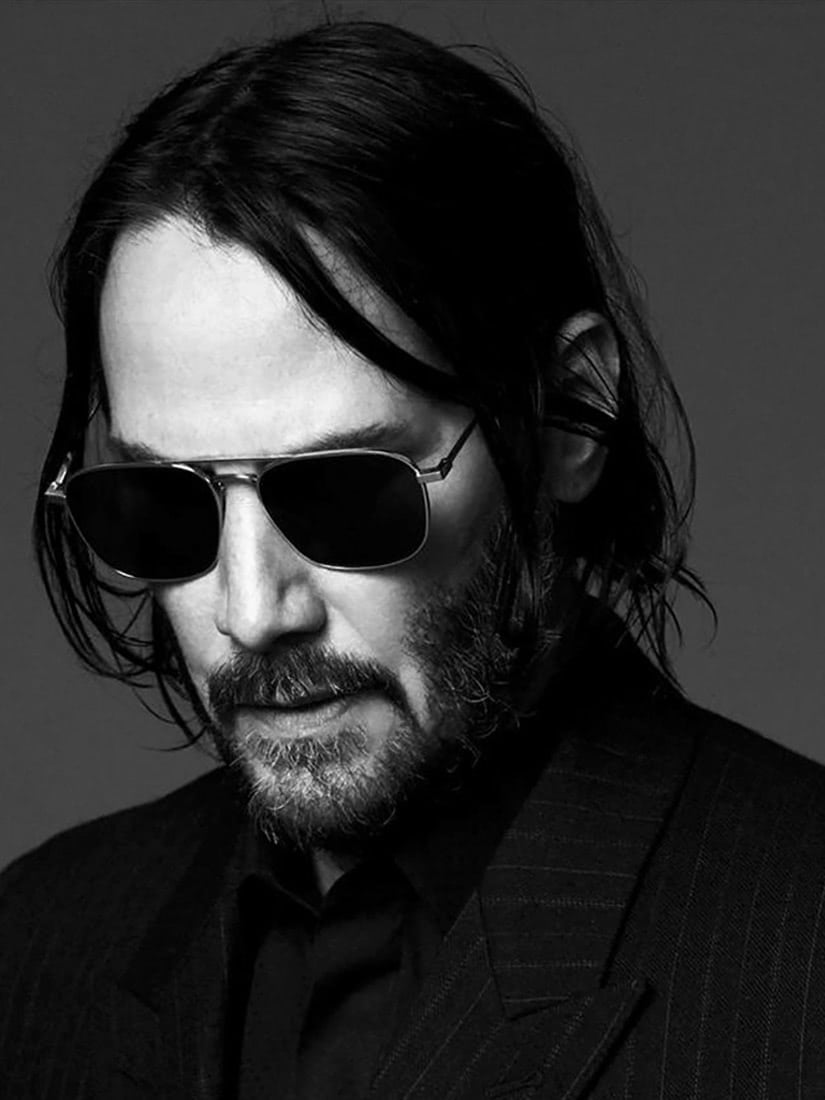
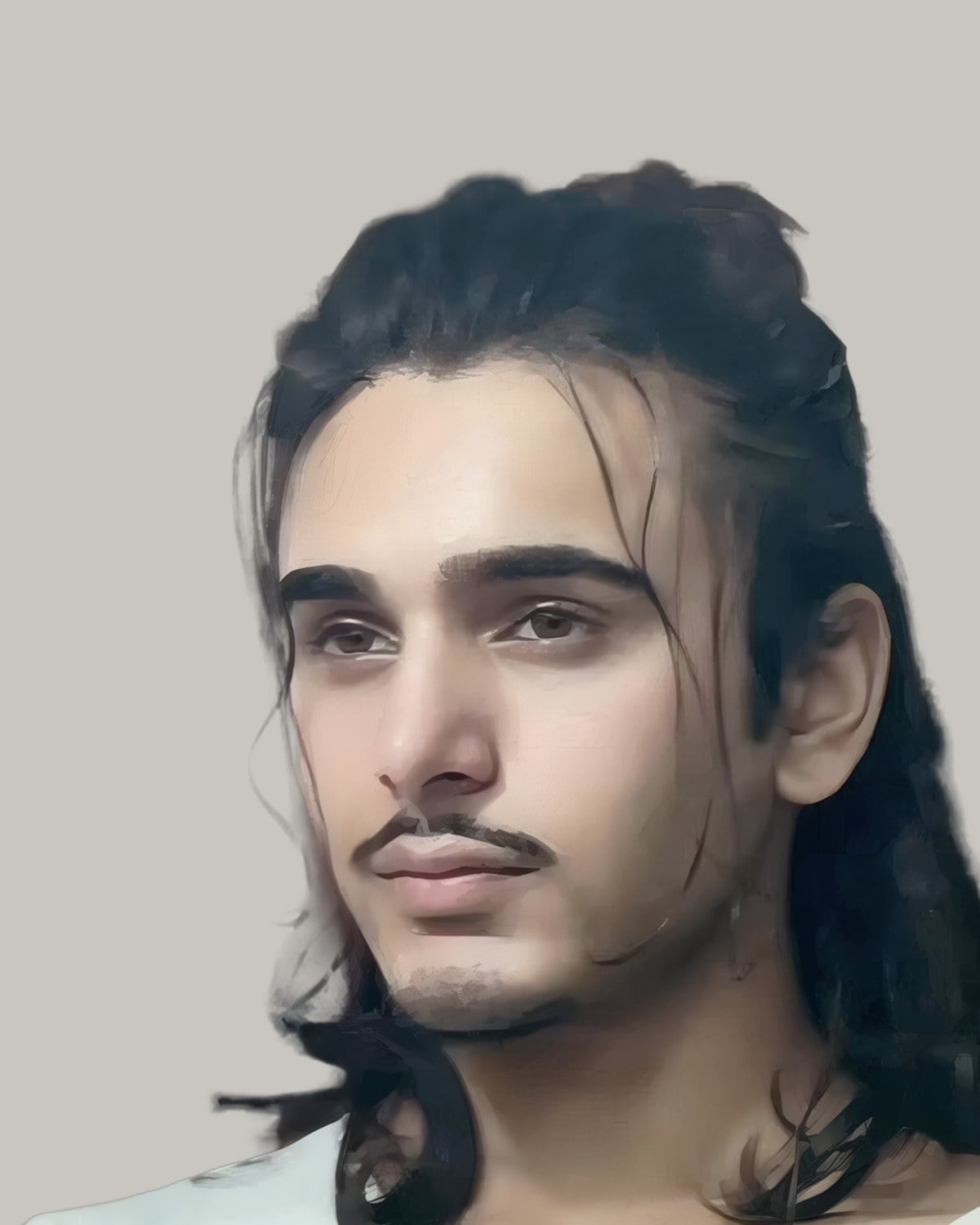
This is Keanu Reeves’s natural shoulder-length style, tucked behind the ears. The cut is mostly patience and the odd trim to keep the ends healthy. A beard gives the length something to frame.
What to ask for One length to the shoulders, a light trim on the ends, no layers.
Straight shoulder-length cut
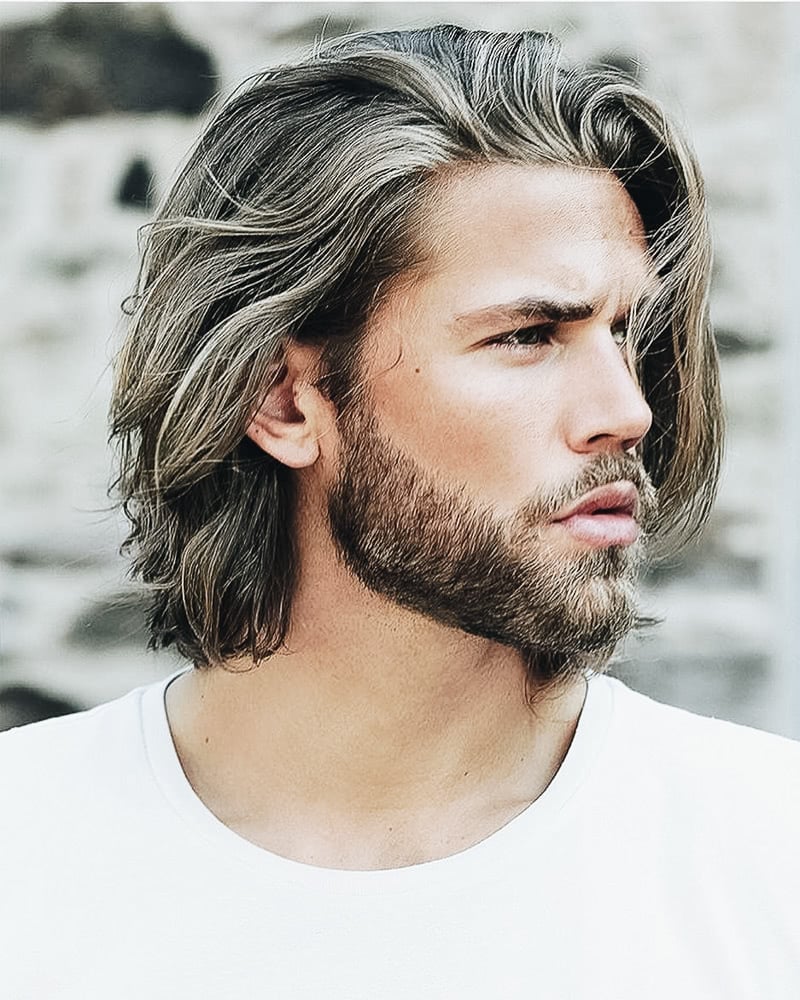
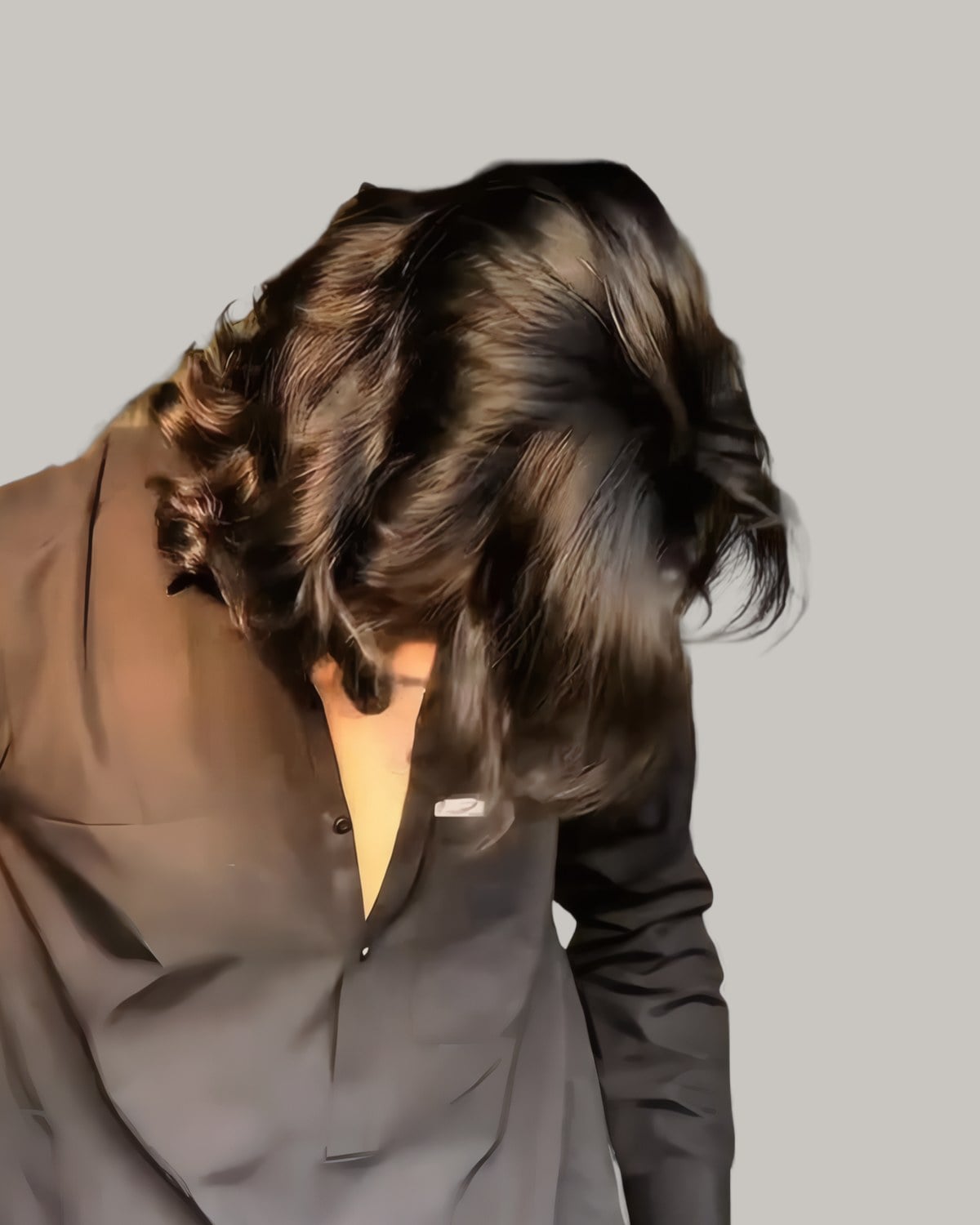
A straight shoulder cut: one length, blunt at the ends, swept back off the face. Blunt ends keep straight hair looking thicker. It’s the easiest long look to wear with a beard.
What to ask for One length to the shoulders, ends cut blunt, swept back.
Shoulder-length hair on thick straight hair
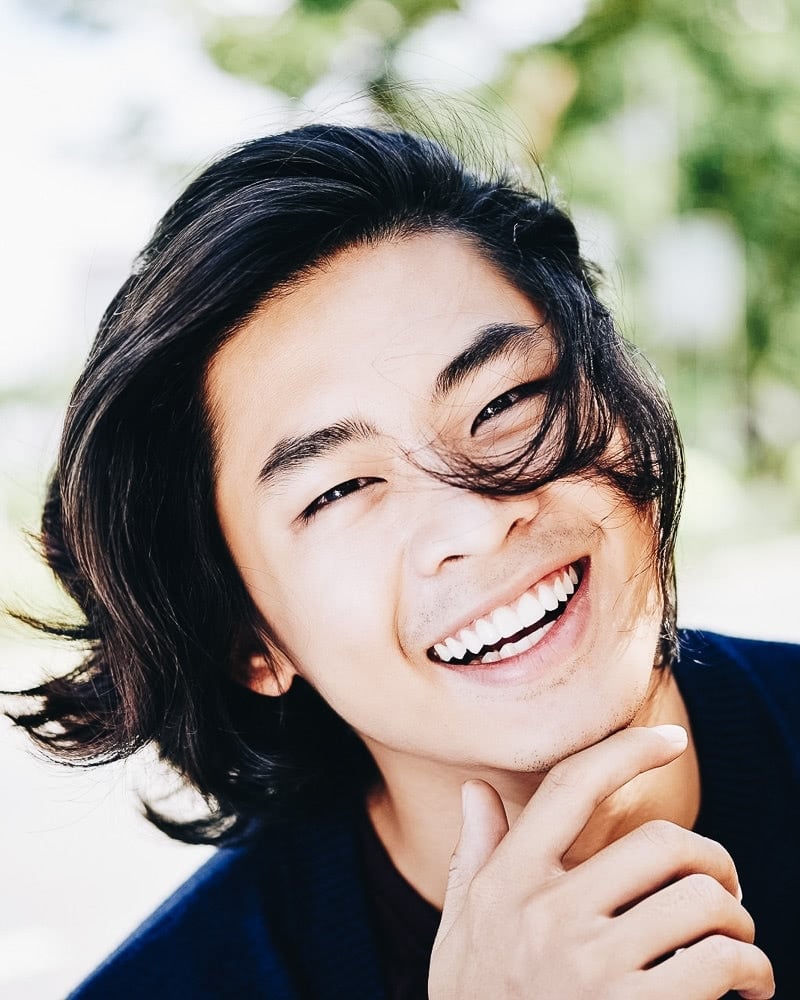
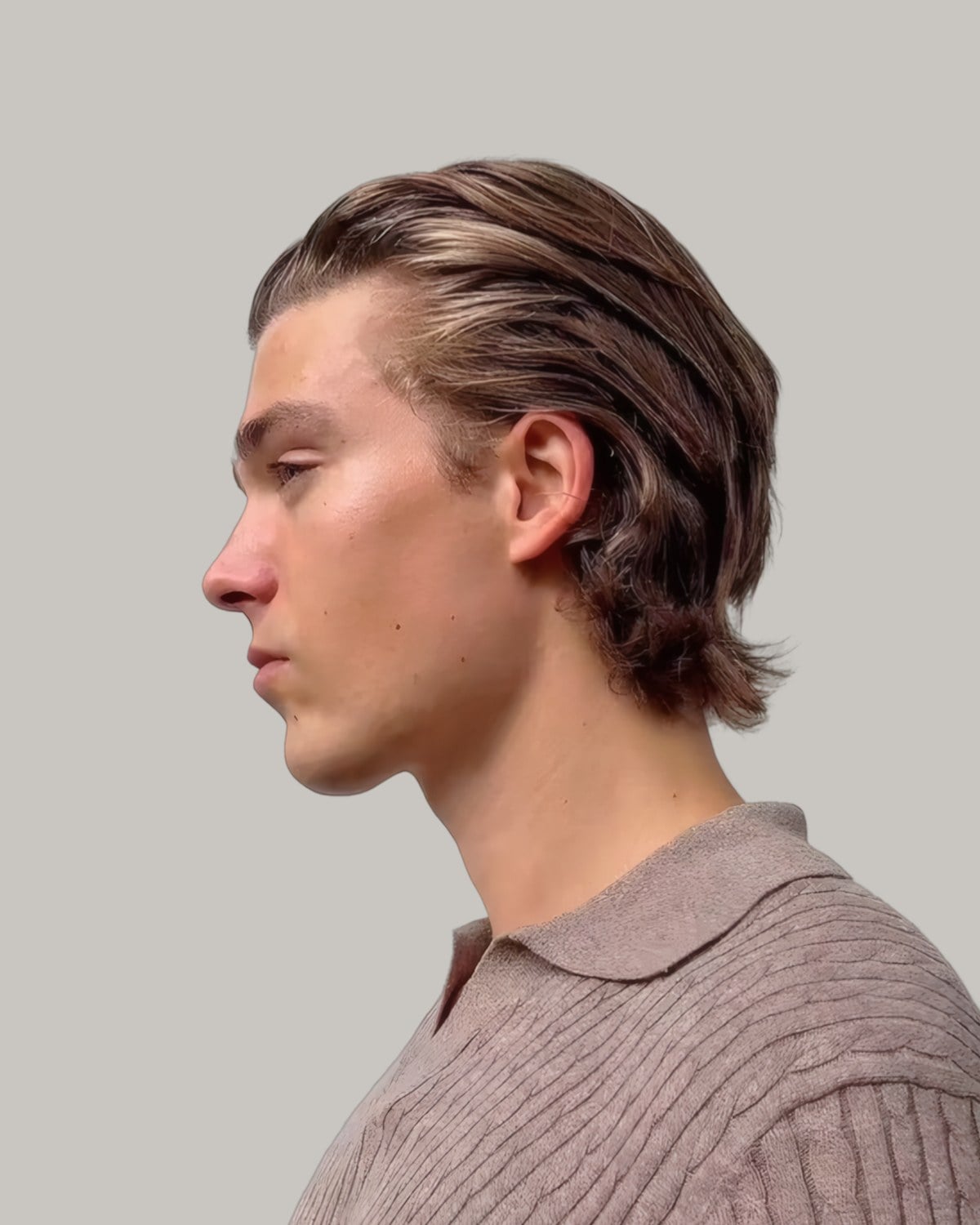
The shoulder-length style works well with thicker hair to keep the structure of the haircut. Long layers and a little thinning stop it from turning triangular. Wear it loose, or slick it back when it’s time to look sensible.
What to ask for Long layers to the shoulders, thinned through the middle, worn loose.
Shoulder-length waves with a centre part
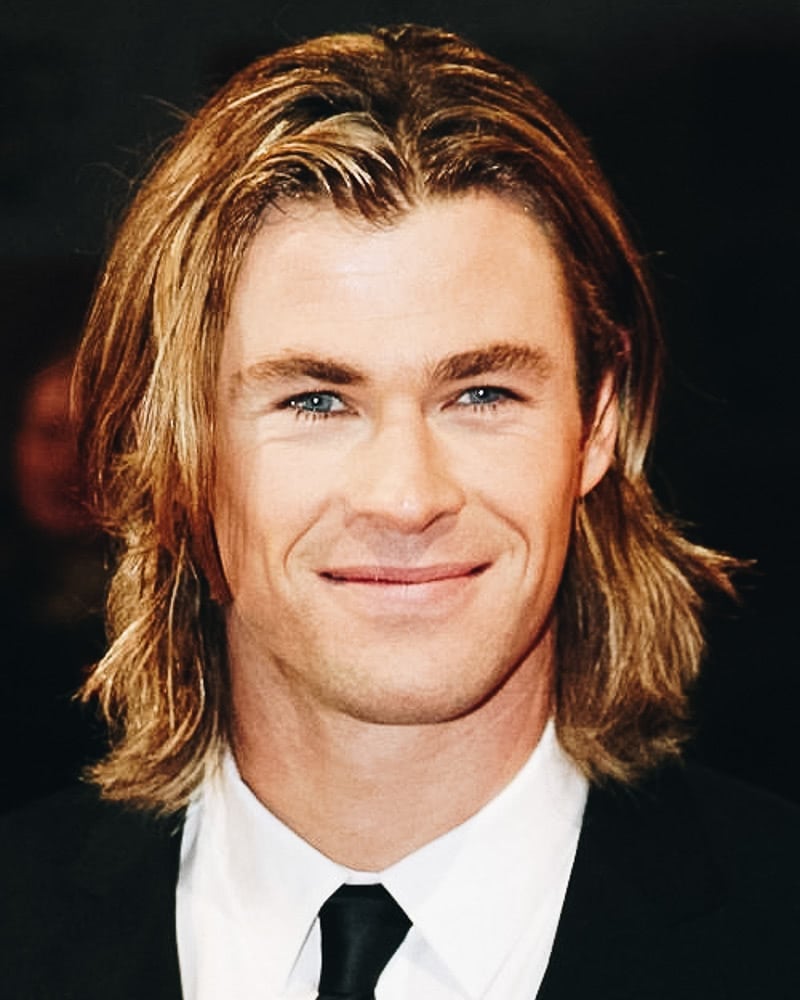
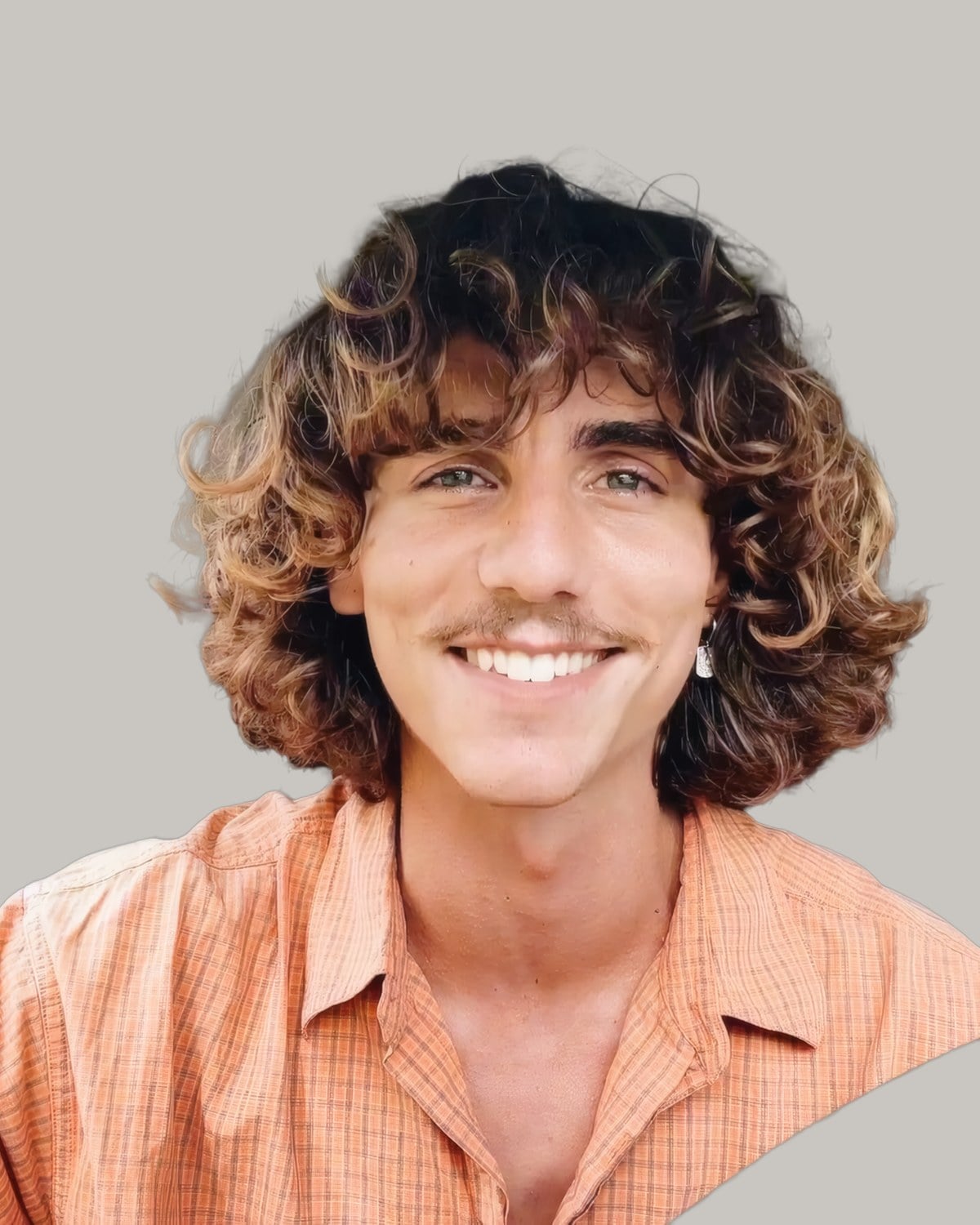
Central parting works great with wavy hair to shoulder length. The part splits the weight, so the waves fall evenly instead of piling to one side. Dry it with a diffuser to keep the waves from frizzing.
What to ask for Long layers to the shoulders, a centre part, dried with a diffuser.
Hand-slicked shoulder-length hair
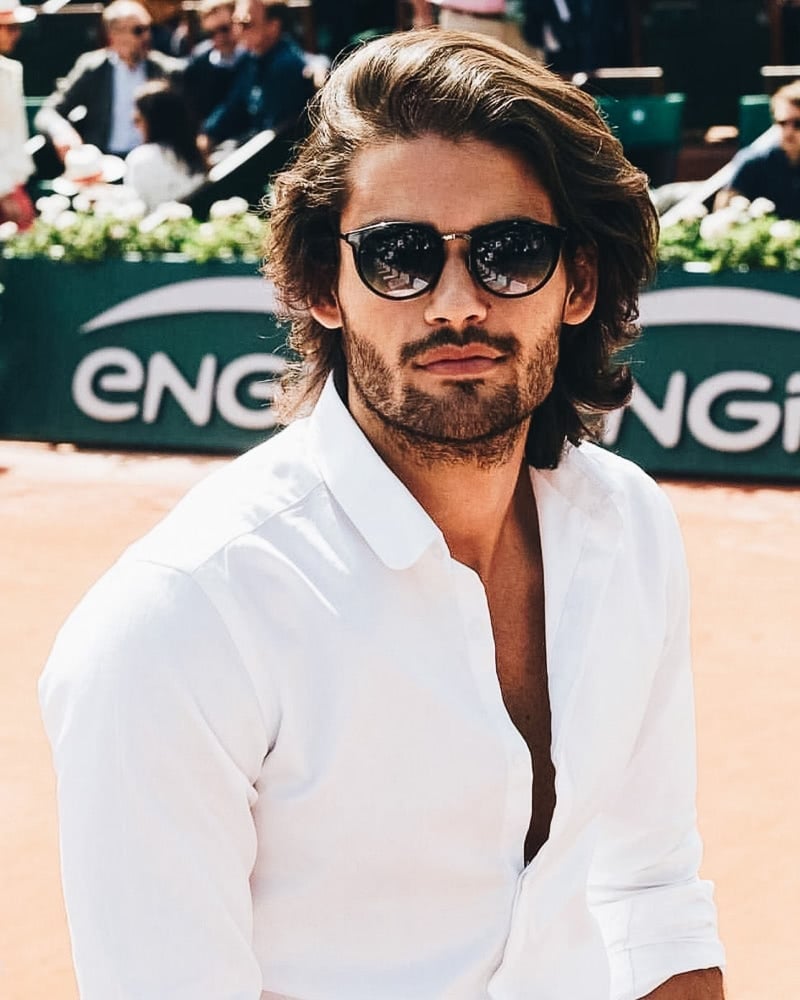
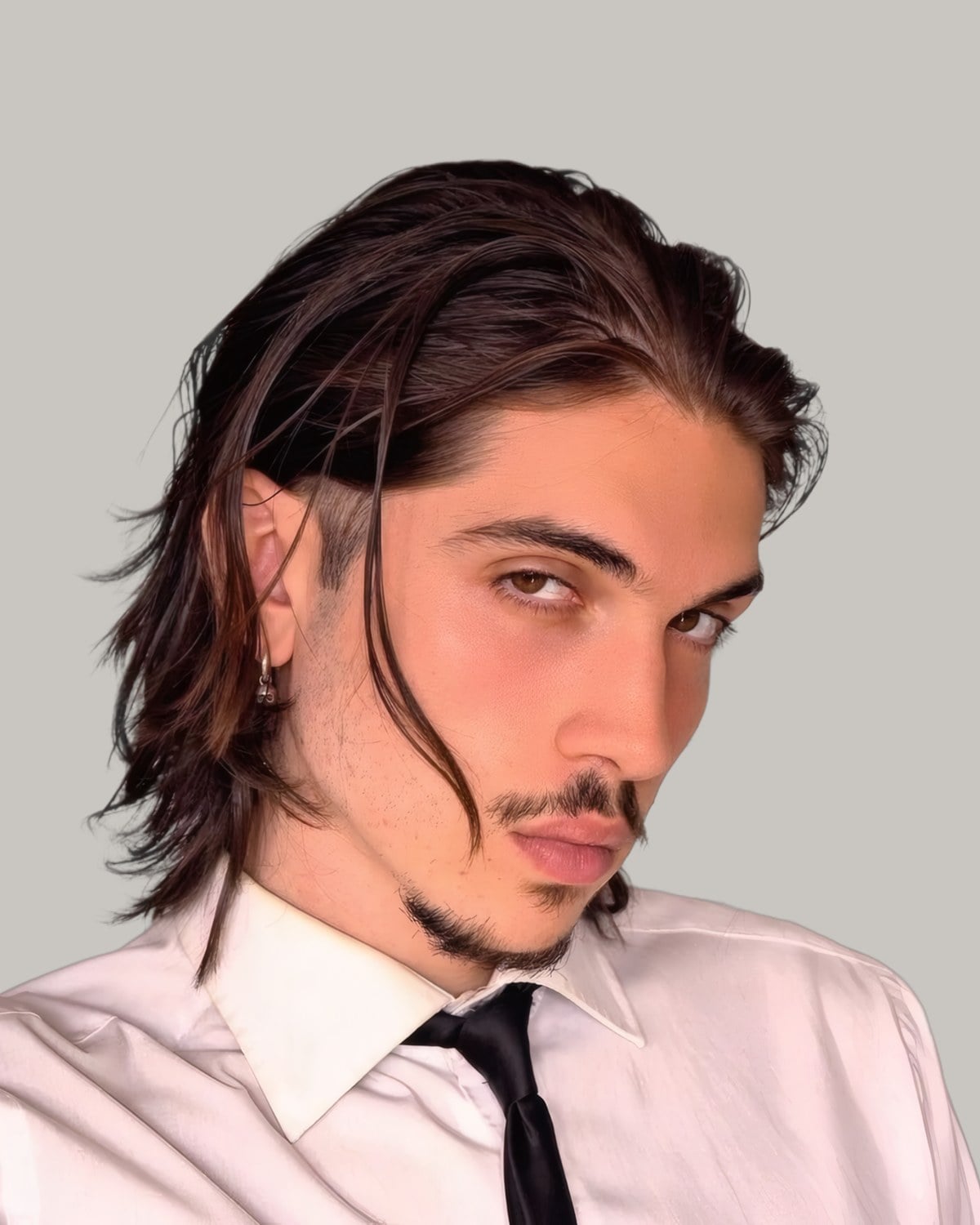
A hand slicked-back shoulder-length style, for when the hair is long enough to push back and stay there. A little cream stops it from falling forward. It works with a tie better than you’d think.
What to ask for One length to the shoulders, long layers at the front, pushed back with a light cream.
Top bun with an undercut
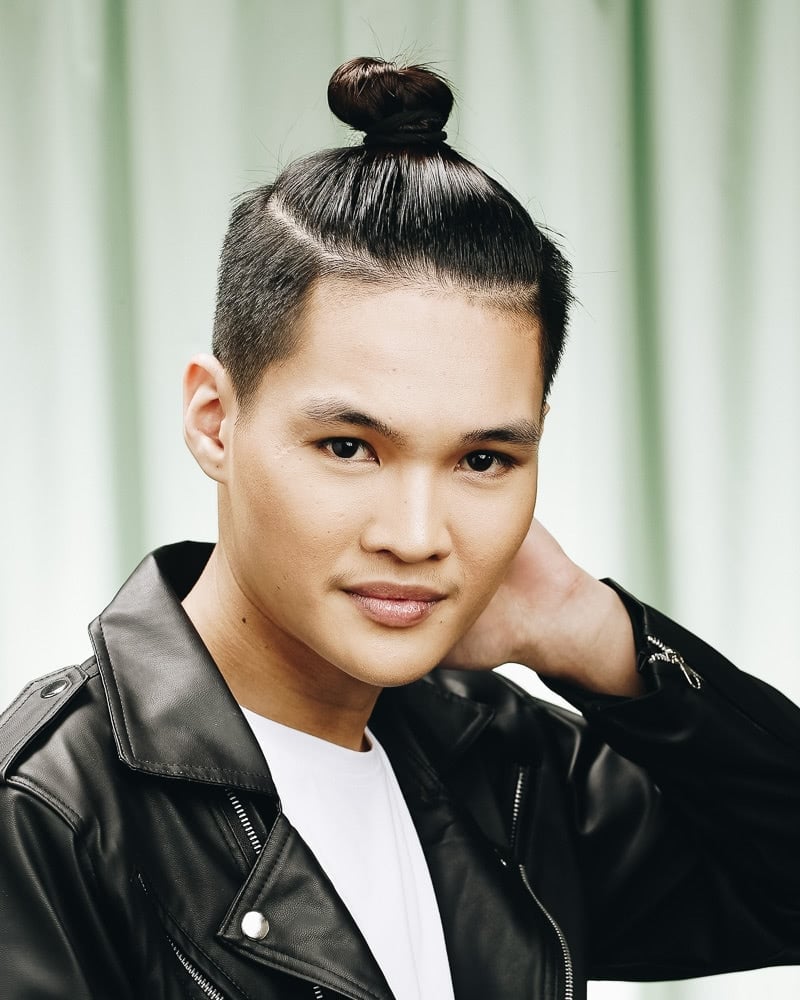
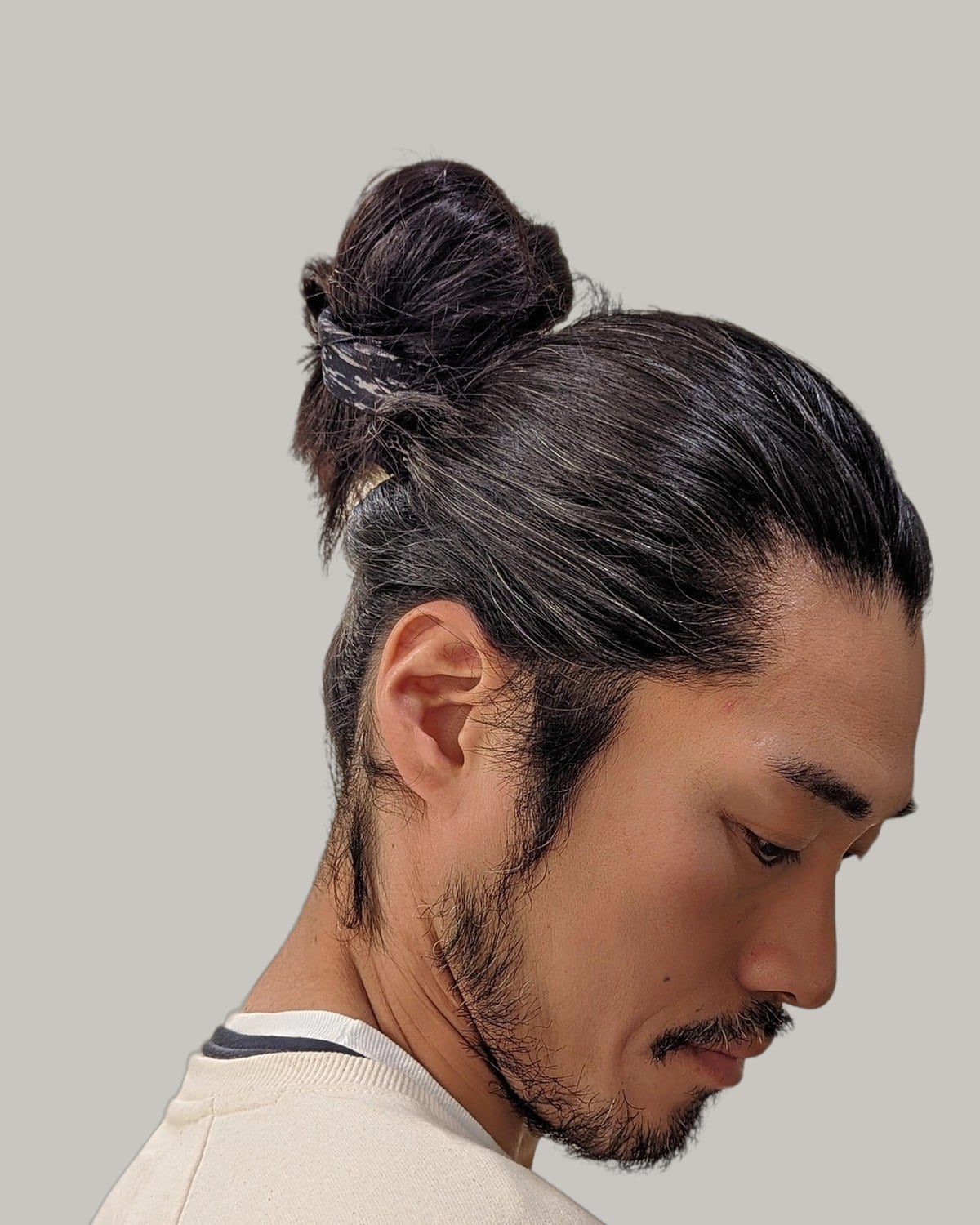
Medium length with a bun on the top and sides undercut. The undercut keeps it neat when the bun is up. Let it down and it’s a medium-length cut again.
What to ask for Undercut with a number 2 on the sides and back, the top left long enough to tie.
01 of 01
What counts as medium-length hair for men?
Medium-length hair is about 5 to 10 centimeters (2 to 4 inches) long. That puts it between very short cuts like the buzzcut and long, shoulder-length styles. You can wear it all one length, or keep the top longer over shorter back and sides, and most of the looks above do the second.
Within that range, three things decide the cut: how much time you’ll give it in the morning, how often you’ll see a barber, and what your hair does on its own. Thick, wavy hair suits the flow and the level cut. Straight, heavy hair takes a slick back or a structured fringe. Fine hair looks fuller with short back and sides and a longer, blunter top. The six tips below take each of those in turn.
How to style medium-length hair for men: 6 expert tips
Styling time
If you’re pressed for time in the mornings and prefer to minimize your mirror minutes, there are plenty of low-maintenance styles for medium-length hair that’ll see you looking polished from the get-go.
Though the buzzcut is considered a great no-fuss style (the very short nature of this cut means there’s no possibility for kinked up bed-hair in the mornings), there are still a number of minimal effort styles for medium-length hair which allow more freedom with different styling.
If you prefer a longer top, the crew cut could be a good choice. Much like the buzzcut but with a slightly longer top, this trendy style requires little effort in the mornings. Simply comb your hair over to one side, and set it in place with a little hair gel. Done.
Otherwise, try a casual quiff or let loose with a fringe to make the most of a good, medium-length cut and minimize styling time.
Barbers: treat or chore?
While some of us love a visit to the barber, for others, it can be a necessary evil. If you’ve got the time and inclination, you have more freedom to pick a cut that demands more maintenance.
If you fall into the former category, styles like the square fade could be perfect. The fade is cut slightly higher on the sides, resulting in a clean, polished look. This will require regular upkeep to prevent bushiness. Buzzcuts are hugely popular, but usually mean a fix-up every few weeks, too.
However, if regular barber trips are your idea of hell, there are plenty of low-maintenance styles to choose from. The crew cut could be a happy medium. With the signature style being longer on top, you have more leeway with letting this one grow out a little before dragging your feet to the barbers.
The Ivy League may be an even better choice. Essentially a long buzzcut and possibly the most low-maintenance of medium haircuts, the Ivy League can stand to grow out a little longer than other cuts, before a barber visit becomes necessary.
Messy or structured
If you’re blessed with a mop of wavy or curly hair, a medium-cut taper-fade will accentuate it. Play on the volume by spraying with a good sea-salt spray and running a coin-sized amount of gel through to emphasize a messier, trendy cut. Messier cuts tend to demand a bit more styling, but the end result is worth it.
The modern bowl cut (think Leonardo DiCaprio in Titanic, but shorter and choppier) is back en vogue, albeit modified. A nice option for those with a penchant for effortlessness, the modern bowl cut falls somewhere in between messy and structured. What’s more, it requires little styling and just a quick trim every now and then.
Structured cuts are definitely a good choice if you prefer no-fuss. While buzzcuts, crew cuts, and fades mean more visits to the barber, the upside is they tend to need less daily styling.
Texture and thickness
The natural texture and thickness of your hair will play a big part in deciding which style is best for you.
For thin and fine hair, short-back-and-sides with a long-top can be an effective way of making hair appear fuller. Blunter cuts also tend to give the illusion of thicker hair.
Blessed with medium textured hair? Lucky you. You’re free to experiment with most cuts and styles. Medium-textured hair responds well to voluminous styling, so a pompadour could be a good choice.
Coarser hair can be as challenging to manage as fine hair (yes, thick hair can be problematic, too!). Fortunately, a clean, high fade with a round top could be the ultimate rescue for coarse hair. Using a good conditioner is crucial as coarser hair tends to be drier.
Face shape
While any barber worth his salt will be able to identify your face shape and advise you accordingly, it never hurts to familiarise yourself with the most common face shapes.
For rectangular face shapes, you would do well to avoid elongating your face further. Avoid high-volume styles, and focus on balance. Slicked-back styles and side parts usually work here.
More of an oval shape? Congratulations, you’ve won the genetic lottery. Oval faces are proportioned evenly and can handle most styles. The world’s your oyster.
If you’re on the square side, you’ll want to accentuate that nice, angular jawline. An undercut could be flattering or a more voluminous style like a blow-over. Softer, longer styles will make for a nice balance.
Oh, have a heart (shaped-face). You’ll want to balance your features, particularly your chin. A textured fringe that’s not too heavy should do it.
Slightly spherical? Rounder faces demand angles. Side partings are great for faces on the rounder side, as are styles that elongate your face. Think pompadour or all-out quiff.
Age
Contrary to popular belief, any style can work at any age— it all depends on the attitude of the wearer. Seriously.
Whether you prefer to channel your inner ‘silver fox’ by keeping your grey hair, or decide to go totally bald, there are plenty of sharp haircuts for the mature man.
If you’re naturally wavy and still retain a veritable head of hair, a short wave-cut could be perfect while quiffs and pompadours are a classic choice for the mature gentleman. On the other end of the spectrum, a clean, shaved head is often preferred for those with less enthusiasm for daily styling.
Younger, more hirsute men? It probably goes without saying: make the most of that luscious head of hair. Experiment with styles based on your hair texture and face shape.
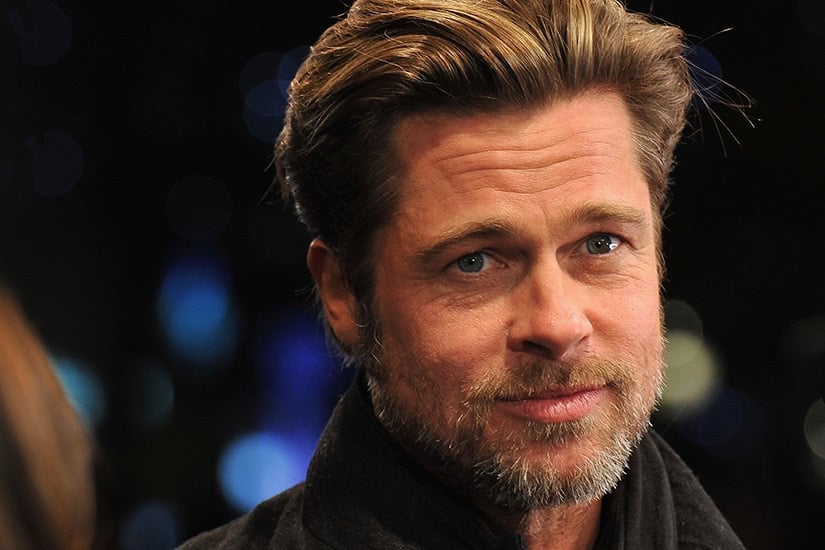
Terminology: How to explain the medium-length haircut you want to your barber?
You don’t have to study barbering to gain a basic knowledge of the industry terms. Knowing a little jargon can save frustration and miscommunications at your next barber appointment. When you have medium-length hair, you will come across different terminology than those opting for shorter cuts.
Texture
When your barber asks if you want choppy, layered, or thinned hair, make sure you know what he (or she) means by these terms.
A ‘choppy’ cut is when the barber cuts your hair unevenly, at different lengths, and a 45-degree angle. This is the go-to method of creating volume in finer hair.
‘Layered’ is when your hair is cut shorter near the top of your head, again resulting in a more voluminous appearance.
‘Thinned’ hair is a method used to tone down a heavy mass of thick hair by using thinning scissors. For those with this hair type, ‘thinning’ is a superb way of reducing heaviness while retaining length.
Arches
As you may have guessed, the ‘arches’ of your haircut denote the area above your ears. Attention to this area is totally underrated: the careful clipping of higher ‘arches’ can elongate the ears for those on the smaller side, whereas requesting ‘natural arches’ will result in tidying the area (unruly hair around the ears is never a good look).
Know your nape
The way hair around the nape of your neck is cut can create a range of differing effects.
A ‘blocked nape’ is where your hair is cut straight across in a blunt style. This works as an optical illusion to actually make your neck appear broader. Regular trims are required to maintain the shape, however.
A ‘rounded nape’ has the opposite effect by forming rounded edges as opposed to blunt right angles, this technique can make a thicker neck appear slimmer. Who knew?!
If your neck is neither too wide, too slim, but just right, a ‘tapered nape’ results in the hair graduating smoothly into a natural stoppage at the skin of your neck. This style requires less upkeep than the former two.
How much upkeep does a medium-length haircut take?
It depends on how short the sides go and how finished the top looks. Fades and undercuts need regular barber visits to stop the sides turning bushy, while the top can go longer. The crew cut, with its longer top, gives you more leeway between trims. Messier, textured styles need less from the barber and more from you, with sea-salt spray and a coin-sized amount of gel each morning. Structured cuts flip that around: more visits to the barber, less daily styling.
What is the most low-maintenance medium-length haircut?
The Ivy League is possibly the most low-maintenance of the medium cuts. It’s essentially a long buzzcut, and it can grow out a little longer than other cuts before a barber visit is needed. The crew cut is the other easy option, since its longer top gives more leeway between trims.
When does medium-length hair become long?
Past about 10 centimeters (4 inches), you’re growing into long hair. The shoulder-length looks at the end of the list sit on that line: they’re kept here because they grew out of medium cuts, and they’re where our guide to long hairstyles for men picks up.
Until then, the length is a choice you make at every visit. Keep the sides short and the top gets to do more. Let the sides grow and you’re on your way to flow. Our guide to men’s haircuts puts medium next to short, long and curly cuts so you can compare them.
Still exploring your options? Our guides to curly hairstyles and fade haircuts take the same idea further.
Products featured here are independently selected by our editors. If you buy through our retail links we may earn an affiliate commission — it never changes the price you pay, and it never decides our verdicts. Read our earnings disclaimer.