Your barber asks what we’re doing today, and you catch yourself checking the corners of your forehead in the mirror. Do you cut around them, or try to cover them up?
You’re in good company either way. By 50, about half of men have some pattern hair loss, and it shows up at the temples, at the crown, or both. Your barber has seen it plenty of times before (it’s a regular Tuesday in the chair, not a crisis).
The good news is that the cuts below work with the hairline rather than against it. They’re grouped by what you’ve got to work with, from a short crop to a widow’s peak to a full head of curls, and every look ends with the line to say to your barber.
Haircuts for a receding hairline
Here are 24 haircuts that work with a receding hairline.
Short haircuts for a receding hairline
Buzz cut
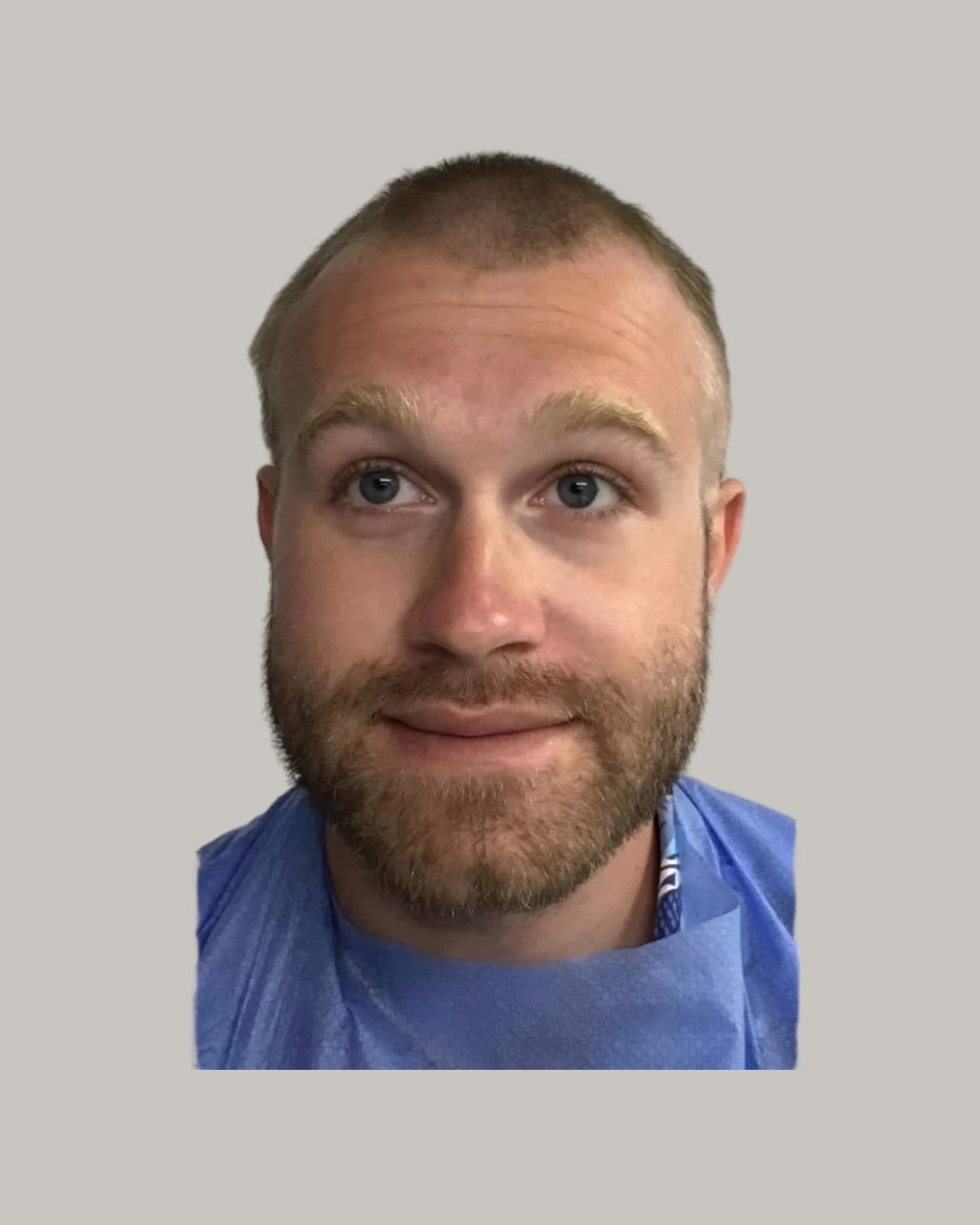
One length all over takes the contrast away. At a number 1, it’s hard to tell where your hair is and where it used to be, and there’s nothing to style in the morning. Our buzz cut guide has 39 more, from no guard to a number 8.
What to ask for A number 1 all over, a natural line-up at the front rather than a hard one, and a tapered neckline.
Crew cut
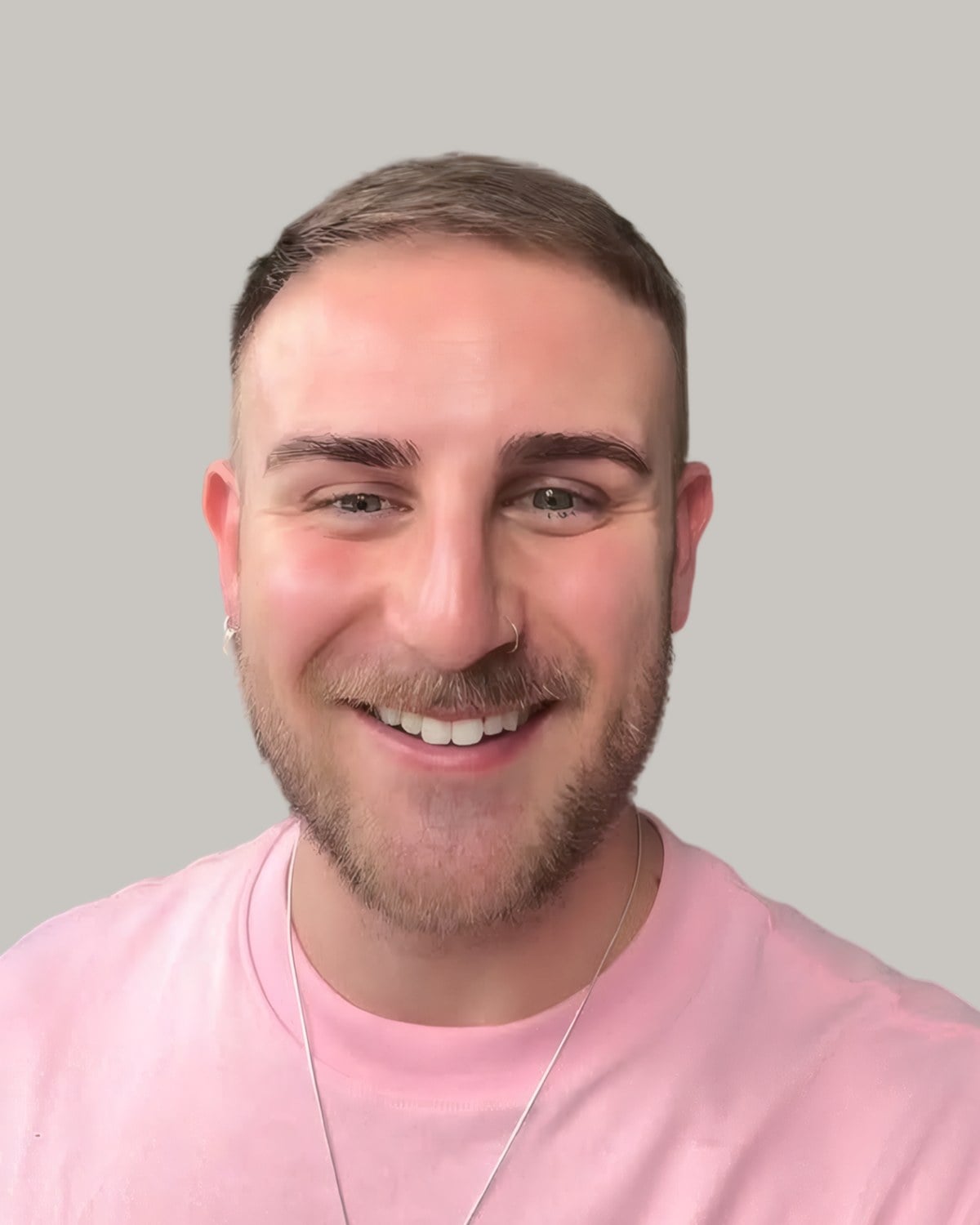
A crew cut gets gradually shorter toward the crown and leaves the longest hair at the front. That longer front sits right where the temples have thinned. It softens the hairline. There are 25 more versions in our crew cut guide.
What to ask for Crew cut, about an inch at the front going shorter toward the crown, a number 2 taper on the sides, and texture on top instead of a hard part.
Ivy League cut
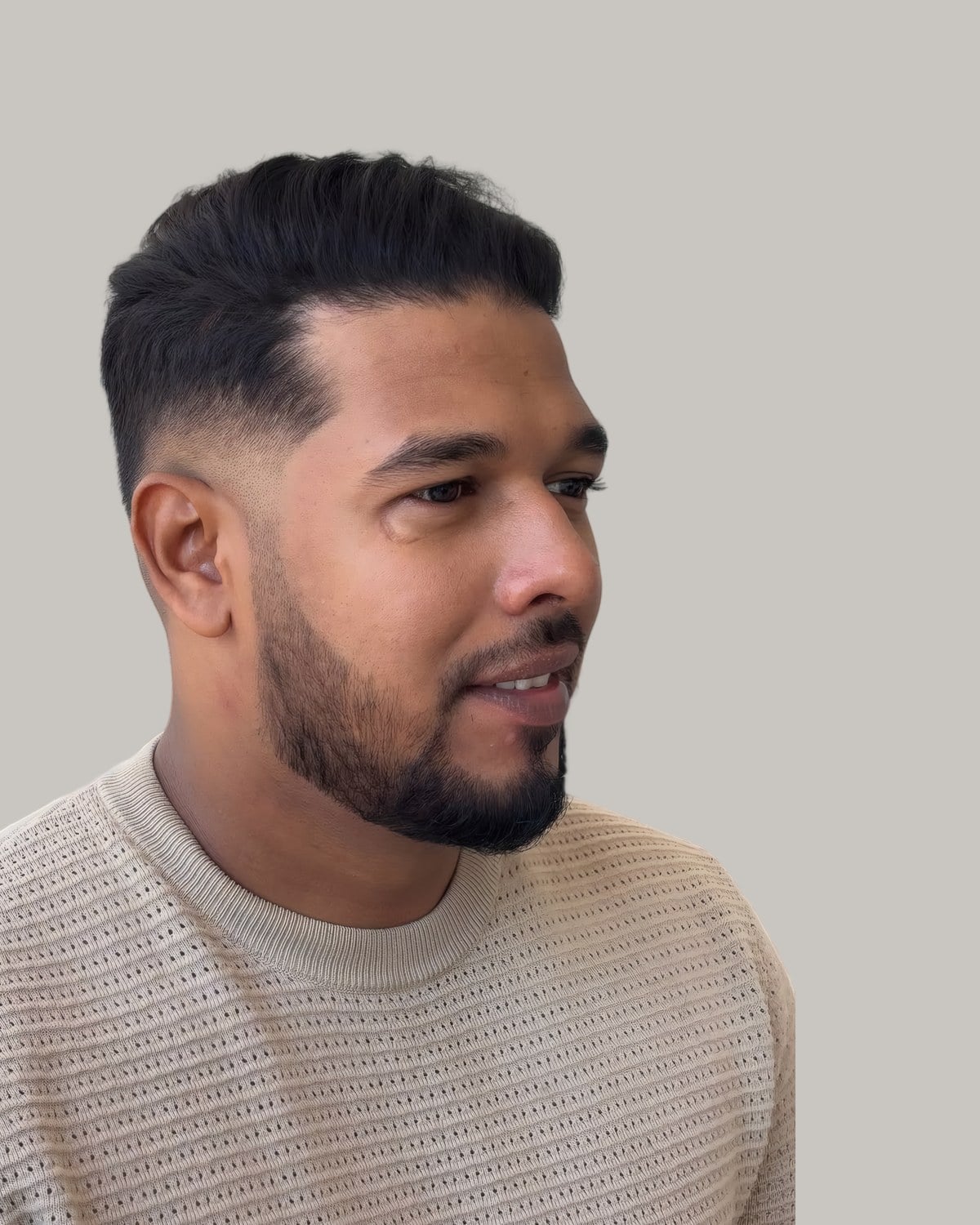
The Ivy League keeps the sides short and the top just long enough to sweep to one side. Swept across, the longer front covers one temple and makes the shape look intentional. It’s a good cut for grey hair, and it goes with a blazer or a T-shirt.
What to ask for Ivy League, a number 2 on the sides tapered at the neck, two inches at the front, and leave enough to sweep to the side with a soft part.
Textured crop
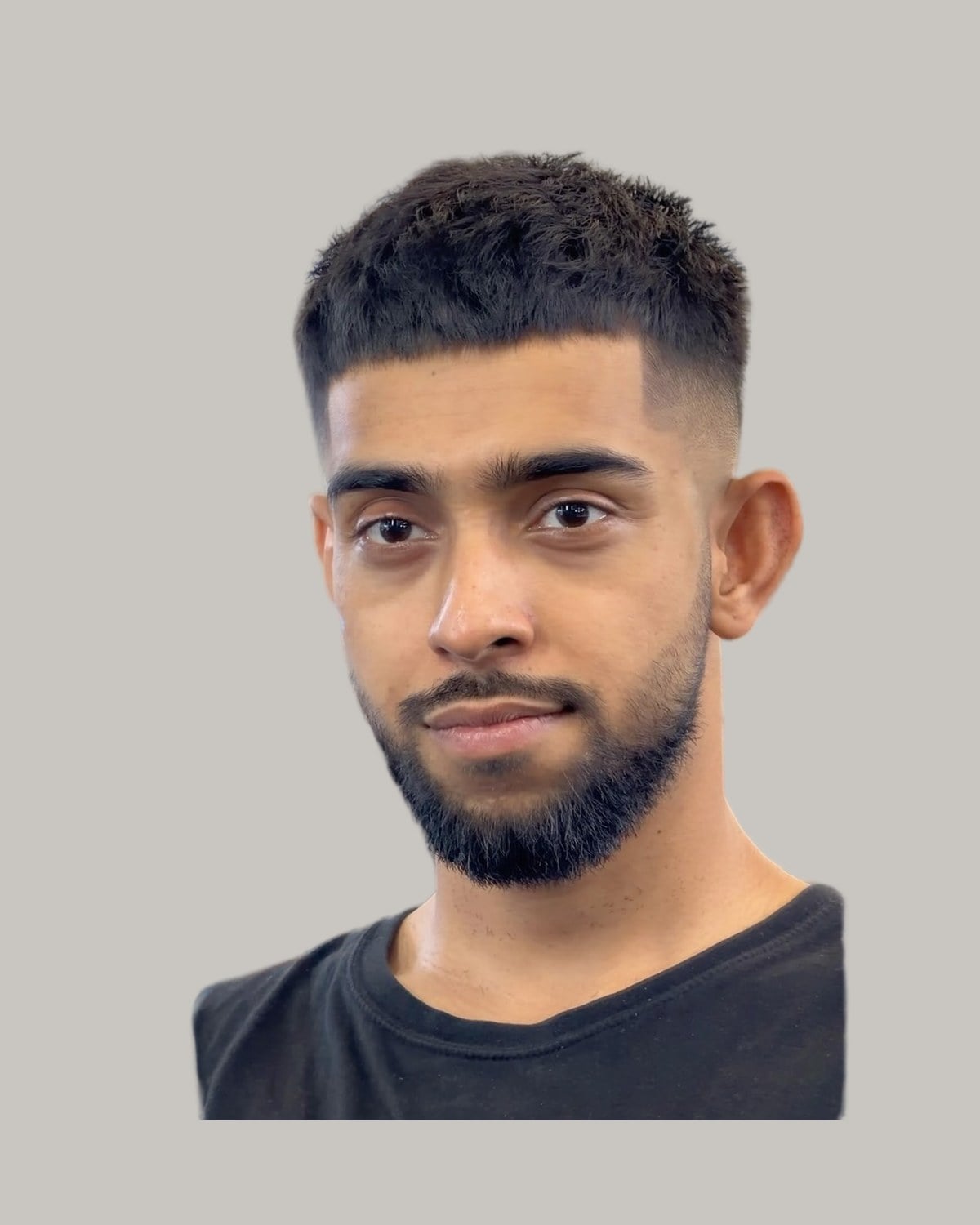
A choppy top and a short fringe push the eye forward and away from the temples. Point cutting gives the top enough texture to look thicker than it is, and a skin fade keeps the sides tight. Our textured crop guide has 28 more.
What to ask for Textured crop, about an inch and a half on top, point cut for texture, a short fringe brushed forward, and a mid skin fade.
French crop
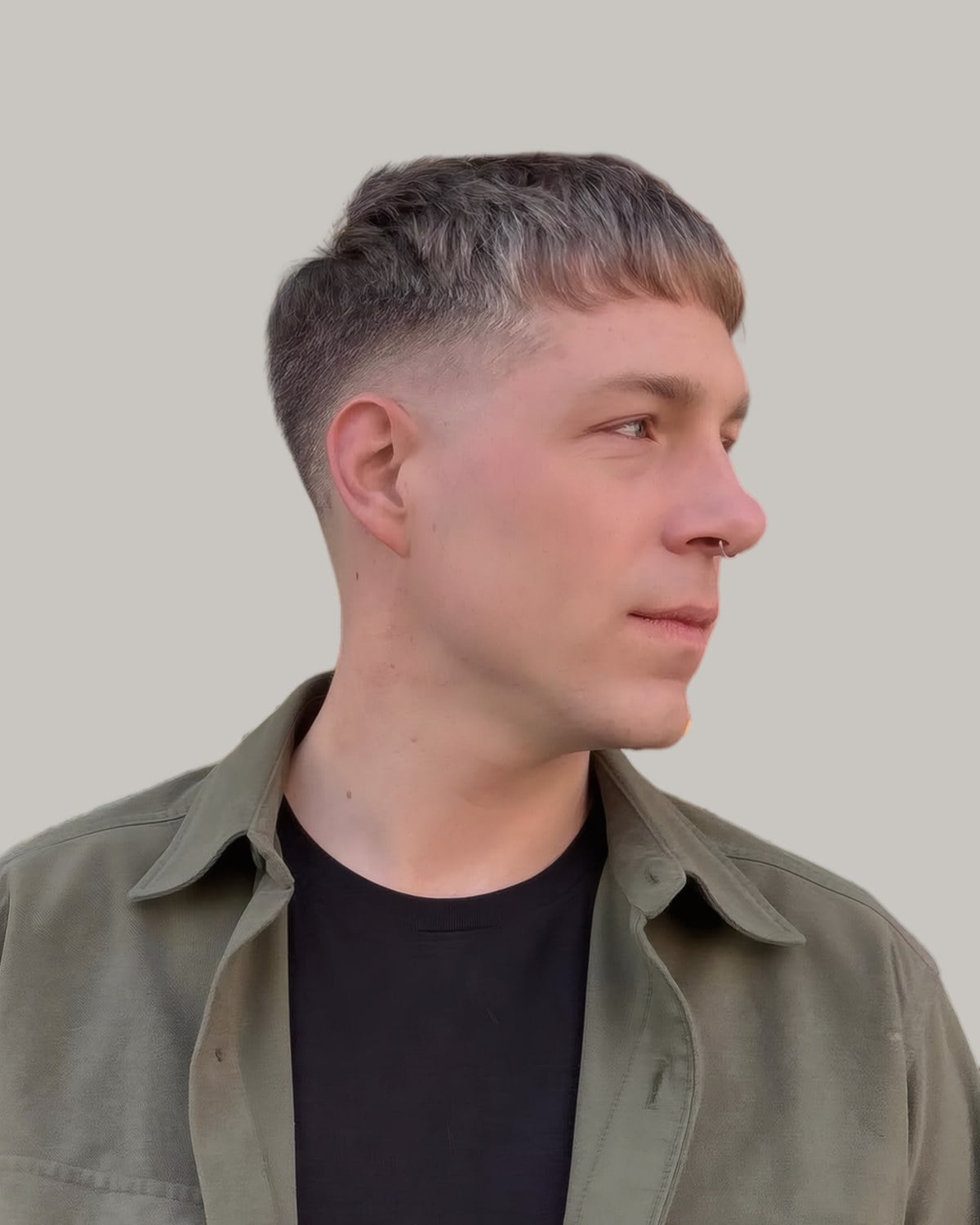
A French crop’s forward fringe softens the hairline. The fringe is cut straight and short, so it sits just over the recession instead of hanging into the eyes. A little matte paste worked in with your fingers is all the styling it needs.
What to ask for French crop, a blunt fringe about an inch long sitting just above the brow line, short textured top, and a low skin fade.
Caesar cut
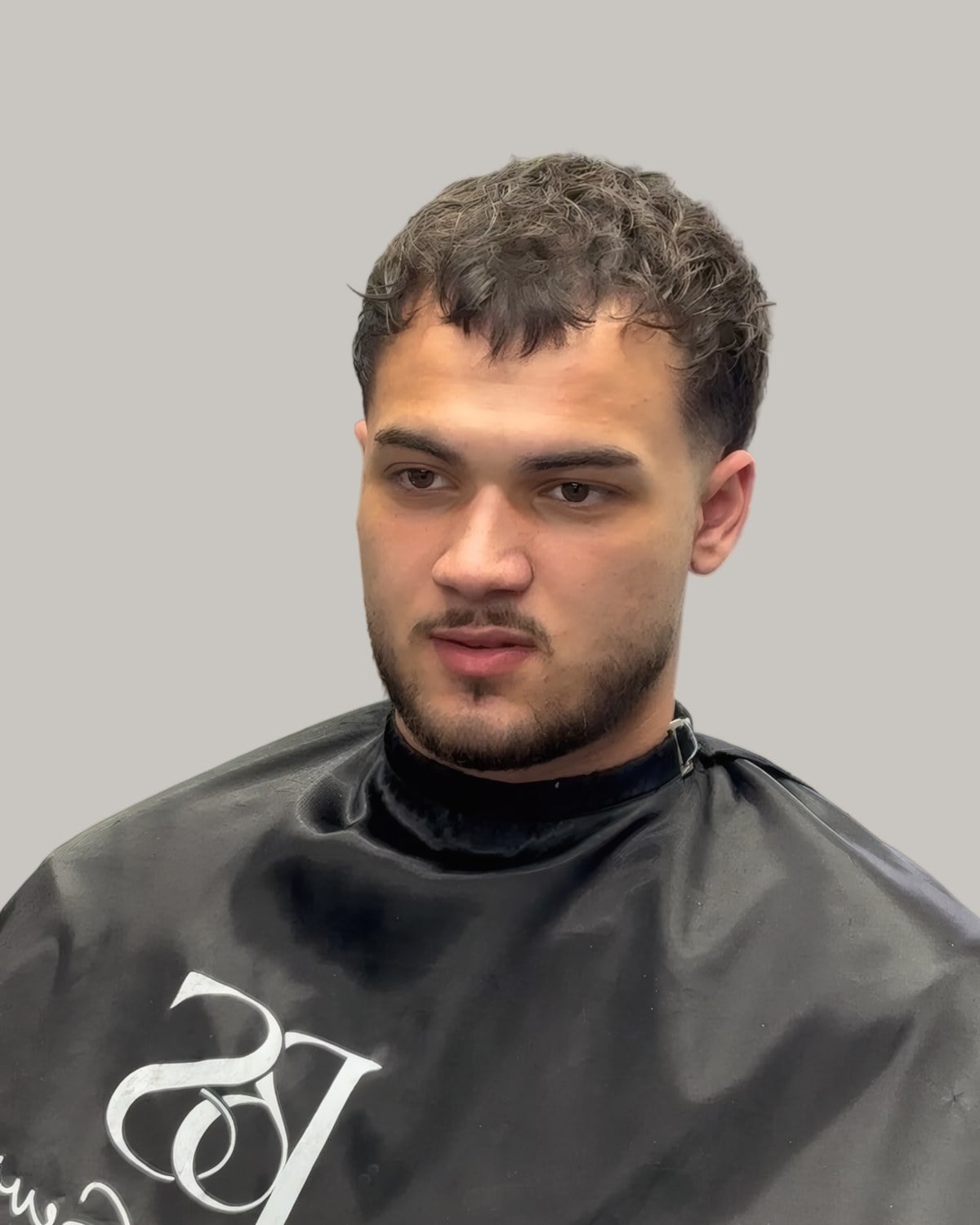
The Caesar is short and even all over, with a straight fringe brushed forward to cover the temples. It grows out evenly, so a missed appointment won’t show for a while (your barber may notice, but nobody else will).
What to ask for Caesar cut, a number 3 on top brushed forward, a straight fringe line, number 1 on the sides, and keep it natural at the temples.
Fade haircuts for a receding hairline
Low taper fade
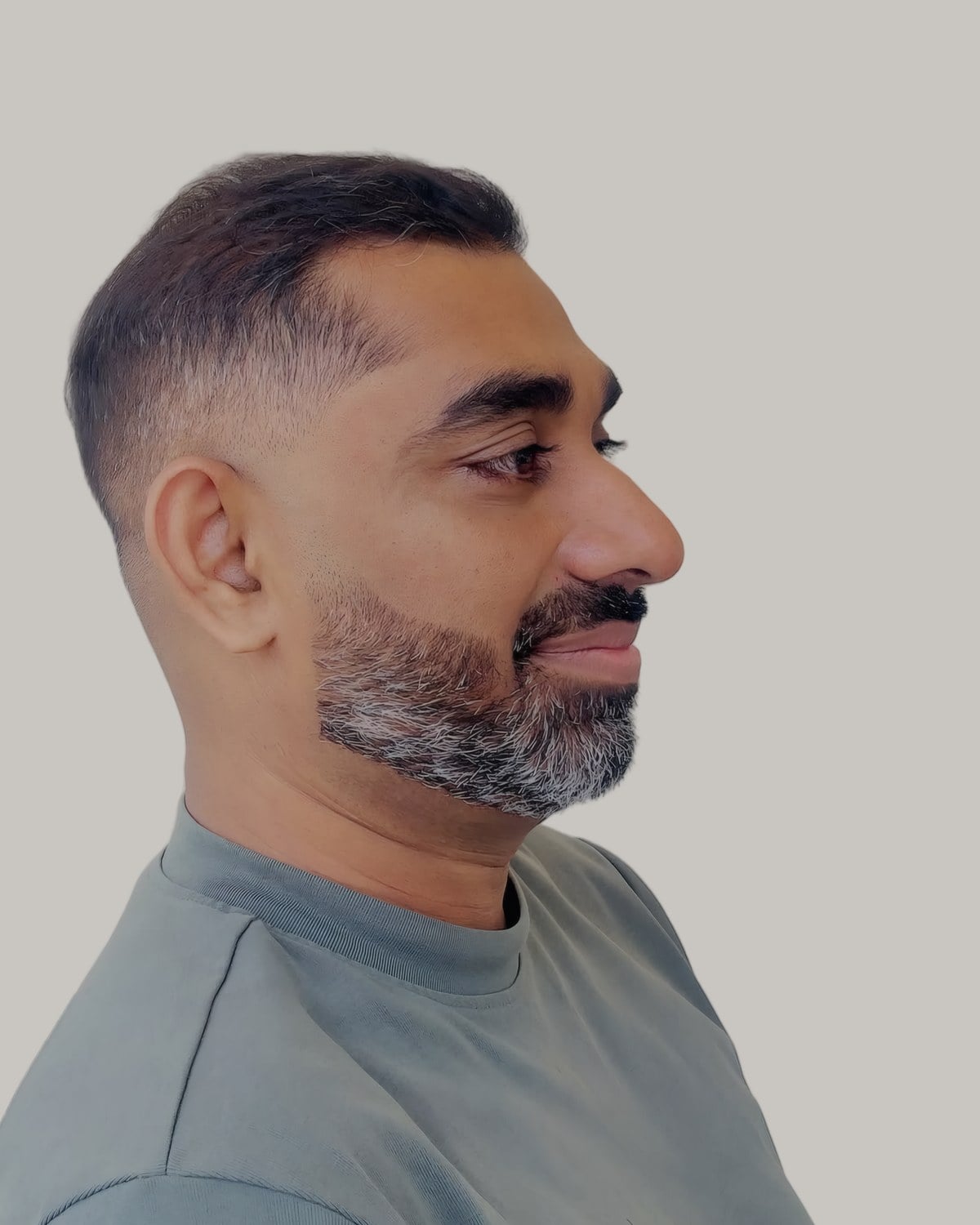
A taper fade’s short, clean sides draw focus away from thinning areas and make the top look fuller. A low taper keeps more hair at the sides than a fade does. That helps if your temples are already open. Our taper fade guide has 53 tapers, from a low taper to a skin fade.
What to ask for Low taper starting just above the ear, two inches on top swept back, and a natural edge at the front.
Skin fade
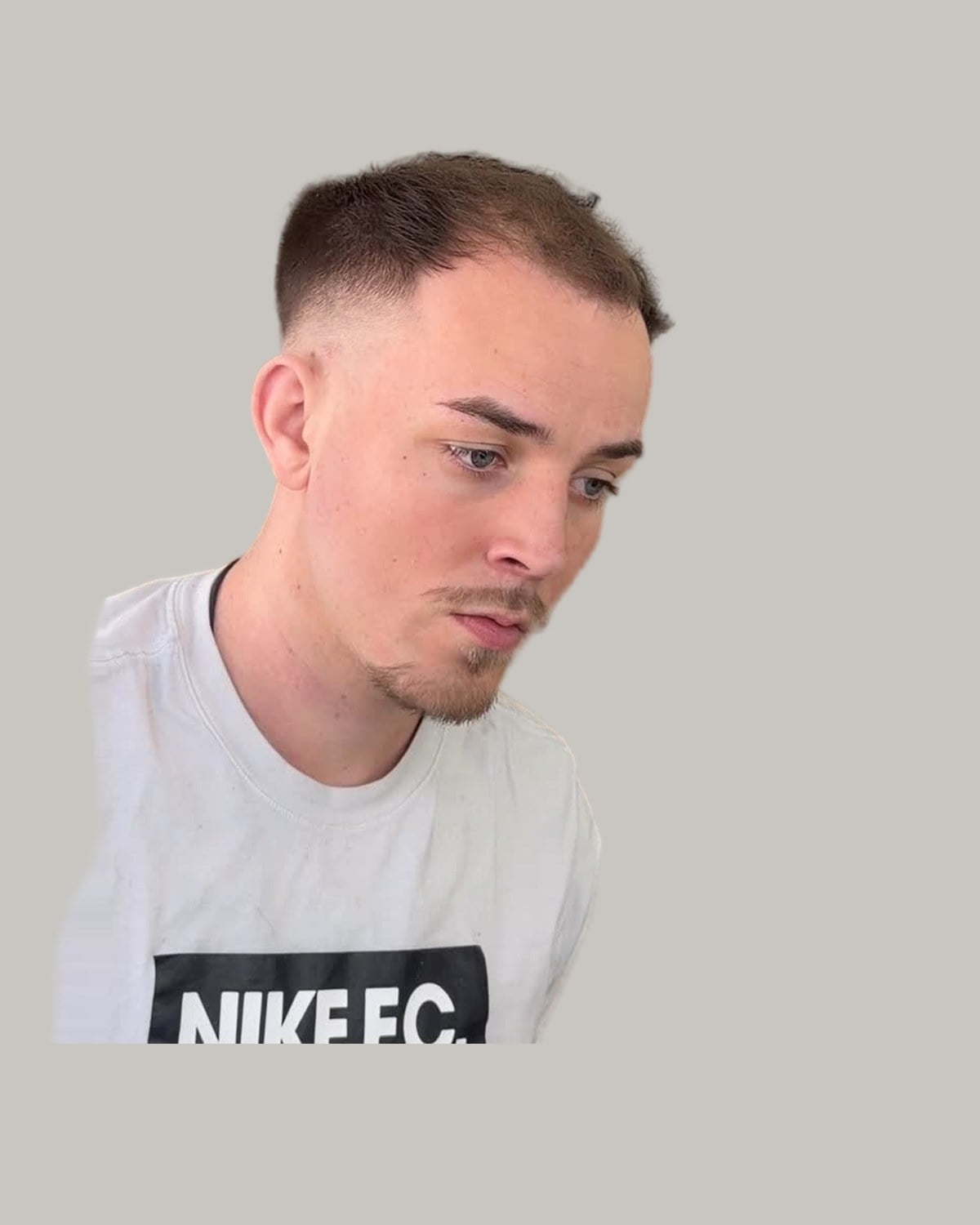
Going to skin on the sides makes the top look denser by comparison. Push the top back and up rather than forward, and the fade carries the eye up the side of the head. The fade needs the barber every two to three weeks to stay crisp, so it’s a standing appointment. More heights are in our guide to fade haircuts.
What to ask for Mid skin fade, about two inches on top brushed back with some lift, and blend the beard into the fade at the sideburns.
Mid fade with a textured top
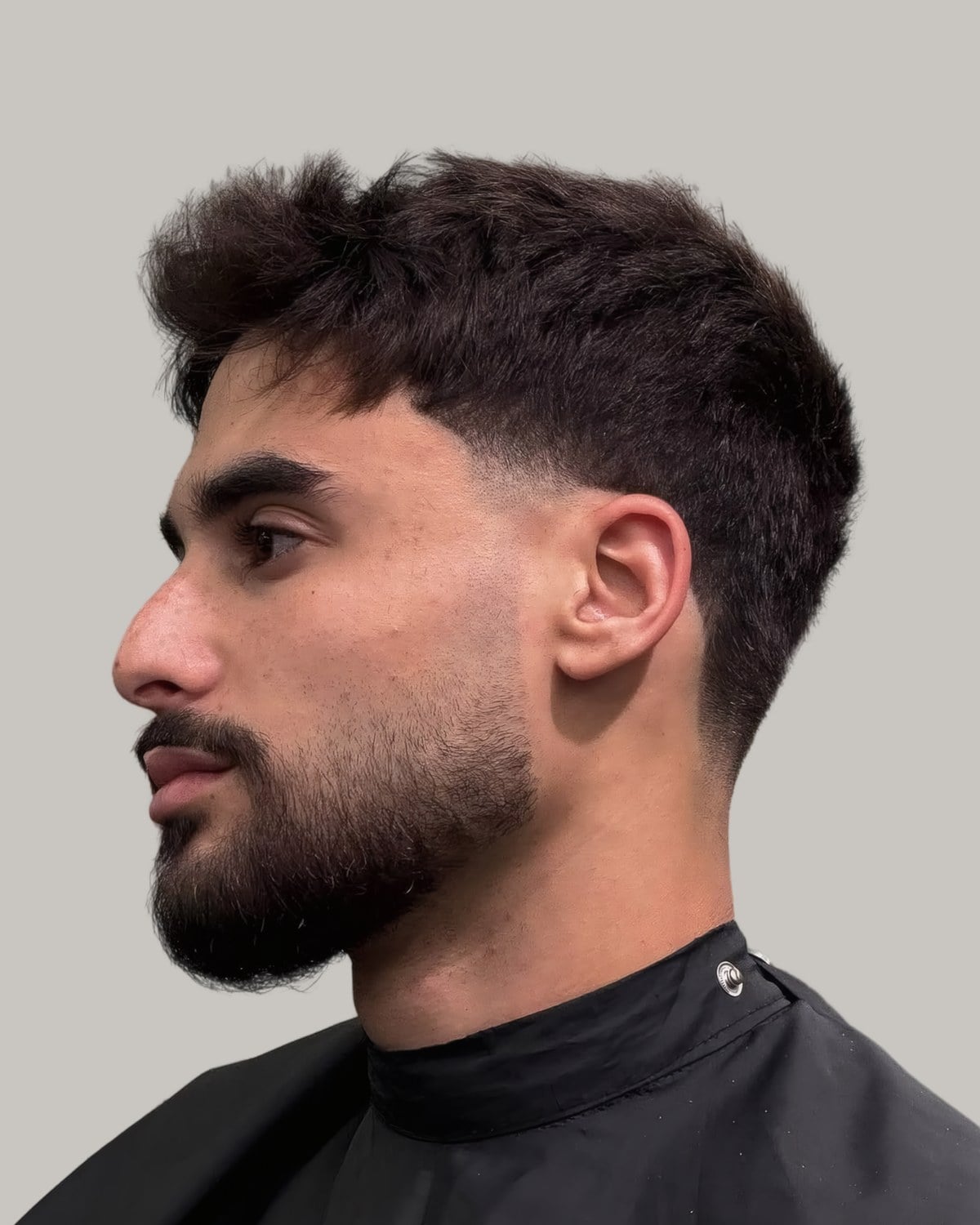
Height on top and tight sides change the proportions of the head, so the corners of the hairline matter less. Rough the top up with clay rather than combing it flat. A short, full beard balances the look.
What to ask for Mid fade, two inches of texture on top, point cut and pushed up and slightly forward, and the beard faded into the sides.
High and tight
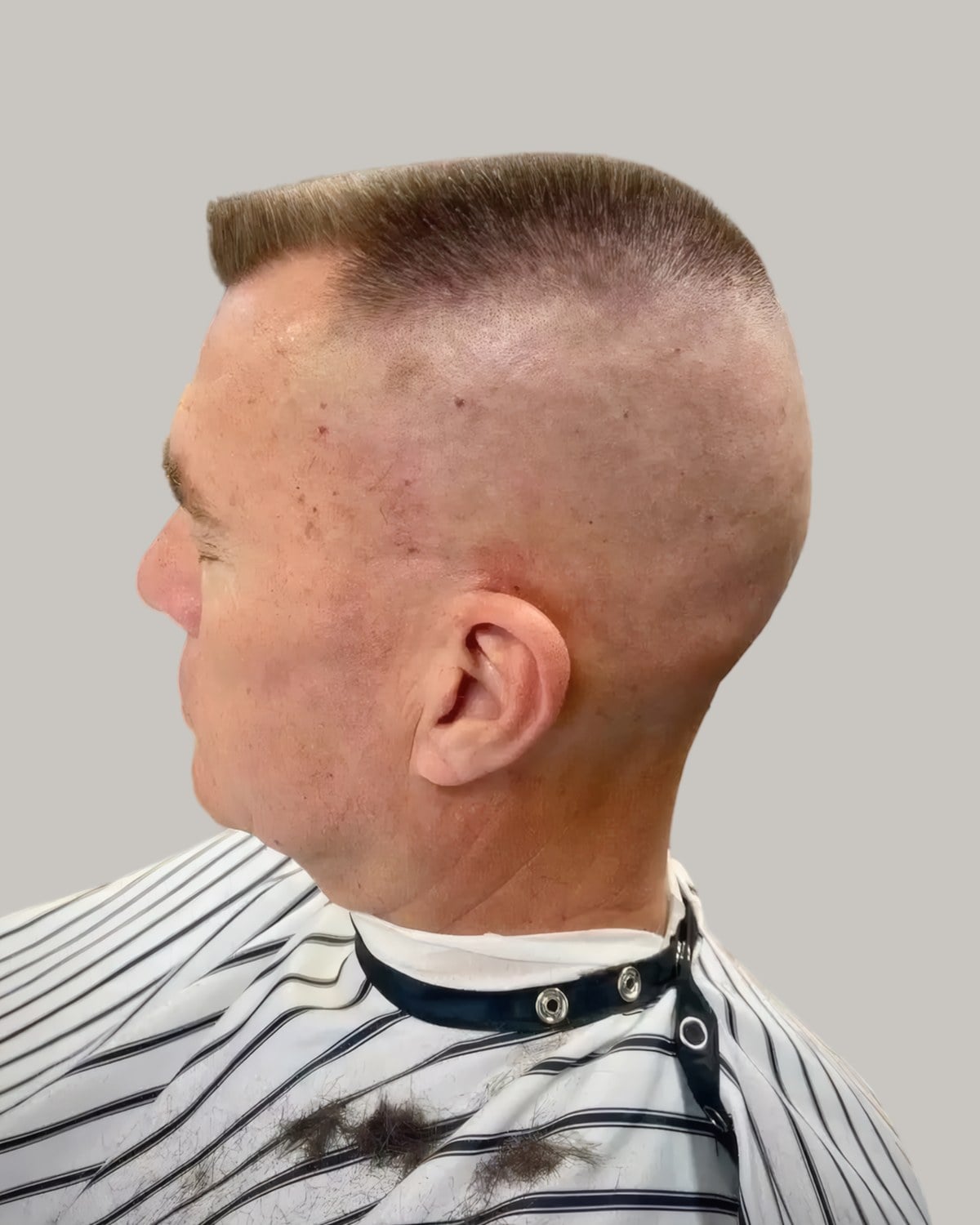
Almost everything short, with only a small patch on top. If the recession is well along, this cut stops pretending and looks sharp doing it. There’s nothing to style, and the whole thing dries in the time it takes to find your keys.
What to ask for High and tight, a number 1 or skin on the sides taken up high, a number 3 on top, and a clean neckline.
Haircuts for a widow’s peak
Slick back
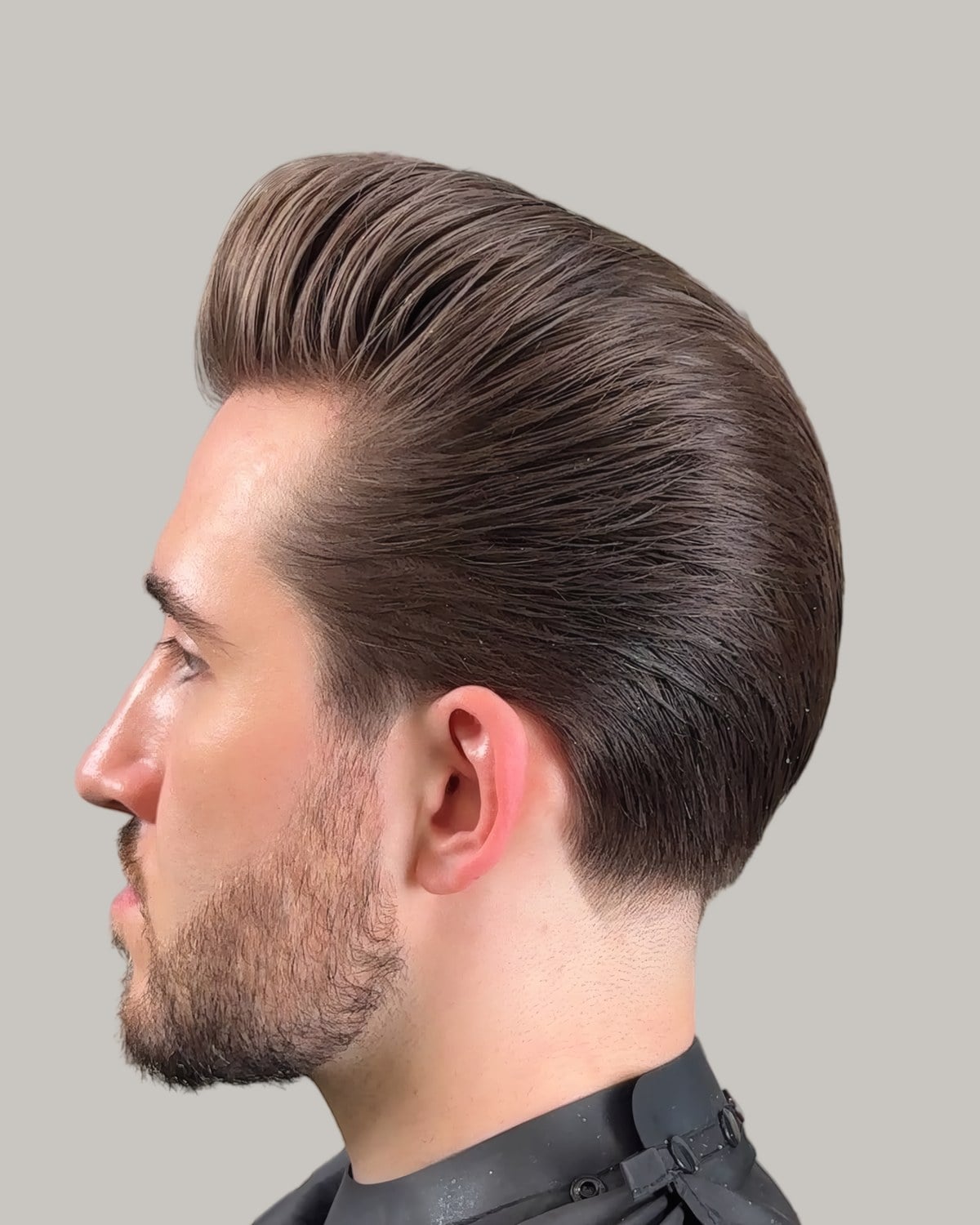
A widow’s peak is a V-shaped point in the hairline in the center of the forehead. Slick the hair back and the peak becomes the center of the look rather than something to cover. A push-back style with close-cropped sides works with a deeper hairline too.
What to ask for Slick back, four to five inches on top, the sides faded or tapered close, and a pomade with some shine.
Side-swept cut
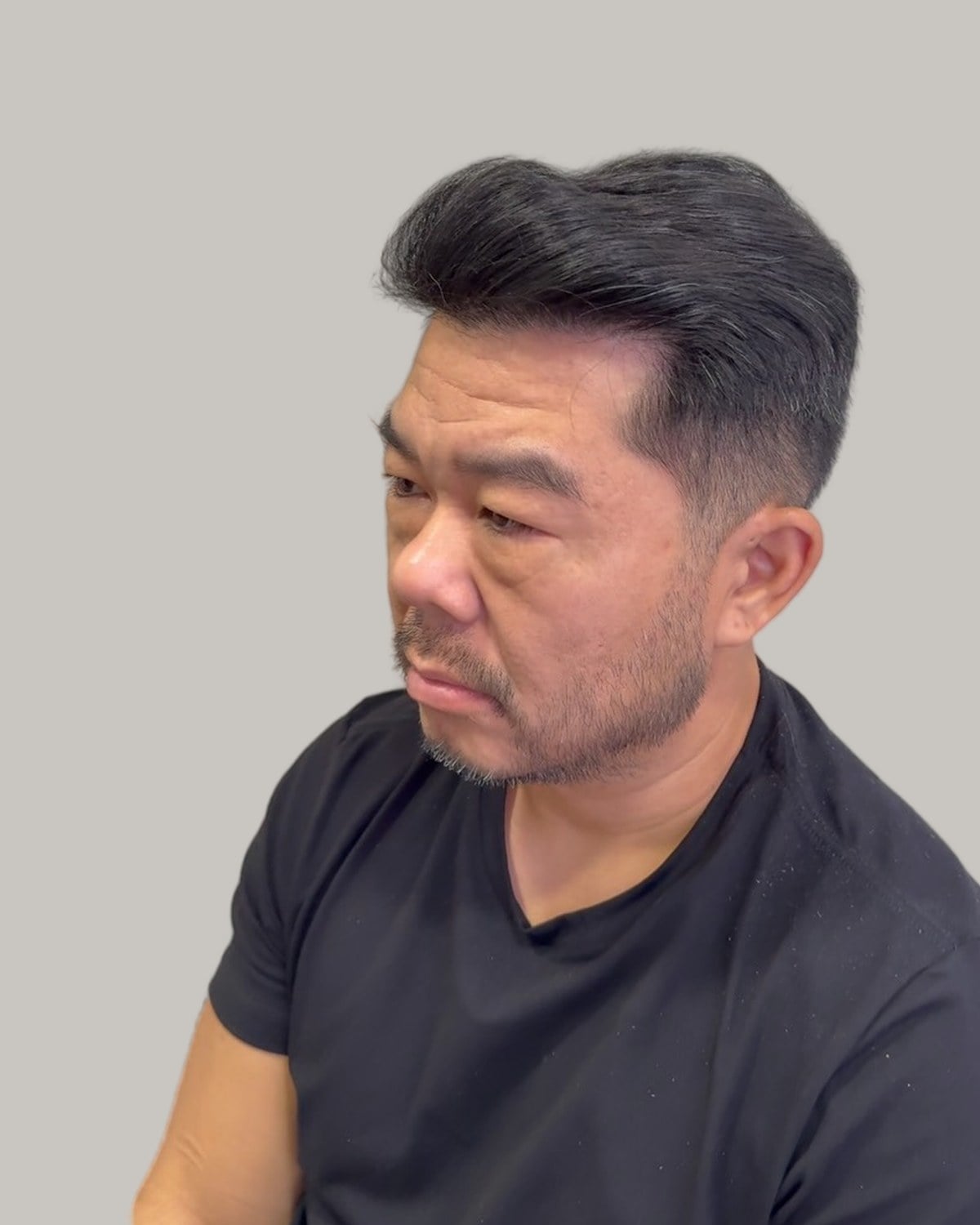
Sweep the top across and it covers one temple. From the front, the hairline looks more even. Leave enough length at the front to fall over the corner. It’s a relaxed look that works at medium length or a little shorter.
What to ask for Side-swept cut, three inches at the front going shorter toward the crown, the sides tapered, and leave the front long enough to sweep over the temple.
Short quiff
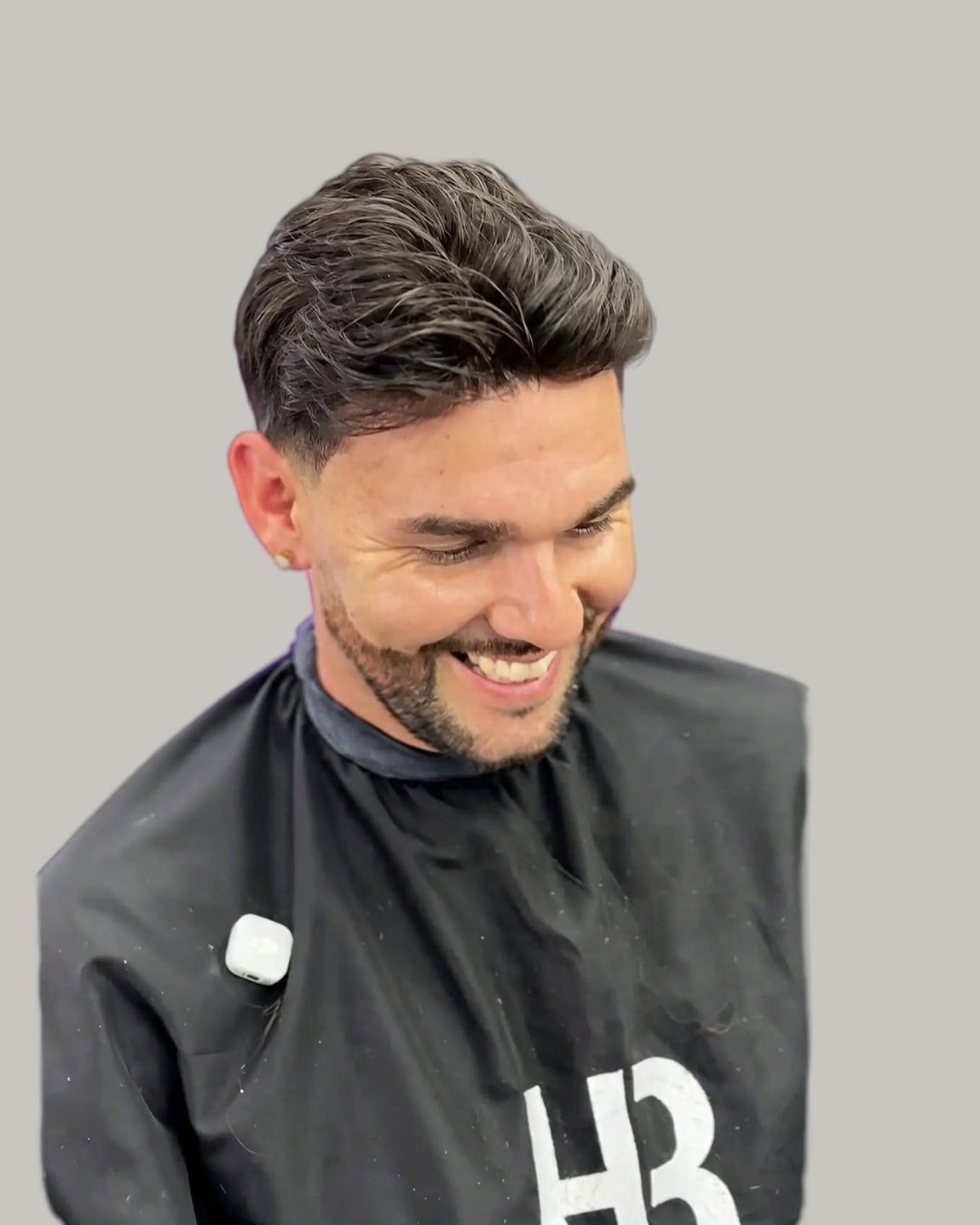
A quiff lifts the front to draw the eye upward and away from thin areas. Keep it short and textured rather than tall and glossy. A blow-dryer and a little clay do the lifting.
What to ask for Short quiff, two to three inches at the front, shorter toward the crown, a low fade on the sides, and texture through the top.
Messy fringe
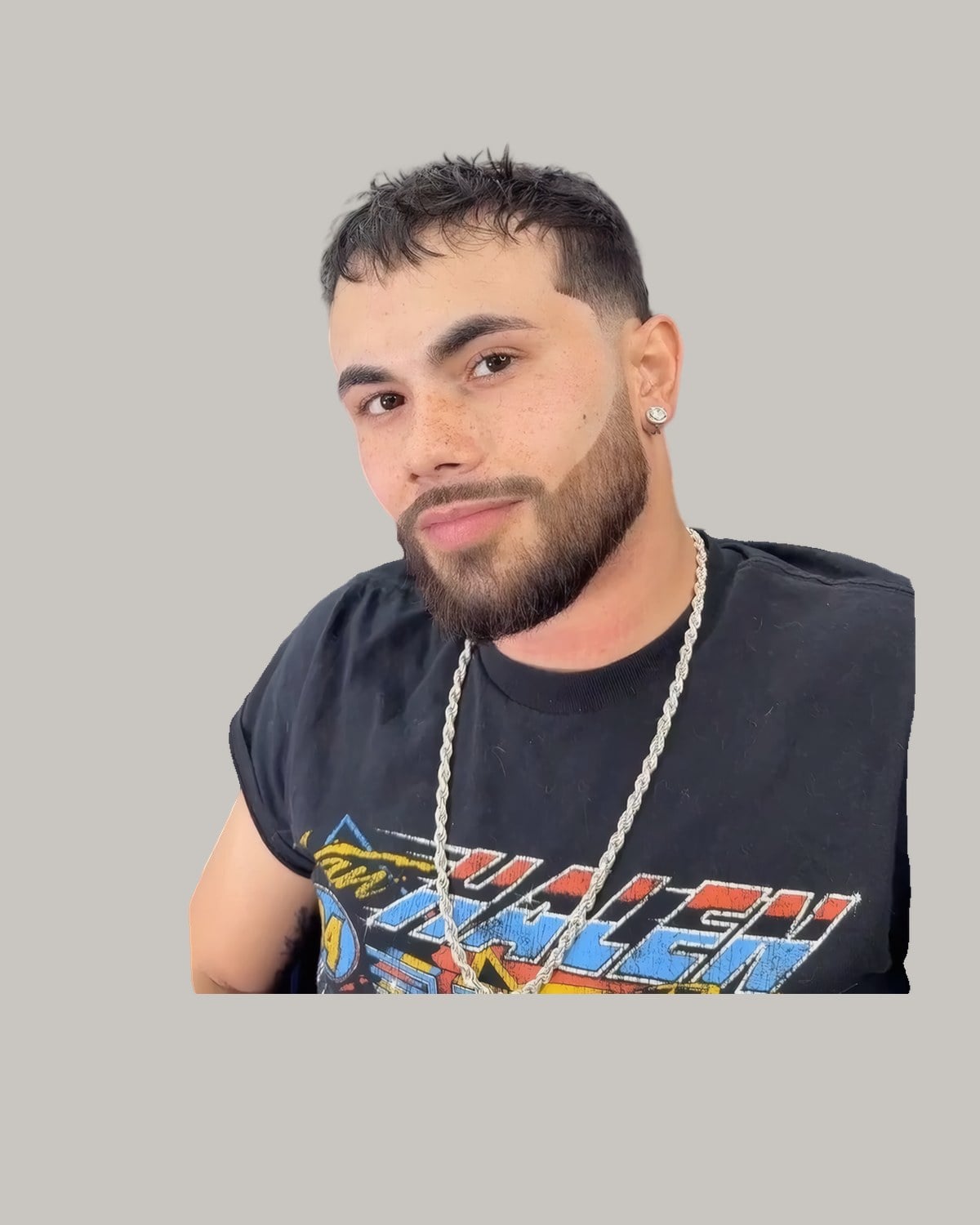
A loose fringe falling forward breaks up the line of the hairline. It looks better slightly undone, so it suits anyone who’d rather not spend time in front of the mirror. Let it air dry with a little sea salt spray.
What to ask for Messy fringe, two inches on top cut with texture, brought forward to sit just above the brow, and a low taper on the sides.
Textured fringe brushed forward
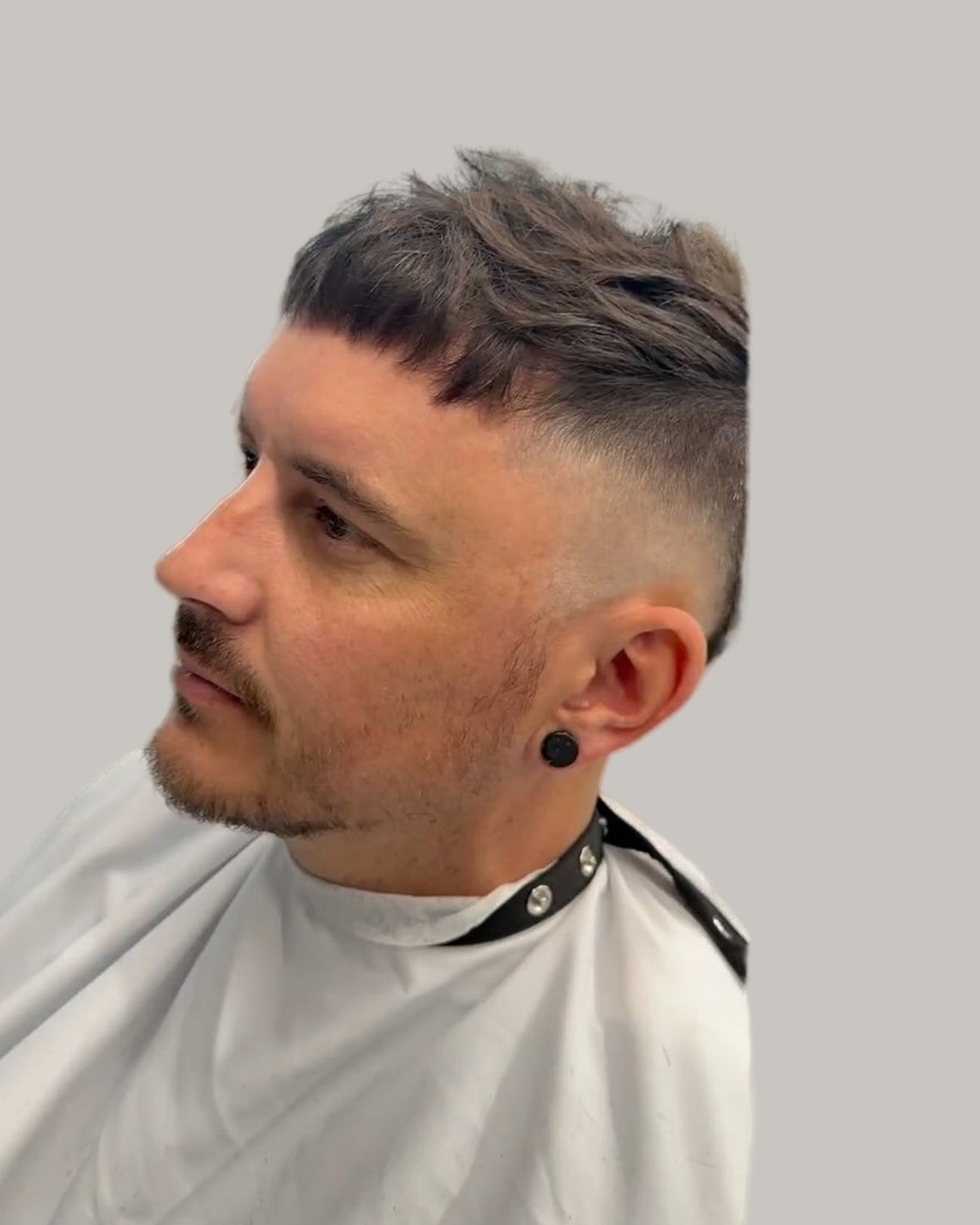
A short, piecey fringe covers the corners without looking like it’s covering anything. Keep it short if the recession is deep, because a long fringe over a very high hairline can draw the eye instead. Our textured fringe guide has 25 more.
What to ask for Textured fringe, about an inch and a half at the front, point cut, brushed forward, and a mid fade.
Medium and long hair with a receding hairline
Medium length swept back
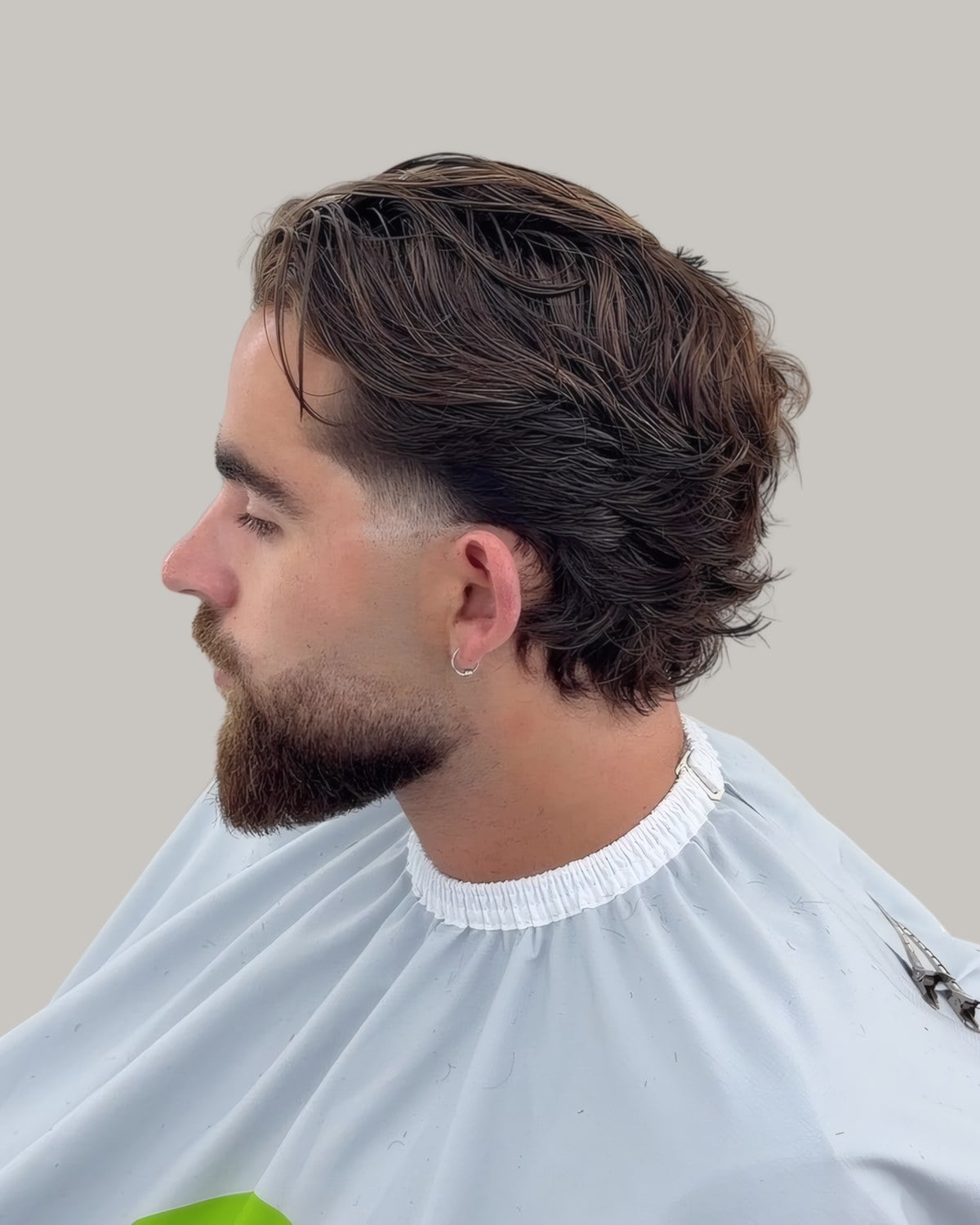
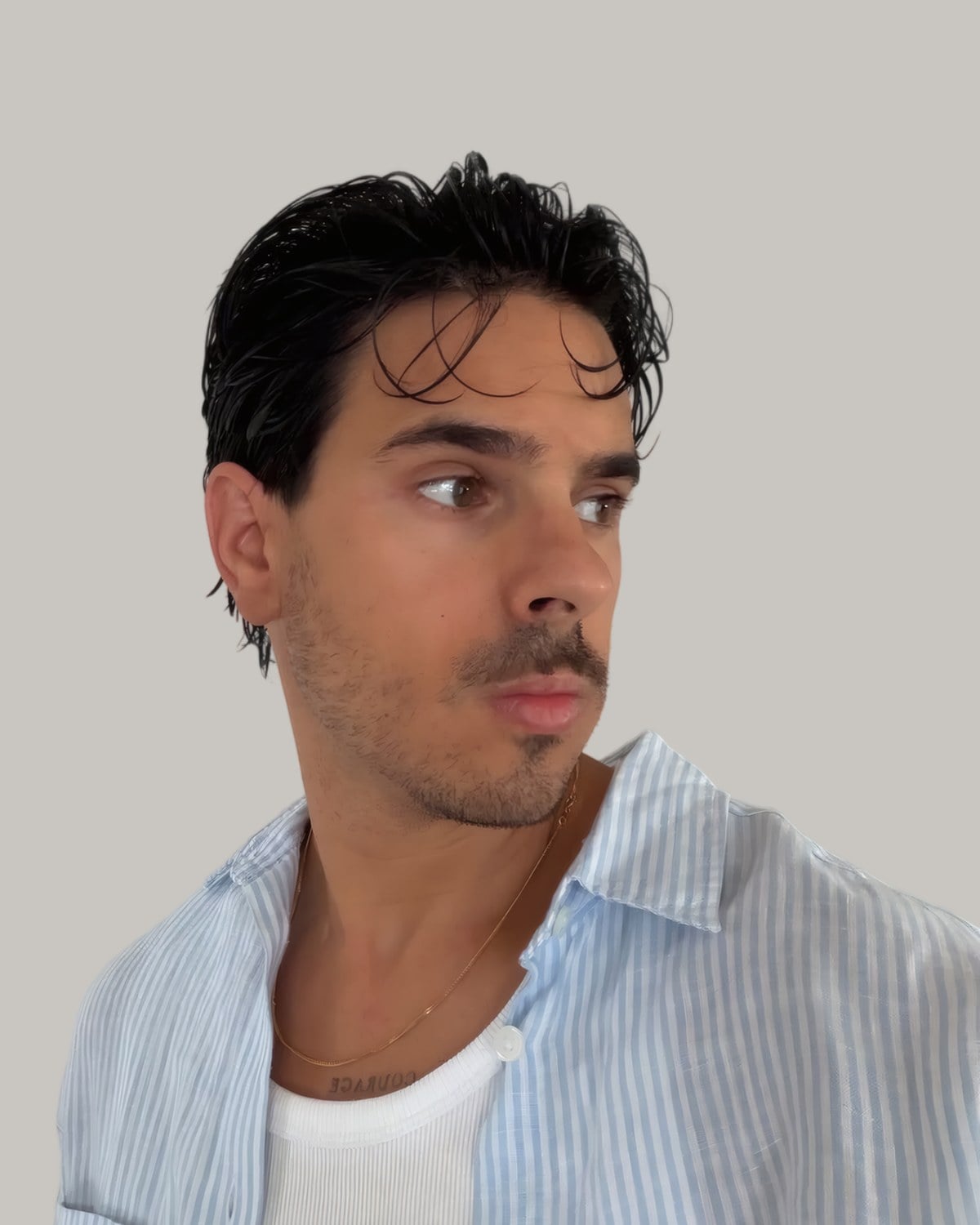
Swept back at medium length, the hair moves away from the temples rather than drawing attention to them. A beard and some texture keep it from looking too polished. Our guide to medium-length haircuts has more lengths to try.
What to ask for Medium length, four inches on top swept back, the sides taken in with scissors rather than clippers, and texture through the ends.
Wavy medium length

Waves give medium hair its own volume. The top looks fuller than straight hair of the same density would. Let the waves do their thing with a little cream. The hairline stays visible, and the cut doesn’t fuss about it.
What to ask for Medium length with layers to keep the waves light, three to four inches on top, and the sides tidied around the ears.
Mullet
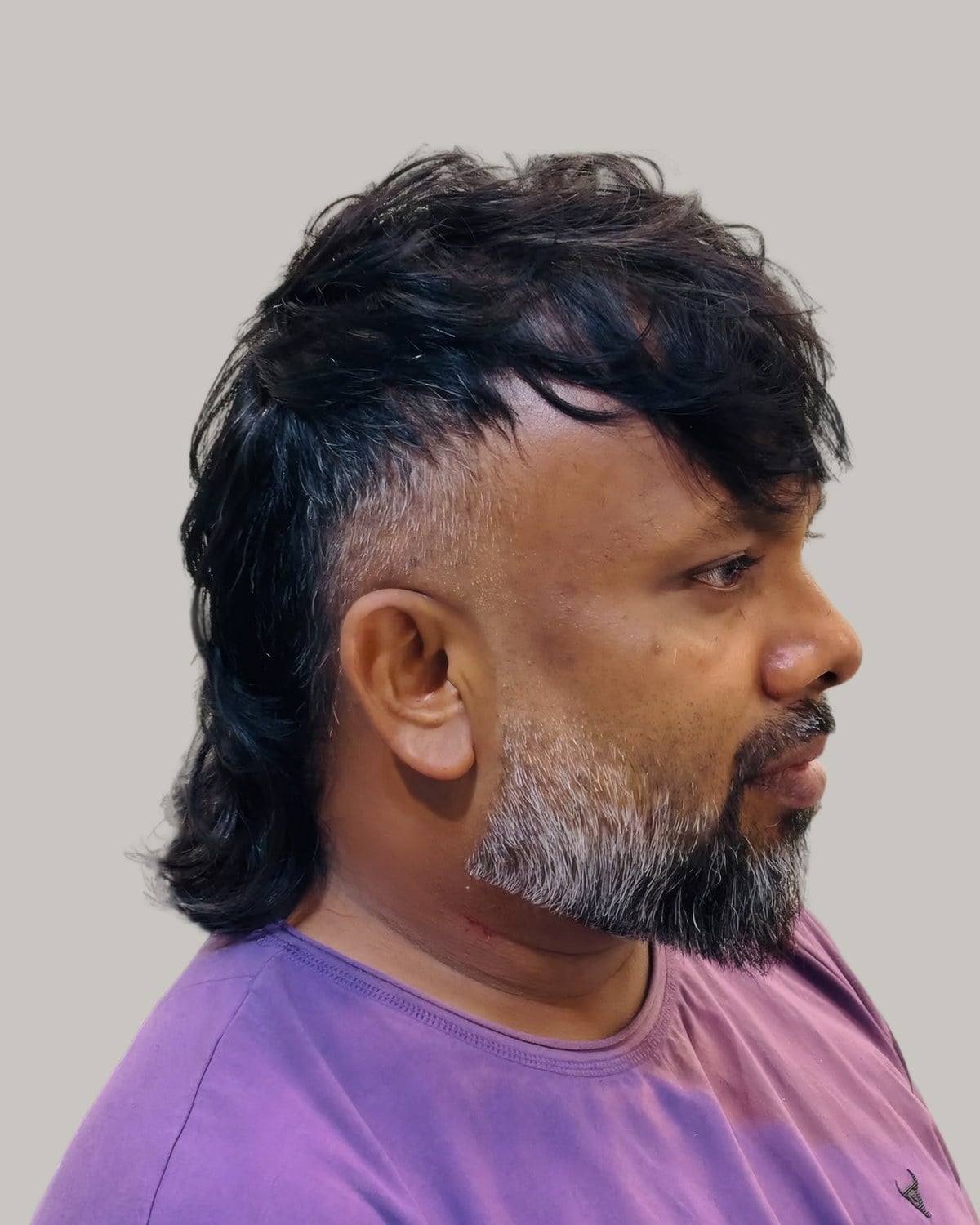
Short at the front and sides, long at the back, so the length goes where the hair is thickest. The mullet doesn’t depend on a strong hairline, and a receding one can make it look more deliberate. There’s more in our modern mullet guide.
What to ask for Modern mullet, short and textured on top, a taper or burst fade at the sides, and keep three to four inches at the back.
Long hair swept back
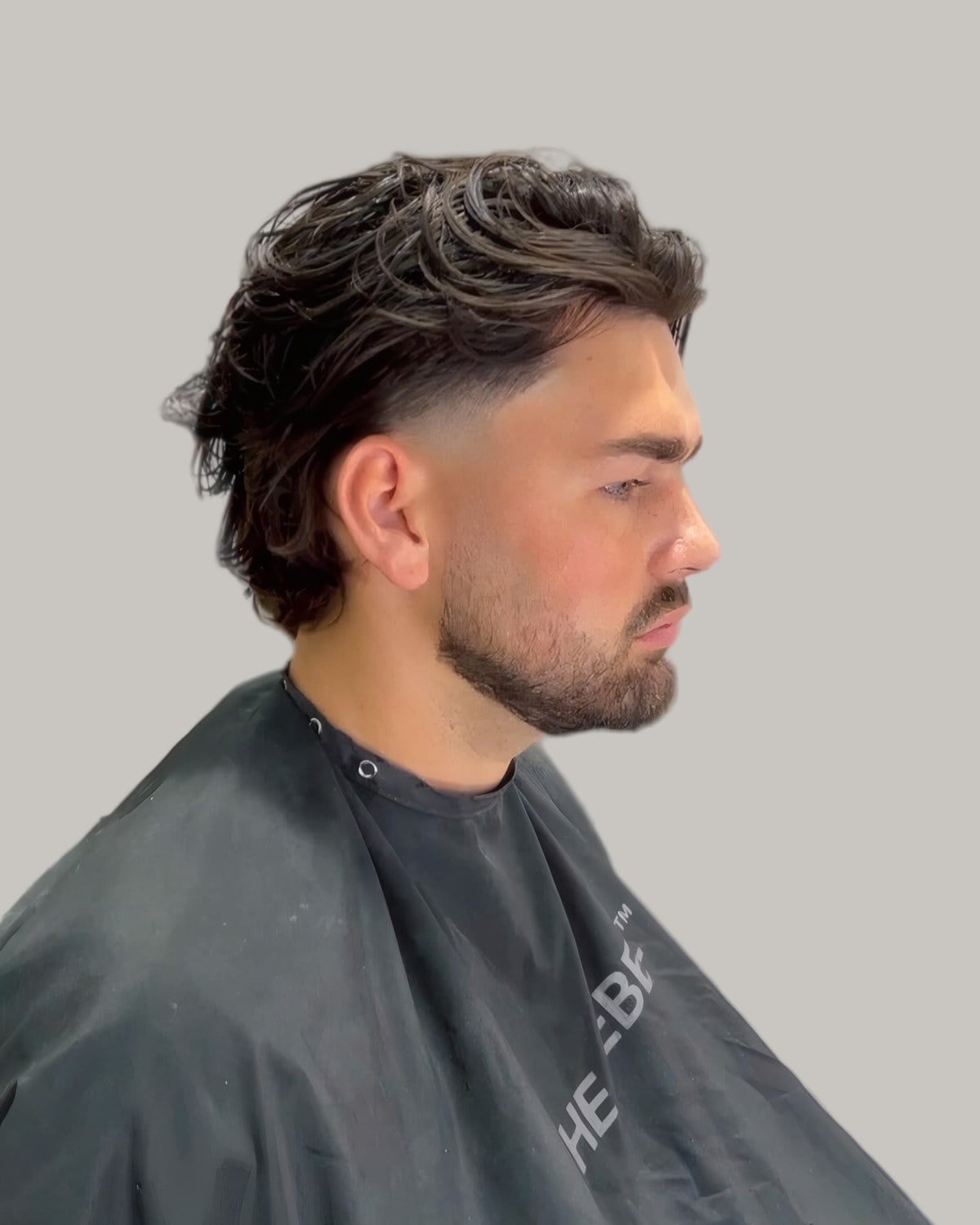
Long hair can work with a receding hairline as long as you stop trying to cover the temples with it. Sweep it straight back to the collar and let the length sit behind the ears, with a taper keeping the neck tidy. Our long hairstyles guide has more ideas.
What to ask for Grow it to the collar, layers through the length so it sweeps back, a low taper at the neck, and a matte cream to set it.
Curly hair with a receding hairline
Curly fringe
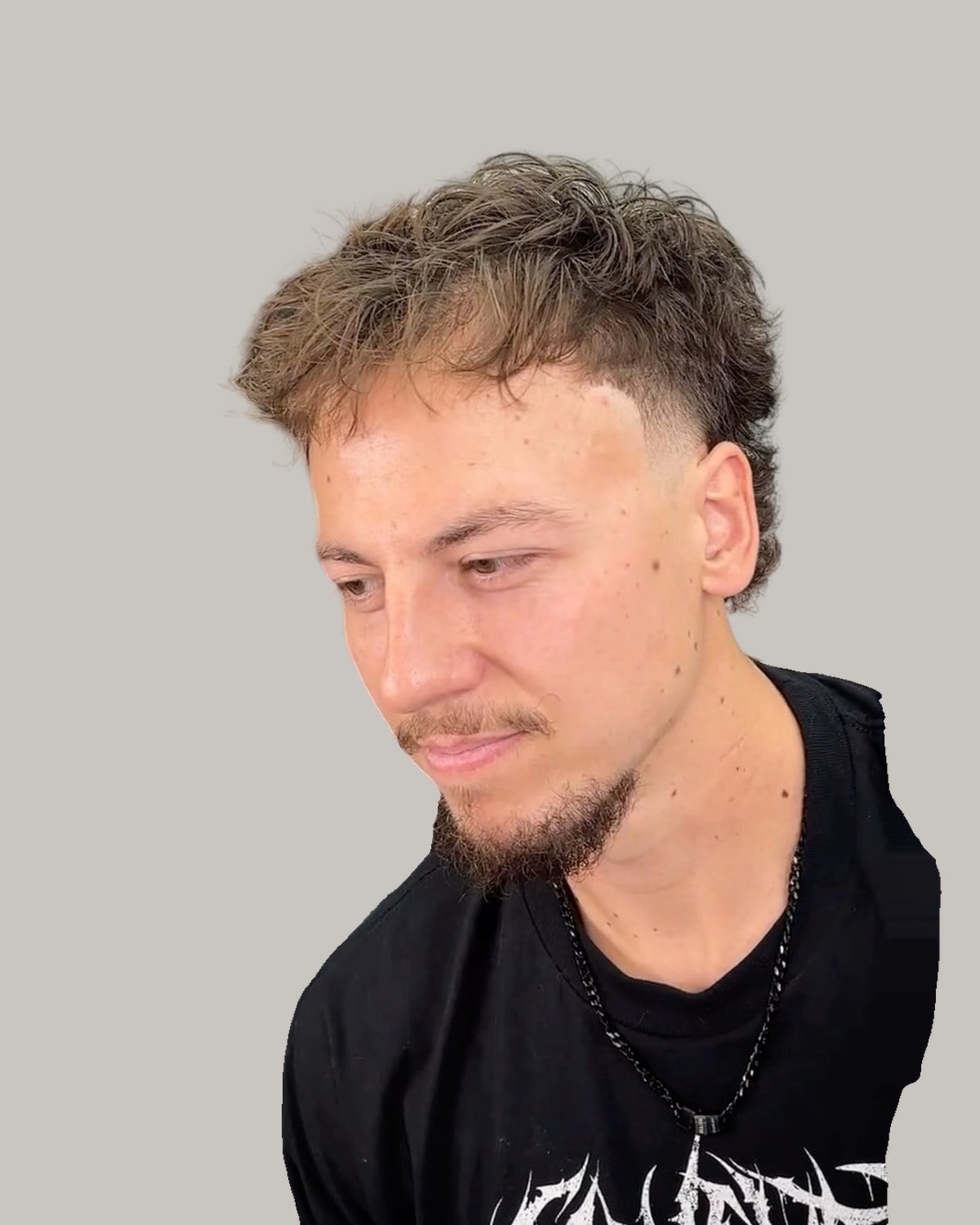
Curls bring their own volume, so a curly fringe covers more of the corners than straight hair can. A taper keeps the shape round rather than wide. Our curly hairstyles guide has more looks.
What to ask for Curly fringe, two inches of curl on top cut dry, brought forward, and a low taper on the sides.
Long curly hair with a beard
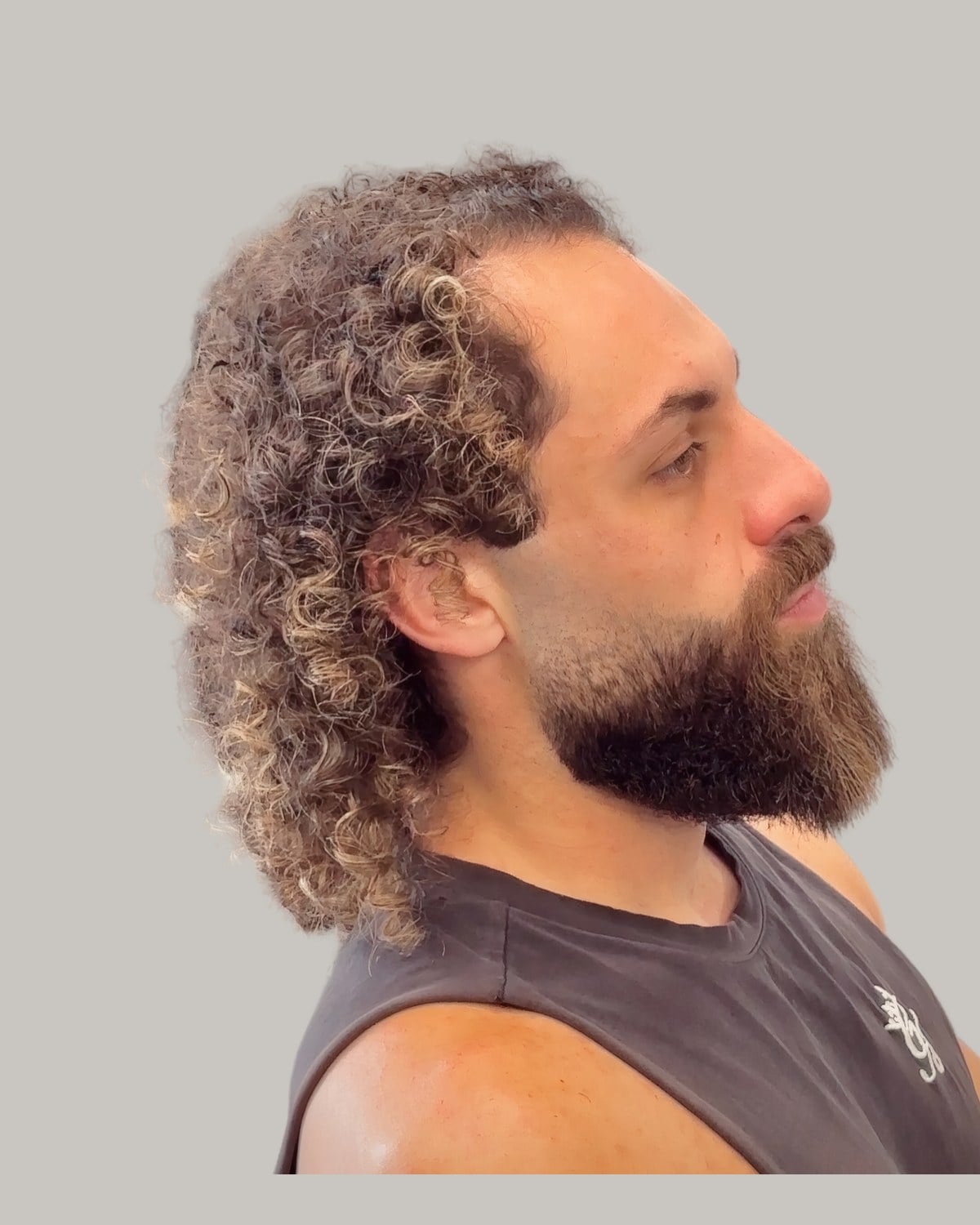
Long curls and a full beard pull the weight of the look away from the hairline. Keep the curls defined with a curl cream and leave them alone once they’re in. The beard frames the face the way the front used to.
What to ask for Long curly cut with light layers, cut dry, the ends trimmed, and the beard shaped to match the length of the curls.
Soft line-up with a beard
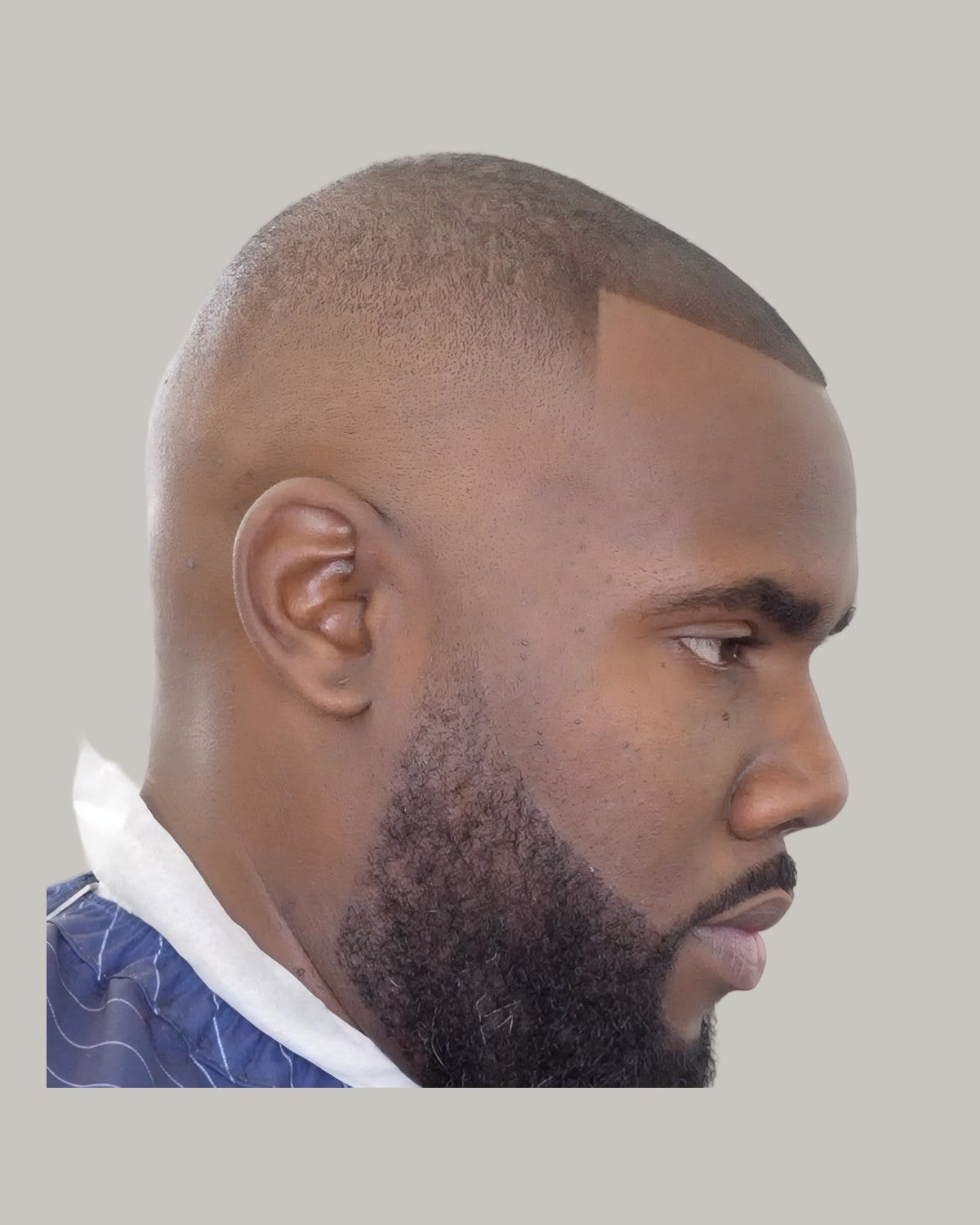
A line-up tidies the edge, but a hard one pushes a receding hairline back a little every visit. Ask for a natural line-up that follows the hairline you have. A full beard and a close taper do the rest. There are 38 more styles in our haircuts for Black men guide.
What to ask for Low taper, short and even on top, a natural line-up that follows the hairline, and the beard lined up to connect.
Receding hairline with thinning hair or a beard
Short cut with a grey beard
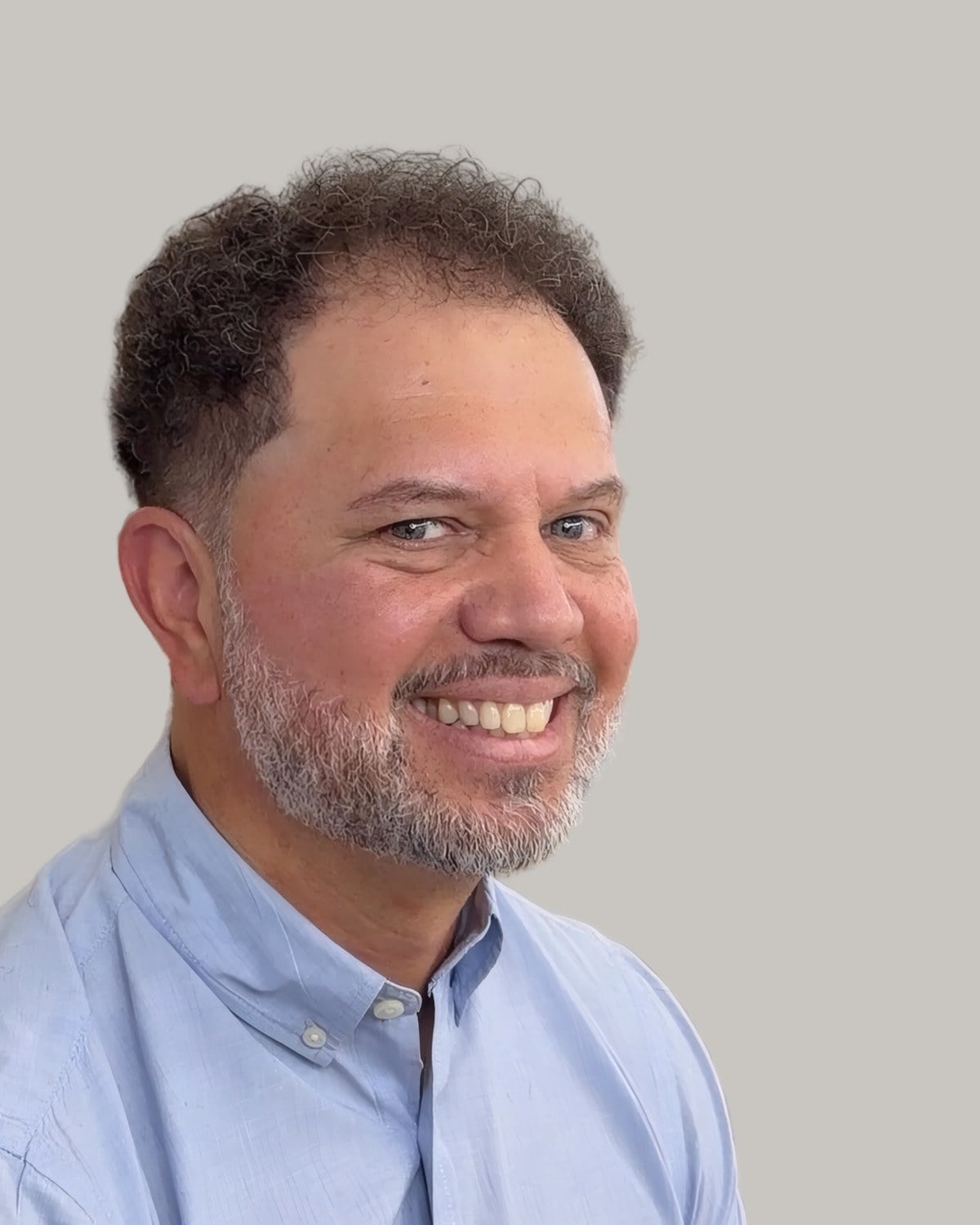
A short, even cut and a full grey beard make an easy pair. The beard adds weight to the lower face, so a higher hairline looks balanced. Keep the top short enough that thinner patches don’t show.
What to ask for A number 3 on top, a number 2 on the sides, a natural edge at the front, and shape the beard to blend at the sideburns.
Bald fade for a thinning top
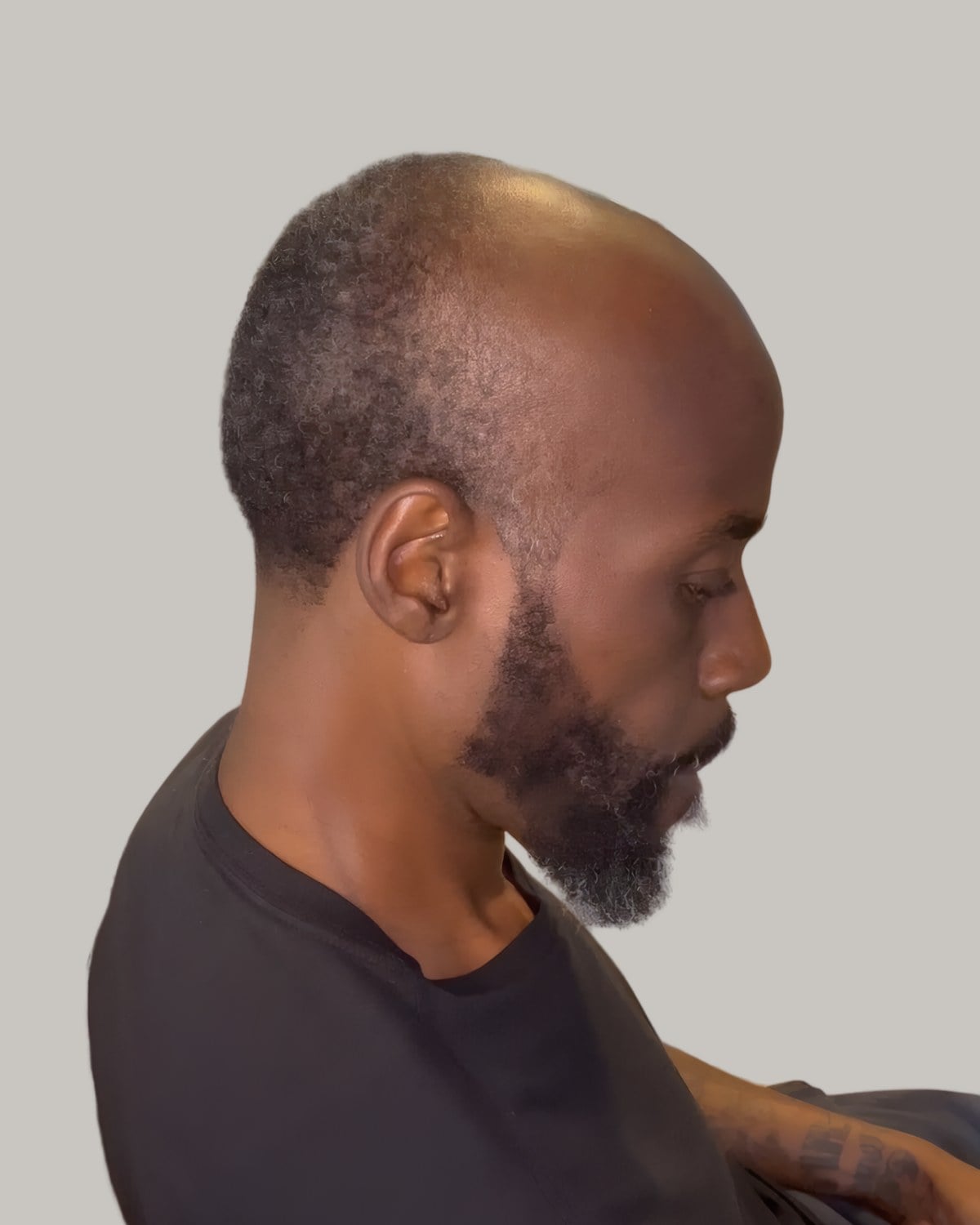
When the top has thinned a lot, a bald fade on the sides keeps the whole head even. A short cut evens out the contrast between thick and sparse patches. If it looks patchy at a number 1, a clean shave is the next step.
What to ask for Bald fade on the sides, the top taken down to a number 1, and a beard if you want one, blended into the fade.
01 of 01
What is the best haircut for a receding hairline?
The best haircut for a receding hairline keeps the sides short and leaves a little more on top. The top looks fuller, and the temples don’t stand out. Crew cuts, textured crops, French crops and tapers all do this. If the hair on top is thin as well, go shorter overall, since a short cut evens out the contrast between thick and sparse patches.
The other choice is direction. Brushing forward (a fringe, a Caesar, a French crop) covers the corners. Brushing back or up (a slick back, a quiff, a side sweep) shows the hairline off and draws the eye upward. Both work, so pick the one that suits how much is left at the front.
Which cut suits how far your hairline has gone?
Doctors and barbers often use the Hamilton-Norwood scale. It grades male pattern hair loss in seven stages, from 1 to 7. You don’t need the numbers. The mirror tells you enough:
| What you see | Cuts that suit it |
|---|---|
| The temples have just started to climb | Almost anything: a quiff, a side sweep, medium length, a mullet |
| Clear corners at the temples, the front still full | Textured crop, French crop, Caesar, crew cut, slick back |
| A widow’s peak standing on its own | Slick back, side-swept cut, quiff, textured fringe |
| Thin at the front and the crown | Buzz cut, high and tight, short cut with a beard |
| Thin across the whole top | Bald fade, a number 1 all over, or a clean shave |
A fringe can draw attention to a very high hairline rather than hiding it. Once the recession is deep, shorter is usually the better call.
What to ask your barber for
Start with the name of the cut and a photo. Then say how much you want on top in inches, where the sides start (a taper, or a low, mid or high fade), and which way the top goes: forward, back or to the side.
Then the front. Ask for a natural line-up rather than a hard one. A hard line-up pushes a receding hairline back a little every visit. A good barber will also tell you if the length you want on top will look thin, and it’s worth listening.
How much upkeep does a receding hairline haircut take?
Shorter cuts need more frequent visits. A fade needs the barber every two to three weeks to stay crisp, while a taper or a longer cut can go a month or more. A buzz cut you can keep up at home with clippers between visits.
Daily styling is quick for most of these cuts. A short crop or buzz needs nothing. Quiffs, slick backs and side sweeps want a blow-dry and a little product.
Should you go shorter or grow it longer?
Go shorter if the top is thin as well as the front. Short hair shows less scalp between the strands, and the contrast with the temples drops. Grow it longer if the hair on top is still thick and the recession is only at the corners, because length gives you something to sweep, slick or curl.
What rarely works is growing the front long to comb over a gap. It moves when you do, and it tends to draw attention to the thing it’s covering.
Is a receding hairline attractive?
Yes, when the cut suits it. A receding hairline is part of how a lot of men’s faces change, and plenty of men look sharper with it than without, especially with a short cut and a beard. The cuts that look awkward are the ones fighting the hairline.
Can hair grow back on a receding hairline?
A haircut won’t bring the hairline forward, but it can change how much you notice it. If you want to know about treatment, a doctor or dermatologist is the person to ask.
How do you style hair with a receding hairline?
Use matte products. Heavy gel can make thinning hair more obvious, because the shine shows the scalp through the strands. A matte paste or clay gives hold and texture without the gloss. A blow-dryer on the top, aimed up or back, adds lift where you want it. Our guide to men’s styling products covers what to buy.
Keep the hands off during the day, too. Fiddling with the front separates the hair and shows more scalp.
Every cut on this page belongs to a bigger family, and our guide to men’s haircuts shows four from each.
There are more short cuts to try in our guide to short haircuts for men. Pick one from the list above, show your barber the photo, and read the ask line out loud. They’ve heard it before.
Products featured here are independently selected by our editors. If you buy through our retail links we may earn an affiliate commission — it never changes the price you pay, and it never decides our verdicts. Read our earnings disclaimer.