The cape goes on, the barber picks up the clippers and asks what you’re after. “Just a tidy-up” has seen you through years of haircuts. So why does it suddenly feel like the wrong answer?
Because there’s a whole menu you’ve never ordered from. Men’s haircuts fall into seven families: short, faded, tapered, medium, long, curly, and the styles made for coily hair. Each family has its own vocabulary, and your barber speaks all of it.
Below are 28 looks, four from each family, and every one comes with the line to say in the chair. Find one you like, screenshot it, and point.
Haircuts for men
Here are 28 haircuts for men, four from each family.
Men’s haircut guides, by type
Each section below takes four looks from one of these guides, and each guide has the full set.
Short haircuts for men
Buzz cut
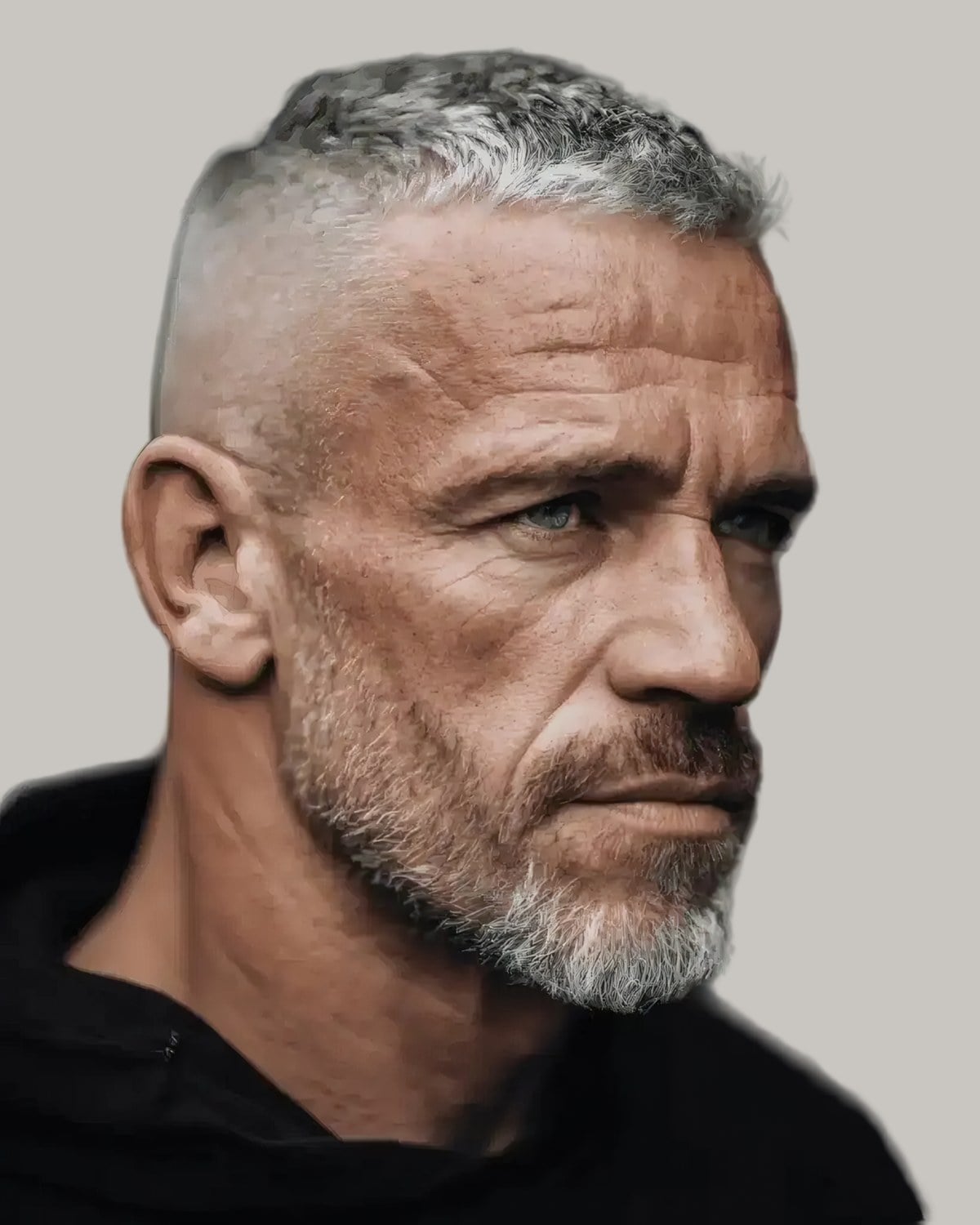
A buzz cut is one clipper guard run over the whole head, and a number 2 leaves a quarter of an inch. There’s nothing to style, so there’s nothing to get wrong before your first coffee, and grey hair looks deliberate at this length. Our buzz cut guide goes from no guard to a number 8, with fades and beards along the way.
What to ask for Number 2 on top, a skin fade on the sides, a natural line-up at the front, and a tapered neckline.
Crew cut
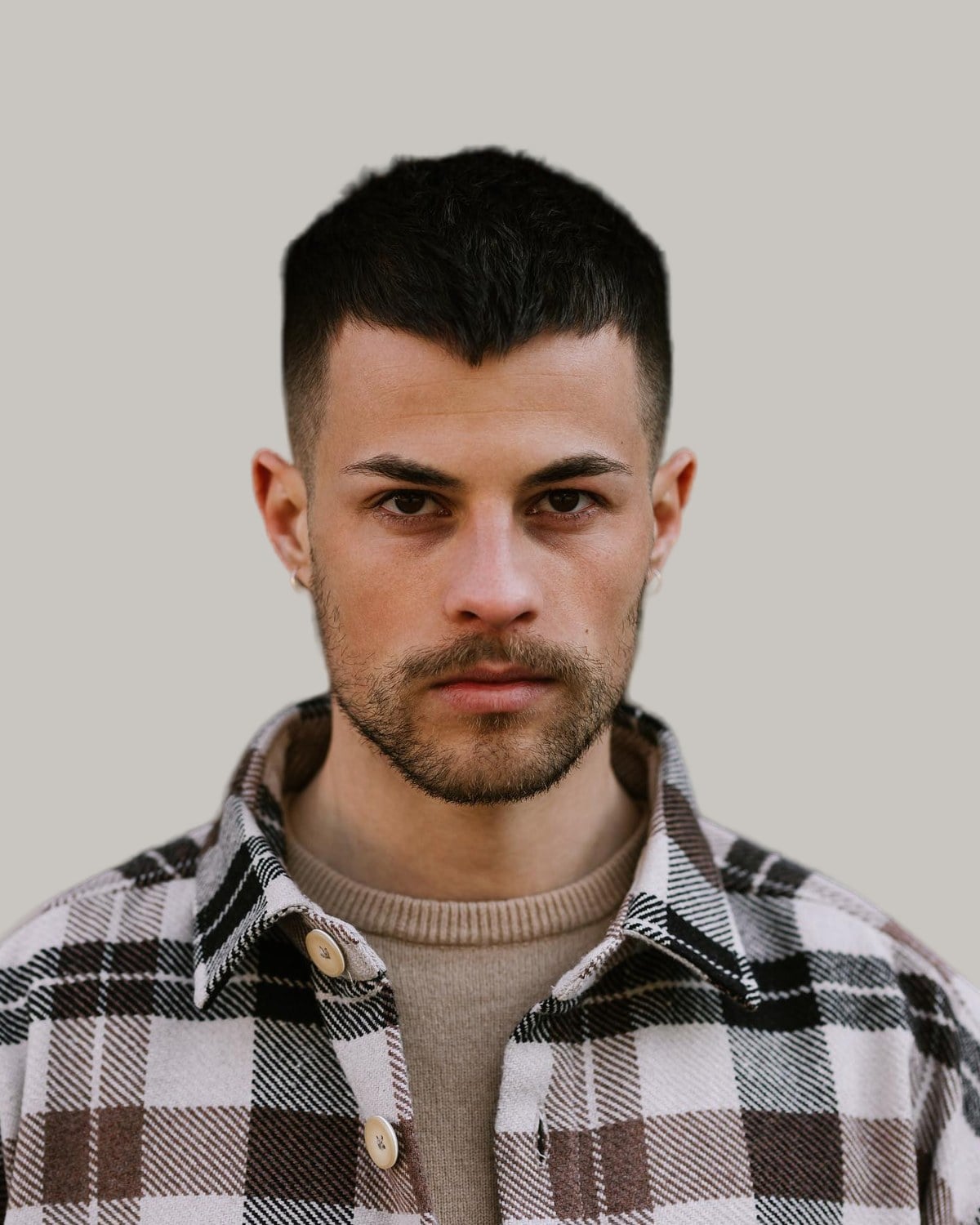
Short sides, and a top that rises gradually from the crown toward your forehead. It still looks neat three weeks in, so it suits a man with plenty of meetings and not much patience. Our crew cut guide has 25 versions, and the short haircuts guide adds the Ivy League, the Caesar and the French crop.
What to ask for Clippers at a 2 around the sides and back with a soft taper at the nape, then scissors on top to about an inch, getting a little longer toward the hairline.
Textured crop
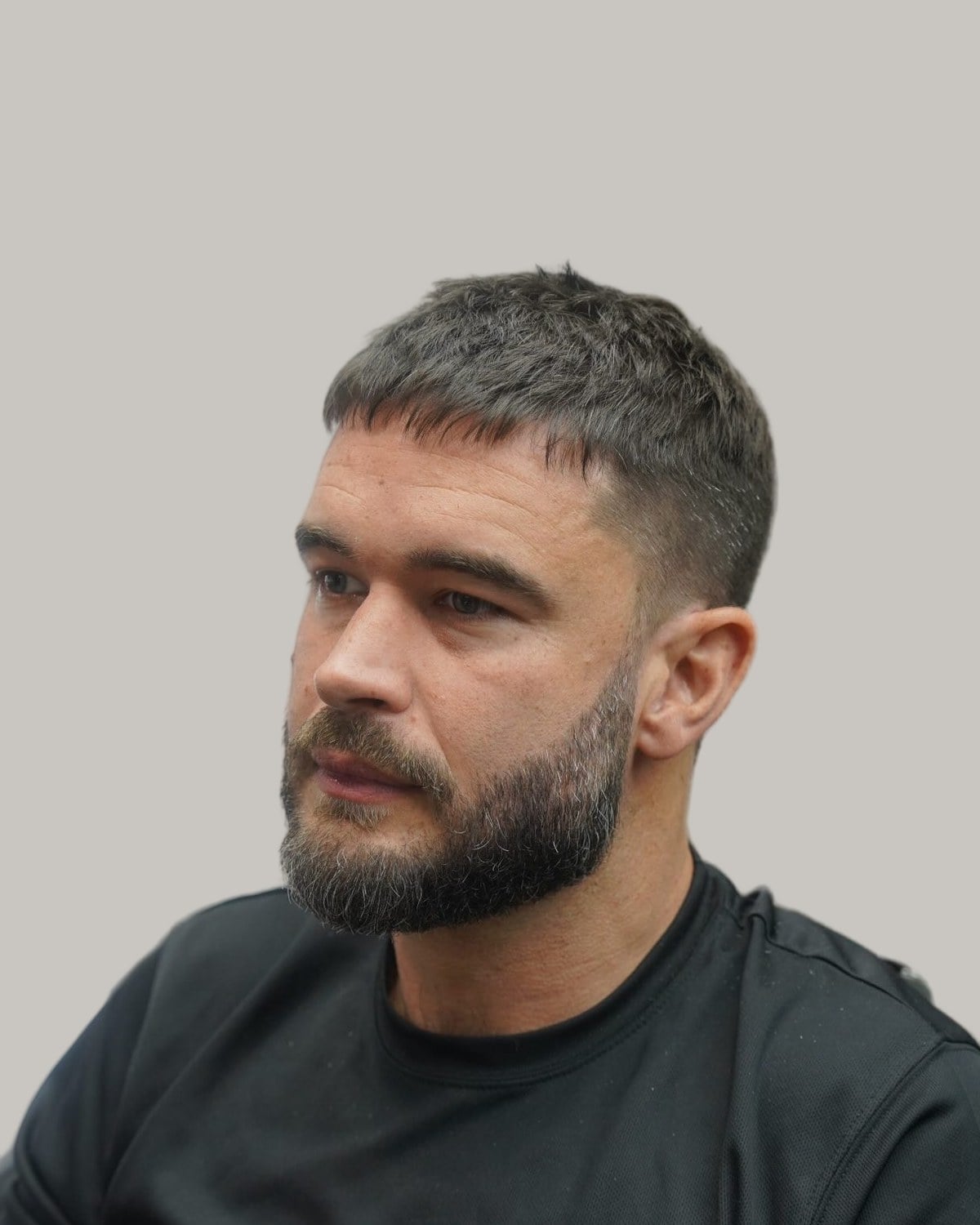
The top gets cut to roughly an inch, broken into choppy pieces and pushed toward your face. That broken texture makes fine hair look fuller, and next to a beard the cut reads grown-up rather than boyish. For 28 more, see our textured crop guide.
What to ask for An inch on top, point cut so it breaks into pieces, pushed forward into a short fringe, with a mid fade underneath.
Textured fringe with a low taper
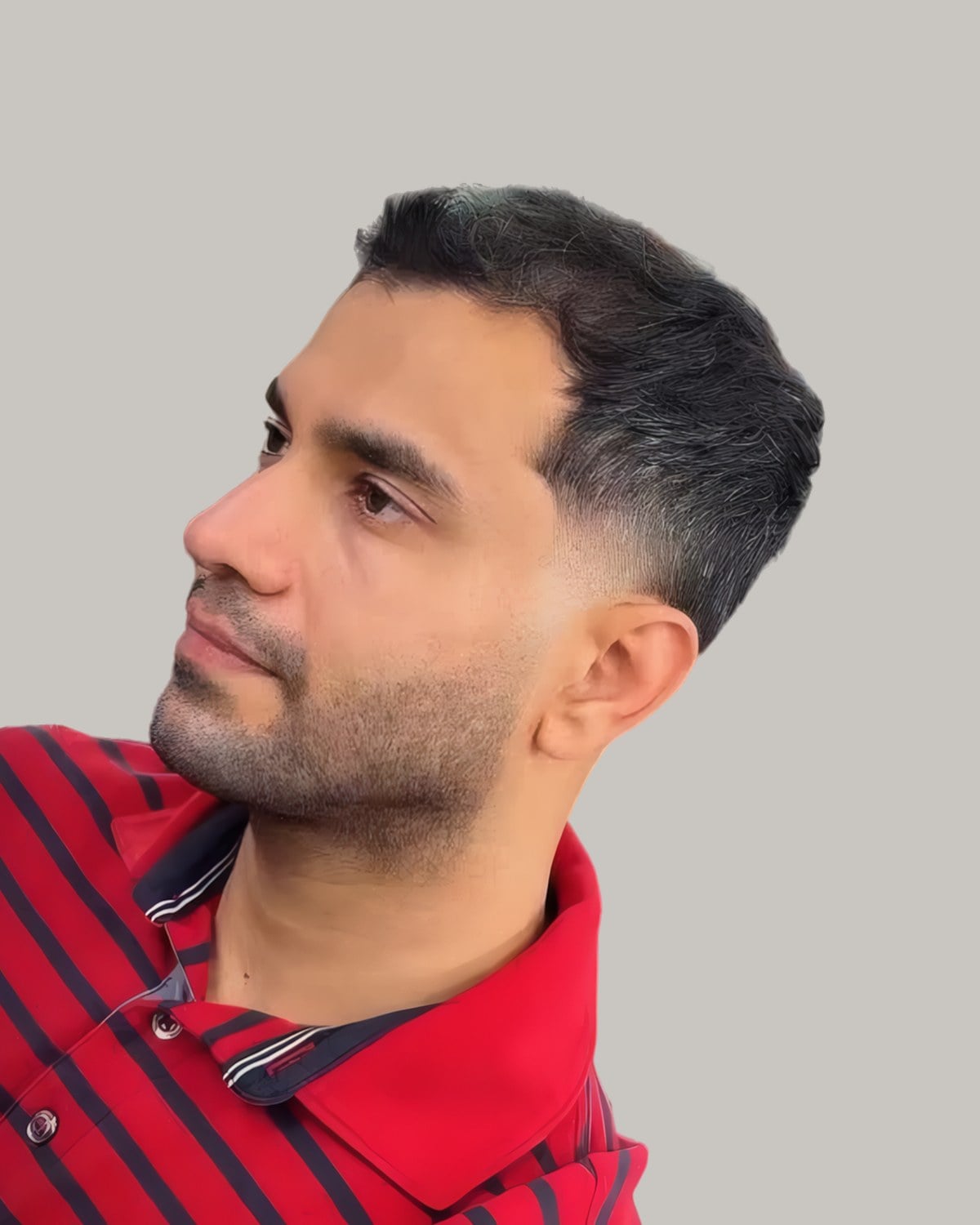
Let the top grow a little past crop length and the front falls onto your forehead in loose, messy strands. With a low taper, only the hair by your ears and at the nape gets shorter, so every eye goes to the fringe. See 25 variations in our textured fringe guide.
What to ask for Two to three inches on top, cut choppy and pushed forward, a low taper at the sideburns and neckline, and matte clay to finish.
Fade haircuts for men
Low bald fade
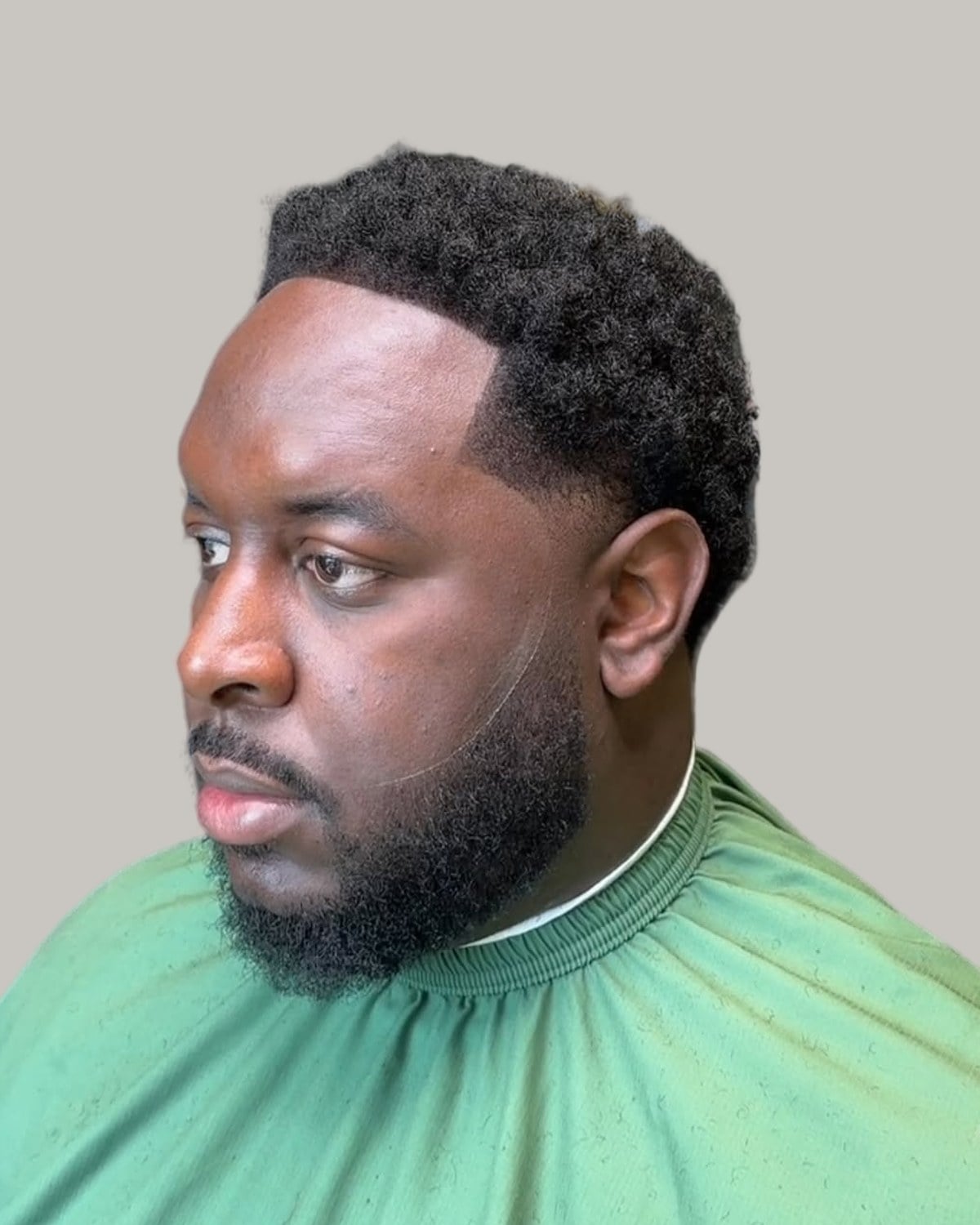
A low bald fade takes the hair to skin in a narrow band just above your ear, then blends up into whatever’s on top. Under a rounded afro top it keeps the shape tidy without stealing any height. Our guide to fade haircuts has 39 fades, from low and high to drop and burst.
What to ask for Low bald fade, skin just above the ear and at the neckline, blended into the beard, and the top shaped round at about two inches.
Slick back with a mid fade
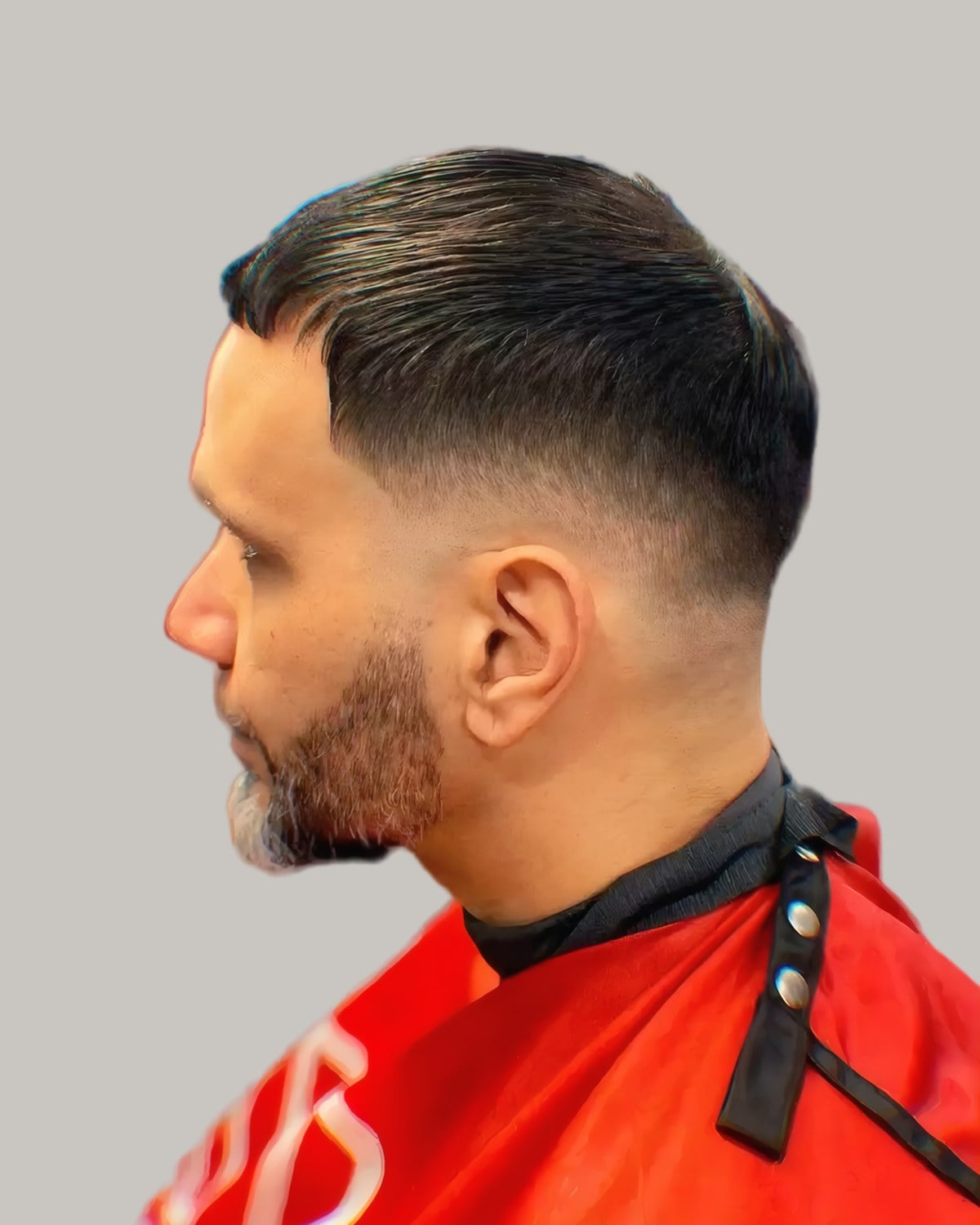
The mid fade starts around the temple, about level with the corner of your eyebrow. Under a slicked-back top, it makes the length on top look deliberate rather than overdue. Comb it back while it’s damp and set it with a shiny pomade.
What to ask for Mid skin fade starting at the temple, three inches on top, combed straight back with a medium-shine pomade.
Drop fade
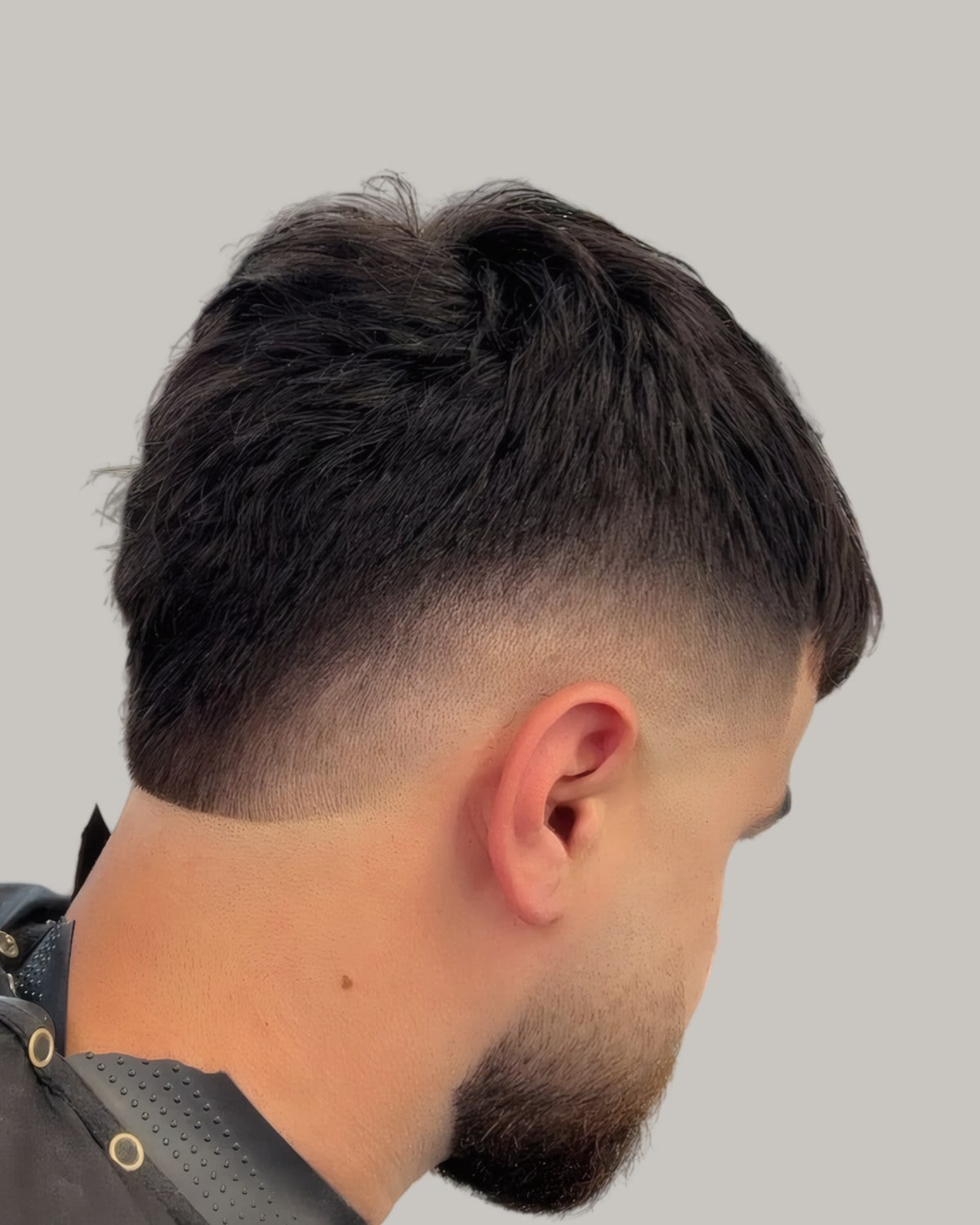
A drop fade dips down behind the ear rather than circling your head at one height. The curve keeps more hair at the nape and frames a thick or curly top. Ask for the drop by name, because a barber who hears plain “mid fade” will cut it straight.
What to ask for Mid drop fade, curving down behind the ear to the nape, skin at the bottom, and the top left long and textured.
Burst fade
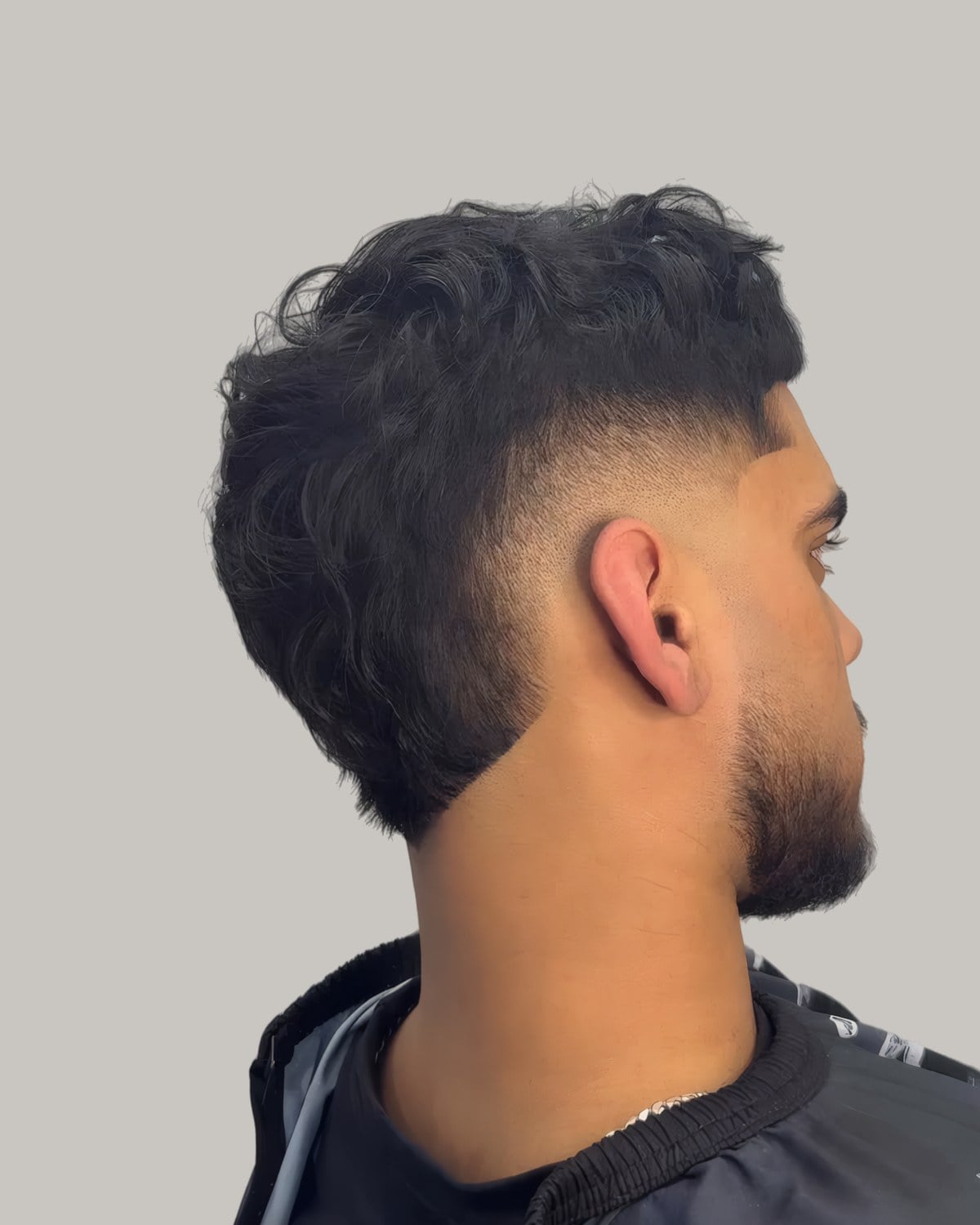
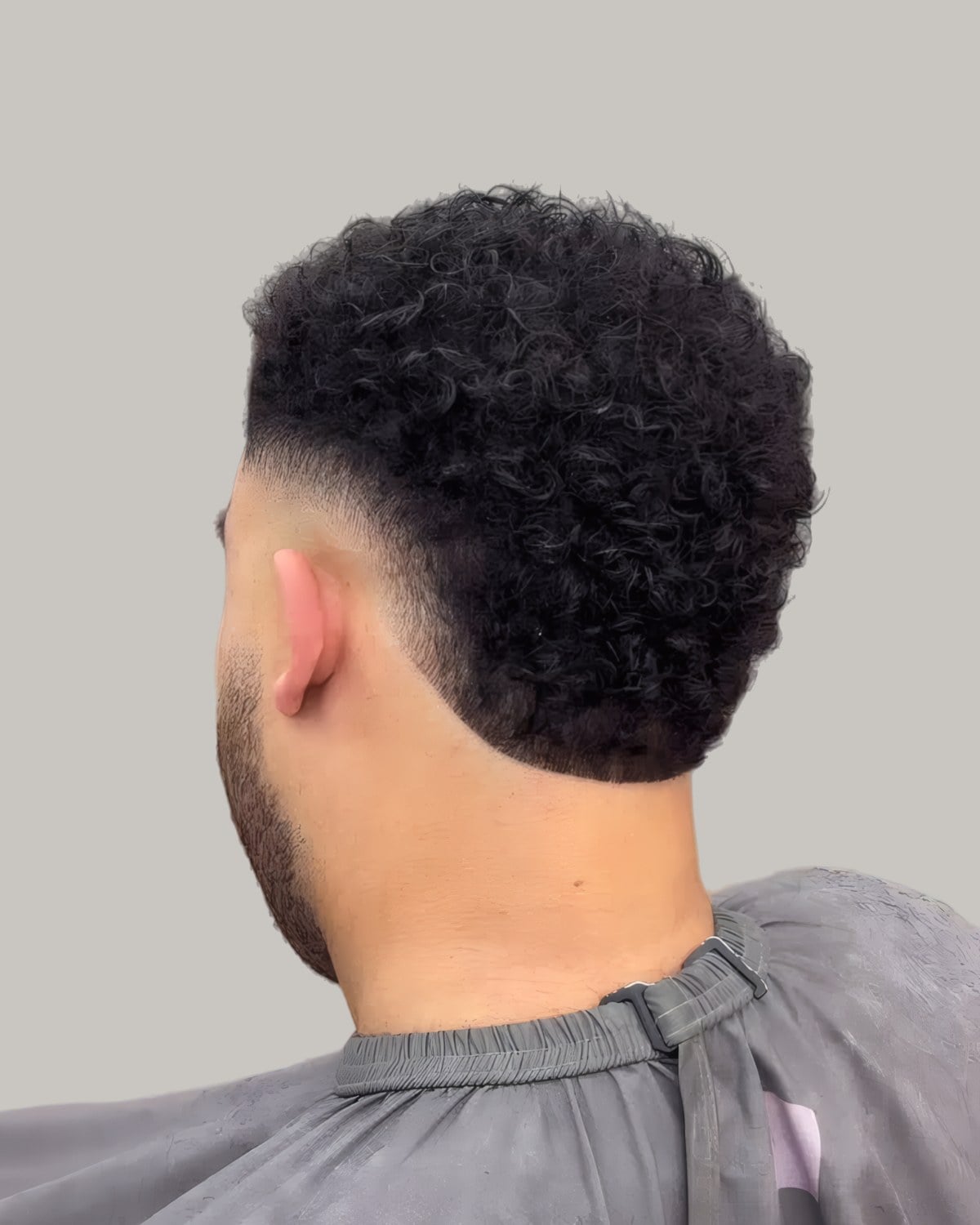
A burst fade is a half circle of fade around the ear, with the hair at the back left long. It turns up under mullets, mohawks and curly tops, and cut low it’s quiet enough for the office. Mullets, mohawks and curls all get a burst version in our burst fade guide, 30 looks in all.
What to ask for Low burst fade around the ear, skin at the bottom, the back left long, and the top textured with scissors.
Taper fade haircuts
Flat top with a taper fade
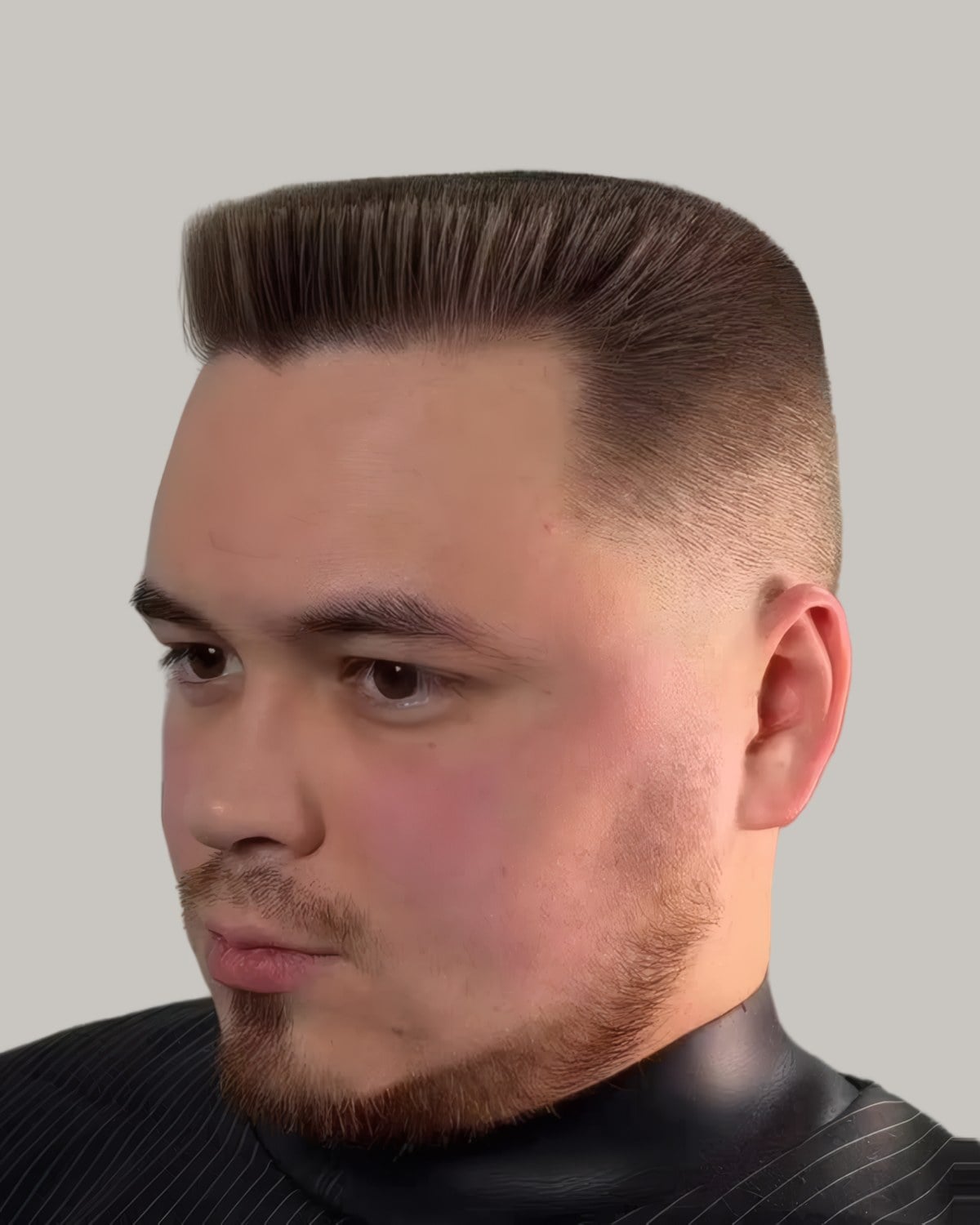
A flat top is cut level across the crown, so the top stands up like a shelf. A taper keeps the sides short without going all the way to skin, and the contrast does the rest. You’ll find 53 tapers, low to skin, in our taper fade guide.
What to ask for Flat top cut level with a comb and clippers, about two inches at the front, a taper on the sides to a number 1, and a sharp line-up.
Caesar cut with a taper
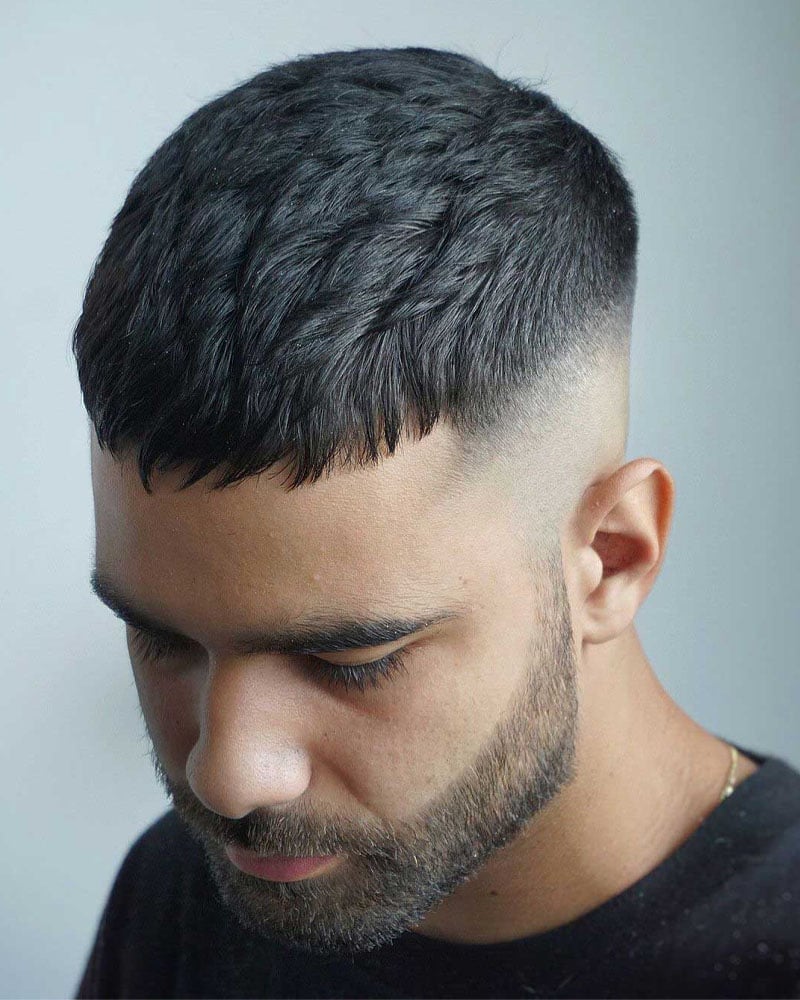
A Caesar is short and even on top, with the front combed down into a straight fringe. Taper the sides and it’s tidy enough for any office. Dry it off, push it forward with your palm, and you’re done. It also helps if your temples have started to recede, since the fringe lands right over them.
What to ask for Scissor the top to about an inch and comb it forward, square the fringe off straight across, and taper the sides from mid-height.
High taper fade
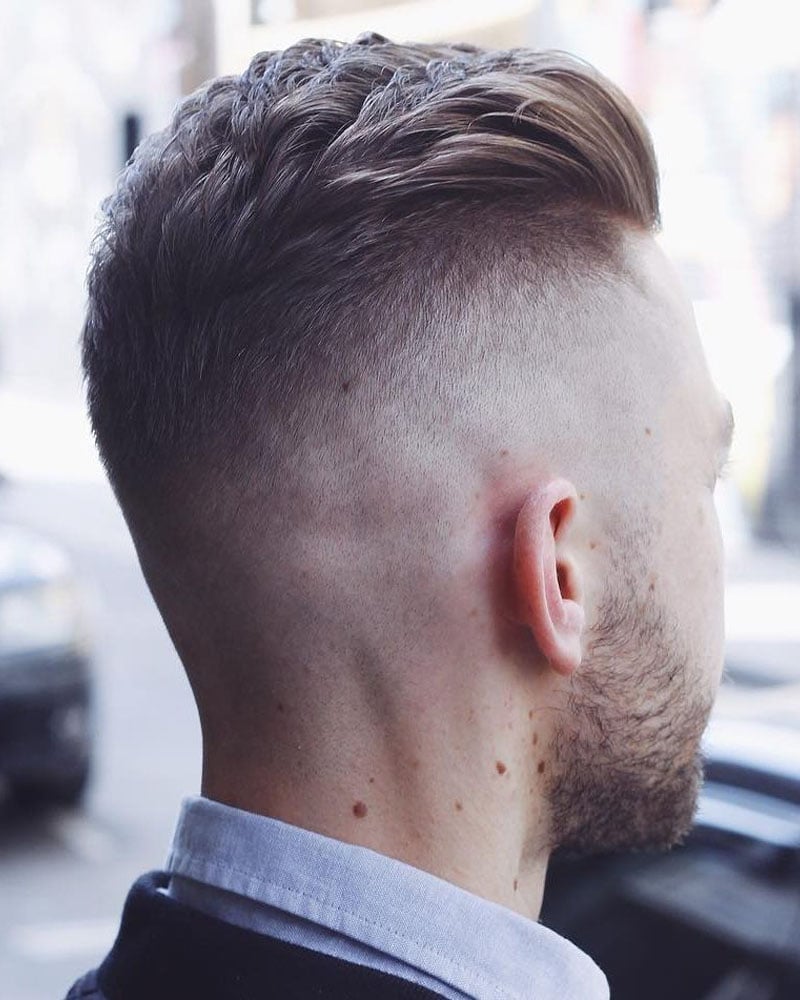
Start the taper high and most of the side of your head goes short. It’s a loud cut, and it needs your barber more often than a low taper does to keep the contrast clean.
What to ask for Take the taper up to two inches above the ear with skin at the nape, and leave an inch and a half of texture on top.
Side part with a taper fade
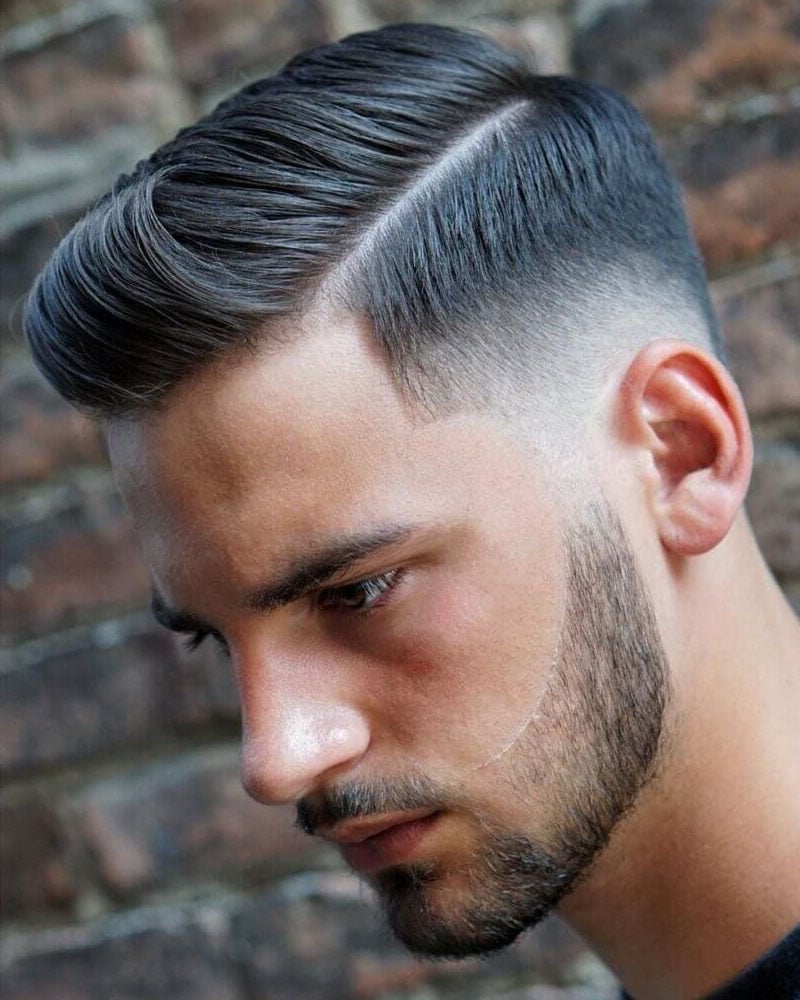
A side part is about as traditional as barbering gets, and a taper underneath brings it up to date. Comb it across with a little pomade while it’s damp. Ask for a hard part if you can never find the same line twice.
What to ask for Shave a hard part on the left, take the sides down to skin with a taper, and leave two inches on top to comb across with pomade.
Medium-length haircuts for men
Flow haircut
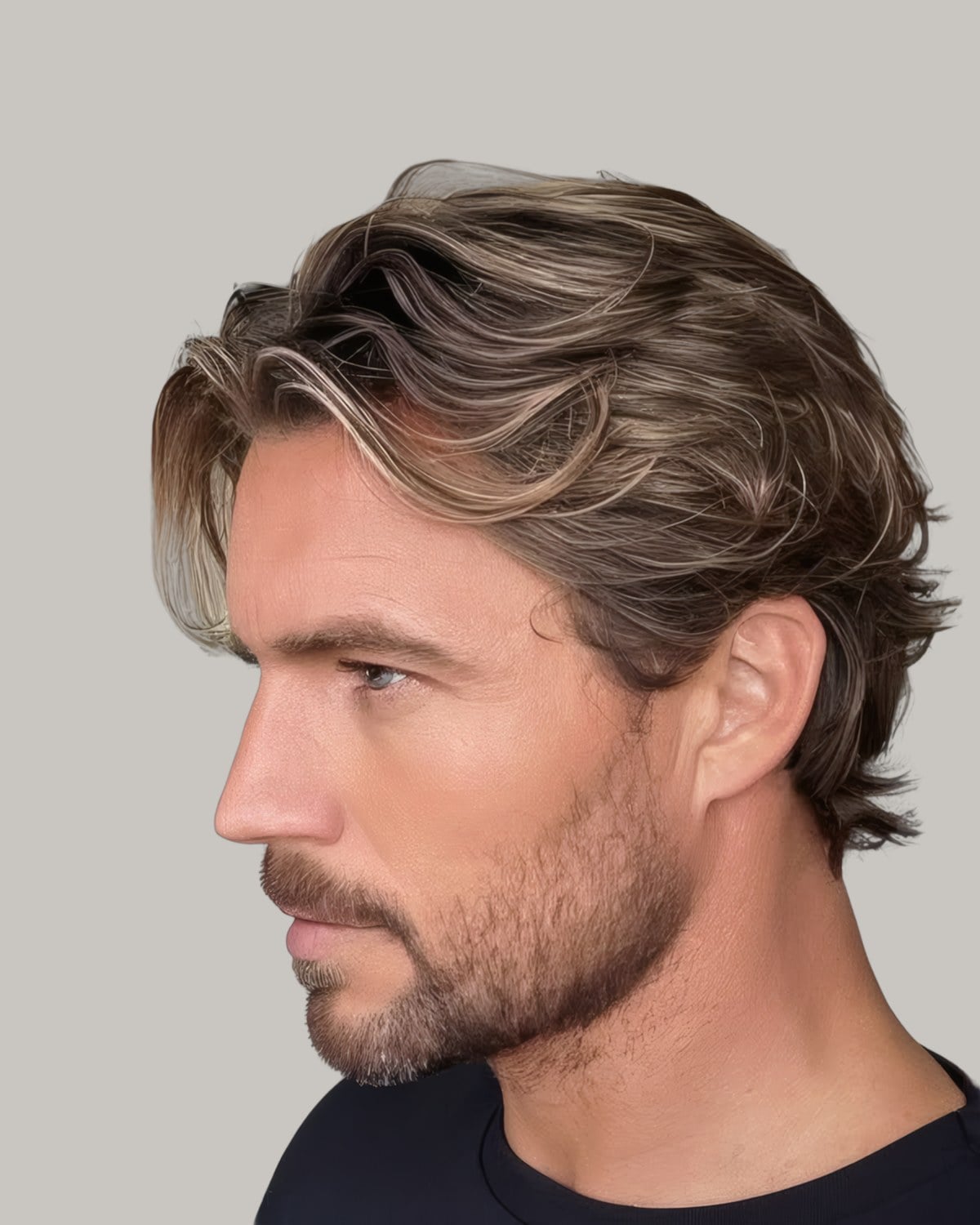
Medium-length hair runs about two to four inches, and a flow uses all of it. The layers are cut so the hair moves back off your face and flicks out at the collar. Ask for it as a flow, or as hockey hair if your barber follows the sport. Our medium-length haircuts guide has 39 looks, from slick backs to top buns.
What to ask for Medium-length layers, three to four inches on top, long enough at the back to flip out over the collar, and no thinning at the ends.
Textured quiff with a high fade
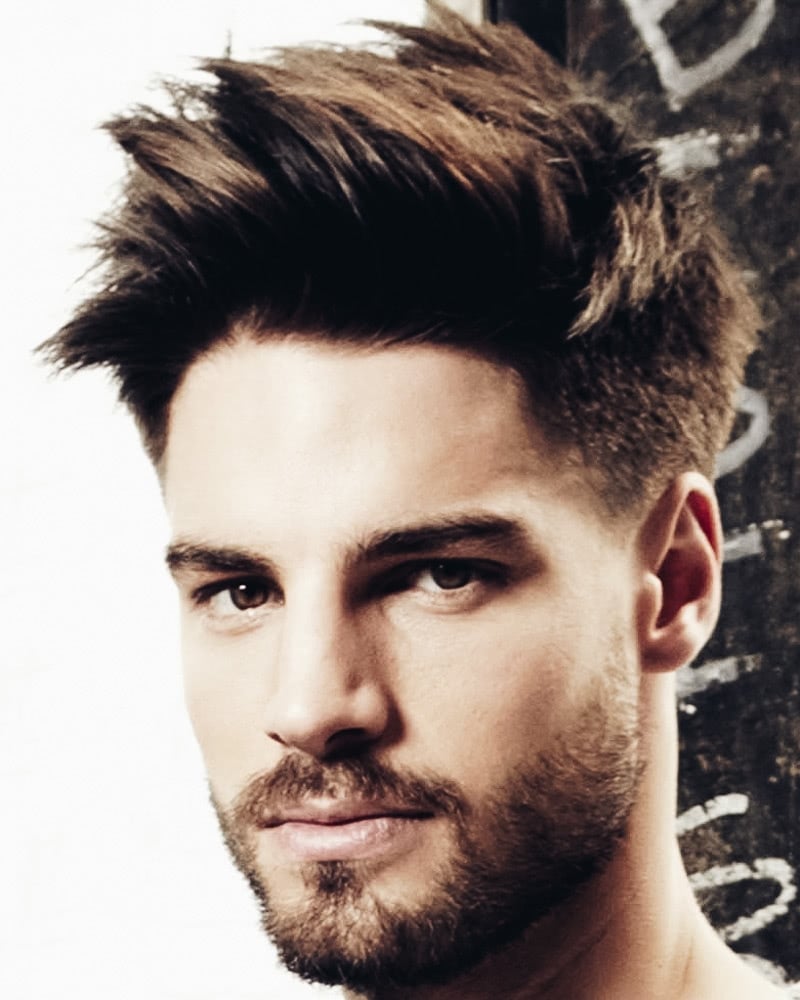
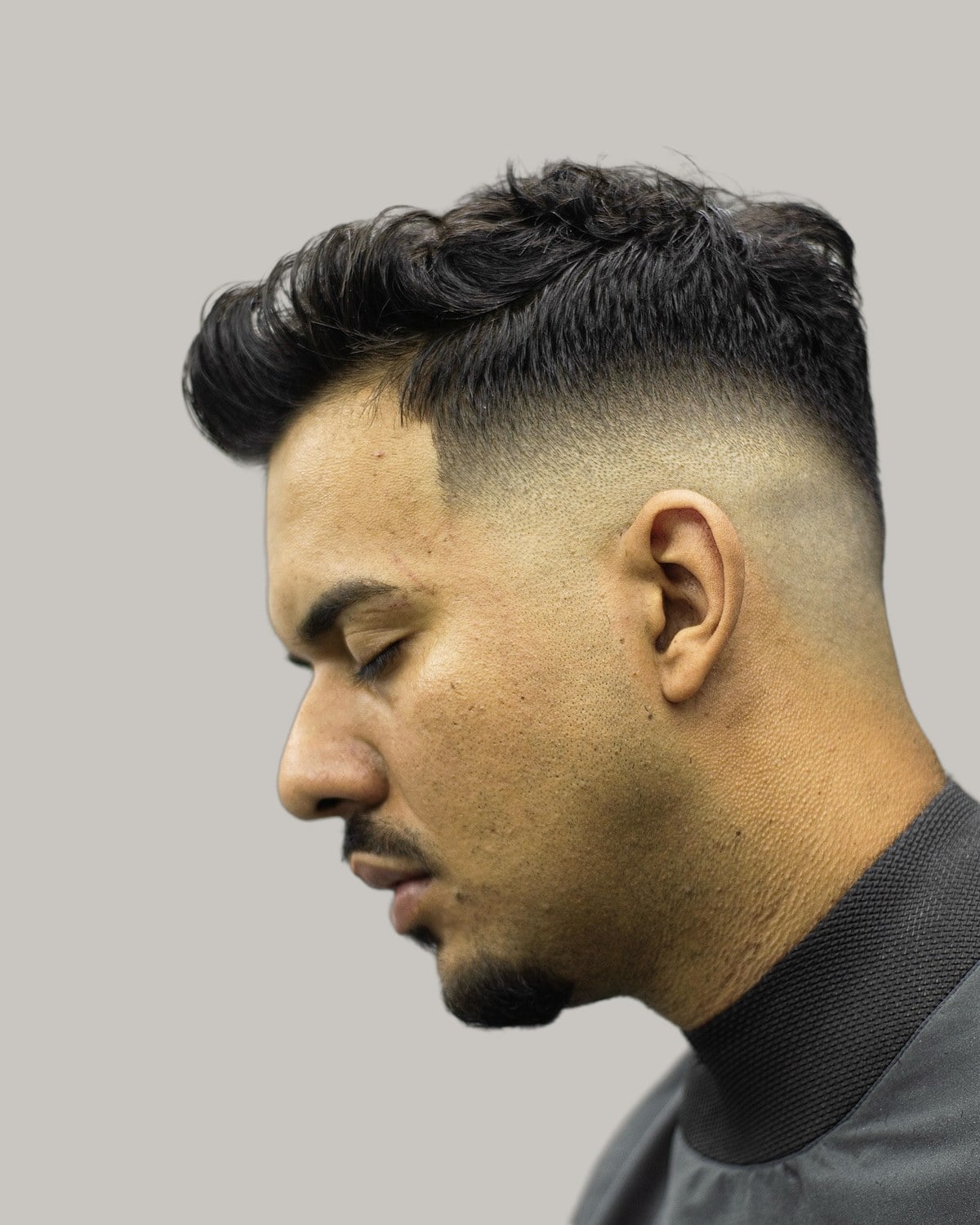
A quiff needs about three inches at the front to stand up and lean forward. Choppy texture keeps it light, and a high fade makes the height look taller still. Blow-dry it upward first and the pomade has far less work to do.
What to ask for Skin at the bottom of a high fade, the front left at three inches and graduating down to the crown, point cut, then blow-dried upward and set with pomade.
Modern mullet
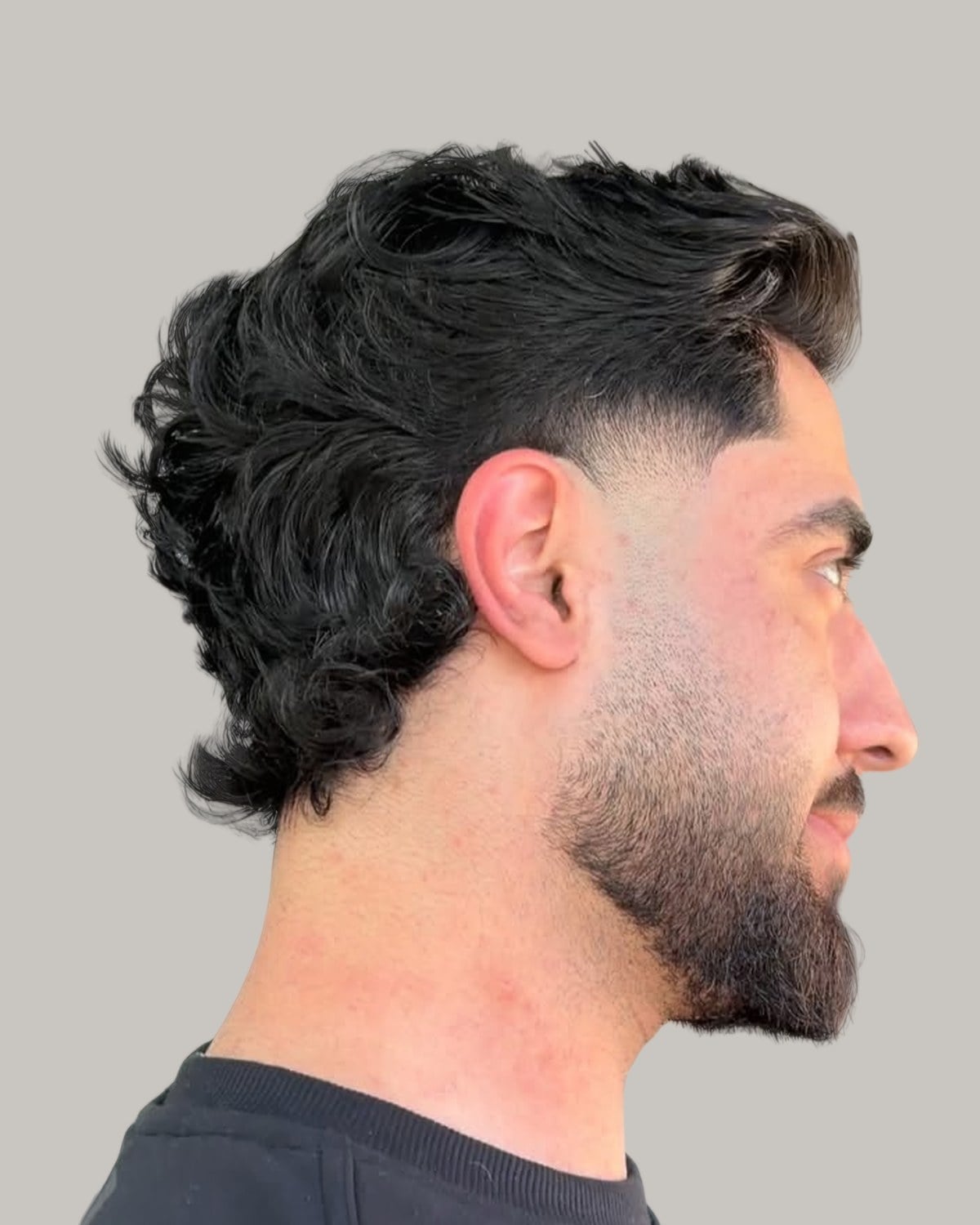
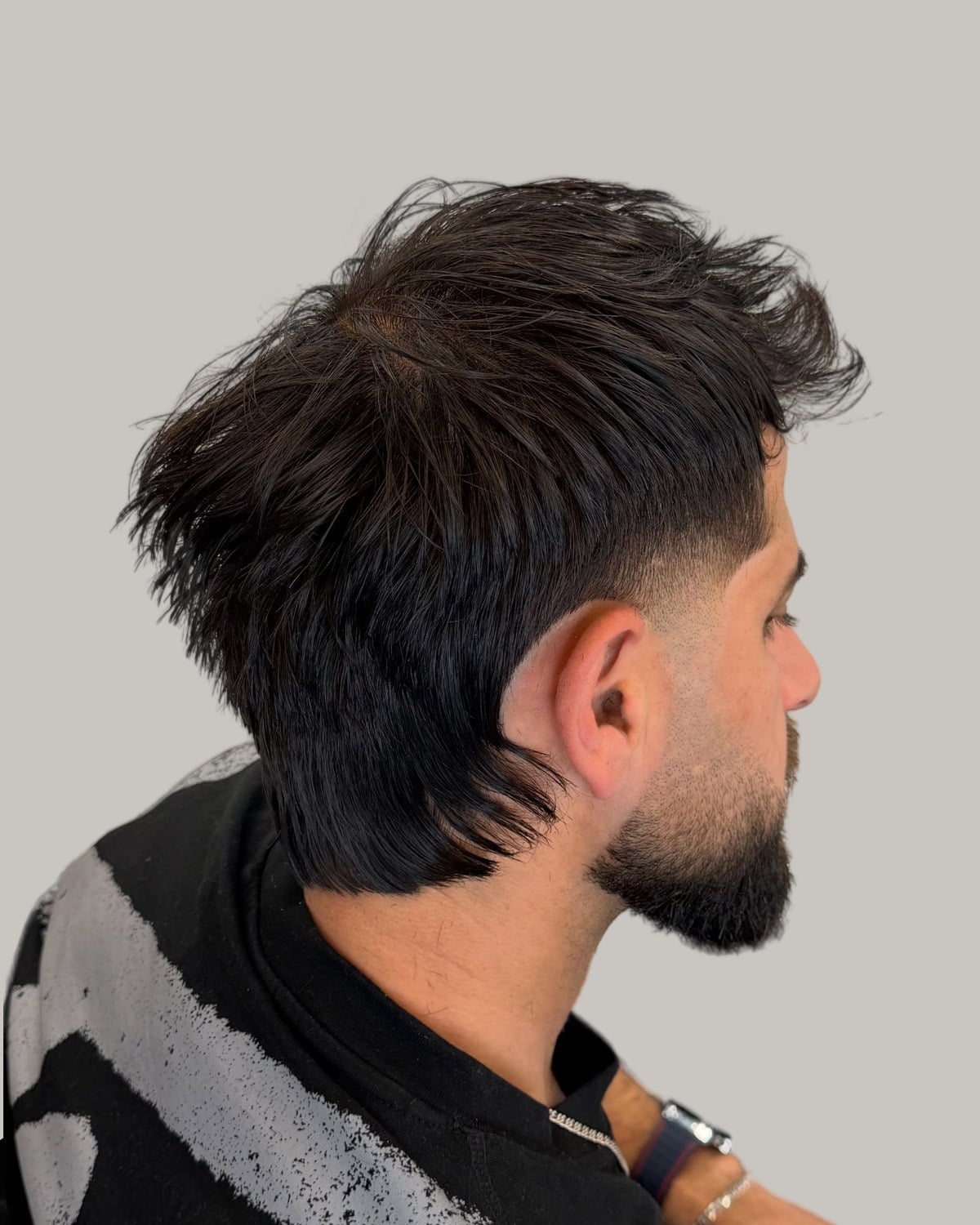
Short at the front, long at the back, and blended in between: that blend is what separates a modern mullet from the 1980s one. A low taper tidies the edges instead of shaving the sides. Give the back three to six months to grow, and our modern mullet guide has 19 more to choose from while you wait.
What to ask for Modern mullet with a low taper, two inches on top, the back left long over the collar, and texture through the back.
Wolf cut

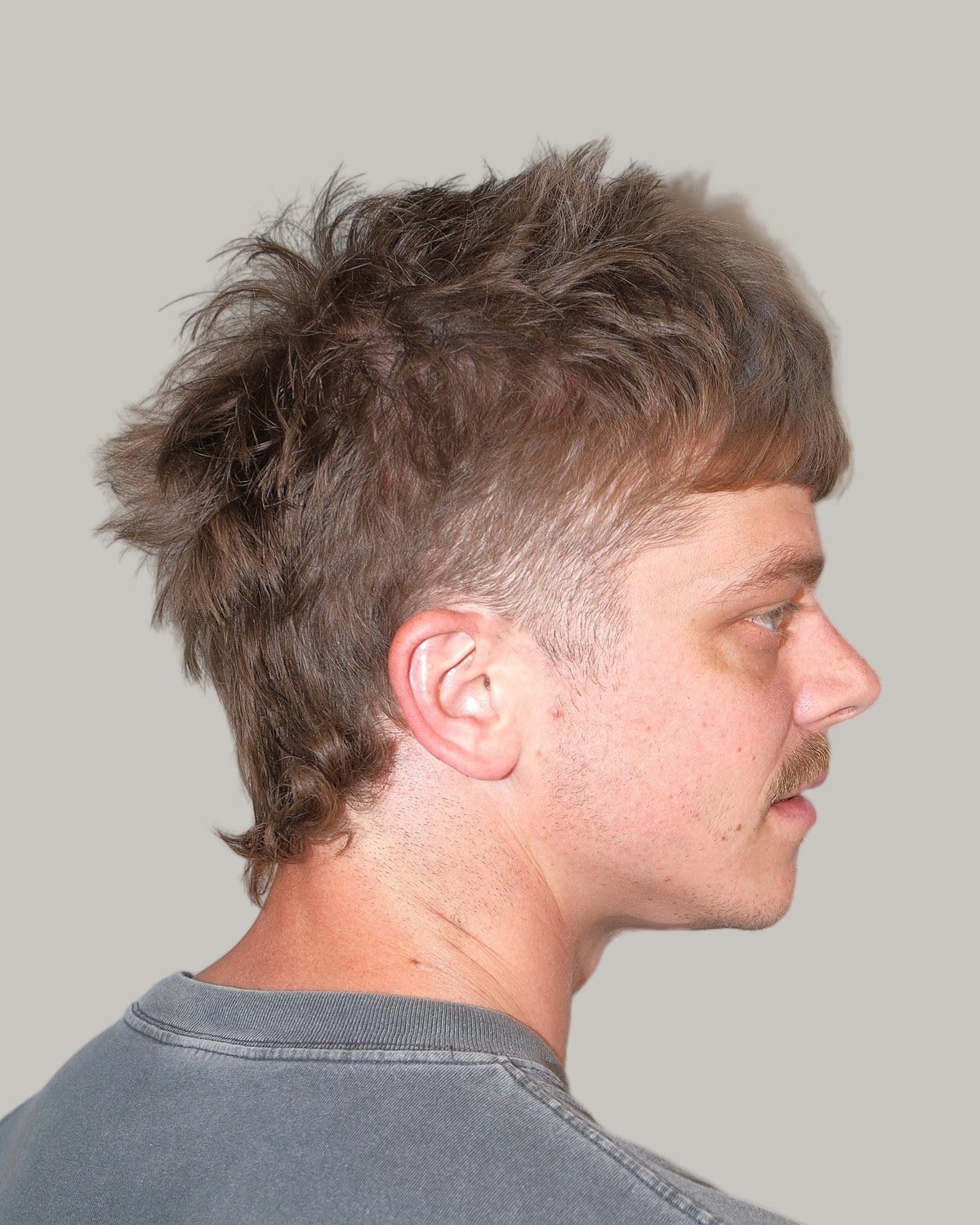
A wolf cut crosses a mullet’s length with a shag’s choppy layers, then blends the two so there’s no hard line. This short version gives you the shape without a year of growing. Our wolf cut guide shows it on wavy, long and faded hair.
What to ask for Short wolf cut, choppy layers through the crown, a fringe above the brows, the sides close around the ears, and longer pieces at the nape.
Long hairstyles for men
Long hair with a side part
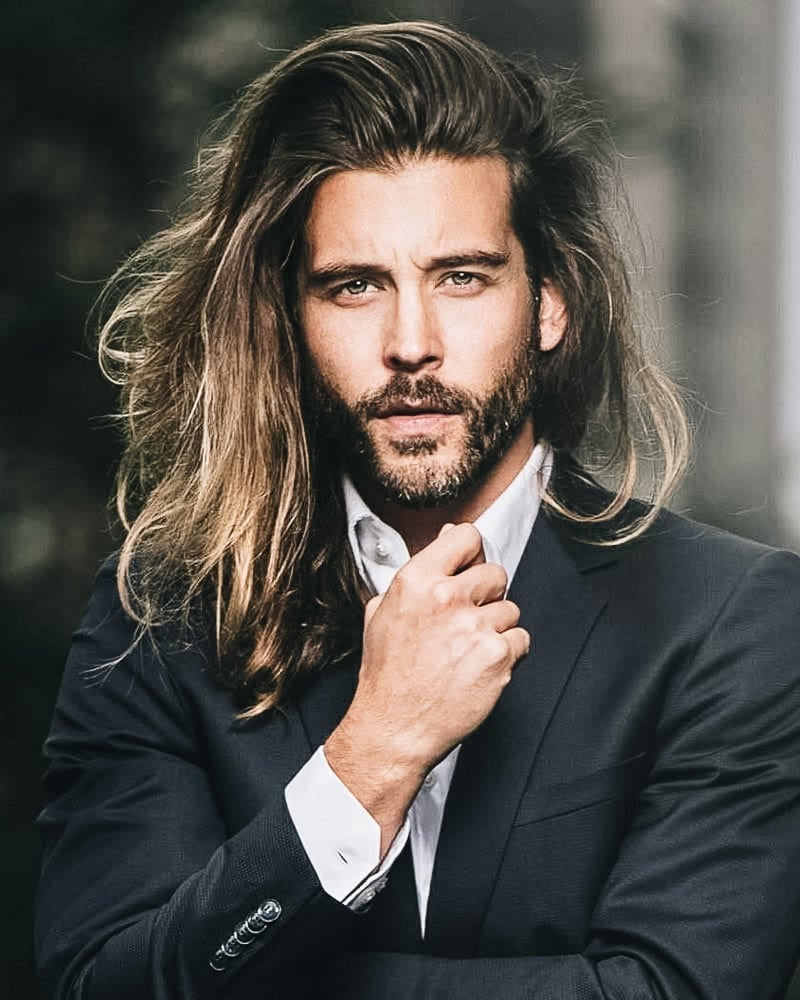
Sweep long hair off your face from a side part and it looks dressed up rather than grown out. The waves fall past both shoulders, and the lighter ends keep all that length from looking heavy. Brush it into place damp and let the waves set as it dries.
What to ask for Long layers kept past the shoulders, a deep side part, and the ends trimmed lightly so the waves keep their weight.
Long straight hair with a centre part


On straight hair past the shoulders, a centre part and very little else looks deliberate. Growing out from a short back and sides takes 18 months to two years, so by now the cut is about keeping the ends neat and level.
What to ask for Trim only the very tips, keep the length level all the way round, and keep the centre part.
Shoulder-length hair with a beard


Shoulder length is where most people stop arguing about whether your hair counts as long. Long layers make it fall in waves instead of widening at the bottom, and a beard gives the face some weight to match the hair. Our long hairstyles guide has 31 looks, from collar length to Viking braids.
What to ask for Long layers down to the shoulders, cut so the ends fall in waves rather than a straight line, and the weight thinned at the sides.
Man bun
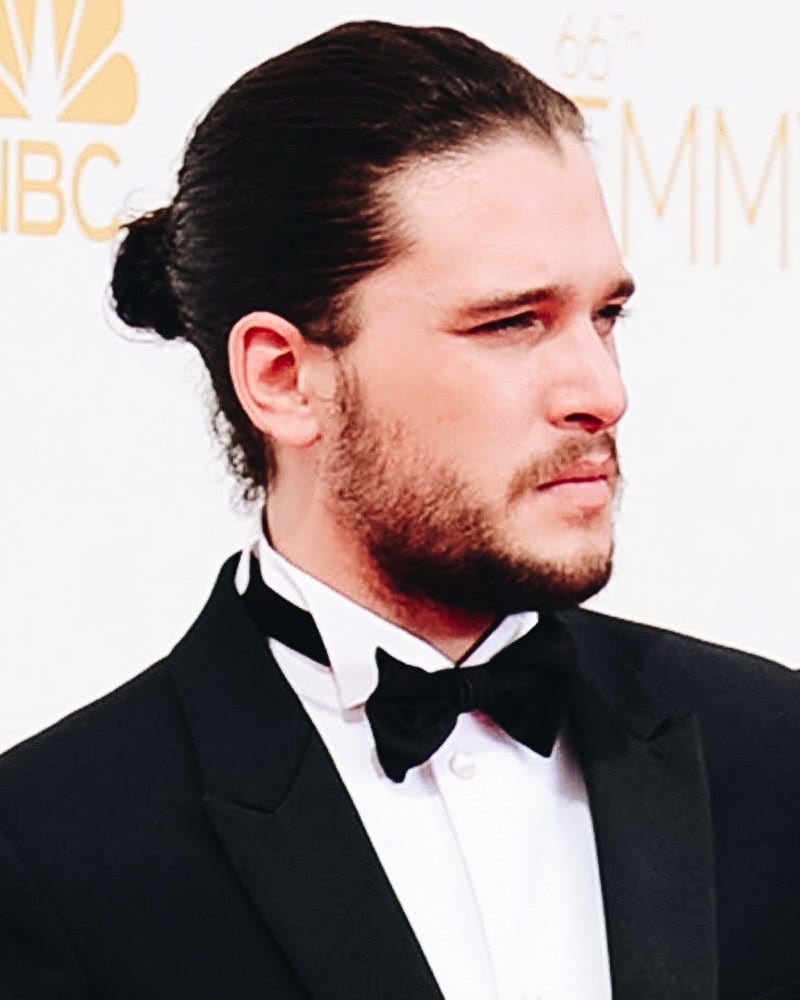

Kit Harington ties his low and loose for black-tie dinners. Before it’ll stay put, the hair on top has to be long enough to meet the hair at your nape, and a cloth tie snags less than a rubber band. Pull it higher and you’ve got the weekend top knot.
What to ask for One length all round with the ends lightly layered, and no length off the top so it can be tied back.
Curly hairstyles for men
Big curls with a full beard
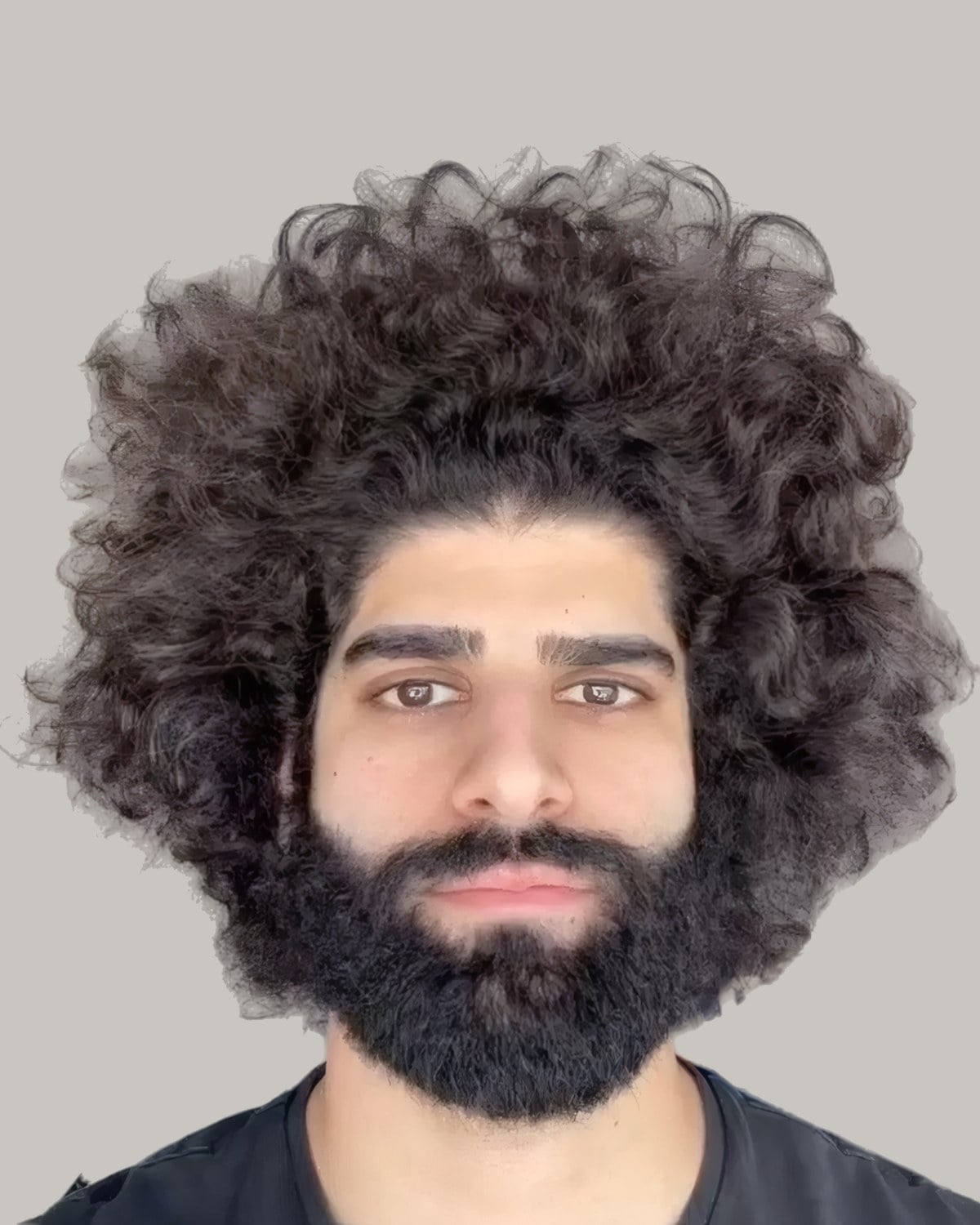
Let the curls grow out in every direction and shape them round, with a full beard to match. Cutting it dry shows the barber where each curl falls, so the shape comes out even. Our curly hairstyles guide has 101 looks, from tight coils to long ringlets.
What to ask for Shape the curls round while dry, take the bulk out evenly, and blend the sideburns into the beard.
Curly top with a faded undercut
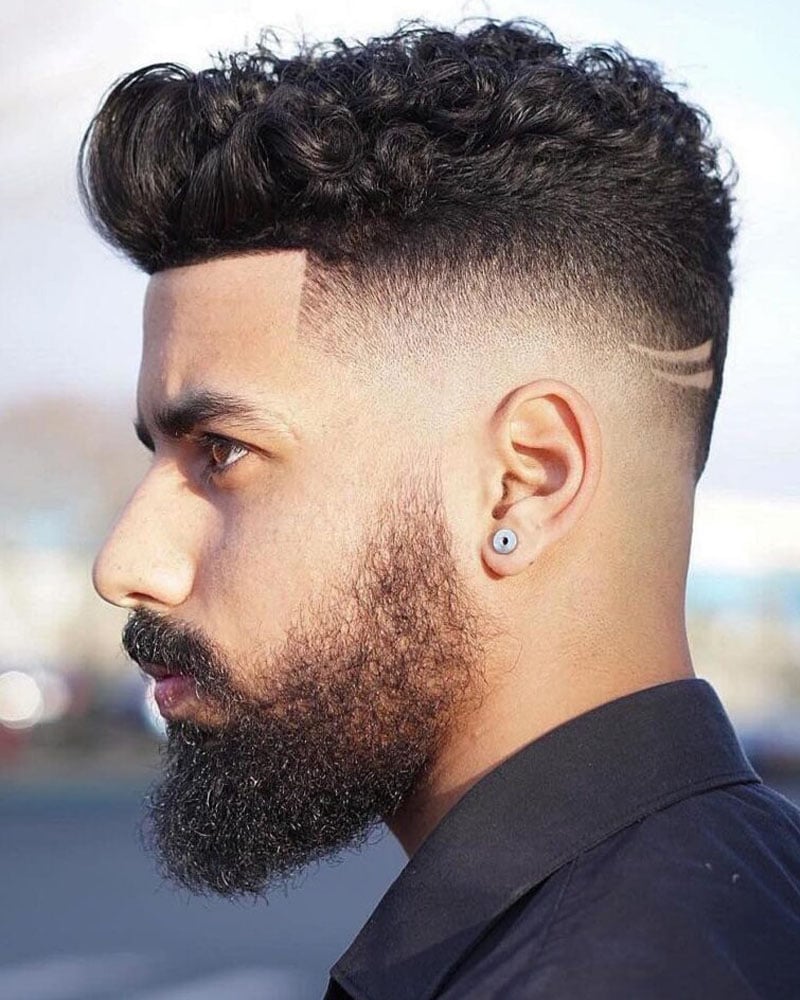
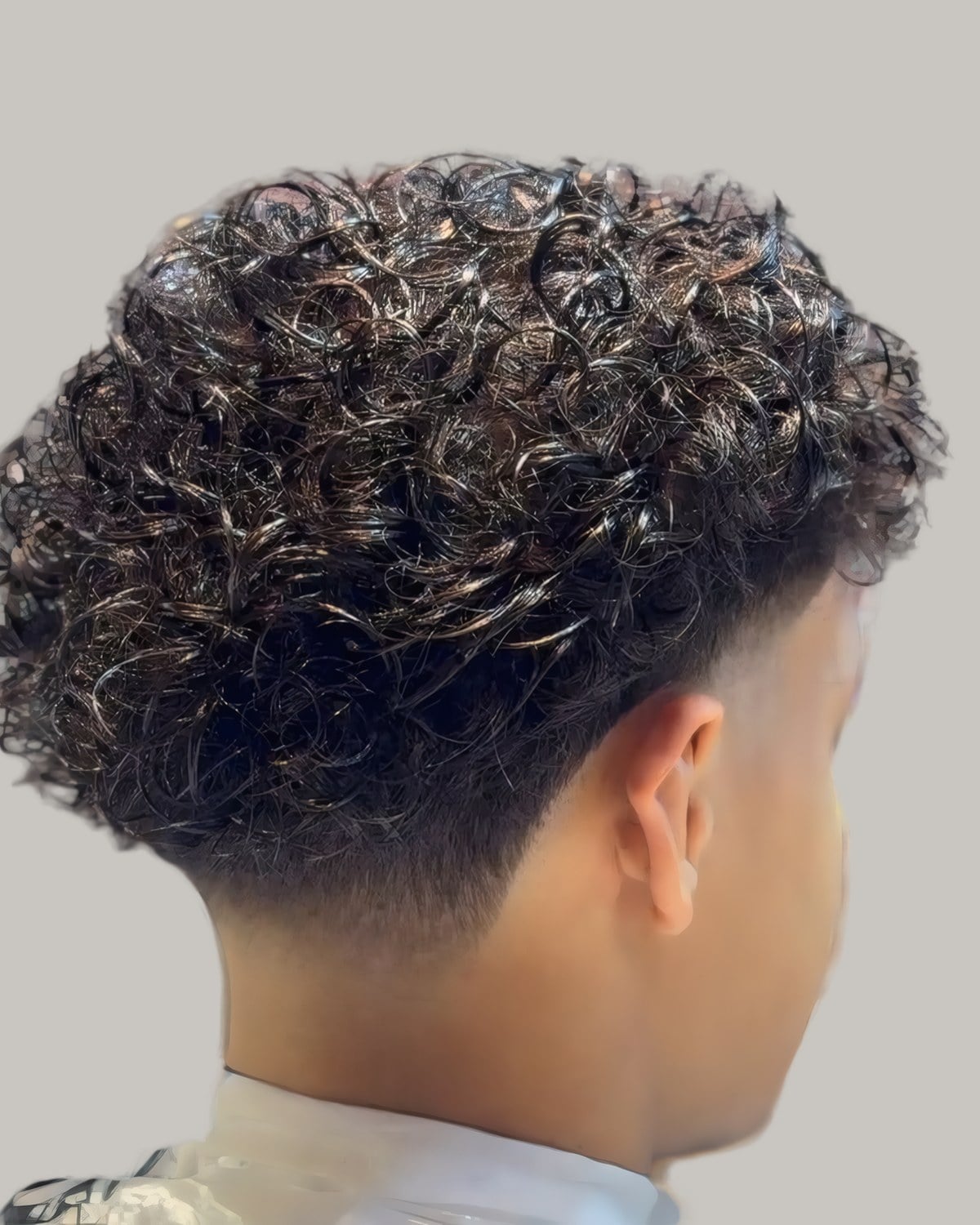
Think of it as a short back and sides for curly hair: the fade climbs out of the beard, and the curls stay compact on top. Keep a little curl gel handy to hold their shape between washes.
What to ask for Blend a mid skin fade into the beard, keep two inches of curl on top, and razor a line on one side.
Side-swept curls

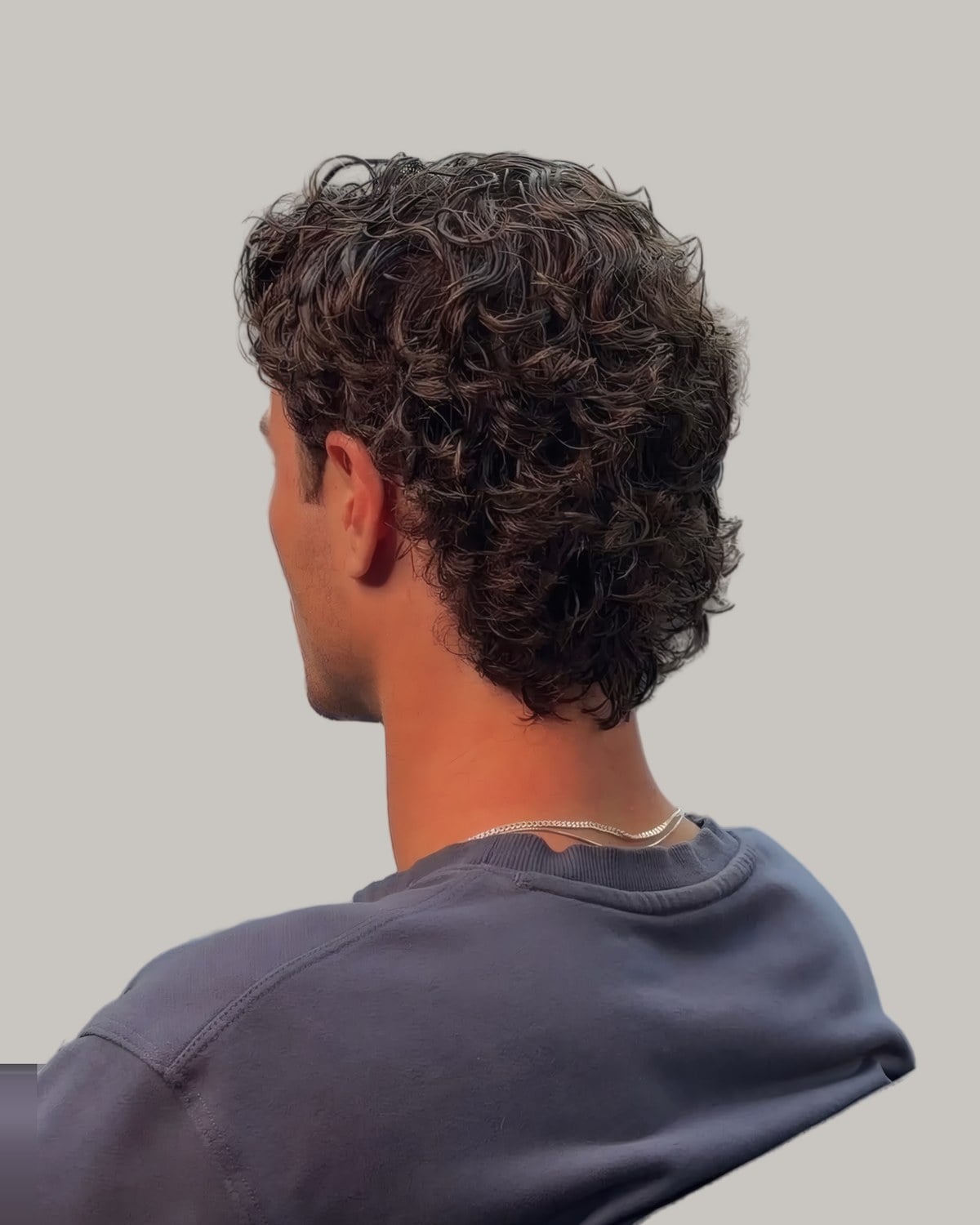
Medium curls, brushed across to one side with your fingers. With no fade or line-up to keep sharp, it grows out gracefully, and the parting goes wherever your curl pattern puts it. Scrunch a curl cream through damp hair and leave it to dry.
What to ask for Medium curls, about four inches on top and longer at the front, cut dry, with the sides left long enough to curl.
Long curly hair
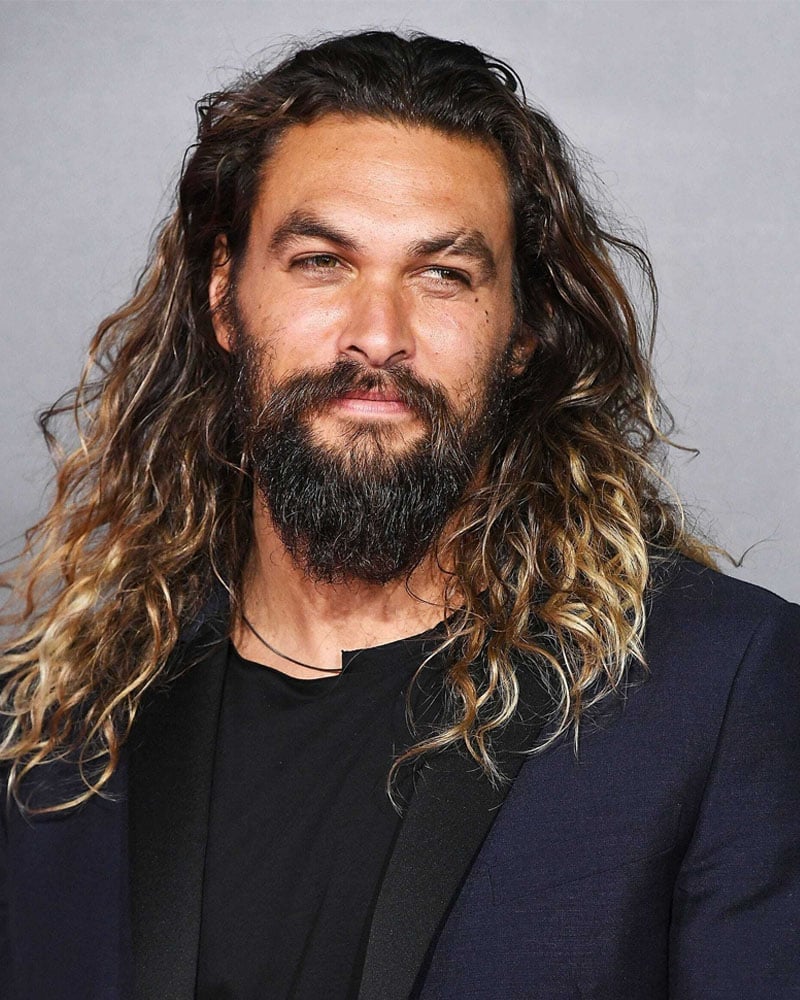
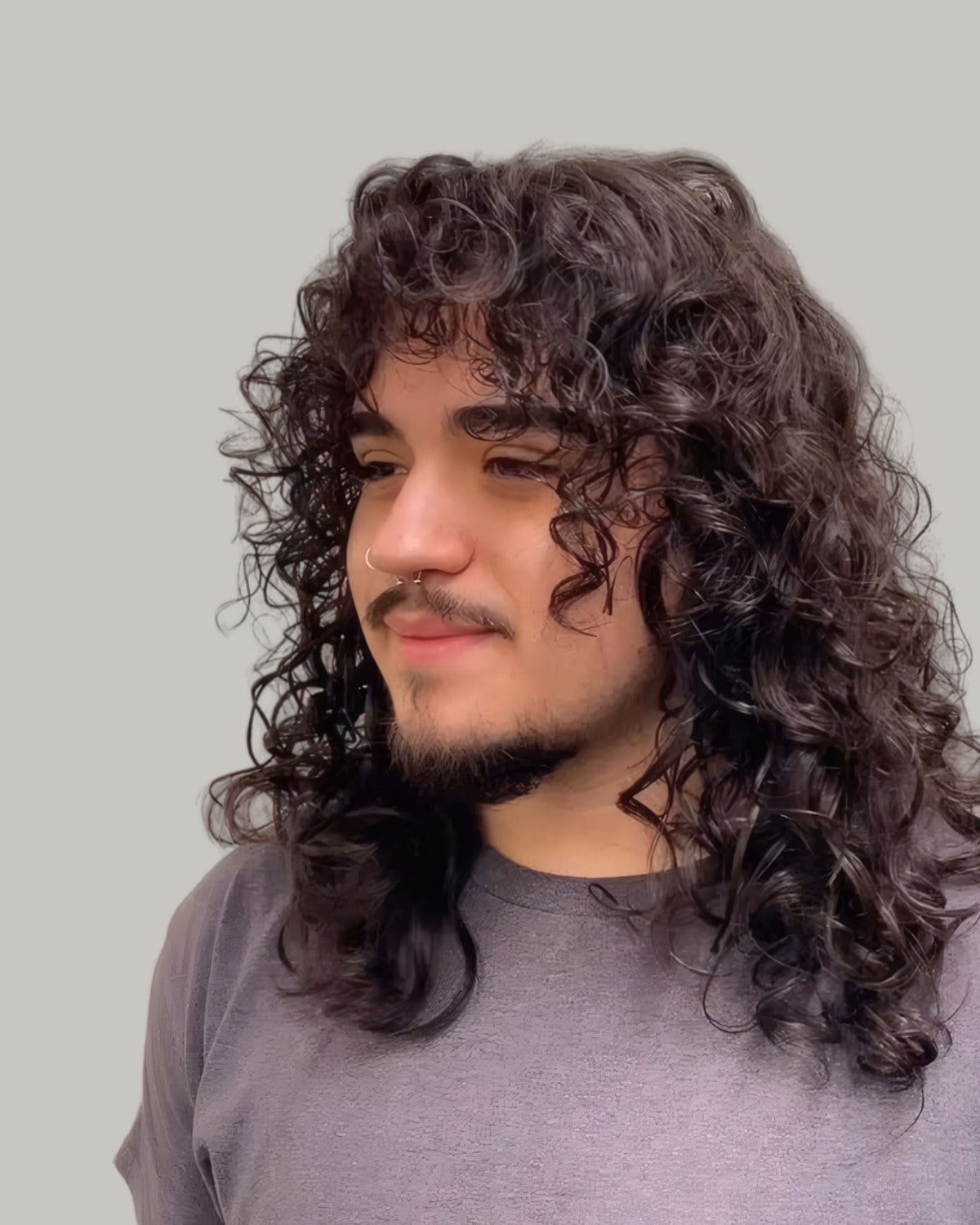
Long curls look best with a few light layers to keep the weight from settling at the ends. Wash it less, condition it more, and keep a hair tie on your wrist for workouts.
What to ask for Long layers cut dry to follow the curl, starting at the chin, and the ends trimmed lightly.
Haircuts for Black men
360 waves
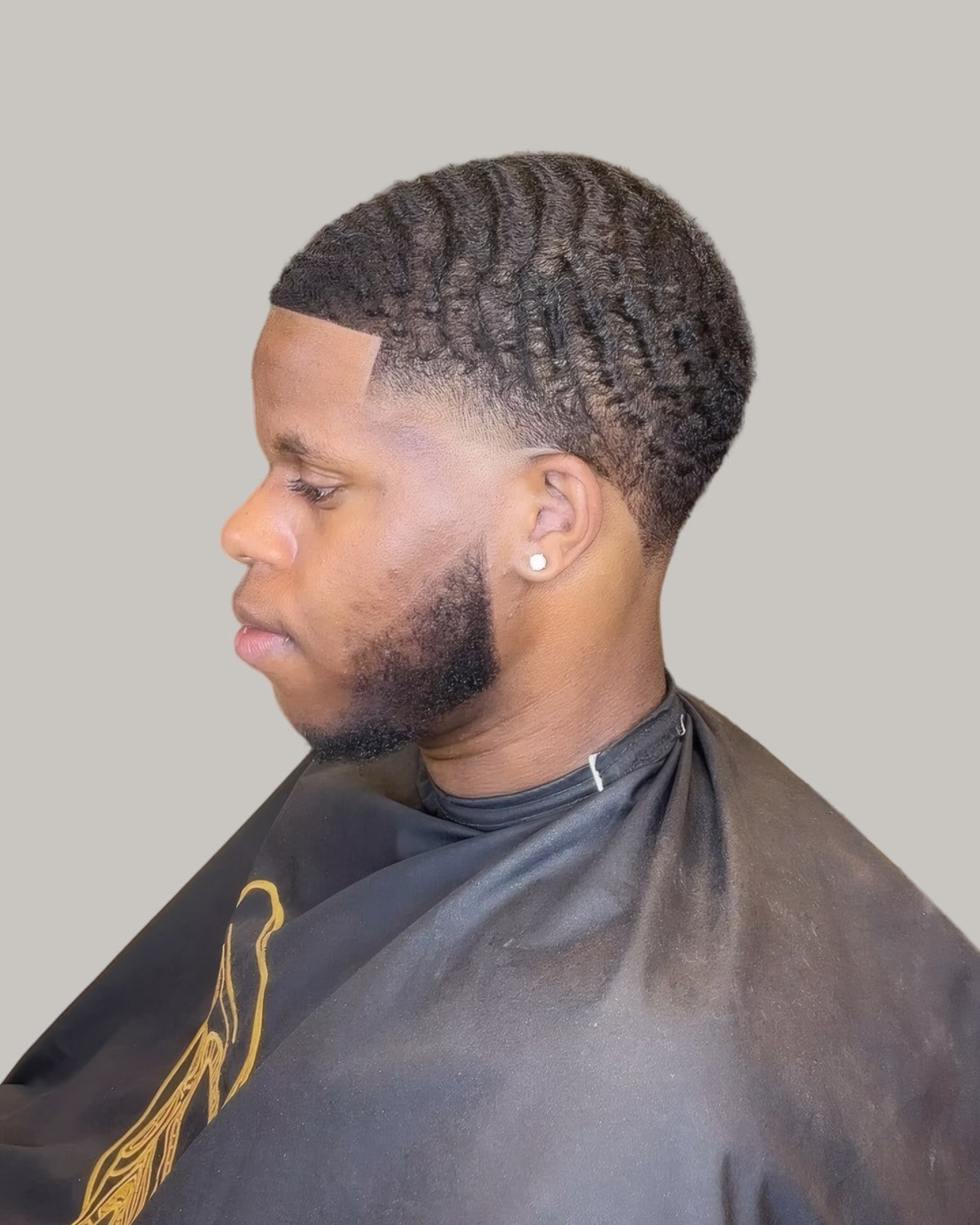
Keep the hair short, brush it every day and sleep in a durag, and the waves will come. A temple fade then cleans up the corners of the hairline. Put in a few weeks with the brush before deciding whether it’s working. For 38 more styles, from low cuts to locs, see our guide to Black men’s haircuts.
What to ask for Number 1 on top, a temple fade, and a sharp line-up.
Straight-back cornrows
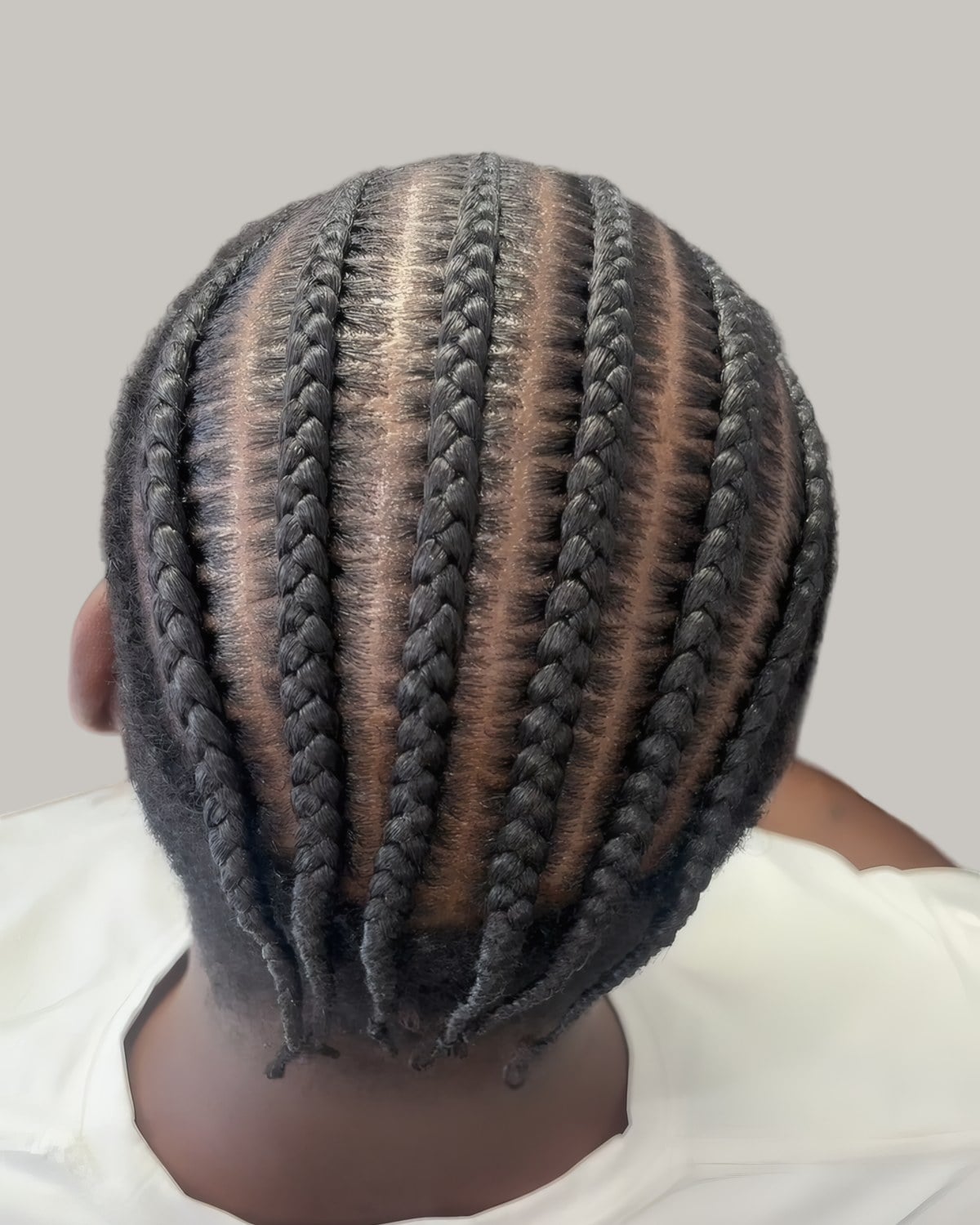
Cornrows run straight back in even rows, and a set can stay in for up to six weeks. You’ll sit for an hour and a half to three hours to get them, so bring a podcast.
What to ask for Straight-back cornrows in even rows from the hairline to the nape, with clean parts.
Box braids
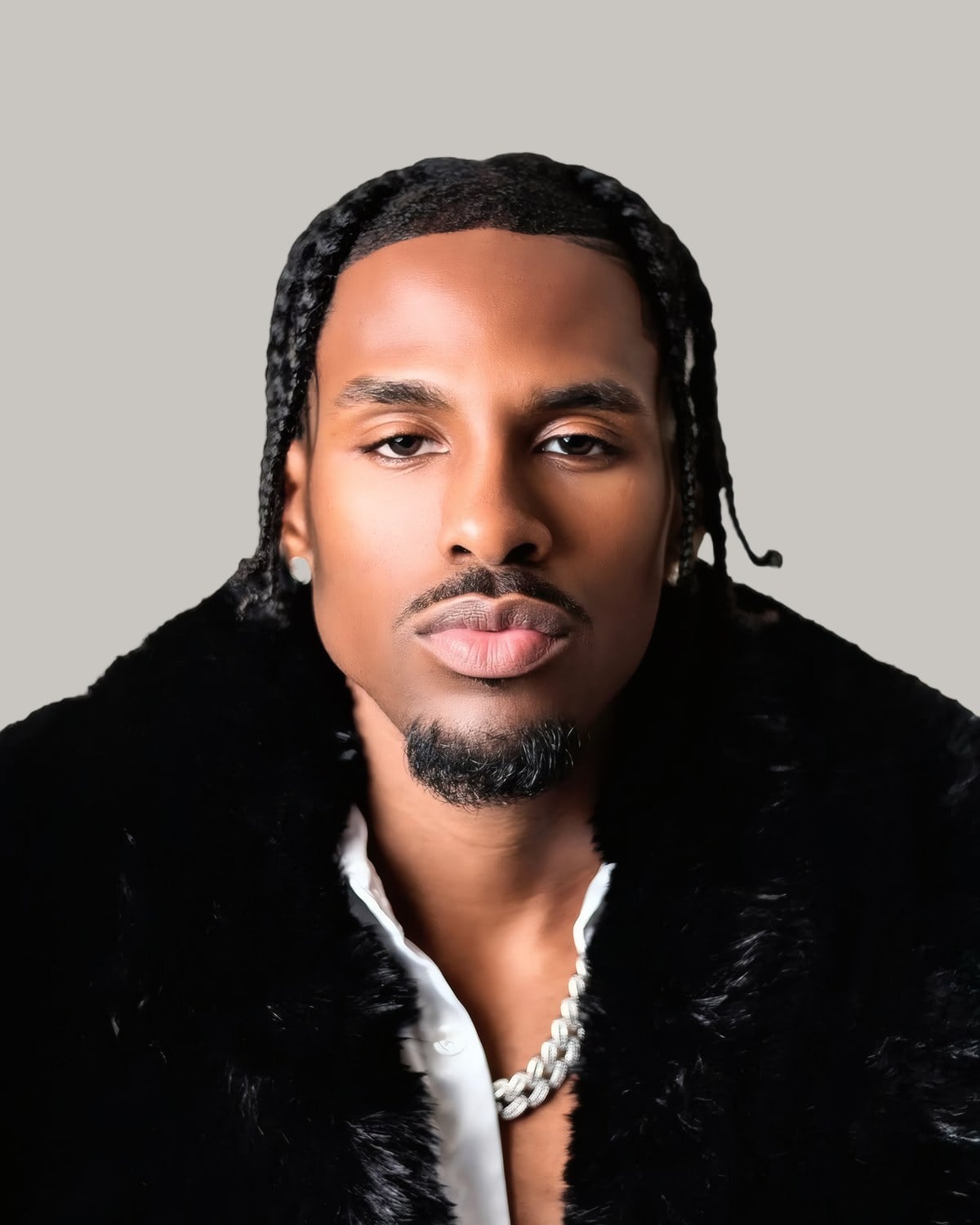
Box braids hang free, each one growing from its own square of scalp. The length lets you tie them back for work and leave them down for the weekend.
What to ask for Square sections, medium-sized braids, length to just below the chin, and the edges left alone.
Starter locs

Give new locs half a year and they’ll settle into shape. Getting them started traditionally comes in under $100. Until they settle, expect a little frizz around each one. That’s part of the process.
What to ask for Starter locs from comb coils, in even square sections.
01 of 01
Which haircut suits your hair type?
Your hair type narrows the list faster than anything else, so start there and pick the shape second.
Thick hair behaves best short. A crew cut or a short back and sides keeps it under control without thinning it out, and a fade takes the bulk off the sides. Grow it longer and you’ll need layers cut inside the hair, or a mullet or flow will look like a helmet.
Fine or thinning hair looks thicker cut short and blunt. A buzz cut needs no product at all, and a choppy crop or fringe adds texture that reads as volume. Go easy on heavy gel, since it clumps the hair and shows the scalp. Watching your temples climb? Our guide to haircuts for a receding hairline has 24 cuts built around it.
Straight hair holds a clean line. Side parts, slick backs and the Ivy League work well on it, while a quiff or a wolf cut needs volume cut into the crown so the top doesn’t lie flat.
Wavy and curly hair does the shaping for you. Layers let waves move, and a low taper tidies the sides without touching the volume on top. Ask for the cut to be done dry, curl by curl, so the length you see is the length you get.
Coily hair can wear every style in the Black men’s section, so choose by upkeep. Short cuts and waves mean a barber every few weeks, cornrows and twists mean one long sitting and weeks of peace, and locs are the long game.
Which haircut suits your face shape?
Your face shape decides where the height and the width should go. The idea is balance: add what your face doesn’t have, and keep the hair away from what it already has plenty of.
| Face shape | What helps | Cuts to try |
|---|---|---|
| Square | Close sides that show off the jaw | Buzz cut, crew cut |
| Round | Height on top, short sides | Quiff, pompadour, high taper |
| Oval | Most things, with not too much height | Textured crop, flow, side part |
| Oblong | Less height, some width at the sides | Low taper, longer buzz, Caesar cut |
| Diamond | A fuller fringe to widen the forehead | Textured fringe, Caesar cut |
| Triangular | More hair at the sides | Low taper, flow, wolf cut |
A round face wants length, so build it on top and keep the sides tight. Our guide to haircuts for round faces has 26 cuts built that way. An oval face can try almost anything, though a tall quiff stretches it further than it needs. A diamond face has strong cheekbones and a narrower forehead, so a fringe evens things out. A triangular face needs the opposite of a high fade: ask your barber not to take the sides too close around the ears.
What to ask your barber for
Give your barber three things: the top, the sides and the finish. The top is a length in inches (“two inches, textured”). The sides are a guard number plus a taper or a fade and where it starts (“low taper, number 2”). The finish is the line-up, natural or hard, and how you’ll style it.
Bring a photo from the front and another from the side, because a fade can look completely different from each angle. Then show them the look and say its Ask line. Barbers hear “short on the sides, longer on top” all day, and it can mean any of the 28 looks on this page.
How often should you get a haircut?
Every two to six weeks for a short cut, depending on how sharp you want the sides to stay. Hair grows about half an inch a month, so a fade loses its blend first and a taper hangs on longest.
| Cut | Weeks between visits |
|---|---|
| Buzz cut | 2–4 |
| Low or mid fade | 2–3 |
| High fade at skin | 1–2 |
| Taper | 4–6 |
Longer cuts are about the ends rather than the sides. A mullet takes three to six months to grow in, and reaching the shoulders from a short back and sides takes 18 months to two years. In the meantime, keep seeing your barber to tidy the neck and the sideburns.
What’s the difference between a taper and a fade?
With a taper, only the hair at your sideburns and the back of your neck gets shorter. A fade shortens the entire side and back, often to bare skin, and it can start low, mid or high on your head.
| Taper | Fade | |
|---|---|---|
| What gets shorter | Only the edges: sideburns and nape | The whole of the sides and back |
| Shortest point | Close to the skin at the edges | Often bare skin |
| Starting point | At the edges only | Low, mid or high on the head |
| Weeks between visits | 4–6 | 1–3 |
So a taper keeps more of your hair and grows out more gently. A fade gives sharper contrast and needs your barber more often. Either one goes with almost any top, from a buzz cut to a pompadour.
What do the haircut numbers mean?
Each number is a clipper guard, and each step up adds an eighth of an inch. So a number 1 is 1/8 inch, and a number 8 is a whole inch.
| Number | Hair left | Where you’ll hear it |
|---|---|---|
| #1 | 3 mm (1/8 in) | Close enough for the scalp to show |
| #2 | 6 mm (1/4 in) | A popular length for a first try |
| #4 | 13 mm (1/2 in) | The short end of a crew cut top |
| #8 | 25 mm (1 in) | The longest guard in a standard set |
“Zero” means no guard at all, and its length varies from one clipper to the next. Since hair adds about half an inch a month, a fresh number 2 has grown to roughly a number 6 four weeks later.
How do you grow out a short haircut?
Keep booking the barber, but change the order. Have them trim only the neck and the sideburns and skip the top, so the outline stays sharp while the length comes in.
A fade turns into a taper after a few weeks of growth, then into a medium cut with even sides. The awkward stage arrives when the top stands up but won’t lie down yet. A little matte clay gets you through it.
So the next time the cape goes on and the barber asks, you’ve got a name, a number and a photo to show. “Just a tidy-up” can retire with honours.
Products featured here are independently selected by our editors. If you buy through our retail links we may earn an affiliate commission — it never changes the price you pay, and it never decides our verdicts. Read our earnings disclaimer.