Your hair’s past your collar, your mom has asked twice when you’re getting it cut, and there’s a mullet saved on your phone that you’d actually wear. Then you sit down and the barber asks two questions the photo doesn’t answer. Fade or taper? And how much do you want to keep at the back?
Those two answers decide how loud the cut looks. The shape hasn’t changed since the 1980s: short at the front and sides, long at the back. What’s changed is the join. Where the 1980s cut stepped straight from short to long, today’s barbers blend the two with layers, a taper or a fade.
Below are 27 modern mullets cut by working barbers, grouped the way people ask for them: fades, tapers, curls, short, straight, wavy and messy hair, Asian and Korean cuts, and mohawks, long, slicked-back and classic ones. Each ends with the line to say in the chair, so pick a favorite and read it out.
Modern mullet haircuts
Here are 27 modern mullets, grouped the way people ask for them.
Modern mullet fades
Low fade mullet
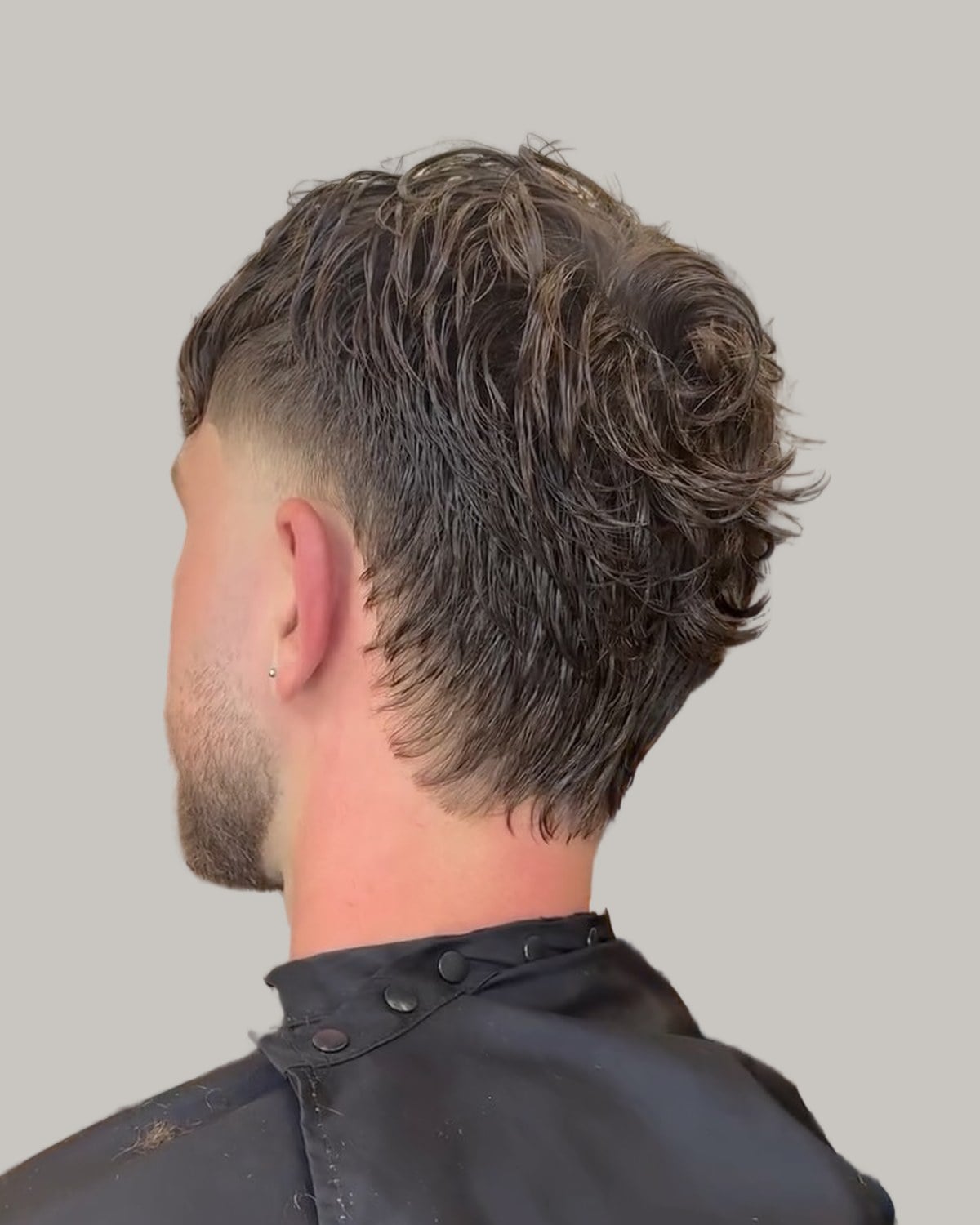
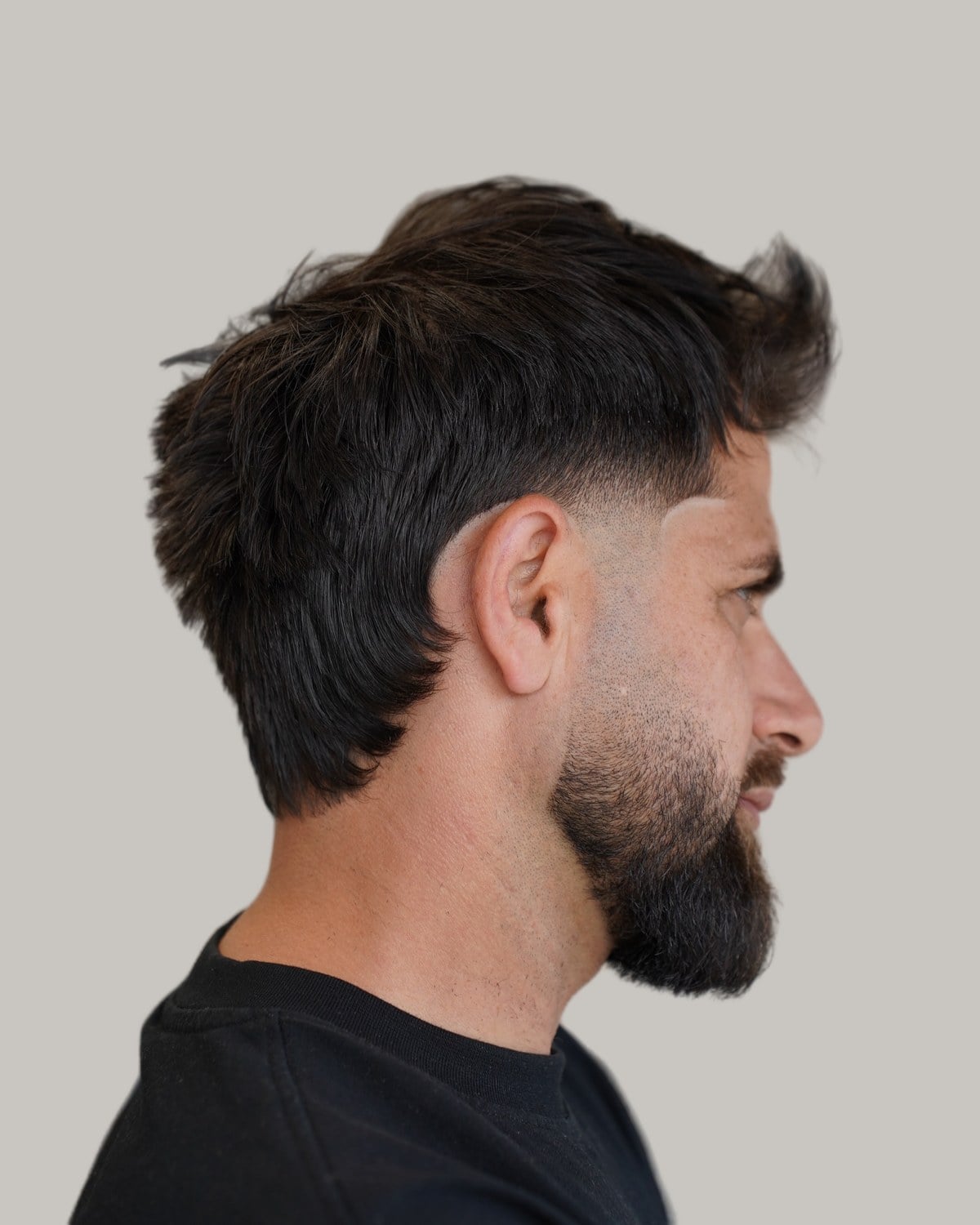
The fade starts low, down around the ears and the neckline, so most of the side length stays where it is. Fade Artist calls it a good first mullet, and it’s easy to see why: the contrast is there, but nobody at work will ask what happened. Rough-dry it and push a little clay through the back.
What to ask for Low fade starting at the ear and the neckline, the top left at about three inches, the back kept long and textured.
Mid fade mullet
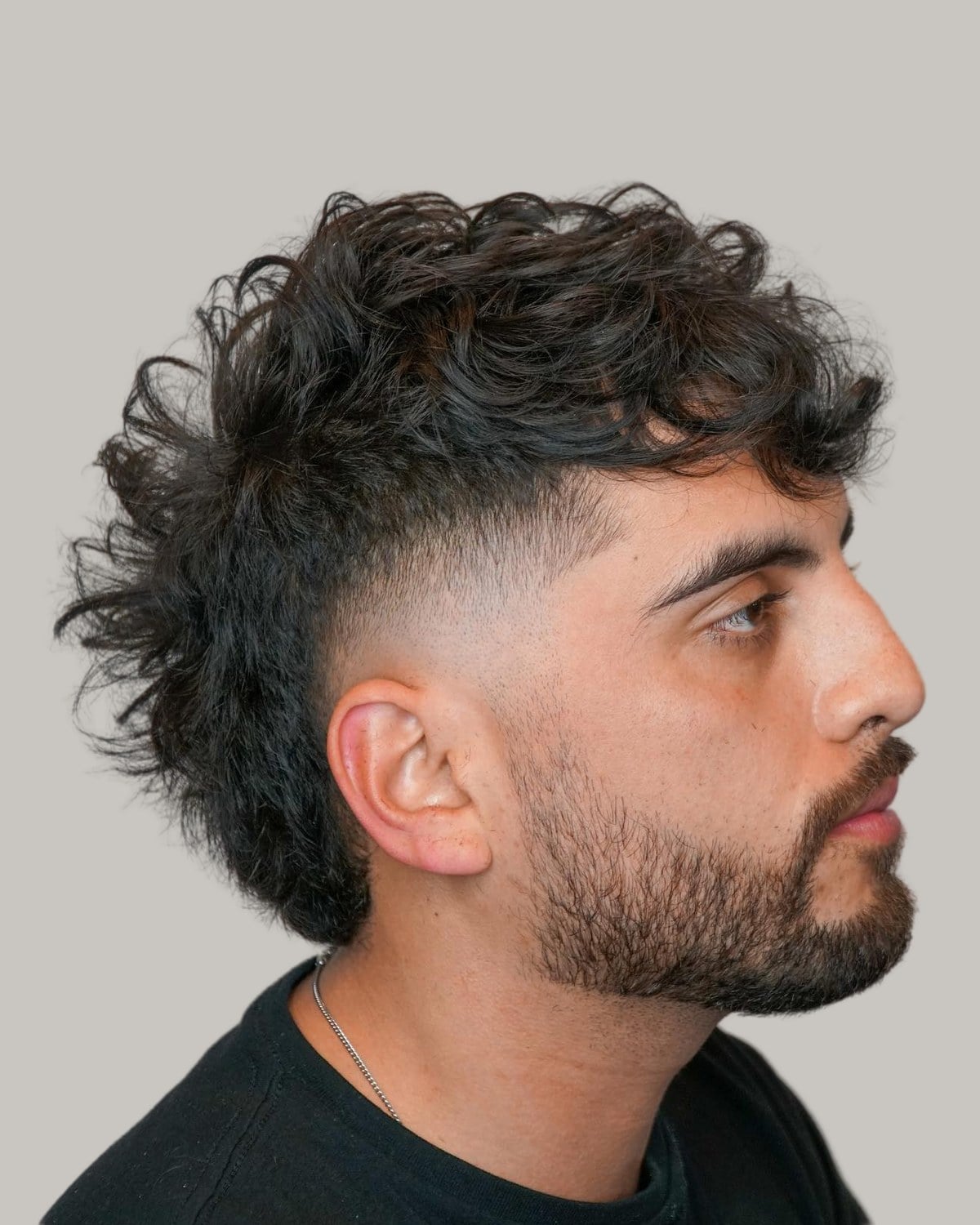
A mid fade starts higher on the side than a low one, so there’s more contrast between skin and curl. Fade Artist says it takes out more weight than a low fade. That’s handy if your hair puffs out around the ears, and these curls would happily take over the whole head if left alone. Expect a clean-up every three to four weeks.
What to ask for Mid fade starting above the ear, blended into the top, curls left at about three inches on top and longer at the nape.
High fade mullet
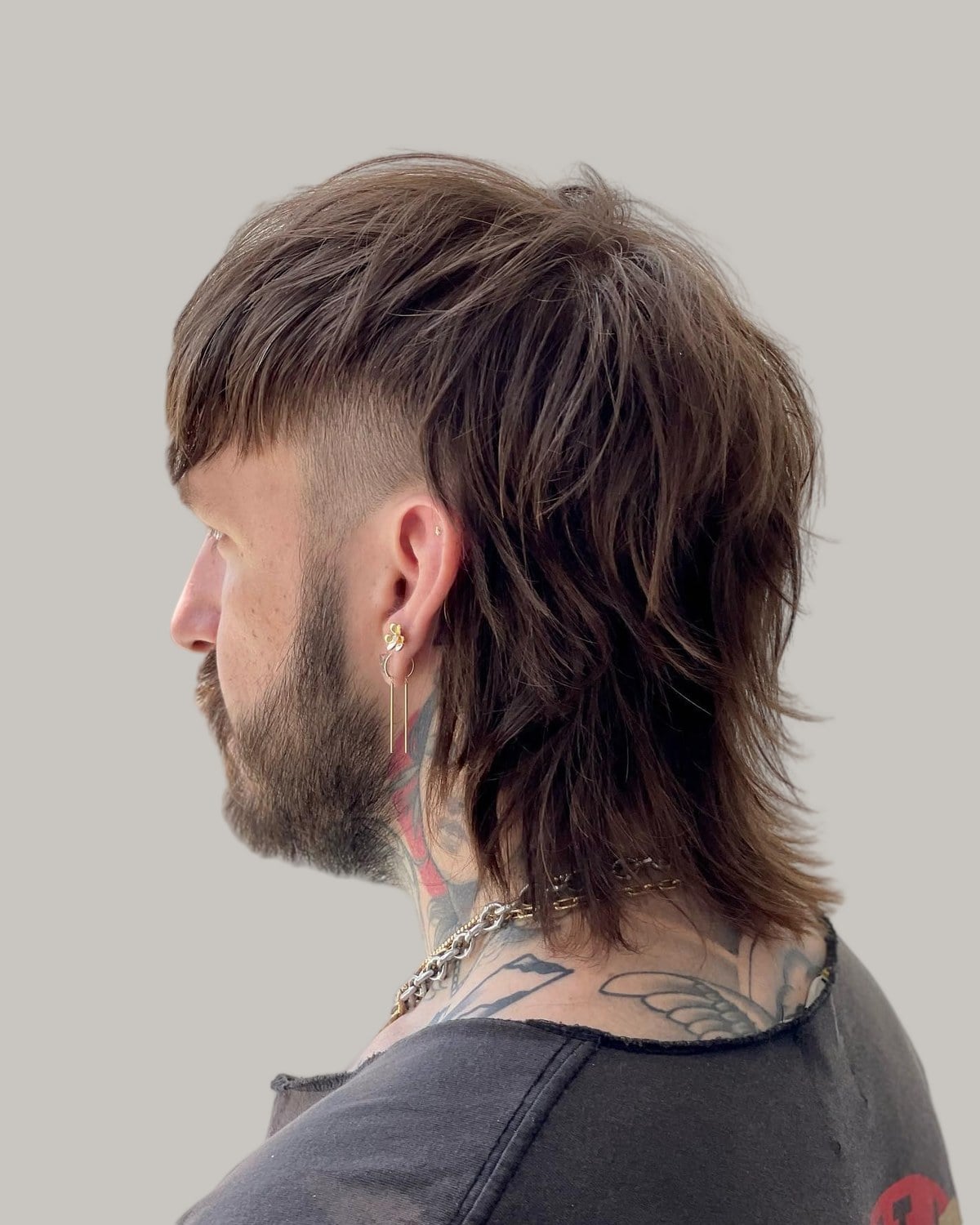
The fade runs high up the side, so nearly all the length lives on top and at the back. Fade Artist rates it bolder than a mid fade, and it is: the long layers look longer still against all that skin. Grow the back before you go this high, or you’ll end up with a high fade and not much mullet.
What to ask for High fade taken close up to the top of the head, a heavy fringe, and long layers left at the back past the collar.
Skin fade mullet
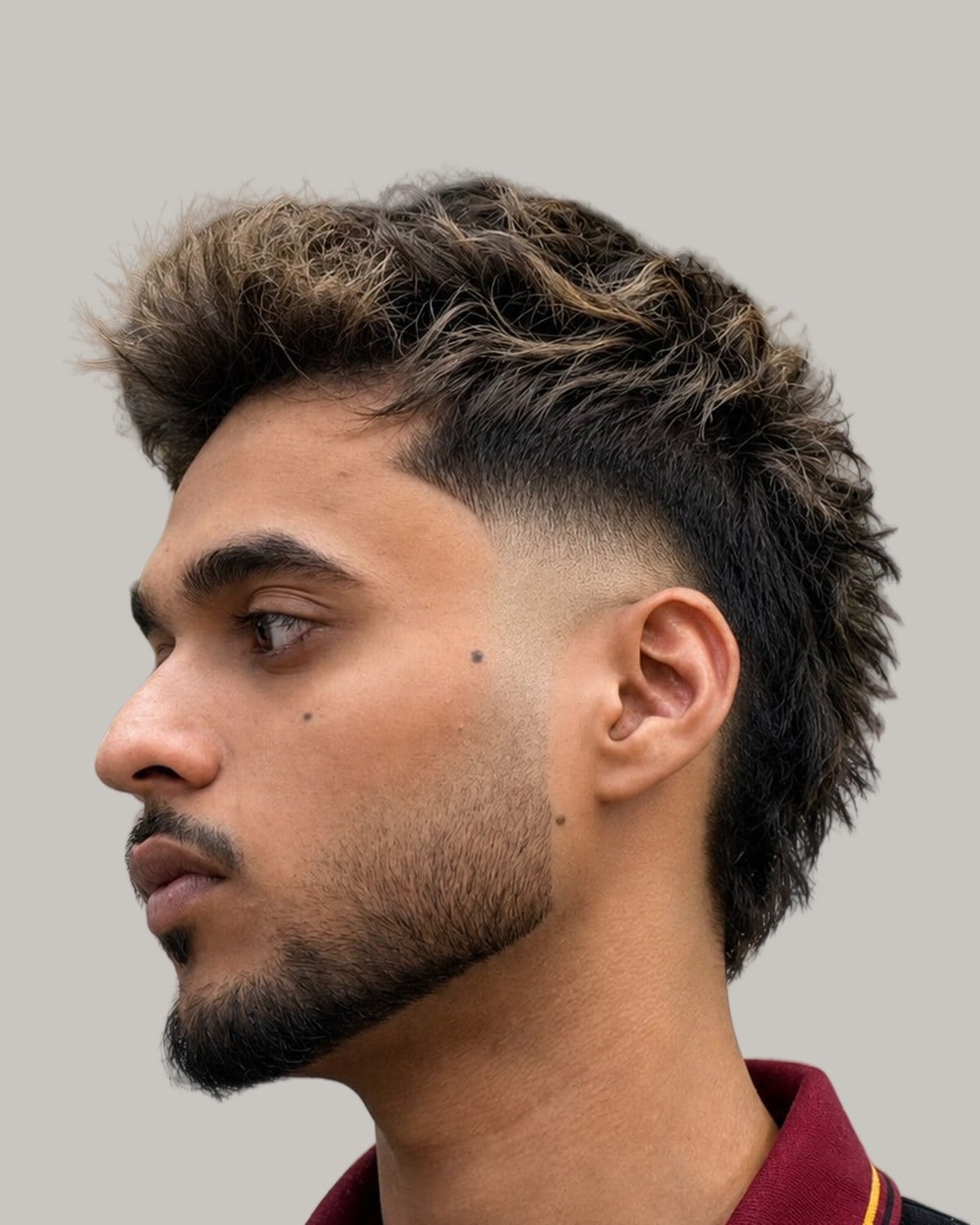
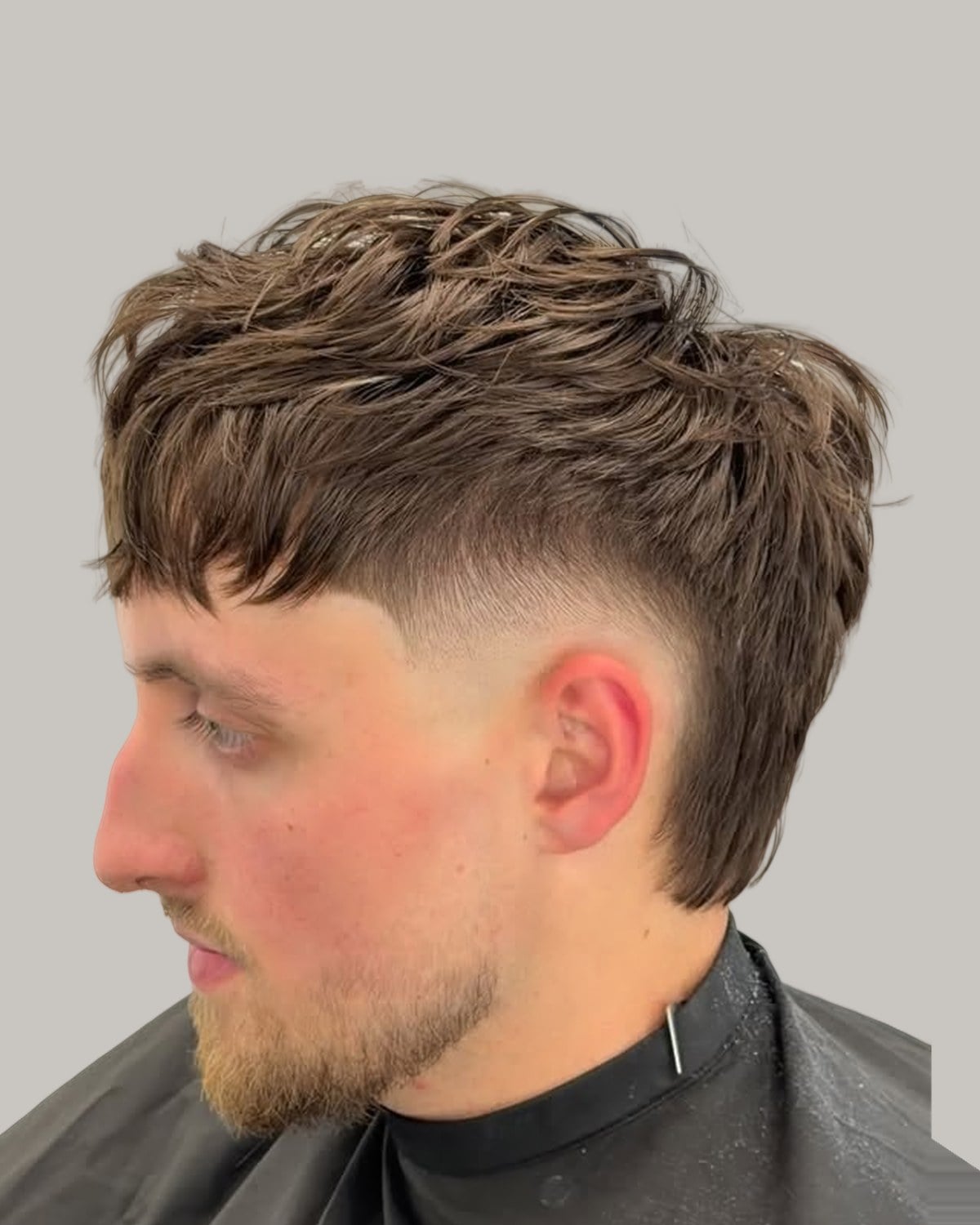
The sides go all the way down to bare skin, and the back stands out against them. It also brings you back to the chair often: Fade Artist puts a skin fade at a trim every two to three weeks. In return you get a crisp line between the sides and the back.
What to ask for Skin fade on the sides, the top textured at about three inches, and the back left long with the ends point-cut.
Burst fade mullet
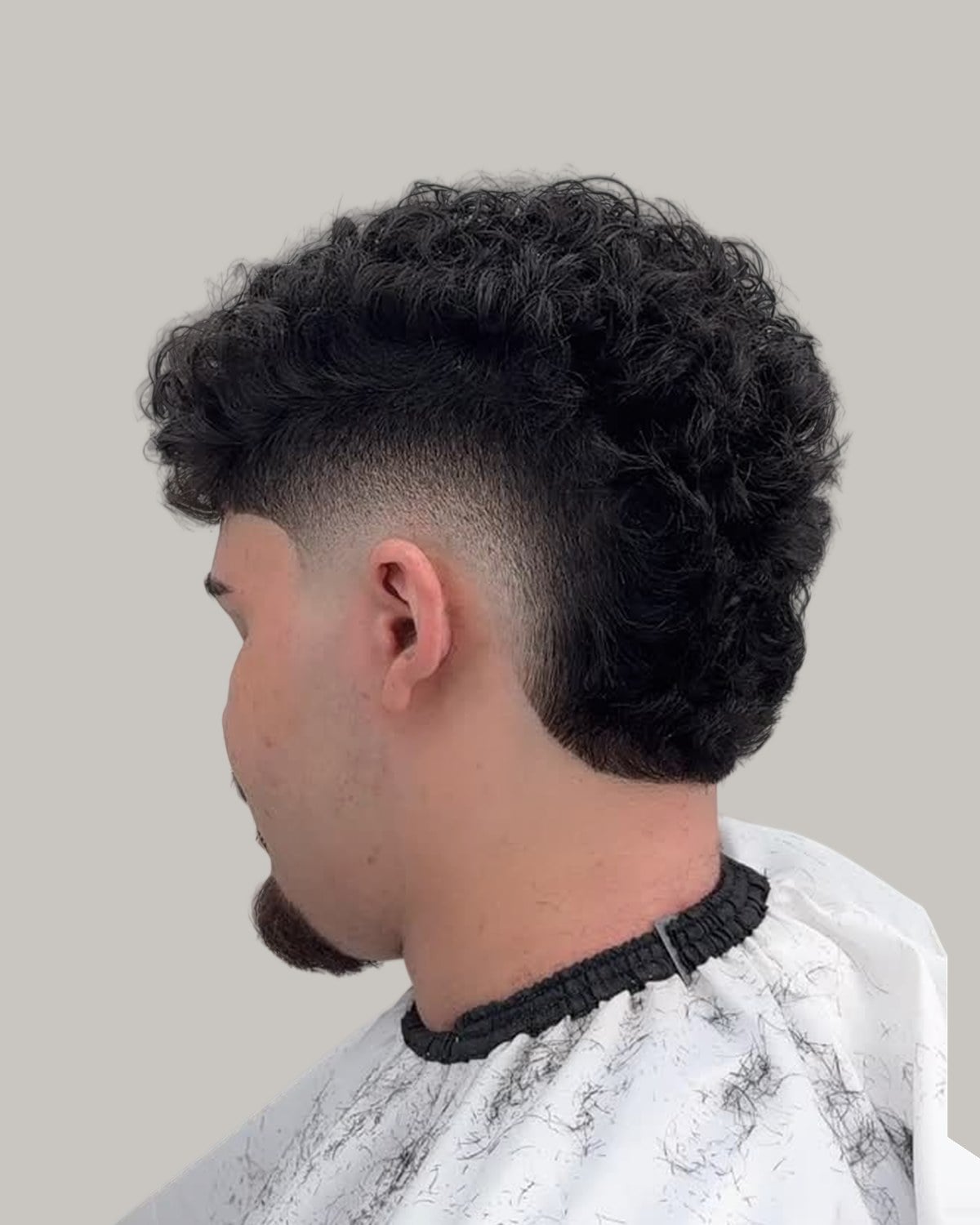
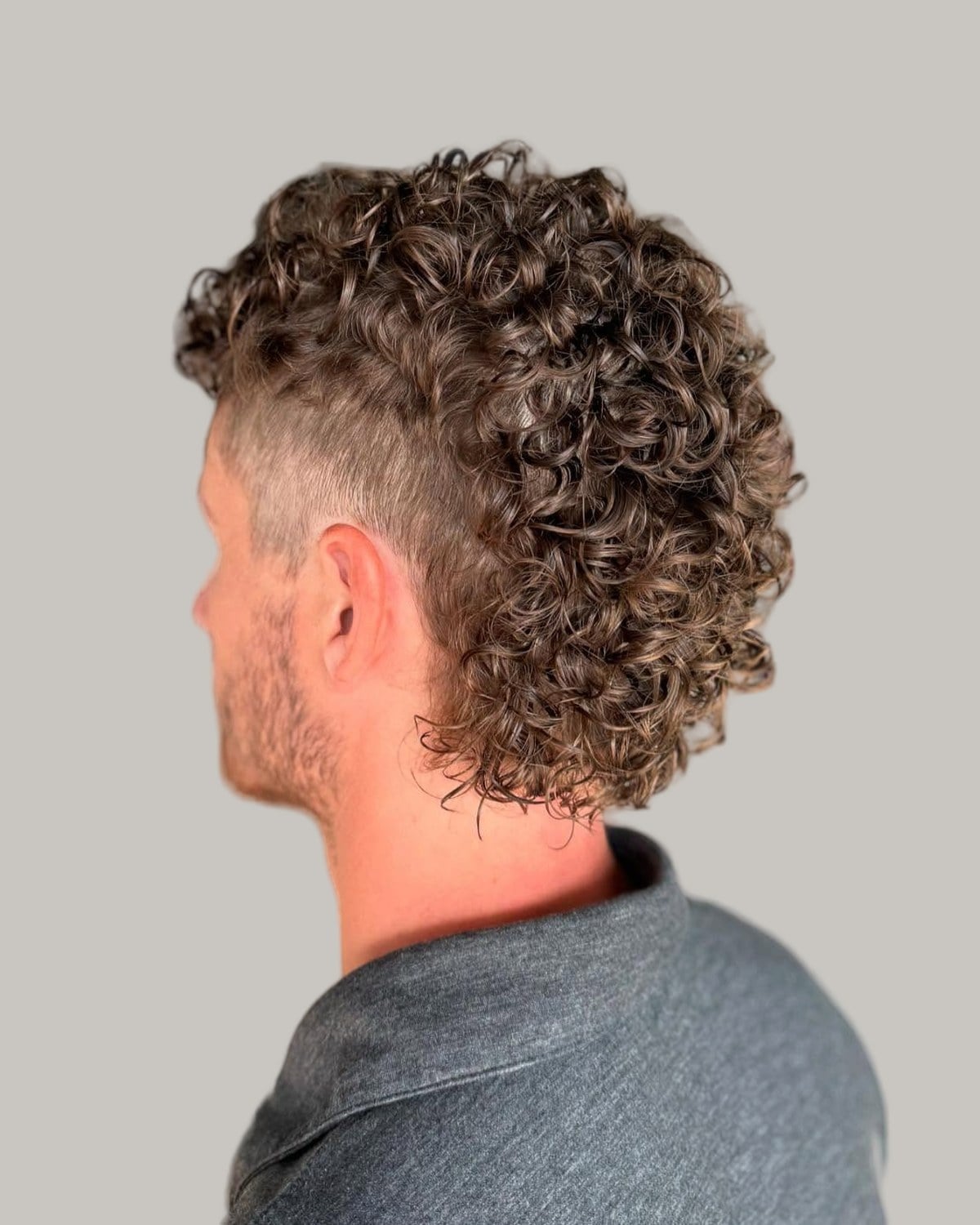
Here the fade curves in a half circle round the ear and blends into the longer back, instead of running in a straight line. Fade Artist says it works well on textured or curly hair. The neck keeps its length (it’s still a mullet, after all).
What to ask for Burst fade around the ear, taken close behind it, the neckline left long, and texture through the top.
Taper mullets
Low taper mullet
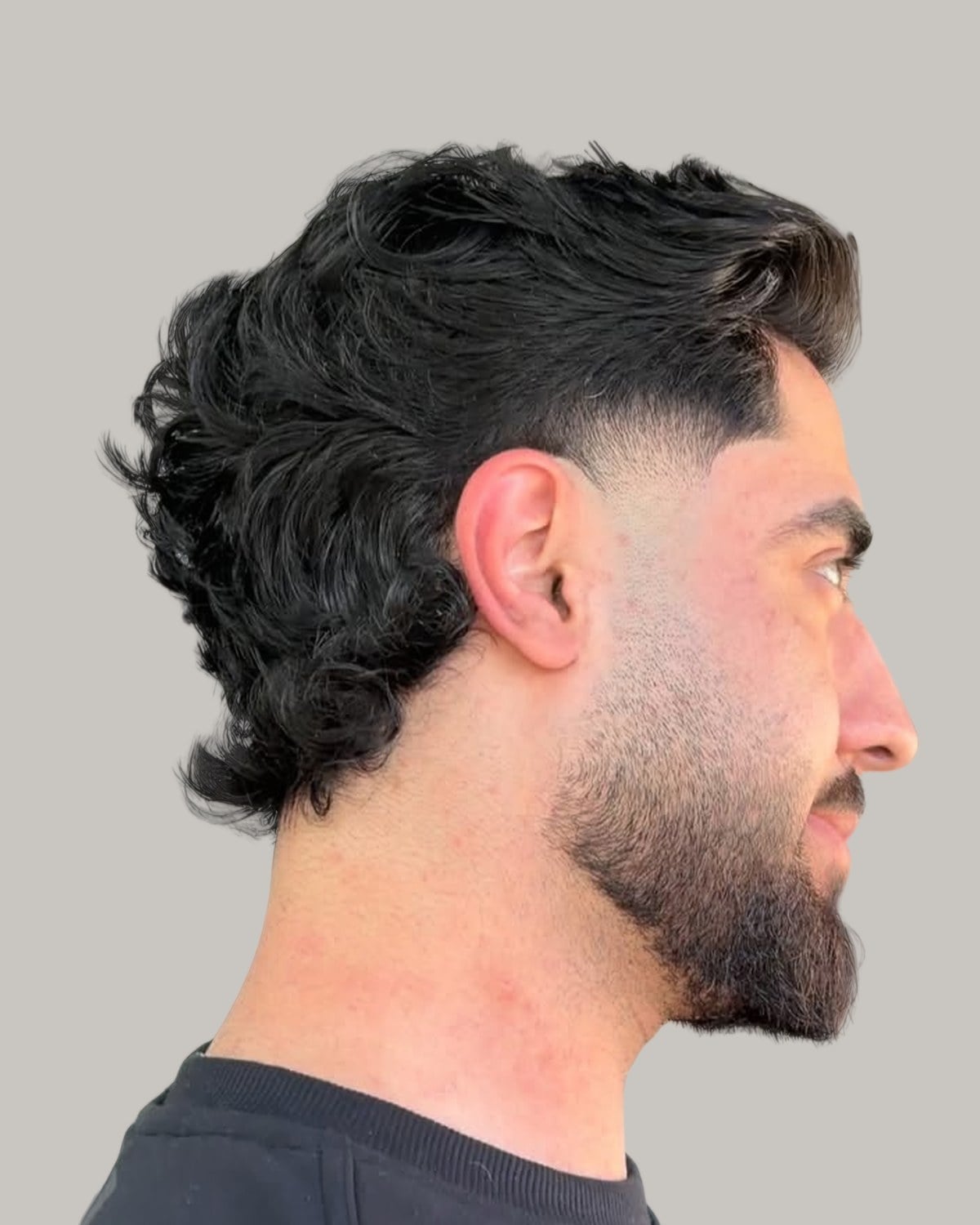
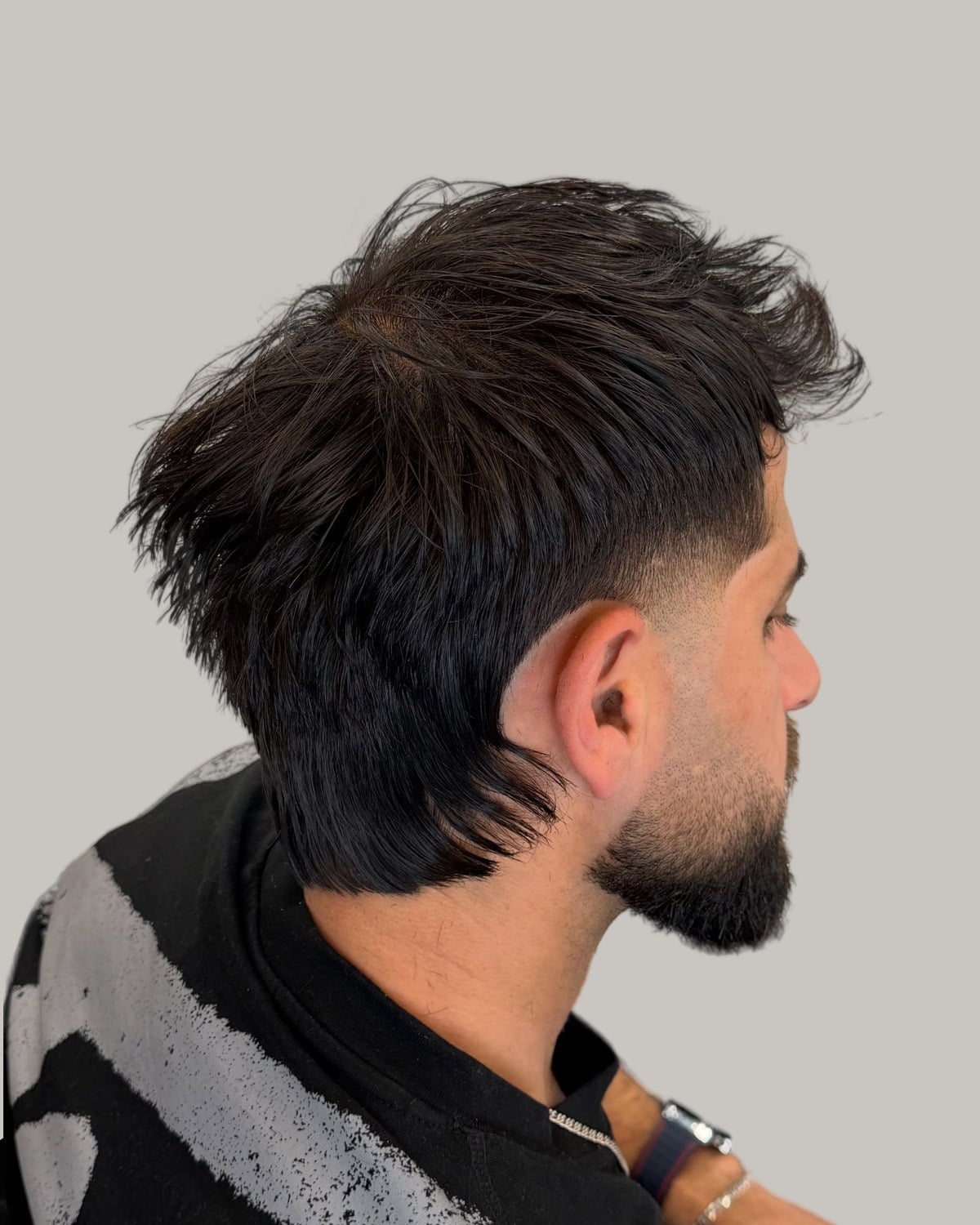
A taper cleans up the edges instead of taking the whole side short. On a low taper mullet only the lower edges get the treatment, so the sides keep their length and the cut looks grown in rather than shaved. It’s the softer route if a fade feels like too much.
What to ask for Low taper at the sideburns and the neckline only, the sides kept at scissor length, and the back left full.
Mid taper mullet
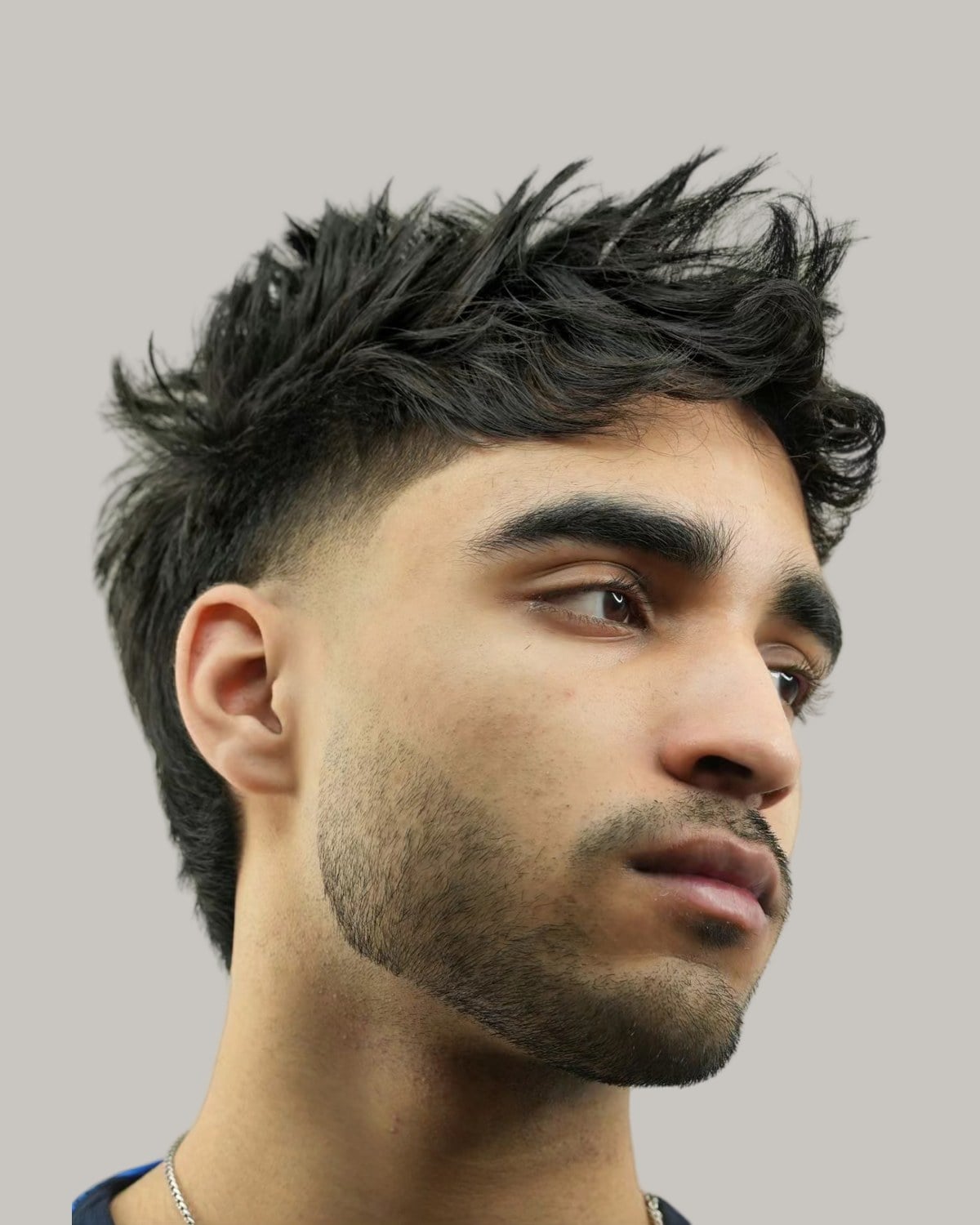
A taper tidies the edges rather than taking the whole side short, and a mid one starts a little higher than the low taper above. It joins a beard neatly. Fade Artist puts tapers at four to six weeks between visits, longer than a fade (your barber will see less of you, and they’ll cope). Twist the spikes up with a matte paste.
What to ask for Mid taper starting just above the ear and the nape, blended into the beard, a short textured fringe, and length left at the back.
Temple taper mullet
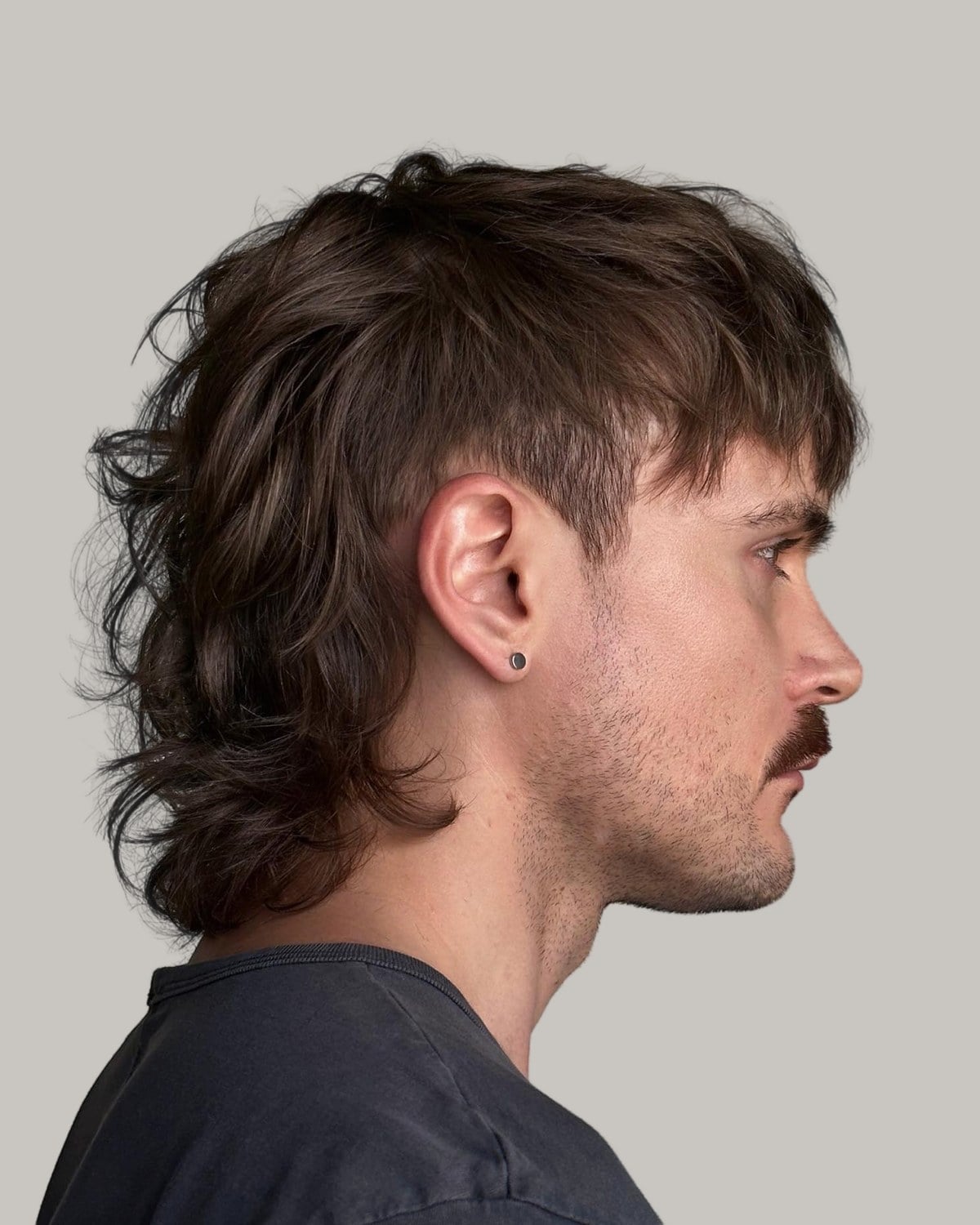
This taper works on the temples and the sideburns and leaves the rest of the side full. It keeps the face clean, and Fade Artist says it’s useful if your hair grows heavy near the front corners. Behind the ear nothing changes, and the layers carry on past the nape as if they never got the memo.
What to ask for Temple taper at the temples and sideburns only, the sides left full over the ear, a choppy fringe, and long layers at the back.
Taper fade mullet
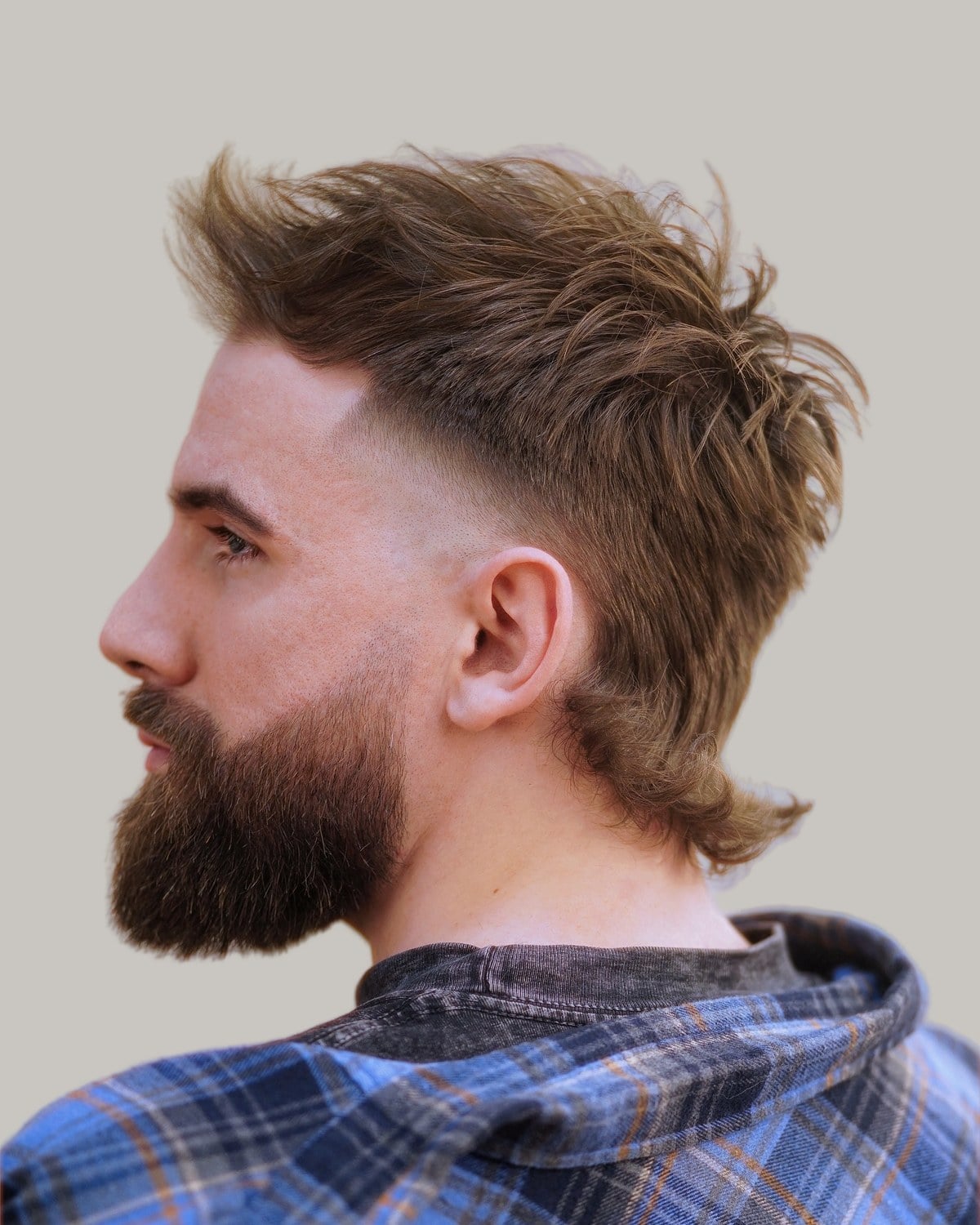
A taper fade takes the hair close at the edges, the sideburn and the neckline, and blends it up into the length. The middle of the side keeps more hair than a full fade would leave. Add a full beard and the face ends up framed on three sides (four, if you count the fringe). A little texture spray stops the back from sitting flat.
What to ask for Taper fade at the sideburns and the neckline, the sides blended up into a choppy top, and the back left long.
Mullet with a beard
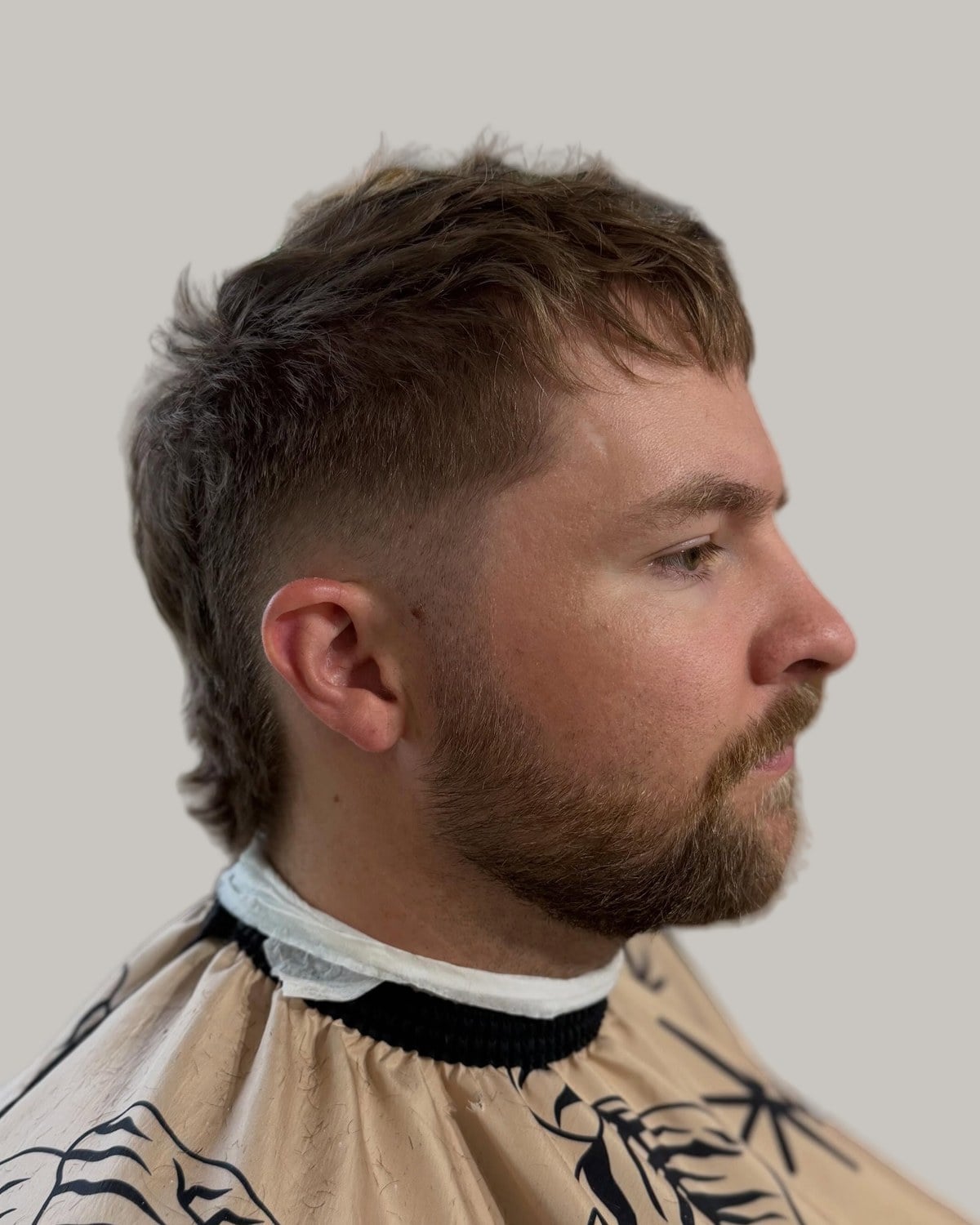
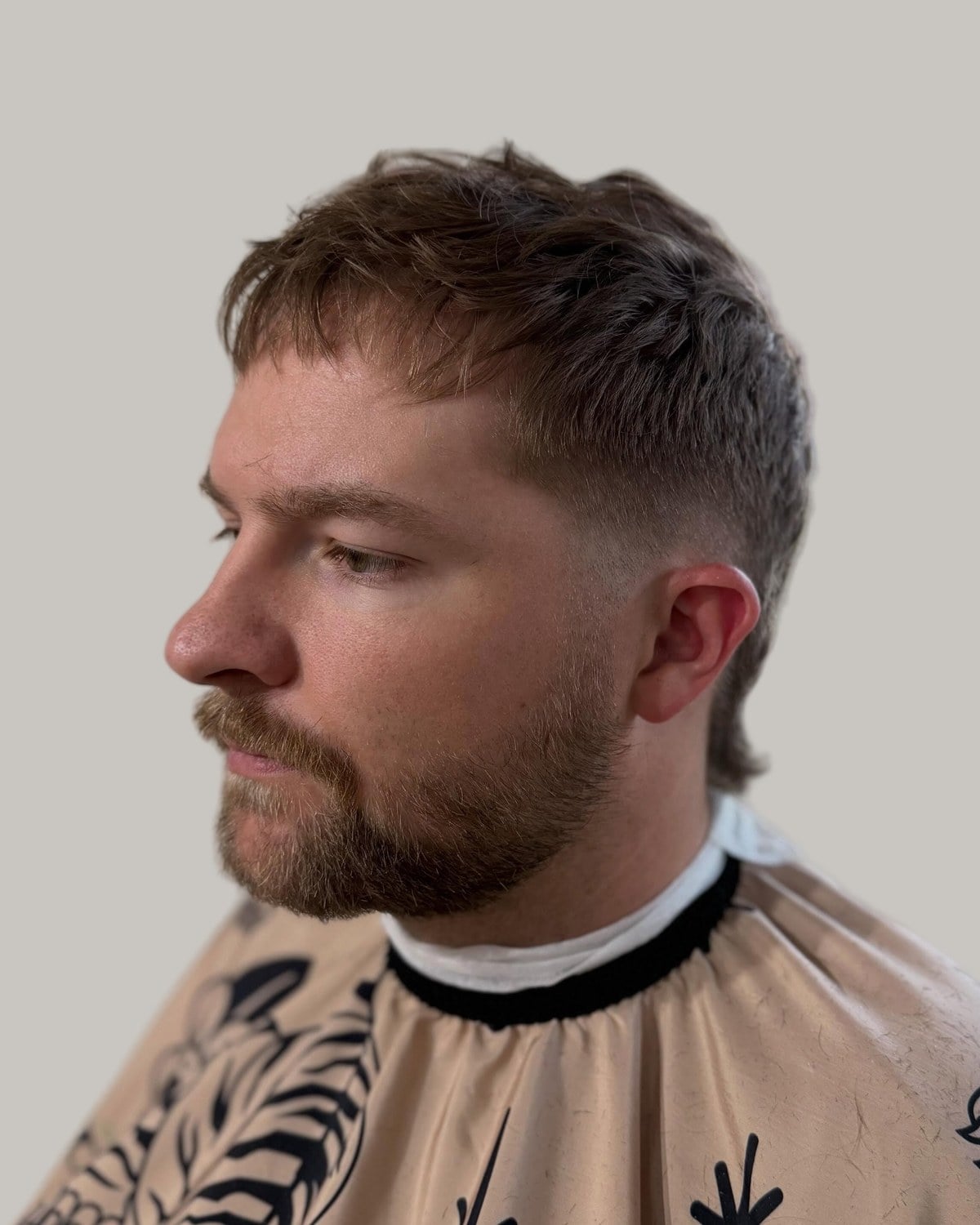
The sides run down into a beard, joined by the fade or taper, so the whole head reads as one cut. Ask for the beard in the same appointment. A short textured top keeps it tidy, and the back does the rest.
What to ask for A low taper down into the beard, the beard shaped to match, a short textured top, and the length at the back left long.
Curly mullets
Curly mullet
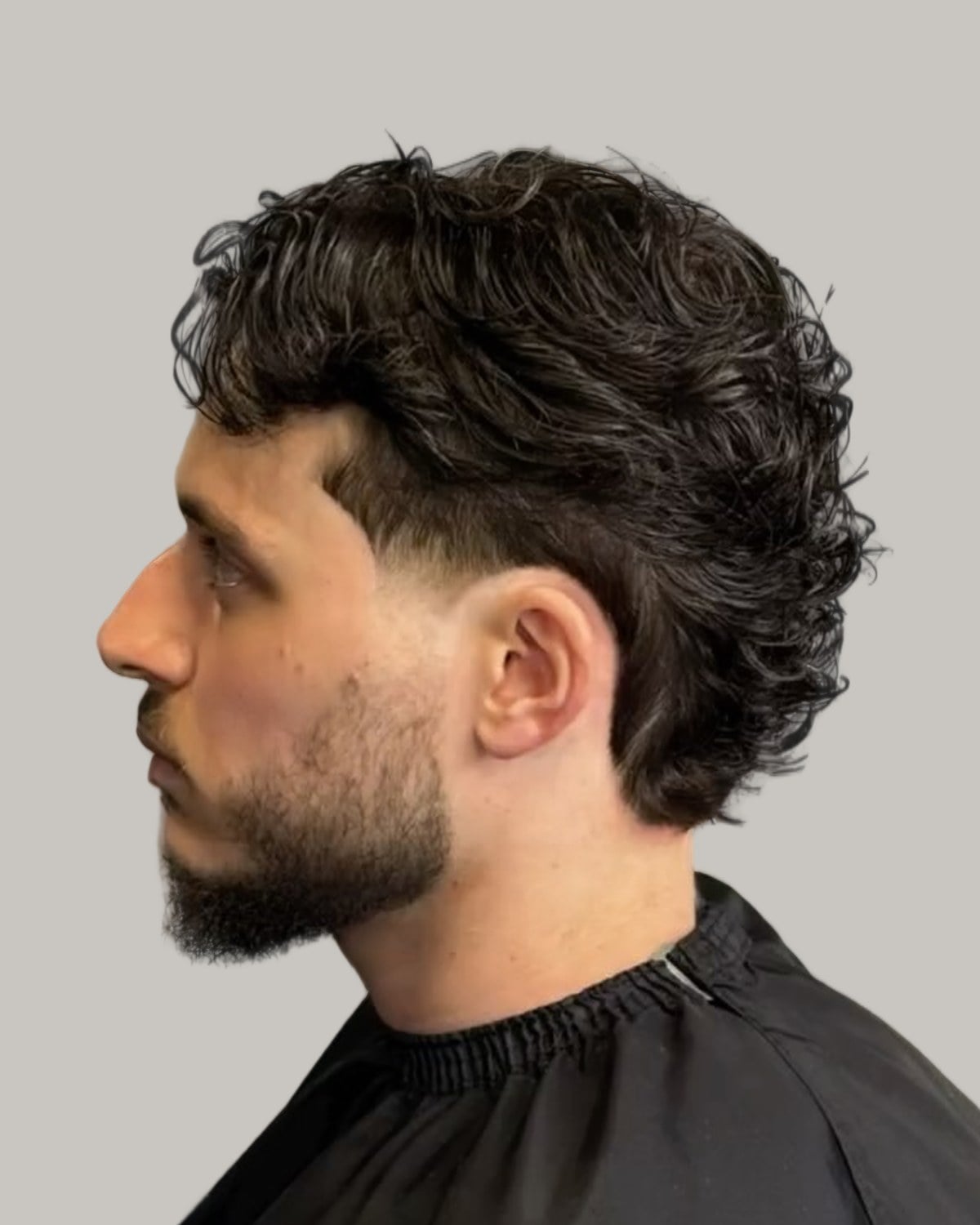
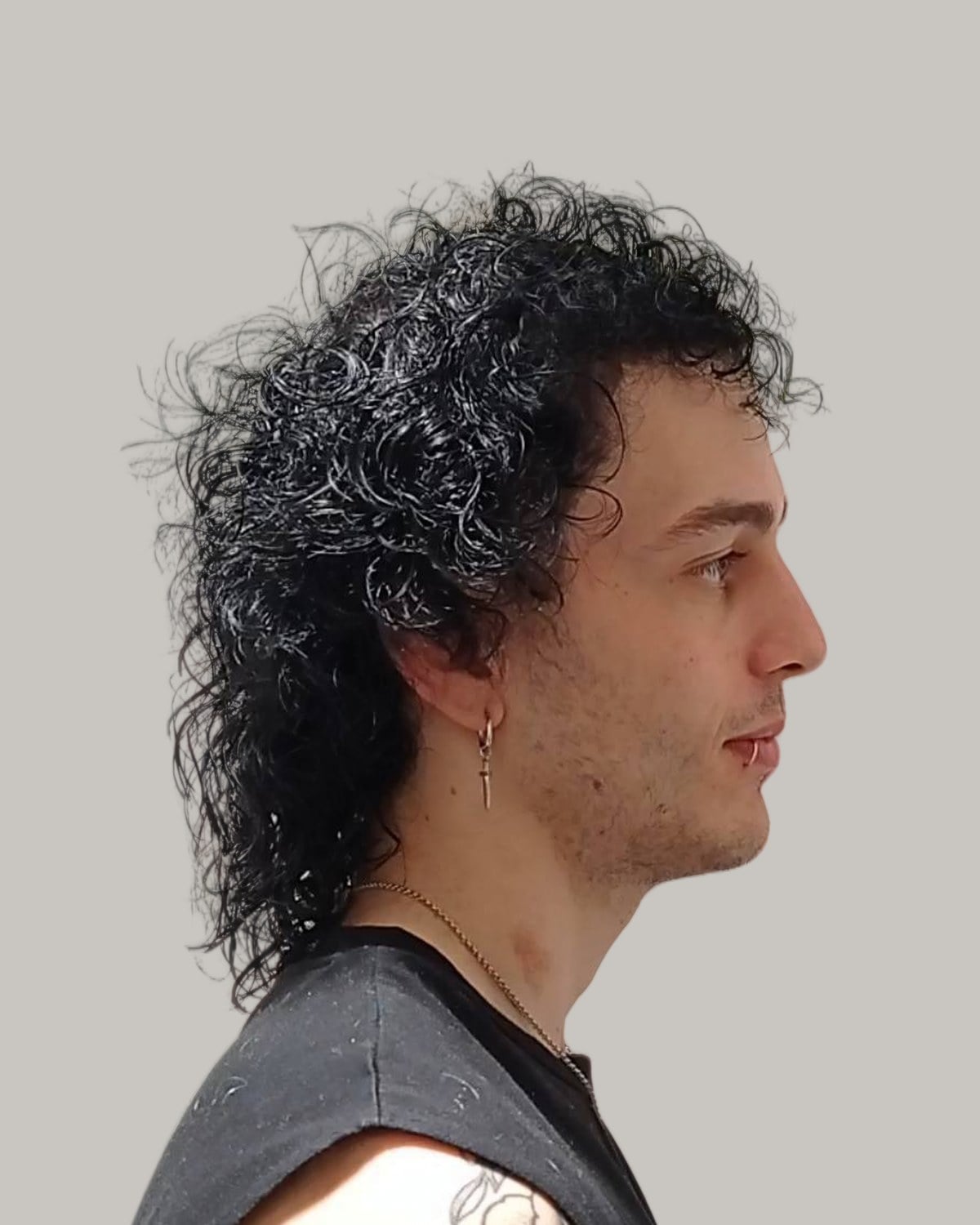
Full curls on top, faded sides, and the back left to flow. Wavy and textured hair supports the mullet’s shape naturally, so curls do half the barber’s work for them. A curl cream on damp hair and a diffuser will do the rest.
What to ask for Curls kept long on top and at the back, a low fade on the sides, and the ends shaped dry.
Curly mullet with a fade
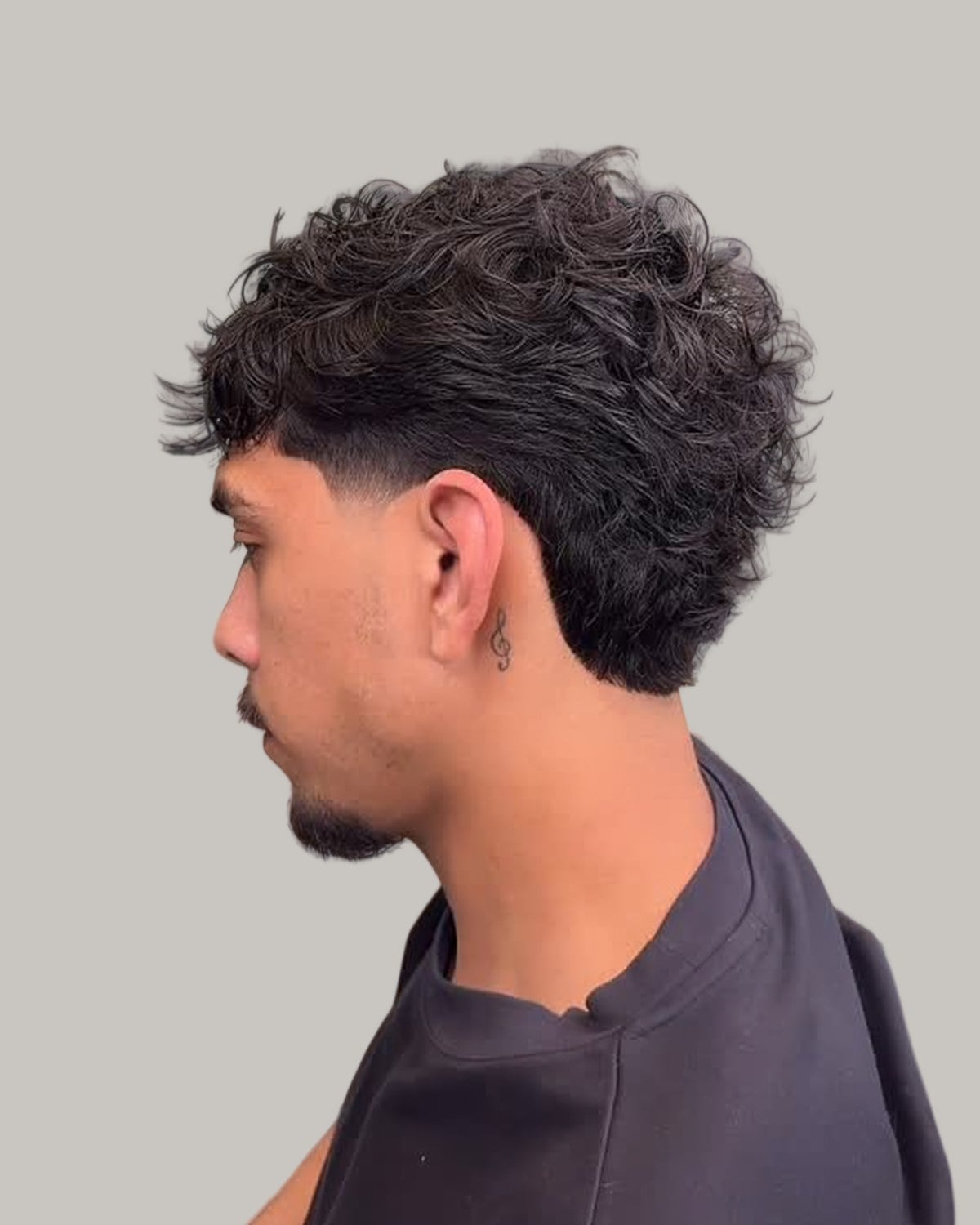
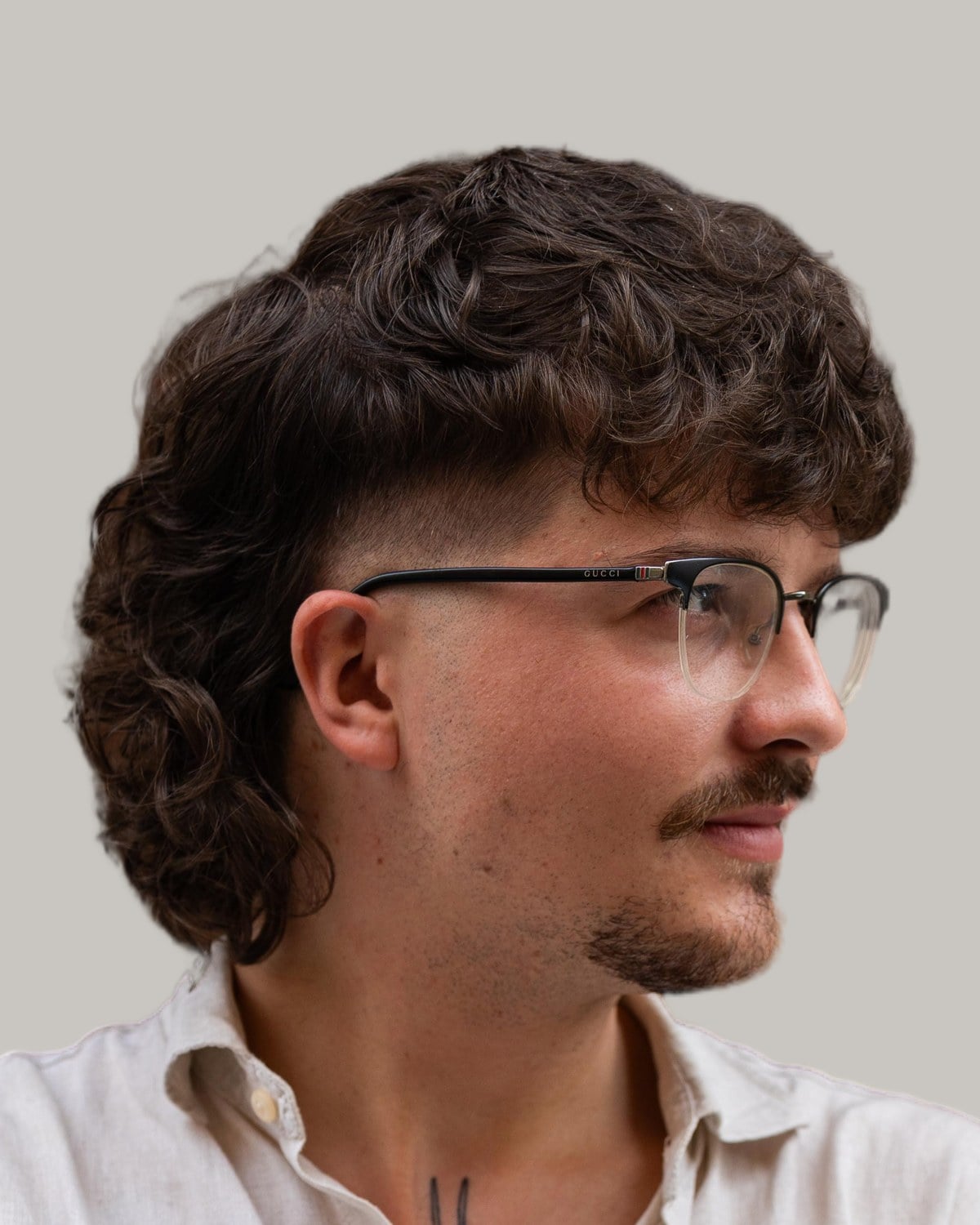
The same curls over a sharper faded side. The fade makes the curly top and back stand out, and it gives the cut a tidier edge between visits. One tip from Mullet Style: curls shrink as they dry, so the length you see wet isn’t the length you’ll get.
What to ask for Mid fade on the sides, curls left at three to four inches dry on top, the back longer, and cut for shrinkage.
Long curly mullet
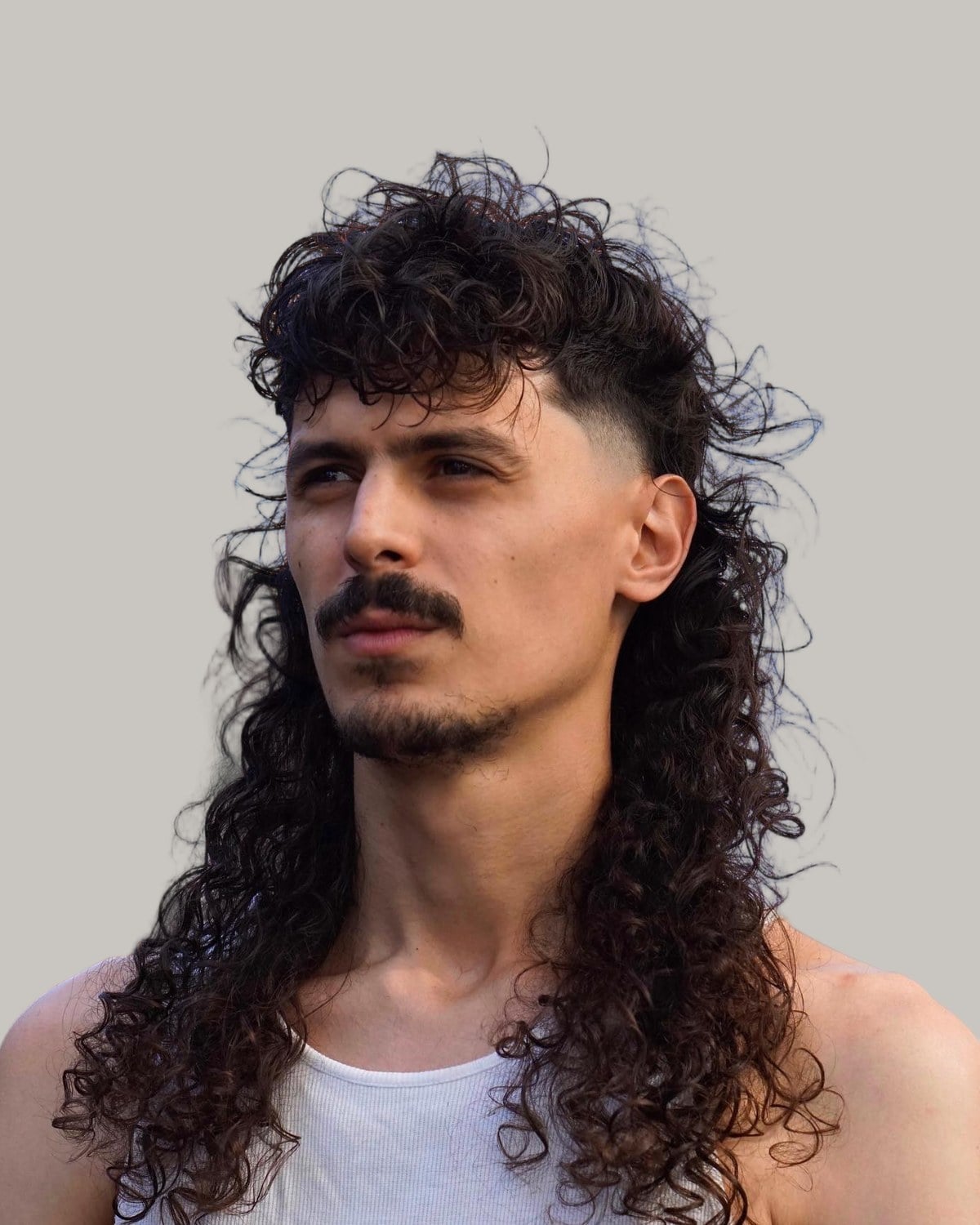
Curls grown well past the shoulders, with a curly fringe and a faded side. Hair grows about half an inch a month, so this one is counted in years rather than haircuts. Keep the sides tidy while the back catches up, and have the barber trim just the ends.
What to ask for Curls left long at the back, past the shoulders, a curly fringe cut dry, and a mid fade on the sides.
Curly hair mullet with a skin fade
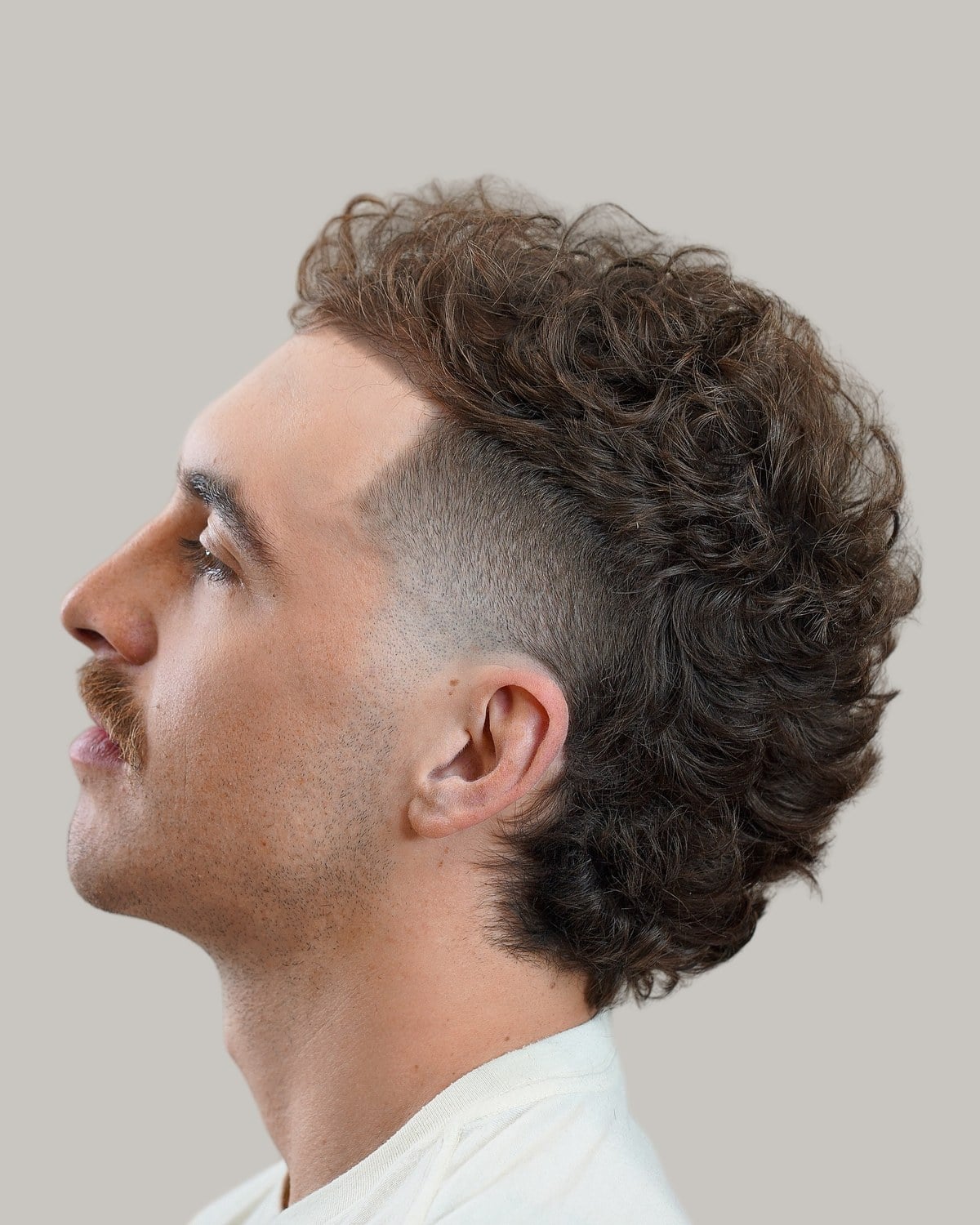
Tight curls on top and at the back, with the side taken down to skin. The bare side makes the curls look thicker (they aren’t, but nobody’s counting), and you’ll be back every two to three weeks to keep it that way. Scrunch in curl cream on damp hair and let it air-dry.
What to ask for Curls left at about two to three inches on top and longest at the nape, cut dry, with a skin fade taken up to the temple.
Short curly mullet
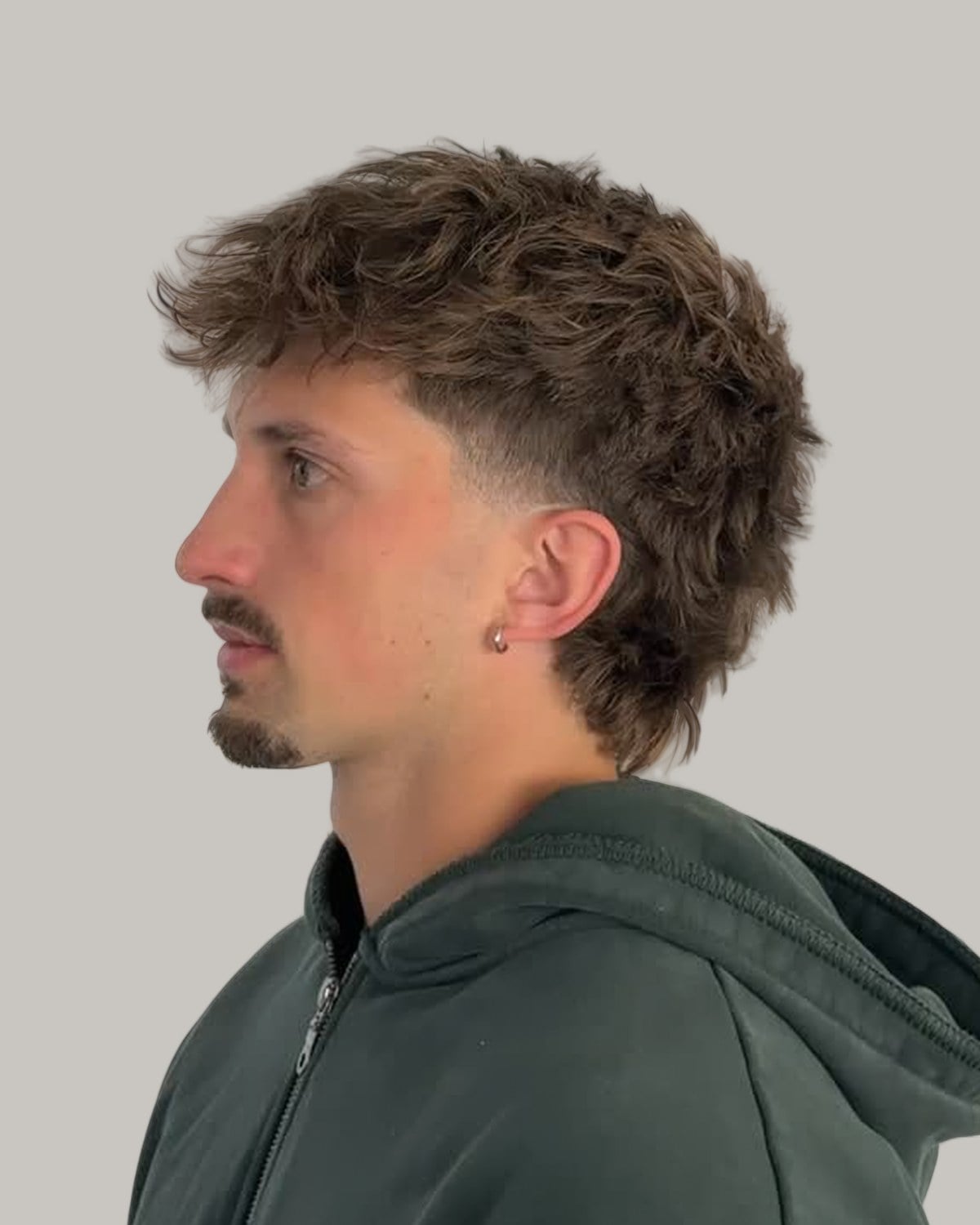
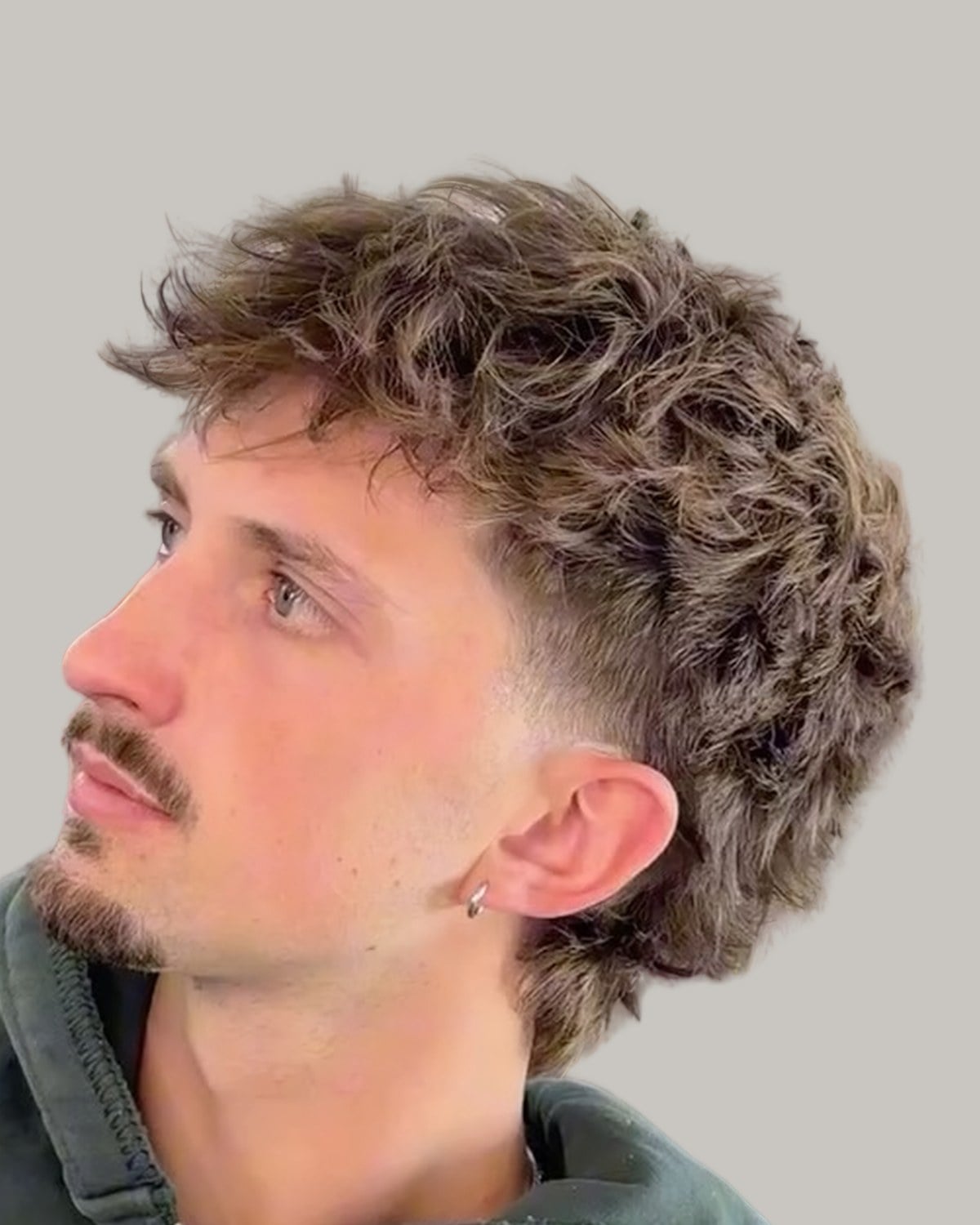
Curls kept close to the head, with the back only a little longer than the top. It’s a quieter mullet that still shows the curl. Scrunch in a curl cream and leave it alone.
What to ask for Curls trimmed short all over, a little extra length at the nape, and a low taper at the neckline.
Permed mullet
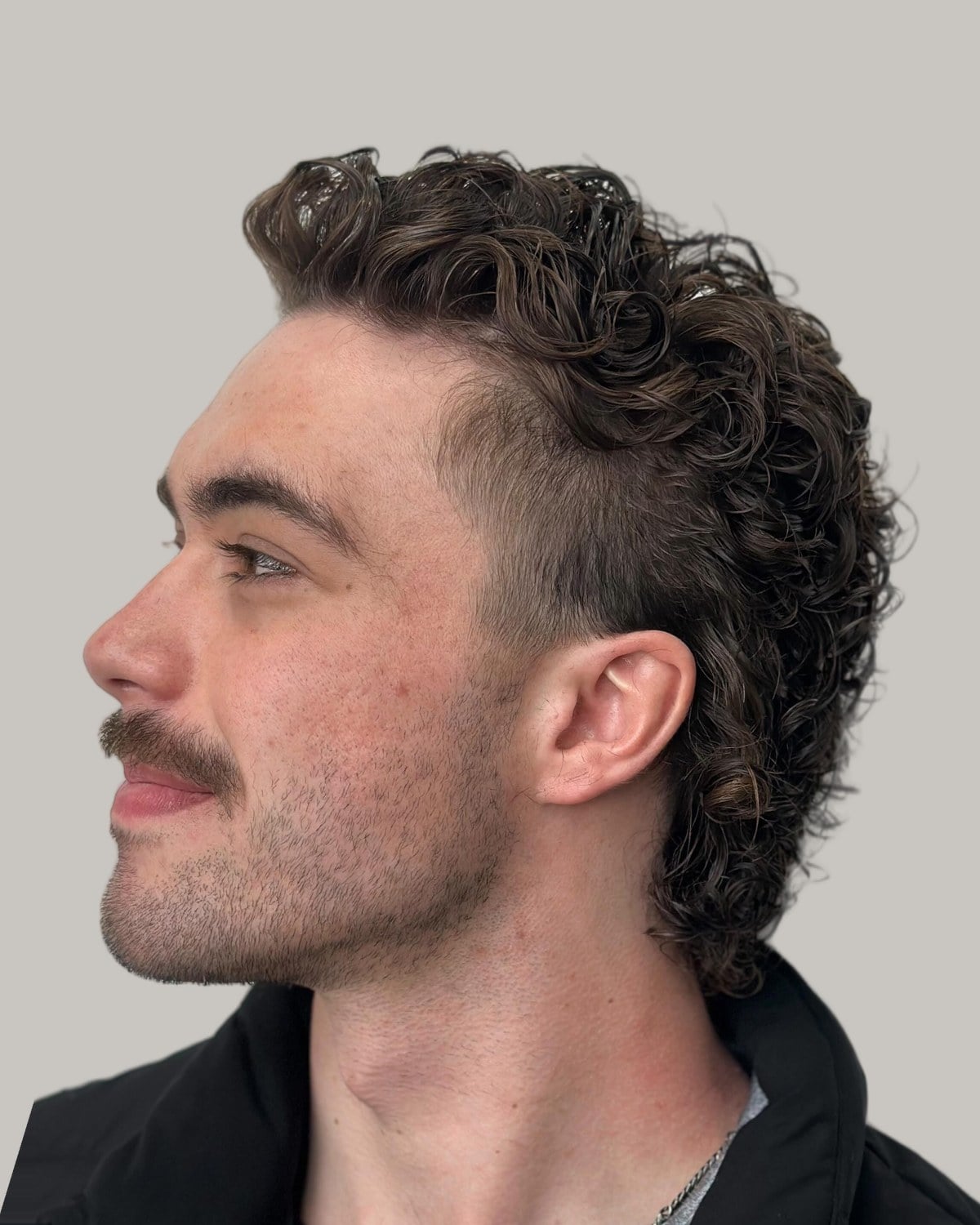
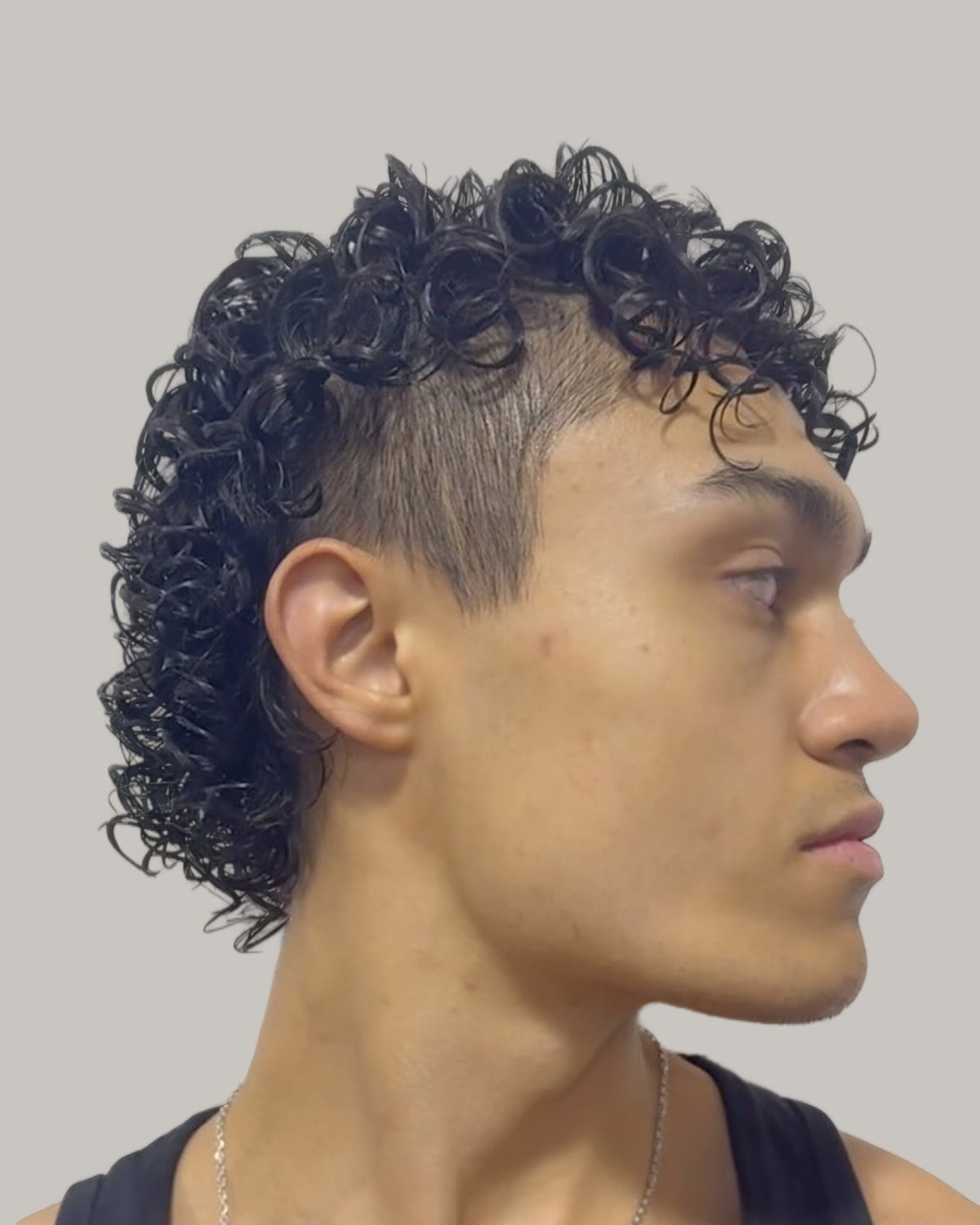
No curls of your own? A perm gives you tight, defined ones. Menshairstylestoday says it should be short enough to control the volume and long enough to show the curl, so plan the cut and the perm together (and ask whoever does the perm how long it needs to be first).
What to ask for Top and back left long enough to take a perm, the sides tapered short, and the length set by the stylist doing the perm.
Short, straight and wavy mullets
Short mullet
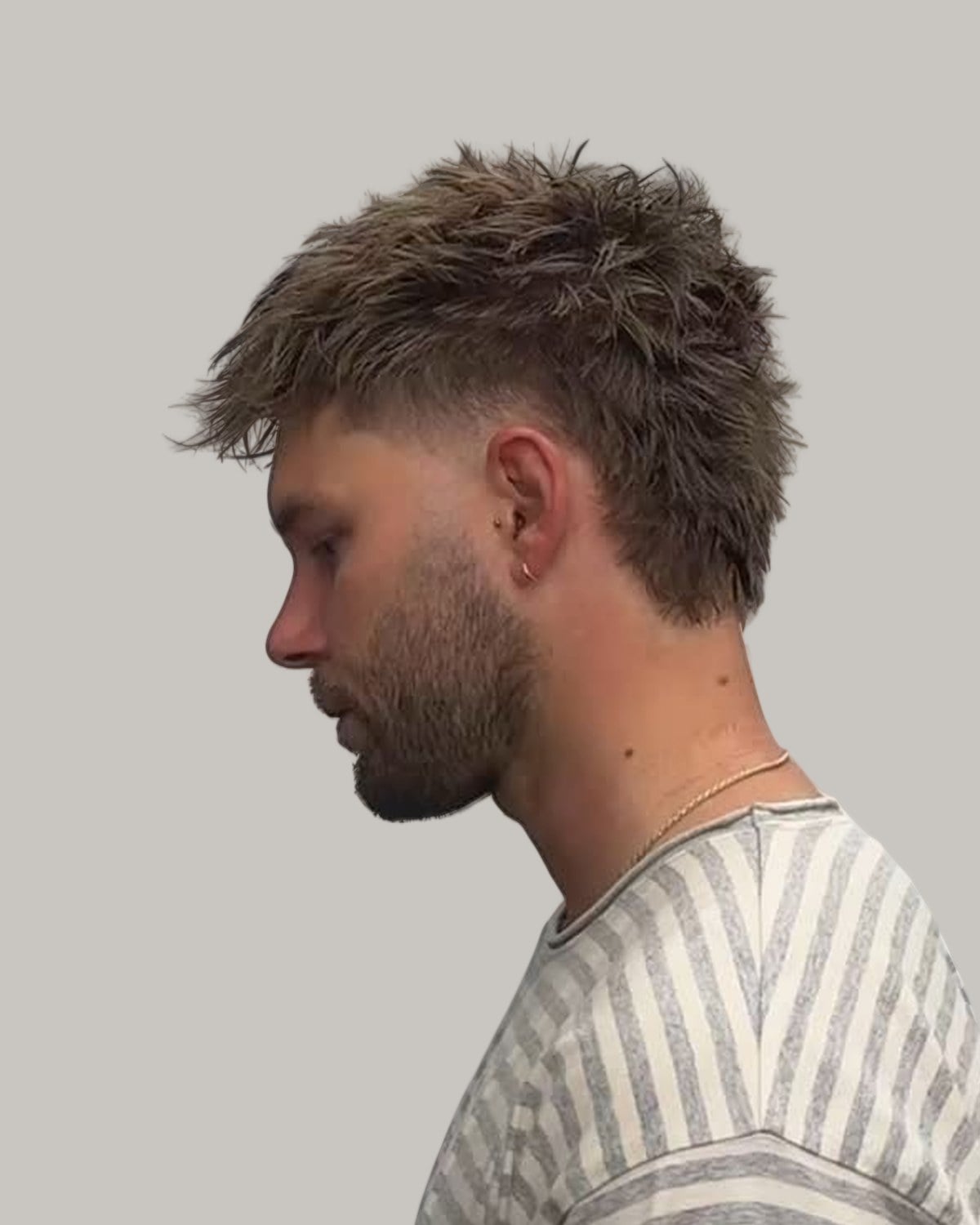
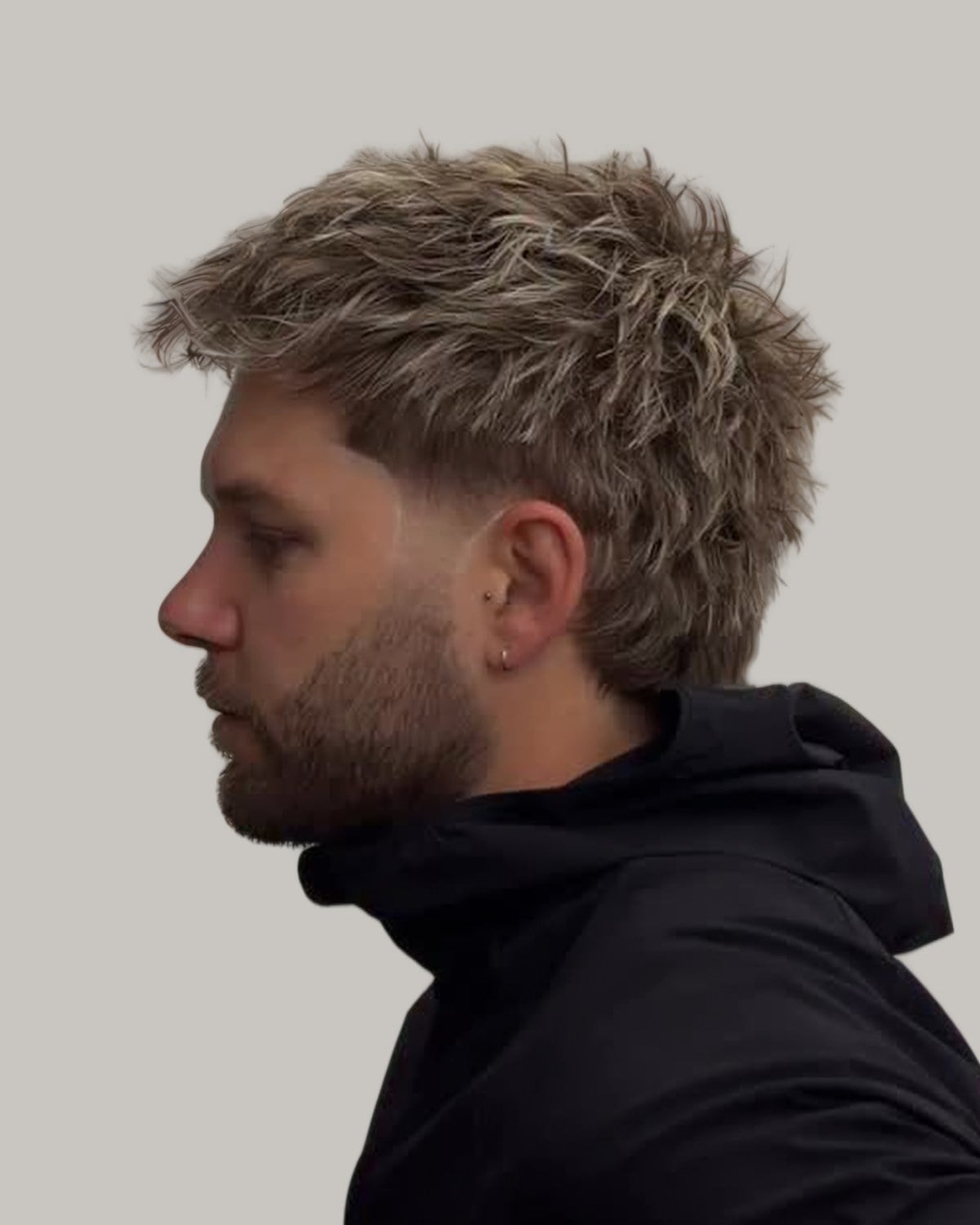
Scissor-cut, with only a small step between the front and the back. Daimon Barber calls it the version with minimal length difference, and it’s the one also sold as the baby or mini mullet. Paul Mescal wears his that way, with a textured fringe and short sides. Barber Maxwell Oakley says it’s forgiving for hairlines, because you can push the fringe forward.
What to ask for A textured fringe pushed forward, the sides tapered, and an inch or so of extra length at the nape.
Short mullet with a skin fade
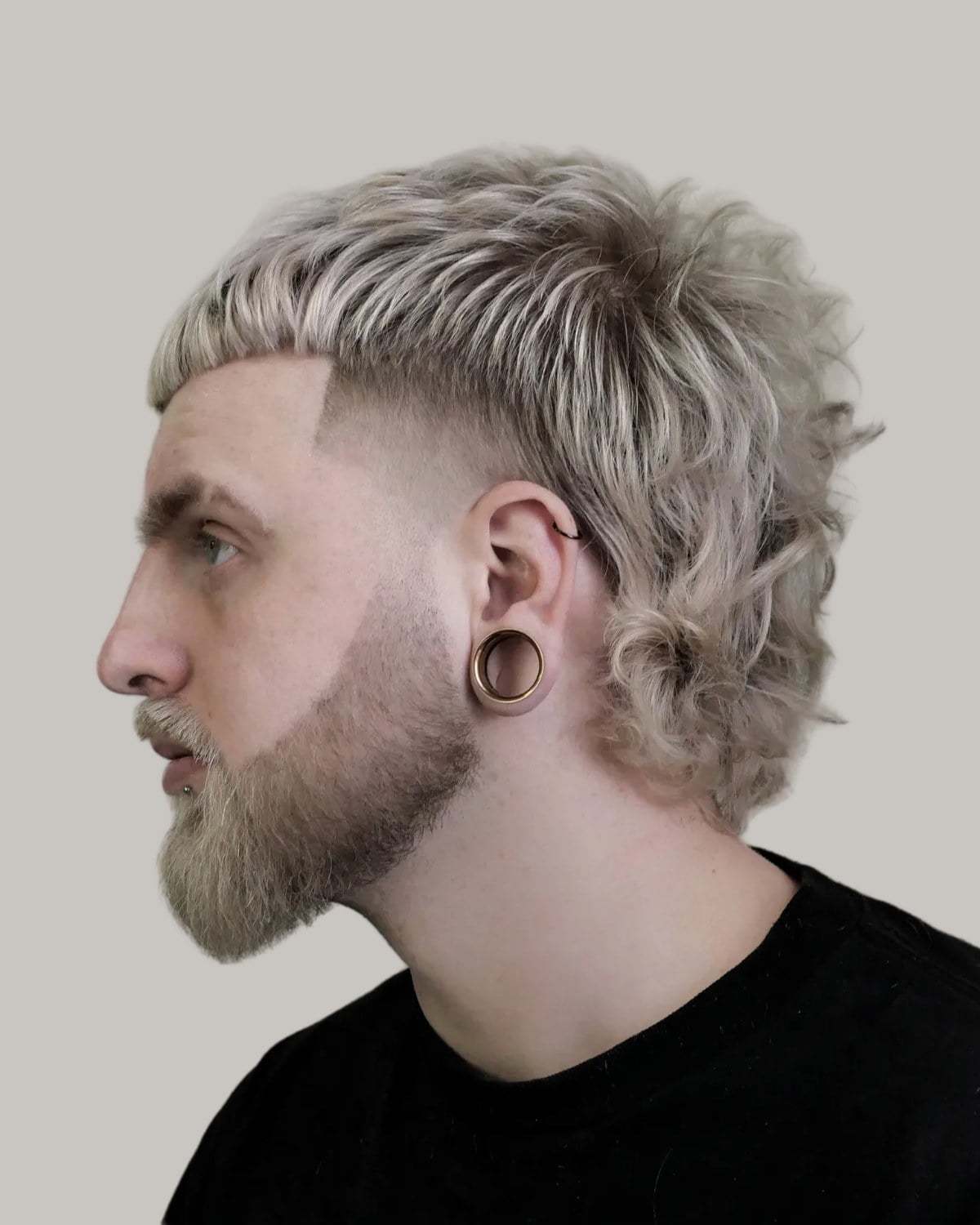
The short mullet above, with the side faded to skin instead of scissor-cut. The step between front and back stays small, and the wavy ends at the nape do the talking. A skin fade wants a touch-up every two to three weeks.
What to ask for A skin fade over the ear, an inch or two of extra length at the nape, and a short blunt fringe, point-cut on top.
Straight hair mullet
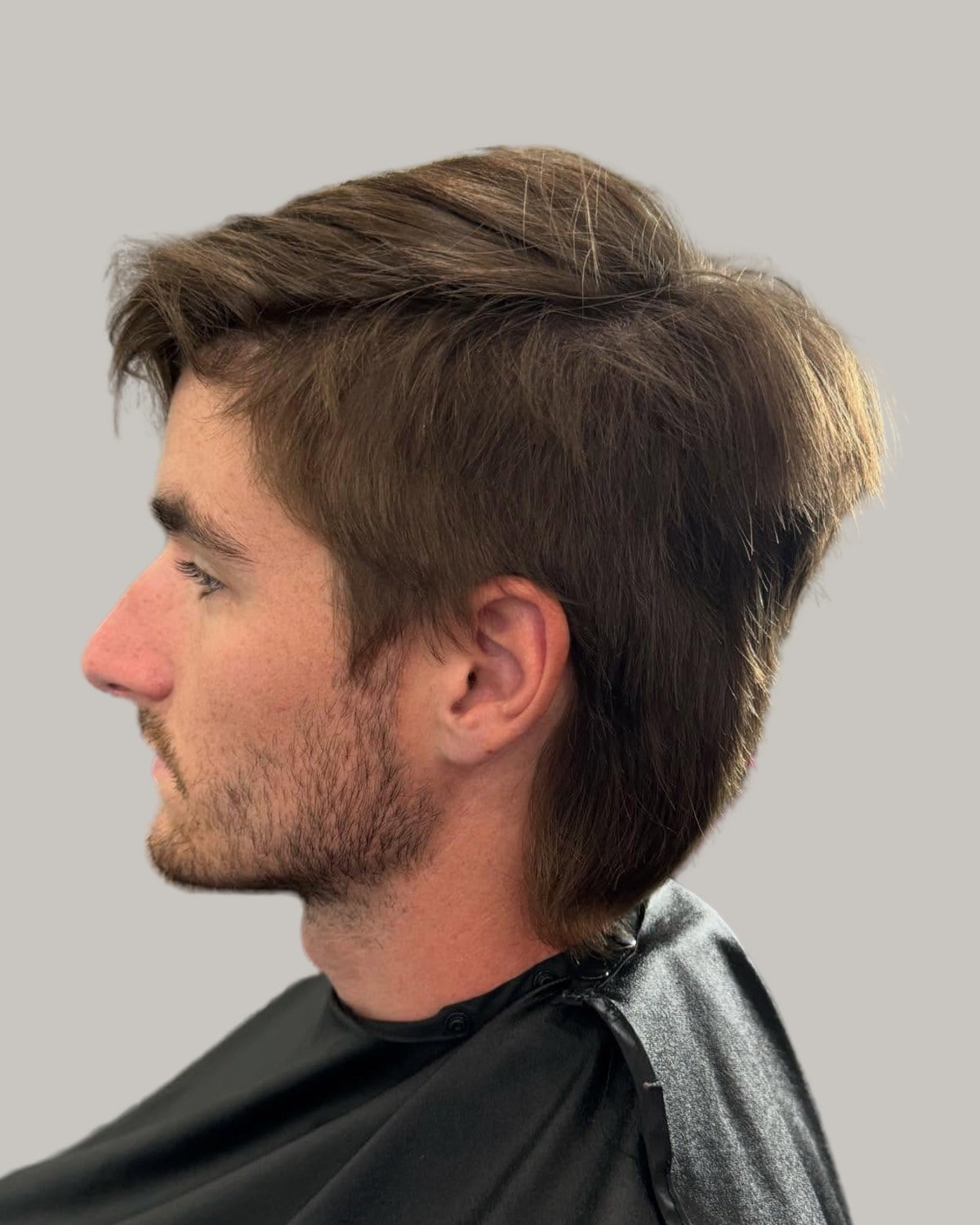
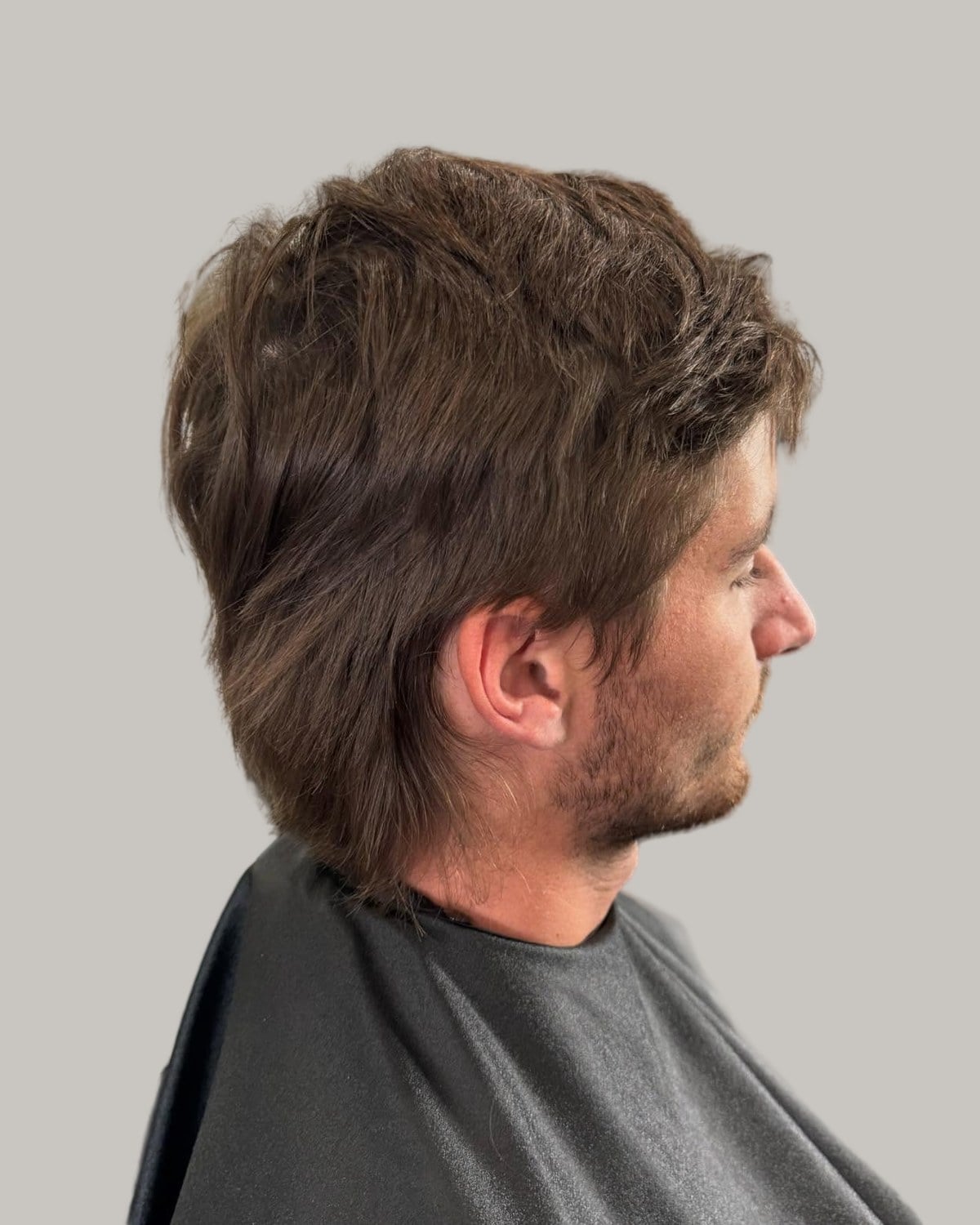
Clean lines and a clear step between the sides and the back. Austin Butler has worn his mullet on straight hair. Daimon Barber says straight hair benefits from styling, so plan on a blow-dry and a texture spray.
What to ask for Three to four inches on top, the sides tapered, five to six inches at the back, and texture point-cut into the ends.
Wavy mullet
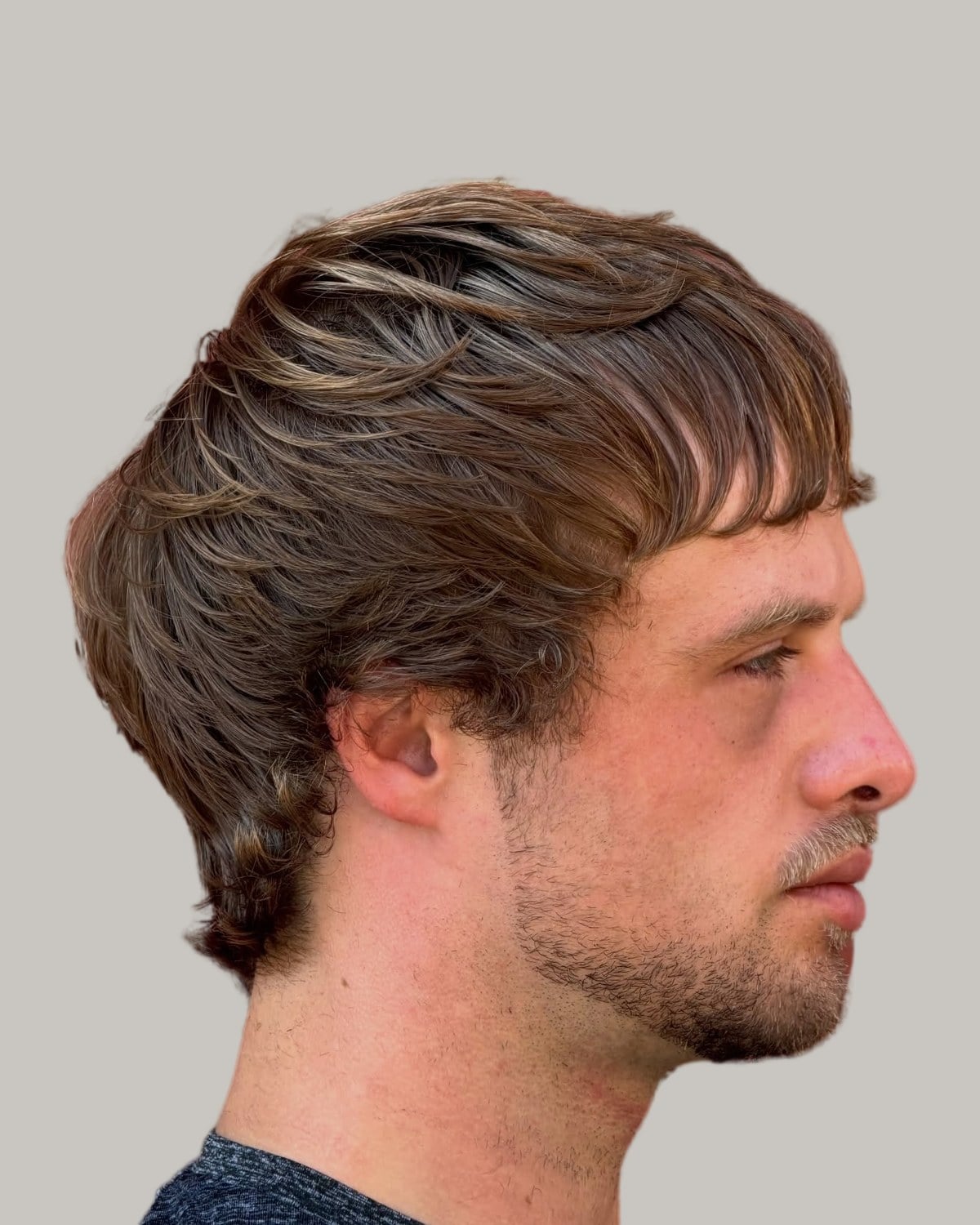
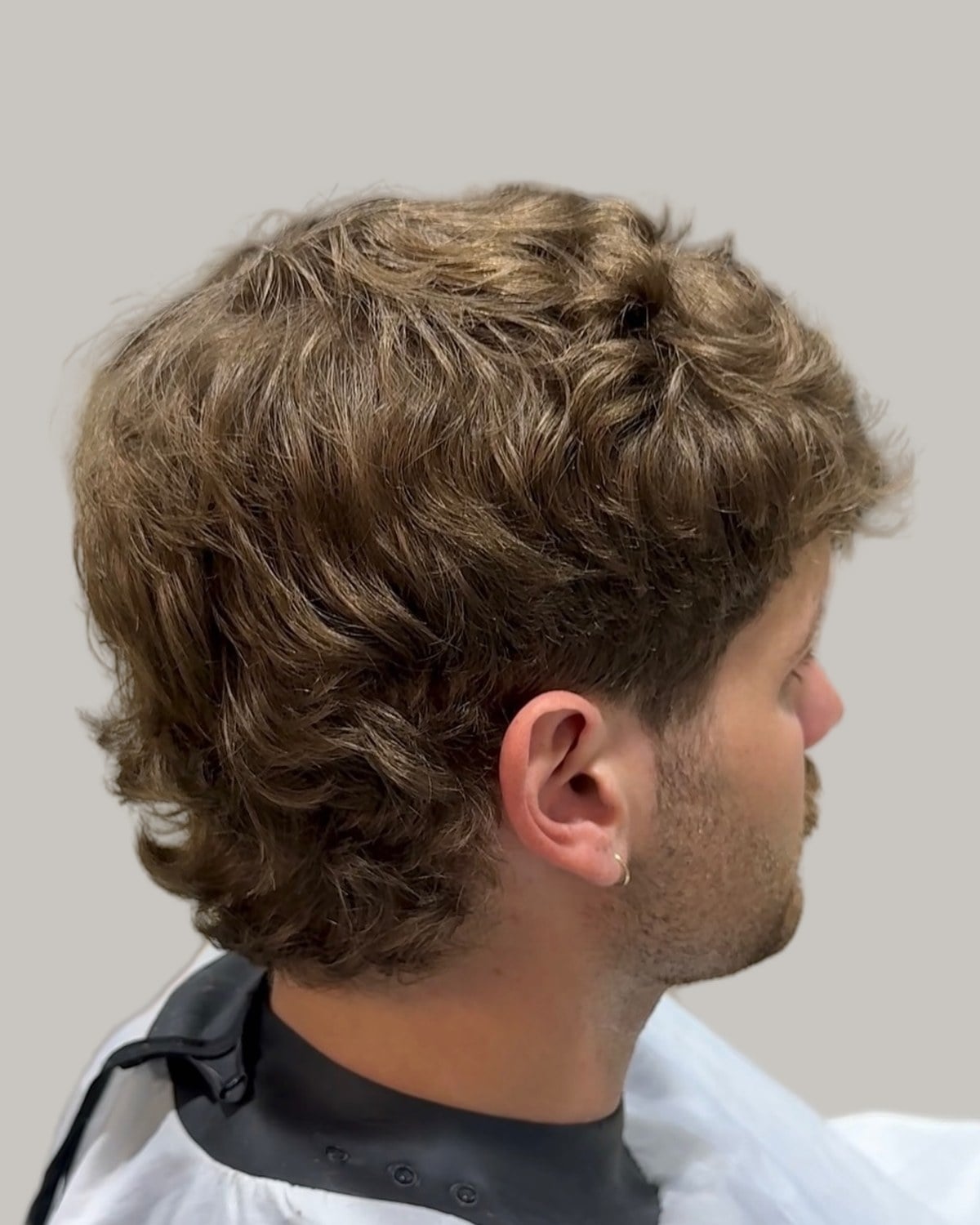
Waves give the mullet volume and a looser, more relaxed shape. Daimon Barber says wavy hair supports the mullet’s shape by itself. Scrunch in a leave-in on damp hair and let it dry.
What to ask for Keep the length for the wave, a low taper on the sides, and the back layered so it doesn't sit heavy.
Messy mullet
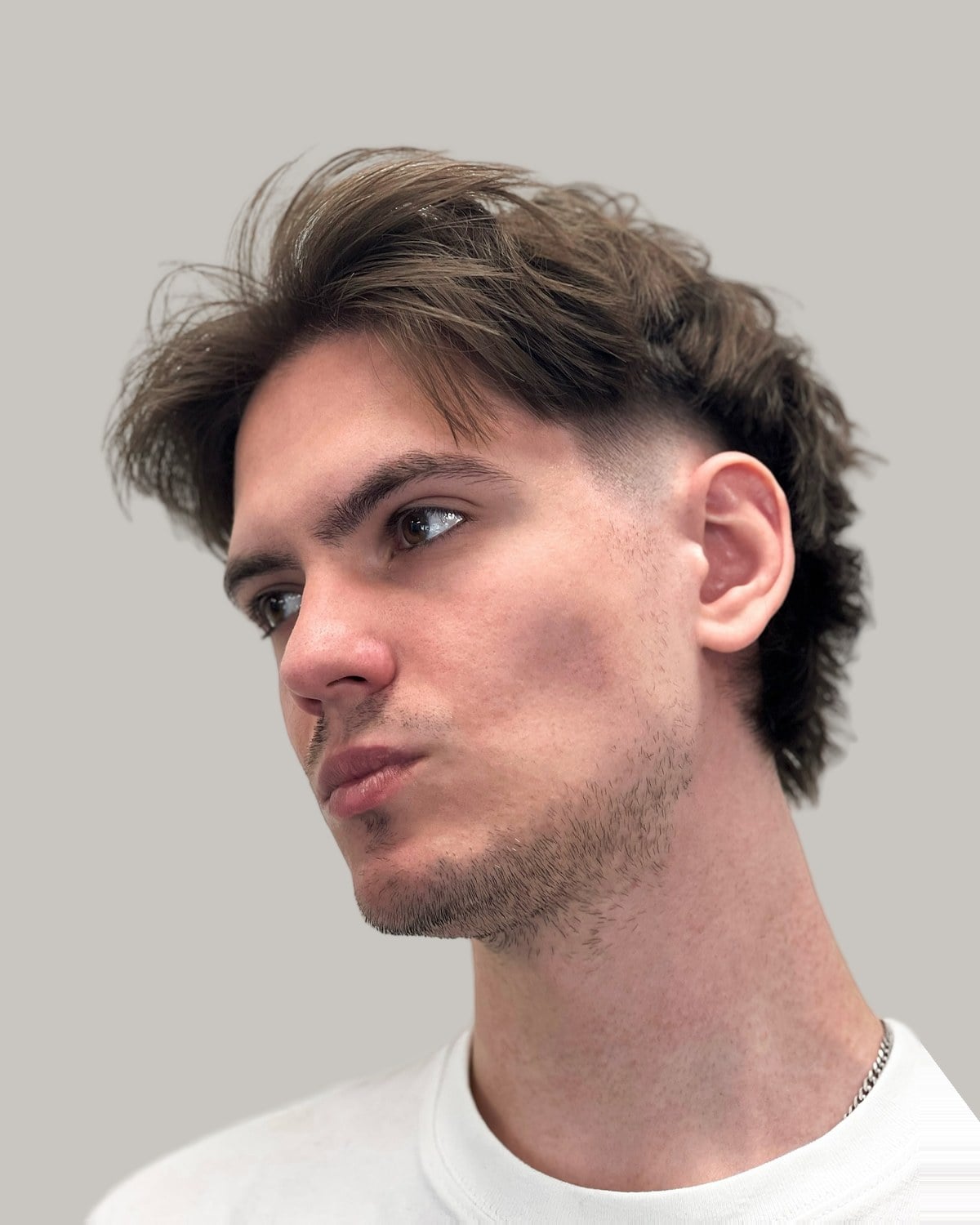
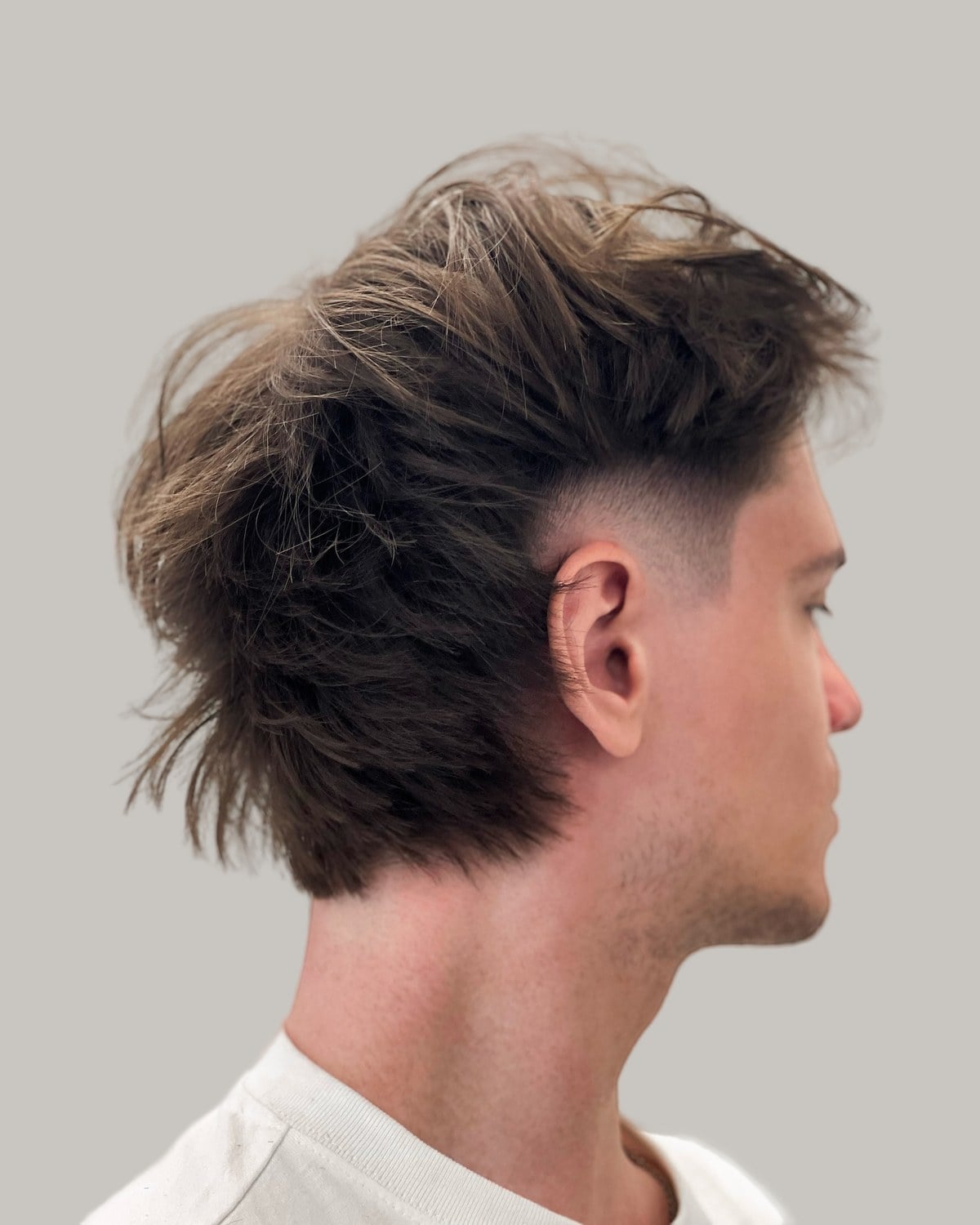
Long, piece-y layers on top, a skin fade at the sides, and a back that’s left to do its own thing. Texture makes finer hair look fuller, according to Menshairstylestoday, and this one is all texture. Work sea salt spray through damp hair and rough-dry it with your fingers.
What to ask for Long layers on top and at the back, point-cut for texture, a skin fade behind the ear, and the fringe left long enough to push back.
Textured mullet
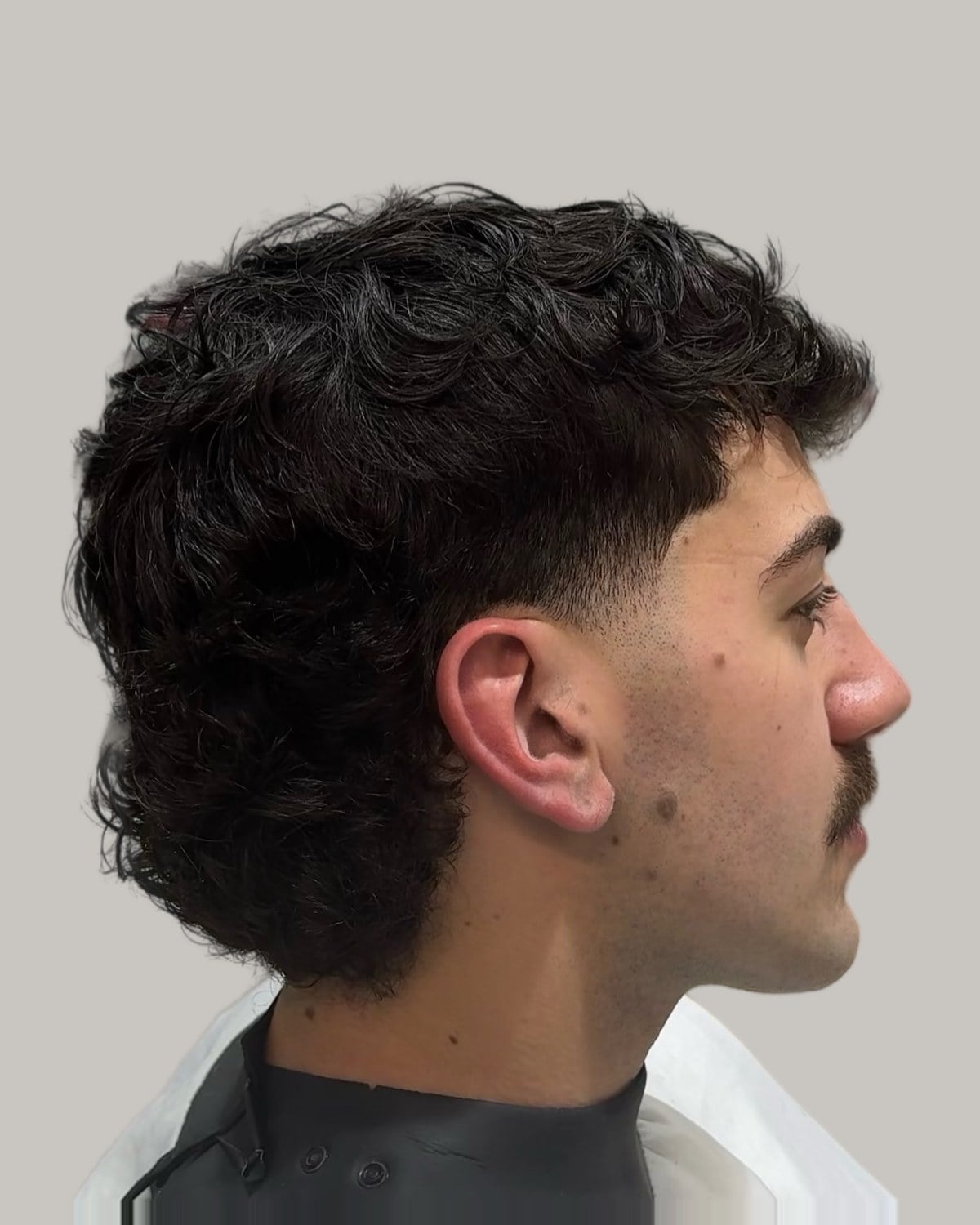
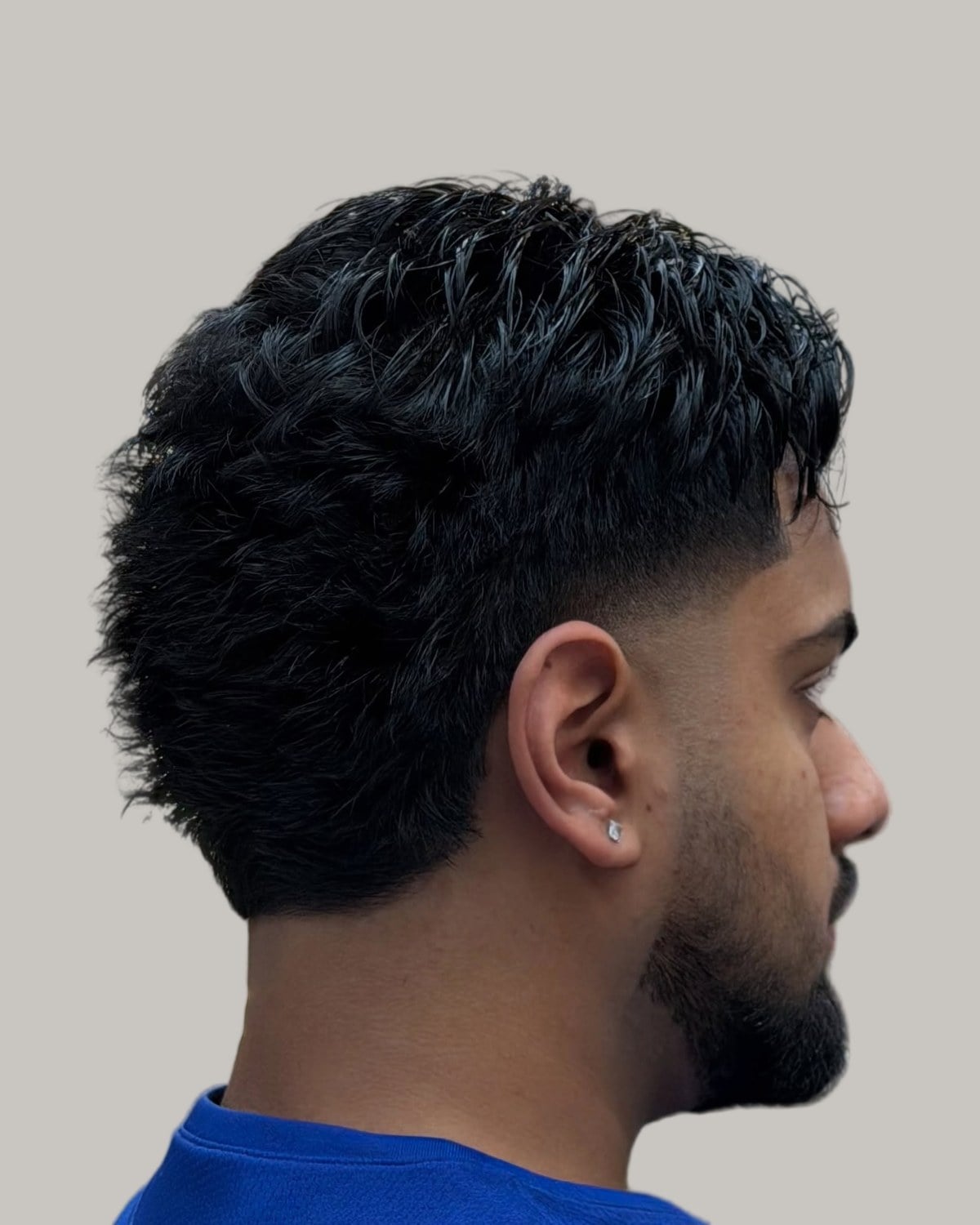
Thinned out for weight with a choppy finish. Menshairstylestoday says texture makes finer hair look fuller, and thick hair needs internal layering to sit right, so this cut suits both. Finish with texture powder or clay.
What to ask for Thinning shears through the top and back to take out weight, a low fade on the sides, and a choppy finish.
Asian and Korean mullets
Asian mullet
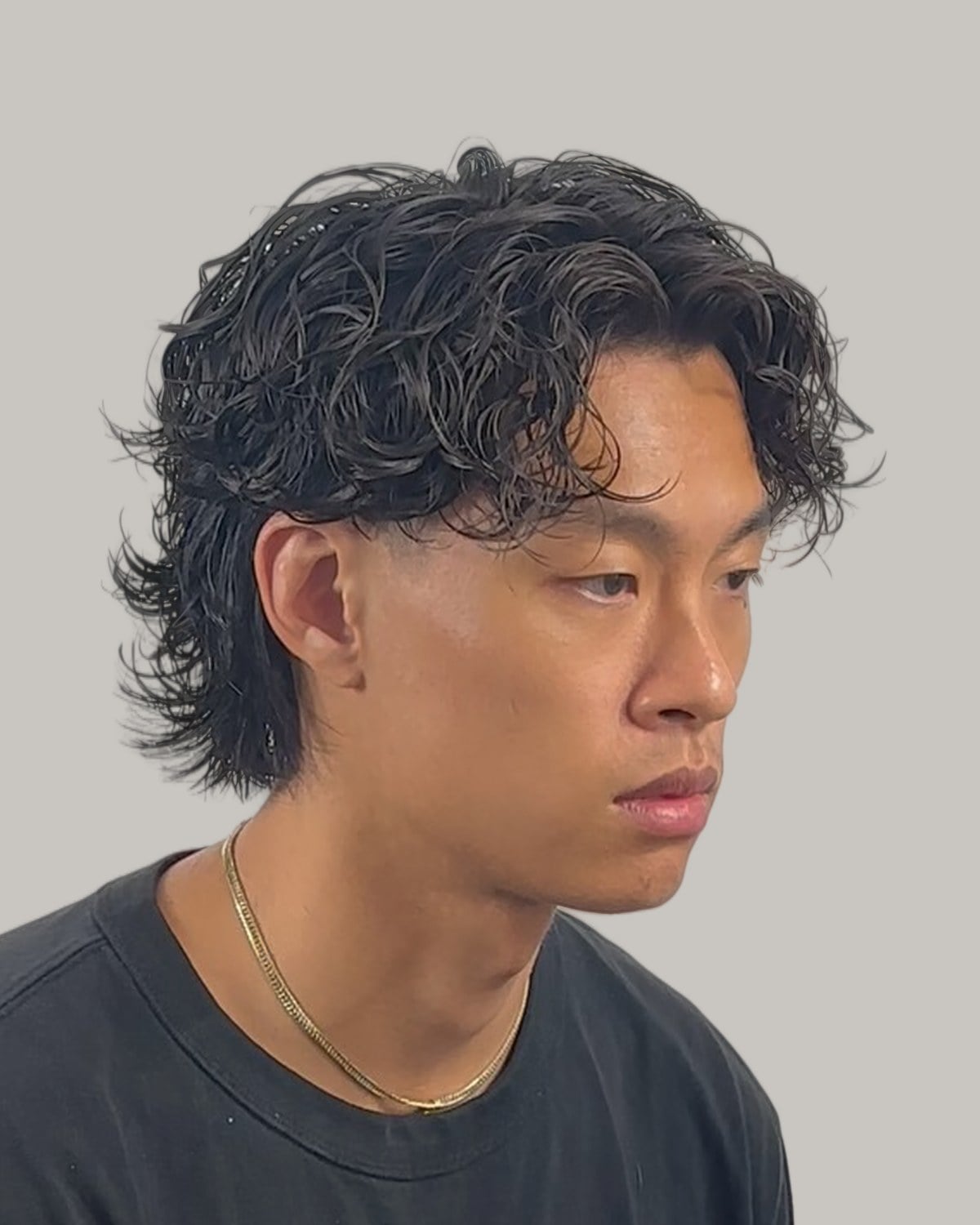
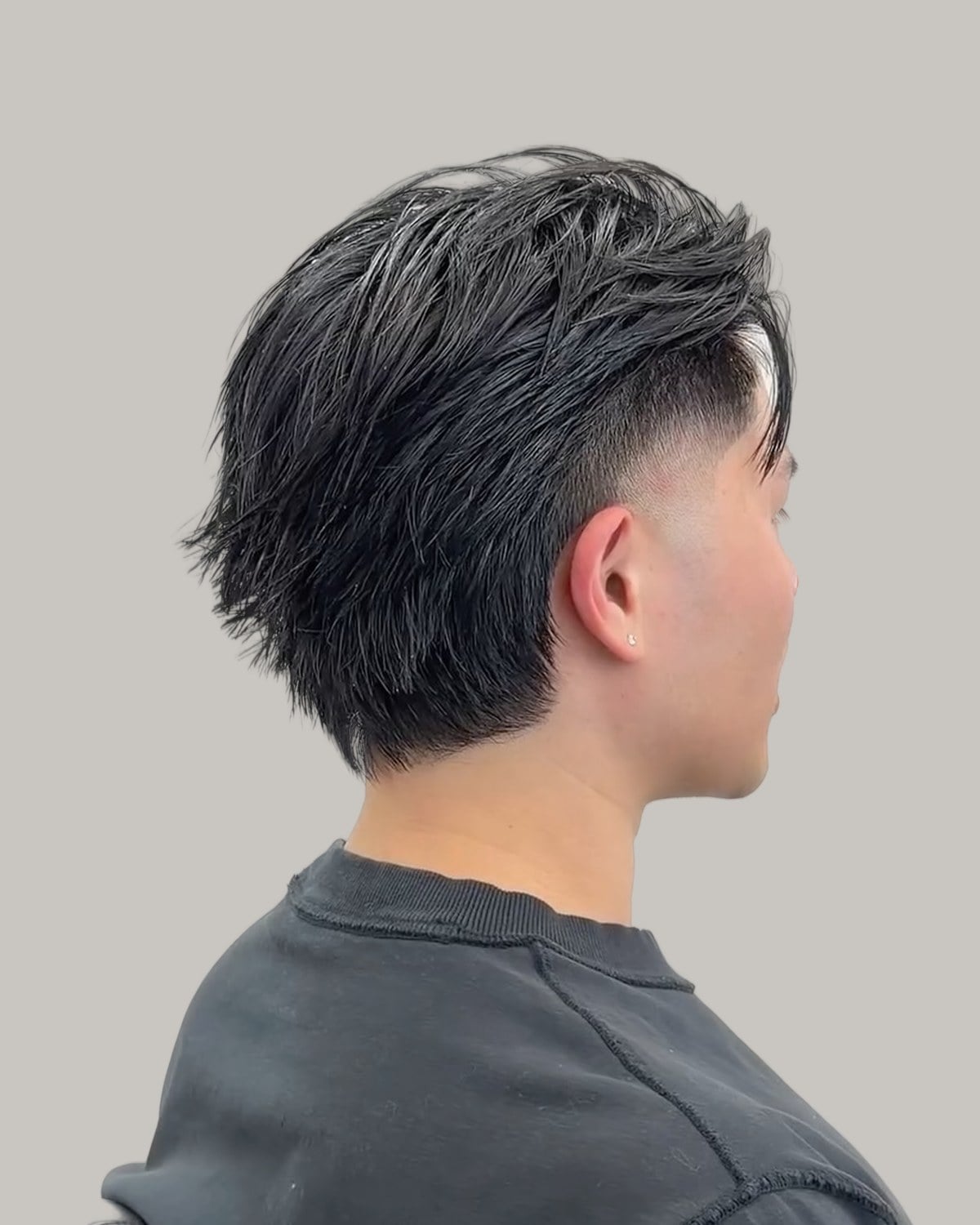
Straight or wavy hair cut with a fringe and a layered back. The Korean take on it, as Mullet Style describes it, keeps the proportions soft: connected layers from front to back, hair left around the temples and ears, and often a center part or curtains at the front. Mullet Style puts the trim at every four to eight weeks, and the nape can wait between visits if you’re still growing it.
What to ask for A soft fringe or a center part, layers connected from front to back, hair left over the ears, and the nape kept long.
Mohawk, long, slicked-back and classic mullets
Mohawk mullet
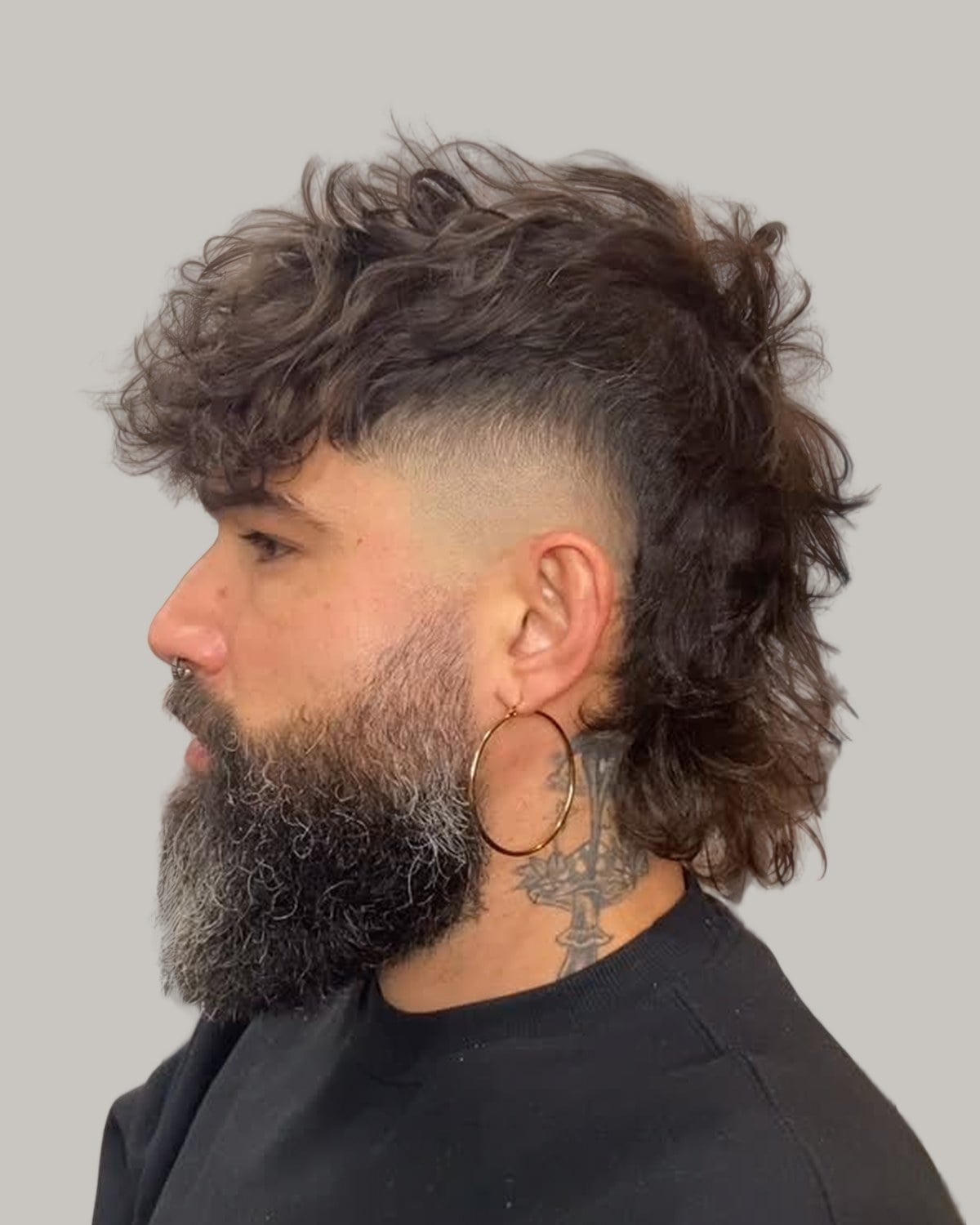
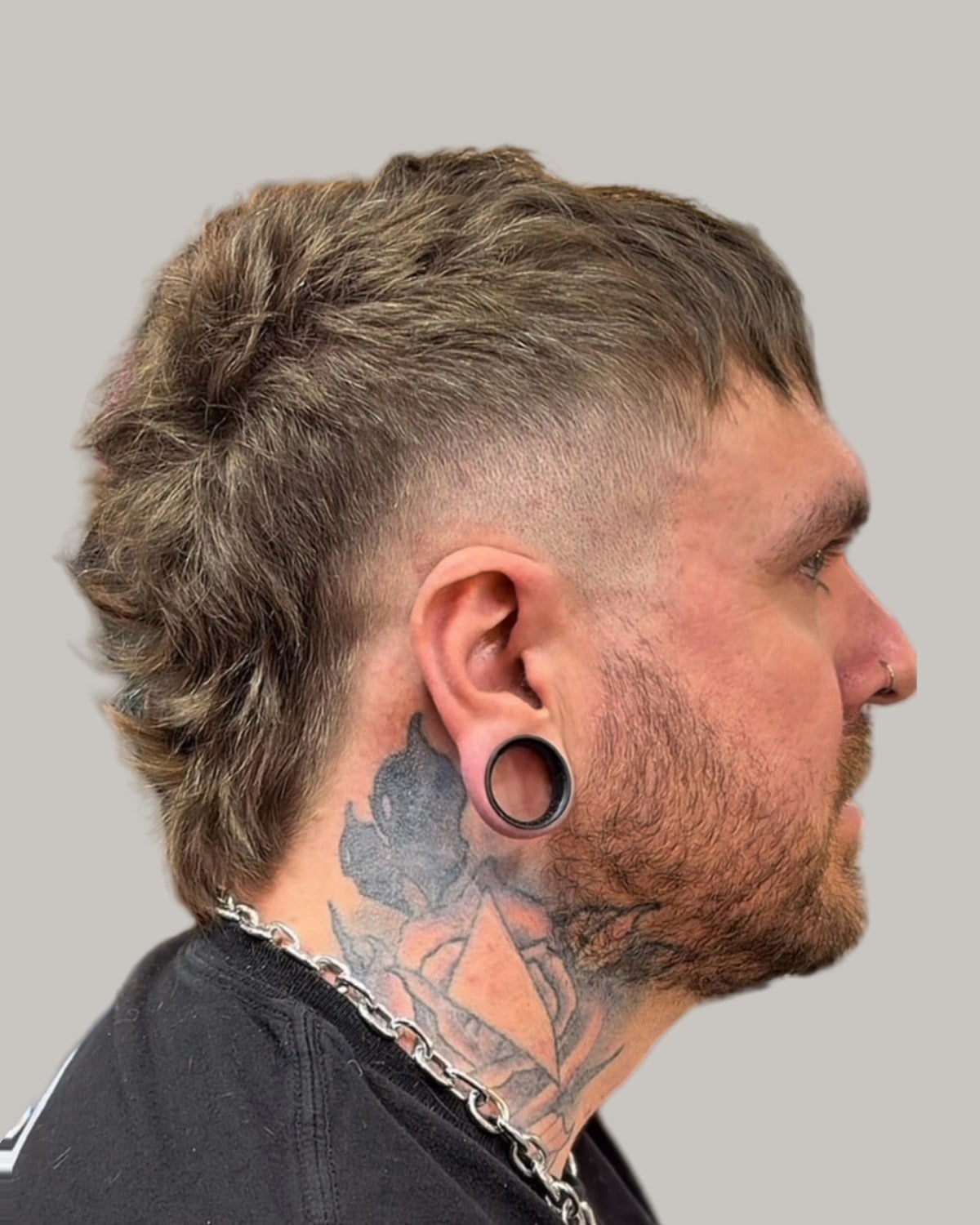
A long fringe that shortens gradually toward the back, over a skin fade. The strip down the middle carries the length and the faded sides make it stand up. Blow-dry the strip upward and set it with a matte pomade.
What to ask for A strip left long on top and at the back, a skin fade on the sides, and the length graduated from front to back.
Long mullet
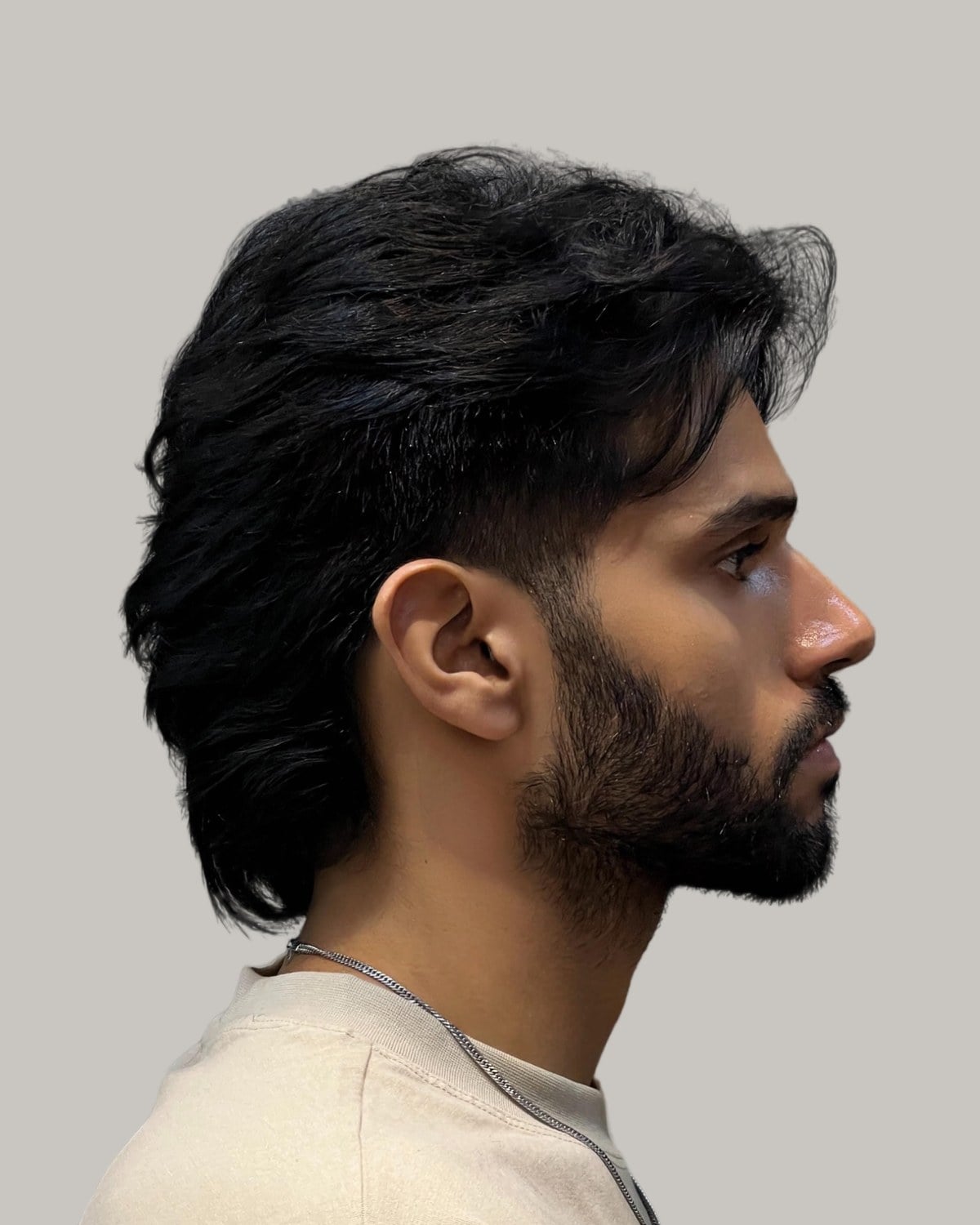
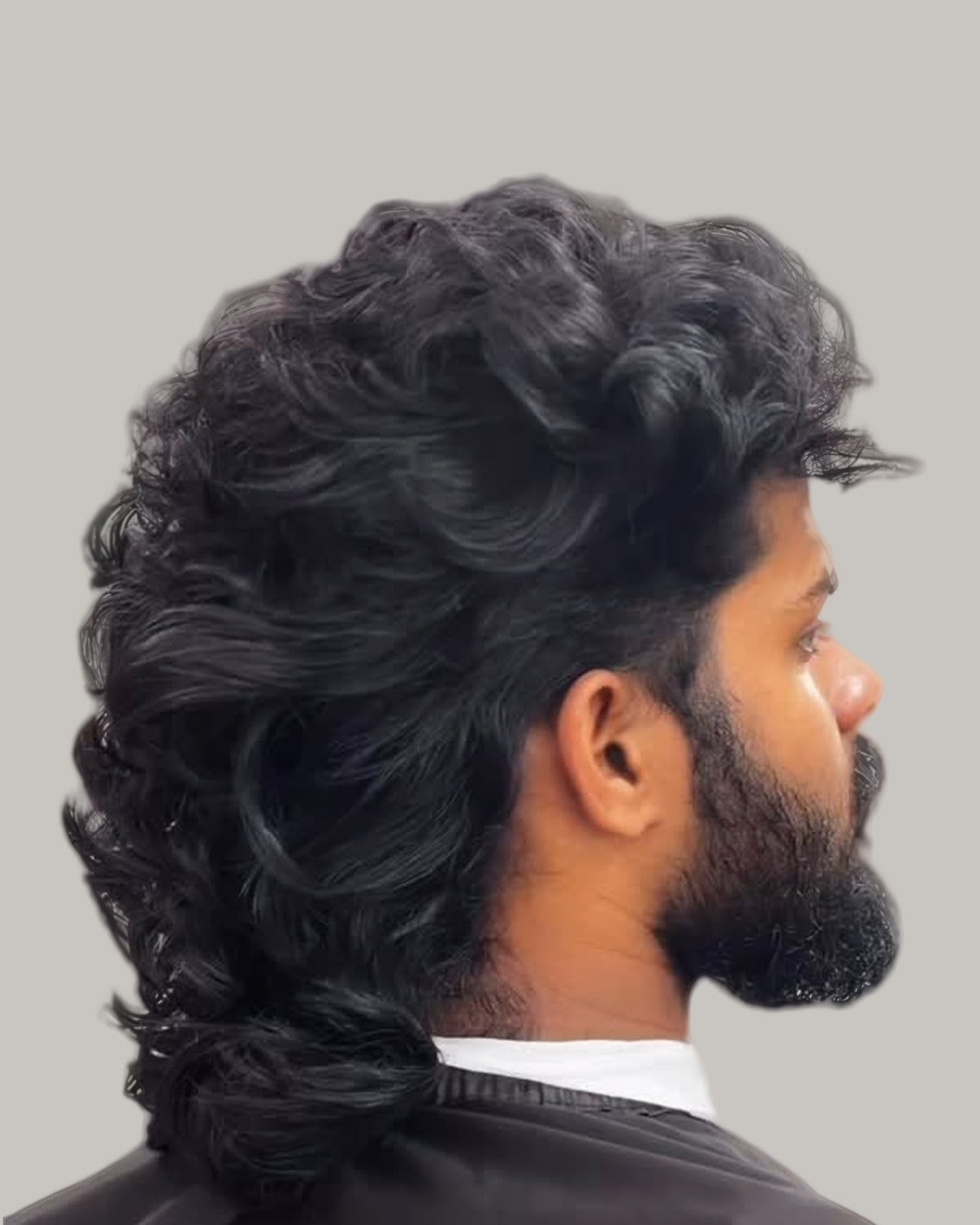
The back grows past the collar. Jacob Elordi wears a more grown-out, relaxed one. John Frieda says you want five to six inches at the back for the shape to show, so this is the one to plan months ahead.
What to ask for Five to six inches or more at the back, the top layered at three to four inches, and a low taper at the sides.
Slicked-back mullet
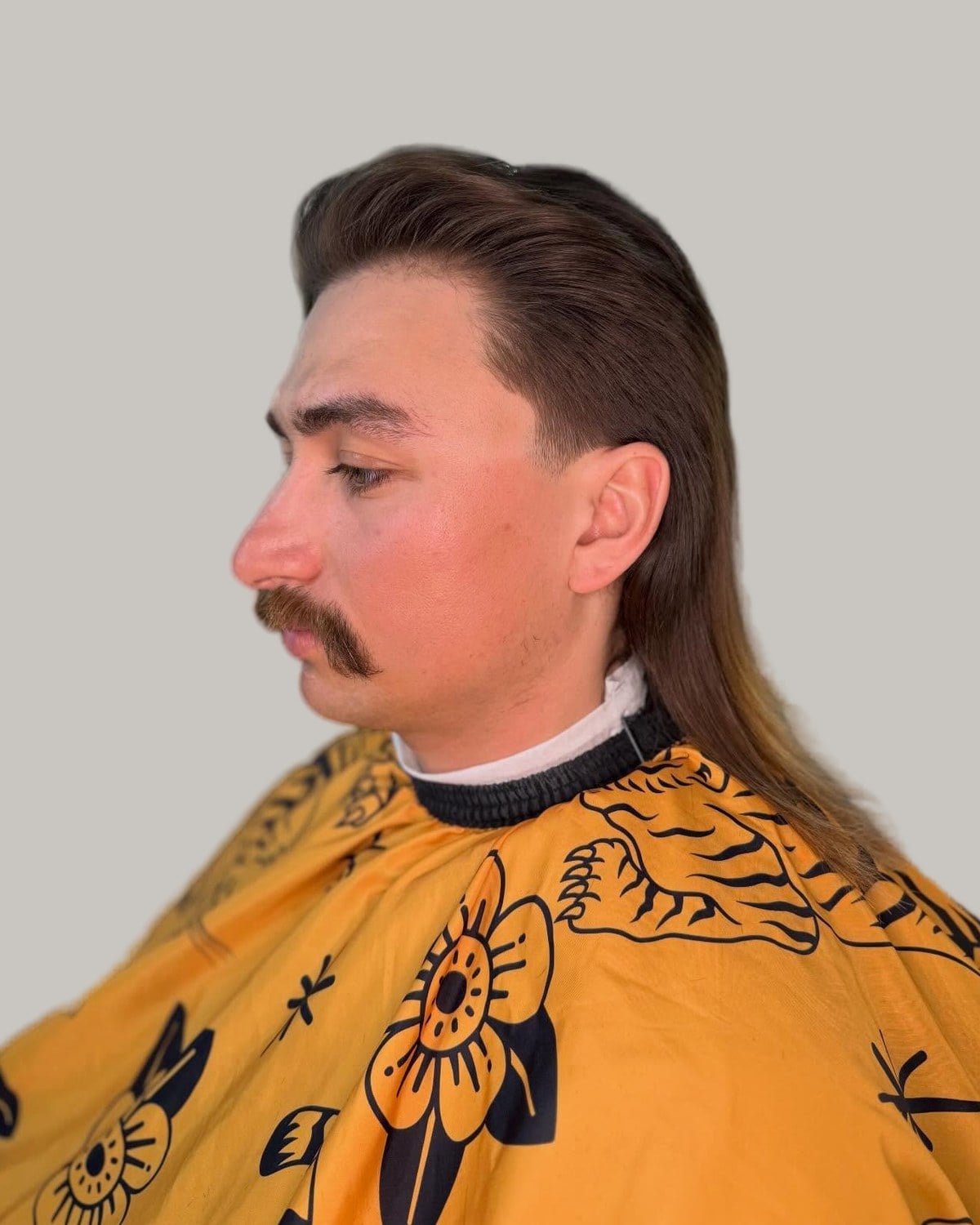
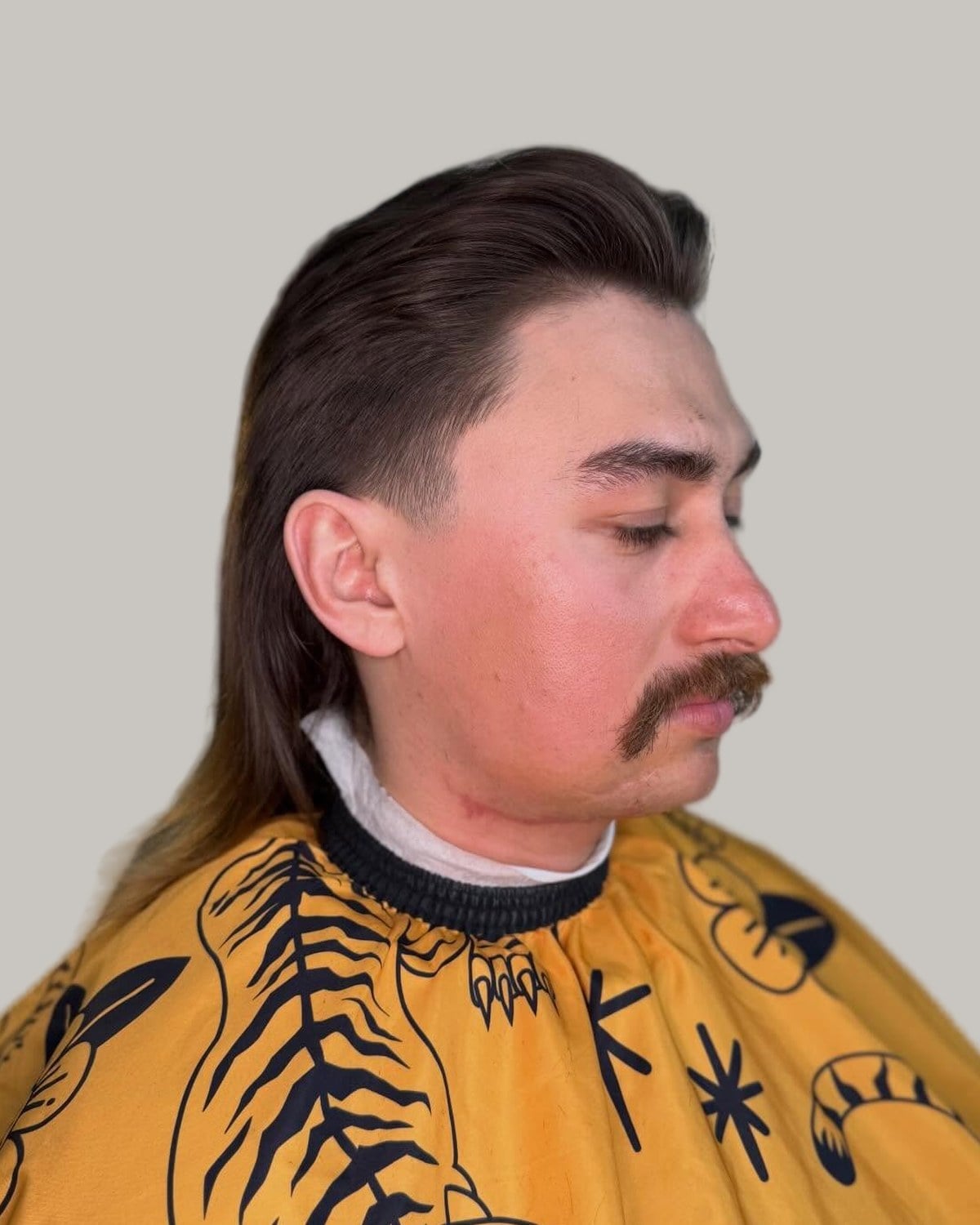
Everything combed back from the forehead, with the length at the back left to fall past the collar. It’s a straight nod to the 1980s, and a mustache finishes the job. A matte pomade on damp hair and a comb give you the shape.
What to ask for The top and sides long enough to comb back, tapered sideburns, and the back left well past the collar.
Classic mullet
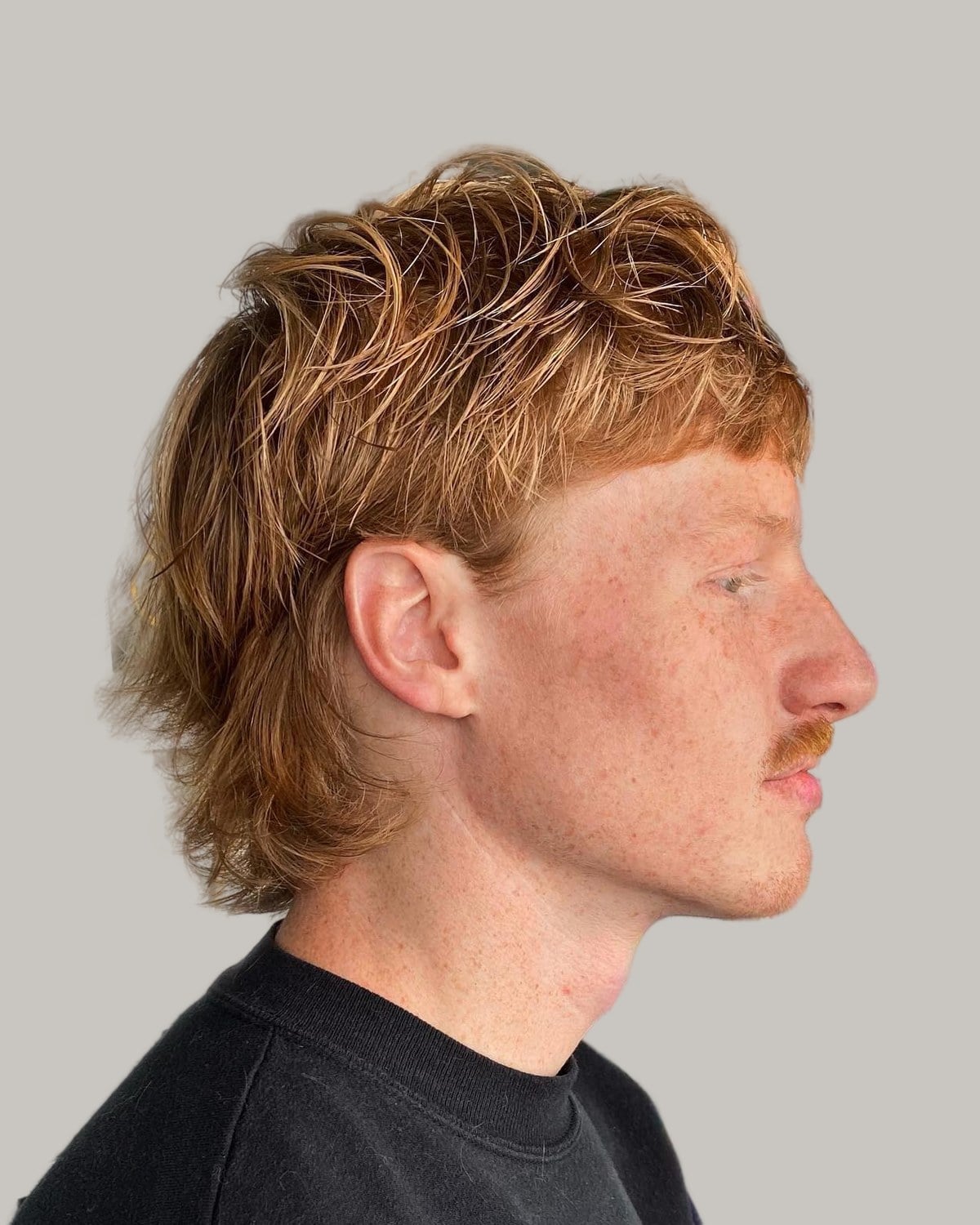
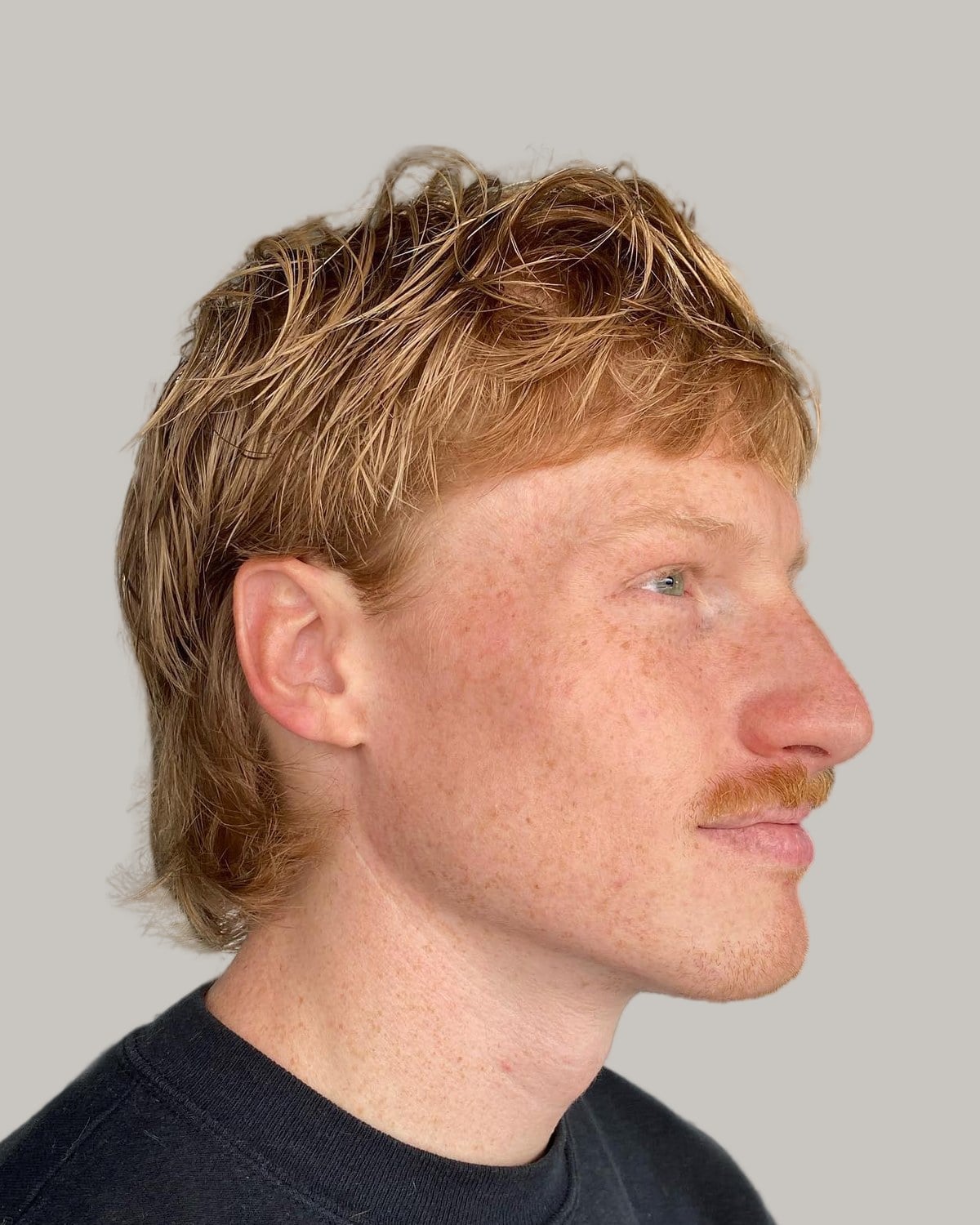
The 1980s shape: short all over the front and sides, long at the back, with a hard step between them. The Beastie Boys popularized the word itself in their 1994 song “Mullet Head”. Today’s barbers usually soften the step, but you can still ask for it straight.
What to ask for Short front and sides, the back left long, and no blend at the join.
01 of 01
What is a modern mullet?
A modern mullet is a mullet with the join blended. It keeps the classic base, shorter at the front and sides with more length at the back, and uses layering, tapering and softer transitions instead of the harsh contrast of the 1980s version (Daimon Barber’s description). Forte Series says the same in its own words: short sides, a longer back, and blended layers, tapers and fades adding texture and shape. Alan Howard adds that the modern version usually has a slight low fade on the sides and drops the long, thin tail.
That leaves you three choices at the barber: how you finish the sides (a fade, a taper, or neither), how much length stays at the back, and what happens at the front, from a baby mullet’s short fringe to curtains or a full shag.
Who suits a modern mullet?
Straight, wavy and curly hair can all wear one, but texture changes how much work it takes. Daimon Barber says wavy and textured hair supports the shape naturally, straight hair benefits from styling, and thick hair needs internal layering to sit well. John Frieda goes further on straight or fine hair: the cut needs volume, so expect to style it more.
For face shape, Daimon Barber says oval and square faces suit it easily, round faces benefit from height at the crown, and long faces work better with softer sides.
If your hairline is starting to go, the baby mullet is worth a look. Barber Maxwell Oakley says it’s forgiving for hairlines, because you can push the fringe forward.
What to ask your barber for
Start with the sides, because that’s the choice the photo can’t make for you. A fade gives a stronger contrast and a taper gives a softer clean-up around the edges, according to Fade Artist. Say where it starts (low, mid, around the ear) and how close it goes.
Then give lengths. John Frieda suggests at least three to four inches on top and at the crown for layering, and ideally five to six inches at the back. If you’re still growing, say so, so the barber doesn’t tidy away length you’ve been waiting on.
Finally, the front and the finish: a fringe, curtains or a part, and whether you want weight taken out for texture. Bring photos of the front, the side and the back, as Forte Series suggests, because the back is the part you can’t see in the mirror.
How much upkeep does a modern mullet take?
Plan on the barber every four to six weeks. That’s what Daimon Barber and Forte Series both say, while John Frieda stretches it to six to eight. The sides set the pace. Fade Artist puts skin fades at every two to three weeks, low and mid fades at three to four, and tapers at four to six, and says tapers grow out more smoothly.
If you’re still growing the back, Mullet Style says the nape doesn’t need cutting every visit.
Mullet fade or taper mullet: which one?
Pick a fade if you want contrast and a taper if you want the mullet to look grown in. For a first mullet, Fade Artist’s advice is to start low with either one. A fade takes the whole side short and needs more visits. A taper only cleans up the edges and lasts longer between cuts. The burst fade is a third option that curves the fade around the ear, and Taper Trends says it needs a trim about every three weeks.
| Fade | Taper | Burst fade | |
|---|---|---|---|
| What changes | The whole side goes short | Only the edges are cleaned up | A half circle round the ear |
| Contrast with the back | Strong | Soft | Strong at the ear |
| Trim | Every 2 to 4 weeks | Every 4 to 6 weeks | About every 3 weeks |
What’s the difference between a wolf cut and a mullet?
A mullet is about the difference in length between the front and the back. A wolf cut is about texture everywhere. Dandies Barber describes the wolf cut as shaggy, choppy layers with a tousled look all over, and the mullet as a cut that relies on a clear step from short at the front to long behind. Ask for choppy layers through a mullet’s back and your barber can give you a bit of each.
What is a 401k mullet?
It’s a Gen Z nickname for a shorter, neater, more contained mullet. CapWolf sums it up as “business up front, but far less party in the back.” The name plays on the retirement account (a mullet with a sensible savings plan, if you like), and none of the sources we read says who first used it.
How long does it take to grow a mullet?
Give it three to six months. Forte Series says about three to five to reach the length while keeping the sides trimmed, and Daimon Barber says three to six for a fuller one. Hair grows about half an inch a month, according to MedlinePlus, so three months adds about an inch and a half at the back.
Keep the sides cut the whole time. Short sides make the back look longer sooner.
How do you style a modern mullet?
Start on damp hair. Forte Series’ routine is sea salt spray, a blow-dry upward or with a diffuser, then texture clay, matte pomade or texture powder to finish. Curly hair skips the upward blow-dry for a diffuser and a curl cream. The sides are done when you leave the barber, so your mornings are about the top and the back.
Why is the mullet back?
Partly because nobody could get a haircut. Kevin Begola of the USA Mullet Championships told Northeastern University that the pandemic brought mullets back. Partly it’s the irony: senior barber Natalie Angold calls the mini mullet “the most anti-dad haircut ever.” And the phrase that goes with it has been around a while. Its earliest citation, “business in the front, party in the back,” is a 2001 Los Angeles Magazine article.
If you’ve read this far and decided the back isn’t for you after all, no one has to know. Our medium haircuts guide keeps the length on top and lines up slick backs, side parts, flow and a middle part, without the party at the back.
The mullet is one stop on a longer road, and our guide to men’s haircuts maps the rest of it with four looks per family.
Products featured here are independently selected by our editors. If you buy through our retail links we may earn an affiliate commission — it never changes the price you pay, and it never decides our verdicts. Read our earnings disclaimer.