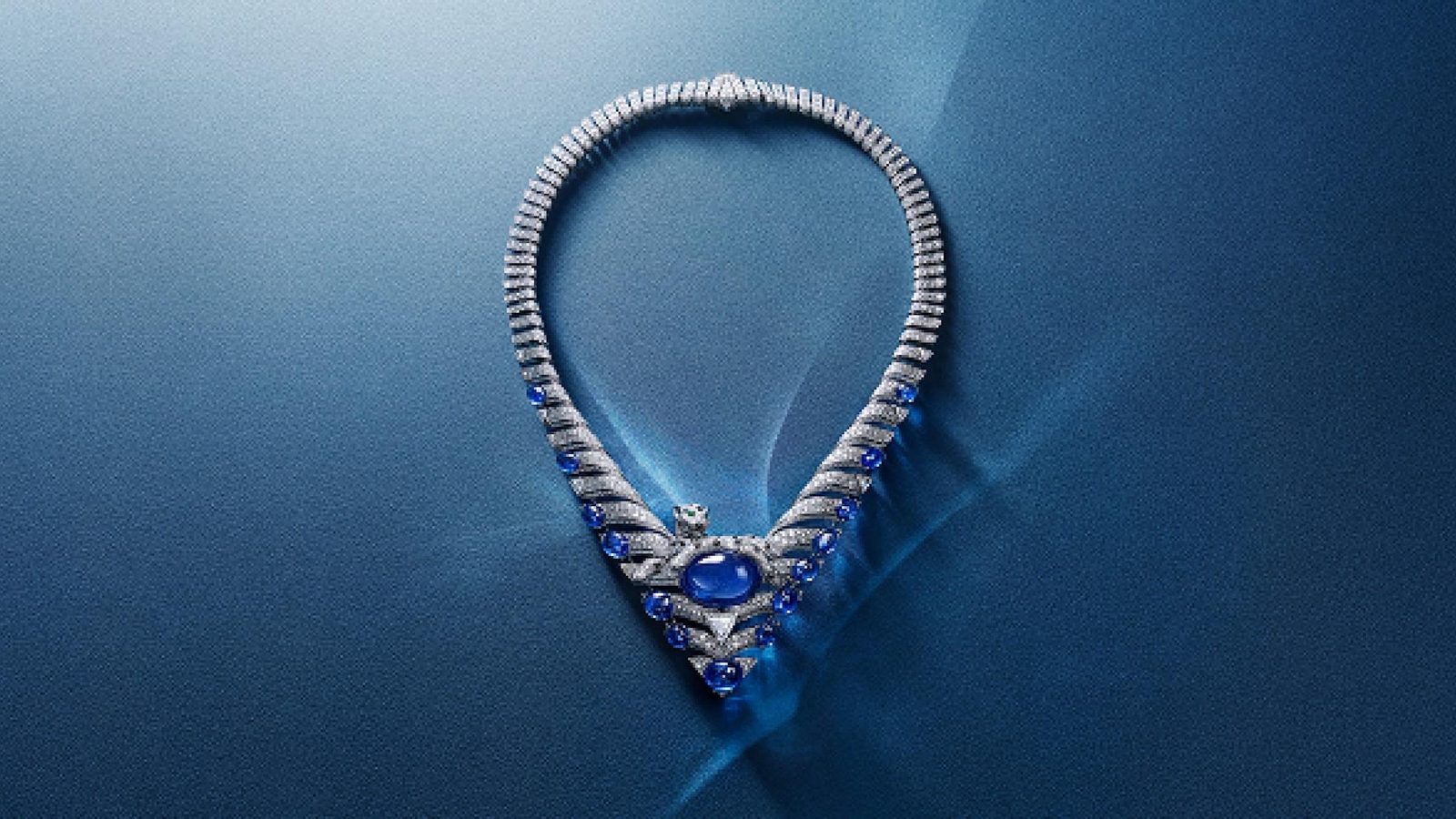

Cartier unveiled the second chapter of its Choeur des Pierres high jewelry collection at the Kyoto National Museum, adding 46 new pieces to the lineup. The centerpiece was the Stellara necklace, a 41-carat Ceylon sapphire set in a graphic openwork composition worn by K-pop star Jisoo at a dinner.
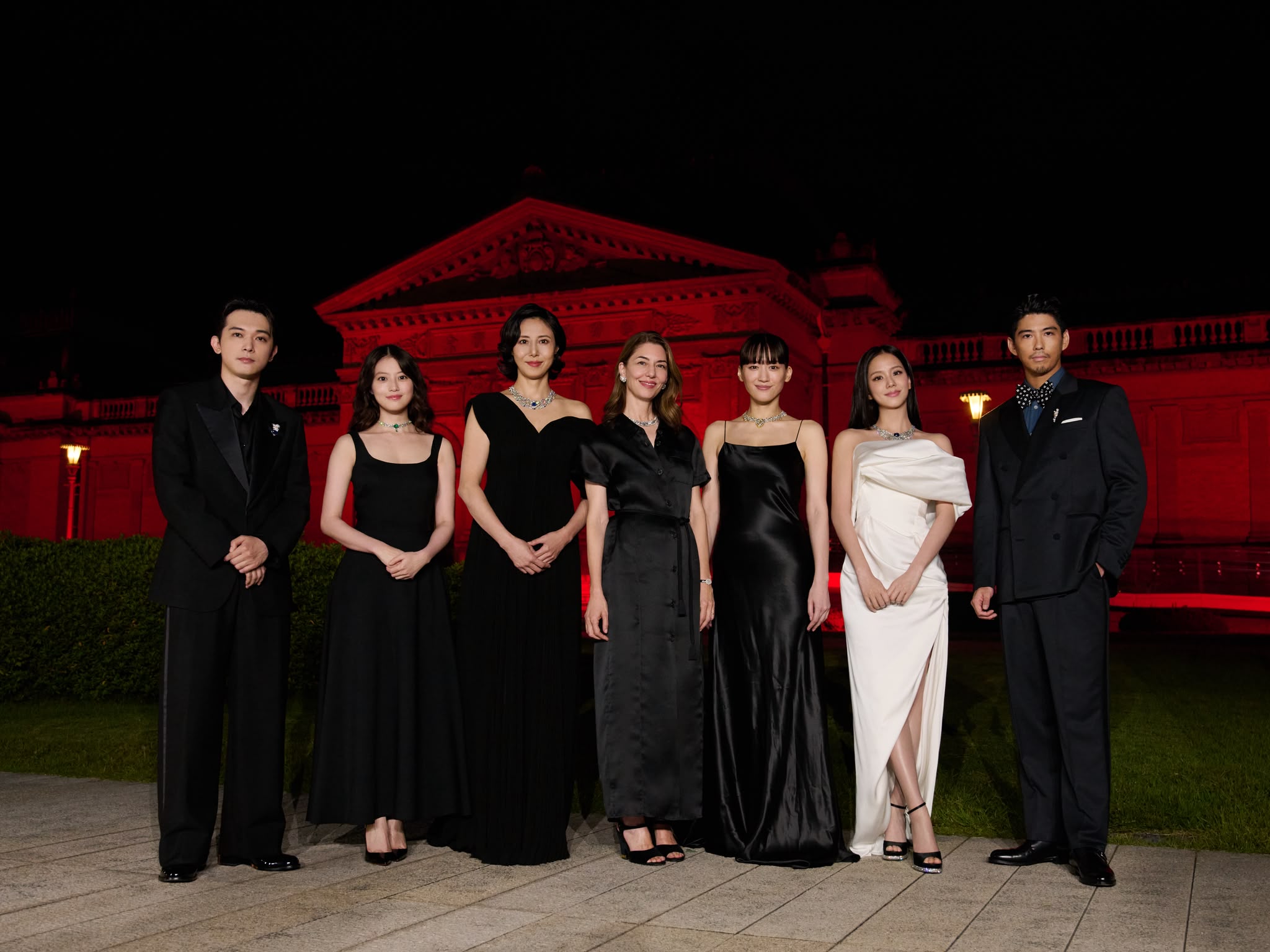
Guests at the dinner included filmmaker Sofia Coppola, actors Mio Imada, Nanako Matsushima and Haruka Ayase, and Japanese stars Ryo Yoshizawa and Kento Kaku. The event was the latest step in a relationship with Japan stretching back half a century.
The jewels beyond Stellara
Patellia earrings carried a pair of brown diamonds totaling more than 11 carats, set with the pavilion facing upward, the reverse of conventional practice. Tipaza strung three rows of ruby beads finished with diamonds and rubies in geometric alternation, two briolette diamonds of 7.36 carats combined closing two strands.
Fibria is a two-strand braid inspired by decorative trimmings, built as a diamond-edged rope holding rubies and turquoises. Two emeralds close the asymmetrical strands. Tutti Chaya wove familiar multicolored glyptic motifs into a geometric mesh paved with diamonds and accented with onyx.
Unset gems were shown alongside the finished works, letting the raw material stand alone. Among them were old mine cut diamonds, a 17-carat fancy intense yellow diamond stretched visually by its elongated cut, a pair of kite-shaped rubellites, and a near-15-carat Colombian no-oil emerald.
The showcase also included three rare sapphires from Kashmir, pearls as large as a thumb and loose strings of ruby beads. Other rubellites had been carved into leaves and laid over a sketch of a possible bracelet arrangement. The display made the stones themselves the argument, before any setting.
Why the second chapter landed in Japan
Chief marketing officer Arnaud Carrez said the choice was not a break from the house's traditional three-chapter sequencing for high jewelry. The collection's name plays on the French words for chorus and heart, and its focus on harmony across varied stylistic territories made Japan a natural fit.
Carrez described an idea of harmony that resonates with Japan's essence and its pursuit of beauty, noting that the house sees unexpected color palettes and surprising combinations of stones within those territories. That sense of beauty, he said, matched the country perfectly.
He tied the fit to a cultural emphasis on humility and the collective, where one puts oneself forward less and serves a group. Cartier views its metiers, particularly high jewelry, as a shared creative endeavor, and Carrez said the idea of the collective is very important to the house.
From a business angle, Carrez pointed to the country's attraction to international clients. Cartier has seen visitors from across Asia, Europe and the United States at its Japanese events over the years, which made the Kyoto moment more visible from the start.
Half a century of Japanese roots
The relationship began formally with a Harajuku boutique in Tokyo in 1974. It deepened through exhibitions, including the Cartier Design Viewed by Ettore Sottsass show at Kyoto's Daigo-ji temple in 2004, Crystallization of Time with scenography by Hiroshi Sugimoto, and a retrospective at the Tokyo National Museum.
Ron Mueck's recent solo show at the Mori Art Museum drew on his long relationship with the Fondation Cartier pour l'Art Contemporain. It closed a six-month run on September 23 with roughly 500,000 visitors, a figure that shows how far the cultural program reaches beyond jewelry.
Last year brought the Ginza 4-Chome boutique, a four-story Tokyo building whose facade echoes the traditional seigaiha wave motif. Inside, origami-inspired ceilings meet a Versailles-style parquet floor, with a washi-paper panther wall by Eriko Horiki and a work by Ryo Hikosaka inspired by a 1907 diamond brooch.
Its top floor houses Cartier's first Résidence in Japan, a private salon and dining space with garden views. The house's broader aim, Carrez said, is to evolve without losing identity, to remain true to what it is while reinventing itself in a dynamic way, favoring evolution and continuity over disruption.
The Kyoto chapter continues a collection that began with 130 pieces shown in Saint-Tropez in April. With the third chapter due next year in Hawaii, the total reaches 250 jewels, objects and timepieces, which would make it the French jeweler's biggest lineup to date.
We know the house well from its jewelry. In our ranking of the most expensive engagement rings, the 10.48-carat Cartier diamond Prince Rainier III gave Grace Kelly in 1956 is first, bought for about $4 million and worth roughly $46 million today.
Our guide to the most expensive sunglasses also names Cartier among the houses where roughly $300 to $6,500 buys glass lenses, hand-cut acetate and real optical engineering, rather than carat weight, which is how almost every six- and seven-figure pair in that category is priced.
Support the content you love — it’s free 🎉
Add Luxe Digital as a preferred source on Google. Our stories will be more likely to appear in Google’s Top Stories. It’s free and supports our team. Thank you!
Add as preferred sourceYou can remove us any time in Google’s source preferences.
Thank you — you’re all set 🎉
Luxe Digital is now one of your preferred sources, so our stories are more likely to appear in Google’s Top Stories.
Sources
This briefing is published daily using an AI-powered system crafted by Luxe Digital’s team and finely tuned to meet our editorial standards. While we continuously test and review the output, mistakes can sometimes happen. Tell us if you spot one.
Images: Cartier; Ryo Yoshizawa, Mio Imada, Nanako Matsushima, Sofia Coppola, Haruka Ayase, Jisoo and Kento Kaku Courtesy of Cartier