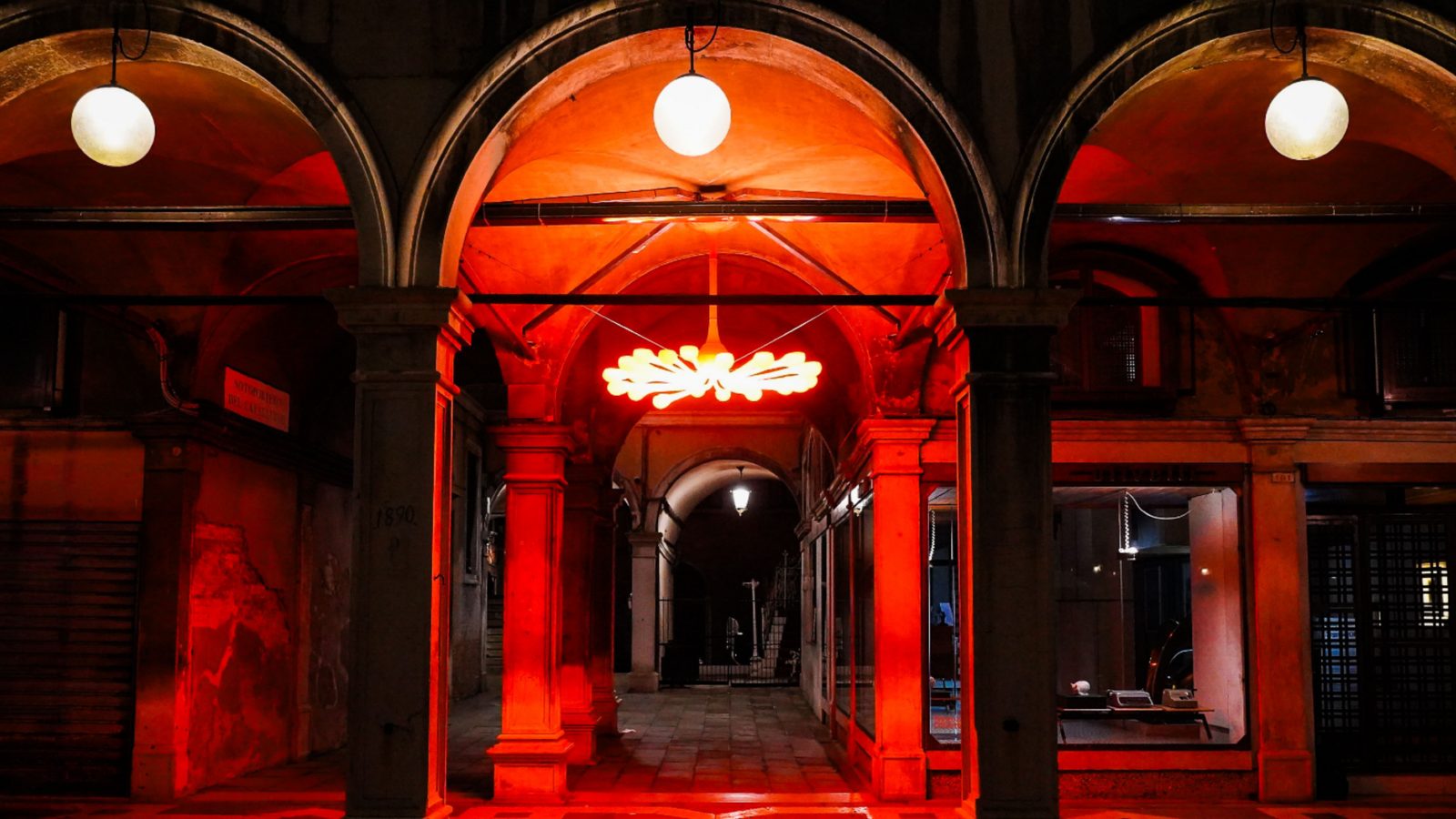

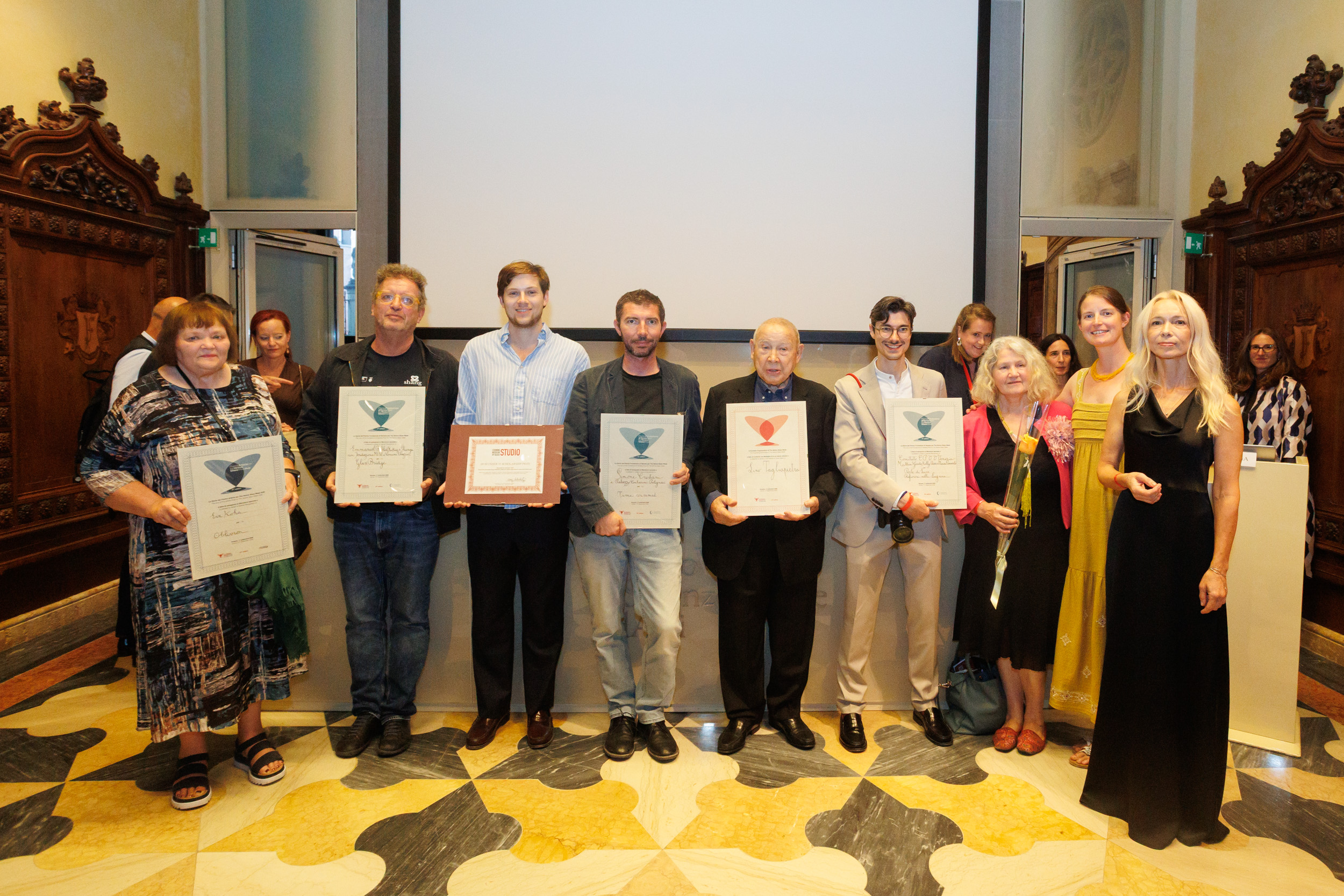
Twelve chandeliers made by contemporary designers and Murano's master glassmakers now hang above St Mark's Square in Venice, part of an installation called Murano Illumina il Mondo, or Murano Lights Up the World. The piece is the flagship event of the tenth edition of The Venice Glass Week, which this year hosted more than 200 events from Italian and international participants across the city.
The chandeliers hang in the Procuratie Vecchie, the historic arcade bordering St Mark's Square, where they will remain on view until November 1, 2026. Each was made through a direct collaboration between a named creative and a specific Murano workshop, pairing architects, designers and artists with the maestri who blow and shape the glass by hand.
Architect Lord Norman Foster designed The Hydra Chandelier, forged with the historic Murano house Salviati, marking his first time working with the island's glassmakers. Its 20 arms throw light upward rather than down, breaking with the chiaroscuro of a traditional Venetian chandelier so the fixture casts a red glow across the ancient portico above it.
Foster chose a frosted glass for the piece to showcase the fine lines of the Rigadin technique, a signature of Salviati's work. The effect gives the chandelier a sense of lightness and flow that emphasizes its single continuous line, with none of the layered arms or botanical motifs typical of the form it reinterprets.
"It's everything about tradition, and yet it's a reinterpretation in today's terms," Foster said of the piece. He described the technical challenge of the design as one where "the visual elements are arms reaching out," rather than a central spine, which posed a distinct engineering problem for how the structure would be supported.
Salviati is credited with reviving the Murano glass industry from the late 1850s onward, and its team continued research and development work with the Norman Foster Foundation on the chandelier. Foster called the process of producing a material that is inherently fragile yet takes on real strength "inspirational and educational" to witness and share.
What the other designers made
Multidisciplinary designer Bethan Laura Wood worked with maestro Matteo Tagliapietra of the workshop Gambaro & Tagliapietra on a piece called Taiko, named for the traditional Japanese drum. Its vibrant barrel forms use Murano's filigree technique, in which thin glass rods called canne are embedded inside a crystal-clear body to form patterns.
Wood's chandelier also draws on mosaic-like murrina and lace-like reticello glasswork. "I wouldn't say I understand it completely because I think glass is quite a magical mystery," she said, describing her interest in predicting how the material and its embedded color patterns behave once worked and pulled by hand.
Other pairings in the series include Pierre Charpin's Tubi or not tubi, made with Simone Cenedese Murano, and Felekşan Onar's Passaggi, produced with Vetreria Artigiana Guiman and Mandruzzato Murano Glass. Arthur Duff worked with Nicola Moretti Murano and Vetrerie Artistiche Murano di Stefano Bullo on a piece titled Hand under hand.
Chiara Dynys created Angels Save Venice with the workshop Seguso, while Cerith Wyn Evans produced a piece called G=A=R=L=A=N=D, or Garland, a Vessel, in collaboration with NEON Line and Idea Murano. Each pairing followed the same model: a named creative working directly alongside a specific maestro rather than simply commissioning a design.
The industry behind the installation
Murano itself covers roughly one square kilometre and is a short water taxi ride from St Mark's Square. According to a report by Banca Ifis, sponsor of The Venice Glass Week, around 160 glass manufacturers operate on the island, many of them still family owned, employing more than 900 people between them.
Those manufacturers generate combined revenues close to €180 million, the same Banca Ifis report found, a figure that underscores how the centuries-old craft still functions as a working industry rather than a heritage display. The report noted the furnaces keep burning despite a volatile energy market that has squeezed smaller glassworks in recent years.
Several of the designers involved in Murano Illumina il Mondo are continuing to work with their paired glassmakers to develop commercial versions of their chandeliers, pursuing what Foster described as a "perfection of the imperfection" distinctive to hand-blown glass rather than a machined finish.
Venice mayor Simone Venturini framed the installation as evidence the craft remains active rather than preserved. "Glass continues to be a living part of its present and future, melding together art and work, culture and enterprise, tradition and innovation," he said, adding that glass "tells the story of Venice better than any other material."
The Hydra Chandelier and the eleven other pieces remain on view above St Mark's Square through November 1, 2026, after which the fate of each installation depends on whether its designer and workshop move forward with a version intended for sale.
Support the content you love — it’s free 🎉
Add Luxe Digital as a preferred source on Google. Our stories will be more likely to appear in Google’s Top Stories. It’s free and supports our team. Thank you!
Add as preferred sourceYou can remove us any time in Google’s source preferences.
Thank you — you’re all set 🎉
Luxe Digital is now one of your preferred sources, so our stories are more likely to appear in Google’s Top Stories.
This briefing is published daily using an AI-powered system crafted by Luxe Digital’s team and finely tuned to meet our editorial standards. While we continuously test and review the output, mistakes can sometimes happen. Tell us if you spot one.
Images: (Image credit: Courtesy Norman Foster); Venice Glass Week