
Glenmorangie has released the oldest whisky it has ever bottled, a 50-year-old single malt housed in a hand-built porcelain sculpture rather than a conventional decanter. Only 149 bottles exist, each priced at £25,800, or roughly $34,200, and each is inside a uniquely patterned ceramic vessel that changes shape and color depending on the angle it is viewed from.
The whisky's story begins in 1995, when Dr Bill Lumsden joined the distillery to find around 300,000 casks in stock, most of them young but with a scattering distilled in the 1960s and 1970s. By 1999 he had identified a 25-year-old recipe he found particularly interesting: 75 percent first-fill bourbon cask spirit married with 25 percent first-fill Oloroso sherry cask spirit.
Rather than bottle that blend, Lumsden married the two parcels at that ratio and returned the whisky to a refill bourbon hogshead that had already held two previous fills of Glenmorangie spirit. He had the cask recoopered extra tightly at Speyside Cooperage specifically to guard against leakage over what would become decades of further aging.
That cask had already given up much of its flavor to earlier whiskies, leaving wood that was deliberately less active and allowing the spirit inside to keep aging slowly rather than being overwhelmed by oak. Lumsden describes the arithmetic of very old whisky bluntly: the longer a cask survives, the rarer and more valuable the spirit becomes, but "the risk increases exponentially with age."
Evaporation steadily reduces the volume in cask, and eventually the oak can dominate the spirit entirely until what remains is unusable, effectively alcoholic wood water. Lumsden never set out to reach half a century. He simply kept checking the whisky in Glenmorangie's cool, damp dunnage warehouses until, around three years ago, he judged it had reached the point he wanted.
Part of the whisky's character comes from barley malted on Glenmorangie's own floor maltings before they closed in 1977, a style of production the distillery no longer uses. Lumsden says it leaves "a subtle smokiness in there, which you don't normally get these days in Glenmorangie," alongside a dry, ashy note he links to the residue of that old malting process.
Tasted at a launch at the Gleneagles estate in Scotland, the 50-year-old shows a fragrant nose of toffee and raisin from the sherry casks, with a soft, buttery palate running through orange peel, pepper and cumin. The ashy note from the floor maltings surfaces underneath without overwhelming the fruit, according to tasting notes from the launch.
How the vessel became part of the whisky
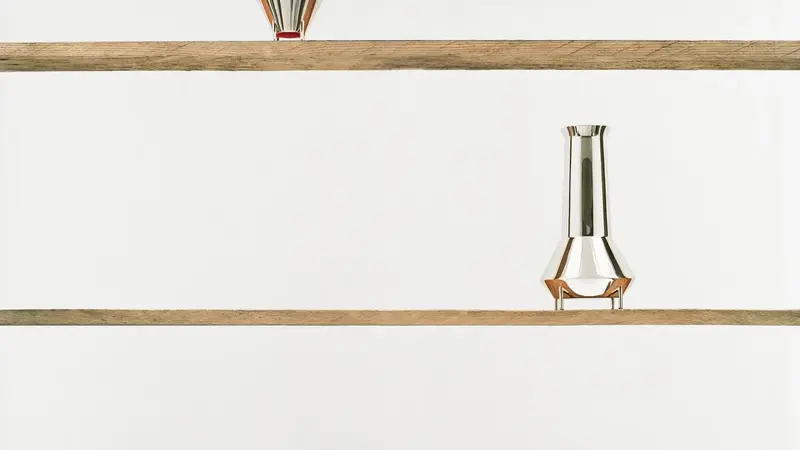
The porcelain housing was designed by ceramicist Peter Pincus with his wife Laurie, drawing on the whisky's flavor, color and history as their starting point. Pincus, who teaches ceramics at the Rochester Institute of Technology, has spent decades studying how ceramic vessels have historically conveyed status and value beyond their practical use.
He calls ceramics "the first form of journalism," arguing that a vessel becomes a record of the people who made it long after its original contents are gone.
"At some point, whether it's one day after people buy, two days, two years, 20 years or 2,000 years, that bottle will be empty," Pincus says. "The ceramic will exist, and the ceramic will carry this story throughout history."
Peter, Laurie and their studio spent more than three years developing new molding techniques and bespoke pigments inspired by the whisky's own colors and aromas. The result was 149 individual porcelain vessels, each carrying its own arrangement of stripes and hues in bands of rust, blue, pink, ochre and gray, conceived together as a single tessellated artwork called Together in Spirit.
Laurie Pincus says the project let the pair "turn flavors and smells into colors," and that even the pale gray surrounding each bottle was chosen deliberately so the mahogany-toned whisky stays visible through the glass. "With certain lighting, it almost glows," she says of the effect once a bottle is placed inside its vessel.
The full installation of 149 pieces was assembled once, for launch, before being broken apart so that each vessel can leave to find an individual home. Asked whether the finished object counts as sculpture or something more functional, Peter Pincus prefers the word "dwelling," arguing that ceramic, glass, wood, metal and whisky were designed to live together.
What the project means for Glenmorangie
Glenmorangie describes itself as a pioneer of the Scotch whisky industry, and the 50 Years Old extends a house style built on exceptionally tall stills that produce an unusually delicate spirit, a fragility that made the extended aging behind this release especially risky.
Lumsden calls the outcome "a bittersweet experience," worrying aloud that the artwork's appeal may mean some buyers never open the bottle at all.
That tension is at the center of the release: Lumsden and Pincus both say they would rather the whisky be drunk than displayed, yet the fact that any buyer might hesitate to open a $34,200 bottle is arguably the clearest evidence that the object and the liquid inside it were never designed to be judged apart from each other.
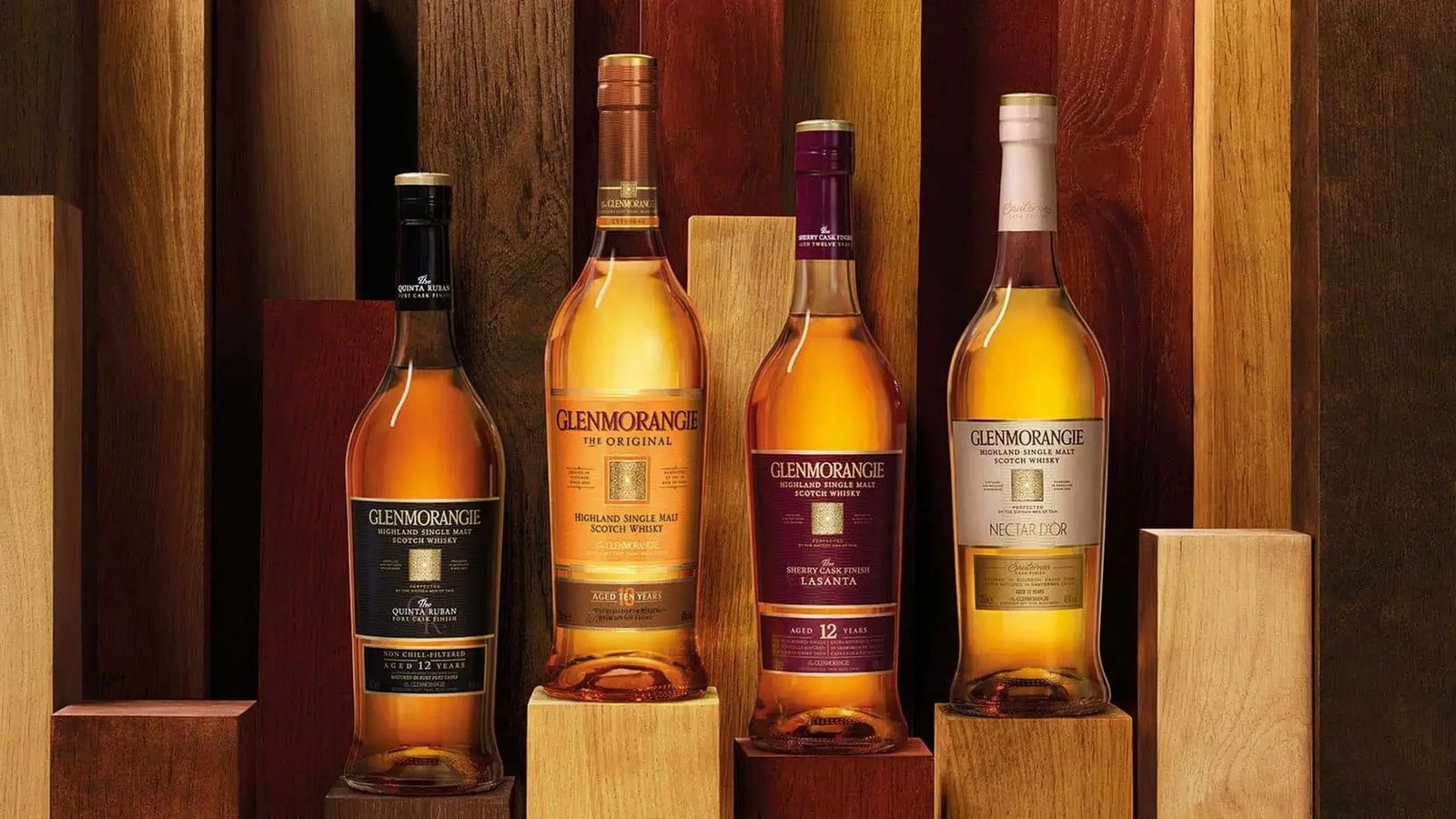
We have previously named Glenmorangie Signet, a 46% Highland single malt built on high-roast chocolate malt barley with notes of mocha and dark chocolate, our pick among the whisky brands we cover, alongside Macallan 12 Year Double Cask, Johnnie Walker Blue Label and peated Islay style Bowmore 12. The 50 Years Old is at a far rarer extreme of the same distillery's range.
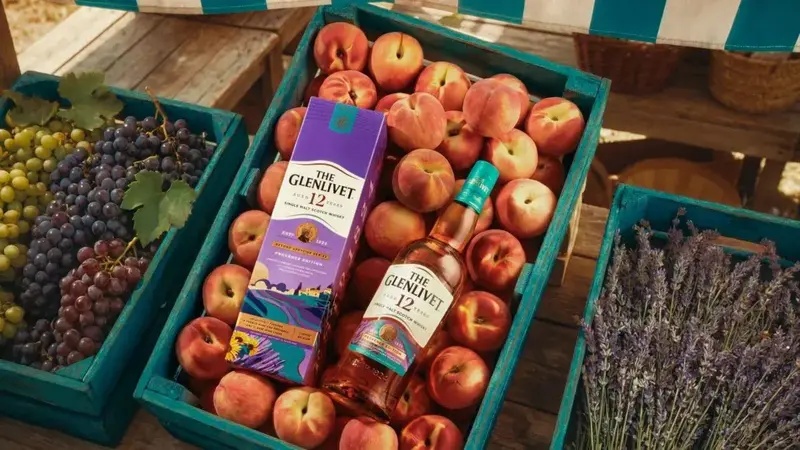
Glenmorangie's release joins a run of similarly ambitious whisky projects across the category this year, including The Glenlivet's new expression finished in white-wine casks for the first time, part of a wider push among Scotch distillers to pair unusual finishing techniques with striking presentation for collectors.
Support the content you love — it’s free 🎉
Add Luxe Digital as a preferred source on Google. Our stories will be more likely to appear in Google’s Top Stories. It’s free and supports our team. Thank you!
Add as preferred sourceYou can remove us any time in Google’s source preferences.
Thank you — you’re all set 🎉
Luxe Digital is now one of your preferred sources, so our stories are more likely to appear in Google’s Top Stories.
This briefing is published daily using an AI-powered system crafted by Luxe Digital’s team and finely tuned to meet our editorial standards. While we continuously test and review the output, mistakes can sometimes happen. Tell us if you spot one.