
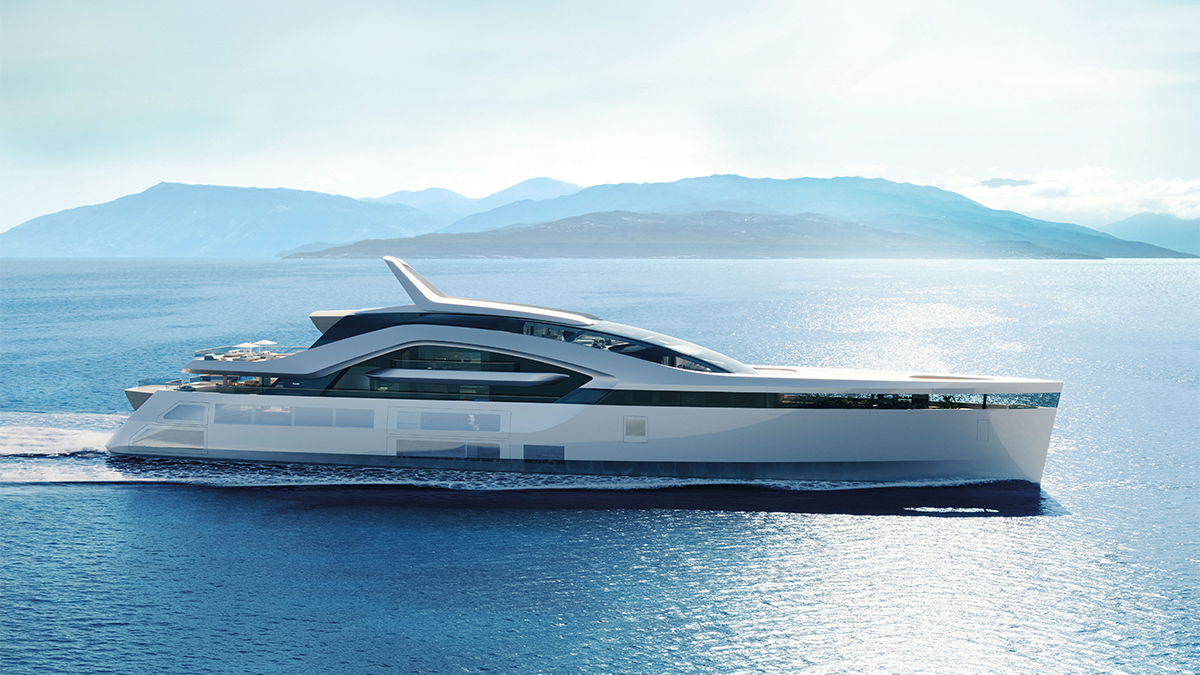
Feadship has unveiled Hive, a 377-foot concept megayacht and the largest the Dutch shipyard has designed to date. It was debuted at the Monaco Yacht Show and takes its name and organizing idea from a beehive, built around a shared central space rather than the conventional superyacht layout of separate rooms.
The concept was developed by Studio De Voogt alongside Feadship's own engineering and naval architecture teams. Rather than a standard sequence of salons and staterooms, the yacht is arranged around a hub meant to draw passengers together before they head off to their own pursuits elsewhere on board.
Jan Schaffers, senior designer at Studio De Voogt, said Hive is designed around the idea that experiences can change people. He added that the team wanted to explore what becomes possible when the starting point is how people might want to live on board in the near future, rather than what a yacht has always been.
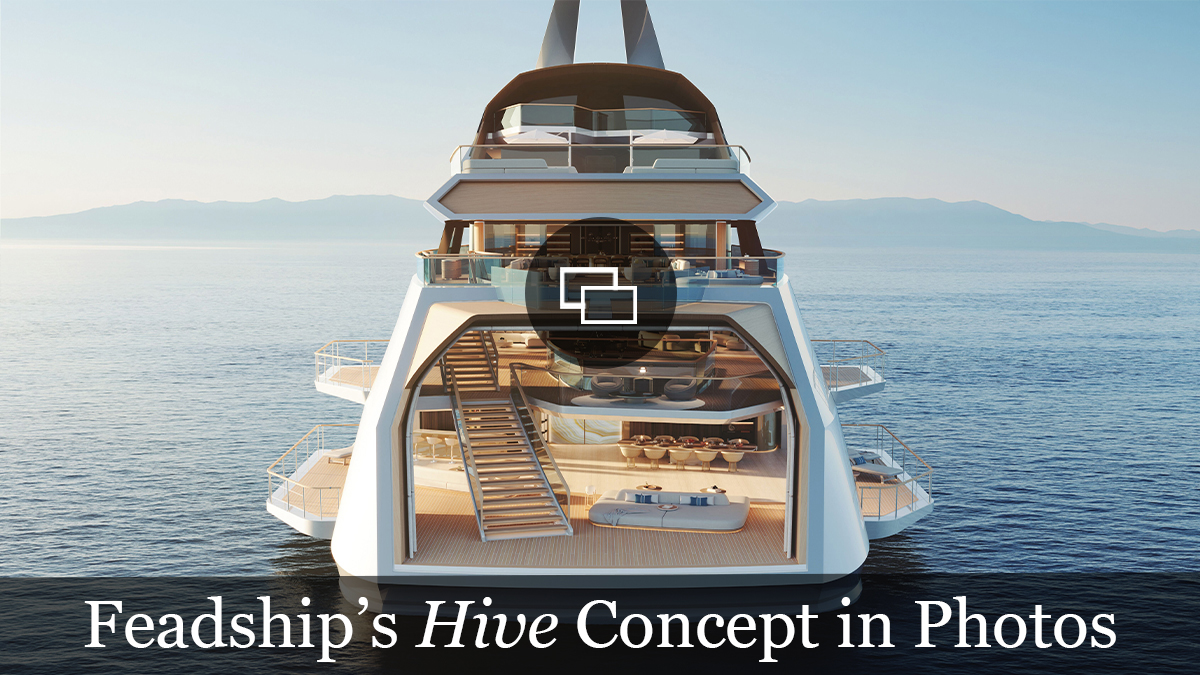
That central space spans four decks and takes cues from 1930s Parisian salons, according to the brief the designers set themselves. The vast main deck can convert into a large salon, a stage or an auditorium, with terraces opening to both port and starboard sides of the hull.
Curved staircases lead up from that main deck to balconies and private spaces above it. A green room nearby is designed for performances and lectures, or simply as an additional gathering point, extending the hive concept upward through the vessel's four decks.
What the owner's deck holds
The owner's deck is where Hive makes its most striking claim: a 65-foot glass-bottomed swimming pool that extends from the deck directly into the interior of the yacht, blurring the line between an outdoor pool and an indoor room.
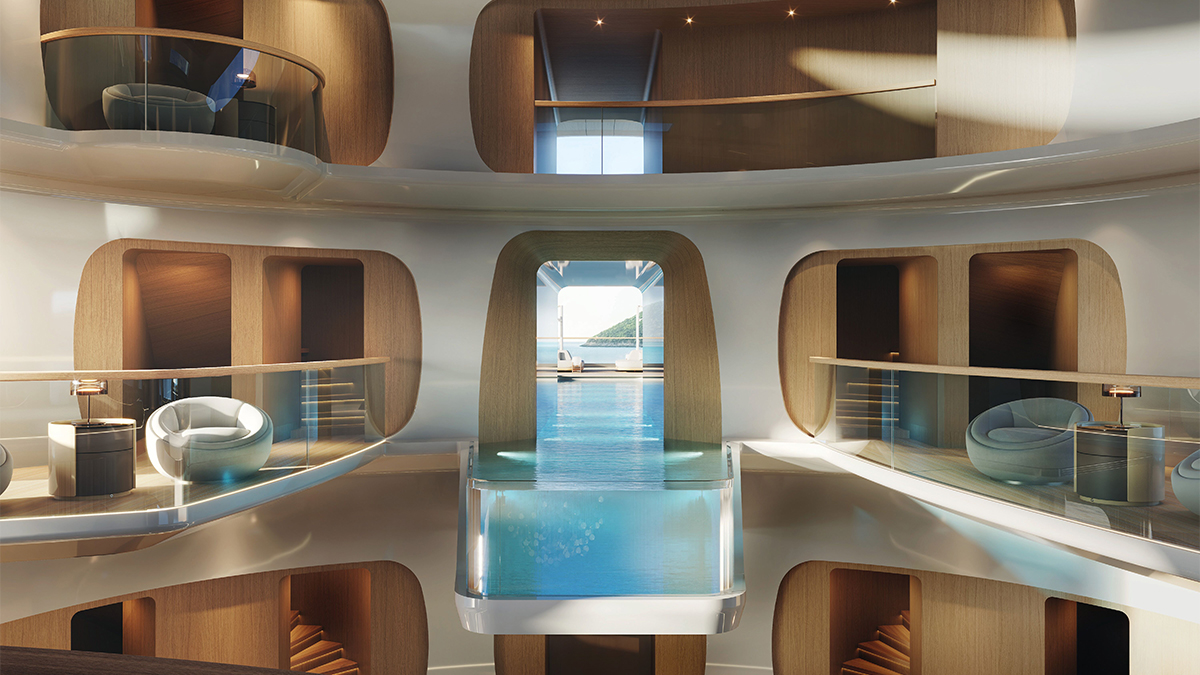
Beyond the hub and the pool, Hive holds a two-story beach club with water-level dining for 24 guests, and a circular, glass-enclosed library with its own secluded garden for passengers who prefer quiet over the central salon.
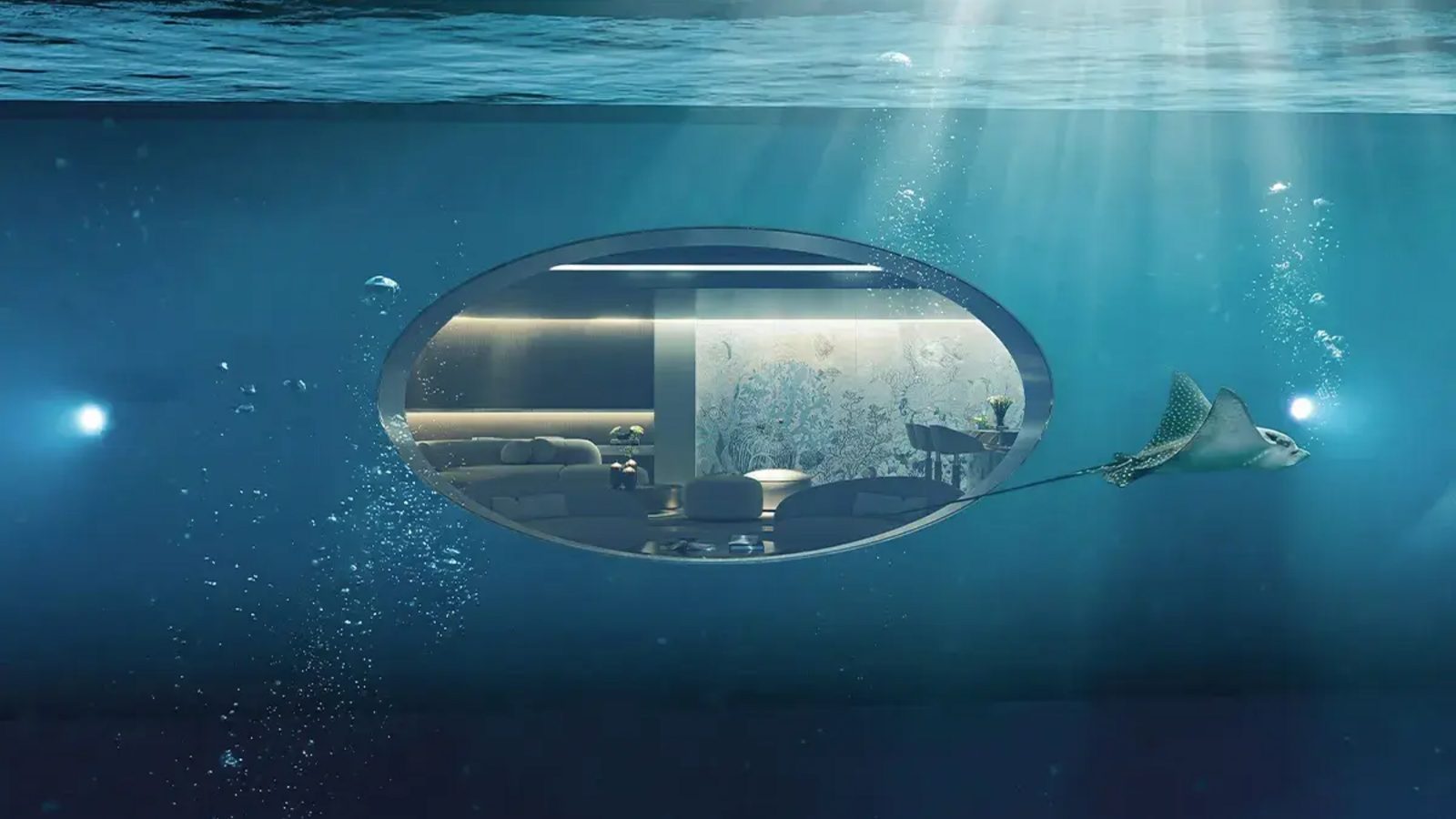
An underwater lounge and an observation lounge with a retractable roof let passengers choose between the night sky and the ocean floor. Outside, the hull carries the long, low-slung profile and heavy glazing of earlier Feadship vessels named Pure and C.
Power comes from three 900 kW variable-speed permanent-magnet generators running on HVO, paired with fuel cells and a 5 MWh battery pack. For zero-emissions cruising, Hive can instead draw on seven 75 kW solid-oxide fuel cells or nine 250 kW PEM fuel cells with a methanol reformer.
Feadship gives Hive a cruising speed of 12 knots and a top speed of 16 knots. Range runs to 9,500 nautical miles at 12 knots on HVO, or 5,500 nautical miles at the same speed running on methanol, a spread that points to how differently the two fuel paths behave.
Feadship builds some of the largest and most technically ambitious yachts on the water, and Hive is presented as a concept rather than a commissioned build, a step the yard has used before to test ideas that later surface in delivered vessels. Pure and C, both named as design references for Hive's exterior, were themselves built as finished superyachts rather than concepts.
We cover design stories like this one as part of our coverage of style, where shipbuilders, jewelers and furniture makers are increasingly using concept pieces to signal where their engineering and design thinking is heading well before a client commissions the real thing.
Feadship has not said whether Hive will be built for a client or remains a design study intended to demonstrate the yard's thinking on propulsion and layout. No buyer, price or construction timeline has been disclosed alongside the concept's unveiling in Monaco.
Support the content you love — it’s free 🎉
Add Luxe Digital as a preferred source on Google. Our stories will be more likely to appear in Google’s Top Stories. It’s free and supports our team. Thank you!
Add as preferred sourceYou can remove us any time in Google’s source preferences.
Thank you — you’re all set 🎉
Luxe Digital is now one of your preferred sources, so our stories are more likely to appear in Google’s Top Stories.
This briefing is published daily using an AI-powered system crafted by Luxe Digital’s team and finely tuned to meet our editorial standards. While we continuously test and review the output, mistakes can sometimes happen. Tell us if you spot one.
Images: Feadship