
Jean Prounis has turned from antiquity to the machine age. The New York goldsmith's new collection, called Moderne, is built on the art deco period that shaped Manhattan, expressed in 22-carat yellow gold, rock crystal, estate diamonds, heirloom diamonds and a range of coloured stones.
It is a deliberate break. Until now Prounis, who trained as a goldsmith, had looked to ancient artefacts, among them Etruscan, Greek and Roman pieces, for her creative stimulus. Moderne keeps the reference point far closer to the showroom address and to recent history.
The research carried her team to the New York Public Library, where they studied pochoir prints, a technique of layering gouache paint over stencils. They worked through New York City architecture as well as archival creations by Cartier and Maison Fouquet, two names that defined the period's jewellery.
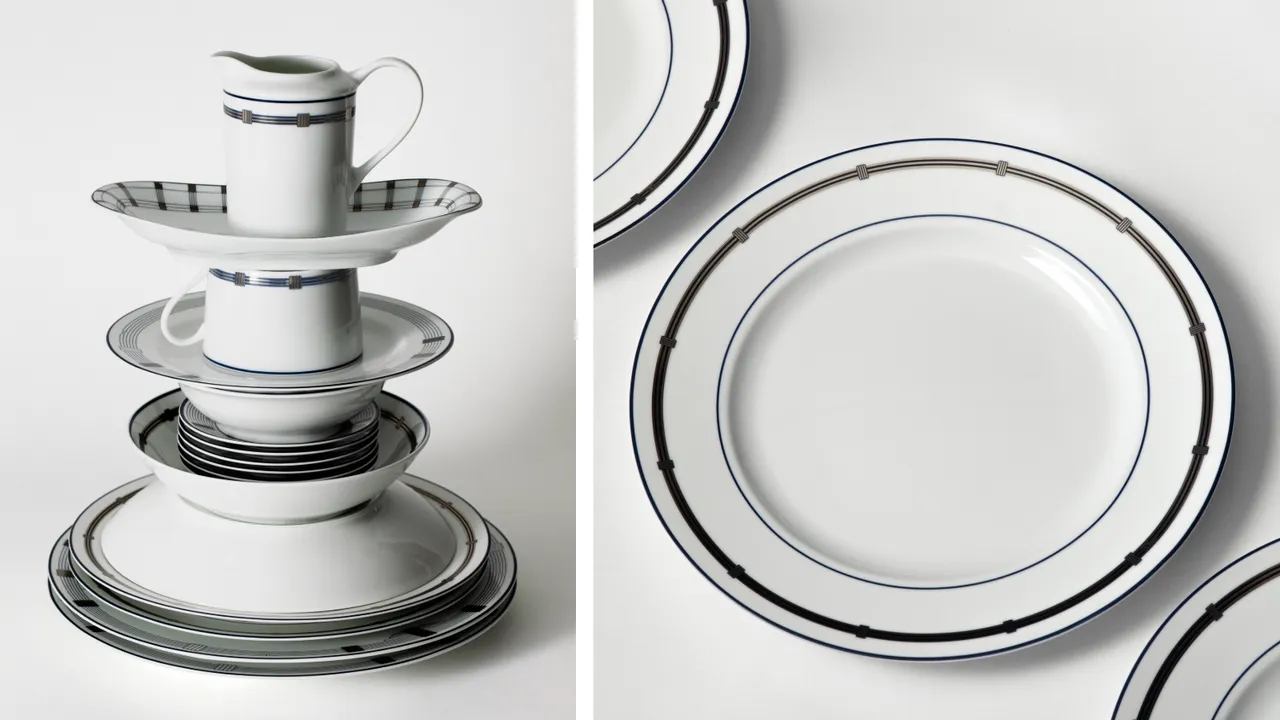
There is a family reason the art deco years, roughly the 1910s to the 1930s, pulled at her. In 1936 her great-grandfather Otto Prounis co-opened Versailles, a nightclub opposite the Waldorf Astoria. Its sage-green silk tablecloths, custom silver cutlery and hand-gouached menus gave it a stately art deco polish.
Versailles drew performers including Bob Hope and Edith Piaf. 'This is a completely new direction for Prounis,' the designer says of Moderne. 'It has a much more contemporary reference point of the early 20th century and mostly New York.'
She traces the start of that interest to her great-grandparents. 'That came about from me being interested in exploring my great-grandparents' nightclub, and what came before that period that brought about such stately visuals,' Prounis says of the collection's turn toward the city.
What is in the collection
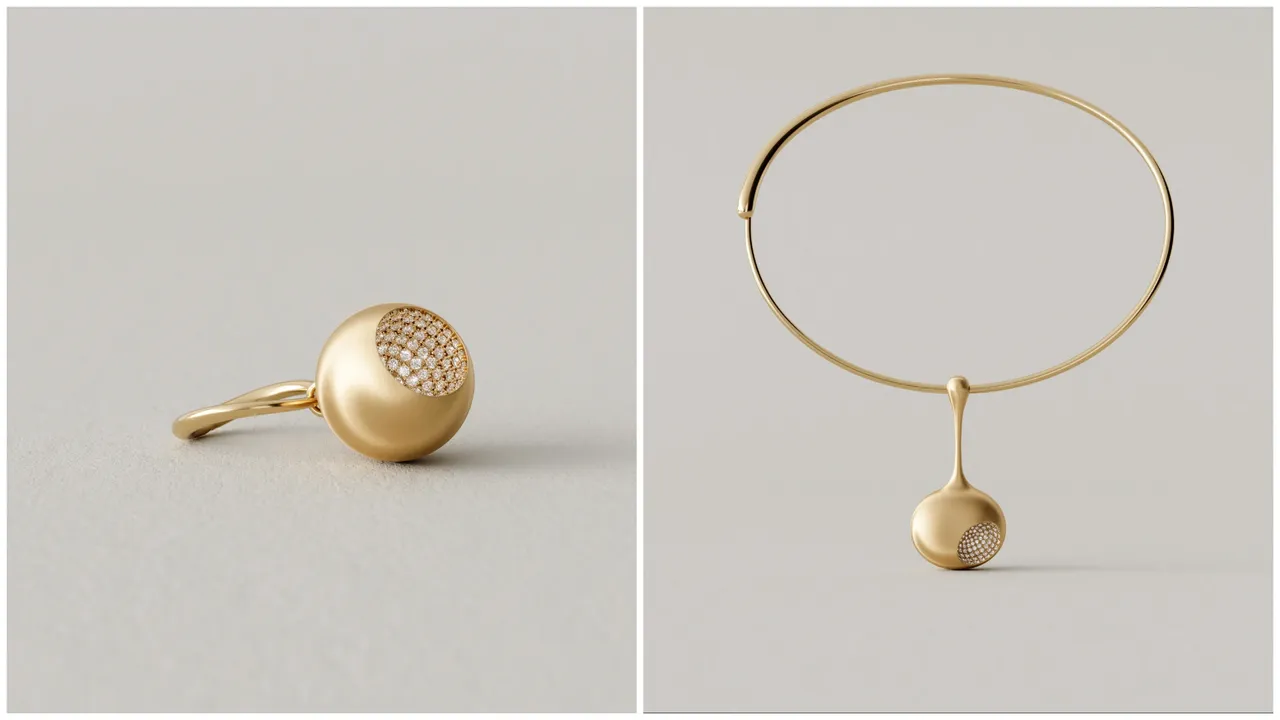
Every piece is crafted by hand in Manhattan's jewellery district. The offering includes a long sautoir-style necklace offered in jade, frosted rock crystal or red jasper, the pendant taking the elongated line that the deco years made their own.
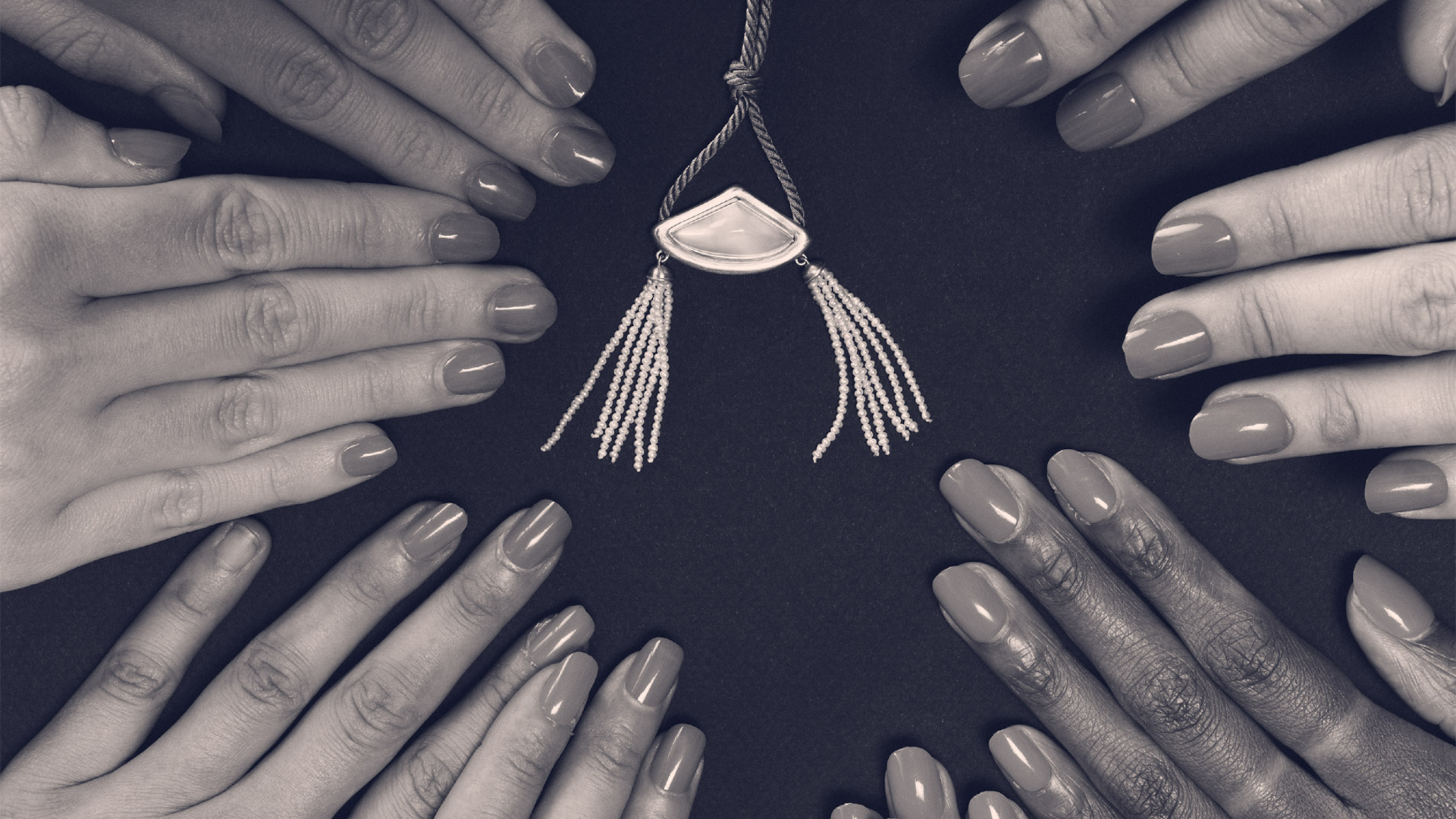
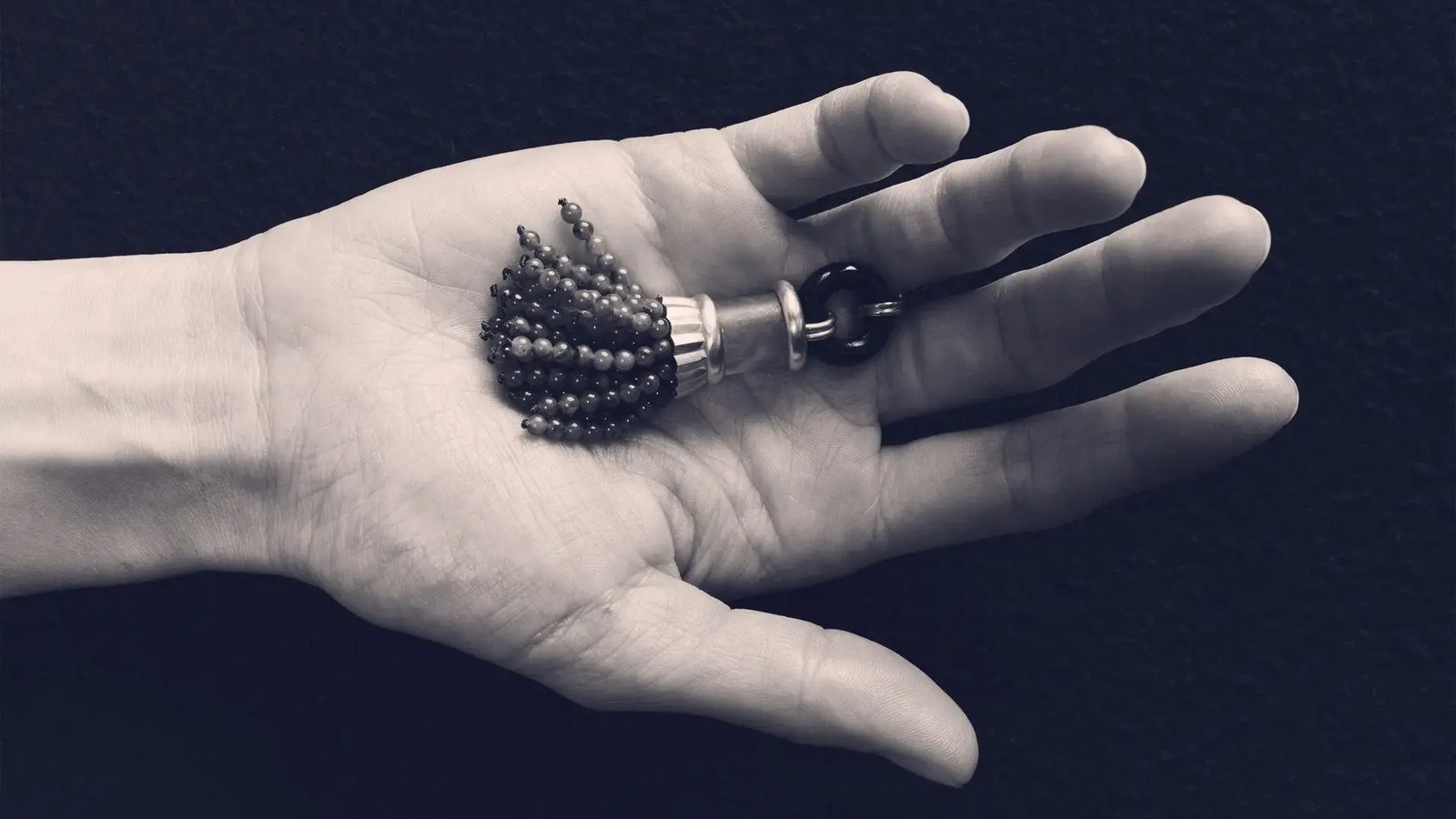
Tassels, or brushes as Prounis calls the tactile feature, run through the collection as a signature. Square-cut diamonds anchor the stones, with Asscher and carré cuts in particular, both shapes born in the art deco era and sourced by a gem expert.
An old mine diamond is the centerpiece of the Rosemary ring, a cut that predates the modern brilliant and carries the softer, deeper profile collectors associate with older stones. The ring itself is a geometric design, but its real origin is personal.
Prounis based Rosemary on a ring her great-grandmother once wore, carrying the nightclub story into a family heirloom and back out again. The setting frames the old mine diamond in a shape derived from deco geometry rather than from any catalogue of the period.
The result is jewellery Prounis presents as a full departure rather than a seasonal extension. She says of the change: 'I really wanted to explore that period in New York.' Her eponymous business has existed since 2017, so the shift reads as the work of an established designer, not a debut.
A designer grounded in New York
Prounis set up her eponymous house in 2017 and has built it as a New York name from a Manhattan bench, which is where this collection's art deco geography comes from. The deco era shaped the very skyline her jewellery now gestures toward.
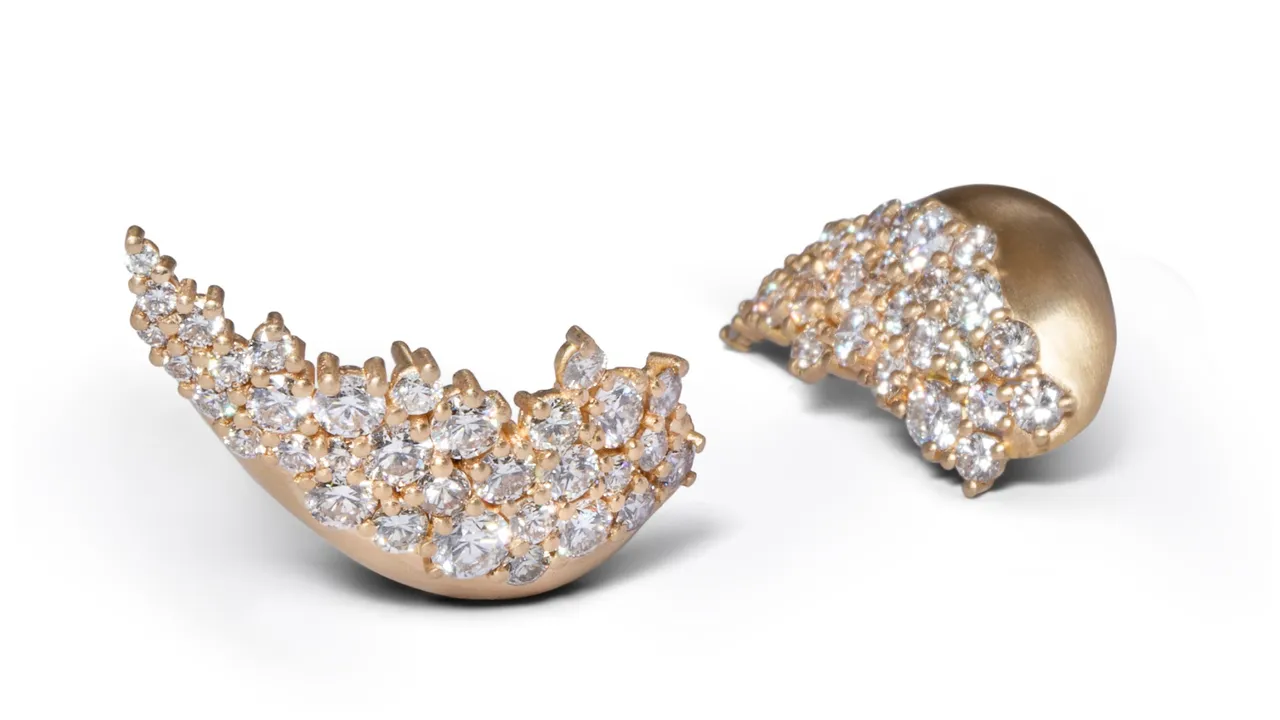
Estate diamonds, meaning stones recovered from older pieces and reset, appear throughout rather than only freshly cut goods, which suits a collection professing an interest in what came before.
Our coverage of scene has followed designers who root a collection in one place and one period, from Swarovski's Collection 1 to a fictional alpine hotel for Acqua di Parma's 110th holiday range. Prounis does it with a genuine Manhattan address at the center of the story.
The private clubs we have mapped across New York share a grid with Versailles, Otto Prounis's nightclub of 1936. Nothing about that room survives in the source material except its menus, silver and silk, and Moderne is where those details resurface as jewellery.
What Moderne carries forward is an unusual doubling: a designer's own great-grandfather ran one of the period's famous rooms, and a great-grandmother supplied the ring at the heart of the new work. It is both an architectural and a family source in one design.
Support the content you love — it’s free 🎉
Add Luxe Digital as a preferred source on Google. Our stories will be more likely to appear in Google’s Top Stories. It’s free and supports our team. Thank you!
Add as preferred sourceYou can remove us any time in Google’s source preferences.
Thank you — you’re all set 🎉
Luxe Digital is now one of your preferred sources, so our stories are more likely to appear in Google’s Top Stories.
This briefing is published daily using an AI-powered system crafted by Luxe Digital’s team and finely tuned to meet our editorial standards. While we continuously test and review the output, mistakes can sometimes happen. Tell us if you spot one.
Images: (Image credit: Pablo di Prima courtesy of Prounis); Jean Prounis