Highlights on black hair are all about what you can see from a few feet away. Brown or caramel pieces read as glossy movement, honey and blonde read as contrast, and silver or red read as a statement. Pick the one that matches how much you want people to notice.
With dark hair winning the gold for sensuality and allure, adding highlights only serves to strengthen the appeal. Whether you’d like to go lighter overall or simply infuse some intrigue and depth, highlights are the way forward, but of course, the finished effect largely depends on where they’re placed and the shades you select.
Fancy the best of both worlds? Great news: blonde looks gorgeous on dark hair, if done masterfully. Balayage-style highlights can work wonders in revamping your look, and you get to keep that lustrous base color. You needn’t go too light either (in fact, we advise against it): caramel, chocolate, and mocha tones look showstopping paired with a black base color, too.
So, browse through our guide to black hair with highlights, from sumptuous chocolate brown tones to richly autumnal reds and everything in between, plus gray blending for when the silver starts showing up on its own.
Highlights for Black hair
Here are 36 ideas for highlights on Black hair to take to your colorist.
Brown and caramel highlights on black hair
Black hair with chestnut highlights
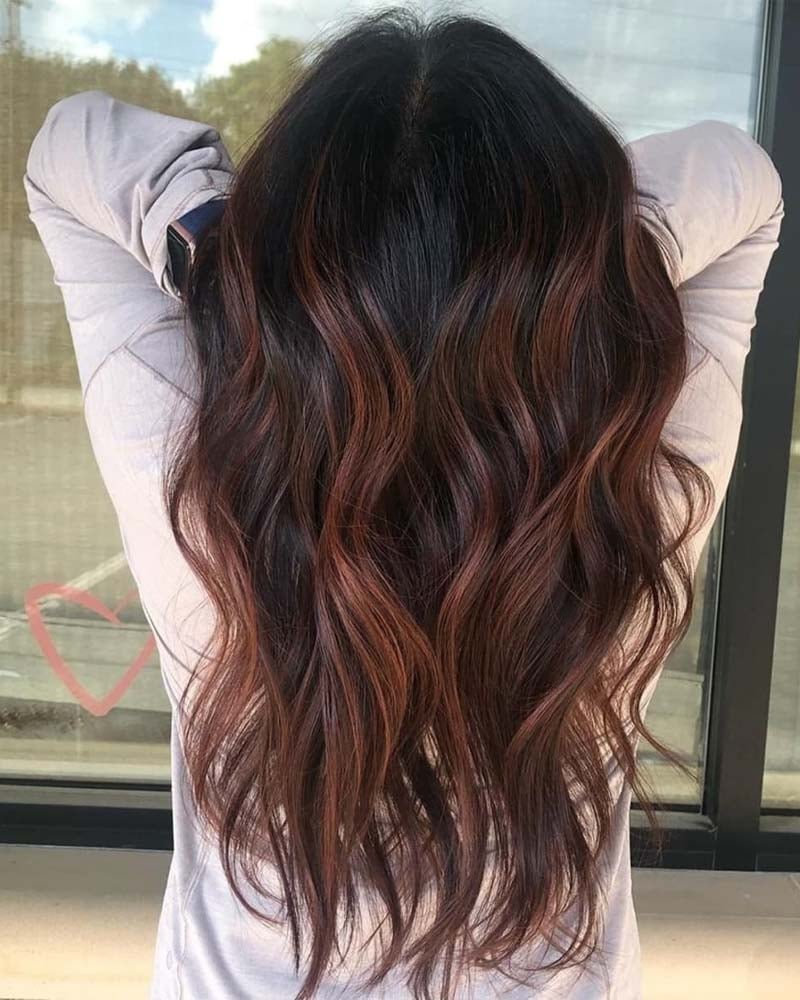
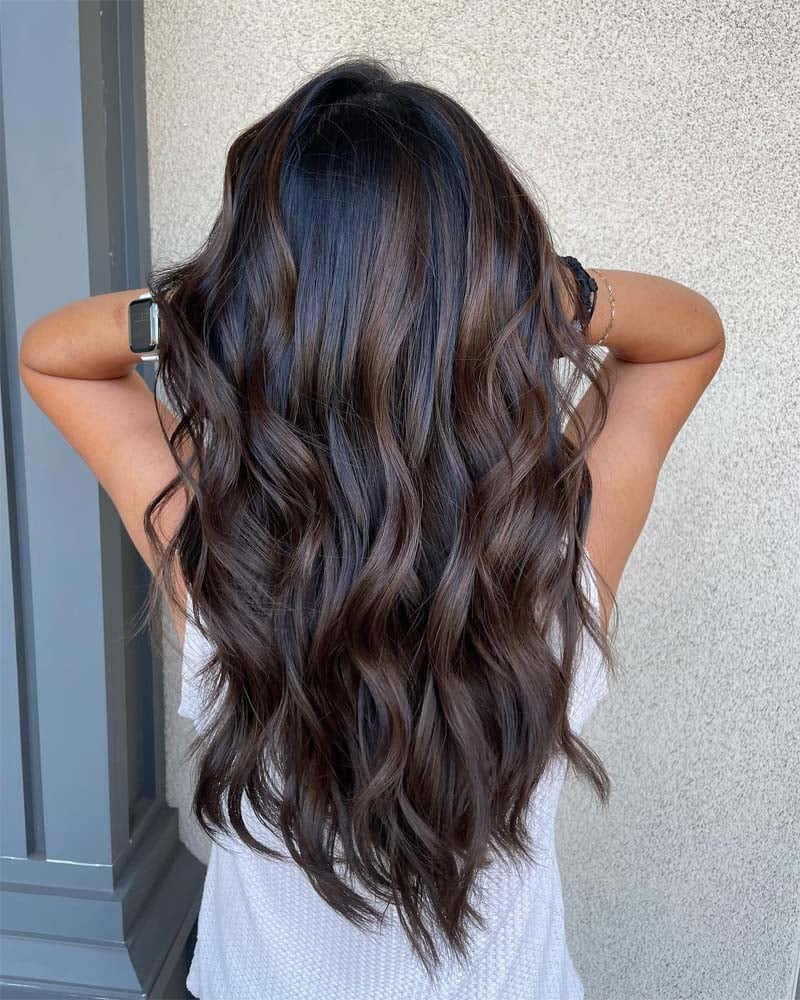
Chestnut is a reddish brown, so it sits close to the warmth that shows up anyway when black hair is lifted. That makes it a kind shade to live with: the highlights fade toward copper rather than toward yellow. Wear it in loose waves, where the lighter pieces catch the light on every bend.
What to ask for Fine chestnut highlights lifted two or three levels, placed through the mid-lengths and ends, with a warm gloss to finish.
Black hair with brown highlights
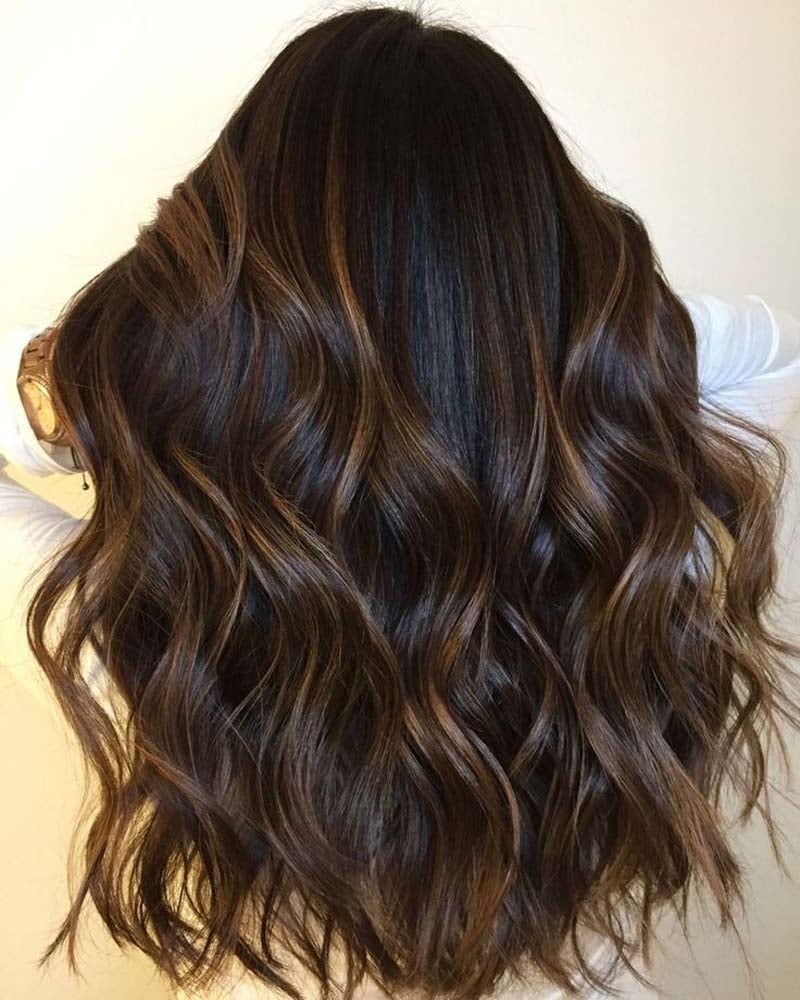
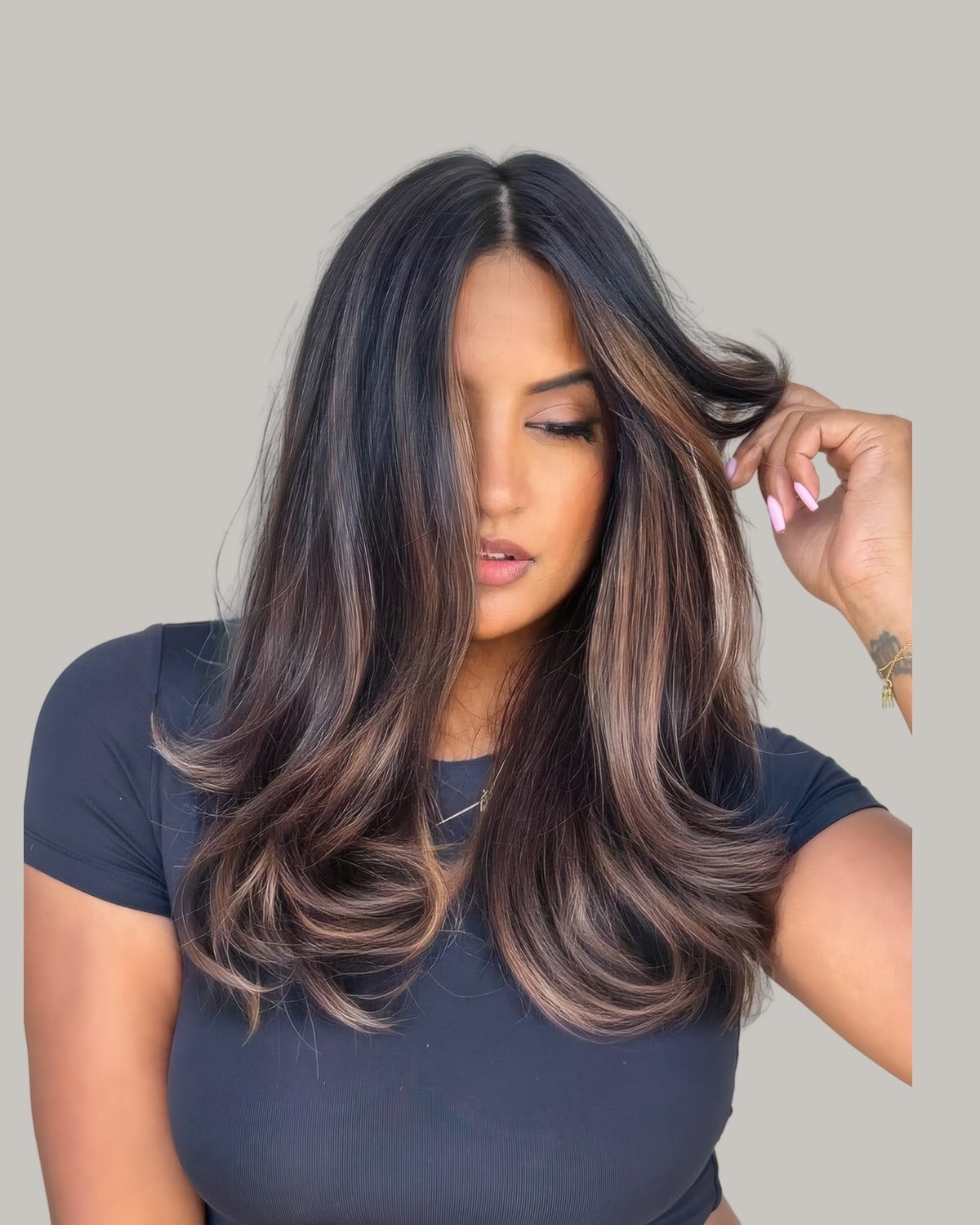
Brown on black is the quiet version of highlights: from a few feet away it reads as glossy dark hair, and up close you see the movement. It’s a good first step if you’ve never colored your hair, because the grow-out line is hard to spot.
What to ask for Soft brown highlights one or two levels above my natural color, woven fine, with no bleach if my hair has never been dyed.
Mocha hair with light brown highlights
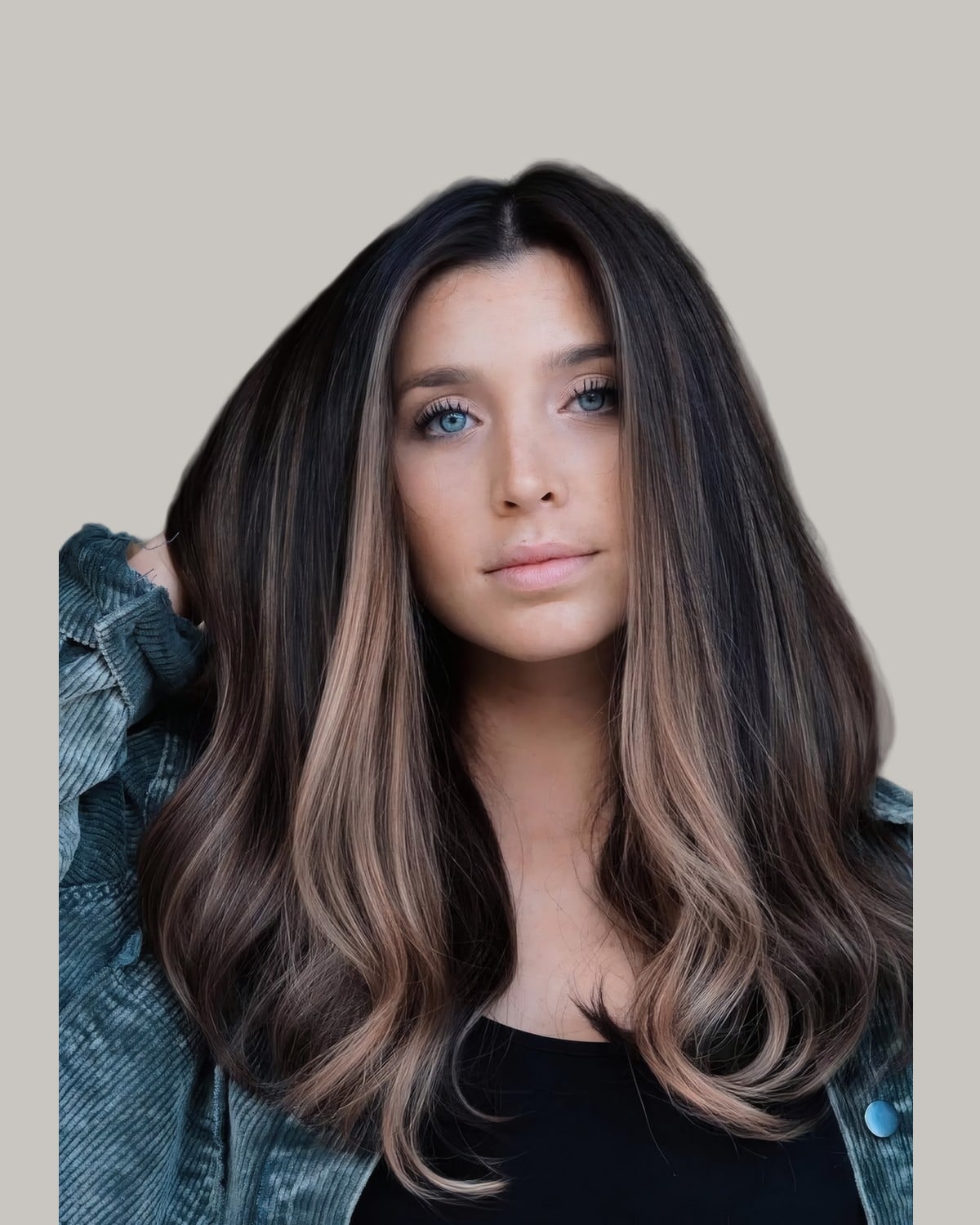
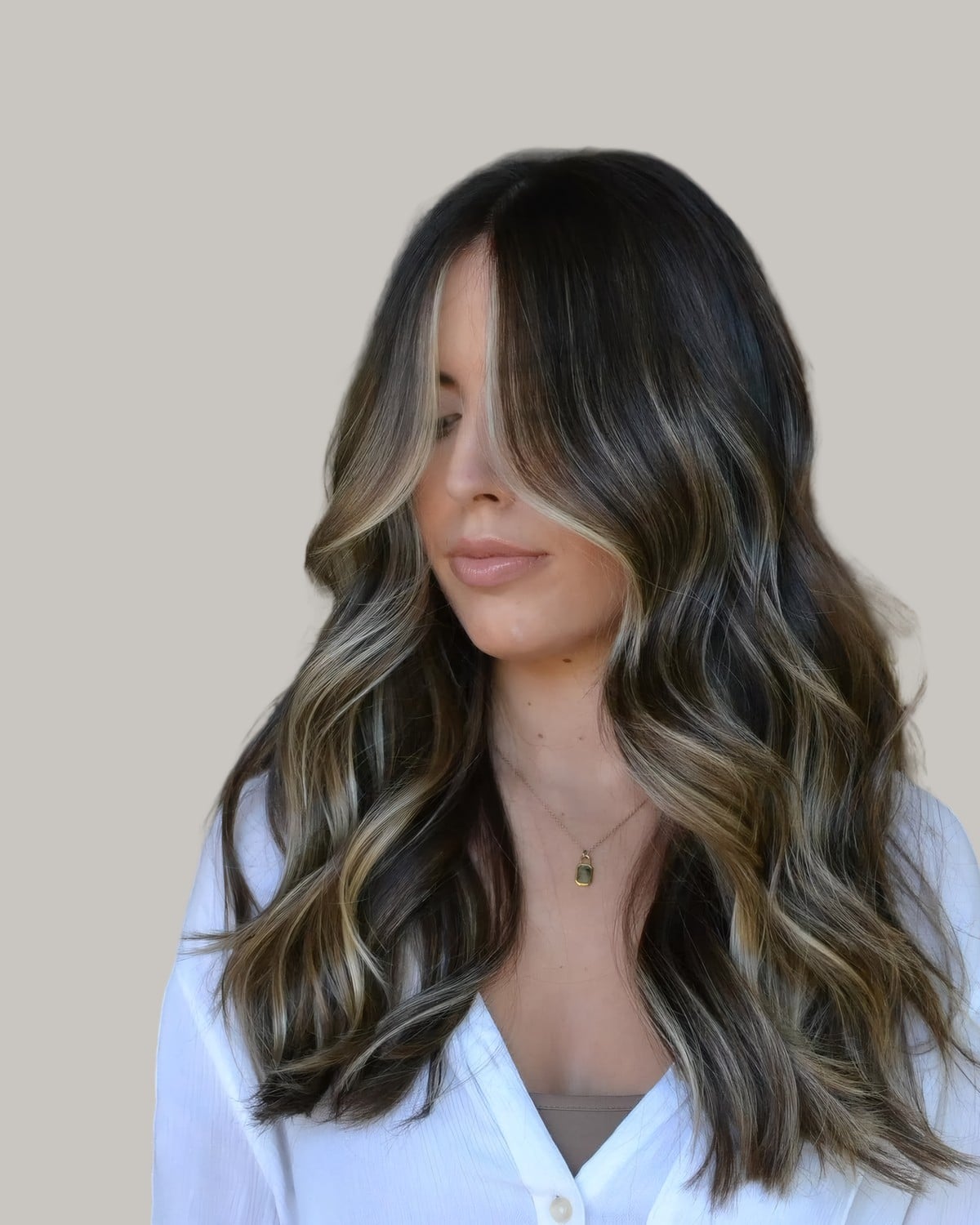
Mocha is a cool, milky brown, and light brown pieces over it give the whole head a softer finish than black alone. On waves the lighter strands wind through the dark ones, so the color changes as the hair moves.
What to ask for A mocha brown base with light brown highlights, cool toned, concentrated around the face and through the top layer.
Black hair with caramel highlights
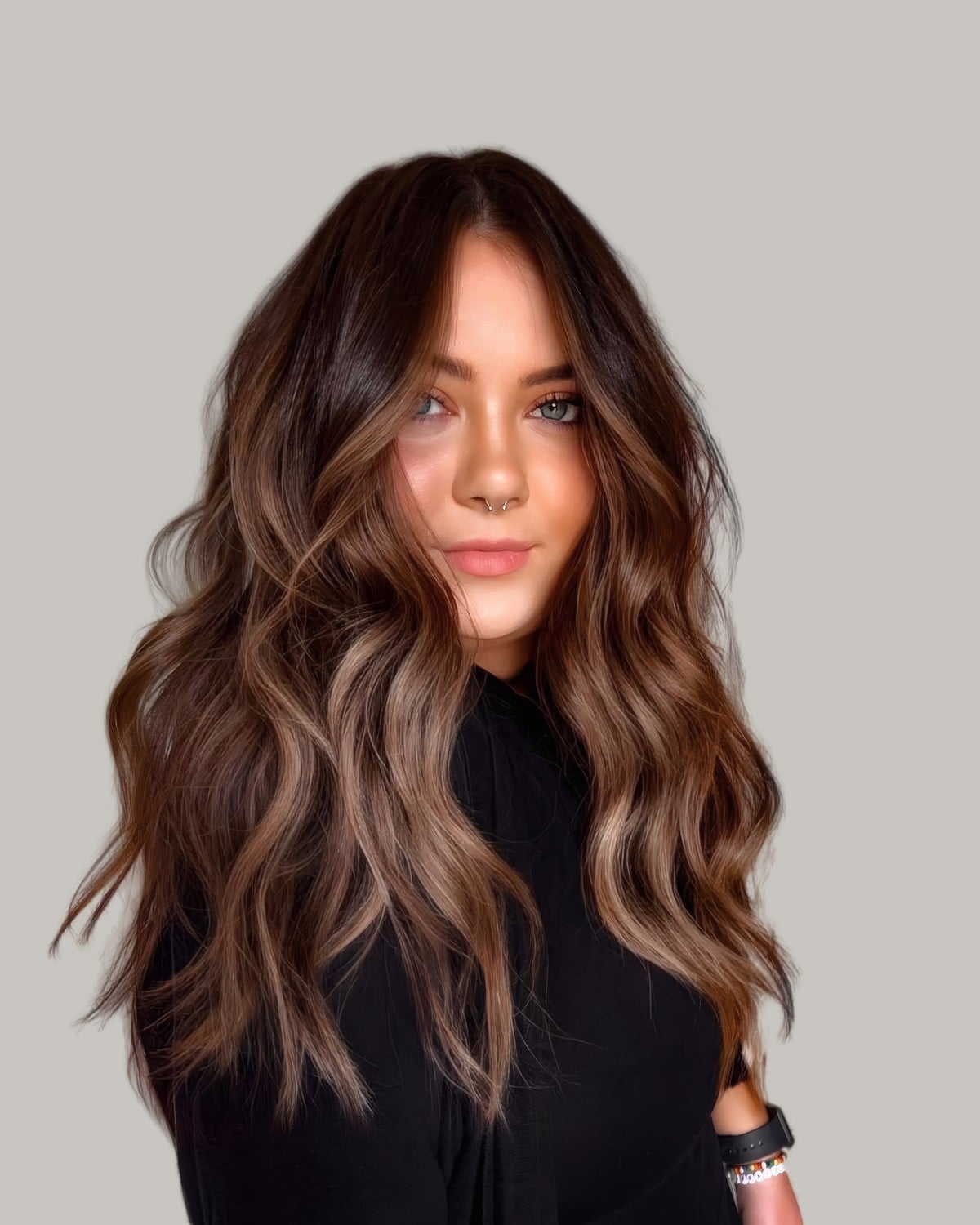
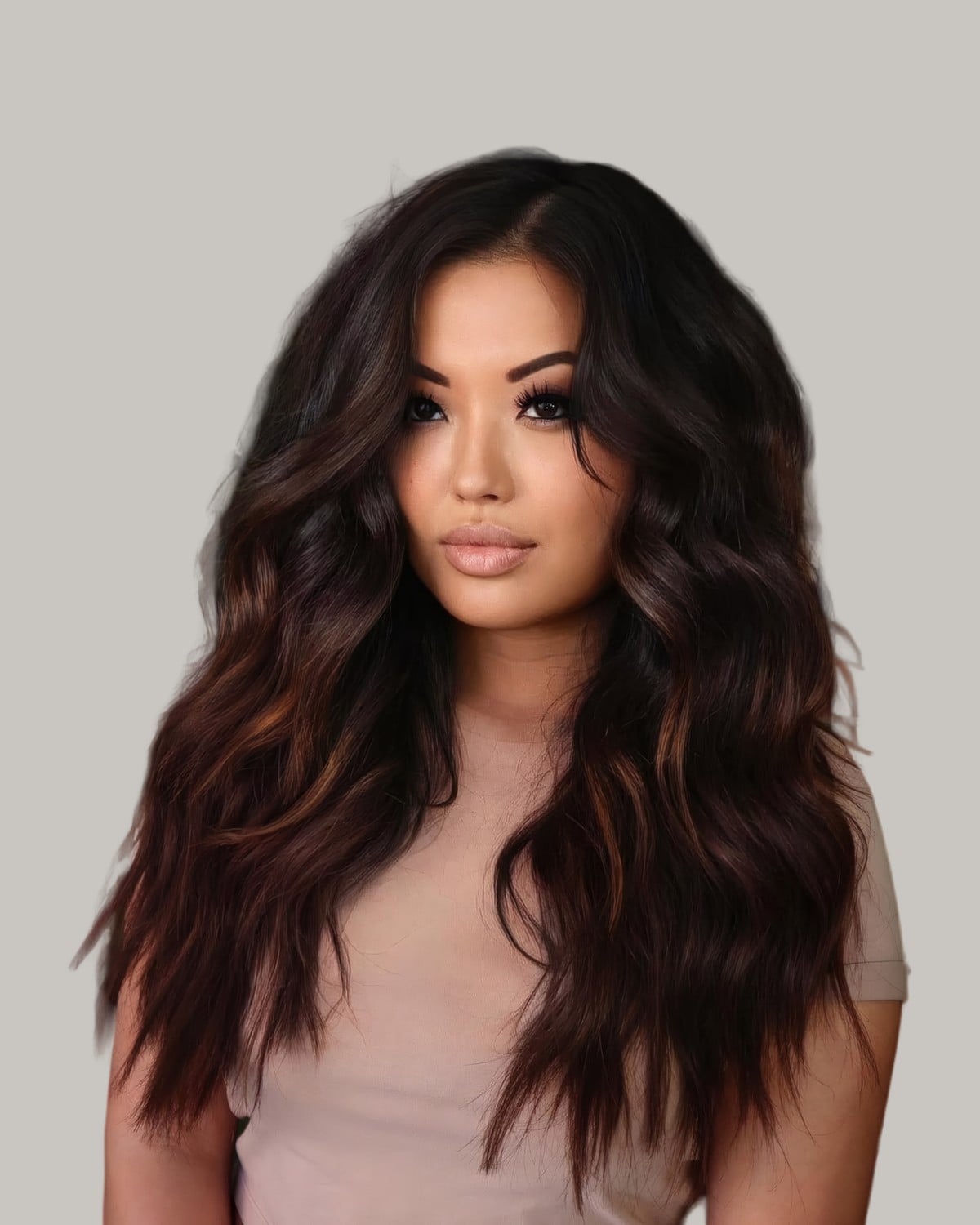
Caramel is what many people picture when they ask for highlights on dark hair. It’s golden without tipping into blonde, and it flatters warm and olive skin especially. Ribbon the pieces through the lengths so the root stays dark and the grow-out stays soft.
What to ask for Caramel ribbons, lifted three or four levels and toned golden, starting a few inches below the root.
Dark brown highlights on black hair
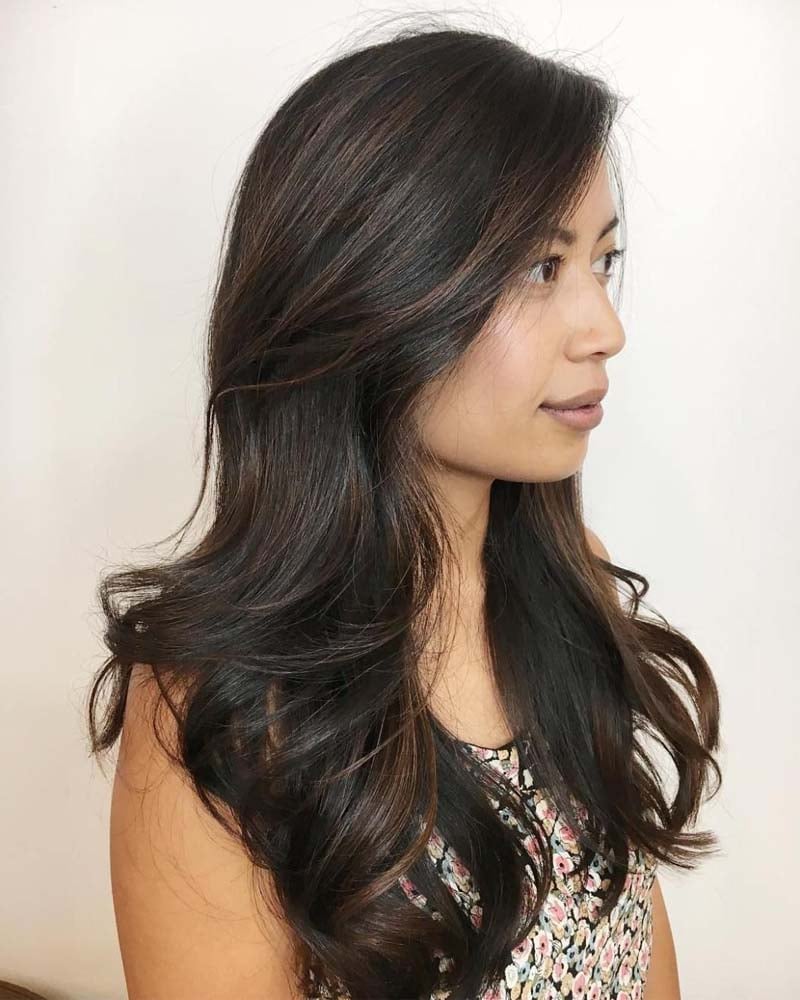
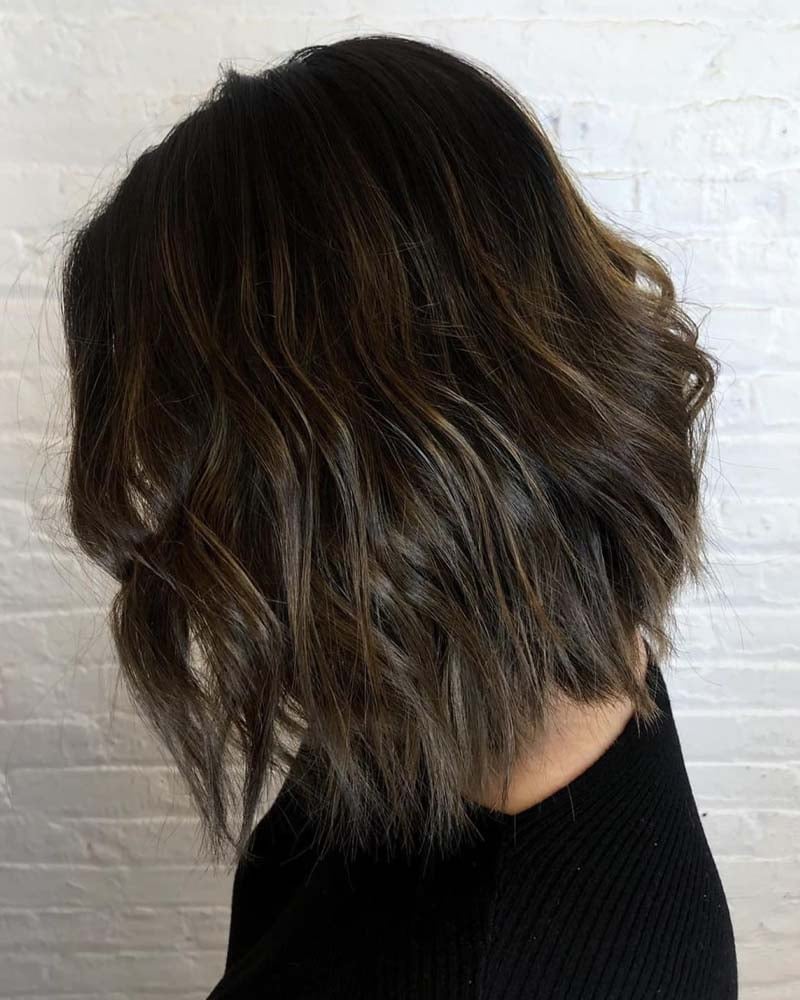
Dark brown on black is only a level or two of difference, and the effect is depth rather than contrast. It suits anyone who wants color at work on Monday without anyone asking about it.
What to ask for Dark brown babylights one to two levels lighter than my black base, spread evenly, glossed afterwards.
Chocolate brown highlights on dark hair
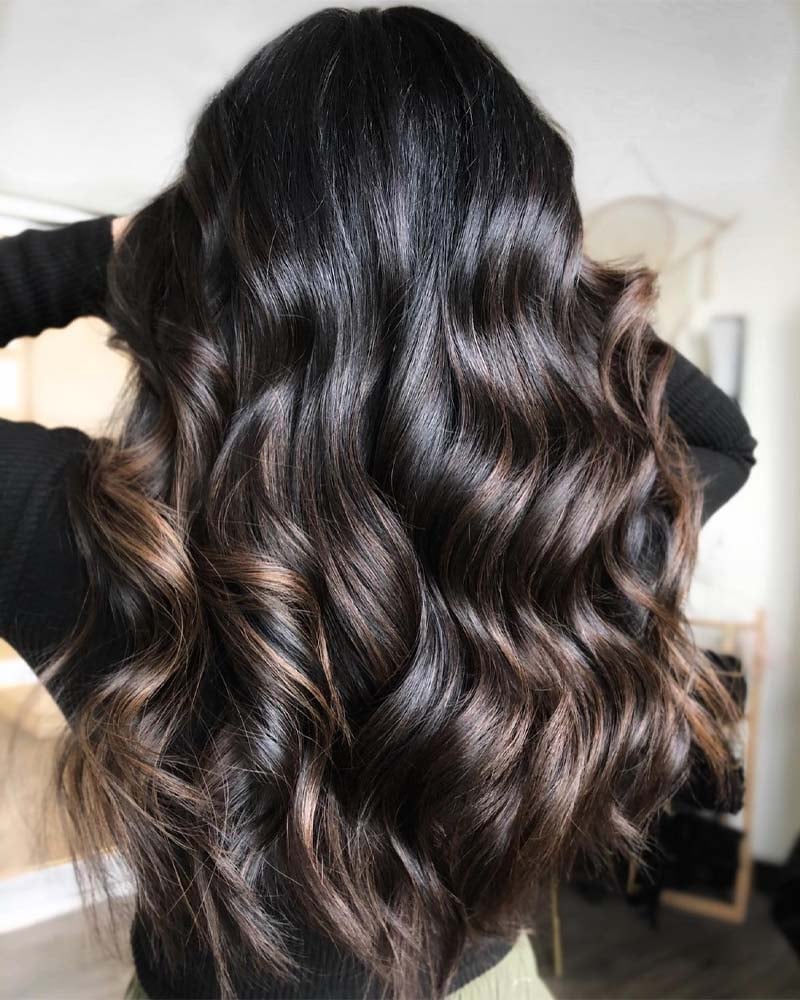
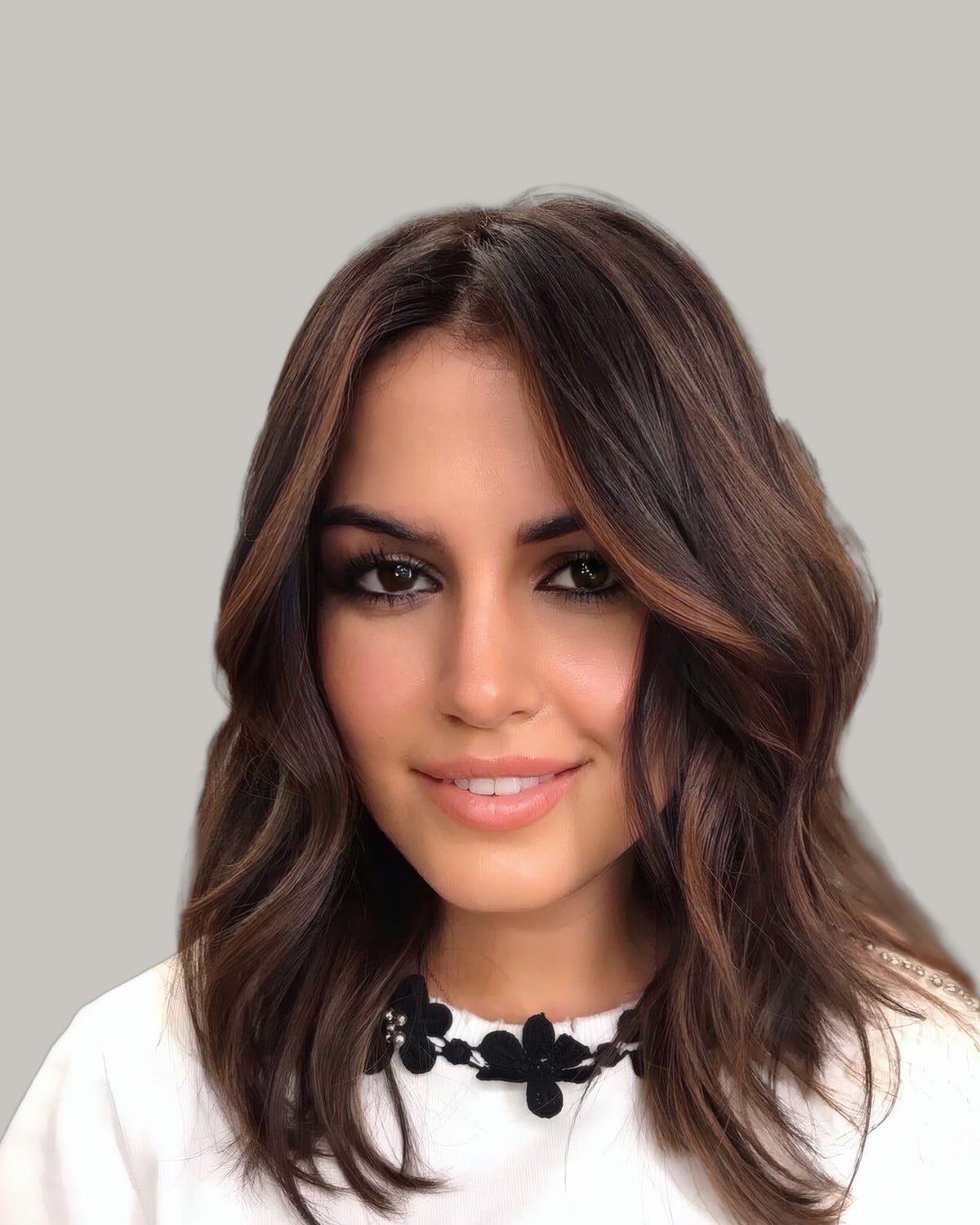
Chocolate brown has a touch of red in it, so it warms up black hair without looking obviously dyed. Big barrel curls show it off best, because each curl gets a light side and a dark side.
What to ask for Chocolate brown highlights, warm, woven medium thickness through the mid-lengths and ends.
Dark brown hair with soft highlights
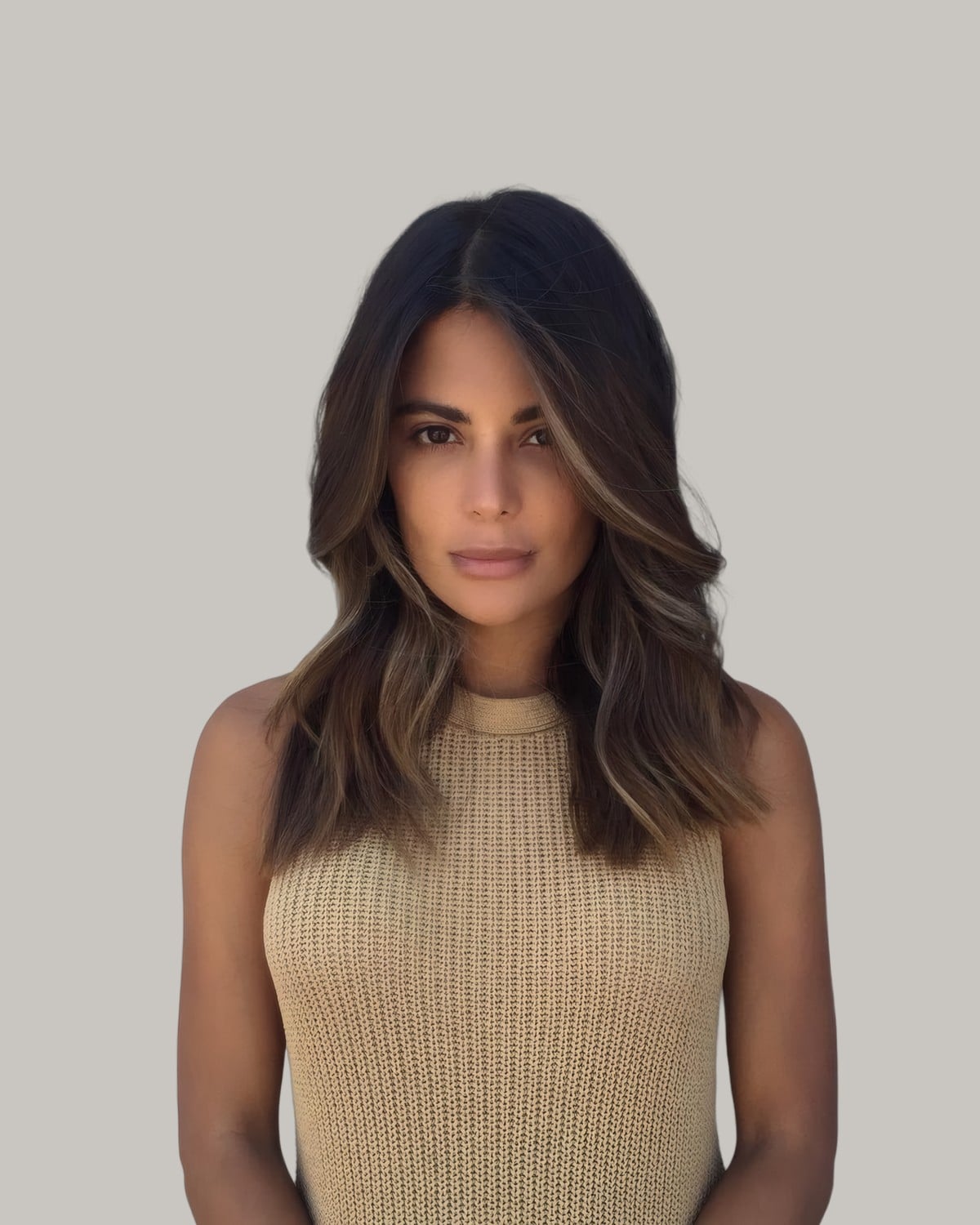
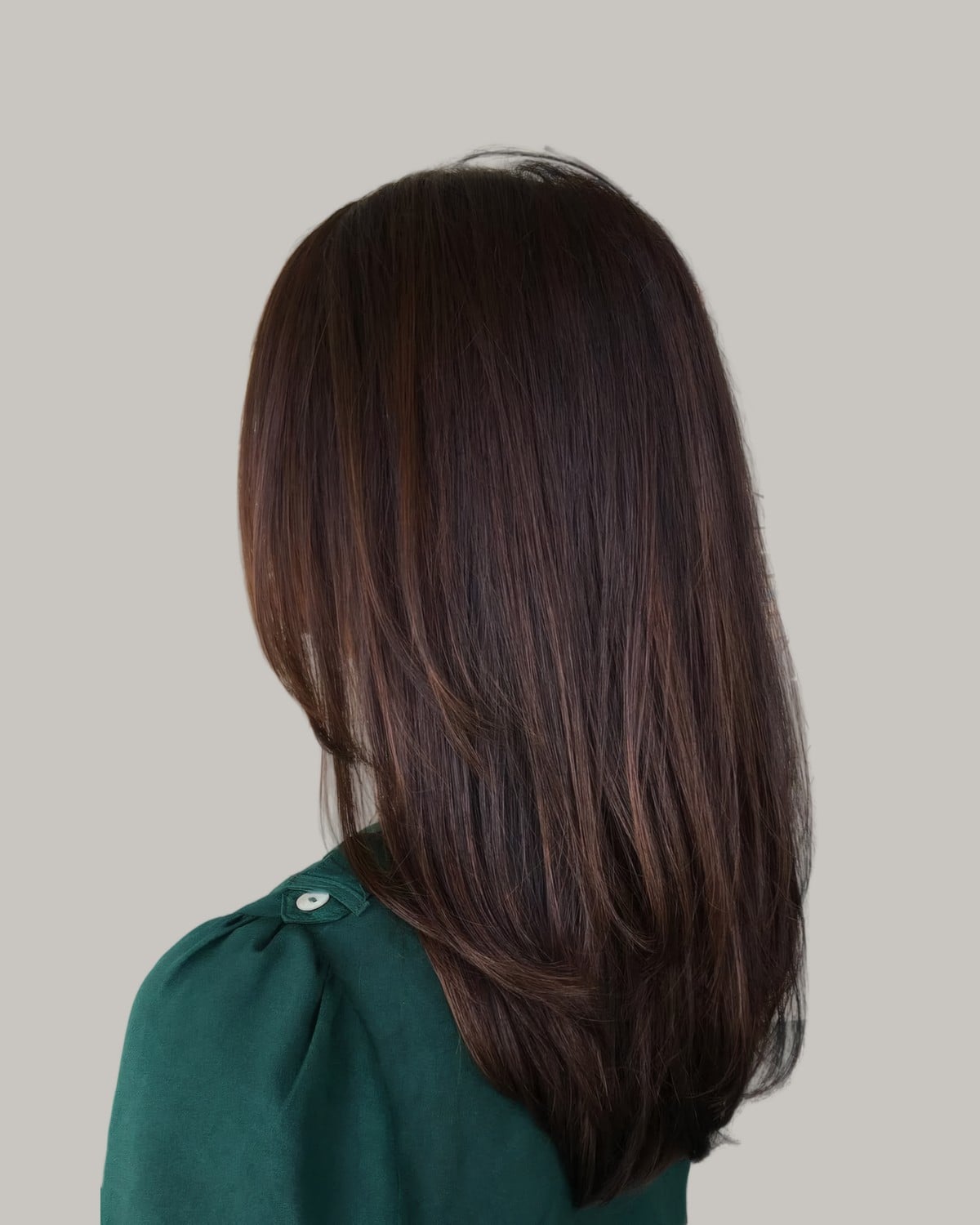
Here the base is dark brown rather than black, and the highlights are only a shade or two lighter. It’s the color of hair that’s spent a summer outdoors, and it grows out with no line at all.
What to ask for Keep my dark brown base, add a few soft highlights a shade lighter around the face and the crown, no toner needed.
Brown and caramel blonde highlights
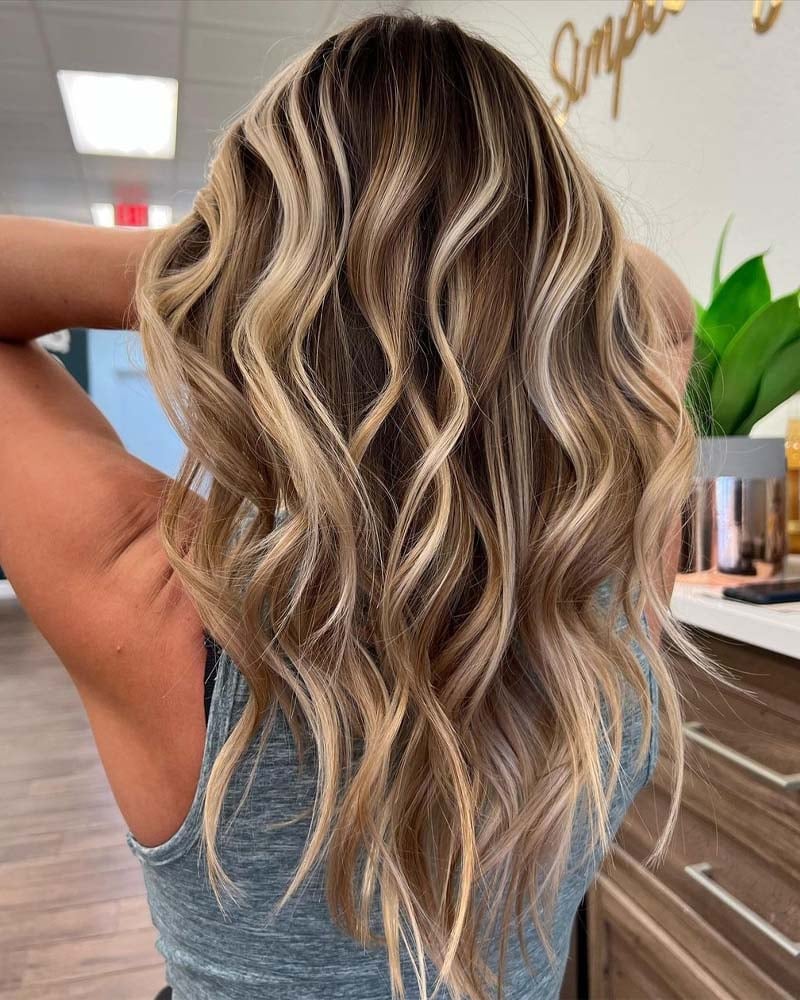
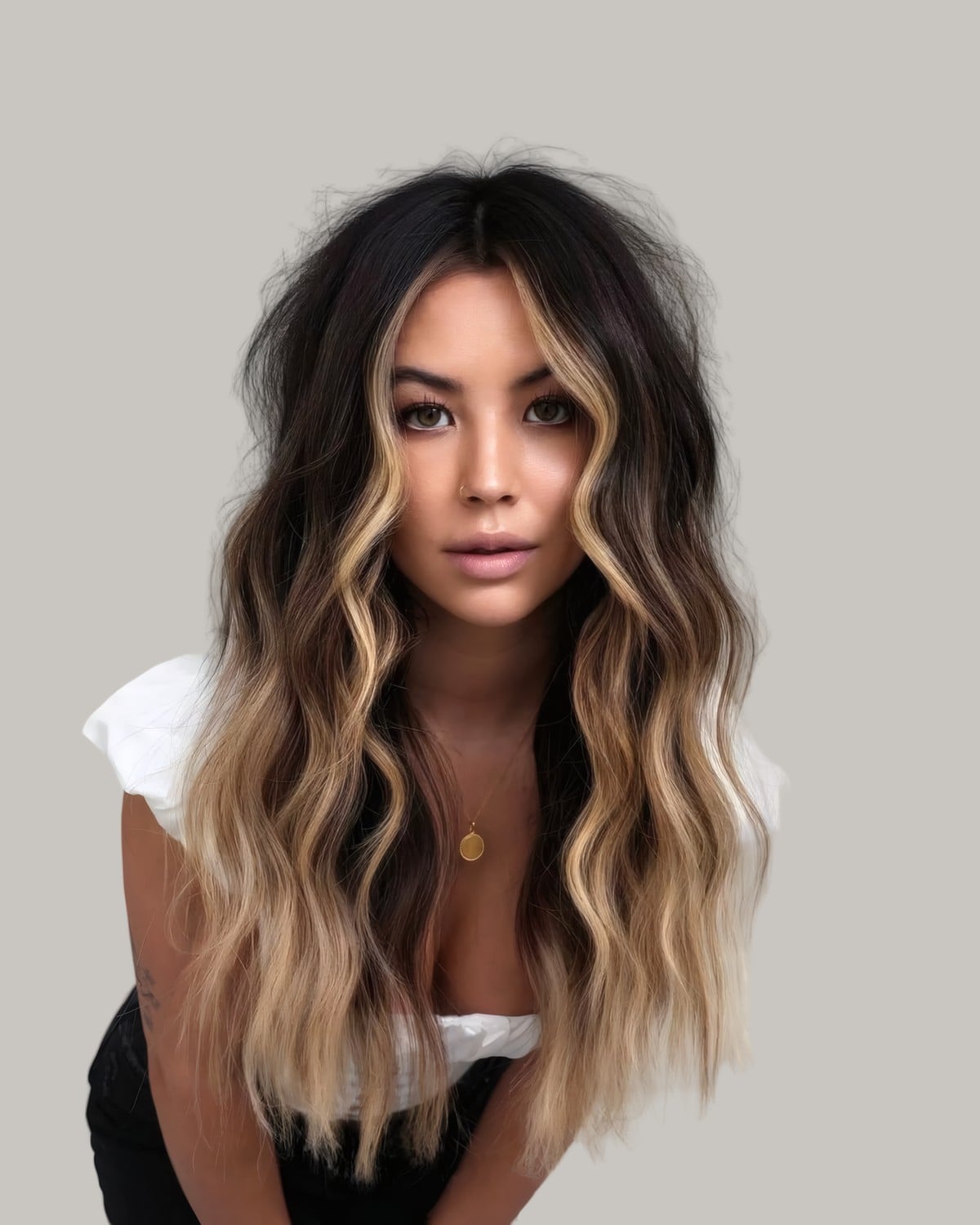
Two shades do the work here: brown pieces blend the root into the lengths, and caramel blonde brightens the ends. Mixing them keeps the lighter tone from looking stripy on a black base.
What to ask for Brown lowlights near the root blending into caramel blonde through the ends, hand-painted, toned warm.
Natural highlights on dark brown hair
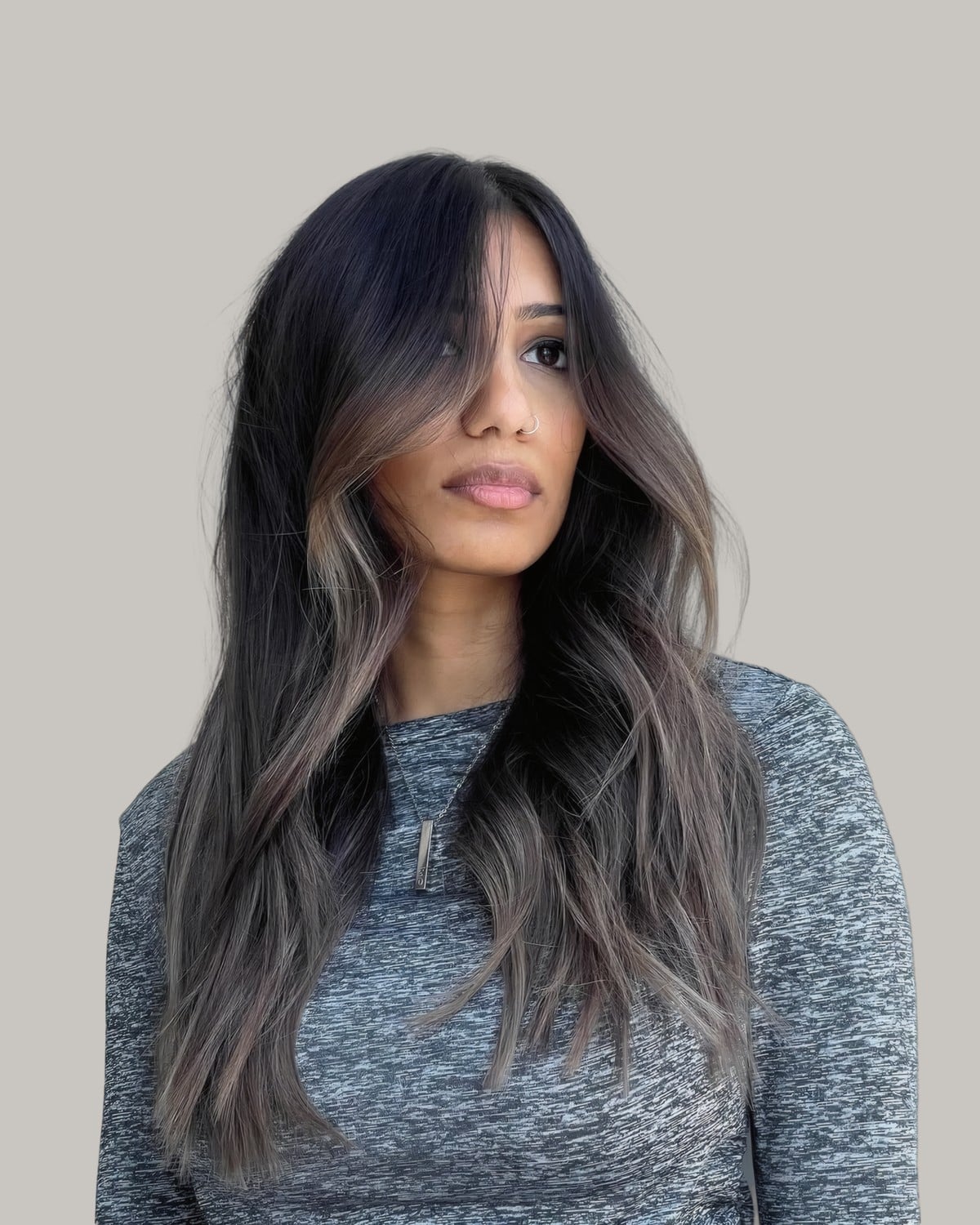
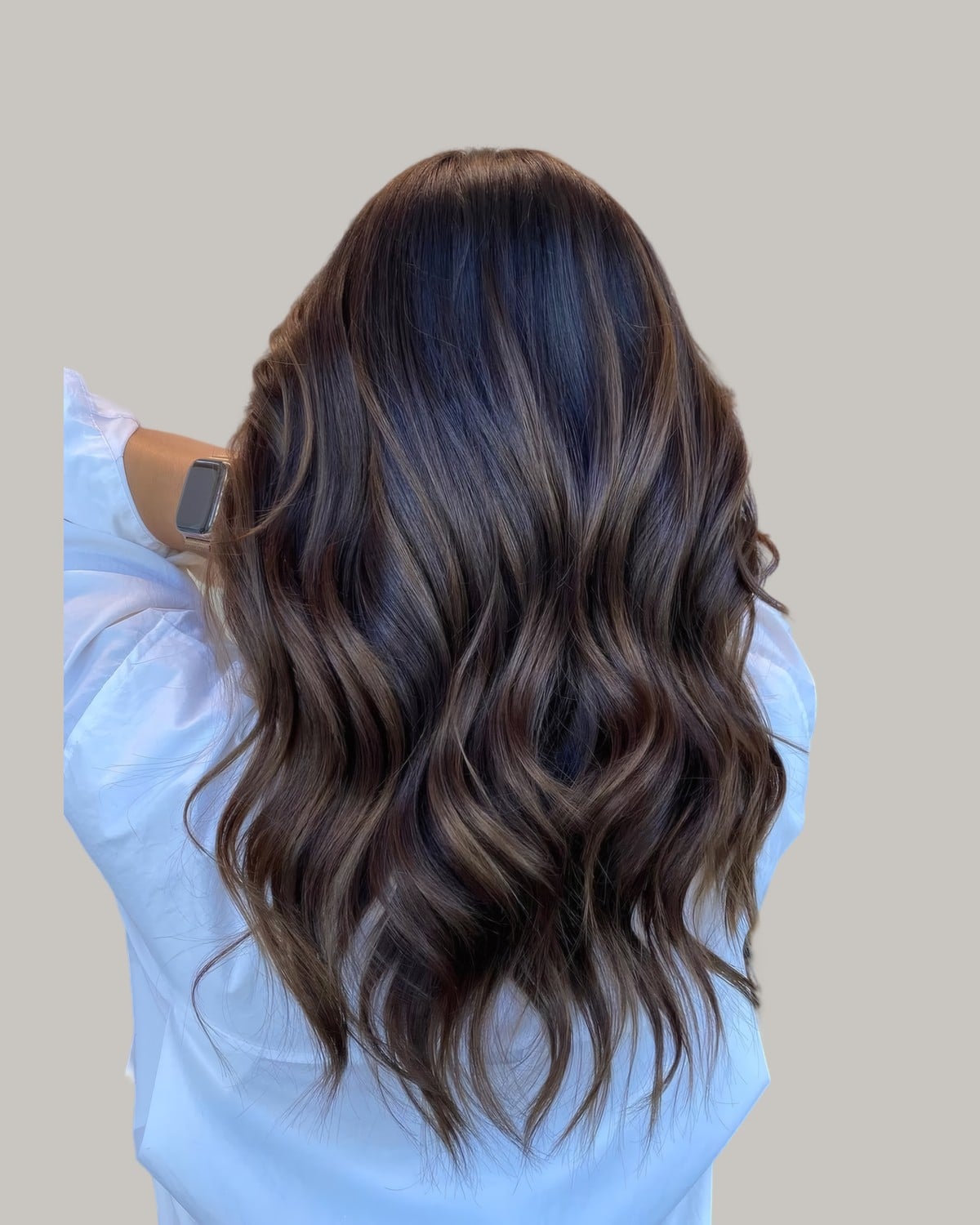
Natural highlights copy where the sun would lighten your hair on its own: the top layer, the ends and the pieces around your face. Ask for them fine and few, and nobody will be sure you’ve had anything done.
What to ask for Fine natural-looking highlights on the top layer and around the face, a shade or two lighter, soft root.
Light brown highlights on dark hair
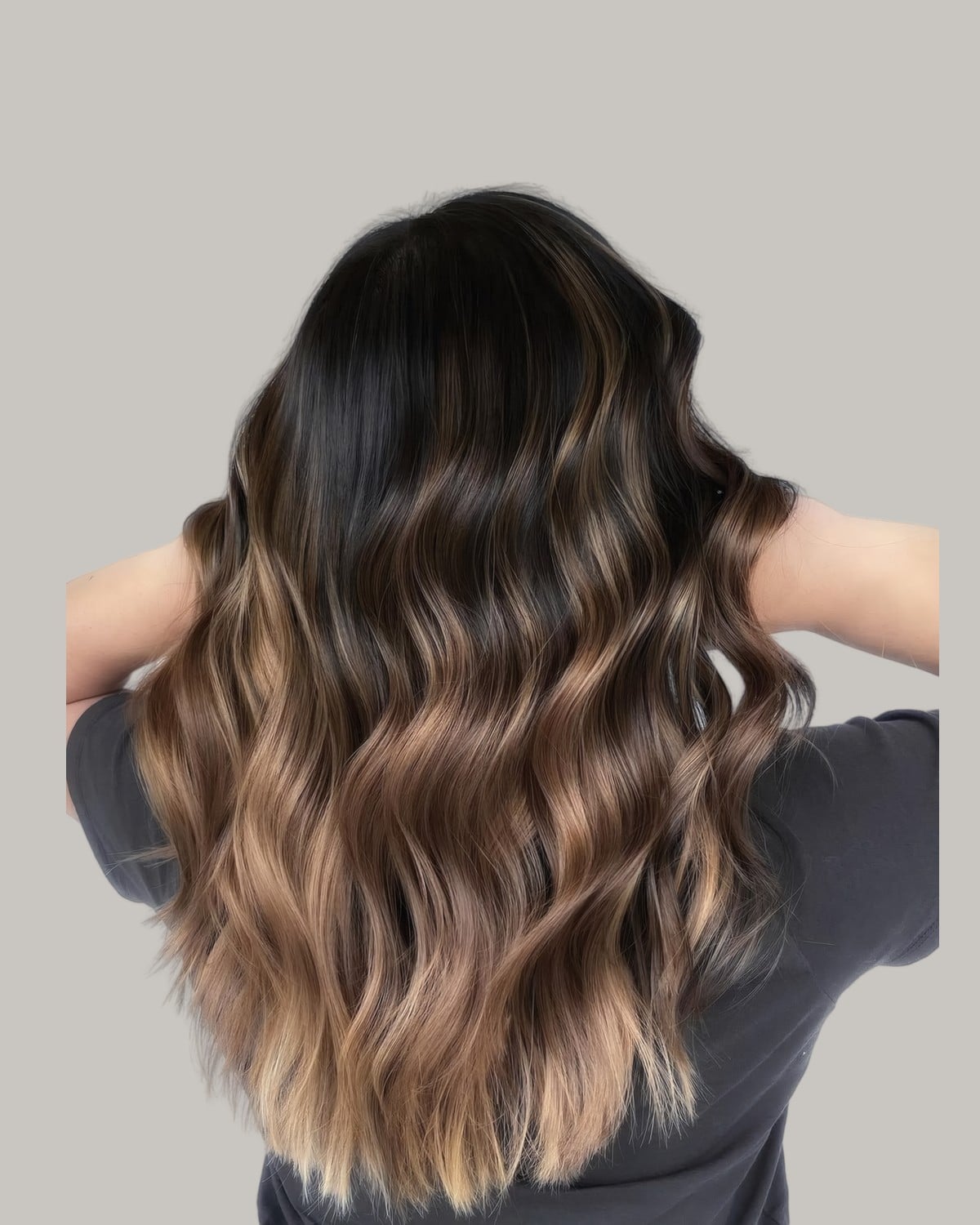
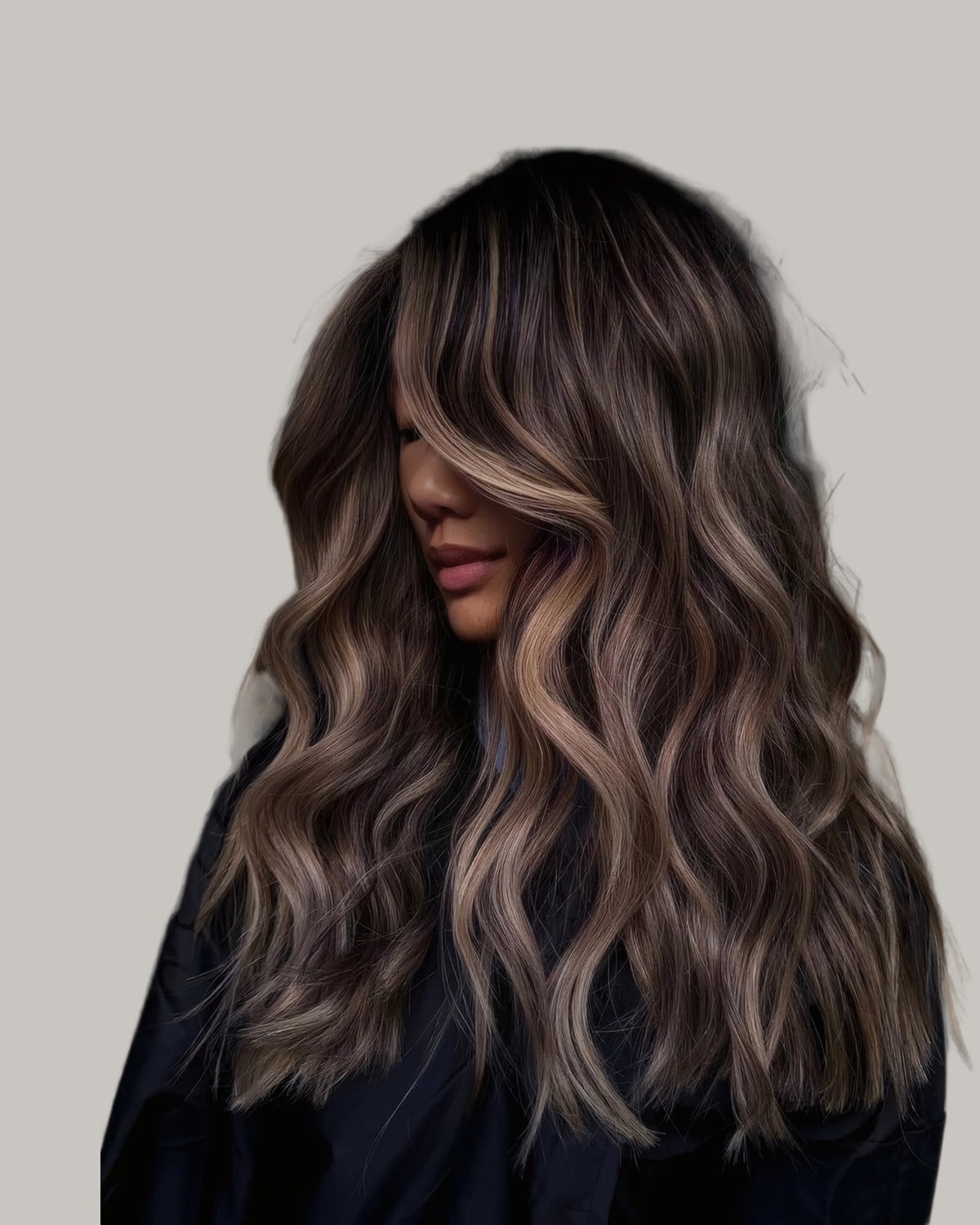
Light brown is a gentle step up from dark brown and still easy on a dark base. Wide sweeps through the lengths make it look lived-in, and the dark root means you can stretch color appointments.
What to ask for Light brown balayage through the mid-lengths and ends, three levels of lift, toned neutral, dark root left alone.
Honey and blonde highlights on black hair
Black hair with honey highlights
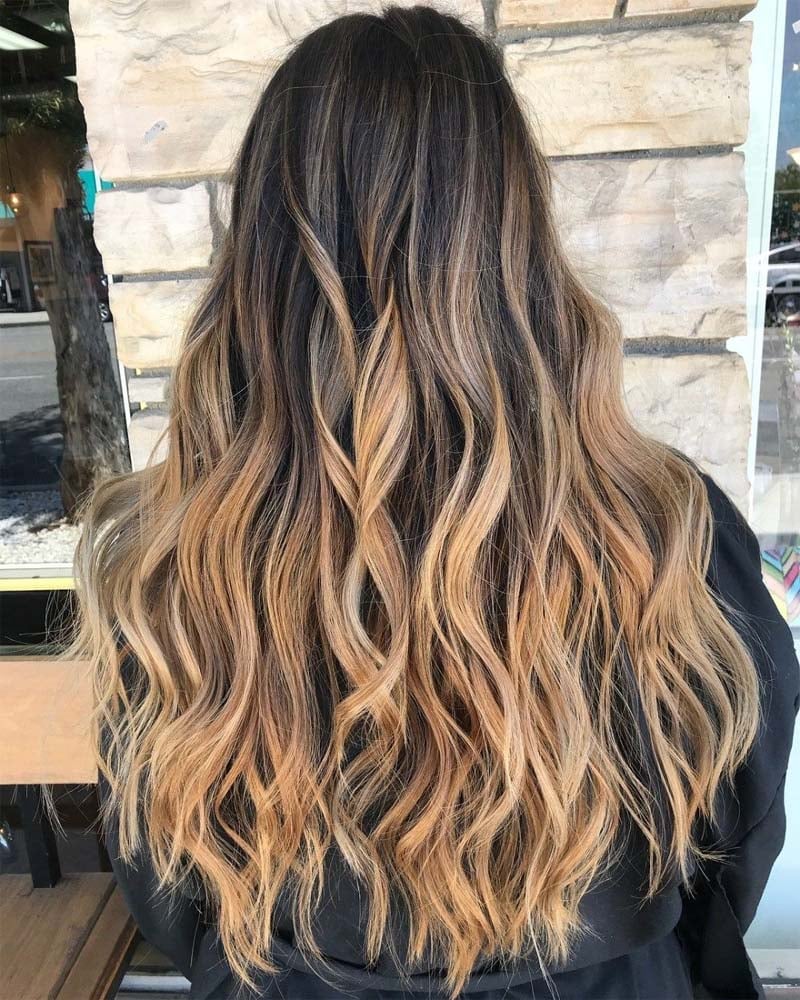
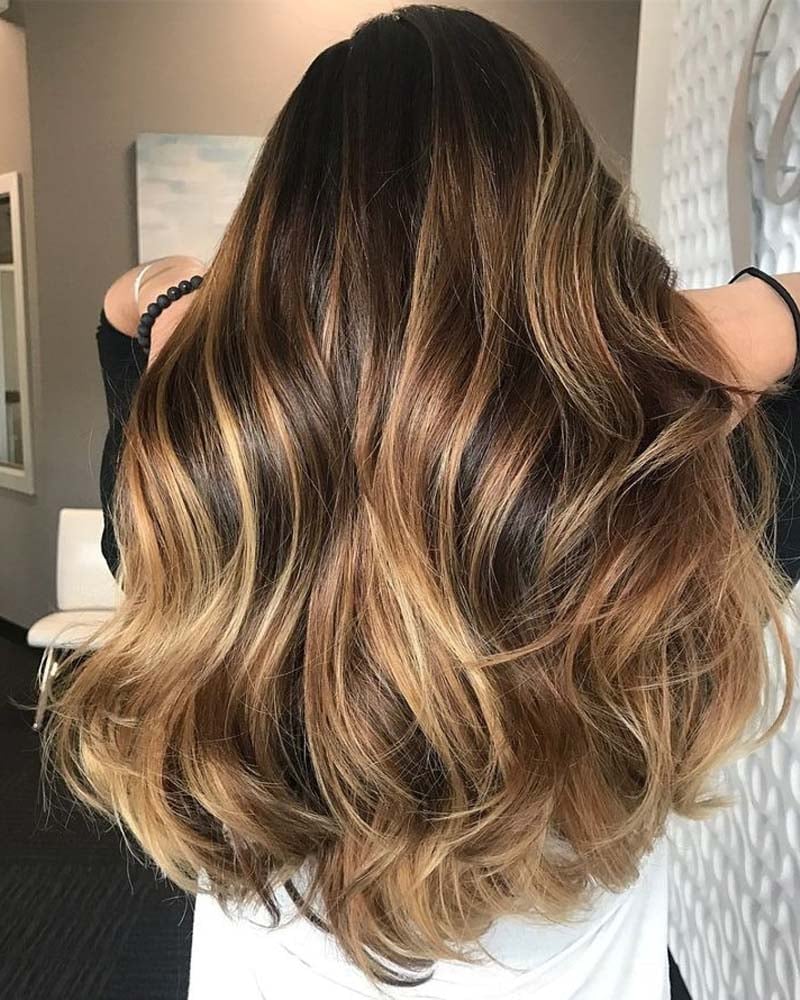
Honey falls between caramel and blonde: warm, golden and bright enough to show on black hair from across a room. Placed low, it gives an ombre feel with the depth kept at the top.
What to ask for Honey highlights lifted four to five levels, toned golden, heavier toward the ends.
Black hair with honey blonde highlights
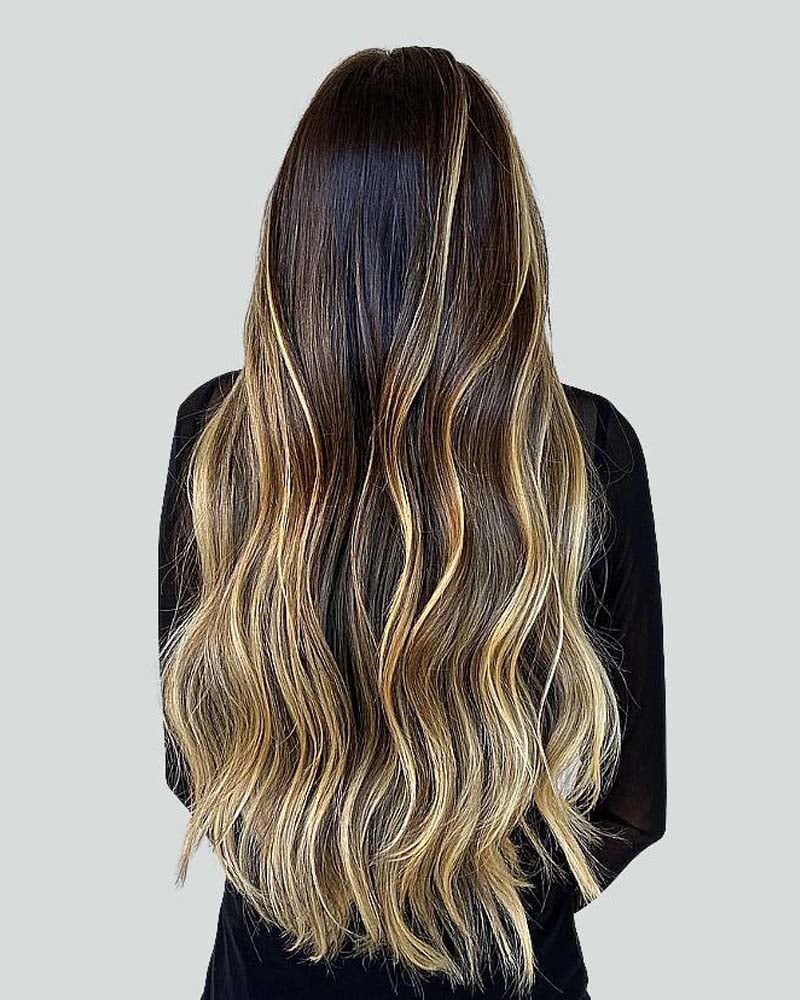
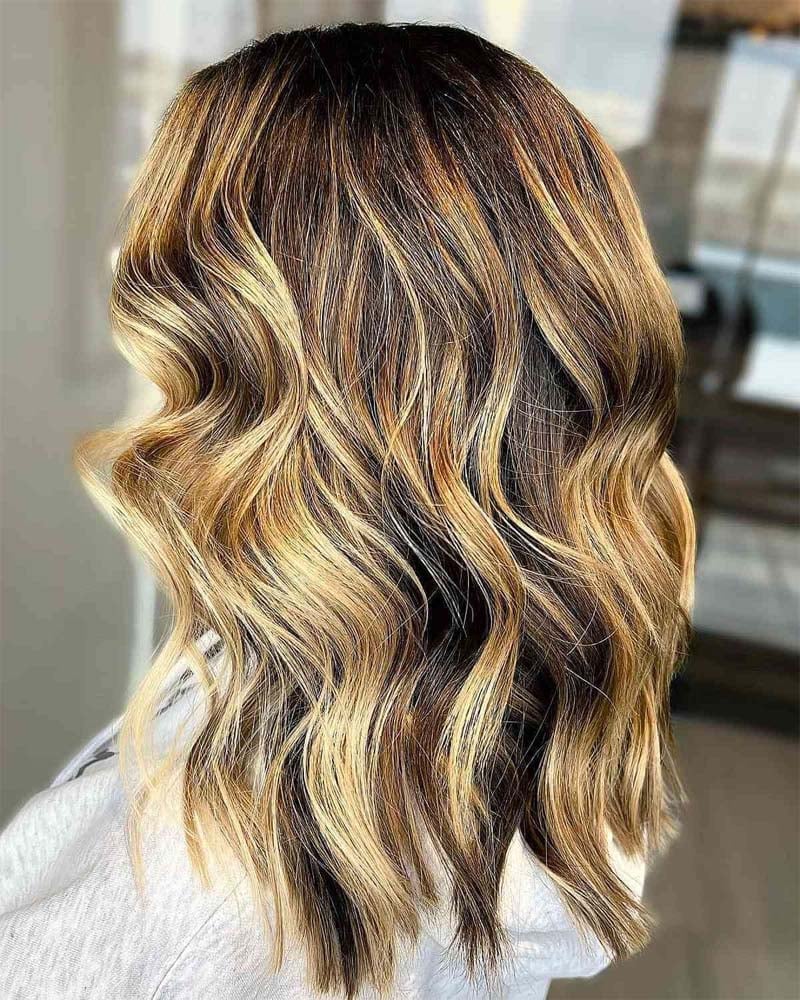
Honey blonde is lighter again, so the contrast with a black base is stronger. Long layers help it, because the lighter pieces fall at different lengths instead of sitting in one band.
What to ask for Honey blonde balayage on a black base, painted from mid-length down, golden toner, long layers cut in.
Blonde highlights on black hair
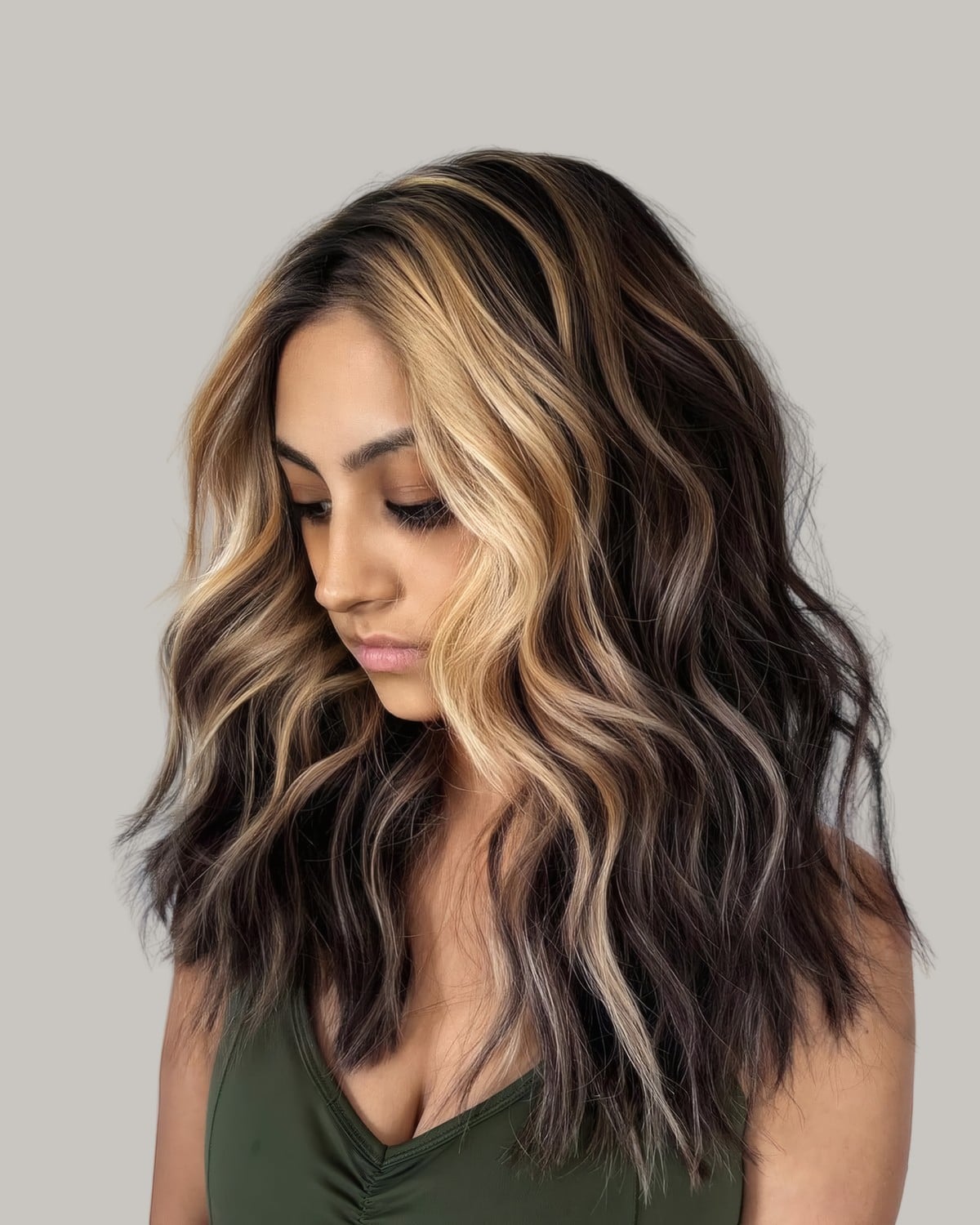
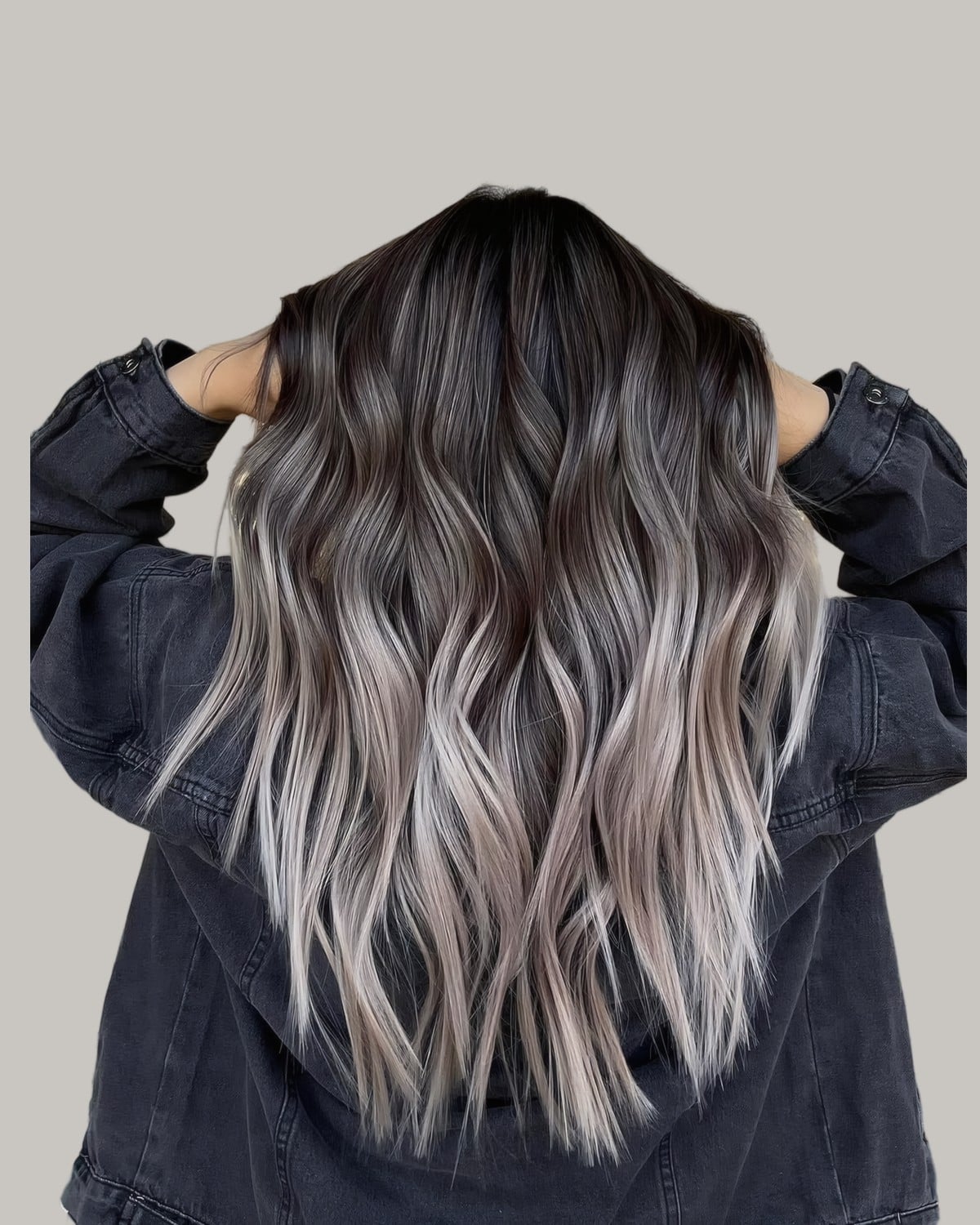
Blonde on black is a big jump in contrast. It takes lightener and usually a toner to stop the pieces going brassy, and it needs a colorist who’s done it on dark hair before.
What to ask for Blonde highlights lifted to a pale gold with lightener, toned beige, woven fine so the dark shows between them.
Peach and copper highlights on dark hair
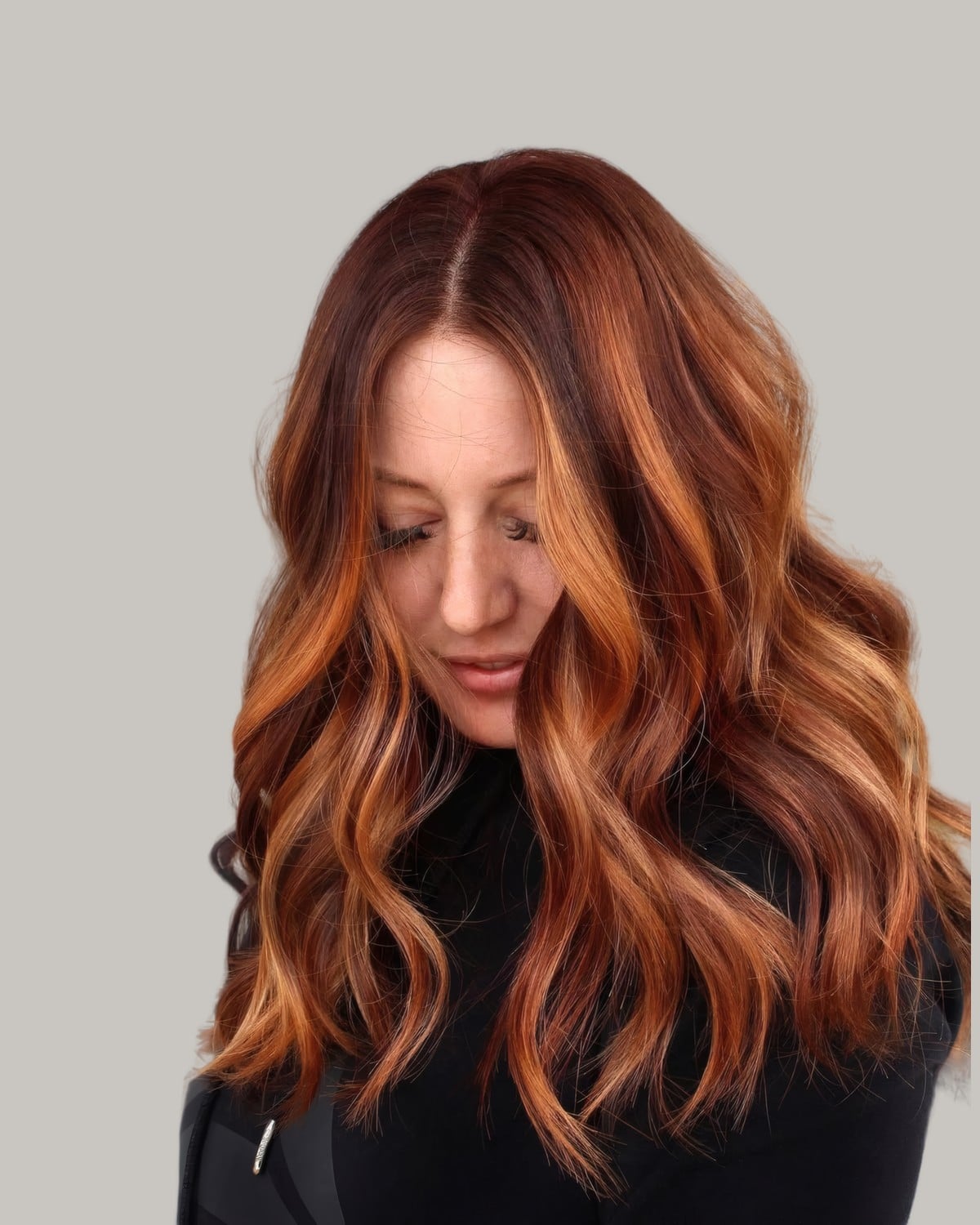
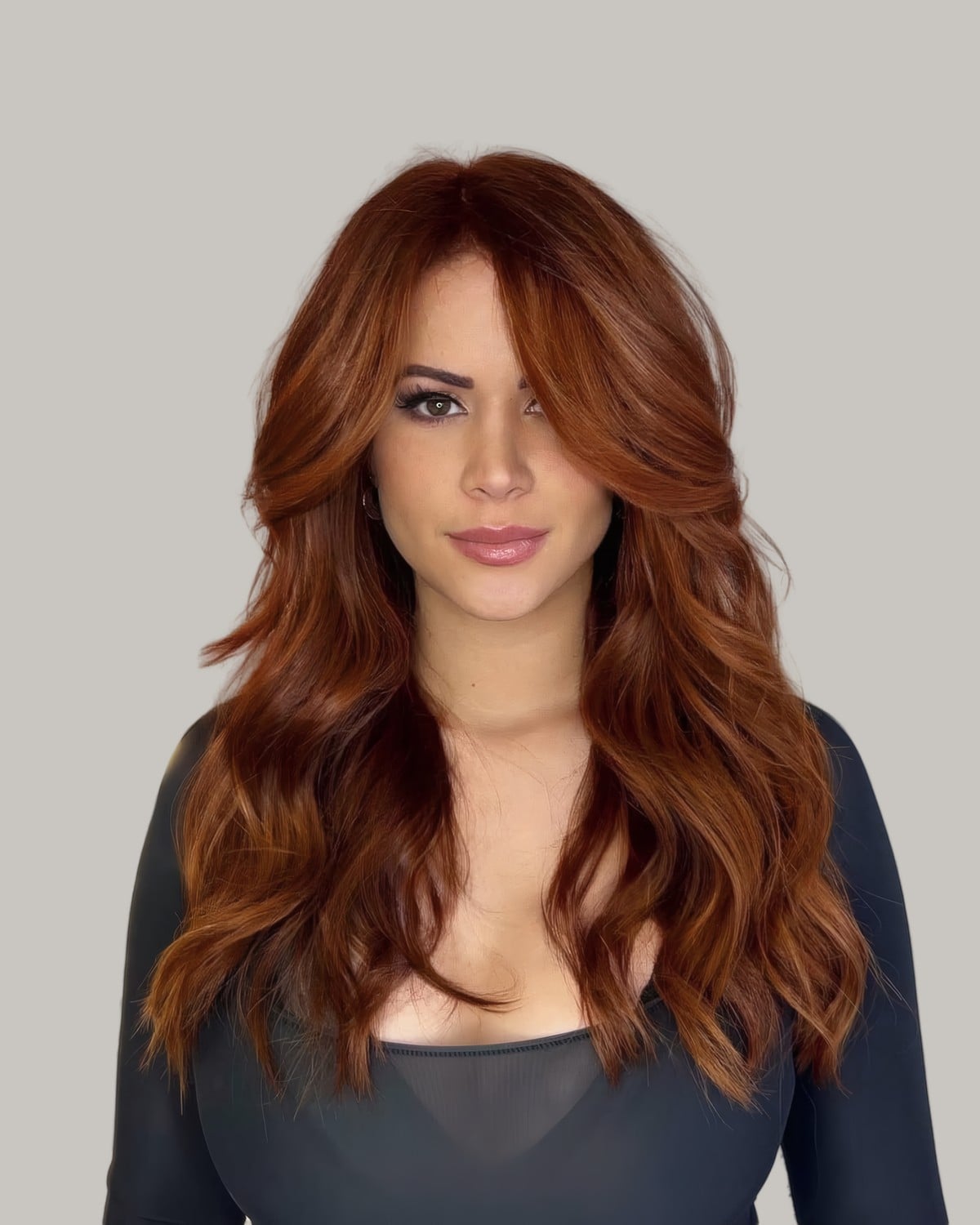
Peach and copper lean into the warmth that dark hair shows when it’s lightened, instead of fighting it with toner. The result is softer than a cool blonde and kind to warm skin, and the face-framing pieces can go a shade brighter than the rest.
What to ask for Peach-copper balayage lifted to a light copper and glossed warm, brightest on the face-framing pieces, darker root.
Caramel blonde ombre with a money piece
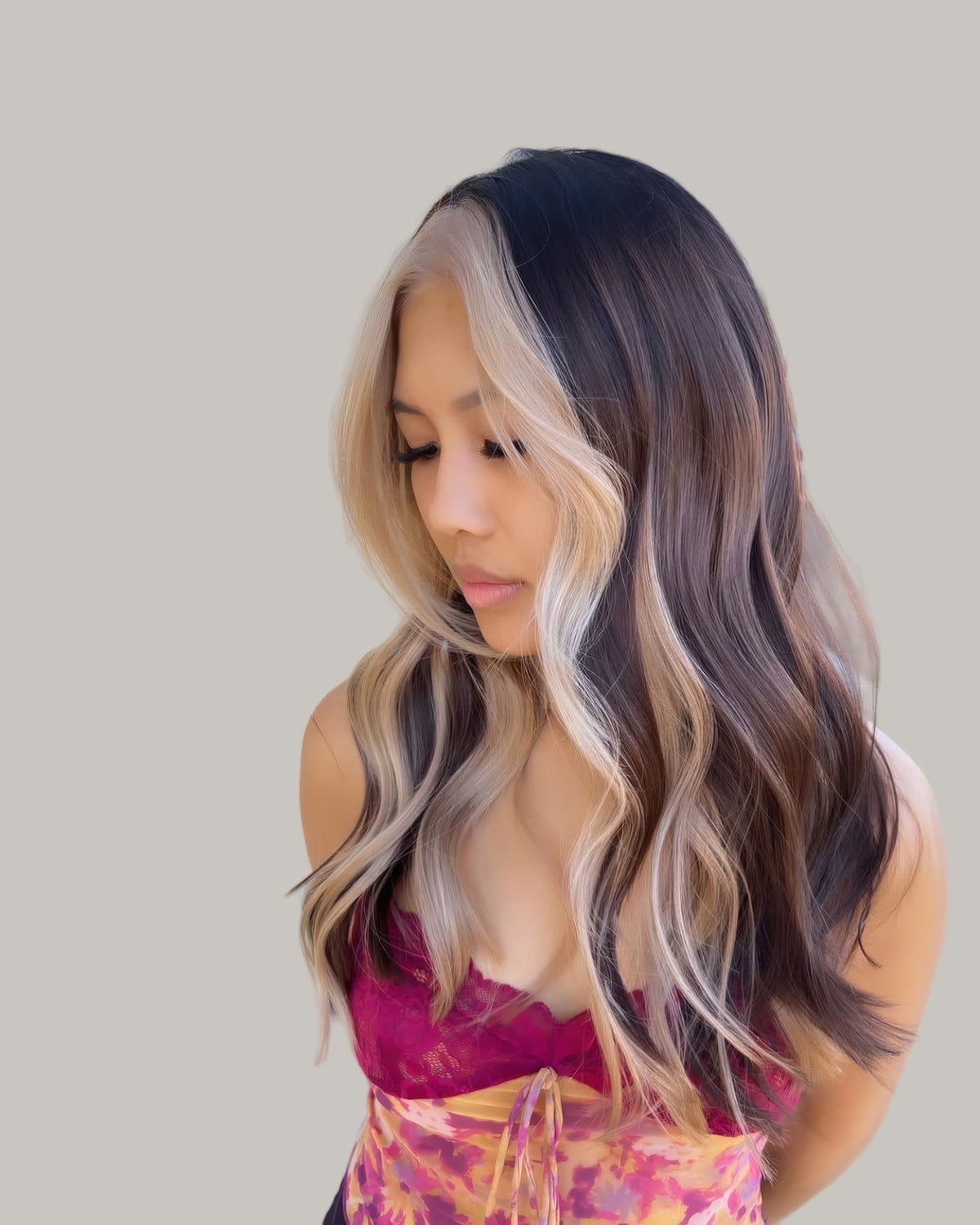
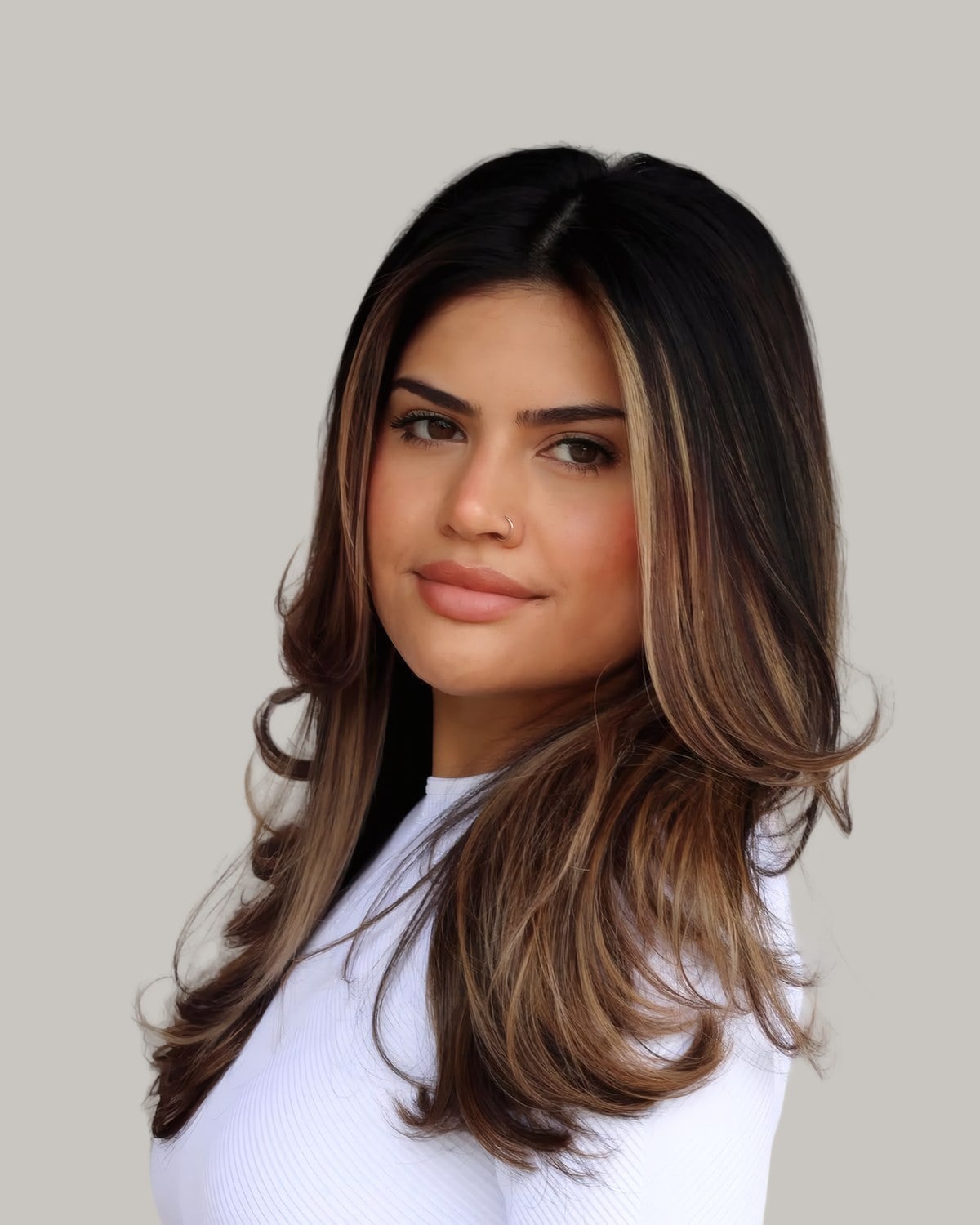
A money piece is a bright band of color at the front hairline, and it frames the face even when the rest of the hair is tied back. Here it sits over a caramel blonde ombre that keeps the root dark.
What to ask for Caramel blonde ombre from the mid-lengths down, plus a brighter money piece on the two front sections, toned golden.
Balayage on black hair
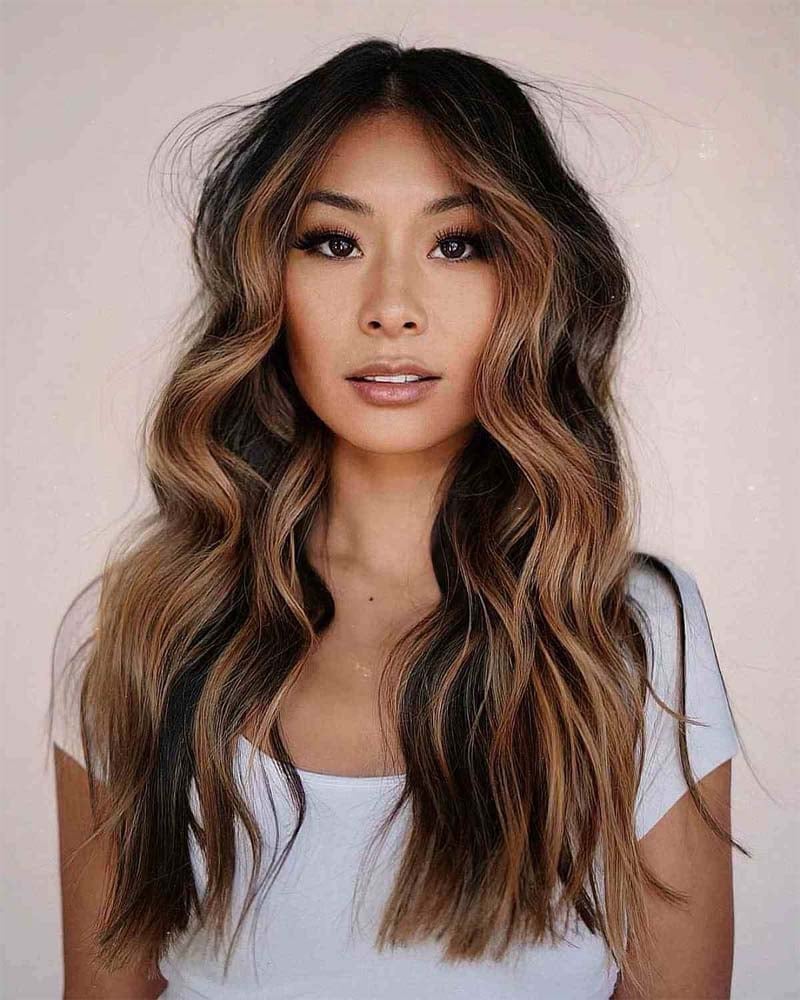
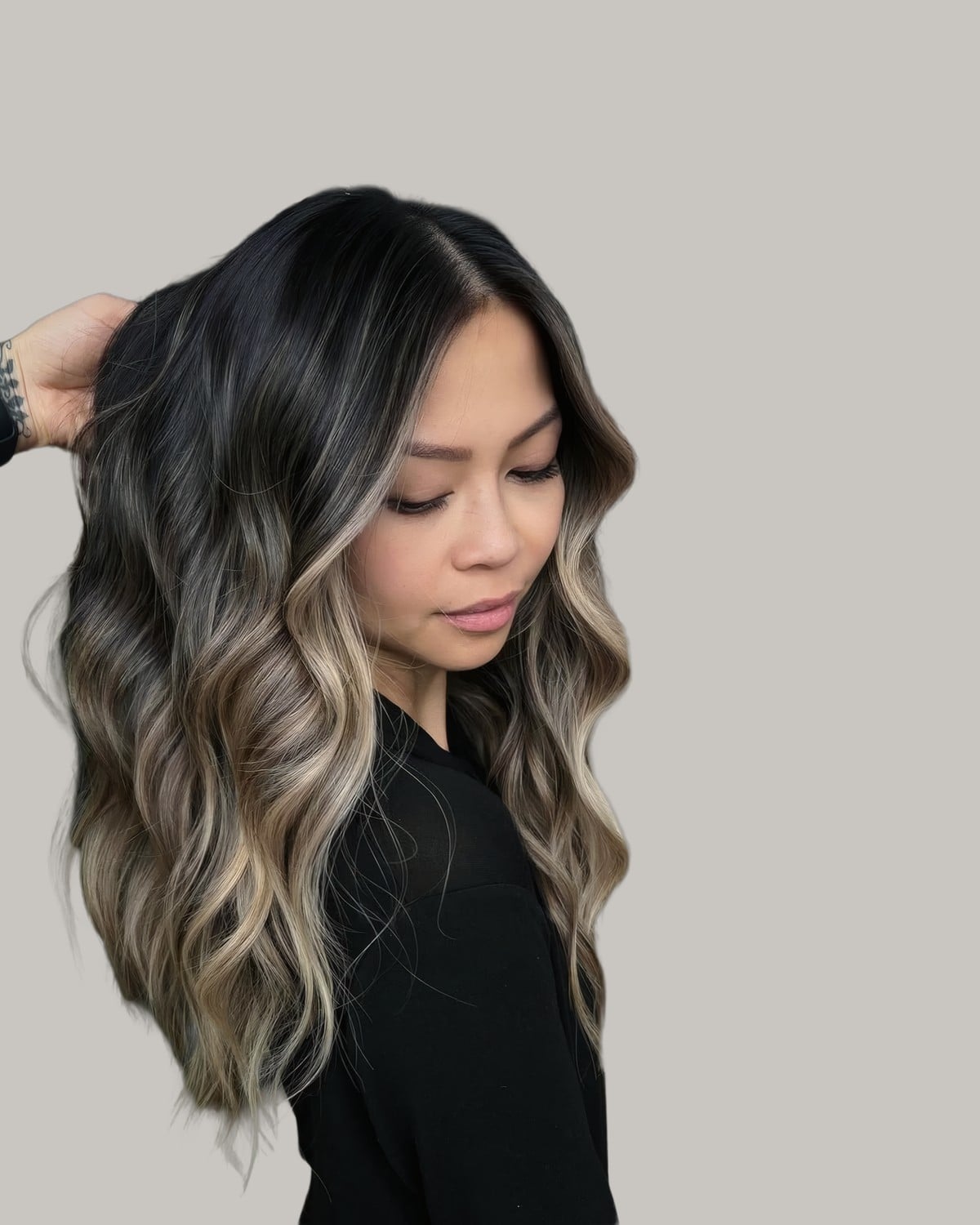
Balayage is painted on by hand rather than wrapped in foils, so the color has no hard start line. On black hair it grows out gracefully, so it suits anyone who wants color with little upkeep.
What to ask for Hand-painted balayage in a caramel to light brown, soft root, heavier through the ends, gloss to finish.
Silver, ash and platinum highlights on black hair
Black hair with silver highlights
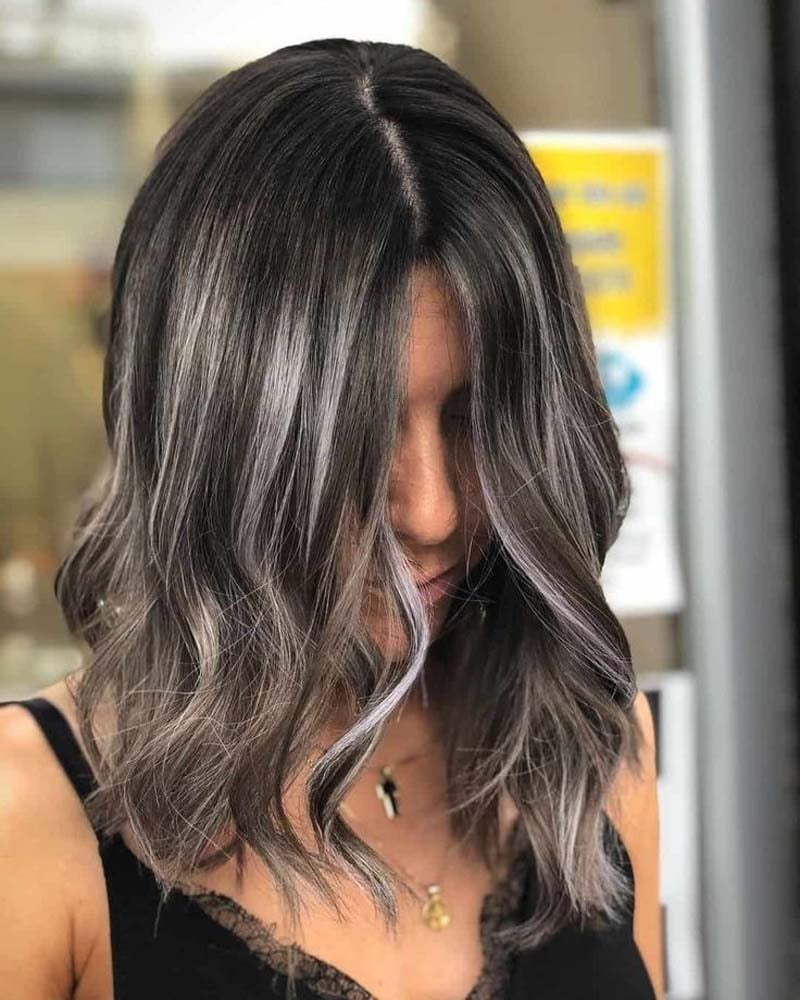
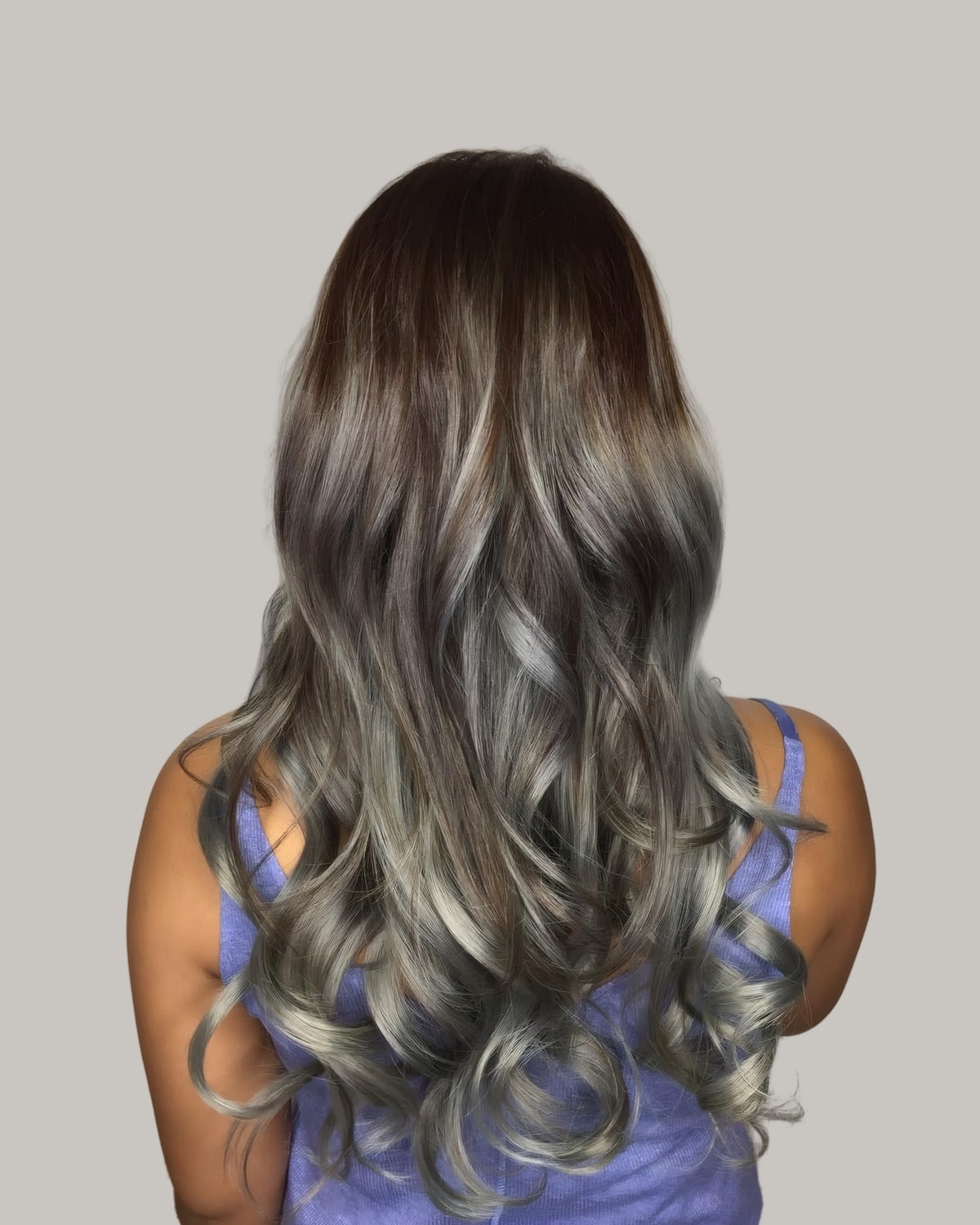
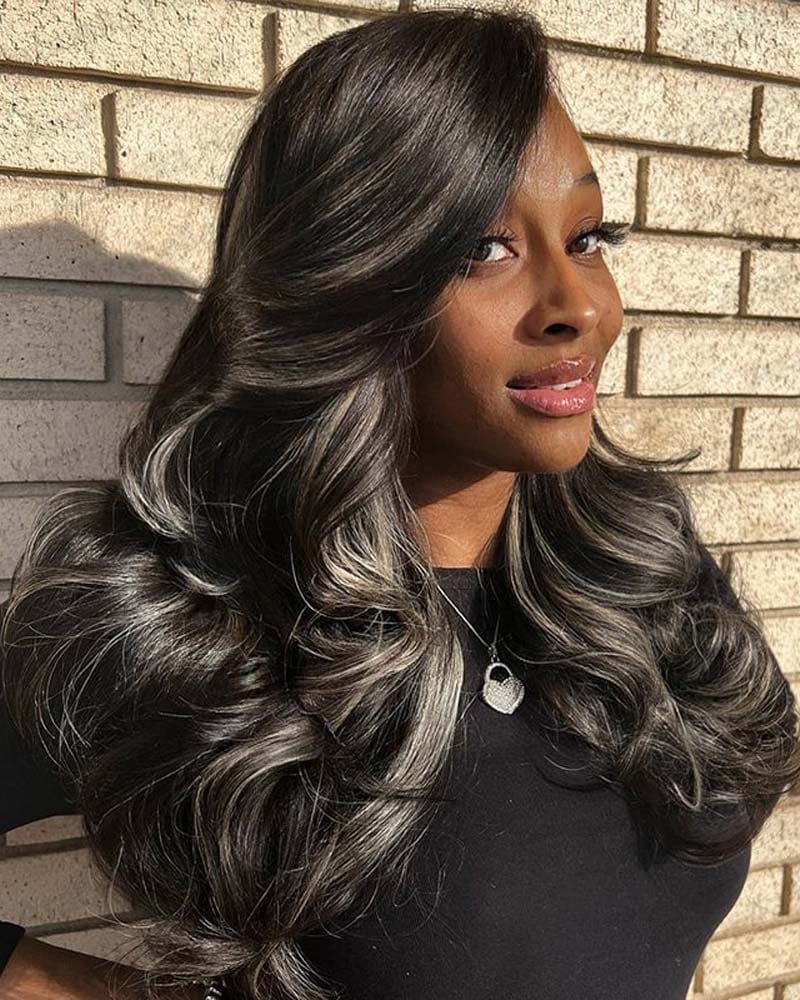
Silver on black is all about contrast. It needs dark hair lifted very pale before the silver toner goes on, so it’s a salon job and a commitment. Fine pieces look modern, and chunkier ones look deliberate.
What to ask for Silver highlights: lifted to pale blonde, toned silver, woven fine through the top and sides, dark base kept.
Black hair with ash highlights
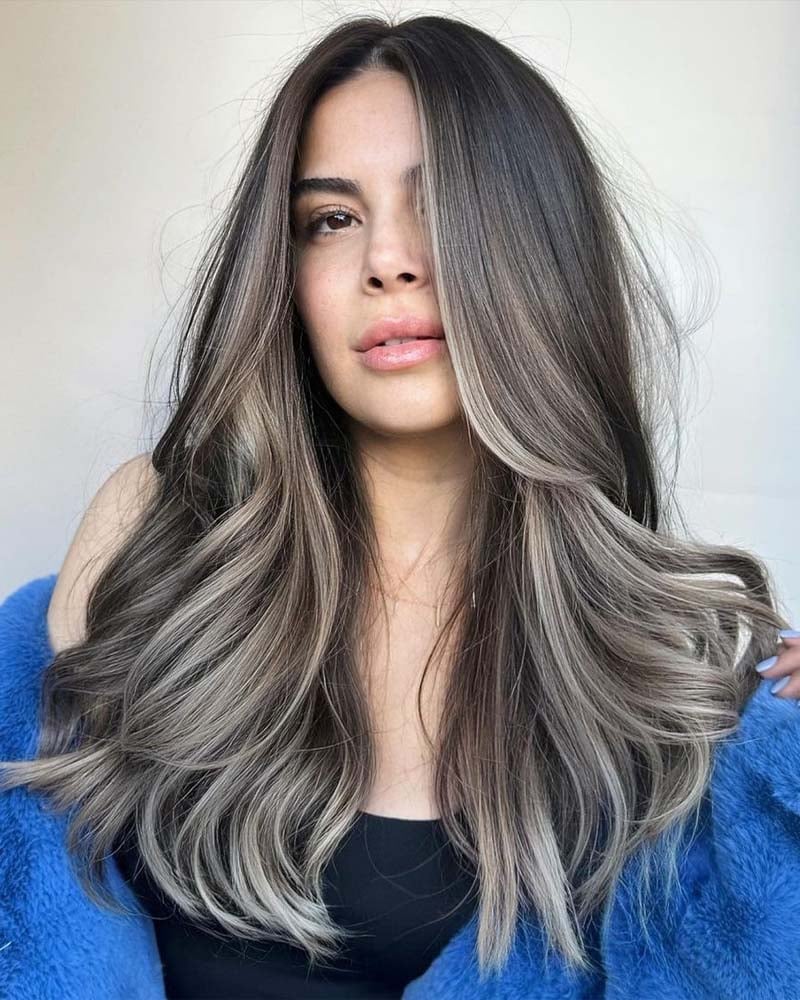
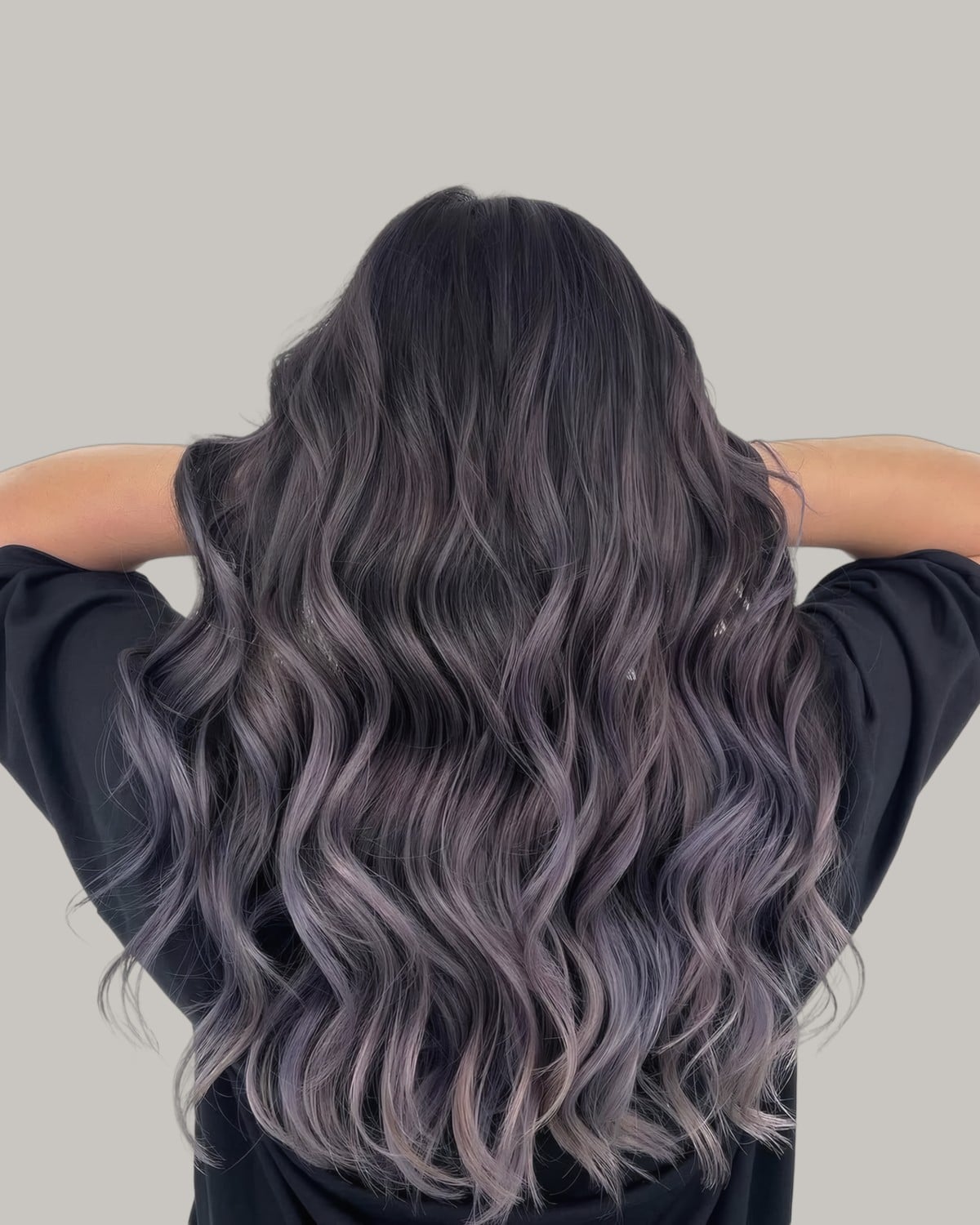
Ash is a cool, smoky tone that cancels warmth. On dark hair it reads as gray-beige rather than gold. It suits cool or pink skin tones, and a purple shampoo once a week keeps it from turning yellow.
What to ask for Ash brown to ash blonde highlights, lifted and toned cool, blended from a dark root.
Black hair with all-over platinum highlights
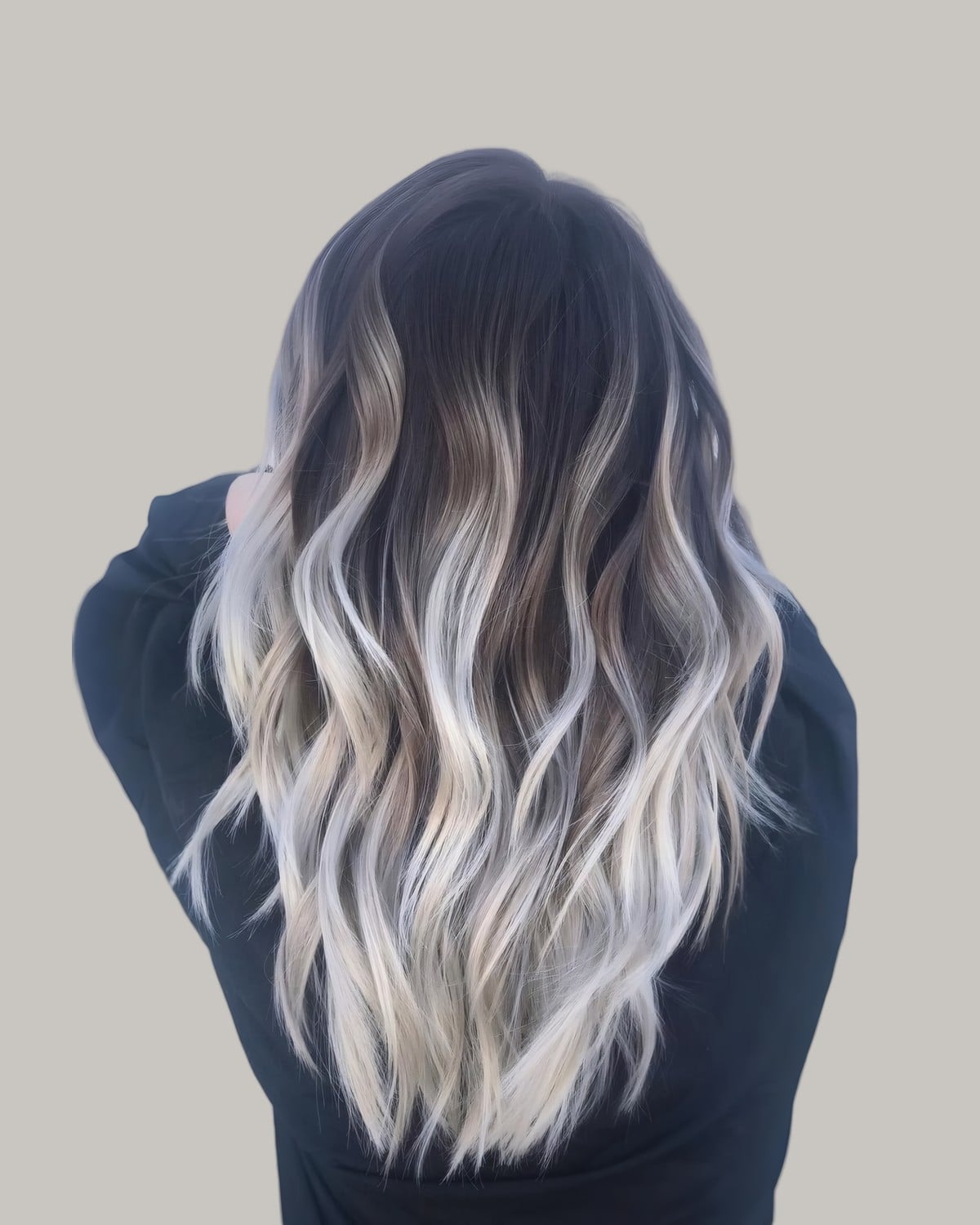
All-over platinum takes a lot of lifting, and the payoff is black hair that looks silver-white where the light hits. Bring a photo, plan for more than one appointment, and budget for a bond-building treatment alongside it.
What to ask for Heavy platinum highlights all over, lifted in stages, toned icy, with a bond builder in the lightener.
Gray peekaboo highlights on black hair
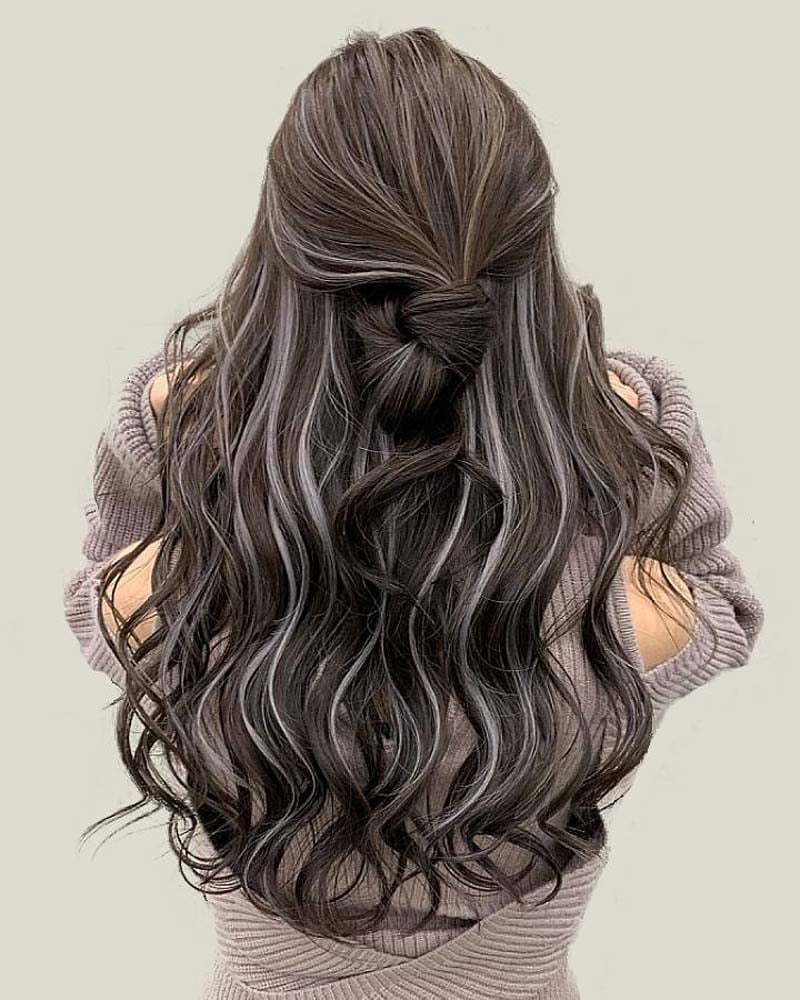
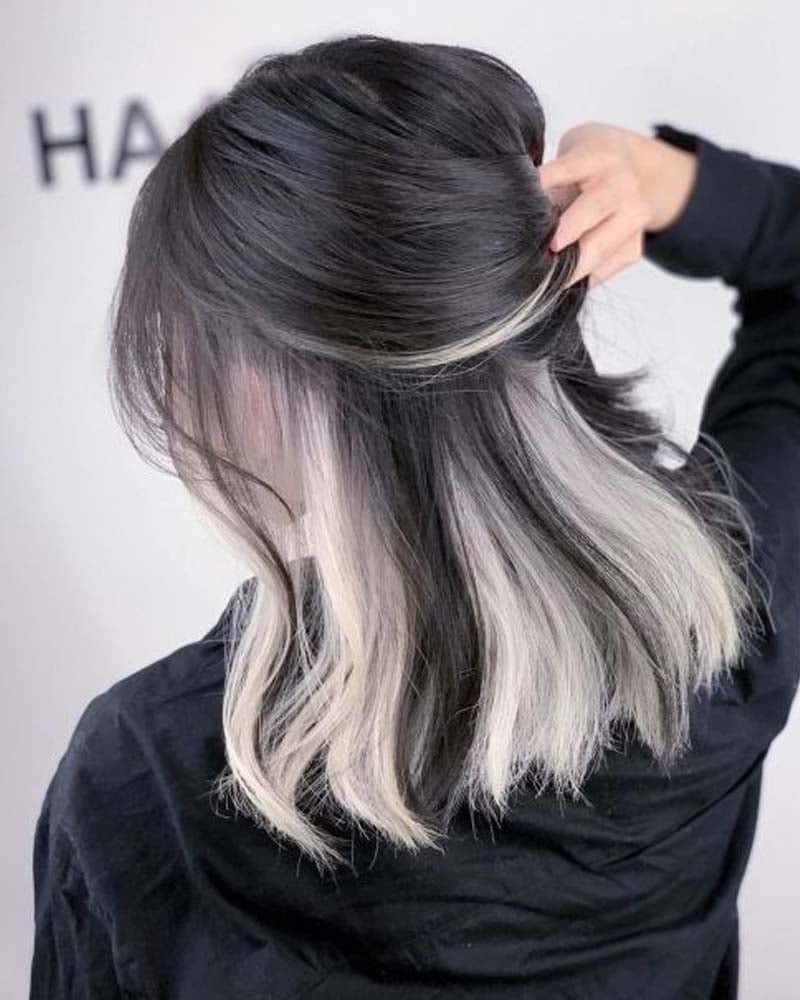
Peekaboo highlights are hidden under the top layer. You see them when your hair moves or when you tie it up. Gray underneath black is a clever way to try a bold color you can hide on a Monday.
What to ask for Gray peekaboo panels under the top layer at the sides and nape, lifted and toned silver, top section left black.
Gray blending for dark hair
Gray blending with face-framing highlights
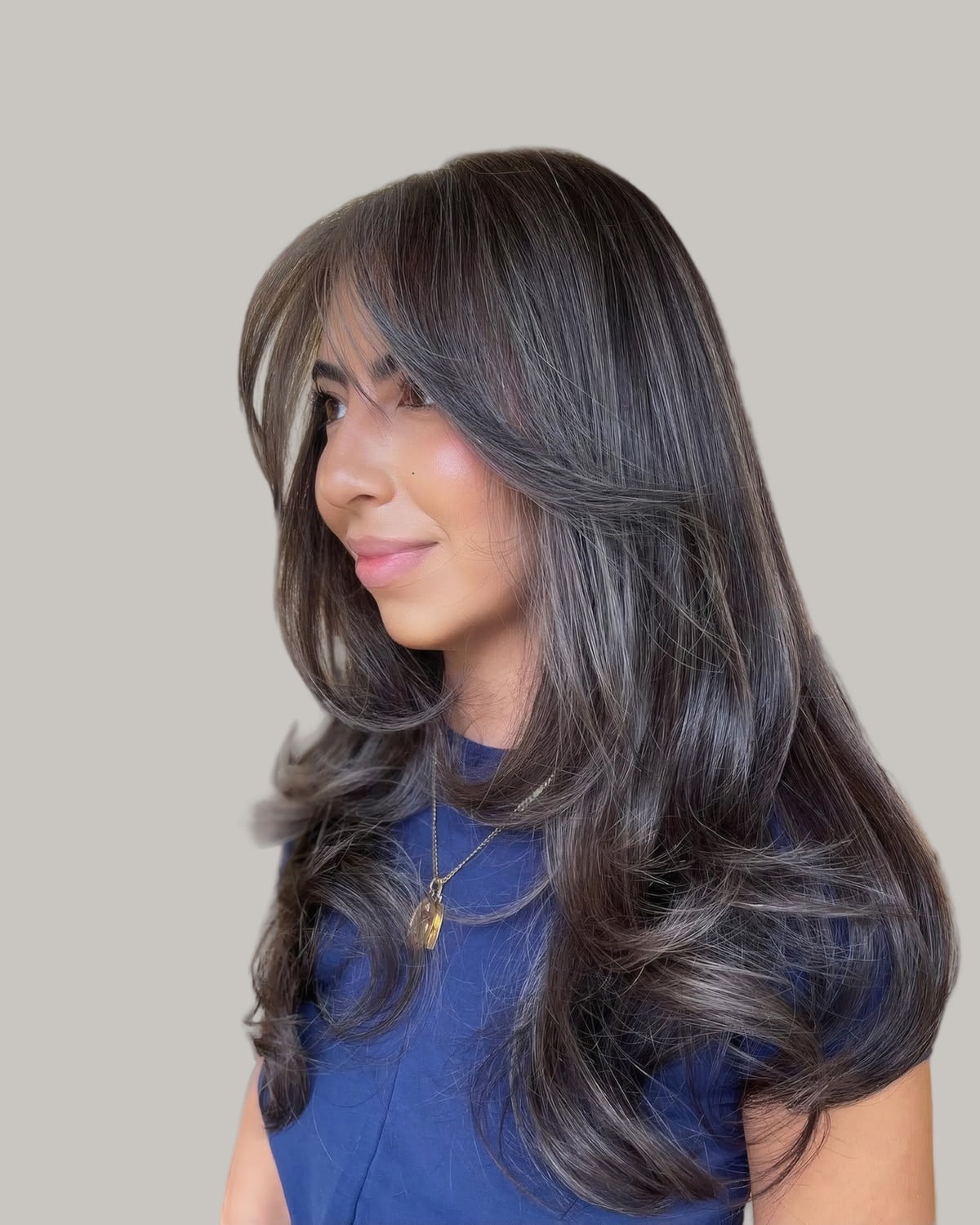
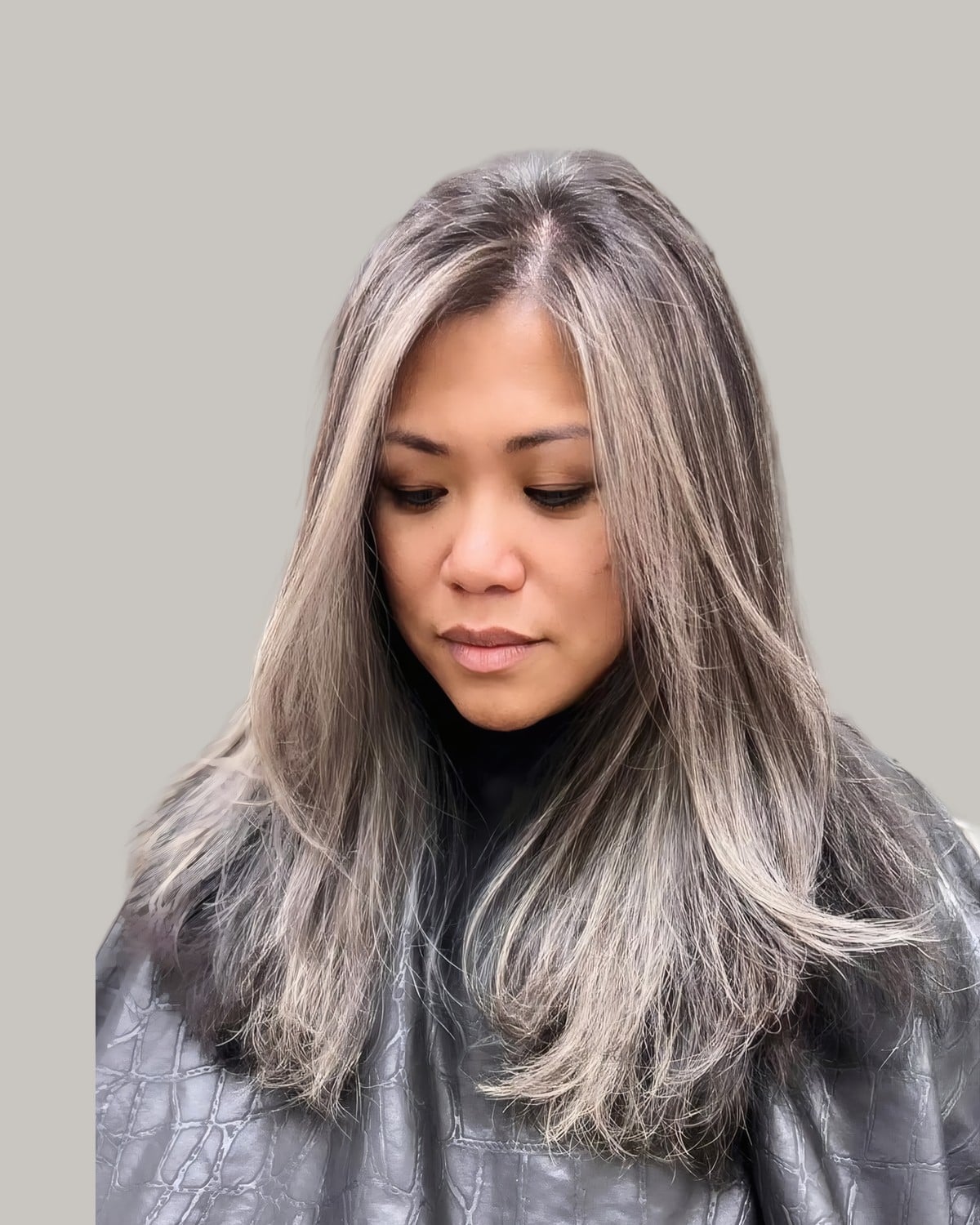
Gray blending uses highlights to meet your grays halfway instead of covering them every few weeks. Brighter pieces around the face do the most work, because that’s where grays show first.
What to ask for Gray blending with fine face-framing highlights lifted toward my gray level, toned silver, the rest of my base kept dark.
Gray blended bob
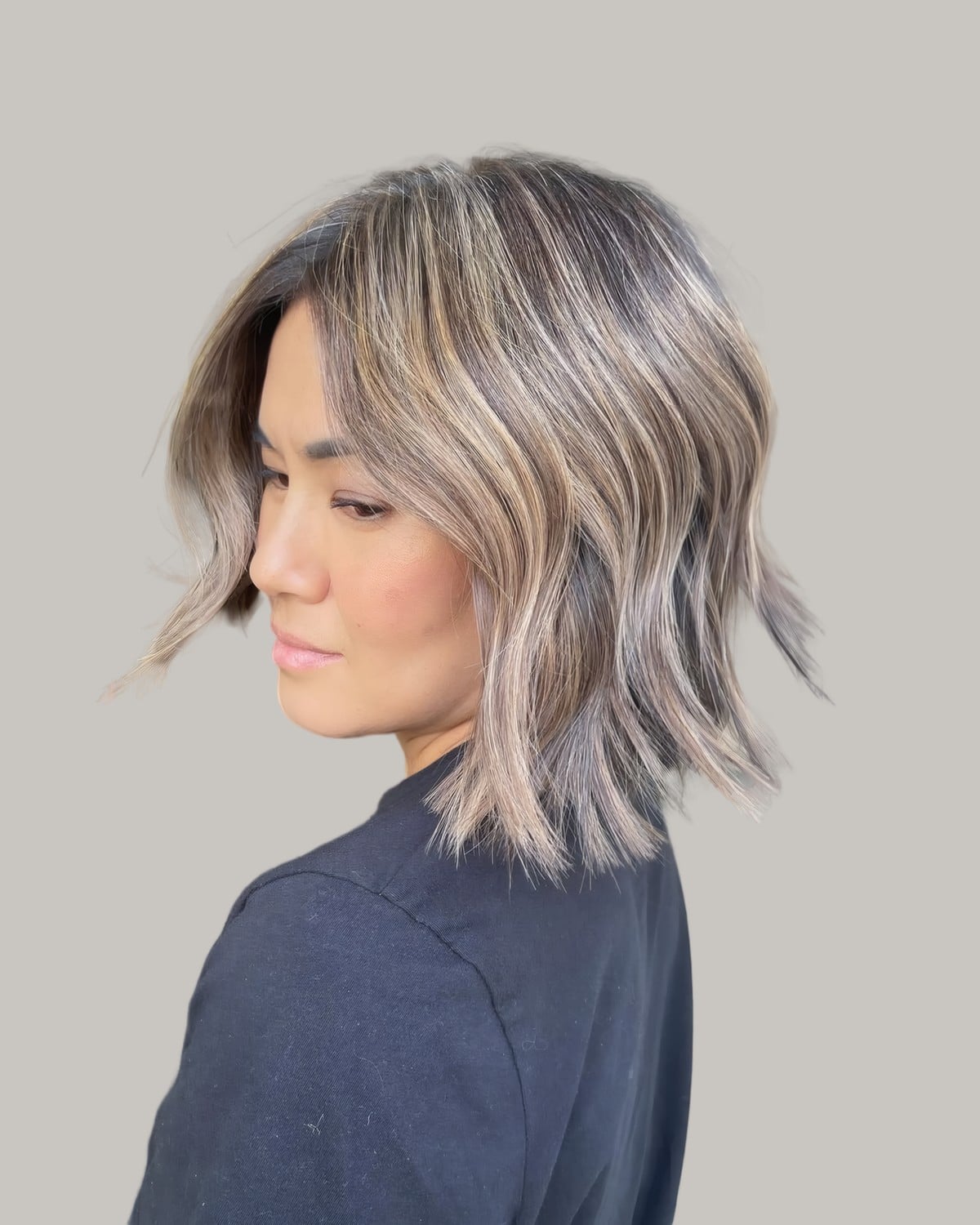
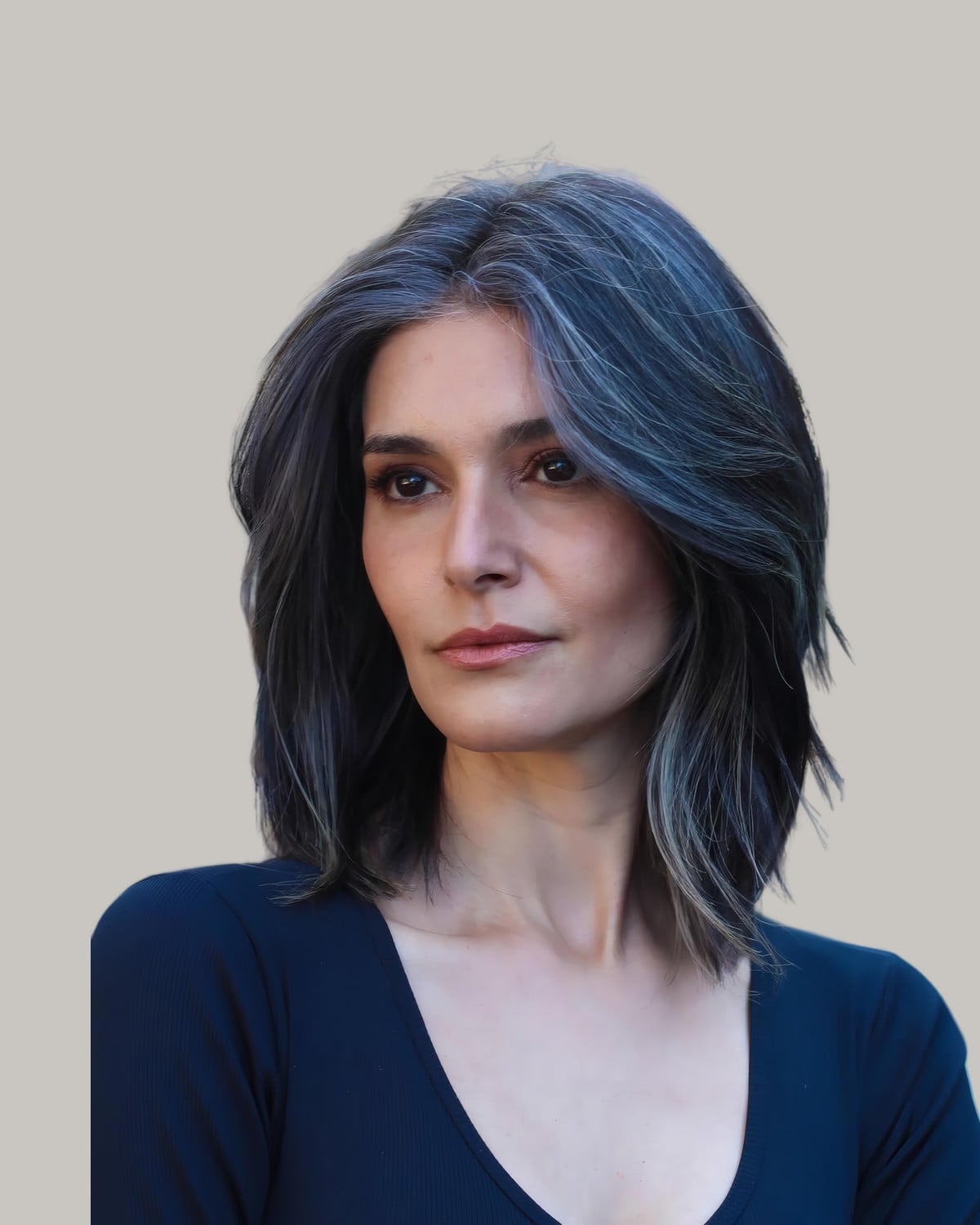
On a bob, gray blending shows as a few silver streaks running through a dark base. The blunt shape keeps it looking sharp while the regrowth softens into the highlights.
What to ask for Silver highlights woven through a dark bob to blend my grays, toned cool, a bright section at the parting.
Gray blending with bangs
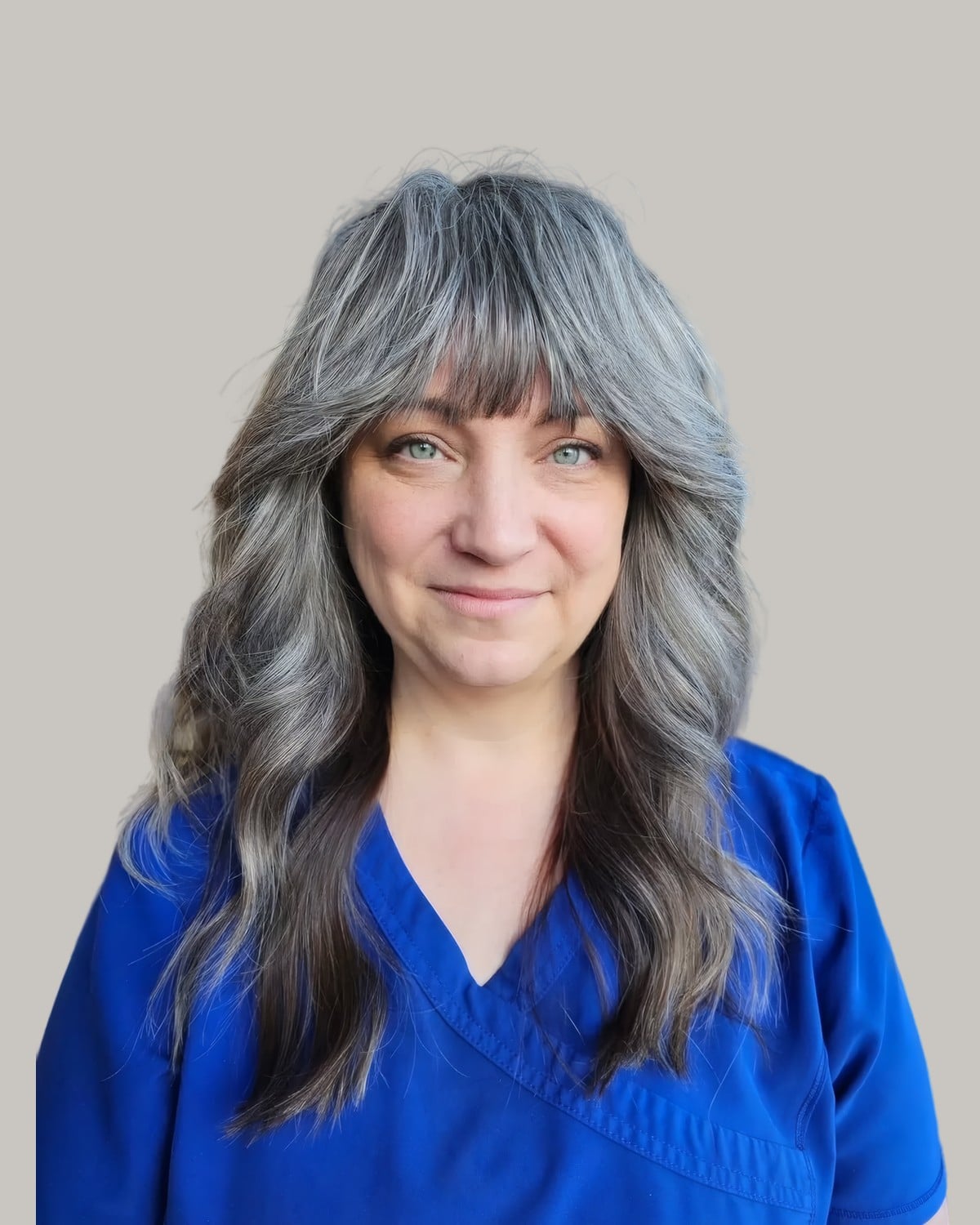
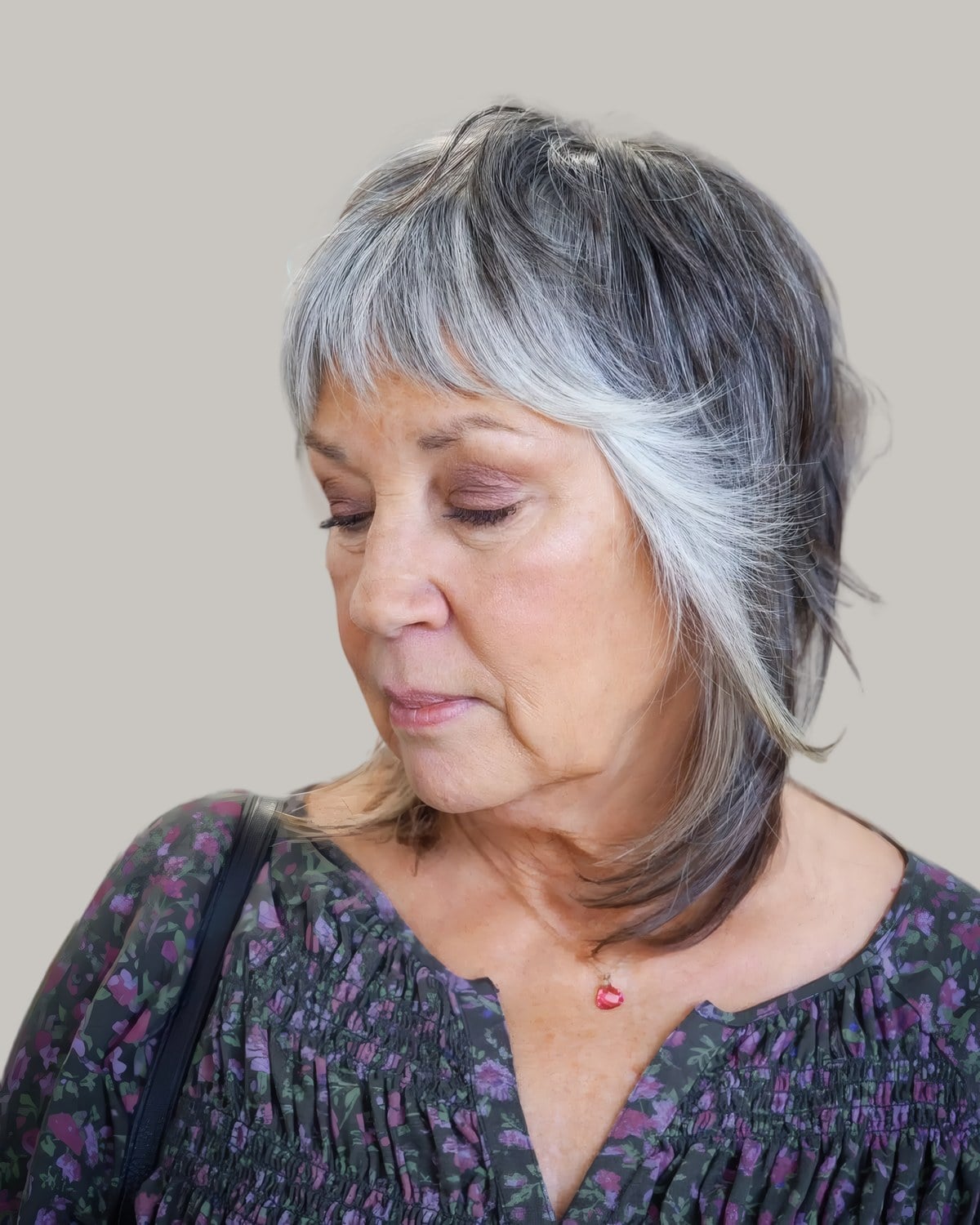
Bangs put your hairline in full view, so blending the grays there matters. Silver and gray pieces through the fringe and the layers let the natural gray join in rather than show at the root.
What to ask for Gray blending through curtain bangs and layers, babylights lifted toward my gray, toned silver, no all-over dye.
Short salt-and-pepper blend
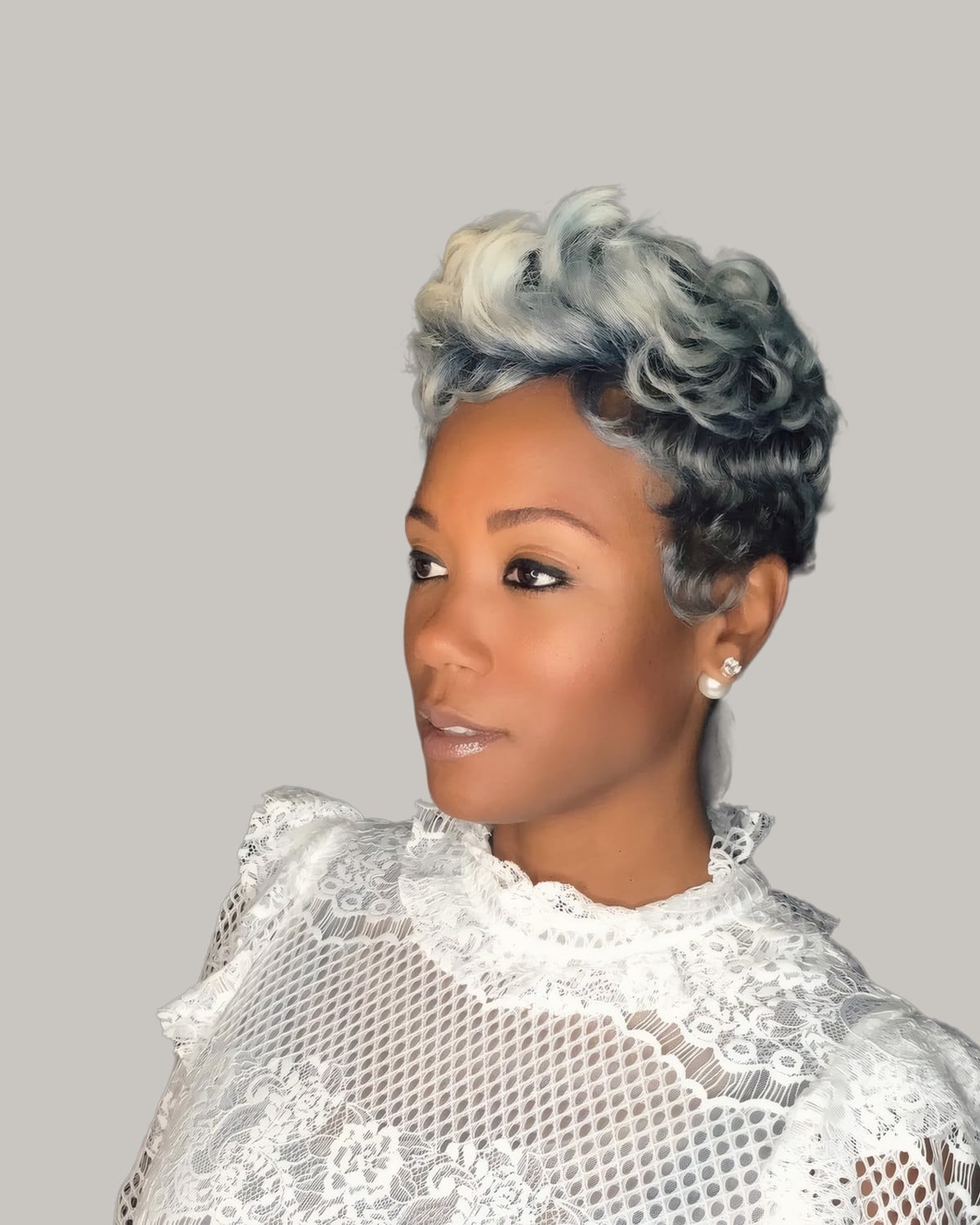
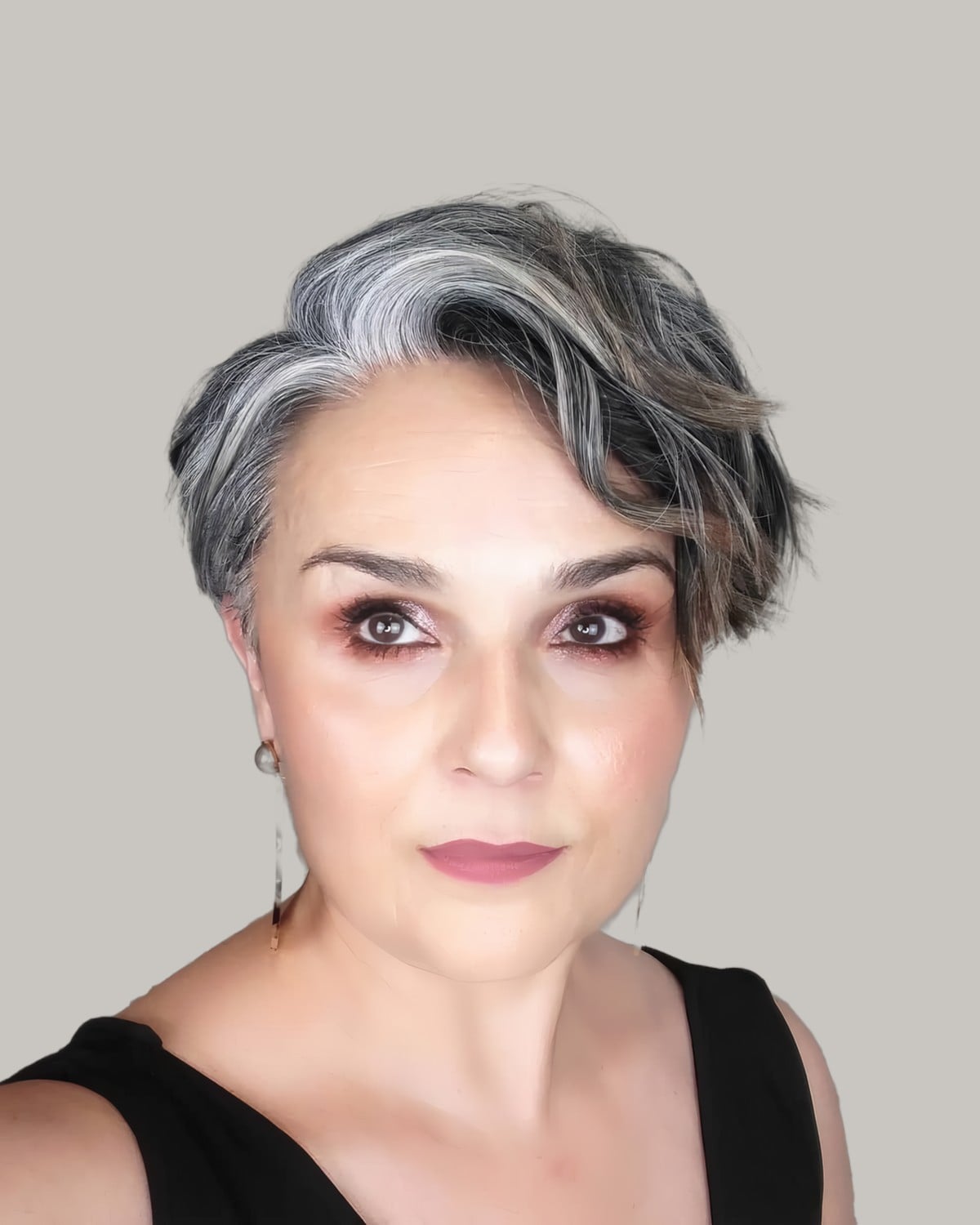
Short hair grows out fast, so blending suits it better than covering. Silver on the top and front and dark at the nape gives a salt-and-pepper finish that looks intentional.
What to ask for Silver highlights on the top and front of a short cut, blended into my natural gray, dark kept at the sides and nape.
Long gray blending with babylights
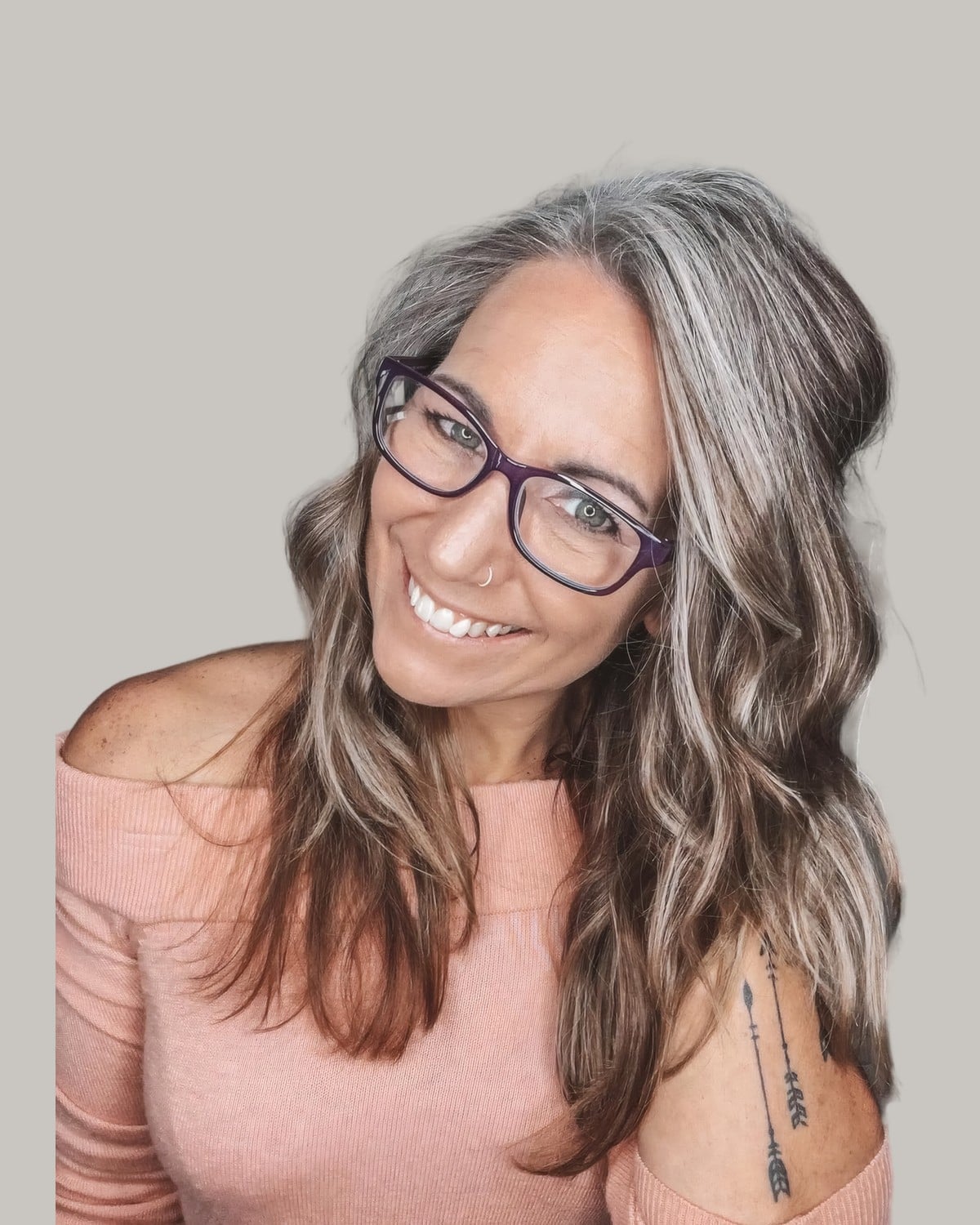
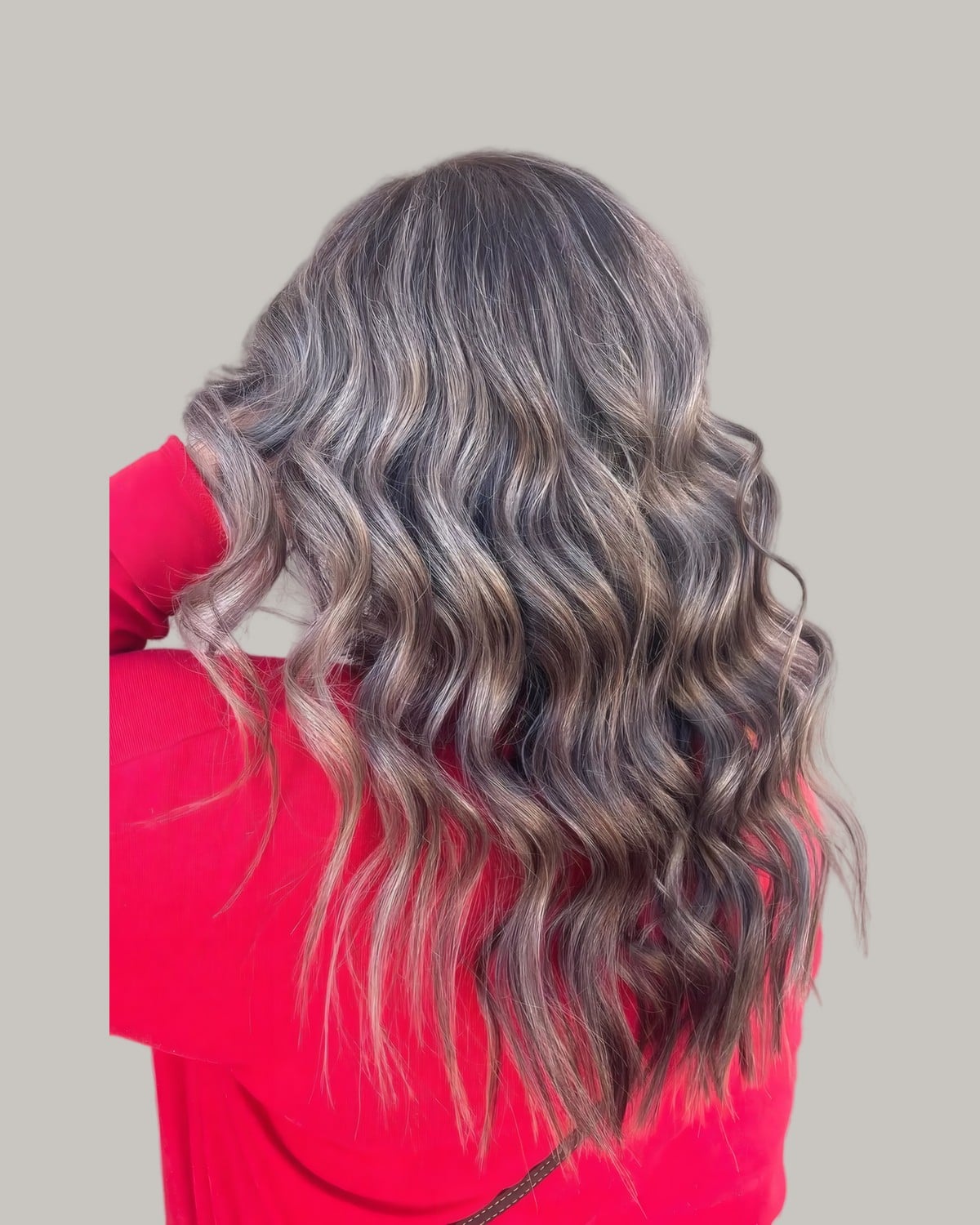
On long hair, fine babylights spread the gray through every section, so the transition from a dyed dark color to natural gray happens without a hard line. It takes a few sessions and patience.
What to ask for Fine babylights all over, lifted toward my gray level, toned silver-beige, planned over two or three sessions.
Red, burgundy and purple highlights on black hair
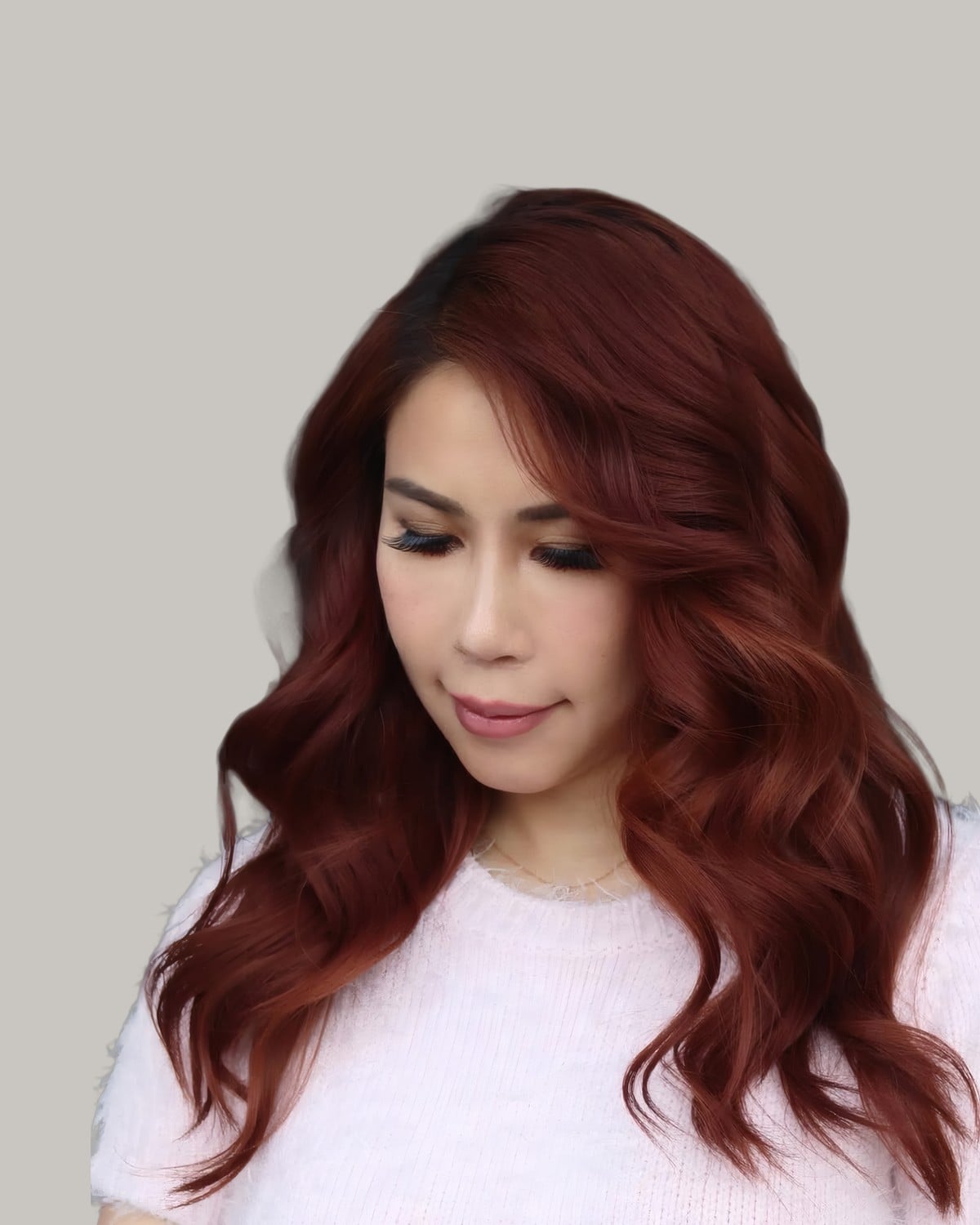
Black hair with copper highlights
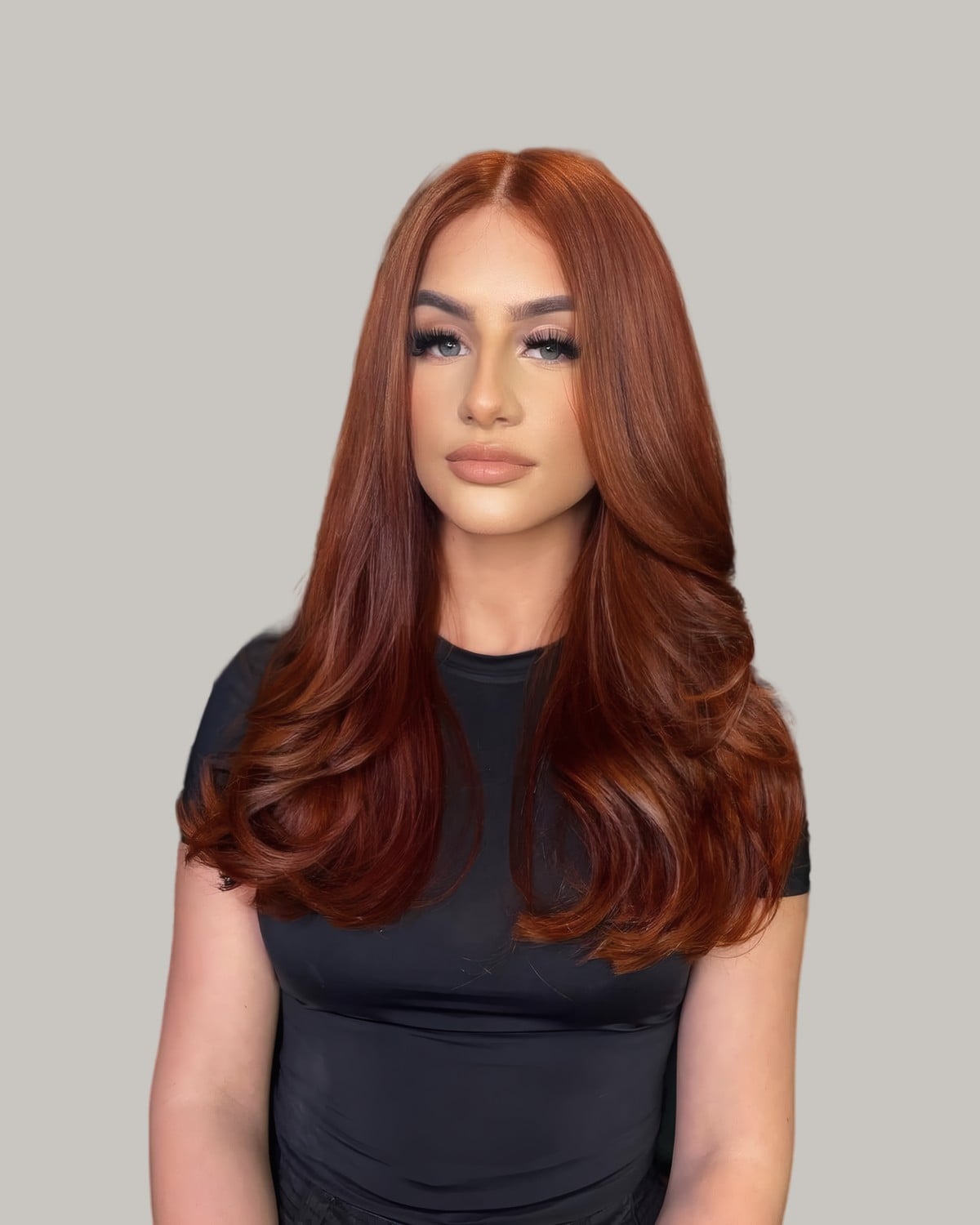
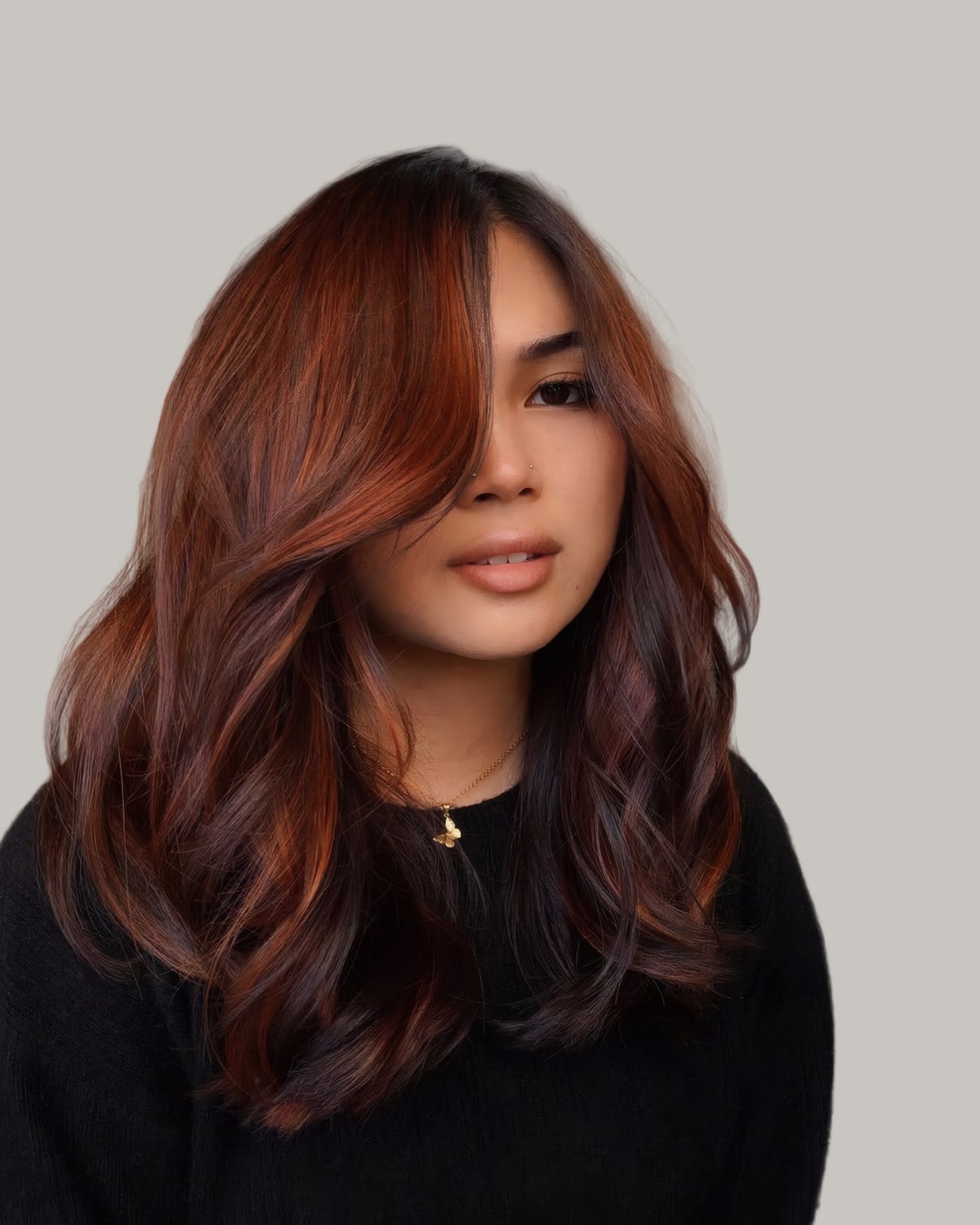
Copper works with black hair’s warm undertone rather than against it, so it needs less lifting than blonde. It’s bright and still looks like it belongs to the hair.
What to ask for Copper highlights lifted three levels, toned copper, woven through the lengths with a few brighter face-framing pieces.
Black hair with burgundy highlights
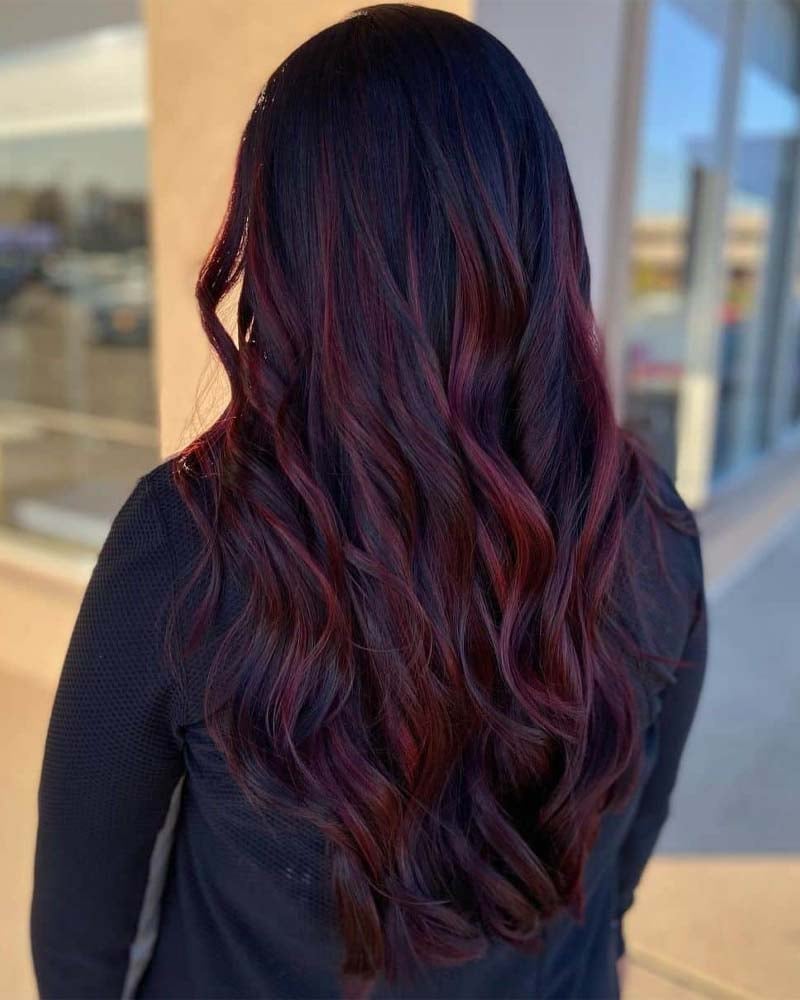
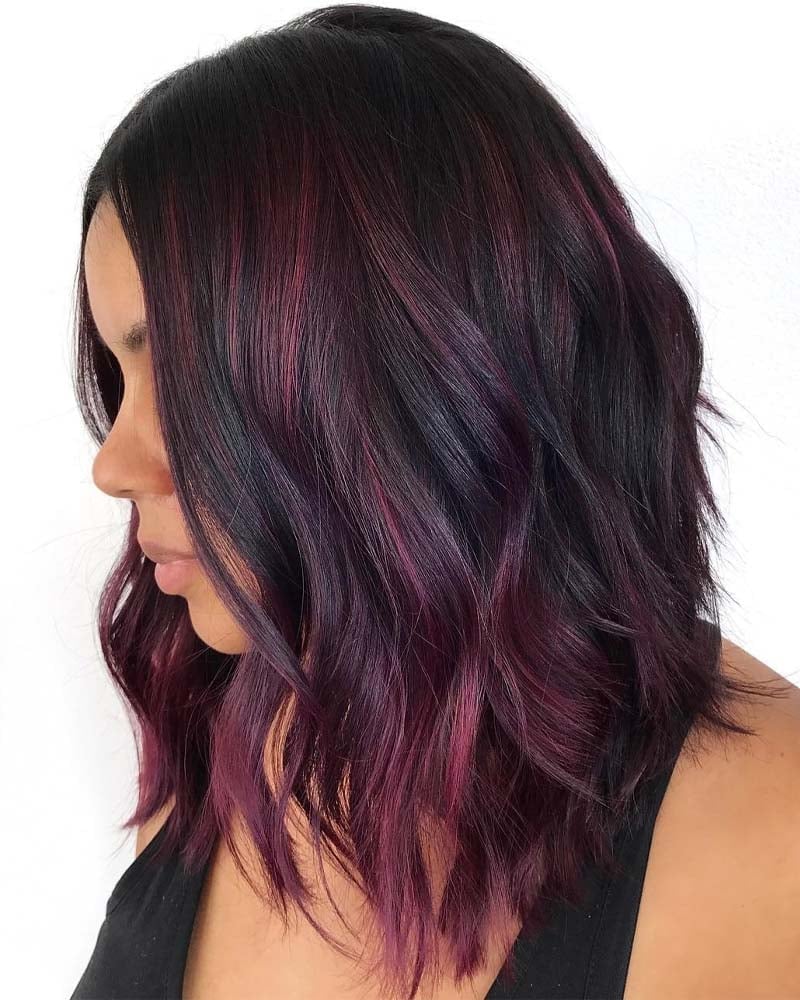
Burgundy is red with a lot of violet in it, so on black hair it reads as a deep wine color that glows in the sun. It fades faster than brown, so a color-safe shampoo and cooler water help.
What to ask for Burgundy highlights, lifted slightly and deposited with a violet-red, concentrated through the mid-lengths and ends.
Black hair with dark red highlights
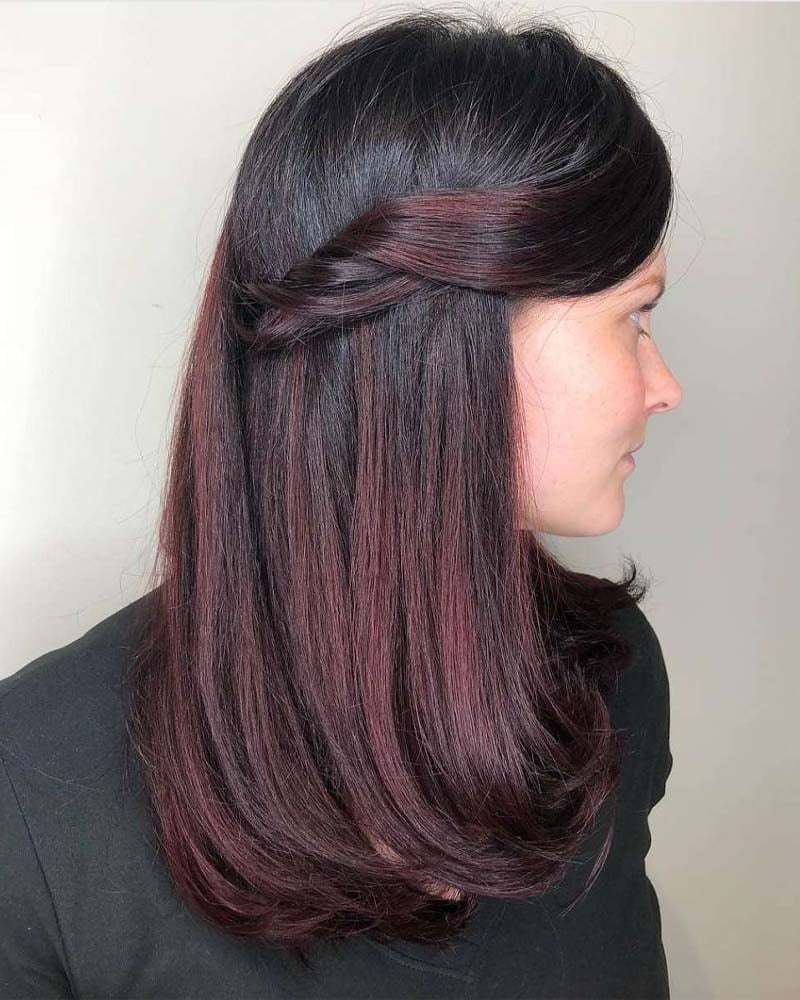
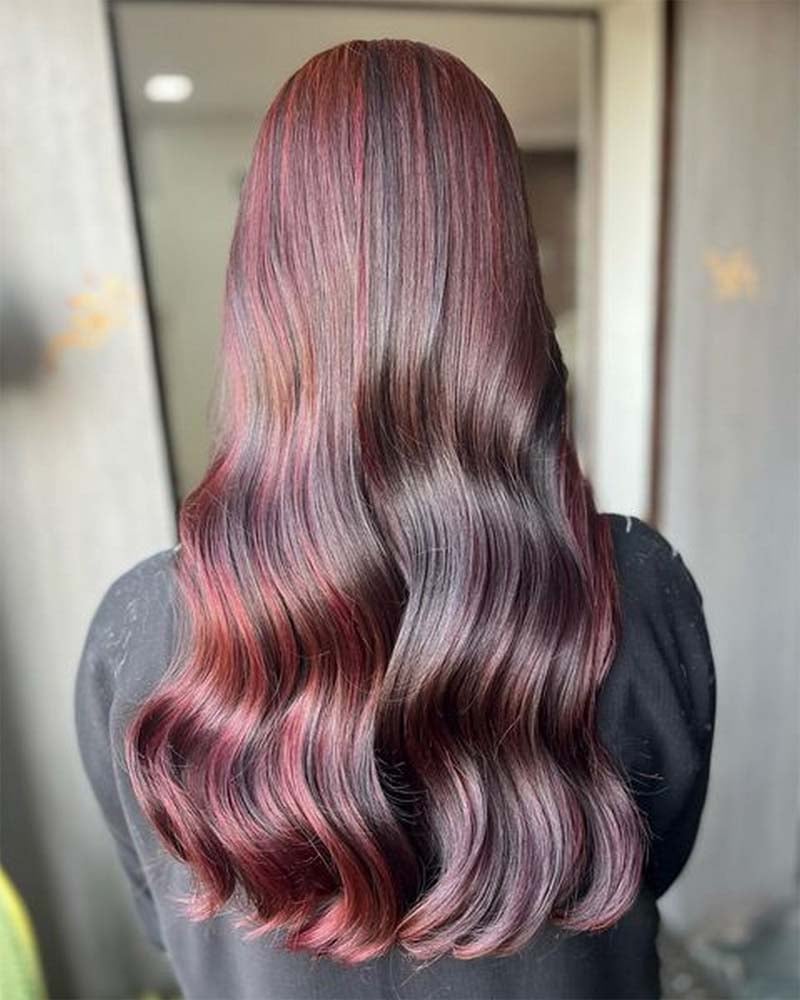
Dark red is red kept quiet: in the shade your hair looks black, and in the light it shows as garnet. It’s a good way to try red without going all in.
What to ask for Dark red highlights, a level or two lighter than my base, woven medium through the top and the lengths.
Fiery red highlights on a jet black base
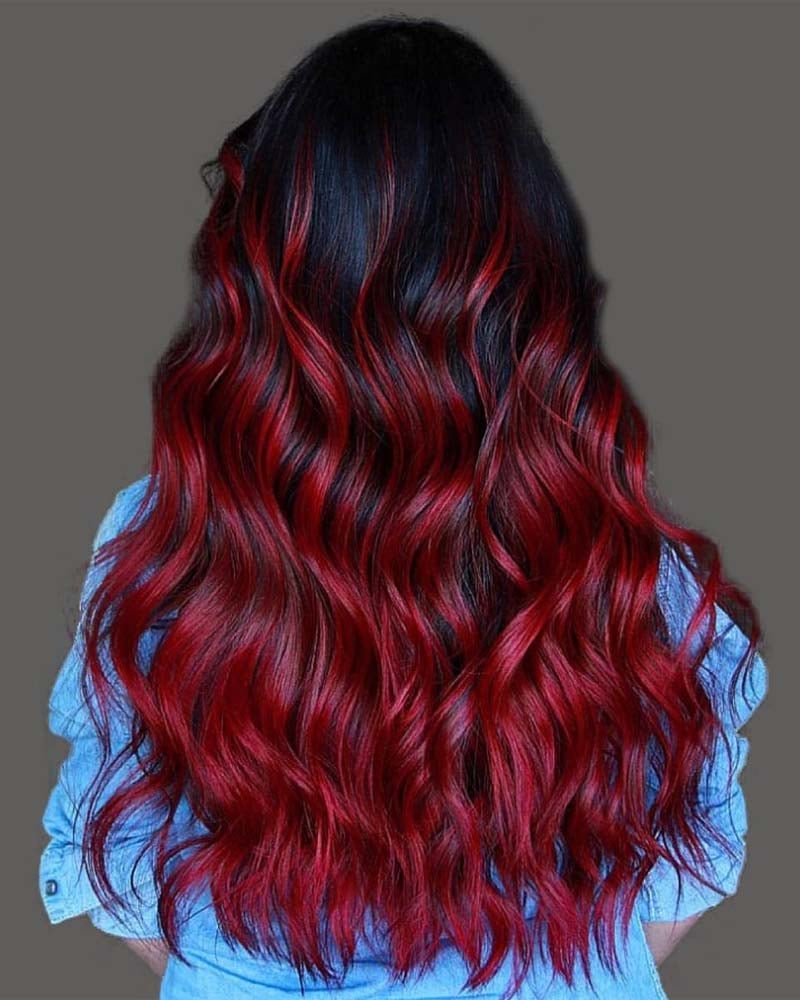
Bright red on jet black is meant to be noticed. The pieces need lifting before the red goes on, and red is the first color to fade, so plan on a gloss between appointments.
What to ask for Bright red highlights on a jet black base, pre-lightened, placed in bold ribbons, refresh gloss every four to six weeks.
Black hair with plum red highlights
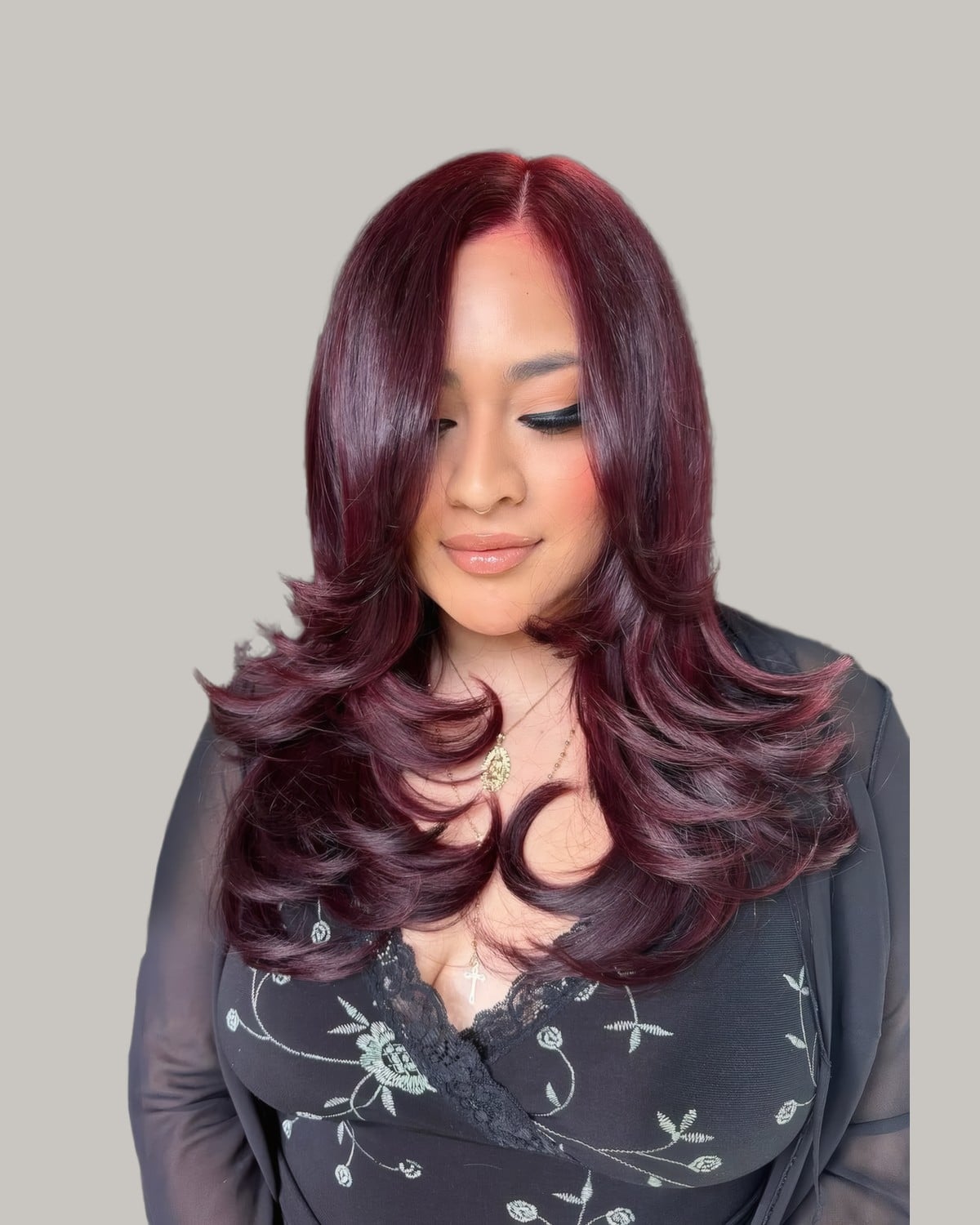
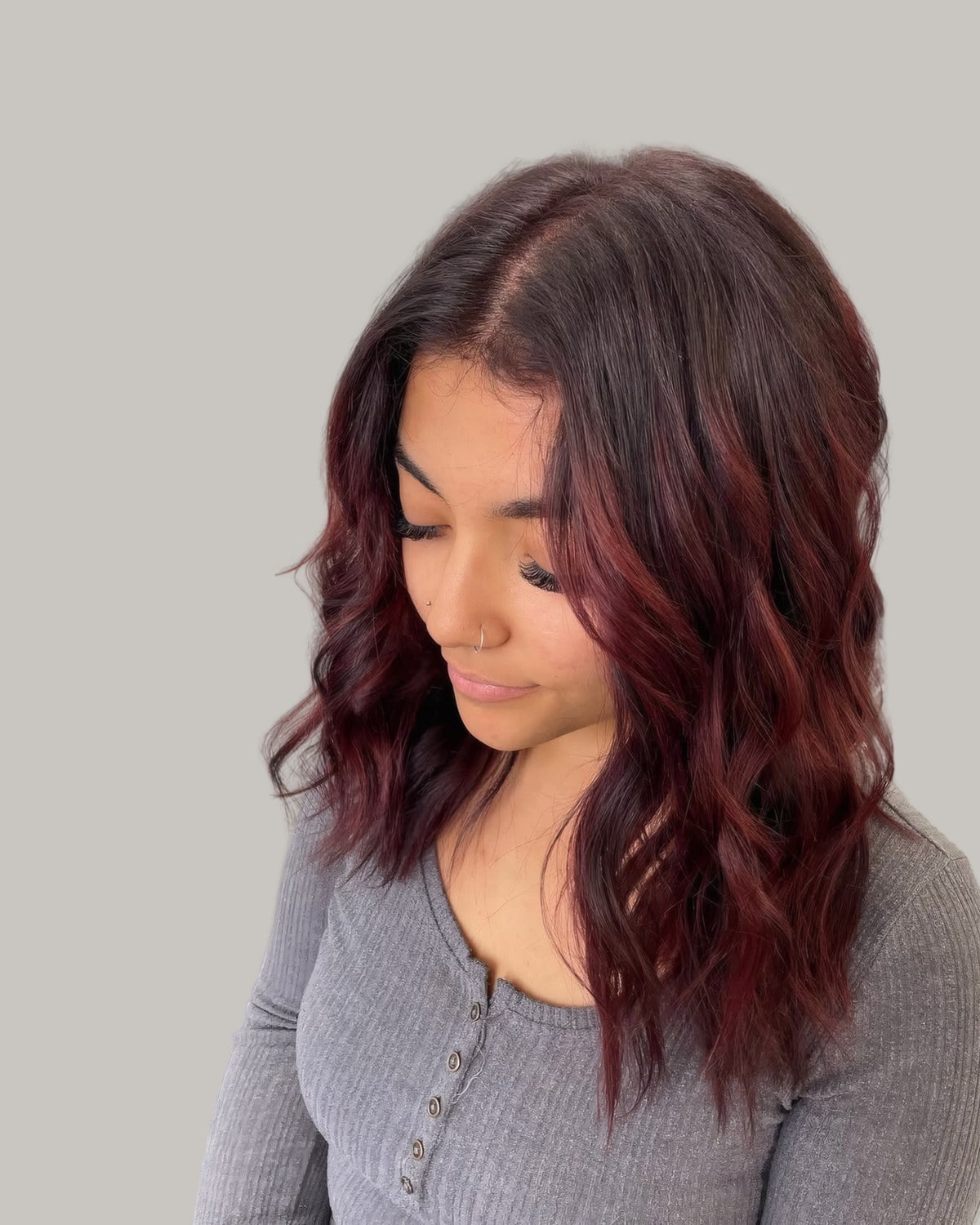
Plum red falls between burgundy and cherry, and long face-framing layers show it off because every flicked end catches the light. It fades toward a soft berry, so the color shifts gently over the weeks.
What to ask for Plum red highlights and a gloss over a dark base, long face-framing layers, curtain bangs, refresh gloss every six weeks.
Black and auburn hair color
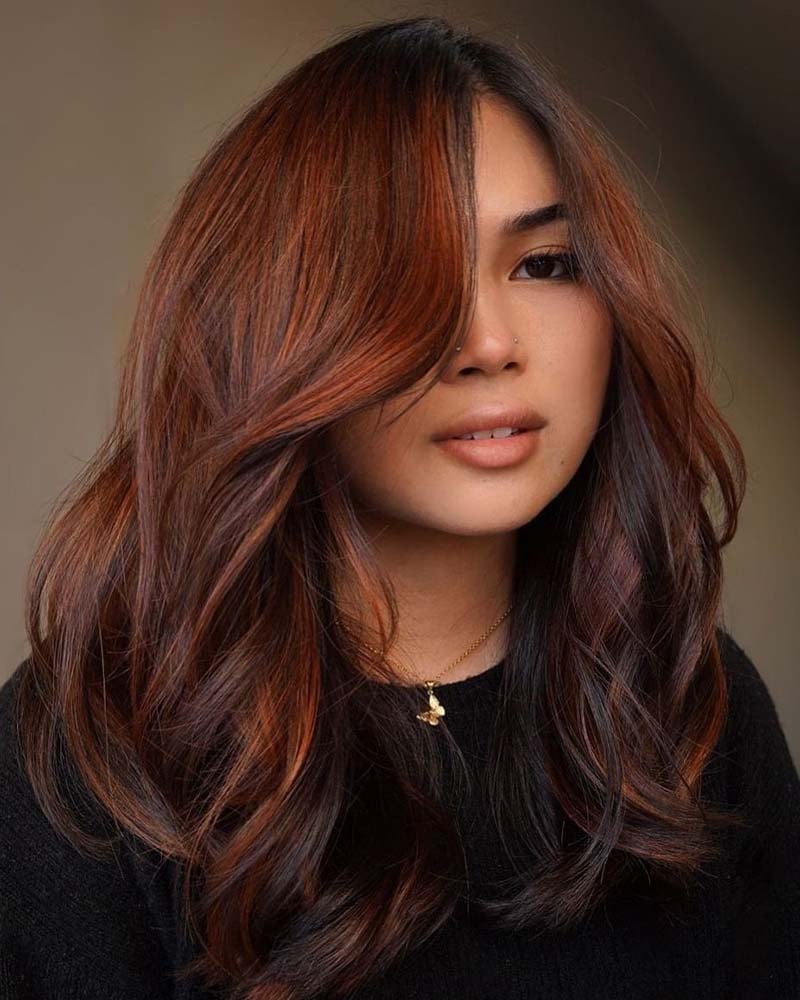
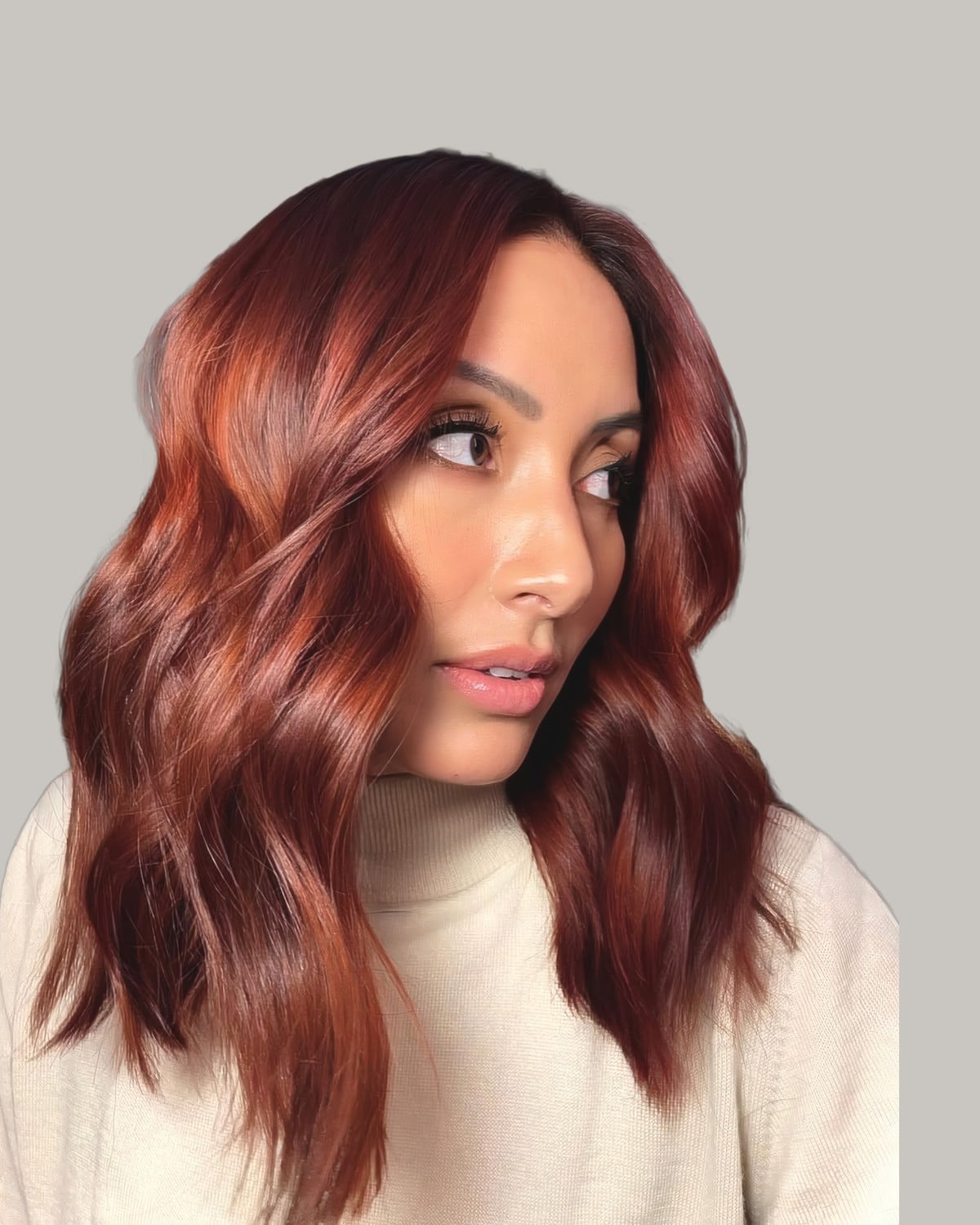
Auburn is a brownish red, so it’s a red you can wear to work. On a black base it gives a warm glow rather than an obvious stripe.
What to ask for Auburn highlights and balayage, lifted two to three levels, toned red-brown, blended from the root.
Rose gold highlights on dark hair
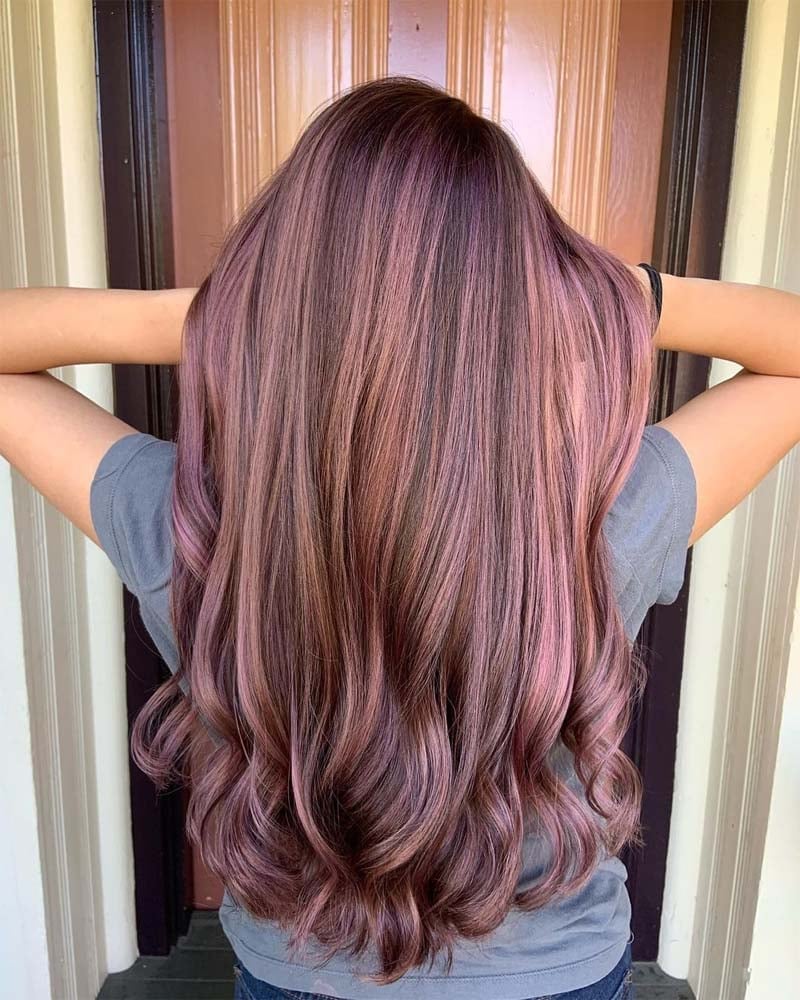
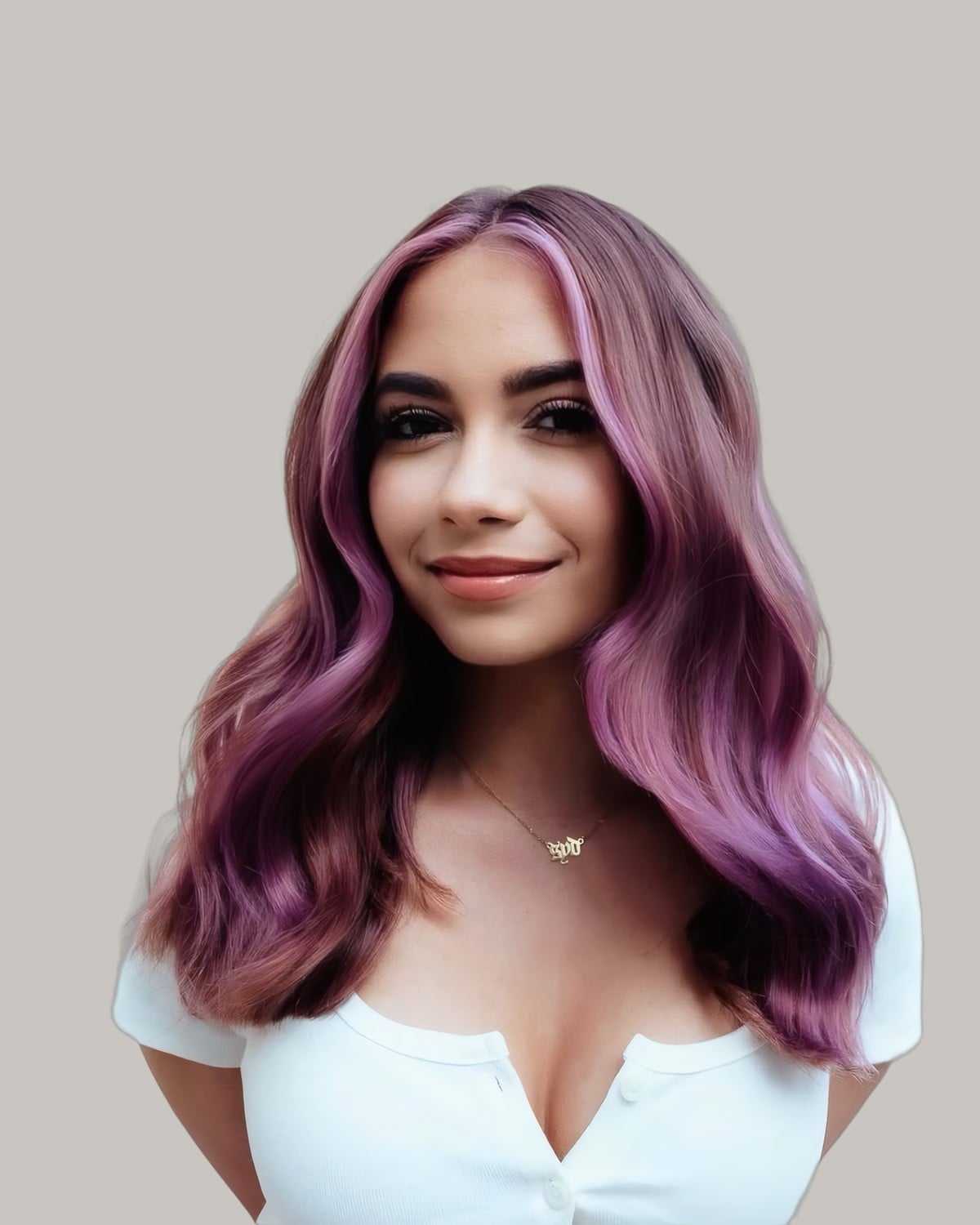
Rose gold mixes a pale blonde with pink, so it needs a lot of lifting. On dark hair it reads as a soft metallic pink through the lengths.
What to ask for Rose gold balayage: lifted to pale blonde through the lengths, toned pink-gold, dark root kept.
Black hair with deep purple highlights
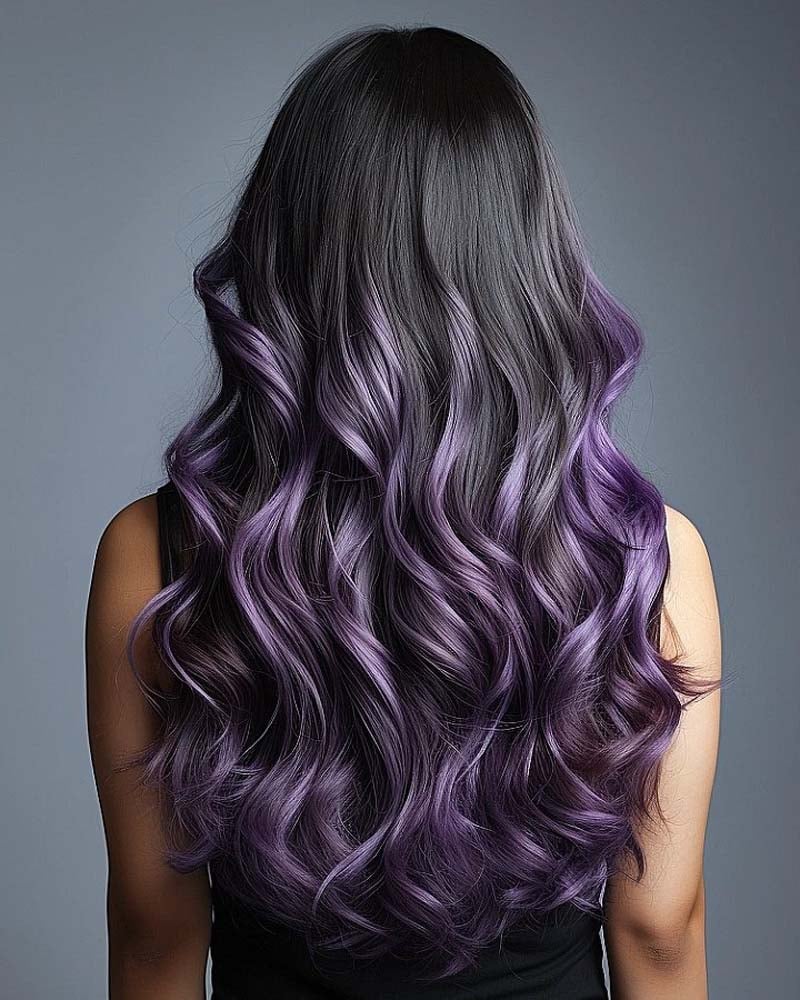
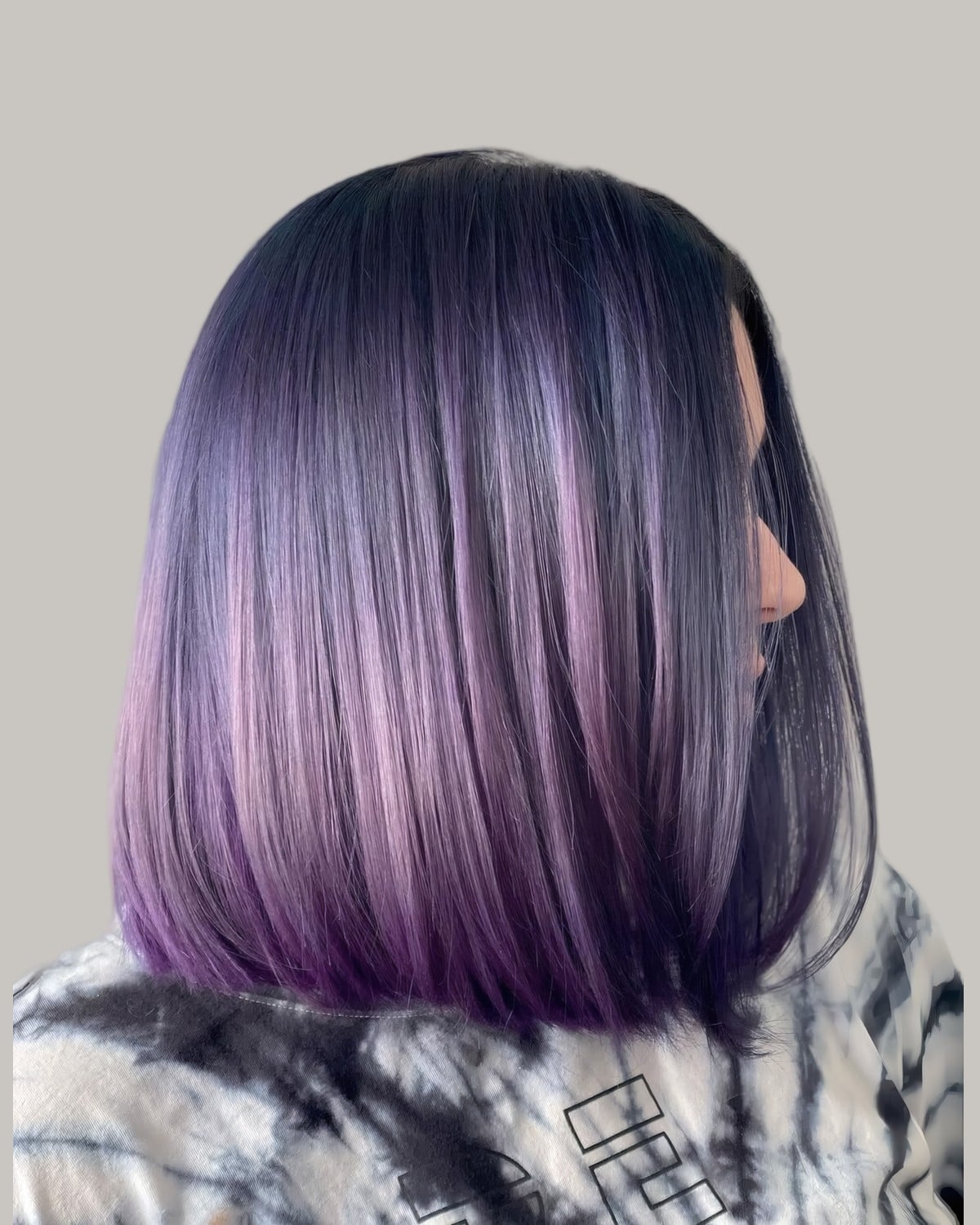
Deep purple can go on black hair with little or no lifting, and then it looks like a violet sheen. Lift the pieces first and it turns into bright violet instead.
What to ask for Deep purple highlights, pre-lightened slightly for more color, deposited violet, through the lengths and the ends.
Subtle, short and ombre highlights on black hair
Subtle highlights on black hair
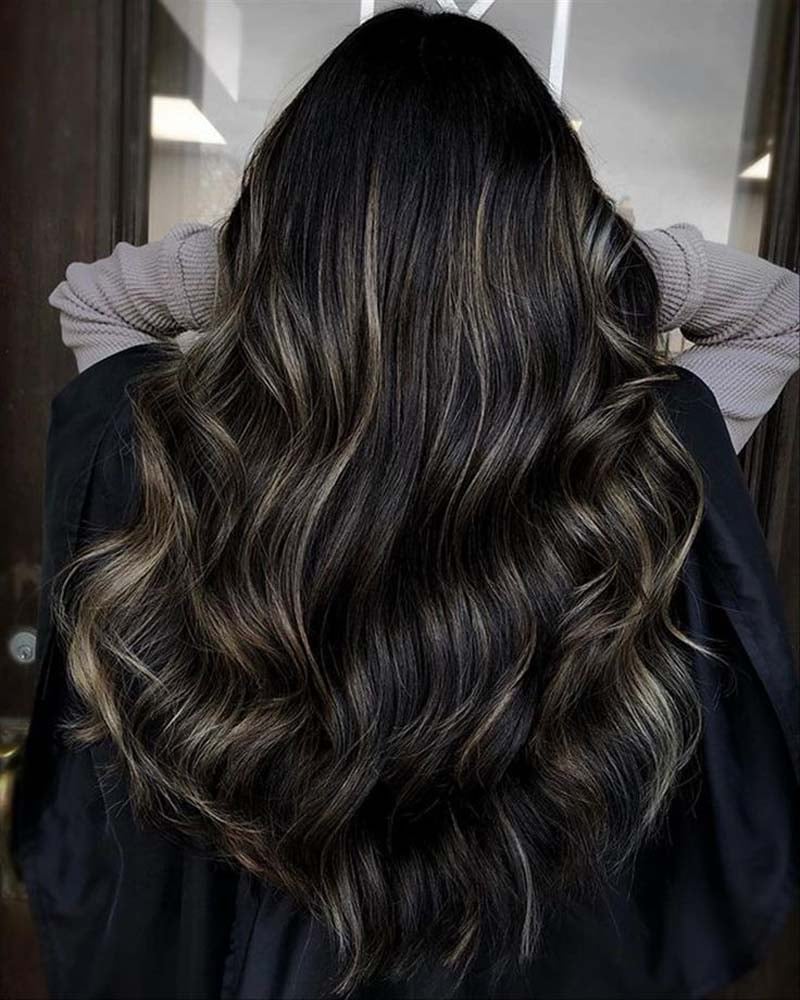
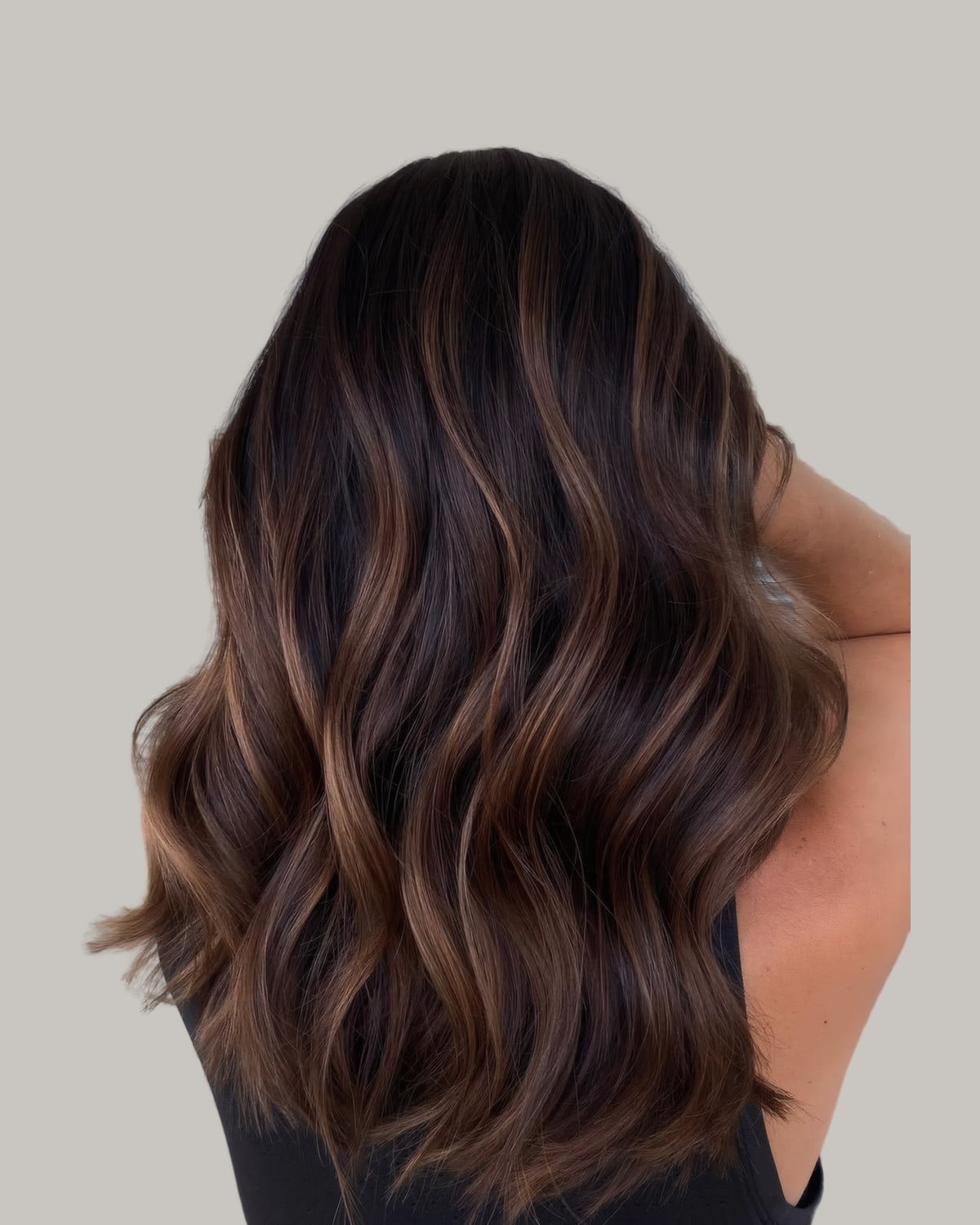
Subtle highlights are for people who want their hair to look healthier rather than colored. Fine pieces a shade or two lighter catch the light on waves and disappear on straight days.
What to ask for Very fine highlights a level or two lighter, soft beige-brown, spread lightly, no heavy face-framing.
Short black hair with highlights
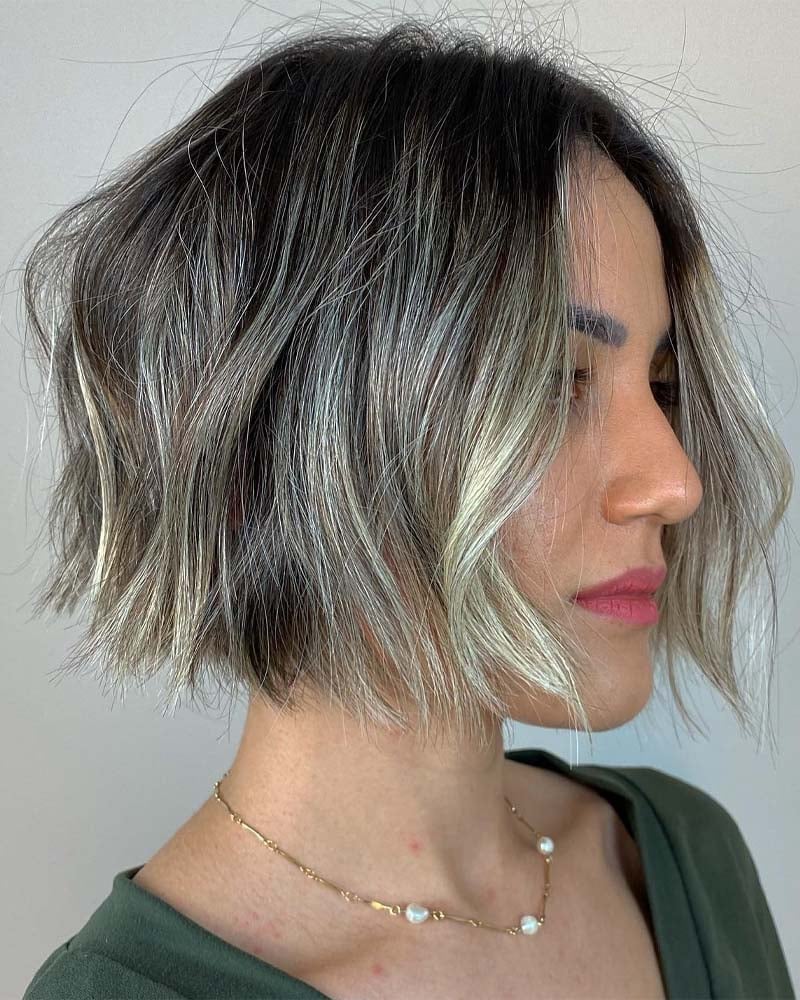
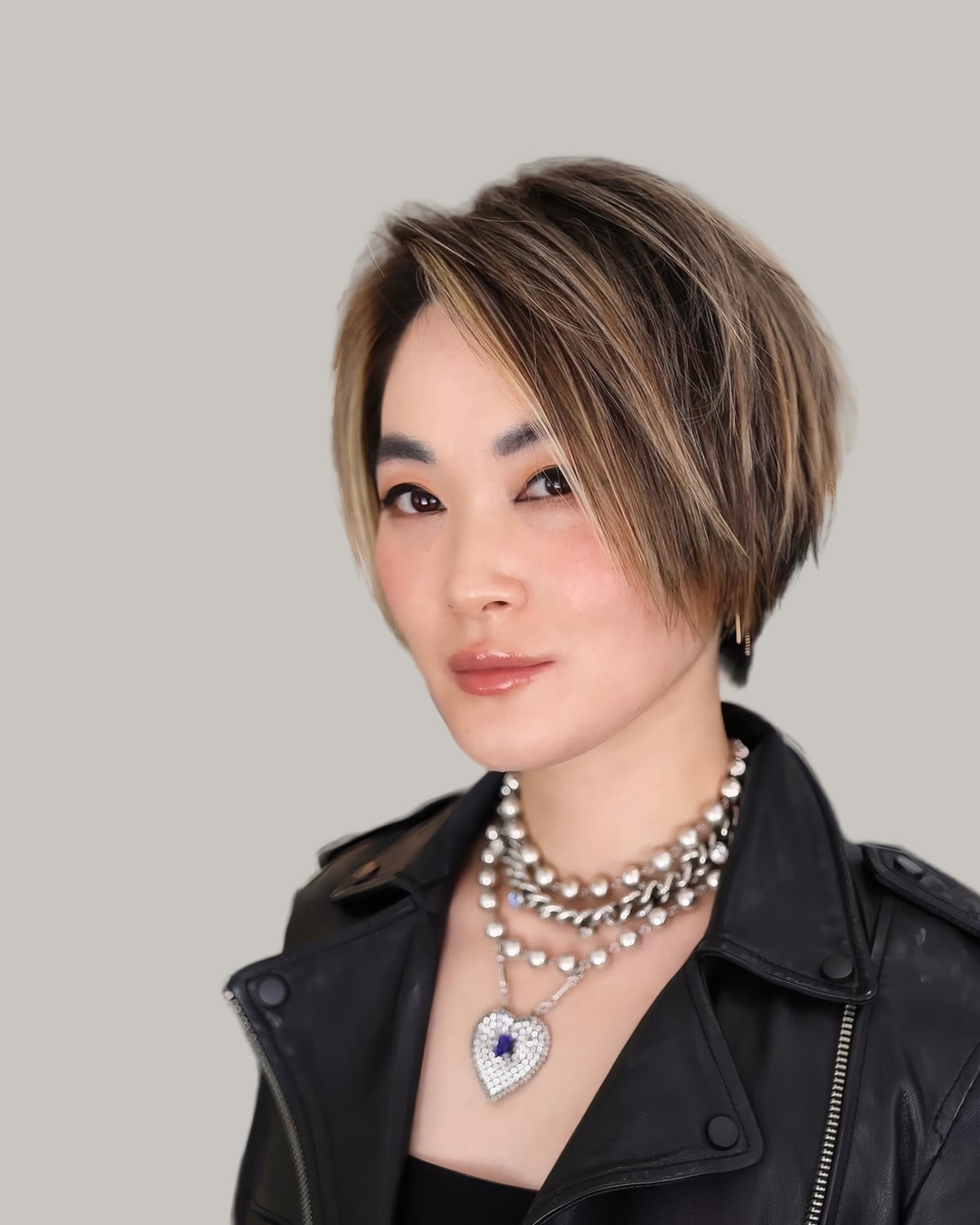
On a bob or a lob, highlights shape the cut as much as the color does. Brighter pieces at the front lift the face, and darker ones at the back keep the shape tight.
What to ask for Highlights on a chin-length bob, brighter at the front, a honey to beige tone, dark root.
Black to brown ombre
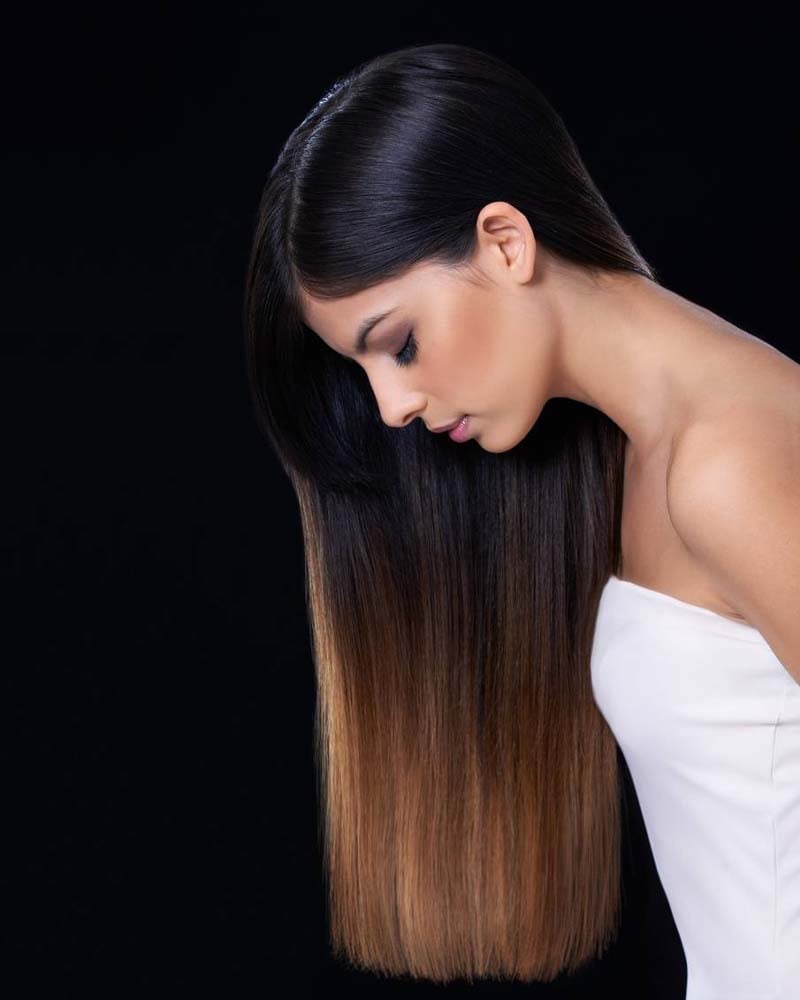
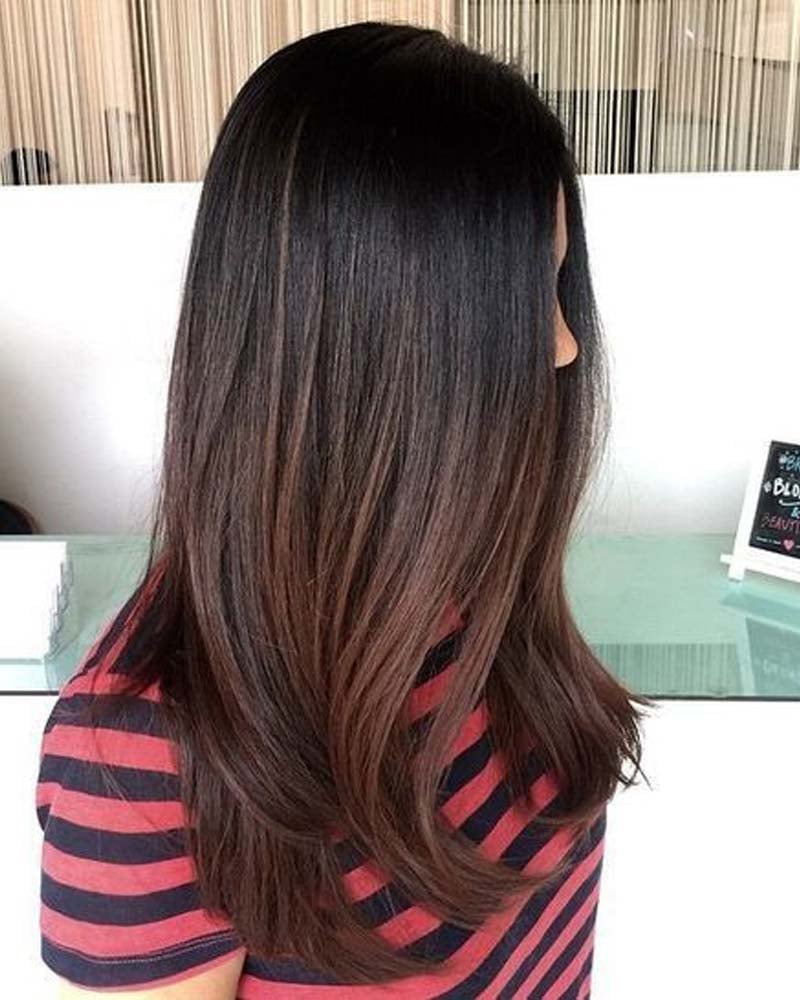
An ombre keeps the root black and lightens the ends to brown, with the change happening somewhere around the chin. On sleek straight hair it’s a clean fade, and on waves it looks softer.
What to ask for Black to brown ombre, color change at chin level, lifted two to three levels at the ends, blended hand-painted.
01 of 01
What are highlights on black hair?
Highlights on black hair are strands lightened a few shades above your base, so the color catches the light and the hair looks like it has movement. Colorists measure hair on a scale from 1 (black) to 10 (lightest blonde), and natural black sits at 1 or 2. A caramel highlight on black is about three or four levels of lift, and blonde is more.
How the pieces go in changes the look as much as the shade does. Foils give defined, even highlights from close to the root. Balayage is painted on by hand for a softer start. Babylights are very fine and blend in, and a money piece brightens only the strands at your hairline.
Which highlights suit black hair?
Staying within a few shades of your own color keeps the result soft, and (like, every stylist on this planet) we’d recommend it for your first round. Caramel, chocolate, mocha and honey tones look showstopping against a black base, and they fade gracefully.
Beyond that, match the tone to your skin. Warm tones (caramel, honey, copper, auburn) suit warm and olive skin, while cool tones (ash, silver, burgundy) suit cool or pink undertones. If you’re unsure, a neutral light brown or chocolate sits in between.
What to ask your colorist for
Bring two or three photos, including one of a color you don’t want. Then say:
- The shade and the tone. “Caramel, warm” or “ash brown, cool” is clearer than “lighter”.
- How much lift. Two levels looks natural, four or more is a visible change.
- The technique. Foils, balayage, babylights or a money piece.
- Where they start. At the root, or a few inches down so the grow-out is soft.
- Whether you need a toner. Lightened black hair turns warm, and a toner is what makes it ash, beige or silver instead.
If your hair has been dyed black before, tell them. Color doesn’t lift color, so previously dyed hair needs lightener where natural hair might not.
How much upkeep do highlights on black hair need?
It depends mostly on the technique. Balayage and highlights that start below the root can go three to four months between appointments, because there’s no hard line as your hair grows. Foils placed right at the root show regrowth sooner, usually within six to eight weeks.
Toners and bright shades fade faster than the lightening underneath. Plan on a gloss or toner refresh every six to eight weeks for ash, silver, red and purple, a color-safe shampoo, and a heat protectant whenever you style with hot tools.
Do honey highlights work on black hair?
Yes. Honey and honey blonde are popular choices on a black base, adding warmth and depth while staying close enough to the natural color to keep the result soft rather than stark. Ask for them heavier toward the ends if you want a sun-kissed look with a dark root.
Can you put blonde highlights on black hair?
Yes, blonde looks gorgeous on dark hair if it’s done well. It needs lightener, a toner to stop brassiness, and often more than one appointment to reach a pale blonde safely. Balayage-style blonde keeps the lustrous black base intact, though we’d still advise against going too light in one go.
Highlights or balayage on black hair?
Both lighten pieces of your hair. The difference is how they start and grow out.
| Highlights (foils) | Balayage | |
|---|---|---|
| How it goes on | Woven sections wrapped in foil | Painted on by hand |
| Where it starts | Close to the root | Usually a few inches down |
| Look | Defined, even pieces | Soft, lived-in |
| Grow-out | Visible line in six to eight weeks | Soft, three to four months |
| Best for | Brighter results, short hair | Low upkeep, long or wavy hair |
What is gray blending for dark hair?
Gray blending adds highlights, and sometimes lowlights, so your natural grays look like part of the color instead of a root line. Rather than dyeing dark hair every few weeks to cover the gray, the colorist lifts pieces toward your gray level so the regrowth blends in.
It works on dark hair with a few sessions. The first appointment lifts fine babylights or face-framing pieces, and the next ones add more until the dark and the gray sit close together. Expect it to take a few months if you’re moving off all-over dark dye, and ask for a silver or beige toner to keep the lightened pieces from turning yellow.
Do highlights damage black hair?
Any lightener opens the hair cuticle, so highlights do change the hair, and the more lift the more change. Fine highlights of two or three levels are gentle. Platinum, silver and rose gold on black need a lot of lifting, so ask for a bond builder in the lightener and space the sessions out.
At home, a weekly mask, a heat protectant and cooler water help. A color-safe shampoo keeps toners and bright shades from fading as fast.
For more ideas, our guides to short hairstyles for Black women, hairstyles for Black girls, braid types and loc styles pair well with any of the colors above. To pair the color with a cut, see our haircuts for women.
Whatever you pick, start a shade or two lighter than you think you want. It’s much easier to add brightness at the next appointment than to take it back, and your black base will thank you for it.
To match a color with a cut, a braid or a set of locs, browse our guide to hairstyles for Black women.
Products featured here are independently selected by our editors. If you buy through our retail links we may earn an affiliate commission — it never changes the price you pay, and it never decides our verdicts. Read our earnings disclaimer.