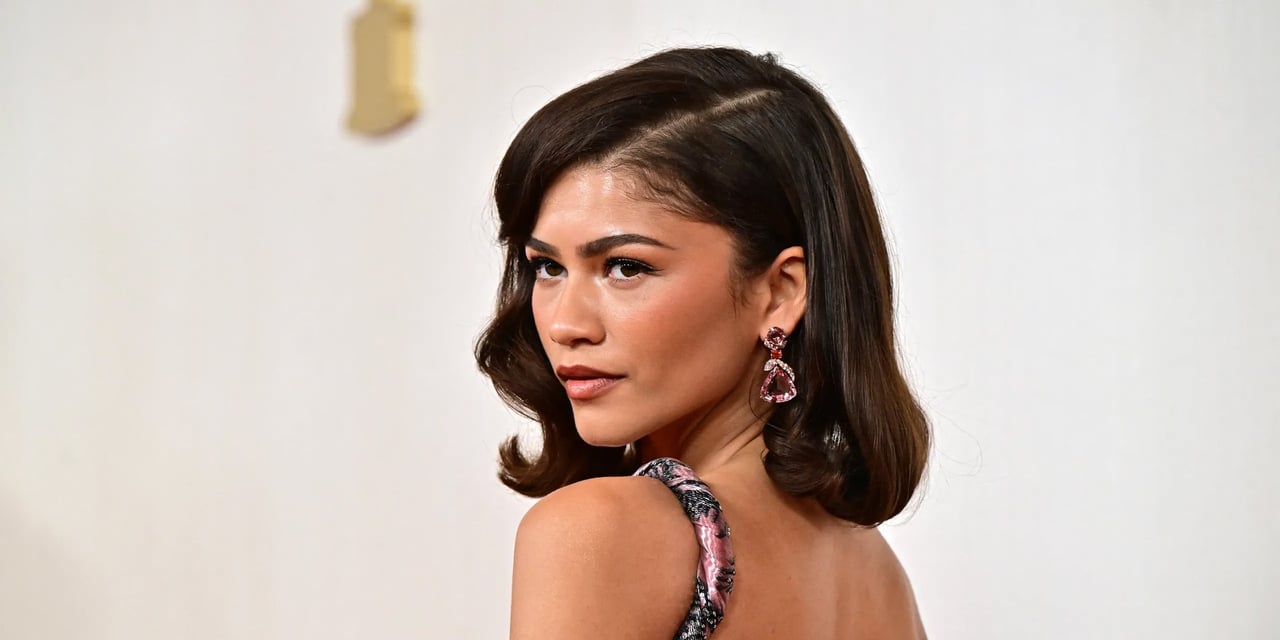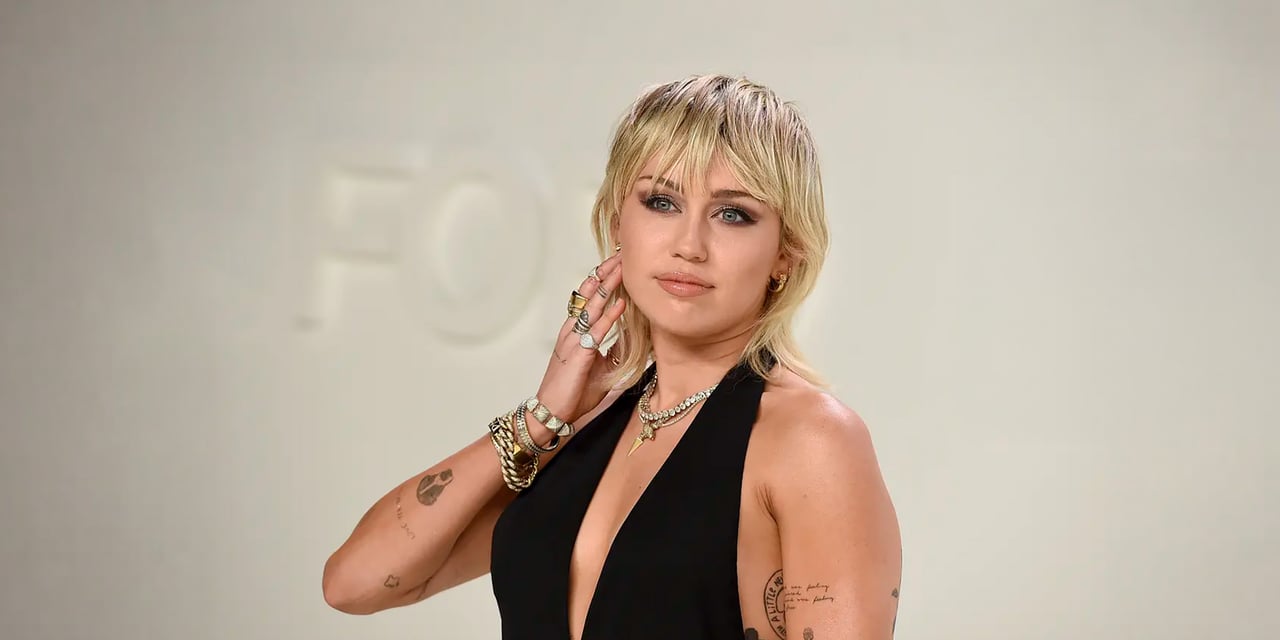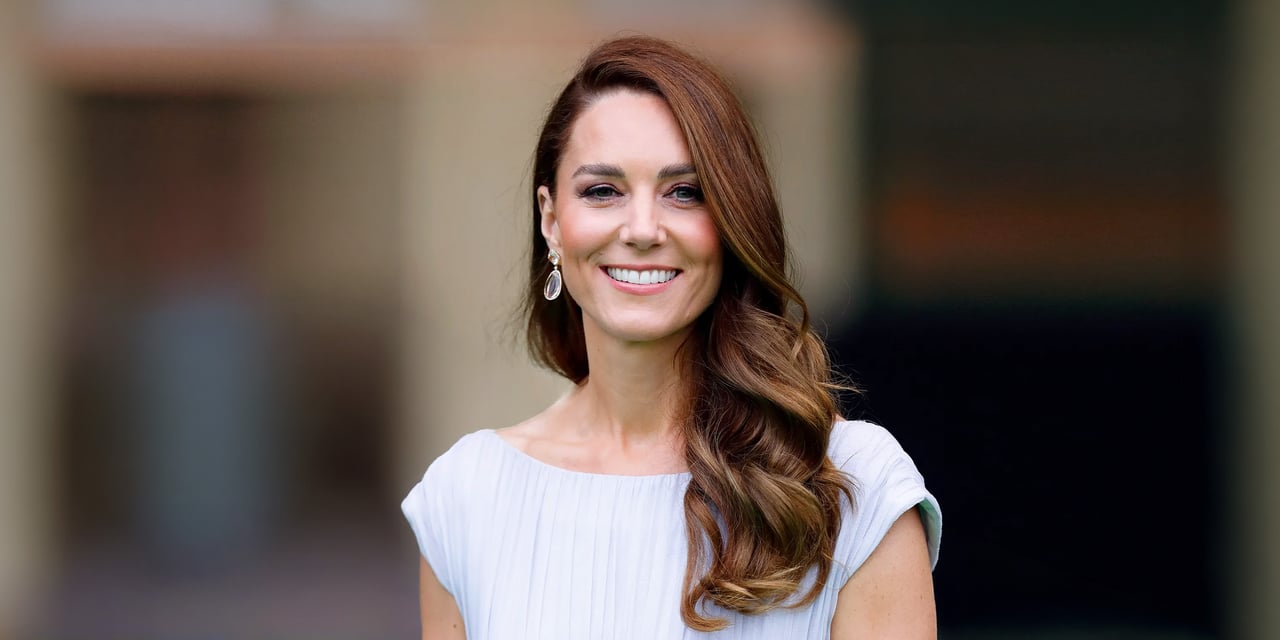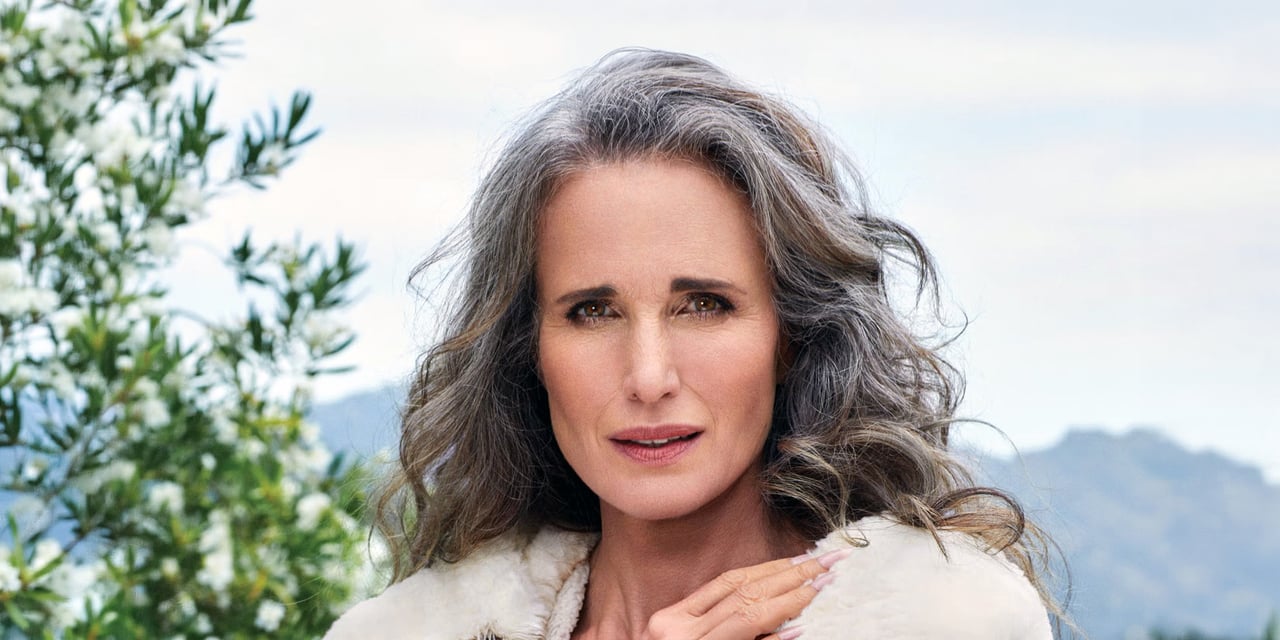
Has anyone told you it’s time to cut your hair short? Plenty of women over 60 hear it, usually from someone who isn’t a hairdresser. “There is no age limit on long hair,” says stylist Sarah Potempa, and the women in the photos below would back her up.
Your hair does change, though. The strands get finer and carry less pigment, the scalp makes less oil, and gray tends to grow in wirier than the color it replaces. None of that calls for a pixie. It calls for a cut that ends in the right place, with layers where your hair can carry them and a blunt line where it can’t.
So here are 33 looks on real salon clients, from collarbone lobs and long layers to silver curls, braids and bobs, plus a group for women over 50. Most are shown twice, in photos from the stylists’ own posts. Each one ends on what to say in the chair, so pick one and read it out.
Hairstyles for women over 60
Here are 33 hairstyles for women over 60, all on real salon clients.
Medium-length hairstyles for women over 60
Layered lob
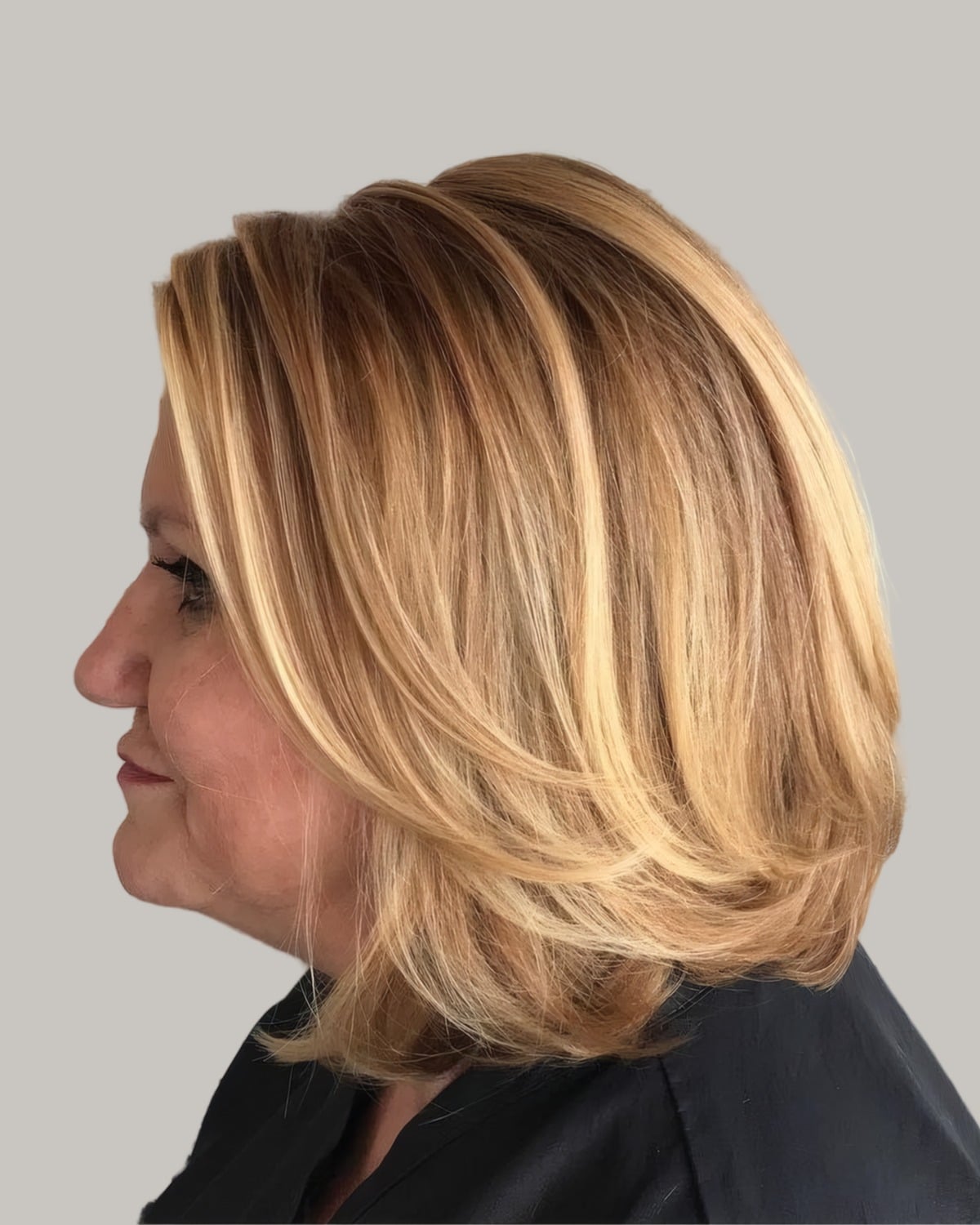
A lob is a long bob, and this one stops at the collarbone with layers cut only into the last few inches. The ends bend instead of lying flat, and the length stays heavy enough to look full. Julianne Moore wears a long lob. Air-dry it with a little cream or bend the ends with a wide round brush.
What to ask for A lob to the collarbone, long layers in the bottom few inches only, ends softened with point cutting, and a side or center part.
Shoulder-length cut with face-framing layers
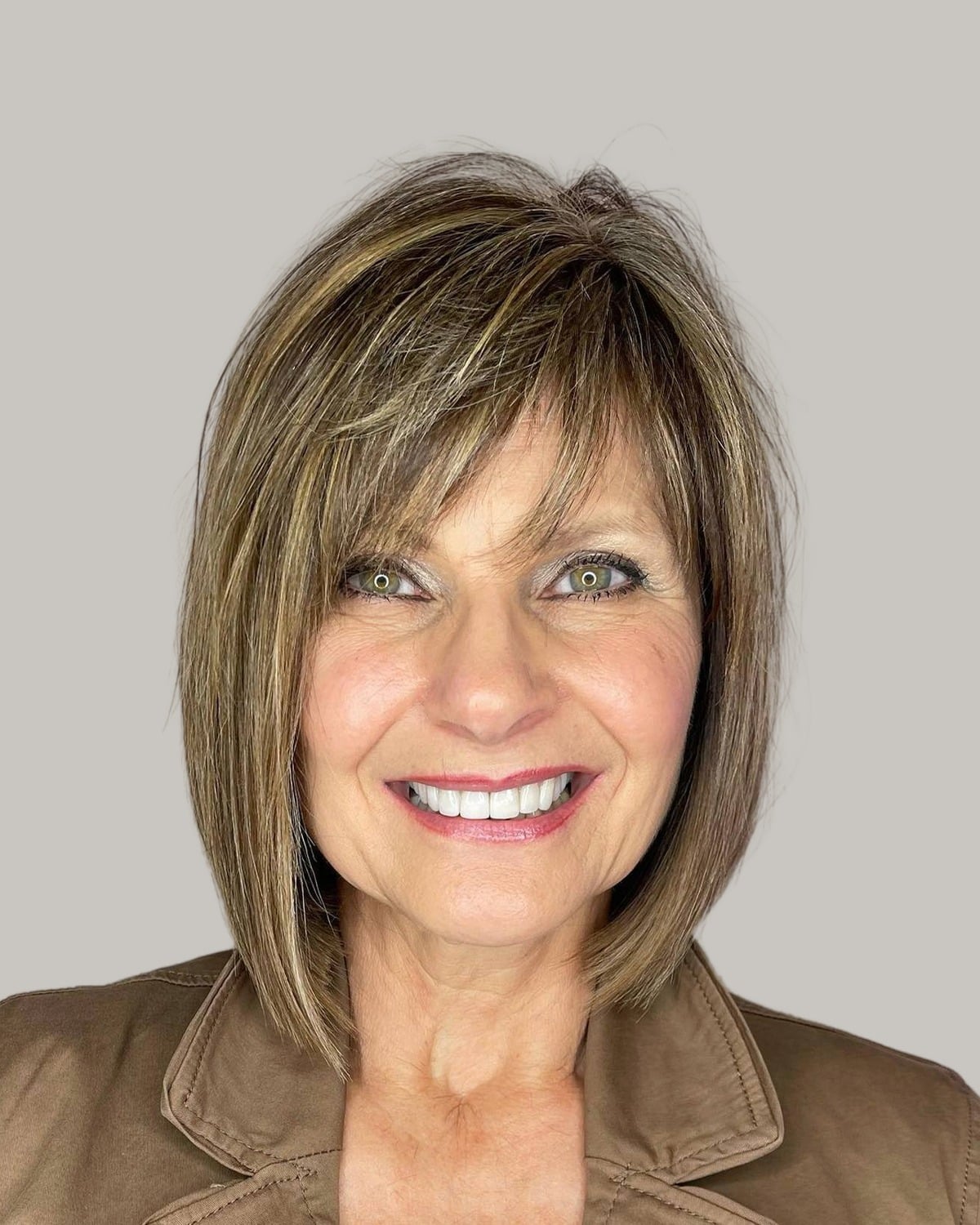
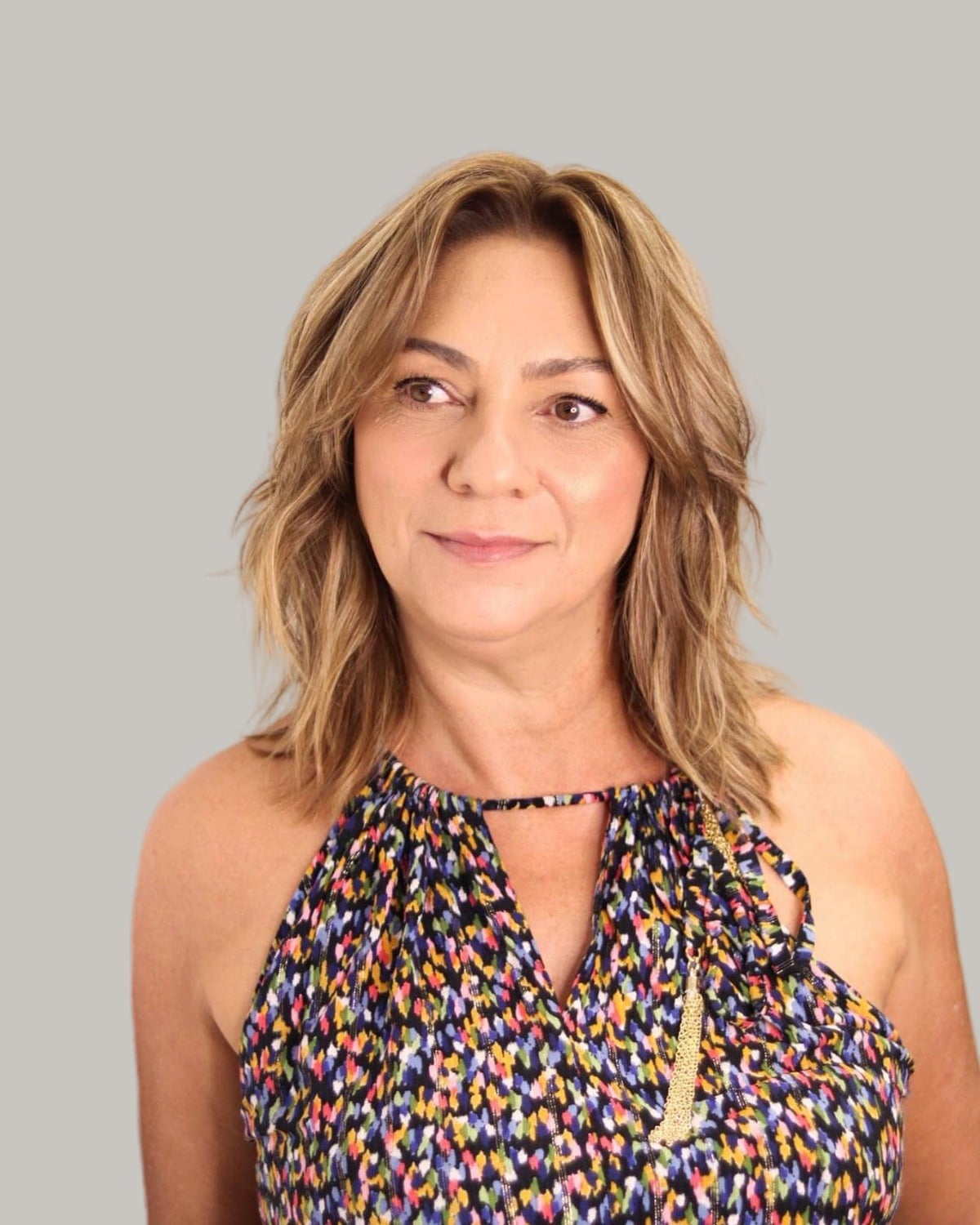
Shoulder length is the “balance of versatility and manageability,” in Potempa’s words, and face-framing pieces give it shape. Stylist Jewells Hingorani adds that side-swept bangs on a cut this length need no constant trims, because they grow into the layers. If you want more ideas at this length, our shoulder-length hairstyles guide has them.
What to ask for Shoulder-grazing length, layers that start at the cheekbone and frame the face, and a side-swept fringe that blends into them.
Medium shag
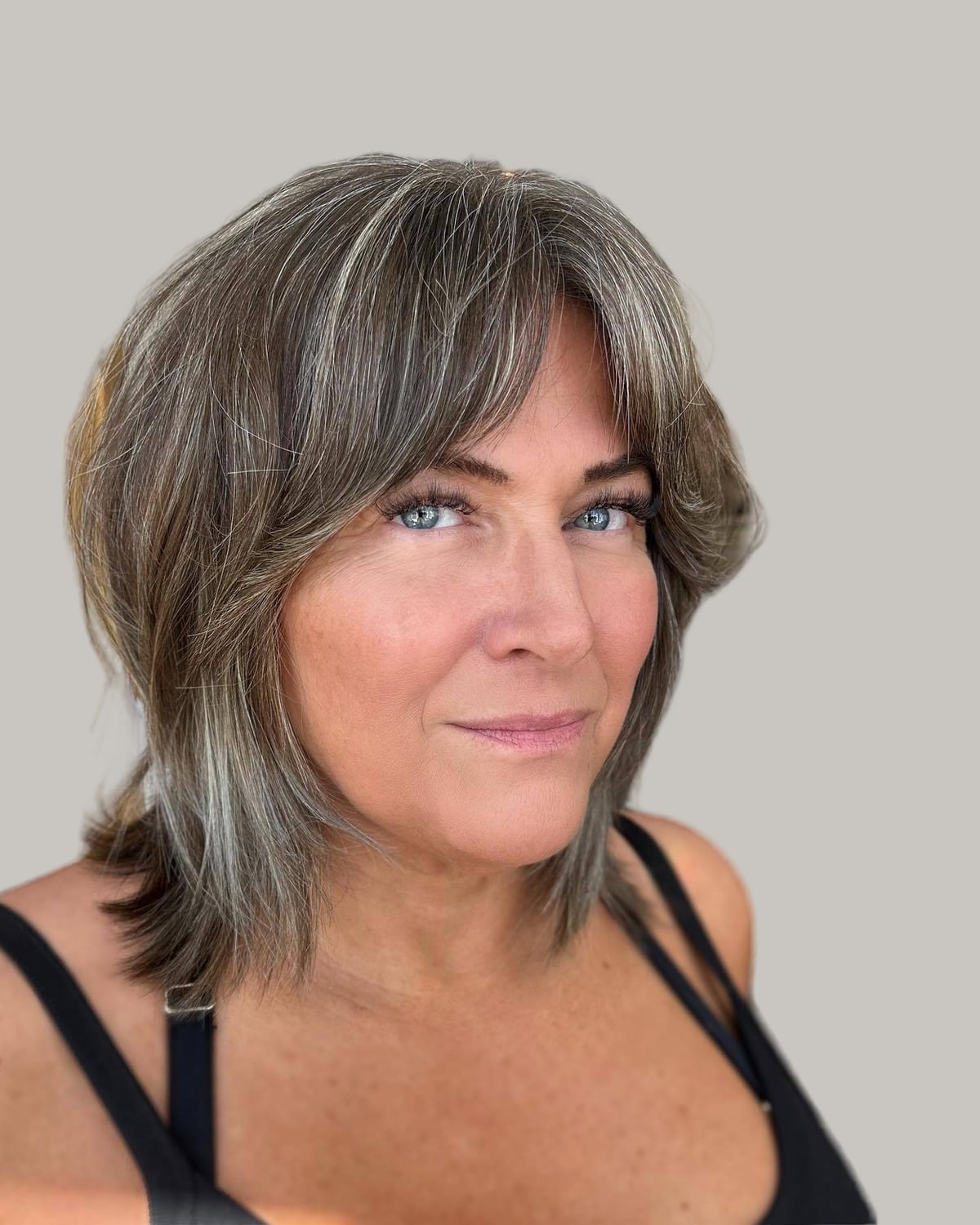
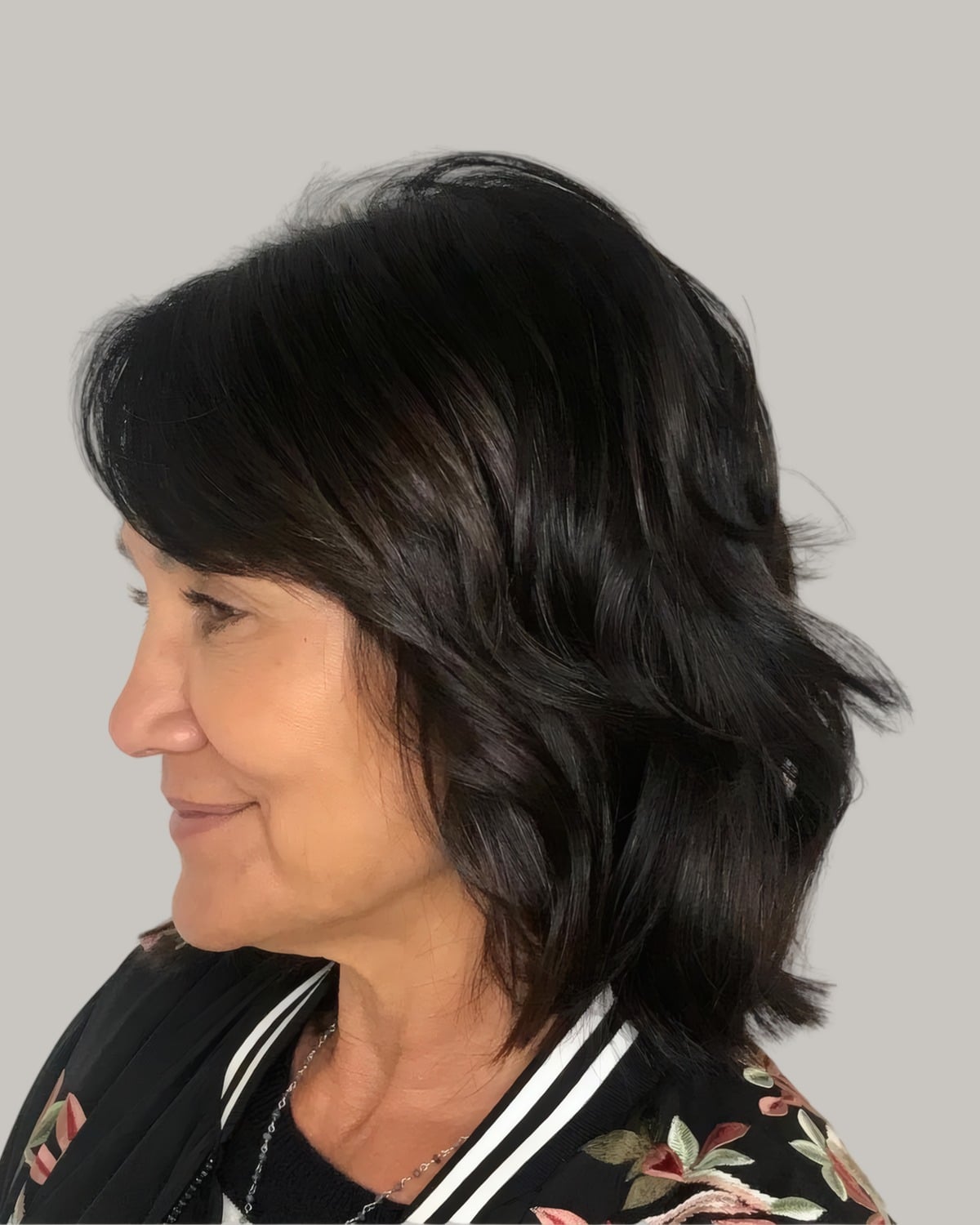
Choppy layers all over, a fringe that falls toward the eyes, and ends that flick however they like. Garren of R+Co favors exactly that: shags with bangs falling over the eyes. Gregory Patterson of Sally Beauty wants a sharp, blunt line at the bottom so the shag looks thicker. There’s more on the cut itself in our shag haircut guide.
What to ask for A medium shag to the shoulders, choppy layers from the cheekbones down, a fringe that falls just past the brow, and a blunt line at the bottom.
Butterfly layers

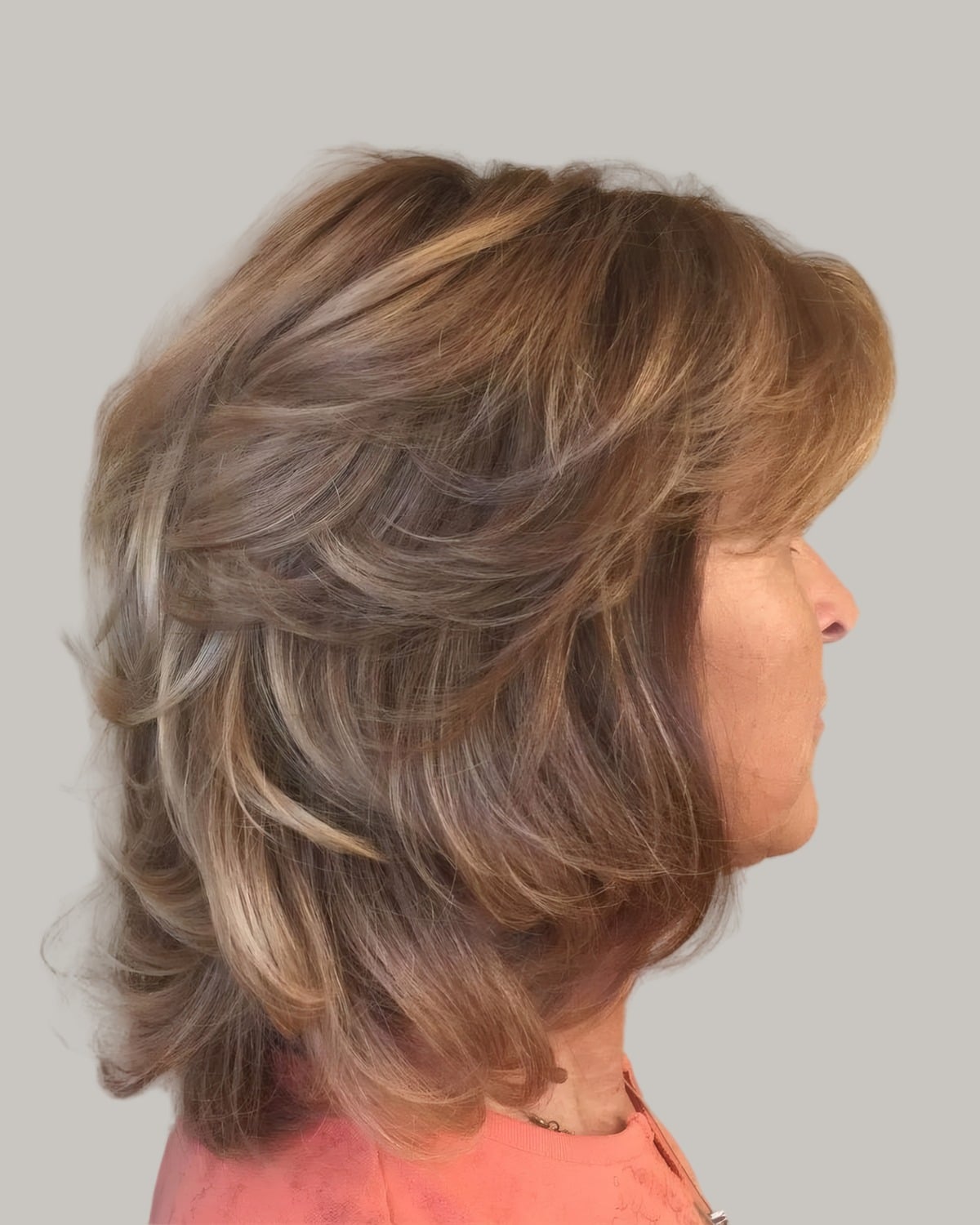
Short layers around the face, longer ones underneath, and a blowout that flips the whole thing out like wings. That’s the butterfly haircut, and it gives medium hair lift at the front without losing length at the back. Christie Brinkley’s layers and volume work the same way. A large round brush does the styling.
What to ask for Short layers around the face starting at the chin, longer layers through the back, the length kept past the shoulders, finished with a round-brush blowout.
Soft waves at shoulder length
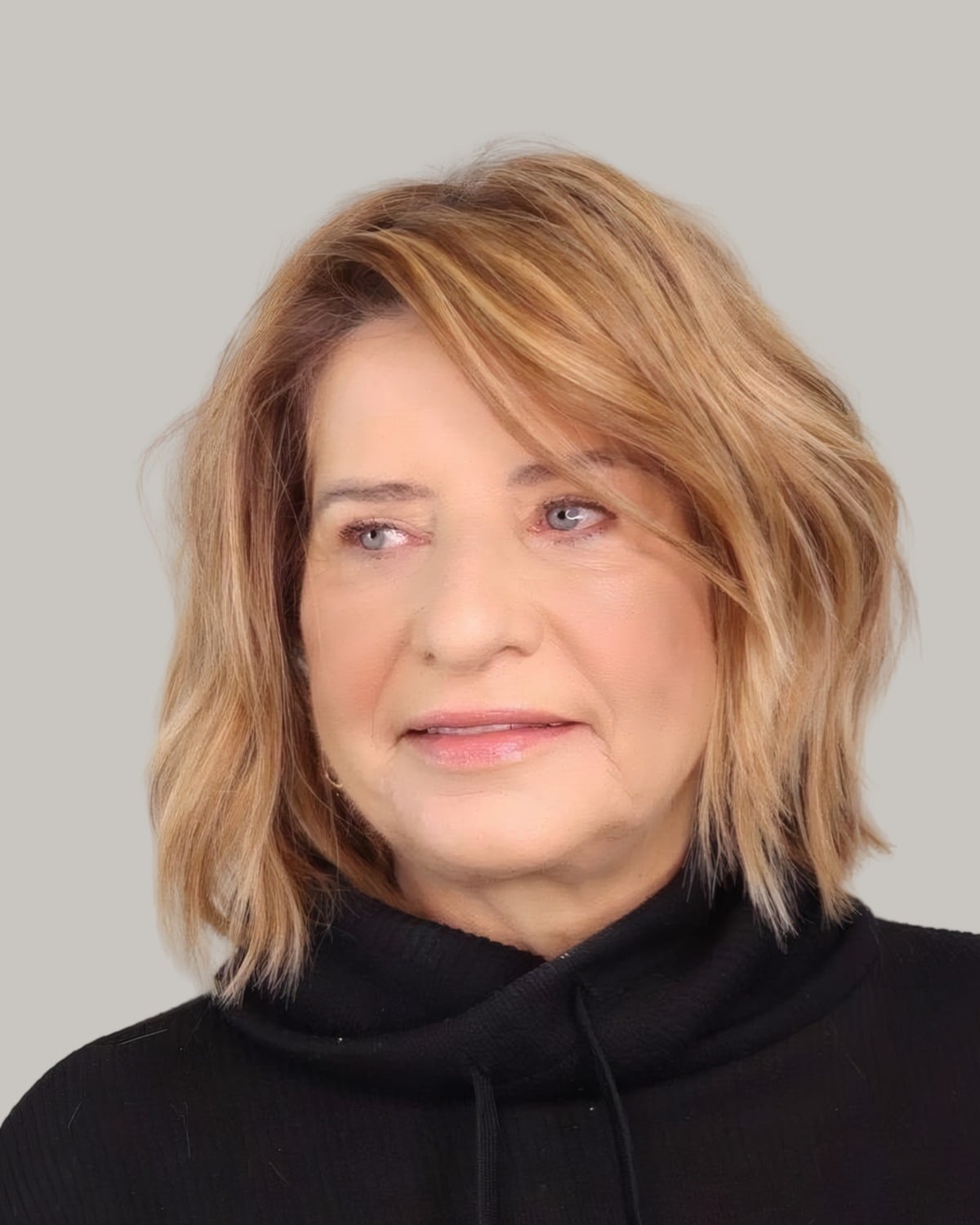
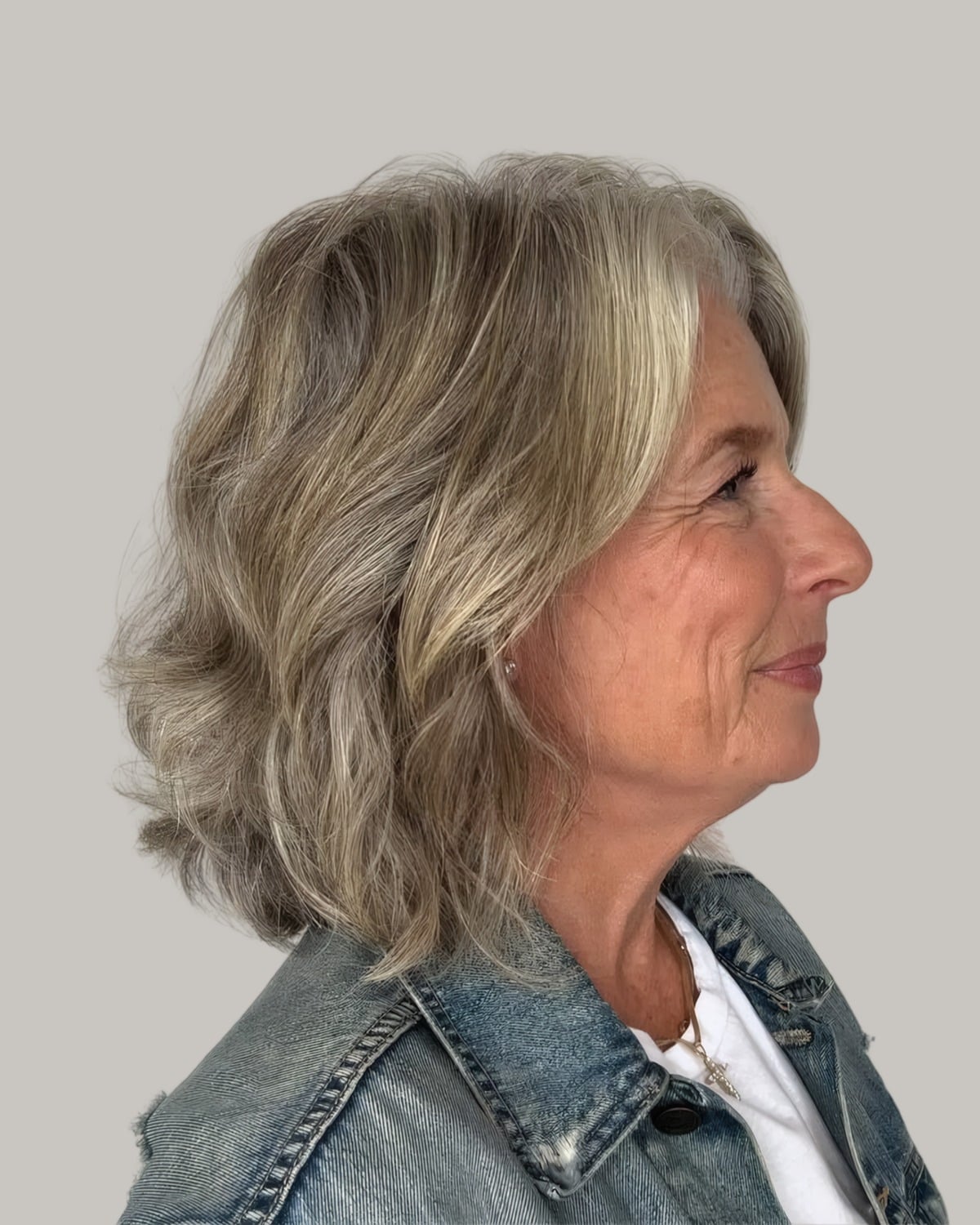
A shoulder-length cut with soft waves bent through the ends, left a little undone. Michelle Pfeiffer wears waves with layered pieces running through them. Dimitris Giannetos says soft waves make hair look polished, and he insists on a heat protectant before any curling iron touches it.
What to ask for Shoulder length with long layers so the waves have room to move, a side part, and the ends left soft rather than blunt.
Long hairstyles for women over 60
Long layers
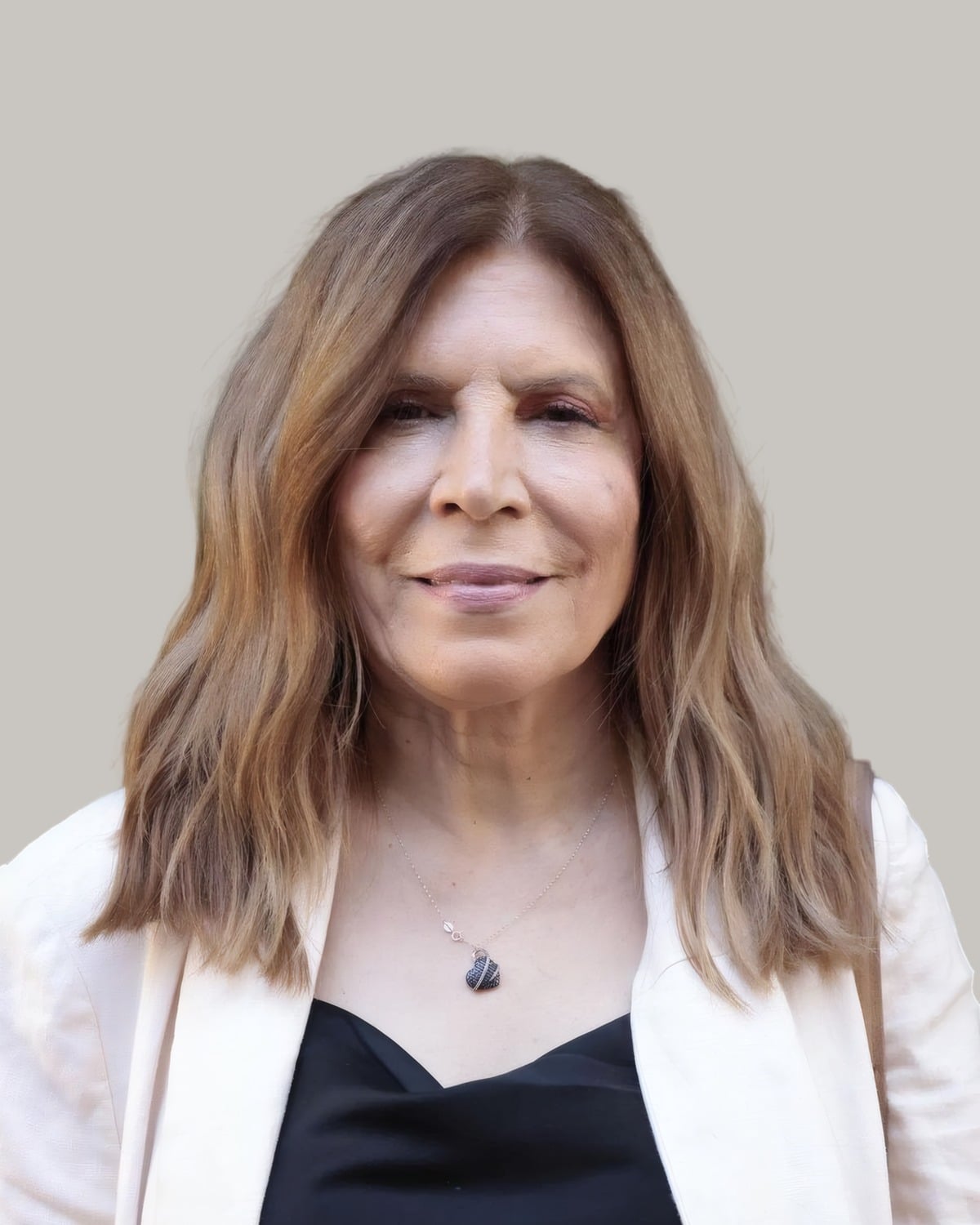
Long hair after 60 needs graduated layers, Potempa says, but only a few: over-layering thins the ends. Celebrity stylist Michelle Phillips agrees that long, blended layers keep thickness at the ends. Jane Seymour wears long layered waves. Blow it out smooth or curl it in loose waves.
What to ask for Long layers, graduated so the bottom stays heavy, nothing shorter than the chin around the face, and a trim off the ends only.
Long hair with side-swept bangs
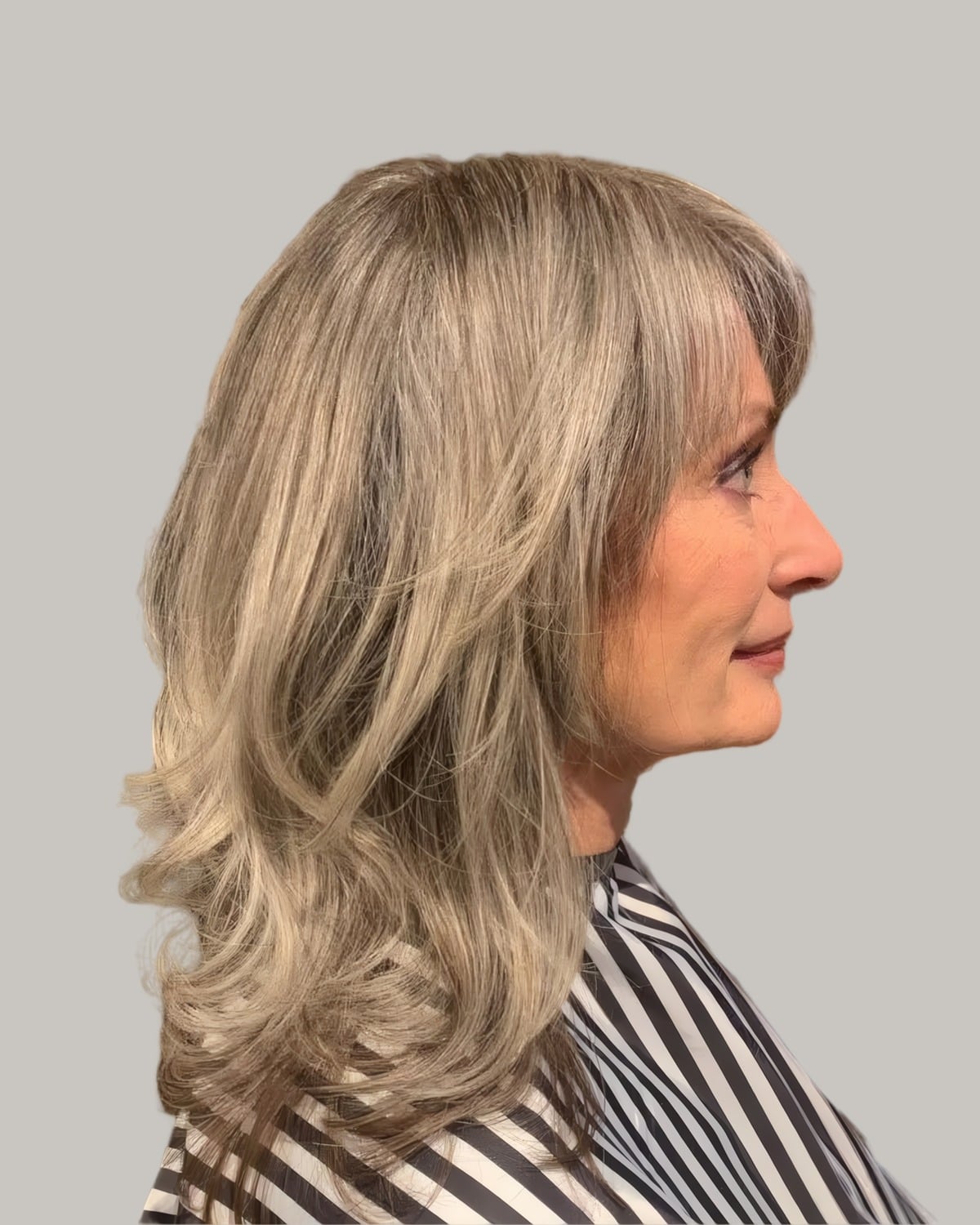
Side-swept bangs suit long hair because they soften the face without the upkeep of a full fringe. DJ Quintero of John Frieda likes them to hit just below the eyebrow. Cut there, they avoid harsh lines. Clara Purvis of Noordwyck Salon has one condition for long hair: it has to be healthy enough, or it looks disheveled.
What to ask for Long layers with a side part, and side-swept bangs cut to sit just below the brow and blend back into the length.
Long hair with curtain bangs
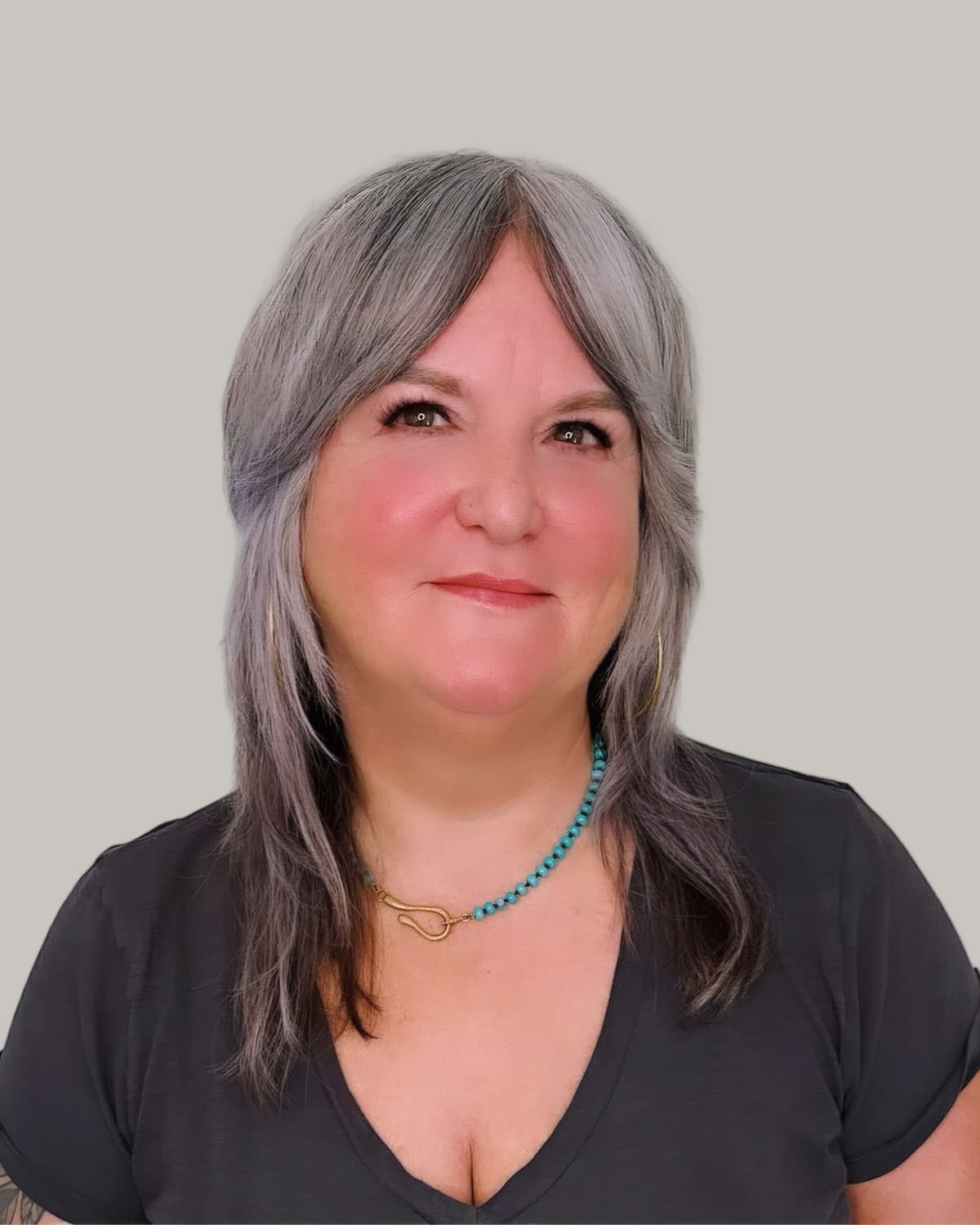
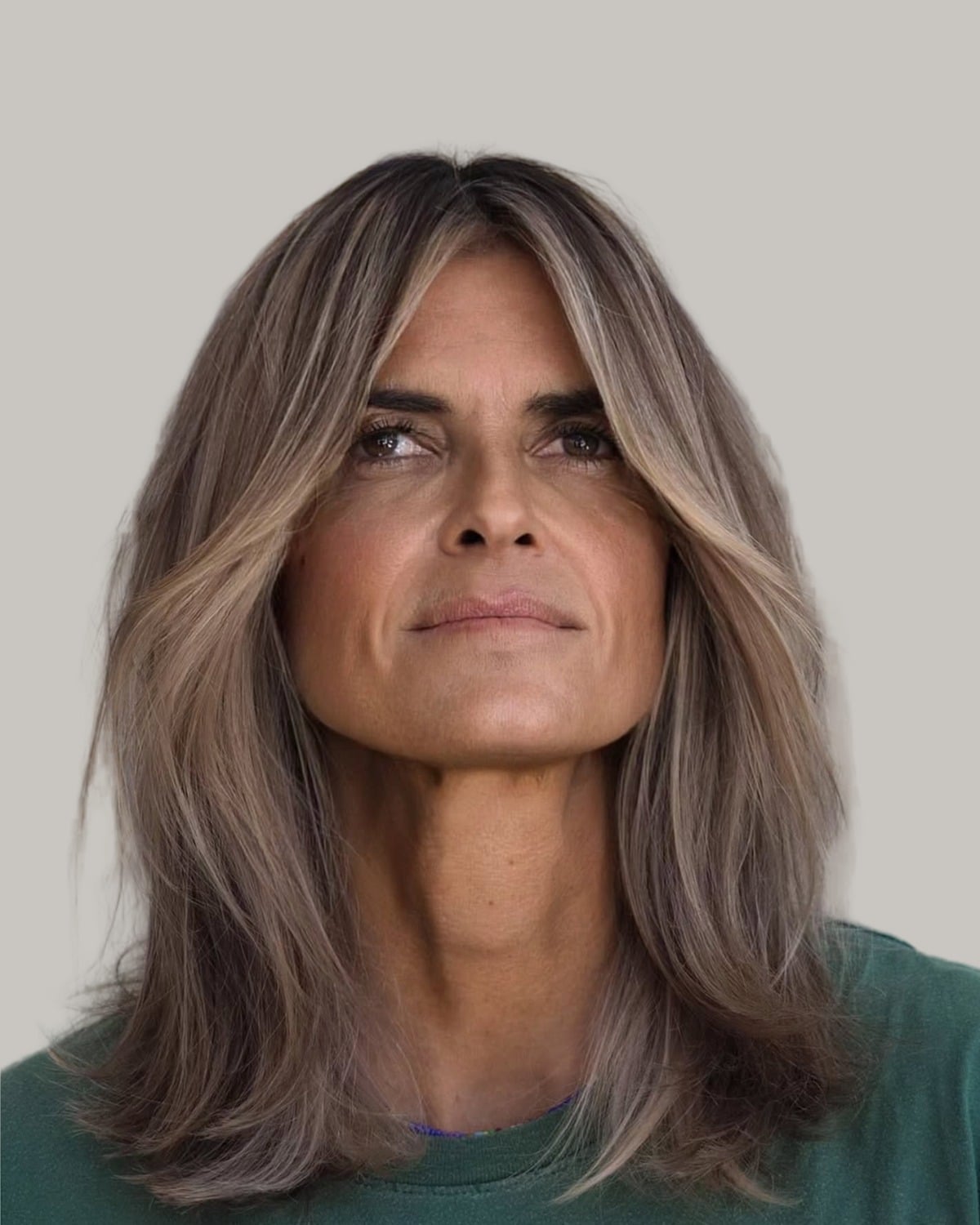
Curtain bangs part in the middle and fall to each side, so they frame the face like a pair of curtains (hence the name). Ashley Streicher of R+Co Collective likes them because they grow out and blend in. Goldie Hawn wears them. Style them with a round brush, pulled down and out to each side.
What to ask for Long layers with a center part, and curtain bangs that start at the cheekbone and blend into the face-framing layers.
Low chignon
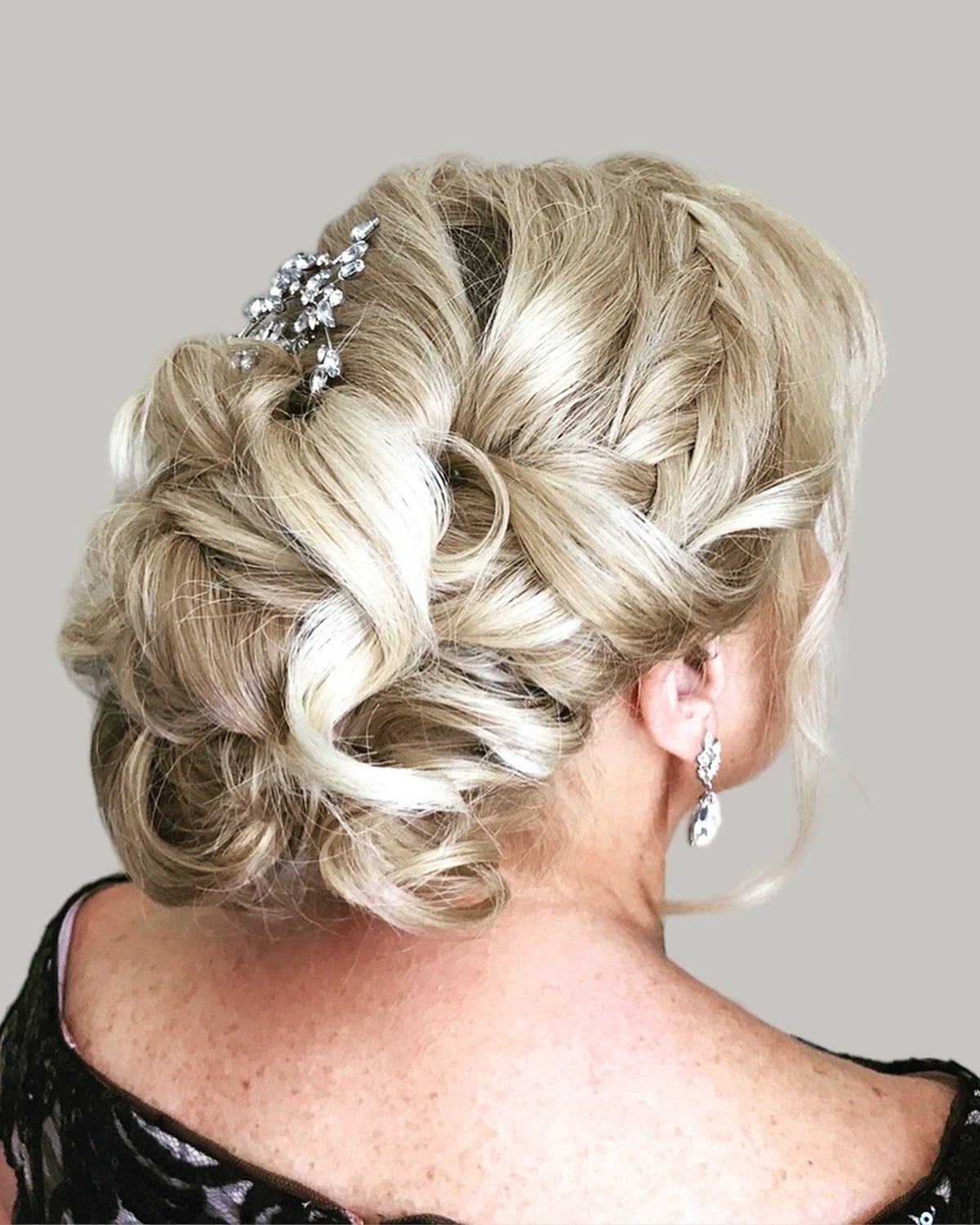
Long hair twisted into a soft knot at the nape, with a few pieces left loose around the face. It’s the long-hair answer to a bad hair day. A few pins and a light hairspray hold it.
What to ask for Keep the length and layers long enough to twist into a low chignon, with face-framing pieces at the cheekbone that can be left down.
Hairstyles for women over 60 with thin hair
Collarbone lob for fine hair
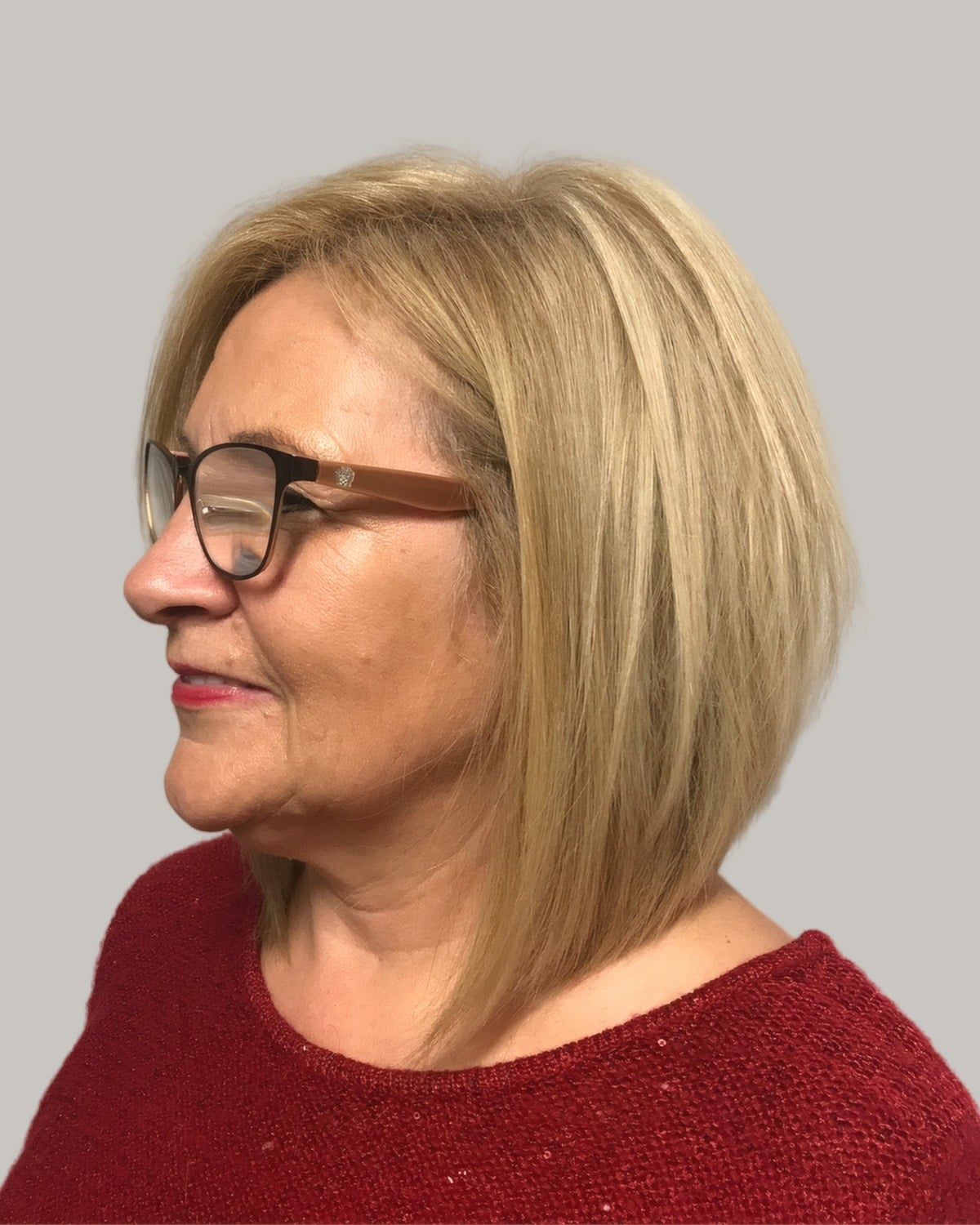
A lob that grazes the collarbone makes hair look fuller, says Gina Rivera of Phenix Salon Suites. Keeping the length there stacks the weight at the ends, where fine hair needs it. Rivera’s styling trick is light mousse at the roots before you dry.
What to ask for A lob that grazes the collarbone, kept mostly one length with only light texture at the ends, and a side part for lift.
Blunt shoulder-length cut for thin hair
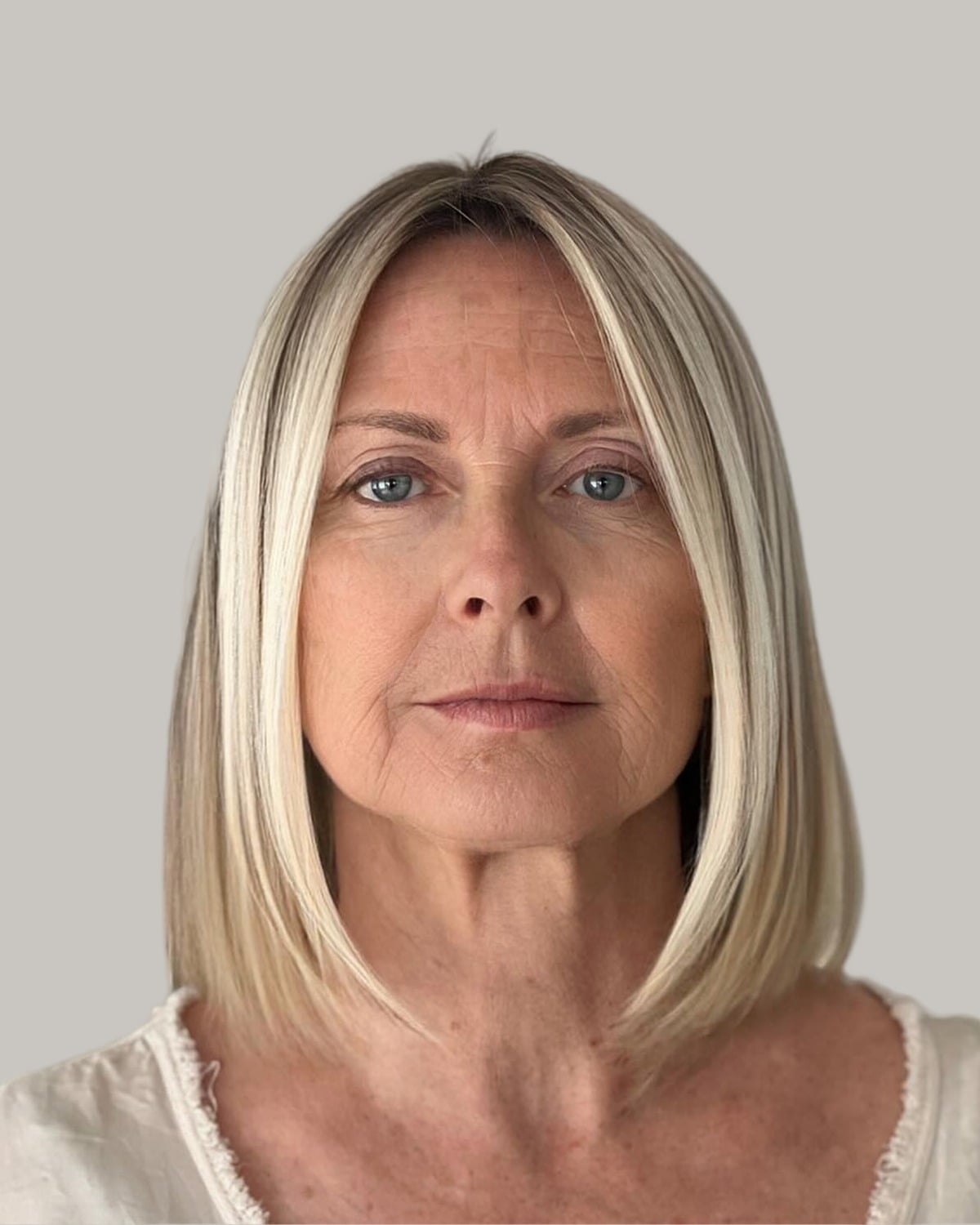
Amerah Underwood of UMI Salon calls a blunt edge “the single best trick for fine hair.” Cut it straight across, so the weight stacks at the bottom, and don’t feather the perimeter. She sprays a root-lifter at the scalp before drying and rolls the ends under with a round brush. She also recommends a trim every six to eight weeks to keep the line crisp.
What to ask for One length to the shoulders, cut straight across with no feathering at the perimeter, and a center part.
Face-framing layers for fine hair
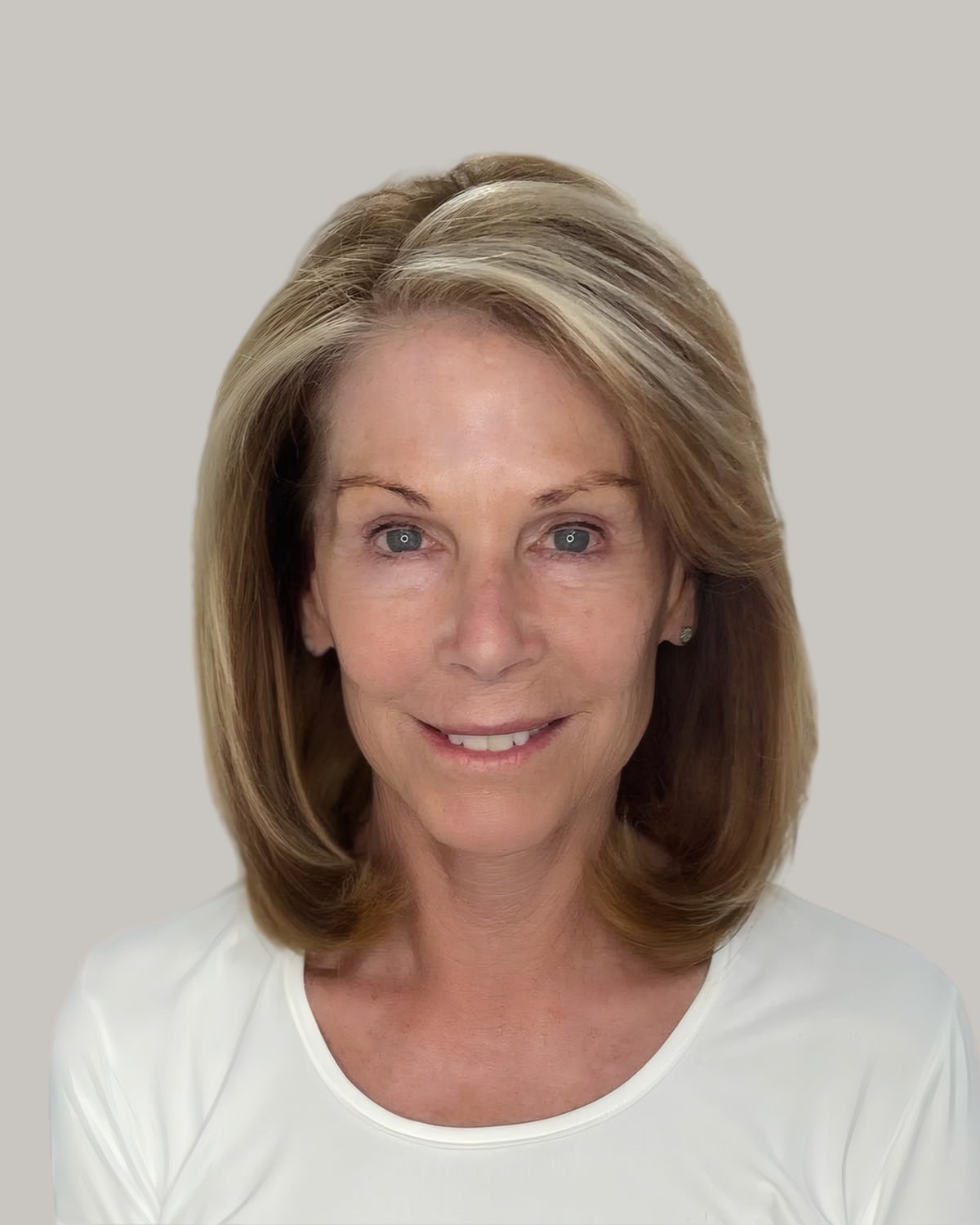
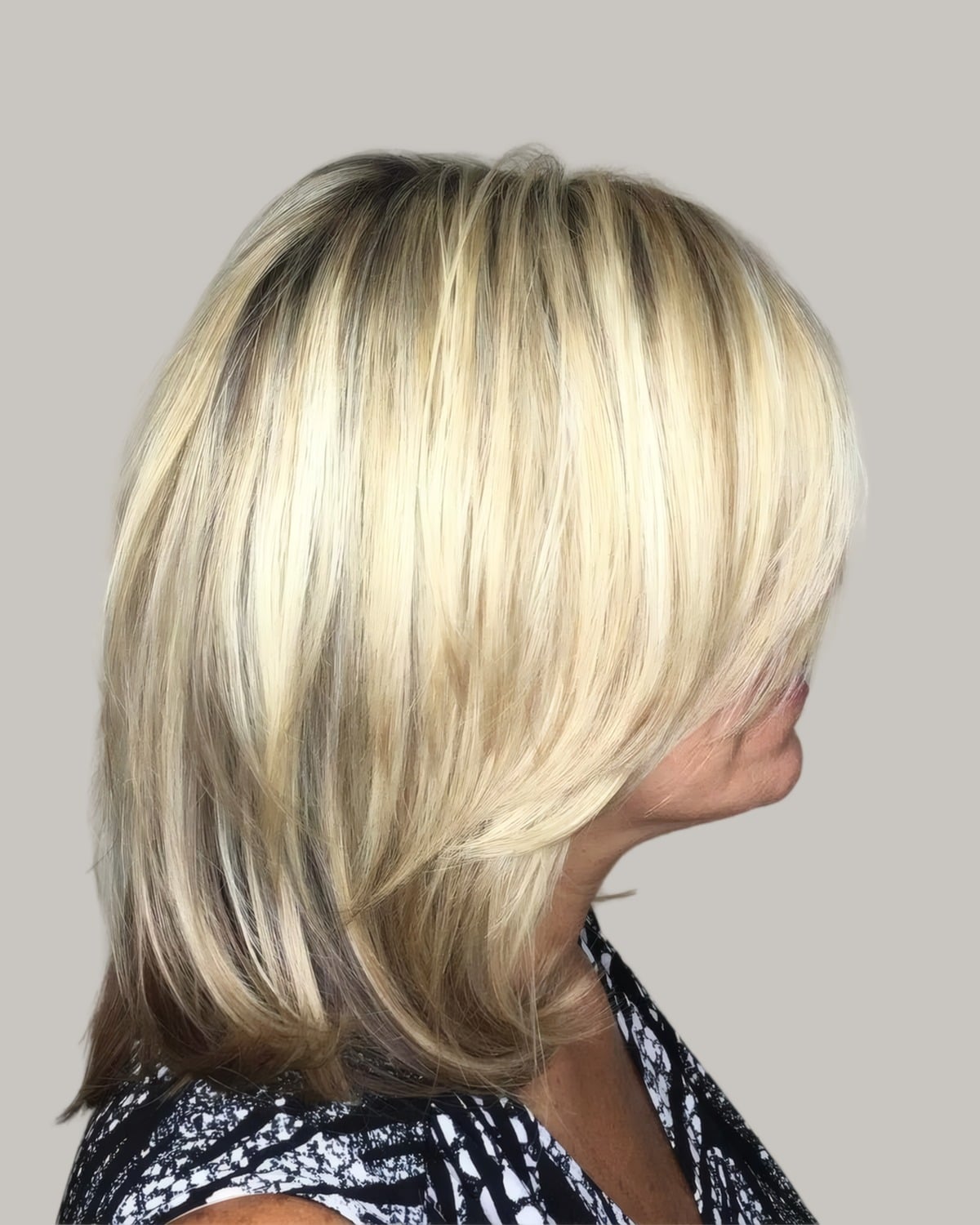
Layers only around the face, with the rest of the hair left full. Marcos Diaz says face-framing layers add “instant lift and movement” to fine hair. Sally Field wears a lob with face-framing layers. Laura Rugetti of Luxy Hair warns against excessive shag layers and heavy razoring on thin hair, so keep the layering to the front.
What to ask for A blunt length at the shoulder, with face-framing layers that start at the cheekbone and stay at the front only. No razor.
Gray and silver hairstyles for women over 60
Silver lob
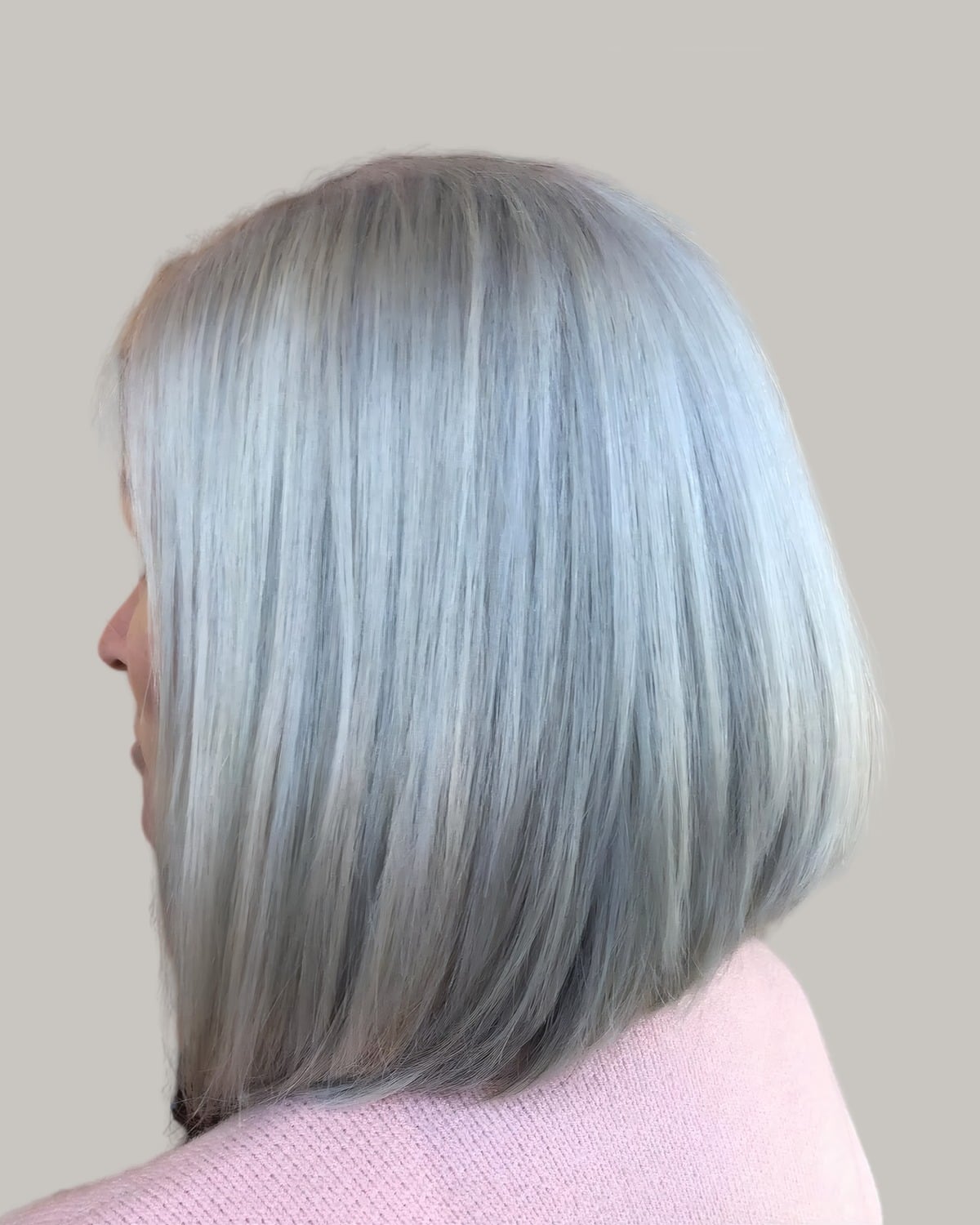
A lob in silver or white, with a swoop at the front and the ends turned under. Jonathan Colombini of John Henry Salon suggests a gloss for shine and a purple shampoo to keep yellow tones out of white hair. Jay Small of Arey says daily brushing moves oil from the scalp to the ends.
What to ask for A lob just past the jaw, long layers at the front so it sweeps to one side, and a gloss after the cut.
Salt-and-pepper layers
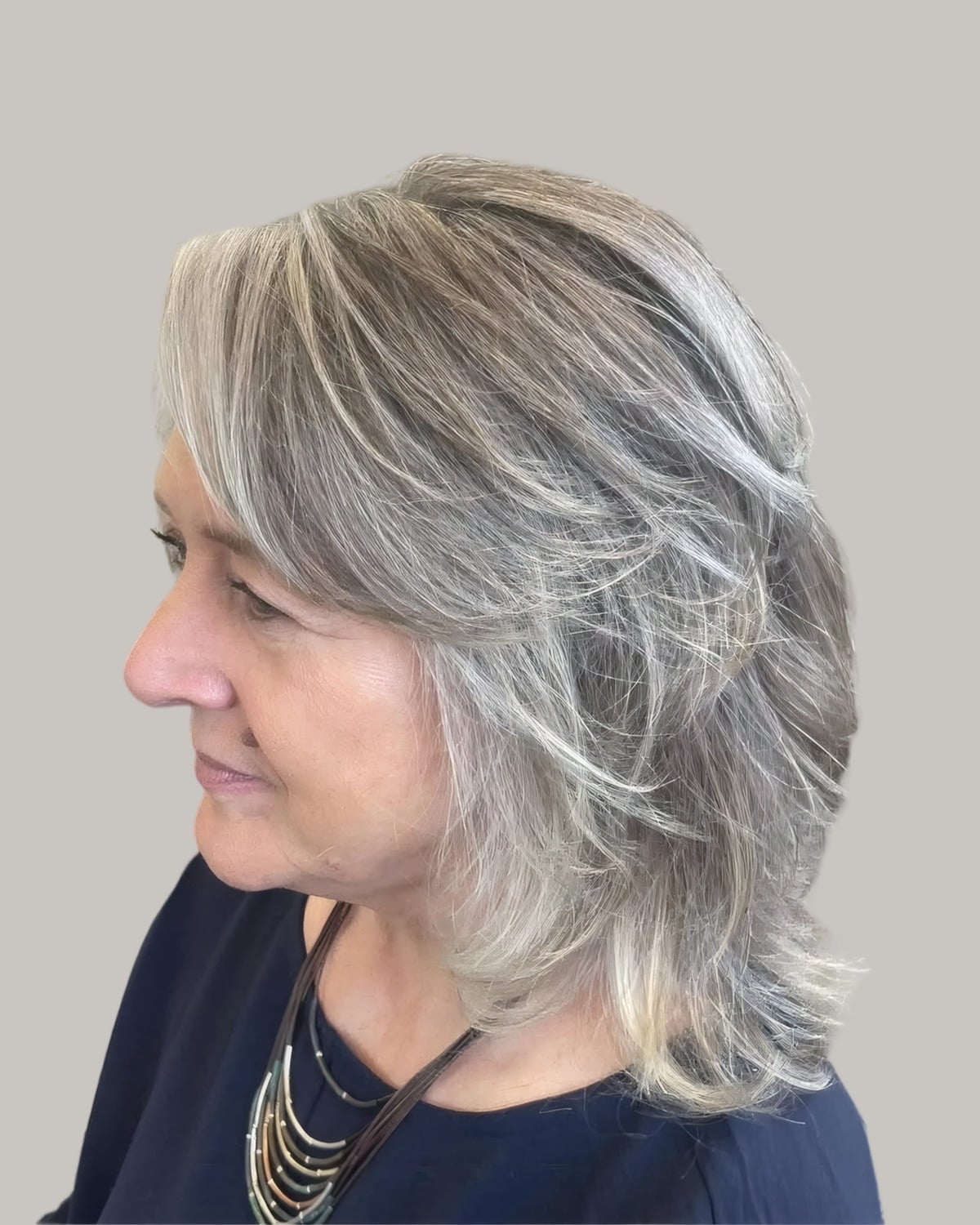
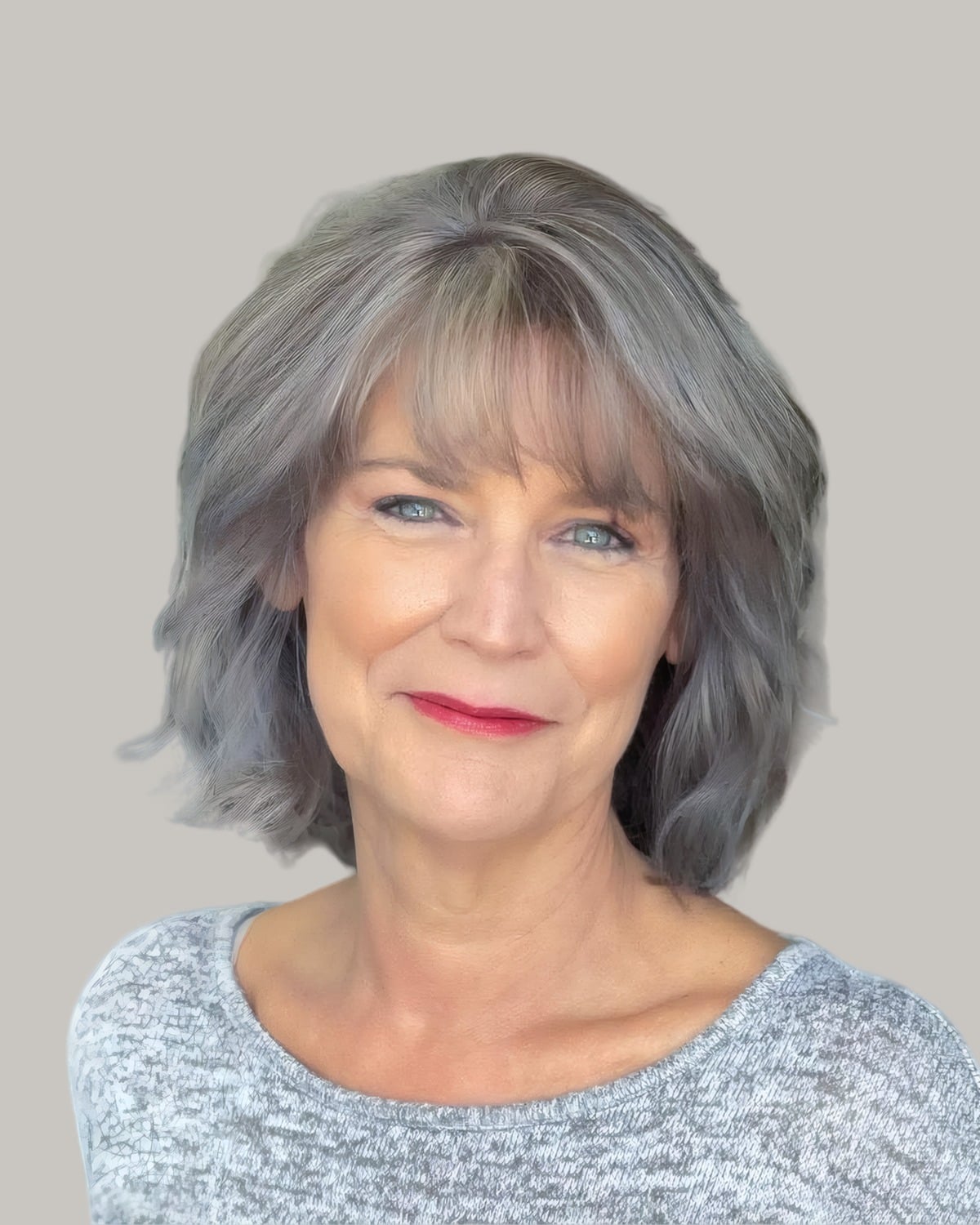
Layers show off salt-and-pepper hair, because each piece shows a different mix of gray and dark. These two are cut to the shoulder, one with a full fringe. Gray hair can feel wirier than the color it replaces, so a smoothing cream through the ends keeps the layers lying down.
What to ask for Shoulder-length layers from the chin down, a soft fringe or face-framing pieces, and the ends textured rather than blunt.
Gray blending with highlights
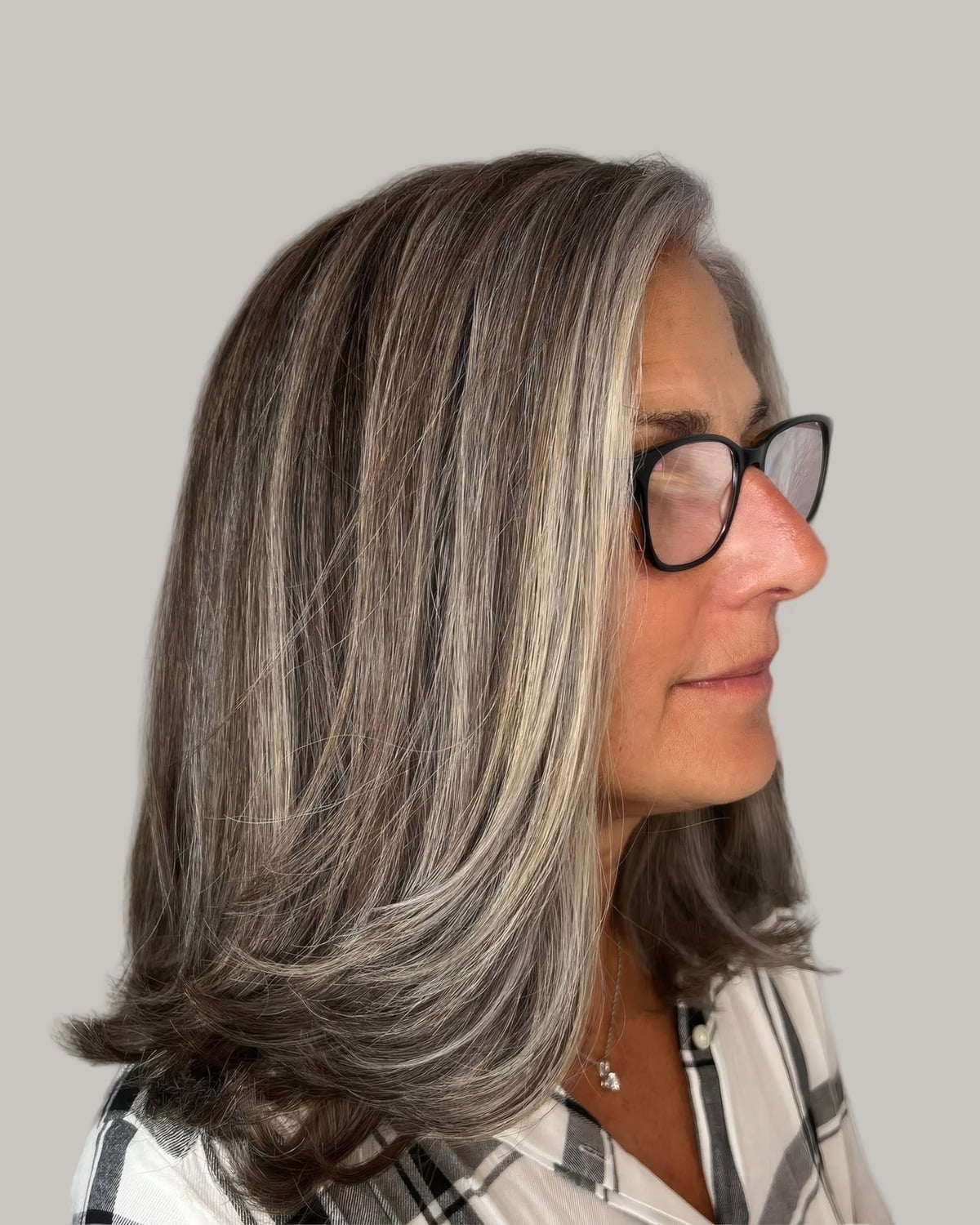
Not ready to go fully gray? Colombini goes half a shade lighter on the base at each visit and adds highlights, so the gray blends in instead of showing as a stripe. Christopher Naselli of Naselli & Co. suggests lowlights to ease in, never much darker than your natural base. Shvonne Perkins of Madison Reed says accent highlights keep gray light and bright.
What to ask for A cut with long layers, plus highlights or lowlights to blend the gray, half a shade lighter than my base each visit.
Silver shag with bangs
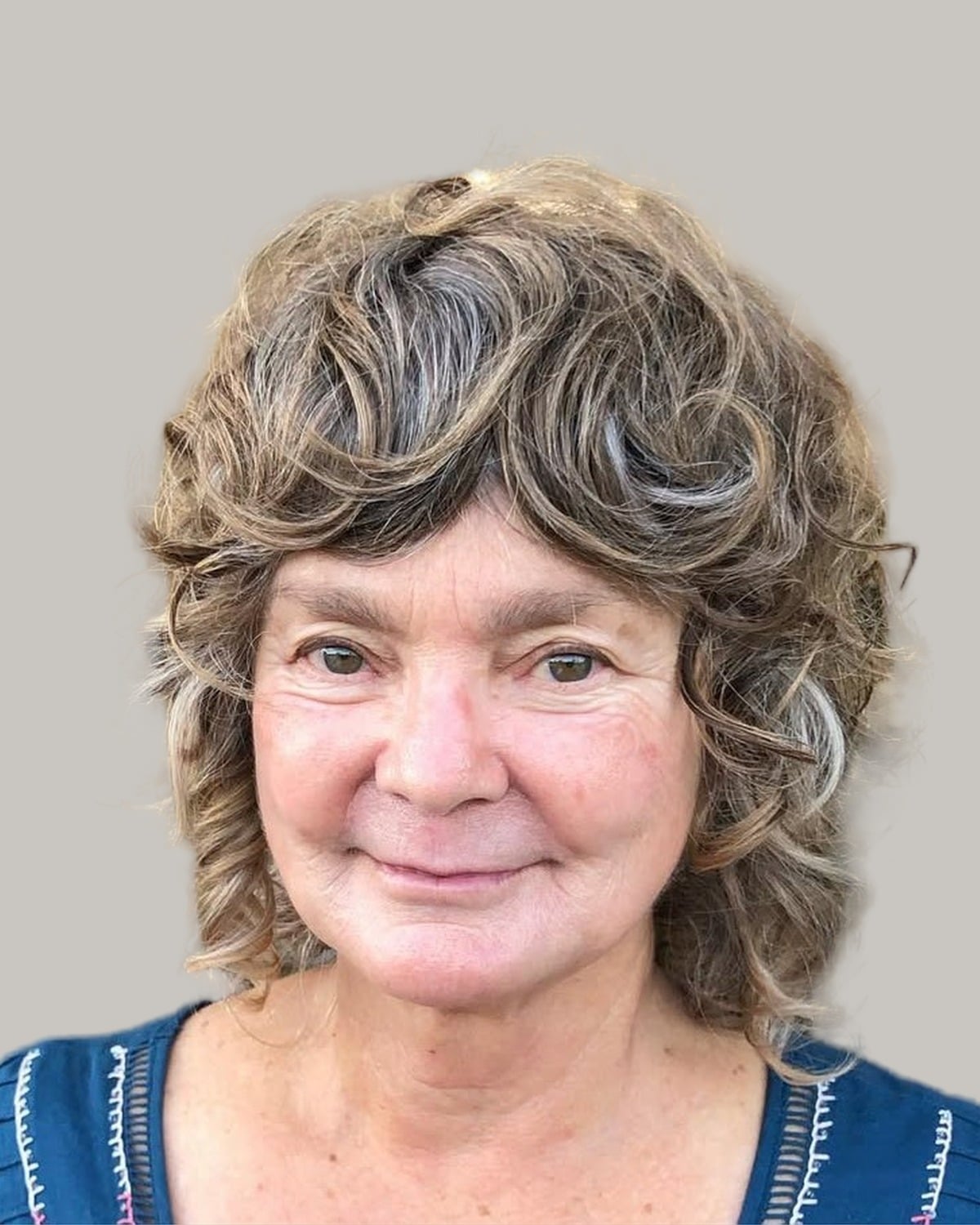
A shag in gray or silver hair, with a fringe that falls into the eyes and layers from the cheekbones down. On natural curls like this, every layer shows. Keep a sharp line at the bottom so it looks full, the way Patterson cuts his shags.
What to ask for A shoulder-length shag with layers from the cheekbones down, a full fringe to the brow, and a blunt line at the hem.
Curly and natural hairstyles for women over 60
Long silver curls
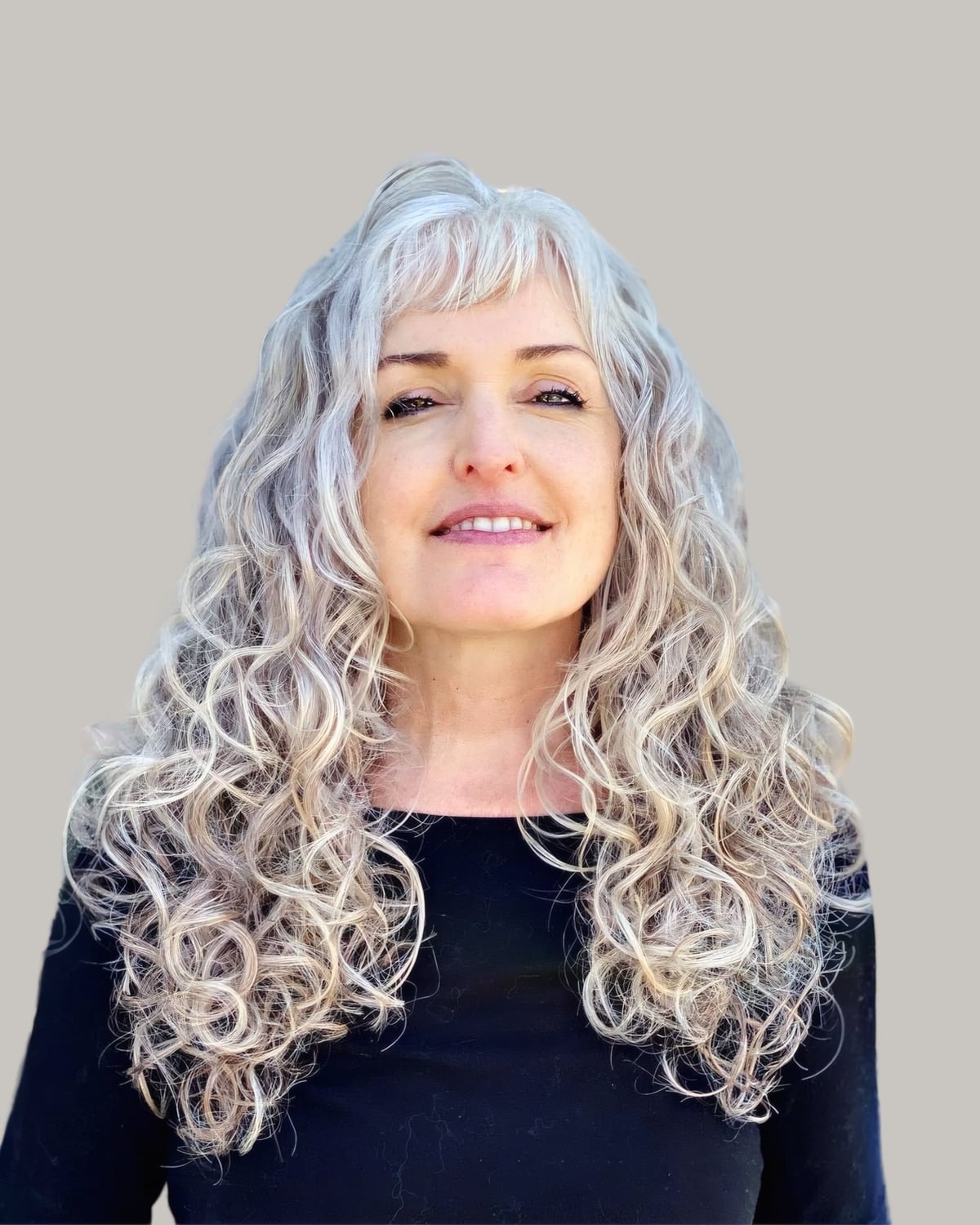
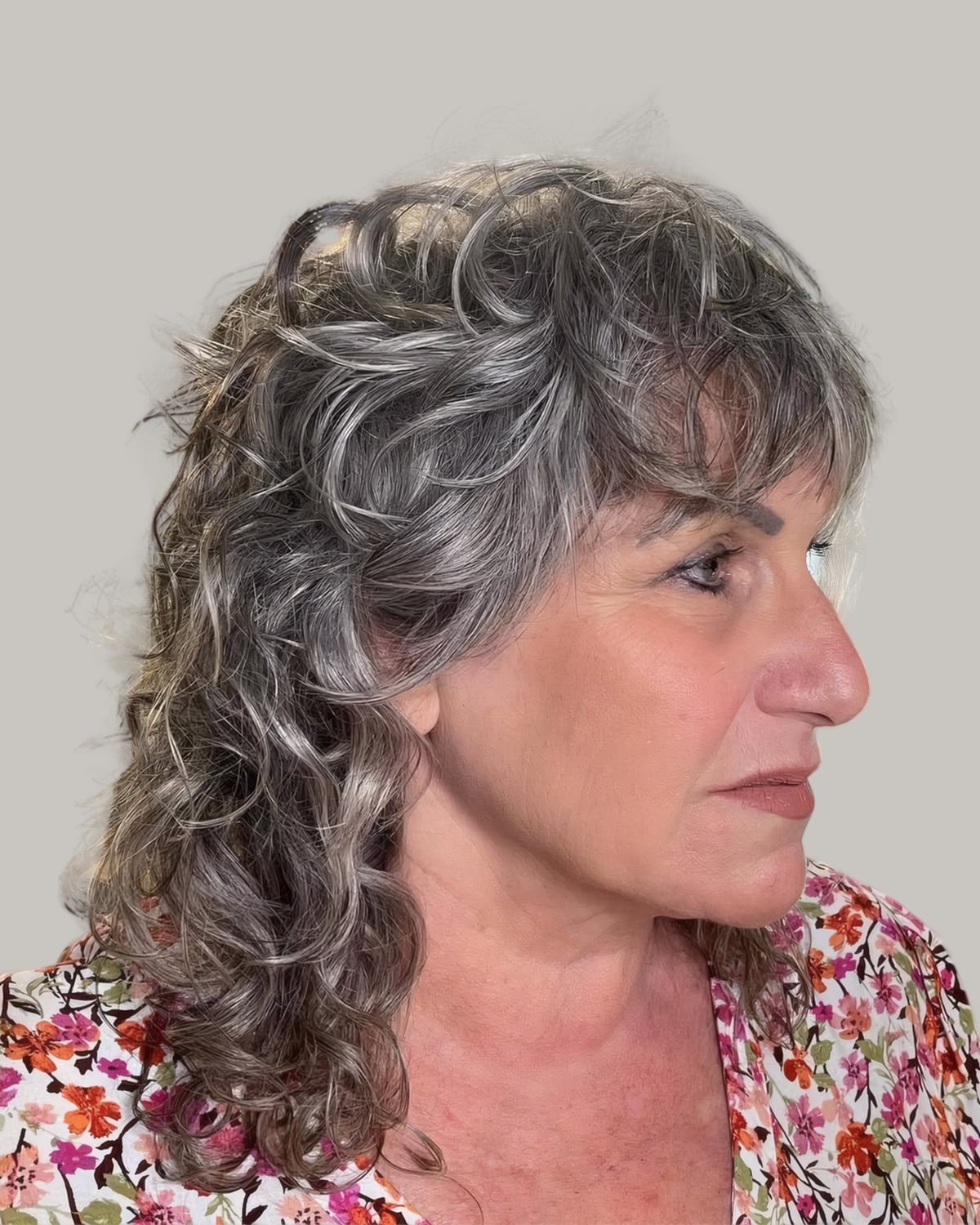
Long, silver and curly, the way Andie MacDowell wears hers. Curly cuts such as the DevaCut are done dry, so the stylist sees where each curl falls before cutting it. Diaz says layers give mature curls their bounce back. Rake a cream through soaking-wet hair, then diffuse or air-dry.
What to ask for A dry curly cut, long layers to give the curls lift at the crown, the length kept past the shoulders, and curtain bangs if you want them.
Curly bob
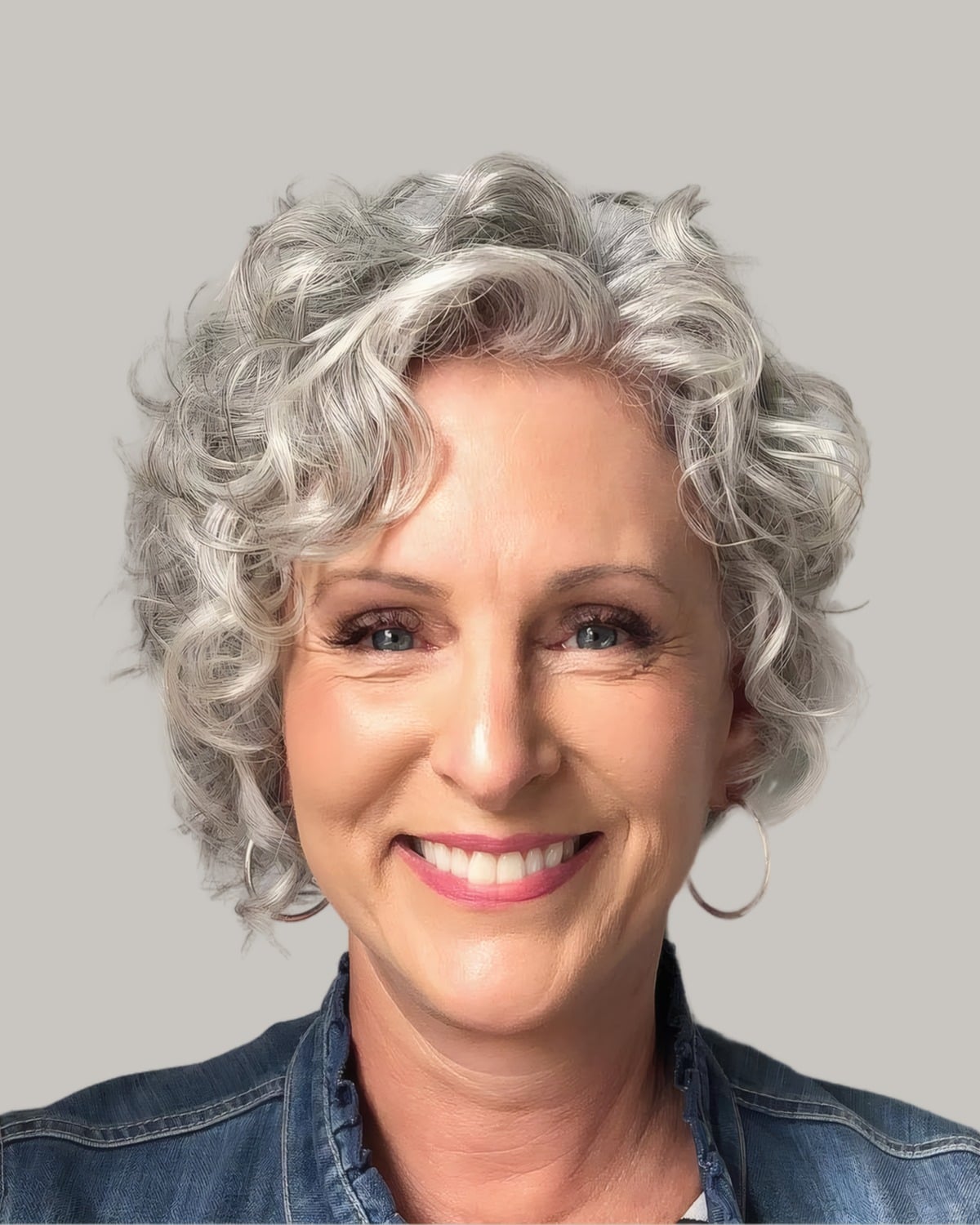
Stylist Carrie Prowant says a curly lob works best between the chin and the shoulder. Short enough to hold its shape, long enough not to puff out. This one is round, full at the sides and cut so each curl springs to its own length.
What to ask for A curly bob between chin and shoulder, cut dry curl by curl, with layers at the crown so it's round rather than triangular.
Coily salt-and-pepper crop
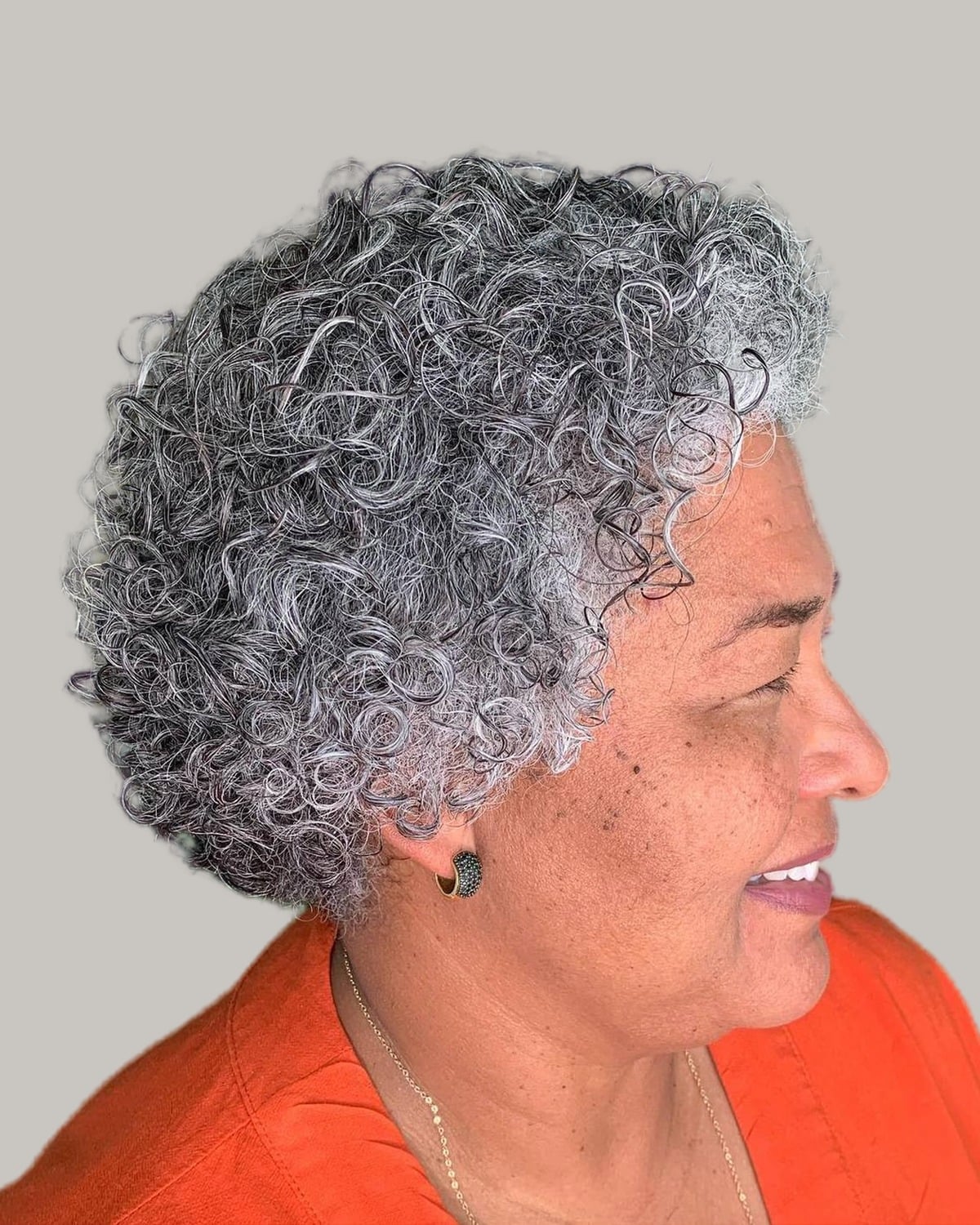
A short, rounded crop on coily hair, gray and dark mixed through. Viola Davis wears her natural hair in an afro. Stylist Mindy Green of MG Beauty suggests a teeny weeny afro, Bantu knots or two-strand twists for gray coils, because they put less tension on the hair. Monica Stevens of MoKnowsHair says to balance protein and moisture as follicles shrink.
What to ask for A rounded crop on my natural texture, shaped dry, about two inches all over and slightly fuller on top.
Gray box braids
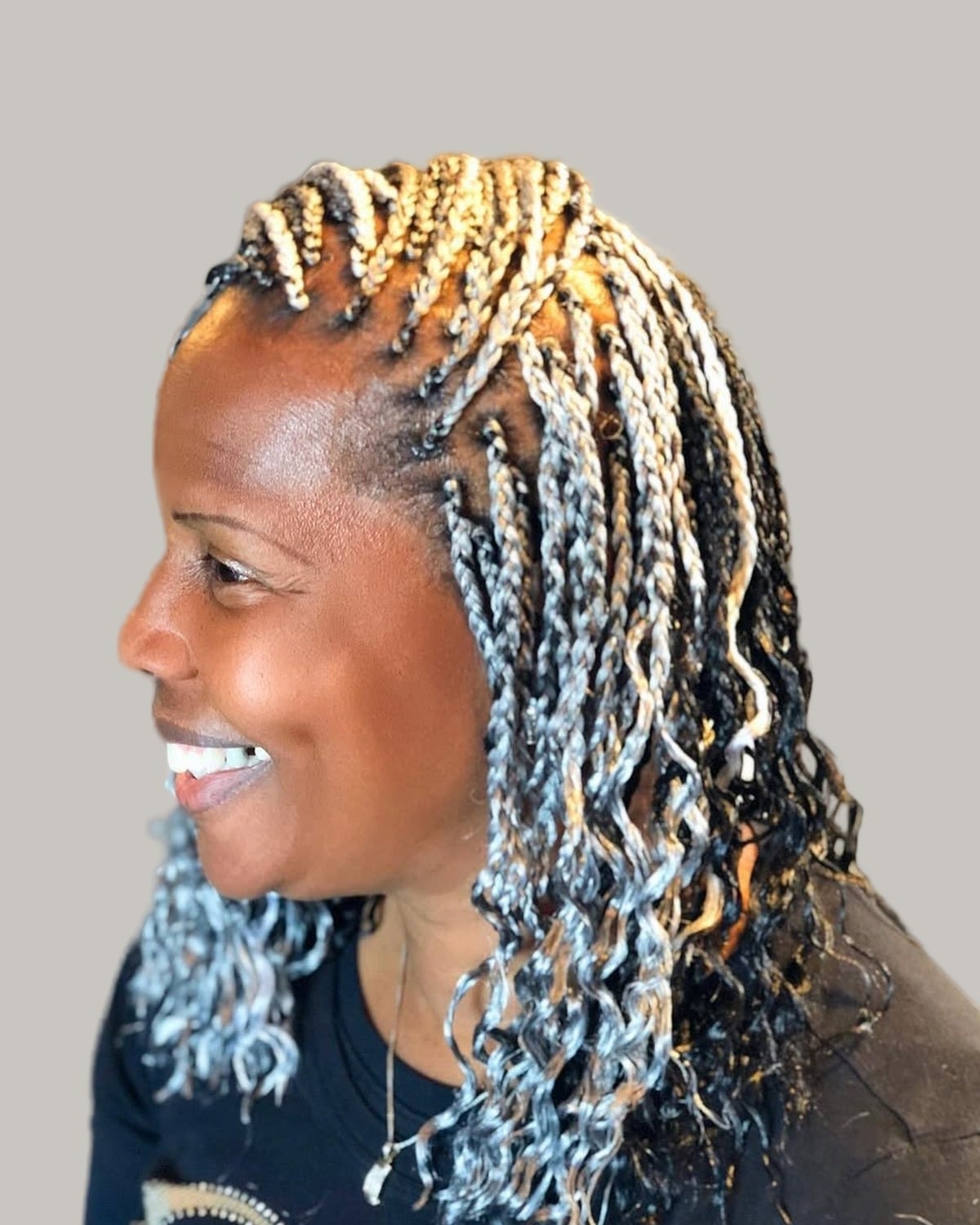
Box braids in gray and blonde, with loose curly ends left out for movement. Green’s advice for gray hair is low tension, so ask for braids that don’t pull at the hairline. A deep conditioner before braiding helps, since heat opens the cuticle and lets it in deeper, she says.
What to ask for Medium box braids with gray and blonde braiding hair, curly ends, light tension at the hairline, and the length to the shoulders or past.
Braided bun
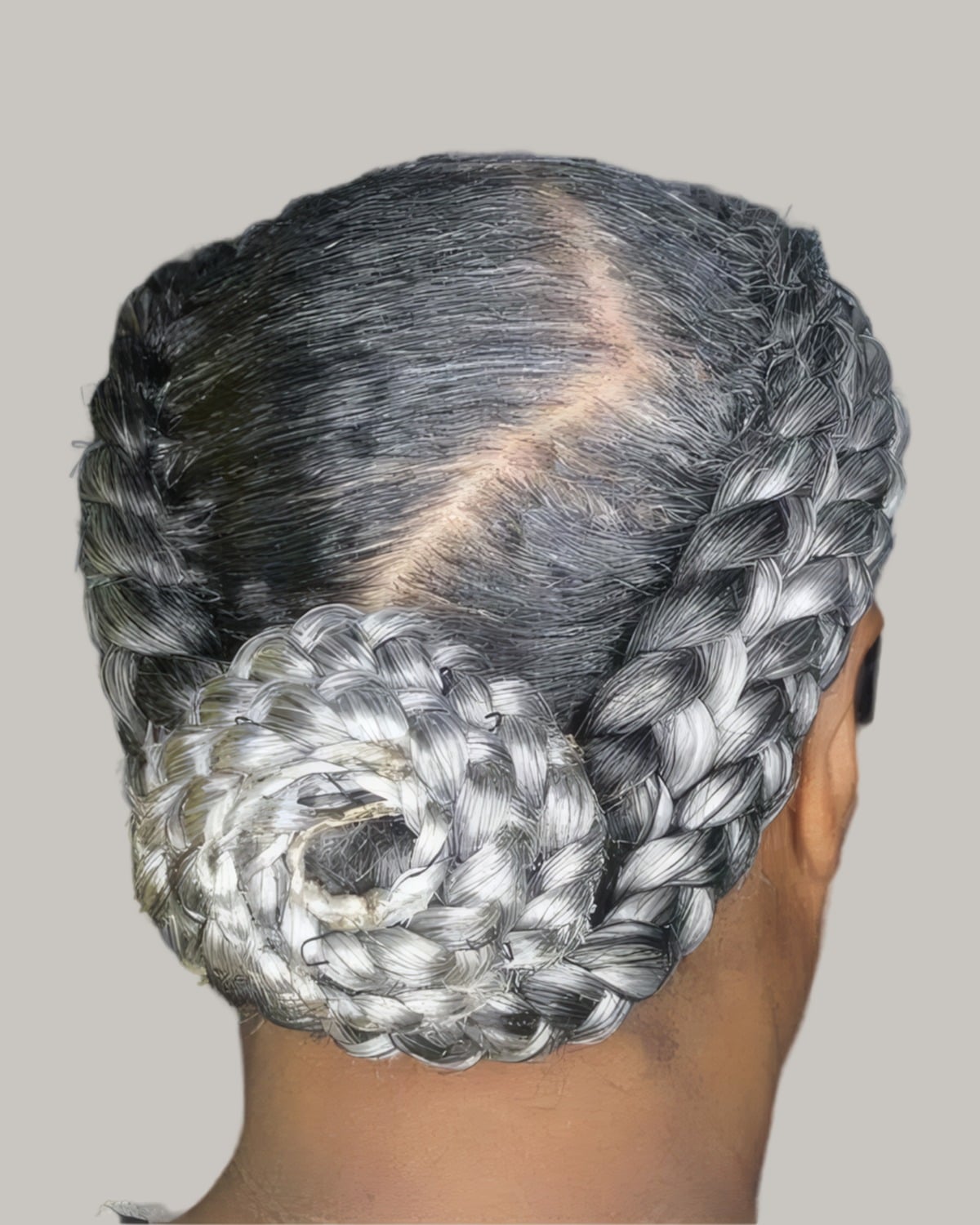
Braids in silver, gathered at the back and coiled into a low bun. It’s a protective style that keeps the hair tucked away, and it reads as polished as any chignon. Braid it with light tension, for the same reason as above.
What to ask for Braids from the hairline back, with light tension, gathered into a low coiled bun at the nape.
Bob haircuts for women over 60
A-line bob
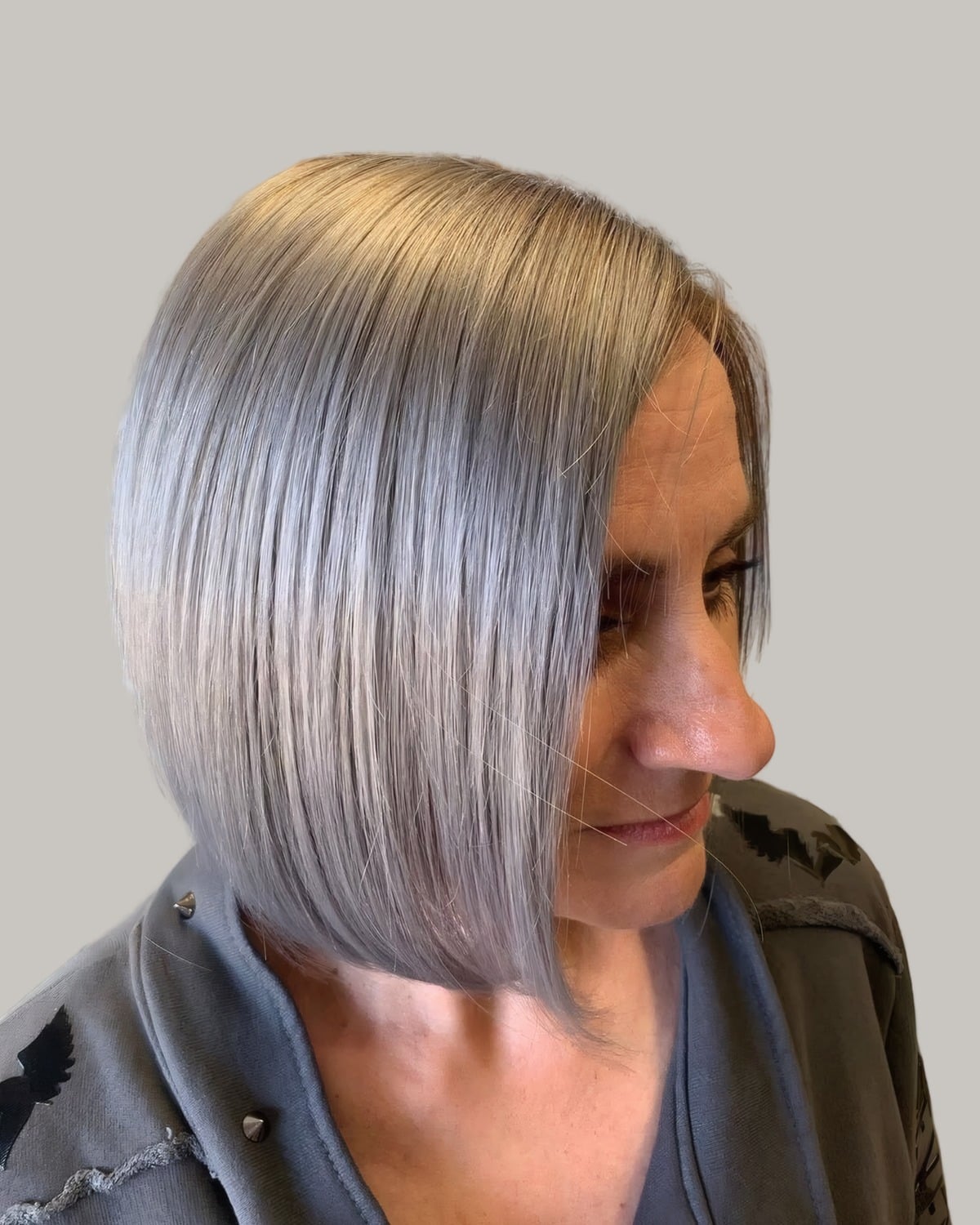
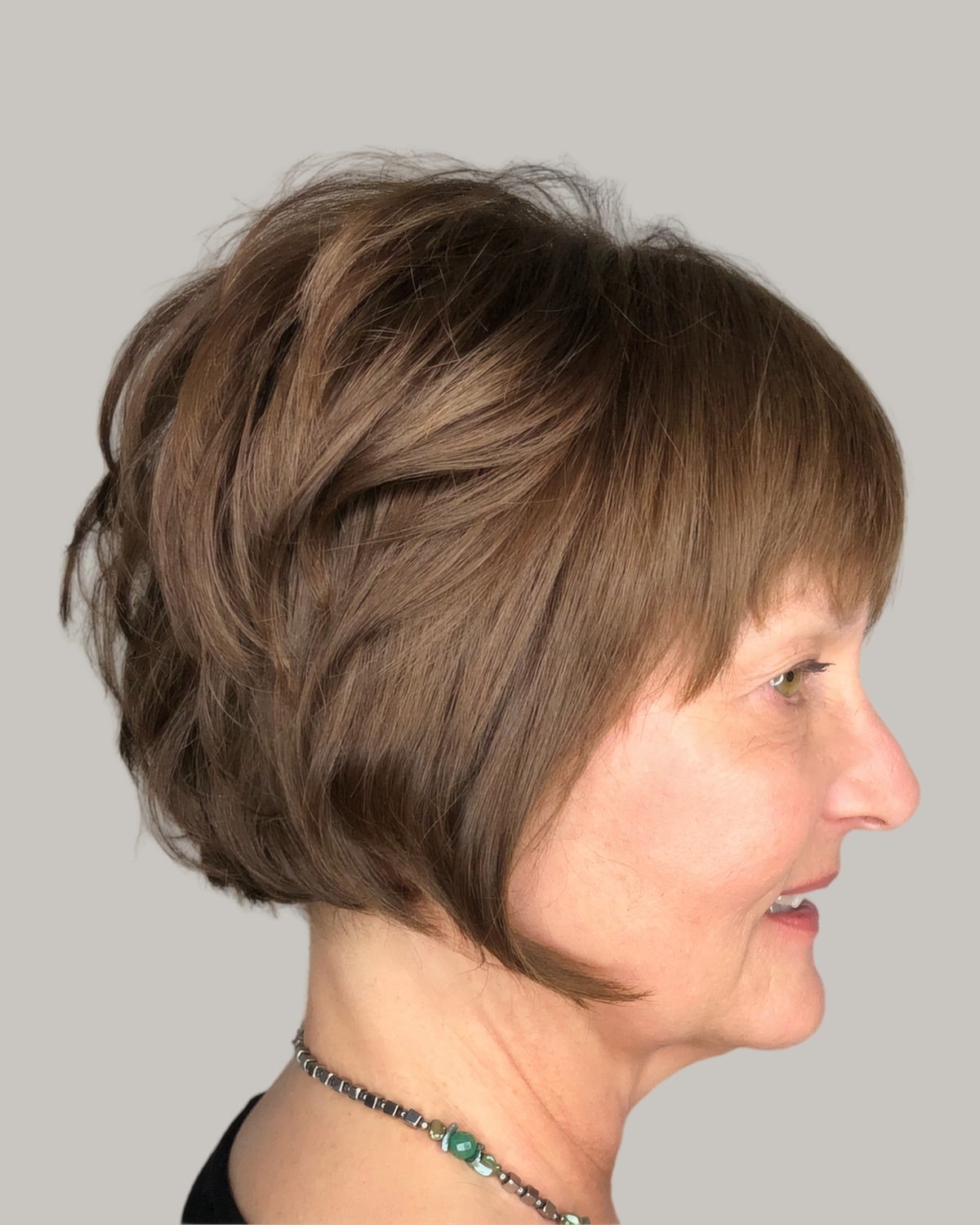
Shorter at the nape and angled longer toward the chin, so the front pieces frame the face. In silver it shows off the angle, and the stacked back keeps the shape round. Rivera calls a chin-length bob “classy” and “strong.”
What to ask for An A-line bob, short and stacked at the nape, angled down to just below the chin at the front, with a side part.
Bob with bangs
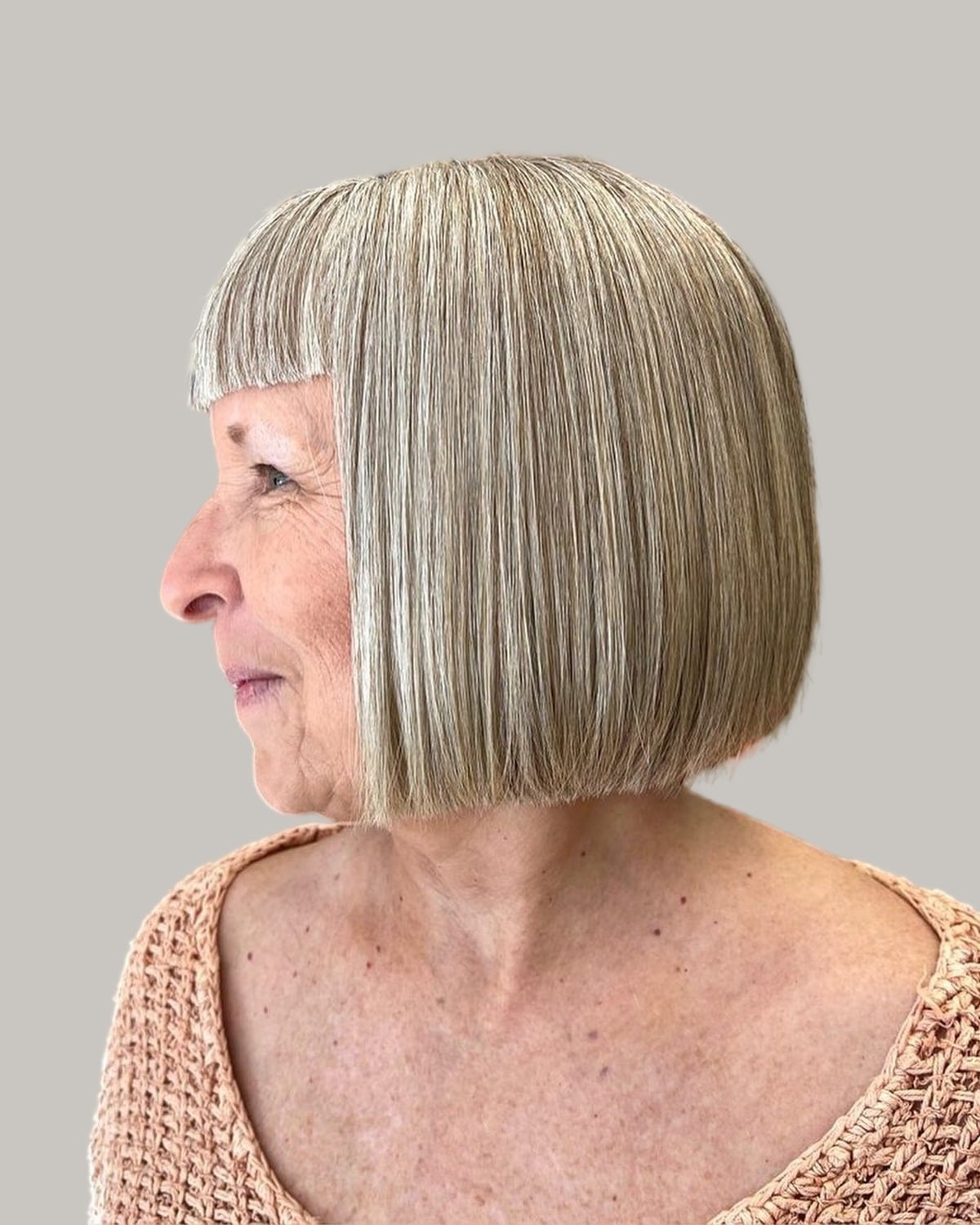
A blunt bob with a full fringe that stops at or just above the brows. Stylist Leo Izquierdo of IGK says the classic bob is chin-length, and to “ask for a shape that lasts.” Bangs need a trim every two to four weeks, so plan on quick fringe trims between full cuts.
What to ask for A one-length bob at the chin, a full fringe cut to sit just above the brows, and the ends left blunt.
Wavy bob
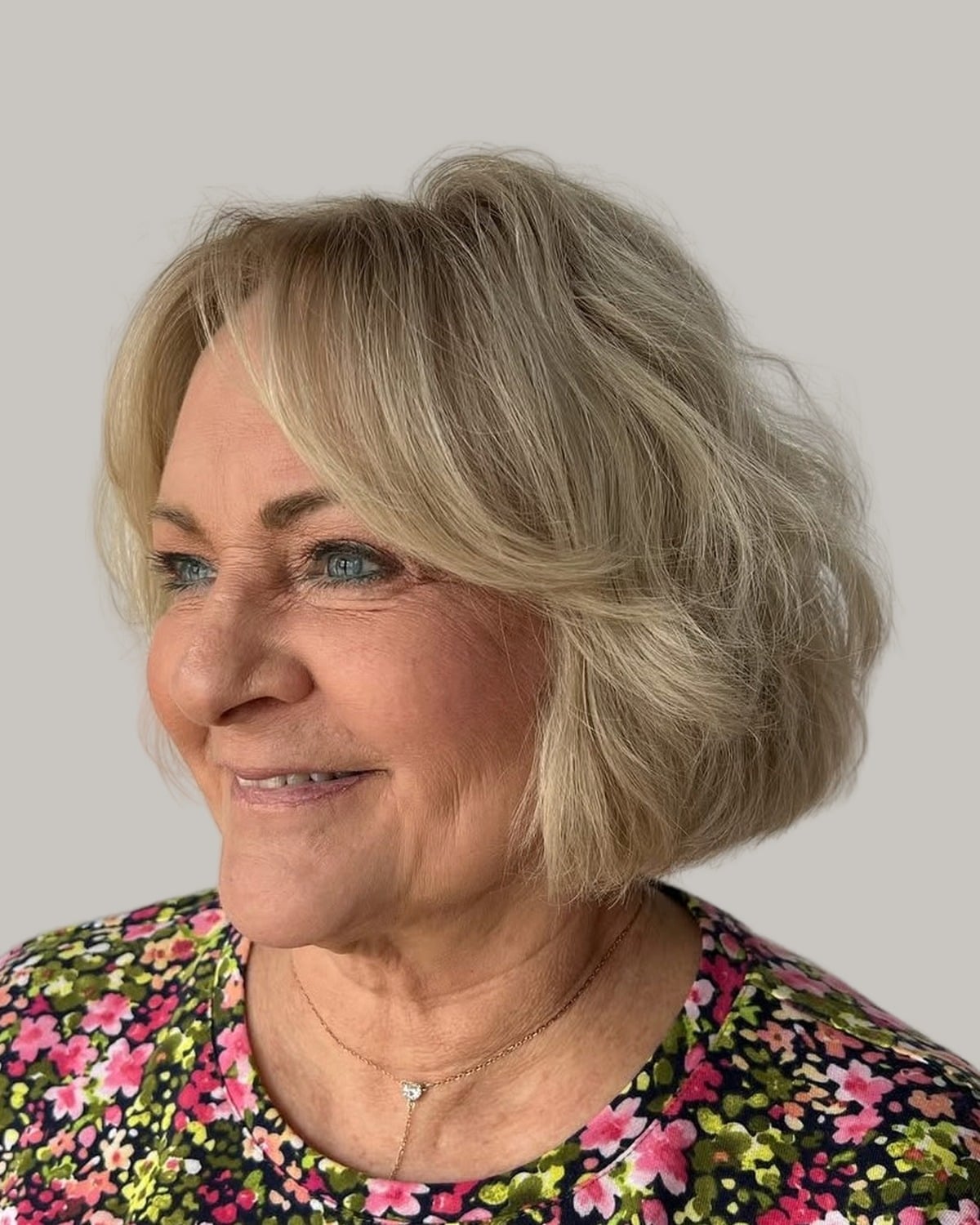
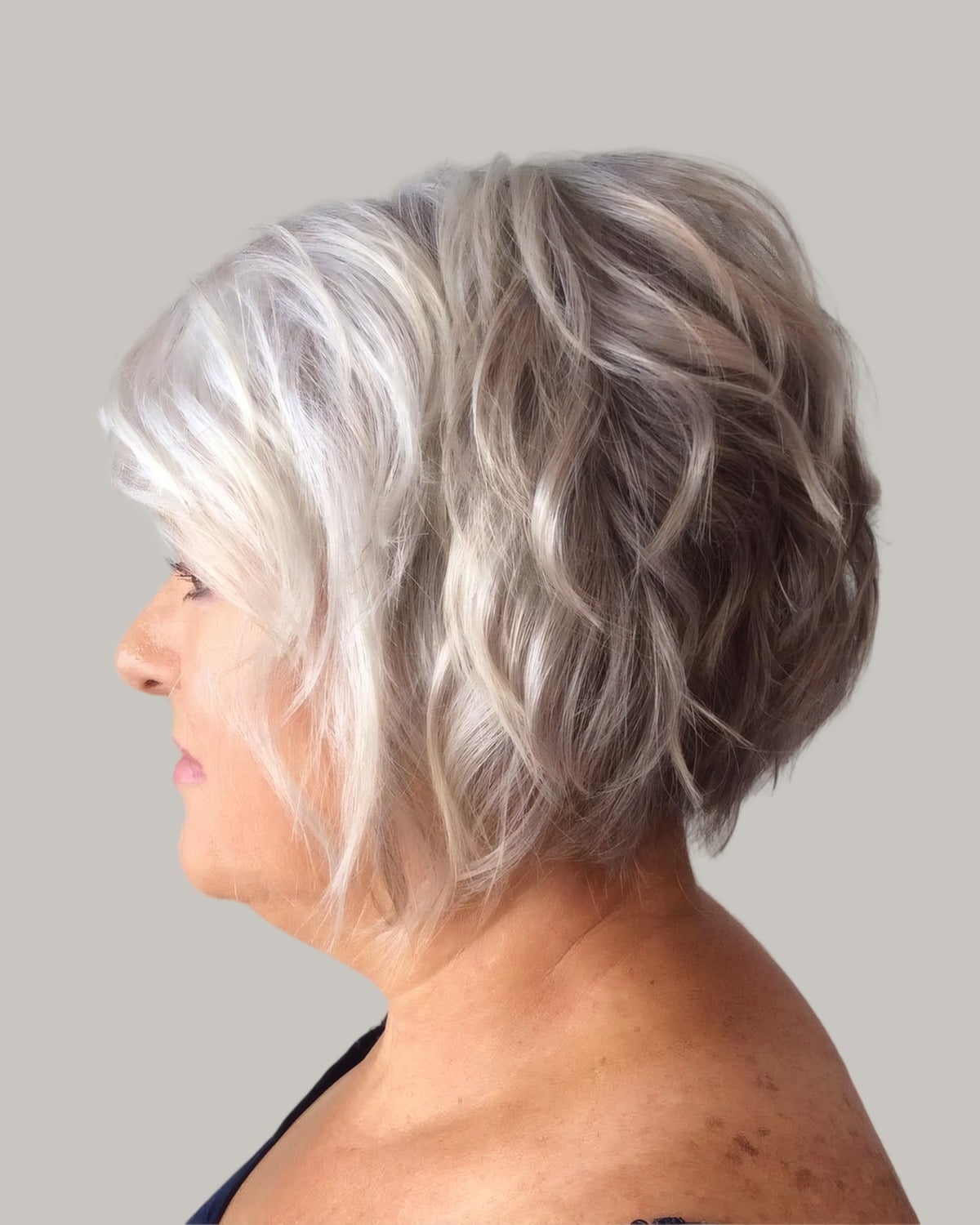
A bob between chin and shoulder, with waves bent through it and the ends left loose. On white hair the waves show up in every highlight. Dominick Pucciarello of Mizu Salon cuts into the ends of a bob for volume and uneven edges. That gives the waves somewhere to go.
What to ask for A bob between chin and shoulder, point-cut ends for movement, a deep side part, and loose waves for the finish.
Hairstyles for women over 60 with glasses
Shag with bangs and glasses
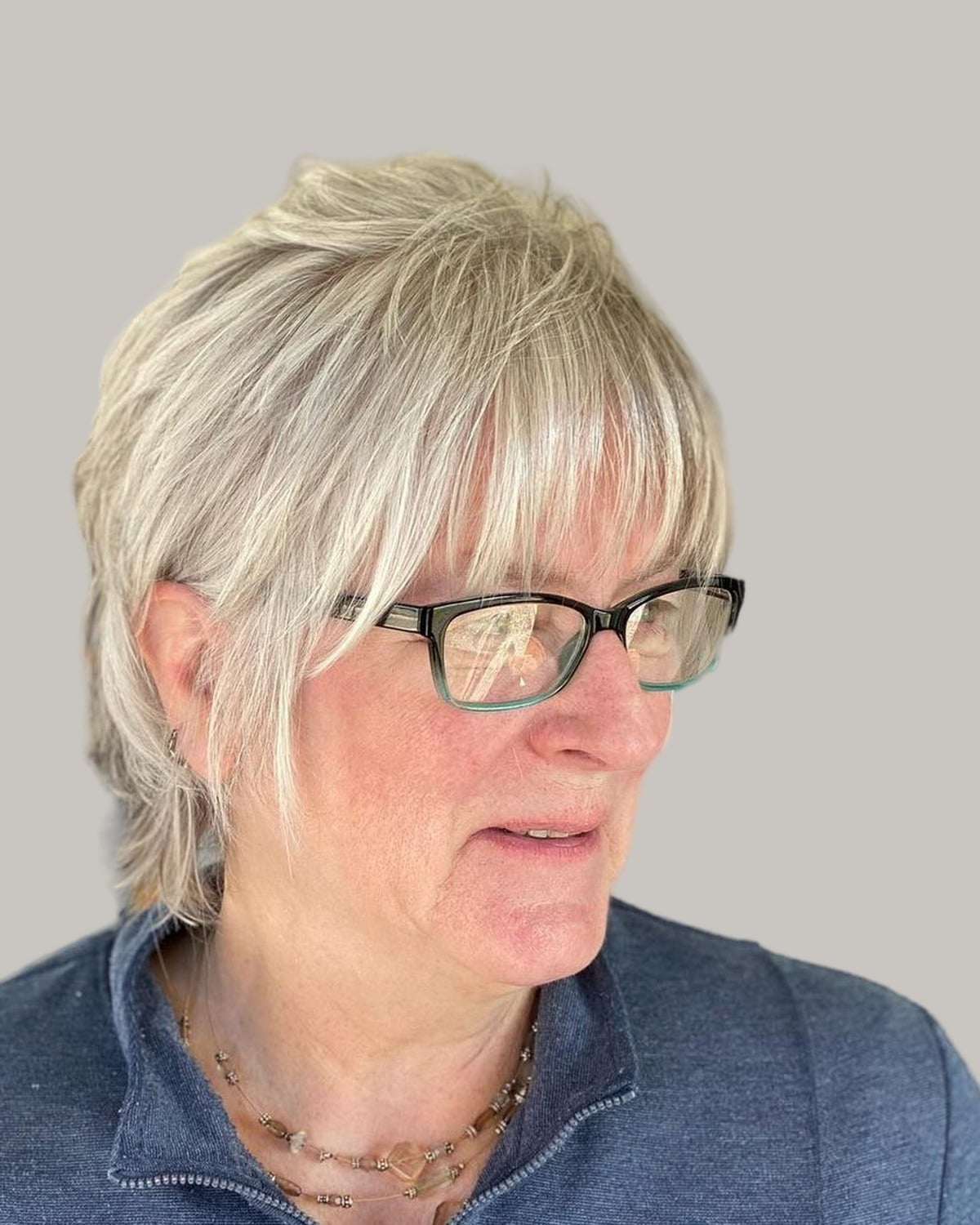
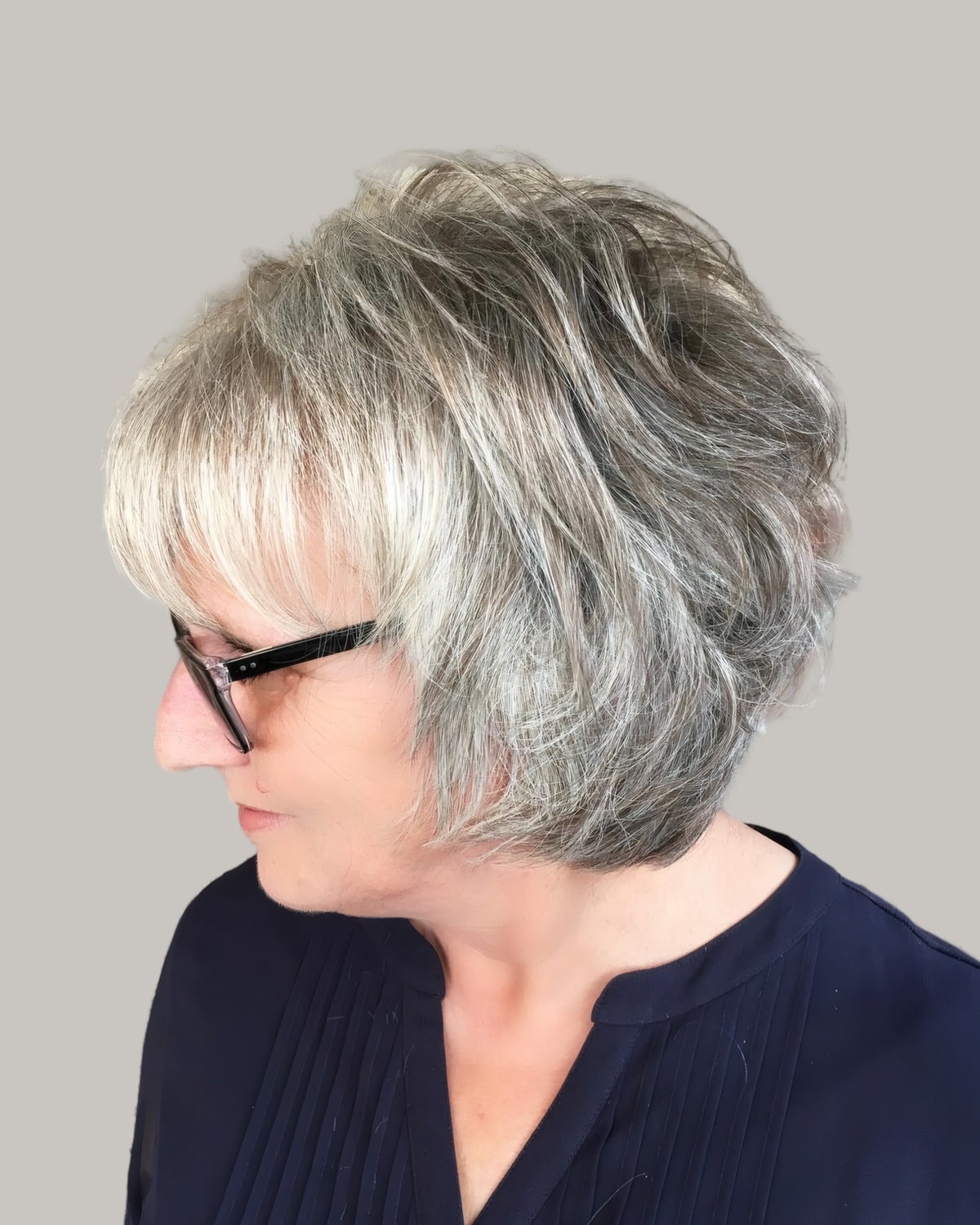
A shag with a fringe and glasses get along well, as long as the fringe stops at the frames. Pair Eyewear’s advice is to bring your glasses to the appointment, so the bangs and layers are cut around them. Both clients here wear dark frames under a soft, choppy fringe.
What to ask for A shag with layers from the cheekbones down, and a fringe cut with my glasses on, to sit just above the frames.
Bob with glasses
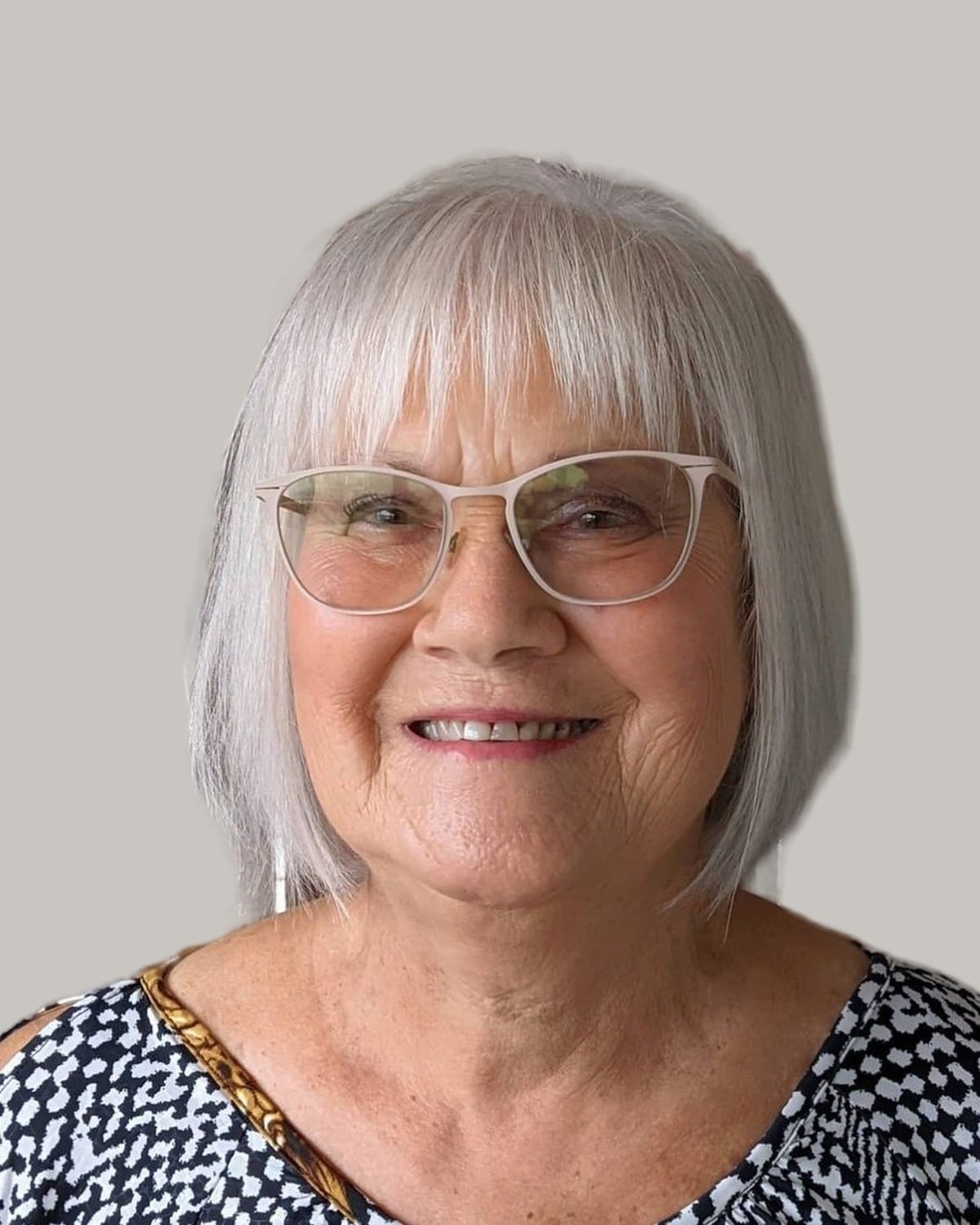
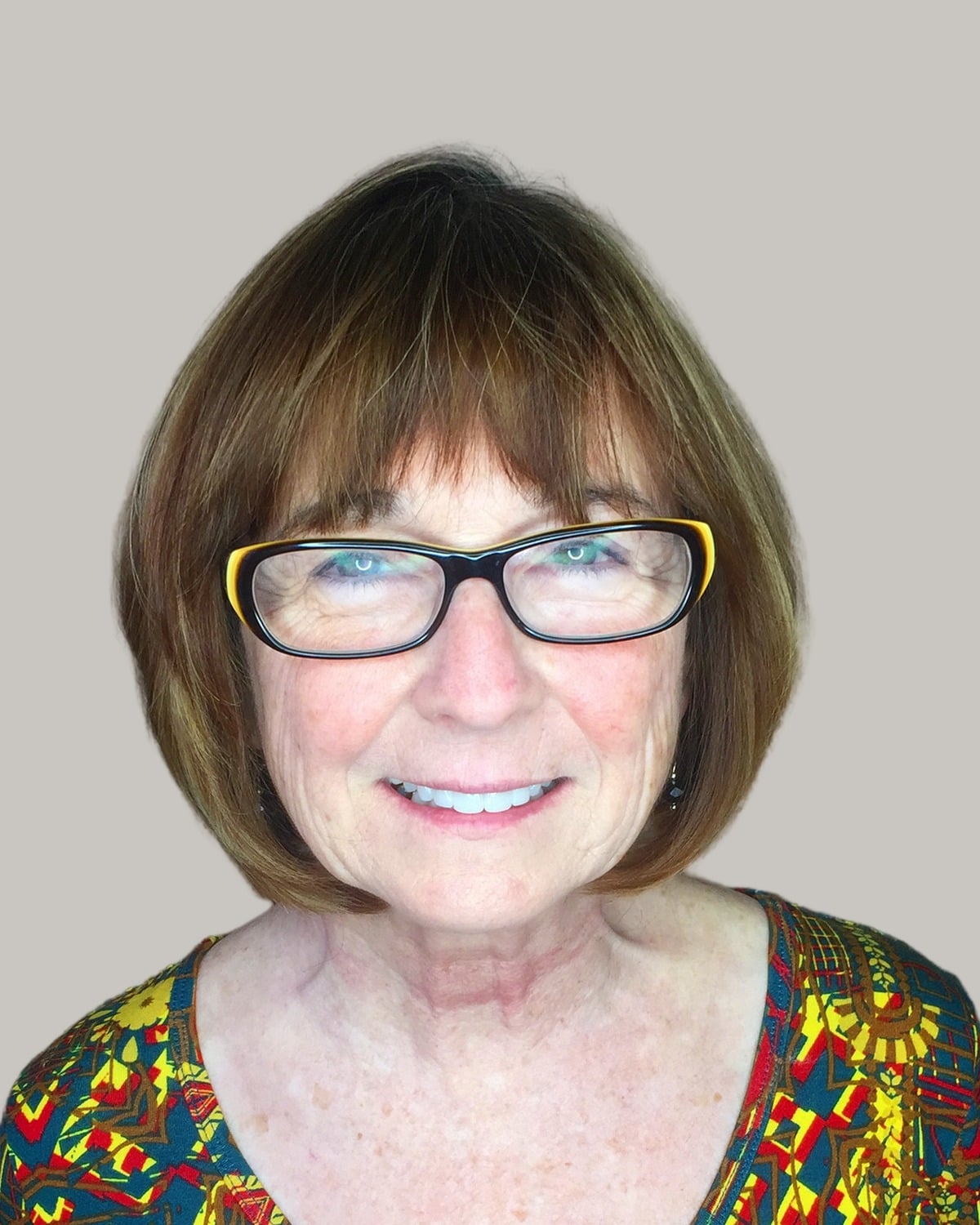
A bob with bangs that stop above the frames, with the sides well clear of the arms. It keeps the face open and lets the glasses do the talking, whether they’re clear or bold black. One of these is white, one brown, and both are cut to the chin.
What to ask for A chin-length bob with a full fringe cut with my glasses on, ending just above the frames, and the sides tucked behind the ears.
Long hair with glasses
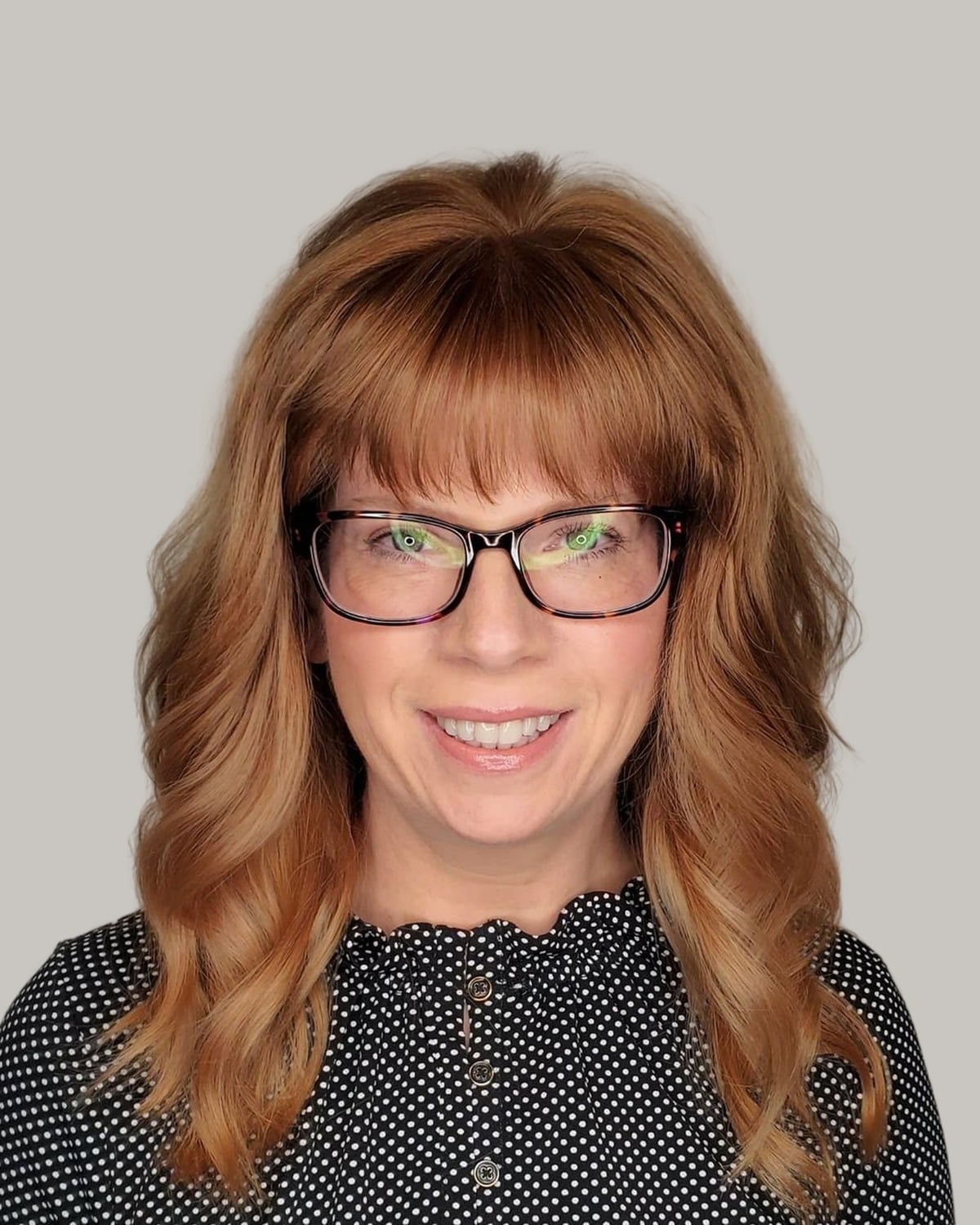
Long hair and glasses work fine together. Keep the fringe off the lenses and let the length do the rest. This one has long copper waves, a full fringe that stops just above the frames, and black glasses to frame it.
What to ask for Long layers with a fringe or face-framing pieces cut with my glasses on, starting just above the frames.
Short hairstyles for women over 60
Choppy pixie
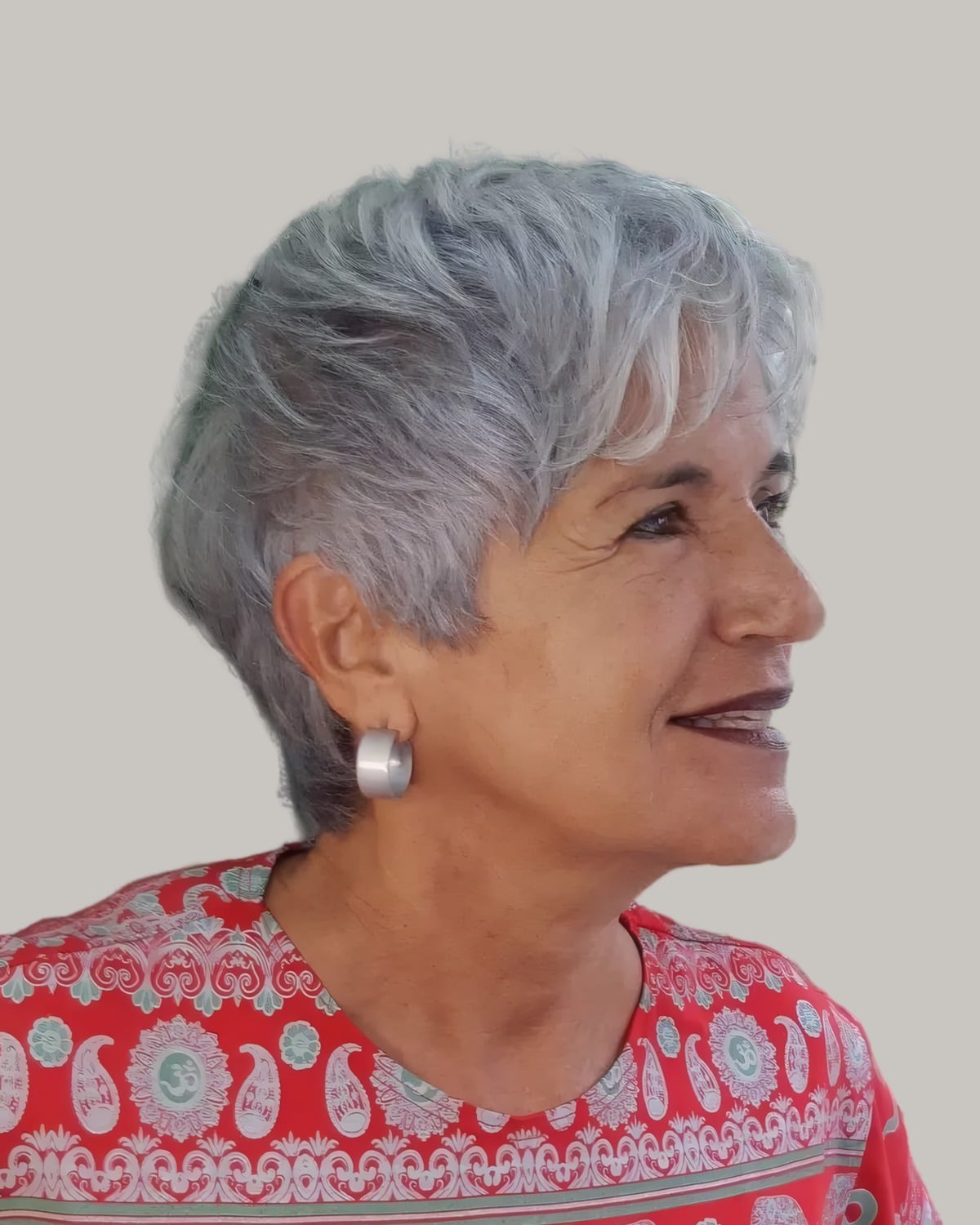
Short pieces cut at different lengths, so the top never sits flat, with a layered fringe that falls across the forehead. On gray hair the texture shows in every piece. Rivera says to blow-dry a short cut at the crown at a 90-degree angle for height.
What to ask for A choppy pixie, short at the sides and nape, point-cut texture on top, and a layered fringe across the forehead.
Short shag
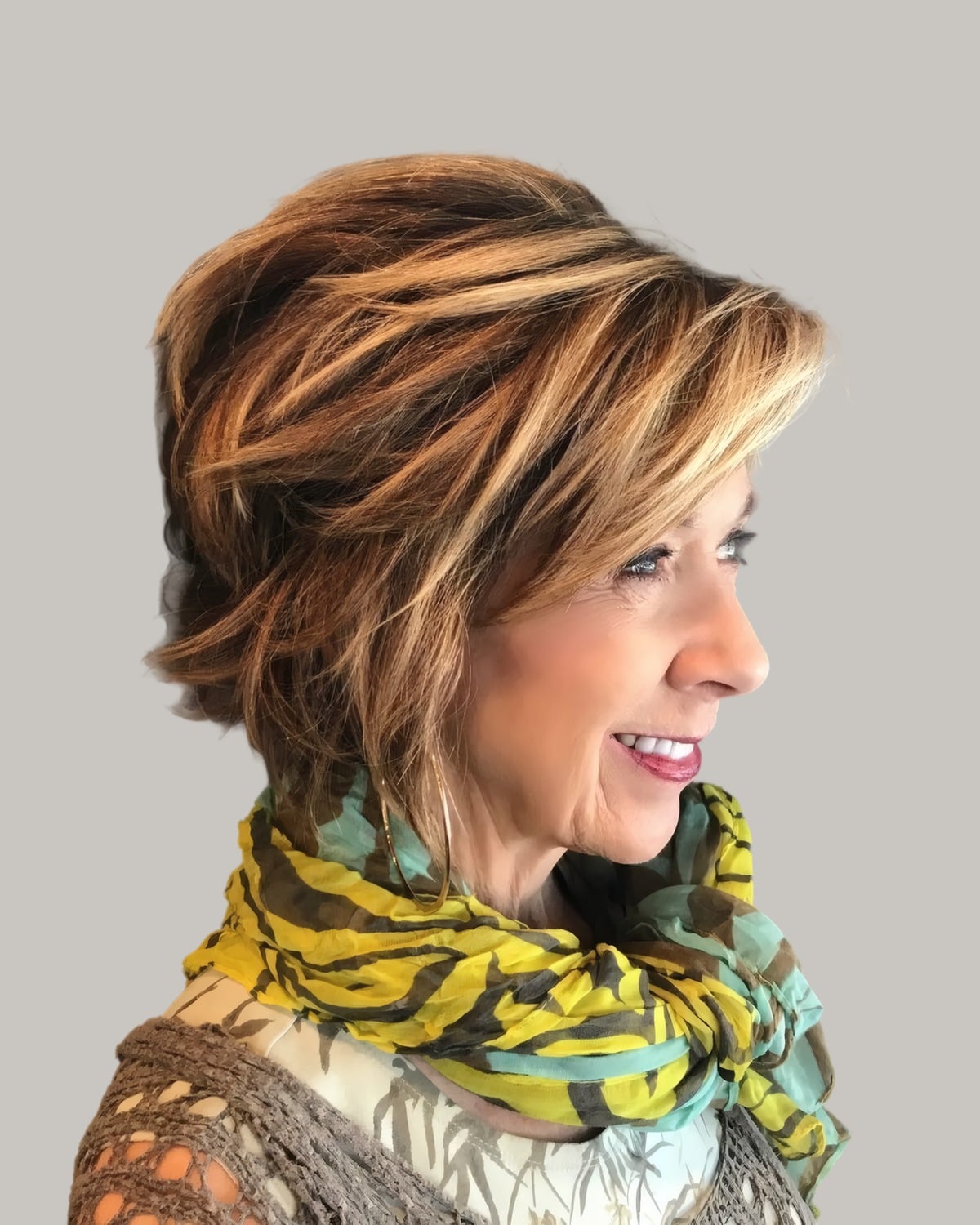
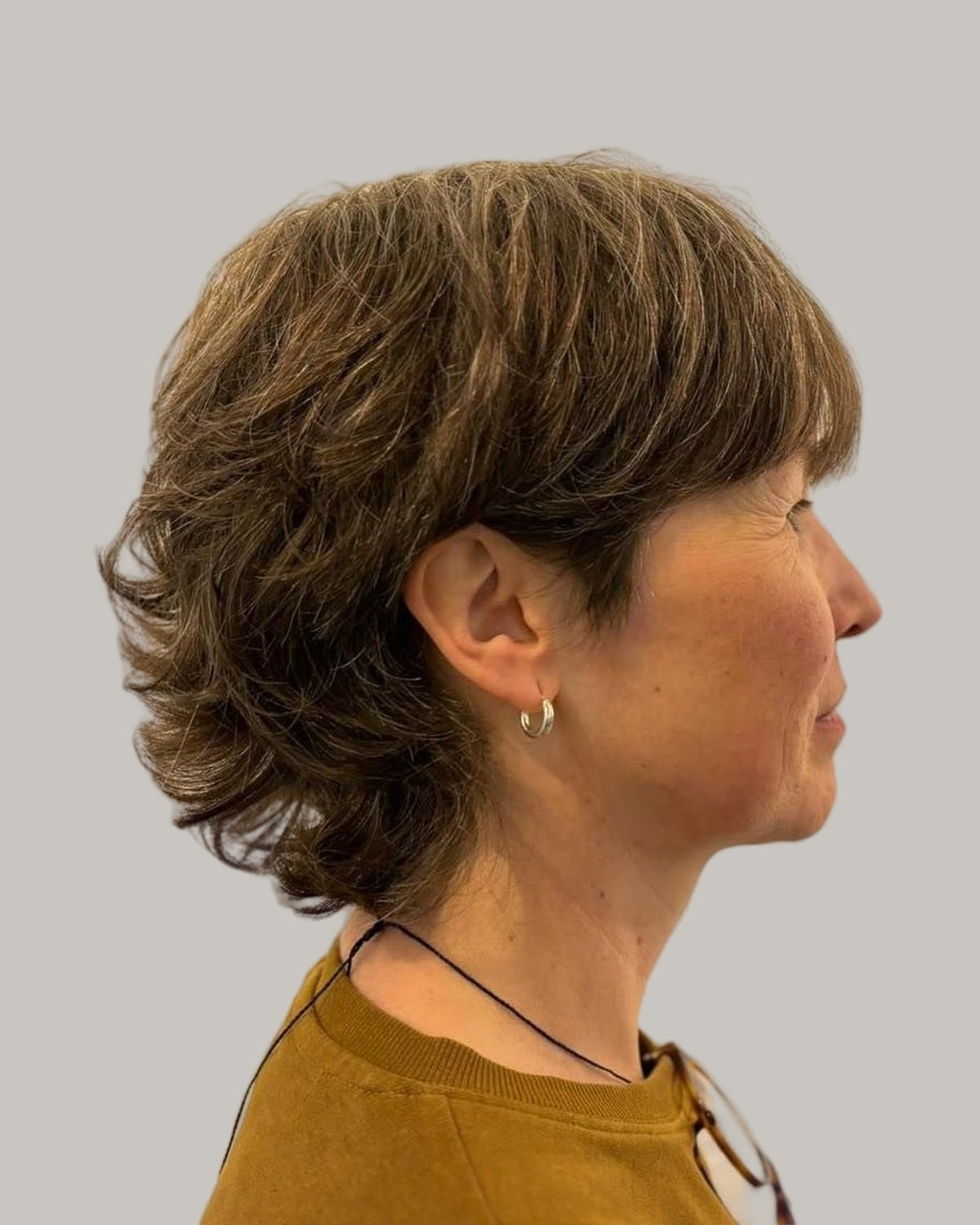
A shag cut short, with choppy layers on top and around the face and a little length left at the nape. It’s the short end of the medium shag above. Our short haircuts for women over 60 guide has 23 more short cuts, from pixies to bobs.
What to ask for A short shag with choppy layers on top, a fringe that falls toward the brow, and a little length left at the nape.
Hairstyles for women over 50
Lob with curtain bangs
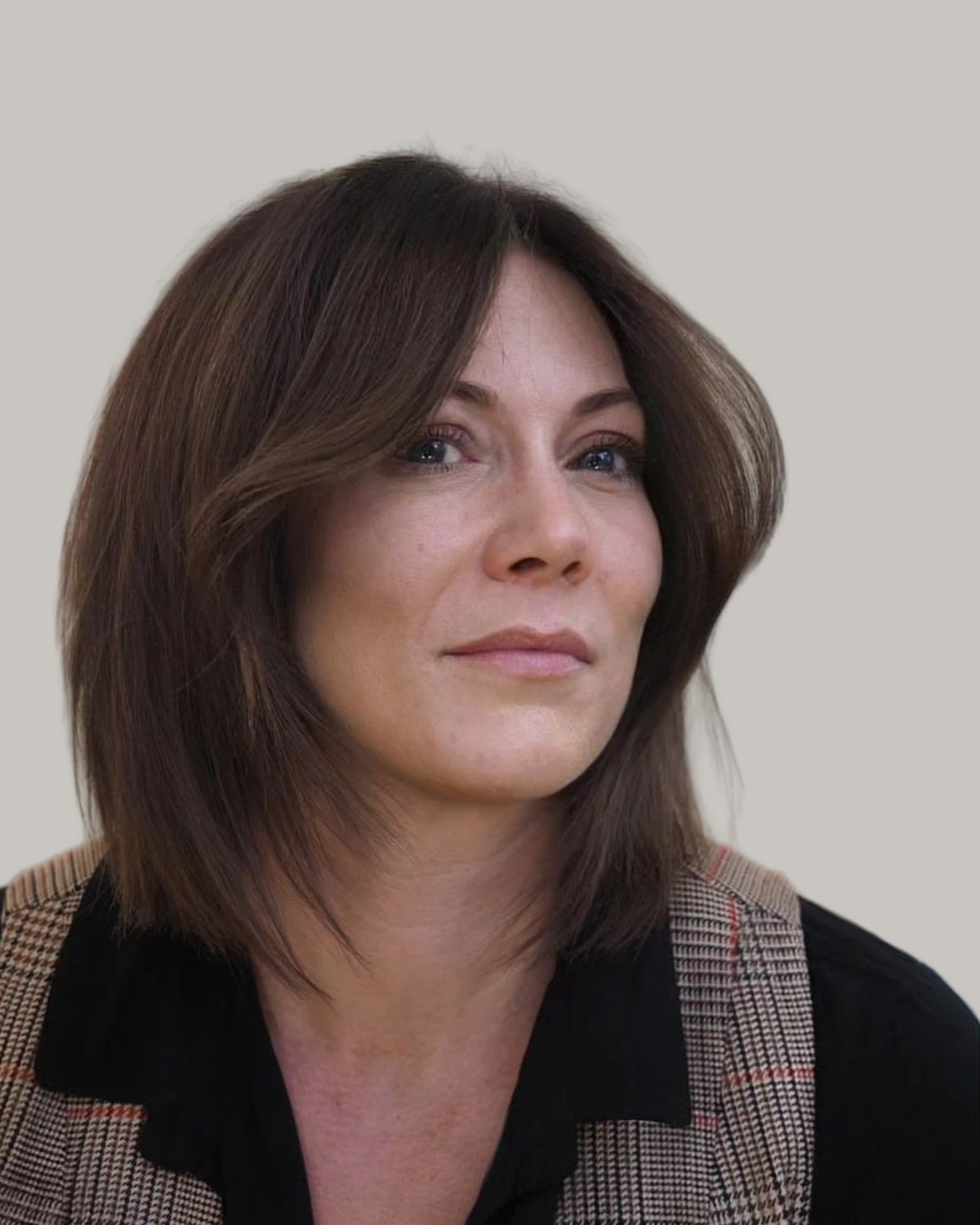
A shaggy lob with curtain bangs that blend into the layers. Streicher likes curtain bangs because they grow out and blend in. The lob keeps enough length to tie back.
What to ask for A lob to the collarbone with soft layers, and curtain bangs that start at the cheekbone and blend into them.
Long layers over 50
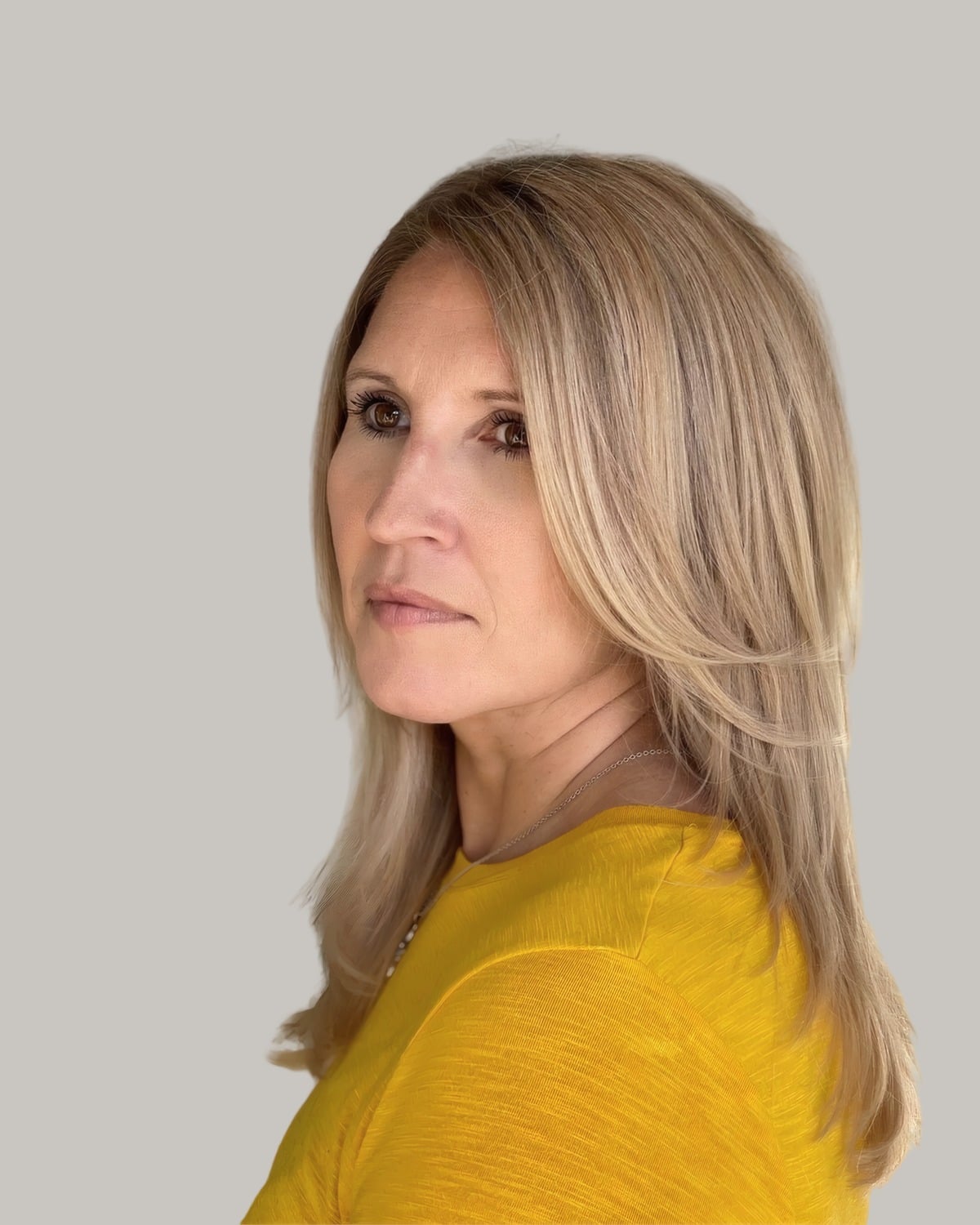
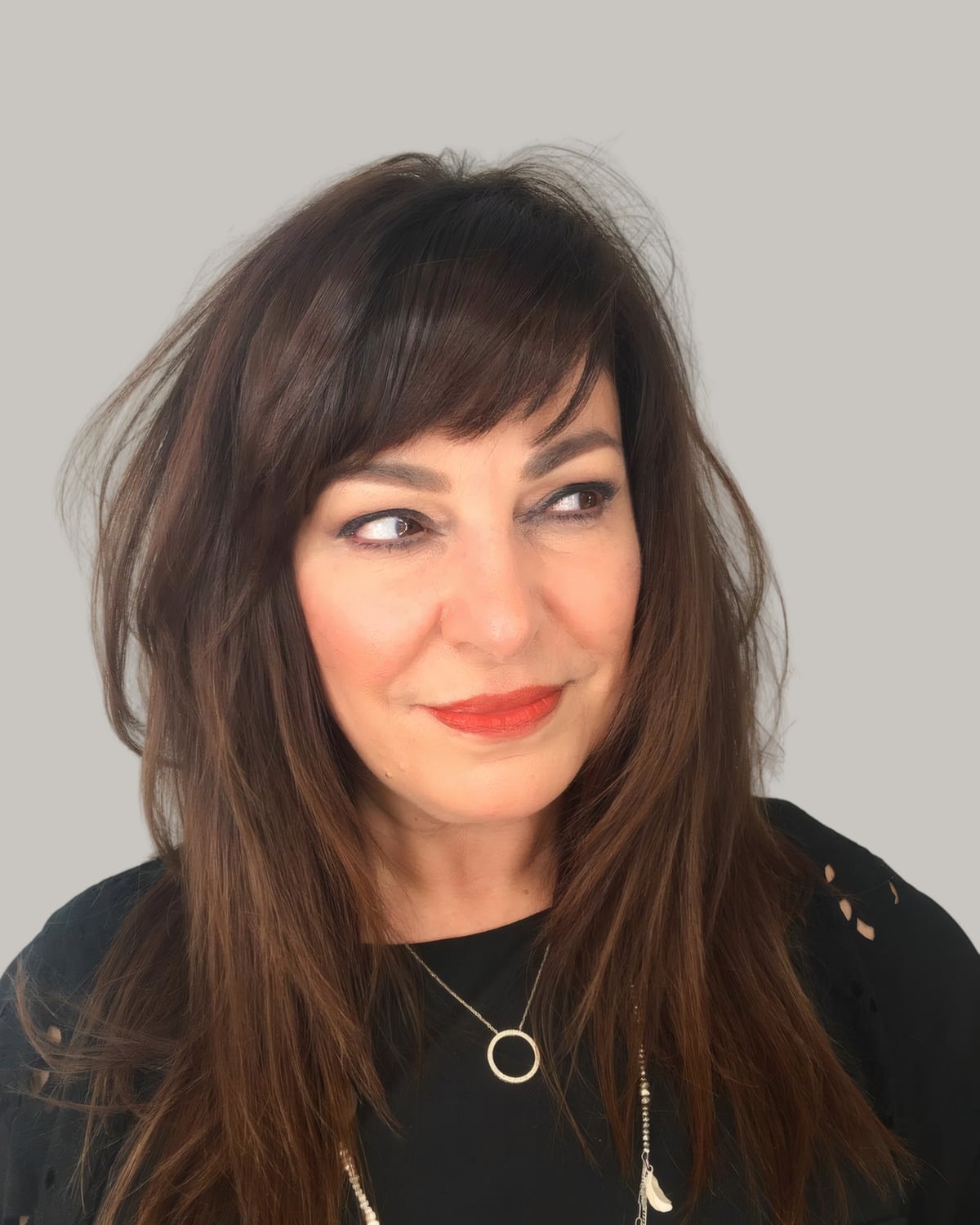
Long layers past the shoulders, kept heavy at the ends, the way Phillips likes them. One client here has blonde layers that skim the chest, the other a dark, choppy cut with a full fringe. Purvis’s rule for long hair holds at any age: it has to be healthy enough to carry the length.
What to ask for Long layers past the shoulders, graduated so the bottom stays full, and a fringe or face-framing pieces at the front.
Shag over 50
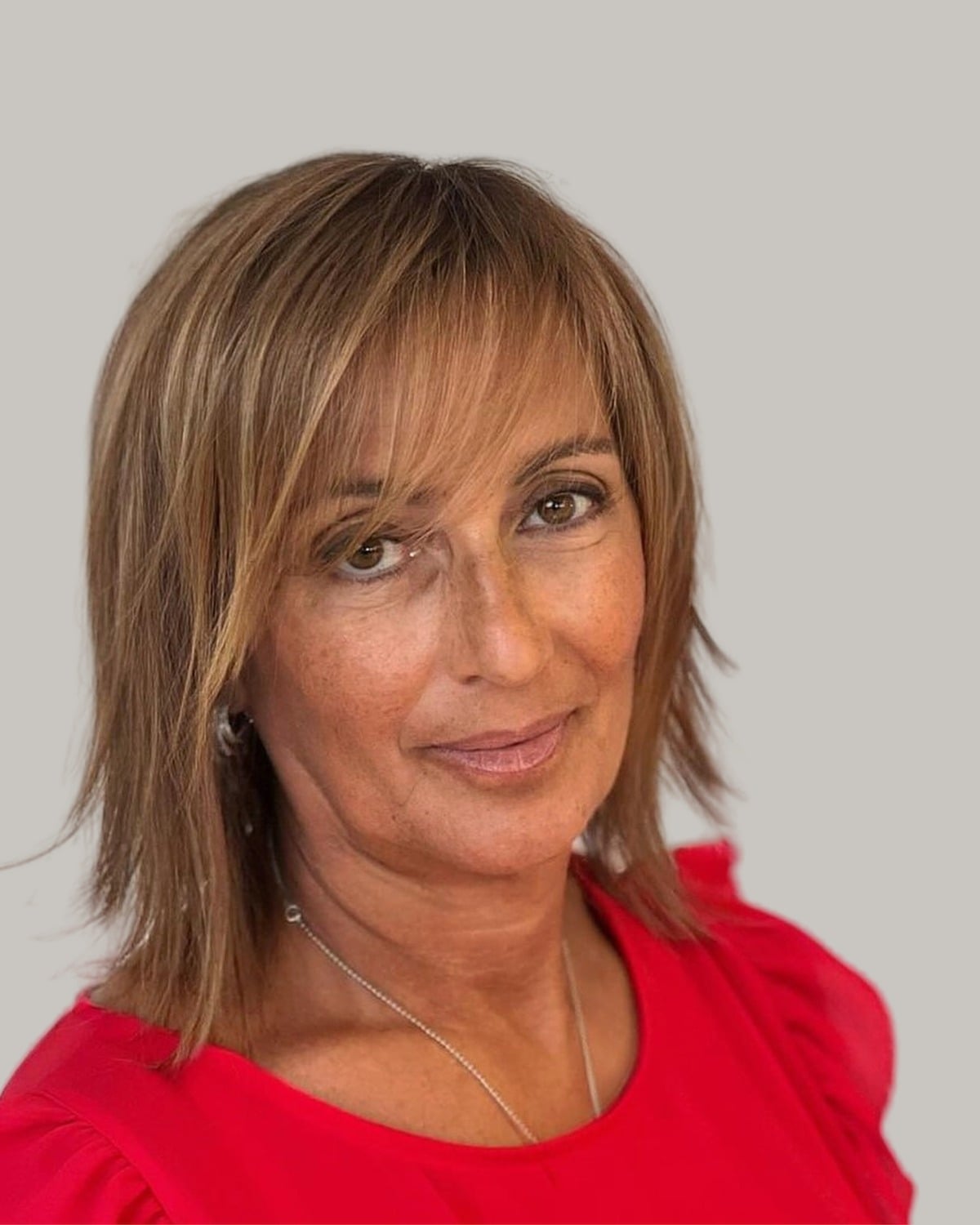
A shoulder-length shag with flicked ends and a fringe. It can be worn sleek, flipped out, or scrunched and left alone. Garren’s version has bangs falling over the eyes and the texture doing the work.
What to ask for A shoulder-length shag with choppy layers from the cheekbones down, a fringe that falls past the brow, and flicked-out ends.
Rounded bob over 50
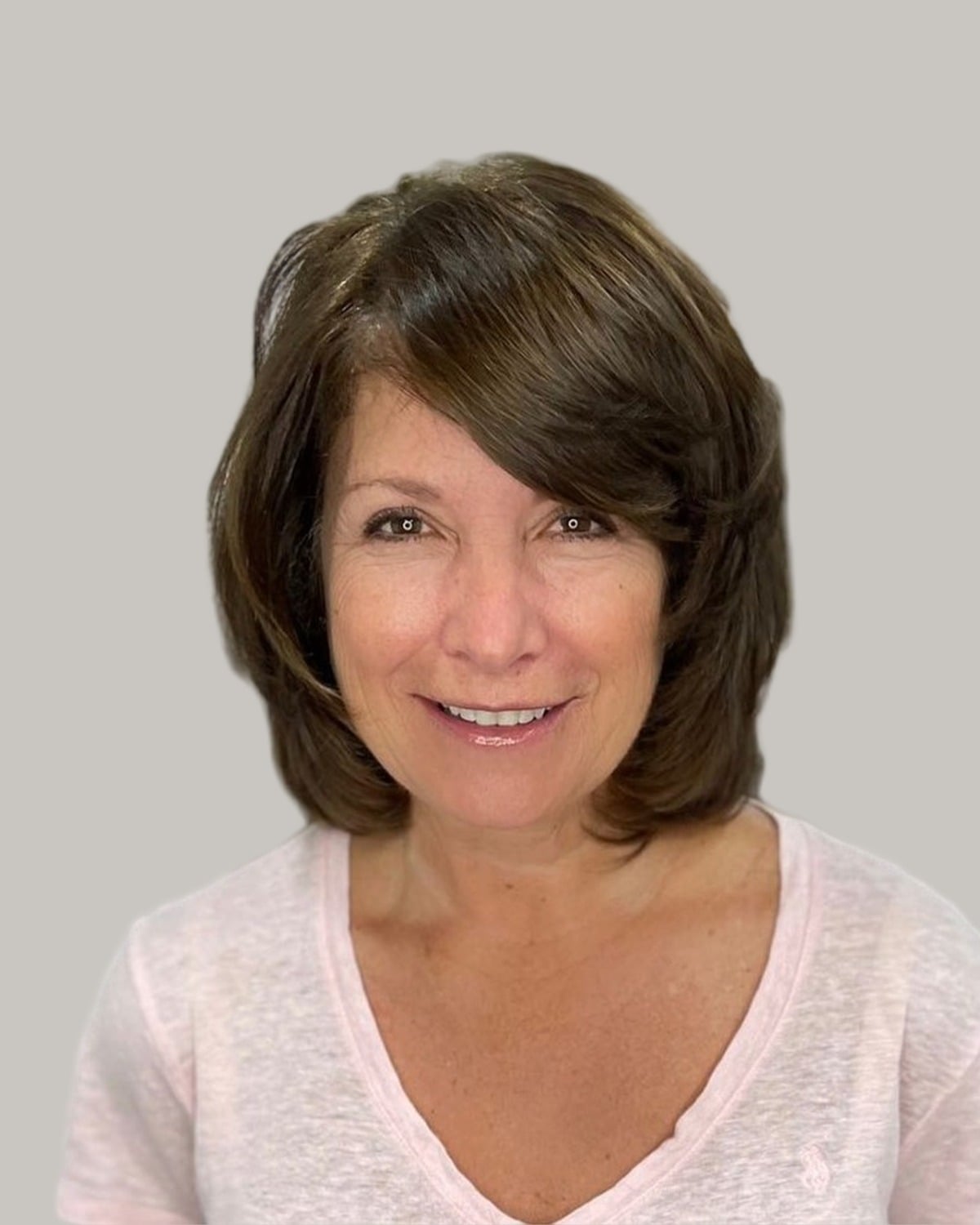
A bob with a soft, round shape, cut between the chin and the shoulder and turned under at the ends. Angela Bassett wears a layered bob at shoulder length. A round brush gives it the bend.
What to ask for A rounded bob between chin and shoulder, long layers so the ends turn under, and soft face-framing pieces at the front.
01 of 01
What’s the most flattering hair length after 60?
Somewhere between the jaw and the shoulder suits a lot of women, but your texture decides. Potempa says shoulder length strikes the balance between versatility and manageability. Hingorani suggests a shoulder-grazing lob with layers, because it frames the face and adds shape to finer textures. Fine hair often looks fuller at the collarbone with a blunt edge, while thick hair can carry more layers. Long hair works too, if it’s healthy: there’s no age limit on long hair.
Which hairstyle suits your hair type?
Fine or thinning hair wants a blunt edge, with layers kept to the face. Underwood says to avoid feathering the perimeter and to keep heavy conditioner and oil off the roots. Thick hair can take more layers to release weight. Gray hair can feel wirier than it used to, so a gloss and a smoothing cream help the layers lie flat. Curly hair wants a dry cut, so the stylist sees how each curl falls. Coily hair over 50 does well in low-tension styles, such as two-strand twists, Bantu knots and a short afro.
What to ask your stylist for
Start with where the cut should end: the jaw, the chin, the collarbone, the shoulder or below. Then say where the layers should start, or whether you want them at all, since a blunt edge does more for fine hair than layers do. Mention the fringe if you want one, and how far down it should fall. If you wear glasses, bring them, so the fringe and the layers can be cut with them on. And say how long you want to spend on styling, because a cut that needs a blowout every morning won’t suit someone who air-dries.
How often should you trim your hair after 60?
That depends on the length. Healthline’s rule of thumb is every two to four weeks for bangs, every six to eight weeks for medium hair, and every three to six months for long hair that isn’t colored or heat-styled. Underwood puts fine hair on a six-to-eight-week cycle too. Colored and heat-styled hair needs trims more often, because the ends wear out faster.
Is long hair OK after 60?
Yes. “There is no age limit on long hair,” says Potempa, though she suggests a few graduated layers and warns that over-layering thins the ends. The condition is health: Purvis says long hair has to be healthy enough, or it looks disheveled. Regular trims, a heat protectant before the curling iron and a deep conditioner now and then keep it that way.
What’s the best hairstyle for thin hair over 60?
A blunt cut, between the chin and the collarbone. Underwood calls a blunt edge the single best trick for fine hair, because the weight stacks at the bottom. Rivera recommends a collarbone-grazing lob for the same reason. If you want layers, keep them to the front, where Diaz says they add lift. Rugetti warns off excessive shag layers and heavy razoring. Up to two-thirds of postmenopausal women have some thinning, according to Harvard Health and it usually starts at the part line.
How do you keep gray hair shiny?
Brush it daily, gloss it at the salon and tone it gently. Jay Small says daily brushing moves oil from the scalp down to the ends. Colombini suggests a gloss for shine and a purple shampoo to cancel yellow tones. Perkins warns against over-toning, because it can leave gray with a purple, green or blue cast. She suggests a clarifying shampoo now and then. Green turns the heat down on gray hair and uses a heat protectant every time.
How should a 75-year-old woman wear her hair?
However she likes, within what her hair can do. Stylist Hayley Heckmann says medium length works well after 70: it gives movement without weight and leaves room for layers and a fringe. If your hair has thinned, a blunt edge keeps it looking full, and if it has gone white, a gloss keeps it bright.
If you’re tempted to go shorter, our short haircuts guide has pixies, bobs and crops in every texture. For every length and texture in one place, see our haircuts for women.
Whichever length you pick, take the Ask line with you and read it out in the chair.
Products featured here are independently selected by our editors. If you buy through our retail links we may earn an affiliate commission — it never changes the price you pay, and it never decides our verdicts. Read our earnings disclaimer.