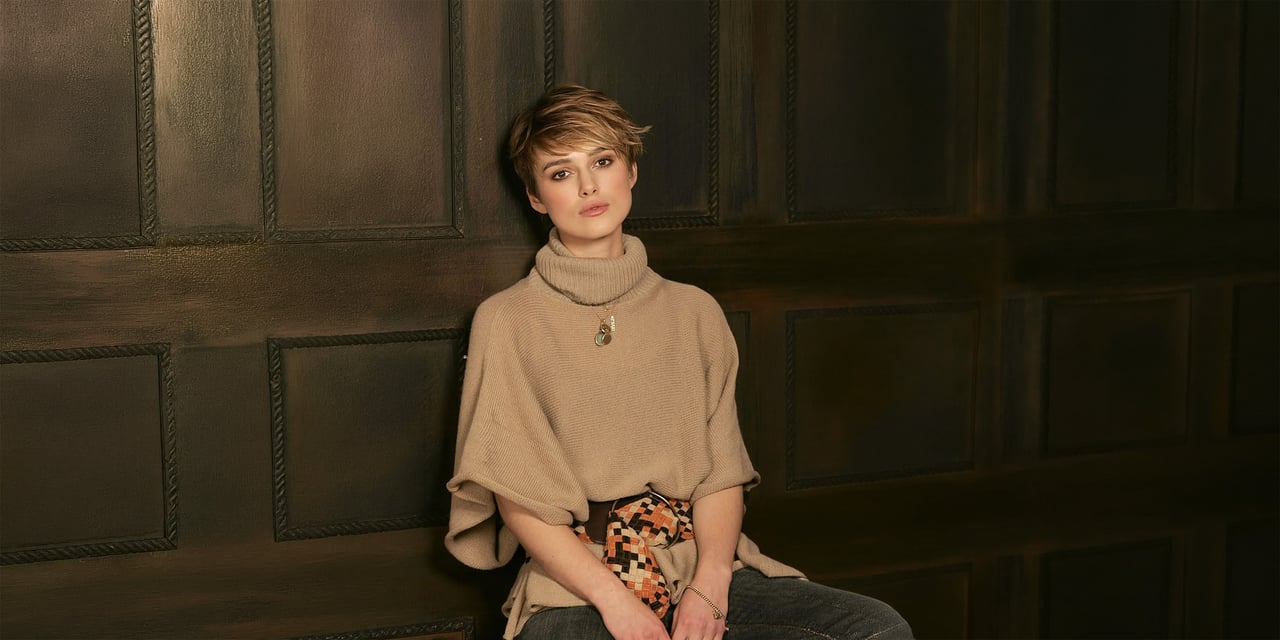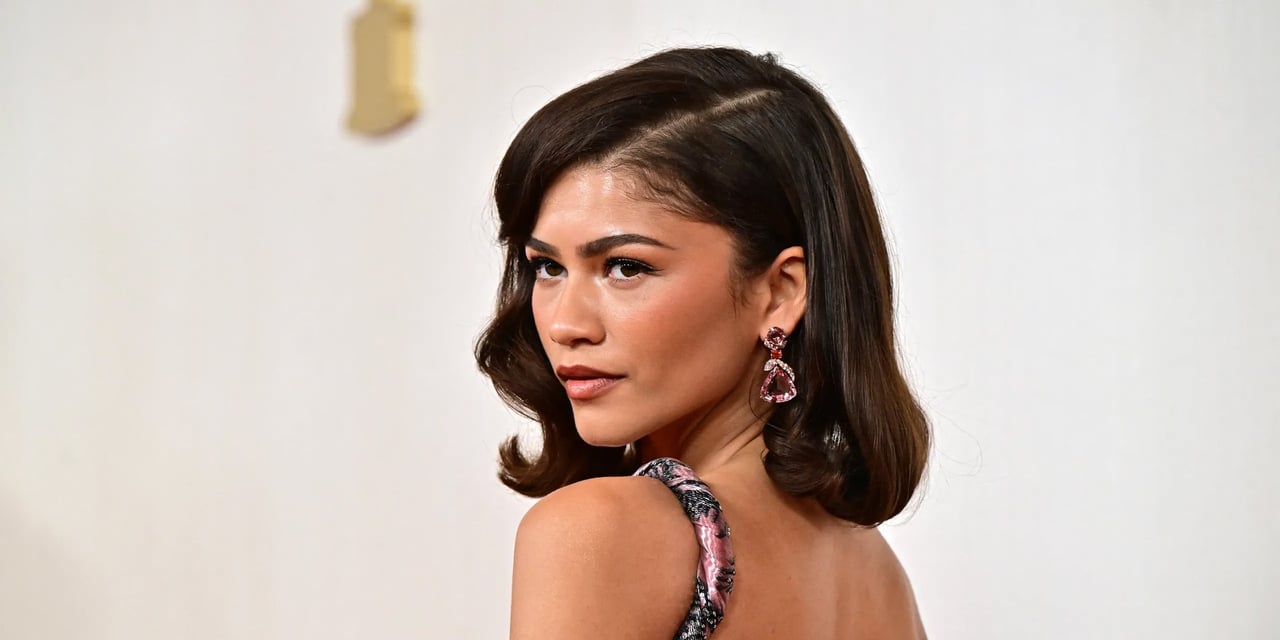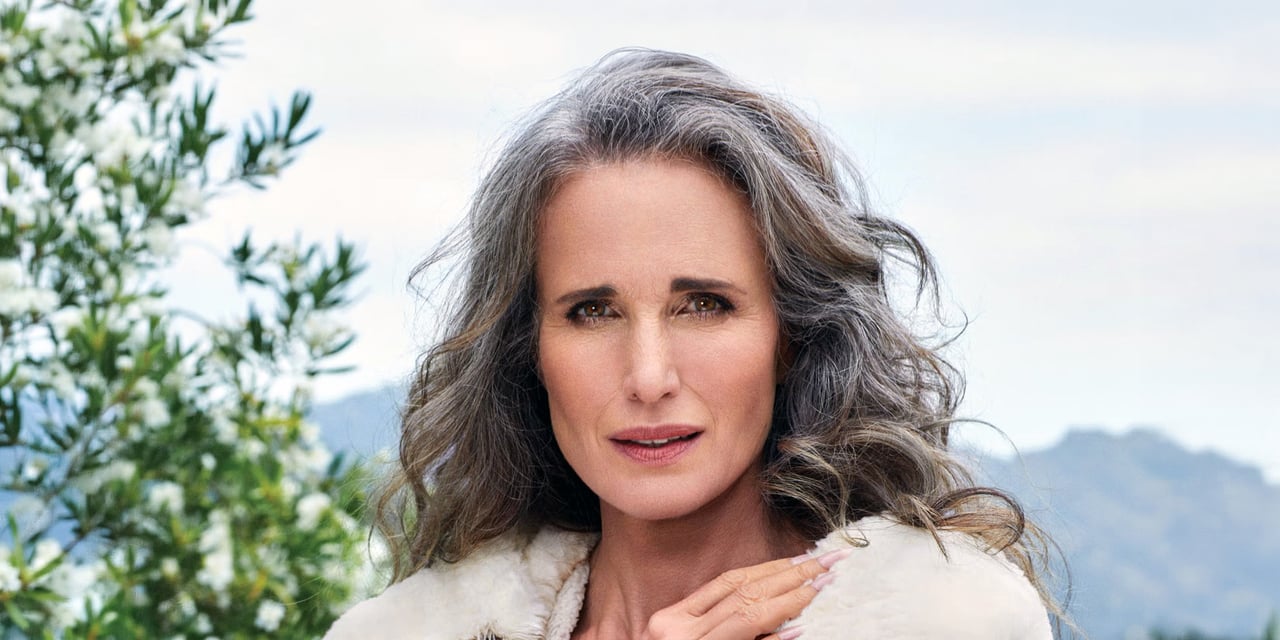
Ever sat down in the chair, been asked “What are we doing today?” and had nothing to show? Most of us have. Then you leave with a trim, because a trim is the safe answer.
This page is for the next appointment. The 30 looks below run from a cropped pixie to waist-length braids, in five groups, and each one is shown on real clients with the words to say when you sit down.
There’s a guide behind every section, so when one look catches your eye, there are 20 or 30 more like it a click away.
Women’s haircut guides, by type
Every section below borrows six looks from these guides, where you’ll find the rest.
Short haircuts
Choppy pixie with bangs
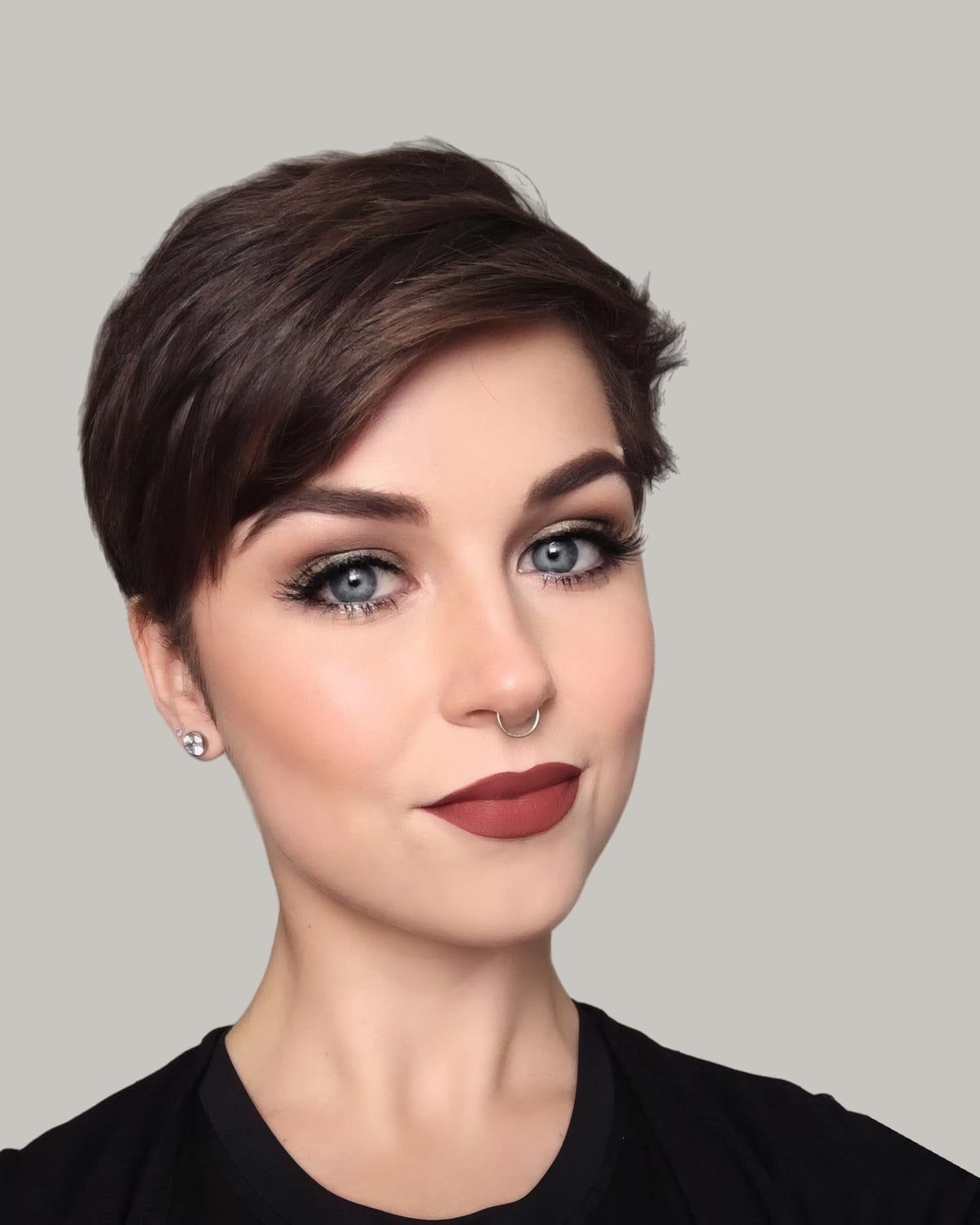
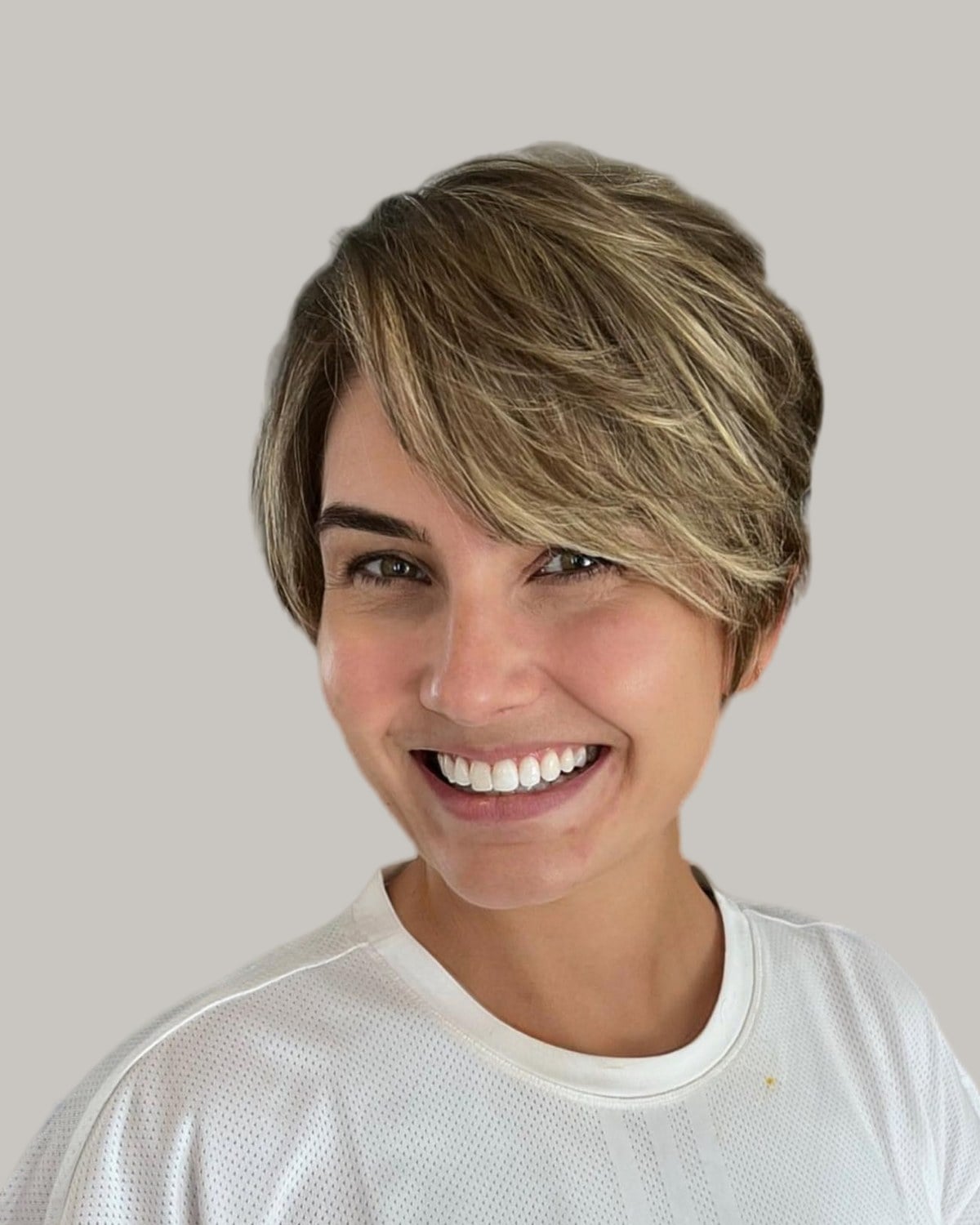
A pixie with bangs cut in points rather than straight across, so the line never looks stiff. It shows off the eyes and the cheekbones, and it dries in minutes. Rough it up with a little matte cream and it’s ready.
What to ask for Keep roughly two inches through the top, take the back and sides in close, and point-cut a fringe that lands at my eyebrows.
Short bob above the chin
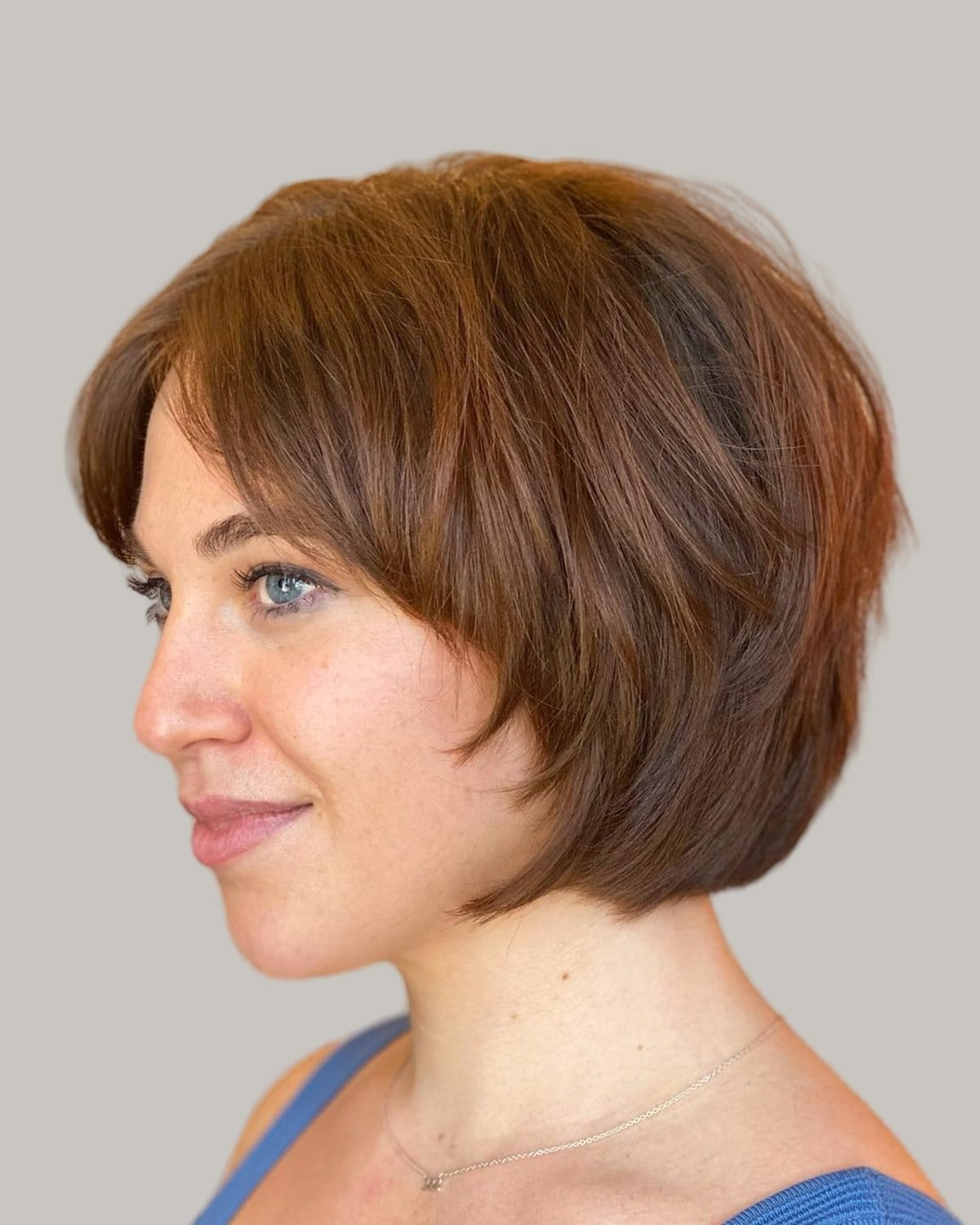
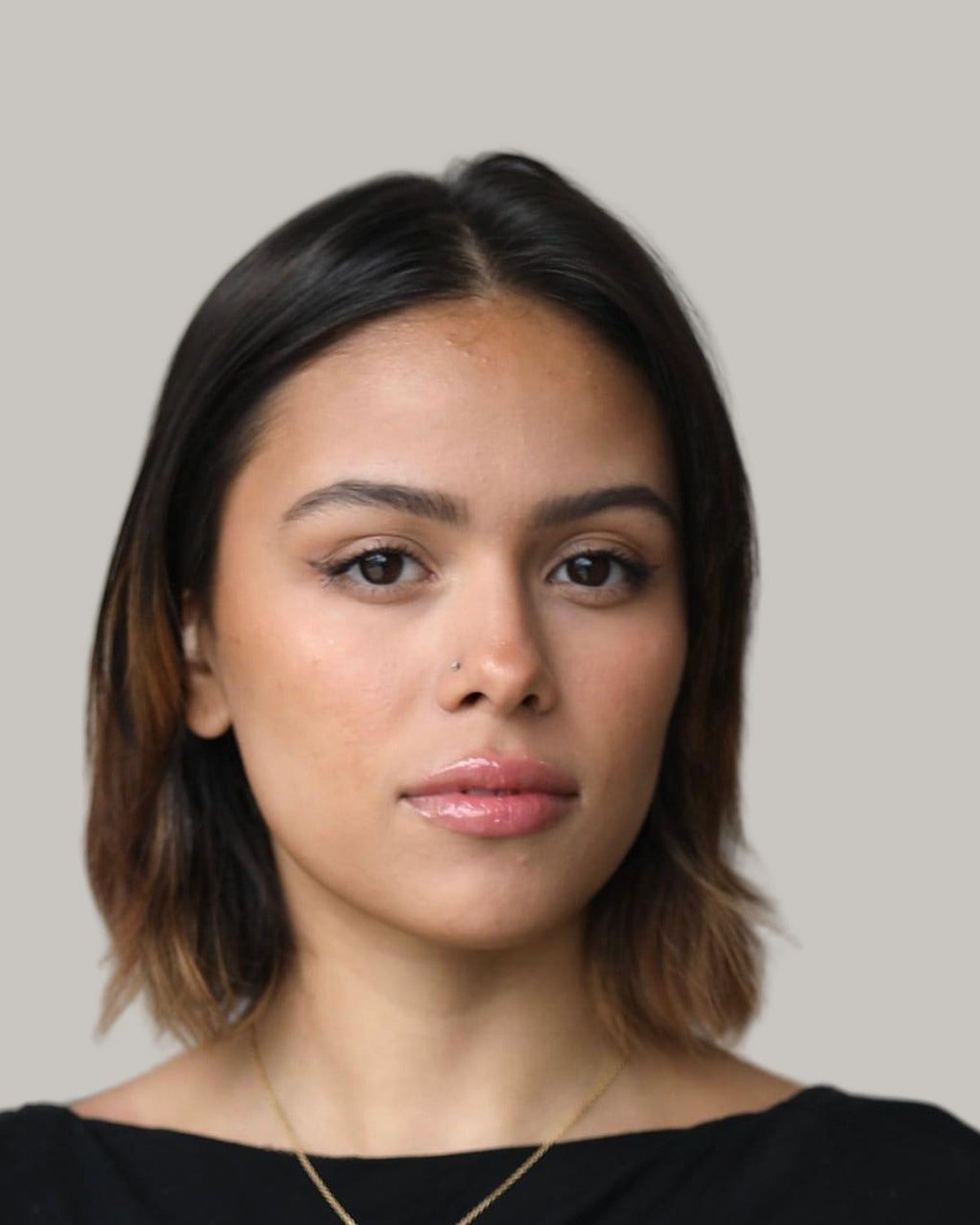
A bob cut a little shorter than the chin makes fine hair look thicker, because every strand ends at the same weighty line. It’s quick to dry and doesn’t need much more than a round brush. We’ve got 28 more in our bob haircuts for fine hair.
What to ask for A short bob ending half an inch above the chin, blunt at the perimeter, no layers, either a center part or a long side fringe.
Short shag with bangs
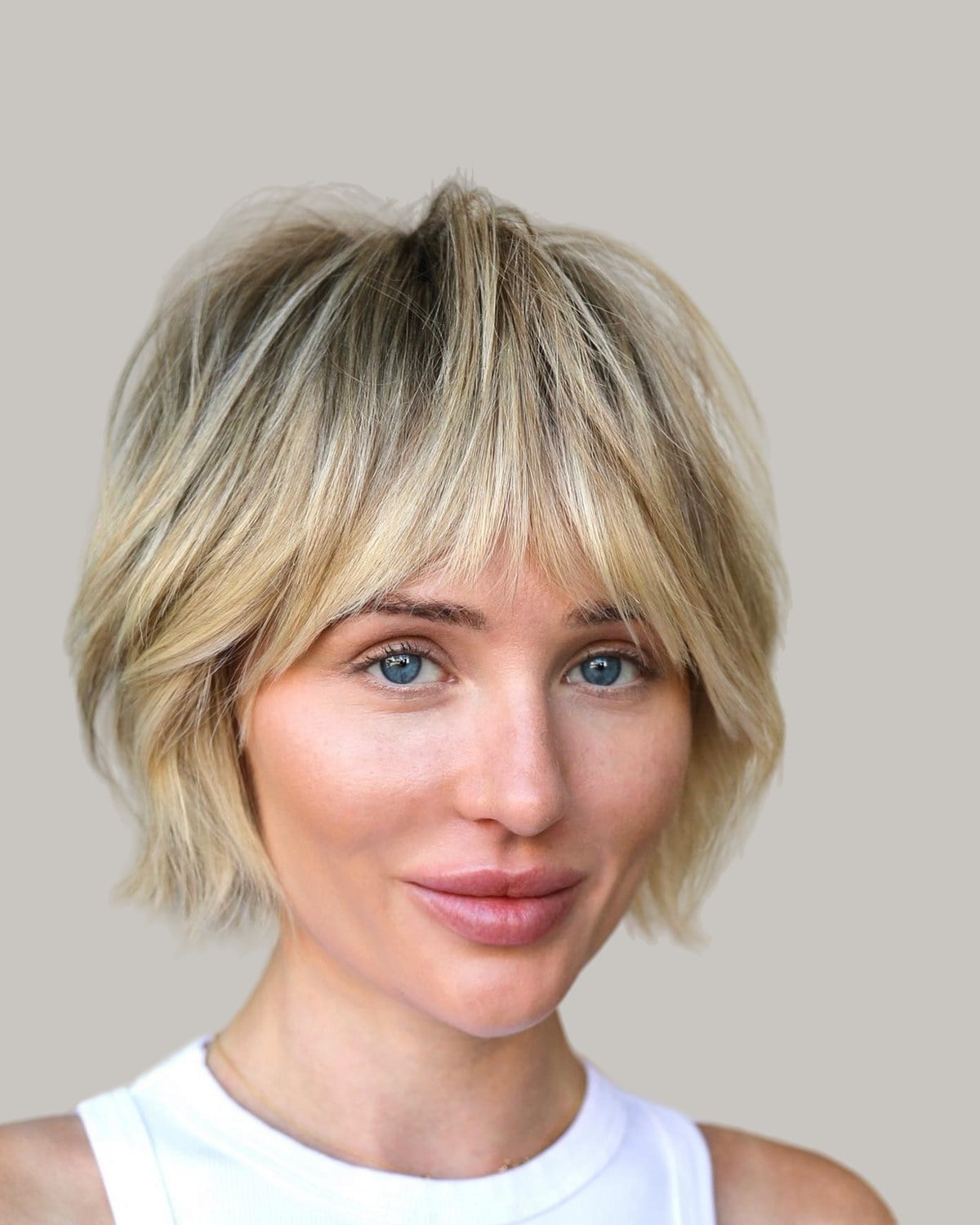
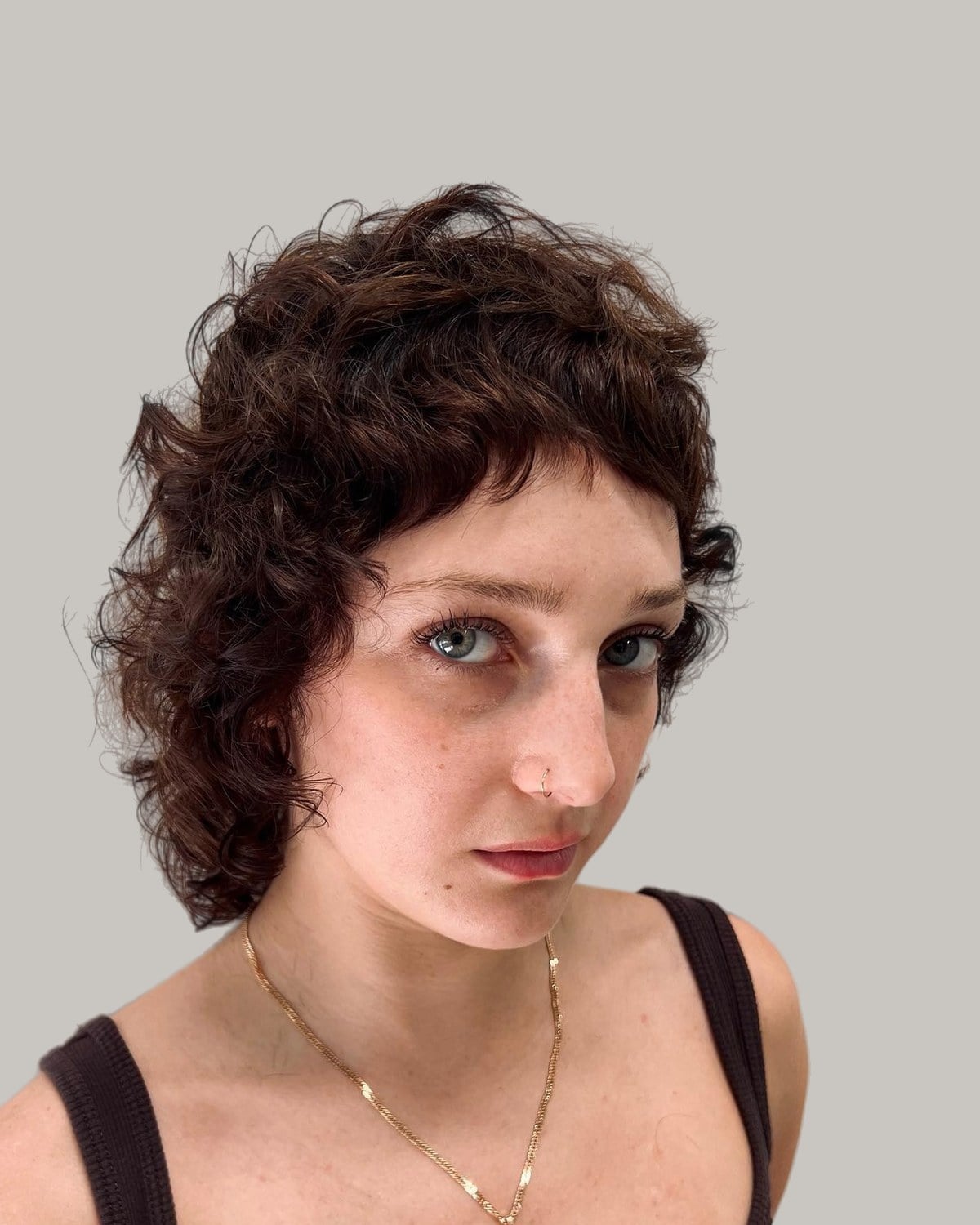
Short shags and wolf cuts are the short cuts that look better the less you do. The layers are cut in to be worn messy, and the bangs blend into them so there’s no hard line to keep tidy. It works on straight hair and on curls. Pixies, bobs and wolf cuts are all in our guide to short haircuts for women.
What to ask for A short shag with choppy layers ending at the jaw, wispy bangs blended into the sides, the ends point-cut for texture.
Short wolf cut
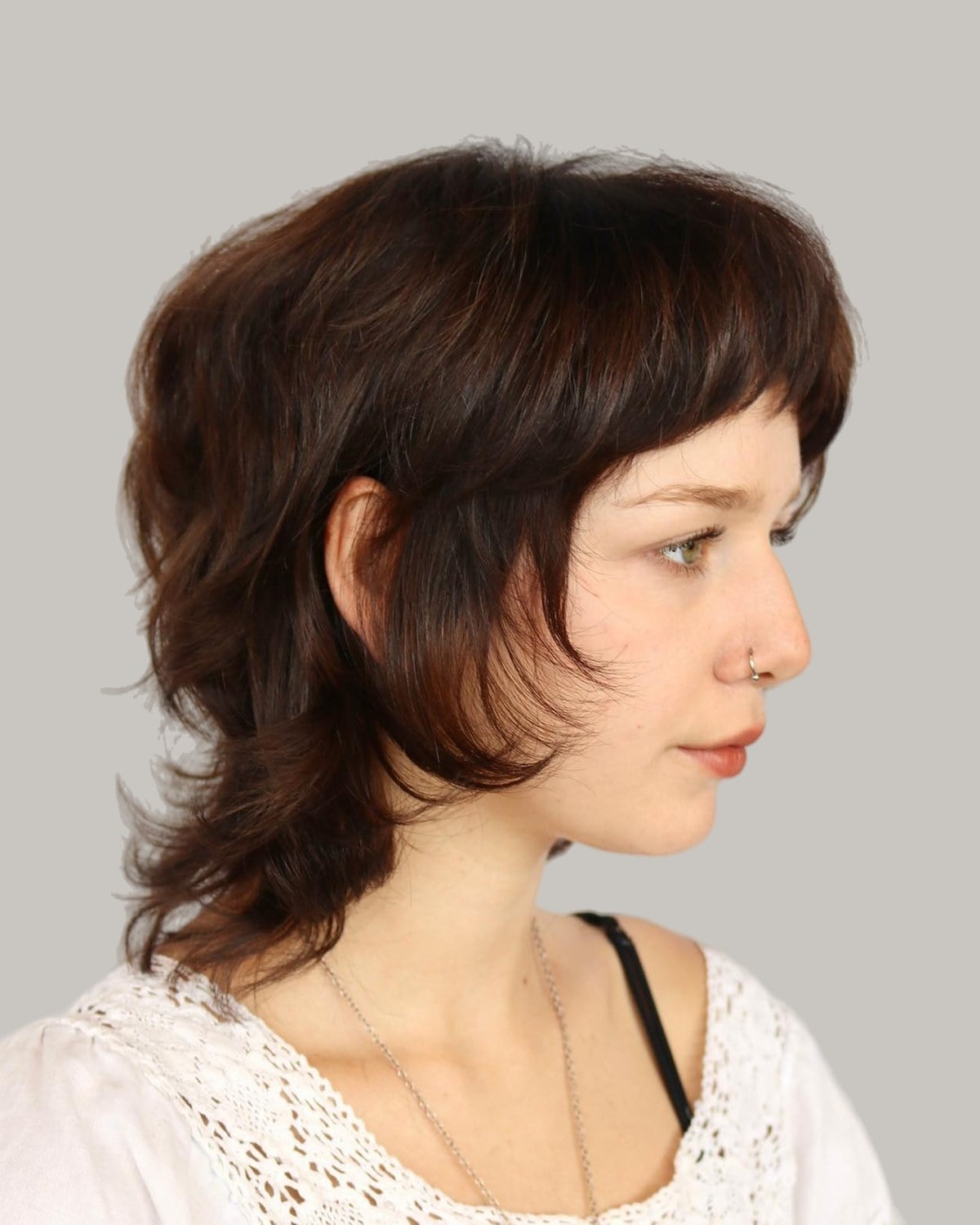

Half shag, half mullet: the layers start high at the crown and leave wispy length behind. It suits wavy or thick hair that already wants to do its own thing. Scrunch in a little texture spray and leave it messy.
What to ask for Lots of short, choppy layering up top, leave the back long and thinned out, and cut ragged bangs to my eyebrows.
Curly pixie
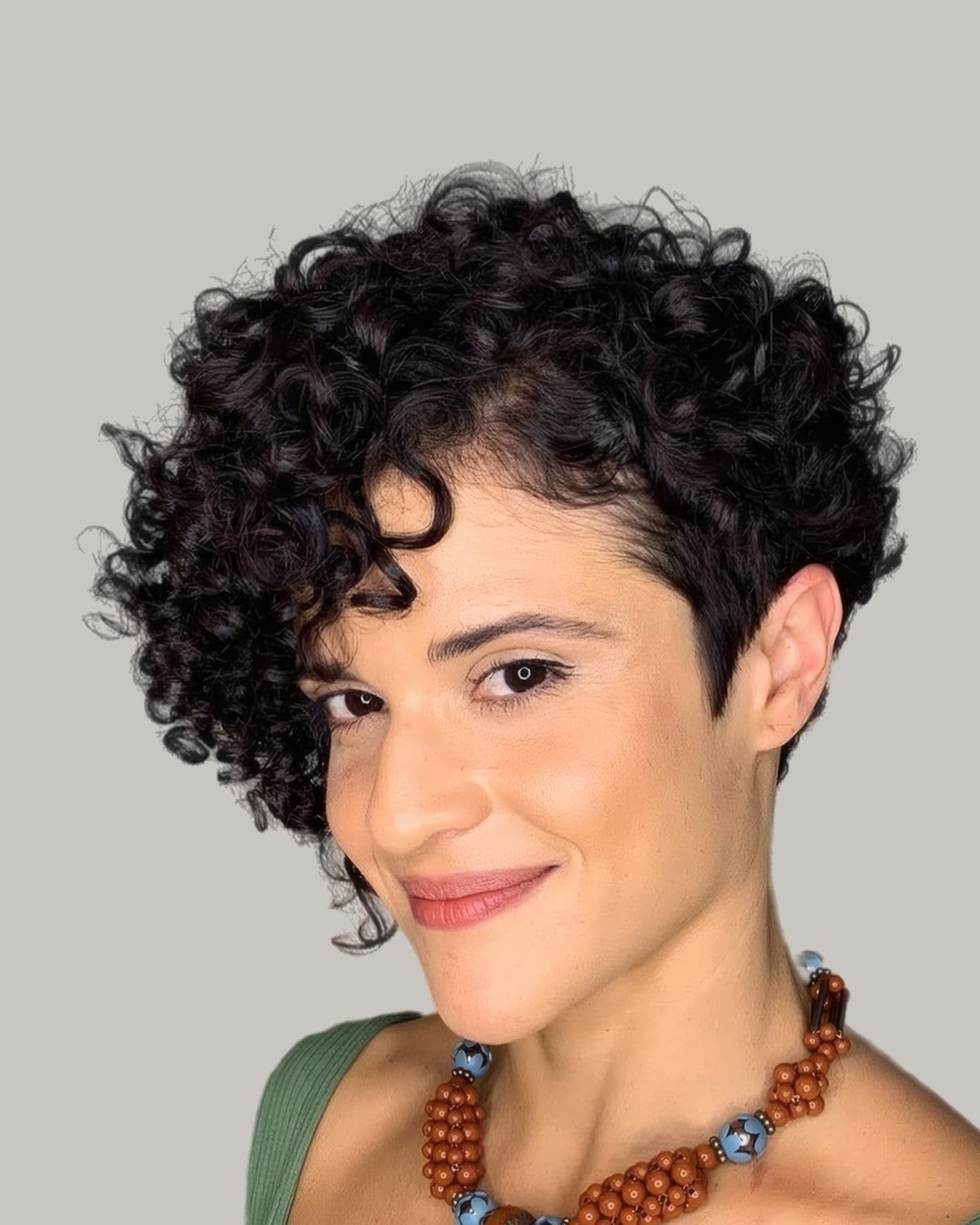
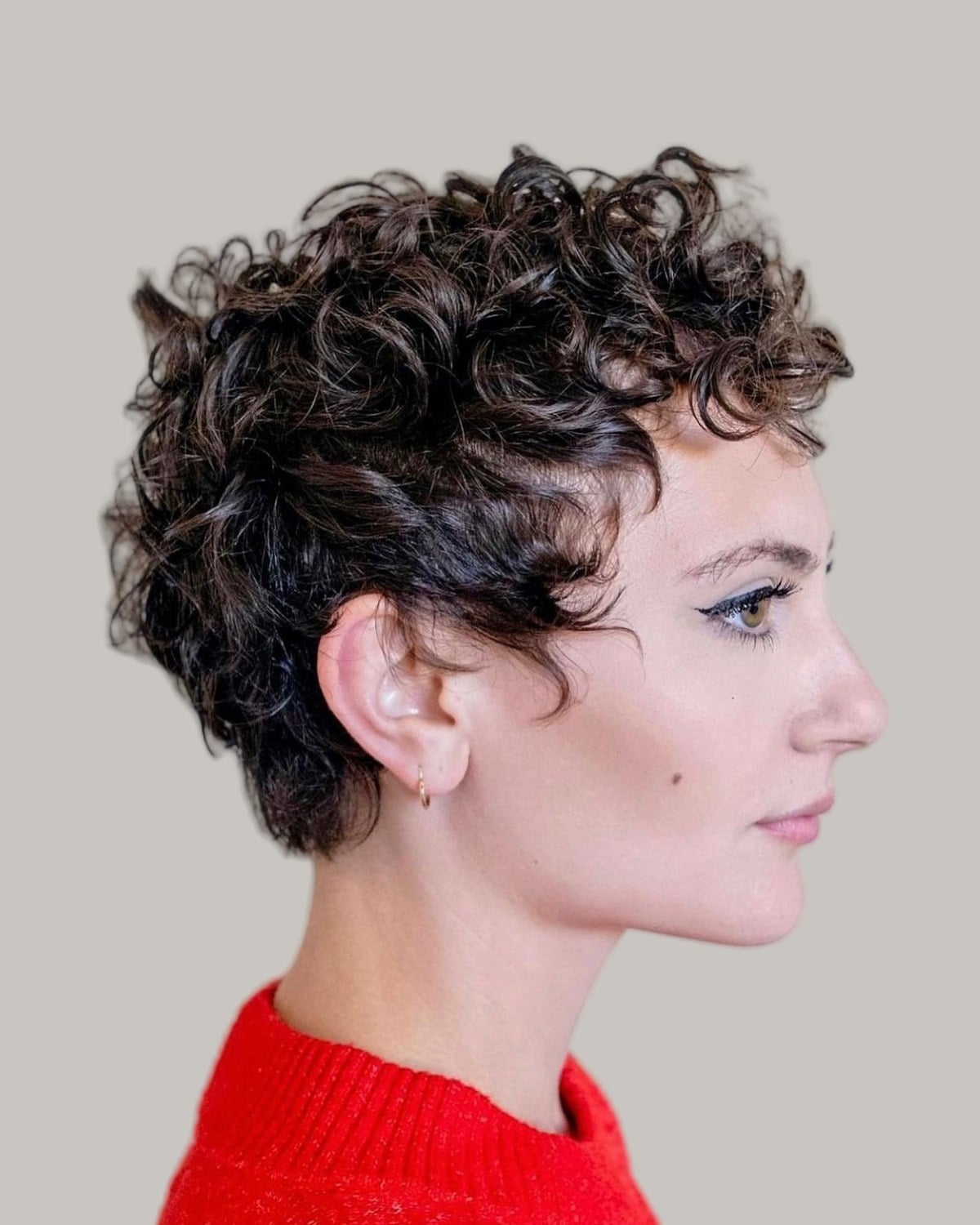
Curls look fuller cut short, because nothing weighs them down. Ask for a dry cut so your stylist can shape each ringlet where it lands. A curl cream and a diffuser keep the definition.
What to ask for Please cut my curls dry: leave them two or three inches long on the crown, clip the back and the area around my ears short, and keep a few longer ringlets falling forward.
Wash-and-wear layered crop
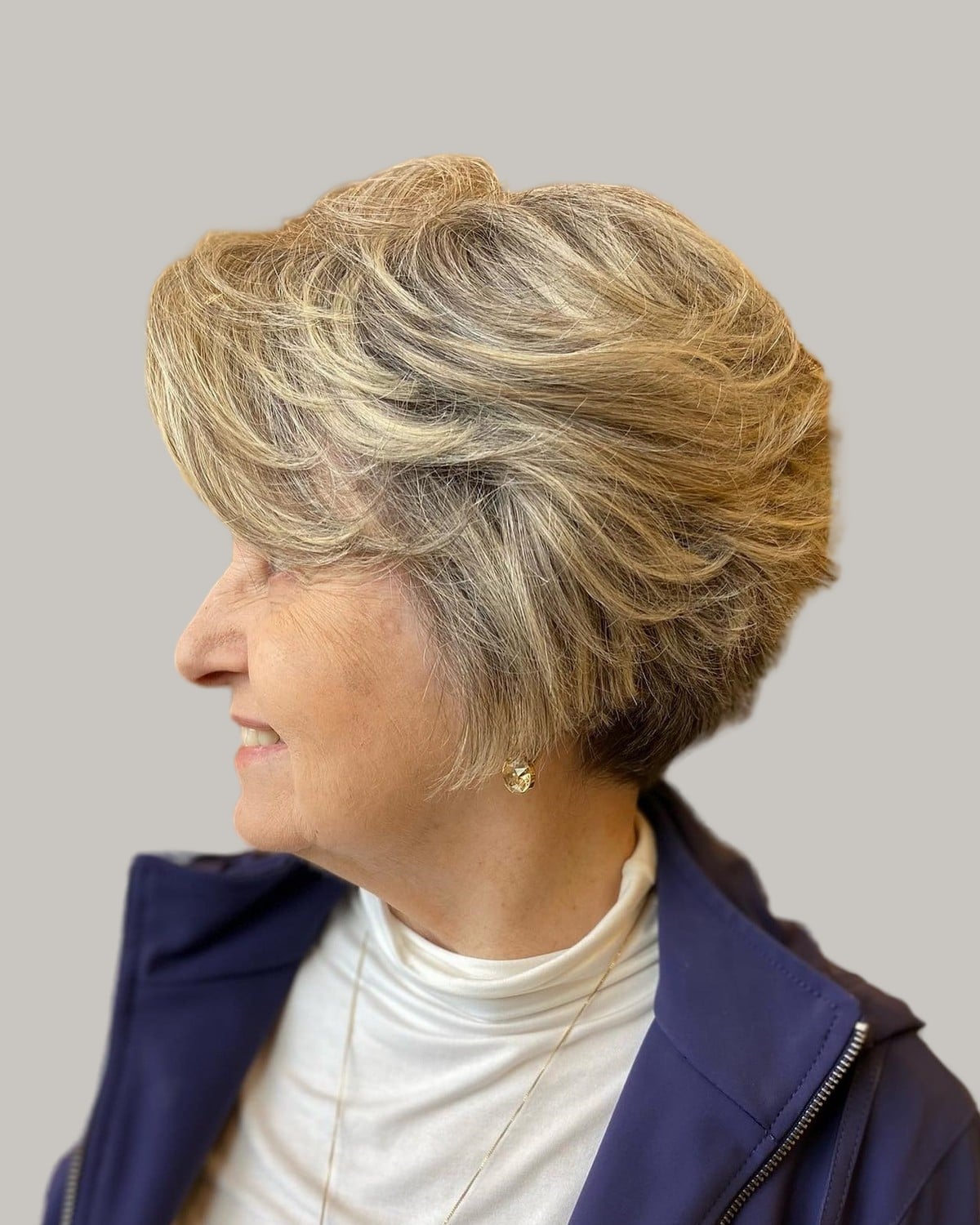
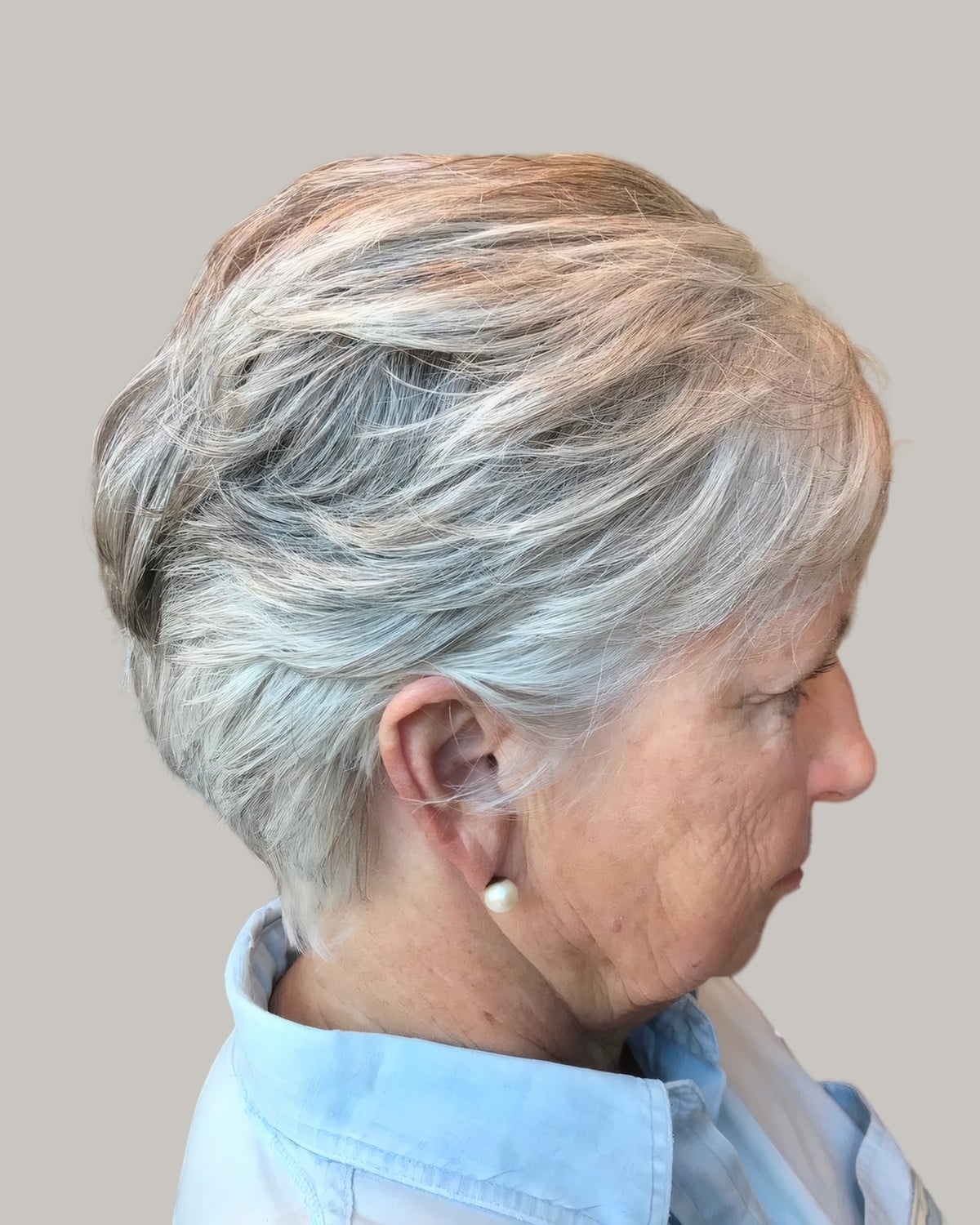
This crop is built for women who’d rather not blow-dry. The layers are cut to fall one way, so you can towel it dry, push it back with your fingers and go. It suits gray hair well, and there are 22 more in our guide to short haircuts for women over 60.
What to ask for A short layered crop, about two inches on top, layers cut to sweep back off the face, tapered at the nape and around the ears.
Shoulder-length hairstyles
Straight lob with a middle part
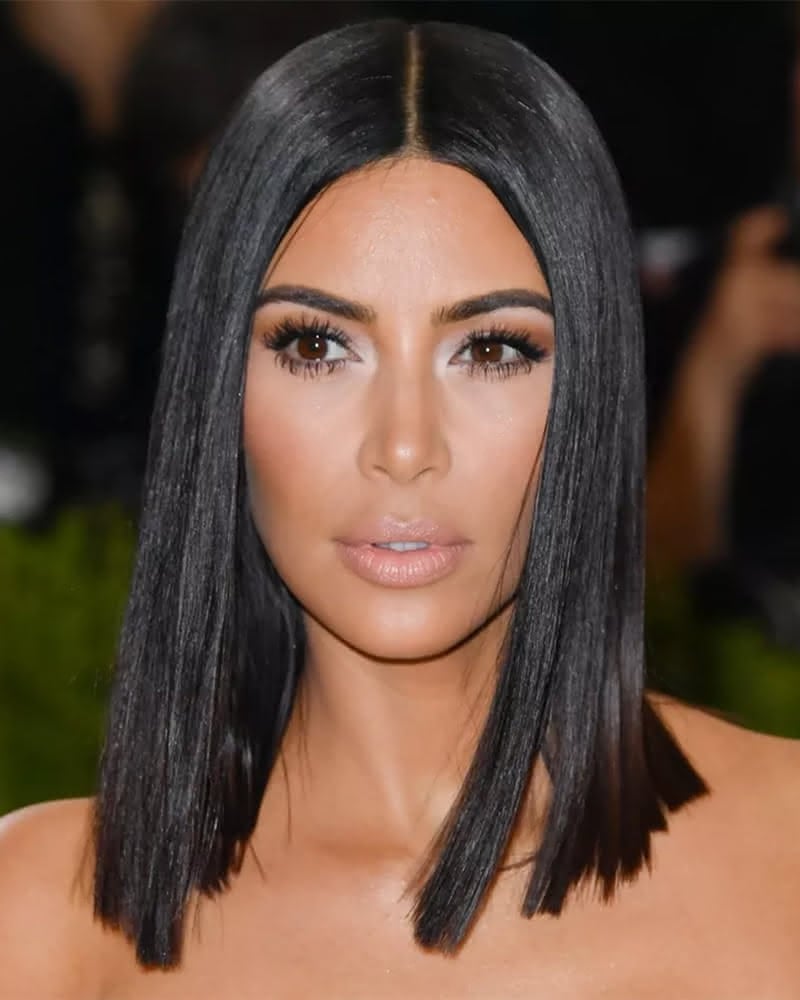
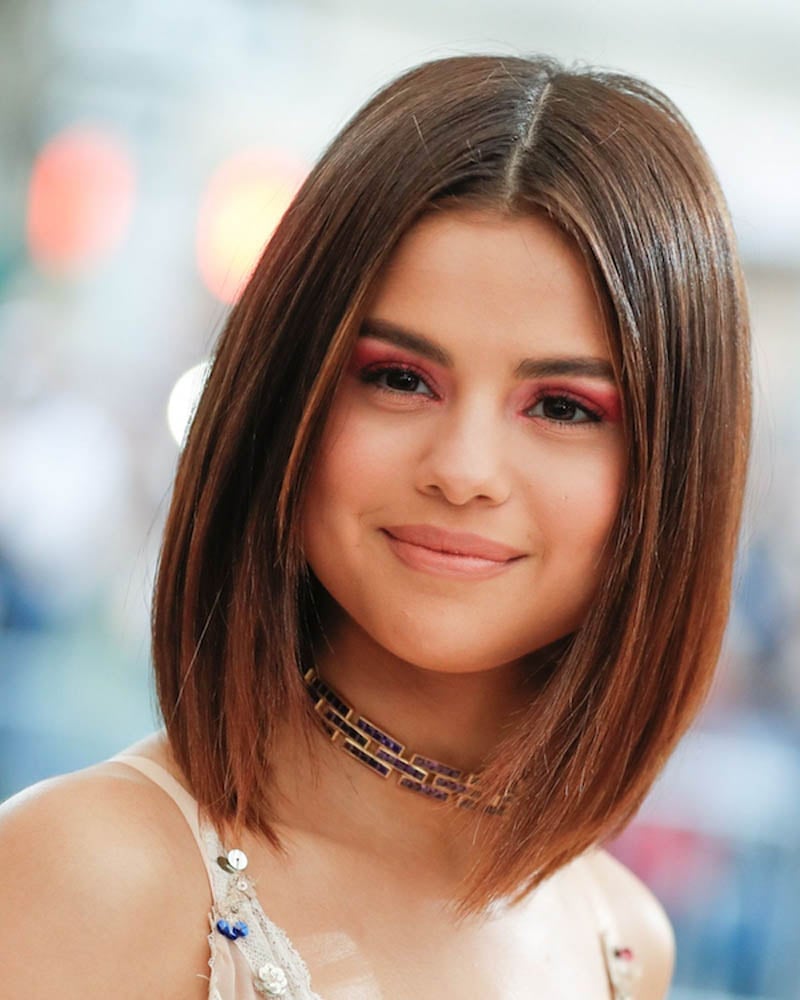
A lob is a long bob, cut somewhere between the chin and the collarbone, and it’s the cut a lot of people mean when they say shoulder length. With a blunt edge and a center part, it suits straight hair that you’re happy to flat-iron. Lobs, layers and curtain bangs are all in our guide to shoulder-length hairstyles.
What to ask for A lob cut to the collarbone, one length with a blunt edge, no layers, a center part.
Layered curls at the shoulder
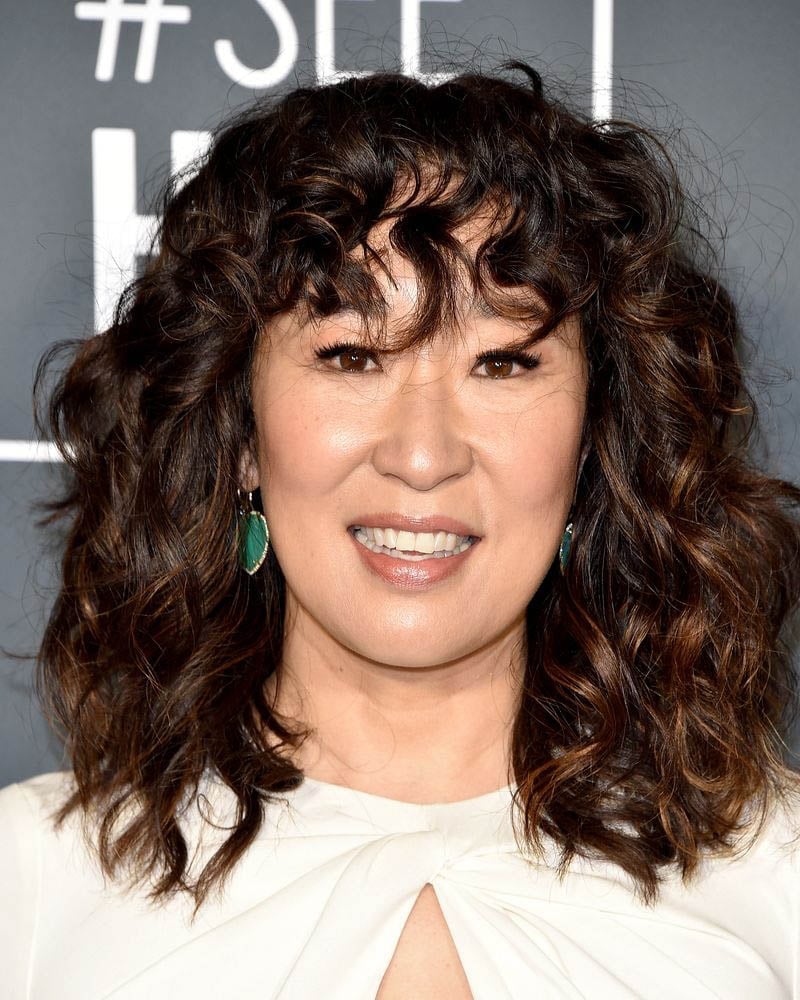
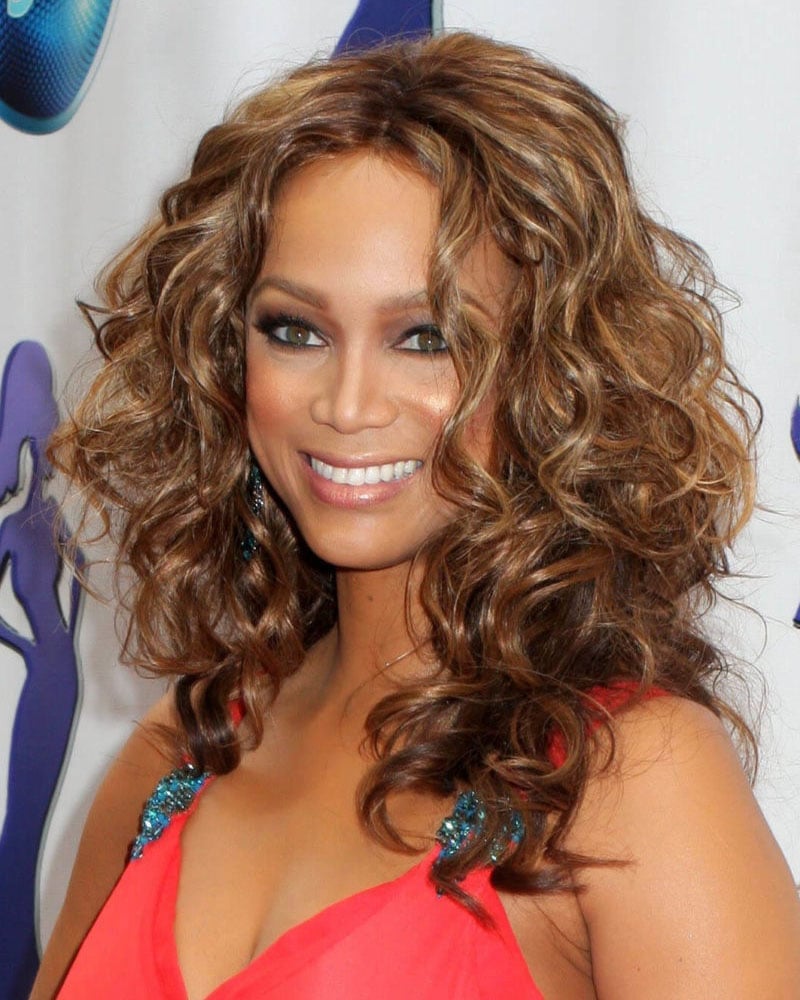
Curly hair cut to one length tends to go wide at the bottom. Layers fix that by letting the curls stack, so the volume moves up toward your face. Ask for a dry cut, curl by curl, so your stylist can see where each one lands.
What to ask for Shoulder-length curly hair cut dry, curl by curl, layers starting at the chin, curly bangs cut to the brow when dry.
Shoulder-length waves with curtain bangs
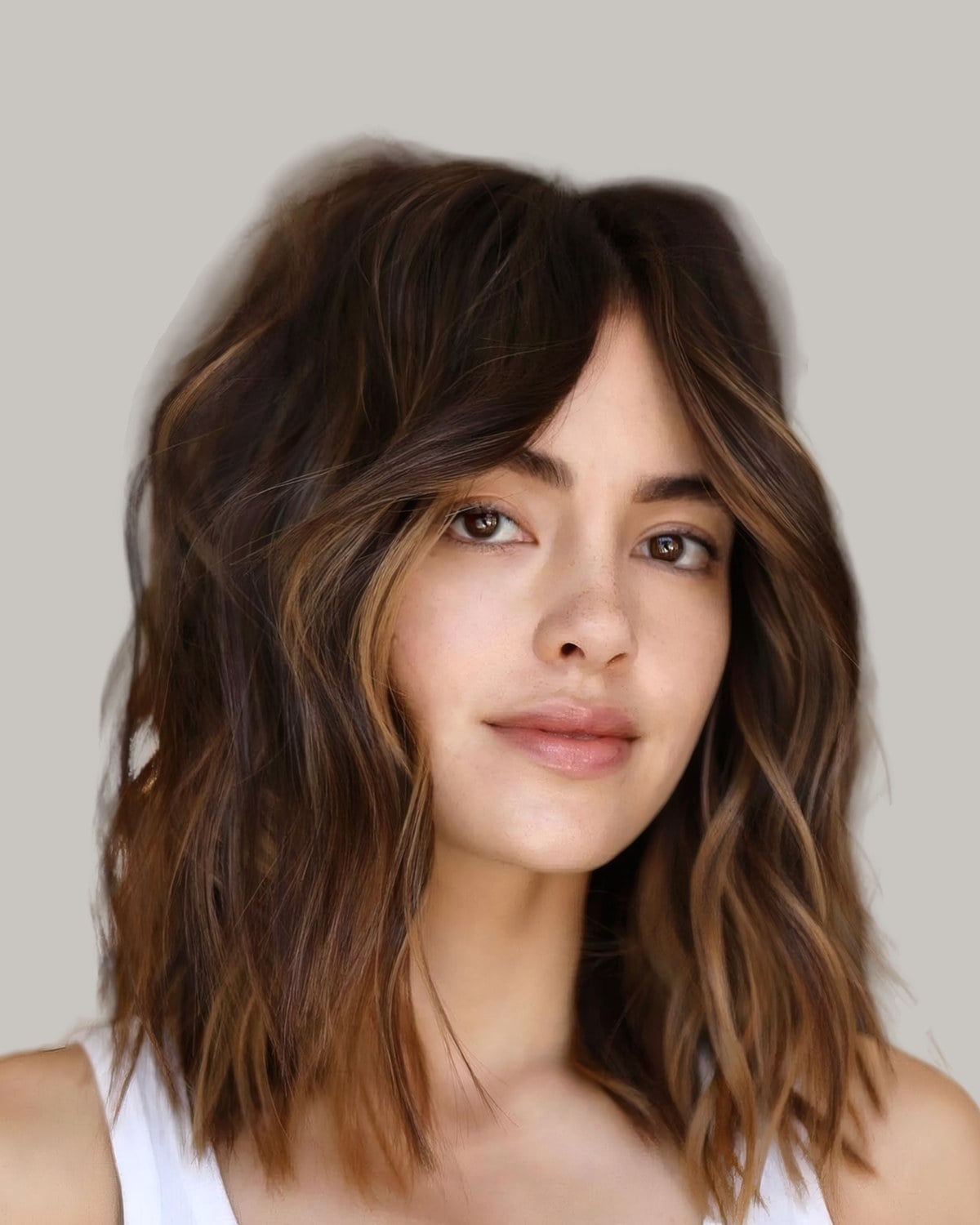
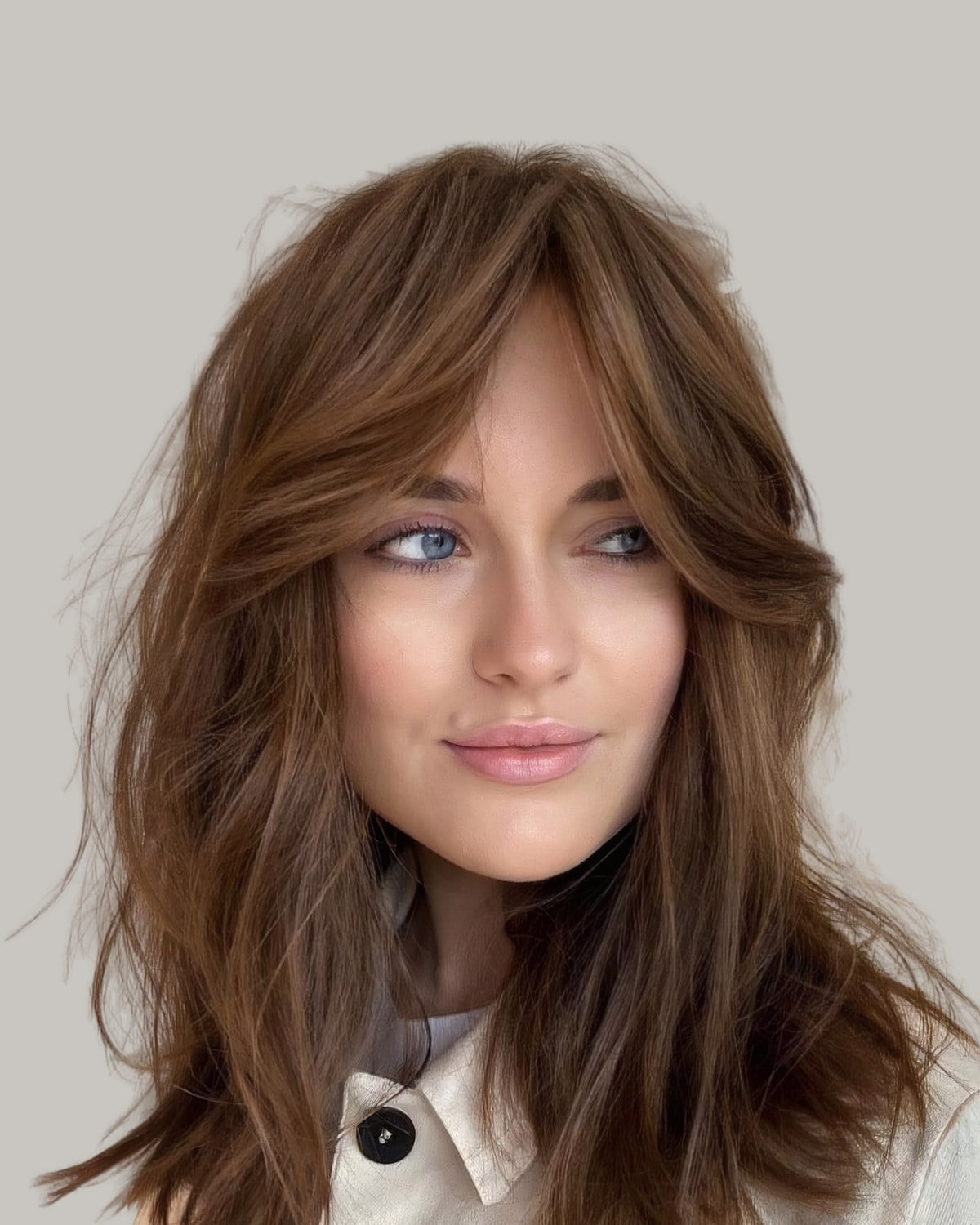
Curtain bangs are the easy way into a fringe, because they part down the middle and grow out without a hard line. On shoulder-length waves they lift the front and add shape. Most mornings, a hairdryer and two minutes is enough to shape them.
What to ask for Shoulder-length hair with soft layers, curtain bangs parted in the center and cut to the cheekbones, ends left wavy.
Butterfly haircut with curtain bangs
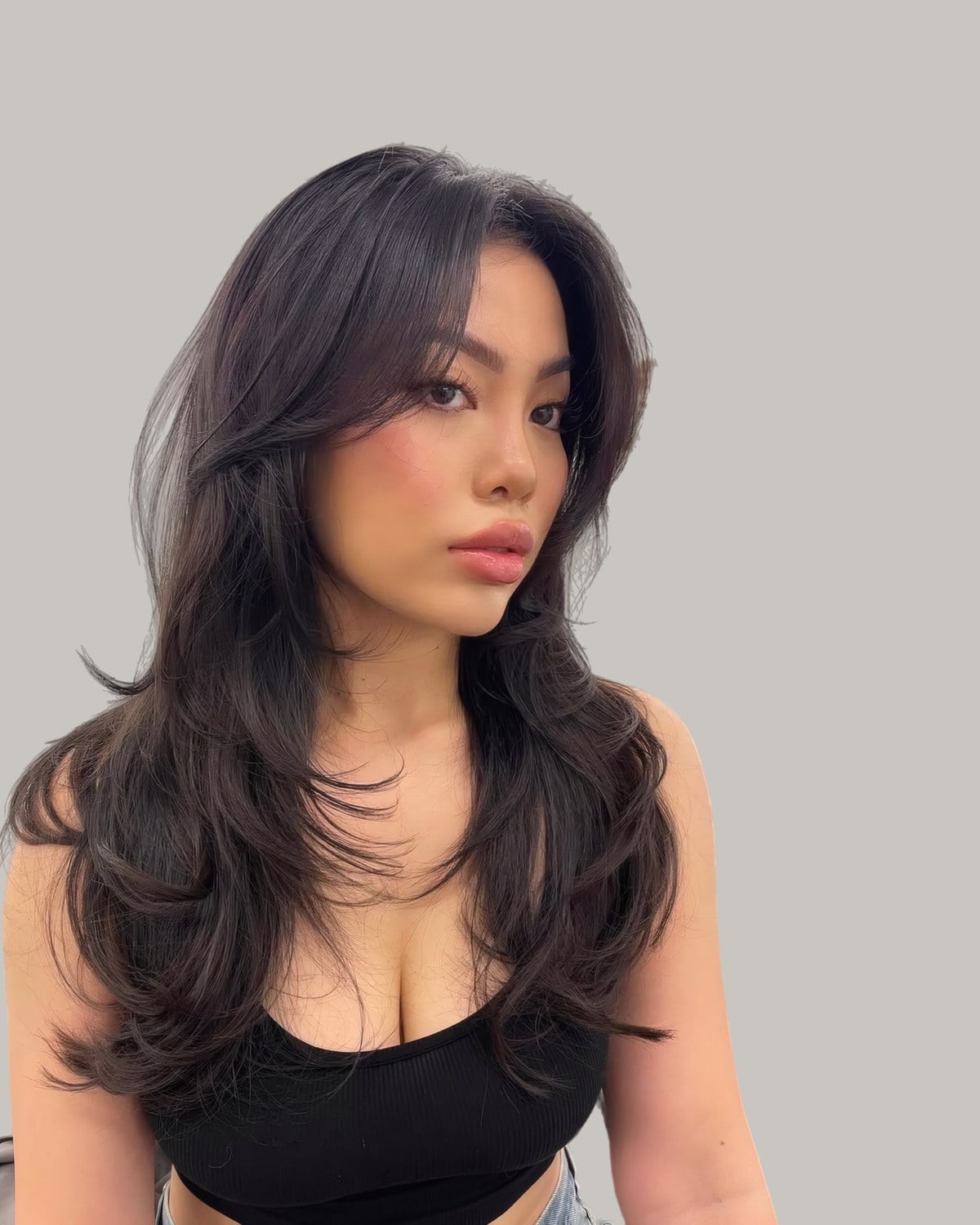
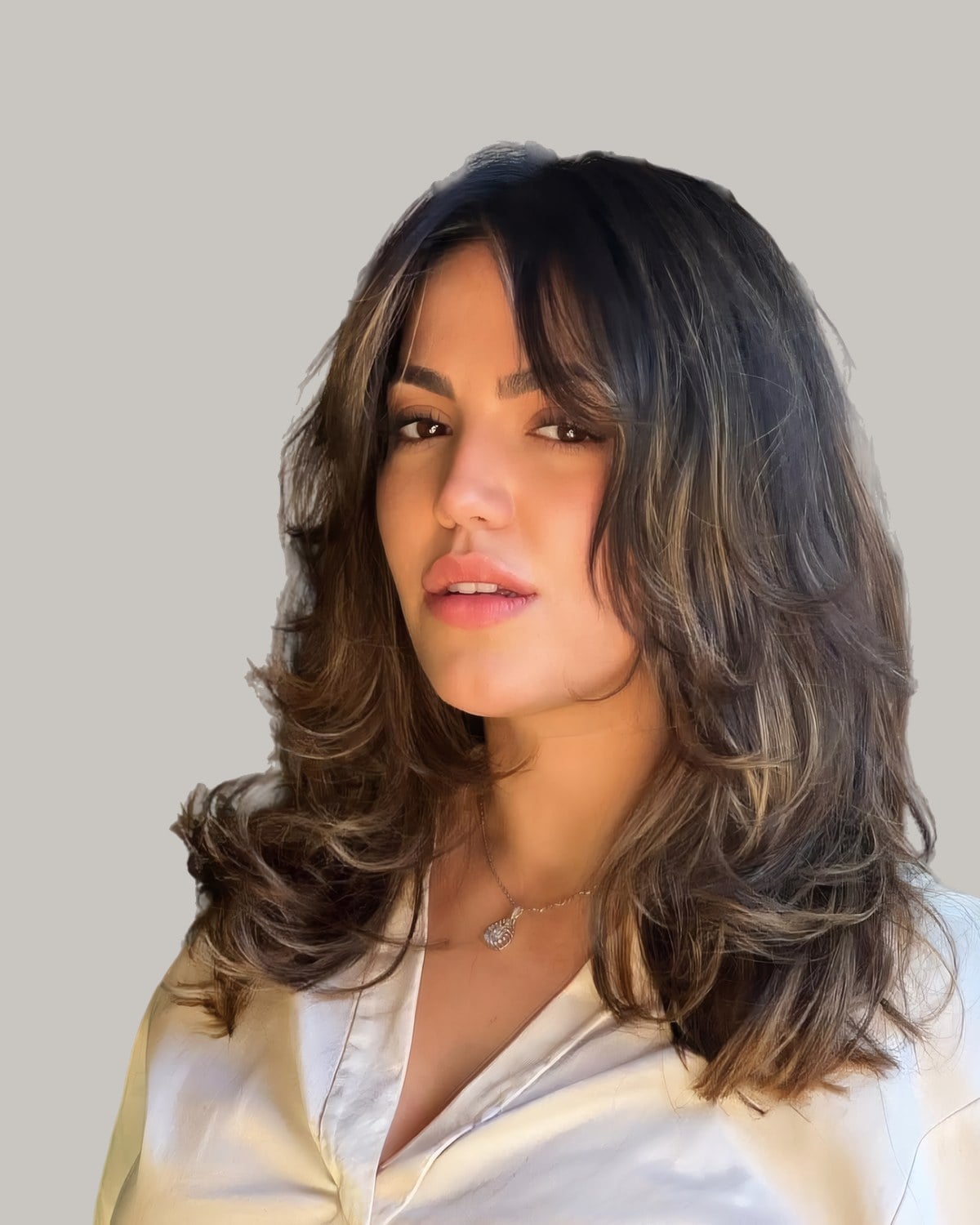
The butterfly cut stacks short layers around the face over longer ones behind, so it can pass for a short cut at the front and a long one at the back. Curtain bangs suit it, because they lead straight into those front layers. It needs a round brush to get the bounce in. Our butterfly haircut guide has 23 more.
What to ask for A butterfly cut with short face-framing layers from the cheekbone, long layers behind, curtain bangs parted in the center and blended into the front.
Medium shag with flicked ends
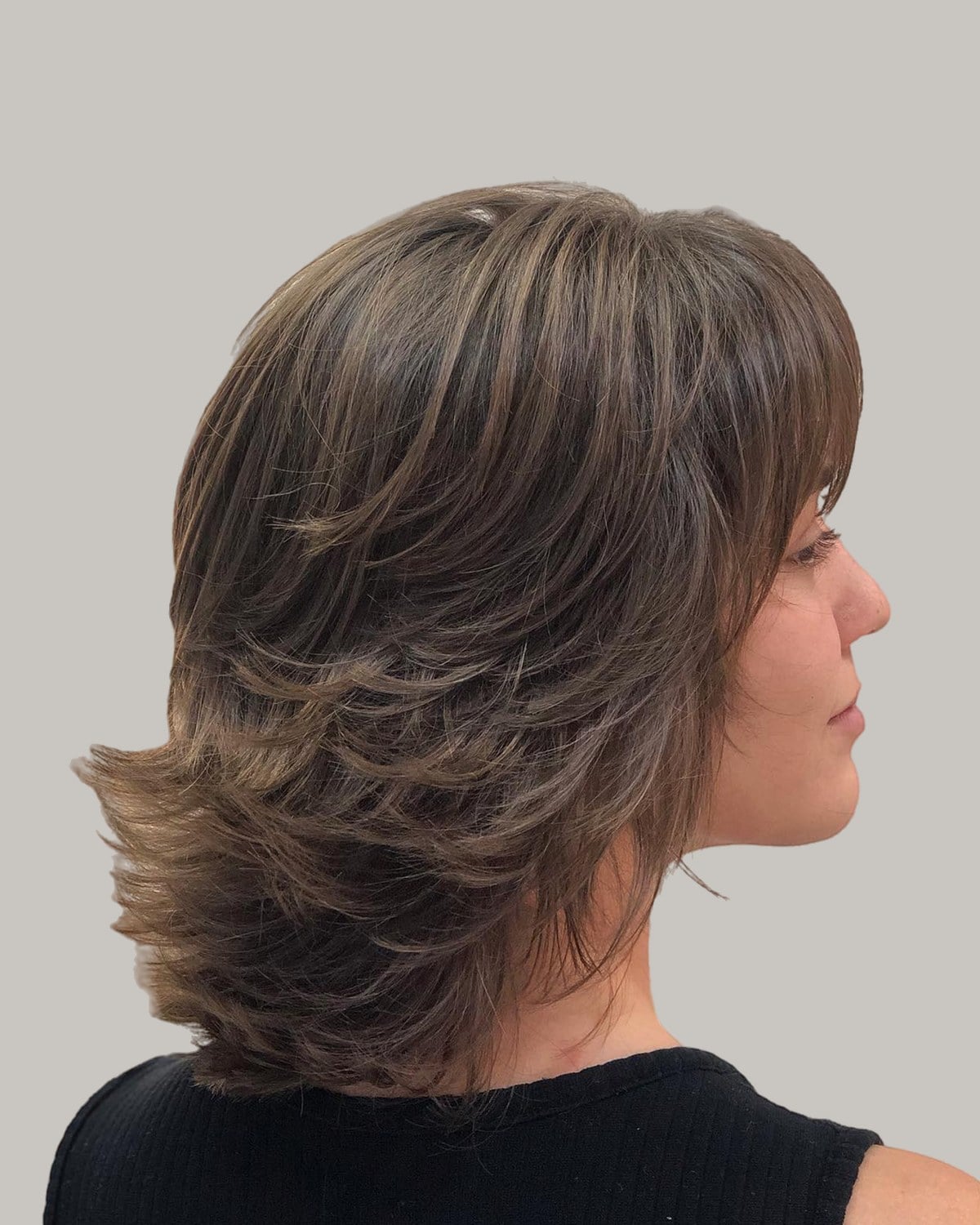
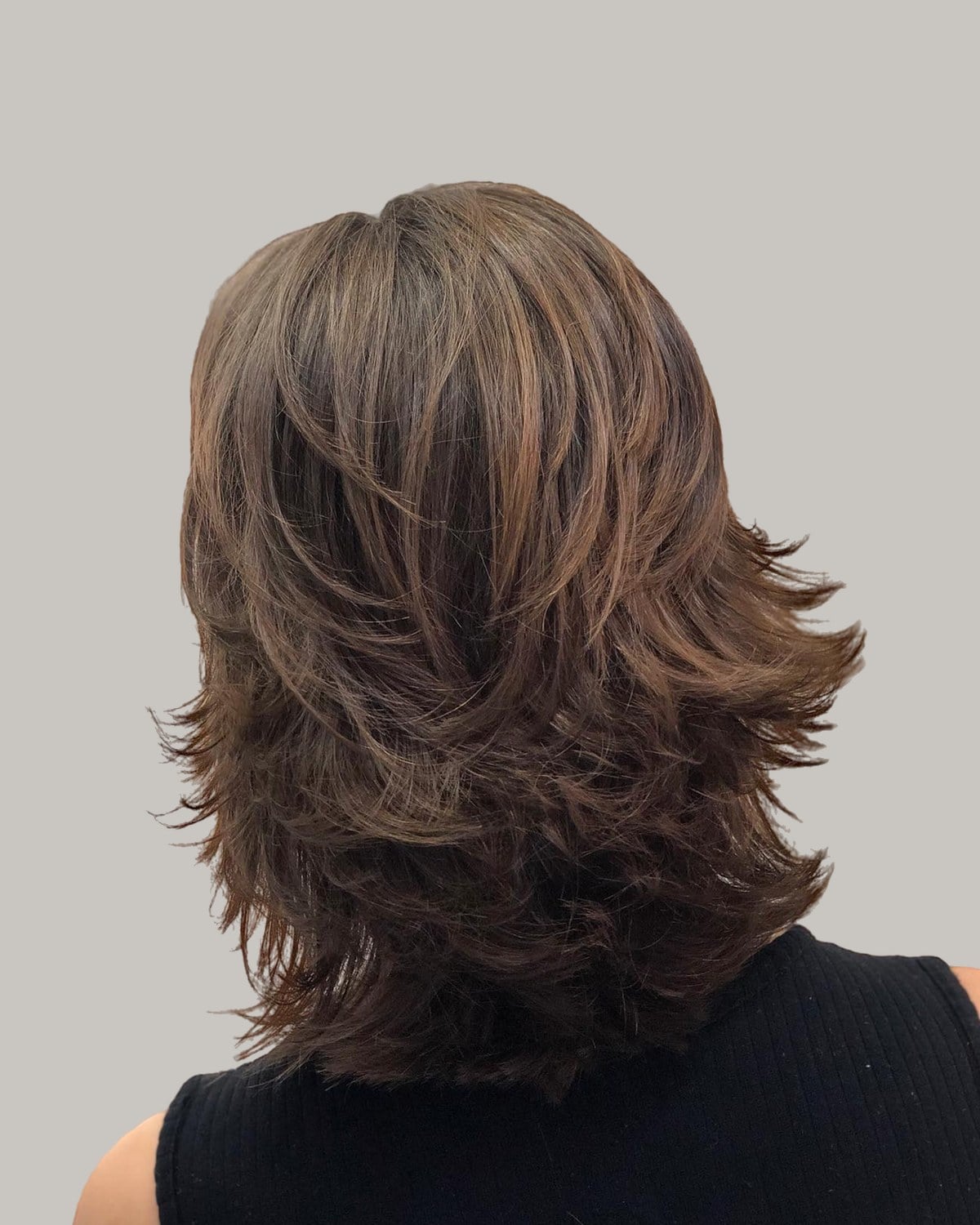
A medium shag keeps enough length to tie back, with layers through the crown and ends that flick out. It suits thick or wavy hair that needs weight taken out. Long, curly and short versions are in our shag haircut guide.
What to ask for A medium shag ending at the shoulder, layers cut from the crown down, bangs blended into the sides, ends cut to flick out.
Curly shag with bangs
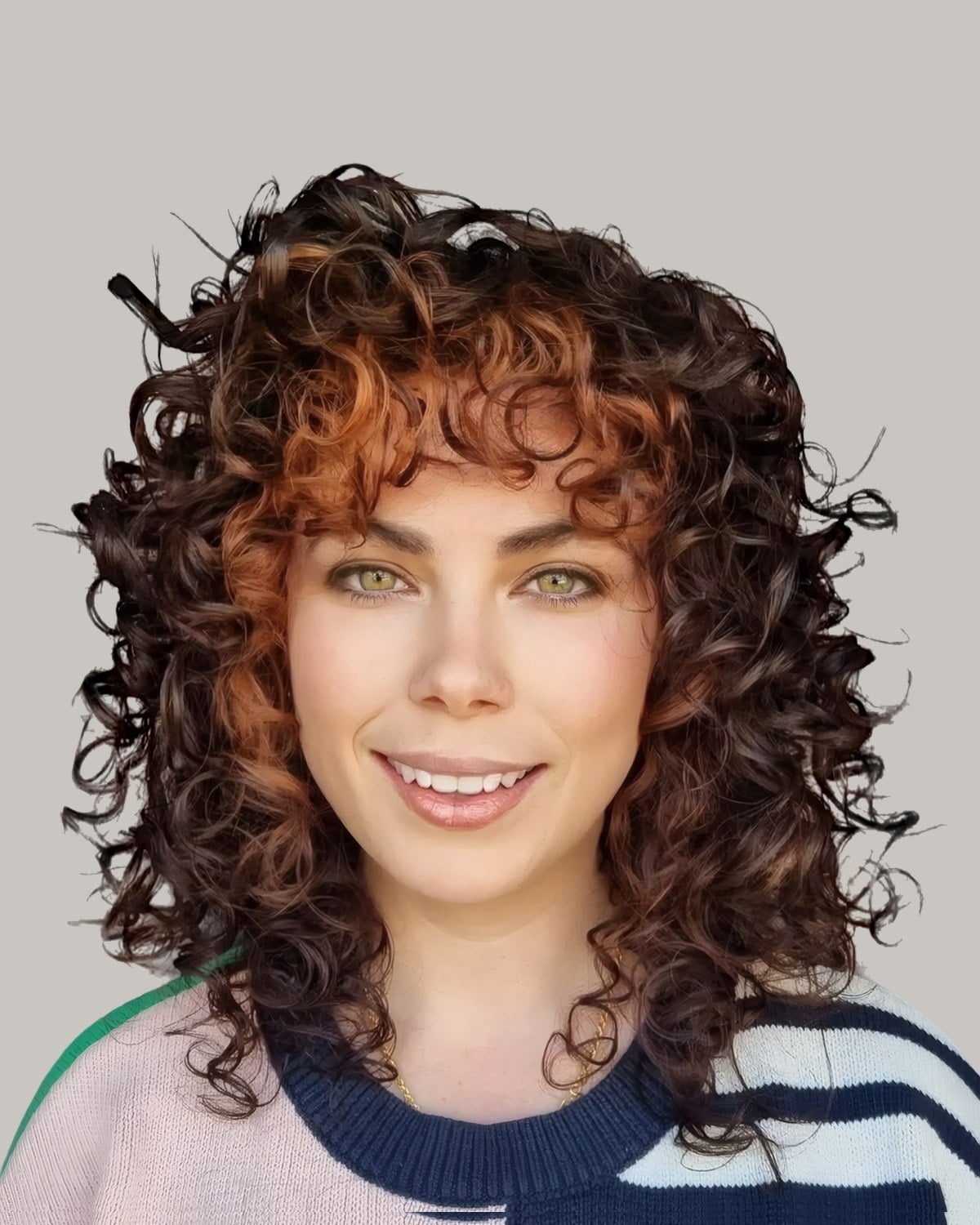

A shag gives curls a shape to grow into, with layers that let each ringlet spring up instead of hanging flat. Curly bangs are forgiving, since the curl hides any uneven ends. Cut it dry and diffuse it.
What to ask for A curly shag cut dry, layers from the crown to the collarbone, curly bangs cut long at the brow.
Long haircuts
Long layers
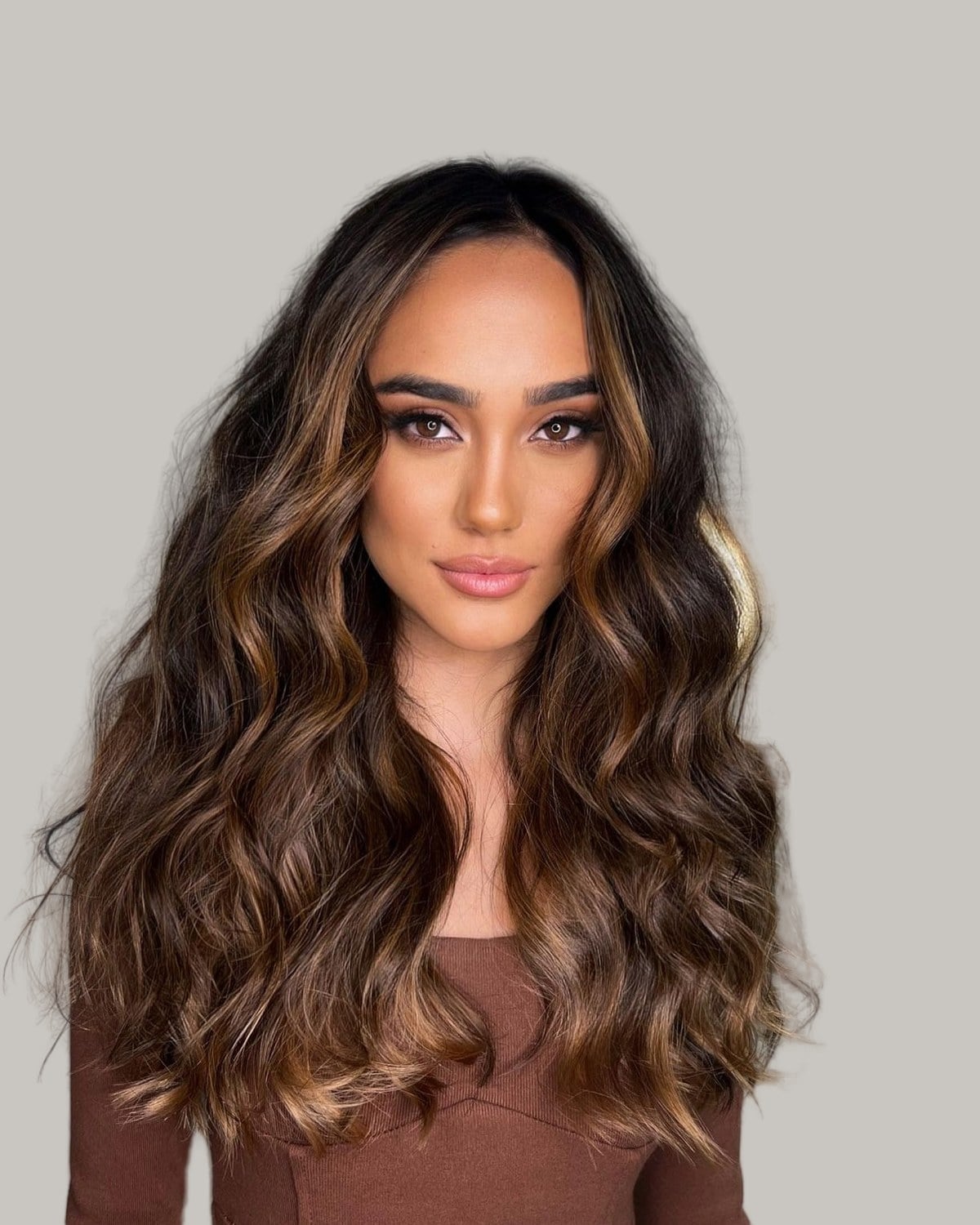
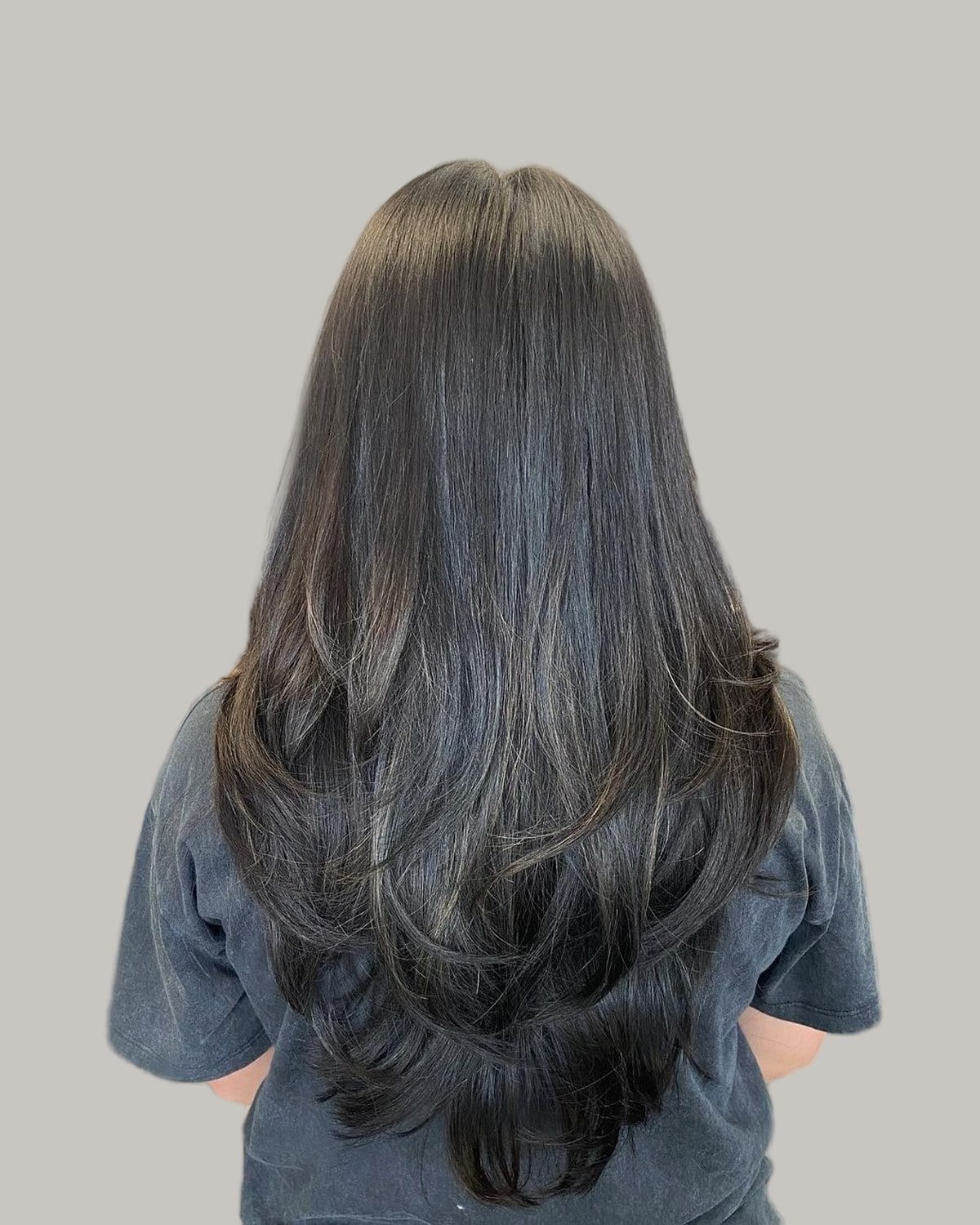
Long layers change the shape without costing you length. They take weight out of the lengths, so the hair moves and the ends look lighter. Long layers, curtain bangs, the V-cut and 27 more are in our guide to long haircuts for women.
What to ask for Long layers through the lengths, the shortest at the collarbone, and no more than an inch off the ends.
Face-framing long layers
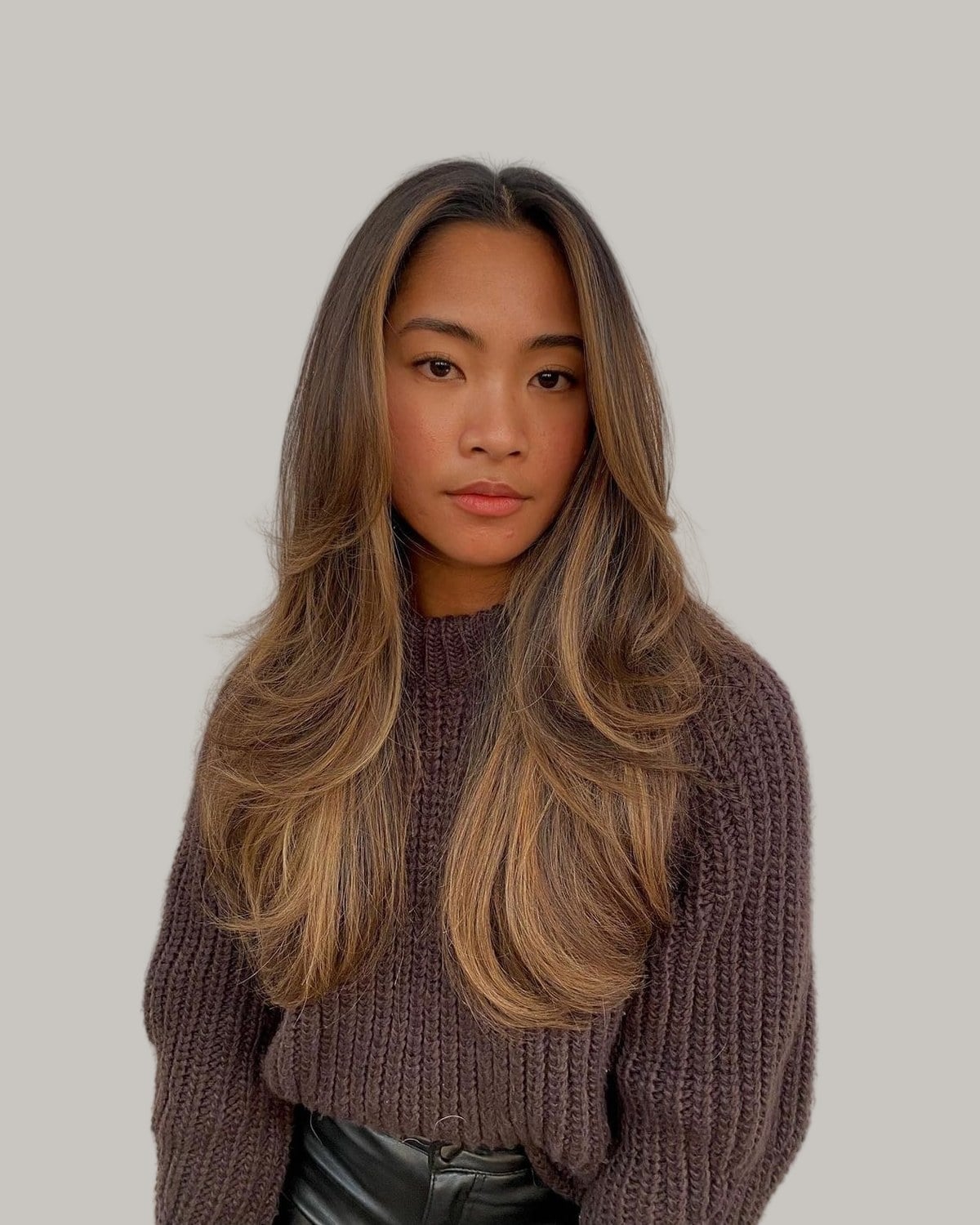
Only the front pieces are cut shorter, so they curve around the face and fall back into the length. A trim every six to eight weeks keeps them in shape, and they grow out without a hard line.
What to ask for Face-framing layers that start just below the chin, blended into long layers, the back left long.
Long layers with curtain bangs

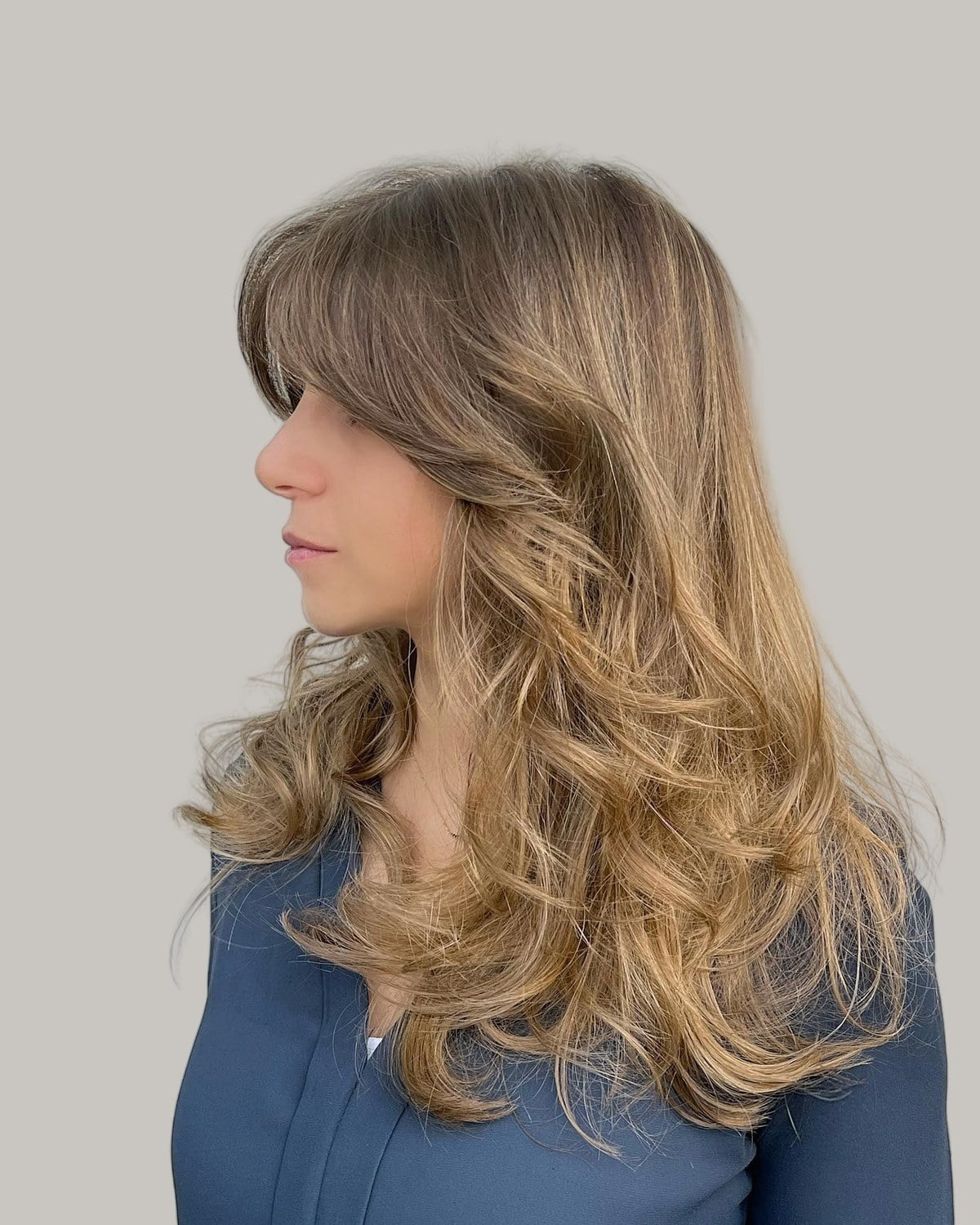
Curtain bangs part in the center and fall to each side, so they frame the face rather than cover it. They suit most face shapes and grow out into face-framing layers. Expect a trim every four to eight weeks.
What to ask for Curtain bangs parted in the middle and cut to the cheekbone, blended into long layers, the length kept.
V-cut
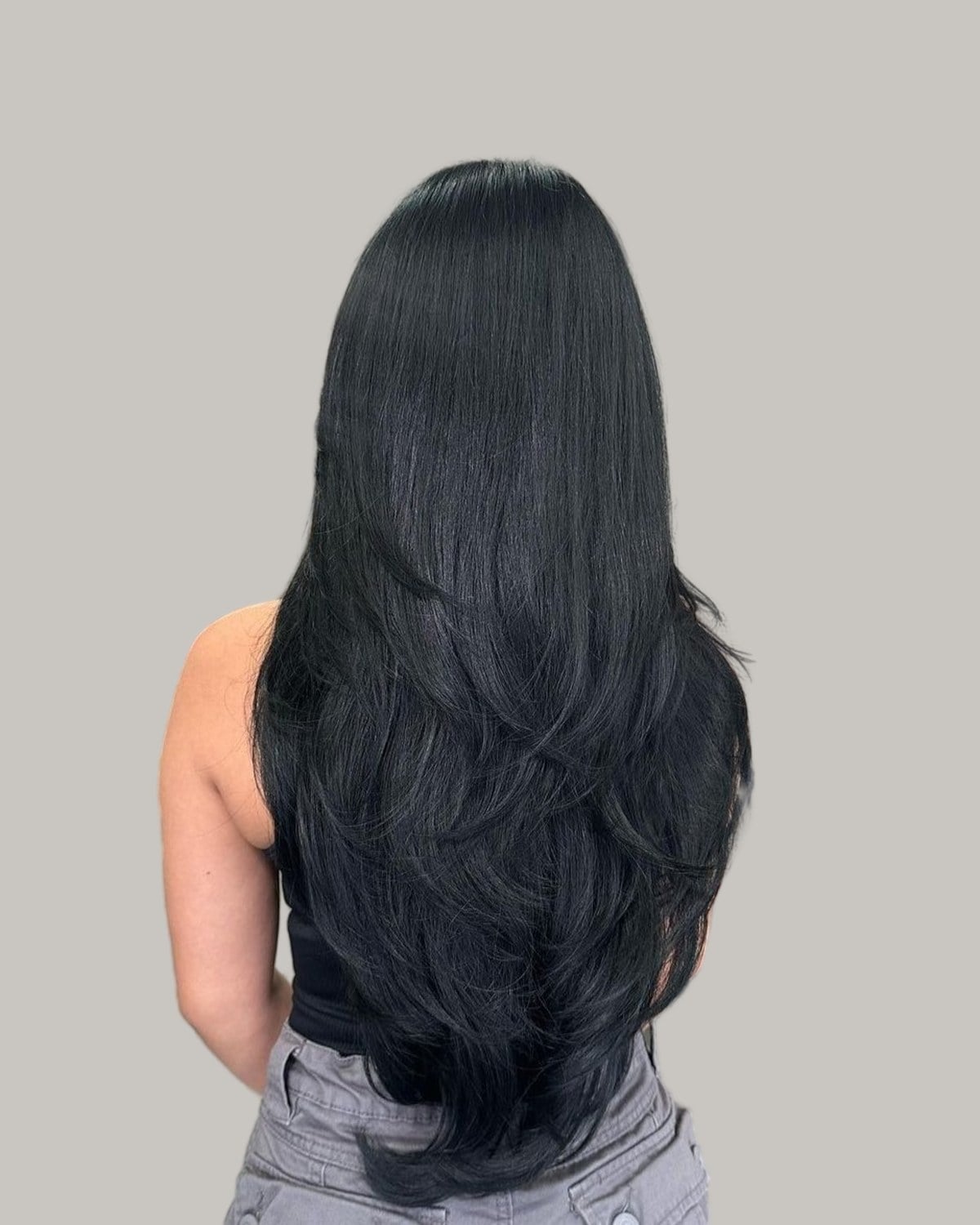
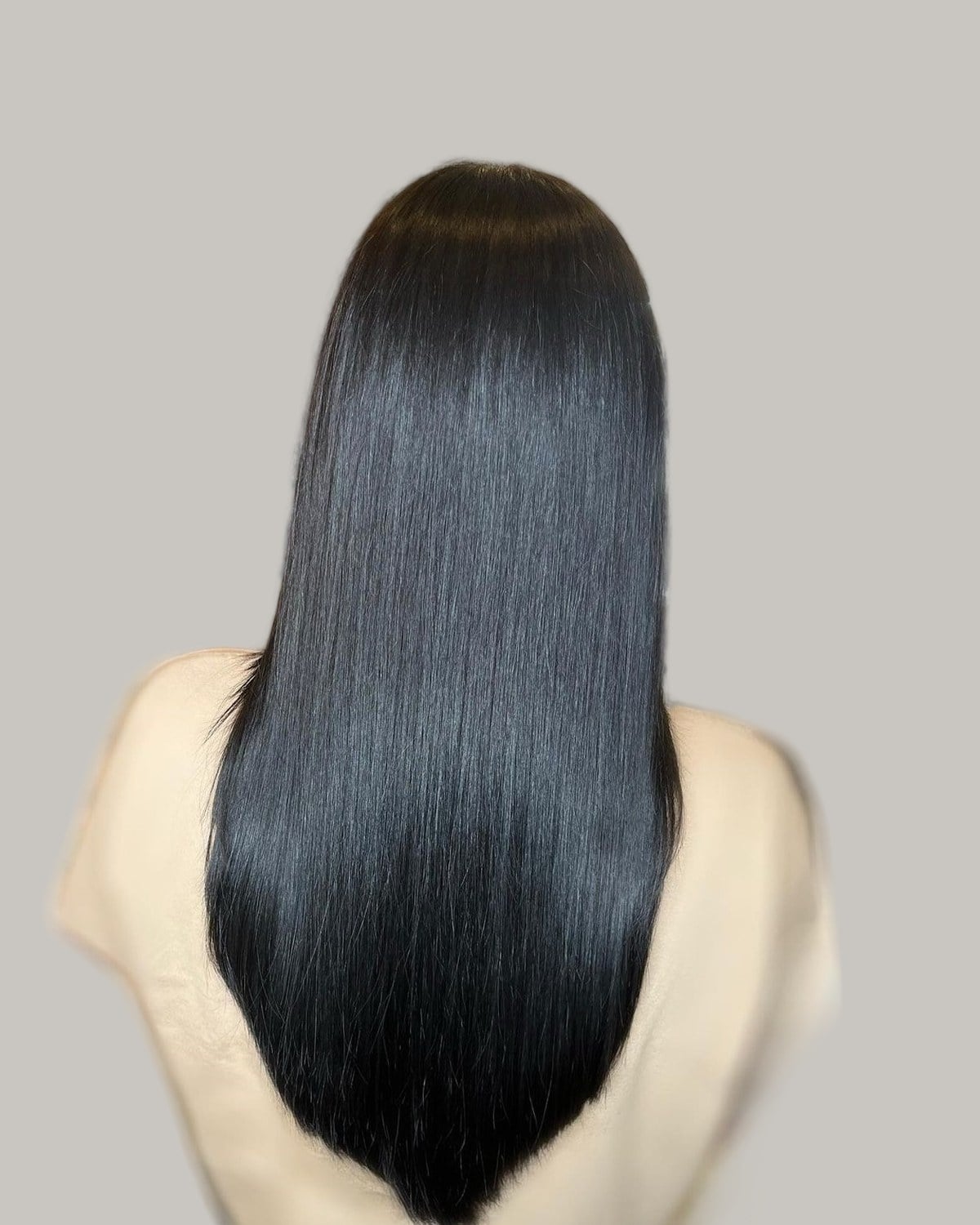
A V-cut is all about the back: the sides are cut shorter and the hem tapers to a point. It takes hair out of the ends at the center, so it suits hair with thickness to spare. The U-cut is the rounder version.
What to ask for A V-shaped hem at the back, the point at the center, the sides angled up, long layers through the lengths.
Long hair with blunt bangs
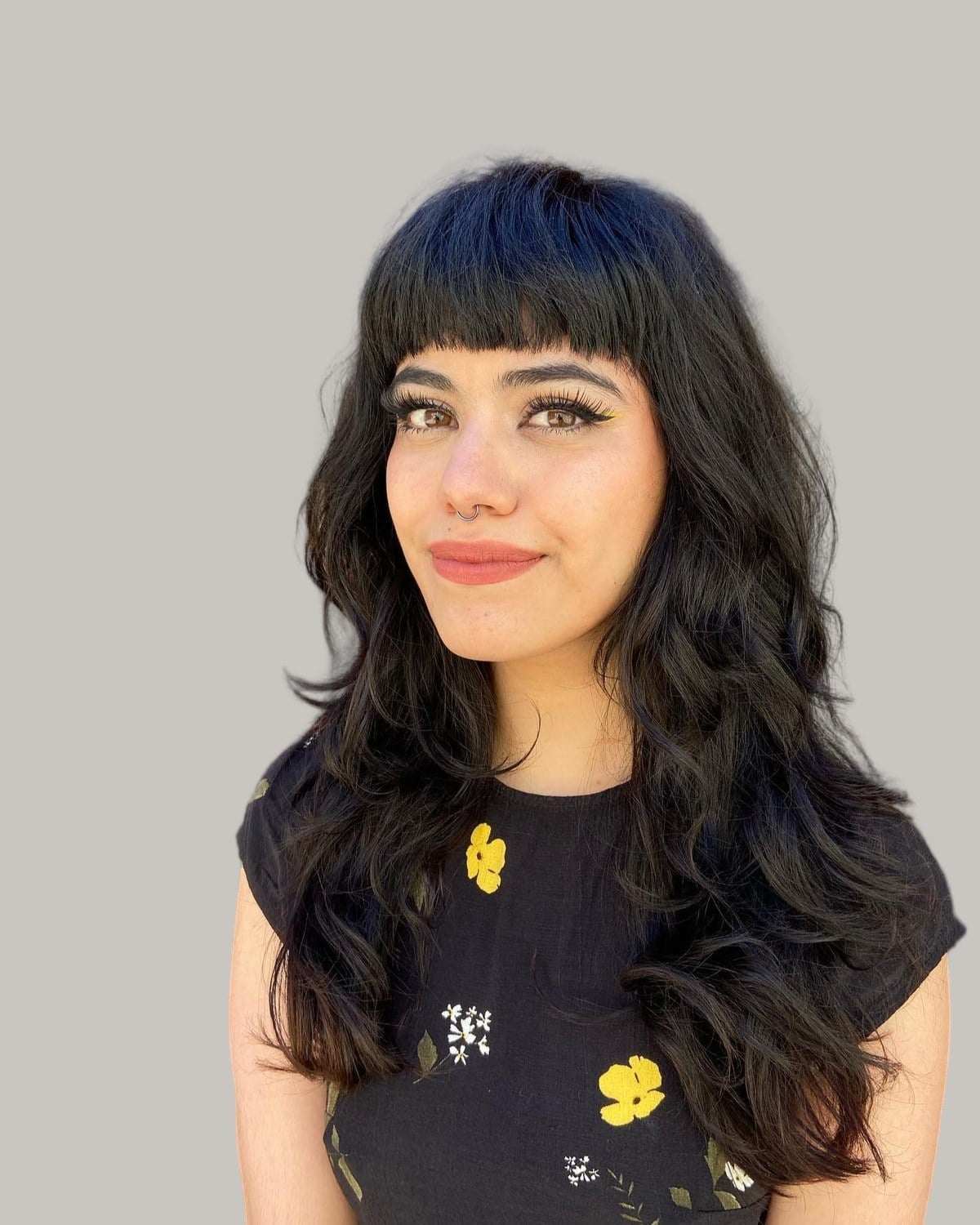
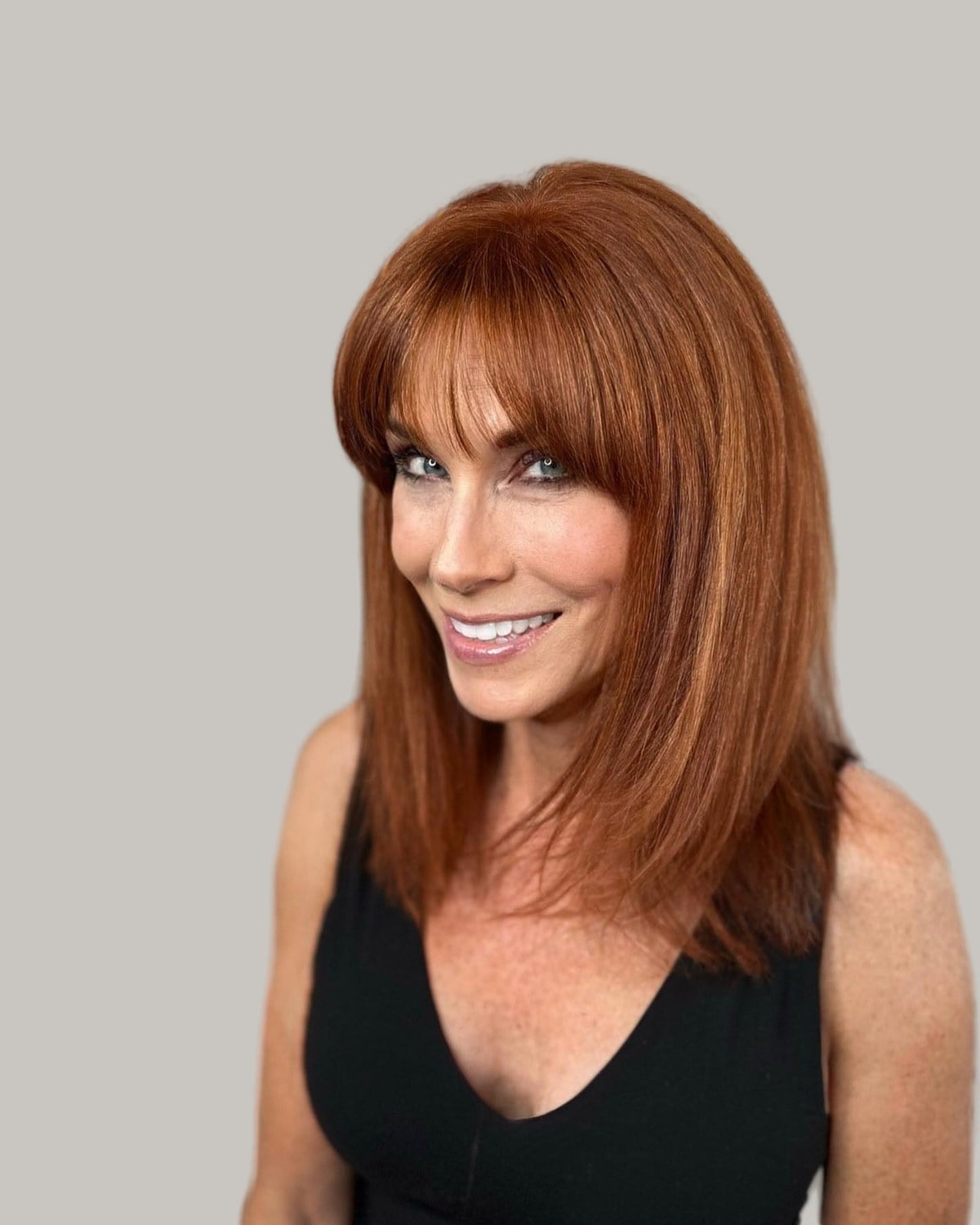
A blunt fringe is cut in one straight line across the brow. It shows every week of growth, so book a fringe trim every few weeks between full cuts.
What to ask for A blunt fringe cut straight across at the brow, over long hair with light layers.
Long curly layers
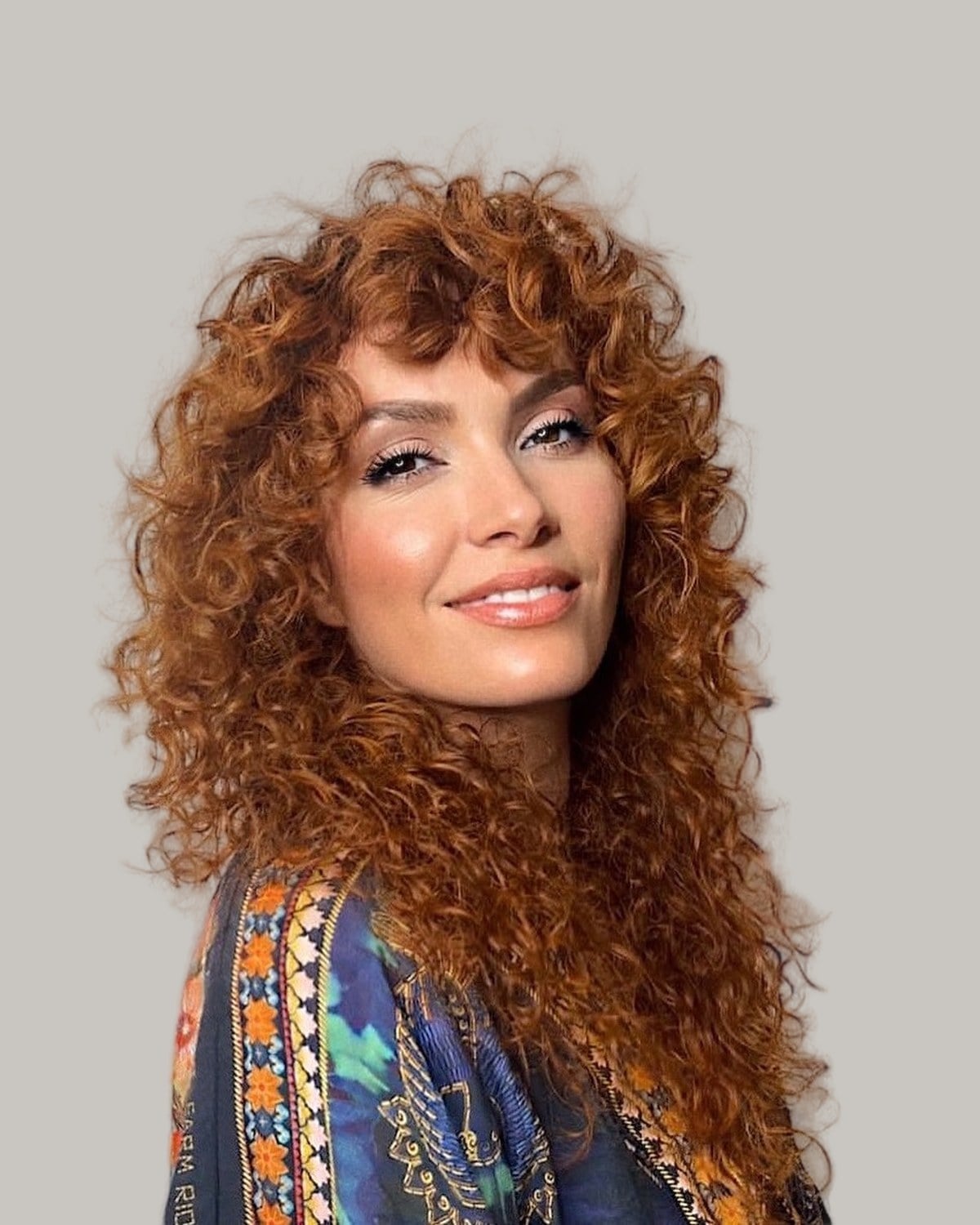
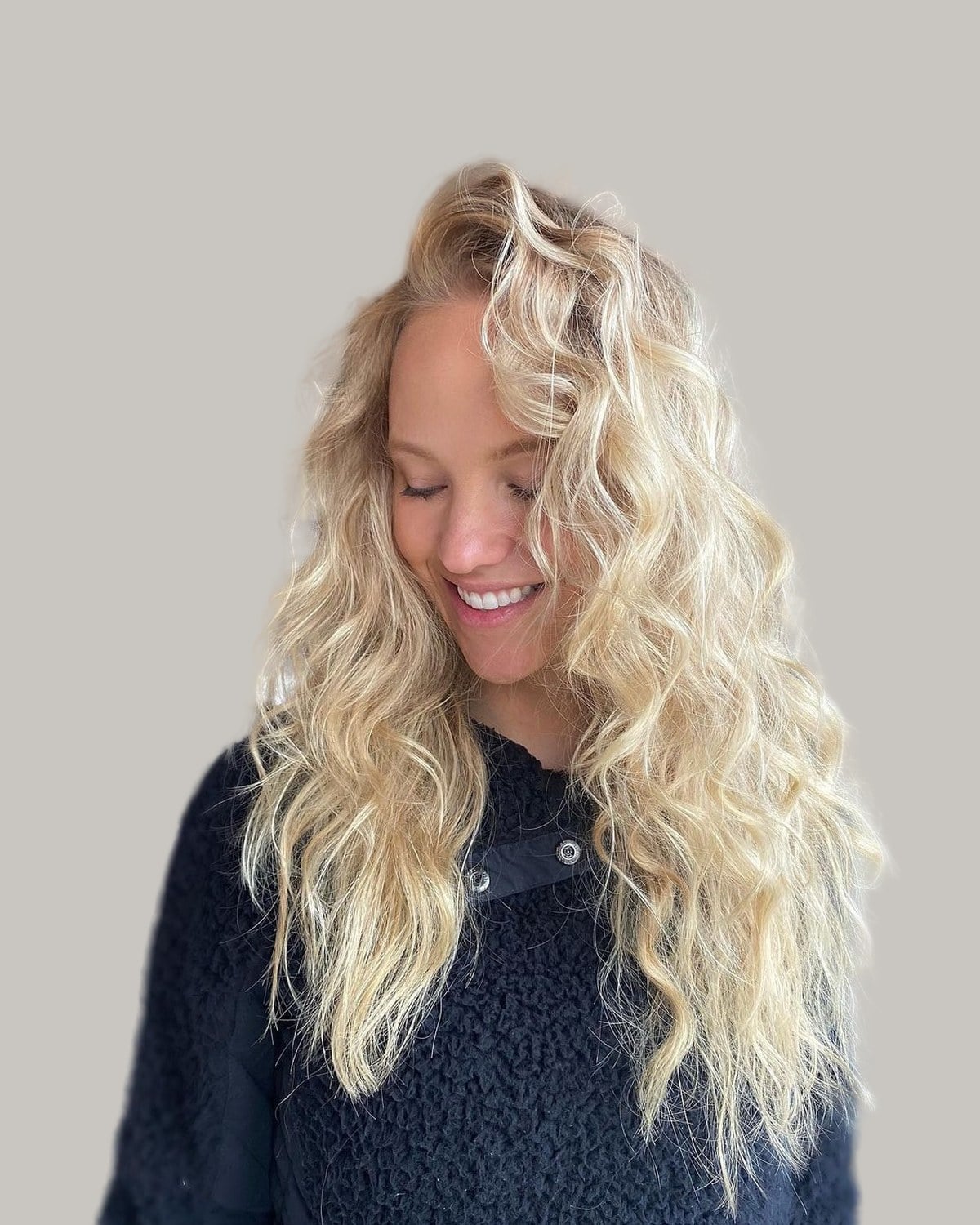
Long curls cut to one length puff out into a triangle at the bottom. Long layers fix that by letting the curls stack. Ask for a dry cut, so your stylist sees where each curl lands.
What to ask for A dry cut, curl by curl, long layers to take out the triangle, no razor or thinning shears.
Hairstyles for women over 60
Face-framing layers at the shoulder


Stylists tend to suggest a length between the jaw and the shoulder after 60, and face-framing layers make it work: they lift the front without cutting off length behind. Wavy and straight hair both take to it. Our guide to hairstyles for women over 60 has 33 looks, from lobs to silver curls.
What to ask for Shoulder-length hair, face-framing layers starting at the cheekbone, a long side fringe, the back kept one length.
Long layers
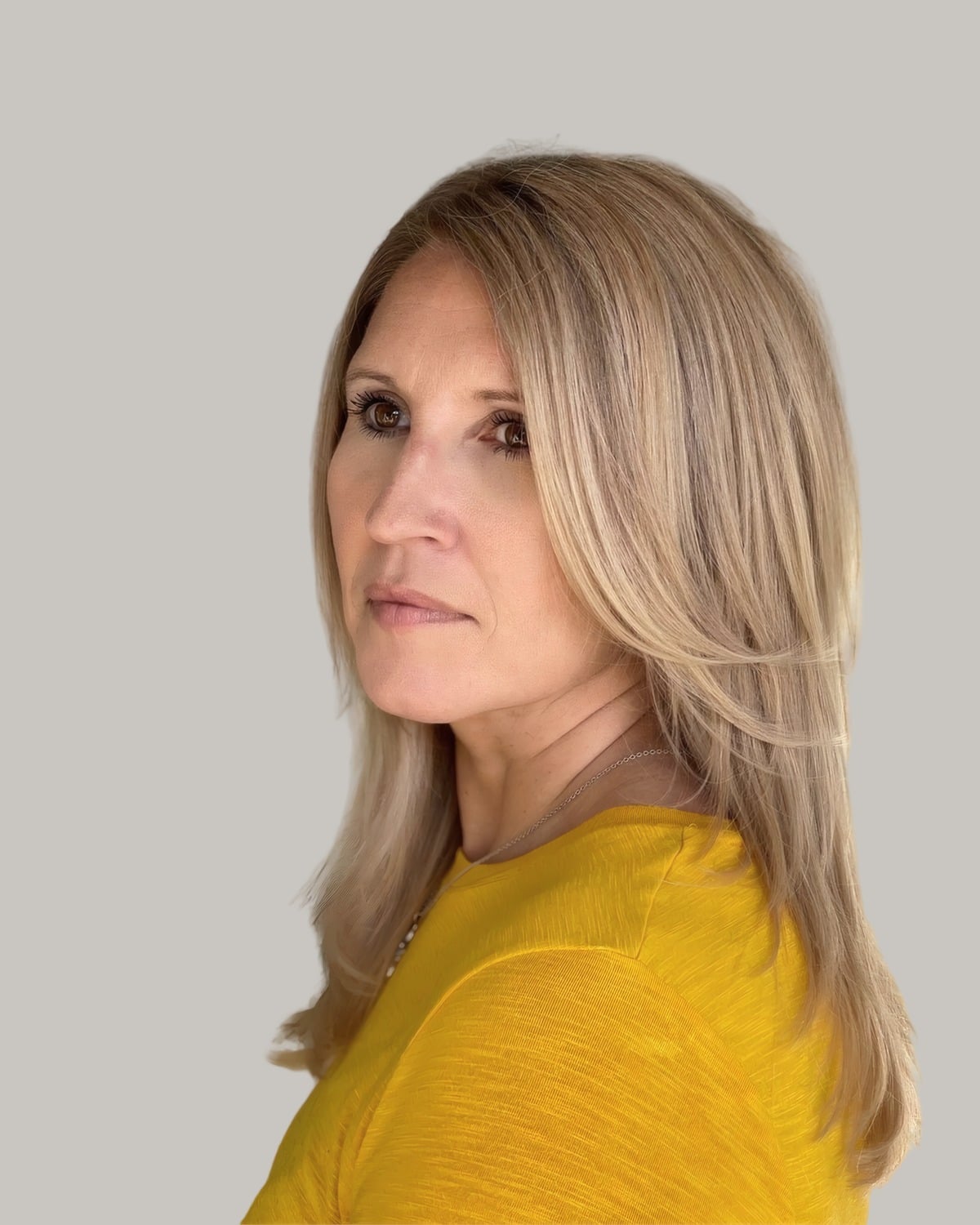

There’s no age limit on long hair, as long as it’s healthy. A few long layers keep it moving without thinning the ends, and a full fringe is an easy way to change the shape without losing length.
What to ask for Long hair with a few long layers starting below the chin, ends kept full, a full fringe to the brow if you want one.
Silver lob
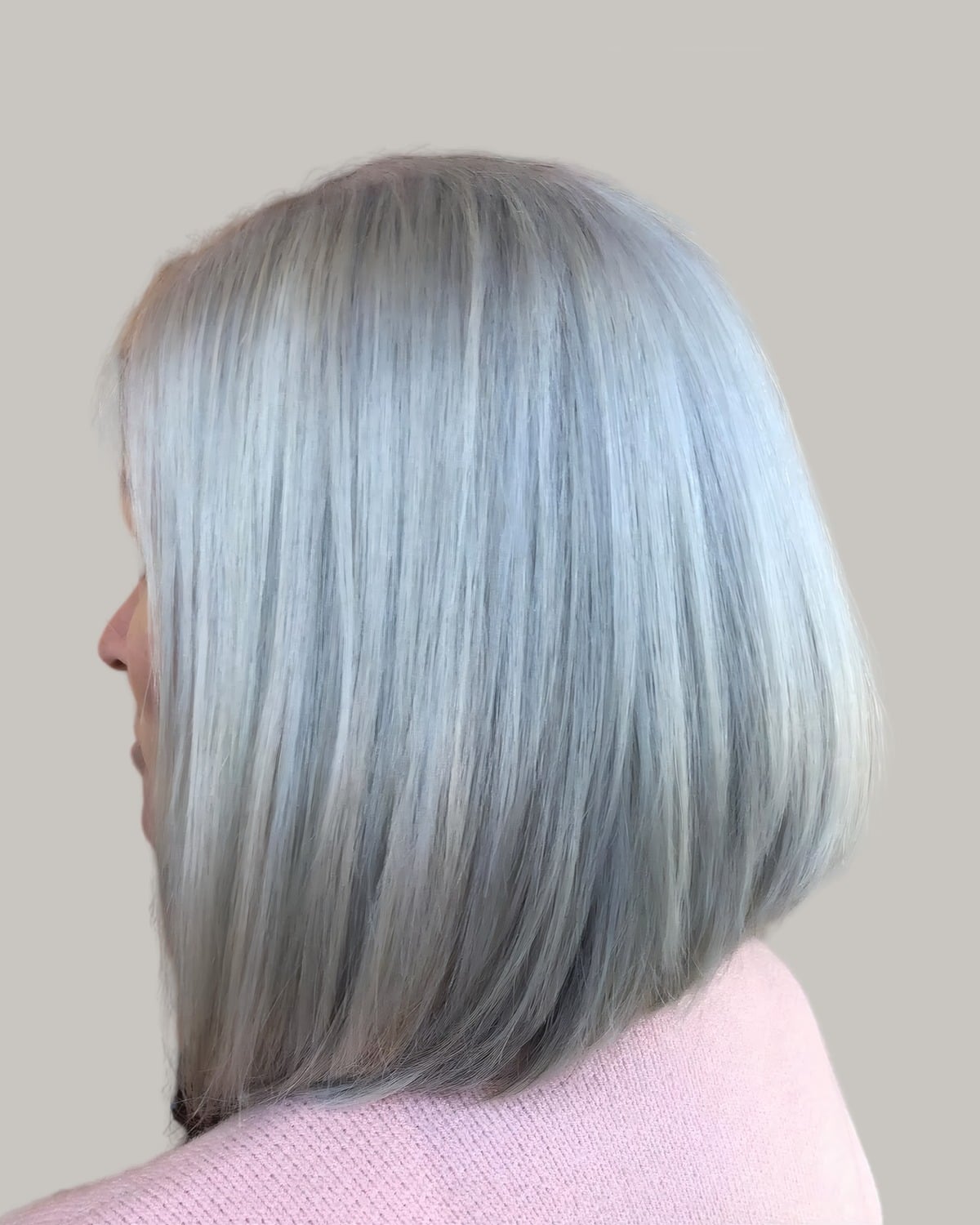
A blunt lob suits gray hair because there are no wispy ends for the color to look dull on. It’s also a smart cut for thinning hair, since a solid edge makes it look fuller. A gloss every few weeks keeps the silver bright.
What to ask for A one-length lob cut blunt at the shoulder, no layers, the edge kept sharp at every trim.
Long silver curls

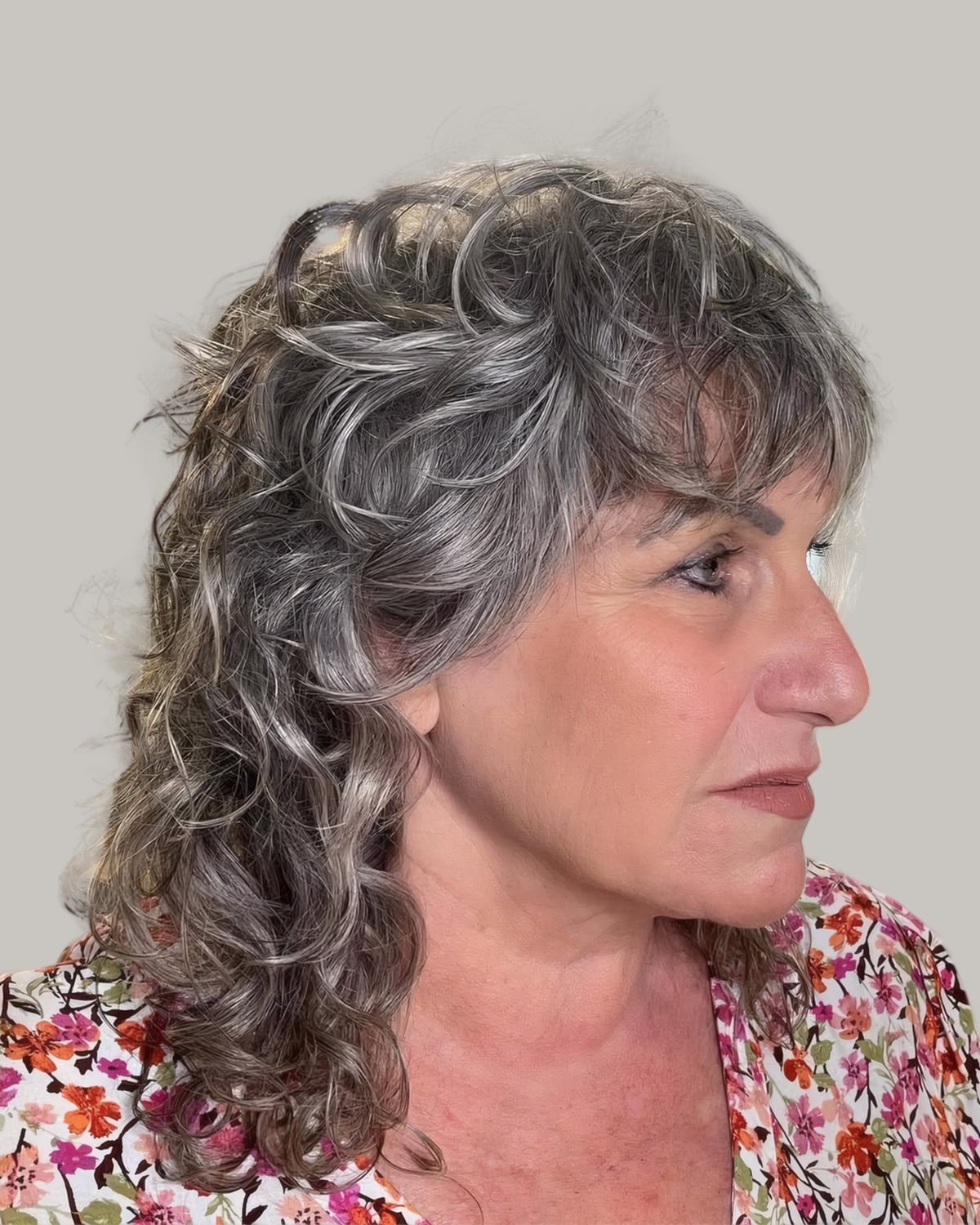
Curls and gray are a good match, since the curl pattern breaks up the color and keeps it from looking flat. Have them cut dry so the length is right once the curls spring up.
What to ask for Long curly hair cut dry, curl by curl, light layers for shape, curly bangs cut long at the brow.
Medium shag over 60
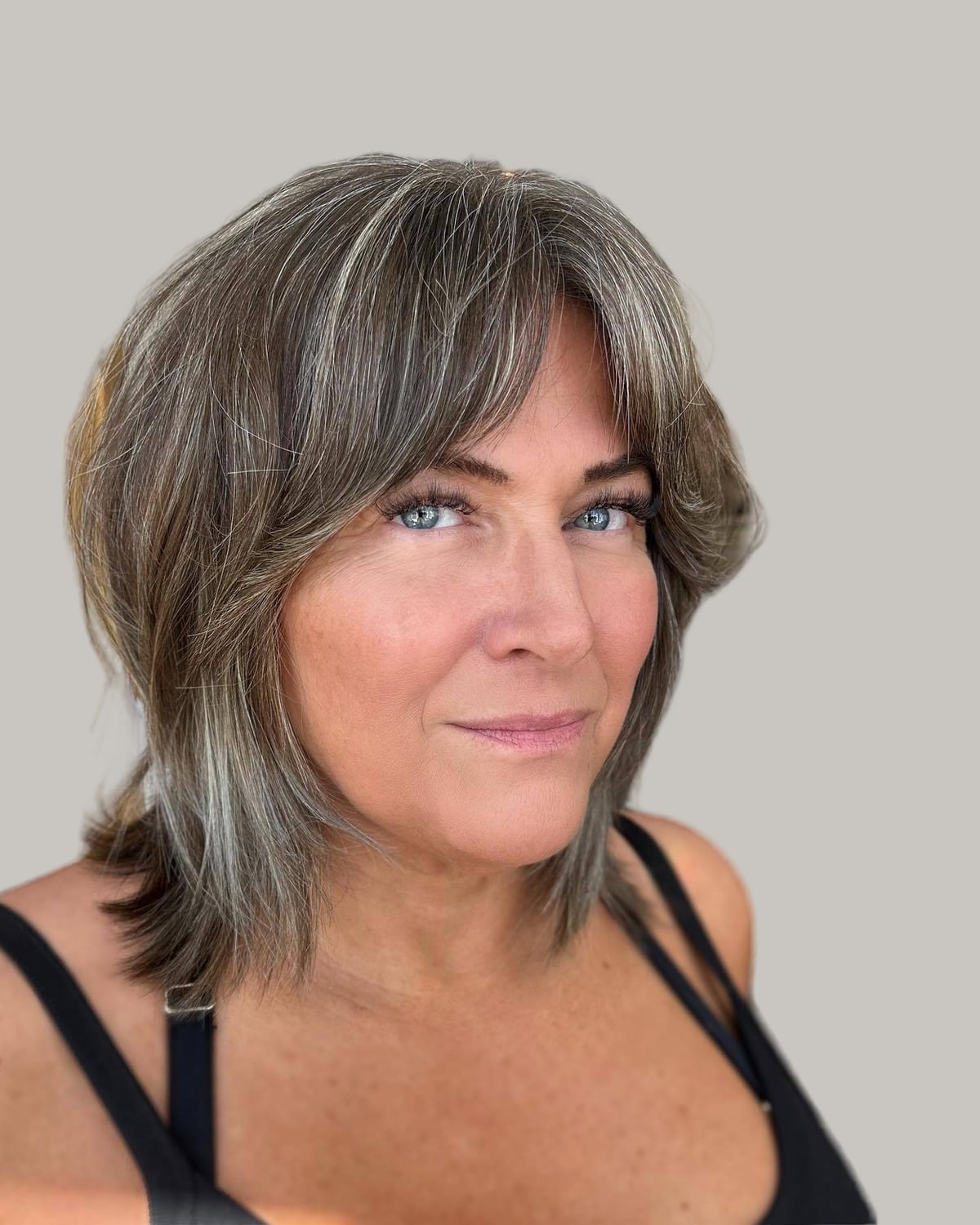
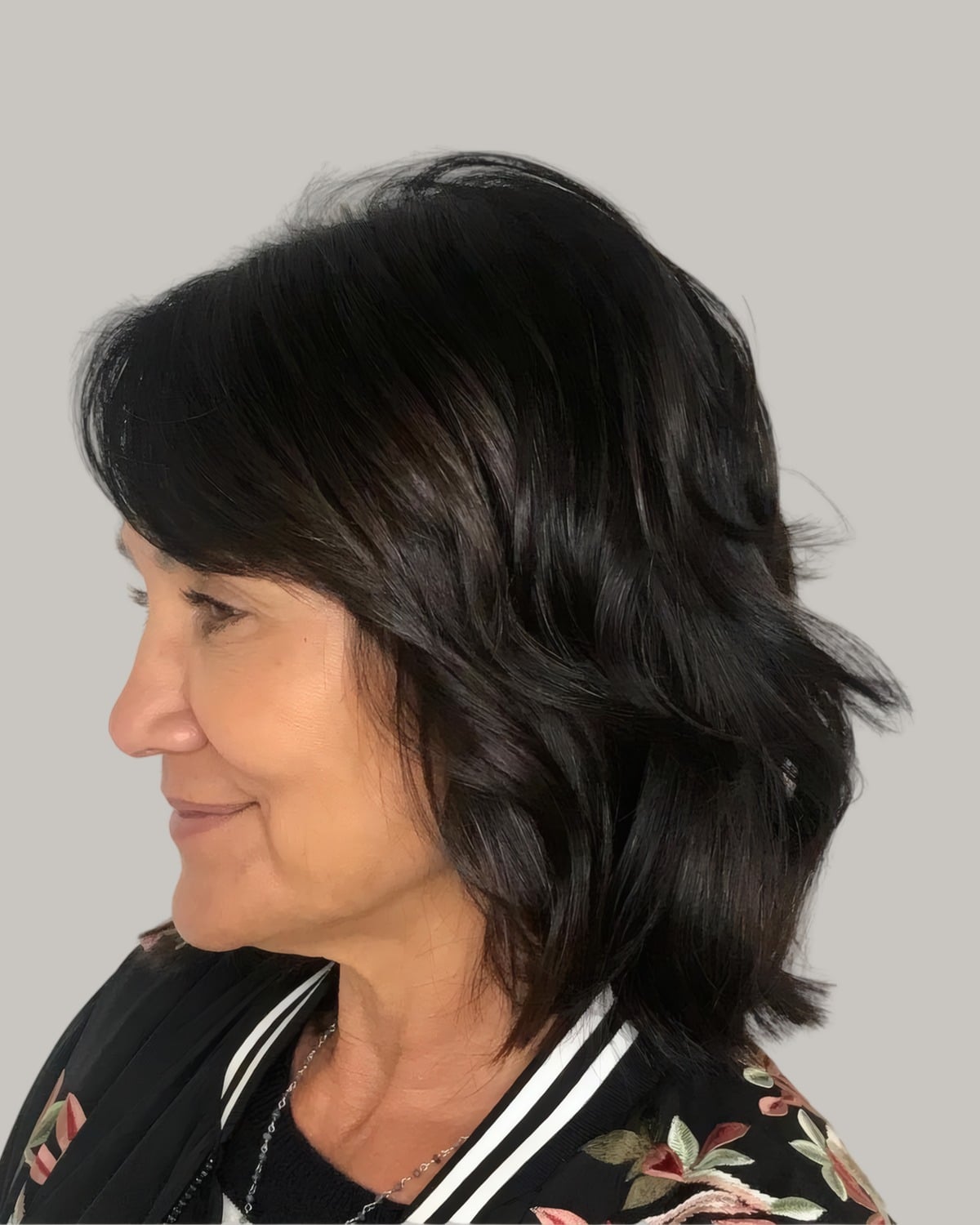
A shag is a good friend to hair that’s thinning on top, because the short crown layers add lift without a lot of styling. Gray grows in softly through the choppy ends. Scrunch some foam into the roots and you’re done.
What to ask for Shoulder length overall, with short, choppy pieces through the crown, a long fringe that reaches past my brows, and the ends thinned out.
Bob with a fringe and glasses
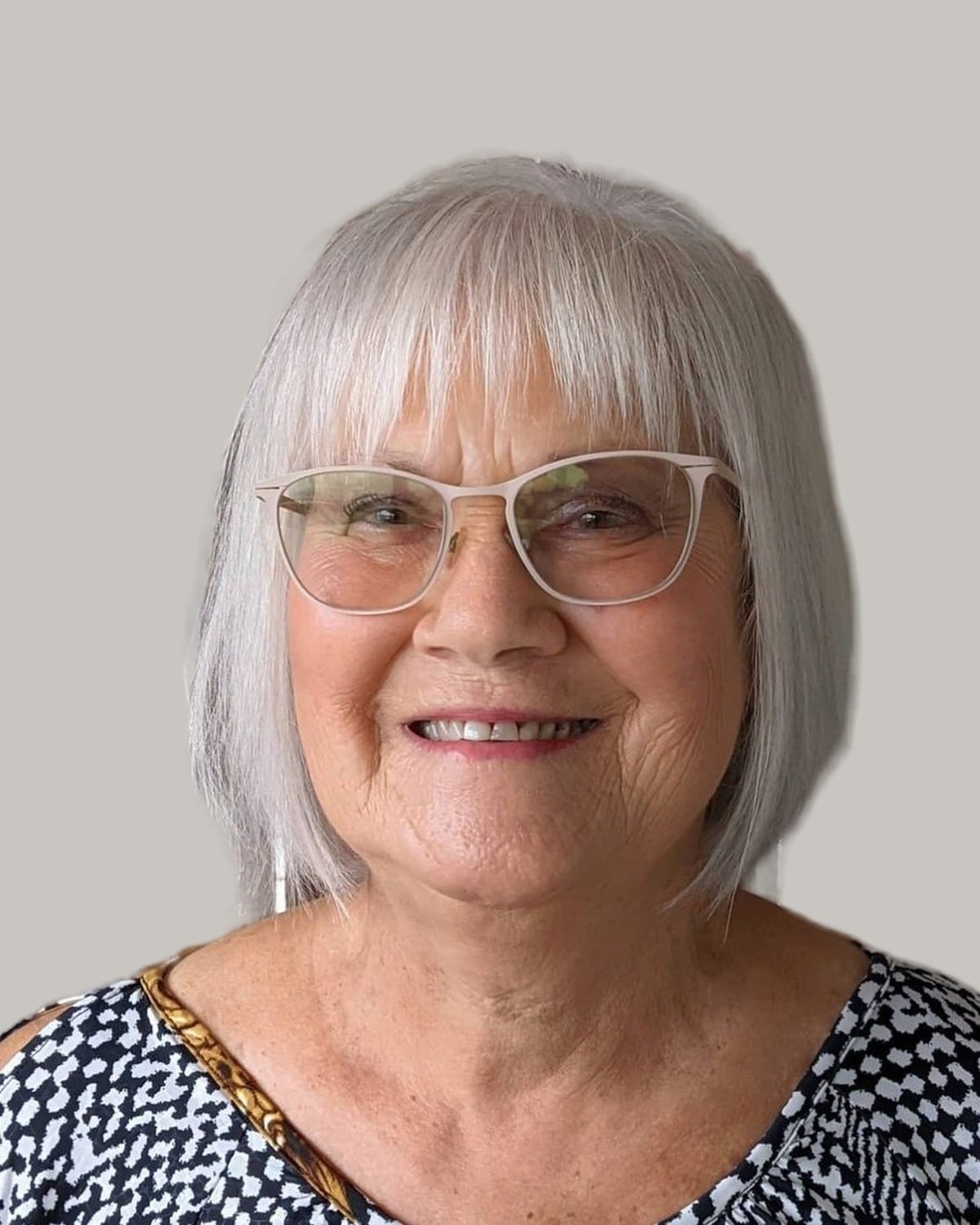

Everyday glasses change where the fringe should end. Too long and it rests on the lenses, too short and it looks severe. A straight bob keeps the outline simple next to the glasses.
What to ask for Cut it to my jawline in one length, and bring the fringe down to just clear the top of my frames.
Hairstyles for Black women
Boho braids
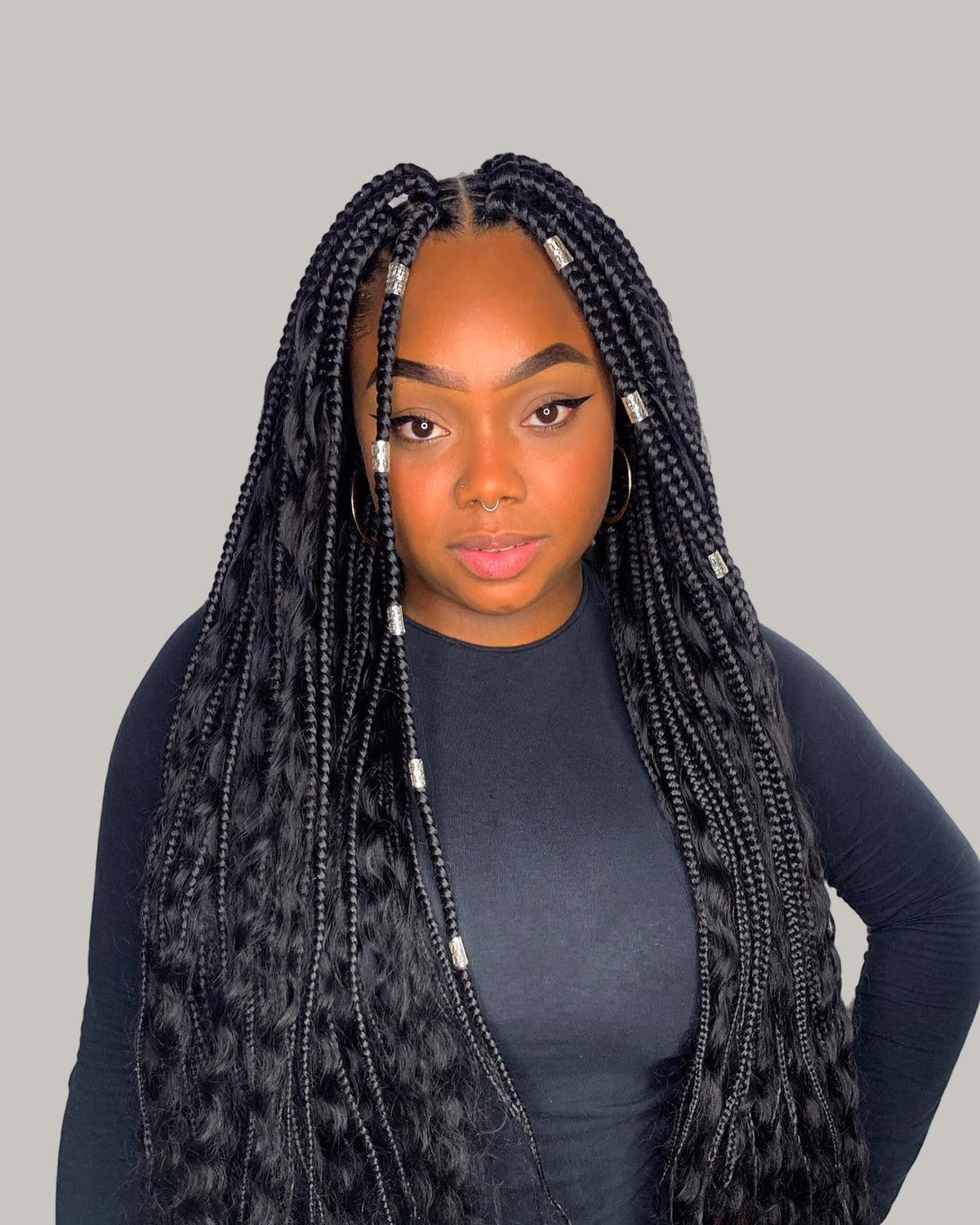
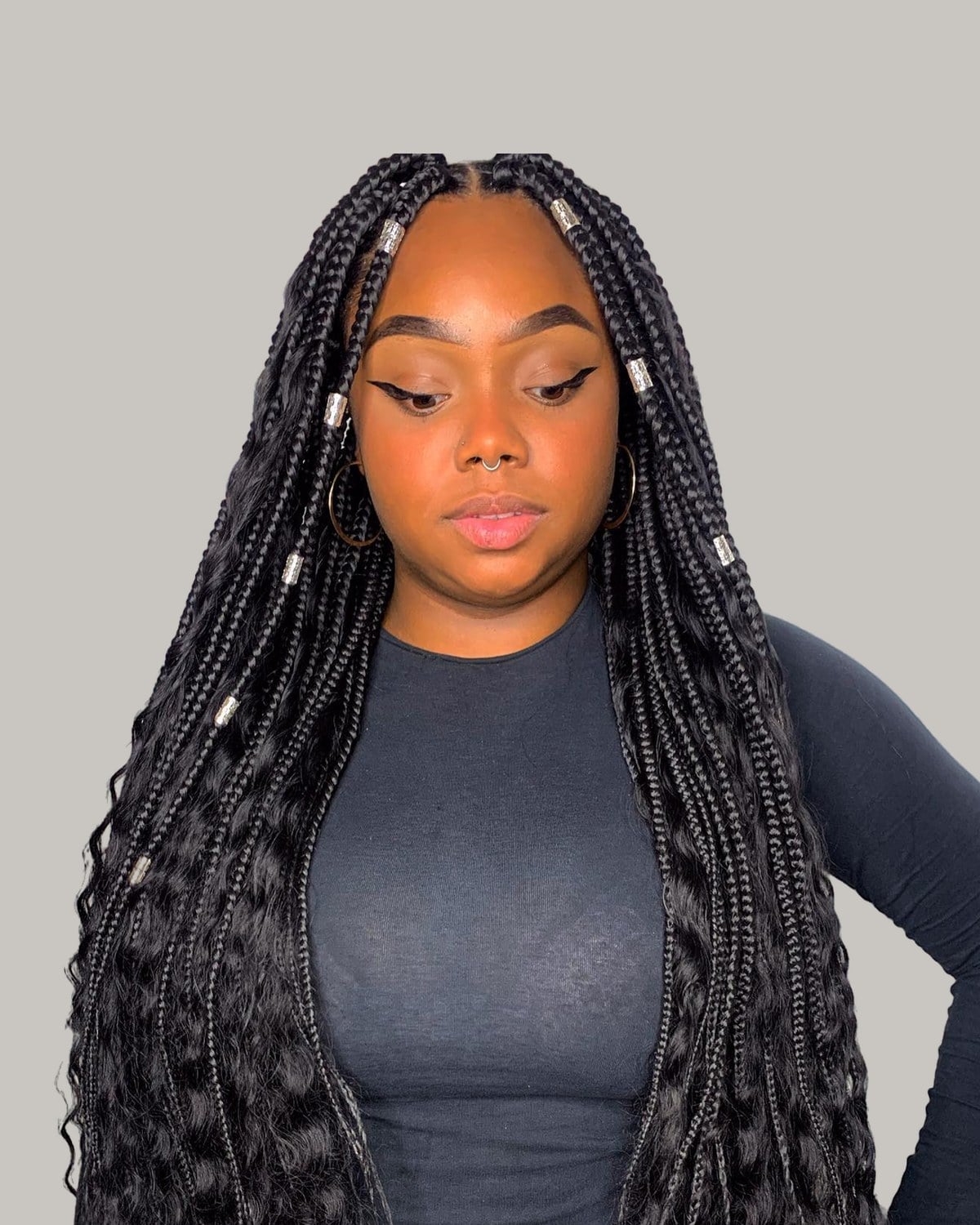
Boho braids are box or knotless braids with loose curls left out along the length, and a big favorite for a reason. The curls soften the look and hide the parts as they grow out. Expect four to six weeks of wear. Braids, locs, short cuts and color for Black women all have a section in our guide to hairstyles for Black women.
What to ask for Waist-length medium knotless braids in a boho finish, with human-hair curls pulled out down the length and some silver cuffs.
Jumbo box braids
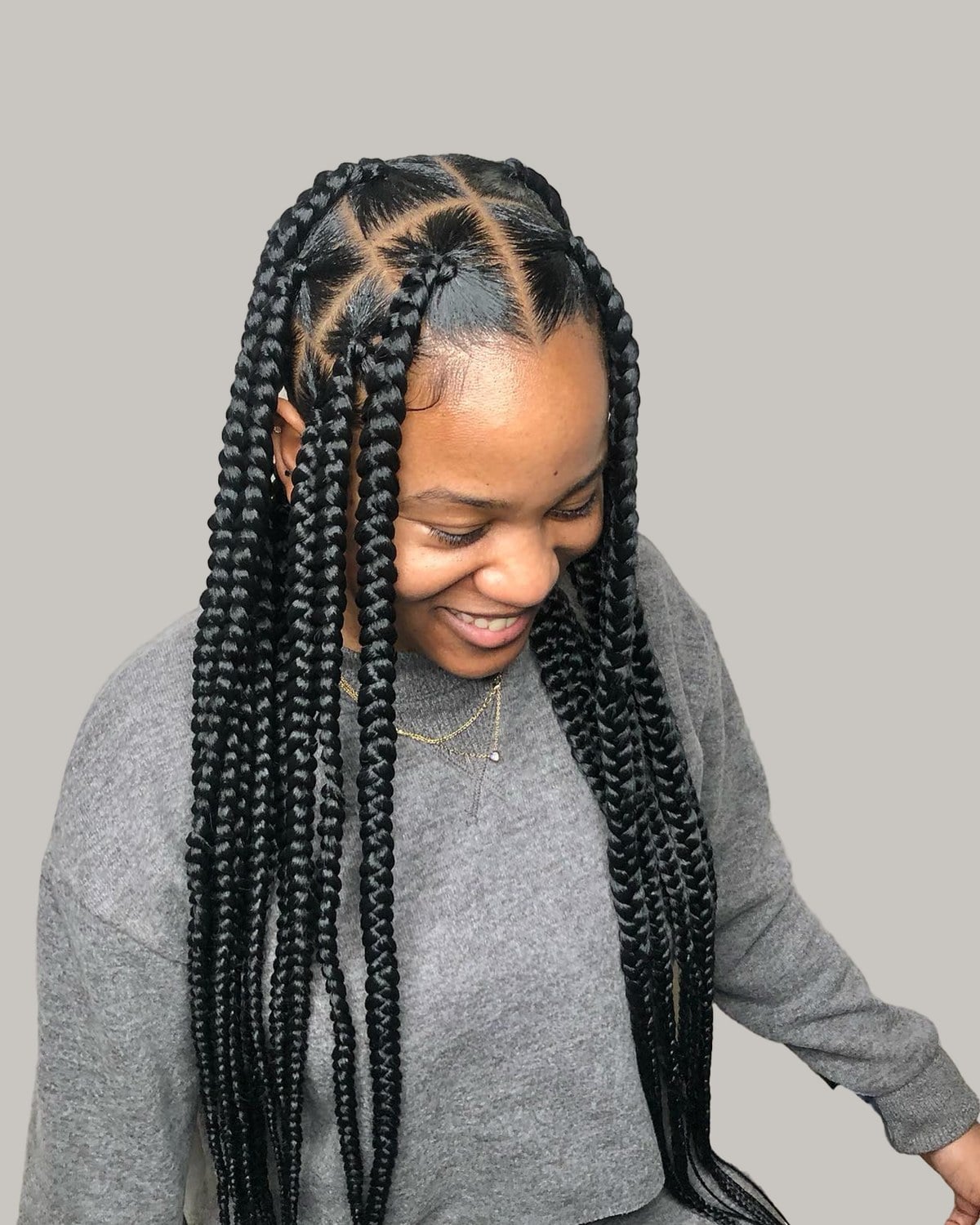
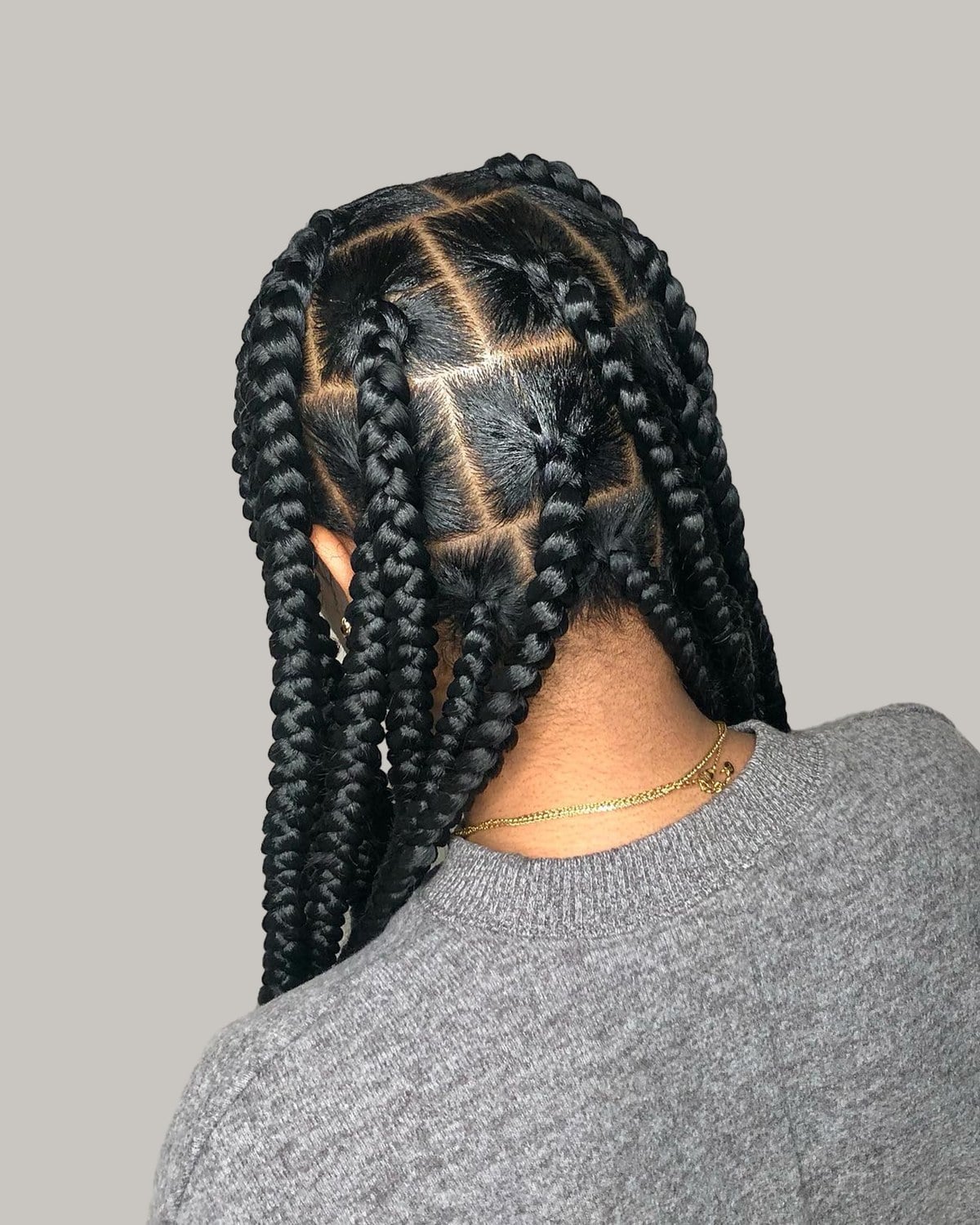
Jumbo braids take an afternoon, where small braids can take a full day. Fewer braids means less weight per section too, though at this length they’re still heavy, so ask for the edges to be left loose.
What to ask for Jumbo box braids with large square parts, about three rows from front to back, braided to mid-back.
Layered pixie with a long fringe
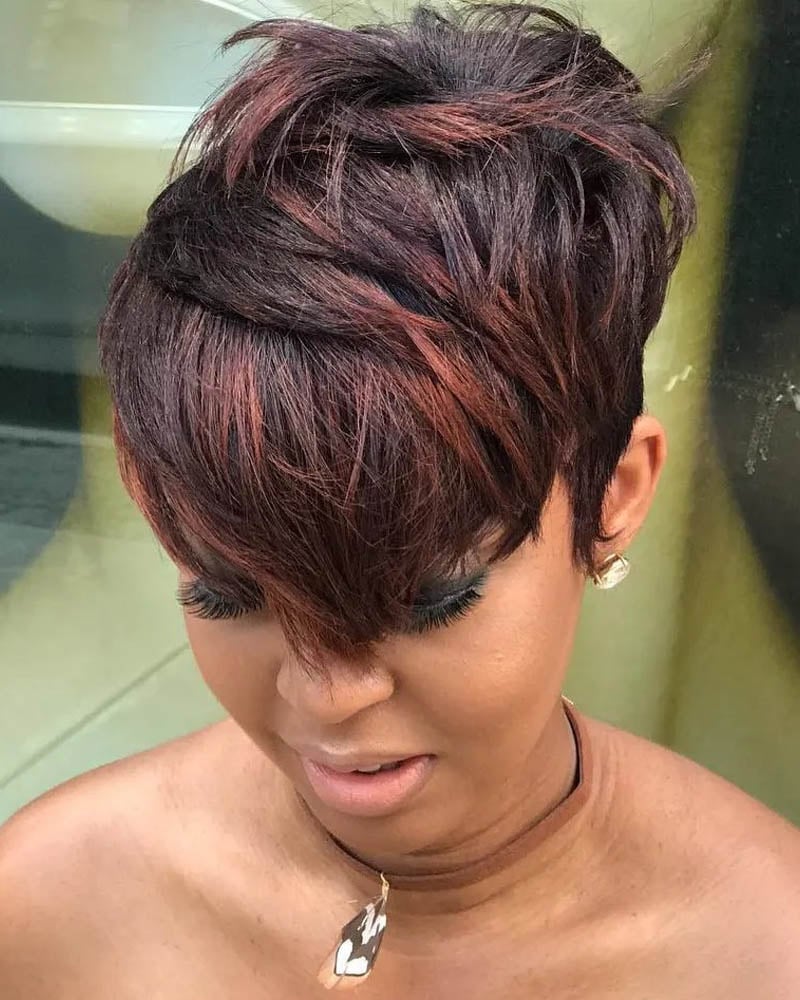
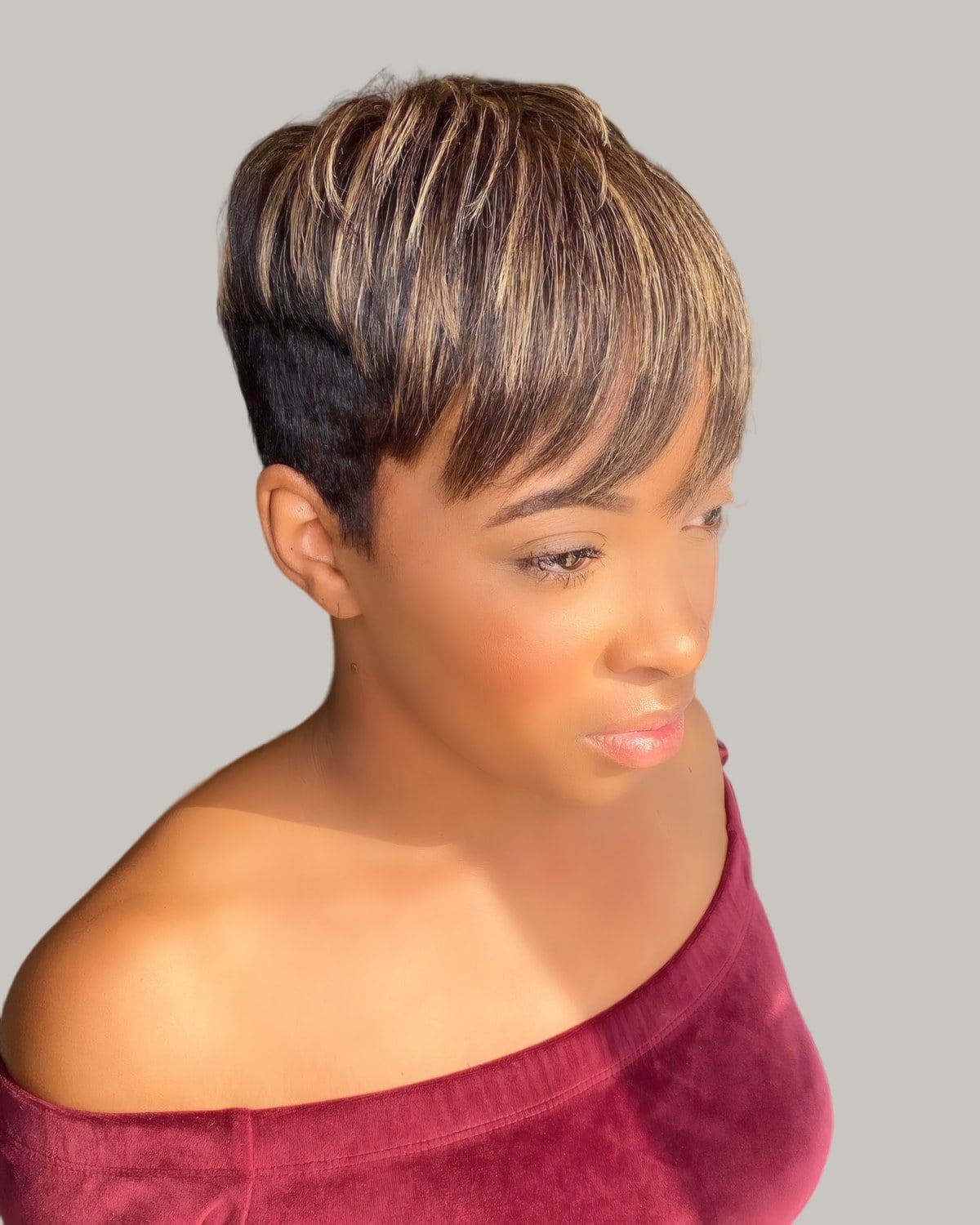
Short at the nape, layered up to the crown, with one long sweep at the front: this pixie gives you height and a fringe to hide behind. Wrap it at night and the fringe falls back into place in the morning.
What to ask for A layered pixie, short and tapered at the nape, layers building to about three inches at the crown, a long side fringe cut to the cheekbone.
Faux locs
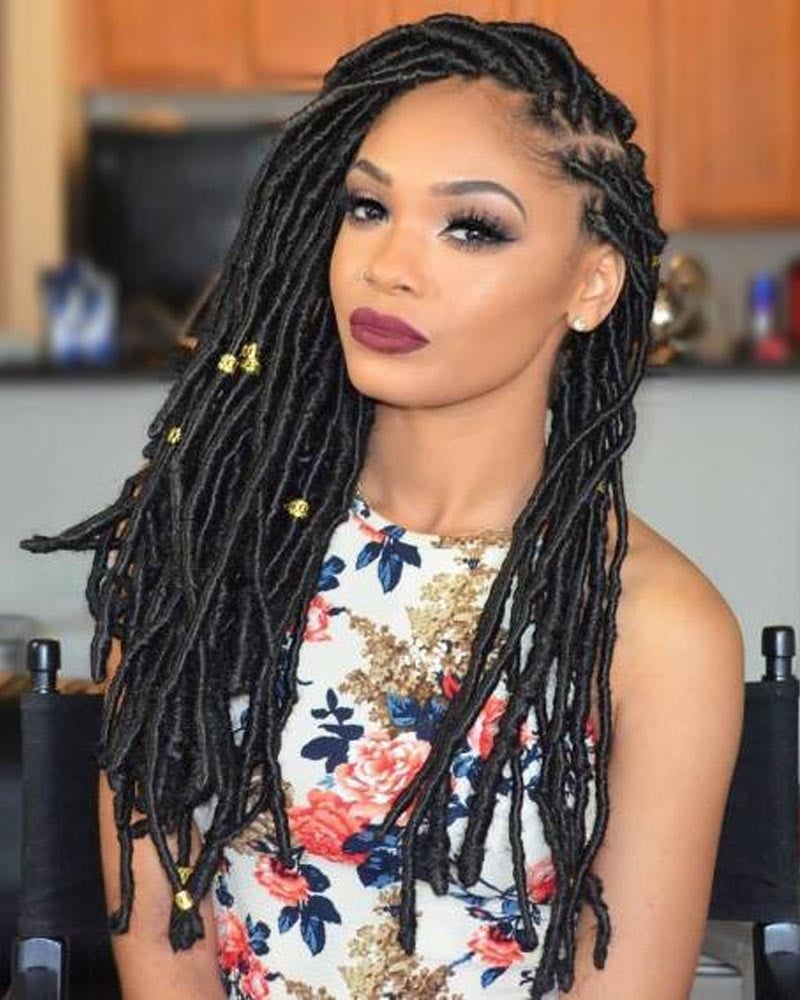
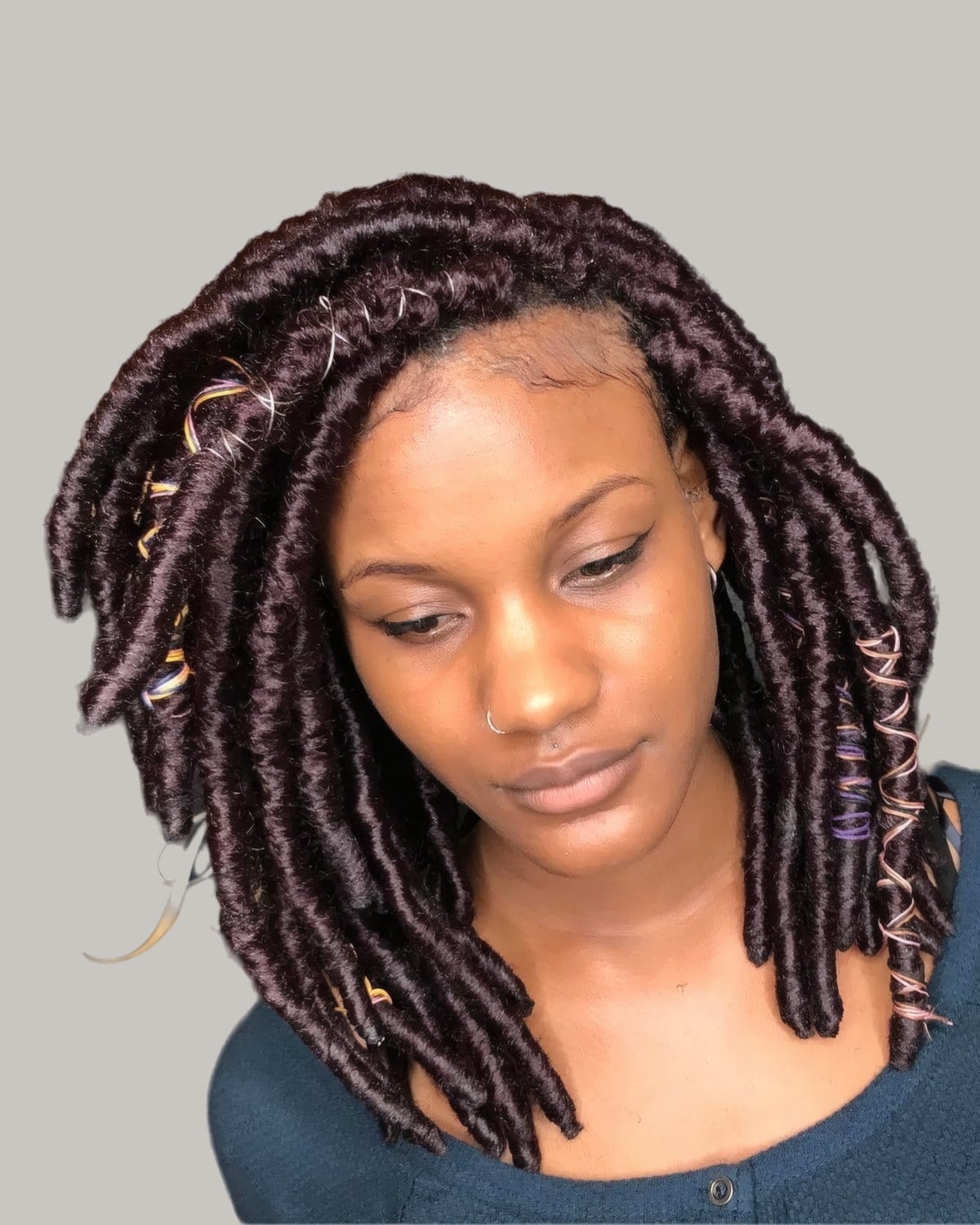
Faux locs are extensions over your own hair, and a set stays in for four to six weeks. Think of it as a trial run: you’ll know by the end whether you want to commit to the real thing.
What to ask for Faux locs wrapped over medium box braids, a side part, waist length or shoulder length, a few gold cuffs.
Brown highlights on black hair
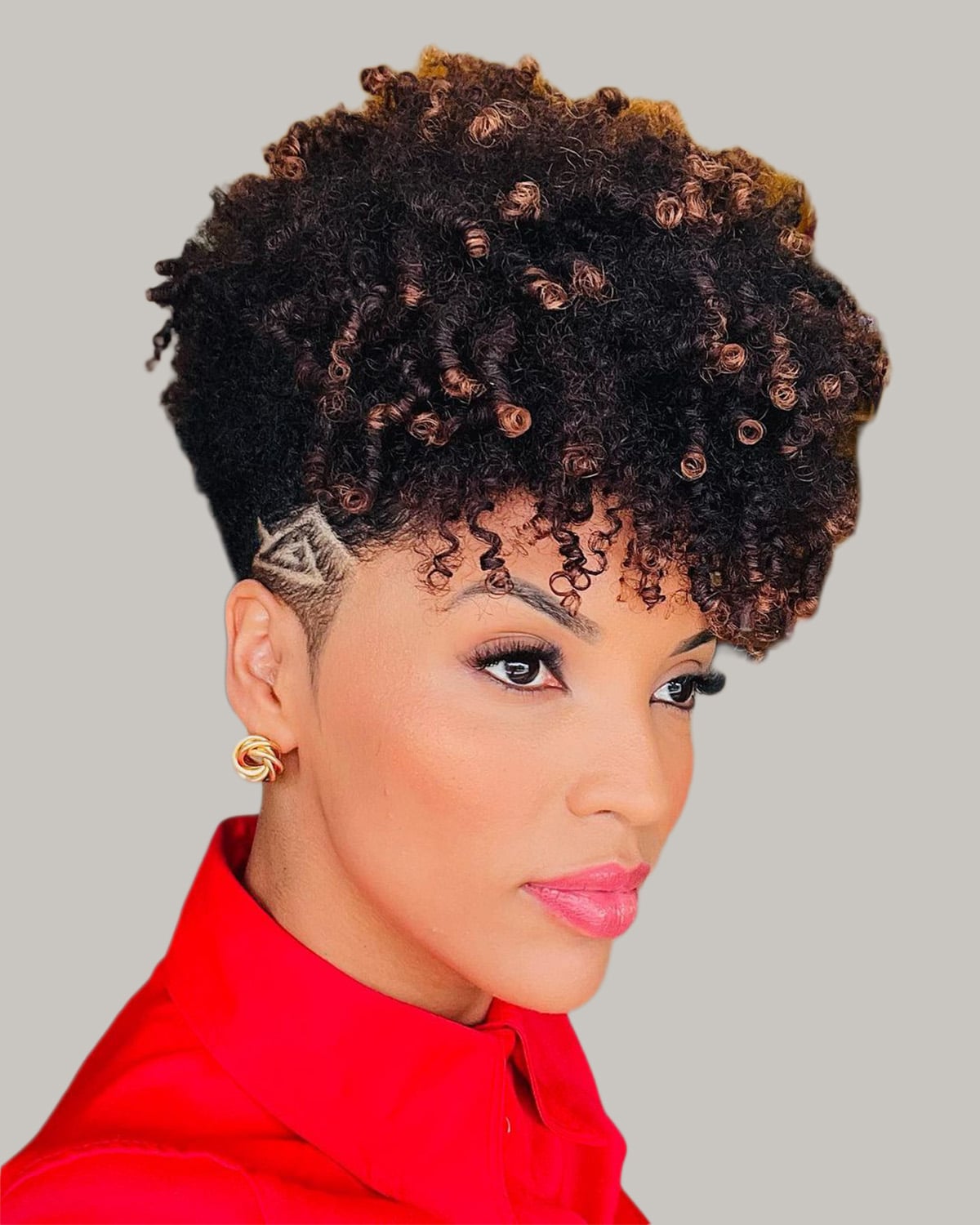
Brown needs only a level or two of lift on black hair, so it’s an easy first color. It grows out without a hard line.
What to ask for Fine brown highlights on black hair, lifted two or three shades, placed on the top layer and around the face, toned warm.
Crochet curls
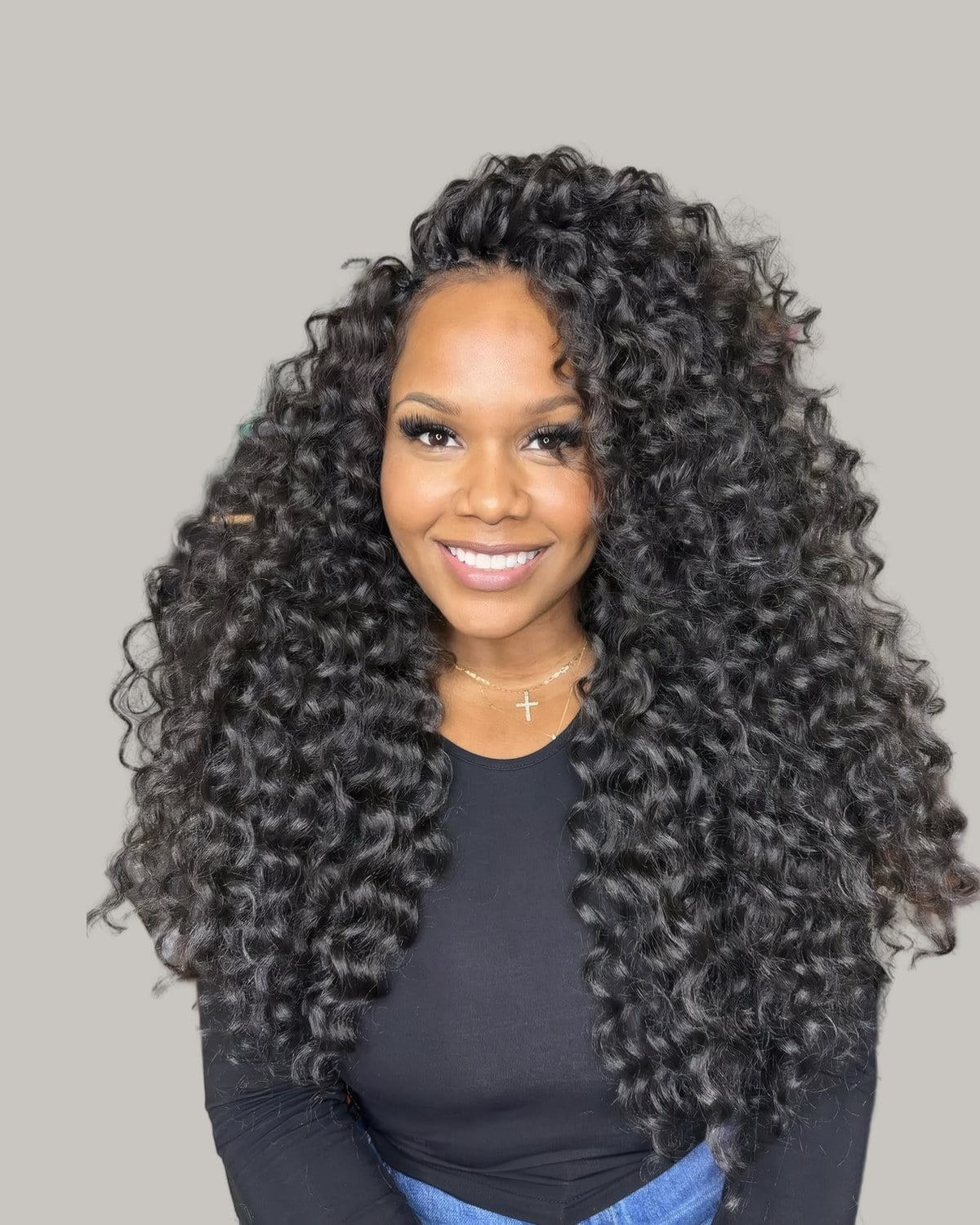
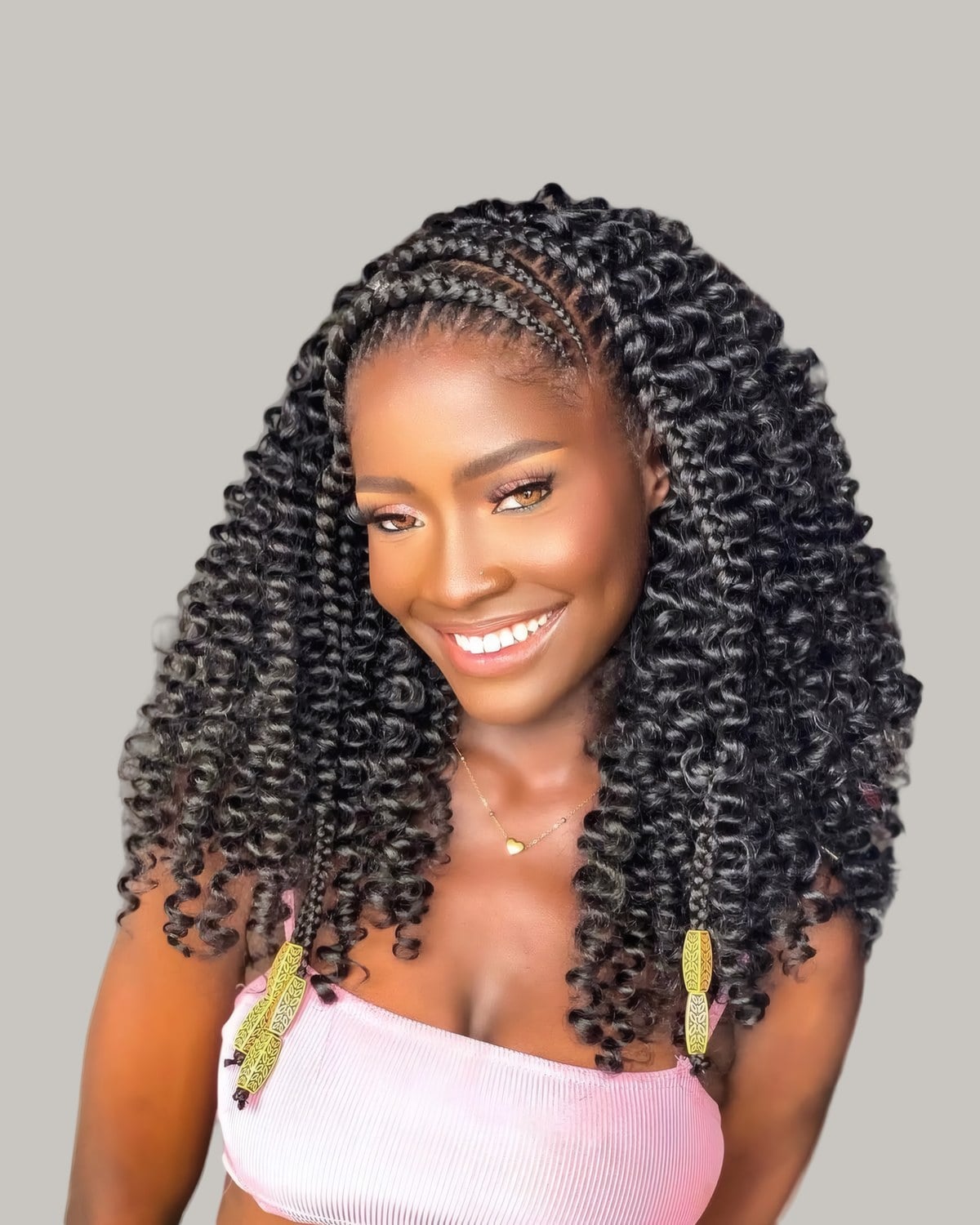
Crochet hair is hooked onto cornrows with a crochet needle, and your own hair stays braided underneath. It gives you big curls without putting heat on your hair.
What to ask for Crochet curls installed over straight-back cornrows, spiral curl pattern, a center part, length past the chest.
01 of 01
Which haircut suits your hair type and face shape?
Start with your texture, because it decides how any cut will behave. Fine hair looks thicker with a blunt edge, so a bob or a one-length lob works well, with any layers kept around the face. Thick hair wants weight taken out, and a shag or a butterfly cut does that job. With curls, ask for a dry cut, so the stylist shapes each curl as it really falls. Coily hair can go almost anywhere: a short TWA, a puff, braids, twists or locs.
Then look at your face. If yours is oval, most cuts will suit you. A longer bob or a lob lengthens a round face. Our guide to hairstyles for round faces has 30 cuts that do the same. A cut that ends at the jaw with soft layers takes the edge off a square one. If your forehead is wider than your chin, bangs swept to the side or parted in the middle help even things out.
| Face shape | Try | Why |
|---|---|---|
| Oval | Nearly everything | Already in proportion |
| Round | A lob or curtain bangs | Adds length |
| Square | Soft layers ending near the jaw | Rounds off the corners |
| Heart | Bangs swept aside, layers by the cheeks | Evens out a wide forehead |
Short, medium or long: which length suits you?
Short hair suits you if you want quick mornings and don’t mind a trim every month or so. Medium is the safe middle, long enough to tie back and short enough to dry fast, and it’s where stylists tend to steer women over 60. Long hair suits thick, healthy hair, and there’s no age limit on it.
How you live with your hair counts too. Sharp, one-length cuts look their best after a pass with straighteners. A shag, a crop or a curly cut looks better the less you touch it. Braids, twists and locs trade a long install for weeks of almost no styling.
What to ask your stylist for
Show your stylist pictures, ideally a few of them. Most looks on this page show two photos, often the front and the back, because your stylist needs both. Copy the ask line under the look you like into your phone and read it out.
Then say where the length should land: at the ear, the jaw, the shoulder or past it. Mention layers or a fringe if you want them, and be honest about your morning routine. For braids or locs, ask about the part size and how many hours to plan for, and say if your edges are delicate.
How often should you get a haircut?
It depends on the length. Plan on four to six weeks between trims for a pixie, and six to eight for a bob. Medium hair can go six to eight weeks, and long hair that isn’t colored can go three to six months.
Protective styles run on a different clock. Expect a braid install to stay in for one to two months. Past eight weeks, the American Academy of Dermatology advises taking it down. Locs go back for maintenance roughly once a month to six weeks, and that gap stretches to two or three months once they’ve matured. Highlights on dark hair need a gloss between appointments to keep the tone.
What are the most popular haircuts for women right now?
Among short cuts, it’s the soft bob, the pixie and the bixie. At medium length, it’s lobs, shags and butterfly layers with curtain bangs. The classic shapes never really leave. A chin bob or a long layered cut is a safe pick if you don’t want to chase a trend.
Which haircuts are low maintenance?
Go with your texture, not against it. Choppy pixies, shags, wash-and-wear crops and curly cuts are meant to look a bit undone, so the hot tools can stay in the drawer. Braids, twists and locs need a long first appointment, then very little day to day.
Braids or locs: what’s the difference?
Braids are temporary. They come out after four to eight weeks. Locs are permanent. Your hair is twisted or interlocked until it locks, and it usually takes 15 to 18 months to mature. Faux locs are in between, wrapped over your own hair for four to six weeks.
| Style | How long it lasts | Upkeep |
|---|---|---|
| Braids | Four to eight weeks | Satin bonnet at night, scalp wash every one to two weeks |
| Faux locs | Four to six weeks | Same as braids |
| Locs | Permanent | Retwist every four to six weeks, more spaced out once mature |
If you’re not sure about locs, try faux locs first. A few weeks is enough to find out whether you like the weight and the look.
How long does it take to grow out a short haircut?
At roughly six inches a year of growth, a pixie needs half a year to a year to reach bob length, and a year to a year and a half to touch the shoulders. Ask for layers on the way so the in-between stages still look like a cut.
Pick two or three looks before your appointment, screenshot both photos and keep the ask line handy. Your stylist will have something to work from, and you won’t leave with another trim.
Products featured here are independently selected by our editors. If you buy through our retail links we may earn an affiliate commission — it never changes the price you pay, and it never decides our verdicts. Read our earnings disclaimer.