You’ve saved the photos. Now the booking form wants answers: box or knotless, small or medium, bra-strap length or waist, boho curls or none? Every one of those changes the price, and some of them change how long you’ll be in the chair.
Most of it comes down to the root. Box braids start with a small knot where the braiding hair goes in, and knotless braids feed the hair in gradually, so the base lies flat. The style itself is old, with roots in Namibia and the Nile Valley more than 3,000 years ago, though it wasn’t named until the 1990s, after Janet Jackson wore box braids in Poetic Justice. Size matters as much as type: jumbo braids can be done in under three hours, while micro braids take most of a day.
Below are 24 styles by working braiders, grouped by type, each shown twice. Every one ends on what to say when you book, so you can find your photo and copy its last line.
Braids for Black women
Here are 24 braided styles for Black women, grouped by type.
Box braids
Box braid bob
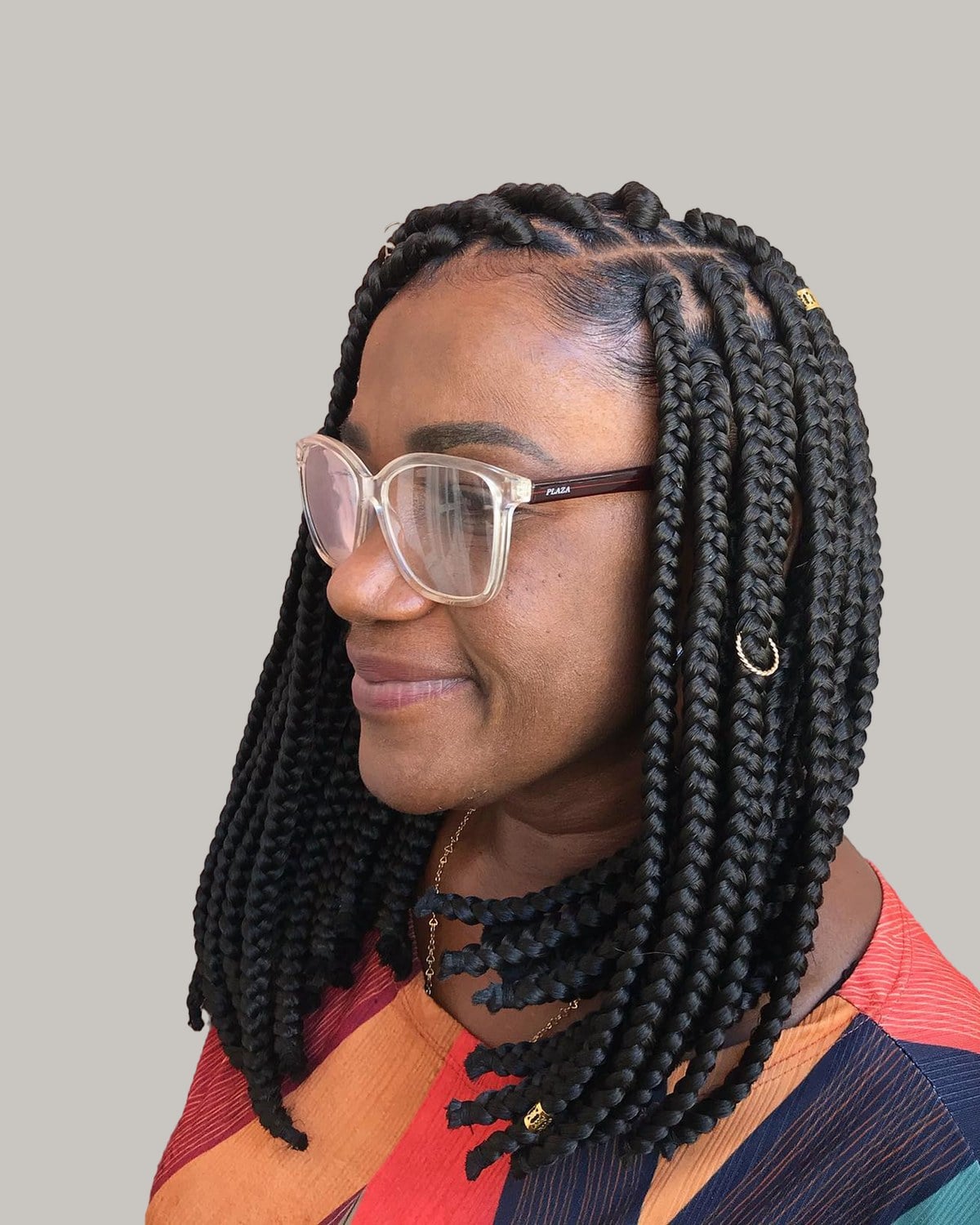
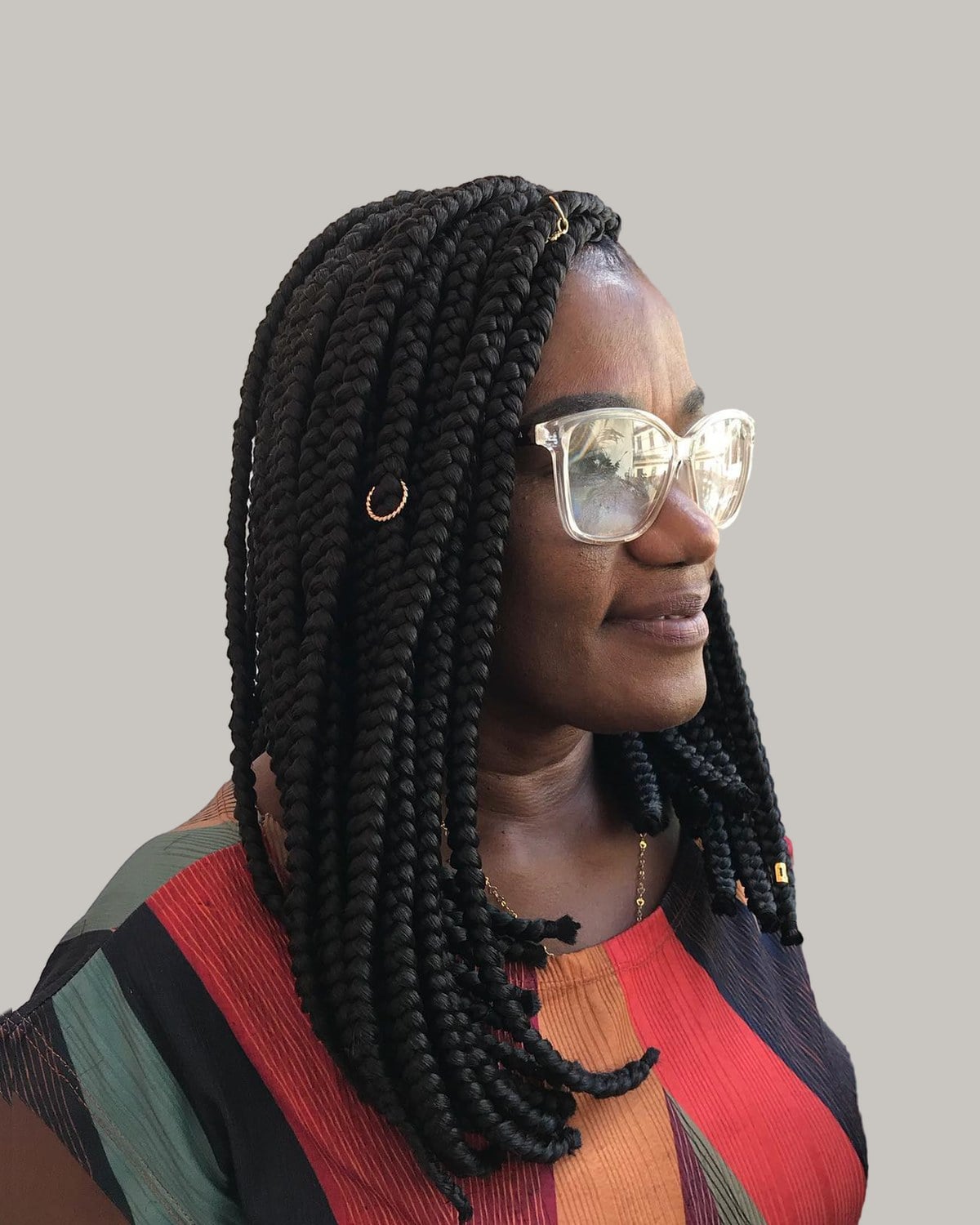
A bob that stops just above the shoulders is the easy way into box braids: less hair to carry, less weight on your edges, and a shorter install than long braids. These are medium braids in black, with a few gold cuffs for a bit of shine. They sit neatly around a pair of glasses, too.
What to ask for Medium box braids cut to a bob just above the shoulders, square parts, black, with a few gold cuffs.
Box braid lob
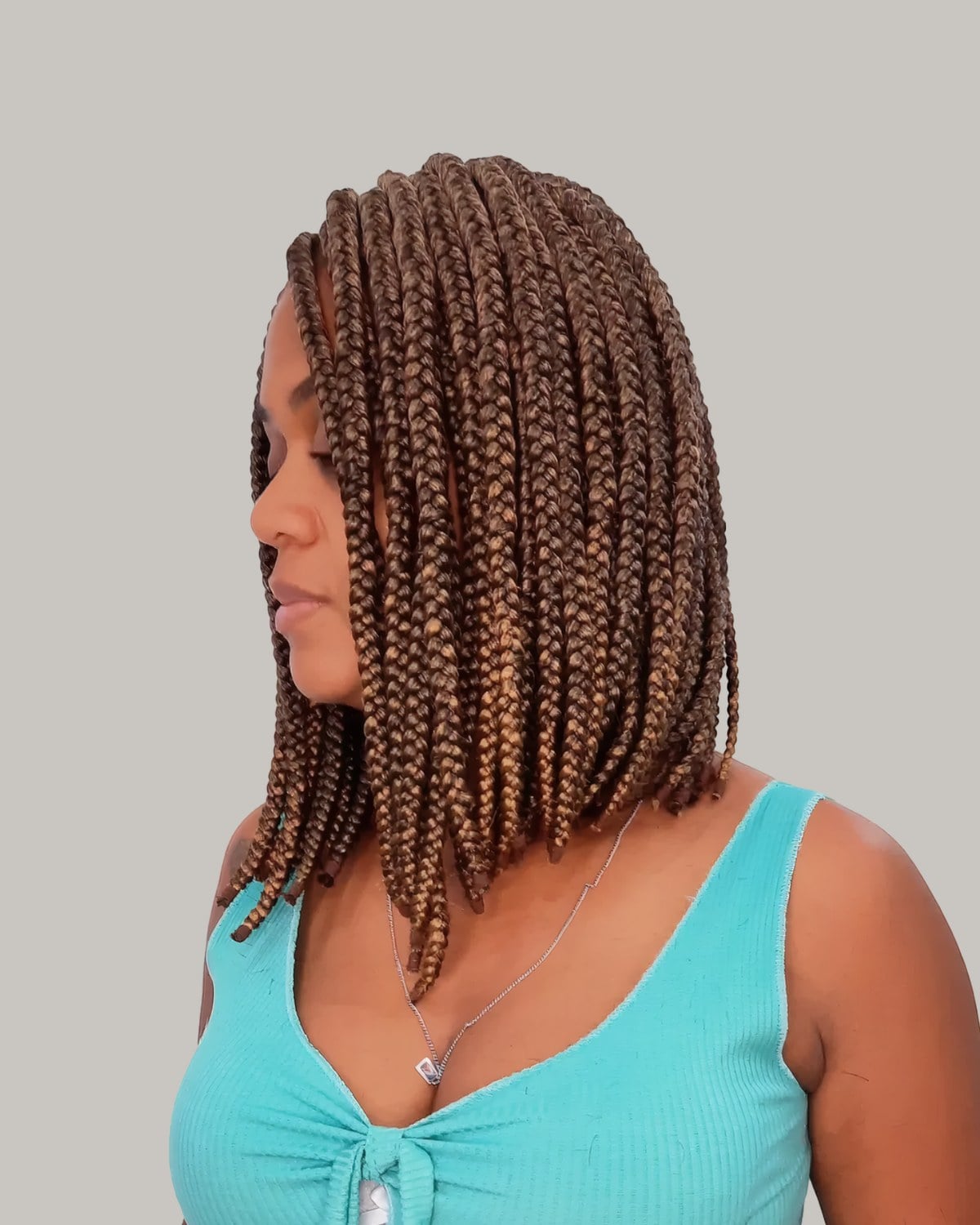
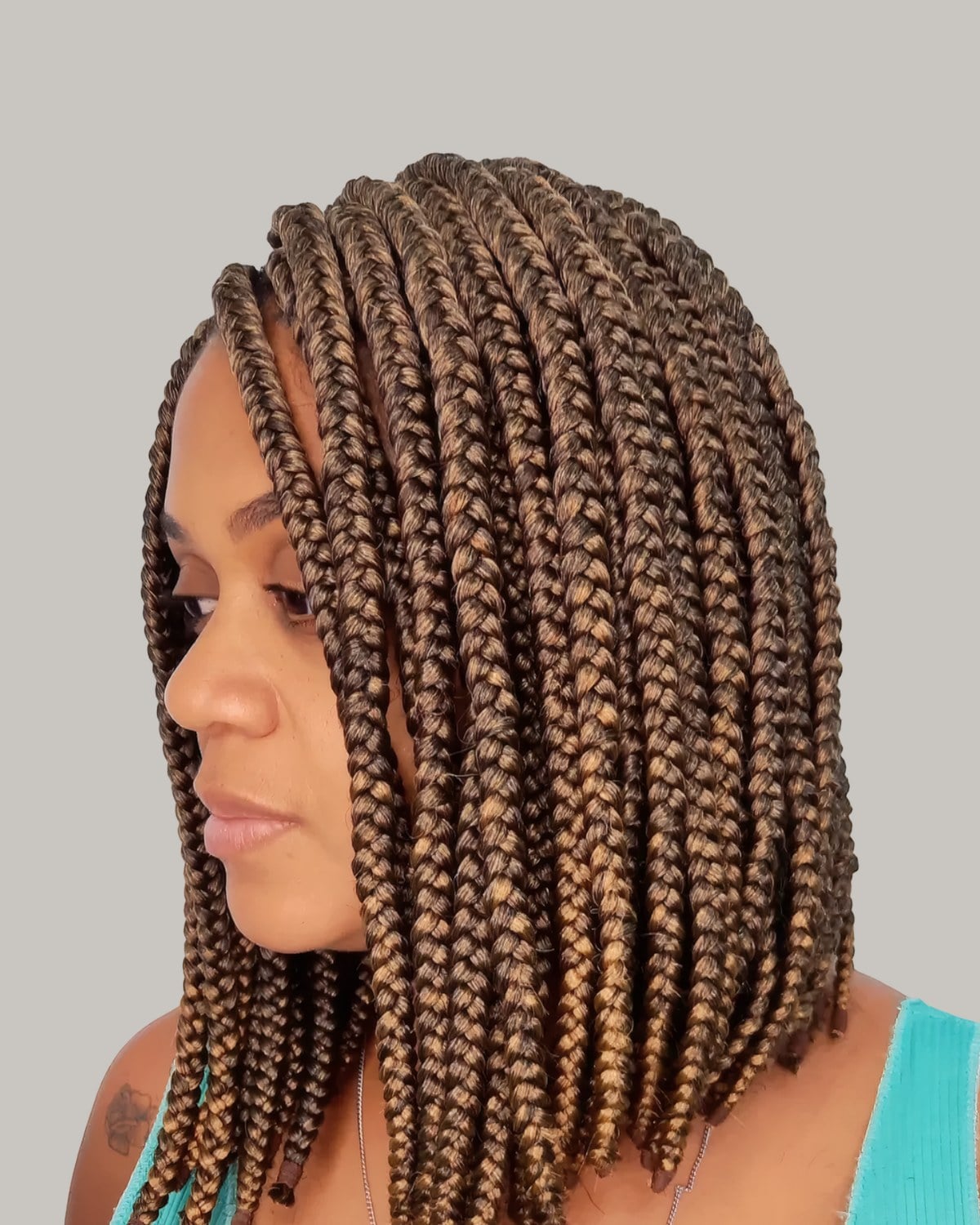
A lob sits between the bob and the long styles, grazing the collarbone. Honey brown with a darker root reads softer than black, and a deep side part sweeps the braids forward over one shoulder.
What to ask for Medium box braids to the collarbone in honey brown with a dark root, a deep side part, and the ends cut even.
Jumbo box braids
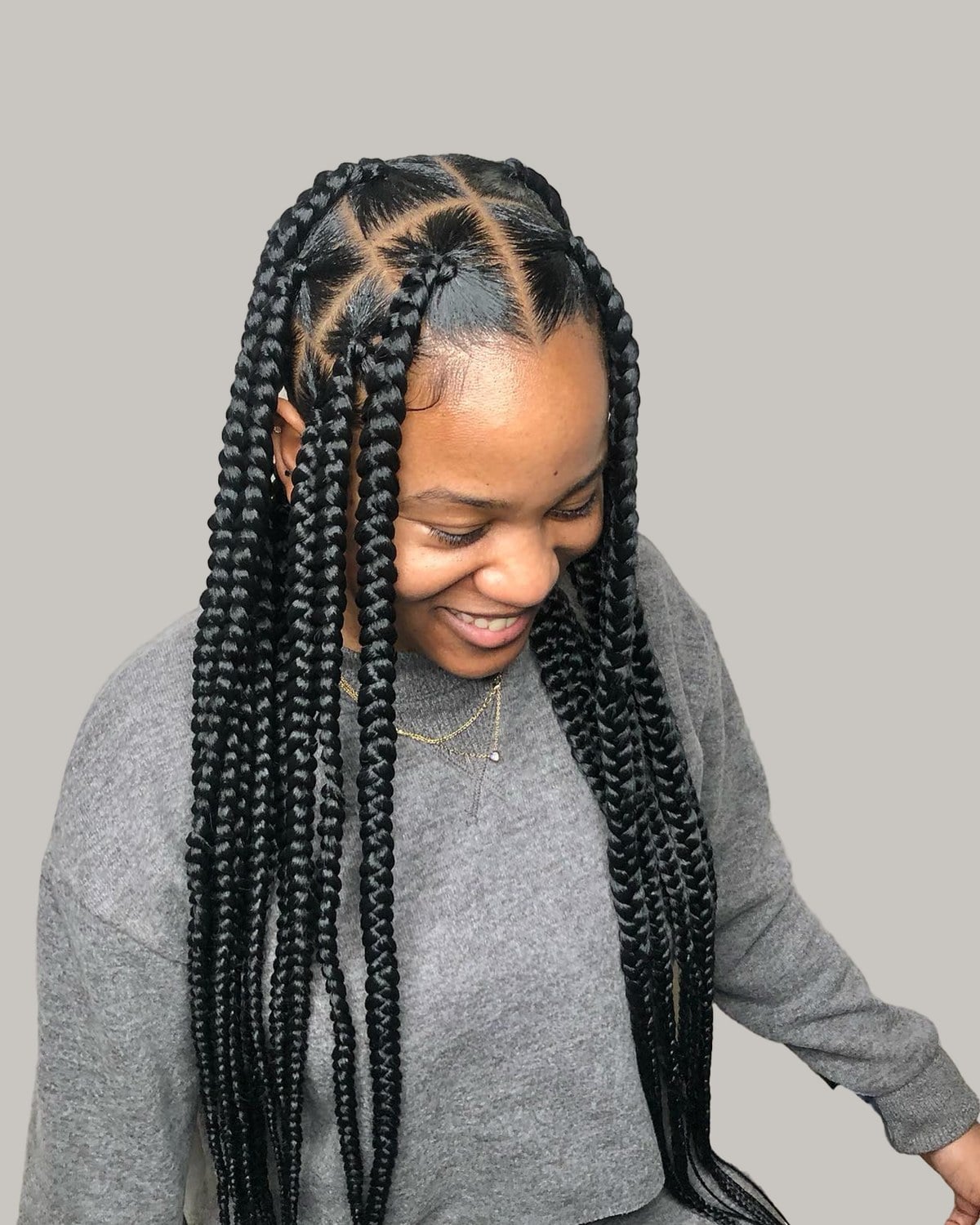
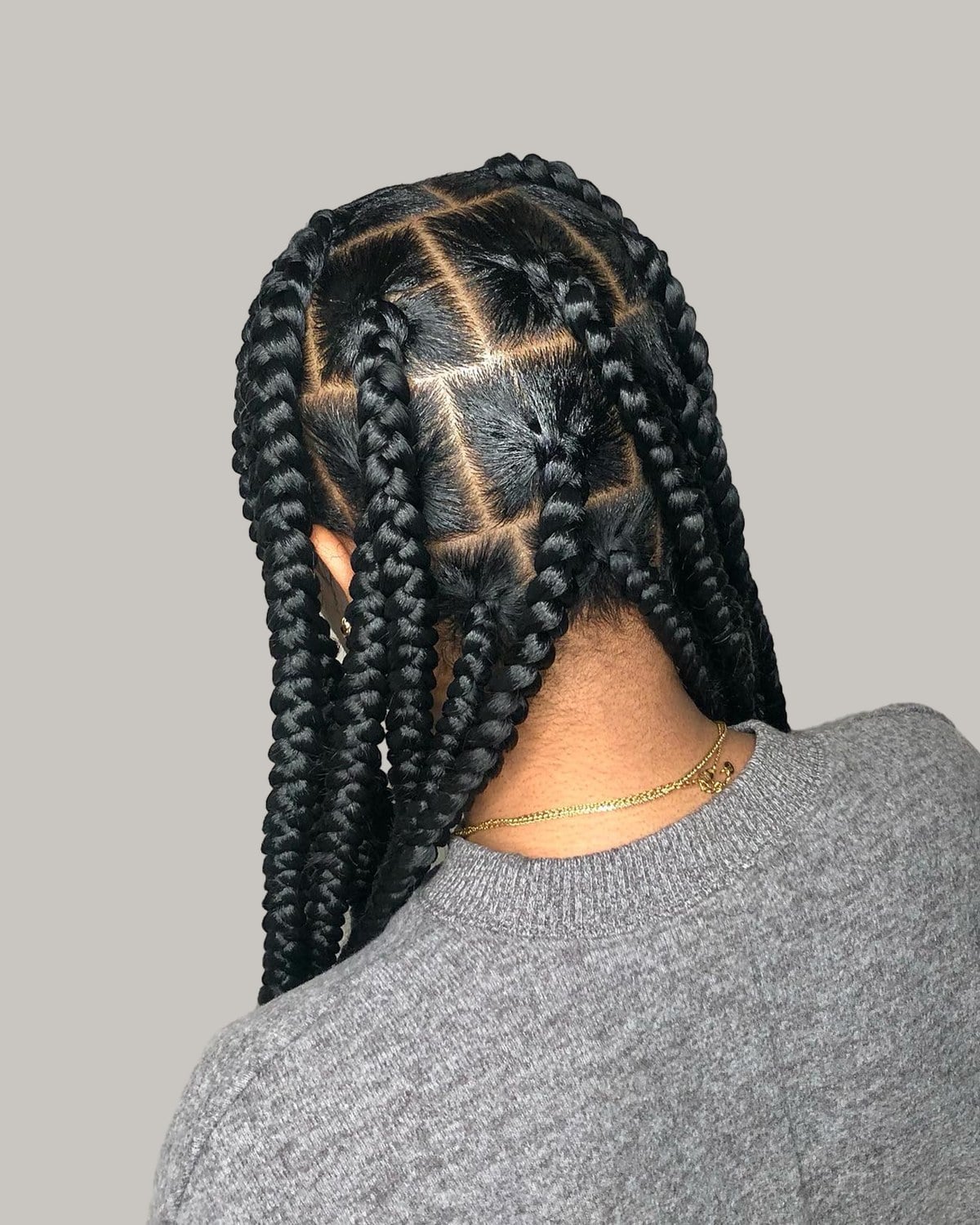
Jumbo braids are about the size of two markers together, so there are far fewer of them and the install takes between 45 minutes and three hours. They’re heavy at this length. Keep that in mind if your edges are delicate. The big parts become part of the look.
What to ask for Jumbo box braids with large square parts, past the bra strap, in black.
Jumbo box braids with bangs
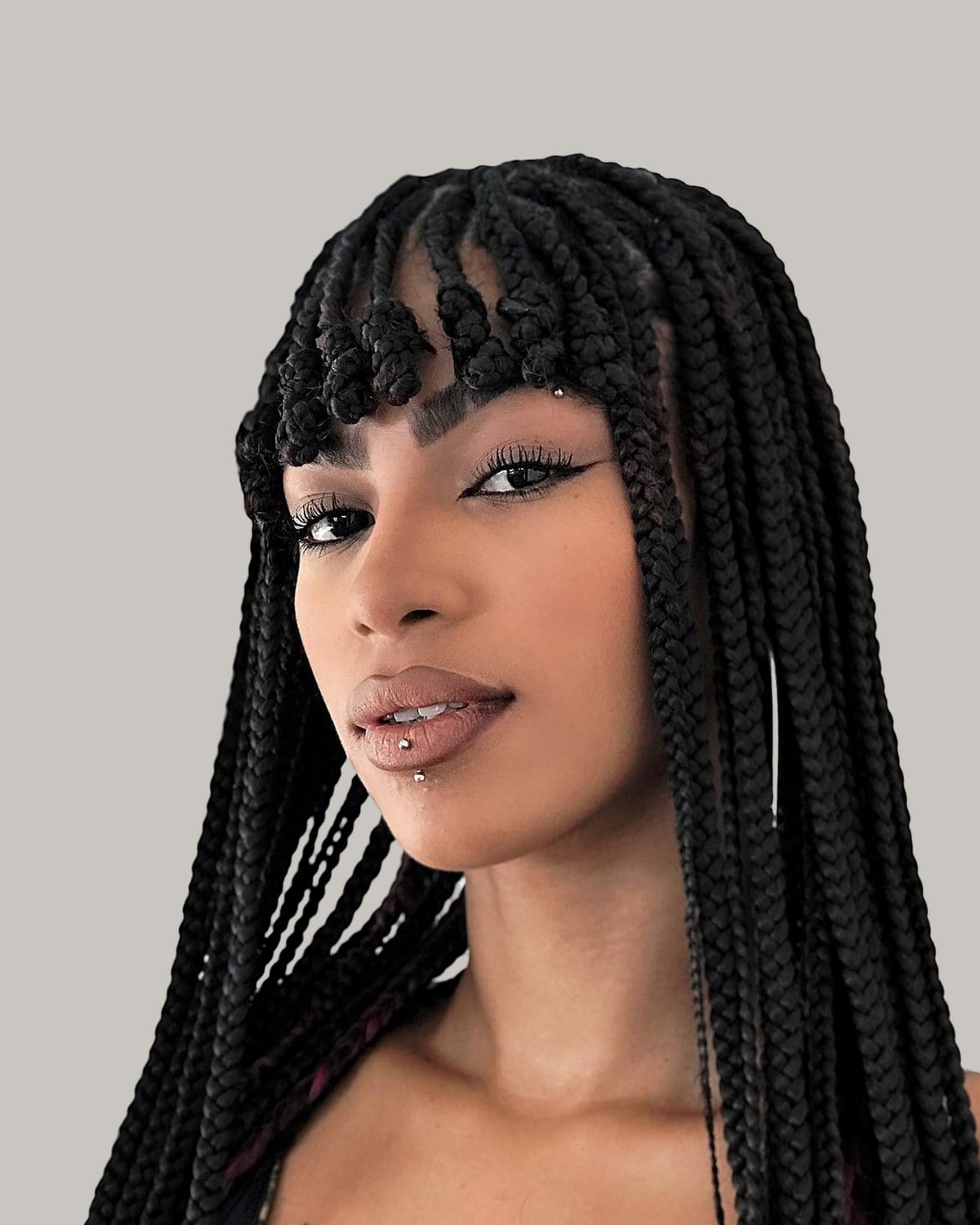
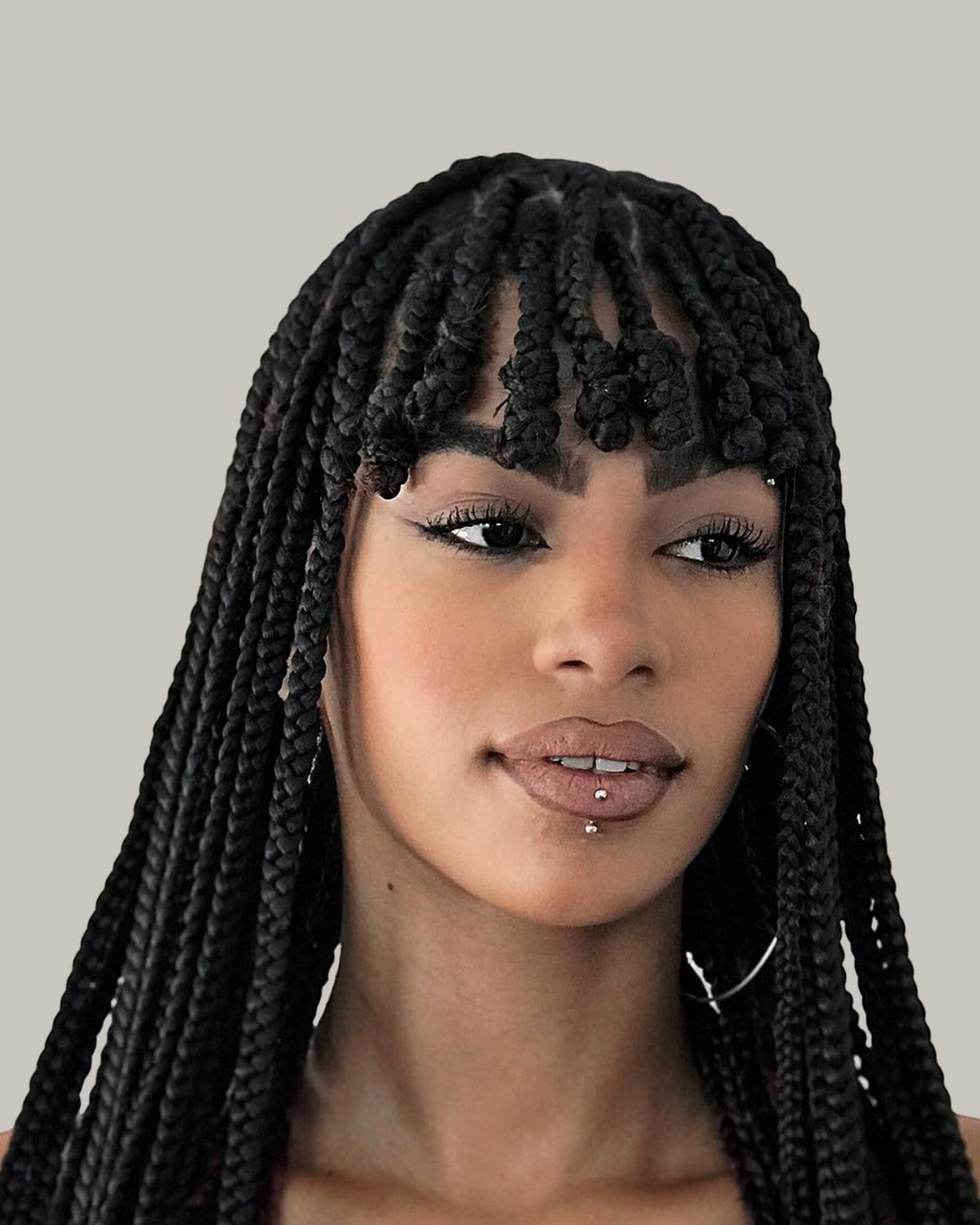
Braided bangs change the whole shape of jumbo box braids. The front braids are cut to sit at the brow, and the rest fall long. Rihanna is one of the names tied to jumbo box braids.
What to ask for Jumbo box braids with braided bangs cut at the brow, the rest past the bra strap, in black.
Knotless braids
Knotless braids with curly ends
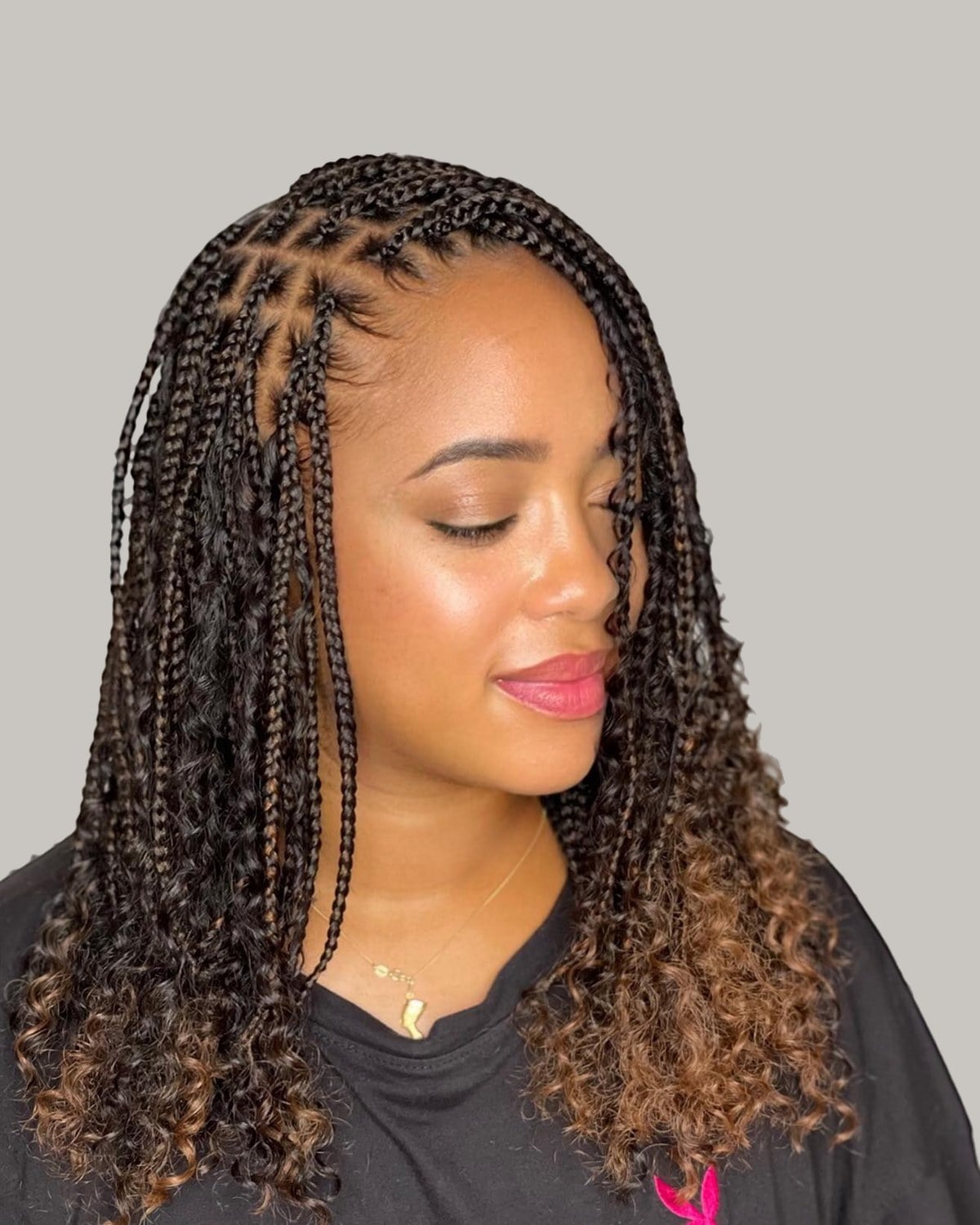
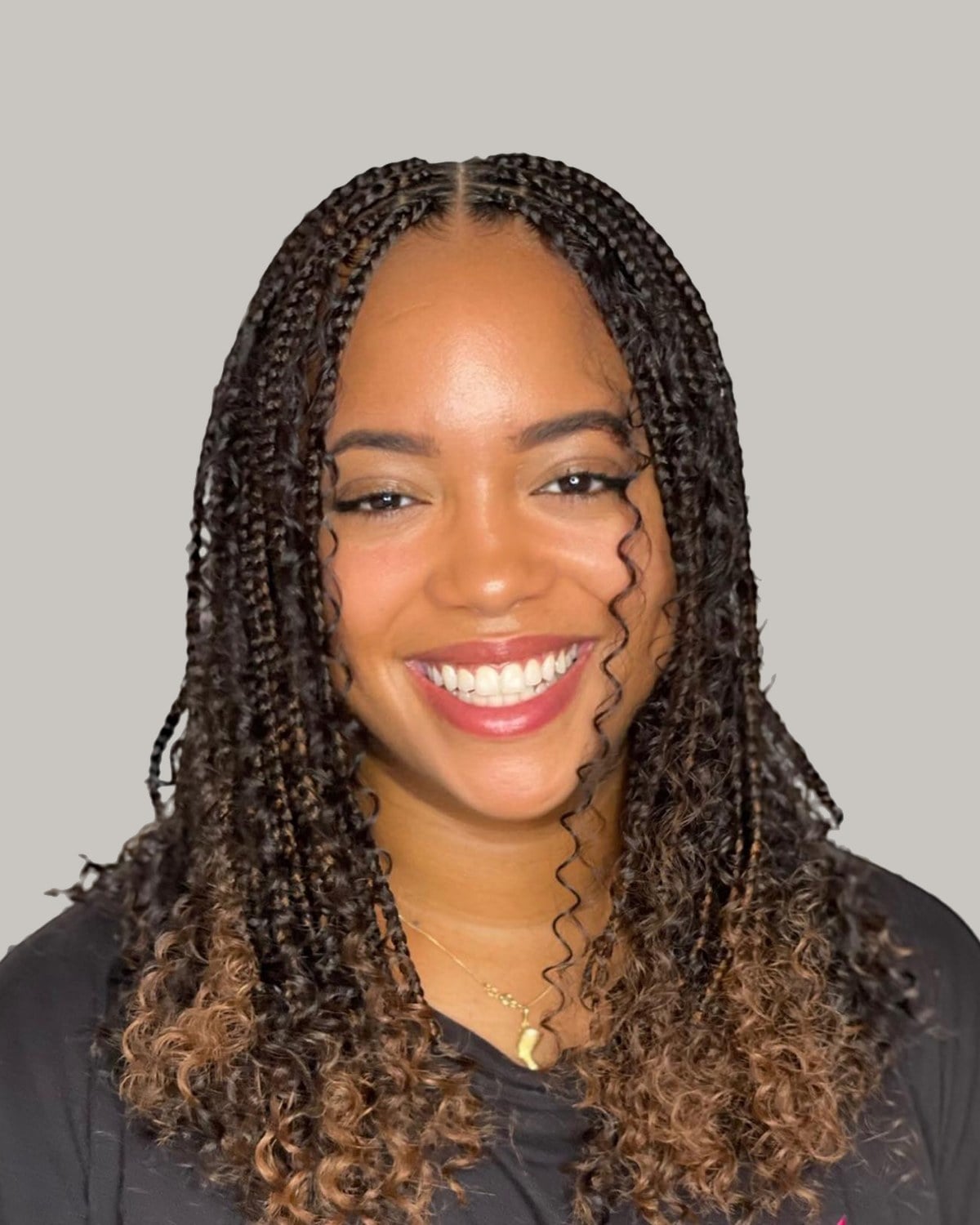
With curls left out at the tips, knotless braids take on the look braiders often call goddess ends. Brown ombré braiding hair gets lighter toward the curls, so the ends catch the light.
What to ask for Medium knotless braids to the chest, brown ombré, with curly ends on the last few inches.
Boho knotless braids
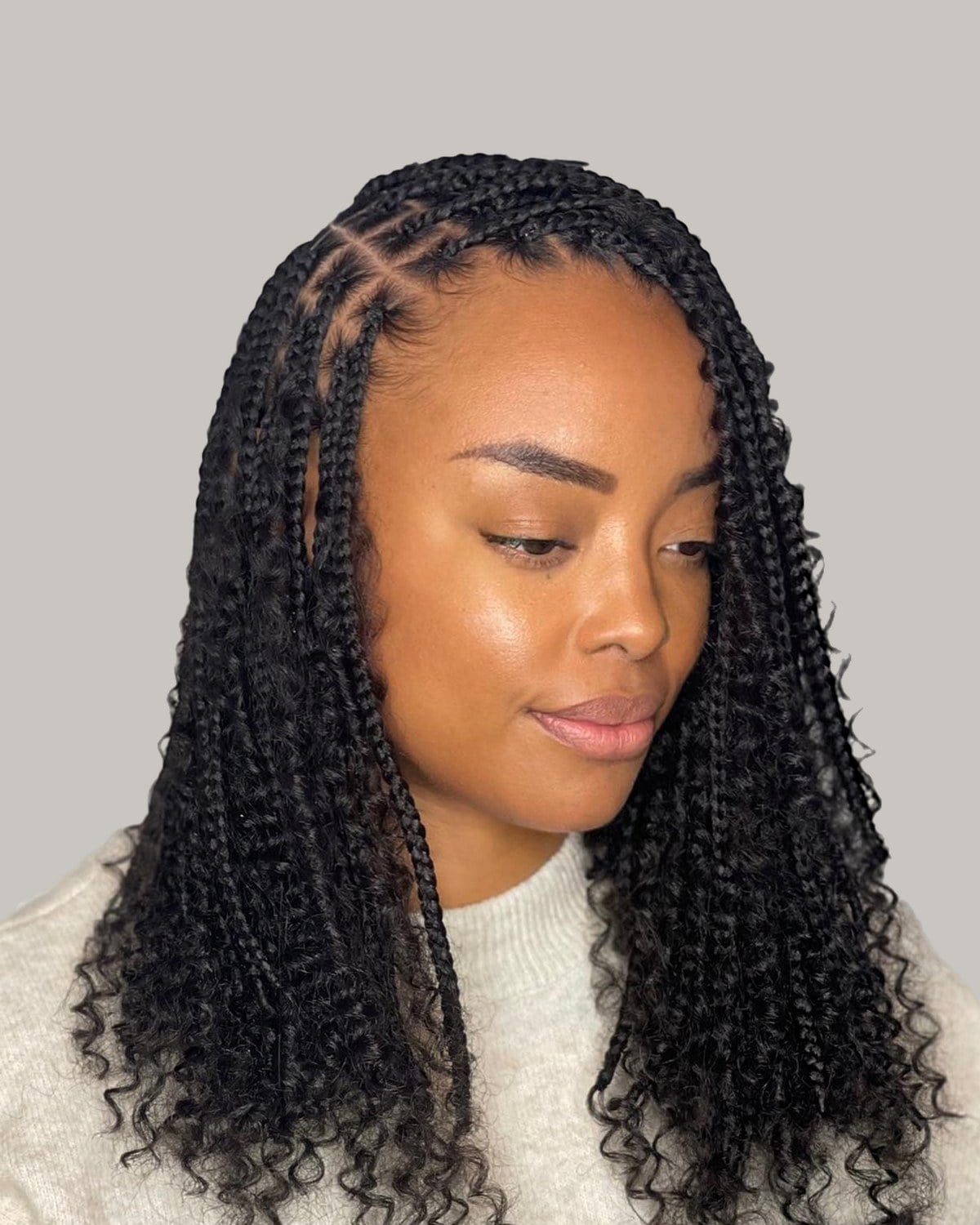
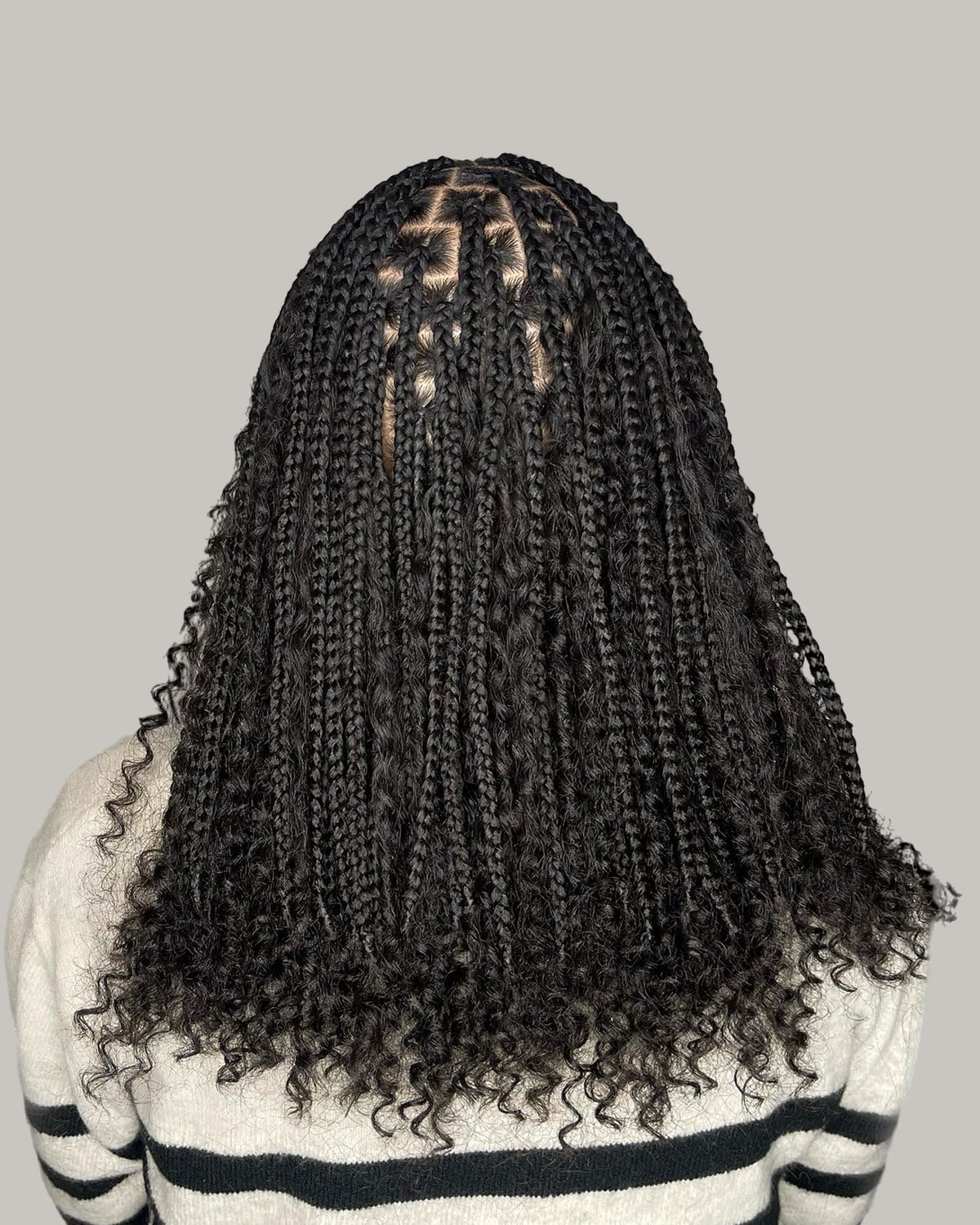
Boho braids leave curly or wavy pieces out along the whole braid, root to tip. That’s what makes them look soft. The back view shows the small parts and how full the curls get. They need daily care: mist, a little mousse, and a satin bonnet at night.
What to ask for Small boho knotless braids to mid-back, human curly hair left out along each braid, in black.
Boho and French curl braids
Long boho braids
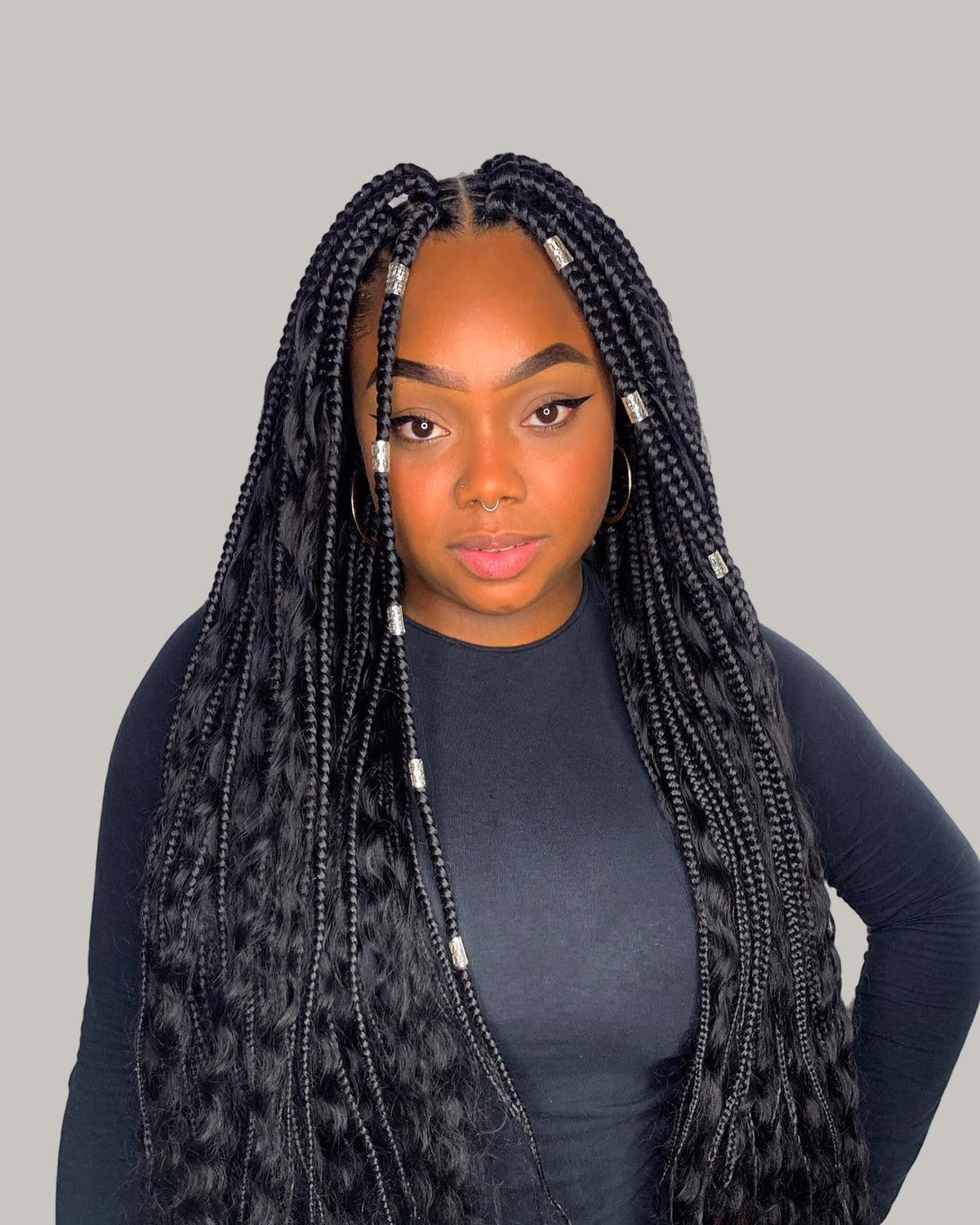
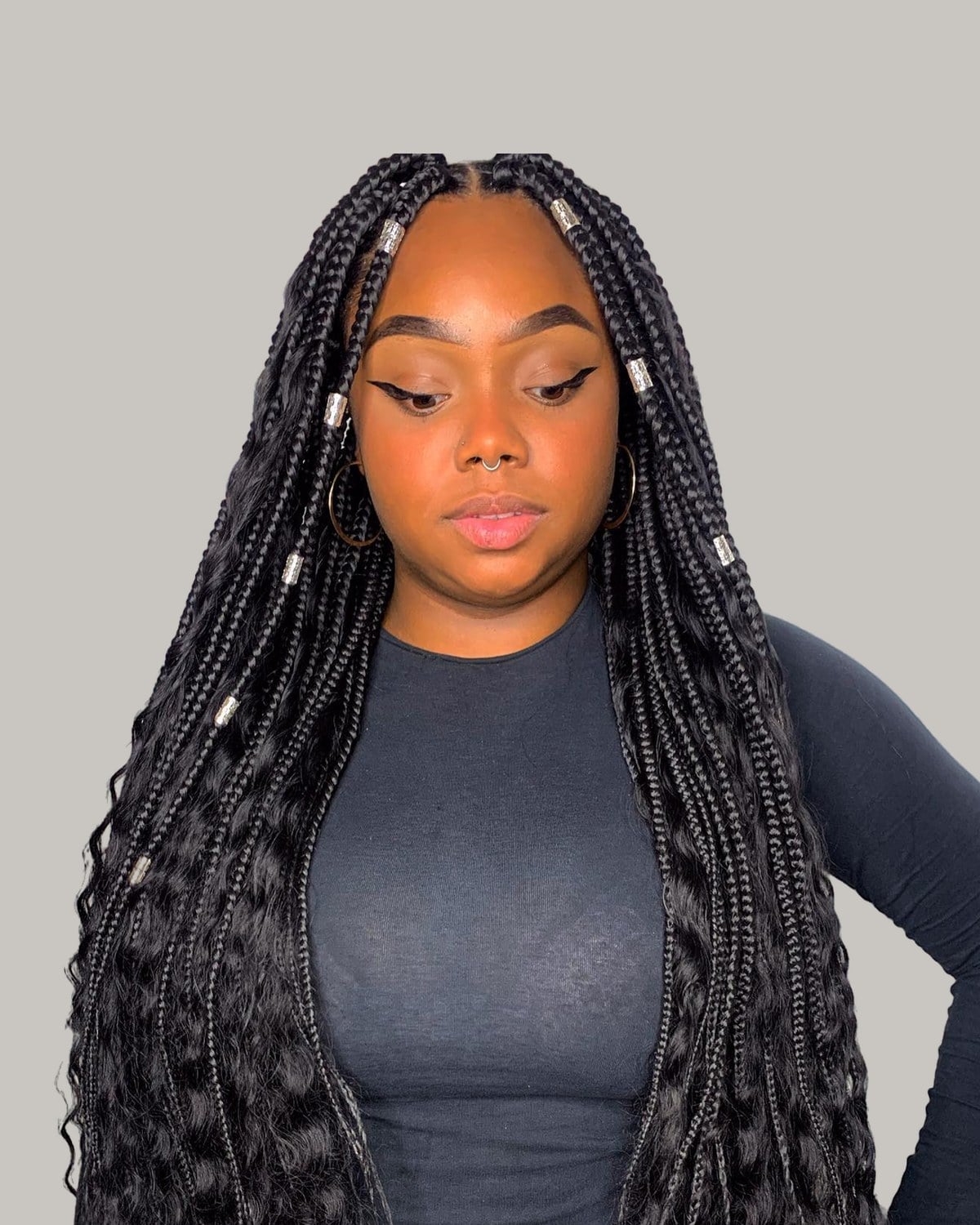
At waist length, boho braids swing, and gold cuffs scattered through them break up all that black. The curls mat first at the nape and behind the ears, so that’s where to detangle. Human curls can be refreshed with water, and synthetic curls frizz faster.
What to ask for Medium boho knotless braids to the waist, human curls left out all the way down, with gold cuffs.
French curl braids
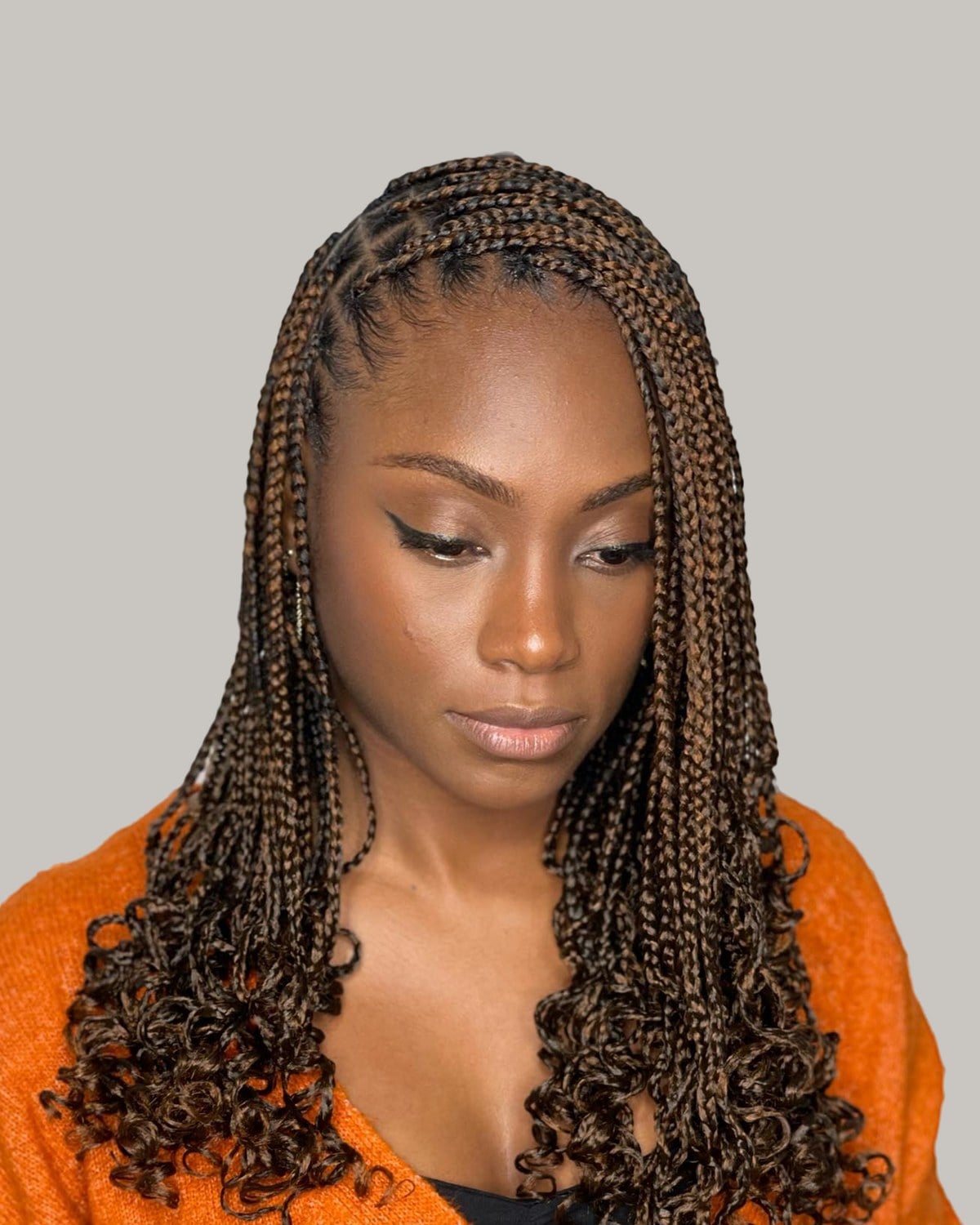
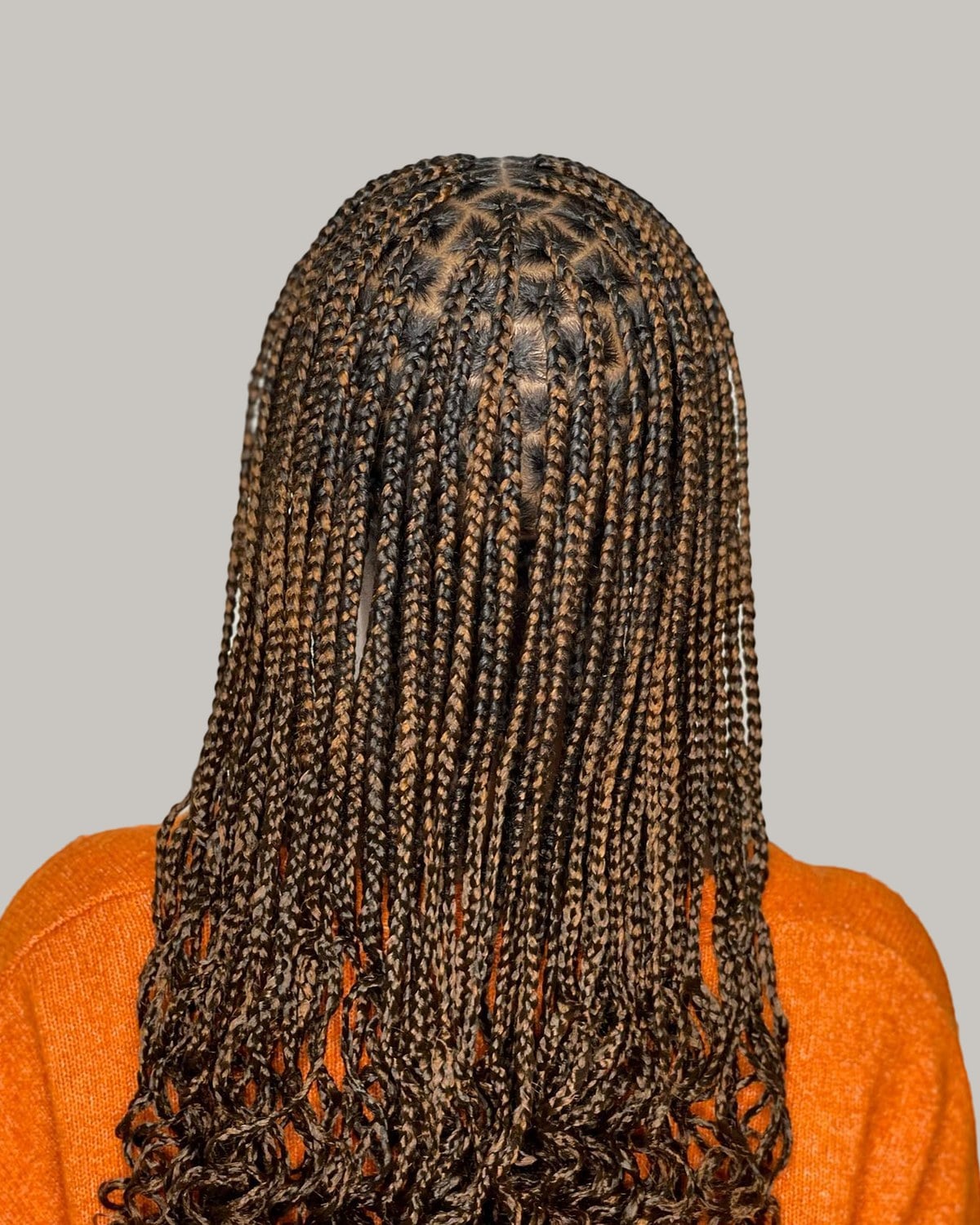
French curl braids are box braids with loose curls left at the end, and here the curls take up the bottom third. Brown braiding hair with a darker root keeps the parting subtle. From the back, the curls sit in an even line.
What to ask for Small French curl braids to the chest, brown with a dark root, loose curls on the bottom third.
Blonde French curl braids
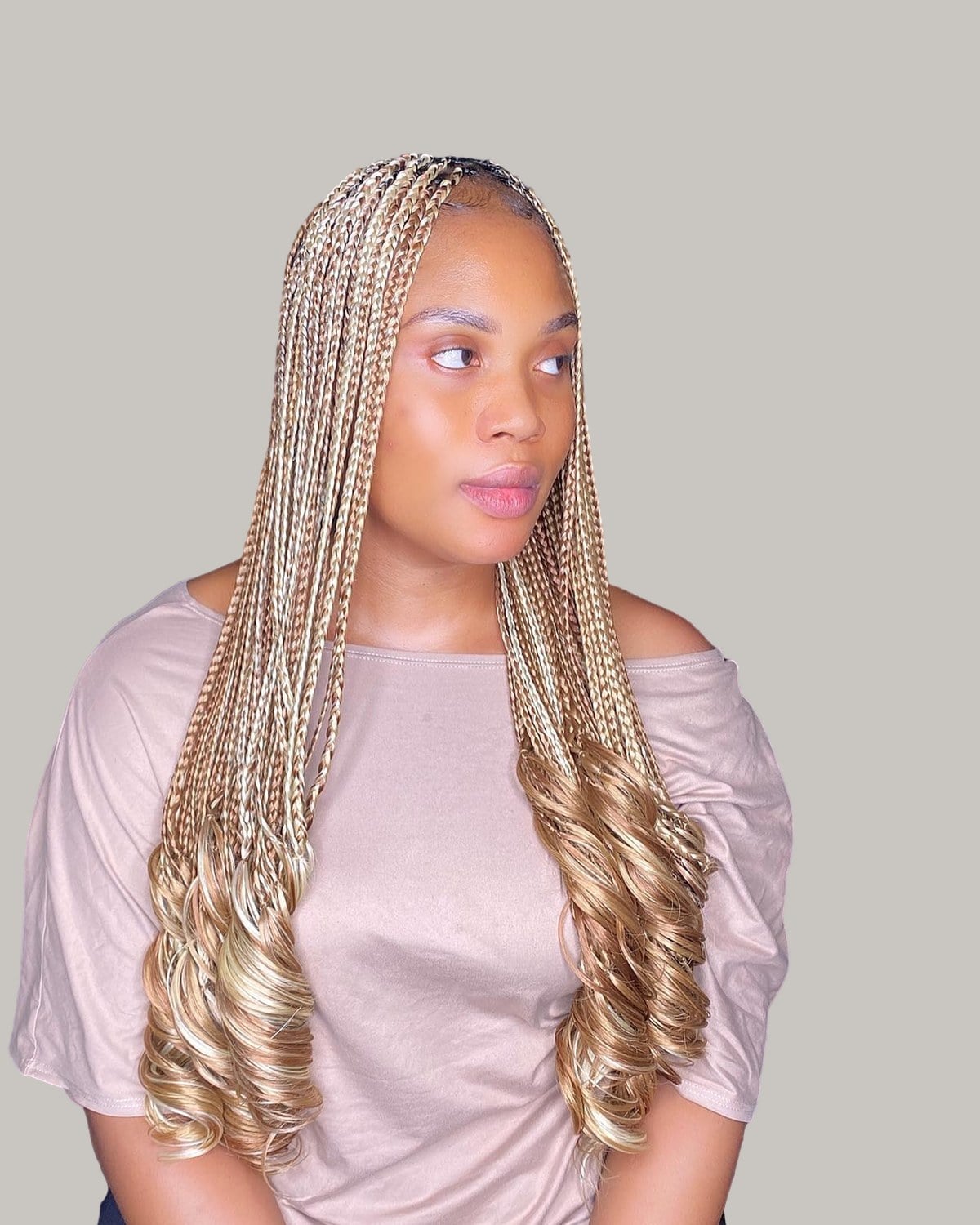
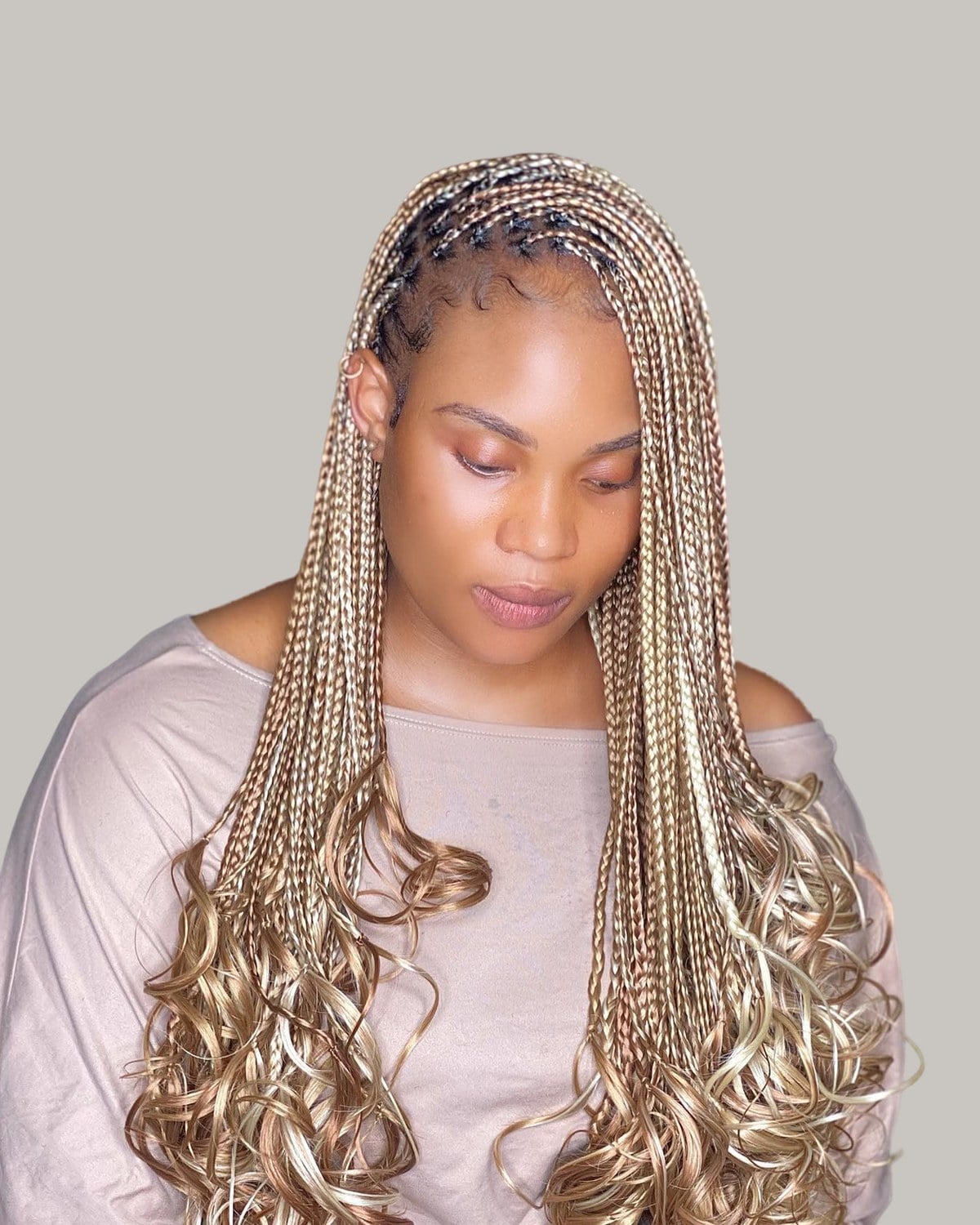
The same idea in honey blonde, and longer. The curls are big and loose, and they start around the chest.
What to ask for Small French curl braids in honey blonde, past the bra strap, with big loose curls on the ends.
Bora Bora braids
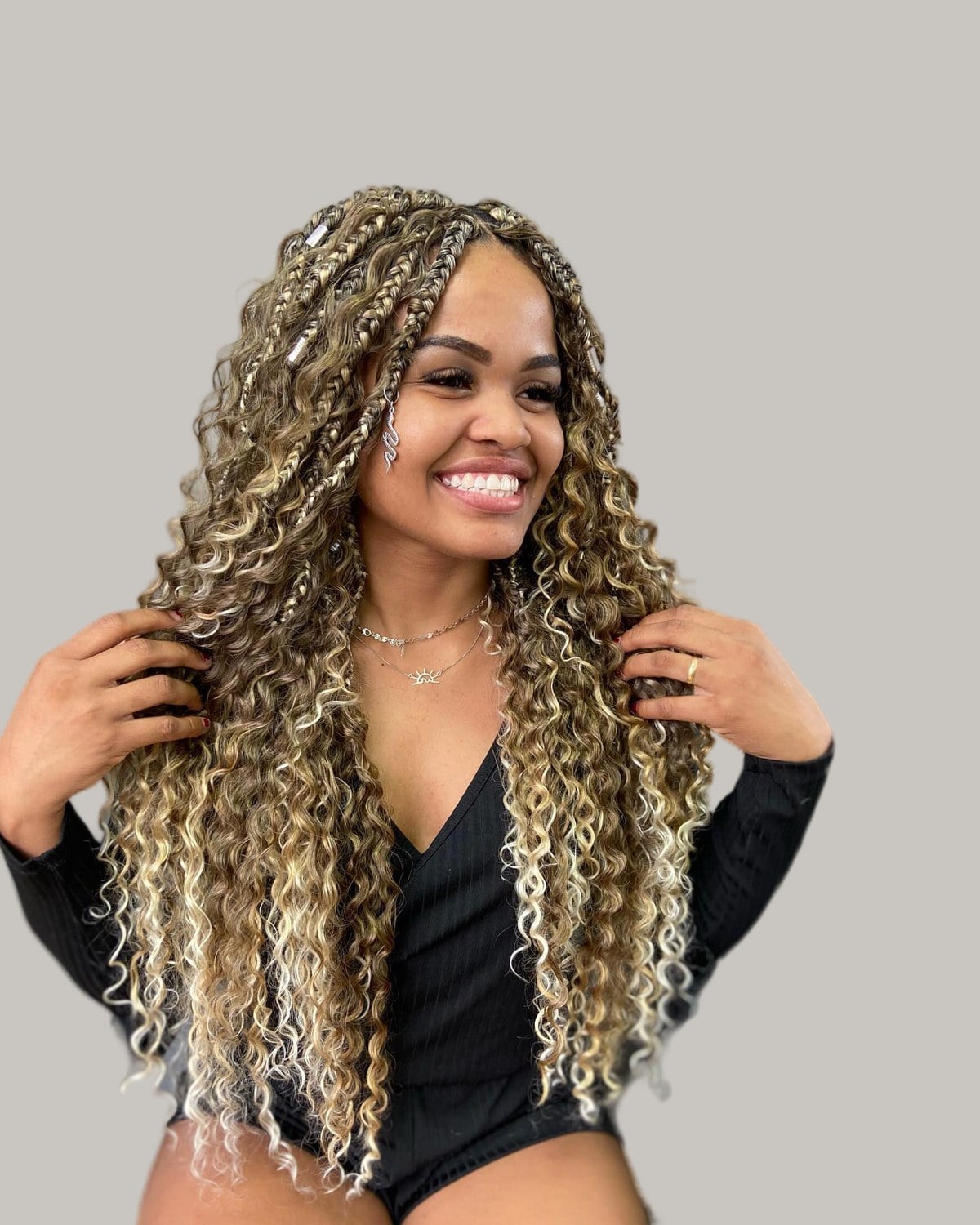
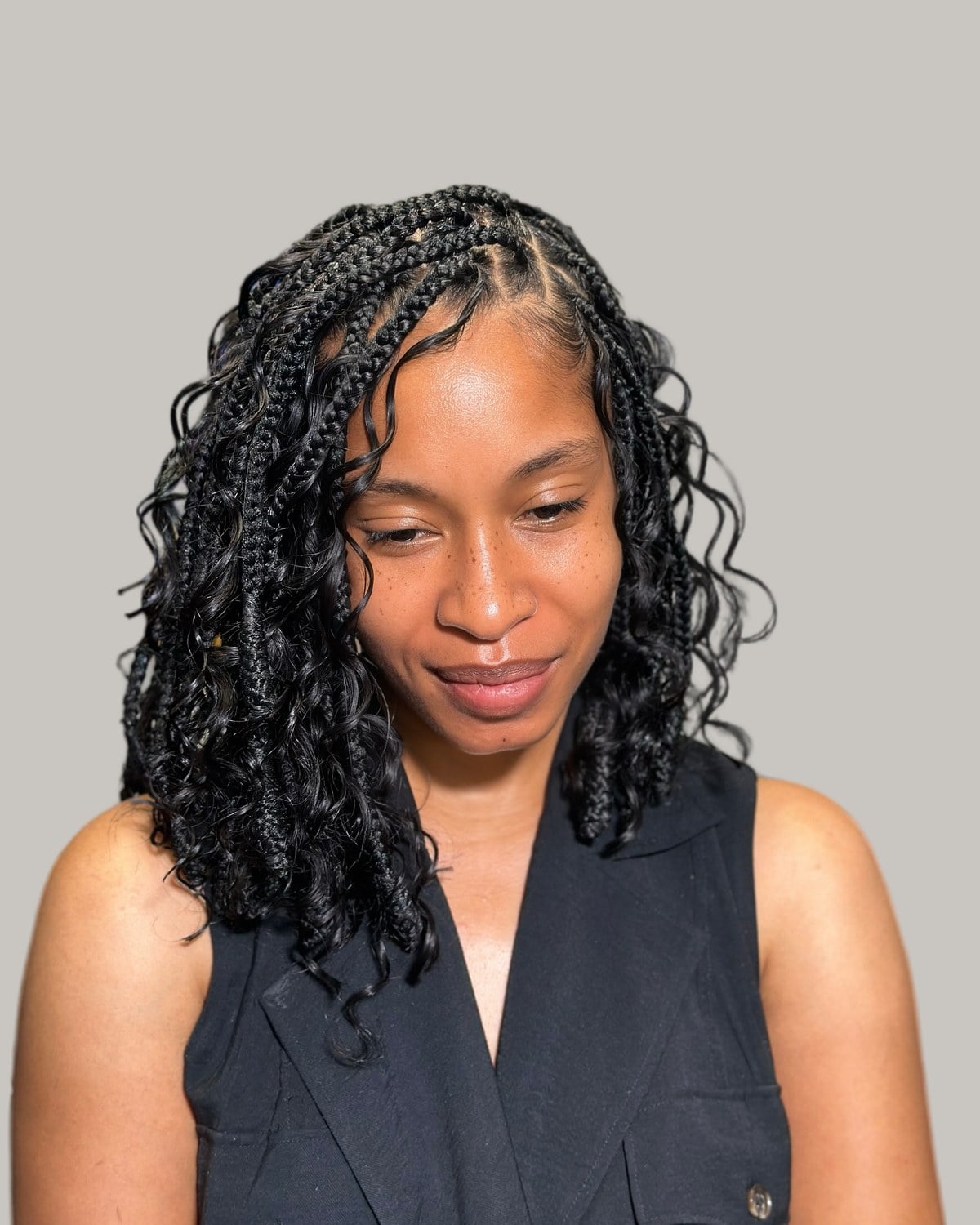
Bora Bora braids are a curlier take on boho braids. Human-hair curls are added all the way up each braid, so the curls cover most of it and the finish looks closer to a curly sew-in than to braids. Human hair costs more than synthetic, but it’s easy to refresh, since the curls can be wet again. Detangle them with your fingers and a little leave-in conditioner.
What to ask for Bora Bora braids, small braids with human-hair curls added from root to tip, honey blonde, past the shoulders.
Stitch, lemonade, tribal and Fulani braids
Stitch braids with a heart design
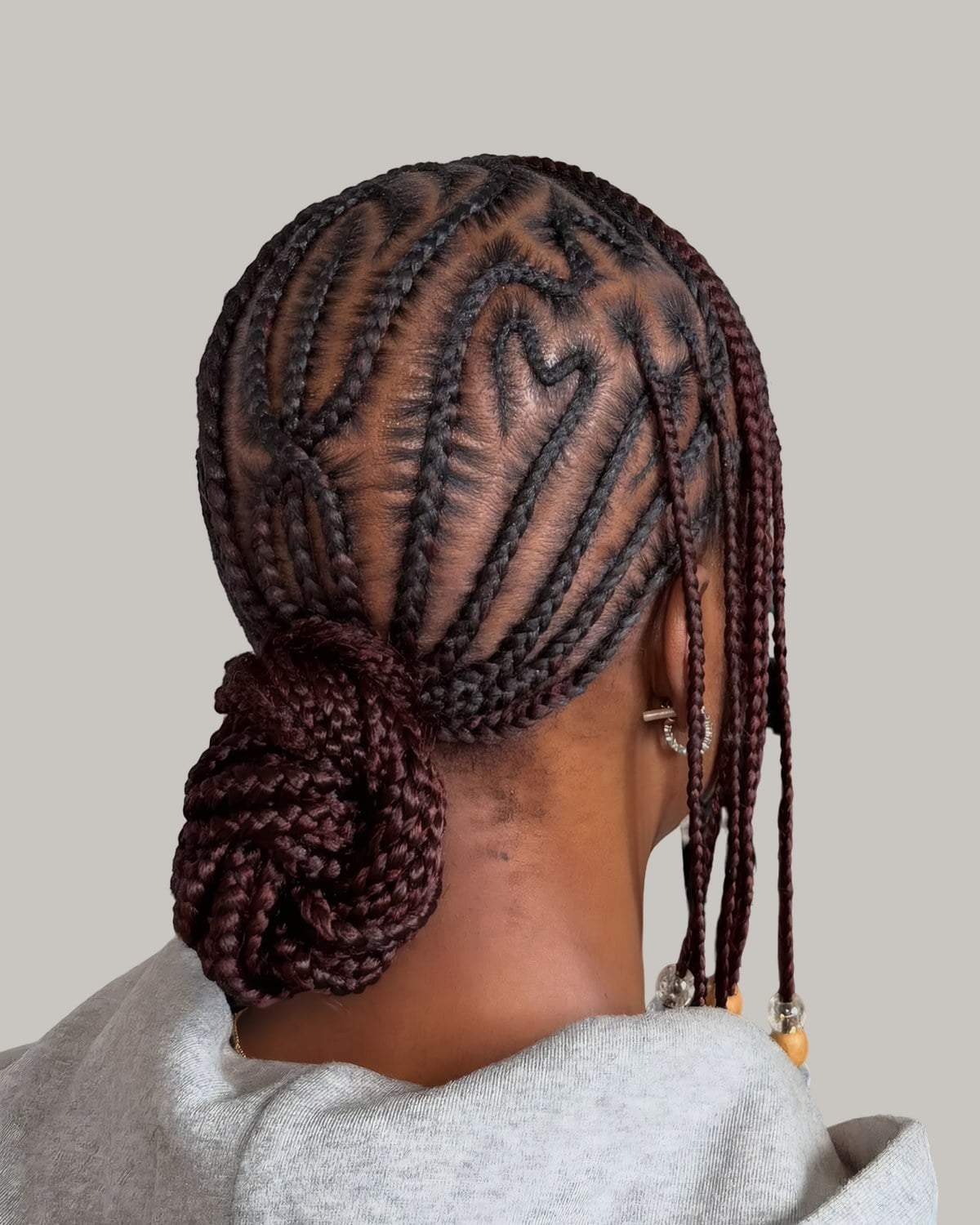
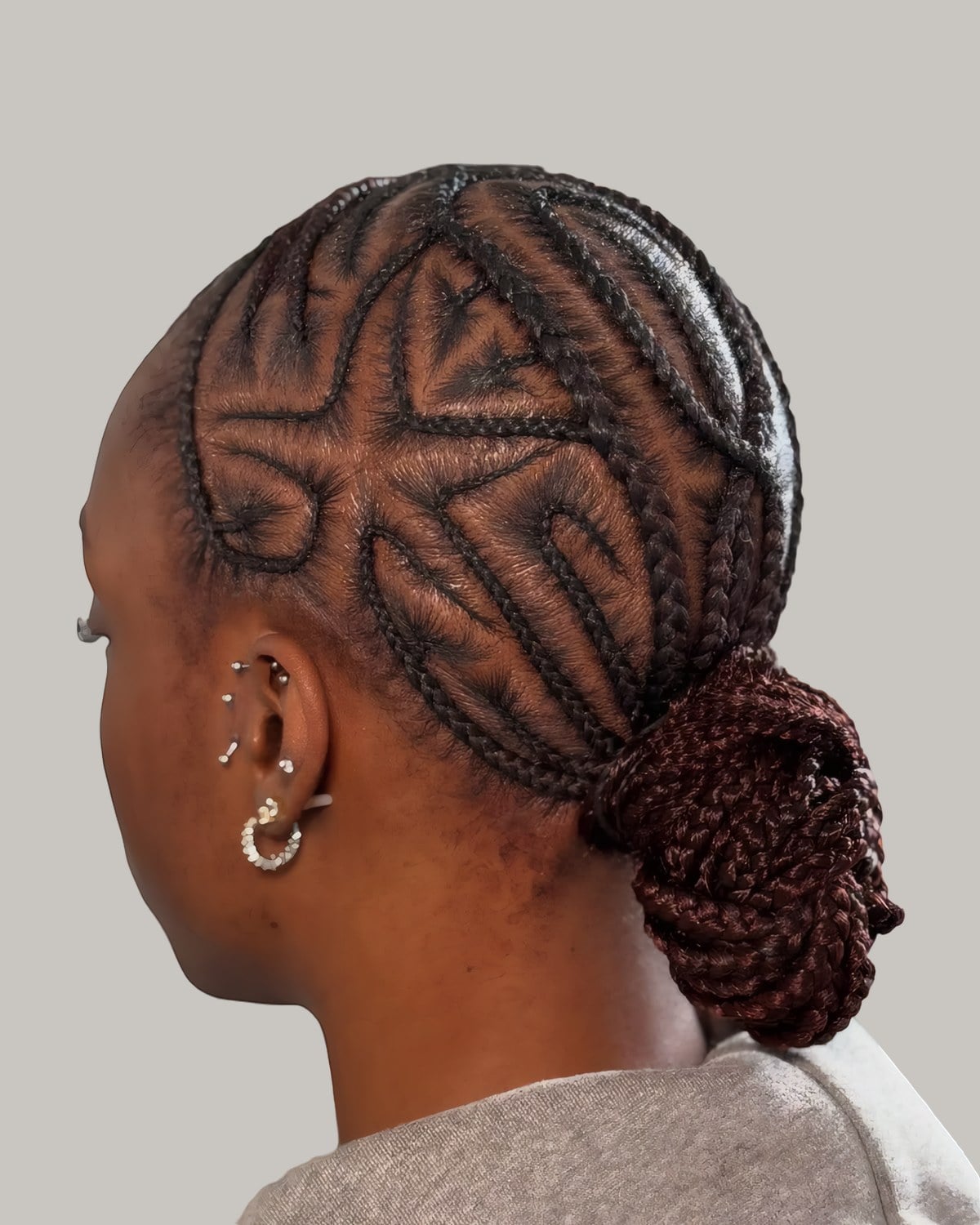
Stitch braids can carry a design, and here a heart is worked into the parts at the side. Each row has the raised stitch line that comes from adding the hair in small, even sections. The braids gather into a low bun at the nape, with warm brown ends.
What to ask for Stitch braids with a heart design at the side, the rows curved back into a low bun at the nape, brown on the ends.
Wavy stitch braids in two low buns
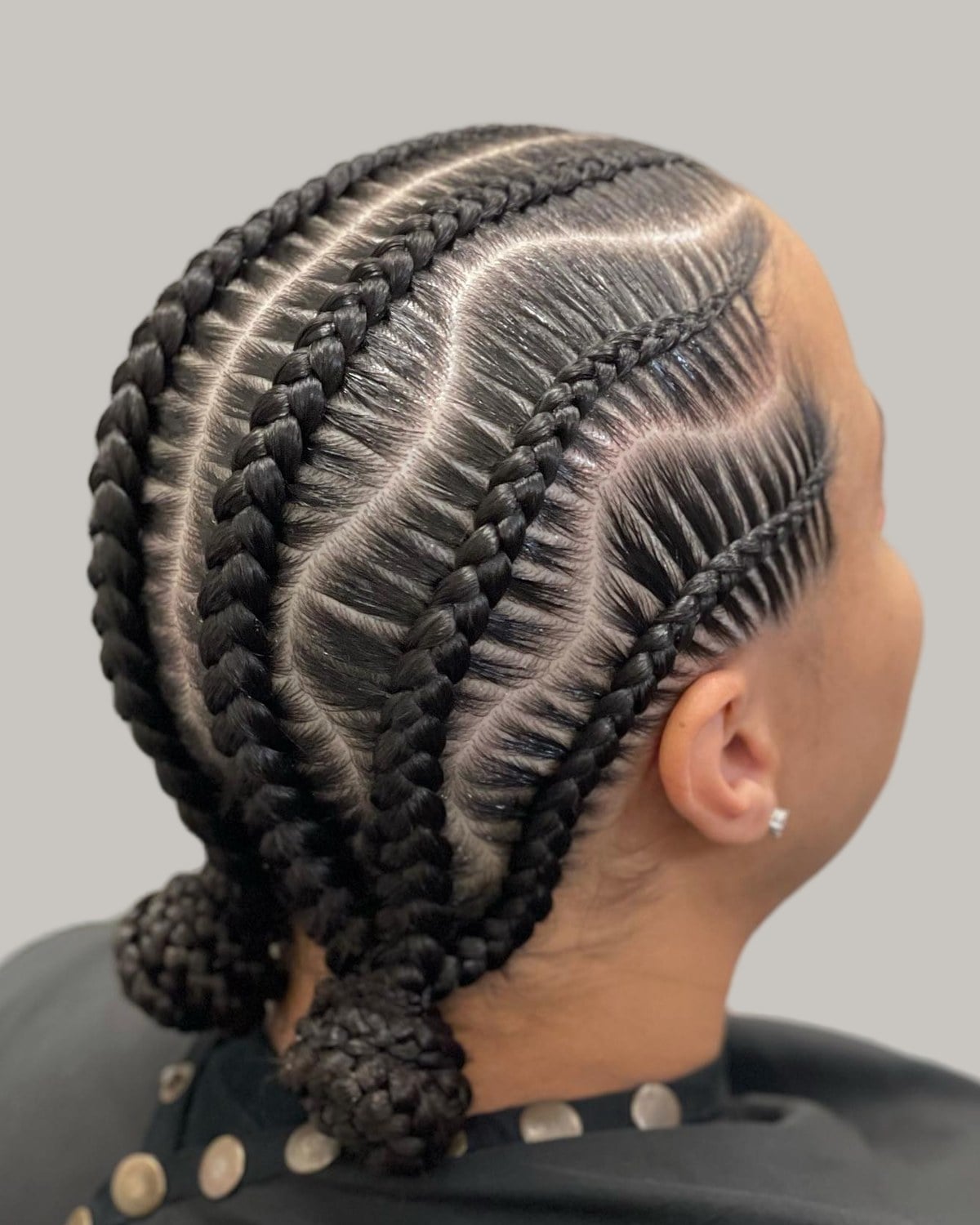
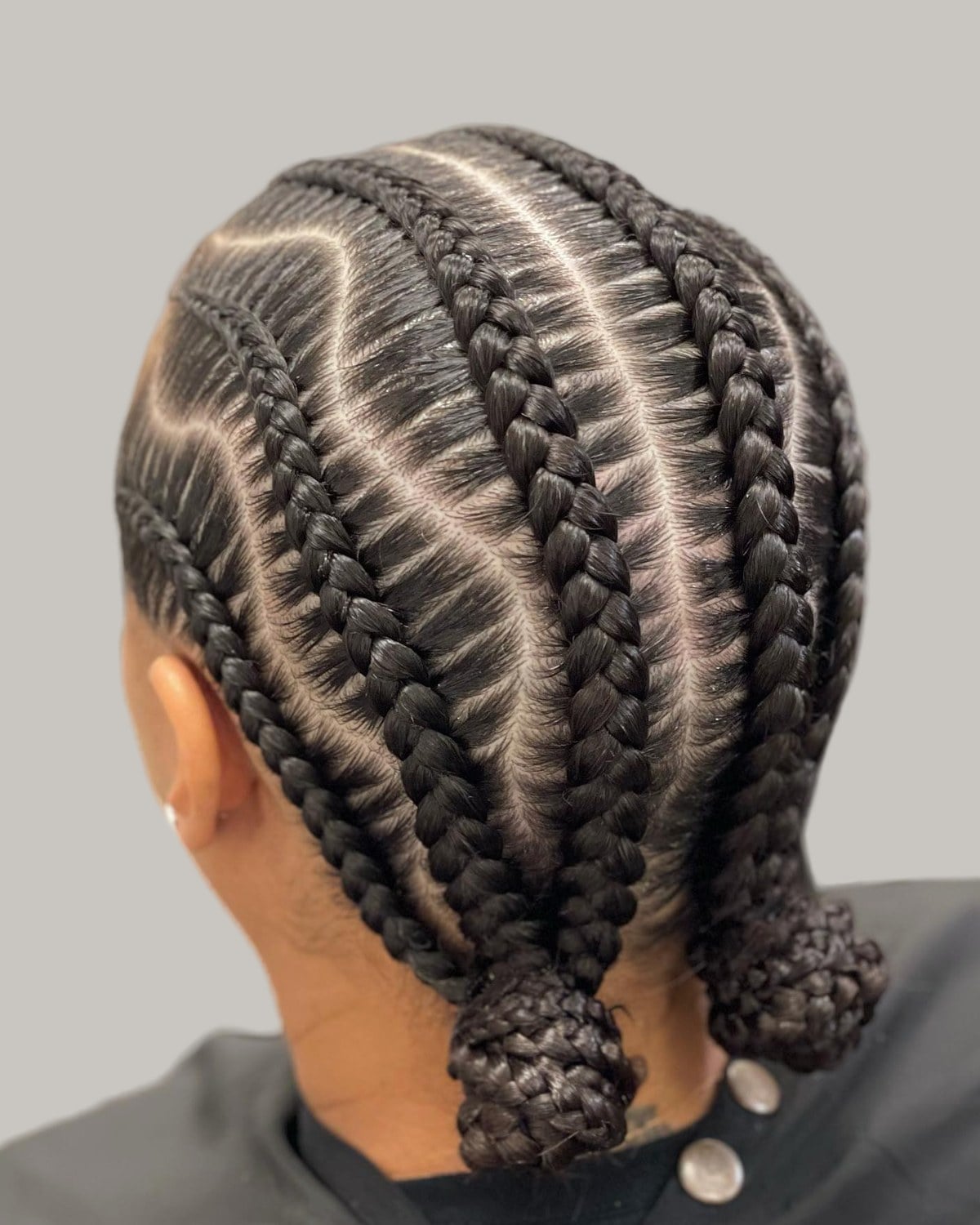
Wavy parts make the rows curve instead of running straight back, with no freehand design needed. The rows curve from the front hairline to the nape, and the ends are pinned into two low buns. With little or no added hair, they’re lighter than long stitch braids.
What to ask for Stitch braids with curved, wavy parts, braided back to the nape and pinned into two low buns, with no added length.
Lemonade braids
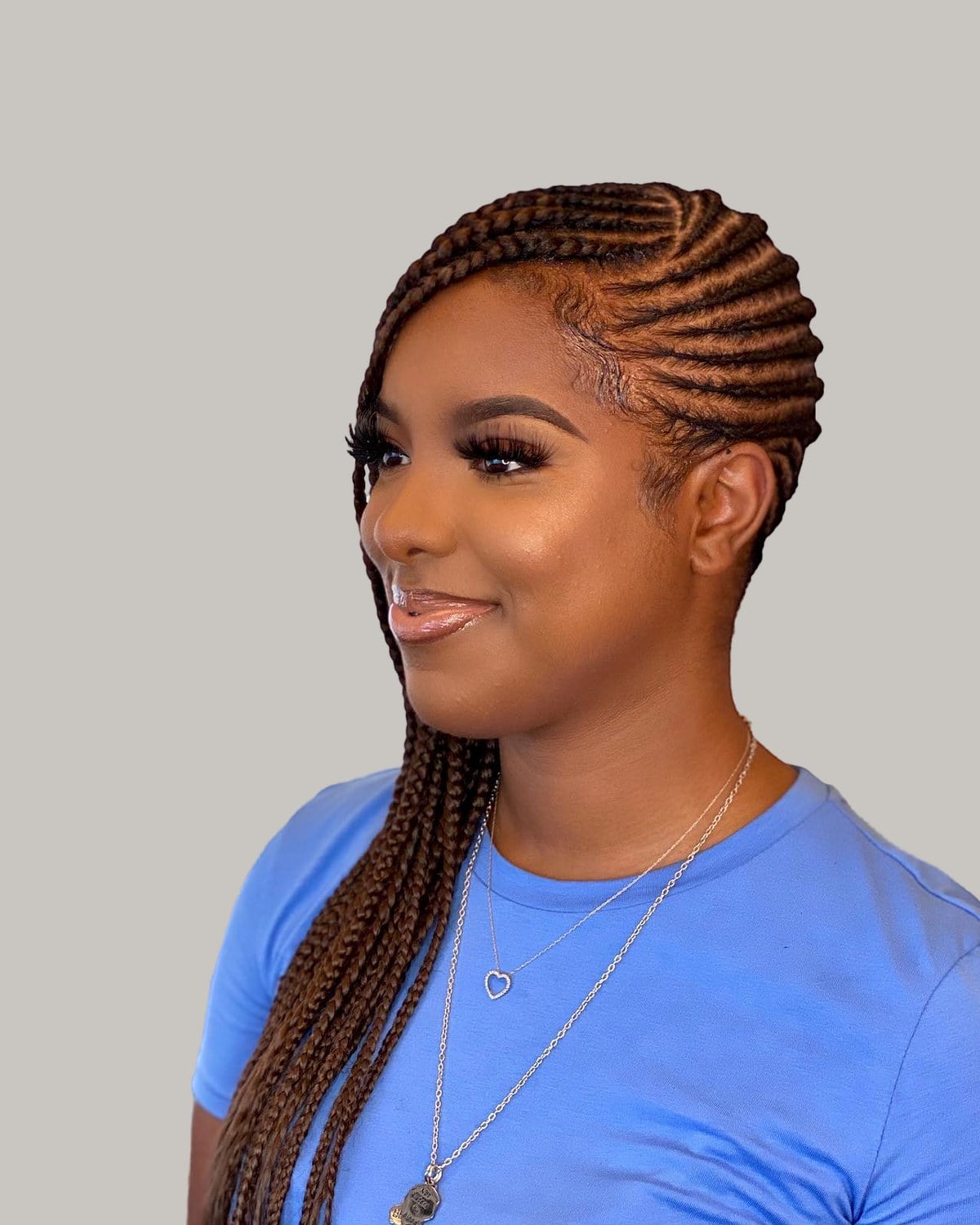
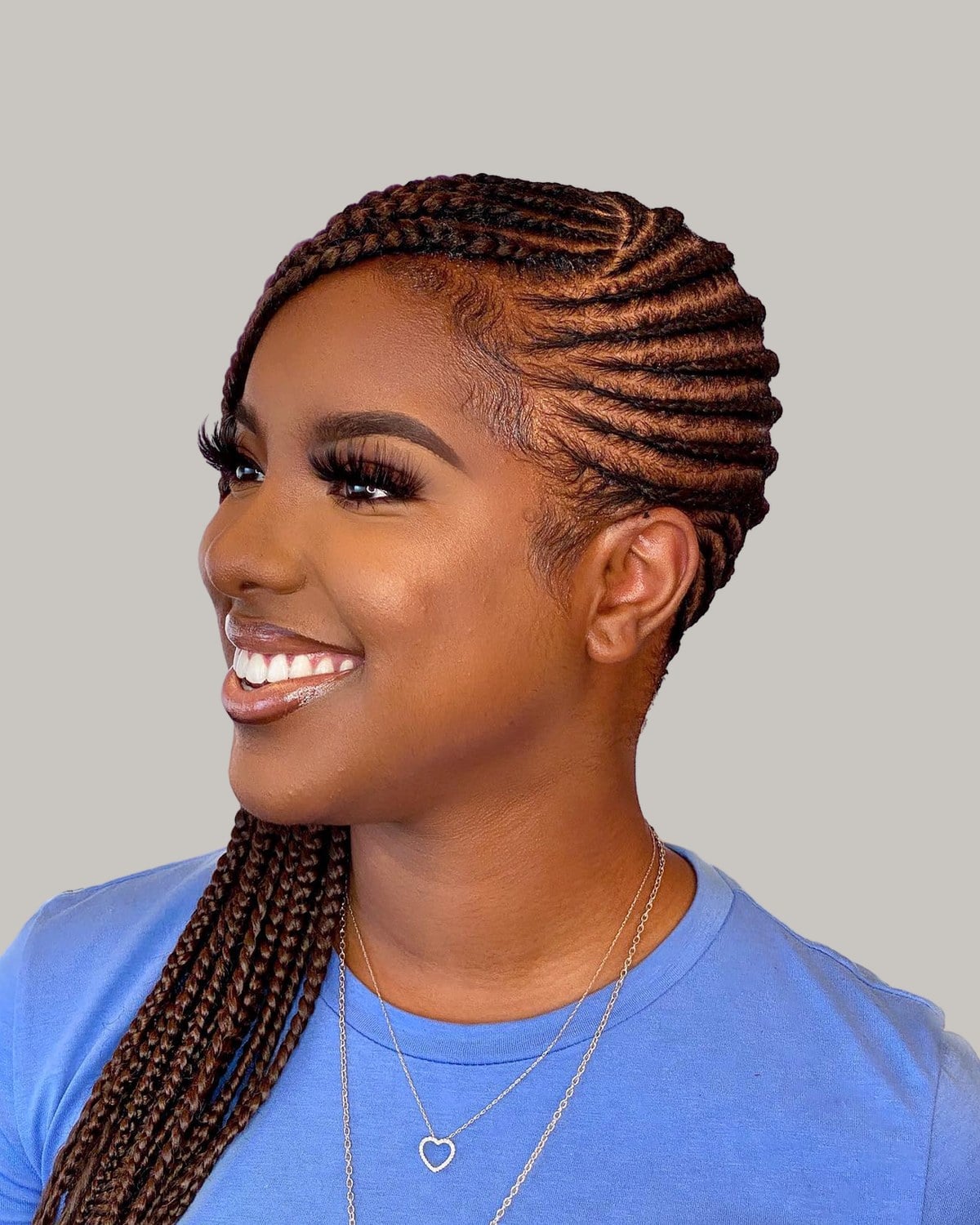
Lemonade braids are side-swept cornrows with extensions, named for Beyoncé, who wore them for Lemonade. The rows curve neatly behind the ear. They can take as little as two hours.
What to ask for Lemonade braids, medium cornrows swept to one side, copper brown, braided long past the shoulders.
Tribal braids
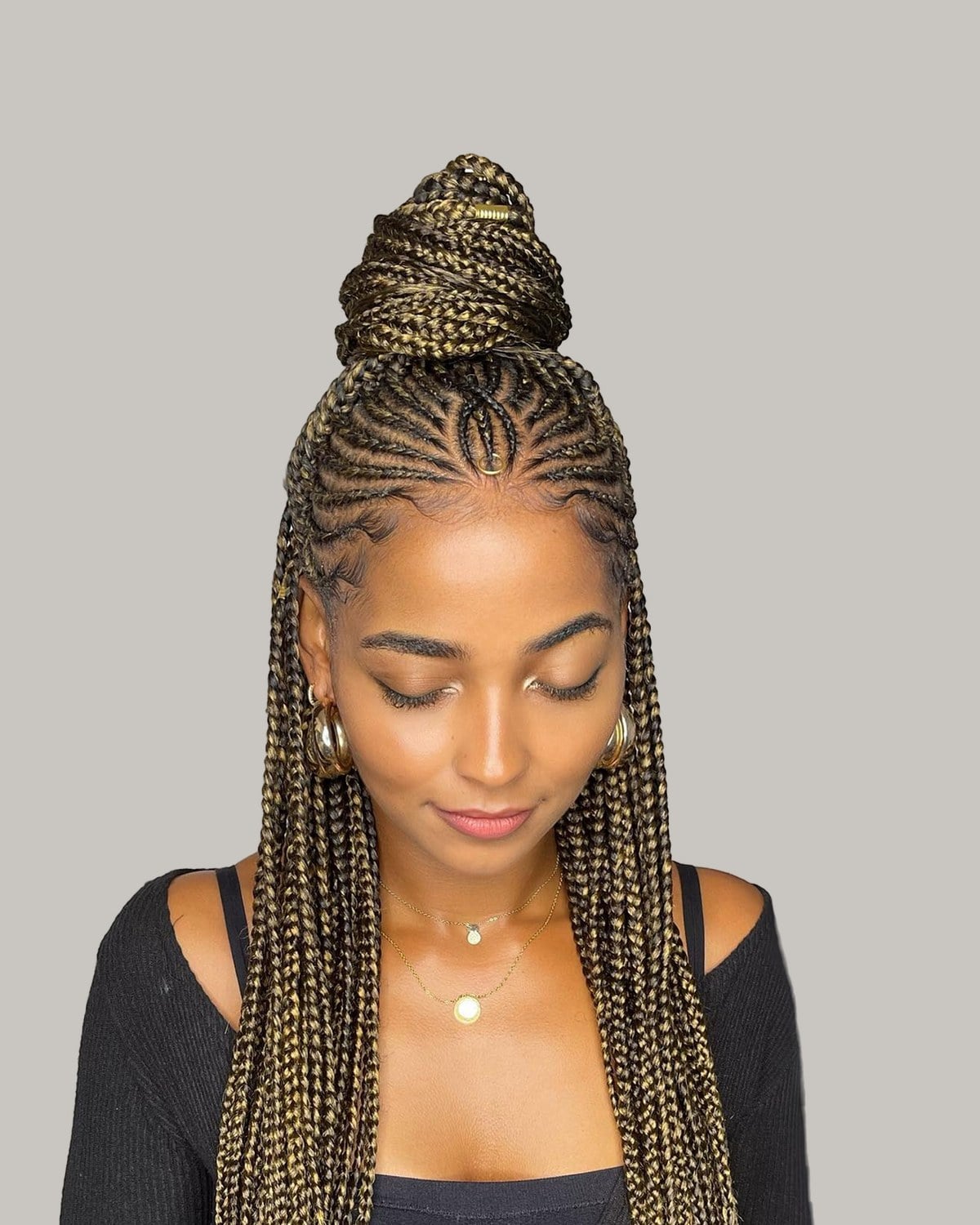
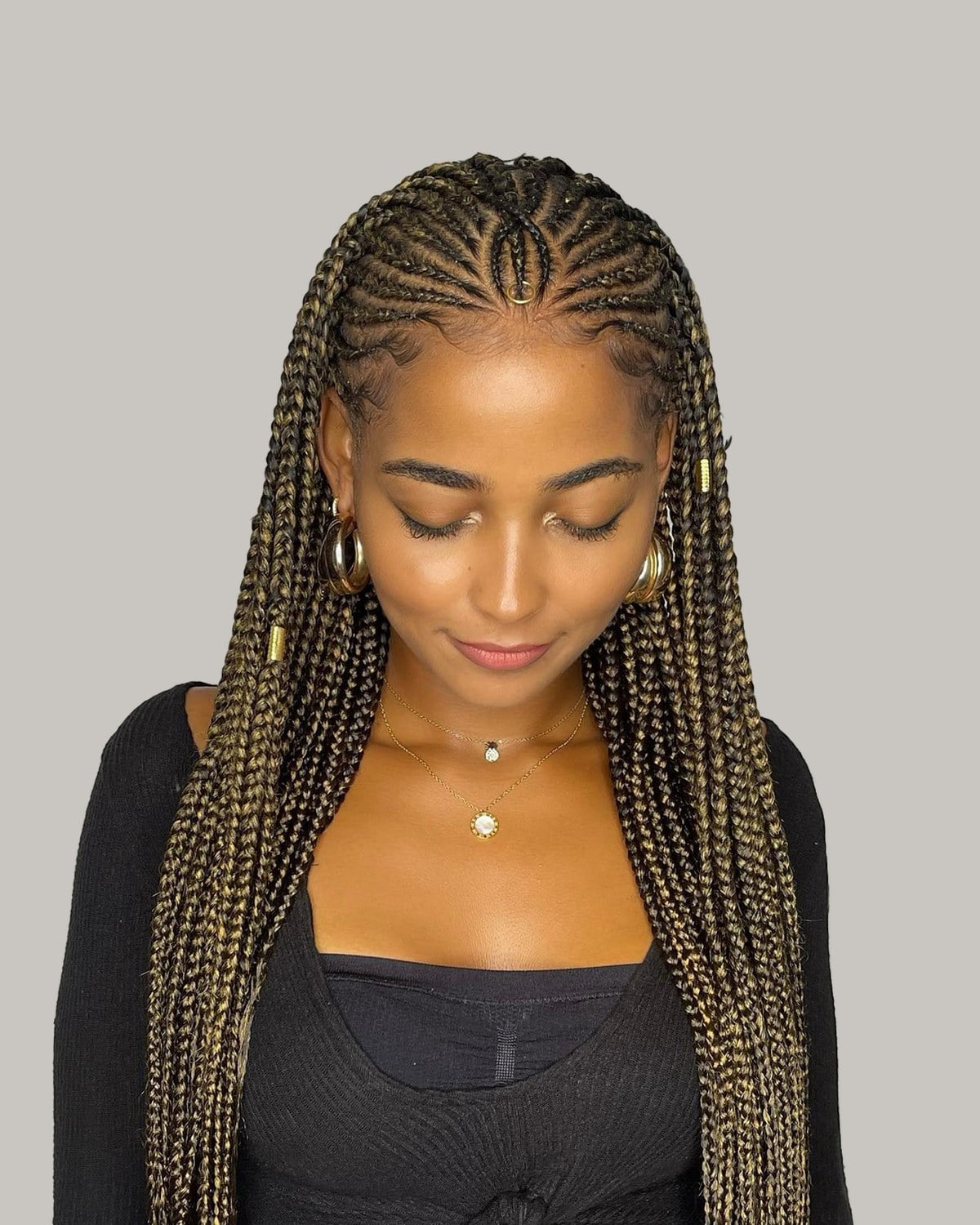
Tribal braids is an umbrella name for braids set in a pattern, usually cornrows at the front and loose braids behind. This set mixes honey blonde into black, with gold cuffs. It can be worn down or half up in a bun.
What to ask for Tribal braids with cornrows at the front and small box braids behind, honey blonde mixed with black, gold cuffs.
Tribal braids with a zigzag part
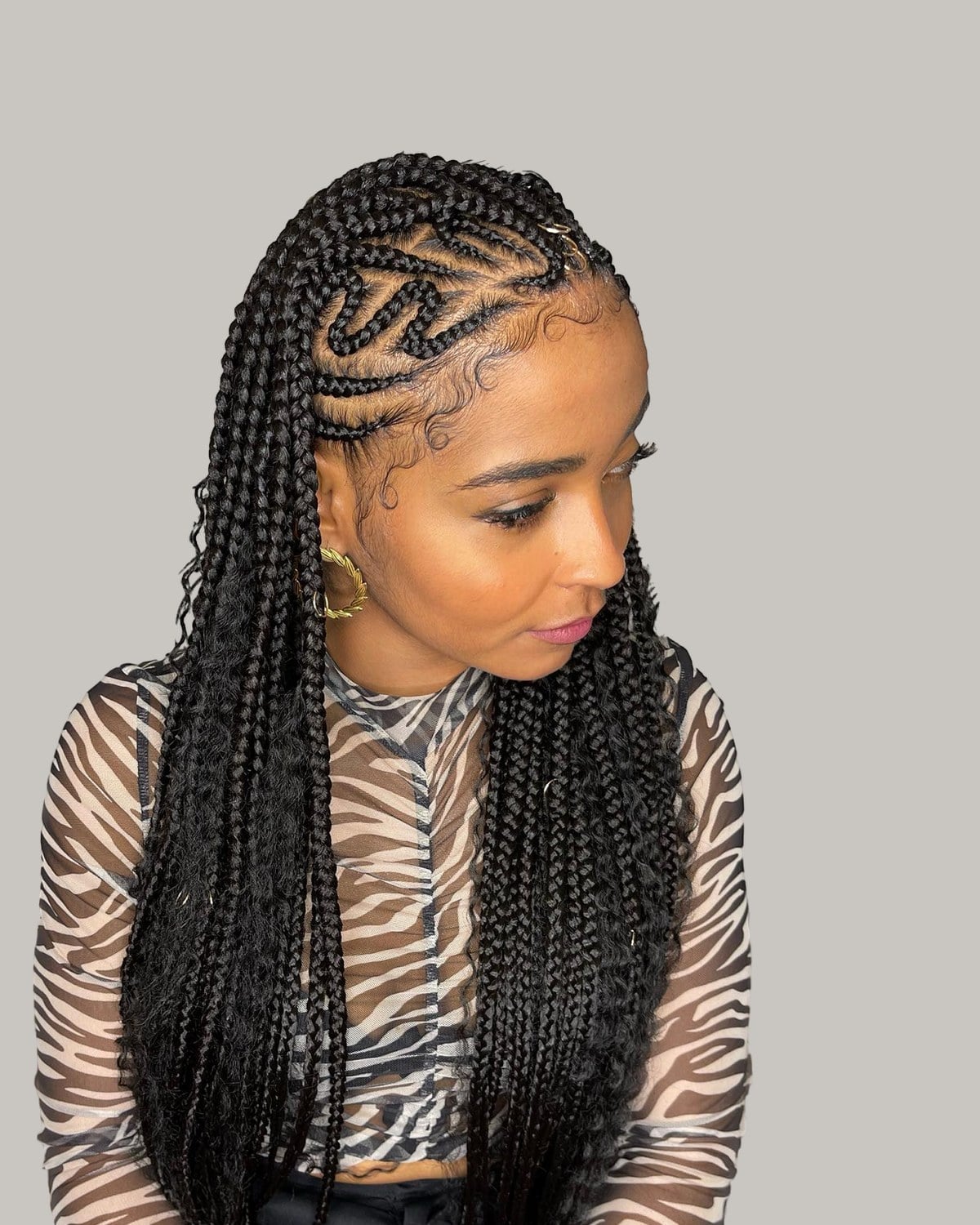
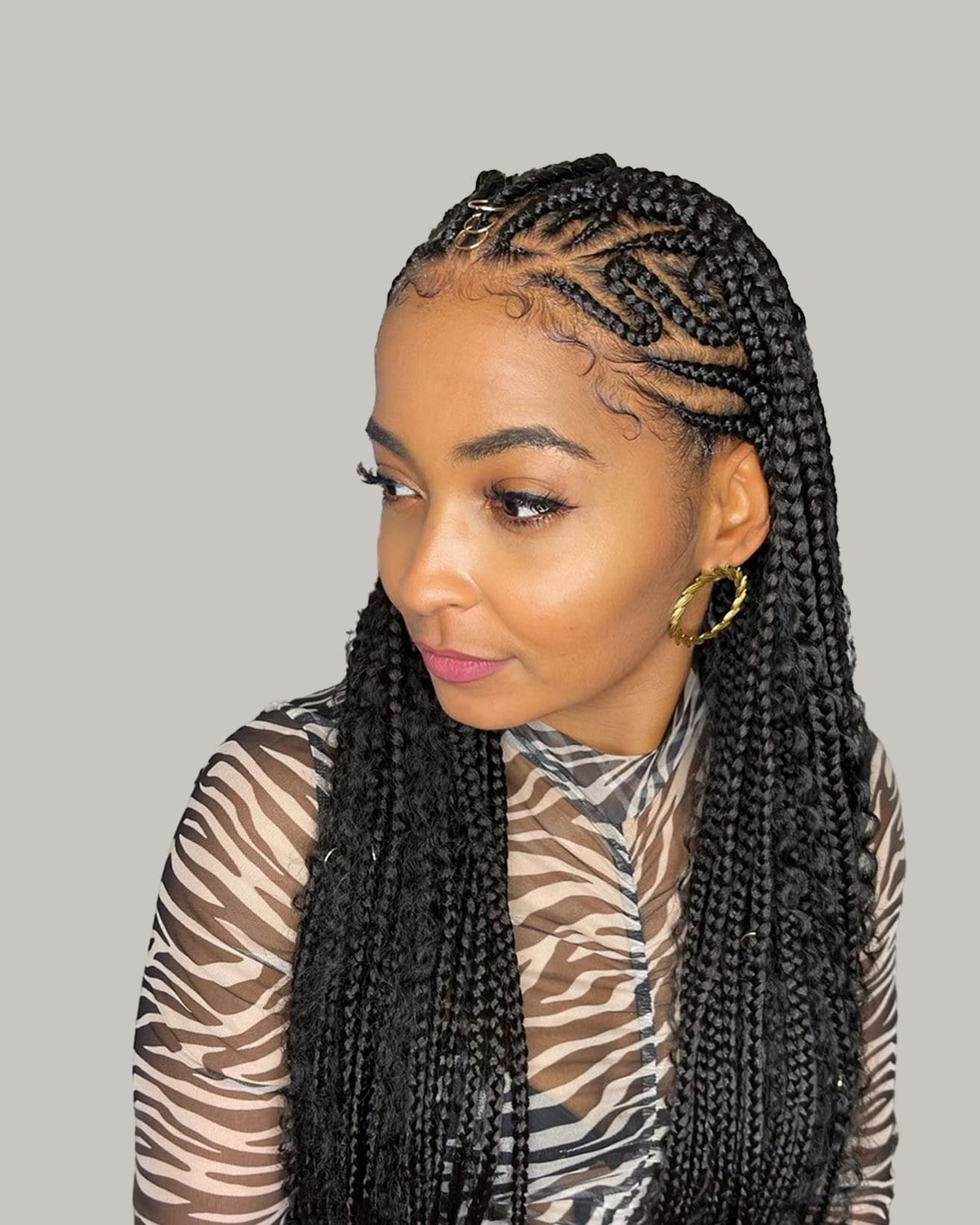
A zigzag part turns the front cornrows into the feature. The braids behind stay long and black, so all the attention goes to the pattern at the hairline.
What to ask for Tribal braids with zigzag cornrows at the front, small box braids behind, black, past the bra strap.
Tribal braids with a swirl
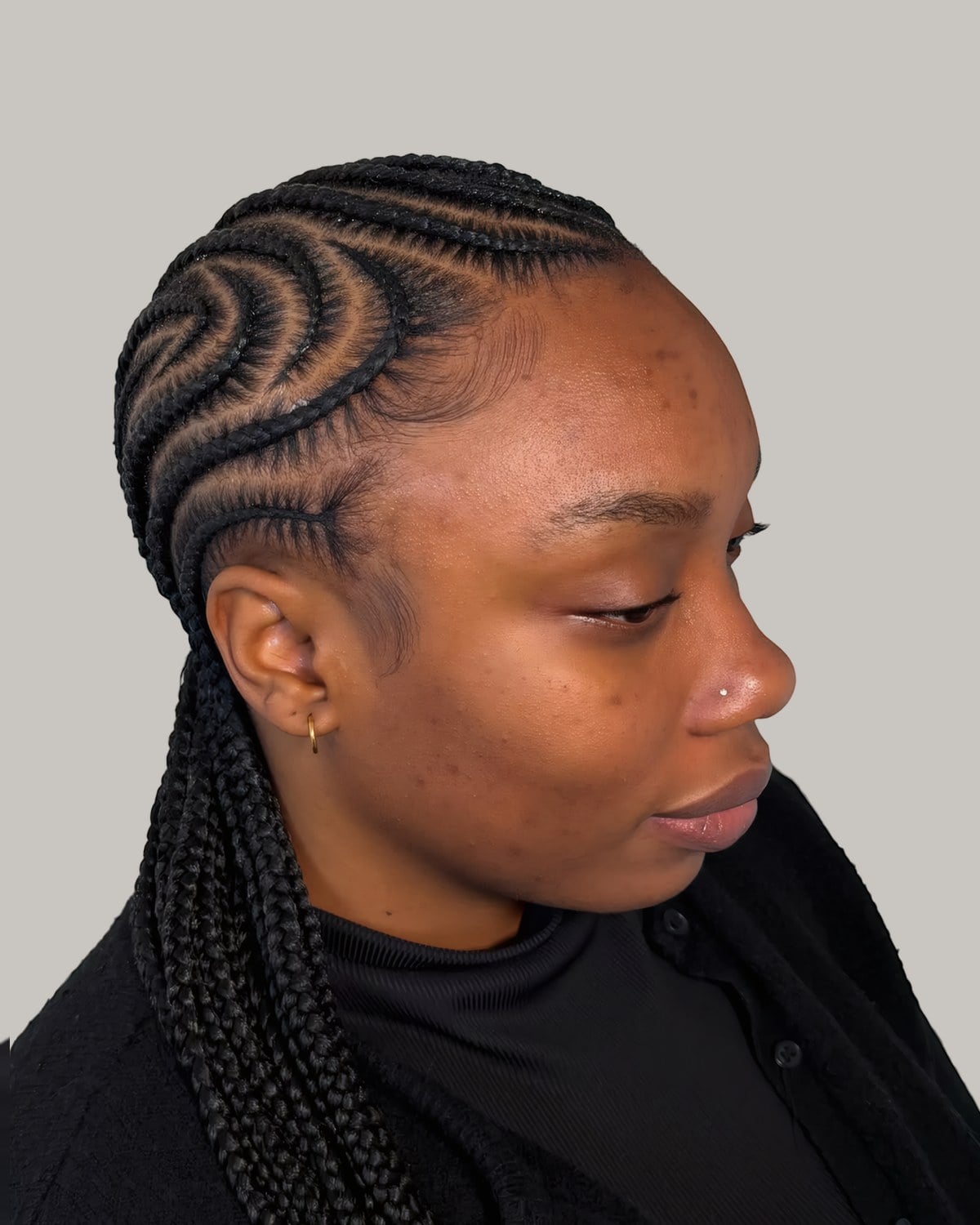
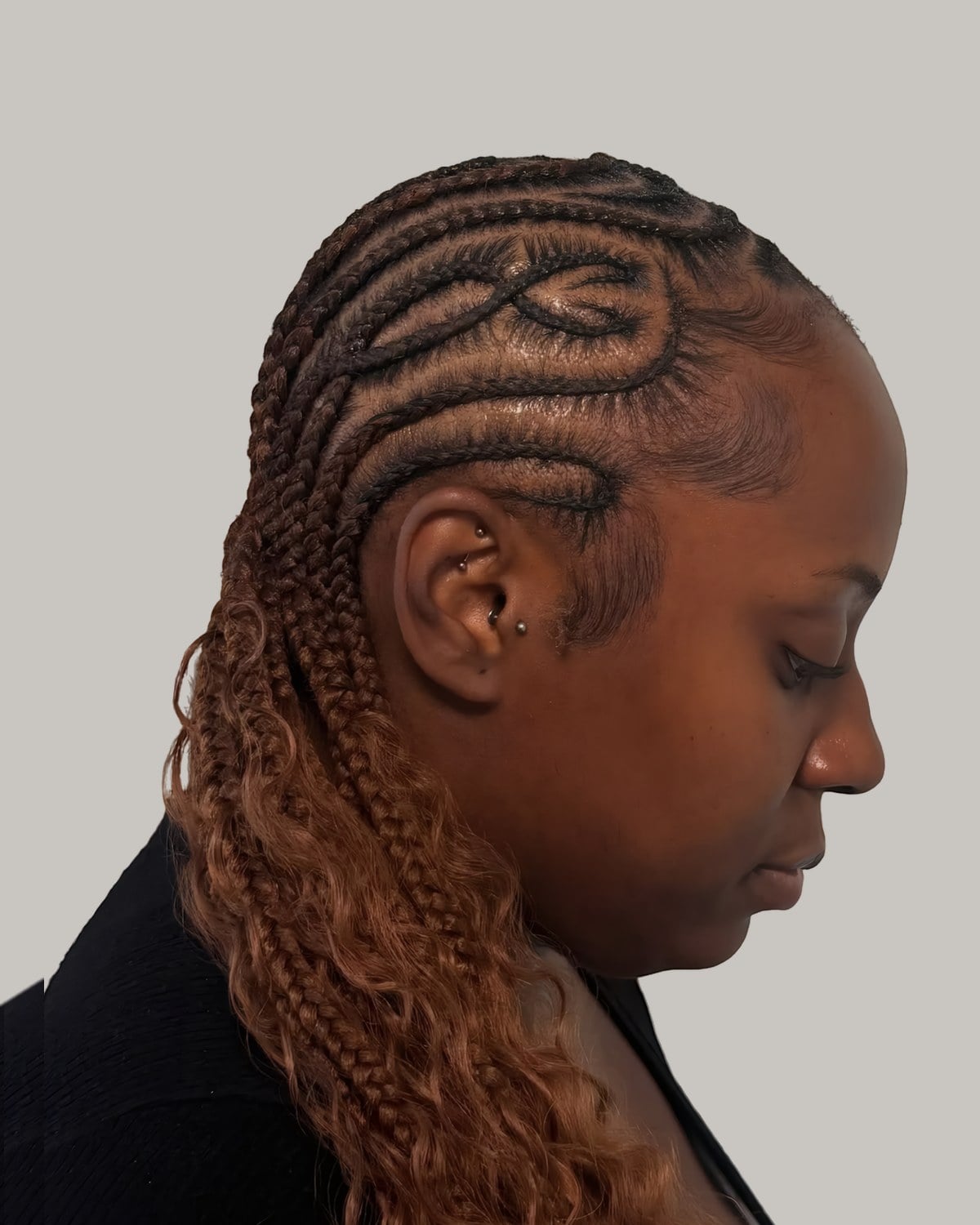
Swirled cornrows at the side make the front the feature. The first photo leaves the braids black, and the second finishes them in copper with curly ends, which shows how much the ends change the look.
What to ask for Tribal braids with swirled cornrows from a deep side part, small braids behind past the shoulders, black or copper with curly ends.
Jumbo tribal braids
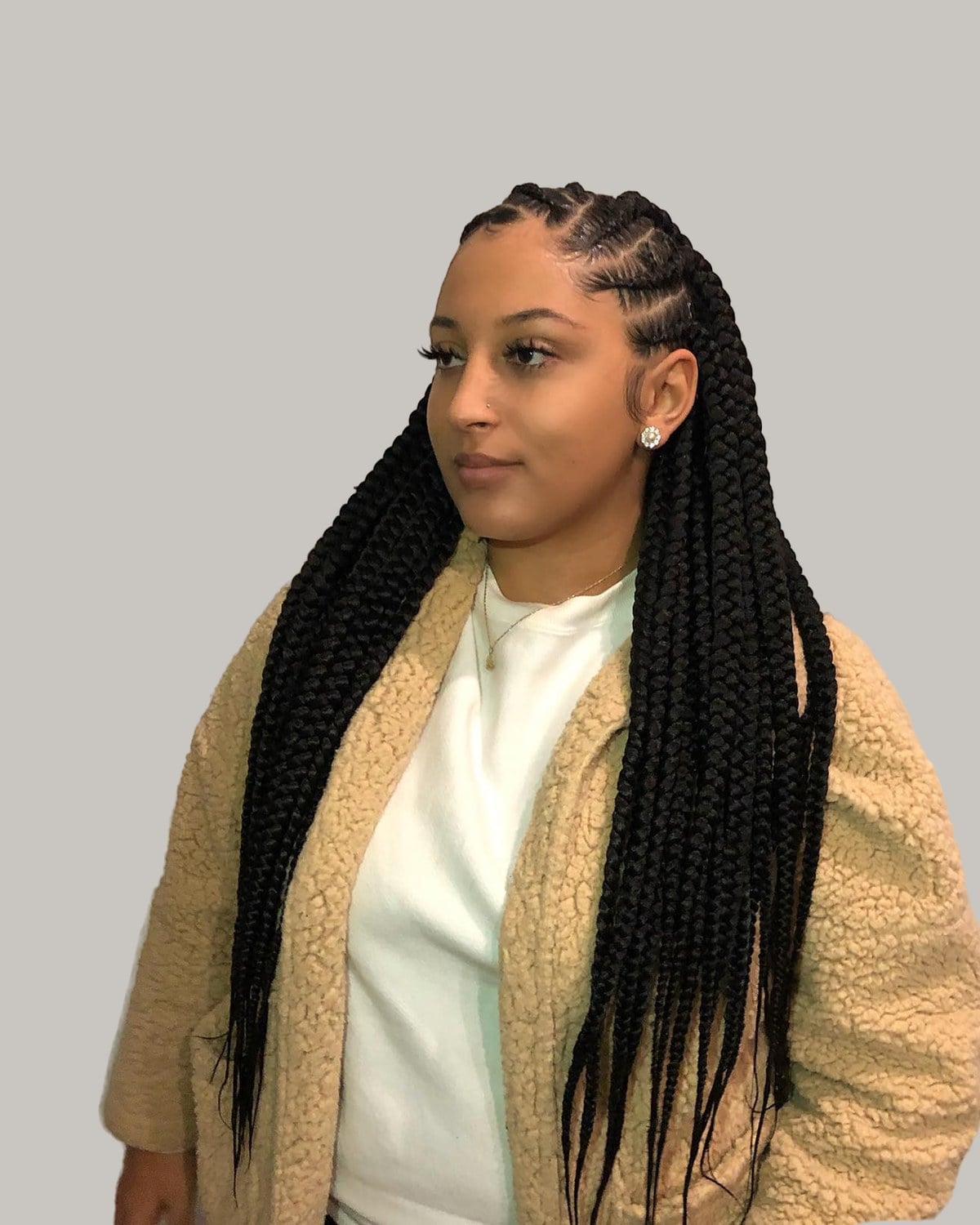
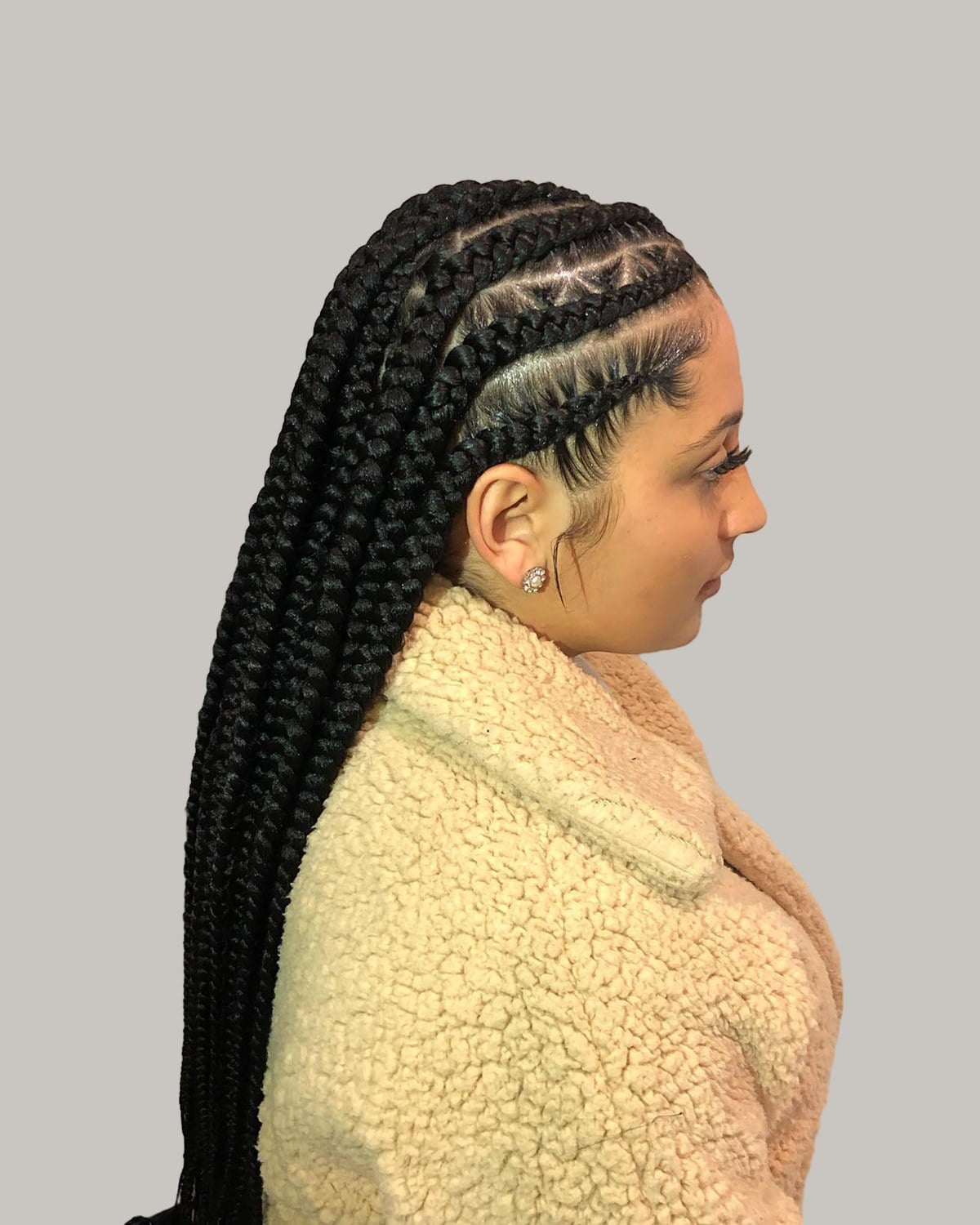
Large cornrows at the front feed into jumbo braids at the back, so there are fewer braids to install. The big parts are part of the pattern, and the braids fall past the waist.
What to ask for Jumbo tribal braids with large feed-in cornrows at the front and jumbo braids behind, past the waist, in black.
Tribal braids with beads
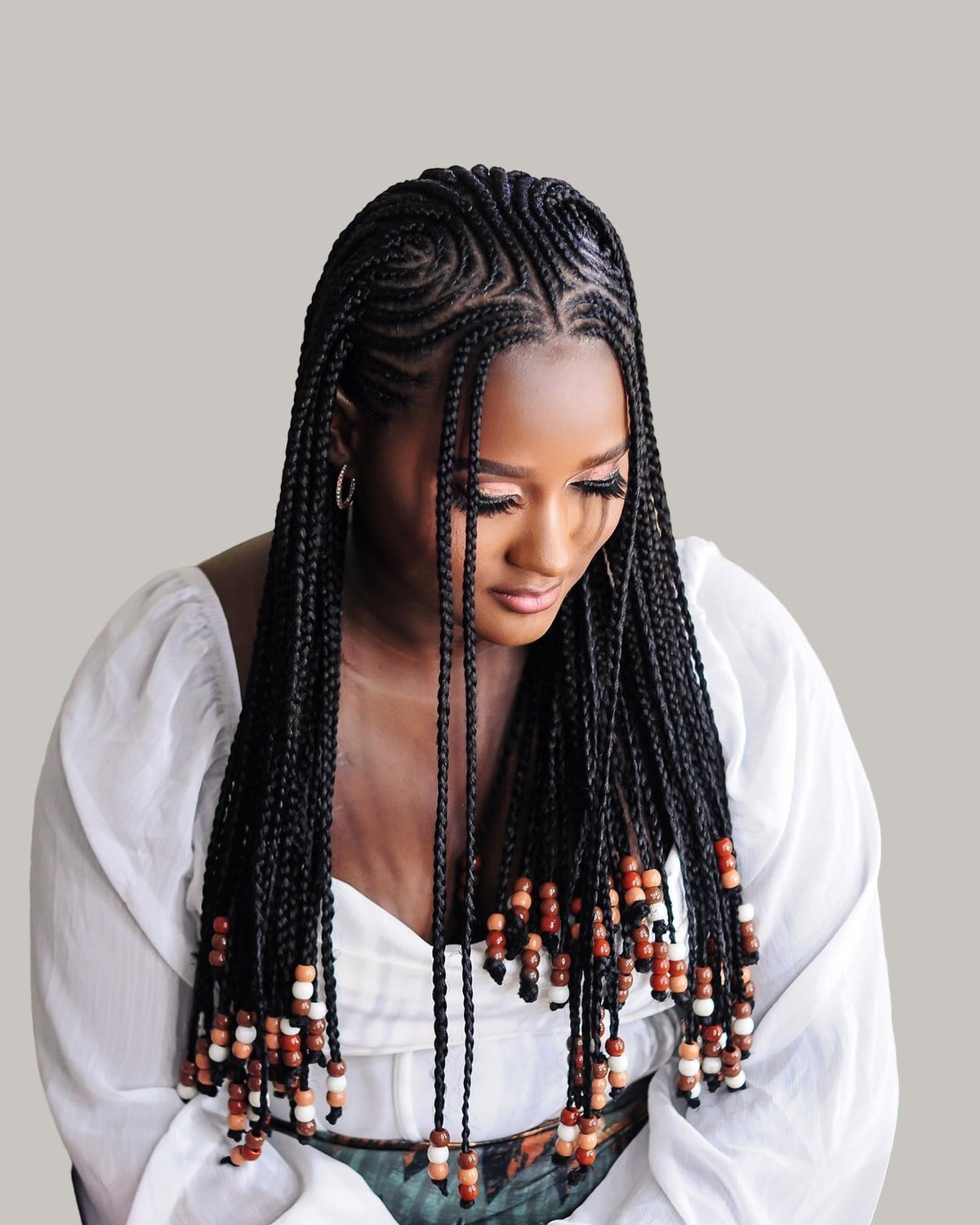
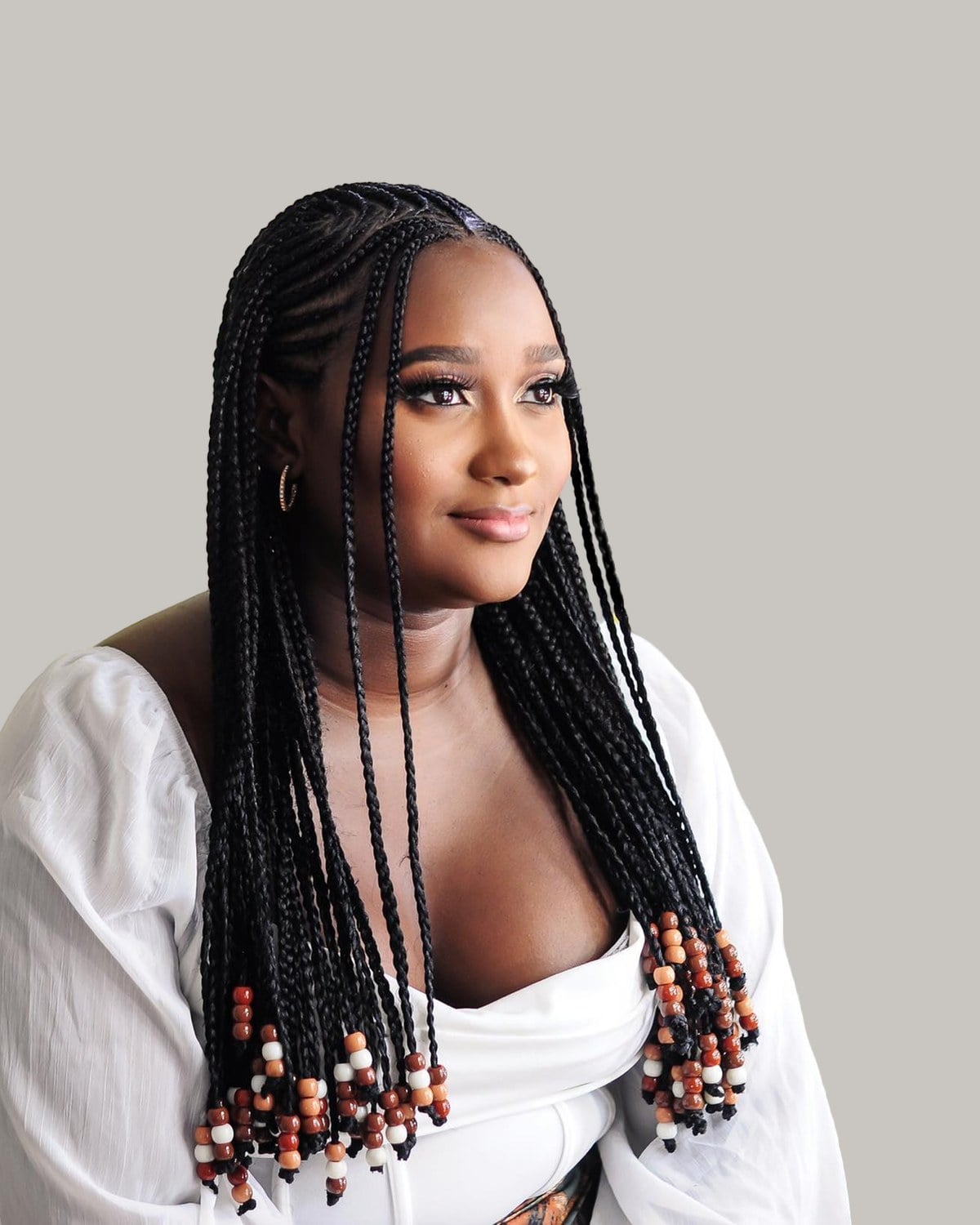
Beads on the ends are a tribal classic, and here they’re wooden, in orange, white and black.
What to ask for Tribal braids with cornrows at the front, small braids to the chest, wooden beads on the ends.
Fulani braids
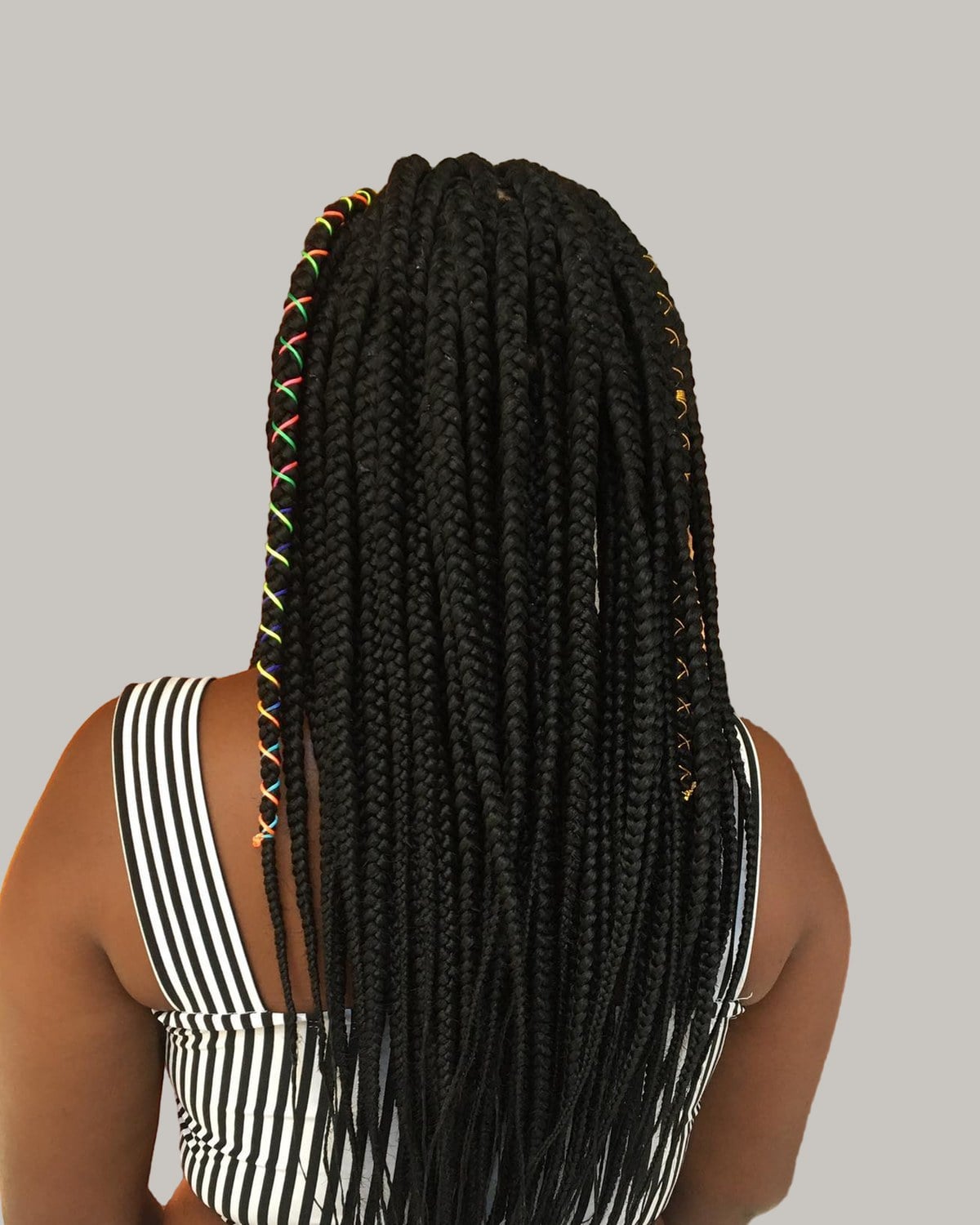
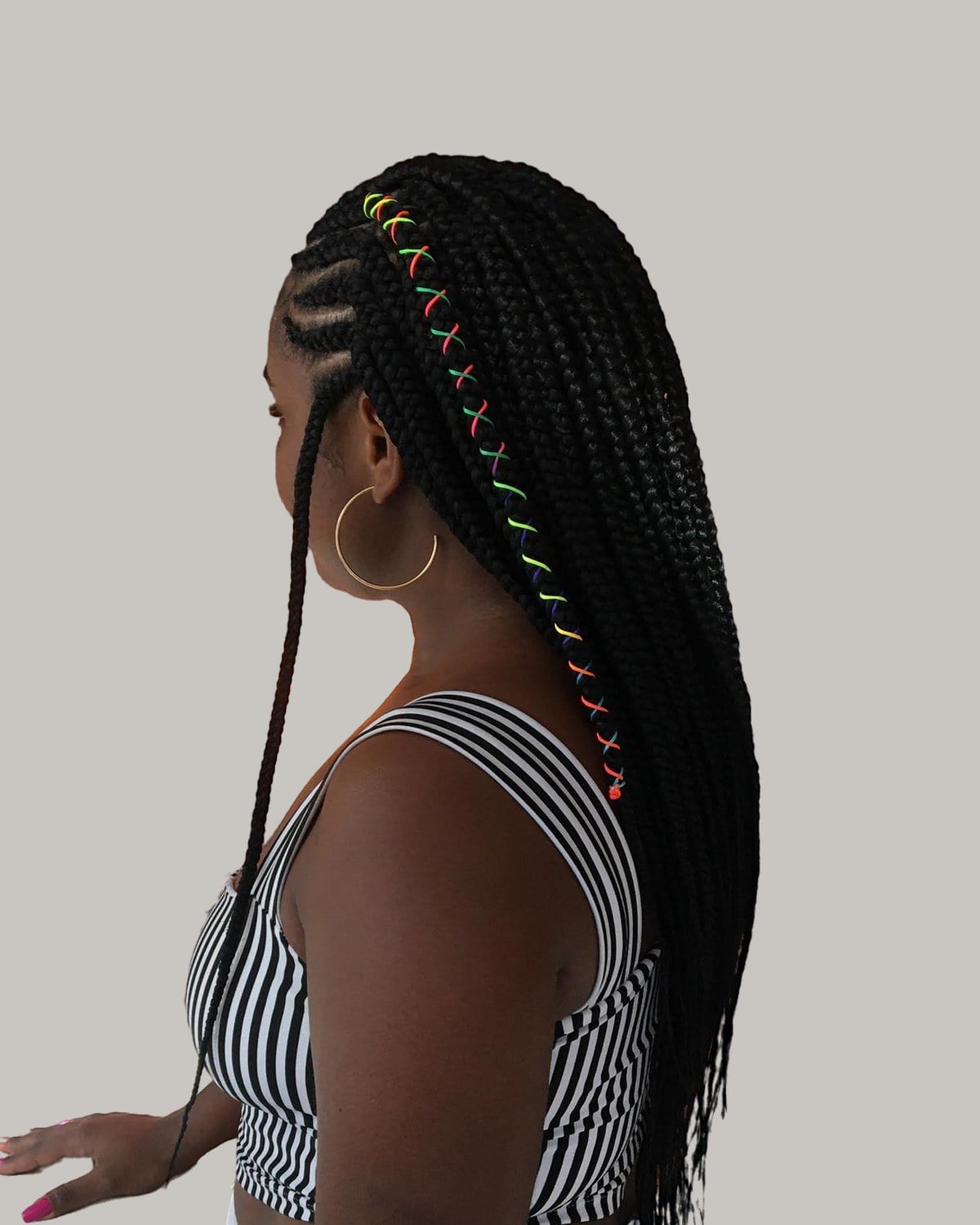
Fulani braids come from the Fulani people of West Africa. The pattern starts with a cornrow down the center, with rows on each side braided toward the face, and is often finished with beads, cowrie shells or gold. This set adds gold cuffs and colored thread. Alicia Keys is one of the names tied to the style, and our Fulani braids guide has 38 styles.
What to ask for Fulani braids with a center cornrow, side rows braided toward the face, long braids behind, gold cuffs and thread wraps.
Bubble braids
Bubble braid pigtails
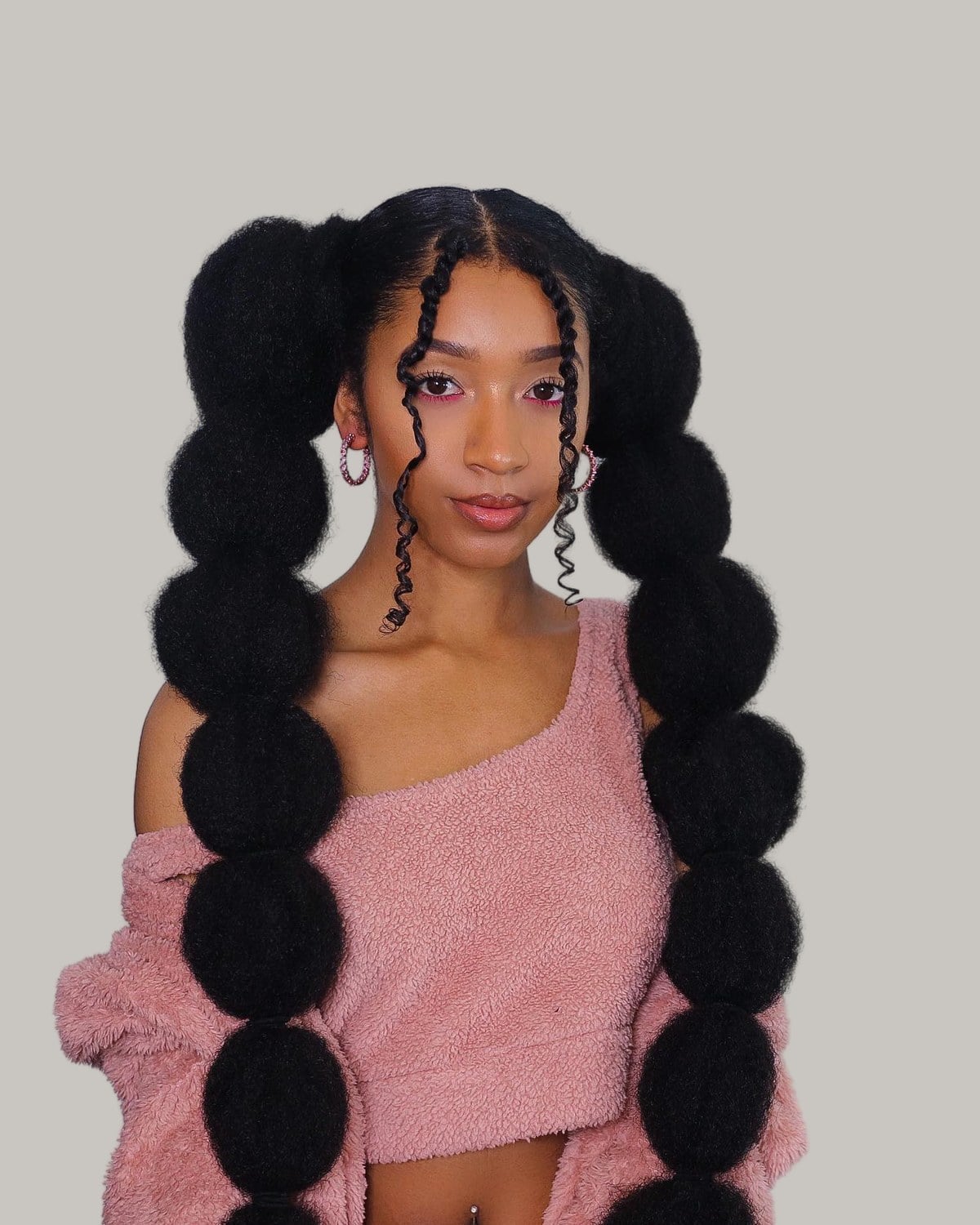
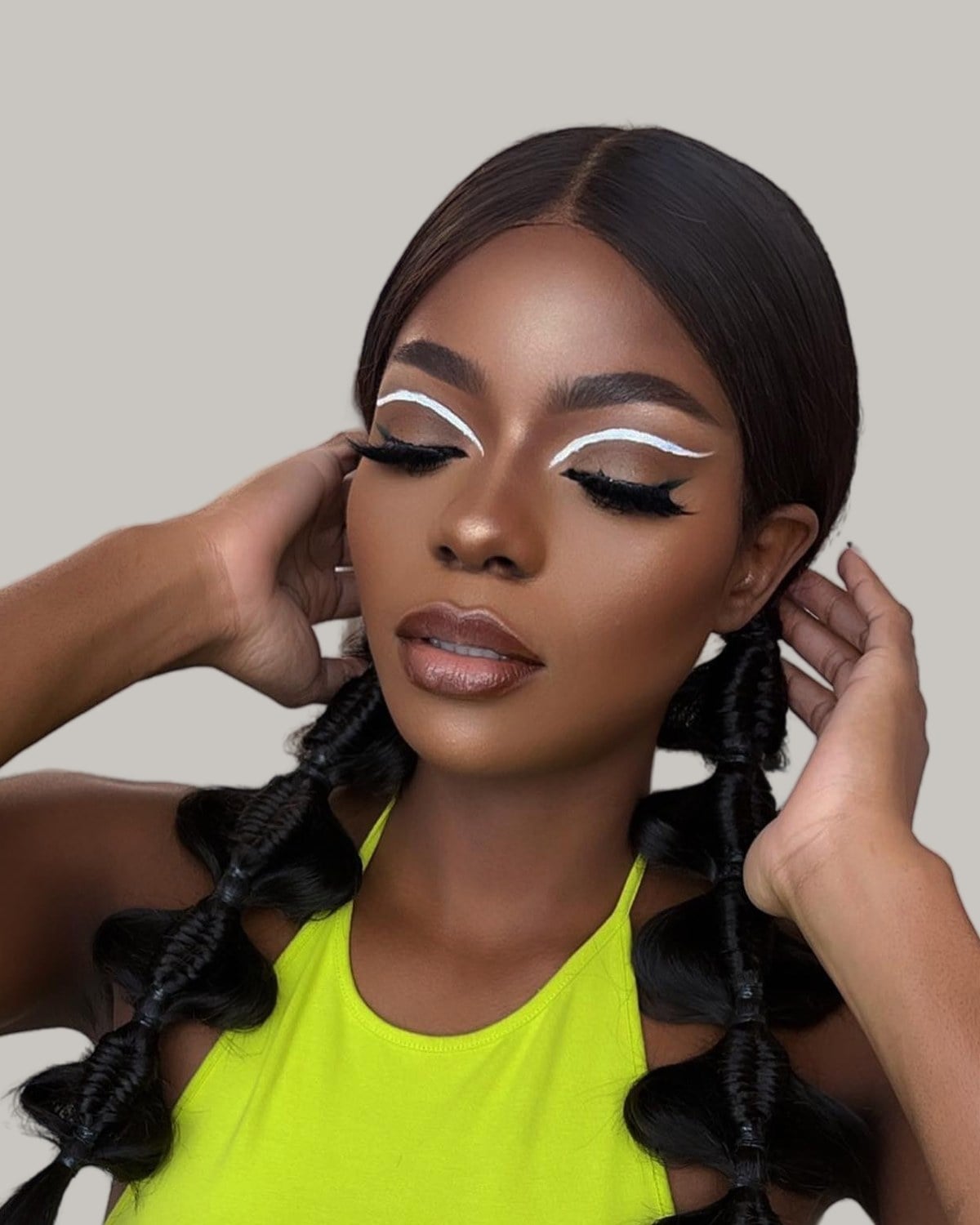
Bubble braids aren’t braided at all. The hair is tied off with elastics at intervals and each section is pulled out into a round bubble. On natural hair the bubbles come out big and soft, and added braiding hair makes them longer. Use snag-free elastics so they don’t pull when you take them out.
What to ask for Bubble braid pigtails from a center part, elastics every two to three inches, braiding hair added for length, edges laid.
Bubble braids with colored braiding hair
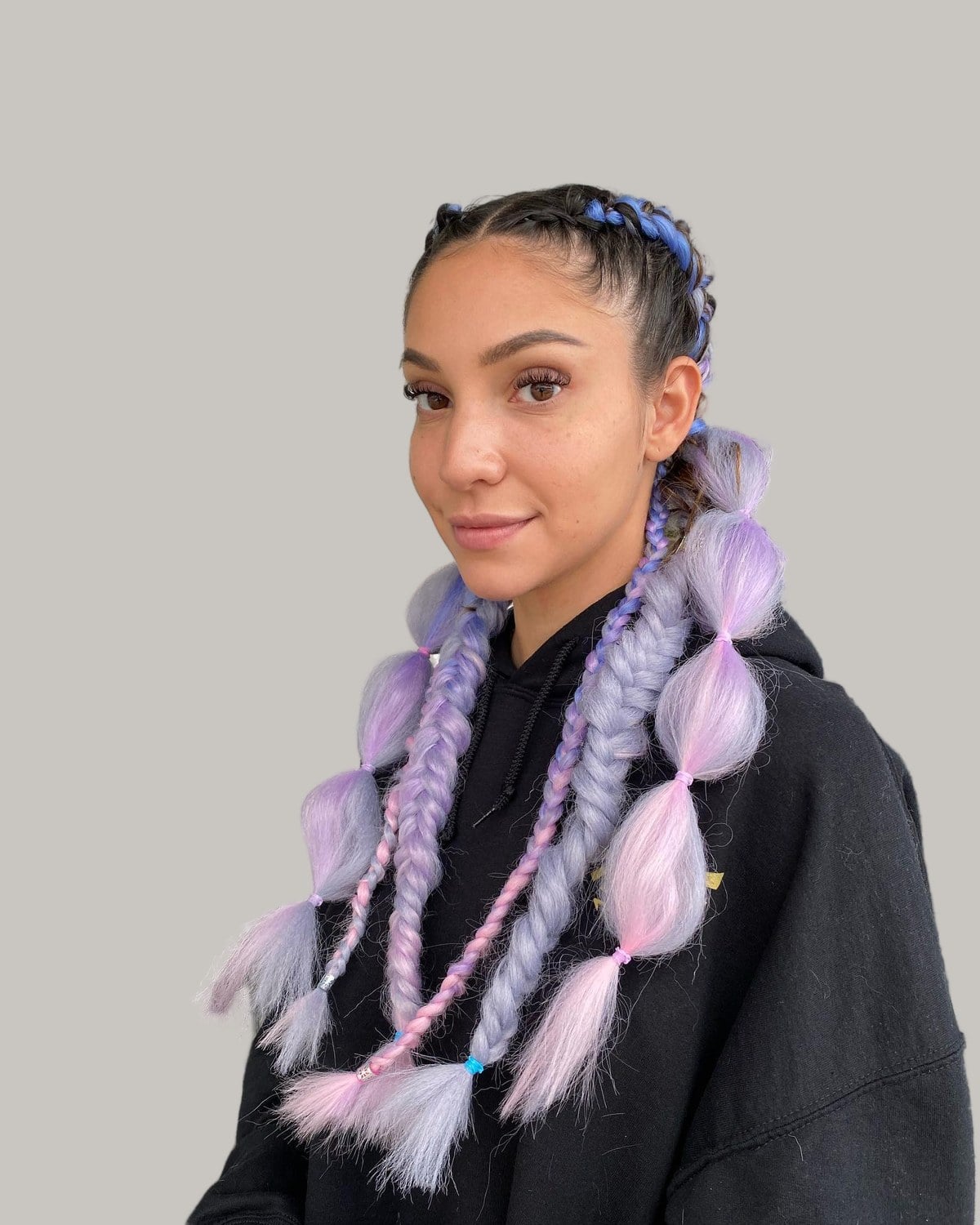
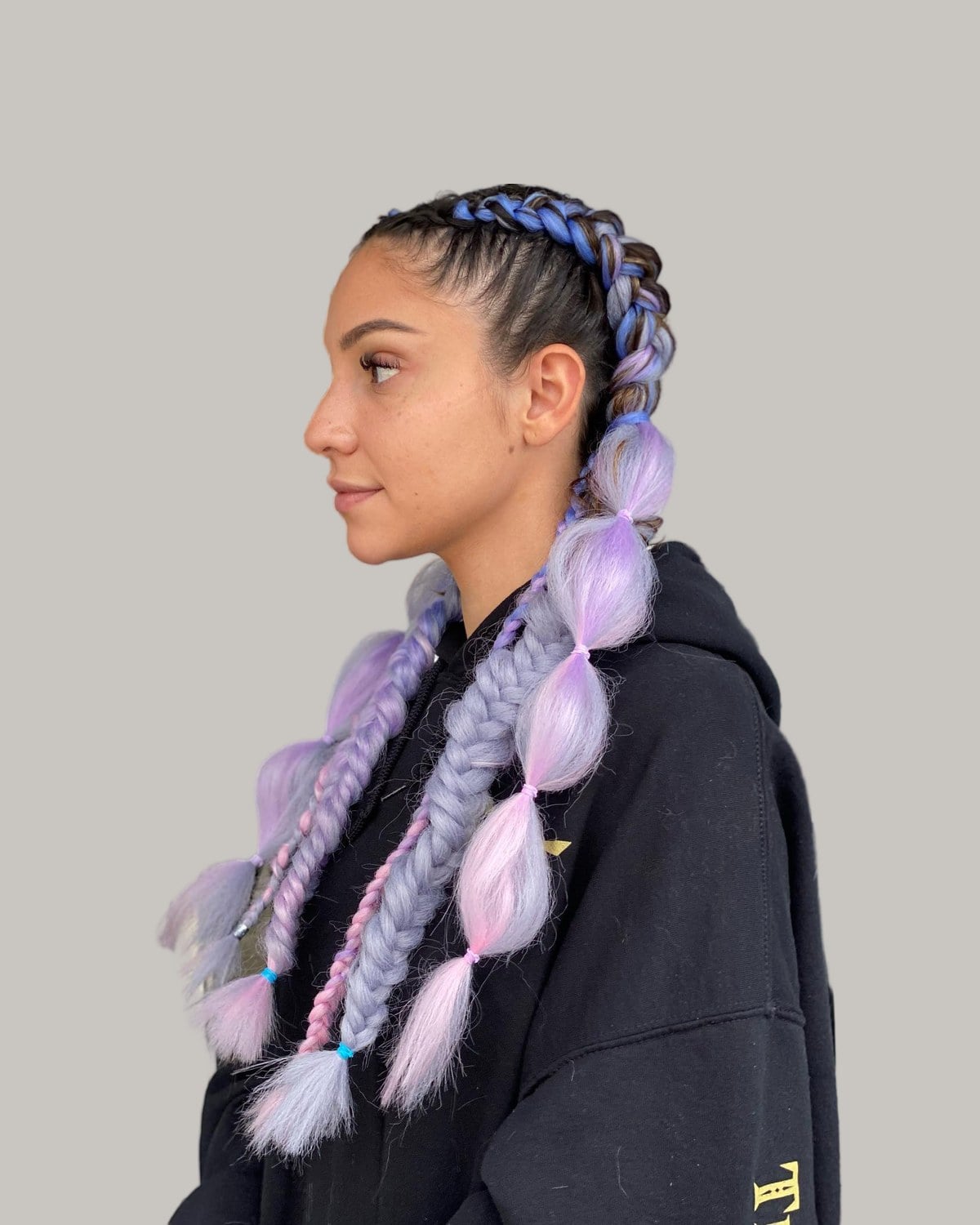
Here the hair is cornrowed back first, with colored braiding hair fed in, and the lengths are finished as bubbles. The pastel shades make each bubble stand out, and the cornrows can stay in while you take the bubbles down and redo them, so it’s an easy style to refresh.
What to ask for Bubble braids over feed-in cornrows, lilac and blue braiding hair, clear elastics every few inches.
Beads, buns and updos
Braids with wooden beads
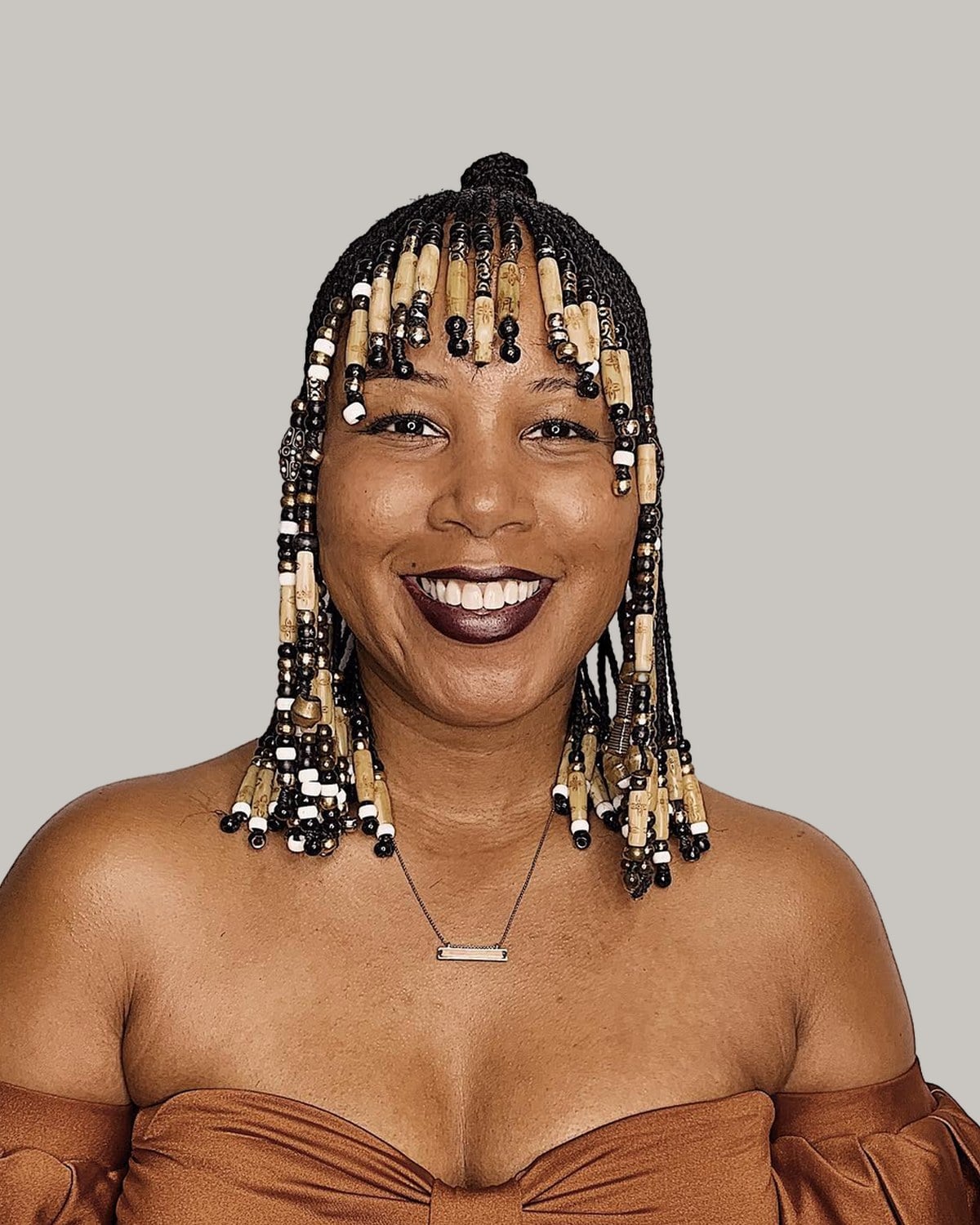
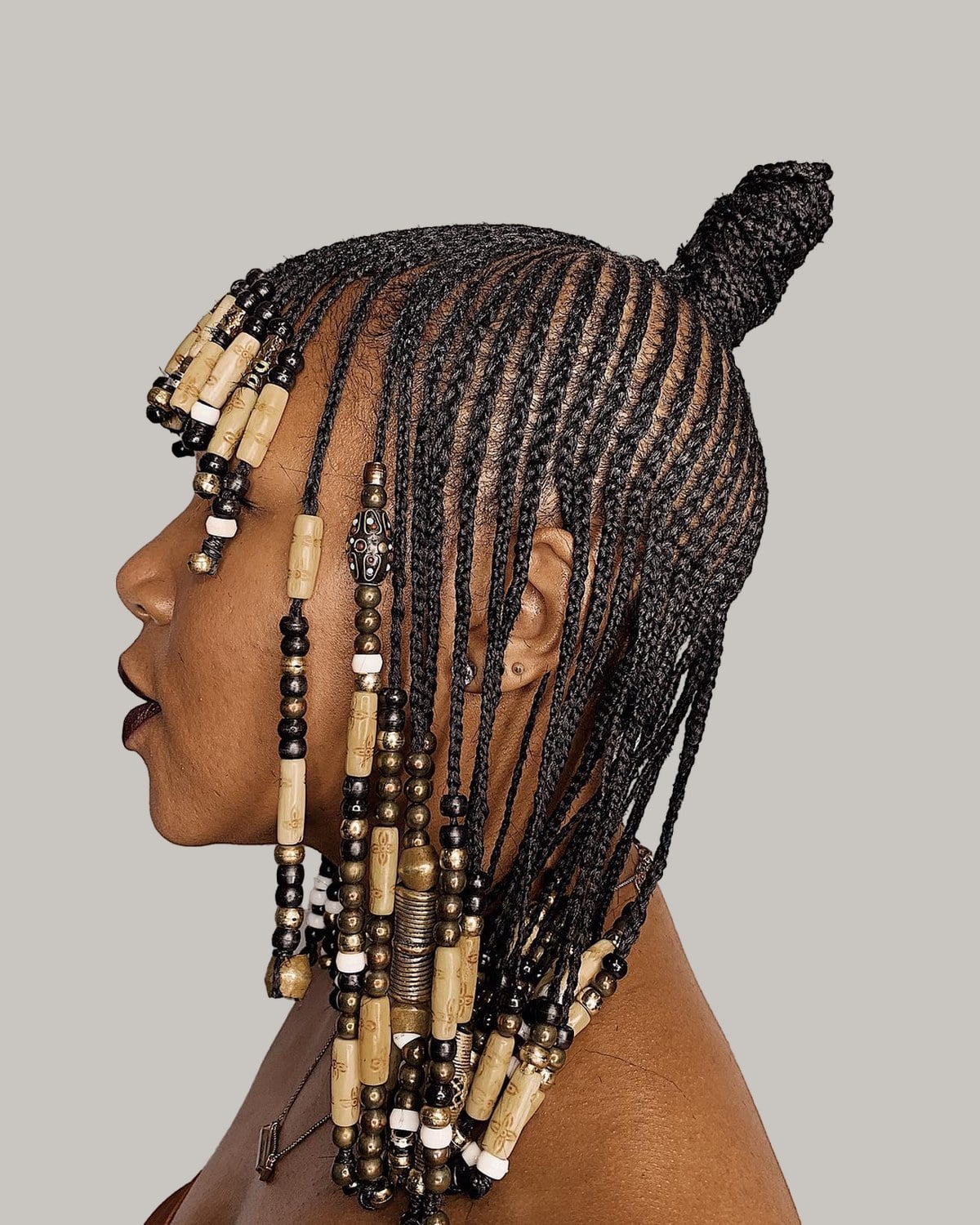
Wooden beads stacked on a braided fringe make this more of an accessory than a hairstyle. The rest of the braids are pulled up into a small top knot.
What to ask for Small braids cut to a fringe at the brow and a bob at the jaw, wooden and white beads stacked on each braid, the rest in a top knot.
Braided top knot
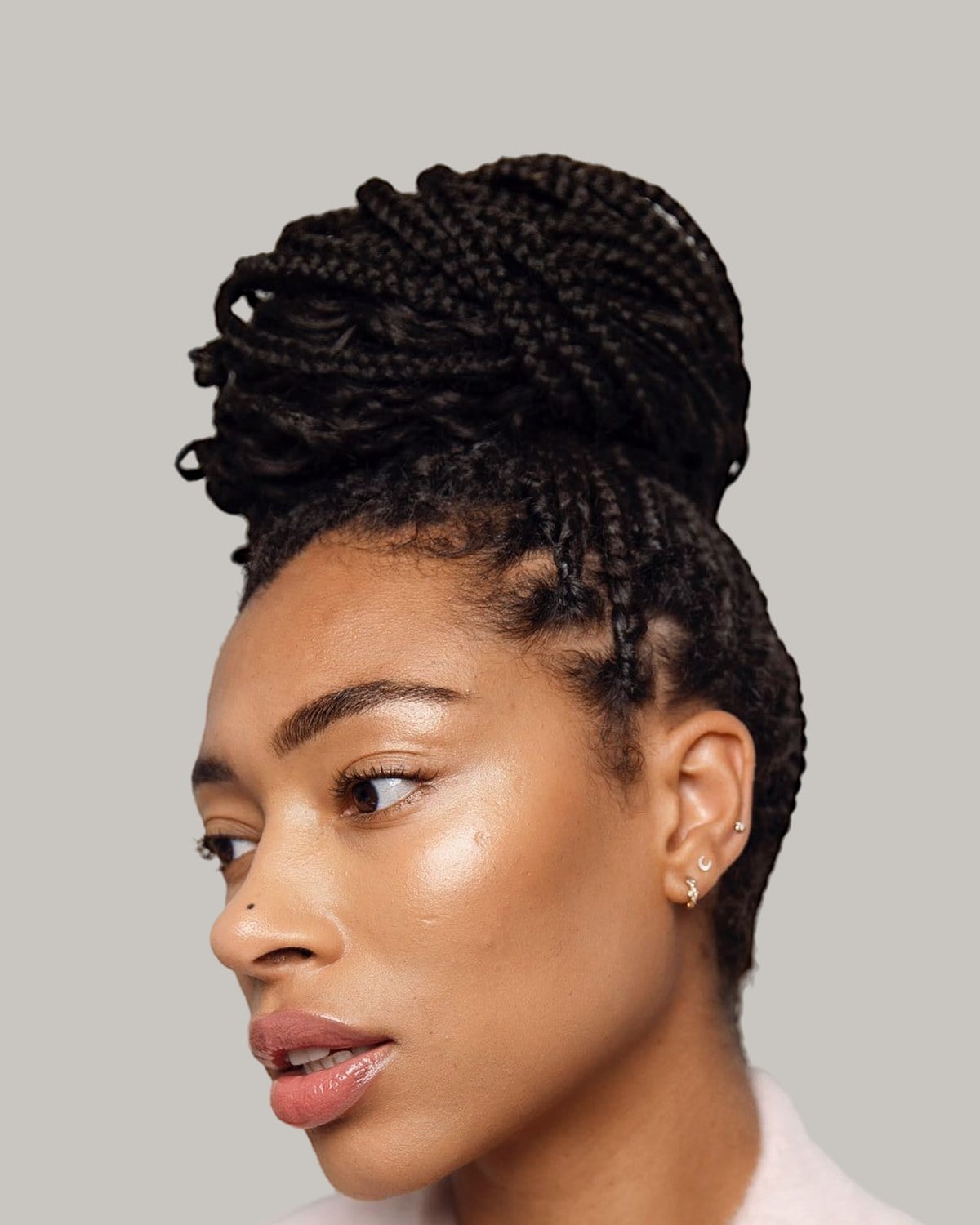
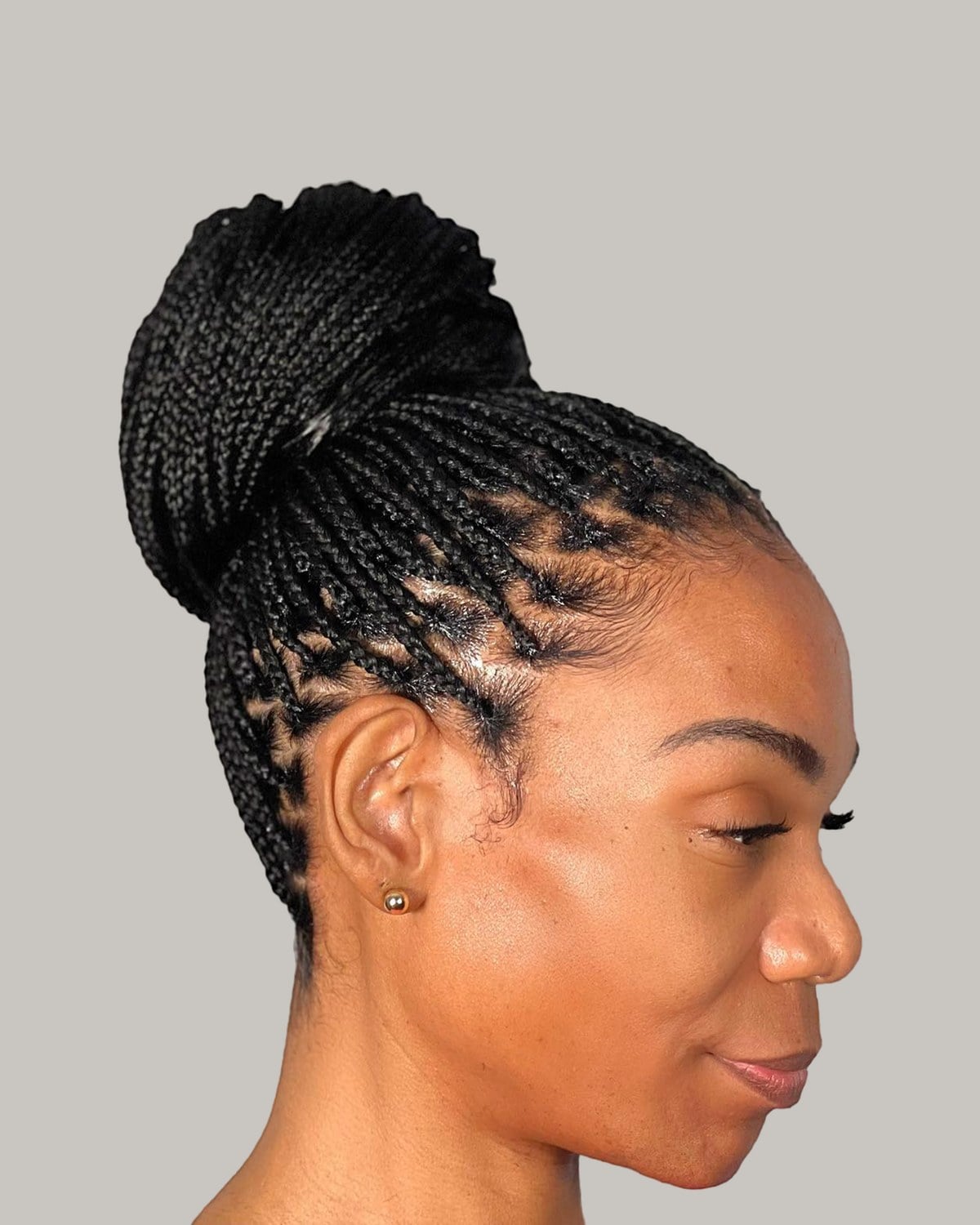
Any small braids can go up into a top knot, and it keeps them off your neck. The baby hairs left out at the front stop it looking severe.
What to ask for Small box braids, long enough to pile into a high bun, with the hairline left soft.
Jumbo braid space buns
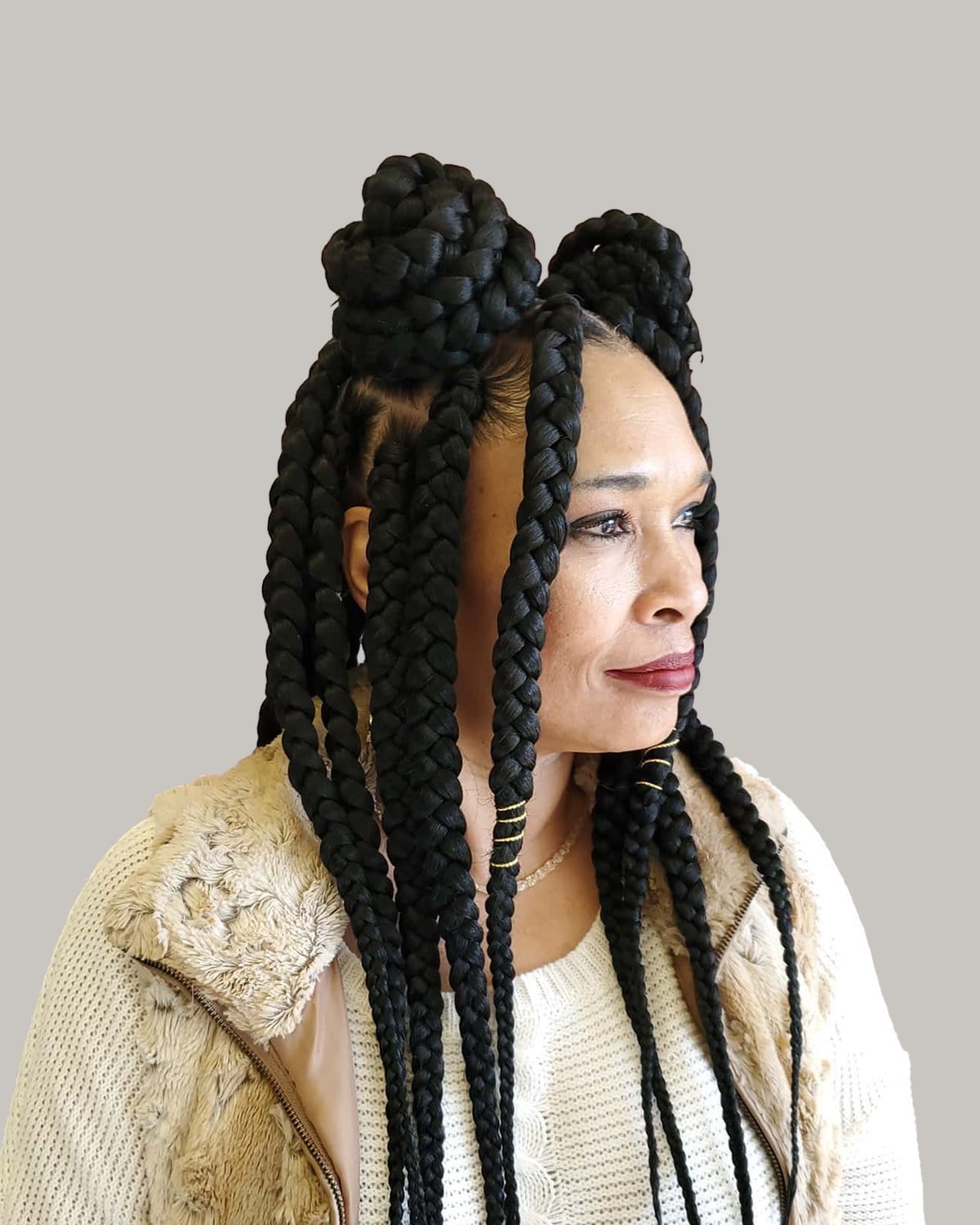
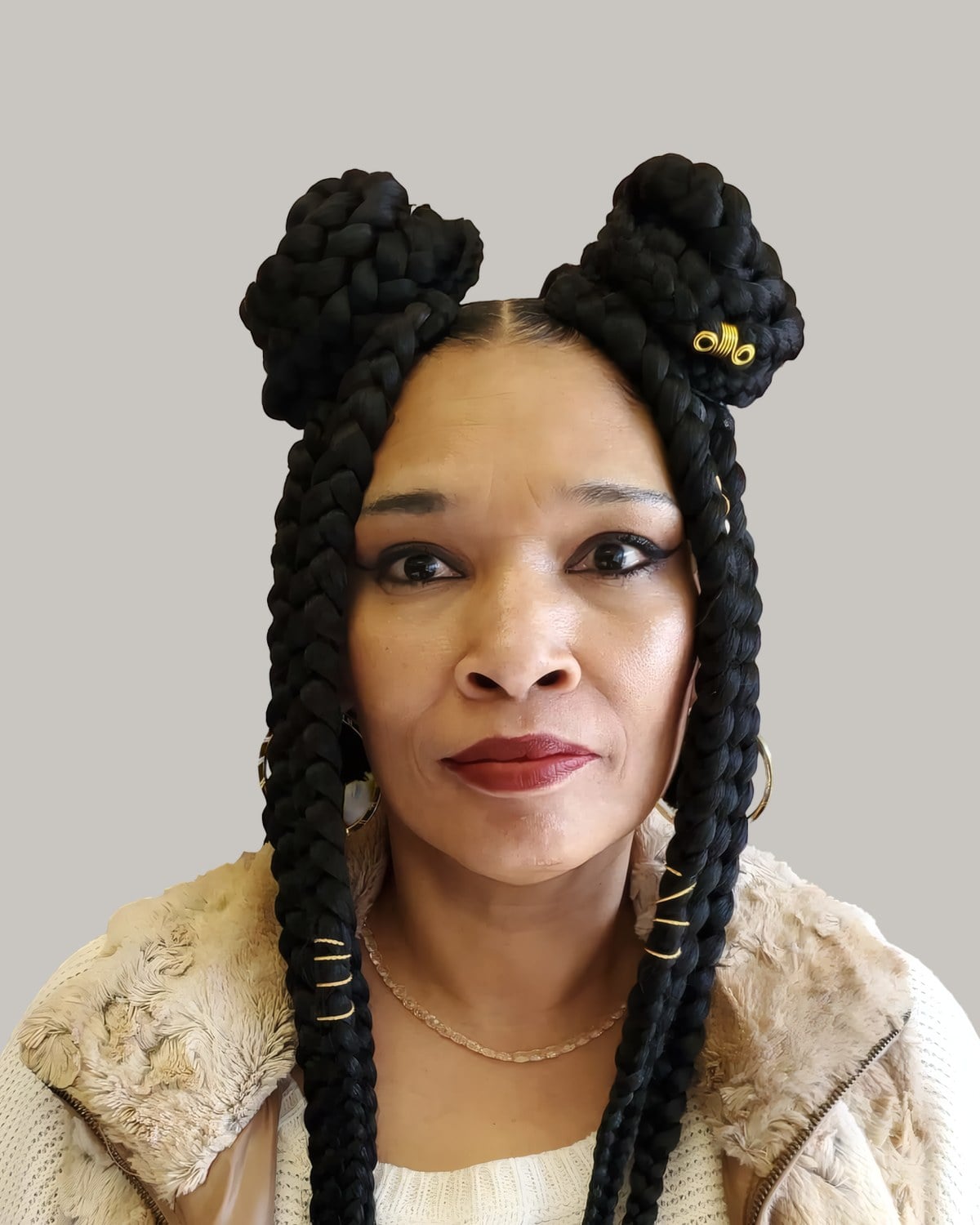
Two jumbo braids twisted into buns on top, with the rest left hanging, give you the look of an updo without all the weight on one spot. Gold cuffs pick up the jewelry.
What to ask for Jumbo box braids past the shoulders, two twisted into buns at the crown, gold cuffs.
01 of 01
What are the main types of braids?
Braids for Black women split into two families: individual braids that hang free, and braids that lie flat against the scalp. Box braids, knotless braids, micro braids and the boho and goddess versions are individual braids. Cornrows, feed-in braids, stitch braids, lemonade braids and Ghana braids are all braided close to the scalp. Tribal and Fulani braids mix the two, with cornrows at the front and loose braids behind.
Within the individual braids, the root is what sets them apart. Box braids start with a knot where the braiding hair is added. Knotless braids start with your own hair and feed the extension in gradually, so the base lies flatter and pulls less. Everything else (boho, goddess, French curl, peekaboo) is a finish on top of one of those two.
So choose in this order: how much time you have in the chair, how much tension your edges can take, and then the finish. Jumbo box braids can be done in under three hours, while micro braids take 9 to 12. Stitch braids and lemonade braids are quicker again, since they’re cornrows at heart.
Which braids suit you?
Start with your edges rather than your face shape. If your hairline is fine or already thinning, knotless braids and bigger braids are kinder, because they put less tension on each part. The American Academy of Dermatology suggests thicker braids and shorter lengths for the same reason: long braids are heavier, and the weight hangs off your hairline.
Then think about how you live. Box braids and knotless braids can be worn down, tied up or piled into a bun. Boho braids look soft and loose but need daily care, because the curls tangle, starting at the nape. Stitch braids and lemonade braids keep the hair off your face, and they’re quick to install.
What to ask your braider for
Name the type first, box or knotless, cornrows or stitch, because it sets the price and the time. Then give the size (micro, small, medium, large or jumbo) and the length, measured against your body: shoulder, bra strap, mid-back or waist.
Say how you want it parted. Square parts are standard for box braids, and triangle parts, a zigzag or a heart cost extra. For stitch braids, say how many rows and whether they go straight back or to the side.
Talk about the hair. Ask whether the braider supplies the hair or you bring it, and which kind. For boho braids, human curls can be refreshed with water, while synthetic curls frizz faster, and human hair costs more. If synthetic hair makes you itch, ask for pre-washed hair. Finally, the finish: curly ends, beads, cuffs, or a sealed tip. Every look above ends on its own ask line, so you can copy one into the booking form.
How long do braids last, and how do you look after them?
Braids generally last four to eight weeks, and the dermatologists’ advice is to take them out by eight at the latest. Micro braids can hold for up to three months, while boho braids, stitch braids and cornrows are usually four to six weeks. Leave at least two weeks between one set and the next so your scalp can rest.
Night care is what gets you to the end. Sleep in a satin or silk bonnet or scarf. Wash your scalp as often as it needs, with a gentle moisturizing shampoo and conditioner. For boho curls, mist them with water, scrunch in a little mousse, and separate them with your fingers every day or two.
Watch the edges. Broken hairs along the forehead, a receding hairline or a patch where the hair is pulled tight are early signs of traction alopecia, hair loss from pulling. Pain, stinging or a headache after an install means the braids are too tight, so go back and ask for them to be loosened. Caught early, the hair can grow back. Left too long, the damage can be permanent.
What’s the difference between knotless and box braids?
The difference is at the root. Box braids start with a knot where the braiding hair is added, and knotless braids start with your own hair and feed the extension in gradually, so there’s no knot and the base lies flat.
| Box braids | Knotless braids | |
|---|---|---|
| At the root | A small knot | Your own hair, no knot |
| Tension | Tighter, can hurt at first | Gentler on the scalp |
| Time in the chair | 3 to 12 hours, by size | About 5 to 6 hours |
| Weight | Heavier | Lighter, even in large sizes |
| Price, before hair | $75 to $450 | $150 to $600 |
Box braids can hold a little longer, because the knot keeps each braid secure. Knotless braids take longer to install and fewer braiders offer them. Our knotless braids guide goes through the two side by side, from install time to who each suits.
What’s the difference between cornrows, feed-in braids and stitch braids?
All three are braided flat to the scalp. What changes is how the braiding hair goes in.
| How the hair is added | What you see | |
|---|---|---|
| Cornrows | Once, at the start, if at all | Even rows, sometimes a small knot at the front |
| Feed-in braids | In small pieces along the braid | Rows that start thin and get thicker |
| Stitch braids | In small, even sections, marked with a fingernail or rubber band | A raised “stitch” across each row |
Stitch braids average $86, and cornrows cost from about $50. Lemonade braids and Ghana braids are cornrow styles too: lemonade braids sweep to one side, and Ghana braids are thick, raised feed-ins.
Which braids last the longest?
Micro braids last the longest, up to three months. Small and medium box braids can go about two and a half months.
That doesn’t mean you should keep them in that long. The American Academy of Dermatology says no more than six to eight weeks for any braids.
What are the best braids for thin edges?
Knotless braids are a gentle choice for thin edges, because they start with your own hair and put less tension on the root. Choose medium or large braids rather than small ones, and keep the length at shoulder or bra-strap level so there’s less weight hanging off each part.
Ask your braider to leave the braids around your hairline a little looser. If a braid hurts or gives you a headache, it’s too tight.
What are the best braids for women over 50?
Braids that sit light on the scalp, with little tension, are the ones to choose after 50, and knotless braids suit thinning hair. Larger, looser braids from bigger sections add volume and mean less handling from day to day, and the braiding hair should be soft rather than heavy, especially if your scalp is sensitive.
Gray hair tends to be coarser and drier, so a little light oil or leave-in conditioner helps. Sleep in a silk or satin scarf, as with any braids.
How much do braids cost?
Box braids cost $75 to $450 before the hair, and the size decides most of that: jumbo braids start around $75, micro braids can reach $450. Knotless braids run about $150 to $600, around $250 on average, stitch braids about $86 on average, and cornrows from about $50.
Budget for the hair too. Box braids use 4 to 10 packs, and human curls for boho braids cost more than synthetic hair. Triangle parts, fishtails, colored sections and beads all add to the price.
How do you stop braids from itching?
Itching often comes from the alkaline coating on synthetic braiding hair. Soak the hair before your appointment in one part apple cider vinegar to about three parts warm water, then rinse it until the water runs clear and let it dry. Or buy pre-washed hair and skip the soak.
Once the braids are in, a light spritz of diluted vinegar on the scalp can calm it. If the itching comes with pain, stinging or crusting, the braids may be too tight, and that’s a reason to have them loosened rather than to wait it out.
For more ideas, our guides to short hairstyles for Black women, hairstyles for Black girls, loc styles and highlights for Black hair pick up where braids leave off. Braids are one section of our guide to haircuts and hairstyles for women.
Save the two photos of the look you like, and copy its last line into the booking form. Your braider gets a clear brief before you’ve even sat down.
Braids are one chapter of our guide to hairstyles for Black women, next to short cuts, locs and color.
Products featured here are independently selected by our editors. If you buy through our retail links we may earn an affiliate commission — it never changes the price you pay, and it never decides our verdicts. Read our earnings disclaimer.