For most of its history, Loewe was a craftsman’s secret — the Spanish house that quietly dressed royalty. Today it sits comfortably alongside Gucci, Chanel, and Dior, but it earned that place the slow way: through leather.
The story starts in Madrid in 1846, when a collective of Spanish leather artisans set up a workshop devoted to the craft. In 1872 a German leather merchant, Enrique Loewe Roessberg, brought the workshop under his name and gave it global ambition; by 1905 the house held a royal warrant from King Alfonso XIII. One hundred and eighty years later, it remains the oldest fashion house in the LVMH group — older than Louis Vuitton, and arguably the most quietly devoted to the material itself.
The house is also turning a page. After an acclaimed eleven-year run, Jonathan Anderson left Loewe in 2025 (he now leads Dior). It is now in the hands of Jack McCollough and Lazaro Hernandez, the duo behind Proenza Schouler, whose first major statement — a reimagined Amazona for Loewe’s 180th anniversary — signaled continuity. That quiet confidence has earned Loewe admirers well beyond the front row: it has dressed Beyonce and Rihanna for the stage and styled Kylie Jenner and Queen Letizia alike. The once-discreet house is no longer lying low.
The best Loewe bags hold their value unusually well on the resale market (you’ll find them at Fashionphile and The RealReal). But as with any house, some models age into icons and others date quickly. Below are the nine we’d put our own money behind — and exactly who each one is for.
You might also enjoy our guides to the best designer bags of all time and most expensive handbags.
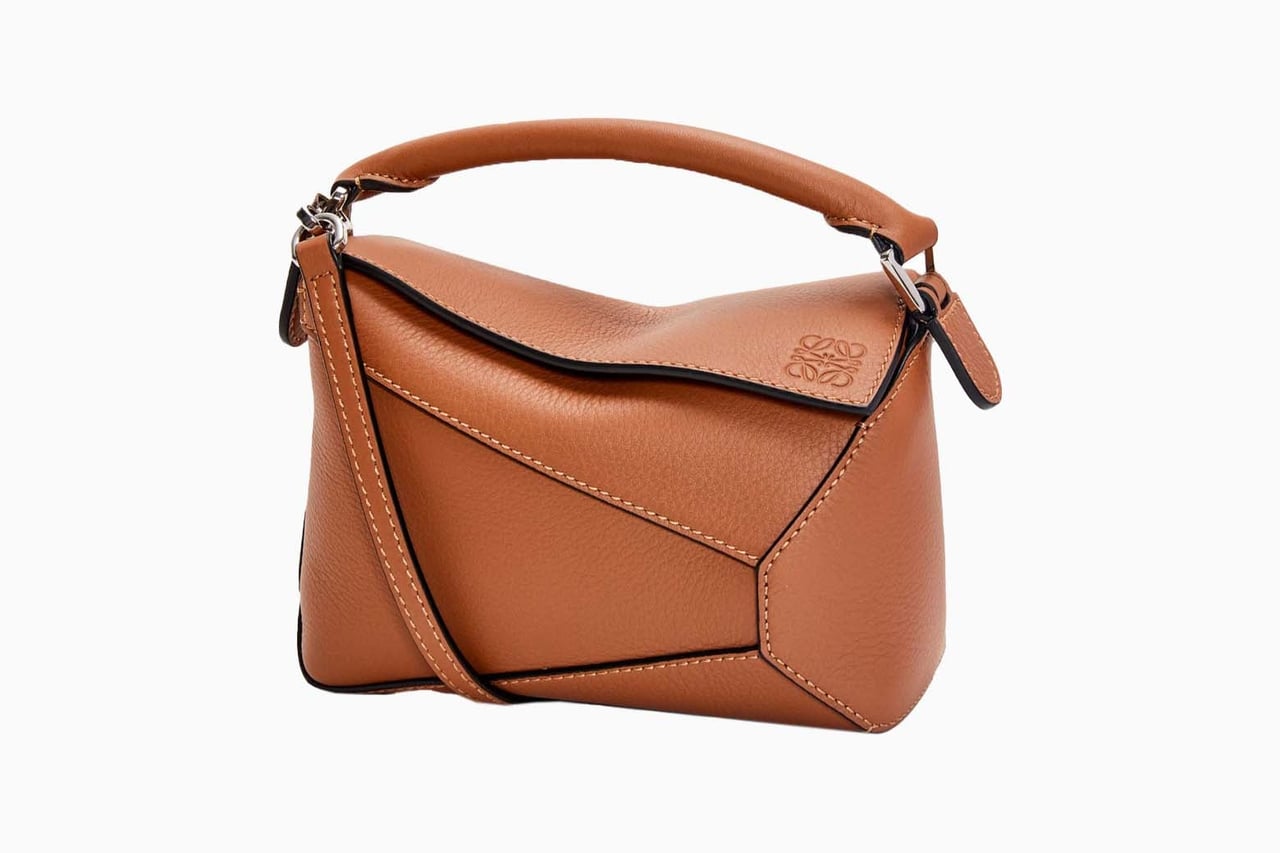
The Puzzle: Modular leather origami
- Release year
- 2014
- Price
- From $3,150 (small calfskin)
If one bag put modern Loewe on the map, it’s the Puzzle. Jonathan Anderson’s first design for the house in 2014, it’s cut from flat geometric panels that fold into a soft cuboid — a feat of pattern-cutting that turns the leather itself into the statement.
That construction is the whole point. The Puzzle collapses flat for travel and stands up to a full workday, worn by hand, on the shoulder, or crossbody on the longer strap. The calfskin is supple from the start and only softens with use.
One honest note: that softness means the Puzzle slouches over time rather than holding a rigid shape. If you want structure, look to the Amazona. If you want a bag that relaxes into your life like the Saint Laurent Sac de Jour never quite does, this is it.
Best for: The buyer who wants one quietly architectural bag for years — the appeal is no puzzle.
Check price: The Puzzle: Modular leather origami at Mytheresaat Mytheresa · Express delivery
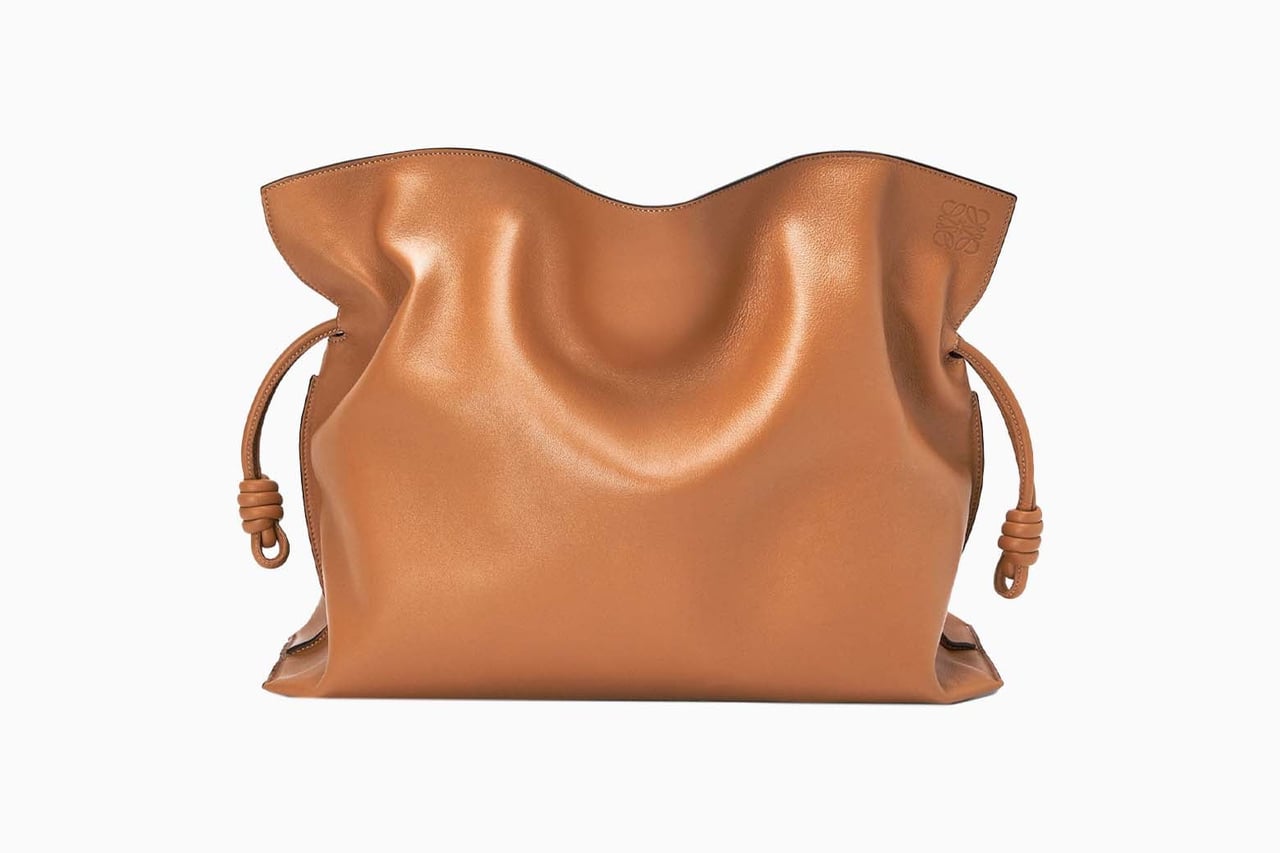
The Flamenco: Loewe’s oldest living icon
- Release year
- 1970s
- Price
- From $2,600 (mini clutch)
Named for Spain’s most expressive dance, the Flamenco traces back to Loewe’s 1970s archive — making it the oldest design still in continuous production here. Its knotted drawstring pulls and soft pouch shape have outlasted every trend cycle since, much as Gucci’s Jackie has.
The appeal is its quiet versatility. Cinch the cords and carry it as a clutch, or clip on the strap for a hands-free crossbody that reads as elegant with a little black dress and just as right with denim and a silk cami.
Because the leather is unstructured, the Flamenco rewards a considered wardrobe rather than a maximalist one — it’s the bag you reach for when you want the outfit, not the bag, to do the talking.
Best for: Evenings out, and anyone who wants a bag with rhythm rather than volume.
Check price: The Flamenco: Loewe’s oldest living icon at Mytheresaat Mytheresa · Authentic designer pieces
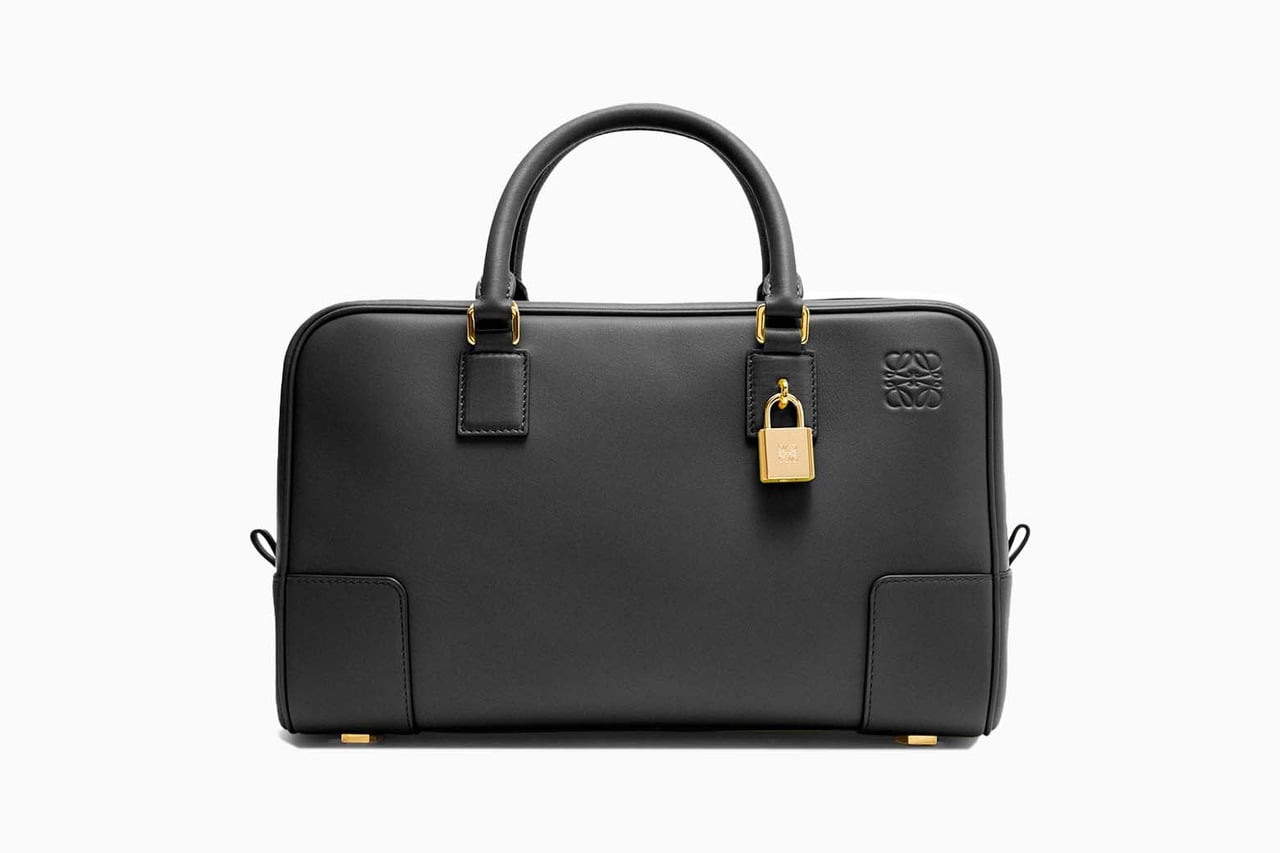
The Amazona: The heritage workhorse, reborn
- Release year
- 1975 (reimagined as the Amazona 180 in 2026)
- Price
- Varies by leather (calfskin, suede, and exotic)
Named for the warrior women of Greek myth, the Amazona has been a Loewe staple since 1975 — a roomy, double-handled holdall finished with a working padlock and key. It’s the most practical bag the house makes, and the one that best showcases its leather.
It’s also the one to watch. For Loewe’s 180th anniversary in 2026, Jack McCollough and Lazaro Hernandez chose the Amazona for their first major reinvention: the Amazona 180, with a single asymmetric top handle, a softer slouch, and branding tucked inside rather than stamped across the front. It’s a clear statement of where the house is heading — heritage shapes, no shouting.
Either generation earns its keep as a work bag, holding a laptop and a day’s worth of life under a blazer or over a dress and boots.
Best for: The professional after one do-everything bag with real provenance — quiet armor for the workweek.
Check price: The Amazona: The heritage workhorse, reborn at Mytheresaat Mytheresa · Free returns available
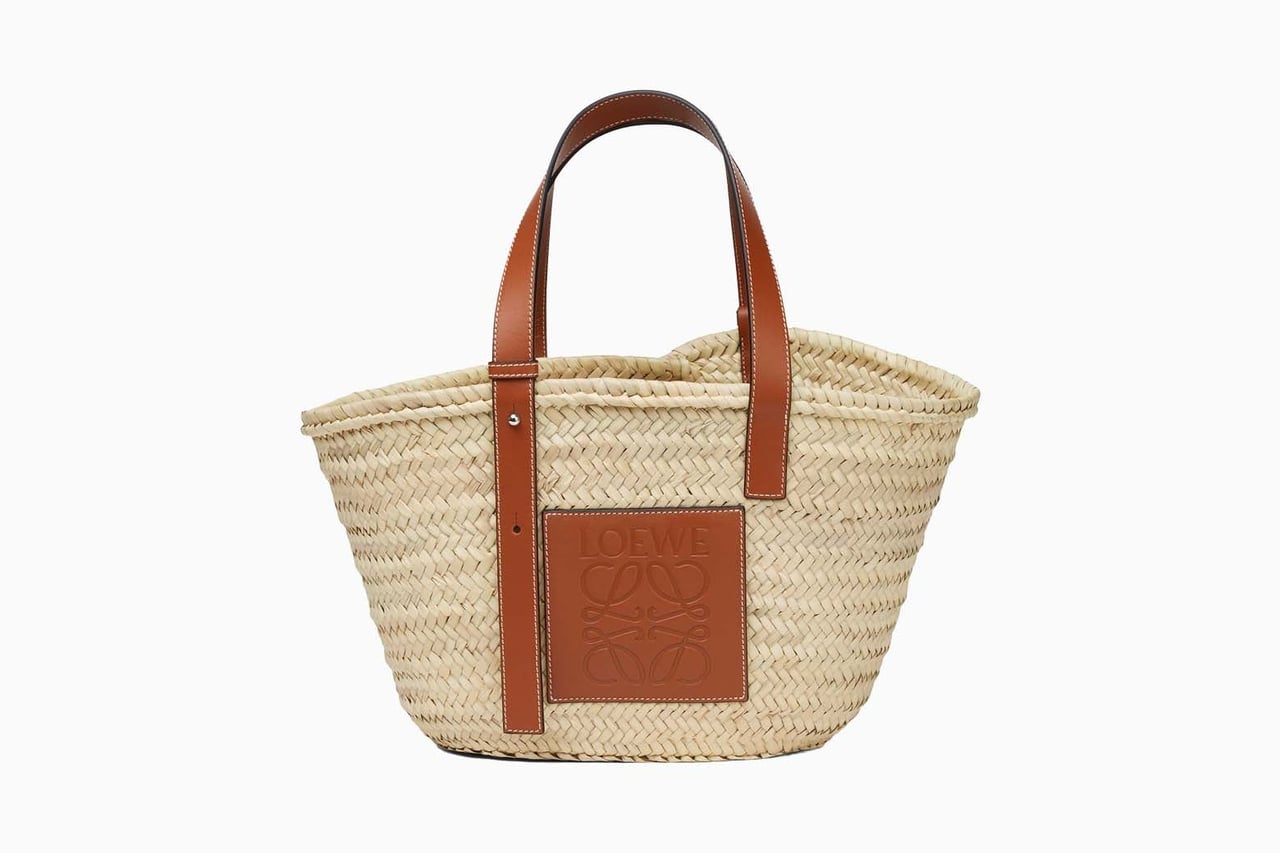
The Basket Bag: The house, made approachable
- Release year
- 2017
- Price
- From $650 (small) to $1,950 (medium)
The Basket Bag is the easiest way into Loewe, and one of the most genuinely useful bags it makes. The pleasure is in the contrast: a hand-woven palm-leaf body set against fine calfskin handles and an Anagram patch — artisanal and polished at once.
Loewe largely created the designer-basket category with this bag in 2017, and it has reissued it in new sizes and finishes every summer since. The woven body is hard-wearing and forgiving, which is exactly what you want from a bag that follows you from the market to the beach to the vacation terrace.
Style it with a white dress and flat sandals, or denim and a linen shirt. It’s the rare statement piece that earns its price through how often you’ll actually carry it.
Best for: Sun-season wardrobes and first-time buyers — a woven wonder you’ll actually use.
Check price: The Basket Bag: The house, made approachable at Mytheresaat Mytheresa · Great deals every day
The Gate Bag: Equestrian lines, modern restraint
- Release year
- 2018
- Price
- From $2,150
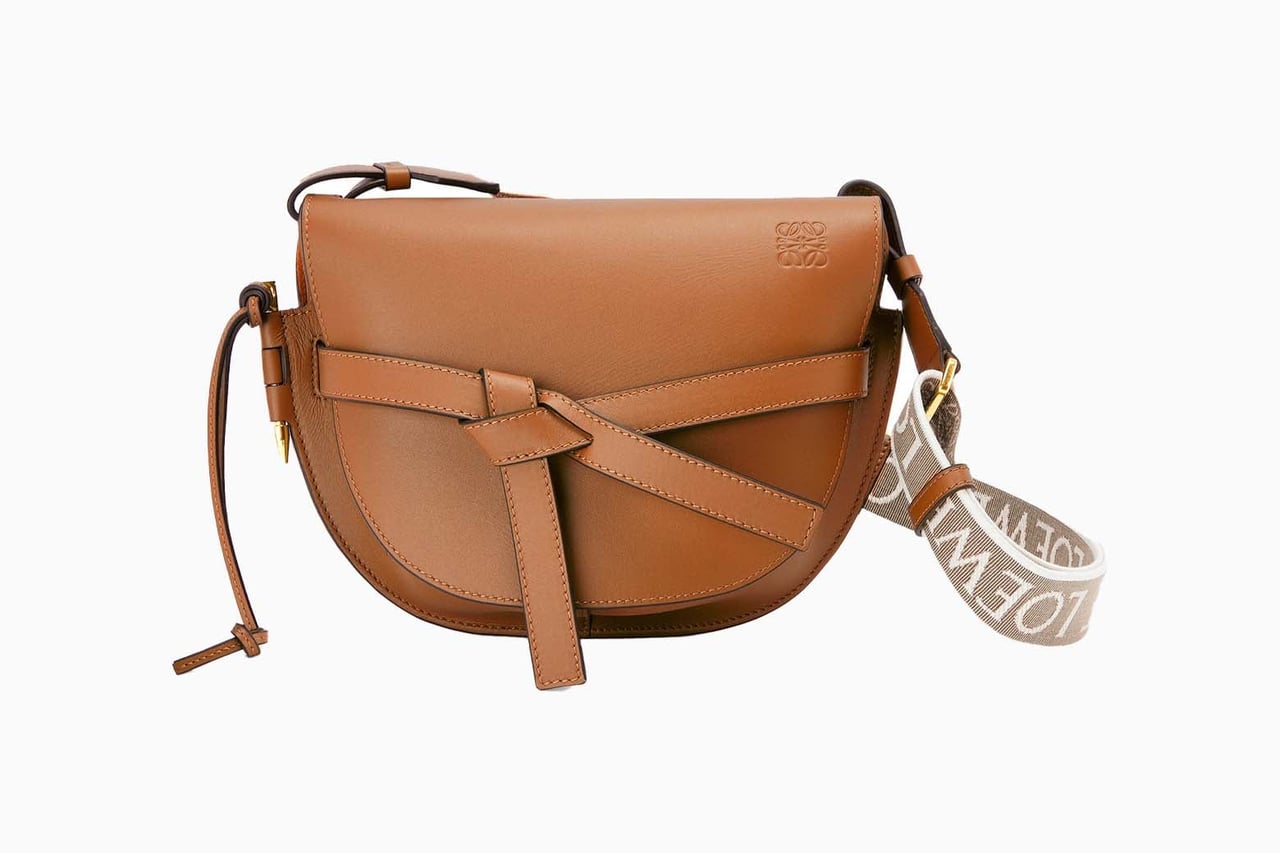
The Gate takes its name from the small metal pin that secures its knotted leather latch — a detail borrowed from the saddlery that has shaped Spanish leatherwork for centuries. It arrived on Loewe’s spring 2018 runway and quickly became a signature shape.
The saddle-rounded silhouette and belt-strap closure nod to that equestrian heritage, while a discreet embossed logo keeps it firmly contemporary. A removable jacquard-and-leather strap lets you wear it crossbody by day or tuck it under the arm as a clutch by night.
It’s the most overtly “designed” bag here, which makes it one to buy because the shape speaks to you — not because it’s trending.
Best for: Heritage-detail lovers who want something less ubiquitous than the Puzzle — your gateway to the house.
Check price: The Gate Bag: Equestrian lines, modern restraint at Mytheresaat Mytheresa · Competitive prices
The Hammock: One bag, many shapes
- Release year
- 2016
- Price
- From $2,950
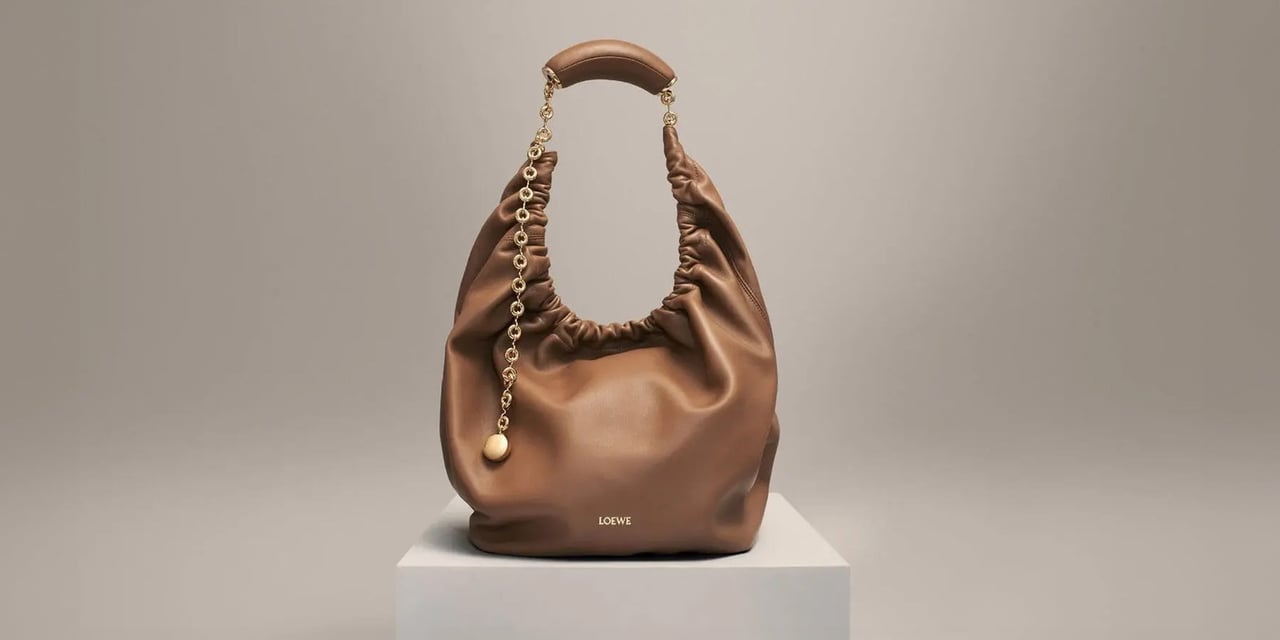
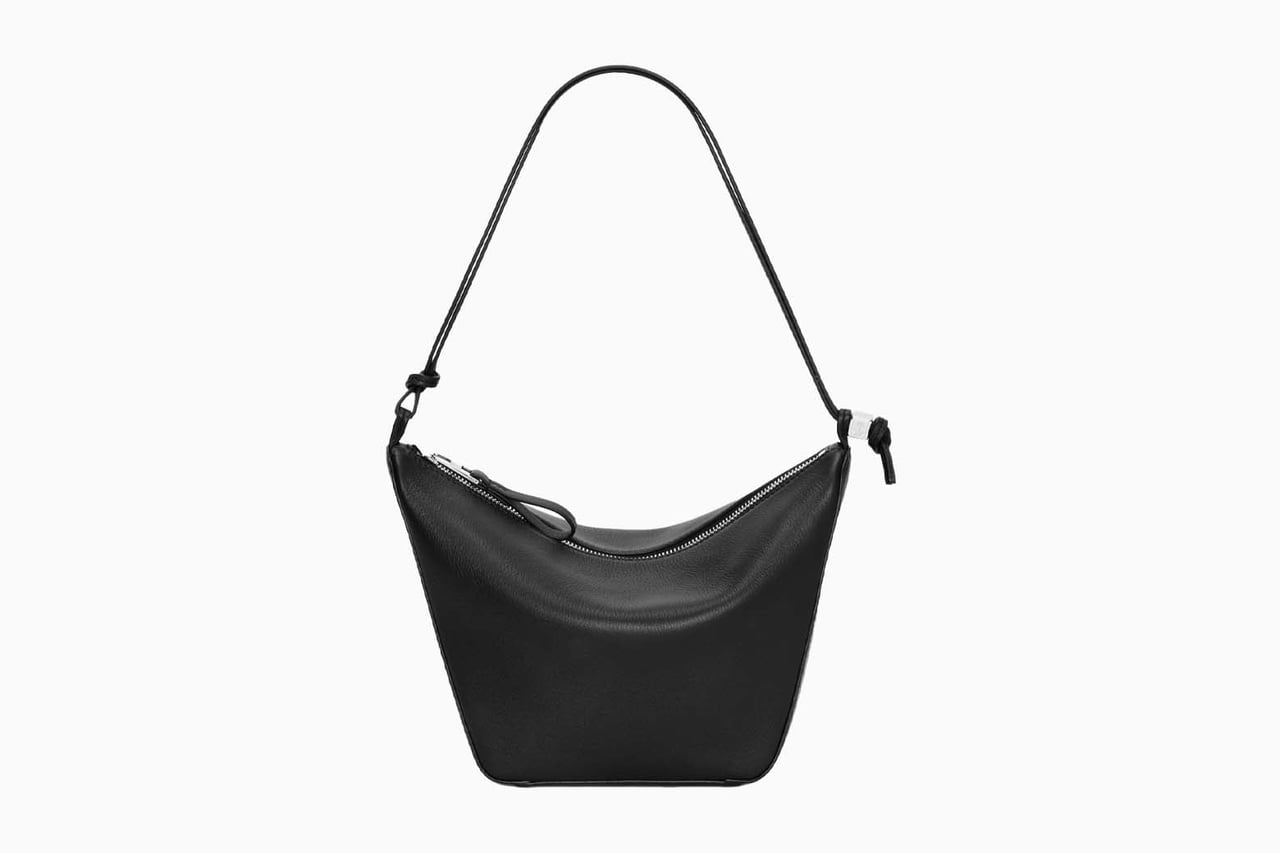
The Hammock is Loewe’s most quietly clever design. Cinch its sides in and it’s a neat top-handle bag; let them out and it swings open into a slouchy hobo. The same bag covers a desk-bound Tuesday and an unhurried Saturday without ever looking like it’s trying.
Made in smooth calfskin and offered across several sizes, it’s the kind of versatile, low-maintenance piece that justifies the spend through sheer wearability. If you want one Loewe that adapts to your week rather than the other way around, start here.
Best for: The minimalist who wants one bag that morphs to fit the day — laid-back, without slouching on quality.
Check price: The Hammock: One bag, many shapes at Mytheresaat Mytheresa · Fast, reliable delivery
The Goya: A nod to a Spanish master
- Release year
- 2021
- Price
- From $2,150
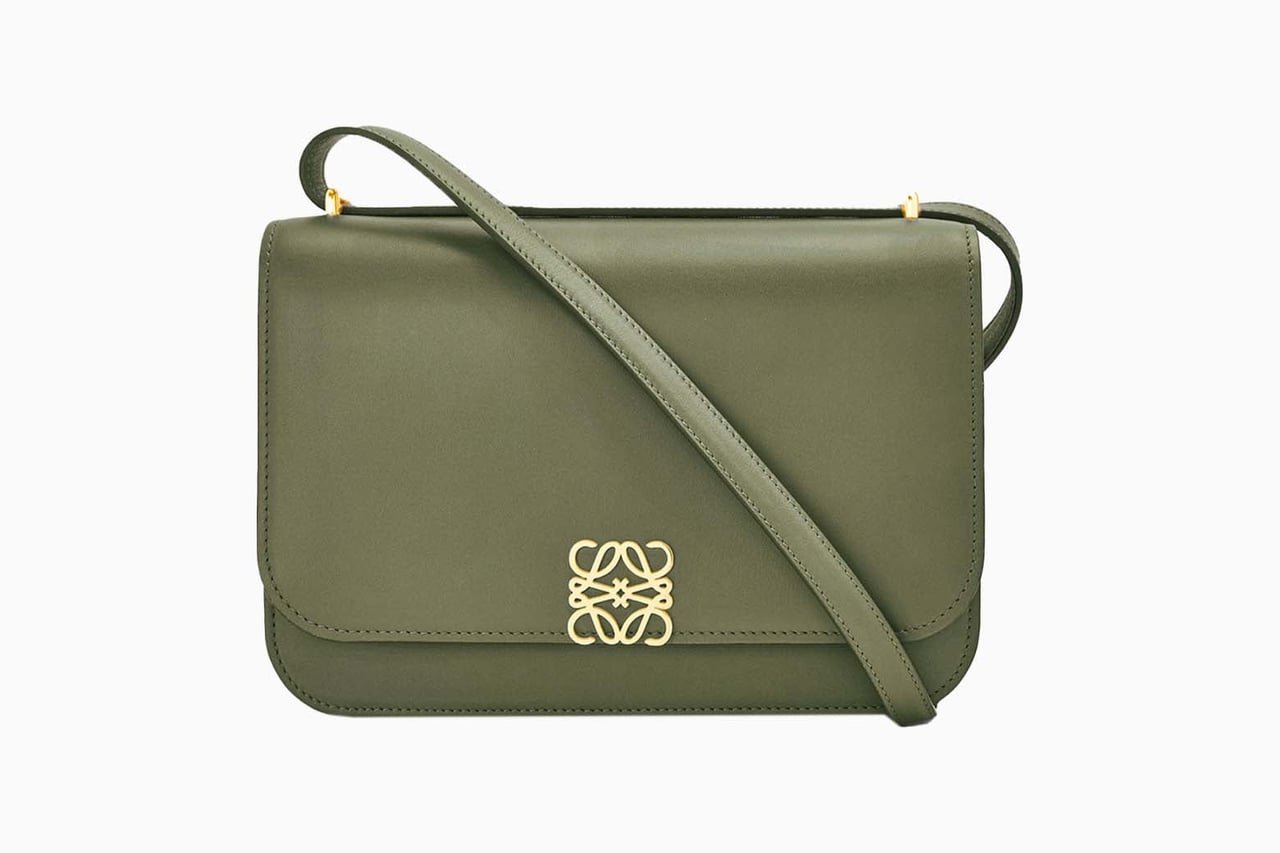
Named for the painter Francisco Goya, this is Loewe’s most refined shoulder bag — a clean, elongated silhouette finished with the heritage T-bar clasp that gives it its quiet polish.
It comes in two distinct moods: smooth leather for an evening-ready, almost formal look, and a softer padded version for everyday ease. Both keep ornamentation to a minimum, letting the line of the bag and the quality of the leather carry it.
Best for: A sleek, dressed-up Loewe with no obvious logo — for painting the town any color you like.
Check price: The Goya: A nod to a Spanish master at Mytheresaat Mytheresa · Secure checkout
The Paseo: A sculptural take on the tote
- Release year
- 2023
- Price
- From $2,150
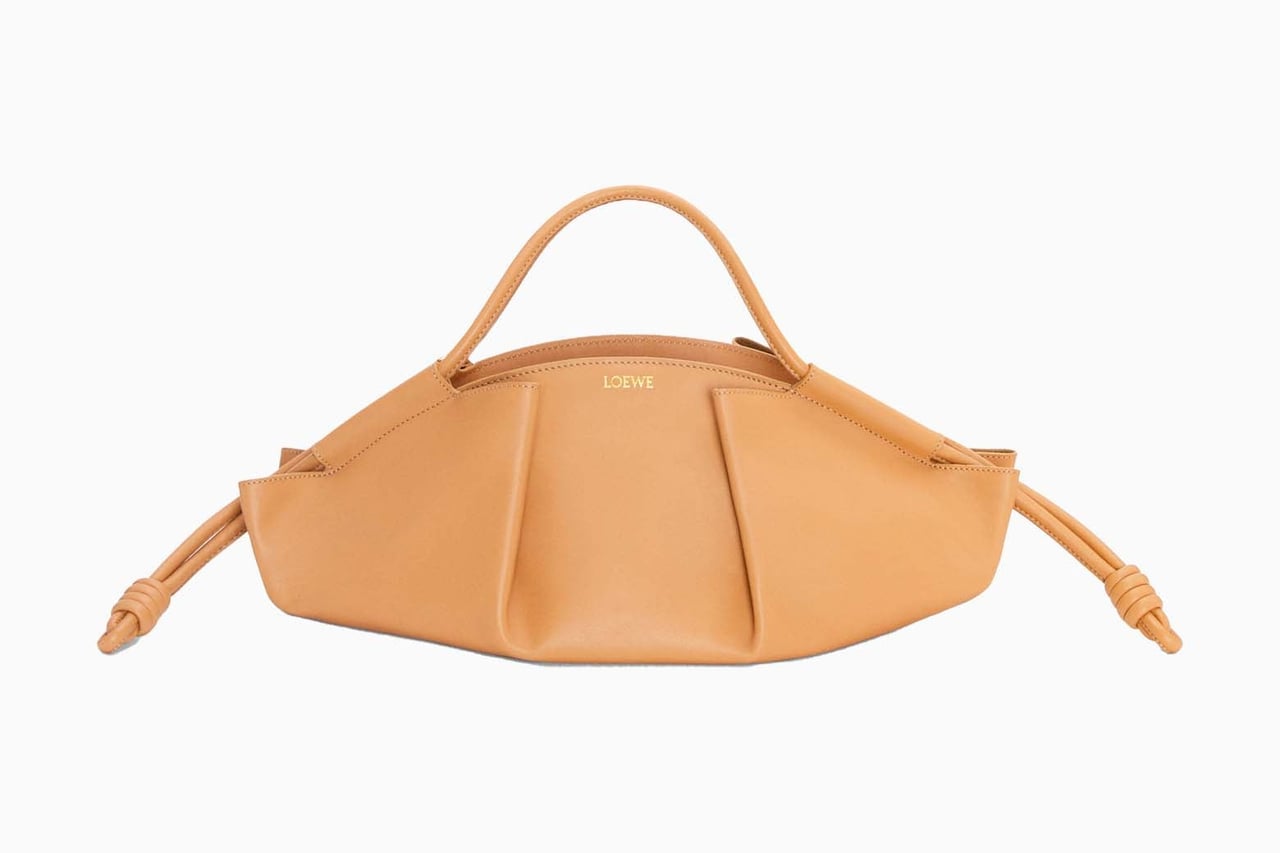
The Paseo is Loewe at its most architectural. A pleated, gently structured body and knotted drawstrings give it the look of a sculpture you happen to be able to carry — handheld, under the arm, or on the shoulder.
It’s a tote for someone who finds the classic shopper too plain. Roomy enough for the working day, it’s elegant enough to take straight into the evening, and distinctive enough that you won’t see it on every other arm.
Best for: A tote with a point of view — made for the paseo and all that follows.
Check price: The Paseo: A sculptural take on the tote at Mytheresaat Mytheresa · Trusted luxury retailer
The Cubi: A small bag with good bones
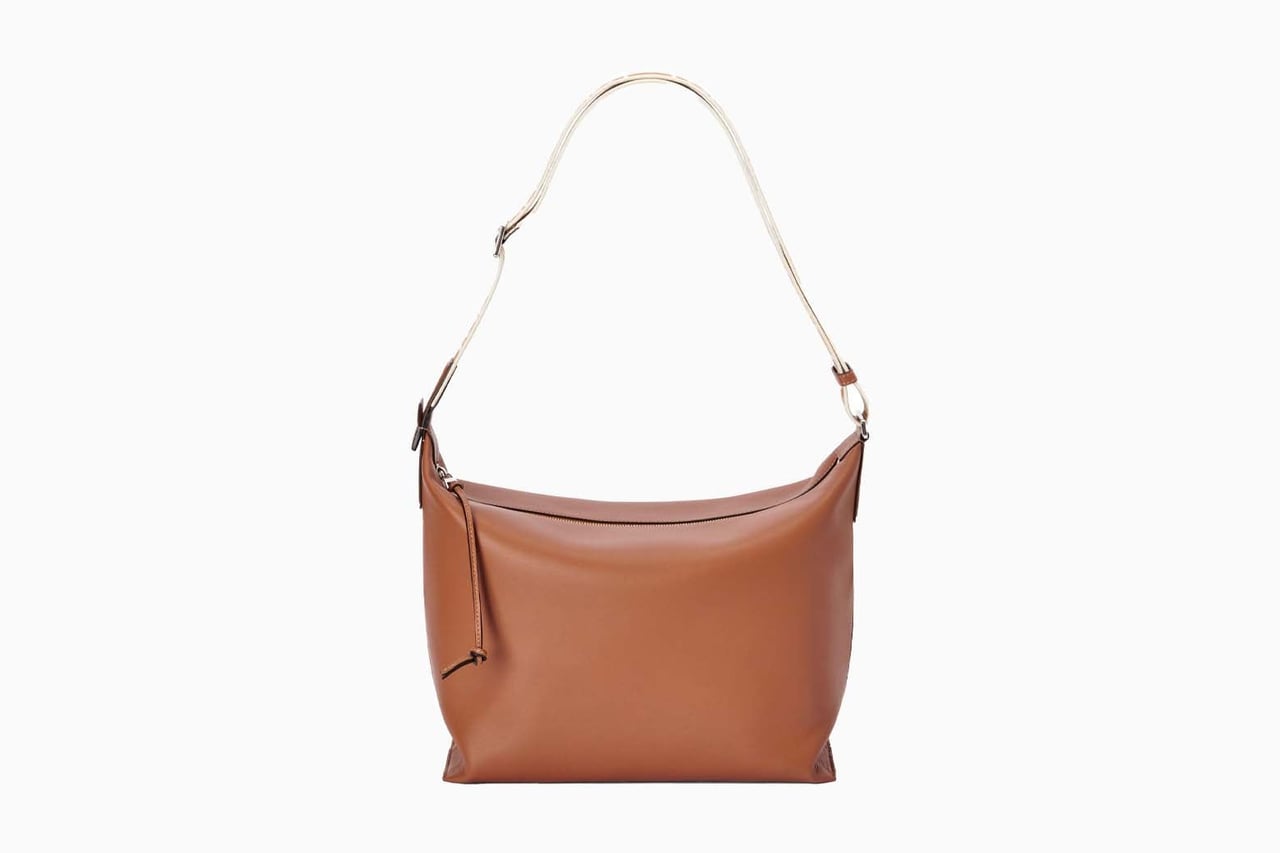
- Release year
- 2022
- Price
- From $1,990
The Cubi proves a compact bag needn’t be a compromise. Its boxy, cube-like shape holds far more than it lets on, in smooth calfskin lined with herringbone cotton canvas and finished with a discreet embossed Anagram. It’s a unisex design that Loewe sells across both its men’s and women’s lines, though most retailers still list it as menswear first.
An adjustable jacquard strap takes it from crossbody to shoulder, and its smaller footprint makes it the natural choice for evenings and travel days when you want your hands free and your essentials close. Among Loewe’s icons, it’s one of the gentler entry points — without feeling like a downgrade.
Best for: A unisex crossbody for a first designer bag, or anyone after a low-key Loewe — a square deal in the best sense.
Check price: The Cubi: A small bag with good bones at Mytheresaat Mytheresa · Shop with confidence
The story behind an artisanal Spanish legacy
Picture a small leather workshop in 1846 Madrid, run by a collective of Spanish craftsmen intent on perfecting a single discipline. The shop built a reputation for quality that soon drew commissions from European royalty.
In 1872, the German leather merchant Enrique Loewe Roessberg brought the artisans together under his name and added commercial ambition to their craft, cementing Loewe as Spain’s premier house of leather — a reputation still built on hand-finished artisanship.
Across its nearly 180 years, Loewe has been shaped by a succession of hands — most recently Jonathan Anderson, whose eleven-year tenure (2013–2025) made it one of fashion’s most talked-about houses before he left for Dior. Jack McCollough and Lazaro Hernandez now carry the legacy forward, with the same conviction that the leather matters more than the logo.
That ethos shows in how the bags are made. Loewe leans on responsible leather sourcing and durable construction — the kind of substance that makes a bag worth keeping for years, not just worth buying for a season.
How to pronounce Loewe
You’d be forgiven for thinking Loewe rhymes with “low.” It doesn’t. The house pronounces its name “Lo-EH-vay” — three syllables, stress on the middle, with the W sounded like a soft V. The name is Spanish in spirit but German in origin, taken from founder Enrique Loewe Roessberg.
The brand cares enough about getting it right that it keeps a section on its own website titled “How to say our name.” Say it correctly and you’ve already signaled that you know the house, not just the logo.
How much does a Loewe bag cost?
Entry to the house starts at a few hundred dollars for small leather goods and the smallest Basket Bags, with most of the icons in this guide landing between roughly $2,000 and $4,000. More intricate pieces — exotic leathers, the new Amazona 180 — climb higher.
It’s a gentler entry point than Hermès or Chanel, though Loewe has raised prices steadily in recent years. The figures above reflect US pricing as of mid-2026; like all luxury houses, Loewe adjusts them periodically, so treat them as a guide rather than a quote.
Frequently asked questions about Loewe bags
Are Loewe bags a good investment?
Is Loewe high-end luxury?
Who designs Loewe now?
Is the Loewe Puzzle bag a trend?
Where is the best country to buy Loewe bags?
Products featured here are independently selected by our editors. If you buy through our retail links we may earn an affiliate commission — it never changes the price you pay, and it never decides our verdicts. Read our earnings disclaimer.