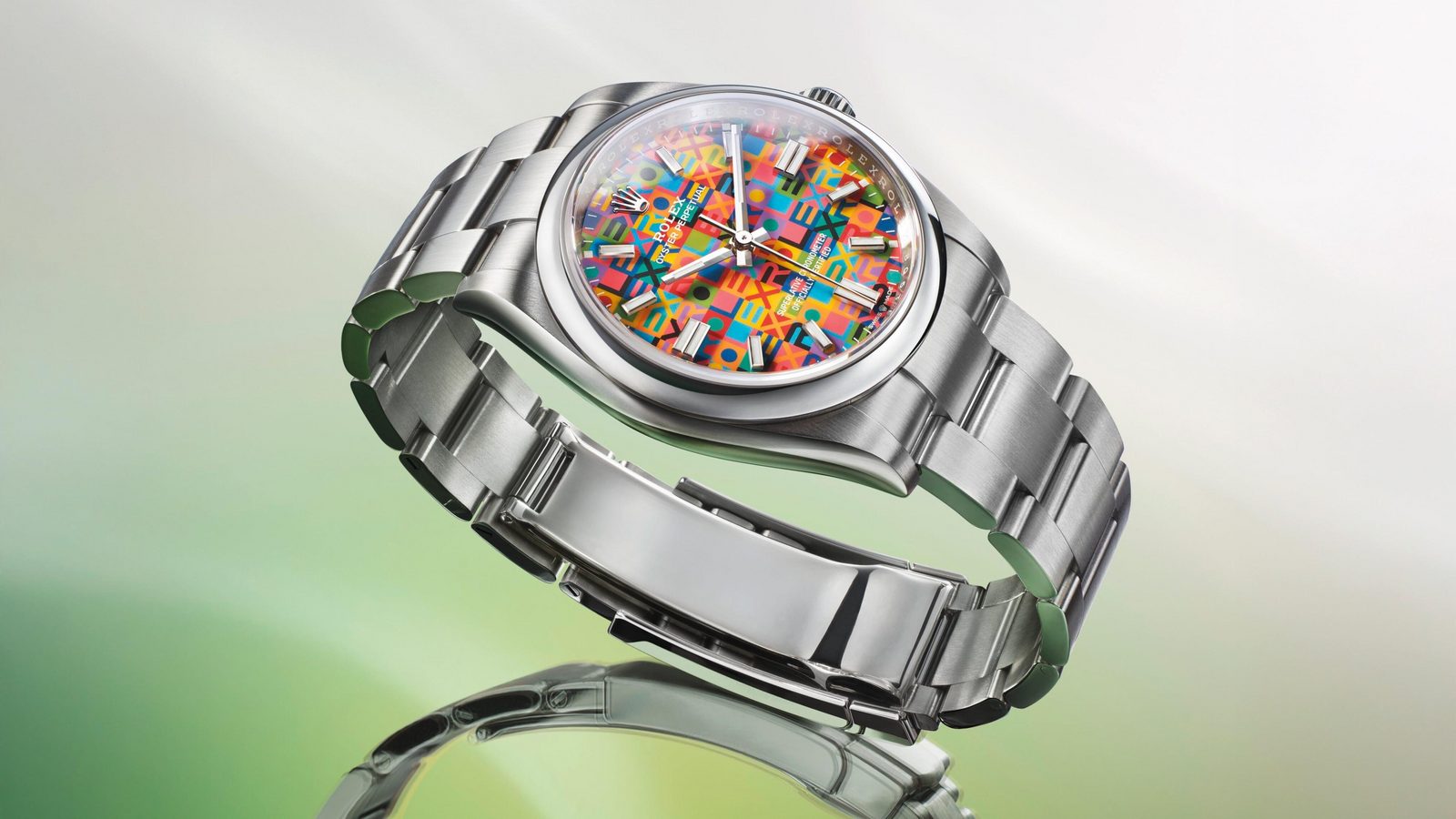

Rolex is marking the centenary of the Oyster with three new Oyster Perpetual models, returning to the watch that gave the company its name and, the maison argues, protected the very idea of the wristwatch when it arrived in 1926. The line heads the anniversary range.
The Oyster Perpetual 36 leads the collection with a lacquered Jubilee dial that spells out the brand's name in a repeating pattern rendered in ten contrasting colors. The pattern draws on an earlier interlocking monotone Jubilee design introduced in the late 1970s and brought back in 1985.
That 1985 appearance came on the Datejust, timed to mark 40 years of the model. The new 36 therefore reads as a tribute across two anniversaries at once: the Oyster's own hundred, and a dial language Rolex last revisited four decades ago.
Why the Oyster mattered in 1926
Rolex credits founder Hans Wilsdorf with the case that solved two problems holding back the wristwatch at the time: movements that lost accuracy to pocket watches when reduced in size, and the dust and water a wrist strap exposed. The Oyster case sealed both.
Wilsdorf had already claimed a first in 1910, when Rolex received the earliest Swiss Certificate for Chronometric Precision awarded to a wristwatch movement. Sixteen years later the sealed Oyster case completed the argument for wearing a timekeeper on the wrist.
The third piece, autonomy, followed in 1931 with the Perpetual rotor: a centre-mounted weight that wound the movement from the wearer's motion alone, and cut the number of times the crown had to be opened. The three innovations together set the watch on its course.
The Oyster's descendants are now bedrock to the catalogue. The Submariner arrived in 1953 as a military dive watch and spawned the Sea-Dweller, Deepsea and Deepsea Challenge, the last safe to 11,000 metres and carried to the Mariana Trench by James Cameron in 2012.
Before that came the Datejust, launched in 1945 for the company's 40th anniversary and the first automatic, waterproof chronometer to put the date in a window at three o'clock. Wilsdorf called it the pinnacle of watchmaking science, and it remains Rolex's most popular and populous model.
Every model in the Professional range now carries the Oyster Perpetual prefix on its dial, from the GMT-Master II and Yacht-Master to the Explorer, Air-King and Cosmograph Daytona. But the anniversary is built on the seminal line that gave the family its name.
The new Oyster Perpetual 41 and 28
The new Oyster Perpetual 41 is where Rolex returns to the model's essence. The display stays clean and date-free, with elegant baton markers and a smooth bezel, and there are subtle new material choices alongside those classical elements.
At 41mm, the watch keeps a clean silhouette, and the Oyster bracelet, first introduced in the 1930s, shifts from the usual mix of Oystersteel and yellow gold to solid Oystersteel, Rolex's highly resistant stainless steel alloy. The gold moves to the bezel and crown instead.
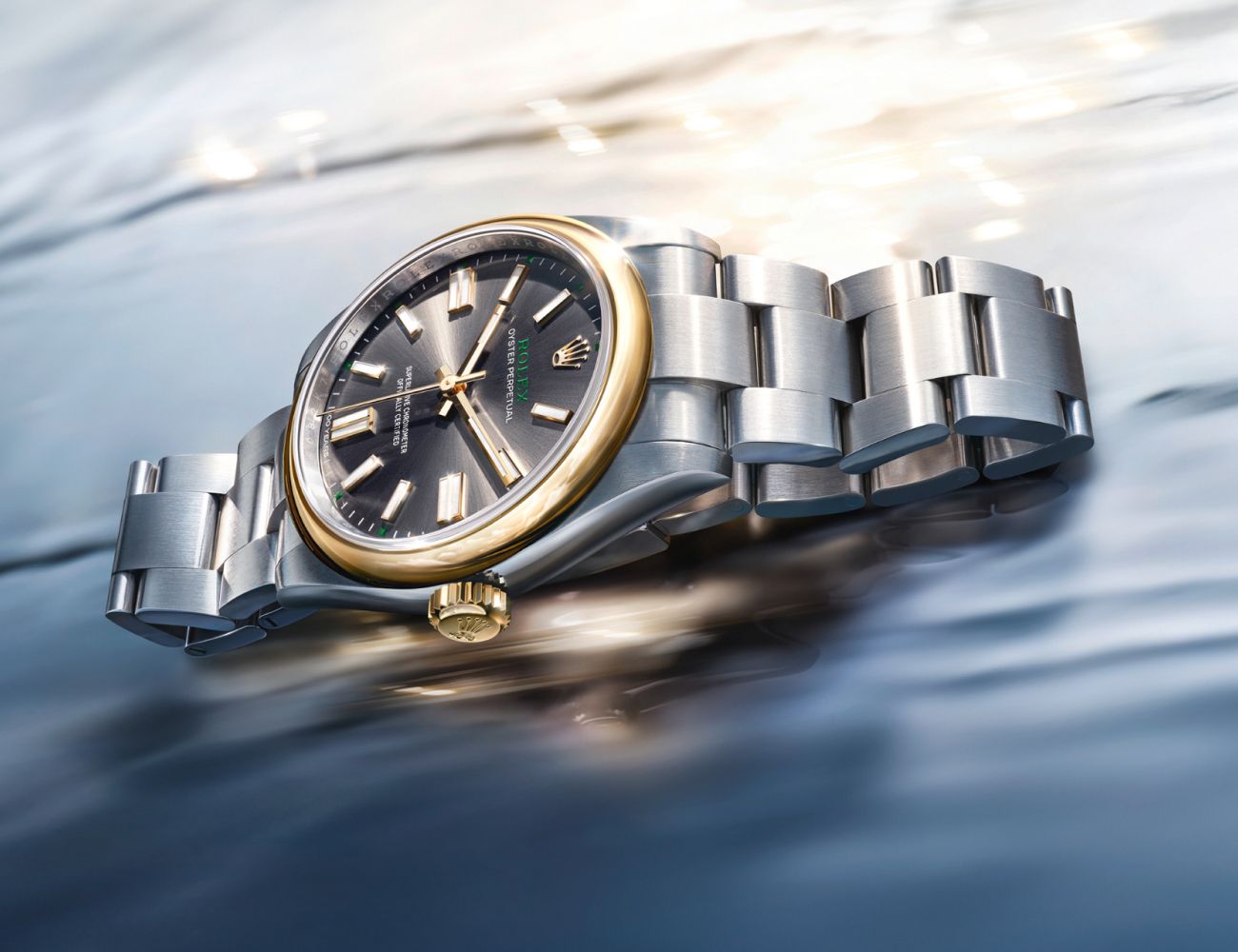
The anniversary is hidden in the details. A '100' appears in relief on the crown, and '100 years' takes the place of the usual 'Swiss Made' on the dial. These are quiet nods rather than a banner.
A third model joins the range: the Oyster Perpetual 28 in yellow gold, the smallest of the three. Rolex has not yet published pricing or production numbers for the anniversary models in the material we have seen.
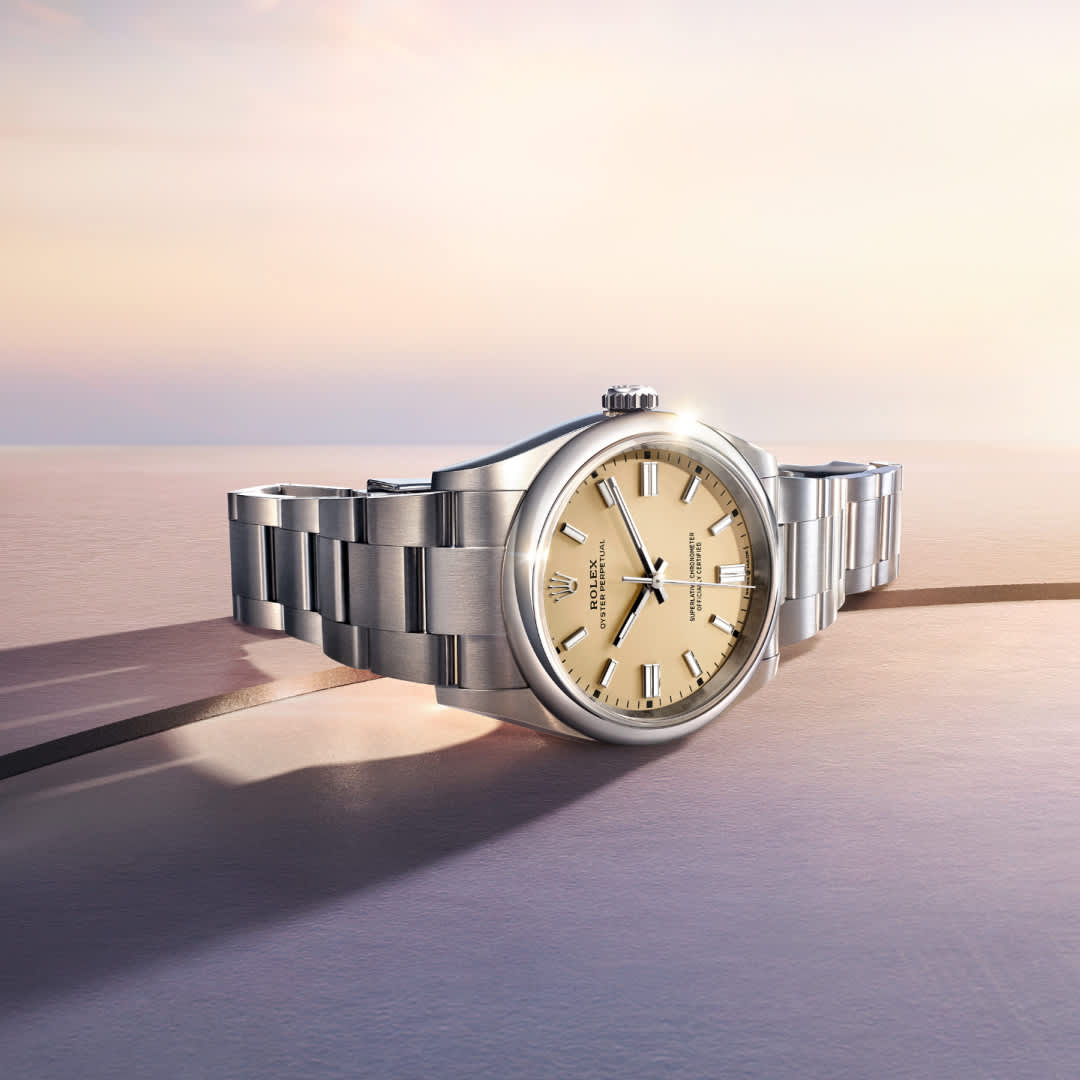
Rolex stands at the top of our ranking of the best luxury watch brands, ahead of Patek Philippe and Audemars Piguet, on build quality, near-unrivaled value retention and instant recognition. The Oyster Perpetual is where that reputation began, and the centenary is a return to source.
Our guides to the best Explorer and Submariner alternatives rest on the same assumption: the Rolex originals are the benchmark. We put the Explorer at $7,900 retail and the Submariner at $10,050, against Tudor equivalents at roughly half that.
The self-winding principle this line introduced runs through our coverage of watches jewelry, including the perpetual calendars now returning in small production runs. Wilsdorf's 1926 case and 1931 rotor are the starting point for all of it.
Support the content you love — it’s free 🎉
Add Luxe Digital as a preferred source on Google. Our stories will be more likely to appear in Google’s Top Stories. It’s free and supports our team. Thank you!
Add as preferred sourceYou can remove us any time in Google’s source preferences.
Thank you — you’re all set 🎉
Luxe Digital is now one of your preferred sources, so our stories are more likely to appear in Google’s Top Stories.
This briefing is published daily using an AI-powered system crafted by Luxe Digital’s team and finely tuned to meet our editorial standards. While we continuously test and review the output, mistakes can sometimes happen. Tell us if you spot one.
Images: Rolex; Rolex Oyster Perpetual 41 in Oystersteel and yellow gold (Image credit: Courtesy of Rolex)