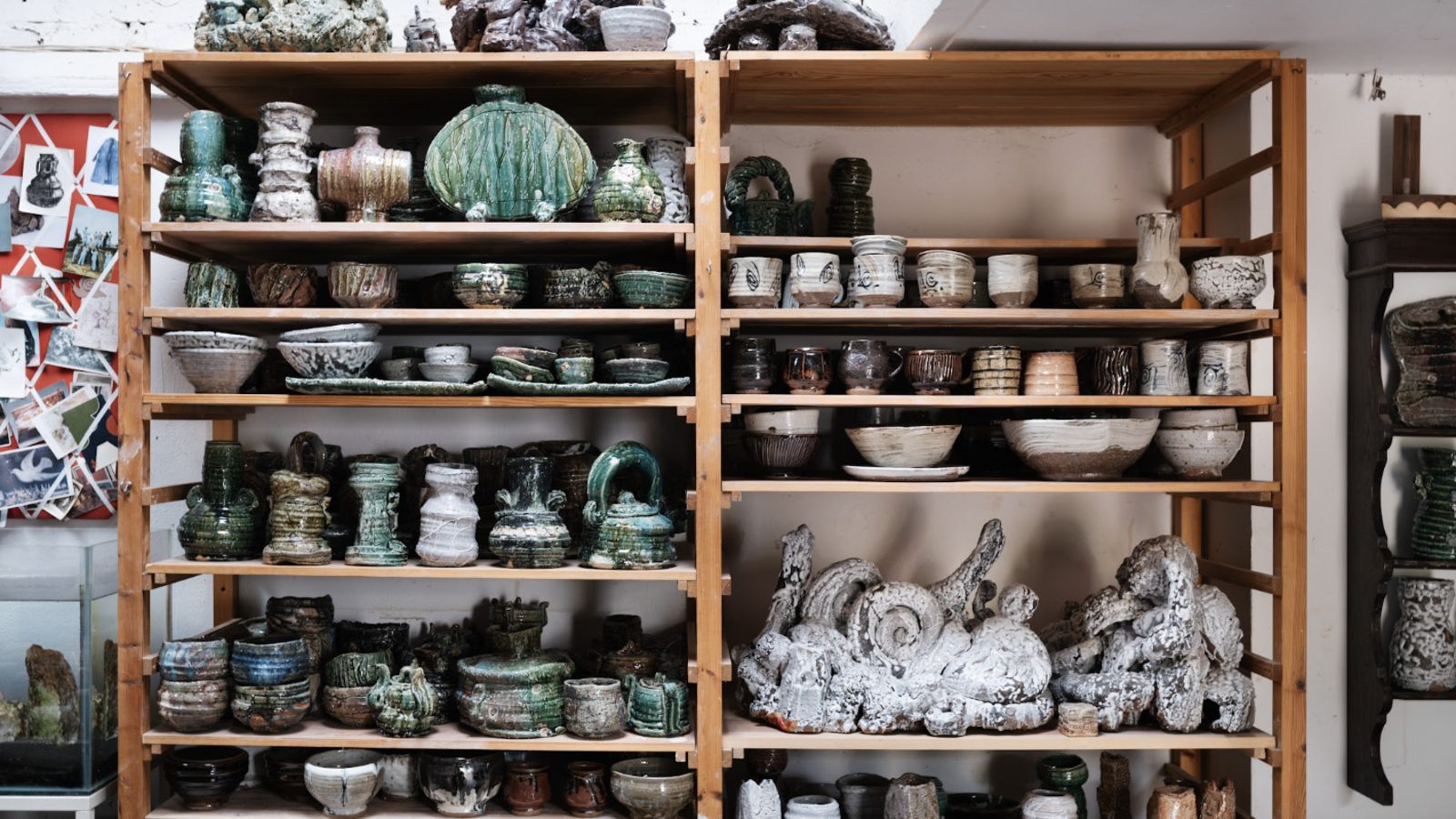

Perfumer H has paired its new fragrance, Clay, with a capsule of ceramic bottles by Troy Town, the London studio run by Aaron Angell. The pieces are on display in the brand's London store alongside a selection of other ceramics from Angell's workshop, launched to sit beside the scent.
Founder Lyn Harris handed Angell a bottle and a sample of the fragrance and gave him free rein to interpret them as he saw fit. Three months later, she said, the finished pieces arrived and stopped her short. The collaboration joins a line of artist pairings she has made through Perfumer H.
Clay itself is Harris's latest study of the ordinary. She has long turned banal materials, salt, ink, steam, into scents that carry her signature, and here she worked from what she calls her 'translation of the earth,' a baked clay accord standing in for the material's own smell.
How Angell built the bottles
Angell told Harris the clay he used was made with feldspar to give the surface texture. Before firing, he dipped each vessel in a glaze of pine needle ash. The result, in his words, is colour with a peacock effect, a finish he said is particular to Troy Town and to no one else.
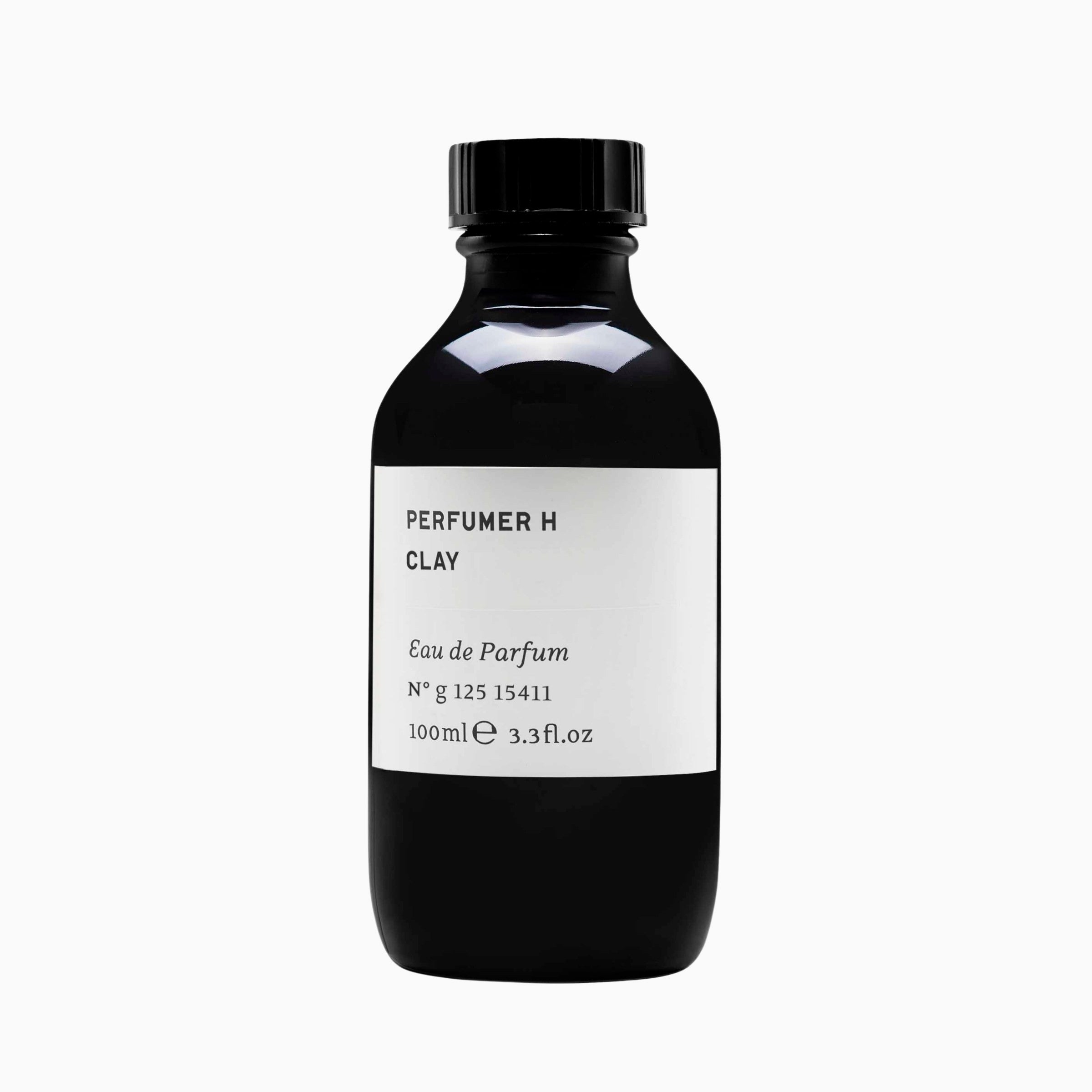
The ceramics recreate Perfumer H's signature bottle shape rather than departing from it. What changes is the material and the surface, an approach that keeps the house's silhouette recognisable while handing its color and tactility over to the potter's kiln and his glazes.
Harris described the pairing as a natural one. She has used Perfumer H as a platform for celebrating other artists for years, and she said Troy Town and Angell are unique in a way that comes from his love of old whimsical Victorian ceramics fused with traditional Japanese Oribe work, adapted into his own method.
'I just fell in love with this unconventional way of thinking,' she said, 'and totally love his ideas behind each piece.' Her process with each collaborator differs, and with Angell she set no brief beyond the bottle, the sample and a word of trust.
A history of artist collaborations
The Clay commission follows a series of similar partnerships. Harris worked with Studio Nicholson on a Soap fragrance and a short apparel capsule, with Will Calver on paintings prompted by her Rose with Insect perfume, and with Michael Ruh, who hand-blows glass vessels for some of the brand's fragrances.
Those names map the range of what Perfumer H asks of its collaborators: clothing, paint, blown glass and now thrown and glazed ceramics. Each arrives through a different door and each is given the same latitude Angell received, a room to translate a scent into his own medium.
The scent itself, Clay, unfolds from that baked clay accord. Harris built it to express the material's change from malleable earth to a permanent, fired object. Sandalwood gives the creaminess of soft, wet clay, while ambroxan carries a touch of mineral sharpness and a sense of the ground.
Maltol adds a toasted note that amplifies the impression of clay being fired in a kiln, and orange flower threads through the composition for a subtle brightness against the earthier tones. The accord, Harris said, is the olfactory embodiment of the transformation the material undergoes under heat.
Angell's vessels sit beside the liquid they share a name and a story with. A buyer sees the bottle first as a surface, then as the record of a process: feldspar for grit, pine ash for color, fire for permanence, the same sequence the fragrance is composed to describe in smell.
The signature bottle shape carries the collaboration into the store display, where the ceramics are shown next to work from Angell's studio that is not tied to the scent. That places Troy Town's wider practice in front of Perfumer H's customers, not only the commissioned pieces but the rest of the potter's output.
Harris's collaborators have each interpreted a different perfume, and each has been released without the others around it. Clay gathers the logic of those pairings into a single object: one bottle, one scent, one maker, and the name of the fragrance telling you what everything else is made of.
The use of Oribe tradition matters to the result. Japanese Oribe ware is known for green glazes and asymmetric, often distorted forms, so Angell's reference point pulls the bottles away from machine symmetry and toward something irregular, where each vessel is plainly made by hand rather than cast.
That irregularity is the point of handing a perfumer's bottle to a potter. A glass bottle is identical every time; a thrown, glazed one is a small accident preserved. Harris's choice to display them in the store, rather than merely sell them, treats the vessels as objects as much as containers.
The capsule extends Perfumer H's habit of turning a fragrance launch into a wider conversation about making. Where most houses release a scent alone, Harris releases it alongside another artist's answer to it, and Clay arrives with the bottles already carrying Angell's reply in feldspar and ash.
Support the content you love — it’s free 🎉
Add Luxe Digital as a preferred source on Google. Our stories will be more likely to appear in Google’s Top Stories. It’s free and supports our team. Thank you!
Add as preferred sourceYou can remove us any time in Google’s source preferences.
Thank you — you’re all set 🎉
Luxe Digital is now one of your preferred sources, so our stories are more likely to appear in Google’s Top Stories.
This briefing is published daily using an AI-powered system crafted by Luxe Digital’s team and finely tuned to meet our editorial standards. While we continuously test and review the output, mistakes can sometimes happen. Tell us if you spot one.
Images: Inside Aaron Angell's London ceramics studio, Troy Town (Image credit: Perfumer H x Troy Town); Perfumer H