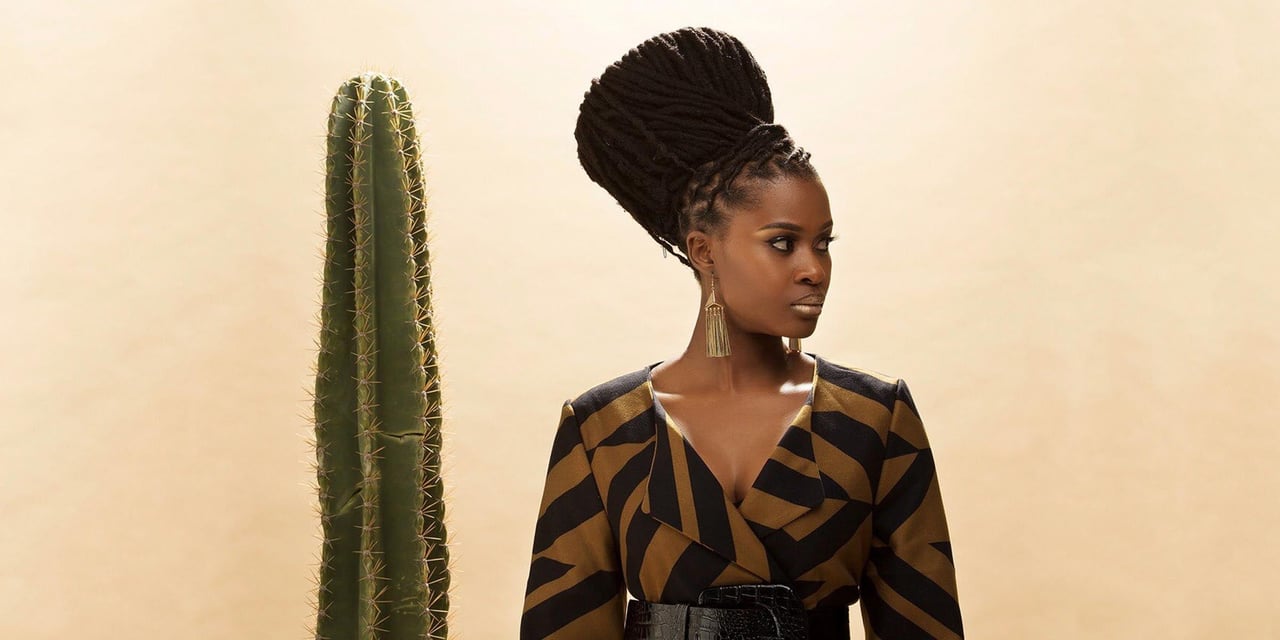
An out-there style often associated with the Rastafarian community, dreadlocks could, in fact, be found on the heads of Ancient Egyptians. Well, no matter who claims ownership, we’re glad this creative, sass-packed, and sometimes controversial hairstyle can be seen everywhere, from the high street to the red carpet. With celebrities from Bob Marley (well, duh) to the likes of Erykah Badu and Whoopi Goldberg, stars across the world have rocked daring locs. And with the know-how, you can too!
There are as many ways to style locs as there are people who wear them, so if freedom and experimentation are on your list, they’re the style for you. When it comes to dreadlocks, the key factors are size, neatness, and length. This triad will determine how your dreadlocks ultimately look.
For a wild-child bohemian vibe, we recommend a mixture of sizes and shapes and perhaps a few beads popped in for a cute accessorized style (you can always take them out for work!). You can also have fun with highlights to spice things up. Similarly sized, uniform locs are gorgeous if you prefer things neat and tidy, and you can always tie them into a ponytail or topknot for work.
Of course, length is key when it comes to the overall look. Short locs look punky, quirky (well, even more so), and come with a razor-sharp attitude. Easier to maintain and with the option to grow them longer, short locs are a great choice for newbies. Or, if you have flowing locks you’d love to keep hold of, long locs look gorgeously feminine, too (just make sure you have a crochet hook handy to keep them tidy!).
So whether you’re starting out, faux-ing it for a few weeks first, or revamping locs you’ve had for years, here are the loc styles for women we’d save to show your loctician.
Loc styles for women
Here are 53 loc styles for women to show your loctician.
Short loc styles for women
Short locs for women
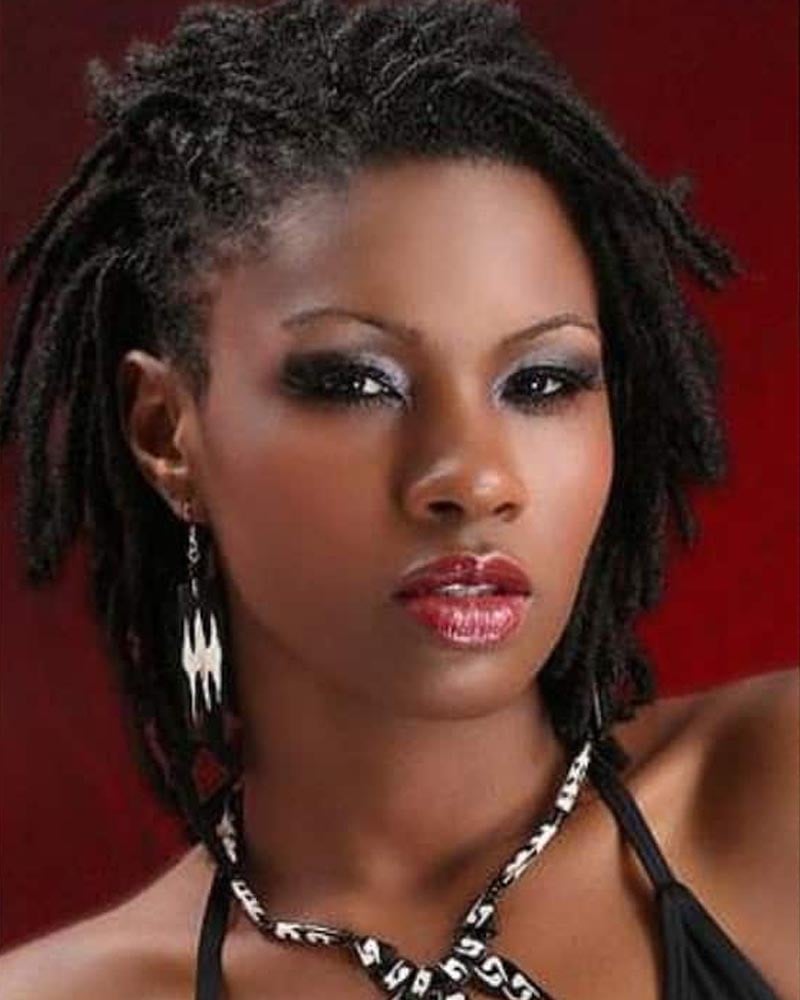
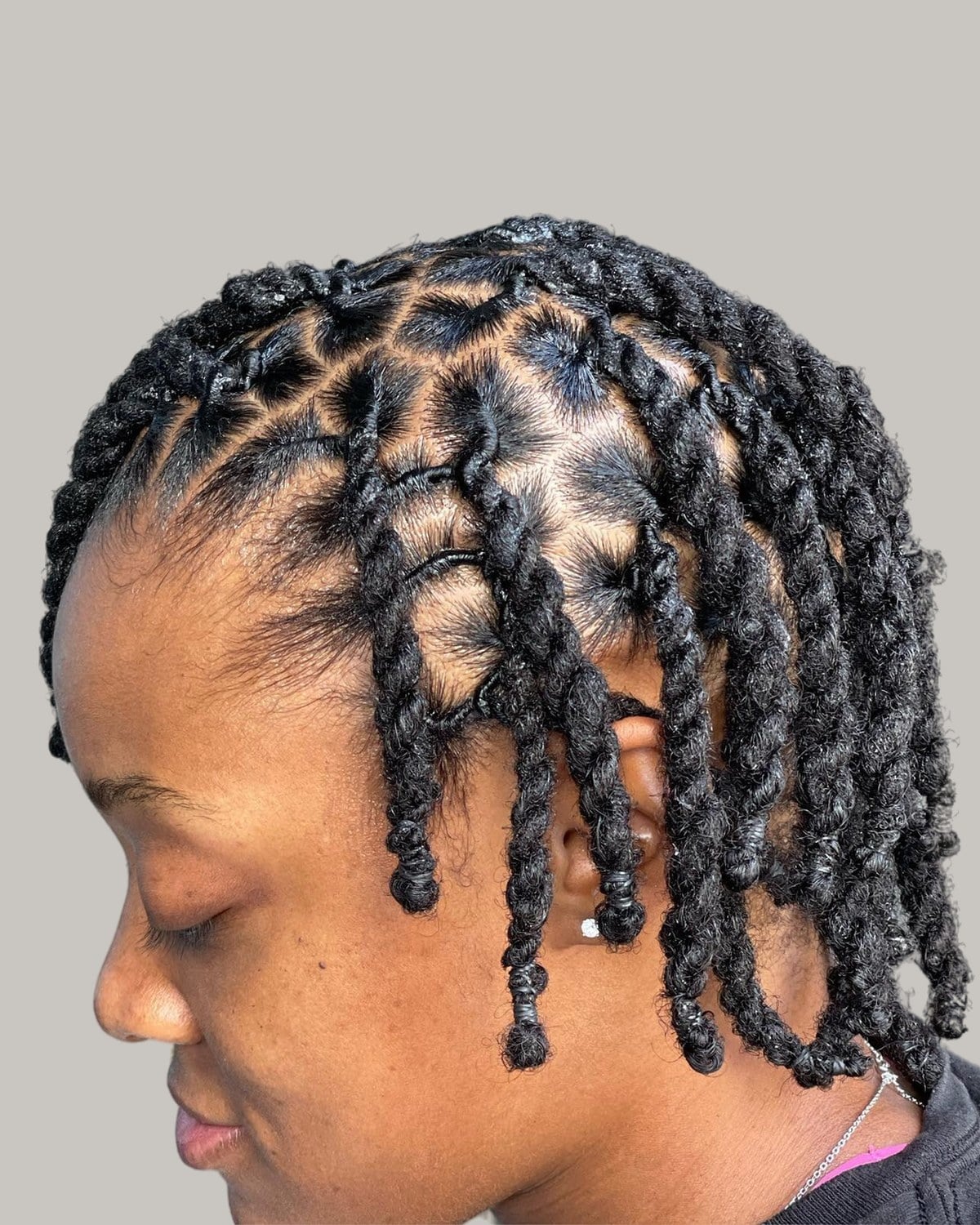
Chin-length locs with a little frizz left in on purpose, so they frame the face rather than sit flat. The second photo takes the same length and curls every end under. It’s a good length to start at, and it grows into a bob.
What to ask for Small to medium locs cut or grown to the chin, palm-rolled at the root, with the ends left soft (or set on rods if you want the curl).
Short freeform locs
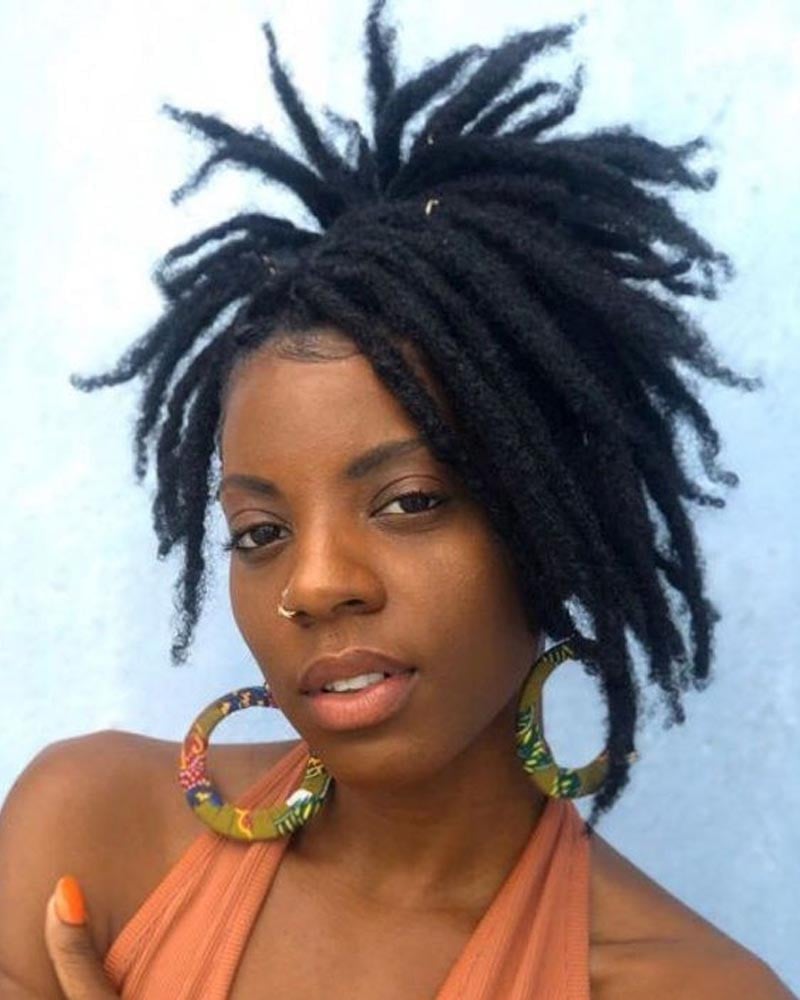
Freeform locs form on their own: you wash, you moisturize, and you don’t comb. That’s why no two sets look the same, and why these ones stand up and out rather than hang. The second photo is a neater, side-swept short set for comparison.
What to ask for If you're starting freeform, ask for a wash and a shape-up at the edges, without a parting grid or retwists.
Short blonde locs
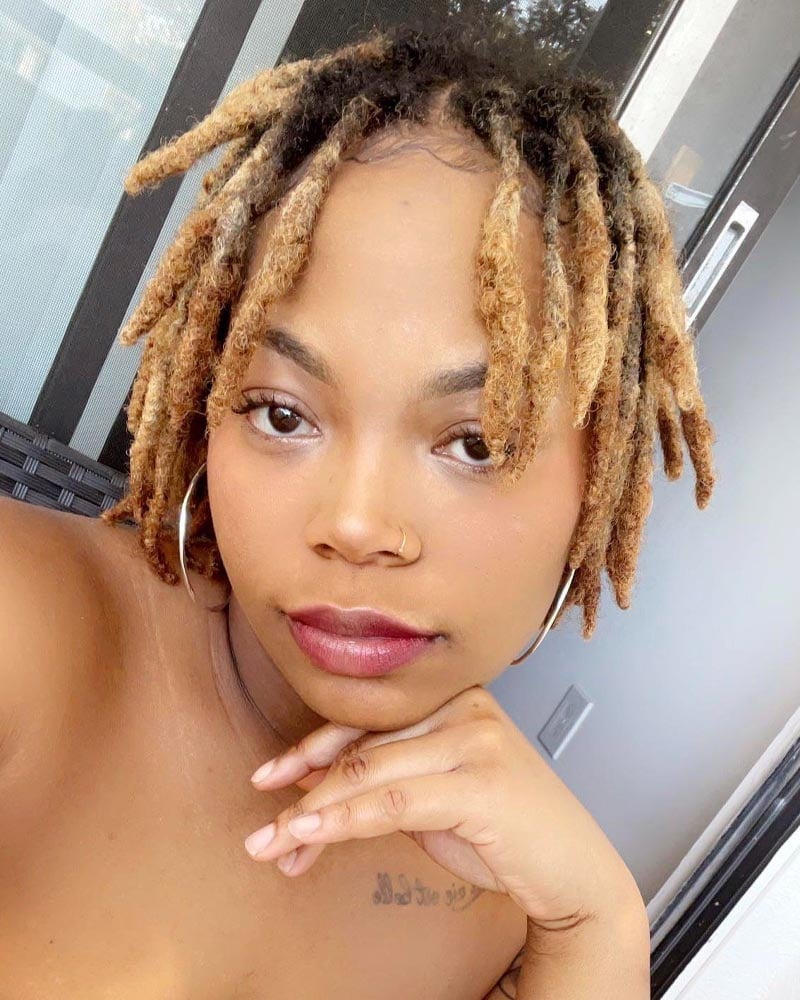
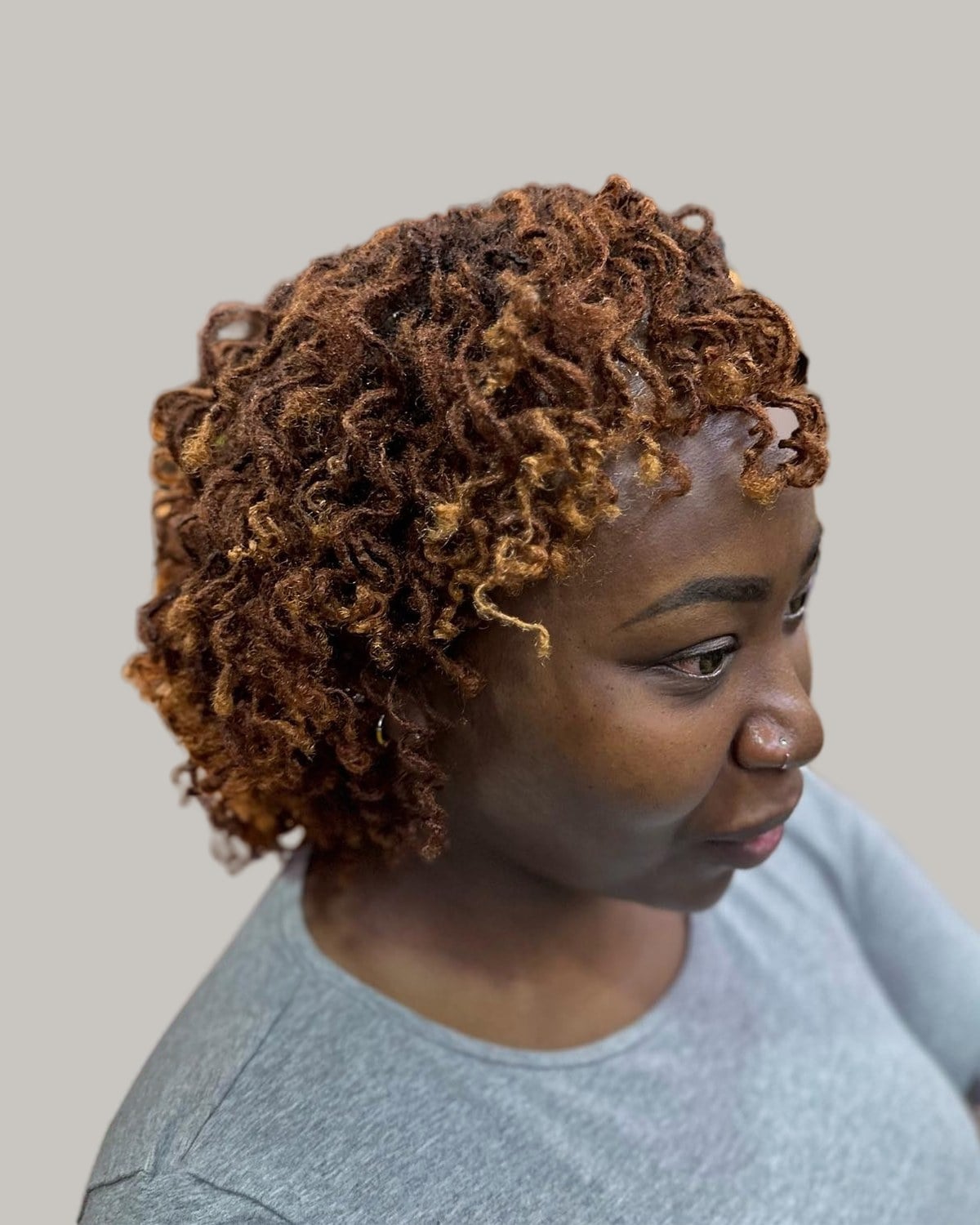
Honey-blonde short locs with the roots left dark, so the color reads as sun rather than salon. The second photo is a copper take on the same idea, with the ends curled toward the face.
What to ask for Lift the ends only, to honey blonde, and keep an inch of natural color at the root. Short locs, retwisted and curled under at the ends.
Short faux locs
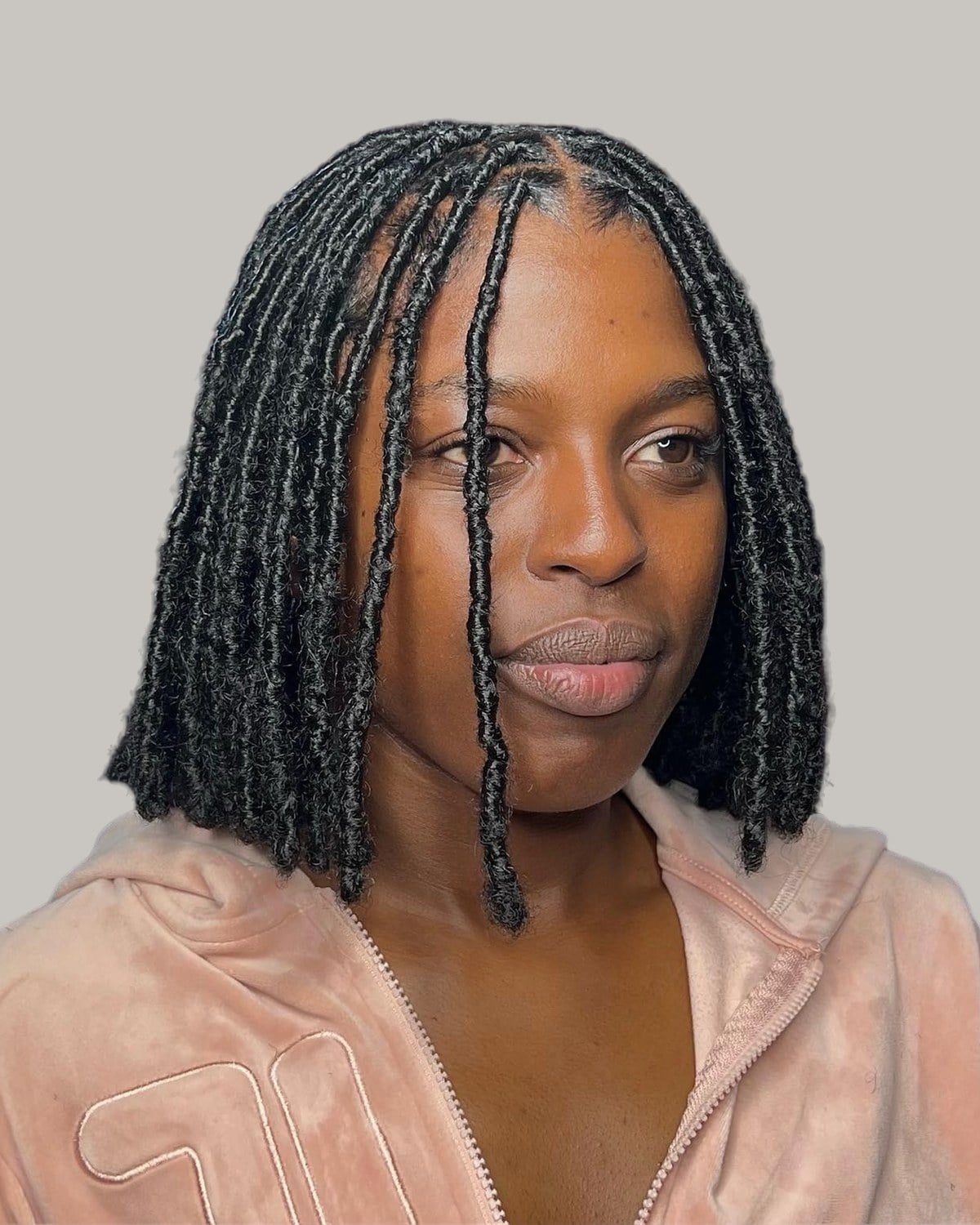
Short faux locs with a bit of curl at the tips and a side part you can actually see. The second photo shows a sleek jaw-length faux bob with a center part. It’s the no-commitment way to find out if short locs suit your face shape.
What to ask for Jaw-length faux locs, crocheted or wrapped over box-braid bases, a deep side part, and the ends left slightly curly.
Loc Bantu knots
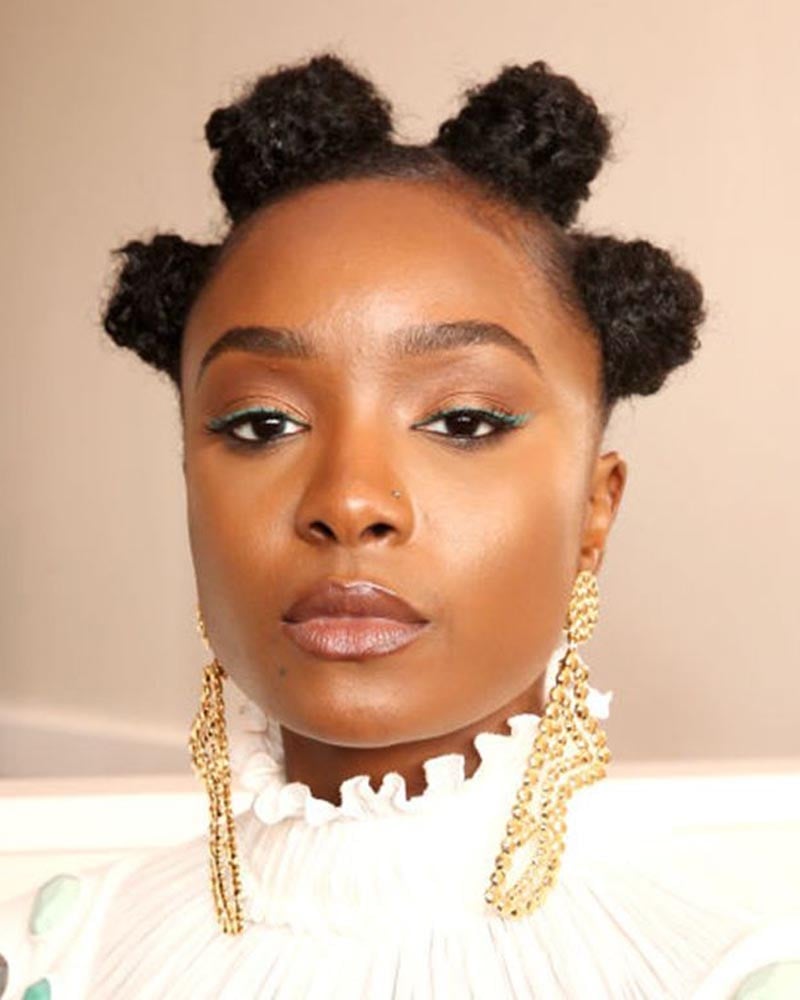
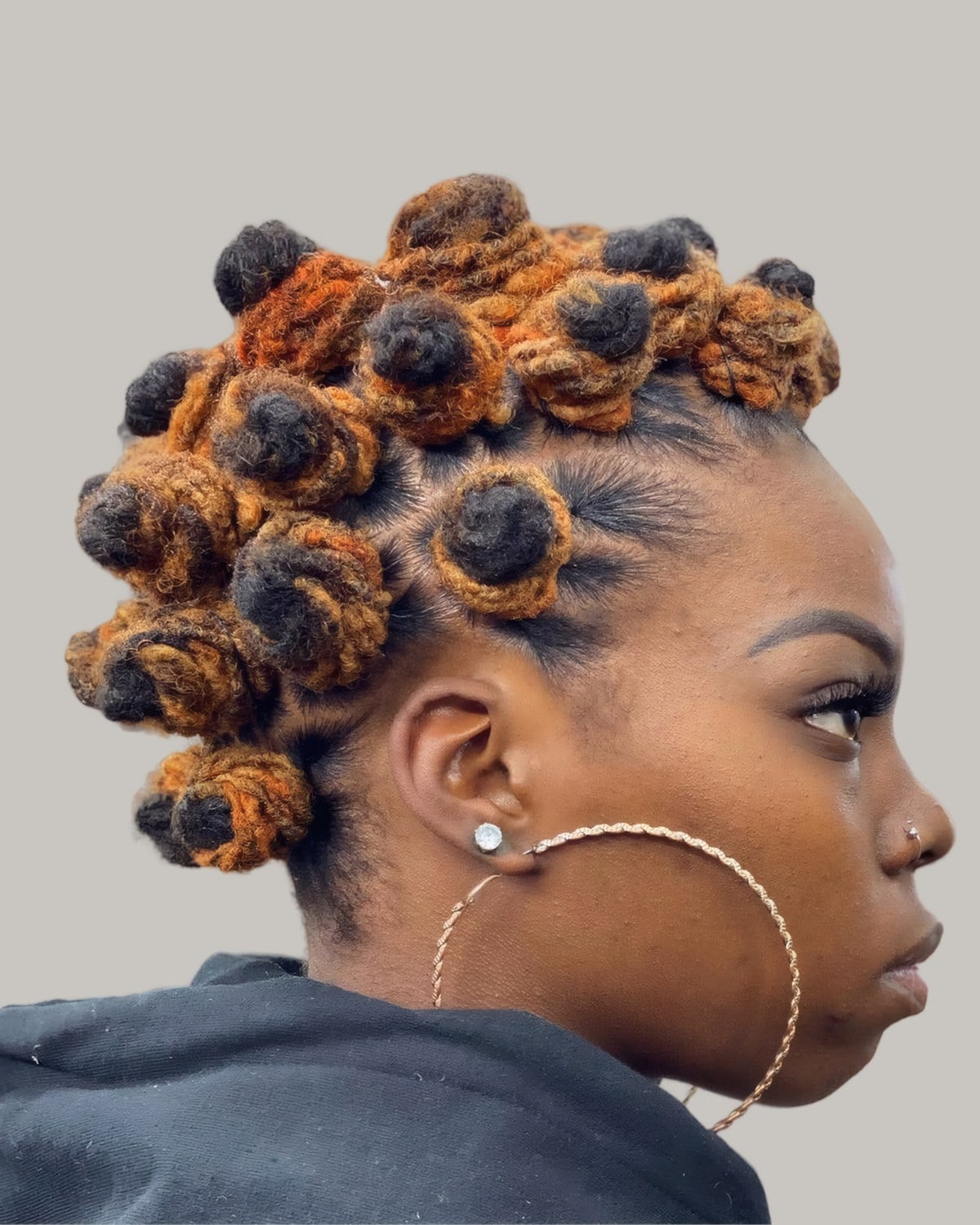
Short locs wound into Bantu knots, set in a row across the crown. On the second photo there are a dozen smaller knots in honey and brown, sitting all over the head. It’s a way to wear short locs up without a single pin showing.
What to ask for Section the locs into five or six parts, twist each into a Bantu knot, and pin the ends underneath. More, smaller sections for the all-over version.
Palm tree loc ponytail
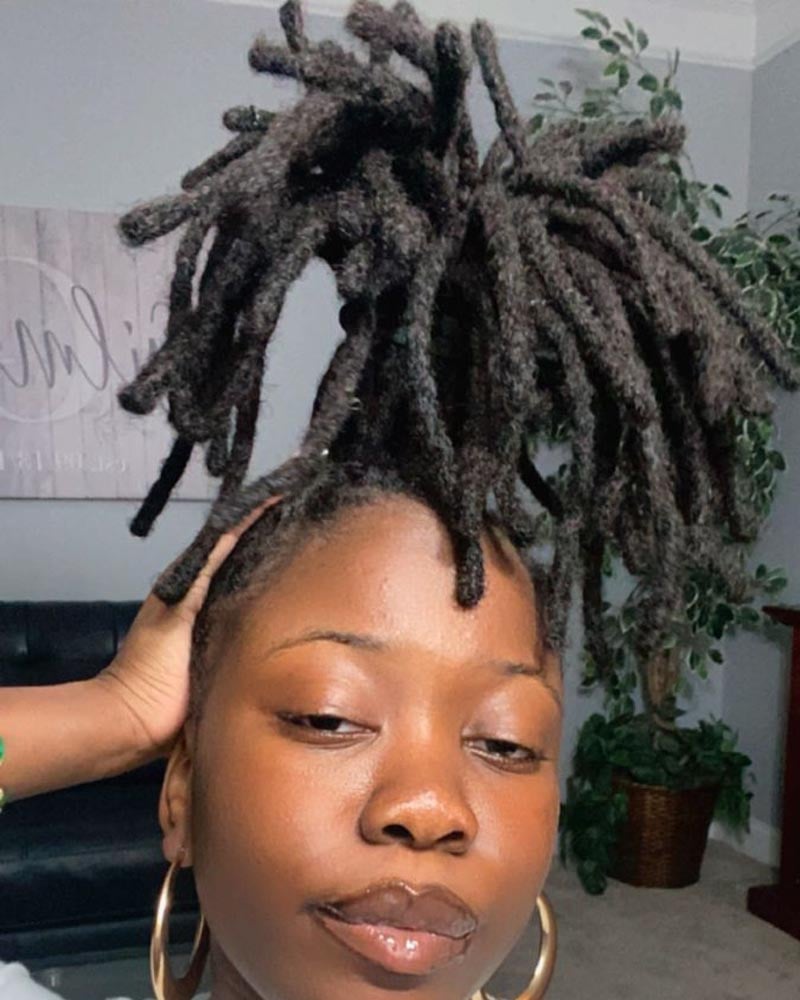
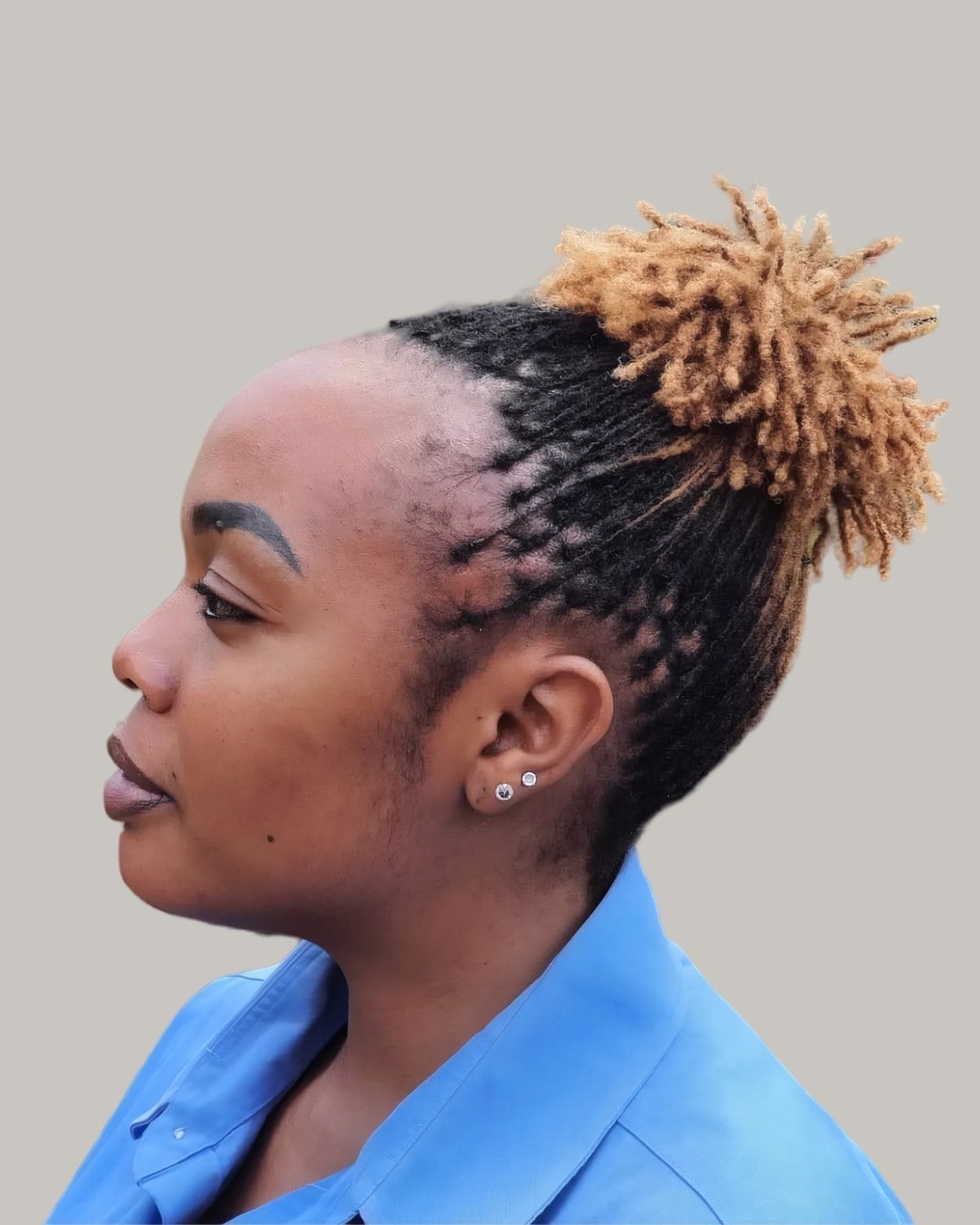
Short locs pulled straight up and tied at the crown, so the ends fan out like fronds (hence the name). The second photo is a neater version, with sandy tips on the pony and the sides laid smooth. It’s a one-hair-tie style for short hair on a hot day.
What to ask for Short locs gathered high on the crown in one tie, edges smoothed, ends left loose to fan out.
High-top locs
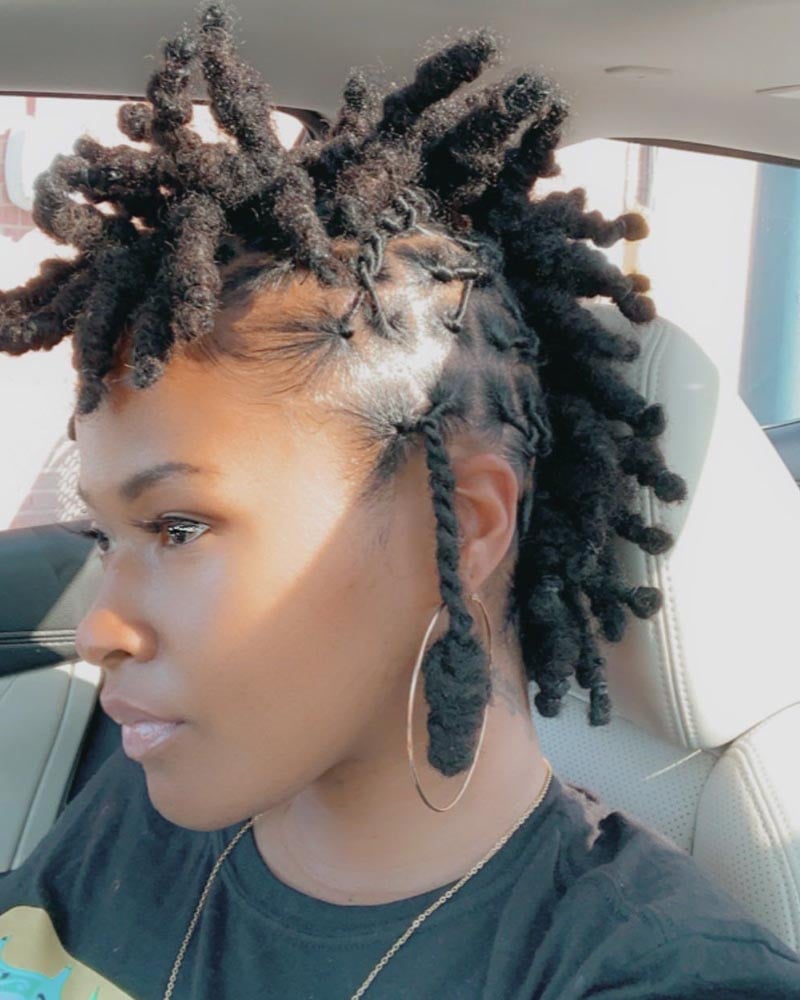
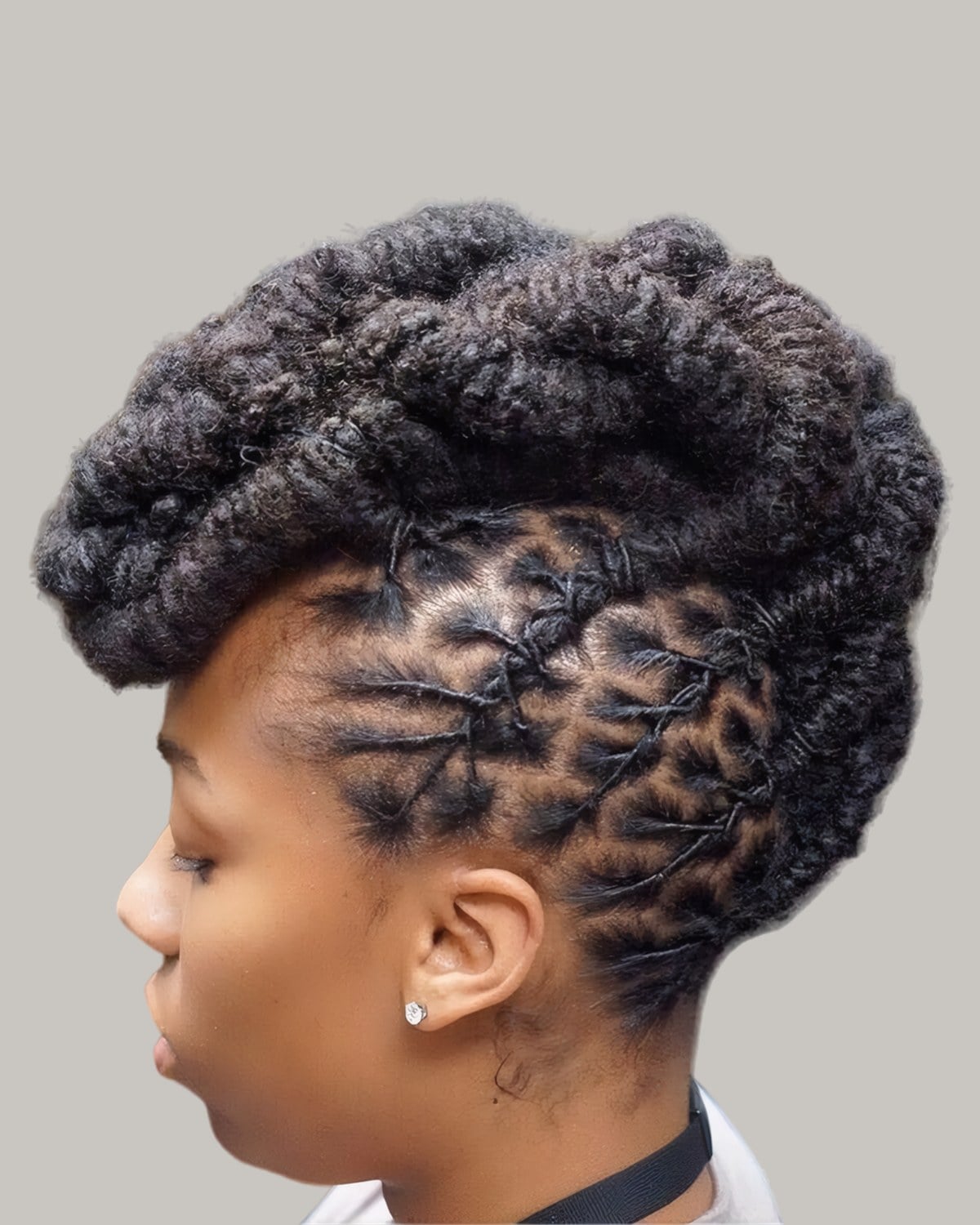
All the height sits on top, with the locs at the sides and nape taken up and twisted in. The second photo sculpts thick twists up over the crown. Wear it high for a night out and let a couple of pieces fall at the front.
What to ask for Short to medium locs pinned up into a high top, sides twisted flat toward the crown, a few front pieces left down.
Half-up short locs
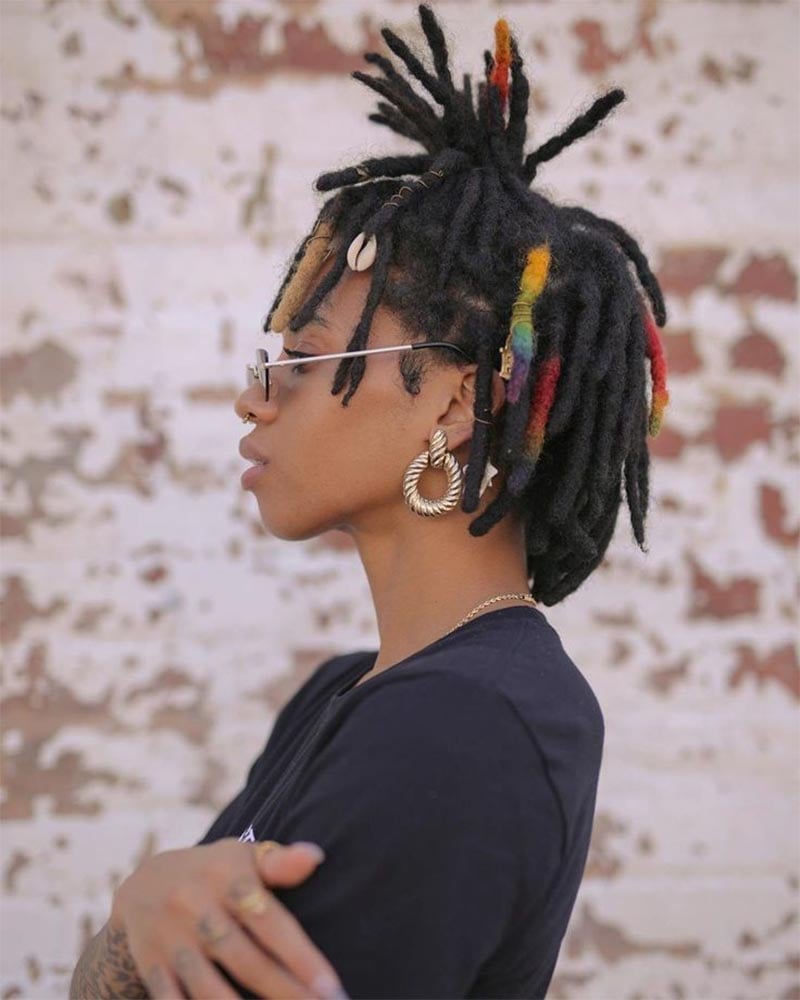
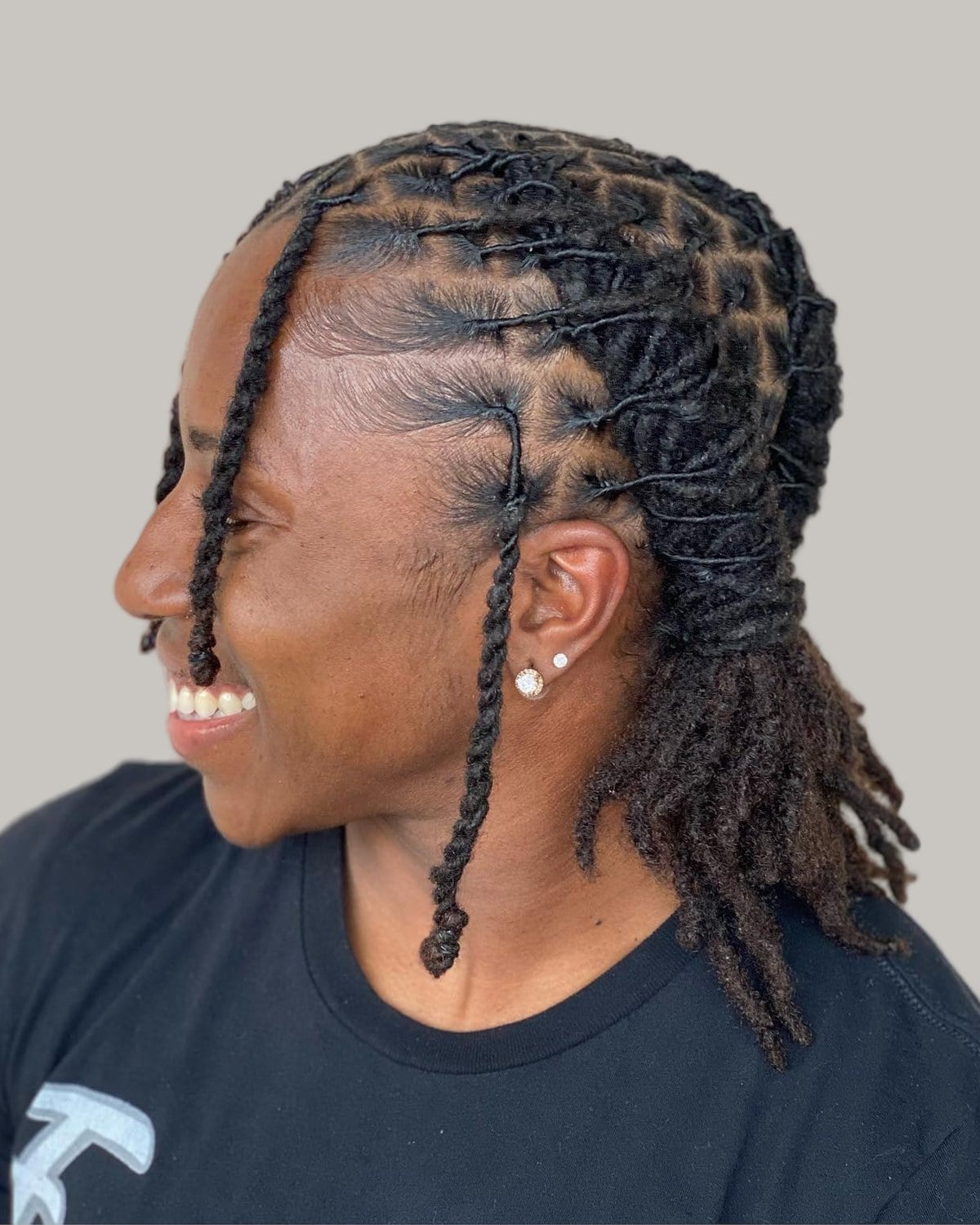
The top section is pulled back and tied off, and the rest stays down, beads and all. On the second photo the front locs are twisted back from the face and the rest hangs past the chin. It’s the easy way to show off a part.
What to ask for Top section of locs gathered at the crown, the rest left down, a couple of cuffs or beads on the loose locs.
Medium and long locs, and loc bobs
Medium locs with honey ends
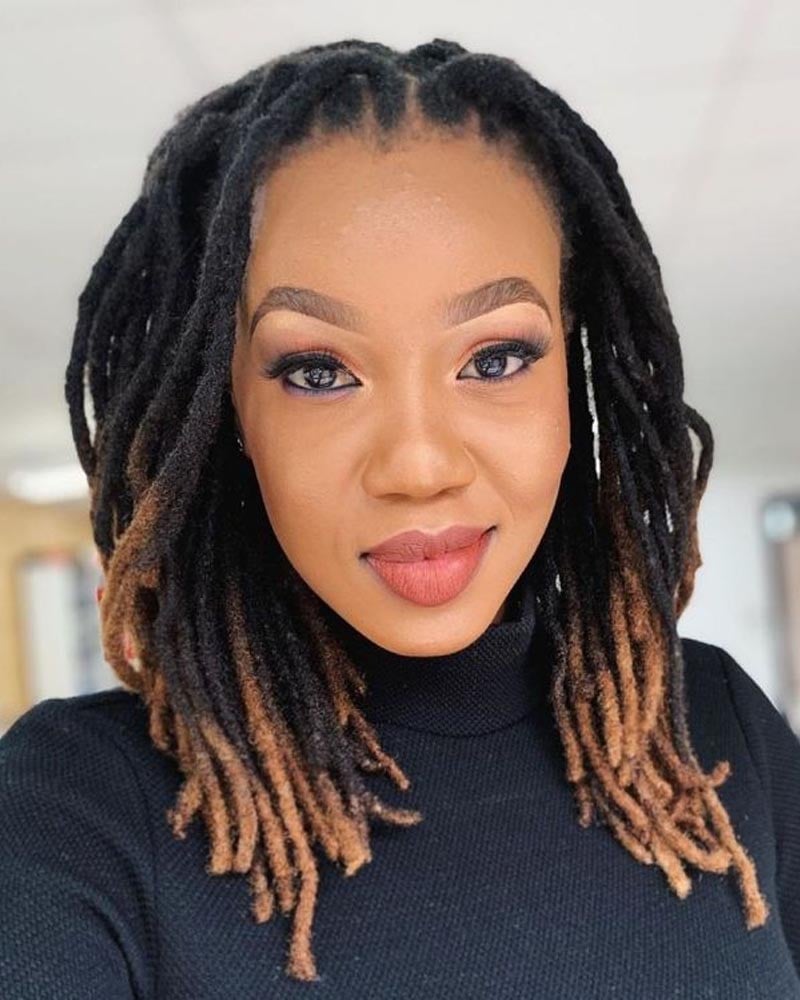
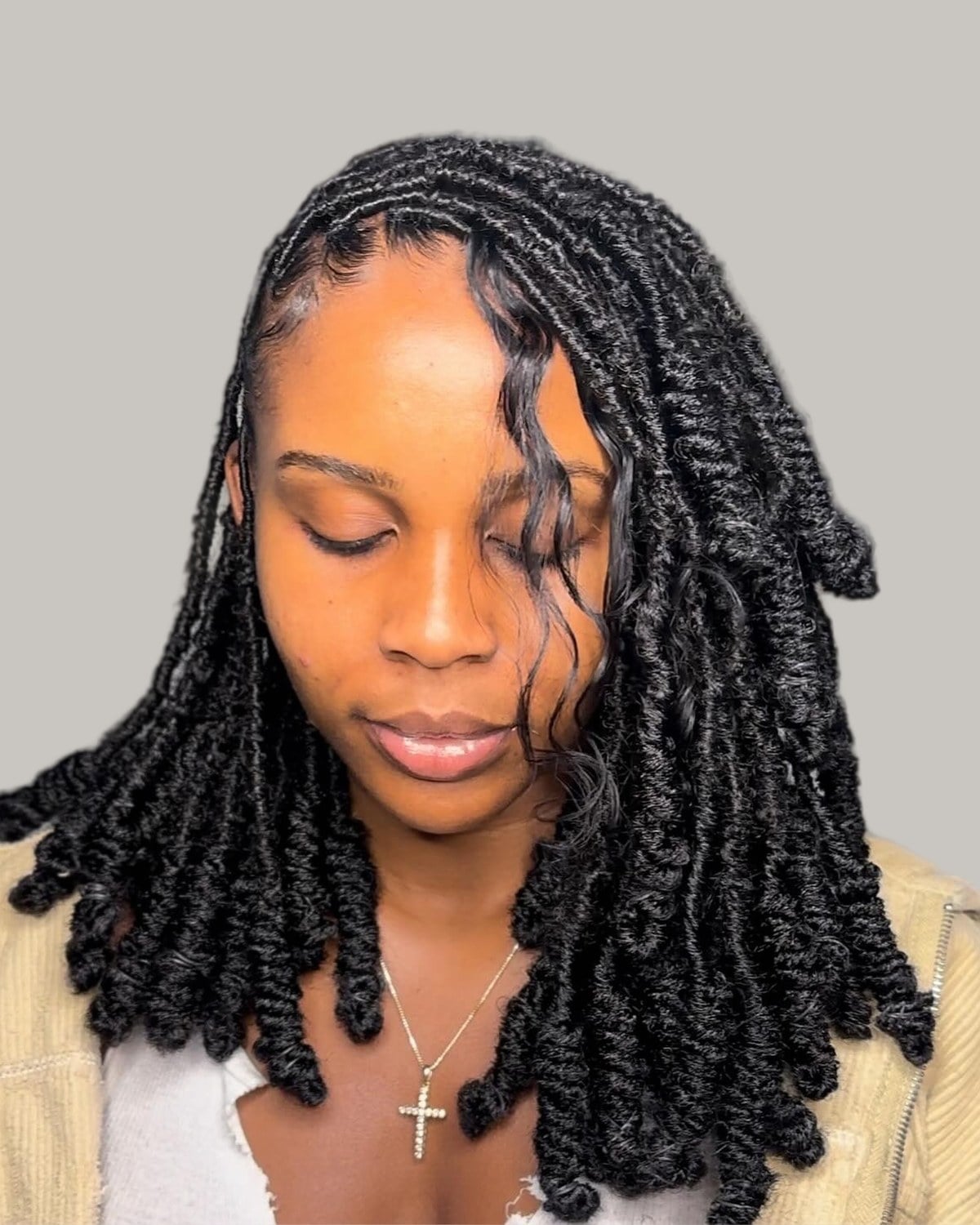
Shoulder-length locs with a center part and honey-brown ends, so the color does the styling. The second photo is thicker, with every loc curled at the tip. It’s a length that ties back for work and still has swing when it’s down.
What to ask for Medium locs to the shoulder, a center part, and a honey-brown dip on the last three inches.
Loc bob
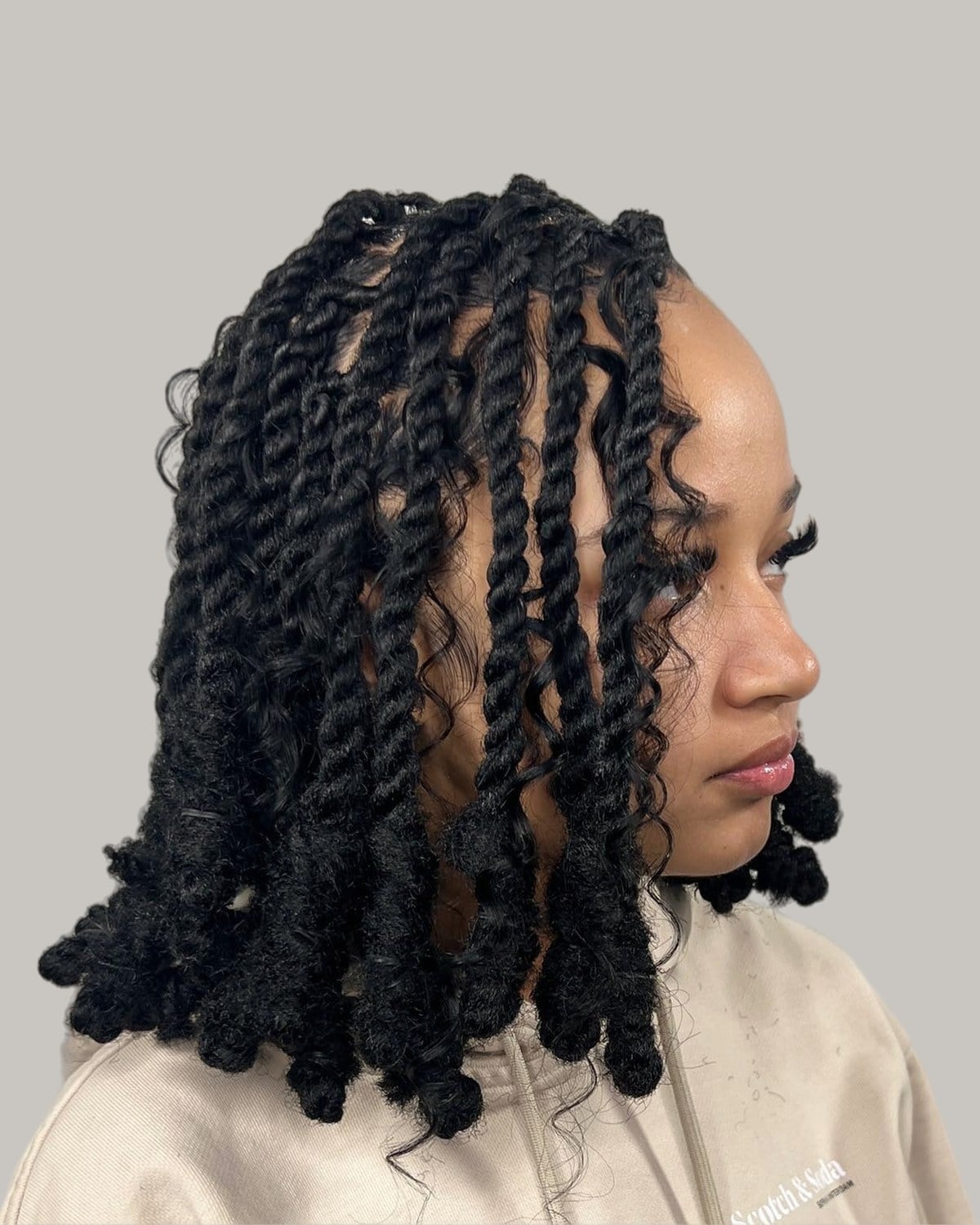
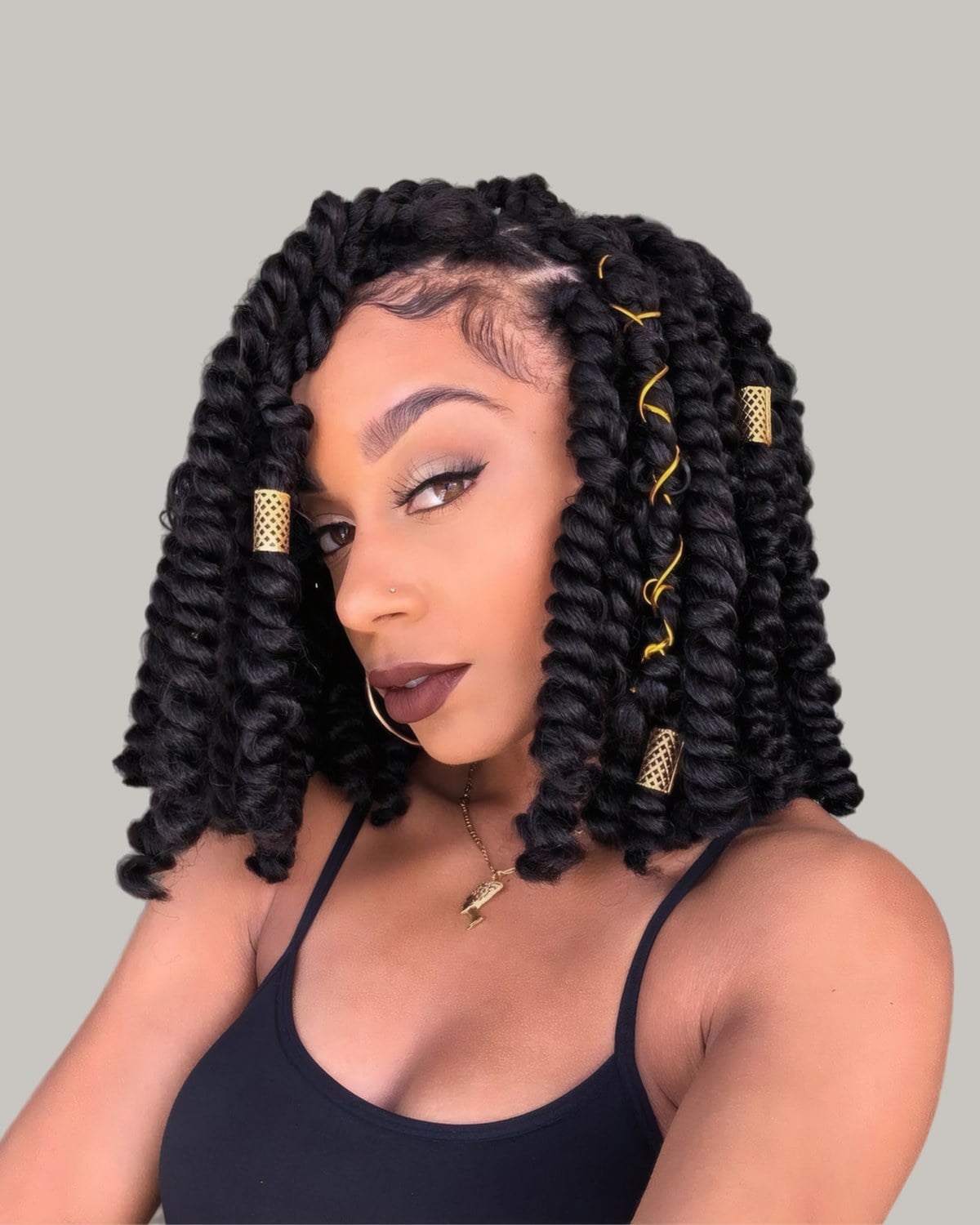
A bob made of locs: black, twisted from the root and curled at the ends just above the shoulder. The second photo is black, curled under, with gold cuffs through it. If your locs are long already, you can fake the length with a curl set before you cut.
What to ask for Locs cut to a chin-length bob, the ends curled under, and a slightly longer front if you want it asymmetric.
Half up, half down loc bun
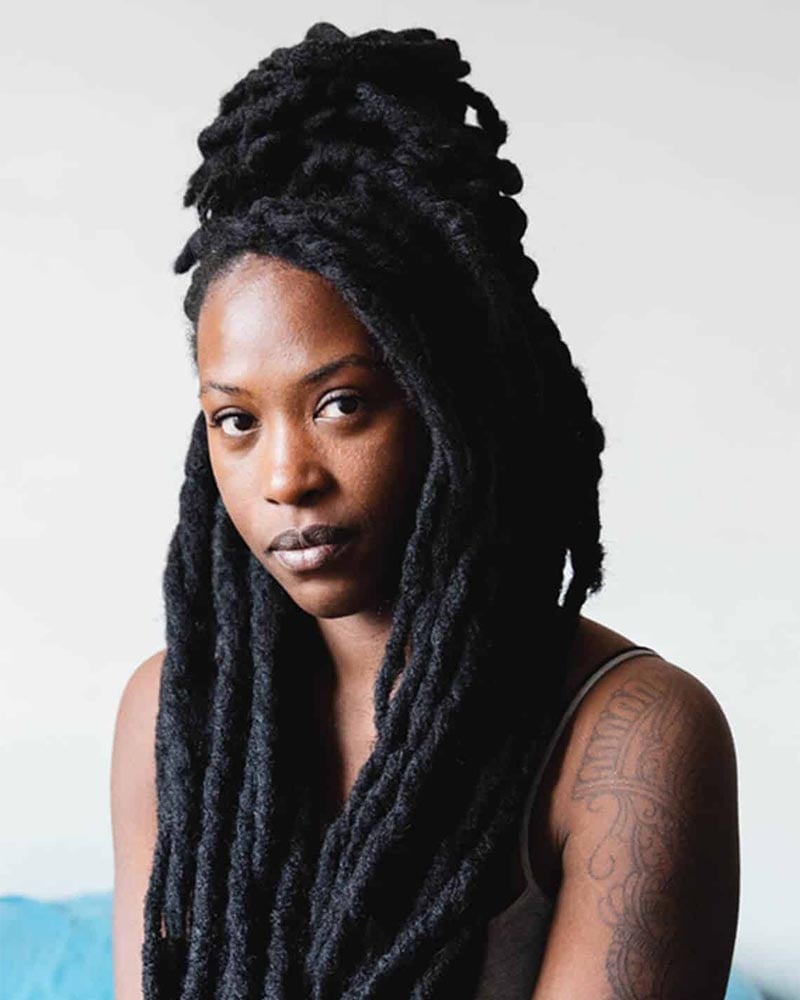
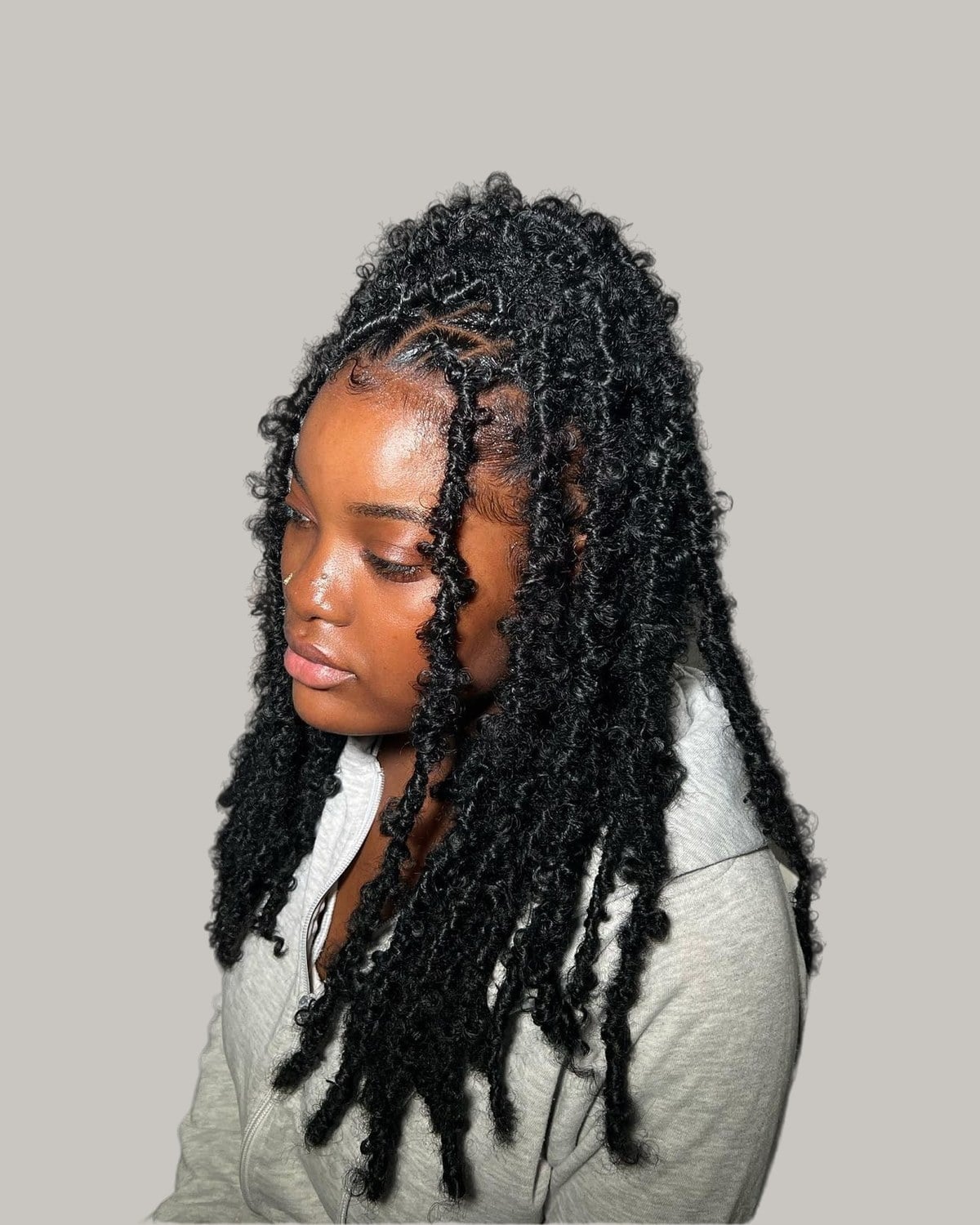
Long, thick locs with the top half piled into a bun and the rest left down past the shoulders. The second photo takes the top section up and lets the rest fall past the chest. It’s the hairstyle for when your locs are heavy and your neck would like a break.
What to ask for Top half of the locs twisted into a high bun, the rest left down, two or three face-framing pieces pulled loose.
Locs with beads
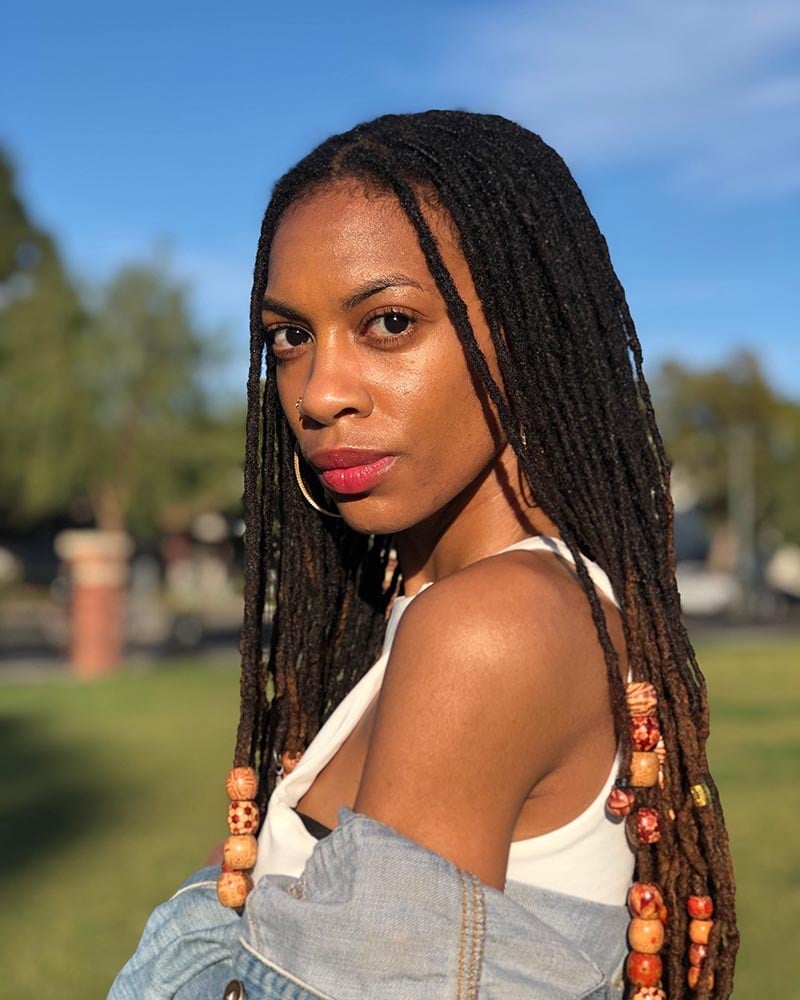
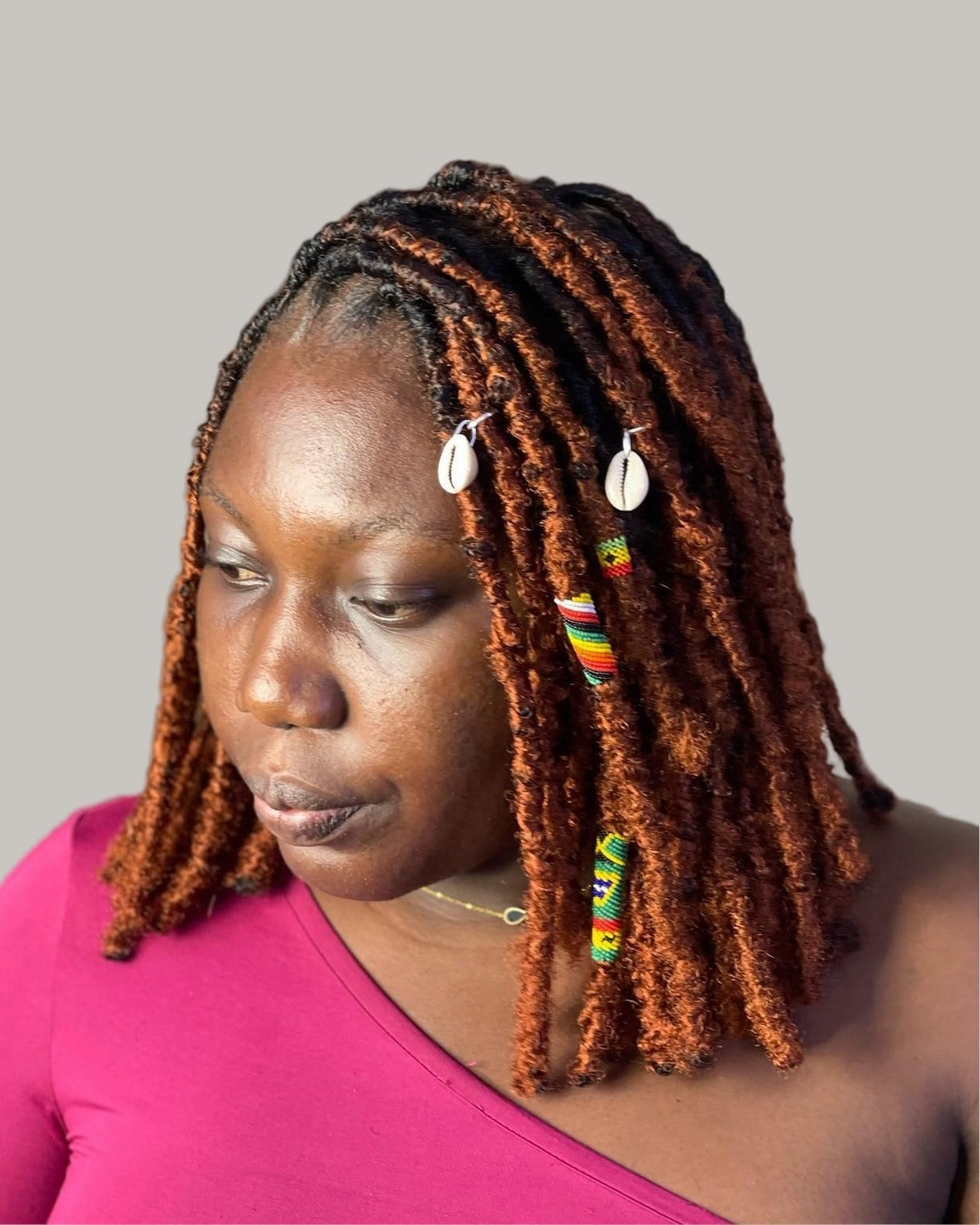
Long locs with wooden beads threaded near the ends, in a row, so they click when you walk. On the second photo the locs are copper, with cowrie shells and a wrap in bright thread. Swap the beads whenever you get bored of them.
What to ask for Beads or cowries threaded two to three inches from the ends, and a thread wrap on two or three locs near the face.
Twists with beads
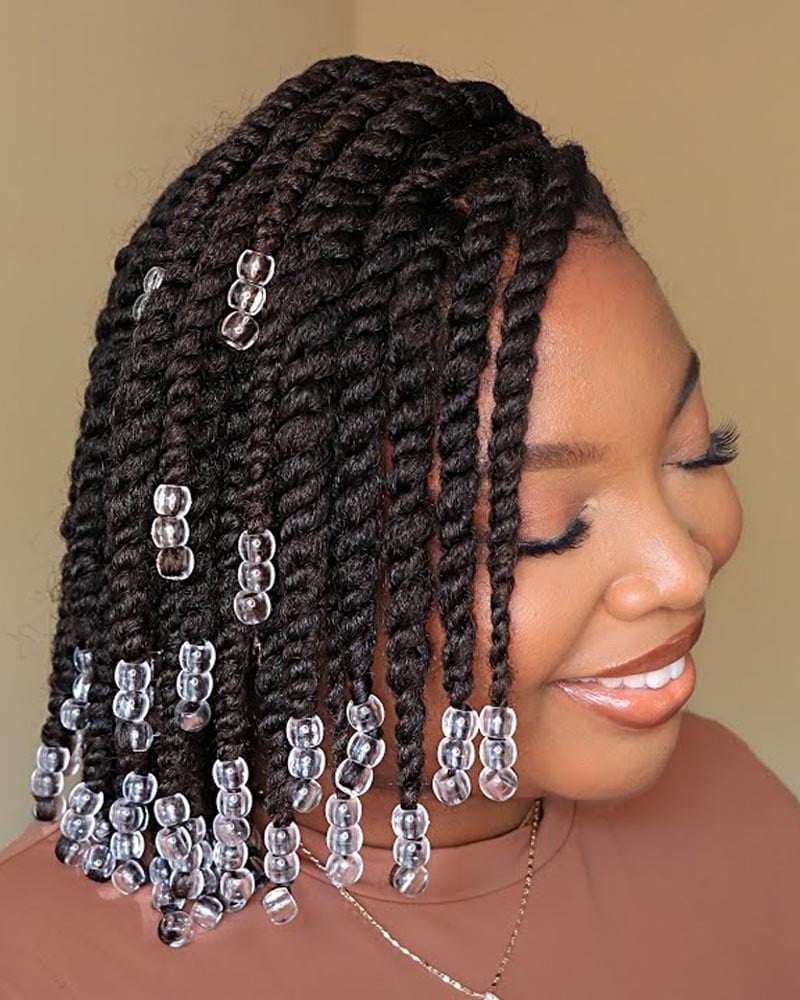
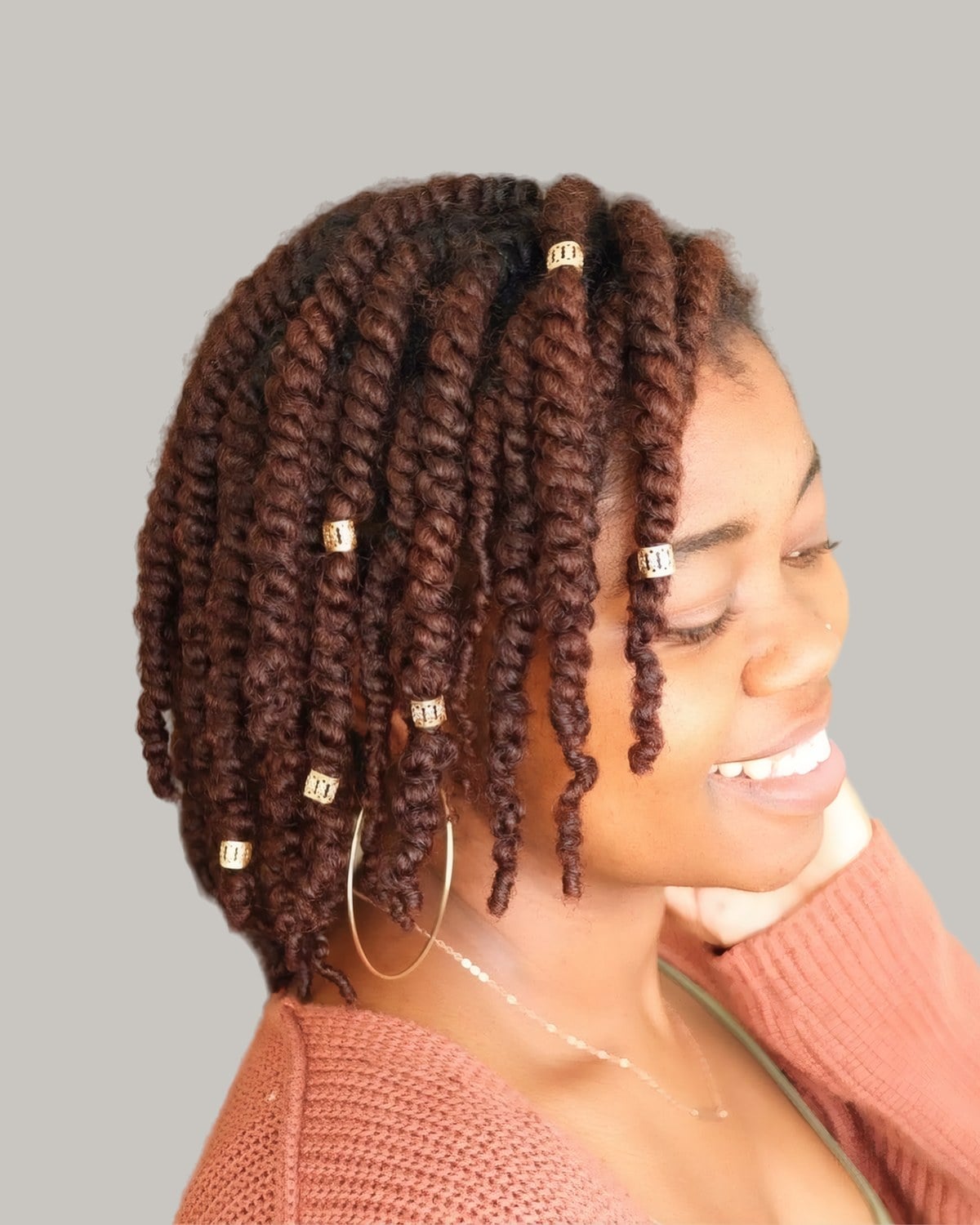
These are two-strand twists rather than locs, with clear beads clipped all the way down to the ends. The second photo shows copper two-strand locs with gold cuffs. If you’re not ready to loc, twists let you try the look first.
What to ask for Medium two-strand twists to the shoulder, clear beads spaced down each twist, and a side part.
Side-swept locs
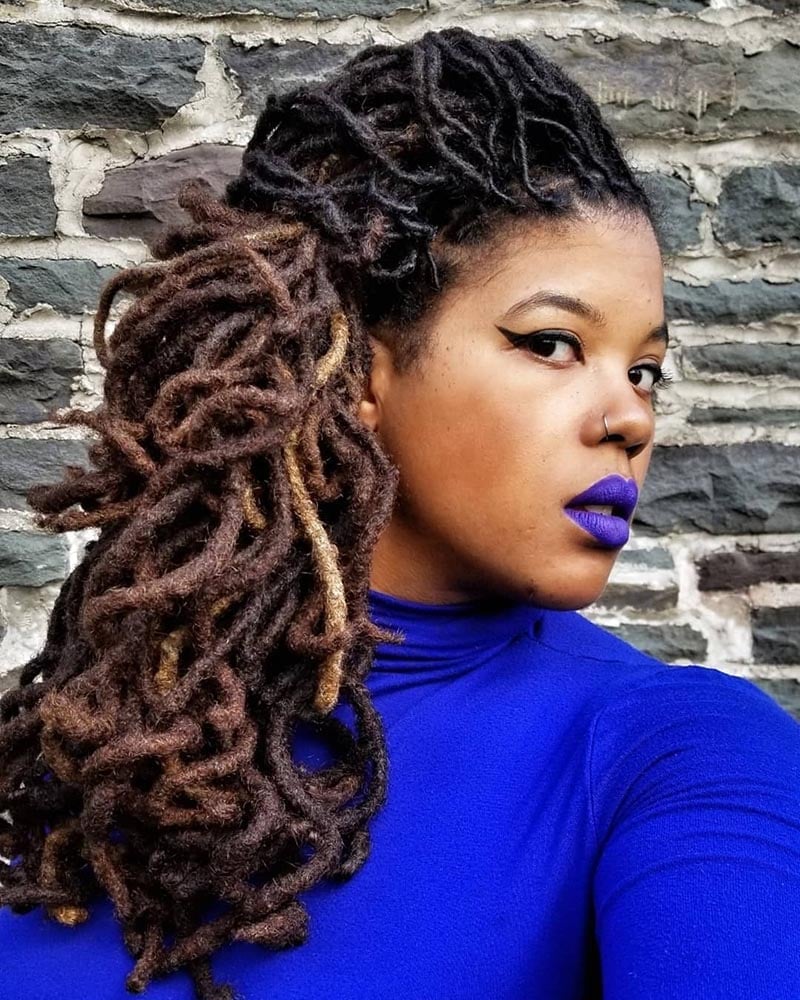
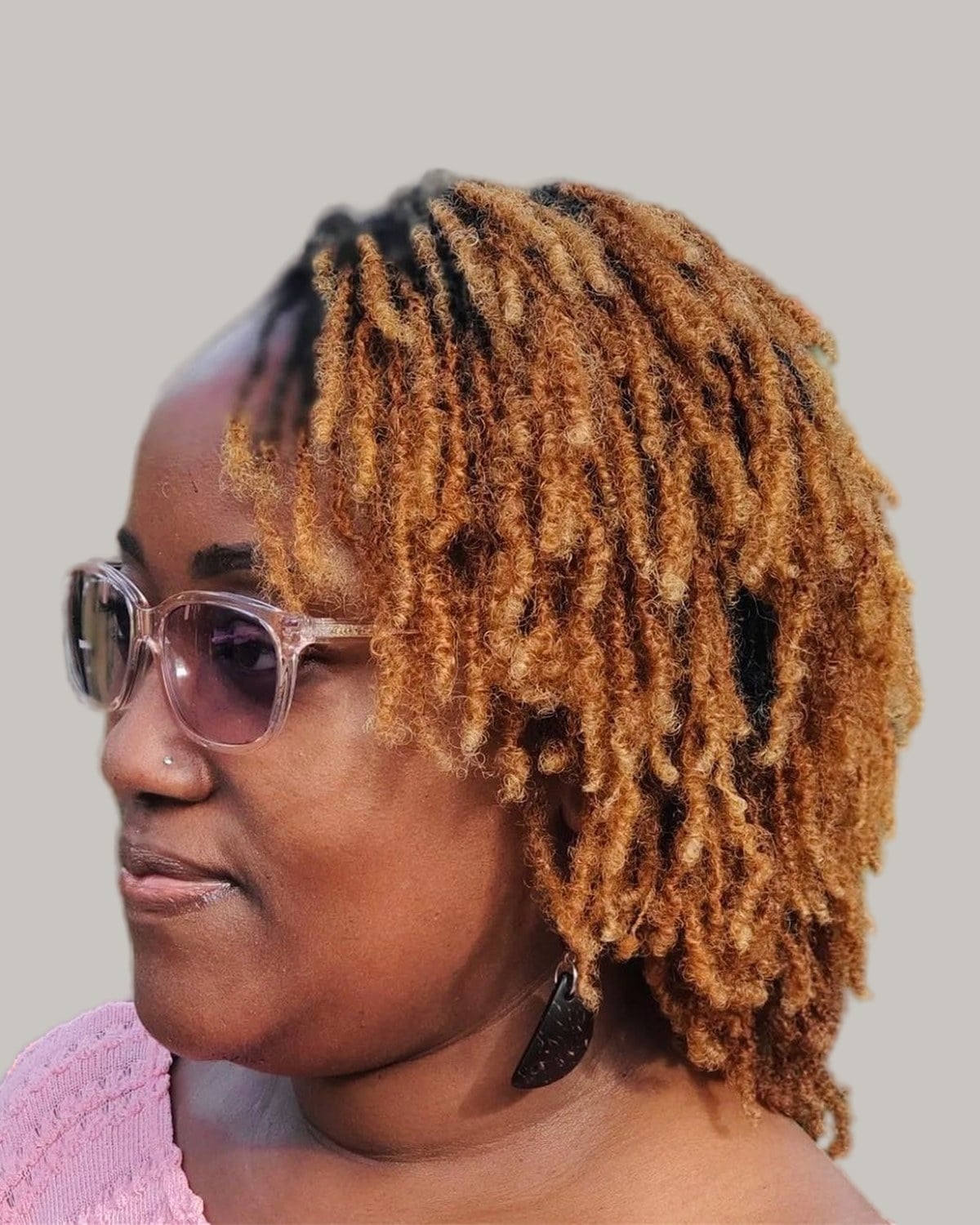
Long brown locs gathered over one shoulder, the top section braided flat so it all sweeps the same way. The second photo is a shorter copper version, swept to one side and curled. It’s a style that looks different from every angle (the other side is all scalp art).
What to ask for Top section braided back and to one side, the length gathered over one shoulder and pinned, ends curled.
Sisterlocks, microlocs and braidlocs
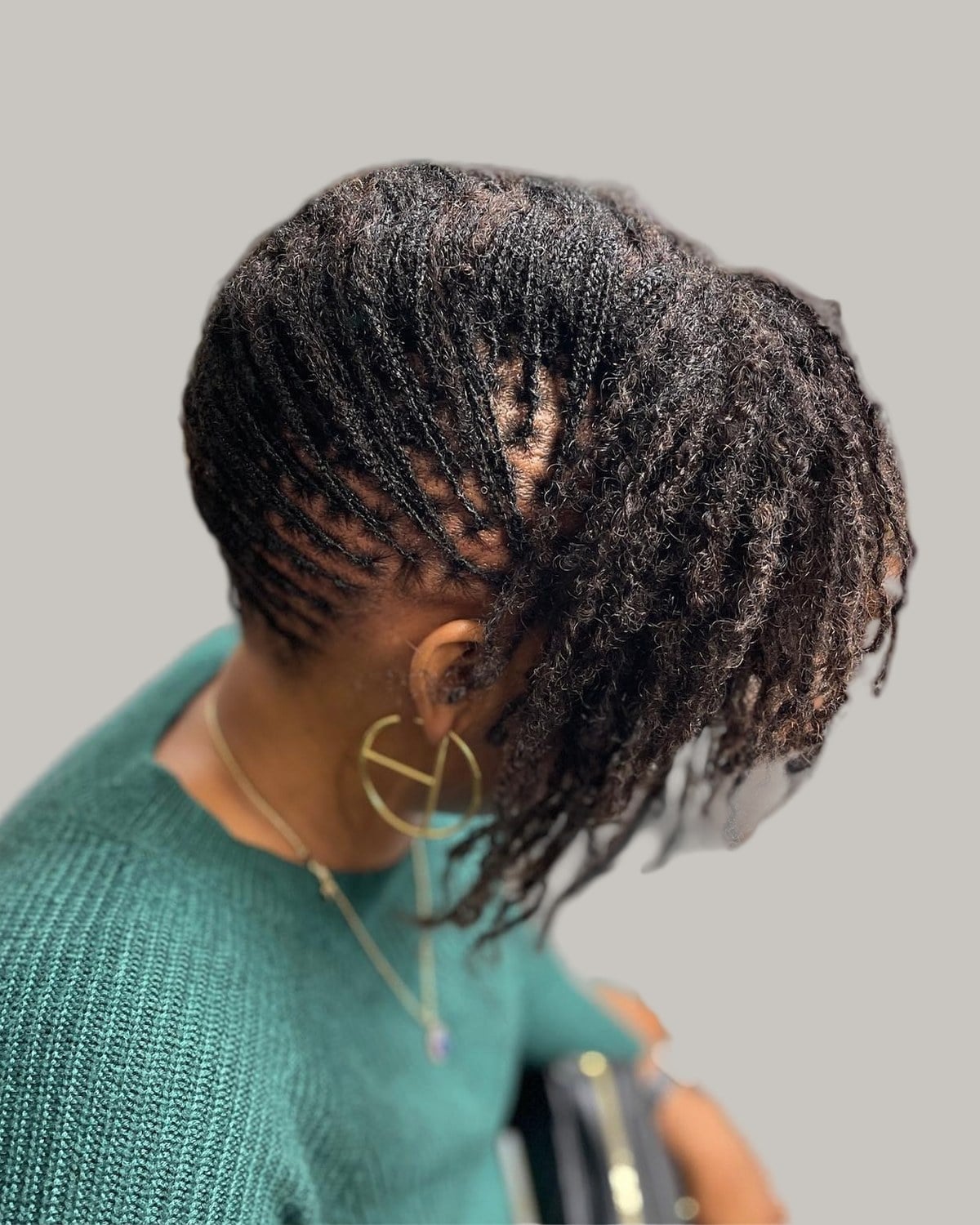
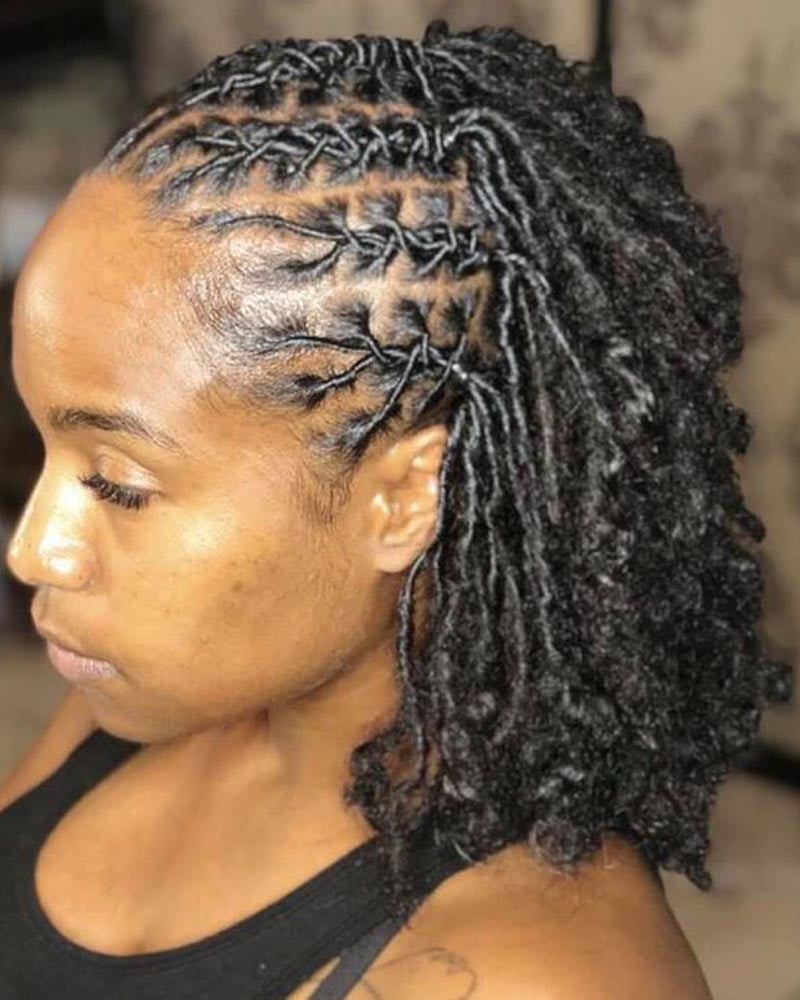
Sisterlocks
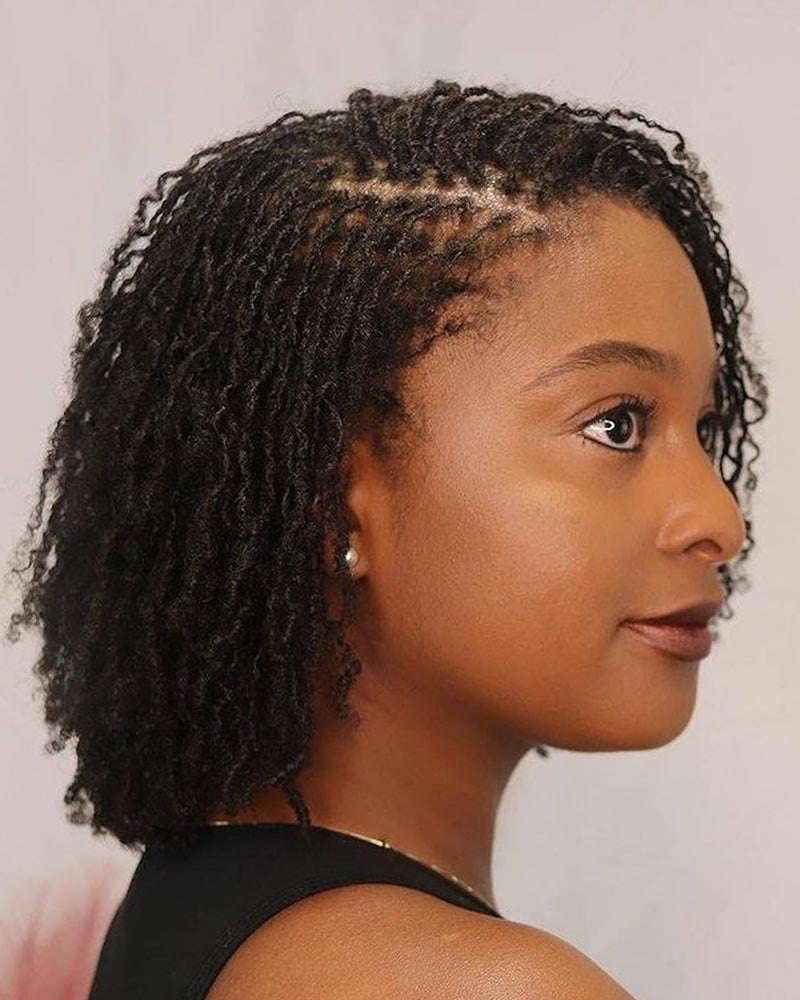
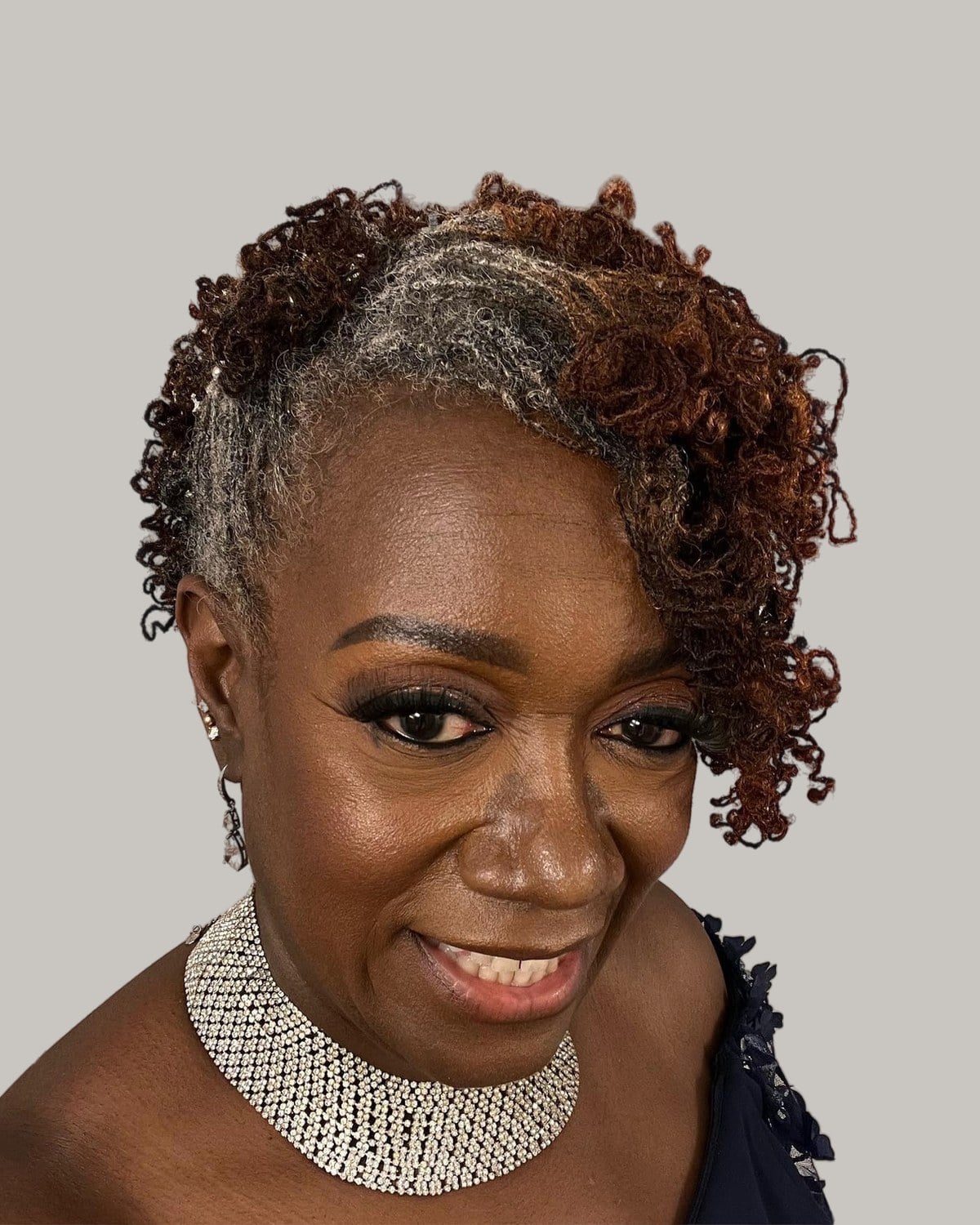
Sisterlocks are tiny, and they’re made with a special interlocking tool on a set grid, by a trained consultant. That’s why you can see the neat partings at the front of the first photo. On the second photo they’re grey and copper, curled and swept to one side.
What to ask for Book a certified Sisterlocks consultant and ask about the grid size and how many hours to budget for the install. Microlocs don't need the certification if you'd rather go that way.
Braidlocs
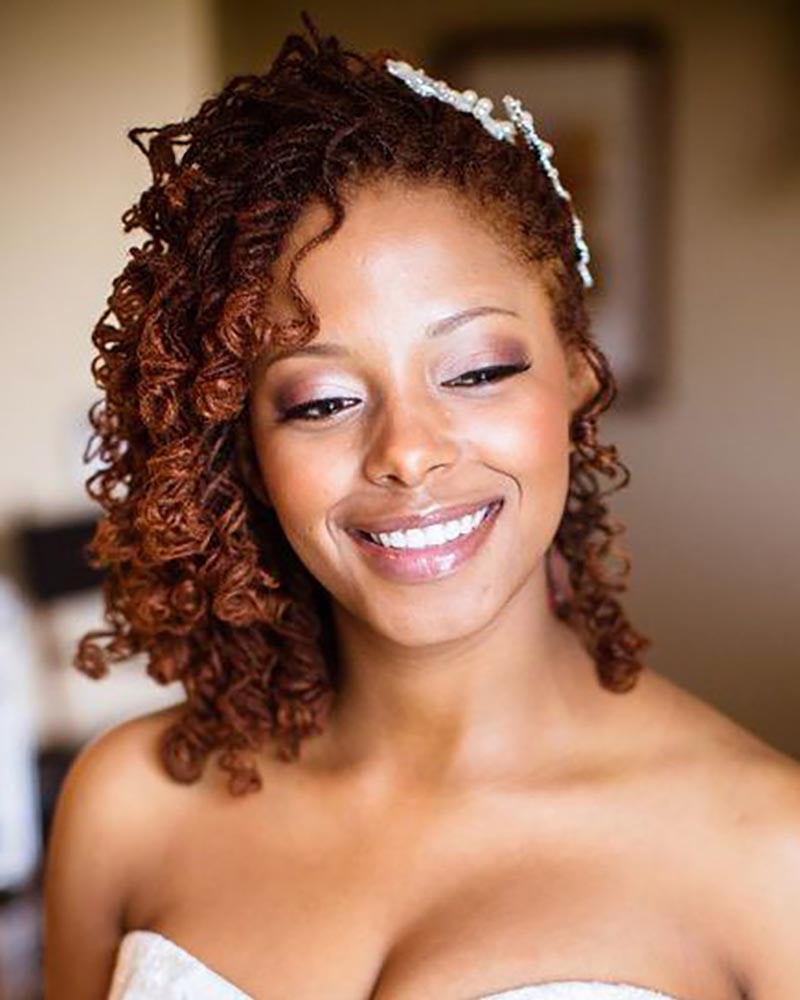
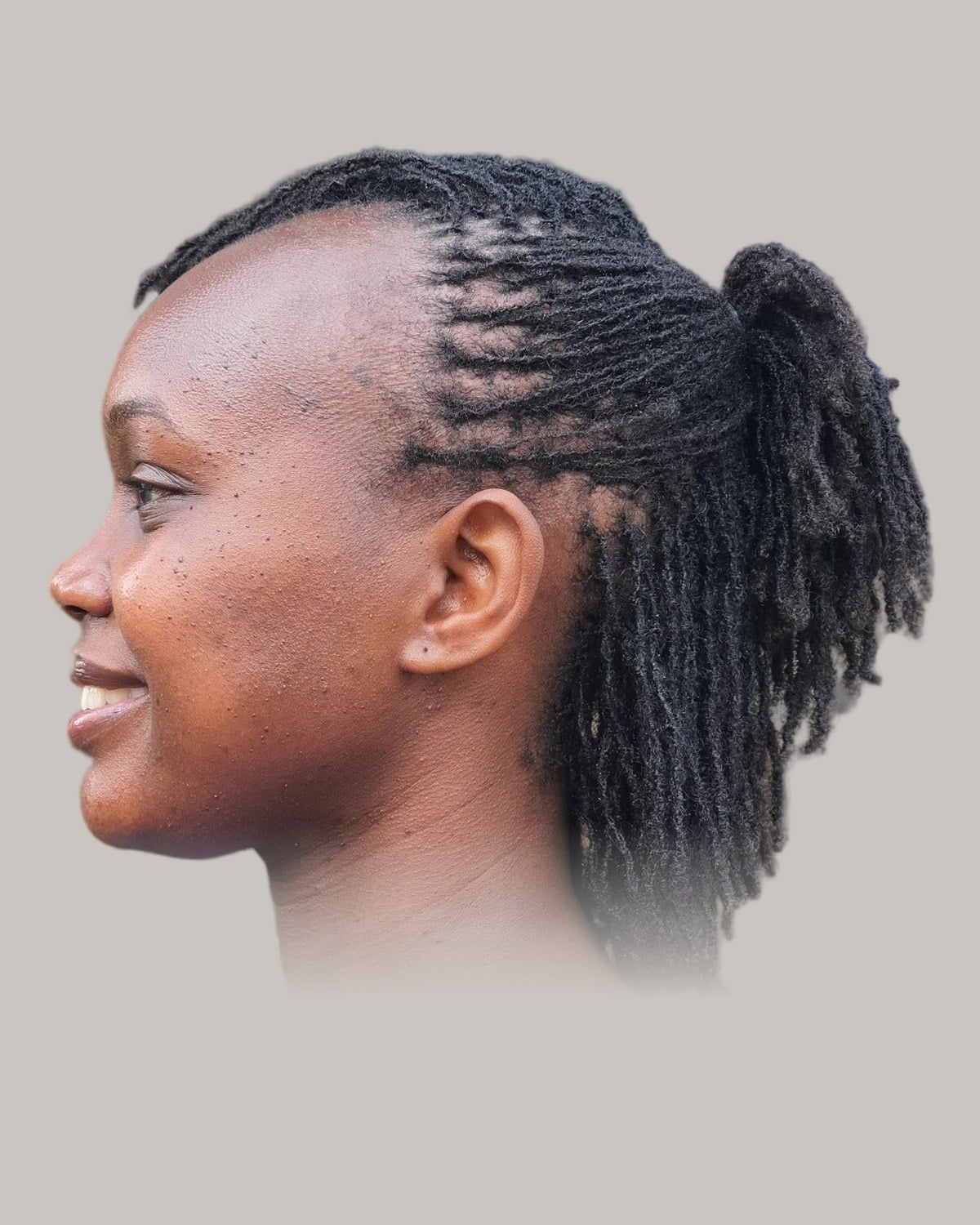
Braidlocs start as three-strand braids that swell and lock over time. The first photo shows copper curly locs pinned back with a clip, and the second a set of small locs pulled back into a ponytail. You’ll need about 5 to 6 inches of hair to braid before you start (our knotless braids guide covers the braiding side, and our guide to braids for Black women shows the other braid types).
What to ask for Small individual braids on a square grid, left in to lock, with no extensions added.
Burgundy microlocs
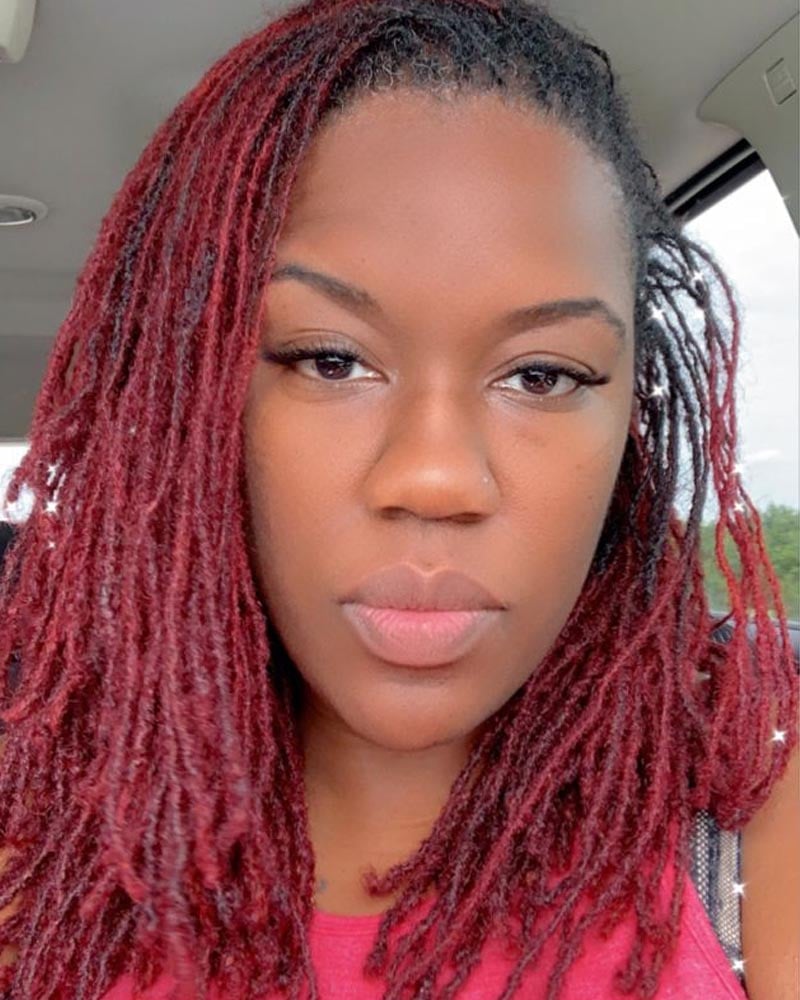
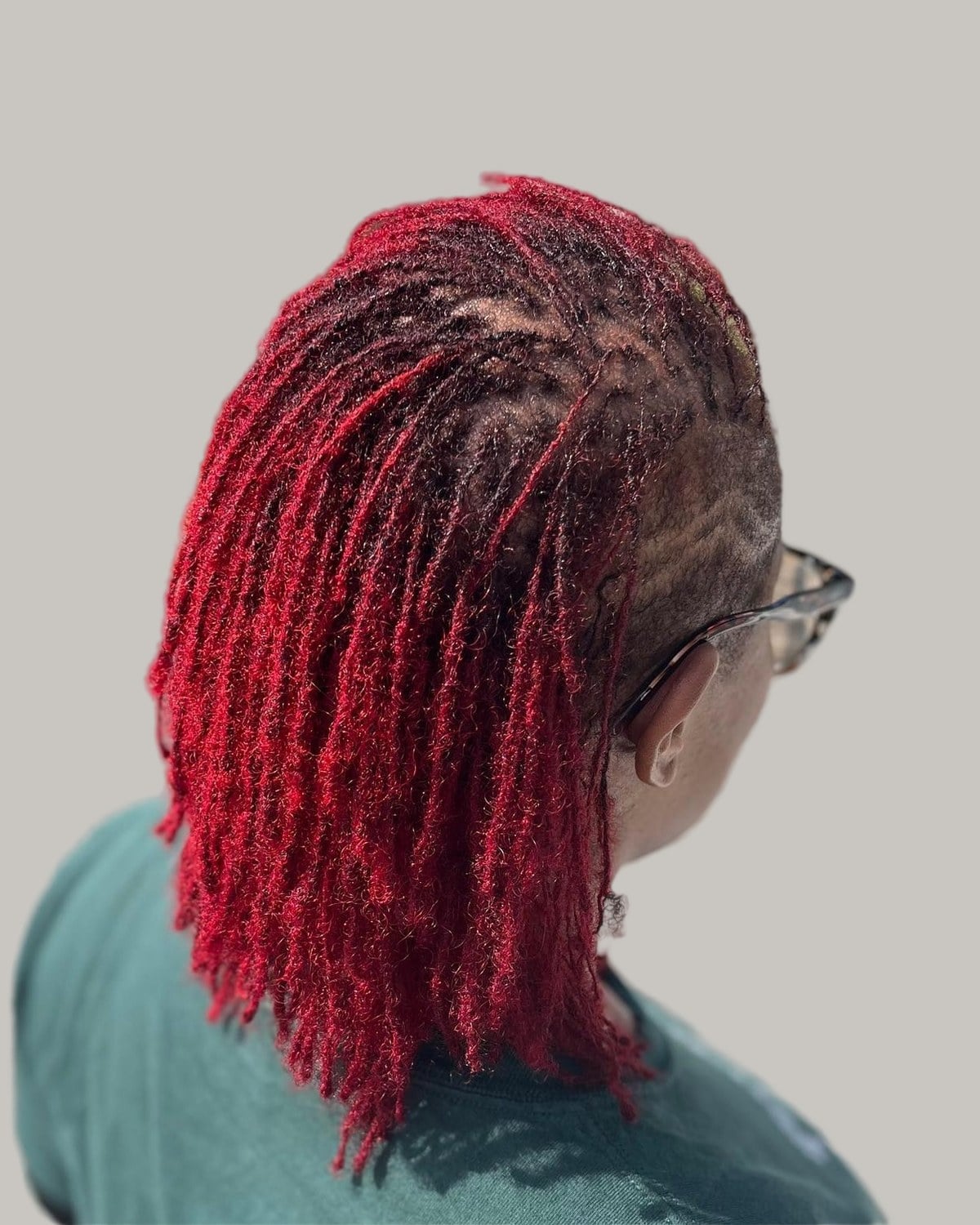
Micro locs dyed burgundy with brighter red running through, cut to the collarbone. The second photo is the same shade family on a shorter set, pushed back off the face. The brighter red sits on the ends, so it catches the light when they move.
What to ask for Burgundy all over with red highlights through the ends, on micro locs cut to the collarbone.
Faux locs, soft locs and butterfly locs
Faux locs
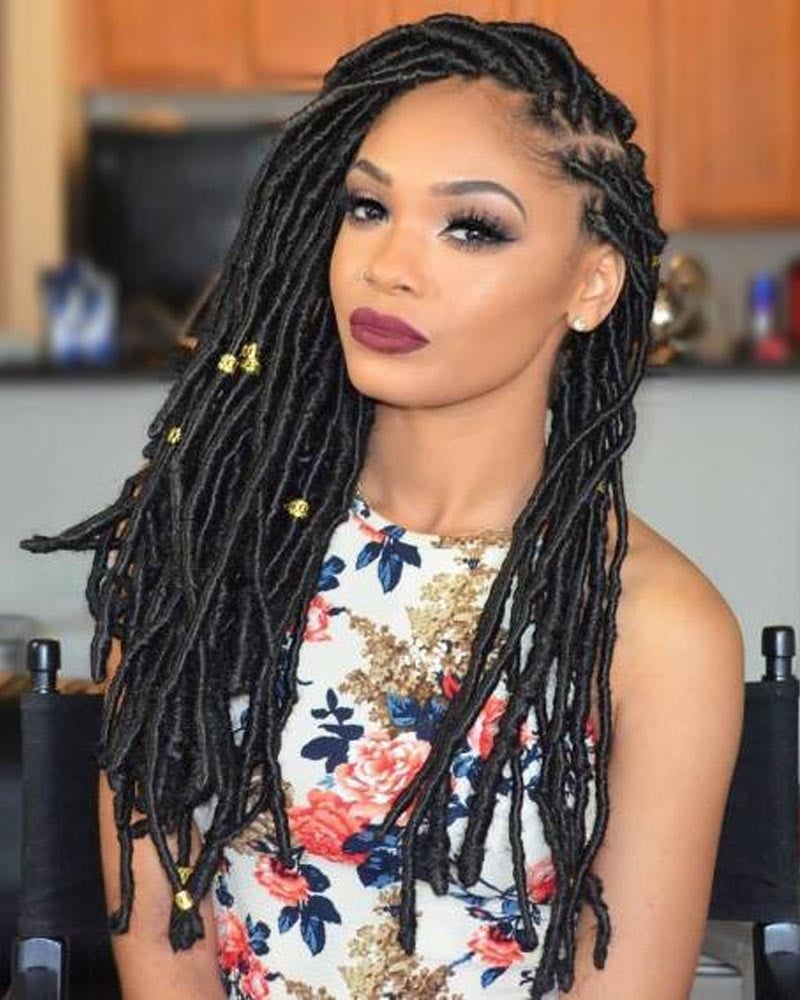
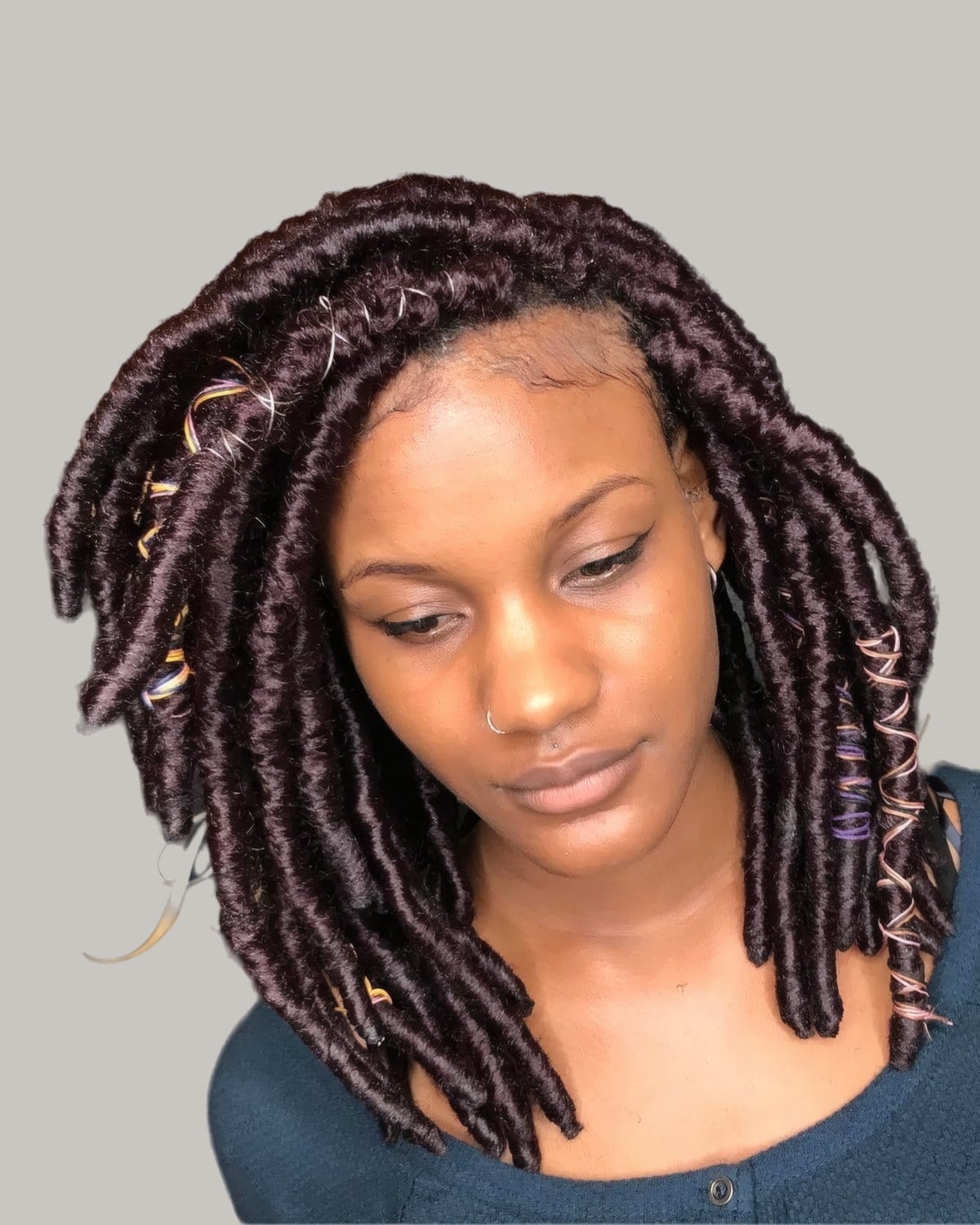
Long black faux locs with gold cuffs dotted through, worn down with a side part. The second photo is shoulder length, with burgundy mixed in. Faux locs are wrapped or crocheted over your own hair and come out after a few weeks.
What to ask for Medium faux locs to mid-back, wrapped over box-braid bases, a side part, and five or six gold cuffs.
Long faux locs
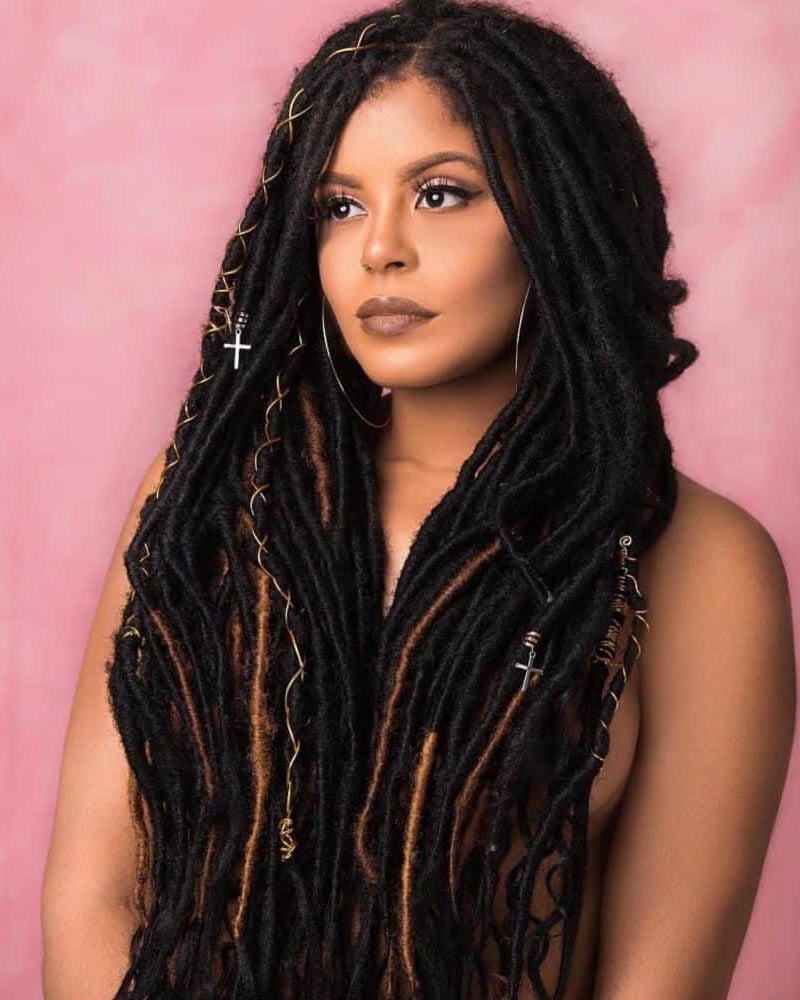
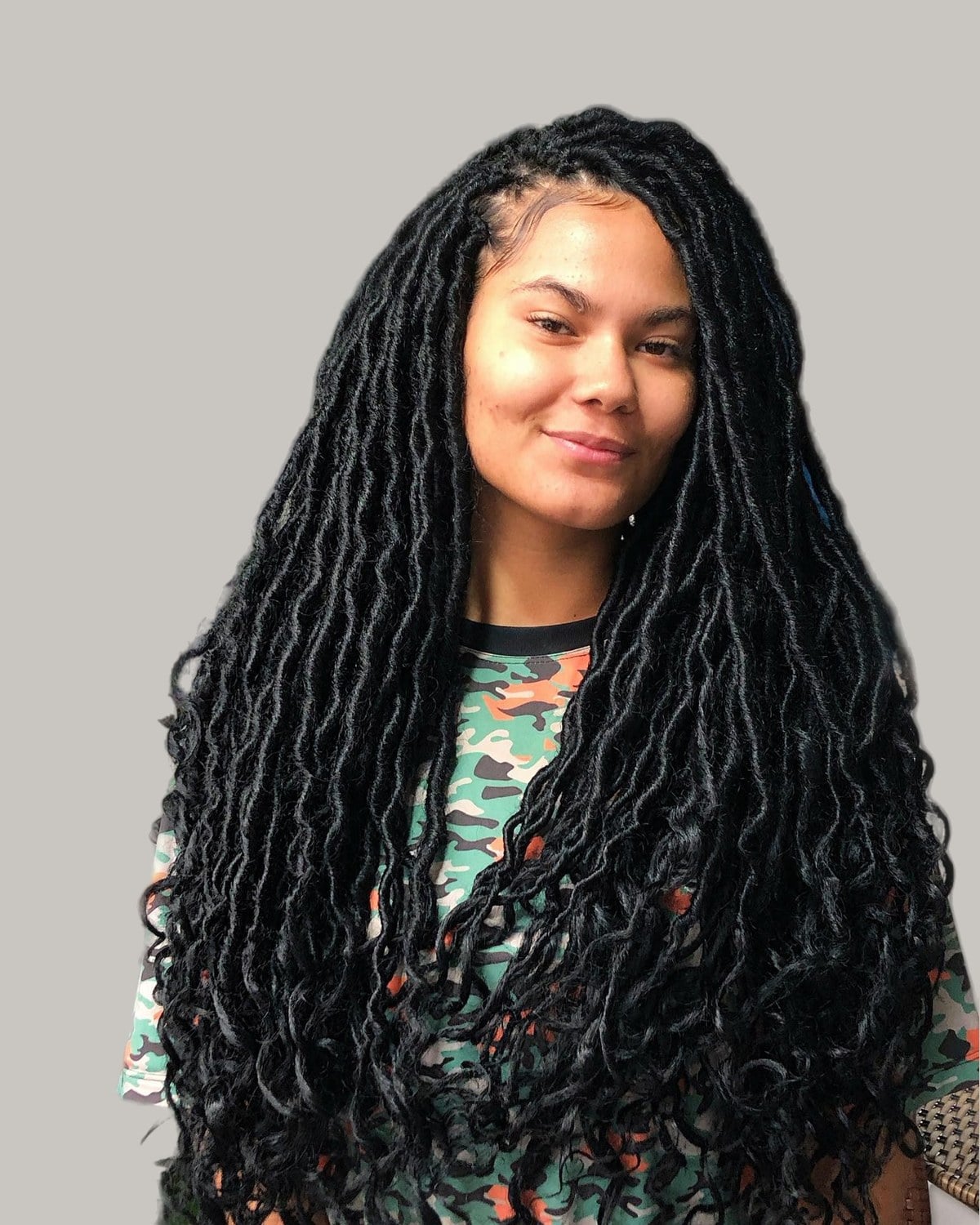
Waist-length faux locs with bronze strands wound through and a couple of silver charms near the face. The second photo is black and wavy, with the ends curled. At this length, ask your stylist how they’ll keep the weight off your edges.
What to ask for Waist-length faux locs with bronze in the mix, a middle part, and a couple of charms near the front.
Synthetic locs
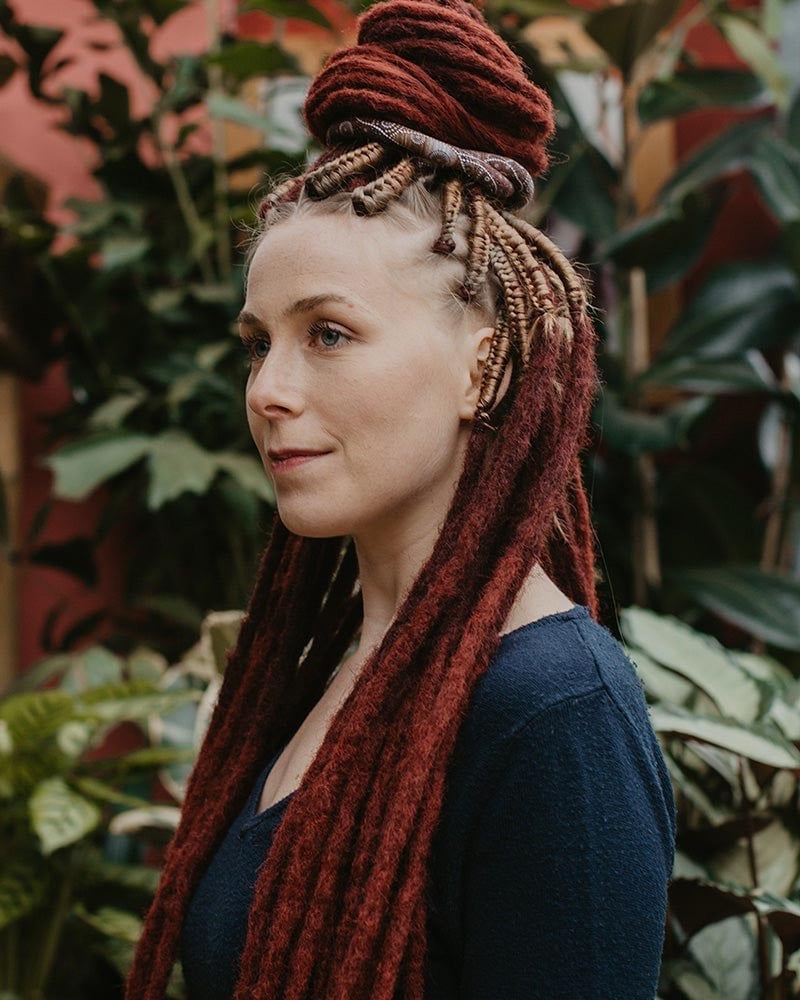
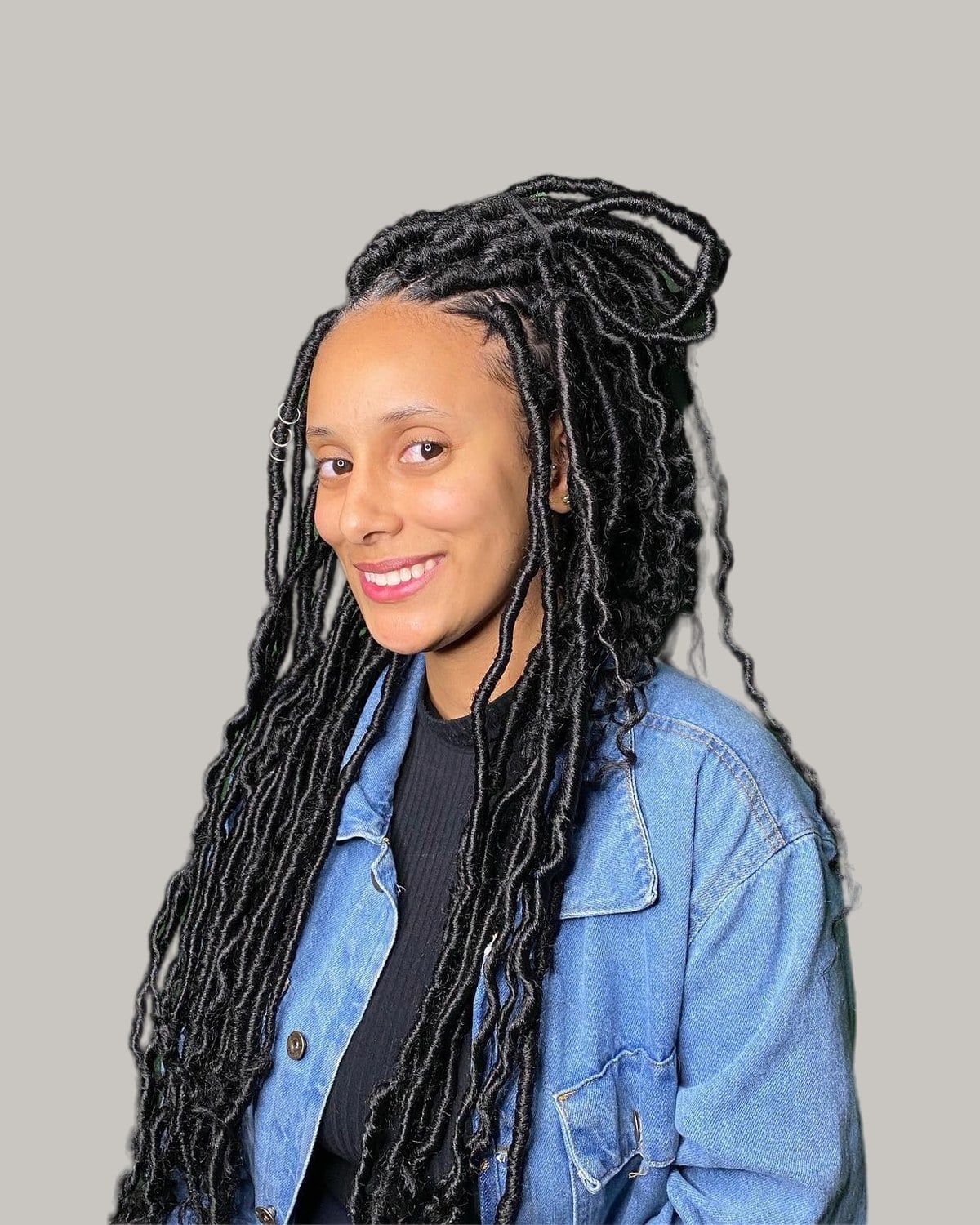
Rust-red synthetic dreads pulled up into a knot at the crown, the sides left down. The second photo shows black synthetic locs, long and wavy at the ends, worn with a jean jacket. Synthetic extensions come in every color, and that’s half the fun.
What to ask for Synthetic loc extensions to the waist, in rust red, the top section twisted into a bun.
Long locs with a top bun
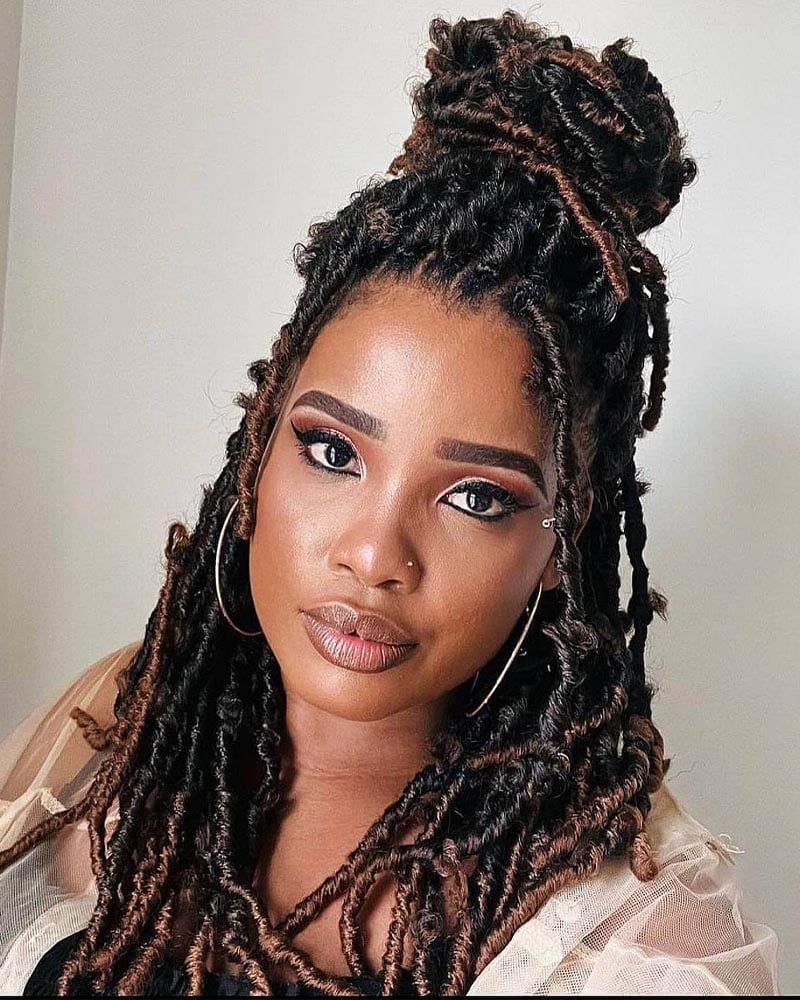
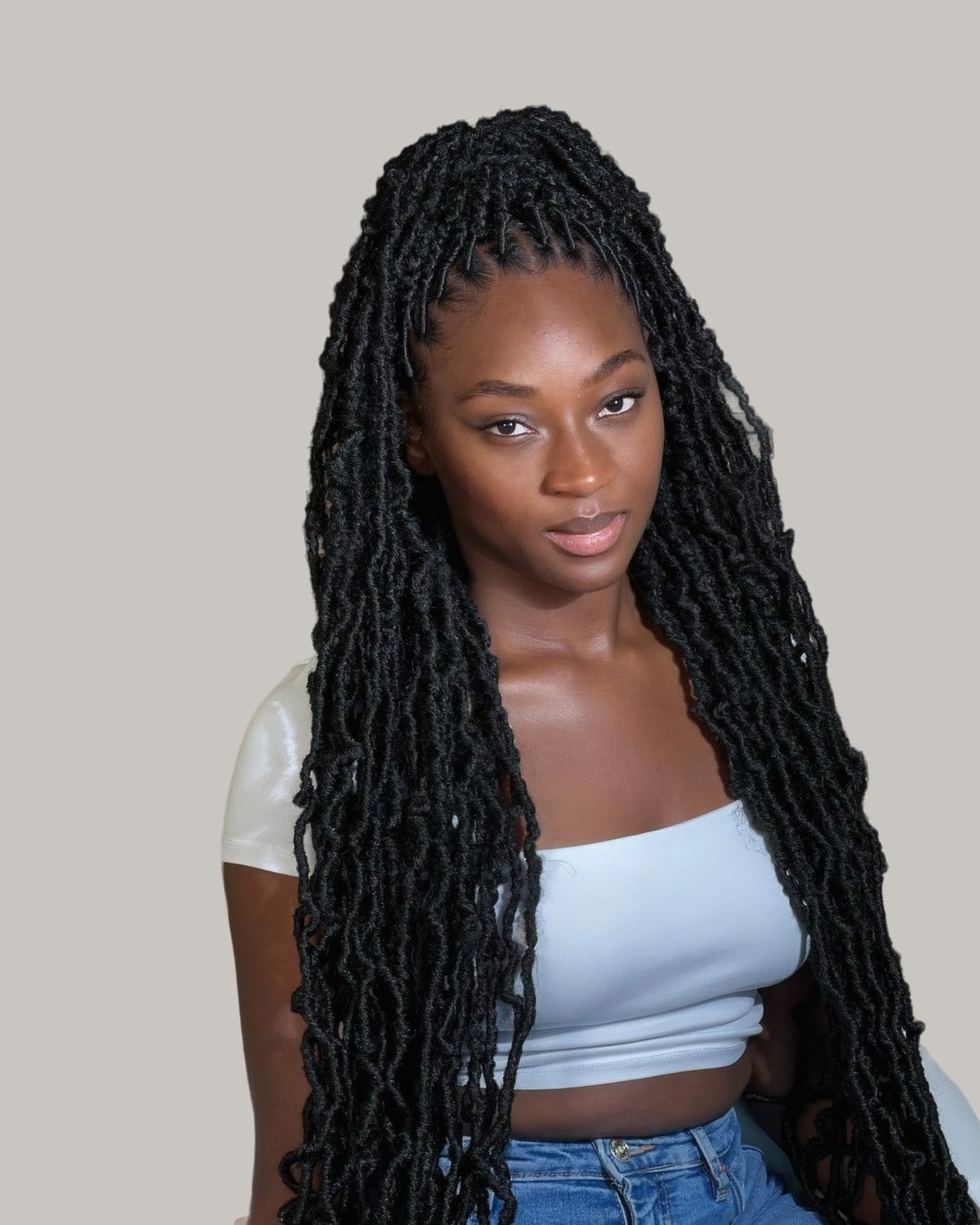
Long, curly-ended locs with copper strands running through, the top half twisted into a bun. The second photo is black soft locs worn down to the waist. Both sit well past the shoulder blades.
What to ask for Long soft locs to the waist with copper mixed in, the ends left curly, and a high bun for the top section.
Long locs with curly ends
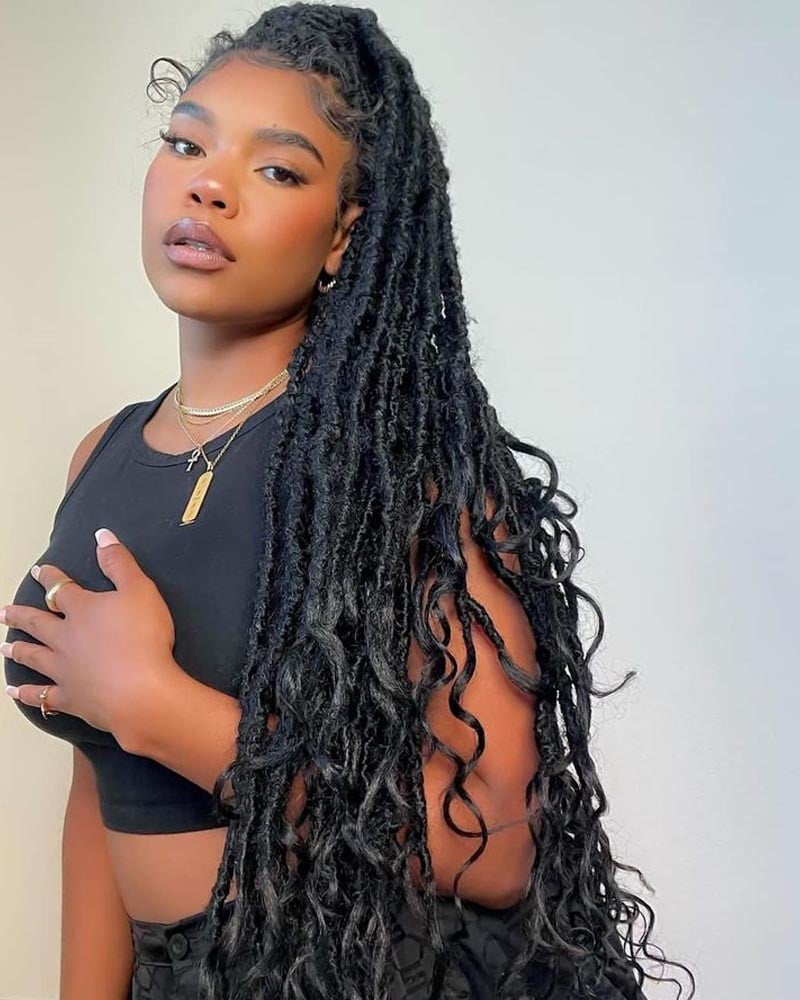
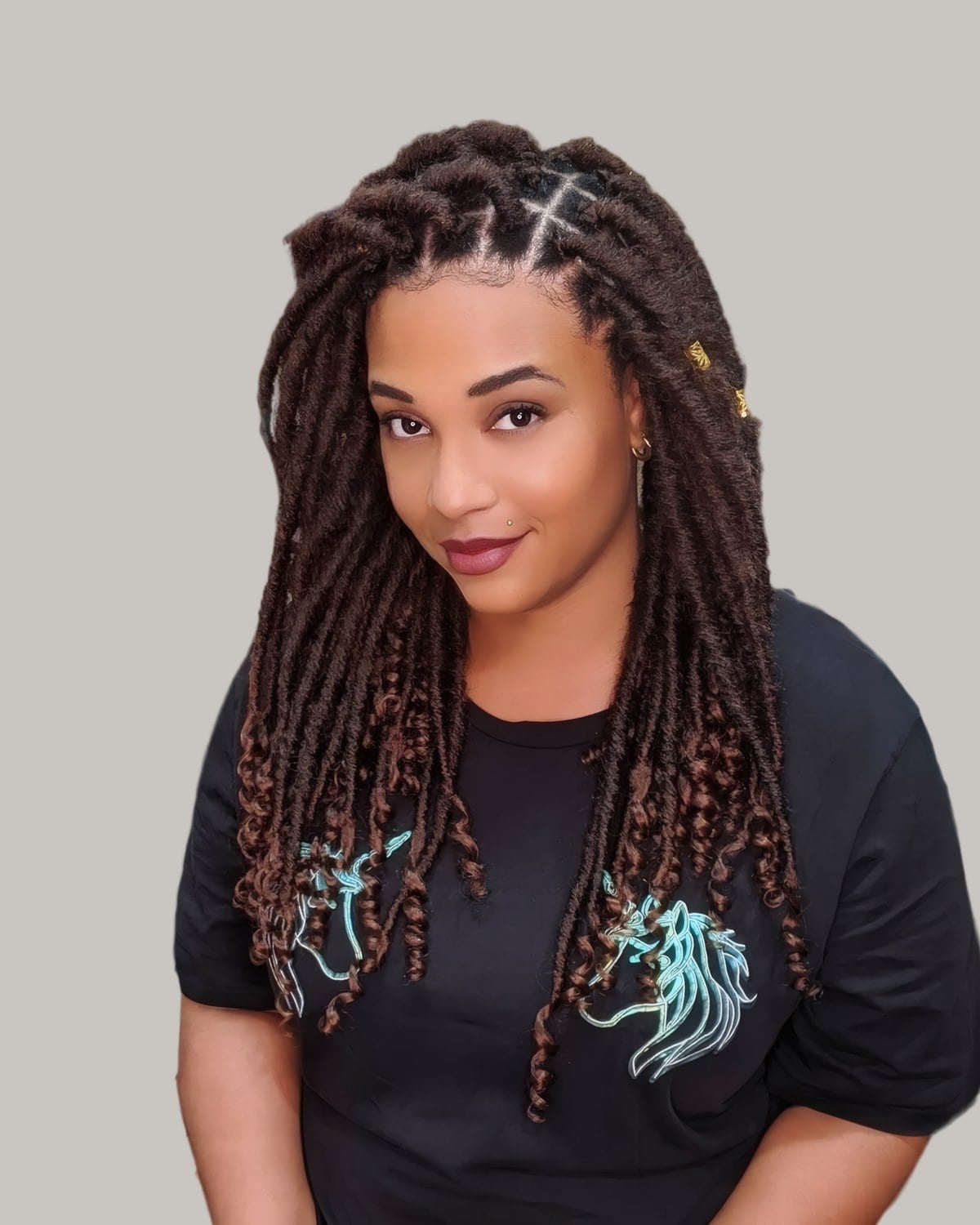
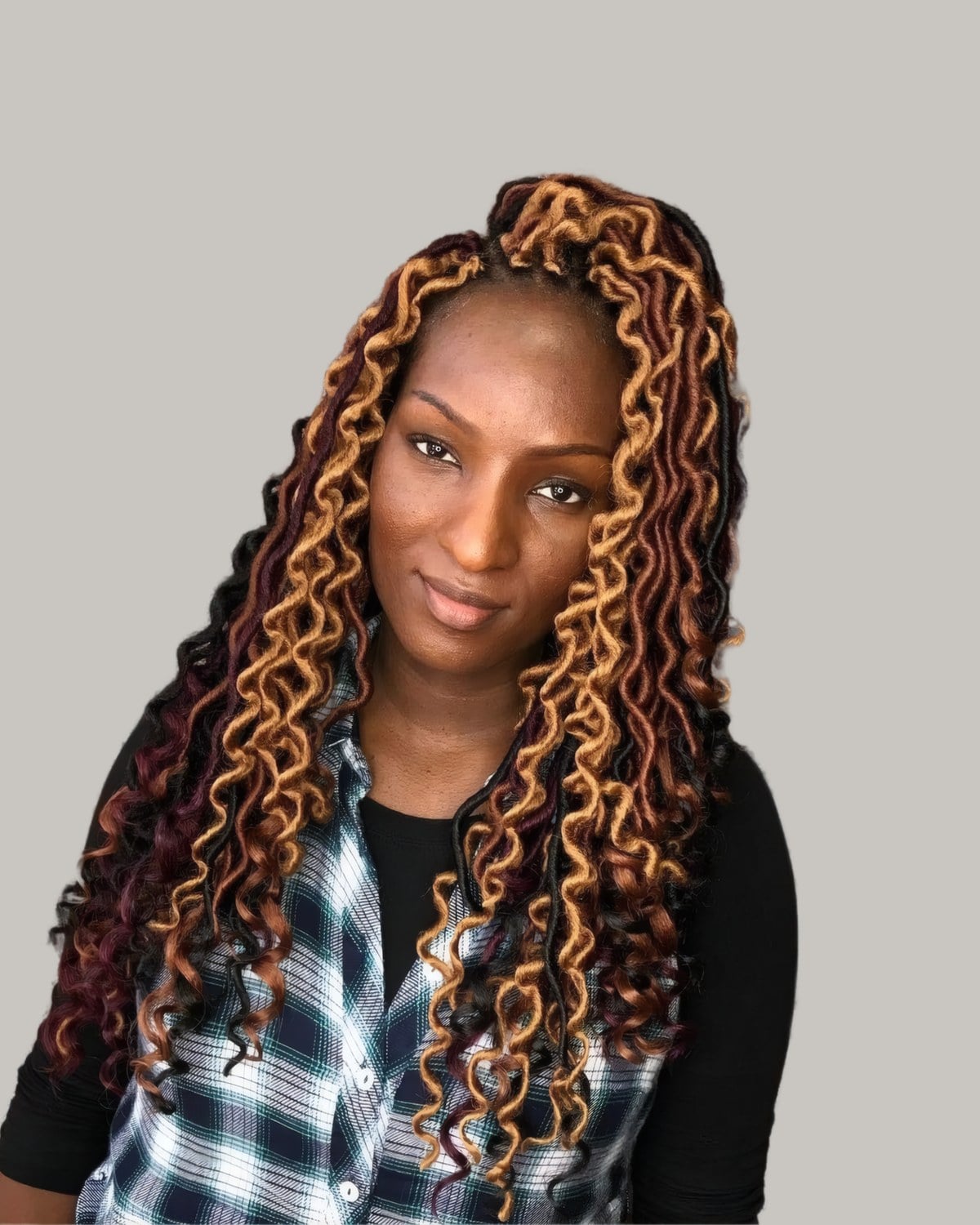
Waist-length locs with loose curls hanging from every end, swept over one shoulder. On the second photo the locs are brown and black, with the curly ends spilling past the chest. The curls are hair left out of the loc on purpose.
What to ask for Long goddess locs with curly ends, a square parting, and the curls left out at the tips.
Blue locs
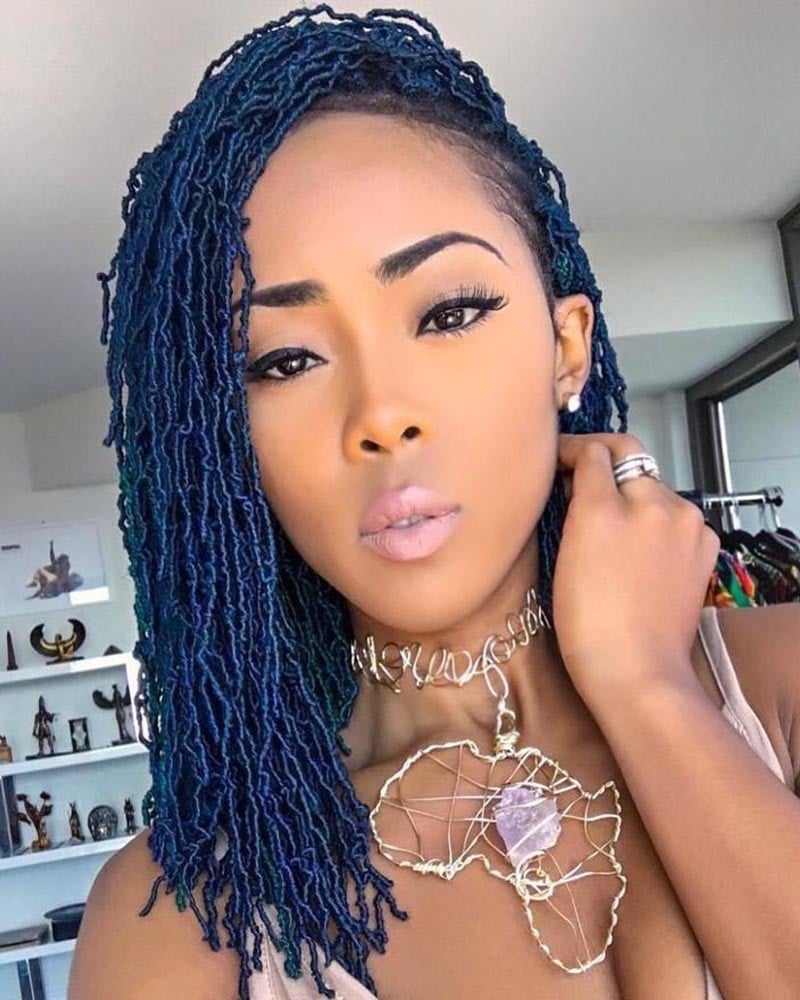
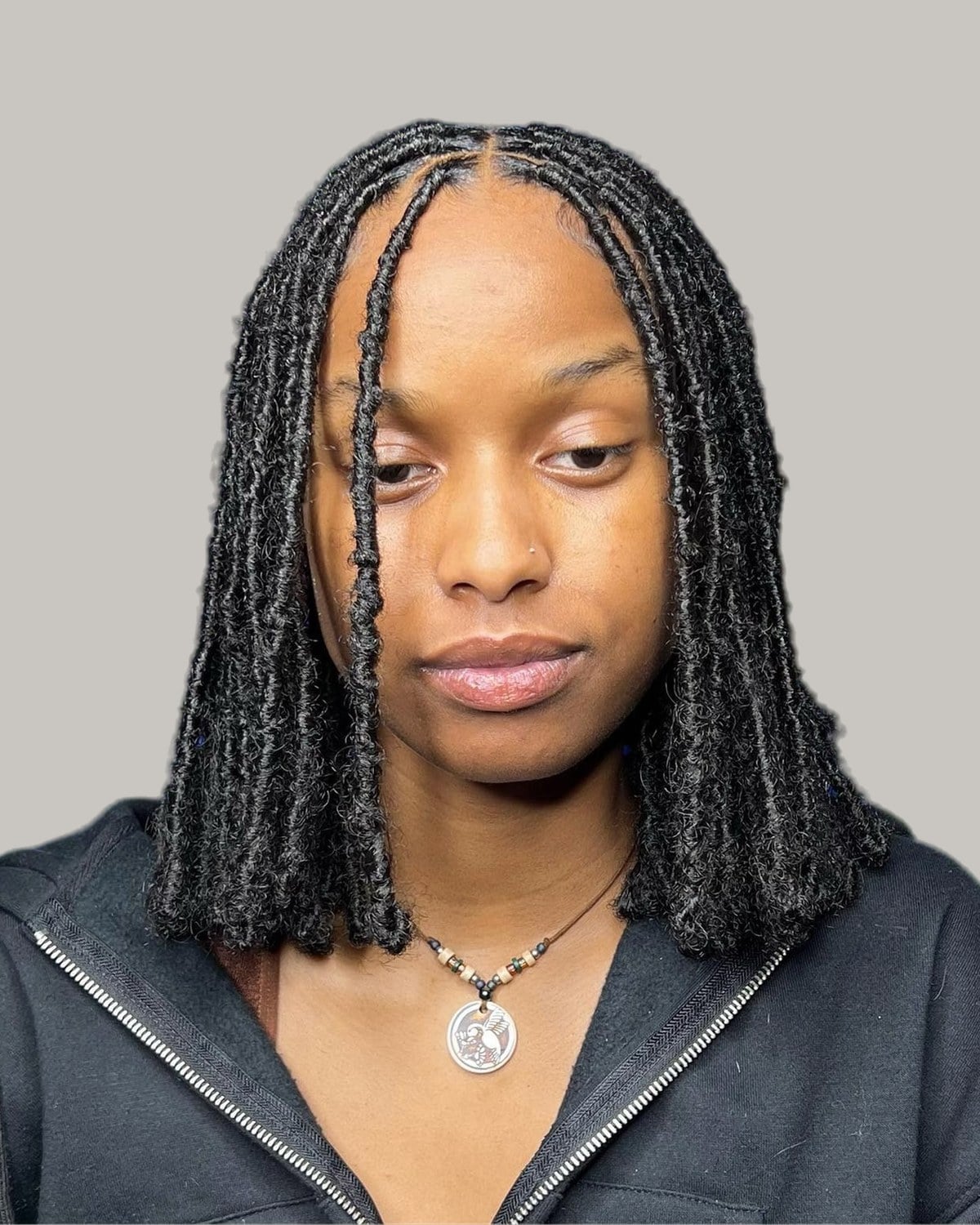
Midnight-blue soft locs cut to the collarbone, worn with a side part. The second photo is the same length in black, for when you want the cut without the color. It’s a color that looks almost black until the light hits it.
What to ask for Butterfly or soft locs in dark blue, cut to the collarbone, a deep side part.
Long blonde locs
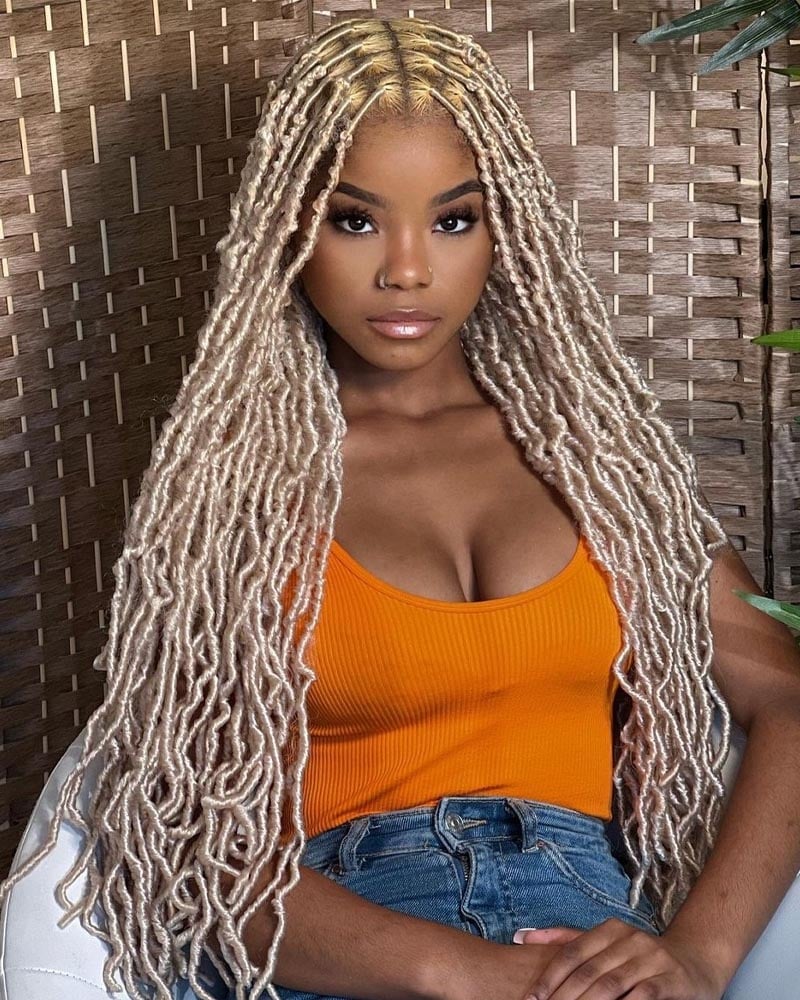
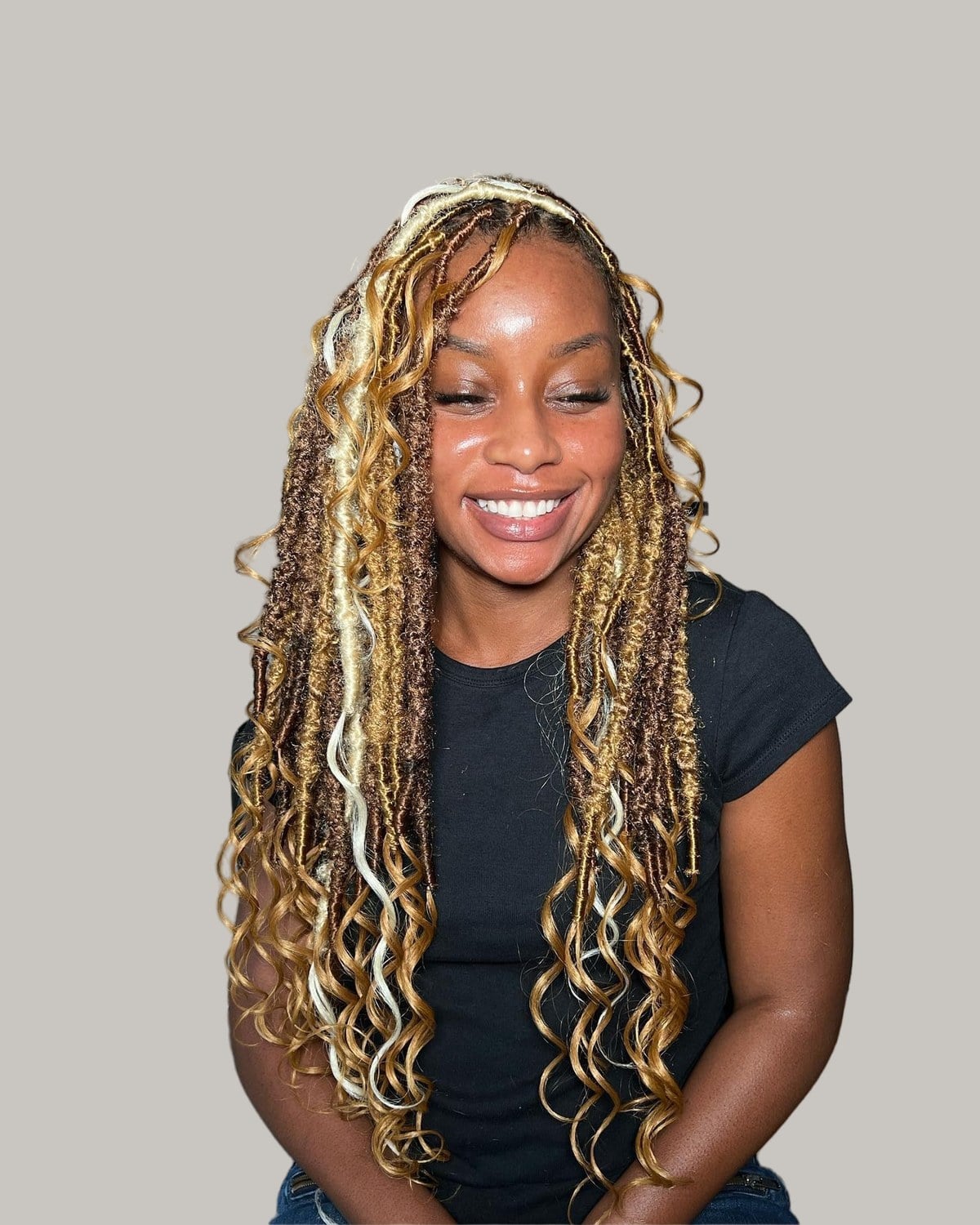
Ash-blonde goddess locs past the waist, with curly strands left loose along each one. The second photo mixes honey and platinum with black, in curly boho locs. Faux blonde means your own hair never sees the bleach.
What to ask for Waist-length boho locs in ash blonde, curly strands left out along the length, a middle part.
Blonde locs with a top knot
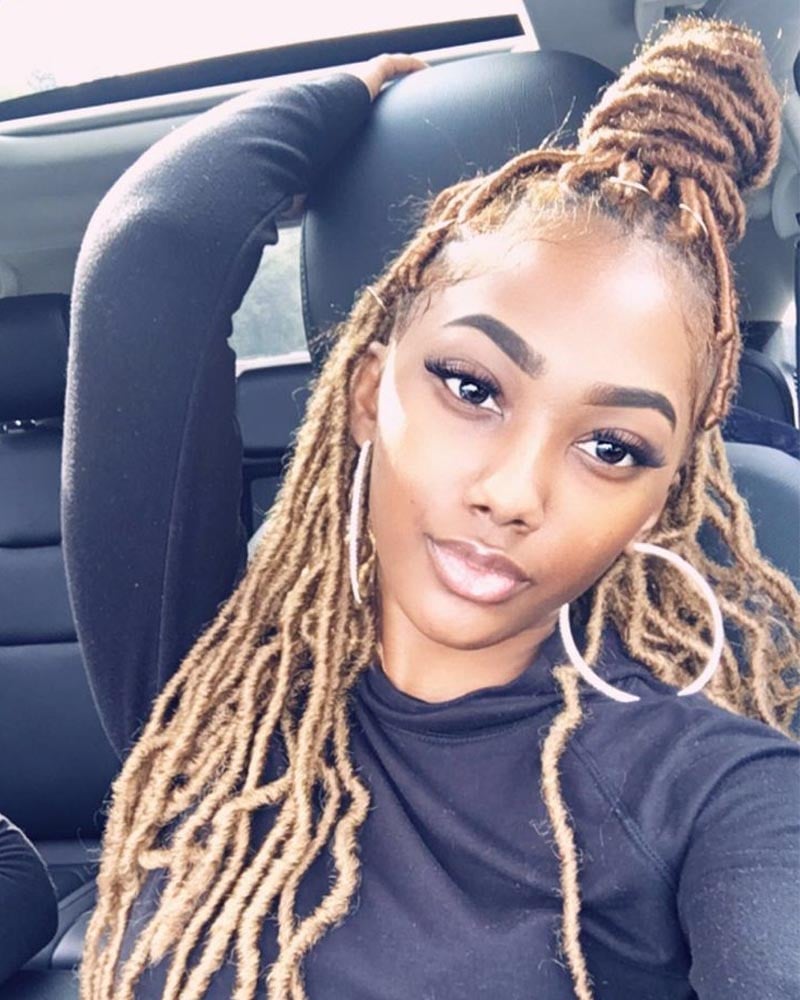
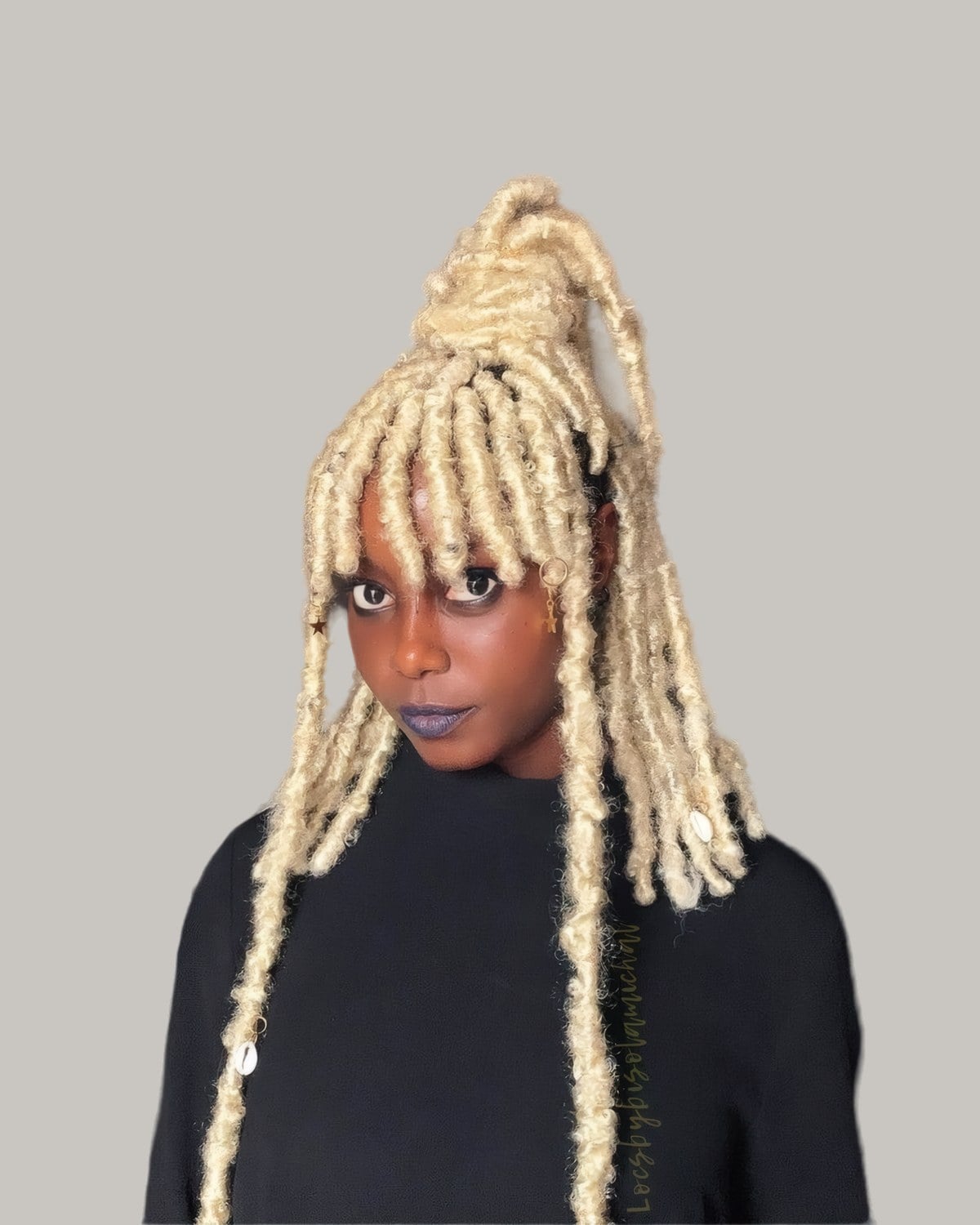
Honey-blonde faux locs with the top section twisted into a high knot and the rest down. The second photo is a platinum set with short bangs and the top pulled up. A top knot keeps the blonde off your face on a busy day.
What to ask for Honey-blonde faux locs to mid-back, the top third twisted into a high knot, a few pieces left out at the front.
Small blonde locs
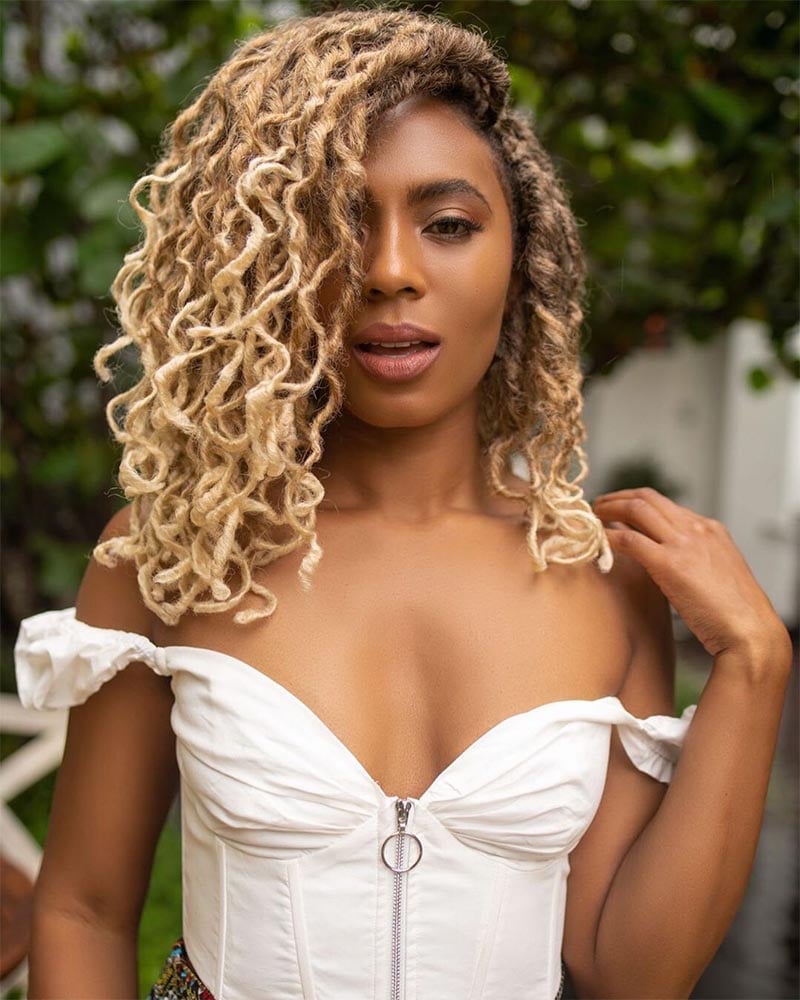
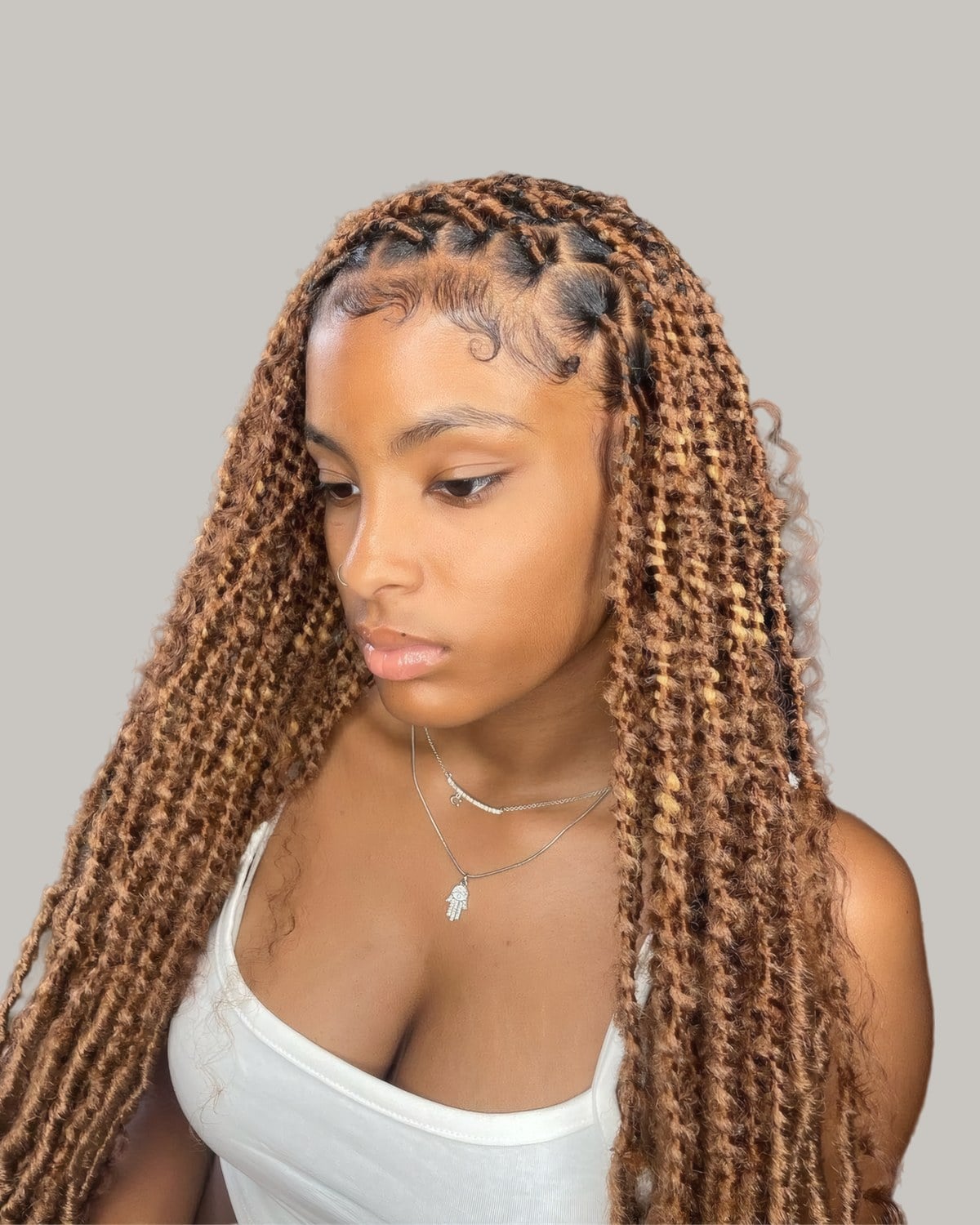
Small blonde locs with tight curls running through, cut to the shoulder. The second photo is longer, in honey blonde, with curly ends and a center part. Small locs give you more ways to style them.
What to ask for Small curly boho locs in honey blonde, to the shoulder or a little longer, with curly strands left out.
Butterfly locs bob
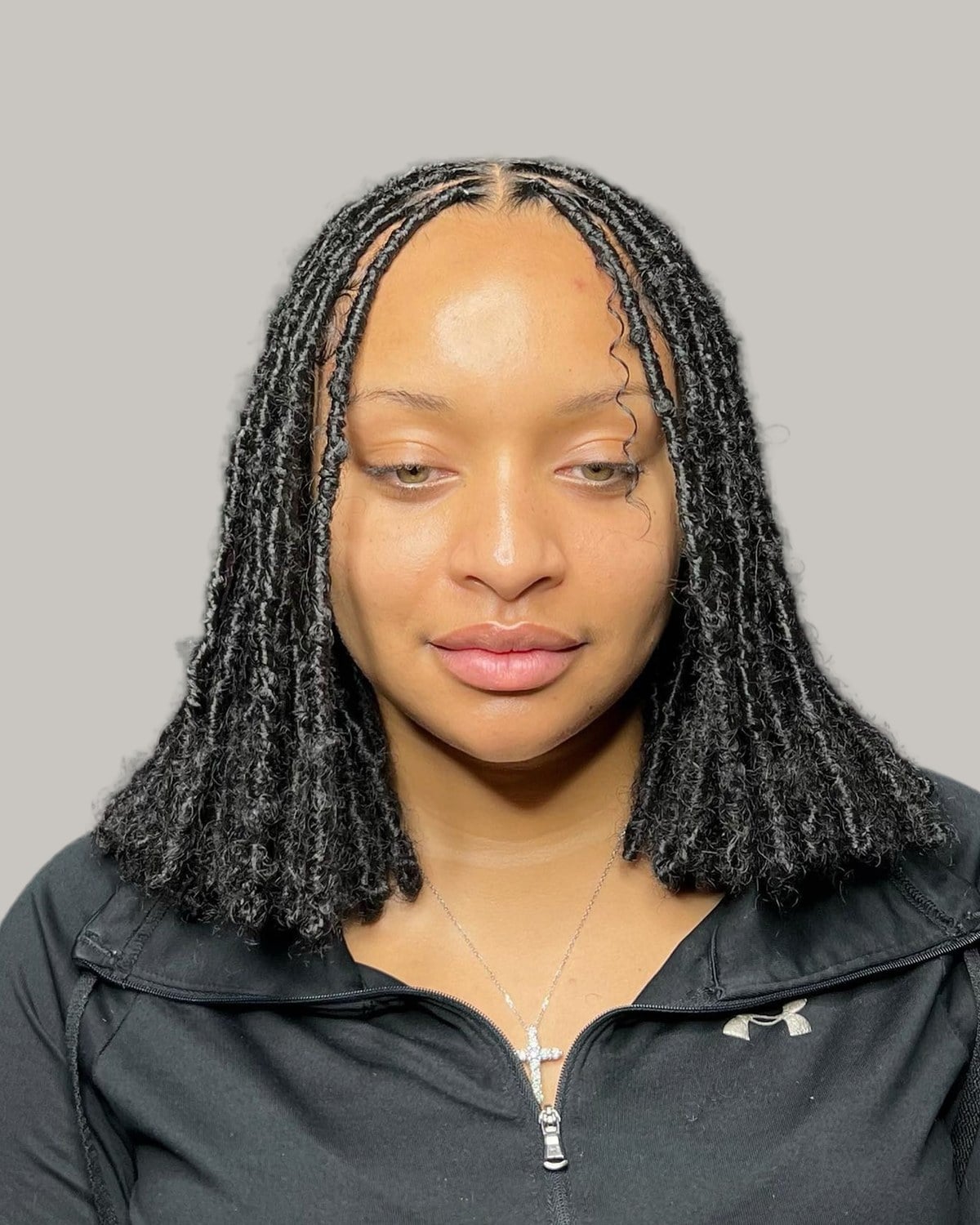
Butterfly locs cut to just above the shoulders, with the loops left loose along every loc and a middle part. The short length keeps the weight down, so it’s a gentle first install if you’re worried about your edges. The fluffy texture is the point, so don’t expect them to sit sleek.
What to ask for Bob-length butterfly locs to just above the shoulders, small to medium parts, a middle part, the loops left loose and fluffy.
Long butterfly locs
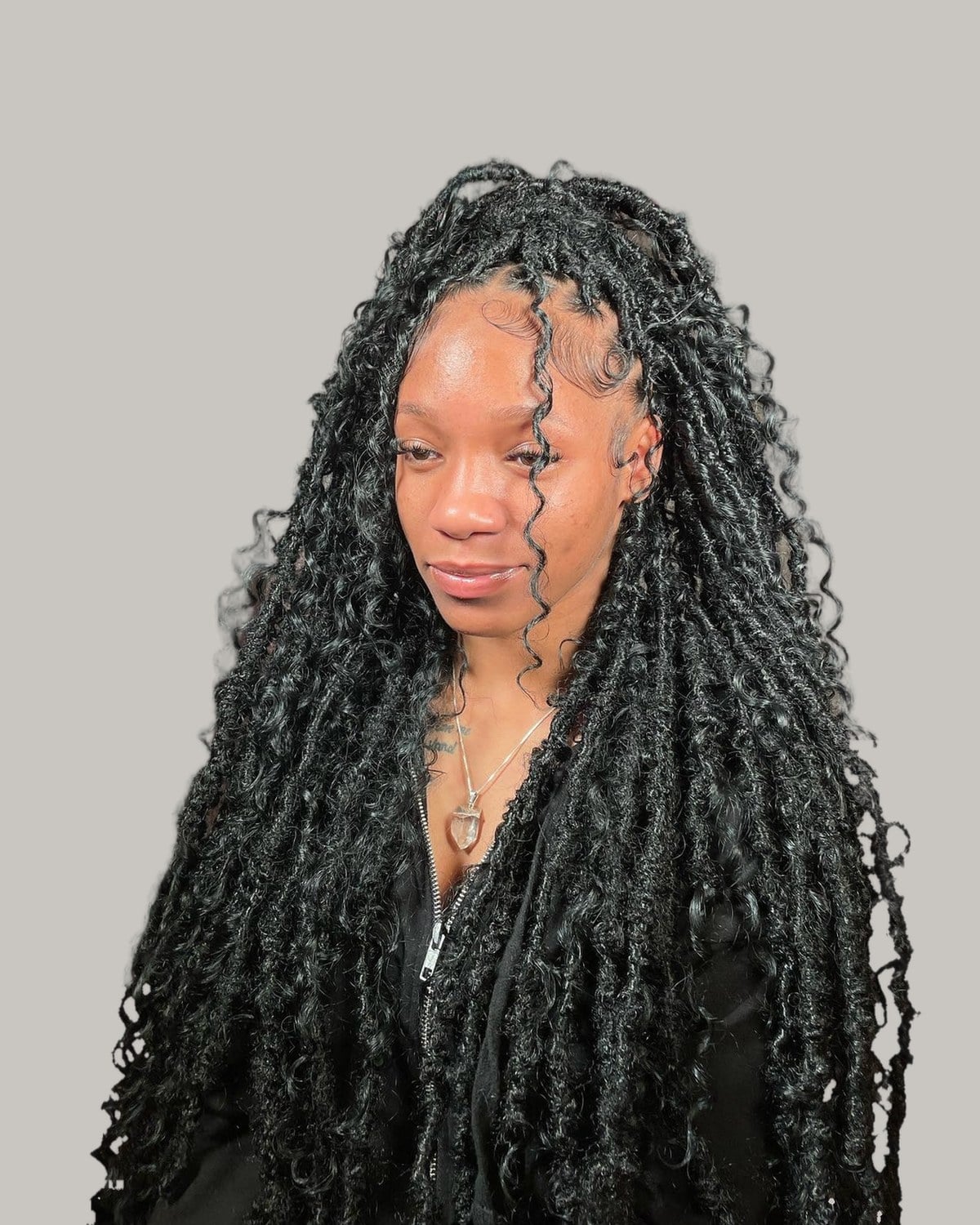
Long black butterfly locs past the chest, with curly pieces left out along the length so they look loose and lived-in. Worn with a side part, they fall over one shoulder. More length means more hair to wrap, so book a longer appointment than you would for a bob.
What to ask for Long butterfly locs to mid-back, medium parts, curly pieces left out along each loc, worn swept to one side.
Loc updos, buns and ponytails
Twisted loc updo
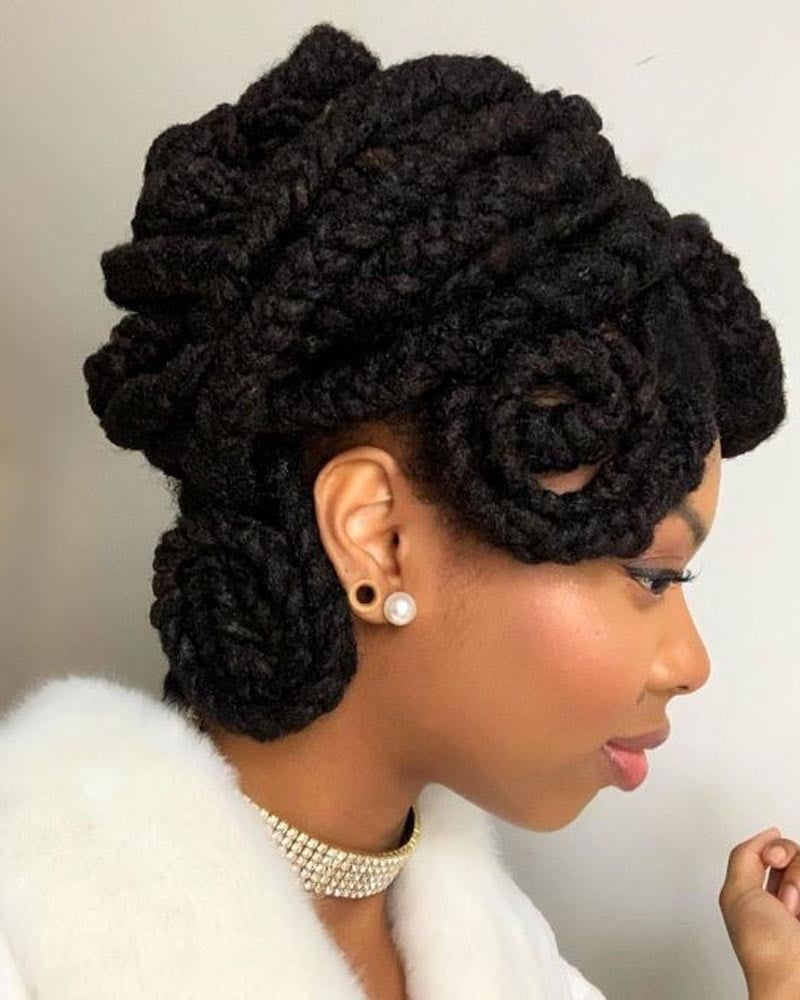
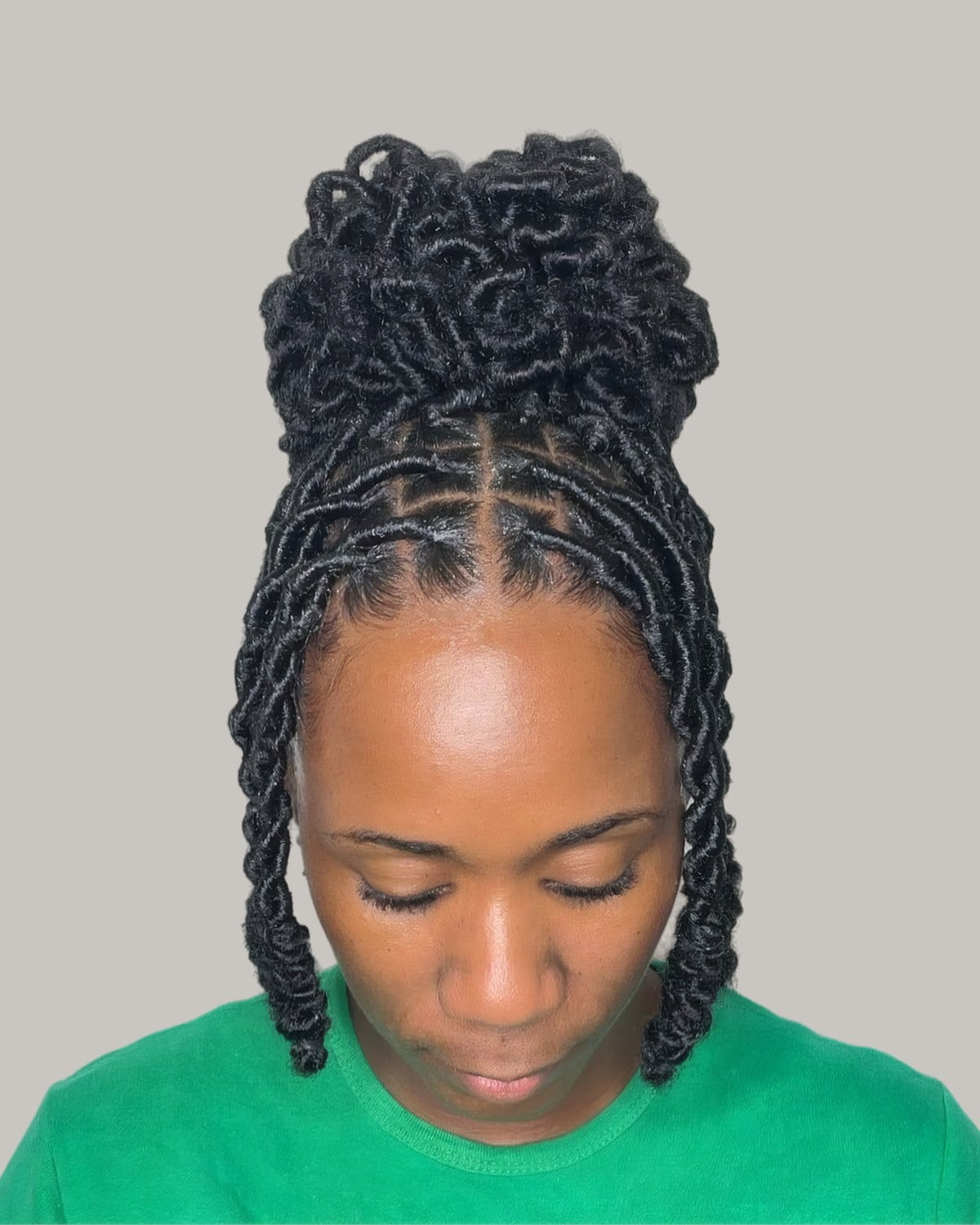
The locs are twisted and pinned into sculpted rolls around the head, with a coil at the nape. On the second photo crochet locs are piled into a curly bun, with a few left down at the sides. It’s a formal-occasion updo that takes a stylist and an hour or two.
What to ask for A sculpted updo with the locs twisted into rolls, a coil at the nape, and the edges smoothed.
Loc halo
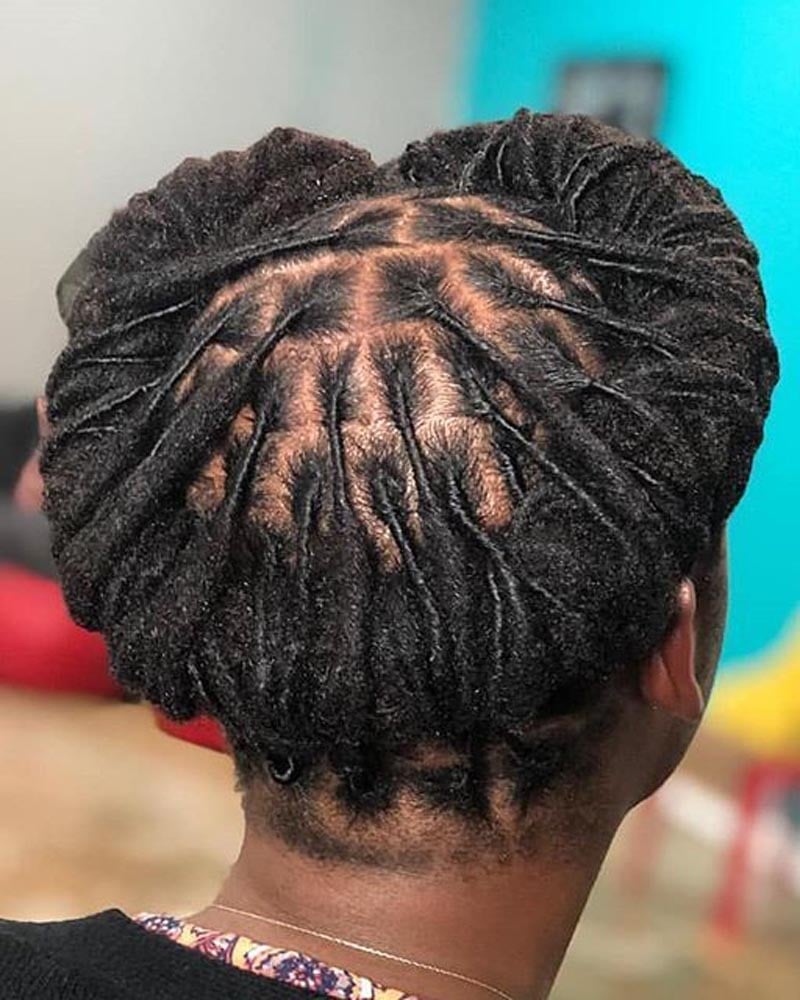
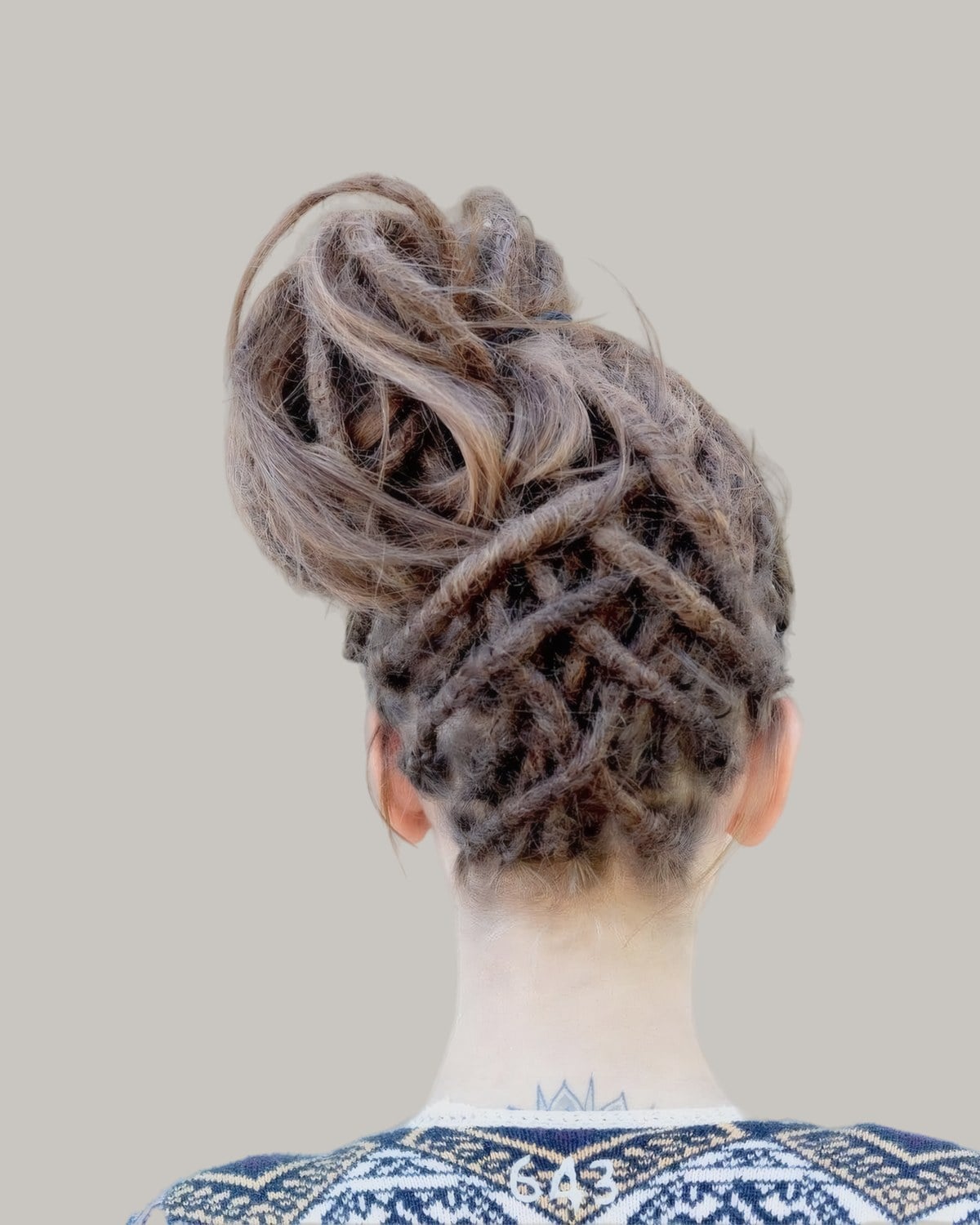
The locs are wrapped around the head like a crown, so the partings show as a star at the back. The second photo winds the locs into a lattice under a bun. It’s a style for locs long enough to go round the head once.
What to ask for A halo wrap: locs taken around the head in one direction and pinned, with the parts showing at the back.
High loc bun with bangs
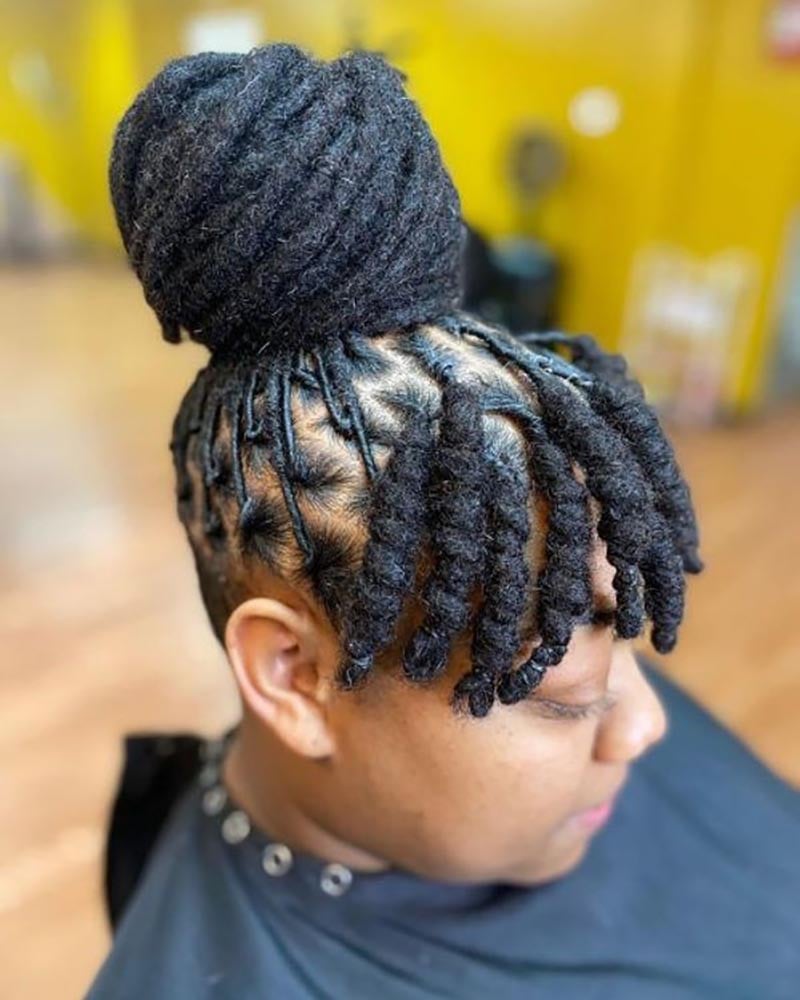
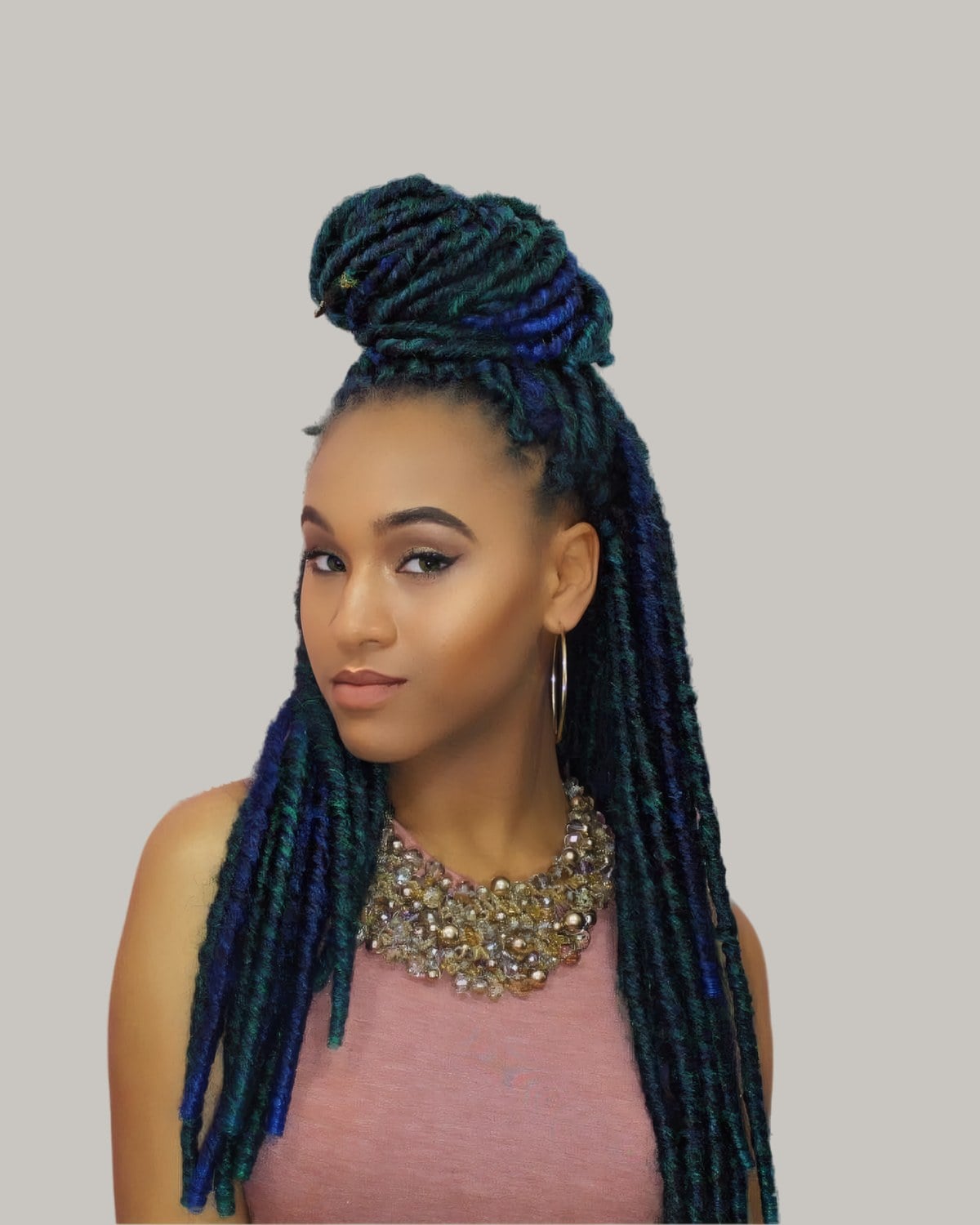
The length is piled into a bun on top, and a row of short locs is curled down over the forehead. The second photo piles two-tone locs into a high bun and leaves the rest long. The bangs are just the front locs, rolled under and pinned.
What to ask for A high bun at the crown, the front locs curled under into bangs that stop above the brow, sides smoothed back.
Messy loc bun with bangs
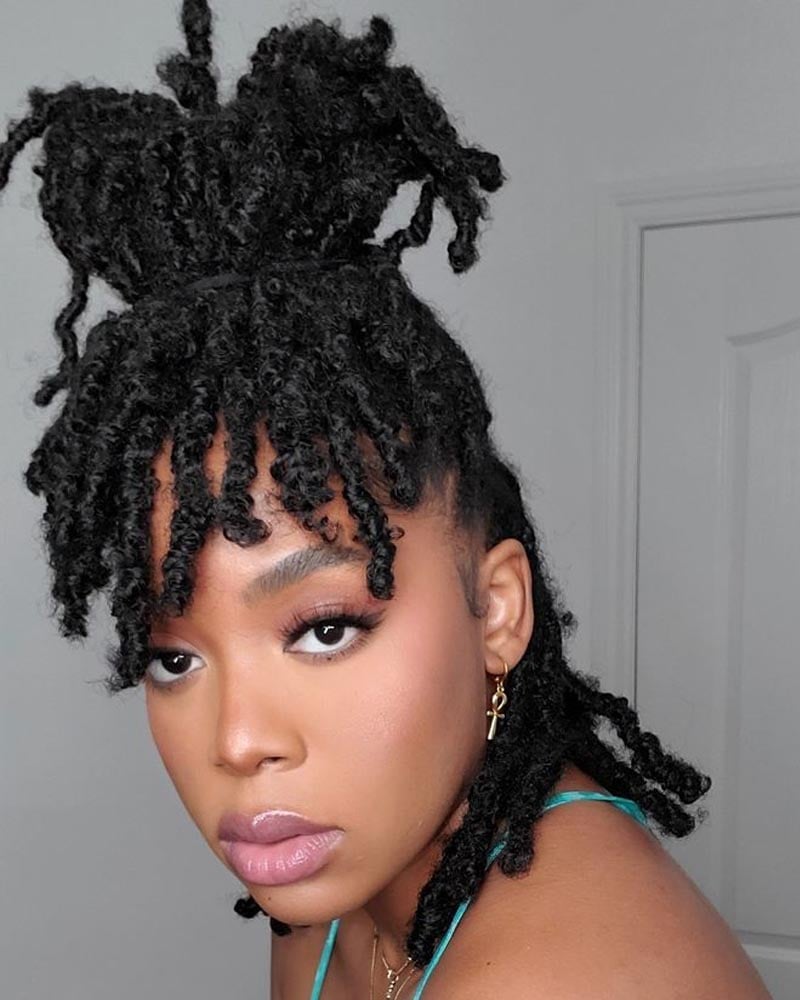
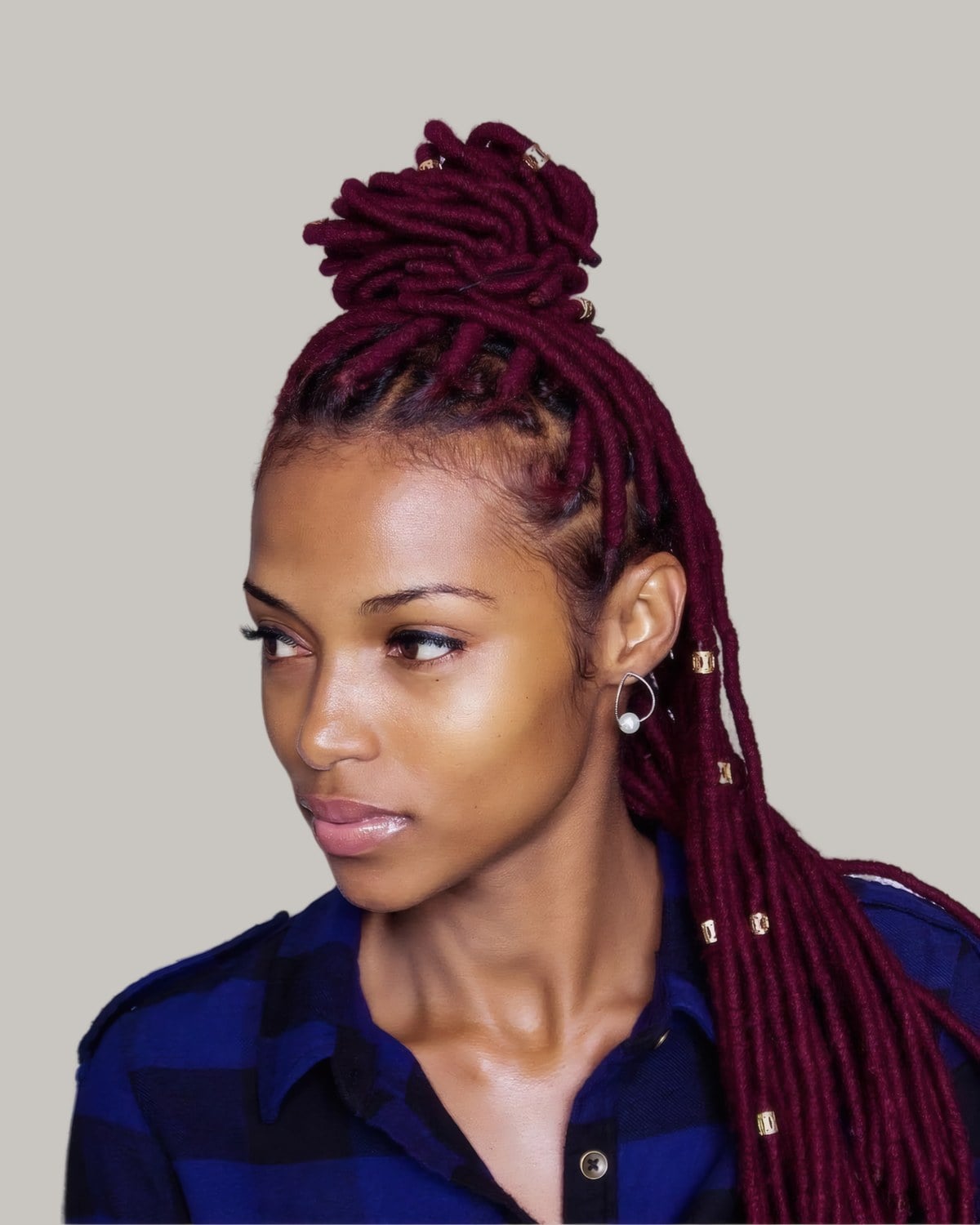
A messier high bun, with loose ends pointing up and a fringe of locs falling in front. The second photo swaps black for burgundy, with the top twisted into a knot and the rest left long. It’s a good one for locs that aren’t all the same length.
What to ask for The back pulled up into a high bun with the ends left out, the front locs cut or pinned to fall as bangs.
Loc space buns
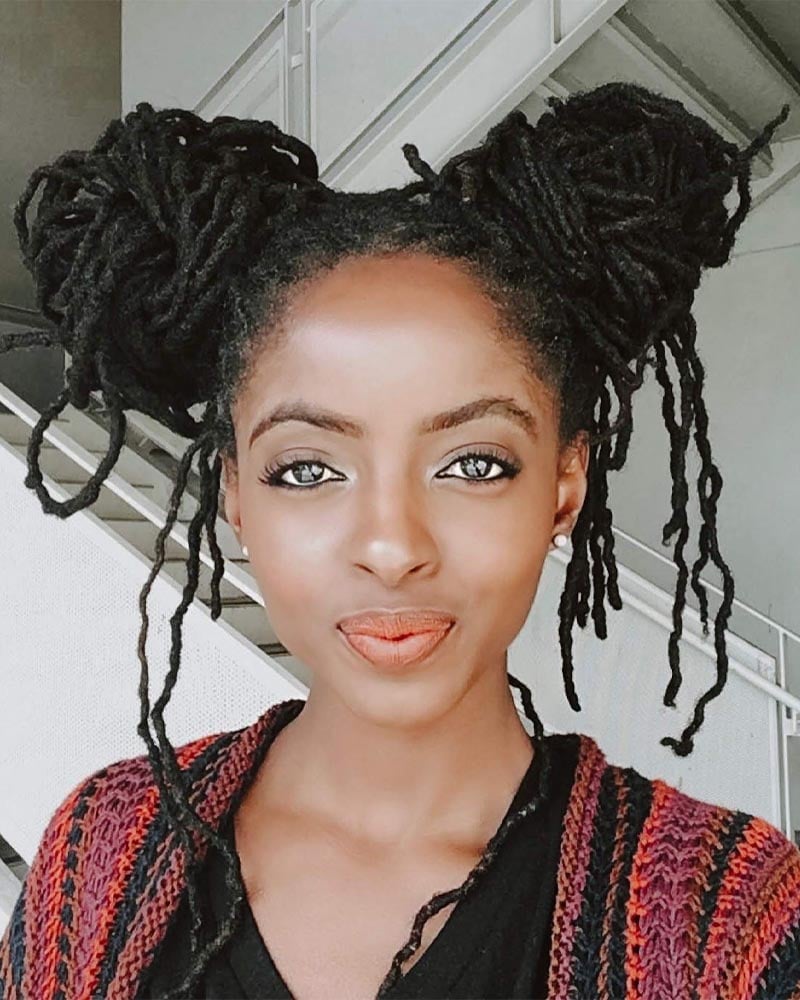
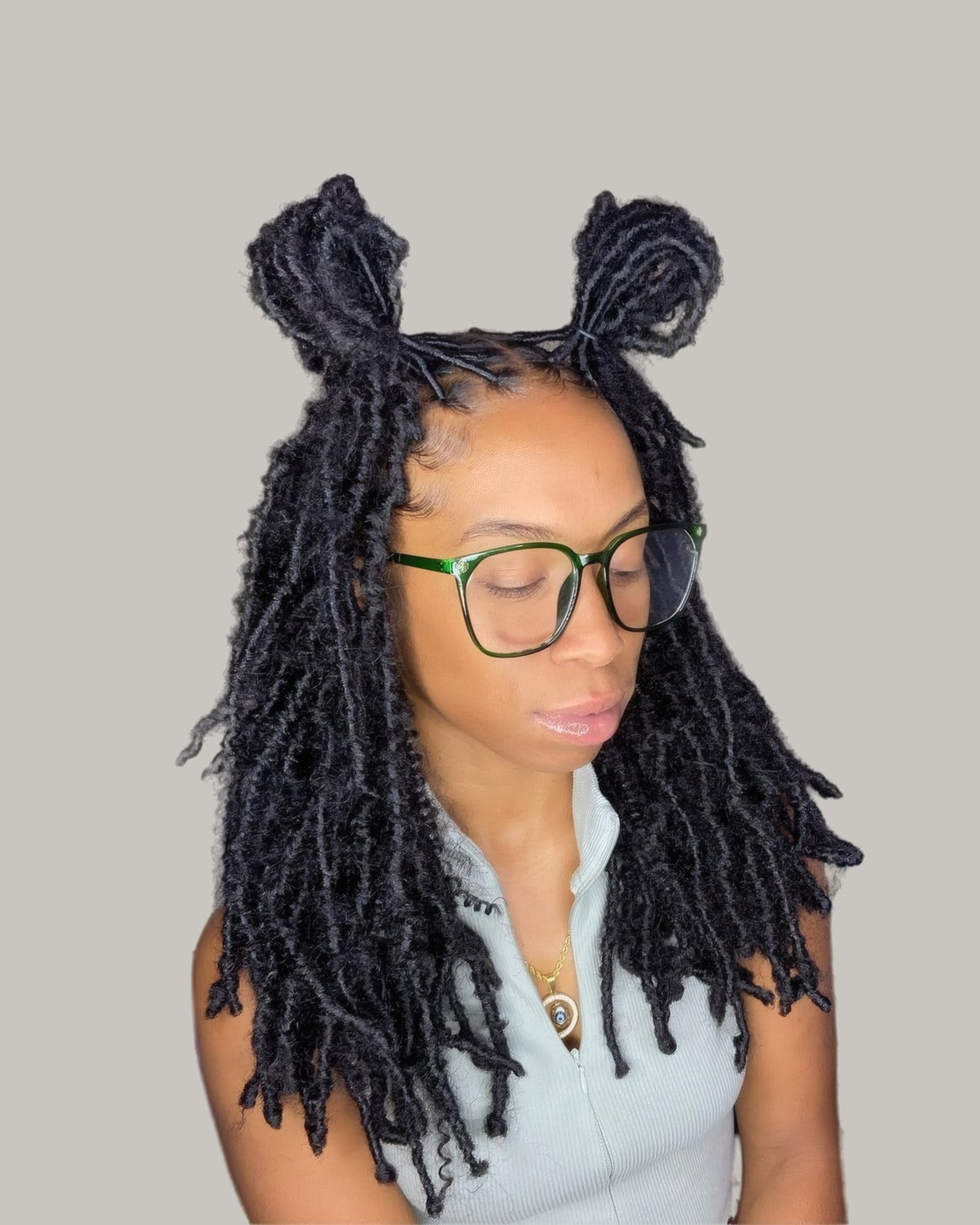
Two buns high on the head, with a few locs left hanging at the sides. The second photo is a neater pair of small buns on long black locs. It’s a playful one for a weekend.
What to ask for Two space buns high on the crown, a few locs left down at each side.
Looped loc updo
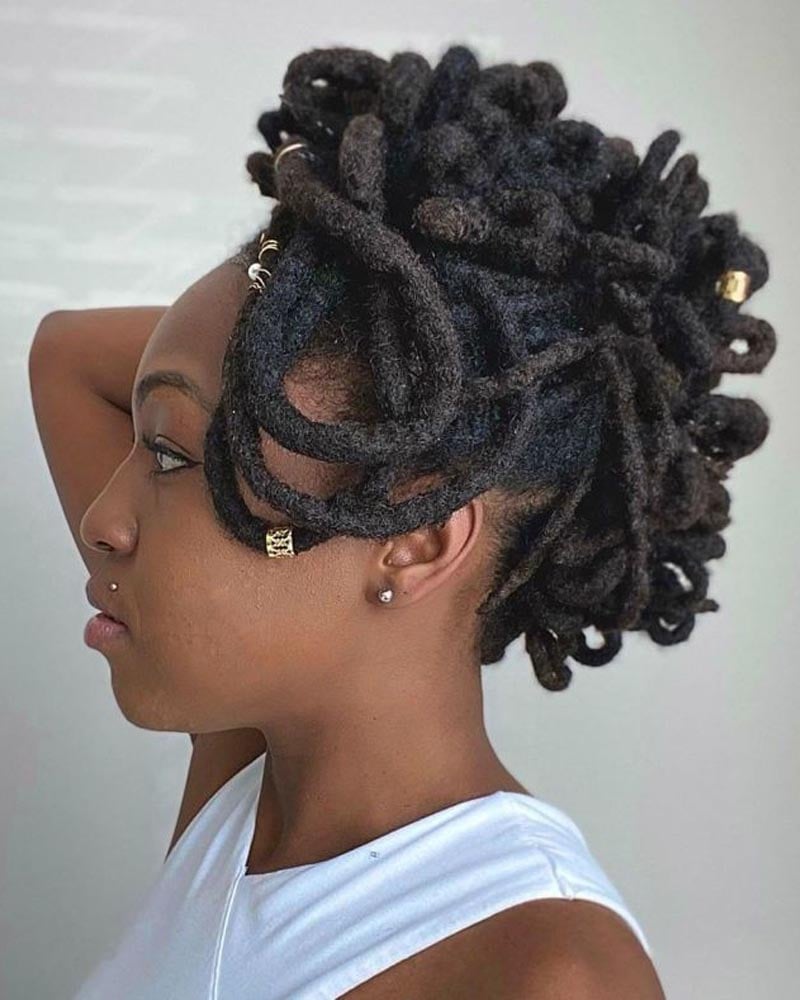
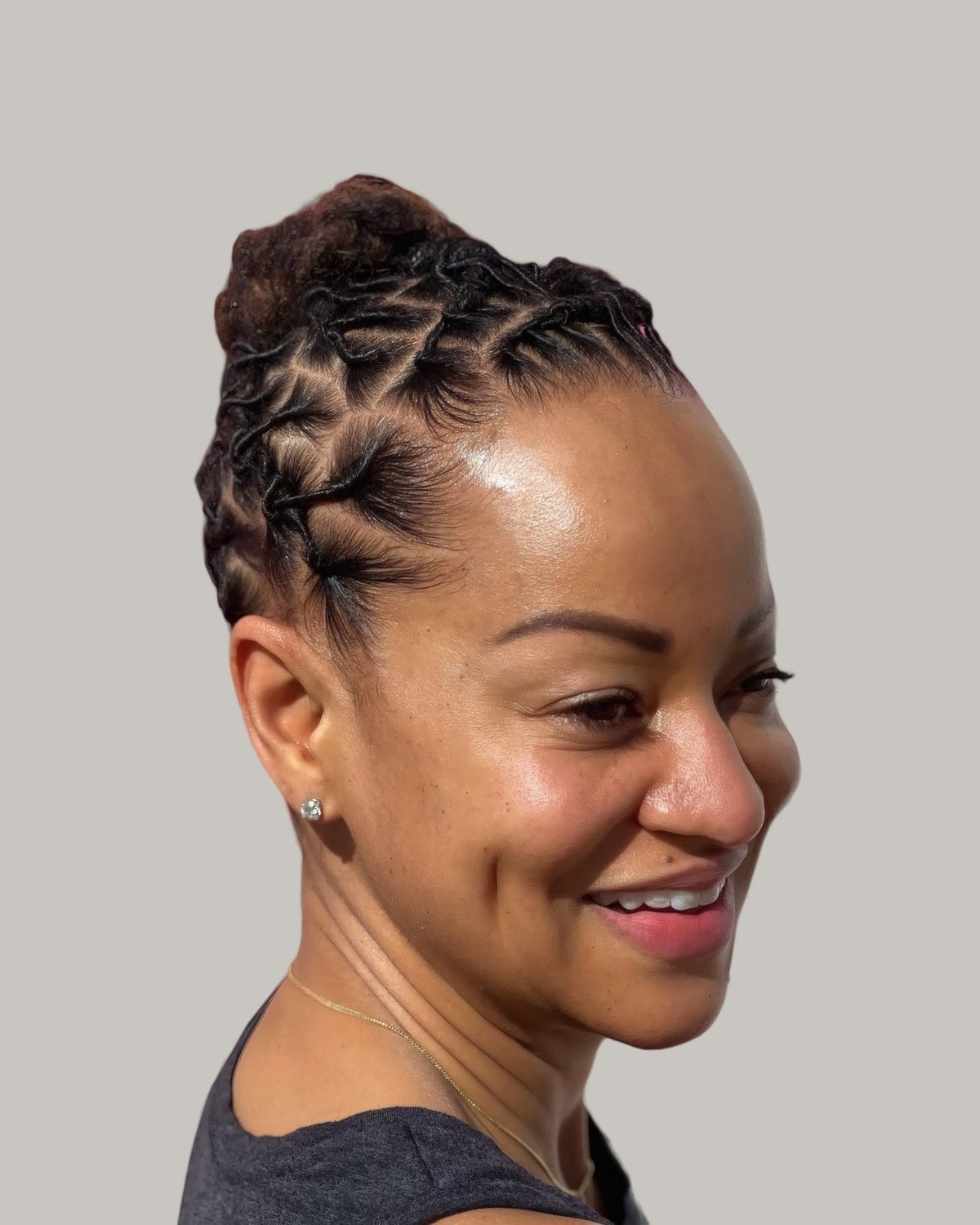
The locs are twisted into loops and piled on top, with gold cuffs catching the light. The second photo twists short locs up into a small bun. It’s a showier way to put everything up.
What to ask for Locs twisted into loops and pinned high, a few gold cuffs, and the edges laid.
Loc tower bun
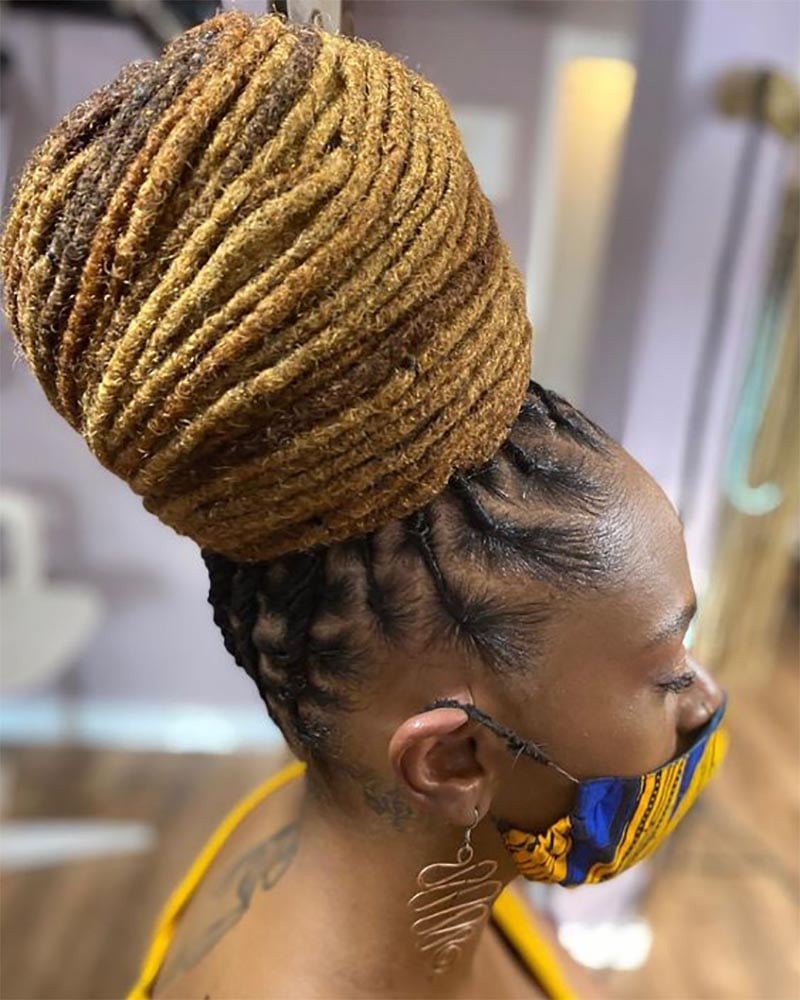
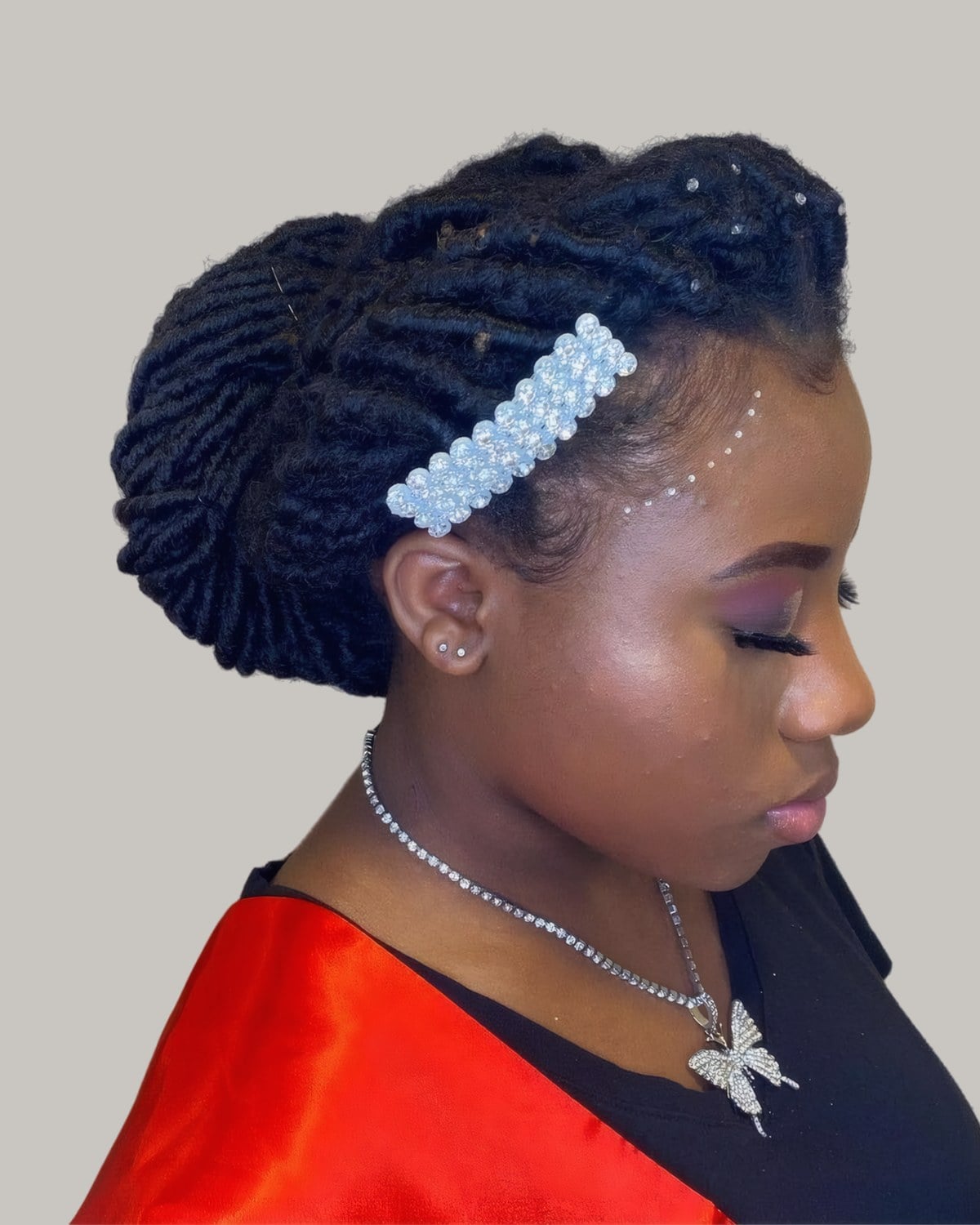
Golden locs wound into a tall cylinder on top of the head, with the sides kept neat. The second photo is a black version, stacked into a big bun with a pearl clip. You’ll need a lot of length for this one (and a lot of pins).
What to ask for Wrap the length round and round into a tall bun at the crown, pinned tight, sides retwisted flat.
High loc ponytail
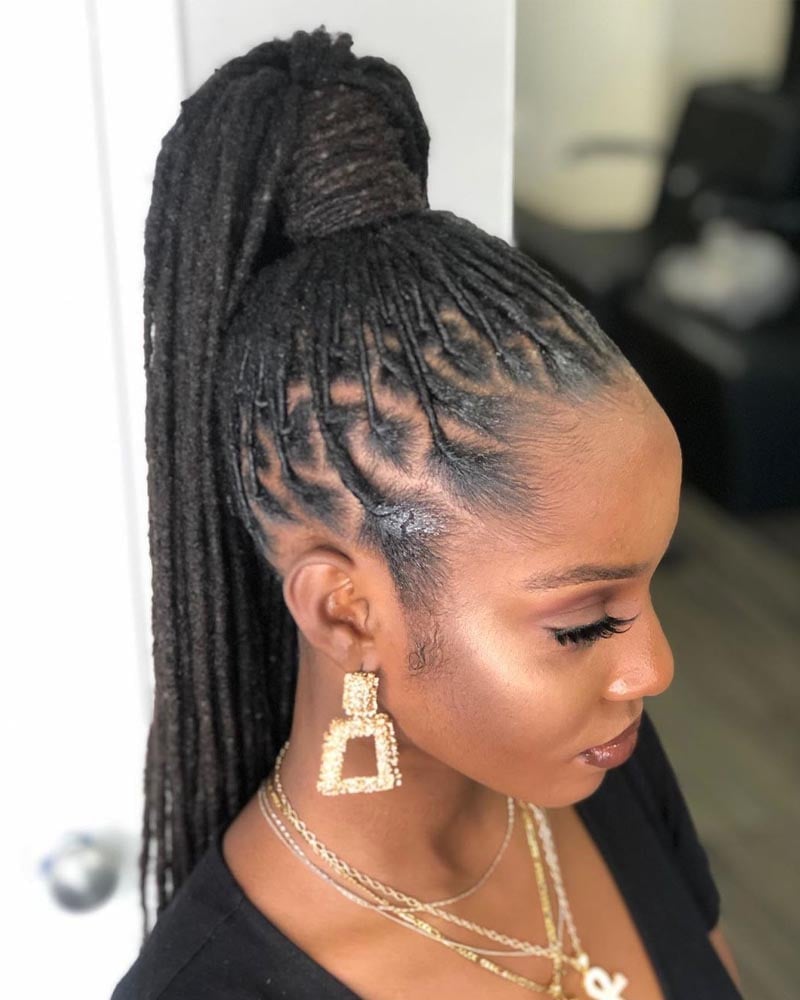
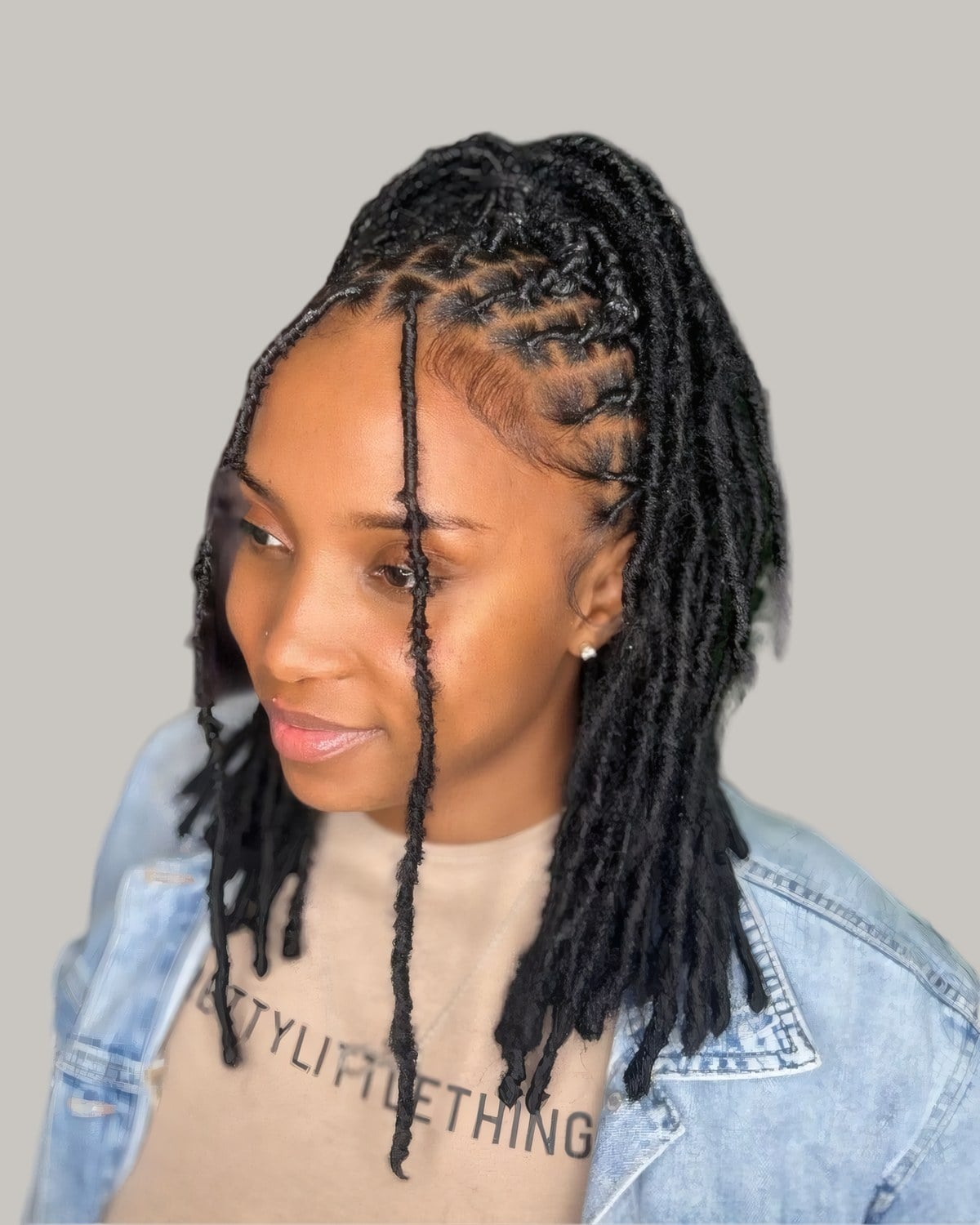
A sleek high ponytail of long locs, with the sides retwisted flat into the tie. The second photo leaves a few locs down at the front of a softer pony. It’s a work-to-dinner style with no pins at all.
What to ask for A high ponytail with the sides retwisted flat into it, and a few locs left out at the front if you want the second look.
Low loc bun
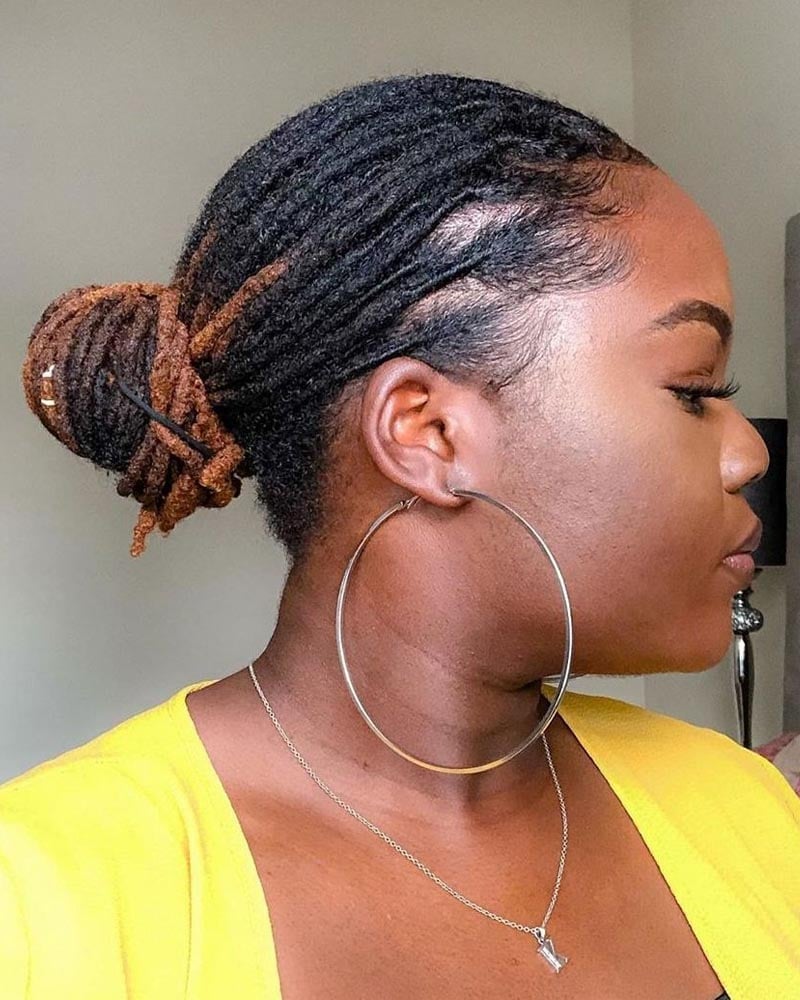
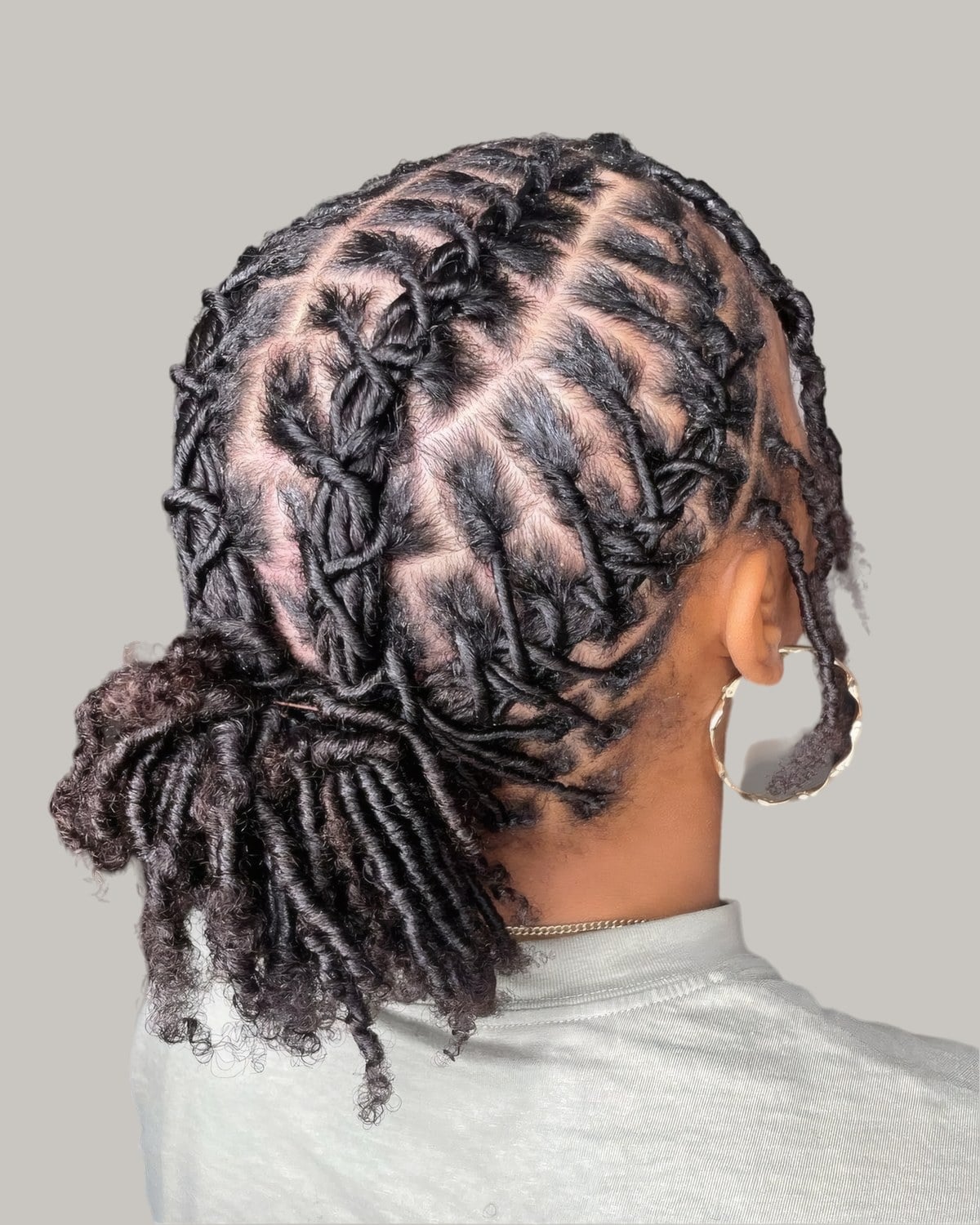
The locs are pulled back into a low bun at the nape, with a bit of copper showing at the ends. The second photo gathers them low with the partings crossing at the back. It’s a low-key style that works in any office.
What to ask for Locs gathered into a low bun at the nape, edges smoothed, ends tucked.
Loose loc updo
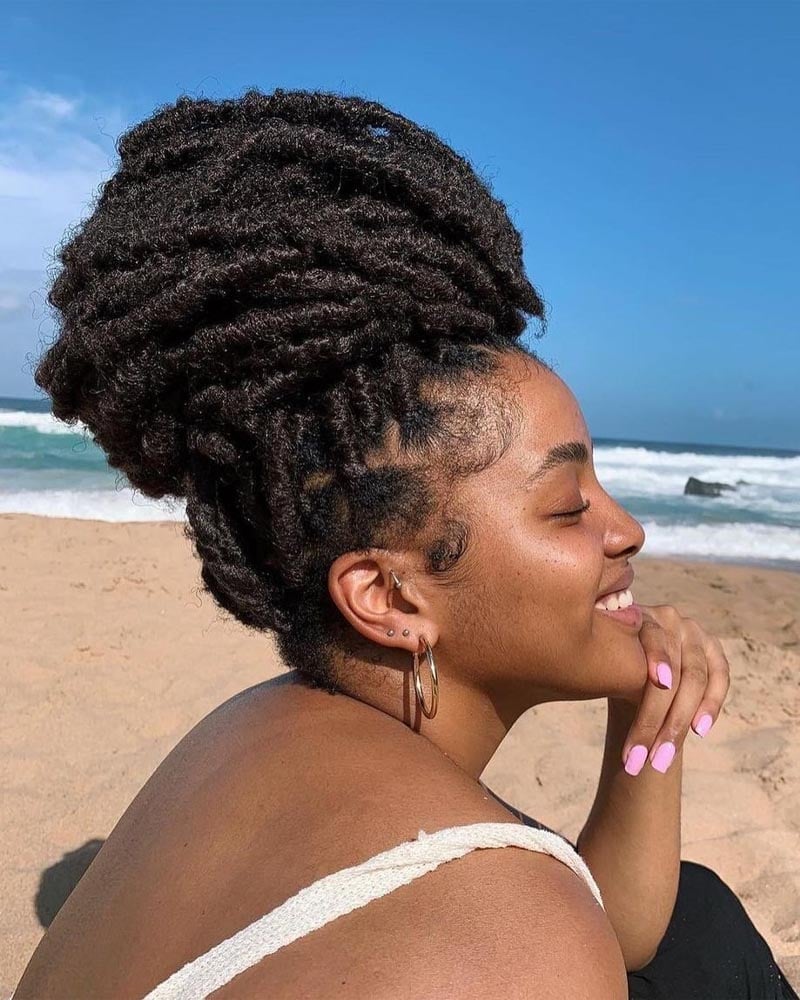
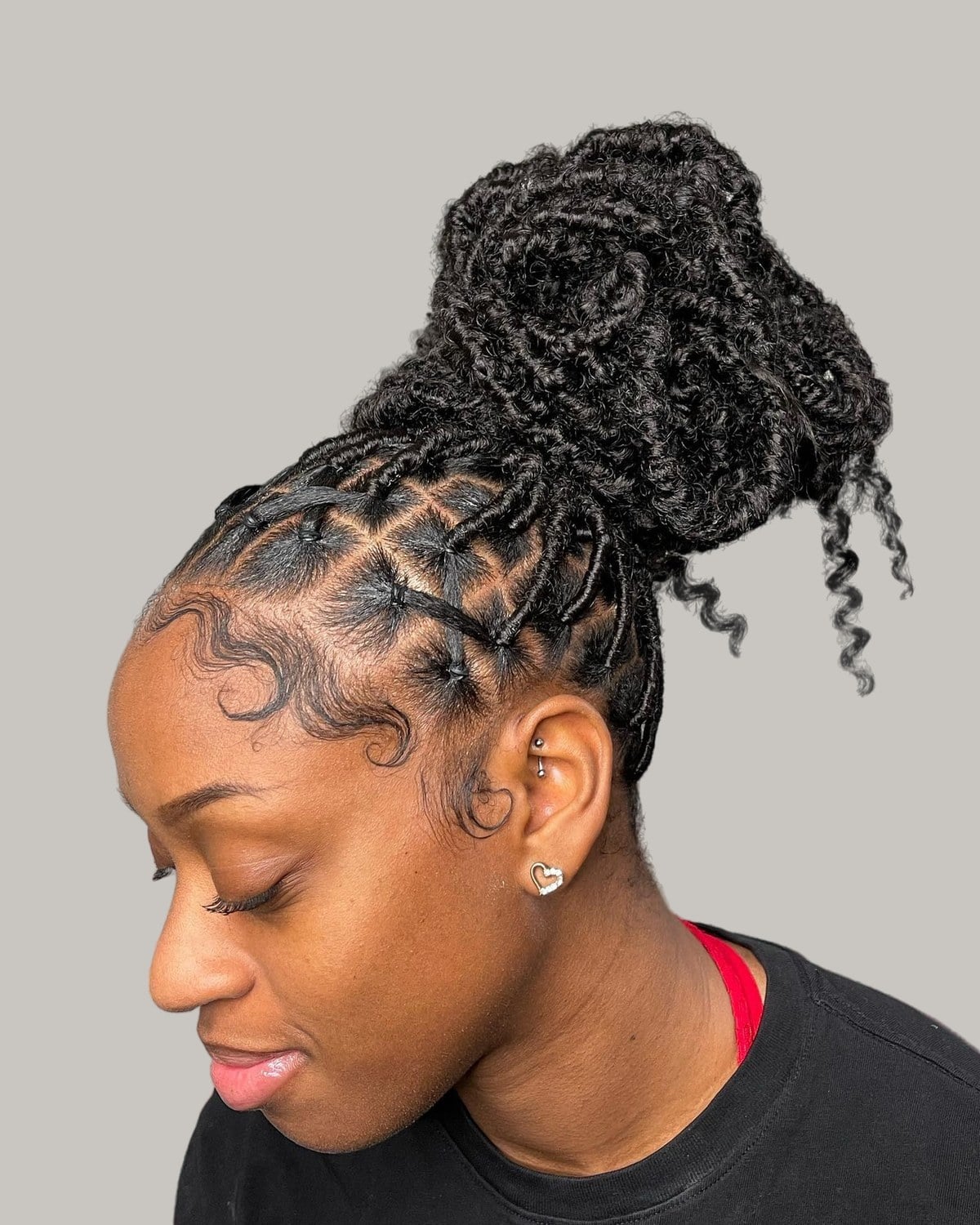
A big, soft updo of thick locs piled on top, worn at the beach. The second photo criss-crosses the locs at the front before they go up into a bun. It’s the style for a day when you want it all off your neck.
What to ask for Locs piled loosely on top and pinned, a few ends left out, or crossed at the front first for the neater version.
Loc mohawks and braided locs
Loc mohawk with braids
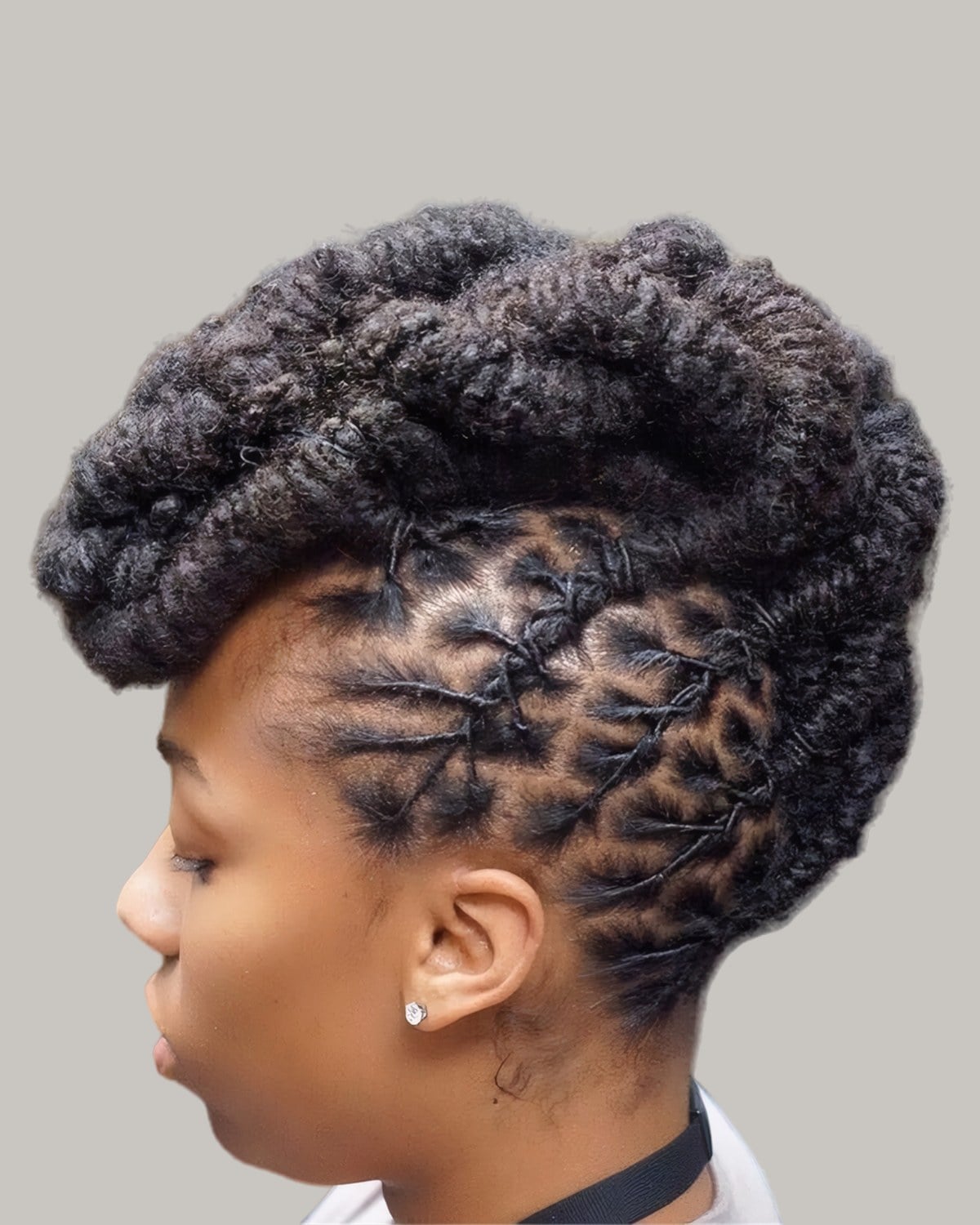
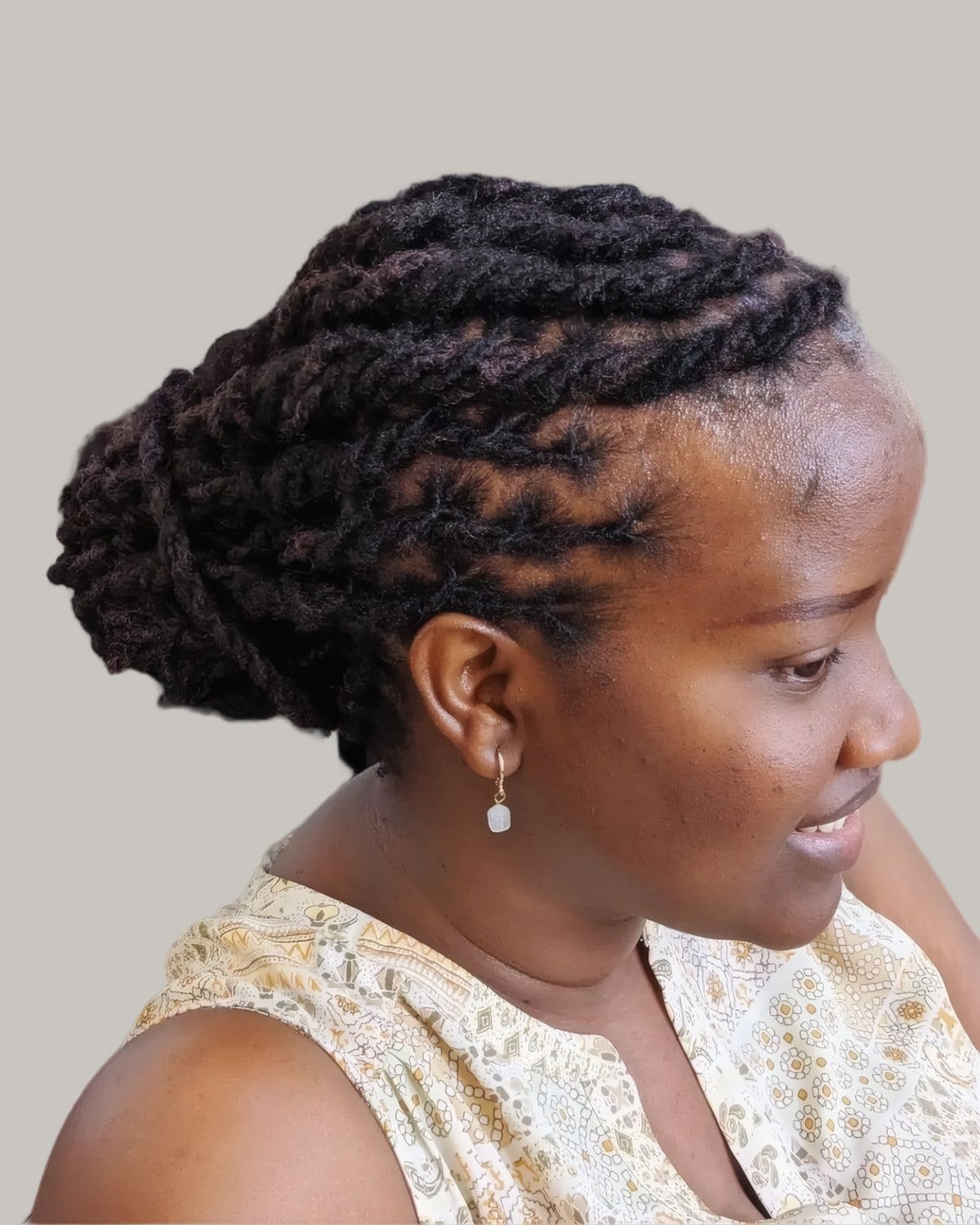
The sides are braided flat up toward the center, and the top locs are rolled and pinned into a mohawk. The second photo cornrows the locs back from the hairline into a bun. It’s a style that looks as good from behind as from the front.
What to ask for The side locs braided flat up toward the center, the top locs rolled and pinned into a mohawk.
Braided locs
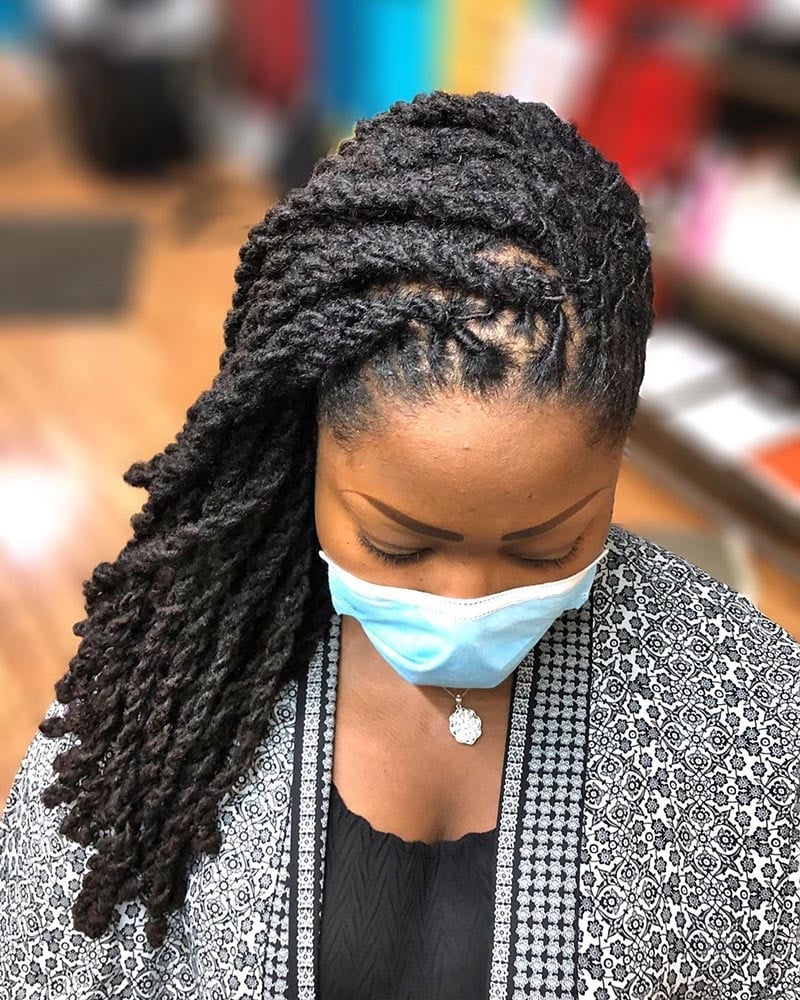
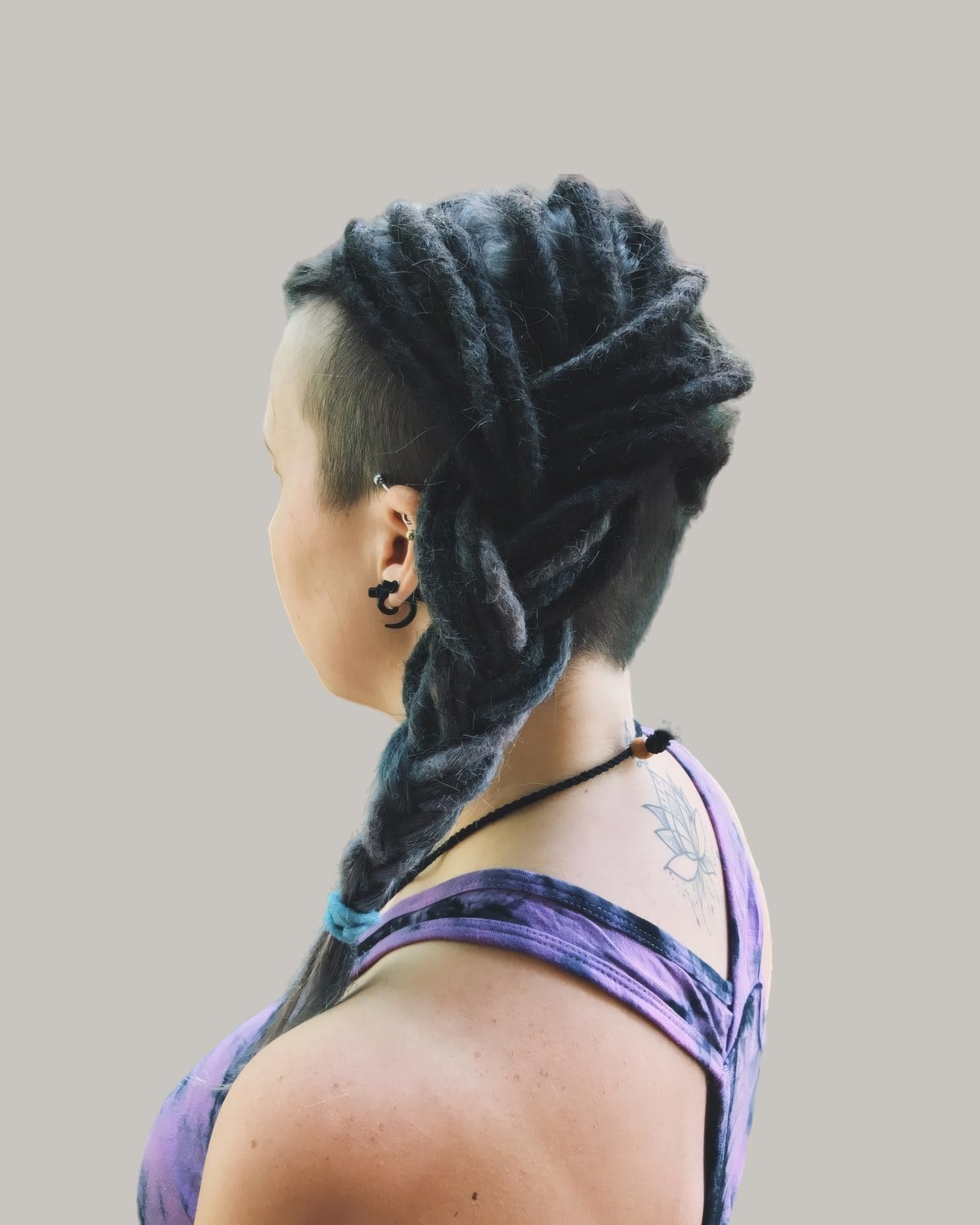
Long locs braided together in pairs and worn over one shoulder. The second photo gathers them into one thick braid over a shaved side. It keeps long locs out of the way without putting them up.
What to ask for Locs braided together in twos down the length, swept to one side, or into one braid down the back.
Curly loc mohawk
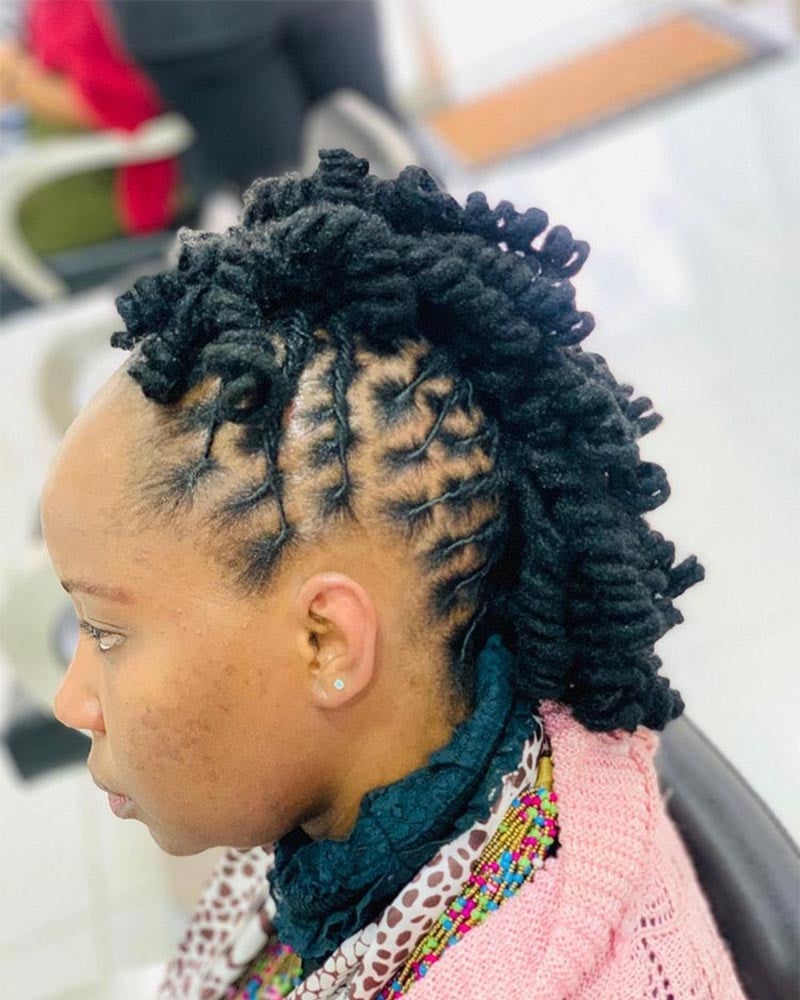
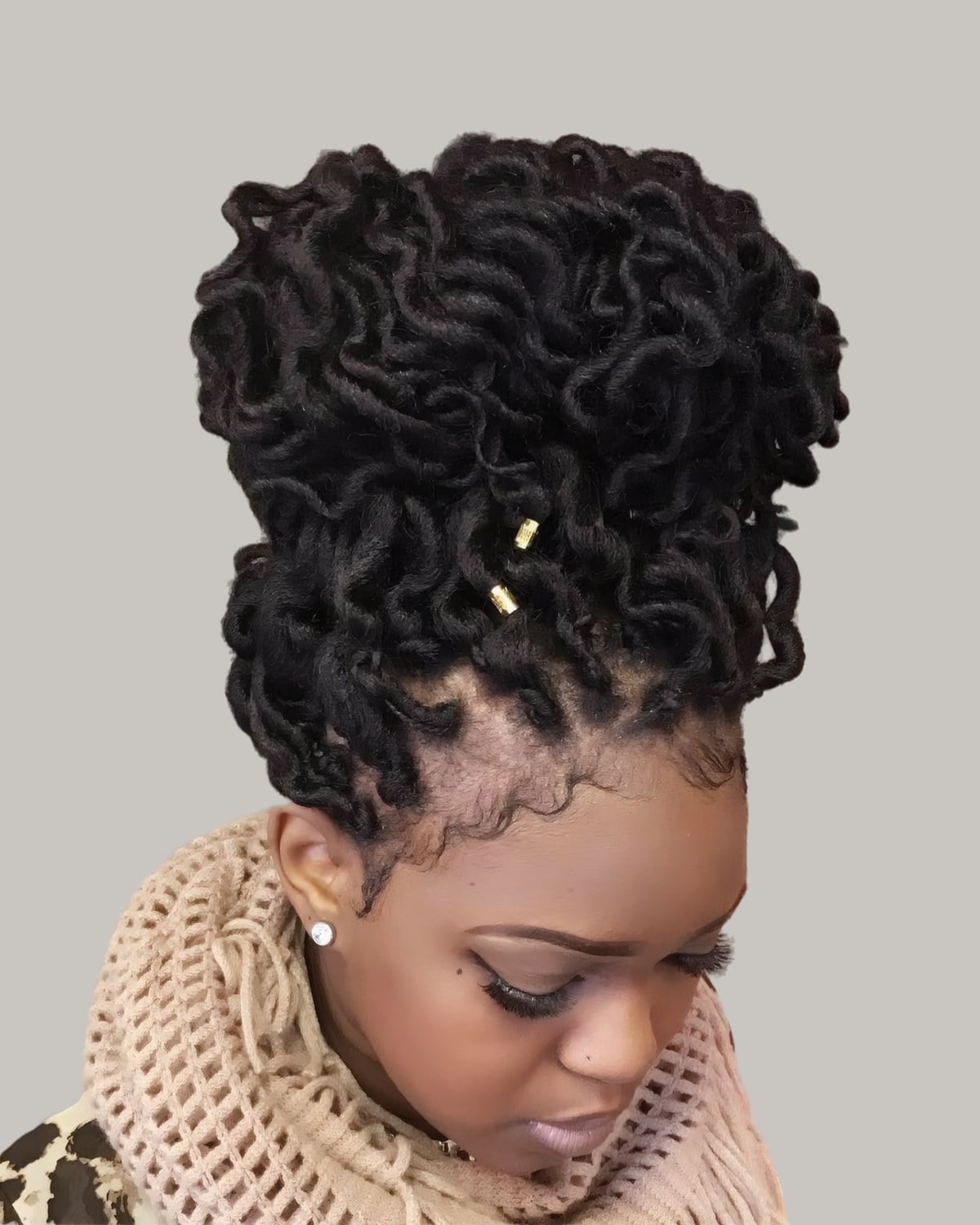
Curly locs piled into a tall mohawk, with the sides twisted flat. The second photo piles the curls into a high bun instead. Set the curls first, and the mohawk holds its height.
What to ask for Set the locs on rods for curl, then pin them up the center into a mohawk, sides twisted flat.
Sculpted loc mohawk
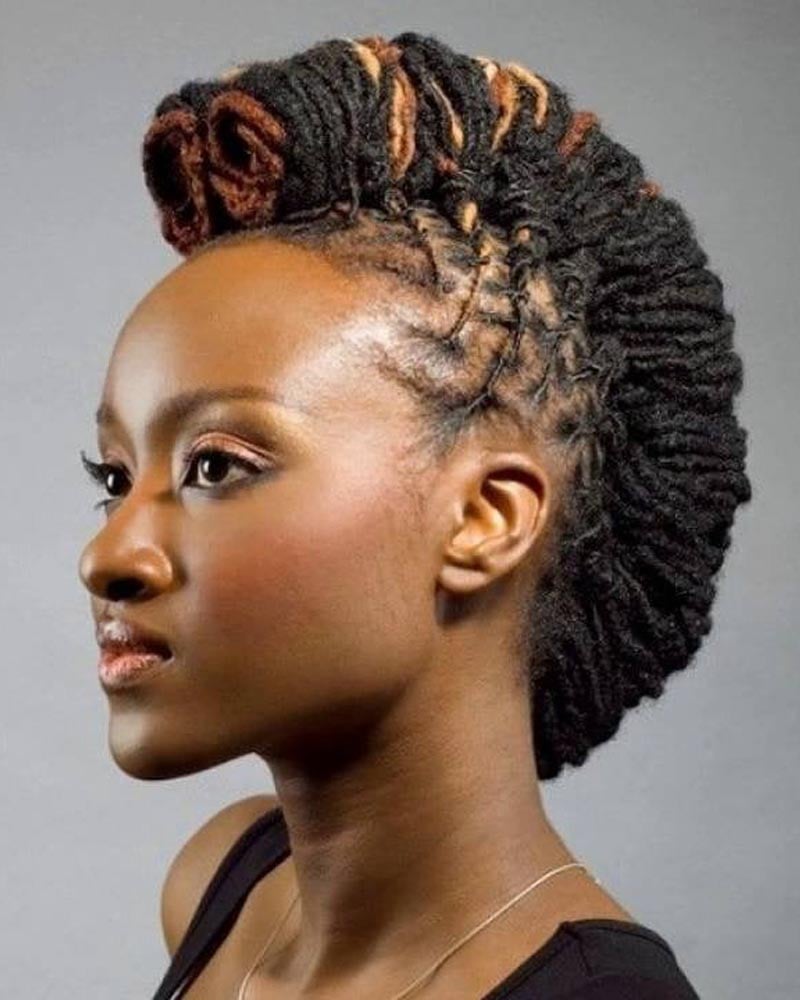
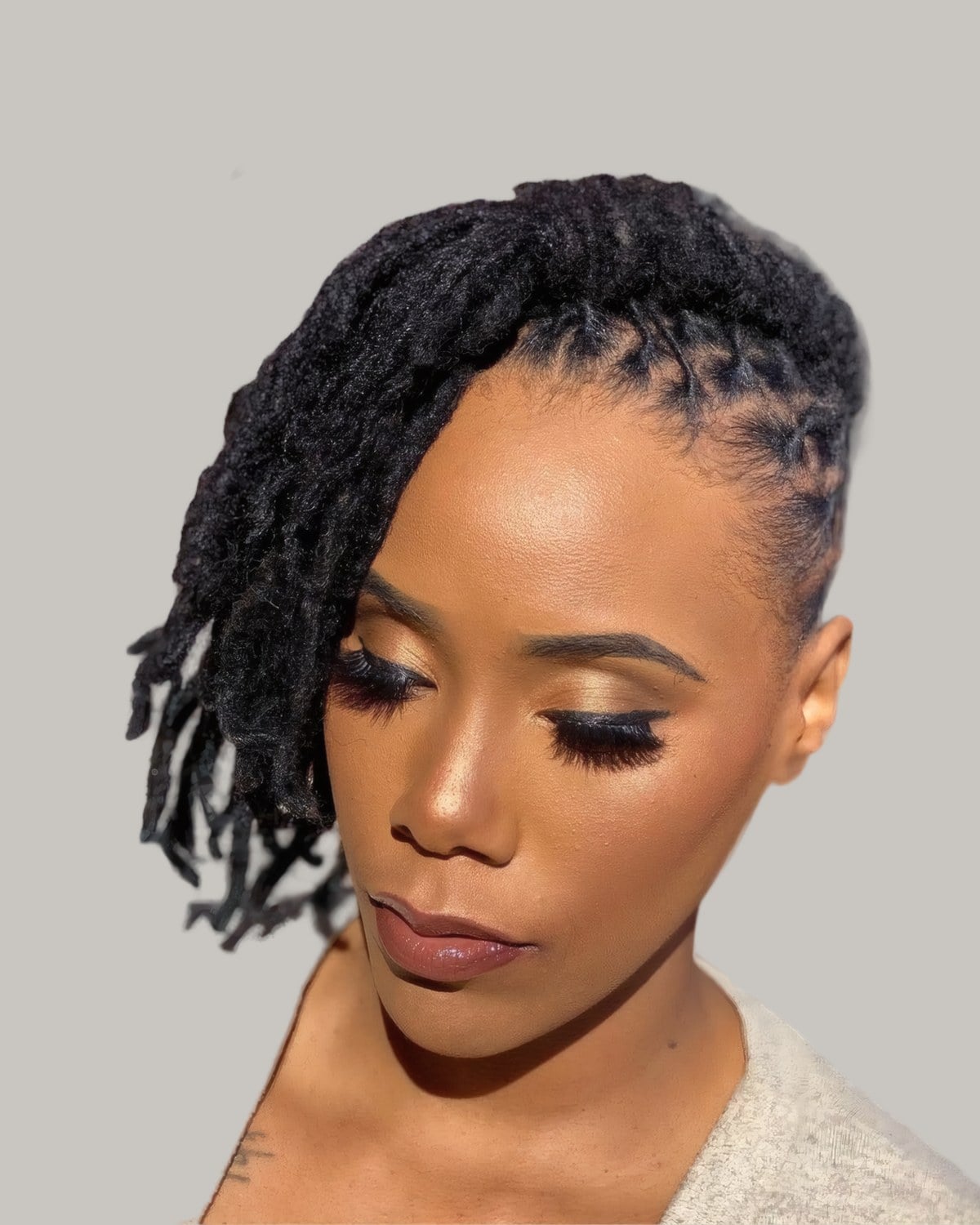
A sculpted mohawk with copper-tipped rolls at the front and the sides twisted in. The second photo is a softer take, with the top curled and swept forward. It’s a formal look that’s still clearly a mohawk.
What to ask for A mohawk updo with the locs rolled at the front, sides twisted up, copper on the ends.
Locs with an undercut
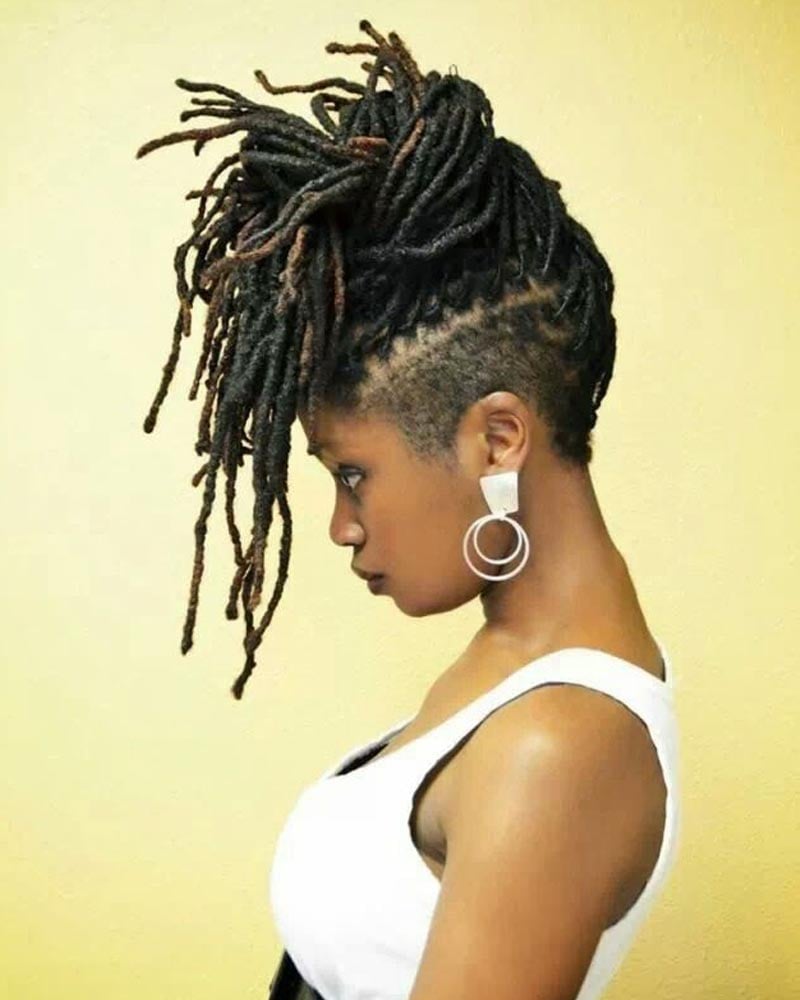
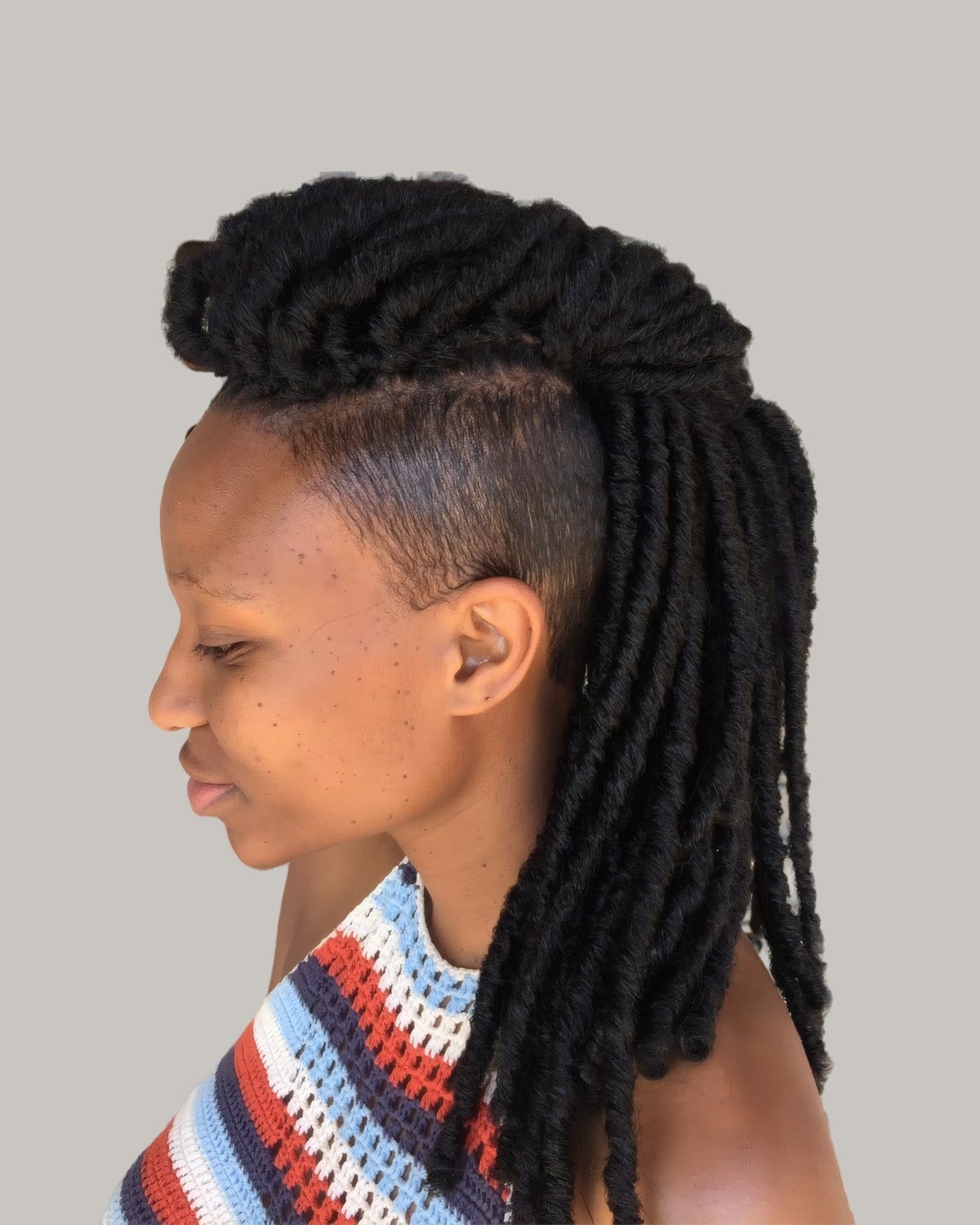
Long locs gathered on top, with one side shaved close and a design cut in. The second photo sweeps long locs over a shaved side. The shaved side needs regular trims to stay sharp.
What to ask for One side (or the nape) shaved close with a design, the locs on top left long and gathered.
Blonde loc mohawk braid
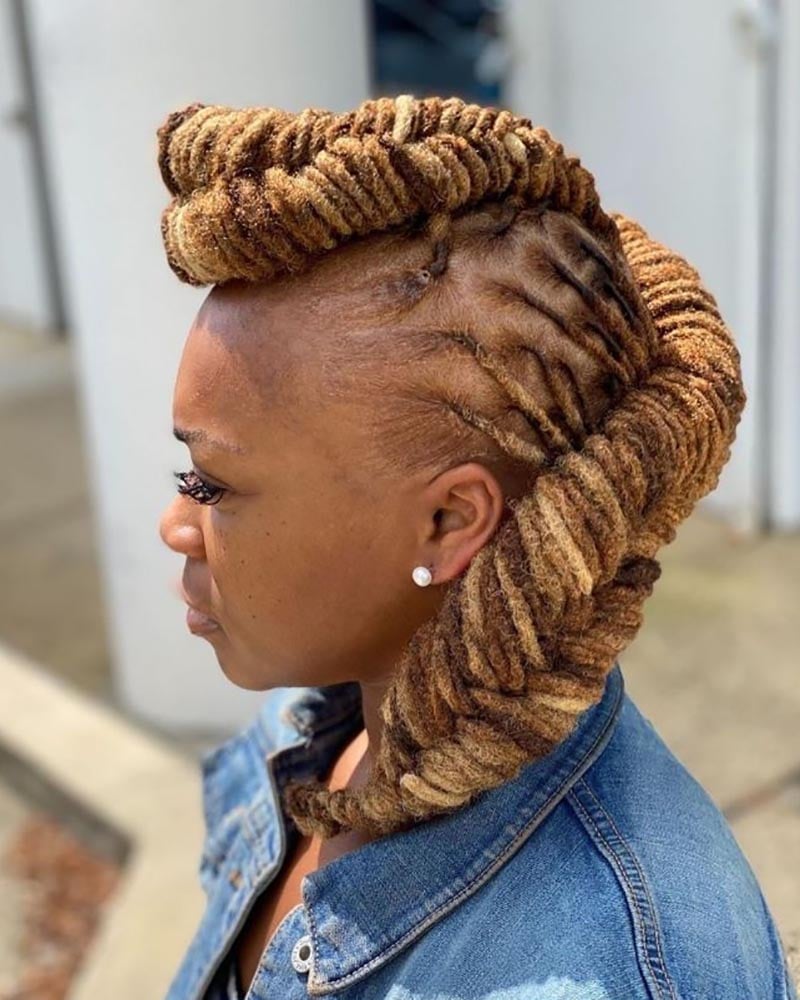
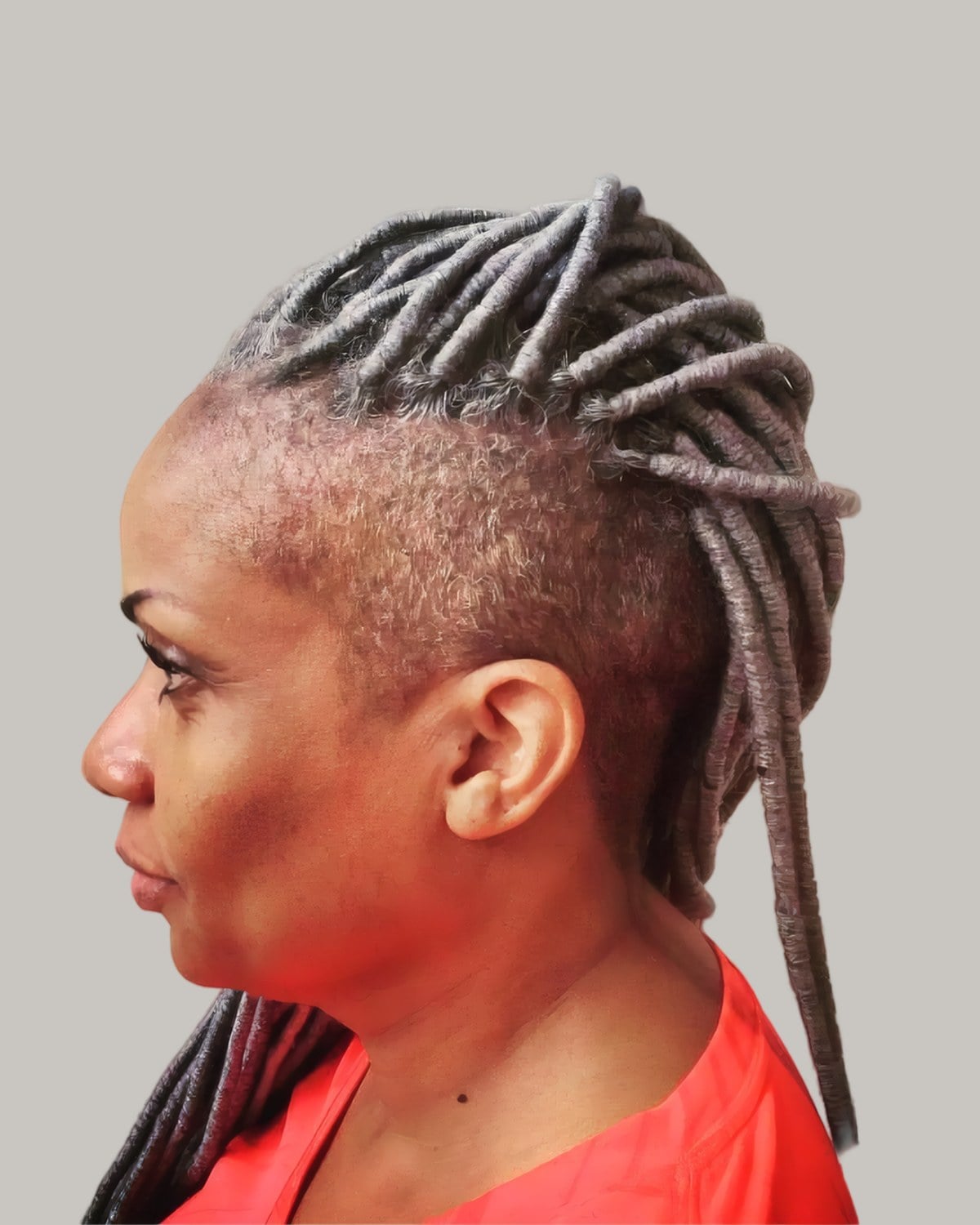
Golden locs twisted into one thick rope that runs from the forehead to the nape. The second photo cornrows the sides up and lets the locs fall from the top. It’s a braid that lets the color show on every twist.
What to ask for The locs gathered into one thick twisted braid down the center, sides smoothed in, blonde on the length.
Colored locs: blonde, red, blue and rainbow
Curly red locs
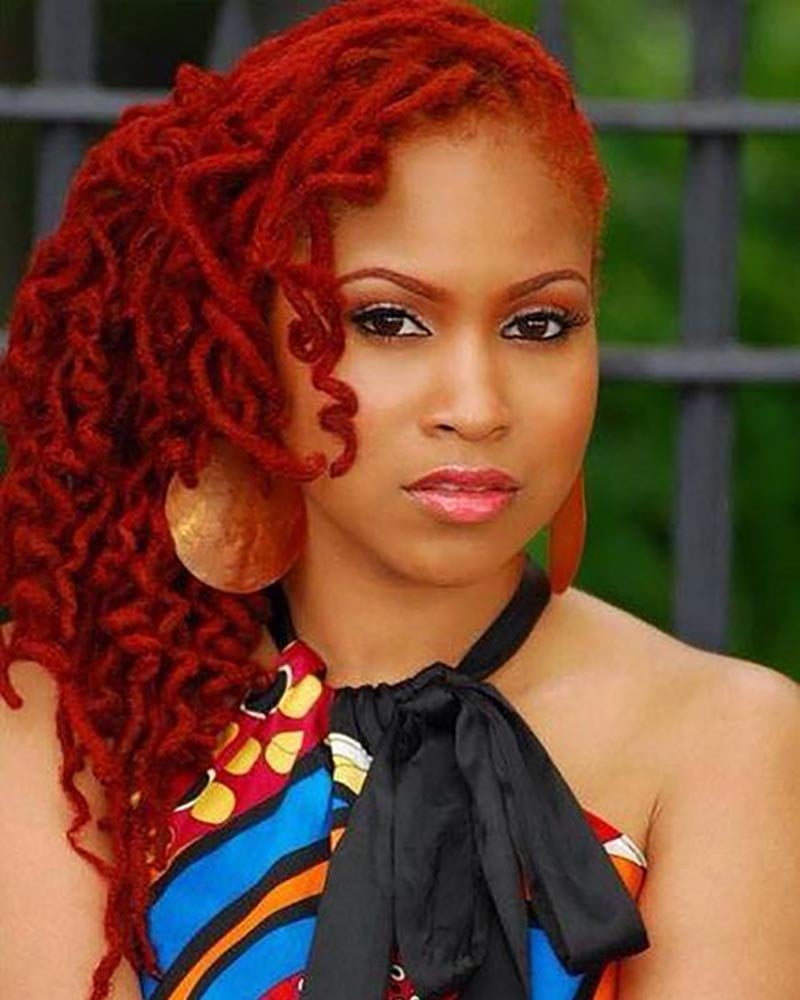
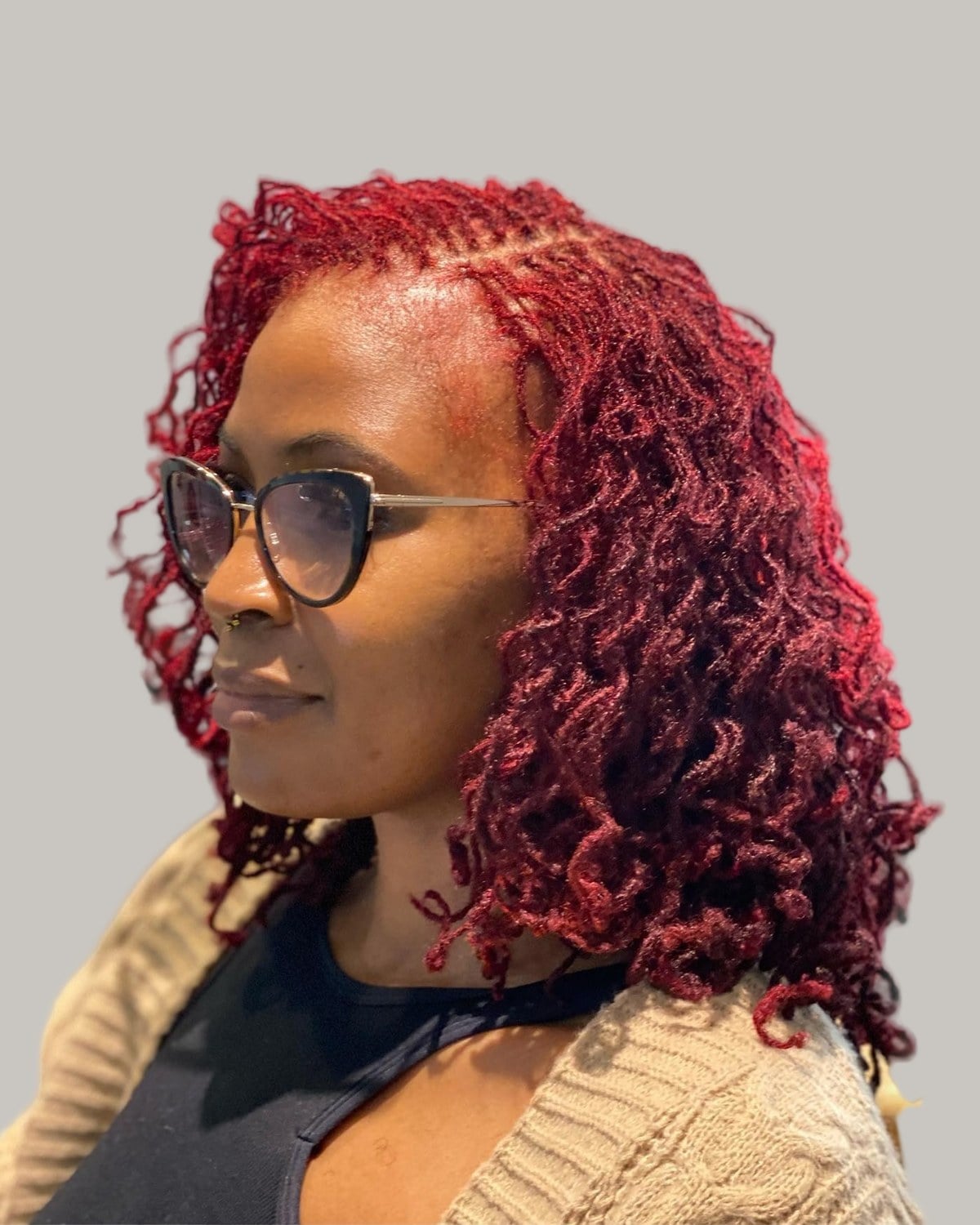
Bright red curly locs, swept to one side, with a big wooden earring. The second photo is a deeper red set, curly all the way down. Book the color with a loctician who colors locs, not just a colorist.
What to ask for Red all over, set curly, swept to one side, ends to the collarbone.
Red curly locs to the shoulder
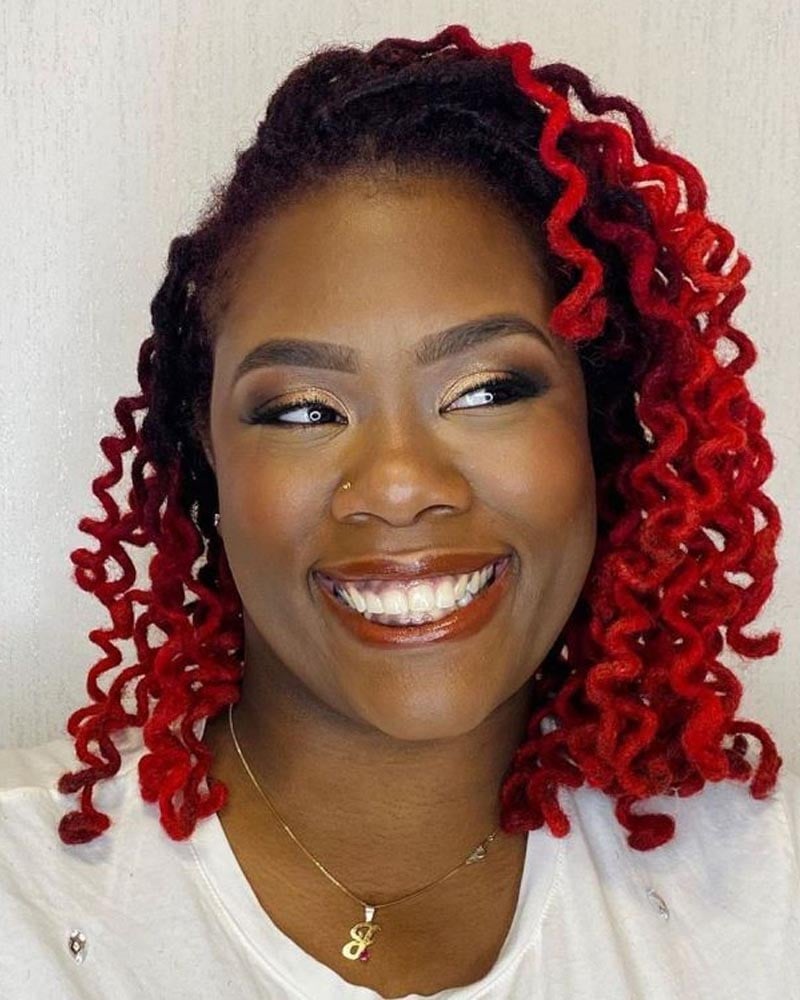
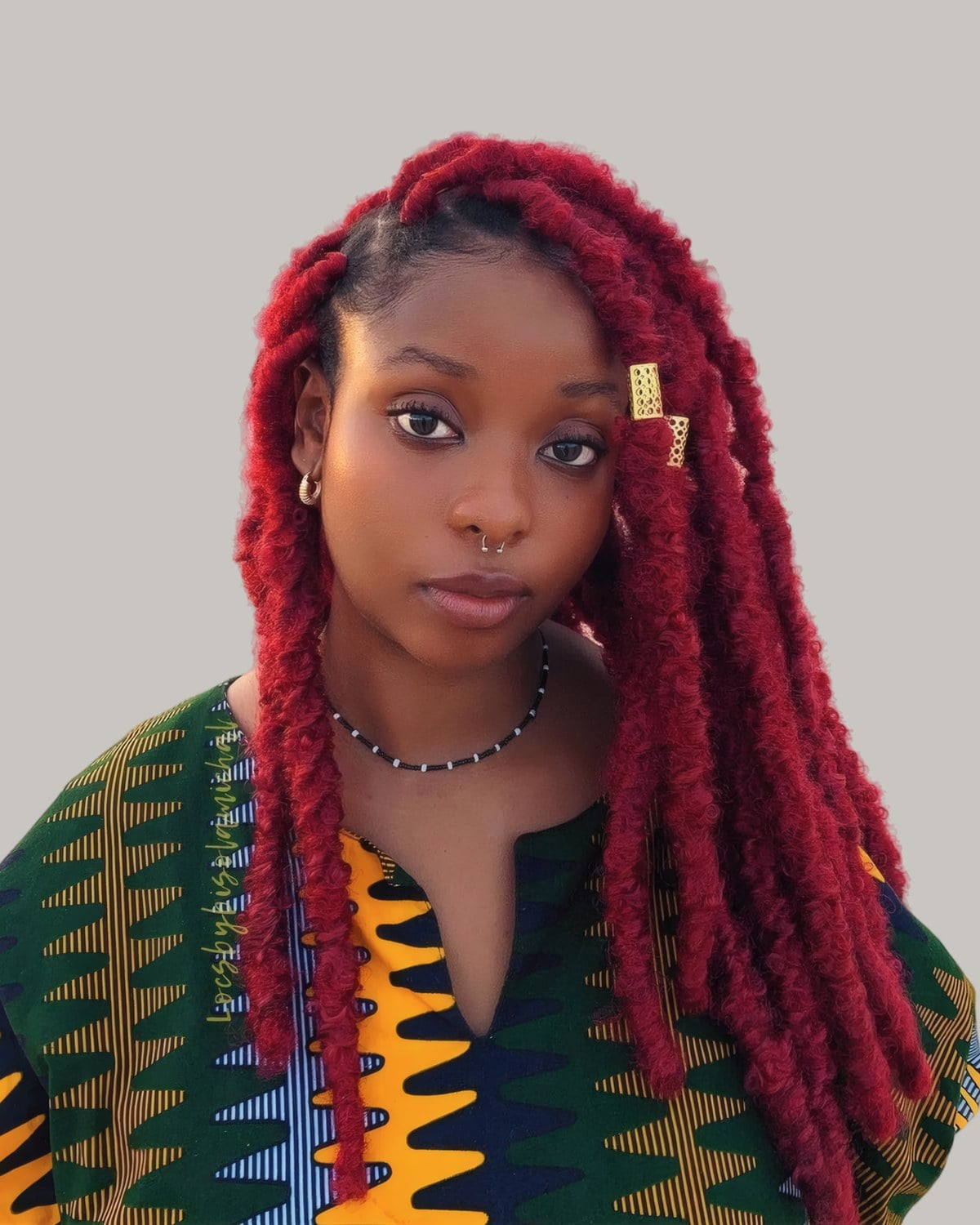
Red curly locs cut to the shoulder, with the roots kept dark so they blend. The second photo shows crimson soft locs, long and straight. Keeping the roots dark means less upkeep between colors.
What to ask for Red on the length only, dark roots, curly ends set to the shoulder.
Copper-red locs, from the back
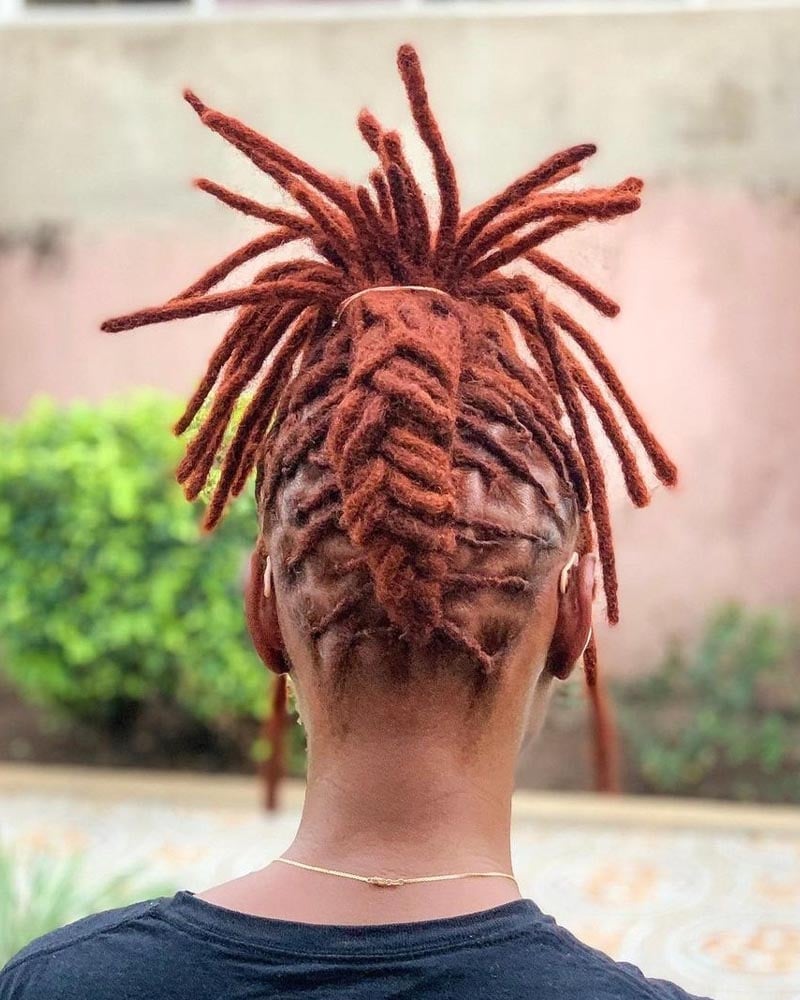
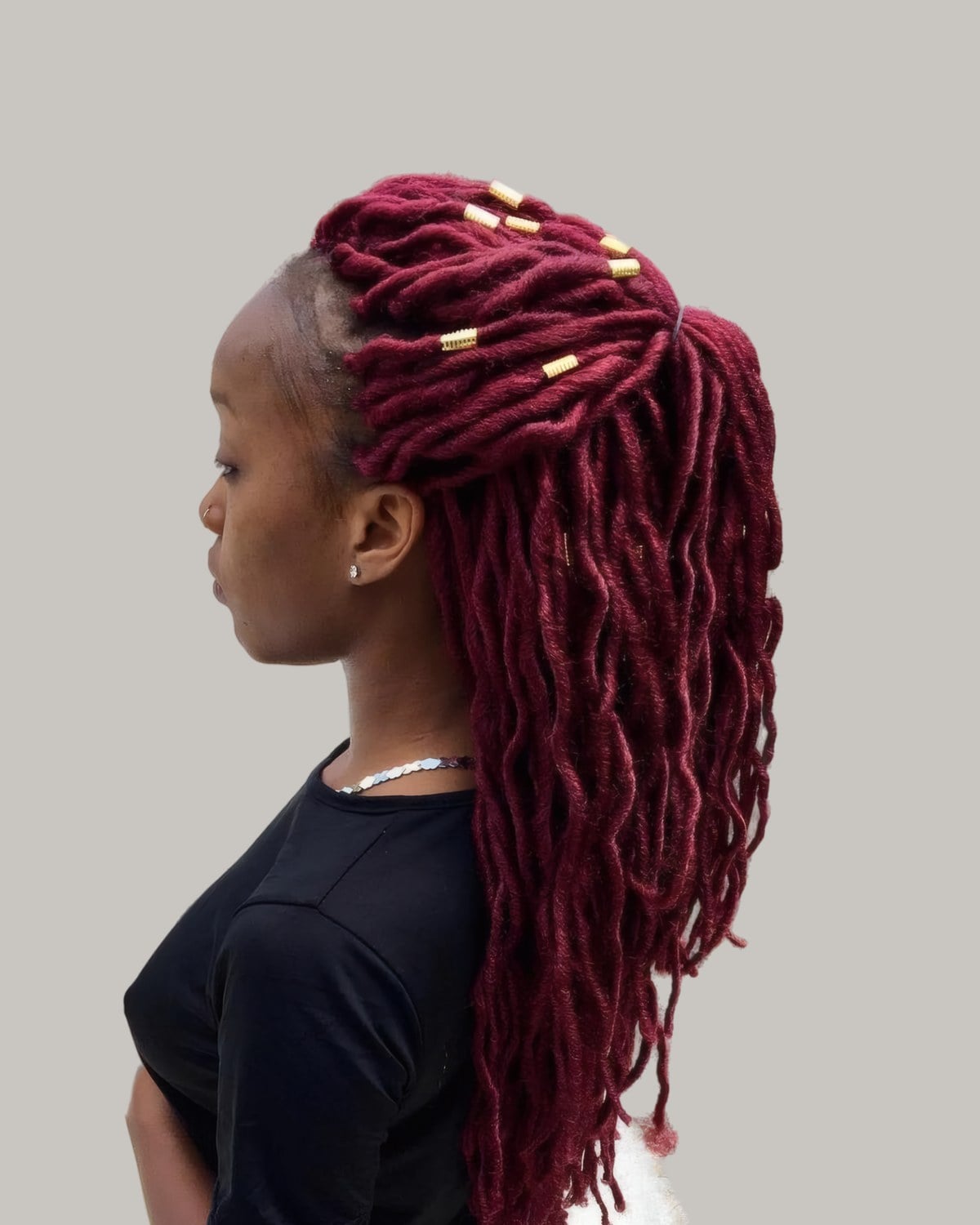
Copper-red locs pulled up and back in rows, seen from behind. The second photo gathers burgundy locs at the crown with gold cuffs. Both show that the back of a loc style can be the main event.
What to ask for Copper-red on the locs, the back retwisted in rows and gathered on top, the nape shaved or tapered.
Honey-tipped loc bun with bangs
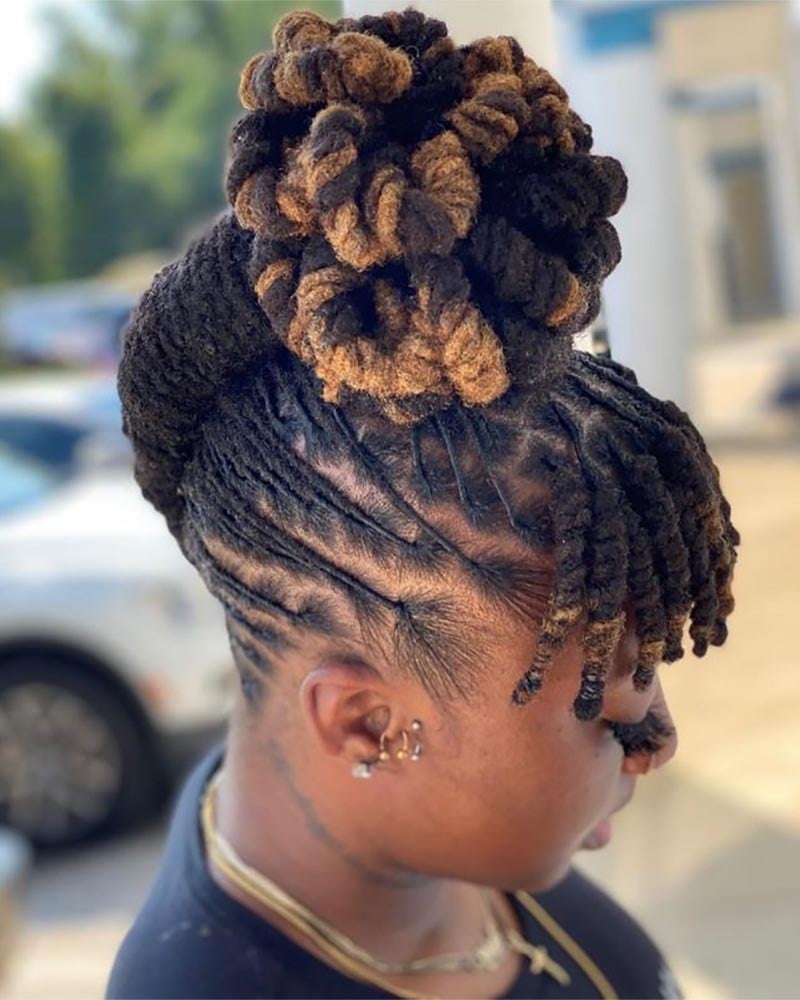
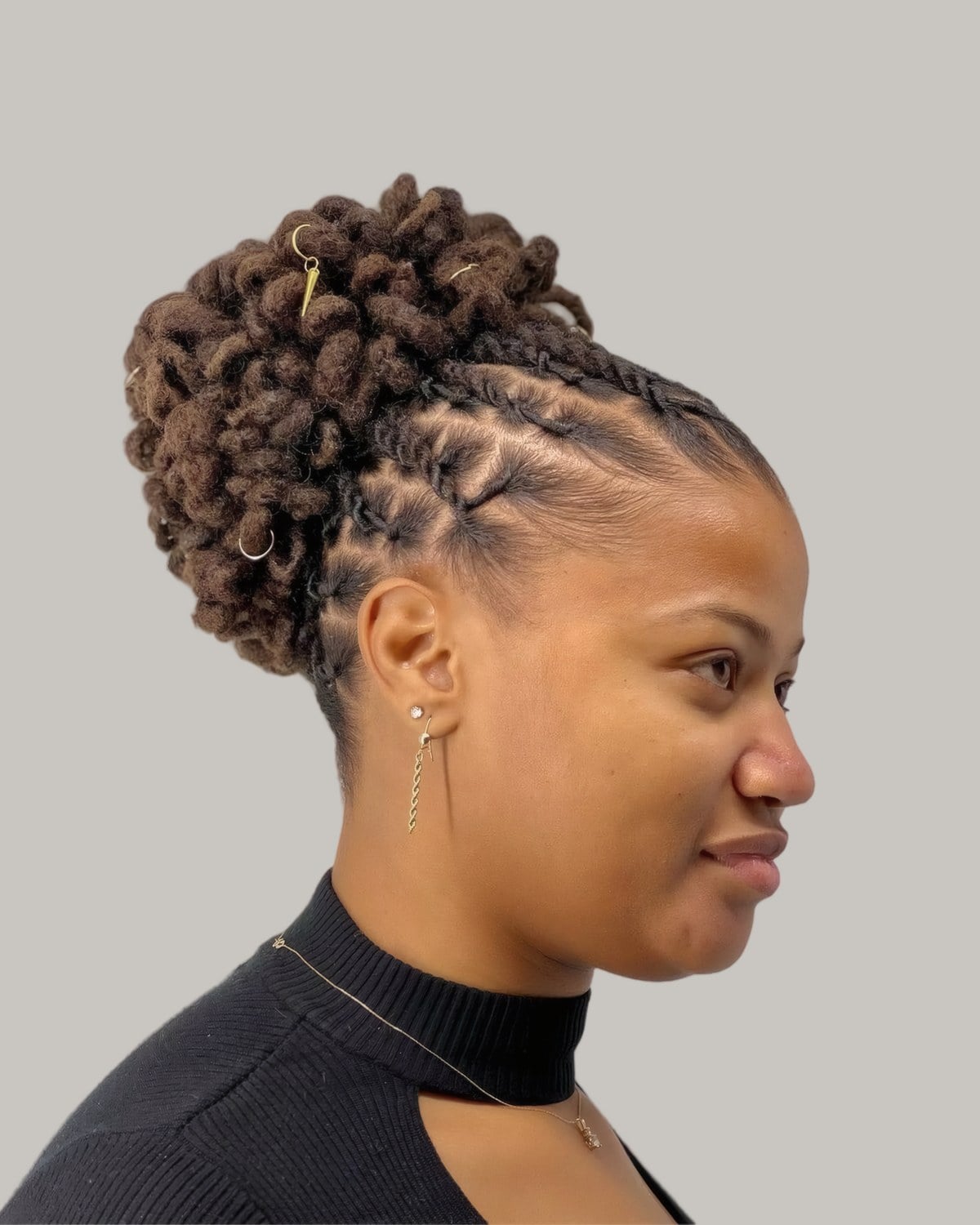
A honey-tipped bun on top and a row of short locs curled forward over the forehead. The second photo is a brown puff bun with neat partings at the sides. The color’s on the ends only, so the regrowth doesn’t show.
What to ask for Honey-brown on the last few inches, a high bun, and short locs curled forward into bangs.
Blonde swirl bun
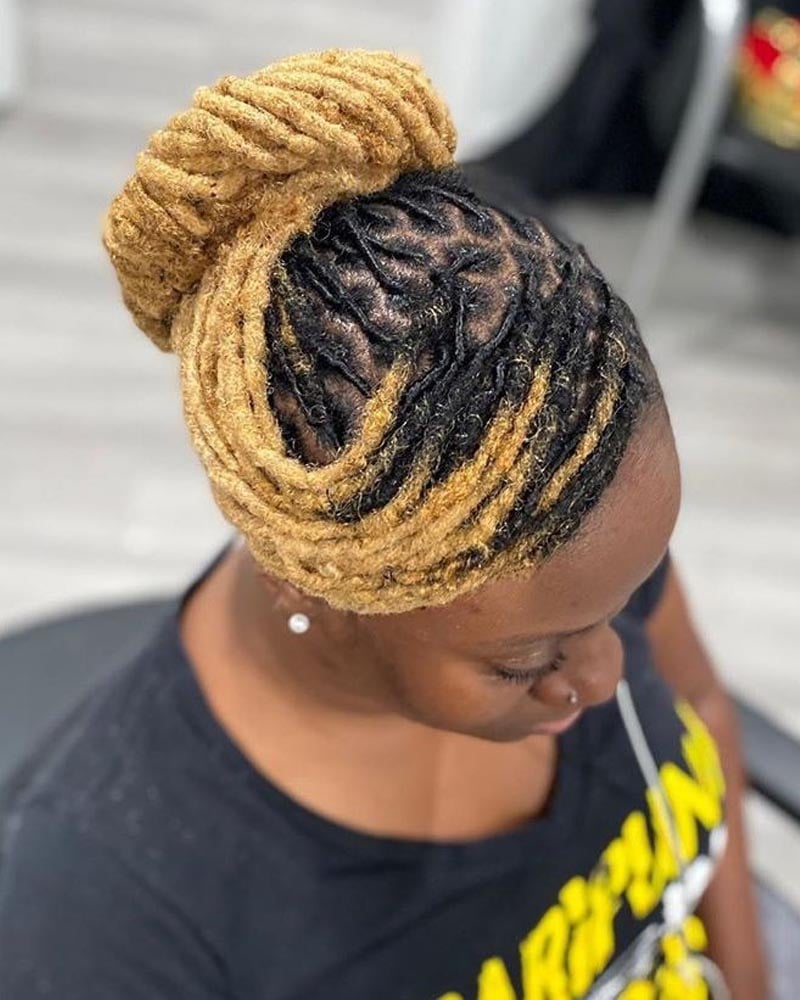
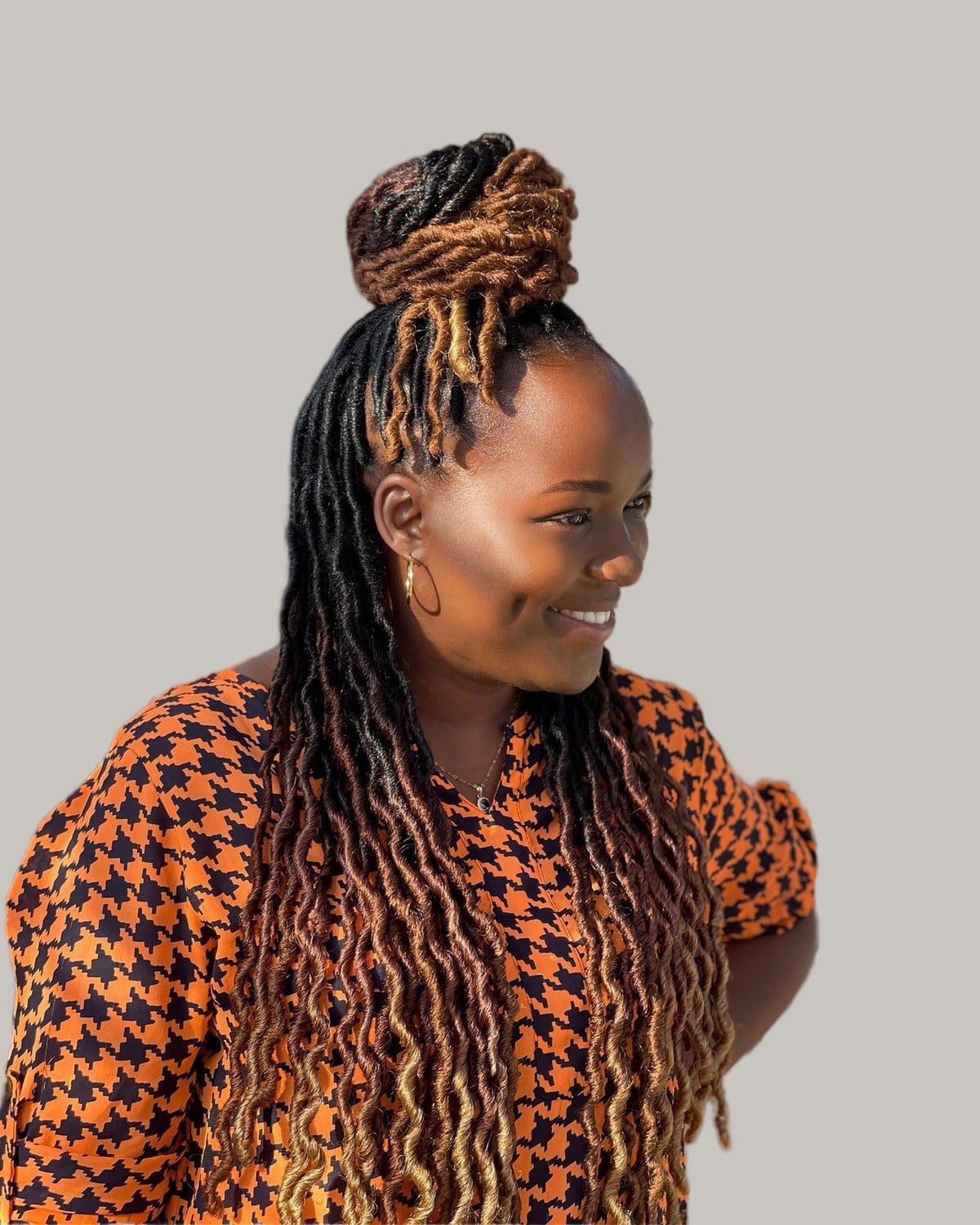
Golden blonde locs wound into a swirl at the crown, with dark roots and a neat retwist at the sides. The second photo has honey-brown locs, half up in a bun, the rest down. A fresh retwist keeps the swirl neat.
What to ask for Golden blonde on the length, a fresh retwist, and the locs wound into a swirl bun at the crown.
Blonde loc space buns
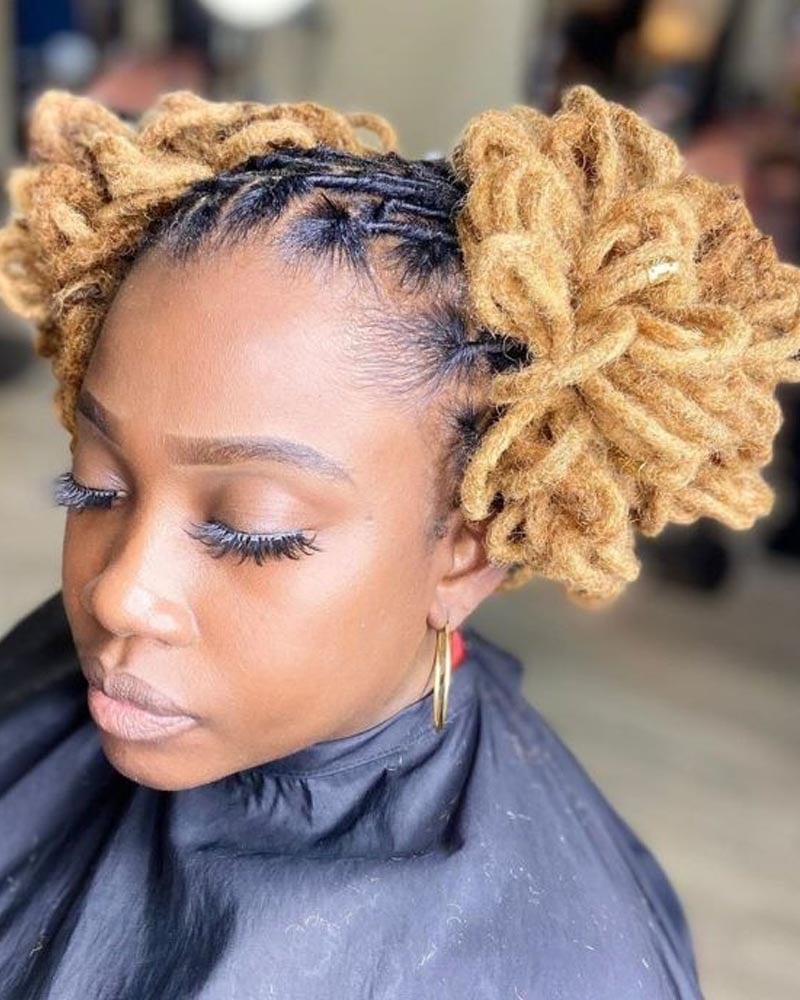
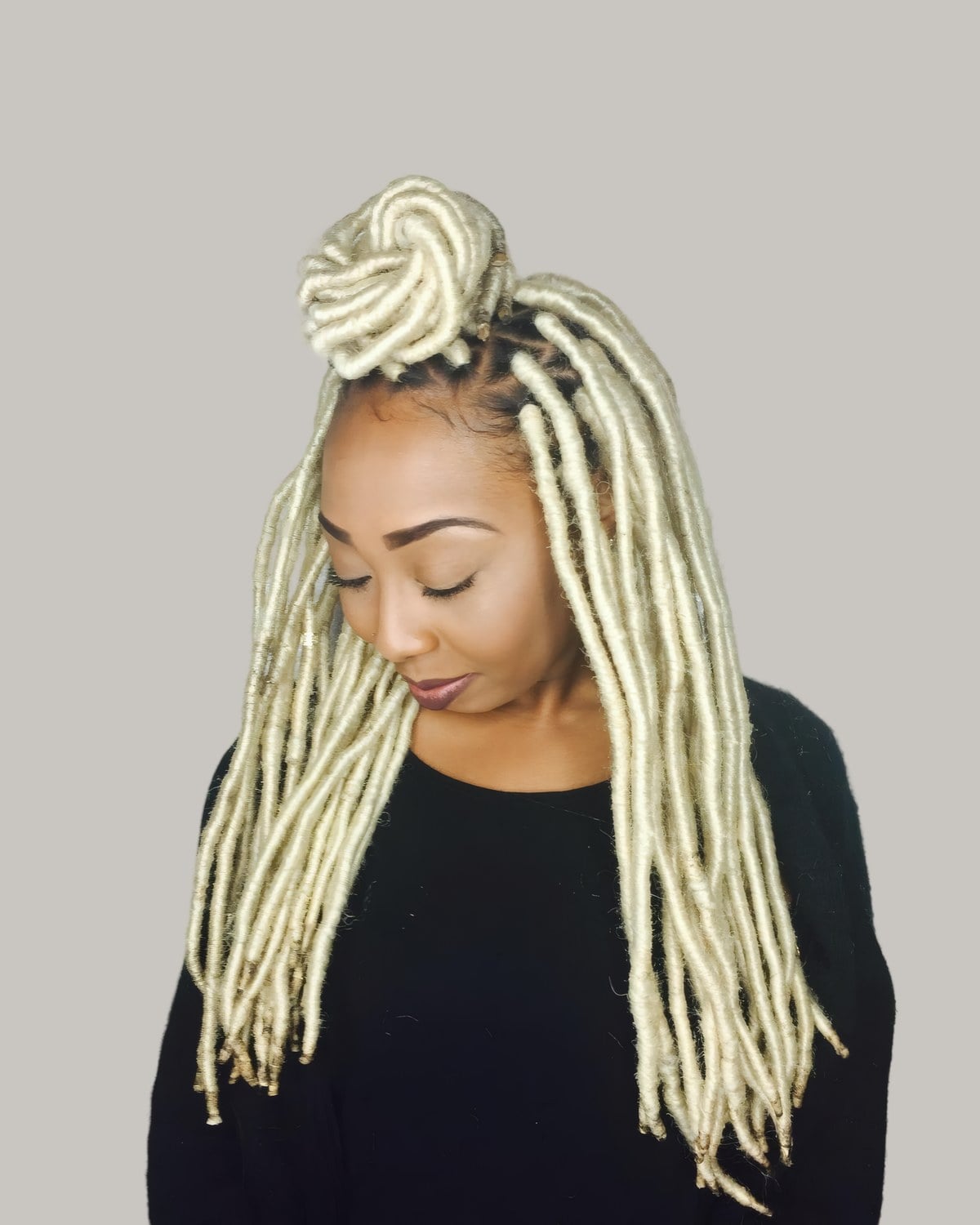
Two big blonde loc buns with the curly ends left out. The second photo goes platinum, with one high bun and the rest left down. They’re a softer, fluffier cousin of plain space buns.
What to ask for Two space buns high on the head, curly ends left out, blonde on the length.
Rainbow locs
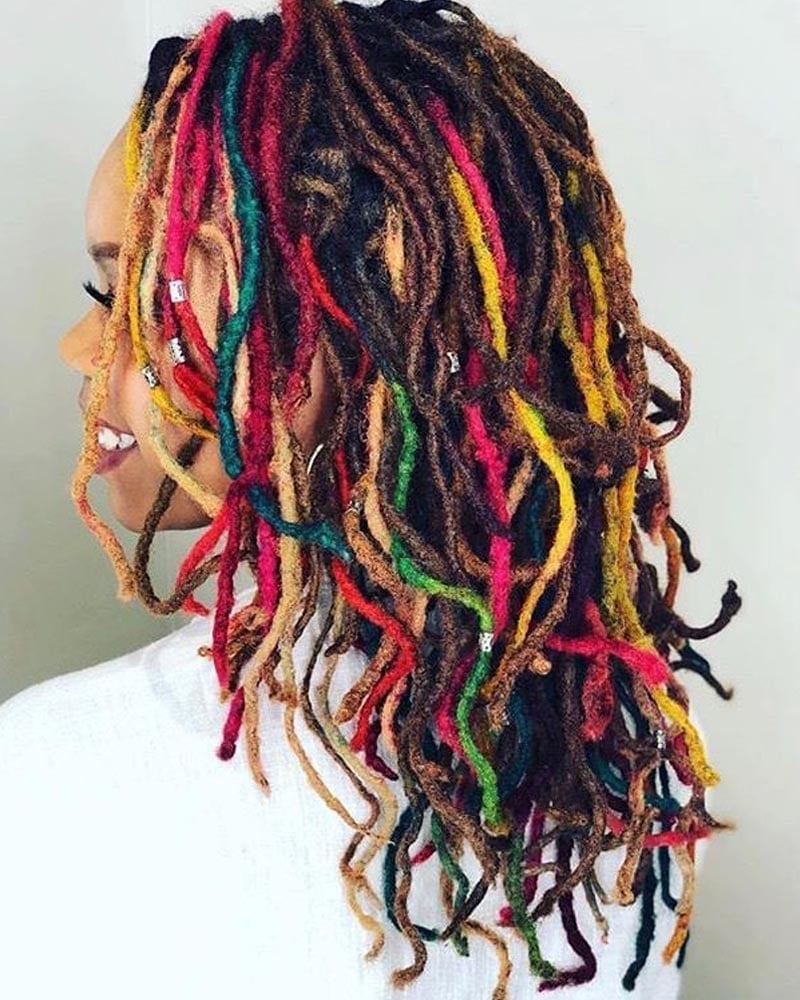
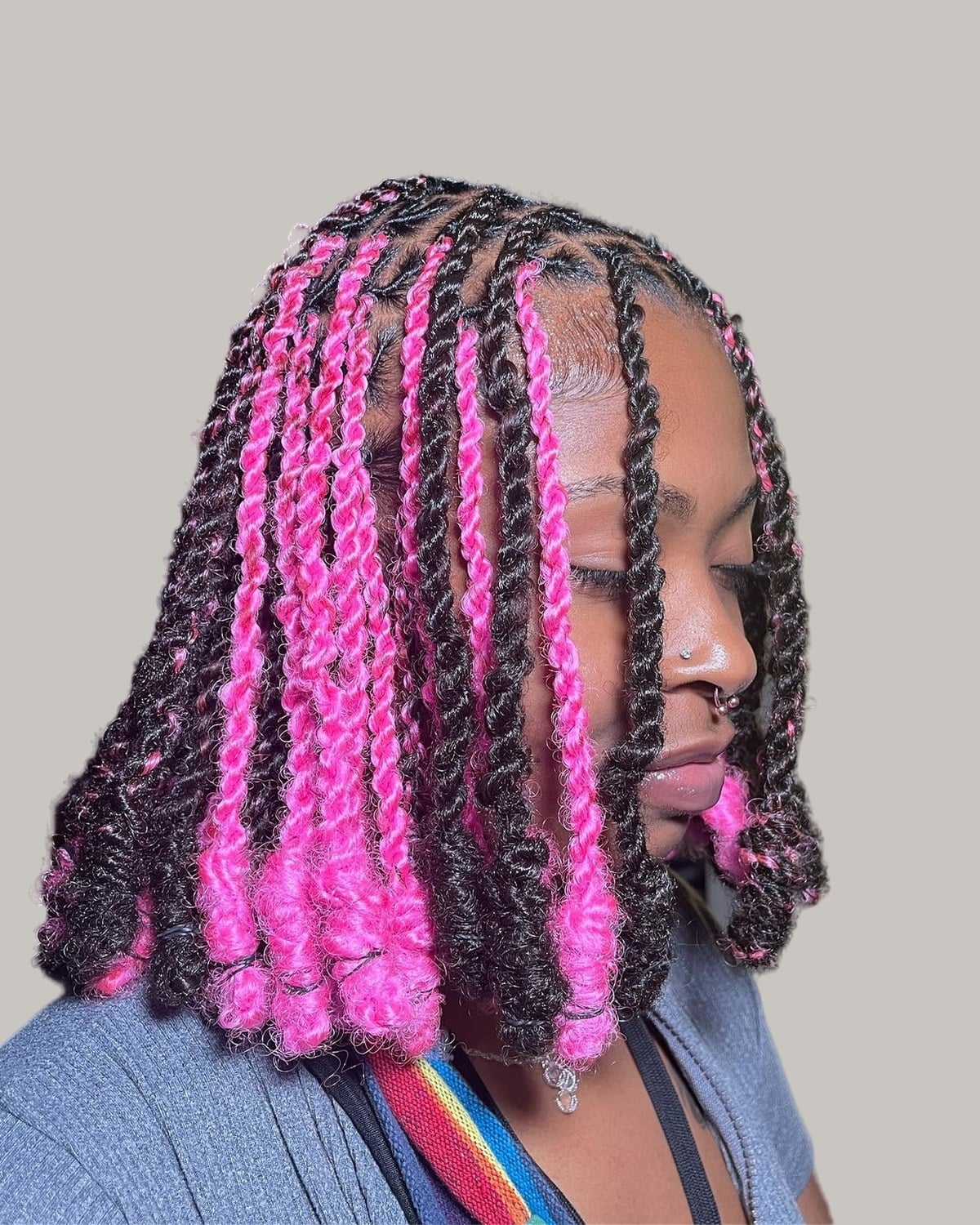
Short dark locs with strands of red, yellow, green and pink wrapped into some of them. The second photo does the same with pink faux strands through dark twists. You can add the color and take it out, with no bleach at all.
What to ask for Colored thread or synthetic strands wrapped into a handful of locs, spaced through the head.
Yarn loc space buns
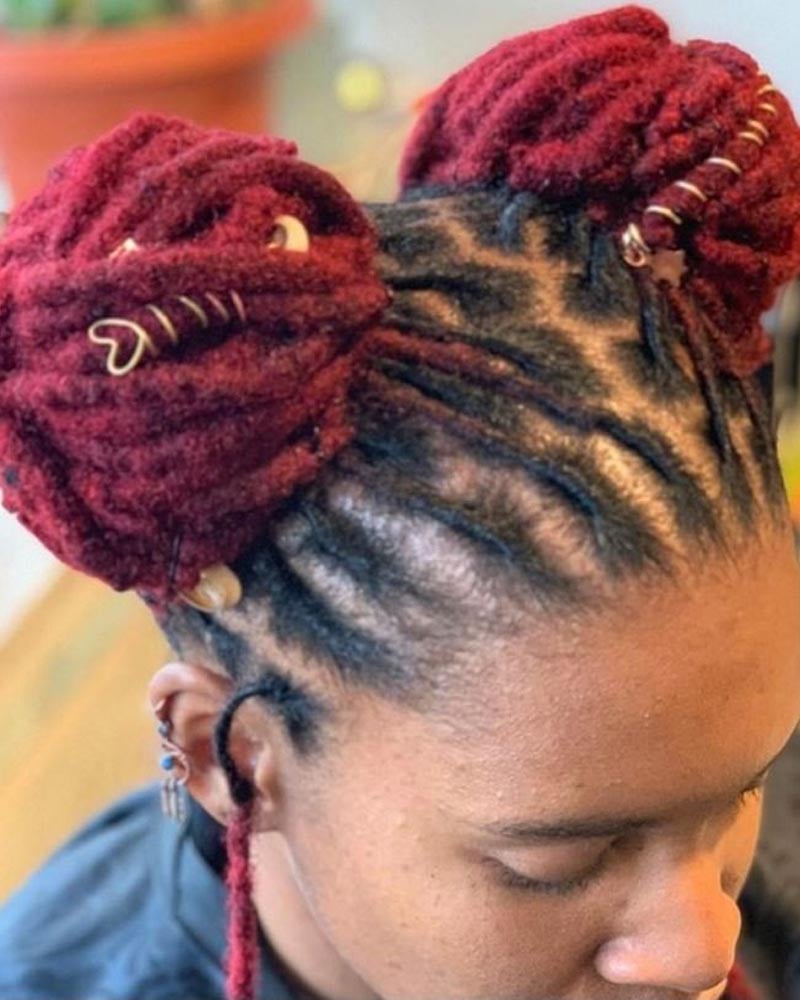
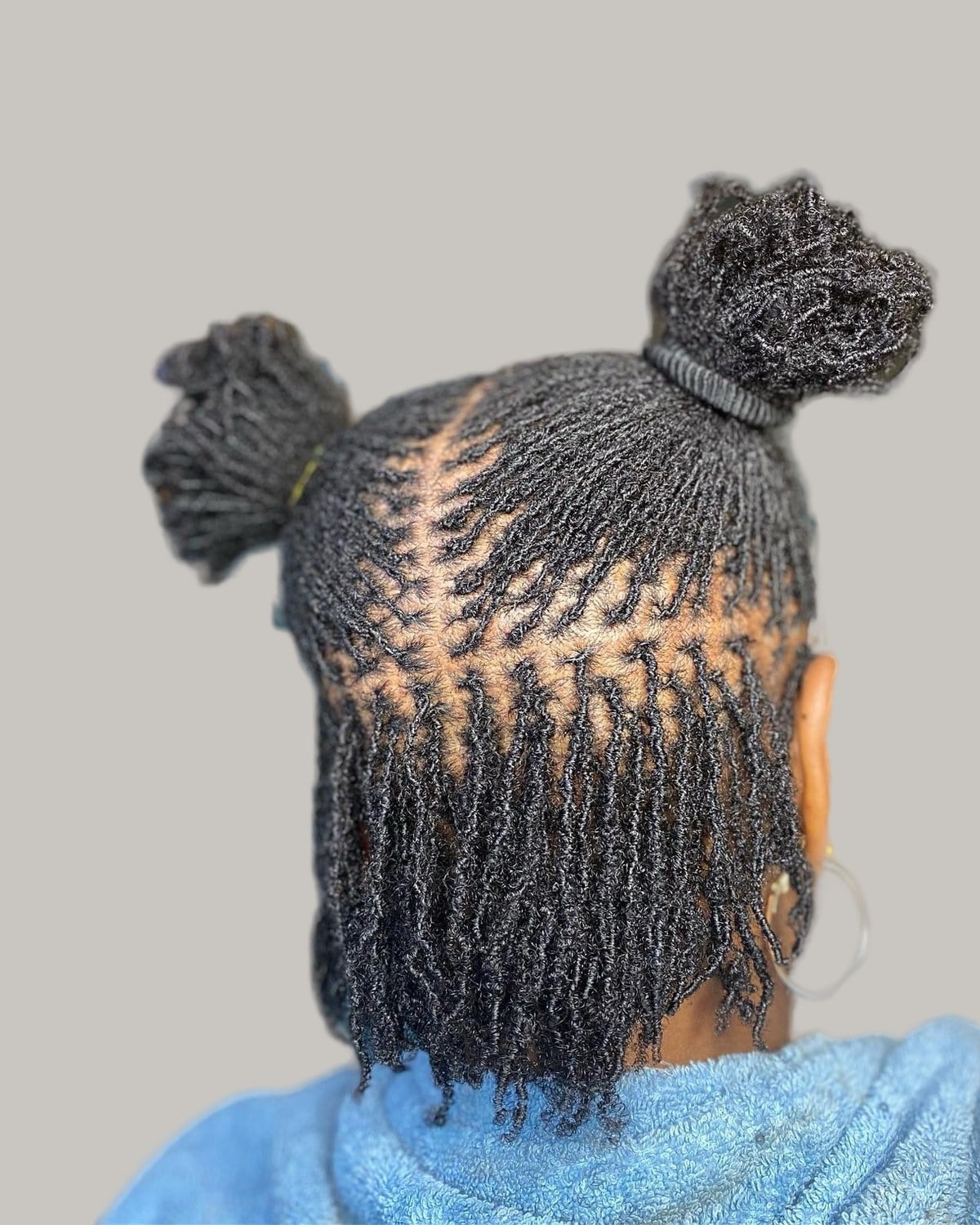
Burgundy yarn locs piled into two high buns, with gold cuffs and the parts showing. The second photo shows two small buns from behind, with the rest of the locs left down. The gold cuffs pick up the warm tone in the red.
What to ask for Burgundy yarn locs, two buns high on the head, a couple of gold cuffs, the parts left visible.
Blue, purple and pink curly locs
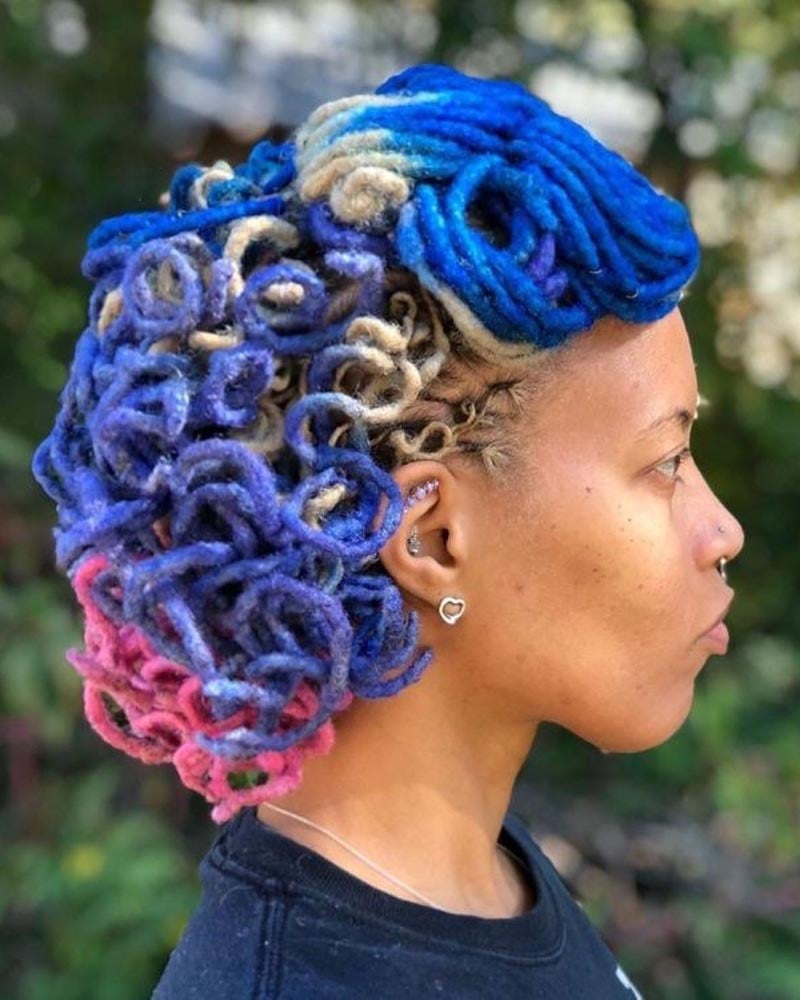
Blue, purple, pink and blonde curly locs pinned into a side updo. The second photo mixes copper and black in long curly locs. Faux color lets you try this for a few weeks before anyone gets the bleach out.
What to ask for Curly locs in blue, purple and pink with blonde at the front, pinned up to one side.
01 of 01
What counts as a loc style, and how to choose one
A loc style is anything you do with locked hair: cutting it, coloring it, putting it up or wearing it down, plus the faux versions that copy the look with extensions. Locs themselves are sections of hair that have matted and locked over time, and once they’ve formed you style them like any long hair, with a bit more patience.
Choose with the three things that decide how locs look: size, neatness and length. Size is set on day one (micro, small, medium or thick), so pick it before anything else. Neatness is how often you retwist and whether you go freeform. Length decides which of the styles above you can wear: bobs and Bantu knots work short, and towers and halos need a lot of length.
Which loc style suits you?
If you like your mornings short, a neat, uniform set that ties up for work is the practical one. Short locs are easier to maintain and let you grow them out as you go. If you’d rather change your look every month, small locs give you more ways to style them, and a mix of sizes with a few beads gives you the bohemian vibe.
Not sure yet? Try faux locs or soft locs first. They usually last four to six weeks (butterfly locs sometimes six to eight), and that’s long enough to find out if you like the weight and the look before you commit your own hair.
What to ask your loctician for
Go in with the loc size, the parting and the style. Say whether you want small, medium or thick locs, and what grid you want them on. For faux locs, give the length (shoulder, mid-back or waist), the color, and whether you want curly ends. Say how you want them retwisted too: interlocking pulls the loc through at the root, and palm rolling smooths and rounds it.
Bring both photos from the look you like, and read out the ask line under it.
How much upkeep do locs take?
Locs need a retwist every four to six weeks as a general rule, and once they’re mature you can go eight to twelve weeks or more. Don’t retwist more often than that, because it thins the locs and can break them.
Wash them too. Mature locs can be washed every week or two, and a residue-free shampoo stops build-up settling inside the loc. With starter locs, many locticians say to wait about two weeks after a retwist before you wash.
What’s the difference between locs and dreadlocks?
It’s the same hair, with a different name. Many people prefer “locs” because of the word “dread”, while the Rastafari used “dread” for reverence. You’ll still see “dreadlocks” and “dreads” around (including on this page’s older looks), and “locs” is the word you’ll hear in the chair.
What are the types of locs?
Locs are usually named after how they’re started or how big they are. Comb coils suit short hair. Two-strand twists need about 4 to 5 inches, and braids (which become braidlocs) need about 5 to 6. Freeform locs form without any combing. Sisterlocks are made with a trademarked interlocking tool on a set grid, and they’re installed by certified consultants; microlocs are a similar size with no such rule. Then there are the faux kinds, faux locs, soft locs and butterfly locs, which sit over your own hair.
| Type | How it starts | Worth knowing |
|---|---|---|
| Comb coils | Coiled with a comb | Suits short hair |
| Two-strand twists | Twisted in pairs | Needs about 4 to 5 inches |
| Braidlocs | Three-strand braids | Needs about 5 to 6 inches |
| Freeform | No combing | Every loc forms its own way |
| Sisterlocks | Trademarked interlocking tool | Certified consultants only; about 8 to 36 hours to install |
| Microlocs | Any method, small sections | About 6 to 24 hours to install |
| Faux, soft and butterfly locs | Extensions over your own hair | Usually four to six weeks of wear |
What are soft locs?
Soft locs are faux locs made with lighter, softer hair, so they pull less on your scalp. Butterfly locs are a looser, fluffier wrap with little loops along each loc. Both are faux locs, both come out after a few weeks, and both are how plenty of people try locs before they start their own.
How long do locs take to mature?
Usually 15 to 18 months, though your hair texture and your routine change that. Locs go through stages on the way: starter, budding, teen and mature. Starter locs look small and neat, and they swell and matte as they go, so don’t judge them by the first few months.
How often should you retwist locs?
Every four to six weeks is the usual rule, and mature locs can go eight to twelve weeks or more. More often isn’t better: over-retwisting thins the locs and can break them. If you wear them freeform, you skip the retwist altogether.
How often should you wash locs?
Every week or two for mature locs, with a residue-free shampoo so nothing builds up inside. Skipping washes won’t make starter locs lock faster. Many locticians do say to wait about two weeks after a retwist before you wash starter locs, so they have time to set.
More styles: if you’re thinking of cutting your locs off, our guide to short hairstyles for Black women has pixies, TWAs and tapers. There are braids, twists and natural curls in our hairstyles for Black girls, and box, knotless and stitch braids in our guide to braid types. If you want color without dyeing your locs all over, start with our highlights on Black hair. Our guide to hairstyles for women puts locs next to cuts, braids and color.
So pick your photo, read out the ask line, and book the retwist before the next one’s due. Your locs (and your edges) will thank you.
For locs alongside braids, short cuts and highlights, open our guide to hairstyles for Black women.
Products featured here are independently selected by our editors. If you buy through our retail links we may earn an affiliate commission — it never changes the price you pay, and it never decides our verdicts. Read our earnings disclaimer.