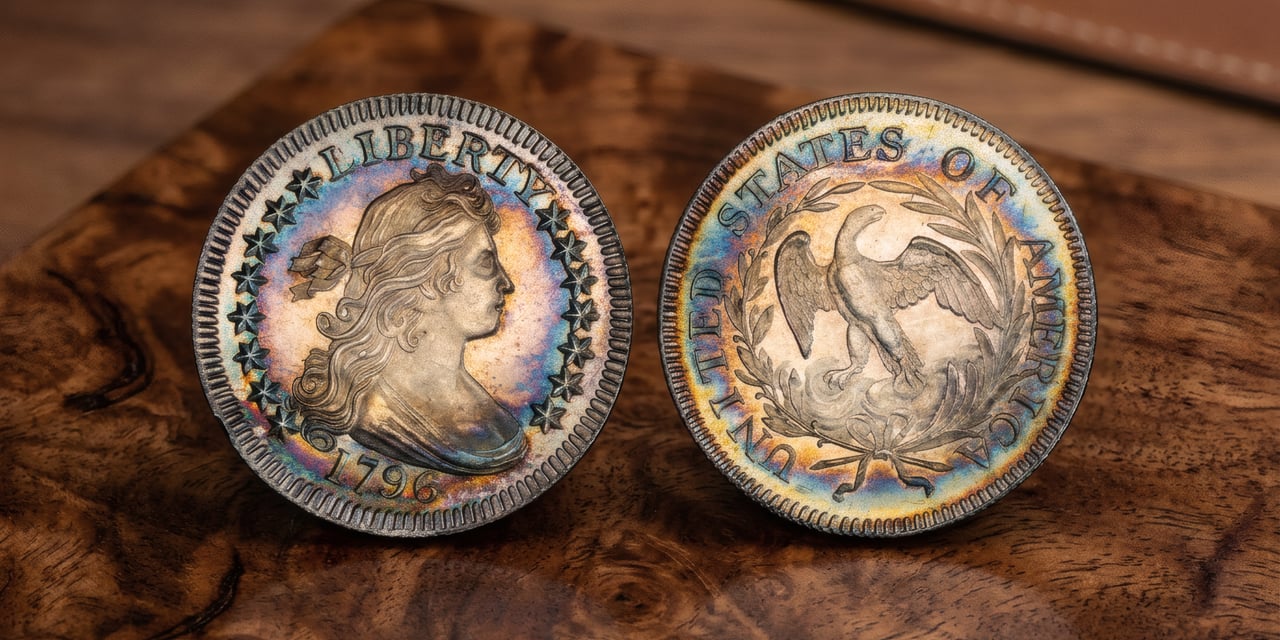
If you have a jar of quarters, a fresh roll from the bank, or a state-quarter album you haven’t opened in years, start by turning one coin over and finding the small letter stamped under the date. That letter is the mint mark, a record of which mint pressed the coin. On most quarters it means nothing at all. On a handful, it is the difference between twenty-five cents and six figures.
Sorting a full jar takes about ten minutes once you know what to look for. Skip anything that merely looks old or shiny. The quarters worth real money are the errors, a doubled date or a letter missing entirely, and the earliest dates, struck before mints turned them out by the tens of millions.
Most of what you find will be worth exactly what it says on the face. You are looking for the few coins that should never have left the mint the way they did.
Every price below is a completed auction sale with a named house and a date.
The same instinct works on any US coin, not only quarters. Our guide to the world’s most valuable coins spans countries and eras, and its top coin, a 1933 Saint-Gaudens Double Eagle, sold for $18,872,250. The most valuable nickels share this list’s own die-error logic, and their record, a 1913 Liberty Head V nickel, brought $4,560,000.
The 13 most valuable quarters ever sold
| Ranking | Coin | Price |
|---|---|---|
| 1 | 1796 Draped Bust Quarter | $1,740,000 |
| 2 | 1827/3 Capped Bust Quarter Proof | $705,000 |
| 3 | 1901-S Barber Quarter | $550,000 |
| 4 | 1873-CC Liberty Seated Quarter No Arrows | $460,000 |
| 5 | 1871-CC Liberty Seated Quarter | $456,000 |
| 6 | 1804 Draped Bust Quarter | $345,000 |
| 7 | 1918/7-S Standing Liberty Quarter | $336,000 |
| 8 | 1842 Small Date Liberty Seated Quarter Proof | $282,000 |
| 9 | 1823/2 Capped Bust Quarter | $246,750 |
| 10 | 1916 Standing Liberty Quarter | $207,400 |
| 11 | 1913-S Barber Quarter | $172,500 |
| 12 | 1932-D Washington Quarter | $143,750 |
| 13 | 1932-S Washington Quarter | $52,800 |
1796 Draped Bust Quarter: $1,740,000
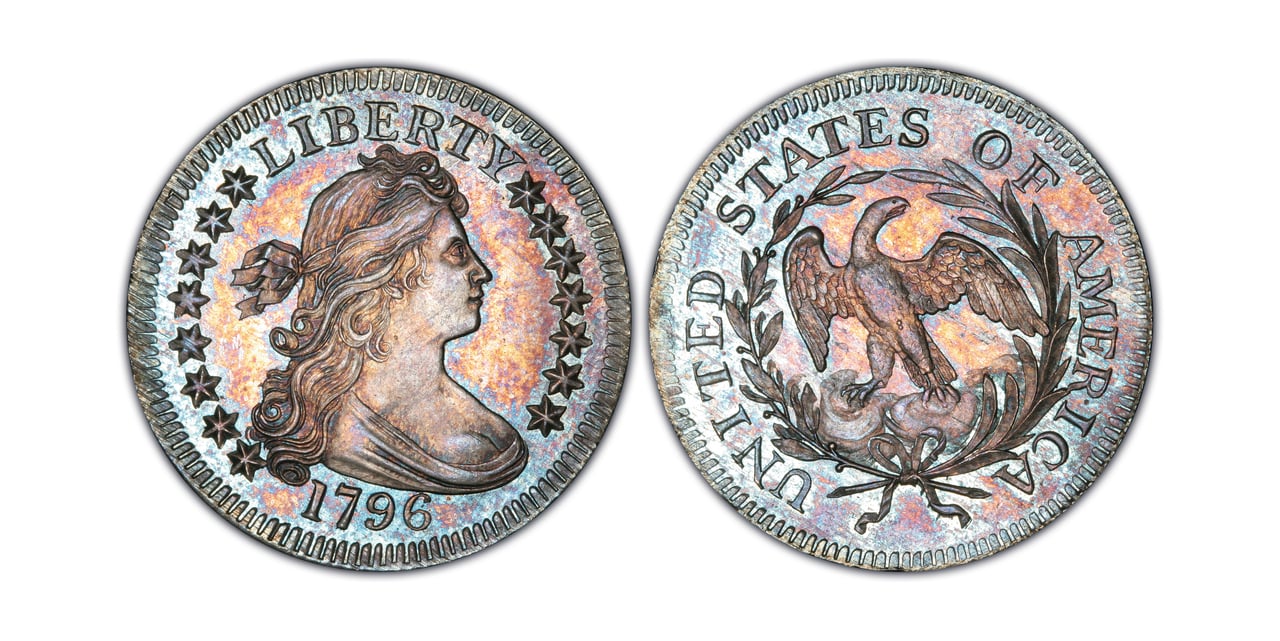
The quarter dollar arrived late. Congress authorized it in 1792, but the Philadelphia Mint did not strike one until 1796, and then it struck only 6,146 before dropping the denomination for seven years.
That single year stands alone as a design. The reverse shows a small eagle framed by a wreath, and no later quarter looks anything like it. Every serious type collection needs one, and only a few hundred exist to go around.
The finest known example, graded PCGS MS66, sold for $1,740,000.
| Year | 1796 |
|---|---|
| Mintage | 6,146 |
| Grade | PCGS MS66 |
| Sold for | $1,740,000 |
| Sale | Heritage Auctions, January 2022 |
1827/3 Capped Bust Quarter Proof: $705,000
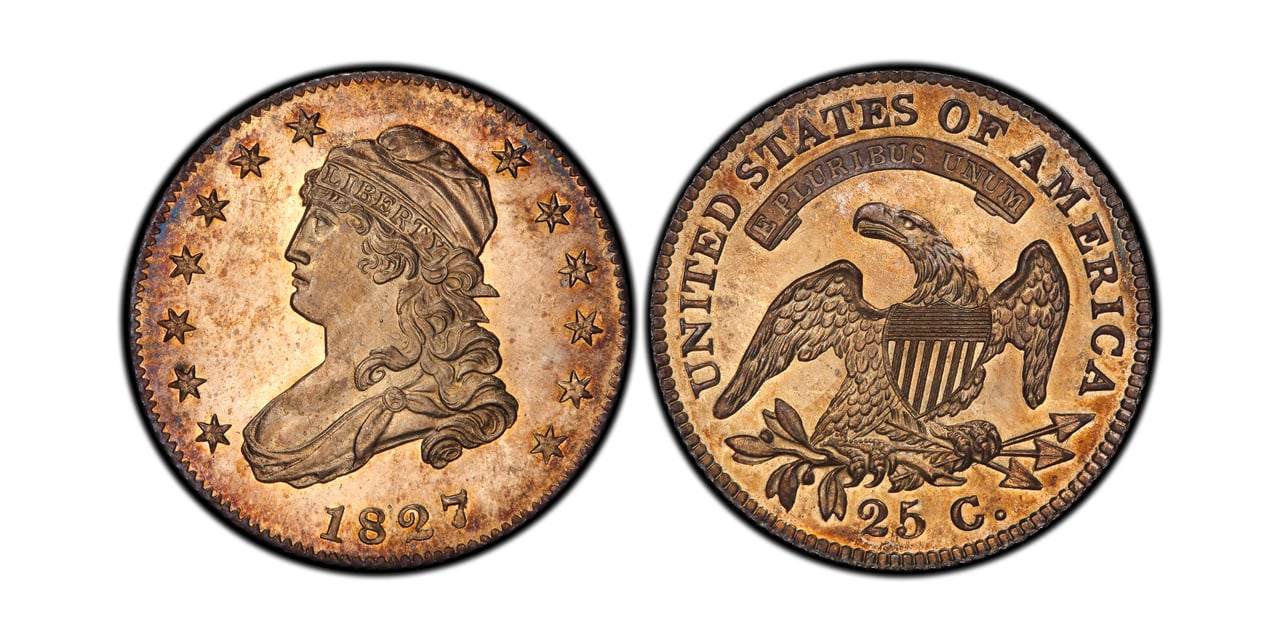
The Mint reported 4,000 quarters for 1827, and no circulation strike from that year has ever been confirmed. What survives instead is a tiny group of proofs, struck from a die on which a 7 was punched over an older 3.
PCGS puts the mintage of the original proof at twelve coins. One of them, graded PR66+ Cameo, is the only example known at that level.
It sold for $705,000 in the D. Brent Pogue sale, one of the finest collections of early American coinage ever assembled.
| Year | 1827 |
|---|---|
| Mintage | 12 proofs |
| Grade | PCGS PR66+ Cameo |
| Sold for | $705,000 |
| Sale | Stack’s Bowers, May 2015 |
1901-S Barber Quarter: $550,000
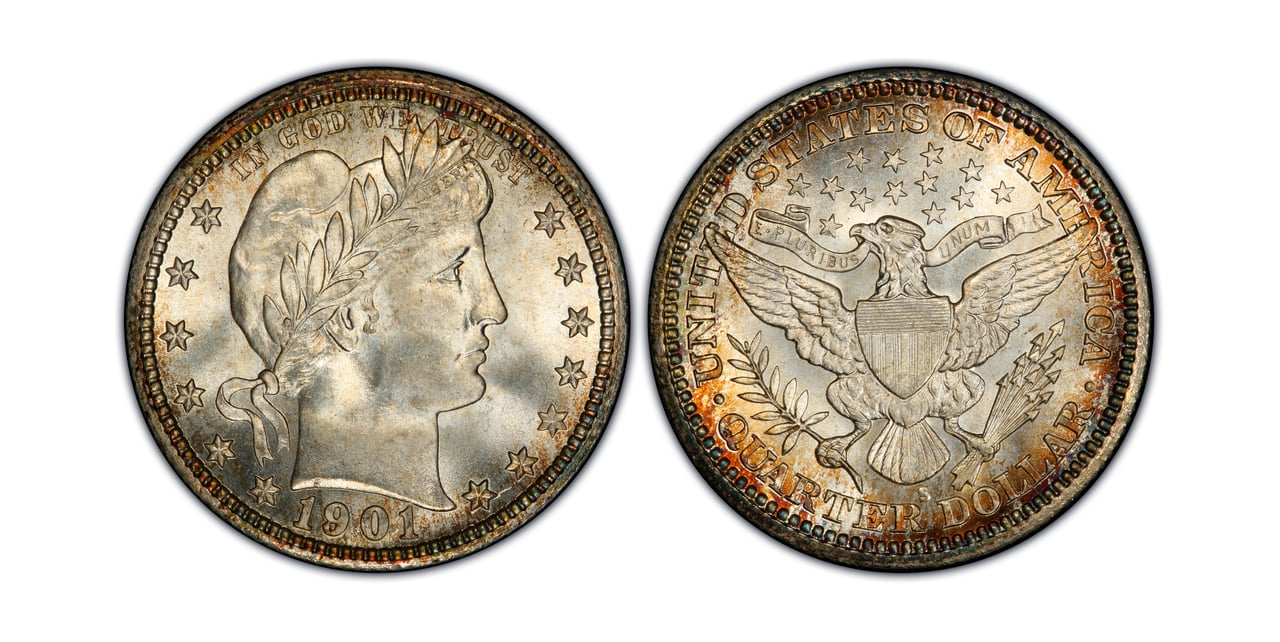
Ask a Barber specialist to name the key date and you get one answer. San Francisco struck 72,664 quarters in 1901, and almost all of them went straight into circulation and stayed there for decades.
About 2,000 survive in any condition, and most are worn nearly smooth. A single coin graded MS68 tops the population.
That coin realized $550,000 back in 1990.
| Year | 1901 |
|---|---|
| Mintage | 72,664 |
| Grade | NGC MS68 |
| Sold for | $550,000 |
| Sale | Superior Galleries, May 1990 |
1873-CC Liberty Seated Quarter No Arrows: $460,000
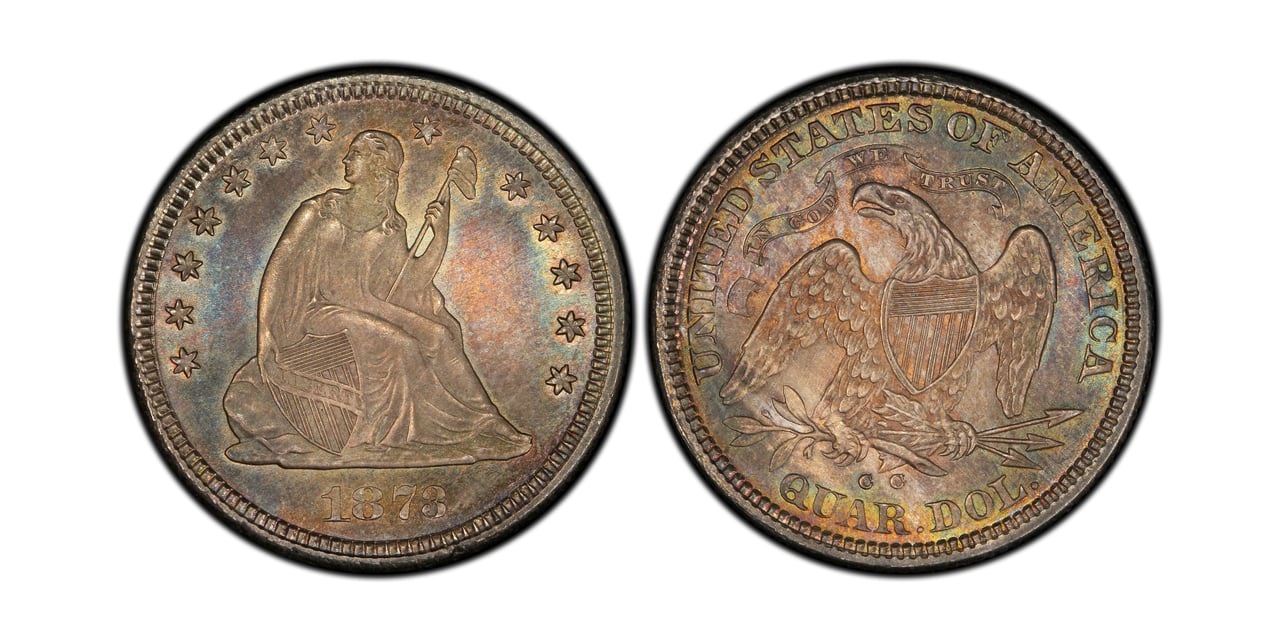
Carson City struck 4,000 quarters early in 1873 without arrows beside the date. Then the Coinage Act changed the weight standard, arrows were added, and the Mint melted almost the entire first batch.
PCGS estimates that four examples escaped. The finest of them, graded MS64, brought $460,000. Most collectors will only ever see one in a catalog.
| Year | 1873 |
|---|---|
| Mintage | 4,000 struck, 4 known |
| Grade | PCGS MS64 |
| Sold for | $460,000 |
| Sale | Stack’s Bowers, August 2012 |
1871-CC Liberty Seated Quarter: $456,000
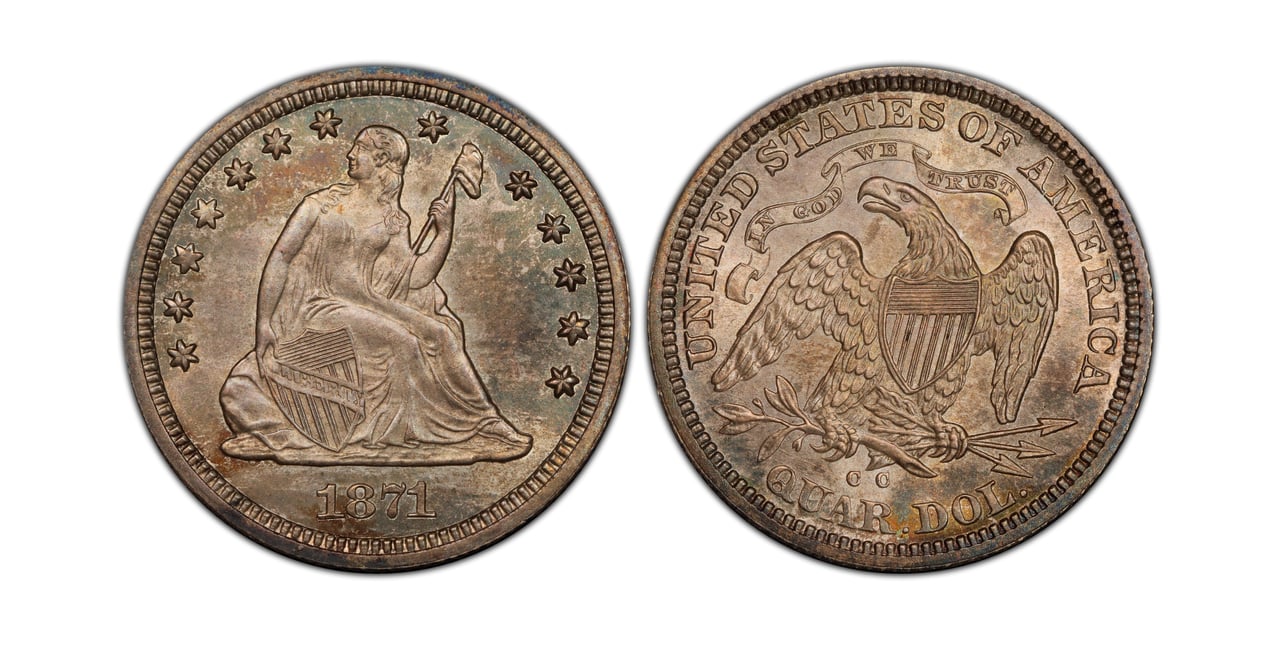
Carson City opened in 1870 and spent its first years making silver for a frontier economy that spent it hard. The 1871-CC quarter had a mintage of 10,890, and roughly 80 are thought to survive.
Uncirculated examples are the real prize. Nobody in Nevada was setting aside quarters in 1871.
A gem graded MS65 sold for $456,000. The far rarer 1873-CC brought only slightly more.
| Year | 1871 |
|---|---|
| Mintage | 10,890 |
| Grade | PCGS MS65 |
| Sold for | $456,000 |
| Sale | Heritage Auctions, August 2022 |
1804 Draped Bust Quarter: $345,000
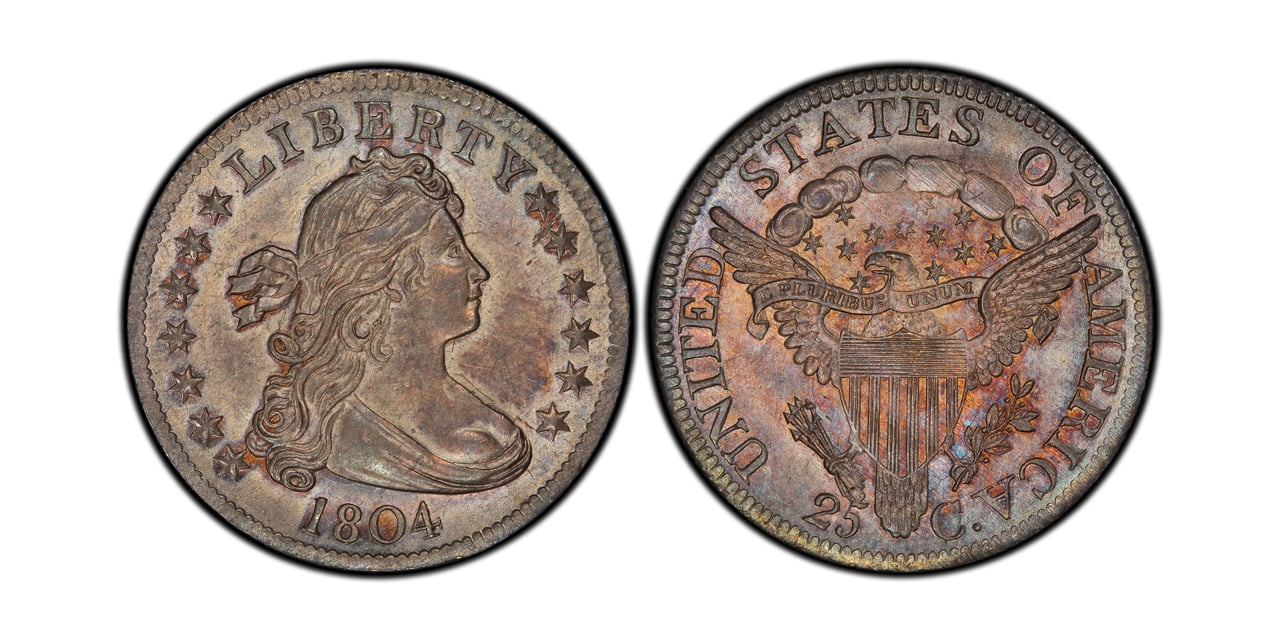
When quarter production resumed in 1804, the Mint produced 6,738 coins and gave the denomination a new reverse with a heraldic eagle. It is the first year of that type and by far its lowest mintage.
Circulated examples turn up regularly at auction, and even a well-worn one is a five-figure coin.
An MS65 example sold for $345,000. Prices fall away sharply below that grade.
| Year | 1804 |
|---|---|
| Mintage | 6,738 |
| Grade | NGC MS65 |
| Sold for | $345,000 |
| Sale | Heritage Auctions, January 2011 |
1918/7-S Standing Liberty Quarter: $336,000
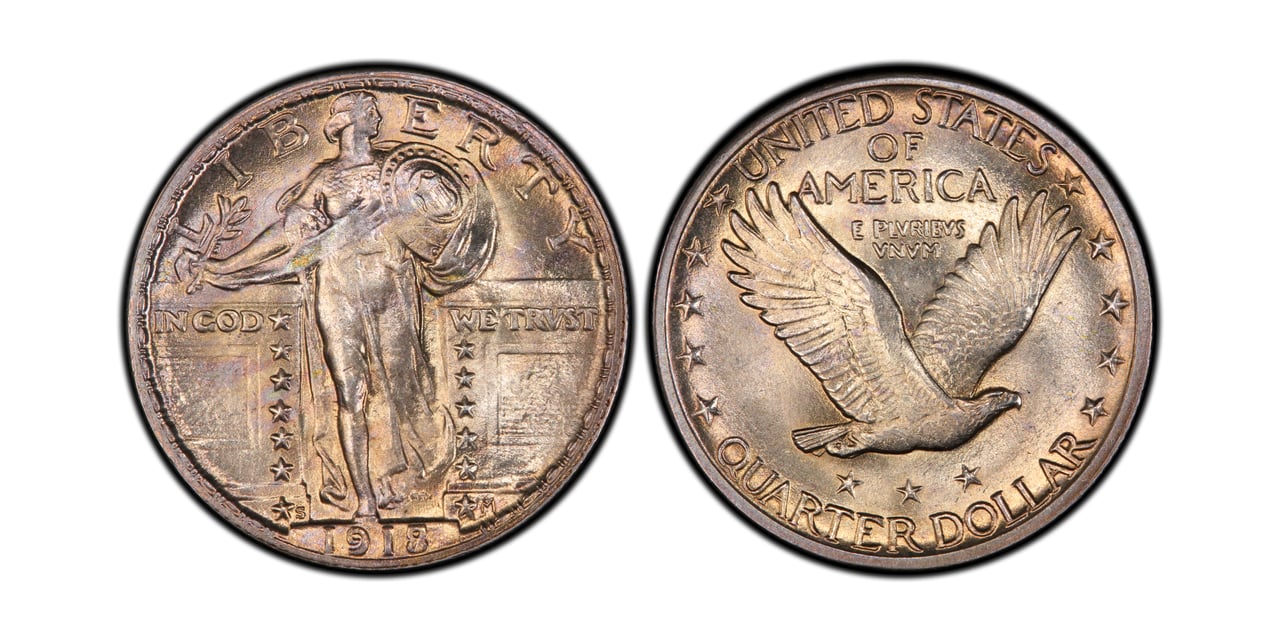
Somebody at the San Francisco Mint took a 1917 die, punched an 8 over the 7, and put it to work. The result is the only overdate in the Standing Liberty series, hidden inside a mintage of 11,072,000 ordinary 1918-S quarters.
Look at the last digit of the date under magnification. On a genuine example the 7 shows plainly beneath the 8.
Roughly 50 survive with a Full Head strike. One graded MS64+ Full Head sold for $336,000, the highest price on record for any Standing Liberty quarter.
| Year | 1918 |
|---|---|
| Mintage | Unknown, within 11,072,000 struck |
| Grade | PCGS MS64+ Full Head |
| Sold for | $336,000 |
| Sale | Heritage Auctions, September 2020 |
1842 Small Date Liberty Seated Quarter Proof: $282,000
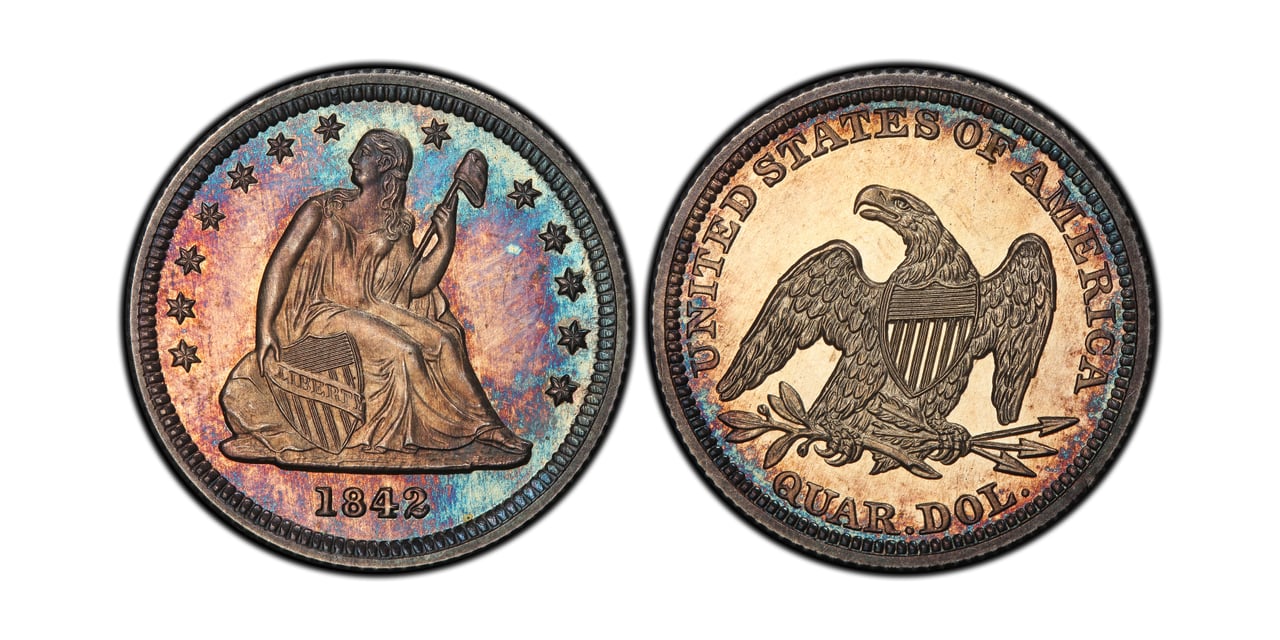
Two date sizes exist for 1842. The large date went into circulation. The small date exists only as a proof, and PCGS records a mintage of six coins.
Seven are believed to survive today. The recorded mintage is almost certainly an undercount.
The finest, graded PR65, sold for $282,000. It is the rarest Liberty Seated quarter by mintage.
| Year | 1842 |
|---|---|
| Mintage | 6 proofs |
| Grade | PCGS PR65 |
| Sold for | $282,000 |
| Sale | Heritage Auctions, October 2014 |
1823/2 Capped Bust Quarter: $246,750
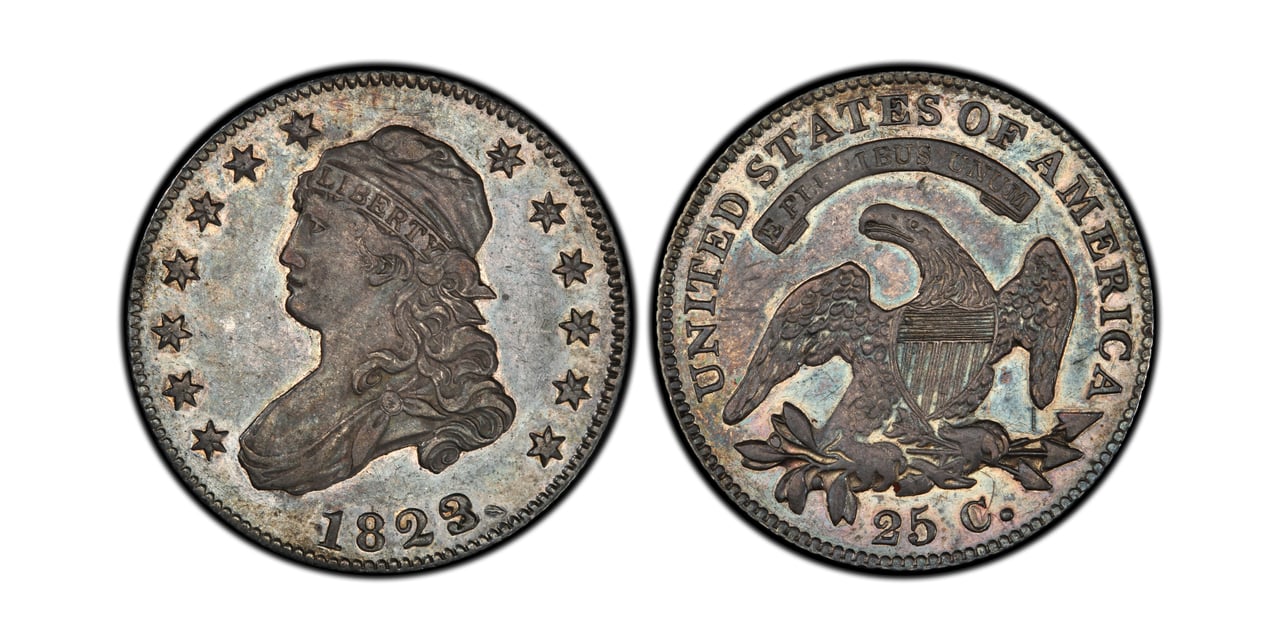
Every 1823 quarter is an overdate. The Mint cut a 3 over the 2 on a leftover die and struck 17,800 coins.
About 33 are known. Most of those are heavily circulated, and a few are damaged or repaired.
An example graded AU58 sold for $246,750.
| Year | 1823 |
|---|---|
| Mintage | 17,800 |
| Grade | PCGS AU58 |
| Sold for | $246,750 |
| Sale | Stack’s Bowers, May 2015 |
1916 Standing Liberty Quarter: $207,400
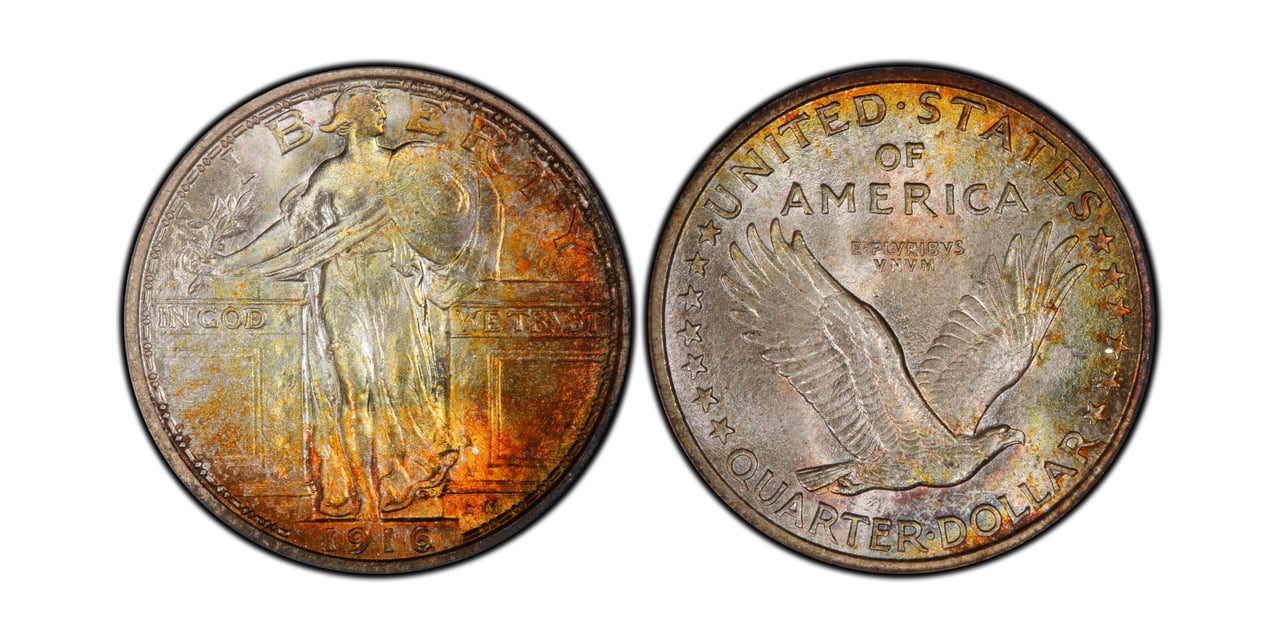
Hermon MacNeil’s new design reached the presses late in 1916, and only 52,000 quarters were struck before the year ran out. That is the lowest mintage in the Standing Liberty series by a wide margin.
Telling a 1916 from a 1917 Type 1 takes a moment. The date sits on a raised pedestal on both, so read the digits rather than the design.
A coin graded MS67 with a Full Head sold for $207,400 in May 2026, the current record for the date.
| Year | 1916 |
|---|---|
| Mintage | 52,000 |
| Grade | PCGS MS67 Full Head |
| Sold for | $207,400 |
| Sale | Heritage Auctions, May 2026 |
1913-S Barber Quarter: $172,500
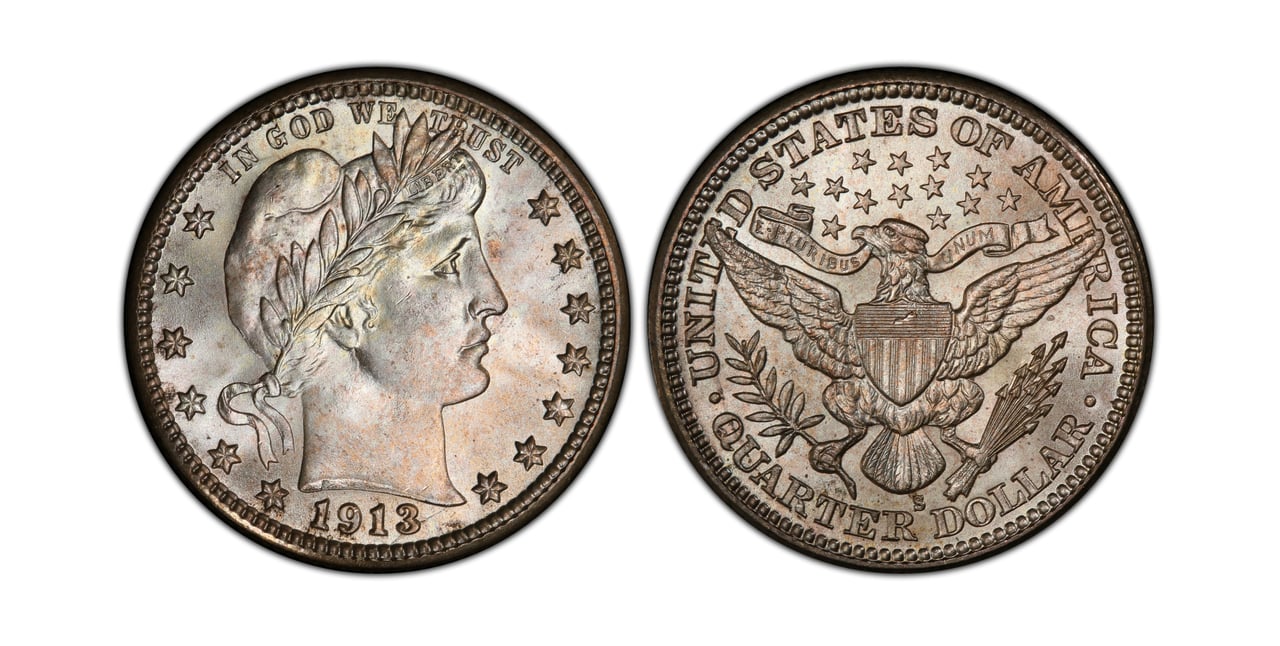
San Francisco struck 40,000 quarters in 1913, the smallest Barber quarter mintage of the twentieth century. Around 2,500 survive, and the great majority are worn.
The date is one of the few Barber quarters that carries real money even in low grade. A collector filling an album will pay well for a coin you can barely read.
At the other end, an MS68 example sold for $172,500. No coin of that date grades higher.
| Year | 1913 |
|---|---|
| Mintage | 40,000 |
| Grade | PCGS MS68 |
| Sold for | $172,500 |
| Sale | Heritage Auctions, January 2005 |
1932-D Washington Quarter: $143,750
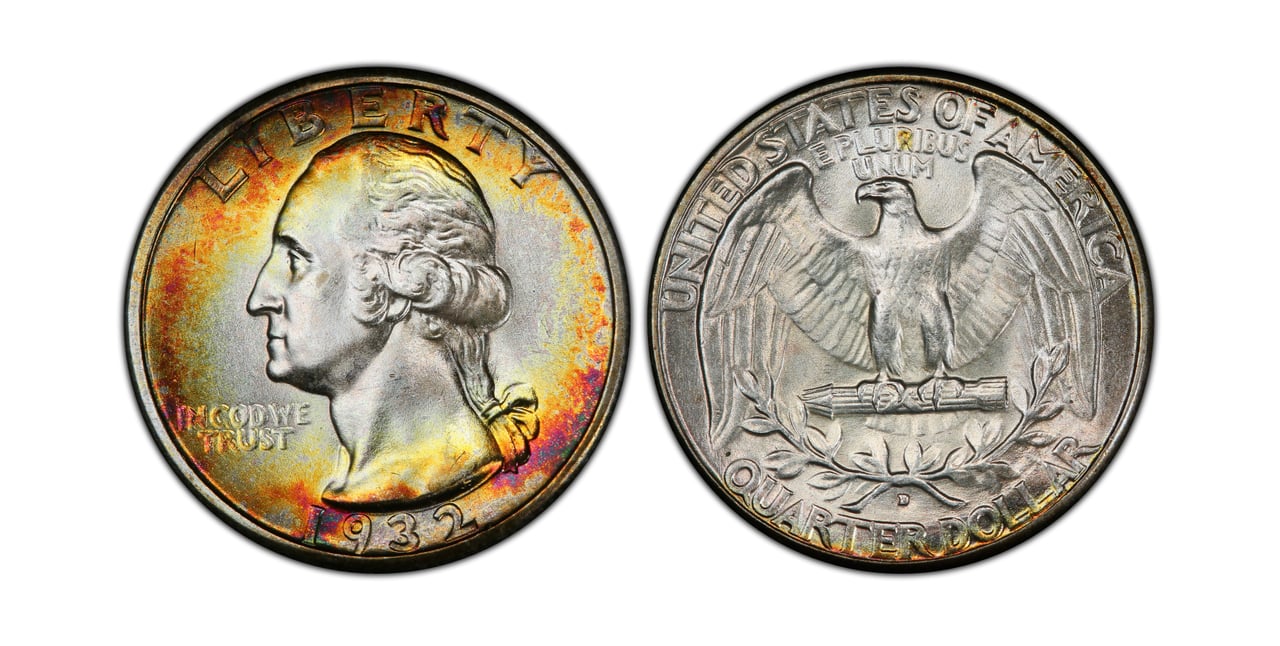
The Washington quarter was meant to be a one-year commemorative for the bicentennial of Washington’s birth. The Depression kept mintages small, and Denver struck just 436,800.
This is the key date every Washington collector chases, and it is the one modern quarter that genuinely turns up in old accumulations. Roughly 44,000 survive, so a circulated example is obtainable.
Gems are far harder to find: an MS66 sold for $143,750, and the gap between a worn coin and a top one runs into six figures.
| Year | 1932 |
|---|---|
| Mintage | 436,800 |
| Grade | PCGS MS66 |
| Sold for | $143,750 |
| Sale | Bowers & Merena, April 2008 |
1932-S Washington Quarter: $52,800
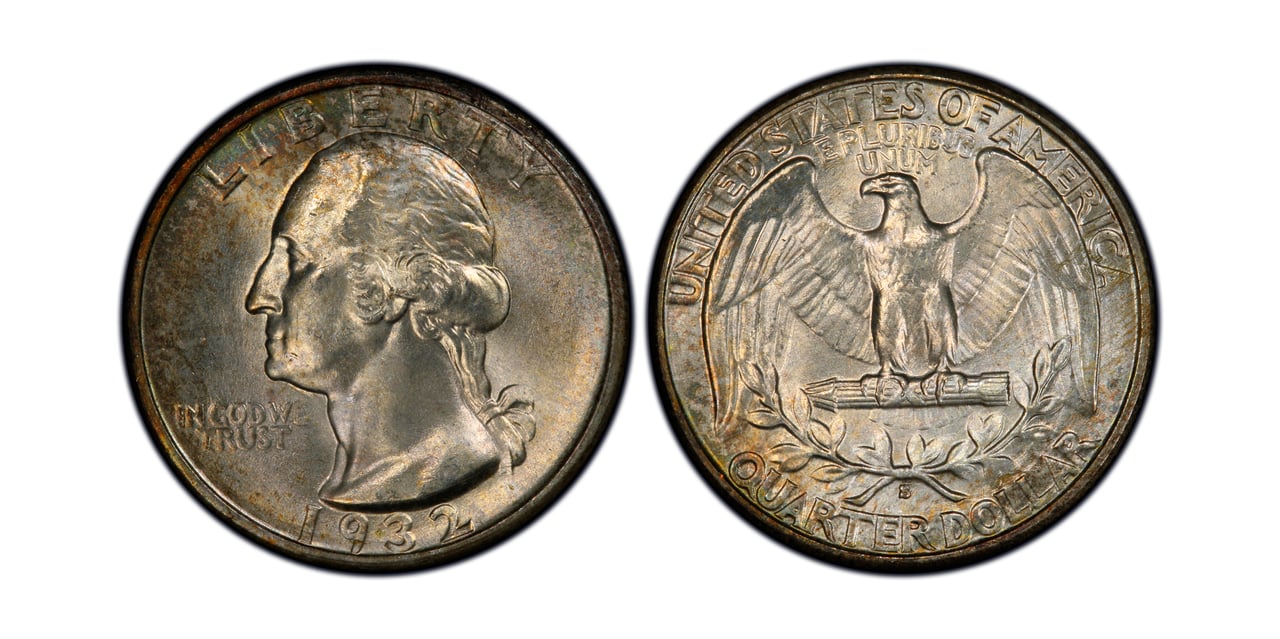
San Francisco struck 408,000 quarters in 1932, fewer than Denver did, yet the 1932-S sells for less. Collectors saved a slightly higher share of them, and the surviving population skews to better grades.
An MS66 example sold for $52,800 in March 2025. Check the reverse of any 1932 quarter you own, because both mint marks are worth real money.
| Year | 1932 |
|---|---|
| Mintage | 408,000 |
| Grade | PCGS MS66 |
| Sold for | $52,800 |
| Sale | Heritage Auctions, March 2025 |
State quarters worth money
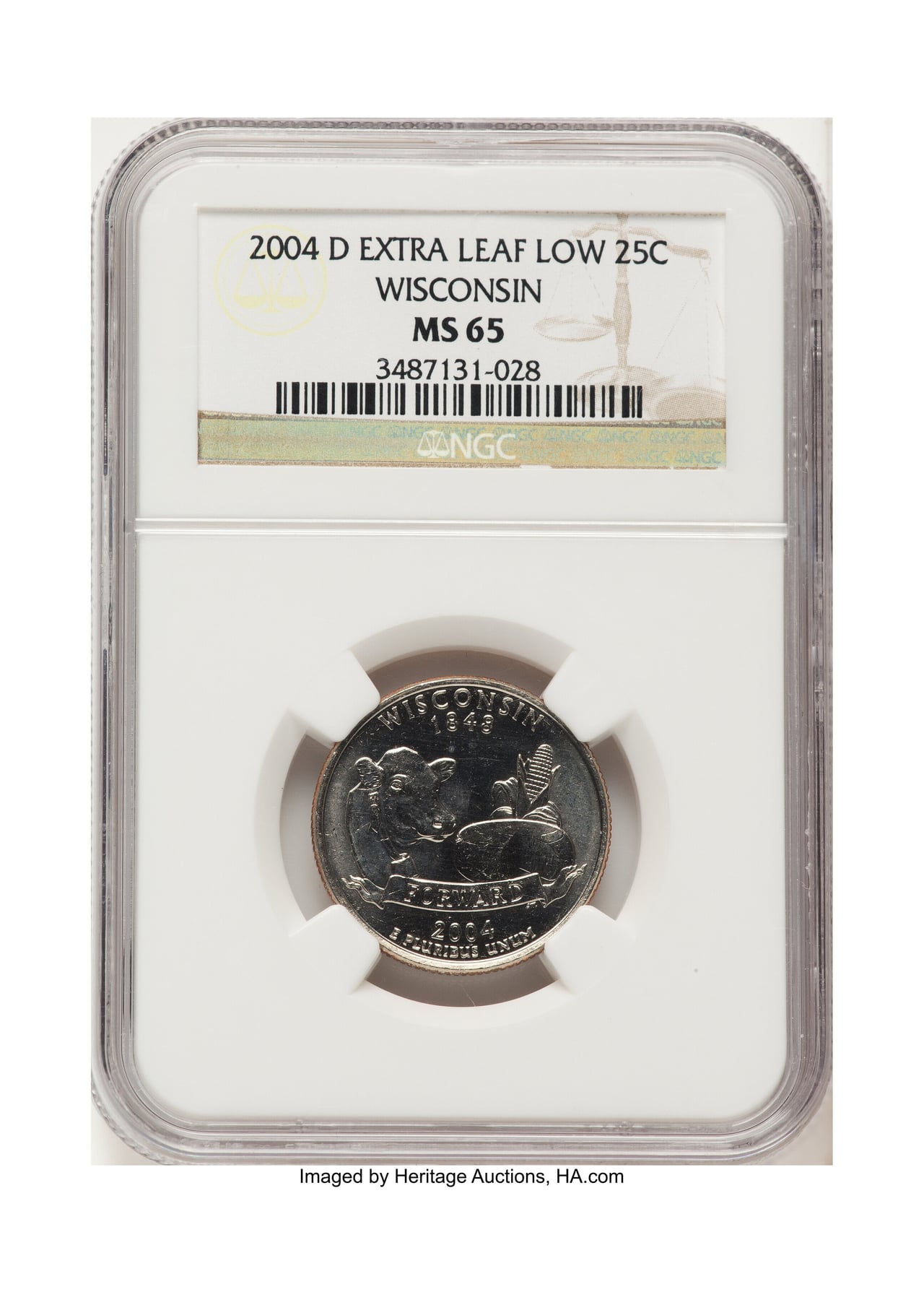
The 50 State Quarters program ran from 1999 to 2008 and produced 34,797,600,000 coins by the Mint’s own count. Almost everyone owns some, and almost none of them are worth more than face value, though a small number genuinely are.
2004-D Wisconsin Extra Leaf. A die flaw added what looks like an extra leaf to the ear of corn, in two positions collectors call high and low. An Extra Leaf Low graded MS67 sold for $6,000 at Heritage in January 2020. An Extra Leaf High graded MS66 sold for $2,530 at Heritage in July 2006. PCGS attributes both varieties on the holder. The dozens of state quarter “errors” offered online carry no such attribution.
1999-P Delaware. Delaware led the program off, and it produced the most interesting mint errors of the whole run. Some were struck on the experimental planchets the Mint was testing at the time. The highest price PCGS records for a 1999-P Delaware is $4,888 for an MS66, sold at Heritage in May 2008.
2005 Minnesota Extra Tree. This one is famous. The doubled die produces what looks like an extra tree in the forest, but hundreds of die varieties exist and the coins are common. PCGS records a 2005-P Minnesota Extra Tree in MS65 selling for $30 on eBay in August 2021.
The 1999-P Delaware “Spitting Horse” comes up constantly. It is a die crack running from the horse’s mouth, and neither PCGS nor NGC recognizes it as a variety worth attributing. Sellers ask hundreds for one. The completed sales do not support that.
Grade decides almost everything on a state quarter, and a coin has to reach MS67 or better before condition alone pays. A variety only carries a premium when a grading service attributes it on the holder.
How to read a mint mark on a quarter
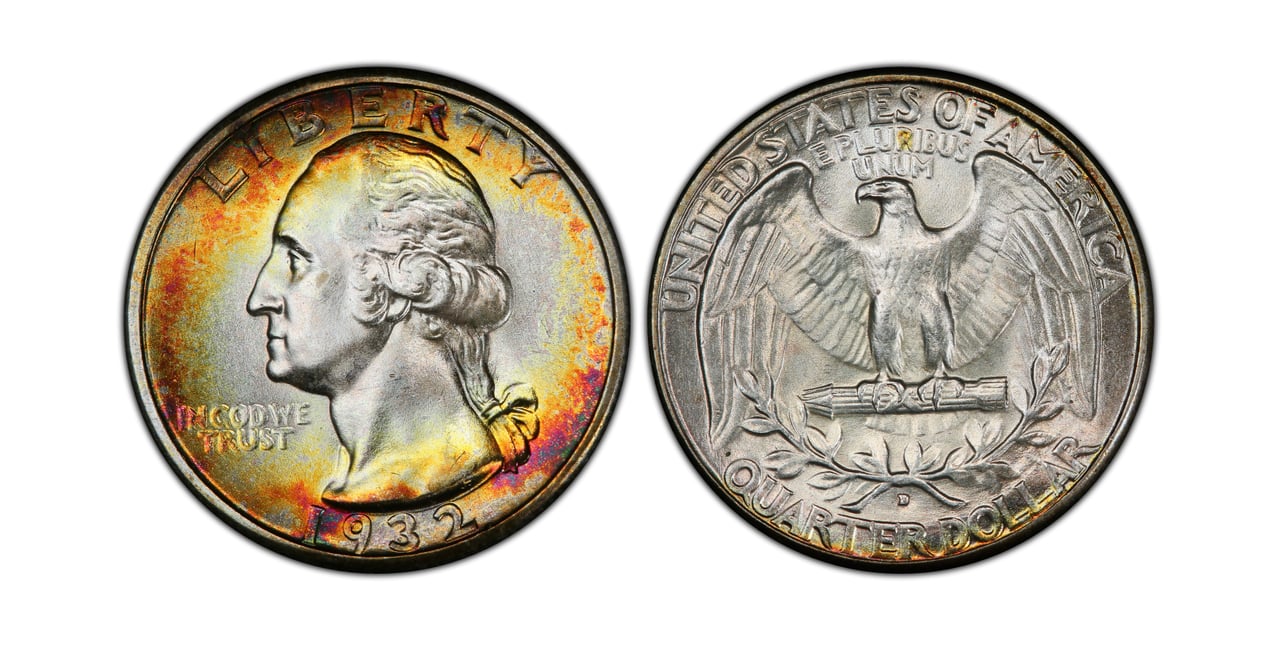
The mint mark is a single letter identifying which facility struck the coin. No letter means Philadelphia on any quarter made before 1980. D is Denver, S is San Francisco, and W is West Point.
The letter moves from one design to the next.
Draped Bust and Capped Bust quarters, 1796 to 1838. Philadelphia struck all of them. There is no mint mark to find.
Liberty Seated quarters, 1838 to 1891, and Barber quarters, 1892 to 1916. Turn the coin over. The mint mark sits on the reverse below the eagle.
Standing Liberty quarters, 1916 to 1930. The mint mark moved to the obverse. Look at the base of the wall to the left of Liberty’s foot, just above and left of the date.
Washington quarters, 1932 to 1964. The mint mark went back to the reverse, below the wreath at the bottom of the coin.
Washington quarters, 1965 to 1967. There are no mint marks at all. The Mint suspended them during the changeover from silver to clad coinage.
Washington quarters, 1968 onward. The mint mark returned to the obverse, on the lower right, just behind Washington’s neck.
Read the mint mark under magnification rather than with the naked eye. Several of the most valuable modern Washington quarters are coins where one letter was punched over another, and that detail is invisible at arm’s length.
Quarters worth checking by year
These are the dates and varieties that reward a close look, ordered so you can scan a handful of coins quickly.
1932-D and 1932-S. These are the two key dates of the Washington series. Check the reverse of every 1932 quarter you find.
1934, doubled die obverse. The motto reads with obvious doubling. An MS65 sold for $10,350 at American Numismatic Rarities in March 2005.
1943-S, doubled die obverse. Doubling shows on the date and the lettering. An MS67 sold for $18,800 at Legend Rare Coin Auctions in February 2021.
1950-D over S. A worker punched a D over an S on a Denver die. An MS67 sold for $29,375 at Heritage in June 2013, and it remains the most valuable overmintmark in the series.
1950-S over D. The same mistake happened in reverse at San Francisco. An MS67 sold for $16,450 at Heritage in September 2013.
1896-S and 1913-S Barber. Both are low-mintage San Francisco issues, and both carry a premium in any grade. The 1896-S record stands at $96,000 for an MS66, sold at Stack’s Bowers in March 2020.
1870-CC Liberty Seated. Carson City struck 8,340, and about 300 survive. An AU55 sold for $188,000 at Heritage in May 2015.
1932 through 1964, any date. These quarters are 90% silver. Even a worn common date is worth several times face value for the metal alone.
1982 and 1983, both mints. These look like nothing. The Mint issued no uncirculated coin sets in either year because of budget cuts, and the 1982 recession stopped people saving rolls. Pristine examples are genuinely scarce as a result. A 1982-P graded MS68 sold for $10,200 at Heritage in June 2019.
Two dates are worth knowing for the opposite reason. No quarters were struck in 1922, and no quarter is dated 1975. The Bicentennial coin carries the dual date 1776-1976, and it was made in enormous numbers.
What actually determines a quarter’s value
Three things set the price, and they do not carry equal weight.
Rarity comes first, but survival matters more than mintage. The 1873-CC No Arrows had a mintage of 4,000 and four known survivors. The 1932-S had a mintage of 408,000 and roughly 40,000 survivors. One sells for $460,000 and the other for $52,800.
Condition decides the rest. Coins are graded on the Sheldon scale, running from 1 to 70. Dr. William Herbert Sheldon devised it in 1948, and both PCGS and the Numismatic Guaranty Company use it today. A 1982-P quarter out of your pocket is worth twenty-five cents. The same date graded MS68 sold for $10,200.
Standing Liberty quarters carry an extra designation worth knowing. A coin marked Full Head shows Liberty’s helmet in full detail, and the premium is steep. The 1918/7-S that made $336,000 was an MS64+ with a Full Head. Ordinary MS64 examples of the same overdate sold for around $43,000 to $47,000 in 2025.
Errors and varieties come third. A doubled die or an overmintmark adds real money, but only when a grading service attributes it.
A widely circulated story concerns a 1970-S quarter struck over a 1941 Canadian twenty-five cent piece, valued in headlines at $35,000 and sometimes far more. Heritage offered that exact coin in August 2011, graded PR65 by NGC. It did not sell.
Before you believe a number, find the auction that produced it.
If you own something you think is unusual, get it graded before you get excited. Certification costs money, but it is the only way to know whether the coin is worth more than face value.
Rare quarters: the short version
Most quarters are worth twenty-five cents.
The record holders are early Mint coins that were rare the day they were struck. The 1796 Draped Bust quarter at $1,740,000 is at the top.
The coins you might actually find are further down. Look for a 1932-D in a change jar, a silver quarter from before 1965, a 1950-D with something odd about the mint mark. None of them will buy a house, but all of them beat face value by a wide margin.
The same ten-minute sort works on the smaller denominations, and on two of them your odds are better. Among the most valuable dimes is a 1975 Roosevelt struck without its S mint mark that sold for $506,250. And the most valuable pennies are the ones people genuinely still turn up, because bronze 1943 cents were coming out of circulation as late as the 1950s.
Start with the date, move to the mint mark, then put a loupe on both.
The 13 most valuable quarters are:
- 1796 Draped Bust Quarter: $1,740,000
- 1827/3 Capped Bust Quarter Proof: $705,000
- 1901-S Barber Quarter: $550,000
- 1873-CC Liberty Seated Quarter No Arrows: $460,000
- 1871-CC Liberty Seated Quarter: $456,000
- 1804 Draped Bust Quarter: $345,000
- 1918/7-S Standing Liberty Quarter: $336,000
- 1842 Small Date Liberty Seated Quarter Proof: $282,000
- 1823/2 Capped Bust Quarter: $246,750
- 1916 Standing Liberty Quarter: $207,400
- 1913-S Barber Quarter: $172,500
- 1932-D Washington Quarter: $143,750
- 1932-S Washington Quarter: $52,800
The same eye works on paper and stone too. The rarest stamps ever sold run on the same rarity-and-condition math, led by the Mauritius “Post Office” One Penny Red at roughly $14.07 million. The most valuable gemstones price by the carat instead of the mint mark, and a natural blue diamond runs about $3.93 million a carat. For the rest of the coin jar, the most valuable nickels and the world’s most valuable coins are one click away.
Methodology and sources
Coin values are the easiest numbers on the internet to get wrong. A quarter has an asking price, a catalog value, a dealer buy price and a realized auction price, and only the last of those is evidence that someone actually paid it. This guide uses realized prices and nothing else.
Every figure above is tied to a completed sale with a named auction house and a date. The prices come from the auction records held by the Professional Coin Grading Service, cross-checked against lot archives at Heritage Auctions, Stack’s Bowers and GreatCollections. Mintages and survival estimates come from PCGS CoinFacts. Where a coin’s record was set by a Numismatic Guaranty Company holder rather than a PCGS one, the entry says so.
Prices are as realized on the day, with no adjustment for inflation. That matters most for the 1901-S Barber quarter. It set its $550,000 record at Superior Galleries in 1990, and in current money it would rank higher on this list than the raw number suggests.
Three coins that appear on almost every other list are not on this one.
The 1970-S quarter struck over a 1941 Canadian twenty-five cent piece is quoted at $35,000 in most write-ups and at $250,000 in the more excitable ones. Heritage offered that coin in August 2011, graded PR65 by NGC. The lot record reads “Not Sold.” No completed sale exists at any price, so it does not belong in a ranking built on completed sales. It appears in the value section instead, as the clearest example of an asking price travelling as a fact.
The 2005 Minnesota Extra Tree is routinely described as a four-figure coin. The highest price PCGS records for one is $30, on eBay in August 2021. Hundreds of die varieties exist and the coins are common.
The 1999-P Delaware “Spitting Horse” is a die crack that neither PCGS nor NGC attributes on the holder. An unattributed variety carries no confirmed price, so it is discussed in the state quarters section rather than ranked.
PCGS lists a 1983-P quarter at $15,862.50 for an NGC MS65. Every other sale of that date is far below it, and even MS67 examples trade in the hundreds. That entry reads as an error coin or a mislabeled record rather than a condition premium. The 1982 and 1983 story is told through the 1982-P instead, where an MS68 sold for $10,200 at Heritage in June 2019.
If a number here cannot be traced to an auction, it should not be here. Tell us and we will correct it.
Frequently asked questions about the most valuable quarters
Which years of quarters are worth money?
What are the 8 rare state quarters?
Why are 1982 and 1983 quarters worth so much?
What state quarter is worth $10,000?
Which quarter is worth $1,000,000?
Products featured here are independently selected by our editors. If you buy through our retail links we may earn an affiliate commission — it never changes the price you pay, and it never decides our verdicts. Read our earnings disclaimer.