You’ve handed someone a dime without looking at it. Almost everyone has: it goes into a parking meter, a tip jar, a vending machine, and nobody bends down for the one. Somewhere, a coin exactly like it sold for a fortune.
One of these dimes is the sole survivor of a batch of 12,400 the Mint tried to melt down. One sat forgotten inside a family’s home for forty-six years before anyone opened the box. And fourteen of them have sold for six and seven figures apiece.
Does your own change hold one? That comes down to a handful of dates, a mint mark in the right place, and whether anyone ever bothered to check.
The same thing happens at every denomination, not just the dime. Our guide to the world’s most valuable coins stacks gold, silver and copper from every country and era against each other, and the rarest stamps ever printed tell the same story on paper instead of metal. This list stays on the dime: fourteen of them, worth ten cents at face and far more than that at auction.
Every price below is a completed auction sale with a house, a date and a PCGS or NGC grade attached: Heritage Auctions, Stack’s Bowers, GreatCollections and Legend Rare Coin Auctions did the selling. The figures are realized totals including the buyer’s premium, not the hammer price.
The 14 most valuable dimes ever sold
| Ranking | Coin | Price realized |
|---|---|---|
| 1 | 1873-CC Liberty Seated Dime, No Arrows | $3,600,000 |
| 2 | 1894-S Barber Dime | $2,160,000 |
| 3 | 1796 Draped Bust Dime | $881,250 |
| 4 | 1804 Draped Bust Dime, 14 Star Reverse | $632,500 |
| 5 | 1873-CC Liberty Seated Dime, With Arrows | $552,000 |
| 6 | 1975 No S Roosevelt Dime | $506,250 |
| 7 | 1872-CC Liberty Seated Dime | $480,000 |
| 8 | 1822 Capped Bust Dime, Proof | $440,625 |
| 9 | 1797 Draped Bust Dime, 13 Stars | $402,500 |
| 10 | 1871-CC Liberty Seated Dime | $270,250 |
| 11 | 1874-CC Liberty Seated Dime, With Arrows | $264,000 |
| 12 | 1916-D Mercury Dime | $207,000 |
| 13 | 1797 Draped Bust Dime, 16 Stars | $199,750 |
| 14 | 1860-O Liberty Seated Dime | $192,000 |
1873-CC Liberty Seated Dime, No Arrows: $3,600,000
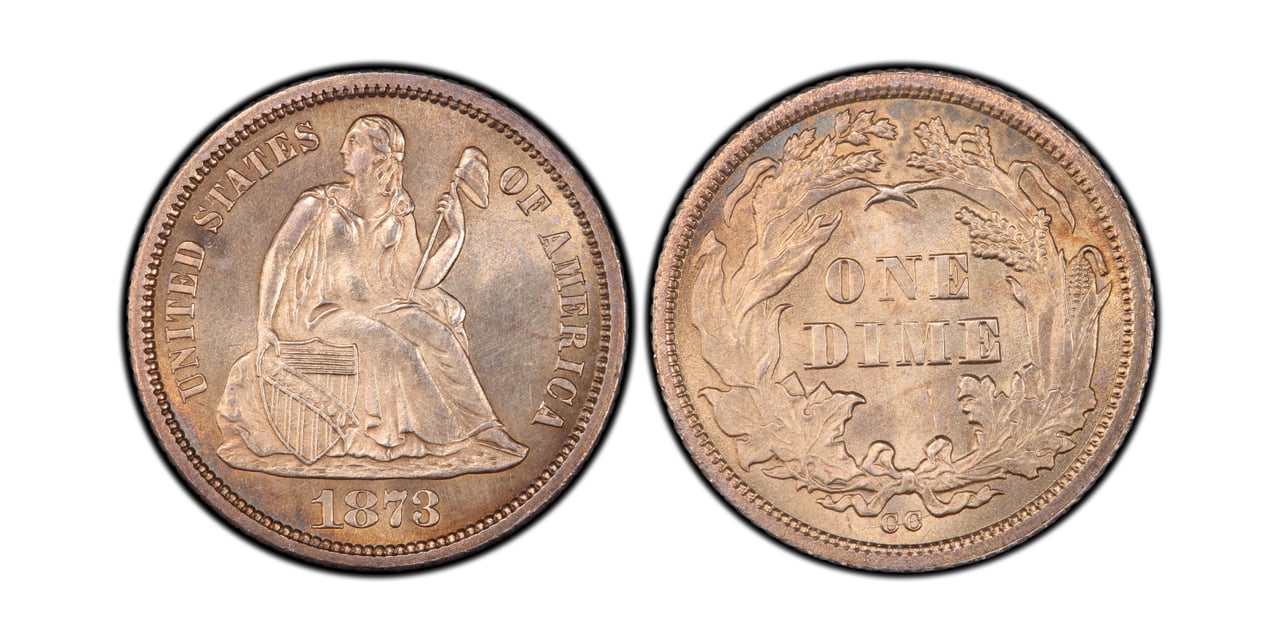
Of the 12,400 dimes Carson City struck without arrows in early 1873, exactly one is known to survive. Weeks after that mint run, the Coinage Act of 1873 raised the dime’s legal weight, and the Mint recalled and melted every coin it could find from the old standard. One escaped.
That survivor is the rarest United States dime in existence, and the single most expensive dime ever sold. It first changed hands in 1878 for seventeen cents. In August 2012 it sold at Stack’s Bowers for $1,840,000, hammering at $1.6 million before the buyer’s premium (see Methodology). It returned to the block eleven years later, graded MS65 by PCGS, and realized $3,600,000 at Heritage Auctions in January 2023.
| Country | United States |
|---|---|
| Year | 1873 |
| Mint mark | CC (Carson City) |
| Mintage | 12,400, one known survivor |
| Face value | $0.10 |
| Price realized | $3,600,000 |
1894-S Barber Dime: $2,160,000
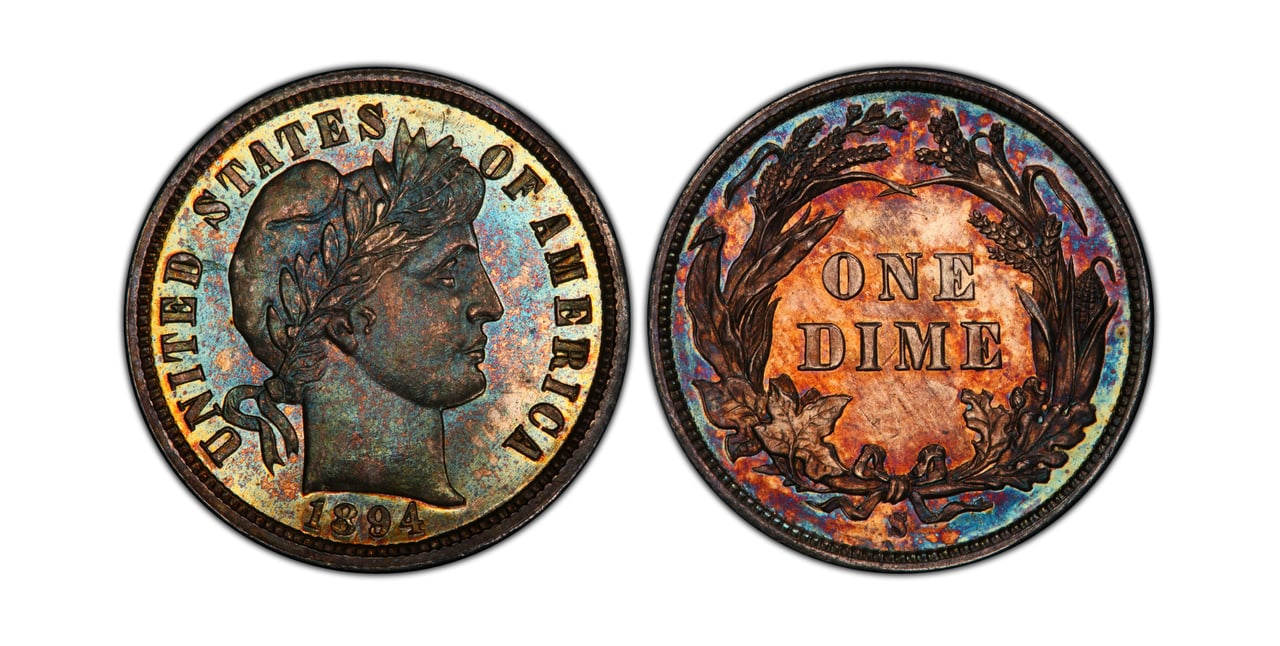
San Francisco struck twenty-four dimes in 1894 and then stopped, and the Mint never explained the number. The most repeated story blames the mint’s superintendent, John Daggett, said to have struck them to balance the books, given three to his daughter Hallie, and told her to keep them until older. In that telling, she spent one on ice cream on the way home.
Nine examples are known today, every one of them struck as a proof. The finest, graded PR66 by PCGS with a green CAC sticker, sold for $1,997,500 at Heritage Auctions in January 2016. It returned in January 2025 as part of the Bruce S. Sherman Collection and realized $2,160,000.
That result is the record for any proof Barber coin. It also makes the 1894-S the most valuable dime a collector can realistically hope to own, since the 1873-CC above it is unique.
| Country | United States |
|---|---|
| Year | 1894 |
| Mint mark | S (San Francisco) |
| Mintage | 24, nine known |
| Face value | $0.10 |
| Price realized | $2,160,000 |
1796 Draped Bust Dime: $881,250
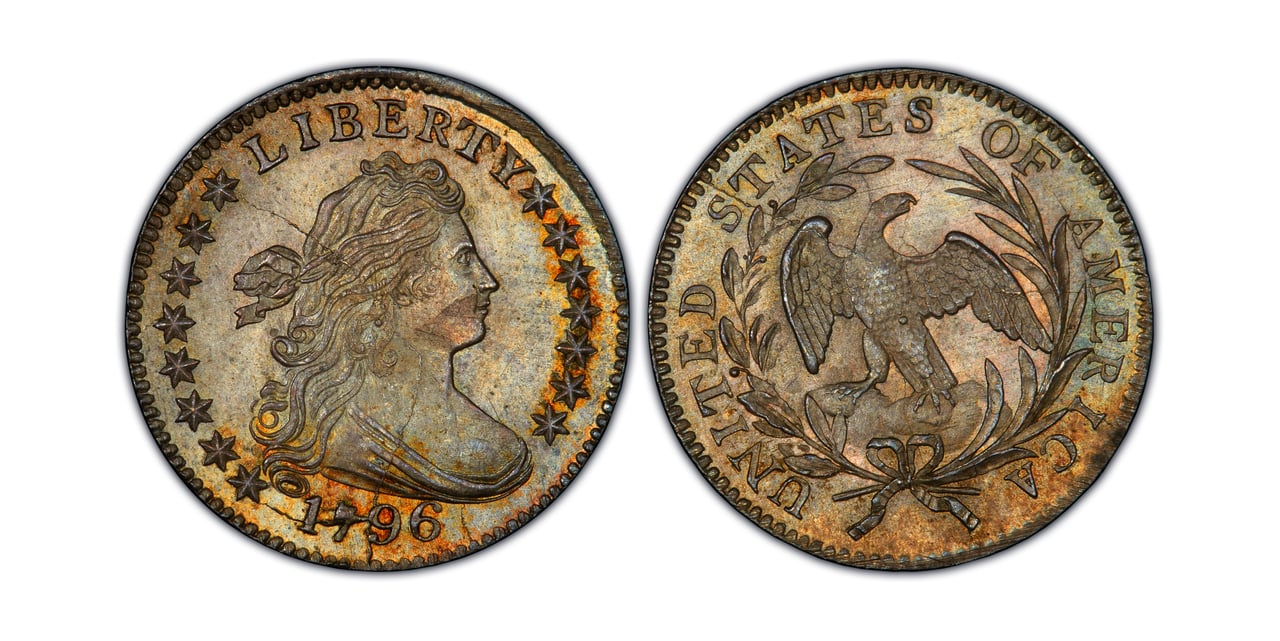
Four years after the Mint opened, it finally got around to striking a dime. The first one, struck in 1796, carries Robert Scot’s Draped Bust portrait on the obverse and a small eagle perched on a cloud bank on the reverse. The Mint made 22,135 of them.
First-year coins always attract collectors, and this one has the added weight of being the first dime in American history. A specimen graded MS67 by PCGS sold for $881,250 at Heritage Auctions in June 2014.
Circulated examples come to market regularly, for a fraction of that price.
| Country | United States |
|---|---|
| Year | 1796 |
| Mint mark | None (Philadelphia) |
| Mintage | 22,135 |
| Face value | $0.10 |
| Price realized | $881,250 |
1804 Draped Bust Dime, 14 Star Reverse: $632,500
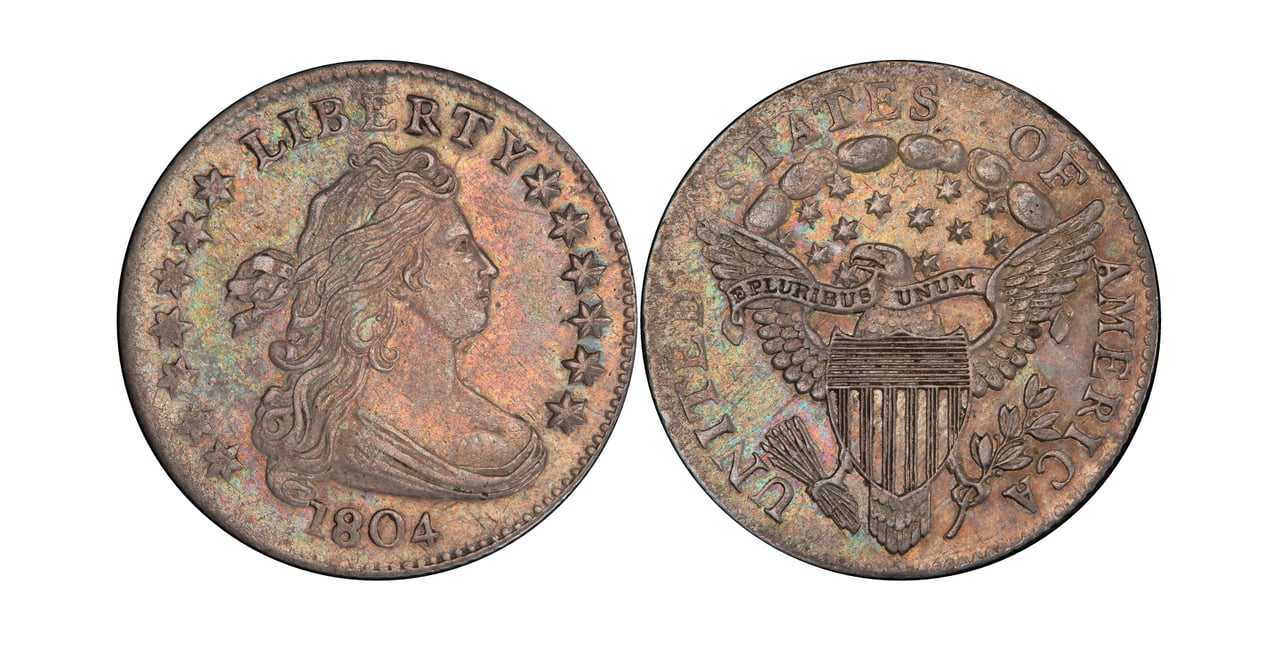
An engraver’s punching mistake is the whole story here. The Mint struck 8,265 dimes in 1804 across two dies, and on the scarcer one, fourteen stars sit above the eagle instead of thirteen: one star too many, punched into the die by mistake.
The Mint then made no dimes at all for four years. Mint state examples of the 14-star variety are effectively unavailable today. The record belongs to a coin graded AU58 by NGC with CAC approval, sold for $632,500 at Heritage Auctions in July 2008.
| Country | United States |
|---|---|
| Year | 1804 |
| Mint mark | None (Philadelphia) |
| Mintage | 8,265 across both varieties |
| Face value | $0.10 |
| Price realized | $632,500 |
1873-CC Liberty Seated Dime, With Arrows: $552,000
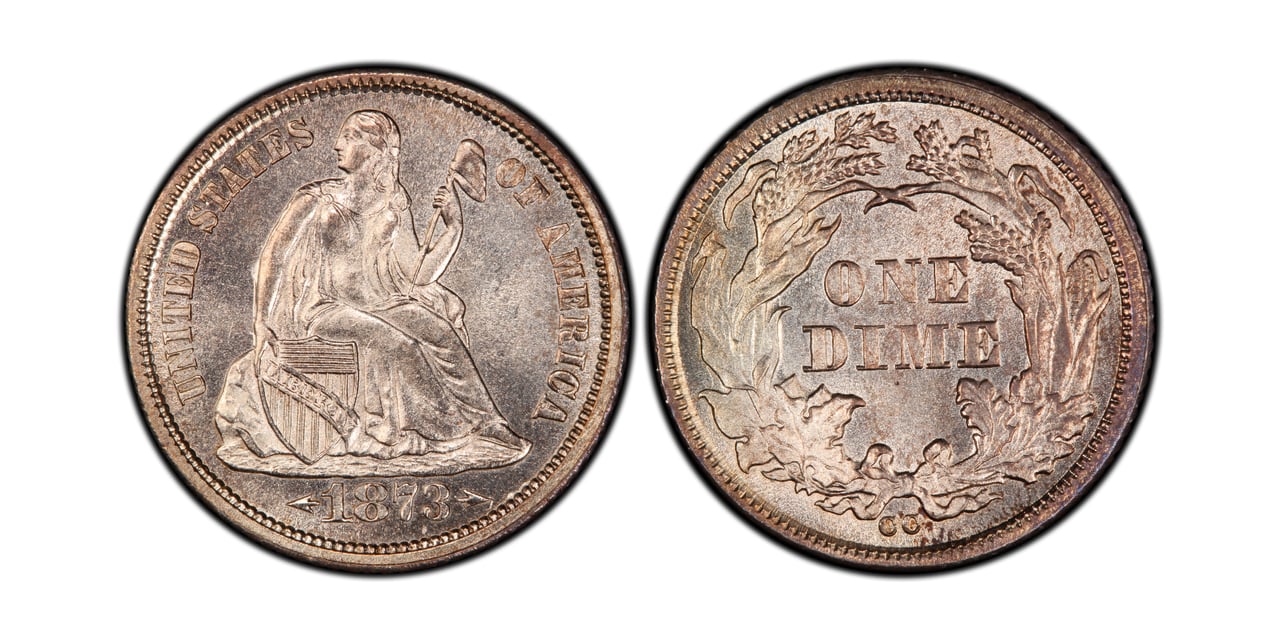
The Coinage Act of 1873 raised the dime’s legal weight, and the Mint answered by punching small arrows beside the date so a teller could tell the old coins from the new by sight. Carson City struck 18,791 of the heavier, arrows dimes that year.
Almost none of them survived in collectible condition. Nevada in 1873 was a mining economy that used its coins hard, and a Carson City dime had a rough life. A specimen graded MS65 by PCGS realized $552,000 at Heritage Auctions in August 2022.
The two 1873-CC dimes came from opposite ends of the same year’s production, and both belong in the top five on this list.
| Country | United States |
|---|---|
| Year | 1873 |
| Mint mark | CC (Carson City) |
| Mintage | 18,791 |
| Face value | $0.10 |
| Price realized | $552,000 |
1975 No S Roosevelt Dime: $506,250
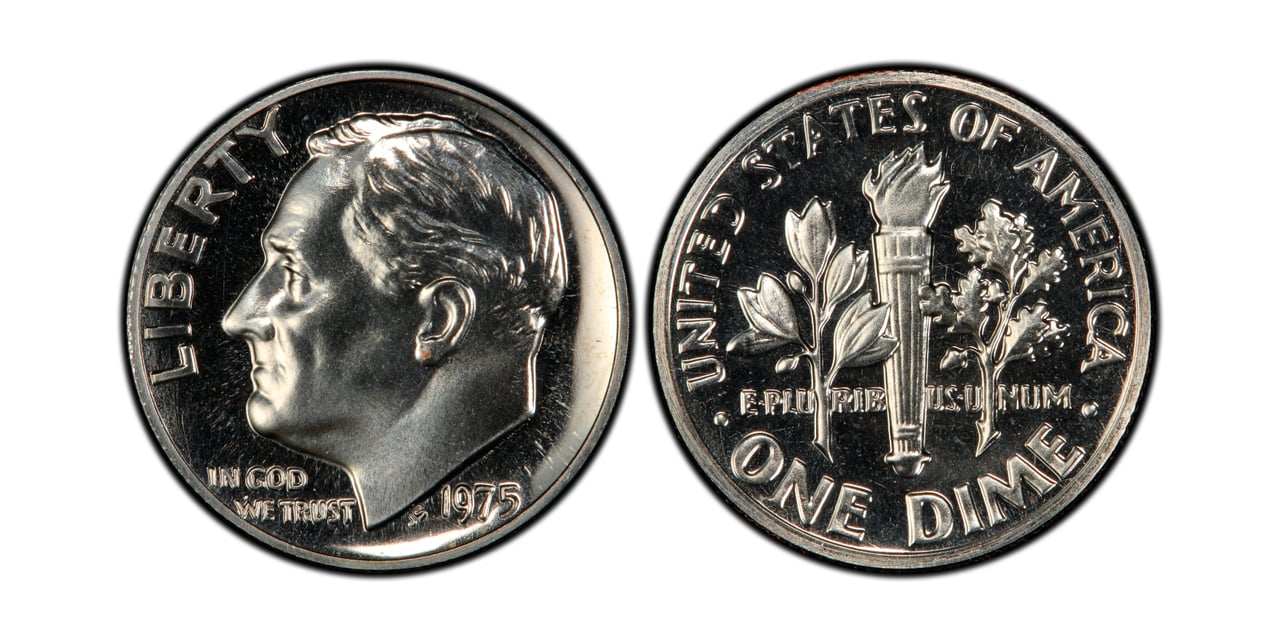
A die went into service at the San Francisco Mint in 1975 without its S punch, and every proof dime that die struck left the building unmarked, mixed into ordinary proof sets sold to ordinary buyers. Only two examples are confirmed today.
One surfaced early. It sold at Stack’s Bowers in August 2011 for $349,600, then again at Heritage Auctions in September 2019 for $456,000. The other stayed inside one family’s home for forty-six years before anyone opened the box it was kept in. Graded PR68 by PCGS, it sold through GreatCollections in October 2024 for $506,250.
It is the most valuable modern American coin, and the one entry on this list that could still be sitting in a drawer, inside a 1975 proof set nobody has ever opened.
| Country | United States |
|---|---|
| Year | 1975 |
| Mint mark | None, where an S belongs |
| Mintage | Two known |
| Face value | $0.10 |
| Price realized | $506,250 |
1872-CC Liberty Seated Dime: $480,000
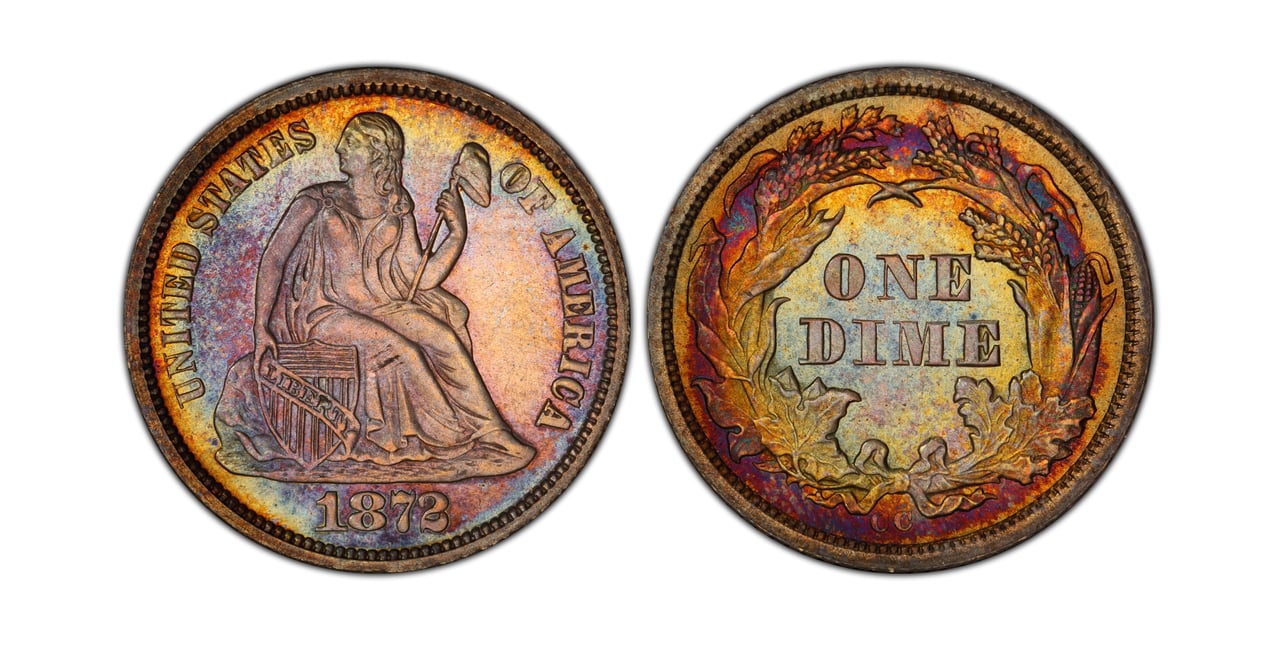
35,480 dimes sounds like a comfortable run for Carson City, and by that mint’s usual standards it was. Most of them went straight into circulation in Nevada and stayed there until they were worn smooth. A healthy mintage does not mean a common coin.
Collectors chase the handful that escaped that fate. A coin graded MS63 by PCGS sold for $480,000 at Heritage Auctions in August 2022, an enormous price for a grade that would draw no attention on almost any other silver dime.
| Country | United States |
|---|---|
| Year | 1872 |
| Mint mark | CC (Carson City) |
| Mintage | 35,480 |
| Face value | $0.10 |
| Price realized | $480,000 |
1822 Capped Bust Dime, Proof: $440,625
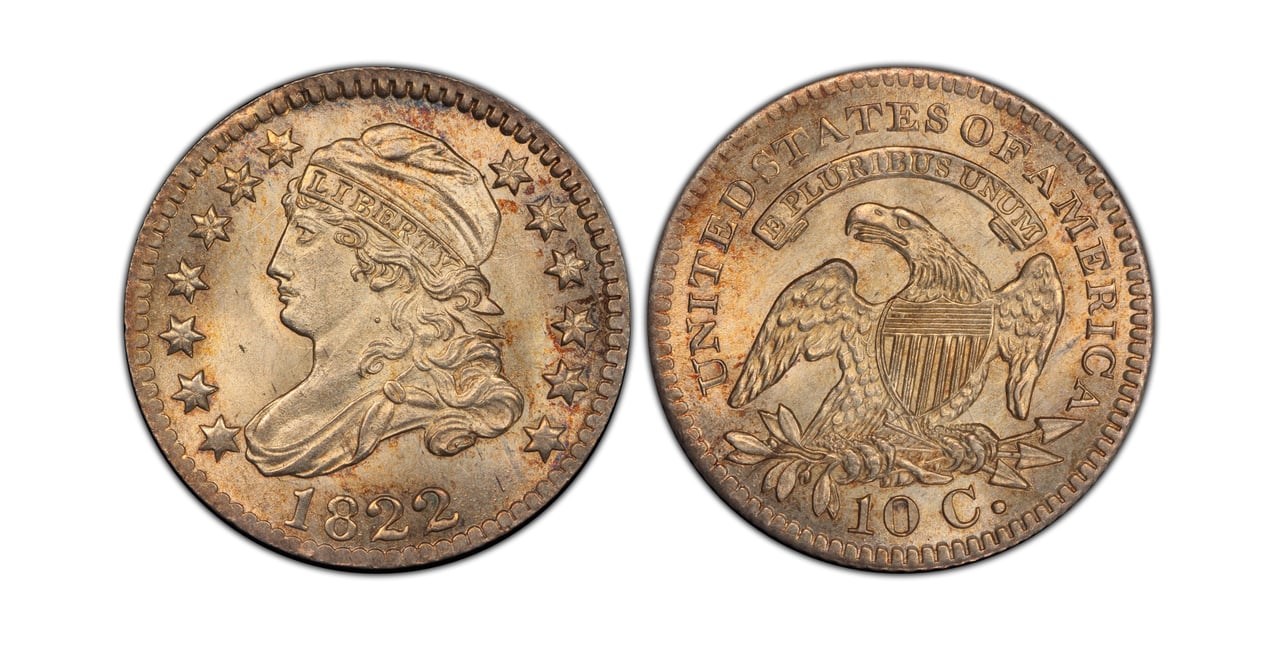
The Mint struck 100,000 dimes in 1822, its smallest output of the whole Capped Bust series, and set aside a very small number to strike again as proofs for presentation.
A proof graded PR66 by PCGS sold for $440,625 at Heritage Auctions in June 2014. The finest known business strike sold for $149,500 at Stack’s in March 2006. The proof carries roughly three times the price of its circulating twin.
The date to look for on any Capped Bust dime is 1822.
| Country | United States |
|---|---|
| Year | 1822 |
| Mint mark | None (Philadelphia) |
| Mintage | 100,000, proofs a tiny fraction |
| Face value | $0.10 |
| Price realized | $440,625 |
1797 Draped Bust Dime, 13 Stars: $402,500
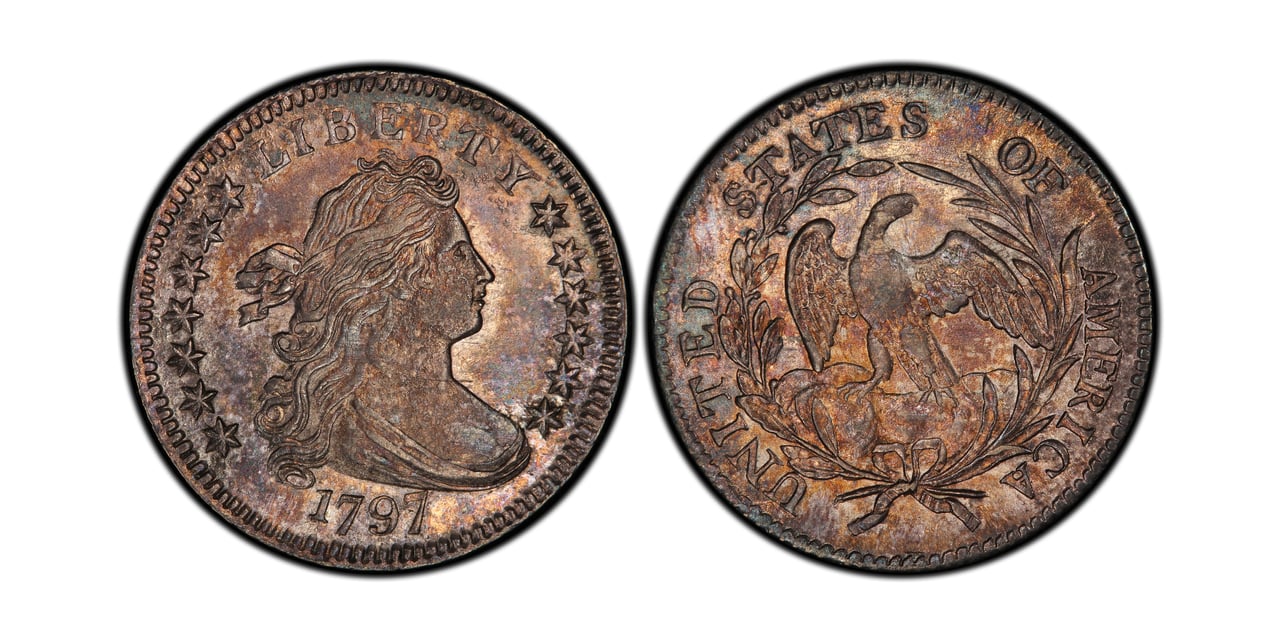
The Mint hadn’t settled on how many states its coins should represent, and the count kept changing as new states joined the Union. The 25,261 dimes struck in 1797 came from two obverse dies: one carries sixteen stars, one carries thirteen.
The thirteen-star variety is the scarcer of the two. An example graded MS65 by NGC realized $402,500 at Heritage Auctions in July 2008.
| Country | United States |
|---|---|
| Year | 1797 |
| Mint mark | None (Philadelphia) |
| Mintage | 25,261 across both varieties |
| Face value | $0.10 |
| Price realized | $402,500 |
1871-CC Liberty Seated Dime: $270,250
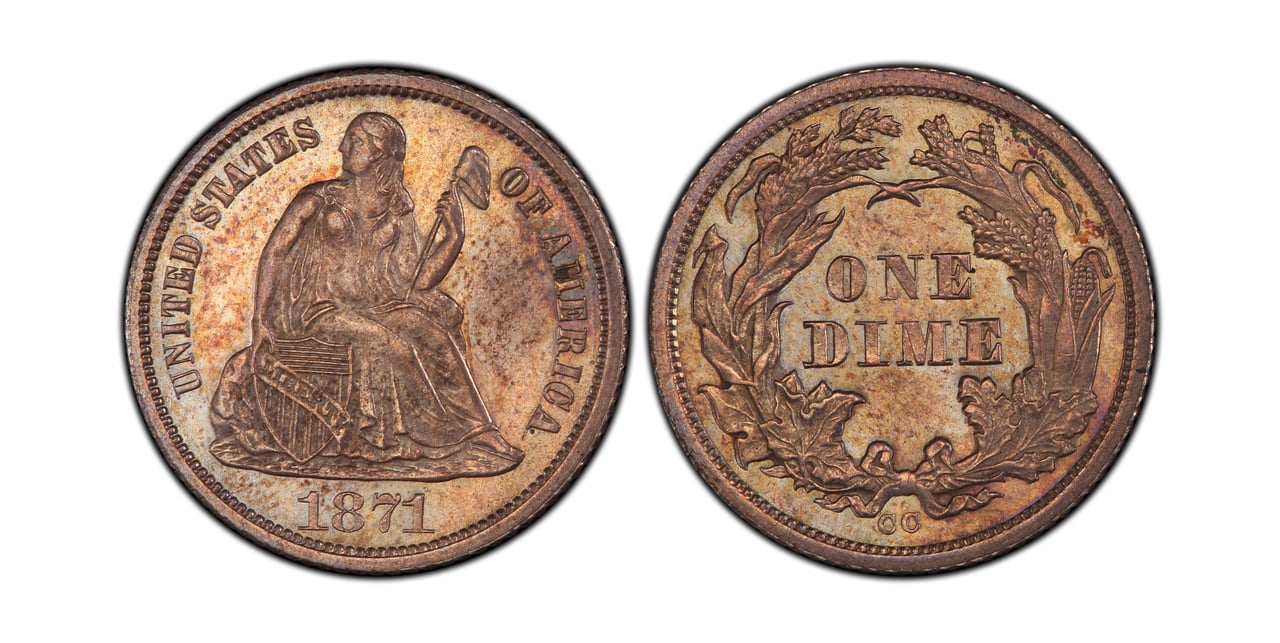
Carson City struck its very first dimes in 1871, only 20,100 of them, and most of what survives today is heavily worn. Nevada spent its coins rather than saving them.
An example graded MS65 by NGC sold for $270,250 at Heritage Auctions in October 2014. Even a well-worn 1871-CC sells for thousands, which is unusual for a Liberty Seated dime of any date.
| Country | United States |
|---|---|
| Year | 1871 |
| Mint mark | CC (Carson City) |
| Mintage | 20,100 |
| Face value | $0.10 |
| Price realized | $270,250 |
1874-CC Liberty Seated Dime, With Arrows: $264,000
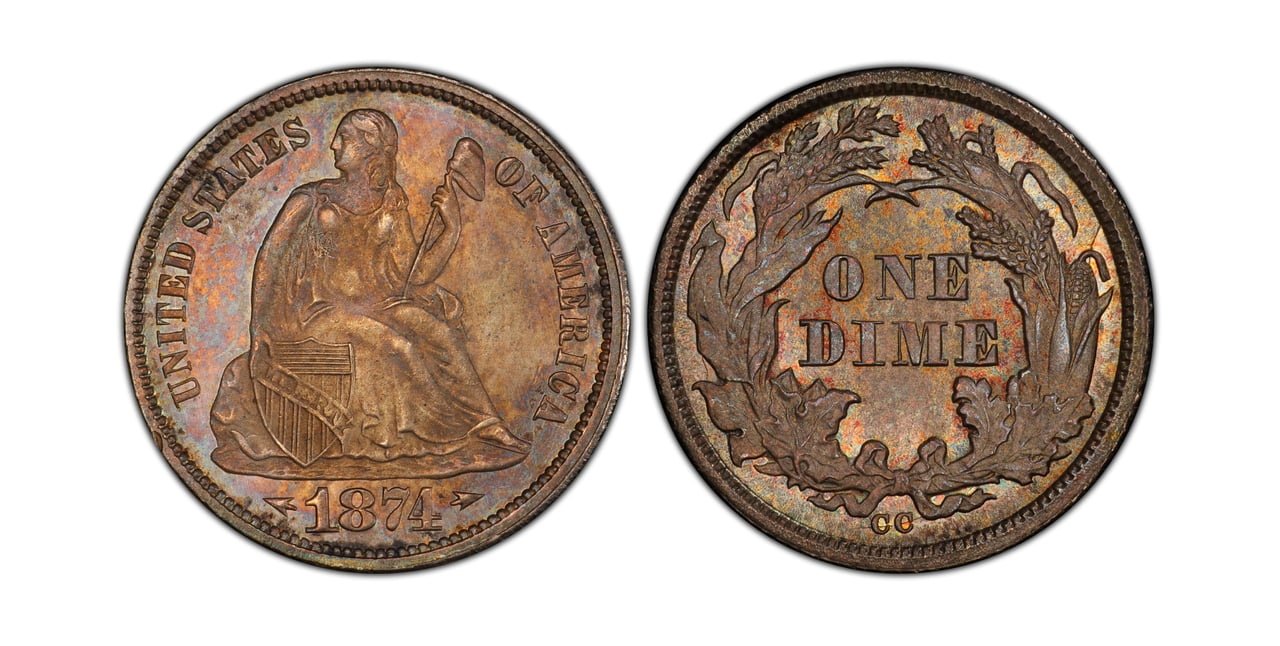
At 10,817 coins, the 1874-CC carries the lowest mintage of any dime struck with arrows at the date. It is also the last Carson City dime of the arrows period. The Mint stopped striking dimes there entirely after 1875.
A coin graded MS63 by PCGS sold for $264,000 at Heritage Auctions in November 2021.
| Country | United States |
|---|---|
| Year | 1874 |
| Mint mark | CC (Carson City) |
| Mintage | 10,817 |
| Face value | $0.10 |
| Price realized | $264,000 |
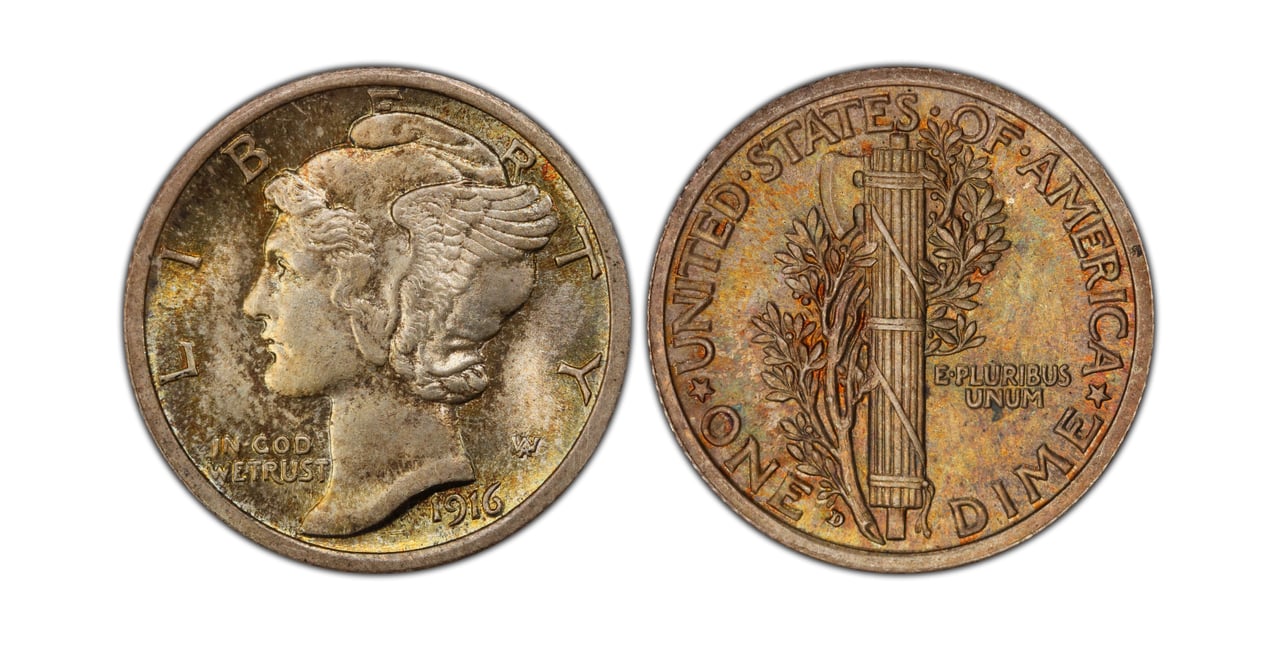
1916-D Mercury Dime: $207,000
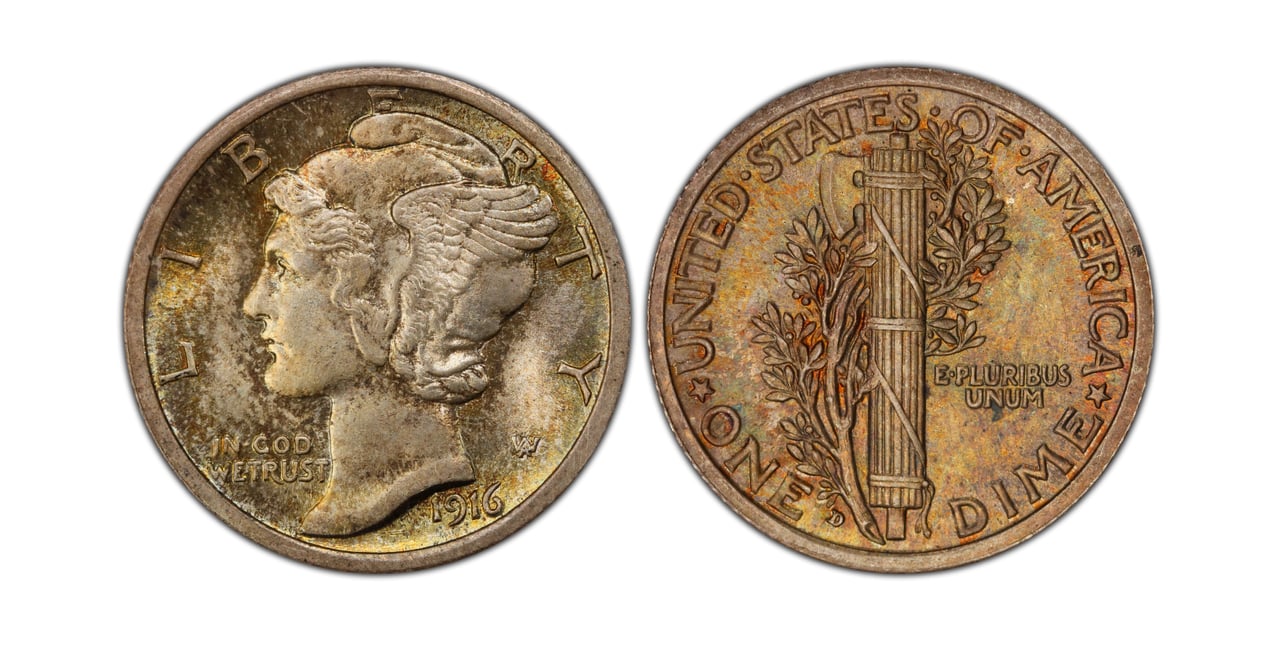
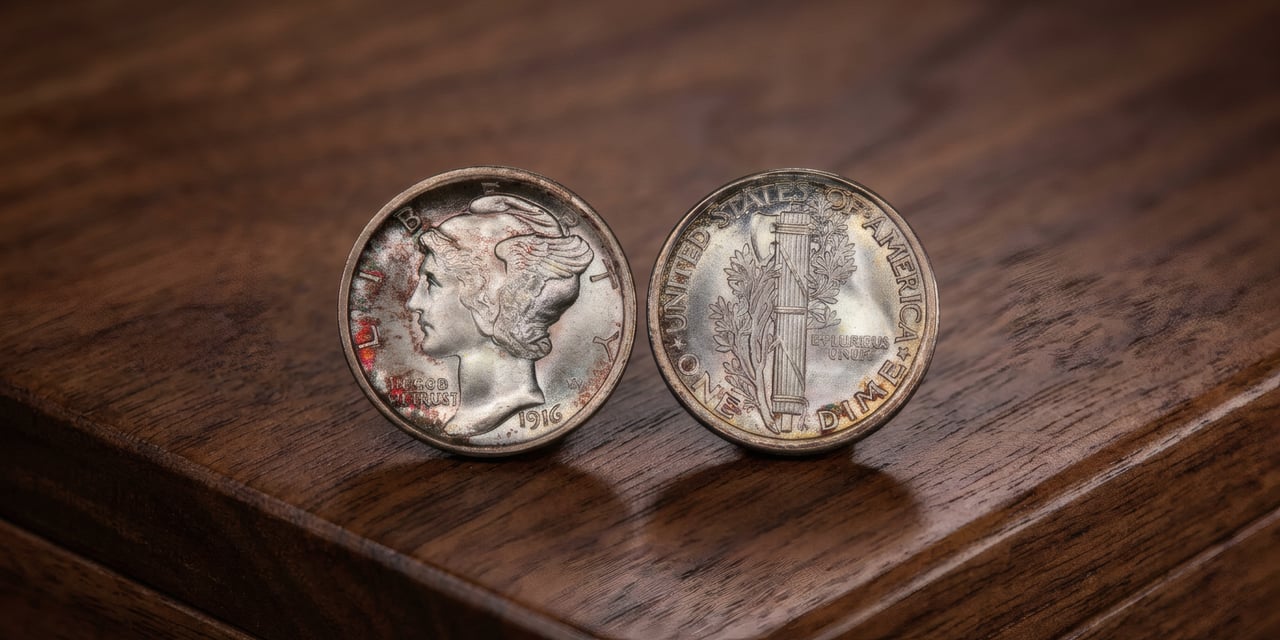
Watch for a mint mark that was never really there. The 1916-D is the most counterfeited dime in the hobby, and the most common fake is an ordinary 1916 Philadelphia dime with a D glued or soldered onto the reverse.
The reason anyone bothers faking it: Denver struck only 264,000 Mercury dimes in 1916 before switching its presses to quarters, while every other date in the series runs into the millions. It is the key date of the most collected dime series in America, and collectors have hunted it since the 1930s.
A coin graded MS67 with Full Bands by PCGS and approved by CAC sold for $207,000 at Heritage Auctions in August 2010. Even a beaten example is worth real money. A 1916-D graded G4, worn almost smooth, sold for $1,525 at Stack’s Bowers in May 2026.
| Country | United States |
|---|---|
| Year | 1916 |
| Mint mark | D (Denver) |
| Mintage | 264,000 |
| Face value | $0.10 |
| Price realized | $207,000 |
1797 Draped Bust Dime, 16 Stars: $199,750
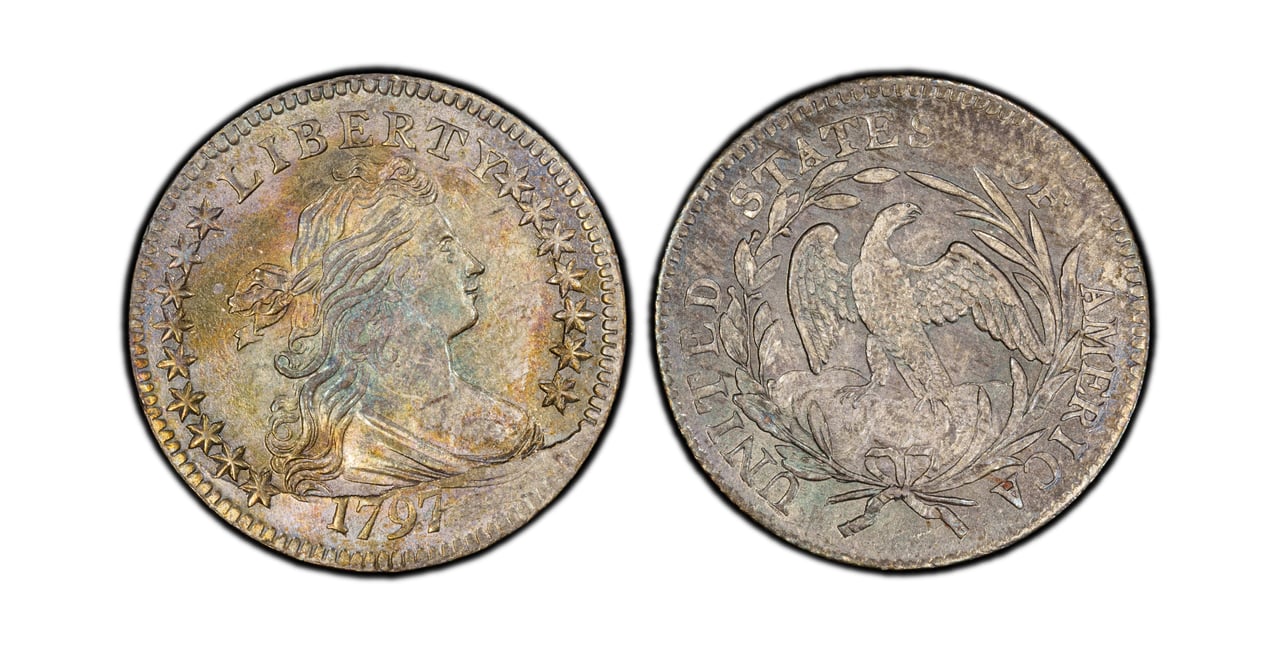
Tennessee joined the Union in 1796, and the Mint’s response was to add a sixteenth star to the dime’s obverse to count it. The Mint quickly realized it could not keep adding a star for every new state, and the count went back down to thirteen and stayed there for good.
An example graded MS66 by PCGS sold for $199,750 at Stack’s Bowers in May 2015, as part of the D. Brent Pogue Collection sale held with Sotheby’s in New York.
| Country | United States |
|---|---|
| Year | 1797 |
| Mint mark | None (Philadelphia) |
| Mintage | 25,261 across both varieties |
| Face value | $0.10 |
| Price realized | $199,750 |
1860-O Liberty Seated Dime: $192,000
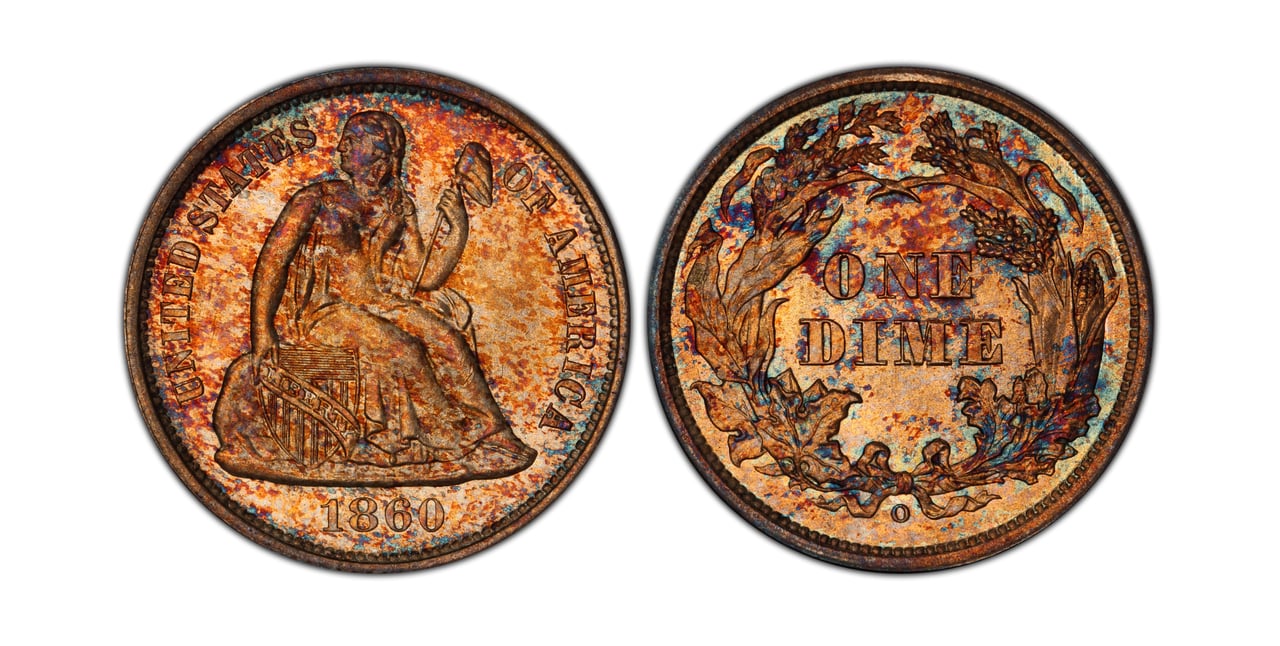
New Orleans struck 40,000 dimes in 1860, then closed to federal coinage when Louisiana seceded. The mint would not strike another dime until 1891.
That makes the 1860-O the last New Orleans dime of the antebellum period, and a genuine rarity in mint state. A coin graded MS67 by PCGS with CAC approval realized $192,000 at Heritage Auctions in August 2022.
| Country | United States |
|---|---|
| Year | 1860 |
| Mint mark | O (New Orleans) |
| Mintage | 40,000 |
| Face value | $0.10 |
| Price realized | $192,000 |
Mercury dimes worth money
Adolph Weinman’s Winged Liberty design ran on the dime from 1916 to 1945, and almost everyone calls it the Mercury dime instead, because the winged cap looks like the Roman messenger god. It’s the series most people inherit, and the series most people ask about.
Two things drive what a Mercury dime is worth: the date and mint mark, and a designation called Full Bands. The reverse carries a fasces, a bundle of rods bound with cord, and on a sharply struck coin the horizontal bands across the middle of that bundle sit fully separated. PCGS and NGC award the Full Bands designation for that separation, and on some dates the premium for it outweighs the date itself.
The Mercury dimes that matter
1916-D. The key date of the whole series, at 264,000 struck, and every other date runs common by comparison. The record is $207,000 for an MS67 Full Bands example, Heritage Auctions, August 2010.
1942/1 overdate. A repunching error: Philadelphia reused a 1941 die and stamped 1942 over it, leaving the 1 plainly visible beneath the 2. An MS66 Full Bands example graded by PCGS sold for $120,000 at Heritage Auctions in January 2018.
1942/1-D overdate. Denver made the identical mistake the same year, and its version is the scarcer of the two in circulated grades. An MS66+ Full Bands example sold for $73,437.50 at Legend Rare Coin Auctions in May 2019.
1921 and 1921-D. Output collapsed after the series’ first year: 1,230,000 struck in Philadelphia, 1,080,000 in Denver. A 1921-D graded MS66+ Full Bands sold for $50,400 at Heritage Auctions in January 2019, and a 1921 in MS67 sold for $32,200 in August 2010.
1926-S. San Francisco struck 1,520,000 of them, and struck them badly. An MS67 example with CAC approval still sold for $54,625 at Heritage Auctions in August 2010.
1945. Philadelphia struck this date in the tens of millions, and almost none of them show separated bands. An MS67+ Full Bands coin sold for $96,000 at Heritage Auctions in January 2018.
1945-S Micro S. San Francisco switched to a smaller mint mark punch partway through its 1945 production. An MS68 Full Bands example sold for $25,850 at Legend Rare Coin Auctions in March 2019.
Sort a jar of Mercury dimes by date first, then look at the bands. Every one of them is 90 percent silver, so even a worn common date is worth well above ten cents.
Roosevelt dimes worth money
The Roosevelt dime has been in production since 1946, and the overwhelming majority of them are worth exactly ten cents. The series still produces five- and six-figure coins from four places: proof dimes missing a mint mark, business strike errors, the Special Mint Set years, and silver content.
Proof dimes missing their mint mark
1975 No S. Covered above: only two are known, and this is the most valuable modern coin in American numismatics. The GreatCollections example brought $506,250 in October 2024.
1968 No S. The first proof dime to leave San Francisco without its mint mark. A PR68 example sold for $48,875 at Heritage Auctions in September 2006.
1970 No S. More of these survive than any of the others in the group. A PR69 example sold for $6,038 at Heritage Auctions in May 2004.
1983 No S. The last of the four, and the one most likely still sitting in an unopened set somewhere. A PR70 example sold for $10,560 through GreatCollections in November 2014.
All four left San Francisco inside proof sets. If you own an unopened proof set from 1968, 1970, 1975 or 1983, look at the dime through the plastic before doing anything else. The mint mark sits on the obverse, just above the date.
Business strike errors and low mintages
1982 No Mintmark. A Philadelphia die went into service without its P. Collectors split the error into Strong and Weak versions by how clearly the missing mark shows. A Strong example graded MS68 sold for $2,185 at Heritage Auctions in May 2004. These entered circulation in Ohio and can still turn up in change.
1996-W. West Point struck 1,457,000 dimes to mark the series’ fiftieth anniversary, and put every one of them only in that year’s uncirculated mint sets. It’s the only Roosevelt dime carrying a W mint mark. An MS69 example sold for $411.25 at Heritage Auctions in December 2014.
Special Mint Set dimes, 1965 to 1967
The Mint suspended proof production for three years during the coin shortage of the mid-1960s and issued Special Mint Sets in its place. The sharpest of those special strikes rival actual proofs. A 1967 dime graded SP68 sold for $9,987.50 at Heritage Auctions in January 2014, and a 1965 in the same grade sold for $2,585 at the same sale.
Silver Roosevelt dimes, 1946 to 1964
Every Roosevelt dime dated 1964 or earlier is 90 percent silver, carrying 0.0723 troy ounces of it. None of them are rare, but all are worth many times face value, and their price moves with the silver market rather than with collector demand.
How to identify a valuable dime
Start with the date. Then find the mint mark. Then judge the condition, in that order.
Where the mint mark sits. It moves from series to series, and people miss valuable coins by looking in the wrong place.
| Series | Years | Mint mark location |
|---|---|---|
| Draped Bust and Capped Bust | 1796 to 1837 | None, Philadelphia only |
| Liberty Seated | 1837 to 1891 | Reverse, inside or below the wreath |
| Barber | 1892 to 1916 | Reverse, below the wreath |
| Mercury | 1916 to 1945 | Reverse, lower left beside the fasces |
| Roosevelt, silver | 1946 to 1964 | Reverse, left of the torch base |
| Roosevelt, clad | 1968 onward | Obverse, above the date |
The dates worth stopping for. 1796, 1797, 1804 and 1822 among the early dimes. 1860-O, 1871-CC, 1872-CC, 1873-CC and 1874-CC among the Liberty Seated issues. 1894-S, 1895-O and 1901-S among the Barber dimes. 1916-D, 1921, 1921-D, 1926-S and the 1942/1 overdates among the Mercury dimes. 1968, 1970, 1975 and 1983 proofs missing an S, plus the 1982 with no P.
A mint mark you can see is worth checking twice. CC on a dime always means money. So does an O on an 1860 dime. A dime with no mint mark where one belongs can beat any rare date in the series.
Anything before 1965 is silver. A worn 1943 Mercury dime will never be a collector coin, and it’s still worth well above ten cents on silver content alone.
What makes a dime valuable
Rarity, condition and demand set the price, and the three don’t carry equal weight.
Survival matters more than mintage. The 1996-W had a mintage of 1,457,000 and sells for a few hundred dollars, because every one of them went straight into a collector’s mint set and stayed there. The 1916-D had a mintage of 264,000 and went into pockets instead. Ask how many survive in high grade, not how many were struck.
Condition decides almost everything above a certain level. Dimes are graded on the Sheldon scale, 1 to 70, and PCGS and NGC are the two services the market trusts. A 1916-D graded G4 sold for $1,525 at Stack’s Bowers in May 2026. The same date graded MS67 Full Bands sold for $207,000.
Designations are their own market. Full Bands on a Mercury dime and Full Torch on a Roosevelt dime record how completely the coin was struck. The 1945 Mercury dime is common in every grade and rare with Full Bands. An MS67+ Full Bands example took $96,000.
Errors and varieties reward close looking. Overdates, repunched mint marks and missing mint marks all trace back to human mistakes at the Mint, and the Mint rarely made them.
Provenance adds to the top of the market. The 1873-CC passed through the Battle Born and Prestwick collections. The 1894-S came from the Bruce S. Sherman Collection. At this level, buyers are paying for the chain of ownership as well as the coin.
Get it graded before you sell it. A raw dime sells at a discount because the buyer absorbs the risk. If you think you have a 1916-D or a proof dime missing its mint mark, send it to PCGS or NGC before you talk to anyone about buying it.
Which of these dimes could still turn up
Two of these fourteen dimes will never be yours to find. Everything else could still be sitting somewhere.
The 1873-CC without arrows is unique, and the 1894-S has nine known survivors that trade once a decade. Every other coin on this list has changed hands in the past twenty years, and one of them, the 1975 No S proof dime, sat inside the same family’s home for forty-six years before anyone realized what it was.
The 14 most valuable dimes are:
- 1873-CC Liberty Seated Dime, No Arrows: $3,600,000
- 1894-S Barber Dime: $2,160,000
- 1796 Draped Bust Dime: $881,250
- 1804 Draped Bust Dime, 14 Star Reverse: $632,500
- 1873-CC Liberty Seated Dime, With Arrows: $552,000
- 1975 No S Roosevelt Dime: $506,250
- 1872-CC Liberty Seated Dime: $480,000
- 1822 Capped Bust Dime, Proof: $440,625
- 1797 Draped Bust Dime, 13 Stars: $402,500
- 1871-CC Liberty Seated Dime: $270,250
- 1874-CC Liberty Seated Dime, With Arrows: $264,000
- 1916-D Mercury Dime: $207,000
- 1797 Draped Bust Dime, 16 Stars: $199,750
- 1860-O Liberty Seated Dime: $192,000
The dime is the smallest American coin in circulation, and the least examined. People treat cents differently: the most valuable pennies are mostly doubled dies and wartime errors rather than coins that merely survived well, because so many ordinary cents did survive well. A dime rarely gets that chance.
The same hunt works across denominations. Check our guides to the most valuable quarters, the most valuable nickels and the world’s most valuable coins. But start with what’s already in your hand: check the date, find the mint mark, and give any unopened 1975 or 1983 proof set a second look.
Methodology and sources
Every price in this article is a completed sale. We estimated nothing. Where a coin had a reputation but no sale we could point to, we left it out rather than put a guess in front of you.
Four things had to be true before an entry made the ranking. The sale had to have closed. The auction house had to be named. The date had to be known. The coin had to carry a grade from PCGS or NGC.
A dime’s value swings enormously on condition, so a price with no grade attached tells you very little. One 1916-D sold for $1,525 in May 2026 and another sold for $207,000, and they are the same date from the same mint.
The figures are realized totals including the buyer’s premium, not hammer prices. The 1873-CC shows the difference. It hammered at $1.6 million in 2012 and realized $1.84 million once Stack’s Bowers added its 15 percent fee. We quote the second number throughout, because that is what the buyer actually paid.
The sale records come from the PCGS auction archives and were checked against the selling houses. Heritage Auctions, Stack’s Bowers, GreatCollections and Legend Rare Coin Auctions sold the coins on this list. Mintages come from PCGS CoinFacts.
These are the prices these coins reached on the days they sold. A record set in 2008 does not tell you what the same coin would bring now, and several of the coins here have not come to market in over a decade.
Frequently asked questions about the most valuable dimes
Which years of dimes are worth money?
Why is a 1975 dime so valuable?
What dime is worth $456,000?
Why is a 1967 dime worth so much?
How much is a 90% silver dime worth today?
Products featured here are independently selected by our editors. If you buy through our retail links we may earn an affiliate commission — it never changes the price you pay, and it never decides our verdicts. Read our earnings disclaimer.