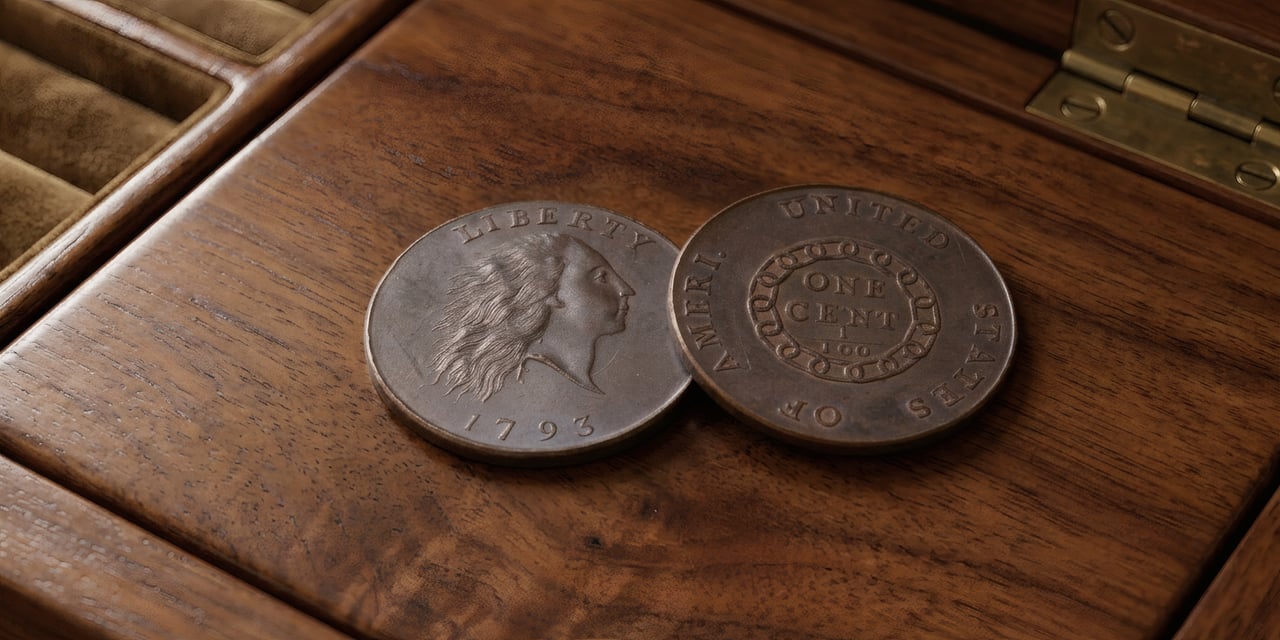
Pennies are worth money, and we don’t mean face value. A penny is the one coin nobody bends down for: it pools in jars, sits in the cup holder. Yet single cents have sold for more than a house.
Some entries on this list have sold for seven figures. A few of the valuable ones are 1943 wheat cents that spent years in actual circulation, and the rarest variety here has exactly three known survivors. This list stays narrow, one coin and fifteen confirmed sales. For the wider picture, our guide to the most valuable coins covers every denomination and century.
Does your own jar hold one of them? That depends on a short list of years, a couple of metal changeovers, and plain luck.
Every figure below is a completed auction sale with a house and a date attached, from PCGS, Heritage Auctions, Stack’s Bowers, Ira and Larry Goldberg, and GreatCollections. Coins quoted at seven figures elsewhere with no real sale behind them are left out.
The 15 most valuable pennies ever sold
| Ranking | Penny | Price |
|---|---|---|
| 1 | 1793 Chain Cent | $2,350,000 |
| 2 | 1795 Reeded Edge Cent | $1,265,000 |
| 3 | 1958 Doubled Die Obverse Cent | $1,136,250 |
| 4 | 1799 Draped Bust Cent | $977,500 |
| 5 | 1943-D Bronze Cent | $840,000 |
| 6 | 1969-S Doubled Die Obverse Cent | $601,875 |
| 7 | 1943-S Bronze Cent | $504,000 |
| 8 | 1944-S Steel Cent | $408,000 |
| 9 | 1943 Bronze Cent | $372,000 |
| 10 | 1856 Flying Eagle Cent | $312,000 |
| 11 | 1955 Doubled Die Obverse Cent | $287,156 |
| 12 | 1944 Steel Cent | $180,000 |
| 13 | 1909-S VDB Cent | $170,800 |
| 14 | 1914-D Cent | $158,625 |
| 15 | 1877 Indian Head Cent | $149,500 |
1793 Chain Cent: $2,350,000
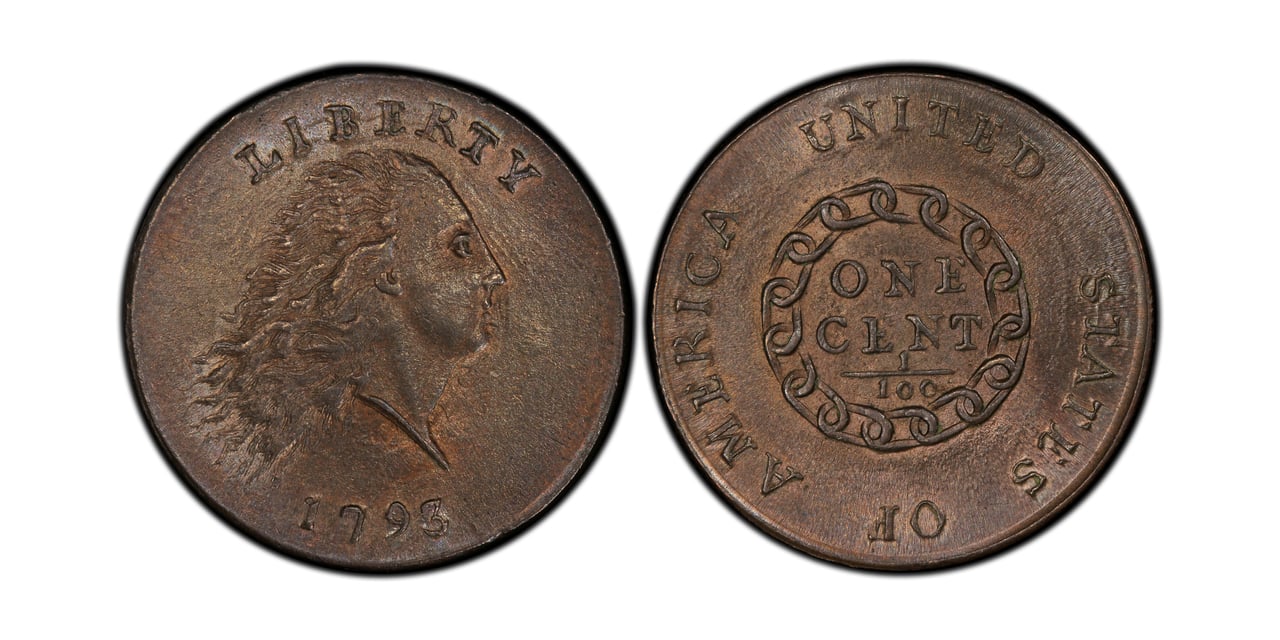
The first coin the US Mint struck for circulation opened with a design problem. Its linked chain was meant to show union, but the public read it as bondage, and the Mint pulled it within weeks after striking just 36,103 pieces.
A Periods variety graded MS66 brown by PCGS sold for $2,350,000 at Heritage Auctions in January 2015, at the Florida United Numismatists show. It was the coin’s first public auction appearance since 1890. The rarer AMERI. variety came from the engraver running out of room and abbreviating the country name, and one reached $1,500,000 at Heritage Auctions in January 2019.
You will not find a Chain cent in circulation. The realistic route is an old family estate.
| Year | 1793 |
|---|---|
| Mint mark | None (Philadelphia) |
| Face value | $0.01 |
| Sold for | $2,350,000 |
1795 Reeded Edge Cent: $1,265,000
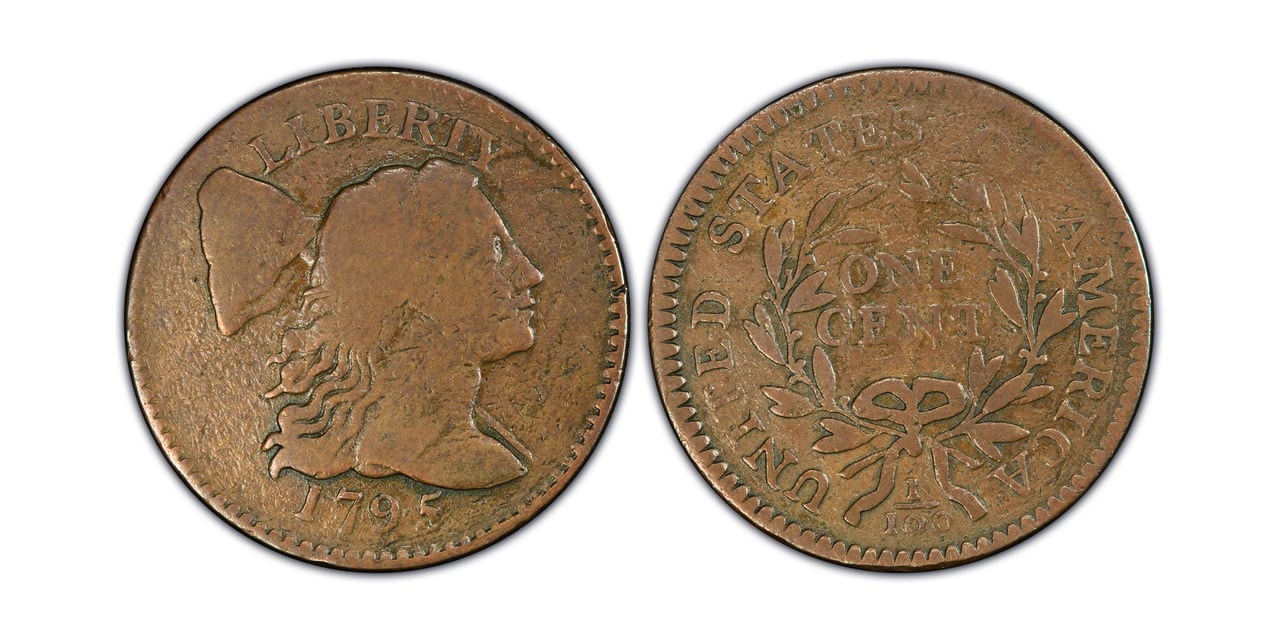
Almost every 1795 large cent has a plain edge. A tiny number left the Mint with grooved, reeded edges, and roughly ten survive today, catalogued as Sheldon-79.
The example from the Dan Holmes collection sold for $1,265,000 at Ira and Larry Goldberg in September 2009, the first large cent to pass $1 million. It graded VG10: genuinely worn, with a soft date and flat details. With only ten known, condition matters less than rarity.
| Year | 1795 |
|---|---|
| Mint mark | None (Philadelphia) |
| Face value | $0.01 |
| Sold for | $1,265,000 |
1958 Doubled Die Obverse Cent: $1,136,250
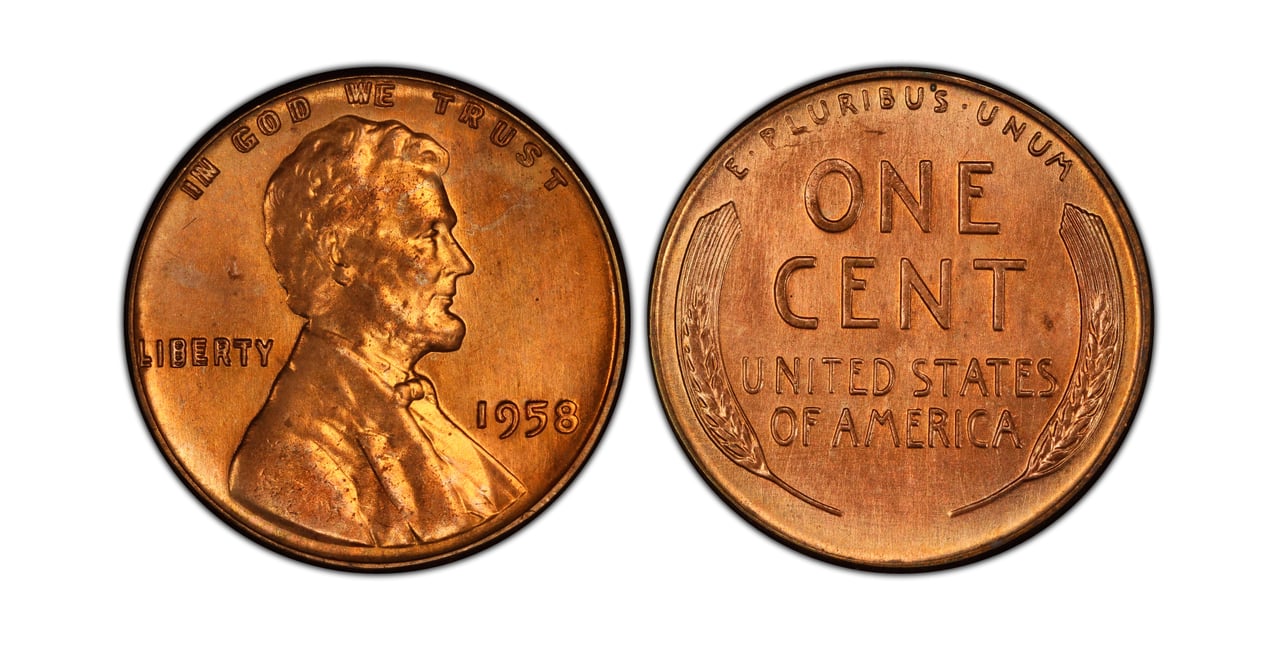
Three are known, the entire population of the 1958 doubled die obverse cent. No major Lincoln variety is rarer, and no penny from the modern era is worth more.
The finest of the three, graded MS65 red by PCGS, sold for $1,136,250 at GreatCollections in January 2023 from the Stewart Blay collection, assembled over fifty years. It was the first Lincoln cent to reach $1 million at public auction. The previous variety record was $336,000 at Stack’s Bowers in March 2018. The doubling shows without a loupe on LIBERTY, IN GOD WE TRUST, and the date.
| Year | 1958 |
|---|---|
| Mint mark | None (Philadelphia) |
| Face value | $0.01 |
| Sold for | $1,136,250 |
1799 Draped Bust Cent: $977,500
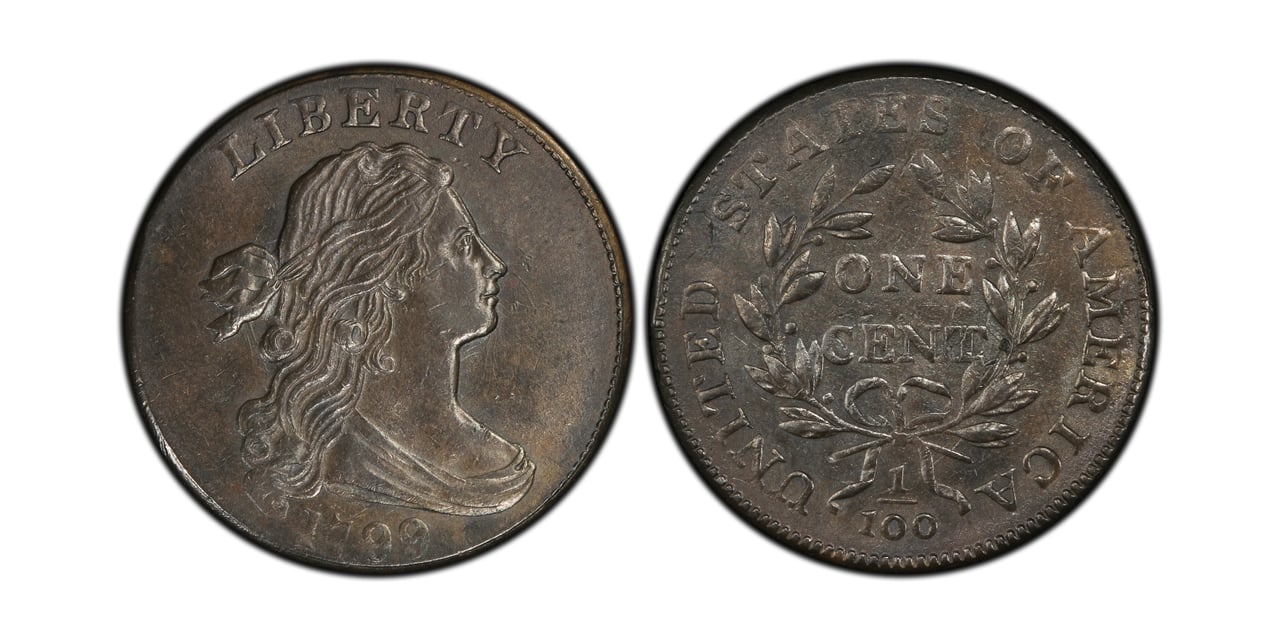
The 1799 is the key date of the Draped Bust series. It stops most large-cent collections from completing, because survivors are almost always heavily worn after decades in circulation.
An MS62 graded by NGC sold for $977,500 at Ira and Larry Goldberg in September 2009, in the same Dan Holmes sale as the Reeded Edge record above.
| Year | 1799 |
|---|---|
| Mint mark | None (Philadelphia) |
| Face value | $0.01 |
| Sold for | $977,500 |
1943-D Bronze Cent: $840,000
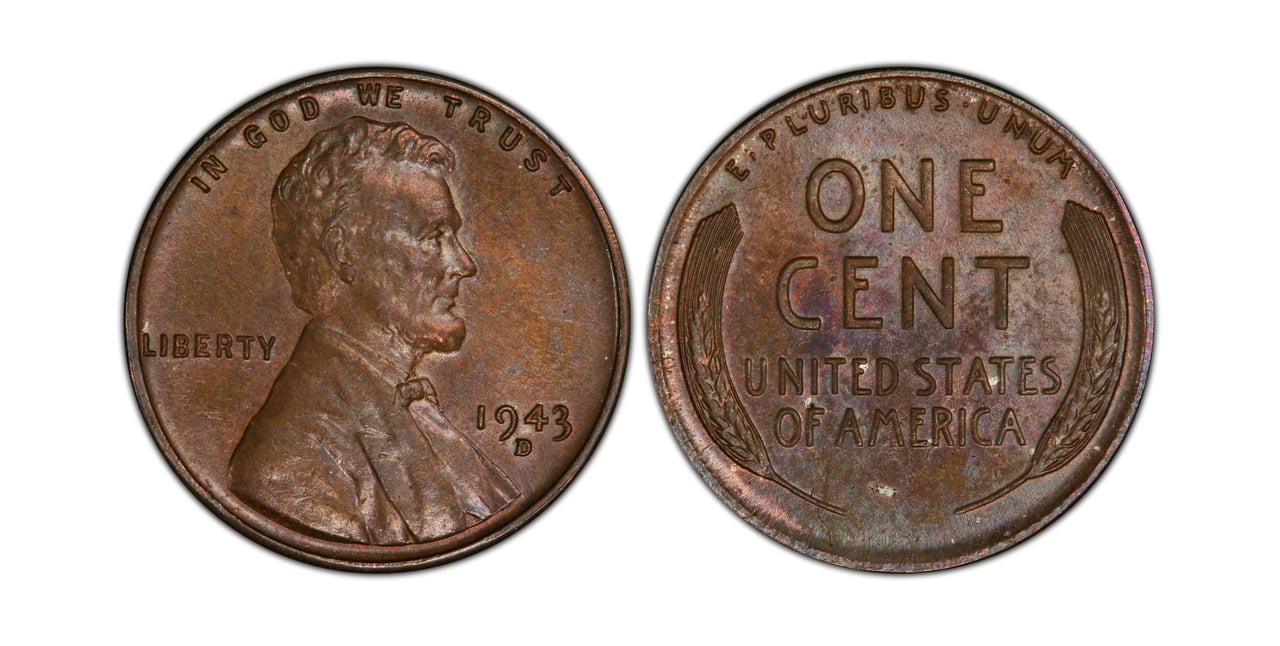
In 1943 the Mint struck cents in zinc-coated steel because copper had gone to the war effort. A few leftover 1942 bronze blanks got struck anyway, and exactly one has ever been found from Denver.
That coin sold privately for $1,700,000 in September 2010, brokered by Legend Numismatics for collector Bob R. Simpson. It is the figure that circulates online, and it is real, but it was a private sale. The same coin, graded MS64 brown by PCGS, sold at public auction at Heritage Auctions in January 2021 for $840,000, less than half the private price eleven years later. Private sales and auction results are not the same measure.
| Year | 1943 |
|---|---|
| Mint mark | D (Denver) |
| Face value | $0.01 |
| Sold for | $840,000 |
1969-S Doubled Die Obverse Cent: $601,875
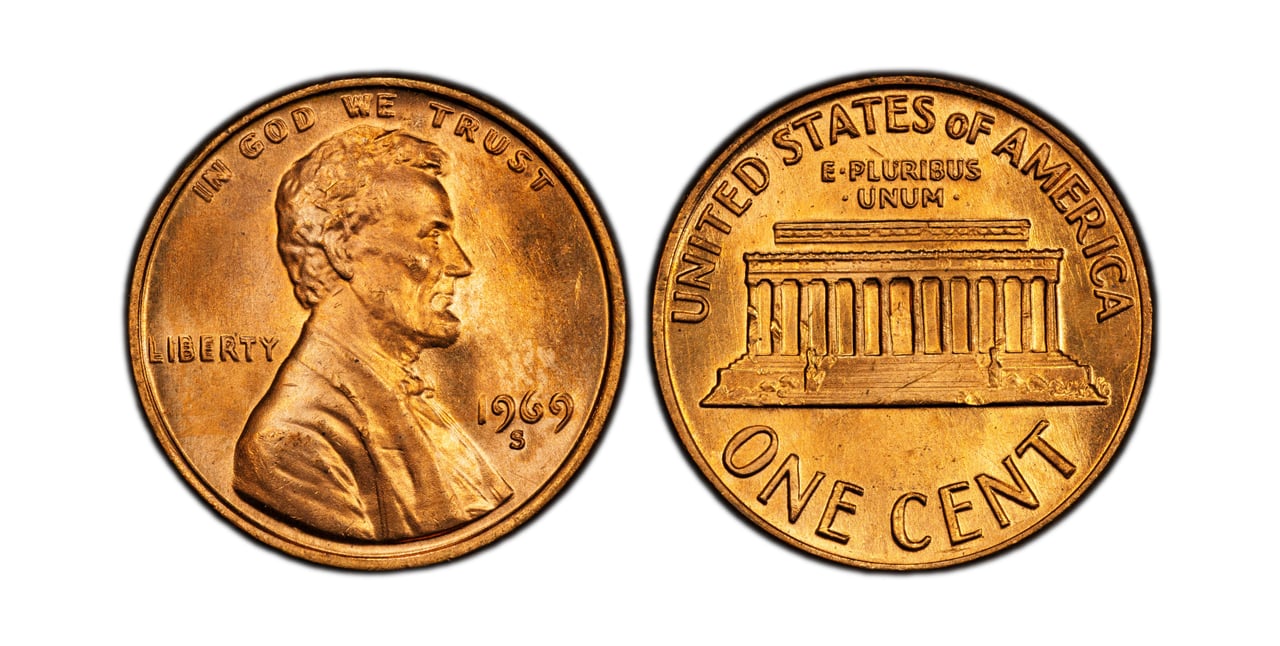
The Secret Service initially confiscated the first examples of the 1969-S doubled die as suspected counterfeits. The Mint confirmed the doubling was genuine, and the coins were returned.
The finest known, graded MS65 red by PCGS, sold for $601,875 at GreatCollections in January 2023, again from the Stewart Blay collection. The previous auction record was $126,500 at Heritage Auctions in 2008. The doubling shows on LIBERTY and the date. The mint mark was hand-punched after the doubling occurred, so a genuine example shows a clean, undoubled S, and that detail rules out most fakes.
| Year | 1969 |
|---|---|
| Mint mark | S (San Francisco) |
| Face value | $0.01 |
| Sold for | $601,875 |
1943-S Bronze Cent: $504,000
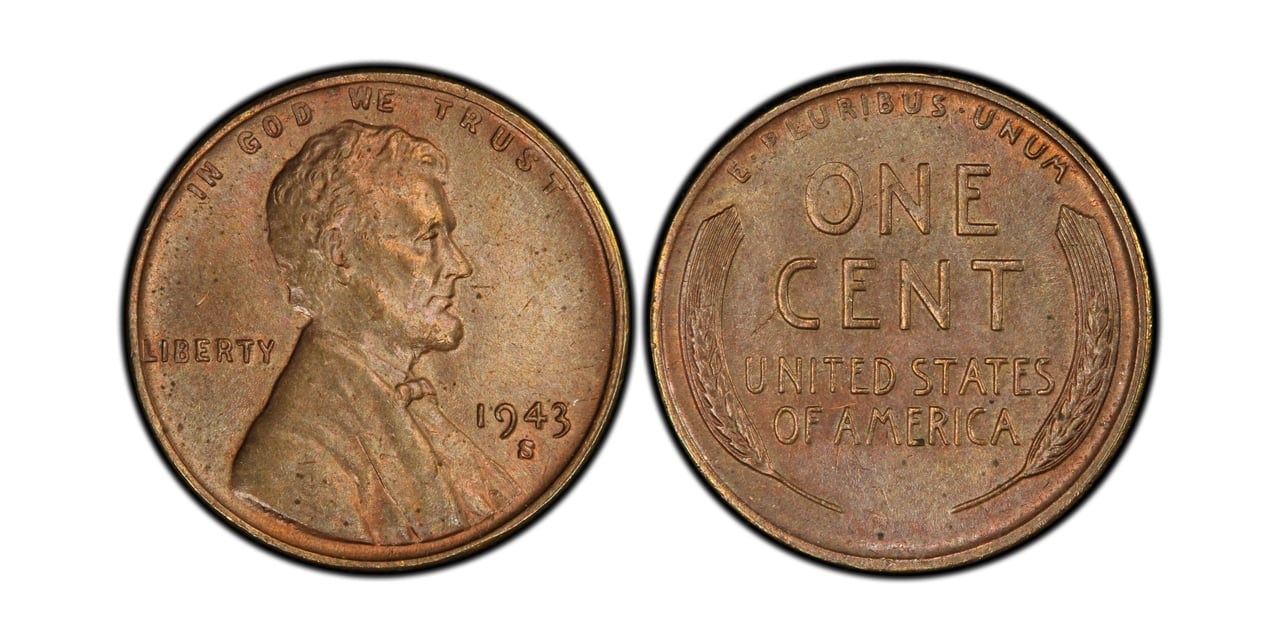
San Francisco produced about six of the 1943 bronze errors, making it the second scarcest of the three mints.
The finest, graded MS63 brown by PCGS, sold for $504,000 at Heritage Auctions in November 2020. It was bought by Bob R. Simpson, who assembled the most complete collection of off-metal cents ever built. Its 2020-2021 Heritage dispersal set the modern price record for almost every coin in that collection.
| Year | 1943 |
|---|---|
| Mint mark | S (San Francisco) |
| Face value | $0.01 |
| Sold for | $504,000 |
1944-S Steel Cent: $408,000
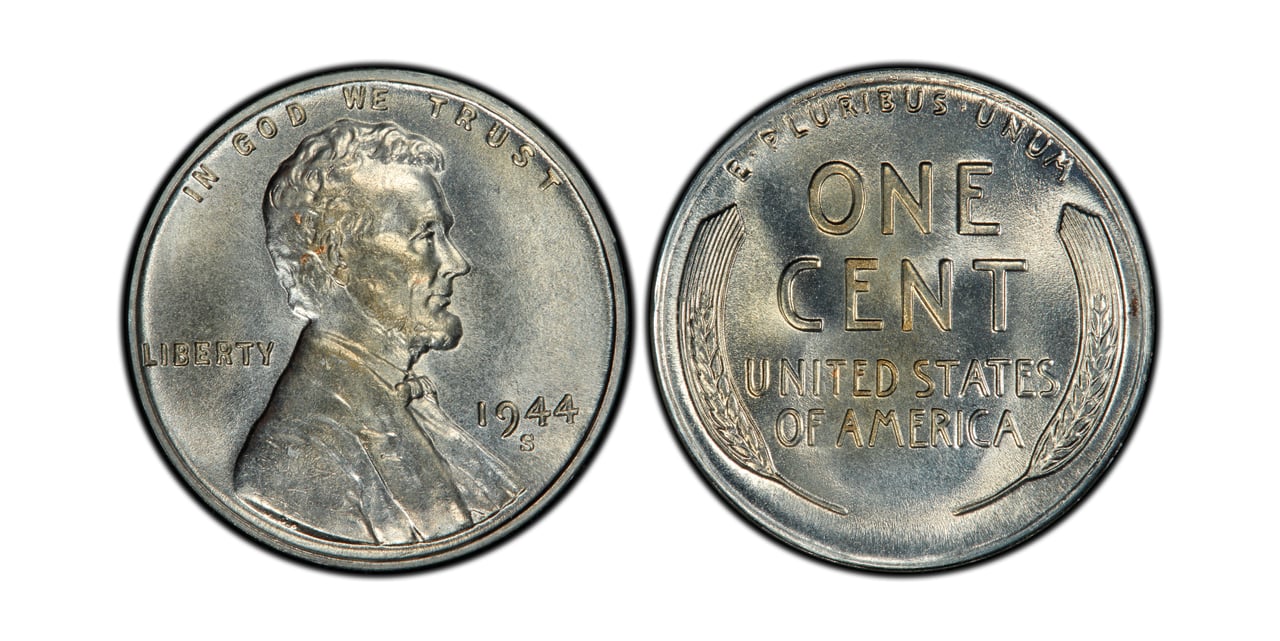
The 1944-S steel cent is the 1943 error running backwards. The Mint returned to bronze in 1944, and a few leftover steel blanks got struck with 1944 dies. Two are known from San Francisco.
An MS66 graded by PCGS sold for $408,000 at Heritage Auctions in August 2021. The coin is rarer than the 1943 bronze cents but sells for less, because fame drives the 1943 price.
| Year | 1944 |
|---|---|
| Mint mark | S (San Francisco) |
| Face value | $0.01 |
| Sold for | $408,000 |
1943 Bronze Cent: $372,000
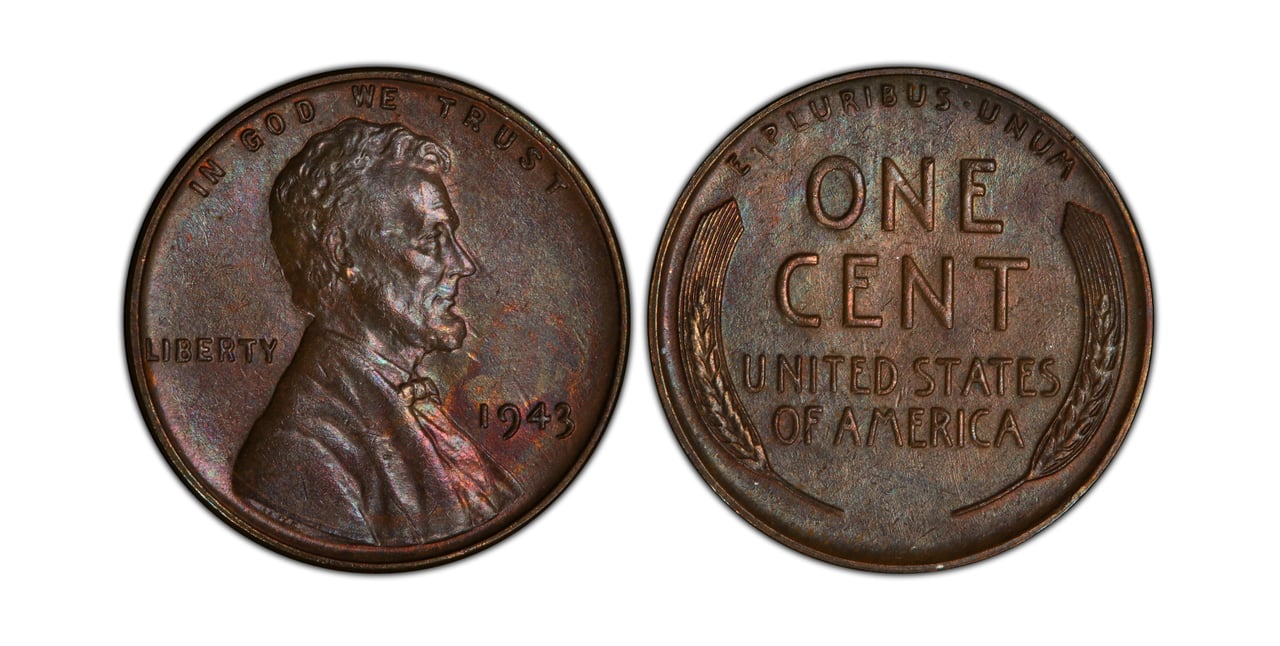
Philadelphia produced the most findable 1943 bronze cents, around ten to fifteen confirmed examples.
One, graded MS62 brown by PCGS, sold for $372,000 at Heritage Auctions in February 2021. A different coin tells the story most people remember. Don Lutes Jr. received a 1943 bronze cent in change at his high school cafeteria in 1947, kept it for more than seventy years, and refused to sell it. It went to auction only after his death, and Heritage Auctions sold it for $204,000 in January 2019. Two coins, two prices.
| Year | 1943 |
|---|---|
| Mint mark | None (Philadelphia) |
| Face value | $0.01 |
| Sold for | $372,000 |
1856 Flying Eagle Cent: $312,000
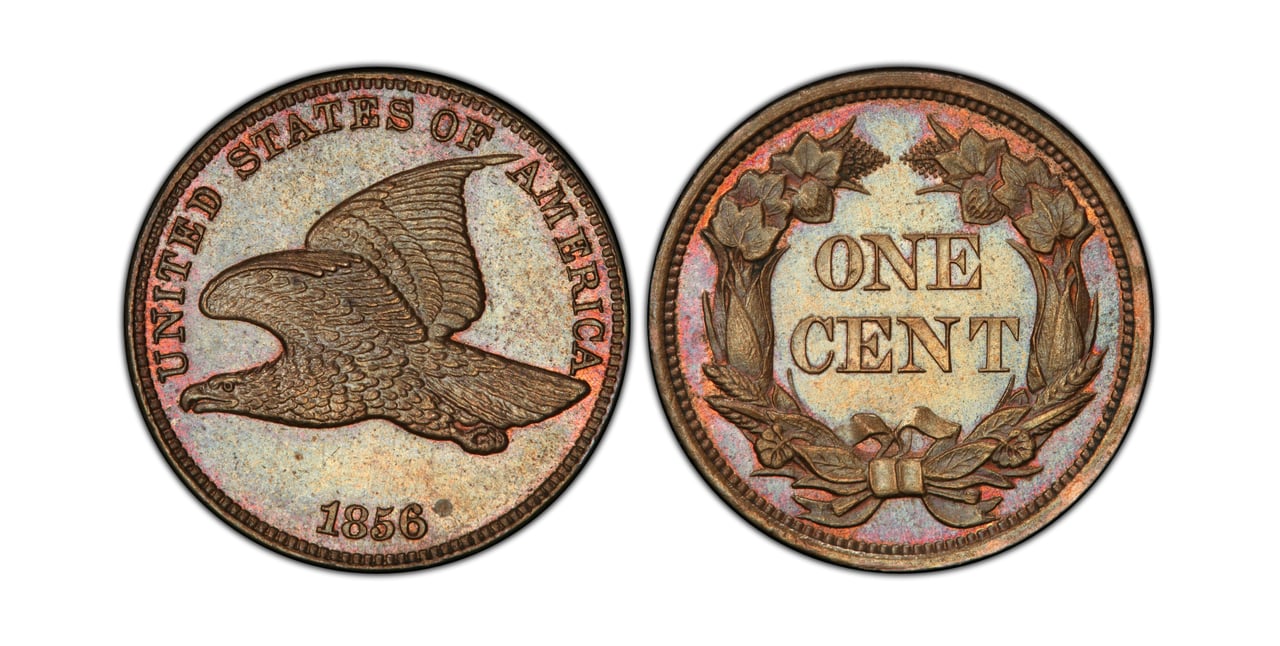
The 1856 Flying Eagle cent is the coin that killed the large cent. The Mint struck it as a pattern to show Congress a smaller, lighter cent, and it was never authorized for general circulation. Congress approved the new format the following year.
A proof graded PR67+ by PCGS sold for $312,000 at Heritage Auctions in November 2024. Collectors have treated the coin as a regular issue for over a century, and it carries a regular-issue price despite technically never being one.
| Year | 1856 |
|---|---|
| Mint mark | None (Philadelphia) |
| Face value | $0.01 |
| Sold for | $312,000 |
1955 Doubled Die Obverse Cent: $287,156
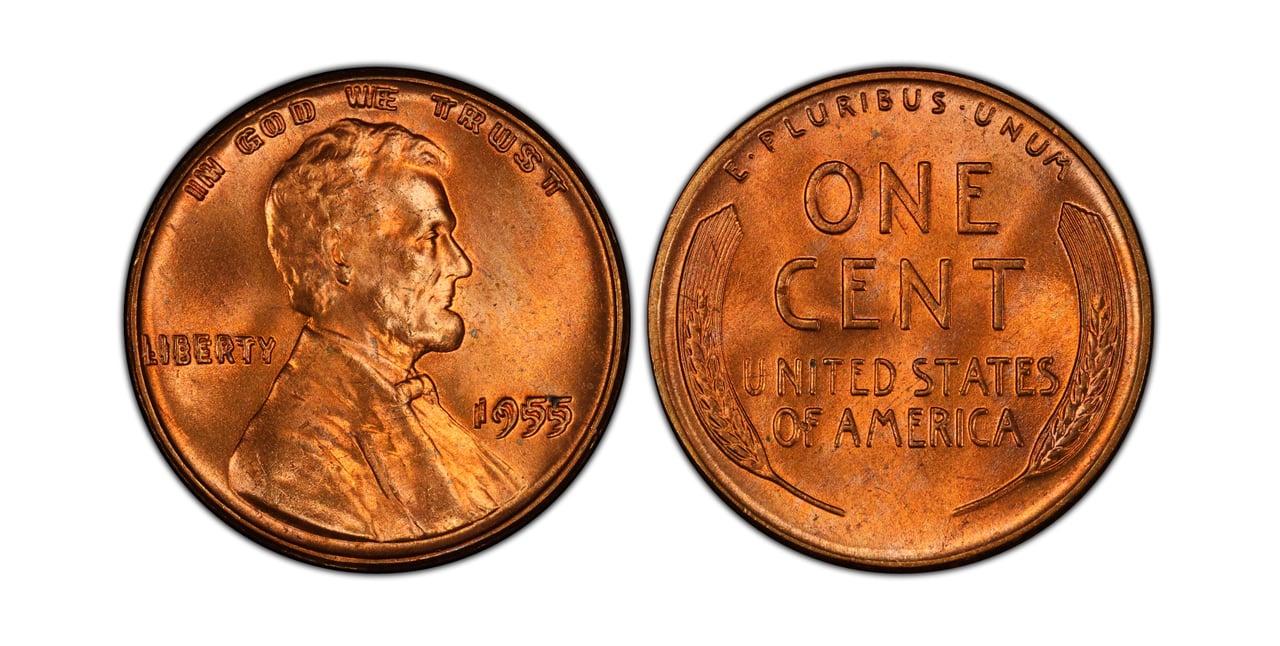
This is the most famous error in American coin collecting. Per Q. David Bowers in “A Guide Book of Lincoln Cents,” relaying what the Philadelphia Mint told him: several presses struck cents into a shared box in 1955, and an inspector spotted the doubling late in the afternoon and pulled the die. By then “somewhat more than 40,000” had been produced and about 24,000 had already mixed with normal cents from other presses. The Mint destroyed what remained in the box and released the rest.
The coins were short in the region after Hurricanes Connie and Diane, so the Mint saw no reason collectors would care about a defective cent. PCGS estimates around 15,000 survive. Many reached the public through cigarette vending machines in the Northeast: the machines took only quarters, so distributors wrapped two cents into the cellophane of a 23-cent pack as change.
The finest known, graded MS65+ red by PCGS, sold for $287,156 at GreatCollections in January 2023 from the Stewart Blay collection. The previous record was $114,000 at Stack’s Bowers in March 2018. This is the one entry on the list realistically buyable, because worn examples change hands in the low four figures, with roughly 15,000 survivors.
| Year | 1955 |
|---|---|
| Mint mark | None (Philadelphia) |
| Face value | $0.01 |
| Sold for | $287,156 |
1944 Steel Cent: $180,000
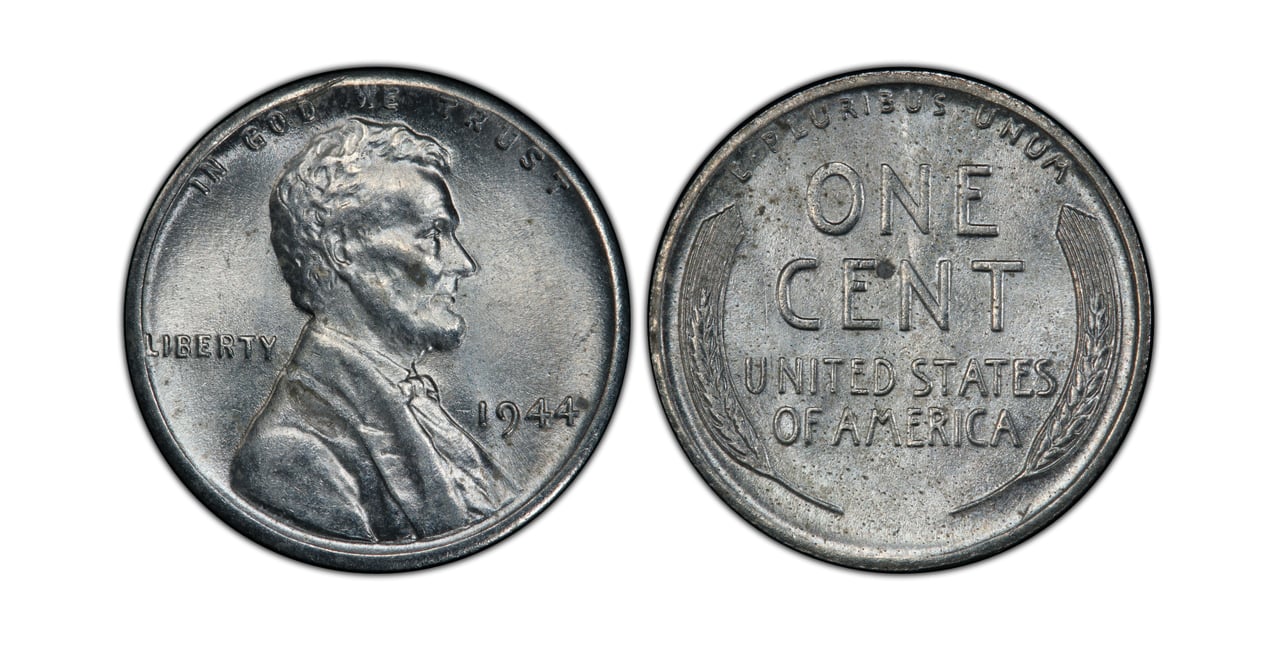
Philadelphia struck a handful of 1944 cents on leftover steel blanks, just as San Francisco did.
An MS64 graded by PCGS sold for $180,000 at Heritage Auctions in June 2021. The magnet test sorts it out: a genuine 1944 steel cent sticks to a magnet, while a normal 1944 bronze cent does not.
| Year | 1944 |
|---|---|
| Mint mark | None (Philadelphia) |
| Face value | $0.01 |
| Sold for | $180,000 |
1909-S VDB Cent: $170,800
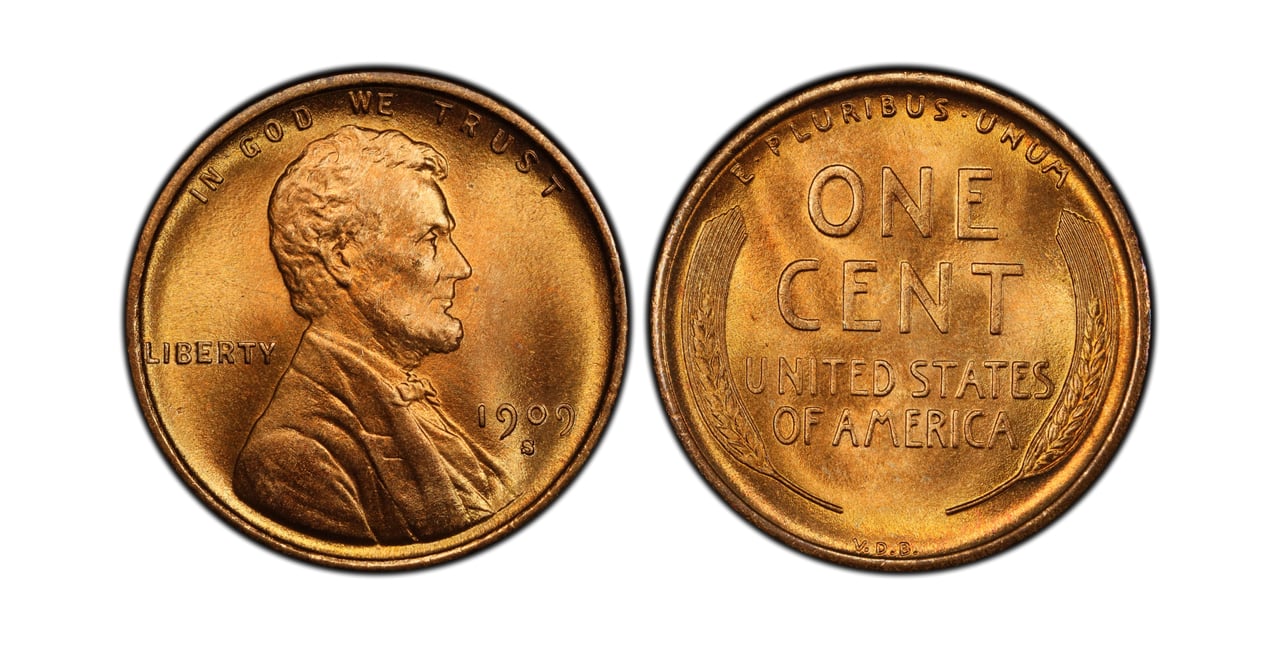
Victor David Brenner designed the Lincoln cent and put his initials, VDB, on the reverse. The public objected to an artist signing national coinage, so the Mint removed the initials within months. San Francisco had already struck 484,000 cents carrying them.
An MS67 red example graded by PCGS sold for $170,800 at Heritage Auctions in January 2026. It is the most recognized key date in American coin collecting, and the most counterfeited. The usual fakes are an ordinary 1909-S with a VDB added, or a 1909 VDB from Philadelphia with an S glued on. Buy certified or not at all.
| Year | 1909 |
|---|---|
| Mint mark | S (San Francisco) |
| Face value | $0.01 |
| Sold for | $170,800 |
1914-D Cent: $158,625
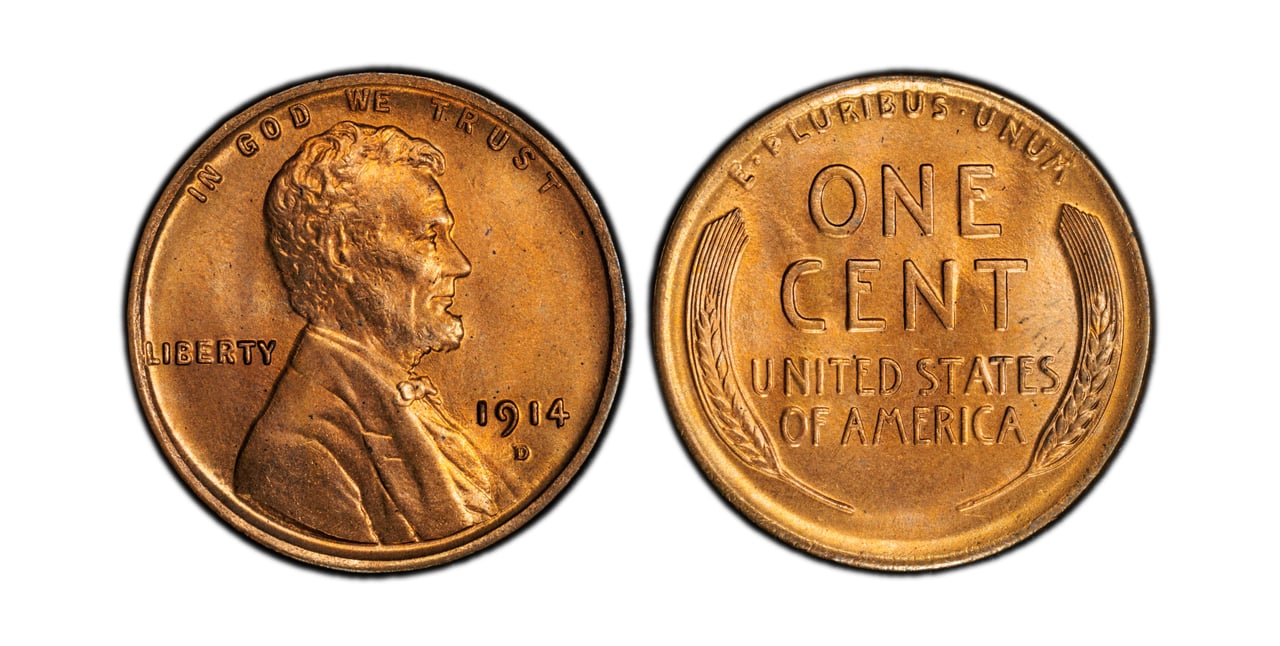
Denver struck 1,193,000 cents in 1914, more than twice the 1909-S VDB mintage. Yet high-grade survivors are scarcer, because nobody was saving Denver cents in 1914 and almost all wore out in circulation.
An MS66+ red example graded by PCGS sold for $158,625 at Legend Rare Coin Auctions in May 2018. Watch for altered 1944-D cents with the first 4 shaved into a 1; it is the oldest trick in the Lincoln series.
| Year | 1914 |
|---|---|
| Mint mark | D (Denver) |
| Face value | $0.01 |
| Sold for | $158,625 |
1877 Indian Head Cent: $149,500
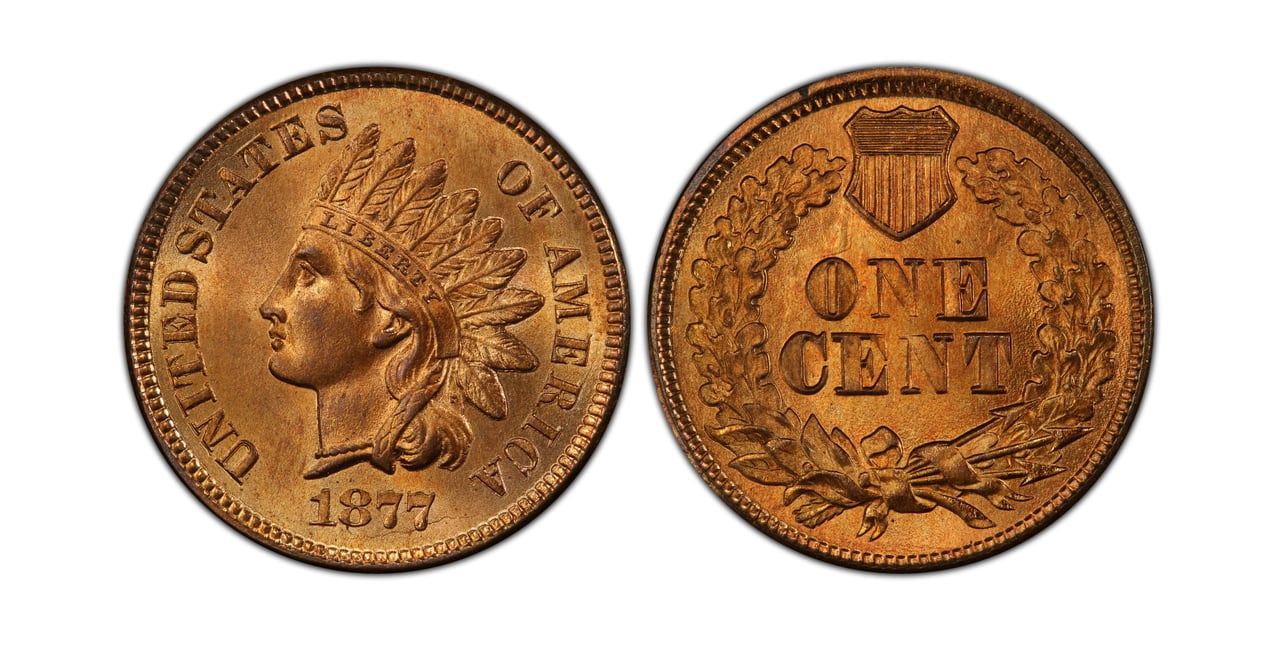
The 1877 Indian Head cent holds the lowest mintage of any coin in the series, at 852,500 pieces. A national recession cut demand for small change that year.
An MS66 graded by PCGS sold for $149,500 at Heritage Auctions in August 2007. Every Indian Head collection stalls here, and the coin costs more than the rest of the series combined for most collectors.
| Year | 1877 |
|---|---|
| Mint mark | None (Philadelphia) |
| Face value | $0.01 |
| Sold for | $149,500 |
What are the most valuable wheat pennies?
The most valuable wheat penny is the 1958 Doubled Die Obverse cent. It sold for $1,136,250 at GreatCollections in January 2023. Wheat pennies are Lincoln cents struck from 1909 to 1958, named for the wheat stalks on the reverse. Every coin in the table below comes from that run.
| Wheat penny | Sold for | Sale |
|---|---|---|
| 1958 Doubled Die Obverse | $1,136,250 | GreatCollections, January 2023 |
| 1943-D Bronze | $840,000 | Heritage Auctions, January 2021 |
| 1943-S Bronze | $504,000 | Heritage Auctions, November 2020 |
| 1944-S Steel | $408,000 | Heritage Auctions, August 2021 |
| 1943 Bronze | $372,000 | Heritage Auctions, February 2021 |
| 1955 Doubled Die Obverse | $287,156 | GreatCollections, January 2023 |
| 1944 Steel | $180,000 | Heritage Auctions, June 2021 |
| 1909-S VDB | $170,800 | Heritage Auctions, January 2026 |
| 1914-D | $158,625 | Legend Rare Coin Auctions, May 2018 |
| 1944-D over S | $122,000 | Heritage Auctions, January 2026 |
| 1922 No D Strong Reverse | $92,000 | Stack’s, January 2008 |
| 1909-S | $69,000 | Heritage Auctions, August 2004 |
| 1931-S | $43,200 | Heritage Auctions, August 2025 |
A worn 1909-S VDB is worth a few hundred dollars, and a worn 1931-S is roughly a sandwich’s price. The gap between the record and a typical example runs about three orders of magnitude.
Which pennies should you look for by year?
Check 1909-S VDB, 1914-D, 1922 plain, 1931-S, 1943 bronze, 1944 steel, 1955 and 1969-S doubled dies, and the 1982-D Small Date bronze. Every one has turned up in circulation. Four checks catch most of them without equipment: the date, the mint mark, whether the design looks doubled, and whether it sticks to a magnet. The mint mark sits under the date on the obverse: D for Denver, S for San Francisco, and no mark for Philadelphia.
The wheat dates worth memorizing
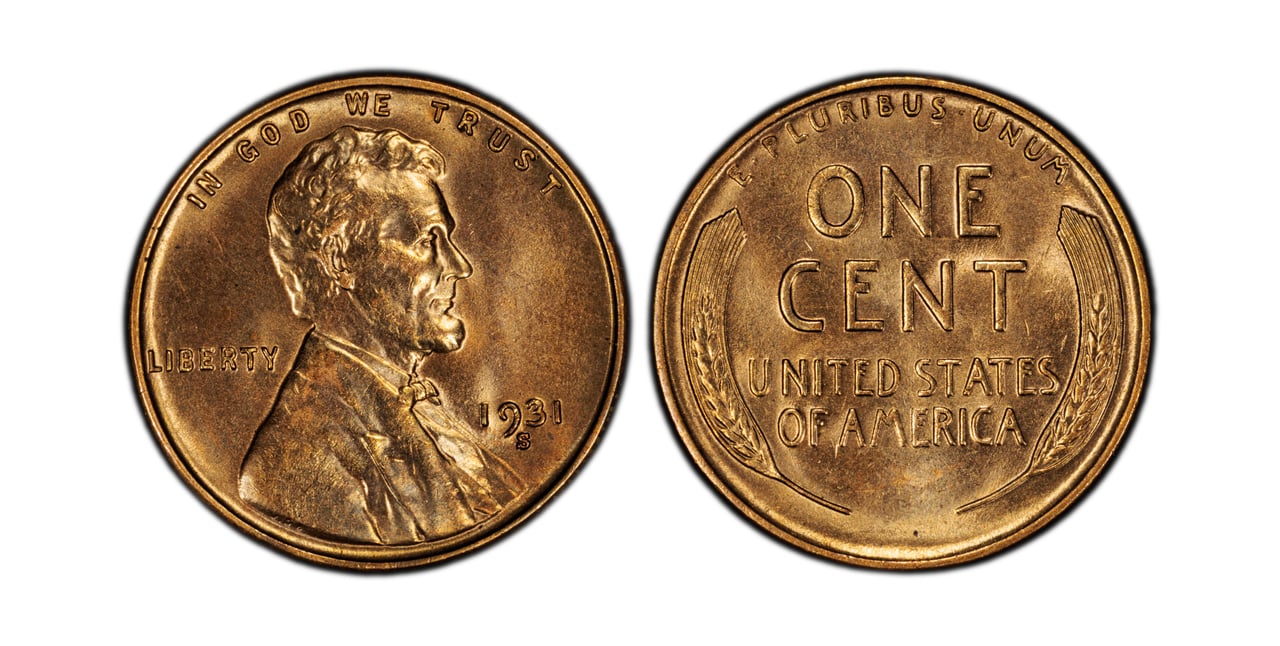
Four early wheat dates earn a second look. The 1909-S VDB, at 484,000 struck, is the one everybody knows. The 1909-S without VDB, at 1,825,000 struck, is scarcer than its mintage suggests. The 1914-D, at 1,193,000 struck, is the hardest of the four to find with sharp detail. The 1931-S, at 866,000 struck, is the lowest-mintage Lincoln cent of the 1930s and the easiest of the four to find in high grade, because collectors were already saving them by then.
1922: the penny with no mint mark that should have one
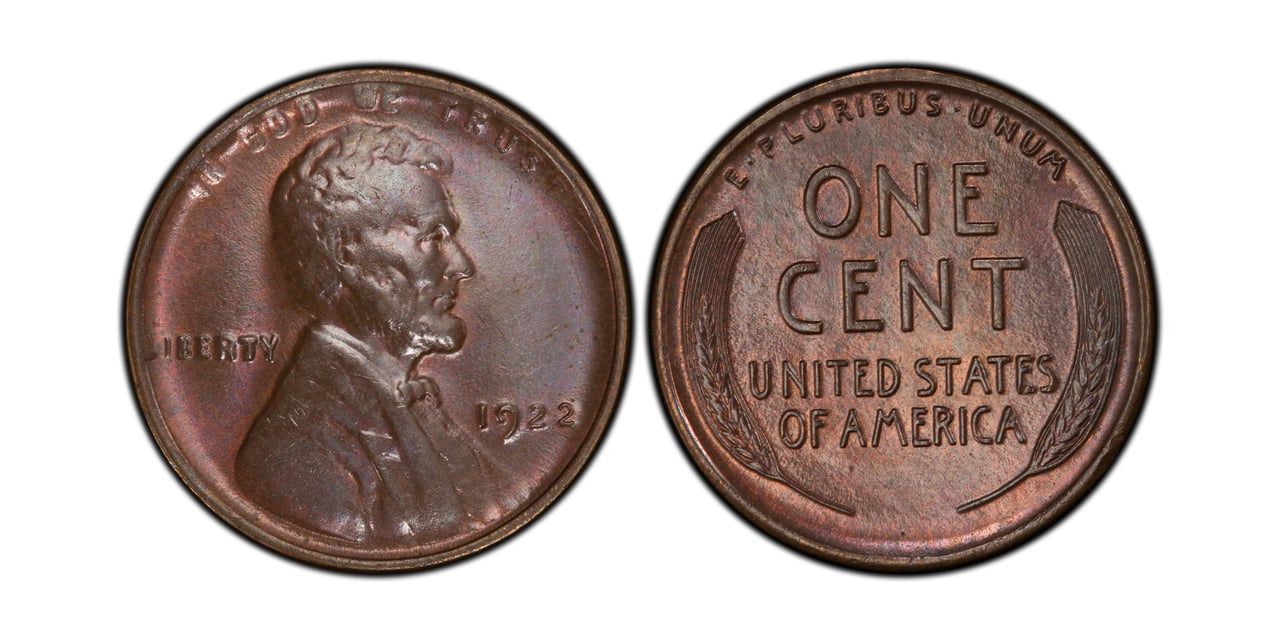
Only Denver struck cents in 1922, so every genuine example should carry a D. A worn die and heavy polish removed the D entirely from one die pair, creating the variety. The coin you want is the Strong Reverse, with crisp reverse detail and a D that is genuinely absent, not just faint. An NGC MS64 example sold for $92,000 at Stack’s in January 2008. Weak and filled-D examples are common and worth far less, and this variety needs certifying.
1943 and 1944: the magnet test
Nearly all 1943 cents are zinc-coated steel and stick to a magnet. A 1943 cent that does not stick is either a six-figure bronze error or, far more often, a fake. Two common fakes are copper-plated steel, which is still magnetic, and a 1948 cent with the 8 reshaped into a 3. Weight separates the rest: a bronze cent is 3.11 grams and a steel cent about 2.7 grams, so a kitchen scale reading to a tenth of a gram sorts them out. Run the test in reverse on 1944. It should be bronze and should not stick, and one that does needs PCGS or NGC.
The doubled dies: 1955, 1958, 1969-S and 1972
Genuine doubling appears on the lettering and the date, not the mint mark. Look at LIBERTY, IN GOD WE TRUST, and the numerals, and on all four it is visible without a loupe. The 1972 doubled die is the most attainable, with around 20,000 escaped, and an MS67+ red example graded by PCGS sold for $14,400 at Heritage Auctions in June 2019. Machine doubling is a different, valueless defect: it leaves flat, shelf-like edges rather than a clean second image, and it adds nothing to value.
1982: the year the metal changed
The cent switched from bronze to copper-plated zinc partway through 1982, with both large and small dates used and seven combinations across two mints. One is genuinely rare. The 1982-D Small Date in bronze should not exist, because Denver had moved to zinc by the time the Small Date dies arrived. Paul Malone found the first known example in November 2016 in Minnesota, weighing his way through a 5,000-coin bag from a local bank. Graded AU58 by NGC, it sold for $18,800 at Stack’s Bowers in August 2017. A second surfaced later. That is the entire confirmed population. The test is a scale: bronze is 3.11 grams and copper-plated zinc is 2.5 grams.
1992 and 1999: the gap between A and M
Look at AMERICA on the reverse. Normal circulation cents of this era show the A and M clearly separated. A few dies meant for proof coins reached circulation presses, and they show the letters nearly touching, known as Close AM. The 1992 Close AM is the valuable one: an MS67 red example graded by PCGS sold for $25,850 at Heritage Auctions in January 2017, and a 1992-D Close AM in MS65 sold for $14,100 at Heritage Auctions in February 2014. The 1999 runs the other way. Most 1999 cents show close spacing, so the scarce variety is the Wide AM, the most commonly found of the transitional AM varieties and worth checking though it sells for a fraction of the 1992 Close AM.
The 1974 aluminum cent you cannot own
The 1974 aluminum cent is quoted online at seven figures, but nobody can legally own one. The Mint struck more than a million as an experiment when copper prices spiked, then abandoned the plan and destroyed nearly all of them. One 1974-D example surfaced in 2013, consigned to Heritage Auctions for an April 2014 sale. The Mint claimed it as government property, the lot was pulled, and after a legal fight the owners returned it in March 2016 and relinquished all claim. Any value attached to this coin is theoretical.
How is a penny’s value actually determined?
A penny’s value is determined by three factors in this order: rarity first, then condition, then story.
Rarity means population count, not mintage. The 1914-D had a mintage nearly three times the 1909-S VDB, yet a high-grade 1914-D is harder to find, because more 1909-S VDBs were saved as they came out. PCGS and NGC publish the population counts that make the comparison real.
Condition runs on the Sheldon scale, 1 to 70, devised by Dr. William Herbert Sheldon in 1948. Circulated coins run 1 to 58, and mint state runs 60 to 70. Copper adds a fourth variable no other denomination has: certified cents carry a color designation alongside the grade, RD for red, RB for red-brown, and BN for brown. Copper oxidizes, so an original red surface is evidence a coin was never handled or cleaned, and the same numeric grade can be worth ten times more in RD than in BN. The $170,800 1909-S VDB price belongs to an MS67 RD specifically.
Silver denominations skip the color step entirely, because a Sheldon number alone tells more about a silver coin than it does about a cent. That is why we sort copper from silver first when we work through a jar, and why our guides to the most valuable dimes and the most valuable quarters start on the silver side of the pile.
Errors are part of the coin and worth money. Damage, a scratch, a rim ding, green album film, a polish, happened afterward and reduces value. Cleaning is the most expensive and irreversible mistake, so do not clean a coin you think may be valuable. Authentication with PCGS or NGC is the last, worth-paying-for step, because a certified coin sells for more than the same coin raw; the buyer is not taking a risk. Get anything potentially worth more than a few hundred dollars certified before selling.
Two kinds of valuable penny
The valuable pennies on this list divide into two groups. The first is collector coins that move between specialists and estates, like the 1793 Chain cent and the 1799 Draped Bust. The second is coins that are still plausibly out there: 1943 bronze cents were pulled from circulation as late as the 1940s and 1950s, Don Lutes Jr. found his in a cafeteria, the 1955 doubled die went into the wild 24,000 strong, and the 1982-D Small Date bronze cent was found in a bank bag in 2016 by someone who thought to weigh the coins.
- 1793 Chain Cent: $2,350,000
- 1795 Reeded Edge Cent: $1,265,000
- 1958 Doubled Die Obverse Cent: $1,136,250
- 1799 Draped Bust Cent: $977,500
- 1943-D Bronze Cent: $840,000
- 1969-S Doubled Die Obverse Cent: $601,875
- 1943-S Bronze Cent: $504,000
- 1944-S Steel Cent: $408,000
- 1943 Bronze Cent: $372,000
- 1856 Flying Eagle Cent: $312,000
- 1955 Doubled Die Obverse Cent: $287,156
- 1944 Steel Cent: $180,000
- 1909-S VDB Cent: $170,800
- 1914-D Cent: $158,625
- 1877 Indian Head Cent: $149,500
The whole cost of checking is a magnet, a scale, and about ten minutes, and it is the same habit that carries over to the coins and collectibles most people already own: our guides to the most valuable nickels, the most valuable stamps, and the most valuable gemstones all start with learning what you have.
Frequently asked questions about the most valuable pennies
Which years of pennies are worth money?
Is a 1974 penny worth $2 million?
Why are 1999 pennies worth $4,500?
Why is a 1982 penny worth $10,000?
Products featured here are independently selected by our editors. If you buy through our retail links we may earn an affiliate commission — it never changes the price you pay, and it never decides our verdicts. Read our earnings disclaimer.