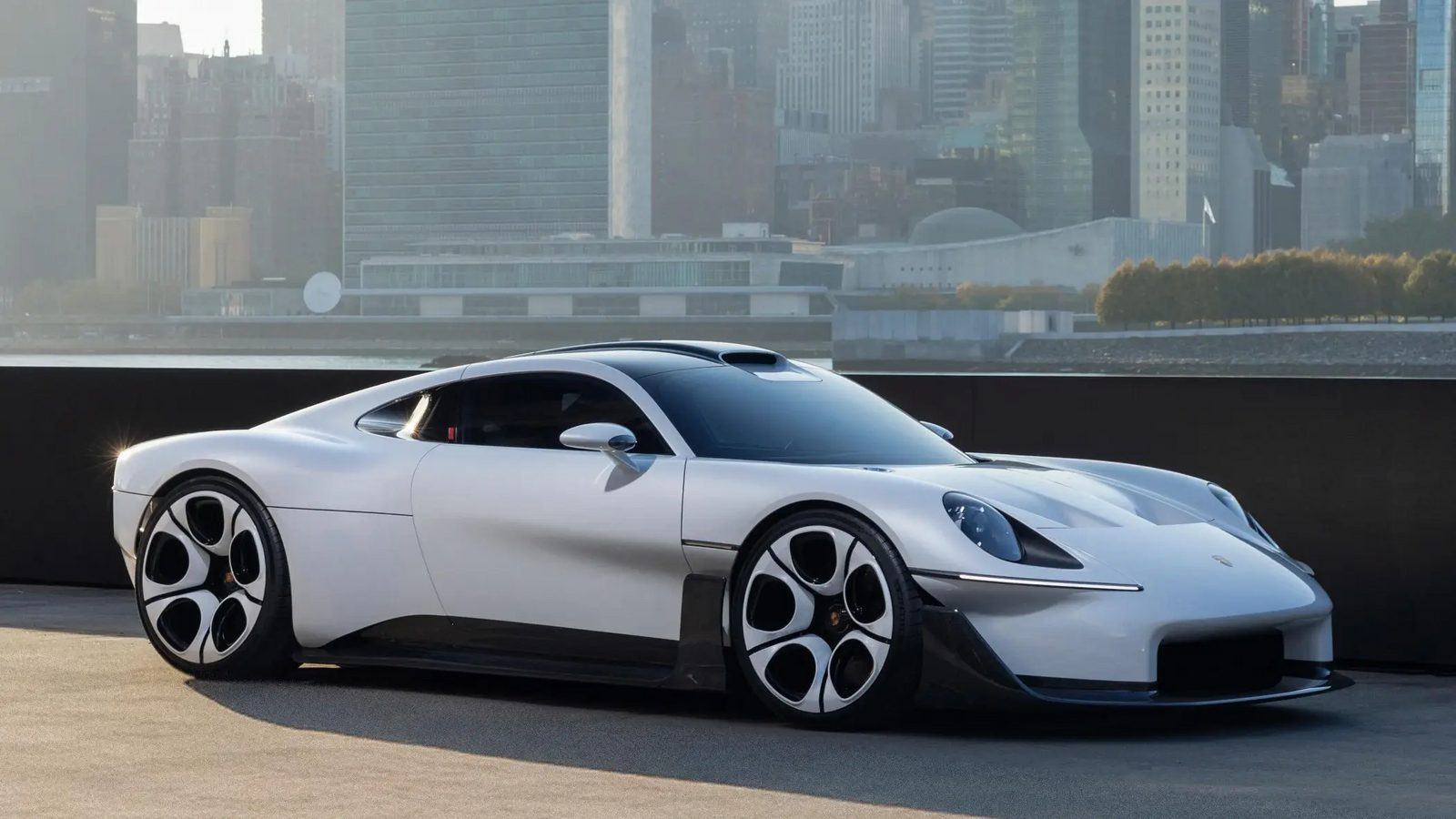

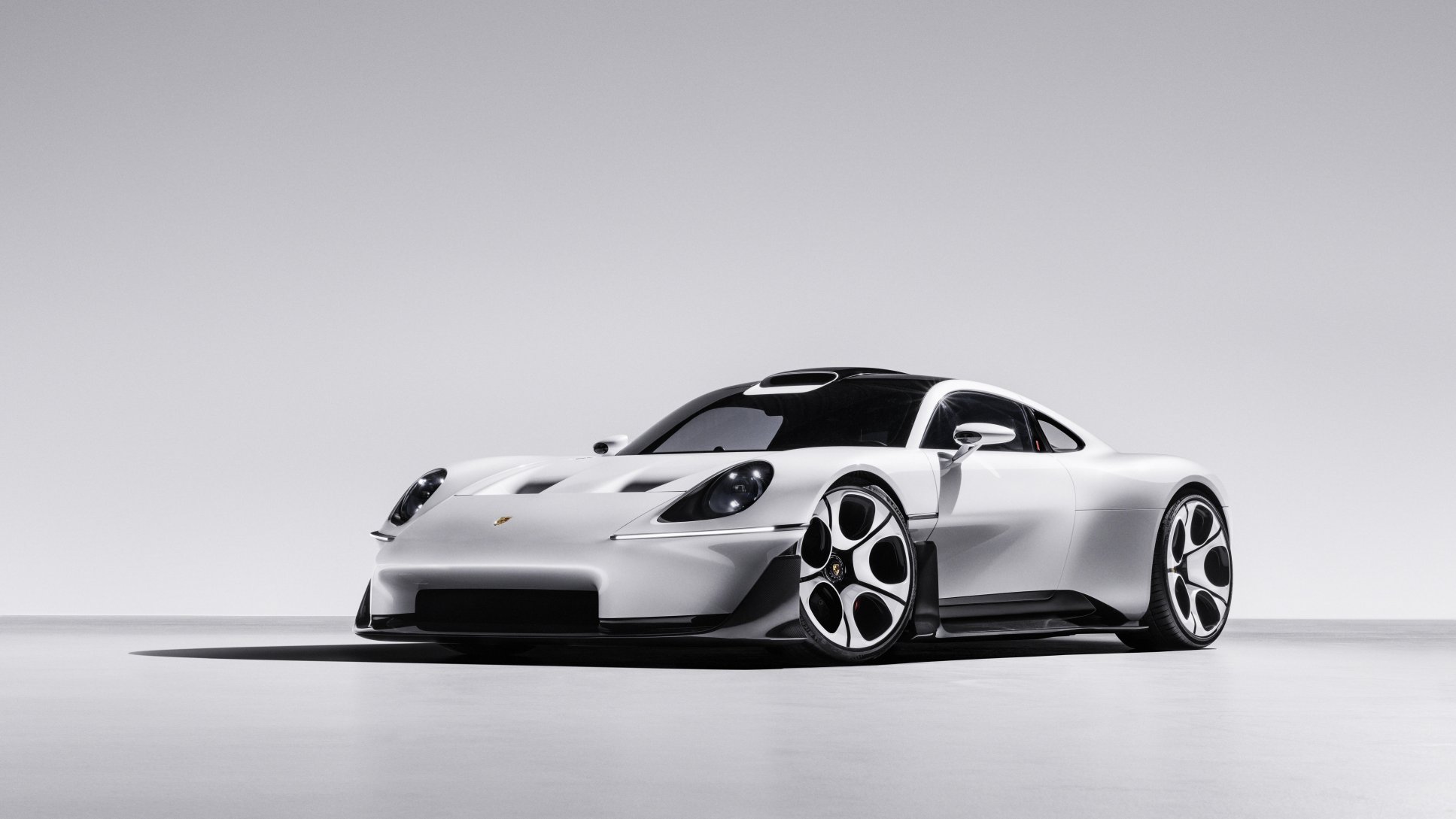
Porsche has revealed the Mission S, a mid-engined supercar design study that the company says is positioned above the 911. The concept was shown in New York, at the very Queens pier where Porsche first displayed the 550 RS Spyder to the public.
The reveal
The location is deliberate. The Mission S points forward to a future supercar but draws heavily on the brand's past, and Porsche's own release describes it as "a mid-engined super sports car platform positioned above the 911 – not as a one-off hypercar."
For now it is a concept car with almost no technical detail. Porsche has given no engine specification, no launch year and no projected price. That leaves the Mission S as a design preview of the halo car Porsche clearly intends to build.
The design
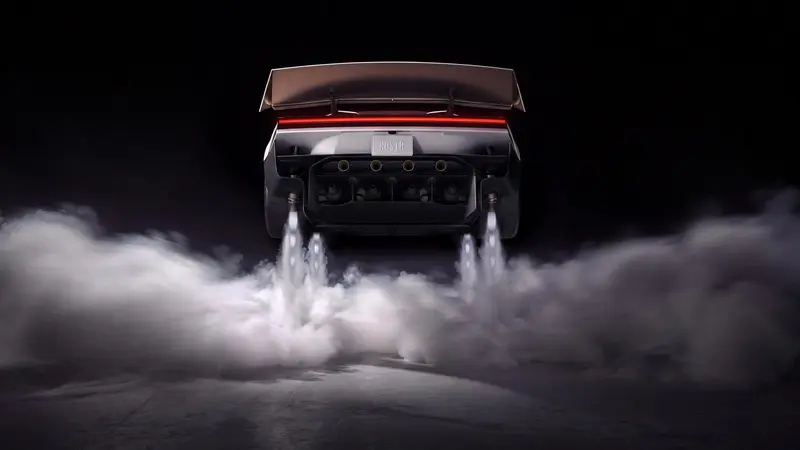
The most obvious backward glance is the exposed fan at the rear, a direct reference to the all-conquering 917. It is said to aid cooling, and it is the design cue most likely to catch a Stuttgart enthusiast's eye first.
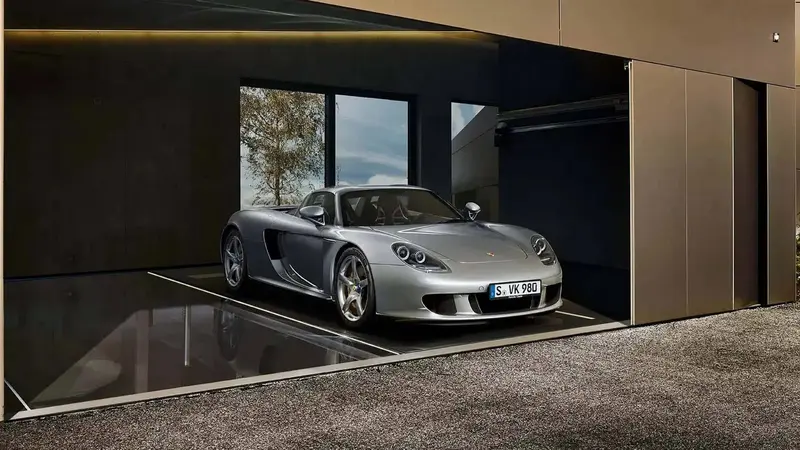
Around it, the Mission S reads like a greatest-hits compilation. The low nose and front air intake recall the 911 GT1, while the area around the front wheels carries hints of the Carrera GT. The rear blends the 959's integrated wing with the car-in-car look of the 918 Spyder and 911 GT1.
The wheels rework the dial design from the 928, and the rear-view mirrors echo those on the Carrera GT. It is a coherent whole rather than pastiche, according to the brand, collecting subtle references instead of hammering each one home.
A single line runs the length of the car. It starts in the daytime running lights under the headlights, wraps around the front wheel covers, travels the full door and enters the rear arches, then comes around the back to finish in the horizontal taillights.
At the rear, the fenders cut in sharply behind the wheels and flank twin stacked exhausts above a large central diffuser. A roof scoop runs from the top of the windshield backwards, feeding air to whatever engine eventually sits amidships.
The rear spoiler appears integrated but is likely active, moving up and down and perhaps even sliding backwards as on the McLaren W1 to add downforce and smooth airflow depending on driving mode. Porsche has not confirmed the mechanism.
The interior
Inside, the Mission S refuses the door-to-door touchscreen. There are proper physical buttons, and one stands out in the steering wheel: painted bright red and labelled "On Your Own", it deactivates every driving aid and leaves the driver fully in charge.
The gear lever may suggest a manual gearbox, but it is actually connected to a PDK unit. Its top appears to be balsa wood, a nod to the Carrera GT if the material is genuine, and its height can be adjusted to suit the driver's preferred position.
The instrument cluster reimagines Porsche's five-gauge layout. The rev counter stays central in every mode, but switching modes moves it nearer the driver, alters its design and tucks the outer gauges between the others for a cleaner, more focused dash.
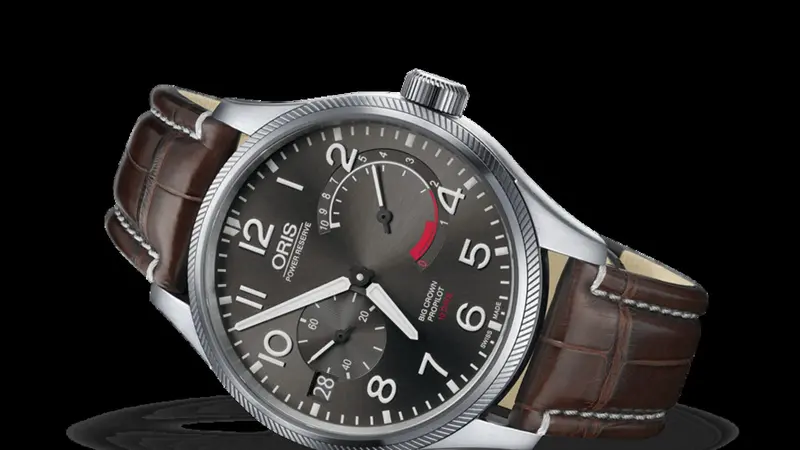
A watch-shaped detail hides in that cluster: the gear indicator carries what looks like a Rolex-style cyclops magnifier. It is either a knowing wink to the publication's other obsession or a trick of the light, but spotted once, it is hard to unsee.
Positioning matters because the 911 cannot fully answer this field. That car's flat-six sits behind the rear axle, which limits it against the McLaren W1, Ferrari F80 and Lamborghini Revuelto. The Mission S is designed to take things well beyond the 911, with a definitive step up in power, performance and experience.
The Mission S is effectively a successor to the 918 Spyder, the Carrera GT, the 911 GT1 Straßenversion and the 959, all wrapped into one design statement. Porsche frames it as a platform, not a one-off, suggesting a permanent family above the 911.
The earlier brief noted the same positioning the brand now restates in its release.
On the powertrain, nothing is confirmed. Rumors point to a newly developed naturally aspirated flat-8. Hypothetically, Porsche's 4.0-litre flat-six grew two cylinders, it would reach 5.4 litres and plausibly over eight hundred horsepower.
The rivals have moved far already. Lamborghini's Temerario produces close to 1,000 horsepower and the Ferrari 849 Testarossa more again, so the Mission S will need to land in that company. Porsche says nothing about where it will.
Pricing is similarly opaque. Sources span EUR 500,000 to well past a million, and some special 911 variants already approach EUR 400,000 in standard trim, which suggests a seven-figure final figure is likely. The earliest whispers put launch in 2029.
Support the content you love — it’s free 🎉
Add Luxe Digital as a preferred source on Google. Our stories will be more likely to appear in Google’s Top Stories. It’s free and supports our team. Thank you!
Add as preferred sourceYou can remove us any time in Google’s source preferences.
Thank you — you’re all set 🎉
Luxe Digital is now one of your preferred sources, so our stories are more likely to appear in Google’s Top Stories.
This briefing is published daily using an AI-powered system crafted by Luxe Digital’s team and finely tuned to meet our editorial standards. While we continuously test and review the output, mistakes can sometimes happen. Tell us if you spot one.
Images: Porsche