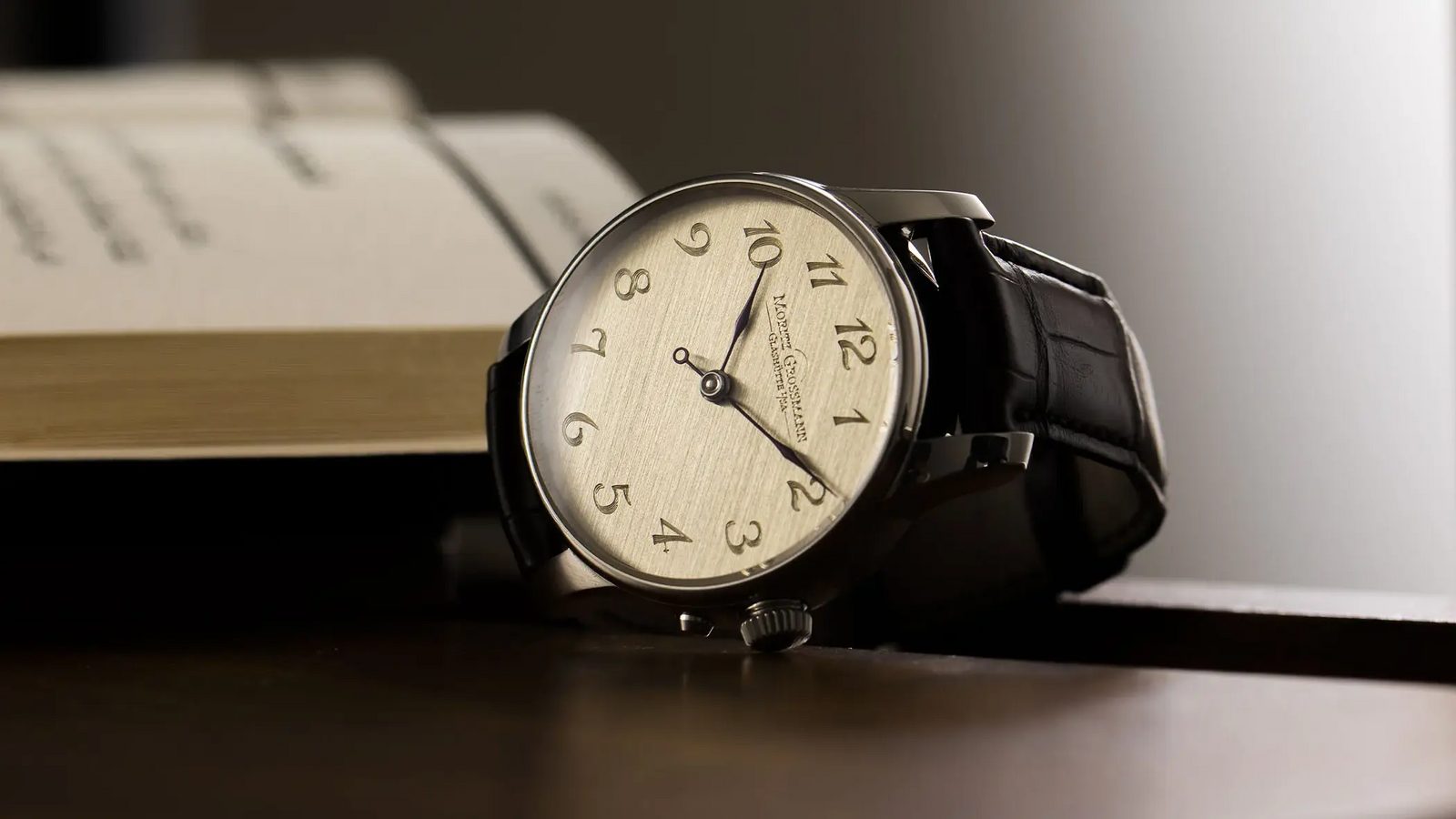

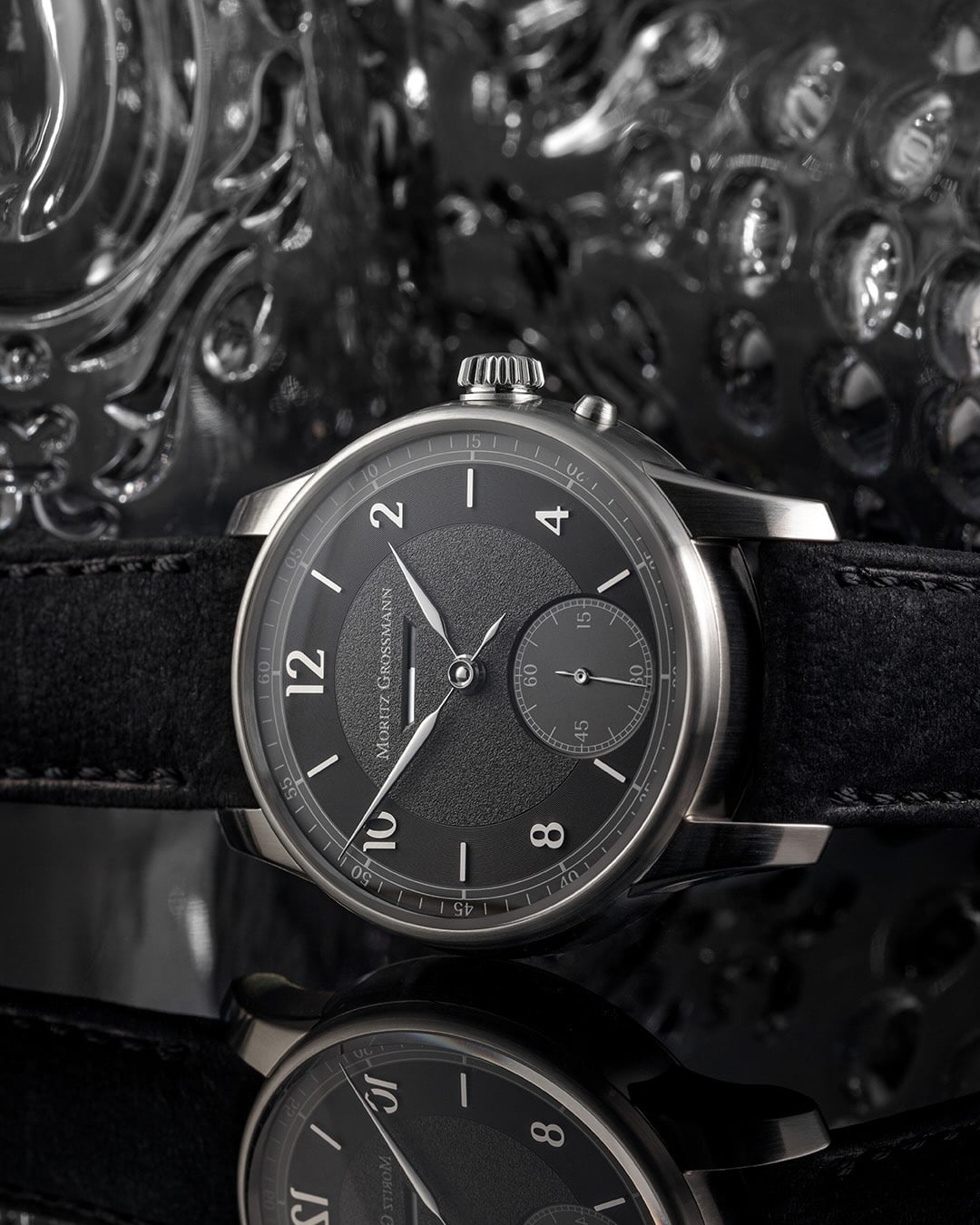
Moritz Grossmann has marked the 200th anniversary of its founder's birth with two new versions of the Benu Power Reserve, one in brushed steel and one in dark grey DLC-coated steel. Each reference is limited to 18 pieces and retails for EUR 40,800, excluding taxes.
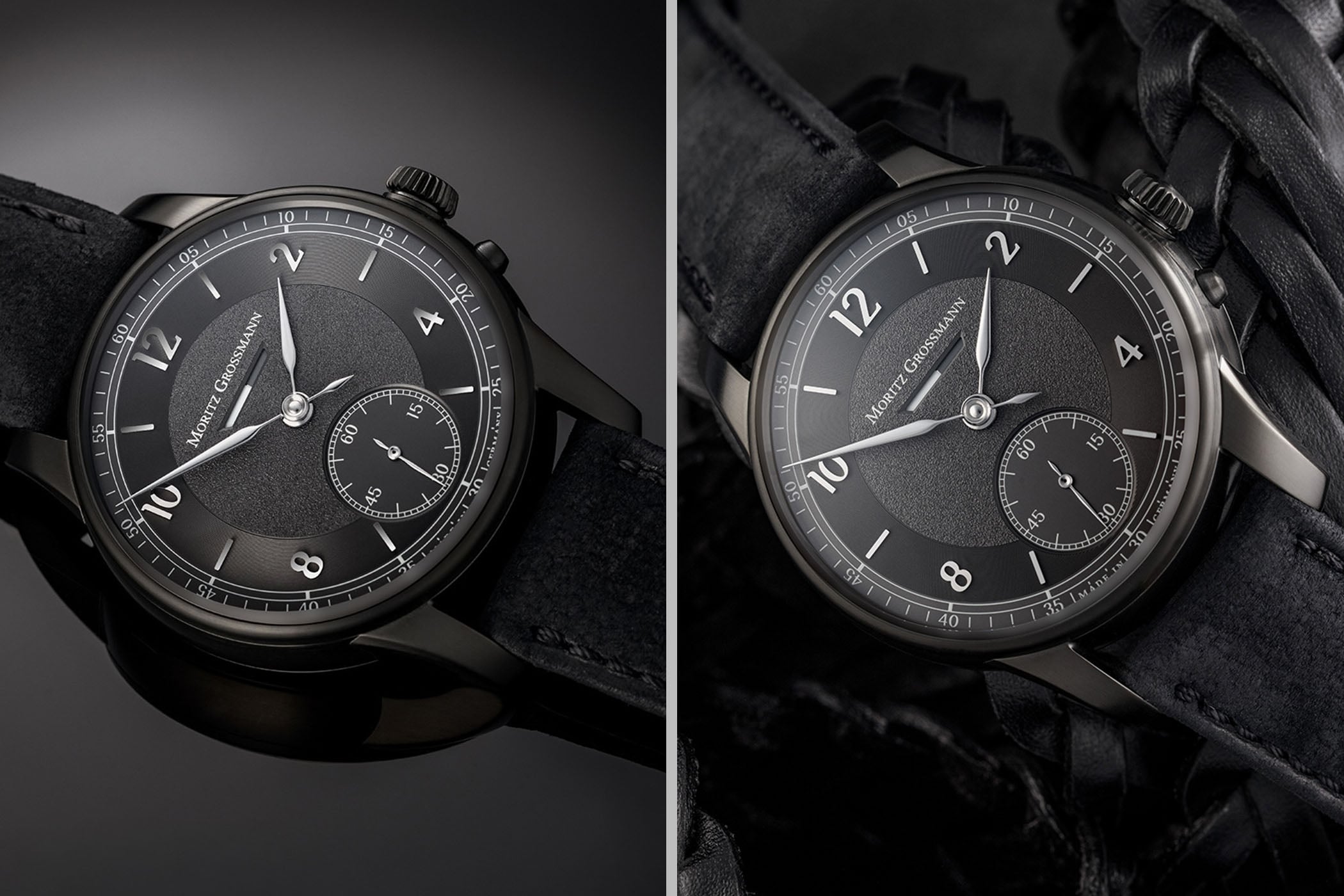
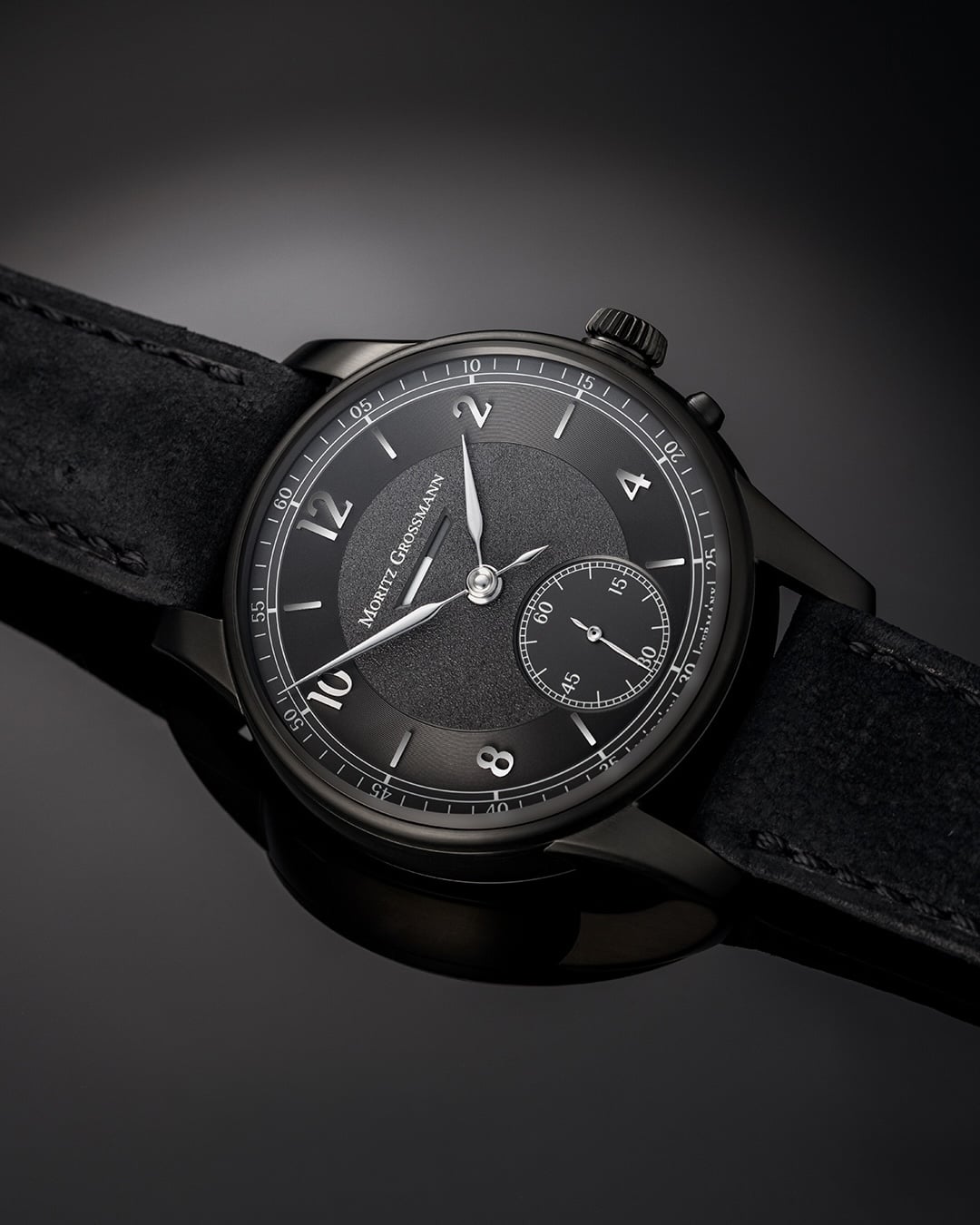
The specifications are unchanged. What is new is the look: the steel and black-coated steel cases of the 12th-anniversary editions are combined with the textured finishes, layout and hands of the 2025 sector-style models. The result is a darker, more contemporary Benu.
Both watches share the 41mm three-part Benu case, which is 11.65mm high and has tapering lugs. Every surface is brushed, and a slim bezel frames the dial. The brand describes the matte steel case as having a contemporary, sporty vibe.
What the dark sector dial carries
The dial is dark grey on both references, with different textures and heights. A smooth peripheral minutes track with white printed numerals borders a wider chapter ring, which has concentric circular grooves, indices and applied Arabic numerals at 12, 2, 4, 8 and 10 o'clock.
Inside the snailed chapter ring is a matte, grained center. The linear power reserve display is between noon and the central axis of the hands, and a recessed, smooth sub-dial for the small seconds intersects the grain.
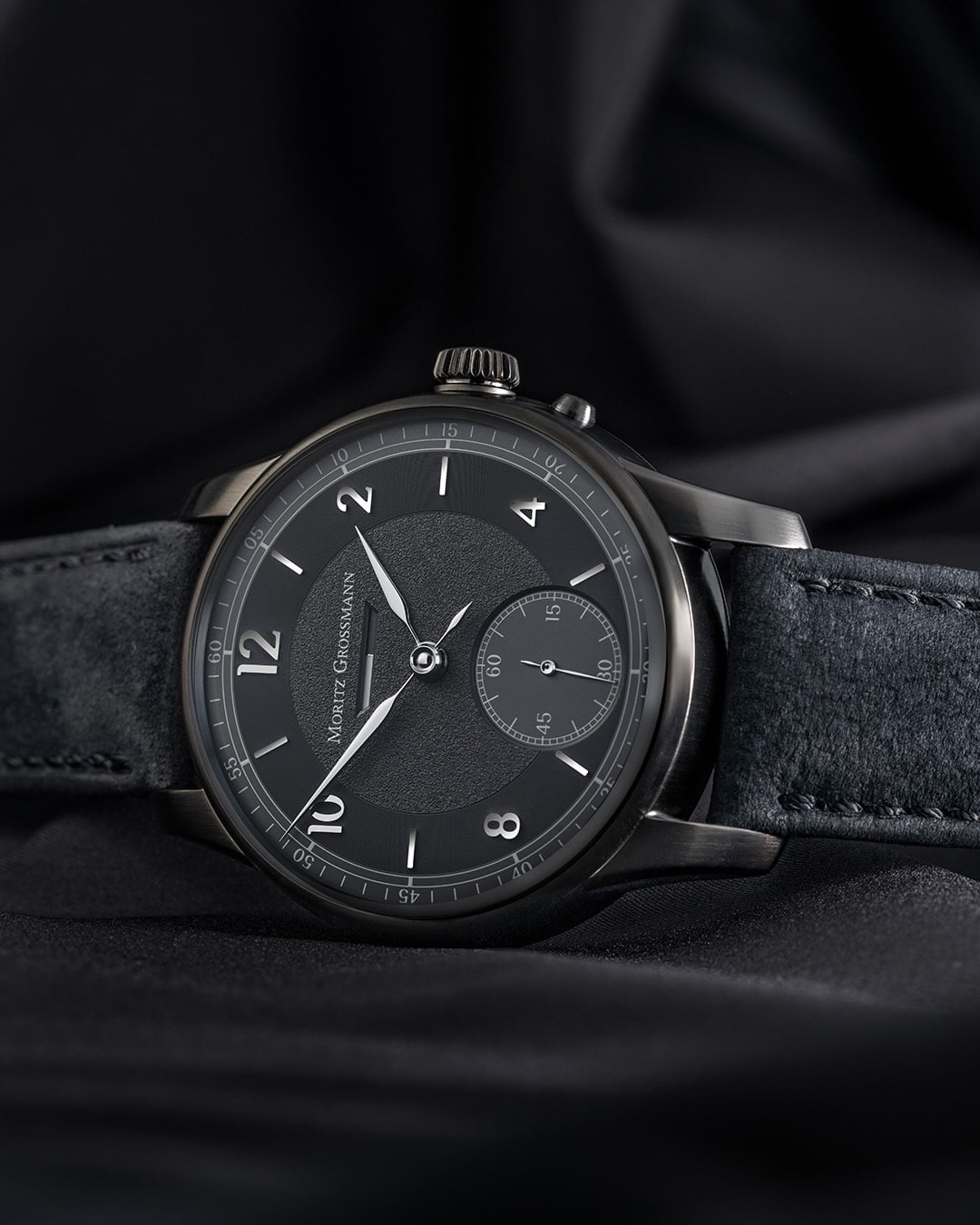
The 42-hour power reserve is shown in an elongated trapezoid window, in dark grey and white bars to match the darker scheme. A white bar is visible when the movement is fully wound, and the bar shifts gradually to dark grey as the reserve runs down.
The hands are polished and bevelled steel with wafer-thin tips. They are slightly wider, more domed and rounder than on other Benu Power Reserve models, and the minute counterweight is a closed rhomboid. Moritz Grossmann crafts them by hand.
The movement and the Benu's history
Inside is the manual-winding, in-house calibre 100.2, visible through the case back. It is a pillar movement derived from the 100.1, with one extra differential gear added to drive the power reserve display. The Grossmann balance wheel beats slowly at 18,000vph.
The finishing is traditional. The 2/3 plate carries Glashütte ribbing, and the balance cock, which secures the Grossmann balance wheel, is hand-engraved. Such hand work is what the brand is built on, and it explains why output stays low.
The crown winds and sets the watch and is paired with a pusher. Together they form the brand's patented winder-and-pusher system, which stops dust from entering the case when the crown is pulled out.
The Benu was the first watch to mark the brand's revival in 2010, powered by calibre 100.0. It evolved into the Power Reserve in 2013 with calibre 100.2. Instead of the usual curved, fan-shaped arc, it shows reserve on a discreet two-tone linear indicator at noon.
Moritz Grossmann is an independent, high-end Glashütte manufacture that makes low-volume, hand-finished pieces. It bears the name of one of the founding fathers of 19th-century German watchmaking, whose birth two centuries ago this pair commemorates.
Each watch comes on a soft black kudu leather strap. The brand directs buyers to its website, grossmann.uhren.com, for more information. It has not stated a delivery date or how the 18 pieces of each reference will be allocated.
Anniversaries are a steady source of limited editions in watchmaking. We have covered Breguet's Marine anniversary dials and Vacheron Constantin's Overseas at 30 perpetual calendar, and this Benu pair belongs to that run of dated tributes, at a far smaller scale.
Support the content you love — it’s free 🎉
Add Luxe Digital as a preferred source on Google. Our stories will be more likely to appear in Google’s Top Stories. It’s free and supports our team. Thank you!
Add as preferred sourceYou can remove us any time in Google’s source preferences.
Thank you — you’re all set 🎉
Luxe Digital is now one of your preferred sources, so our stories are more likely to appear in Google’s Top Stories.
This briefing is published daily using an AI-powered system crafted by Luxe Digital’s team and finely tuned to meet our editorial standards. While we continuously test and review the output, mistakes can sometimes happen. Tell us if you spot one.
Images: Moritz Grossmann