Michelin has begun rating wineries alongside its restaurants and hotels, awarding one, two or three grapes to producers it judges very good, excellent or exceptional. The guide reached Bordeaux on September 7, honoring 84 châteaux at a ceremony at the Cité du Vin, following an earlier pass through Burgundy in July.
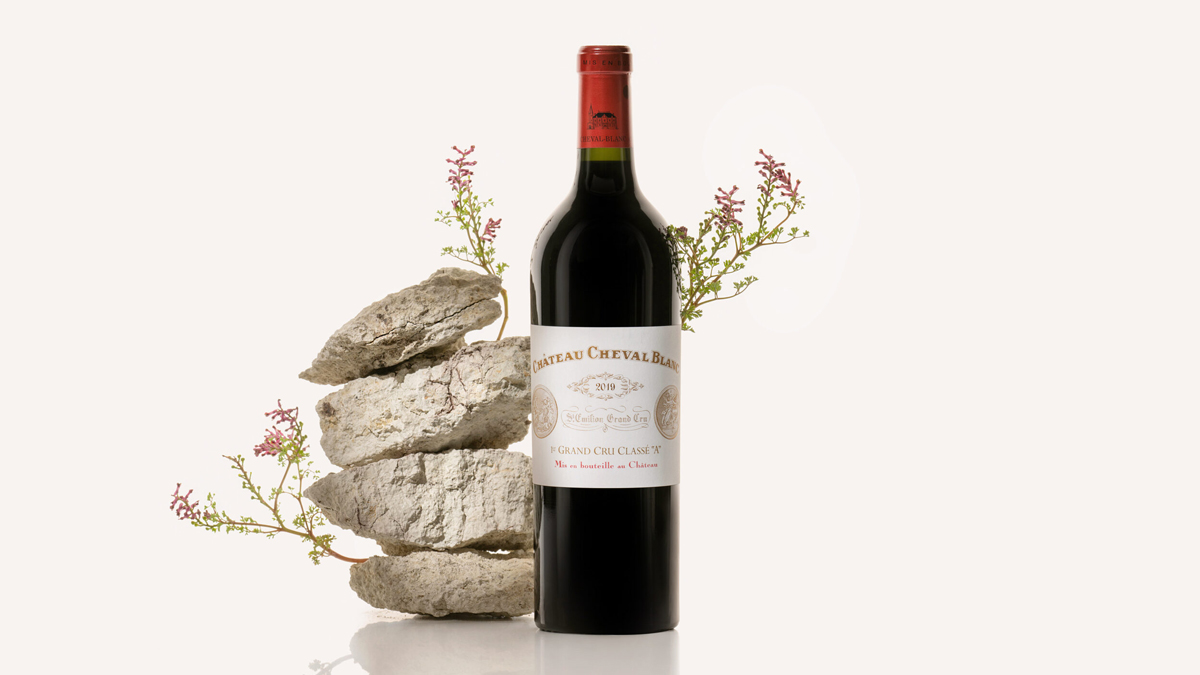
Of more than 7,000 wine-producing châteaux in the region, only 84 made the list at all. Michelin named 21 without a grape, gave one grape to 38 estates, two grapes to 16, and reserved its top mark of three grapes for nine producers, among them Château d'Yquem, Château Cheval Blanc and Petrus.
The selection covers Left Bank communes including Saint-Estèphe, Pauillac, Saint-Julien, Margaux and Pessac-Léognan, Right Bank names Pomerol and Saint-Émilion, and the sweet-wine appellations Sauternes and Barsac. Michelin itself says the guide covers the majority of the region's most iconic appellations, which by its own admission excludes producers in classifications such as Bordeaux AOC, Bordeaux Supérieur, Cru Bourgeois Supérieur and Entre-Deux-Mers.
Who got snubbed and why it matters
The individual scores, not the exclusions, are what set off the argument. Château Margaux, Château Angelus and Château Haut-Brion each received two grapes rather than three, and Château Cos-d'Estournel and Château Lynch-Bages each received only one, prompting sharp reaction across Facebook, Instagram, Threads and X.
Robin Kelley O'Connor, a Bordeaux wine educator and global wine specialist based in New York City, pointed to Château Le Pin's single grape as the clearest example. He puts the wine's release price at roughly $4,100 a bottle and notes it is consistently rated 97 to 100 points, asking bluntly what amateur was rating the wines.
Adam Lee, owner and winemaker at California's Clarice Wine Company, was harsher still, writing on social media that the ratings are laughable and should be mocked and denigrated. He questioned whether Michelin's inspectors examined Margaux's vineyard acreage extensively enough, across seasons and vintages, to judge soil vitality and vineyard balance.
How Michelin says it judged the wines
Michelin built the ratings around five criteria: quality of agronomy, technical mastery, identity, balance and consistency. Inspectors were drawn from former sommeliers, critics and winemakers, and unlike Michelin's anonymous restaurant reviewers, they had to book appointments to taste several vintages and tour each winery's vineyards and facilities.
Jeff Leve, publisher and editor of The Wine Cellar Insider, polled his followers and friends across several platforms and describes the results as extremely negative. He argues the lack of transparency around how inspectors reached their scores is already a major problem and one that will only grow with time.
Leve's central objection is structural: Michelin rates the estate rather than the individual vintage or cuvée. He says every wine comes from a terroir that cannot be reproduced elsewhere, and that climate, vineyard choices and cellar decisions never repeat from year to year, so a property score tells a buyer little about what is actually in the glass.
Not everyone is unhappy about it
Reaction has not been uniformly hostile. Château Troplong Mondot, a Premier Grand Cru Classé B estate in Saint-Émilion, sent out a press release celebrating its two-grape designation rather than treating it as a slight, a notably different reflex from rivals who declined to comment.
Many other châteaux, including some awarded three grapes, would not discuss the ratings at all, citing the sensitivity of their relationship with Michelin. Others on the losing end of a lower-than-expected score chose to say nothing, letting whatever recognition they did receive speak for itself rather than picking a public fight.
Guillaume Jourdan, managing director of the Paris-based brand strategy consultancy VitaBella, frames the intervention as useful regardless of the arguing. He compares it to Robert Parker's reworking of the 1855 Bordeaux classification in the mid-1980s, a moment that likewise unsettled the trade before reshaping how the wines were bought and sold.
Michelin's move into wine follows a pattern rather than standing alone. The guide spent more than a century building its authority on one, two and three stars for restaurants, then expanded aggressively over the past decade into new territories from South Korea to South Carolina before introducing Michelin Keys for hotels in 2024, using the same three-point scale now applied to grapes.
We have long tracked Michelin's stars as the reference point for fine dining, and our guide to the world's best Michelin-starred restaurants treats the same three-tier scale as the industry's clearest shorthand for quality. A grape rating built on that same logic is a bet that diners will trust it in a wine glass as readily as on a plate.
The trade's discomfort is less about the grapes themselves than about what they might come to mean. If the same one-to-three scale that made Michelin's restaurant guide a household reference gets attached to a bottle's back label, buyers with no independent view on Bordeaux may start deferring to it by default.
For now, Michelin has not said whether it plans to rate wineries in other regions beyond Burgundy and Bordeaux, nor whether future rounds will address the criticism that estate-level scoring ignores vintage variation. Whether the guide adjusts its method, or simply moves on to the next appellation, is what the wine world is watching next.
This briefing is published daily using an AI-powered system crafted by Luxe Digital’s team and finely tuned to meet our editorial standards. While we continuously test and review the output, mistakes can sometimes happen. Tell us if you spot one.
Images: Michelin