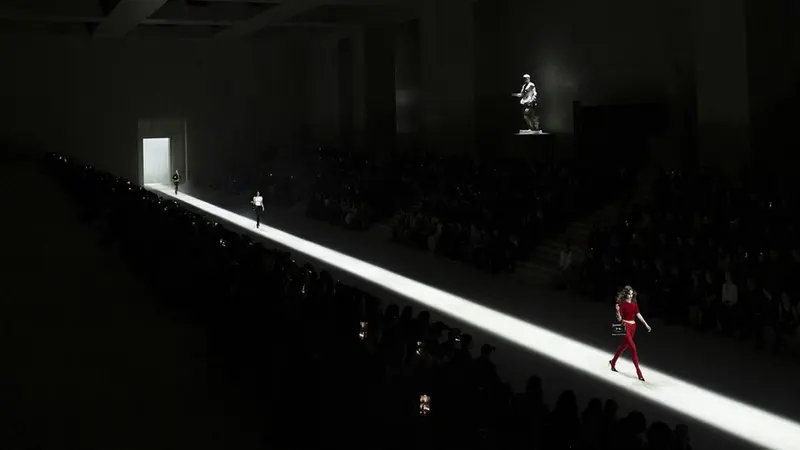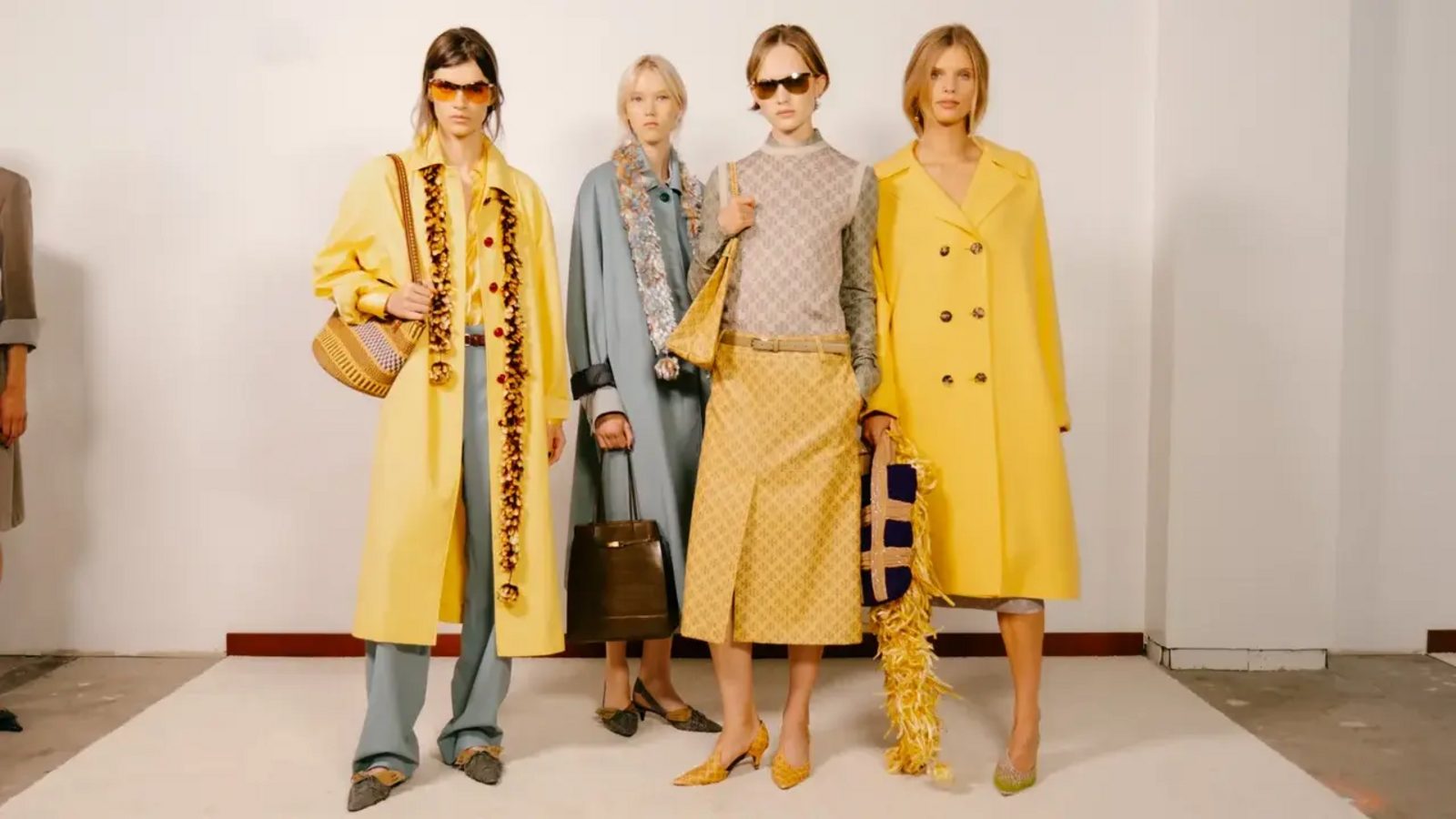
Christopher Kane staged his debut collection as creative director of Mulberry on September 20, 2026, at the Queen Elizabeth II Centre in Westminster during London Fashion Week. It marked the Scottish designer's first credit at a major fashion house and his first show since closing his own label in 2023.
"For me, heritage is a foundation, not a limitation," Kane said as he took on the role at Mulberry, the British leather goods house founded in 1971 by Roger Saul. He described the finished collection afterward as "a very streamlined, modern, stripped-back look."
The show's central image was a tree surgeon cutting away branches to force new growth, a nod to the mulberry tree that gives the brand its name and its logo. Instagram teasers before the show had shown a figure hacking at a tree trunk.
What Kane put on the runway
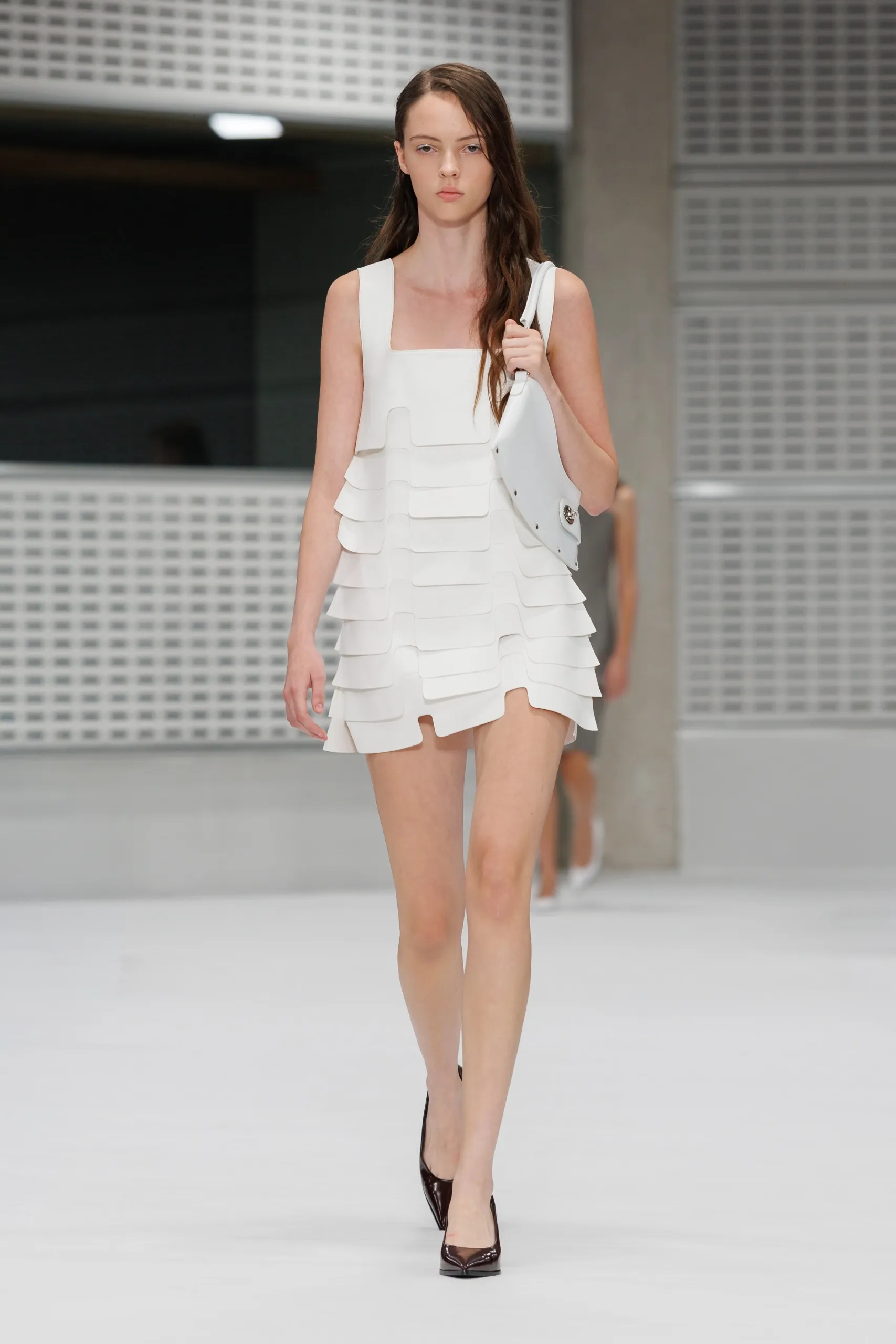
Narrow bags shaped like axe blades were slung over the shoulder and closed with Mulberry's signature Postman's Lock fastening, the clasp that recurs across the house's leather goods and even turned up on shoes in this collection. Leather remained the collection's dominant material throughout.
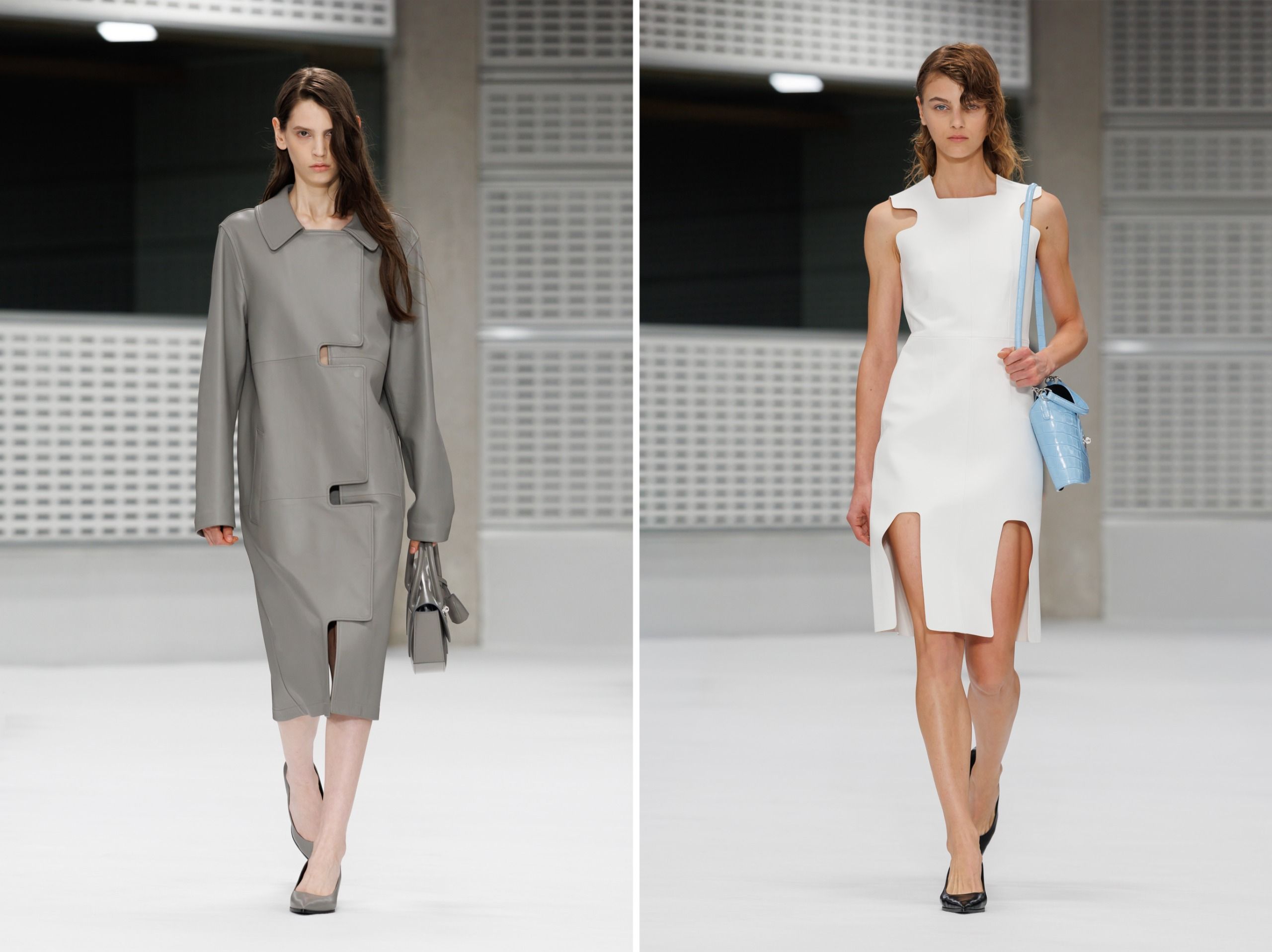
Boxy silhouettes carried notched edges that echoed the flap construction of the Bayswater, the handbag Nicolas Knightly introduced for Mulberry in 2003 and which remains its bestselling style. Those notches reappeared as iridescent, organza-like scale layers on mini dresses and as split hems on wool sweaters.
Kane also revisited the archival Piccadilly bag, enlarged and remade in mock croc. Fetish references familiar from his own label surfaced again: a chest-fastened backpack recalled a leather harness, and a checkered overcoat was made from wipe-clean vinyl printed with trompe l'oeil tartan.
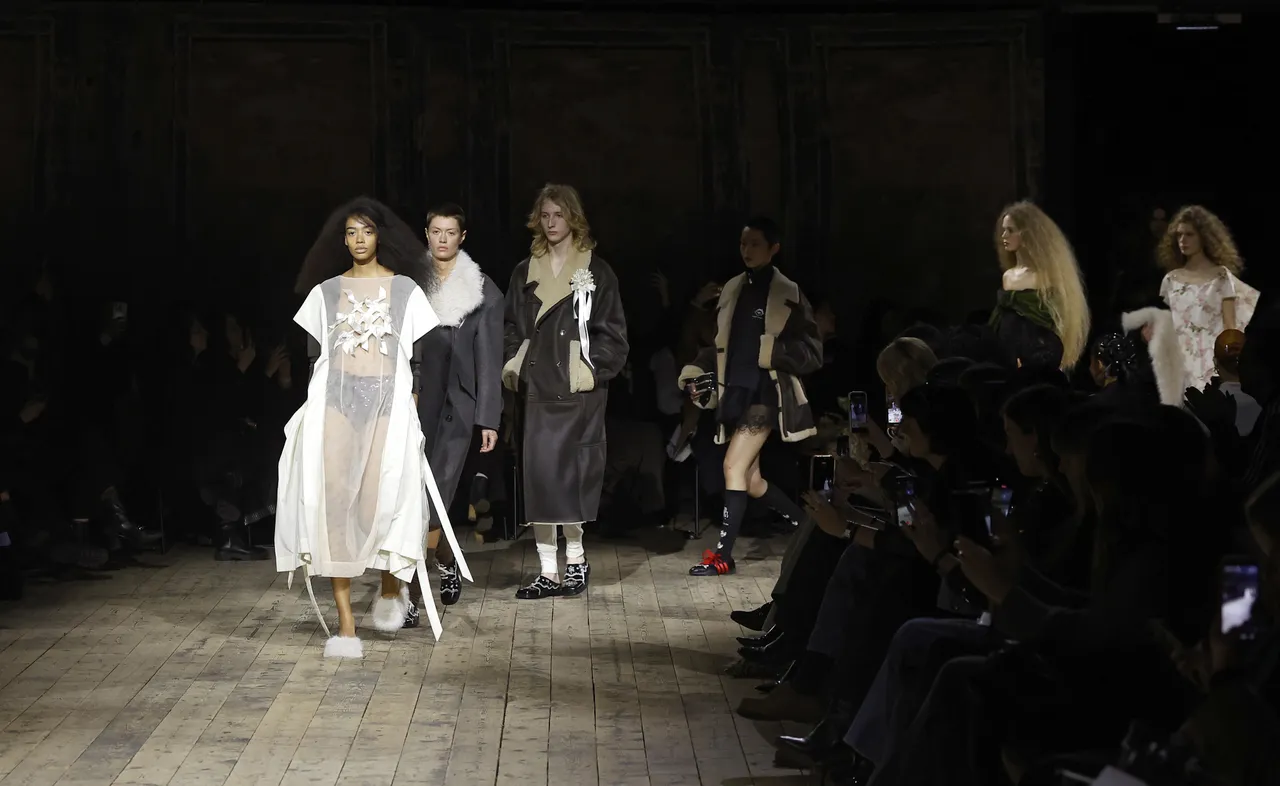
The palette stayed corporate: grey, beige and white, a restraint Kane framed as carrying its own quiet perversity. He said the collection was "really about town, city, country," tracking one imagined wearer across those three settings over the course of the season.
Where the references came from
Kane traced part of the collection to his childhood near Glasgow, where he encountered Mulberry through the football casual subculture. That memory produced oversized polo shirts carrying vintage Mulberry branding and outerwear built from 1990s parka shapes with elongated, funnel-like hoods, one resembling South Park's Kenny.
School uniforms, rugby kits and British tailoring supplied further reference points. "There's a lot of Mulberry heritage here, but it's also very Christopher Kane," he said of the finished collection, framing the show as continuity with the house rather than a break from it.
Kane founded his eponymous label in 2006 after graduating from Central Saint Martins, building a career that earned him four Fashion Awards and, for a period, backing from the Kering luxury group. He continues at Mulberry alongside his sister and longtime creative partner, Tammy Kane, who remains his creative collaborator as she has throughout his career.
He closed that label in 2023, a decision widely read as a sign of how difficult it has become for independent designers to sustain a business in London. Vogue critic Sarah Mower wrote earlier this year that his absence had felt like "almost criminal oversight of a major talent of his generation."
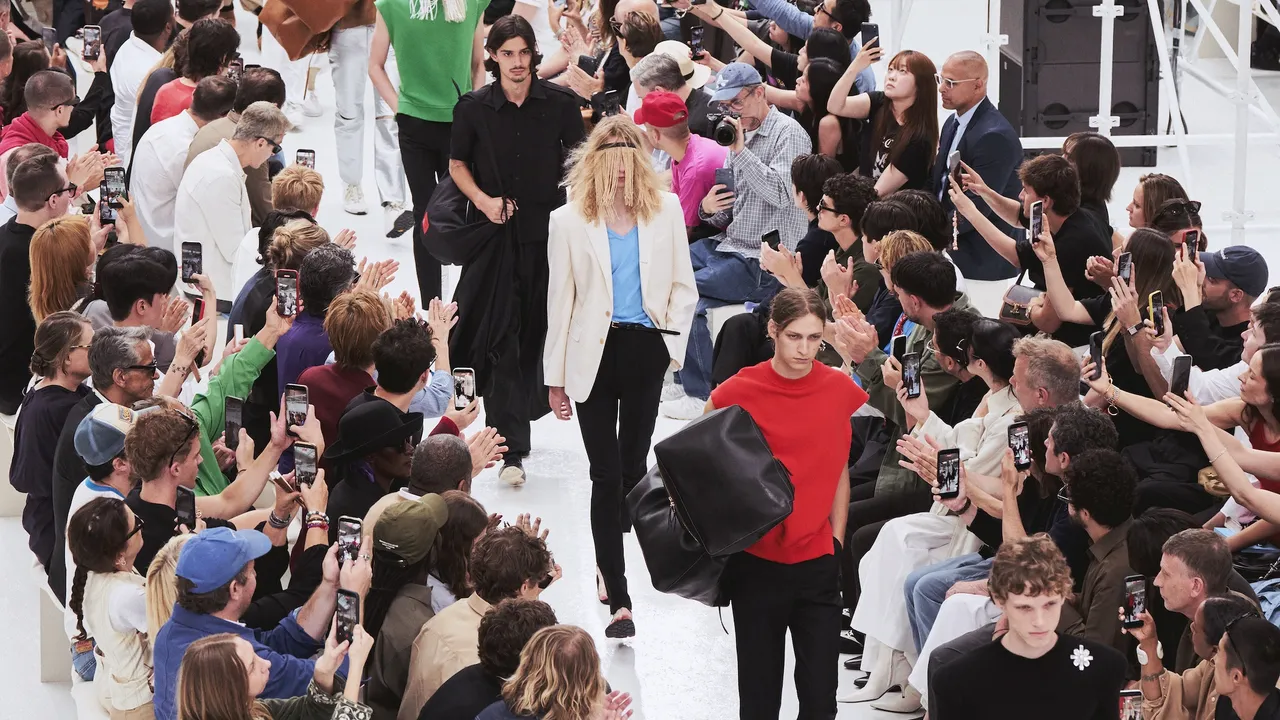
The show closed to a roaring ovation, a response consistent with Kane's standing as one of British fashion's more closely followed designers. "I want to write my own codes," he said afterward, describing his approach to the role rather than a rejection of Mulberry's history.
The bag Kane inherited
We have previously flagged the Bayswater, the bag whose flap construction reappeared throughout this show, as one of the sharpest alternatives to an Hermes Birkin, delivering a comparable belted, gold-hardware silhouette for under $1,500 against the more than $9,000 the least expensive Birkins now command, a gap of well over $7,500.
That price gap is part of what makes Kane's arrival notable within our coverage of style: a designer known for conceptual, fetish-inflected fashion is now shaping a house whose commercial appeal rests on accessible leather goods rather than runway spectacle alone.
Kane has not disclosed how much of this debut collection will reach stores unchanged, nor a date for the line's commercial delivery. His own label was, for a period, part of the Kering group before its 2023 closure ended that backing entirely.
This briefing is published daily using an AI-powered system crafted by Luxe Digital’s team and finely tuned to meet our editorial standards. While we continuously test and review the output, mistakes can sometimes happen. Tell us if you spot one.
Images: Mulberry; (Image credit: Iker Aldama)