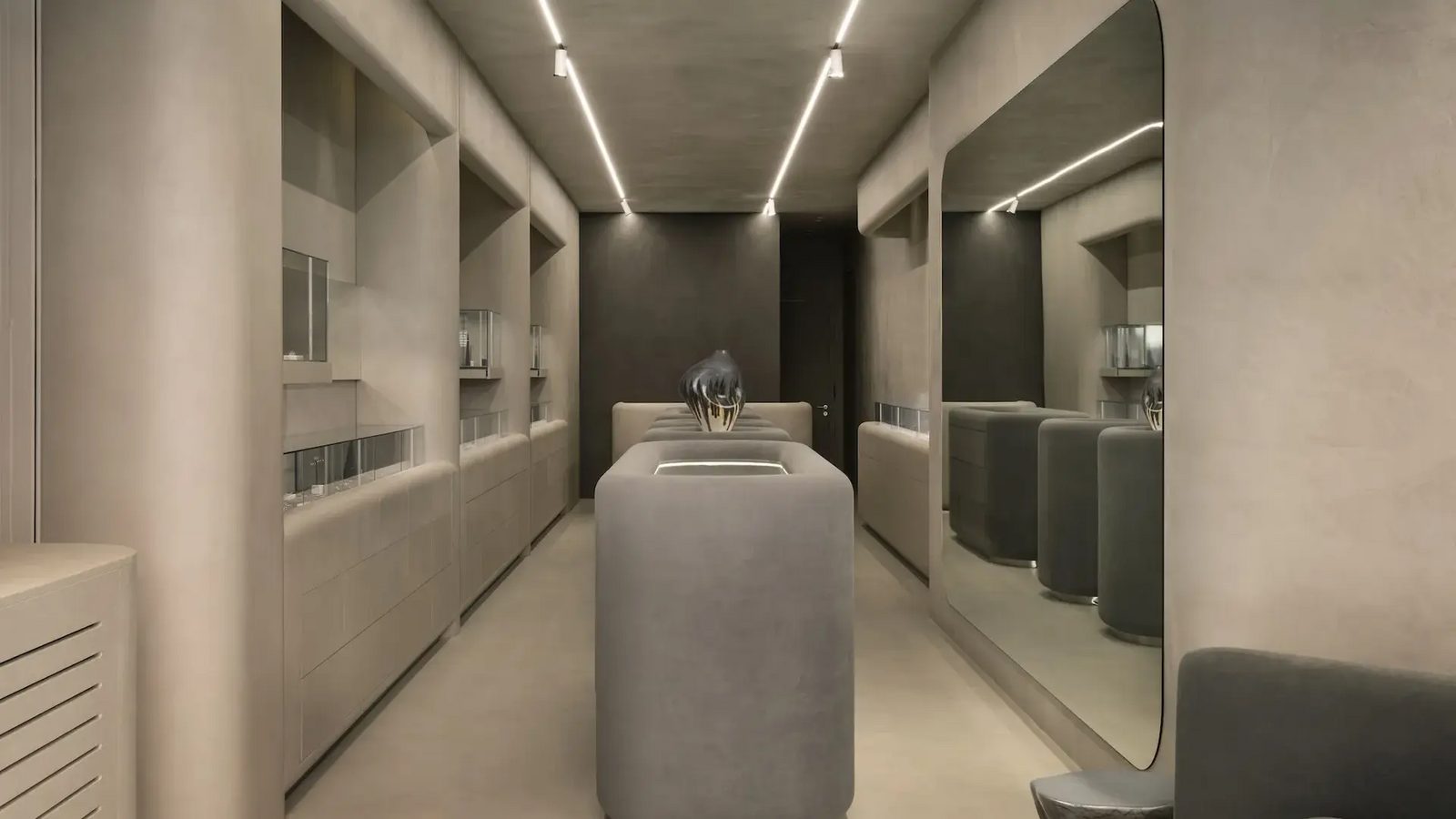
Guzema has opened its first New York boutique, at 112 Wooster Street in SoHo, designed by Ukrainian architect and interior designer Victoria Yakusha. The Ukrainian fine jewellery brand, founded by designer Valeriya Guzema, worked with Yakusha to build a store meant to slow shoppers down rather than show off its pieces at speed.
Yakusha describes the approach as deliberately withholding. "The jewellery is not simply shown to you," she said. "You have to come closer and look." That instinct shapes a boutique built around a long, narrow footprint that Yakusha said left her with almost no natural light to work with.
What the storefront shows first
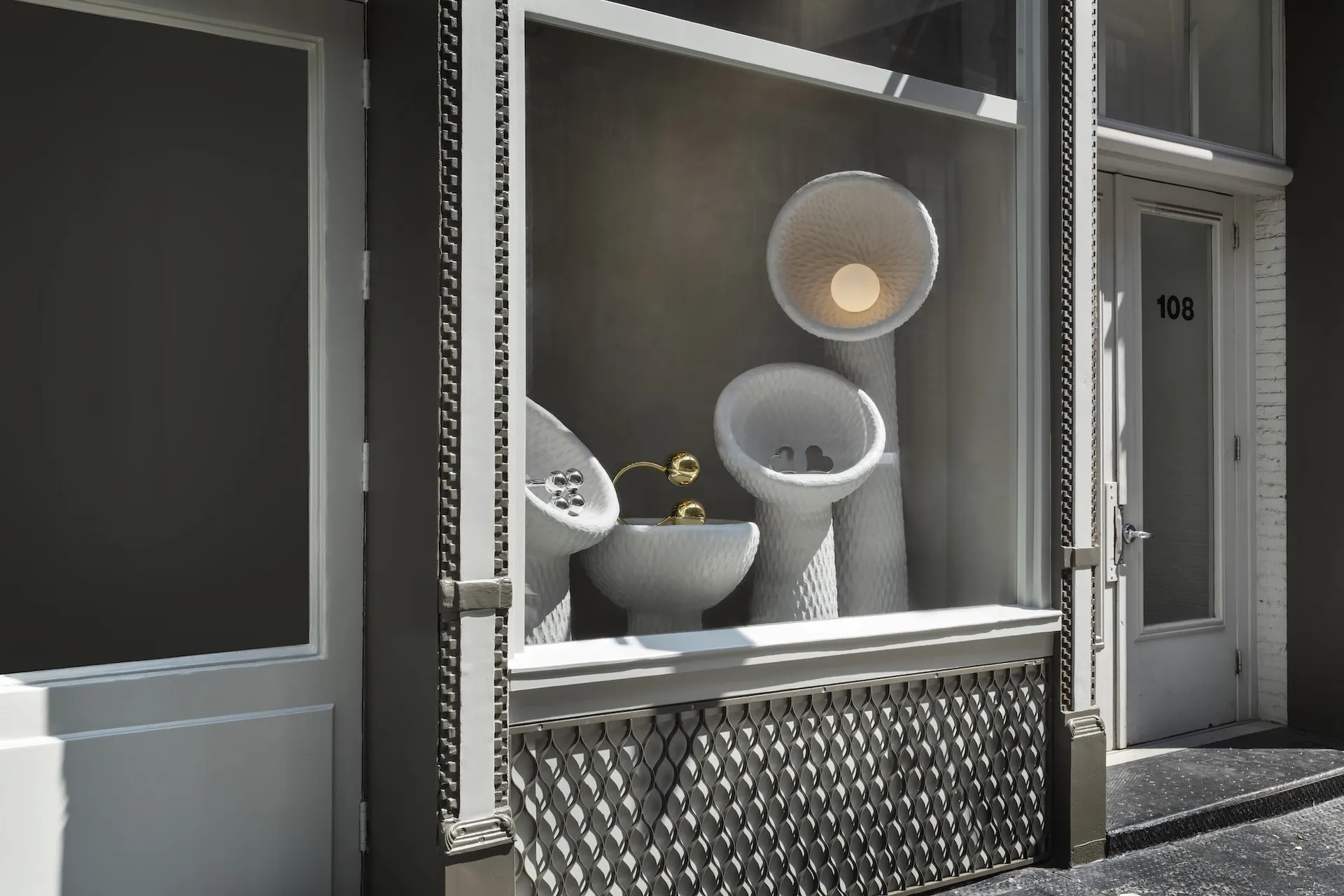
Before shoppers reach the door, a window installation displays a white, sunflower-inspired lamp from Yakusha's own Faina collection. Beside it, custom rounded sculptures echo the lamp's form while showcasing oversized models of Guzema's jewellery, a preview built to pull passersby off the sidewalk and inside.
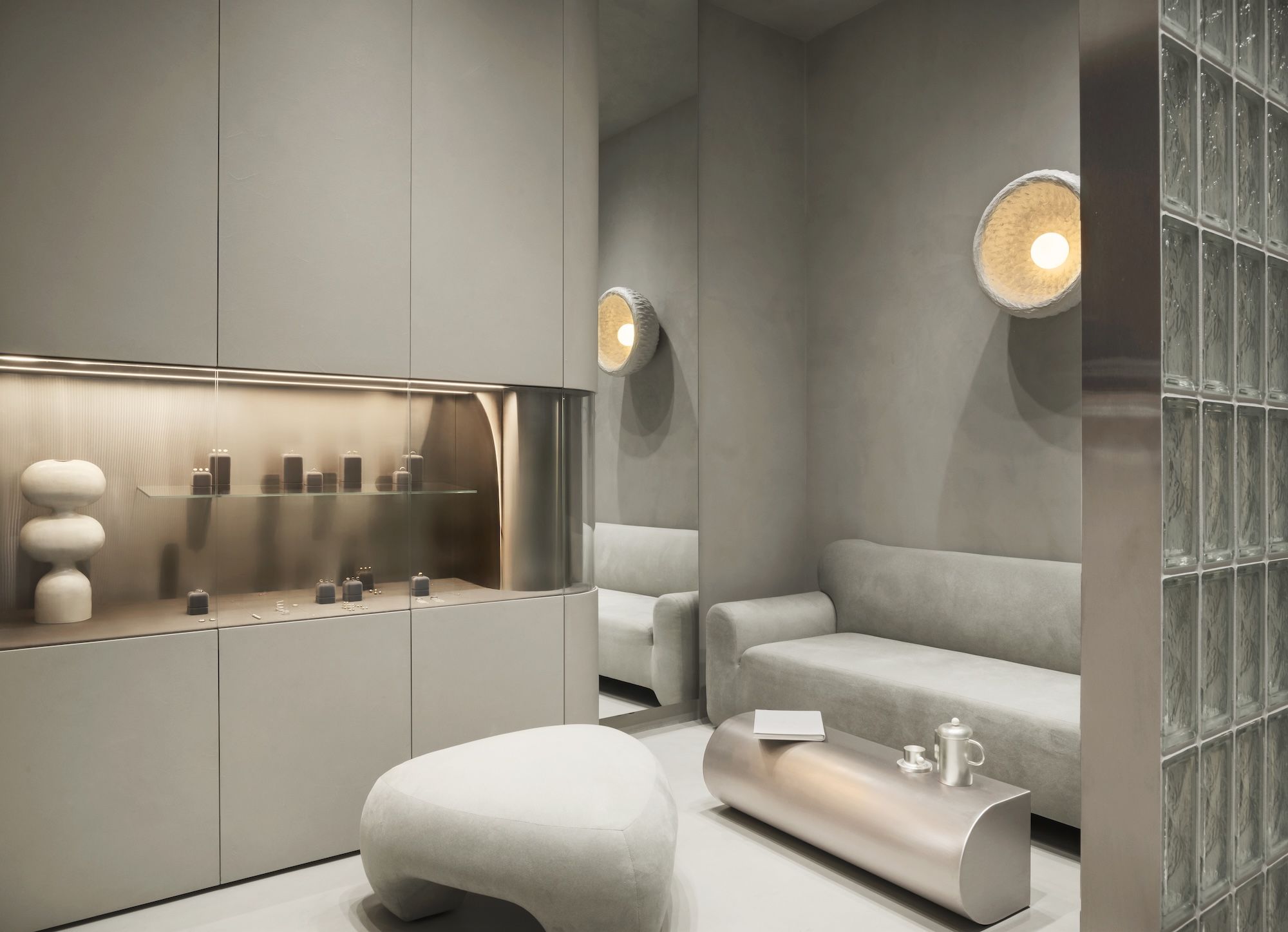
"I like to bring something artistic into a space, something that makes you stop for a moment and pulls you in," Yakusha said. Inside, the jewellery itself is handcrafted in 18k gold and set with responsibly sourced natural diamonds, displayed in central oval cases and on grey cones inside glass boxes.
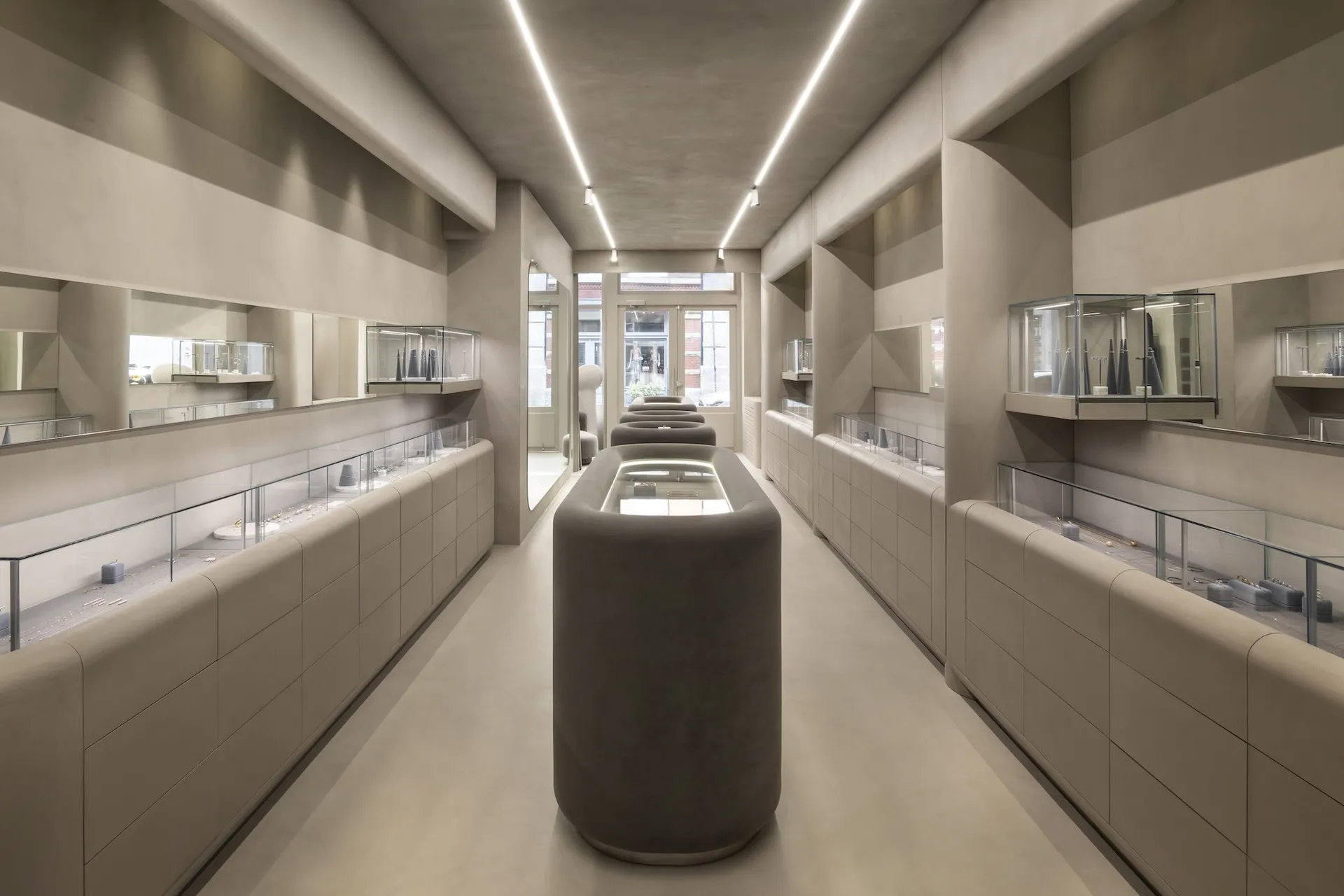
Yakusha built the fixtures as connected, integrated-lighting displays rather than freestanding cases, so the jewellery reads as part of the architecture. "The displays materialised around them," is how she framed the effect, an approach meant to erase the line between object and setting.
How the surfaces work together
"What surrounds an object is as important as the object itself. It is what allows you to see it," Yakusha said. Mirrors line the walls, doubling as fitting tools for shoppers trying on pieces while reinforcing the store's unified, continuous look from every angle.
Yakusha finished every surface, from the walls up to the ceiling, in a single palette of grey and warm beige microcement, so the whole room reads as one continuous, velvety shell rather than a set of separate walls and fixtures.
"The depth comes through texture rather than colour contrast," she said, describing surfaces built to recede so the jewellery stays the visual focus throughout the space.
"There are many surfaces, but you don't see them as separate elements. They almost disappear, and the jewellery becomes the focus," she added. That statement doubles as the clearest account of what the design is actually trying to achieve for Guzema's pieces.
What is behind the glass block wall
Behind a glass block wall, the boutique continues into a private appointment area offered to visitors at no charge. The room holds a Faina sofa and ottoman, both designed by Yakusha to blend into the curved surroundings rather than stand apart from them.
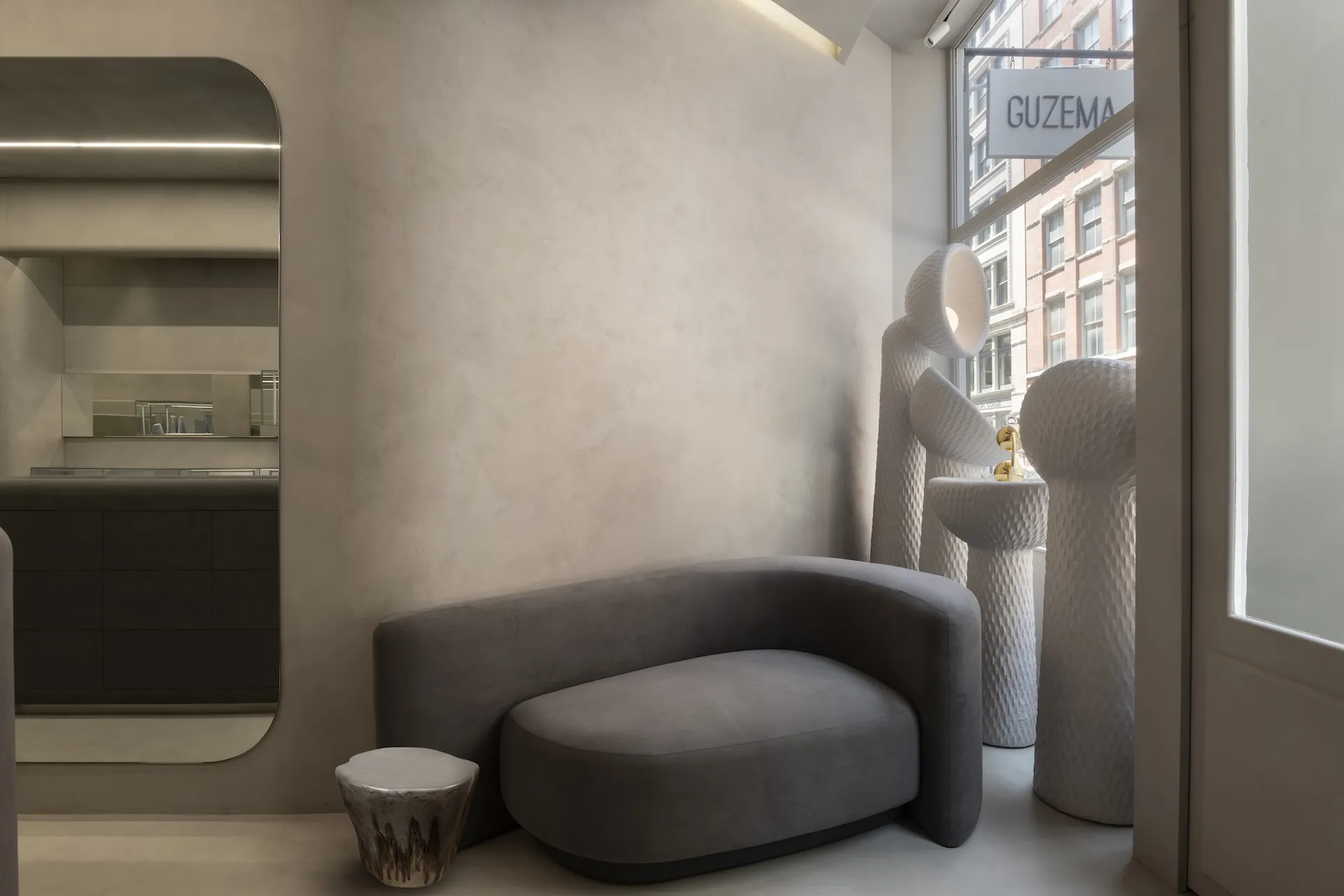
Stylists dressed in slate grey uniforms, created by the fashion house Safiyaa specifically to echo the boutique's curved interiors, staff these sessions and help clients choose pieces suited to them. "Jewellery is very personal, so the space has to do more than display it," Yakusha said.
"It gives you time to slow down and find the piece that feels entirely your own," she added. The line applies as much to the appointment room as to the main floor, tying the store's private and public spaces to the same design idea.
Alongside Guzema's established designs and a custom engraving service, the SoHo store carries an exclusive jewellery collection sold nowhere else. It reinterprets Guzema's signature styles, giving the boutique its own edit rather than a straight replica of the brand's wider range.
The opening places Guzema in a SoHo retail landscape where design pedigree increasingly does the selling, alongside Dior's recent Peter Marino designed flagship on Milan's Via Montenapoleone and Bvlgari's citywide Serpenti takeover of New York's 7 Train and the High Line. Both openings leaned on architecture and installation to draw shoppers rather than storefront volume alone.
We have tracked the same instinct toward restraint elsewhere in the market, from the pared-back cases we noted in our coverage of style to the architect-led approach behind Neode's N01 First Edition, a watch limited to 25 pieces that leaned on design pedigree rather than scale to make its case to buyers.
Guzema has not said whether the SoHo format, including the private appointment room and the store-exclusive collection, will be repeated at future locations. For now the Wooster Street boutique stands as the brand's only US address and its most direct statement yet of how it wants its jewellery seen.
This briefing is published daily using an AI-powered system crafted by Luxe Digital’s team and finely tuned to meet our editorial standards. While we continuously test and review the output, mistakes can sometimes happen. Tell us if you spot one.
Images: (Image credit: Courtesy Victoria Yakusha); Guzema