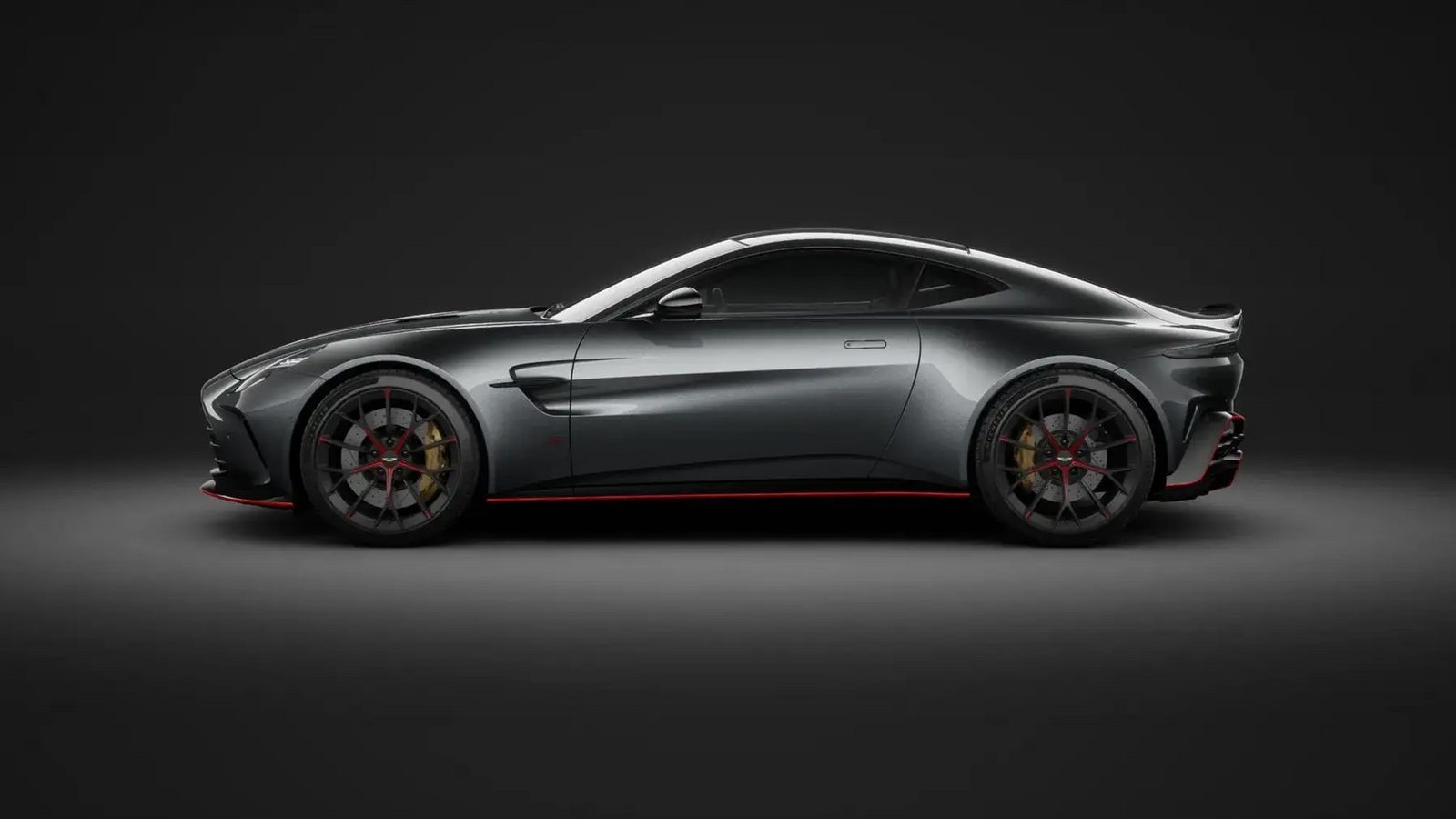
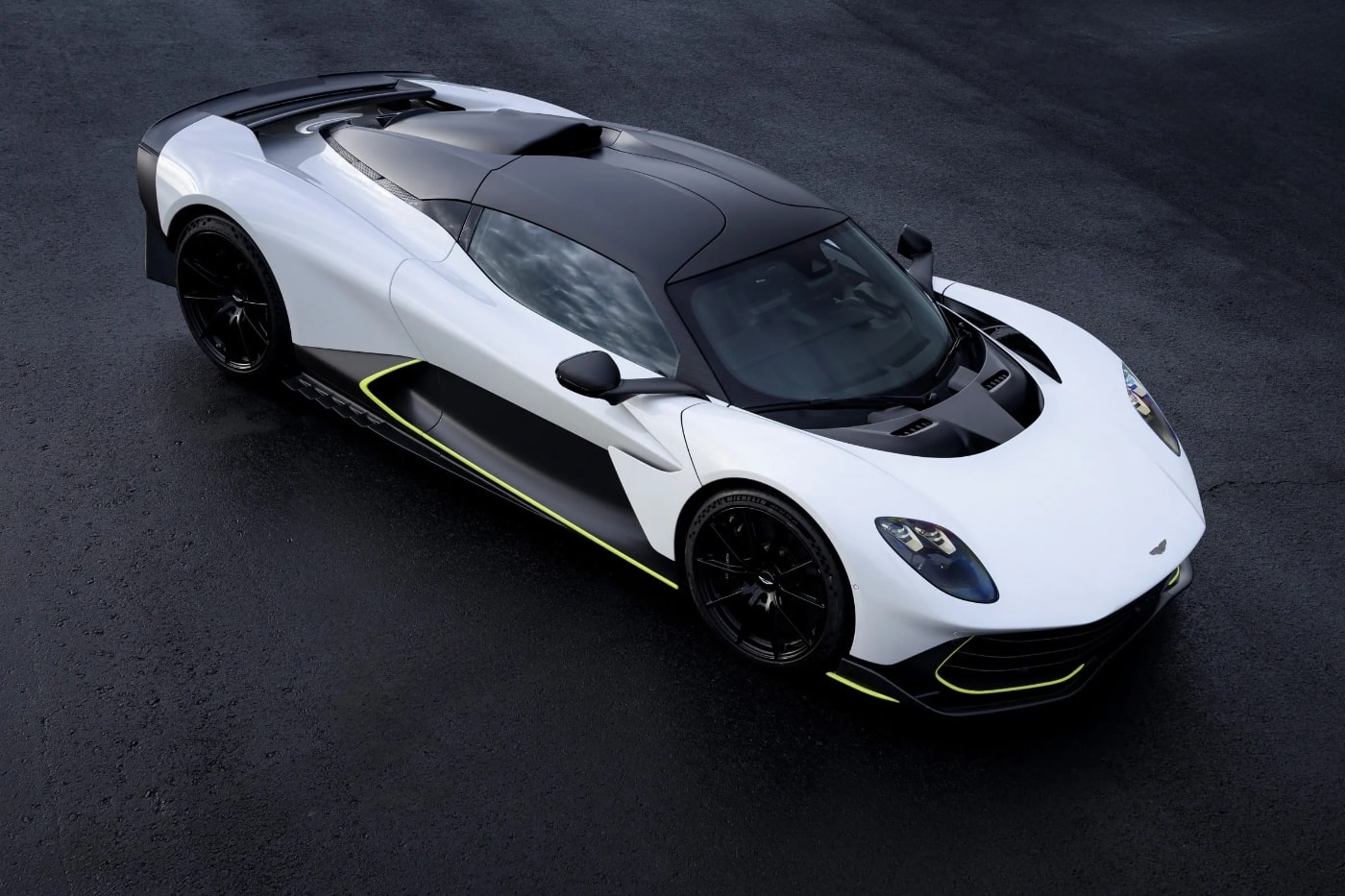
Aston Martin is preparing to unveil the Valhalla Spider, an open-air version of its mid-engine supercar, with an official debut anticipated as early as November. The drop-top is expected to be built in numbers that undercut the standard Valhalla Coupe, whose production run is already capped at just 999 units worldwide.
That scarcity is the point. Introducing a rarer open-top variant on top of an already limited coupe shifts the car's standing in the exotic market, pushing Aston Martin further into territory usually reserved for multi-million-dollar flagship hypercars rather than conventional supercars.
The Spider is expected to retain the coupe's powertrain without modification. A Mercedes-AMG-sourced 4.0-liter twin-turbocharged V8 works with three electric motors, two mounted on the front axle and a third at the rear, feeding an eight-speed dual-clutch transmission that sends drive to all four wheels.
Combined, that hybrid system is expected to produce 1,064 horsepower and 810 lb-ft (1,100 Nm) of torque. Aston Martin's engineering focus on lightweight construction is intended to neutralize the weight penalty that convertibles typically carry against their closed-roof siblings.
How the roof comes off
Rather than a motorized folding hardtop or a fabric soft top, the Valhalla Spider is expected to use a completely removable targa top. The manual design avoids the added weight and mechanical complexity of automated systems, and the car lacks the storage space a folding mechanism would need.
The Spider is built around the same lightweight carbon fiber monocoque as the coupe, which supplies the baseline rigidity, though the structure may need targeted reinforcement to match the closed car's exact torsional stiffness once the roof is removed.
Weight is where the Spider is expected to stay closest to its sibling. Aston Martin's carbon fiber construction should keep the open car under 3,747 lbs (1,700 kg), against the coupe's 3,649 lbs (1,655 kg), a gap of under 100 lbs between the two.
A British marque built on scarcity
Aston Martin has long traded on limited production and bespoke engineering rather than volume, and the Valhalla program fits that pattern: a numbered coupe run, a hybrid powertrain shared with Mercedes-AMG, and now a roofless variant pitched as scarcer still.
We track exactly what Aston Martin models cost against their full technical specifications, and the marque's largest shareholder is Lawrence Stroll's Yew Tree Consortium, alongside Saudi Arabia's Public Investment Fund, Geely and Mercedes-Benz, a structure that explains the AMG-sourced V8 at the Valhalla's core.
Among the eleven British marques we cover, from Morgan's hand-built roadsters to McLaren's hypercars, most are now foreign owned; Aston Martin is alongside Bentley under Volkswagen, Land Rover and Jaguar under Tata's JLR, and Lotus under China's Zhejiang Geely.
We have also tracked Aston Martin's standing against rivals more broadly. Our ranking of the most popular luxury car brands online lists Aston Martin among the marques that entered the top ten alongside McLaren and Bugatti, displacing Cadillac in the process.
Rarity alone does not guarantee value, as we found when we ranked the best classic cars for collectors: a Bugatti Type 57 Atlantic, of which only three of four built survive, trades on scarcity in a way a merely limited modern run cannot yet claim.
Whether the Valhalla Spider follows that trajectory will depend on how Aston Martin allocates the run once pricing and final specifications are confirmed, details the company has not yet released ahead of the expected November unveiling.
The removable targa panel is the clearest sign of Aston Martin's restraint here: no motors, no folding mechanism, just a lighter, simpler solution built to protect the numbers already set by the coupe rather than chase a heavier convertible layout.
Our coverage of the garage category has followed Aston Martin's shift toward hybrid, low-volume supercars as the marque competes with Ferrari, McLaren and Bugatti for the attention of collectors who increasingly weigh exclusivity as heavily as outright performance.
This briefing is published daily using an AI-powered system crafted by Luxe Digital’s team and finely tuned to meet our editorial standards. While we continuously test and review the output, mistakes can sometimes happen. Tell us if you spot one.
Images: Aston Martin