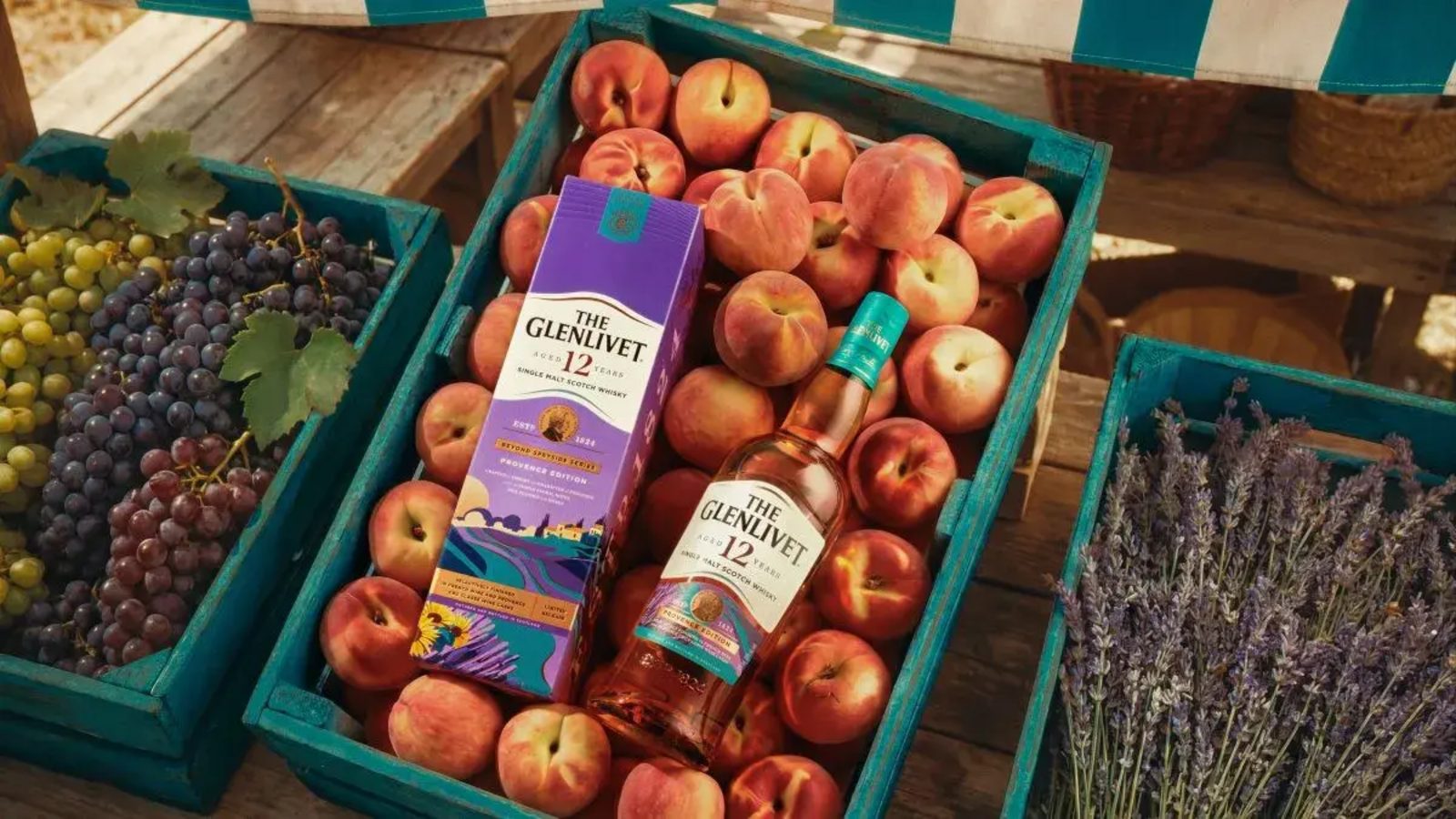

The Glenlivet has released a new single malt finished in white-wine casks, a technique the 200-year-old Speyside distillery has never used before. The whisky is called Provence Edition, and it is the second release in the brand's Beyond Speyside series, which explores cask finishes drawn from outside the traditional sherry and bourbon barrel tradition.
Provence Edition starts life as a 12-year-old single malt before a portion of the whisky is transferred into three distinct types of French wine casks: Chateau Sainte Marguerite white wine, Rivesaltes, and Sauternes. That three-way split is itself unusual. Most cask-finished scotch relies on a single wood type rather than a blend of three.
Kevin Balmforth, master blender for The Glenlivet, said in a statement that the team wanted to take the whisky somewhere unexpected. He described actively monitoring the finishing process and balancing the influence of the three casks to build what he called vibrant orchard fruit, elegant floral notes, and exceptional complexity.
Each cask is credited with a distinct effect on the final flavor. The Chateau Sainte Marguerite white-wine casks are said to contribute bright citrus and floral notes. The Rivesaltes casks, used for a sweet, fortified wine, are said to bring nuttiness and warming spice to the whisky's profile.
The Sauternes casks, previously used for a sweet white wine, are credited with adding marmalade and creme brulee flavors. Combined, the brand says the three casks give Provence Edition a character built on stone fruit, citrus, vanilla, baking spice, and caramel rather than the darker, richer notes typical of red-wine finishes.
Why white wine casks are rare in scotch
White-wine casks are used far less often than red-wine casks to finish scotch whisky, largely because there is much less aged white wine in circulation to draw barrels from. Distilleries including Aberfeldy, Tamnavulin, and Tullibardine have experimented with the approach previously, but it remains a minority technique across the category.
Provence Edition is bottled at 80 proof, in line with most other Glenlivet expressions. Tasting notes describe summer stone fruit and tropical fruit playing against citrus, vanilla, baking spice, and caramel, with the wine-cask maturation running through the whisky's character rather than appearing only in a light finish.
The release carries a suggested retail price of $55 and is described as limited, distributed to liquor stores across the United States. It follows Jamaica Edition, the first Beyond Speyside release, which took a 12-year-old whisky and finished it in rum barrels sourced from Jamaica.
To mark the launch, The Glenlivet is running a pop-up called Le Cafe du Whisky in cities around the country. The brand says the activation is designed to let guests discover Provence Edition through the sights, sounds, flavors, and energy that define the Provence region of France.
What the core Glenlivet range looks like
The Glenlivet's core collection centers on age-statement expressions at 12, 14, and 15 years, alongside several whiskies without an age statement. Provence Edition builds on that 12-year base but is positioned within the Beyond Speyside line as a limited, cask-driven experiment rather than a permanent addition to that core lineup.
The Glenlivet remains one of the three biggest names in single malt scotch by sales and recognition, alongside the Macallan and Glenfiddich, and we have tracked its pricing and cocktail applications as part of our broader coverage of whisky. That standing gives a departure like this one more weight than it would carry from a smaller distillery.
We have separately covered the whisky category's cask-finishing trend elsewhere in American bourbon, including Buffalo Trace's first-ever cask-strength Elmer T. Lee release for its 40th anniversary. Both moves point to established distilleries using unusual cask sourcing to differentiate limited releases in a crowded premium spirits market.
We include The Glenlivet in our roundup of the best whisky brands in the world, a list built around distilleries whose core range holds up against scrutiny well beyond a single limited release. Where a bottle of Glenlivet is by size and price is something we track separately, alongside the cocktails it works best in.
The wine-cask approach also echoes a broader moment for wine and spirits crossover credibility, as Michelin's extension of its rating system into wineries has shown; that move drew skepticism from Bordeaux producers wary of a system built for restaurants being applied to cellars. Whisky brands borrowing wine's cask vocabulary are adjacent to that same conversation.
No detail has been given on total bottle count for the release, and The Glenlivet has not said whether Provence Edition will return in future years or remain a one-off within the Beyond Speyside series. The brand has also not disclosed how the finishing time in each of the three wine casks was divided.
Provence Edition is available now at liquor stores nationwide at its $55 suggested price, alongside the Le Cafe du Whisky pop-up tour. Whether the wine-cask technique becomes a recurring feature of Beyond Speyside, rather than a one-time departure, will depend on how the category and drinkers respond to this first attempt.
Support the content you love — it’s free 🎉
Add Luxe Digital as a preferred source on Google. Our stories will be more likely to appear in Google’s Top Stories. It’s free and supports our team. Thank you!
Add as preferred sourceYou can remove us any time in Google’s source preferences.
Thank you — you’re all set 🎉
Luxe Digital is now one of your preferred sources, so our stories are more likely to appear in Google’s Top Stories.
Sources
This briefing is published daily using an AI-powered system crafted by Luxe Digital’s team and finely tuned to meet our editorial standards. While we continuously test and review the output, mistakes can sometimes happen. Tell us if you spot one.
Image: The Glenlivet