
Aptera Motors has delivered its first customer car, ending close to two decades of concepts, prototypes and missed deadlines in which the company changed names and deadlines while delivering nothing. The company has shown off designs, changed names and dates, and shipped nothing until now. A single delivered car is still a milestone for a maker that had never sold one.
The buyer is Martin Hartono, an Indonesian chief executive and the largest early investor in Aptera. That position put him first in the production queue, and he has now taken delivery of the car. It will reportedly be shipped overseas, most likely to Indonesia, where it would look striking in traffic.
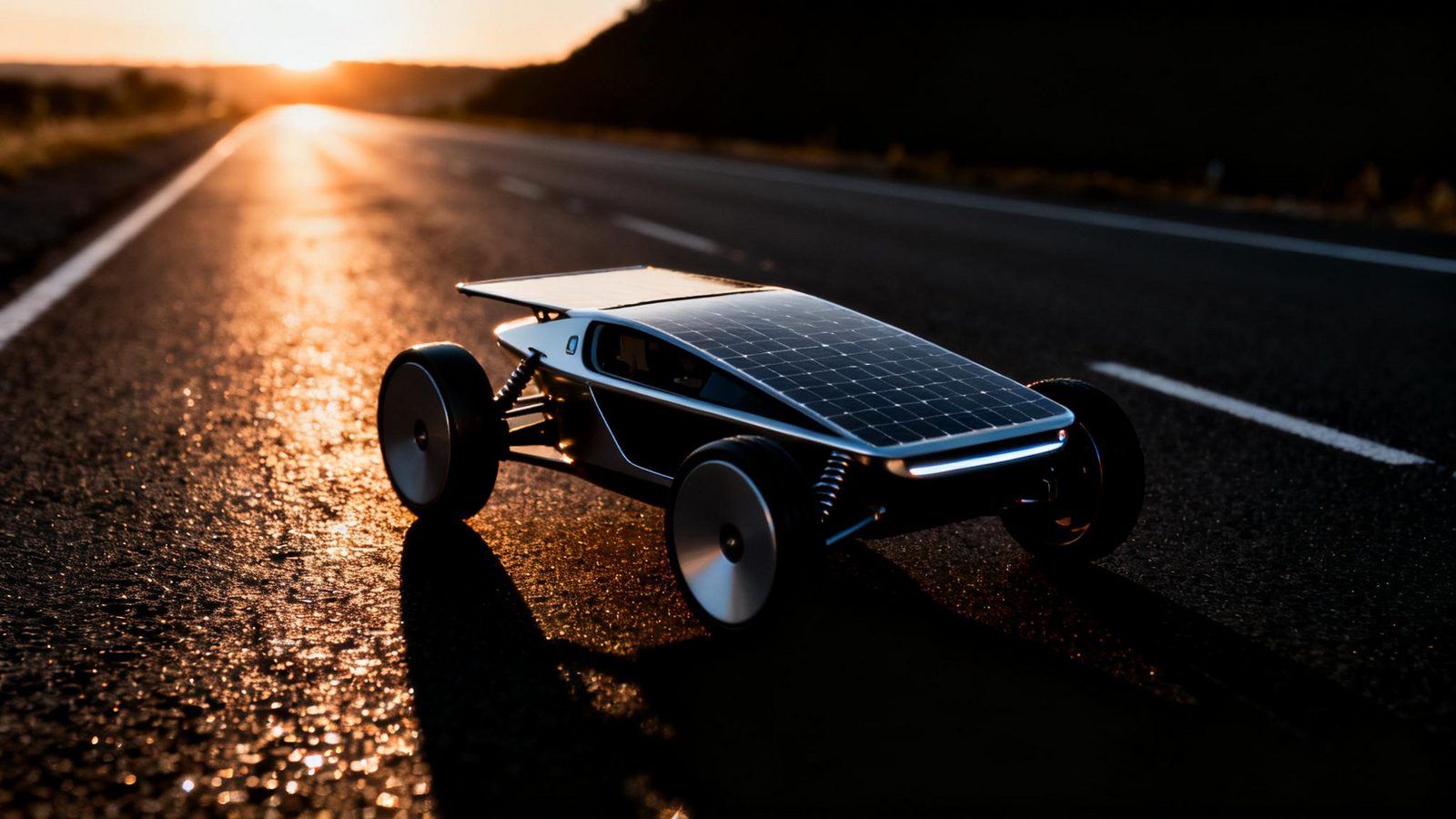
The Aptera is a three-wheeler that reads more like a light aircraft than an automobile, and it seats just two. A 44-kWh battery pack supplies the drive, and charging runs through a NACS-style connector. Engineers chased low mass, landing on a stated curb weight of 2,200 pounds.
That figure places the car closer to a Mazda MX-5 than to a Tesla Model 3. The weight works with slippery aerodynamics to make the Aptera unusually efficient, and the efficiency is the point of the design. Everything about the shape is trimmed to cut drag and extend range.
The Aptera's signature is the solar panel array built across the body, said to return up to 40 miles of range in a day. That equals ten percent of the planned 400-mile total, and it would be measurably useful in sunny climates such as California. The car effectively tops itself up while parked in the sun.
Charging on the move is the promise that has set Aptera apart through every false start. The combination of onboard solar, low weight and clean aerodynamics is what the company has spent the past two decades refining. This first delivery finally put all three on a customer's driveway.
Hartono's example is finished in matte black, a specification that makes the car resemble something a Batmobile might launch from its forecourt. It will be the first of its kind on the road once it reaches Indonesia, a country where the slender two-seater would stand out among conventional sedans and motorcycles.
What the car is
The Aptera is not built like a conventional electric vehicle. Its three-wheel layout sidesteps a class of crash and stability rules that apply to four-wheeled cars, and its composite body is shaped purely for airflow. The result is a two-seater that prioritizes range over interior volume or passenger count.
A 44-kWh pack is small by modern EV standards, but the car needs less energy because it weighs so little and moves air so cleanly. Aptera has not disclosed a full list of performance figures, and the company has spent years promising more specifications than it has published. Range and weight are the two numbers it leads with.
The NACS-style charging port points the car at Tesla's charging network in North America, a practical choice for a startup with no infrastructure of its own. In Indonesia the public charging picture differs, and Hartono's car will depend on whatever local networks exist. The solar panels would offset some of that dependence.
We cover low-volume and boundary-pushing vehicles as part of our coverage of garage, where the Aptera's three-wheeled, solar-charging approach lands beside established names and upstarts alike. It is a car that competes on a different axis from the luxury marques we profile, but its efficiency claims earn it a place in the conversation.
The road behind the milestone
For two decades Aptera has shown concepts and prototypes while delivering nothing. The company has changed names and deadlines through that history, and the gap between ambition and a finished car became its defining feature. That is what makes this week's handover notable rather than routine.
One delivered car does not make a company profitable, and Aptera still faces the same commercial question it has always faced: whether it can build more than a single example. The firm has not said how many cars it can produce, on what schedule, or at what price. Those are the numbers that will decide whether it stays in business.
The largest investor taking the first car is a sign of both commitment and dependence. Hartono's backing has carried the company this far, and shipping that car to Indonesia means the demonstrator that would normally tour dealers is instead leaving the country. Aptera has not disclosed what comes after this unit.
Solar-powered transportation is not new to our pages, but a production three-wheeler from a startup that has survived two decades of restarts is. The Aptera's promised 400-mile range, if delivered, would meet or beat many full-size electric sedans while costing the driver nothing in sunlight.
That is the claim the road will now test, and it is a fact Aptera could not claim through every prototype and concept it has shown since its founding.
The company has said the car needs to sell in volume to survive, and this first unit changes none of that arithmetic.
What comes next is an open question the company has not answered. Aptera has not announced a delivery schedule, a buyer for the second car, or a production target for the year ahead. For now, the milestone is a single matte black three-wheeler crossing an ocean to its first owner.
Support the content you love — it’s free 🎉
Add Luxe Digital as a preferred source on Google. Our stories will be more likely to appear in Google’s Top Stories. It’s free and supports our team. Thank you!
Add as preferred sourceYou can remove us any time in Google’s source preferences.
Thank you — you’re all set 🎉
Luxe Digital is now one of your preferred sources, so our stories are more likely to appear in Google’s Top Stories.
This briefing is published daily using an AI-powered system crafted by Luxe Digital’s team and finely tuned to meet our editorial standards. While we continuously test and review the output, mistakes can sometimes happen. Tell us if you spot one.