Water is one of the defining characteristics of Earth. It’s the driving force behind nearly every aspect of life, and without it almost everything we know would cease to exist.
The lengths people will go to for the best water in the world are seemingly limitless. Whether it’s scouring remote islands, harvesting giant icebergs, or drawing water straight from the humid air of the Amazon rainforest, the creativity just doesn’t stop.
Against intuition, some of the most expensive water bottles in the world don’t focus on what’s inside at all. Instead, they pair a creative touch with extravagant materials such as diamonds and other precious gems to create valuable works of art.
Whatever the source, the best bottled water brands available today all bring something special to the table.
The 11 most expensive water brands
| # | Brand | Price per liter |
|---|---|---|
| 11 | Berg | $31 |
| 10 | Uisge Source | $63 |
| 9 | ROI | $64 |
| 8 | Minus 181 | $77 |
| 7 | Veen | $88 |
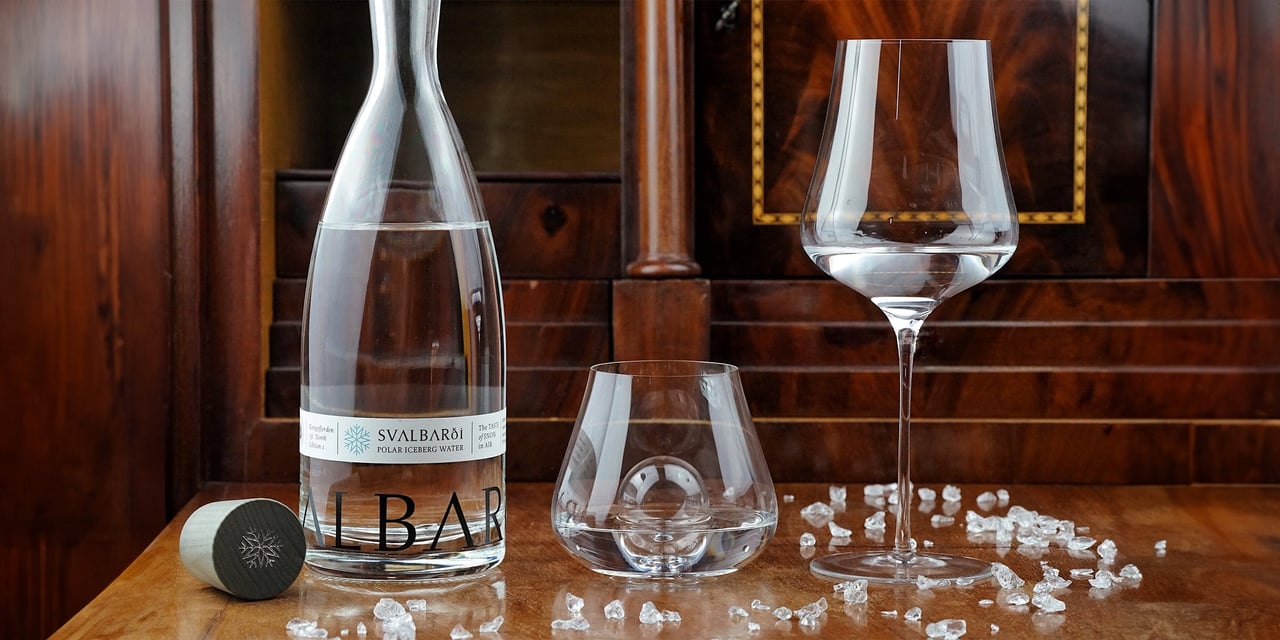
| 6 | Svalbarði | $144 |
| 5 | Kona Nigari | $558 |
| 4 | NEVAS deklart | $1,073 |
| 3 | Ô Amazon | $2,784 |
| 2 | Bling H2O | $3,600 |
| 1 | Fillico Jewelry | $6,709 |
| Bonus — auction record | Acqua di Cristallo | $80,000 |
| Bonus — collector’s bottle | Aurum 79 | $1,800,000 |
Berg - $31 per liter
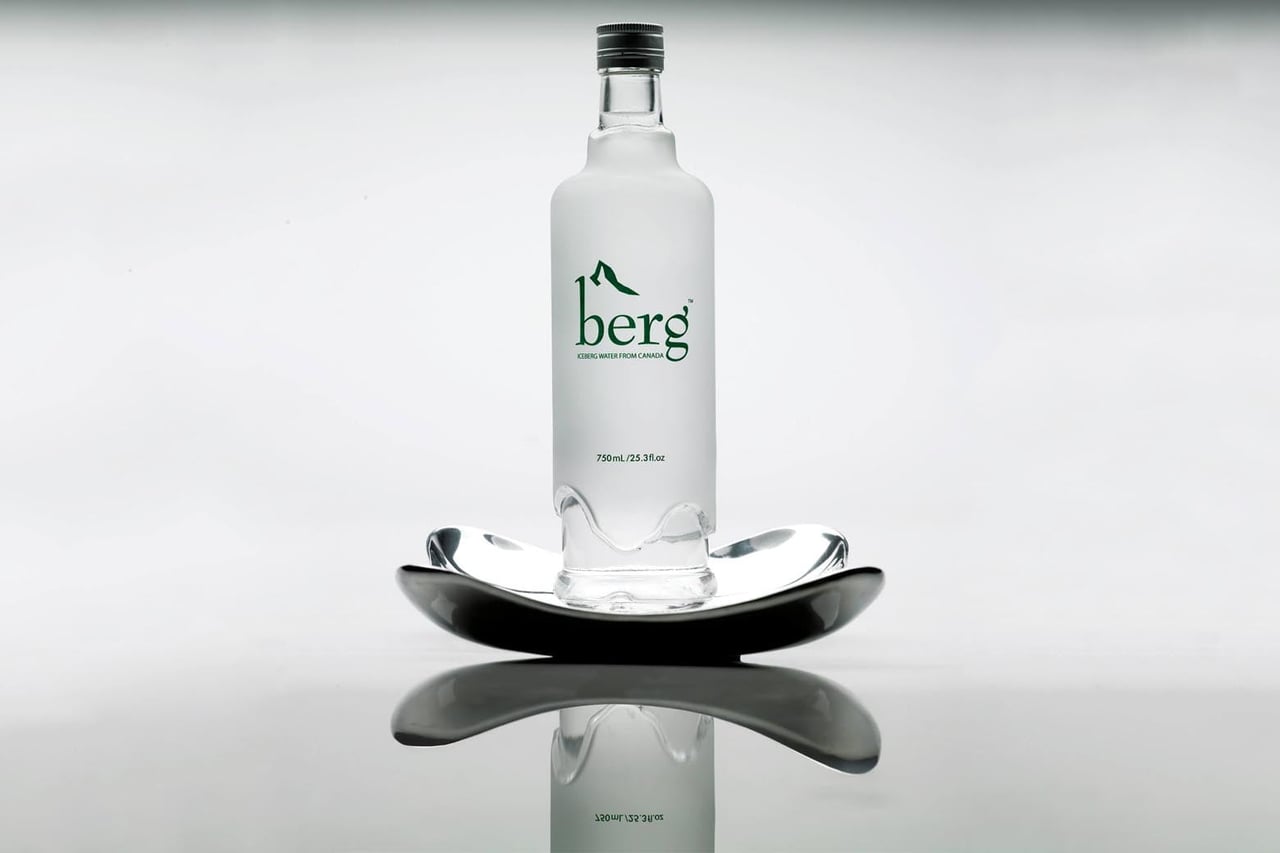
Newfoundland is a remote and rugged island with stunning beauty around every corner. But it isn’t the island that supplies this water.
Berg harvests and melts massive pieces of icebergs that have calved into the ocean off its coast—many once part of 15,000-year-old glaciers in western Greenland.
The result is about as pure as water gets, with a barely-there mineral content that makes for an exceptionally soft, clean pour.
| Country | Canada |
|---|---|
| Source type | Iceberg |
| Price per bottle | $23 for 750 ml |
| Minerality (TDS) | 10 mg/l |
Uisge Source - $63 per liter
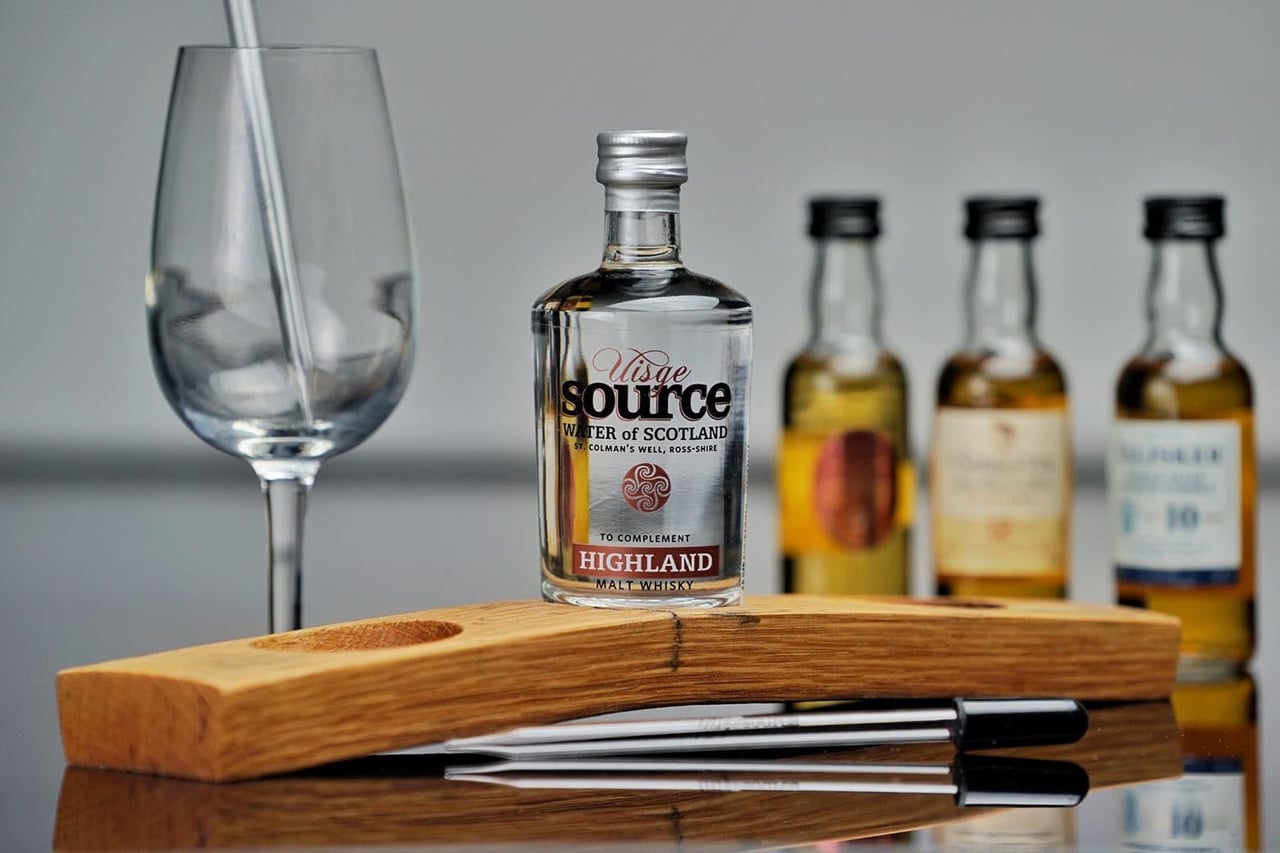
An excellent Scottish whisky should be enjoyed for its pure elegance. A careful dash of water can open up its aromas and flavors—but it can just as easily ruin the moment if the water isn’t up to par.
That’s the entire idea behind Uisge Source (uisge means water in Scottish Gaelic), a water designed expressly for whisky pairing.
With its Three Regions Set, you can match your dash of water to the malt, whether you’re pouring from the Highlands, Speyside, or Islay.
| Country | Scotland, UK |
|---|---|
| Source type | Springs and historic wells |
| Price per bottle | $19 (£17) for a 3 × 100 ml set |
| Minerality (TDS) | 125 mg/l (Speyside), 225 mg/l (Highland), 183 mg/l (Islay) |
ROI - $64 per liter
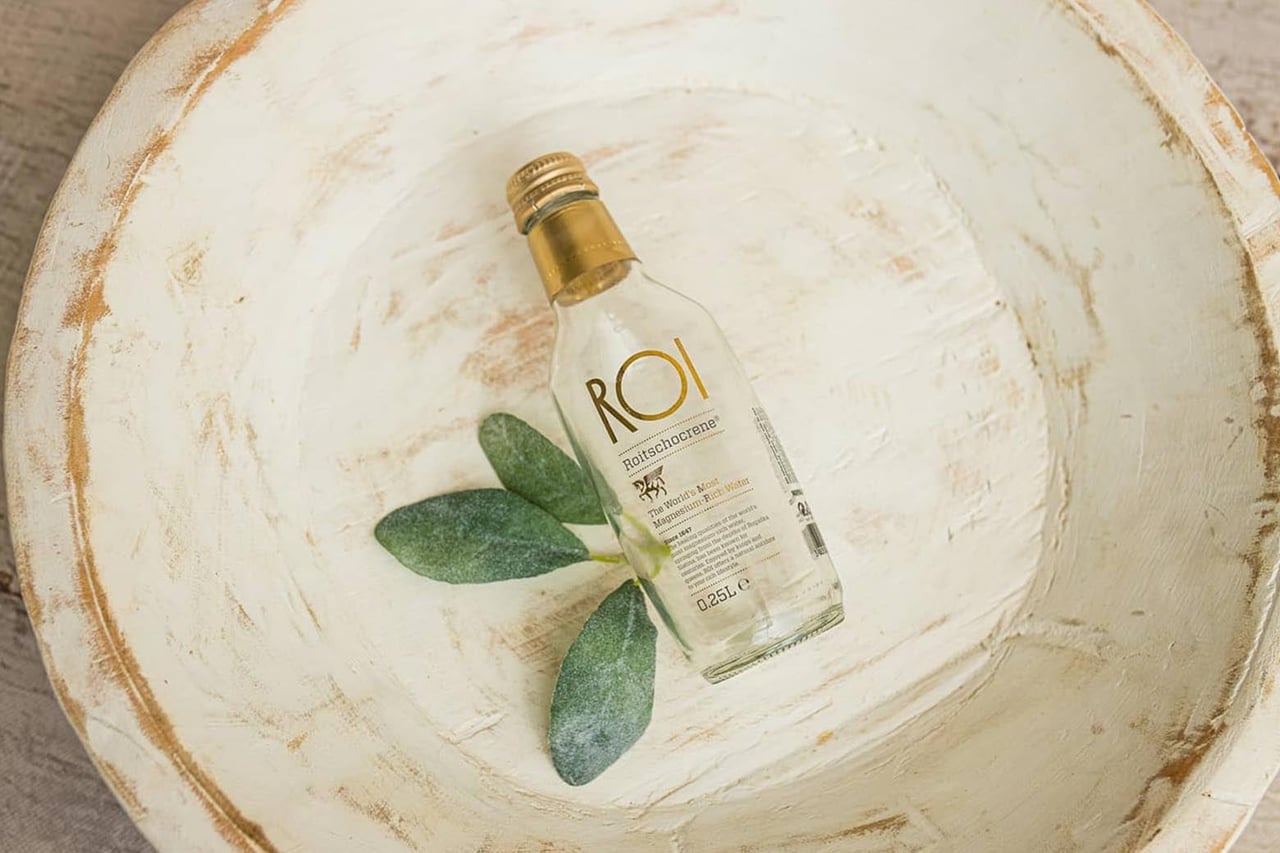
The Roitschocrene spring is the source of ROI’s water. According to legend, it’s the spot where Apollo had Pegasus strike a hoof and open the spring.
Today the water drawn from here is the most magnesium-rich mineral water in the world, with a mineral load that’s as much a talking point as it is a taste.
| Country | Slovenia |
|---|---|
| Source type | Spring |
| Price per bottle | $32 for 500 ml |
| Minerality (TDS) | 7,481 mg/l |
Minus 181 - $77 per liter
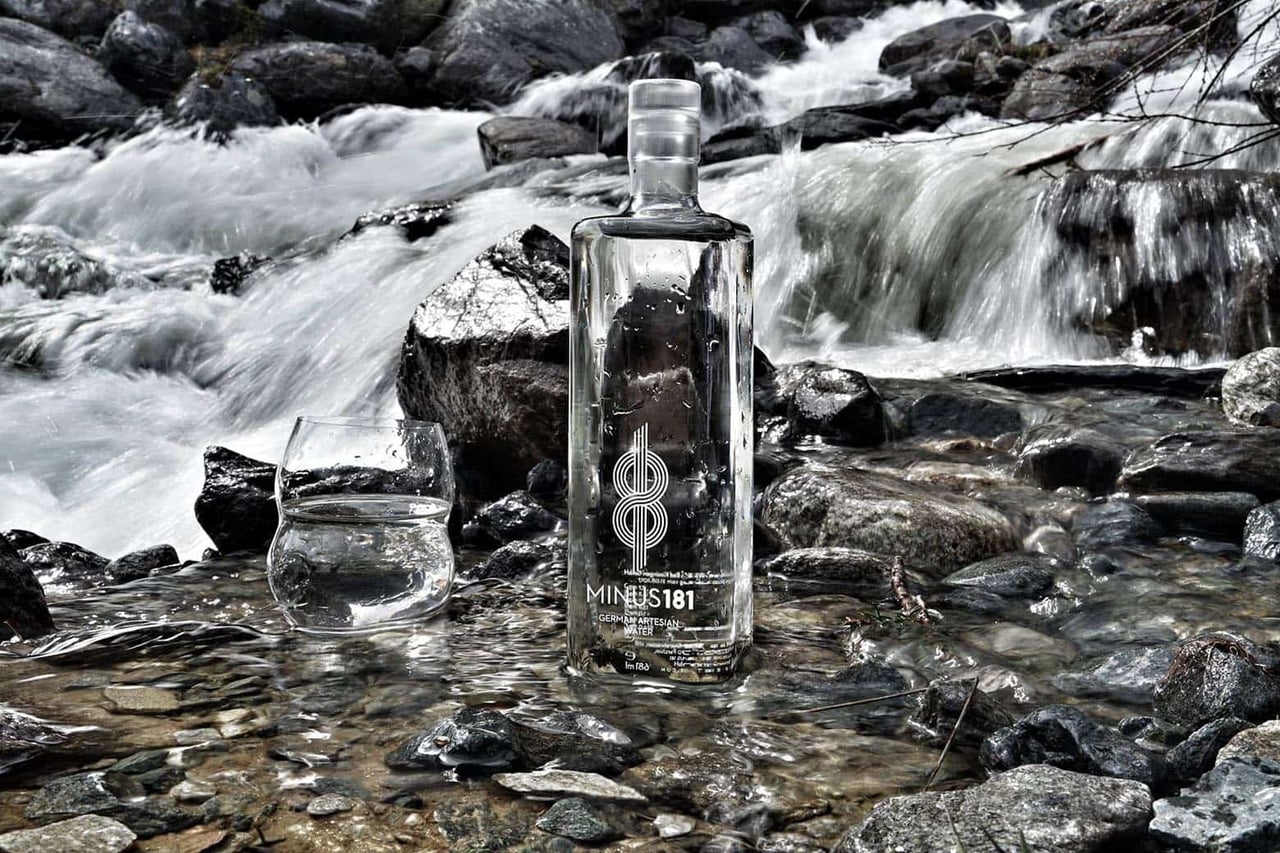
Minus 181 goes to real lengths to fill a bottle. The name comes from the depth of its drill: 181 meters down, into a pocket of water sealed between two impenetrable layers of Ice-Age clay.
That isolation gives the water an exceptional quality and a notably well-balanced taste, served in a heavy crystal bottle that signals the price before you’ve taken a sip.
| Country | Germany |
|---|---|
| Source type | Deep well |
| Price per bottle | $53 for 681 ml |
| Minerality (TDS) | 320 mg/l |
Veen - $88 per liter
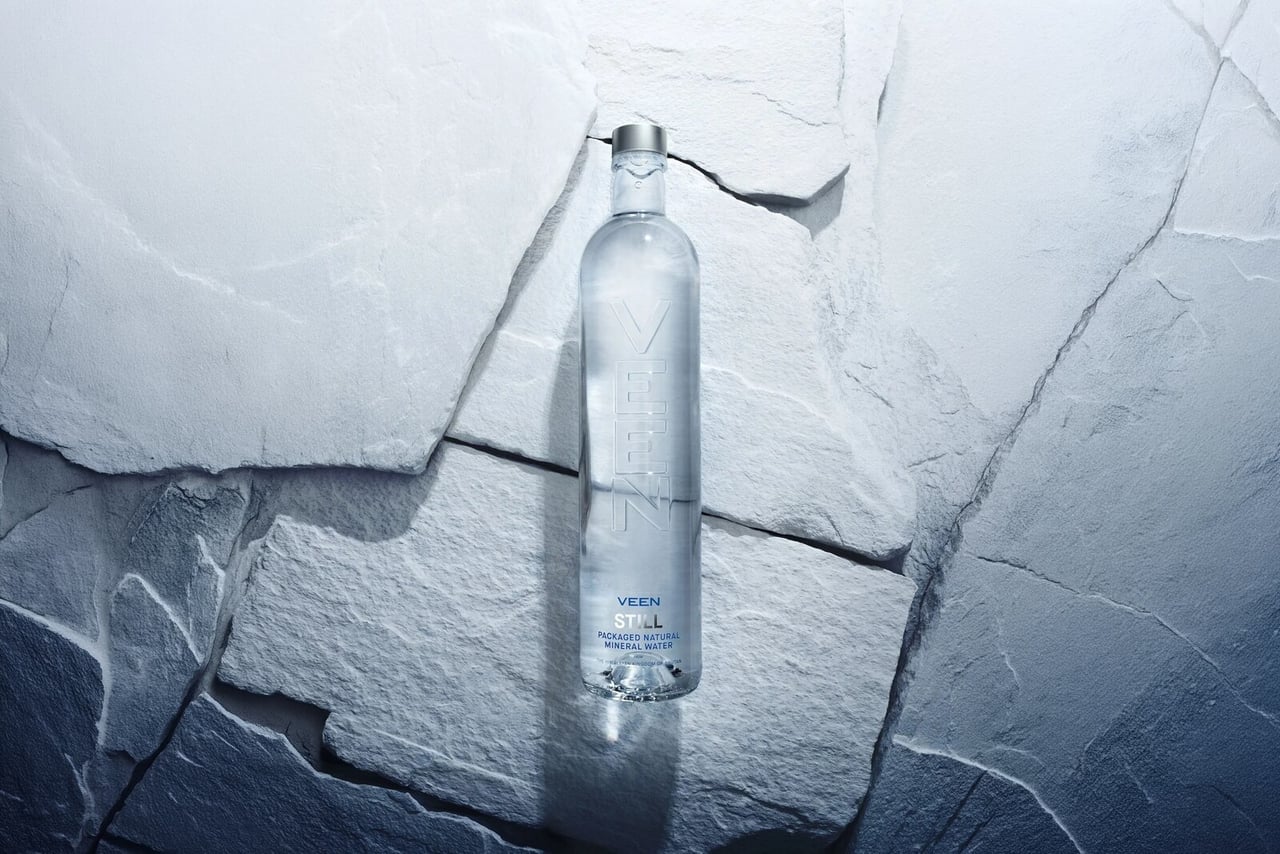
Founded by a Finnish family with a reverence for untouched nature, Veen built its name on Lapland spring water before relocating its source to a remote Himalayan spring in Bhutan—one of the few places left where the watershed is genuinely pristine.
What you’re paying for is restraint. The water is soft and low in minerals, poured from the sculptural Veen Wave bottle, a design built for a fine-dining table rather than a gym bag.
It’s a favorite of water sommeliers for pairing with wine and whisky, prized for a clean, near-neutral profile that stays out of the way of whatever it accompanies.
| Country | Finland (Himalayan source) |
|---|---|
| Source type | Mountain spring |
| Price per bottle | $58 for 660 ml |
| Minerality (TDS) | 18 mg/l |
Svalbarði Polar Blue Ice Edition - $144 per liter
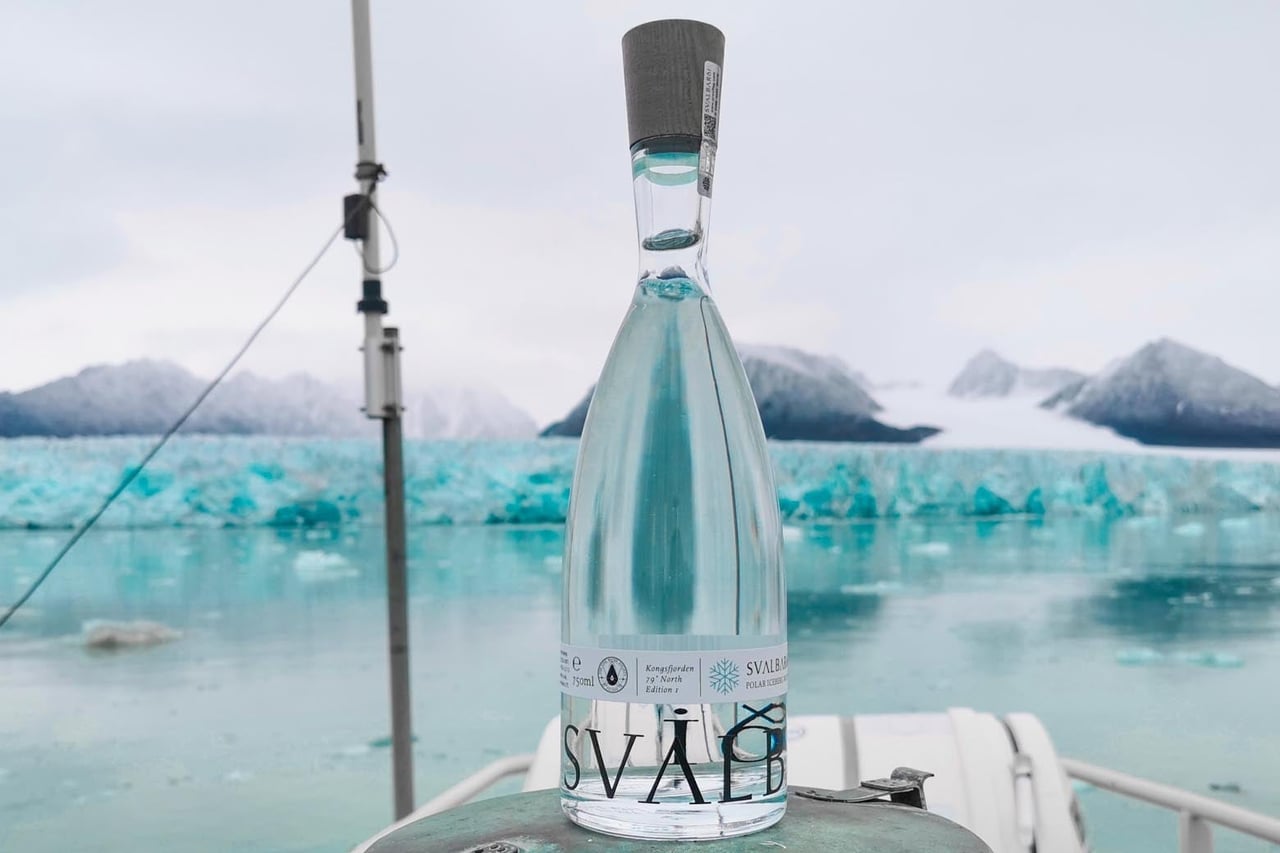
Svalbarði set out to pair ultra-pure water with a scientific purpose. Its Polar Blue Ice Edition celebrates the glacial blues found at 78° north, where a team of glaciologists travels on a dedicated expedition to collect the ice.
The water is harvested from icebergs in the fjords around the Svalbard archipelago—a taste of arctic purity, with proceeds supporting polar research.
| Country | Norway |
|---|---|
| Source type | Iceberg |
| Price per bottle | $108 for 750 ml |
| Minerality (TDS) | 21 mg/l |
Kona Nigari Deep Sea Mineral Water - $558 per liter
Two thousand feet below the surface off the Kona coast of Hawaii, a cold, nutrient-dense current has been sealed away from the surface world for centuries. Kona Nigari draws from exactly that depth.
This is the outlier on our list: not a polished spring water but a deep-sea mineral concentrate, sold in tiny vials and meant to be added by the drop to ordinary water. A two-ounce bottle runs about $33.50, which is how a few milliliters end up costing more than a bottle of fine wine.
It earned a devoted following in Japan, where it’s prized less for taste than for its dense load of deep-ocean minerals. Read the per-liter figure as a measure of the concentrate itself—diluted as intended, a glass costs a great deal less.
| Country | USA (Hawaii) |
|---|---|
| Source type | Deep-sea ocean water |
| Price per bottle | $33.50 for 60 ml concentrate |
| Minerality (TDS) | Very high (deep-sea concentrate) |
NEVAS Design edition deklart - $1,073 per liter
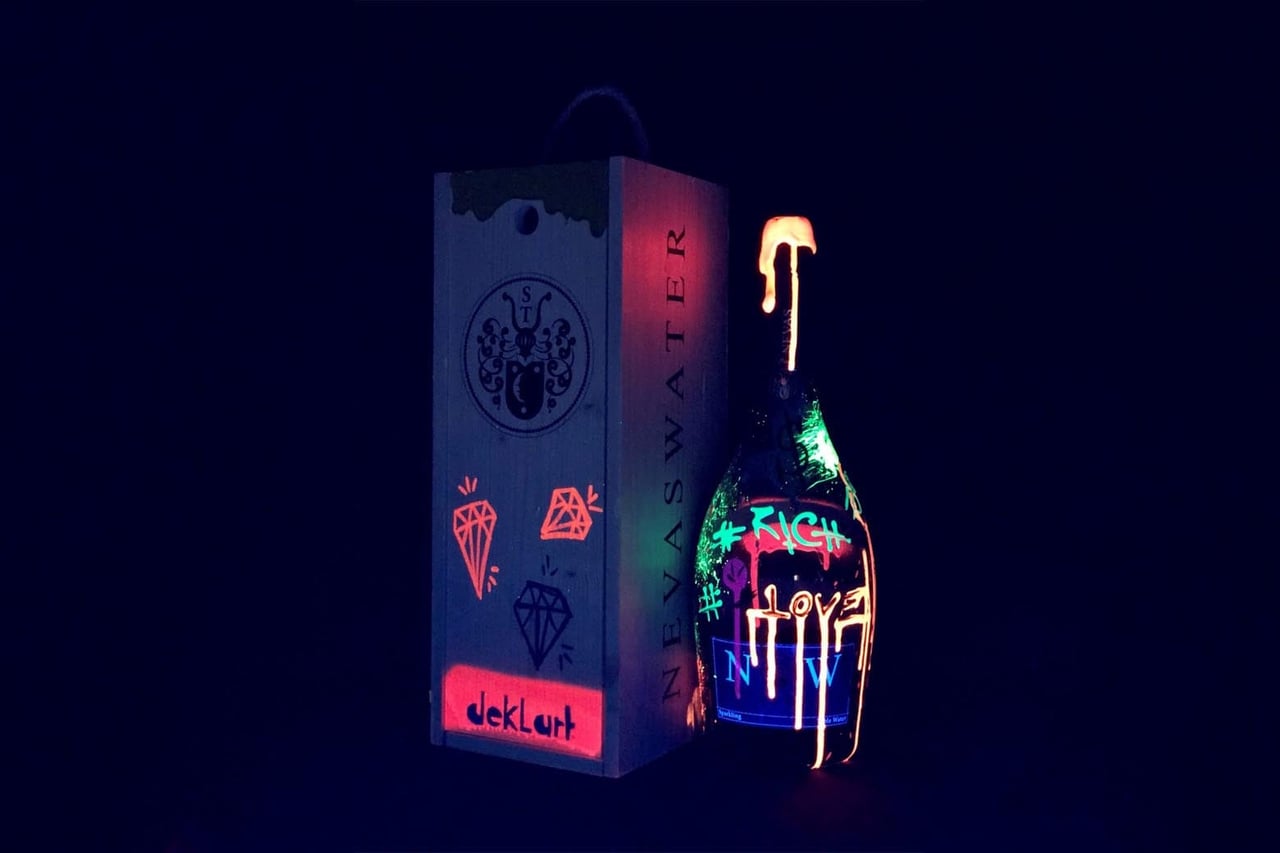
Sometimes the most expensive water in the world isn’t about what’s inside. That’s the case for these limited-edition bottles from NEVAS.
The deklart series of magnum-sized bottles are works of art, painted by Dennis Klapschus in a bright, playful take on classic cartoon characters.
The brand calls its water the first premium cuvée—a blend of two artesian sources, bottled and positioned as a celebratory alternative to champagne.
| Country | Germany |
|---|---|
| Source type | Artesian springs |
| Price per bottle | $1,610 for 1.5 L |
| Minerality (TDS) | 2,000 mg/l |
Ô Amazon Bird of Revelation - $2,784 per liter
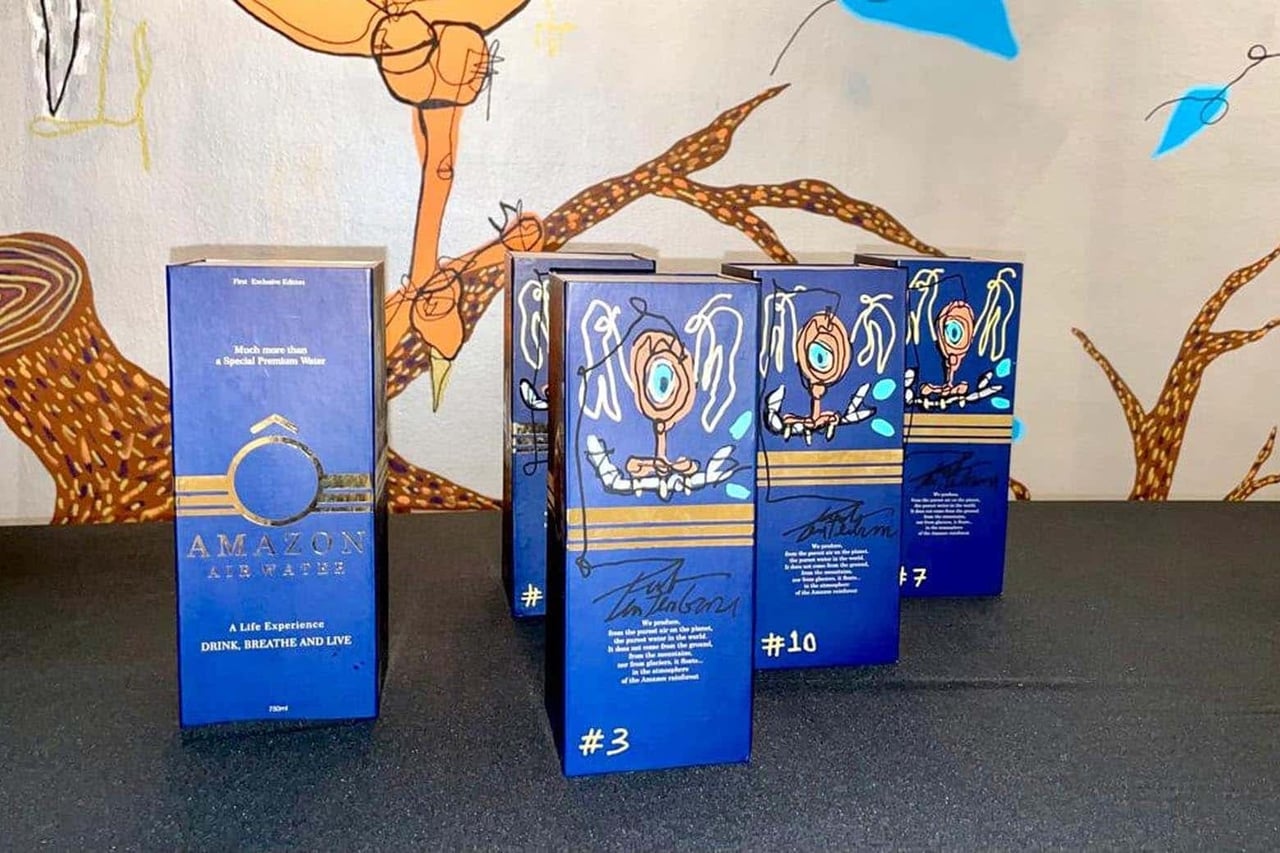
By harnessing the so-called “flying rivers” of the Amazon rainforest, Ô Amazon makes water out of thin air—literally.
Its patented technology harvests the moisture the trees release, and the profits fund sustainable-development and preservation projects across the region.
A standard Onça Pintada bottle sells for around $120, but a collaboration with artist Duda Penteado pushes the Bird of Revelation into rarefied territory.
| Country | Brazil |
|---|---|
| Source type | Air-water generator |
| Price per bottle | $2,088 for 750 ml |
| Minerality (TDS) | 4 mg/l |
Bling H2O The Ten Thousand - $3,600 per liter
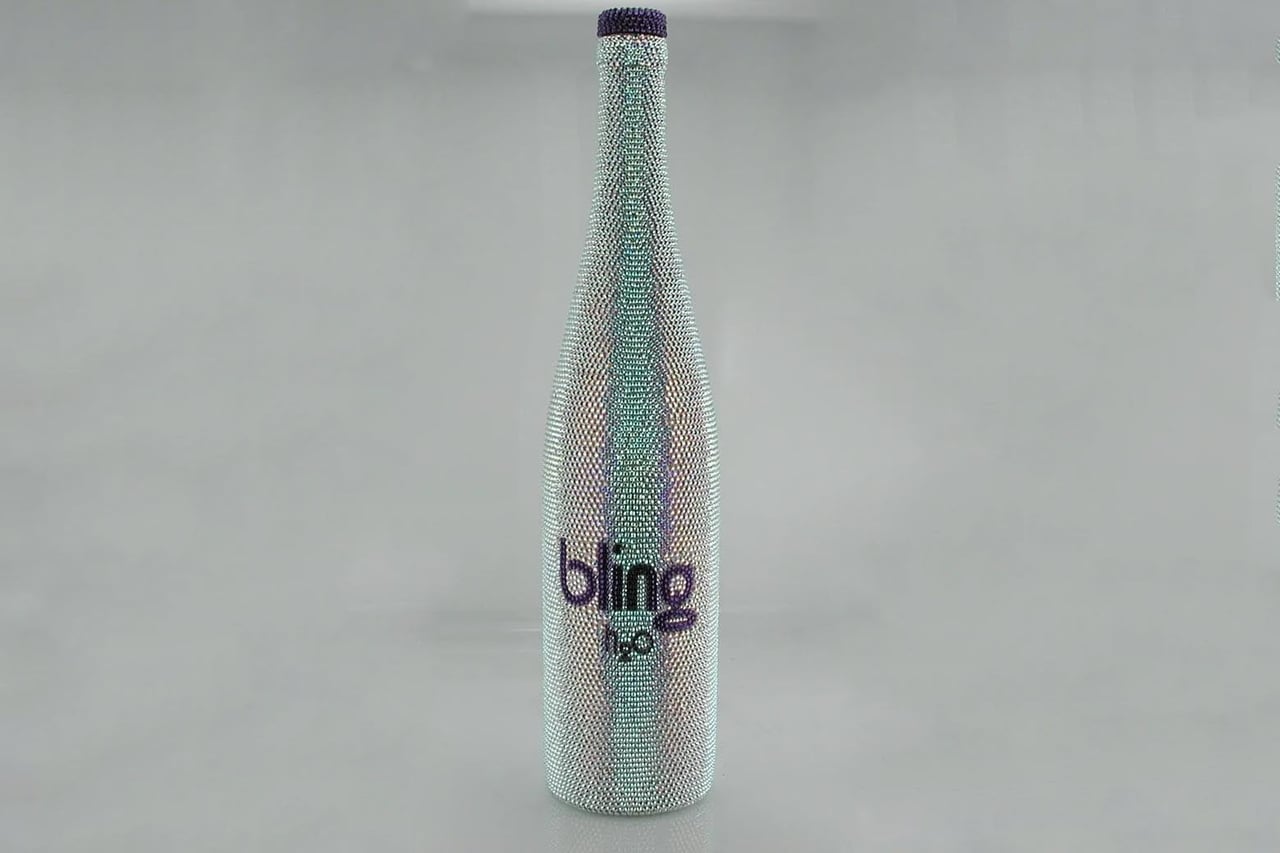
Here we leave the source behind and let the bottle do the talking—a long way from a sensible reusable water bottle. Bling H2O’s The Ten Thousand is set with more than ten thousand Swarovski crystals, hence the name.
Each one is custom-ordered and can be made in virtually any color combination you like. The spring water inside is almost incidental; this is a conversation piece first and a drink second.
| Country | United States |
|---|---|
| Source type | Spring |
| Price per bottle | $2,700 for 750 ml |
| Minerality (TDS) | 68 mg/l |
Fillico Jewelry Black King - $6,709 per liter
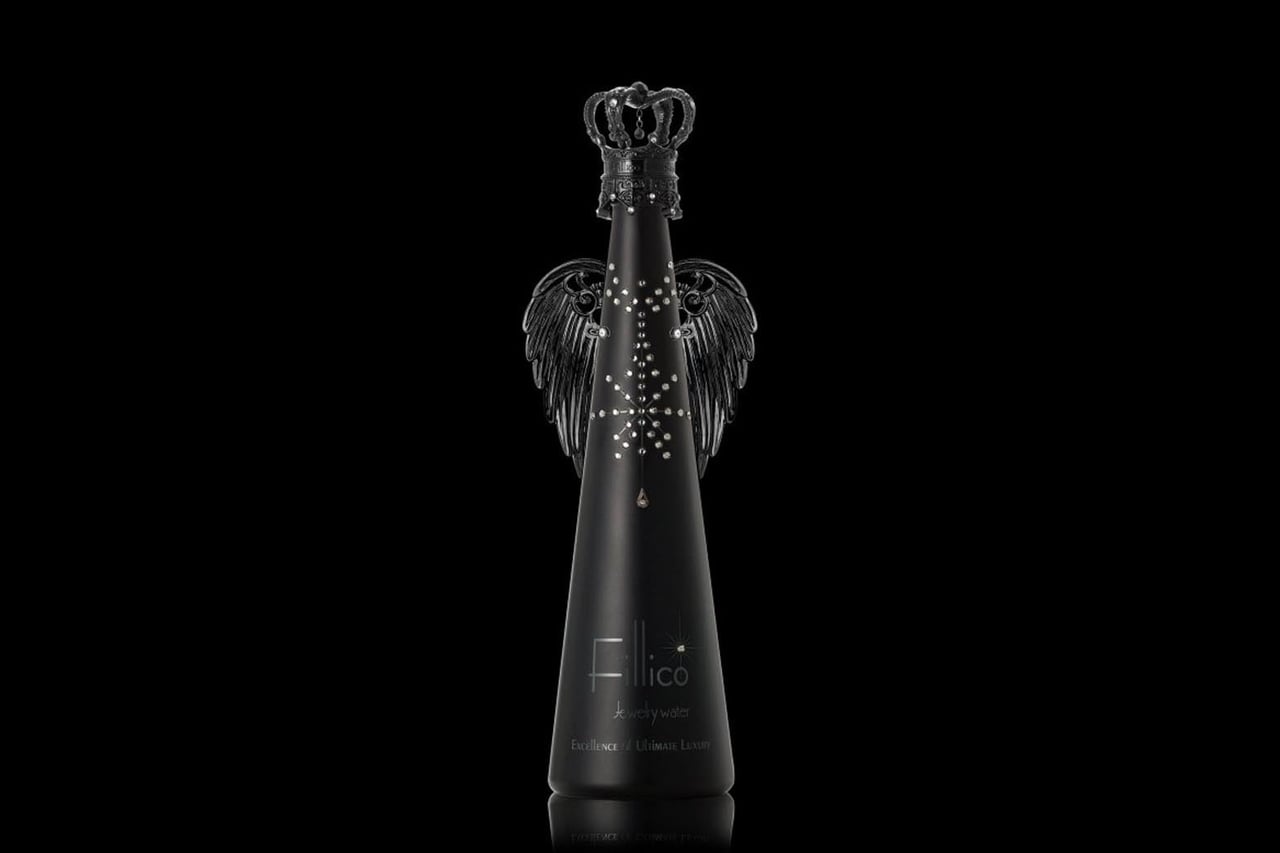
Fillico sits at the very top of the list. Its jewel-encrusted bottles are built for royal receptions and gala tables, a world away from the usual roster of best water bottles.
The limited-edition lineup shifts constantly, running from around $105 a bottle all the way up to the crowning Black King.
Inside is Nunobiki spring water from the Kobe region of Japan—an elegant water in a bottle dressed for the occasion.
| Country | Japan |
|---|---|
| Source type | Spring |
| Price per bottle | $4,831 for 720 ml |
| Minerality (TDS) | 13 mg/l |
Auction record: Acqua di Cristallo Tributo a Modigliani - $80,000 per liter
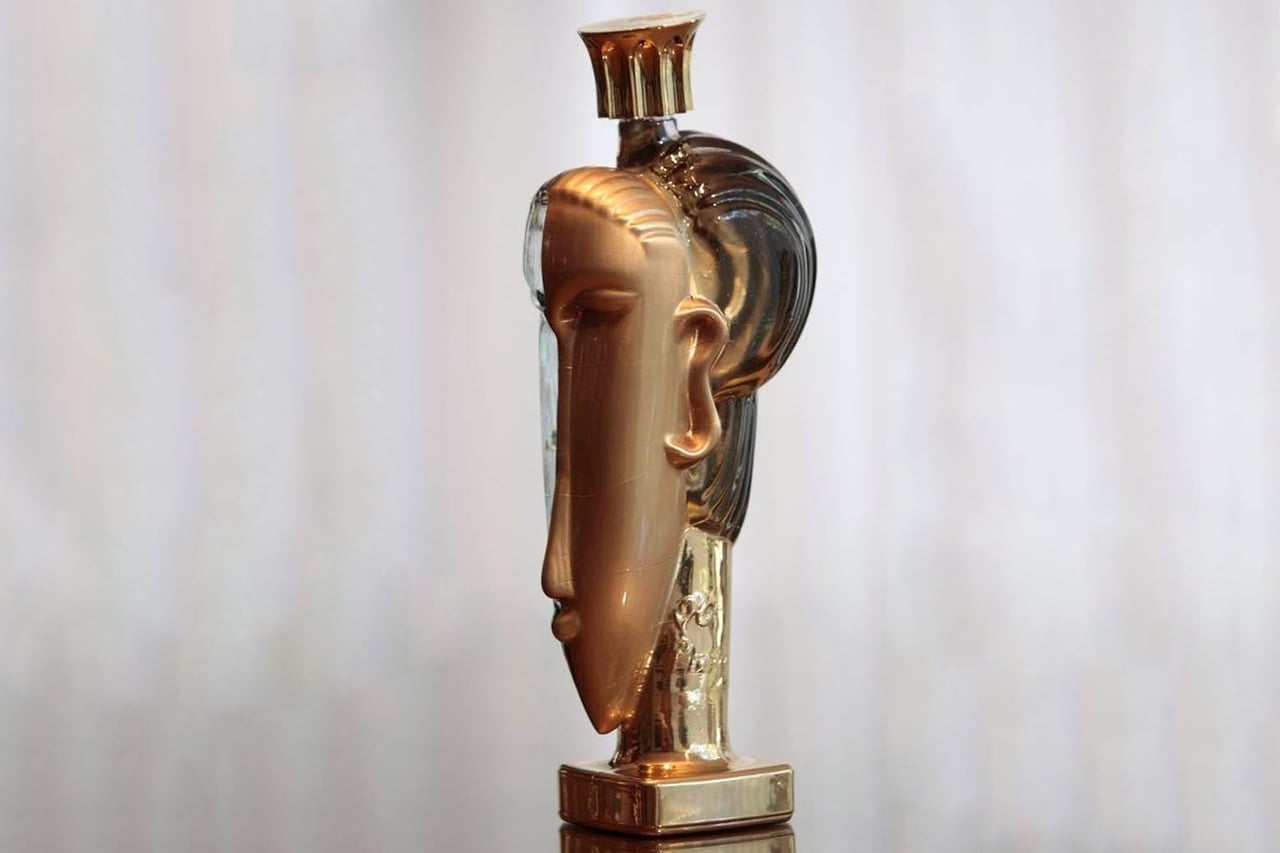
No ranking of pricey water is complete without the most expensive bottle ever sold at auction. The sale was a one-time event, with proceeds directed toward climate causes, but it remains the high-water mark for the category.
The bottle in question is an Acqua di Cristallo Tributo a Modigliani. Its water was sourced from springs in France and Fiji and a glacier in Iceland, with 5 mg of gold dust stirred in—and the entire 750 ml bottle finished in 24-karat gold.
It went under the hammer in Mexico City for the equivalent of roughly $60,000, a figure that has anchored “most expensive water” conversations ever since.
| Country | France, Fiji & Iceland |
|---|---|
| Source type | Spring & glacier |
| Price per bottle | $60,000 for 750 ml (2010 auction) |
| Minerality (TDS) | N/A |
Collector’s showpiece: Aurum 79 - $1,800,000 per liter
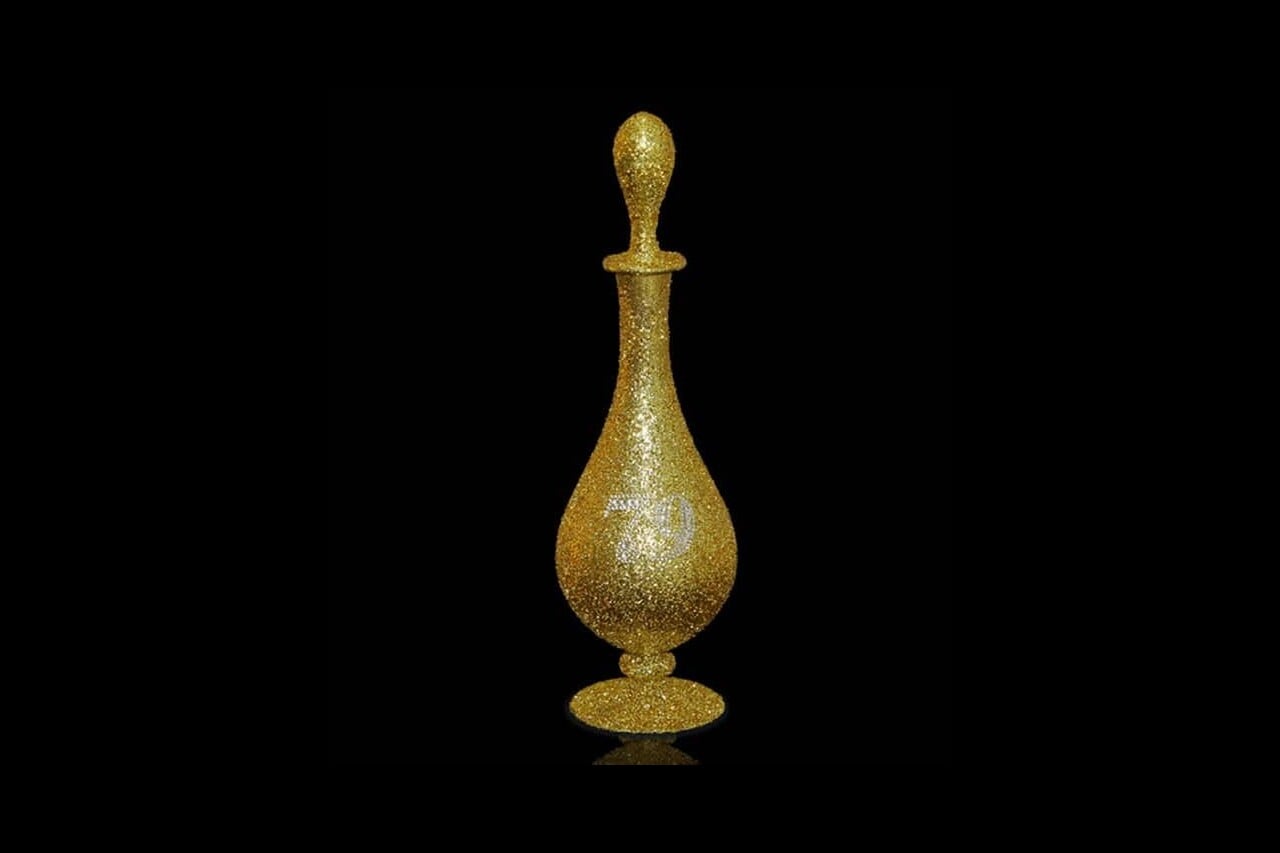
If Acqua di Cristallo set the auction benchmark, Aurum 79 set the showroom one. Only three bottles were ever made, each priced at $900,000—which works out to the better part of two million dollars per liter.
The water itself is spring water from St. Leonhard in Germany, finished with edible gold flakes. But the water is almost beside the point. The bottle is cut from crystal glass, sheathed in 24-karat gold, and set with 113 diamonds, making it less a drink than a piece of jewelry you can pour.
It’s the logical endpoint of everything this list flirts with: a bottle where the contents are an afterthought and the packaging is the entire proposition.
| Country | Germany |
|---|---|
| Source type | Spring |
| Price per bottle | $900,000 for 500 ml |
| Minerality (TDS) | N/A |
Expensive water brands: conclusion
By going to extremes to find the best water in the world, the most expensive water brands can charge premium prices for their bottles.
Some venture to remote corners of the planet, while a lucky few sit at the foot of fresh springs that bring high-quality H2O straight to their door. And against intuition, the priciest bottles often put little emphasis on what’s inside at all.
Artist collaborations and precious materials inflate the price of many of these bottles—but several also channel real resources into sustainability efforts around the world. The next time you spend less than $5 on a bottle of water, it might start to look like a bargain.
For now, the most expensive water brands are:
- Fillico Jewelry Black King: $6,709 per liter
- Bling H2O The Ten Thousand: $3,600 per liter
- Ô Amazon Bird of Revelation: $2,784 per liter
- NEVAS deklart: $1,073 per liter
- Kona Nigari: $558 per liter
- Svalbarði Polar Blue Ice Edition: $144 per liter
- Veen: $88 per liter
- Minus 181: $77 per liter
- ROI: $64 per liter
- Uisge Source: $63 per liter
- Berg: $31 per liter
TDS in water and why it matters
If you’re one to glug down your eight glasses a day without much consideration, you may not notice the subtle differences between water brands. However, if you’re loyal to one brand in particular, it may have something to do with the TDS in the water. TDS—total dissolved solids—measures the minerals, salts, and compounds that naturally dissolve in water. Another word for this is minerality. In short, it affects the flavor and feel of water, as well as our health.
While not all waters share exactly the same mineral makeup, the most frequent minerals are major ions, and they usually make up at least 90% of the water’s TDS. Major ions include calcium, magnesium, and iron—all of which have a positive impact on our health. Calcium maintains strong bones. Magnesium converts blood sugar into energy. And iron is essential for liver functionality. Water can also contain other minerals that may pose health risks if we consume more than the maximum limit. More than 1 mg/l of copper can cause stomach aches, while more than 0.001 mg/l of mercury can damage our kidneys.
So how do we know whether to opt for water with higher or lower TDS levels? Bottled water is generally regulated by national authorities and void of harmful minerals. This means bottled water with higher levels of TDS can contribute to our mineral intake, and it can benefit those who don’t get enough calcium or magnesium. When it comes to taste and mouthfeel, high TDS levels are more bitter, salty, or sulfuric. And while you may not enjoy that in isolation, the water often pairs well with red meats and heavier meals.
On the other hand, a low TDS concentration isn’t harmful to our health. It’ll still keep us hydrated but won’t necessarily add to our mineral intake. When it comes to taste and pairing, lower-TDS waters are cleaner and lighter. As a result, they are ideal for mixing with cocktails, whiskies, and teas. And they are usually our preferred choice for getting in our eight glasses a day.
If you enjoyed this, you’ll love our guides to the Most Expensive Chocolate: Costliest Cocoa, Not Your Average Cup Of Joe: 11 Most Expensive, and Beyond Playthings: Most Expensive 1000%.
Frequently asked questions
What is the most expensive water in the world?
Why is some bottled water so expensive?
How much is the most expensive bottle of water?
What is TDS in water?
Products featured here are independently selected by our editors. If you buy through our retail links we may earn an affiliate commission — it never changes the price you pay, and it never decides our verdicts. Read our earnings disclaimer.