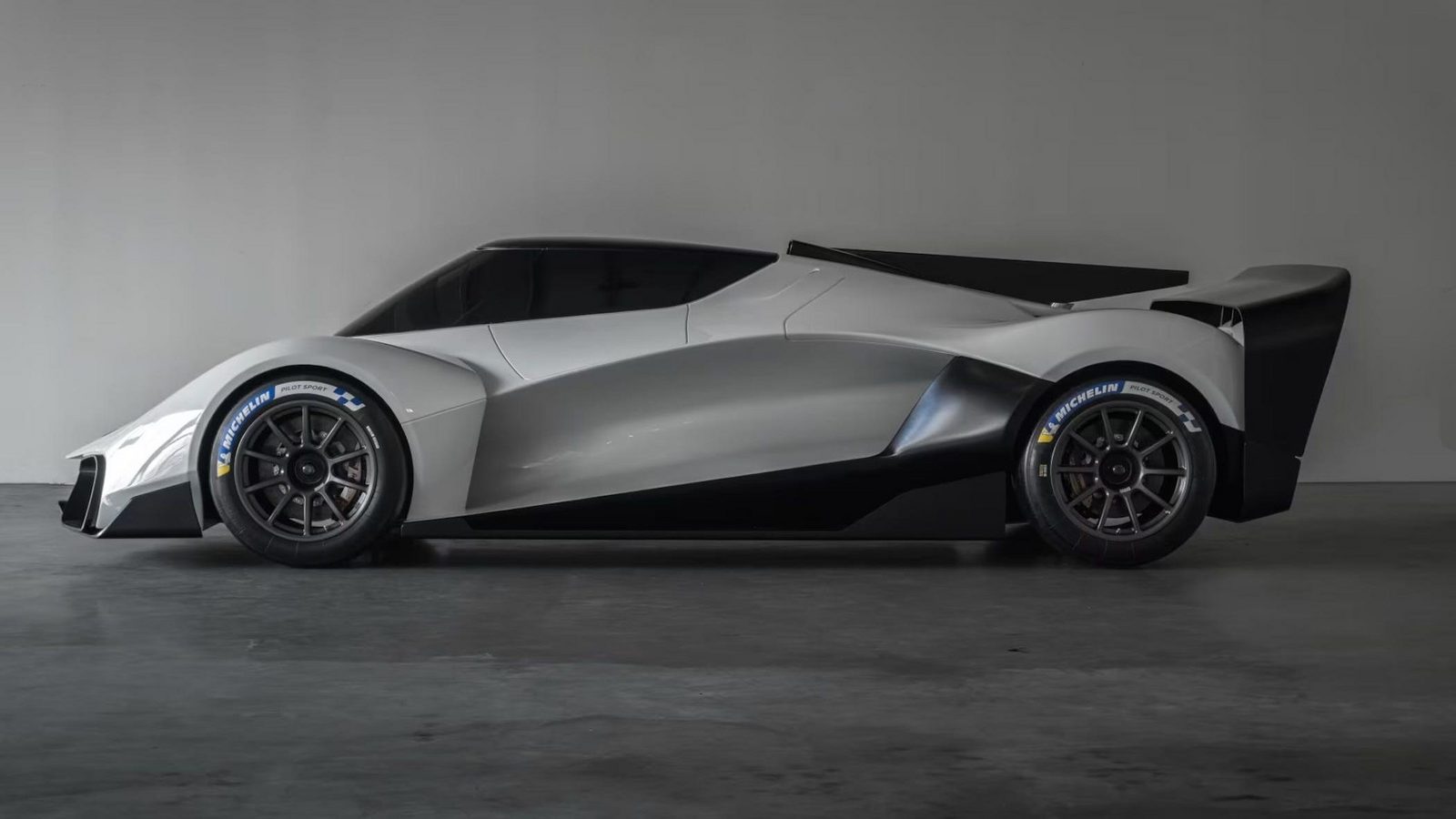

Sanrivatti has revealed a running prototype of its first hypercar, the One, and the headline number is an 800-hp naturally aspirated 5.5-liter V-10 supplied by U.K. racing specialist Judd. The car is claimed to weigh 2,425 pounds and top 200 mph.
The One is a track-only single-seater, so none of those figures will ever be tested against a license plate or a speed limit. Its defining feature is not a lap time but a position: the driver sits head-forward, braced more like a motorcycle rider than an automobile driver.
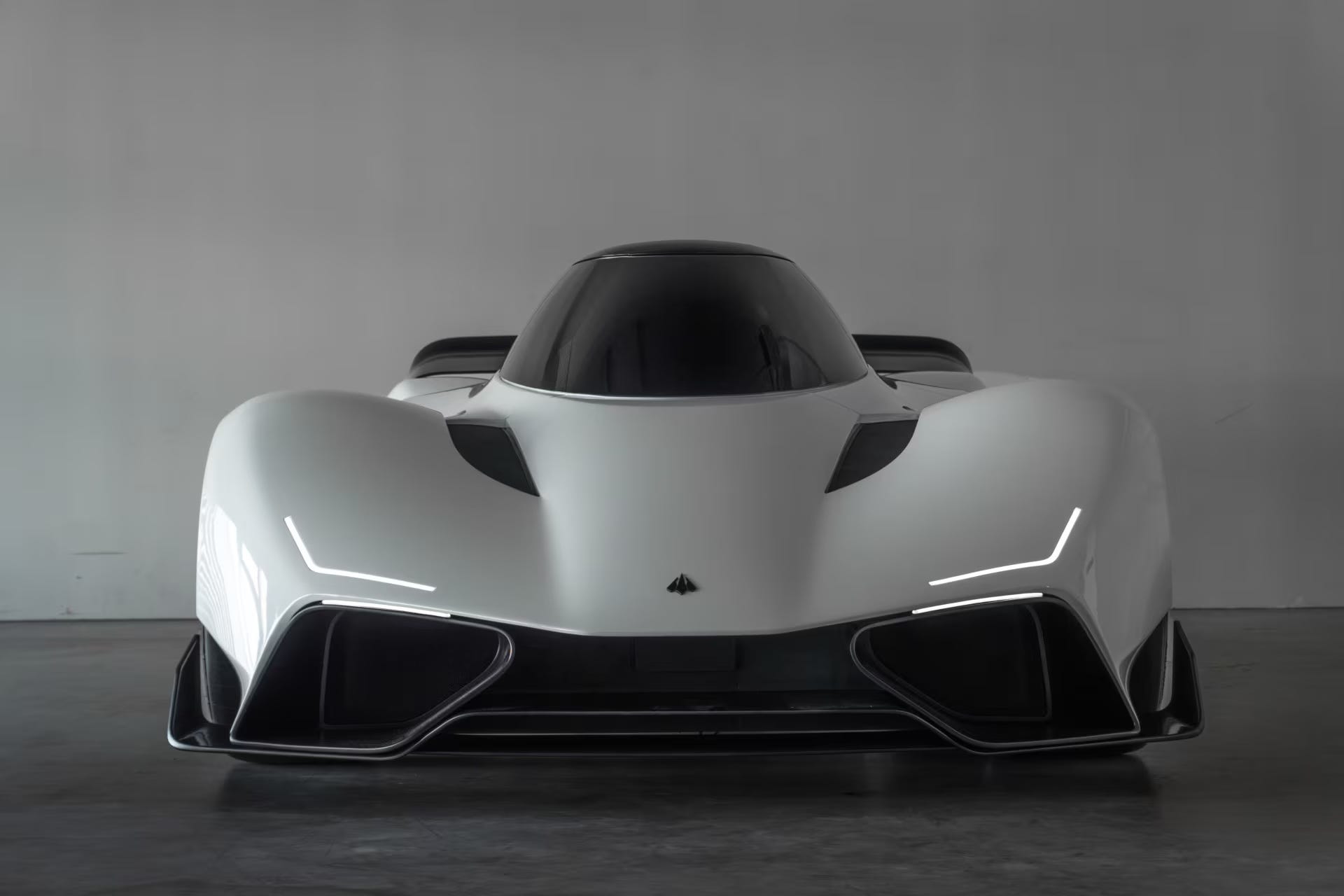
Sanrivatti first showed the One as a concept with minimal detail. The prototype now on display answers the packaging question, placing the pilot low and forward inside a wraparound glass canopy that reads closer to spacecraft than to any earth-bound coupe.
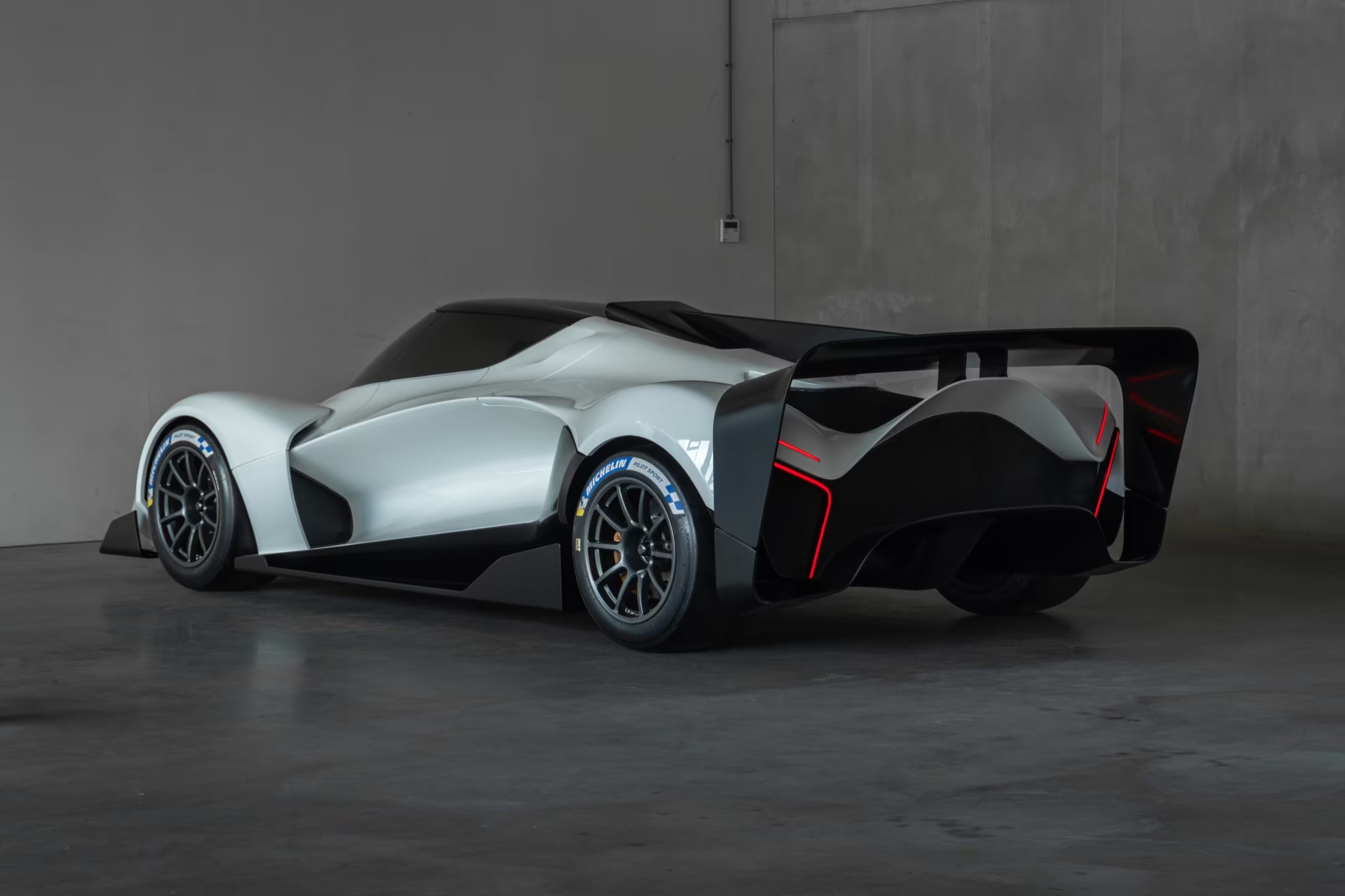
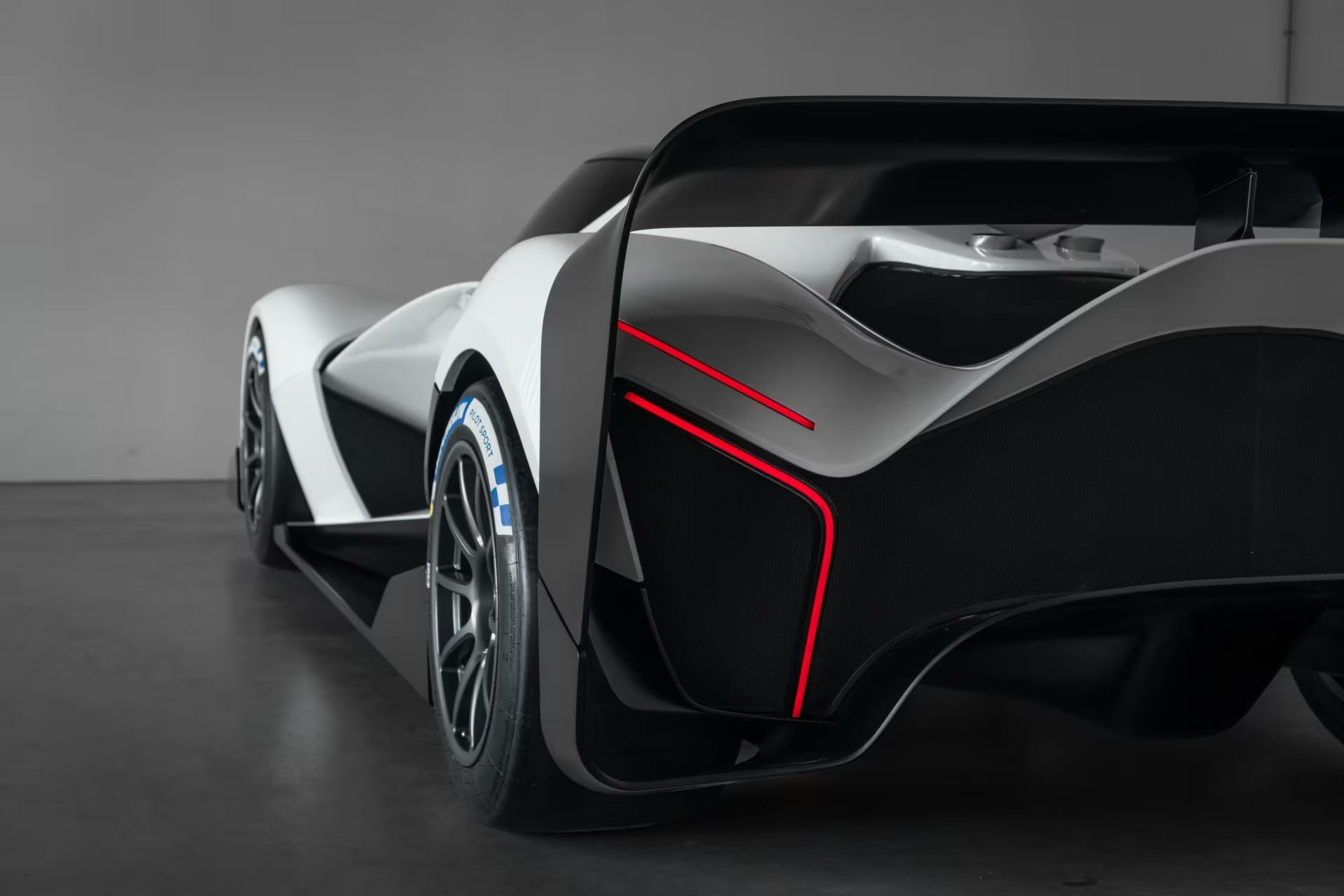
Carbon-fiber bodywork is cut with large air channels around the waist, an arrangement not unlike the Ford GT. The look is radical enough that it invites comparison to the cars of a mid-nineties racing videogame rather than to anything currently on a track-day roster.
Power reaches the wheels through a racing-spec Hewland six-speed sequential gearbox. Stopping is handled by AP Racing brakes, and the corners are on forged magnesium wheels from Braid wrapped in racing-grade Michelin Pilot Sport tires.
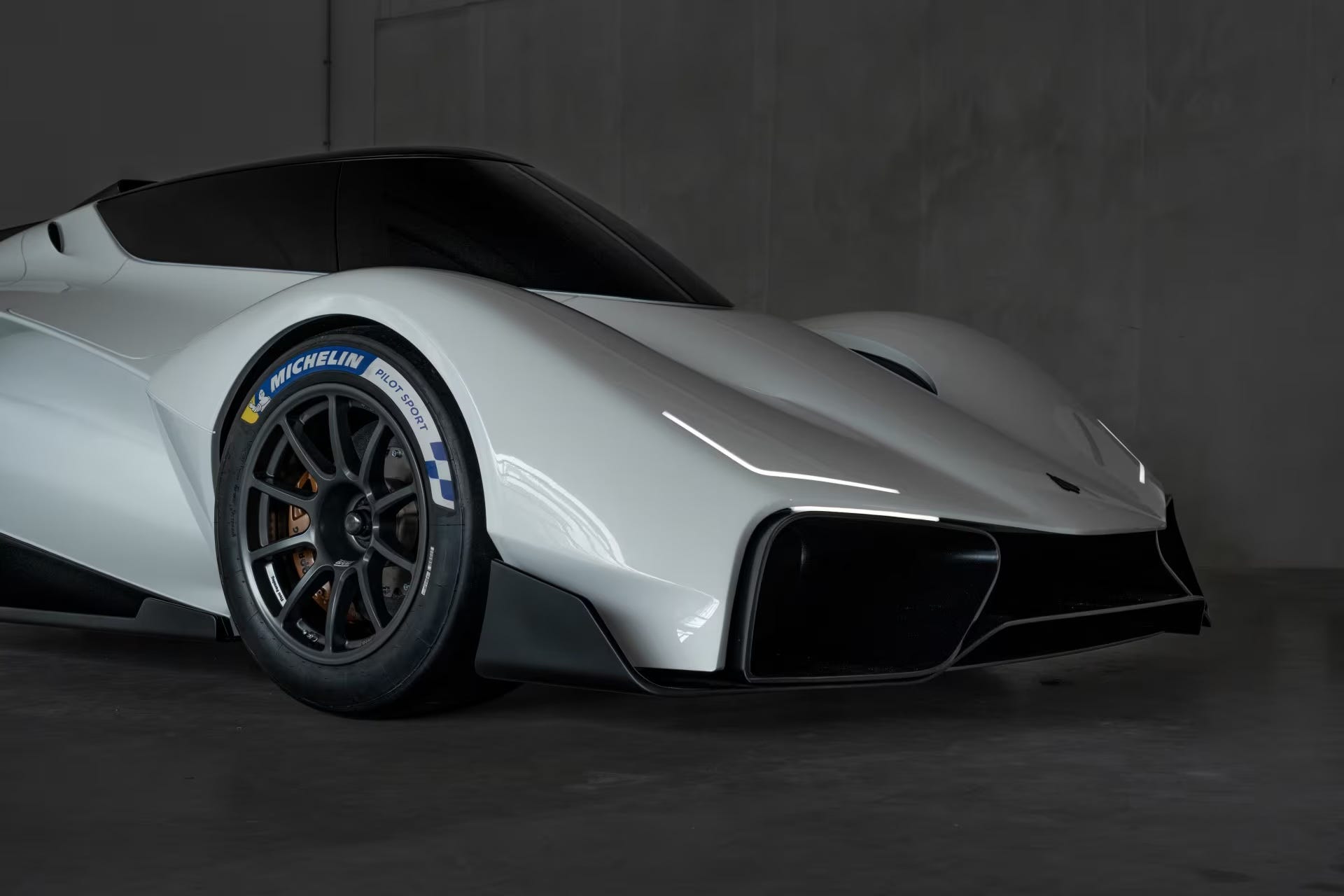
Judd brings a résumé that spans Formula 1, IndyCar and Le Mans, so the engine is an established race unit rather than a bespoke gamble. The 5.5-liter displacement keeps the mill naturally aspirated, which trades forced induction for throttle response and a freer-revving character.
The controls are where the motorcycle comparison becomes literal. The One keeps foot pedals for braking and acceleration and a steering wheel, but the pilot presses rearward on the wheel rather than turning in the usual plane, and leans their body into corners while still gripping it.
Sanrivatti calls this the Apex Position, and it is the point of the car. The company is candid that learning to drive the One is not an inconvenience but the appeal: the machine demands a rewiring of instinct that no other hypercar asks for.
What the One is built to do
The restraint system is complex because the car blends riding and driving into one motion, and a conventional four-point harness cannot answer a body that leans. Sanrivatti has not published the full safety architecture, but the packaging around the single seat points to a substantial structure.
By leaning into the experience rather than the stopwatch, Sanrivatti sidesteps the metrics that usually define the class. There is no zero-to-60 claim and no Nürburgring target on the table, which is either the boldest positioning in the segment or the clearest sign the car is early.
The name One does the same work as the packaging: it positions this as the single statement the company wants to make. Sanrivatti is a hypercar startup without a back catalog, so the debut machine carries the weight of defining what the brand thinks a driver's car should be.
A claimed 2,425 pounds is strikingly light, roughly the territory of dedicated prototype racers rather than road-adjacent hypercars. With 800 hp on tap and no weight to carry, the One should feel explosive, though how that translates to cornering with a leaning pilot remains unproven.
The 200 mph figure is described as an estimate rather than a certified number, which is a reasonable hedge before the car has run a measured mile. Sanrivatti has not said how many examples it plans, at what price, or when the One will reach customers.
The One lands in a hypercar market crowded with cars that chase the same apex by different means. Most of them measure themselves in lap times and top speeds, which is precisely the contest Sanrivatti says it is leaving, so the One competes on sensation above all.
That is a defensible wager. A machine that cannot be compared on familiar numbers asks a buyer to value something harder to quote, and the buyers who collect at this level often already own the quickest car in the room. The One offers a question no other car asks.
What the One still owes the market is proof. A prototype with no weight, no production run and no delivery date is a promise, and the gap between a working concept and a finished track car is where most hypercar startups stall out.
Sanrivatti has not set a timeline for first deliveries or named a price. What it has done is commit to a format no rival has: a single seat, a head-forward posture, and an 800-hp Judd V-10 packaged as something closer to flight training than to driving.
Support the content you love — it’s free 🎉
Add Luxe Digital as a preferred source on Google. Our stories will be more likely to appear in Google’s Top Stories. It’s free and supports our team. Thank you!
Add as preferred sourceYou can remove us any time in Google’s source preferences.
Thank you — you’re all set 🎉
Luxe Digital is now one of your preferred sources, so our stories are more likely to appear in Google’s Top Stories.
This briefing is published daily using an AI-powered system crafted by Luxe Digital’s team and finely tuned to meet our editorial standards. While we continuously test and review the output, mistakes can sometimes happen. Tell us if you spot one.
Images: Sanrivatti One