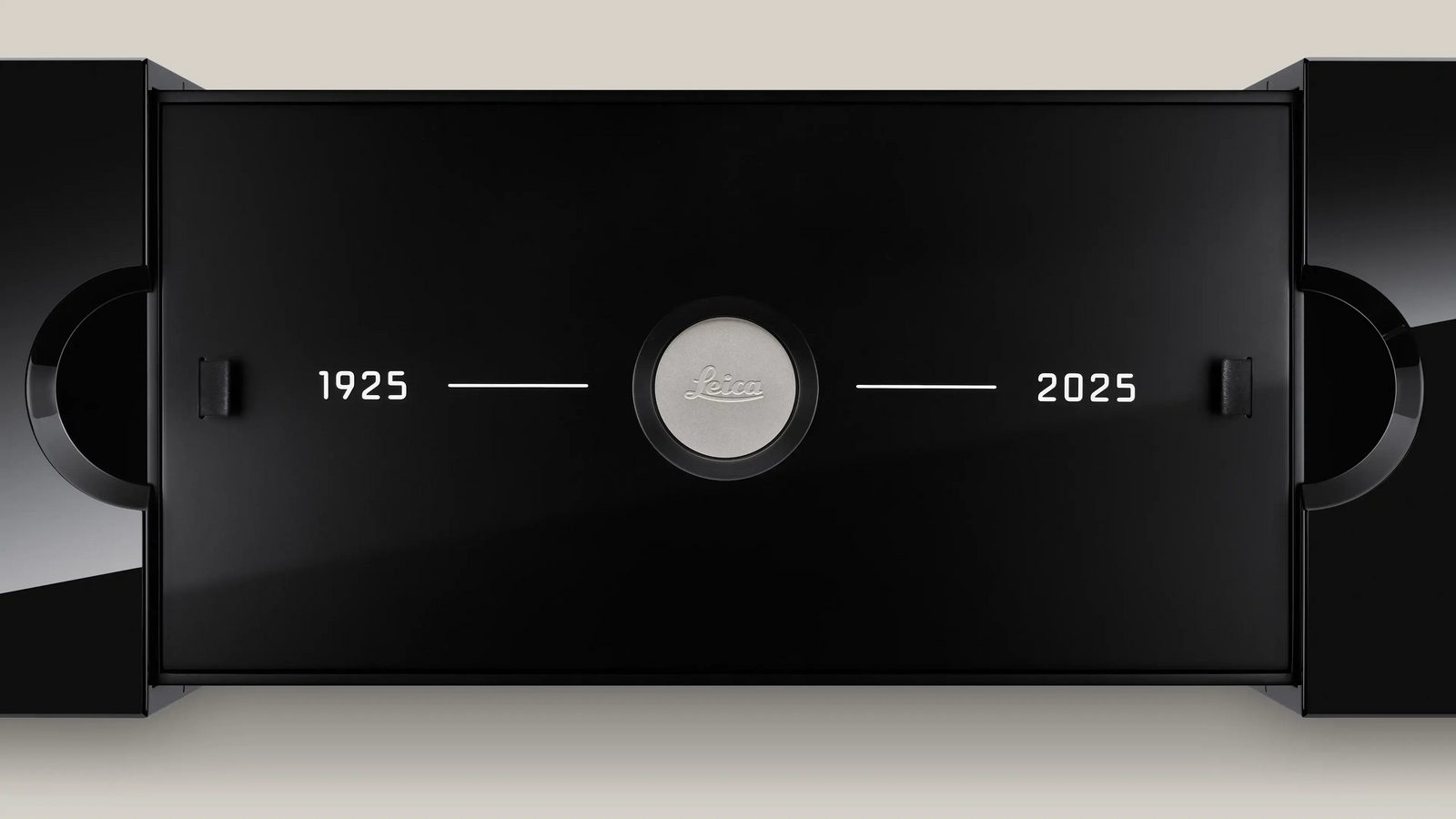

Leica has brought back the Hammertone finish, one of the rarest treatments in its archive, on two special-edition rangefinders: the M-A Hammertone and the M11-P Hammertone. Both wrap their top and base plates in a textured, mottled coating over solid brass.
The M-A Hammertone, a fully mechanical film camera, is priced at £5,700 GBP, roughly $7,600 USD. The digital M11-P Hammertone carries £8,500 GBP, about $11,300 USD. Both are now available through Leica and its authorized dealers, at roughly $7,100 and $10,100 in US pricing.
The finish dates to the 1930s, when it became shorthand in German industrial design for toughness and dependability. Its signature pattern forms as the coating dries, with metallic pigments and additives producing slight shifts in surface tension across the metal.
On Leica bodies the treatment has appeared only sporadically. It started with the Leica MD documentation camera built for the Leitz Reprovit system, then came a 1964 Leica MD produced in a run of just ten.
Later releases include the 2003 MP LHSA, the 2011 M9 Hammertone and the 2016 M-A Vienna Edition, the previous Hammertone M-A. For this pair, Leica reworked the process and relied on specialists at its Wetzlar Manufacture to achieve an even result across the texture.
No two bodies match, because the coating never settles identically, which makes every camera a one-off. The brass bodies carry cross-knurled controls, a polished silver shutter-release plate, and black vulcanite-style leatherette marked with white engravings.
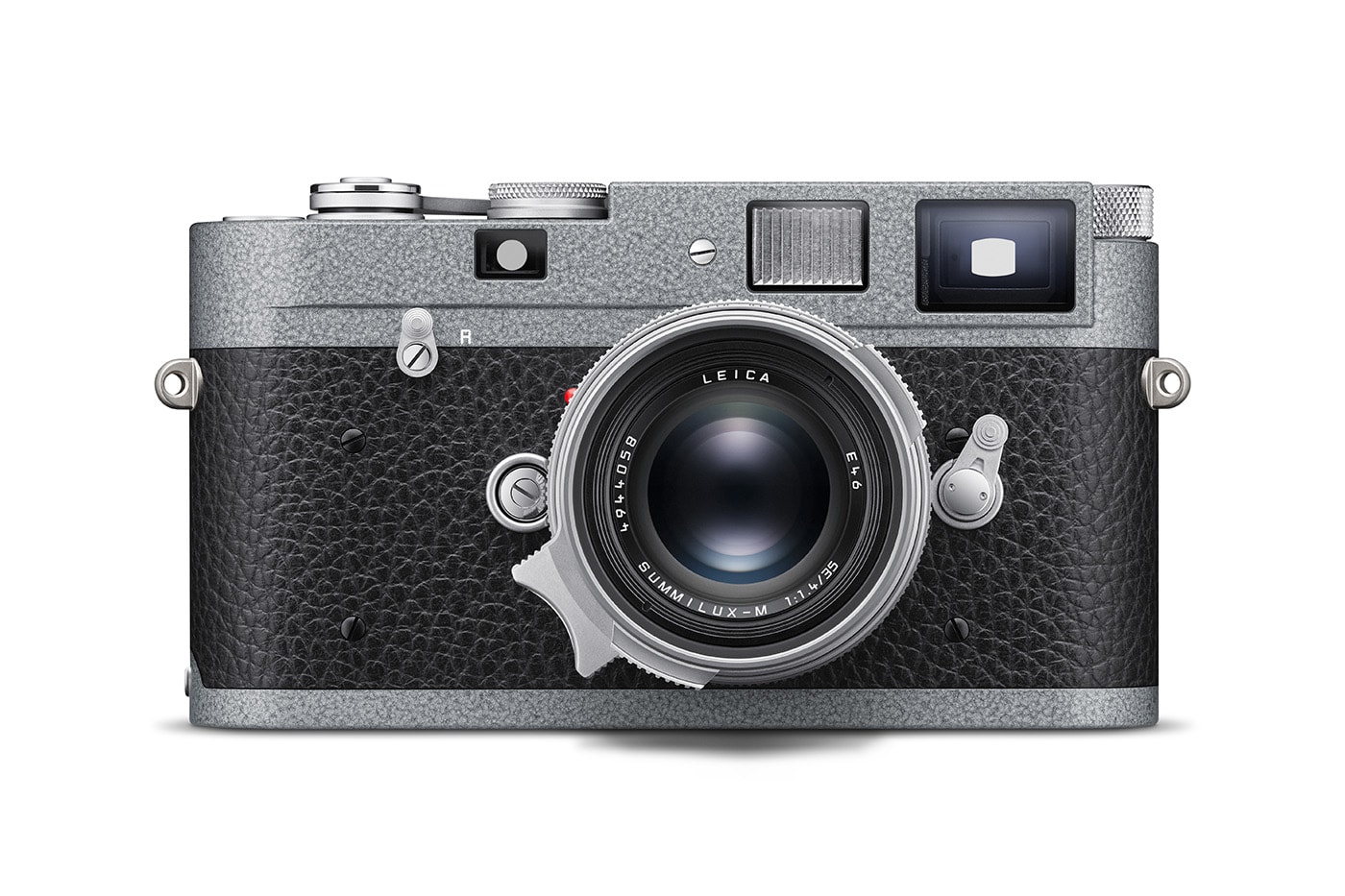
The M11-P Hammertone adds softer, rounded edges to its top and base plates, plus a silver-chrome front screw. Beneath the vintage-industrial look, both cameras mirror their standard counterparts, so the changes are cosmetic rather than mechanical.
The M-A Hammertone is built for purists. Aperture, shutter speed and film sensitivity are all set by hand, with no electronics in the body. It is a film camera in the fullest sense: everything mechanical, nothing automated.
What the digital version carries
The M11-P Hammertone includes Leica Content Credentials, which record verifiable authorship and editing history. It also has 256 GB of internal storage and a scratch-resistant sapphire-crystal screen, features the film model naturally lacks.
Its sensor is a full-frame BSI CMOS unit with Triple Resolution Technology, shooting at 60, 36 or 18 megapixels. Leica FOTOS App connectivity runs over Bluetooth, Wi-Fi or cable, and the camera takes a BP-SCL7 battery finished to match.
Additional hammertone BP-SCL7 batteries are available for £160 GBP, approximately $215 USD. Leica carried the motif beyond the plates to the power cell, treating the finish as a theme for the whole kit rather than a plate change.
The pairing spans both ends of the M-System. One edition asks the owner to meter and focus entirely by hand; the other layers content credentials, triple-resolution capture and app connectivity on top of the same textured brass.
Hammertone in the archive
Pricing in the two currencies is worth reading side by side: £5,700 and £8,500 convert to about $7,600 and $11,300, while the US figures given are roughly $7,100 and $10,100. The sources do not explain the gap.
The Wetzlar rework is new work rather than a reissued coating. Leica has not said how many of each model it will make, or whether the run is capped, which leaves the edition size undisclosed.
The previous Hammertone M-A was the 2016 Vienna Edition. This pair returns the finish to both a film and a digital body in the same release, with the M9 Hammertone of 2011 the earlier digital precedent.
Support the content you love — it’s free 🎉
Add Luxe Digital as a preferred source on Google. Our stories will be more likely to appear in Google’s Top Stories. It’s free and supports our team. Thank you!
Add as preferred sourceYou can remove us any time in Google’s source preferences.
Thank you — you’re all set 🎉
Luxe Digital is now one of your preferred sources, so our stories are more likely to appear in Google’s Top Stories.
This briefing is published daily using an AI-powered system crafted by Luxe Digital’s team and finely tuned to meet our editorial standards. While we continuously test and review the output, mistakes can sometimes happen. Tell us if you spot one.
Images: Leica Camera