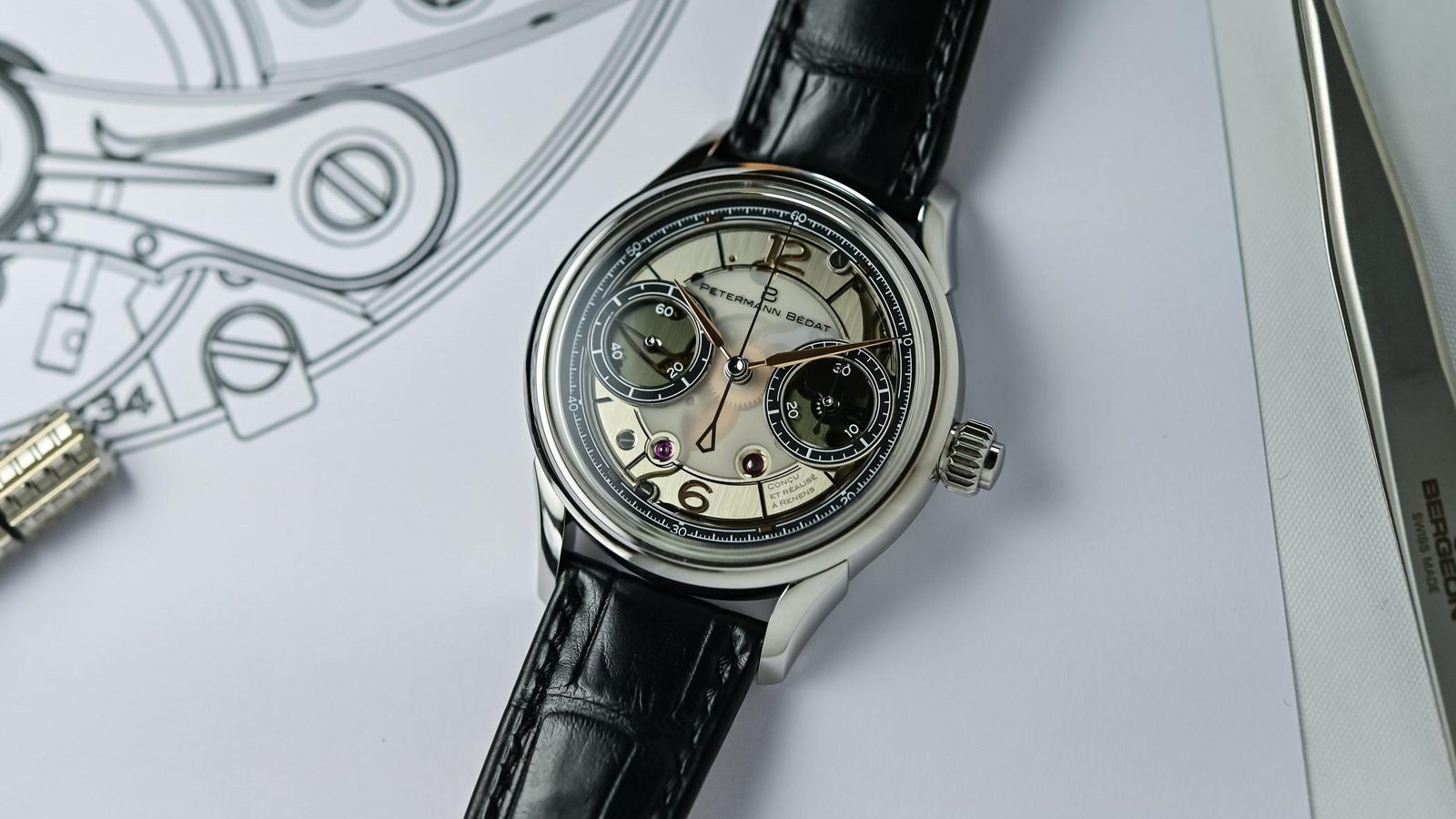

Gaël Petermann and Florian Bédat have presented the Reference 2914, their first chronograph-only watch and the first of a number of launches tied to the IAMWATCH fair in Singapore. It is built around a hand-wound monopusher movement and cased in platinum.
The case measures 36.5mm in diameter and 11.6mm thick, or 9.9mm without the box-shaped sapphire crystal. That is markedly smaller than the 2941 split-seconds chronograph, the duo's earlier 38.6mm and 13mm piece, and it harkens back to vintage chronograph proportions.
The Reference 2914 is released as a limited edition of 20 pieces in platinum, priced at CHF 180,000 excluding taxes. It comes on a black alligator strap with a platinum pin buckle, and a 10-row metal bracelet is currently under development.
From rattrapante to monopusher
Under the caseback is the in-house calibre 234, a hand-wound column-wheel monopusher chronograph with a horizontal clutch. It is in essence an evolution of the calibre 202 that powered the split-seconds model, with the rattrapante mechanism removed and a number of upgrades worked in.
The reset mechanism and the hook of the column wheel have been modified, and the going train has been redesigned with hand-bevelled solid gold wheels. A large balance wheel carries a Breguet hairspring and beats at 18,000 vibrations per hour, with a power reserve now rated at 56 hours.
The chronograph's jumping-minute mechanism is what makes the elapsed minutes read instantly and precisely. The movement measures 30mm across and carries 21 jewels, wound by hand rather than by a rotor.
Visible through the exhibition caseback, the finishing draws from the brand's German roots: two watchmakers educated at Lange work in German silver, with Côtes de Genève on the bridges and hand-polished chamfers throughout. The mainplate combines soleil and perlage.
The steel components are black-polished and hand-beveled, and their characteristic arrow-shaped tails nod to classic watchmaking, a detail with echoes of vintage Minerva. The wheels are circular-grained, the barrel and ratchet wheel snailed, and the chronograph fingers look frosted.
The construction is nonetheless a ground-up, fully in-house design, pushed to what the two consider the extreme of finishing. Petermann and Bédat set up in Renens, on the outskirts of Lausanne, in 2016, and still operate from the same workshop, though a move to larger premises is expected soon.
A dial built around semi-transparency
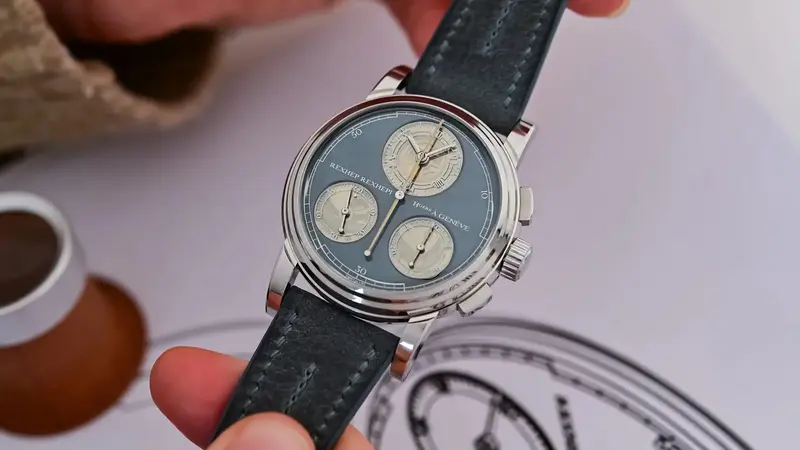
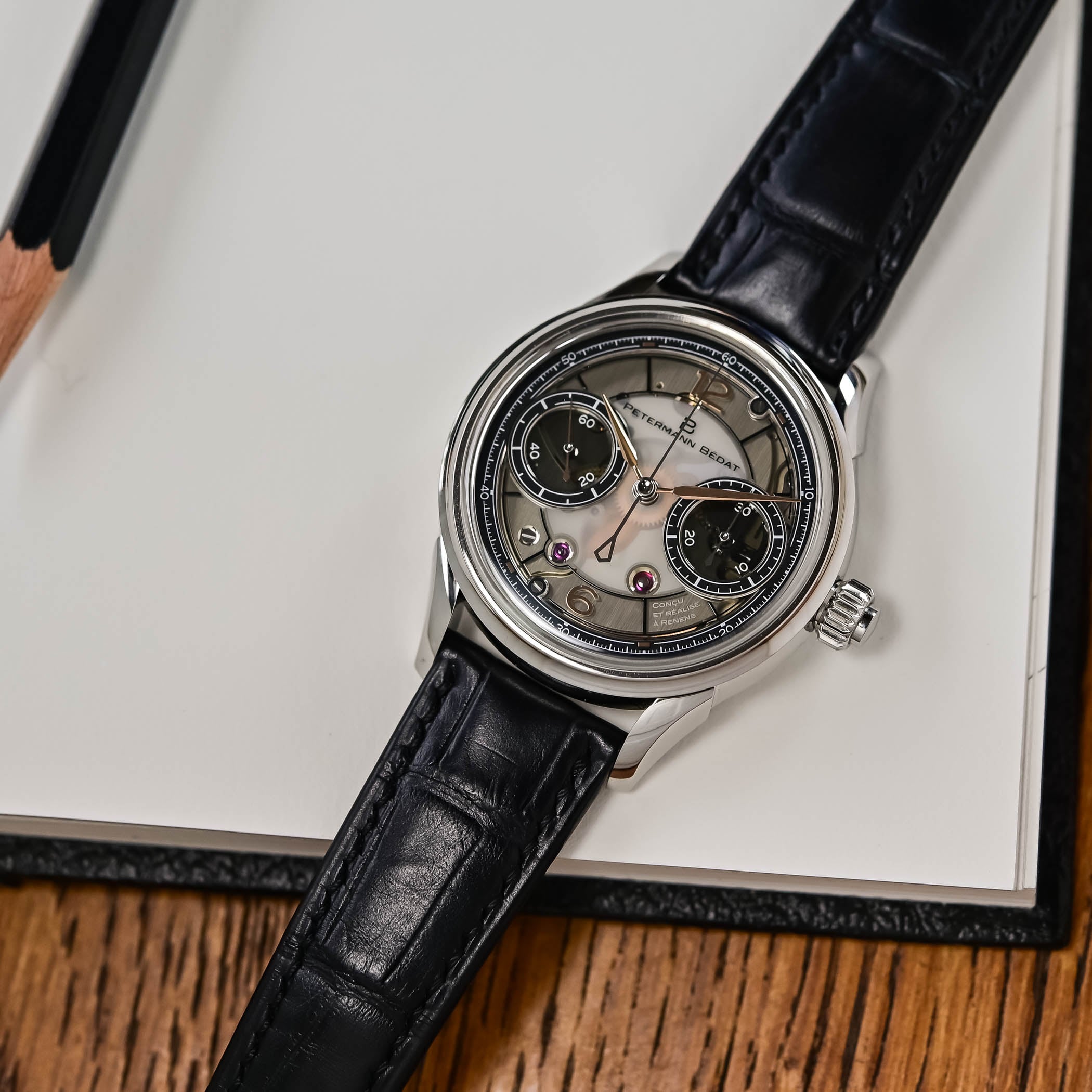
The dial is sapphire, produced by Kari Voutilainen's Comblémine, and stays true to the semi-transparent construction the 2941 introduced. This time the central section is laser-engraved, which gives a semi-opaque effect layered over the warm German silver plates beneath.
A sector-style display carries applied gold numerals at 12 and 6, with smaller markers around the periphery, and black rings frame the dial and sub-dials to hold legibility while the mechanics stay visible. The hands are made by hand from gold and stainless steel, black-polished with bevels for contrast.
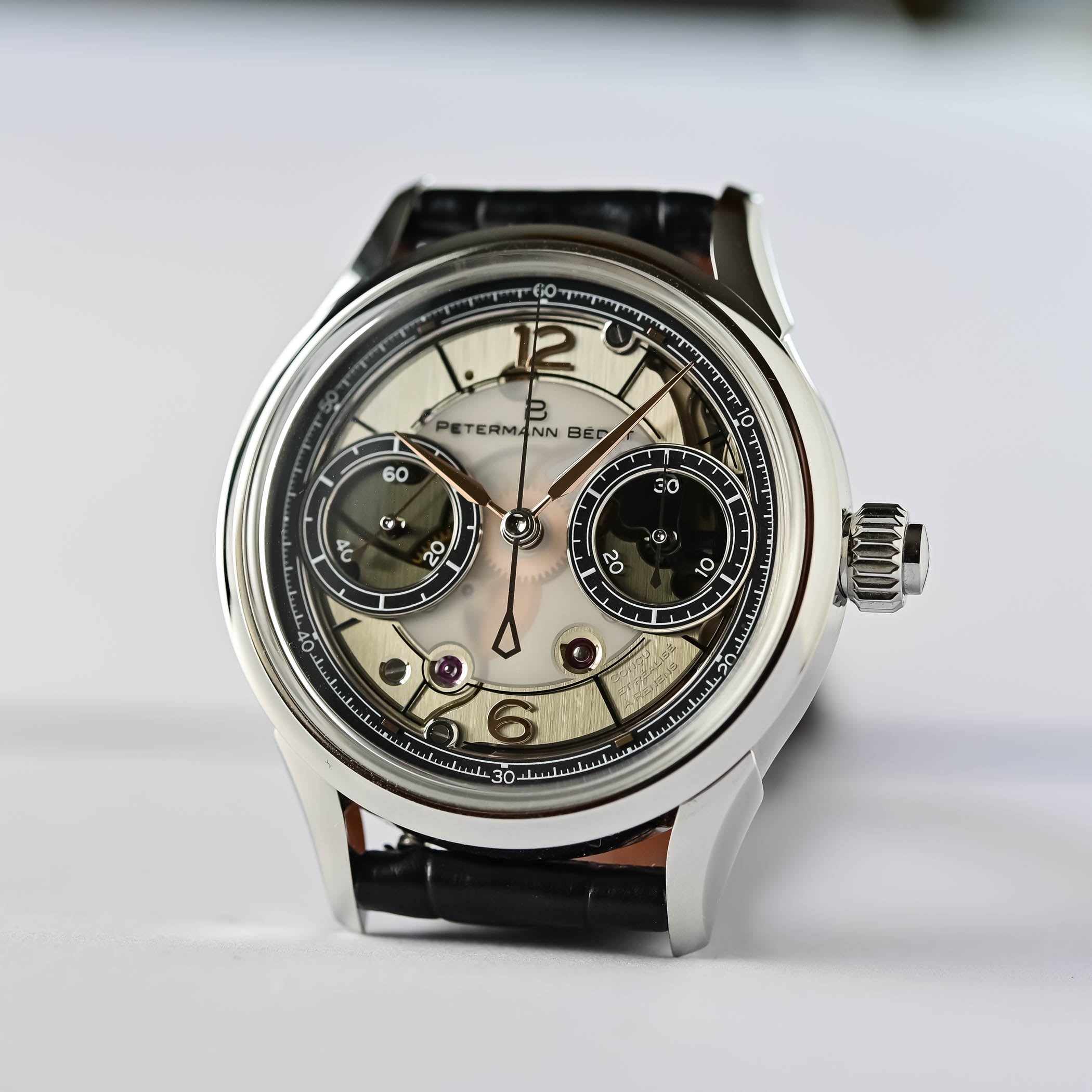
The look has been thrown into sharper relief by the case construction, which uses soldered lugs and a polished concave bezel, and a snap-on caseback that keeps the rear cleaner. The 1826 time-only made for The Hour Glass carried the same snap-on solution.
The reference also pulls the brand back to the design language it named in earlier releases. Its inaugural 1967 Dead-beat Seconds and the 2941 both used semi-open sector dials, while last year's three-hander kept the sector layout under a closed, more traditional dial. The 2914 returns to the open construction and refines it.
The watch carries no lume and is rated water-resistant to 30 meters, with an 18mm strap at the lugs tapering to 14mm. It is not chronometer certified, a footnote that matters little beside the hours of hand finishing.
The two have won a pair of GPHG awards across their previous three watches, which underlines how much of the present range already answers the same brief. Their split-seconds 2941 was priced at CHF 243,000 back in 2023, so CHF 180,000 represents a lower entry into the same finishing.
In the world of independent hand-wound chronographs the price is in a crowded middle. Rexhep Rexhepi's RRCHF Chronograph Flyback, which won the 2026 GPHG Aiguille d'Or, is CHF 150,000, and Grönefeld's 1941 Grönograaf is around EUR 160,000. Greubel Forsey's Nano Foudroyante launched at CHF 465,000.
Lang & Heyne's Albert Chronograph, now discontinued, sold around EUR 85,000, and Voutilainen's Chronograph Masterpiece is also gone. Classic chronographs from small-scale independents remain rare, which is precisely the company the 2914 intends to keep, and allocation is expected to be the harder part of buying one.
Support the content you love — it’s free 🎉
Add Luxe Digital as a preferred source on Google. Our stories will be more likely to appear in Google’s Top Stories. It’s free and supports our team. Thank you!
Add as preferred sourceYou can remove us any time in Google’s source preferences.
Thank you — you’re all set 🎉
Luxe Digital is now one of your preferred sources, so our stories are more likely to appear in Google’s Top Stories.
This briefing is published daily using an AI-powered system crafted by Luxe Digital’s team and finely tuned to meet our editorial standards. While we continuously test and review the output, mistakes can sometimes happen. Tell us if you spot one.
Images: Petermann Bédat