
New York design studio Apparatus has released Act V: Afsaneh, its first full collection since 2021. The line spans lighting and furniture, with mythological themes rendered in bronze, brass and glass. The five-year gap since the studio's last complete collection makes this a notable return.
The collection is a contemporary reading of Persian mythology, drawn from the background of founder Gabriel Hendifar. The name Afsaneh translates as fable, and it is also the name of Hendifar's mother, tying the work directly to his family history rather than to an abstract myth.
Lighting dominates the collection through pendants, chandeliers and sconces, with a line of tables and a table-like object for holding incense rounding it out. Blown glass forms the conceptual core of the line, standing in for the cycle of a seed and, in the studio's words, the divine feminine and the pursuit of knowledge.
"Life is shaped by cycles," Hendifar said. "Creation and destruction. The separation from self and the return. It's in these cycles that the collection finds its rhythm. The seed becomes the flower." The sequence of pieces follows that arc, moving from seed to bloom to the serpent that gathers what the cycle yields.
From Esfand seed sconces to the Rahvi serpent
The sconces are named Esfand, meaning seed, and pair blown glass with lacquer settings in colors described as milk, honey and pomegranate. The lacquered forms also appear on their own as table vessels, without the glass lighting element, extending the same pieces into furniture.
Next in the sequence come the pendants, called Gol, or flower. These carry large domes of semi-translucent fibreglass split down the middle to reveal smaller, speckled, elongated glass orbs inside. The fibreglass tapers down into polished aluminium finishes at each end.
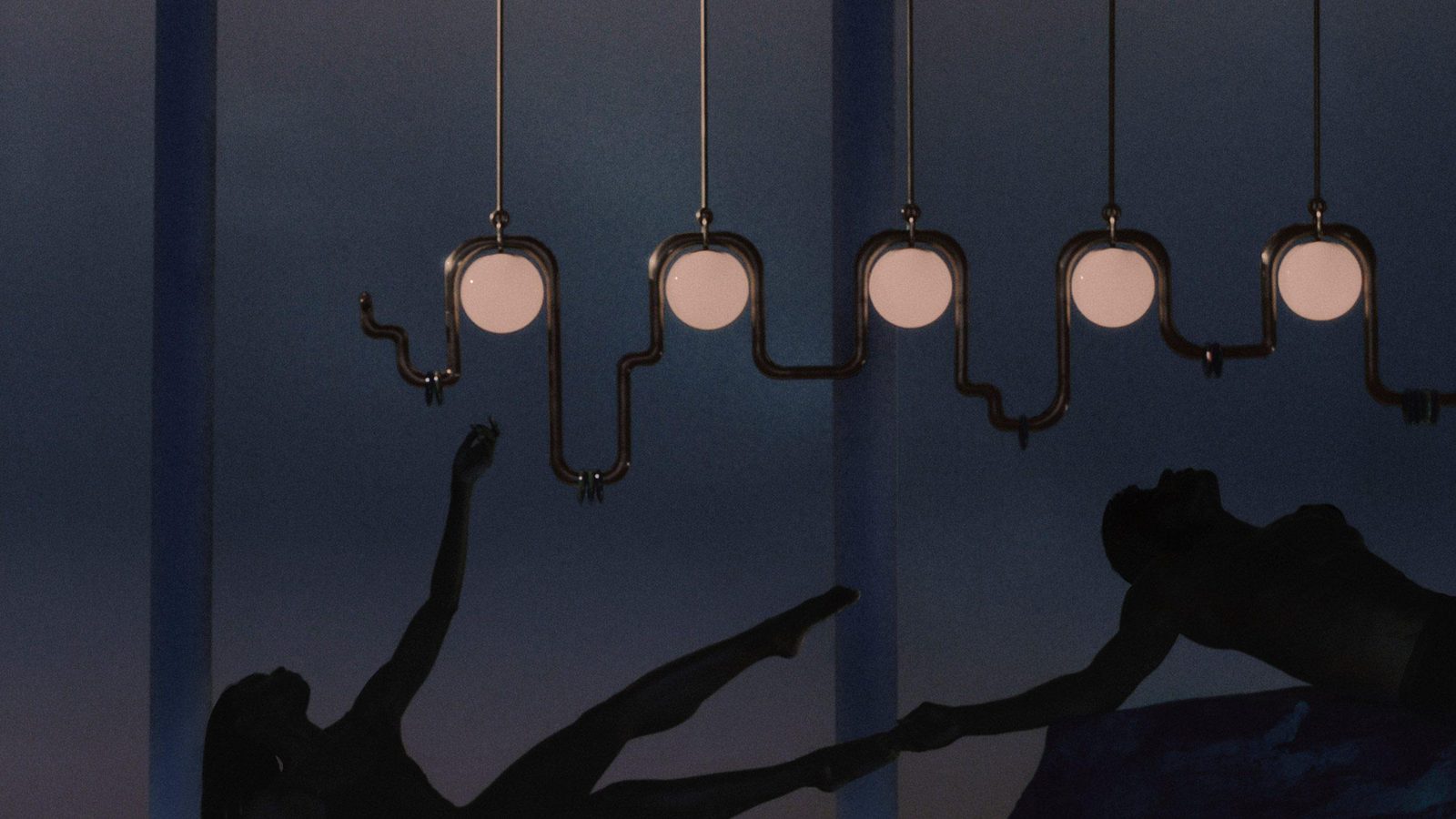
The collection culminates in Rahvi, the serpent. This is a highly figurative, modular chandelier that represents the collection of knowledge, with glass orbs held in the crooks of water-formed brass pieces that make up the snake's body.
Rahvi is built for customization. Some demonstration pieces stretch across multiple suspension cables, and a series of rings cut from precious stones such as onyx and tiger's eye can be placed around the brass forms to alter each piece further.
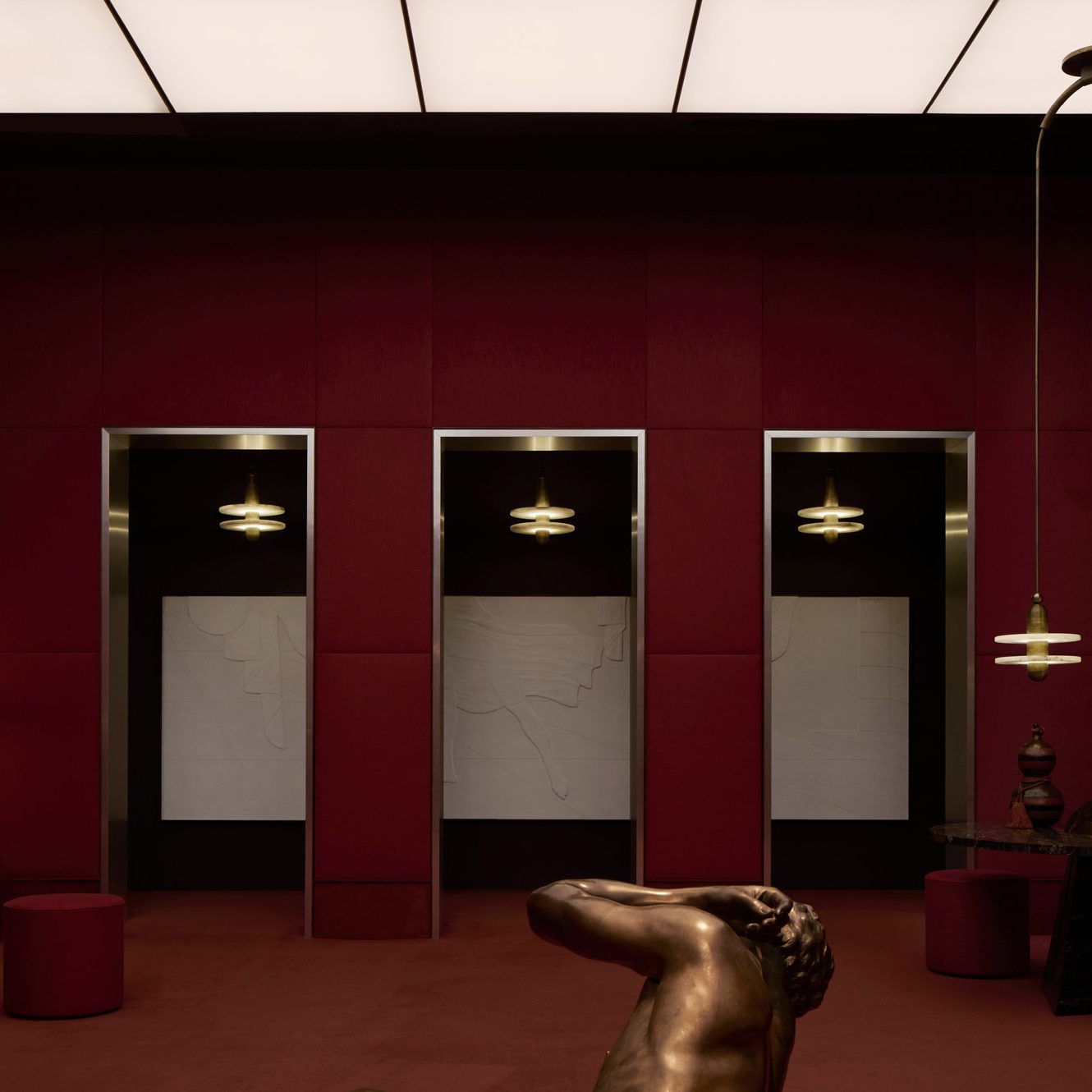
Apparatus frames the material palette as a meeting of ancient materials and contemporary technique. That phrase points at the combination of blown glass, bronze and brass, where traditional craft meets the studio's more speculative fabrication. The incense made with Cinnamon Projects extends the collection beyond objects in a room.
Short films made with the Martha Graham Dance Company accompany the release, adding a performative layer to the mythological narrative. The collaboration situates the lighting within movement rather than leaving it to be read from a catalog page alone.
A figurative turn for the studio
Hendifar has drawn on ancient symbols and Persian culture in past collections, but Act V marks a move toward more narrative, figurative forms. The snake, the seed and the flower are recognizable shapes where earlier work leaned more abstractly on the sources it borrowed from.
Apparatus is known for lighting and furniture with a sculptural, materials-driven sensibility, and this collection extends that line of work while pushing it toward storytelling. The shift matters because it changes how the pieces are read: less as objects of pure form, more as characters in a fable.
Afsaneh is a family name as much as a collection title, which gives the narrative an unusual directness. Hendifar has put his mother's name on the work and built the arc around the seed, the flower and the serpent, so the mythology is not decorative but personal.
This is the first time in five years the studio has assembled a full collection rather than piecework releases, and the scope shows it.
The collection arrives without a stated price range or run size, which is typical of the studio's trade-facing releases. What the launch does make clear is direction: Apparatus is moving toward more narrative work, and Afsaneh is the fullest statement of that turn yet.
For readers following our coverage of style, the collection is part of the sculptural, materials-first design work we track across lighting and objects. It is a home and design story as much as a style one, and it rewards attention to how the pieces are made rather than only how they look.
Support the content you love — it’s free 🎉
Add Luxe Digital as a preferred source on Google. Our stories will be more likely to appear in Google’s Top Stories. It’s free and supports our team. Thank you!
Add as preferred sourceYou can remove us any time in Google’s source preferences.
Thank you — you’re all set 🎉
Luxe Digital is now one of your preferred sources, so our stories are more likely to appear in Google’s Top Stories.
This briefing is published daily using an AI-powered system crafted by Luxe Digital’s team and finely tuned to meet our editorial standards. While we continuously test and review the output, mistakes can sometimes happen. Tell us if you spot one.
Images: Apparatus