
Mercedes-AMG has revealed the 2028 GT SUV, the first sport utility vehicle the performance division has developed from the ground up rather than adapting a Mercedes-Benz model. It arrives as an electric flagship on the AMG.EA 800-volt architecture, in three trims topped by a 1,153-horsepower GT63.
The reveal follows the four-door GT sedan the company showed earlier, and the SUV inherits much of that car's hardware. Pricing is not yet announced, though the SUV goes on sale next summer. Range and consumption figures are likewise being held back until closer to launch.
Three powertrains span the lineup. The GT55 and GT63 use a trio of axial-flux motors: two at the rear for propulsion and torque vectoring, one up front. In the GT55 they deliver 805 peak horsepower and 1,372 pound-feet of torque, against 1,153 peak horsepower and 1,475 pound-feet in the GT63.
Sustained output is the same 711 horsepower across both three-motor trims. That matches the GT63 sedan exactly, since the SUV shares its powertrain with that car. The headline number has received attention, but the constant figure is the one that governs a long, hard pull.
Below those two is a GT53 unique to the SUV. It uses two conventional radial-flux permanent-magnet synchronous motors, one direct drive at the front and another at the rear backed by a two-speed automatic. Together they make 536 peak horsepower and 590 pound-feet of torque.
The GT53's quieter hardware brings a real weight saving. The two-motor model is close to 400 pounds lighter than its siblings, which partly explains how it lands so far below them in output while still delivering usable range and pace. It has not been given a price, but position suggests an entry role.
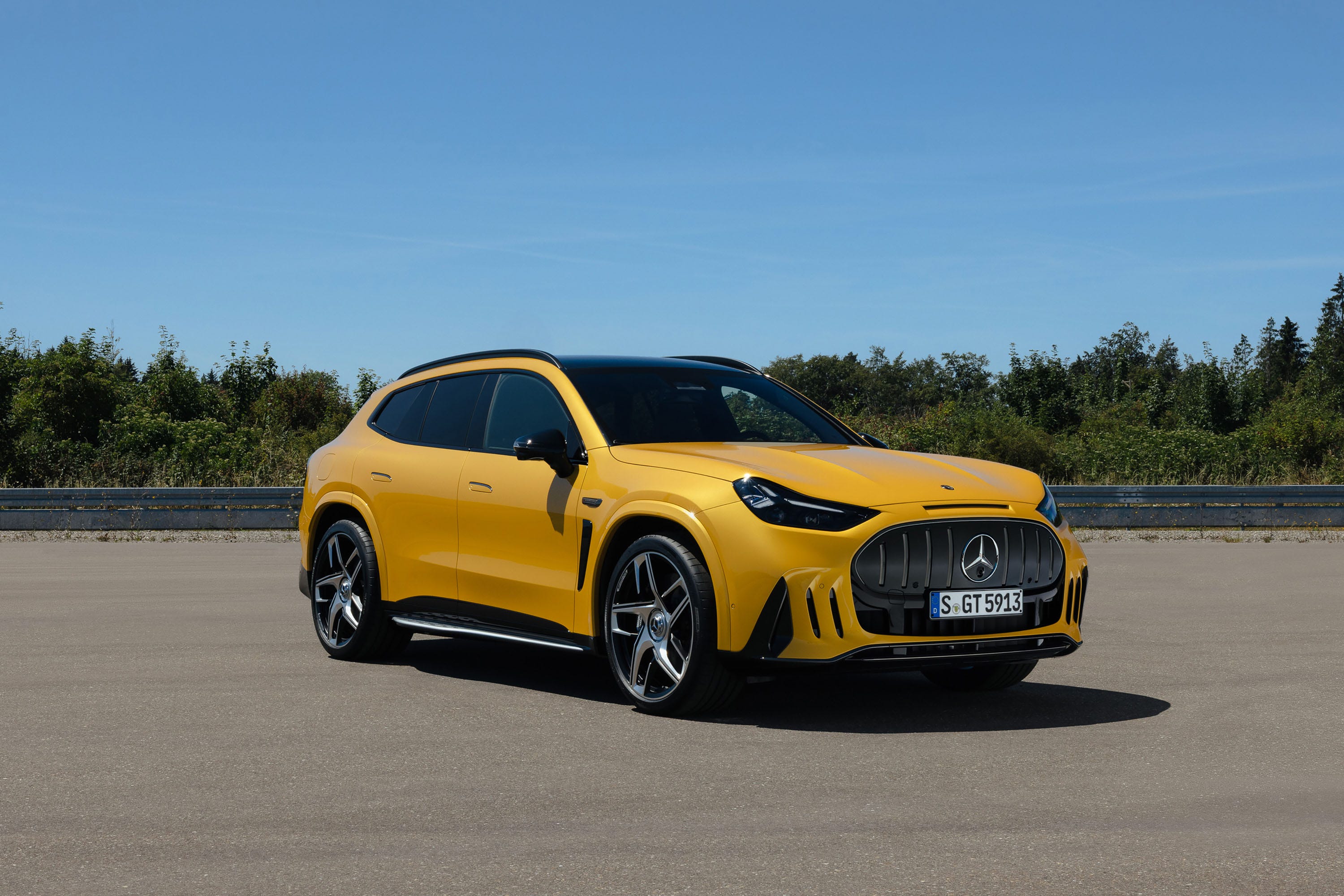
Battery size is where the top trims pull ahead. Their 800-volt pack carries 22 modules instead of the sedan's 18, lifting usable capacity by 22 percent from 106 kWh to 128 kWh. The GT53 makes do with the sedan's smaller pack, and preliminary European WLTP data puts range across the family between 277 and 370 miles.
That larger pack does little for range. The SUV is about 520 pounds heavier than the sedan and carries a substantially higher aerodynamic drag area, so the extra energy mostly offsets the blunter shape. The result is a nominal range gain of roughly two percent, which is essentially a wash.
Acceleration tells the same story. Mercedes-AMG's GT63 sedan is rated at 2.0 seconds to reach 60 mph, whereas the SUV, with an identical powertrain, is estimated at 2.4 seconds. That is a clean 20 percent off the pace, the cost of weight and air the battery cannot fully answer.
The GT53 closes the range gap from the other direction. Its conventional motors are more efficient than the axial-flux units, so by European WLTP figures its range falls only about four percent short of the three-motor SUVs despite carrying a pack 22 percent smaller.
When the numbers settle, the GT53 may match or slightly trail the GT63 sedan, which was previously estimated around 300 miles. The GT63 SUV could land at or modestly above that same figure, its larger battery making up for the boxier shape and then some.
The suspension built for the height
Ride height and a taller seating position add sensation in corners and under braking, so AMG developed a new Active Ride Control Plus system. It adds active roll and pitch stabilization to the cross-linked damper layout from the GT63 sedan, and the axles are interconnected to curb squat and dive.
The three-chamber air springs return from the sedan, retuned for this application. Rear-wheel steering and active aerodynamics round out the chassis work, and the cabin keeps the driver-angled screen and the three rotary AMG Race Engineer controls for response, agility and traction.
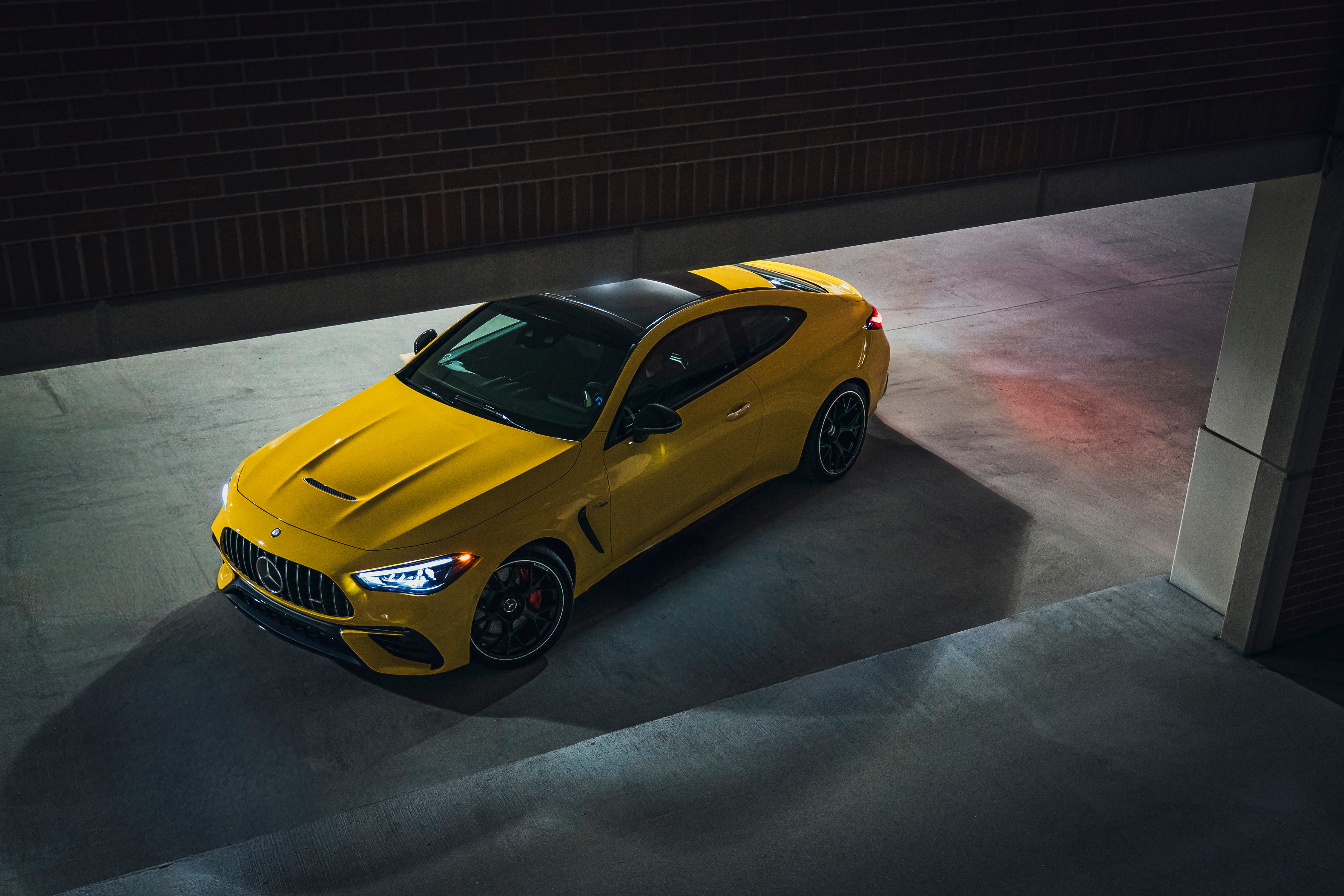
Space is where the body style justifies itself. There is headroom to spare for a six-foot-two occupant behind his own adjusted driving position, and even without the sedan's missing-cell foot garage there is genuine rear-seat legroom. Cargo volume runs about 21 cubic feet, rising to roughly 61 with the seats folded.
AMGFORCE Sport Plus mode carries over, simulating gear changes, a lumpy idle and seat vibration. The soundtrack is drawn from more than 1,600 audio files and sounds like a cammy V-8 in the two top trims, or an inline-six in the GT53. It projects in and out of the car, and can be switched off.
Mercedes-AMG's closest rival is the Porsche Cayenne EV, which in Turbo form hits 60 mph in 2.1 seconds, quicker than the GT63's estimated 2.4 seconds. In our garage coverage we have tracked electric flagships closely, including the $560,800 Ferrari Luce we priced on its reveal.
Pricing will wait, but the expected structure is clear. The GT55 and GT63 will cost more than their sedan equivalents, while the GT53 should open below the GT55 sedan at around $130,000. The division has not confirmed any of those figures, and the final numbers arrive nearer the 2028 launch.
Support the content you love — it’s free 🎉
Add Luxe Digital as a preferred source on Google. Our stories will be more likely to appear in Google’s Top Stories. It’s free and supports our team. Thank you!
Add as preferred sourceYou can remove us any time in Google’s source preferences.
Thank you — you’re all set 🎉
Luxe Digital is now one of your preferred sources, so our stories are more likely to appear in Google’s Top Stories.
This briefing is published daily using an AI-powered system crafted by Luxe Digital’s team and finely tuned to meet our editorial standards. While we continuously test and review the output, mistakes can sometimes happen. Tell us if you spot one.
Images: Mercedes-AMG