
Jaguar has revealed the Type 01, the first production car of its electric-only era, at a launch event in New York. The four-door, four-seat fastback is a near-identical production version of the Type 00 concept that divided opinion in 2024, and it is the most powerful Jaguar ever built.
The powertrain
Three electric motors, one at the front and two at the rear, combine for more than 1,000 metric horsepower, with 1,015 hp and 1,007 pound-feet of torque. Jaguar estimates a 60 mph sprint in 3.1 seconds and a 0 to 62 mph run in 3.2 seconds.
The 118 kWh battery, set on a new 850-volt Jaguar Electric Architecture, returns an EPA-estimated 400 miles and a WLTP figure of up to 450 miles. On a 350 kW fast charger the car adds 200 miles of range in about 13 minutes, or 10 to 80 percent in roughly 22 minutes.
The proportions
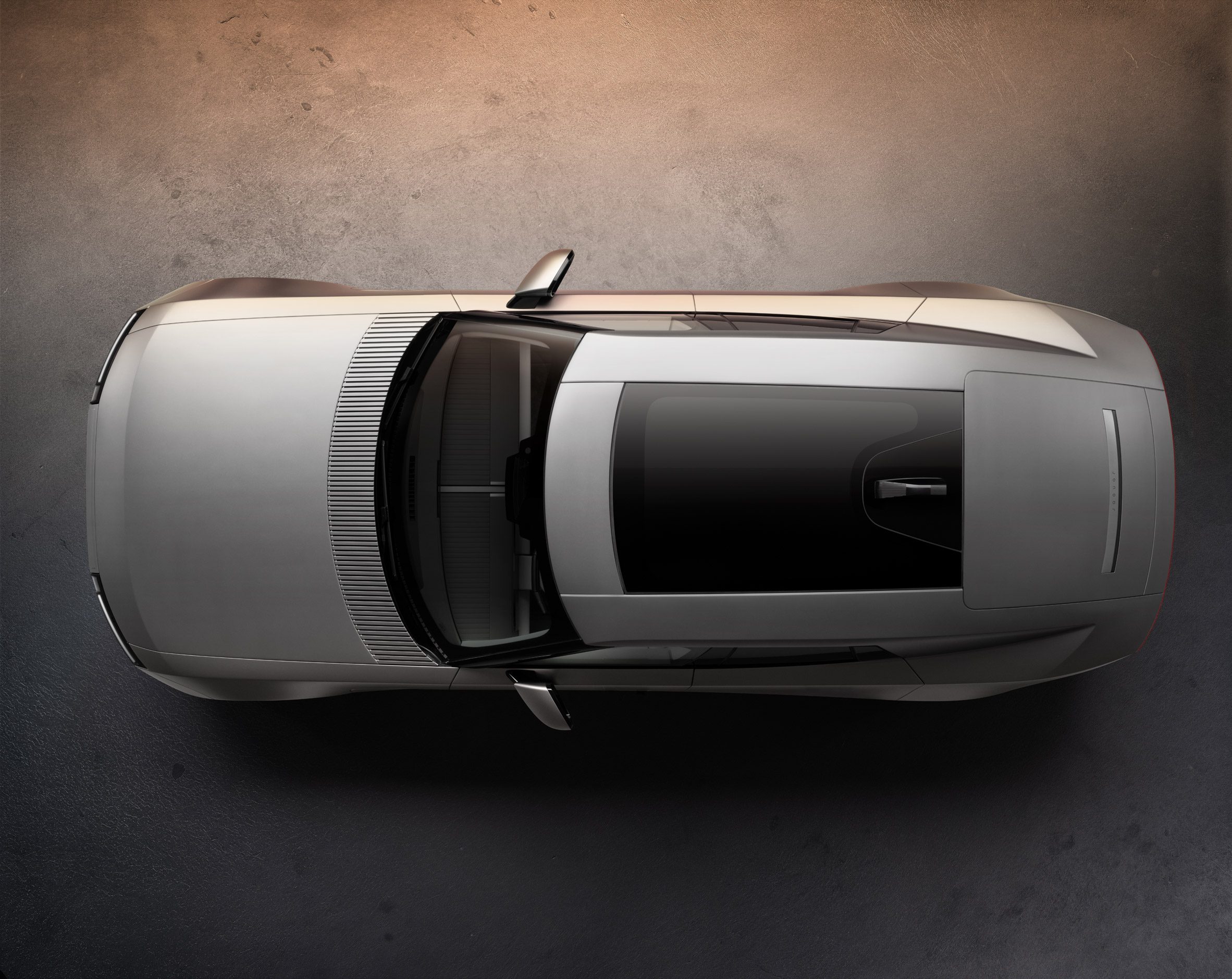
Proportion is the story here. At 5,235 mm long and just 1,403 mm tall, the Type 01 is dramatically low, on the scale of a Bentley Flying Spur or Rolls-Royce Ghost and lower than a sports coupe. The rival Ferrari Luce stands more than 14 cm taller.
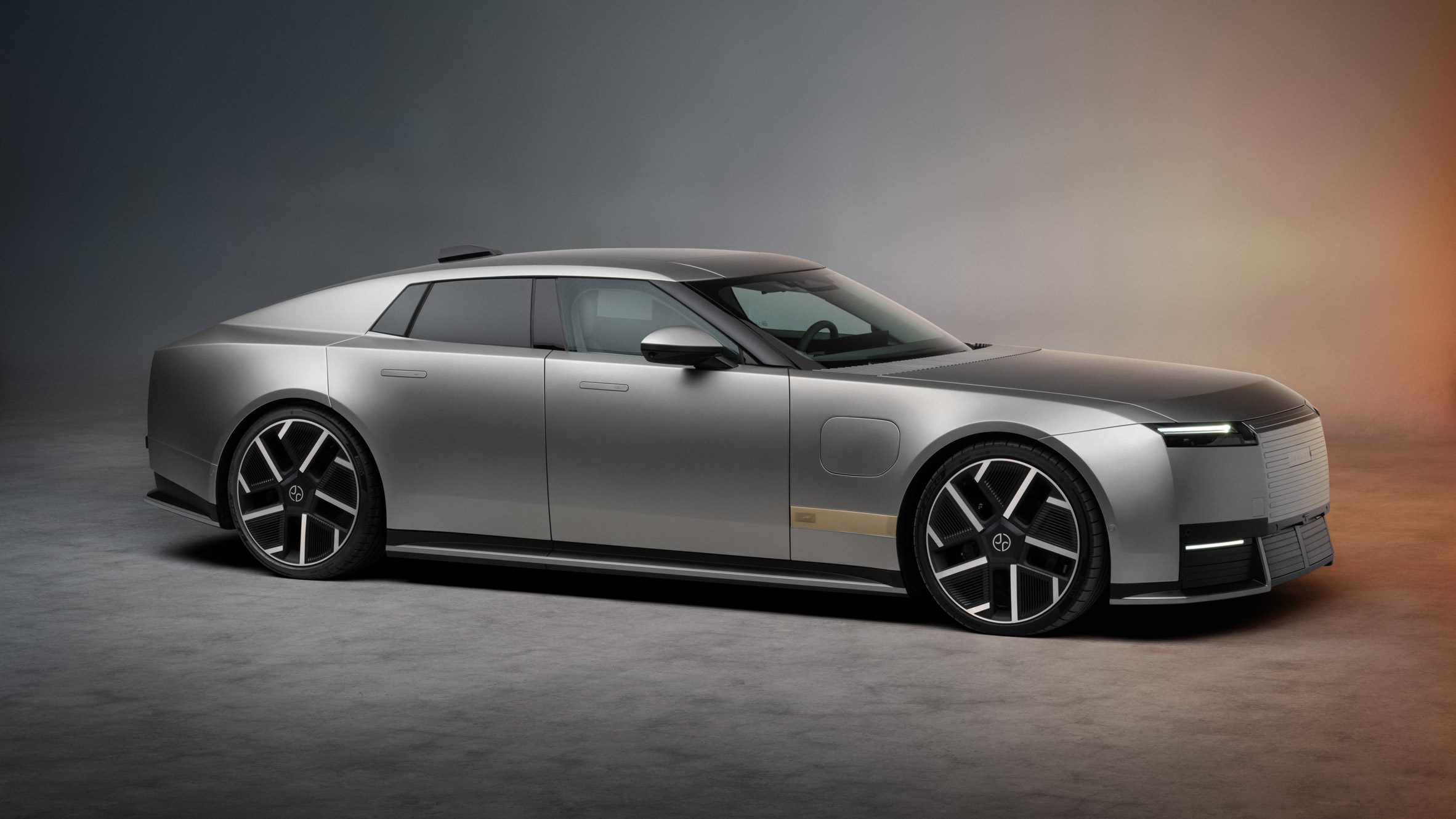
It carries design ideas that simply could not work on a conventional platform. Jaguar managing director Rawdon Glover said the proportions failed on every existing architecture the company checked, including rival platforms, so the team built the dedicated Jaguar Electric Architecture around a near 50:50 weight distribution and Jaguar's stiffest-ever structure.
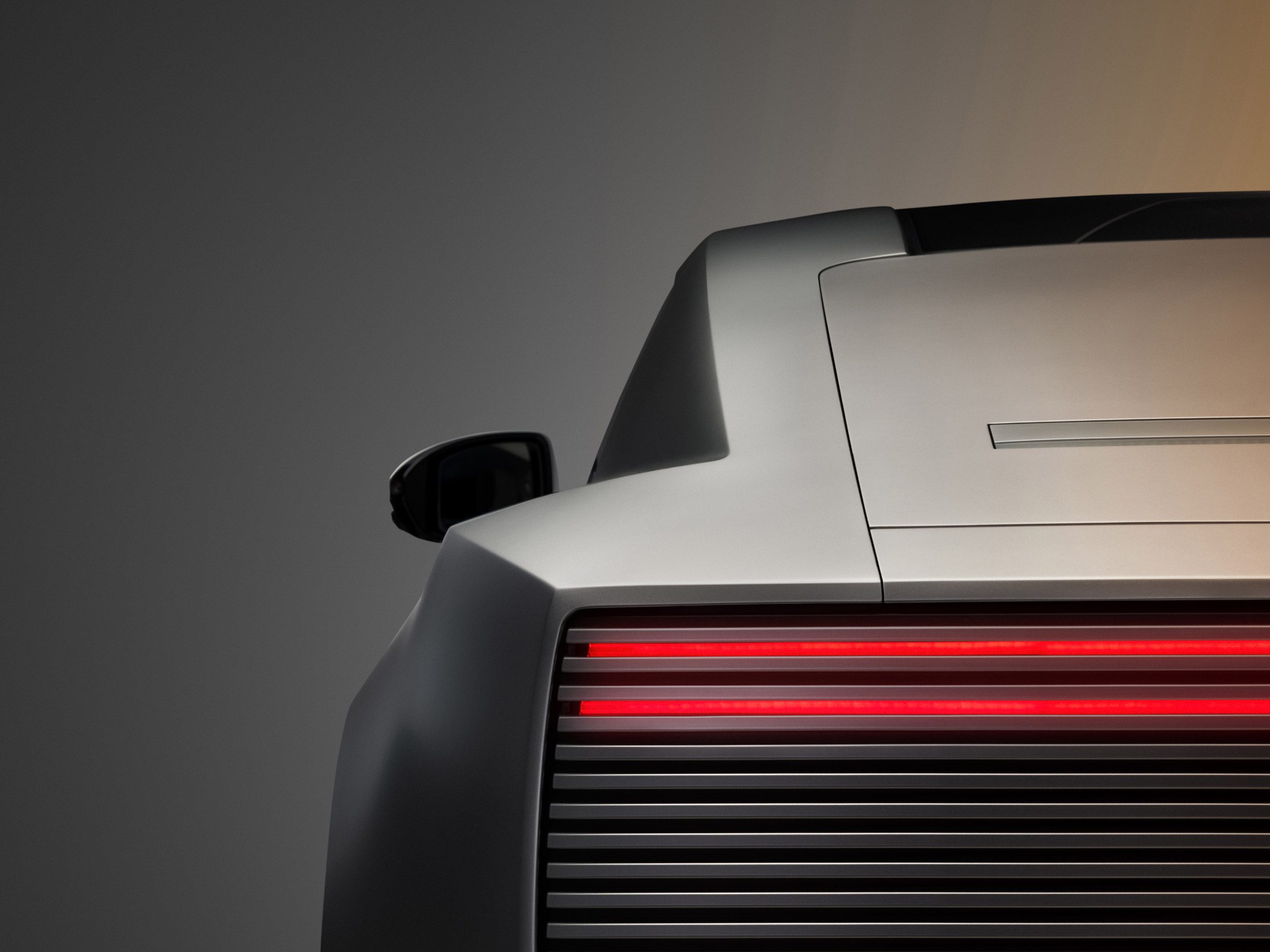
The windowless tailgate is the signature move. A camera and screen replace the rear-view mirror, and the near-vertical rear and deep overhang draw a line back to classic Jaguar proportions. Frameless doors close directly against the body, and the charging port was scaled up simply to match the fender.
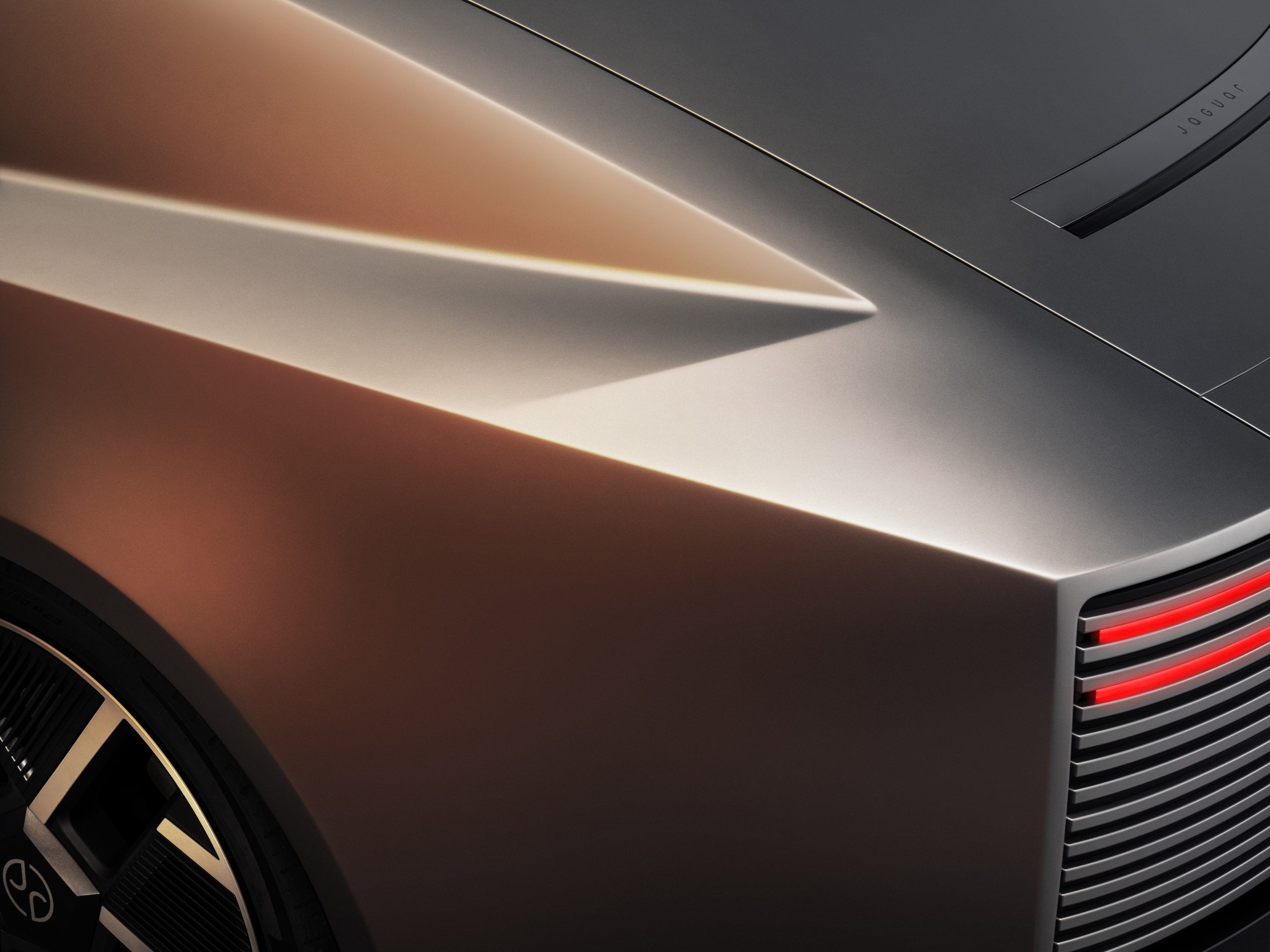
A hand-rubbed rear-quarter pressing called the Impossible Panel is the body's most difficult piece. Design software reportedly said cold-pressing the aluminium in that configuration could not be done, yet the panel was pressed in six ways, hiding the glass seals and continuing its curve beneath both door windows.
The luxury gap survives too: 898 mm, about 17 percent of the car, between the front axle centre and the cabin, marked by an anodised brass-effect Fender Ingot laser-etched with the leaper. The redesigned monogram sits at the wheel centre, while the wordmark appears on the grille and the trunk.
The cabin
Inside, a single 24-inch OLED instrument panel handles driving duties, with a 7-inch smartphone-style touchscreen below it for climate and seat settings. A screen above the dash replaces the mirror, and a sound bar runs across the cabin. A central spine divides the front and rear seats.
Materials lean domestic rather than machined. Danish brand Kvadrat supplies the multi-toned wool blends, and Jaguar chief materiality designer Mary Crisp said she wanted to bring in the warmth of home. Brass detailing and lightweight vegan leather continue the furniture-grade approach.
The interior was shown in August, and Jaguar's exterior design lead Alexey Andreev shaped the four-fold headlights to be recognisable from a distance. A deployable rear fender and hair-like pinwheel wheel inserts, on 23-inch wheels, were engineered for airflow, and parts of the bodywork generate accelerative push at speed.
This is the second fully electric Jaguar after the long-discontinued I-Pace, but the first designed from a clean sheet. Chief engineer Jon Darlington, 31 years into the job, called it the first true blank page of his career, while the 18 full-size Project Renaissance models were narrowed to one winner.
The stakes are explicit. More than 50,000 people have registered interest, and Glover says 78 percent are new to the brand. The average US transaction price of around $60,000 to $70,000 now doubles; the Type 01 starts at $130,500, with a UK price of £120,000, roughly $159,000.
Glover reads that price as repositioning rather than greed. He argued the Type 01 has more in common with the uber-luxury space above £300,000, and that a degree of scarcity is the point; his stated ambition is a queue. This is our garage coverage of a brand Jaguar itself calls its biggest moment since 1935.
The market it lands in is choppy. Porsche's Taycan, a natural rival with Turbo versions from the same £120,000, has seen sales slide, and the Rolls-Royce Spectre's numbers have nearly halved in a year. Alongside the Mercedes-AMG GT, Lotus Emeya and Audi RS e-tron, the pool of buyers is sceptical.
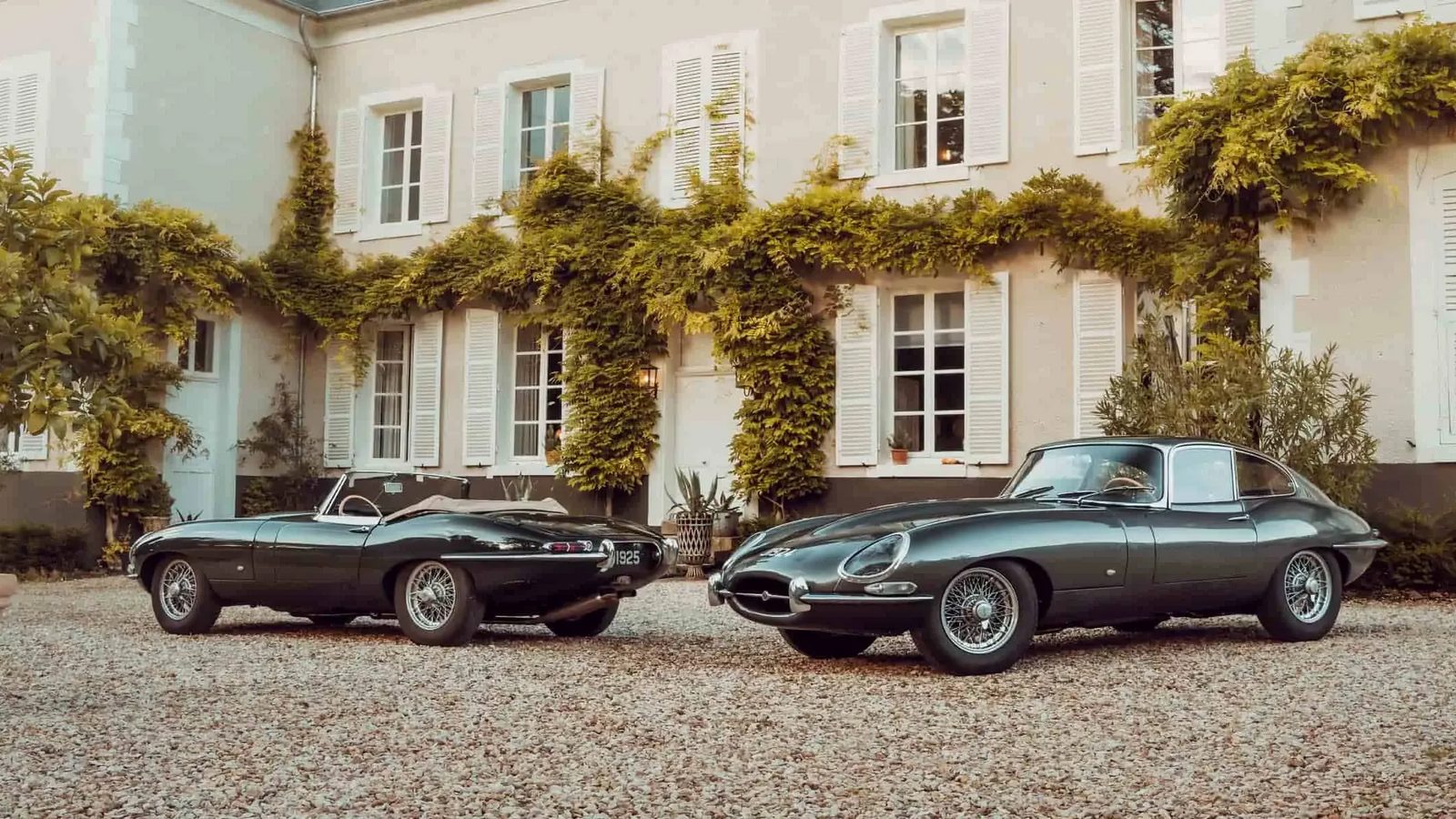
We have covered that scepticism before. In our ranking of the most searched luxury car brands, Jaguar had withdrawn its entire lineup ahead of this relaunch and fell out of the top ten. Our guide to British car brands lists the marque under Tata Motors' JLR, and our classic car ranking leads with the E-Type this car evokes.
The appeal to history is deliberate but hedged with honesty about the audience. Glover said Jaguar's customers were ageing and that incremental steps were not enough, adding that great design should have the confidence to polarise. The buyer research drew more ones and twos and more nines and tens than usual.
Deliveries begin in the second half of 2027, with order books opening early next year and test cars brought to buyers' doorsteps or clubs. Jaguar has not confirmed final US pricing beyond the $130,500 starting figure, and first drives will settle whether the driving experience matches the drama.
Support the content you love — it’s free 🎉
Add Luxe Digital as a preferred source on Google. Our stories will be more likely to appear in Google’s Top Stories. It’s free and supports our team. Thank you!
Add as preferred sourceYou can remove us any time in Google’s source preferences.
Thank you — you’re all set 🎉
Luxe Digital is now one of your preferred sources, so our stories are more likely to appear in Google’s Top Stories.
This briefing is published daily using an AI-powered system crafted by Luxe Digital’s team and finely tuned to meet our editorial standards. While we continuously test and review the output, mistakes can sometimes happen. Tell us if you spot one.
Images: Jaguar Type 01