
Boucheron is bringing nearly 170 years of high jewelry to Christie's Rockefeller Center galleries. "Boucheron: In Focus: A Monograph of a Visionary" opens Friday and runs through Oct. 18, spanning founder Frédéric Boucheron's era through to the work of current creative director Claire Choisne.
The Paris maison is deliberately scrapping chronology. Chief executive Hélène Poulit-Duquesne said the house conceived the show as a monograph, not a retrospective, because a conventional retrospective merely records dates and treats archives like frozen museum pieces.
Instead the timeline is scrambled. Jewels created generations apart are placed together and organized around four themes: couture, nature, architecture and innovation. Poulit-Duquesne calls these the permanent pillars established by the founder that still drive the house's contemporary creation every day.
Boucheron curated the show internally, with Christie's providing the galleries and an audience Poulit-Duquesne sees as attuned to the house's more idiosyncratic side. She compares the American high jewelry customer to the contemporary-art collector, someone seeking an intellectual vision and real emotional resonance.
What the selection includes
The selection pulls in examples of the Question Mark necklace, alongside works from the Histoire de Style and Carte Blanche collections. Among them are the Eternal Flowers, which mount actual flower petals, stabilized through a technical process, onto titanium. The source calls them technically audacious.
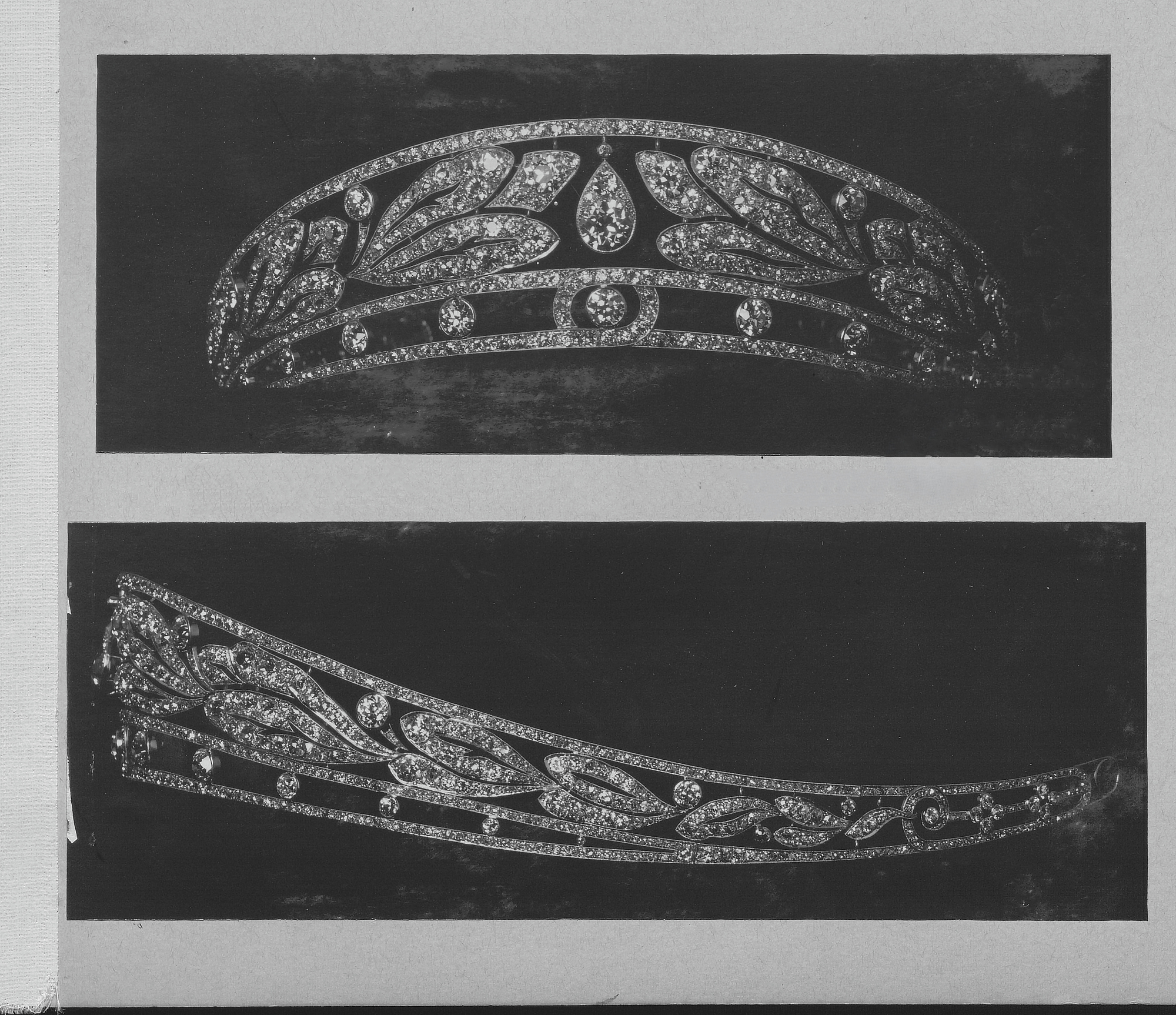
Two jewels carry a distinct American provenance. Poulit-Duquesne personally insisted on Lady Harcourt's 1924 foliage tiara, commissioned by Mary Ethel, Viscountess Harcourt, an American-born member of the Morgan banking family. The house bought it back at auction earlier this year and returned it to its heritage collection.
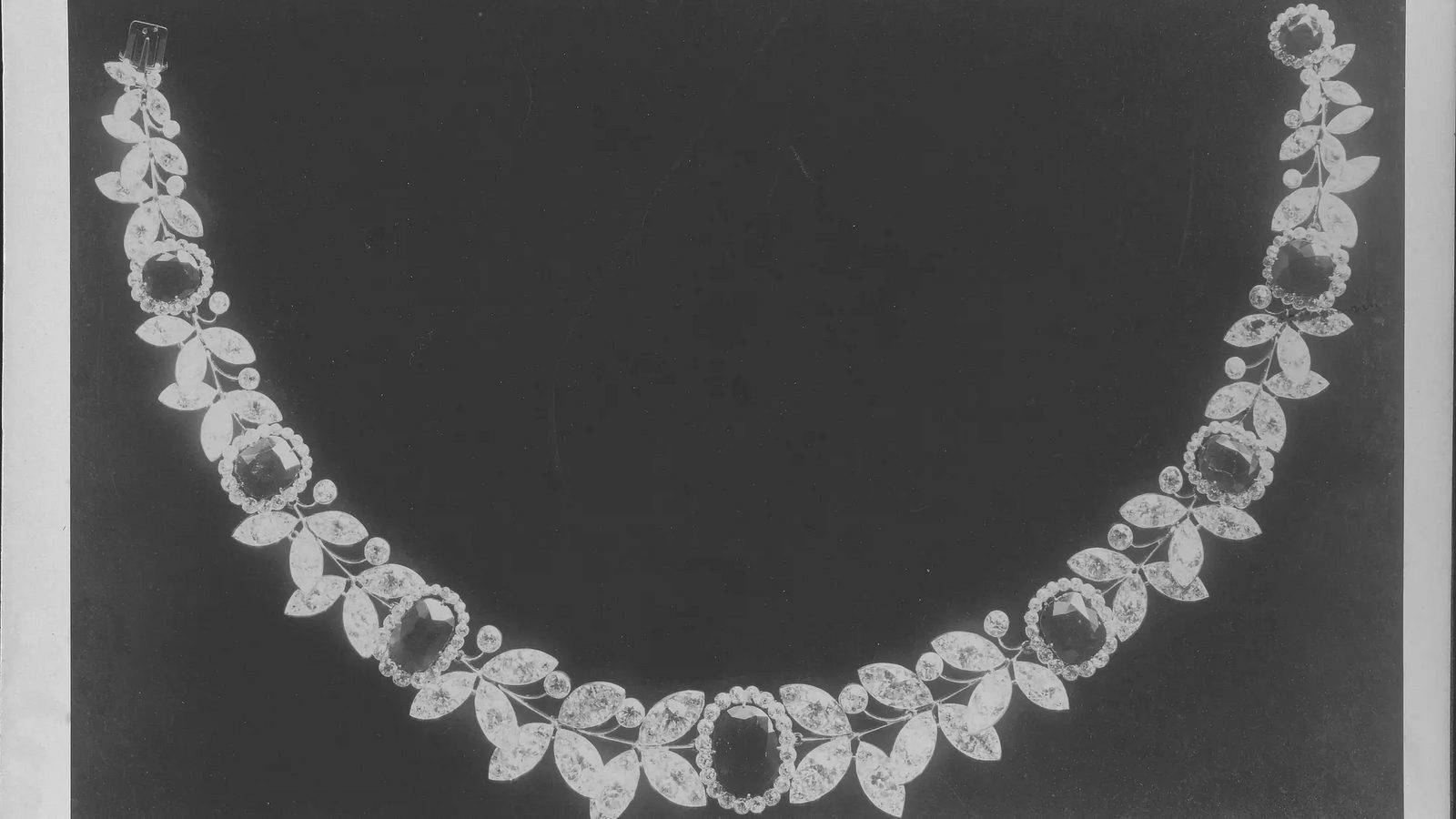
The other is an exceptional 1888 necklace that belonged to Mrs. Mackay, one more of the jeweler's American clients. A private collector lent it after buying it at a recent auction. Both pieces support the argument that wealthy Americans reached Place Vendôme long before the current retail push.
That push is real and recent. Boucheron opened its first contemporary American boutique on Madison Avenue in 2024 and has been expanding its presence since. But American family names appeared in the house's order books as early as 1865, and Louis Boucheron opened a New York office in 1903.
Poulit-Duquesne said American collectors do not evaluate a jewel solely by carat weight or gemstone rarity. They understand preciousness through the creative dream, the technical feat and the singular emotion a piece conveys, which is why the Christie's setting suits the house.
How the jewels are shown
The house is also challenging how important jewels get displayed. Throughout the galleries the pieces appear on bespoke mannequins rather than in flat vitrines, underscoring Boucheron's conviction that high jewelry is ultimately meant to live on the body and be worn every day.
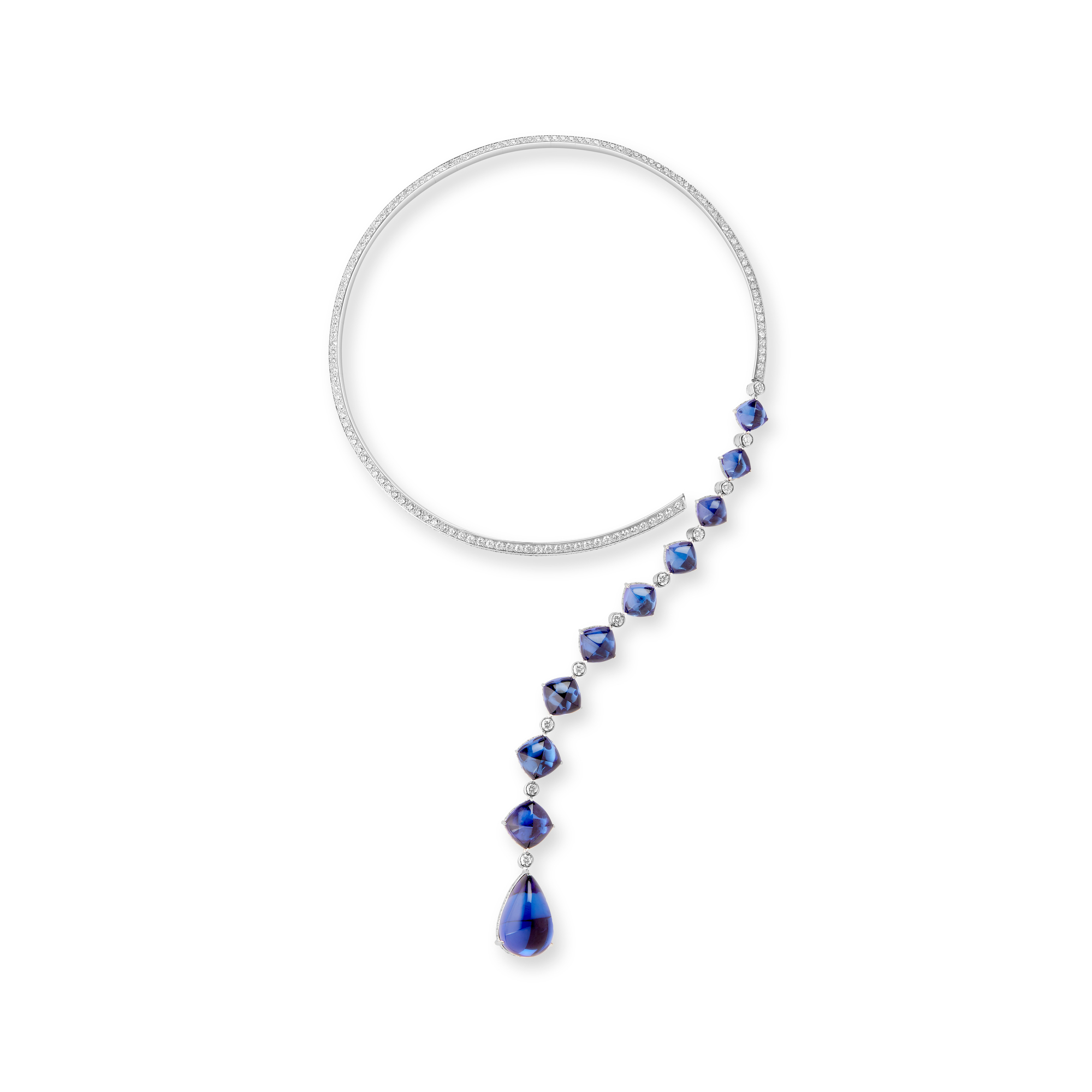
Poulit-Duquesne traces the idea to the founder, who showed his jewelry upright in his 19th-century windows so passersby could see their own reflections wearing it. In a flat vitrine, she said, jewelry quickly becomes an inert, distant object.
In her words, a jewel only fully comes to life when it meets a body. The maison's position, she added, is that there is nothing sadder than a jewel left locked away in a safe.
The second part of the show turns entirely to Choisne and Human Being, her 2026 Carte Blanche collection, placed in direct dialogue with the older work. Throughout her tenure she has repeatedly challenged accepted ideas of what makes a material precious.
Choisne has introduced unexpected materials and technologies while seeking expertise far outside traditional jewelry making. Poulit-Duquesne frames those experiments as a continuation of the lineage rather than a rupture from it, noting Choisne never looks at the archives with nostalgia.
The pairing rests on a shared spirit. What Choisne shares with Frédéric Boucheron, Poulit-Duquesne said, is a spirit that was and remains radically innovative. Copying an archival drawing freezes a maison in the past; truly honoring the founder means continuing to push boundaries.
Boucheron was the first jeweller to open on Place Vendôme, founded in Paris in 1858.
Support the content you love — it’s free 🎉
Add Luxe Digital as a preferred source on Google. Our stories will be more likely to appear in Google’s Top Stories. It’s free and supports our team. Thank you!
Add as preferred sourceYou can remove us any time in Google’s source preferences.
Thank you — you’re all set 🎉
Luxe Digital is now one of your preferred sources, so our stories are more likely to appear in Google’s Top Stories.
Sources
This briefing is published daily using an AI-powered system crafted by Luxe Digital’s team and finely tuned to meet our editorial standards. While we continuously test and review the output, mistakes can sometimes happen. Tell us if you spot one.
Images: Boucheron; Lady Harcourt s 1924 foliage tiara by Boucheron