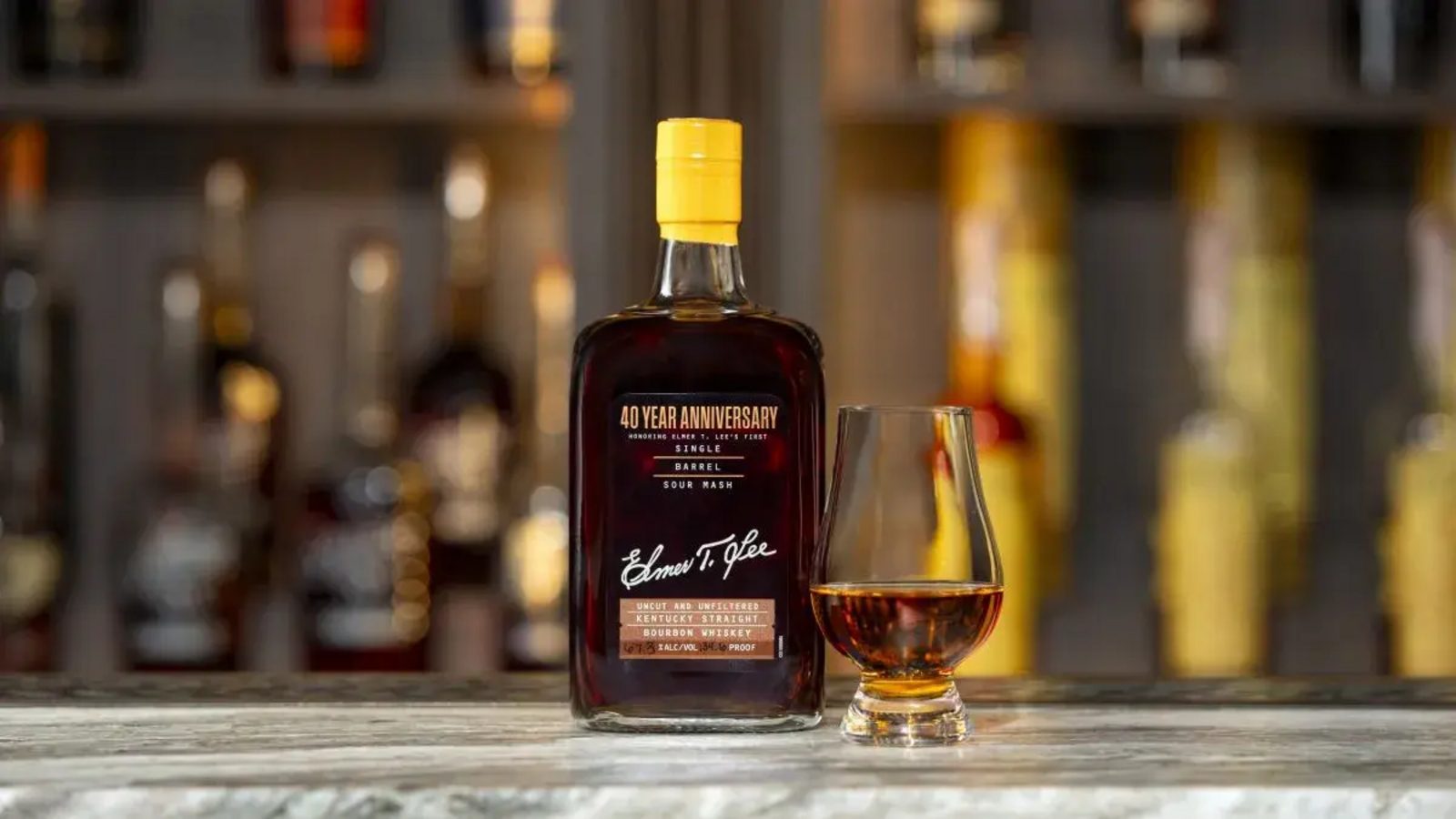
Buffalo Trace is releasing Elmer T. Lee Single Barrel Bourbon uncut and unfiltered for the first time in the whiskey's 40-year history, marking the anniversary with a cask-strength edition of one of Kentucky's most collected single-barrel bourbons, and has not disclosed how many barrels were selected for the anniversary release or how many bottles the lottery covers in total.
The distillery, whose Buffalo Trace price list and bourbon cocktail guidance we have covered in our own reporting on the brand, opens its purchase lottery on September 15, one day after the announcement.
Standard Elmer T. Lee is bottled at 90 proof. The 40th Anniversary Edition skips both cutting and chill filtration, so its proof depends entirely on the individual barrel it comes from, landing anywhere between 124.8 and 138.6 proof, which the brand itself describes as nearly hazmat level.
That range is the news. A swing of nearly 14 proof points between the mildest and strongest barrels means no two lottery winners will necessarily taste quite the same whiskey, a rare admission of variability from a distillery built on single-barrel precision.
How the lottery works
Registration opens at 10 a.m. ET on September 15 and closes at 11:59 p.m. ET on September 17, exclusively through Buffalo Trace's own website. Names are drawn on September 22, and winners get a window, September 28 through October 11, to buy their bottle in person at the distillery.
The suggested retail price is $100 a bottle, modest against the secondary-market premiums that regular Elmer T. Lee already commands. Buffalo Trace says this is the first time it has run a lottery system of this kind, and it plans to collect feedback afterward on how the public responded to it.
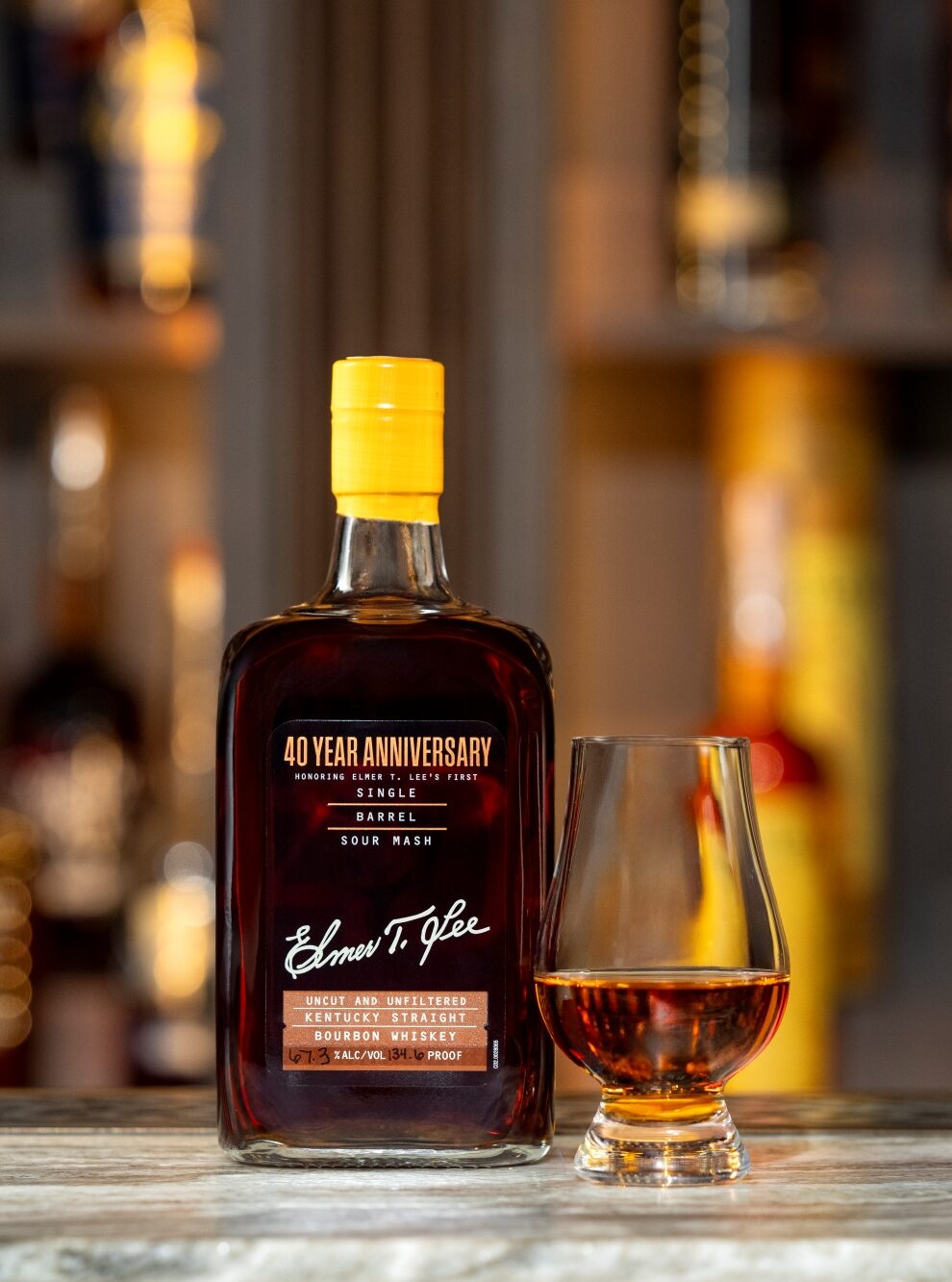
Elmer T. Lee is one of the distillery's most sought single-barrel names, and it is central to why bourbon collectors watch every fall release from the site closely, alongside events like the annual Pappy Van Winkle allocation.
The bourbon is named for Elmer T. Lee, who joined the distillery, then called George T. Stagg, in 1949 after serving in World War II. He started as a maintenance engineer and rose to master distiller, a career that made him a foundational figure in modern Kentucky bourbon.
Lee's most consequential decision came in 1984, when he launched Blanton's as the first single-barrel bourbon ever sold, a move that effectively created the category. Elmer T. Lee Single Barrel Bourbon followed two years later, named for him while he was still alive to see it, and the distillery itself was renamed Buffalo Trace in 1999.
Current master distiller Harlen Wheatley, who says he learned directly from Lee early in his career, framed the release as a tribute rather than a novelty. "Elmer's legacy is something we feel and celebrate every day at the distillery," Wheatley said, crediting Lee's craftsmanship with helping set a course for American whiskey broadly.
Erica Bovard, senior brand director for American whiskey at the distillery, said releasing the bourbon uncut and unfiltered was a way to show what the whiskey can do without dilution. "We're able to highlight the depth and character of the whiskey while staying true to the standards Elmer set," she said.
Bovard added that she believes Lee himself would have approved of the release, framing the cask-strength edition as consistent with his standards rather than a departure staged purely for anniversary marketing.
What happens after the draw
Winners selected on September 22 have until October 11 to complete their purchase in person at the distillery.
For collectors weighing the entry price against secondary-market activity in this category, our coverage of scene has tracked how quickly limited spirits releases move once allocation news breaks, a pattern the Elmer T. Lee lottery looks likely to repeat given the bourbon's existing reputation among enthusiasts.
Sources
This briefing is published daily using Luxe Digital’s AI agents, finely tuned to meet our editorial standards. While we test and review their work, mistakes can sometimes happen; tell us if you spot one.
Images: Elmer T. Lee