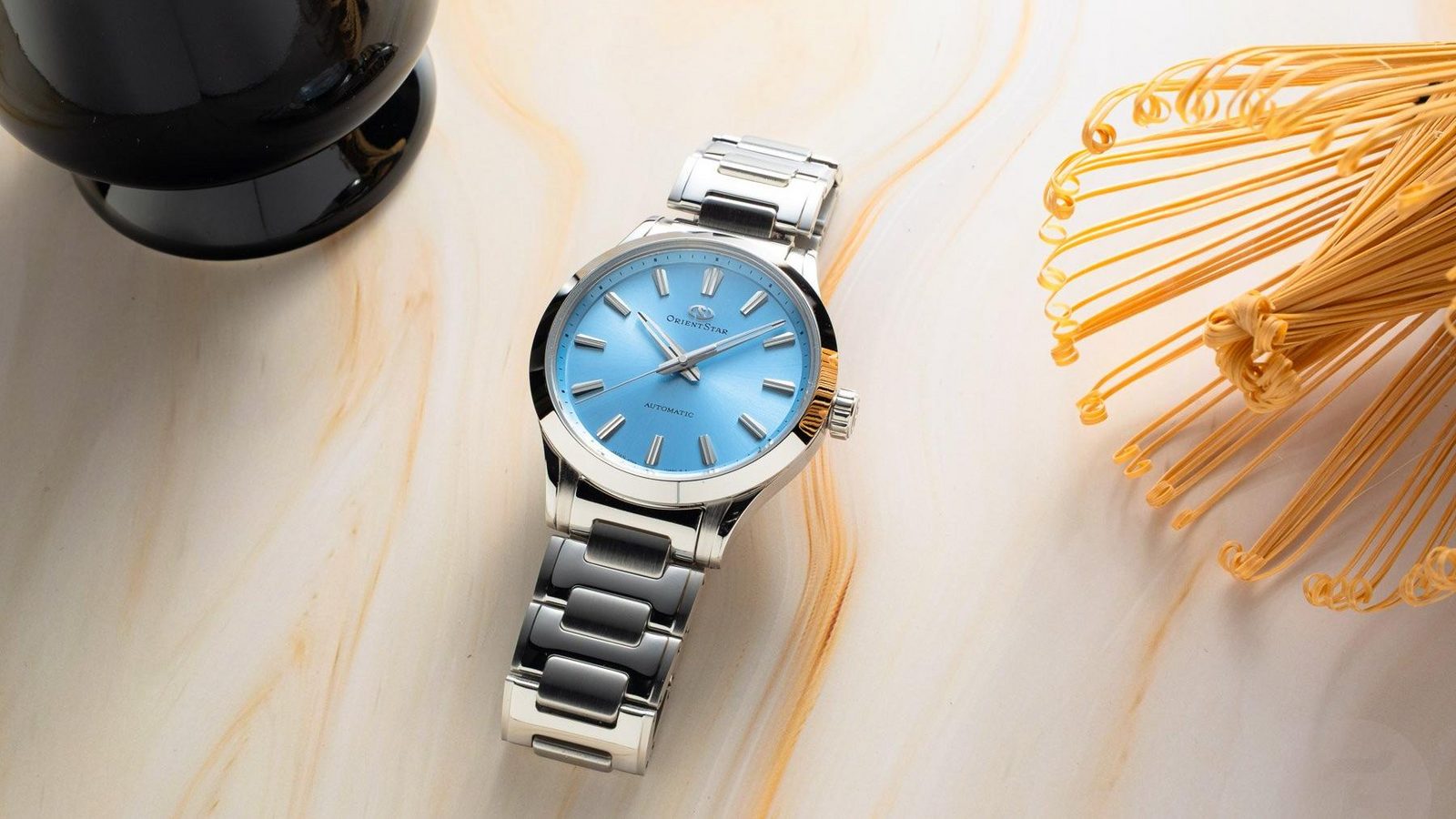
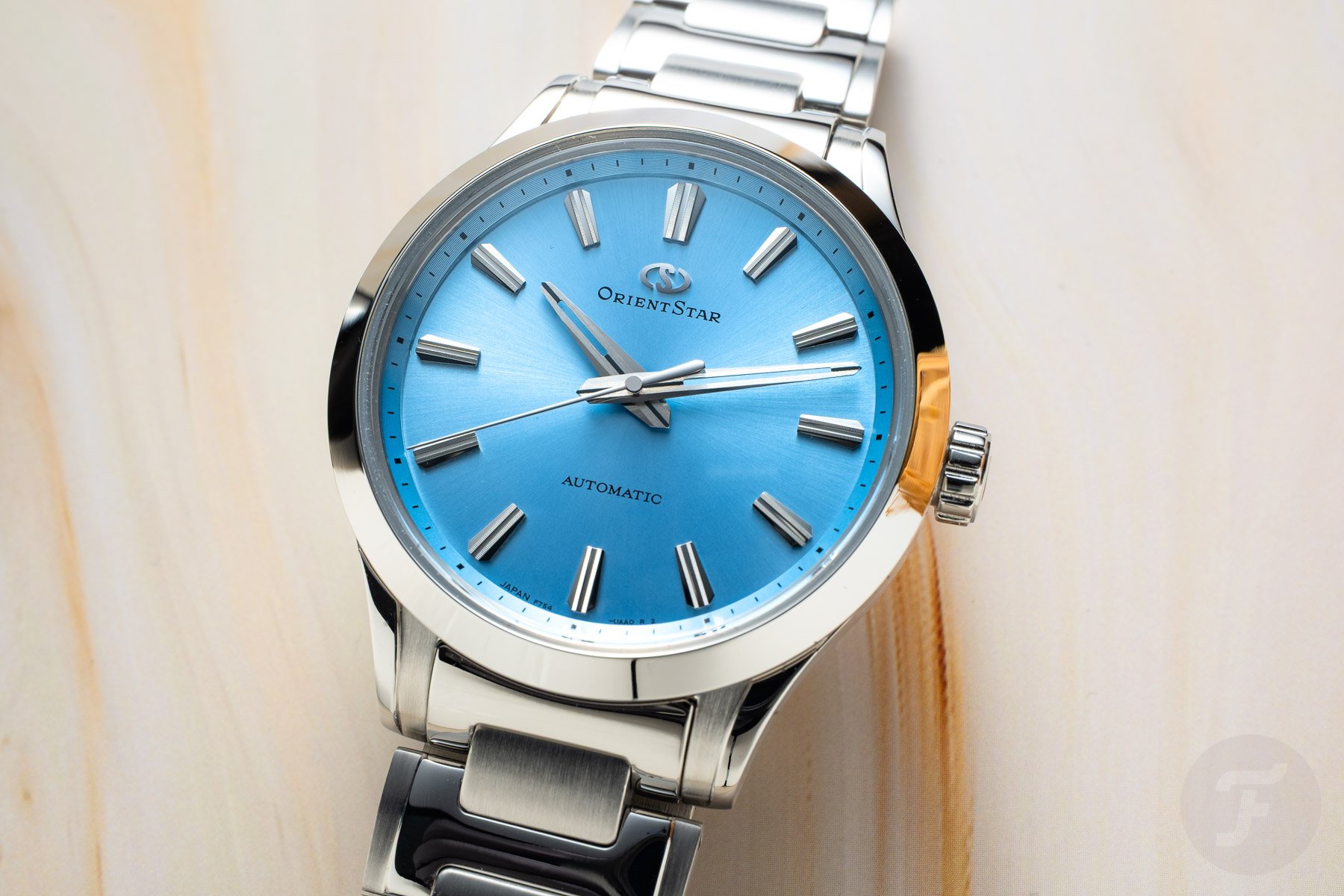
Orient Star has broken with a design signature it kept for three decades. The new Sakigake Three Hand, released for the brand's 75th anniversary, is the first Contemporary Collection watch since 1996 to drop the power reserve indicator that has defined the brand's dials. The date window is gone too, leaving a stripped, symmetrical face.
Sakigake, rendered in Japanese as 先駆け, translates loosely as forerunner, and Orient Star is using the word to describe a genuine change in direction. Removing the power reserve display frees up all 12 hour indexes on the dial, which previously had to make room around it.
The case is 316L stainless steel at 38.7mm across and 11.8mm thick, proportions the brand describes as sporty elegant rather than dressy or oversized. Applied indexes take on petal-like shapes with faceted edges and ribbed surfaces, catching light differently depending on the angle a wearer views them from.
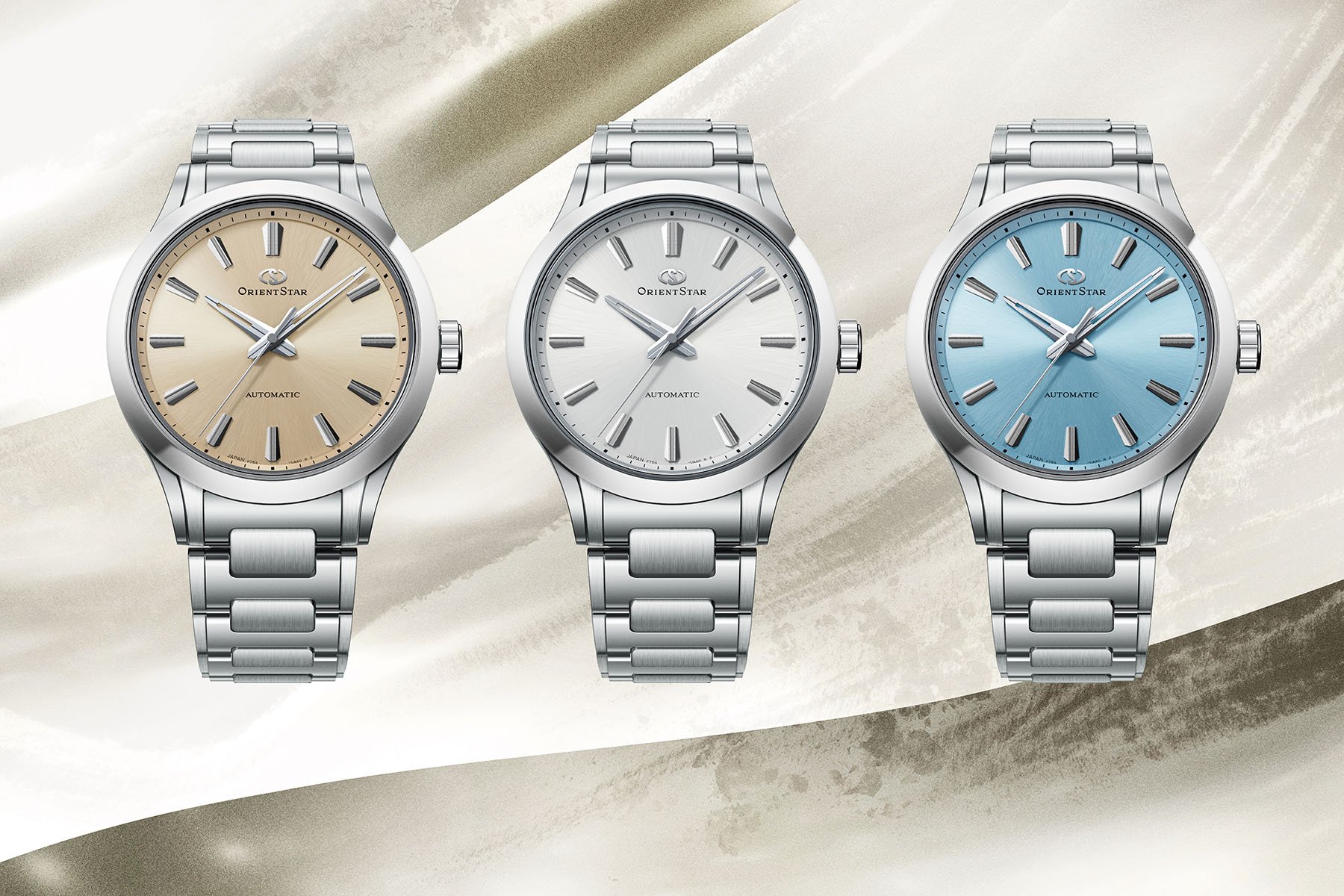
A broader wedge-shaped marker is at 12 o'clock to keep orientation without a printed number, and a radial sunburst pattern spans the dial. It reads most strikingly on the light blue version, while the silver, gold and limited copper models take a more restrained approach to the same finish.
Notably absent from every index and hand is any luminous material, an omission for a watch positioned around everyday wear. The skeletonized handset compensates visually, its cut-out design read as distinctive rather than decorative, and a polished seconds hand reaches a raised, grooved rehaut for precise time setting.
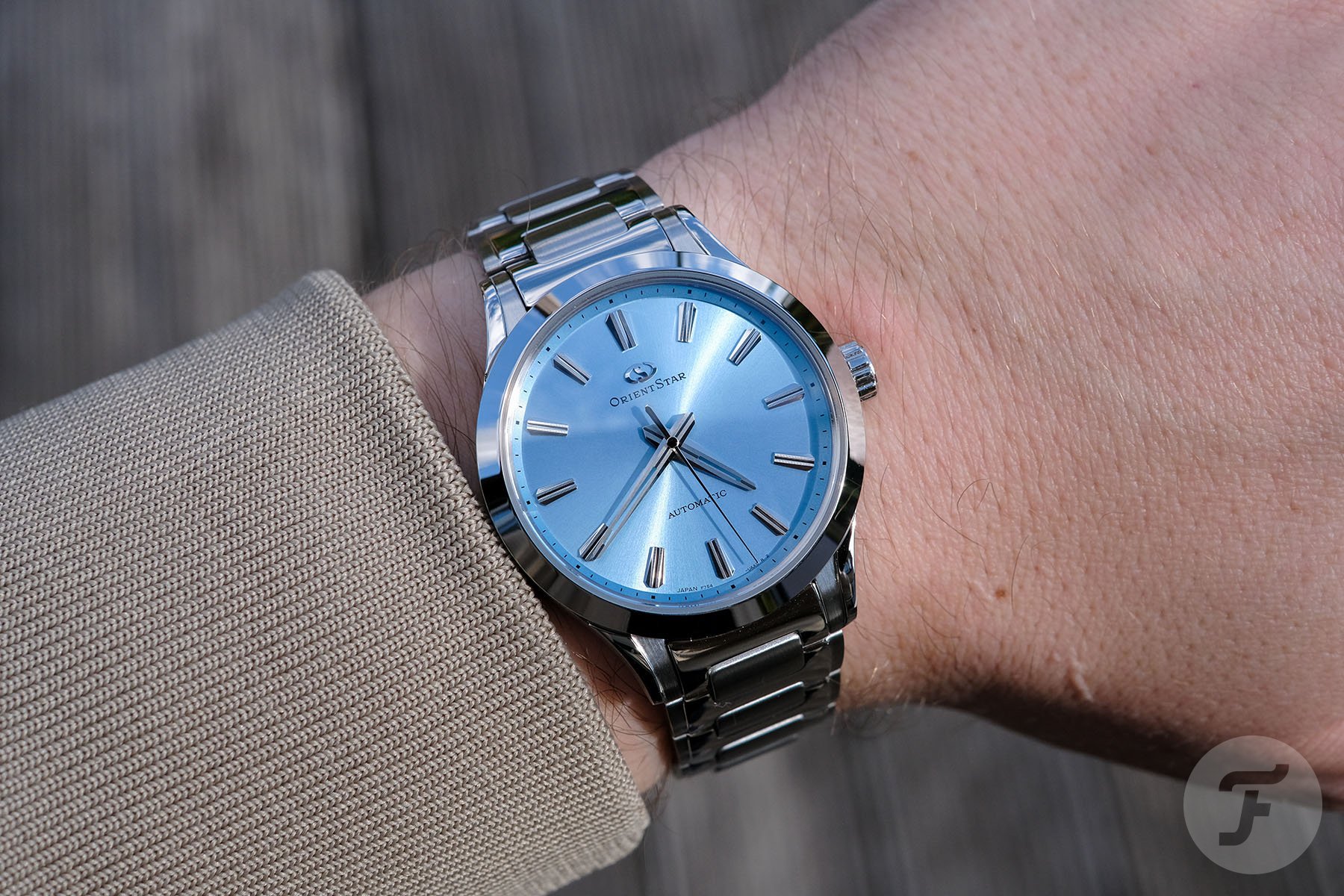
The bracelet introduces its own new language. Lugs shift from polished outer surfaces to hairline-brushed inner sections in a shape said to evoke a comet's twin tails, an effect Orient Star has long favored for its celestial references across the Star lineup.
That lug design creates an illusion worth noting. Specifications suggest a conventional 20mm lug spacing, but the actual gap between the lugs is 16mm, since the bracelet extends from the end links rather than the full lug width. It is a compelling look that narrows aftermarket strap options considerably.
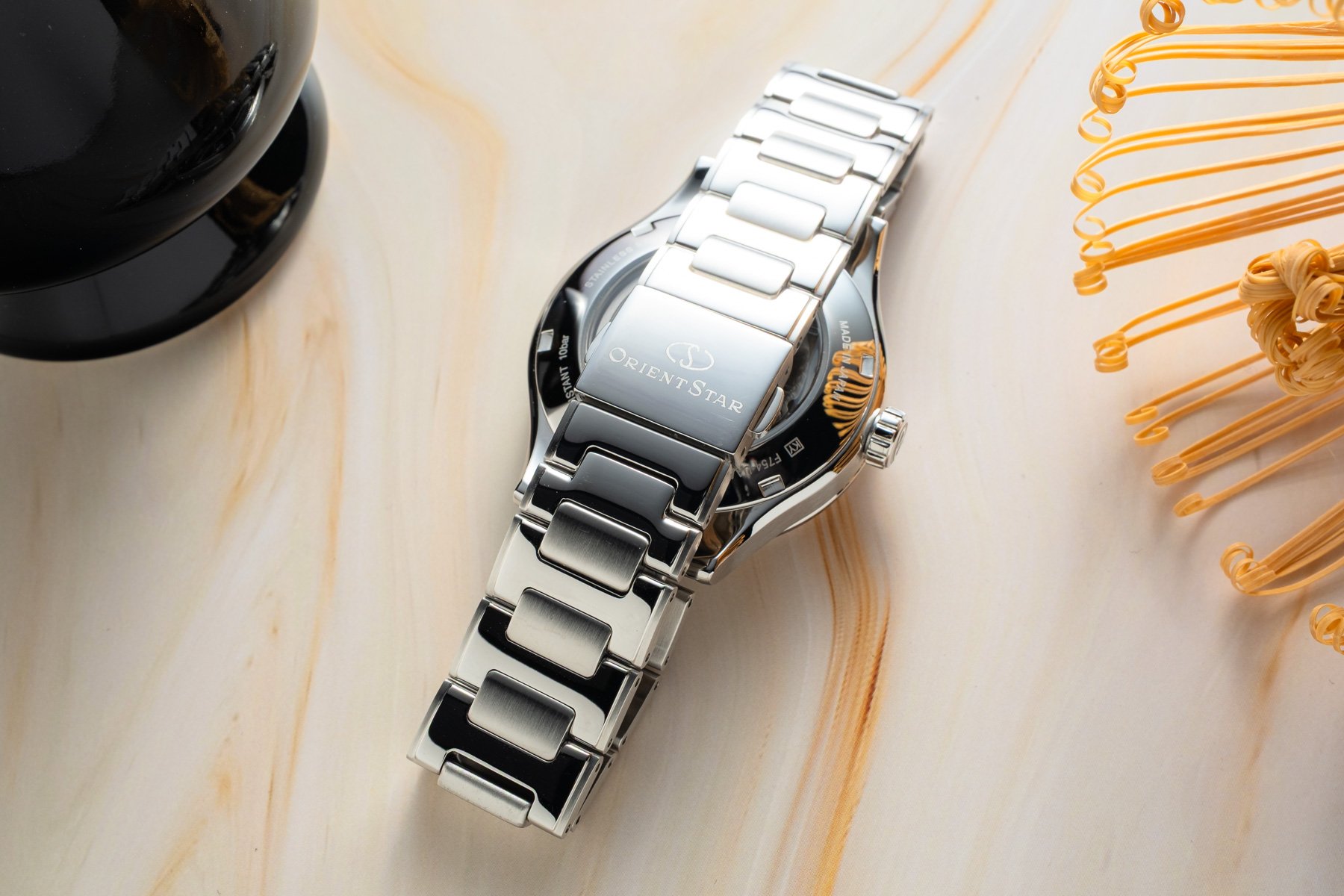
Polished H-shaped links flank brushed center links on the bracelet, tapering subtly toward the clasp. Orient Star has also cut clasp bulk substantially: the standard clasp measures around 7.4mm closed, while the Sakigake's comes in at 5.9mm, a difference immediately noticeable on the wrist over long wear.
What powers the new movement
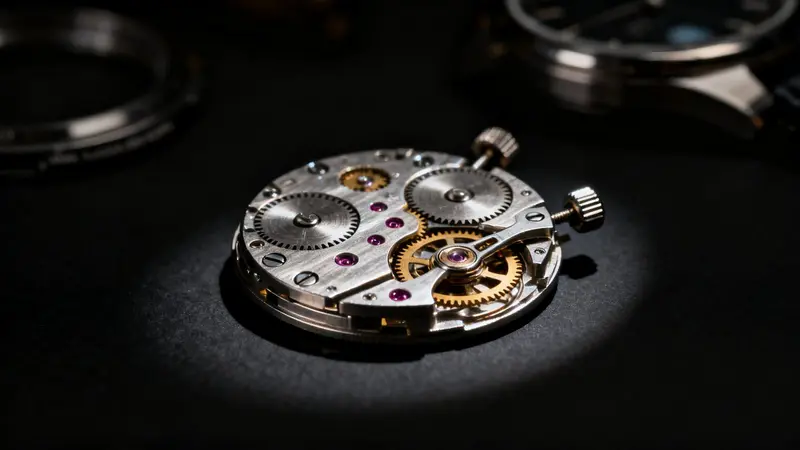
Inside is Orient Star's new in-house automatic caliber F7542, rated to an accuracy tolerance of minus five to plus fifteen seconds a day. The 22-jewel movement holds more than 50 hours of power reserve when fully wound, visible through a sapphire display back with ribbing on the rotor and perlage across bridges and plates.
The steel case back ring carries the standard engravings noting Japanese manufacture, materials, and a 10-bar water resistance rating equivalent to 100 meters. A screw-down crown bears Orient Star's traditional S-within-an-O motif, unchanged from earlier Contemporary Collection references.
There is no micro-adjustment system on the clasp, though Orient Star includes a half link to help fine-tune fit. The light blue Sakigake Three Hand retails for €880, while a limited copper-dial version marking the anniversary is priced at €960 across a run of 900 individually numbered pieces.
Orient Star is part of Seiko Epson and has built its identity on Japanese-made mechanical watches priced well below Grand Seiko while carrying comparable in-house movement ambitions. The power reserve indicator has been the clearest visual shorthand for that positioning since the mid-1990s.
We have covered Japanese watchmaking's anniversary calendar closely this year, including how Grand Seiko turned three seasons into 2026 dials for its own collectors, and how Titoni marked its own milestone with a ceramic tourbillon priced at CHF 11,900. Orient Star's approach differs by subtracting rather than adding to a familiar formula.
For readers who track how brands refresh long-running signatures without losing their identity, our coverage of style has followed similar recalibrations elsewhere in watchmaking and menswear, where a defining detail is retired rather than repeated for its own sake indefinitely.
Orient Star has not stated whether the power reserve indicator will return to other Contemporary Collection lines, and the Sakigake sits alongside rather than replaces existing references for now. Full specifications and availability for both the standard and limited copper editions are listed on Orient Star's own website.
This briefing is published daily using Luxe Digital’s AI agents, finely tuned to meet our editorial standards. While we test and review their work, mistakes can sometimes happen; tell us if you spot one.
Images: Orient Star