
Asics and Japanese menswear label Soshiotsuki have collaborated on a rework of the Skyhand OG, and production is limited to 50 pairs. The shoe retails for around $244, or ¥38,500, which means the entire run is worth roughly ¥1,925,000 before taxes.
Designer Soshi Otsuki has pulled the brand's 90s handball silhouette into the present with two deliberate additions. Both are small in number but significant in execution, and together they separate the shoe from the flat-shoe pack crowding shelves.
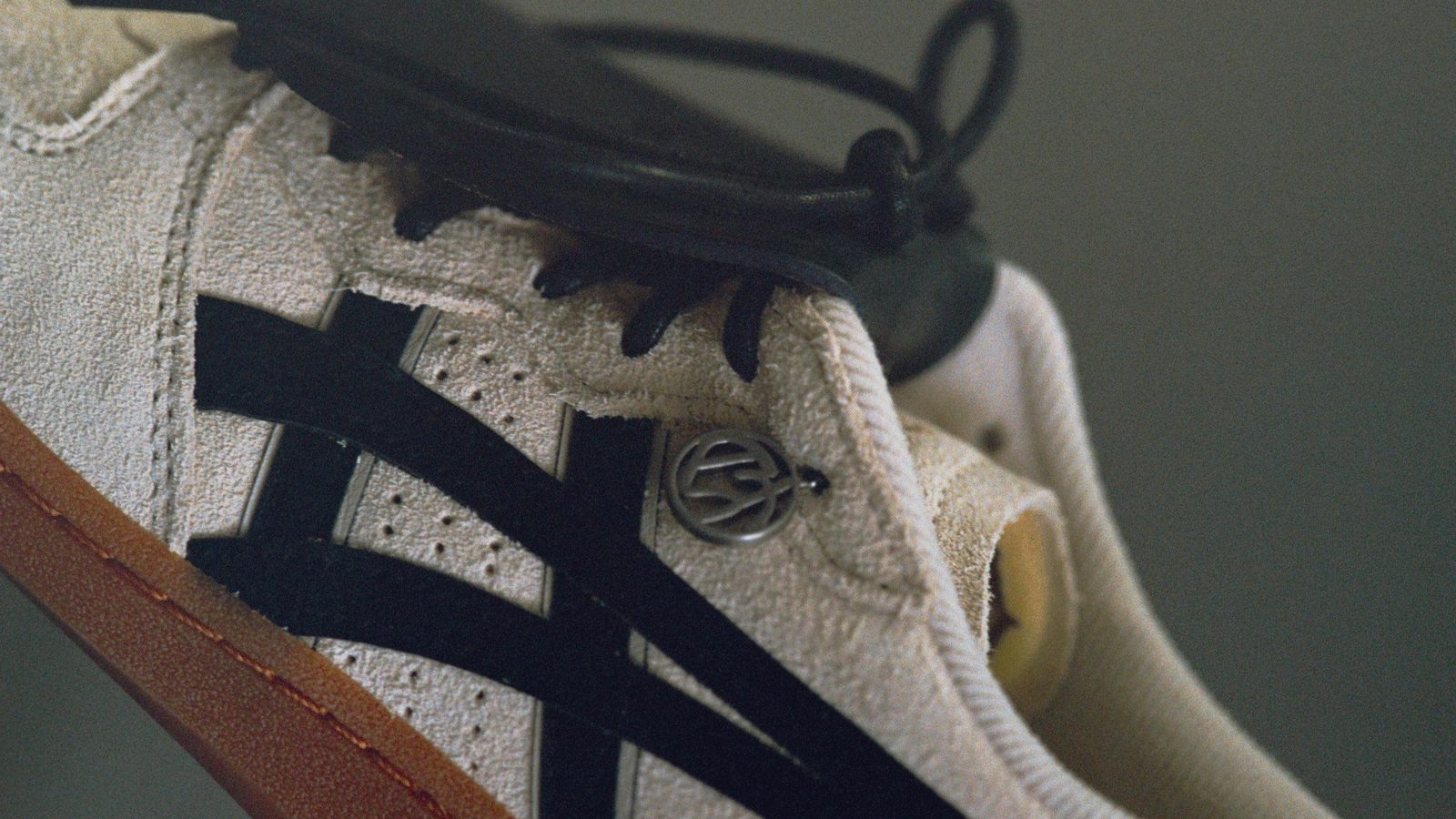
The first change is an oversized tongue cut from Chromexcel leather, sourced from the Horween tannery in Chicago. Chromexcel is infused with oils and waxes, so it shifts subtly in sheen as it bends. A specialist material on a sneaker tongue is an unusual choice, and a costly one.
Asakusa, Tokyo's old town, is where the tongue takes its final shape. Japanese artisans there custom-shape the leather, a district where craftsmen still perform what the label's presentation frames as serious fabric-altering work. The supply chain spans two continents before the shoe reaches a box.
The second addition is smaller: a logo charm attached to an eyelet, usually seen on Soshiotsuki's clothing rather than its footwear. Paired with the Horween tongue, the charm is a signature Otsuki has carried from ready-to-wear into sneakers for the first time.
Who the designer is
Soshi Otsuki won the 2025 LVMH Prize, the luxury group's award that fast-tracks emerging designers into the industry's top tier. For followers of Soshiotsuki, the kind of artisan attention paid to a shoe tongue will not be groundbreaking. It is simply the house working at its usual register.
Teaming with Asics changes the scale of that register. By attaching its name to a mainstream running and sportswear maker, the designer gains access to a distribution and audience no independent can build alone.
Asics's Skyhand OG itself is a handball shoe from the 1990s, a flat-soled, slim, leather-upper silhouette that nostalgia has returned to favor. The shape is part of the same 90s-design revival that has made simple, low-profile leather sneakers the most popular footwear category of the moment.
That popularity cuts both ways. When every shoemaker offers a variation on the flat-shoe formula, saturation follows, and the only reliable way to stand out is scarcity. A 50-pair run answers that directly: exclusivity becomes the product as much as the leather or the stitching.
Otsuki's luxe touch is what justifies the collaboration, and the pricing reflects it. At $244 the Skyhand OG sits well above a standard Asics release but far below designer footwear. The entire edition, sold out instantly, would gross around ¥1,925,000 at retail.
How it plays against our sneaker coverage
We have covered Asics before in the context of performance rather than fashion. Our guide to the best workout shoes for women includes Asics trainers built to run, squat and lift in, where durability and support matter more than a tanning technique.
This collaboration sits at the opposite end of what the brand does. A Horween Chromexcel tongue shaped in Asakusa has no bearing on a training shoe's cushioning, but it does show Asics widening its reach into the same artisanal territory designer labels occupy.
Our coverage of style has long tracked how sports brands borrow luxury craft to justify premium pricing, and this release is a concise example.
The broader flat-sneaker moment we have watched across our white sneaker guide is exactly the field Soshiotsuki is entering. The low leather shoe is everywhere, and the only room left was at the top, where scarcity and craft rather than price distinguish one pair from the next.
What separates this Skyhand OG is not the base shoe. It is the named materials and the named people: Horween, Asakusa, Otsuki. A collector pays for provenance as much as product, and that is precisely what a 50-pair edition is engineered to supply.
For Soshiotsuki, the prize is a new audience. The label's own following already knows Otsuki's attention to detail, but an Asics collaboration puts his name in front of sneaker buyers who would never enter a Tokyo atelier. The crossover is the growth plan.
Asics has not published an on-sale date or a sales channel for the 50 pairs, and no allocation by region has been shared. The collaboration exists as a design object for now, which suits both parties: the scarcity it trades on only holds while the details remain the story.
Support the content you love — it’s free 🎉
Add Luxe Digital as a preferred source on Google. Our stories will be more likely to appear in Google’s Top Stories. It’s free and supports our team. Thank you!
Add as preferred sourceYou can remove us any time in Google’s source preferences.
Thank you — you’re all set 🎉
Luxe Digital is now one of your preferred sources, so our stories are more likely to appear in Google’s Top Stories.
This briefing is published daily using an AI-powered system crafted by Luxe Digital’s team and finely tuned to meet our editorial standards. While we continuously test and review the output, mistakes can sometimes happen. Tell us if you spot one.
Image: Asics