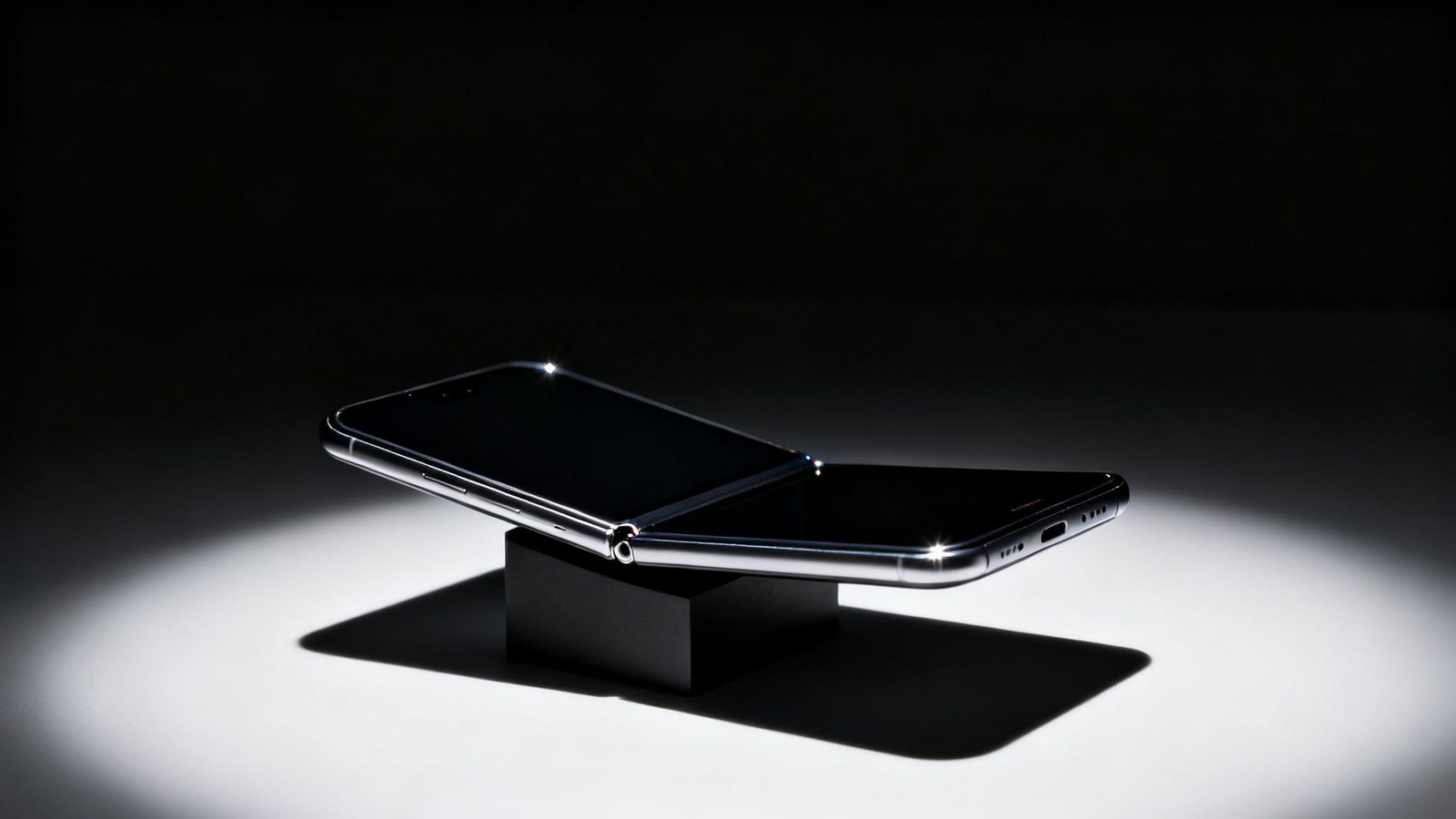
Apple has unveiled the iPhone Duo, its first foldable smartphone, at a September event titled 'Surprise and Shine' that also marked the public debut of new chief executive John Ternus. The Duo starts at $1,999 for 256GB, rising to $3,199 for 2TB, and goes on sale October 23 following preorders that open earlier that month.
The device is built from precision-machined, mirror-polished Grade 5 titanium and closes to roughly the size of a passport. Open, its inner Super Retina display measures 7.6 inches, which Apple describes as 80 percent larger than the iPhone 18 Pro Max's 6.9-inch screen. An outer display, 5.4 inches, handles quick tasks when the phone stays folded.
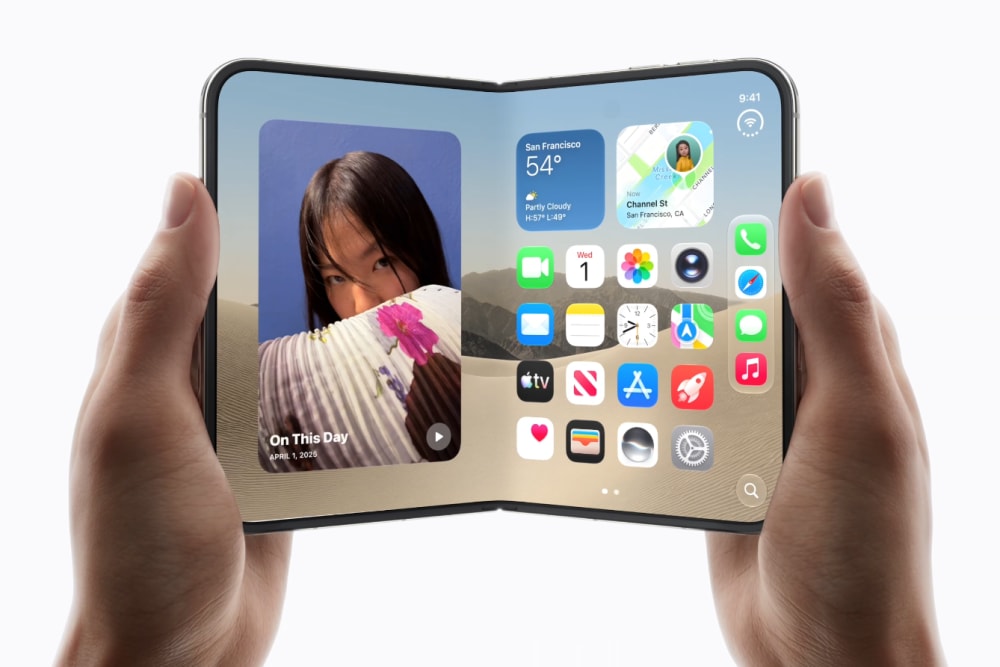
A custom hinge uses variable torque and an integrated magnet array to hold the inner display flat when open and snap it shut when closed. Apple has built the phone around a hidden under-display FaceTime camera that stays invisible until it activates, and it has moved Touch ID into the side power button rather than under the screen.
Design chief Molly Anderson said the Duo was engineered around a consistent aspect ratio shared by both displays, so switching between them feels continuous rather than jarring. Ternus told the audience the goal was a larger display that feels as natural as an iPad, and that Apple deliberately avoided a design that reads as two phones stuck together.
Power comes from Apple's new A20 chip and what the company calls its first dual battery system, with combined capacity of 5,400mAh. Apple states that setup returns up to 44 hours of video playback on the outer display, 31 hours on the inner display, and 24 hours under mixed use covering messaging, browsing and photography.
What the Duo can do
The Duo carries four cameras: one on the outer display, one dedicated to FaceTime beneath the inner screen, and a 48-megapixel Fusion main camera paired with a 48-megapixel ultra-wide on the rear, matching the sensor Apple used on the iPhone 18 Pro. A feature called Duo Preview lets a subject see their own image on the outer screen as it is captured.
It is the first iPhone to support the USB-C Apple Pencil, on both the outer and inner displays, for note-taking, sketching and marking up documents, a capability previously reserved for iPad. Split-screen multitasking, fluid continuity when opening and closing, and posture-based reorientation round out software built specifically for the folding form, running on iOS 27 at launch.
Apple has demonstrated the Duo working as a bedside alarm clock and a gaming device, framing the phablet form as versatile rather than niche. The company expects to ship six million units by year end, a volume that industry estimates suggest would still leave foldables at only about a quarter of the smartphone market.
The iPhone 18 Pro line
Sharing the stage was the non-folding iPhone 18 Pro, starting at $1,199 for 256GB, and the iPhone 18 Pro Max at $1,299, both adding a 2TB storage tier for the first time. Both models arrive in four new finishes, including a deep black, refined silver, burgundy and a blue Apple calls glacier, with color-matched aluminum and back glass.
The pair runs on a newly engineered A20 Pro chip with a second Neural Engine, and Apple states the 18 Pro Max delivers up to 45 hours of video playback, its longest battery life on any iPhone to date. Both models introduce variable aperture on the 48-megapixel Fusion Main camera, using a physical shutter with blades Apple describes as thinner than a human hair.
New Pro controls let users adjust aperture, shutter speed and white balance manually while shooting, alongside a histogram for checking exposure. Apple Reference Image now signs each photo at the pixel level at the moment of capture, creating what the company calls a digital negative that can verify authenticity after edits, alongside SynthID metadata for AI-generated images.
Siri AI, an entirely new version of the assistant built on Apple Intelligence, rolls out in beta with iOS 27 across the new lineup. Apple describes it as more personal and conversational, able to draw on messages, photos and emails for context. Preorders for the iPhone 18 Pro and Pro Max open September 12, with sales beginning September 18.
A first foldable a decade in the making
Apple is a late entrant to folding phones. Royole's FlexPai launched in China in 2018 and Samsung's Fold followed in 2019, meaning the Duo arrives roughly eight years after the format's debut, and after Samsung and Xiaomi had already explored a similar passport-shaped ratio.
The event doubled as a leadership handover, with Ternus succeeding Tim Cook earlier this month and using the closing 'one more thing' moment, a phrase Apple has reserved for its biggest reveals, to introduce the Duo rather than a smaller accessory update.
Apple also refreshed its wearables alongside the phones. AirPods 5 add improved personalized spatial audio and up to 50 percent more noise reduction than the prior generation, while Apple Watch Series 12 and Watch Ultra 4 gain new fitness metrics and, for the Ultra 4, up to two days of battery life.
Our earlier reporting on first-of-a-kind luxury launches, including Aston Martin's first road-legal motorcycle built with Brough Superior and Nammos opening its first resort hotel on Saudi Arabia's Red Sea coast, has tracked how established names time a debut model to reset expectations for an entire category rather than add another line to it.
Whether the iPhone Duo repeats that pattern will depend on what happens after October 23, when preorder demand and early reviews will show whether Apple's engineering answer to the crease and hinge problems that have dogged rivals actually holds up outside a keynote demonstration.
This briefing is published daily using Luxe Digital’s AI agents, finely tuned to meet our editorial standards. While we test and review their work, mistakes can sometimes happen; tell us if you spot one.
Image: Apple