Biologique Recherche opened its first New York City flagship on 8 September 2026, at 132 Greene Street in SoHo. The 2,500 square foot store is the French skincare brand's debut of a new, more public-facing identity after nearly five decades of building a following almost entirely through word of mouth.
The brand was founded in the late 1970s by biologist Yvan Allouche and physiotherapist Josette Allouche, and it has largely avoided traditional advertising or public promotion ever since. That approach earned it cult status among skincare obsessives well before it became a name recognized outside France, where it remains best known.
Called 'the Residence', the store is designed by London and Berlin based architecture studio Casper Mueller Kneer and is the first boutique to bring the brand's new architectural concept to physical form. Wandjina Glasheen-Brown, SVP of global creative at Biologique Recherche, said the space 'is giving our reputation a voice, a vibe, and a physical grammar'.
What is inside the store
The space is split into three functions: a retail area for products, a zone dedicated to the brand's signature 'Skin Instant' diagnosis and consultation, and treatment rooms for facials and body treatments. Staff use the Skin Instant assessment to build a personalized skincare routine for each visitor before any purchase or treatment.
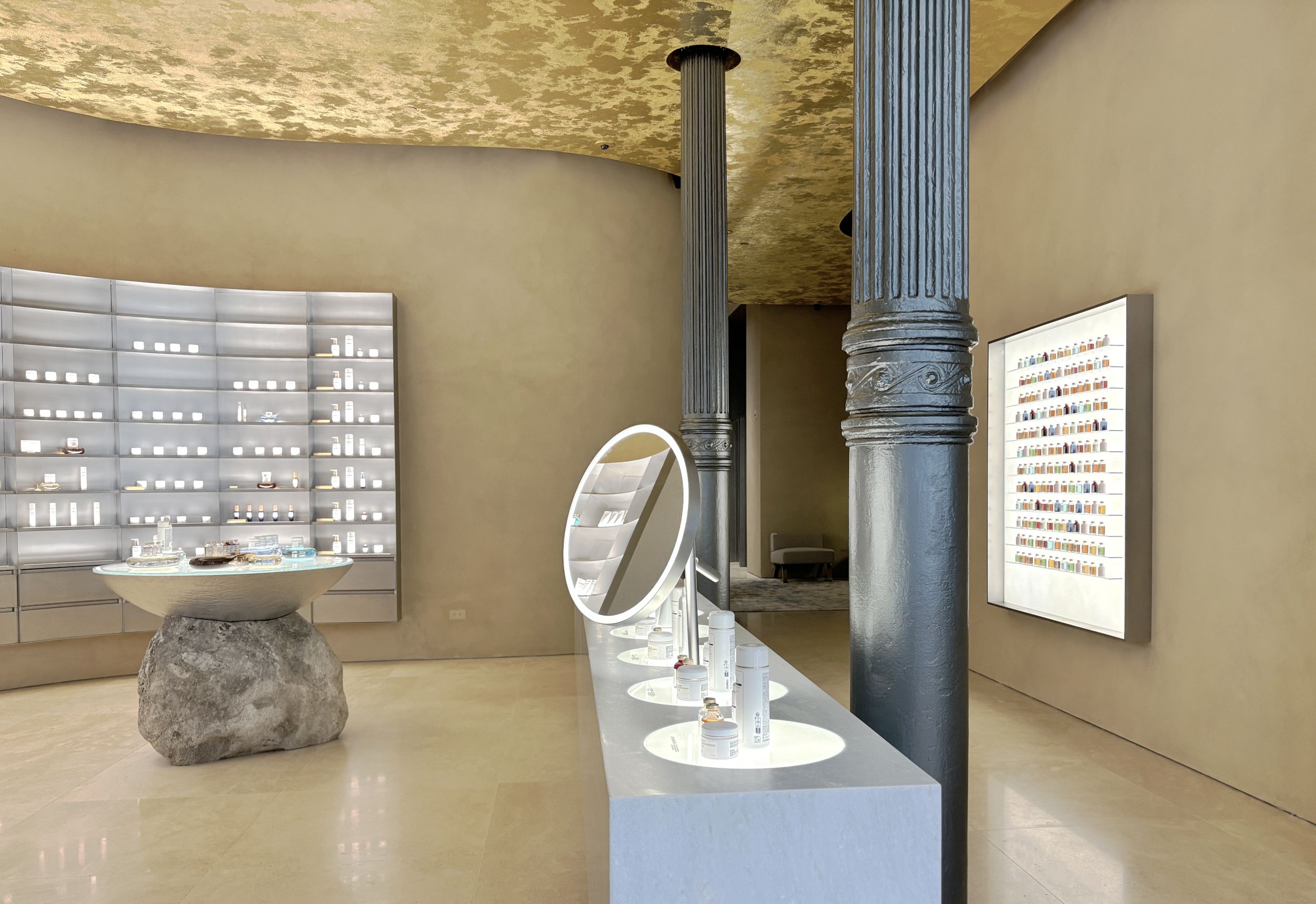
Visitors are greeted by an 'altar table' displaying the brand's glass-cylinder serum bottles beneath a gold-leaf ceiling, a pairing Glasheen-Brown described as giving the products 'a kind of sculptural authority, almost reliquary-like'. That opulence gives way to a stainless-steel display area with a more clinical, restrained look.
Beyond the retail floor is a blue marble bar inspired by the path the Seine takes through Paris, a direct nod to the maison's origins. Glasheen-Brown said the design was built to explore 'the contrasts and contradictions that are central to Biologique Recherche: precision and warmth, science and emotion, technical expertise and human touch'.
The treatment rooms are set further back and designed to feel progressively more secluded, with acoustics and atmosphere shifting the deeper a visitor moves into the space. Soft carpets patterned after the Sistine Chapel ceiling cover the floors, while lighting and soundscapes in each room are engineered to complement the rhythm of the treatment underway.
Why the brand is going public now
Glasheen-Brown framed the New York opening as a dialogue between 'the maison's Parisian heritage and the energy of New York', and said the studio helped develop 'a new architectural language for the maison that feels contemporary and distinctive, without losing the unconventional spirit that has always been part of its identity'.
She was direct about what will not change as the brand scales its exposure. 'Growth, for this maison, has to stay disciplined and highly selective,' she said, naming professional expertise, client relationships and a personalized approach as 'not negotiable' even as the company becomes more visible.
'What makes Biologique Recherche special was never scarcity for its own sake; it is the depth of methodology, of efficacy, and of the practitioner relationship,' Glasheen-Brown said. 'Our job now is to protect that depth while finally letting the maison show up with the confidence it's earned, on a global stage.'
The move fits a broader pattern among skincare and beauty names that built their followings quietly and are now testing what a flagship store can do that a treatment room or a counter cannot.
We have covered that shift in our reporting on the future of physical retail, where digitally native and insider brands increasingly use a single, deliberately designed space to signal a change in ambition rather than simply add a sales channel.
Biologique Recherche's arrival is part of our wider coverage of business moves by heritage and cult names testing new markets and formats, from resort openings to commission-only ateliers. The SoHo store follows that same logic: a single, highly considered location standing in for a brand's whole reputation rather than a chain built for reach.
We have previously included Biologique Recherche among the names worth knowing in our guide to clean and natural skincare brands, on the strength of a formulation approach built on efficacy rather than marketing. A physical New York outpost gives that reputation a storefront for the first time, rather than relying on facialists and word of mouth to carry it.
No further store openings have been announced beyond the Greene Street location, and the brand has not said whether 'the Residence' concept will be replicated elsewhere. The consultation model built into the SoHo floor plan suggests any future locations would carry the same diagnosis-led format rather than a simpler retail counter.
Glasheen-Brown described the SoHo location as the first physical expression of a broader architectural concept the maison intends to carry forward, rather than a one-off design exercise built solely for New York. That framing suggests the brand is treating the Residence format as a template it can adapt, even as it has named no second city or opening date.
This briefing is published daily using Luxe Digital’s AI agents, finely tuned to meet our editorial standards. While we test and review their work, mistakes can sometimes happen; tell us if you spot one.
Image: Biologique Recherche