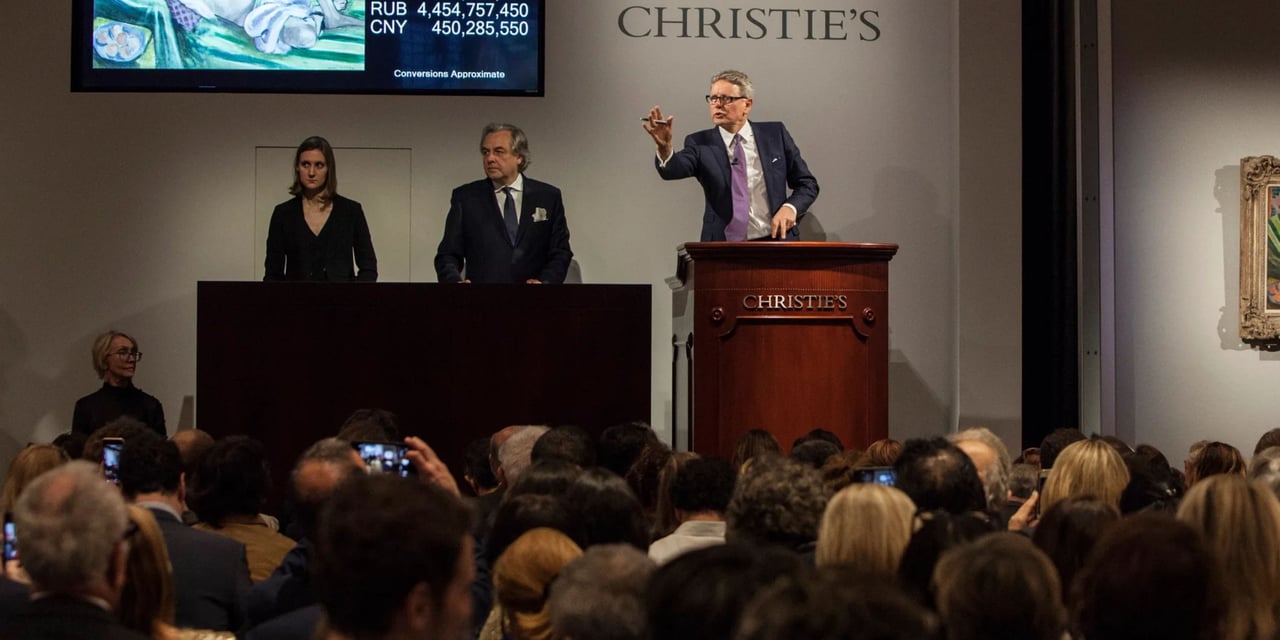
There is a Charizard somewhere in your house. If you grew up in the late 1990s, it’s tucked into a binder sleeve next to a holographic Blastoise and a stack of energy cards you never used. If you came back to the hobby during the 2020 boom, it’s sitting in a plastic top loader in a shoebox, waiting for the day you finally send it off to get graded.
A card exactly like it has changed hands for eight figures. The same picture, on the same cardboard, brought $16.49 million with one grade on the slab and $900,000 with a lower one. Several of the highest prices on this list never touched a Charizard at all. They went to Trainer cards nobody could buy, handed out by the dozen to tournament winners who never planned on selling.
None of that is about the artwork. A grading company scores the corners, the centering and the surface, and that single number decides whether a card is worth thousands or worth nothing. Print run decides the rest.
Every price below is a completed sale, graded, dated and sourced, because a Pokémon card figure means nothing without those three things attached.
If you are here because there is a binder in your parents’ attic, skip to what your childhood binder is probably worth before you get your hopes up. For more collectibles that outgrew their price tags, see the most valuable baseball cards and the world’s most valuable coins.
The 14 most valuable Pokémon cards ever sold
| Rank | Card | Grade | Price |
|---|---|---|---|
| 1 | 1998 Pikachu Illustrator | PSA 10 | $16,492,000 |
| 2 | 1998 No. 3 Trainer Bronze Trophy Pikachu | PSA 10 | $1,769,000 |
| 3 | 1996 Japanese Base Set No Rarity Charizard | PSA 10 | $1,700,000 |
| 4 | 1997 No. 1 Trainer Gold Trophy Pikachu | PSA 8 | $982,100 |
| 5 | 1999 Base Set 1st Edition Charizard | PSA 10 | $954,800 |
| 6 | 1995 Topsun Charizard, Blue Back | PSA 10 | $493,230 |
| 7 | 1998 No. 2 Trainer Silver Trophy Pikachu | PSA 10 | $444,000 |
| 8 | 1998 Blastoise Presentation Galaxy Star Holo | CGC 8.5 | $360,000 |
| 9 | 2017 Tsunekazu Ishihara Signed GX | PSA 7 | $247,230 |
| 10 | 1999 Base Set 1st Edition Blastoise | PSA 10 | $138,880 |
| 11 | 1998 Kangaskhan Family Event Trophy | PSA 9 | $100,100 |
| 12 | 1999 No. 1 Trainer Super Secret Battle | PSA 10 | $90,000 |
| 13 | 1999 Base Set 1st Edition Venusaur | PSA 10 | $75,640 |
| 14 | 1999 No. 2 Trainer Tropical Mega Battle | PSA 10 | $50,300 |
Why are Pokémon cards selling for millions now?
Buyers who grew up with the cards now have the money to buy the rarest ones. eBay’s head of collectibles told the Financial Times that nostalgia and disposable income are behind the surge. The FT also reports that Pokémon was the most searched term in eBay’s collectibles category in the first half of 2026.
The grading companies feel it. PSA processed more than 1.3 million Pokémon cards in August, ten times the August 2021 figure according to the analytics firm GemRate, and it stopped taking cheaper-value submissions in May. Dealers expect the 30th anniversary in October to bring another wave of buyers.
Scarcity does the rest. Modern cards can be reprinted. Vintage cards cannot. Almost every price below belongs to a card from the 1990s or to a tiny promo run.
1998 Pikachu Illustrator: $16,492,000

The Pikachu Illustrator was never a game card. It was a prize, handed to the winners of illustration contests run by the Japanese magazine CoroCoro Comic in 1998, and the word “Illustrator” sits where “Trainer” normally goes. Fewer than 40 were printed, and about two dozen are known to survive.
Only one has ever graded PSA 10. Logan Paul bought that copy in 2021 for roughly $5.275 million and turned it into a piece of his public persona. The grade drew argument for years, since the same card carried a PSA 9 through earlier owners, but the PSA 10 is what went to the block.
Goldin ran the sale over 41 days and closed it on February 16, 2026. The hammer landed at $13 million, and the buyer’s premium carried the total to $16,492,000. No trading card of any kind has sold for more at auction.
The rest of the market for this card tells you what the grade is worth on its own. A PSA 9 changed hands privately for about $1.275 million in June 2021, and another sold at Heritage Auctions for $1,406,250 in March 2026, a record for that grade. A PSA 7 sold for $900,000 at Goldin in February 2022. A CGC 9.5 brought $672,000 at Goldin in October 2022. Same artwork, same print run, and millions of dollars riding on one number.
| Set | 1998 Japanese CoroCoro promo |
|---|---|
| Grade | PSA 10 (Gem Mint), sole example |
| Sold | February 16, 2026 |
| House | Goldin Auctions (public auction) |
| Price | $16,492,000 |
1998 No. 3 Trainer Bronze Trophy Pikachu: $1,769,000

Third-place finishers in the early tournaments received the same Pikachu-with-a-trophy design over a bronze background, marked “No. 3 Trainer.”
PSA has graded five copies of this card, and one of them is a PSA 10. The next grade down is an 8, and a PSA 8 sold at Heritage for $300,000 in April 2023.
The PSA 10 went to Goldin in May 2026 and closed at $1,769,000, a $1,450,000 final bid plus the buyer’s premium. That is nearly six times the PSA 8 price from 2023. It makes the Bronze the top trophy card on this list.
| Set | 1998 tournament promo, Bronze |
|---|---|
| Grade | PSA 10 (Gem Mint), the only one at that grade |
| Sold | May 2026 |
| House | Goldin Auctions (public auction) |
| Price | $1,769,000 |
1996 Japanese Base Set No Rarity Charizard: $1,700,000
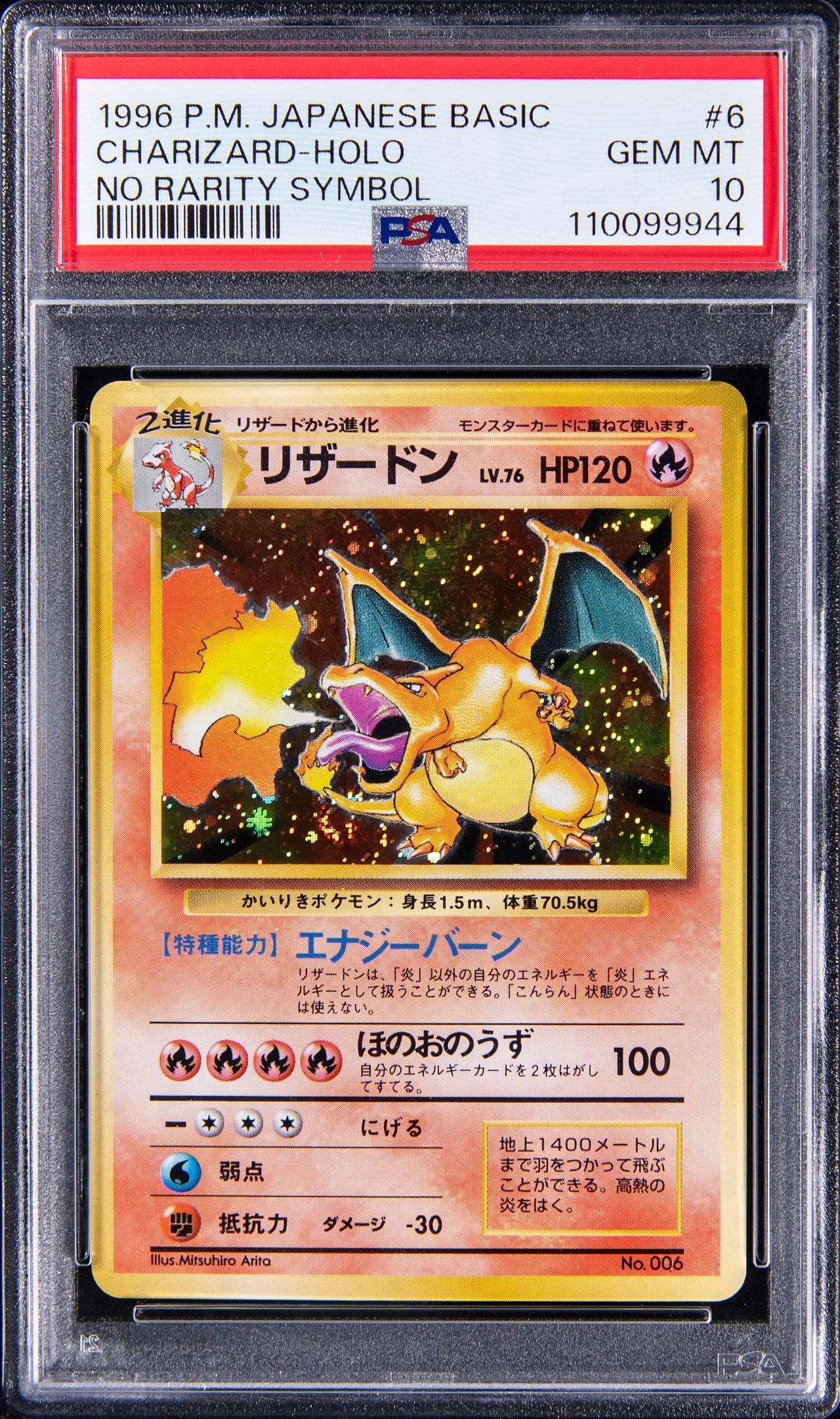
The first Japanese Base Set went on sale in October 1996, and its first print run left something off. The small rarity symbol that belongs in the bottom-right corner of the holographic cards is missing. Later printings fixed it, and that left the first print run as the scarcest version of the card.
A PSA 10 copy sold for $1,700,000 on March 3, 2026, the first Charizard of any kind to pass a million dollars. Fewer than a dozen copies have graded that high.
Five days later a copy with the case signed by the artist, Mitsuhiro Arita, sold for $1,232,200. It is a different copy of the same card.
| Set | 1996 Japanese Base Set, no rarity symbol |
|---|---|
| Grade | PSA 10 (Gem Mint) |
| Sold | March 3, 2026 |
| House | Reported sale, venue not confirmed |
| Price | $1,700,000 |
1997 No. 1 Trainer Gold Trophy Pikachu: $982,100

The first Pokémon tournament took place at the Makuhari Messe hall in Chiba, Japan, over two days in June 1997. Winners received a Pikachu holding a trophy, “No. 1 Trainer” printed on the card and a gold background behind the art.
Roughly fifteen of these Gold trophies were awarded across the divisions, and very few have ever been graded. The illustration is by Mitsuhiro Arita, the same artist behind the Base Set Charizard.
A PSA 8 example sold for $982,100 at Goldin Auctions on March 6, 2026, the most ever paid for this card.
| Set | 1997 1st Tournament promo, Gold |
|---|---|
| Grade | PSA 8 (Near Mint-Mint) |
| Sold | March 6, 2026 |
| House | Goldin Auctions (public auction) |
| Price | $982,100 |
1999 Base Set 1st Edition Charizard: $954,800

Ask someone to picture a valuable Pokémon card and this is usually what they draw. Charizard #4 from the 1999 English Base Set, printed in the first run, is the grail of the English pack-pulled market.
A PSA 10 example sold for $954,800 at Goldin Auctions in February 2026, in the same event as the record Pikachu Illustrator. Heritage Auctions had set the previous mark at $550,000 in December 2025, and PSA has graded only 125 copies at 10. Among Charizards, only the Japanese No Rarity card above it has sold for more.
The number rides entirely on the print variant. A 1st Edition holo Charizard in a perfect grade clears six figures. The Unlimited version of the same picture, printed later and in far greater numbers, sells for a few hundred dollars.
| Set | 1999 Base Set 1st Edition #4 |
|---|---|
| Grade | PSA 10 (Gem Mint) |
| Sold | February 2026 |
| House | Goldin Auctions (public auction) |
| Price | $954,800 |
1995 Topsun Charizard, Blue Back: $493,230

Before the Base Set existed, there was Topsun. A company called Top-Seika printed Pokémon cards from 1995 to 1997 and tucked them into packs of apple-flavored gum, years ahead of the trading card game most collectors know today.
That makes this the first Charizard card ever produced. Almost none survived in high grade, because nobody treats a gum-pack insert as an investment, and the scarce “blue back” variant is rarer still.
The only PSA 10 blue-back Topsun Charizard in existence sold for $493,230 at Goldin Auctions in January 2021. It stood as the most expensive Charizard ever sold at auction until the 1st Edition Base Set card passed it in December 2025.
| Set | 1995 Topsun, scarce blue back |
|---|---|
| Grade | PSA 10 (Gem Mint), 1-of-1 |
| Sold | January 2021 |
| House | Goldin Auctions (public auction) |
| Price | $493,230 |
1998 No. 2 Trainer Silver Trophy Pikachu: $444,000

The runner-up from the 1998 tournament series took home the Silver version of the same trophy Pikachu, “No. 2 Trainer” on the card and a silver background in place of gold. It is scarcer than the Gold in graded terms, because so few were made and even fewer preserved.
PSA has certified only four copies in total, and the one that sold is the sole PSA 10. Around fourteen are thought to exist across all conditions.
It sold for $444,000 at Goldin Auctions in September 2023, opening at $50,000 and drawing close to thirty bids. The Gold above it brought more than double that as a PSA 8, a grade lower.
| Set | 1998 2nd Tournament promo, Silver |
|---|---|
| Grade | PSA 10 (Gem Mint), sole example |
| Sold | September 2023 |
| House | Goldin Auctions (public auction) |
| Price | $444,000 |
1998 Blastoise Commissioned Presentation Galaxy Star Holo: $360,000

This one is barely a Pokémon card in the usual sense. Wizards of the Coast produced it in 1998 as a test piece to show Nintendo what an English-language Pokémon card could look like, carrying a galaxy-star holographic pattern that never went into production.
Two are known to exist.
Heritage Auctions sold this example, graded CGC 8.5, for $360,000 in January 2021. It is a manufacturing artifact rather than a tournament prize.
| Set | 1998 WOTC presentation piece |
|---|---|
| Grade | CGC 8.5, 1 of 2 known |
| Sold | January 2021 |
| House | Heritage Auctions (public auction) |
| Price | $360,000 |
2017 Tsunekazu Ishihara Signed GX: $247,230

Tsunekazu Ishihara runs The Pokémon Company. For his 60th birthday in 2017, the company printed a GX card featuring Ishihara himself alongside a Master Ball and handed it only to employees. Estimates of the print run range from about 30 to a couple of hundred.
The card sold at Goldin Auctions in April 2021 for $247,230. It graded PSA 7, and Ishihara’s own signature on it earned a separate PSA/DNA 9.
It is the rare modern promo that behaves like a vintage trophy, for the same reason the trophies do. A tiny, closed distribution creates scarcity that a mass-market set never can.
| Set | 2017 Sun & Moon Black Star promo |
|---|---|
| Grade | PSA 7, signature PSA/DNA 9 |
| Sold | April 2021 |
| House | Goldin Auctions (public auction) |
| Price | $247,230 |
1999 Base Set 1st Edition Blastoise: $138,880

Blastoise is the water-type grail of the Base Set, one of three starter holos everyone wanted in 1999. A 1st Edition copy in a perfect grade is genuinely scarce.
Logan Paul pulled it live during a 1st Edition Base Set box break, and the provenance added a premium on top of the grade.
Goldin sold it for $138,880 in February 2026, in the same event as the record Pikachu Illustrator. The grade is PSA 10, and the box-break history is stamped on the auction record.
| Set | 1999 Base Set 1st Edition #2 |
|---|---|
| Grade | PSA 10 (Gem Mint) |
| Sold | February 2026 |
| House | Goldin Auctions (public auction) |
| Price | $138,880 |
1998 Kangaskhan Family Event Trophy Card: $100,100

Japan ran a tournament in May 1998 that paired a parent with their child as a team. Teams that won a set number of battles received this holographic Kangaskhan, a Pokémon chosen because it carries its baby in its pouch.
Not many parent-and-child teams cleared the bar, so not many cards went out.
A PSA 9 sold on the open market for $100,100 in February 2021. Lower grades have landed at auction since, including a PSA 8 at $70,801 through Goldin in March 2023.
| Set | 1998 Family Event promo #115 |
|---|---|
| Grade | PSA 9 (Mint) |
| Sold | February 2021 |
| House | eBay (open-market sale) |
| Price | $100,100 |
1999 No. 1 Trainer Super Secret Battle: $90,000

This holographic Trainer card was a key. It admitted its owner to a secret Pokémon tournament, the Super Secret Battle, whose finals took place in Tokyo on August 22, 1999. Seven regional events meant seven cards.
Of those seven, six carry a PSA 10 grade. Heritage Auctions sold a PSA 10 for $90,000 on July 9, 2020, a record for the card at the time and one of the sales that kicked off the pandemic-era Pokémon boom.
| Set | 1999 Super Secret Battle promo |
|---|---|
| Grade | PSA 10 (Gem Mint), one of six |
| Sold | July 9, 2020 |
| House | Heritage Auctions (public auction) |
| Price | $90,000 |
1999 Base Set 1st Edition Venusaur: $75,640

Venusaur is the third of the Base Set starters, completing the grass, fire and water holos that defined the 1999 release. A 1st Edition Venusaur in PSA 10 is the least valuable of the three starter grails, and that still puts it comfortably into five figures.
This copy came out of the same Logan Paul box break as the Blastoise above.
Goldin sold it for $75,640 in February 2026, the highest price paid for a 1st Edition Venusaur in any language. The grade is PSA 10.
| Set | 1999 Base Set 1st Edition #15 |
|---|---|
| Grade | PSA 10 (Gem Mint) |
| Sold | February 2026 |
| House | Goldin Auctions (public auction) |
| Price | $75,640 |
1999 No. 2 Trainer Tropical Mega Battle: $50,300

The Tropical Mega Battle was the first international Pokémon championship, held in Hawaii and open only to elementary-school players who won their way through Japan’s regional tournaments in 1999. The runner-up received this “No. 2 Trainer” card, carrying the Tropical Wind artwork.
PSA has awarded just three copies a Gem Mint 10 grade. It is one of the founding trophy cards of competitive Pokémon.
A PSA 10 sold on the open market for $50,300 in October 2020.
| Set | 1999 Tropical Mega Battle promo |
|---|---|
| Grade | PSA 10 (Gem Mint), one of three |
| Sold | October 2020 |
| House | eBay (open-market sale) |
| Price | $50,300 |
Base Set, 1st Edition and Shadowless: what the print variants actually mean
Three phrases decide the value of almost every vintage English Pokémon card, and most owners have never had them explained. A 1999 Base Set Charizard can be worth $954,800 or $300, and the only difference is which of these three printings you’re holding.
1st Edition is the first print run. It carries a small stamp reading “Edition 1” on the lower-left of the artwork, and it lacks a drop shadow to the right of the picture box. These are the scarcest and the most valuable of the three. The 1st Edition Charizard is the top English pack-pulled card in this ranking for that reason.
Shadowless is the second printing. It dropped the “Edition 1” stamp before the drop shadow was added, so the picture box still looks flat. Shadowless cards are the middle tier: worth far less than a 1st Edition, far more than the common version.
Unlimited is everything printed after that. Wizards of the Coast added the drop shadow and printed these in enormous numbers to meet the craze. An Unlimited Base Set Charizard in a normal grade trades for a few hundred dollars.
Here is the quick test. Look to the right of the illustration first. A shadow there means Unlimited. No shadow means you check the lower-left of the art for the stamp: a stamp means 1st Edition, and no stamp on a shadowless card means exactly that, Shadowless.
The print variant turns a “1999 Charizard” into either a life-changing card or a common one. The 1995 date, by contrast, belongs to the Topsun gum-pack cards rather than the Base Set at all, and the blue-back Topsun Charizard at number six above is the card that date actually describes.
The rarest Pokémon cards: trophies and promos that never came in packs
The rarest Pokémon cards were never for sale. They were prizes, keys and gifts, produced in runs of a few dozen and handed to tournament winners, contest entrants and company staff.
A late-1990s Base Set was printed in the millions. A trophy Pikachu was printed for the handful of children who won a regional final. When the supply of a thing is fixed at fifteen copies, no amount of demand can add a sixteenth.
The Pikachu Illustrator was a magazine-contest prize. The Gold, Silver and Bronze trophy Pikachus went to tournament finishers. The Super Secret Battle card was an entry pass. The Kangaskhan came from a parent-and-child event. The Ishihara GX was a birthday gift to employees. Not one of them ever came in a booster pack, and together they occupy most of the top ten.
Print run behaves differently at these numbers. A card that exists in millions can never become truly scarce, no matter how many collectors want it. A card that exists in a print run of a few dozen is scarce the day it’s printed, and it stays scarce forever. The trophy cards prove it best: they hold the top of the market against everything the modern game has produced since.
The most valuable Japanese Pokémon cards
The most valuable Japanese Pokémon cards sit outside the set structure most Western collectors know. Pokémon began in Japan in 1996, a full three years before the English Base Set, and the earliest and rarest material is Japanese by default.
Japan also ran the tournaments. Every trophy card in this article, from the Pikachu Illustrator to the Tropical Mega Battle Trainer, is a Japanese promo. The English-language game never produced an equivalent, because the prize structure lived in Japan.
The print culture differs too. Japanese promos flowed through magazines like CoroCoro Comic, through regional events and through corporate gifts, rather than through the retail pack model that built the English sets. A card handed to contest winners by a magazine has no Western counterpart, and it prices accordingly.
The No Rarity Charizard at number three shows the same pattern in a card that came in packs. The first Japanese print run missed a symbol, later printings fixed it, and the scarce version now sells for $1,700,000.
Japanese cards predate the English-language sets most collectors grew up with, and the scarcest of them rank among the most valuable cards in the hobby.
The most valuable Pokémon trainer cards
A Professor Oak or a Bill pulled from an old set is a common card. Yet the single most valuable Trainer cards ever made rank near the very top of this list.
The trophy prizes were built as Trainer cards. The Gold, Silver and Bronze Pikachus are “No. 1 Trainer,” “No. 2 Trainer” and “No. 3 Trainer” respectively. The Super Secret Battle key is a Trainer card. The Tropical Mega Battle prize is a Trainer card. Five of the entries above are, technically, Trainer cards, and they range from $50,300 to $1,769,000.
A Trainer card pulled from a booster pack is worth almost nothing, whatever the set. A Trainer card handed out as a tournament trophy is among the most valuable objects in the entire hobby.
What makes a Pokémon card valuable?
Five factors set the number, and they compound.
Grade comes first. Third-party graders assign a 1 to 10 on a card’s centering, corners, edges and surface. The Pikachu Illustrator makes the point at the extreme: $16.49 million as a PSA 10, $900,000 as a PSA 7. Every serious Pokémon price in this article is a graded price, because an ungraded card can’t be priced reliably.
The population report tells you how many exist at that grade. PSA, BGS and CGC publish running counts of how many copies of each card they’ve graded at each level. When a report shows only one PSA 10 of a card, no other copy at that grade exists to compete with it. The Silver trophy Pikachu is the sole PSA 10 of its kind, and its price reflects that as much as its beauty.
Print variant decides which version you actually own. 1st Edition, Shadowless and Unlimited are three different assets wearing the same picture, and the variant alone is often worth more than every other factor combined.
Print run sets the ceiling. A perfect grade and a great story can’t rescue a card that exists in millions of copies. The trophy cards outrank cards of far more famous Pokémon precisely because their print runs were tiny.
Holo pattern and centering finish the job. The galaxy-star hologram on the Blastoise presentation card exists on nothing else. Centering decides most of the grades that miss a 10: plenty of cards with sharp corners and a clean surface lose on a border that’s 60/40 instead of 55/45. Hold your card against a straight edge before you pay a grading fee.
What your childhood Pokémon binder is probably worth
If your binder is from the late 1990s onward, it’s almost certainly worth very little.
The sets a whole generation grew up on were printed in the millions to meet the craze. A common holo from a 2000s set, however much you loved it, is worth a few dollars today. The market for those cards is flooded and always will be.
A handful of things are worth pulling out and checking properly.
1st Edition Base Set holos. If you have a Base Set holo with the “Edition 1” stamp on the lower-left and no shadow beside the picture box, stop and get it looked at. Charizard, Blastoise and Venusaur are the headline names, but every 1st Edition holo from that set carries real value in a clean grade.
Shadowless cards. Check for the missing stamp and the missing shadow together. These are the second printing, worth far more than the common Unlimited version, and most owners never notice they have one.
Genuine misprints. A real, verifiable printing error can carry serious money, the same way a printing error on a 1990 baseball card can. Most “errors” are common miscuts worth nothing; only a graded, authenticated mistake earns a premium.
Certain early promos and Gold Star cards. Cards like the 2007 POP Series Umbreon and Espeon Gold Stars trade in the tens of thousands in a perfect grade, because they were short-printed inserts rather than base-set staples.
Grading is also backed up. PSA processed more than 1.3 million Pokémon cards in August and stopped taking cheaper-value submissions in May, so a card worth a few dollars may not get a slot at all.
Everything else is a keepsake, and that’s fine. Keep it because you liked the Pokémon.
The overproduction story is the same one behind the most valuable baseball cards, where an entire decade of cards came out of the factory worth almost nothing. Trading cards, plush toys and coins all ran through the same boom, and the most valuable Beanie Babies tell a near-identical story about supply.
Methodology and sources
Every figure in this article is a completed sale. We didn’t use price-guide estimates, asking prices, insurance valuations or active listings, and we cut several famous cards whose headline numbers traced back to a listing rather than a transaction.
Each entry needed four things before it qualified: a grade from PSA, BGS or CGC, a realized price including the buyer’s premium, a venue and a date. The public sales come from the results archives of Goldin Auctions, Heritage Auctions and the other major houses. The open-market sales are completed marketplace transactions rather than asking prices, and we labeled each one as such. One entry, the No Rarity Charizard, has a confirmed price and date but no confirmed venue, and its table says so.
We ranked distinct cards by their highest documented graded sale. Where the same card has sold at several grades, as the Pikachu Illustrator has, we noted the spread inside its own entry rather than filling the list with repeats of one card. That keeps the ranking fourteen different cards rather than a list that repeats the Illustrator.
Population figures come from the graders’ own reports and reflect the counts published at the time of writing. Those numbers move as more cards are submitted, so a card that’s one of three today may be one of four next year, and prices move with them.
If this level of collecting appeals to you, the same logic drives the most valuable coins, the rarest stamps ever printed, the most expensive Bearbricks and the rarest Nike shoes ever made.
Frequently asked questions about the most expensive Pokémon cards
What is the #1 most expensive Pokémon card?
Is there a $1,000,000 Pokémon card?
Did Logan Paul sell a card for $16 million?
What is the second most expensive Pokémon card?
Products featured here are independently selected by our editors. If you buy through our retail links we may earn an affiliate commission — it never changes the price you pay, and it never decides our verdicts. Read our earnings disclaimer.