You finally pull the box down from the attic, chipped paint and bent axles on every car inside. One question stops your hand before it reaches the donation pile: is any of this actually worth something?
Try a car Mattel commissioned in solid white gold, set with more than 2,700 diamonds. Try a prototype that has never once sold in public, one of five known survivors, all locked in private collections. Try a hand-finished resin model that sold on eBay for $20,000.
What turns one of these into serious money is never the car you’d spot first. It’s paint that wasn’t supposed to leave the factory. It’s a base stamped with the wrong name. It’s a blister card nobody ever tore open.
The odds your bin holds one of these are long. They’re not long enough to skip the box straight to the donation pile.
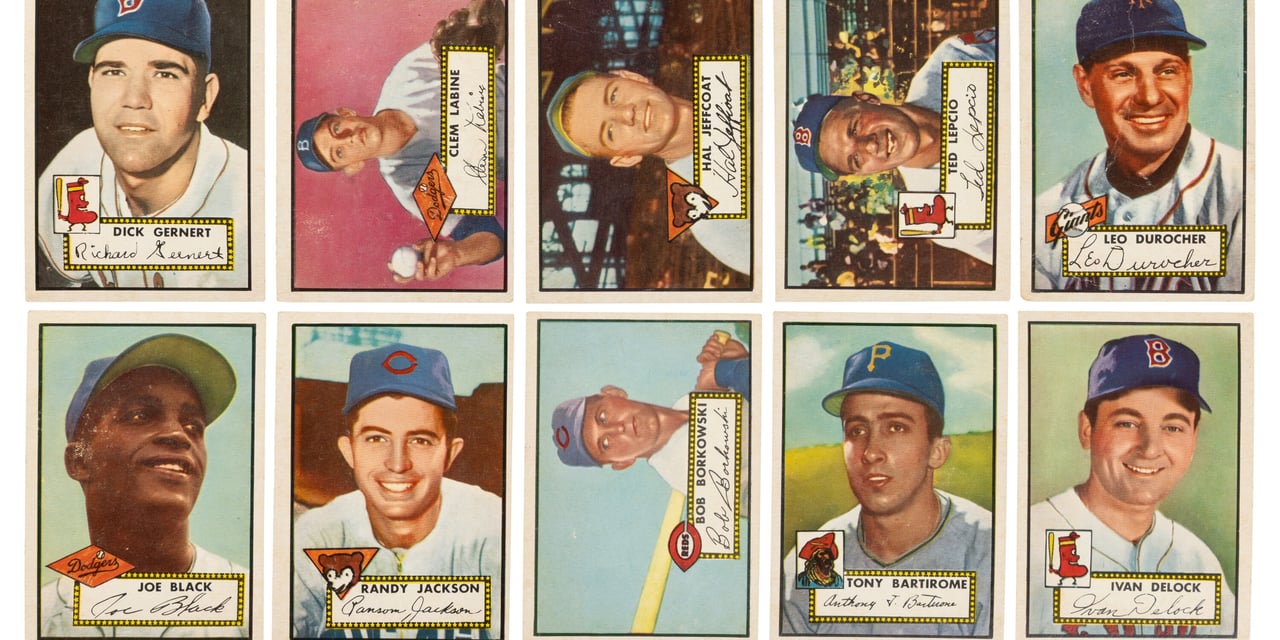
If you are reading this because there is a bin of loose cars in the garage, skip to what to look for in your own collection. For more collectibles that outran their original price tags, see the most valuable baseball cards and the rarest cars in the world.
The most valuable Hot Wheels cars ever
| Rank | Car | Variation | Figure | Sale or appraisal |
|---|---|---|---|---|
| 1 | 1969 Beach Bomb | Pink rear-loading prototype, loose | ~$175,000 | Appraisal (sold for $72,000 in 1999) |
| 2 | 2008 40th Anniversary car | Diamond and white-gold one-off | ~$140,000 | Appraisal (sold for $60,000 in 2008) |
| 3 | 1968 Custom Camaro | White enamel Hong Kong prototype, loose | ~$100,000 | Appraisal |
| 4 | 1970 Mighty Maverick | ”Mad Maverick” base, loose | Not publicly sold | Five known, all privately held |
| 5 | 1968 Over-chrome prototypes | Mustang and Camaro test shots, loose | ~$25,000 to $50,000 | Appraisal |
| 6 | 1969 Custom Charger | Green resin prototype, loose | $20,000 | Sold (eBay, October 2021) |
| 7 | 1971 Olds 442 | Purple Spectraflame, loose | ~$12,000 | Appraisal |
| 8 | 1968 Python | ”Cheetah” base, loose | ~$10,000 | Appraisal |
| 9 | 1970 Ed Shaver Custom AMX | Blue, UK exclusive, carded | ~$10,000 | Appraisal |
| 10 | 1971 Bye-Focal | Purple Spectraflame, loose | ~$6,000 | Appraisal |
| 11 | 1974 Rodger Dodger | Blue, white interior, carded | ~$6,000 | Sold (2012) |
| 12 | 1968 Beatnik Bandit | Pink Spectraflame, loose | ~$5,000 | Appraisal |
One thing worth knowing before you read on: real completed sales for cars this rare are scarce. Most of the figures below are appraisals and asking prices, not proof of a check actually written, and every entry says which, both in the table above and inside the entry itself.
1. 1969 Pink Rear-Loading Beach Bomb: ~$175,000 appraisal
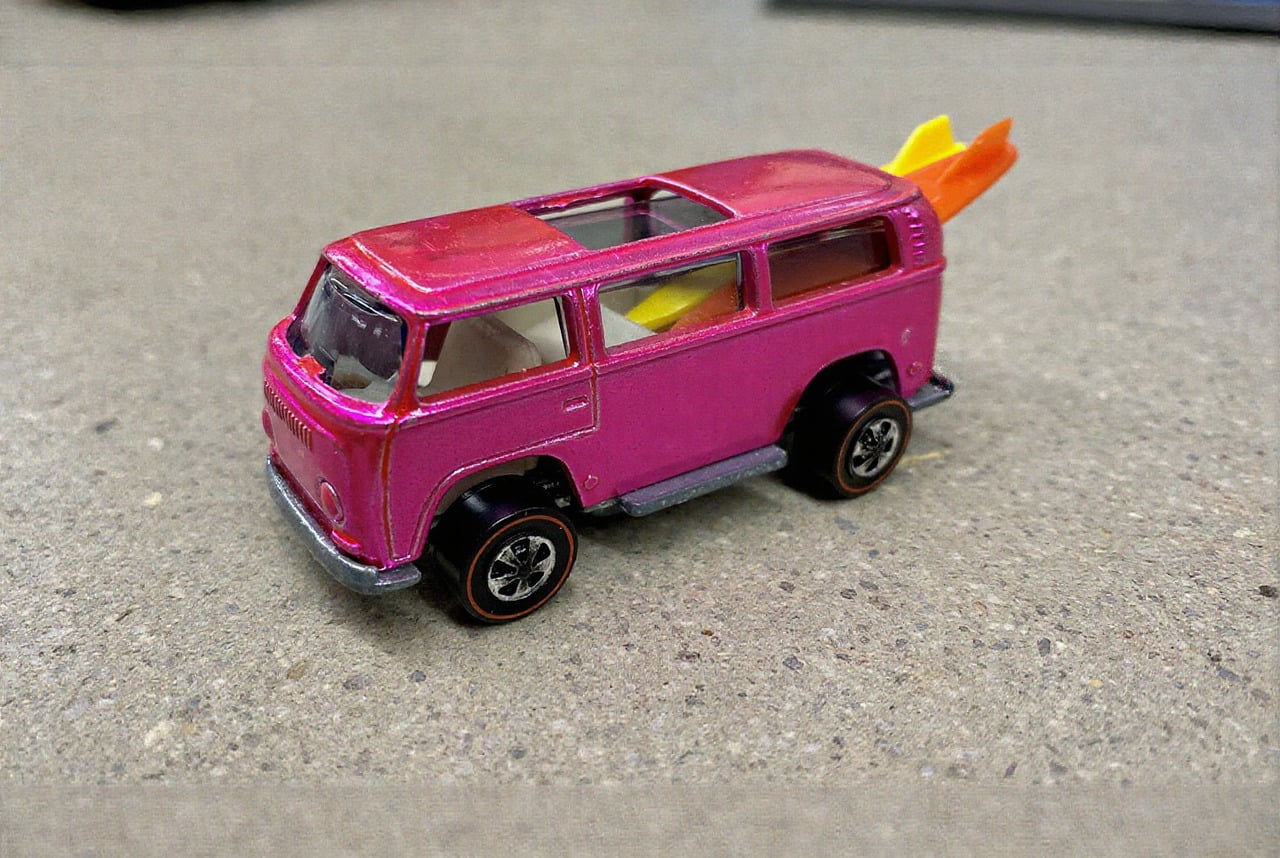
A Volkswagen Type 2 bus with two surfboards poking out the back window: that’s the car most collectors mean when they say “the most valuable Hot Wheels,” and it never once reached a store shelf.
Mattel designed the Beach Bomb to load its boards through the rear. The problem showed up on the test track: the narrow body ran too tall and too light, so it wouldn’t clear the Superchargers and tipped over. Engineers widened the base and moved the boards to slots along the sides instead, and that side-loading version is the one millions of kids actually owned. The rear-loaders were killed before production. Roughly two dozen survive today, across every color Mattel tried.
Bruce Pascal’s pink example is the rarest of the rare. It carries a heavier weighted base Mattel was testing to fix the tipping problem, and it’s the only known pink rear-loader with that base. He paid $72,000 for it in 1999, a price that stood as the most expensive Hot Wheels transaction on record for years. Collectors and appraisers have since put its value at $150,000 to $185,000, and nobody has bought it at that number.
Pink cars were aimed at girls, so fewer sold and fewer survived. Pink Spectraflame runs hotter than almost any other color across the whole Redline era.
2. 2008 40th Anniversary Diamond Car: ~$140,000 appraisal
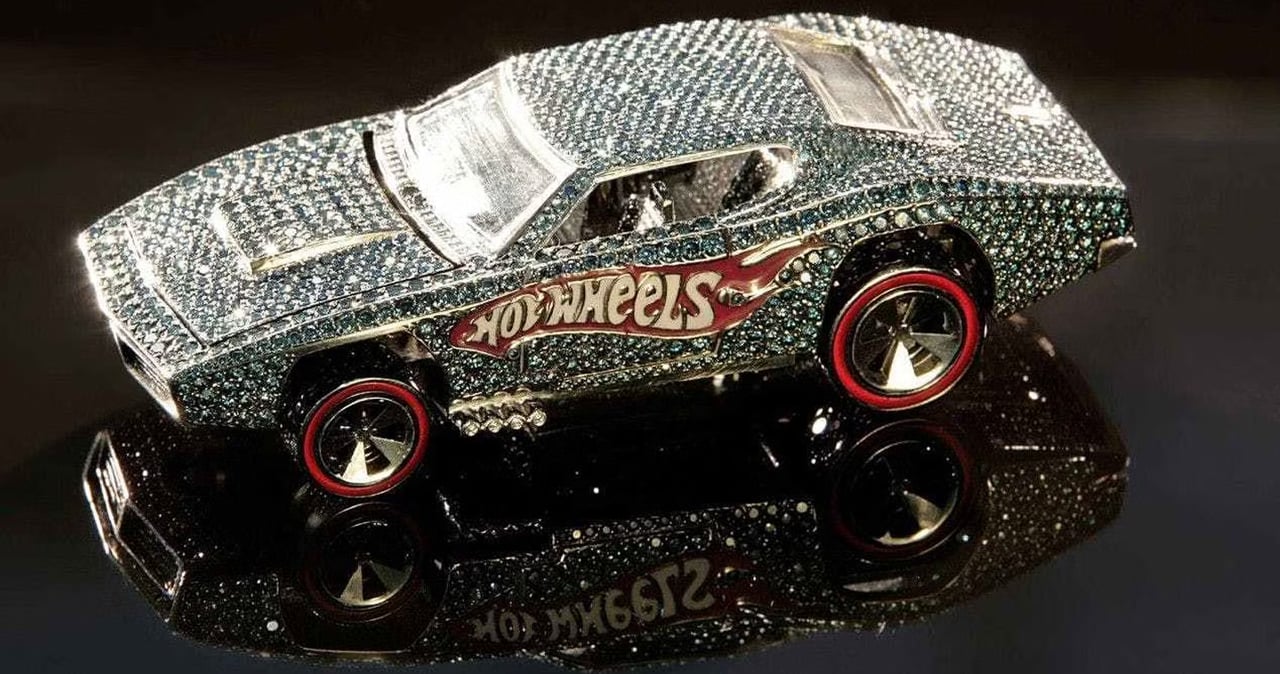
Cast in 18-karat white gold and set with more than 2,700 diamonds weighing close to 23 carats, this one is jewelry before it’s a toy, and it’s the only Hot Wheels ever built from precious metal and stone. Beverly Hills jeweler Jason Arasheben made it to mark the brand’s 40th anniversary and its four-billionth car.
Mattel put the value at $140,000. The car went under the hammer at Bonhams in Los Angeles on October 25, 2008, part of a charity sale for Big Brothers Big Sisters, and it realized $60,000 including premium. That’s a completed sale, and it’s less than half the number attached to the car, and below the $72,000 the Beach Bomb fetched in 1999. It’s the appraisal, not the sale, that puts this car second on the list.
3. 1968 White Enamel Custom Camaro Prototype: ~$100,000 appraisal
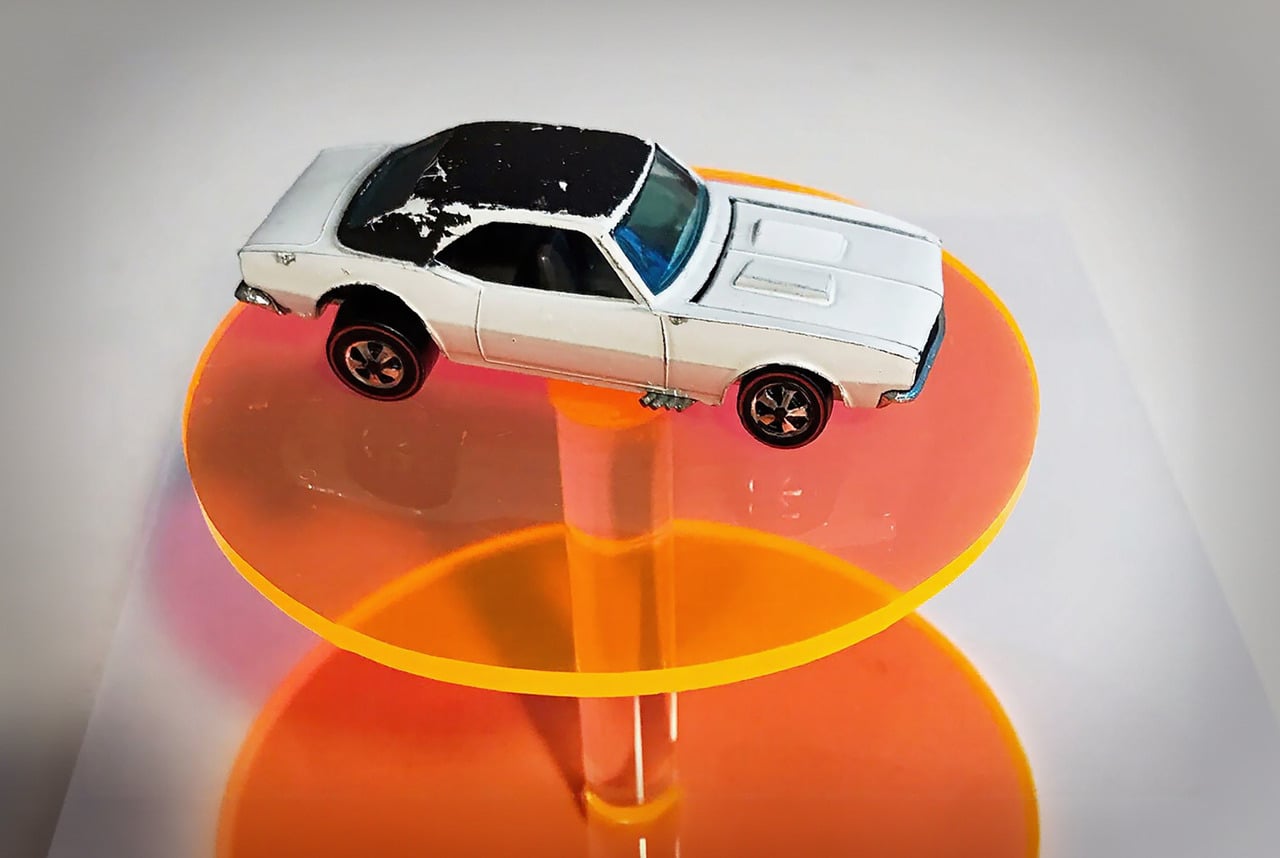
Mattel tooled the Custom Camaro before any other casting. Its prototypes carry a weight nothing that came after can match. This one wears plain white enamel instead of Spectraflame, a finish used on a handful of Hong Kong test shots before the candy colors went into production.
Collector guides and the trade press have valued surviving enamel prototypes near $100,000. Every example we could trace is an appraisal or an insurance figure attached to a car in a private collection. None has crossed a public auction block at that price.
4. 1970 Mighty Maverick with “Mad Maverick” Base: not publicly sold
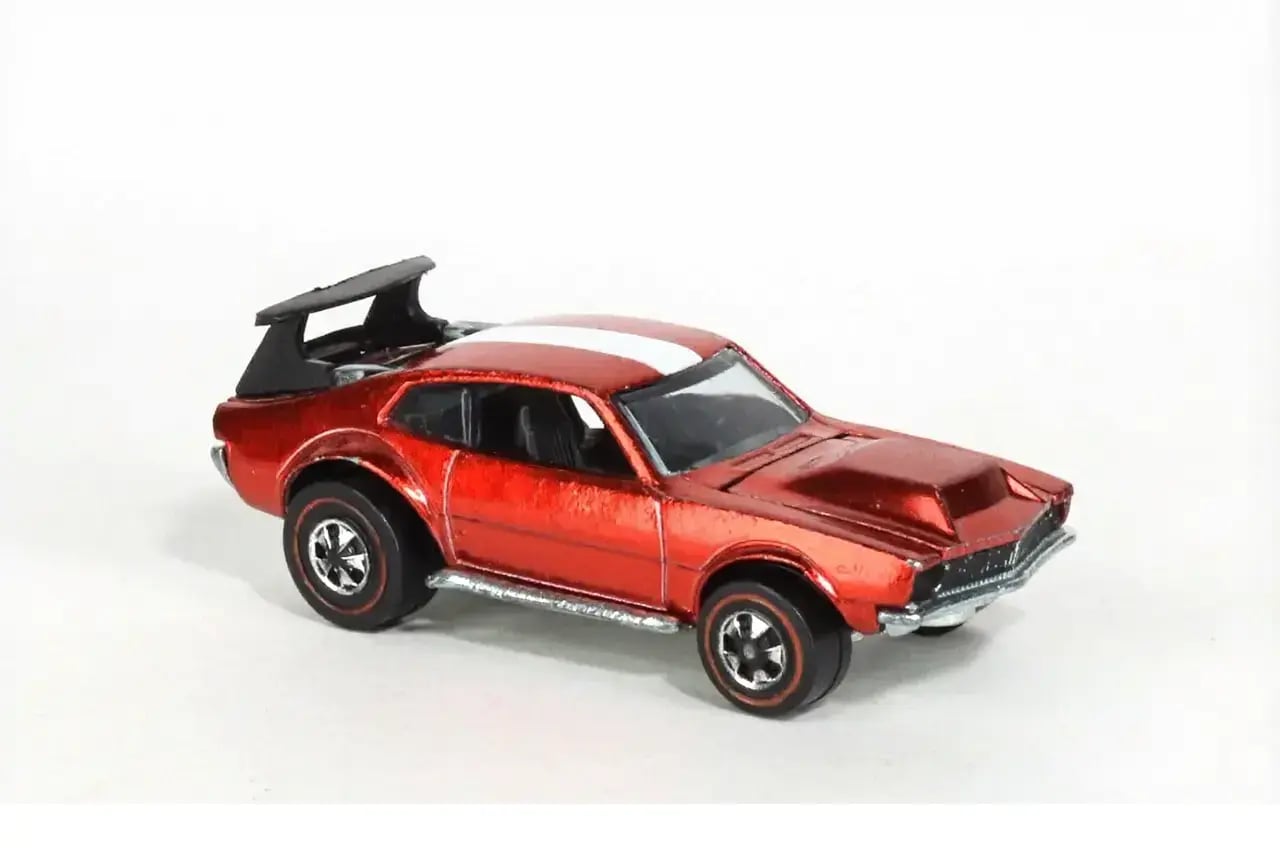
A cease-and-desist over a name forced Mattel’s hand here. Before the Mighty Maverick reached stores, Mattel had stamped the base with the working name “Mad Maverick,” and almost every one got corrected before release.
Five survivors carry the original base intact: two blue, one red, one purple, and one that was never painted or assembled at all. All five sit in private collections, and none has ever sold in public. It’s the clearest case on this list of a car that is famous, real, and effectively priceless, because there’s no transaction behind it to quote.
5. 1968 Over-Chrome Mustang and Camaro Prototypes: ~$25,000 to $50,000 appraisal
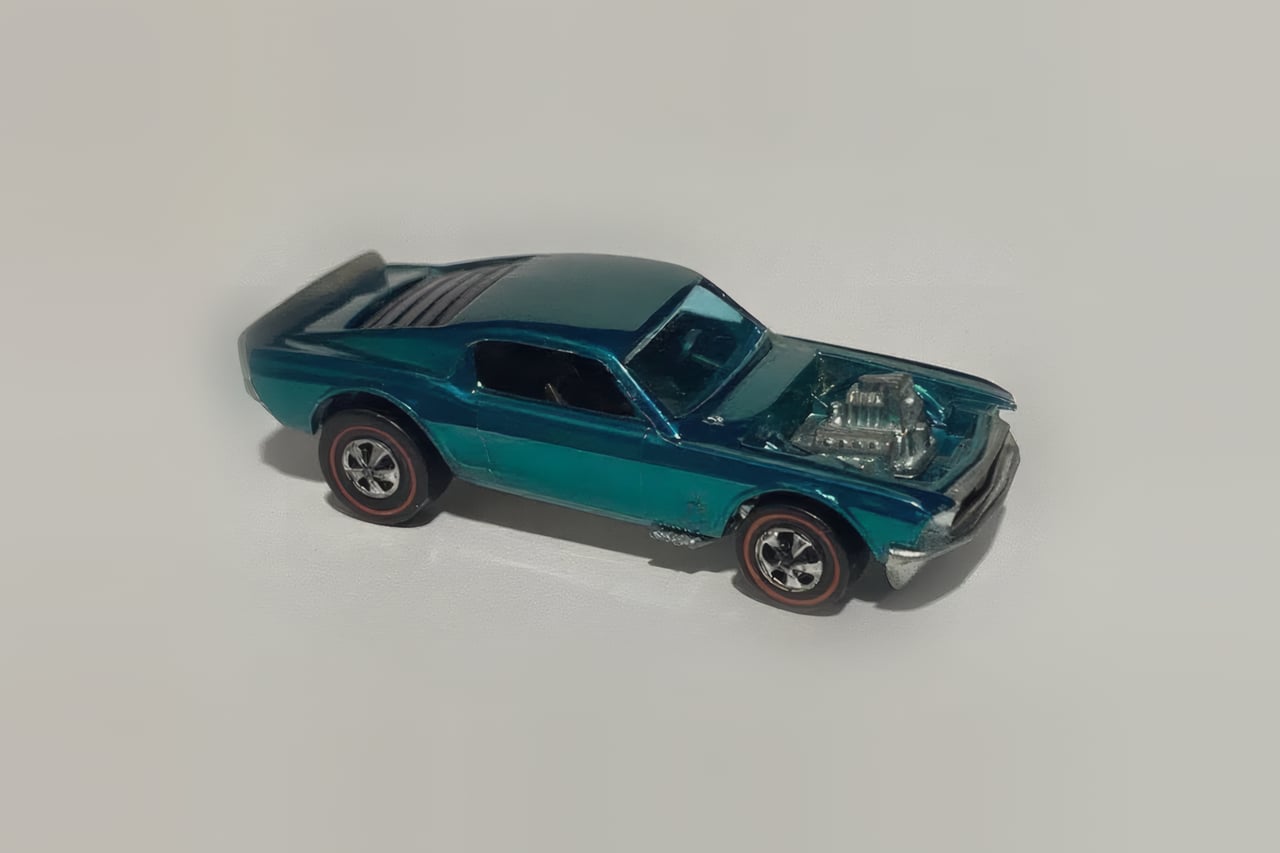
A strawberry Mustang and a lime Camaro, both from 1968, are the two prototypes collectors chase hardest from this batch. Mattel plated the early test bodies in bright chrome, then dipped some in Spectraflame on top, and the result glows in a way no production Hot Wheels ever did. These over-chrome shots were part of the development process, and only a handful escaped the factory.
Guides value the Mustang near $50,000 and the Camaro near $25,000, and both figures are appraisals on cars still in private hands.
6. 1969 Green Custom Charger Resin Prototype: $20,000 sold
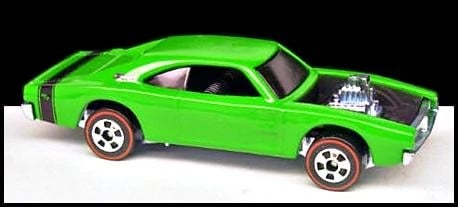
This one has a receipt. Real receipts are rare in this hobby. Before Mattel cut a steel tool for a new casting, it made hand-finished resin study models, and most were destroyed once the tooling existed. A green Custom Charger resin prototype from the noted Larry Wood collection survived, and it sold on eBay on October 19, 2021, for $20,000.
The car is loose, one of one in its exact form, and its value comes from being a physical step in the design process rather than a finished production casting. It ranks this high on the list because the number behind it is a documented sale, not a guess.
7. 1971 Purple Olds 442: ~$12,000 appraisal
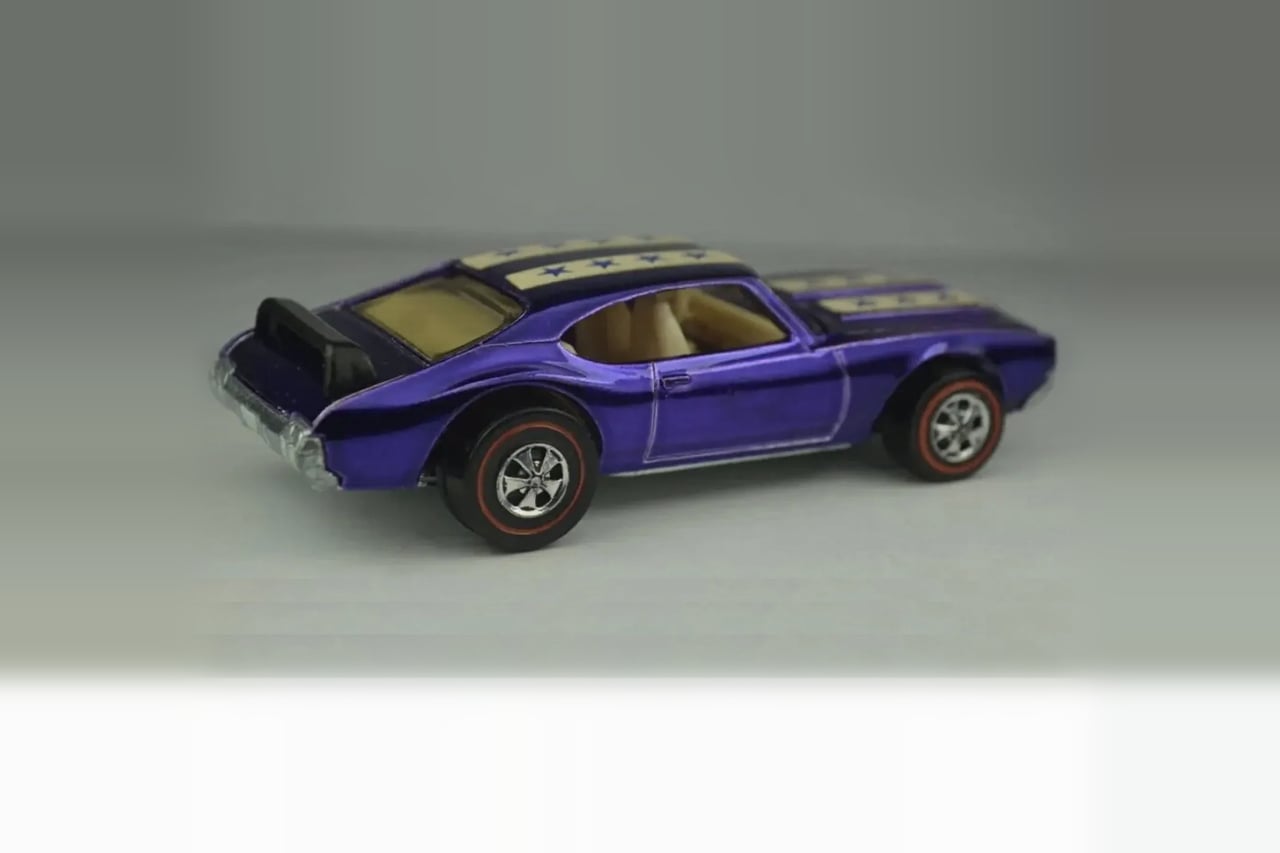
Purple is what empties wallets on this casting. The Olds 442 is a muscle-car body collectors already love on its own, made in small numbers late in the Spectraflame period, and the purple US version has always been one of the harder colors to find in good condition.
Guides and dealers cite roughly $12,000 for a strong loose example. That published number is an appraisal, and real sales swing widely with paint quality and how sharp the car’s edges still are.
8. 1968 Python with “Cheetah” Base: ~$10,000 appraisal
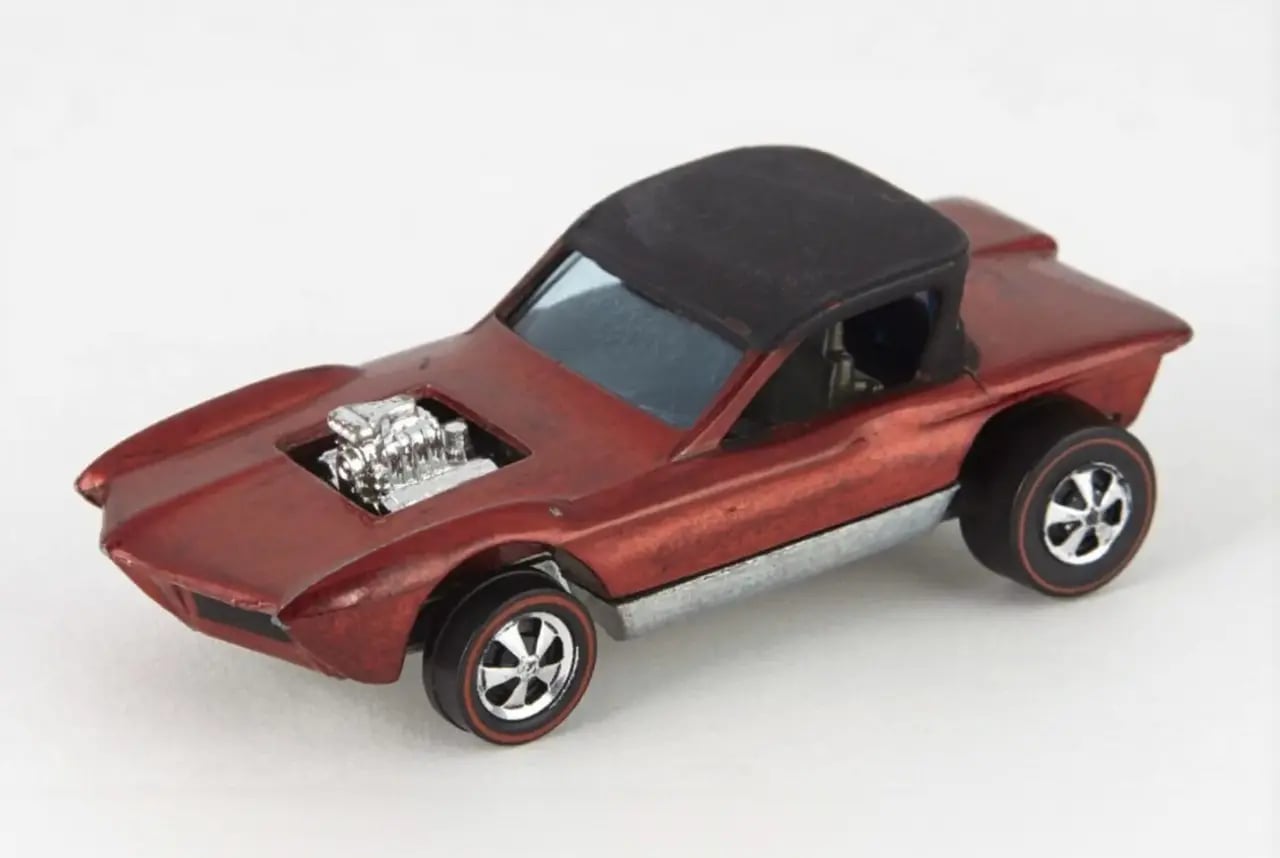
One stamped word decides this car’s entire value. The casting collectors call the Python started life under the name Cheetah, and Mattel changed it almost immediately, but a few early cars left the line with “Cheetah” still stamped into the base.
A Python with a Cheetah base is one of the most sought base variations of the Redline era, and collector consensus values a clean example near $10,000. Flip the car over before you get excited: a standard Python base is a common car worth a small fraction of that.
9. 1970 Ed Shaver Blue Custom AMX: ~$10,000 appraisal, carded
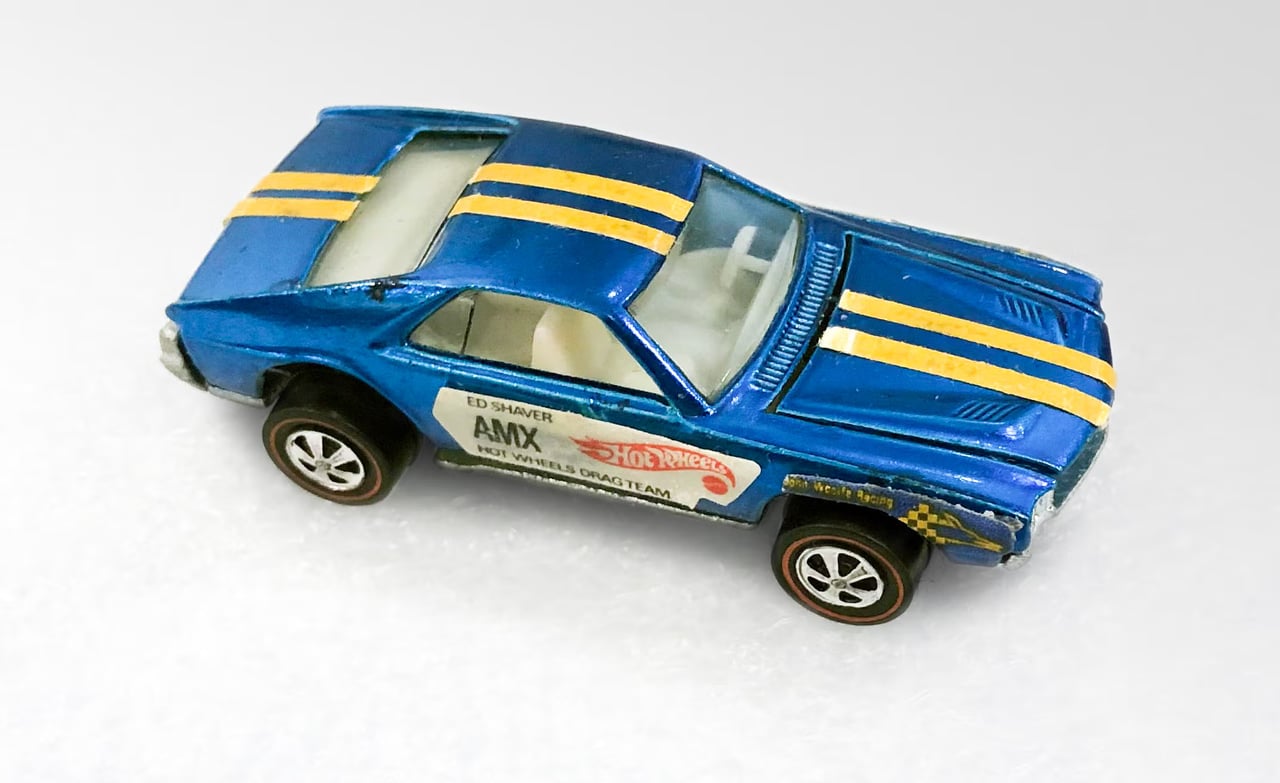
Ed Shaver was a drag racer sponsored by Mattel’s UK distributor, and this blue Custom AMX carries his decals, sold only in Britain on 1970 racing-series cards. The casting underneath is otherwise ordinary. It’s the decals and the market it was sold into that make it rare.
Value depends almost entirely on the card. Loose, with the decals intact, an Ed Shaver AMX is a low-four-figure car. Sealed on its original UK blister, collectors value it closer to $10,000, the cleanest example on the list of packaging deciding the price.
10. 1971 Bye-Focal in Purple Spectraflame: ~$6,000 appraisal
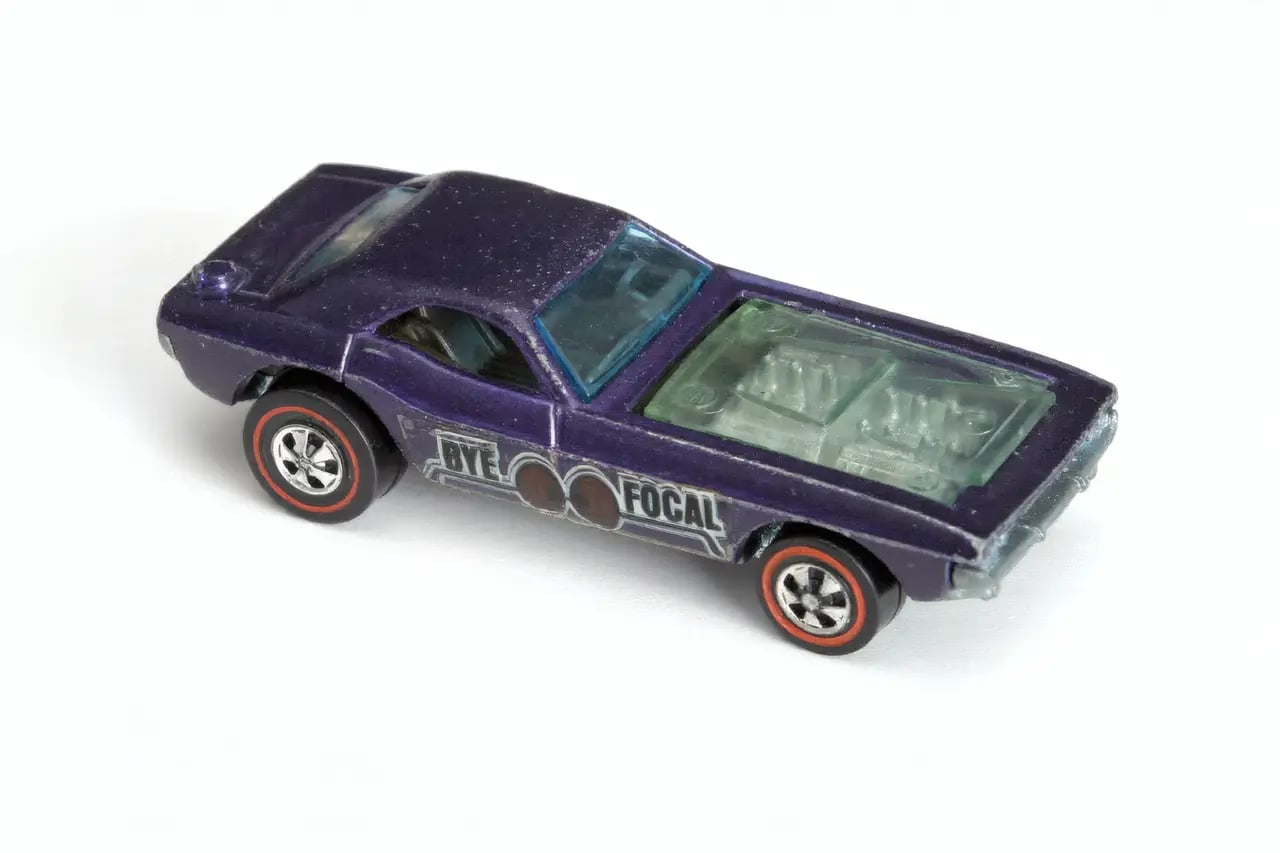
A twin-engine dragster under a clear canopy, built in 1971, a lean production year across the whole Hot Wheels line. Purple is again the color that lifts the price. Fewer purple cars sold new, so fewer clean ones exist now.
Collector guides put a sharp purple Bye-Focal around $6,000. That’s a valuation, and the real sale price rides on the paint and the glass.
11. 1974 Blue Rodger Dodger: ~$6,000 sold, carded
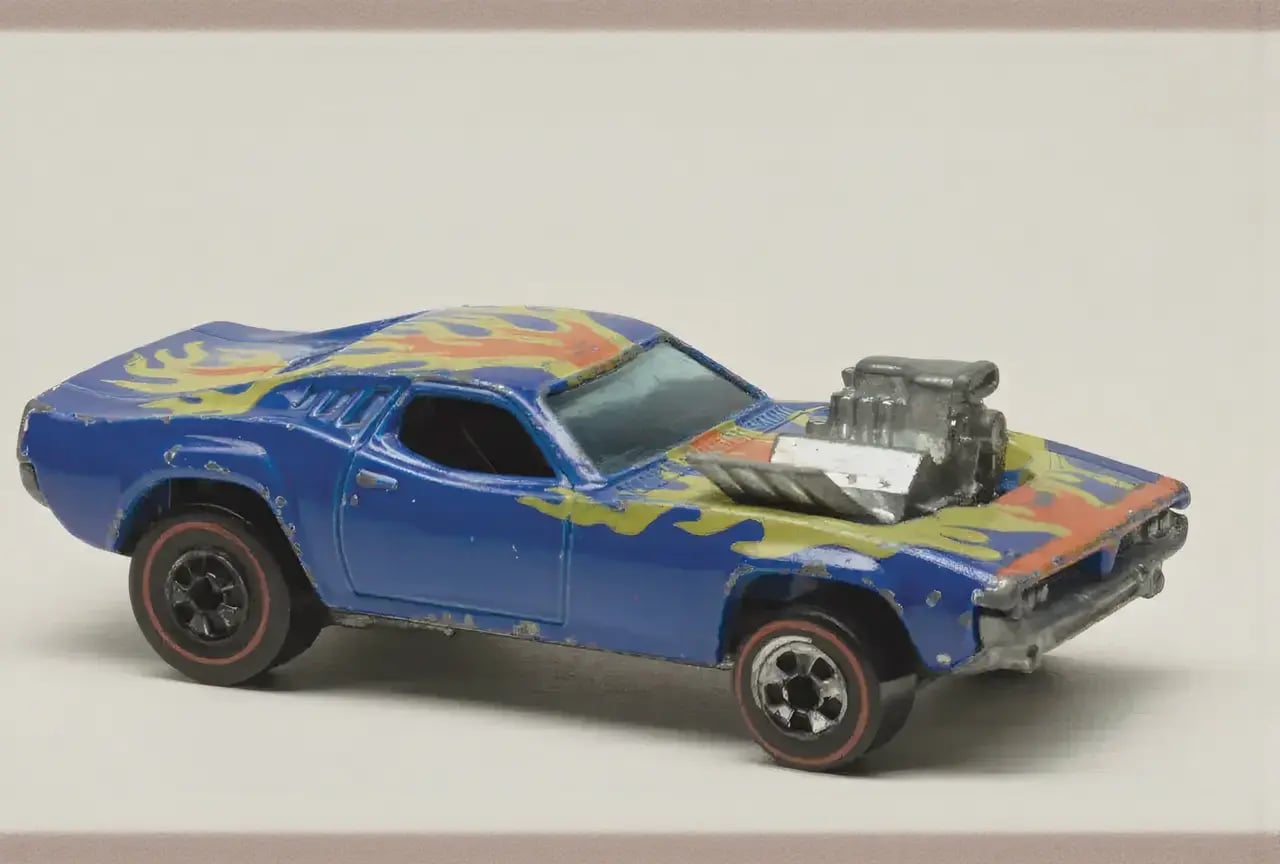
A full-card blue example sold on record for about $6,000 in 2012. That makes the Rodger Dodger one of the few mid-market Redlines with a documented sale behind it. It’s a late-Redline muscle casting, and the blue version with a white interior is the one worth stopping for, coming near the end of the Redline years when production ran smaller than the 1968 boom.
Loose, the same car drops to a few hundred dollars.
12. 1968 Pink Beatnik Bandit: ~$5,000 appraisal
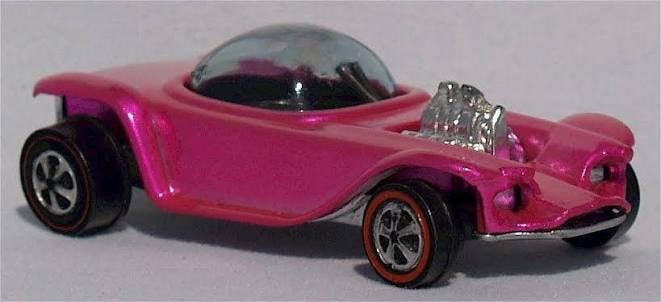
One of the original 1968 castings, a bubble-topped show rod pulled from an Ed Roth design: the Beatnik Bandit is common in most colors and easy to find. Pink is the exception.
The same pink-was-for-girls logic that lifts the Beach Bomb lifts this car too. A clean pink Spectraflame Beatnik Bandit is valued around $5,000 by collector guides, several times what the blue or green versions bring. These rarely trade as logged public sales, so the number is a consensus appraisal.
The Redline era, 1968 to 1977: where the money actually is
Nearly every car on this list comes from the same nine-year window. Hot Wheels made between 1968 and 1977 carry a red pinstripe on the tires, and collectors call them Redlines for that stripe alone. Mattel dropped the red line in 1978, and almost nothing made after is worth chasing at these prices.
Two things decide a Redline’s value, and both are worth learning to spot.
The first is Spectraflame. Early Hot Wheels were dipped in a translucent candy color over polished zamac metal, a finish with a metallic depth no modern mainline car has. Mattel dropped it after 1972: the process was expensive and used solvents that regulators were phasing out. Every genuine Spectraflame car predates 1973.
The second is color. The rarest Redline colors were never the flashy ones. They were pink and the odd browns and purples that sold worst when they were new. Pink was marketed to girls, bought less, kept less, and pink survivors are scarce across nearly every casting on this list. When you see a five-figure Redline, odds are it’s pink, brown, or purple.
The sixteen castings that launched the line in 1968, the ones collectors call the Sweet Sixteen, carry a premium of their own simply for being first. A Sweet Sixteen car in a rare Spectraflame color sits high on most collectors’ want lists.
What to look for in your own collection
If you have a bin of loose cars, work through this in order. It takes about ten minutes and it settles the question fast.
Check the tires first. Look for a thin red line around each tire. No red line means the car was made in 1978 or later, and outside the handful of exceptions covered below, it’s worth a dollar or two. This one test clears most of a typical bin in seconds.
Flip the car over and read the base. The base tells you where and when the car was made. “Hong Kong” and “USA” are the early markings worth seeing, and Hong Kong cars from 1968 and 1969 are generally the oldest and scarcest. The base is also where the rare name-variation cars hide, the Cheetah-based Python and the Mad Maverick among them. Read the stamped text itself, never assume.
Judge the color honestly. A deep, translucent metallic shine is Spectraflame. That means pre-1973. Flat, solid enamel paint is later and common. If the car is pink, brown, or purple and it shines like candy, stop and look it up properly before you decide it’s junk.
Check the wheels and the axles. Bent axles, cracked wheel hubs, and repainted bodies all cut value hard. Collectors pay for original, unmolested cars. A restoration or a repaint is worth far less than an honest, worn original.
Leave any carded car sealed. The blister card is often the difference between a fifty-dollar car and a several-thousand-dollar one, and every carded entry on this list is worth many times its loose version. Find a sealed Redline, and the right move is to leave it sealed.
Set aside anything that looks unfinished. Unpainted bodies, hand-cut resin, cars missing wheels, and bases with the wrong or a misspelled name can all be pre-production pieces. Those are the cars that reach the top of this list, and they’re easy to mistake for junk. When in doubt, photograph the base and ask a Redline specialist before you clean or sell anything.
Treasure Hunts and Super Treasure Hunts
Somewhere in the bin, you might find a car with a small flame-and-circle logo and the letters “TH.” That’s a Treasure Hunt.
Mattel launched the series in 1995 as a scavenger hunt, salting a small number of special cars into regular cases at retail. The original 1995 run was genuinely scarce and can bring a few hundred dollars carded today. A typical modern Treasure Hunt, by contrast, is worth $10 to $50, and only if it’s mint on the card. Most are worth roughly what the car cost at the register.
The one worth learning to spot is the Super Treasure Hunt, introduced in 2007 and rebranded under that exact name in 2013. A Super carries two tells the regular Treasure Hunt doesn’t: Spectraflame paint, the same candy finish as the vintage Redlines, and rubber Real Rider tires in place of plastic. A sealed Super Treasure Hunt of a popular casting, a Porsche or a Datsun, can reach $50 to a couple hundred dollars. A regular Treasure Hunt rarely clears $20.
If a bin turns up a stack of them, sort the Supers from the regulars first.
The modern era, and why almost none of it is worth anything
Mattel makes well over a hundred million cars a year, and it’s been running at that scale for decades. Everything from the late 1970s onward shares the same problem: staggering production numbers. That means the vast majority of it is worth exactly what it cost at the register. Value needs scarcity, and there’s no scarcity in a mainline car you can still buy in a blister pack today.
The trading-card hobby learned the same lesson the hard way. A whole generation bought late-1980s and 1990s cards as an investment, and our guide to the most valuable baseball cards is blunt about how little most of them turned out to be worth. Hot Wheels ran the identical cycle: enormous supply, a speculative boom, and a long tail of cars that will never be rare.
A short list of modern cars does hold value.
Red Line Club (RLC) exclusives. Mattel’s members-only club sells limited-run cars, often numbered and finished in Spectraflame, in editions of a few thousand or fewer. Sought castings from the club can trade well above their release price on the secondary market.
Genuine factory errors. A car with the wrong wheels, a missing tampo print, a color that never went into production, or two bodies cast onto one base can command real money, because errors escape the factory in tiny numbers. An error has to be verifiable, though: most “error” listings online are just wear or damage.
Convention and event cars. Cars made in small numbers for the annual Hot Wheels conventions, or for events like Comic-Con, such as the 2011 San Diego Comic-Con DeLorean, sell for far more than a mainline car because the print run was tiny by design.
Everything else pulled from a modern bin is a car to enjoy rather than sell. If it’s a mainline you can still find at a store, nostalgia is its value.
What determines a Hot Wheels’ value
Five things set the price, and they stack on top of each other.
Age and the Redline stripe come first. A red line on the tires means 1968 to 1977. Almost nothing outside that window reaches four figures without a factory error or a convention pedigree behind it.
Color matters more than the casting. Within the Redline years, pink, brown, and purple are the scarce colors, because they sold worst when new. The same casting in a common blue or green can be worth a tenth of the pink version.
Prototype and pre-production status brings the highest prices. Resin study models, unpainted bodies, and cars with the wrong base name are the pieces that reach five and six figures, because they exist in single-digit numbers. They were never meant to leave the factory in the first place.
Packaging can multiply the price. A car sealed on its original blister card is worth many times the same car loose, the trading-card lesson exactly, where the grade and the slab decide the number.
Condition and originality come last. Sharp edges, bright original paint, straight axles, and no restoration are what collectors pay for. A repaint or a polished-up body reads as damage, not care.
If small things that outgrew their price tags are your kind of story, keep going with the most valuable baseball cards, the most valuable Beanie Babies, and the most expensive cars ever sold.
Frequently asked questions about the most expensive Hot Wheels
What are the top 10 rarest Hot Wheels cars?
Why is the 1969 pink VW Beach Bomb so expensive?
Are any Hot Wheels worth money?
What is the rarest car in Hot Wheels?
Products featured here are independently selected by our editors. If you buy through our retail links we may earn an affiliate commission — it never changes the price you pay, and it never decides our verdicts. Read our earnings disclaimer.