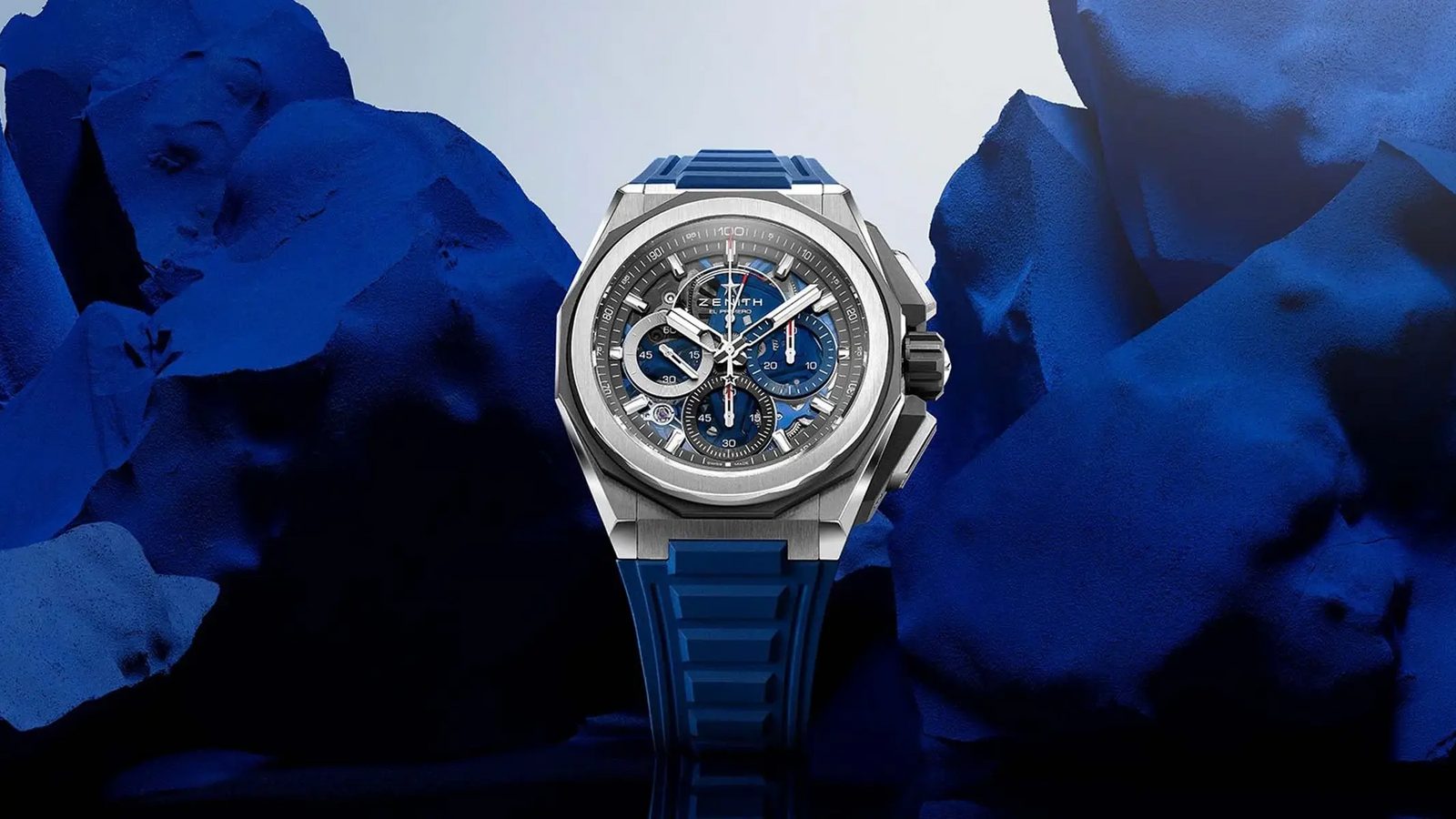
Zenith has introduced the Chronomaster Solo Sport, a three hand watch derived from its Chronomaster Sport chronograph, in four versions: three time and date models priced at €10,500 and a time only variant at €9,500.
Breitling's rival, the Chronomat Automatic B31 40, launched in May as part of the updated Chronomat lineup, with four time and date models starting at €6,400 for stainless steel and rising to €8,750 for the steel and platinum version with an ice blue dial.
Both watches descend from a chronograph. Zenith is owned by LVMH and was founded in 1865 by Georges Favre-Jacot in Le Locle, Switzerland. Its El Primero movement made history in 1969 as the first integrated automatic chronograph, later powering the Rolex Daytona.
Breitling, known for its history moving from skies to seas, built the current Chronomat lineup around a bracelet design it has used for more than 40 years.
What sets the Zenith apart
The Chronomaster Solo Sport shrinks the chronograph's case by a millimeter to 40mm, at 13.1mm thick, and swaps the fixed bezel for a unidirectional ceramic bezel with a 60 minute scale. Water resistance reaches 200m, and Zenith has lit both the hour markers and the bezel markers for use in the dark.
The dial carries a high frequency pattern built around a 45 degree Z motif, a reference to the high beat El Primero movement inside, alongside Zenith's signature Shark Tooth minute track from classics like the El Primero A3817 Cover Girl. A screw-down crown protected by crown guards completes the dive watch intentions.
Power comes from the in-house El Primero 3620 caliber, running at 36,000 vph with a 60 hour power reserve, the same movement used in Zenith's current Pilot Automatic. The brand promotes the accuracy of its high-beat movements, a tradition that has earned it 2,333 timekeeping precision awards since 1903.
The bracelet uses Zenith's new Zenclasp, a toolless micro-adjustment system with a lift-up safety cover and four settings, first shown at Watches and Wonders earlier this year. The Chronomaster collection includes some of the brand's most iconic references from the 60s and 70s.
How the Breitling compares
The Breitling Chronomat Automatic B31 40 is the first 40mm three hander in the Chronomat range, at 11mm thick with a 43.7mm lug span and 200m water resistance. Its case has a more integrated connection to the bracelet than earlier Chronomat models, with a streamlined bezel in place of the Zenith's dive scale.
Inside is Breitling's B31 automatic movement, built by Sellita's AMT division. It is COSC certified, runs at 28,800 vph and carries a 78 hour power reserve, well beyond the Zenith's figure.
It is fitted to Breitling's Rouleaux bracelet, a design the brand has used for more than 40 years, with a butterfly clasp offering three toolless micro-adjustment settings, one fewer than Zenith's Zenclasp. The case back is a display window showing a skeletonized, steering wheel inspired rotor.
On price, the two brands' full-size chronographs are the baseline: Zenith's own Chronomaster Sport runs €12,200 against €9,600 for Breitling's Chronomat B01. Cutting each chronograph down to a three hander brings the Zenith to €10,500, a reduction of about €1,700, while the Breitling drops to €6,400, a cut of roughly €3,200.
TAG Heuer took a different route to a similar problem this year, shrinking its Carrera Chronograph Sport to 42mm ahead of the Spanish Grand Prix while keeping the chronograph function intact.
Brands mentioned here are chosen by our editors. If you buy through our retail links we may earn an affiliate commission — it never changes the price you pay, and it never decides what we cover. Read our earnings disclaimer.
This briefing is published daily using Luxe Digital’s AI agents, finely tuned to meet our editorial standards. While we test and review their work, mistakes can sometimes happen; tell us if you spot one.